Back in April of 2017 I walked into Canoe Restaurant on the 54thFloor of the Toronto Dominion Centre to taste the Henriot Family wines of Villa Ponciago, Domaine William Fèvre and Bouchard Père & Fils. This tasting hosted by Woodman Wines and Spirits is more than just an annual highlight, it is an event borne of necessity for a multiple of triumvirate reasons. Gamay, Chardonnay and Pinot Noir; Beaujolais, Chablis-Bourgogne and Bourgogne; Village, Premier Cru and Grand Cru; Fleurie, Chablis and Les Côtes, d’Or and Chalonnaise; Climat, Climat and Climat. If you want to gain a deeper understanding of the relationship between producer, Village and Climat then you cannot miss such an opportunity.
The vintage may have been one borne out of sunshine and the wines are unquestionably rich. From a vantage point of precision and structure they may not be as stubborn, focused and direct as 2014 but they hold a famous adage accountable to its meaning. No wine can truly be great if it does not taste that way from the very beginning. Fruit must be there from the start. It will not later be found. These are the 2015 Beaujolais and Bourgogne as exemplified by these three categorical producers. I would have liked to taste all 33 wines on offer that day but time constraints for one got in the way, not to mention this tasting is so popular amongst the media and trade in Toronto so several of the wines were drained before I could get to them. Nevertheless I did manage to squeeze 23 concentrated sessions into a 90 minute time slot and these are my notes. Thank you as always to Russell, Jason and Rachel Woodman.
Villa Ponciago La Réserve Fleurie 2015, AOC Beaujolais, France (Agent, $25.00, WineAlign)
Been waiting for 2015 to come along for Ponciago’s no pain Fleurie la Réserve, a gamay always firm but now of fruit like compound berry butter from the giving vintage. Now with more black cherry than almost ever, or at least in recent memory, the tart compressed, compounded too but variegated mille feuille-like so not really tart at all. No war of juicy versus grippy so “I resist what I cannot change.” Persistent as needed but not forever, so this drinkable drug is just what the Beaujolais doctor ordered. Drink 2017-2020. Tasted April 2017 chateaudeponcie#villaponciago
Villa Ponciago Cuvée Les Hauts Du Py 2015, Fleurie, AOC Beaujolais, France (Agent, $31.00, WineAlign)
Even the generous vintage can’t distract from the quartz-lined granite bedrock of the Hauts du Puy but it does make for an intensely layered cuvée of moving parts. This 2015 is possessive of a repeatable Réserve condition but with bigger, broader and more complex dark red berries, though also here in the throes of the mineral streak of diffidence. There are few examples of Fleurie that concentrate, purify and integrate inchoate soil and munificent fruit like Les Hauts and with the vintage so forward and early expressive this is as gamey getable as there is on the market today. Pour this critical mass with reckless abandon. Drink 2017-2021. Tasted April 2017
Unsparing and benevolent @vinsdechablis 2015s aplenty from @williamfevre_ via @WoodmanWS
Domaine William Fèvre Chablis Premier Cru Beauroy 2015, AOC Bourgogne (Agent, $58.00, WineAlign)
There can be no surprise that Beauroy is broader, creamier and it can be said, fruitier than Vaillons though again, the salty earth and the ancient ocean are swirling with their liquid mineral solutions and rushing through with their waves. As Févre is so want to insist, to call to order, even in the thick brushstroke of Beauroy. Drink 2017-2020. Tasted April 2017 williamfevre_chabliswoodmanws@williamfevre_@WoodmanWS@domainewilliamfevreWoodman Wines & Spirits
Domaine William Fèvre Chablis Premier Cru Vaillons 2015, AOC Bourgogne (Agent, $58.00, WineAlign)
Vaillons walks along a kimmeridgian trail with so much fruit from the elongated slope and valley in ’15. Though truth be told (winemaker) Didier Séguier has kept the fossils, salinity and direct mineral injections consistent with not only ’14 but in omniscience and with complete trust to what came before. This is not no much a piercing as it is indeed an injection. There is much to learn from how Fèvre approaches Vaillons becuase the consistency is second to none. Vintage matters less and that is the calling card of the house, at least with respect to this Premier Cru. Drink 2018-2022. Tasted April 2017
Domaine William Fèvre Chablis Premier Cru Montmains 2015, AOC Bourgogne (488718, $39.95, WineAlign)
Montmains is different, that much we know but this is 2015 and no modern era vintage speaks with more fruit clarity. Still the herbology mixed into the salinity and brine consistently forms the basis for the Montmains oeuvre. What conspires from ’15 is more depth and soild tang than what comes off of the nearby hills. It’s like lime over lemon but it’s not exactly citrus that sits at the forefront, more like savoury syrup swirled in but in thick rotation at the conical bottom’s narrowing point. This is quite intense for 2015, but it is Montmains that effects this indelicacy with great presence and the most insistent Premier Cru persistence thus far. Drink 2018-2022. Tasted April 2017
Domaine William Fèvre Chablis Premier Cru Fourchaume 2015, AOC Bourgogne (Agent, $69.00, WineAlign)
This Premier Cru of greatest surface is committed to by Fèvre with a singular duality, of a domaine within a domaine and as cru versus cru. The greater Fourchaume is a Grand Cru hill place of five distinct climats in which Fèvre holds blocks in Vaulorent so they bottle both it and this ubiquitous Fourchaume. Upwards of four hectares deliver a best of all Premier Cru worlds Chablis as Forchaume is gathered for a collective sumptuousness, really layered and propping up the most kimmeridgian of the line-up to date for ’15. Carries its ilk in its DNA and its expresion; compression, lemon and lime citrus, soil conditioning and the broadest yet most direct feel of appeal. If you want Fevre, 2015, Premier Cru and ancient wisdom all wrapped up in one clear package this is the bank expression for you. Drink 2019-2024. Tasted April 2017
Domaine William Fèvre Chablis Grand Cru Bougros 2015, AOC Bourgogne (Agent, $99.00, WineAlign)
Bougros, the approachable one. Bougros, with great unction and deep intensity but not hard to get. How this has gathered its sensibilities so quickly is a matter of vintage and place but there are layers, many of them, left to peel away. You get a conditioned and developed salinity meets acidity unlike any Premier Cru and yet you can’t help needing to think it should be drinkable straight away. The potential of mille-feuille layering is leaps ahead of (most but not all) of the Premier Pru. Quite domesticated Grand Cru Chablis that is easier to understand than most. Drink 2019-2025. Tasted April 2017
Domaine William Fèvre Chablis Grand Cru Les Preuses 2015, AOC Bourgogne (Agent, $125.00, WineAlign)
If Les Preuses isn’t the Fèvre piece, of resistance and resilience. Of memory and understanding, of formidable variegation and in ’15, teasing and tempting open doors. Don’t be fooled or duped because there are many doors and so many fences to tear down before you can find what’s behind the barriers. Intensifies in its delivery of more citrus and compressed stone clarity than Bougros (or at least with more crunch and bite) but it will take years of ruminative meal matching possibilities and execution before you might know where it stands and with it, relative to you. Drink 2020-2027. Tasted April 2017
Domaine William Fèvre Chablis Grand Cru Les Clos 2015, AOC Bourgogne, France (641381, $130.00, WineAlign)
Fèvre’s Les Clos takes a bit of an unexpected turn so from 2015 it currently goes stone cold and remains intensely locked. From what we know the vintage should be generous from the start but in this instance Les Clos makes use of every ounce and fibre of kimmerridgian being to lay only salt, fossil and stone before you. The fruit kept hidden away makes you pine for fleshy orchard apples. Nothing can really prepare you for the Les Clos iron gate, especially when you were expecting a welcome mat laid out at your feet. Take the time to charm and be charmed, at least 15 minutes with a glass or 15 years if you can offer up the time. The Grand Cru will slowly open up and speak in a vernacular of controlled energy, fineness of acidity and exceptional balance. This will be one for the ages. Drink 2021-2035. Tasted April 2017
Bouchard Père & Fils Montagny Premier Cru 2015, AOC Bourgogne, France (653683, $38.00, WineAlign)
Montagny is rich and expressive with a shot of tonic and quite the textural viscosity. A bit reductive though another six to 12 months will put it in a honeyed, waxy and preserved citrus place. Drink 2018-2021. Tasted April 2017 bouchardpereetfils@BouchardPereBouchard Père & Fils
Bouchard Père & Fils Saint Aubin Premier Cru 2015, AOC Bourgogne, France (Agent, $57.00, WineAlign)
Saint-Aubin’s proximity to Montrachet and high percentage of Premier Cru vineyards should be an automatic to elevate its esteem but it still flies under the radar. Bouchard feels otherwise and proudly boasts and toasts its ability to effect fine chardonnay. Great 2015 fruit be scorned this is a terrifically taut example but yes it is certainly fruit expressive (apples and such). In relative terms to Saint-Aubin it delivers more perceived sweetness and spice provided by the barrel in what is ostensibly and sensibly really well-intended and generous from the start. A bit of a wild child this one with plenty of upside. Drink 2017-2020. Tasted April 2017
Bouchard Père & Fils Puligny Montrachet 2015, AOC Bourgogne, France (Agent, $80.00, WineAlign)
It has often been said that Village level Puligny-Montrachet from top growers can be very good indeed, but is all too often unexciting and disappointing. Combine that statement with a humid 2015 vintage and you may be left to wonder what will happen from a non vineyard-specific Puligny. Bouchard’s stands firm, acts forthright and tackles the suspicion head on. This is a direct, linear, layered and unctuous P-M with layers of lemon and fresh glade air at their get me vintage finest. It’s also a wine of grace and elegance away from barrel and into something ethereal. Acidity suits the flesh, not as an injunction but as an extension and takes the fruit into a place of inflection. Such a beautiful wine. Drink 2018-2026. Tasted April 2017
Domaine Bouchard Père & Fils Meursault Les Clous 2015, AOC Bourgogne, France (661322, $59.95, WineAlign)
Bouchard’s Meursault Les Clous seems akin to acknowledging the ideal of Bourgogne that sit somewhere along the line between Village and Premier Cru and in this instance well right of centre on that line. Les Clous is a bit more reserved than the Puligny, not so much reductive as much as it is wrapped a bit tight. It may be construed as perhaps a bit couterintuitive to Meursault but certainly not impossible to accept. Really brings the idea of lemon curd and a melting barrel into the ideal. Needs two years to integrate and if you are patient it will reward with a comforting hug at that time. Drink 2019-2025. Tasted April 2017
Domaine Bouchard Père & Fils Meursault Premier Cru Genevrières 2015, AOC Bourgogne, France (Agent, $129.00, WineAlign)
Meursault Genevières is so much more fleshy, fruit forward, expressive and feminine than Les Clous though never straying too far from carrying a necessary liquid limestone, chalky streak through and through. The soil speaks more from the middle to the back, creating a fascinating transition for this wine. A warmth challenged vintage be anathematized this Genevières has not gone to blazes, constantly re-energizes and is built from a constitution to see it hang in for the long haul. Drink 2018-2028. Tasted April 2017
Domaine Bouchard Père & Fils Chassagne Montrachet Premier Cru Morgeot 2015, AOC Bourgogne, France (Agent, $141.00, WineAlign)
Bouchard’s Chassagne-Montrachet Morgeot is an intense expression of Bourgogne Premier Cru distilled into the finest, most elegant and ancient geology captured expression. The integration and balance is remarkable when you consider how Climat must contract intuition and acumen for the purpose of harnessed power and controlled energy. This is one of the major stars of the vintage. From soil to microclimate and through temperament it just has it all. Drink 2019-2030. Tasted April 2017
Domaine Bouchard Père & Fils Corton Charlemagne Grand Cru 2015, AOC Bourgogne, France (Agent, $260.00, WineAlign)
Corton Charlemagne is a thing of great opulence, not the intense and controlled energy of Chevalier-Montrachet but here strutting and the wood more apparent. The fruit component shows off more desire (like Vaudesirs in Chablis but with the volume turned way up). This affinity with Grand Cru Chablis is curious, in a way interchangeable but respectfully mutual, apparent and beneficent. The munificence of this Corton breathes to fleshy texture and from mellifluous honey and bees waxy genteel notes. Power is evident but gorgeous and together is even more so. Toasty in the end, as in the beginning, with lime in gelid curd. Drink 2019-2029. Tasted April 2017
Domaine Bouchard Père & Fils Chevalier Montrachet Grand Cru 2015, AOC Bourgogne, France (Agent, $480.00, WineAlign)
Chevalier-Montrachet is a matter of aromatics, of the finest of the finest, preserved, reserved, impressionable and of quietly powerful impression. The deistic and the parrhesiastic are reached in this Grand Cru, “one who speaks the truth to power.” Elysium in chardonnay is captured for the perfectly ripe orchard and crushed stones. The young palate is almost severe but takes its first steps down the most ethereal path, with the finest drawn lines and rendered streaks of energy lit, sparked and smouldering. This is Bourgogne of intrinsic value, slowly rising to a crescendo where a flame flickers but within the sheltered lamp of a hurricane. How is such harnessed power even possible? Only like this, in Chevalier-Montrachet . Drink 2021-2037. Tasted April 2017
Bouchard Père & Fils Monthélie Les Duresses 2015, AOC Bourgogne (Agent, $57.00, WineAlign)
Monthélie is intensely floral where roses merge into violets and then strawberry melds into raspberry. Some firm grip as the Climat would suggest but it’s really quite a salvo, like shots fired into the air as an announcement of the wine’s drink early ability. Dureté could just as easily be fermeté because there is strength in trust, belief and assurance. Les Duresses brings attention to itself quite easily and with shameless selfie confidence. Drink 2017-2021. Tasted April 2017
Bouchard Père & Fils Gevrey Chambertin 2015, AOC Bourgogne (661330, $59.95, WineAlign)
Bouchard’s 2015 is incredibly forward Gevrey Chambertin, full of fruit, flowers and a beautifully integrated red liquid chalky syrup. It’s just plain getable and is the godfather to all of its peers. If you want to show the world and everyone in it who knows or knows nothing about high-level Bourgogne then perhaps consider this to be the journey’s departure point. Gevrey and especially in the hands of Bouchard is such a gate for what it means to build pinot noir from the earth upwards. It explains what needs in a language you can understand and makes an offer you can’t refuse. Pour this every day simply because it is quintessentially ripe and structured stuff. Drink 2018-2026. Tasted April and November 2017
Bouchard Père & Fils Chambolle Musigny 2015, AOC Bourgogne (Agent, $78.00, WineAlign)
Initial mannerisms direct the imagination to view this Chambolle Musigny as taking a turn towards a gentler version of itself. It’s quite floral and mineral with fruit the protein in between the covers. The condiments of spice, espagnole and coulis derived by that wood-soaked red fruit provide the structure. There are moments when this pinot noir seems more mineral than fruit and this equivocation will surely repeat depending on the time each one is opened but in time the genial will emerge and remain. For now the fleeting impression is of a grippy, firm, intense, citrus circus of acrobatic ability. At the finish it turns to the botanical and the tonic. Drink 2018-2024. Tasted April 2017
Domaine Bouchard Père & Fils Ancienne Cuvée Carnot Volnay Caillerets Premier Cru 2015, AOC Bourgogne (Agent, $116.00, WineAlign)
Caillerets Ancient Cuvée Carnot is no young, impressionable and misunderstood bit of Bourgogne winemaking. There is DNA in this fruit that connects back 240 years to the house’s first vineyard dating to 1775. Here Volnay exhibits a substantial amount of chalky limestone swimming with variegated aggregate and firm, not quite ready to dissolve crunchy stone behaviour. Dark fruit and so much fraises de bois meets this perception brought on by mineral aromas and flavour. A bit savoury and all in for Volnay. So bloody in charge of its structure with grippy persistence. A classic Climat meets vintage of strength, courage and purpose. Drink 2020-2029. Tasted April 2017
Domaine Bouchard Père & Fils Beaune Grèves Premier Cru Vigne De L’enfant Jésus 2015, AOC Bourgogne (Agent, $156.00, WineAlign)
When I asked Luc Bouchard which Climat most defines the notion for the estate he replied “from Bouchard estate we are very proud of the Climat of Beaune Grève Vigne de l’Enfant Jésus, monopole of Bouchard since 1791, a unique terroir with gravely soil (unique in Beaune). The roots go very deep into the soil (9m), so if we have a very dry summer there is always enough water far below and if there is heavy rain storm, the drainage is so good that the water is not directly swallowed by the grapes. That explains the consistency of the wine, it’s unique texture and ageing potential.” Beaune Grève Vigne de l’Enfant Jésus in 2015 is the wondrous inhalant, like (dare it be said) Hermitage if it were married to Côte d’Or, of an impossible liqueur and the first to bring this truly rich 2015 element to a Bouchard pinot noir. The finest silk coats the palate and through black composure the mineral (limestone) in here will never relent and let the dark fruit take charge. This is a wine of impeccable balance and gentle, ethereal preciseness. It impresses as much as any Bourgogne will. Drink 2019-2030. Tasted April 2017
Domaine Bouchard Père & Fils Le Corton Grand Cru 2015, AOC Bourgogne (Agent, $180.00, WineAlign)
Le Corton the Grand Cru is a senior, most adult red of the Côte d’Or crowd, an inwardly impressing Bourgogne with more mineral limestone impression than you can bother trying to imagine settling into one bottle. This is a factor of the very top of the vineyard and can’t be denied. Eighty years ago this Grand Cru received its AOC status but you can feel the roots go so much deeper. East-facing below the Charlemagne holding, Le Corton is often one of the last wines to be picked and it is this necessity that speaks to the severity and royal power wielded by this king of the appellation. In a word, wow and provided by so much wisdom. Drink 2020-2035. Tasted April 2017
I have spent the better part of these past eight months tasting, assessing, contemplating, excogitating, dreaming about and purchasing Chablis. I may have once believed that the rooted obsession incited by my visit to the kimmeridgian zone last July would cease and desist by the time the clock struck 2017. I was dead wrong. If ever there was a Chablis lifer transformed, you are looking at him.
Chablis Grand Cru can be found in the commune of Chablis on the right bank of the Serein River and the appellation comprises seven climats; Blanchot, Bougros, Les Clos, Grenouilles, Preuses, Valmur, and Vaudésir. “The terroirs, formed in the Upper Jurassic era, 150 million years ago, are composed of limestone and marl with Exogyra virgula, tiny oyster fossils. Chablis Grand Cru is one of the rare French AOC wines to make reference to its geology, notably the Kimmeridgean age.”
If at first you have not written enough about a particular subject, keep on writing. My first grand assessment took my olfactory and gustatory senses, emotions and tangent extrapolating explorations into 76 examples of Chablis and Petit Chablis. I followed that exercise with 92 reviews to cover all the Premier Cru tasted in Chablis and Auxerre back in July of 2016 and also those I have assessed in the months since. Finally I have come to the Grand Cru, a group of top echelon Chablis that caused more personal reflection and inner exorcism than I’d like to admit. The count is 54 wines reviewed. At last, again and again I must pay retrospective and forward thanks to @purechablis@vinsdechablis@BourgogneWines and @vinsdebourgogne.
Patrick Piuze Chablis Grand Cru Valmur 2015, Ac Burgundy, France (WineAlign)
The south-facing, Right Bank Grand Cru “Valley of Ripeness” parcel known as Valmur is from “val” which refers to “valley” and the French “mur,” which means “ripe.” Valmur and its great, late afternoon sun ensures phenolic ripeness unlike anywhere else, to accentuate the richness and the éclat. Yes there is this strong personality and guarantee of Grand Cru acidity but the creamy richesse is unparalleled for Chablis. Piuze recognizes both the place and the vintage and just lets this Valmur run free. What else should it be? Drink 2018-2023. Tasted July 2016 @patrickpiuze@LaCelesteLevure@LiffordON
Patrick Piuze Chablis Grand Cru Valmur 2012, Ac Burgundy, France (WineAlign)
Before launching into the Valmur 2012 first an exhortatory preface, or at least a contextual, cautionary tale from Patrick Piuze. “It will look a bit older, on the nose, because we tasted so many 2015s.” True, we have just sailed through 18 (plus one 2014) so this Valmur does seem “dressed-up” and boozy with alcohol but it’s OK because the acidity is divine. Evolution has done some rendering and I get the feeling Patrick was picking later then than he is now. The liqueur leads a remarkable cocktail of pure Valmur geology distilled, subservience to ends, almost now, but now quite. If this Piuze Valmur is a Chablis meme to an aramaic Belshazzar’s feast, the Mene, Mene, Tekel, Upharsin is clearly understood writing on the wall. Drink 2016-2021. Tasted July 2016 @patrickpiuze@LaCelesteLevure@LiffordON
Domaine Jean Collet & Fils Chablis Grand Cru Valmur 2014, Ac Burgundy, France (Agent, WineAlign)
Valmur under the spell and with classic Collet acumen is a tale of two parts told with seamless transitions. Two to three year-old Allier “Moyenne chauffe” barrels hold the central Grand Cru hill’s proud climat fruit for 12 months followed by five extra fortifying and corralling months. The Valmur clocks in at a minor but important and impressing half per cent extra of alcohol and you can nose the slow-release, micro-oxygenated wood. In part two there is this rich and expansive vacuum with definite taxing spice and of course that Collet-specific lemon acidity. The back end is dripping with citrus, taking the reins and leaving the wood behind. In another year or two the transition will complete for perfect symmetry. Drink 2018-2024. Tasted July 2016 #domainejeancollet
Sébastien Dampt Chablis Grand Cru Valmur 2014, Burgundy, France (Agent, WineAlign)
The Valmur is a négoce Grand Cru from Sébastien Dampt, so very rich with razor-thin mineral pastry, fruit and cream layered upon that mineral many times over. It is raised in some wood and some inox, resulting in a tiered tart wrought with some weight. This is really like sucking on a mouthful of rocks, at first, all saline and tangy. Then the custard and the (on the edge of) brûléed orchard fruit creams in. The tension hangs in that caramelized balance in a Grand Cru set from a very clean and vintage driven take on Valmur. Drink 2018-2022. Tasted July 2016 @SebastienDampt@LesVieuxGarcons
Domaine William Fèvre Chablis Grand Cru Valmur 2014, Ac Burgundy, France (Agent, WineAlign)
Valmur leaves an indelible mark because in 2014 this one is just so confident and impresses with purpose. The Grand Cru vineyard is located on the top of the hill, both east and southwest facing, with some clay and marl (as a vein into the kimmeridgian sub-soil). There is more richness in Valmur and here surely a by-product of stupidly low (25 hL/L) yields. This carries in its DNA the complex and multi-faceted variegation of Chablis soils intertwined, reticulated and defined. Will make itself readily available ahead of the other Fèvre Grand Cru because of its richness as an extension of soil and exposition. Drink 2017-2023. Tasted July 2016 @williamfevre_@WoodmanWS
Domaine Christian Moreau Chablis Grand Cru Valmur 2013, Burgundy, France (Agent, ON $74.00, BCLDB 116517, $60.99, WineAlign)
From winemaker Fabien Moreau and his tiny parcel of 50 year-old vines sandwiched between Vaudésir to the north and Les Clos to the south. A pittance (for Grand Cru) percentage of new oak is used for half of the fruit, eventuating in beautifully delineated bitter density and fresh dressed pith. Quite open for business at this early stage but so very complex and variegated. Upon a second go ’round you might think reductive when what you are really getting is cool fresh mineral, away from bitter and into the yet unresolved. Drink 2018-2022. Tasted July 2016 @ChristianMoreau@rogcowines
Domaine Jean Paul Et Benoît Droin Chablis Grand Cru Valmur 2013, Burgundy, France (SAQ 12280775, $71.50, WineAlign)
Benoît Droin has crafted an esteemed, highly amenable and juicy Valmur in effete for break of dawn business openness. The acidity is really quite round, more so than the Moreau and quite in contrast to the Premier Cru (Montmains and Vaillons) Droins. There is more pitch and assertiveness in Valmur to be sure, qualities to qualify its Grand Cru positioning though still surprising to note how well it drinks while young. It’s a funny vintage to be sure, with more weight, aromatic liquor and pooling viscosity than most. Droin’s Valmur will develop a bilateral petrol-honey secondary note before the decade strikes end. Drink 2016-2020. Tasted July 2016 #Droin
L’asperule Barbue, brûlée, légumes verts croquants, jus d’arêtes à l’ugli
Patrick Piuze Chablis Grand Cru Bougros 2015, Ac Burgundy, France (WineAlign)
The Bougros vines grown on the plateau and while the aromatics are a bit reserved (like those on the Piuze Terroir Découverte) this inward and recondite Grand Cru is an intense, raging from within Chablis. It is this collected and surrounded power that keeps Patrick’s Bougros so in control and while it is labeled at 12.5 per cent alcohol, Piuze admits that is maxes out at 12.2. This is significant when you consider what sort of sapidity plays out in the context of enigmatic behaviour. “You can’t have a duality between acidity and alcohol,” says Piuze. “I don’t want high alcohol.” What he wants is chaste tension and while 2015 is not the perfect vestal vintage to realize his plans, it stays the course nonetheless. Drink 2018-2023. Tasted July 2016 @patrickpiuze@LaCelesteLevure@LiffordON
Jean Marc Brocard Chablis Grand Cru Bougros 2014, Ac Burgundy, France (Agent, WineAlign)
Brocard’s Grand Cru Bougros ’14 is the most reductive Chablis tasted so far this week, striking, chiseled and young beyond youth. Saline and briny to the hyperbole of its younger siblings, the implosion of full extract is at once arid and then rich. This is a full-on pure and simply beautiful Bougros, precisely tart and very long. Will age gracefully into the middle next decade, with ease. In the hands of Brocard Bougros to the west is neither entry or exit point but more like the epicentre of the action. This 2014 is certainly a top example for the vintage and the Grand Cru. Wait three years for it to unwind. Drink 2019-2026. Tasted with Julien Brocard at the domaine, July 2016 @chablisbrocard@LiffordON
Domaine William Fèvre Chablis Grand Cru Bougros Côte Bouguerots 2014, Ac Burgundy, France (Agent, WineAlign)
Côte Bouguerots is the two point two hectare Domaine plot close to the river at the base of the Bougros Grand Cru hill. The extreme anti-steppe where only calcaire and kimmeridgian soils exist is the moonscape of Burgundy, bald, austere and machinery retarding. The ’14’s stark karst reality bleeds sea salinity, intense citrus and as much inferential mineral as this place can and ever will. Such a masculine assertion of Chablis predicated on this sort of fluidic geology and assortative power comes across in only so few. While the complexity is increased in Côte Bouguerots it is also like a vacuum within the greater clime, concentrating richness without fatness. This is, simply stated, a great white bottle of wine. The length goes on forever. Drink 2019-2030. Tasted July 2016 @williamfevre_@WoodmanWS
Domaine William Fèvre Chablis Grand Cru Bougros 2014, Ac Burgundy, France (Agent, $97.00, WineAlign)
If Bougros in 2013 is the outlier and the exit west away from the Grand Cru, the follow up 2014 turns that right around. In this terrific mineral meets acidity vintage Bougros strikes as the entry point into Grand Cru Chablis. The southwest facing climat launches the introductory impression of the Fèvre Domaine GCs, with idiosyncratic layers of citrus, namely lemon and lime. Fifty per cent of the Bougros (six of 12 hectares) lies calm and poised on the flat portion of the already mild slope, offering easier access and amenability. A launch point from where control is transferred from the operating system to the process and ultimately, the programmer. That would be winemaker Didier Séguier, he who takes a calm ferment and squeezes out its vital juices to render Chablis with all the attributes it has come to define. Drink 2017-2022. Tasted July 2016 @williamfevre_@BouchardPere@WoodmanWS
Domaine William Fèvre Chablis Grand Cru Bougros 2013, Ac Burgundy, France (Agent, $97.00, WineAlign)
The southwest facing Bougros is the furthest strip west of the Grand Cru climats at modest altitudes ranging from 130 to 170m. Bougros strikes me as the hardest to read and the outlier of the Grand Cru because it is less expressive of that necessary and contemplative Chablis mineral idiom but don’t be fooled into thinking it bourgeois or insignificant. That type off thinking will only look for trouble and lead to dire straits. “Sitting on a fence that’s a dangerous course.” Bougros of marl and clay is a clam before a storm Grand Cru. It is sneaky dangerous and long. The limestone permeate is integrated with deep intent. It fills all nooks but with nary an act of argumentation or attrition. The vintage is an expanding one, not so much one that leaves a direct impression as much as one of wide expression. The palate circulates with citrus and zest, more lime and grapefruit than others and in warmer tenses, native and prominent. One upon a time in the west. Drink 2016-2021. Tasted April 2015 @williamfevre_@WoodmanWS
Côte De Bouqueyreaux
Patrick Piuze Chablis Grand Cru Bougros Côte De Bouqueyreaux 2015, Ac Burgundy, France (WineAlign)
The Côte de Bouqueyraux terroir is a (45°) steep-sloping solid bedrock section of Bougros. It’s also a name referring to “how the monks are calling it” back in the pressoir day. “Bougueriot,” from the Latin “bucca” which gave the Old French “bouque” (shrunken). Or, Boquereau, which took its name from “bouque-eau,” (narrow passage by the water). Piuze made only 600 bottles in 2015 from this highly specified, laser-focused, riverine-simulated and disciplined Grand Cru vineyard. This is tasted 14th in the great caves breakfast Piuze rendezvous with Patrick and is unequivocally the most intense. And yet there is this creamy, nutty and tart stone tree-fruit character that adds a level of toothsome delight. Will chalk that up to 2015, from “a really sharp place,” coupled with the warm vintage. Drink 2018-2023. Tasted July 2016 @patrickpiuze@LaCelesteLevure@LiffordON
Patrick Piuze Chablis Grand Cru Bougros Côte De Bouqueyreaux 2011, Ac Burgundy, France (WineAlign)
At 45° in angle the steep (perhaps the steepest) Côte de Bouqueyraux dangles Bougros like bait on a line and is the farthest thing from a shrunken (from the French “bouque”) or shrinking violet. This 2011 is what Patrick Piuze refers to as “in between ’09 and ’15 in style; my style.” He puckers, shrugs and adds, “pretty good for a vintage that isn’t supposed to age.” Once again it is Piuze that looks at Chablis, at Grand Cru Chablis from the very recent past as a wine of THE past. Most vignerons would see a 2011 Grand Cru as an infant, barely evolved and far too young to even think about passing any real judgement. Pious is the most pragmatic, honest and transparent of them all. It is both refreshing and confounding. Either for Bougros or in sub-climat terms this Côte De Bouqueyreaux is in the sweet spot. Citrus fruit, saline-mineral innervation and a vintage-affected softening combine for this lime-sherbet palate. Will drink with perfect reason for three to four more years. Drink 2016-2020. Tasted July 2016 @patrickpiuze@LaCelesteLevure@LiffordON
Vos désirs, in a word, #vaudesir @purechablis #jeanfrancoisbordet @bivbchablis #domaineseguinotbordet
Vaudésir
Domaine Séguinot Bordet Chablis Gran Cru Vaudésir 2014, Ac Burgundy, France (Agent, WineAlign)
Jean-François Bordet’s Vaudésir tells a climat tale with the sort of precision and clarity that really explains the Cru comparative to Les Preuses and Les Clos. Bordet took over in 1988 so 25-plus years of experience later and with the exceptional vintage in pocket he has really locked into Vaudésir. The finesse that calmly breathes from SB’s fruit farmed on this double semi-circled, steep-sloping hill is certainly mellow, golden and mature. It’s also alive. Bordet makes use of 10 hL wood tanks for aging (12 months) plus six more in stainless steel. This has been in bottle six months, just long enough to reveal the intoxicating perfume, the power, rich texture and the elegance. In the present (or futur proche) Bordet’s ’14 Vaudésir will incite your desires, as it will say “je vais congelé vos désirs.” J-F shrugs and holds out his hands as he tells you this so after a glass (and an exceptional meal prepared by Eric Gallet at Le Bourgogne in Auxerre) some of your fantasies may come true. The effect may come with less jouissance than Les Preuses and not quite as much puissance of Les Clos but true power nonetheless. Drink 2018-2024. Tasted July 2016 @BordetJean@TheCaseForWine
Domaine Billaud-Simon Chablis Grand Cru Vaudésir 2014, Ac Burgundy, France (SAQ 11482703, $77.00, WineAlign)
For some producers Vaudésir is the pinnacle of their Chablis expression and yet here it seems the entry point as it leads in a tasting of four Grand Crus. From three parcels in the amphitheatre, one right at the top by the wood and two at the mid-way point on the hill. A direct, in your sight lines Vaudésir, so very lemon-lime push-pulled and densely tart. It’s taut but not sour, tight but not cringing from the tightening of the winch. The most masculine of Vaudésir perhaps with few equals though unwavering and unquestionable in its achievement of balance. The Inox secret is discarded (or complicated, depending on your vantage point) in favour of 100 per cent (15-16 years) old oak. This is Grand Cru after all. Drink 2019-2029. Tasted July 2016 @Billaud_Simon
Domaine Gérard Tremblay Chablis Grand Cru Vaudésir 2014, Ac Burgundy, France (Agent, WineAlign)
Here from Vincent Tremblay a nicely stinky (dare it be said) and reductive Vaudésir of major mineral compression and the combative exaggerated energies of weight, body and density. This is a powerful expression of the climat that sits atop the Grand Cru hill, unique in round shape and steep slope as if created as a natural and ancient amphitheatre. Tremblay cuts a white stony line right through his chemin des vaudésirs, as any self-respecting Grand Cru Chablis should. Drink 2018-2023. Tasted July 2016 #DomaineGerardTremblay
Domaine William Fèvre Chablis Grand Cru Vaudésir 2014, Ac Burgundy, France (226373, $110.00, WineAlign)
Vaudésir from Fèvre’s Didier Séguier is the consummate erudite expression from the amphitheatre-chiseled and curled Grand Cru. It is here where there simply is no clay, only the calcaire for the kimmeridgian, so its all about high mineral commission. All Vaudésir is meant for aging but this, this is something other. Séguier the winemaker is a generous fellow, a giver of Chablis, gift-wrapped in 50 per cent oak and tank equality (as he does for all GC). The vernacular spoken is very direct primarily because of the veritable bath of mineral which translates to salinity off the charts. It can be imagined without any real difficulty that the alleged ancient sea bed is in this one. It will be some years before any change is noted and many more until mindfulness reigns in a secondary geological observation. Drink 2019-2028. Tasted July 2016 @williamfevre_@WoodmanWS
Domaine Louis Moreau Chablis Grand Cru Vaudésir 2014, Burgundy, France (124354, $79.00, WineAlign)
Vaudésir in Moreau’s Chablis cellar spent a mere handful of months in one, two and three year-old oak barrels, destined to an end game of gentle spice, then followed up with 24 months in stainless steel. Concentration, resolute vitality and depth render the barrel nearly obsolete, allowing the desires of the Cru’s mineral to really shine through. All that said it is a decidedly feminine expression, delicate and with richesse, but ultimately calm. Will age with charm and grace. Drink 2018-2025 @MoreauLouis1
L’asperule L’abbaye de Citeaux, pommes sautées, raisins, opaline
Blanchot
Patrick Piuze Chablis Grand Cru Blanchot 2015, Ac Burgundy, France (WineAlign)
The Serein River’s Right Bank Grand Cru faces south with vines that average 40 years-old. Neutral barrels are employed for the Piuze Blanchot so that density is derived slowly, effortlessly and with GC corradiation. In the cathedral of Blanchot there is always a compression intro. of mille-feuille flint and citrus but few act with as much immediate amenability as this ’15. Seemingly warm and downy, things begin to increase with intricate complexity and the point of convergence is met where persistence begins, two years down the tractor road, to carry on into the middle of the next decade. Drink 2018-2025. Tasted July 2016 @patrickpiuze@LaCelesteLevure@LiffordON
Domaine Billaud-Simon Chablis Grand Cru Blanchot 2014, Ac Burgundy, France (401984, $115.00, WineAlign)
From the top right (eastern) aspect of the white stones Grand Cru, just across the valley from Montée de Tonnerre. This is a fuller, slightly richer Blanchot but still so direct, piercing and impressed stone-dominant. Great lemon zest shaved into juice and an amplitude rendering dollop of curd. The lemon-curated and curative house continues to flex its citrus style. Once again, the enigma of Inox barrel and old barrels used. Why pour this last of the four Grand Crus? I suppose it’s because the rich fruit versus exigent stone is the epitome of Chablis paradox, in retrospect and with further addendum to what seemed obvious at the time. Blanchot is the gate-keeper of Grand Cru middle ground. Drink 2019-2027. Tasted July 2016 @Billaud_Simon
Domaine Laroche Chablis Grand Cru Les Blanchots 2014, Ac Burgundy, France (Agent, WineAlign)
Four of Domaine Laroche’s total of six-plus Grand Cru hectares are in Blanchot and comprise one third of all holdings in this ancient kimmeridgian climat and its southeast exposure. “We are the ambassador of this Grand Cru,” informs Elodie Saudemont, noting the low and slow ripening processes on the eastern portion of the Cru. The white clay defines Les Blanchots, infusing a fine minerality that delivers a purported sense of fitness and fineness to this wine. In 2014 there is a delicate arabesque lacework and a certain salinity, explicit and inherent to Blanchot. Floral like no other Grand Cru, of stereotypical but percipient aromas that call to the air what can only be white flowers. Not that it’s any shock but the length is exceptional too. Drink 2019-2027. Tasted July 2016 @DomaineLaroche@SelectWinePros@Select_Wines
Une dégustation chez @DomaineLaroche originale, exceptionnelle et tellement informative. Merci beaucoup Elodie #vaudevey #lesmontmains #lesvaillons #montedetonnerre #chablispremiercru #chablisgrandcru #leclos #lesblanchots #reservedelobedience
Domaine Laroche Chablis Grand Cru Les Blanchots Réserve De L’obédience 2014, Ac Burgundy, France (Agent, WineAlign)
Réserve De L’obédience is a cuvée coalesced from the best of Les Blanchots barrels, those that show the greatest balance between fruit and acidity. The entire technical team takes part in the process, to the end for a wine with the most finesse. There is no true reference point for such a wine, that is unless you can close your eyes, travel back in time and conjure up some 9th century L’Obédiencerie or 13th century Saint-Martin monks working a pressoir. Grand Cru Chablis separates itself from the rest for good reason but because L’obédience is a cuvée consolidated from the best of Les Blanchots’ barrels this is something other, or rather it is a cuvée spotted in a light separate from the rest of the Chablis Grand Cru. An unusual amalgamation, beyond the idea of selecting the best plots, into the concept of selecting the best wines. Here the practice of lutte raisonnée ensures balance is profligate and etched in stone. The acidity is pitch-perfect, the fruit a metronomic peregrination from streaming to richness and back again. Multiple exposures and various levels of ripeness be damned, this Grand Cru skips over the tribulations of plots and vintage variation. The best is stolen and used for great purpose. And 2014 was a friend. Drink 2019-2029. Tasted July 2016 @DomaineLaroche@SelectWinePros@Select_Wines
Domaine Long-Depaquit Chablis Grand Cru Les Blanchots 2012, Ac Burgundy, France (Agent, WineAlign)
The Long-Depaquit treatment for Blanchots is with 25 per cent barrel. A real preserved lemon and just a hint of paraffin is replete with such elegance and finesse on the nose. Les Blanchots is at once soft but also of a sexy smoulder, like flint that has been sparked, extinguished and left with a lingering wisp. So beautifully wound and full of demurred grace. But don’t be fooled, there is a punch of acidity and underlying spirit. The house accounts for a meaningful if ponderous part of the Blanchot riddle, its centrism wrapped in a mystery, in a fruit versus stone enigma. Recondite, interwoven Chablis. Drink 2019-2025. Tasted July 2016 @Matth_Mangenot@Bichotwine#LongDepaquit
Down by the river with #raveneau #grandcru #blanchot #chablis @lafolieauxerre #2009 #francoisraveneau #thankful
Domaine François Raveneau Chablis Grand Cru Blanchot 2009, Burgundy, France
It would be misleading to address Raveneau’s Blanchot as chardonnay even as we know it as such because Raveneau produces wines as unique as door keys. They are so inimitable and each will only open the gate to its own unique perception. Blanchot is the southernmost of the seven Chablis Grand Cru climats and blankets the southeastern side of Les Clos. The Raveneau narration does not convey the notion of manifest feeling but instead splits the axiomatic atom of the climat. A sip and you are inside the Blanchot, gliding and passing through rock as if you are the ethereal and the wine is the solid foundation of thought, pathos and avowal. There are aromas that combine citrus and umami with a sweetness that can’t be denied or defined. The wine is just a child, complex, shy and yet unable to express both its meaning and power. But you try to get inside its head, stumbling over kimmeridgian rock replete with the smithereen-crushed shells of ancient fossils. This is a calm young Blanchot and you melt away while under its spell. Three more years should render its hidden meaning. Drink 2019-2034. Tasted July 2016
Restaurant La Folie, Auxerre
Les Preuses
Patrick Piuze Chablis Grand Cru Les Preuses 2015, Ac Burgundy, France (SAQ 12034902, $106.00, WineAlign)
Les Preuses faces west, the Grand Cru Patrick Piuze notes “is always last. You cannot beat Les Preuses in Chablis.” The crux of what Piuze is aiming to accomplish with Grand Cru fruit is motivated by this climat and explained like this. “We are early pickers, early bottlers and (patient observers of) late transformations.” Semi-getting on towards vieilles vignes of 35 years are grown in Kimmeridgian limestone and clay soil. La Voie Pierreuse (The Stony Path) is the Piuze GC muse and his tightly wound elucidation will take longer to unravel, flesh up and drink heartily than most. Even in 2015 there will be no immediate Les Preuses gratification but there will be valiance and stony reward. Eventually. Drink 2018-2028. Tasted July 2016 @patrickpiuze@LaCelesteLevure@LiffordON
Domaine Billaud-Simon Chablis Grand Cru Les Preuses 2014, Ac Burgundy, France (360834, $99.00, WineAlign)
What separates Chablis from chardonnay begins with these 65 year-old vines, with healthy yields (50 hL/H) that are perfect for the vintage from this stoic and iconic Cru. Here is the essentiality of Les Preuses, “the juice of the stone,” saline, crustaceous, briny and simply, utterly trenchant. This is the vraiment Preuses impression, a fossil entrenched in the chardonnay and subsequently on the brain and the senses. A straight jacket Chablis with length up Les Preuses, back to the river and then straight back up and away into the woods. Inox barrel (sic) and old barrels used. Drink 2020-2030. Tasted July 2016 @Billaud_Simon
Domaine William Fèvre Chablis Grand Cru Les Preuses 2014, Ac Burgundy, France (Agent, $123.00, WineAlign)
Les Preuses is comprised of two point five hectares in two plots held in the Fèvre Domaine, one east facing and steep, the second southwest, flat and deep. The memory of an old Roman stone road “Perreuse” lays beneath, as marker and sentinel to the ancient rocks and stones below. Les Preuses is a blend of the two plots, both equal in delivery of rich and mineral elegant fruit. No other Grand Cru offers such near-identical balance from blocks meant to compliment one another. It is this symmetry, mille-feuille layering and gainful repetition that dishes LP such a a different sort of singular variegation, not so much a vein but a 12-string strum over top one another. There is more length to speak clearly of and ultimate elongation in Les Preuses. It is simply citrus beautiful. A near-perfect record, from side A to side B. Play either one first because it always comes around full circle. Drink 2018-2027. Tasted July 2016 @williamfevre_@WoodmanWS
Domaine William Fèvre Chablis Grand Cru Les Preuses 2013, Ac Burgundy, France (Agent, $123.00, WineAlign)
There is a certain sense of romanticism that surrounds Les Preuses, a cinematic beauty in thinking about a two thousand year-old Roman road which ran below the current vineyard. “Perreuse,” meaning stone and tasted directly after Bougros offers a stark inherent and stylistic contrast and unfairly puts the western frontier Grand Cru to shame. In Les Preuses the fruit speaks with beautiful infancy and fanciful clarity. It’s fleshy, creamy soft and delivers Fèvre’s most markedly chèvre-like aroma. The palate replay indicates this climat is expressly possessive of true goût de terroir. The lines led by stone and friable marl deliver crisp and cool streaks, climbing to higher climes, over hills and collines. Even in the climate-confused 2013 vintage Les Preuses is top quality Chablis, above and beyond. Drink 2017-2023. Tasted April 2015 @williamfevre_@WoodmanWS
La Chablisienne Chablis Grand Cru Les Preuses 2013, Burgundy, France (Agent, WineAlign)
This particular concentrated salinity of Les Preuses is briny but not oyster briny, verdant but not savoury, tart but not piercing. The personality forged here is a calm before storm that will soon rage for three to five years and then settle into its predetermined gentile nature. A little bit of hay and popcorn feel is noted from more oak obviousness that couples with the vintage towards developing a richer style. In Ontario the equivalent ideal is like that of Tawse’s Paul Pender and when his wines age they remind me of Les Preuses. Here a great example of a Grand Cru in different hands and what impact the producer has on the specific expression for the terroir. Drink 2017-2022. Tasted July 2016 #LaChablisienne@vbartement@Vinexxperts
Grenouilles
Domaine Testut Chablis Grand Cru Grenouilles 2014, Ac Burgundy, France (Winery, WineAlign)
In 2014 Grenouille in Cyril Testut’s domain returns to the typical and the expected. Though he employs 17 per cent new oak this persists stylistically so very much in the same range as his Premier Crus. You get oak in the guise of a minor crème anglaise and even more spice, but a delicate one. Round acidity is pronounced and in surround of the fruit richness as per the Grenouilles climat and this is observed as a very dedicated wine to the oeuvre. Lower yields (than the PCs) at 45 hL/H and 50 year-old vines combine for full-on variegated effect. This shows off great length, in oscillation and circular return. Grenouilles is different and the appreciation here is for loyalty and adherence to what is necessary. It’s so simple. Application of “cuivres et boites et assemblage” was completed before bottling. Drink 2017-2025. Tasted July 2016 #DomaineTestut
Domaine Testut Chablis Grand Cru Grenouilles 2013, Ac Burgundy, France (Winery, WineAlign)
Some wines can be understood and disseminated just fine, but others are better vetted with the winemaker. Like this Grenouilles ’13, tasted at the domaine with Cyril Testut. The triad of vintage, climat and handling is made clear under Cyril’s supervision and explained with tacit and axiomatic clarity. “I like this vintage very much, difficult but very interesting.” Indeed it is vintage with good botrytis, not typical but so very interesting. In comparative literary and mythological ways it and Alsace Pinot Gris Grand Cru (and Hengst in particular) are construed to be running in parallel lines, with ripeness, metallurgy, orange blossom and tropical notes. But again there is a reigning in and a balance struck to stay away from the lychee, nectarine and mango spectrum. Minerality is still the king so you may allow yourself to be stationed in Beaune as well. I find great preoccupation in Testut’s Grenouilles ’13. It reads like few other Grand Cru. Drink 2016-2023. Tasted July 2016 #DomaineTestut
grandcru for breakfast, jambon persillé for lunch. C’est Chablis. Oh
La Chablisienne Chablis Grand Cru Château Grenouilles 2012, Ac Burgundy, France (Agent, WineAlign)
The smallest of the greats Château Grenouilles is Chablisienne’s Grand Cru (seven of 9.5 farmed hectares), situated below Vaudésir and sandwiched between (right) Les Clos, Valmur and (left), Bougros and Preuses. Grenouilles is the only estate in Chablis where grapes are picked, crushed, vinified and aged directly within the vineyard itself. Only in this Grand Cru and heightened by this increasingly understood ’12 vintage is a wonderful note of green fraises du bois and floor of the bois above Les Grenouilles. Then comes a palate pricked with darts of green apple and such tart density. Really inward, taut and determined Chablis. Poured at the domaine by Oenologist Vincent Bartement. Drink 2018-2022. Tasted July 2016 #LaChablisienne@vbartement@Vinexxperts
La Chablisienne Chablis Grand Cru Château Grenouilles 2011, Ac Burgundy, France (82974, $99.00, WineAlign)
Tasted with Oenologist Vincent Bartement at the domaine. The Grand Cru Grenouilles sits just above the D965 and the Serein River, with Les Clos and Valmur to its left, Bougros and Preuses to its right and Vaudésir above. It may be the least understood, least discussed and oft forgotten Grand Cru, in part because La Chablisienne farms and bottles a near exclusive (seven of the 9.5 hectares) quantity on the smallest of the Chablis Grand Cru. In a small vertical (that included ’12, ’10 and ’05) when you travel back a year ahead of that cracking 2012 there emerges a clear olfactive difference. The self-effaced “neologism with cloudy contours” whiffs into more herbology and perhaps some crustaceous notes. Certainly a raised funky beat. The gustative sensation salvos to more glycerin and although not as much texture, the age is offering a minor oxidative, liquid maize drip into perceived honey. As a consequence length is not as pronounced and if this ’11 is (at this stage) the most awkward of the three (consecutive vintages), it is also the most tactile and the most astute. Drink 2016-2021. Tasted July 2016 #LaChablisienne@vbartement@Vinexxperts
La Chablisienne Chablis Grand Cru Château Grenouilles 2010, Ac Burgundy, France (SAQ 12449930, $98.75, WineAlign)
In a retrospective examined through a line-up with ’12, ’11 and ’05 in the vertical mix the development of Château Grenouilles emerges with some new-found clarity. This ’10 offer insights in ways the follow up vintages are not yet able to, now a year into secondary notes. The 2010 funk du fromage is musky strong, at first, and then beautifully developed from and into metal-mineral. Wonderful texture from 2010 and very little of the corn liquor. None even. A terrific vintage and what seems to me a near-perfect expression of Les Grenouilles. The most distinction is unearthed and appreciated, a calming pause, poise and such perfect temperament. A wonderful wine. Drink 2016-2023. Tasted with Vincent Bartement, July 2016 #LaChablisienne@vbartement@Vinexxperts
La Chablisienne Chablis Grand Cru Château Grenouilles 2005, Ac Burgundy, France (Agent, WineAlign)
Château Grenouilles Chablis Grand Cru 2005 at 11 years-old is beautifully and slow-micro oxidatively evolved though in many ways suspended in animation and almost not at all. Closer to 2010 than the others (tasted along with ’11 and ’12) for sure, with compressed minerality and excellent glycerin woven into wonderful texture. There will be two to three more years of optimal drinking before a next level oxidation begins to break down the fruit and turn the mineral into mandarin orange mixed with coppery metal. Take advantage of this current open window. Drink 2016-2018. Tasted July 2016 #LaChablisienne@vbartement@Vinexxperts
Patrick Piuze Chablis Grand Cru Grenouilles 2009, Ac Burgundy, France (WineAlign)
Grenouilles is a Grand Cru that Piuze used to work with but does not anymore. This 2009 is close to achieving its full resolve, now waxy, oleaginous, briny and filled with the kind of glück usually reserved for older riesling, especially out of Alsace. Piuze discusses Grenouilles as “the most uni-dimensional” of all the Grands Cru, but he likes the way it has come to this point. If it has to be a one-trick perfect pony than so be it. Drink 2016-2017. Tasted July 2016 @patrickpiuze@LaCelesteLevure@LiffordON
Les Clos
Patrick Piuze Chablis Grand Cru Les Clos 2015, Ac Burgundy, France (SAQ 12034929, $106.00, WineAlign)
Piuze gathers equal and opposing Les Clos fruit from two parcels, first (and in dominance) in communality with Blanchots and then by Valmur. While not a perfect vintage for the grand Grand Cru by any stretch of the Chablis imagination, precision and clarity is a guarantee under the tutelage of Patrick Piuze. Hail was certainly a factor so quantity is sacrificed to quality, with herbs, bitters and spicy salinity the collective foil to early picked fruit. It’s a toss-up whether or not Les Clos is more successful than Blanchots and it remains to be seen if phenolics will drive the ageability machine, but Patrick’s caution and judgement should see this through to live another day. It is Grand Cru after all and deserves at least two years respect. Drink 2018-2024. Tasted July 2016 @patrickpiuze@LaCelesteLevure@LiffordON
Domaine Billaud-Simon Chablis Grand Cru Les Clos 2014, Ac Burgundy, France (Agent)
Here Les Clos is a magnified adaptive narrative of the Grand Cru, rich and full of ripe excess. Riper than most of the others, which is saying something. Magnetic, platinum mineral with very expressive fruit from Billaud-Simon’s take out of the grandaddy of all Chablis climats. The biggest bad boy of the flight and in the eyes of the world, textbook Grand Cru. Salinity, floral blossom airy and briny, though not quite expressive of the fossilized, ancient river trenchancy of Les Preuses. But again, Chablis at it old school, from very little shrouded or spice-driven wood, classic, cool-climate, mineral-driven Chablis. The summation confirms why it is poured after Vaudésir and Les Preuses but ahead of Blanchots. Drink 2018-2025. Tasted July 2016 @Billaud_Simon
Domaine Jean Collet & Fils Chablis Grand Cru Les Clos 2014, Ac Burgundy, France (Agent, WineAlign)
At first seemingly a different expression of Les Clos, both in aromatics and personality. There is this exoticism about Collet’s ’14, a perfume that imagines far east markets, of incense and peppermint. Then the terroir takes charge, of precious metals, platinum, gemstones and the Exogyra Virgula of the ancient soil’s shells. This combination of sweet fragrance and mineral contusion is intoxicating for a Les Clos. The Collet take is also neutral with respect to wood and unlike Valmur, lemon preserve appears nowhere on the forecasted radar. And yet there is more spirit here than many, if not quite as laser-focused as others. Drink 2018-2025. Tasted July 2016 #domainejeancollet
Domaine Laroche Chablis Grand Cru Les Clos 2014, Ac Burgundy, France (Agent, WineAlign)
Laroche’s (45 year-old) vines sit at the bottom of the slope where the ground ripples with an excess of limestone. Laroche build its Les Clos architecture through this super-structured mineral foundation, the use of enclosing shrubs for micro-biological bio-diversity and wood posts as opposed to iron. This Les Clos does not mess around. It’s a straightforward expression in mimic of a craftsman’s personality, i.e. technical director Gregory Viennois. As a portrait it makes a direct connection and an impression with extract, but also tannin and fruit of true Les Clos intensity. This is a truly engaging and laser Les Clos, of mouth watering acidity and repeatedly encouraging return sip-ability. Drink 2018-2024. Tasted July 2016 @DomaineLaroche@SelectWinePros@Select_Wines
Domaine Louis Moreau Chablis Grand Cru Les Clos 2014, Burgundy, France (Agent, WineAlign)
Moreau’s take on the grand-père Grand Cru is more obvious, showy and in exhibition of wood apparent musculature on the masculine side of the Grand Cru spectrum, not so much as spice but with volume and a broadening in mouthfeel. The mineral is tangy strong and will surely need a few years to settle into the rich fruit and savvy wood. This is really a baby as far as Les Clos is concerned and should not even be considered to be opened any time soon. The long road ahead will twist, turn and loop back into itself before Les Clos settles into the karst of its limestone landscape. Take the time to navigate the sinkholes and cavernous spaces and rewards in the name of miasma, massepain and miel will one day fill your glass. Drink 2020-2028. Tasted at the domaine with Frédérique Chamoy, July 2016 @MoreauLouis1
Domaine William Fèvre Chablis Les Clos Grand Cru 2014, Ac Burgundy, France (641381, $130.00, WineAlign)
The Fèvre holdings are not so much a cornering of the market but more so, let’s say, are representative as existing out of the creator and chair of the exchange. The four hectares owned, farmed and produced of the largest of the (25 hectare) Grand Crus confirms Fèvre as the largest producer of Les Clos. Fifty per cent of the noble and lofty locale was planted by William’s father in the 1940’s, at the top of the hill. This 2014 is prodigious, ponderous and cracking, because it is a Fèvre, due to the house approach for this stand alone vintage and simply by virtue of that vintage. Here you have the richest Les Clos of them all, perhaps, but the puissance is dramatic. There is more pith and density here than any other. It is simply a wow Grand Cru expression, searing, intense, layered, compact, compressed and very, very long. This is the most gregarious, strutting peacock of Chablis. Tasted at the domaine with Director Didier Séguier. Drink 2020-2035. Tasted July 2016 @williamfevre_@WoodmanWS
Domaine William Fèvre Chablis Les Clos Grand Cru 2013, Ac Burgundy, France (641381, $130.00, WineAlign)
Whereas Les Preuses persists as a player as part of its own height scaling process, Les Clos is already perched, permanently entrenched at the precipice. The permeate is integrated with a commotion of purity and clarity like no other. The stone is juiced like real lime in metronome time, with nothing but time on side to see this through 20 years of evolution. The richest fruit, laciest of organza overlay and highest degree of variegation has been gently coaxed from this storied Grand Cru by Director Didier Séguier. Top Les Clos from the challenging vintage. Drink 2017-2033. Tasted April 2015 @williamfevre_@WoodmanWS
Sébastien Dampt Chablis Grand Cru Les Clos 2014, Burgundy, France (Agent, WineAlign)
I find in this a different sort of Les Clos from Sébastien Dampt, a négoce Grand Cru that is more linear, taut and even a bit austere. I’d go so far as to say this is the most piercing Dampt and the most piercing Les Clos I’ve comes across. For Dampt the first Les Clos was 2010 and here is his fifth vintage the Sébastien stride has been compassed and effectuated. This Les Clos will live very long as the length is exceptional. Drink 2019-2029. Tasted July 2016 @SebastienDampt@LesVieuxGarcons
Sébastien Dampt Chablis Grand Cru Les Clos 2013, Burgundy, France (Agent, WineAlign)
Together with Sébastien Dampt I tasted two bottles of the 2013 Les Clos because he was not satisfied with the first. It was the side by side comparison of the two négoce Grand Cru that taught me things about the Cru, the vintage and Dampt. Initially speaking this can retrospectively be looked at as quite anti-2013 and as such more in line with the follow-up ’14. It alighted linear, taut and nearly as piercing. But unlike 2014 it was broad, soft and filled with French crème. Perhaps this first bottle was a bit frenzied and inculpably enzymatic. The second bottle tasted, reminded and reacted more like a ’13, ripe and near boozy, rich and expressive, with the spice so very pronounced. What is learned is Dampt’s unique ability to perpetuate a house style, despite the vintage and the Cru. Some things can’t be fought or changed so his is quite a big Les Clos but in 2013 not without his signature line. Drink 2018-2025. Tasted July 2016 @SebastienDampt@LesVieuxGarcons
La Chablisienne Chablis Grand Cru Les Clos 2013, Burgundy, France (Agent, $73.00, WineAlign)
The Chablisienne piece of Les Clos takes a fine and even a middle path with copacetic, inert cooperation interfaced between bled citrus and mined mineral. This is a very linear, direct, purely and precisely informative Les Clos. It speaks to the idea of consistency and to the expected despite coming out of a strange vintage. With a line clearly drawn into the dry, stone-flint, “mineral touch” Chablis directive it will take some time to develop its comfort level of flesh though fruit will always be the understudy. Drink 2019-2026. Tasted July 2016 #LaChablisienne@vbartement@Vinexxperts
Lamblin et Fils Chablis Grand Cru Les Clos 2013, Burgundy, France
Smoky, wannabe flinty Grand Cru with a creamy, malo feel. Like a scoop of Grand Cru gelato, with a real almond paste smoothed into marzipan finish. Clearly speaks with more wood finishing than most and rounds out the stones of Les Clos with polish and crown moulding. As a result I would expect this needs a year to integrate but not as long as the more mineral examples. The fleshing has already begun and oxidative notes will rear before too long. Will drink beautifully beginning in the summer of 2017 and for two plus years beyond. Drink 2017-2020. Tasted July 2016
Domaine Christian Moreau Chablis Grand Cru Clos des Hospices dans Les Clos 2013, Burgundy, France (Agent, $94.95, WineAlign)
The very specific flint from top to bottom slope off of three hectares of terroir brings a climat’s certain acidity from the soil and in the guise of a multi/micro-parcel tang. From macro-mineral to stone fruity not this specific anywhere so fine. Does not show and will not show fatigue any time sooner or later, after all, it never has to climb to the top of Les Clos. The length here is legendary. It will be tough to find a better example for the vintage, from Les Clos and into an examination more specific and so precise. Drink 2019-2033. Tasted July 2016
Domaine Long-Depaquit Chablis Grand Cru Les Clos 2012, Ac Burgundy, France (Agent, WineAlign)
Just because the richest of Grand Cru fruit can handle the added value, Les Clos receives a generous 35 per cent barrel fermentation. As per Les Clos the corpulence and amenability adds up to one grand and inviting Grand Cru Chablis. Always critically evident and full of joie de vivre, there is roundness on les Clos like no other Grand Cru and Long-Depaquit is front and centre to the end of that ideal. What separates this house’s style is the long and slowly evolving finish because and with thanks to the wood adding texture and cream to all aspects of its relationship with the largest Grand Cru. Drink 2018-2024. Tasted July 2016 @Matth_Mangenot@Bichotwine#LongDepaquit
Jean Marc Brocard Chablis Grand Cru Les Clos 2014, Ac Burgundy, France (Agent, WineAlign)
Les Clos in 2014 to be honest is surprisingly a much more approachable Grand Cru, especially tasted side by side with Bougros, with nary a reductive moment. Here is the broad approach, a rich style, consumer-friendly chardonnay with a willingness to please to no end. Everything about this wine is liquid gold, like a still Champagne, haute of couture and stylish beyond words. That sense of affluence in style, and poise drift away dreamily into a slow, languid drizzle of warm caramel. Les Clos is anything but austere in the hands of many but particularly here, with this Brocard. Drink 2017-2023. Tasted July 2016 @chablisbrocard@LiffordON
Jean Marc Brocard Chablis Grand Cru Les Clos 2007, Ac Burgundy, France (Agent, WineAlign)
Julien Brocard pours the Grand Cru Les Clos 2007 blind from magnum and the first impression is this seems to have at least 10 years on it, but it’s probably older than I think. My initial guess is 2002. From what most mainstream critics considered to be a classic stone-mineral vintage with average acidity, I am surprised by the density of mineral so culpable to its oxidative tendency but the acidity keeps it very much alive. The cork was not in the best shape so this clearly had an bomb effect on speeding up aging by five years. A 2007 that acts like a 2002 is not such a terrible thing. Drink 2016-2019. Tasted July 2016 @chablisbrocard@LiffordON
Grand Cru Moutonne Monopole
Domaine Long-Depaquit Chablis Grand Cru Moutonne Monopole 2013, Ac Burgundy, France (46706, $89.95, WineAlign)
The greatest of paradoxical moments is shared in confessional confidence with Moutonne because not just anyone can make a wine with the name and of such a singular distillation from within a venn diagram of places. While some lieu-dit in Chablis share affinities, territorial geography and climats with larger Premier Cru, it is only Moutonne that stands alone in the schematic drawn up for the Grand Crus. Though the Moutonne can’t help but take on the atypical characteristics of the 2013 vintage it also can’t escape from itself. Les deux visages are always relegated into the dichotomous and interconnected realm, of Les Preuses (five per cent) controlled with manifest destiny by Les Blanchots. Les Preuses’ fruit is feisty and must be heard and this is so necessary in the tropical and spicy vintage. There is no lychee here but there breathes some very ripe stone fruit and the great white geology of the Grand Cru. In spite of the vintage this is a beautifully managed Moutonne (fermented in 25 per cent barrel) with trenchant piquancy on the finish. Drink 2018-2025. Tasted July 2016 @Matth_Mangenot@Bichotwine#LongDepaquit
The clock had barely struck nine when Patrick Piuze opened the doors to his garagiste lair. The level of activity inside indicated that Piuze had already been at it for hours. The Quebec (Montreal’s South Shore) native wasted no time and led the way down into the subterranean structure housing eight years of his labour.
Twenty-five years earlier, at the age of 18, Patrick had a chance encounter with the famous Rhône vigneron Marc Chapoutier. His life changed forever. With Chapoutier’s direction Piuze traveled to find work in Australia at Mount Langhi and Leconfield, then South Africa and Israel. He opened a wine bar in Montreal called “Le Pinot Noir.” He went to Burgundy and joined the team at Olivier Leflaive, then studied at the Beaune CFPPA (Centre de Formation Professionnelle et de Promotion Agricole). Then came his big break in 2000 as the head of winemaking for a Leflaive-Verget joint venture in Chablis. He worked four vintages at Leflaive, one at La Maison Verget with Jean-Marie Guffens and then held a cellar master job with Jean-Marc Brocard.
It was in July of 2008 that Patrick Piuze made the decision to go solo and start his own winery. While Piuze may not be a wine grower, he is an accomplished and respected winemaker. He may not own his vineyards but it took him little time to forge cultivated and solicitous relationships with farmers in Chablis.
We get right down to tasting his Chablis for breakfast but first Piuze offers a quick verbal vintage chart, for reference and for truth. First there is 2014, “a best ever year, razor-sharp and not too much skin maturity.” Then quickly, “well, 2013 is shit. 50-50 per cent rotten grapes.” 2010 is OK, ’11 soft but definitely speaks of place, ’12 is typical, with high skin maturity, though too big. And ’15 is like ’09, the “resto vintage.”
Where you find your grapes is key to making great Chablis, a place where it’s not just about vintage variation but also dissimilitude in climat and exposure. The last wine tasted (of 25) with Patrick Piuze is the most telling. It is a lieu-dit 2008 from his first solo vintage. “We have a glacial valley five km’s wide,” he explains, “where you have these exposures that are so important. But in a vintage like 2008, it’s good everywhere.”
The 2008 Terroirs de Chablis is not just an eight year-old curiosity. It is a testament to a vintage and to a winemaker who connected with and understood right away what had to be done. The wine shows now what Patrick Piuze knew then, armed with the ability to make his own decisions, what he needed to do with great fruit, even before he was able to intuit what might happen over the following eight years. These twenty-five tasting notes should open a window into the portal of Patrick Piuze in Chablis.
Patrick Piuze Petit Chablis 2015, Ac Burgundy, France (SAQ 11463182, $26.40, WineAlign)
From the “restaurant vintage,” like 2009 notes Patrick Piuze and a Petit Chablis more specific and focused than most, if perhaps all. A single-vineyard, lieu-dit PC, “Le Petit Preuses,” right banked and rubbing shoulders with the Grand Cru. Always on the plateau of Portlandia soil. Fine spark of Petit Chablis, like a lime cordial spiked by salinity and welling in concentration. Drink 2016-2020. Tasted July 2016 @patrickpiuze@LaCelesteLevure@LiffordON
Patrick Piuze Chablis Terroir De Chichée 2015, Ac Burgundy, France (WineAlign)
Terroir De Chichée is tasted first in a line-up of seven lieu-dit produced by Patrick Piuze, a Right Bank limestone plateau Chablis that “always takes the wind of the vintage.” The smoothest of entries transitions seamlessly to Chablis in which acidity runs up, down, across and in diagonal streaks across the palate. Done up in natural yeasts, like all the Piuze wines because “there’s no (other) point. It’s on the grape.” Clean, dry, clear and concise. Straight to the Chichée point. Acidity, even in the context of Chablis, must be your thing for Chichée to be your friend. I’d recommend seeking out Burgundian cuisine in the hands of a Japanese chef. Drink 2016-2020. Tasted July 2016
Patrick Piuze Chablis Terroir Découverte2015, Ac Burgundy, France (Agent, $34.95, WineAlign)
This second in Puize’s series of seven lieu-dits tastes at first draws more linear and then branches its lines for a broader approach to Chablis. From the cooler “des Couverts” parcel abutting the Vaulorent Premier Cru on the north-facing section of the Grand Cru hill, it is from here in a northerly locale beyond the borders of Grand Cru climats Preuses and Bougros where flint, richness and ancient shells intercede. If only because this was made in 2015, the near-Vaulorent cumulative effect is almost too easy to access. Bloody delicious and drink now Chablis. Drink 2016-2018. Tasted July 2016
Back to his #chablis roots with #patrickpiuze What a way to begin a new career #fresh
Patrick Piuze Chablis Terroir de Chablis2015, Ac Burgundy, France (SAQ 11180334, $33.25, WineAlign)
In the pantheon of the seven lieu-dits Piuze Chablis this is likely the great terroir despite its moniker that suggests a broader, cumulative expression. Terroirs is plucked and indeed speaks a Forêts language, its fruit native to the north facing hill occupied by the steely patron of the larger Left Bank Montmains Premier Cru. The reserve and quietude of Patrick’s ’15 is quite surprising but the circumvention of palate acidity is exhilarating and nearly frightening. Lemon meets much lime, texture wraps and ramps, precision leads to density. Striking but with the knowledge that ’14 was and will be more so. Drink 2016-2019. Tasted July 2016
Patrick Piuze Chablis Terroir de Chablis2008, Ac Burgundy, France (SAQ 11180334, $33.25, WineAlign)
The twenty-fifth wine we taste and Patrick’s choice to remember 2008 is this Terroirs de Chablis, a micro-specific lieu-dit spoken of Forêts vernacular formed on the northern exposition of the Montmains Premier Cru hill. Piuze loves this vintage, noting that “any appellation passes (the ’08 test).” The freshness here astounds. Were this served blind I would certainly guess 2014. Lime is everywhere, limestone everywhere else. Acidity rings in and out of every crevice and pore. If this T de C does not look back and show what Patrick Piuze will be capable of in Chablis then you won’t find a wine that will. And you won’t need to. Drink 2016-2018. Tasted at the domain with Patrick Piuze, July 2016
Patrick Piuze Chablis Courgis2015, Ac Burgundy, France (WineAlign)
Courgis was touched by some hail in 2015 on the first of September, a day Patrick Piuze says “I will always remember.” That was the day Piuze had to gather up seven years of go it alone fortitude to make the best of a difficult situation. He had to make a wine with some reduction, more upfront acidity and a different sort of citrus. Resist the temptation to make what he wanted and listen instead to the weather and the vintage. There is major fruit in this Courgis, a Chablis “wherever he laid his hat was his home.” Sly, in the lieu-dit family, Courgis “was a rollin’ stone.” Drink 2017-2020. Tasted July 2016
Patrick Piuze Chablis Terroir De Fyé 2015, Ac Burgundy, France (WineAlign)
Fyé comes fourth in a horizontal set of seven lieu-dits, a terroir across the tractor road from the “cape” Chapelot at the base of the fan-like shaped Montée de Tonnerre climat. The herbology and savour in Fyé is almost certainly magnified because of ’15 but so is the texture. The mouthfeel is fuller and wonderfully critical to balance and redemption. Drink 2017-2020. Tasted at the domain with Patrick Piuze, July 2016
Patrick Piuze Chablis La Grand Vallée 2015, Ac Burgundy, France (WineAlign)
La Grand Vallée is the Piuze rendering of the lieu-dit Les Pargues, a Left Bank single-vineyard flanked by the Premier crus Butteaux and Forêts. The exposure is the same just one hill over. Affinities are shared with Terroirs de Chablis though the lemon-lime, layering and persistence run deeper. This also steps up in length, with really old barrels stretching the fruit to an elastic density in a smoky Chablis forged from precision. Drink 2017-2022. Tasted July 2016
Patrick Piuze Chablis La Grand Vallée 2014, Ac Burgundy, France (WineAlign)
Tasted side-by-side with La Grand Vallée 2015, the Piuze ’14 from the lieu-dit Les Pargues “shows off the good acidity of the vintage.” With Premier crus Butteaux and Forêts acting as bookends, the Pargues enjoys a one-off hill same exposure and the citrus intensity here is palpable. It’s that lemon-lime, Terroirs de Chablis thing run deeper and in ’14, to the depths of possibility. This plays multi-fret grapefruit notes without capo, bends and holds them forever. Drink 2017-2022. Tasted July 2016
Patrick Piuze Chablis Premier Cru Vaillons “Les Minots” 2015, Ac Burgundy, France (WineAlign)
Patrick Piuze likes this single-parcel of 75 year-old vines in the warmest spot on Vaillons. He likes it a lot. The way he picks and vinifies turns over, inside and out the highest acidity and alcohol but it’s really a matter of place. This Vaillons is a striking wine, “Le Petit,” as he likes to call it and of the most wondrous mouthfeel. This from what Piuze likens as “the resto vintage,” so imagine the possibilities, the flinty, smoky, steely and cracking results that will come from true-blue, platinum, gemstone and ancient sea creature portended vintages. Drink 2018-2025. Tasted at the domain with Patrick Piuze, July 2016
Patrick Piuze Chablis Premier Cru Forêts 2015, Ac Burgundy, France (WineAlign)
It would be impossible to discuss Patrick Piuze and Forêts without bringing Vincent Dauvissat into the fray. To Piuze, Vincent is mentor, friend and benefactor. The fruit for Patrick’s ferment comes from Dauvissat’s domain and similarly in new blood’s hands it breathes the way only Forêts can, “with the confidential creak of oak, in the Dauvissat way.” Vincent’s quite politesse in Patrick’s care puts on confident airs, beneath the moon and with parallel lines drawn in a classically sharp but creamy Chablis. The balance struck between grace and tension is a performance only few from this special corner of Montmains learn to craft. Success in 2015 once again, with the best yet to come. Drink 2018-2026. Tasted July 2016
Patrick Piuze Chablis Premier Cru Forêts 2013, Ac Burgundy, France (WineAlign)
Patrick Piuze gains a whiff of his ’13 Forêts. “Hmm, like a riesling.” No other winemaker in Chablis is as honest as Piuze when it comes to extolling or denouncing the virtues of the vintage. “Like a virgin,” is what I begin to hum, “touched for the very first time.” And for the first time in 20 Piuze wines I consider chardonnay because this does not resemble it, but in a way that the rest do not. Forêts here is gassy, aerified, unusual, full of strange atmosphere and just plain atypical. Oh, Madonna this ’13 “made it through the wilderness” in spite of the weirdness, with enough citrus and mineral impression because, well, it’s still Chablis. “Cause only love can last.” Drink 2016-2017. Tasted July 2016
Patrick Piuze Chablis Premier Cru Les Roncières 2015, Ac Burgundy, France (WineAlign)
Piuze’s first attempt at tendering Les Roncières is here in this first edition ’15 from the single-plot, sub-climat inside Vaillons. You can’t help but sense the Dauvissat approach in Patrick’s take on Roncières with the conscious (or unconscious) allowance for the block within the block specific perfume. The stoic and quiet confidence of fruit submissive to mineral presentation points not to obviousness but to the basic tenets of smoke, flint and shell, Together they hover in the proverbial air. But Piuze’s Roncières walks a more direct line and of all his lieu-dit or Premier Cru ’15’s, it seems more akin to a vintage like ’14. This is because in mouthfeel it comes across as lean, but only in comparison to the rest of ’15. This is the one to really wait on and seek more time-rendered flesh. Drink 2018-2025. Tasted July 2016
Patrick Piuze Chablis Premier Cru Les Butteaux 2015, Ac Burgundy, France (SAQ 12936615, $67.50, WineAlign)
Butteaux with Patrick Piuze stands apart not just from other readings but also independent and aside from his own separate Premier Cru dealings. This Butteaux feels a bit more boozy which is not a vintage surprise, nor is it when you consider the cru and its ability to deliver both texture and gastronomy. The chunks of limestone and chalky topsoil get in here like mineral syrup emulsified into grape extract with a Piuze variegation that subdues both aromatics and linear acidity. This Montmains sub-divided Chablis instead plays with length and focuses on presence, delivering successes on both ends. Drink 2018-2025. Tasted July 2016
#amusebouche #lasperule #auxerre
Patrick Piuze Chablis Premier Cru Les Butteaux 2010, Ac Burgundy, France (SAQ 12936615, $67.50, WineAlign)
After tasting through 18 2015s Patrick Piuze travels back in time and pulls this Butteaux as his choice for 2010, despite no label but identified by its cork. The sub-climat of Montmains is notable for its variegated character, tang upon tang, density folded into density, tart on tart. It is a fascinating look into the rear-view Piuze mirror from a terrific vintage and a time when he couldn’t yet have fully known what this terroir could do. The citrus is pure, intense and still in demand of attention. Though the window is clearly open it would not surprise to see this drink with similar personality for yet another few eye and palate-popping years. Yet another example of Premier Cru Chablis with ambitious aspirations and a seeker of Japanese inspired Bourgogne cuisine. Drink 2016-2019. Tasted July 2016
Patrick Piuze Chablis Premier Cru Vaulorent 2015, Ac Burgundy, France (WineAlign)
Patrick Piuze does not offer up any sort of dissertation on the larger Fourchaume in presenting his Vaulorent. He has moved on. “This climat is so focused,” he confirms. “The real Chablis.” In my estimation Vaulorent is the opposite of Fourchaume, of anti-blanketing fruit-mineral amenability, sharp, fixated, honed-in. Though Piuze readily admits this about Fourchaume. “Me, I don’t understand it.” So he traded in his larger Fourchaume fruit for the more parochial Vaulorent. What he’s really saying (or I am thinking) is that he’s relying on instinct and holistic navigation to grace Vaulorent with respect. In 2015 mission accomplished. Drink 2018-2025. Tasted July 2016
Patrick Piuze Chablis Grand Cru Blanchot 2015, Ac Burgundy, France (WineAlign)
The Serein River’s Right Bank Grand Cru faces south with vines that average 40 years-old. Neutral barrels are employed for the Piuze Blanchot so that density is derived slowly, effortlessly and with GC corradiation. In the cathedral of Blanchot there is always a compression intro. of mille-feuille flint and citrus but few act with as much immediate amenability as this ’15. Seemingly warm and downy, things begin to increase with intricate complexity and the point of convergence is met where persistence begins, two years down the tractor road, to carry on into the middle of the next decade. Drink 2018-2025. Tasted July 2016
Patrick Piuze Chablis Grand Cru Bougros 2015, Ac Burgundy, France (WineAlign)
The Bougros vines grown on the plateau and while the aromatics are a bit reserved (like those on the Piuze Terroir Découverte) this inward and recondite Grand Cru is an intense, raging from within Chablis. It is this collected and surrounded power that keeps Patrick’s Bougros so in control and while it is labeled at 12.5 per cent alcohol, Piuze admits that is maxes out at 12.2. This is significant when you consider what sort of sapidity plays out in the context of enigmatic behaviour. “You can’t have a duality between acidity and alcohol,” says Piuze. “I don’t want high alcohol.” What he wants is chaste tension and while 2015 is not the perfect vestal vintage to realize his plans, it stays the course nonetheless. Drink 2018-2023. Tasted July 2016
Patrick Piuze Chablis Grand Cru Bougros Côte De Bouqueyreaux 2015, Ac Burgundy, France (WineAlign)
The Côte de Bouqueyraux terroir is a (45°) steep-sloping solid bedrock section of Bougros. It’s also a name referring to “how the monks are calling it” back in the pressoir day. “Bougueriot,” from the Latin “bucca” which gave the Old French “bouque” (shrunken). Or, Boquereau, which took its name from “bouque-eau,” (narrow passage by the water). Piuze made only 600 bottles in 2015 from this highly specified, laser-focused, riverine-simulated and disciplined Grand Cru vineyard. This is tasted 14th in the great caves breakfast Piuze rendezvous with Patrick and is unequivocally the most intense. And yet there is this creamy, nutty and tart stone tree-fruit character that adds a level of toothsome delight. Will chalk that up to 2015, from “a really sharp place,” coupled with the warm vintage. Drink 2018-2023. Tasted July 2016
Patrick Piuze Chablis Grand Cru Bougros Côte De Bouqueyreaux 2011, Ac Burgundy, France (WineAlign)
At 45° in angle the steep (perhaps the steepest) Côte de Bouqueyraux dangles Bougros like bait on a line and is the farthest thing from a shrunken (from the French “bouque”) or shrinking violet. This 2011 is what Patrick Piuze refers to as “in between ’09 and ’15 in style; my style.” He puckers, shrugs and adds, “pretty good for a vintage that isn’t supposed to age.” Once again it is Piuze that looks at Chablis, at Grand Cru Chablis from the very recent past as a wine of THE past. Most vignerons would see a 2011 Grand Cru as an infant, barely evolved and far too young to even think about passing any real judgement. Pious is the most pragmatic, honest and transparent of them all. It is both refreshing and confounding. Either for Bougros or in sub-climat terms this Côte De Bouqueyreaux is in the sweet spot. Citrus fruit, saline-mineral innervation and a vintage-affected softening combine for this lime-sherbet palate. Will drink with perfect reason for three to four more years. Drink 2016-2020. Tasted July 2016
Patrick Piuze Chablis Grand Cru Valmur 2015, Ac Burgundy, France (WineAlign)
The south-facing, Right Bank Grand Cru “Valley of Ripeness” parcel known as Valmur is from “val” which refers to “valley” and the French “mur,” which means “ripe.” Valmur and its great, late afternoon sun ensures phenolic ripeness unlike anywhere else, to accentuate the richness and the éclat. Yes there is this strong personality and guarantee of Grand Cru acidity but the creamy richesse is unparalleled for Chablis. Piuze recognizes both the place and the vintage and just lets this Valmur run free. What else should it be? Drink 2018-2023. Tasted July 2016
Patrick Piuze Chablis Grand Cru Valmur 2012, Ac Burgundy, France (WineAlign)
Before launching into the Valmur 2012 first an exhortatory preface, or at least a contextual, cautionary tale from Patrick Piuze. “It will look a bit older, on the nose, because we tasted so many 2015s.” True, we have just sailed through 18 (plus one 2014) so this Valmur does seem “dressed-up” and boozy with alcohol but it’s OK because the acidity is divine. Evolution has done some rendering and I get the feeling Patrick was picking later then than he is now. The liqueur leads a remarkable cocktail of pure Valmur geology distilled, subservience to ends, almost now, but now quite. If this Piuze Valmur is a Chablis meme to an aramaic Belshazzar’s feast, the Mene, Mene, Tekel, Upharsin is clearly understood writing on the wall. Drink 2016-2021. Tasted July 2016
Patrick Piuze Chablis Grand Cru Les Clos 2015, Ac Burgundy, France (SAQ 12034929, $106.00, WineAlign)
Piuze gathers equal and opposing Les Clos fruit from two parcels, first (and in dominance) in communality with Blanchots and then by Valmur. While not a perfect vintage for the grand Grand Cru by any stretch of the Chablis imagination, precision and clarity is a guarantee under the tutelage of Patrick Piuze. Hail was certainly a factor so quantity is sacrificed to quality, with herbs, bitters and spicy salinity the collective foil to early picked fruit. It’s a toss-up whether or not Les Clos is more successful than Blanchots and it remains to be seen if phenolics will drive the ageability machine, but Patrick’s caution and judgement should see this through to live another day. It is Grand Cru after all and deserves at least two years respect. Drink 2018-2024. Tasted July 2016
Patrick Piuze Chablis Grand Cru Les Preuses 2015, Ac Burgundy, France (SAQ 12034902, $106.00, WineAlign)
Les Preuses faces west, the Grand Cru Patrick Piuze notes “is always last. You cannot beat Les Preuses in Chablis.” The crux of what Piuze is aiming to accomplish with Grand Cru fruit is motivated by this climat and explained like this. “We are early pickers, early bottlers and (patient observers of) late transformations.” Semi-getting on towards vieilles vignes of 35 years are grown in Kimmeridgian limestone and clay soil. La Voie Pierreuse (The Stony Path) is the Piuze GC muse and his tightly wound elucidation will take longer to unravel, flesh up and drink heartily than most. Even in 2015 there will be no immediate Les Preuses gratification but there will be valiance and stony reward. Eventually. Drink 2018-2028. Tasted July 2016
Patrick Piuze Chablis Grand Cru Grenouilles 2009, Ac Burgundy, France (WineAlign)
Grenouilles is a Grand Cru that Piuze used to work with but does not anymore. This 2009 is close to achieving its full resolve, now waxy, oleaginous, briny and filled with the kind of glück usually reserved for older riesling, especially out of Alsace. Piuze discusses Grenouilles as “the most uni-dimensional” of all the Grands Cru, but he likes the way it has come to this point. If it has to be a one-trick perfect pony than so be it. Drink 2016-2017. Tasted July 2016
The new temple of #chablis Eleni & Edouard #vocoret #vignerons #vocoropoulos #offthecharts
He’s a seventh generation Chablis winemaker and she’s Greek-German. He has worked with Daniel Barraud (Pouilly Fuissé) and she with Vincent Dauvissat. They met during the 2010 harvest in New Zealand and currently farm five hectares in Chablis. Their tiny domain produces just a few wines, Chablis Bas de Chapelot (just beneath Montée de Tonnerre), Chablis Premier Cru Butteaux (next to La Forêt) and Chablis Les Pargues (bordered by La Forêt and Butteaux). Their karma, instinctive roots and beautiful impossibilities can only intrinsically and kinaesthetically be linked to family, tradition and to the work of Vincent Dauvissat. I have met and tasted the future of Chablis and its name is Edouard Vocoret and Eleni Theodoropoulos.
That undeniable truth might come to fruition were Edouard and Eleni looking to expand their empire. The current output (the catastrophe of 2016 notwithstanding) is somewhere in the vicinity of 15,000 with the vineyard capacity to produce up to 30,000 bottles. The future is bright but it’s also invisible. Good luck finding a single bottle of “Vocoropoulos” Chablis anywhere, not in Canada or even at the modest, cramped, rudimentary and perfectly tidy domain. The couple have no plans to get bigger.
The ferments are all spontaneous, the barrels old. They ignore sugar levels and always pick on acidity potential. “We are looking for minerality and tension,” explains Vocoret. Their Chablis achieves exactly that and with off the charts levels of dry extract and ulterior tannin. The wines are receptive to new sensations yet restrained by old sensibilities. The spiritual education being witnessed is writing the couple’s bildungsroman. Who would not be engrossed in reading through the chapters of their life?
So why would two reluctant rock stars want to limit themselves to such an insignificant quantity of output when the Chablis they craft is such a perfect amalgamation of traditional values and forward thinking, naturally approximated execution? “We wouldn’t be able to make the same wines,” evinces Theodoropoulos. I’m not sure I agree. These two could make wine from water. What’s 3,000 more bottles in the grand quality scheme of things?
Kickin’ back with the gentle #chablis renegade giants, Edouard Vocoret and Eleni Theodoropoulos #domaineelenietedouardvocoret #vocoropoulos
My visit with Eleni and Edouard happened at the end of a day filled with many Chablis pursuits and was followed by the most extreme of pivotal days. It began with a breakfast of champions visit and tasting in the cellar with Patrick Piuze. On Piuze’s wines I will examine later. Patrick then made the introduction with Vincent Dauvissat who had just come down from assessing climatic and mildew damage in his vineyards. His face said it all. The man, the ghost. No grapes. Vincent is not alone this summer in Chablis as a vigneron possessive of a complicated vintage that officially turned to one word. Catastrophe.
A great pleasure and exercize in humility to taste with #vincentdauvissat in his cellar @BIVBChablis #humanity #chablis
Vincent Dauvissat the professional and the gentleman shook aside the sudden realization of mother nature’s cataclysmic consequence and led the way down into his cellar. And then without a noise, magic simply happened. We tasted through barrels and older wines, opened a week earlier. The musicality of Vincent Dauvissat’s wines are self-conscious without being self-regarding. Their aromas, flavours and textures tend to themselves, to Chablis and to the world at large. In a good year Dauvissat produces approximately 75,000 bottles. Petit Chablis, Chablis, Premier Cru Séchets, Vaillons, Montmains, Forêts, Grand Crus Les Preuses and Les Clos. Oak is always used in the range of 10-15 per cent. Prices will be raised as a result of what has happened in 2016. One hundred per cent vineyard loss to hail, more hail, rain and mildew. Total, utter devastation. Disaster. Stock up on 2014 if you can and in the case of Dauvissat and Vocoret, ’15 as well.
Here are the wines tasted at the two domains, mostly from barrel.
Domaine Eleni et Edouard Vocoret
Domaine Eleni et Edouard Vocoret Chablis Les Pargues 2015, Burgundy, France (Barrel Sample)
The block (with duplicitous exposure) to the adjacent climats of Premier Cru La Forêt and Butteaux was destroyed by hail in 2016. All of it. Though 2015 was a solid, middle of the road, commercial hit vintage, Les Pargues by Vocoret is anything but. On a line somewhere between 12 and 12.5 per cent alcohol it exhibits such body and gorgeous texture made ethereally corporeal by its complex carbohydrate-mineral reality. In this sense we are graced with Chablis sometimes peculiarly histrionic and at others, stubbornly passive. The dichotomy is amazing. Will emerge as one of the great 2015s and live well into the end of the next decade. Drink 2018-2028. Tasted July 2016
Domaine Eleni et Edouard Vocoret Chablis Bas de Chapelot 2015, Burgundy, France (Barrel Sample)
Another block with Premier Cru exposure and situation, just beneath the Montée de Tonnerre and what others might refer to as cuvée première, though Edouard and Eleni simply let the wine speak for itself. It hailed and rained just before picking but the washing away of impurities trumped what damage and/or dilution may have resulted. The élevage was the same as Les Pargues which means “do nothing.” Extract and concentration are extraordinary in a Chablis that is courteous in its acceptance of paradox and dialectical ministrations in which things that are old are inexplicably made new again. Raveneau enters the discussion here (along with Dauvissat), at least in terms of potential aging but Vocoret is not either of these two domains. Edouard and Eleni are the new gentle, renegade, go it alone Chablis giants. We’ll see just how far this goes. Drink 2017-2027. Tasted July 2016
In the cellar at Domaine René et Vincent Dauvissat
Domaine René et Vincent Dauvissat
Domaine René et Vincent Dauvissat Petite Chablis 2015, Burgundy, France (Barrel Sample)
Crisp, clean, pure and classic Chablis. If I were to buy only one Petite Chablis, this would be it. Drink 2016-2019. Tasted July 2016
Domaine René et Vincent Dauvissat Chablis 2015, Burgundy, France (Barrel Sample)
Repeats the virtues of the Petite Chablis with a wider open window of clarity and acidity a rung up the terroir ladder. Fully realized phenolic ripeness, naturally optimized and fully consumed, basic Chablis potential. A wine void of addition or adjustment. Pure Chablis. Drink 2016-2021. Tasted July 2016
Domaine René et Vincent Dauvissat Chablis Premier Cru Séchets 2015, Burgundy, France (Barrel Sample)
Linear, focused, precise and of an acidity aquiver in ever so slight oscillation. Chablis that delves into the poor, calcareous soil and angles of its slope. Dauvissat uses Séchets as if to avoid being overly serious while allowing its vines to procure fruit able to walk an unwavering, straight line. An erudite experience in the absence of profundity. Drink 2018-2025. Tasted July 2016
Domaine René et Vincent Dauvissat Chablis Premier Cru Vaillons 2015, Burgundy, France (Barrel Sample)
A heart and soul textured Chablis, round and yet demonstrative, in wonderful balance. Acidity and alcohol work in and out of one harmoniously smooth groove, leaving freshness to stand clear of the tension. The clarity of Vaillons and its southwestern position in relation to the village of Chablis are broadcast with utter clarity from out of a Dauvissat barrel. More approachable than the rest. Drink 2017-2023. Tasted July 2016
Bits of Dauvissat terroir
Domaine René et Vincent Dauvissat Chablis Premier Cru Forêts 2015, Burgundy, France (Barrel Sample)
Only Forêts breathes like this, with the confidential creak of oak, in the Dauvissat way. The density here is deeper, the layering consummately plied and the citrus interwoven into atmosphere. The quite politesse of its consummation pumps air into intelligent texture, like mousse, of soft curd, creamy and also tart. The length is outstanding. Drink 2018-2030. Tasted July 2016
Domaine René et Vincent Dauvissat Chablis Grand Cru Les Preuses 2015, Burgundy, France (Barrel Sample)
Vincent Dauvissat thieves a sample of Les Preuses before Les Clos, even though there are some who feel you can never follow Preuses. In Dauvissat’s world you can. His Preuses is a living, breathing incarnation of the Grand Cru, with kimmeridgian organza as a sheath to cover and protect the delicasse of fruit. The level of orchard phenolics is unprecedented, even for this Cru and the operative word is purity. Intoxicating clarity. Les Preuses by Vincent establishes my experience of his actual wines as opposed to others’ claims made on their behalf. Drink 2020-2035. Tasted July 2016
Domaine René et Vincent Dauvissat Chablis Grand Cru Les Clos 2015, Burgundy, France (Barrel Sample)
I am quick to concede that a mere sample of Dauvissat’s Les Clos is the epitome of the class, calm and distinction that defines the most famous and largest Grand Cru. Purity here is drawn of a bigger picture, with lines that demarcate the perfect orchard within the gates of an untouched Eden. The magnitude of the Cru is impressed with just two sips and I’m left with a feeling of “my goodness.” I nod and there is understanding. But there is some wood there, felt in a way no previous sample has put forth. Following Les Preuses makes perfect sense in Dauvissat’s world. Though this is five years from readying itself, Les Clos winds down just enough so that it may be heard, surveyed and thus enjoyed. Drink 2021-2039. Tasted July 2016
Domaine René et Vincent Dauvissat Chablis Grand Cru Les Clos 2001, Burgundy, France
Tasted from a bottle opened five days prior which is nothing really for a wine that can age easily for 30 years. It resides in a perfect state. Vincent concedes “over 20 there is nothing to be gained” and yet the still terrifically raging acidity would suggest this 15 year-old specimen is only halfway there. The texture is nothing if not persuasive. In 1931 Vincent’s father began this journey. Here 70 years later is a wine so perfectly intact, the lemon-waxy aspect almost on the edge of the hive. But not quite because of the taut bracing and tight embracing. There is a chew to this and Dauvissat shrugs. “What’s to say?” Nothing but a great piece of his history and his father’s legacy. If this wine is a sentimental tribute to a childhood village, it is never uncomplicated. Drink 2016-2031. Tasted July 2016
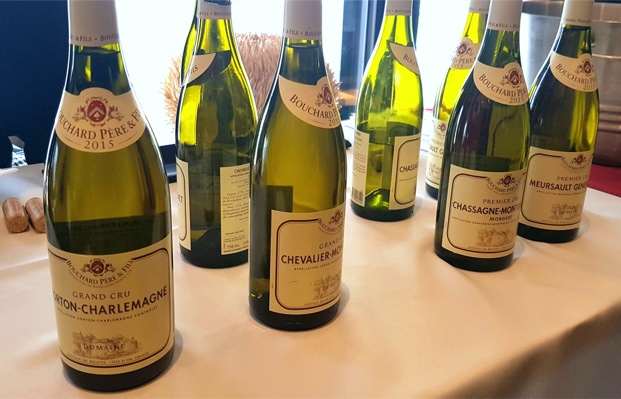

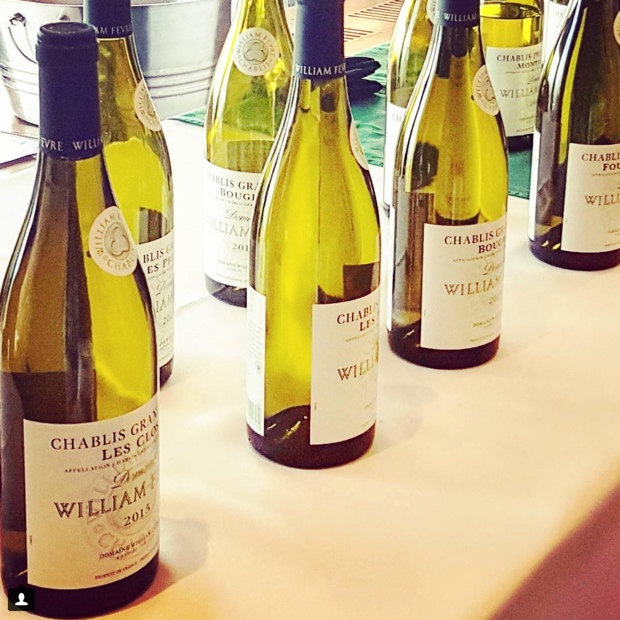
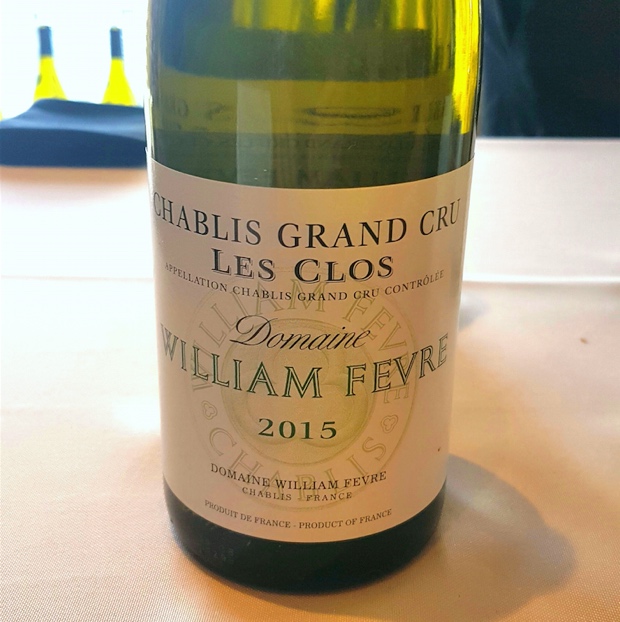

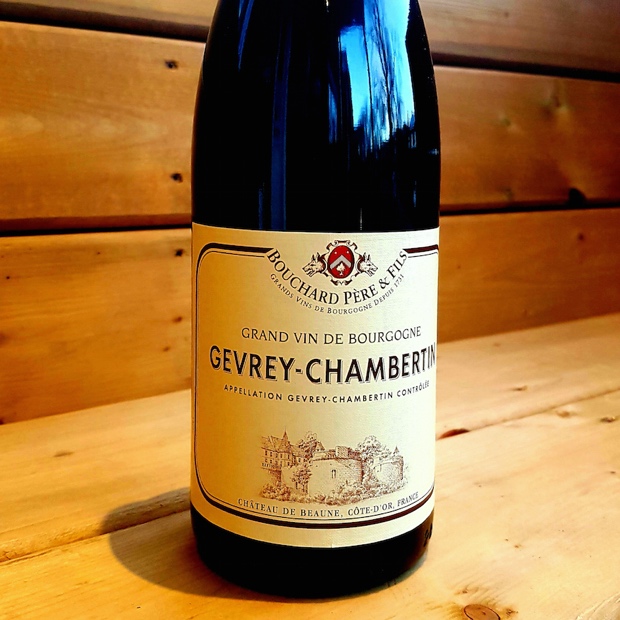
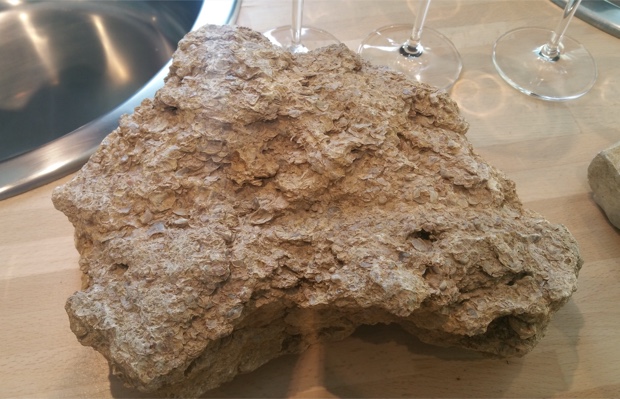
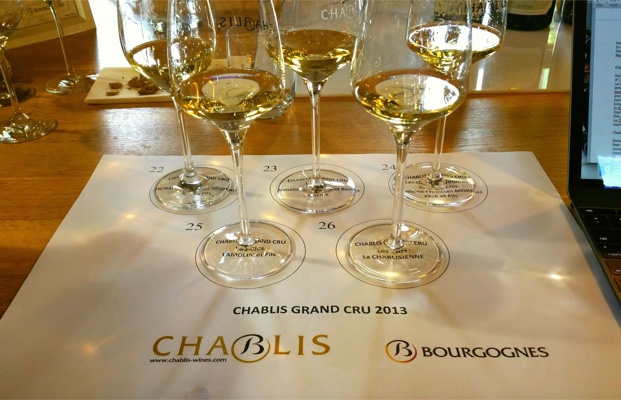
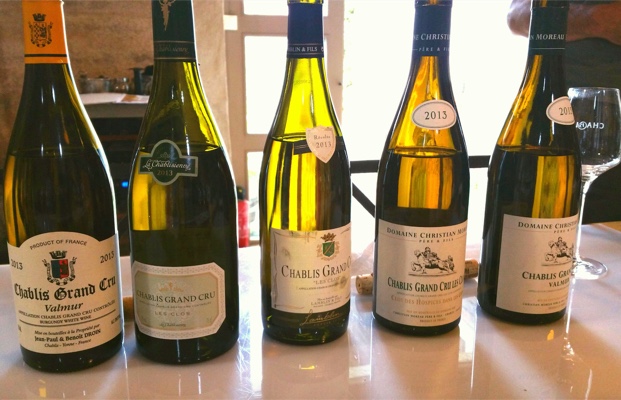
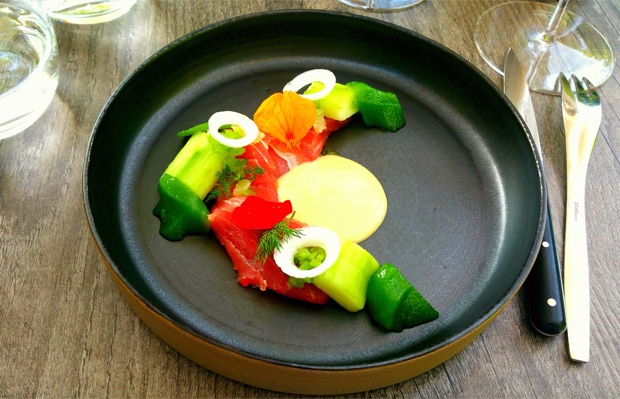
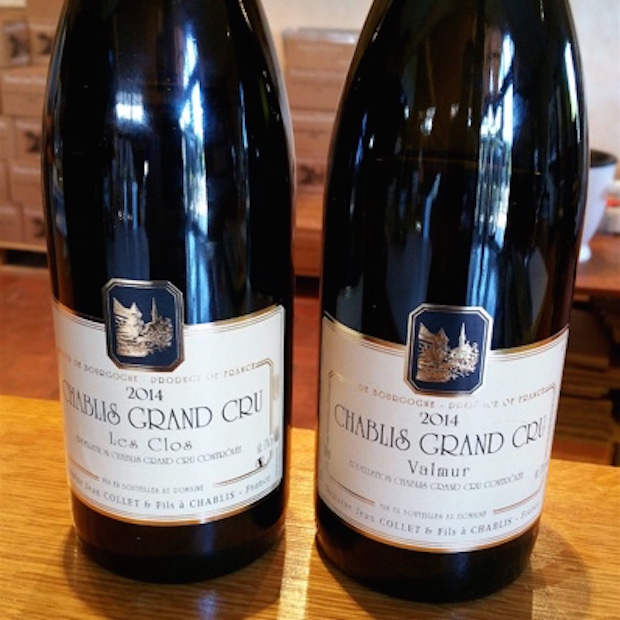
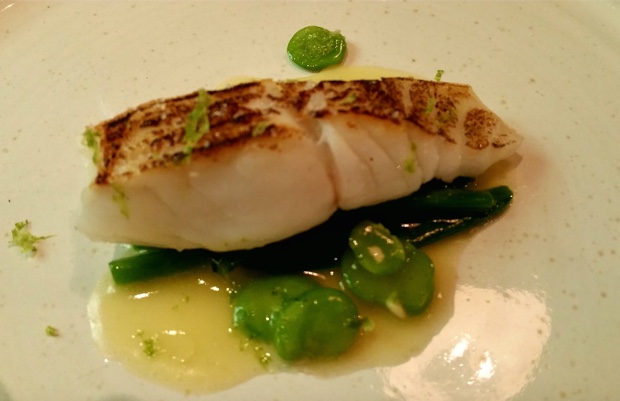
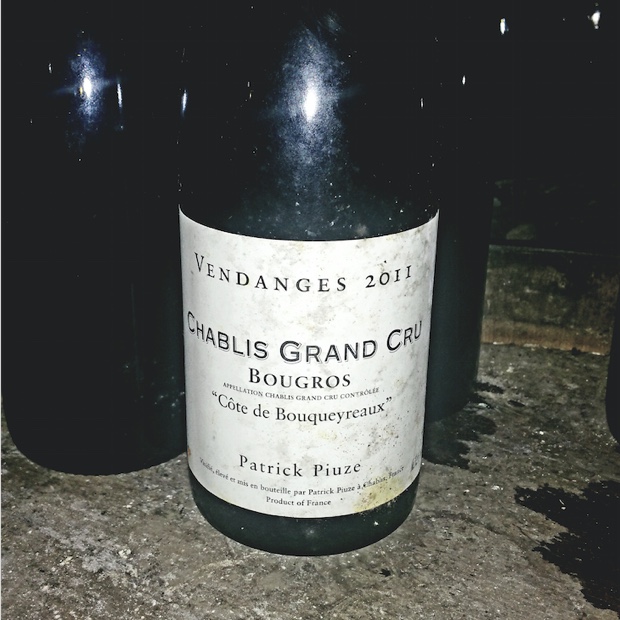
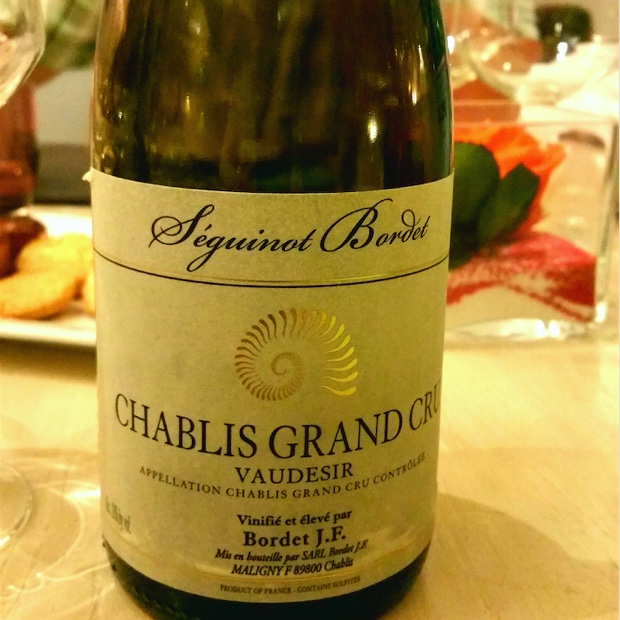
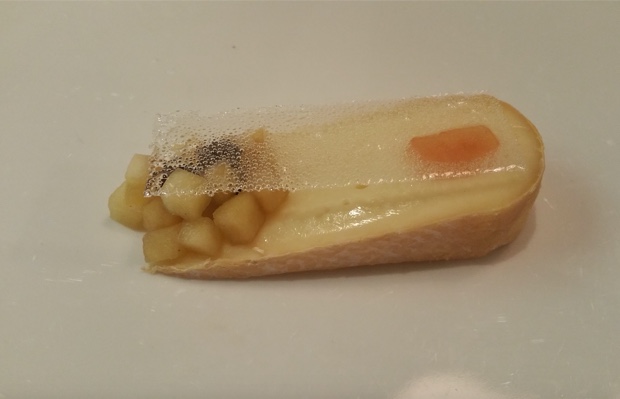
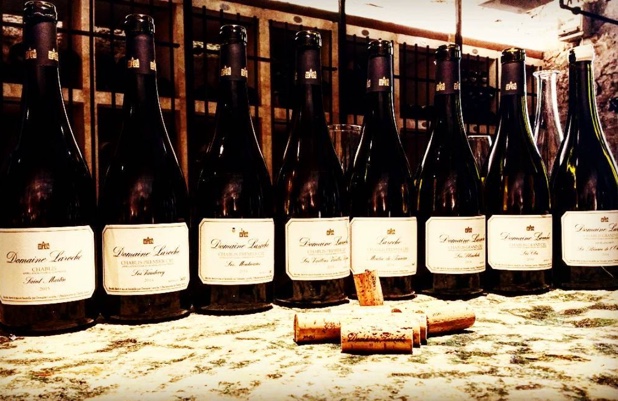
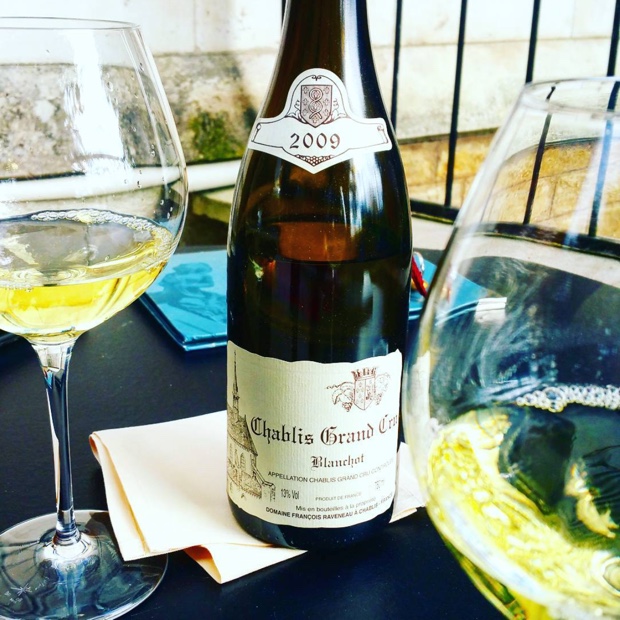
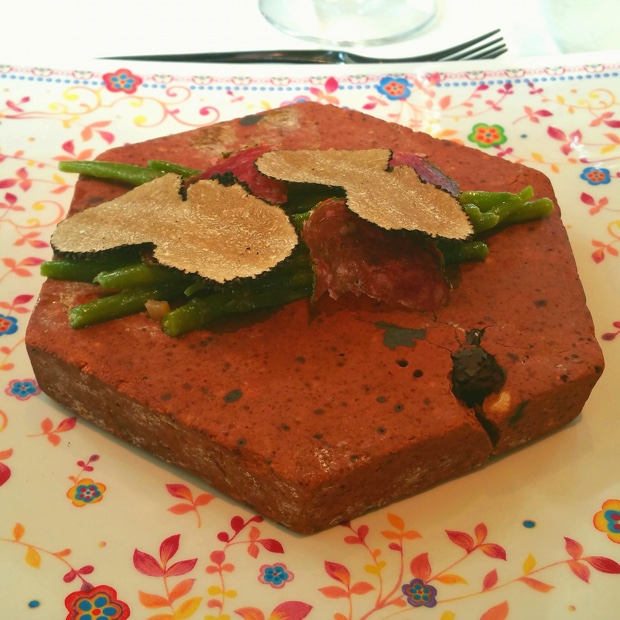

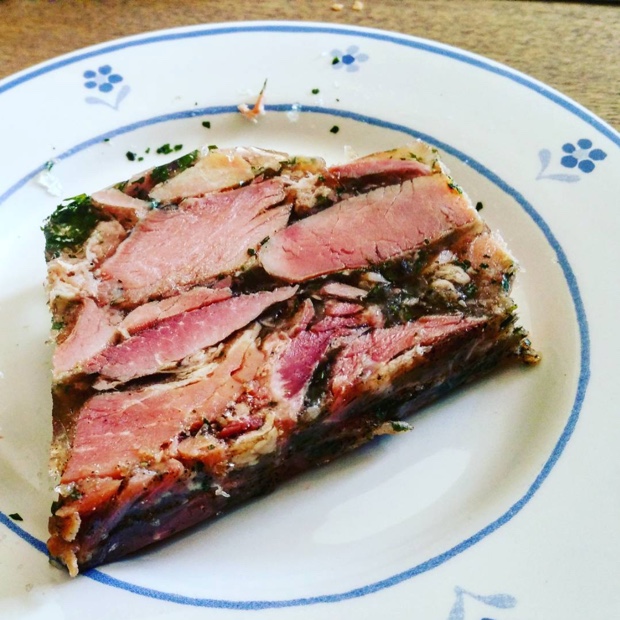
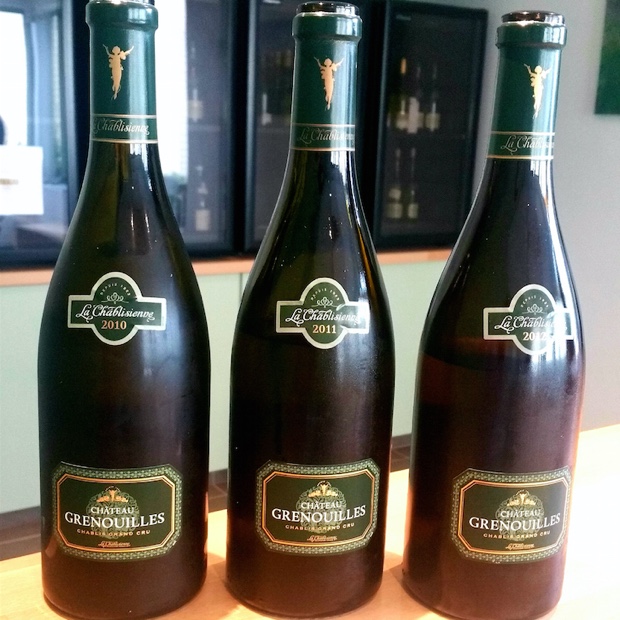
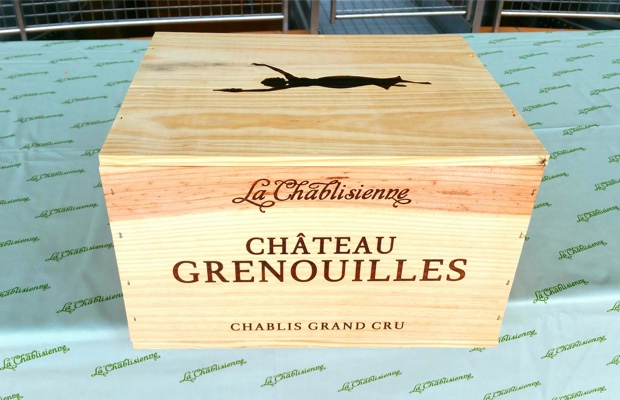
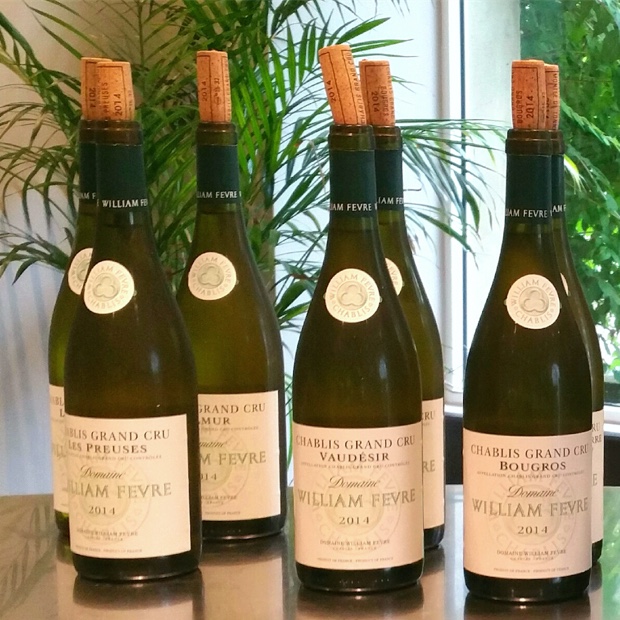

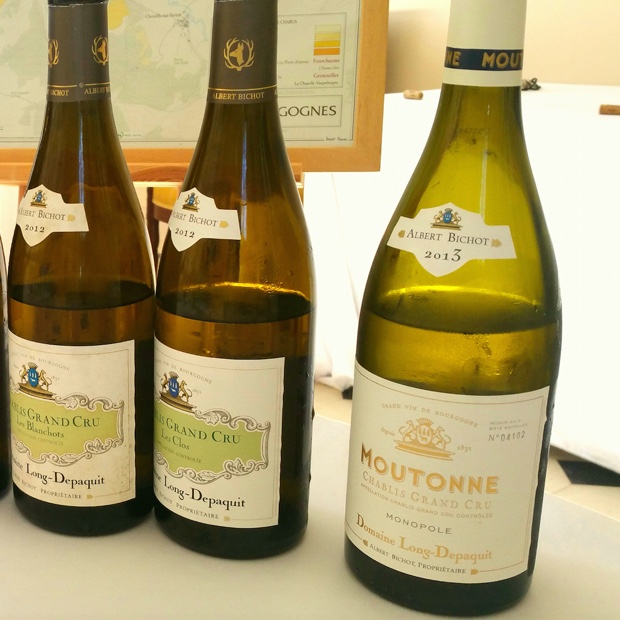

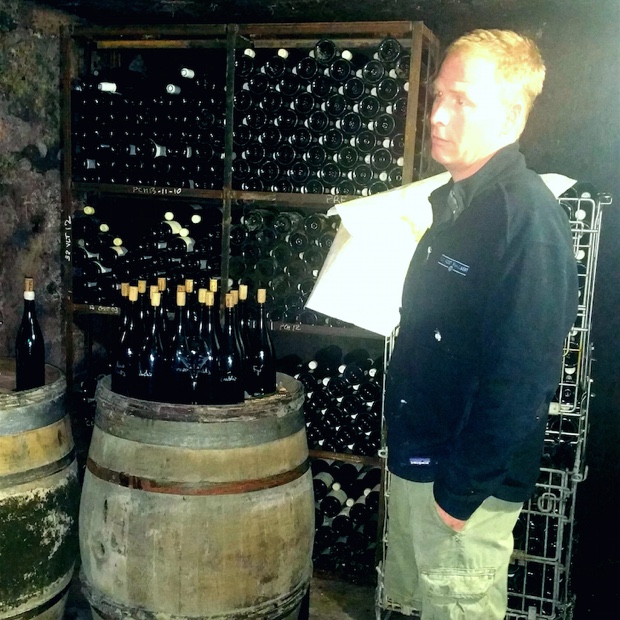
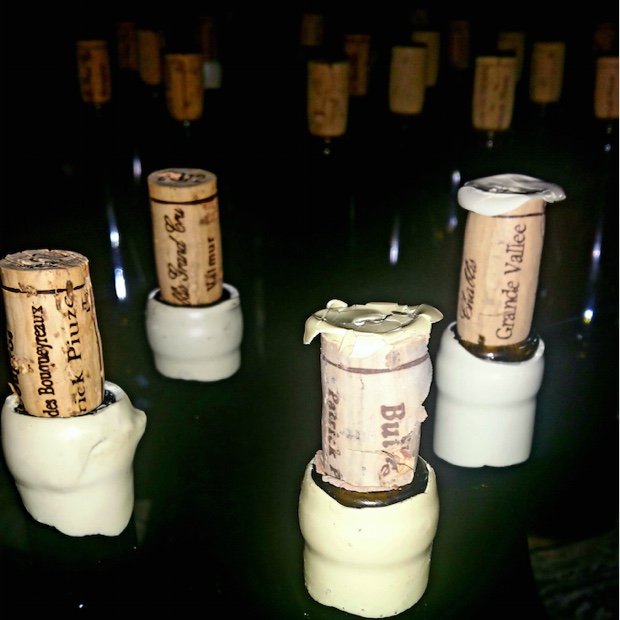
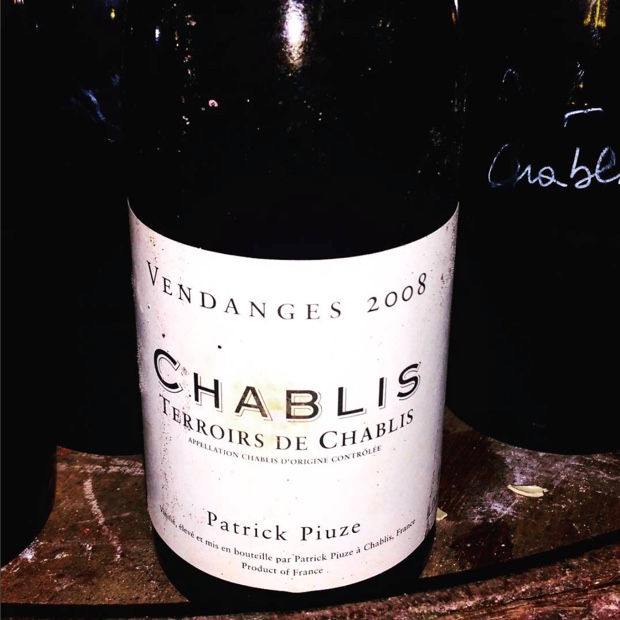

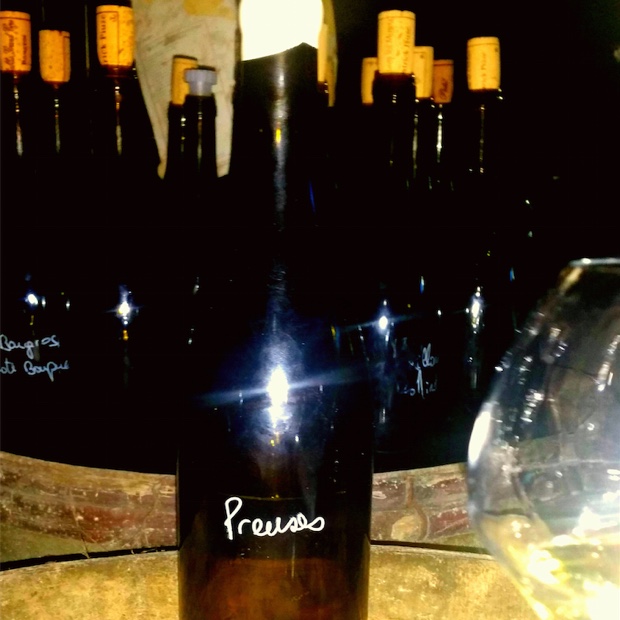

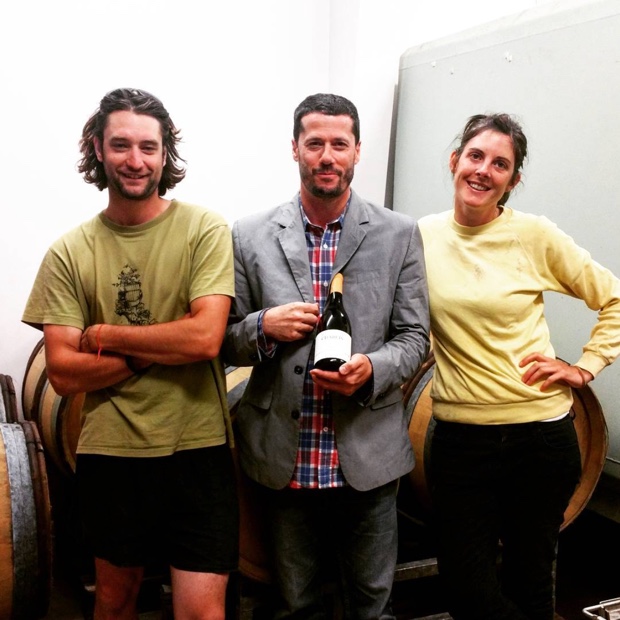
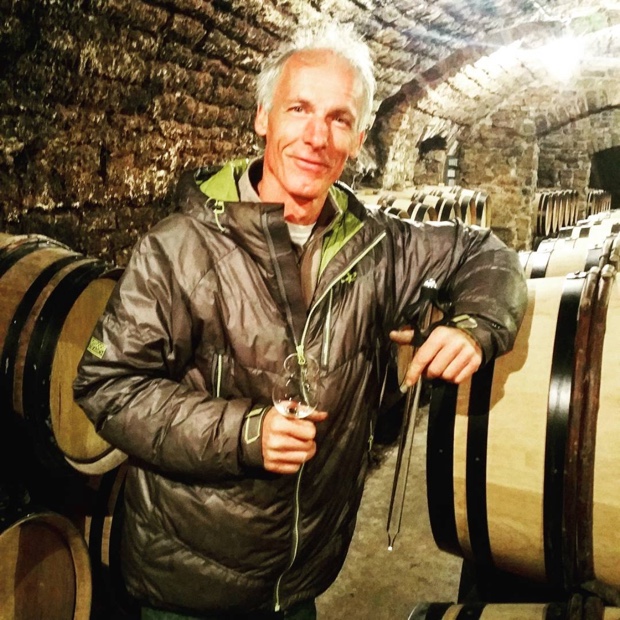
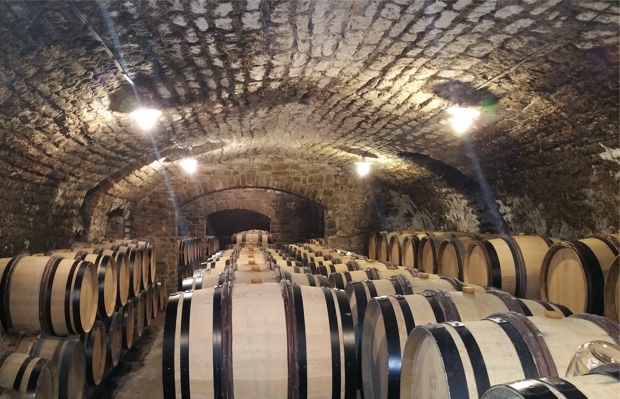
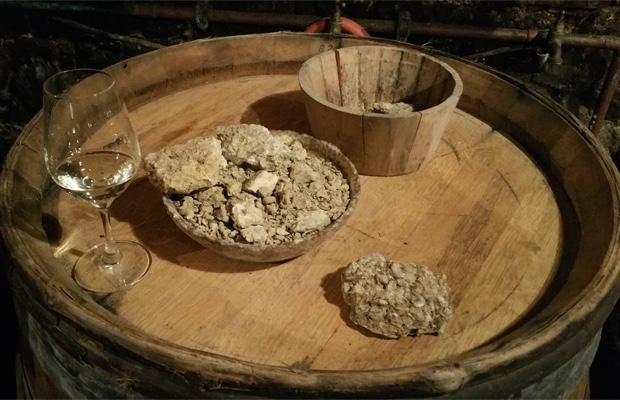
 Godello