Garnacha covered part four: Terra Alta

Terra Alta

Terra Alta

This is the fourth of five instalments concerning the wines of Garnacha from the regions of Aragón and Catalonia.

Related – For a comprehensive report by Sara d’Amato and I read WineAlignDiscover the Flavours: Wines of Garnacha

In October of 2015 WineAlign colleague Sara d’Amato and I travelled together with Christopher Waters of Vines Magazine.  The trip’s mission was to discover Spain’s Wines of Garnacha in their natural habitat, the five distinct and allied Denominación de Origen in the regions of Aragón and Catalonia.

Related – Garnacha covered part three: Somontano

Our host in Zaragoza was The Spanish Institute for Foreign Trade (Instituto Español de Comercio Exterior, ICEX), the Wines of Garnacha campaign and the office of Garnacha Origen. The trip was orchestrated with expertise by Aragón Exterior Managing Director Ignacio (Nacho) Martinez de Albornoz and Head of Wines from Spain (ICEX) Alfonso Janeiro. Our chaperones were Ignacio, Sofía González Martínez, Ivo André Alho Cabral and Roser Mestre, in Zaragoza and on expeditions to the five DO’s that comprise the wines of Garnacha.

Related – Garnacha covered part two: Cariñena

Related – We’ve Garnacha covered part one: Campo De Borja

Terra Alta

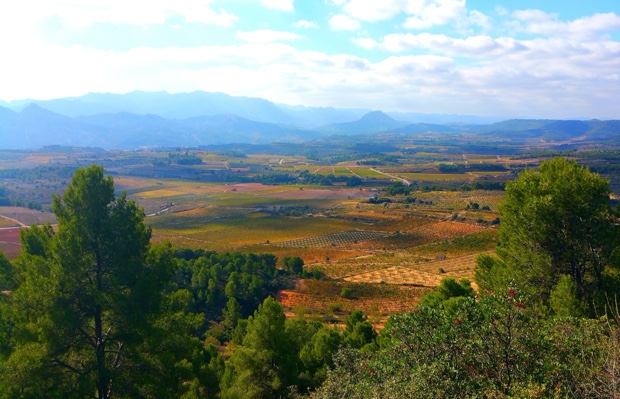
Crossed off the bucket list is a visit to the land of Garnatxa Blanca, Catalonian of the heart, in drive and from desire. The journey from Zaragoza to the furthest afield of Garnacha’s five D.O’s passes through vast stretches of landscapes in painted desserts and sculpted of mountain congeries. Soon the valleys begin to wind and snake their way between the limitless hills, tracing paths carved out in memory of long ago raging, ancient glacial rivers. The road slices through terraced panal, the spongy soils of Terra Alta, davenports to vines cultivated by the most prolific producers of white Grenache in the world. In Terra Alta, that number occupies 49 percent of the total Spanish production.

Terra Alta can be found in the southwest corner of the northeast corner of Spain. In a nutshell it may be incongruously defined as a large geographical area, “la más meridional de Cataluña,” with a small population of a mere 12,000 inhabitants. The prevailing winds, el Cierzo from the north and the summer Garbinades, “the Arab wind” from the southeast, add humidity, to protect from vine disease and to help finish a grape’s ripening process. Unlike its Aragonese brethren, the grape varieties grown in Terra Alta at times need a little help from their friends. To that end, five years ago an irrigation system was created, useable from May to September, to also help with the ripening process.
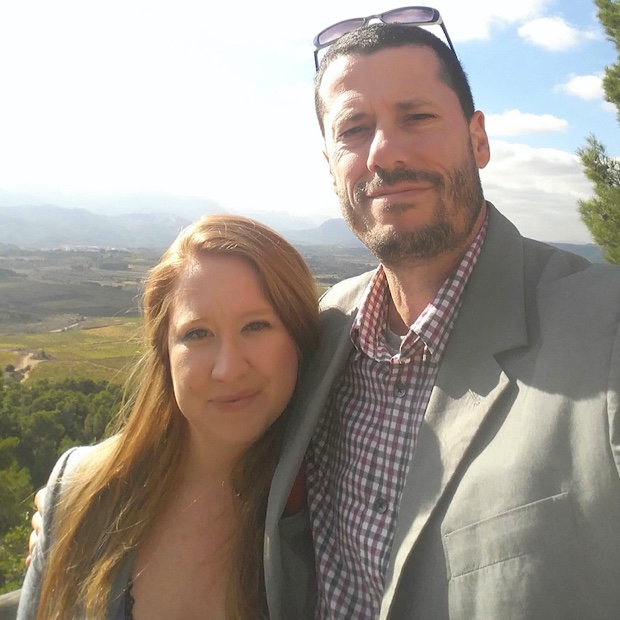
Interpid travellers in Terra Alta: WineAlign's Sara d'Amato and Godello

Interpid travellers in Terra Alta: WineAlign’s Sara d’Amato and Godello

It is fascinating to note that when Pablo Picasso was sick he came to Terra Alta for the air. He also came for the wine. He drank what was called vino brisat, skin macerated white wine, somewhere between orange and straw wine. After his health was restored, he returned three years later and apparently developed his cubist style in Terra Alta. Picasso, innovator and oenophile privy to 21st century thought, knowing that white wines produced with a maceration step contain significantly more health restoring and promoting polyphenols than those produced in a more traditional way. Records show that Garnacha has been grown in Terra Alta dating back to 1647.
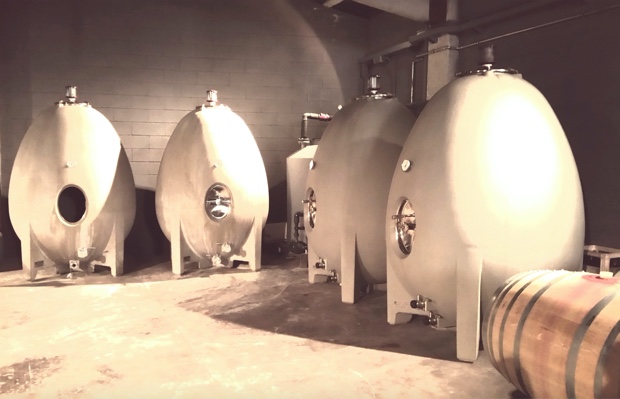
Cracking the wonders of #garnatxablanca @lafouceller #concreteegg @doterraalta

Cracking the wonders of #garnatxablanca @lafouceller #concreteegg @doterraalta

Terra Alta’s trump soil card is the panal, with its ability to retain moisture with nary rock or stone encumbrance. There are also soils imbued of limestone richness and a lack of organic material. The mediterranean climate combines abundant sunshine with little rainfall. Of the 6,000 total hectares planted, 1,400 is devoted to Garnatxa Blanca and the average annual production is seven million kg of grapes or, 50 hectolitres per hectare.

The DO “Terra Alta” (DOTA) was recognised provisionally in 1972. Together with Alella, Conca de Barberà, Empordà, Penedès, Priorat and Tarragona it is one of the seven historic denominations of origin of Catalonia. The first label noted as D.O. Terra Alta was 1984 and that wine was white. And so, today there are two symbols of guarantee, one for the D.O. as a whole and the other granted for whites. “SOM Terra Alta Garnatxa Blanca – 100×100.” More than simply a guarantee of 100 per cent Garnatxa Blanca composition, these wines must be deemed to score at least 85 out of 100 points in sensorial quality by the Consell Regulador. “Or you don’t get the sticker,” says proprietor of Altavins Viticultors de Batea Joan Arrufí, current president of the D.O. “Everyone is on board because it is necessary to put Terra Alta on the map.” The credo is “Cuerpo Y Alma,” or in Catalan, “Cos I Anima.” Body and soul.
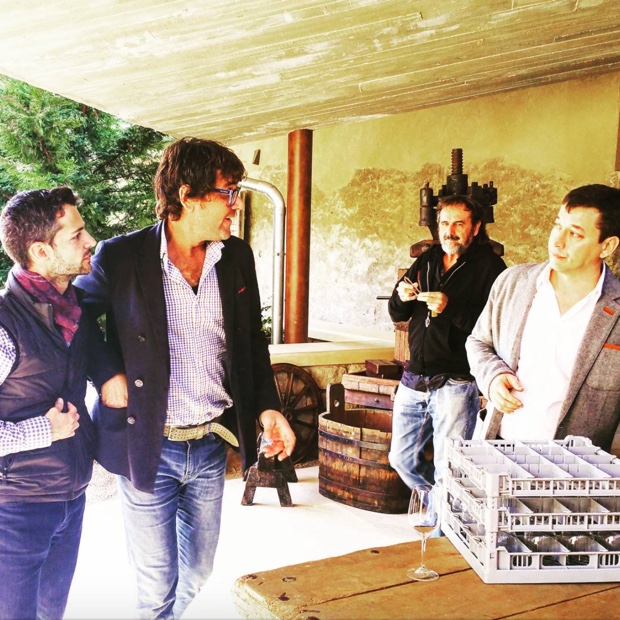
John, Paul, George and Ringo ready to play @doterraalta #garnatxablanca tunes for #loscanadienses

John, Paul, George and Ringo ready to play @doterraalta #garnatxablanca tunes for #loscanadienses

What is so curious about the White Grenache here is that more than any other Garnacha, red or white, produced in the five D.O’s of Aragon, the Blanca of Terra Alta has proven its ability to age. Arrufí tasted a 2001 the day before we arrived, saying “it’s perfect,” having changed from white fruits (banana, apple, apricot) to frutos secos (nuts), honey and almond flowers.

Winemakers presenting in today’s market are mostly young, the children of the older generation, adding freshness, elegance, new blood and a willingness to embrace technology. Unique to Terra Alta, the new generation is taking over the winemaking. Ask one how to prevent oxidation? Hand-pick, before the sun hits mid-sky, ferment at low temps and protect with lees. Good plan.
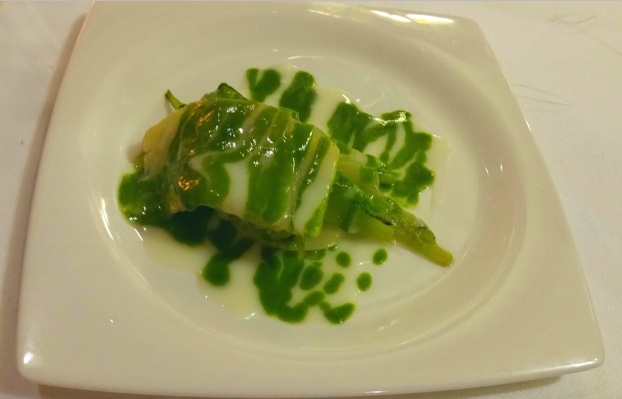
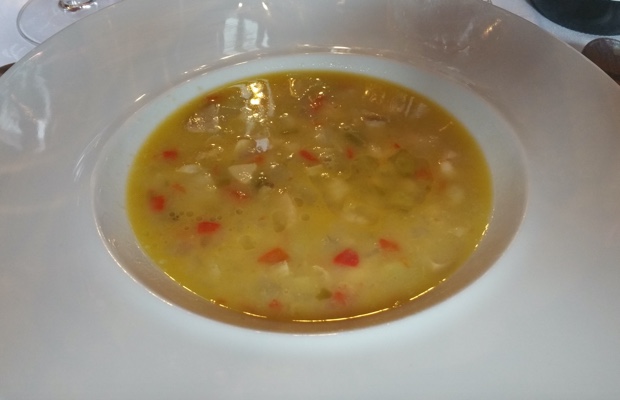
Borraja, potato, sauce of peas, Casa Lac, Zaragoza

Borraja, potato, sauce of peas, Casa Lac, Zaragoza

The night before heading out on the long trek to Terra Alta we pre-tasted some of the region’s wines at Ricardo Gil’s Casa Lac in Zaragoza. In Gandesa we met with Joan Arrufí at the offices of the D.O and then travelled to taste with the winemakers at Lafou Celler, followed by another tasting in the restored shell that once housed Corbera d’Ebre‘s destroyed church. It was at this meeting where the most poignant event of the Aragon trip took place.
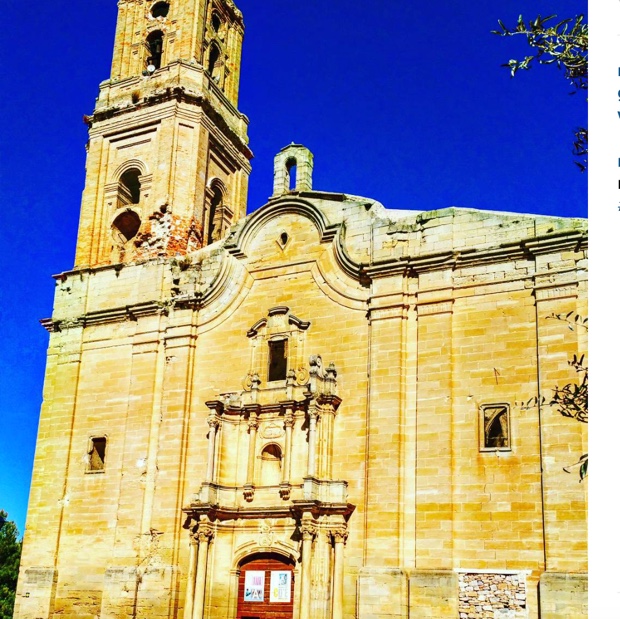
The art of survival and restoration #corberaderbe #spanishcivilwar #terraalta

The art of survival and restoration #corberaderbe #spanishcivilwar #terraalta

During the Spanish Civil War the Nazi warplanes dropped their bombs and Corbera d’Ebre was completely destroyed at the Battle of the Ebro (25 July–16 November 1938). The upper part, known as Poble Vell (Old Town), including the church were kept. One of the bombs landed in the river, killing a young girl and tossing her brother into the water.
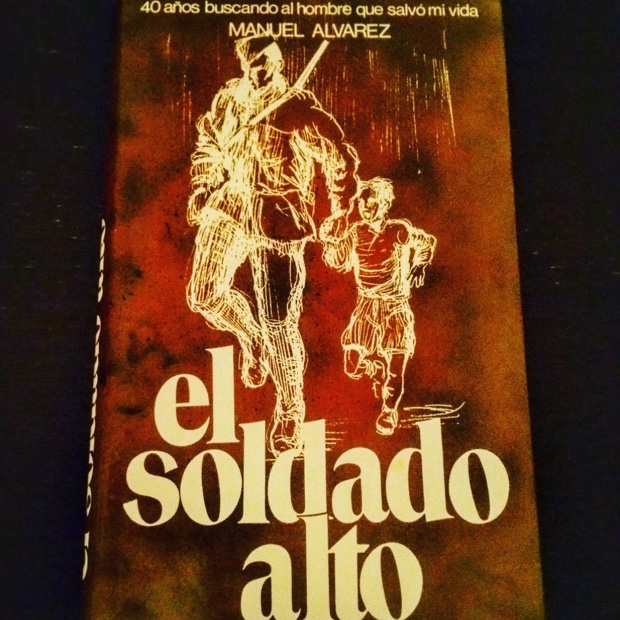
A beautiful gift to #teamcanada @waters_wine @saradamato from #terraalta #manuelalvarez #corberadebre #spanishcivilwar #canadiansoldier #mackenziepapineau

A beautiful gift to #teamcanada @waters_wine @saradamato from #terraalta #manuelalvarez #corberadebre #spanishcivilwar #canadiansoldier #mackenziepapineau

A Canadian soldier from the Mackenzie-Papineau batallion fished him out. That boy, Manuel Álvarez, spent his life looking for the soldier. He finally found him 40 years later, in Vancouver. El Soldado Alto (The Tall Soldier) is the book Álvarez wrote to thank him and keep the story alive. Upon arrival in Corbera d’Ebre the story was recounted to us, Los Canadienses, along with a presentation from Ramón Gironés Julia, treasurer of Associació del Poble Vell, with a copy of the book. The Canadian soldier’s battalion was named after William Lyon Mackenzie and Louis-Joseph Papineau, leaders of the rebellions of 1837 in upper and lower Canada. They sought liberty, social justice and democracy, a spirit which the Canadian volunteers carried to Spain. Our job now, as the next Canadians to visit Corbera d’Ebre, is apparently to save the wines of Terra Alta. We’ll do our best.
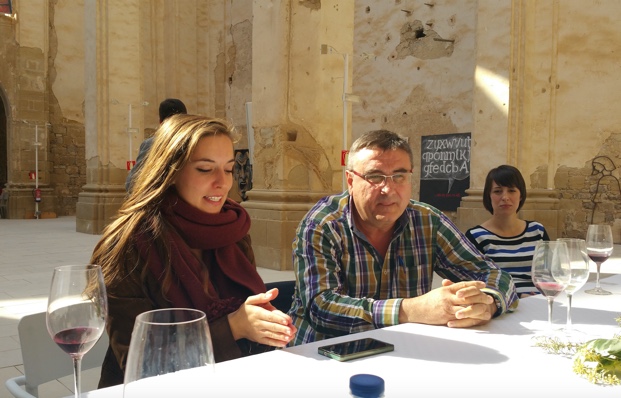
Sofía González, Wines of Garnacha and Señor Valiente, Vins de Mesies

Sofía González, Wines of Garnacha and Señor Valiente, Vins de Mesies

After the tasting in the historic village we went for lunch (ending at 6:15 pm) at Nou Moderno in Gandesa. The cooking and service by Rosa & Josep M. Vallespí is something every visitor to Catalunya need experience. We continued to taste the regional wines with Joan and the winemakers. The wines tasted were the following: Ilercavonia, by Altavins; Vallmajor Garnatxa Blanca and Tipicitat by Celler Batea; Edetària Selecció Blanc, by Celler Edetaria; Clos Dalián Crianza and Clos Dalián Crianza Blanco, by Cellers Unió; Mesies Garnatxa, by Ecovitres; Els Amelers, by LaFou; and Vila-Closa Garnatxa Blanca, by La Botera.
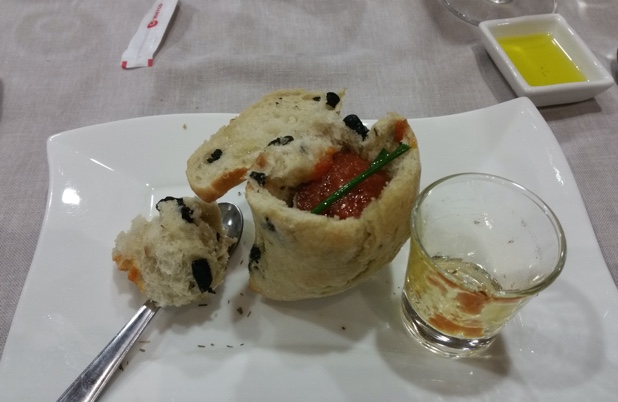
Nou Moderno Restaurant, Gandesa, Terra Alta

Nou Moderno Restaurant, Gandesa, Terra Alta

Celler Batea Vall Major Garnatxa Blanca 2014, DO Terra Alta, Spain (Winery, WineAlign)

With the intent to drink in the first year and quality to price ratio in mind, here the entry to Catalonian Garnacha Blanca. Sees 12 hours of skin contact, stainless steel housing after and with previous attention paid to low fermentation temperatures. Fresh as a brook running through a green spring glade. Pretty flowers, scintillant of acidity, young as a “back up the truck” kind of white. It’s chewy too. Has length of itself, from itself and for itself. Me, myself and I Garnatxa Blanca. From low yields in one of the higher production areas of Terra Alta. Tiny bitters arrive late, but still, that Terra Alta length. Drink 2015-2016.  Tasted October 2015  @CELLERBATEA1
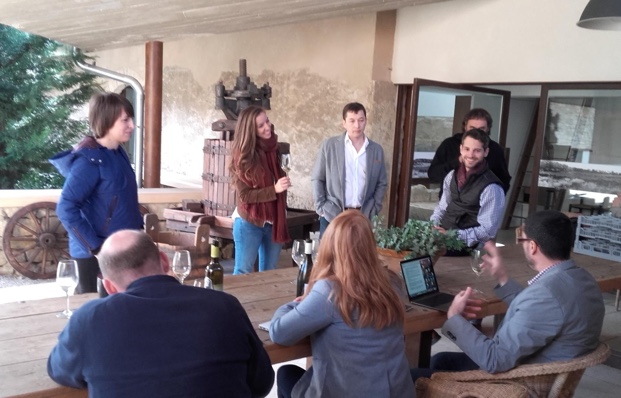
Los Canadienses taste and talk with the winemakers of Terra Alta at Celler Lafou photo (c) https://www.facebook.com/labotera.satlabotera/?fref=ts

Los Canadienses taste and talk with the winemakers of Terra Alta at Celler Lafou
photo (c) La Botera

Vins La Botera Vila-Closa Garnatxa Blanca 2014, DO Terra Alta, Spain (Winery, Agent, WineAlign)

“It’s also a young wine,” admits Laia, the winemaker. Built on crisp acidity from young vines and more structure from some older ones. Then blended together for a balanced White Garnatxa. The older vines come bound with an increase in altitude. “We play with the two, hand in hand.” This has a deeper, slightly medicinal or tonic inflection. Mostly from Panal soil – so there is richness and citrus, a preserved lemon. Such a different expression – strikes as more complex but at the inconsequential expense of freshness. Approximate price $15.95 CAN. Drink 2015-2017.  Tasted October 2015  @Bateabotera  @thatslifewines

Vins La Botera Vila-Closa Garnatxa Blanca 2013, DO Terra Alta, Spain (WineryAgentWineAlign)

Tasted in Toronto nearly a year ago. The handpicked Garnatxa Blanca from 35 year-old vines left to develop on the riper side of the equation blended with acidity elevating, younger fruit. Real cold soak plus three months of lees contact in stainless steel. So yes, this is a steely version, very much in the vein of straight-up Chablis. Bottled simplicity, limestone reckoning. Could drink this like water anytime the mercury rises. Approximate price $15.95 CAN. Drink 2014-2016.  Tasted November 2014
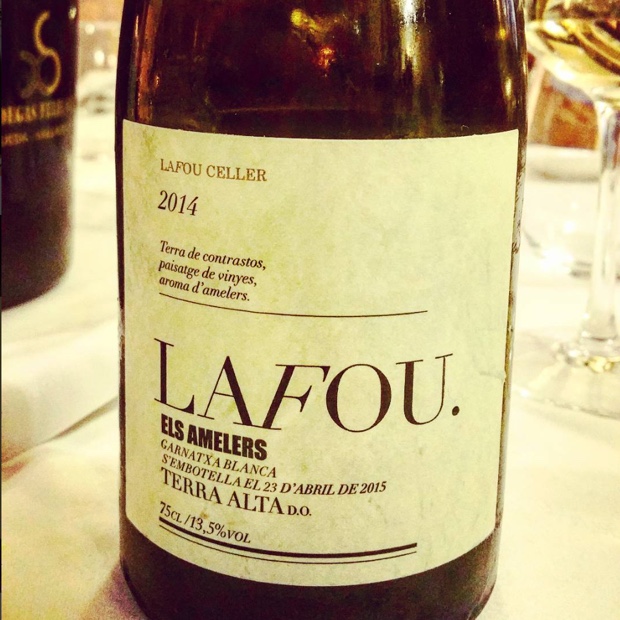
To taste again @lafouceller in @doterraalta is today's master plan @VINOS_ICEX #lovegarnacha #garnatxablanca #crdoterraalta

To taste again @lafouceller in @doterraalta is today’s master plan @VINOS_ICEX #lovegarnacha #garnatxablanca #crdoterraalta

Lafou Celler Garnatxa Blanca 2014, DO Terra Alta, Spain (Winery, Agent, WineAlign)

Ramon Roqueta Segalés, winemaker, soothsayer, visionary, seeker of the Garnatxa Blanca of today from “a narrow valley.” Ramon is very concerned with the valleys, the landscape, the geology, how the wind, the mediterranean climate and the ancient rivers that run through, having left their glacial deposits, all combine for this particular and most important expression of Garnatxa Blanca. Established in 2007, this wine was first released in 2011. Combines old and young fruit, some harvested fresher at a greener stage and others picked later, riper, brought together. Vinified separately, with some skin maceration, looking for fat to surround acidity. Ripe fruit (10 per cent) sees oak, the rest in egg shape concrete tanks with six to seven months of lees contact. Smells like a ripe peach, fresh and without sugar but instead a sprinkling of subterranean, ancient riverbed harvested salt. The tang is layered, variegated, mineral, mastered over and in corralling of oxidation, elaborated with gentle but forceful demand. “We learned that you can get a balance by harvesting and an early and a later stage, sometimes three times.” Finishes with lime, fresh squeezed, sweet tonic and distilled flowers. A wine that has succeeded in “mastering the oxidation process.” Plus the tannic (anti-oxidative) aspects offered in micro-oxygenation from the slightly toasted new oak. Approximate price $28.95 CAN. Drink 2015-2025.  Tasted October 2015  @lafouceller  @oenophilia1

Lafou Celler Garnatxa Blanca 2013, DO Terra Alta, Spain (WineryAgent, WineAlign)

Tasted in Toronto nearly a year ago, the mind’s eye and memory back remember a gorgeous wine, full of salient alkali in zest form, calcified sweet white flowers and the cleanest, most elegantly drawn lines. A prodigy of anti-terse White Grenache statements, so obviously cared for, from healthy vines the mild treatment by lees, wood or common concrete. In a nutshell, worth every penny of its $29 tag. Drink 2014-2023. Tasted November 2014
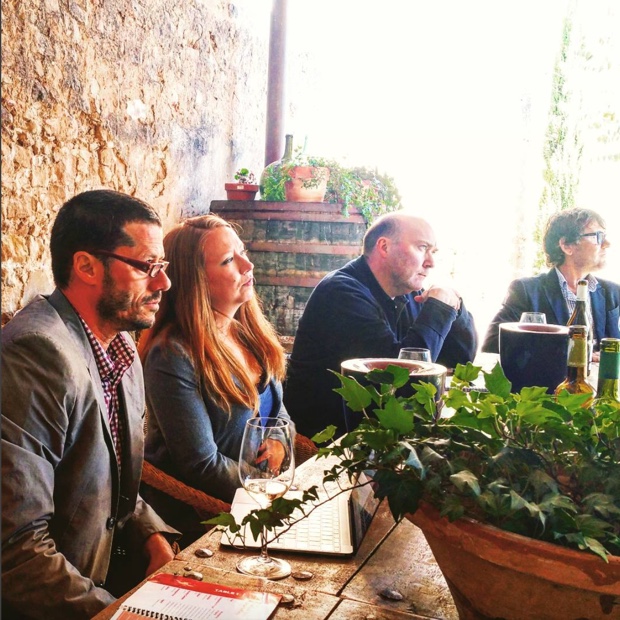
Los Canadienses @waters_wine @saradamato & @altavins getting serious with @doterraalta #garnatxablanca #joanbautistaarrufi #terraalta #lafou

Los Canadienses @waters_wine @saradamato & @altavins getting serious with @doterraalta #garnatxablanca #joanbautistaarrufi #terraalta #lafou

Altavins “IL” Ilercavònia Garnatxa Blanca 2014, DO Terra Alta, Spain (Winery)

Named for the people in the west of Catalonia, Iberians who lived in Terra Alta and the surrounding areas from the 6th to the 1st century BC. From old vines (up to 46 years) shown cold fermentation and three days of skin contact. Time in 400L oak barrels (five months) on the fine lees. Here the most bronzing of all the White Garncaha we’ve been shown, certainly on the oxidative side. Fine pretty flowers and equally fine bitters on the finish. Fine acidity as well. All of this speaks to the phenolics, all pieces of essential White Grenache, all aligned. Herbal and platinum, in hue forward to sensation. This is the adult expression and a wine that can and will age (2001 was the first and we are told it lives very much still). This is very grown up, another chapter all together. Already showing what it will be – very mineral and yet acidity not the same in any way, as compared to the others. Yet very long. slowly, evocatively, long. Drink 2015-2025.  Tasted October 2015  @altavins

Los Canadienses taste with the winemakers of Terra Alta at Codera d'Ebre<br /> photo (c) La Botera

Los Canadienses taste with the winemakers of Terra Alta at Codera d’Ebre
photo (c) La Botera

Edetaria Selecció White Vinyes Velles 2013, DO Terra Alta, Spain (Winery, Agent, WineAlign)

From a fourth generation family vineyard in Gandesa, a project that began in 2003. Fully, completely Garnatxa Blanca, from a group of old vineyards, cooled down a degree or two more than the norm for 24-48 hours, with skin maceration. Barrel fermented in small casks for eight months, this also leans oxidative but never gets there, even less than the IL. White flowers, imaginations of futures thickened by honey and glazed in apricot. Possessive of a Riesling-like nose, Sémillon lean and pinpoint accurate clarity. Such a proclivity to seek evolution this alternative custodian of the Garnatxa varietal necessity. Seeker and keeper of tradition and to let the world know what has always been possible. This has acidity. It really has it. Bridges so many philosophies, histories and realities; Alsace Riesling, South African Chenin Blanc, Greek Roditis. Approximate price $39.95 CAN. Drink 2015-2023  Tasted October 2015  @EdetariaCeller

Edetaria Selecció White Vinyes Velles 2012, DO Terra Alta, Spain (WineryAgent, WineAlign)

Tasted in Toronto nearly a year ago. From the famous panal soil, fossilized sand dunes low in organic material and even lower in yields. Managed in go it alone ways for Terra Alta, with grapes kept gelid at zero degrees during the process and individual plot vinification prepared in 300L oak barrels. Primary aromas are the launching point and the end game. Eight months later a most unique aroma subsists and emits potency, leading to layering. A portent for pure distillation in White Grenache. Approximate price $39.95 CAN. Drink 2014-2021.  Tasted November 2014

Edetaria Garnatxa Blanca 2013 and Mesies Garnatxa 2014

Edetaria Garnatxa Blanca 2013 and Mesies Garnatxa 2014

Ecovitres Vins de Mesies Garnatxa 2014, DO Terra Alta (Winery)

Founded in 2002, Ecovitres stands alone in philosophy meets execution. The organics are a no-brainer in  their minds, in a land where the winds blow and vine disease is less than a deterrent or an issue. Here the producer of the eco-Garnatxa, from lots of cropping and the moving of soils for humidity, Such a soil impart in this Tinto, brimming with cure, natural charcuteries derived from a range of protein and fresh, liquid chalky red fruit.”This is what Red Garnatxa should be,” insists winemaker Señor Valiente. A wine of light colour, of natural yeasts, of freshness and of minimal sulfites. Just a minor pump over to keep the cap wet, from drying out and from letting foreign agents to enter. Very brave for making wine this way, without pre-pioneers. The irony is not lost, on me or Señor Valiente. Drink 2015-2020.  Tasted October 2015  @VINSdeMESIES

One final wine, tasted at Nou Moderno Restaurant in Gandesa. The day was already 10 hours old, many courses had been consumed and we knew there were many more to come a mere three hours away. So I did not take notes here, but I can say this. Red Garnacha from Terra Alta has the ability to age.
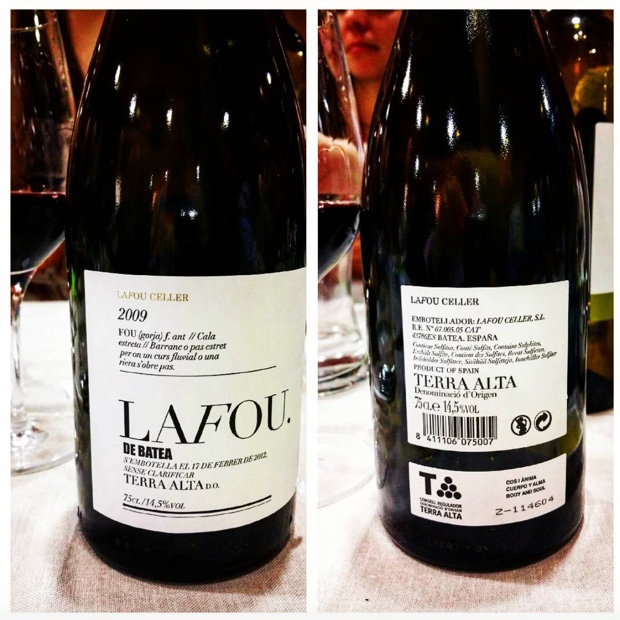
Talking 'bout aged red #garnacha @lafouceller 2009 #terraalta #batea #bodyandsoul #cosianima #cuerpoyalma

Good to go!

Twitter: @mgodello

Instagram: mgodello

WineAlign: Michael Godel
Facebook

We’ve Garnacha covered part one: Campo De Borja

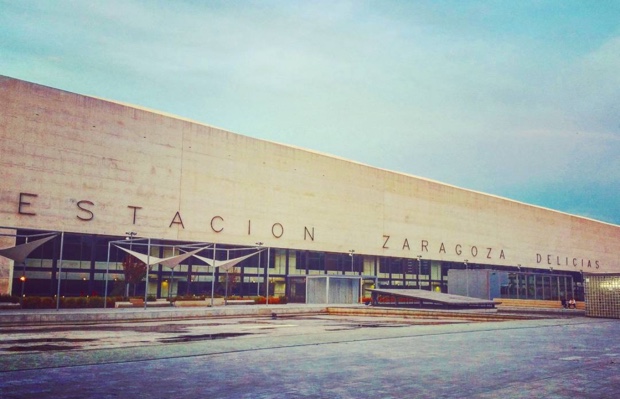
Estación de Delicias de Zaragoza at dusk #CarlosFerrater #aragon #espana

Estación de Delicias de Zaragoza at dusk #CarlosFerrater #aragon #espana

In October of 2015 WineAlign colleague Sara d’Amato and I travelled together with Christopher Waters of Vines Magazine.  The trip’s mission was to discover Spain’s Wines of Garnacha in their natural habitat, the five distinct and allied Denominación de Origen in the regions of Aragón and Catalonia.

Related – For a comprehensive report by Sara d’Amato and I read WineAlignDiscover the Flavours: Wines of Garnacha

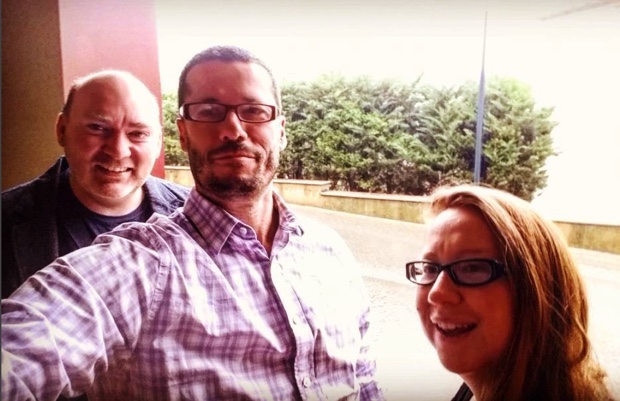
Christopher Waters, Ivo André Alho Cabral, Sofía González Martínez and Sara d'Amato in Zaragoza

Christopher Waters, Ivo André Alho Cabral, Sofía González Martínez and Sara d’Amato in Zaragoza

Our host in Zaragoza was The Spanish Institute for Foreign Trade (Instituto Español de Comercio Exterior, ICEX), the Wines of Garnacha campaign and the office of Garnacha Origen. The trip was orchestrated with expertise by Aragón Exterior Managing Director Ignacio (Nacho) Martinez de Albornoz and Head of Wines from Spain (ICEX) Alfonso Janeiro. Our chaperones Sofía González Martínez, Ivo André Alho Cabral, Roser Mestre and Ignacio left no Aragonese or Catalonian stone unturned during a week-long investigation, immersion and intercommunication with the vineyards, winemakers, mayors, restaurateurs, residents and cultures of Aragón and Catalonia.

Rare rain all day in Aragon did not deter Los Canadienses @waters_wine @saradamato #lovegarnacha

Rare rain all day in Aragon did not deter Los Canadienses @waters_wine @saradamato #lovegarnacha

As a rule, the provincial link between traditional varietal and felicitous region gathers together ancient history and existentialist wine culture in the most acute of ways. The racking path from endemic to modernist is trod for the purpose of explaining why this place is an essential source for affordable wines of exceptional quality. This is the crux of what the Aragón and Catalonian vignerons are after. For decades they have been farming century-aged bush-vines, harvesting fruit that sells for one euro per kilo (plant) and seeing their wine demand a paltry $12-15 CAN (often the equivalent of $9.99 US). The lack of congruent nature of the equation and let’s be serious, the undignified injustice of the flow through is something that needs to be addressed. The challenge is one of necessity and immediacy.

The five DO’s of Aragón and Catalonia are heavily populated by cooperatives and very few wine-producing countries or regions (save perhaps for Chablis or Barbaresco) achieve so many positives from that kind of wine-producing philosophy and execution. This weight of such a collaborative culture is not lost on anyone.

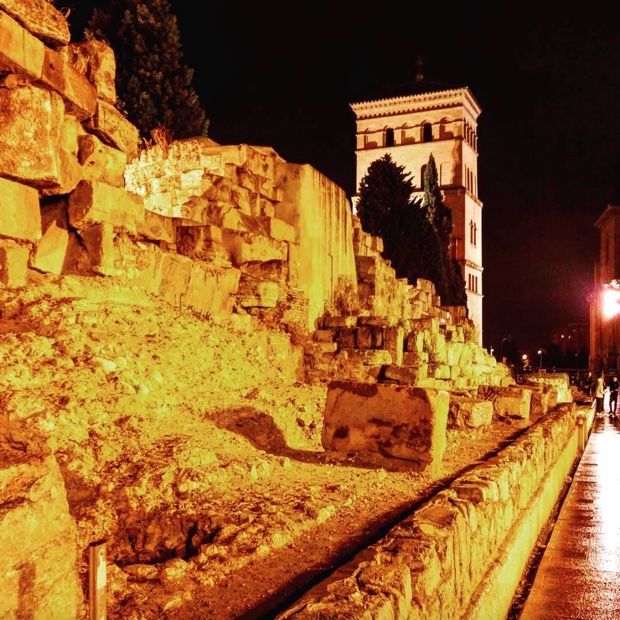
Where didn't the Romans build a wall? #citieswithruins #Zaragoza

Where didn’t the Romans build a wall? #citieswithruins #Zaragoza

The argument as to why the wines of Garnacha origin will not command justifiably higher prices defaults to geography and history. This northeastern quadrant of Spain (including Catalonia) has seen a lion’s  share of war, famine, poverty and neglect. The people have suffered and persevered, albeit in a state of relative isolation. Terra incognita within a stone’s throw of (less than two hours to either Madrid or Barcelona) civilization. It is ironic that the wines are perhaps too comfortable, likewise fruit juicy and easy to consume. Global perception would imagine the wines of Campo de Borja, Cariñena, Somontano, Terra Alta and Calatayud as inaccessible, austere and rustic. Nothing could be further from the truth.

I would contend that the problem is that the wines are not tough enough. Garnacha is supported by all the fight corner help it needs but it’s just too darned soft. The lack of rain, abundance of wind, embarrassment of altitude and slope riches allow for levels of diversity and complexity other wine regions would kill for. Very few pockets of wine growing acreage have any trouble ripening grapes. Day and night temperature fluctuations are constant and in some areas, extreme. Disease is nearly non-existent thanks to the prevailing winds that blow nearly two out of every three days year-round. Soils are chalk full of rocks, stones and vine-affirming mineral. Plants must work hard to penetrate the poor soils. Climate, geography and geology are not the problem.

Why complain about wines that are perfectly ripe? Isn’t that what every farmer wants from his children, for them to complete their phenolic journey and grow up fast? I would argue no, that the grapes need to be picked when the graphing of ripeness and acidity are protracted at the crossroads of their perfect vertices. I would also argue that pressing needs to be done at colder temperatures and for the younger grapes, in certain situations, with some carbonic maceration.

As far as the old vines are concerned, the primary concern is shelf life. Most of the Garnacha produced in this part of Spain carries with it a potential for aging of no more than five years. Many producers keep that maximum goal in mind. A week of tasting through red and white Garnacha reinforced the point but there were a handful of wines that begged to differ. Laying down Garnacha is possible. The winemakers must be willing to take some risks.

Think of this. A producer presents two bottles of Garnacha Tinto, one from younger vines and one from 50-plus year-old bush vines. The first sees only stainless steel fermentation or perhaps three to six months in older oak barrels. The second sees an extended élevage though only a frugal amount (less than 20 per cent) of new wood. They both come in at a maximum 14 per cent alcohol, carry residual sugar numbers of less than 3 g/L and yet both maintain a vibrant acidity number of at least 5-6 g/L. In some cases concrete egg fermenters and/or large foudres are part of the processes. Their pedigree is brimming with history, tradition and physiographic earth sciences. Their agriculture is essentially organic (though they require no formal certification), the fruit is picked early to preserve optimum natural acidity and their fermentations are as wild as the day yeast came to be on this earth.

The young wine if fresh, clean, crisp, pure and full of vitality. It will drink well from now and up to five years. The more serious Reserva-style bottle will have the potential to evolve and develop, though it carries with it that impossible feeling of having already aged right from the start. It will drink beautifully for up got 20 to 25 years. The wines retail in Canada for $18.95 and $34.95, respectively. Which one would you buy? Seeing as how they compliment each other so well, why not both?

Campo De Borja

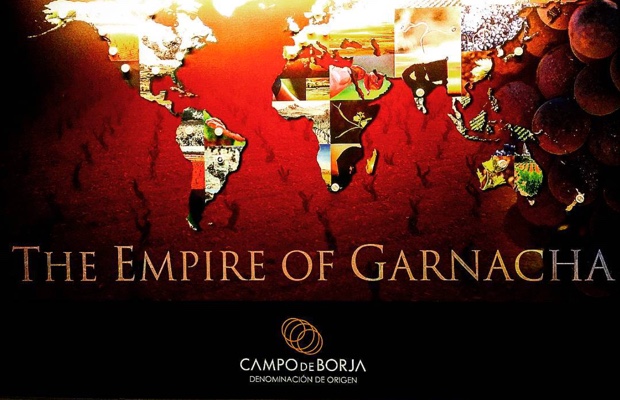
The Empire of Garnacha

The Empire of Garnacha

The Empire of Garnacha

Of the five DO’s (Denominación de Origen) that comprise the collective wine growing regions located in Aragon and Catalonia, none walk with a swagger like Campo de Borja. President Eduardo Ibañez Aranda and Secretary José Ignacio “Nacho” Gracia Lopez rule the Empire of Garnacha, a self-proclaimed stewardship for the grape and for Campo de Borja as the centre of its universe.

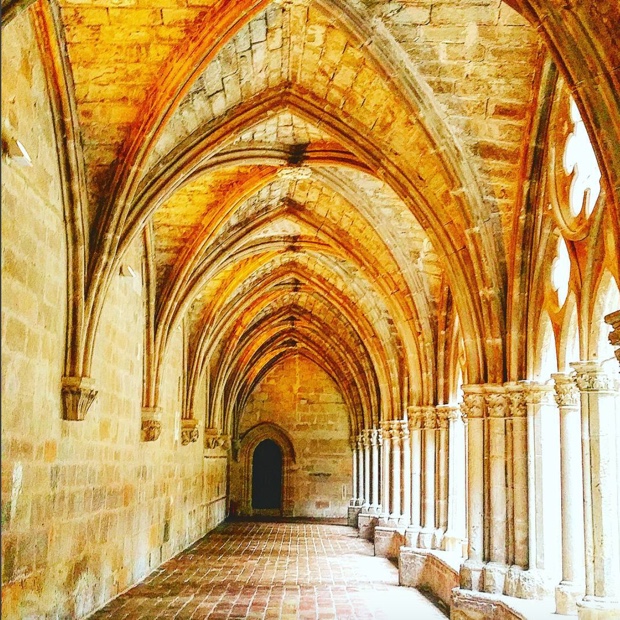
The Cistercian Monasterio de Veruela

The Cistercian Monasterio de Veruela

The two proud men have reason to state such territorial claim. Campo de Borja will play host to Grenaches du Monde. “The Weekend of Garnachas,” organized by the Roussillon Inter-professional Wine Council of France (CIVR). Grenaches of the World was held in France in its first three years. In 2016, Campo de Borja plays host to the competition.

Monasterio de Veruela

Monasterio de Veruela

The oldest vineyards in Campo de Borja date back to 1145. A visit to the 12th century Cistercian Monasterio de Veruela, home to the offices occupied by the Denominación de Origen, wine shop and wine museum (Museo del Vino), answers the historical query. Marble columns in three-dimensionally sculpted relief show grape leaf craftsmanship dating back to the middle ages.

Veruela was the home of one of the most important Romantic Spanish poets: Gustavo Adolfo Bécquer, who lived in the abbey during 1863. He is the author of the following verses, maybe among the most famous pieces in the History of Spanish literature:

Qué es poesía?, dices mientras clavas en mi pupila tu pupila azul. Que es poesía? Y tú me lo preguntasPoesía… eres tú.

What is poetry?, you say. As you fix my eyes with yours of blue. What is poetry!… You ask me that? Poetry… It is you!

Rima XXI, Gustavo Adolfo Bécquer

In Aragón, diverse soils, altitude, slopes and prevailing winds all contribute to grape growing excellence. Campo de Borja’s trump card is a mountain. Other regions such as Cariñena find benefit from Moncayo, but nowhere does its 2,315m in altitude have an effect on vines as it happens in Campo de Borja.

“Cierzo que almuerza y cent, dura tuna quincena”

Museo del Vino Campo de Borja

Museo del Vino Campo de Borja

More than 2,000 hectares are 30+ yr-old vines. The climate receives an Atlantic influence and above all else there is the famous wind. El Cierzo blows 234 days a year, the “strong wind” blows after the rain, dries out the vines, eradicates disease and elicits increased probabilities for grape concentration. The saying goes “today is raining, tomorrow it will blow.” El Cierzo, as it has been called for 2,000 years, “has lunch and dinner lasts for a fortnight.” No one knows why. Maybe the Zaragozan Virgin of Pilar knows.

Campo de Borja is described as a “homogeneous physical space capable of producing wines with peculiarities.” Much of its viticulture, in kinship with the other four Aragonese DO’s, perpetuates the viñedo en vaso, “vines in a glass,” or bush vines, calculated at 2000 plants per hectare in density with three metres between rows.

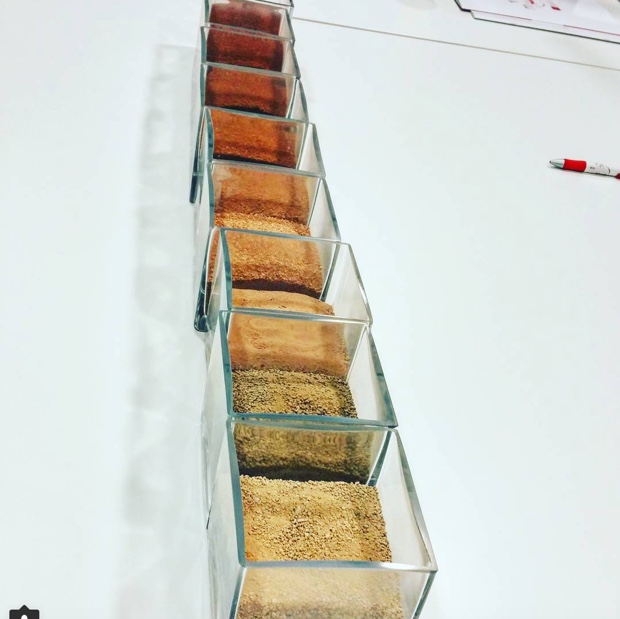
The soils of Campo de Borja

The soils of Campo de Borja

Great fluctuations happen in this D.O., located 30 miles west of Zaragoza, where the earliest maturing, lowest section habituates the Ribera del Ebro at 239m and yet other vines are planted up to 1000m. At low altitudes (200-300m) there are finer, lighter soils. In between the vineyards of Ainzon, Borja and Fuendejalon are situated between 450 and 550 metres above sea level, occupied by the terraces of  La Huecha river, a tributary of the Ebro with soils composed of stones and ferrous-clay. The D.O’s top plantations are in the upper reach, Moncayo foothills area of Alta de Ainzon and Fuendejalon, as well as the municipalities of Tabuena, El Buste and Vera. At these higher climes (up to 900-1000m) there is more limestone and iron, so darker soils with obvious increase of mineral.

Yields are quite low (30-35 hL/L), very vintage dependent and in some areas, in certain years it can be as low as 20-25. Yields are the key to understanding the value of wines from Campo de Borja, that and the iron-rich soil minerality.

Vines here see long cycles, with late maturing fruit of soft tannins and high glycerol concentration. Garnacha is a pro at climate and poor soil adaptation. It can be picked well into November and despite the lower tannins, treated properly it possesses the flexibility to develop complexity with short-term aging.

Every Grenache growing region of the world (The Rhone, Australia, South Africa) have their own special aromatic identity, whether it by garrigue, earthy reduction or soil-driven funk. A mountain herb called tomillo (thyme) grows everywhere around Moncayo. In Aragon there is an expression “when it is foggy in the morning there will be walking in the evening” and when it rains there is an all-encompassing scent in the air. That perfume is what gives these wines their special something. The amalgamation of mineral, earth and herb.

Meetings of the minds: Aragón Exterior Managing Director Ignacio Martinez de Albornoz, President Eduardo Ibañez Aranda Campo de Borja and Head of Wines from Spain (ICEX) Alfonso Janeiro

Meetings of the minds: Aragón Exterior Managing Director Ignacio Martinez de Albornoz, President Eduardo Ibañez Aranda Campo de Borja and Head of Wines from Spain (ICEX) Alfonso Janeiro

Christopher Waters, Sara D’amato and I sat down at the offices of the Campo de Borja for a presentation and a tasting of the D.O. wines with President Eduardo Ibañez Aranda, Secretary José Ignacio Gracia Lopez, Aragón Exterior Managing Director Ignacio Martinez de Albornoz and Head of Wines from Spain (ICEX) Alfonso Janeiro.

The wines tasted were Fagus, Coto de Hayas Garnacha Centenaria and Don Ramón Garnacha Imperial, by Bodegas Aragonesas; Ruberte Trésor, by Ruberte; Santo Cristo Garnacha Selección and Aletta, by Bodegas Santo Cristo; and Pdm, by Pagos del Moncayo.

Garnatxa of Campo de Borja

Garnatxa of Campo de Borja

Santo Cristo Seleccion Garnacha 2013, DO Campo de Borja, Spain (Quebec Agent Ontario Agent, WineAlign)

From a cooperative in the town of Ainzon, a 100 per cent Garnacha distributed by Eurovin (in Quebec) from 30-35 year-old bush vines at 500-600m altitude. Smoking of a deep black cherry, with violets and mild anise giving the feigned attitude of a candied sweetness. Though it’s warm and accented with quite the spice, aridity reigns and folds into the voluminous mouthfeel. This is extreme velvet, approachable and really put together, structurally speaking. Will benefit from two years further in bottle. There is plenty of fruit to support such patience balanced by a char and a density on the long finish. Would retail for approximately $14 CAN. Drink 2016-2019.  Tasted October 2015

Santo Cristo Seleccion Garnacha 2012, DO Campo de Borja, Spain (Quebec Agent Ontario AgentWineAlign)

The 2012 vintage of the Ainzon cooperative’s 100 per cent Garnacha is a blend of separately vinified stainless steel tanks. The clean compound works in appendices here and there of liquorice, graphite and pencil lead. The simple, red fruit compounds upon itself in oak-less layers for straightforward, easy pleasure. Would retail for approximately $13.50 CAN. Drink 2015-2017.  Tasted November 2014

Bodegas Aletta 2013, DO Campo de Borja, Spain (Agent, WineAlign)

From vineyards of 15-25 years old in Pozos de Mata and Aliagares at an altitude of 400-500m. A combination of soil types leads to a complexity of dichotomies, drawing from terraced stony, rich organic brown-calcaire and Moncayo mountain more stony, ferrous clay. Low yields (less than two Kg per vine) in this 100 per cent Garnacha seek an ever increasing perfume and aromatics from ripeness, urged on by a skill set of diverse fermentations.  The minerals incite and an increase of tannin is found in this darker, deeper, yet persistently straight-up juicy Garnacha. Pressed straight to tank this is simply all juice and nothing but the juice. Still a highly clean and modern expression that sees no wood. Good length again. Would retail for approximately $14 CAN. Drink 2015-2018.  Tasted October 2015

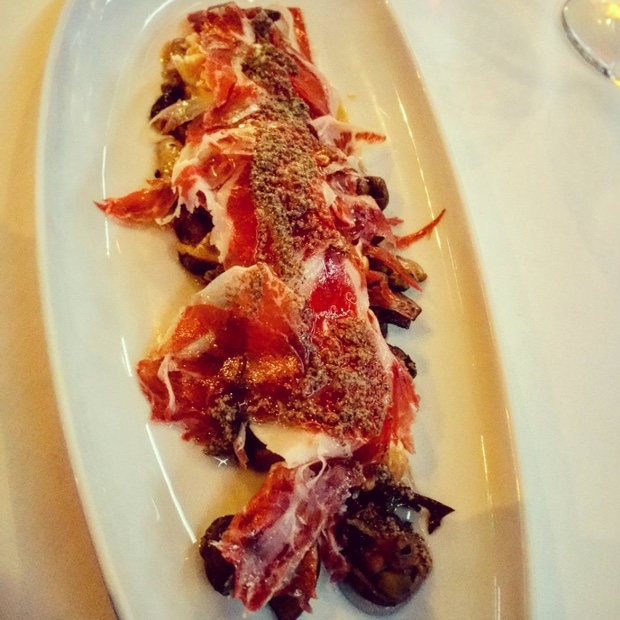
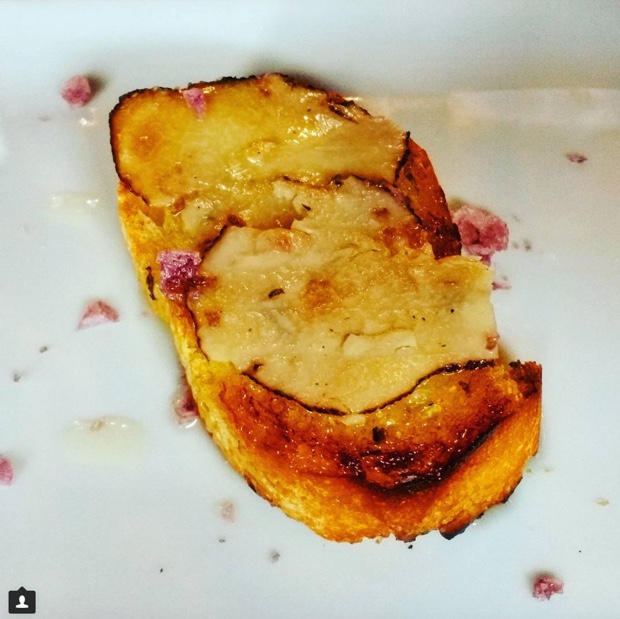
Blissful Zaragoza comfort food at <a href="https://twitter.com/AuraRestaurante" target="_blank">Aura Restaurante</a> local jamon, mushrooms, astir eggs

Blissful Zaragoza comfort food at Aura Restaurante local jamon, mushrooms, astir eggs

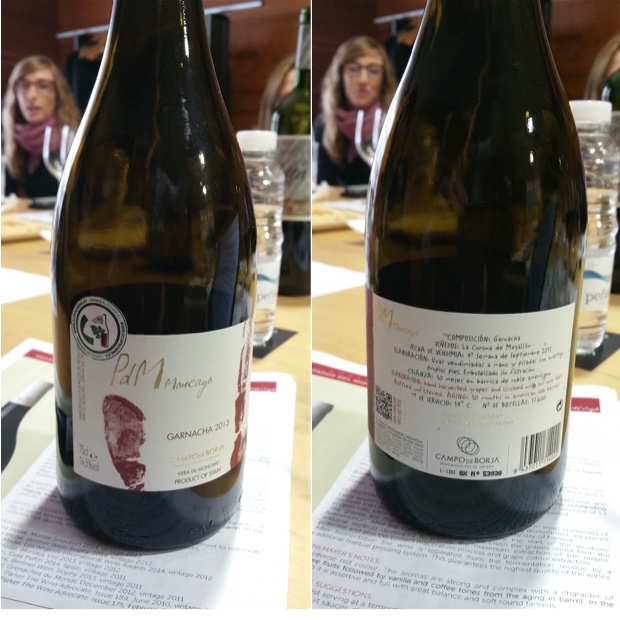
Bodegas Pagos del Moncayo Garnacha 2012, DO Campo de Borja, Spain (Agent, Winery, WineAlign)

Pedro Aibar was oenologist at Viñas del Vero and El Coto and now crafts wines from Grenache and Syrah plantings in the hills of Sierra del Moncayo. Produced with the Export company Axial, this 100 per cent old bush vines Garnacha from the eco-certified vineyard of La Marga saw 10 months in oak. At 14 per cent alcohol and deep as a cimmerian night it inhales and exhales in balanced Garnacha breaths. The barrel gives vanilla, chocolate and a bit of espresso. This is a nearly massive yet somehow laid back and accessible expression of Garnacha, foot-crushed, traditionally natural, with depth in its meaty cure. There were 70,000 bottles produced in the singular Campo de Borja that reaches for another layer, of earth and mediterranean funk.  Would retail for approximately $20 CAN. Drink 2015-2020.  Tasted October 2015  @louisgeirnaerdt

Bodegas Pagos del Moncayo 2012

Bodegas Pagos del Moncayo 2012

Bodegas Ruberte Tresor 2013, DO Campo de Borja, Spain (Winery)

Made by Susanna Ruberte from 100 per cent Garnacha off of 10+ year-old vines. The winery was founded in 1948. From lower altitude Campo de Borja (350-400m) stony vineyards and of low-production, here is a very perfumed Garnacha, expressing the violet nature of the grape and also a tonality impressed by a touch of SO2. Just a hint of barrel (one month) inflects vanilla and spices, unrelated to fruit surrounded by near-acrimonious acetone. Spiked by an aridity that climbs inside the cheeks. Greatest asset is concentration and depth. Will price in the range of $13-14 CAN. Drink 2015-2017.  Tasted October 2015  @BodegasRuberte

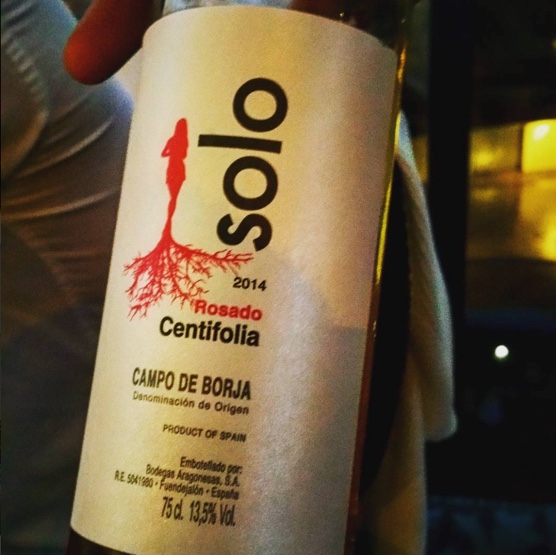
Solo Rosado Centofolia 2014

Solo Rosado Centofolia 2014

Bodegas Aragonesas Rosado Centifolia Solo 2014, DO Campo de Borja, Spain (WineryAgent, WineAlign)

Garnacha of different plots, “offering unique organoleptic qualities.” So very lithe and pretty, saline but not briny. The fruit is certainly strawberry though low-pitched, the hue a pale complexion from the most fleeting skin contact. A luminescent gemstone pink. Like a slice of strawberry angel short cake. Garnacha grounded by a “pretty pink ribbon” of Moncayo earth, without it would be blown by the Cierzo and “float down to the sea.” Drink 2015-2016.  Tasted October 2015   @B_Aragonesas

Bodegas Aragonesas Garnacha Don Ramón Imperial Roble 2012, DO Campo de Borja, Spain (Winery, Agent, WineAlign)

Aragonesas farms 55 per cent of the total production of the area, largest in Campo de Borja. This 100 per cent Garnacha is culled from various (450-800m) elevations. Another prime example of so much concentration, marked by a push-pull of bright-volatile, with dark fruits and liquorice. A date with American oak for six months brings vanilla and cocoa powder, chalk and grain, tar, char and a faint vinyl rub. Good solid held finish. This has power, presence and persistence. It successfully handles and owns its volatility. Quite the polish. Would price in Canada at $14-15. Drink 2015-2017.  Tasted October 2015

Bodegas Aragonesas Garnacha Centenaria Coto de Hayas 2014, DO Campo de Borja, Spain (Winery, 94805, $12.95, WineAlign)

Young wine, old vines. A different sort of 100 per cent Garnacha, this time from arid slate soils close to El Moncayo. The scent of jamon, seemingly impossible, but it’s there. Four months in French oak. Vines are between 80-100 year old with drastically low (10-15 hL/L) yields and from 750m altitude. At 14.5 per cent the brightness pounds the volatility into relative submission but it’s still present, there can be no disputing that. Very smooth and silky, coming on the heels of those always in prevail violet and spice aromas. A smoky dash of Aleppo pepper. French oak, used for the higher end wine, gives a candied wood flavour and roasted flesh of a protein push and some sweet salinity to mineral compenium. Possessive of quite the inner vision meets juicing sensation. Drink 2015-2017.  Tasted October 2015

Oh to be back in the truffle again. At Restaurante El Fogón, San Martín de la Virgen de Moncayo #verademoncayo

Oh to be back in the truffle again. At Restaurante Asador “El Molino de Berola” #verademoncayo

Bodegas Aragonesas Garnacha Fagus de Coto de Hayas Selección Especial 2012, DO Campo de Borja, Spain (WineryAgent, WineAlign)

Fagus is “beech tree” from the Latin and Coto de Hayas (small forest) from hillsides of the Cordillera Ibérica range. This ’12 is actually 85 per cent plus 7.5 per cent each from ’11 and ’13, all from 40-50 yr old vines. Yet another Garnacha of yields less than 1kg per vine and a slumber in French oak for 10 months. Fagus sweats the most prominent perfume though its level of volatility lies somewhere in the middle of the Coto de Hayas range. Here the OS is built on a foundation of earthy funk, sprites red citrus and is certainly the sweetest of the group. Like mixed berry play dough. A South African Rhone varietal style comes to mind, in earth meets vinyl. The special elaboration is of selected (toasted) barrels, with a hyperbole of vanilla, in waves, bean scrapes and baking elevation. Liquid chalk oozes on the finish, long and with bitters too. Would retail for between $22 and 25 CAN. Drink 2015-2020.  Tasted October 2015

Restaurante Asador "El Molino de Berola" #verademoncayo

Restaurante Asador “El Molino de Berola” #verademoncayo

Bodegas Aragonesas Garnacha Fagus de Coto de Hayas Selección Especial 2009, DO Campo de Borja, Spain (WineryAgent)

Fagus is “beech tree” from the Latin and Coto de Hayas (small forest) from hillsides of the Cordillera Ibérica range. The 2009 shows the most minor notes of evolution, still in command of fruit and well within the threshold of balance within its generous oak conditioning. A really good example struts forth here, to show what red Grenache can be at midel age for the DO, not too hard and not too soft. Not too cold and not too hot. Just about right.  Drink 2015-2020.  Tasted October 2015

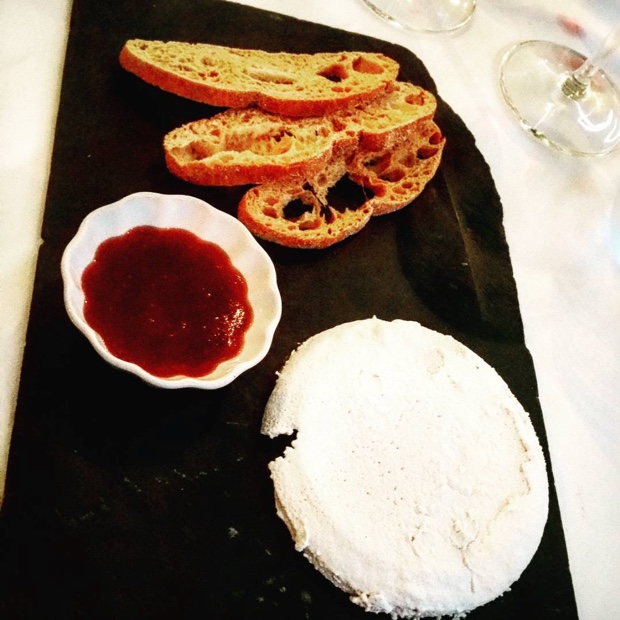
They call it cheesecake at <a href="https://twitter.com/AuraRestaurante" target="_blank">Aura Restaurante</a> but this is something other, extraordinary, ethereal.

They call it cheesecake at Aura Restaurante but this is something other, extraordinary, ethereal.

Good to go!

Twitter: @mgodello

Instagram: mgodello

WineAlign: Michael Godel
Facebook