
Mr. Pearson’s Opus

David Pearson has been the CEO of Opus One since February of 2004. His job is both simple at heart and complex of mind. Two legendary wine men, California’s Robert Mondavi and Bordeaux’s Baron Philippe de Rothschild combined (in 1978) to create one of Napa Valley’s most iconic wines. “At its core, Opus One is an idea,” relates Mr. Pearson. The wine is a blend of Mondavi and Mouton, a reflection of the character of two families.

Pearson is responsible for all production, marketing, sales and administrative activities at Opus One. He is the caretaker of a single bottle of wine. Can there be another brand, anywhere in the world (not called a First Growth) that carries such weight or specificity of concentration? The job requires serious moxie and intuition. The soft-spoken David Pearson is Opus One. That much is clear. Thirty-five years later “we’re just at the beginning of the process,” explains Pearson, “In evolution, of developing this great marriage.” For the uninitiated, Opus One is a Bordeaux table blend of the traditional five varieties, Cabernet Sauvignon, Cabernet Franc, Merlot, Petit Verdot and Malbec, made in a “California style.”

Opus One Vineyard Photo: http://en.opusonewinery.com/

Opus One Vineyard
Photo: http://en.opusonewinery.com/

It started as a pure concept, with no actual vineyard, in the Baron’s bedroom back in the 1970’s. “The wine is a child that resembles its parents,” notes Pearson. He sees its growth has now reached a maturity stage for individual vintages to be judged as either that child or as an adult. Pearson, Craig de Blois and Mark Coster of Noble Estates brought four vintages of Opus One to Luma Restaurant on March 27th. Pearson asked that the group of sommeliers and wine scribes decide which of these wines have left their parent’s home. The exercise seemed simple enough, especially with a level of clarity made readily available by the fact that all four vintages poured were fostered and nurtured by current winemaker Michael Silacci. Silacci joined Opus One in March 2001 as director of viticulture and enology and became winemaker in January of 2004. After tasting a stunning set from 2010, 2009, 2006 and 2001, the solicited clarity was revealed.

All natural acidity, an ever-earlier picking stratagem and less frequent racking define the Opus direction. The Opus team considers their winemaking “minimalist” and though in wine-speak that is certainly a relative term, as a group the wines do present with a meritorious level of fruit purity. That can’t be said for many Napa Valley brands that seek more hedonism than is often necessary. Saying that the price of a bottle is inflated by a historical elevage of personality and fashion branding neither does Opus One an injustice nor does it relegate the commenter as a castaway to a deserted island. Opus One is a brilliant and gorgeous red. It’s also very expensive.
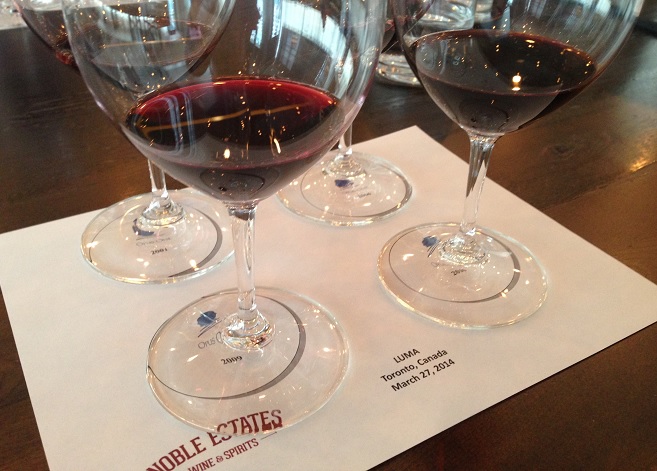
Opus One Tasting at Luma Restaurant Photo: Eric Vellend

Opus One Tasting at Luma Restaurant
Photo: Eric Vellend

In September of 2012 I had the pleasure of tasting the Opus One 1989. My tasting note:

Opus One 1989 Unbelievable. A lesson in Napa iconoclasm. What every great 22-year old New World wine should strive to become. In harmony with every part of itself; fruit, tannin, acidity. Beauty within and without. Dark, sultry, full of all things berry and oak. The full gamut of red and black fruit, vanilla, mocha and chocolate. Like walking into your childhood and being handed the keys to Charlie’s factory. Another M gem.

Notes from the March 2014 tasting: Opus One, Napa Valley (26310, $399.95 – 2009 vintage)

2010 (WineAlign) The blend is Cabernet Sauvignon (84 per cent), Cabernet Franc (5.5), Merlot (5.5), Petit Verdot (4) and Malbec (1). Fiercely approachable, a rope of gemstones falling effortlessly into the palm of a velvet glove. Imminently modern, reeking of toothsome Napa and working without Old World parental support. Dense texture, high acidity and exceptional length. Layers upon layers of fruit powered by audacity and prowess. Even this formidable ’10 will struggle to find immunity from the weird vintage. It’s ripe, anything but green and manages an admirable level of elegance. Lives for today. Will it age like its older siblings? Yes, but not as long.

2009 (WineAlign) The blend is Cabernet Sauvignon (81 per cent), Cabernet Franc (9), Petit Verdot (6), Merlot (3) and Malbec (1). The immediate and obvious cerebration is all about its incredible sense of balance. A garden of perfume, the most Bordeaux-bent of the tasting and a mineral reverberation carried on through a seemingly never-ending finish. Blessed by a long and sweet chain of tannin. This ’09 has that Mediterranean brush stroke of garrigue and black olive smothered by a smear of sun-drenched California fruit. Another challenging vintage where picking time was so crucial. That September 21st to October 20th window must have been the right one.

Opus One Bottle

2006 (WineAlign) The blend is Cabernet Sauvignon (77 per cent), Merlot (12), Cabernet Franc (5), Petit Verdot (3) and Malbec (3). A kinaesthesia with age is sent forward by the tertiary complexity of its make-up. Dusty, still marked by acidity, along with a note of toffee and a raisining of the fruit. Savoury too, in gentle middle-age, it gives away strange sensations and aromas that suggest a potpourri of powders; rose, bacon, espresso and Filé. Full of grace and contentment. A cool year that saw no end-of-year heat spike, this is a most unique Opus one.

2001 (WineAlign) The blend is Cabernet Sauvignon (87 per cent), Merlot (6), Malbec (3), Cabernet Franc (2) and Petit Verdot (2). The ’01 conjures up instant funk and “the beat is really soothing.” The Bretty streak stretches, dissipates and is cleansed as the wine aerates, but the groove lingers on. An Opus that clearly states “I got my mind made up.” Of the vineyard and for the vineyard, with a note of wet forest. The Bar Mitzvah boy is acting as one would expect, as an agent to a coming of age law, like a leather satchel filled with dehydrating, concentrated fruit. Swirl some more and that jerky is then drizzled by a Mickey of berry liqueur and dusted by 13 year-old dirt. A vintage defined by 14 per cent alcohol, still vital, powerful and neo-gritty. Forty-five minutes in, the lingering funk is fading but the thought, the chalk and the grain sends this Opus One back across the Atlantic, to the world of Mouton.

Good to go!

Feeling under the weather? Drink wine

Wine is your friend.

Wine is your friend.
Photo: chiyacat/Fotolia.com

as seen on canada.com

A year ago today the lead to my January 15th, 2013 column spoke succinctly to the mantra. “A glass or two of wine might just be the thing to help ward off the common cold and the flu.” In that rant some substantiating evidence was laid out in support of drinking wine (in moderation) to help fight off the nasty bugs of winter. A year on my conviction does not waver. Wine can help cure what ails. A wine prescription for cold and flu has been a curiosity read for many over the past 365 days. Ridiculousness? Perhaps. Personal hermeneutic? Yup. Something to consider? Definitely. Words to live by? You be the judge.

In that article I talked about wine’s antioxidant properties (called flavonoids) and compounds that attack bacteria, like resveratrol and polyphenols. All in the name of trying to immunize the body against hundreds of common viruses. What I failed to discuss was the positive mental health of a lifestyle that includes wine. Wine drinkers, at least the ones I spend time with here in Ontario, are happy people. Friendly folk, community-driven, supportive, neighbourly. Wine brings everyone together. It’s really something to see and be a part of.

In Argentina, Bodega Norton has forged and maintained some of the longest contracts with growers in comparison to anywhere in the vinous world. Vines, mountains, rivers, roots and the hands of workers are all treated with respect, professionalism, honesty and commitment. Norton’s wines are accessible and affordable, including the flagship Privada, described by winemaker Jorge Riccitelli with the fanciful comment “you can feel the grapes inside your mouth.” I sat down with Mr. Riccitelli on Monday, November 11th, 2013 at The Ritz-Carlton Hotel in Toronto. The hour with Mr. Riccitelli sent me away with one profound thought. When you take care of your people, your team and the tonic you produce, health and happiness are not far behind. The tasting with Jorge was the stuff of pure joy. A visit to Norton must surely follow.

Michael Godel and Jorge Riccitelli

Michael Godel and Jorge Riccitelli

A recent mini spat slash argument in Toronto Life on the subject of 0rganic and biodynamic wines helps to push the point. In response to an inflammatory comment noting the ”pseudo-scientific claptrap of biodynamic agriculture” the cosmogonal-minded Bench Vigneron Harald Thiel retorted, “the primary difference between organic and biodynamic production practices is the “cosmic and stellar” forces that biodynamic producers believe differentiate their wines.” To each his own says Thiel. I’m quite certain that Harald would concur that drinking wine can help bolster the immune system but going the natural route, in theory, will boost defences multi-fold.

Some take it to the extreme like Alain and Philippe Viret, winemakers who go beyond being organic and even biodynamic. They practice cosmoculture. Their vineyard is studded with menhirs and ‘planetary beacons’ in order to connect with celestial and earthly energies. It embraces Maya and Inca agricultural and spiritual concepts.

Alexandra Marnier Lapostolle is a flying ambassador who believes in the credo. At an October Trialto Group lunch at Luma Restauarant, the eerie connection between the restaurant group’s acronym and the act of natural winemaking was not lost on me.  The devastation of Chile’s black frosts were being discussed and the magnificent Ms. Lapostolle-Marnier pushed the sapient necessity of O & B practices to a group of diners/tasters. “Being organic and biodynamic, the vines are heartier, able to handle the frost’s potential damage, budding time and produce healthy vines.” Casa Lapostolle also has scientific data to prove that organic and biodynamic vines mature 10 days ahead of the others.

Trialto Lunch at O & B's Luma Restaurant

PHOTO: Michael Godel
Trialto Lunch at O & B’s Luma Restaurant

No one works harder or believes in the O & B philosophy to achieve wine nirvana more than Paul Pender of Tawse Winery. Everything Mr. Pender makes comes from fully certified and sustainable vineyards. I tasted through 25 barrels with Paul last Friday. His 2013 Chardonnays will be amongst the best we have ever seen on the Niagara Peninsula. The group of 2012 Cabernet Franc, Merlot and Cabernet Sauvignon are all showing lush, deeply resonant aromatics, all pies of one fruit or another and with minimal oak intrusion. More pudding proof will come from the most recent tightly planted Pinot Noir, in the Tintern Road Vineyard from the Vinemount Ridge appellation. At only three years of age, the juice from those healthy vines already emit an aura of verve, wisdom and viability.

Not all of the wines reviewed here come from O & B vineyards but each and every one can contribute to your mental and physical health. Wine is your friend. When approached, integrated and embraced in the right way it can help to promote a healthy lifestyle. The defence rests.

From left: NORTON RESERVA MALBEC 2010, CENTUNO NERO D'AVOLA 2010, LA CARTUJA TINTO 2012, LAPOSTOLLE CUVÉE ALEXANDRE APALTA VINEYARD CABERNET SAUVIGNON 2011, and TAWSE GROWER'S BLEND CABERNET FRANC 2011

From left: NORTON RESERVA MALBEC 2010, CENTUNO NERO D’AVOLA 2010, LA CARTUJA TINTO 2012, LAPOSTOLLE CUVÉE ALEXANDRE APALTA VINEYARD CABERNET SAUVIGNON 2011, and TAWSE GROWER’S BLEND CABERNET FRANC 2011

NORTON RESERVA MALBEC 2010, Mendoza, Argentina (17061, $17.95, WineAlign)

As Malbecs come and go, group themselves into dime a dozen pigeon holes and fall from serious wine grace, this stalwart stays the course. Norton’s Reserva bottling has a proven track record for consistency. My most recent ’02′s spoke of strength, longevity and balance. In 2010, true to form, violets lead the arrangement of multi-floral scents and a kinder, gentler, sweeter set of tannins promote connectivity. Restrained and calm, this Norton forgoes the jams and jellies of other moderately-priced Malbecs and carries with it a smooth, long finish.  90  Tasted November 2013  @BodegaNorton

CENTUNO NERO D’AVOLA 2010, Sicily, Italy (357103, $17.95, WineAlign)

Though not exactly a chick magnet or my Sicilian dream, this Nero D’Avola is chock full of animal magnetism. It reeks of four-legged musk, circus mammal and deep-sea predator. Despite the oppressive mob of animale there is also lush berry to attract more than just the curious imbiber. A dense fruit roll up, unfurling, spewing earth, prune and coal. Will petition the non-sectarian toper.  88  Tasted December 2013  @Eurovintage

LA CARTUJA TINTO 2012, Priorat, Spain  (358861, $18.95, WineAlign)

This symbiotic blend of 70 per cent Garnacha and 30 Carinena rolls out the red carpet straight from the heart, not unlike Terrabianca’s 70/30 Sangiovese/Cabernet Sauvignon Tuscan Campaccio. Only here the value is palpable, especially for Priorat. Fueled by blazing red cherry and plum. Vivacity with bright fruit seeped in acidity but also a coated note, though not of over-oak, that paints the tongue red. A rumbling layer of licorella slate lies atop eruptive rock and beneath a rolling thunder of boulders. This is high-octane Spanish winemaking, a red velvet car that doesn’t “even touch the break.”  89  Tasted December 2013

LAPOSTOLLE CUVÉE ALEXANDRE APALTA VINEYARD CABERNET SAUVIGNON 2011, Colchagua Valley, Chile (947929, $24.95, WineAlign)

“We don’t want too ripe, jammy or confiture,” pleads Alexandra Marnier Lapostolle. While this Super-Chilean is certainly full-bodied, it remains a finessed red and silky in every way. Leans IGT, as opposed to Bordeaux or warmer climate (California). Stupidly easy to drink, built for resto luxuriousness and really is a terrific value. A choir of dark fruit aromatics, sung like songs by the birds of the vineyard and a late sensation of charcoal and char are expressed in this Cabernet of fashion and caste.  90  Tasted twice in August and October 2013  @LapostolleWine

TAWSE GROWER’S BLEND CABERNET FRANC 2011, VQA Niagara Peninsula (284570, $26.95, WineAlign)

From selected prime Cabernet Franc vineyard sites across the headland, the Grower’s Blend reaches near maximum potential in 2011. An immediate sense that “leaves are falling all around” in a composted layering of earth, cedar, savoury produce and sweet herbiage. A tart tincture spikes and sauces the fruit, straight from the “darkest depths of Mordor.” Winemaker Paul Pender’s perfume permeates the mess, lifting the CF to great Niagara heights. Ramble on Grower’s Blend.  90  @Tawse_Winery  @Paul_Pender  Tasted October 2013

Good to go!