
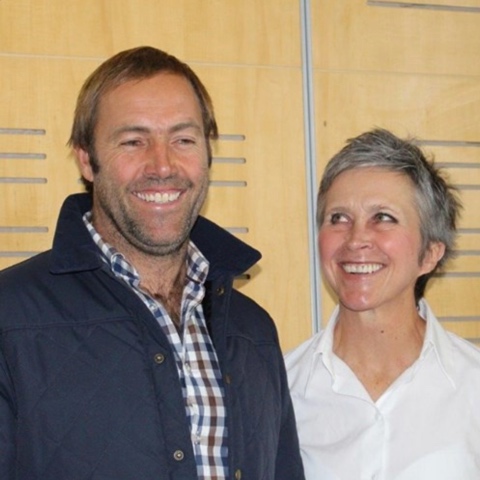
With Chris Mullineux
Sometimes I hang with Chris too. In April of 2023 Chris Mullineux was in town and so I was thrilled to welcome him into my home. It was such a pleasure to play the host for a change. Time was too short but we managed to cover in-depth discussions about Swartland sites, cool-climate Stellenbosch, heritage vines under the auspices of the Old Vines Project, oxidative chardonnay winemaking and winemaker Gynore Hendricks’ beautiful, sustainable and profitable project called Great Heart Wines.
Most of the wines he poured were those that I had recently tasted on his side of the pond in the Western Cape back in October of 2022. It was with winemaker (and Chris’ wife) Andrea that I did most of those tastings and so this new revisit offered a new perspective. The couple are remarkably synched up but have different ways of expressing the nature of their farming and resulting wines. Not to mention my own second look with six further months in bottle. Reviews on all these wines first tasted with Andrea are now updated. Meanwhile, talk to Nicholas Pearce Wines about sourcing these South African lekkers.

Chris Mullineux
Before getting to the wines I asked Chris about the most recent vintage and harvest. “Not crazy hot, but Swartland was really dry and we began picking really early – January 15th. We were done just after February. It started raining just as we began picking Leeu Passant. In Stellenbosch you need a week of sun to drive out after rain and winds do not have to happen, (nor is it necessarily) common. In 2023 it kept raining from March 20 onwards but Leeu (Passant) was mostly picked 90 per cent in. There was some dilution to the fruit. In other words complex from beginning to end of harvest. With cabernet sauvignon that means 13-13.5 percent alcohol. We are a sunny place so the terroir must give a sense of place and that means ripeness – therefore cinsault in warm locations needs to be up there.” Returning to this remarkable set of Mullineux-raised and quintessential Western Cape wines, here are my notes from that day.
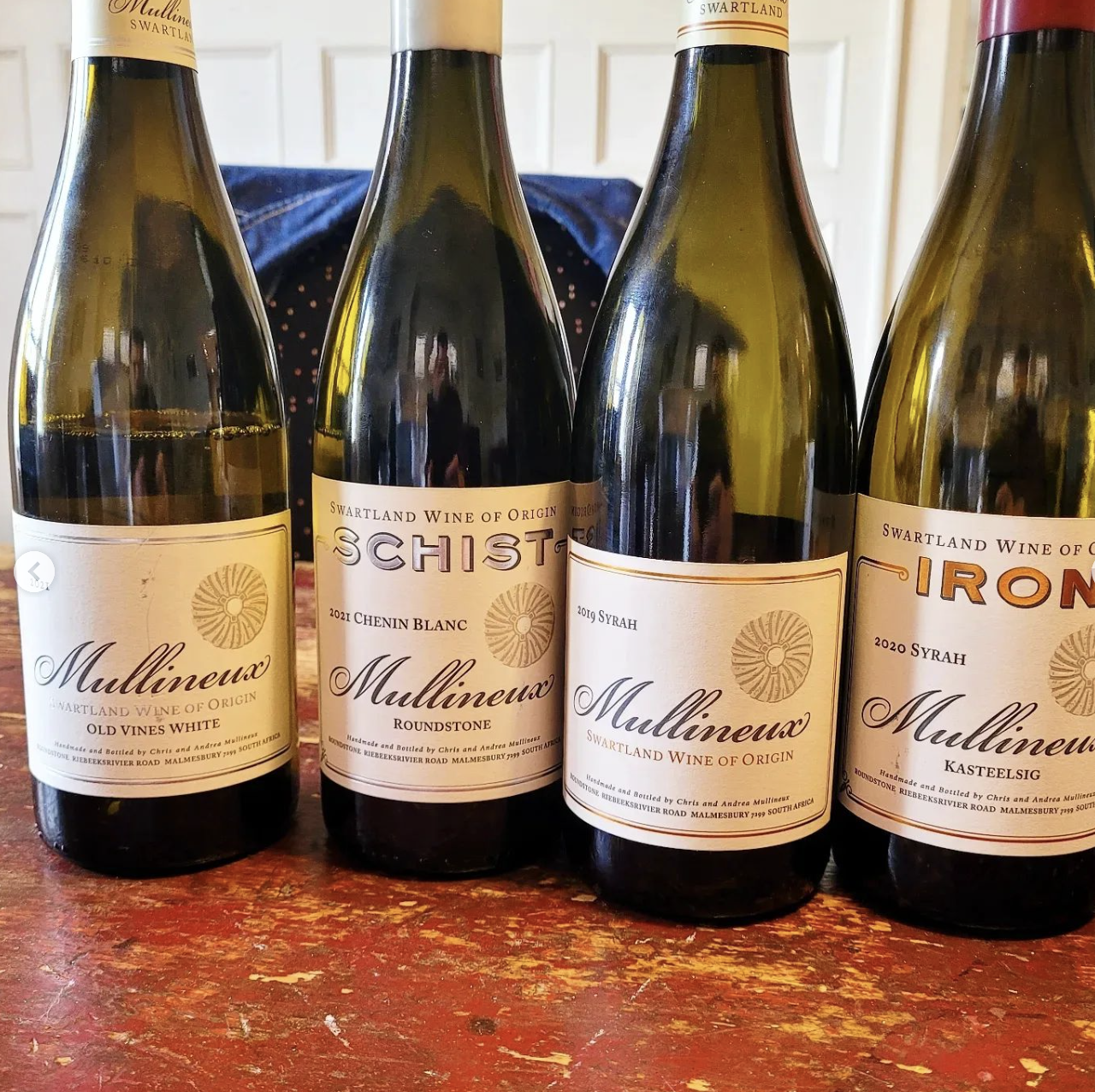
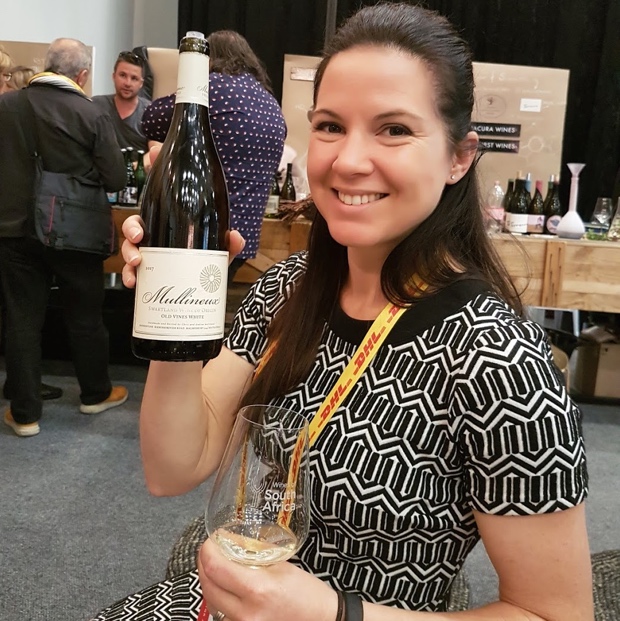
Mullineux Old Vines White 2021, WO Swartland
A style of South African white wine essentially started by Eben Sadie with Palladius back at the turn of the century. “Right away in 2001 when I first tasted it,” says Chris Mullineux, “it just made so much sense for the Swartland.” Adding some verdelho now, has only been the Swartland for 10 years but it’s really creeping in all over the Cape. It adds up to 14 percent alcohol, 9 TA and grippy phenolics to add force with some softer and generous white wines in the blend. This is vintage number 14 so if you like to think about things in lucky 7s then do the math and see this on the heels of what just must have been a most terrific 2014. The Granite and Schist ’14 Syrahs are pieces of Swartland heaven. Last tasted April 2023
The chenin blanc involved is from vines up to 70 years old, two times into heritage status, refined in nature. here not a matter of more density but yes increased extract. Also contains viognier, clairette blanche, grenache blanc sémillon gris and verdelho. Crunchy as old whites come, especially this one, with just that righteous and ripping amount of alighted flintiness, lightning strike and claps of granite thunder. About two thirds are grown on the fine sandy, decomposed granite while schist, iron and quartz add grip, flesh and roundness. Full and layered composition of greatness. Drink 2023-2028. Tasted October 2022
Mullineux Chenin Blanc Schist Roundstone 2021, WO Swartland
Planted on the shallow rocky soils of the Kasteelberg. More sunshine on the tiny berries which doles out big but oh so beneficial concentration. The grapes are thick-skinned and so pay attention to the finish to note phenolic spiciness. So much fruit and that grip mix together, also with thanks to the dappled sun effect for an eventuation at what we mark as complexity. Great intensity and because the wine carries so much extract there is a pause, a four second pause before the phenols show there attitude, passing again, returning, in between creamy textural moments and fruit repeats. The wine has to be dry to show this way, to elevate Swartland’s specific acidity and natural Chenin blanc behaviour. Last tasted April 2023
Roundstone, aka “ronde steen or rondklip” in Afrikaans but the farm is known by its English name. Another Western Cape account for struggling grapes while here the matter involves smaller canopies, clusters and grapes. The vineyard begets and raises a child of the land’s stony “dakteëls,” roof tiles where everything slides and so the tannins accentuate to procure wines of a certain toughness. This child is street smart and battle ready, got into a few fights in the early days, now able stand up for itself no matter the attack or the scene. Aromatically speaking there is a cheese rind scent in the dry comports of extreme aridity, resulting in intensity and directivity. A slightly higher pH makes this the sapid one, sliding across the palate with its über fresh scathe. This will age with the best of them, more like structured reds but so very capable as chenin blanc. Drink 2024-2034. Tasted October 2022
Mullineux Syrah 2019, WO Swartland
If you think about the entirety of the Swartland as a painting this syrah would be representative of the entire landscape. Comes off of Paardeberg granite and also Kasteelberg slate, on average 80 percent whole cluster but no carbonic, to allow the perfumes of both to play their parts. The iron soils bring the tomato leaf and meatiness and the aromatics leap with or without challenged cause by the fourth and last year of the Western Cape’s drought. Before flowering half the crop was eliminated, knowing the end result would be a tiny production but freshness, concentration and ultimately no stress balance Back in ’16 the vines dropped their own fruit to compensate in full abort mission. So much was learned that in ’17 the policy of one bunch per shoot became drought year religion. To find more fullness in syrah with iron cladding and flitting fillings like this is nearly impossible but this is how Mullineux delivers a sense of place. Broad in terms of wide open Swartland but if you want a definition, here it reads like an open book. Drink 2023-2025. Tasted April 2023
All syrah and nothing but from a combination of iron, schist and granite soils. Made in “large” upright wooden vats, for the grandness and roundness of Cape syrah’s capability, followed by cool grip, converting what was into what needs. And wants, inclusive of evergreen, meat juices and mainly perfume. There is an amenable nature, a nurturing and a caring is sharing sensibility to syrah, expressly as what it means to be Mullineux, part Andrea and part Chris. Drink 2023-2027. Tasted October 2022
Mullineux Syrah Iron 2020, WO Swartland
From the rolling hills around Malmsebury, in between the mountains, ancient soils, weathered, stable and red iron rich, even with some clay. Comes away at 12.6 per cent alcohol but the site brings power and natural intensity. Very focused and precise for the terroir in fact it screams sanguinity and tomatoes through leaves and paste. So South African in the most complimentary and can’t turn away kind of way. Acids run high though they are circulative on the palate and the wine carries some tar, char and the finish takes your breath away. So much character, personality and intensity. The right grape farmed properly in the right place can make this happen. Drink 2023-2035. Tasted April 2023

Leeu Passant Cabernet Sauvignon 2020, WO Stellenbosch
Three vineyards together on the False Bay side of Stellenbosch. This is a piece of regional diversity, near to Somerset West, picked ripe late in April, only finishing at 13.5 percent. Only a piece of Stellenbosch like this can extend a season for a wine like this, of fully south facing part way from the Helderberg, with rich clay-iron soils, against the ocean. The most elastic, stretchable, seamless and pliable cabernet sauvignon imaginable. Freshness and firmness coexist so that you can drink whenever you like and also lay some down for two decades. Last tasted April 2023
Inspired by the old sophisticated graphite model, here cabernet sauvignon is drawn from the mid slopes of the Helderberg. The 2020 resides where richness and structure meet at a point determined through optimum picking and acumen. Moves from first year 500L wood to large 2500L vat and this is truly an ode to what was once a fixture of style in the Western Cape, albeit with modern beauty, current sensibility and truths spoken. The vines are 40 years old (as of 2020) and really just beginning to take ownership of the old vine necessity, aka they now sit in their pre-LP, shorter EP state. Cassis and fynbos combine for true a genesis of Cape cabernet sauvignon authority, but also what simply has to be. The question is whether or not this wine will continue its course of wind and wuthering. Will it remain tied to tradition with progressive style or begin to play with pop structures. What we know is that this vintage allows us to spot the grape, place, match of the day, inside and out, and pigeons. Drink 2024-2029. Tasted October 2022
Leeu Passant Chardonnay 2020, WO Stellenbosch
“For me this allows us to work with Chardonnay unlike anywhere else, from Chablis to other parts of the Western Cape,” explains Chris Mullineux. In a way there is an extreme saltiness, made through death and resurrection, of no sulphuring for the first 18 months. Anything in the wine can and is oxidizing so it’s perfectly stable and then cleaned up ahead of bottling, racked off the lees post malo, then sulphured which binds the aldehydes and any oxidative properties so that it comes away so clean, and tight. You can do this so long as the vineyard site is tops. Chardonnay that is bullet proof, without the bends. Can age as well as any on the planet. Last tasted April 2023
Chris and Andrea Mullineux started the project in 2013 with the help of viticulturist Rosa Kruger. “New” vineyards were unearthed and rehabilitated through four solid years of re-pruning, re-training and re-working of the soils. Then the wines could begin being made. A deconstruction and reconstruction, now seven years in and entering the opening gambit of true maturity stage for what is one of South Africa’s most unique heritage collections. Leeu means lions, a reference to a meandering walkabout, personified in these wines. They are made in the Franschhoek winery, certified organic, coming of age in their foray into regenerative agriculture, which says Andrea Mullineux, “in the southern hemisphere also means cultural and worker sustainability practices.” The 2020 is as fine a reductive but mainly lightning acidity charged chardonnay as a vineyard can determine. Located in the upper mid-slopes of the Helderberg facing the Strand with a clear view of False Bay. That said or perhaps out of necessity this is made in an oxidative way, which makes sure to keep the flinty and salty faith alive. The ’20 is possessive of fibres, threads, strings and wires braided to make a layered whole. Finesse and sophistication co-exist in a vacuum where waves crash upon one another in great open space, with no shore for to finish. If you would like to experience chardonnay in a way you’ve not likely done before than swim all the way out, well offshore, all in, all the way to this place. Turn around and off into the deep distance, gaze upon the strand. Drink 2022-2028. Tasted October 2022

Mullineux Great Heart Chenin Blanc 2021, WO Swartland
Great Heart is the special project for Gynore Hendricks who is assistant winemaker at Mullineux and she is joined by 21 other employees who profit from this wine’s special success. Old and young vines fruit, similar winemaking to Mullineux but only aged in steel. Freshness and fruit intensity yet precise, crisp and steely. On the lees (unstirred) with Swartland’s natural creaminess. Last tasted April 2023
This a newer project from Chris and Andrea Mullineux whereby the profits from these Swartland wines go to the owners of the label, they being the employees at Mullineux and Leeu Family Wines. The South African Wingtail is the mascot, a selfless bird and a beautiful one at that. This is chenin blanc of richness and most apropos, also of great generosity. So much ripe fruit and philanthropy. Quintessentially chenin while so eager to please. Talk about great heart in South Africa. Here it shows in the most human of ways. Drink 2021-2023. Tasted September 2021
Mullineux Great Heart Red Blend 2021, WO Swartland
The syrah is from the Mullineux sites, the tinta barocca from Adi Badenhorst’s Jakaalsfontein farm and the cabernet sauvignon comes from granitic Paardeberg. Great energy, brightness and pure varietal intensity. A terrific red counterpoint to the Great Heart chenin blanc by winemaker Gynore Hendricks as the leader of a project befitting and benefitting nearly two dozen Mullineux employees. Drink 2023-2026. Tasted April 2023
Mullineux Great Heart Cabernet Sauvignon 2021, WO Swartland
Vines from next to the Heldeberg, south facing, cooler and like the Leeu Passant the season runs long, phenolics slowly develop and yet the young vines create a quicker to access freshness and energy compound. This has the bokser effect in red wine. Last tasted April 2023
As a Mullineux wine Great Heart cabernet sauvignon feels akin to the highly focused Leeu Passant Stellenbosch varietal wine (aka the Helderberg Mountain bottling). As a concept Great Heart is all about staff empowerment in wines made by owners with a piece of the business. This is cultural sustainability at its finest, seeing livelihood improvements for members of the winery and their families. Like the LP cabernet sauvignon this performs as an “ode to what was once a fixture of style in the Western Cape, albeit with modern beauty, current sensibility and truths spoken.” Cassis and fynbos, tradition and progressive spirit. Quality combinations in all respects, forever searching for great heart in South Africa. Drink 2023-2027. Tasted February 2023

Mullinuex Olerasay Straw Wine 2021, WO Swartland
After the drought, cool and late vintage, with plenty of kept acidity. Same chenin that goes in the wild vines wine, picked same day, then air-dried for three weeks. Pressed and ferments for nine months. Only three weeks because it’s done outside. The sugar is approximately 300 g/L and the alcohol 18.5, TA at 11. So pure, lemon brûlée, marmalade and balanced. Brilliant Straw wine. 6,000 bottles made. “We make more straw wine than anyone in the world,” says Chris Mullineux. “One acre equals one bottle of wine.” When asked why do you do it? “Because its great wine and it’s part of who we are.” Heritage and imperative. Drink 2023-2032. Tasted April 2023
Good to go!
godello
With Chris Mullineux
Twitter: @mgodello
Instagram: mgodello





 Godello