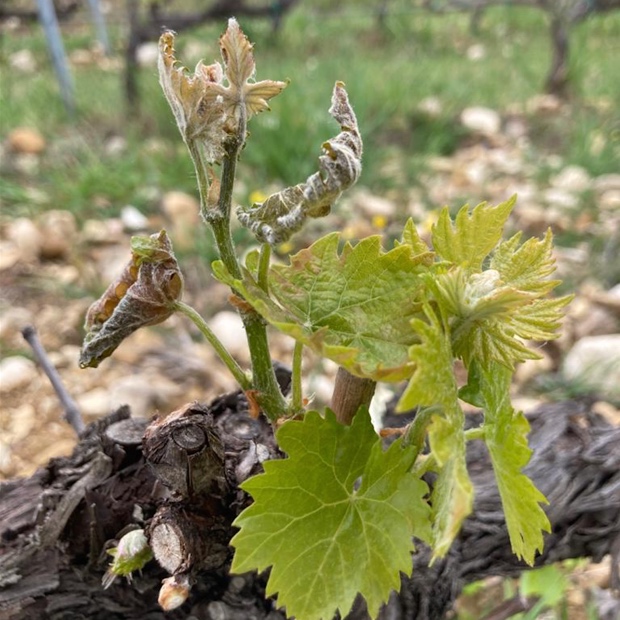
Assessing bud damage to Sangiovese, Villa Le Corti, San Casciano (c) Duccio Corsini
Difficult times call for desperate measures and if these last 14 months have taught Italians anything, taking nothing for granted is surely at the top of the list. If you are a grape grower, or any agriculturalist for that matter then the one thing you almost come to expect and dread more than anything is the arrival of a Spring frost, after bud-break. That worst nightmare has come to parts of Chianti Classico (along with Montalcino, Emilia-Romagna, Piemonte and Bourgogne) in the week following Easter. The worst hit area may be Maremma and the Tuscan coast. The reports coming out of the Gallo Nero territory are not what we would have wanted to hear from and for our friends in the Tuscan provinces of Firenze and Siena.
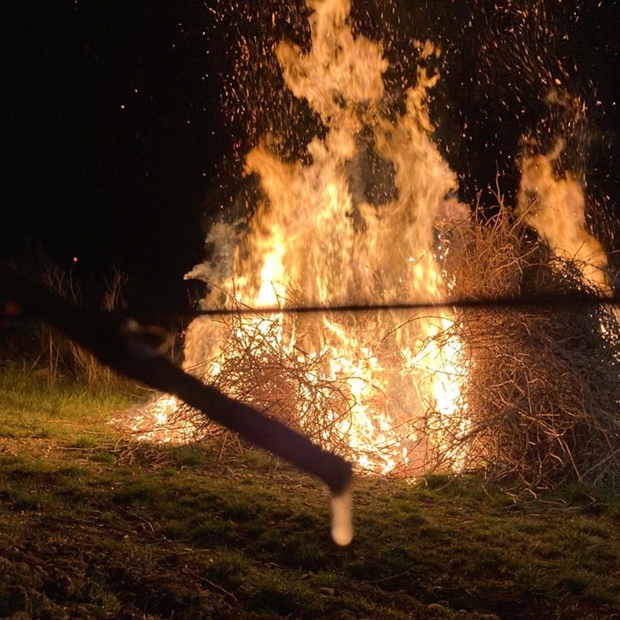
Fires in the vineyard, Villa Le Corti, San Casciano (c) Duccio Corsini
Chianti Classico is a proud and noble territory with just slightly only 10 per cent of its hectarage registered to vineyard space. The last three vintages were all relatively stress free, especially those of 2018 and 2019, whereas in 2020 the vegetative life cycle began during a global pandemic and yet farmers had nothing but time to tend to their vineyards during lockdown. In 2021 the sangiovese vines came to life early, following a decent and mostly proper winter though one that ended in haste, turning over to warm March temperatures. And now, even if the potential for disaster has struck, hope and resilience prevails.
Temperatures dipped to overnight lows of minus six degrees celsius, dangerous and potentially fatal to the youngest sangiovese vines, especially in low-lying areas where frost settles on lower slopes and valley floors. It really is too early to fully assess the extent of the damage but the range, based on comments heard thus far, is anywhere from near zero in the highest reaches and oldest vineyards to anywhere between 50 and 100 in other areas. I have spent a good part of Friday evening until now talking with producers and here are their stories. There is much concern but always hope, pragmatism and a collected, positive outlook. The comments and images are still coming in so I will update the story as it goes.
*** Editor’s note: Comments from 35 producers are now posted, including new images
The frost in 2017 was much worse than this
Giovanni Manetti, Fontodi
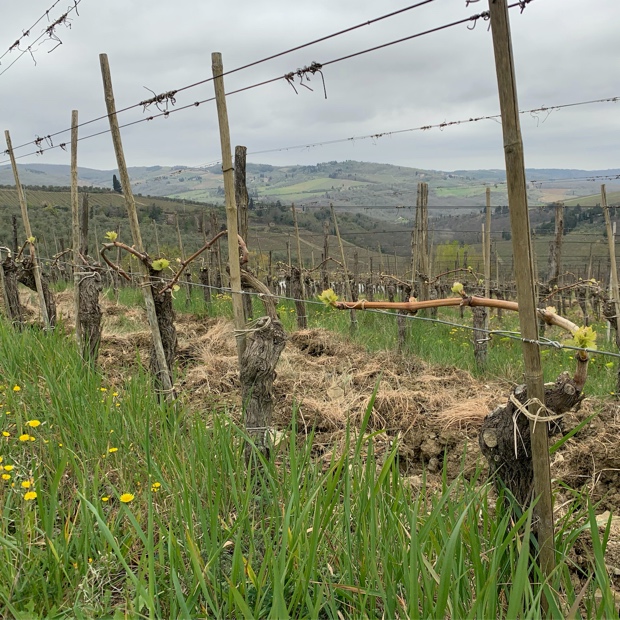
Fontodi, Panzano, April 9th, 2021 (c) Giovanni Manetti
Giovanni Manetti, Fontodi: “We had a couple of days very cold, April 6th and 7th but the damages are limited to the young vines. The majority of the buds of the other vines were still closed and were not hurt by the frost. In the rest of the CC territory there were some damages in the warmer areas and zero in the cooler ones like Radda and Lamole. The frost in 2017 was much more worse than this. It is very hard to say how much quantity has been lost in CC but I think not too much.”
Duccio Corsini, Villa Le Corti, San Casciano: “San Casciano has the habit of being in (bud-break) advance. Minus two celsius came the morning of the 7th (5:00 to 7:00 am) and we made it with no damage. Minus five came from 4.30 to 6.30 am on the 8th. We kept the prunings in piles for this event. At 4:45 am Le Corti was on fire were possible. To this we added the use of the spraying machines vents to move air and create circulation. I hope the experiment (very artisanal) helped to reduce damage. So far the damage goes from 10 to 40 per cent on sangiovese in the best expositions. Nothing on merlot (that is still sleeping). Fico vineyard (solo sangiovese) is safe. Marsiliana on the coast is a different story. All merlot was burned from minus seven on the morning of the 8th. Total loss on 6 hectares. We are collecting info from San Casciano producers and news so far is not good on sangiovese.”
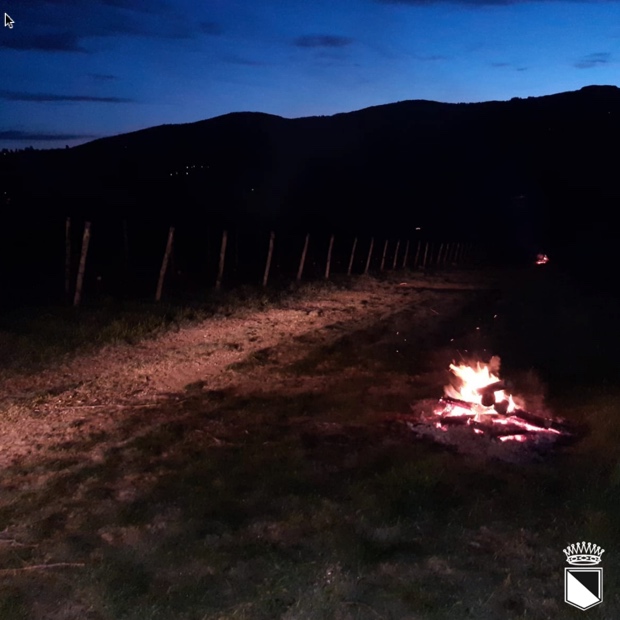
Villa Calcinaia
(c) Conte Sebastiano Capponi
The damage is still difficult to evaluate since many buds hadn’t broken yet
Sebastiano Capponi, Villa Calcinaia
Sebastiano Capponi, Villa Calcinaia, Greve: “Unfortunately Jack Frost has visited us again this year, three times in the last quinquennium, and the damage is still difficult to evaluate since many buds hadn’t broken yet. I think it would be less than 2017 but we certainly could have done without it. The worst night was Wednesday because it had just rained a little and that spiked the humidity beyond 90 per cent. In fact in the areas of Montefioralle where it hadn’t rained the damage was less intense. The varietal more heavily hit was the sangiovese as canaiolo, mammolo, montepulciano and merlot buds break usually later. Funnily enough the sangiovese buds, like in Vigna Bastignano, that already the leaves out were less damaged than the swollen ones. An igloo effect saved them? I wonder… Vines will adapt but in order to accelerate the process though I will start selecting biotypes of Sangiovese with late bud-break from our collection for the new plantings.”
It’s going to be a slim harvest! Climate disruption…again!
Roberto Stucchi-Prinetti, Badia a Coltibuono
Roberto Stucchi-Prinetti, Badia a Coltibuono, Gaiole: “The frost hit badly, temperatures dipped to minus four and even minus six degrees celsius in the lower parts; unfortunately the buds had an early start so they were all ready to go. The damage is probably over 50 per cent but we will assess it better next week. It’s going to be a slim harvest! Climate disruption…again! Sad.”
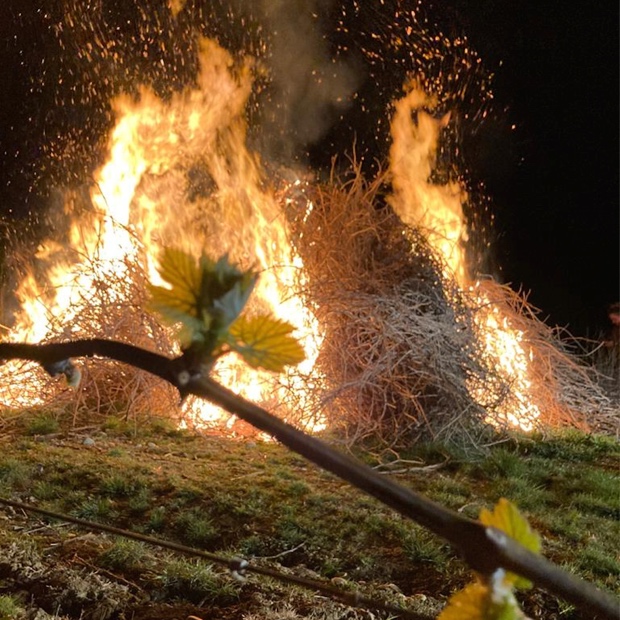
Young Sangiovese buds, fires in the vineyard, Villa Le Corti, San Casciano
(c) Duccio Corsini
Federica Mascheroni, Volpaia, Radda: “This frost was really what we weren’t looking for! Luckily in Volpaia the damages are not very much, the altitude has helped us. Unfortunately, unexpectedly we had a very strong and unpredictable frost. We will see in the next few days, but I think we had several damage 😦 “
Susanna Grassi, I Fabbri, Lamole: “We are OK, but as you said in Tuscany, as in many other places, we had frost during two nights. We will see in a couple of days the true damage.”
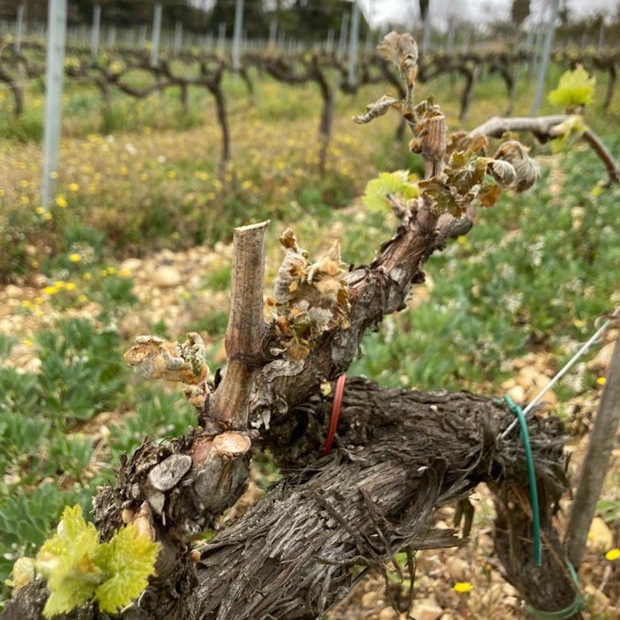
After the frost, Villa Le Corti, San Casciano (c) Duccio Corsini
Vicky Schmitt-Vitali, Le Fonti, Panzano: “Le Fonti is positioned quite open to the winds so most vineyards fared OK with the frost. Only one small patch protected by trees and bamboo at the bottom of the valley got freeze burned. The other side of the valley got hit worse so we have to be grateful with all. Not that 2021 is much better so far than 2020… a mess worldwide. Heard that Montalcino got hit badly and some areas in Emilia-Romagna and Piemonte. France of course was all over the news. Really when it rains it pours. Iacopo had said that Molino di Grace got hit quite badly as well. Lucarelli (small village underneath Molino) is always very cold and our tractor driver lives there and said that his house was minus six the past few nights. All fruit trees burned but his vines had not been out yet so he was lucky.”
Nature is amazing because it might react in surprising ways
Francesco Ricasoli, Barone Ricasoli
Francesco Ricasoli, Barone Ricasoli, Gaiole: “We have been hit by the frost but the real entity of the damage will be clear in five to seven days. I estimate 30 or 40 hectares hit by frost but the per cent of loss is not clear yet. Nature is amazing because it might react in surprising ways.”
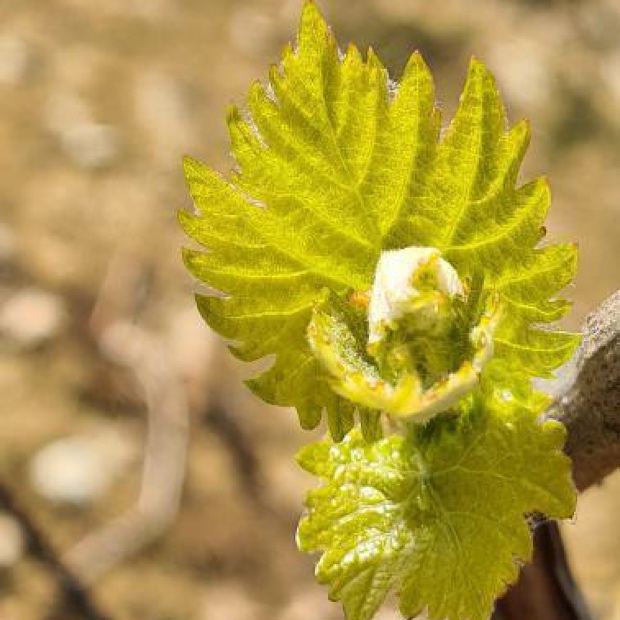
Healthy sangiovese bud, Geggiano, Castelnuovo Berardenga, first days of April, 2021 (c) Andrea Boscu Bianchi Bandinelli
Michael Schmelzer, Monte Bernardi, Panzano: “We too had a couple of sub-zero nights and certainly had some loss due to frost damage. We were fortunate in that not many of our vines had their first leaves exposed yet so we are hoping the damage is very limited.”
Andrea Boscu Bianchi Bandinelli, Geggiano, Castelnuovo Berardenga: “We spray the vines with salts of Zeolite but they help only up to minus one celsius. And so we have had a loss of about 30 per cent.”
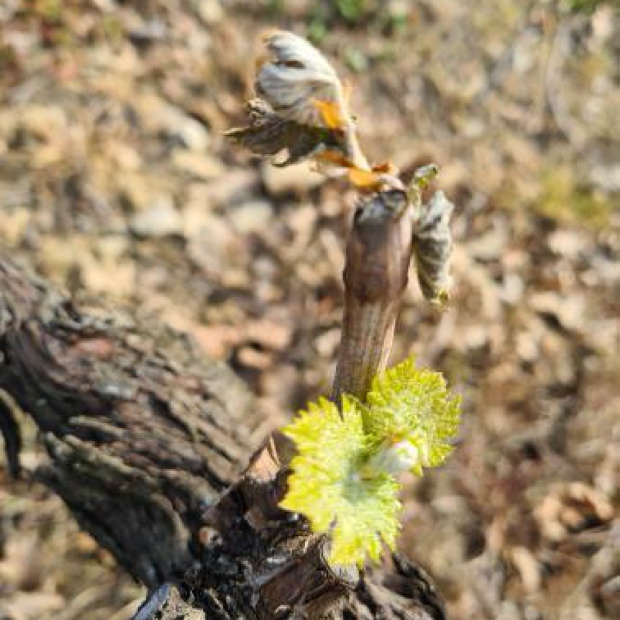
Sangiovese bud after the frost, Losi Querciavalle, Castelnuovo Berardenga, April 8, 2021 (c) Valeria Losi
Valeria Losi, Losi Querciavalle, Castelnuovo Berardenga: “It depends on the position of the vineyards: We have had some loss but that should be around 20-25 per cent. I heard friends with a different position that lost 50 per cent. And producers from the Tuscan coast even higher.”
Angela Fronti, Istine, Radda: “It’s not good, but better than in other areas of production. The budding was not 100 per cent complete so I hope for production. It’s terrible, you can do nothing, only waiting. We have to see. I hope the damage is less than what we can see now.”
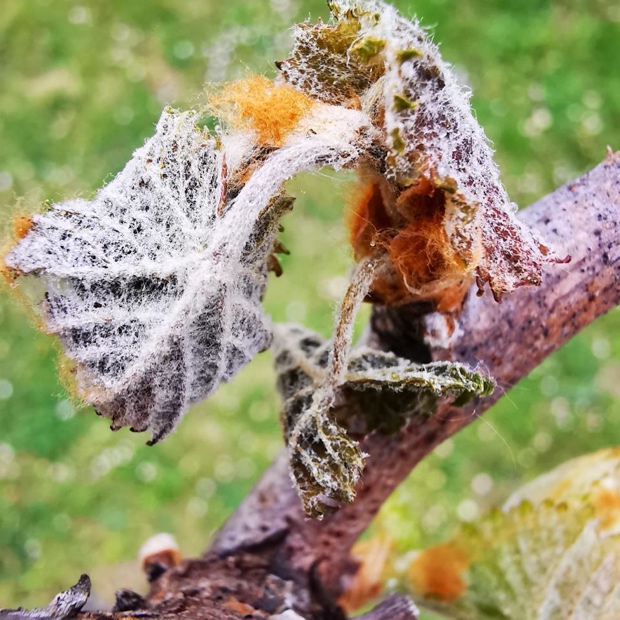
Frost damage to sangiovese buds, Losi Querciavalle, Castelnuovo Berardenga, April 8, 2021 (c) Valeria Losi
Victoria Matta, Castello di Vicchiomaggio, Greve: “We have been affected in some vineyards, the ones with vegetation further ahead. Unfortunately the unexpected hot temperatures of two to three weeks ago have permitted the vines to grown faster than usual so the cold temperature of days ago affected these. The real problem was the unusual heat of mid-March. We will be ready for next year with anti-frost candles. That is the climate change, unfortunately.”
Tommaso Marocchesi Marzi, Bibbiano, Castellina: “We have a rough and quick assessment of a minus 30-40 per cent of the production. The lower slopes have been largely hit and the areas around 280-300m of altitude were safer.”
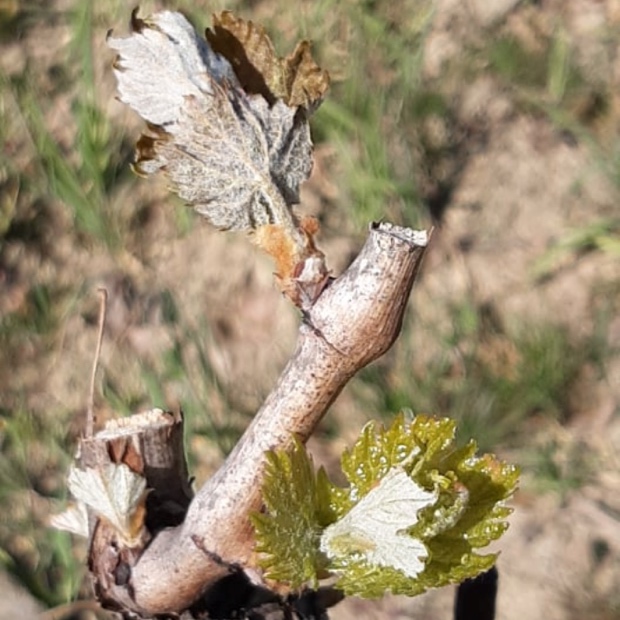
Frost effect on sangiovese buds, Fattoria Pomona, Castellina (c) Monica Raspi
Dario Faccin, Carobbio, Panzano: “Unfortunately the frost hit hard but fortunately some vineyards were still standing. I hope the weather can be mild from now on.”
Federico Cerelli, Gabbiano, San Casciano: “The frost was just what we didn’t want right now…but anyway for the wineries I’m working with in Chianti Classico:
– Gabbiano : In the night between Wednesday and Thursday there was another sharp drop in temperature. The temperature dropped to minus five in the area where the sangiovese had already germinated. Unfortunately the treatment worked well enough on Wednesday morning, but on Thursday morning the temperature was too low. Merlot, cabernet and syrah were not damaged. It is still too early to make an estimate for sangiovese. We pruned long this year and we need to understand how many grapes will make in the second buds.
– Radda in Chianti (Poggio di Guardia): Thanks to high altitude (700m) the vines were completely stopped so no damage.
– Greve in Chianti (vineyards around Greve village): All the new vineyards are affected, regarding the old one some damage but at this stage is not early to estimate the damages, as we can not forecast what the impact on fertility will be.
– Vagliagli area : All the lower vineyards are affected but again too early to forecast the real damage in quantity of grapes lost. The higher vineyard we don’t have damages.
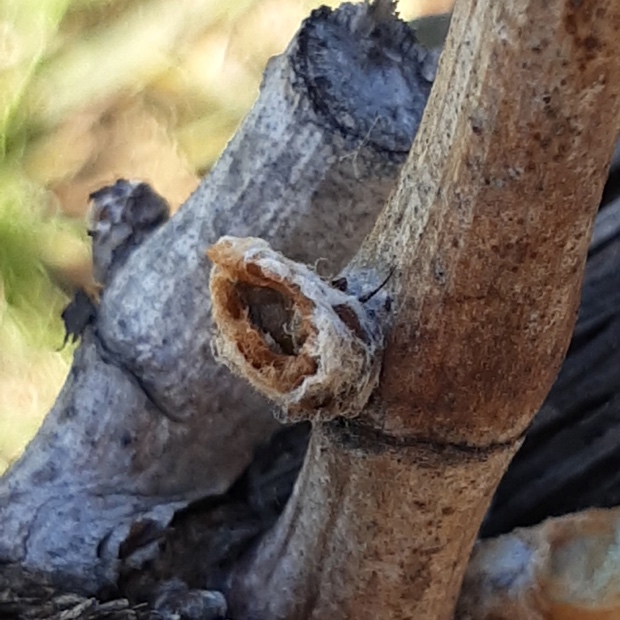
Damage by Nottua, parasitic bugs that eat the young buds, Fattoria Pomona, Castellina in Chianti (c) Monica Raspi
Francesca Semplici, Fattoria Montecchio, San Donato in Poggio: “Unfortunately we had burned vines for two cold nights. We lost a part of our production also this year, like last year but for iced rain :-(“
Beatrice Ancillotti, Castello di Monterinaldi, Radda: “Fortunately, here in Radda in Chianti we are a little behind with budding. We had some problems on the lower vineyards, those closest to the river. Monday I will go back to check (because the damage shows a few days later). I’ll let you know if the situation is worse.”
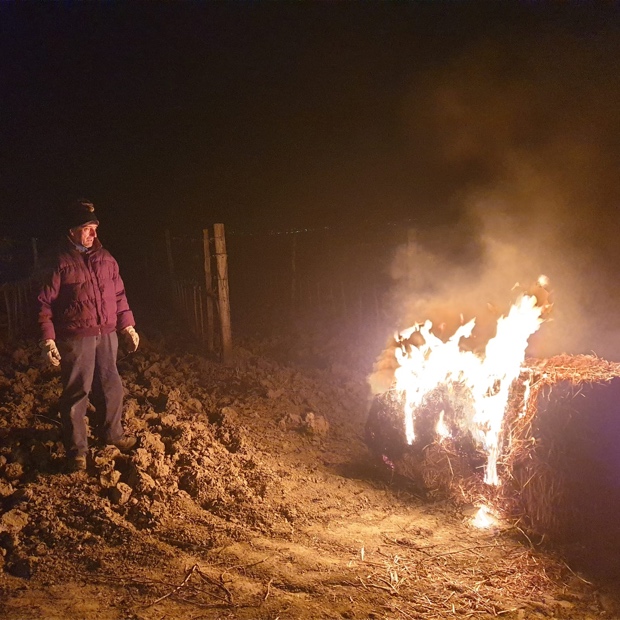
Lighting vineyard fires by night, Bindi Sergardi, Castelnuovo Berardenga (c) Alessandra Casini Bindi Sergardi
Giacomo Nardi, Nardi Viticoltori, Castellina: “Since we are on the lower slope of Castellina in Chianti, the vegetative phase was not yet advanced, luckily the damage was not so great. I would estimate the damage at five to 10 per cent, but I will be able to understand better in the coming weeks.”
Crossing fingers looks it’s becoming the most popular sport discipline all over the world in these last two years
Alessandro Palombo, Luiano
Filippo Cresti, Carpineta Fontalpino, Castelnouvo Berardenga: “The cold has hit different areas. It did not have a uniform incidence. Personally we had parcels affected by 10 to 25 per cent, some vineyards near to zero damage. We were lucky, other areas much less than us. Some varieties of sangiovese in Carpineta were further back and this protected them. From now we are waiting only the sun and the good season.”
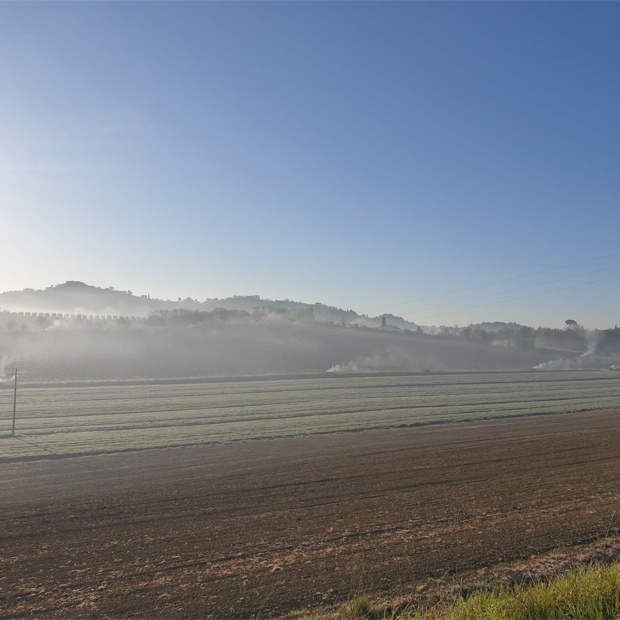
Vineyard fires smoulder at dawn, Bindi Sergardi, Castelnuovo Berardenga (c) Alessandra Casini Bindi Sergardi
Luca Polga, Podere Campriano, Greve: “For us and many of Montefioralle’s winemakers this has been two difficult days. In some areas temperatures reached minus seven degrees celsius. Here it’s too early to understand the damages, fortunately we were a little bit late, so many gems were still closed and we really really hope were not burned. In a few days we will know.”
Alessandro Palombo, Luiano, San Casciano: “It’s been like a punch in the nose. Vines have been affected and the spirit of the troops was too! Early April frost usually happens and this hit a lot of early blossoming buds. It generally lowers the yields but still leaves the vineyard productive. This year’s drop in temperature was different, it went down to levels that may affect the buds that were still closed or lightly open. In this second case the impact will be severe. We’ll see it in a couple of weeks. We keep our fingers crossed… crossing fingers looks it’s becoming the most popular sport discipline all over the world in these last two years.” 
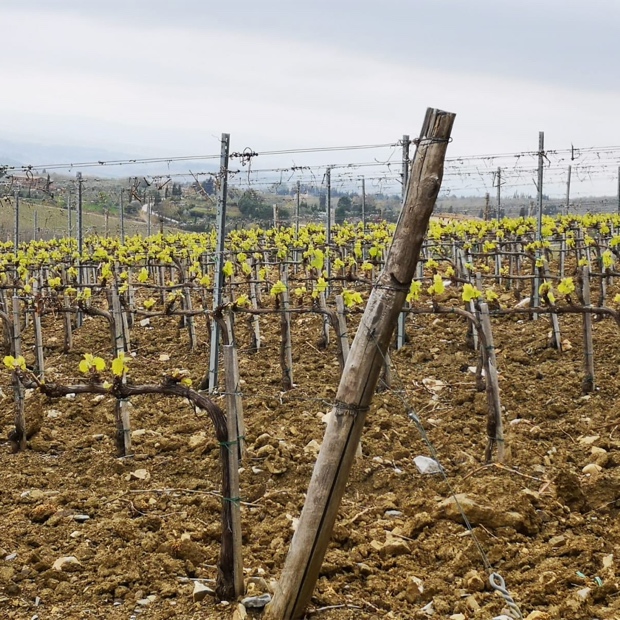
Sangiovese buds braving the frosts, Bindi Sergardi, Castelnuovo Berardenga (c) Alessandra Casini Bindi Sergardi
Alyson Morgan, Podere Capaccia, Radda: “Here at Capaccia we are pretty safe since the vineyards are all over 350 meters. But we did have damage on vines that we planted last year to replace some missing vines….those young vines bud out early and are more susceptible. There was significant damage in the warmer, more exposed regions like Castelnuovo Berardenga. I have a friend that probably lost 50 per cent of the sangiovese. Their temps went down to minus seven Celsius!! In Radda the temps were low in the valleys and in the colder areas (example Caparsa), but those areas are further behind in the development so there was nothing to damage. If we can get through April without any more frost, the season will be fine. We are FINALLY getting some rain today, it has been so dry for so long. So all in all, a positive assessment from the frost.”
Monica Raspi, Fattoria Pomona, Castellina: “We had some trouble in different parts, the new vineyard was in advance and many buds are burnt. I would like to bend those plants next year, but I think that will be impossible. The others vineyards more or less are OK. Most of buds are still closed, and I think they were protected.For many producers it is a disaster. E poi c’è la Nottua. Che si mangia le gemme…and then there is the Nottua (parasite). That eat the gems.”
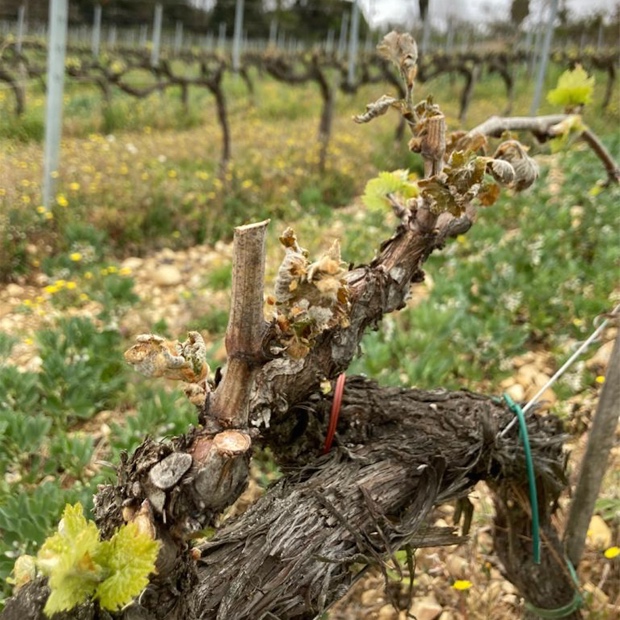
Post frost sangiovese, Il Molino di Grace, Panzano (c) Iacopo Morganti
 .”
.”It’s early to say how the affected vineyards will recuperate. We will know better in the coming weeks as the vines develop
Mandred Ing, Querciabella
Nicolò Pozzoli, Lornano, Castellina: “We spent two nights freezing in the vineyard doing fireplaces last week and thanks god we saved them. Crazy! It was colder that January.”
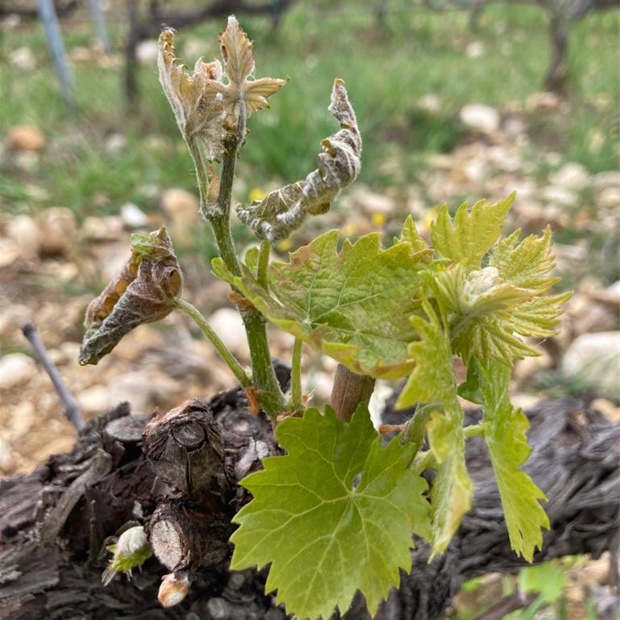
Baby sangiovese stunned by April frosts, Il Molino di Grace, Panzano (c) Iacopo Morganti
Mandred Ing, Querciabella, Greve: “Unfortunately the cold weather that swiped through Tuscany on the April 6th and 7th caused us some frost damage, having hit especially those vineyards which were ahead in their development. Our team lead by Dales is still assessing the damage and it’s early to say how the affected vineyards will recuperate. We will know better in the coming weeks as the vines develop. In Chianti Classico, where our vineyard holdings are spread in different locations and altitude, isolated pockets of lower lying vineyards were affected, especially those around and below our cellar in Ruffoli. At a first glance, it appears that the frost bite hit some of the early budding Chardonnay and the young Sangiovese vines that were first out the blocks. Most of the higher altitude vineyards buds haven’t fully burst yet, so we are fortunate and remain hopeful. In Maremma, temperatures dipped to record lows in some areas, especially in the early hours of April 8th. The Sangiovese vines had an early start this year so were particularly exposed. Vines are an extraordinary plants which are known for bouncing back. At this stage we can only wait and see. It’s already clear, though, that we are among many other producers concerned about losing some crop to frost damage.”
This is the worst frost I’ve seen in my vineyards since I started Rocca di Montegrossi
Marco Ricasoli, Rocca di Montegrossi
Marco Ricasoli, Rocca di Montegrossi, Gaiole: “Yes, temperatures have been dangerous in Toscana and sadly they have caused damages to the vineyards. Very sadly, this is the worst frost I’ve seen in my vineyards since I started Rocca di Montegrossi. The sangiovese has been particularly hit as it is trained on guyot. As the vines trained on guyot are ahead in the growth and the buds are already open. This is not the case with those vineyards trained on cordone. By now, most of my vineyards are trained to guyot, so the damage is remarkable. Depending on position and exposure of the different parcels in some vineyards there’s a damage of 80 per cent buds burned by the frost, other vineyards have less damage so I believe I can estimate an average of 50 per cent buds damaged. The merlot, canaiolo, cabernet sauvignon and pugnitello vineyards are doing fine with very few damage to the buds which were still closed and therefore protected. We will be able to verify the real damages more precisely in a 10-14 days, when we will be able to see how deep the frost has “burnt” the gems. This is not a nice way to start the 2021 vintage…”
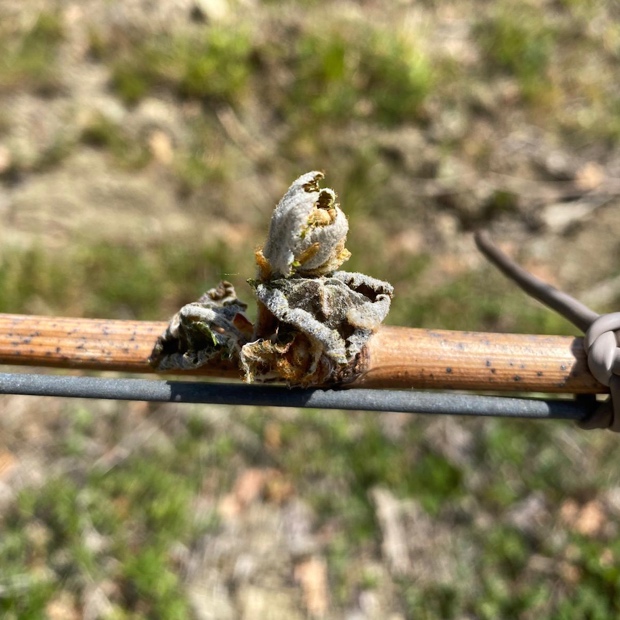
Frost burn on sangiovese buds, Baby sangiovese stunned by April frosts, Il Molino di Grace, Panzano (c) Iacopo Morganti
Barbara Widmer, Brancaia, Radda: “These are indeed difficult days. Of course, I am used to the weather playing a key and sometimes difficult role. And most of the time I find this a very attractive job. But I can’t deny that it is very painful to see how the plants and the animal life are suffering under these extreme conditions. Just a small example, the swallows arrived 10 days ago from their winter domicile. Since then it is freezing cold or raining. I don’t know how long they can survive in these conditions. Regarding non-grapegrowing agriculture, we have lost all the fruit so far. In the vineyards, fortunately, it looks much better until now. I am a big fan of late pruning. That I have probably taken from Switzerland where late frost is a regular phenomenon. By cutting late you can delay the bud break a bit, which has protected us from major damages so far. The merlot and cabernet do not seem to be affected at all. But sangiovese which tends to have an earlier bud break has certainly suffered. To assess the damage we need a few more days. Unfortunately, for this coming Wednesday minus temperatures are expected again. And after that we have to wait at least a month to see what grows. Suckering this year will certainly be a bit more difficult and time-consuming than usual.”
Alessandra Casini Bindi Sergardi, Bindi Sergardi, Castelnuovo Berardenga: “We faced two different situations. Mocenni and I Colli estates’ vineyards in the Chianti Classico (Vagliagli area) made it through the two frosts. Let’s keep fingers crossed that we will no longer see temperatures below zero. Especially Mocenni’s vineyards, given the altitude benefited from the thermal inversion and the only damage we have is on the vines along the Bozzone Creek where the cold air formed a tunnel and moved along its track. Marcianella estate vineyards in Chianti Colli Senesi (Chiusi area) and Nobile di Montepulciano (Tre Berte/Acqua Viva area) suffered more. We were lucky enough to have vines that were behind in the vegetative cycle compared to that of Mocenni and I Colli and we hope that we can make it with a 30 per cent damage.”
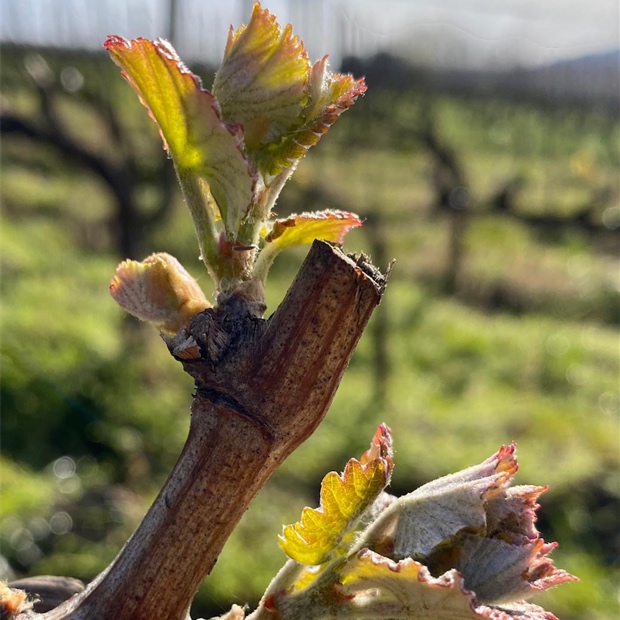
Looking at frost damage, Frost burn on sangiovese buds, Baby sangiovese stunned by April frosts, Il Molino di Grace, Panzano (c) Iacopo Morganti
Chiara Leonini, Fèlsina, Castelnuovo Berardenga: “Yes, temperatures went below zero for two nights, Thursday and Friday last week. In Fèlsina vineyards the budding was just at the beginning, a bit more forward in the Pagliarese area. We had a few small problems at Fèlsina, something more at Pagliarese, where we expect a loss of about 20 per cent. it could have been much worse if the temperatures hadn’t risen. Everything is under control now, it is raining today and it is a good things, with 15 degrees.”
The recent late frost wave has caught Radda unprepared but luckily still half asleep, like ‘Sleeping Beauty’ in the forest.
Roberto Bianchi, Val delle Corti
Roberto Bianchi, Val delle Corti, Radda: “As you well know, Radda has always been a ‘late bloomer’ in all senses : in the past 2.700 years all neighbouring areas in Chianti have developed better and faster than Radda, economically, culturally and …. in terms of vegetation in the vineyards. Climate change – along with a new awareness and some more holistic knowledge – have radically upset the situation. Former handicaps have become the keys to balance and quality, where correctly managed. All this to tell you, caro mio, that the recent late frost wave has caught Radda unprepared but luckily still half asleep, like ‘Sleeping Beauty’ in the forest. Buds were still closed in most of the areas here and random minor damages are recorded in some low-located, creek-close vineyards and/or unexpectedly also in hedge vineyards. Some evident damages are reported there, where vegetation was ahead, especially in young vineyards (one to three years). All together Radda terroir reports not dramatic damages, affecting maybe overall around 10 per cent of total vineyard surface. Far away from what has been reported to be a scaring situation in the areas around San Casciano, West Castellina, West Panzano, South Gaiole and Castelnuovo Berardenga, traditionally a couple of weeks ahead of Radda by vegetation. Sadly, many friends in Montalcino and in the Maremma have reported devastating damages in their areas, affecting sometimes 80 per cent of the vintage production. The same in Langa. One fears that the 2021 overall production in Tuscany and Piedmont could possibly drop this year by 50 per cent !!!! All we hope now is that spring takes it ways steadily. Good rain has been coming down for the past 48 hours and this was really needed.”
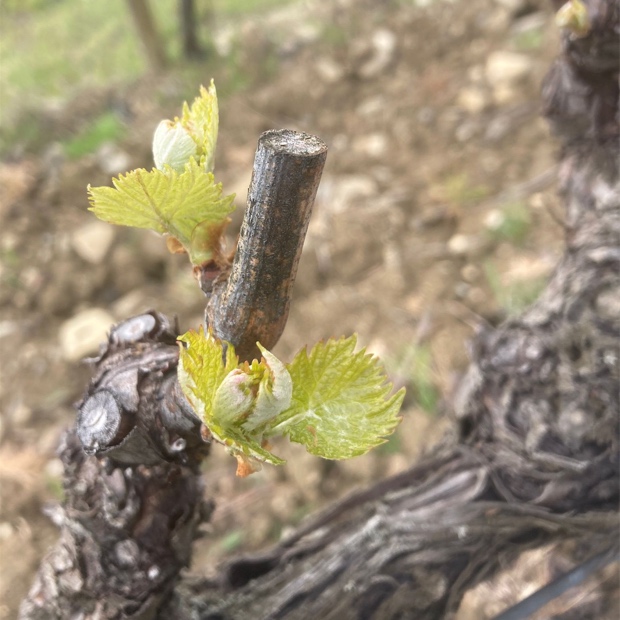
Young sangiovese buds at Rocca delle Macìe, April 2021 (c) Sergio Zingarelli
Natascia Rossini, Podere La Cappella, San Donato in Poggio: “Not easy to assess now the damage from cold temperatures… maybe in a few weeks we will have more clear details. It seems the low parts of vineyard (150m) are the ones more damaged. Bruno says that probably we lost 10-15 per cent of production.”
A very important frost but not more than 2017 and 2020
Sergio Zingarelli, Rocca delle Macìe
Sergio Zingarelli, Rocca delle Macìe, Castellina: “Such an intense period…We had two nights, the 6th & 7th, with very low temperatures mostly concentrated in the early morning hours between 5 and 8 am. The biggest damage has been to the vines in the lower vineyards (under approx. 280m) where there was more humidity. Other damage is seen in the “higher” vineyards to the younger vines that were growing faster. A very important frost but not more than 2017 and 2020. As you know we have four different estates in Castellina in Chianti with different soils, exposures, altitudes … and the most affected are Sant’Alfonso (lower altitude, mostly clay soil) and the lowest side of Fizzano. Le Macìe, keeping our fingers crossed, have not been affected. We’ve just had two great and very useful days of rain which is sure to give new starting energy to the vines for next days…”
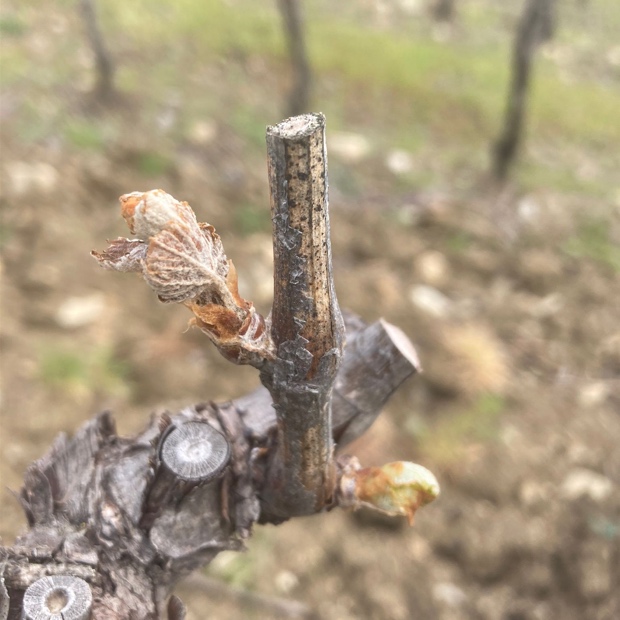
Sangiovese buds burnt by frost, Rocca delle Macìe, April 2021 (c) Sergio Zingarelli
Laura Bianchi, Castello di Monsanto, San Donato in Poggio: “We had last week two dangerous nights with minus one to two degrees celsius. For sure there has been some damages above all in the sides of the vineyards located in less ventilated areas. The varietal with more damage is chardonnay. We now need to see the situation in the next weeks, also a light frost can reduce the strength of the buds and this will effect the flowering. For sure less production in 2021 but hopefully a great one.”
Paolo de Marchi, Isole e Olena, San Donato in Poggio: “Yes, temperatures have been low and we did get damages. Not able to quantify how bad though…but three mornings in a line, and it seems it’s not over yet. What can we do? This is our business, and we have never to forget the big scenario. We are lucky to work mostly with red wines for aging, so we carry a good stock and are able to average the disaster. Much worse for our friends colleagues producing only whites…”
Leonardo Bellaccini, San Felice, Castelnuovo Berardenga: “We have lost 30 per cent of sangiovese at San Felice. We expect another small crop wishing for an outstanding quality.”
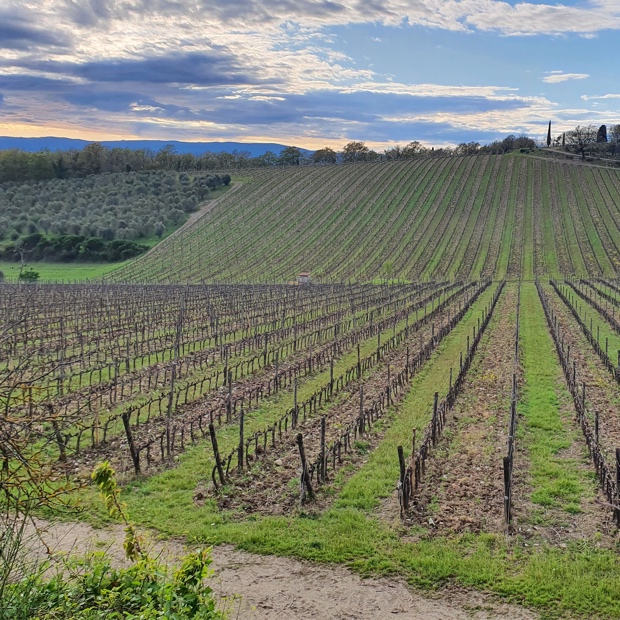
Rocca delle Macìe, April 2021 (c) Sergio Zingarelli
What else can I say to our friends in Chianti Classico but best of luck with this latest challenge and exasperating need to wage such a battle, but I know them well enough to say that resilience is what they are all about. The same holds true for sangiovese vineyards. Grandi abbracci e spero presto si possa nuovamente viaggiare e ci si possa rivedere per un buon bicchiere di vino.
Good to go,
Godello
Assessing bud damage to Sangiovese, Villa Le Corti, San Casciano (c) Duccio Corsini
Twitter: @mgodello
Instagram: mgodello



 Godello