It was Josmeyer’s imagination

Domaine Josmeyer

Domaine Josmeyer

Christophe Ehrhart has a very real and specific goal as custodian of the vines and as a collaborative winemaker at L’éclat Josmeyer. “To avoid oxidized, unclear and unsound wines.” Erhart’s reality lies in his exacting state of certified organic and biodynamic agriculture. He is also a true expressionist, manifested in the feelings of love for biodynamism, running like a dream throughout viticultural life. They encompass an imaginative broad spectrum of respect and attention to all things natural, especially given the spiritual nature of his quest to express terroir.

At Josmeyer, “the first goal is not biodynamism,” Ehrhart tells me at the family winery in Wintzenheim. “We eat only organic and biodynamic. It’s a philosophy of life, but the final goal is to make the finest wines that express the terroir, in a biodynamic way.” I sat down with Ehrhart, along with sommeliers Fred Fortin and Jonathan Ross, to taste eight explanatory wines that fortified insight into Josmeyer’s oeuvre. This second foray took place three days after tasting through a flight of seven wines with Christophe at the Millésimes Alsace, the professional trade fair for the region.

Related – In a Grand Cru state of mind

Domaine Josmeyer is the present day incarnation of a business begun by patriarch Aloyse Meyer. He was succeeded in 1933 by son Joseph who then further developed the operation in 1946. The current operation was established in 1963 by Hubert Meyer, in memory of Joseph. His eldest son Jean is the elder statesman of the modern domain.
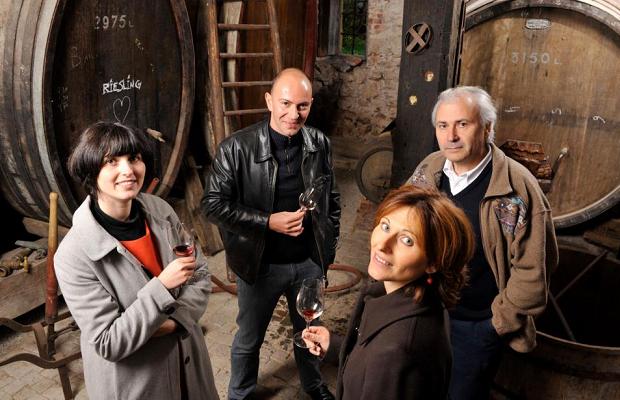
Céline Meyer, Christophe Ehrhart, Isabelle Meyer and Jean Meyer, Domaine Josmeyer photo (c): https://www.facebook.com/pages/Domaine-Josmeyer/140625599300808?fref=ts

Céline Meyer, Christophe Ehrhart, Isabelle Meyer and Jean Meyer, Domaine Josmeyer
photo (c): https://www.facebook.com/pages/Domaine-Josmeyer/140625599300808?fref=ts

With daughters Isabelle (as winemaker), artist Céline (as CEO) and Christophe Ehrhart as wine grower, Josmeyer is three and a half centuries and 11 generations removed from its original beginnings. Today Christophe is a leader in Alsace, sitting on committees including the Alsace governing board of CIVA (Le Conseil Interprofessionnel des Vins d’Alsace) and the local AVA. Since 2001, Ehrhart has been the head of the local growers of the Grand Cru Hengst.

In his position on the Hengst committee, Christophe Ehrhart has been instrumental in eliminating chapitalization (2003), reducing maximum yield limits (55 hL/L) and creating a sugar code index for wine labels. The latter is Ehrhart’s baby and a result of that vivid, expressive imagination.

“Sometimes Alsace wines make one person unhappy,” notes Ehrhart. “If there is an index, we can make two people happy.” The codex rates wines from 0 to five on a residual sugar scale. The index is specific to the wines of Alsace, which differ greatly from those of Champagne, or anywhere else that still white wines are made. The variegated mineral soils of Alsace wreak havoc on how sugar manifests itself, confusing the perceptive ability to imagine the true level of residual. The Ehrhart scale helps the consumer decode that mystery. The purpose is to avoid mistakes, to let the people know what is inside the bottle. “Just to have information in a simple way.”

Josmeyer is anointed with the highest level of Demeter and Biodynamic certification. In fact, Ehrhart is one of the three global VP’s of the organization, the other two being Olivier Humbrecht MW and Eric Saurel of Domaine Montirius.

In his extensive and definitive profile, Tom Cannavan points out Josmeyer’s transition from négociant to biodynamic grower within the context of a “unique ultra-viticulture raison née.” Cannavan praises the purity of the wines while at the same time bemoaning the “bewildering” diversity of products. He writes, “the different ranges are a product of Josmeyer’s négociant roots, but they do not project the image of a single domaine.” Cannavan notes that switching to biodynamic farming did little to change the Josmeyer style, which is all about dry, crisp wines and yet he ignores the reasons for the creation of so many variations on a single (especially Riesling) theme. Soil. Unique geographical spots. Terroir. Jean, Isabelle, Céline and Christophe feel compelled to make small lots from micro-parcels. Organic and biodynamic are important. Terroir is more important.

Jamie Goode posed this question today. Do we make too much of terroir? In the end of his piece, Goode writes “”I reckon terroir deserves to remain at the heart of fine wine.” Jamie and I were together in Alsace. As they did to me, the winemakers of such a region have left an indelible mark on Goode as well. He has been to Alsace on numerous occasions. It has no doubt helped shape his feelings about the importance of terroir, but also the part the winemaker plays in shaping wine.

At Josmeyer, the science of making wine is like wayfinding, based on dead reckoning. In his anthropological study The Wayfinders, Wade Davis writes “you only know where you are by knowing precisely where you have been and how you got to where you are.” Wine making, like wayfinding, is a craft of intuition and experience. Like the Polynesians who navigated the Pacific through knowledge and photographic images committed to memory, the winemaker learns from what the soil and each passing vintage have told. The agglomerated data is applied towards making better, cleaner and clearer wine.

Each time Ehrhart and Meyer navigate the process, from grape life cycle to élevage, they are like the mariner making use of a 360 degree compass of the mind. The navigator will integrate climate (clouds, winds and rain) skies (sun, light refraction and stars) land (marks and bearings) and water (swells, pitch & roll of waves, feel, currents, widths & colours caused by light & shadow, horizons, subtended mast angles and the vessel’s relative position). Davis writes “the genius of the wayfinder lies not in the particular bit in the whole, the manner in which all of these points come together in the mind.”

At Josmeyer the winemaker uses terroir; lieu-dit & Grand Cru, granite, limestone & clay, slopes (steep or not) facing in various directions, climate and vintage. Christophe Ehrhart the wayfinder is what could be called a terroirist. But what about biodynamic wine growing? According to The Living Vine’s Mark Cuff, moon cycles and tides aside, what matters most, as opposed to organic, biodynamics is all about soil, vitality of land, resistance to disease; vines are like icebergs, we concentrate too much on what’s above the soil when 90 per cent of a vine’s life takes place under the soil.
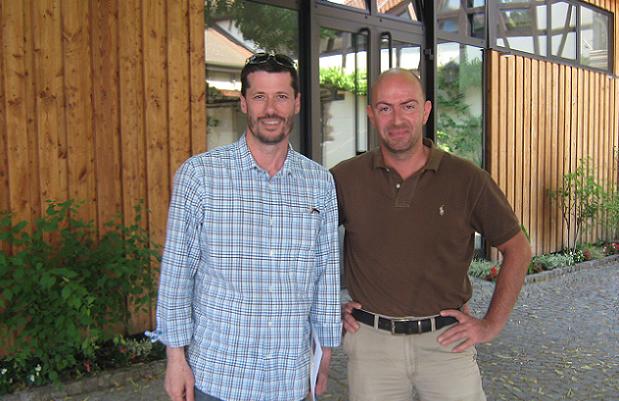
Godello and Christophe Ehrhart, Domaine Josmeyer, Kientzenheim

Godello and Christophe Ehrhart, Domaine Josmeyer, Kientzenheim

The world according to Josmeyer, as related by Christophe Ehrhart is technically, biologically and viticulturally delicious. Yes, the biodynamic winemaker must concern himself, immerse herself, be disciplined to think deep. What happens in the vine’s subterranean world is everything, and at the same time, nothing. Everhart asked Jonathan Ross, Fortin and I what we thought may be the percentage a vine’s growth and energy is derived from beneath the soil (considering the rest comes by way of photosynthesis from the sun). Our guesses ranged from 10 to 33 per cent. Not even close. Christophe said that scientific studies show the number to be between three and five per cent. Who knew?

Ehrhart’s concession that the quantitative number is small for a vine to derive its personality, divined though the earth’s brine, was quite shocking. Though Ehrhart does not rely solely on the common practice that other Alsatian winemakers take for granted and even believe with blind faith, terroir still drives the Josmeyer machine. Like a sailor who can’t find his longitudinal way without a chronometer, the winemaker who is not in tune with the earth must make use of technology to find his viticultural way. Christophe Ehrhart has an advantage. Organic, biodynamic, wayfinder. This is why ancient wisdom matters in the modern world.

Tasting twice with Christophe in four days left a mark. It was Josmeyer’s imagination, running away with me. Here are notes on the seven wines tasted June 15th, 2014 at Millésimes Alsace.

Pinot Auxerrois Vieilles Vignes 2012 (WineAlign)

From calcaire-limestone, there is fine design in line, a mime of sugary lime with notes of white pepper and thyme. Wise and so very dry (5 g/L residual sugar), balanced, rhyming, keeping perfect four four time.

Pinot Auxerrois 1996 (WineAlign)

Acting as if it were recent, current, yet bottled, this is freshness in elegance defined. Still a bit reserved and not quite forthright, this is Auxerrois composed of tight, jutting angles, from ripe phenols and grape tannin. It must have been made with “crossing fingers and wiping brows,” by a winemaker with an awful lot of big dreams. At 18 those dreams remain unrealized. By 25 they will have materialized. Would partner well with Unagi.

Riesling Les Pierrets 2010 (WineAlign)

Simplified, the terroir here is part marl, part limestone. (See the 2002 note for more specificity.) The three areas combine for a full orchestral expression of Riesling. Dry as the desert with a triple threat tang of terroir. Intense, as per the vintage, from what I gather and heard around the trade show floor, the closest repeat to 2002 there has been. The sugar here is strikingly low (3.5 g/L) and the acidity (7.8 g/L) raging in comparison. Such sharp, awry but ripe citrus intensity the likes rarely seen in Riesling at 13 per cent alcohol. A Josmeyer study to be sure that needs several years to settle into its mineral skin.

Riesling Les Pierrets 2002 (WineAlign)

From a selection of prestige vineyards in Wintzenheim, Turckheim and Wettolsheim. Positively terroir street in this most arid yet fresh-driven ’10, yet another example of the absolute purity by way of the vantage point vintage brings to the path through time. There is poise but also texture in the form of a yogurty lees. This from flat alluvian Fecht deposits rich in clay of a soil predominantly built of sand, shingle and silt with les pierrets (little stones) and plates of loess. What it must be like to be a wine such as this. Turns a song on its head. This I would say to it. I wish that for just one time I could stand inside your shoes. “And just for that one moment I could be you.

Riesling Grand Cru Hengst 2010 (WineAlign)

From calcaire marls, the levels are raised, especially the sugar (9 g/L) though you would have no way of knowing it. More chalk grains through and less citrus, but it’s still a matter of zest. This shouts low yields and concentration with a Grand Cru’s deep, guttural voice and the immediacy is frightening. A dart to the Riesling heart. The stallion is at its finest and most focused in 2010. Like so many other pH arrested fermentative ’10’s the couple of extra grams of residual sugar rise up with the elevated level of acidity, but again, the change is both subtle and impossible to figure.

Riesling Grand Cru Hengst 2005 (WineAlign)

A slim Hengst, lower is sugar (7 g/L) and acidity (6.1 g/L) and minutely up in alcohol. That said it is possessed of a sweet round sensation with leaner, less obtuse angles of tension. More flesh and higher aromatic tones, of stone fruit, of tropical wafts most unusual and standing out in the Josmeyer scheme. The approachability here is base and nearly fun, like a tease of late harvest fruit.

Riesling Grand Cru Hengst 1993 (WineAlign)

Travelling back 21 years you see the Jean Meyer take on Hengst, from another era, another Josmeyer. The sugar (10 g/L) is higher, the acidity (6.4 h/L) lower and the alcohol (12 per cent) too. The atomic rise and petrol fuel-driven sensations are more pronounced, the vineyard speak quite real. This is the most polarizing wine I tasted (of the 15 from the Domain in Alsace), not because of the natural and wild expression but because of the way it arrests the ability to produce saliva. A touch of past ripe apple adds to the difficulty in deciding which direction this has taken.

Riesling Grand Cru Hengst Sélection de Grains Nobles 2002

An (SGN) already signed, sealed and delivered to now begin its secondary development stage. Persists with the character of freshness, angular pierce and of a tempered (8 g/L) acidity poking holes in the sugar’s (94 g/L) membranes. Very balanced and delicious, an atomic marmalade of peaches and cream of micro-managed sweetness.

Here are notes on the eight wines tasted at the domain on June 18th, 2014.

Pinot Blanc Mise du Printemps 2013 (SAQ, $22.90, WineAlign)

This is the first wine that goes to bottle (February 2014) from out of stainless steel and 1600-2500L old (1895) oak vats. A verdant amalgamation of spring vegetables, herbs and lime gain elegance and acidity from the blending in of Pinot Auxerrois.

Pinot Auxerrois “H” Vieilles Vignes 2012 (WineAlign)

Straight out the uncanny symmetry to Chablis-like sustenance is uncanny. From a vineyard planted in 1959, the “H” refers to the great Hengst, minus the Grand Cru attaché. Sticky soils with marl and clay make complexity real (like Burgundy). Jean Meyer was the pioneer of circumvention to the 1983 Grand Cru decree by using a letter in lieu of the GC. Many followed (like Albert Mann and Paul Blanck). This PA is clean, precise, creamy, dry and expansive.

Riesling Le Kottabe 2011 (WineAlign)

From the Josmeyer artist series, “young and impulsive, it shares with you its poetry and its intimacy.” The votes between Wintzenheim and Turckheim are old, the sugar (approx. 5 g/L) low and the alcohol (13.5 per cent) higher. “Riesling speaks a salt language that expresses terroir,” says Ehrhart, “as much as a fingerprint.” This has more full-bodied heft as compared to 2010, more muscle, more girth. Shells and a spritz of citrus mark this salt lick of a Riesling, spread evenly, in a chalky sprinkling throughout.

Riesling Le Dragon 2011 (WineAlign)

Very hot, described by Ehrhart as “little Senegal,” from the southwest facing slope of Letzenberg in a sheltered area known locally as “Petit Sénégal” with the dragon that is said to live (or resolved to die after a duel with the sun) in a cave within the Grand Cru Brand. From very ripe grapes that receive major amounts of sunshine. Flinty minerality comes by way of yellow limestone Muschelkalk (shell bearing limestone or, calcaire coquillier). Long and true, with a distinct chalkiness, from a bottle that had been open for five days.

Riesling Les Pierrets 2010 (see above)

Riesling Grand Cru Brand 2011 (WineAlign)

Here lies the mineral of perception, energy and of what is spoken by the fiery locale. Expressing the polarity of silica and chalk, Brand is a vertical line of silica filtering through granite rock. Pure, crystalline and focused because the mineral is filtered out, remaining behind only in deja vu, temptation like sensation. This here, in Brand, is the biodynamism of Josmeyer incarnate. Always the talk of terroir, for right or for wrong. “But it was just my imagination. Runnin’ away with me-once again.”

Riesling Grand Cru Hengst 2011 (WineAlign)

The solar-powered Grand Cru talks in proteins and salinity so the wine will seek more complex saltiness in food, like sharp (Reggiano-like) cheeses and lobster in a rich sauce. This is endowed with a completely different structure than the Brand, with more surround and circulating roundness. The mineral salinity resides in the back, of both the palate and the texture. It’s richer, with deeper density, less piercing and linear than the Brand. An enveloping, circumventing Riesling.

Riesling Grand Cru Hengst 2010 (see above)

Good to go!
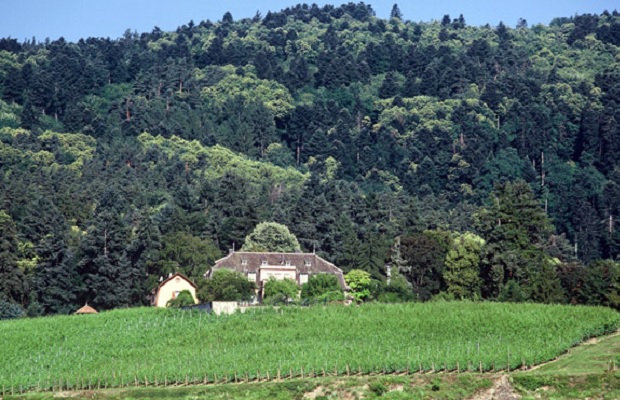
The cru chief of Alsace: Zind Humbrecht

Le Clos Windsbuhl de Hunawihr PHOTO: http://www.zindhumbrecht.fr

Le Clos Windsbuhl de Hunawihr
PHOTO: http://www.zindhumbrecht.fr

Were Olivier Humbrecht, MW a Rock ‘N Roll star, he would be the guy, the man, the boss, the one everyone wants to hang around. He’d be invited to every benefit concert, like No Nukes at MSG, Live Aid, Live 8 and a Tribute to Heroes. He would sing the biggest parts on the raise awareness and relief funds records like We are the World. He would headline every star-studded gathering to celebrate an influential musician’s career, like that of George Harrison, Roy Orbison, Chuck Berry and Bob Dylan.

Olivier Humbrecht is a winemaker. He’s also smart, France’s first Master of Wine, rooted in his region’s history and hyper aware of every nuance in each terroir. He’s an extreme scientist, biologist, geologist, viniculturalist and viticulturalist. Olivier Humbrecht is a student of many Alsace genres, techniques and methods. He’s a bit of a perfectionist. So are many Alsatian winemakers. But Olivier also has the charisma, the persona and the drive to strive for bigger and better. People want to be near that.

The rock star complex manifests itself at a tasting of the Zind-Humbrecht portfolio. Olivier has laid 14 wines on the cellar room table for a group of eight journalists and sommeliers. After leading the group through the lot, he checks his watch and sees there are a few minutes left in the allotted time. He opens two more bottles, then two more. Time is up. The group must press on. He opens another. Just one more, “for perspective,” he says. He can’t stop. The adrenaline is pumping. One more encore. Just one more Sélection de Grains Nobles…

Domaine Zind-Humbrecht is well-known to the world, considered the consummate professional vigneron d’Alsace. The wines are immaculate to a fault; pure, precise considerations out of a multitude of variegated and diverse terroirs; of those around the winery’s home in Turckheim, Wintzinheim, in Gueberschwihr, Thann and in Hunawihr. The Grand Cru holdings of Brand, Hengst, Goldert and Rangen de Thann provide the stuffing for exceptional produce but can any other winery in Alsace lay claim to so many exceptional wines from their lieu-dit and single-vineyards not classified Grand Cru? The trifecta phenomena of the Zind-Humbrecht hill parcels, “Les Clos”; Häuserer, Windsbuhl and Jebsal may as well be Grand Cru squared. The wines from these most worthy soils are dreamy and in top vintages, impossibly perfect.

Most vintners in Alsace are connected to a village, have vineyard holdings surrounding or on slopes leaning upwards from the town. Many crush and ferment in caves beneath their homes right there in the ancestral village. Above ground Zind-Humbrecht is more modern than most, in many ways the embodiment of the 21st century Alsatian facility but Olivier’s wines are deeply connected to Turckheim, the village closest to a large proportion of his vines. The region’s regulatory board decision to eliminate a village like Gueberschwihr from being used on a Riesling label is both curious and counter-productive. Olivier is an island here, not having found any other producer’s support to keep such a designation alive. The irony is not lost. A winemaker incredibly passionate about soil having to label his wine by that very concept and against his will.

I had the opportunity to taste with Olivier Humbrecht on two occasions, thanks to CIVA and SOPEXA, at the winery and at the Millésimes Alsace trade event on Monday, June 16th, 2014. Humbrecht’s brain is in constant churning motion. He will never rest and settle for the status quo. He has learned everything and has everything yet to learn.

Biodynamic farming is at the nucleus of Zind-Humbrecht’s practicum and by now spoken as an apothegm, not ad nauseam. Olivier notes that Colmar, the vinous hub of Alsace and just down the road from Turckheim, is the driest town in France. “We are in a region that in the past we had to fight for ripeness. This is not the case anymore. I have not had to chaptalize in 20 years.” Global warming has had a great effect on phenols but Olivier stands firm on timing. Plants, including grapevines, have very specific life cycles, from flowering to ripening. “I will be ready for picking September 1st,” he insists, “regardless of the weather.”

On varieties, Muscat D’alsace remains “important and fantastic.” Humbrecht insists on keeping it viable and alive. “Reds are trendy,” but not significant to Zind-Humbrecht, adding up to less than one per cent of total production. Ninety per cent are single-varietal wines. Riesling persists as the core variety. It’s a grape that hates to ferment so noble rot should be avoided, because it arrests fermentation.” For Riesling to succeed? “You need a majority of tartaric acid, slowly, coolly, through the cold of winter, to achieve proper malic acid, to achieve good Alsace Riesling. Basically you don’t even want to know it’s happening.”

Olivier is an ally to both phenol and tannin. “Phenols in white wine is something that is always neglected,” he says, and “I do appreciate tannins in white wine, especially in low acidity grapes like Gewürztraminer.” Too many people do not understand the aging capabilities in the wines of Alsace. “We’ve gotten rid of too many phenols in white wine,” he complains. “We love the anti-oxidants, which will not allow the wines to age well, with no protection against oxidation.”

The phenol-tannin-sugar-acidity sequence only succeeds when PH is in the mix. “PH is more important than acidity. Low PH is a guarantee for good evolution in bottle, and good phenols.” That said, skin contact is to be avoided in Humbrecht’s world. “Alsace already has high aromatics so contact is contradictory.” It can lead to the inclusion of green phenols which would be detrimental to making sound wine. Ripe phenols come from the vines and Olivier continues to refer to structure and acidity as a direct consequence of what happens in the vineyard.

The ZH processes include high density planting, hand harvesting, gravity feeding, cold cluster pressing and the use of wild (indigenous) yeasts. The total annual output is approximately 300,000 bottles from 40 hectares, a capacity reached in the mid 1990’s. “We are not interested in getting any bigger,” concedes Humbrecht.

The last piece and going forward of the Zind-Humbrecht puzzle concerns vintages. “Vintages are very important and different in Alsace,” says Olivier. “2014 is very precocious.” Flowering was done the first week of June, almost two weeks ahead of the norm. This is similar to 2003 and 2011. “We made a lot of mistakes then, because it was the first time we had this.” The plan is to adapt to the climate by cooling down the soil, with more grasses to retain moisture. They will also let more branches grow to restrict sun and more canopy management. Biodynamic farming at work.

Olivier Humbrecht and Godello PHOTO: Cassidy Havens, http://teuwen.com/

Olivier Humbrecht and Godello
PHOTO: Cassidy Havens, http://teuwen.com/

Here are notes on the 20 Zind-Humbrecht wines tasted in Alsace on Monday June 16th and Wednesday June 18th, 2014.

Pinot Noir 2012

To Olivier Humbrecht, the location and managing the ripeness of Pinot Noir is key. “You can’t hide green character in Pinot Noir,” he asserts. Fruit comes from the Heimbourg vineyard, from west-facing slopes out of marl and limestone. This is a cooler, later ripening position with a draught between the hills. At 13 per cent alcohol it is pleasantly ripe but not as rich and intense as 2009. Still ripe enough for positive and effective phenols. Tannins are present and accounted for, wrapping a veil over the chalky, chewy, slighted coated fruit. The mineral is felt in texture coming from what is a simple, proper and elegant palate.

Muscat Goldert 2012

Like any self-respecting winemaker in Alsace, Olivier Humbrecht is intent on keeping Muscat d’Alsace alive with hopes that someday it will once again thrive. The white and red coloured, longer ripening, small berry Muscat Petite Grains receives minor (one or two per cent) support from grapey, soft and aromatic Muscat Ottonel. Raised from olitic limestone and marl soil, this Muscat is blessed with terroir inducing greater acidity and a dichotomous, silty ripeness, like a green, unripe Sauvignon Blanc. One has the sense that in this unique vintage the noble variety may age with an almost unexpected stride through the years.

Riesling Terroir d’Alsace Vin Sec 2012

This is the most basic and tenable wine in the Zind-Humbrecht portfolio. For the uninitiated it is an ideal embarkation point from which to engage the dry elegance and saline minerality of Alsatian Riesling. This “entry-level” effort is from 11 year-old vines, a slow ripening vintage and the stark reality of granite soils. The ever-present Humbrecht honesty and richness is here but in its most subtle (and only 2 g/L residual sugar) scale. Quick notes of lime, chalk and ginger. Olivier says it is made for the Brasserie or the Gastropub market. Never mind that it’s the most junior of his Rieslings. Nobility begins here with this reassuring, air-dried, easy to understand wine.

Riesling Herrenweg de Turckheim 2012

Here rolls the rock of the ZH stable. From gravelly, well-drained, poor soils around the winery. The citrus factor is front, centre and in surround sound but a natural richness and sweetness brings balance. This means the wine will gracefully incline through to a dry yet fruity future. A savoury austerity will increase the ageing quotient, in addition to the omnipresent mineral flavours by way of old (47 year-old) vines that burrow deep in the gravel, providing grit and strength, especially in drought vintages.

Riesling Calcaire 2012

The artist formerly known as Gueberschwihr is no longer. The new regulation regarding the production of village wines became effective with the 2011 harvest so, alone in its support for the quality of wine for the village, Humbrecht had no choice but a switch to the Calcaire nomenclature. From richer, cooler, alkaline soils. A touch more sugar (8 g/L) than the Turckheim counterparts, this also has higher acidity. Technically not so dry but this is the elevated, though not quite astronomical PH talking. It is dry enough to be considered Sec. Momentarily stuck in the proverbial petrol and mineral fence. The door will open shortly, to the ZH airy density and so physically speaking, this will taste drier as it ages. Even if “all this science I don’t understand,” I do know “it’s gonna be a long, long time” before the Calcaire comes down to earth and settles into its skin. Ten years to be sure. Rocket man.

Riesling Clos Häuserer 2012

Also Turckheim in origin (specifically Soedlen) but from marl soil atop really aggressive limestone from just under the Grand Cru Hengst’s nose. One of the highest in PH, this is austere and currently shut tight within a dry (4 g/L sugar) free lime zeppelin drum. Though aromatically mute, the mineral density on the palate is striking, like a reduction of half and half spread on sourdough toast. The 18 month lees program is most noticeable here and this Riesling will be led towards a petrol induction future. When it gets there, a taste will bring you into the Häuserer of the holy. The deep marl soil on top of calcareous Oligocene mother rock will speak and it will ask  “are you dizzy when you’re stoned?”

Riesling Brand Grand Cru 2012 (SAQ 11532951 $73.00, WineAlign)

There is a roundness to the Brand, in beautiful calming aromatics in defiance of the hard biotite granite, black and white mica soils. The pure mineralized clay silica brings heat to the land, with a high surface exchange quotient, not so different from the Schlossberg. This is precocious and precious Grand Cru that demands the wisdom and the fortitude of old vines, of a minimum 25-30 years of age. Zind Humbrecht’s average 66! With two per cent noble rot in the mix the wine reaches for more sugar (11.5 g/L) out of its desperately low yields. There is a high mineral ripeness and a tropical tingling, in melon and clementine.

Riesling Clos Saint Urbain Rangen de Thann Grand Cru 2012 (SAQ 12133871 $101.00, WineAlign)

The Thann is a 22-hectare, low yielding Grand Cru. The terra is volcanic and dark sedimentary soil, very steep and homogeneous. The high mineral altitude and poor attitude means the Zind Humbrecht ambition is aromatically challenging to assess, even if to taste it’s so obviously exquisite in concentrated depth. Such a rich, intense grapey nose but the flint smothers the smoky smoulder that should be present. A tight, angular and sobering expression, more isometric and idiosyncratic than anything tasted to this point. An island in the line-up. Not the most loveable Rangen, like its name, which is too old to even know its meaning.

Riesling Heimbourg 2012

From the village of Turckheim, the vines are planted on the steepest aspect of the marl covered, oligocene limestone slope. More noble rot present here than in the Brand, resulting in, naturally higher sugar (15 g/L), richer fruit and a deeper hue. “The sweetest Riesling we’ve made in 2012,” admits Olivier. A most interesting specimen too, an upside down cake in alternating layers of apricot and crushed rocks. The flavours are high-toned, not necessarily tropical, but lush.

Riesling Clos Windsbuhl 2011, Alsace, France (agent, $80.00, WineAlign)

“Vintages are very important and different in Alsace,” notes Humbrecht, exemplified by this blasted 2011 in contrast to all the ’12’s at these tastings. Here the fruit leans in the most elevated petrol direction, from a warm year and an earlier harvest. A younger evolution is taking place, showing immediate and gratified balance. The terroir is cool, rocky limestone with shells, similar to Burgundy. The clos is a gently sloping, six-hectare parcel. Overall it’s anti-floral, wet chalky creamy and striped by linear acidity. Only 4.5 g/L of sugar. These last two numbers mean nothing if you don’t recognize the PH because there are different acidities in wine. Here the acidity walks the fine line, side by side with its partners.

Riesling Clos Windsbuhl 2007

From a different era, this was fermented bone-dry, dire, with less than 1 g/L of residual sugar. A Riesling to show just how tight the Zind-Humbrecht band was back then and it is just beginning to communicate in its mid-life, mineral voice. If as a lieu-dit subject it was once “incommunicado,” with no comment to make, this has changed. The notes are layered and together, the mid-palate extraordinarily full, the length in reverberating, extended play. Here in today’s communique he’s come clean, having moved on from the strict, straits style, once spun unbending. The experience of great players and exceptional monopole (Grand Cru deserving) terroir has given the ’07 Windsbuhl the foundation to realize a classic Riesling.

Pinot Gris Calcaire 2012

Fruit comes from the Heimbourg, providing pure limestone effect and a great nutty character. The sugar is nothing to forget about (10.6 g/L), here already commissioned and integrated. Provides support for Olivier’s declaration that “if anything should happen to a wine, it should be before you bottle it.” Much more accessible than the fastball-curveball-changeup, out of the strike zone ’11. Here it’s all down the middle,  juicy, hittable fastballs.

Pinot Gris Rotenberg 2012

The Rotenberg’s shallow, red soils (located on top of the Hengst) bring a whole new set of parameters to Pinot Gris, in stark contrast to the Calcaire. Two bottles were poured. A two-day old sample showed settled and mellow flavours. A new bottle was crackerjack reductive, leesy and with a shocky aridity so unusual for Pinot Gris. The soils bring concentration, here magnified and compressed by the hastened moment. All the hallmarks of the Zind-Humbrecht style are there, if suppressed; tang, herbiage and a spicy spike. Very dry (4 g/L) and really invigorating white wine.

Pinot Gris Clos Saint Urbain Rangen de Thann Grand Cru 2012 (SAQ 11545233 $74.25, WineAlign)

The noble grape in this Muschelkalk (calcareous) vineyard comes through in high concentration, with an increase in noble rot from very low yields (12 hl/L). There was hail here in 2012, just after flowering, not a devastating storm but enough to minimize quantity. The sweetness (35 g/L) is heightened and uncompromising yet always mitigated by intense mineral activity. The richest and most unctuous wine of the morning (to this point) with direct, pure ripe tree-fruit flavours. This is a Pinot Gris that remains firm against the dangers of oxidation and it will develop smoky and toasty aromas. The structure is what I would call remarkable but not exceptional. Time will tell. Here the wait needs to be a minimum five years and then to drink well past 2025.

Gewürztraminer Calcaire 2012

As of the 2011 vintage, the Wintzenheim bottling became the Calcaire, for village designation (or lack thereof) reasons. Fruit here in 2012 is mostly (not necessarily typically) from the Hengst Grand Cru vineyard. The marl and limestone leads to a very typical Alsatian and even more typical Zind-Humbrecht Gewürztraminer. Full on glycerin, creamy, perceptibly sweet and protracted wine. Even at 35 g/L it is tempered by high tannic animation, as much as in Burgundy. Skin tannins are much more interesting than those from oak because they elevate the acidity by way of contrasting balance to the sugar. This is why they succeed.

Gewürztraminer Hengst Grand Cru 2012

From old vines of the Hengst, the yield is half of the Calcaire, the concentration raising the bar in the opposite direction. The residual number is the same but the sugars are more complex, intensely natural and variegated. The texture and flavours cover a creamier, wider spectrum and even though some typical rose petal/lychee components are noted, they remain submerged beneath the piquancy and the richness. This Hengst will gain flesh and weight as it ages, elevating the potential for late harvest sensations and alcohol.

Gewürztraminer Clos Windsbuhl 2012

The Muschelkalk calcareous, southeast facing slopes of this Clos employ slightly cooler temperatures and the stretched elasticity of slow-ripening to bring a sense of balance and poise to Gewürztraminer. The same can’t be said for Riesling on the same site, at least not in 2012. The Windsbuhl here speaks in more sweetness and less alcohol. “If you can see the differences of terroir in Gewürz,” says Olivier, “then you won’t see it in Riesling.” Here is an example that backs up one of his most telling axioms. “It’s the phenols of the grape that make it age gracefully better.” Age it will. Drink this beginning in 2020 and through 2040.

Gewürztraminer Vendanges Tardives Hengst Grand Cru 2011

A wine not often made because of the dry climate in this Herrenweg vineyard. The gaining of full botrytis expression only happens once in every five or six years and when it does, this eager and vivid sweet wine is the result. Harvested at high ripeness and proportion (50 per cent) of noble rot, with a quick (one month) fermentation to achieve a sweet balance (vin liquoreux) not that far from some SGNs. At 102 g/L it is obviously quite sweet though once again, with acidity, PH and exceptional phenolic character it strikes a balance. I don’t normally imagine late harvest wines to speak in terms of elegance or restraint and I’m not sure those are the most apt descriptors here. Yet the Hengst is as subtle as it gets for the genre and never enters the arena of the cloyingly sweet and absurd.

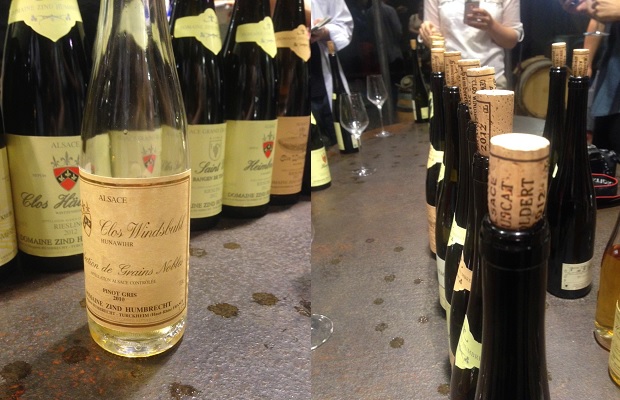
Pinot Gris Clos Windsbuhl Sélection de Grains Nobles 2010 and the tasting table PHOTO: Cassidy Havens, http://teuwen.com/

Pinot Gris Clos Windsbuhl Sélection de Grains Nobles 2010 and the tasting table
PHOTO: Cassidy Havens, http://teuwen.com/

Pinot Gris Clos Windsbuhl Sélection de Grains Nobles 2010

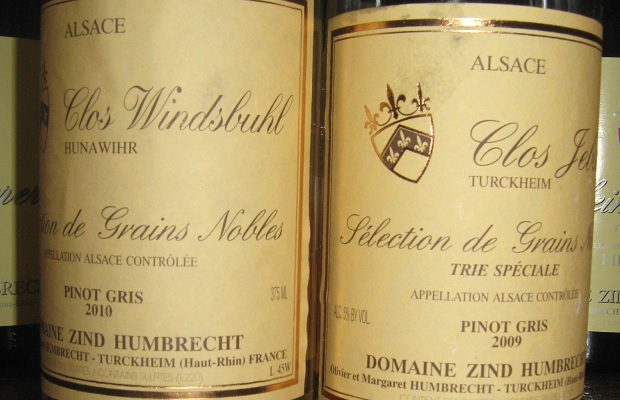
The residual on the 2010 Windsbuhl is remarkably high, this as a result of its long but (not compared to 2009) fermentation. From a historic vintage, with top-notch acidity (the goal was 16 g/L) and clean, precise botrytis. With the complexity and structure provisos of the Muschelkalk calcareous terroir and (43 year-old) vines, this exceptional dessert wine was given all the tools necessary for success. A parabola of a dessert wine, one sip and “we barely remember who or what came before this precious moment.” Attacks the mouth with an unparalleled sugar/acidity/tannin continuum. The flavours bring to mind quince, apricot and creamy mangosteen in out of control concentration. There is a reason sweet wines like these are so rare and receive such high praise. Exceptional fruit of uncompromising quality and a winemaker’s reverence are the reasons. Olivier Humbrecht prepared this 2010 to succeed and to live for decades. Drink from 2025 to 2055.

Pinot Gris Clos Jebsal Sélection de Grains Nobles Trie Spéciale 2009

A south-facing, very steep slope of grey marls and gypsum. A vineyard that yielded a miniscule 10 hl/H. A stratospheric residual sugar quotient (in the realm of 500 g/L) and incredulous acidity to prevent the development of the yeasts. A fermentation that finally finished in the late winter of 2012. A wine aged in demi-guid. Selection of grapes of a botrytis so pure and dry. These are the specs of a wine I may never taste again. Olivier concedes he “really tries not to obtain the highest sugar concentration possible” but this 2009 is a “monster of a wine.” It will take forever to assimilate and digest the sugar. Unctuous, lush, rich and gorgeous does not do it justice. Pure distillation of fruit and stone, accented by spice, wild herbs and flowers. Like an injection of pure, Pinot Gris adrenaline. All this from dry extract, slowly rehydrated with magic pixie dust and the wonders of the natural world.  Will live for a century and then some.

Pinot Gris Clos Jebsal Sélection de Grains Nobles Trie Spéciale 2009

Pinot Gris Clos Windsbuhl Sélection de Grains Nobles 2010 and Pinot Gris Clos Jebsal Sélection de Grains Nobles Trie Spéciale 2009

Good to go!