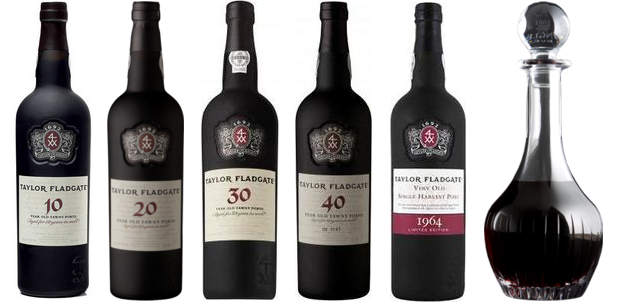
Taylor Fladgate 10, 20, 30 and 40 Year-Old Tawny Ports, Single Harvest 1964, Single Harvest 1863
Taylor, Fladgate, & Yeatman. A name synonymous with Port. Purveyors of exceptional, axiomatic and accessible Port. Last week we WineAlign critics gathered (David Lawrason, John Szabo, Sara d’Amato and Julian Hitner) to taste a rare selection of Cask-aged benevolent pours. A chance to take measure of an evolutionary history from the vendibles of a “long and unbroken family tradition” makes cause for some adjectival arcana. Though the house is widely recognized for making epochal, fortified vintage-declared elixirs that can age for decades, it is the Tawny tales that deliver its most exciting and impossible gifts. Were a time capsule be floated into space for future, other worldly generations or alienigenate life forms to discover, a Taylor Port, a Tawny, would have to be in the mix.
The Taylor opus dates back to 1692, a most dubious vintage if you were to practice say, witchcraft in Massachusetts, but in Portugal it was a pretty good year to begin making Port. With thanks for the pull from the Taylor website, they are the house with the “largest reserves of rare cask aged wines from which its distinguished aged tawny Ports are drawn. The house is also known as the originator of Late Bottled Vintage, a style which the firm pioneered and of which it remains the leading producer.”
Rare cask aged wines. Ay, there’s the rub. I must admit that I am utterly fascinated by the new, progressive and forward thinking Taylor deal. “Tis a consummation devoutly to be wished.” Under the supervision of Managing Director Adrian Bridge, Taylor has systematically scoured the Porto cathedrals in search of casks housing excellence and propriety. The world is now the beneficiary of the program. Old Tawny Ports, in pristine condition, being auctioned off to bidders who won’t be forced or coerced into taking out third mortgages.
With thanks to the WineAlign concierge, Head Wineaux Bryan McCaw, along with Associate Wineauxs Carol Ann Jessiman and Sarah Goddard, we were afforded the once in a lifetime chance to taste the 1863 Single Harvest Porto. With no disrespect to the most munificent and gratifying 10, 20, 30 and 40 year-old Tawny bottlings and no dis to guest chamberlain Stephen Marentette of Sylvestre Wines and Spirits, it was the 1863 and 1964 that took our collective breath away. “Time is an asterisk.”
Taylor Fladgate 10 Year-Old Tawny Port, Douro, Portugal (121749, $34.95, WineAlign)
Taylor’s 10, composed from no less than six Touriga and Tinta grapes (aged an average of 10 years in neutral oak) is the definitive and most accessible for the genre. Sourced from Cima Corgo and Douro Superior vineyards, the 10 puts a most tender fruit-wood balance on display. Sweet emotive fruit intensity with spice notes and a sliding scale of gathering acidity combine for full, though not over the top perfervid Porto nationalism. Late flavours of roasted figs, candied almonds and filberts round out this most effective Tawny, an example that acts as a portal to the overall Taylor oeuvre.
Taylor Fladgate 20 Year-Old Tawny Port, Douro, Portugal (149047, $68.95, WineAlign)
An average barrel period of 20 years heightens the eye-opening fruit sensations of this impeccable Tawny Port. The extended élevage makes cause for such huge contrast, poles apart from the near-conflagrant intensity displayed by the Taylor Tawny 10. At 20 the flames weaken to a diminishing point. Poured from a cool (15-17 degrees Celsius) temperature into a proper (minimum 12 oz, Bordeaux-shaped bowl) stem, the 20 warms and opens quickly, revealing an immediate soft and creamy caramel nose and body. Recently bottled (2013), this is quite youthful and its nuttiness is neither toasted nor roasted. It is a tactile wine of tact, wholly intact, seamless and gives of itself with effortless ease. Carries a century of residual sugar with tempering acidity and potential hydrogen poise. One hot flash sweats it out at one of the corners but it flashes the leather and makes the play. Enjoy the long finish four to six weeks after opening. Is 20 not the ideal, balanced number, in weight, pleasure and economy for a Taylor Tawny?
Taylor Fladgate 30 Year-Old Tawny Port, Douro, Portugal (540252, $180.95, WineAlign)
Bottled in 2014, the Taylor 30 year-old Tawny dramatizes the intensity of the 10 in medley with the elegance of the 20. Presents warm and velutinous, with a minor, nape of the neck hair raising (and not illogical) level of volatile acidity. The sweetness in the formidable 30 is cavernous, full of weightless gravity, flitting around in aerified circles, while the acidity sharpens its spears and arrows. Once the wine has opened and the drawn breathes have taken in its dried fruit, slow-roasted nuts and spirit enhancing liqueur, the acidity then pierces a straight line through its ambrosial, fleshy heart. The finish combs flavours of citrus, orange tisane and tarte flamande noix de coco. You can almost sense the minor (one to two per cent) addition of older barrel juice, say from the 1800’s. It just has that kind of wisdom and experience. Want to relax? Have a glass of the Taylor 30 year-old Tawny.
Taylor Fladgate 40 Year-Old Tawny Port, Douro, Portugal (540260, $239.95, WineAlign)
If the 30 year-old Taylor Tawny was beautiful, the 40 is untouchable. Soft, downy texture and wholly resolved, highly expressive aromas; rose and bougainvillea in full bloom, seeped Ceylon tea, potpourri, expensive yet undemonstrative perfume. The palate increases in density and viscosity but with both licorice and butterscotch candy. The nuts are darker and more exotic, the fruits too. There is also a citrus-spiked demi-glace flavour. There is a far-east pungency to both its smell and taste. The 40 is a much more serious wine, brooding even and encumbered by tropical humidity. That and the intensity of its confection are what makes its style so markedly different and perhaps even contentious, when contrasted to the 30. That said, if you compare it to the price of say, an 18 year-old Single Malt Scotch, it represents screaming value. Though the window to drink may only be four to six weeks after opening, the not yet cracked Taylor 40 can be stored for another half decade, at the least.
Taylor Fladgate Single Harvest Porto 1964, Douro, Portugal (Agent, $299.95, WineAlign)
This program is new to the Taylor agenda, the releasing of single-cask, single-vineyard, single-vintage Tawny Ports that have aged for 50 years. Taylor sourced a number of casks for the catalog, including this 1964 and more will follow. The choice was made to not call it a Colheita, though technically that is really what it is. It shines in the deep hue of recently lacquered mahogany with a brickish outer layer. Both hue and texture are like treacle, with the aromas barbed by clove, white pepper and orange peel. The aromas fly out as if pulled by a vacuum. It is virtually impossible to assess all of its incense in just a few short minutes. There is caramel and a recently extinguished cask fire. Though the palate indicates sweetness, the intensity is more refined than the decades-designated Tawny Ports yet also lengthened, in part because the acidity is 33 per cent lower. The overall effect is a low and slow, micro-oxygenated coming out party. Your nose can rest six inches above the glass and the perfume will leap to it. This is a piece of Porto history that stands and rears on its hind legs, a musky, Rum-raisin flavoured bear of a wine. Injecting single-harvest, single-vintage Ports into the marketplace is key, the only disadvantage being the price. That’s because at $300, the value is so extraordinary that gift giving might totally ignore the 30 and 40 year-olds. It’s a good thing they and this 1964 will live in perpetuum.
Taylor Fladgate Single Harvest Porto 1863, Douro, Portugal (Agent, $3,995.00, WineAlign)
The two casks of 1863 reached the Taylor family in pristine condition, from one of the last great pre-Phylloxera vintages of the 20th century. This wine came from the cool and damp Port lodges of Oporto, “the cathedrals of wine.” This was a once in a lifetime chance to taste a piece of history, a most natural and organic fluid encased for 151 years in its integument of time. The year 1863 was significant in many respects, including being the birth year of Henry Ford and Franz Ferdinand. This is Port that creates the future and yet dwells on the past. The hue is both progressive and fathomless in subterranean fantasy. Its many shades of warm, advancing colours resemble the faux brown rings of Mars. The aromas are built around toffee and with accents of many mints; spearmint, chocolate and pepper. You can smell the 1863 from rooms and world’s away. It conjures up many songs. “When you’re half way from a dream, is it hard to work out what is real?” That is its love illumination. It has the strange advance “of killing time and dreams.” The flavours are extreme and exotic, with South-Asian spices highlighting its deep, late night humidity. The finish is endless. Is this brilliance or a stroke of incredible luck? It is certainly pristine and wondrous. It has to be considered a perfect wine, for its niche and genre, by its makers, David Guimaraens and Adrian Bridge. Having let the days of 151 years go by, this is not a wine to compare with others, it is not the same as it ever was. In the end, “you may ask yourself, well…how did I get here?” Thanks to Stephen Marentette of Sylvestre Wines and Spirits. @Smarent
Good to go!




 Godello