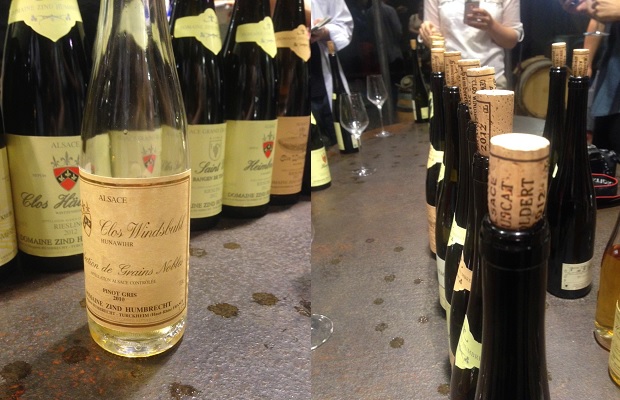
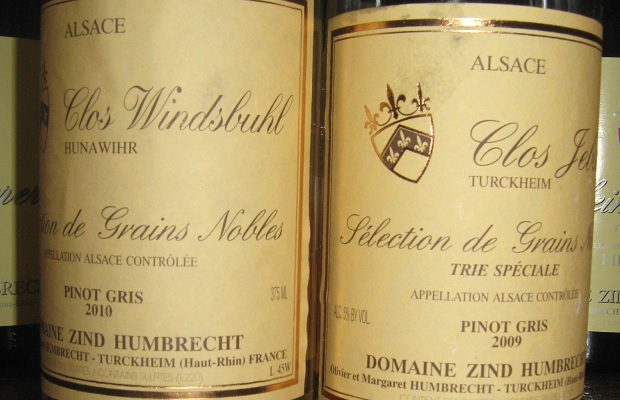
All suss terroir

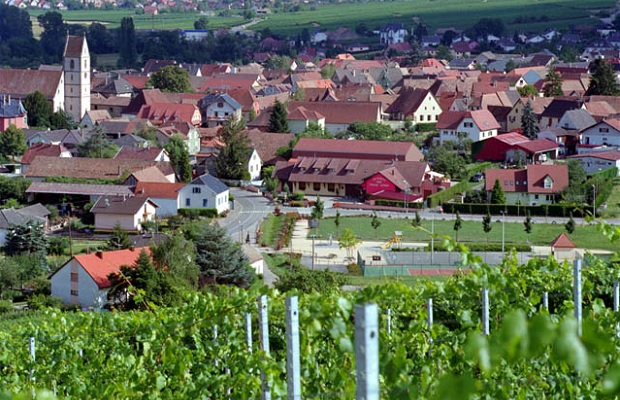
Niedermorschwihr and Sommerberg Grand Cru Vineyard, Alsace

Niedermorschwihr and Sommerberg Grand Cru Vineyard, Alsace

It has been more than 15 months since I returned from a pivotal, seminal and transmogrifying week in Alsace. The thoughts transposed to words continue to flow freely and with crystalline clarity. This may be the curtain call on that trip. Or not.

Type in the words “Alsace” and “philosophy” into a Google search page and the results will tell a Grand Cru story. The Alsace home page launches from terroir. It has to. Every winery, trade, marketing or governing organization’s website is ingrained to emphasize the rubric, to explain the true essence of Alsace wine. The local philosophy, indicating the cerebral and the spiritual component for producing exceptional wine, is both necessary and fundamental. There is nothing remotely parenthetical about the notion of terroir, not in Alsace.
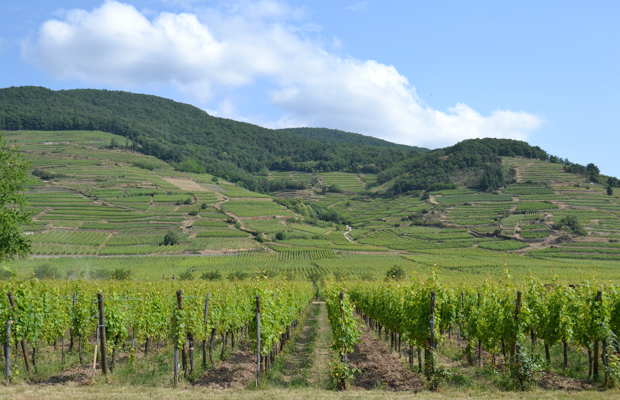
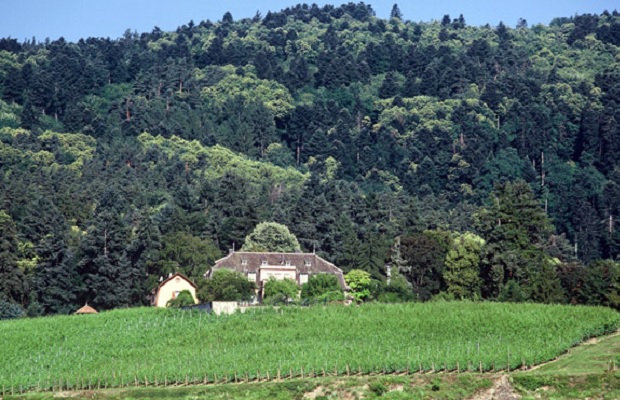
Schlossberg Grand Cru, Kientzheim, Alsace

Schlossberg Grand Cru, Kientzheim, Alsace

Related – In a Grand Cru State of mind

As wine geeks we are constantly seeking it out and sometimes we imagine it, chat it up when it’s not really there. After we are immersed in Alsace, we cannot deny its existence. Terroir, defined as “the complete natural environment in which a particular wine is produced, including factors such as the soil, topography and climate.” Or, goûts de terroir, as intaste of the earth.” Wherever wine is made around the world, soil is always as important, if not more important than any facet of the winemaking oeuvre. In Alsace, it is religion. I suss it, you suss it and in Alsace, they might say, “we all suss terroir.”

Alsace presents as a long strip of stupidly beautiful, verdant vistas, wedged between the faults and valleys forged with the Vosges Mountains on its west side and the Germany buffering Rhine River to the east. To consider its location as a province of France, drive 500 kilometres east of Paris and draw a line south from Strasbourg, to Colmar and to Basel. Wars have seen to make sure the region can never be too comfortable with its identity, causing an ever-annoying oscillation in governance.
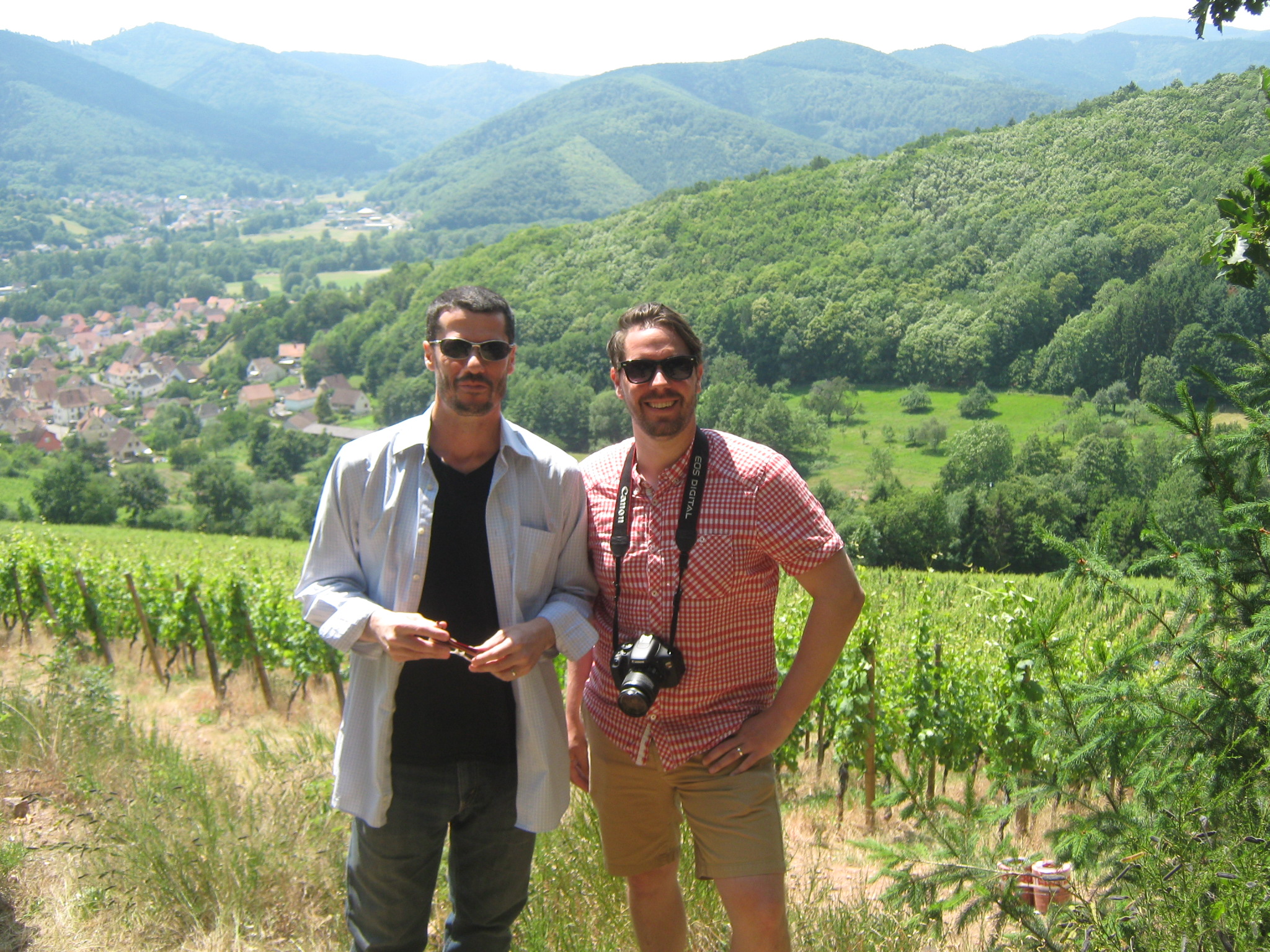
Godello and Restaurant Laurea Montreal's Fred Fortin

Godello and Restaurant Laurea Montreal’s Fred Fortin

Alsatians are the possessed refugees of Europe, tossed around like orphaned children from one foster family to another. That they can be so comfortable in their own skin is to accept their conceit as a French paradox, through ignoring its Franco-Germanic past, its passage back and forth between hands and its current state as a region governed by France. The confluence of cultures and of shared borders (and airports) would think to cause a crisis of identity. The names of towns and villages may act out a who’s who or what’s what of French sobriquet and German spitzname. None of that matters. The people, the places, the food and the wine are purely and unequivocally in ownership of their own vernacular, dialect and culture: Alsatian.
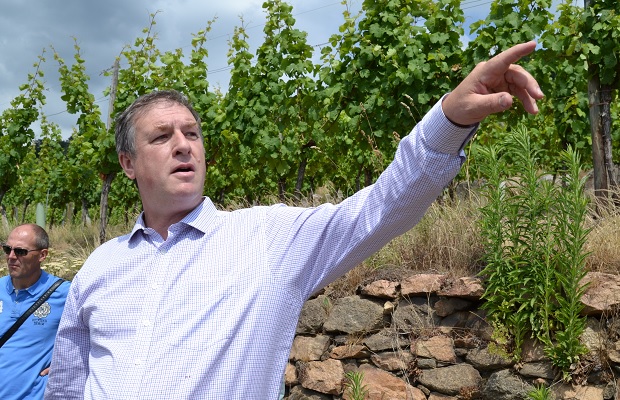
Phillipe Blanck in the Schlossberg Photo (c): Cassidy Havens, http://teuwen.com/

Phillipe Blanck in the Schlossberg
Photo (c): Cassidy Havens, http://teuwen.com/

Related – A Blanck slate in Alsace

When a winemaker wants to lay an insult upon you he will say something like “oh, that’s so Anglo-Saxon.” Ouch. He will mean it, for sure, but he will also grace you with a wink and a smile. He likes you and he respects your choice to come from far away to learn something of his wines. And you like him. The winemaker will also complement you when your palate aligns with his, when your thoughts intuit something about his acuity and his groove. His flattery will be genuine. The winemaker will pour old vintages and without a hem or a haw. She will share generously, not because she wants to sell more, but because she wants better people to drink her wine.

To ascertain a grip on the Alsace codex it must begin in the vineyard. The steep slopes, zig-zagging ridges and fertile valleys are composed of highly intricate, alternating and complex geological compositions. The landscape switches repeatedly from clay to marl, from calcaire (limestone) to schist, from volcanic to granitic rock. Each vineyard and even more parochial, each plot contributes to define the wine that will be made from that specific micro-parcel. The wine grower and winemaker’s job is to treat the soil with utmost respect. To plow the land, to add organic material, to refuse the use of fertilizers and to spray with solutions composed of non-chemical material.

Organic and biodynamic viticulture is widespread across the globe but Alsace is a leader in the practices, particularly in the latter’s holistic, asomatous way. Though more than 900 producers make wines, including many who do not partake in a bio-supernal and subterraneal kinship with the vines and the earth, the ones who do are fanatical about their winegrowing ways. Alsatian winemakers bond with their fruit, by employing the Austrian philosopher Rudolf Steiner’s teachings as a predicate from which to apply spiritual connections to the physical act of tending vines.
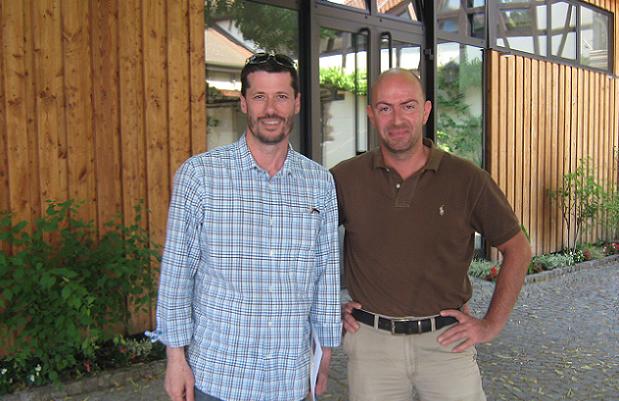
Godello and Christophe Ehrhart, Domaine Josmeyer, Kientzenheim

Godello and Christophe Ehrhart, Domaine Josmeyer, Kientzenheim

Related – It was Josmeyer’s imagination

The belief is that great wine can only be made from healthy, natural and disease resistant plants. Steiner’s studies on chemical fertilizers looked into the effect on plants growing near bombs in the earth. The growth was observed to be abnormal and unhealthy. Christophe Ehrhart of Domaine Josmeyer compared this to humans, who eat too much salt and thus need to drink too much. I tasted more than 150 naturally made wines from biodynamically farmed soils. The proof of quality and complexity is in the glass.

The winemaker of Alsace shows a respect for the earth that might be seen as a verduous variation on the teachings of theologian, philosopher, physician, medical missionary and humanitarian Albert Schweitzer. The Alsatian-born Schweitzer gave to the world his theory on the “reverence for life,” a term he used for a universal concept of ethics. “He believed that such an ethic would reconcile the drives of altruism and egoism by requiring a respect for the lives of all other beings and by demanding the highest development of the individual’s resources.” The biodynamic approach, through its human to vegetable relationship, echoes the concept. Careful care not to disrupt the balance of nature allows the vines to develop the strength to survive and to flourish in less than optimum climatic conditions, especially during times of drought. The quality of grapes and in turn, the complexity of wine, is the result.
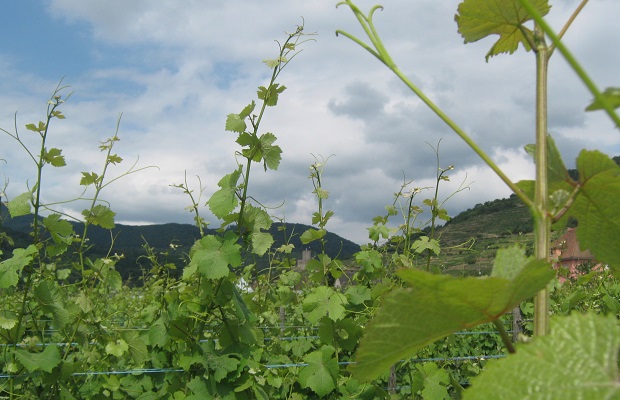
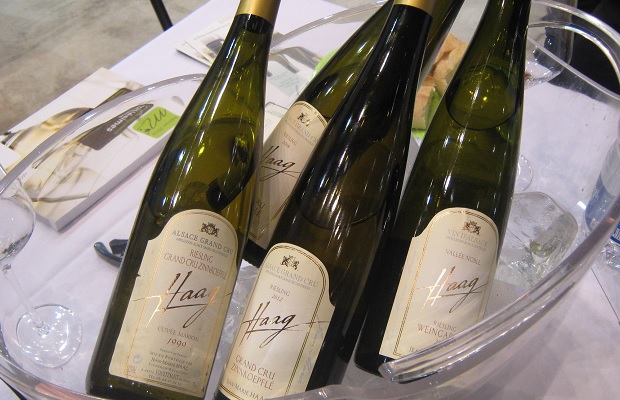
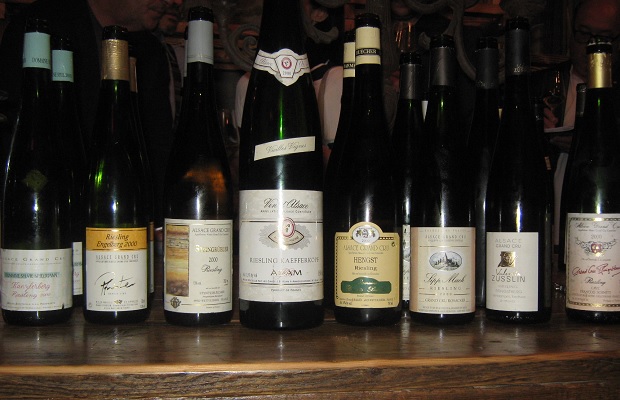
Grand Cru Riesling, Alsace

Grand Cru Riesling, Alsace

The focus on soil and terroir is ultimately disseminated into the idea of tasting minerality in wine, a most contentious aspect of the wine tasting and writing debate. Nary an expert will admit that the impart of trace minerals can be ascertained from a wine’s aroma and most believe that it can be found in taste. An American geologist debunked the mineral to taste theory at the annual meeting of the Geological Society of America held in Portland Oregon. “The idea is romantic and highly useful commercially, but it is scientifically untenable,” wrote Alex Maltman, a professor at the Institute of Geography and Earth Sciences at Aberystwyth University. Maltman’s claim is simple. Vines absorb minerals from the earth but the amount is far too small for human detection.

Christophe Ehrhart of Domaine Josmeyer in Wintzenheim agrees to disagree. Ehrhart concedes that the quantitative number is small (only three to five percent) for a vine to derive its personality, divined though the earth’s brine. The remainder is a consequence of photosynthesis. Ever the spiritual and natural advocate, Christophe borrows from the writings of David Lefebvre. The journalist and wine consultant’s The minerality from David Lefebvre tells the story of why natural wines without sulfur express minerality. Lefebvre makes clear the argument that naturally-farmed (biodynamic and/or, but necessarily organic) vines are qualitatively richer in (salt minerals) than those raised with chemicals. “All fermentation, from milk to cheese, from grape to wine, is accompanied by the appearance of the component saline, one could say mineral, in the taste of the fermented product.” Chemicals and fertilizers inhibit growth and vigor, ostensibly wiping out an already minuscule number. If food is available at the surface, vine roots will feed right there. They will then lose their ability to create the beneficial bacteria necessary to metabolize deep earth enzymatic material. They essentially abandon their will to fight for nutrition deep within the fissures of the rock. Lefebvre’s conclusion? “All biocides and other products that block mineralization, such as SO2, inhibit the expression mineral.”

At the end of the day Lefebvre is a wine taster and not a scientist and the argument must be considered within the realm of the natural world. “The taste of stone exists in Alsace, Burgundy, the Loire (all France) when the winegrower uses organic farming and indigenous, winemaking yeasts.” American made wine rarely does this, though change is occurring. Ontario winemakers are different. Taste the wines of Tawse or Southbrook and note the difference. Or, taste the difference a vegetable, like a tomato, or a piece of fruit, like a peach tastes when picked straight from the garden, or orchard, as opposed to the conventional piles of the supermarket. There can be no argument there.

Wihr au Val Photo (c): Cassidy Havens, http://teuwen.com/

Wihr au Val Photo (c): Cassidy Havens, http://teuwen.com/

A week tasting through nearly 300 wines in Alsace may sound exhausting when in fact it is an experience that had me constantly, “as the expression goes, gespannt wie ein Flitzebogens,” or as it is loosely employed from the German in the Grand Budapest Hotel, “that is, on the edge of my seat.” I watched Wes Anderson’s film on the Air France flight over from Toronto to Paris and enjoyed it so much that I watched it again on my return. That kind of spiritual, dry European humour is not unlike that of the fraternity of Alsatian winemakers and how they discuss their wines. From Olivier Zind-Humbrecht to Pierre Blanck, to MauriceBarthelmé and to Jean-Pierre Frick there is an Edward Norton to Bill Murray, Tom Wilkinson to Harvey Keitel, Adrien Brody to Ray Fiennes affinity. Or perhaps it’s just me.

Alsace is distinguished by a very specific set of vinous attributes. No other area in France is as dry and only Champagne is further north in latitude. The aridity of the summer months, followed by the humidity of the fall fosters the development of a beneficial fungus called Botrytis cinerea, the fungus better known as noble rot, which concentrates the sugars and preserves acidity. Pierre Gassmann of Rolly Gassman says all of his wines are noble rot wines, but he calls them Riesling.

The uninitiated into the wines of Alsace think it is one big pool of sickly sweet and cloying white wine. If perhaps this were, at least to some extent, once true, it is no longer. The progressive and philosophically attentive producer picks grapes (especially the particularly susceptible Pinot Gris) before the onset of botrytis. If a dry, mineral-driven style is the goal, picking must be complete before what Phillippe Zinck refers to as D-Day. Pinot Gris goes over the edge in an instant, even more so because of the advancing maturation due to the warm temperatures induced by Global Warming.
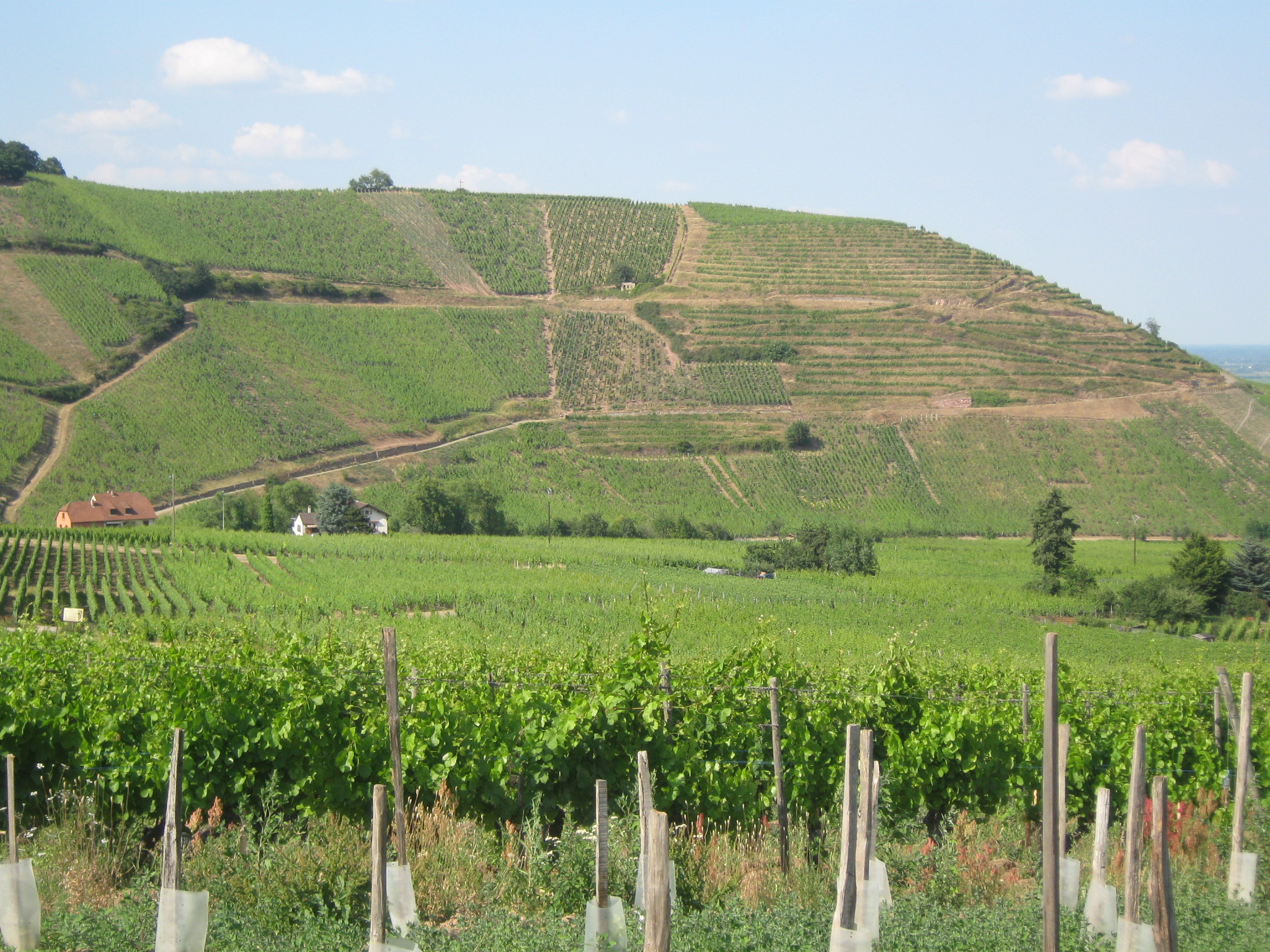
Sommerberg Grand Cru

Sommerberg Grand Cru

The global wine community’s ignorance to the multeity of Alsace wines, “as mutually producing and explaining each other…resulting in shapeliness,” needs addressing and so steps in the valedictorian, Christophe Ehrhart. The Josmeyer viniculturalist devised a system, a sugar scale to grace a bottle’s back label. Whites are coded from one to five, one being Sec (Dry) and five Doux (Sweet). The codification is not as simple as just incorporating residual sugar levels. Total acidity is taken into consideration against the sugar level, like a Football team’s plus-minus statistic. In Alsace the relationship between sugar, acidity and PH is unlike any other white wine region. Late Harvest (Vendanges Tardives, or Spätlese in German) is Late Harvest but Vin desprit sec or demi-sec in Alsace should not generally be correlated to similar distinctions in Champagne or the Loire. In Alsace, wines with vigorous levels of acidity and even more importantly PH bedeck of tannin and structure. Perceived sweetness is mitigated and many whites, though quantified with residual sugar numbering in the teens, or more, can seem totally dry.

Returning to the idea of increasingly warmer seasonal temperatures, the red wines of Alsace have improved by leaps and bounds. “We could not have made Pinot Noir of this quality 20 years ago,” admits Maurice Barthelmé. Oh, the humanity and the irony of it all.
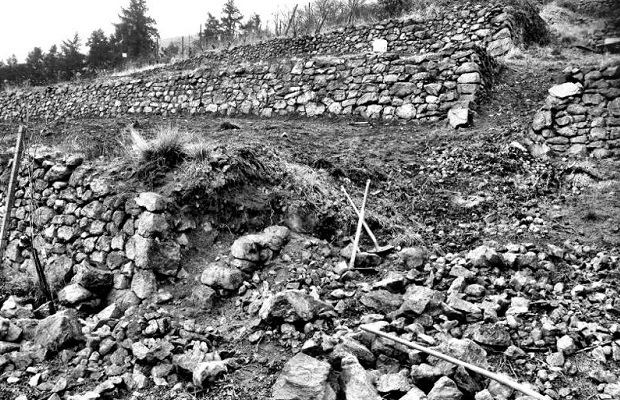
The Vineyards of Domaine Albert Mann photo (c) https://www.facebook.com/albertmannwines

The Vineyards of Domaine Albert Mann
photo (c) https://www.facebook.com/albertmannwines

Related – Giving Grand Cru Pinot Noir d’Alsace its due

This sort of quirky response to nature and science is typical of the artisan winemaker. There is more humour, lightness of being and constater than anywhere else on this winemaking planet. There just seems to be a collective and pragmatic voice. Maurice makes a 10,000 case Riesling called Cuvee Albert, “because I have to make a wine for the market.” Yet Maurice is also a dreamer and a geologist. To him, “Pinot Noir, like Riesling, is a mineralogist.”

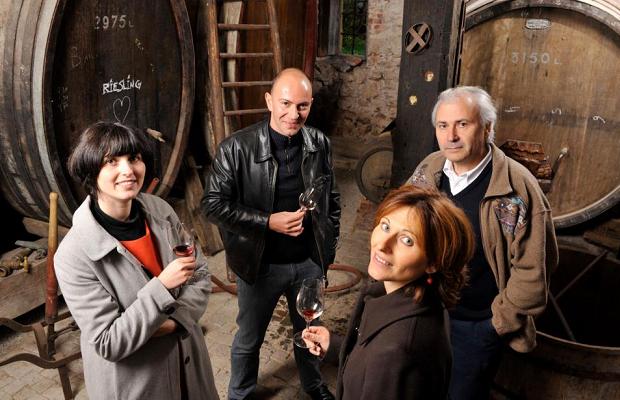
Domaine Albert Mann’s Jacky Barthelmé: “Before Jesus Christ was born we have had vines here in the Schlossberg. So it is a very old story.” The Alsace vigneron is only human and works in a vinous void of certitude. They do not fuck with their land or attempt to direct its course. The young Arnaud Baur of Domaine Charles Baur insists that you “don’t cheat with your terroir or it will catch up with you. You will be exposed. You can make a mistake but you will still lose the game.” What an even more wonderful world it would be if he only understood the complexity in his multiple entendre.

Philippe Blanck is a philosopher, a dreamer, an existentialist and a lover. He is Descartes, the aforementioned Bill Murray and Bob Dylan rolled into one, a man not of selection but of election. He is both prolific and also one who buys the whole record catalogue, not just the hits. He opens old vintages freely and without hesitation. When asked how often does he have the opportunity to open wines like these he answers simply, “when people come.”
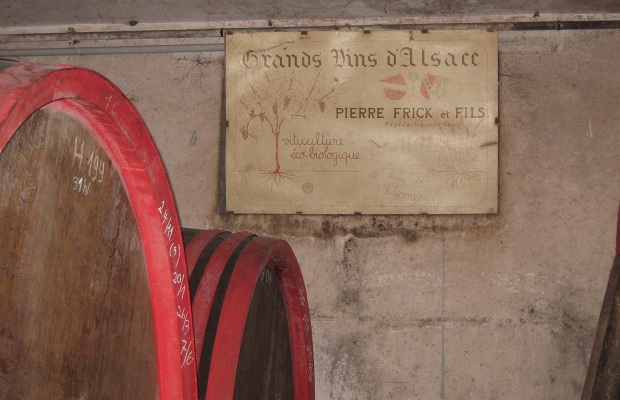
Pierre Frick et Fils

Pierre Frick et Fils

Then there is the far-out Jean-Pierre Frick, the man who let a 2006 Auxerrois ferment for five years before bottling it in 2011. “After one year I check the wine and he is not ready. I see him after two years and he says I am not ready. So I wait. After five years he says, I am finished. So I put him in the bottle.” On his Riesling 2012 he says, “This is a wine for mouse feeding.” Upon cracking open his remarkable, natural winemaking at its peak 2010 Sylvaner he chuckles like M. Gustave and smirks, “he is a funny wine.”

Few wine regions tell their story through geology as succinctly and in as much variegated detail as Alsace. The exploration of its Grand (and other vital) Cru (for the purposes of this trip) was through soils (or not) variegated of clay, sandy clay, marl, granite, volcanic rock, limestone and sandstone. To complicate things further, a Cru can be composed of more than one type of terra firma and still others have more than one arrangement within the particular plot. All very complicated and yet so simple at the same time. The Crus tasted came from the following:

Schlossberg Grand Cru, (c) Cassidy Havens, http://teuwen.com/

Schlossberg Grand Cru, (c) Cassidy Havens, http://teuwen.com/

  1. Granitique/Granite (Brand, Herrenreben, Kaefferkopf, Langenberg, Linsenberg, Schlossberg, Sommerberg)
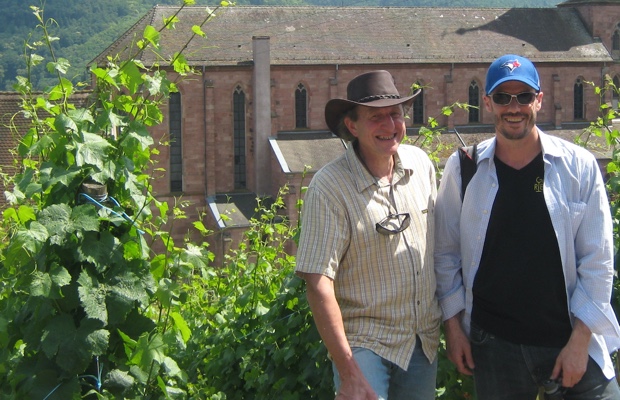
Henri Schoenheitz and Godello

Henri Schoenheitz and Godello

Domaine Schoenheitz Linsenberg Riesling 1990, Ac Alsace, France (Winery, 196618, WineAlign)

During a picnic, on a plateau up on the Linsenberg lieu-dit set above the Wihr-au-Val, this 24 year-old bottle acts as a kind of Alsatian Trou Normand. A pause between courses, which involves alcohol and you need to ask for its proof of age. Culled from deep dug vines out of stony and shallow granite soil. Soil rich in micas with a fractured basement. From a dream vintage with marvellous semi-low yields and a student of south-facing, self-effacing steep steppes. A sun worshipper prodigy of winemaker Henri Schoenheitz, a child of terroir du solaire. Rich and arid in simultaneous fashion (the RS is only 8-10 g/L), the years have yet to add mileage to its face and its internal clock. It may ride another 15, or 20. Drink 2015-2030. Tasted June 2015  @VinsSchoenheitz

Schoenheitz Picnic, Wihr-au-Val

Schoenheitz Picnic, Wihr-au-Val

Domaine Albert Boxler Pinot Blanc Reserve 2013, Ac Alsace, France (SAQ $27.70 11903328WineAlign)

From fruit drawn off the granitic Grand Cru of the Brand but not labeled as such. Laser focus (what Jean Boxler wine is not) and texture. Possessive of the unmistakable Brand tang, like mineral rich Burgundy. The minerality ann the acidity from the granite are exceptional in a wine known as “Pinot Blanc Reserve.” As good a developing PB are you are ever likely to taste. Drink 2015-2019.  Tasted June 2014

Domaine Albert Boxler Riesling Old Vines Sommerberg Grand Cru 2013, Ac Alsace, France (SAQ, 11698521WineAlign)

A direct expression of winemaker (since 1996) Jean Boxler and his 150 year-old casks. This is Riesling suspended in the realm of dry extract, texture and a precision of finesse rarely paralleled in Alsace. It reads the truth of facteur for Sommerberg, its face, slope and pitch. Exceeds the clarity of the younger parcel in its contiguous continuance of learning, of pure, linear, laser styling. There is more maturity here and the must had to have been exceptional. “The juice must be balanced when it goes into the vats or the wine will not be balanced,” insists Jean Boxler. And he would be correct. Drink 2016-2025.  Tasted June 2014
Domaine Albert Boxler

Domaine Albert Boxler

Domaine Albert Boxler Tokay-Pinot Gris Sommerberg Grand Cru 1996, Ac Alsace, France (Alsace)

From volcanic and granitic soils together combining for and equating to structure. A matter concerning “purity of what you can do from a great ground,” notes Master Sommelier Romain Iltis. Perception is stronger than reality because despite the sugar, the acidity reign to lead this to be imagined and reasoned as a dry wine. Ripe, fresh, smoky, with crushed hazelnut and seamless structure. Stays focused and intense in mouthfeel. Takes the wine down a long, long road. Quite remarkable. No longer labeled “Takay” after the 2007 vintage. Drink 2015-2026.  Tasted June 2014

  1. Calcaire/Limestone (Engelgarten, Furstentum, Goldert, Rosenbourg, Rotenberg, Schoffweg)

Domaine Albert Mann Pinot Gris Grand Cru Furstentum 2008, Alsace, France (Winery)

The Marl accentuated Hengst and its muscular heft receives more Barthelmé limelight but the always understated Furstentum Grand Cru is a special expression of the variety. As refined as Pinot Gris can be, with a healthy level of residual sugar, “like me” smiles Marie-Thérèse Barthelmé. The sugar polls late to the party while the acidity swells in pools, but the finish is forever. “Pinot Gris is a fabulous grape but we serve it too young,” says Maurice. “It needs time to develop its sugars.” Truffle, mushroom, underbrush and stone fruit would match well to sweet and sour cuisine. Flinty mineral arrives and despite the residual obstacle, is able to hop the sweet fencing. The potential here is boundless. Drink 2018-2026.  Tasted June 2014  @albertmannwines
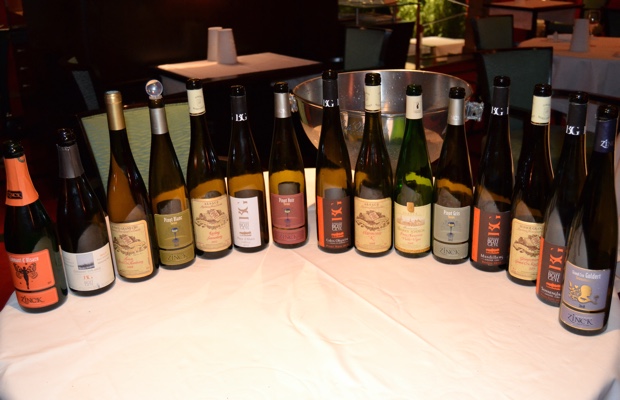
Dinner wines at La Table du Gourmet, Riquewihr

Dinner wines at La Table du Gourmet, Riquewihr

Domaine Paul Zinck Gewürztraminer Grand Cru Goldert 2010, Alsace, France (Agent)

From the village of Gueberschwihr and from soil composed of sandstone, chalk and clay. The vines average 50 years in age and the wine saw a maturation on the lees for 11 months. Philippe Zinck notes that “the terroir is stronger than the variety.” If any grape would stand to contradict that statement it would be Gewürztraminer but the ’10 Goldert begs to differ. Its herbal, arid Mediterranean quality can only be Goldert talking. Though it measures 20 g/L of RS it tastes almost perfectly dry. It reeks of lemongrass, fresh, split and emanating distilled florals. This is classic and quintessential stuff. Drink 2015-2025.  Tasted June 2014  @domainezinck  @LiffordON

Domaine Zind-Humbrecht Gewürztraminer Vendanges Tardives Goldert Grand Cru 1985

Tasted from magnum at Les Millésimes Alsace, a wine described by Caroline Furstoss as “unusual for late harvest,” because the terroir is simply stronger than the variety. Another economically non-viable low yield LH, “from a vintage more on the reductive than the oxidative side.” Even at 30 years it requires aeration and time to open up. Travels from spicy to smoky with that air. There is a density in bitterness, an attrition miles away from resolve and a promise for rebate, if further patience is granted. The spices inherent are ground, exhumed and combine with the base elements to rise atomically. A spatially magnificent wine of sugars not yet clarified and an acquired taste not quite elucidated. A taste of an ancient kind. Drink 2015-2035.  Tasted June 2014

  1. Marno-Calcaire/Marl-Limestone (Altenberg de Bergheim, Clos Hauserer, Eichberg, Hengst, Kappelweg de Rorschwihr, Mambourg, Mandelberg, Osterberg, Pfersigberg, Sonnenglanz, Steingrubler)

Marcel Deiss Schoffweg “Le Chemins Des Brebis” 2010, Bergheim, Alsace, France (Agent, $60.95, WineAlign)

A pulsating and metallic, mineral streak turns the screws directly through this spirited Bergheim. From Schoffweg, one of nine Deiss Premier Crus planted to Riesling and Pinots. A pour at Domaine Stentz Buecher from fellow winemaker Carolyn Sipp simulates a trip, to stand upon a scree of calcaire, the earth below a mirror, reflecting above a multitude of stars. “He’s a character,” smiles Sipp, “and perhaps even he does not know the actual blend.” The amalgamate is surely Riesling dominant, at least in this impetuous ’10, a savant of fleshy breadth and caracoling acidity. The Schoffweg does not sprint in any direction. It is purposed and precise, geometric, linear and prolonging of the Deiss magic. This is a different piece of cake, an ulterior approach to assemblage, “a bigger better slice” of Alsace. It should not be missed.  Tasted June 2014  @LeSommelierWine

Marcel Deiss Mambourg Grand Cru 2011, Bergheim, Alsace, France (Agent, $114.95, WineAlign)

In a select portfolio tasting that includes a trio of highly mineral yet approachable 2010’s (Rotenberg, Schoffberg and Schoenenbourg), the ’11 Mambourg stands out for its barbarous youth. It seems purposely reductive and strobes like a hyper-intensified beacon. Rigid, reserved and unforgiving, the Mambourg is also dense and viscous. Acts of propellant and wet concrete circulate in the tank, compress and further the dangerous liaison. This is a brooding Deiss, so different than the jurassic citrus from Rotenberg, the terroir monster in Schoffberg and the weight of Schoenenbourg. In a field of supervised beauty, the Mambourg may seem like punishment but there can be no denying the attraction. Five years will alter the laws of its physics and soften its biology. The difficult childhood will be forgotten. Drink 2019-2026.  Tasted June 2014  @LeSommelierWine

Marcel Deiss Langenberg “La Longue Colline” 2011, Bergheim, Alsace, France (Agent, $48.95, WineAlign)

Rogue Alsace, classic Deiss five varietal field blend specific to one hangout. The steep, terraced, granite Langenberg, terroir from Saint Hippolyte. Deiss coaxes, expects and demands precocious behaviour from four supporting varieties to lift and place the Riesling, with the intent being a result in “salty symphony.” This is approachable, something 2011 could not have been easy to accomplish. The accents are spice, sapidity and acidity, from the granite, for the people. Isn’t this what a mischievous brew should be about? Drink 2015-2022. Tasted June 2014  @LeSommelierWine

Léon Beyer Riesling Cuvée Des Comtes D’Eguisheim 1985, Alsace, France (316174, $50.00, WineAlign)

I wonder is any Alsace Riesling sublimates history, religion and occupation more than Cuvée Des Comtes D’eguisheim. It breathes the past; of popes, Augustinians of Marbach, Benedictines of Ebersmunster, Cistercians of Paris and Dominicans of Colmar. From the limestone-clay for the most part of the Grand Cru Pfersigberg and only produced in exceptional vintages. In 1985 low yields, same for botrytis and then 29 years of low and slow maturation. In 2014, is the herbal, aromatic, limestone salinity a case of vineyards, grape or evolution? All of the above but time is in charge. It has evolved exactly as it should, as its makers would have wished for. It is ready to drink. The defined minerality, with fresh lemon and a struck flint spark has rounded out, without the need for sugar. Drink 2015-2017.  Tasted June 2014  @TandemSelection

Charles Baur Riesling Grand Cru Eichberg 2009, Ac Alsace, France (Winery)

Arnaud Baur understands his place and his family’s position in the Alsace continuum. “You can make a mistake and you can still lose the game.” His use of entendre is subconsciously brilliant. In 2009 the warmth went on seemingly forever and so Baur did not even bother trying to make a dry Riesling.  “We really respect the vintage,” says Arnaud. Meanwhile at 18 g/L RS and 7.0 g/L TA the balance is struck. Many grapes were dried by the sun, ripeness was rampant, flavours travelled to tropical and acidity went lemon linear. The 14.2 per cent alcohol concludes these activities. Matched with foie gras, the vintage is marinated and married. There is certainly some crème fraîche on the nose and the wine plays a beautiful, funky beat. As much fun and quivering vibration as you will find in Alsace Marno-Calcaire. Drink 2015-2024.  Tasted June 2014
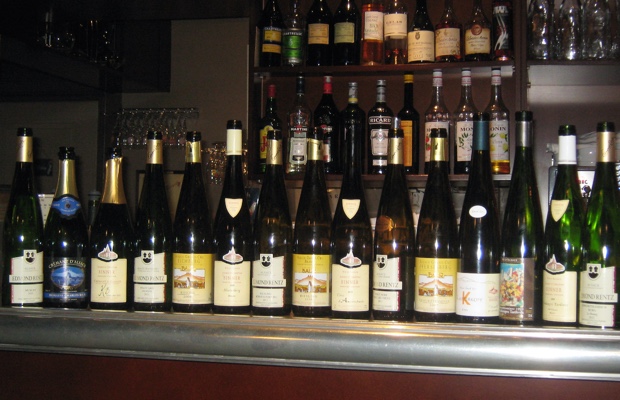
Dinner wines at L'Epicurien, Colmar

Dinner wines at L’Epicurien, Colmar

Charles Baur Gewürztraminer Grand Cru Pfersigberg 2007, Ac Alsace, France (Winery)

A good vintage for Riesling and considering the heat, an even better one for Gewürztraminer. The vineyard offers 50-70cm of clay atop Jurassic yellow limestone where roots can penetrate the rock. They suck the life into this enzymatic white. This, of digestibility, “a wine you don’t want to drink two glasses of, but three.” Delicious, clean, precise Gewürz that Mr. Baur recommends you “drink moderately, but drink a lot.” Arnaud is very proud of this ’07, for good reason. Two actually. Balance and length. Drink 2017-2027.  Tasted June 2014

Domaine Albert Mann Pinot Gris Grand Cru Hengst 2013, Alsace, France (SAQ $41.50 11343711, WineAlign)

Tasted not long after bottling, the yet labeled ’13 is drawn from a vintage with a touch of botrytis. “We don’t sell too much of this,” admits Maurice Barthelmé. Along with the sweet entry there are herbs and some spice, in layers upon layers. Almost savoury, this interest lies in the interchange between sweet and savour, with stone fruit (peach and apricot) elevated by a feeling of fumée. A playful, postmodernist style of short fiction. Drink 2017-2024.  Tasted June 2015  @albertmannwines  @Smallwinemakers

Domaine Albert Mann Pinot Gris Grand Cru Hengst 2008, Alsace, France (SAQ $41.50 11343711WineAlign)

In 2008 the brothers Barthelmé used the Hengst’s strength and the vintage to fashion a remarkable Pinot Gris. It is blessed of antiquity, like concrete to bitters, with power, tension and a posit tub between fruit and sugar. At 34 g/L RS and 7.6 g/L TA there is enough centrifuge to whirl, whorl and pop, culminating in a healthy alcohol at 14 per cent. Quite the reductive Pinot Gris, to this day, with a sweetness that is manifested in mineral flavours, glazed in crushed rocks. “It smells like mushroom you threw into a dead fire,” notes Fred Fortin. This is the bomb. Needs four more years to develop another gear. Drink 2018-2033.  Tasted June 2015  @albertmannwines  @Smallwinemakers

Domaine Albert Mann Gewürztraminer Grand Cru Steingrubler 2008, Alsace, France (Winery)

From marly-limestone-sandstone, “a fa-bulous terroir,” says Maurice with a smile. The “stone carrier wagon” is mostly calcaire, especially in the middle slope. This has a roundness, an approachability. It really is clean, clean, Gewürztraminer. It’s erotic, gorgeous, certainly not slutty or pornographic. The colder limestone preserves the freshness, with a need for magnesium, to cool the factor further and to develop the terpenes. Gelid and stone cold cool wine. Drink 2018-2035.  Tasted June 2015  @albertmannwines  @Smallwinemakers

Bott Geyl Riesling Grand Cru Mandelberg 2010, Alsace, France (Agent)

The Mandelberg receives the early morning sun and so this Grand Cru is an early ripener and the first of the Bott-Geyls to be picked. The added warmth of 2010 introduced noble rot into a vineyard that often avoids it so the residual sugar here is elevated to an off-dry (even for Alsace) number of 30 g/L. The rush to pick in this case preserved the natural acidity, allowing the flint to speak. Additional notes of cream cheese and formidable dry extract have helped to balance the sweetness. Truly exceptional Riesling from Christophe Bott-Geyl. Drink 2015-2025.  Tasted June 2014  @bott_geyl  @DanielBeiles

  1. Calcaro-gréseux/Limestone-Sandstone (Bergweingarten, Zinkoepfle)

Pierre Frick Sylvaner Bergweingarten 2010, Alsace, France (Winery)

The vines of southeast exposure are in the 35 year-old range for this Vin moelleux, “young vines” says Jean-Pierre Frick. “I am a defender of Sylvaner.” This ’10 is freshly opened, as opposed to the ’09 poured after sitting open a week. That ’09’s healthy amount of noble rot is not repeated in this ’10, what Frick refers to as “a funny wine.” A two year fermentation and a potential for 17 per cent alcohol (it’s actually in the 14-15 range), a touch of spritz and no sulphur means it goes it alone, natural, naked, innocent. It’s a passionate, iconoclastic Sylvaner, distilled and concentrated from and in lemon/lime. It may carry 53 g/L of sugar but it also totes huge acidity. Enamel stripping acidity. Full of energy, that is its calling, its niche, its category. The honey is pure and despite the level of alcohol it’s as though it has never actually fermented. Natural winemaking at the apex, not out of intent but from a base and simply purposed necessity. Drink 2015-2025.  Tasted June 2014  @LeCavisteTO
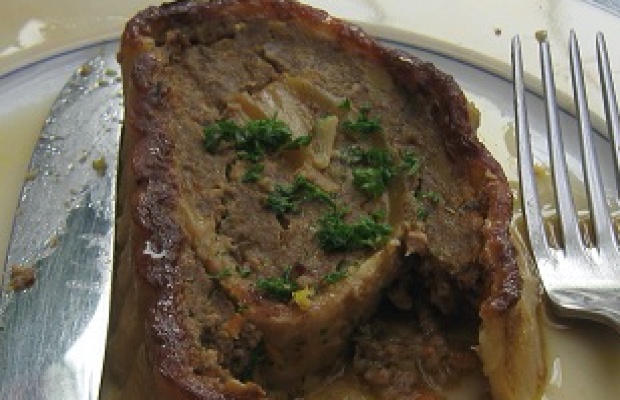
Fleischanaka at Domaine PIerre Frick

Fleischanaka at Domaine PIerre Frick

  1. Sablo-Argileux/Sandy-Clay (Schlossberg)

Domaine Albert Mann Riesling Schlossberg Grand Cru 2008, Alsace, France (SAQ 11967751 $48.25, WineAlign)

What a fantastic expression of the Schlossberg, like a cold granite countertop. A Riesling that tells you what is essentiality in granite from what you thought might be the sensation of petrol. Full output of crushed stone, flint and magnesium, but never petrol. Now just beginning to enter its gold stage, just beginning to warm up, in energy, in the sound of the alarm clock. “You can almost see the rock breaking and the smoke rising out,” remarks Eleven Madison Park’s Jonathan Ross. A definitive sketch with a 12 g/L sugar quotient lost in the structure of its terroir. A Schlossberg a day keeps the doctor away. Drink 2015-2025.  Tasted June 2014

Related – Arch classic Alsace at Domaine Weinbach
Domaine Weinbach, (c) Cassidy Havens, http://teuwen.com/

Domaine Weinbach, (c) Cassidy Havens, http://teuwen.com/

  1. Argilo-calcaro-gréseux/Clay-Limestone-Sandstone (Goldert, Vorbourg)

Pierre Frick Auxerrois Carrière 2006 (Embouteille en 2011), Alsace, France (Winery)

“He has fermented five years,” says Jean-Pierre Frick, stone faced, matter of factly. “That’s how long he took.” Here, one of the most impossible, idiosyncratic and unusual wines made anywhere in the world. On on hand it’s a strange but beautiful experiment. On another there can be no logical explanation as to why one would bother. The third makes perfect sense; allowing a wine to ferment at its own speed, advocate for itself and become what it inherently wanted to be. Auxerrois with a little bit of sweetness (16 g/L RS) and a kindred spirit to the Jura (and with a potential of 15 per cent alcohol). This is drawn from the lieu-dit terroir Krottenfues, of marl-sandstone soils in the hills above the Grand Cru Vorbourg. Tasting this wine is like slumbering through a murky and demurred dream. Drink 2015-2021.  Tasted September 2015

Pierre Frick Auxerrois Carrière 2006 (Embouteille en 2011)

Pierre Frick Auxerrois Carrière 2006 (Embouteille en 2011)

  1. Argilo-calcaire/Clay-Limestone (Eichberg, Engelberg, Kanzlernerg, Pflaenzerreben de Rorschwihr, Steinert)

Paul & Phillipe Zinck Pinot Blanc Terroir 2011, Alsace, France (BCLDB 414557 $15.79, WineAlign)

From 35 year-old vines on Eguisheim’s argilo-calcaire slopes with straight out acidity, trailed by earth-driven fruit. Less floral than some and pushed by the mineral. A difficult vintage that saw a full heat spike to cause a mid-palate grape unction. Pinot Blanc with a late vintage complex because of that sun on the mid slope. Drink 2015-2017.  Tasted June 2014  @domainezinck  @LiffordON

Paul & Phillipe Zinck Pinot Gris Terroir 2012, Alsace, France (Agent, $22.99, WineAlign)

From chalk and clay soils surrounding the Eichberg Grand Cru, this is a decidedly terroir-driven style and far from overripe. In fact, Philippe Zinck is adamant about picking time, especially with Pinot Gris. “The most tricky grape to harvest in Alsace,” he tells me. So hard to get serious structure and many growers are duped by high brix. Philippe tells of the 24-hour varietal picking window, the “D-Day” grape. Zinck’s ’12 is pure, balanced and bound by its earthy character. Drink 2015-2017.  Tasted June 2014  @domainezinck  @LiffordON

Pierre Frick Muscat Grand Cru Steinert Sélection de Grains Nobles 2010, Alsace, France (Winery)

“I like acidity, whoo-ahh,” says Pierre Frick, dry as Monsieur Ivan. The sugar on top of acidity here, it’s exciting. This one is a gift from nature, for culture. So interesting, a dream, a story. This has a citrus sweetness, telling a story never before experienced. There’s a depth of reduced apricot syrup, pure, natural, holy. “Tell no one. They’ll explain everything.” Drink 2015-2040.  Tasted June 2014

  1. Volcano-gréseux/Volcanic sandstone (Kitterlé, Muenchberg)

Pierre Frick Pinot Gris Sélection de Grains Nobles 1992, Alsace, France (Winery)

From Argilo-Calcaire vineyards flanking the Rot Murlé, at a time when a minor amount of sulphuring was employed (1999 was their first sulphur-free vintage). Was Demeter certified, in 1992! This is all about intensity and acidity. An incredibly natural dessert wine, upwards of 150 g/L RS but balanced by nearly 10 g/L TA. The power is relentless, the finish on the road to never-ending. Drink 2015-2022.  Tasted September 2015

Domaine Ostertag Tokay Pinot Gris Grand Cru Muenchberg 1996, Alsace, France (Agent, $65, WineAlign)

From clay and limestone, fully aged in barrel, taking, sending and stratifying in and away from its own and everyone else’s comfort zone. Only the best barrels would do and yet the quality of the wood thought aside, this is Ostertag’s unique and fully autocratic take on Tokay-PG. Stands out with a structure wholly singular for the overall prefecture, with a twenty year note of white truffle, handled and enhanced by the wood maturation. Yellow fruits persist as if they were picked just yesterday but the glass is commandeered by the complex funk. It’s nearly outrageous, bracing and yet the flavour urged on by the aromatics return to their youth. To citron, ginger and tropical unction. This is oscillating and magnificent. Drink 2015-2026. Tasted June 2014  @TheLivingVine

  1. Argilo-Granitique/Clay-Granite (Kaefferkopf, Sonnenberg)

Audrey et Christian Binner Grand Cru Kaefferkopf 2010, Alsace France (Winery)

A blend of Gewürztraminer (60 per cent), Riesling (30) and Muscat (10) that spent two years in foudres. Christian has no time for technicalities, specs and conventions. “I just make wine.” At 13.5 per cent alcohol and 20 g/L RS the expectation would be vitality and striking lines but it’s really quite oxidative, natural and nearly orange. “But it’s OK. It’s the life,” he adds. An acquired, unique and at times extraordinary taste, complex, demanding, like Frick but further down a certain line. “For me, to be a great Alsace wine, it must be easy to drink. You have to pout it in your body.” Drink 2015-2019.  Tasted September 2015

Related – Walking an Alsace mile in their Riesling shoes

  1. Volcanique/Clay-Granite (Rangen)

Related – Colmar and the volcano: Domaine Schoffit

  1. Marno-Calcaire-gréseux/Marl- Limestone-Sandstone (AltenbourgKirchberg de Ribeauvillé)
  1. Volcano-sédiment/Volcanic Sediment (Rangen)
  1. Graves du quaternaire/Alluvial (Herrenweg de Turckheim)

Related – The cru chief of Alsace: Zind Humbrecht

Olivier Humbrecht and Godello PHOTO: Cassidy Havens, http://teuwen.com/

Olivier Humbrecht and Godello
PHOTO: Cassidy Havens, http://teuwen.com/

  1. Roche Volcanique/Volcanic rocks (Rangen de Thann)
  1. Marno-gypseux/Marl-gypsum (Schoenenbourg)
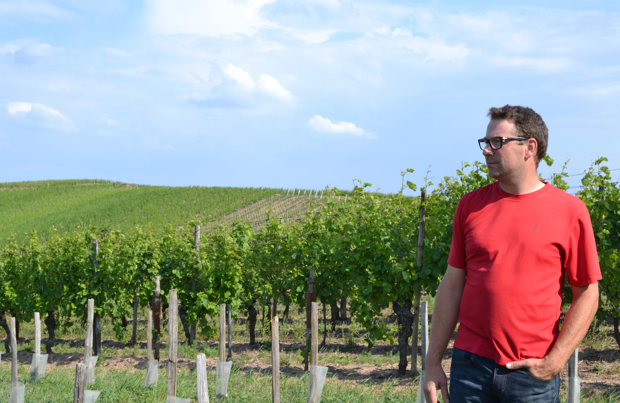
Jean Boxler, June 2014

Jean Boxler, June 2014

You see, no wine is poured, tasted and deliberated over without the introduction of the soil (or lack thereof) from which it came. To confine any study to just the Grand Cru would do the entire region an injustice. Though the original 1975 appellative system set out to define the plots of highest quality and esteem, many wines not classified GC are fashioned from terroir comingling with, surrounding, located next or adjacent to a vineyard called Grand Cru. Serious consideration is being given by CIVA and the winemakers to establish a Premier Cru and Villages system. While this will certainly increase levels of definition and understanding for Alsace, it may also disregard some quality wines, not to mention further alienate some producers whose artisanal and progressive wines go against the norm. A further consequence may result in elevating some average wines currently labeled Grand Cru into undeserved stratospheres.

Related – Trimbach, rhythm and soul

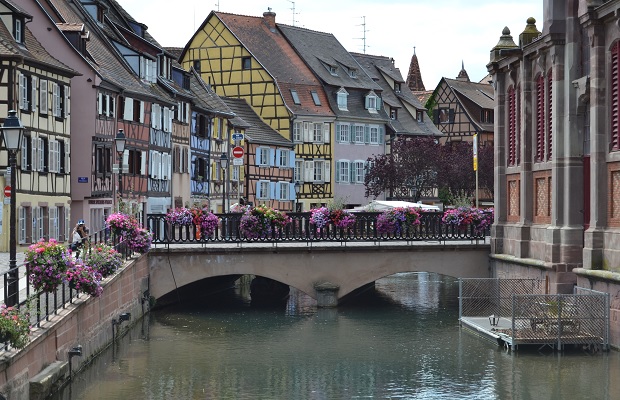
The Grand Cru story is heavy but not everything. Rarely has there been witnessed (outside of Burgundy) the kind of symbiotic relationship between vineyard and village. Perfect examples are those like Schlossberg and Furstentum with Kintzheim, Sommerberg and Niedermorschwihr, Hengst and Wintzenheim, Brand and Turckheim or Steingrübler and Wettolsheim. Domaine Weinbach’s cellars sit across and just down the road from both Kitzheim and Kayserberg. Albert Boxler’s cellar is right in the fairy tale town of Niedermorschwihr, just like Albert Mann’s location in Wettlosheim.

It is time, finally and thankfully, for a return to the reason for such a rambling on. With respect to the “cerebral and the spiritual component for producing exceptional wine” being “necessary and fundamental,” examples tasted in June of 2014 indicate that the notion of terroir grows from nature and is nurtured by the vigneron. These 25 wines surmise and summarize, either by connecting the dotted lines of constellatory figuration or by Sudoku interconnectivity, the imaginable chronicle that is Alsace.

Good to go!
http://www.winealign.com/profile/2058-mjg

It was Josmeyer’s imagination

Domaine Josmeyer

Domaine Josmeyer

Christophe Ehrhart has a very real and specific goal as custodian of the vines and as a collaborative winemaker at L’éclat Josmeyer. “To avoid oxidized, unclear and unsound wines.” Erhart’s reality lies in his exacting state of certified organic and biodynamic agriculture. He is also a true expressionist, manifested in the feelings of love for biodynamism, running like a dream throughout viticultural life. They encompass an imaginative broad spectrum of respect and attention to all things natural, especially given the spiritual nature of his quest to express terroir.

At Josmeyer, “the first goal is not biodynamism,” Ehrhart tells me at the family winery in Wintzenheim. “We eat only organic and biodynamic. It’s a philosophy of life, but the final goal is to make the finest wines that express the terroir, in a biodynamic way.” I sat down with Ehrhart, along with sommeliers Fred Fortin and Jonathan Ross, to taste eight explanatory wines that fortified insight into Josmeyer’s oeuvre. This second foray took place three days after tasting through a flight of seven wines with Christophe at the Millésimes Alsace, the professional trade fair for the region.

Related – In a Grand Cru state of mind

Domaine Josmeyer is the present day incarnation of a business begun by patriarch Aloyse Meyer. He was succeeded in 1933 by son Joseph who then further developed the operation in 1946. The current operation was established in 1963 by Hubert Meyer, in memory of Joseph. His eldest son Jean is the elder statesman of the modern domain.

Céline Meyer, Christophe Ehrhart, Isabelle Meyer and Jean Meyer, Domaine Josmeyer photo (c): https://www.facebook.com/pages/Domaine-Josmeyer/140625599300808?fref=ts

Céline Meyer, Christophe Ehrhart, Isabelle Meyer and Jean Meyer, Domaine Josmeyer
photo (c): https://www.facebook.com/pages/Domaine-Josmeyer/140625599300808?fref=ts

With daughters Isabelle (as winemaker), artist Céline (as CEO) and Christophe Ehrhart as wine grower, Josmeyer is three and a half centuries and 11 generations removed from its original beginnings. Today Christophe is a leader in Alsace, sitting on committees including the Alsace governing board of CIVA (Le Conseil Interprofessionnel des Vins d’Alsace) and the local AVA. Since 2001, Ehrhart has been the head of the local growers of the Grand Cru Hengst.

In his position on the Hengst committee, Christophe Ehrhart has been instrumental in eliminating chapitalization (2003), reducing maximum yield limits (55 hL/L) and creating a sugar code index for wine labels. The latter is Ehrhart’s baby and a result of that vivid, expressive imagination.

“Sometimes Alsace wines make one person unhappy,” notes Ehrhart. “If there is an index, we can make two people happy.” The codex rates wines from 0 to five on a residual sugar scale. The index is specific to the wines of Alsace, which differ greatly from those of Champagne, or anywhere else that still white wines are made. The variegated mineral soils of Alsace wreak havoc on how sugar manifests itself, confusing the perceptive ability to imagine the true level of residual. The Ehrhart scale helps the consumer decode that mystery. The purpose is to avoid mistakes, to let the people know what is inside the bottle. “Just to have information in a simple way.”

Josmeyer is anointed with the highest level of Demeter and Biodynamic certification. In fact, Ehrhart is one of the three global VP’s of the organization, the other two being Olivier Humbrecht MW and Eric Saurel of Domaine Montirius.

In his extensive and definitive profile, Tom Cannavan points out Josmeyer’s transition from négociant to biodynamic grower within the context of a “unique ultra-viticulture raison née.” Cannavan praises the purity of the wines while at the same time bemoaning the “bewildering” diversity of products. He writes, “the different ranges are a product of Josmeyer’s négociant roots, but they do not project the image of a single domaine.” Cannavan notes that switching to biodynamic farming did little to change the Josmeyer style, which is all about dry, crisp wines and yet he ignores the reasons for the creation of so many variations on a single (especially Riesling) theme. Soil. Unique geographical spots. Terroir. Jean, Isabelle, Céline and Christophe feel compelled to make small lots from micro-parcels. Organic and biodynamic are important. Terroir is more important.

Jamie Goode posed this question today. Do we make too much of terroir? In the end of his piece, Goode writes “”I reckon terroir deserves to remain at the heart of fine wine.” Jamie and I were together in Alsace. As they did to me, the winemakers of such a region have left an indelible mark on Goode as well. He has been to Alsace on numerous occasions. It has no doubt helped shape his feelings about the importance of terroir, but also the part the winemaker plays in shaping wine.

At Josmeyer, the science of making wine is like wayfinding, based on dead reckoning. In his anthropological study The Wayfinders, Wade Davis writes “you only know where you are by knowing precisely where you have been and how you got to where you are.” Wine making, like wayfinding, is a craft of intuition and experience. Like the Polynesians who navigated the Pacific through knowledge and photographic images committed to memory, the winemaker learns from what the soil and each passing vintage have told. The agglomerated data is applied towards making better, cleaner and clearer wine.

Each time Ehrhart and Meyer navigate the process, from grape life cycle to élevage, they are like the mariner making use of a 360 degree compass of the mind. The navigator will integrate climate (clouds, winds and rain) skies (sun, light refraction and stars) land (marks and bearings) and water (swells, pitch & roll of waves, feel, currents, widths & colours caused by light & shadow, horizons, subtended mast angles and the vessel’s relative position). Davis writes “the genius of the wayfinder lies not in the particular bit in the whole, the manner in which all of these points come together in the mind.”

At Josmeyer the winemaker uses terroir; lieu-dit & Grand Cru, granite, limestone & clay, slopes (steep or not) facing in various directions, climate and vintage. Christophe Ehrhart the wayfinder is what could be called a terroirist. But what about biodynamic wine growing? According to The Living Vine’s Mark Cuff, moon cycles and tides aside, what matters most, as opposed to organic, biodynamics is all about soil, vitality of land, resistance to disease; vines are like icebergs, we concentrate too much on what’s above the soil when 90 per cent of a vine’s life takes place under the soil.

Godello and Christophe Ehrhart, Domaine Josmeyer, Kientzenheim

Godello and Christophe Ehrhart, Domaine Josmeyer, Kientzenheim

The world according to Josmeyer, as related by Christophe Ehrhart is technically, biologically and viticulturally delicious. Yes, the biodynamic winemaker must concern himself, immerse herself, be disciplined to think deep. What happens in the vine’s subterranean world is everything, and at the same time, nothing. Everhart asked Jonathan Ross, Fortin and I what we thought may be the percentage a vine’s growth and energy is derived from beneath the soil (considering the rest comes by way of photosynthesis from the sun). Our guesses ranged from 10 to 33 per cent. Not even close. Christophe said that scientific studies show the number to be between three and five per cent. Who knew?

Ehrhart’s concession that the quantitative number is small for a vine to derive its personality, divined though the earth’s brine, was quite shocking. Though Ehrhart does not rely solely on the common practice that other Alsatian winemakers take for granted and even believe with blind faith, terroir still drives the Josmeyer machine. Like a sailor who can’t find his longitudinal way without a chronometer, the winemaker who is not in tune with the earth must make use of technology to find his viticultural way. Christophe Ehrhart has an advantage. Organic, biodynamic, wayfinder. This is why ancient wisdom matters in the modern world.

Tasting twice with Christophe in four days left a mark. It was Josmeyer’s imagination, running away with me. Here are notes on the seven wines tasted June 15th, 2014 at Millésimes Alsace.

Pinot Auxerrois Vieilles Vignes 2012 (WineAlign)

From calcaire-limestone, there is fine design in line, a mime of sugary lime with notes of white pepper and thyme. Wise and so very dry (5 g/L residual sugar), balanced, rhyming, keeping perfect four four time.

Pinot Auxerrois 1996 (WineAlign)

Acting as if it were recent, current, yet bottled, this is freshness in elegance defined. Still a bit reserved and not quite forthright, this is Auxerrois composed of tight, jutting angles, from ripe phenols and grape tannin. It must have been made with “crossing fingers and wiping brows,” by a winemaker with an awful lot of big dreams. At 18 those dreams remain unrealized. By 25 they will have materialized. Would partner well with Unagi.

Riesling Les Pierrets 2010 (WineAlign)

Simplified, the terroir here is part marl, part limestone. (See the 2002 note for more specificity.) The three areas combine for a full orchestral expression of Riesling. Dry as the desert with a triple threat tang of terroir. Intense, as per the vintage, from what I gather and heard around the trade show floor, the closest repeat to 2002 there has been. The sugar here is strikingly low (3.5 g/L) and the acidity (7.8 g/L) raging in comparison. Such sharp, awry but ripe citrus intensity the likes rarely seen in Riesling at 13 per cent alcohol. A Josmeyer study to be sure that needs several years to settle into its mineral skin.

Riesling Les Pierrets 2002 (WineAlign)

From a selection of prestige vineyards in Wintzenheim, Turckheim and Wettolsheim. Positively terroir street in this most arid yet fresh-driven ’10, yet another example of the absolute purity by way of the vantage point vintage brings to the path through time. There is poise but also texture in the form of a yogurty lees. This from flat alluvian Fecht deposits rich in clay of a soil predominantly built of sand, shingle and silt with les pierrets (little stones) and plates of loess. What it must be like to be a wine such as this. Turns a song on its head. This I would say to it. I wish that for just one time I could stand inside your shoes. “And just for that one moment I could be you.

Riesling Grand Cru Hengst 2010 (WineAlign)

From calcaire marls, the levels are raised, especially the sugar (9 g/L) though you would have no way of knowing it. More chalk grains through and less citrus, but it’s still a matter of zest. This shouts low yields and concentration with a Grand Cru’s deep, guttural voice and the immediacy is frightening. A dart to the Riesling heart. The stallion is at its finest and most focused in 2010. Like so many other pH arrested fermentative ’10’s the couple of extra grams of residual sugar rise up with the elevated level of acidity, but again, the change is both subtle and impossible to figure.

Riesling Grand Cru Hengst 2005 (WineAlign)

A slim Hengst, lower is sugar (7 g/L) and acidity (6.1 g/L) and minutely up in alcohol. That said it is possessed of a sweet round sensation with leaner, less obtuse angles of tension. More flesh and higher aromatic tones, of stone fruit, of tropical wafts most unusual and standing out in the Josmeyer scheme. The approachability here is base and nearly fun, like a tease of late harvest fruit.

Riesling Grand Cru Hengst 1993 (WineAlign)

Travelling back 21 years you see the Jean Meyer take on Hengst, from another era, another Josmeyer. The sugar (10 g/L) is higher, the acidity (6.4 h/L) lower and the alcohol (12 per cent) too. The atomic rise and petrol fuel-driven sensations are more pronounced, the vineyard speak quite real. This is the most polarizing wine I tasted (of the 15 from the Domain in Alsace), not because of the natural and wild expression but because of the way it arrests the ability to produce saliva. A touch of past ripe apple adds to the difficulty in deciding which direction this has taken.

Riesling Grand Cru Hengst Sélection de Grains Nobles 2002

An (SGN) already signed, sealed and delivered to now begin its secondary development stage. Persists with the character of freshness, angular pierce and of a tempered (8 g/L) acidity poking holes in the sugar’s (94 g/L) membranes. Very balanced and delicious, an atomic marmalade of peaches and cream of micro-managed sweetness.

Here are notes on the eight wines tasted at the domain on June 18th, 2014.

Pinot Blanc Mise du Printemps 2013 (SAQ, $22.90, WineAlign)

This is the first wine that goes to bottle (February 2014) from out of stainless steel and 1600-2500L old (1895) oak vats. A verdant amalgamation of spring vegetables, herbs and lime gain elegance and acidity from the blending in of Pinot Auxerrois.

Pinot Auxerrois “H” Vieilles Vignes 2012 (WineAlign)

Straight out the uncanny symmetry to Chablis-like sustenance is uncanny. From a vineyard planted in 1959, the “H” refers to the great Hengst, minus the Grand Cru attaché. Sticky soils with marl and clay make complexity real (like Burgundy). Jean Meyer was the pioneer of circumvention to the 1983 Grand Cru decree by using a letter in lieu of the GC. Many followed (like Albert Mann and Paul Blanck). This PA is clean, precise, creamy, dry and expansive.

Riesling Le Kottabe 2011 (WineAlign)

From the Josmeyer artist series, “young and impulsive, it shares with you its poetry and its intimacy.” The votes between Wintzenheim and Turckheim are old, the sugar (approx. 5 g/L) low and the alcohol (13.5 per cent) higher. “Riesling speaks a salt language that expresses terroir,” says Ehrhart, “as much as a fingerprint.” This has more full-bodied heft as compared to 2010, more muscle, more girth. Shells and a spritz of citrus mark this salt lick of a Riesling, spread evenly, in a chalky sprinkling throughout.

Riesling Le Dragon 2011 (WineAlign)

Very hot, described by Ehrhart as “little Senegal,” from the southwest facing slope of Letzenberg in a sheltered area known locally as “Petit Sénégal” with the dragon that is said to live (or resolved to die after a duel with the sun) in a cave within the Grand Cru Brand. From very ripe grapes that receive major amounts of sunshine. Flinty minerality comes by way of yellow limestone Muschelkalk (shell bearing limestone or, calcaire coquillier). Long and true, with a distinct chalkiness, from a bottle that had been open for five days.

Riesling Les Pierrets 2010 (see above)

Riesling Grand Cru Brand 2011 (WineAlign)

Here lies the mineral of perception, energy and of what is spoken by the fiery locale. Expressing the polarity of silica and chalk, Brand is a vertical line of silica filtering through granite rock. Pure, crystalline and focused because the mineral is filtered out, remaining behind only in deja vu, temptation like sensation. This here, in Brand, is the biodynamism of Josmeyer incarnate. Always the talk of terroir, for right or for wrong. “But it was just my imagination. Runnin’ away with me-once again.”

Riesling Grand Cru Hengst 2011 (WineAlign)

The solar-powered Grand Cru talks in proteins and salinity so the wine will seek more complex saltiness in food, like sharp (Reggiano-like) cheeses and lobster in a rich sauce. This is endowed with a completely different structure than the Brand, with more surround and circulating roundness. The mineral salinity resides in the back, of both the palate and the texture. It’s richer, with deeper density, less piercing and linear than the Brand. An enveloping, circumventing Riesling.

Riesling Grand Cru Hengst 2010 (see above)

Good to go!

Giving Grand Cru Pinot Noir d’Alsace its due

The Vineyards of Domaine Albert Mann<br /> photo (c) https://www.facebook.com/albertmannwines "Pinot Noir, like Riesling, is a mineralogist."

The Vineyards of Domaine Albert Mann
photo (c) https://www.facebook.com/albertmannwines
“Pinot Noir, like Riesling, is a mineralogist.”

You won’t find a rare or carefully considered older vintage of Pinot Noir tasted and discussed at a Millésimes Alsace Master Sommelier class. Nor will it be featured in a magazine article’s varietal spotlight on the great wines of the region. The world may ignore the potentiality and the well-established roots of the expatriate Burgundian in Alsace, but there are winemakers who know. The future of the grape with a long history is already entrenched in the Alsace progression.

Pinot Noir is the only red grape variety authorized in Alsace. The official marketing and regulatory board for the region, Le Conseil Interprofessionnel des Vins d’Alsace (CIVA) recognizes the trenchant antiquity. “What is today considered a novelty in the region is in reality a legacy of the past that is becoming increasingly successful.” According to the Wine Society, the oldest recorded grape variety in Alsace is in fact Pinot Noir, predating Riesling by at least seven centuries.” That exaggeration aside, records dating back to the 16th century indicate that the grape variety was stored in Abbey caves and poached in tithes by the Church.

Out in the diaspora the affirmation of what best indicates Burgundy is the requiem for respect. Oregon, Central Otago and certain pockets of (cooler) California are well into their seasons of repute. Yet sometime around 10-15 years ago the $60 Sonoma Pinot Noir became serious fashion. Thanks to darlings like Kosta Browne, the sky became the limit, in California and elsewhere. A host of producers joined the ranks of the rich and famous. Looking back now, the black cherry bomb initiative temporarily cost the New World its mojo.

Those growing pains have worked to great advantage. Today you have to be better and fashion elegant Pinot Noir to attract an audience and become a hero. This goes for Sonoma County, Napa Valley, Santa Maria Valley, Santa Barbara, the Willamette Valley, Marlborough, Martinborough, Nelson and Otago. This applies to the Okanagan Valley and South Africa too. Niagara and Prince Edward County have followed suit. Vignerons like Norman Hardie, Thomas Bachelder, Moray Tawse and Harald Thiel understand what needs. Their wines have ushered in a $40-plus Pinot Noir era in Ontario. But Alsace? Please. Today a reckoning about Pinot Noir incites nothing but a series of car wrecks along the wine route from Thann to Marlenheim.

Burgundy and Bordeaux do not accept varietal expatriate inclusions. So, why should Alsace? For one, global warming. Say what you will about that load of scientific horse crap but the biodynamic culture that permeates much of Alsace is in tune and well aware of temperature change and ripening schedules. More and more growers are picking their whites earlier, to preserve freshness and acidity, not to mention the conscious decision to cheat botrytis and elevated residual sugar. Embracing Pinot Noir is on many of their minds. Some are ahead of the curve and have already made some exceptional wines. Many examples from the first eight years of the 21st century are showing beautifully in 2014. Phillipe Blanck poured a very much alive 1991. How many Alsace wineries can lay claim to one of those in their cellars?

It’s common knowledge to an Alsatian cognoscenti that white wines drive the mecca. Riesling, Pinot Gris and Gewürztraminer and their associations with the Grand Cru and lieu-dits are the it vines. Vendanges Tardives (VT or, Late Harvest) and Sélection de Grains Nobles (SGN, or selection of noble berries) sit on thrones of glory. Even traditional varieties like Auxerrois and Muscat continue to outshine and suppress the possibilities for Pinot Noir.

Pinot Noir has yet to receive any proper respect both in and outside of Alsace. Can there be justice served in a wine region where a noble variety must share nomenclature with a bottom feeder like Pinot d’Alsace, which is not really a Pinot at all. The scavenging white blend draws attention while making unsubstantiated use of the Pinot prefix. Pd’A need only contain a small percentage of any type of Pinot (Blanc, Auxerrois, Meunier or Noir) in conjunction with other white Alsatian varieties. According to wikipedia:”Lack of acidity and complexity often prevent Alsatian Pinot Noir from achieving anything more than pleasant, easy drinking, quality levels.” Them’s fighting words.

That faux Pinot sideshow is really a whole lot of nothing. The real terror is that if you grow exceptional quality Pinot Noir on Grand Cru terroir in Alsace you can’t label it as such. If you produce Riesling in the Hengst, you are good to go. If you grow Pinot Noir in any of the storied “male horse,” vineyards, the resulting wine, with respect to the variety, is only considered lieu-dit and must be labeled as such. This is the Alsace Grand Cru taboo.

As part of his recent three-part report on Alsace, British journalist Tom Cannavan covers some of the wines of the Grand Cru Hengst. Cannavan so rightly notes that “the problem is, not only is Pinot Noir ineligible for Grand Cru status, but the name Hengst cannot even appear on the label.” He did sample some basic Pinot examples and wondered aloud about the injustice being a non-sequitur. He missed the boat. Case in point Domaine Albert Mann. Back that up with Pinot Noir made elsewhere by Pierre Blanck, Jean-Pierre Frick and Mélanie Pfister, among others.

Maurice and Jacky Barthelmé of Domaine Albert Mann shirk the system with the use of a simple letter, an “H” or a “G” in place of Hengst and Pfersigberg. Philippe Blanck of Paul Blanck & Fils does the same thing with an “F” for Furstentum. It’s a wink-wink, say-no-more kind of approach. A grand parade of life-giving packaging. The brothers Barthelmé and Mr. Blanck know what excellence lies in their Pinot Noir holdings and understand the bright red future for Alsace. “Pinot Noir, like Riesling, is a minerologist,” insists Maurice. Don’t think of the brothers as pioneers so much as pragmatists. CIVA has surely taken note and despite the resistance to add Burgundy to the charges, change is inevitable. The Pinot Noir eyes never lie.

Here are two dozen Pinot Noirs tasted in Alsace during a week in June.

Domaine Albert Mann

@Smallwinemakers

Diversity of the parcels of land, disseminated and however subtly intertwined, which are the particularity of the domaine

François Bruetschy

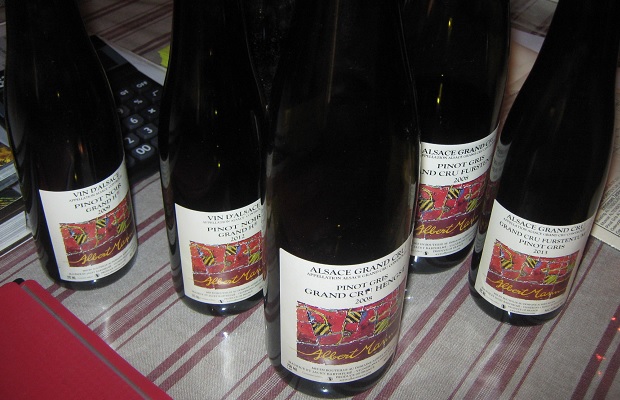
Pinot Noir (and Pinot Gris) of Domaine Albert Mann

Pinot Noir (and Pinot Gris) of Domaine Albert Mann

Pinot Noir Clos De La Faille 2012

Though geologically speaking this Pinot Noir out of 1997 plantings in calcaire and redstone soils is a fault on the hill of nature, as a wine it shows no discernible impropriety. This represents a tectonic shift for Alsatian Pinot Noir, a lithe and floral wine of articulation and an eye opener to prepare for the intensity of Mann’s Grand letters. It’s a lightly woven, silky soft Pinot, with a furrowed brow and the necessary Mann clarity of responsibility. Density is through a looking-glass, a gateway to Alsace and what future varietal decorum may be achieved.

Pinot Noir Les Saintes Claires 2012

From calcareous soil and still the Albert Mann zealous clarity, with similar intensity and protracted density. There is a lacuna permeated by a hint at black cherry but the ken is never fully realized. At 13 per cent abv and with a set of fine, sweet tannins (even more so than La Faille), these 20 year-old vines have procured a piled Pinot Noir.

Pinot Noir Les Saintes Claires 2010

A top-notch (though cool and late harvested from a small crop) vintage for Mann (and Alsace) Pinot Noir, here the calcareous parcel at Sigolsheim above an old monastery called “Les Clarisses.” Some early rot and bottle reduction have both been stabilized as the wine peels off the rust and goes mellow, in full humanizing and sensual mystery. “How great the wine is when you can see the vintage, ” chimes Maurice. Controlling the effects of both nature and fermentation seems no biggie to the brothers Barthelmé. The act is of such minor tragedy, the climax characterful and sacred. A tingle of eastern spice twitches over bright fruit and a certain florality, materializing what can only be described as obvious commitment. It’s all about the journey.

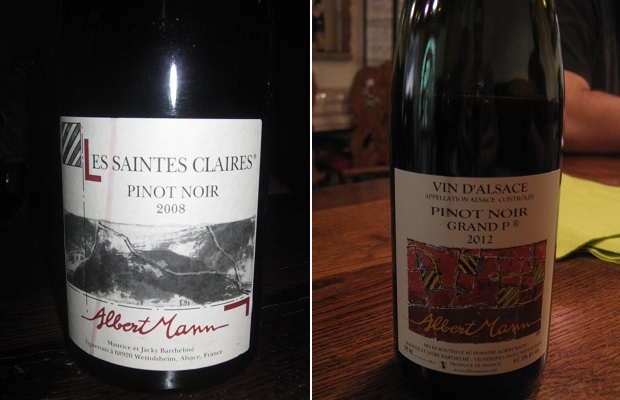
Domaine Albert Mann Pinot Noir Les Saintes Claires 2008 and Grand P 2012

Domaine Albert Mann Pinot Noir Les Saintes Claires 2008 and Grand P 2012

Pinot Noir Grand “P” 2012 (Tasted from a 375 mL bottle)

From a blend of plantings (1975 and 2004) in Wintzenheim limestone-sandstone soils on the Grand Cru Pfersigberg. Whole bunch pressed grapes (60 per cent) saw a range of oak; 25 per cent new, 50 one-year old and 25 older barrels. A light filtration was used to combat some reduction. This P is a touch ferric, not unlike Volnay but also because of the vintage. The vines in ’12 were subject to cool, then humid, then dry weather. The flux makes for a full floral display, from iron through to roses, but the wave stays linear and rigid. In its youth, the P is calm and on a level plain along its ECG-considered PQRST journey. It will soon spike past Q, up to R and then settle in for the long haul. Will hit its glide at S and T at the end of the decade.

Pinot Noir Grand “P” 2011

From what Maurice Barthelmé describes as a “paradoxical vintage” that started out dry and turned rabidly humid. This has huge personality, less refinement but more delicacy than the Hengst. Once again it’s a touch reductive and that tenuity is in the form of cured meat. The style here emulates Burgundy more than any of the P’s, much more than the H’s and worlds beyond the Failles and the Claires. The iron gait exceeds ’12 with a railroading layer of grand P funk. A chain of earth-resin-tannin has “got the knack,” jumps up, jumps back, does the locomotion with “a little bit of rhythm and a lot of soul.” The 2011 Pfersigberg is unlike any other Alsatian Pinot. It requires plenty of air and even more time to unwind. Look for it to become a classic 20 years after release.

Pinot Noir Grand “P” 2009 (Tasted from a 375 mL bottle)

In the ’09 you can smell how five years of bottle time (slightly accelerated by the small format) brings Pfersigberg Pinot fruit into a Grand Cru station. This is in the zone and just about as perfect an example can be to represent the young cottage industry that is Alsace Pinot Noir. Five more years would send it into philosophical complexity. The classic “P” reduction is there, with amazing structure from the palate. Wonderful funk, the proverbial Brett-esque creature of Pfersigberg, along with cherry and resin of pine. Wonderful animal.

Pinot Noir Grand “H” 2012 (Tasted from a 375 mL bottle)

From a south-facing plot in Wintzenheim on the Grand Cru Hengst. The soils are deeper, the clive made of consolidated clay or marly limestone and sandstone. All aspects of the Pinot Noir here are enriched by the density of nutrition; extract, spice and tannin. Any thoughts of overripe character in any way are thwarted a circular saw of energy that cuts through the cake, breaking it down with extreme prejudice. Tasted at 9:00 am this is a wake up call of the highest order. Notes Maurice Barthelmé, “this must be planted in calcaire soil.” Strike another notch on the Grand Cru petition.

Pinot Noir Grand “H” 2009, 

Typically Hengst, with a whiff of reduction, though never as pronounced as the Pfersigberg. In the ’09, which was a star-caste vintage, the “H” stands for high. As in hue, extract and phenolics. It could be imagined that Syrah were blended in (Maurice said it) and like its namesake (German translation), “Hengst is a stallion.” The reduction is (sic), as Eleven Madison Park’s Jonathan Ross noted, “favourable flavour. A creaminess comes from grape tannin, not oak.” This is meaty Pinot Noir, seeking out rare flesh, in beef or game. It will travel well and live for a decade or more.

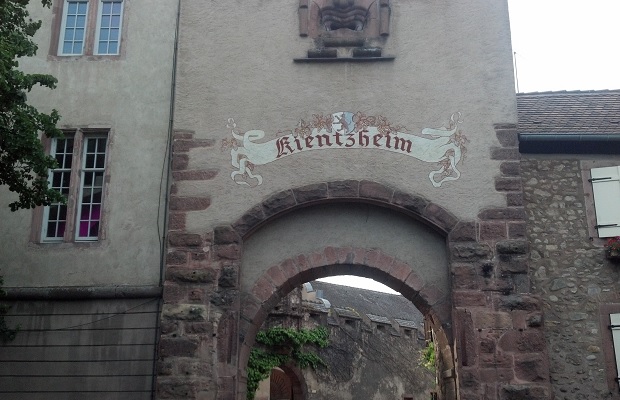
Kientzheim, Alsace

Kientzheim, Alsace

Pinot Noir 2008

This vintage preceded forward seasons that brought out warm, fully ripe and optimal phenol-realized fruit. From Maurice Barthelmé’s vineyard, between Mambourg and Furstentum, in Kientzheim. Clear, clean and precise. This was perhaps a bit ambitious in its oak soak from a year that Maurice considers “difficult and early,” but the parcel never lies and what a parcel it is. “Pinot Noir, like Riesling, is a mineralogist, ” says Barthelmé. This is Mann’s purest Pinot, if a touch under ripe, but that is the key. Whole bunch pressing and the oak envelopment has created a round flavour lock and Maurice feels he needs 10 more years to master this technique. Though this may have been the early stages in the development of the Mann Pinot candidacy, by 2018 it will reign in Alsace.

Paul Blanck & Fils

@rogcowines

“We’re looking for authenticity. Not wines of impression, but wines of expression.

Philippe Blanck

Phillipe Blanck, Domaine Paul Blanck & Fils

Philippe Blanck, Domaine Paul Blanck & Fils

Pinot Noir 2012

From granite and gravel soils, the former bringing a bitter component, the latter what Philippe Blanck calls “a facile aspect.” Dark fruits, like black cherry and plum are flecked with pepper and cloaked in a silky robe. “Almost a sort of texture wine,” considers Blanck. The bitterness is beautiful and offers a window of proof towards the ageing capabilities of Pinot Noir in Alsace. “Everybody has an idea of what is a Pinot Noir in the world,” says Philippe. “This is a classic one. And they age crazy.” Classic vintage too. From now and for 10 years.

Pinot Noir 1991

From 20-year old vines (at the time) and a low-yielding (20 hl/ha), cold vintage. The wine was not filtered and 13 years on remains very much alive. Retains the unmistakable smell of Fragaria Vesca, fraise de bois, the herbaceous and wild alpine strawberry. Mix in a metallic, iron and wine tinge and still viable tannins and you’ve got yourself a wonderfully aged Alsace Pinot. An example to encourage a future for the grape variety in Alsace. “So may the sunrise bring hope where it once was forgotten.” Blanck said “nothing to prove, just to experiment. Some wet, moldy berry in here.” Roasted game lends a note as well to this upward, over the “mountain wine.”

Pinot Noir “F” 2009 

The F is for Furstentum, the Grand Cru on the northern slopes of the Weisbach valley split between the communes of Kientzheim and Sigolsheim. The soil is marl. Philippe Blanck insists “we’re looking for authenticity. Not a wine of impression, but a wine of expression.” Here is cherry set on high, bright and exploding, with savoury wild herbs and direct linear of acidity. Authentic yes, silky no. Can age for 10 more years and somewhere along that line the direction will find a more approachable intersect.

Domaine Pfister

Pinot Noir 2009

From a vintage Le Conseil Interprofessionnel des Vins d’Alsace (CIVA) called “precocious” and of irresistible wines. Mélanie Pfister’s ’09 comes from the calcareous Clos Bamhauer, went through two weeks maceration in Inox and then spent a slow 18 months in Burgundy barriques. Incredibly fragrant, with a rich density and a charge of wood spice. Its black cherry waft brings Burgenland to mind, that and the elastic, silty grit by way of some vines grown on gravelly soil. What sets it apart from everywhere else not called Burgundy is the lack of any sort of varnished note. Purity prevails.

Domaine Zind-Humbrecht

@TrialtoON

Pinot Noir 2012

To Olivier Humbrecht, the location and managing the ripeness of Pinot Noir is key. “You can’t hide green character in Pinot Noir,” he asserts. Fruit comes from the Heimbourg vineyard, from west-facing slopes out of marl and limestone. This is a cooler, later ripening position with a draught between the hills. At 13 per cent alcohol it is pleasantly ripe but not as rich and intense as 2009. Still ripe enough for positive and effective phenols. Tannins are present and accounted for, wrapping a veil over the chalky, chewy, slighted coated fruit. The mineral is felt in texture coming from what is a simple, proper and elegant palate.

Domaine Pierre Frick

“Wine is not intellect, it’s emotion.”

Jean-Pierre Frick

@LeCavisteTO

Pierre Frick Pinot Noir 2008 and 2009

Pierre Frick Pinot Noir 2008 and 2009

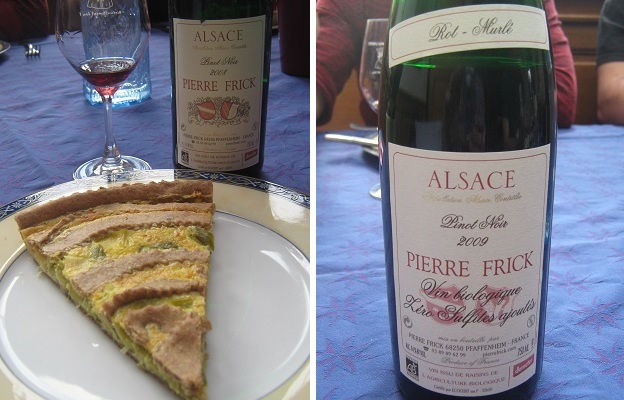
Pinot Noir Rot-Murlé 2009

This block is literally le muret rouge or, the red stone wall. From brown, ferric (ferrugineux), hard calcaire soils. In 2008 you could not write organic on the label (this changed with the 2012 vintage) so Frick sub-labeled the bottle Vin Biologique Zéro Sulfites Gioutés. Natural wine. Rustic, full of horns on acidity. The combination of clay, marl and the fact that the plot benefits from extended late-afternoon sun all lead to vigor, rigor and rigidity. This is Jean-Pierre Frick’s thickest and most Romantic brushstrokes. Richly textured like a Gaugin portrait of the The Schuffenecker Family. Post-impressionist Pinot Noir.

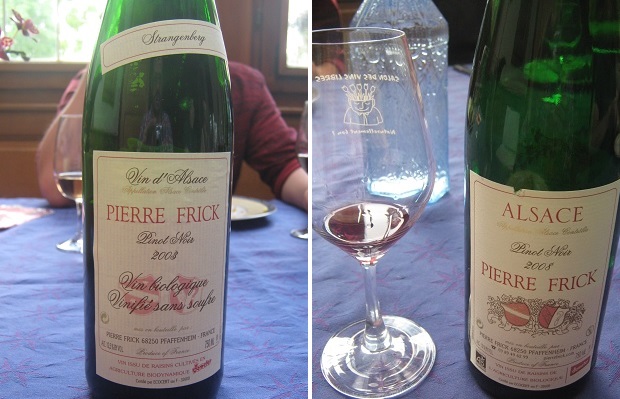
Pinot Noir 2008

From the Strangenberg lieu-dit, a hill parcel known as la colline aux pendus. Soil composition is hard, durable brown calcaire. After a quick whiff of farm droppings blow off, Jean-Pierre Frick’s Pinot Noir reveals a bright, light and feminine side. It is now blessed by gentle, resolved tannins. The generous spirit, kind heart and gentle soul of this Pinot offer nothing but calm pleasure. Its coat has not even a trace of primer. It is simply thoughtful and considerate. The iron minerality persists but with static and clinging trace fibers. A wine perfectly suited for a middle course at today’s table.

Pierre Frick Pinot Noir Strangenberg 2003 and Pinot Noir 2008

Pierre Frick Pinot Noir Strangenberg 2003 and Pinot Noir 2008

Pinot Noir Strangenberg 2003

Sub-label notes this ’03 as Vin Biologique Vinifié Sand Souffre. Years before it was fashionable or righteous to farm and vinify organically and without sulphites, Jean-Pierre Frick was looking to the stars. The Strangenberg is a very dry part of Alsace, Mediterranean in climate. This is earthy Pinot, like reds from Corbières or Sardinia, with its mutton-funky and roasted game aromas. Here is proof that non-sulphured wine can age, with the simple equation of fruit, acidity and tannin. It’s actually hard to believe so much tannin can emit from the collines of Haut-Rhin in Pinot Noir. Crazy actually. There is an underdeveloped green note along with some roasted and cooked flavours so peak has been reached. When left for 30 minutes in the glass the tannins begin to dry out. Like southern French and Italian reds, another 10 years would bring caramel, soy, figs and raisins. Either way. now or then, this Frick will also be interesting.

Domaine Schoenheitz

Pinot Noir Linzenberger 2013 (Barrel Sample)

Spent six months in one-year old (Allier forest) barrels. Bright, tight, full-on red cherries. A quick, fun, pure expression, clean and full of cherry. A two to three-year Pinot Noir.

Pinot Noir Sainte Gregoire 2012

From the Val Saint Grégoire lieu-dit, the historic name of the Valley of Munster (before the Protestant reform). The soil is decomposed granite rich in micas. Leans warm and extracted but with a high-toned, spiced coat tension. A generalization would place it more New World than Old, verging to black cherry, though again, the spirit is high. In contrast the yields were low (17 hl/ha) from the Cru, let alone the top-level of output from such a low yielding vintage. “When nature isn’t generous the yields go down fast,” confirms Dominique Schoenheitz. Good balance and well-judged.

Gustave Lorentz

@AmethystWineInc

Pinot Noir La Limité 2009

From the lieu-dit Froehn on the edge (the limit) of the Grand Cru Altenberg de Bergheim. Such a spicy florality and the underlay of calcaire from what is ostensibly hard limestone and Jurassic Lias marls meet one another in a geological confluence of fossils, red ferruginous soil and hard rock. A slow 12-month accumulation to fermentation has brought this Pinot Noir to land’s end. It bares un uncanny resemblance to the Prince Edward County Pinot Noir ’12 by Norman Hardie. Over exposure to sun, wind and everything else nature delivers gives this wine its vigor, its core strength and its vibrant personality.

Edmond Rentz

Pinot Noir Piece de Chene 2011

The Rentz take on Pinot Noir grows up in oak for 14-18 months, from a mix of new and used (no older than four years) barrels. The style is decidedly rich Pinot of a sweet tooth with a soft spot for quality chocolate. Spice supplements of orange and cinnamon, along with ethical acidity bring forth a wine bien charpentée, agreeable and ready for PDQ consumption.

Domaine Paul Zinck

@liffordretail

Pinot Noir Terroir 2012

Flat out fresh, mineral Pinot Noir. Only 100 cases were produced from a chalk and clay single parcel, on the Grand Cru Eichberg. GC yes to Phillipe Zinck, “but not official.,” Very little barrel influence here, in fact two-thirds of the Terroir was fermented in stainless steel, “to keep the mineral.” The cherry scents has tinges of plum, licorice and black olive, but just around the periphery. It’s otherwise bright and fresh with a quiescent streak throughout. Excellent.

Domaine Boyt-Geyl

Pinot Noir Galets Oligocène 2010

From the village of Beblenheim, this Pinot Noir gets the moniker from deposits of Oligocène of the tertiary period consisting of conglomerated rock on a base of marl. Jean-Christophe Bott considers the low-lying grapes of this terroir on lower slopes to be Grand Cru (in quality). Picked early to avoid resinning, cooked or jammy flavours, the wine was matured in (one year-old) barriques for 14 to 18 months. Quite earthy and spiced explicitly by cinnamon, though delicious, this is Pinot that flirts with what Bott wants to avoid. Served with a good chill it harmonizes its intent.

Good to go!


Walking an Alsace mile in their Riesling shoes

Riesling, (c) Cassidy Havens, http://teuwen.com/

Riesling, (c) Cassidy Havens, http://teuwen.com/

Riesling happens. It brokers the nescient consumer with the gift of grape enlightenment. It plants an organoleptic ear worm, urging a leap of faith to discover, to seek out the world’s most versatile, divergent and tractile wine. Riesling comes in so many shapes and sizes and that is why it is so difficult to offer up one’s trust, because if you don’t know,  you never know what you are going to get. Dry, sweet, late harvest, dessert, racy, round, or a combination of it all?

Related – In a Grand Cru state of mind

Alsace is distinguished by a very specific set of vinous attributes. No other area in France is as dry and only Champagne is further north in latitude. In typical climatic years, the aridity of the summer months, followed by the humidity of the fall fosters the development of a beneficial fungus called Botrytis cinerea, better known as noble rot, which concentrates the sugars and preserves acidity. The catch is that not every vintage works to guarantee the pourriture noble. When conditions are prime, some producers insist on picking before it sets in. Others think of it as gold. Pierre Gassmann of Rolly Gassman says all of his wines are noble rot wines, but he calls them Riesling.

A trip to Alsace and a week of tasting with producers opens the door to Riesling perception. I begin my Haut-Rhin road to Riesling perspicacity with and the women of . Twenty-eight are poured, including eight from the exceptional 2000 vintage. The full day that follows at Millésimes Alsace with SOPEXA and CIVA enriches the trenchancy to act as Riesling 101 for the winemaker visits to come.

Colmar, Alsace, photo (c) Cassidy Havens, http://teuwen.com/

Colmar, Alsace, photo (c) Cassidy Havens, http://teuwen.com/

To set the record straight, there has always been dry Riesling made in Alsace. There have also been white wines made in blatantly off-dry styles. Bringing the two poles together in seamless coordination is no easy task. The duality in character of combining straightforward, linear acidity and bright, sometimes exotic fruit is a concept, though in sweet emotive intention, that remains buoyant in the persevering air of aridity. It helps to define the transformative trend towards dry Alsatian Riesling.

Millésimes Alsace 2014, photo (c) Cassidy Havens,  http://teuwen.com/

Millésimes Alsace 2014, photo (c) Cassidy Havens, http://teuwen.com/

Here are Rieslings from a wide range of Alsatian Grand Cru and lieu-dits (single vineyard, named), in 31 flavours.

Maison Rolly Gassman

Riesling Réserve Millésime 2012 (61715, Wineworld Importers & Exporters Ltd, WineAlign)

“All are noble rot wines, but we call them Riesling.” This is the irony from the mouth of Pierre Gassman, especially in consideration of this, the driest in his portfolio. For so many Riesling, 12 g/L of residual sugar would ring like a morning alarm but the Réserve Millésime, a limestone chalky and buzz tangy Riesling, acts as if it’s super dry. This is the 9-plus g/L of acidity talking and the calcaire soil, though some clay gives it weight and grounding. A Gassman Riesling as dictionary entry to define the dichotomous behaviour of Alsatian Riesling. A perfect example that should taste sweet but does not. An impossible yet beautiful act of vinous science.

Riesling Silberberg De Rorschwihr 2010 (WineAlign)

The Silverberg is the “silver mountain,” a Grand Cru not unlike Zind-Humbrecht’s Clos Windsbuhl and located at Gassman’s home base, the Haut-Rhin village of Rorschwihr. This has to be the producer’s most impossible Riesling. The lab results of 16 g/L sugar, 13 g/L acidity, 2.86 pH and 14 per cent alcohol mean that it is not really wine at all. But it is, a linear drip of liquid silver with a direct hit of lemon-lime-orange-grapefruit solution carried within a membrane of viscous honey. Specs be damned, this is bone dry with a speeding, direct citrus laser hit. Riesling with its very own Gassman dialect known as the muschelkalk sound.

Riesling Kappelweg de Rorschwihr Vendanges Tardives 2000

If you’ve ever had the good fortune to spend any quality time with Gassman’s wines you will cop no advanced character from this late harvest mineral expression in bitterness unchained, yet restrained sumptuous VT. A clear entry pauses to smell the quince, apricot and white flowers. The ultimate resolve is a long aftermath tinged by an (80 per cent of the vines, highest in the Gassmann holdings) noble bitterness. The vines are also some of the oldest, dating back to 1942. Oiled density and excellent length define this Riesling though it’s hard to figure whether or not it acts like a reduction sauce or a spiked tipple. One does not taste and mull a VT like this without pause or cause to wonder. Not an easily understood wine by any stretch of reality so book a flight of fancy and enjoy the ride. One of many exceptional Rieslings from the 2000 vintage in which cloying is simply not an issue. Hard to imagine more versatility from this level of residual sugar to work alongside hors d’oeuvres, fish and the cheese plate.

Riesling Kappelweg de Rorschwihr Vendanges Tardives 2010

Kappelweg offers up fruit in matronly, door is always open generosity and maximum concentration as much as any terroir in Alsace. From 50 per cent noble rot affected at a resounding yet justly calculated 42 g/L residual sugar number, this baby-faced, early rock ‘n roll Riesling gives off its habitual white flower scent. A product of blue clay (closer to the sea) and a of a botrytis mined with calcaire in mind. “When you have Kappelweg, you have noble rot,” resigns Pierre Gassman. With a Gasmann Riesling “it’s one for the money, two for the show.” With Kappelweg it’s “three to get ready, now go, go, go!” The king of Riesling in blue suede shoes.

Riesling Pflaenzerreben de Rorschwihr 2000

The Pflaenzerreben translates as ‘plants de vignes’, or even more simplified as the ‘vineyard’!  From the Rorschwihr blue clay with silt and Muschelkalk limestone soils, the ’00 is still a baby. Yellow flowers blow from a complex nose, along with waxy, medicinal tones. The aromatics are high, which helps to subdue the noticeable (19 g/L) sugars. More aid comes by way of the Calcaire tannin and a six to eight-hour slow pressing, “ensemble,” notes Pierre, with no separation and a resulting “tout doucement” clear juice. The wonders of 2000 emit from the Gassman oeuvre.

Riesling Pflaenzerreben de Rorschwihr 2010

Here is Riesling that resides on two sides of the notorious Alsatian, sugar-acid ubiquitous fence. Pflaenzerreben reads like a veritable ECG. There is both citrus-spiked negative deflection as well as a sweet (16 g/L) elegance in positive deflection. The calcaire chalk posits the tug, the struggle between the poles. He/she admits “once a man, like the sea I raged, once a woman, like the earth I gave.” In the end this cinema show of a Riesling has “in fact more earth than sea.” One of the Genesis Rieslings of Alsace.

Domaine Maurice Griss

Riesling Sonnenberg 2010

An all rock, all out mineral wild thang from Josiane Griss, As dry as it gets (5 g/l sugar), as piercing as can be handled (10 g/l acidity) and in a state of aerified (12.8 per cent) alcohol. From granite terroir, near the top of a south-facing slope with high sun exposure. Though ’10 was not a particularly warm vintage, the high tartaric levels and late picking, slow developed berries post glorious September has everyone talking classic, for the ages. Impeccable balance here and a fortuitous match to Tarte flambée with salmon, leeks, basil pesto and cream. If asked the question, “how long have you been a Riesling,” the Sonnenberg would surely answer simply, “from creation.”

Josiane Griss with Riesling Sonnenberg 2010

Josiane Griss with Riesling Sonnenberg 2010

Domaine Pfister

Riesling Tradition 2012

Though Pfister continues to forge this Riesling from six micro-plots in the Silverberg lieux-dit, the name Tradition takes over, as a stylistic ode from 8th generation winemaker Mélanie Pfister to her father André. Built upon a solid permeate in limestone, the residual is dastardly low, in the 7th generation vintner’s way. Beautifully dry, somewhat misunderstood in its youth, in need of time.

Mélanie Pfister introducing the wines for Divines d'Alsace

Mélanie Pfister introducing the wines for Divines d’Alsace

Riesling Grand Cru Engelberg 2012

The “Angel’s Hill,” a south-facing and third most northern Grand Cru in Alsace. The Pfister take is reserved with extreme umbrage, an arid tug between brix and acidity, a fragment of what it may become, a portal into a Riesling analect. There are ripe phenols to be sure and a gentle, lingering calm. This will need years to develop. Right now it’s all lemon, lime and flinty stone with no periodic oscillation.

Riesling Grand Cru Engelberg 2011

Here comes the Pfister mindset out of a warm vintage, picked early in September. Go figure the still bracing acidity trumps it’s still beating heart. A slight sense of sweetness lies therein but the obvious minimalist tradition persists. Lacks the length of ’12 and offers nearer gratification. This is an example of why acidity is not the number one catalyst for success and for aging, so ’11 will both be like and unlike ’12.

Riesling Grand Cru Engelberg 2010

The ’10 is altogether different. There is petrol on top, pumping invisible ozone with an elemental intention. The welkin adds richness and viscosity, though for Pfister that is merely relative as compared to say…Gassmann. The ’10 is a fastball and it is hard not to get caught looking. Vinified bone dry (2 g/L) and due to the difficulty of the vintage, Mélanie left it on the lees for two years. The result is a perceived sweetness chaperoned by texture. Will require 10 years minimum.

Riesling Grand Cru Engelberg 2000

Beautifully dry, primary still, laden with citrus. Though not as gorgeous as some, this bridges the gap and emphasizes the Pfister Engelberg opus. It is amazing that it is yet to show any discernible evolution and every indication says it will live on forever. Or at least 15-20 more years.

Riesling Grand Cru Engelberg 1990

Here lies the crux of the Pfister vinous chrestomathy, like a literary work that cannot, in principle, ever be considered finished. From the third in a trilogy of great vintages, the ’90 has ego to spare, remaining so young and unresolved. The aroma profile is floral, almost medicinal and with a pronounced clotted cream note, the wise Cru remains youthful and nearly primary. Five minutes in glass does bring texture and an aged cheese taste, like Tomme fermière des hautes Vosges.

The wines of Domaine Pfister

The wines of Domaine Pfister

Caves François Schmitt

Riesling Grand Cru Pfingstberg 2012

The Grand Cru lies at an altitude ranging between 250 and 350 metres. The sub-soil is made up of calcareous sandstone and micaceous sandstone (Muschelkalk at the base and Bundsandstein at the top). Vines were first planted in the 1950’s. Paradis is a historical plot of land at the very heart of the vineyard, on one of the steepest areas. The ’12 Paradis by father and son François and Frédéric enters a sweetness zone without a sacrifice or surrender in loyalty to linear acidity. Peregrine fruit, in full feathery display is enraptured by tartaric of the highest degree. There is citrus atop rocks, a persistence and a perseverance that never relents.

Riesling Grand Cru Pfingstberg 2000

The ’10 GCP is yet a baby and in hallmark readiness of its necessary terroir. The petrol note remains a faint feign though its imminent presence is known. Such intense aridity, citric perforations, notes of wet concrete, highborn bitterness and unerring balance. Strength is supplied by sandstone and limestone. As much of a treat in classic 2000 Riesling as one might ever hope to be poured.

Cave François Schmitt, http://www.francoisschmitt.fr/

Cave François Schmitt, http://www.francoisschmitt.fr/

Vins Jean-Baptiste Adam

Riesling Grand Cru Kaefferkopf 2010

The radiation here is mind-blowing. The citrus dartle, the rows and columns of acidity in geometrical patterns, the angles obtuse and abstruse. Such a tense and immature Riesling with a late gas attack and oxygen depleted atmosphere. Wow is the operative word though it remains to be seen if this will ever latch on to any gravitational pull or circle the cosmos for eternity. This Kaefferkopk dances in the dragon’s jaw, lies “up among the furs where it smells so sweet,” and it’s got me wondering where the lions are. Wow.

Riesling Grand Cru Kaefferkopf 2000

Tasted from magnum. Incredibly atomic with a vineyard flinty stink that exhumes and exudes the benevolent bitterness of time. Has that vineyard dirt aroma and the wisdom of age. Something about this screams terroir, through earth caked stones, struck matchstick, wildness and purity.

Ginglinger-Fix

Riesling Vieilles Vignes 2012

The domain is family run since 1610 and biodynamic since 2009. Pheromones have been used since 1996 and they were one of the first villages to do so. Proudly announced as “vendanges à la main,” or, hand-picked grapes. This VV ’12 is bone dry, citrus in laser focus and a product of the calcaire solis with a pink quartzite quarry behind the village. The multitude of rock gives lightness in texture to this ’12 of wizened vines. This is a great example of Alsace Riesling emulated by VQA Bench Riesling in Niagara.

Riesling Goldert Grand Cru 2012

Here is rich example made by Éliane Ginglinger in Voegtlinshoffen. The Grand Cru vineyard gives as mush calcaire tang as any in the region, feigning oxidation but it’s really a most pronounced salinity. A piquant and forward Riesling with a whiff of violet. Further along in development than many ’12’s, the Goldert will be ready for prime time in two to three years.

Riesling Goldert Grand Cru 2011

The single-vineyard focus in ’11 is striking but not as piercing as some. The elegance factor here is a breath of Eguisheim air. Increased in poise, savoury accents and a florality that brings to mind chamomile tisane. At 13.5 per cent alcohol there is strength in balance.

Riesling Goldert Grand Cru Vendanges Tardive 1998

A late harvest VT scaled astern to a mere 14 g/L in sugar. Has developed such a deep golden hue, this muliebrity representative who proclaims sapidity in staunch mineral behaviour. Remarkably elegant and crisp for her age, the Goldert VT shows nothing particularly sweet about her. No conceit either, intense yes, but very fresh. Were I a proclaimer I would surely sing “I would walk 500 miles and I would walk 500 more, just to be the man who walked a thousand miles to fall down at your door.” I’m gonna be wanting another go at this ’98 next time I find myself in Alsace.

Domaine Jean-Marie Haag

Riesling Weingarten 2010

From a south-facing slope and sandstone soil, Haag’s Weingarten shows good potential for aging. “A grower’s vintage,” notes Myriam Haag. “A winemaker’s vintage,” one that required acumen and experience. There is a dry elegance about this grainy white, an imperial brackishness and a sense of  “écrou bougie,” or candle nut. Will age and needs to.

Riesling Grand Cru Zinnkoepfle Cuvée Marion 1999

Shows rich, viscous complexity with the sensation of star anise and menthol. There is a fumée discernment, an oily, nutty and spicy feel.  Singular and enticing, like a chestnut dessert, layered with mousse, sabayon and toasted dust.

Riesling Grand Cru Zinnkoepfle 2011

Luxuriance abounds from this ’11, elevating the oft-pierced variety to levels of lavishness and prodigality. Though it takes wing in petrol, it’s really just the spoken texture and flavours of the bleeding rocks. Bitters abound too but is this not what you want from Grand Cru Riesling? Fine, ritual, yet highly modern stuff.

Riesling Grand Cru Zinnkoepfle 2012

An enervating wine with richness bled from rocks and a finishing noble bitterness. The orchard fruit here is very ripe, more so than much of the 100+ Rieslings tasted over the course of a Colmar week. Marked by green apple, citrus and a middle-slope calcaire limestone (with sandstone on the edges) pierce. Such direct freshness and palate texture from that silty rock. A slow release wine, similar to the Zinnkoepfle 2008, a Riesling now in its secondary stage of development.

The wines of Domaine Jean-Marie Haag

The wines of Domaine Jean-Marie Haag

Domaine Valentin Zusslin

Riesling Grand Cru Pfingstberg Vendanges Tardives 2000

Here the noble rot has produced a Riesling thick in gluck and bright, golden sunshine fruit. Clearly protected from rain and wind by the Massif forest above, the 2000 has not yet relinquished the warmth in the bottle, along with a confected concoction of marmalade and blanched nuts. Though it has been bequeathed a slight mineraliztion with 14 years time, there is weariness to the fruit. Now is the window for maximum enjoyment.

Domaine Sipp-Mack

Riesling Grand Cru Osterberg 2012

The Osterberg Grand Cru is situated in Ribeauvillé and the Riesling is characterized by a stratified tartaric acidity. The ’12 is neither linear nor round, but layered instead and is a pure analogue of that rich style, with a slight residual subsidy. Extended hang time seems the bent so ripeness follows. The fruit is bulky and beefy though in a white veal way. If overall there is a curtailment in grip and outright anxiety the ’12 Osterberg will age unhurriedly for 10 years.

Riesling Grand Cru Rosacker 2000

The comparison with the other seven GC 2000’s on the table is hard to avoid so this one would make me think it leans late harvest. The Rosacker too is young and primary, teases and feigns VT but don’t be fooled by its unctuous sunshine. The dry quotient is extreme, despite the nuts. It is viable and rocketing in an elemental chew of salted stones. The finish is long and beautifully bitter.

2000 Rieslings

2000 Rieslings

Domaine Barmès-Buecher

Riesling Grand Cru Hengst 2000

Under the direction of winemaker Geneviève Barmès, energy is the primary distinction of the domain’s wines, exemplified by this all out mineral Hengst. Carrying forth a tradition initiated by Francois (Geneviève’s late husband), biodynamic farming brings out an autonomy to define that energy and here specifically a stark, terrific bitterness so prevalent from the Hengst Grand Cru. Not so much a study in bright fruit, the flesh is one of stone texture, flinty accents and an awe-inspiring, old school funk. Very serious Riesling. Not for the faint of white.

Domaine Stentz-Buecher

Riesling Grand Cru Steingrubler 2000

The Steingrubler soils are some of the most complex and variegated in all of Alsace. Marno-calcaires and argilo-sableux incorporates calcaires oligocènes and smaller areas of fine granite. The smorgasbord of terroir makes for an elemental potpourri impart, a bitter limestone tablet dissolving as it rolls through a gasoline alley. The bitters are everywhere, in underlay, in overlay, in granitic streaks. Having entered secondary life, this 2000 is “goin’ home, running’ home,” back to where it was born. It may be said that this particular Riesling represents its terroir as much as any that can be assessed. A steward of place.

Good to go!


The cru chief of Alsace: Zind Humbrecht

Le Clos Windsbuhl de Hunawihr PHOTO: http://www.zindhumbrecht.fr

Le Clos Windsbuhl de Hunawihr
PHOTO: http://www.zindhumbrecht.fr

Were Olivier Humbrecht, MW a Rock ‘N Roll star, he would be the guy, the man, the boss, the one everyone wants to hang around. He’d be invited to every benefit concert, like No Nukes at MSG, Live Aid, Live 8 and a Tribute to Heroes. He would sing the biggest parts on the raise awareness and relief funds records like We are the World. He would headline every star-studded gathering to celebrate an influential musician’s career, like that of George Harrison, Roy Orbison, Chuck Berry and Bob Dylan.

Olivier Humbrecht is a winemaker. He’s also smart, France’s first Master of Wine, rooted in his region’s history and hyper aware of every nuance in each terroir. He’s an extreme scientist, biologist, geologist, viniculturalist and viticulturalist. Olivier Humbrecht is a student of many Alsace genres, techniques and methods. He’s a bit of a perfectionist. So are many Alsatian winemakers. But Olivier also has the charisma, the persona and the drive to strive for bigger and better. People want to be near that.

The rock star complex manifests itself at a tasting of the Zind-Humbrecht portfolio. Olivier has laid 14 wines on the cellar room table for a group of eight journalists and sommeliers. After leading the group through the lot, he checks his watch and sees there are a few minutes left in the allotted time. He opens two more bottles, then two more. Time is up. The group must press on. He opens another. Just one more, “for perspective,” he says. He can’t stop. The adrenaline is pumping. One more encore. Just one more Sélection de Grains Nobles…

Domaine Zind-Humbrecht is well-known to the world, considered the consummate professional vigneron d’Alsace. The wines are immaculate to a fault; pure, precise considerations out of a multitude of variegated and diverse terroirs; of those around the winery’s home in Turckheim, Wintzinheim, in Gueberschwihr, Thann and in Hunawihr. The Grand Cru holdings of Brand, Hengst, Goldert and Rangen de Thann provide the stuffing for exceptional produce but can any other winery in Alsace lay claim to so many exceptional wines from their lieu-dit and single-vineyards not classified Grand Cru? The trifecta phenomena of the Zind-Humbrecht hill parcels, “Les Clos”; Häuserer, Windsbuhl and Jebsal may as well be Grand Cru squared. The wines from these most worthy soils are dreamy and in top vintages, impossibly perfect.

Most vintners in Alsace are connected to a village, have vineyard holdings surrounding or on slopes leaning upwards from the town. Many crush and ferment in caves beneath their homes right there in the ancestral village. Above ground Zind-Humbrecht is more modern than most, in many ways the embodiment of the 21st century Alsatian facility but Olivier’s wines are deeply connected to Turckheim, the village closest to a large proportion of his vines. The region’s regulatory board decision to eliminate a village like Gueberschwihr from being used on a Riesling label is both curious and counter-productive. Olivier is an island here, not having found any other producer’s support to keep such a designation alive. The irony is not lost. A winemaker incredibly passionate about soil having to label his wine by that very concept and against his will.

I had the opportunity to taste with Olivier Humbrecht on two occasions, thanks to CIVA and SOPEXA, at the winery and at the Millésimes Alsace trade event on Monday, June 16th, 2014. Humbrecht’s brain is in constant churning motion. He will never rest and settle for the status quo. He has learned everything and has everything yet to learn.

Biodynamic farming is at the nucleus of Zind-Humbrecht’s practicum and by now spoken as an apothegm, not ad nauseam. Olivier notes that Colmar, the vinous hub of Alsace and just down the road from Turckheim, is the driest town in France. “We are in a region that in the past we had to fight for ripeness. This is not the case anymore. I have not had to chaptalize in 20 years.” Global warming has had a great effect on phenols but Olivier stands firm on timing. Plants, including grapevines, have very specific life cycles, from flowering to ripening. “I will be ready for picking September 1st,” he insists, “regardless of the weather.”

On varieties, Muscat D’alsace remains “important and fantastic.” Humbrecht insists on keeping it viable and alive. “Reds are trendy,” but not significant to Zind-Humbrecht, adding up to less than one per cent of total production. Ninety per cent are single-varietal wines. Riesling persists as the core variety. It’s a grape that hates to ferment so noble rot should be avoided, because it arrests fermentation.” For Riesling to succeed? “You need a majority of tartaric acid, slowly, coolly, through the cold of winter, to achieve proper malic acid, to achieve good Alsace Riesling. Basically you don’t even want to know it’s happening.”

Olivier is an ally to both phenol and tannin. “Phenols in white wine is something that is always neglected,” he says, and “I do appreciate tannins in white wine, especially in low acidity grapes like Gewürztraminer.” Too many people do not understand the aging capabilities in the wines of Alsace. “We’ve gotten rid of too many phenols in white wine,” he complains. “We love the anti-oxidants, which will not allow the wines to age well, with no protection against oxidation.”

The phenol-tannin-sugar-acidity sequence only succeeds when PH is in the mix. “PH is more important than acidity. Low PH is a guarantee for good evolution in bottle, and good phenols.” That said, skin contact is to be avoided in Humbrecht’s world. “Alsace already has high aromatics so contact is contradictory.” It can lead to the inclusion of green phenols which would be detrimental to making sound wine. Ripe phenols come from the vines and Olivier continues to refer to structure and acidity as a direct consequence of what happens in the vineyard.

The ZH processes include high density planting, hand harvesting, gravity feeding, cold cluster pressing and the use of wild (indigenous) yeasts. The total annual output is approximately 300,000 bottles from 40 hectares, a capacity reached in the mid 1990’s. “We are not interested in getting any bigger,” concedes Humbrecht.

The last piece and going forward of the Zind-Humbrecht puzzle concerns vintages. “Vintages are very important and different in Alsace,” says Olivier. “2014 is very precocious.” Flowering was done the first week of June, almost two weeks ahead of the norm. This is similar to 2003 and 2011. “We made a lot of mistakes then, because it was the first time we had this.” The plan is to adapt to the climate by cooling down the soil, with more grasses to retain moisture. They will also let more branches grow to restrict sun and more canopy management. Biodynamic farming at work.

Olivier Humbrecht and Godello PHOTO: Cassidy Havens, http://teuwen.com/

Olivier Humbrecht and Godello
PHOTO: Cassidy Havens, http://teuwen.com/

Here are notes on the 20 Zind-Humbrecht wines tasted in Alsace on Monday June 16th and Wednesday June 18th, 2014.

Pinot Noir 2012

To Olivier Humbrecht, the location and managing the ripeness of Pinot Noir is key. “You can’t hide green character in Pinot Noir,” he asserts. Fruit comes from the Heimbourg vineyard, from west-facing slopes out of marl and limestone. This is a cooler, later ripening position with a draught between the hills. At 13 per cent alcohol it is pleasantly ripe but not as rich and intense as 2009. Still ripe enough for positive and effective phenols. Tannins are present and accounted for, wrapping a veil over the chalky, chewy, slighted coated fruit. The mineral is felt in texture coming from what is a simple, proper and elegant palate.

Muscat Goldert 2012

Like any self-respecting winemaker in Alsace, Olivier Humbrecht is intent on keeping Muscat d’Alsace alive with hopes that someday it will once again thrive. The white and red coloured, longer ripening, small berry Muscat Petite Grains receives minor (one or two per cent) support from grapey, soft and aromatic Muscat Ottonel. Raised from olitic limestone and marl soil, this Muscat is blessed with terroir inducing greater acidity and a dichotomous, silty ripeness, like a green, unripe Sauvignon Blanc. One has the sense that in this unique vintage the noble variety may age with an almost unexpected stride through the years.

Riesling Terroir d’Alsace Vin Sec 2012

This is the most basic and tenable wine in the Zind-Humbrecht portfolio. For the uninitiated it is an ideal embarkation point from which to engage the dry elegance and saline minerality of Alsatian Riesling. This “entry-level” effort is from 11 year-old vines, a slow ripening vintage and the stark reality of granite soils. The ever-present Humbrecht honesty and richness is here but in its most subtle (and only 2 g/L residual sugar) scale. Quick notes of lime, chalk and ginger. Olivier says it is made for the Brasserie or the Gastropub market. Never mind that it’s the most junior of his Rieslings. Nobility begins here with this reassuring, air-dried, easy to understand wine.

Riesling Herrenweg de Turckheim 2012

Here rolls the rock of the ZH stable. From gravelly, well-drained, poor soils around the winery. The citrus factor is front, centre and in surround sound but a natural richness and sweetness brings balance. This means the wine will gracefully incline through to a dry yet fruity future. A savoury austerity will increase the ageing quotient, in addition to the omnipresent mineral flavours by way of old (47 year-old) vines that burrow deep in the gravel, providing grit and strength, especially in drought vintages.

Riesling Calcaire 2012

The artist formerly known as Gueberschwihr is no longer. The new regulation regarding the production of village wines became effective with the 2011 harvest so, alone in its support for the quality of wine for the village, Humbrecht had no choice but a switch to the Calcaire nomenclature. From richer, cooler, alkaline soils. A touch more sugar (8 g/L) than the Turckheim counterparts, this also has higher acidity. Technically not so dry but this is the elevated, though not quite astronomical PH talking. It is dry enough to be considered Sec. Momentarily stuck in the proverbial petrol and mineral fence. The door will open shortly, to the ZH airy density and so physically speaking, this will taste drier as it ages. Even if “all this science I don’t understand,” I do know “it’s gonna be a long, long time” before the Calcaire comes down to earth and settles into its skin. Ten years to be sure. Rocket man.

Riesling Clos Häuserer 2012

Also Turckheim in origin (specifically Soedlen) but from marl soil atop really aggressive limestone from just under the Grand Cru Hengst’s nose. One of the highest in PH, this is austere and currently shut tight within a dry (4 g/L sugar) free lime zeppelin drum. Though aromatically mute, the mineral density on the palate is striking, like a reduction of half and half spread on sourdough toast. The 18 month lees program is most noticeable here and this Riesling will be led towards a petrol induction future. When it gets there, a taste will bring you into the Häuserer of the holy. The deep marl soil on top of calcareous Oligocene mother rock will speak and it will ask  “are you dizzy when you’re stoned?”

Riesling Brand Grand Cru 2012 (SAQ 11532951 $73.00, WineAlign)

There is a roundness to the Brand, in beautiful calming aromatics in defiance of the hard biotite granite, black and white mica soils. The pure mineralized clay silica brings heat to the land, with a high surface exchange quotient, not so different from the Schlossberg. This is precocious and precious Grand Cru that demands the wisdom and the fortitude of old vines, of a minimum 25-30 years of age. Zind Humbrecht’s average 66! With two per cent noble rot in the mix the wine reaches for more sugar (11.5 g/L) out of its desperately low yields. There is a high mineral ripeness and a tropical tingling, in melon and clementine.

Riesling Clos Saint Urbain Rangen de Thann Grand Cru 2012 (SAQ 12133871 $101.00, WineAlign)

The Thann is a 22-hectare, low yielding Grand Cru. The terra is volcanic and dark sedimentary soil, very steep and homogeneous. The high mineral altitude and poor attitude means the Zind Humbrecht ambition is aromatically challenging to assess, even if to taste it’s so obviously exquisite in concentrated depth. Such a rich, intense grapey nose but the flint smothers the smoky smoulder that should be present. A tight, angular and sobering expression, more isometric and idiosyncratic than anything tasted to this point. An island in the line-up. Not the most loveable Rangen, like its name, which is too old to even know its meaning.

Riesling Heimbourg 2012

From the village of Turckheim, the vines are planted on the steepest aspect of the marl covered, oligocene limestone slope. More noble rot present here than in the Brand, resulting in, naturally higher sugar (15 g/L), richer fruit and a deeper hue. “The sweetest Riesling we’ve made in 2012,” admits Olivier. A most interesting specimen too, an upside down cake in alternating layers of apricot and crushed rocks. The flavours are high-toned, not necessarily tropical, but lush.

Riesling Clos Windsbuhl 2011, Alsace, France (agent, $80.00, WineAlign)

“Vintages are very important and different in Alsace,” notes Humbrecht, exemplified by this blasted 2011 in contrast to all the ’12’s at these tastings. Here the fruit leans in the most elevated petrol direction, from a warm year and an earlier harvest. A younger evolution is taking place, showing immediate and gratified balance. The terroir is cool, rocky limestone with shells, similar to Burgundy. The clos is a gently sloping, six-hectare parcel. Overall it’s anti-floral, wet chalky creamy and striped by linear acidity. Only 4.5 g/L of sugar. These last two numbers mean nothing if you don’t recognize the PH because there are different acidities in wine. Here the acidity walks the fine line, side by side with its partners.

Riesling Clos Windsbuhl 2007

From a different era, this was fermented bone-dry, dire, with less than 1 g/L of residual sugar. A Riesling to show just how tight the Zind-Humbrecht band was back then and it is just beginning to communicate in its mid-life, mineral voice. If as a lieu-dit subject it was once “incommunicado,” with no comment to make, this has changed. The notes are layered and together, the mid-palate extraordinarily full, the length in reverberating, extended play. Here in today’s communique he’s come clean, having moved on from the strict, straits style, once spun unbending. The experience of great players and exceptional monopole (Grand Cru deserving) terroir has given the ’07 Windsbuhl the foundation to realize a classic Riesling.

Pinot Gris Calcaire 2012

Fruit comes from the Heimbourg, providing pure limestone effect and a great nutty character. The sugar is nothing to forget about (10.6 g/L), here already commissioned and integrated. Provides support for Olivier’s declaration that “if anything should happen to a wine, it should be before you bottle it.” Much more accessible than the fastball-curveball-changeup, out of the strike zone ’11. Here it’s all down the middle,  juicy, hittable fastballs.

Pinot Gris Rotenberg 2012

The Rotenberg’s shallow, red soils (located on top of the Hengst) bring a whole new set of parameters to Pinot Gris, in stark contrast to the Calcaire. Two bottles were poured. A two-day old sample showed settled and mellow flavours. A new bottle was crackerjack reductive, leesy and with a shocky aridity so unusual for Pinot Gris. The soils bring concentration, here magnified and compressed by the hastened moment. All the hallmarks of the Zind-Humbrecht style are there, if suppressed; tang, herbiage and a spicy spike. Very dry (4 g/L) and really invigorating white wine.

Pinot Gris Clos Saint Urbain Rangen de Thann Grand Cru 2012 (SAQ 11545233 $74.25, WineAlign)

The noble grape in this Muschelkalk (calcareous) vineyard comes through in high concentration, with an increase in noble rot from very low yields (12 hl/L). There was hail here in 2012, just after flowering, not a devastating storm but enough to minimize quantity. The sweetness (35 g/L) is heightened and uncompromising yet always mitigated by intense mineral activity. The richest and most unctuous wine of the morning (to this point) with direct, pure ripe tree-fruit flavours. This is a Pinot Gris that remains firm against the dangers of oxidation and it will develop smoky and toasty aromas. The structure is what I would call remarkable but not exceptional. Time will tell. Here the wait needs to be a minimum five years and then to drink well past 2025.

Gewürztraminer Calcaire 2012

As of the 2011 vintage, the Wintzenheim bottling became the Calcaire, for village designation (or lack thereof) reasons. Fruit here in 2012 is mostly (not necessarily typically) from the Hengst Grand Cru vineyard. The marl and limestone leads to a very typical Alsatian and even more typical Zind-Humbrecht Gewürztraminer. Full on glycerin, creamy, perceptibly sweet and protracted wine. Even at 35 g/L it is tempered by high tannic animation, as much as in Burgundy. Skin tannins are much more interesting than those from oak because they elevate the acidity by way of contrasting balance to the sugar. This is why they succeed.

Gewürztraminer Hengst Grand Cru 2012

From old vines of the Hengst, the yield is half of the Calcaire, the concentration raising the bar in the opposite direction. The residual number is the same but the sugars are more complex, intensely natural and variegated. The texture and flavours cover a creamier, wider spectrum and even though some typical rose petal/lychee components are noted, they remain submerged beneath the piquancy and the richness. This Hengst will gain flesh and weight as it ages, elevating the potential for late harvest sensations and alcohol.

Gewürztraminer Clos Windsbuhl 2012

The Muschelkalk calcareous, southeast facing slopes of this Clos employ slightly cooler temperatures and the stretched elasticity of slow-ripening to bring a sense of balance and poise to Gewürztraminer. The same can’t be said for Riesling on the same site, at least not in 2012. The Windsbuhl here speaks in more sweetness and less alcohol. “If you can see the differences of terroir in Gewürz,” says Olivier, “then you won’t see it in Riesling.” Here is an example that backs up one of his most telling axioms. “It’s the phenols of the grape that make it age gracefully better.” Age it will. Drink this beginning in 2020 and through 2040.

Gewürztraminer Vendanges Tardives Hengst Grand Cru 2011

A wine not often made because of the dry climate in this Herrenweg vineyard. The gaining of full botrytis expression only happens once in every five or six years and when it does, this eager and vivid sweet wine is the result. Harvested at high ripeness and proportion (50 per cent) of noble rot, with a quick (one month) fermentation to achieve a sweet balance (vin liquoreux) not that far from some SGNs. At 102 g/L it is obviously quite sweet though once again, with acidity, PH and exceptional phenolic character it strikes a balance. I don’t normally imagine late harvest wines to speak in terms of elegance or restraint and I’m not sure those are the most apt descriptors here. Yet the Hengst is as subtle as it gets for the genre and never enters the arena of the cloyingly sweet and absurd.

Pinot Gris Clos Windsbuhl Sélection de Grains Nobles 2010 and the tasting table PHOTO: Cassidy Havens, http://teuwen.com/

Pinot Gris Clos Windsbuhl Sélection de Grains Nobles 2010 and the tasting table
PHOTO: Cassidy Havens, http://teuwen.com/

Pinot Gris Clos Windsbuhl Sélection de Grains Nobles 2010

The residual on the 2010 Windsbuhl is remarkably high, this as a result of its long but (not compared to 2009) fermentation. From a historic vintage, with top-notch acidity (the goal was 16 g/L) and clean, precise botrytis. With the complexity and structure provisos of the Muschelkalk calcareous terroir and (43 year-old) vines, this exceptional dessert wine was given all the tools necessary for success. A parabola of a dessert wine, one sip and “we barely remember who or what came before this precious moment.” Attacks the mouth with an unparalleled sugar/acidity/tannin continuum. The flavours bring to mind quince, apricot and creamy mangosteen in out of control concentration. There is a reason sweet wines like these are so rare and receive such high praise. Exceptional fruit of uncompromising quality and a winemaker’s reverence are the reasons. Olivier Humbrecht prepared this 2010 to succeed and to live for decades. Drink from 2025 to 2055.

Pinot Gris Clos Jebsal Sélection de Grains Nobles Trie Spéciale 2009

A south-facing, very steep slope of grey marls and gypsum. A vineyard that yielded a miniscule 10 hl/H. A stratospheric residual sugar quotient (in the realm of 500 g/L) and incredulous acidity to prevent the development of the yeasts. A fermentation that finally finished in the late winter of 2012. A wine aged in demi-guid. Selection of grapes of a botrytis so pure and dry. These are the specs of a wine I may never taste again. Olivier concedes he “really tries not to obtain the highest sugar concentration possible” but this 2009 is a “monster of a wine.” It will take forever to assimilate and digest the sugar. Unctuous, lush, rich and gorgeous does not do it justice. Pure distillation of fruit and stone, accented by spice, wild herbs and flowers. Like an injection of pure, Pinot Gris adrenaline. All this from dry extract, slowly rehydrated with magic pixie dust and the wonders of the natural world.  Will live for a century and then some.

Pinot Gris Clos Jebsal Sélection de Grains Nobles Trie Spéciale 2009

Pinot Gris Clos Windsbuhl Sélection de Grains Nobles 2010 and Pinot Gris Clos Jebsal Sélection de Grains Nobles Trie Spéciale 2009

Good to go!