Gimme Shelter Island, Fenway Park and North Fork wine

Toronto Blue Jays at Fenway Park, Boston, Mass.
June 27, 2013
Photo: Michael Godel

as seen on canada.com

There is nothing quite like a good road trip. No matter the intended destination, a journey through heartlands, heaving cities and bucolic paths stir, enrich and develop the final stew. A roadhouse in Syracuse, N.Y. The Blue Jays at Fenway Park in Boston, Mass. The Cross Island Ferry to Orient, N.Y. Shelter Island, N.Y. Sag Harbor, Montauk, Amagansett, East Hampton and Wainscot, N.Y. The East Island Golf Club and Greenport, N.Y.

All stops contribute towards what will eventually become a wine region’s interest in laying up the riches of the mind. The eastern tip of Long Island mesmerizes as a sandy headland of bluff and dune begging into the Atlantic. Shelter Island is equally if not doubly halcyon in pace and though tiny in mass, seems enveloped in rainforest-like green and canopy. I traveled across and back, circumnavigated its perimeter and sat motionless on its beaches for hours. Time standing still.

PHOTO: Michael Godel
Shelter Island

Though other visits on the North Fork Long Island wine trail offered a taste of local flavour, the exception and lost time came from a small family operation in Southold. Here are my notes on nine heart struck wines not yet widely discovered.

PHOTO: Michael Godel
Michael and Christine

Mattebella Vineyards

46005 Route 25 (Main Rd)
Southold, NY 11971

North Fork wines have yet to storm cellars and tables beyond metropolitan New York, but it’s not for lack of quality or concupiscence. Case in point Mattebella Vineyards. Drive up the gravel driveway, turn past the herb garden, overgrown fennocchio and try to figure out which quaint little building is the tasting room. Crawl inside, pull up a bench and spend two hours sampling, contemplating and discussing with Christine Tobin what just may be the least known, most complex set of wines you would least likely expect to discover. Walk away feeling a part of the famiglia. Cottage industry incarnate. “We’re so chill here” says Chris. Goosebumps.

Christine Tobin holds the fort while Florida to Southold and back commuter husband/winemaker Mark is away on business. The couple purchased the 1997 planted vineyard in 2005. Their photo resides in that dictionary entry titled “labour of love.” Low density, French existentialist-style, 2200 plants per acre viticulture cursed by an oft-inhospitable, maritime climate is what Chris calls a “lottery ticket” of vines. Chardonnay not to be considered as Mâconnais or Meursault. Bordeaux blends not to be measured by either bank of the Gironde. These wines are expressions of this terroir, this spit of sandy soil a stone’s hurl from the Sound. The Magic of Findhorn.

PHOTO: Michael Godel
Mattebella Vineyards

Famiglia Chardonnay 2009 ($17) is the child of a wet and cold growing season yet composes itself with help from a persistent toast quotient that speaks of new oak. Tart green apple and juicy acidity beg for fatty fare; braised pork belly, buttery, braised rabbit or rillettes of either. Tree fruit brings game, brightly, like tangerine.  88

Famiglia Chardonnay 2010 ($19) spent 18 months in (20 per cent) new oak barrel.  Warmer, tame and propitious with a squeeze of lemon and a dusting of scorched earth. Butternut, in squash and roasted almond as if it were waving to Sebastopol, but only to shout, “hey, we are North Fork Chardonnay.” 90 

Reserve Chardonnay 2010 ($25) squared up the new oak barrel ferment for a butter and marmalade spread so rich and continental I could drink it for breakfast. The toast meets oceanic salinity intimates spa mineral, beach shell and fine stone. Deft winemaking has given this absolute steal structure and length.  91

Rosé 2011 ($18) seeks dry Provence and as far as the savoury strawberry/rhubarb is concerned, in that it succeeds. “A little more stark than in ’12,” concedes Chris, but the length follows a tine and it should never be envisaged as simple and sugary. Amazing what Merlot can concede here for Rosé.  88

Rosé 2012 ($18) is a fleshier, rounder style, savoury still and with more Cab Franc bell pepper. The rhubarb gives way to strawberry gelée and the complexity quotient warms up with a crumble of chèvre.  87

Famiglia Red NV ($18) serves a consistency of style for table wine purpose. A union from many plots and clones that sees some oak and more stainless. Raspberry, currants and tobacco smoke stand out. Perfectly reasonable Vino di Tavola.  86

Old World Blend 2007 ($35) murmurs in melodious tones flecked by iron and anise, like tender-aged IGT. From 667 cases, with black cherry, charcoal and plums rolling away. Tannins have a few lashes left in them. There is something Henry of Pelham ’07 Cab-Merlot about this Matebella. Heading soon to toffee and über relaxed REM sleep. A red to share with “a perfect circle of acquaintances and friends.” What the tasting room felt like on this day.  89

Old World Blend 2008 ($30) produced 489 cases of gorgeous, lush, velvety crimson fruit despite the wet vintage. Whatever underground anxiety may once have unsettled this Lou meets Nico meritage is now long gone. Deft winemaking here. When you’ve got Merlot, you make Merlot. When you’ve got Bordeaux grapes, you make Bordeaux. But this is pure North Fork. “I’ll be your mirror, reflect what you are, in case you don’t know.”  91

Old World Blend 2009 ($35) is the child of a tempestuous vintage, marred by a pittance of fruit set, no need for any drop and therefore only 220 cases produced. This one’s got the funk, smoking coal, pipe tobacco and licorice. Tight, focused and with a quick dissertation heard from the Petit Verdot. Tobin’s consistency of style shows once again, despite the rigours of fighting inconsistent vintages.  92

PHOTO: Michael Godel
Island’s End Golf Club, Greenport, N.Y.

Good to go!

A sound return to North Fork wine

Kontokosta Winery, Greenport, Long Island PHOTO: MICHAEL GODEL

as seen on canada.com

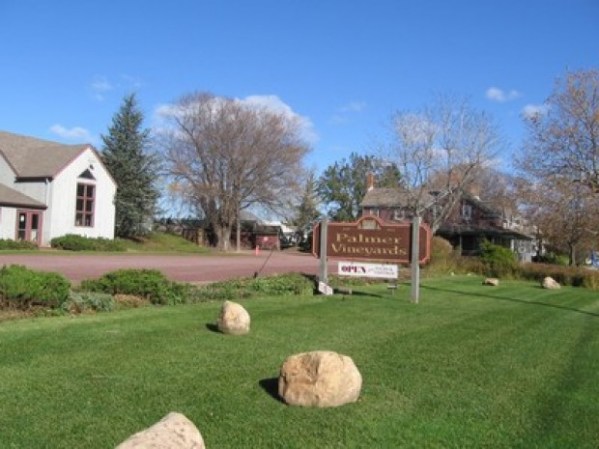
Just under I year ago I trekked to the western reaches of the North Fork wine region of Long Island, N.Y. I visited a few wineries on a spit of land between Long Island Sound and Peconic Bay, an area no wider than the geography between the Humber and Don Rivers of Toronto. Tasting sessions at Clovis Point and Palmer Vineyards opened my eyes to the exceptional wines that can be forged from such a rugged landscape and demanding climate.

I returned in 2013 to seek out wines made further east, in Greenport and in Southold. The former, Kontokosta Winery, is a brand new facility just opened in June, 2013 and the latter, Sparkling Pointe, a specialist of Champagne-style fizz. The common thread is winemaker Gilles Martin and a sharp view of the future for the region’s grapes. The wines of New York’s North Fork are piercing, intuitive and kind. They speak of the stark terrain, the abrupt and spontaneous terroirand the eleemosynary earth.

Kontokosta Winery

825 North Road – Rte. 25, Greenport, New York 11944

Brothers Michael and Constantine Kontokosta are the owners of Greenport Long Island’s newest and most easterly winery, alone in Greenport and one of few LEED gold certified wineries in North America. Situated on sixty-two acres, the winery boasts over a quarter-mile of Long Island Sound waterfront. The winery’s sustainable elements include reclaimed wood siding, 90% recycled-content steel, an enormous wind turbine feeding the property energy, xeriscape method landscaping and an organic community garden that support local non-profits.

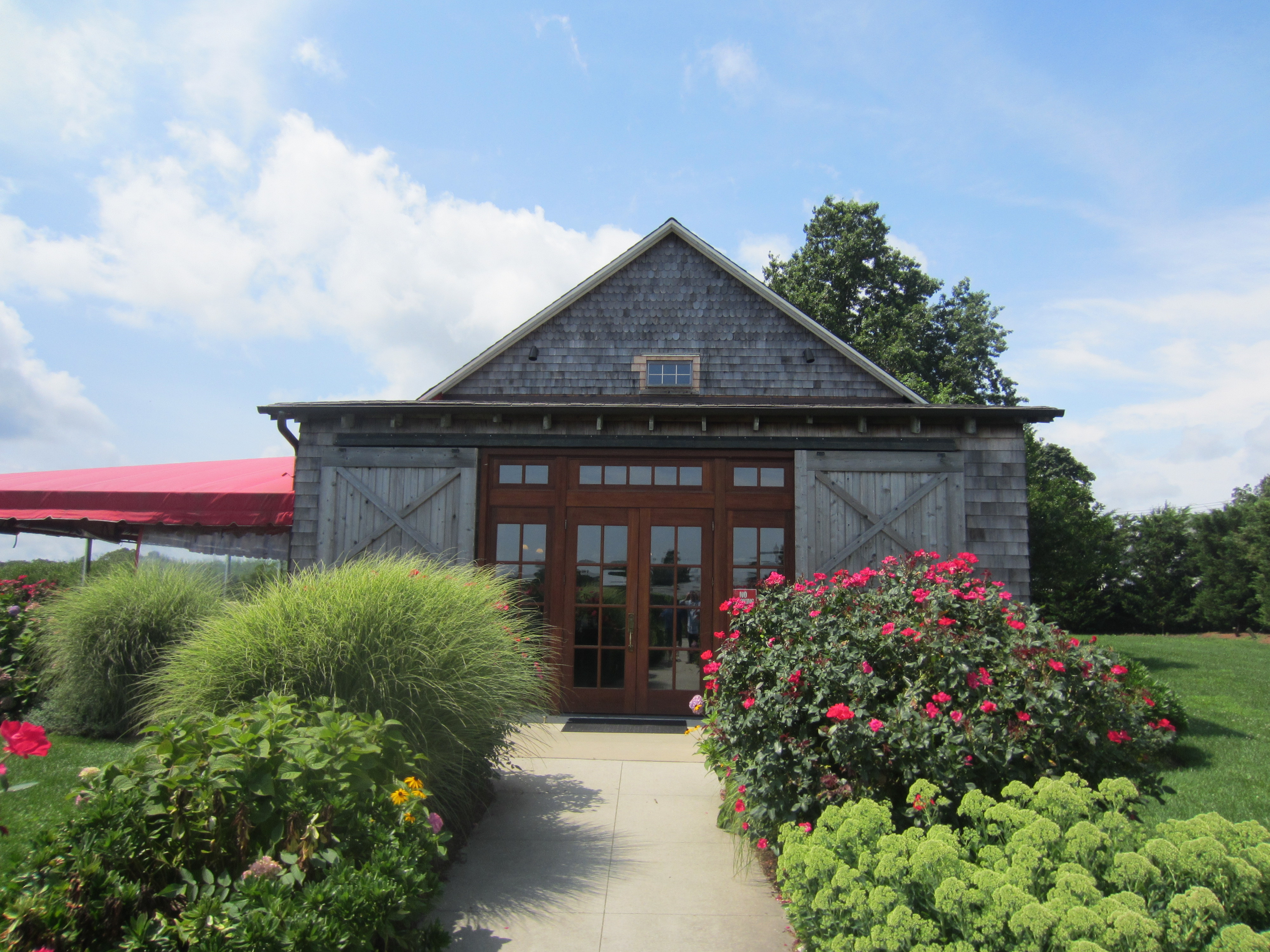
PHOTO: Michael Godel Kontokosta Winery tasting room exterior

Beginning with the 2012 vintage, the winemaker is Gilles Martin who is rapidly gaining a reputation as North Fork’s go to consultant. The first vines at Kontokosta Winery were planted in 2002 under the guidance of the late Long Island wine pioneer Ray Blum. Cabernet Franc, Merlot, Cabernet Sauvignon, Syrah, Viognier, Sauvignon Blanc and Riesling produce 3,000 cases annually, with some bottlings currently on offer having been fashioned from fruit sourced further west, mainly near Peconic Bay. Eric Fry of Lenz Winery made the wines prior to 2012.

I tasted the wines on Canada Day, July 1st, a mere 18 days after the winery’s opening. Despite such a brief time period of public interaction, Miles Trautman ushered me through with precision and passion. Though I was certainly no John Rambo to his cool, calm and collected colonel, I did my best to gain a true picture of the brother’s philosophy to “combine the latest technological innovations with centuries-old traditions in the cellar to develop and ensure the best expression of the unique Long Island vineyard site.” And by the way, the First Blood reference is real. Trautman is related to the uncle who was the writer’s inspiration for the fictional Richard Crenna chatacter.

PHOTO: kontokostawines.com Kontokosta Winery

Anemometer White NV ($16) combines Sauvignon Blanc from two vintages. The goal here is Loire so for parochial intents and purposes it succeeds. The fruit does yeoman’s works through the albedo of white grapefruit and a citric acid shell. Refreshing and acceptably tart.  86

Sauvignon Blanc 2012 ($25) is both ahead of the curve and a harbinger for white vinifera North Fork expectations resulting out of the warm 2012 growing season. Blessed by the luck of an early bud break and wisely picked ahead of Sandy’s torrent. Intimates the tropical flavours of pollarded, fruit trees but also races with vitesse.  89

Orient Chardonnay 2009 ($17) makes use of non-estate purchased fruit from out of the Sargon Vineyard bathed in neutral French oak to achieve an opinionated Chablis termagant in green apple and chèvre. Tongue-tying and teasing metallic but rolls out no stones.  89

Rosé 2011 ($15) is uniquely 100 per cent Merlot and though its girth is diluted by the rains of Irene, the herbiage, strawberry and rhubarb more than make up for the lack of concentration. Made in a decidedly French, dry style. Works the vin de pays grape with ease.  87

Viognier 2010 ($25) excels beyond expectation from one of only two local vineyards extolling the virtues of Condrieu. A touch of tiger balm but certainly not OTT, warm cashew buttery, viscous and radiant. Terrific sense of balance at 13.8 percent out of the maritime vineyards of the North Fork.  91

PHOTO: Michael Godel Kontokosta tasting room

Anemometer Red 2006 ($19) is 100 per cent untrodden Syrah having already laid down long enough to now give of itself. An angel of red raspberry, rhubarb, plum and loose tannin marked by lit charcoal. All told it brings Greek reds to mind, like Agiortiko. “Don’t let me hear you say life’s taking you nowhere.” Cool Syrah from young vines living beyond its golden years.   89

Merlot ‘Blum’ 2007 ($19) from the late grower’s Ackerly Pond Vineyards achieves toothsome mouthfeel from solid brix and 13.3 per cent Peconic Bay fruit at the hands of the local Long Island AVA pioneer. Here French oak imparts generous vanilla and spice and an ever so slight coat. Sinewy stickum from unresolved tannin settles and fleshes out while in the glass. Ends with a pretty, floral and feminine note. Just now beginning to fade, like the sun over the sound.  89

Merlot Estate 2007 ($29) elevates to 13.9 per cent in estate fruit, seemingly more masculine than the Blum. Richer, fuller in body mass, increased in concentrate.  Akin, if I may, to IGT Merlot, not quite Masseto but Super Tuscan (in hopes and dreams) nonetheless. Struts in increasedstrada tension, acidity and tannin. Less agreeability, more ageability.  90

Cabernet Franc 2007 ($29) remains dark and mysterious under the canopy though light creeps in on the edge of the forest. Spiralling cedars, bough smoke and vanilla from new oak have mellowed into a soft, approachable and aromatic cool climate Cab Franc. A red and black commingling of never too ripe fruit lingers on.  88

Cabernet Sauvignon 2010 ($22) achieves definitive varietal ripeness from what should be a harsh host environment. Soft red berries, an ebullience of ease and suave felt ready this warm vintage red for immediate and only immediate pleasure. Hard to coax much better out of the sand and grass.  88

Sparkling Pointe

39750 County Road 48 Southold, NY 11971

The winery can be found along Long Island’s North Fork Wine Trail and is the sole producer in New York State dedicated to the exclusive production of Méthode Champenoise Sparkling Wines. Fully estate grown seen 2007, don’t be fooled by the Brazilian carnival kitsch surrounding the tasting room. These bubbles are refined and serious. Sure, I will admit that Roederer EstateSchramsberg and Domaine Chandon make some terrific wines in the California sun but Sparkling Pointe speaks volumes towards yet another cool-climate region’s reason to make bubbles. If you lead them, they will follow. Look for more fizz on the North Fork in the coming years.

Champagne fans and founders Cynthia and Tom Rosicki manage 29 acres of vineyard, planted with the traditional Champagne grape varieties: Pinot Noir, Pinot Meunier, and Chardonnay. Their winemaker is North Fork’s super winemaking human Gilles Martin. Tasting room manager Kelsey Cheslock led me through a portfolio of six sparklers, half of which turned my head full round.

PHOTO: Michael Godel Sparkling Pointe

Brut 2009 ($29) goes long on tradition with 59 percent Chardonnay, 31 Pinot Noir and five Pinot Meunier, then bucks the trend by adding five per cent reserve wine into the mix. A fine mousse dissipates in haste from a bottle that had been opened longer than a while. Readied by oak influence with green apple flavour and tropical fruit from the added juice reserves. Despite the heavy rains of the vintage a citrus acidity carries on and the wine is remarkable dry.  88

Blanc de Blancs 2008 ($42) is 100 per cent Chardonnay noticeable in bread, biscuit and yeast. Four years spent on its fine yeast lees leads the toast to a bigger note than the plum fruit but a magnum of grapefruit and its pith are even stronger. Large in breadth and long on depth. Handsome B de B with a hairy chest. Selleckian.  90

Topaz Imperial 2010 ($37) is a dry, rosy Rosé composed of a 55/41 per cent Chardonnay and Pinot mix. Two and a half years spent sur lie here results in more toast, less tart and a vivid display of North Fork salinity. Watermelon, strawberry cream and a savoury note show the finesse, structure and balance of a wholesome, inviting and unintimidating natural wine. Sadly, there were none for sale.  91

Brut Seduction 2003 ($60) is a 51/49 Chardonnay and Pinot Noir mix and most clearly demonstrates the house style. Nuts, yeast bolts and an organoleptic finesse find their way inside this enigmatic fizz. A mature cuveé that would be interesting to taste blind against other house-blend Bruts, like Veuve or Bollinger.  92

Blancs de Noirs 2008 ($75) makes use of the year’s Pinot excess, is the first and only vintage of this Pinot man, with Meunier leading Noir 54 to 46. A copper patina, like a certain style of dry Rosé, shows off the contact with the red skins. Not quite as seductive like the 10 year-old Brut but this one is full frontal fruit with an accent of savoury, smoked meat, slow-roasting over shimmering red coals.  92

Cuveé Cardinal NV ($27) is a rare Merlot (66) and Chardonnay (34) blend, a one-off as the vines are now gone, replaced by Pinots. Flirty and forward with all kinds of fruit. Strawberry and rhubarb from the tangy Merlot, mango and apricot from the soft Chardonnay. Pushes sparkling boundaries, with a bowie knife in hand, in dramatic make-up and alternative dress. “You’ve got your mother in a whirl. She’s not sure if you’re a boy or a girl,” this rebel rebel.  87

Good to go!

Two forks and New York corks

Palmer Vineyards

The Atlantic coast is flush with dramatic terrain. I have marveled at the Gaspésie, Prince Edward Island, Maine, Cape Breton and Cape Cod. Who can discount the beauty of Chesapeake Bay, Kiawah Island and Myrtle Beach. What confounds is that from Newfoundland to South Florida, one spit of land is not only hospitable, but outright conducive to growing grapes. Risking an avocational hazard of overestimating interest in the topic, in case you hadn’t heard, eastern Long Island produces great wine.

Oysters – South Fork Kitchen

With no disrespect to the manicured Hampton vineyards of the South Fork, it’s the stellar whites and reds of the North Fork that are turning heads. While invisible to most of the planet, they are well-known to the island’s cognoscenti, in Manhattan restaurants and across the boroughs. Locavinous, locavore Bruce Bushel of South Fork Kitchen is a champion of the industry. His Bridgehampton restaurant features seven domestic table wines on tap. An additional five sparkling, nine white, four rosé and five reds are available by the glass. There are a further 37 by the bottle. That’s commitment. I tasted through a few that paired beautifully with oysters and crispy Sardines.

related story

Clovis Point Vineyard

Clovis Point Vineyards, Jamesport, North Fork

Somewhere around 10,000 years ago there lived a group of Paleolithic Native Americans known as the Clovis people. Their spear tips were found on the land where this 11-year old winery farms and fashions less than 2,000 annual cases of garagiste Merlot, Cabernet Franc, Cabernet Sauvignon and Chardonnay. Managing partner Hal Ginsburg arranged for me to meet manager Kelly Bruer for a revelatory tasting of Clovis Point’s portfolio.

Clovis Point Tasting Barn

Bruer is as close to a native son as you will find on the North Fork of Long Island. He began his immersion life as a teenager on a journey for all things wine. He is at one with this spit of land measuring less than six miles between Long Island Sound and Peconic Bay, speaking more of micro-climatology than he does of terroir. Vines here must survive and thrive in sand and gravel soil (if you can call it that), where organic matter comes at a premium. Ocean waters and breezes work their saline ways into the wines, more obvious of note in whites. What is imbued to reds is a fascinating calm that neutralizes harsh varnish lines, resulting in beautifully balanced Merlot and Cabernet Franc. This is the North Fork’s somewhereness, something Niagara reds strive towards with hopeful and exponentially maturing vines, yet still remain in search of.

Clovis Point Chardonnay

Chardonnay 2011 ($18) like vegetable consommé gets a floral lift from the smallest amount of Gewurztraminer. Think summer corn, linden/basswood/sumac blossoms and chamomile. Stainless steel fermenting allows the Sound’s airy salinity to breeze away. Early evening summer shadows in a glass.  87

Barrel Fermented Chardonnay 2008 ($25) is aged for 10 months in French oak barrels. Energy and lively current passes through its white-hot incandescence. Accretes past Obsidian flint to a melon patch of flavours and fades dispassionately into a cultured end. Chardonnay for oozing cheese.  89

Merlot 2005 ($21) shares French and Hungarian oak with 19% essential Cabernet Franc in mendicant adulation ça vaut le détour. Cotton to the successful notion of Merlot’s North Fork planting and in turn, chemical certainty as to the outcome of its composition. Pins ’05 as the jumping off point for historical success. Better than the Peconic Bay, with longer lasting ever red fruit, twang and sandy spice.   88

Vintner’s Select Merlot 2006 ($35) will force North Fork disbelievers to eat crow. French oak adds smokey barbacoadevil’s tea, espresso and bittersweet chocolate notes. Gamey yet resolved, Merlot of a quiet avarice, confident, self-assured.  89

Cabernet Sauvignon 2007 ($27.50) nearly goes it alone at 96% Cab. Sauv. capacity and it shows. Cedar and burning, luminescent charcoal smother ruby, red fruit. Time will tell the story of greatness lying in wait due to the heat and dry conditions of the vintage.   87

Cabernet Sauvignon 2006 ($27.50) incorporates 15% Merlot and 4% Cabernet Franc. Inaugural vintage hie to success. Salty sea drafts work their way into the crimson fruit, accented by Left Bank smoke and tobacco leaf. Beginner’s luck or oracle to the future? It matters not. Could drink this quotidianly.  88

Cabernet Franc 2008 ($27.50) is outright cerulean in blueberry and Clintonia. Caliginous and mysterious Cab. Franc, like nothing that has come before. Sea air at work once again, sifting with chalky sand, gravel and dulcet espresso. No Loire, no Niagara signal here. Pure North Fork.  91

Archaeology 2007 ($60) the flagship, Merlot based, proprietary blend is not a “Meritage,” insists Bruer, wink, wink, say no more. Laser focused like a Paleolithic spearhead, acidity and tannin are OTT. Sly and muscular, you have to wrestle to exhaustion to uncover a Bordeaux-like belle epoque.  90

Palmer Vineyards

Palmer Vineyards, Aquebogue, North Fork

Considering that the 1961 Palmer is one of the legendary wines of the universe, naming your Long Island winery  as same might seem a bit surreptitious. If your name happens to be Robert Palmer, then all is forgiven. His eponymous vineyard is one of Long Island’s oldest with a wine rep cemented in good standing. In 2006 Miguel Martin was hired as winemaker and the rest is, history.

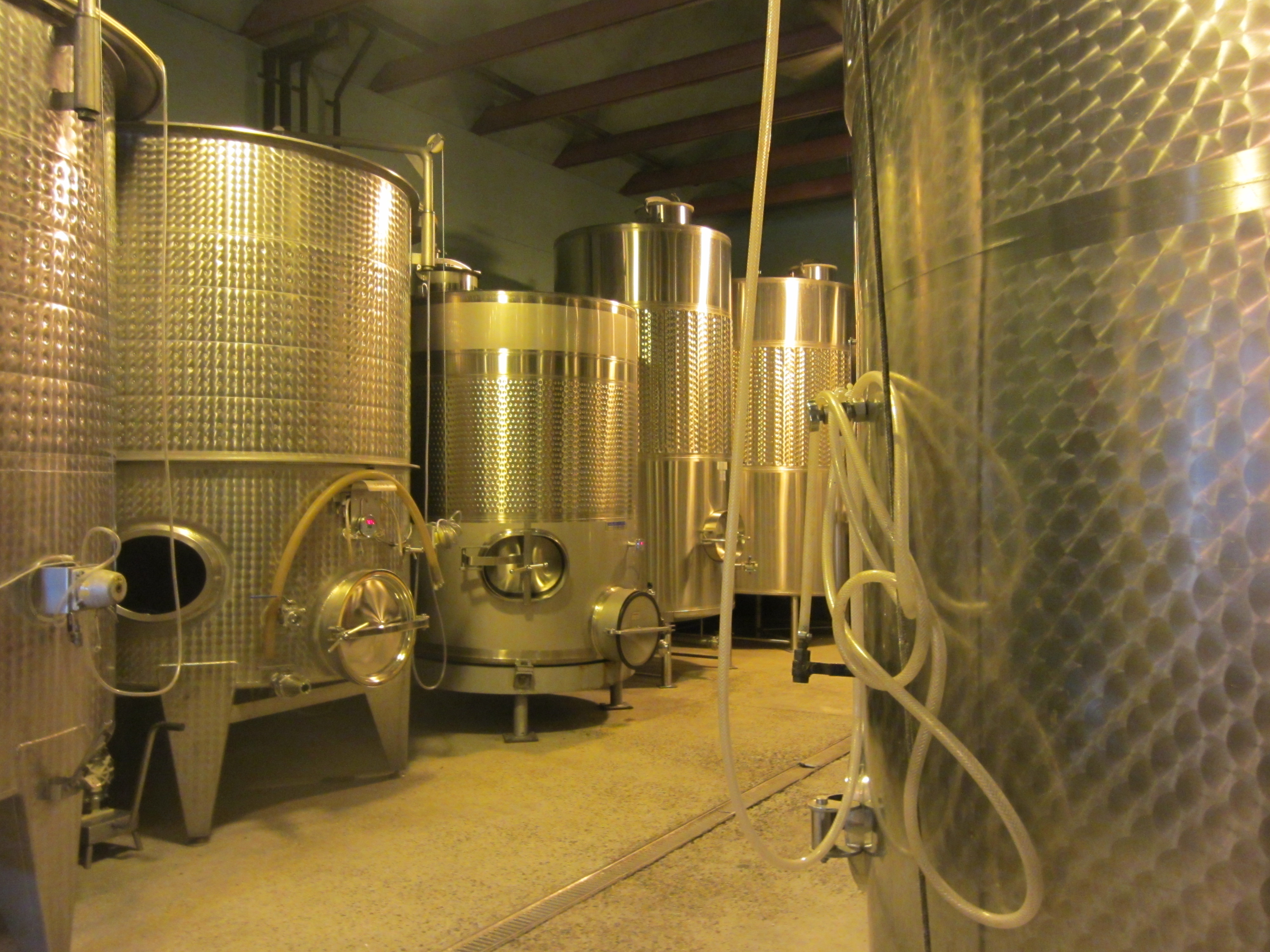
Martin is a native of Madrid, Spain and has worked around the globe, in his homeland at Gonzalez Byass, in California for Robert Mondavi and in Australia with Yalumba. Family man (three daughters) and Paella master (he promises we’ll cook together next visit), Martin too is obsessed with weather more than soil. While he shares a North Fork ardency for Merlot, Chardonnay and Cabernet Franc, he also has a vision to experiment with European varietals like Albarino and Muscat. I ask him about Tempranillo. He notes that reds out here struggle to achieve maximum ripeness so the great grape of Spain is just not in the cards. Martin guided me through wines from tank, barrel and at the winery’s tasting bar.

Martin is a native of Madrid, Spain and has worked around the globe, in his homeland at Gonzalez Byass, in California for Robert Mondavi and in Australia with Yalumba. Family man (three daughters) and Paella master (he promises we’ll cook together next visit), Martin too is obsessed with weather more than soil. While he shares a North Fork ardent loyalty for Merlot, Chardonnay and Cabernet Franc, he also has a vision to experiment with European varietals like Albarino and Muscat. I ask him about Tempranillo. He notes that reds out here struggle to achieve maximum ripeness so the great grape of Spain is just not in the cards. Martin guided me through wines from tank, barrel and at the winery’s tasting bar.

Pinot Blanc 2011 ($20) is typically round but also intriguing with notes of cashew, white strawberry and vanilla cream. Leesy, pear notes join chalk, biscuit and buff. Lieb may be North Fork’s PB darling but Palmer is simply irresistible.  88

Sauvignon Blanc 2011 ($20) is uniquely vegetal and green, at once reminiscent of more famous cousins in Sancerre and Marlborough and then again, not. SB purposely picked early, indicating crab apple, gooseberry, sea grass and akin to a savoury tisane of lemongrass, orange peel and chamomile.  87

Chardonnay Reserve 2010 ($19) is more serious than expected. A Harbor Hill, mineral moraine backbone avers intellectual senescence and wisdom, not unlike Paul Pender’s Quarry Road. Caramel and cream make an appearance but after that it’s all citrus and zest.  89

Albarino 2011 ($25, 500 mL) is the most vivid and sterling white in the portfolio. Rinds of all kinds, Seville orange, grapefruit, lemon and lime join forces with tropically tart punch and white Sangria. Crazy acidity and length.   90

Merlot 2010 ($22) sees four weeks of skin contact for Syrah like, deep colour intensity. You’re a Julia, “a horn section you resemble and your figure makes me tremble.” Absent of reductive aromas out of barrel, this Palmer will be approachable direct from bottle next season. East coast Merlot, there’s the rub. “Julia, you’re a danger, just like giving sweets to stranger.”  89

Cabernet Sauvignon 2008 ($25) is a robust, earthy, muddy cup of morning coffee alongside rye and wheat germ toast smothered with bumble berry confiture. Another intensified red. Who knew? A bit over-leathered so look to pair with a simmered animal bone reduction and red meat.  87

Cabernet Franc 2010 ($29) wins me over. Cab Franc is the artist of the wine world. Never loved enough, bitter, green, work always unfinished. Martin coaxes the most from the unrequited grape and I’d sneak through the alley with Sally for a sip or two. Licorice, black currant, pine. Bring on the duck confit.  92

Good to go!