
Rancia Vineyard at Fèlsina, Castelnuovo Berardenga, Chianti Classico
Two weeks from today I will make my way back to Toscana for another week-long immersion into all things sangiovese. More to the apposite point is a furthered plan for thorough if recondite excavations into the stone-cold secrets of Galestro, Alberese and other stratified limestone soils in Chianti Classico’s sub-zones. The preoccupation concerns communes, an instinct to break down the greater territory into its parts and a continued look at fissures and faults underfoot. It’s a matter of deeper understanding and meaning.
Related – Because the night in Gaiole
Once again I am proud to be a messenger on a subject that continues to write itself. This is the fourth edition in an ongoing series meant to encompass and expand upon definable territories in the municipalities of Castellina in Chianti, Gaiole in Chianti, Greve in Chianti and Radda in Chianti, Barberino Val d’Elsa, Castelnuovo Berardenga, Poggibonsi, San Casciano Val di Pesa and Tavarnelle Val di Pesa. This report is a by-product of the generous work and spirit of Chianti Classico’s producers and with unwavering guidance from the Consorzio Vino Chianti Classico: President Sergio Zingarelli, PR & Communications Manager Silvia Fiorentini, Event Manager Christine Lechner and Caterina Mori, Marketing and Communications.

Look Ma, I’m on top of the #chianticlassico #albarese at Tenuta Mocenni, Bindi Sergardi
I’ve come to consider Castelnuovo Berardenga the outlier for Chianti Classico, not for being so unlike the other constituents but because of its location and size. As the largest of the communes it covers 177 square kilometres while only Greve and its 169 square kilometres comes close in total area. When you drive out from Siena or Castellina the approach is most efficiently taken along highways and larger roads. This in great contrast to the switchback and zig-zagging over winding roads connecting proximate sub-zones like Radda, Gaiole, Greve, Panzano and Castellina. Castelnuovo Berardenga also forms much of Chianti Classico’s southern border and there is this particularly striking contrast between its hills and soils in opposition to the ulterior geography and geology of Chianti Colli Senesi below. There is also a feeling of the great wide open, of vast expanses and a great big sky.

All aboard the Alberese with the intrepid Brad Royale
Related – Castellina in golden light
A little bit of history. Berardenga took its district name from the noble Frankish Berardo who lived in the second half of the 10th century. His lineage follows that of Guinigi, Count of Sienna. The family Berardenga reigned over a vast area of the eastern part of the territories of Sienna (Terra Berardinga) between the 10th and 13th centuries. In 1366 the government of Sienna decided to construct the castle of Castelnuovo in the centre in this important territory. It was soon assaulted by the Florentine army but not successful until 1554 with the annexation of all the Sienna territories to the Duchy of the Medici. Montaperti in the municipality of Castelnuovo was the theatre of the battle of September 4th, 1260 which saw the victory of the Sienna Ghibellines over the Florentine troops and their Guelph allies.
Related – Get Radda for Chianti Classico

John Szabo M.S. at Villa a Sesta. The Italian job or TJ Hooker?
Today there are 54 estates (out of 580 total members) in the district, a number that is surprisingly small when you consider the vastness of the territory. Castelnuovo Berardenga is the commune with sweeping vistas, views of Siena’s towers in the distance and with crests of hills that on some mornings sit perched above the clouds. It’s a very powerful landscape with a tremendous amount of wind, less shelter than most and a place you often feel small and vulnerable to the elements and the power of the place. It’s also home to some of the most impressive Galestro and Alberese soils in all of Chianti Classico. In Castelnuovo Berardenga, even the size of these limestone variant boulders seem bigger.
Related – Three days, eight estates, Chianti Classico
I’ve been extremely fortunate to pay some unforgettable visits to estates in Castelnuovo Berardenga in the recent past, including Losi Querciavalle with Valeria and Pietro Losi and twice with Andrea Bianchi Bandinelli at Villa di Geggiano. On my most recent trip back in September 2017 I was joined by John Szabo M.S., Brad Royale and Steven Robinson for three calls within the district. I tasted and reviewed 21 wines at Bindi Sergardi, Fèlsina and Villa a Sesta. Here are the notes.

Alessandra Casini Bindi Sergardi introduces the Mocceni Estate
Bindi Sergardi
A family run business for 23 generations, the estate has long been in the hands of Nicolò Casini, grandson of Elisabetta Bindi Sergardi. It is his daughter Alessandra Casini Bindi Sergardi’s turn, after joining in 2005, she now leads the company into the future. The Mocenni Estate near Vagliagli is without exception one of the most beautiful spots in Castelnuovo Berardenga but there are so many others reasons to say it too occupies a place at the breathtaking locus pinnacle for all of Chianti Classico. What transpires in the aura and sphere of a Bindi Sergardi visit is memorable. First a pause on the road to stand amidst the wild fennel, above the clouds and gaze out towards Siena’s spires in the deep distance. Then a walk in La Ghirlanda Vineyard with the Alberese, Galestro and the sirenic Bindi Sergardi in disssertative delivery on history, change and expectation. Finally a tasting through these wines of fineness, harmony and passion with Alessandra and Giulia Bernini.

Alessandra Casini Bindi Sergardi
Bindi Sergardi Chianti Classico La Ghirlanda 2015, DOCG Tuscany, Italy (Winery, WineAlign)
La Ghirlanda makes reference to the woods “the shape of a garland,” in a CC of 100 per cent sangiovese (and the first as such for the estate). This is a form of the purest vineyard expression, a vintage “da manuale,” a vineyard in the amphitheatre, from part organic and part inorganic plots, halfway up the slopes above the Riserva and below the Gran Selezione. Serves memory with clarity in vision, impossibly old school but bright as a passage through the portico into the future could possibly be. These cherries are not only ripe, they are in phenolic harmony. Tannins are so refined on the heels of just as fine acidity. In terms of élévage it was 50 per cent in third passage barriques, plus 50 per cent in cement and/or stainless steel. Only botti grandi will be employed going forward. La Ghirlanda is highly composed, cultured and of calm demeanour in Chianti Classico. The price is approximately $20 US. Drink 2017-2021. Tasted September 2017 @BindiSergardi Alessandra Casini Bindi Sergardi @bindisergardi bindisergardi
Bindi Sergardi Chianti Classico La Ghirlanda 2014, DOCG Tuscany, Italy (Winery, WineAlign)
The dark fruit and ripe black cherry with fine acidity and now more vibrant than memory serves from February. Really juicy and forward, a modern sangiovese in retro clothing. It has brightened and improved so will likely age much longer than previously thought. Drink 2017-2022. Last tasted September 2017
The Castelnuovo Berardenga Ghirlanda vineyard is found on the Mocenni estate, near Vagliagli. The modern palate in search of Riserva in Chianti Classico will want this, of extraction and compression, not to mention density and a sweeping vat of deep black cherry liqueur. A nice mineral streak comes from soil rich in galestro and alberese at 450 meters. in the shadow of Monteriggioni. It’s tart and tannic but of tannins that are already fully engaged, chalky and established in their grip. It’s all in there now. Drink 2017-2018. Tasted February 2017
Bindi Sergardi Chianti Classico Riserva Calidonia 2014, DOCG Tuscany, Italy (Winery, WineAlign)
Calidonia is Castelnuovo Berardenga CCR from the Vigneto della Signora Chiara on the Mocenni estate near Vagliagli.
The terrain is rich in galestro and albarese stones at an altitude of 450m, a room with a view of the towers and spires of Siena in the distance. The Albarese and Galestro stones variegated into one-third each sand, clay and silt keep the sangiovese faith from what was one of the coldest vintages of the past 20 years. So much rain, especially in June and so this carries higher acidity and tough, fresh tannins, especially for Riserva quality. Here the truer originality of older schooling shows through but again with forward thinking clarity and understanding of a plant’s vegetative cycle. The south exposition and southerly location was a help in 2014. Remarkably a dark cherry from 2014, with depth of fruit and fineness of tannin. Some warmth for sure. Not as much of a departure from the Classica as many CC to CCRs can be. Drink this raven-haired beauty early. Would be approximately $28-32 US. Drink 2017-2019. Tasted September 2017

Szabo and Alberese
Bindi Sergardi Chianti Classico Riserva Calidonia 2012, DOCG Tuscany, Italy (Winery, WineAlign)
Chianti Classico Riserva Calidonia refers to the marriage of Calidonia Bindi to Sergardi, in a way to say thank you to the people who came before. This expression is so different from what’s to come later on, not quite acetic but much older schooled, with the red citrus sting and dried fruit, the tartness from acidity and the bleed from Albarese and Galestro so obvious, present and accounted for. From a low yielding vintage (which will replay in 2017), and then a real maturation shows up, with very developed grape flavours. This has entered into its drinking window. Drink 2017-2020. Tasted September 2017
Bindi Sergardi Chianti Classico Riserva Calidonia 2011, DOCG Tuscany, Italy (Winery, WineAlign)
Calidonia 2011 is the child of a vintage of few surprises, easy and regular in harvest, with some rains and cooler temperatures in September, helping to elongate maturation. Not as mature or advanced as 2011 mind you, still a bit reductive and even showing some volatility but it really opens with some proper agitation. Quite smooth and yet bright, even tight, tannins present and speaking with an authoritative voice. This will live much longer. Very composed Chianti Classico of terrific structure. Drink 2017-2024. Tasted September 2017
Bindi Sergardi Chianti Classico Gran Selezione Numero “1989” 2013, DOCG Tuscany, Italy (Winery, WineAlign)
The Gran Selezione Numero ‘1989’ is consistently 100 per cent sangiovese and here we are in wholly, truly, inexorably inorganic, fully stony soil, from vines planted in 1998. There is this composure and this understanding in Gran Selezione that is at the top of the pyramid chart, a fineness of tannic structure, a roundness of acidity and a perpetual motive and emotive fruit that will not give up or in. This is the Bindi Sergardi expression, sultry and offers up every reason to believe in the category. This is the GS that tells us why and how the top of the quality pyramid begins to be explained, with intrinsic value and great confidence from this 2013 vintage. Approx. $58-62 US. Drink 2019-2031. Tasted September 2017
Bindi Sergardi Chianti Classico Gran Selezione Numero “1989” 2011, DOCG Tuscany, Italy (Winery, WineAlign)
Bindi Sergardi’s Numero ‘1989’ 2011 is a statuesque sangiovese, cemented in stone, built upon a foundation of Galestro and Albarese. When the possibility of the Gran Selezione category came along it became the perfect dress for a wine that used to be an IGT. The age is a part of it but there is more red citrus, high acidity and rusticity in this sangiovese. The tannin structure is consistent with the later 2013 but this certainly feels like it’s from another era. The window is now and will persist for another three to five years. Drink 2017-2022. Tasted September 2017

Bella mattina @felsinawines
Fèlsina
In the spectrum of “winery tours” there are few that can match the breadth of Fèlsina. In May of 2017 I was fortunate to break bread in Toronto with Fèlsina’s Giovanni Poggiali, oldest of Giuseppe’s three sons and current leader of the thousand year-old estate. Arguably the most famous and influential of Castelnuovo Berardenga’s wineries, it is here that many sangiovese clones and rootstocks have been developed, allowing them “to have an infinite palette of nuances and possibilities, much like a painter has infinite shades to work with.” Fèlsina is one of Chianti Classico’s great sangiovese innovators and champions. As Fèlsina goes, so goes Castelnuovo Berardenga and Chianti Classico. Our visit was led by Export Manager Chiara Leonini. A four-wheel trek through the vineyards up to Rancia. A walk through the appassitoio where grapes lay drying to make Vin Santo. A tasting through sparkling, chardonnay, Chianti Classico, Riserva, Gran Selezione and Fontalloro IGT.

Fèlsina Vino Spumante Di Qualità Brut Metodo Classico, Tuscany, Italy (Agent, WineAlign)
The zone of production is Chianti Classico, in the commune of Castelnuovo Berardenga southeast of Siena. Blended from 60 per cent sangiovese with 20 each chardonnay and pinot noir, Fèlsina’s is a gingery, yeasty, rich and textured sparkling wine, definitely not Franciacorta or anything remotely Lombardic. The time wait is 24 months on the lees and not labeled millesimato but rather non-vintage despite indeed being 100 per cent 2014 fruit. A little direct and green with early harvested sangiovese the reason but it’s been transformed in conjunction with the Champagne varietals. The fantasy to make quality sparkling wine, especially in this furthest southerly Chianti area is made into reality by the Fèlsina risk taking, culminating in such delicious and textured reward. Drink 2017-2020. Tasted September 2017

Fèlsina Chardonnay I Sistri 2015, IGT Toscana, Italy (Agent, $41.99, WineAlign)
The sisters is IGT Toscana chardonnay that was first made in 1997. “This is our white wine, with a little bit of history,” says Chiara Leonini, from the ancient instrument sistro, shaken with a sound dedicated to agriculture. Quite a sunshine, golden hue, buttery, almond marzipan-laden chardonnay for the undisputed lover of such a phenomenon. Drink 2017-2020. Tasted September 2017

Fèlsina Chianti Classico Berardenga 2015, Docg Tuscany, Italy (730788, $29.95, WineAlign)
Chianti Classico 2015 is forged from a selection drawn off of the eleven parcels on the estate with many soils, clones, expositions and slopes. I can’t help but look at the commune’s name Berardenga and see Fèlsina’s estate plot swept gathering as a grazing sangiovese, from the Italian “radere” or “radente.” Big and medium oak casks are used, mostly Slavonian and eight-ish months in mainly used barriques. This CC is 210 of 480,000 total bottles produced on the estate. It’s certainly not too serious, fresh as need be but still with a thick consistency and a pure, rustic edge. Carries some cure, char and corporeal reality though it’s got its number pointed towards elegance. It was not hard to make great wine in 2015 and yet so many missed the point. Not Fèlsina. This is classic and I mean classico Chianti. Drink 2017-2021. Tasted September 2017
Fèlsina Chianti Classico Berardenga 2014, Docg Tuscany, Italy (730788, $29.95, WineAlign)
Still in a closed state of restraint, demure and only now gifting dried herbs, dusty fennel and a bit of char. The time is not yet but much further away for the challenged 2014. The acidity and structure are exceptionally intertwined and it should not be forgotten that with no Rancia made in ’14 the best grapes are here and much dedication is afforded this not oft so serious wine. It’s quite serious in 2014. Drink 2018-2024. Tasted September 2017

Fèlsina Chianti Classico Riserva Rancia 2013, Docg Tuscany, Italy (82362, $55.75, WineAlign)
The vineyard takes its name from the historic Rancia farmhouse, once a Benedictine monastery and few if any vineyards in Chianti Classico are equipped with vines as genetically predisposed as here. More recent plantings utilize DNA from massal selections gathered from the old vineyard, a decision not lost on the perpetuation of vine ancestry and classic ability. Rancia is the true Riserva, solely entrenched as such, kept safe from the temptations of Gran Selezione and always antithetical to sangiovese IGT. It’s all good in 2013 and from the stellar season comes one of CC’s most storied Riservas replete with layers of fruit from great parcels, in more wood than almost any brethren or sistren could handle and it amalgamates, integrates and ultimately transcends the sangiovese-Riserva continuum with seamless ease. The curative, hung long for slow development style brings such restrained power, exercised finesse and unbridled energy. This will live 20 years easy. These are wines of acumen and of a deep and pure understanding of sangiovese, Alberese and Galestro soil. Bravo Giovanni. Drink 2019-2029. Tasted September 2017
Fèlsina Chianti Classico Riserva Rancia 2005, DOCG Tuscany, Italy (82362, $55.75, WineAlign)
Rancia 2005 is an astute choice to follow-up the exceptional 2013, here from a warm year and it shows but it’s just as if everything has drawn further in, the fruit drying but keeping its flavour, its charm and its delicasse. The acid-tannin structure has not really changed, or so it seems because its composition was simply right and nothing seemingly can break it down. There is the secondary notion that imagines compressed and condensed balsamico but it has not yet even come close to syrup or liqueur. These sangiovese clones do not go there. It’s a special biotype and the farmers who have worked it surely have known what to do with it. “It was an ethical choice.” Drink 2017-2024. Tasted September 2017

Fèlsina Chianti Classico Gran Selezione Colonia 2011, DOCG Tuscany, Italy (Agent, $208.99, WineAlign)
Chianti Classico Gran Selezione Colonia 2011 is clearly designed to be different and unlike 99 per cent of the other wines in the category. Fèlsina’s shows the most restraint meets elegance in power shown by a 2011 GS, a year where big, grand, brooding and robust is usually the name of the game, order and direction. Not at Fèlsina where melting, integrating and implosive intensification is wrapped inside the great sangiovese enigma. Here the dusty, curative, floral and herbal aromas are expressive but the flavours, tannins and acidity are a kept group. The energy is controlled and the length is outstanding. “Our idea of Gran Selezione is this one,” tells Chiara Leonini. Was an IGT in 2006 and then GS in 2009. There are 3000 bottles produced, in wooden cases, kept separate and special. Drink 2019-2031. Tasted September 2017

Fèlsina Fontalloro 2013, IGT Toscana, Italy (Agent, $89.99, WineAlign)
Fontalloro 2013 is not as much of a departure as most IGT, here the consistency of biotype and what you do with your exceptional grapes is followed with the same clarity, finesse and detailed instruction. The grapes come from vineyards straddling the border between Chianti Classico and the Chianti Colli Senesi denomination, bringing sandy, loamy, silty with pebbles and marine sediments into the calcareous Alberese and Galestro make-up. The variegation means the broadest of sangiovese expression for Fèlsina. Marvellously rendered and structured, no holes, seamless transitions and the ease with which fine acidity and even more fineness of tannin work as one. When understanding comes freely and easy like this you know there are reasons why the sangiovese universe does sometimes align. Drink 2018-2026. Tasted September 2017

Tasting at Fèlsina
Villa A Sesta
Villa a Sesta, the name of the ancient Castelnuovo Berardenga village and also the winery owned by Riccardo Tattoni, Founder of CIGP Group. The hamlet lies along the provincial road that leads to Brolio in Gaiole. Until the mid ninth century it belonged to the Berardenga counts and in 1882 their estate was assigned to the San Salvatore Abbey in Campi, known as ‘della Berardenga’. Written evidence regarding the Church of Santa Maria in Villa a Sesta dates as far back as the eight century and it was once a subsidiary of the hamlet of San Felice. Our visit began with one of the greatest meals in my life time at L’Asinello Ristorante in the village of Villa a Sesta. Sales Director Franco Russo led us through mini verticals of Il Palei CC, CC Riserva and VAS IGT Toscana. We then followed to the winery for some barrel sample tastings with Technical Director Roberto Ciani.

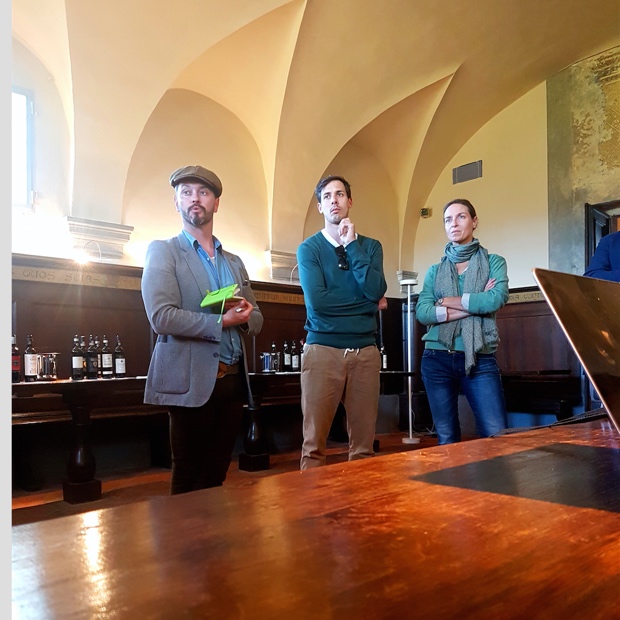
Tasting through Villa a Sesta
Villa A Sesta Chianti Classico Il Palei 2014, DOCG Tuscany, Italy (Agent, $23.99, WineAlign)
Il Palei, perhaps translated as the “ancient geological one” is 100 per cent sangiovese and nosing it side by side with ’13 the similarity is quite striking. Dusty fennel pollen and also the earth and stone, friable, crumbled in the air. Tart and black cherry flavours dominate. Shows off the work of the enologist Marco Mazzarrini from Alto Adige who toiled in the Bolgheri and began working with Villa a Sesta in 2011, so now there is a lighter, less pressed, more floral (here violets) perfume. Here in the southeast butterfly wing of the Castelnuovo Beradenga territory. Opens with time and develops more charm, character and length. Drink 2018-2021. Tasted September 2017

A week’s worth of sustenance in Toscana # 7- L’Asinello Ristorante’s Tarragon pesto risotto con funghi porcini
Villa A Sesta Chianti Classico Il Palei 2013, DOCG Tuscany, Italy (Agent, $23.99, WineAlign)
Chianti Classico Il Palei 2013 shows the same dusty reserve as ’14 and is not so giving, especially for the vintage. A bit more compressed, even a bit more pressed and intense, from sites at 450m with Galestro in the soil. There is a calm about it even while the intensity climbs but there is not much fruit because of so many early immovable parts. Plenty of stone and earth but the fruit is hidden away. Yet there is a lightness and a brightness, hard to explain but there. Also like ’14 opens after some time, with near secondary notes on the precipice. Drink 2017-2020. Tasted September 2017

Villa A Sesta Chianti Classico Riserva 2013, DOCG Tuscany, Italy (Agent, $33.99, WineAlign)
Villa a Sesta’s Chianti Classico Riserva 2013 is a great example of the conundrum in some 13s, acting quite reserved (as per the house style) but also quite dramatic and volatile, yet miles from reductive. Tart red citrus meets currants and pomegranate on the direct attitude of the palate, with etches of dark black fruit and yet there are these hidden aromatic violets hiding in the wings. Waiting on integration and fleshing would be a smart move. Drink 2018-2023. Tasted September 2017

A week’s worth of sustenance in Toscana #8 – L’Asinello Ristorante’s Nastri di cioccolato, gel di zafferano e mango
Villa A Sesta Chianti Classico Riserva 2012, DOCG Tuscany, Italy (Agent, $33.99, WineAlign)
Chianti Classico Riserva 2012 is the richer of the two (tasted side by side with 2013) for sure. Still there is the dark black cherry fruit and violet aromatic undertones, also the one pressed deeper and with the wood felt stronger, though with less vintage-determined volatile behaviour it comes by this character honestly. Drink 2017-2021. Tasted September 2017

Godello with L’Asinello Chef Senio Venturi and Elisa Bianchini
Villa A Sesta VAS 2013, IGT Toscana, Italy (WineAlign)
Vas Toscana IGT 2013, as in Villa a Sesta, here clearly modern, with what just has to be cabernet sauvignon and merlot. It’s flat-out juicy, Cassis and mulberry laden, yeah, so juicy from wild berry flavours. Just a touch more cabernet is would seem (maybe 60 per cent), internationally styled and really clean, transparent even and did I say juicy? Spent 18 months in barriques but it’s not woody whatsoever. Turns on an about-face dime away from the sangiovese as much as any estate thus far but in the finest possible way. It is not possible not to find some enjoyment in this wine, even while it sheds or celebrates any regional character. Drink 2017-2021. Tasted September 2017

Villa a Sesta
Villa A Sesta VAS 2012, IGT Toscana, Italy (WineAlign)
Vas Toscana IGT 2012 is quite similar to ’13 but with a slightly higher acidity and consequently more località or sense of place. It would seem that ’13 is purely a sangiovese vintage while ’12 finds a way to elevate the Bordeaux. A bit of roasted or braised meat flavour, with spice. Hard to say but that is what this wine tells us. Really shows the step up in quality with ’13. Drink 2017-2019. Tasted September 2017
Rancia Vineyard at Fèlsina, Castelnuovo Berardenga, Chianti Classico
Good to go!
Godello
Twitter: @mgodello
Instagram: mgodello




 Godello