
‘Tis an exercise performed year after year, a word processor’s per annum distillation to say thank you and recognize game. To consistently act as messenger, be conscious of hard work filed and to celebrate that excellence. The first list was conceived more than 10 years ago, now peaking at its current number with twenty-four mind-blowing wines chosen for 2024. Travels to fluctuating destinations mean from year to year wine regions will carry different weight and the list abides by the variance. In 2023 Bordeaux played a significant role, as did South Africa and Washington in 2022, Bourgogne in 2019, and so on. The rules of engagement never change but evolution plays its part, priorities pivot and you never can say or tell what sorts of matters will strike deep into the heart.
Related – Twenty-three mind-blowing wines of 2023
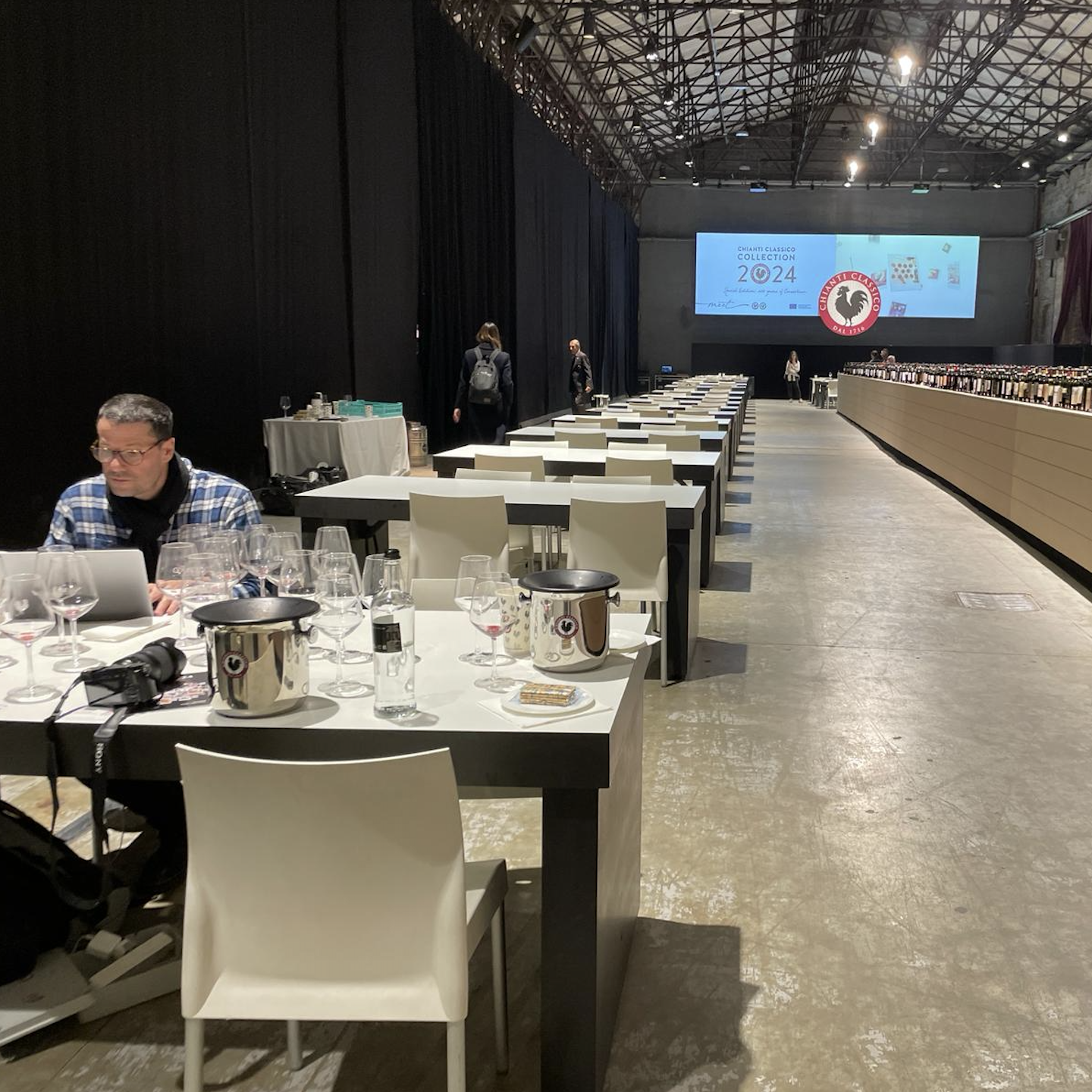
Last one standing (sitting and tasting) at the Chianti Classico Collection 2024
Godello needs to make a confession, shed some honesty, clear the air. He admits to a love for writing tasting notes and needing to do it, especially when a potentially mind-blowing wine is in the glass and what follows flows forth as a stream of consciousness, ending only when the creative tap closes naturally. When these notes are edited weeks or even months later there is the incredulous feeling of “how did this get written – where did these words come from?” They just did, from right out of the wellspring of creativity, but Godello does not know how he came to write those notes – as if they were magically written. Paragraphs woven from dots and thoughts for unsuspecting connections between writings and wine, such as “Ribelle è colui che si distingue.” Translated as, or better yet in reference to “the rebel is the one who recognizes the unjust law and breaks free from it,” from Ernst Jünger’s 1951 “The Rebel’s Treatise.” The German philosopher, essayist and WWII captain was once called die Burgunderszene because he watched a bombing raid in Paris while sipping Burgundy. The stylish supervillain of twentieth-century German literature’s disquisition shared dire and prophetic words on what a future world would be, in what he called the “Age of the Titans.”
Related – Twenty-two mind-blowing wines of 2022
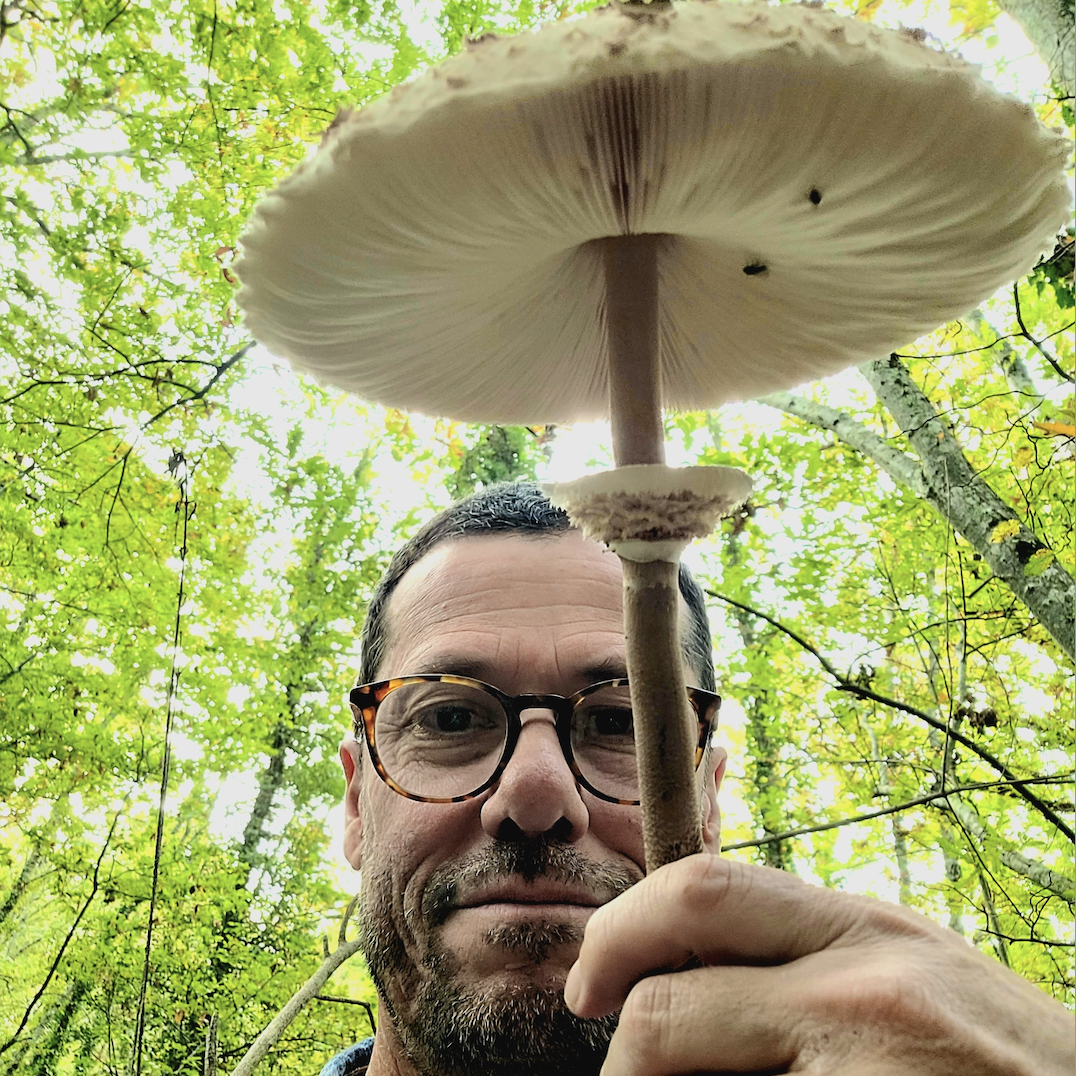
Godello beneath a massive Tuscan Mazza di Tamburo/Parasol Mushroom
Or this. “The label represents the position of the vines in coordinates, echoed in the machicolations of a sangiovese that drops all the stones on unsuspecting palates through fruit openings between supporting acid corbels of a projecting tannic parapet.” Where did that come from? Or simply, “who needs fruit when you have rocks?”
Related – Twenty-one mind-blowing wines of 2021
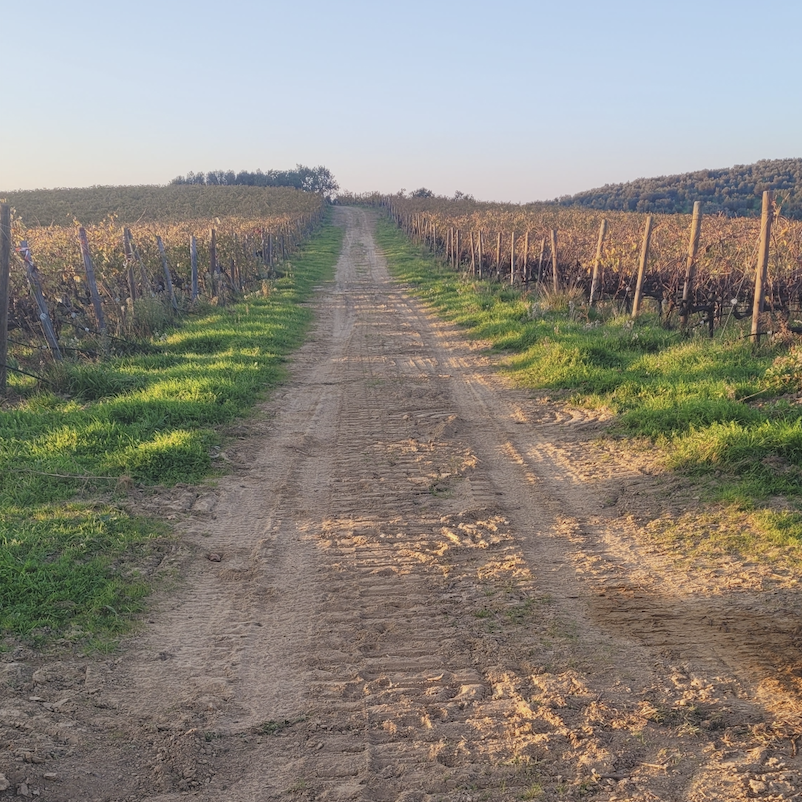
ColleMassari
More than rugs tie rooms together – lyrics, song titles, movie quotes, literary passages, exchanges between a journalist and a poet, thinker, writer, actor or composer – they are all a part of the masala. Reminds of a 2021 interview with a reluctant prophet. “Try to sit down and write something like that – there’s a magic to that and it’s not Siegfried & Roy kinda magic you know, it’s a different kind of penetrating magic.” All kidding comparisons aside with Bob Dylan’s answers to Ed Bradley in that famous 60 minutes exchange, but they may just be artistic words to live by. And why Godello? “You call yourself what you want to call yourself. This is the land of the free.” As for the relevance of wine tasting notes, sure it feels like being “a wordsmith from bygone days,” but it still feels right. And necessary. And unavoidable. A bottomless pit of cultural oblivion? No, not that. Tasting notes tell stories that need to be told. Relayed by messengers fulfilling a destiny to visit and break bread with good people making great wines and in turn agreeing to relay their tales. Tasting notes are the chronicles, expressed as narrative, of anecdotes woven through prose. If there is a better way to say what needs to be said it has not yet been found.
Related – Twenty mind-blowing wines of 2020

Chianti Classico’s Cento Anni
As of today’s date and the publishing of this year-end list Godello has reviewed 4,225 wines. If the origins of said wines were to be separated into categories than the breakdown would be as follows. Thirty percent would be from the LCBO’s VINTAGES release program, 24 percent for WineAlign Exchange curation and wine reviewing service, (12) Chianti Classico, (8) Piemonte, (6) Montalcino, (6) Sicilia and the remaining (14) from travels to other parts of Italy and around the world. A smaller part of one percent would be from wines enjoyed with friends, tasting groups, wine agent reps, visiting winemakers and at home. It all adds up to one great pool from which to create this list of 24, a number to represent just slightly more than half of one percent of the wines tasted by Godello in 2024. Here are his twenty-four mind-blowing wines of 2024.
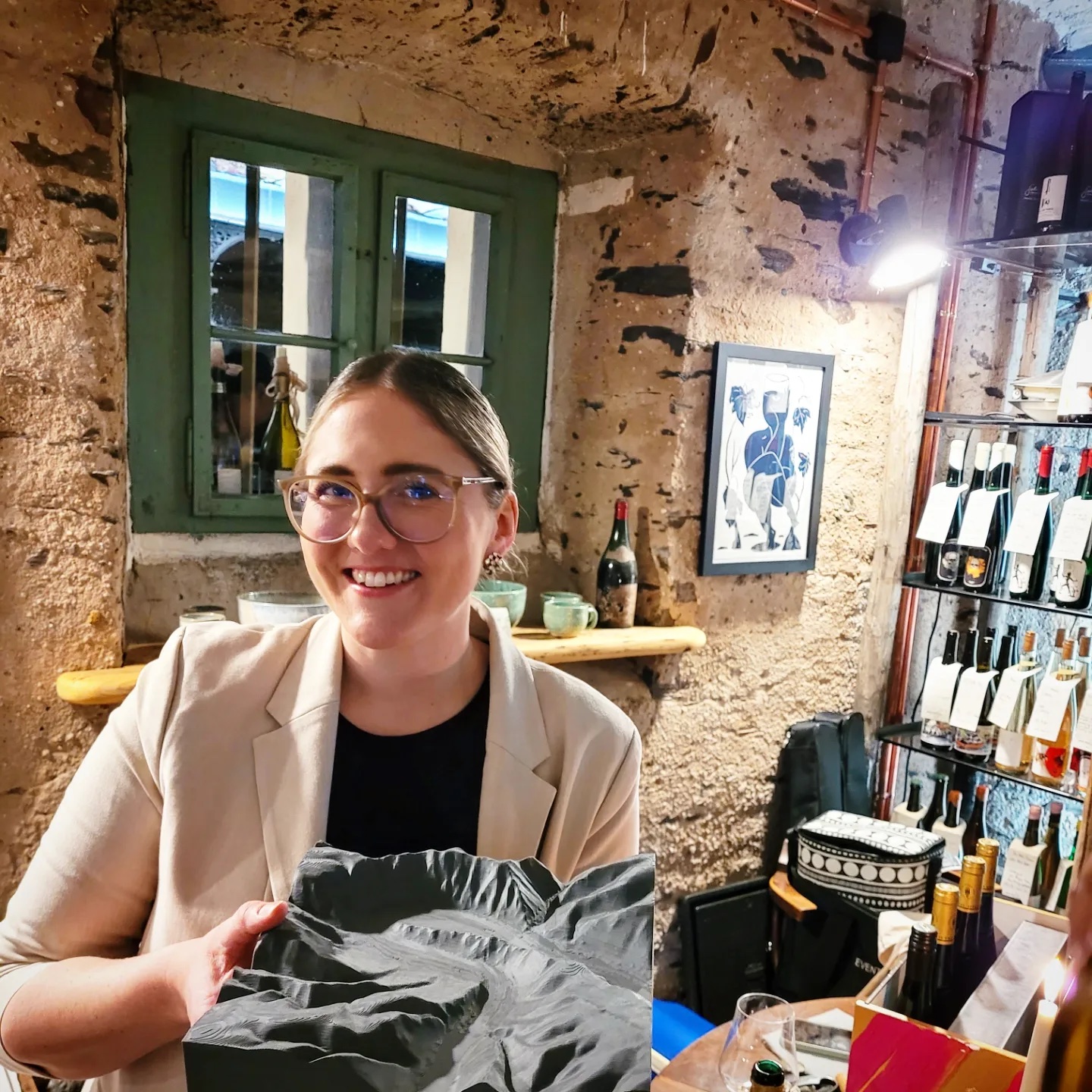
Angelina Franzen – Weingut Franzen
Weingut Franzen Riesling Sterneberg Großes Gewächs 2020, Große Lagen, Mosel
Killian and Angelina Franzen’s best plot in the Neefer Frauenberg is called Sterneberg. Vines were planted in 1938 on grey slate for a different, next level mineral quality and quotient for Mosel riesling. These are own-rooted vines, old, experienced and wise, their resulting dry wine coming away like the desert because sugar and acids near-equal come together seamlessly. The most viscosity and texture of the Franzen rieslings, from a hot vintage and so concentration, unctuousness, flesh, pulp and glissade are all at peak performance. Glorious and confident, outspoken but only to make sure we understand its origins and Franzen abides by its voice. Drink 2024-2033. Tasted March 2024
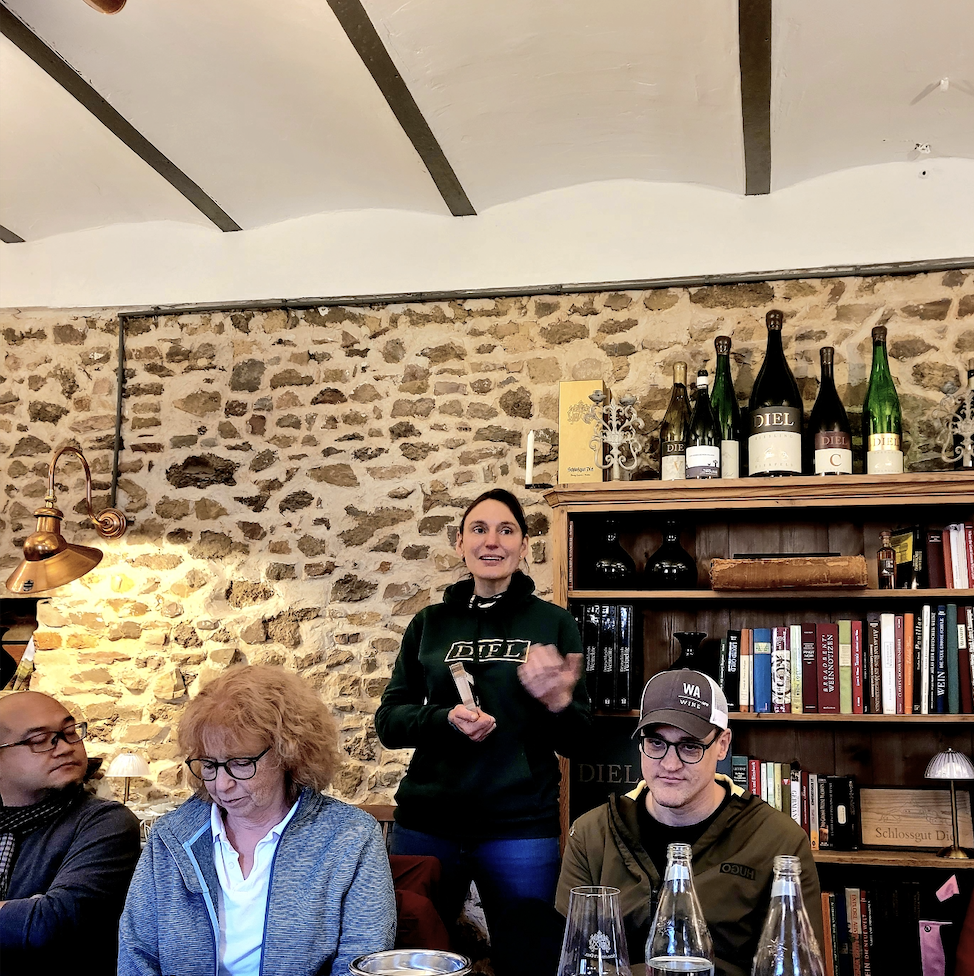
Caroline Diel – Schlossgut Diel
Schlossgut Diel Dry Riesling Pittermännchen GG 2022, Vdp. Grosses Gewächs
The tiny one hectare cru Pittermännchen is a name that dates to the middle ages with a connection to the people of Köln and Düsseldorf. Grand cru site of weathered grey (Devonian) slate atop Rotliegend conglomerate that dates back several million years. The geo-agricultural texture is small decomposed particles as opposed to the larger stones of the Mosel. Expressive flint stone aromatics undeniably soil related and not much fruit to discuss, save for some variegate currants but you really have to conjure imagination. There is a mille-feuille density to this riesling that peels away and delivers waves in layers without boundaries. Complexities are revealed without pause and dryness results because purity and grip replace the necessity for sugar-acid balance. So stony, long and our palates are held captive. Top shelf riesling within the idiom. Drink 2026-2033. Tasted March 2024

Adega Do Vulcáo (c) entrevinhas.com
Adega Do Vulcáo Ameixâmbar 2022, Açores IG
A seriously volcanic blend of native grapes from two areas, first the ash of the Capelinhos and second the basalt of the Criaçào Velha. Add in the cold Atlantic influence and the result is something extraordinary to potentially mind-blowing. That depends on how much flint struck rock, mineral mouthfuls and deepening trajectories you may or not desire in your endemically-formulated white wines. Ameixambar is just such an animal and the profile, especially noted with verve and lashes upon the palate, is well, remarkable. Nothing else feels or tastes like this wine. Truly salty and there are notes that imagine powder created by crushing many different shells, inclusive of oyster, calm and mussel. You may ask yourself what is this, but you can answer with a simple word, or place. Açores. Drink 2024-2029. Tasted July 2024
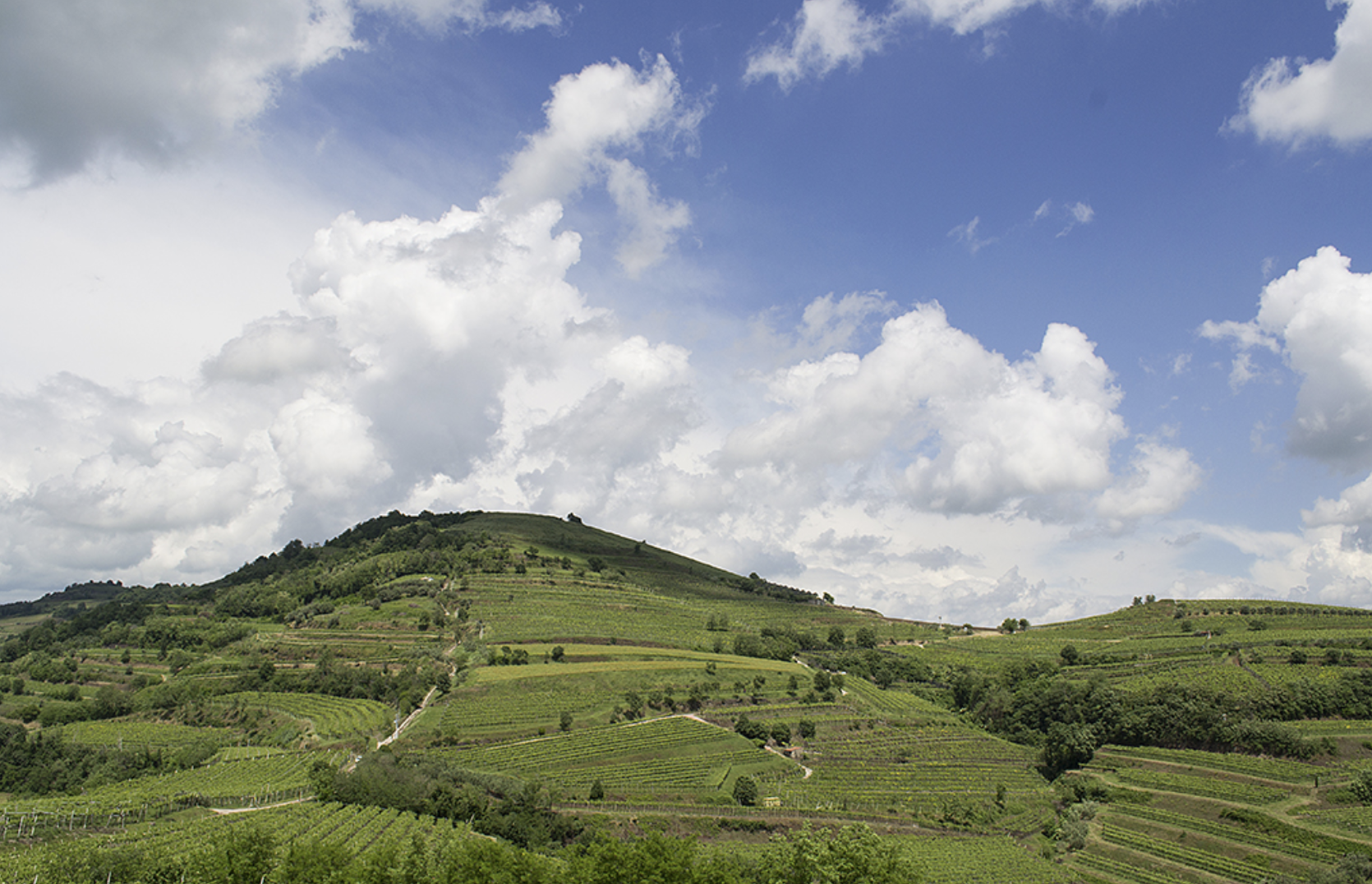
(c) inama.wine
Inama I Palchi Grande Cuvée Foscarino Soave Classico DOC 2021
I Palchi, as in the “stages,” a geographical term for a series of wide terraces aboard Monte Foscarino lined with pergolas of old garganega vines. In this case Inama’s highest level of Soave Classico meant to celebrate the ancients. As a surname it belonged to a cleric but also Antonio Foscarini (c. 1570 in Venice – 22 April 1622), member of the Venetian nobility, ambassador to Paris, London and later sentenced to death for high treason by the Council of Ten and executed. Yikes! This Foscarino ode is intended towards grapes and volcanic terroir for a bloody incredible garganega of substance and style. The ’21’s ability to attract and engage the taster’s attention is at the top of the Soave game. Fresh, flinty and wholly engaging. Mind-blowing actually. Drink 2024-2029. Tasted December 2024
Marqués De Murrieta Capellanía Reserva Blanco 2018, Rioja DOCa
Only viura grapes are chosen from a six hectare calcareous clay plot off of 70 year-old vines located at the highest elevation of the Marqués De Murrieta Ygay Estate. The winemaking might well be working with sauvignon blanc and sémillon but with viura the ageing in French barrels takes a turn for the unexpected ethereal. The flinty smoulder is an intoxicant of the most hypnotizing order. The effect upon the palate and all the senes is extraordinary – mesmerizing. So what is Capellanía? In Spain it was a chantry or ecclesiastical endowment, one of several pious works commonly founded during the colonial period. A foundation in which certain assets are subject to the fulfillment of masses and other pious charges. Imaginatively speaking Capellanía is a rarity, monoceros, symbol of grace purity, power and transcendence. Not to mention healing powers and freedom. A unicorn. Drink 2024-2033. Tasted June 2024
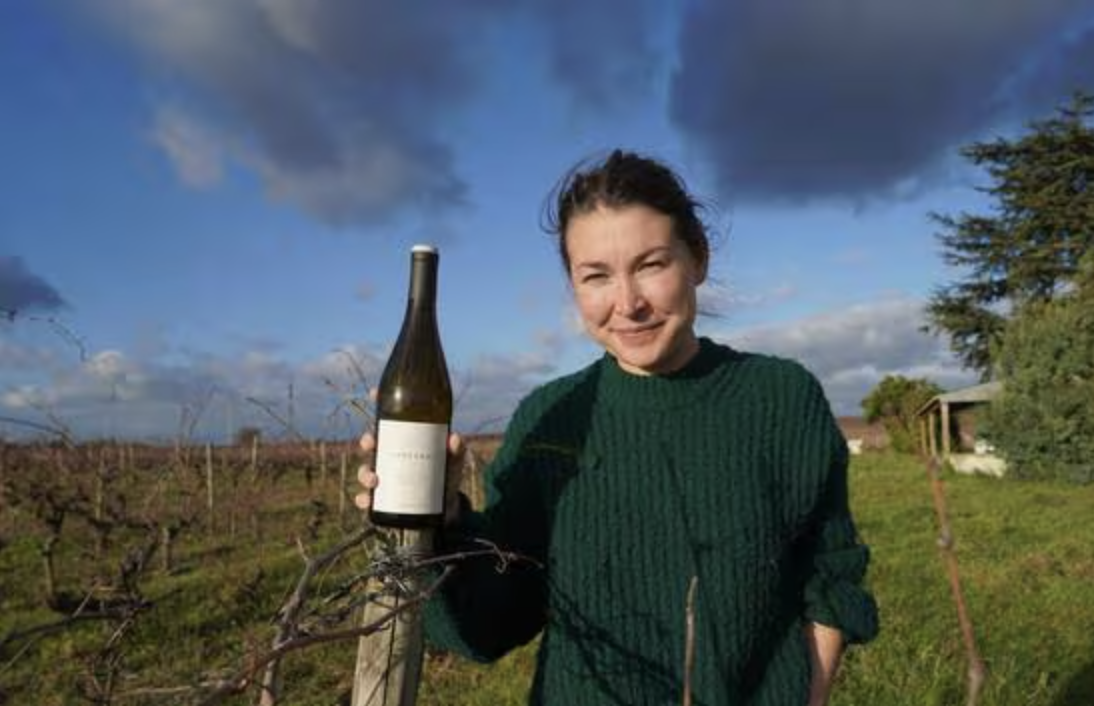
Vanessa Cherruau
(c) media.ouest-france.fr
Château De Plaisance Sur La Butte 2021, Anjou AOP
A wildly aromatic two cabernet blend from the Butte de Chaume where some of the finest wines made anywhere come from Chaume, Quarts de Chaume and Savennières. The curiosity and modernist approach is made two-fold by the presence of cabernet sauvignon to stride effortlessly alongside the usual franc. Yes this smells like the Loire but the aromas deliver so much more, in curiosity and intriguing sensations. Anjou in place and temperament but in design this may as well be a contemporary, abstract or Pop Art piece by François Morellet. The two related varieties form an almost intricate geometric pattern in the way they line the palate, so cleanly drawn with mathematical clarity. Yes this is serious Loire red wine but it’s also traceable, pre-minimalist and post conceptual by design. Drink 2024-2028. Tasted April 2024

Godello and Giuseppe Russo
Girolamo Russo Etna Bianco DOC San Lorenzo 2023
San Lorenzo as Bianco from Giuseppe Russo is not like other Etna Bianco because well, San Lorenzo. Wow is the operative because no other EB gives like this. Beyond flesh and stone but something that defines what the two can effect, layered so invisibly and magically together. It seems impossible to believe that extract and conversions could come together this way, urged and supported buy some of the mountain’s finest quality of acidity and white grape tannins. This must be the place, eh? Carricante with 10 percent catarratto and grecanico makes it happen. Drink 2025-2033. Tasted May 2024
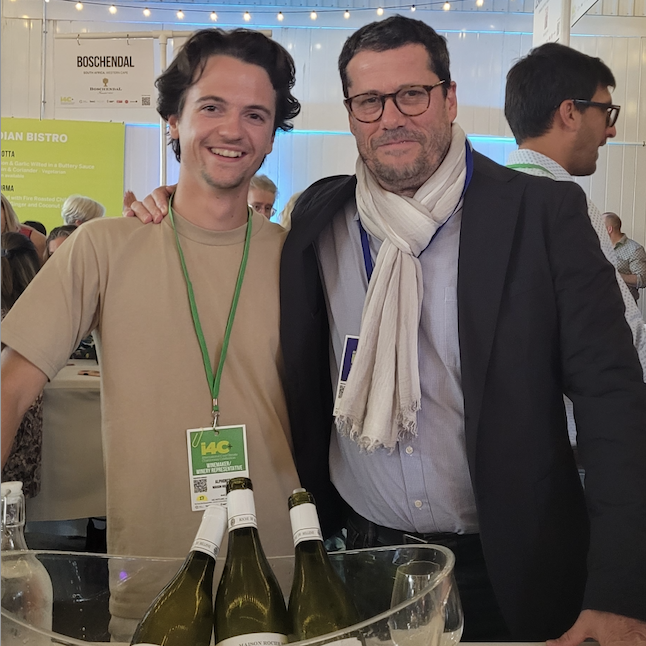
With Alphonse Potel – Domaine de Bellene
Domaine De Bellene Vosne Romanée Premier Cru Les Suchots Bourgogne AOC 2022
In the woods as they say, “souches” or here “Suchots,” a 0.2159 hectare block in Vosne-Romanée that hangs a little longer, likely because the forest asks it to. Fresher, high spirited and savoury Bourgogne comes from the vineyard, picked on September 5th, coming away with more phenolic grip and aromatic volume because of the place. Less defined in 2022 perhaps because of a vintage’s great munificence but as far as plots in this area are concerned there are few that will speak as clearly as Les Suchots. Seamless and focused, unique as they come in an era of technical proficiency and expertise. Drink 2026-2038. Tasted August 2024
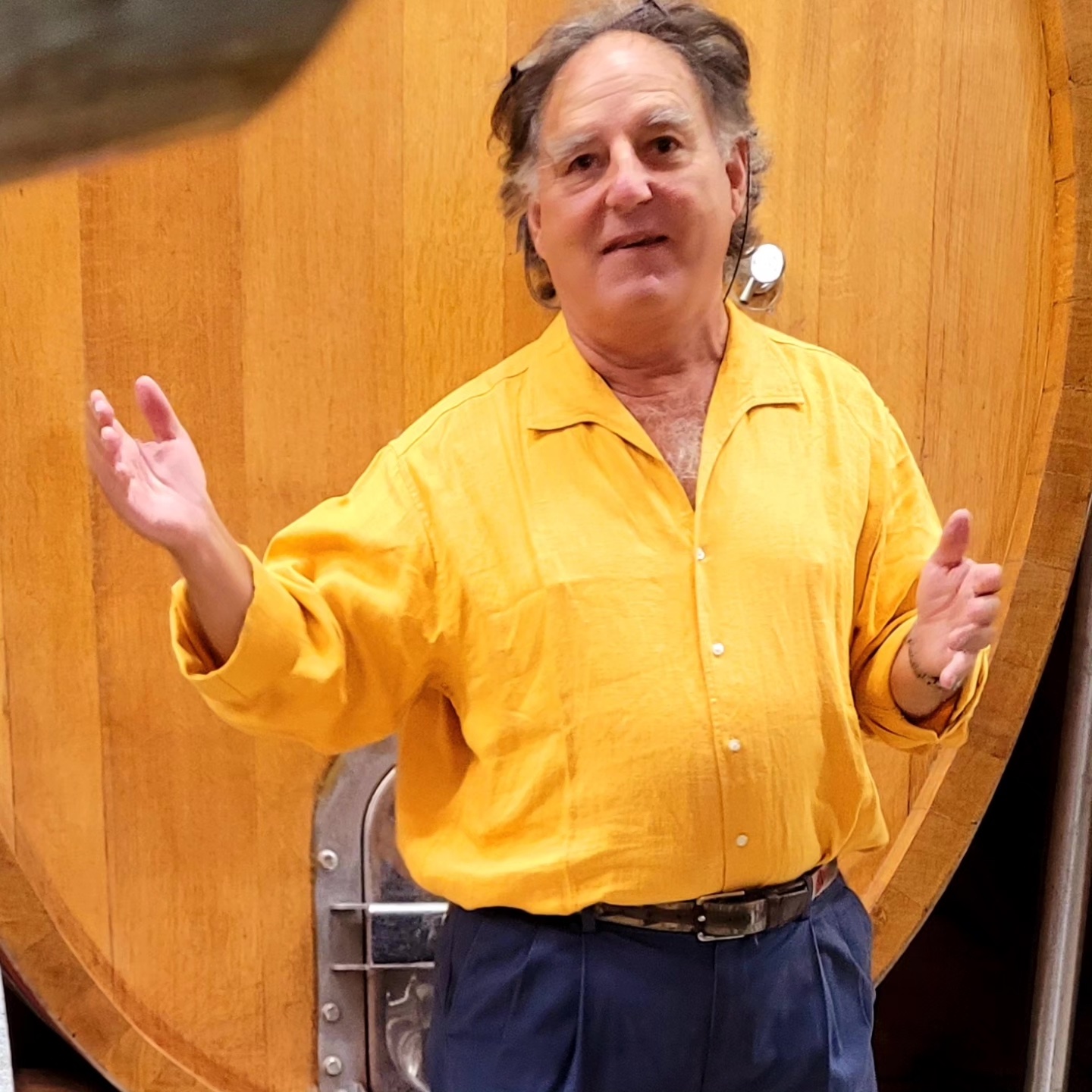
Marc de Grazia – Tenuta delle Terre Nere
Tenuta Delle Terre Nere Etna Rosso DOC Calderara Sottana 2022
What Marc de Grazia considers to be the finest contrada on the north slope and yet there are micro plots within the eight parcels that can only be made into Rosato in humid vintages. This comes from the oldest vines, more than 80 years old and just one look sees a brightness and transparency inciting the senses as they take in a bouquet not having yet nosed in the other Rossi. Calderara Sottana is the most demure, the finest of sound and vision, the one you take in slowest, without haste, to allow unfurling and length to travel as far as it wishes, evocatively so. “It asks delicate questions,” says de Grazia. “Rose petal perfume and tannins that don’t cut off your palate.” Even more is this elastic meander, not aimless but with purpose and our palates follow every step. Like Giuseppe Russo’s (though de Grazia sees little comparison) this provides the exception to so many Etna Rosso rules. Drink 2027-2038. Tasted September 2024
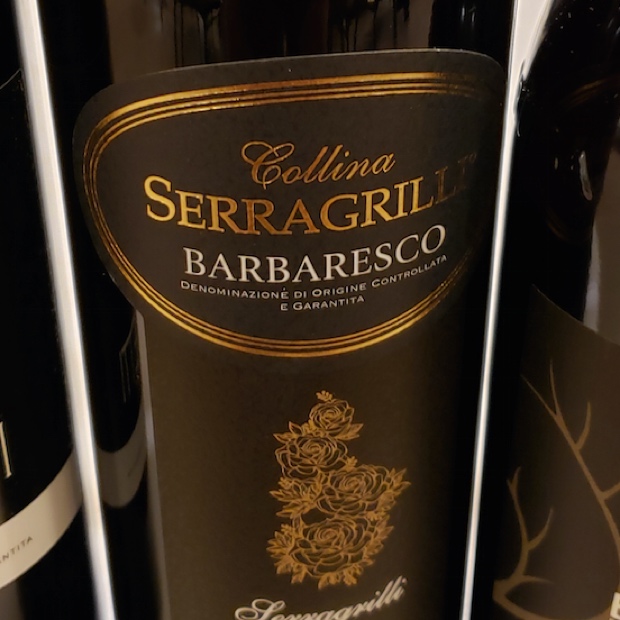
Collina Serragrilli Barbaresco DOCG Sorì Serragrilli 2021, Neive
Lovely aromatic presence, richly defined fruit of purity and expressiveness, fine and open. Exotic spicing and truly floral of a perfume that keeps one from needing to rush into a sip. The palate does not disappoint in fact it carries off and forward with equal ability to hold attention for as long as a participant is willing to hang around. These are tannins as fine as the sweet and supportive acids that precede them. A really impressive Barbaresco, forthright and a test of qualities held in reserve that can be counted upon for a decade and a half more time. Drink 2026-2037. Tasted blind at Nebbiolo Prima January 2024
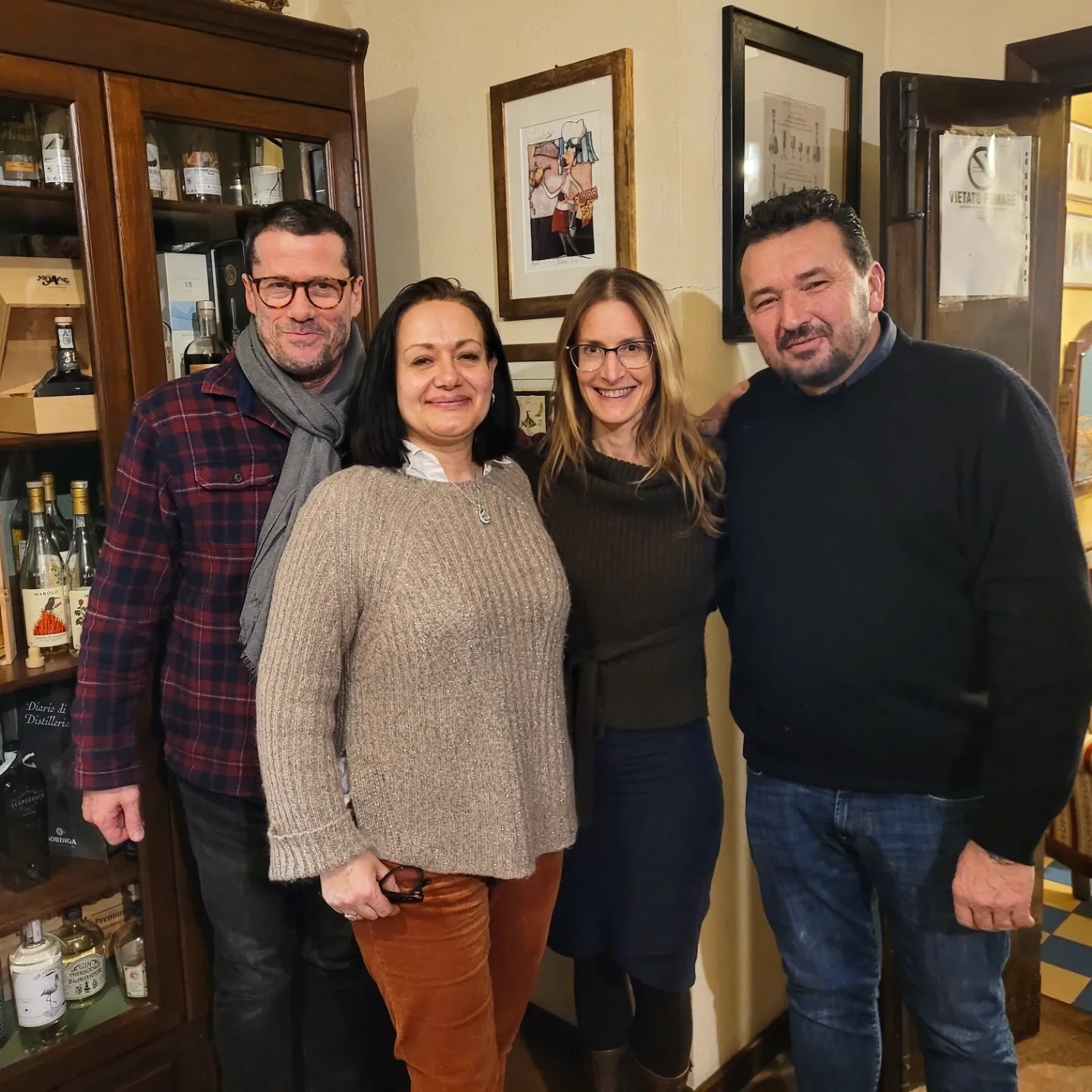
With Michela Morris, Nadia and Walter Fissore – Elvio Cogno
Elvio Cogno Barolo DOCG Ravera Bricco Pernice 2019, Novello
The hill within the hill, Bricco Pernice upon Ravera, isolated, insulated and encapsulated for nebbiolo of an insular and implosive intensity that’s likely unparalleled anywhere else in Novello. Closed and not because of vintage but due to time and really that’s about it A broad shouldered and muscular nebbiolo that must be given as much bottle time as it spent in cask, or double that for even better results. That means check back in 2026 or later to see if any part of the tannins have unfolded, unfurled or stretched out for some exercise. Likely not but then some parts will finally have as the decade unwinds. Also it’s normal in January for Pernice to be tight and a bit closed. Oh, by the way this was made with 100 PERCENT WHOLE BUNCH NEBBIOLO. For Barolo. Single vineyard Barolo from a storied MGA. Walter’s mid-life crisis begins right here and it’s glorious. Drink 2029-2045. Tasted January 2024

Nebbiolo Prima 2024
Cavallotto Tenuta Bricco Boschis Barolo DOCG Bricco Boschis 2010, Castiglione Falletto
A top echelon cru, a producer that gets it as well as if not better than the rest and an eponymous label out of a relationship that develops longevity without equal. That would be the thrilling isosceles trilogy of Cavallotto Tenuta Bricco Boschis, Bricco Boschis and Barolo. Their 2010 is as youthful as any nebbiolo of this age, striking, rising, invigorating and still working through its operations. A performance piece of varietal for landscape as the most terroir driven Barolo as any of the best in the land can be. A triangle of Castiglione Falletto that speaks in unequivocal terms, fruit, acid and tannin intertwined, five years of this life still laid out ahead, 10 further for curiosity and interest beyond. Truth. Drink 2024-2029. Tasted January 2024
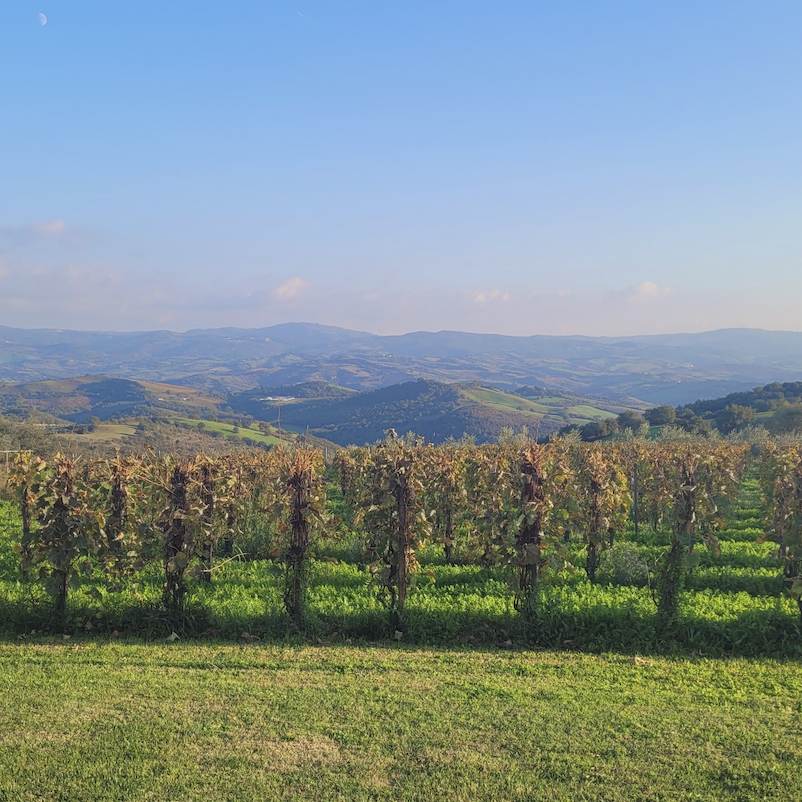
Poggio Lombrone, Tenuta di Montecucco
Collemassari Montecucco Sangiovese Riserva DOCG Poggio Lombrone 2018
I walked this vineyard only recently upon arriving to the Castello di Montecucco at the advent of a blue-lit twilight on the second Sunday in November. The impression was a captivating one, from the site, its undulating slopes casting a strong and forceful presence. Poggio Lombrone was first made in 2007 and ColleMassari’s voice was instrumental in securing the DOCG for Montecucco sangiovese. A special vineyard with older plant material than just about anywhere in Montecucco, upwards of 60 years now and THE place to promote the authenticity, but also to preserve the local savoir-faire that distinguishes Montecucco sangiovese. Longest ager in Riserva togs because of potential, a wine of località Cinigiano fermented for at least 30 days (and 45 in 2016) in open Gamba casks with daily (hand) punchdowns to realize a production of 9,000-10,000 bottles. Ages in only two or three year-old grandi botti but not in really old casks. French of a few years are ideal to seek and attain the desired elegance. The 2018 is a strong version of varietal independence off of the Lombrone hillside, upright and linear yet never found to be awkward, though it is a wine of tannic charge. Fine tannins in fact with good energetic pulse, still needing more integration, its ceiling set ultra high. Drink 2026-2033. Tasted November 2024
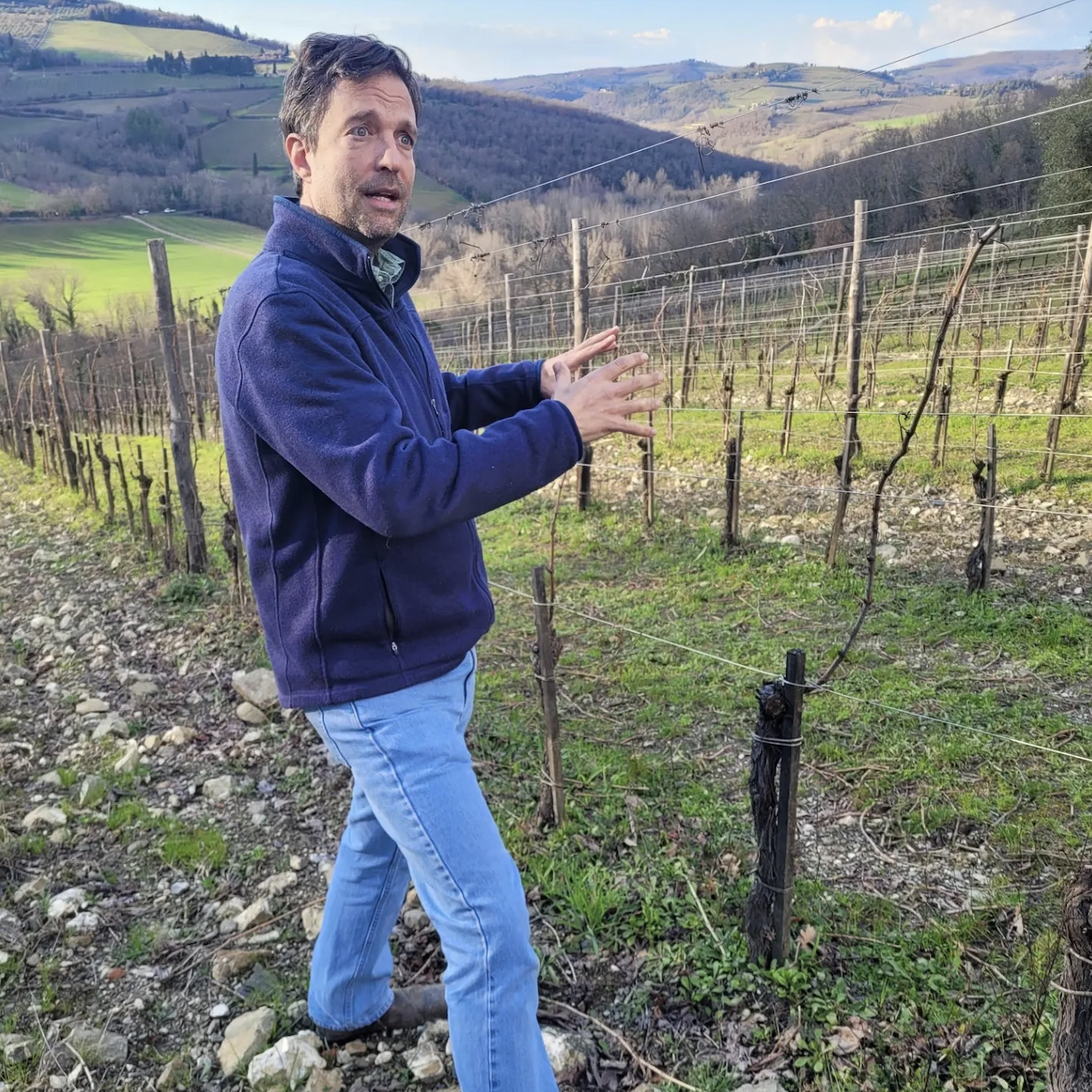
Michael Schmelzer – Monte Bernardi, Panzano
Monte Bernardi Chianti Classico DOCG MB1933 2021, Panzano
From the 90 year-old vigorous vineyard and insists Michael Schmelzer, “it would be insane to make it not the way it was planted.” Ten grapes which add up to a 100 percent field blend that may include sangiovese, colorino rosso, colorino bianco, malvasia nera, canaiolo and ciliegiolo. Once again the respect to agricultural heritage and long maceration conspire for complexities and flavours that most people don’t associate with Chianti Classico. If this is what the old farmers were producing then quality was actually a thing, at least in 1933. MB is Marcello Bartolini, teacher and mentor who just retired in December 2023. Crunchy, tart, red citrus intensity and a char of herbs. Perhaps not quite a unicorn but surely one of the most singular wines made in the entirety of the Chianti Classico territory. If classic is also a thing than this would be it but what it is not is Riserva, or Gran Selezione. Drink 2025-2033. Tasted February 2024
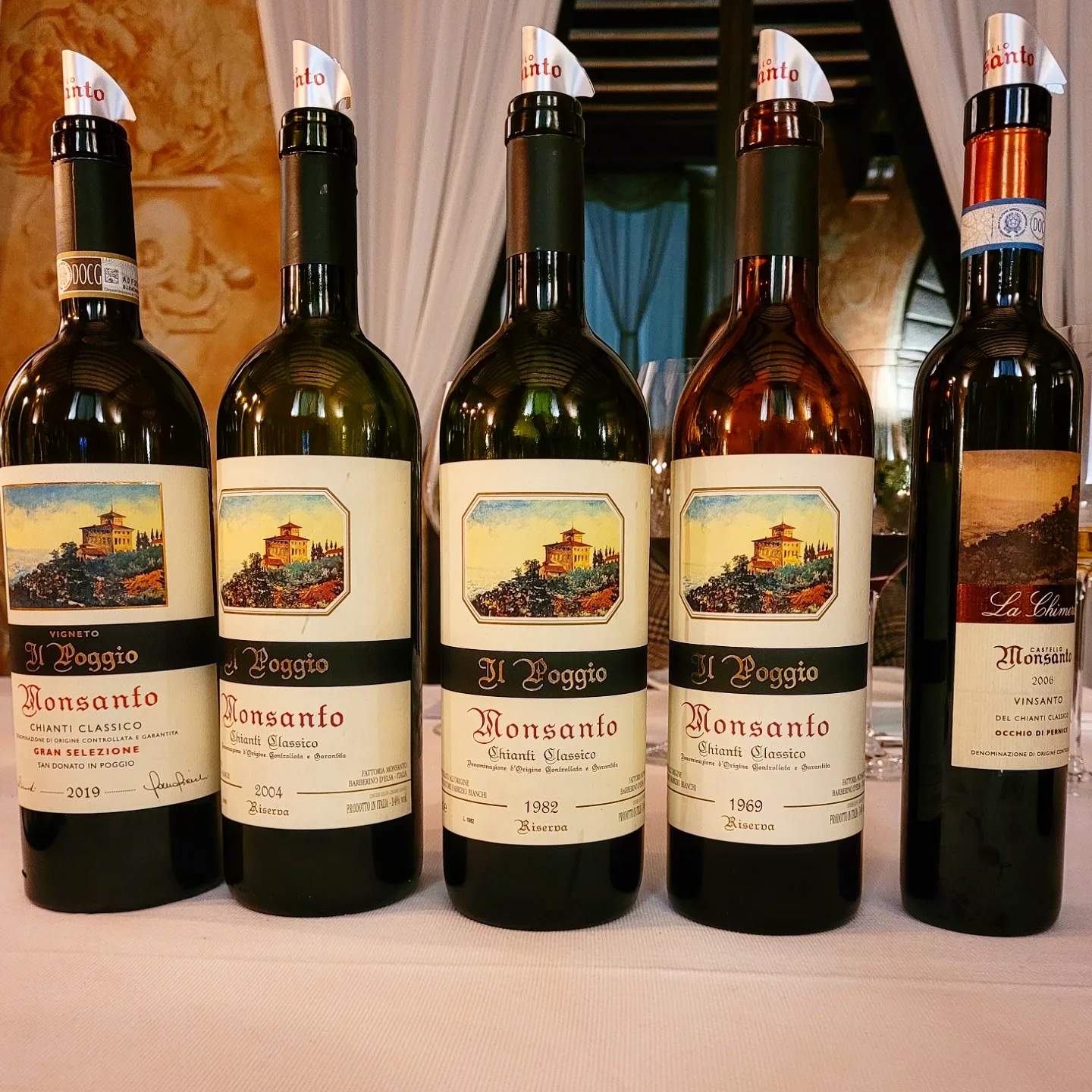
Monsanto, San Donato in Poggio
Castello Di Monsanto Chianti Classico Riserva DOCG 1982
One of the great vintages for Chianti Classico, in all of Tuscany, most of Italy and as everyone knows, also Bordeaux. At this point the 100 percent large Slavonian cask aging is in full swing for wood with which Fabrizio Bianchi began replacing his old chestnut barrels back in the early 1970s. This would have been a bomb when it first went to bottle, so massively structured and immovable in its first 15-20 years. Possibly up until 10 years ago but is now so crunchy and giving so that all is forgiven. About as ideal as a sangiovese can be, resolved, cool and impossibly fresh. Laura feels a connection looking forward to 2015. This remains to be seen. Come back after 10 minutes and the clove can’t be missed. Drink 2024-2029. Tasted February 2024
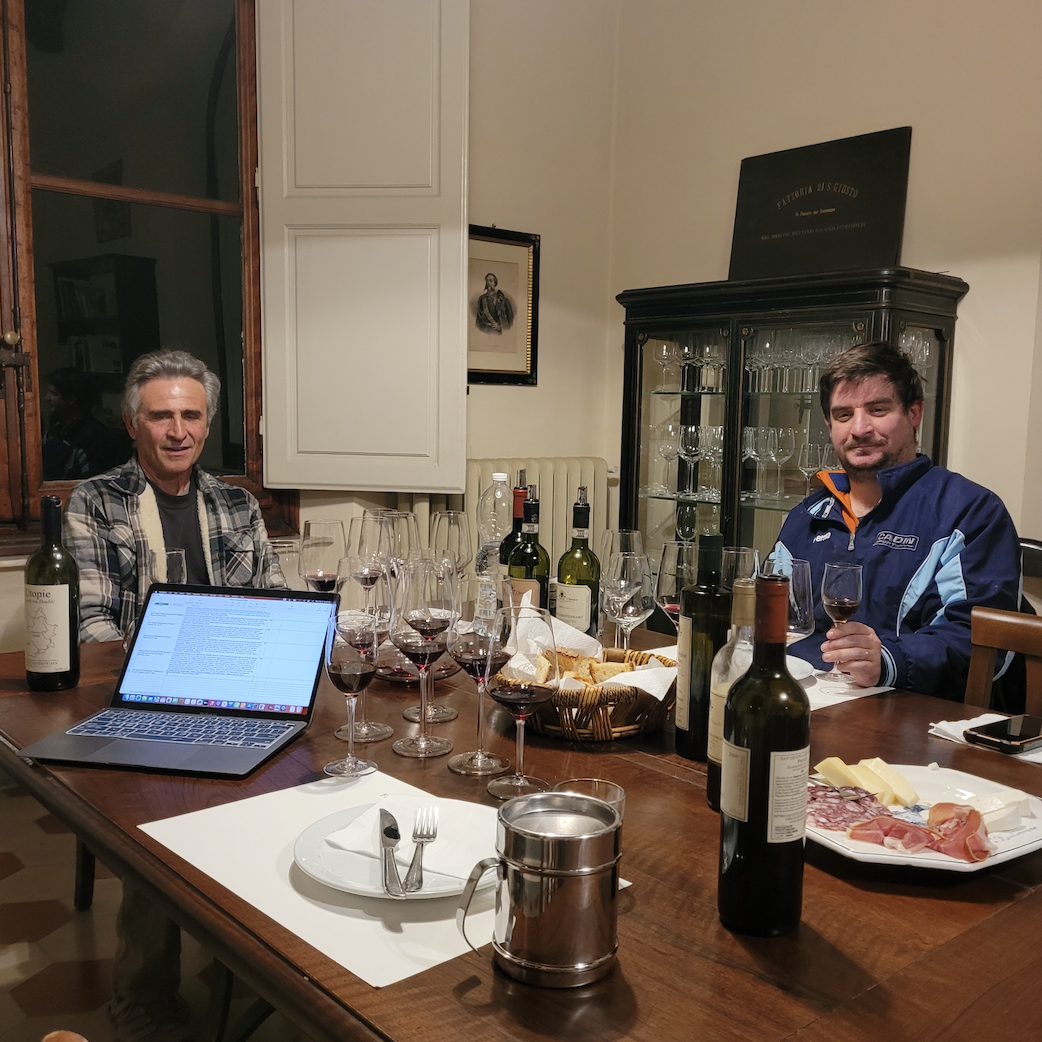
Luca Martini di Cigala and nephew Federico
Fattoria San Giusto A Rentennano Percarlo 2019, Toscana IGT
The 100 percent sangiovese that lives for itself and yet Luca Martini always feels that the wine shows the truest character of the place. Percarlo holds a higher percentage of grapes grown on Tufo soil (non volcanic sediment left behind by the water that was here three to four million years ago), a soil of sandy quality and pebbles. Results in a salty quality, a mineral quotient, a stream of airy brightness within a very structured and powerful sangiovese. Great saltiness and also fruit, a minty or mirto sensation that creates a cool, salt licked feeling. There is no other wine like this. Amazing freshness incarnate. Drink 2024-2034. Tasted February 2024

Montevertine Le Pergole Torte 2021, Toscana IGT
As expected Le Pergole Torte expresses more volume and aromatic concentration than Montervertine mainly because its source are the oldest vines, namely the 1968 and 1972 original blocks. Twenty to 25 days of maceration with pump-overs, followed by a racking off and then a return to the concrete vats for another few months for malolactic fermentation. A year in barriques (on average 15-20 percent new) and another year in Garbellotto Slavonian cask, maximum 18 hL size. Martino Manetti is reminded of 2007, a vintage that acted closed early with the requiem of a minimum four to five years to be released from its tannic chains. And yet these days Manetti’s wines open sooner – it’s just a fact of change, maturity, growing and mapping out better sangiovese. The floral meets Macigno mineral expressiveness is present from the start yet without the intensity of 2017, nor is 2021 showy with the power of 2018. This 2021 resides right there in the balanced middle wheelhouse and should rightfully begin to give generously of itself starting in 2026. Some sangiovese are just in another league. Drink 2026-2040. Tasted May 2024
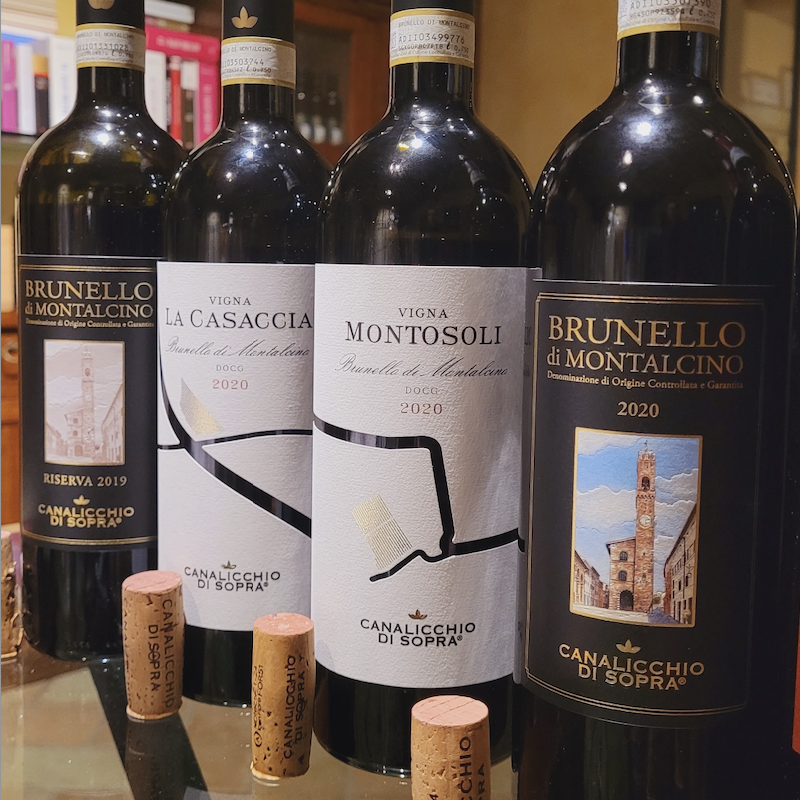
Canalicchio Di Sopra Brunello Di Montalcino DOCG Vigna Montosoli 2020
Montosoli the northerly Montalcino mound, the hill of freshness, the knoll where sangiovese gains grip, savour and elegance, where Canalicchio di Sopra’s Vigna designate Brunello from six hectares delivers approximately five into this wine. The precision and fluidity of this ’20 is just about as fine and graceful as the Ripaccioli have ever produced. Literally the juice or blood of Montosoli’s Galestro, a clay-schist flaking at the surface bleeding back down into the earth, acquired by the roots, vacuumed back up into the vines and gifted to the bunches. Sapidity is similar to 2018 and that year was cold(er) which explains how soil is such the driver, especially for Montosoli. This tastes as you might expect, concentrated, texturally full and without pause. Incredible Brunello. Poised, seemingly ready but not, looking ahead two decades, maybe more. With thanks to perfectly restrained cellar work, timing and decision making. In this moment, at least in terms of clarity, 2020 is a Montosoli vintage. Drink 2026-2036. Tasted November 2024
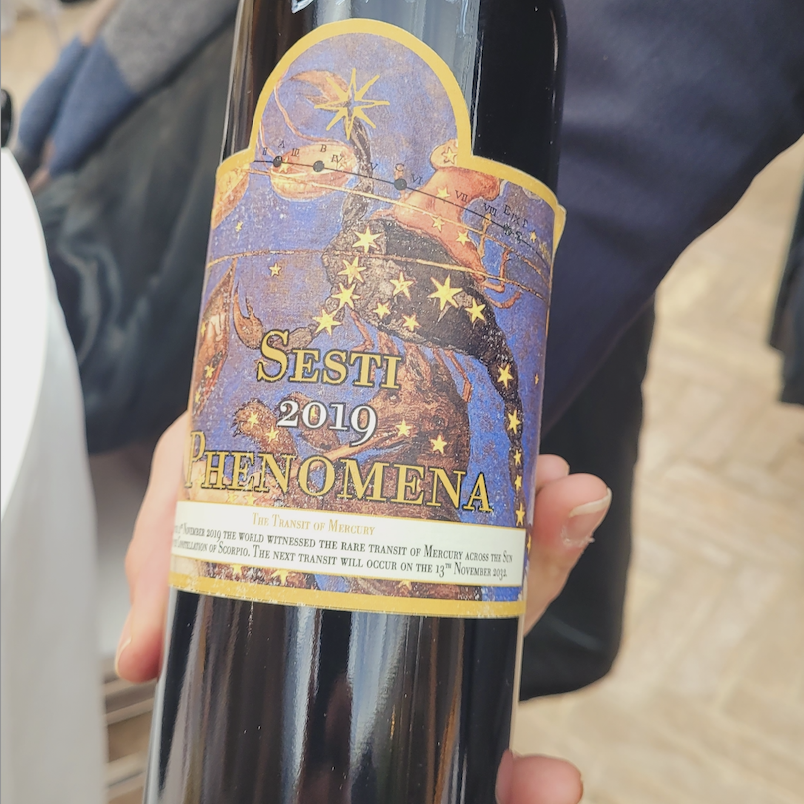
Sesti Brunello Di Montalcino Riserva DOCG Phenomena 2019
There are normal, standard Brunello di Montalcino Riserva, there are proper and representative examples, also exceptional versions and then there are the ones of ephemeral beauty. Fleeting in part because of their natural perfumes, scents that come from the fruiting bodies alone, mostly from the skins and yet like people there are some whose scents you never forget. Such is the case with Phenomena, a silent and measured creature of sangiovese but one that comes back to your thoughts and senses long after you are no longer in contact with the wine. Phenomena is also a Brunello of feeling, which means something ethereal, tactile and conclusive. Not seductive mind you, but suggestive and this 2019 will carry on, for some impossibly calculated infinite amount of time, as close to forever as could justifiably be imagined. Drink 2026-2038. Tasted November 2024

With Giacomo Neri
Casanova Di Neri Brunello Di Montalcino DOCG Cerretalto 2019
The Cerretalto canyon is this singular Brunello’s origin, the place defined by Giacomo Neri as a “plintite,” of quartz, iron and magnesium elements residing next to and bleeding into the four hectare vineyard, which is incidentally a cooler località for Montalcino and very special place. Rare in the world, of an elemental-geological symbiosis found in parts of Australia, Brazil, China and here, in Montalcino. “It’s another planet” insists Giacomo Neri. You will smell blood and flint (a.k.a. gunpowder) because of the mineral personality. This is Brunello di Montalcino from sangiovese something altogether incomparable. A sangiovese wearing the terroir of a Tuscan trough on its sleeve, having spent two and a half years in tonneaux (more or less 20 percent new) and the same amount of time in bottle ahead of its much anticipated release. Yes the aromatics are concerned with trace metals and ingredients of the “canalone” of Torrenieri, but do not sleep on the purity and modernity of red to black fruit, or at least the perception brought forth because of the minerals involved. Sweetness of acidity is classic Casanova di Neri for 2020 but in Cerretalto they are near perfect and the tannins move from those noted out of Tenuta Nuova multiplied by the Giovanni Nero fineness to now enter into the arena of higher love. For the first time this estate’s Brunello di Montalcino should be given an absurd amount of time. Observing it change in the glass over 30 minutes explains much of what is needed to be known. Drink 2028-2043. Tasted November 2024

Contrada Chiesa, Emidio Pepe
Emidio Pepe Montepulciano d’Abruzzo DOCG 2021, Colline Teramane, Torano Nuova
Nothing else noses like this montepulciano and what is also perceived is the extreme youth of such an example. Gifts with shadowy hints and generous ideas but the sensations yet to come are manyfold, if quite possibly infinite. Fruit source just feels tops and selection so much more stringent than just about any in the appellation. Tannins are about as tight as any in all of Abruzzo and the interplay between fruit and structure is both playful but also gripped by an intensity of tension. A few sips gathers the swarthiness of the vintage but time will elasticize and disperse the parts. The potential here is great and if this is not looked upon as a top vintage today there will be times over the next 25 years where that opinion is challenged. Drink 2027-2039. Tasted March 2024
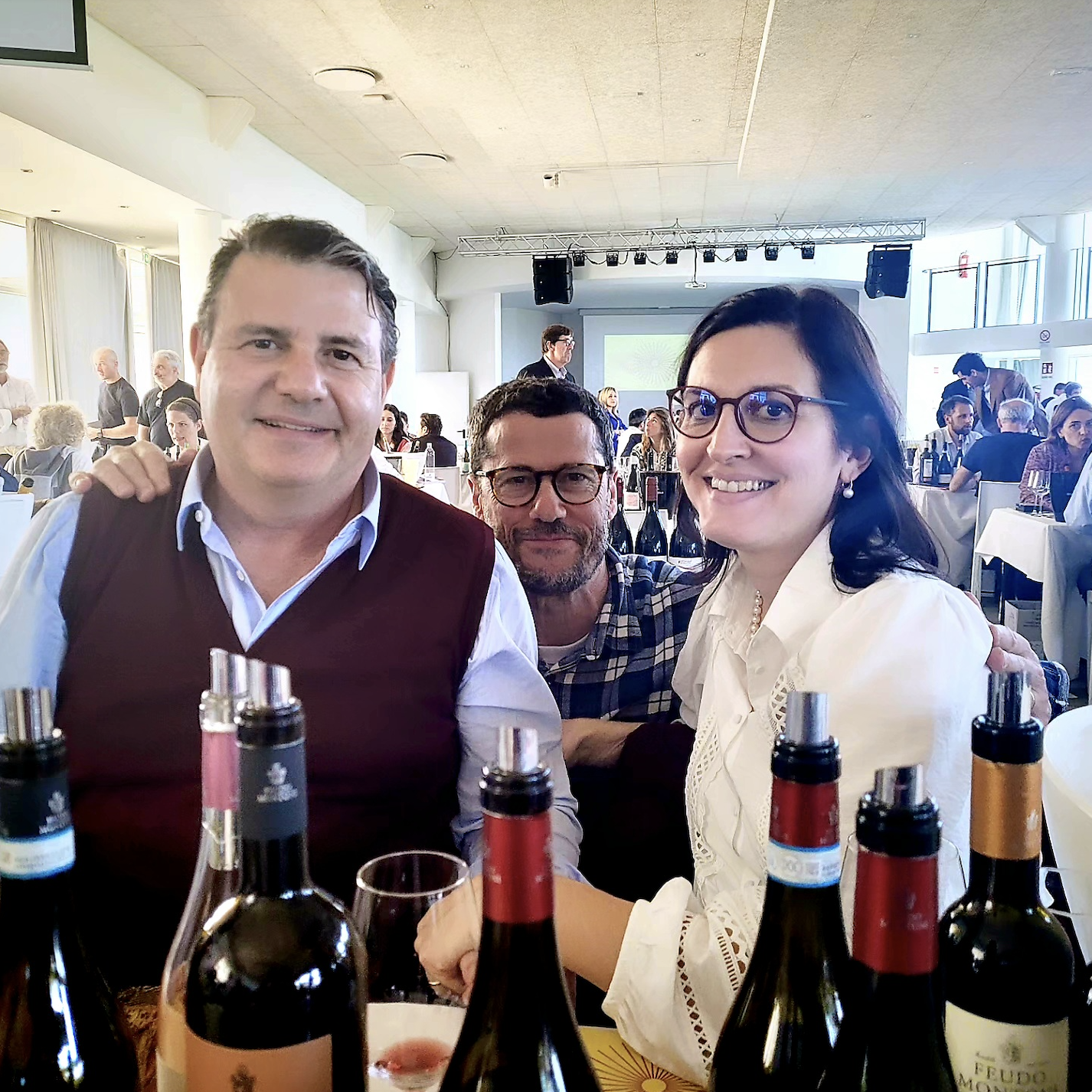
Feudo Montoni Sandwich – Between Fabio Sireci and Melissa Muller
Feudo Montoni Nero d’Avola Vrucara 2020, Sicilia DOC
Increasingly the use of sun-dried stems are added back in after some time, like sweet wood notes that alter Vrucara’s physiology for the best. The number is 20-25 percent in 2020. If there are weak vintages of Feudo Montoni’s Vrucara they are yet to be revealed and this 2020 resides near the top of the island’s nero d’Avola chain. Just walk the vineyard, in fact just hear the history and explanations from Fabio Sireci’s mouth and you will understand. Richness meets structure for balance at the vanishing point as if we sit at the bottom of the hill looking upwards from the vineyard, up to the Baglio and then the sky. The fruit is special from 2020, already showing the first subtle hints of maturity and the tannins are perhaps the sweetest ever designed. When Vrucara hits the five year mark it will entrench itself as one of Sicily’s finest drinking red wines for five more. It’s abilities transcend grape and island to last for five more after that before starting its slow five to ten year declension. Is there better value in top grade nero d’Avola from Sicilia? Drink 2025-2035. Tasted May 2024
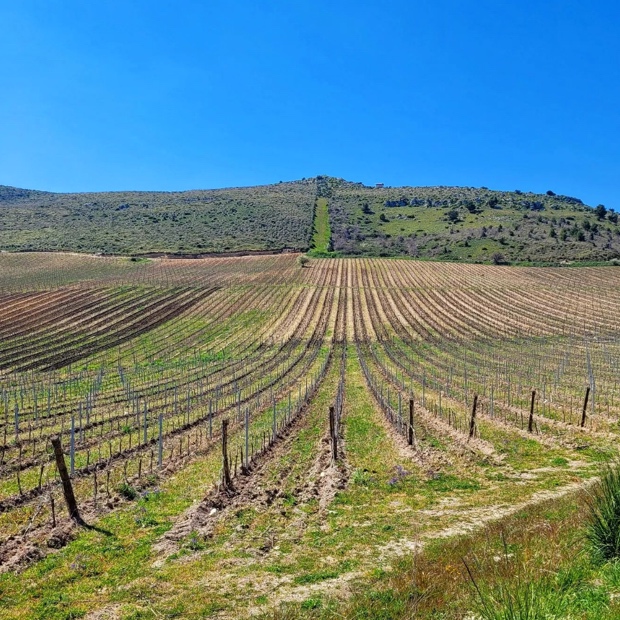
Vineyards in Ulmo
Planeta Cabernet Franc Didacus 2020, Sicilia Menfi DOC
Should there be a finer and more appropriate place to plant and raise cabernet franc on the entirety of Sicily that information should immediately be made public. Planeta’s Ulmo vineyard brings the grape to singular light, here 25 years after its introduction and it has become abundantly clear how it resides at the pinnacle and signature for reds out of Menfi. The 2020 is just now settling in and acting perfectly comfortable in its skin, fruit still swelling and always with the potential to burst free at any time. These are near perfect acids, sweet and sumptuous, allowing for movement and at this ideal stage, also development. There are hints at secondary character in the chiaroscuro shadows slow to reveal themselves. Sumac and pomegranate, a lightly browning and caramelizing eggplant before finishing with a wood encouraged dusting, as if by cocoa and clove. Drink 2024-2032. Tasted September 2024
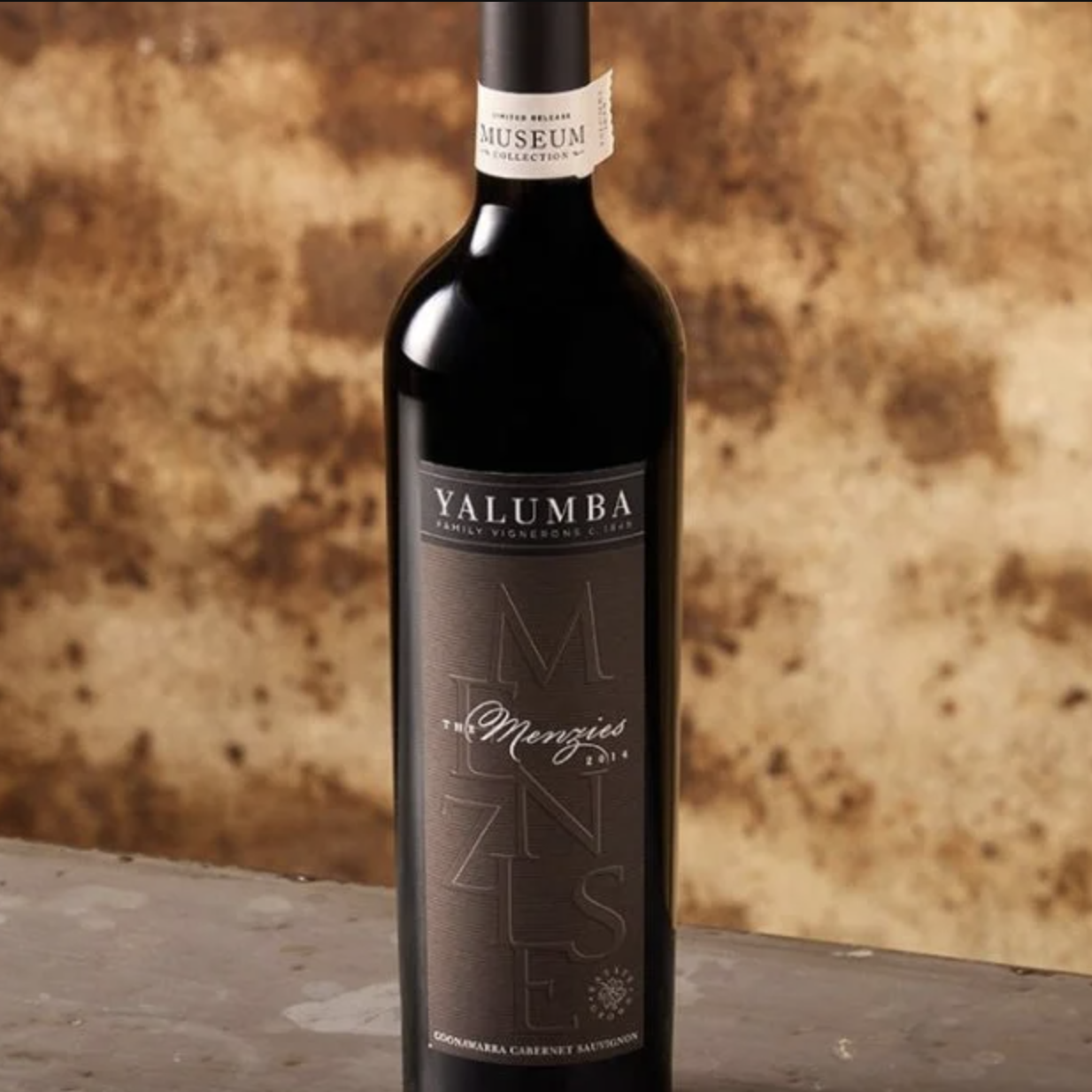
(c) web-assets-prod.yalumba.com
Yalumba The Menzies Cabernet Sauvignon 2017, Coonawarra, South Australia
From vines planted in 1994 and 1996 right there where it matters within Coonawarra’s terra rossa strip. The Menzies, as in the name of the estate where the Hill-Smith family saw the future back in 1992, there on a flat plain, approximately 70 km from the coast. The cooling Bonney upwelling is an influence and the red soil is, well everything. That said 2017 was a wet and cool season by Coonawarra standards and harvest required many passes over a 10-day period in April. Climate being what climate has become translates as a special cabernet sauvignon because the cool factor, for gelid fruit and sweet savour, not to mention more complex notions of herbs, spices and seasoning than you could seemingly fit into one bottle of cabernet sauvignon. Complexity be glory, as they say and the rest will be history. Drink 2024-2034. Tasted October 2024
Good to go!
godello






 Godello