The natural wines of Emidio Pepe

Chiara and wines

Chiara De Lulis Pepe and the wines of Emidio Pepe at Barque Smokehouse, March 10, 2015

Emidio Pepe‘s granddaughter Chiara De Lulis Pepe says that in 5o years of winemaking nothing has changed. Nothing, save for a conglomerate-like expansion from 1.5 to 15 hectares of farming vines in Abruzzo. No seriously, do the math. Emidio Pepe remains and likely always will be a tiny, boutique, garagiste, artisan producer.

To say Emidio Pepe is unique and singular for Abruzzo and outwards into the natural winemaking diaspora is as gross an understatement as can be made. Consider the approach. Natural, healthy viticulture. No chemicals ever. Ever. Organic, biodynamic, only indigenous yeasts (more on that later), no fining or filtration. Red berries de-stemmed by hand. White grapes trod by foot. Fermentation in concrete. Bottling in early March and laid to rest. Then the bottles are decanted by hand, re-corked and released. The entire premise begins and ends with amazingly clean and pure fruit.

Pundits and critics will sit across a table and discuss. Point. “This is the essence of natural wine. No manipulation and zero handling.” Counterpoint. “There is no such thing. All wine is handled. All winemakers influence the outcome of their wines.” Point. “It’s all about the yeasts. They and their grapes are the heart and soul of natural wine.” Counterpoint. “To sell the wines, those yeasts and their grapes, once inside the bottle, must travel on planes, trains and automobiles. What is natural about that?”

The fact is Emidio Pepe‘s wines do not have to travel. They do not produce enough for that necessity but by heading out on tour they spread the gospel and bring a natural crush to the people. They are spokes-wines of history, health and possibility. They defy the naysayer’s argument because they are the godparents of natural wine.

If there is one single winemaker who defines natural, who lives, breathes and embodies the much maligned phrase “minimal intervention winemaking,” Emidio Pepe is the one. Not because of the techniques, practices and religious adherence to undomesticated viticulture, unadulterated and soulful viniculture. The reason Emidio Pepe is the benchmark and the region d’essere for natural wines to matter is because the wines are impossibly fantastic.

Chiara De Lulis Pepe and Emidio Pepe

Chiara De Lulis Pepe and Emidio Pepe © https://www.facebook.com/emidiopepewines?fref=ts

The vineyards are located 10 km from the Adriatic and 45 minutes from the Gran Sasso D’Italia mountains. The unique saddle and its clay-limestone soil encourage roots to burrow five to six metres downward, to a subterranean comfort zone, where the temperature is always constant.  Hand de-stemming is a tradition “but we believe it makes a superior product,” says Chiara. Concrete fermentation is done “to keep the integrity of the wine.”

For Emidio Pepe it begins and ends with the yeasts. Complexity and richness comes from “the family of yeasts that started the fermentation.” Chiara truly believes that yeasts will determine the flavours of the wine. “Selective yeasts make for simple wines,” she insists. “If you use them in different countries, 50-60 percent of the taste of those wines will be the same.” With indigenous yeasts, “the years will put a stamp on the personality of the wine.”

I sat down with Mark Cuff and Zinta Steprans of The Living Vine, John Szabo M.S., Will Predhomme and Peter Boyd to taste with Chiara De Lulis Pepe at Barque Smokehouse in March. Chiara brought some special wines to the table. Here are the notes.

The line-up from Emidio Pepe

The line-up from Emidio Pepe

Emidio Pepe Trebbiano d’Abruzzo 2007, DOC BIO Abruzzo, Italy (Agent, $154.95, WineAlign)

Skip straight past the naming and intimating of aromas and flavours. Here it is not the point. Trebbiano that is a product of having finished fermentation in bottle, with natural CO2, now virtually dissipated but persisting in echoes, to act as a natural preservative. The moniker natural does this little justice. The sweet sapidity and etching of acidity are so very grown-up, classically-styled, mature, precise. Trebbiano in which texture, above all else, stands out and firm. There is a dichotomous relationship, between viscosity and delicatezza. Natural respect, of a grace on a face, in twinkling wrinkles and gossamer flowers tucked impossibly into an aigrette of golden hair. In every facet to acting natural with a stupidly frank elegance to defy age, showing no signs of movement after eight years. The Robin Wright of white wine, expressive of tenderness but certainly not shy. Drink 2015-2025.  Tasted March 2015

Emidio Pepe Montepulciano d’Abruzzo 2003, DOC BIO Abruzzo, Italy (Agent, $94.95, WineAlign)

At the teenage (in wine years) number 12 this is showing less evolution than expected, especially in consideration of the European year that was 2003. Another divaricating Abruzzo, with a dried fruit component that pullulates in a very hydrated way. From a scorching season where anxiety was felt by both the vines and their keepers. Possessive of a bricking that gives of the cracked earth, of dusty, ambivalent rocks and warm, pulpy air. Through the humid tones and with thanks to pergola trellising, balance prevails with close encounters in acidity of the rampant kind. Tannins rage as well, strong and bullish above the earthy notes and peppery berry bites. The old vines and sleight of winemaking hand are ensconced to this vision, void of faults and yet advancing from the frame. Needs just a few more years to find the median point on the chonometer. Drink 2018-2023.  Tasted March 2015

Emidio Pepe Montepulciano d’Abruzzo 2001, DOC BIO Abruzzo, Italy (Agent, $169.95, WineAlign)

If the ’03 acts a bit like a hormonal, impulsive, testy, cavilling or petulant teenager, this 2001 is the adolescent. Full of boundless energy, willingly and excitably adventurous and ready to participate in the game. This from a terrific vintage with great aging potential, here Montepulciano manifests with gravity defying weight, like careful Nebbiolo or graceful Burgundy. Where this separates itself from other Grand Cru varietal infinity is in its yeast directive. Singular, remarkable, devoid in spice as if by wood. The structure is innate, indigenously calculated, developing in bottle, verbalizing flavour. Like a bone from the skin of the clay, piaculum by limestone, passed through and brought to light by the leavening catalyst. Drink 2020-2036.  Tasted March 2015

Emidio Pepe Montepulciano d’Abruzzo Riserva 1983, DOC BIO Abruzzo, Italy (Agent, $279.95, WineAlign)

Give Emidio Pepe’s reds thirty odd years to develop and the impossible happens. To postulate in a moment’s assessment without remembering the pious tradition with which this was made would be a crime against Pepe, Abruzzo, the natural world and the wonders of the universe. With this much passage the spice cupboard that emits is wow times a thousand. Clove, cinnamon, cardamon, orange peel, galangal and like golden raisins that pass through quarries to become rubies. This wine is perfect. It has not broken down an iota. It requires no decanting. It defies logic, perception and time. There is no sediment, only energy. Speaks from the glass as if it were a child of destiny and mythology. The 1983 Emidio Pepe Montepulciano d’Abruzzo Riserva arrives from along the same road taken but its transmogrification proves that the result, with thanks again to the endemic froth, is different every time. Drink 2015-2029.  Tasted March 2015

Good to go!
http://www.winealign.com/profile/2058-mjg

A ramp to Austrian wine

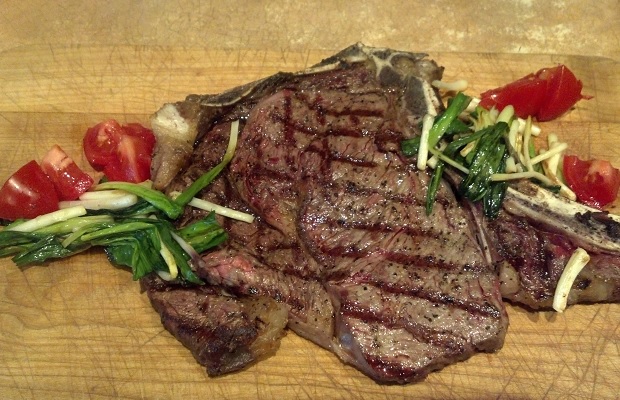
Rib Steak and Ramps PHOTO: Michael Godel

Rib Steak and Ramps
PHOTO: Michael Godel

‘Tis the season to partake of two things denied opportunity the rest of the calendar year. Wild leeks and Austrian wine. The first is just a seasonal thing. The second, entirely my fault. The forest and my backyard provide the ramps. Two most excellent wine agents, Bernard Stramswasser of Le Sommelier and Mark Cuff of The Living Vine are the messianic purveyors of the wine.

Mark came to Barque Smokehouse last month to share his wares, talk organics, biodynamics and to teach a staff what honest wine is all about. More on that extensive tasting coming soon. Bernard brought top estates from Austria with Andreas Wickhoff, MW to Toronto’s Fine Wine Reserve on April 16th, 2014 for a special portfolio tasting. The Master of Wine is deeply passionate and terroir obsessed when it comes to the Austrian landscape. The presented set of whites and reds rose up to incline an exemplary ramp to the nature of that country’s fine wine tradition.

The whites, mainly centered around the signature variety Grüner Veltliner, showed the mineral and salinity so necessary to the grape’s success. Reds made from Zweigelt and Blaufränkisch are Austria’s trump card, ready and willing to take on the world’s reds imbued of elegance and finesse. Here are notes on the 12 Austrian wines tasted.

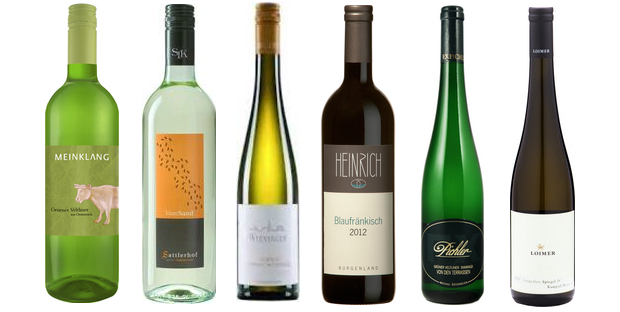
From left: Meinklang Grüner Veltliner 2013, Burgenland, Sattlerhof Sauvignon Blanc Vom Sand 2013, Südsteiermark, Wieninger Gemischter Satz 2013, Vienna, Weingut Heinrich Blaufränkisch 2012, Burgenland, F.X. Pichler Federspiel Loibner Klostersatz Grüner Veltliner 2012, Loimer Spiegel Grüner Veltliner 2012

From left: Meinklang Grüner Veltliner 2013, Burgenland, Sattlerhof Sauvignon Blanc Vom Sand 2013, Südsteiermark, Wieninger Gemischter Satz 2013, Vienna, Weingut Heinrich Blaufränkisch 2012, Burgenland, F.X. Pichler Federspiel Loibner Klostersatz Grüner Veltliner 2012, Loimer Spiegel Grüner Veltliner 2012

Meinklang Grüner Veltliner 2013, Burgenland, (Agent, $15.95, WineAlign)

Meinklang is a passionate, biodynamic (Demeter farming) producer in eastern Austria, south of Vienna. Their practices include abstaining from the pruning of vines, called “graupert” and maturation in concrete egg-shaped containers. The vineyard is their biotope and they make compost from animal dung, pomace, plant cuttings and ground quartz. Their entry-level Grüner is so mineral dominant and saline it’s as if the stones are bleeding. Extreme tang, with that salinity that never lets go and so much lime. Then makes quick work of itself.

Weingut Loimer, Grüner Vetliner ‘Lois’ 2013, Niederösterreich, Austria ($18.95, WineAlign)

From Niederösterreich in the Kamptal region, from soil compositions of bedrock and loess, this is straightforward Grüner Vetliner made in 200,000 bottle loads. That it succeeds in spite of the quantity and the work with contract growers is a testament to Fred Loimer’s sense of quality control. A bit shy aromatically but really tangy on the palate. Clear, crisp, clean and appreciably pure. Lithe in body and with some salinity on the back-end. Versatile mingler.

Sattlerhof Sauvignon Blanc Vom Sand 2013, Südsteiermark, Austria ($19.95, WineAlign)

This is bewusst territory for the Südsteiermark producer, from organically farmed vineyards. An elegant Southern Styrian Sauvignon Blanc made from grapes previously destined to get lost with other traditional varieties. Most striking is the salinity on the nose, often abstruse for Sauvignon Blanc but most obviously explained by the land; sand, gravel and shell limestone. Estimable restraint in the whispered aromas of herbs, green vegetable and tangy tree fruit. Dewy finish that lasts well into the morning.

Wieninger Gemischter Satz 2013, Vienna, Kamptal, Austria ($20.95, WineAlign)

Though Grüner Veltliner, Weissburgunder, Welschriesling and Chardonnay make up most of the formidable aspects of this blend from the Vienna Hills, there are bit but integral parts played by 11 others. From bio-certified Bisamberg and Nussberg vineyard sites, this is antithetically seamless, the varieties drawing all possible logical relations woven by their finite collection. Approachable, gritless, effortless, integrated and bound together by a solid core of juicy acidity. Even if only because it agglomerates 15 grapes, this beats white Châteauneuf-du-Pape (by at least six varieties) at its own game.

Nigl Gartling Grüner Veltliner 2012, Kremstal, Austria ($21.95, WineAlign)

The locus point of Nigl’s single vineyard Grüner Veltliner is sharp and stinging in 2012. Although that chemically reactive laser pinning takes control, it is extremely refreshing to not have to talk about flat and flabby fruit. Mind you the fruit here is under stress so balance needs to be questioned. Ultimately there is a palpable sense of grapefruit, flowers and a finish marked by the scraping of stones.

Loimer Langenlois Grüner Veltliner 2013, Kamptal Dac, Kamptal, Austria ($23.95, WineAlign)

Increased hang time has put this Kamptal in a deeper state of focus and understanding concerning the intricacies of Langenlois Grüner Veltliner. Continues the pure, clean and crisp axiom of the basic Lois but here the aromatics are spoken in acroamatic terms, obvious to disciples and yet available for all to comprehend. Though five per cent big wood barrel aging does not seem significant, that practice along with four months of aging on the fine lees has had a textural impact. The added weight is a questionable thing, though arguably just splitting hairs. Will help carry this vintage through five to seven years of graceful settling.

Dirty Ramps

Dirty Ramps

Weingut Heinrich Pinot Noir Dorflagen 2013 (Tank Sample), Burgenland, Austria ($24.95)

From two sites in Gols, one being the gravelly Riede Goldberg on the Parndorf Plateau, the other a sand and loam slope of the Salzburg. Short-ish ferment in large-ish barrels. Marked by bright cherry of the upstanding young fruit kind and only a brushstroke of paint. Very linear in that a Rube-Goldberg Pinot machining ensues, as the dominoes fall into each other. One action creates another, mostly due to a fine-grained chain of tannin. As delicate and approachable as Pinot Noir ever was from this far east.

Weingut Heinrich Blaufränkisch 2012, Burgenland, Austria ($24.95, WineAlign)

From a combination of vineyards on both the eastern and western sides of steppe Lake Neusiedl, situated between the easternmost parts of the Alps and the western part of the Small Hungarian Plain. A Blaufränkisch with so much geological and climatic history behind it, with Alpine, Pannonic, Asian, Mediterranean, and Nordic influences. The inclination is to express this unique, later ripening red with terms of bright endearment but it’s much more serious than that. Deeper, earthier and entrenched in the limestone and slate vineyards on Burgenland’s Leithaberg slopes of the Parndorf Plateau. The terroir amplifies and cloaks the fathomage of what is ostensibly tangy, effulgent fruit. More tannin than one would expect, this is a complex organism from a variegated landscape.

Heinrich Zweigelt 2012, Burgenland, Austria ($24.95, WineAlign)

Though 2011 was the best vintage of the last three and Blaufränkisch is the estate’s signature red, this 2012 is a real charmer. The vines for this Zweigelt lay lower, on the flats east of the alpine, steppe lake. They benefit from gravel Heideboden soils and from a nurturing microclimate. The aromatic profile is of spice and dried fruit; licorice, tar, carob and even more specifically, Bokser. All the right pods. Hydrates to sweet cherry fruit and begs for slow-cooked, smoky protein.

F.X. Pichler Federspiel Loibner Klostersatz Grüner Veltliner 2012, Wachau, Austria ($37.95, WineAlign)

From the Loiben basin where eroding, rocky Danube sands mix with gravel to produce lacey and textured Grüner Veltliner. This Federspiel (classified as wines between 11.5–12.5 per cent with a minimum must-weight of 17 degrees) shows more richness, viscosity and body than many with a pronounced spicy edge on top of the highly floral citrus zest. It gives the strange sensation of chewing spicy gum. A Grüner of good temperament beseeching the imbiber to have more than just one taste.

Loimer Langenlois Terrassen Grüner Veltliner 2012, Kamptal, Austria (149674, $39.95, WineAlign)

Loimer’s Terrassen is a Kamptal four vineyard Premier Cru (“Erste Lage”) schmear that is fermented in big wood barrels. The increased weight and body is helped along by extended time on the lees. The ligneous weave is underscored by wood spice and a waft of buff, calcareous Aeolian sediment. The character is as if this Langenlois is scenting a barrel ferment aura in a Chardonnay vein. Classic Grüner Veltliner that is all about texture. Will last for 10 or more years without shedding its baby fat.

Loimer Spiegel Grüner Veltliner 2012, Kamptal, Austria (agent, $64.95, WineAlign)

A site-specific Grüner Veltliner from the Speigel “Erste Lage” vineyard site, this is exemplary and definitive stuff. The 2012 vintage saw a two-day (May 16 and 17) frost that meant a 30 per cent loss in fruit. Not all vintages are profitable but ’12 is showing what top quality wines it was able to produce. A 12-month lay in Acacia barrels, natural vineyard yeasts and five months of aging on the fine lees have conspired for a climb to great Grüner heights. Blooming flowers, mellifluous honey and the freshest, most natural acidity abounds, elevating the aromatics and the buoyant flavours of just picked and bitten into apples. Tremendously wise and elegant wine.

Good to go!

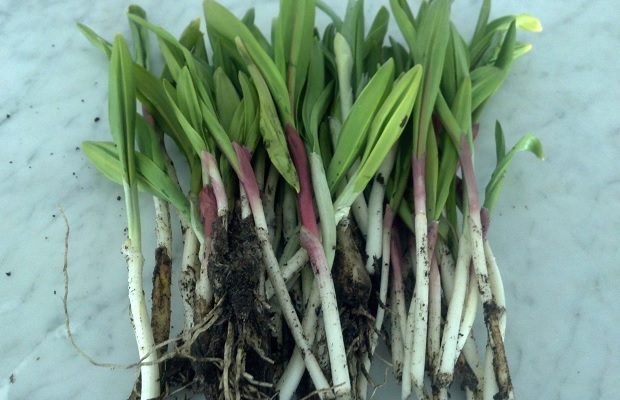
Cleaned Ramps

Cleaned Ramps