The sparkling rise of Alta Langa

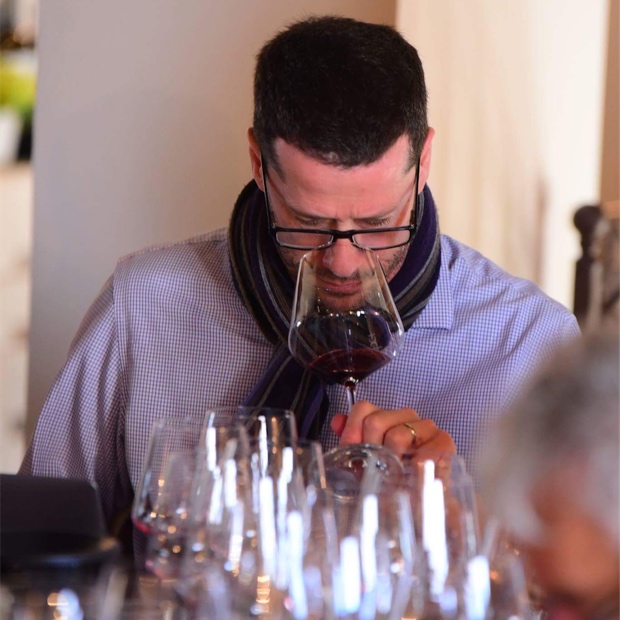
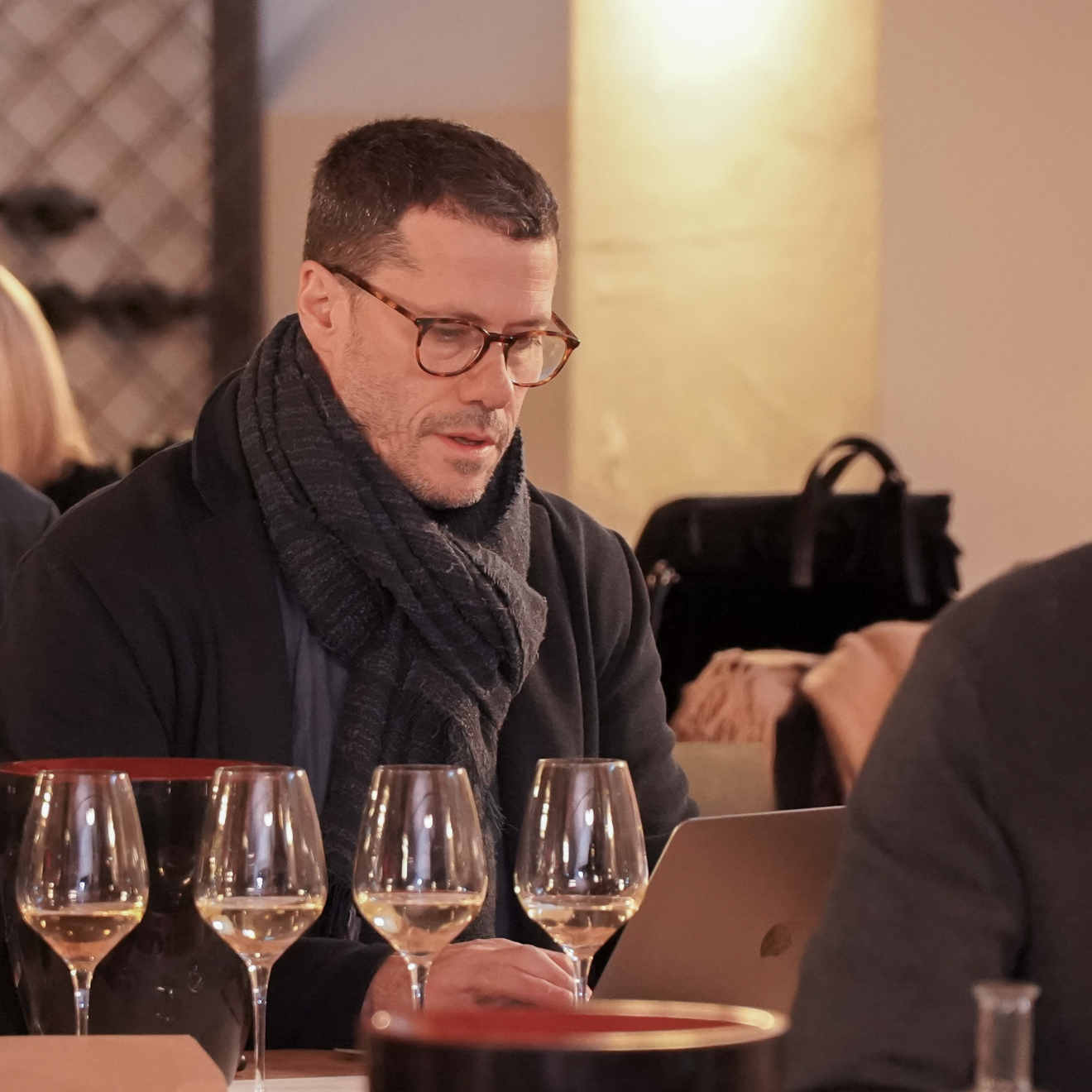
Godello, Alta Langa blind tasting (c) Anastasia Florea and Consorzio Alta Langa DOCG

This is the story of Alta Langa, Alte Bollicine Piemontesi. A portrait of proposal for a clearly defined class and style of sparkling wines led by a young, energetic and promising 20-year old Consorzio. An organization led by President MariaCristina Castelletta of Tosti1820 and Vice-President Giovanni Carlo Bussi of San Marzano Oliveto charged with the valourization of Alta Langa DOCG, a dry, vintage-dated Spumante obtained through the traditional method from pinot noir and chardonnay grapes grown on the Piedmontese hills. Their work carries forward from past Consorzio Alta Langa presidents Giulio Bava (Giulio Cocchi, 2013-2022), Lamberto Vallarino Gancia (F.lli Gancia, 2010-2013), Giovanni Carlo Bussi (Viticoltore di San Marzano Oliveto, 2004-2010) and Giorgio Giusiana (Martini & Rossi, 2001-2004). The date was June 15, 2001 in Asti, after more than 10 years of in-depth and methodical research and studies on the suitability of the area, to bring together winegrowers and producers involved in the development of a wine, an appellation and a territory. The common link was the steadfast adherence to classic Champenoise method sparkling wines made with grapes six years after planting. Il Consorzio Alta Langa protects and promotes the ideals of like-minded producers in search of the finest bubbles that can be made.
For the last two years the wine and also social media narrative has been played annoyingly on repeat, of grave reports concerning the decline of global wine consumption and yet there is an essential category on the rise. Sparkling wines are doing fine, with thanks of course in great part to bottles of Italian method examples produced in the hundreds of millions. A skewed graph perhaps but as long as there are bubbles we can’t really complain and yet we know that traditional method styles are what matter most. This is why news of the acclivity and proliferation of classic method effervescent wines is of the best kind. The question is how many are aware about production out of the northwestern part of Italy? For there is Piemonte, from the word piedmont, meaning “at the foot of a mountain,” an alpine arc of a vineterland surrounded to the south, west, and north by the vast Ligurian Apennines. Best known for growing red grape varieties, namely nebbiolo, barbera and dolcetto, also the whites of cortese and arneis, but in Piedmont there is this great affinity with the expatriate grapes from Champagne. The affair is nearly 175 years old, but what has been occurring over the last two decades will act as the impetus for shaping the future.
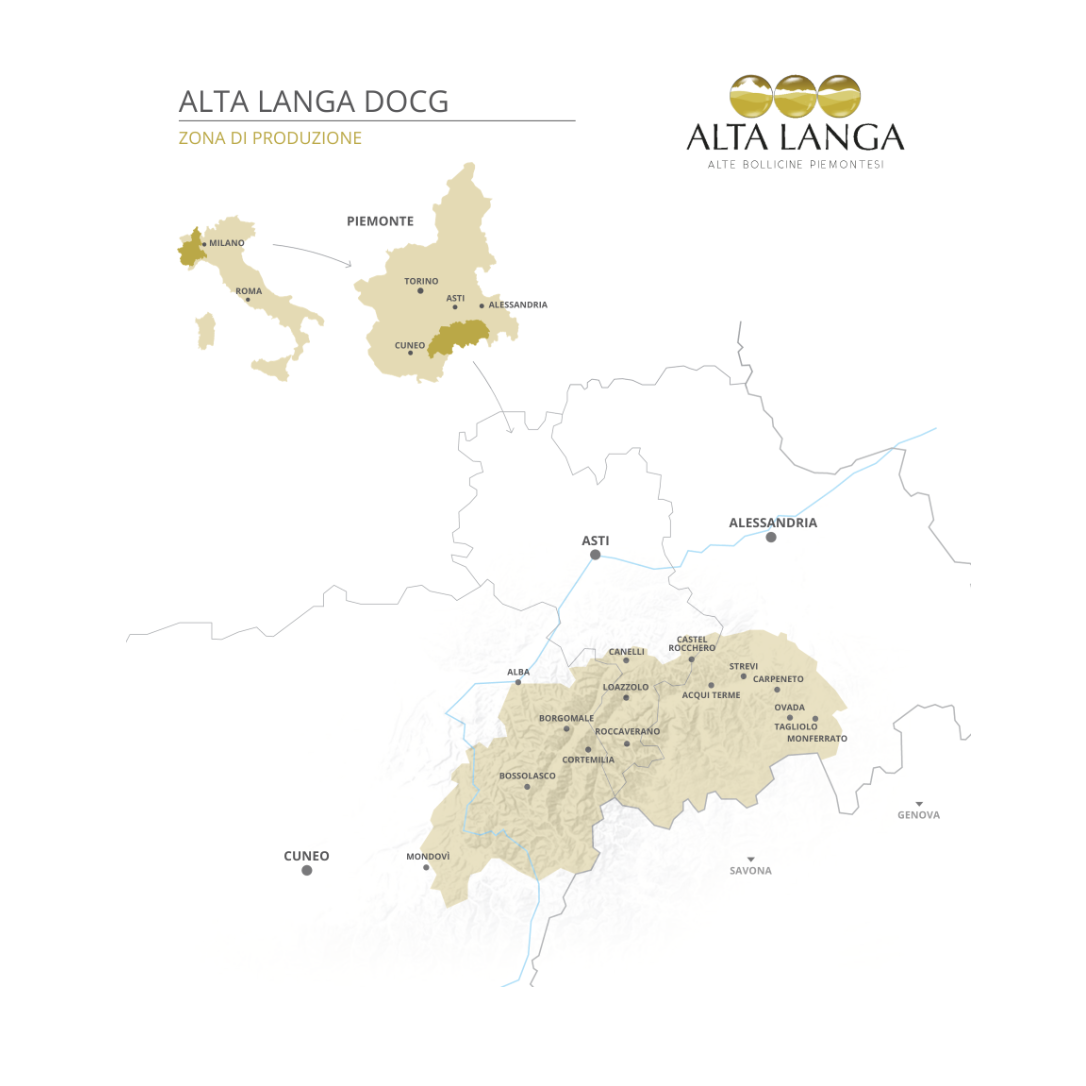
Where in Piemonte?

The Alta Langa DOCG area of production of grapes intended for the production of Alta Langa sparkling wines consists of the parcels on hillsides in the provinces of Cuneo, Asti and Alessandria, in the territories of the following municipalities:

Province of Alessandria: Acqui Terme, Alice Bel Colle, Belforte Monferrato, Bistagno, Bosio, Capriata d’Orba, Carpeneto, Cartosio, Casaleggio Boiro, Castelnuovo Bormida, Castelletto d’Erro, Castelletto d’Orba, Cassine, Cassinelle, Cavatore, Cremolino, Denice, Grognardo, Lerma, Malvicino, Melazzo, Merana, Molare, Montaldeo, Montaldo Bormida, Montechiaro d’Acqui, Morbello, Mornese, Morsasco, Orsara Bormida, Ovada, Pareto, Parodi Ligure, Ponti, Ponzone, Prasco, Predosa, Ricaldone, Rivalta Bormida, Rocca Grimalda, San Cris toforo, Sezzadio, Silvano d’Orba, Spigno Monferrato, Strevi, Tagliolo Monferrato, Terzo, Trisobbio and Visone.

Province of Asti: Bubbio, Calamandrana, Calosso, Canelli, Cassinasco, Castel Boglione, Castelletto Molina, Castelrocchero, Cessole, Coazzolo, Fontanile, Loazzolo, Maranzana, Monastero Bormida, Mombaldone, Mombaruzzo, Montabone, Olmo Gentile, Quaranti, Roccaverano, Rocchetta Palafea, San Giorgio Scarampi, San Marzano Oliveto, Serole, Sessame and Vesime.

Province of Cuneo: Alba (territori alla destra orografica del fiume Tanaro), Albaretto Torre, Arguello, Bastia, Belvedere Langhe, Benevello, Bergolo, Bonvicino, Borgomale, Bosia, Bossolasco, Briaglia, Camerana, Camo, Carrù, Castellino Tanaro, Castelletto Uzzone, Castiglione Tinella, Castino, Cerretto Langhe, Ceva (territori alla destra orografica del torrente Cevetta fino alla confluenza nel Tanaro, da qui i territori alla destra orografica del fiume Tanaro), Cigliè, Clavesana, Cortemilia, Cossano Belbo, Cravanzana, Diano d’Alba, Dogliani, Farigliano, Feisoglio, Cissone, Gorzegno, Gottasecca, Grinzane Cavour, Igliano, Lequio Berria, Levice, Mango, Marsaglia, Mombarcaro, Monchiero, Mondovi’ (territori alla destra orografica del torrente Ellero fino a raggiungere da sud l’abitato di Mondovi, quindi proseguendo verso nord-est i territori a destra della s.s. 28 per Fossano, fino al confine comunale con Magliano Alpi), Monesiglio, Monforte d’Alba, Montelupo Albese, Murazzano, Neviglie, Niella Belbo, Niella Tanaro, Novello, Paroldo, Perletto, Pezzolo Valle Uzzone, Piozzo, Prunetto, Roascio, Rocca di Cigliè, Rocchetta Belbo, Roddino, Rodello, Sale Langhe, Sale San Giovanni, Saliceto, San Benedetto Belbo, Santo Stefano Belbo, Serralunga d’Alba, Serravalle Langhe, Sinio, Somano, Torre Bormida, Torresina, Treiso, Trezzo Tinella and Vicoforte.
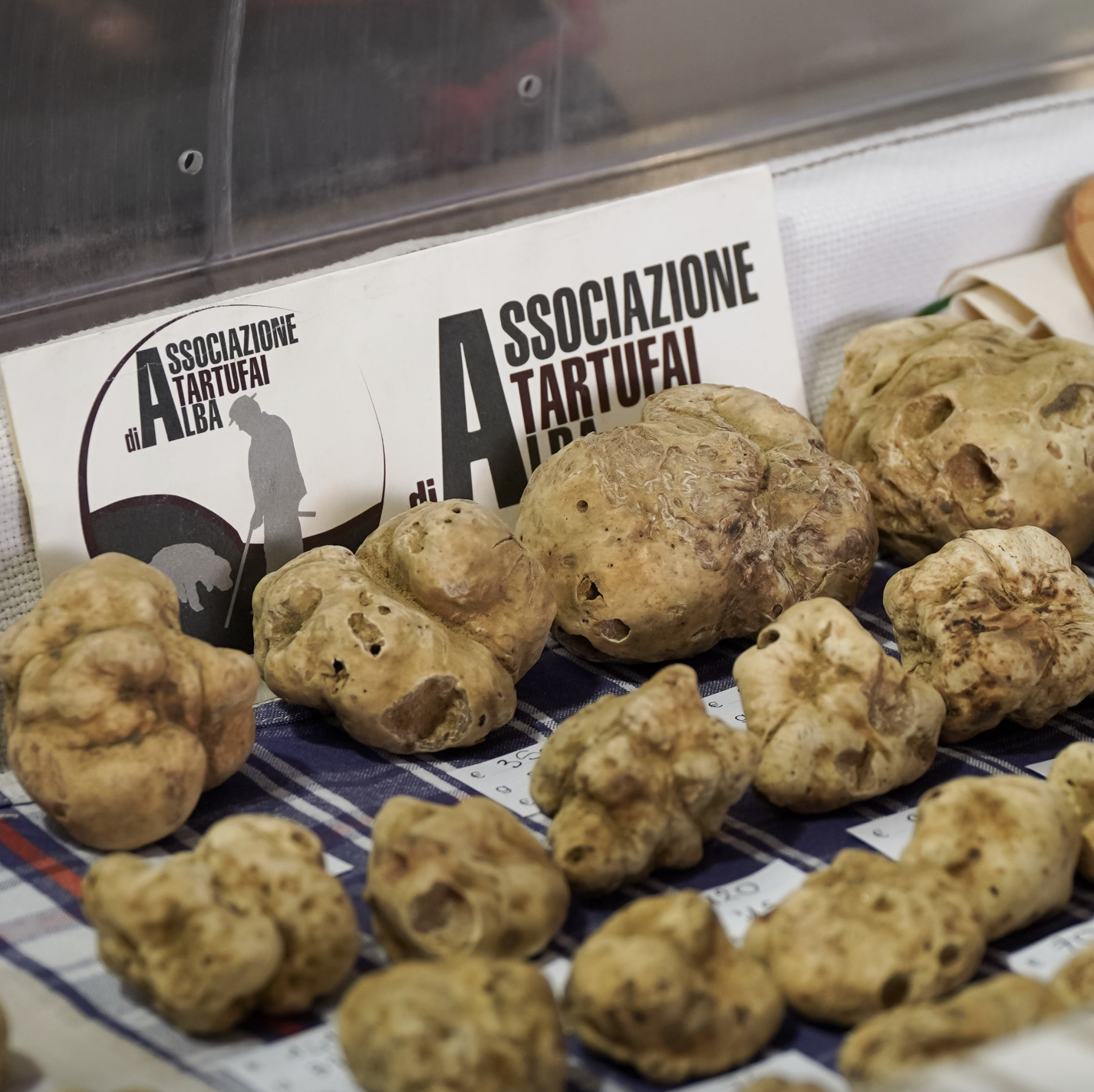
Alba truffles

The goods on geology

Two agronomy experts, Edmondo Bonelli (soils) and Maurizio Gily (viticulture) present Alta Langa to a group of local and foreign journalists. It begins with the sedimentary origin of crystalline rocks from two geological areas, first the firmer central and then the outer areas of alpine rocks. Currently there are no vineyards in this area yet but likely will be so in the future. Challenging terroir, but it’s coming. Sedimentary soils are of marine origin, silty or sandy, on hillsides and usually calcareous, most relatively high in water retention capacity. The calcaire is not the same as chalk but it is calcium carbonate. Layered rocks with marls, sand, conglomerates or gypsum, 30-2.5 million years in origin (Oligocene-Miocene-Pliocene), again sand-silt-clay-calcium carbonate. Sandstones are Pietra di Langhe and can be as deep as six kms of stratified rocks down into the earth. The descriptor “Langhe” comes from Langiano or Langian – a geological epoch named after this area. There are the Molare Formation, Cassinasco Formation and sandstones of Diano. Monseglio Formation, Cortemilla Formation, Cessole Formation, Lequio Formation, Murazzano Formation, each named after a village in the Langhe area (of sandy and silty layers and high calcium carbonate). Rochetta Formation, Marls of Parolo, Sant’Agata Marls (silty medium calcium carbonate).
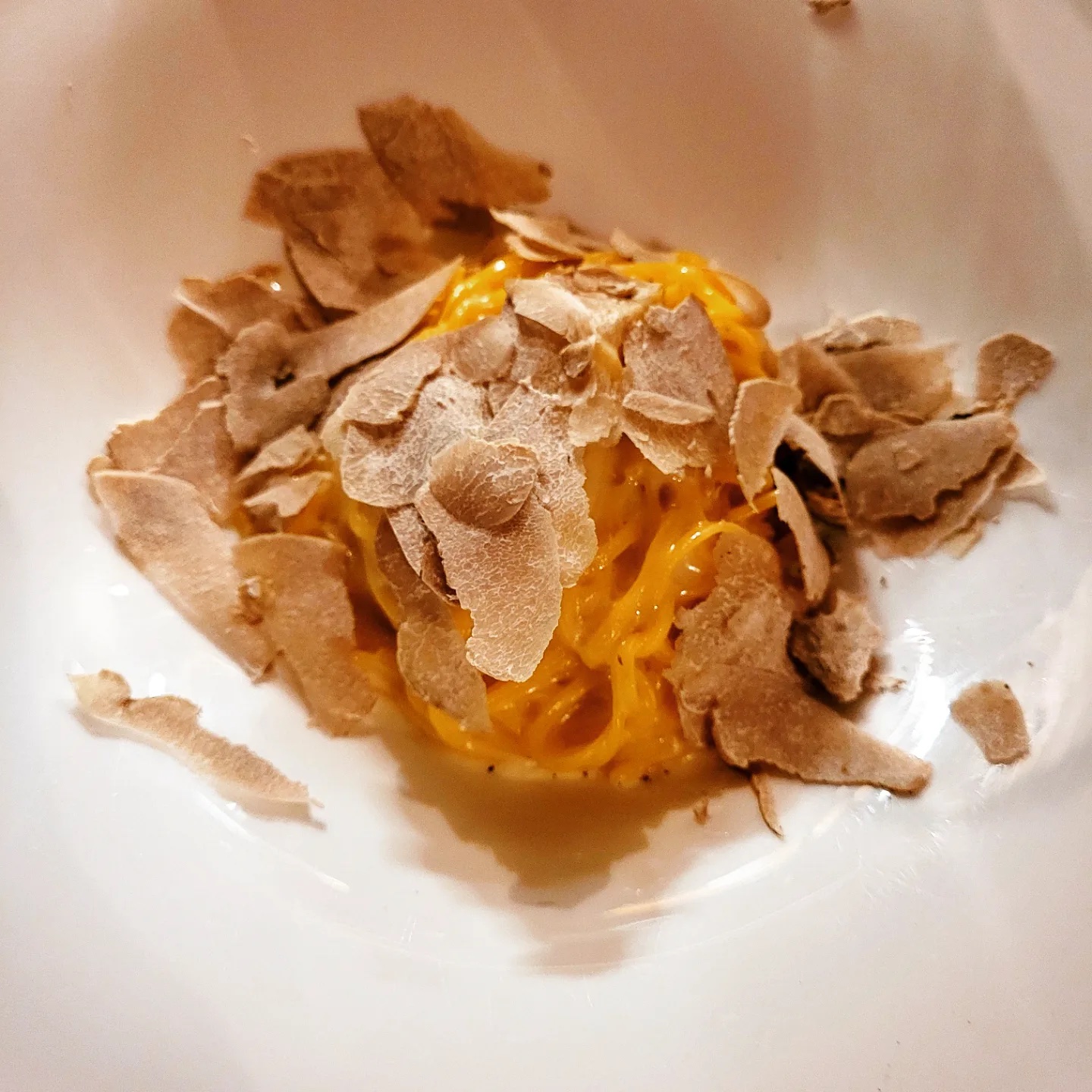
Tajarin con Tartufo Alba Bianco

The Carta Geologica dell’Alta Lange is spilt into eight formations, of eight colours, highlighted by La Malora Beppe Fenoglio, famous Romanzo from San Benedetto Belbo. If we compare Winkler zones, the area is ccooler than Barolo yet quite a bit warmer than Champagne. Biodiversity of the hills is always considered, as are the forests, animals and rivers, they being the Tanaro, Bello, Bormida and Orba. Light soils “dip,” darker soils “anti-dip.” Truth is they are relatively young geologically speaking with lots of erosion and soil movement. Their retention and release of water depends on soil structure and this is also what determines vine (and canopy) growth more than any other factor. But it is the type of soil that deals in different water dynamics. The vines adapt their metabolism  by following their soil conditions. A lot of research has gone into picking the right clone of pinot nero for making Alta Langa.
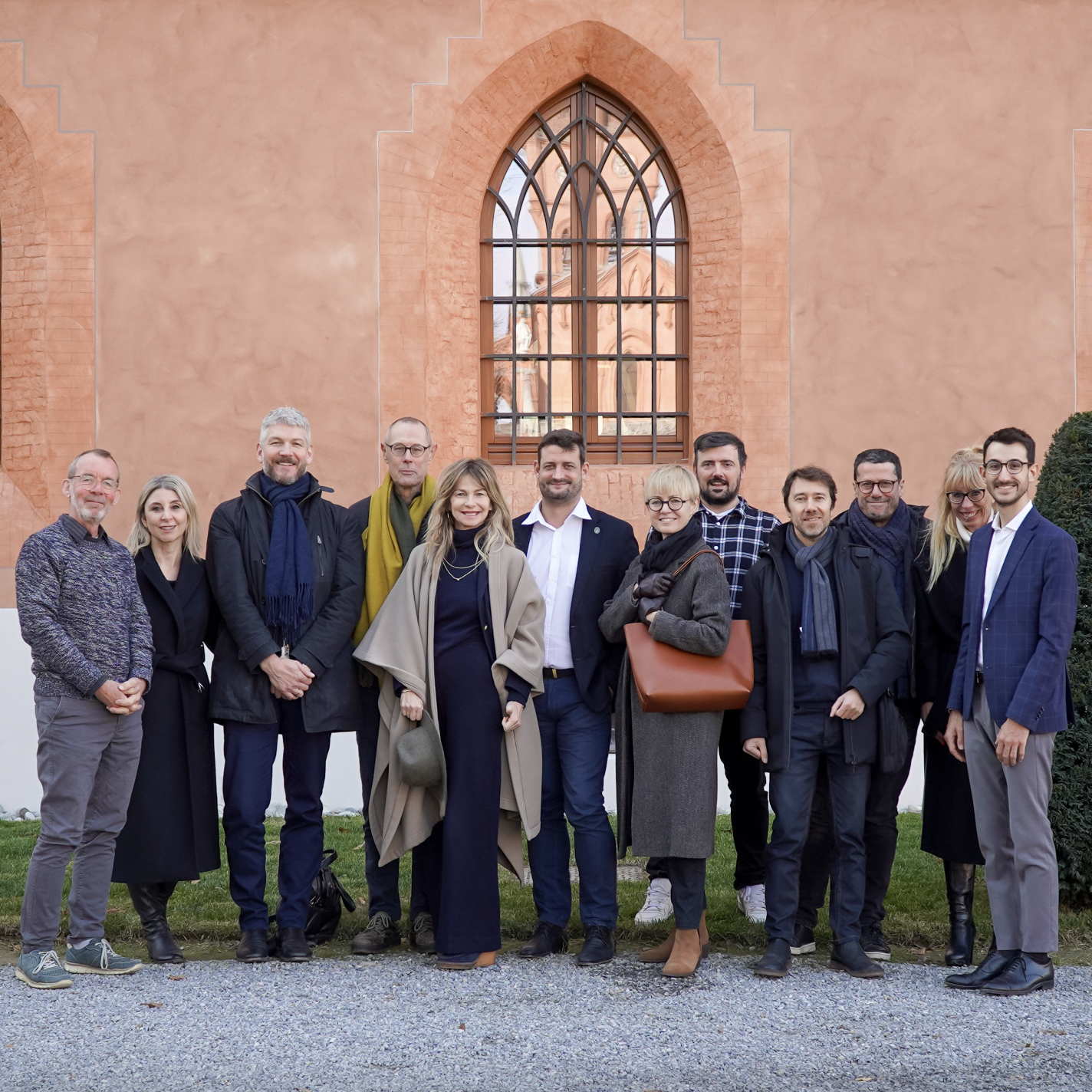
Alta Langa journalists with President Mariacristina Castelletta of Tosti1820 (c) Anastasia Florea and Consorzio Alta Langa DOCG

Disciplinare

Alta Langa DOCG regulations say that pinot noir and/or chardonnay vines account for 90 to 100 percent of the wines and grapes from non-aromatic varieties suitable for cultivation in Piedmont and may contribute the remaining 10 percent. In the vineyards minimum elevation is set at 250 masl, planting density not less than 4,000 vines per hectare, training forms and pruning systems need be traditional, of low espalier with traditional Guyot or spurred cordon pruning. Maximum grape yields are 11 tonnes per hectare and minimum alcohol is set at 11.5 percent abv. Minimum total acidity is 5 g/l and minimum non-reducing extract is 15 g/l. Yields are subject to change, by approval, in circumstances of favourable and also challenging vintages. Vinification, bottling, processing and aging operations of “Alta Langa” wines must be carried out in Piedmont. From vintage to vintage the maximum addition is 15 percent, of younger “Alta Langa” to older “Alta Langa.”

With the AIS Piemonte Sommeliers

The use of the simple term “bottle fermentation” is prohibited in the designation of Alta Langa DOCG. Allowable definitions and descriptions are  “bottle fermentation according to the traditional method,” or “traditional method,” or “classic method,” or “traditional classic method.” Lees aging rules are no  less than thirty months for Alta Langa Spumante DOCG and Alta Langa Spumante Rosé DOCG. Wines labelled as Riserva require 36 months of lees aging.

Godello at the Masterclass given by Bonelli and Gily (c) Anastasia Florea and Consorzio Alta Langa DOCG

History

It was around 1850 when Marquis Leopoldo Incisa included several French grape varieties in his ampelographic collection located in the vineyards of Rocchetta Tanaro, in what was then the province of Alessandria (which also included Asti). At that time these grape varieties did not meet with much favour, especially among winegrowers. However Gancia created the first Italian Spumante with a Muscat base, in 1865, at a time when farmers held an aversion to foreign vines. This was still witnessed toward the end of the century by the complaints of the owner who succeeded Marquis Incisa, who could find no farmers willing to grow them. In fact, by the mid-19th century, there was no shortage of pinot noir plantings in Piedmont. As early as the first decades of the 1800s, the Counts of Sambuy had begun to introduce some renowned French grape varieties with the specific aim of improving local wine production.
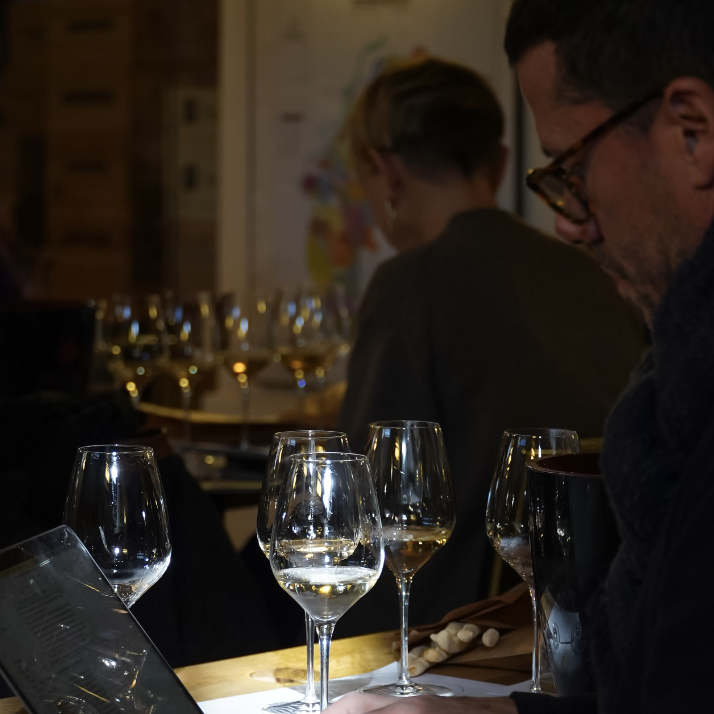
Blind tasting Alta Langa DOCG wines (c) Anastasia Florea and Consorzio Alta Langa

Carlo Gancia was the pioneer who favoured the spread of pinot noir and chardonnay among the winegrowers in the Canelli district. Gancia saw the possibilities for having a certain quantity to use in the production of his sparkling wines. With the Spumante Metodo Classico Project in Piedmont, of which the “Alta Langa” appellation was born, the Piedmont sparkling wine industry made a valuable contribution of economic and technological commitment to a vocation that had remained unexpressed for decades outside the mere scientific sphere. It was shown that the hills of Piedmont, where vines had over time settled a significant and enduring presence, could work very well with the French grape varieties.
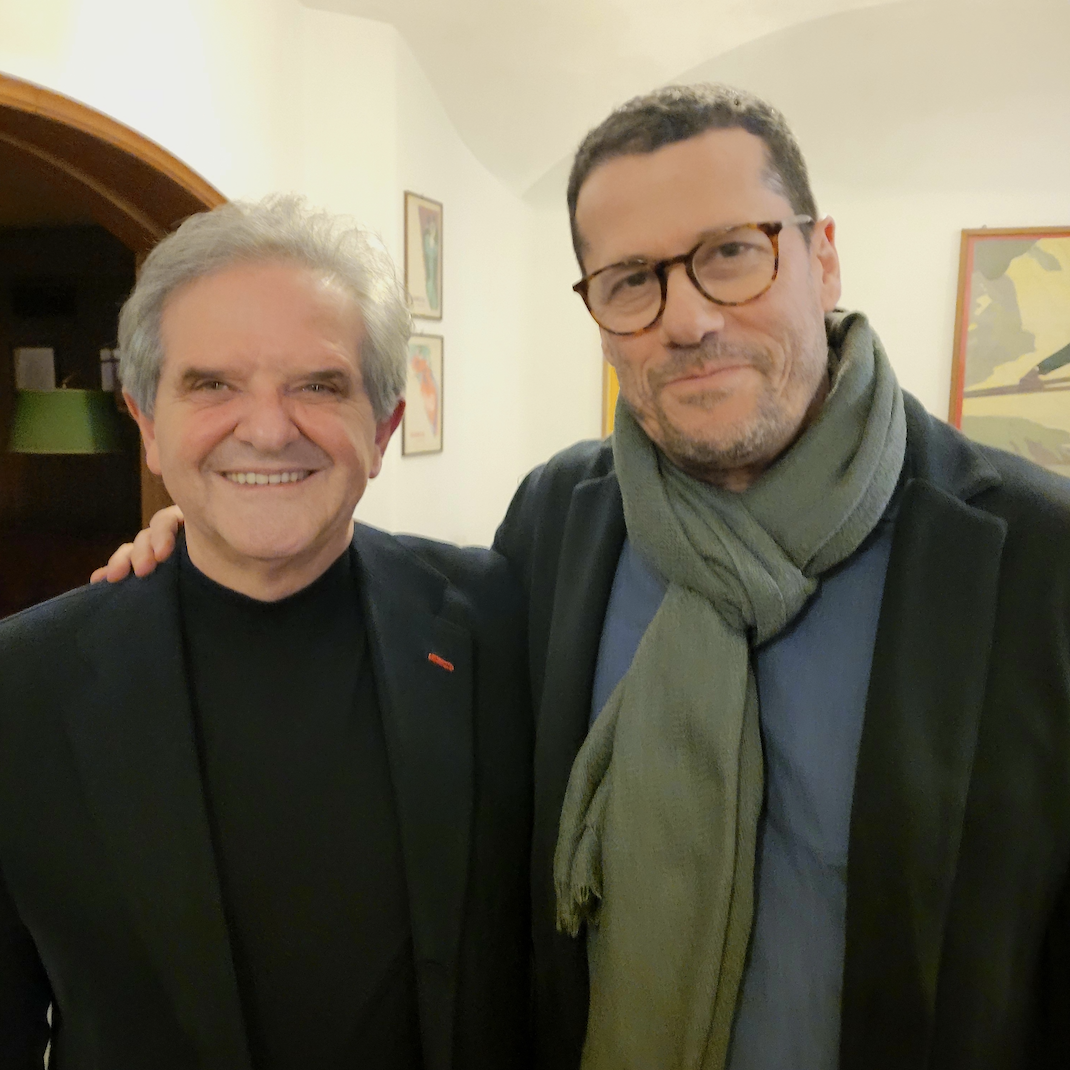
With Gancia oenologist Dr. Donato Lanati

The wines of Gancia today

Gancia is the forerunner of today’s experimental innovation that acts as the basis for the production of the Brut Alta Langa. In 1931 the company contributed to the creation of the denomination Asti for sweet sparkling wines made from muscat and also the first white vermouth made from the moscato. In 1980 they launched the first sparkling wine “pinot di pinot,” using three varieties of that family of grapes. The most important work has come with lees aging using a mix of Champagne grapes. “Whether or not you like a particular aroma in a wine is a subjective fact,” explains renowned Oenologist Dr. Donato Lanati. “It’s all about the amino acids coming together over time – they make the aromas.” Dr. Lanati believes the wines plateau after a 60-70 months stay on lees. After that they will not continues to develop enough favourable nuance and complexity. He recommends that after 10 years you have to turn the bottles nose down in storage to avoid unwanted excess oxidation.

Gancia Vino Base Pinot Nero 36 Mesi Rosé Alta Langa (Campione Da Vasca) 2023

A base wine destined for Alta Langa, still turbid with a high content of yeast activity using amino acids to get somewhere intentional over a long period of time. Salty entry and salty finish with intensities through the middle, grapefruit standing out and unrefined acids – rough for now. Comes from vineyards at 450m and the breeze does blow through this striking base wine. Dr. Donato Lanati explains that it is ”kept cloudy on purpose to avoid having to sulphur because the yeasts are a thousand times more effective as a protector against oxidation then sulphur dioxide.” Just a part of a cuvée and the process that sees an opaque sample mix with other cloudy base wines to create clarity in its final housing.  Tasted December 2023

Gancia Cuvée Gancia 36 Mesi Alta Langa Rosé DOCG 2018

Minor reduction which is in fact something that is important because “things would be a lot more serious if drinking a glass would make you want to drink a glass of water,” kids Dr. Donato Lanati. Sounds like a joke but in these climate change and extreme times you can taste what would not have been tasted before and Gancia knows, with 150 years of experience in crafting sparkling wines. Aging some of the base wines in wood goes a long way to control the reduction and yet some reduction is a good thing. There is some sweetness in the perfume which is a result of a portion having been aged in a “sweet” wood. This sulphur dioxide character mixed with some acetates that have yet to fully dissipate are what drive aromatic pulchritude and it is the esters (within reason) which will bind with amino acids to eliminate any semblance of confection. There is a small dosage here but it in fact under wonderful control and while Rosé by nature is rounder than Bianco, well no matter or judgement because the mix of tension and elasticity is really well managed. Drink 2024-2029.  Tasted December 2023

Gancia Cuvée Gancia 36 Mesi Brut Alta Langa DOCG 2015

Same amount of time on the yeasts and yet three years further bottle time although Bianco (Brut) is always different than Rosé with this Gancia Alta Langa immediately caught with more tension and overall taut behaviour. Freshness incarnate and scintillant intensity without compromise and all intentions are exercised for good and proper reason. Impressive balance and stage presence here from a master sparkling wine producer that is not just the original but currently under the supervisor of a master scientist, that being Dr. Donato Lanati who is one with the chemistry and physiology of these sparkling wines. Drink 2025-2032.  Tasted December 2023
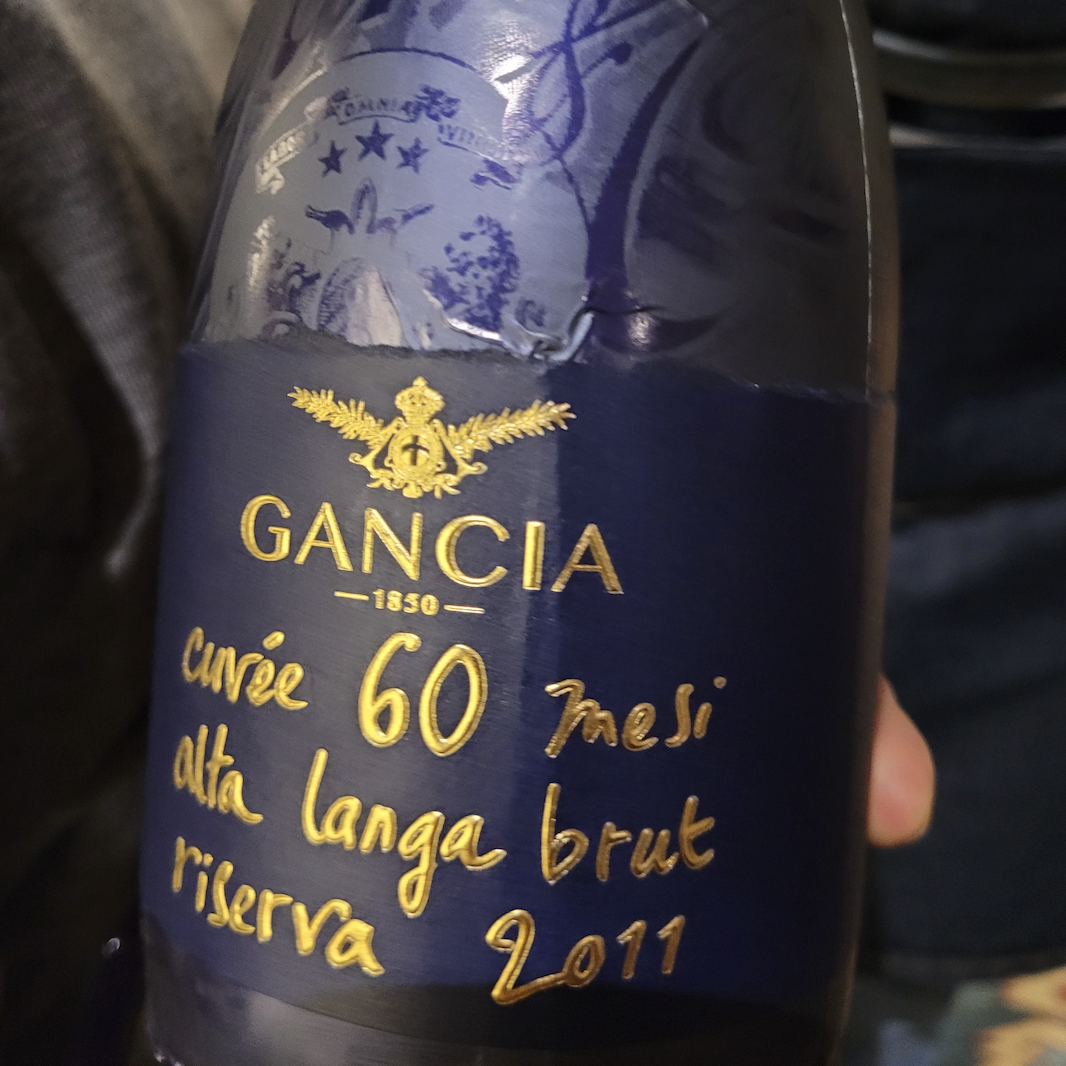
Gancia Cuvée Gancia Riserva 60 Mesi Brut Alta Langa DOCG 2012

Wild to taste this just about five years to the day after the 24 month-ages 2012 back in December of 2019. All the scientific tenets of sulphur dioxide, amino acids, yeasts and esters come to their development line at 60 months of aging on the less and this Brut has passed over by leaving any awkwardness of unresolved notes behind. It is now in fine linear verticality and drinks with Bianco distinction. Crisp, fresh, crunchy and fraught with important if profound tension, citrus and herbs, length and just that right amount of finishing bitters. Scientific does not begin to explain how precise and well designed this acts and delivers as Alta Langa sparkling wine. That said another year will only serve to solidify the evolution and set this up for all we, they and everyone else could hope it could be. Drink 2024-2034.  Tasted December 2023

Cuvée Gancia Riserva 170 Mesi Brut Alta Langa DOCG 2005

From a wine made by previous illustrious oenologist Piergiorgio Cane and found by Dr. Donato Lanati who resisted any temptation to change, delete or add anything to the wine. That it has aged between 14 and 15 years on the lees begs the question of how long is too long or more to the point where is the line at which the wine no longer changes to develop more nuances for positive results. Intuitively, if also extrospectively in its maturation to arrive at this dried porcino mushroom and oxidative state. It’s a museum wine in every respect and while it does not deliver freshness or pretty pleasure it does deliver a most fascinating tasting experience. The palate is really in fine shape and that is where some excitement and freshness persists. Twenty minutes does not kill the wine and it continues to evolve, so in the end this does what it surely was intended and wanted to do. Drink 2023-2025.  Tasted December 2023

Enrico Serafino

The innovation of Enrico Serafino

In a word, a visionary. Cavaliere Enrico Serafino (of the Romano Cavanese) is considered to be one of the “wise men of oenology” that defines Italian wine. He sold wine in China as far bak as 1910 and the winery is one of the first producers of Alta Langa to invest in concrete vats.  Today the company led by President & CEO Nico Conta produces eight different sparkling wines from 56 parcels in 41 vineyards found in 16 villages. In 1994 Enrico Serafino joined the (1990 established) Piedmont Sparkling Wine Project, the year of the first experimental vintage, with the aim of identifying the best areas to plant pinot noir and chardonnay. The 2023 harvest marked their 145th and the annual sparkling production is approximately 200,000 (of 360,000 total) bottles. Serafino ws acquired in 2014 by Kyle Krause Gentile and the current ownership recently purchased Elena Penna and Luca Corrado’s Vietti.
The company practices sustainable viticulture, biodiversity protection and the promotion of social initiatives. It actively works to reduce water consumption and uses 100 percent electricity from renewable sources. Bottles are made from at least 65 percent recycled glass, packaging from 70 percent natural paper (International Forest Certification System and corks are 100 percent recyclable. In 2021 Serafino obtained the renewal of VIVA Certification of Organization as well as product for Alta Langa Oudeis, the only Alta Langa certified. VIVA is a protocol of the Italian Ministry of Environment and Land and Sea Protection designed to assess sustainability performance and communicate it to consumers.

Enrico Serafino Alta Langa Riserva DOCG Zero Pas Dosé 2012

The no dosage metodo classico is known as Sboccatura Tardiva, meaning late disgorgement and a wine first made in 2004. Poured from magnum which is well known to deliver a markedly fresher and youthful sparkling wine when the traditional method is involved. The ’12 is the first to be a solo pinot noir, here with zero residual sugar and a disgorgment from 2018. Extreme level of toast and a pH under 3.0, wondrous and excitable because the total acidity runs higher than 8.5 g/L, yet comfortably under 9.0. Makes for a salty bubble compounded by the silty, calcareous soils of marine origin. Citrus zesty, both lemon and orange, with more spiced accents to this dry Martini of a sparkling wine. Lip-smacking, briny and effortlessly saline, chalky-dry and so well arranged from 100 months on its lees. Drink 2024-2028.  Tasted December 2023

Enrico Serafino Alta Langa Riserva DOCG Zero 140 Pas Dosé 2012

“140,” as in that number of months “potentially” spent on lees which in many cases runs past the vanishing point of increased returns, but with Serafino the extra 40 (or more) seems plenty justified. A 20,000-30,000 bottle production that acts so much more demure and soft than the (100 – 2012) with aromatics spoken in a seductive whisper. Everything changes with a dynamic paradigm shift onto the explosive palate where the 85 percent pinot noir (and 15 chardonnay) begins to quiver with nervous tension and excitement before complex flavours emerge. This bottle was disgorged this year and so took the full 140 advantage. The longest level of aging suggests this should be left open to evolve in the glass as long as any sparkling wine on the planet. That is if you are looking for an aromatic emergence, with an awakening forest, pencil shavings and poached pear. Subtle at first, many layers to unfold, a toasty quality, acidity and chalky earth, less obvious than the ’12 but with more mystery, fantasy and possibility. Drink 2024-2030.  Tasted December 2023
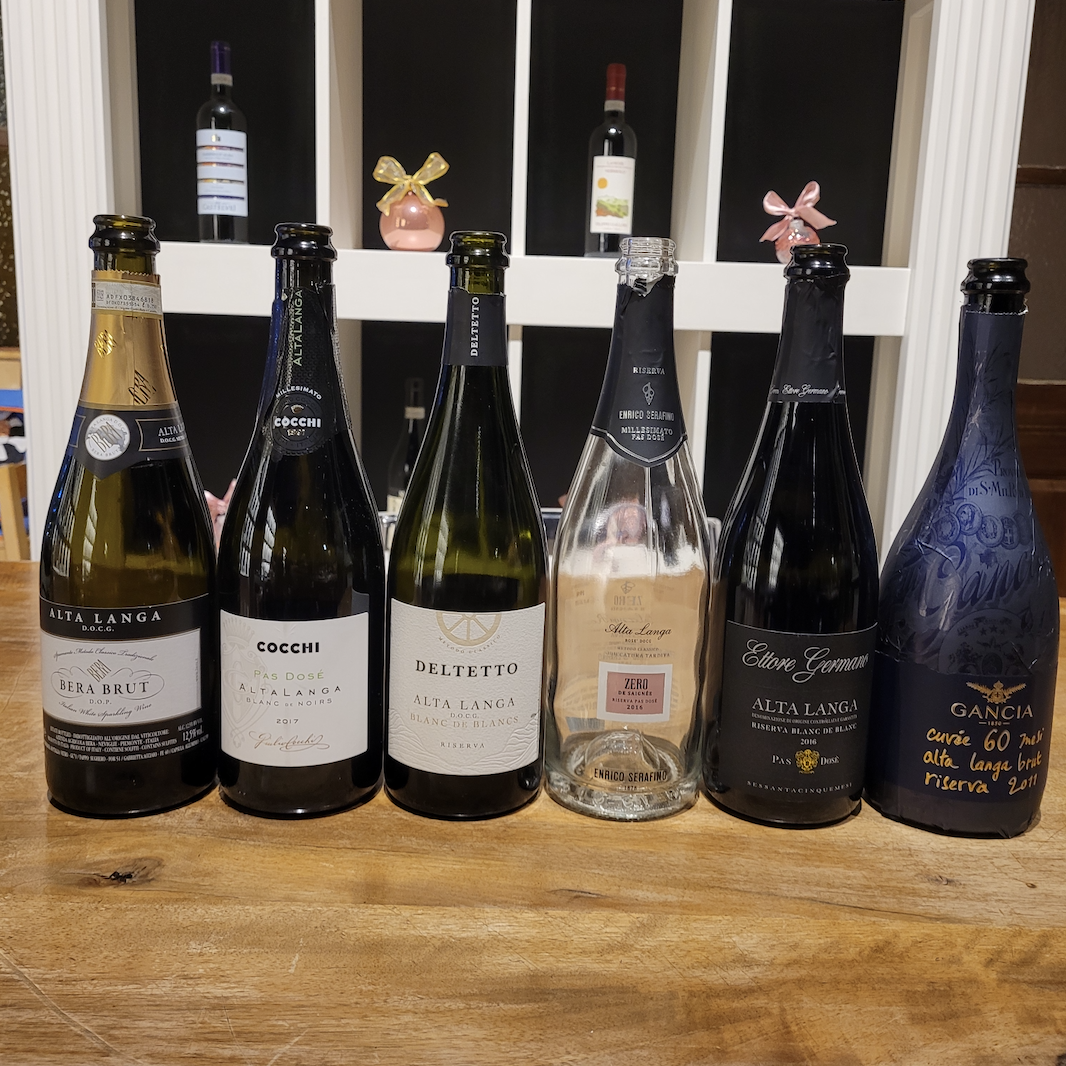
Alta Langa dinner at

Some dinner wines

Bera Alta Langa DOCG Brut 2018

Also labeled as DOP because “dad always believed that DOP stood for quality,” tells oenologist Umberto Bera. He was also one of the first 10 to join the Consorzio Alta Langa. The mix is 70 percent chardonnay and (30) pinot noir, 15 months on lees. A mix of toasty and autolytic notes, 5 g/L of RS, well beneath the Brut threshold. Disgorged in May, 2023 and so the aging time is nearly three times that 15 months and Bera disgorges three times per year. Showing some secondary level maturity with ample freshness preserved and a persistence of energy.  Last tasted December 2023

Nothing overt but yes there is a phenolic and also metallic presence within the aromas. Lemon drop and also herbs, not quite sweet but like basil or better yet slightly more resinous like tarragon. Good crunch in palate texture with stuffing and a mouthful to be had before moving sideways into more metals and botanicals. A periodic wave of elements and emotions form this Extra Brut mix of chardonnay and pinot noir, likely close to half and half. Drink 2023-2026.  Tasted Blind with the Consorzio Alta Langa in Asti, December 2023

Cocchi Alta Langa DOCG Blanc De Noirs Pas Dosé 2017

Under the ownership of Giulio Bava, created in 1981 and has always produced Alta Langa in Piemonte. “Alta Langa has a soul of its own,” tells Roberto Bava, “and a personality reflective of just two varieties, pinot noir and chardonnay.” The B de N is 100 percent pinot, five years spent on lees and Bava notes the sapidity of this wine. “next to (minerality), which all Alta Langa wines must have, played out in different ways.” Truly stoic and direct with dried herbal notes, pencil lead, sage and dry, dry, dry. Who needs sugar in such wines? Drink 2023-2026.  Tasted December 2023

Deltetto Alta Langa DOCG Blanc de Blancs Pas Dosé 2016

“A great passion of my father was Spumante Método Classico, first made in 1980,” tells Carlo Deltetto. “The business card of the winery is the Alta Langa.” This despite the winery being primarily a Roero producer. The ’16 is the inaugural Riserva, pas dosé style which for Alta Langa incidentally is done incredibly well as a sparkling wine region. The key here is elevation, of vineyards averaging 470m, directing the sapid nature of this bubble. Who needs sugar when you have an arc of both richness and flavour, developed of natural sweetness, all leading to captured balance. Impressive acids help the wine be direct and precise, already now with good age in pocket. Drink 2023-2027.  Tasted December 2023

Enrico Serafino Alta Langa Rosato Riserva DOCG Pas Dosé Zero De Saignée 2016

Ripe, high level fruit and mature, advancing and settling into a secondary state. Scents of lemon iced tea and this from a wine no longer part of the Serafino portfolio. Simple, 100 percent pinot nero, pas dosé, disgorged in 2022. Demure on the nose yet explosively expressive on the palate. Labeled saignée but like much of Alta Langa Rosato it’s really just a matter of a quick maceration to bring out the rusty hue. A curious acidity to make this seem as dry as any of the no dosage style. Drink 2023-2025.  Tasted December 2023

Ettore Germano Alta Langa Riserva DOCG Pas Dosé Blanc De Blanc 65 Mesi 2016

If at first this seems to be par for the no dosage course well think again because with chardonnay the fruit stands out so very expressive. Germano’s dream was to make Bianco and so 1988 was the year to exploit riesling and chardonnay at 500-600m of vineyard elevation in the Tanaro River valley. In 2000 the sparkling journey began and the first cuvée was made in 2003. This ’16 marks the second vintage of the blanc de blanc, 65 months on lees, an equal mix of salinity and sapidity for gastronomy in a bottle. Three essential pillars of Alta Lang that give the sessantacinque its credibility and promise of top quality. Precise, chiseled and full of class. Fabulous traditional method sparkling white. Drink 2023-2029.  Tasted December 2023

Gancia Cuvée Gancia 60 Mesi Brut Riserva Alta Langa DOCG 2011

Clarity of a blue sky with some density to it and the smoothest, most polished Gancia Alta Langa there ever was. For the entire denomination in fact, or any style of sparkling wine. Obviously vintage related but also the extra time allotted, above and beyond 60 months on lees. Luxe aromas and flavours, rich polyphenolic moments and the sweetset sapidity ever. Polyphonic, multi tonal, melodic lines melting into and becoming one another. Tonic, lemon preserve and the finest of bitters. Serious simultaneity and seamless presence. Drink 2023-2026.  Tasted December 2023

Tosti1820 Alta Langa Riserva DOCG Bicentenario Pas Dosé 2010

Tosti has spent 200 years of making this 100 percent pinot noir, pas dosé cuvée, not always but this anniversary edition saw some wood aging. Just 2-3 g/L of (inconsequential) residual sugar an 105 months of lees aging, disgorged in 2020. From two plots in Canelli and Alba, estate and grower fruit. Rich, a mellow golden toast, intensity of flavour, fleshy and lengthy. Very all-purpose sparkling wine, well formed, formulated and generous. Quintessentially Alta Langa. Drink 2023-2026.  Tasted December 2023

Alta Langa seminar

The blind tasting (69 wines)

Bianco

San Silvestro Alta Langa DOCG Albarè Pas Dosé 2020

Blanc de Blancs, only chardonnay as per the disciplinare and pas dosé so just the natural fruit facts. Subtlety and therefore what should be noted as a light toast and once again the fruity notes continue to press the theory that chardonnay performs more in this way with no dosage as compared to pinot noir. The sharpness and lightning strike on the palate is consistent with the theoretical style. Finishes with neutral citrus pith and minor bitters. Drink 2023-2026.  Tasted Blind with the Consorzio Alta Langa in Asti, December 2023

Coppo Alta Langa DOCG Brut Luigi Coppo 2020

Strikes out at a higher aromatic tone, less subtle and demure as a chardonnay and so the terroir feels heavier, of more density in the soil structure and a weightier result comes out. Palate presence is sturdy and strong, flavours wild and exotic, lemongrass namely and also a guava to lemon curd connection. Great flavour intensity and length. Drink 2023-2027.  Tasted Blind with the Consorzio Alta Langa in Asti, December 2023

Deltetto Alta Langa DOCG Brut 2020

A heavy aromatic inhalant, weighty and not easily induced with little to no aerosol quality. An oxidative style with lemongrass, ginger and cardamom, neither herbal nor particularly fruity. Quite tart, citrus namely and quite chardonnay of nature, though a bit gangly and awkward overall. Drink 2023-2024.  Tasted Blind with the Consorzio Alta Langa in Asti, December 2023

Ferraris Agricola Alta Langa DOCG Brut Tenuta Santa Chiara 2020

Leaning oxidative with maturing notes up front. Complex and exotic, gingered, toasty and very expressive with a wide range of fruit, herb and mineral flavours. Textural as well to add another dimension and potentially three of them from this curious and crafty chardonnay. That early note of oxidation will serve it well. Not long on the lees, yet really well made. Drink 2023-2026.  Tasted Blind with the Consorzio Alta Langa in Asti, December 2023

Terrabianca Alta Langa DOCG Brut 2021

Young specimen, a Bianco (therefore 100 percent chardonnay) not long, if likely the bare minimum on its lees. Tight, I mean really taut and wound around like a winch tightening a spindle. There is citrus but not really any other fruit to speak largely of. Lighting strike of Alta Langa without autolysis, bready-yeasty quality of density. Power is all up front and neutrality follows. Just too young to see through the trees but not certain much else will follow. Drink 2023-2024.  Tasted Blind with the Consorzio Alta Langa in Asti, December 2023

Vite Colte Alta Langa DOCG Brut Cinquecento 2020

Quite the complex nose for a young Alta Langa Bianco with that nice little note of fresh cheese that should develop some nuttiness, compound butter flavour and receive its structure after some time in bottle. Even more so than other cuvées of similar vintage and ilk that have yet to be disgorged. Brut so there is some sugar but hardly noticeable because acids and intensity are both in charge. Drink 2024-2027.  Tasted Blind with the Consorzio Alta Langa in Asti, December 2023

Cerrino Alta Langa DOCG Pas Dosé 2019

Nothing but chardonnay and a few years on lease for a yeasty, autolytic and on autopilot example. A bit too much autolytic behaviour and so some odd flavours have crept in. Not a pristine pour to be sure.  Tasted Blind with the Consorzio Alta Langa in Asti, December 2023

Contratto Alta Langa DOCG Pas Dosé Blanc de Blancs 2019

Brilliant beginning to this 100 percent chardonnay without dosage. Power yet a restrained one and seamless transitions throughout. Fine balance between acidity and texture, intention and complexity. True deal in the Alta Langa style that delivers fruit from chardonnay while also a matter of soil and place. Drink 2024-2029.  Tasted Blind with the Consorzio Alta Langa in Asti, December 2023

Fabio Perrone Alta Langa DOCG Pas Dosé 2019

Chardonnay and no dosage with that ever consistent play of fruit first on the nose and then replayed with lovely swirls as the palate presence and flavours march on. Good density and purity here with fine acid structure though either a bit young or not necessarily the most complex example. Perfect right now and will stay this way for another year – after that it will likely soften and the bitters expand upon. Drink 2023-2024.  Tasted Blind with the Consorzio Alta Langa in Asti, December 2023

Mauro Sebaste Alta Langa DOCG Pas Dosé Avremo 2019

Some foraged fungi on the nose, not unusual for chardonnay however it replaces the fruit to a good degree. Good and fine bitters with lemon in many respects. A bit of preserve but mostly the juiced fruit if not the one most perfectly fresh. Drink 2023-2024.  Tasted Blind with the Consorzio Alta Langa in Asti, December 2023
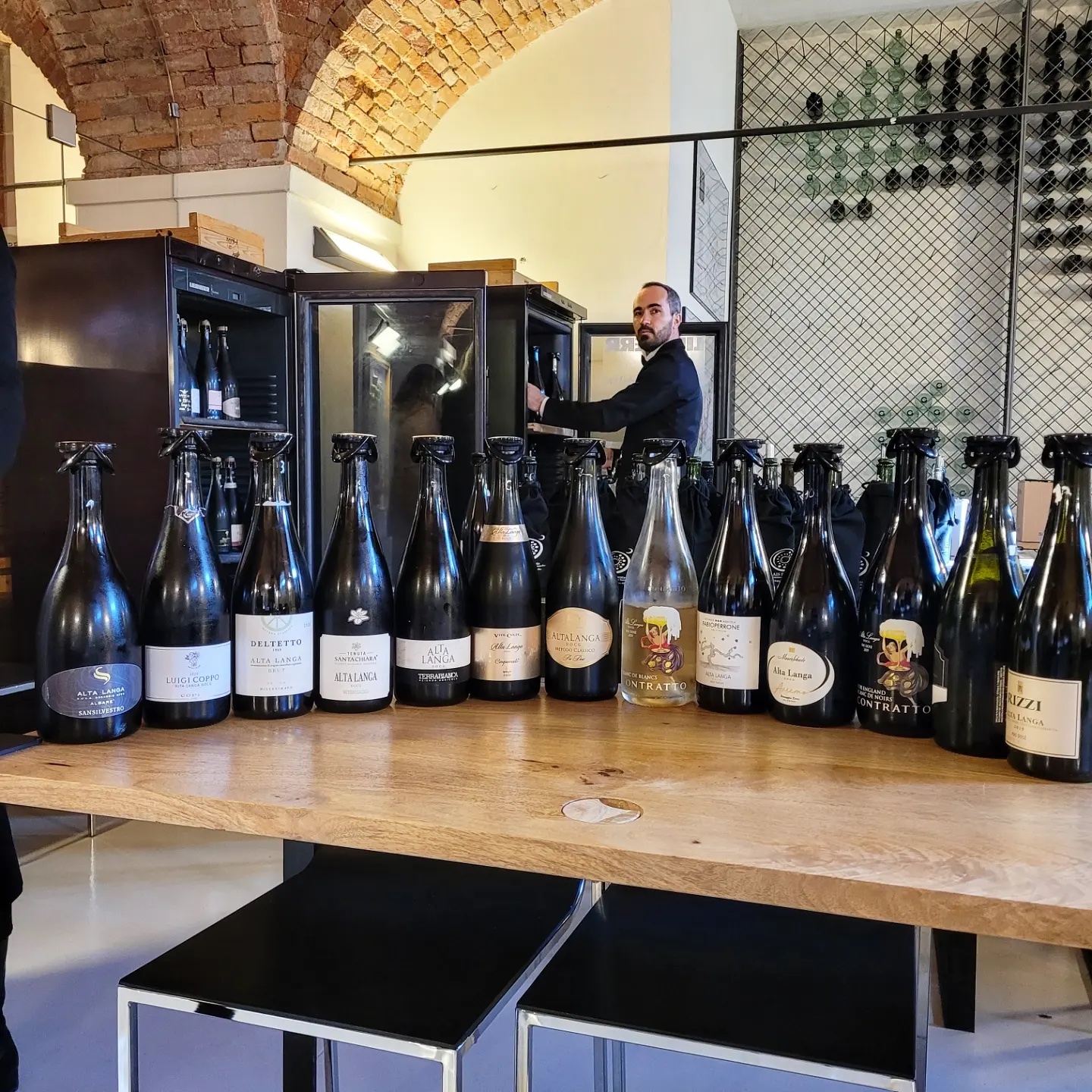
Alta Langa blind tasting revealed

Contratto Alta Langa DOCG Pas Dosé For England Blanc de Noirs 2019

Maturing and oxidative example, noted first in golden hue and then the bronzing, sun-tanned feeling on the aromatics. Gingered and orange scraped palate notes yet dry as the desert and caught up in taut intensity. Really complex, very “Cap Classique” in style or Champagne that leans notably oxidative. A specific way of doing things for sure and one done very well. Drink 2023-2026.  Tasted Blind with the Consorzio Alta Langa in Asti, December 2023

Pianbello Alta Langa DOCG Pas Dosé Orme 2019

Quite classic, stoic, taut and yet highly tonal pronounced iteration of untreated chardonnay without dosage. Straightforward, unabashed, running hither and thither with just about everything Alta Langa will offer in this dry, untamed and free to be style. Very well made in all these knowable respects. Drink 2023-2027.  Tasted Blind with the Consorzio Alta Langa in Asti, December 2023

Rizzi Alta Langa DOCG Pas Dosé 2019

Aromatic, more than many, especially considering the style, that being Blanc de Blancs without any dosage. The flavours and textures follow suit though the autolysis takes charge in notes of cheese rind plus bitters. A bit overdone in this regard and so the finish falls off as a result though there is certainly character and charm for short term drinking. Drink 2023-2024.  Tasted Blind with the Consorzio Alta Langa in Asti, December 2023

Tenuta Carretta Alta Langa DOCG Pas Dosé Airali 2019

Quite phenolic and reserved aromatically speaking. True aridity in the pas dosé idiom and the palate changes nothing about that in this way. Crunchy Alta Langa and it does begin to change and become something other with some time in glass. Next level flavours and also texture comes out to finish with that pencil lead and bitter tincture drops of chardonnay God. Give this some time. Drink 2024-2028.  Tasted Blind with the Consorzio Alta Langa in Asti, December 2023

Banfi Alta Langa DOCG Extra Brut Cuvée Aurora 2019

Another phenolic entry and so one of those sapid style of Alta Langa chardonnay is expected. And so it is with dry botanical aromatic notes followed by great flesh, lemon and lime in all their parts and extended play for a very important and lengthy example. Holds all the necessary tenets and stuffing to see this age well, but also evolve to become something special. Drink 2024-2028.  Tasted Blind with the Consorzio Alta Langa in Asti, December 2023

Daffara & Grasso Alta Langa DOCG Extra Brut 2019

Very lemon up front, bigger aromatic thrust than many but we’re out of Pas Dosé and into Extra Brut with this Blanc de Blancs. Fine lines and pretty good purity with quite a notable level of bitters though we are aware of how well they integrate into the fabric and framework of a properly executed and structured sparkling wine. Drink 2023-2027.  Tasted Blind with the Consorzio Alta Langa in Asti, December 2023

Ettore Germano Alta Langa DOCG Extra Brut 2019

Extra Brut accommodation and you feel the juxtaposition of sugars and acids in the aromatics. Feels riper and fleshier but only the palate can confirm or confound that idea. Does the first and then goes into full citrus juice squeeze, though it’s manifold, of lemon, lime and also grapefruit. The destiny of this wine is to see some cheese and funk in the future but so many will see the love and the beats in that next stage. Drink 2023-2026.  Tasted Blind with the Consorzio Alta Langa in Asti, December 2023
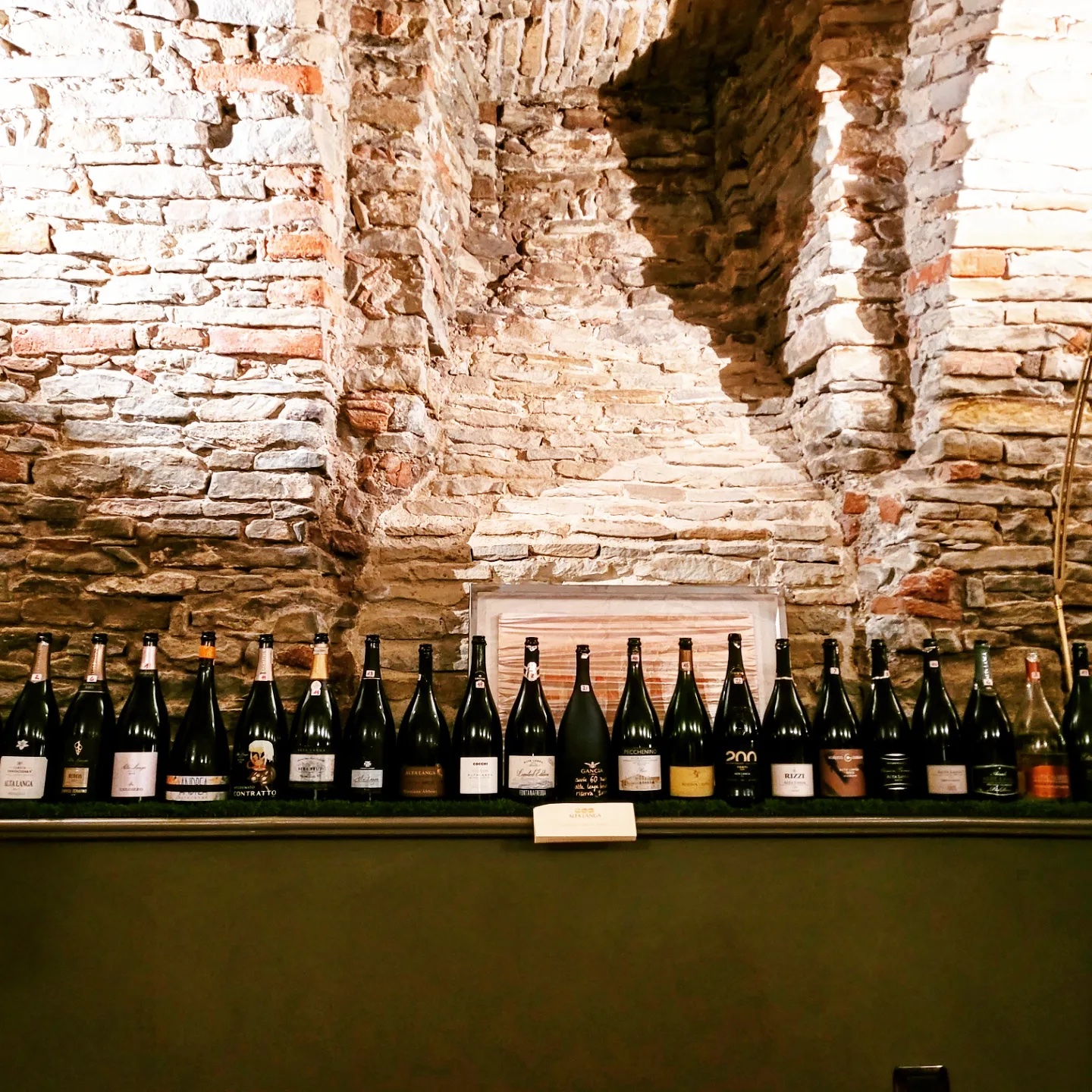
Alta Langa at Relais San Maurizio, Santo Stefano Belbo

Ivaldi Alta Langa DOCG Extra Brut Andrea Blanc de Blancs 2019

Quite phenolic, plenty of citrus flesh but also custardy orchard fruit. Extra Brut and you note the sweetness, nothing simple here and it does elevate the style. This will have wide appeal for its easy, if earlier drinking ability. Drink 2023-2024.  Tasted Blind with the Consorzio Alta Langa in Asti, December 2023

Marcalberto Alta Langa DOCG Extra Brut Millesimo2mila19 2019

Truly proper in the Extra Brut Bianco ways of Alta Langa are extracted, exerted and extrapolated upon with a fine 2019. Lemons and apples, tart and tight on the palate, great acidity moving all ways including sideways, all parts together, linear, vertical and powerfully restrained. A very fine example from a warm and yet promising vintage. Drink 2024-2029.  Tasted Blind with the Consorzio Alta Langa in Asti, December 2023

Marziano Abbona Alta Langa DOCG Extra Brut 2019

The sapidity spoken of by agronomists and producers is here on the phenolic front in this Bianco Extra Brut. Captures a certain side of Chardonnay and does so with stoic, reserved, complicated and trenchant nature. This wine has purpose and feels so very serious. It will need a few years to settle and hopefully prepare some flesh for a more pronounced Alta Langa experience. Drink 2025-2030.  Tasted Blind with the Consorzio Alta Langa in Asti, December 2023

Massimo Rivetti Alta Langa DOCG Extra Brut 2019

More juiciness and terpene action up front as compared to many and so a slightly later harvest from a warm vintage seems to be the fruit matter on order. Some maturity and a bruised apple note in the flavour profile confirms this and while acidity is spot on there is this feeling of flattening out at the finish. Drink 2023-2024.  Tasted Blind with the Consorzio Alta Langa in Asti, December 2023

Roberto Garbarino Alta Langa DOCG Extra Brut Le Rapide 2019

The Extra Brut Alta Langa as Bianco seem to act tart in one of the three ways. Sharp and restrained, maturing or as it does here which is phenolic to imagine a sapid sparkling wine. Not exactly the opposite of salty but a different sort of mineral style, that is to say a sparkling wine that is a direct result or at least one that speaks with true correlative nature to the place. That being a terroir surely sandstone based with some slit, minor calcareous parts and older soils, geologically speaking. A vertical wine with great apposite if transferring and complimentary fleshy texture and a wine as long as is gets. Drink 2024-2029.  Tasted Blind with the Consorzio Alta Langa in Asti, December 2023

Roccasanta Alta Langa DOCG Extra Brut 2019

Phenolic, for the most part with some green notes and plenty of terpene as well. A bit overdone, likely picked a bit tardy and so acidity is more dense and botanical than the team probably wished it to be. Drink 2023-2024.  Tasted Blind with the Consorzio Alta Langa in Asti, December 2023

Tenuta Rocca Alta Langa DOCG Extra Brut 2019

Expressive and quite tightly wound example of Extra Brut for chardonnay as a Bianco or Blanc de Blancs style. Lemon in every respect, more juice and zest than pith but it’s all truly represented. Fine work in a very specific, taut, direct and scintillant way. Drink 2023-2026.  Tasted Blind with the Consorzio Alta Langa in Asti, December 2023

Roberto Garbarino Alta Langa DOCG Extra Brut Il Viaggio 2019

Still in the Extra Brut conceptualization for (chardonnay) Bianco and of the three styles this comes out phenolic and well extracted. An example that transfers really well onto the palate with tart juiciness and true blue varietal acidity that travels up and down the sides of the palate. Not the most complex sparkling wine and lacks some depth but it’s solid, well made and serves great purpose. Drink 2023-2026.  Tasted Blind with the Consorzio Alta Langa in Asti, December 2023

Agricola Brandini Alta Langa DOCG Brut 2019

The first true reductive Alta Langa in flight of 69 with this being the 26th pour. Agitation does blow off some steam and allow fruit to rise like cream to the surface. What is next is great purity and a creaminess to the mousse unlike any other thus far. These flavours are rich and frankly delicious though that reduction will be a detraction for some. The finish is long and nurturing. Stick with this wine if you want the right kind of reward. Drink 2023-2027.  Tasted Blind with the Consorzio Alta Langa in Asti, December 2023
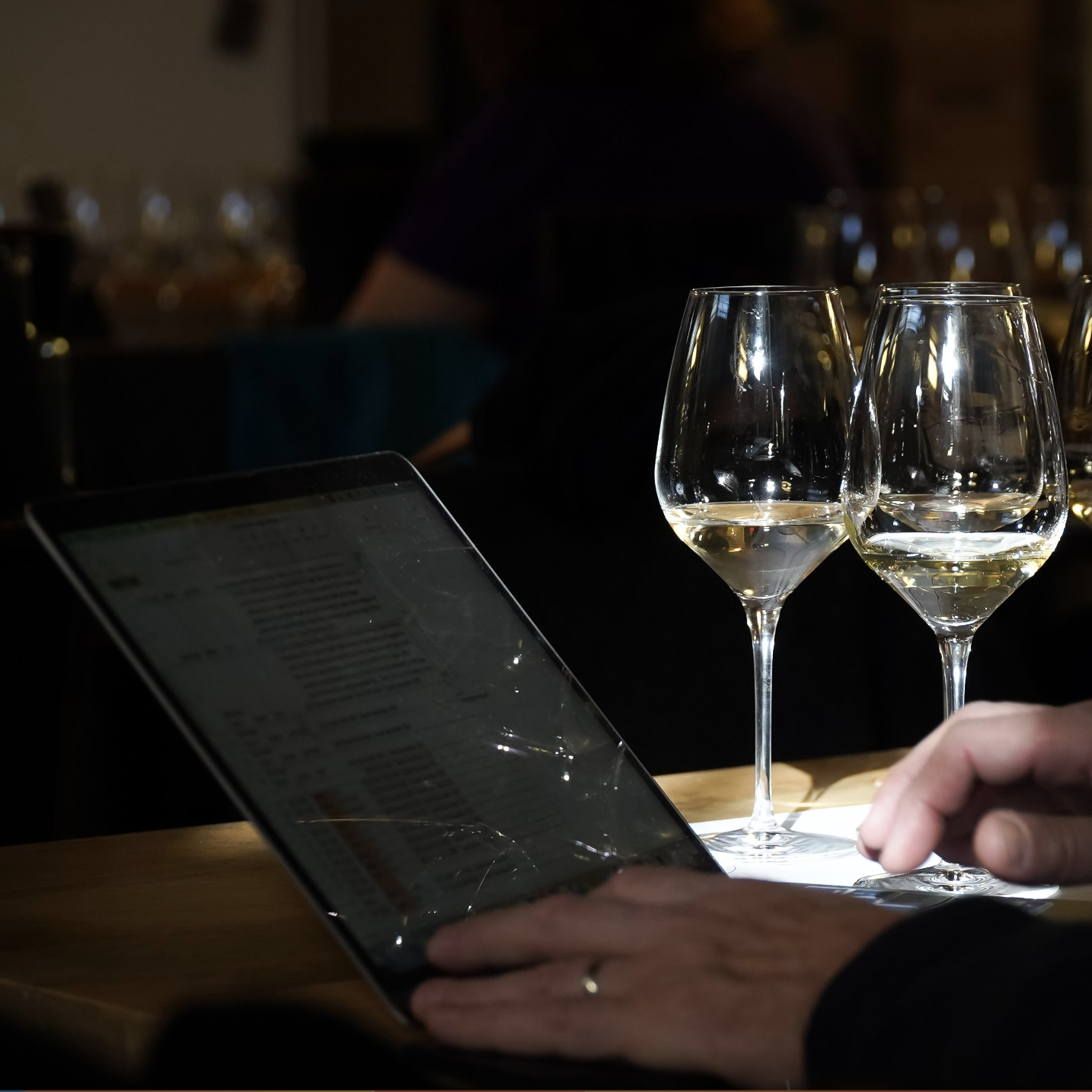
Blind tasting Alta Langa (c) Anastasia Florea and Consorzio Alta Langa DOCG

Bosca Alta Langa DOCG Brut Ispiro 2019

As quiet as it gets aromatically speaking from a Brut for chardonnay out of a warm and promising vintage. Though the entry was a reserved and yet giving one there is much more happening on the palate. Heavy dose of lemon, fresh squeezed and ready to integrate with the sapid-mineral wealth of this wishing to be serious example. Here is an Alta Langa with true karst from bones that stand upright with great skeletal verticality that suggests poor soils and plenty of calcium carbonate for a result that could only be like this. This winemaking team paid great respect to the terroir. Drink 2024-2029.  Tasted Blind with the Consorzio Alta Langa in Asti, December 2023

Cascina Cerutti Alta Langa DOCG Brut Enrico Cerutti 2019

Well made, simple, straightforward, a bit bitter and creamy iteration of chardonnay in the local ways of Brut sparkling wine. Short and to the point. Drink 2023-2024.  Tasted Blind with the Consorzio Alta Langa in Asti, December 2023

Fontanafredda Alta Langa DOCG Brut Blanc de Blancs 2019

Quite the phenolic lift as opposed to that aromatic ripeness style that can sometimes weigh down Alta Langa sparkling. A botanical example with replay on the palate that confirms the suspicion. Good integration of parts with acidity more than well and good but the phenols outweigh all else and take back power in the end. An herbal example, possibly because of heavier and more organic soils that deliver some increased vigour and therefore likely yields iin the vines. Drink 2023-2024.  Tasted Blind with the Consorzio Alta Langa in Asti, December 2023

Il Cascinone Alta Langa Riserva DOCG Brut Alasia 2019

The first Alta Langa Riserva at pour number 30 in a flight of 69 and a stoic one at that, with must reserve in the tank. High ranking parts, namely substantial if notably compact fruit that puts this is a place of yet unresolved business. The acidity is similar of nature meaning its not of scintillant action but rather one of weight as well. This could use some time to see if it will open up and rise up as it likely wants to, after being interred by too much gravity. Drink 2024-2027.  Tasted Blind with the Consorzio Alta Langa in Asti, December 2023

Paolo Berutti Alta Langa DOCG Brut 2019

High terpene level and so orchard fruit (namely apples) are front and centre for this chardonnay of Brut categorization. Crisp enough and acidity is elevated though the parts are a bit disparate and there is some bruising of the fruit. Drink 2023-2024.  Tasted Blind with the Consorzio Alta Langa in Asti, December 2023

Pecchenino Alta Langa DOCG Brut Ecole 2019

Cheese funky and bruised. Not a good bottle or perhaps past prime.  Tasted Blind with the Consorzio Alta Langa in Asti, December 2023
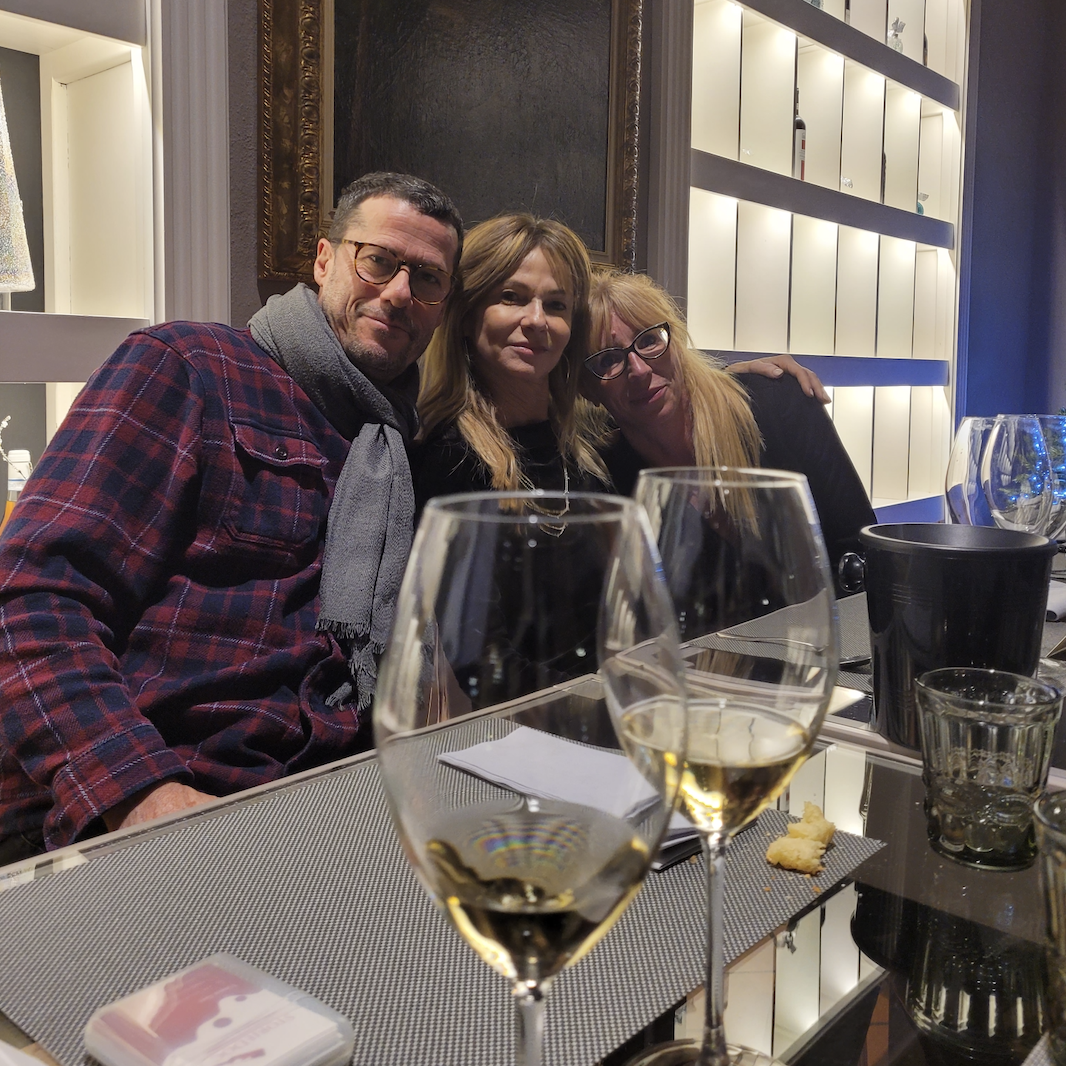
With Alta Langa Consorzio President Mariacristina Castelletta and Journalist Åsa Johansson (c) Anastasia Florea and Consorzio Alta Langa DOCG

Piazzo Comm. Armando Alta Langa DOCG Brut Ritorno in 2019

Reduction released by agitation quite quickly so note to self and to others be sure to give this sparkling Alta Langa a swish and a swirl. Grippy example, fully fleshed and giving much aromatic fruit, palate presence, fleshiness, some creamy texture and finally that local sapidity so often talked about. There is much going on in this Brut though it does not soften in the end. Drink 2023-2026.  Tasted Blind with the Consorzio Alta Langa in Asti, December 2023

Sara Vezza Alta Langa DOCG Brut 2019

The kind of aromatic entry that causes a raise of one eyebrow because it’s a combination of maturity and intrigue. A very young wine in one respect and on the other also one of experience. Rich at first and then repeated, but also a matter of fine acidity before rising and then settling with tonic and bitters. Seriously complex activity here and if perhaps a polarizing Bianco then so be it because the chardonnay and pinot noir each do so much to variegate the blend. They make this work. Drink 2023-2028.  Tasted Blind with the Consorzio Alta Langa in Asti, December 2023

Vinchio Vaglio Alta Langa DOCG Brut 2019

Cool, sapid, salt-licked, rising to meet the ethereal and the first notably mint-savoury Alta Langa noted in this long flight of 69. Tart and full on tang, fleshy, ripe and chewy – sure more than 95 percent of what can be tasted. This will have great appeal for its generosity and acumen.  Tasted Blind with the Consorzio Alta Langa in Asti, December 2023

Ravasini Alta Langa Riserva DOCG Pas Dosé 2019

Mature, oxidative and not perfectly clean. Very natural feel, pas dosé and obvious for a style that was intended to be played out. Does not quite function as we, or at least some might have wished it to. Not convinced Alta Langa can yet do this style consistenly well, at least not this early in its tenure. Drink 2023-2026.  Tasted Blind with the Consorzio Alta Langa in Asti, December 2023

Enrico Serafino Alta Langa DOCG Extra Brut Parcellaire 2019

An Extra Brut Bianco with some extra lees aging time, here from a cooler and wetter vintage which is duly noted on the aromatic entry of the wine. Part reduction and part reserve, a tight and grippy wine that shows its strength through structure overarching above all else. A sapidity that its maker surely wanted and a holding back so that it can continue to develop, morph and become something next or at at the very least, other. The palate delivers the full experience and there is some great flesh hanging taut on these solid bones. A fine Alta Langa in this specific style – there can be no arguing this as a fact. Drink 2024-2028.  Tasted Blind with the Consorzio Alta Langa in Asti, December 2023

Terre del Barolo Alta Langa DOCG Extra Brut Vinum Vita Est 2019

Firm iteration of an Extra Brut stylistic that could use some generous aeration so that the aromas can be released. They will and do, though it would seem acting less effusive then some. This goes more at a line that is tight and the end of Alta Langa predicated on intensity and drive. Plenty of spirit here and a finish dotted by fine bitters, of pith and tubers. Drink 2023-2027.  Tasted Blind with the Consorzio Alta Langa in Asti, December 2023

Bera Alta Langa DOCG Brut 2018

Also labeled as DOP because “dad always believed that DOP stood for quality,” tells oenologist Umberto Bera. He was also one of the first 10 to join the Consorzio Alta Langa. The mix is 70 percent chardonnay and (30) pinot noir, 15 months on lees. A mix of toasty and autolytic notes, 5 g/L of RS, well beneath the Brut threshold. Disgorged in May, 2023 and so the aging time is nearly three times that 15 months and Bera disgorges three times per year. Showing some secondary level maturity with ample freshness preserved and a persistence of energy.  Last tasted December 2023

Nothing overt but yes there is a phenolic and also metallic presence within the aromas. Lemon drop and also herbs, not quite sweet but like basil or better yet slightly more resinous like tarragon. Good crunch in palate texture with stuffing and a mouthful to be had before moving sideways into more metals and botanicals. A periodic wave of elements and emotions form this Extra Brut mix of chardonnay and pinot noir, likely close to half and half. Drink 2023-2026.  Tasted Blind with the Consorzio Alta Langa in Asti, December 2023

Ravasini Alta Langa DOCG Brut Cuvée Leonora 2018

Maturing aromas and so the vintage plus lees aging have come to a place where the wine is moving into secondary stage. Just that hint of fungi, basic like a meadow variety, horse or commercial button, but with no sign of truffle. That will likely happen soon enough so get at this Brut styled Bianco sooner rather than later. Flavour profile is open and strong though again evolution is in full movement forward. Drink 2023-2024.  Tasted Blind with the Consorzio Alta Langa in Asti, December 2023

Cocchi Alta Langa DOCG Pas Dosé 2017

Now heading back a few years with a warm and dry vintage of little worry for a producer and their pas dosé methodology. The nose is quiet and comforting, the perfumes more demure and beautiful than many of similar ilk. This Alta Langa may not scream of its intentions nor will it appeal to a mass audience but it’s character is quietly impressive and its style something worth repeating. Consistently reserved, never demanding and always in complete control. Fine and proper if again not the most gregarious sparkling wine you are likely to encounter. Drink 2023-2027.  Tasted Blind with the Consorzio Alta Langa in Asti, December 2023

Tosti1820 Alta Langa DOCG Brut Giulio I 2017

Truly unique nose on this 2017 Brut which seems to put pinot noir first though not convinced its percentage exceeds that of chardonnay. A clean funk or better said classic Langhe earthiness involved and so this seems to be an Alta Langa true to terroir. Plenty of textural chew and citrus preserve but also this cool, gelid and slightly bitter feeling to the fruit. The lees are a major part of this exercise and while they are not 100 percent clean they are the kind that lend and promote great character. Drink 2023-2026.  Tasted Blind with the Consorzio Alta Langa in Asti, December 2023

Cocchi Alta Langa DOCG Brut Bianc’d Bianc 2017

Plenty of lees aging and effect here for a 2017 Alta Langa of a warm and extremely dry vintage. Seems to have really settled into its skin with softening aroma and creaming textures that are seamlessly integrated at this advanced stage. If getting to know and understand aged Alta Langa and its potential is on your wish list then this Brut is a very solid place to start that journey. Drink 2023-2025.  Tasted Blind with the Consorzio Alta Langa in Asti, December 2023

Banfi Alta Langa DOCG Pas Dosé Cuvée Aurora Blanc de Noirs 2016

Truly toasty and piquant example of pas dosé Alta Langa with a curious cotton candy or slightly caramelized peachy note to begin. Really well aged with clean lees and a fine gem-metal aspect to join the maturing fruit notes. This holds its line and maintains its composure to great length and effect. Drink 2023-2027.  Tasted Blind with the Consorzio Alta Langa in Asti, December 2023

Tenute Rade Alta Langa DOCG Pas Dosé 2016

No dosage and a very restrained example that whiffs of neutral or virgin concrete, dry and severe. Not a sound bottle perhaps though a second bottle delivers much of the same. The palate is improved with fleshy citrus flavours yet that musty note prevails.  Tasted Blind with the Consorzio Alta Langa in Asti, December 2023
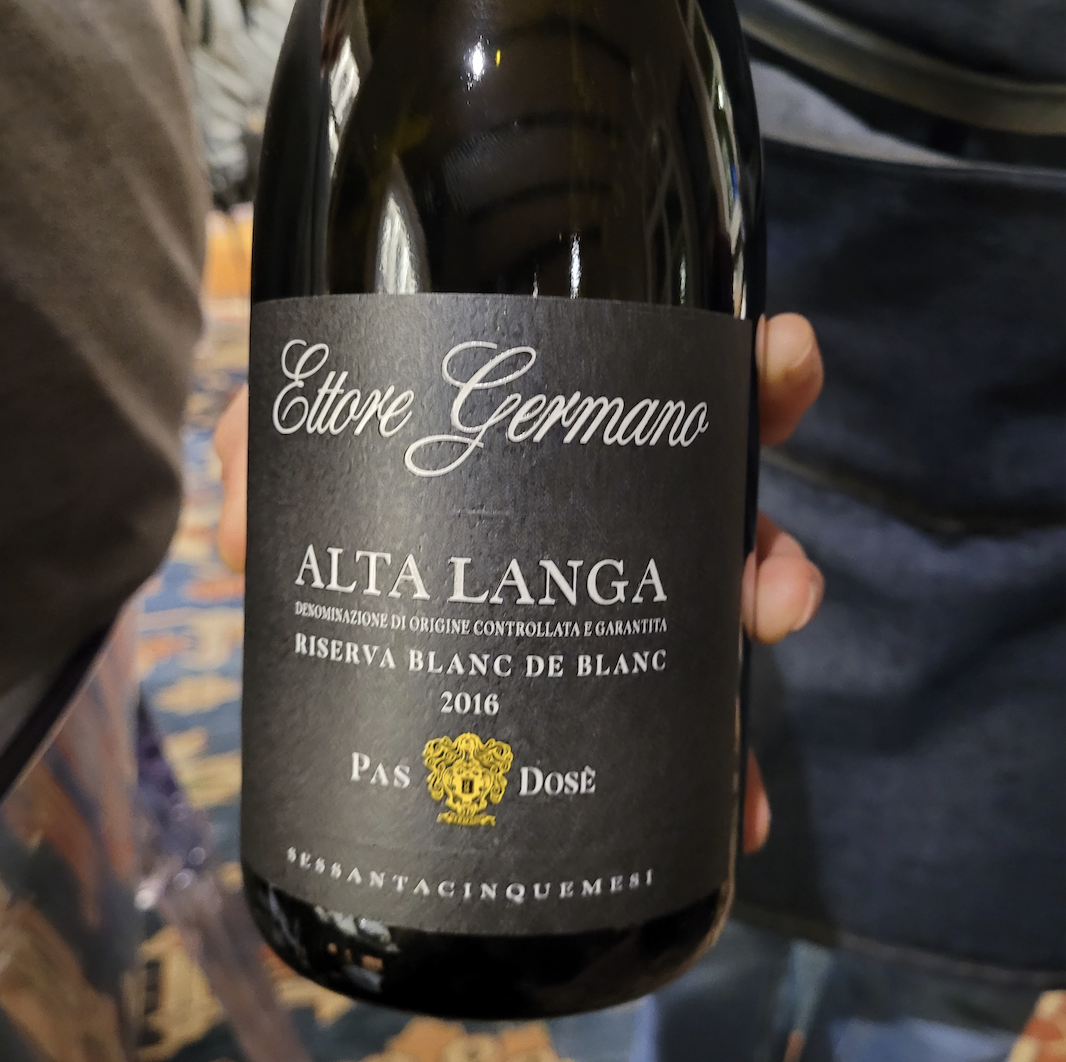
Ettore Germano Alta Langa Riserva DOCG Pas Dosé Blanc de Noir 65 Mesi 2016

It seems that Riserva is not just a matter of longer aging time but also a product of greater fruit quality. This 2016 from a powerful and tannic vintage brings the goods in ways few others seem want to deliver. Crisp and in charge, an intensity of parts that begin with quality fruit never letting up or seemingly willing to relent. Carries items with dignity and confidence for a wine or great Alta Langa respect, of its heritage and place. Feels like the clear juice from pinot noir stands above the chardonnay in this cuvée of great purpose and interest. Drink 2023-2030.  Tasted Blind with the Consorzio Alta Langa in Asti, December 2023

Roccasanta Alta Langa Riserva DOCG Pas Dosé 2016

Not overly expressive in fact this holds back despite its age and lees aging time as per the Riserva style. The palate is appsoite, mature, of slight caramel and notably soft. This has done its time and the time is now to drink up. Has developed a minor cider note to confer that suggestion.  Tasted Blind with the Consorzio Alta Langa in Asti, December 2023

Tenute Rade Alta Langa Riserva DOCG Pas Dosé 2015

From 2015 and a no dosage Bianco iteration of volatility, maturity and a mix of caramelization meets oxidation. A lovely old drop in one respect and because the acidity rises high it’s well preserved and so should be well perceived and received as a sparkling wine of age. Flattens after the initial weak palate display before fading off into the proverbial Alta Langa sunset.  Tasted Blind with the Consorzio Alta Langa in Asti, December 2023

Daffara & Grasso Alta Langa Riserva DOCG Pas Dosé 290 mesi 2014

Alta Langa in Riserva form with that extension from extra Lees aging and no dosage for that magical combination. This has truly developed next level character while staying level on its legs and staying a course that will allow even further aging excellence. Labels Bianco though tasted blind it can be nothing but Blanc de Blancs because the chardonnay stands out like a hitchhiker with an extra large thump. A guide to the Alta Langa galaxy right here in the glass, heady, steady and grippy with a real plan, even if the world may not think that this place and these wines have this fully entrenched in mind. The real deal will reveal itself and this 2014 has done just that. Drink 2023-2027.   Tasted Blind with the Consorzio Alta Langa in Asti, December 2023

Fontanafredda Alta Langa Riserva DOCG Pas Dosé Vigna Gatinera 96 mesi Blanc Noir 2014

Only Alta Langa it seems can effect this intricate mix of long lees aging time and no dosage for such great and curious effect. As here though this 2014 Bianco is showing some oxidative maturity even even while it persists as a reductive example by way of its pinot noir and chardonnay cuvée. Still crunchy and truly flavourful with both yellow citrus and small red berry fruit in combinative affair. Finds its groove late and accumulates more and more pleasantries as you taste through a few sips. You need to hang in with this nine year-old Alta Langa and if you do there will be greater reward. Drink 2023-2026.  Tasted Blind with the Consorzio Alta Langa in Asti, December 2023. asted December 2023

Gancia Alta Langa DOCG Pas Dosé Cuvée 36 mesi 2014

A Bianco long on its lees and showing maturity though also a stoic nature to begin. Still crunchy and like a mouthful of citrus and stones. This would have been singing with its finest voice just a year ore two ago though still does so dutifully and truthfully today. Drink 2023-2025.  Tasted Blind with the Consorzio Alta Langa in Asti, December 2023

Bera Alta Langa DOCG Brut (90 mesi) 2013

A mildly oxidative and advancing example though having strong 10 years in. Plenty of experience, of creamy fruit, almost a custard of the orchards and while pinot noir makes a play it is the Chardonnay making the bigger statement. Shows off heritage and good planning to exact more emotion for what kind of potential Alta Langa holds for wines to age this length of time. Drink 2023-2025.  Tasted Blind with the Consorzio Alta Langa in Asti, December 2023

Coppo Alta Langa Riserva DOCG Brut Riserva Piero Coppo 2013

A Riserva of Bianco that reeks at least as much of pinot noir as it does so from chardonnay. At ten years of age it have proven to have lasted and lingered as well as could be expected with the best times presented right here and now. Feels like a wine of age and drinks with nurturing comfort at this stage, like a blanket or a parent. Drink up and savour every last moment.  Last tasted blind with the Consorzio Alta Langa in Asti, December 2023

The 2013 vintage is the turning point to this 60 percent pinot noir and (40) chardonnay becoming and being labeled Alta Langa, recently disgorged in 2022. Previous disgorgements were labelled Vino Spumante di Qualità. Now into wildly vivid and famous complexity, toasty yes but there’s a crème frâiche and an almost strawberries and cream component. Eonologists GianMario Cerrutti, Guiliermo Grasso and Vittorio Pescarmona conspired to see this age 85 to 90 months on the lees, almost unprecedented around Asti. Has hit its stride, in the right place between crunchy and the kind of sparkling wine that you begin to ruminate with in the mouth. Cerebral wine in every respect. Drink 2023-2027.  Tasted January 2023

Tosti1820 Alta Langa Riserva DOCG Riserva Giulio I 100 Mesi 2012

More than 10 years old and still a quietly demure and not overtly philanthropic example of Alta Langa Riserva. Getting as much red fruit pinot noir as citrus chardonnay on the nose though together they combine and accumulate for a very fruity sparkling wine. Also toasty and even just flinty enough to consider the calcari, the argilla and the arenaria in the earth from whence this once emerged and has now arrived. A beautiful ALR after all these years and I for one would relish a pour anytime it might be forthcoming. Drink 2023-2026.  Tasted Blind with the Consorzio Alta Langa in Asti, December 2023

Enrico Serafino Alta Langa Riserva DOCG Pas Dosé Zero 140 2010

No sugar added at tirage and yet you will not find more natural fruit in an Alta Langa Bianco or Riserva, especially in this style. Magnificently organized and perfumed of all the fruit blossoms and then the ripeness of that fruit as it arrived at fruition. Toasty, even still slightly reductive and almost no signs of true maturity – certainly limited oxidation. The truth is alive and these bubbles prove that Alta Langa ages really, really well. Drink 2023-2027.  Tasted Blind with the Consorzio Alta Langa in Asti, December 2023

Gancia Alta Langa Riserva DOCG Brut Cuvée 120 mesi 2010

Nearly 13 years of age and a wine doing well, thank you very much. Many years (upwards of 140 months) on its lees and using every bit of those clean yeasts to conduct a current and fully realize the fruit for dramatic effect. Just a bit toasty and over excited (as it must have always been) to rise above the fruit but acidity is fine, racy and its charge well executed to make this work as well as it should. Drink 2023-2026.  Tasted Blind with the Consorzio Alta Langa in Asti, December 2023
Blind tasting Alta Langa (c) Anastasia Florea and Consorzio Alta Langa DOCG

Rosato

Colombo Alta Langa Rosato DOCG Brut 2020

Just a wee youthful one, of maximum 24 months on lees for a Rosato (namely Blanc de Noirs) that modernizes Alta Langa with ever increasingly utilized pinot noir. Well short of saignée and just a few hours run off with clean juice that came from pure fruit of a well timed sparkling pick. The clarity puts this in spot on territory for the idiom. Creates a dictionary entry Rosato for the denomination. Drink 2023-2027.  Tasted Blind with the Consorzio Alta Langa in Asti, December 2023

Ivaldi Alta Langa Rosato DOCG Extra Brut Andrea 2020

Extra Brut with a bit more dosage that foils if not perfectly aligns with the fruit and acidity for what collates as a slightly rustic example. Well and substantial fruit and complimentary savour if just off-putting because the combinations create some mismatching and misappropriated flavours. More than serviceable if not truly representative of potential. Drink 2023-2025.  Tasted Blind with the Consorzio Alta Langa in Asti, December 2023

Banfi Alta Langa Rosato DOCG Extra Brut Cuvée Aurora 2019

A few years of lees aging has done well to set this Extra Brut Rosato up for rusty copper Alta Langa success. More than ample richness, orchard fruit that involves crab apple and then a turn to more savoury elements with low-creeping vines that deliver leaf and red fruit in elastic flavours. Carries with nimble ability, without distraction and only purity. Very well made with the capability to age at least a few if not five-plus years. Drink 2023-2028.  Tasted Blind with the Consorzio Alta Langa in Asti, December 2023

Massimo Rivetti Alta Langa Rosato DOCG Extra Brut 2019

Quite pale for Alta Langa Rosato and so though a factor of pinot noir and blanc de noirs it is noted how the maceration was quick and oh so gentle. Not as overtly aromatic as some though there is a yeasty autolytic note involved to tell us quite a bit about the style and also the intention. Pay attention to the stage presence and the seriousness with which this intends to capture your palate. Succeeds for the most part though does not hold on as long as some deeper and more impressive examples. Drink 2023-2026.  Tasted Blind with the Consorzio Alta Langa in Asti, December 2023

Il Cascinone Alta Langa Rosato DOCG Brut Alasia 2019

Quiet aromas, a bit of citrus tablet dissolve and more dosage noted than many. Simpler, easy and getable ahead of the game. Lacks the complexity and drive of more serious examples in the Brut Rosato category. Drink 2023-2025.  Tasted Blind with the Consorzio Alta Langa in Asti, December 2023

Ravasini Alta Langa Rosato DOCG Brut Cuvée Leonora Rosé 2019

Cider notes, of terpene and juiced orchard fruit that suggests more than pinot noir but is likely just a matter of how this was pressed. Acetic and volatile more than anything else. Something went wrong in this case.  Tasted Blind with the Consorzio Alta Langa in Asti, December 2023

Tosti1820 Alta Langa Rosato DOCG Brut Rachele Rosè 2019

A funky cheese rind note mixes with a rusty and rustic red fruit style anchored by strawberry then accepted by rhubarb, baking spices and earth. A savoury kind of Brut Rosato that’s not so much a matter of overripe fruit bit more so terroir and then winemaking. An is what it is Alta Langa that succeeds because it is unique. Sweetness comes out at the finish to mix and merge with tonics and bitters. Drink 2023-2025.  Tasted Blind with the Consorzio Alta Langa in Asti, December 2023

Agricola Brandini Alta Langa Rosato DOCG Brut 2018

Crisp, earthy and crunchy Rosato, savoury and with some strawberry sweetness across the board. Begins savoury and finishes on a sweeter if also earthier note. An interesting Rosato that will likely morph and change into something of greater interest because the yeasts are clean, the fruit pure and the potential quite good. Drink 2024-2027.  Tasted Blind with the Consorzio Alta Langa in Asti, December 2023

Gancia Alta Langa Rosato DOCG Brut Cuvée 36 Mesi Rosé 2018

Rusty, savoury and cheese rind aromatic with plenty of yeasty lees notes that likely need more time to integrate. That said the rusticity can’t be ignored nor denied so keep in mind how parochial and local this will always purport to be. It’s really quite comforting and with some excited energy on the palate their is a true affinity with growers’ Rosé Champagne. That’s a compliment because authenticity and respect for terroir are more than half the battle and reason to appreciate an Alta Langa sparkling wine.  Last tasted Blind with the Consorzio Alta Langa in Asti, December 2023

Minor reduction which is in fact something that is important because “things would be a lot more serious if drinking a glass would make you want to drink a glass of water,” kids Dr. Donato Lanati. Sounds like a joke but in these climate change and extreme times you can taste what would not have been tasted before and Gancia knows, with 150 years of experience in crafting sparkling wines. Aging some of the base wines in wood goes a long way to control the reduction and yet some reduction is a good thing. There is some sweetness in the perfume which is a result of a portion having been aged in a “sweet” wood. This sulphur dioxide character mixed with some acetates that have yet to fully dissipate are what drive aromatic pulchritude and it is the esters (within reason) which will bind with amino acids to eliminate any semblance of confection. There is a small dosage here but it in fact under wonderful control and while Rosé by nature is rounder than Bianco, well no matter or judgement because the mix of tension and elasticity is really well managed. Drink 2024-2029.  Tasted December 2023

Enrico Serafino Alta Langa Rosato Riserva DOCG Pas Dosé Zero Rosé 2017

This Rosato may be pas dosé but screams form the glass with a wealth of ripe fruit captured to be put to great use. Richness and energy combine from start to finish, exert upon the palate and continue to rise through every moment of this fine Alta Langa sparkling wine. No let up, time off, sick days, stops or starts. Continuous and righteous. The potential is still great and the faint bitterness on the palate is just so appropriate. Drink 2023-2026.  Tasted Blind with the Consorzio Alta Langa in Asti, December 2023

Cocchi Alta Langa Rosato DOCG Brut Rösa 2017

Good aromatic presence, a nose into Orange Pekoe tea and earth before the leafy red fruit notes become involved. Tight and bracing on the palate with piercing acidity, never acetic nor volatile but very much in charge. An intense example that still needs time to flesh out even if it’s a wine from back in 2017. Not sure it will ever really change but if you like this excitable style than this is the Alta Langa Rosato for you. Drink 2023-2026.  Tasted Blind with the Consorzio Alta Langa in Asti, December 2023

Fontanafredda Alta Langa Rosato DOCG Brut Contessa Rosa Rosè 2017

Notable extra fruit substance and also yeasty notes determine the Riserva designation and set this Rosato up for plenty of slow maturing, unfolding and unraveling days ahead. Rusty, earthy, gingered and tonic-botanical notes but also evergreen so quite a variegate composition from pinot noir. Complex tones for sure if just that ever so slight disadvantage as a wine that will act and therefore be an acquired taste. Drink 2023-2026.  Tasted Blind with the Consorzio Alta Langa in Asti, December 2023

Roberto Garbarino Alta Langa Rosato DOCG Extra Brut L’Istinto 2016

The oldest of the Roasto and the only one defined as Extra Brut in a flight of 13 Alta Langa examples. The most fruit blossom forward on the nose, rich and expressive, sweetness so well incorporated and the fruit comes away so finely crossed between citrus and berries. Really well delineated and defined, of accords struck and alliances formed. This will live a great long iife. Drink 2023-2028. Tasted Blind with the Consorzio Alta Langa in Asti, December 2023

Good to go!

godello

Godello, Alta Langa blind tasting

Twitter: @mgodello

Instagram: mgodello
WineAlign

Special Report: Sicilia DOC

Nero d’Avola

A deep look into the island’s productive balance, qualitative probability, sustainability by nature and signature varieties in red and white

as seen on WineAlign

Sicily is, as they say, “casa quantu stai e tirrinu quantu viri,” or “home for as long as you need to be and land as far as the eye can see.” I always assumed it would be the water that surrounds the island that captivates and holds all attention, but from endless seas of wheat to grapevines covering plains, hills and terraces, the Sicilian quiddity would be its land.

You might also think this largest island spanning over 25,000 square km in the southern Mediterranean would ripen grapes with the sort of ease akin to some of the world’s warmest climates, like South Australia or the Western Cape of South Africa. Would that it were so simple. In Sicily they say, “austu e riustu capu i mmennu,” which says that “after August, winter starts.” Growing grapes is truly a matter of place. Sure there are arid and warm pockets all over the island but a grower must be specific with grape varieties matched to meso-climates but also soils. This is a Sicilian necessity. The farmers and producers in Sicily continue to prove that staying true to core values, paying attention to quality and limiting yields in the name of productive balance puts the island in a league with the country’s elite denominations. Where does this ring with more consistent truth than those that fall under the auspices of Sicilia DOC?

A recent concise and focused study by Jacky Blisson MW tells us that Sicily’s terrain is predominantly hilly and mountainous, with a mere 14 per cent flatlands. It is home to Europe’s highest active volcano, Mount Etna, which towers above the island’s other peaks at 3,350 m. A continuation of the Calabrian Apennines, Sicilian Ranges cover a large swathe of northeastern Sicily. Central and western Sicily are a mix of rolling hillsides and isolated mountains. The island’s only large expanse of flat land is the fertile plain of the Catanian central range from sea level to more than 1,000 metres on the slopes of Mount Etna. The wide range of grapes and altitudes means that harvest season across the island can last from the beginning of August until well into November.


Given its location, it is no surprise that Sicily enjoys a sunny Mediterranean climate with hot, dry summers and mild, moderately rainy winters. Lack of rain in summer makes irrigation necessary in many of Sicily’s low-lying vineyards. Indeed, Sicily’s plains are its driest areas, with an average of 500 millimetres of rain annually. The mountainous regions are rainier, with up to 1,400 millimetres of precipitation per year. Vineyards in these higher altitude sites generally do not require irrigation. The island’s vineyards are located mainly in proximity to the island’s coastlines. Marine breezes ventilate the vineyards, resulting in lower disease pressure that allows for organic practices. Depending on the direction of the wind, temperatures can fluctuate significantly. On the southwest side of the island, the Sirocco, a hot, dusty wind from the deserts of northern Africa brings scorching summer highs.

The soil composition of Sicily’s vineyards are diverse – from sedimentary sandstone through limestone and granitic rocks, to volcanic areas. Ancient seas that receded over various geological eras are responsible for the calcareous nature of many vineyards. The chalky vineyards of the southeastern zones Noto and Eloro boast some of the oldest soils and are prized for their elegant wines. In south-central Sicily, soils of marine origin dominate alongside limestone-rich areas, but there are also sites with more sand and clay. The western provinces have sandy loam soils, as well as rockier areas with calcareous clay (and sandstone soils). Much of Sicily’s vineyards are planted on this fertile terrain. The northern provinces have sandy and rocky soils mixed with windblown silt. Volcanic soils are also prevalent, notably surrounding Mount Etna and the islands of Pantelleria and Salina. With multiple yearly eruptions, soil composition is constantly changing, which makes this the youngest soil type on the island. The volcanic areas are a mix of basalt pebbles, pumice, and black ash.


Take a trip to Italy’s southern-most wine region and you will be struck by the number of specificities Sicilian winemakers and producers have already figured out in order to make generational decisions. The success of any wine region depends on knowing where to denote qualitative probability so that it is possible to achieve the greatest results. Sicily’s vineyards are defined within a land of mono-estates, much like Tuscany, in that its crus are single-owner farmed. This means that in order to qualify their best blocks and single-vineyards they must do so with ambition and ego. Unlike Tuscany the complication is much greater because they are not going at the exercise with just one grape. This might be looked at as a most difficult undertaking but if you own your problems and your decisions you can make it happen. In micro terms there are two dozen DOCs and one DOCG. Look inward at the hundreds upon hundreds of “contrade” (districts within the Italian countryside), crus or small geographic areas defined in terms of soil types, including many layered volcanic lands. In macro terms this is also why the island has chosen to create an all-encompassing category, Sicilia DOC. It’s the only DOC unanimously chosen to represent the region as a whole. In terms of size Sicily is equal to South Africa, Germany and three New Zealands. The fact that a place of such breadth can unify under one umbrella is nothing short of an Italian miracle.


From relics of the Copper Age to present day quality:

A few years ago in Palermo, there was Maurizio Gily presenting a study by Gabriella De Lorenzis in which she explains that around ninth century BC the cultivated vine was introduced by the Greeks, in Southern Italy and in Sicily. Comparing the genetic profiles of Sicilian varieties with those from other wine-growing areas of the Mediterranean area, these are strictly connected with the vines of Southern Italy (Calabria, Campania, Basilicata and Puglia) and Greece. Numerous reports reveal how this area, historically known as Magna Graecia and defined as the Acclimatization Triangle for the varieties introduced by the Greeks, shows a certain genetic homogeneity.

Wine is an ancient Sicilian prospect. A study conducted by Davide Tanasi, Enrico Greco, Donatella Capitani and Domenica Gullì looks at fragments of jars dating back to the Copper Age in the third millennium BC found in some caves on the Kronio mount at Sciacca. The study has shed light on some components of the diet of the ancient population living there. Traces of cooked pig meat and of tartaric, proline and syringic acids have been found among the various remains. The last ones prove the presence of wine in the diet. The discovery dates back about two thousand years in the history of wine in the Mediterranean basin, whose production would be, therefore, much earlier than the colonization of Phoenicians and Greeks.

Sicily: sustainable by nature:

Where nature is generous, agriculture can also respond in the right way. Sicily is the first region in Italy dedicated to organic agricultural production, which results in excellence in the world of wine. The primacy is made possible by ideal climatic conditions, fertile soils and winds. But also, by prodigious human attention and professionalism that is maintained by individual producers and supported by the Consorzio di Tutela Vini Sicilia DOC (which, since 2012, has led the way in conservation and the promotion of the wine heritage).

The work of the Consortium was started and continues towards sustainability, reducing treatments on plants and vines that are not necessary, precisely because the island’s conditions are favourable for growth. Sicilian sustainability is therefore intertwined with respect for one’s activities and authenticity, aimed at protecting the richness and variety of the territory. The result is a high-quality product that fully respects the environment, a wine born from the privilege of an island that is sustainable by nature. Tradition remains the root of oenological culture, but does not limit its vision: new generations of Sicilian wine producers — which the Consortium supports — work on increasingly modern and fresh wines, which look to international cuisine.

A 2018 decision to allow producers and bottlers across the island to bottle under the appellative umbrella code of Sicilia DOC initially led to a 124 percent increase in the number of bottles produced compared to the first two months of 2017. “A just reward for quality and control,” noted Antonio Rallo, chairman of the Sicilia DOC consortium, also known as Consorzio di Tutela Vini Doc Sicilia. “This growth data is no surprise to us and confirms the level of interest companies are showing in the Sicilia DOC designation. An important element is that all of the Sicilian DOCs showed a pattern of growth in the first two months of 2018, confirming, as in the rest of Italy, that our aim is increasingly focused on a designation system capable of guaranteeing greater quality and controls throughout the entire supply chain, both in Italy and abroad.” In 2021 Sicilia Doc bottled 96-plus million bottles, a six per cent increase as compared to 2020.


Signature varieties in red and white:

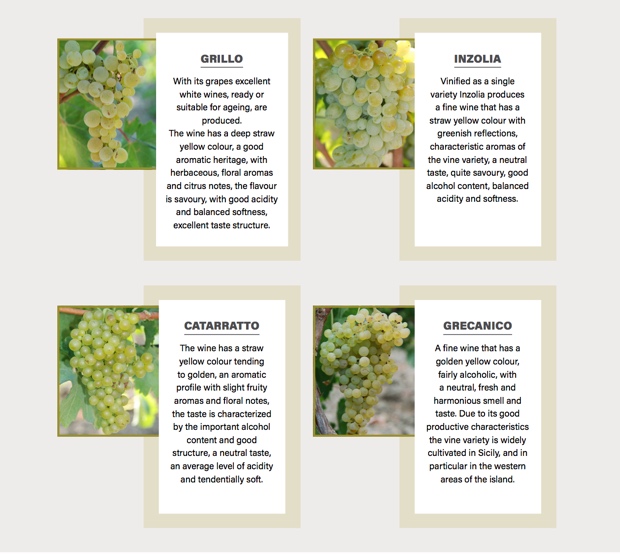
Take nero d’Avola and now grillo as examples of how Sicily has wrapped its arms around native grape varieties to create market share. Both grillo and nero d’Avola can only be sold under the Sicilia DOC label. Grillo’s achievement as a top 10 selling Italian white wine confirms the legitimacy of this decision and above all that consumers have greater confidence in a product that is protected and guaranteed. Grillo’s bottling numbers increased 26 per cent in 2021 as compared to 2020.

“We are very proud of the results obtained for our Sicilian grillo wines, which further confirms the growth trend of the Sicilia DOC label,” says Antonio Rallo, “but, in particular, it highlights how safeguarding autochthonous vines can bring excellent results in terms of sales and induce greater confidence in a market that is increasingly aware of the importance of purchasing a traceable product. The adoption of monitoring and control activities highlights the value of our vine varieties and acknowledges the importance of a controlled and guaranteed supply chain.”

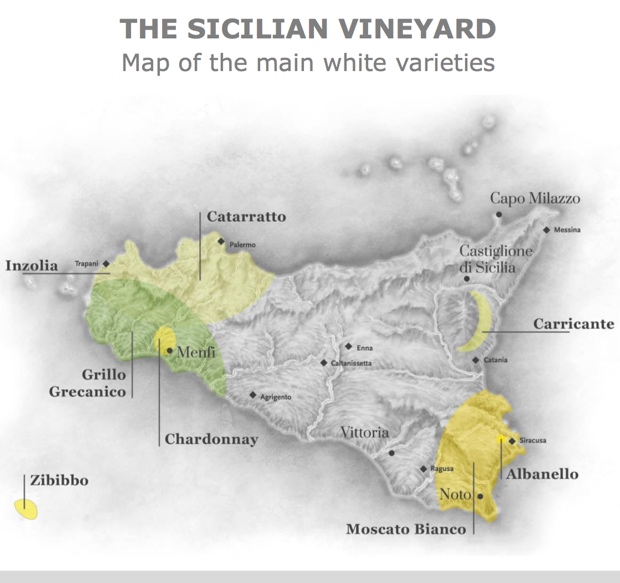
Grillo was born from the crossing of two varieties, lucido (known widely as catarratto) and the aromatic zibibbo. Both Italian and traditional method sparkling wines are becoming increasingly commonplace in addition to a plethora of stainless-steel raised and some oak-aged grillo. The variety has taken hold in more parts of the island as the most planted white variety and leads the Sicilia DOC category for white wines.

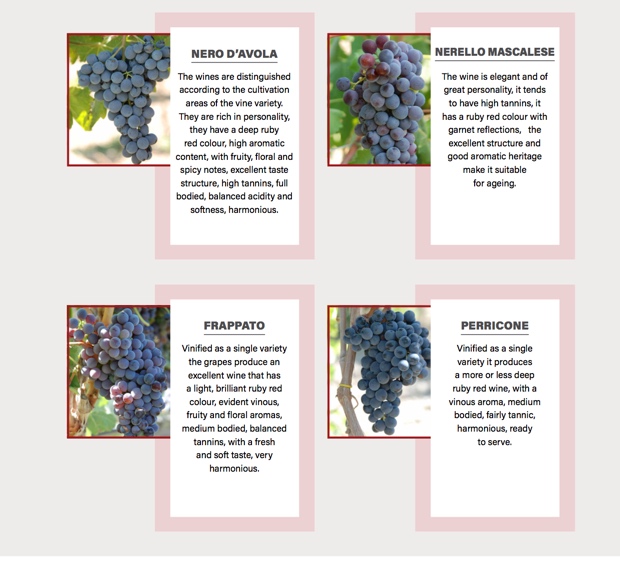
The most widely planted red cultivar, nero d’Avola is native to Sicily. More than 19,000 hectares are planted across the island. It’s surely much older than what records show, yet the first literary mention was made by Sicilian botanist Francesco Cupani in 1696. He called it calabrese. The word nero translates as “black” and Avola is the eponymous name of the southeastern town, where the variety is still heavily planted. The grape was a go to for the Tuscans, Piedmontese and also French winemakers looking to use the variety’s dark hues, flavours and acidity for blending. Now the unequivocal signature red and icon for the island’s and in particular DOC Sicilia’s wine production. Nero also plays so well with other indigenous Sicilian grape varieties, namely frappato and perricone, but also with international varieties such as merlot, syrah and cabernet sauvignon.


Sicily’s aromatic whites and wines today:

In Sicily, the climate and especially the many micro-climates bless the island with levels of aromatic complexity that come straight off the skins of the grapes, especially the whites. The winemaker in tune with terroir is not in search of fat wines because, quite frankly, Sicily already has so much of everything. So the question is asked, “why do they need bigger and richer styles of wine?” This fundamental approach is surely an existential one but also one that is highly practical and when followed always leads to some of the most truthful aromatic white wines on the planet. Beyond grillo, Sicily’s main indigenous white grapes include lucido (catarratto), inzolia, zibibbo, carricante and grecanico dorato. From Blisson’s report we know that some believe the modern era of Sicilian wine began with the planting of international grape varieties in the 1970s. The likes of chardonnay, merlot, cabernet sauvignon and syrah were just some of the grapes introduced to the island during this period. Producers have worked to showcase these wines around the world. In recent years, many of Sicily’s top producers have reoriented their efforts toward the island’s diverse range of indigenous grapes. Sicily boasts over 70 documented local cultivars. Major focuses include the crisp, subtly floral and savoury white wine blends featuring the grillo white variety and powerful red wines from the peppery, dark-fruit scented nero d’Avola grape.

Food pairings anyone?

The 2019 Best Sommelier of Italy, Mattia Antonio Cianca, has made some stellar suggestions in this regard — and so allow us to share them with you.

Grillo sparkling (charmat method) with freshly shucked oysters with lime dressing or cauliflower tempura with lemon mayonnaise; grillo sparkling (traditional method) with Maine lobster, remoulade, granny smith apple and black truffle or crispy fried chicken seasoned with aromatic rock salt; grillo (stainless steel) with Thai mango and shrimp salad or octopus cevichs, orange, ginger, and coriander; grillo (oak-aged) with roasted pork belly with cider and cream sauce or grilled scallops, walnuts, yoghurt, marjoram, anchovy; nero d’Avola (rosato) with radish, pomegranate and fresh mint salad or Sicilian tuna tartare; nero d’Avola (unoaked) with spaghetti with sardines, pine nuts, sultana and wild fennel or smoked beetroot carpaccio, maple syrup, and chives; nero d’Avola (oaked) with roasted venison loin with rosemary and pickled cherries or beef stew with coconut milk and salted peanuts.

I recently sat down to taste through a varied set of wines with a focus on grillo, nero d’Avola, perricone and aromatic whites. Here are the top picks from the group, available at the LCBO or through consignment channels in Ontario agents’ portfolios. Please contact the agent directly to order the consignment wines.

Buyers’ Guide to Sicilia DOC wines

Caruso & Minini Naturalemente Bio Cataratto 2021, Sicilia DOC

Friendly, nurturing and comforting, tart in the ways of tonics and their botanical inclinations, superlatively complex.

Vino Lauria Grillo Giardinello 2021, Sicilia DOC

A smashing specimen, taut, concentrated and fulfilling. As savoury as it is perfumed, swelling in unctuous viscosity and the essence of flora.

Serra Ferdinandea Rosato 2021, Sicilia DOC

A joint venture between Planeta and the Oddo family from the south of France. Here nero d’Avola and syrah are made in the airiest salty and light-tart way; quenching and satisfying. You can drink the town out of this Rosato, any day, any time.

Dolce & Gabbana Rosa Rosé 2021, Sicilia DOC

A blend of nerello mascalese and nocera, two apposite varieties, one being the Dolce and the other Gabbana. Together they combine for exotic fragrance but also sweet candied florals, cottony feels and salty streaks right on through. Can’t think of a time when this Rosato would fail to please.

Cusumano Nero d’Avola 2020, Sicilia DOC

Even at this consumer-friendly price you get the real varietal deal from all-estate fruit in a wine of silken texture and not a matter of wood. One of the most honest wines at this price made and readily available just about anywhere.

Planeta La Segreta Nero D’Avola 2020, Sicilia DOC

Light, pure and honest wine that speaks in an Ulmo varietal vernacular though there too is some fruit from Noto. More grip, pomp, power and oomph from 2020.

Feudo Montoni Lagnusa Nero d’Avola 2019, Sicilia DOC

The confidence and warmth exudes from this musky, violet floral and intoxicating wine that simply speaks to the grape’s ideal perfume. Fruit is ripe, at once delicate and then peaking with power, albeit tempered, purposed and restrained.

Centopassi Cimento Di Perricone 2019, Sicilia DOC

Perricone may have an uphill battle to rival nero d’Avola but its smoky-herbal nature also brings structure, fresh acids and earthy, lightly roasted fruit.

Vino Lauria Zio Paolo Nero d’Avola 2020, Sicilia DOC

Wise, seasoned and expertly reasoned, of herbals and fruits stirred and swirled. Some meaty or, better yet, cured salumi skin muskiness plus a sanguinity with a hint of raisin.

Caruso & Minini Naturalemente Bio Nero d’Avola 2019, Sicilia DOC

As unique as it gets, aromatically speaking, in the world of nero d’Avola of frutta di bosco (wild fruits) but also the nuts, woods, brush and soils of an equally natural and wild kind. A nero of musk and grape must hyperbole.

Good to go!

godello

Nero d’Avola

Twitter: @mgodello

Instagram: mgodello
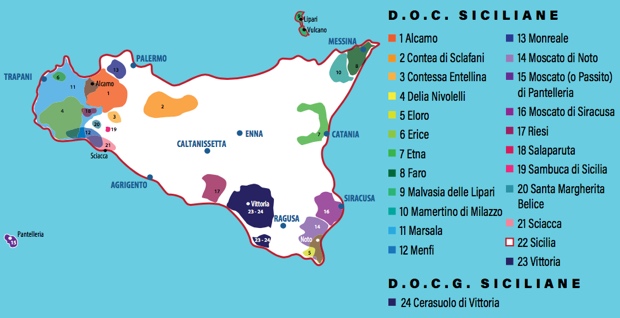
WineAlign

Sicily in review

Nose deep at Baglio Christo di Campobello

Last week my first report from Sicilia en Primeur appeared over at WineAlign. I discussed the island’s amazing diversity of geography and how its producers have developed an uncanny ability in understanding of how to match their island’s multifarious and idiosyncratic varietal necessities to the über-specific demands of micro-climates and terroir. In that report 30 defining examples were explored and reviewed. In this Godello follow-up I offer up an expanded snapshot, with 45 additional tasting notes and dozens of images to highlight my eight days spent touring and tasting across bella Sicilia.

Related – Sicily’s varietal concentration: Measuring an island’s wealth in grape varieties, a journey through its winelands and tasting Sicilia en Primeur

~ ~ ~

As seen on WineAlign … Have you ever felt so at home or been so comfortable travelling as you have been in Sicily? If you’ve not been then you might not understand what I mean. Sicily is Casa quantu stai e tirrinu quantu viri, “home for as long as you need to be and land as far as the eye can see.” I always assumed it would be the water to captivate me, but from endless seas of wheat to grapevines covering plains, hills and terraces, it would always be about the land.

You might also think this island in the southern Mediterranean would ripen grapes with the sort of ease akin to some of the world’s warmest climates, like South Australia or the Western Cape of South Africa. Oh that it were so simple. In Sicily they say, Austu e riustu capu i mmennu, “after August, winter starts.” Growing grapes is truly a matter of place. You need to be specific with your grape varieties and match them to your micro-climate, but also your soils. This is a Sicilian necessity.

Inside the doorway there's me, endlessly thinking and working. ~ The author at Tenuta Regaleali

“Inside the doorway there’s me, endlessly thinking and working.” ~ The author at Tenuta Regaleali

A trip to Italy’s southern most wine region of a mere eight days is enough to be struck by the number of specificities Sicilian winemakers and producers have already figured out in order to make generational decisions. The success of any wine region depends on knowing where to denote qualitative probability so that it is possible to achieve the greatest results. This is the Burgundian model and yet Sicily’s vineyards are defined within a land of mono-estates, much like Tuscany in that its crus are single-owner farmed. This means that in order to qualify their best blocks and single-vineyards they must do so with ambition and ego. Unlike Tuscany the complication is much greater because they are not going at the exercise with just one grape. This might be looked at as a most difficult undertaking but if you own your problems and your decisions you can make it happen. In micro terms there are 23 DOCs and one DOCG. Go smaller and look at the hundreds upon hundreds of contrade, crus or small geographic areas defined in terms of soil types, including many layered volcanic lands. In macro terms this is also why the island has chosen to create an all encompassing category: Sicilia DOC. It is in fact the only DOC unanimously chosen to represent the region as a whole. In terms of size Sicily is equal to South Africa, Germany and three of New Zealand. Yes, it’s bigger than you would have thought.

Godello, Jessica Bordoni and Sharon van Minden

At Castellare di Castellina’s Niscemi outpost of Feudo di Pisciotto on the plain of Gela it is oenologist Marco Parisi who talks of their location six kilometres from the sea but even more about the specific micro-climate. He tells of a project called reliquendo, an investigative and experimental vineyard where they study 13 indigenous varieties nicknamed “relics” because they are cultivars that are no longer used. They continue to study these varieties just to check if some of them have the potential to become or return to be a variety good for wine production. The mixed plantings of red and white are then treated with micro-vinificatons. Parisi is also focused on nero d’avola. When he waxes about the island’s most important grape variety he refers to it as having a typical smell of straccio bagnato, the “air of wet cloth.”

Capo Milazzo, Sicily

Sicily is occupied by a variability of viticulture, rainfall, elevation and and soils. The diversity applies to nero d’avola as well, with so much variation in cluster and berry size, biotypes and clones. it’s just not the same grape everywhere it’s planted and grown; Menfi, Noto, Capo Milazzo, Vittoria and Etna. Noto has calcareous soils like Jerez and Champagne, not really comparable to anywhere else. Capo Milazzo is alluvial, deep soils, friables, out of rivers that came from the northern mountains. Menfi and the whole western side has energy and colour, violets, plum, chcolate and mint. Vittoria is red fruit in style, with bottle aging capacity, generally turning fruity to leafy and tobacco plus/minus chocolate. Noto is close by but it’s a mobile texture, silk and velvety tannins. Capo Milazzo’s proximity to the sea leads to salt, algae, black cherry and cypress. All this from Patricia Tóth of Planeta.

Feudo Principi Di Butera winemaker Antonio Paolo Froio

At Feudo Principi Di Butera winemaker Antonio Paolo Froio points out the mix of conditions just within the estate’s lands, eight kilometres from the sea and even greater, the importance of mountain influences. The variability of the calcareous soil provides very different results in (especially) nero d’avola. Three distinct parcels, Trapani in the west, the estate’s central plain and the “eastern theatre” are all planted to different clones. The west deals in fatter wines of lower acidities, the east in smaller, compact bunches and in the central plain, less compact bunches, bigger berries, high acidity and tannin. These revelations lead to correlations and being able to make desired blends in varietal wines. As a result Antonio’s wines are pre-emptive, planned with great foresight and always with a caution strike. They are focused, precise, clean, sophisticated, subtle and balanced.

Castello Falconara

At Baglio Del Cristo Di Campobello proprietor Carmello Bonetta delves deep into the highly specific and territorial chalky soils and a micro-climate of high day for night diurnal temperature fluctuations. The limestone/gypsum in this portion of Campobello di Licata is quartz-like though very fragmented and fragile and it is here where grillo, the child of zibibbo and cattarrato was born. Masseria del Feudo’s Carolina Cucurullo is a fourth generation farmer with two distinct vineyards in Caltasinetta and of the first producers to plant chardonnay, in 1991/1992.

Agronomist Davide Bacchiega, Tenuta Regaleali

Agronomist Davide Bacchiega, Tenuta Regaleali

You would have to search the island many times over to find an estate project with more research and experimentation behind it than that from Alberto Tasca of Tenuta Regaleali. There is no sea influence at Regaleali so higher diurnal temperature swings mean picking times are generally late September to late October. In Siciliy! Tasca tells us “you learn from the bees, to know if you are doing well.” And so the approach is sustainability, to measure impact, to grow regal varieties, use herbs and to create biodiversity in the vineyards. “Organic is too static,” says Tasca. “I prefer biodynamic. It’s more in touch with the land and the practices that associate with the land. Sustainability speaks the greatest to impact.” So he and agronomist Davide Bacchiega work with universities, learn about soil health, raise cover crops and sheep for ricotta.

Alberto Tasca, holding court at Tenuta Regaleali

The focus on syrah takes place at Moreale because it’s too cool and wet around the estate at Regaleali. There is experimentation with perricone, alberello bush vines for nero d’avola and cattarrato. Rain is collected in man made lakes, for use in arid vintages and for cleaning tanks. Rosemary and bay laurel grow everywhere. Inzolia is grown in the Barbabietole Vineyard and heritage vines are propagated by burying canes, waiting for budding, tying it down with an iron ring and then cutting a spur into the vines. This methodology and preservation helps to keeps the true nature and spirit of a wine like Rosso del Conte alive.

Melissa Muller and Fabio Sireci, Feudo Montoni

Which brings us to Feudo Montoni. Fabio Sireci’s secret world is found in the Contrada L’Homo Morto. This is the heart of Sicily, where provinces collide and in terms of elevation his estate is one of the highest (at 700m) and sits at the confluence of the winds, including the Sirocco that blows from North Africa.  There is also 350 days of sunlight, something the surrounding wheat fields quite enjoy. But in Sireci’s vineyards there is no search for heat and alcohol, only freshness, high acidity, low pH and long life. Fabio says “we do not have a marketing plan, we have only what the grapes give to us.” His pre-phylloxera nero d’avola Vrucara vineyard houses 100-plus year-old alberello bush vines. Just as they do at Regaleali, at Feudi Montoni they make use of propagine, the method of replacing spaces where century vines have passed on, by burying an arm, allowing it to take root and then splitting it to become it’s own ungrafted plant. It’s quite simple. You can’t graft onto vines so old. “Everything here is stopped in time.”

Feudi Montoni, L’Homo Morto, Siclia

Feudo Montoni’s history goes back 1500 years with Roman records indicating that in the sixth century there was a notation of this field as being a place where specific biotypes of vines thrived. If Fabio could ever get past his inferiority complex perhaps he’d celebrate such knowledge. His vineyard is that special, 30 of 80 hectares planted are all his, il nanismo, “the dwarf estate.” Fabio and his partner Melissa Muller make 25 vinifications of the same grape, every year. Talk about experimentation and dedication to varietal understanding. “I love my land and we choose the best areas to bring my wines to the world,” he says with no complex whatsoever. Whites (grillo, cattarrato and inzolia) are planted at the highest elevations, where the iron and the magnesium rule. The lower parts are sandy, from erosion, with the presence of fossils and shells from an ancient sea. There is also black soil, with humus, layered, stratified, above the argilo, clay and sand. This is where you find Vrucara. “It’s easy to make good wine, more or less” says Fabio, “but we need to transfer the soul of the vineyard into the wine. Please don’t take me for a crazy person.” No chance of that Fabio. What about nero d’avola? “It’s like a crazy horse,” he insists, “wild and crazy young, then slowly refines. It needs micro-oxygenation and producers shouldn’t look at it with the market in mind.” He finishes by asking “What is nero d’avola? Look at a map of Sicily,” is the answer.

Palermo

After visits to Feudi di Pisciotto, Feudo Principi Di Butera, Baglio Del Cristo Di Campobello, Masseria del Feudo, Tenuta Regaleali and Feudo Montoni I travelled to take part in the Sicilia En Primeur events. In Palermo I took part in a walking tour of the city. The original one day stroll through the city of Palermo concentrated on baroque and contemporary art. The tour highlighted the urban changes of the seventeenth century Palermo and the originality of Giacomo Serpotta’s sculptures together with contemporary works of art from both public and private collections: Palazzo Belmonte Riso – Regional Museum of Contemporary Art; Galleria Francesco Pantaleone at the Quattro Canti; Palazzo Butera – Massimo and Francesca Valsecchi Collection (a building site due to open on June 15th for Manifesta 12, the European biennial of contemporary art, opening in the city in mid June); Palazzo Torremuzza with the Bevilacqua collection of contemporary art (to be confirmed as it is a private house, normally not open to the public). Starting from the Quattro Canti, the baroque heart of the city, continuing to Piazza Bologni with Palazzo Belmonte Riso and ending at Palazzo Butera on the waterfront, art historian and contemporary art curator, Valentina Bruschi illustrated the most interesting antique and contemporary works of art.

#notthesame ~ #quattrocanti #palermo #siciliaep18 #siciliaenprimeur #fourcorners

In Palermo we listened intently to a panel discussing the current state of Sicily’s wine industry and its connection to the city. The presentations by Maurizio Gily, Mattia Filippi (Assovini Sicilia), Antonio Rallo (Sicila DOC), Planeta’s Alessio Planeta and Palermo Mayor Leoluca Orlando all looked to connect the island by the phrase stato stazione delle una perfetta, meaning the union is currently situated in a perfect state, working together for the common good.

Fountain of Shame, Palermo

More than 100 journalists representing a total of 22 countries took part in the recently concluded edition of Sicilia en Primeur, a preview of Sicilian wines organized by Assovini Sicilia. As Palermo is the Capital of Culture for 2018, the city’s Palazzo Riso, Museo d’Arte Contemporanea della Sicilia was chosen as the backdrop for the tastings, masterclasses and meetings with wine producers, confirming once again the increasing amount of attention that the island’s wine industry is attracting from all over the world. By the numbers 53 wineries participated in the event, 450 wines were presented for tasting in the wine producer halls (50 of which were en primeur tastings), 360 wines were presented in the tasting hall, 144 wines were on the wine list, 103 Magnums and five standing room only masterclasses.

Sicilia en Primeur Press Conference, Museo Riso, Palermo

Sicilia en Primeur Press Conference, Museo Riso, Palermo

Potential was also stressed by the mayor Orlando. In his speech he explained “this city, like the island’s wine industry, has managed to overcome its challenges and now, thanks to the commitment of many, it has become the Capital of Culture. In Palermo, we have witnessed a cultural change and the same applies to the world of wine: we know how to work together to use our Mediterranean origins to our best advantage. To draw an analogy between the experiences of Palermo and Sicilian wine, it is fair to say that we have managed to reconcile the roots and the wings of our existence. A metaphor indicating our respect for the past and commitment to the future.” The mayor summarized his message with three words about his city of Palermo. “Exciting, safe and inexpensive.”

Palazzo Butera Palermo

The decision to allow producers and bottlers across the island to bottle under the appellative umbrella code of Sicilia DOC has led to a 124 per cent increase in the number of bottles produced compared to the first two months of 2017. “Just reward for quality and control,” says Antonio Rallo, Chairman of the Sicilia DOC consortium, also known as Consorzio di Tutela Vini Doc Sicilia. “This growth data is no surprise to us and confirms the level of interest companies are showing in the Sicilia DOC designation. An important element is that all of the Sicilian DOCs showed a pattern of growth in the first two months of 2018, confirming, as in the rest of Italy, that our aim is increasingly focused on a designation system capable of guaranteeing greater quality and controls throughout the entire supply chain, both in Italy and abroad.”

Missed flight first order of business #espresso

Take nero d’avola and now grillo as great examples of how Sicily has wrapped their arms around native grape varieties to create market share. Both grillo and nero d’avola can only be sold under the Sicilia DOC label. Grillo’s achievement as a top 10 selling Italian white wine confirms the legitimacy of this decision and above all that consumers have greater confidence in a product that is protected and guaranteed. “We are very proud of the results obtained for our Sicilian Grillo wines, which further confirms the growth trend of the Sicilia DOC label,” remarked Rallo, “but in particular it highlights how safeguarding autochthonous vines can bring excellent results in terms of sales and induce greater confidence in a market that is increasingly aware of the importance of purchasing a traceable product. The adoption of monitoring and control activities highlights the value of our vine varieties and acknowledges the importance of a controlled and guaranteed supply chain.”

Sicila en Primeur, May 2018

Sicila en Primeur, May 2018

My tastings across the island engaged no less than nine important grape varieties, plus the region’s most celebrated blend and only DOCG, Cerasuolo di Vittoria. The opportunities to taste happened during visits to the six aforementioned properties and the three-day intensive gathering in Palermo for Sicilia en Primeur. The four-part opportunity was split between Sommelier service, Masterclasses, walk around producer one-on-ones and a private morning hotel tasting from bottles generously offered by several producers and graciously collected by the JustSicily and Sopexa staff. The week’s wines included the whites; grillo, inzolia, carricante and cattarrato, plus the reds; nero d’avola, nerello mascalese, syrah, frappato and perricone. Most of the island’s table wines fall directly under the all-encompassing and smartly organized denomination of DOC Sicilia, with notable exceptions labeled as IGT Terre Siciliane. Deeper investigations took in the volcanic specialities of DOC Etna Bianco, Rosso and Rosato. Then there were wines from characteristic locations (and communes) such as Sclafani Bagni, Noto, Campbello di Licata, Milazzo, Niscemi, Cammarata, Mozia, Caltanissetta, Menfi, Butera, Acate and Vittoria. Here are my reviews of 75 wines tasted in Sicily.

Tasting through the range of Planeta Winery with winemaker Patricia Tóth ~ Image (c) Pasquale Buffa

Tasting through the range of Planeta Winery with winemaker Patricia Tóth ~ Image (c) Pasquale Buffa

Inzolia, Grillo and Catarratto

Masseria del Feudo Inzolia Sicilia DOC 2017, Sicily, Italy (WineryWineAlign)

From vineyards in Caltasinetta at 450m, organic, picked in the third week of September. Wild ferment and done up in stainless steel. The inzolia with the most amount of lemon and orange peel to nose, it’s a very fruity and ripe rendition with the classic metallic tang and pith bitter finish. But it’s soft, amenable and gracious. Solid, non-agreesive inzolia. Drink 2018-2019.  Tasted May 2018  masseria.del.feudo  @fcucurullo  Masseria del Feudo

The lacquer of #polpo @ Baglio Cristo di Campobello

Feudo Principi Di Butera Insolia Sicilia DOC 2017, Sicily, Italy (Winery, WineAlign)

Seró is 100 per cent insolia, a selection of finest limestone parcels subjected to a very cold and extended maceration. Table sorting selection eliminates the smallest and least effective berries and then, a soft crush. Certainly an increase in texture and ripeness with both phenolic and sugar/alcohol but still comes across as the leaner, less tangy and oxidative style typical of winemaker Antonio Paolo Froio’s directive. Also an increase in tropical fruit aromatics. The aim is for a certain amount of longevity and this should extend three to four years though more than five would be a stretch. It’s a trial and the curiosity factor is one full of intrigue. Drink 2018-2020.  Tasted May 2018  feudobutera  Zonin  francescozonin  Sebastien Ouellet  zonin1821  FeudoButera  Antonio Paolo Froio  Zonin  Francesco Zonin

Feudo Montoni Inzolia Dei Fornelli Sicilia DOC 2017, Sicily, Italy (539932, $22.95, WineAlign)

“Inzolia sometimes is afraid of Inzolia,” says Fabio Sireci, “so it is so often mixed with chardonnay, because it’s considered too neutral.” In Montoni’s hands it has been a varietal wine for a few years now, learning from micro-vinifications, practicing, seeing what it needs. Here it comes with a combination of peach and citrus, saline without tasting at all of salt and so, what is this? It’s the sedimentary rock and the varietal soul. How else to explain the magic? Come un lama, like a blade, cutting through fruit that came bled from stone. Implosive impressionistic tang, thriving in the mouth. Terrific texture, like a laser. Drink 2018-2022.  Tasted May 2018  feudo_montoni  @FABIOSIRECI  Fabio Sireci Feudo Montoni (Fabio Sireci)  @feudomontoni

Masseria del Feudo Grillo Sicilia DOC 2017, Sicily, Italy (WineryWineAlign)

Also from the vineyards in Caltasinetta, similar to the inzolia but an earlier pick (third week of August), wild ferment, same altitude, a rich and even creamy grillo but with a clarity defined by the trace elemental-mineral push of the vineyard. Orange segmented and a touch of grapefruit, peach skin, a slight pith, no barrel but characterized by lees. Might develop a honeyed note in a year which can only elevate the sense of balance. Drink 2018-2020.  Tasted May 2018  masseria.del.feudo  @fcucurullo  Masseria del Feudo

Love me a little lean and focused #grillo in the morning

Feudo Principi Di Butera Grillo DOC Sicilia 2017, Sicily, Italy (Winery, WineAlign)

The estate’s vineyards for grillo are upwards at 500m above sea level and the treatment is considered in many ways like what would be done for sauvignon blanc. A minor reduction means locked in freshness and grillo takes a turn towards snappy green apple fruit. It’s also terpenic, with white and yellow flowers, good persistence and the veering to the verdant side of the spectrum with a classic Butera lean strike. Drink 2018-2020.  Tasted May 2018  feudobutera  Zonin  francescozonin  Sebastien Ouellet  zonin1821  FeudoButera  Antonio Paolo Froio  Zonin  Francesco Zonin

Feudo Montoni Grillo Sicilia DOC Timpa 2017, Sicily, Italy (111252, $22.95, WineAlign)

Grillo here is warmer, fuller and more intense than 2016. This zibbibo and catarratto cross can’t help but see, feel, hear and sense all that it comes from, with a catarratto lucido heritage, more laser-like, with layered citrus, honest, clear and transparent but more aromatic and a minor note of akin to certain southern aromatic varieties. Orange zest and fennel broth mix with real fruit and the omnipresent stoniness. Drink 2018-2023.  Tasted May 2018  feudo_montoni  @FABIOSIRECI  Fabio Sireci Feudo Montoni (Fabio Sireci)  @feudomontoni

Feudo Montoni Grillo Sicilia DOC Timpa 2016, Sicily, Italy (111252, $22.95, WineAlign)

Fabio Sireci’s 2016 grillo carries the aromatics of sugary fruit with exceptional ripeness with thanks to long, slow and perfectly developed phenolics and of course, altitude in Sicily. The mouthfeel is magic with tropical lychee, mangosteen and green mango flavours. These are not aromas but actual flavours. From a member of “schizophrenic grapes that include it and vermentino,” personalities that split and divide depending on harvest time. This is picked early enough to avoid a terpene and gooseberry-figgy wine. Lemon, mint and musk all come in to play but it is the tropical fruit and pure acidity that take the reigns. The absolute level of elegant tart incarnate. So good. Drink 2017-2020.  Tasted July 2017.  feudo_montoni  @FABIOSIRECI  Fabio Sireci Feudo Montoni (Fabio Sireci)  @feudomontoni

Carnage for two please, By Bye Blues @ Mondello Beach

Planeta Grillo Terebinto Menfi DOC 2017, Sicliy, Italy (WineryWineAlign)

Planeta’s varietal grillo is raised at Cantina Ulmo in Menfi, a western Sicilian outpost where pebbly-inlaid deep soils are found around Lake Arancio. The terebinth is a Sicilian shrub with glossy fronds. a.k.a. Pistacia Terebinthus or white pistachio, used as rootstock for pistachio production. The Menfi grillo is pulled from a low lying clay vineyard at 50m. Aromatics and texture are equally rich at maximum ripeness as bottled sunshine, pomelo sago unctuous and so consumable. Mango trees are actually in the same family as pistachio but of more interest is the fact that the female trees produce the nuts while the male produces the pollen. Sounds familiar, not to mention that male and female pistachio trees are often grafted together to bring about pollination. Drink 2018-2019.  Tasted May 2018  planetawinery  plant dependent  noble_estates   @PlanetaWinery  @Noble_Estates  @planetawinery  Tóth Patricia  @NobleEstates

Baglio Del Cristo Di Campobello Grillo Sicilia DOC Lalùci 2017, Sicily, Italy (Winery, WineAlign)

Lalùci in Sicilian dialect means “the lights” or in terms of financial crisis, carry on, stay the course, “keep the lights on.” As a solo artist (100 per cent) grillo carries a lemony freshness that gets lost in bianco (blends) and along with this citrus there too is a pith bitterness. Herbs are also in play, mainly thyme and a faint but deliciously subtle rosemary. What trumps the bianco is the seamless transition to palate weight, with a move to more tropical flavours, almost mango but certainly peach. A taste of 2009 shows can girl can age so stash one or two away for some early twenties fun. Drink 2018-2022.  Tasted May 2018  cristodicampobello  campobello_wine  cristodicampobello

Baglio Del Cristo Di Campobello Grillo Sicilia DOC Lalùci 2009, Sicily, Italy (Winery, WineAlign)

The nine year-old grillo’s lemon is intensified, preserved, reduced to a curd’s flavour and consistency, now the light at the end of a dark tunnel. it’s a symbolic, if almost mythical bottle, only five Lalùci (now four) left in this world and certainly a romantic ideal. The lights are still on, the project still in operation and the family fully entrenched, exaggeratedly excited and carrying the torch from papa Bonetta. This is a lovely older wine, really well-aged, still alive, impressive in its longevity. Drink 2018-2020.  Tasted May 2018  cristodicampobello  campobello_wine  cristodicampobello

#pecore di Regaleali

Tasca D’Almerita Grillo Mozia DOC 2016, Sicily, Italy (Winery, WineAlign)

This grape grows in particular among the salt flats of the Marsala Pond on the small island of Mozia, an environmental and archeological gem where the Phoenicians once passed through. There are 17 hectares of grillo di Mozia, with oenologist Giacomo Ansaldi at the fore, bush system (Alberello) planted vines on sandy soils and a pruning system with 10 buds on the cane to guarantee production but also to protect from wind, sun and heat. The grapes are sent over by boat to Regaleali for production. The grillo sees four months on the lees and while it was a challenging vintage with no rain from April to September, nature and the sea always bring temperature fluctuations. Excellent grillo here, sapid, rich and very mineral from vines deeply in search of trace elements. The marine influence in notable so this is like no other with a sémillon character but still with grillo fruit. Might develop some honey. Drink 2018-2022.  Tasted May 2018  tascadalmerita  @TascaWine  Alberto Tasca  Tenuta Regaleali  Tasca d’Almerita

Tasca D’Almerita Catarratto Sicilia DOC Antisa 2017, Sicily, Italy (Winery, WineAlign)

Antisa is planted in the highest part of the estate, is harvested late, after nero d’avola, as well as perricone. It’s a vine that deals with heat and aridity stress better than grillo. This from Tasca is deeply rendered catarratto, of metallics and orange blossom, sapid again but with a candied floral that transfers to the palate and with more persistence. Pure lemon all over the finish. Drink 2018-2022.  Tasted May 2018  tascadalmerita  @TascaWine  Alberto Tasca  Tenuta Regaleali  Tasca d’Almerita

Feudo Montoni Catarratto Sicilia DOC Masso 2017, Sicily, Italy (111252, $22.95, WineAlign)

Catarratto by Fabio Sireci is salty and sapid of course, carrying the name of the vineyard in the Contrada L’Homo Morto, Masso meaning “hill of rock.” It is point of fact catarratto that is cultivated at the highest point on the estate. Brings a clean and bright clarity, clarified through inox and then into cement tank. Few catarratto will deliver this balance between fruit and stone, with a calm warmth that settles on your palate. Drink 2018-2021.  Tasted May 2018  feudo_montoni  @FABIOSIRECI  Fabio Sireci Feudo Montoni (Fabio Sireci)  @feudomontoni

Mazzei Zisola Asiza Sicilia DOC 2017, Sicily, Italy (Winery, WineAlign)

This is third vintage of Zisola’s Azisa, finding great success even though Filippo resisted planting white grapes. The blend is grillo and catarratto of balance and decadence, ripeness from vintage, rich, summery, full of fruit and just a hint of skin contact. Drink 2018-2019.  Tasted May 2018  marchesimazzei  profilewinegroup  @MarchesiMazzei  @ProfileWineGrp  Marchesi Mazzei – Castello di Fonterutoli  Profile Wine Group

Missed flight fourth order of business @byebyebluesPA #mondello

Nero d’Avola

Feudo Principi Di Butera Spumante Brut Sicilia DOC Neroluce, Sicily, Italy (Winery, WineAlign)

This Charmat method sparkler is made from the dark-skinned nero d’avola and its impossibly pale hue makes the oxymoron that much more incredible. Picked mid August it smells like deep and dark red fruit and because it carries a naturally high number of natural sugar there is in no real need for dosage. Smooth, balanced, calm and fit with just the right amount of buoyant acidity. Drink 2018-2019.  Tasted May 2018  feudobutera  Zonin  francescozonin  Sebastien Ouellet  zonin1821  FeudoButera  Antonio Paolo Froio  Zonin  Francesco Zonin

Mazzei Zisola Noto Rosso Sicilia DOC 2016, Sicily, Italy (303925, $19.95, WineAlign)

Tasted with Filippo Mazzei in Palermo, Noto Rosso is nero d’avola from the Cantina in Sicily owned and operated by the Castellina in Chianti estate that produces Fonterutoli. A stainless ferment is followed by 50 per cent aging in stainless and 50 in 2nd and 3rd passage oak barrels, It’s a perfectly rich and plummy nero with great red liquorice tang and a distinction to celebrate pure, honest commerce. Very nero, very Noto. Drink 2018-2021.  Tasted May 2018  marchesimazzei  profilewinegroup  @MarchesiMazzei  @ProfileWineGrp  Marchesi Mazzei – Castello di Fonterutoli  Profile Wine Group

Feudo Principi Di Butera Nero D’avola Sicilia DOC 2016, Sicily, Italy (Winery, $18.95, WineAlign)

Really complex perfume, jumping from the glass, fresh, vital, from large plantings that make up more than 50 per cent of the agriculture. It’s both dark red fruit expressive and also herbal, of fennel and then a territorial limestone impression running through the fruit. Quite chewy and expansive in the mouth, all a result of stainless fermentations followed by older, larger barrels, 30 and 50 hL. Gives a broad, soft, elasticized and stretched palate texture with no departure from varietal and place. Very focused, clean, modern interpretation with no excesses, attitude or conceit, nor ambition neither. Drink 2018-2021.  Tasted May 2018  feudobutera  Zonin  francescozonin  Sebastien Ouellet  zonin1821  FeudoButera  Antonio Paolo Froio  Zonin  Francesco Zonin

Terre Di Giurfo Nero d’Avola Sicilia DOC Kuntari 2014, Sicily, Italy (Winery, $19.50, WineAlign)

Kuntari is where the classicism of soil meets barrel-driven nero d’avola is fixed at the twain so that high tonality raises the awareness of sun-worshipped fruit. While that is happening there is no love lost at the vortex of that union because it is blessed by tannin. Plum dusty and full of medicinal herbs this brings back the past and a most recent account of how nero d’avola arrived at this place and time. It’s a big nero, warm, grippy and powerful. Drink 2019-2024.  Tasted May 2018  terredigiurfo  cavinonawine  @terredigiurfoIT   @Cavinona  Terre di Giurfo  Cavinona – Italian Wine Delivered

Pasta al Forno, by Melissa Muller

Feudo Montoni Nero d’Avola Sicilia DOC Lagnusa 2016, Sicily, Italy (523738, $22.95, WineAlign)

Lagnusa is a nickname though Fabio Sireci doesn’t clarify if its him, or perhaps his father, or a farmer on the property. These nero d’avola vines come from grafts taken off of the ancient Vrucara. Fabio’s “entry-level” nero is one of a younger, youthful maturity and a prune-cinnamon-salumi trilogy, with only a hint of wood, micro-oxidation by cement vats and ultimately fruit-earth-black sandy stone earth balance. Always the Cammarata comune in the Province of Agrigento Montoni sapidity, of grit, grip, strength and understanding. A double rainbow might just appear after a sip of this regional nero d’avola from the Montoni property. Drink 2019-2024.  Tasted May 2018  feudo_montoni  @FABIOSIRECI  Fabio Sireci Feudo Montoni (Fabio Sireci)  @feudomontoni

Planeta Nero d’Avola Sicilia DOC Plumbago 2016, Sicily, Italy (Agent, $24.99, WineAlign)

Plumbago the nero d’avola from Menfi and the purple wildflower that grows in the woods and around the farmhouse at Planeta’s Ulmo estate. Lake Arancio is the vineyard location for the downiest nero in town. Soft in terms of fruit but high acidity full of pulse and energy, a tart intensity and a brushed swath of current, in every colour, crack-scented, tang-sapid and liquid chalky textured. The homes are 3rd and 4th passage barriques and tonneaux plus a year in bottle to market. Lovely balance on the high beams caught in the frame of the headlights. Drink 2018-2021.  Tasted May 2018  planetawinery  plant dependent  noble_estates   @PlanetaWinery  @Noble_Estates  @planetawinery  Tóth Patricia  @NobleEstates

Baglio Del Cristo Di Campobello Nero d’Avola DOC Sicilia Lu Patri 2015, Sicily, Italy (Winery, WineAlign)

In Sicilian dialect Lu Patri means “the father,” explains Carmello Bonetta, “which is really my father but also every father” and the variety is the father of them all. At Cristo Di Campobello nero d’avola plays the part of everyone’s father, including the evocation of the religious one, the most representative. Here the specific chalky limestone works with grape variety and peeks through despite the make up, bringing a zinging, ripping, tart and tangy nd’a with energy and that classic acidity. Also the classic amaro bitters, part burnt orange, part liquorice and part fennochio. This should age with stony ease. Drink 2020-2027.  Tasted May 2018  cristodicampobello  campobello_wine  cristodicampobello

Baglio Del Cristo Di Campobello Nero d’Avola Sicilia DOC Lu Patri 2009, Sicily, Italy (Winery, WineAlign)

We tasted two bottles of Lu Patri 2009, the first being a bit muted, not very evolved, a character that could be described as one of slow micro-oxygenation. In the second a minute advancement and I agree with Carmelo that this is preferable, because by now it is clear that all of his wines get better with age. They are not that much fun when stuck inertia-like in their undeveloped youth. The evolution at this stage has brought wild cherry, part fresh (Yes!) and part dried. The acidity is linear up and down the sides of the mouth and the length exceptional. First wine with true chocolate and espresso ahead of the balsamico. The last supper nero d’avola. Truly. Drink 2018-2022.  Tasted May 2018  cristodicampobello  campobello_wine  cristodicampobello

Tasca D’Almerita Nero d’Avola IGT Terre Siciliane Lamùri 2016, Sicily, Italy (Winery, WineAlign)

Lamùri is 100 per cent nero d’avola from a 2002 initiated project where it was decided to do research and bring some quality love to the grape. “L’amour” (l’amore) in Sicilian, this selection is from two high altitude (450m) vineyards with time spent in some oak barriques of 2nd and 3rd use, to savour, flavour and spice, which it does, without make-up or cake baking. It’s all red fruit, some dried, with a fennel, bay laurel herb-crust. Florala, sapid as all these wines are, ropey and with fine acidity. Drink 2019-2023.  Tasted May 2018  tascadalmerita  @TascaWine  Alberto Tasca  Tenuta Regaleali  Tasca d’Almerita

A missed flight due to strike opens the door to more #degustazione now with the archetypes of @vdawinery ~ #cerasuolodivittoria

Valle dell’Acate Nero d’Avola Sicilia DOC Il Moro Limited Edition 2015, Sicily, Italy (Agent, $34.95, WineAlign)

This speciality of nero d’avola is labeled vendemmia da uva ultramatura, an understatement for the rich, black earth and steady Mediterranean sun that forms a crust and injects a voluminous, mineral liquid intensity to capture earth and sky. Il Moro could be the Moor, of Arabic identity, dark-haired or dark-skinned, certainly apropos for the grape and for the cimmerian yet transparent action of this wine. Let it breathe, settle and exhale. This will ready itself at just about the same time as the ’14 which makes it just a touch more amenable and in turn, beautiful. Drink 2021-2028.  Tasted May 2018  vdawineryValle dell’Acate  halpernwine  @VdaWinery  @HalpernWine  Valle dell’Acate  Halpern Wine

Valle dell’Acate Nero d’Avola Sicilia DOC Il Moro Limited Edition 2014, Sicily, Italy (Agent, $34.95, WineAlign)

Il Moro is a child of a wholly antithetical vintage and this particular brooding Moor of a nero d’avola is actually the reductive one as compared to 2015. The vintage will clearly deliver more age ability as the fruit is locked in tight behind an iron, black soil curtain. Sun is a factor but there is more understated wealth and probably balance here, though it’s not nearly as gregarious and open as ’15, which is saying alot. The fruit seems richer and the violets are everywhere. Drink 2021-2029.  Tasted May 2018  vdawineryValle dell’Acate  halpernwine  @VdaWinery  @HalpernWine  Valle dell’Acate  Halpern Wine

Azienda Agricola Cos Nero Di Lupo IGT Terre Siciliane 2016, Sicily, Italy (Agent, $36.95, WineAlign)

Nero di Lupo is the “black wolf,” a would be reference to the nero d’avola grape variety and specific to how it grows in this southern Sicilian clime. Perhaps a sheep in wolf’s clothing, pecore in abiti da lupo, there is this docile, domicile quality but with teeth and bite behind. Don’t poke this bear and don’t expect it to lay down, soften and play dead any time soon. It’s a tightly knit nero d’avola, spun with fine natural acidity and even finer tannin. The dark rooted, soil driven fruit is earthy but in a wholly sapid and structured way. Are there any other nero d’avola that taste like this? Methinks not. Drink 2019-2028.  Tasted May 2018  giustoocchipinti  thelivingvine  #COSwinery   @TheLivingVine  AZIENDA AGRICOLA COS  The Living Vine inc.

Valle dell’Acate Nero d’Avola Vittoria DOC Tané 2013, Sicily, Italy (Agent, WineAlign)

Tané is from the eastern part of the island in Bidini Contrada. Now falling under the auspices of the Vittoria DOC this 100 per cent nero d’Avola used to be labeled as IGT Sicilia Rosso (through 2011 and there was no production in 2012). Extremely low, not totally commercially viable yields deliver this intense, extracted, concentrated and grippy nero in the way of let’s say, Ruché but with deeply layered and furthered phenolics. A big wine with solid architecture and a wild, floral intensity needs time and a carefully selected Sicilian arrosto. The tanned one is certainly kissed by the Mediterranean sun and rendered deeply hematic by the dark red soil of Bidini. Drink 2021-2029.  Tasted May 2018  vdawineryValle dell’Acate  halpernwine  @VdaWinery  @HalpernWine  Valle dell’Acate  Halpern Wine

Mazzei Zisola Noto Rosso Sicilia DOC Doppiozeta 2015, Sicily, Italy (SAQ 11792138, $39.75, WineAlign)

Doppiozetta is from two single estate parcels in vineyards and a then selection of top grapes from there, while the name seems to denote double the Latin numeral septem, meaning seven. Not sure if this should be two sevens of two times seven or maybe even two (or twice) the decimal unit prefix in the metric system denoting a factor of 10 to the 21st power. Regardless, the mathematical concentration of this Sicilian iconic original and most important wine of the estate is impressive. It is made with a selection of endemic nero d’avola, rigorously bush trained, a self-professed “super nero,” and the real usage of Doppiozeta highlights the ZZ-top core of the Mazzei name. This nero d’avola is fresher and higher toned, more floral with a ferric push, mineral though as if by shells of the sea, full and Mazzei structured, needing some time. Drink 2019-2024.  Tasted May 2018  marchesimazzei  profilewinegroup  @MarchesiMazzei  @ProfileWineGrp  Marchesi Mazzei – Castello di Fonterutoli  Profile Wine Group

Planeta Noto DOC Santa Cecilia 2015, Sicily, Italy (Agent, $54.99, WineAlign)

The first vintage was in the late 90s and the appellation eventually became DOC Noto, with the initial vintage of 2003 having been where it was fully done in Noto, but 2008 is the official DOC recognition. This is when both Noto and Sicilia are on the label for the DOC to be recognized as 100 per cent nero d’Avola. Comes by way of the white chalky soils of Noto and is deceptively rich, deeply rendered, of an incredible acidity, dark and viscous fruit. There is so much happening in violet florals and light. Did I mention the acidity, amazingly linear but waiting to circle and become ringing. Drink 2019-2025.  Tasted May 2018  planetawinery  plant dependent  noble_estates   @PlanetaWinery  @Noble_Estates  @planetawinery  Tóth Patricia  @NobleEstates

Planeta Noto DOC Santa Cecilia 2014, Sicily, Italy (Agent, $54.99, WineAlign)

Didn’t think it would be the case but 2014 has just begun to accept a peak behind the curtain into the world of where it may be going. Just a minor Noto note of development, a first peeled layer, one strip of wood and veneer shed. So very strawberry, rolled up and compressed, from the wet vintage that followed a dry winter. It’s still a bit tight, with linear acids and a great concern of purpose and strength. Not the most structured Santa Cecila of all time but certainly built for a 10 year run. Drink 2018-2024.  Tasted May 2018  planetawinery  plant dependent  noble_estates   @PlanetaWinery  @Noble_Estates  @planetawinery  Tóth Patricia  @NobleEstates

Planeta Noto DOC Santa Cecilia 2011, Sicily, Italy (Agent, $54.99, WineAlign)

Santa Cecilia from 2011 is a special nero d’avola, balanced in silent but sweetly deadly acquiescence of Noto’s white chalky soils. Her tannins are abundant and smooth, running in one direction and so it’s a wonder how un-evolved and yet so involved this nero d’avola is equipped to believe about and with great kindred spirit with itself. That it presents this youthful and yet to advance is a thing magical and sincere. Inner strength is one thing but outward beauty is the real deal. Or is it the other way around? Either way they combine for one of Cecilia’s greatest acuity and remainder of structure. Drink 2018-2026.  Tasted May 2018  planetawinery  plant dependent  noble_estates   @PlanetaWinery  @Noble_Estates  @planetawinery  Tóth Patricia  @NobleEstates

Planeta Noto DOC Santa Cecilia 2007, Sicily, Italy (Agent, $54.99, WineAlign)

Time has been kind to Santa Cecilia Noto 2007, sidled along and preparing a path laid out with dried fruit, tobacco and black currant-Cassis development. There is this cool eucalyptus, menthol, chinese herbal medicine, cola and chocolate combing and combining that lingers for longer than the road to Noto. In just a two week span I was blessed to taste vintages ’07, ’08, ’11, ’14 and ’15 and I’ve come to a conclusion. No two Noto nero d’avola by Patricia Tóth are alike and the theories of relativity need not apply. They are snowflakes and children of singular personalities. But they all speak one of Sicily’s clearest and most transparent brands of nero d’avola vernacular. The language of 2007 is savoury, mild mannered Mediterranean and structured, but never grippy or too firm. It’s just right. Drink 2018-2021.  Tasted May 2018  planetawinery  plant dependent  noble_estates   @PlanetaWinery  @Noble_Estates  @planetawinery  Tóth Patricia  @NobleEstates

Feudo Principi Di Butera Nero D’avola Sicilia DOC Deliella 2015, Sicily, Italy (Winery, $55.00, WineAlign)

Deliella is a selection in the vineyard, from edgy, prurient and analytical investigations in special vineyard blocks with maximum of five bunches per vine to find more concentration from each vine. It’s actually quite a taut and reserved nero d’avola with a slow release of aromatics and charm, dark liquid fruit chalky, structured and quite calm. Takes its time but the acidity carefully climbs up and down the sides of the mouth to stress its position in the overall architecture. Aged in 30 hL casks (and larger tonneaux) for 14 months. There will be some extended longevity here, not forever but likely five to seven years. Drink 2019-2024.  Tasted May 2018  feudobutera  Zonin  francescozonin  Sebastien Ouellet  zonin1821  FeudoButera  Antonio Paolo Froio  Zonin  Francesco Zonin

Feudo Principi Di Butera Nero D’avola Sicilia DOC Deliella 2014, Sicily, Italy (WineryWineAlign)

Deliella for nero d’avola ’14 is clearly a different vintage but a year in bottle has helped to release the early aromatics, even if it’s a more savoury and herbal than fruit matter at this stage. The red berries and plums are studded by sprigs of rosemary, the calcari runs through chalky and flashes its committed comet-commute trail of fine tannin. Close your eyes and try to really enjoy the fruit that fills the mid-palate you don’t yet see from 2015 and will no longer come from vintages as old as 2005. Ultimately it is the integration and fineness of the moving parts recognized for greater harmony from this vintage. Drink 2018-2023.  Tasted May 2018  feudobutera  Zonin  francescozonin  Sebastien Ouellet  zonin1821  FeudoButera  Antonio Paolo Froio  Zonin  Francesco Zonin

Feudo Principi Di Butera Nero D’avola Sicilia DOC Deliella 2005, Sicily, Italy (WineryWineAlign)

At 13 years you can see how the time that has passed goes beyond what the grape is really capable of, though these tertiary aromas are more than curious and in fact they are charming to the point of fascinating. Figs and caramel-balsamico reduction but also dried red fruits, like a cross between plum and liquorice with accent by fennel, rosemary and mint. It’s interesting that the acidity is still a part of the Deliella effort, saying something real about this territory, the three-part vineyard harmony, these chosen clones and how age develops along with balancing nero d’avola energies. Finishes saline and you need to linger with it to see what will happen. Not quite time to close the book. Drink 2018-2019. Tasted May 2018  feudobutera  Zonin  francescozonin  Sebastien Ouellet  zonin1821  FeudoButera  Antonio Paolo Froio  Zonin  Francesco Zonin

Soils of Feudo Montoni

Feudo Montoni Nero d’Avola Sicilia DOC Vrucara 2014, Sicily, Italy (111286, $58.00, WineAlign)

Vrucara is labeled by cru on the front label and only as varietal on the back because the place is the most important ingredient, so that the grape can be separated from not only the rest of the estate but also from the rest of Sicilia. Only this cru does this for nero d’Avola. Only Vrucara and its ungrafted pre-phylloxera, European 100 plus year-old wisdom knows the soul of place to transfer into wine. It is a wine that has already developed the acumen it will carry through life. Freshness and acidity are a right from birth and need six or seven years to not move into secondary life but to begin at all. Acidity is upward of 8.2 g/L of tA and it lifts not just fruit but soul. Vrucara is wild grass that lives under the vine, in the words of Fabio Sireci “not a wine to make but a wine to protect.” A wine that carries the torch, flag, signature and emblem of estate, varietal and island. There are 4500 bottles produced Drink 2019-2031.  Tasted May 2018  feudo_montoni  @FABIOSIRECI  Fabio Sireci Feudo Montoni (Fabio Sireci)  @feudomontoni

Feudo Montoni Nero d’Avola DOC Sicilia Vrucara 2008, Sicily, Italy (Winery, WineAlign)

The answers are so simple and yet unanswered because magic is involved. You can understand the old vines and the way their fruit turns into wines that begin with ancient wisdom but move so little in the first seven years. What happens at 10 is the turning outward, to express the place and speak the dialect of the cru. The acidity is still high but is now in lift, with fruit at the height and en anergy that flows, really flows, moving across your palate with grace, grab and attention. A contiguous wine from start to finish, with intensity, impression and precision. The structure is come cavallo domato, like a trained horse. Dramatic nd’A but with no drama at all. Tamed and in respect of ancient vine, where it grows and what it wants to give. “Ma zitto,” a wine to keep you silent. Drink 2018-2029.  Tasted May 2018  feudo_montoni  @FABIOSIRECI  Fabio Sireci Feudo Montoni (Fabio Sireci)  @feudomontoni

Cerasuolo di Vittoria

Feudi Del Pisciotto Cerasuolo Di Vittoria DOCG Giambattista Valli 2016, Sicily, Italy (Agent, $36.95, WineAlign)

Giambattista Valli Cerasuolo di Vittoria is 60 per cent nero d’Avola and 40 frappato, in attest of 14 per cent alcohol, a terrific vintage and 10 months in barrique. Exceptionally aromatic, this is a perfume of great ambition as it almost smells like American oak but it’s only French, with creosote, vanilla, lavender and tarragon. Rich in mixed soil impart, from sand and clay. It’s a very deep impression, tasting like pomegranate concentrate, with plenty of acidity and fine, mild tannins. It’s so very purple, as in its phenolic fruit content and consistent, slow maturation. There was no speeding up of the polyphenolics from overly hot summer months. Made for whole cuts of beef, cooked rare and sliced, running bloody. Drink 2018-2021.  Tasted May 2018  feudidelpisciottowinerelais  castellarewine  dionysuswines    @DionysusWines  Feudi del Pisciotto Wine Relais  Castellare di Castellina  Dionysus Wines & Spirits Ltd.

Terre Di Giurfo Cerasuolo Di Vittoria DOCG Maskarìa 2014, Sicily, Italy (WineryWineAlign)

Maskarìa is a top quality vintage for the only Sicilian DOCG in a red that captures the union between nero d’avola and frappato. This dark soil driven Cerasuolo di Vittoria suggests more nero dominance but with fruit forward assistance from the lighter soil raised frappato. Really hits both the high tones and low baritone notes, one and then the other, for maximum effect. Once again it is high acidity, not unlike some Aragonese garnacha or Monferrato barbera that sings the loudest in the chorus. Big wine indeed. Drink 2019-2025.  Tasted May 2018  terredigiurfo  cavinonawine  @terredigiurfoIT   @Cavinona  Terre di Giurfo  Cavinona – Italian Wine Delivered

A missed flight due to strike opens the door to more #degustazione now with the archetypes of @vdawinery ~ #cerasuolodivittoria

Valle dell’Acate Cerasuolo di Vittoria DOCG 2014, Sicily, Italy (Agent, WineAlign)

The iconic blend is 60 per cent nero d’Avola and (40) frappato from vineyards located on the Bidini Soprano plateau. The frappato vines are planted in clear red soil while the dark red soil produces nero d’Avola. The Classico comes to market a year and a half (in this case 21 months) after the previous September harvest, a key ingredient to integration, harmony and ultimately success. This is part of the estate’s project known as seven terroirs for seven wines. The age ability here is strong, with high-toned acidity and the notable presence of firm, grippy tannin. Words like benchmark and traditional are two ways to look at it. Drink 2020-2027. Tasted May 2018  vdawinery  halpernwine  @VdaWinery  @HalpernWine  Valle dell’Acate  Halpern Wine

Planeta Cerasuolo Di Vittoria Classico DOCG Dorilli 2016, Sicily, Italy (Agent, $38.95, WineAlign)

Cerasuolo di Vittoria Classico is one thing, Dorilli 2016 is another matter altogether. The name of the estate marks the iconography of this Planeta blend, from a chosen vineyard carrying the dialectical tome of the river passing by. The old maps say Dirillo but through time this has changed, just like this Burgundian wine will draft through wake and evolve. There is a minor reduction here so it’s not as open as the normale though it’s offset by an extra year of aging for release 18 months after harvest. Blooming should happen some time in 2019 after the 70 per cent nero d’avola and (30) frappato begin to unfold out of itself for a full and layered Vittoria. Still there is the Cerasuolo fragrance from a guarantee by vintage and for texture. Drink 2019-2027.  Tasted May 2018  planetawinery  plant dependent  noble_estates   @PlanetaWinery  @Noble_Estates  @planetawinery  Tóth Patricia  @NobleEstates

Rosso del Conte

Tasca D’Almerita Rosso del Conte Monreale DOC 2007, Sicily, Italy (Winery, WineAlign)

Rosso del Conte comes out of the DOC Monreale and the first vintage of this Sicilia original was 1970. It was the first single-vineyard wine in Sicily, was (back then) usually 65 per cent perricone and (35) nero d’avola done in 500L chestnut barrels but too much tannin meant a need to switch. Chestnut was abandoned and so experimentation led to change. The 2007 is really brought from soil, in this case the San Lucio Vineyard, with stony red fruit and wood spice. The ’07 blend is nero d’avola (54 per cent), perricone (26) and other red varieties (20). Drink 2018-2020.  Tasted May 2018  tascadalmerita  @TascaWine  Alberto Tasca  Tenuta Regaleali  Tasca d’Almerita

Tasca D’Almerita Rosso del Conte Monreale DOC 2000, Sicily, Italy (Winery, WineAlign)

The 2000 “red wine of the count” is age apparent and so much more so than the 2007, so secondary character is really a matter of at least 12, if not 15 years plus with the supermarca Rosso di Conte. Now blessed by an aromatic potpourri of balsamico, tar and roses, like a sapid and warm mix of nebbiolo and sangiovese, with carob, bokser, rosemary, and bay laurel. All the important herbs of the Mediterranean world. Very territorial, impressive, constructive and intense. All about what grows in and out, the savoury pods known and unknown, almonds, metallics and trace elements. A terrific legacy wine once created through trial and error, of grape varieties (now perricone and nero d’avola) matched to terroir (S. Lucio Vineyard) by Conte Giuseppe Tasca d’Almerita. Drink 2018-2021.  Tasted May 2018  tascadalmerita  @TascaWine  Alberto Tasca  Tenuta Regaleali  Tasca d’Almerita

eady for anything after having stormed that castle first thing in the morning ~ #siciliaenprimeur #siciliaep18

Frappato and Perricone

Feudo Montoni Perricone Sicilia DOC 2016, Sicily, Italy (Agent, $22.95, WineAlign)

Perricone, also called pignatello, from the land of clay soils, where they make clay pots called pignatelli, here called guarnaccio, perhaps related to grenache. Deeper and darker though not necessarily richer with fruit that thinks in terms of red and black currants. The grape is transparent despite its hue and there is a kinship with cabernet franc but again a reminder of grenache. Strong skin, big grape, with green seeds and 10 per cent green skin. Disease resistant but when it ferments the greenness can give bitter tannin. So Fabio Sireci was the first to mitigate this by waiting for the seeds to turn brown. It’s picked in November when the seeds taste like hazelnuts. It actually reminds of Kekfrankos in a way, with this depth and savoury smoulder. Kept in the cellar for a few days to brown in vintages of too much rain. These techniques are essential to deliver it as the soft, round wine it is. Will turn to chocolate and liquorice even though there was only cement involved in its elévage. The drying of stems before fermentation is almost appassimento in a way, albeit for just a few days or so. So interesting. A wine of very low (3.15) pH and high (7) tA. This and the rest of Montoni’s wines are two of Sicily’s greatest kept secrets. Drink 2018-2022.  Tasted May 2018  feudo_montoni  @FABIOSIRECI  Fabio Sireci Feudo Montoni (Fabio Sireci)  @feudomontoni

Terre Di Giurfo Frappato Vittoria DOC Belsito 2016, Sicily, Italy (Winery, $19.50, WineAlign)

Belsito from Terre di Grufo’s is one of the more extracted and full-bodied frappatos out of Vittoria, leaning in the direction of dark, dusty plum and black cherry fruit. The ripeness has been pushed to the limit with high acidity to match and balance in the headlights of moderate alcohol. This is both ready to drink and also in dire search of a ragu of sorts, in stew, on pasta or in a bowl accompanied by sharp cheese. With this ripe ripper you could go west, southeast or far east to multi-faceted and spiced cuisine. Drink 2018-2020.  Tasted May 2018  terredigiurfo  cavinonawine  @terredigiurfoIT   @Cavinona  Terre di Giurfo  Cavinona – Italian Wine Delivered

Valle dell’Acate Frappato Sicilia DOC Il Frappato 2017, Sicily, Italy (Agent, $32.95, WineAlign)

I was first introduced to Valle dell’Acate’s frappato a few years back by Francesco Ferreri and at the time noted its off the beaten path uniqueness. The roots from this 100 per cent frappato go back at least six generations to pre-Phylloxera times. All organic and replanted using massal selection, the Vittoria is one of only five in the region. It hails from the Contrada of Bidini and just a kiss of barrel time (up to three months) determines a fresh and spirited frappato that smells like roses in early morning bloom. There is a quick to the point peppery kick to pique interest and to prepare the palate for a traditional and classic Sicilian meal. Drink 2018-2020.  Tasted May 2018  vdawinery  halpernwine  @VdaWinery  @HalpernWine  @ValleDellAcate  Halpern Wine

Anchovy on strawberry at Feudi del Pisciotto Wine Relais

Feudi Del Pisciotto Frappato IGT Terre di Siciliane Carolina Marengo 2015, Sicily, Italy (Agent, WineAlign)

Clocks in at 13.5 per cent alcohol and while frappato is generally considered to be a one or two winter wine, it is made here with structure and age ability in mind. A better year for frappato but still challenging because it starts budding early and hangs the longest so it is subjected to everything that happens in a vintage. But frappato is not as sensitive to disease like nero d’avola. Sees 10 months in first and second passage barriques. The natural freshness and energy is a bit blurred at this youthful stage, but frappato cannot run or hide. It will always be floral and yet here the wood brings out a volatility and a reductive tendency you wouldn’t normally associate with the grape variety. One of the most ambitious frappato just about ever, high in fruit quality and given plenty of attention, as if it were sangiovese or nebbiolo. Takes on tobacco and plenty of spice, mostly from the barrels but also out of some pretty string extraction satisfaction. Drink 2019-2023.  Tasted May 2018  feudidelpisciottowinerelais  castellarewine  dionysuswines    @DionysusWines  Feudi del Pisciotto Wine Relais  Castellare di Castellina  Dionysus Wines & Spirits Ltd

Two #Cos beat as one ~ #frappato #nerodilupo

Azienda Agricola Cos Frappato IGT Terre Siciliane 2015, Sicily, Italy (Agent, $36.95, WineAlign)

The Cos Frappato is in many ways the poster child, the entry point and portal into the singular oeuvre created by Giambattista Cilia e Giusto Occhipinti. Perhaps it’s because it parlays as the one wine straddling two worlds, the natural (sic) and the conventional, but also because it’s unadorned beauty is something everyone can appreciate. You may not need Chopin, Gaugin or Rodin for this frappato but you do need calm, time and no distraction. This open-minded and wide-eyed red is full of fruit both scraped of skin and sliced open in an outdoor market. It’s not so defined as to what those fruits may be so make some up, if you will. The purity of varietal from vineyards in Vittoria is delivered, without complaint or denial, just an expression of the extreme southern point of Sicily in north African violet aromatics and light. Lovely finesse yet quite magnified and concentrated. Drink 2018-2022.  Tasted May 2018  #aziendaagricolacos  thelivingvine    @TheLivingVine  AZIENDA AGRICOLA COS  The Living Vine inc.

Varietal revelations in #sicilia at #tenutaregaleali @TascaWine ~ #perricone #guarnaccio #tascadalmerita

Tenuta Regaleali Perricone Sicilia DOC Tasca D’almerita Guarnaccio 2016, Sicily, Italy (Winery, WineAlign)

Endemic perricone is the grape that has always existed at Regaleali, since 1954, in the historical San Lucio vineyard. The massal selection allowed for extending the vineyard, because believing in perricone (always known as Guarnaccio at the Estate) means respecting the winemaking past of western Sicily, which was rich in this grape. Because brother Rosso del Conte was always offering an age able wine, it was decided to bottle this varietal wine for freshness and possibility. It sees 12 months in 2nd and 3rd use barrique. The first vintage was 2012 and there is a sweet nuttiness about this grape made in this way, like marzipan or nougat, with currant red fruit and in a way, like cabernet franc but without any pyrazine intrusion. A note of carob or bokser joins in, advantageous acidity for buoyancy and a calmness without any real demand by tannin. So much pleasure and confidence. Too early in its tenure to know about aging solo but how can confidence not speak to an avowal of yes? Drink 2019-2026.  Tasted May 2018  tascadalmerita  @TascaWine  Alberto Tasca  Tenuta Regaleali  Tasca d’Almerita

Panelle chick pea fritters from Fud Off Catania ~ Sicilian street food

Syrah

Feudo Principi Di Butera Syrah Sicilia DOC 2016, Sicily, Italy (SAQ 10960161, $19.55, WineAlign)

An international variety perhaps and/or as old as Sicilian grape growing in Syracusa. Either way it’s well adapted to Sicilian soils, particularly here with plenty of calcari, maturing early at the end of August or latest early September. It must be managed for acidity, so expositions are very important. This is very rich but it has maintained its energy with a pulse that moves with the bigger bodied fruit. The freshness comes form east and west vineyard positions, balancing the north-south densities. There is a slightly dusty plum note but spice bookends the fruit, with some bitter amara notes at the end. Drink 2018-2020.  Tasted May 201  feudobutera  Zonin  francescozonin  Sebastien Ouellet  zonin1821  FeudoButera  Antonio Paolo Froio  Zonin  Francesco Zonin

Masseria del Feudo Syrah Sicilia DOC 2017, Sicily, Italy (WineryWineAlign)

From estate vineyards in Caltasinetta picked early in the third week of August. Raised by a wild ferment and the use of concrete vats. More freshness and bright fruit as compared to the nero d’avola and so as a result, less bitters. There is sweetness in the mid-palate and a silky consistency. The bitters do come forth at the finish. The most expressive and floral wine in the portfolio, though still those bitters and pressed personality but in the form of syrah, it’s both characterful and meaty. Drink 2018-2021.  Tasted May 2018  masseria.del.feudo  @fcucurullo  Masseria del Feudo

Palermo’s multicultural streets

Mazzei Zisola IGP Terre Siciliane Achilles 2015, Sicily, Italy (AgentWineAlign)

This is Mazzei’s first bottling of syrah and before it was added to the Noto (Doppiozetta). Like the nero d’avola the syrah vines were also planted in 2004 and 2005 (though some additional nero was planted in 2007). Syrah was put in to experiment and for blending, even though they knew it was nero d’avola territory, but the syrah has impressed the most. This is big, meaty, structured syrah with classic Mazzei bones and acidity but simply Sicilan tannin. Kind of the sort to take your breath away, tangy, high in deep red citrus and chewy. Really chewy. For all the talk of syrah across the island this is one to say “you’re on it something” but with an undertone of “we’ve always known this unspoken truth.” Drink 2020-2026.  Tasted May 2018  marchesimazzei  profilewinegroup  @MarchesiMazzei  @ProfileWineGrp  Marchesi Mazzei – Castello di Fonterutoli  Profile Wine Group

Maroccoli Syrah Sicilia Menfi DOC 2014, Sicily, Italy (WineryWineAlign)

The name Maroccoli is local for “ideally situated vineyard” and syrah must find its spots to shine. An elevated hill between lake and sea is this Maroccoli’s place in the sun and the syrah it delivers is spicy, high tonal and indelibly stamped with firm grip. It’s both meaty and exotic, wildly berry filled and sharp as a tack. It seems syrah could use an extra year or two beyond the Bordolese out of Menfi. Drink 2019-2023.  Tasted May 2018  planetawinery  plant dependent  noble_estates   @PlanetaWinery  @Noble_Estates  @planetawinery  Tóth Patricia  @NobleEstates

Puro e modesto @tornatorewines #degustazione with Domenico d’Antoni at #siciliaenprimeur #siciliaep18 ~ @nicholaspearce_ ~ #etnadoc #etna #etnawine

Carricante and Etna Bianco

Tornatore Etna Bianco DOC 2017, Sicily, Italy (Agent, $23.95, WineAlign)

Tasted with the estate’s Domenico D’Antoni, the Bianco is 100 per cent carricante, on very little soil above the volcano’s basalt at 500-6500m. There are 25 hectares of bianco, 24 of which is carricante that shivers with this fresh, salty nasal inhalation, still so youthful and needs a little time away. The most important thing is that you respect and understand the simplicity of this noble but basic grape. No malo, high potassium and volcanic soil so the acidity is naturally preserved. Young vines with great room for improvement at 5-5.5 g/L acidity. Find a better value in Etna Bianco, I dare you. Drink 2018-2021.  Tasted May 2018  tornatorewines  giuseppetornatore  nicholaspearcewines    @Nicholaspearce_  @tornatorewines  Nicholas Pearce

Planeta Etna Bianco DOC 2017, Sicliy, Italy (Agent, $33.99, WineAlign)

The Etna is 100 per cent carricante produced at the Feudo di Mezzo winery in the Contrada Taccione, in Montelaguardia. Now labeled simply as Etna, not as the artist formerly known as Bianco and apparently for no reason at all. Seventeen was a really warm year here in the 690-720m vineyard and so the quickest maceration was performed due to so much sun-developed colour on hand. Stayed on lees until February, also less than usual but again the hot season saw quick development. The quotient distilled is a plentiful one, a brocade like golden silk, full and full of everything it can be. Not the sapid, mineral and volcanic salty carricante of let’s say 2014 but sometimes “luxury is the opposite of vulgarity…and complication, a necessity that begins where necessity ends.” Drink 2018-2022.  Tasted May 2018  planetawinery  plant dependent  noble_estates   @PlanetaWinery  @Noble_Estates  @planetawinery  Tóth Patricia  @NobleEstates

Torre Mora Etna Bianco DOC Scalunera 2017, Sicily, Italy (Agent, WineAlign)

orre Mora is the Etna outpost of Tuscany’s Piccini, owners of Villa al Cortile in Montalcino and Valiano in Chianti Classico. Scalunera is the Contrada on the northeastern edge of the volcano and the Torre Mora (and Benanti) vineyard sites at 650-670m are the first just off the lava flow, planted to Albarello bush vines. Salty, of course, but quite ripe, full of fleshy fruit. It’s a body phenolic unexpected and quite the mouthful of Etna Bianco. A broad expression that gives it all. Drink 2018-2021.  Tasted February 2018  picciniwines  @PicciniWinesUK  PICCINI WINES  

Godello @ Mondello ~ #italianstrike

Terra Costantino Etna Bianco DOC Deaetna 2014, Sicily, Italy (Agent, $33.99, WineAlign)

Terra Costantino’s is from Contrada Blandano in the Comune Viagrande, on soils sabbie di matrice vulcanica, a blend of carricante and catrarratto, three to one, at 500m, part bush vine and part spurred cordon. Intense aromatics for the two-varietal blend, with great concentration, so much sunlight and while lower in altitude, the palate softness is matched by great presence and high tonality to balance the opulence. Only 1900 bottles produced and though anything but a laser-focused Etna Bianco it speaks of place and opens awareness to the world. Perhaps acts a bit older than you would expect but it’s a terrific entry without too much linearity. Drink 2018-2021.  Tasted May 2018  terracostantino  @TerraCostantino  TerraCostantino

Tenuta Di Fessina Etna Bianco DOC A’Puddara 2015, Sicily, Italy (Winery, WineAlign)

A’Puddara is from Silvia Maestrelli out of Contrada Manzudda a Biancavilla, on scisto sabbioso e fine, presenza di pomice e lapilli, i.e. sandy and fine schist, pumice and lava. This 100 per cent carricante is farmed on Alberello (bush vines) at 900m. Starts an Etna tasting with a schisty fullness, tart and a minor oxidative accent, with plenty of acidity. It’s properly salty and mineral pushed. Very correct for varietal and place with lemon all over the place. Drink 2018-2021.  Tasted May 2018  tenutadifessina  @tenutadifessina  TENUTA DI FESSINA

Cottanera Etna Bianco DOC 2017, Sicily, Italy (Winery, WineAlign)

Here on the northern slopes near Randazzo it is Cottanera and its contiguous vineyard in blocks of Solicchiatta, Sotto Cantina, Sopra Cantina, Iannazzo, Fiume and Aurore. This is carricante of flint and citrus, from struck basalt to grapefruit and a remarkable absence of pith. It’s also fleshy and filling, with a minor blanched vegetal note but also with high quality, fine, laser-like acidity. So poised, composed and focused. Just an excellent bianco from adjoining contiguo lands, concentrato e completo. Drink 2018-2022.  Tasted May 2018  cottanera   @Cottanera  Cottanera

Tornatore Etna Bianco DOC Pietrarizzo 2016, Sicily, Italy (AgentWineAlign)

The upwardly mobile Tornatore Etna Bianco is from a single-vineyard at 600m, in the Contrada Pietrarizzo. Aging is different, now carricante grapes and just a few percentage points of catarratto five months in big (grandi botti) of 5000L It’s somewhat of a field blend style, albeit with more stature standing taut and firm of a confident structure and texture. It’s found to be almost a bit creamy, with beautiful flavours and prolongated elasticty. Drink 2019-2025.  Tasted May 2018  tornatorewines  giuseppetornatore  nicholaspearcewines    @Nicholaspearce_  @tornatorewines  Nicholas Pearce

Planeta Eruzione 1614 Carricante Sicilia DOC 2016, Sicliy, Italy (Agent, $42.99, WineAlign)

Passion projects are not for the faint of heart but they are perhaps reserved for winemakers too smart and too worthy for their own good. Eruzione is such an animal for Planeta’s winemaker Patricia Tóth, a varietal carricante ode (with 10 per cent riesling) to the great and tragic 1614 Etna eruption. If boys don’t cry I still shed a tear or two for history and for my love of this wine. It comes from the black volcanic soil of the Contrada Sciaranuova vineyard, next up the mountain from Contrada Santo Spirito. In ’16 it’s not measured by a low ’14-like pH, not quite as sharp, so therefore fuller and with more unction. It’s still an Etna-bled eruptive white, still beating raw by laser focus out of inspirational terroir. Readier too because it’s been held back a few more months for release. This wine will let you arrive at where you want to be. So many whites are mired in repeatable refrains. “Plastic passion is a Hyacinthe heart. Plastic passion is a transparent tart…Plastic passion is a gold guarantee. The plastic passion is murdering me.” Eruzione is life affirming and though other wines may pay the bills, this cariccante is the cure. Fill your prescription and drink up its passion. It’s the winemaker’s too. Drink 2018-2024.  Tasted May 2018    planetawinery  plant dependent  noble_estates   @PlanetaWinery  @Noble_Estates  @planetawinery  Tóth Patricia  @NobleEstates

#palermo

Nerello Mascalese and Etna Rosso

Feudo Montoni Nerello Mascalese Rosé Sicilia DOC 2017, Sicily, Italy (111252, $22.95, WineAlign)

Adele is roast of a 10 minute press, literally, then into inox tanks. Carries the name of the finest cru of life, not vineyard, but mama. Rosato of the most lithe possibility, remarkable in its varietal nerello mascalese obviousness, singularly fruity but certo to be more sapid than anything else. Where Rosé must go, into the air, from out of the land and the womb. Pure immediacy from the volcanic grape realized and enjoyed. Drink 2018-2020.  Tasted May 2018  feudo_montoni  @FABIOSIRECI  Fabio Sireci Feudo Montoni (Fabio Sireci)  @feudomontoni

Tornatore Etna Rosso DOC 2016, Sicily, Italy (487090, $23.95, WineAlign)

Just a small portion of nerello cappuccio joins the masacalese in Tornatore’s Etna Rosso and it’s not quite as warm as the ’15 tasted in Toronto a month later. Spent one year in 3000 and 5000L botti after a 10 day cement maceration, to ward of reduction. Domenico d’Antino also talks about trying to avoid malolactic, “but the wine will tell you,” and they use the same yeast strain in all the wines. This was just bottled in December and it’s already so clean, transparent and honest, not green but young. It is the epitome of modern, useful and works with a yeoman’s ability to be the teachable one, for consumers and restaurant drinkers, about what is Etna today. Drink 2018-2022.  Tasted May 2018  tornatorewines  giuseppetornatore  nicholaspearcewines    @Nicholaspearce_  @tornatorewines  Nicholas Pearce

Barone Di Villagrande Etna Rosso DOC Vendemmia 2016, Sicily, Italy (Winery, WineAlign)

A different northern Etna expression is a factor of chestnut barrels, lending a distinct nutty and ulterior earthy notation to nerello mascalese. As a result the fruit is emphasized but the umami is tenured, or at least relegated to another parallel universe. There is a wealth of flavour but also a deep sense of tradition and a world that once was. It’s a bit chalky albeit liquid and viscous with some gariga, leafy, evergreen savour and mountain tea tannin. Drink 2019-2024.  Tasted May 2018  baronedivillagrande  katherine_mellin_  @Villagrandewine  @apparitionwines  Barone di Villagrande  Katherine Mellin Apparition Wines

Barone Di Villagrande Etna Rosso DOC Contrada Villagrande 2016, Sicily, Italy (Winery, WineAlign)

The self-effacing Contrada is at 700m with a southeast exposure, warmer and mildly humid. This is Etna in purport of what it really is, a Rosso derived off of a volcano, with wild flowers, sweet balsamico drizzled red fruit and this blanched almond or chestnut nuttiness from you guessed it, chestnut barrels. This is using your terroir and what grows, coming from estate trees to mesh naturally with the nerello mascalese (including 20 per cent cappuccio and mantellato) grown here. The aging renders the baby fat and leads this through a portal into dried wild strawberry, white caramel and a slightly smoky beat. There is real texture here to celebrate the singularity of a contrada Rosso. Drink 2020-2027.  Tasted May 2018  baronedivillagrande  katherine_mellin_  @Villagrandewine  @apparitionwines  Barone di Villagrande  Katherine Mellin Apparition Wines

Pietradolce Etna Rosso DOC Solicchiata 2017, Sicily, Italy (538165, $25.95, WineAlign)

The Etna “normale” is one of the DOCs great umami entries into the mountain’s northern portal slope, taken from vines growing at 600m in Solicchiata, Bush (alberello) and espalier training on stony, light sandy loam soils produce this lithe version of the estate style. It’s slightly piqued and spicy, unencumbered and unadulterated. The dry, dusty, sun-soaked and rainless season is to me perfect for this entry-level Pietradolce, even if it turns out to be a challenge for the crus of certain Contrade. This wine does not always give away this much concentration and red berry fruit as it does in 2017. It’s warm but also lined by a cool, stony streak. Not sure the structure from 2017 is as strong as ’16 and I’d rather drink this in 2018 and 2019. This sample is labeled “Campione di Vasca,” not yet bottled but it is a finished wine. Drink 2018-2021.  Tasted May 2018  pietradolce  woodmanws  #Pietradolce  @WoodmanWS  Pietradolce Vigneti in Solicchiata, Etna  Woodman Wines & Spirits

Tornatore Etna Rosso DOC Trimarchisa 2015, Sicily, Italy (Agent, WineAlign)

The Contrada Trimarchisa 2015 is fresher than 2014 and more complicated, simply vulcanica, of mainly nerello mascalese with some nerello cappuccio at 600m. The vineyard is close to the river and there was some vintage some rain with uneven ripening. More florals here, with layering and variegation, done up in 2nd passage barrels. The acidity and tannin are intertwined and the violets come out but true red fruit also wrapped in and with the structural components. This vintage is cooler and fresher, with age ability potential confirmed. Drink 2020-2027.  Tasted May 2018  tornatorewines  giuseppetornatore  nicholaspearcewines    @Nicholaspearce_  @tornatorewines  Nicholas Pearce

Benanti Etna Rosso DOC Rovittello 2013, Sicily, Italy (Winery, WineAlign)

Benanti’s Rovittello is nerello mascalese (90-95 per cent) with nerello cappuccio grown at 750m from the Contrada of Dafara Galluzo in the area of “Vidalba,” in the Comune Castiglione di Sicilia. Soils are vulcanico, piuttosto sciotto con sabbie laviche e giusta presenza di pietre, or lava with sand and stones. It’s a Rosso of history, welled up into this studious and wise wine, almost perfectly aged, with wood, terroir and fruit in complex combinations. Small sites, older vines and a variegation of soil make this serious and intense. It’s fine and akin to the spoken realm of nebbiolo and sangiovese though also torched by tobacco, earth and ferric necessity. Has entered the early stages of secondary life. Drink 2018-2025.  Tasted May 2018  benantiwinery  lenotecadimorenodemarchi  @BenantiWines  @MorenoEnoteca  Benanti Viticoltori  L’Enoteca di Moreno De Marchi

Vivera Etna Rosso DOC Martinella 2012, Sicily, Italy (Winery, WineAlign)

Vivera’s Martinella is mostly nerello mascalese (90 per cent) with nerello cappuccio from vineyards at 550-600m. Contrada Martinella’s soil is volcanic, ricco di scheletro a reazione subcaida, profondità 250 metri. Deep, brooding red fruit and still a touch reductive despite its age, from Irene Vaccaro, hers is a really structured wine with liquorice and tobacco, plums and a chocolate note, as by wood still working its way through the fruit and the vulcanico. Firm, complex and grippy. Very territorial Etna Rosso with spicy bite. Drink 2019-2024.  Tasted May 2018  viverawinery  @viverawinery  Vivera Winery

Planeta Eruzione 1614 Nerello Mascalese Sicilia DOC 2016, Sicily, Italy (Agent, $42.99, WineAlign)

Like the yellow lorry carricante thriller it is Etna Rosso incarnate that is portrayed in this Eruzione red lorry nerello mascalese (with nine per cent nerello cappuccio) from up the mountain’s 890m vineyards of (Contrada) Sciaranuova, but with some fruit from lower altitude at 600m. The vine age is part 2008 and part 20 year-old vines and a small section going back 90 years but just a small spot. The higher you climb for nerello macalese the more finesse you acquire. This Eruzione is swimming through lava with it, smoothed by plenty of silky texture, raspberry and chalky liquid tannin. Nerello, “you ain’t nothing but a true embrace. You ain’t nothing but a hidden face.” Your Planeta edition gets neither more refined, elegant nor focused. You’ve been descried as the “alternative classic” or the new light pinot noir. Maybe frappato, but not you, nerello mascalese. Let’s leave you out of the discussion. Leave you alone. Talk about the weather. Drink 2019-2025.  Tasted May 2018    planetawinery  plant dependent  noble_estates   @PlanetaWinery  @Noble_Estates  @planetawinery  Tóth Patricia  @NobleEstates

All in, all out Contrade comparative @pietradolce #etna degustazione from #michelefaro e #mariofaro

Pietradolce Etna Rosso DOC Archineri 2016, Sicily, Italy (Winery, WineAlign)

Archineri is a trifecta Etna Rosso from the Contradas of Zottorinoto, Rampante and Solicchiata on Mt. Etna’s northen slopes, same soil as the ER DOC and at various altitudes, between 600-900m. The ideal here is aimed at layering and variegation, to take three blocks of similar topography and geology for what is a broad but focused northern expression. Archineri might mean “black bows” or better yet “black arches” and the label offers a whimsical, Beatles’ Yellow Submarine like iconography. This is nerello mascalese that flows like long raven hair, trailing behind beautiful fruit and the classic sweet stone umami of these subtle northern expressions. From a great vintage no doubt and ready to enjoy if need be but will morph and utter more mythologies as time goes by. This sample is Campione di Vasca, not yet bottled, but it is a finished wine. Drink 2020-2028.  Tasted May 2018  pietradolce  woodmanws  #Pietradolce  @WoodmanWS  Pietradolce Vigneti in Solicchiata, Etna  Woodman Wines & Spirits

Pietradolce Etna Rosso DOC Contrada Santo Spirito 2016, Sicily, Italy (Winery, WineAlign)

Contrada Santo Spirito Etna Rosso is also on the northern slopes at approximately 850-900m. The Santo Spirito is less subversive than Rampante, more likely to please early but with higher tone and acidities. This really hits the high notes in opposition to the soprano of Rampante. A more mineral for sure if still umami based nerello mascalese with similar aging potential, albeit along a parallel graphing line. This sample is Campione di Vasca, not yet bottled, but it is a finished wine. Drink 2020-2028.  Tasted May 2018  2-3  pietradolce  woodmanws  #Pietradolce  @WoodmanWS  Pietradolce Vigneti in Solicchiata, Etna  Woodman Wines & Spirits

Pietradolce Etna Rosso DOC Contrada Rampante 2015, Sicily, Italy (Winery, WineAlign)

Rampante is from Michele Faro’s nerello mascalese way up at 850m, off of prephylloxera alberello bush vines 80-90 years-old. Rampante is in Solcchiata, Comune Castiglione di Sicilia. The soil is franco sabbioso con abbondante presenza di scheletro, sandy loam with skeletal stone fragments. It’s a matter of rusticity and liquid chalk with a young curative meets medicinal perfume. Tannins are quite chalky, as is the acidity without a true integration (in its youth) for structure but it wants to take you there, so you’ll have to exercise extreme patience. Old vines and inherent wisdom are everything here in its purest and most honest form. Few other wines will develop any wilder and earthy secondary aromas than this. Not a wine for the uninitiated. Drink 2020-2028.  Tasted May 2018  pietradolce  woodmanws  #Pietradolce  @WoodmanWS  Pietradolce Vigneti in Solicchiata, Etna  Woodman Wines & Spirits

Pietradolce Etna Rosso DOC Barbagalli 2015, Sicily, Italy (Winery, WineAlign)

The estate flagship Etna Rosso Barbagalli is taken from Contrada Rampante in the area that is known as “Barbagalli” in Solicchiata. This northern Etna 80 to 100 year-old pre-phylloxera vineyard delivers the most naturally earth-crusted, umami-laden expression in hyperbole, concentration and peak spiciness. There is a buzz about this nerello mascalese that the rest of the portfolio does not pulse with, neither outward through expressionistic energy nor inward, retracted and self-effacing by implosive feeling. The texture separates itself with multi-faceted tenor and a tremor of explosive potential that might strike at any time, anywhere, any place. This will turn into something ethereal, of that there can be little doubt. Drink 2022-2032.  Tasted May 2018  pietradolce  woodmanws  #Pietradolce  @WoodmanWS  Pietradolce Vigneti in Solicchiata, Etna  Woodman Wines & Spirits

Serious, call me in 20 years @etnadoc Rosso from @cottanera

Cottanera Etna Rosso DOC Dicittassetesalme 2016, Sicily, Italy (Winery, WineAlign)

Dicittassetesalme could be translated as “seventeen corpses” but in this case it’s an ancient way of measuring a Sicilian vineyard. One “salme” essentially equals just over 17,000 square metres, or one and a half hectares, more or less. The Dicittassetesalme is nererello mascalese on lavico-argiloso soils, a mix of basalt, limestone and clay. It is structured for the long haul and filled to overflowing with intensities to distract, occupy and take over your senses. It’s a brooding affair while this young, standing firm and strong, raising the hairs on the back of the neck and in demand of full command attention. The future is wide open. Drink 2021-2030.  Tasted May 2018  cottanera   @Cottanera  Cottanera

Good to go!

Godello

Twitter: @mgodello

Instagram: mgodello
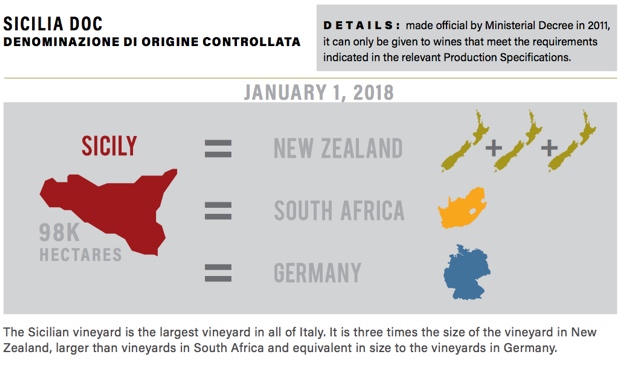
WineAlign