A visit to Alsace cannot be complete without a stop at Trimbach, the epicentre of rhythm in Ribeauvillé. If that excursion includes a jaunt over to Riquewihr and lunch at Le Sarment d’Or with Jean and Anne Trimbach and their soulful wines, the exercise can be surmised in one word: élan.
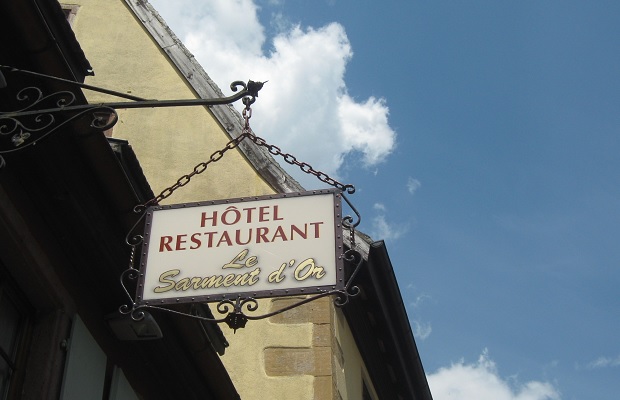
Le Sarment d’Or, Riquewihr
The Trimbach aura is triggered by joie de vivre, in pulse, metre and cadence. The wines reflect their makers and out there in the Alsace diaspora Trimbach is what I would refer to as an approachable, accessible and ever-so friendly icon. The wines are paradigmatic and emblematic of Alsatian acidity, from entry-level to preeminence. They are professional and represent the purest form of Alsatian confessional. The wines of Trimbach open up to the world, hide no skeletons, spin no agenda and simply ride out on a prosperous, musical mission to please. Here are notes on four wines tasted in Alsace, June 2014.
Fish Tartare, Le Sarment d’Or, Riquewihr
Réserve Pinot Gris 2011, Ac Alsace, France (971762, $23.95, WineAlign)
For Trimbach this is a top quality vintage to make an example for one of the domain’s signature value wines. This firm and straight shooting Pinot Gris comes from limestone-dominant parcels not so different from the PG taken out of the winery’s Osterberg Grand Cru, just above Ribeauvillé. That a Pinot Gris can bring a nearly (8 g/L) elevated level of residual sugar to the table and come across bone dry, like a walkabout in the outback, remains one of life’s great mysteries. Picked prudently early, or as Alsatians like to say, “right on time,” this Trimbach is eloquent, reeks of wet, cold stone and lies over an ocean tasting of salty minerals. Pour it with the freshest, uncooked fish and a light vegetable pickle.
Seductively Sauternes-like in its orange marmalade viscosity. An immense Gewurz-like PG. Off-dry tropical fruit, lanolin and a macadamia nut streak foils lemon, peppery orange and gold nasturtium. The edible florals are replayed in its sun-blazing technicolour. At 14 g/L of residual sugar and 14 per cent alcohol it marks the vintage but with incredible acidity. Jean Trimbach notes the balance is due to the efforts of his brother Pierre, in spirit, energy, texture and acidity. Drink 2015-2020. Tasted July 2012 and June 2015
Talk begins, if only because of its arresting singularity and how it flashes like a beacon, with the 1998 Cuvée Frédéric Émile’s acidity. Vintage-bound and determined with an exceptional focus that is clear, crisp and precise. From marl-limestone-sandstone and fossil-flecked Muschelkalk out of the Ribeauvillé terroirs Geisberg and Osterberg. A bone dry Riesling with a microscopic number of botrytis in absolute control of its 16 year-old adolescent body and emotions. Decidedly masculine, strong, confident and of a musculature that is developed yet immature. Not quite reckless and not yet taking any unnecessary risks, this will go through a racy period over the next few years before maturing into an industrious and wise adult. In this 1998, with the vineyards in mind, a parallel is drawn from 1990. Drink 2018-2028.
On Monday, June 16th at the Millésimes Alsace, the professional trade fair for Alsace wines, older vintages were poured at the Master. Among them was one of Trimbach’s iconic Riesling.
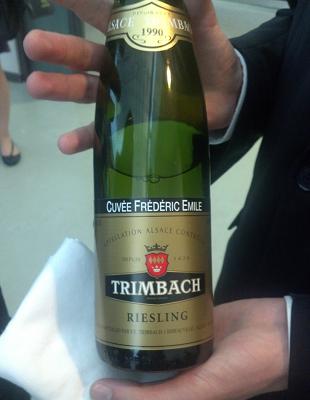
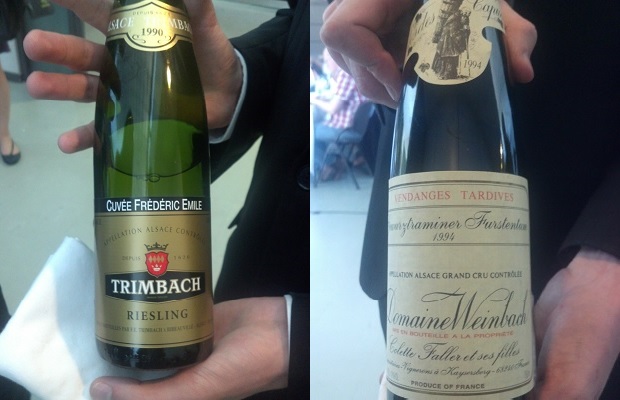
Introduced as a wine with “the capacity to air” by Sommelier Caroline Furstoss at the Millésimes Alsace Master Class. Riesling from a near-perfect and clean vintage (less than five per cent botrytis) that lays reclined in an evolution that has come to a balance in weightlessness. Frédéric Émile is a cuvée of beautifully impossible chemistry, a meld of dichotomous terroirs, of Geisberg and Osterberg, of stony clay geologically folded into both multicoloured sandstone and calcareous marl. The two plots may be hard to tell apart but this wine is so important because it innately knows how to make magic from the subtle differences and idiosyncratic intricacies of those soils. In 1990 the execution found results in the grandiose. There is no adipose tissue in this Riesling, no wasted notes, no moments of daydreaming. Laser clarity and still wagering its 25 year-old impetuous limestone acidity against the energy that might oppose it. “You can feel the granite soil in the body of the wine,” notes Furstoss. Aromatics call upon orange peel, ginger and a brulée imbued of a late, finishing noble bitterness. Amaranthine Alsace.
The great estates of the world do not endure for lifetimes, generations and centuries without an innate endowment to carry on, no matter the circumstances. Through tragedy there is always a prevail. There just has to be. I did not get the chance to meet Laurence Faller. I am sure that I would have loved to. Having tasted some of her wines at the domaine where she nurtured and finished them is at least a small concession. When I visited Weinbach last June, I did have the opportunity to meet her mother Colette Faller and I am lucky to have done so.
Thanks to Catherine Faller, who gave generously of her time and her family’s wines, the visit in the winery’s caves and up on the Schlossberg Grand Cru opened up the portal into Domaine Weinbach, Kayserberg and Alsace. Tradition and progress at Domaine Weinbach carries forward in the hands of winemaker Ghislain Berthiot, who worked with Laurence for 11 years. Here are the six wines tasted in June of 2014 and their notes.
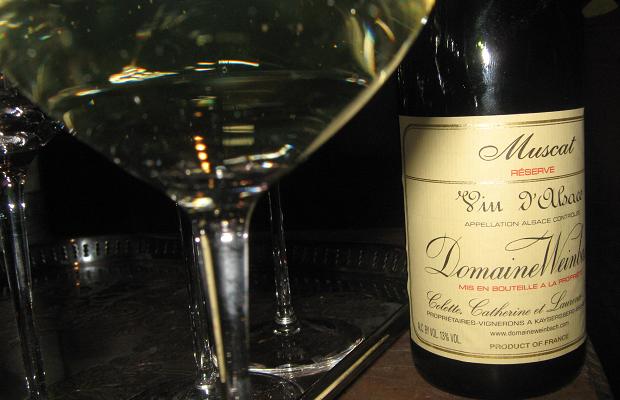
Domaine Weinbach Muscat Réserve 2013
Muscat Réserve 2013, Alsace, France (SAQ 10273521 $45.00, WineAlign)
True belief denotes Muscat as the launching point for any Alsace tasting, but nowhere does the ontology mean more than at Domaine Weinbach. The vintage cements the doctrine. Darts straight back to the nadir of taste and smell, to the points of the tongue and inner nose unable to elude such an attack. From vines of the Clos des Capucins, soil composed by marno-calcaire at the foot of the Altenbourg Grand Cru. Low-yields (28 hl/L) drive acidity and fruit purity atop cut and cutting apricot crossed with the essentia of a grape. Here is an apéritif extraordinaire, cocktails and caviar, crunchy canapé and pure distillate. Opens the doors to Weinbach perception. Drink 2015-2025.
Riesling Grand Cru Schlossberg Cuvée Sainte Catherine 2013, Alsace, France (Agent, $66.00, WineAlign)
From a difficult vintage with rain at harvest. A large crew was needed in mid-October to get the pick done with haste. This ’13 is essentially being given away, so it’s a gift to the world, in a sense. The fruit comes from some of the oldest Riesling vines, situated half way up the granite Schlossberg slope. Tasting this in 2014 is 12-15 years premature. Such an infant this Schlossberg, so very primary, as if by tank, as if by womb. Assumes the role of the richest of Weinbach’s Riesling aridity, exercised by the most established finesse. Peaches are exorcized in attack and persistent. Currently mired in a micro-oxidative state. You can sense it working, churning, moving in animation. If a taste of 2005 is any indication, it will be 2022 before this wine will begin the Cuvée Sainte Catherine reveal. Look for the open window to fall between 2025 and 2030.
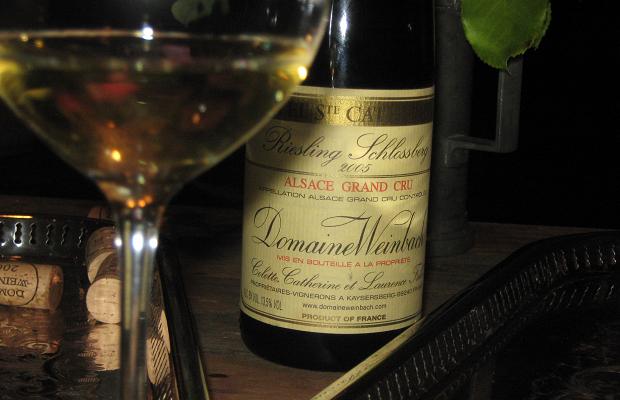
Domaine Weinbach Riesling Grand Cru Schlossberg Cuvée Sainte Catherine 2005
Riesling Grand Cru Schlossberg Cuvée Sainte Catherine 2005, Alsace, France (Agent, $66.00, WineAlign)
Here the rich and panegyrical Riesling from the first biodynamically farmed vintage at Domaine Weinbach. The old vines from the Grand Cru’s mid-slope averaged 60 years in this ’05, a wine that managed the best southern exposure to great effect. “You can have a whole lot of fantasy when it comes to food” with this Riesling vintage says Catherine Faller. That’s because there is a magnified, munificent and magnificent toast in this ’05, like some older Burgundy. The spice notes are right on the tip of the tongue with all the necessary sapidity of youngish Alsace, wise and wistful. Now having just entered the secondary window, this wine is such a perfect portal for the gauging of aging, itself looking for ideal consumption between 2020 and 2025. Full reward offered to those with further patience.
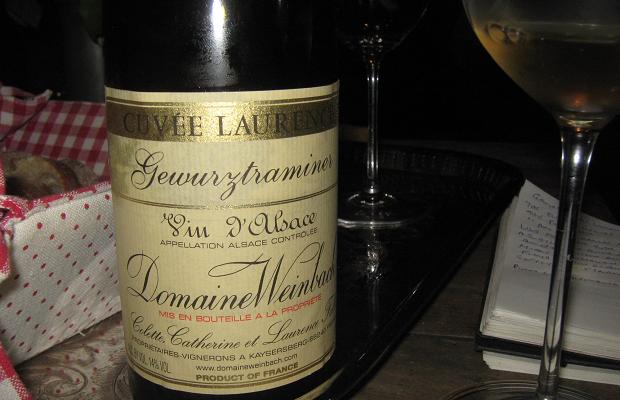
Gewürztraminer Cuvée Laurence 2011, Alsace, France (Agent, $68.00 (B.C.), WineAlign)
From an altitude of 225 to 250 metres and out of the marly limestone soil beneath the lieu-dit of Altenbourg, located at the base of the great Grand Cru Furstentum vineyard. In conjunction with the micro-specific sub-Mediterranean climate and the Indian Summer of the 2011 vintage, the results here are of the elegant kind. The total effect upon carefully judged fruit and in the late Laurence Faller’s Gewürztraminer magician’s hands, this “foie maker” is lifted, exotic and ethereal, like exceptional, fermented Yuzu. A subtle and quiet entry gives to a confident middle and a demanding, spicy finish. Lets go and slides softly into ethereal flavours. Catherine Faller’s eyes light up when she imagines a Cuvée Laurence pairing with “blood orange duck.”
Pinot Gris Altenbourg Quintessence De Grains Nobles Cuvée D’or 2010, Alsace, France (Agent, 375 mL $539.00, WineAlign)
Domaine Weinbach created the moniker “Quintessence” when it was coined to describe the 1983 cuvée. The nickname is apt for the rapt selection of rare pearls from the lieu-dit Altenbourg. The marl, limestone and sandstone Clos is a gentle slope between 225 and 250 metres high, just beneath the limit of the Grand Cru Furstentum. In a late harvest SGN like this one from the low yielding 2010 vintage, at a sky-high residual of 200 g/L you would think sweet to the back of the brain. You would be right but each time that intensity is carefully brought back from the brink by formidable, if unctuous Pinot Gris acidity, a bubble within a bubble, never bursting, always teasing. The concentration and purity here are magnificent, the flavours hanging in extract of endless, suspended animation. A wine to sip, to share and to save for senectitude.
Large Foudres at Domaine Weinbach, (c) Cassidy Havens, http://teuwen.com/
At the Millésimes Alsace, the professional trade fair for Alsace wines, one of Laurence Faller’s great legacy wines was poured.
Domaine Weinbach Gewürztraminer Furstentum Grand Cru Vendanges Tardives 1994
Gewürztraminer Furstentum Grand Cru Vendanges Tardives 1994, Alsace, France (SAQ, 11521362 $132.00 (2012), WineAlign)
The wine was presented in Colmar by Sommelier Caroline Furstoss who began with the soulful tribute of “Laurence is felt in this wine.” Deduction, by salience and sobriety of grace, is considering the Faller’s ’94 a pure expression of the Furstentum terroir. Noted are the aromas of quince, apricot, their blooms and a grain of spices. Though already twenty years in, it remains conspicuously fresh. The richness and concentration are at such a high level. Flavour begins with a marmalade in defiance of confection and has no end. Though the vintage is decadent, warm and unctuous, there is always balance. Has a tannic impression and smells like flowers from warmer France. Furstoss reminded everyone that it is “an expression of a daughter.” Impeccable balance.
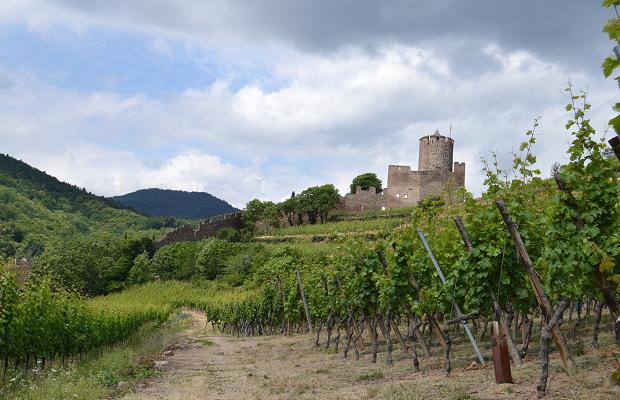
Kaysersberg, from the Grand Cru Schlossberg, (c) Cassidy Havens, http://teuwen.com/
Christophe Ehrhart has a very real and specific goal as custodian of the vines and as a collaborative winemaker at L’éclatJosmeyer. “To avoid oxidized, unclear and unsound wines.” Erhart’s reality lies in his exacting state of certified organic and biodynamic agriculture. He is also a true expressionist, manifested in the feelings of love for biodynamism, running like a dream throughout viticultural life. They encompass an imaginative broad spectrum of respect and attention to all things natural, especially given the spiritual nature of his quest to express terroir.
At Josmeyer, “the first goal is not biodynamism,” Ehrhart tells me at the family winery in Wintzenheim. “We eat only organic and biodynamic. It’s a philosophy of life, but the final goal is to make the finest wines that express the terroir, in a biodynamic way.” I sat down with Ehrhart, along with sommeliers Fred Fortin and Jonathan Ross, to taste eight explanatory wines that fortified insight into Josmeyer’s oeuvre. This second foray took place three days after tasting through a flight of seven wines with Christophe at the Millésimes Alsace, the professional trade fair for the region.
Domaine Josmeyer is the present day incarnation of a business begun by patriarch Aloyse Meyer. He was succeeded in 1933 by son Joseph who then further developed the operation in 1946. The current operation was established in 1963 by Hubert Meyer, in memory of Joseph. His eldest son Jean is the elder statesman of the modern domain.
With daughters Isabelle (as winemaker), artist Céline (as CEO) and Christophe Ehrhart as wine grower, Josmeyer is three and a half centuries and 11 generations removed from its original beginnings. Today Christophe is a leader in Alsace, sitting on committees including the Alsace governing board of CIVA (Le Conseil Interprofessionnel des Vins d’Alsace) and the local AVA. Since 2001, Ehrhart has been the head of the local growers of the Grand Cru Hengst.
In his position on the Hengst committee, Christophe Ehrhart has been instrumental in eliminating chapitalization (2003), reducing maximum yield limits (55 hL/L) and creating a sugar code index for wine labels. The latter is Ehrhart’s baby and a result of that vivid, expressive imagination.
“Sometimes Alsace wines make one person unhappy,” notes Ehrhart. “If there is an index, we can make two people happy.” The codex rates wines from 0 to five on a residual sugar scale. The index is specific to the wines of Alsace, which differ greatly from those of Champagne, or anywhere else that still white wines are made. The variegated mineral soils of Alsace wreak havoc on how sugar manifests itself, confusing the perceptive ability to imagine the true level of residual. The Ehrhart scale helps the consumer decode that mystery. The purpose is to avoid mistakes, to let the people know what is inside the bottle. “Just to have information in a simple way.”
In his extensive and definitive profile, Tom Cannavan points out Josmeyer’s transition from négociant to biodynamic grower within the context of a “unique ultra-viticulture raison née.” Cannavan praises the purity of the wines while at the same time bemoaning the “bewildering” diversity of products. He writes, “the different ranges are a product of Josmeyer’s négociant roots, but they do not project the image of a single domaine.” Cannavan notes that switching to biodynamic farming did little to change the Josmeyer style, which is all about dry, crisp wines and yet he ignores the reasons for the creation of so many variations on a single (especially Riesling) theme. Soil. Unique geographical spots. Terroir. Jean, Isabelle, Céline and Christophe feel compelled to make small lots from micro-parcels. Organic and biodynamic are important. Terroir is more important.
Jamie Goode posed this question today. Do we make too much of terroir? In the end of his piece, Goode writes “”I reckon terroir deserves to remain at the heart of fine wine.” Jamie and I were together in Alsace. As they did to me, the winemakers of such a region have left an indelible mark on Goode as well. He has been to Alsace on numerous occasions. It has no doubt helped shape his feelings about the importance of terroir, but also the part the winemaker plays in shaping wine.
At Josmeyer, the science of making wine is like wayfinding, based on dead reckoning. In his anthropological study The Wayfinders, Wade Davis writes “you only know where you are by knowing precisely where you have been and how you got to where you are.” Wine making, like wayfinding, is a craft of intuition and experience. Like the Polynesians who navigated the Pacific through knowledge and photographic images committed to memory, the winemaker learns from what the soil and each passing vintage have told. The agglomerated data is applied towards making better, cleaner and clearer wine.
Each time Ehrhart and Meyer navigate the process, from grape life cycle to élevage, they are like the mariner making use of a 360 degree compass of the mind. The navigator will integrate climate (clouds, winds and rain) skies (sun, light refraction and stars) land (marks and bearings) and water (swells, pitch & roll of waves, feel, currents, widths & colours caused by light & shadow, horizons, subtended mast angles and the vessel’s relative position). Davis writes “the genius of the wayfinder lies not in the particular bit in the whole, the manner in which all of these points come together in the mind.”
At Josmeyer the winemaker uses terroir; lieu-dit & Grand Cru, granite, limestone & clay, slopes (steep or not) facing in various directions, climate and vintage. Christophe Ehrhart the wayfinder is what could be called a terroirist. But what about biodynamic wine growing? According to The Living Vine’s Mark Cuff, moon cycles and tides aside, what matters most, as opposed to organic, biodynamics is all about soil, vitality of land, resistance to disease; vines are like icebergs, we concentrate too much on what’s above the soil when 90 per cent of a vine’s life takes place under the soil.
Godello and Christophe Ehrhart, Domaine Josmeyer, Kientzenheim
The world according to Josmeyer, as related by Christophe Ehrhart is technically, biologically and viticulturally delicious. Yes, the biodynamic winemaker must concern himself, immerse herself, be disciplined to think deep. What happens in the vine’s subterranean world is everything, and at the same time, nothing. Everhart asked Jonathan Ross, Fortin and I what we thought may be the percentage a vine’s growth and energy is derived from beneath the soil (considering the rest comes by way of photosynthesis from the sun). Our guesses ranged from 10 to 33 per cent. Not even close. Christophe said that scientific studies show the number to be between three and five per cent. Who knew?
Ehrhart’s concession that the quantitative number is small for a vine to derive its personality, divined though the earth’s brine, was quite shocking. Though Ehrhart does not rely solely on the common practice that other Alsatian winemakers take for granted and even believe with blind faith, terroir still drives the Josmeyer machine. Like a sailor who can’t find his longitudinal way without a chronometer, the winemaker who is not in tune with the earth must make use of technology to find his viticultural way. Christophe Ehrhart has an advantage. Organic, biodynamic, wayfinder. This is why ancient wisdom matters in the modern world.
Tasting twice with Christophe in four days left a mark. It was Josmeyer’s imagination, running away with me. Here are notes on the seven wines tasted June 15th, 2014 at Millésimes Alsace.
From calcaire-limestone, there is fine design in line, a mime of sugary lime with notes of white pepper and thyme. Wise and so very dry (5 g/L residual sugar), balanced, rhyming, keeping perfect four four time.
Acting as if it were recent, current, yet bottled, this is freshness in elegance defined. Still a bit reserved and not quite forthright, this is Auxerrois composed of tight, jutting angles, from ripe phenols and grape tannin. It must have been made with “crossing fingers and wiping brows,” by a winemaker with an awful lot of big dreams. At 18 those dreams remain unrealized. By 25 they will have materialized. Would partner well with Unagi.
Simplified, the terroir here is part marl, part limestone. (See the 2002 note for more specificity.) The three areas combine for a full orchestral expression of Riesling. Dry as the desert with a triple threat tang of terroir. Intense, as per the vintage, from what I gather and heard around the trade show floor, the closest repeat to 2002 there has been. The sugar here is strikingly low (3.5 g/L) and the acidity (7.8 g/L) raging in comparison. Such sharp, awry but ripe citrus intensity the likes rarely seen in Riesling at 13 per cent alcohol. A Josmeyer study to be sure that needs several years to settle into its mineral skin.
From a selection of prestige vineyards in Wintzenheim, Turckheim and Wettolsheim. Positively terroir street in this most arid yet fresh-driven ’10, yet another example of the absolute purity by way of the vantage point vintage brings to the path through time. There is poise but also texture in the form of a yogurty lees. This from flat alluvian Fecht deposits rich in clay of a soil predominantly built of sand, shingle and silt with les pierrets (little stones) and plates of loess. What it must be like to be a wine such as this. Turns a song on its head. This I would say to it. I wish that for just one time I could stand inside your shoes. “And just for that one moment I could be you.
From calcaire marls, the levels are raised, especially the sugar (9 g/L) though you would have no way of knowing it. More chalk grains through and less citrus, but it’s still a matter of zest. This shouts low yields and concentration with a Grand Cru’s deep, guttural voice and the immediacy is frightening. A dart to the Riesling heart. The stallion is at its finest and most focused in 2010. Like so many other pH arrested fermentative ’10’s the couple of extra grams of residual sugar rise up with the elevated level of acidity, but again, the change is both subtle and impossible to figure.
A slim Hengst, lower is sugar (7 g/L) and acidity (6.1 g/L) and minutely up in alcohol. That said it is possessed of a sweet round sensation with leaner, less obtuse angles of tension. More flesh and higher aromatic tones, of stone fruit, of tropical wafts most unusual and standing out in the Josmeyer scheme. The approachability here is base and nearly fun, like a tease of late harvest fruit.
Travelling back 21 years you see the Jean Meyer take on Hengst, from another era, another Josmeyer. The sugar (10 g/L) is higher, the acidity (6.4 h/L) lower and the alcohol (12 per cent) too. The atomic rise and petrol fuel-driven sensations are more pronounced, the vineyard speak quite real. This is the most polarizing wine I tasted (of the 15 from the Domain in Alsace), not because of the natural and wild expression but because of the way it arrests the ability to produce saliva. A touch of past ripe apple adds to the difficulty in deciding which direction this has taken.
Riesling Grand Cru Hengst Sélection de Grains Nobles 2002
An (SGN) already signed, sealed and delivered to now begin its secondary development stage. Persists with the character of freshness, angular pierce and of a tempered (8 g/L) acidity poking holes in the sugar’s (94 g/L) membranes. Very balanced and delicious, an atomic marmalade of peaches and cream of micro-managed sweetness.
Here are notes on the eight wines tasted at the domain on June 18th, 2014.
Pinot Blanc Mise du Printemps 2013 (SAQ, $22.90, WineAlign)
This is the first wine that goes to bottle (February 2014) from out of stainless steel and 1600-2500L old (1895) oak vats. A verdant amalgamation of spring vegetables, herbs and lime gain elegance and acidity from the blending in of Pinot Auxerrois.
Straight out the uncanny symmetry to Chablis-like sustenance is uncanny. From a vineyard planted in 1959, the “H” refers to the great Hengst, minus the Grand Cru attaché. Sticky soils with marl and clay make complexity real (like Burgundy). Jean Meyer was the pioneer of circumvention to the 1983 Grand Cru decree by using a letter in lieu of the GC. Many followed (like Albert Mann and Paul Blanck). This PA is clean, precise, creamy, dry and expansive.
From the Josmeyer artist series, “young and impulsive, it shares with you its poetry and its intimacy.” The votes between Wintzenheim and Turckheim are old, the sugar (approx. 5 g/L) low and the alcohol (13.5 per cent) higher. “Riesling speaks a salt language that expresses terroir,” says Ehrhart, “as much as a fingerprint.” This has more full-bodied heft as compared to 2010, more muscle, more girth. Shells and a spritz of citrus mark this salt lick of a Riesling, spread evenly, in a chalky sprinkling throughout.
Very hot, described by Ehrhart as “little Senegal,” from the southwest facing slope of Letzenberg in a sheltered area known locally as “Petit Sénégal” with the dragon that is said to live (or resolved to die after a duel with the sun) in a cave within the Grand Cru Brand. From very ripe grapes that receive major amounts of sunshine. Flinty minerality comes by way of yellow limestone Muschelkalk (shell bearing limestone or, calcaire coquillier). Long and true, with a distinct chalkiness, from a bottle that had been open for five days.
Here lies the mineral of perception, energy and of what is spoken by the fiery locale. Expressing the polarity of silica and chalk, Brand is a vertical line of silica filtering through granite rock. Pure, crystalline and focused because the mineral is filtered out, remaining behind only in deja vu, temptation like sensation. This here, in Brand, is the biodynamism of Josmeyer incarnate. Always the talk of terroir, for right or for wrong. “But it was just my imagination. Runnin’ away with me-once again.”
The solar-powered Grand Cru talks in proteins and salinity so the wine will seek more complex saltiness in food, like sharp (Reggiano-like) cheeses and lobster in a rich sauce. This is endowed with a completely different structure than the Brand, with more surround and circulating roundness. The mineral salinity resides in the back, of both the palate and the texture. It’s richer, with deeper density, less piercing and linear than the Brand. An enveloping, circumventing Riesling.
I have been in Alsace now just over 48 hours and already feel as though I have been introduced to a lifetime of wine. Yet with every taste of the Alsace pansophy I am reminded just how long the unfathomable road to the region’s enlightenment remains to be. The combination of nuance, complexity and acuity of the Alsatian wine spirit may have no equal. Some highlights of the first two days in Alsace with SOPEXA and CIVA.
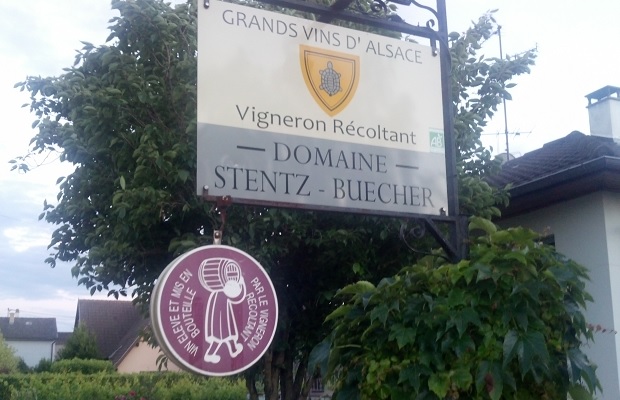
Domaine Stentz-Buecher
What a way to be introduced to Alsace in 2014. Les diVINes d’Alsace, an organization of 70 industry women and Domaine Stentz-Buecher rolled forth a genealogical pedigree of Alsace past and present with food station matching in the winery’s garden and in the barrel rooms. First Crémant, then whites of many incarnations; Pinot Gris, blends, Gewürztraminer and many, many Rieslings. The final prize at the end of a long scroll of grand achievements were Grand Cru Riesling from the vintage 2000. The eight acted out a Grand Cru finale of generous spirit via @Stentz_Buecher and the women of @diVINesdAlsace
Louis Haller Brut Crémant D’Alsace / @diVINeSDaLSACE
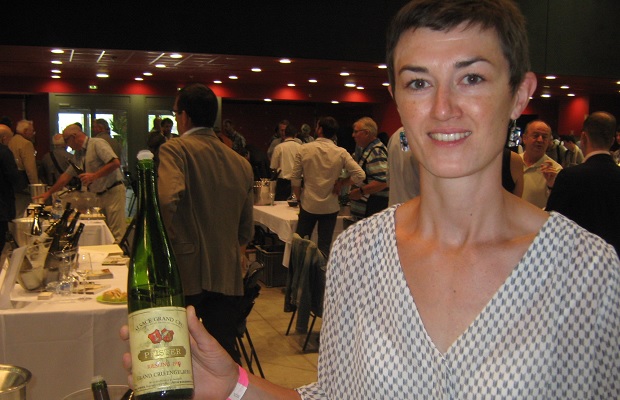
Les vigneronnes Mélanie Pfister and Carolyn Sipp introduced the three year-old organization, the winemakers, winemaker’s wives and sommeliers that form the membership of l’Association des Femmes de la Vigne & du Vin d’Alsace. “We are feminine but not feminism,” quipped Sipp. The idea began in 2009, following in the footsteps of similar women in the Rhône, Bourgogne and the Southwest of France. Women who have banded together to promote their region’s wines.
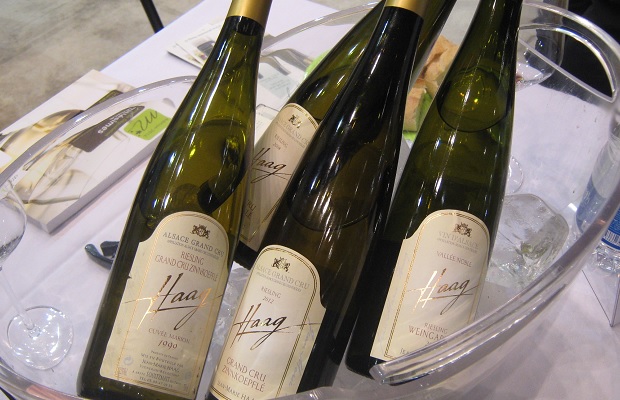
Laurence Hauller showed the 100 per cent Chardonnay Louis Hauller Crémant d’Alsace, a fine, subtle, stylish, finessed and elegant interpretation of Chardonnay that is a different sort of Alsace discrimination. Eliane Ginglinger presented her bone dry, citrus in laser focus Ginglinger Riesling Vieilles Vignes 2012. Myriam Haag offered up Domaine Jean-Marie Haag’s Riesling Grand Cru Zinnkoepfle 2011, an enervating wine with richness bled from rocks and a finishing noble bitterness. Myriam Schmitt brought her Domaine François Schmitt Riesling Grand Cru Pfingstberg 2012 that though in sweet emotive intention remains buoyant in the persevering air of aridity. It defines the transformative trend towards Dry Alsatian Riesling. Josiane Griss of Domaine Maurice Griss’ Riesling Sonnenberg 2010 if asked the question, “how long have you been a Riesling” would surely answer simply, “from creation.”
Grand Cru Riesling 2000
The Riesling Grand Cru from 2000 were a varied and electric bunch. The Caves François Schmitt Riesling Grand Cru Pfingstberg 2000 is a baby still and in hallmark readiness of its necessary terroir. The Domaine Sipp-Mack Riesling Grand Cru Rosacker 2000, also young and primary teases and feigns late harvest but don’t be fooled by its sunshine. This chew of salted stones has a long, long finish. the show stealer was the Magnum of Riesling Grand Cru Kaefferkopf 2000 byVins Jean-Baptiste Adam. Incredibly atomic with a vineyard flinty stink that exhumes and exudes the benevolent bitterness of time. Wildness and purity.
Godello and Pierre Gassmann of Rolly Gassmann
The main event of Monday, June 16th was the Millésimes Alsace, the professional trade fair for Alsace, Wines. Nearly 90 exhibitors showed off their terroir, in Crémant d’Alsace, Riesling, Pinot Gris, Gewürztraminer, Pinot Blanc, Sylvaner, Auxerrois, Muscat and Pinot Noir. A morning Master Class seminar featured eight world-class Sommeliers leading the room through seven “typical” Alsace wines. Maison Rolly Gassmann’s Riesling Kappelweg de Rorschwihr Vendanges Tardives 2000 is late harvest mineral expression in bitterness unchained yet restrained.
The afternoon Master Class covered older vintages. Trimbach Riesling Cuvée Frédéric Emile 1990 lays in an evolution that has come to a balance in weightlessness. Domaine Weinbach Gewürztraminer Furstentum 1994has a tannic impression and smells like flowers from warmer France. Caroline Furstoss reminded everyone that it is “an expression of a daughter.” Impeccable balance.
Mélanie Pfister
The third of a most excellent Alsatian vintage trilogy was represented by Domaine Pfister’s Riesling Grand Cru Engelberg 1990. With a clotted cream note the wise Cru remains youthful and nearly primary.
The wines of Jean-Marie Haag
Domaine Jean-Marie Haag’s Riesling Cuvée Marion 1999 showed rich, viscous complexity with the sensation of star anise and menthol.
Kuentz-Bas Riesling 1983 and Domaines Schlumberger Riesling Grand Cru Kitterlé 1945
The high point of the day came with a rare and beautiful chance to taste the Domaines Schlumberger Riesling Grand Cru Kitterlé 1945. The heart and the hearth. Just the thought of producing this wine at that time is unfathomable. There are no superlatives to do it justice. This must end on that note. More on the Kuentz-Bas Riesling 1983 another day.






 Godello