Old vines for the Zin

rockpile-ava-unparalleled-in-so-many-ways-mauritsonwinery-zinfandel-cabernetsauvignon-at-mauritson-rockpile-vineyard

Rockpile AVA unparalleled in so many ways @mauritsonwinery #zinfandel #cabernetsauvignon — at Mauritson Rockpile Vineyard.

Late one afternoon on a seasonally warm February Healdsburg day we walked into the boardroom at Seghesio vineyards for a Zinfandel tasting appropriated off of some of California’s oldest and dearest vines. On hand were Seghesio’s winemaking brain trust, Andy Robinson and Ted Seghesio. It was Seghesio who explained pretty much everything you need to know about Zinfandel and field blends in one sweet sentence. “These old vines are California’s treasures. We haven’t pulled one out yet.”

“Are the wines good because their vineyards are old

or are the vineyards old because the wines are good?”

Cart before the horse. What came first, the chicken or the egg? Catch-22. If we follow the ideas of Aristotle and Plato then we simply say that zinfandel and old vineyards first had their beings in spirit. The dialectical answer can’t help but make use of formal, linear cause-and-effect logic and so results in a paradox because this caused that. Old vines and zinfandel, two things uniquely Californian entwined in a set of mutually dependent circumstances. The question is ultimately moot.
godello-listens-tedtalks-seghesio-zinfandel-ravenswood-carolshelton-joelpeterson-califwine

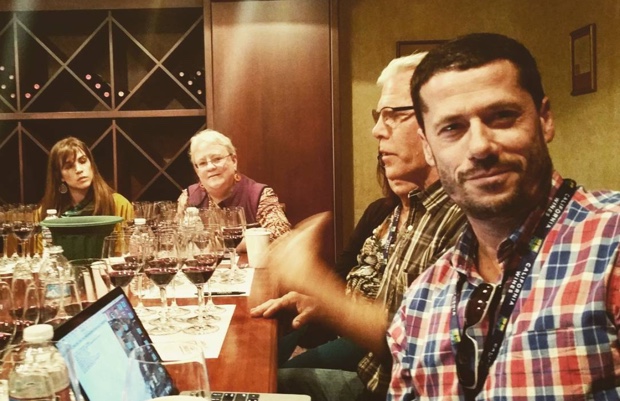
Godello listens, #tedtalks @seghesio #zinfandel #ravenswood #carolshelton #joelpeterson #califwine

Joel Peterson’s hat was the centre of first attention, that is until the Godfather of zin himself began to explain why the varietal tenets of experienced and gnarly are so important to understanding why zinfandel is the untouchable one. Peterson makes the case for zinfandel Grand Cru vineyards by referring to them as “historical treasures, extremely valuable and they are California.”

Carol Shelton is herself no stranger to the royal and ancient vines. She imagines them as both children and grandparents or rather that they are one in the same, innocent and experienced, but needing coddling and care just the same. Shelton has a soft spot for vineyards that are organically grown, dry farmed and many decades old. On her website Carol quotes Antoine de Saint-Exupery in reference to the Rockpile Vineyard. “A rock pile ceases to be a rock pile the moment a single man contemplates it, bearing within him the image of a cathedral.” Pretty apropos. It seems Carol Shelton sees the old vineyard before the zinfandel. I think they all do.

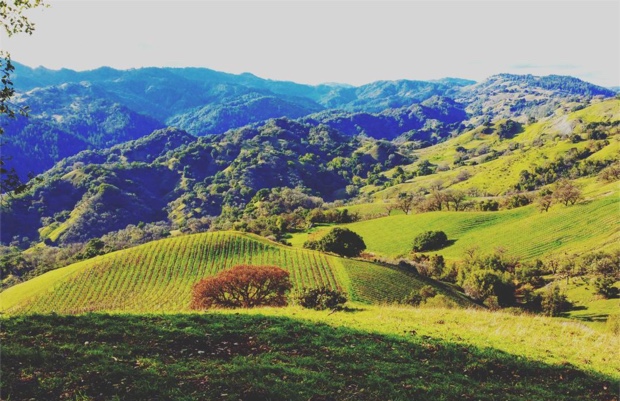
The next day we explored Dry Creek Valley’s AVA’s with John Doxon of Dry Creek Vineyards and in the afternoon walked up the ridge between the two arms of lake Sonoma with Clay Mauritson to stand at the top of the Rockville AVA. The vineyards are planted between 800′ and 2000′, with strong winds, soils that range from granite to volcanic and the ever-dangerous Healdsburg-Rogers Creek earthquake fault running through. Three things popped into my head. One, difficult growing conditions make for low yields. Two, above the fog and in the breeze means major league diurnal temperature swings and zero pressure from pests and diseases. Three, this is one of the most strikingly beautiful places on earth.

Rockpile Ridge Vineyard’s Cabernet Sauvignon 2012 is a Sonoma County tour de force and a steal for the money ($50 at the winery). But I’m here to discuss zinfandel and so we’ll look down left and down right to the Cemetery and Jack’s Cabin Vineyards. These two stunners from Clay Mauritson may be the most unheralded zinfandels you’ve never heard of. The first family vineyards were planted in 1884. It is here in the northern-most reaches of Dry Creek Valley where zinfandel may just find its highest California calling. “Pure geo-political drama.” What is Rockpile? Time in AND time out. James Woodsian fun stuff. Keith Moon of zinfandel. That is Rockpile.
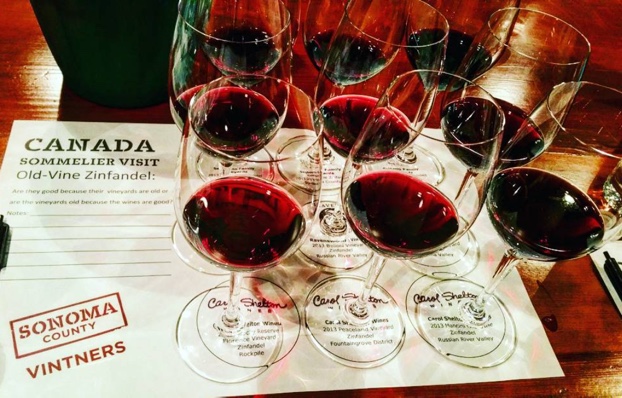
eroing-in-on-old-vine-zinfandel-significance-sonomavintners-seghesio-ravenswood-cbsbrands-wildthingzin

zeroing in on old vine #zinfandel significance @sonomavintners @seghesio #ravenswood @CBSbrands @WildThingZin

We tasted nine zinfandel with Ted, Joel and Carol, one with John plus two more with Clay. Here are the notes:

Seghesio Family Vineyards

Seghesio Zinfandel Rockpile 2013, Rockpile AVA, Sonoma County, California (Winery, $46.00, WineAlign)

Rockpile is Sonoma’s newest AVA,  straddling the ridge between the two arms of Lake Sonoma. The Mauritson farm is perhaps the most dramatic inland vineyard site in Sonoma. It is a relatively cool-ish appellation in part because it is based on ridge tops but notes Ted Seghesio, “I don’t think we can dry farm up in Rockpile, it’s just too warm.” No wonder the zinfandel here develops rich, dusty, of high impact intensity, pressed and controlled with addendum by remarkable palate spice. It’s chewy and intense, without heat, though expected, but there is not. Saw the insides of 25 per cent new French oak, the rest neutral for 12-14 months. Flavours well up with the liqueurs from a multitude of ripe red and purple berries, hematic, loamy and all in. Somewhat imbrued with the folly of youth so exercise some patience. Drink 2018-2024.  Tasted February 2016  @seghesio  @sonomavintners

Seghesio Zinfandel Old Vines 2013, Sonoma County, California (Winery, $46.00, WineAlign)

From a blend of vineyards planted on the Dry Creek bench and the cooler southwest Alexander Valley. Old vine is often loosely interpreted and the general Seghesio rule is 50 years plus, though the average age is approximately 70 years-old, planted here because they were the original cheap, peasant purchased sites. True old vine zinfandel is distinguished by head-trained vines with thick, gnarled trunks and is planted with ancient clones dating back to the turn of the century. I personally am finding more warmth and a slick of oleaginous matter, like white pepper liquid smoke. The temper and texture are pure zin wisdom, knows exactly its place and the time. The early picked Old Vines offers a reference point for the accumulation of varietal time. You sense this though the briary spice of layering in the blending of two vineyards from berries through to that spice. The treatment was 25 per cent new wood, 14 months maximum on fruit that it typically at the extreme end of high acid and sugary fruit. Drink 2017-2022.  Tasted February 2016

Seghesio Zinfandel Pagani 2013, Sonoma Valley, California (Winery, $55.00, WineAlign)

Sourced from the Pagani family’s deep-rooted, storied Ranch in Sonoma Valley. The dry-farmed vineyard provides for a rich and nuanced, though not necessarily the most age-worthy structure to the fruit. Certainly a whole other, darker matter, pitchy, rock-blasted cimmerian mess of density and temper. The increased character is a drawn-out dramatic affair, feigning sweetness, with a high amount of Alicante Bouschet mixed in (perhaps as much as 50/50) for what is ostensibly the original California red. “The curtain” is an abiding history marker and maker and yet is low in tannin so drink this during the freshness of its youth. Drink 2016-2020.  Tasted February 2016

Ravenswood Winery

Ravesnwood Estate Zinfandel 2013, Sonoma Valley, California (Agent, $46.00, WineAlign)

Typically 20 per cent petite sirah field blended in, from five sites with a collection of zinfandel clones planted in Ravenswood’s heritage vineyard back in 1997. Now old enough to stand alone, these vines grew from budwood collected from several of Sonoma County’s finest old-vine zinfandel vineyards. Like the single-vineyard zins, all are made the same way, save for a few micro-decisions for each wine. Time is 18 months in 35 per cent new oak for a level playing field so that each will show typically of site. The quinate muddling is made moot by fruit picked early enough to ask the ripeness not to be the dominant character of the wine. So there is a cooling, not so much herbal but a methylated effect, with depth of cherry and leather and the fleshy underside of the animal. A texture comes across creamy and so different from Seghesio, with a dry-brush aroma and flavour led by dark chocolate. Drink 2016-2019.  Tasted February 2016  @RavenswoodWine  @CBrandsCareers  @michellesaba

Ravenswood Zinfandel Belloni Single Vineyard 2013, Russian River Valley, California (Agent, $46.00, WineAlign)

Belloni carries a riper, naturally current cure, seemingly suspended in an evolutionary state of grace. The chocolate is tempered, smoothed into the reality of haute-ganache. It’s a bit of a teaser but there is length not yet found in rest of a nine-strong zinfandel the line-up. Will not yield to relinquishing length and still in such an amazing lingering state of berry flavour. “My middle-aged wine,” says Joel Peterson. From a site on Fulton Rd, of sandier soils above an ancient river bench. Riccardo Belloni planted it, around 1971, same time he purchased land on along Wood Road on the outskirts of Santa Rosa. Aye, there’s the saline and antediluvian rub. A very mixed vineyard, barely 75 per cent Zin, plus alicante, petite sirah, carignan and mourvedre. All tolled known as mixed blacks, the varietal melded, mixed and markedly RRV boysenberry is brighter and with great freshness. “It’s treated like pinot noir,” notes Peterson, “and we are conscious of how much oxygen it is gifted along the way.” A gracious Zin to be sure. Drink 2018-2024.  Tasted February 2016.

Ravenswood Zinfandel Old Hill Vineyard 2013, Sonoma Valley, California (Agent, $75.00, WineAlign)

Old Vine, Old Hill is rich, smooth and chocolatey, from “Mr. Hill’s vineyard, William McPherson Hill,” who founded Old Hill Ranch in 1851. Joel Peterson is wistful in just thinking about it. “An important and historic vineyard,” resurrected by Otto Teller housing forty different varieties, re-planted in 1985. The vineyard is 68 per cent zinfandel with grenache, mourvedre, syrah, petite sirah, alicante and heretofore referred to as the black panther grape, all together called the Mixed Blacks. It is organically farmed and is indeed of the oldest vines in the Valley of the Moon. In 1983, Ravenswood began this vineyard designate Old Hill Ranch zinfandel, just as the vineyard was turning 100 years old. So at 130 years what further wisdom can it pass on? Plenty, with the classic house treatment of 18 months in 35 per cent new oak. A capacious, fruit-teeming, chestnut-ochre-liquorice-plum pudding zinfandel blend with texture threaded through ages from samite to mantua. The gift of old vines. Drink 2019-2025.  Tasted February 2016

Carol Shelton Wines

Carol Shelton Zinfandel Rocky Reserve Florence Vineyard 2013, Rockpile AVA, Sonoma County, California (394510, $48.00, WineAlign)

Insieme with Rockpile by Seghesio in dusty, high impact zin, here liquid saturated and steeping of a complex berry syrup, silky, stylish ands with a certain palate spice thanks to American wood. Vanilla and liquid lavender, ichorous, fusible elasticity. Quite pretty and some heat in the tannins. Defined by elevation at 1400 feet (800 is required) above Lake Sonoma. Basically dry-farmed, planted in 1998, terraced, a morning sun vineyard that receives hot sun into the evening. Thus spiking the fruit but breezes temper ripening (as compared to Dry Creek Valley) so the tannins are polished. Built with cabernet-like structure and blended with 14 per cent petite sirah, in 40 per cent French oak (20 new) plus (40) American (20 new) plus some older irrelevant barrel. Drink 2017-2022.  Tasted February 2016  @WildThingZin  @KylixWines

Carol Shelton Zinfandel Peaceland 2013, Fountaingrove District, Sonoma County, California (Agent, $40.00, WineAlign)

The “Friedland” is ambient and racked of floral certainly and also elevated of its varietal tones, with even more blueberry and peppery backbone than the Rockpile. Has increased its viscous and elastic chew with a dollop of melted milk chocolate and the earth’s granola; hemp, chia and all things fibrous and healthy. The jammiest and most texture on the table. Planted in 2001, a “young wine” out of a historical 1800’s place, a commune at 1100 feet of elevation. Represents three different clones of zinfandel (DuPratt, Costa Magnum and St. Peter’s Church). The united zin of red and black fruit, plus 7 per cent petite sirah. The new kid on the block. Needs to get more comfortable in its skin. Drink 2016-2019.  Tasted February 2016

Carol Shelton Zinfandel Mancini Old Vine 2013, Russian River Valley, Sonoma County, California (Agent, $50.00, WineAlign)

Mancini Vineyard is Carol Shelton’s tribute to old vines, planted in 1922 (one mile from Belloni) to mostly (78-80 per cent) zinfandel and a Northern California varietal who’s who; carignane, alicante bouschet, petite sirah, grand noir, mataro and some yet unidentified vines. This is a field blend of decided depth, very cherry and exponentially increasing of varietal to wood spice. There is much liquor emulsified into liqueur. Such a highly concentrated wine is ripped with red citrus acidity and strays far from bramble. A wine of high acid, pH and oak with never-ending gobs of dark fruit. A little monster. Drink 2016-2019.  Tasted February 2016
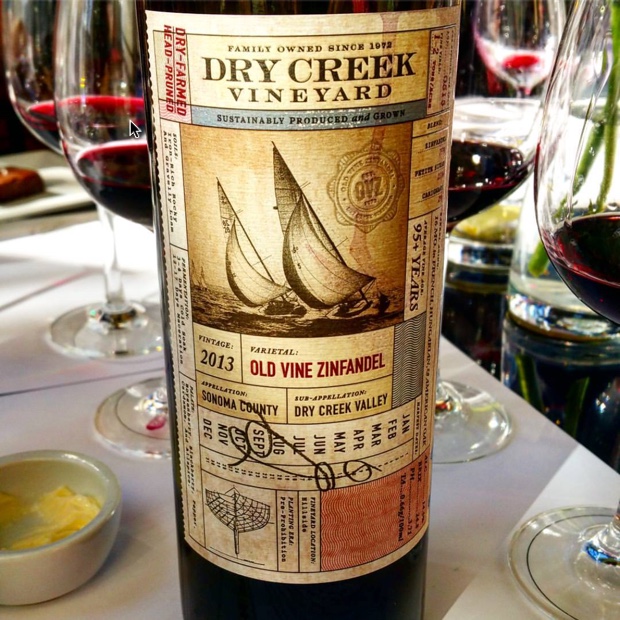
there-is-no-substitute-for-old-vines-zinfandel-drycreekvnyd-at-cafe-lucia

There is no substitute for old vines #zinfandel @DryCreekVnyd — at Cafe Lucia.

Dry Creek Vineyard

Dry Creek Vineyard Zinfandel Old Vines 2013, Dry Creek Valley, Sonoma County, California (412288, $34.75, WineAlign)

As it should be this falls into the category of the mysterious and the enigmatic, a field-blend conjoining zinfandel (75 per cent) with petite sirah (23) and carignane. It takes nearly a month to bring in the multifarious and full-scope ripening varietal mix, between mid September and October. This elongation and elasticity mixes into the old vine magic and spits out strength and complexity. High pH and really pitchy acidity handle the bold and brooding fruit and then there is the presence of meaningful oak. Sixteen months in French, American and Hungarian oak, 29 per cent of it new. Dried fruit and spices rehydrate into a black fruit swirl of sweet leathery pods and perfumes. A blessed convocation is the result, part concoction, part confection and all in. Drink 2016-2020.  Tasted February 2016  @DryCreekVnyd  @WineLoversAgncy  @drycreekvalley

Mauritson Wines

Rockpile Zinfandel Jack’s Cabin Vineyard 2013, Rockpile AVA, Sonoma County, California (Winery, US $45, WineAlign)

A haunted cabin settler’s story, of one Jack Ireland, of sheep, cattle, clearing the land, moonshine and nights spent in the county jail. A connection through three generations of Mauritsons. Such fresh red fruit is rare (these days) when alcohol (14.75 per cent) and oak (15 months in 90/10 French/American) work the room but welcome to the Rockpile elephant in the room. It’s called balance because of natural acidity, grapes that were not over-pressed and the magic-umami-impossibility of place. My mind digs for Sonoma equivalents in this scarlet, rubicund, ochre magnetic field but fails to draw a similar example. Except greatness from this AVA and winemaker Clay Mauritson in the years to come. Drink 2016-2023.  Tasted February 2016  @mauritsonwinery  

what-is-rockpile-time-in-and-time-out-the-fun-stuff-keith-moon-of-zinfandel-mauritsonwinery-sonomacounty-jameswood

What is Rockpile? Time in AND time out. The fun stuff. Keith Moon of #zinfandel @mauritsonwinery #sonomacounty #jameswood

Rockpile Zinfandel Cemetery Vineyard 2013, Rockpile AVA, Sonoma County, California (Winery, US $47, WineAlign)

Look towards the other arm of Lake Sonoma and let your mind’s eye rest 250 feet higher than Jack’s Cabin Vineyard. The Cemetery plantation is a jagged, craggy outcropping with “a face uneven as a river jag and asperous as the mullein’s flannel.”  The Mauritsons are Los Campesinos of Cemetery Vineyard in Rockpile. The rocks below resemble giant headstones along the Rogers Creek fault and you just have to believe all this immensity of geology impacts the vines. It does but don’t ask how or why, just settle into the cimmerian depth of zinfandel touched by black fruit, spice and the akimbo savour of glutamate and amino acid. Three further months in barrel (85 French plus 15 American) accentuates the spice, smoulder and espresso con crema texture. Ripeness of fruit, tannin and acidity are simply stellar out of this dramatic place. “You know us by the way we crawl and you know us by our cemetery gaits.” Drink 2017-2025.  Tasted February 2016

Good to go!

Twitter: @mgodello

Instagram: mgodello
WineAlign

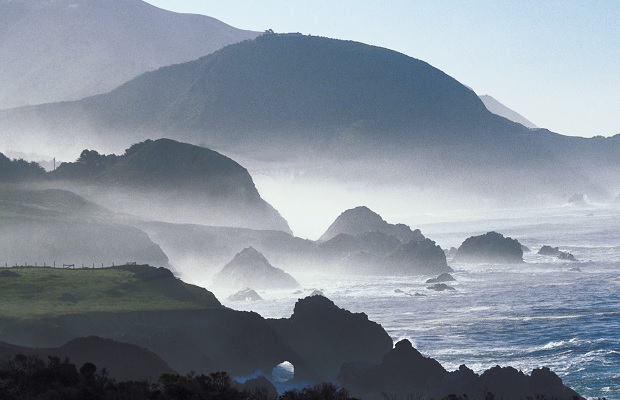
Sonoma peaks from out of the fog

Sonoma Coast Photo (c): http://www.sonomawine.com/

Sonoma Coast
Photo (c): http://www.sonomawine.com/

Sonoma County is so massive a wine region it’s really quite futile to take account of a singular, defining personality. Diversity of wine styles and viticultural approaches are what elucidate Sounty County and its 16 AVA’s (American Viticultural Areas). That much is true but the sheer geographical scope of California’s coastline, inward valleys and mountain vineyards make it all but impossible to distill the entire region into one simplified and understood junction of compounding synchronisms.

Imagine Sonoma in terms of soils and geology the way the Clare Valley and Barossa are making plans to split their vineyards into new sub-regions. “Rather than create a hierarchical system, proponents say the plans are part of a cultural shift in Australia’s wine industry that seeks to make technology in the cellar subservient to geological understanding and vineyard management.” Though erroneously, people talk about Sonoma wines as being the same, as sharing a commonality that allows for overused generalizations.

Sonoman varietals need to be characterized by an interpretation of sundry realities. Pinot Noir loses focus when simply labeled “Sonoma County.” Its actuality is much more specific than that. Dutton Goldfield’s Pinot Noir is a prime example; not exactly Russian River Valley nor Sonoma Coast. If its vineyard and those of countless hundreds of others were pinned down into a more micro-specific locale of soil and geology, justice might be served. Yet through all the talk of fining sub-appellations there is one constant in Sonoma. There is one manifest vital spark that runs through all of its fiords and chords, spuming with an irrepressible puissance. Fog.

Growing grapes in Sonoma is all about the fog cycle prone zone, warm by day, cool by night. Grapes above the fog line on the mountain ranges and upper reaches have the highest chance of ripening. Wind screams in between the mountains and through the valleys to dry out the vines and protect them from disease. The region lies at the western edge of a hyperbolic, tectonic geology, causing not only earthquakes but also dramatically different soil structures. From out of this super active geology, this volcanic action and this movement of tectonic plates, is a cool climate viticulture along 100 km’s of Pacific Coast frontage.

The cool nights and days that rarely get oppressively hot (above 26-28 degrees celsius) contribute to layers of oceanic fog that creep into Sonoma’s interior valleys through numerous spots like the Petaluma Gap. The Russian River, meandering through a lush valley of vineyards, provides a conduit pulling fog through Healdsburg and into the Alexander Valley, as well as forming its own appellation.

Sonoma native Elizabeth Linhart Veneman, author of Moon Travel Guides, sums up Sonoma’s fog in one fell swoop statement: “Perhaps no aspect of the weather here is more important.” Then there is the most amazing time lapse video shot by Nicole Tostevin of Tostevin Design. Tostevin (not to be and to be confused with Tastevin, which means a taste of a wine and a small, shallow cup or saucer with a reflective surface, traditionally used by winemakers and sommeliers when judging the maturity of wine) was born in San Francisco. She is a 5th Generation Californian living in West Marin; she’s an independent freelance artist, interactive art director and motion graphics animator. The video titled, “Sonoma Morning Fog Dance” was shot using time lapse footage of The Anvil Ranch in the Annapolis Valley in Sonoma County, California.

This time last year, in November 2013, San Francisco Chronicle wine editor Jon Bonné wrote, “today, the state of the art for Pinot Noir – along with Chardonnay and, to some extent, Syrah and even Cabernet – has shifted into the coastal fog lands.” Green Valley is defined by fog. Fog discourse and computerized, animated maps are front and centre on the AVA’s website. “Green Valley is the first place where the fog comes in and the last place where it burns off, making it the coolest, foggiest part of the Russian River Valley.”

Walmart's Sonoma Fog Area Rug

Walmart’s Sonoma Fog Area Rug

Sonoma fog can even be defined as a colour, like Siena brick red, or at the very least as a style. At Walmart you can buy a “Sonoma Fog Area Rug.” The mist of California’s coast has even had a couple of cocktails conceived in its name. The Sonoma Fog and Sonoma Fog Vinotini are sweet and sour variations on the Kamikaze or the Cosmopolitan, using Grapefruit and Icewine.

Sonoma’s fog is a stern exertion of soda and salt and when its atomic dipoles get together to dance with ripe grapes and the puffy gaieties of yeast, the syntagmatic rearrangement in the region’s wines are all the merrier and made most remarkably interesting. Fog complicates and makes complex the ferments from Sonoma’s hills and valleys. The second fiddle status to Napa Valley’s hugeness is both ridiculous and absurd. Sonoma Chardonnay and Pinot Noir is already known for its kinetic inquisitiveness but other varieties are also gaining major traction. Cabernet Sauvignon, when ripened upwards of that fog and yet inextricably linked to the miasma, gains a level of synergistically precipitated elaboration that blows Napa out of the water.

WineAlign's John Szabo MS says Sonoma County "is this big."

WineAlign’s John Szabo MS says Sonoma County “is this big.”

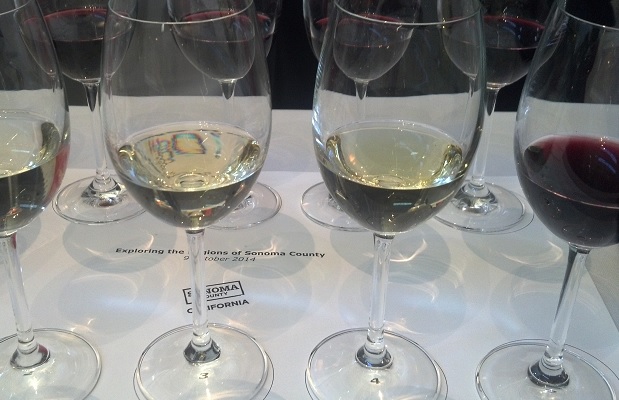
Sonoma Vintners came to Toronto’s ROM for a trade tasting on October 9, 2014. With the ever resourceful moderator John Szabo MS of WineAlign at the microphone and nine winery representatives on hand to speak of their land, Sonoma was defended, savoured and celebrated. Here are notes on the 10 wines presented.

Sonoma County at the ROM

Sonoma County at the ROM

Gloria Ferrer Royal Cuvée 2006, Carneros (Agent, $37.00 – winery)

The brand was developed for the 1987 visit of King Juan Carlos I and Queen Sofia of Spain. Seventeen base wines were blended to create the final (66 per cent Pinot Noir and 34 Chardonnay) cuvée. The Chardonnay is planted on lower sloped with deeper soil and the Pinot nicked from locales higher up where it’s rocky and volcanic. “Oh they’re ready for a tussle.” The immediate query is how can it act so fresh? Aged 7 years, the incongruous to electric power is mind altering, though the reaction in the seminar room is muted and should instead be filled with oohs and ahhs…am I wrong? Intense wine, highly lactic and dancing on tongues. Citrus, ginger, pear and Pinot length from the rockpile. And so it goes.   @GloriaFerrer

Quivira Sauvignon Blanc 2013, Dry Creek Valley, Sonoma County (Agent, $15 – winery)

Quivira’s expressive Sauvignon Blanc sells for a song what with its high level of minerality from gravelly soils, typical of Dry Creek Valley. Low acidity, and a quietude of heterocyclic aromatic organic compounds comes aided by a musky, Musqué SB clone. The terroir and the grapes speak for themselves, mostly out of stainless steel, with a bit of neutral oak, plus Acacia barrels, for texture. All in all, there is an elevated pattern of harmony. Biodynamic since 2006, Marketing Director Andrew Figelman notes, “going through biodynamic is like going through an IRS audit.” And worth it in the end.   @quivirawinery  @KylixWines

La Crema Chardonnay Saralee’s Vineyard 2012, Russian River Valley, Sonoma (Agent, $39 if it were available – winery)

So notable from the get go is this SV Chardonnay’s possessiveness of a muscular rhythm, where oak meets butter. High quality fruit comes from Saralee’s Block 89, a gravelly loam, with less vigorous vines and of course, much fog. Nine months in one third new French oak and a generous, if in check, 13.9 per cent alcohol.  A mere 500 cases are produced of this new and titillating brand. Much orchard fruit on the nose, mineral on the palate and a wrapping of lemon curd. Has chalk and grain. La Crema’s (Ontario-born) winemaker Elizabeth Grant-Douglas has teased us. “You can taste it but you can’t buy it,” Just don’t call it creamy.  @LaCremaWines  @bwwines

Patz & Hall Dutton Ranch Russian River Valley Chardonnay 2012, Sonoma County  (Agent, $56, WineAlign)

The Dutton’s have owned the farm for more than a hundred years and have been serious about viticulture for the last 40 or so. The fluffy, porous soils are composed of Goldridge loams, in which moisture runs right through. There is very little if any precipitation making this a sort of “dust bowl” Chardonnay, from five different sites. Distinctive, exotic, old vines give a Muscat-like character, plus mineral and structure. It reminds of a mildly spiced Gingerbread cookie on a dry, cold winter day. The Dutton receives the same elevage treatment as their other 13 Chardonnays; it’s the land that’s different. “We’re allowing these wines to be different by virtue of the terroir,” notes Donald Patz. This is mildly restrained in many ways. A very balanced wine, full of class.  @PatzHall  @TrialtoON

Dutton Goldfield Pinot Noir 2012, Russian River Valley (Winery, $72)

From the Estate’s 1996 planted Freestone Hill Vineyard, from the middle reach (far southwest corner) of the Russian River Valley, a full-on sunshine of fruit spent 17 recondite months in 55 per cent new oak. The resulting door affronting 13.8 per cent alcohol is a so very, if anoetic welcome mat. The Dutton family were the local pioneers. Says Warren Dutton, “if I can ripen apples, surely I can ripen Chardonnay or Pinot Noir,” Ripe red apples and a savoury candy shell have turned to grapes with aid in influence from the Petaluma Wind Gap, in an accruing of elegance and finesse from high acids and low sugars. If the common feeling is that it’s difficult to ripen fruit in this region, the bar must have been set to beanstalk heights. The Freestone Vineyard (which is almost in the Sonoma Coast appellation) is colder even than Green Valley, with an elevation just above the fog, for even ripening margins. The Duttons thought the vineyard not too cold for Pinot Noir, a thought even more astute than the idea of ripening coconuts in Fiji. This really is unadulterated Pinot, from a process that included (20 per cent) whole berry fermentation. The simple elevage turned into a simple yet complex result, with high toned fruit character, tangy black cherry, really fine grain tannin and acidity. Length is ascending and enveloping, from the hill.  @DuttonGoldfield

Buena Vista Pinot Noir 2011, Carneros (304105, $24.95, WineAlign)

Buena Vista was California’s first commercial winery, dating back to 1857. Winemaker and Sonoma native Brian Maloney, formerly of De Loach Vineyards crafted this tight and bracing Pinot Noir from the cooler vintage. The vintage may have been a result of global chaos but the wine is an unmitigated success.  From my earlier, August 2014 note: “This is really quite impressive Pinot Noir. Fastidiously judged if bullish fruit having way too much fun, causing varietal envy amongst other price category peers. Clearly fashioned from stocks of quality fruit, providing an environment for the coming together of many red berries and the earth of contiguous vines. All roads lead to a grand palate marked by exotic, spicy and righteous fleet of wood tones. I wonder if I’m in over my head and tell it “your mood is like a circus wheel, you’re changing all the time.” Quite something this MacPinot specimen and though I wonder if it’s a bit too much, it always seems to have an answer and it sure feels fine.” Tasted blind at World Wine Awards of Canada.  Last tasted October 2014  @BuenaVistaWines  @TandemSelection

Seghesio Zinfandel Rockpile 2011, Sonoma County (Winery, $38)

From three ridgetop vineyards 1,200 feet above Dry Creek Valley; Westphall Ranch, Porcini Hill and Mauritson. Rockpile comes from the late 1880’s, founded by the local Sherrif Tennessee Bishop. Prisoners broke up rocks to make roads and they called it the rock pile. Near extreme elevation matters deeply in this wine, as do three clones, all in the name of layers of flavour. There is a massive waft of florality in Rockpile and a Zinessence that can only be Seghesio. A large yet somehow fog-tempered cool wine, the result of a unique marriage between an altitudinous though indispensable Sonoma climate. Fresh ground spices join the flowers at the hands of winemaker Ted Seghesio. To the palate and texture the wine turns a boisterous phrase, with natural acidity and that structure is defined by tannin and personality. There is heat, a bit of a heavy grain and lifted alcohol though it carries it well. “Veraison thinning is key,” notes Pete Seghesio. Narrowing the harvest window by removing berries from the double sorting table is practiced, along with halting the brix from rising at the hands of hydrating raisins releasing sugars during fermentation. The must is weighed down a touch, even if the practice in fear is just one of splitting hairs, as obviously this has everything Zin needs to be fresh and elastic. “If you miss Zinfandel by five days you have Port,” admits Seghesio. The 2011 got it right.  @seghesio

Kunde Family Estate Zinfandel 2012, Sonoma Valley (965921, $24.95, WineAlign)

Rich and utilitarian to a fundamental degree. Nothing but plum delicious, instilled with structure, tannin and early acidity. More spice and less florals by way of red volcanic rock soil, interspersed with a bit of sand and clay. Winemaker Zach Long is very specific about “that harvest moment” so Kunde’s Zinfandel can never be accused of hanging too long or cheating on the wrong side of ripeness. Cold soaks for five days with a low and slow, geek’s native yeast add layers of complexity to the ferment. With a peppering of Petit Sirah in the mix this has more tar, char and less brightness. It actually leans to black cherry, in Pinot-like dulcet tones which, in that particular direction, is a good thing. The only deterrent in the SV ’12 is a waning of finishing acidity at the end.  @KundeEstate  @imbibersreport

Silver Oak Cabernet Sauvignon 2010, Alexander Valley, Sonoma County (943472, $89.95, WineAlign)

International Sales Manager Vivien Gay introduces the Silver Oak by talking about the Alexander Valley as being the most fully planted AVA in Sonoma. This ’10 is warm and intense, hot to nose, potentially volatile, like a bouquet of hacksaws. Dusty, full-on mulberry fruit is indicative of Merlot but there is none – it’s 100 per cent Cabernet Sauvignon. That teasing and varietal perplexity is an indication of complexity and also American oak, the usage of which began in 1972. Vanilla, coconut, then spiced, round and soft tannins come by way of 50 per cent new and 50 per cent one-year Missouri white barrels. The fruit quivers, like blackberry bushes in sweltering conditions, trying to shake themselves of the heat. Two years in oak plus one in bottle is a loyal and sentient journey, nearly devout and religious. A highly polarizing wine.  @SilverOak  @HalpernWine

Rodney Strong Vineyard Cabernet Sauvignon Brothers Ridge 2010, Alexander Valley, Sonoma County (Winery, $75)

This is the flagship Cabernet bottling from the winery that bears the ballet dancer’s name. Has layers of sweet Cassis, black cherry and blackberry fruit. Serrated with heat from a warm vineyard, picked at a generous (27.3 brix) and vinified (15.5 per cent alcohol) in a very big style. The Brothers Ridge fruit spent 21 months in 100 per cent French (43 per cent new) oak. The heat transmits through all the layers. So much java is espressed in this big boned Cabernet. Looking, sniffing and tasting the Brothers Ridge gives the impression of “a great big tall fella, about six foot tall. I shivered and I shook, couldn’t do any more.” Despite it’s heavy kinks, the BR is flat out delicious, hedonistic and as decidedly rich as any Cabernet from the Alexander Valley. Perhaps it is a lover, not a fighter.  @rsvineyards  @ImportWineMAFWM

Good to go!