Gripping wines from Spain and Italy

Europe

How can winemaking trump terroir?
Photo: 1xpert/Fotolia.com

as seen on canada.com

Winemakers in the most famous regions of Spain and Italy have gone pro in the practicum of wine that speaks loud and clear. If there is a downside it is the blurring of lines and overlapping of circles, where regions set far apart show similar, if near identical characteristics in their wines. How does this happen? How can winemaking trump terroir?

The simple answer is wood. Barrel usage is a global affair, with wineries scouring oak forests the world over to age their wine. French oak is most used and whether you make wine in central Italy or northern Spain, the oak you employ may result in more than just the commonality of wood. If your processes are tied by similar or even identical ties, your wines may taste eerily like one another, if not outright like kissing cousins.

Despite the oligopoly of technique and the lack of winemaking individuality gone viral in this generation, there are three things that continue to work in favour of regional character. The first is obvious. Soil. Or, more importantly, the components, the rocks and minerals that fleck the earth. Secondly, attitude. Call it conceit if you like but when a winemaker has the guts to make wines we like to call grippy, you can’t help but stand up and take notice. Third and so important to the consumer, is price. Spending $15-30 on wines from the most historic locales such as Burgundy and Bordeaux is almost always nonsensical and a waste. No where else in the world offers grip, pomp and pride like Spain and Italy and in that go to mid-price range.

A pentavalent and benevolent group fits this requiem for commercial gain. Rioja, Ribera del Duero and Priorat from Spain. Chianti and Abruzzo in Italy. A Venn diagram of commonality can be agglomerated from their proclivities. It is in these fab five Old World wine regions where a twain of ancient and state of the art collide. Here are seven gripping wines from Spain and Italy.

From left: CEPA 21 HITO 2010, ÉBANO CRIANZA 2008, and RESALTE DE PEÑAFIEL PEÑA ROBLE RESERVA 2004

From left: CEPA 21 HITO 2010, ÉBANO CRIANZA 2008, and RESALTE DE PEÑAFIEL PEÑA ROBLE RESERVA 2004

Ribera Del Duero

The history: Located in north-central Spain, on a plateau, 90 minutes from Madrid. Ribera, or “river bank,” extends from both sides of the Duero. The Denominación de Origen (D.O.) of Ribera del Duero dates back to 1982.

The lowdown: Highest average elevation in Europe for growing red wine grapes. Summers are hot, winters are cold, rainfall is minimal. Lower vineyards are alluvial with sand and reddish clay. Higher ones built of limestone, marl and chalk. Tempranillo in the main grape. Finest recent vintages include 2004, 2009 and 2012.

CEPA 21 HITO 2010, Ribera Del Duero, Spain (360503, $17.95, WineAlign)

Oh the shaken, modern humanity. Nothing shocking here, this 100 per cent Tempranillo parfait of silky chocolate, mixed berries, vanilla and wood chips. Finds parity in biting red cherry flavour. Though it may as well be any ambiguous, heterogeneous or hermaphroditic $30 IGT, its price puts it at the front of the line. Fun to drink, high-toned, textured and structured, though its origins are not at once obvious. Will evolve felicitously for five to seven years.  89  Tasted December 2013  @DrinkRibera

ÉBANO CRIANZA 2008, Ribera Del Duero, Spain (355099, $21.95, WineAlign)

Amid a sea of Spanish reds, this Ribera stands alone as the most modern on the table. Dusty, trenchant dark chocolate, mocha crema, thick, syrupy, rehydrated plum fruit. Accented by both white and black pepper, anise and a late lash of astringent tannin. Abrasive as a pleading Waits croon, this Crianza is “better than a cup of gold. See only a chocolate Jesus can satisfy my soul.” Another Ribera with qualities akin to present day, Sangiovese dominated Chianti Classico. Immaculate confection.  89  Tasted December 2013  @EuroVinatage

RESALTE DE PEÑAFIEL PEÑA ROBLE RESERVA 2004, Ribera Del Duero, Spain  (355107, $31.95, WineAlign)

Typically modern version with just the right amount of age. Interesting to see nearly 10 year-old Ribera, with so much obvious oak and modernity retain its fruit lushness and presence after such a chunk of time could have stripped away its freshness. Candied violets and pansy, peppery nasturtium and marble slab, rocky road ice cream. Oak nearly integrated but persistent in chalky texture. Confounding bareback ride on a wild 100 per cent Tempranillo horse that bucks as if Bordeaux or Rhône varieties would seem to bolster the whole.  90  Tasted December 2013

From left: CIRELLI MONTEPULCIANO D'ABRUZZO 2012, CASTELLO DI QUERCETO CHIANTI CLASSICO 2011, PLANETS DE PRIOR PONS 2009, and ONTAÑÓN RESERVA 2004

From left: CIRELLI MONTEPULCIANO D’ABRUZZO 2012, CASTELLO DI QUERCETO CHIANTI CLASSICO 2011, PLANETS DE PRIOR PONS 2009, and ONTAÑÓN RESERVA 2004

Abruzzo

The history: Central Italy, stretching from the heart of the Apennines to the Adriatic Sea.

The lowdown: Mostly mountainous and wild terrain. The four DOC produced in Abruzzo are the Contro Guerra, Trebbiano d’Abruzzo, Montepulciano d’Abruzzo and Montepulciano d’Abruzzo Colline Teramane. Montepulciano is the most planted red variety. Finest recent vintages include 2006, 2009 and 2010.

CIRELLI MONTEPULCIANO D’ABRUZZO 2012, Abruzzo, Italy (663939, $17.95, WineAlign)

Winemaker superstar to be Francesco Cirelli does what more should do. Age organic grapes of purity and pristine quality in clay Amphore. The natural empathy and wisdom of crop rotation (for more than just grapevines) drives the logic and proportion of Cirelli’s wines. This Md’A smirks and balks at thoughts of it as entry-level, though it concedes to the moniker ’poster child’. From 15 year-old vines set in sandy clay soils near Atri in the Colline Teramane zone. The fruit is like raspberry felt, lifted, spritely, gregarious and inviting. The wine never plunges into bitterness, nor does it depend on any crutch to remain upright and weightless.  90  Tasted September 2013 and January 2014  @TheLivingVine

Chianti

The history: In central Tuscany. The two Chianti zones, Denominazione di origine controllata (DOC) and Denominazione di Origine Controllata e Garantita (DOCG), produce the largest volume of DOC/G wines in Italy.

The lowdown: Chainti Classico must have a minimum 80 per cent Sangiovese, the main variety of the region. Other indigenous grapes include Canaiolo and Colorino, bur Cabernet Sauvignon and Merlot are also used. Soils vary from marl of layered sandstone, to chalk and clay, blue-grey sandstone and clay-limestone. Finest recent vintages include 2006, 2007 and 2011.

CASTELLO DI QUERCETO CHIANTI CLASSICO 2011, Tuscany, Italy  (680496, $22.95, WineAlign)

Heather meadow Sangiovese, emotive of old school Chianti Classico aromas, notably tea, new leather and sour cherry. Texturally succulent and lush, like mini-modern Sangiovese Grosso. Nearly syrupy and 90′s-styled by a heavy-handed, wood-soaked guilty conscience. The kind of CC to “waste away the weekend with perfect regard for how cavalier we used to be.”  89  Tasted December 2013  @ChiantiClassico  @ProfileWineGrp

Priorat

The history: In Catalunya, northeast Spain. The most recent regulations of the DOQ were defined in 2006.

The lowdown: Dominated by hillside vineyards with poor soils, the dark slate called Licorella and low-fielding old vines. Garnacha and Carinena are the most planted, but also international varieties such as Cabernet Sauvignon, Merlot and Syrah. Finest recent vintages include 2004, 2009 and 2012.

PLANETS DE PRIOR PONS 2009, Priorat, Spain, (314559, $24.95, WineAlign)

Clearly contemporary, voluptuous Garnacha blend, in symmetry with foil Carinena, In support are small amounts of Cabernet Sauvignon (10 per cent), Merlot (five) and Syrah (five). Chalk, grain and chocolate intensity, scents of dusty mulberry, menthol tobacco, eucalyptus and licorice. Works its international styling to great effect, if a bit heavy, woody and hollow up the middle. Lags just behind the stellar 2008 and yet this ’09 will have many a follower. Just a bit more structure would make it a prize.  89  Tasted December 2013

Rioja

The history: In northern Spain, on both sides of the River Ebro. The oldest Designation of Origin in Spain (DOCA), established in 1926.

The lowdown: Confluence of Atlantic and Mediterranean climates, with soils ranging from chalky-clay, to ferrous-clay and alluvial. Tempranillo is the most planted (red) grape. Finest recent vintages include 2005, 2005, 2010 and 2011.

ONTAÑÓN RESERVA 2004, Rioja, Spain (725895, $25.95, WineAlign)

The animal that is an ’04 Rioja Reserva is a VINTAGES darling. Here is yet another example in a long line-up spread out over several months of releases. 2004 palate fatigue should certainly have set in but for this youthful yet learned Ontañón. The dichotomy is not lost with much wood to be nosed though it’s neither abstruse nor resinous. More like a smoking cedar plank beneath the rendering weight of a slow-roasting porcine slab. Tangy cherry, sour plum and really stretched length. Mineral finish. Brillo Tempranillo with a touch of Graciano.  91  Tasted December 2013  @TandemSelection

Good to go!

Wine is the new coffee

Photographs by peshkova (left) and Igor Klimov, Fotolia.com

Photographs by peshkova (left) and Igor Klimov, Fotolia.com

as seen on canada.com

Coffee, the object of reverential and religious affection. Prayed to by the addict, the aficionado, the connoisseur. They sniff, they swirl and they savour their brews like First Growth Bordeaux or 50-year old Auslese.

If  Starbucks acted as harbinger to the North American phenomenon and found itself relegated to chain status then the torch has been passed. Proof lies in the extreme world that is the specialty coffee industry. Ezra Braves, owner of two Toronto boutique coffee destinations called Ezra’s Pound, recently commented , “we’re not re-inventing the wheel, but we just really embrace the cafe culture here.” Today your cup of Joe will likely be organic, fair-trade, responsibly grown, bio dynamic, Eco-friendly, a bag of ethical beans, bird-friendly, shade-grown and even triple-certified. It’s no wonder your red wine smells and tastes like coffee. It’s hip, it’s trending and it sells.

Wine geeks and critics have spent the last 10-15 years coming to terms with so much of their wine smelling and tasting of coffee, or variations thereof. The consumer can’t get enough of the stuff, even if they’re not sure why. The question is increasingly becoming one of secret consternation for the masses. Are wine makers infusing red wines with essence of, or actual brewed coffee?

The answer is no but more red wines than not these days will whiff or indicate a flavour profile that might include black coffee, espresso, cappuccino or mocha java. The use of new French oak and sometimes barrels that have been deliberately charred will impart coffee characteristics into red wine.

Bio dynamics and sustainable practices are now mainstream in the world of wine but in contrast to the coffee universe, many vineyards don’t necessarily feel the need to shout it out. The subliminal or vainglorious addition of coffee notes is far more effective for a ka-ching effect at the cash register. Modern vintners have so many progressive and manipulative techniques at their disposal so making “coffee wine” has become commonplace.

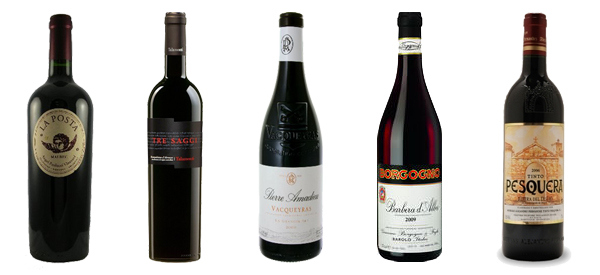
Iconic red wines from Bordeaux, the Rhône Valley, Napa Valley and Burgundy are heavily influenced by the barrels that house megalitres of famous juice, but for the most part, the premier or grand cru grape ferment is up to the splintered task. Value wine faces a much greater challenge.  Still, there are terrific examples out there that find the correct balance of fruit, oak and acidity. Here are five arriving VINTAGES releases that gracefully walk that fine line.

VINTAGES November 10th, 2012 Release

The grape: Malbec

The history: Blender of Bordeaux and ‘black” knight of Cahors in southern France

The lowdown: Mom and pop Mendoza outfit sells to big corporation but maintains parochial integrity

The food match: Pot Roast, roasted root vegetables

La Posta Angel Paulucci Vineyard Malbec 2010 (75515, $15.95) faintly hits at a mocha milkshake mentality. Smoking cedar boughs inside and blossoming purple Jacaranda outside. Volcanic and pitchy like Cahors or Etna. Mocha flavour finish brings it all full circle.  88

The grape: Montepulciano D’Abruzzo

The history: Not to be confused with Tuscany’s Vino Nobile Di Montepulciano, this one comes from Abruzzo

The lowdown: MD’A’s are making use of new oak like never before. Crowds of new wine lovers are embracing the sweet and concentrated elixirs as go to value drinkers

The food match: Spaghetti with Veal Ragu, reggiano parmesan

Talamonti Tre Saggi Montepulciano D’Abruzzo 2008  (204016, $15.95) is representative of the new age in Italian wine. A crooning Tommy that resides “here in my deep purple dreams.” Rich, lush, deep violet berry, oak-inspired MD’A. So much wine for $16 if a bit scary to a fruit dinosaur.  88

The grapes: Grenache and Syrah

The history: Typical southern Rhône blend, 80% G and 20% S

The lowdown: The Amadieu family has a storied history in the region dating back to the 1920’s, and are the owners of this incredible Cru vineyard

The food match: Hand Made Ravioli, mushroom filling, white truffles

Pierre Amadieu La Grangelière Vacqueyras 2010 (76398, $19.95) first seeps as a black and red fruit Texas tisane but before long the toasted oak turns the tea to coffee with a hint of balsamic wood. Complex from AA to ZZ but not over the top. Some astringent, chalky tannin and talcy acidity is conquerable because the fruit is so lush. “Have mercy, a haw, haw, haw, haw, a haw.”  89

The grape: Barbera

The history: One of Barolo’s historic houses, this Barbera represents an avante-garde shift for the house style

The lowdown: Modern but nothing revolutionary about it. Nothing but a little bit of oak

The food match: Osso Bucco, gremolata, polenta

Giacomo Borgogno Barbera D’Alba Superiore 2010 (285486, $19.95, SAQ 10388088, $19.40) screams simply wow, this is not what I expected from the ancient winery. When I think of Borgogno I envision Barolo circa 1985, red rose rusty and opaque like weak tea. This one is purple pretty, black cherry pie yet retains a dry Piemontese attitude in search of braised shanks. Best Barbera.  90

The Splurge

The grape: Tempranillo

The history: Alejandro Fernandez has convinced the world that entry-level can mean $27

The lowdown: This could be Ribera Del Duero’s finest Crianza

The food match: Braised Lamb Shank, shiitake mushrooms

Alejandro Fernandez Tinto Pesquera Crianza 2009 (341461, $26.95, SAQ 10273109, $26.35) is the shocking blue Venus of Ribera Del Duero, round, voluptuous, smooth and let me tell you, “she’s got it.” Licorice liqueur, blue plum, citrus and laser acidity for a red wine. Always spot on.  90

Good to go!

The wine diaries: Italian masters

Photograph by bartuchna, Fotolia.com

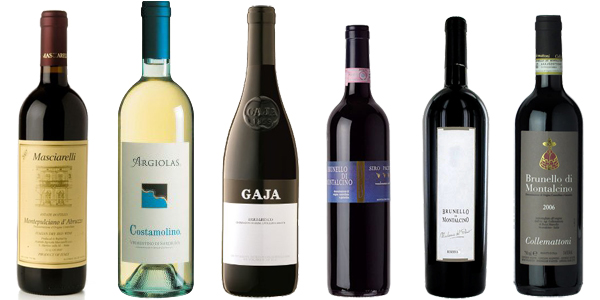
Importers Robert Tomé and Tony Macchione are serious about wine, especially of the Italian variety. Who wouldn’t be bound and determined to taste through a portfolio that includes Siro Pacenti, Valdicava, Collemattoni, Argiolas, Masciarelli and their most recent addition, Gaja.

as seen on canada.com

On Monday, October 1st I joined the throng of thrill seekers at the Shangri-La Hotel, Toronto, to engage in some grape stem cell therapy. Here are my notes on 20 wines from seven noble Italian producers at the Stem Wine Group 7th Annual Family of Wines Gala Tasting 2012.

Azienda Agricola Masciarelli, Abruzzo

Trebbiano D’Abruzzo 2011 ($14.99) resounds fruit forward and redolent as grape must, more treble than bass, a chiave di violino. The ‘G’ clef is music to my sense of smell, straightforward and honest to taste. A snapshot to winemaker Marina Cvetic on a Sunday afternoon, relaxed, on the terrace, with a view of the sea to the east.  87

Montepulciano D’Abruzzo 2011 ($14.99, $14.80 in Quebec) of aromatics pointing to volcanic ash, smoke, tar and lead feels like ancient wine yet goes vanilla cool and silky down the hatch. Made in the shadow of the Apennines, “even when mountains crumble to the sea,” there would still be Marina and me. Thank you Abruzzo.  88

Montepulciano D’Abruzzo ‘Marina Cvetic’ 2007 ($28.99, $27.35 in Quebec) shows more evolution since my previous tasting note, “long, harmonious expression of a much maligned grape. Jumping aromas as if an opened jar of raspberry jam on a winter’s morning. Great value from this winemaker mother of three’s (22, 13 and 3) namesake bottling.” Now in peak form, some splinters, nearing the plank.  90

Montepulciano D’Abruzzo ‘Villa Gemma’ 2005 ($74.99) of grace and flawless visage is, as I mentioned previously built of “major league fruit and ferocious grip but in danger of creeping over the edge. Time may be the factor but why wait. The MC is $40 cheaper and offers everything you could ask for in an MD’A.  91

Argiolas, Sardegna

Vermentino ‘Costamolino’ 2011 ($16.99, $21.99 in British Columbia) lives by the sea which makes Sardegna a bit like  “a land called Honah Lee.” There is tangy, tropical fruit and a puff of mineral salts, unquestionably typical of the Argiolas style. Pure Mediterranean white magic.  88

Cannonau “Is Solinas” 2009 ($24.95) from vines on the beach is still so young so “those seagulls are still out of reach.” The crystal salinity of the sea clings to the grape leaves, says Export Manager Beppe Pinna, imparting a minerality to the grapes unlike anywhere else. Made from 95% tough Carignano, the hipster Solinas needs time before it’s ready to face the crowd.  Should be a star.  89

Boroli, Alba, Piedmont

Barbera D’Alba 2008 ($15.99) is, as Mr. C. notes, so underrated, especially at this entry-level. A ripe bowl of cherries dusted with dry, ground cherry powder. Delivers the dry and dusty goods.  88

Barolo 2006 ($49.99) advances with rancorous grit and coarse determination. Tart red fruits prickle with feeling and analeptic assistance from their perch high up on a mountain of tannin. Expect nothing less than time from this gutsy effort.  88

Barolo ‘Cerequio’ 2004 ($87.99) from the prestigious Grand Cru single vineyard seems wise beyond its years. Dried cherries, flowers, orange peel and licorice salmagundi with a weedy dill overtone. The herbaceousness is not off-putting, as can be the case in some austere Nebbiolo or Brunello. Stately effort and not shy.  92

Collemattoni, Montalcino, Tuscany

Rosso Di Montalcino 2009 ($24.99) the teenage princess dai capelli scuri of shoulder length and silky red fruit is irresistible. Full on ripeness and glowing with genetically imprinted joy.  88

Brunello Di Montalcino 2006 ($52.99) is likewise approachable and sets forth to perfume the room with Pelargonium Zonale. But the ‘Mattoni is also bent on perpetuating a dogged determination befitting the dogmatic Sangiovese Grosso. A queen to the Rosso’s princess, confident of red fruit, built of solid brick befitting the house of its ancestry.  90

Siro Pacenti, Montalcino, Tuscany

Brunello Di Montalcino 2007 ($89.99, $87.25 in Quebec) is a closed wall of doom, aroma wise, save for a malinger of merda. Nothing a good swirl can’t aerate. A tactical deployment and early blending of north and south Montalcino grapes will help to harmonize this Brunello within a reasonable amount of time. While difficult to assess so young, speculation as to its future is not so obtuse a concept. Ripe cherries and plums are just a few years away from crawling out of the hoi polloi of leather and game. The wine will shine in 2015.   93

Valdicava, Montalcino, Tuscany

Rosso Di Montalcino 2009 ($33.99, $44.99 in British Columbia) extolls the winery’s virtue that cleanliness is next to godliness, echoing Tony’s story about WErproprietor Vincenzo Abbruzzese’s obsession with a clean cellar. Despite Valdicava’s omnipresent perfume of sheep off the vineyard floor, this Rosso is clean, pure and indicative of great Brunello.  90

Brunello Di Montalcino 2004 ($119.99) is the most benevolent and democratic of Valdicava’s Brunelli. Balanced design of smoky, red fruit, earth, spice, licorice and that unmistakable Valdicava perfume. Expertly crafted, impossible not to like. Like I wrote before, “softer, loaded with licorice, pureed sweet peppers and ruby minerality. Seductive, sensuous and really put together. “If she asks me, do i look alright? I say yes, you look wonderful tonight.”  93

Brunello Di Montalcino 2005 ($104.99) obliges the vineyard’s tenet with great intention and of a congenial nature. The red fruit, spice, panna and terra cotta notes are all in check but the vigor is buried in invisible circumstance. Basic for Valdicava but only because the other vintages are so extraordinary.  88

Brunello di Montalcino 2006 ($104.99, $137 in British Columbia), again, from an earlier note. “Initially softer in the mouth begins rolling furiously then is found going down hard stone lines. Finishes with gritty, chalky tannins. Crack one in ten years and it’s “gonna open up the throttle…bust another bottle.”  94

Brunello Di Montalcino 2007 ($139.99) is a romance of cheese and animale with its dueling scents of Pecorino di Pienza and pecora nera. Damp earth, wool and unwashed rind combine for the most unique set of Sangiovese smells. Sniff on past and note tobacco, licorice, black cherry and the mineral core beneath the hills.  Complexity of complexities.  95

Brunello Di Montalcino Riserva Madonna Del Piano 2005 ($134.99) is intensely concentrated, a dreamy and creamy correlated affair between fruit and oak. The sheep’s redolence returns and combines with the meracious, subterranean earth. The ubiquitous Valdicava perfume can only be brined to this level from the historic single vineyard set in the valley north of Montalcino.  Score is consistent with last year’s note. “Monstrous, hunts down the taste buds and renders them comfortably numb. Feeling down? This Madonna will, years from now, “ease your pain, get you on your feet again.”  95

Brunello Di Montalcino Riserva Madonna Del Piano 2006 ($169.99) is sacred Sangiovese, an inviolable reliquary of immaculacy deep beneath Montalcino’s altar. A vamp of essential Tuscan fruit. If you were to stand on a hill in Montalcino in winter time and listen carefully, you would hear a low sipping sound. That is the sound of the entire town drinking of the Madonna Del Piano.  97

Gaja, Barbaresco, Piedmont

Barbaresco 2008 ($218.95, $199 in British Columbia, $199 in Quebec) has not yet unfurled from earthly slumber. Subtle yet discernible greatness as previously noted. “Whiffs smoked beef tongue from the great merchant delicatessen in the sky. A maze of flavours complex like a Venetian neighborhood with interlocking canals and bridges set to and fro. Not your queen’s Barbaresco, nor Bardolino neither. More Shylock than Antonio. Currently a villain with its tongue lashing tannin. Fast forward 15 years to to act four when the integration of fruit causes the wine to become a victim of happy imbibers.”  94

Good to go!

Dude’s wine night

as seen on canada.com

Wine writers are rarely accused of being overworked. Tasting through 100 wines at a sitting requires effort and focus but it’s still got nothing on Mike Rowe. There is work and then there is play, like accepting an invitation to dinner prepared by a passionate and skilled cook, with a bottle of wine the price of admission. Talk about a no-brainer.

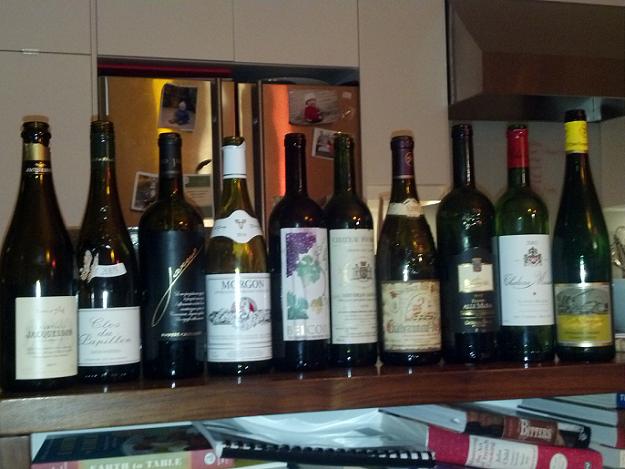
On Friday night I dug deep into the cellar for a ’97 Tuscan and joined five fellow geeks, “The Wine Dudes,” for an adventure ride through 10 wines from 4 countries. A line up to leave oneself in bewilderment and utter presence. Wines of yeast, lees, late harvest and élevage en cuve. Wines made by celebrities, of iconic status, from historic locales, in times of peace and in times of war. What a trip.

Jacquesson Cuvée No. 734 Champagne is a blend of all Premier or Grand Cru fruit; Chardonnay (54%), Pinot Meunier (26%) and Pinot Noir (20%), based upon the 2006 vintage (73%). Essentially vintage authentic, it’s a balanced affair of toast, honey and grapefruit.  90

LOBSTER BISQUE, fresh tarragon

Domaine des Baumard Savennières Clos du Papillon 2005 by way of a note from JM is “really impressive with the bisque. Balanced richness and spiciness echoed the lobster, refreshing orchard fruit and dry honeyed finish, with lots of minerality to match the crushed shells.” Also from BE, “a honey pear start,  nice acid on the finish. Beeswaxy Sav nose.  Surprisingly harmonious match with the bisque. Rich enough to go toe to toe, but sharp enough on back end to cleanse palate.” Seems to me it “floats like a butterfly and stings like a bee.”

Podere Castorani Jarno Bianco Colline Pescaresi IGT 2006 (111690, $59.95) released back in June 0f 2009 is now a bronzed, verging on patina Madeira cocktail. The oxidation is philosophical, post-secondary and welcome, like finding a ’75 Chablis from the depths of dad’s cellar, opening, tasting and reveling in its ability to survive. One of a kind formula blend of Trebbiano D’Abruzzo 70%, Malvasia 20% and Cococciola 10% from Italian race car driver Jarno Trulli. Piques intrigue and opens a new dossier to white wine investigation.  89

BEEF CHUCK AND HEART HAMBURGERS, american cheese, fresh romano beans, panzanella salad, fennel

Georges Duboeuf Morgon 2010 (946186, $18.95) is Gamay defined, chipper and jocund. The simpleton whose heart is revealed after stripping away its body. A cold pull of pressed plum, gateway and seamless segway to bigger reds.  87

I Giusti & Zanza Belcore Toscana IGT 2009 (652990, $23.95) uses (20%) Merlot as travel partner for (80%) Sangiovese to learn another language abroad. Studies the fruity fresh undergrad Gamay, moves quickly forward to post-graduate, earthy Right Bank, satellite Saint-Emilion and returns home to write a doctorate on sonorous and thermal IGT.  88

Château Fonroque St. Emilion Grand Cru 2000 unseats Talbot as the non pareil Bordeaux coalescence of value and longevity from that vintage. Resolute to immaculate balance, black fruit steadfast against crumbling tannins and yet I can see this pushing on for 10 or more. “You like drinking ghosts,” says JM. Yes I do, yes I do.  93

Bosquets Des Papes Châteauneuf-du-Pape 1998 is deep into tertiary life, displaying prune and dried, Amarone-like fruit. Hangs on with nary a sign of further development or decline for hours so good on the Papes for its frisson of retribution.  90

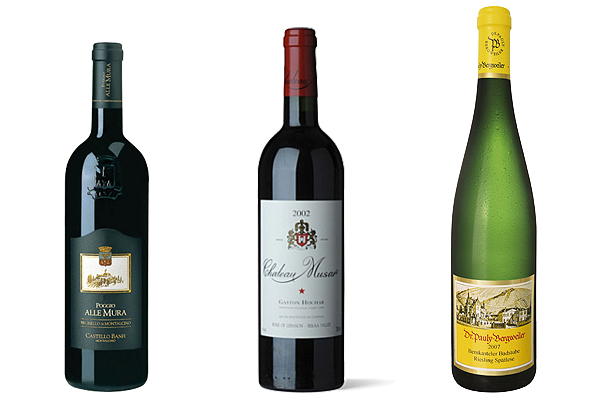
Castello Banfi Brunello Di Montalcino Poggio Alle Mura 1997 is bloody in so many ways; good, hell, yeah. “Like killing a stag and eating it” or ” like peeling a scab and eating it” is over heard. The elixir is pure silk, the fruit dark and divine. To be honest, this ’97 (nice coincidence) Brunello has entered a La Vita è bella window. All I can say to the now bite-less and bella Banfi is “Buono giorno Principessa!”  93

Château Musar 2002 (109413, $54.95) from the Bekaa Valley, a place more famous for air strikes than grapevines. The Bordeaux blend is here exceptional, prodigiously candied like Sonoma Pinot a la Merry Edwards, but with an added depth of ash and earth. A sponge of lush red fruit, “gargle material,” notes chef. Spends seven years in their cellars. In a peaceful world it would be called a shmita. Lebanon’s vinous muse.  91

FIRE POACHED FIGS, roasted chestnuts, ice cream

Dr. Pauly Bergweiler Bernkasteler Badstube Riesling Spätlese 2007 shows remarkable poise and lack of cloy. A cooperative of residual sweetness and acidity, still freshly ensconced in its primary stage of Riesling maturation. More perennial than petrol, more pear than paraffin.  92

Good to go!