Terra Alta
This is the fourth of five instalments concerning the wines of Garnacha from the regions of Aragón and Catalonia.
Related – For a comprehensive report by Sara d’Amato and I read WineAlign: Discover the Flavours: Wines of Garnacha
In October of 2015 WineAlign colleague Sara d’Amato and I travelled together with Christopher Waters of Vines Magazine. The trip’s mission was to discover Spain’s Wines of Garnacha in their natural habitat, the five distinct and allied Denominación de Origen in the regions of Aragón and Catalonia.
Related – Garnacha covered part three: Somontano
Our host in Zaragoza was The Spanish Institute for Foreign Trade (Instituto Español de Comercio Exterior, ICEX), the Wines of Garnacha campaign and the office of Garnacha Origen. The trip was orchestrated with expertise by Aragón Exterior Managing Director Ignacio (Nacho) Martinez de Albornoz and Head of Wines from Spain (ICEX) Alfonso Janeiro. Our chaperones were Ignacio, Sofía González Martínez, Ivo André Alho Cabral and Roser Mestre, in Zaragoza and on expeditions to the five DO’s that comprise the wines of Garnacha.
Related – Garnacha covered part two: Cariñena
Related – We’ve Garnacha covered part one: Campo De Borja
Terra Alta
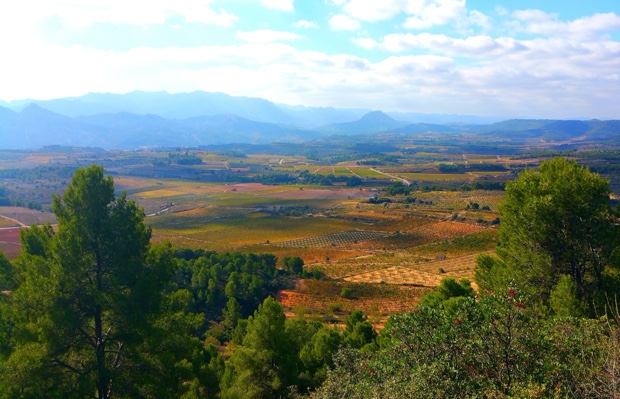
Crossed off the bucket list is a visit to the land of Garnatxa Blanca, Catalonian of the heart, in drive and from desire. The journey from Zaragoza to the furthest afield of Garnacha’s five D.O’s passes through vast stretches of landscapes in painted desserts and sculpted of mountain congeries. Soon the valleys begin to wind and snake their way between the limitless hills, tracing paths carved out in memory of long ago raging, ancient glacial rivers. The road slices through terraced panal, the spongy soils of Terra Alta, davenports to vines cultivated by the most prolific producers of white Grenache in the world. In Terra Alta, that number occupies 49 percent of the total Spanish production.
Terra Alta can be found in the southwest corner of the northeast corner of Spain. In a nutshell it may be incongruously defined as a large geographical area, “la más meridional de Cataluña,” with a small population of a mere 12,000 inhabitants. The prevailing winds, el Cierzo from the north and the summer Garbinades, “the Arab wind” from the southeast, add humidity, to protect from vine disease and to help finish a grape’s ripening process. Unlike its Aragonese brethren, the grape varieties grown in Terra Alta at times need a little help from their friends. To that end, five years ago an irrigation system was created, useable from May to September, to also help with the ripening process.
Interpid travellers in Terra Alta: WineAlign’s Sara d’Amato and Godello
It is fascinating to note that when Pablo Picasso was sick he came to Terra Alta for the air. He also came for the wine. He drank what was called vino brisat, skin macerated white wine, somewhere between orange and straw wine. After his health was restored, he returned three years later and apparently developed his cubist style in Terra Alta. Picasso, innovator and oenophile privy to 21st century thought, knowing that white wines produced with a maceration step contain significantly more health restoring and promoting polyphenols than those produced in a more traditional way. Records show that Garnacha has been grown in Terra Alta dating back to 1647.
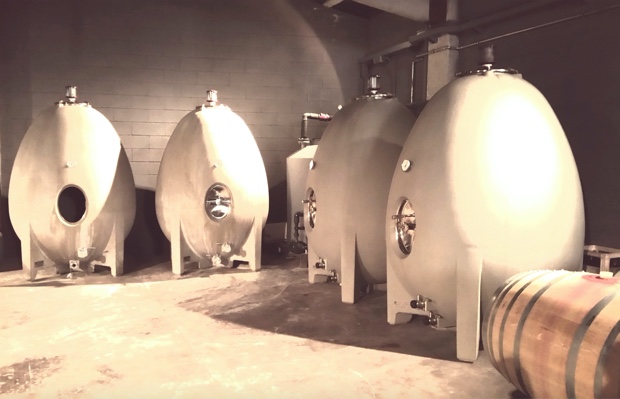
Cracking the wonders of #garnatxablanca @lafouceller #concreteegg @doterraalta
Terra Alta’s trump soil card is the panal, with its ability to retain moisture with nary rock or stone encumbrance. There are also soils imbued of limestone richness and a lack of organic material. The mediterranean climate combines abundant sunshine with little rainfall. Of the 6,000 total hectares planted, 1,400 is devoted to Garnatxa Blanca and the average annual production is seven million kg of grapes or, 50 hectolitres per hectare.
The DO “Terra Alta” (DOTA) was recognised provisionally in 1972. Together with Alella, Conca de Barberà, Empordà, Penedès, Priorat and Tarragona it is one of the seven historic denominations of origin of Catalonia. The first label noted as D.O. Terra Alta was 1984 and that wine was white. And so, today there are two symbols of guarantee, one for the D.O. as a whole and the other granted for whites. “SOM Terra Alta Garnatxa Blanca – 100×100.” More than simply a guarantee of 100 per cent Garnatxa Blanca composition, these wines must be deemed to score at least 85 out of 100 points in sensorial quality by the Consell Regulador. “Or you don’t get the sticker,” says proprietor of Altavins Viticultors de Batea Joan Arrufí, current president of the D.O. “Everyone is on board because it is necessary to put Terra Alta on the map.” The credo is “Cuerpo Y Alma,” or in Catalan, “Cos I Anima.” Body and soul.
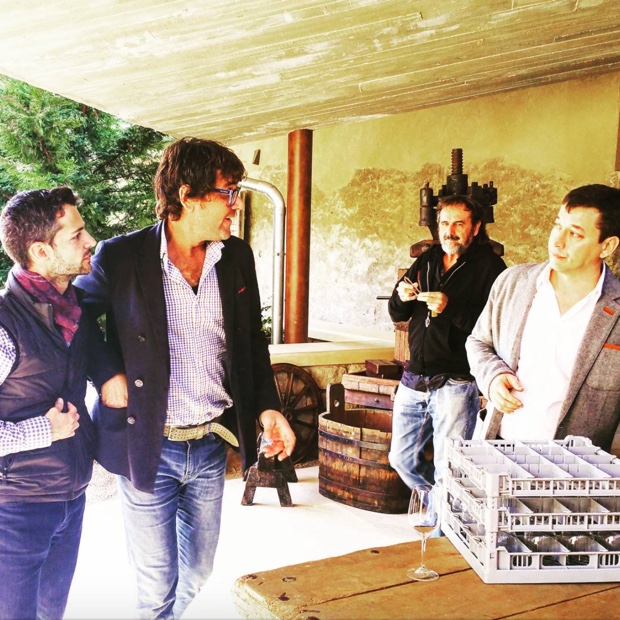
John, Paul, George and Ringo ready to play @doterraalta #garnatxablanca tunes for #loscanadienses
What is so curious about the White Grenache here is that more than any other Garnacha, red or white, produced in the five D.O’s of Aragon, the Blanca of Terra Alta has proven its ability to age. Arrufí tasted a 2001 the day before we arrived, saying “it’s perfect,” having changed from white fruits (banana, apple, apricot) to frutos secos (nuts), honey and almond flowers.
Winemakers presenting in today’s market are mostly young, the children of the older generation, adding freshness, elegance, new blood and a willingness to embrace technology. Unique to Terra Alta, the new generation is taking over the winemaking. Ask one how to prevent oxidation? Hand-pick, before the sun hits mid-sky, ferment at low temps and protect with lees. Good plan.
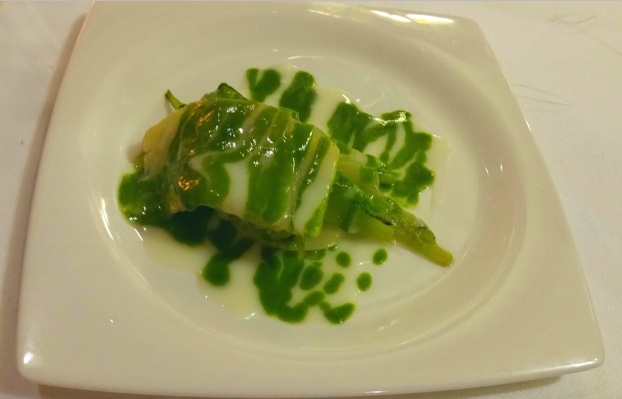
Borraja, potato, sauce of peas, Casa Lac, Zaragoza
The night before heading out on the long trek to Terra Alta we pre-tasted some of the region’s wines at Ricardo Gil’s Casa Lac in Zaragoza. In Gandesa we met with Joan Arrufí at the offices of the D.O and then travelled to taste with the winemakers at Lafou Celler, followed by another tasting in the restored shell that once housed Corbera d’Ebre‘s destroyed church. It was at this meeting where the most poignant event of the Aragon trip took place.
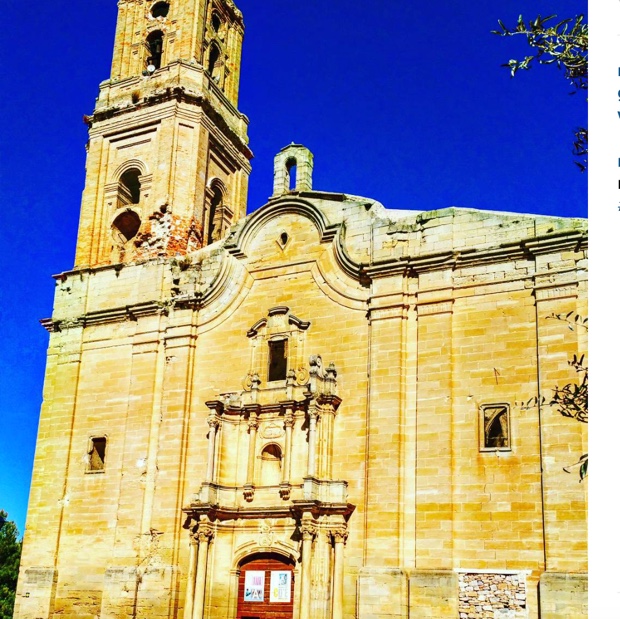
The art of survival and restoration #corberaderbe #spanishcivilwar #terraalta
During the Spanish Civil War the Nazi warplanes dropped their bombs and Corbera d’Ebre was completely destroyed at the Battle of the Ebro (25 July–16 November 1938). The upper part, known as Poble Vell (Old Town), including the church were kept. One of the bombs landed in the river, killing a young girl and tossing her brother into the water.
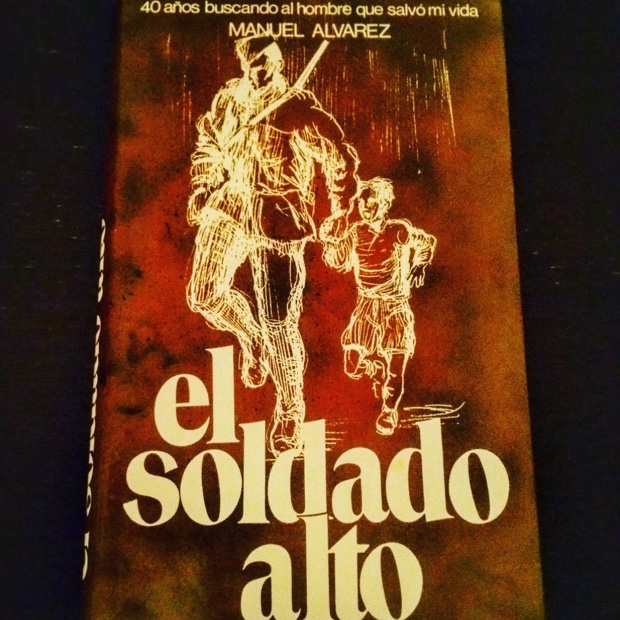
A beautiful gift to #teamcanada @waters_wine @saradamato from #terraalta #manuelalvarez #corberadebre #spanishcivilwar #canadiansoldier #mackenziepapineau
A Canadian soldier from the Mackenzie-Papineau batallion fished him out. That boy, Manuel Álvarez, spent his life looking for the soldier. He finally found him 40 years later, in Vancouver. El Soldado Alto (The Tall Soldier) is the book Álvarez wrote to thank him and keep the story alive. Upon arrival in Corbera d’Ebre the story was recounted to us, Los Canadienses, along with a presentation from Ramón Gironés Julia, treasurer of Associació del Poble Vell, with a copy of the book. The Canadian soldier’s battalion was named after William Lyon Mackenzie and Louis-Joseph Papineau, leaders of the rebellions of 1837 in upper and lower Canada. They sought liberty, social justice and democracy, a spirit which the Canadian volunteers carried to Spain. Our job now, as the next Canadians to visit Corbera d’Ebre, is apparently to save the wines of Terra Alta. We’ll do our best.
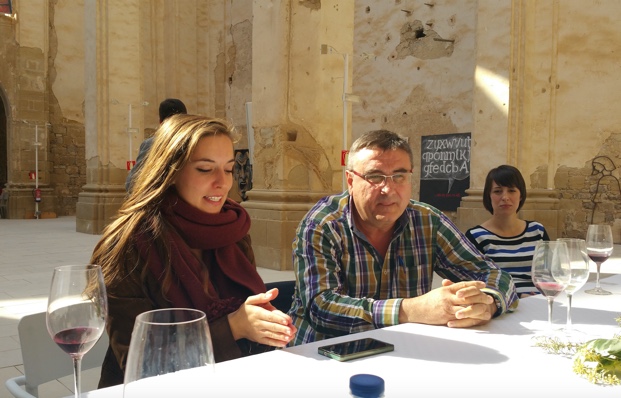
Sofía González, Wines of Garnacha and Señor Valiente, Vins de Mesies
After the tasting in the historic village we went for lunch (ending at 6:15 pm) at Nou Moderno in Gandesa. The cooking and service by Rosa & Josep M. Vallespí is something every visitor to Catalunya need experience. We continued to taste the regional wines with Joan and the winemakers. The wines tasted were the following: Ilercavonia, by Altavins; Vallmajor Garnatxa Blanca and Tipicitat by Celler Batea; Edetària Selecció Blanc, by Celler Edetaria; Clos Dalián Crianza and Clos Dalián Crianza Blanco, by Cellers Unió; Mesies Garnatxa, by Ecovitres; Els Amelers, by LaFou; and Vila-Closa Garnatxa Blanca, by La Botera.
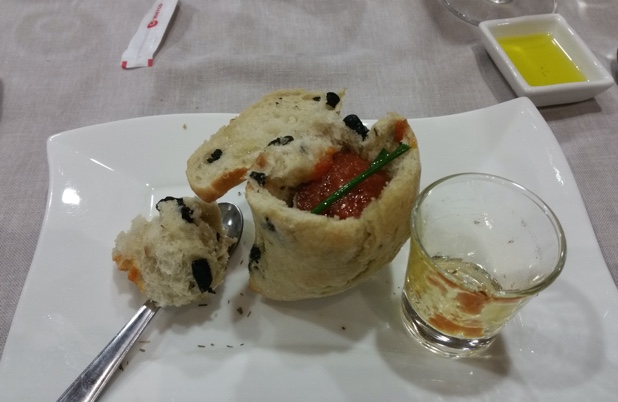
Nou Moderno Restaurant, Gandesa, Terra Alta
Celler Batea Vall Major Garnatxa Blanca 2014, DO Terra Alta, Spain (Winery, WineAlign)
With the intent to drink in the first year and quality to price ratio in mind, here the entry to Catalonian Garnacha Blanca. Sees 12 hours of skin contact, stainless steel housing after and with previous attention paid to low fermentation temperatures. Fresh as a brook running through a green spring glade. Pretty flowers, scintillant of acidity, young as a “back up the truck” kind of white. It’s chewy too. Has length of itself, from itself and for itself. Me, myself and I Garnatxa Blanca. From low yields in one of the higher production areas of Terra Alta. Tiny bitters arrive late, but still, that Terra Alta length. Drink 2015-2016. Tasted October 2015 @CELLERBATEA1
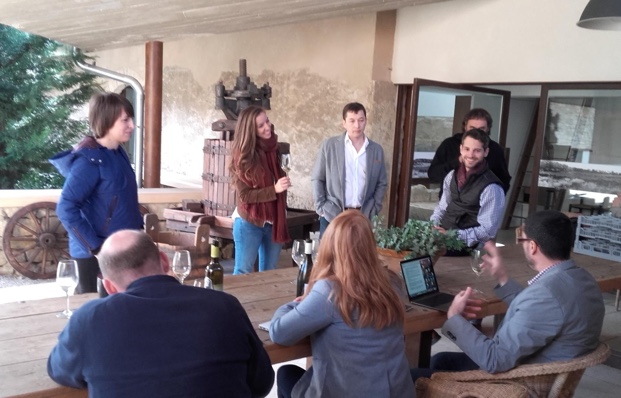
Los Canadienses taste and talk with the winemakers of Terra Alta at Celler Lafou
photo (c) La Botera
Vins La Botera Vila-Closa Garnatxa Blanca 2014, DO Terra Alta, Spain (Winery, Agent, WineAlign)
“It’s also a young wine,” admits Laia, the winemaker. Built on crisp acidity from young vines and more structure from some older ones. Then blended together for a balanced White Garnatxa. The older vines come bound with an increase in altitude. “We play with the two, hand in hand.” This has a deeper, slightly medicinal or tonic inflection. Mostly from Panal soil – so there is richness and citrus, a preserved lemon. Such a different expression – strikes as more complex but at the inconsequential expense of freshness. Approximate price $15.95 CAN. Drink 2015-2017. Tasted October 2015 @Bateabotera @thatslifewines
Vins La Botera Vila-Closa Garnatxa Blanca 2013, DO Terra Alta, Spain (Winery, Agent, WineAlign)
Tasted in Toronto nearly a year ago. The handpicked Garnatxa Blanca from 35 year-old vines left to develop on the riper side of the equation blended with acidity elevating, younger fruit. Real cold soak plus three months of lees contact in stainless steel. So yes, this is a steely version, very much in the vein of straight-up Chablis. Bottled simplicity, limestone reckoning. Could drink this like water anytime the mercury rises. Approximate price $15.95 CAN. Drink 2014-2016. Tasted November 2014
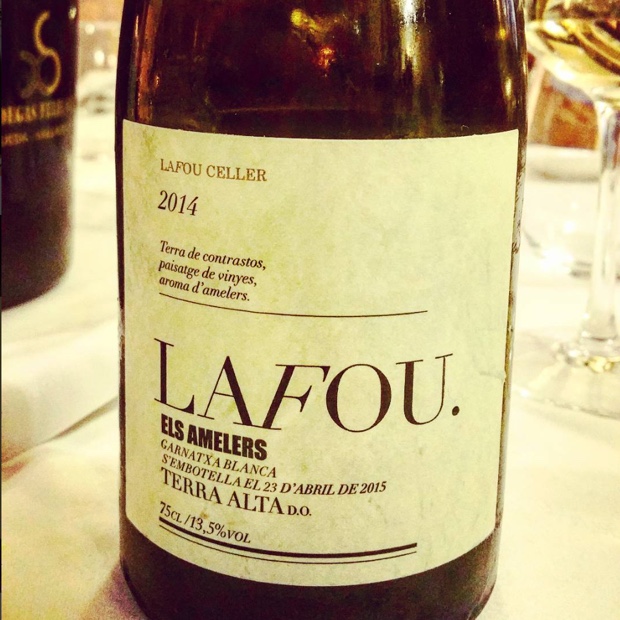
To taste again @lafouceller in @doterraalta is today’s master plan @VINOS_ICEX #lovegarnacha #garnatxablanca #crdoterraalta
Lafou Celler Garnatxa Blanca 2014, DO Terra Alta, Spain (Winery, Agent, WineAlign)
Ramon Roqueta Segalés, winemaker, soothsayer, visionary, seeker of the Garnatxa Blanca of today from “a narrow valley.” Ramon is very concerned with the valleys, the landscape, the geology, how the wind, the mediterranean climate and the ancient rivers that run through, having left their glacial deposits, all combine for this particular and most important expression of Garnatxa Blanca. Established in 2007, this wine was first released in 2011. Combines old and young fruit, some harvested fresher at a greener stage and others picked later, riper, brought together. Vinified separately, with some skin maceration, looking for fat to surround acidity. Ripe fruit (10 per cent) sees oak, the rest in egg shape concrete tanks with six to seven months of lees contact. Smells like a ripe peach, fresh and without sugar but instead a sprinkling of subterranean, ancient riverbed harvested salt. The tang is layered, variegated, mineral, mastered over and in corralling of oxidation, elaborated with gentle but forceful demand. “We learned that you can get a balance by harvesting and an early and a later stage, sometimes three times.” Finishes with lime, fresh squeezed, sweet tonic and distilled flowers. A wine that has succeeded in “mastering the oxidation process.” Plus the tannic (anti-oxidative) aspects offered in micro-oxygenation from the slightly toasted new oak. Approximate price $28.95 CAN. Drink 2015-2025. Tasted October 2015 @lafouceller @oenophilia1
Lafou Celler Garnatxa Blanca 2013, DO Terra Alta, Spain (Winery, Agent, WineAlign)
Tasted in Toronto nearly a year ago, the mind’s eye and memory back remember a gorgeous wine, full of salient alkali in zest form, calcified sweet white flowers and the cleanest, most elegantly drawn lines. A prodigy of anti-terse White Grenache statements, so obviously cared for, from healthy vines the mild treatment by lees, wood or common concrete. In a nutshell, worth every penny of its $29 tag. Drink 2014-2023. Tasted November 2014
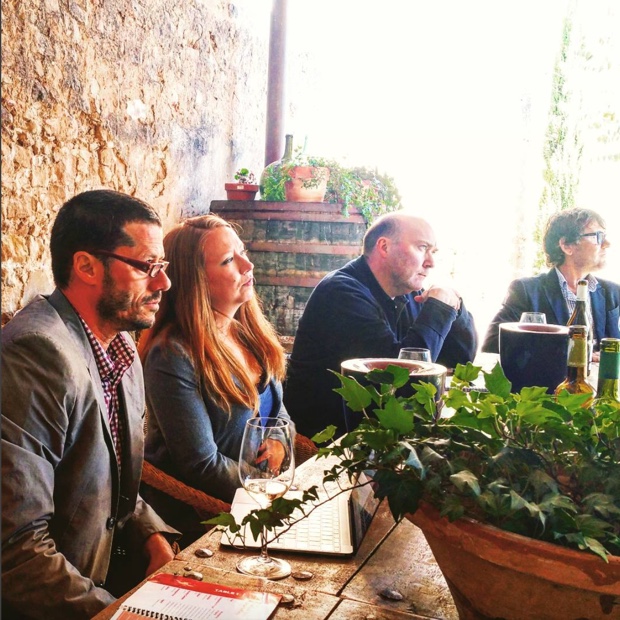
Los Canadienses @waters_wine @saradamato & @altavins getting serious with @doterraalta #garnatxablanca #joanbautistaarrufi #terraalta #lafou
Altavins “IL” Ilercavònia Garnatxa Blanca 2014, DO Terra Alta, Spain (Winery)
Named for the people in the west of Catalonia, Iberians who lived in Terra Alta and the surrounding areas from the 6th to the 1st century BC. From old vines (up to 46 years) shown cold fermentation and three days of skin contact. Time in 400L oak barrels (five months) on the fine lees. Here the most bronzing of all the White Garncaha we’ve been shown, certainly on the oxidative side. Fine pretty flowers and equally fine bitters on the finish. Fine acidity as well. All of this speaks to the phenolics, all pieces of essential White Grenache, all aligned. Herbal and platinum, in hue forward to sensation. This is the adult expression and a wine that can and will age (2001 was the first and we are told it lives very much still). This is very grown up, another chapter all together. Already showing what it will be – very mineral and yet acidity not the same in any way, as compared to the others. Yet very long. slowly, evocatively, long. Drink 2015-2025. Tasted October 2015 @altavins

Los Canadienses taste with the winemakers of Terra Alta at Codera d’Ebre
photo (c) La Botera
Edetaria Selecció White Vinyes Velles 2013, DO Terra Alta, Spain (Winery, Agent, WineAlign)
From a fourth generation family vineyard in Gandesa, a project that began in 2003. Fully, completely Garnatxa Blanca, from a group of old vineyards, cooled down a degree or two more than the norm for 24-48 hours, with skin maceration. Barrel fermented in small casks for eight months, this also leans oxidative but never gets there, even less than the IL. White flowers, imaginations of futures thickened by honey and glazed in apricot. Possessive of a Riesling-like nose, Sémillon lean and pinpoint accurate clarity. Such a proclivity to seek evolution this alternative custodian of the Garnatxa varietal necessity. Seeker and keeper of tradition and to let the world know what has always been possible. This has acidity. It really has it. Bridges so many philosophies, histories and realities; Alsace Riesling, South African Chenin Blanc, Greek Roditis. Approximate price $39.95 CAN. Drink 2015-2023 Tasted October 2015 @EdetariaCeller
Edetaria Selecció White Vinyes Velles 2012, DO Terra Alta, Spain (Winery, Agent, WineAlign)
Tasted in Toronto nearly a year ago. From the famous panal soil, fossilized sand dunes low in organic material and even lower in yields. Managed in go it alone ways for Terra Alta, with grapes kept gelid at zero degrees during the process and individual plot vinification prepared in 300L oak barrels. Primary aromas are the launching point and the end game. Eight months later a most unique aroma subsists and emits potency, leading to layering. A portent for pure distillation in White Grenache. Approximate price $39.95 CAN. Drink 2014-2021. Tasted November 2014

Edetaria Garnatxa Blanca 2013 and Mesies Garnatxa 2014
Ecovitres Vins de Mesies Garnatxa 2014, DO Terra Alta (Winery)
Founded in 2002, Ecovitres stands alone in philosophy meets execution. The organics are a no-brainer in their minds, in a land where the winds blow and vine disease is less than a deterrent or an issue. Here the producer of the eco-Garnatxa, from lots of cropping and the moving of soils for humidity, Such a soil impart in this Tinto, brimming with cure, natural charcuteries derived from a range of protein and fresh, liquid chalky red fruit.”This is what Red Garnatxa should be,” insists winemaker Señor Valiente. A wine of light colour, of natural yeasts, of freshness and of minimal sulfites. Just a minor pump over to keep the cap wet, from drying out and from letting foreign agents to enter. Very brave for making wine this way, without pre-pioneers. The irony is not lost, on me or Señor Valiente. Drink 2015-2020. Tasted October 2015 @VINSdeMESIES
One final wine, tasted at Nou Moderno Restaurant in Gandesa. The day was already 10 hours old, many courses had been consumed and we knew there were many more to come a mere three hours away. So I did not take notes here, but I can say this. Red Garnacha from Terra Alta has the ability to age.
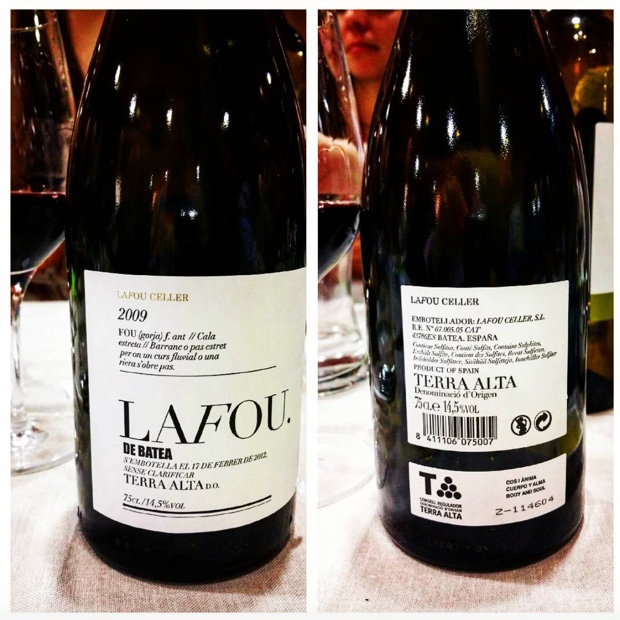
Good to go!
Twitter: @mgodello
Instagram: mgodello
WineAlign: Michael Godel


 Godello