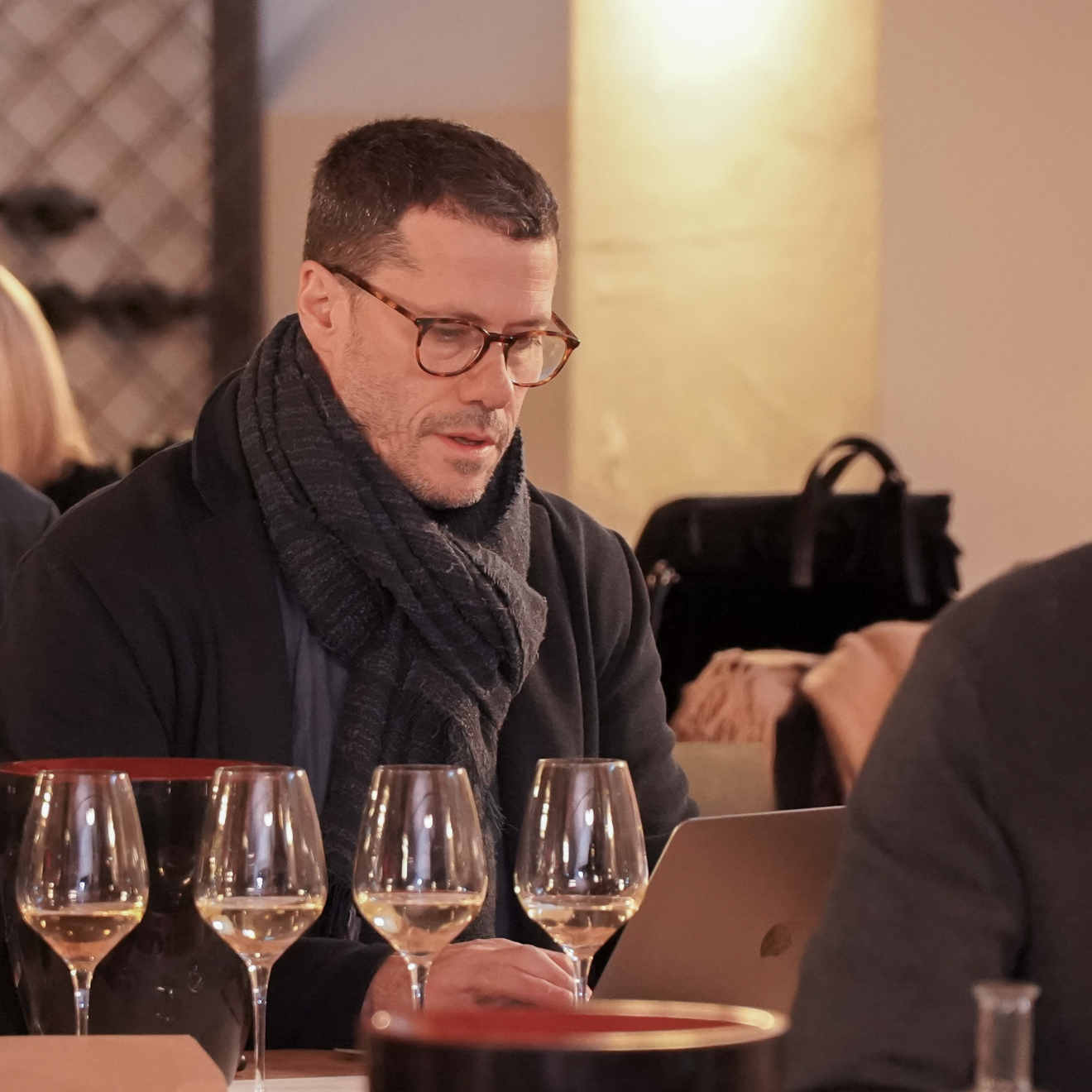
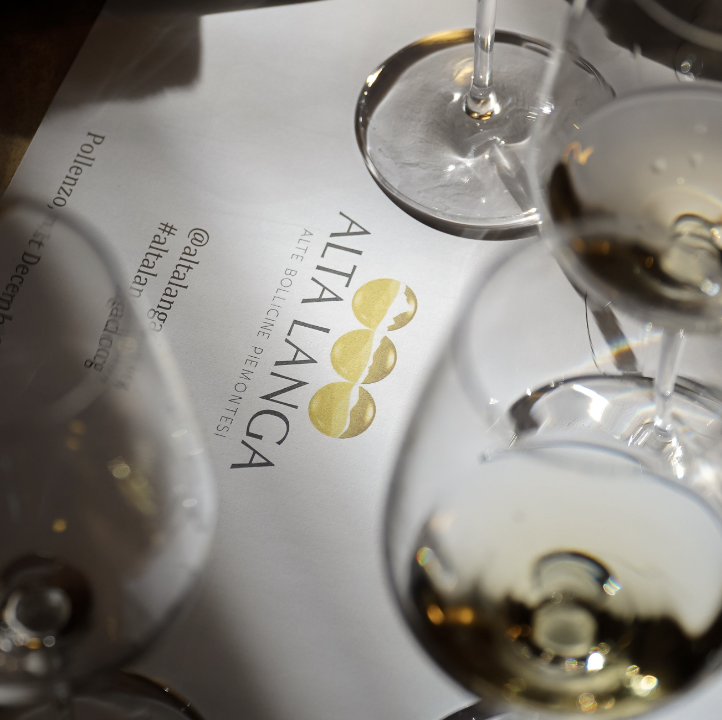
Godello, Alta Langa blind tasting (c) Anastasia Florea and Consorzio Alta Langa DOCG
This is the story of Alta Langa, Alte Bollicine Piemontesi. A portrait of proposal for a clearly defined class and style of sparkling wines led by a young, energetic and promising 20-year old Consorzio. An organization led by President MariaCristina Castelletta of Tosti1820 and Vice-President Giovanni Carlo Bussi of San Marzano Oliveto charged with the valourization of Alta Langa DOCG, a dry, vintage-dated Spumante obtained through the traditional method from pinot noir and chardonnay grapes grown on the Piedmontese hills. Their work carries forward from past Consorzio Alta Langa presidents Giulio Bava (Giulio Cocchi, 2013-2022), Lamberto Vallarino Gancia (F.lli Gancia, 2010-2013), Giovanni Carlo Bussi (Viticoltore di San Marzano Oliveto, 2004-2010) and Giorgio Giusiana (Martini & Rossi, 2001-2004). The date was June 15, 2001 in Asti, after more than 10 years of in-depth and methodical research and studies on the suitability of the area, to bring together winegrowers and producers involved in the development of a wine, an appellation and a territory. The common link was the steadfast adherence to classic Champenoise method sparkling wines made with grapes six years after planting. Il Consorzio Alta Langa protects and promotes the ideals of like-minded producers in search of the finest bubbles that can be made.
For the last two years the wine and also social media narrative has been played annoyingly on repeat, of grave reports concerning the decline of global wine consumption and yet there is an essential category on the rise. Sparkling wines are doing fine, with thanks of course in great part to bottles of Italian method examples produced in the hundreds of millions. A skewed graph perhaps but as long as there are bubbles we can’t really complain and yet we know that traditional method styles are what matter most. This is why news of the acclivity and proliferation of classic method effervescent wines is of the best kind. The question is how many are aware about production out of the northwestern part of Italy? For there is Piemonte, from the word piedmont, meaning “at the foot of a mountain,” an alpine arc of a vineterland surrounded to the south, west, and north by the vast Ligurian Apennines. Best known for growing red grape varieties, namely nebbiolo, barbera and dolcetto, also the whites of cortese and arneis, but in Piedmont there is this great affinity with the expatriate grapes from Champagne. The affair is nearly 175 years old, but what has been occurring over the last two decades will act as the impetus for shaping the future.
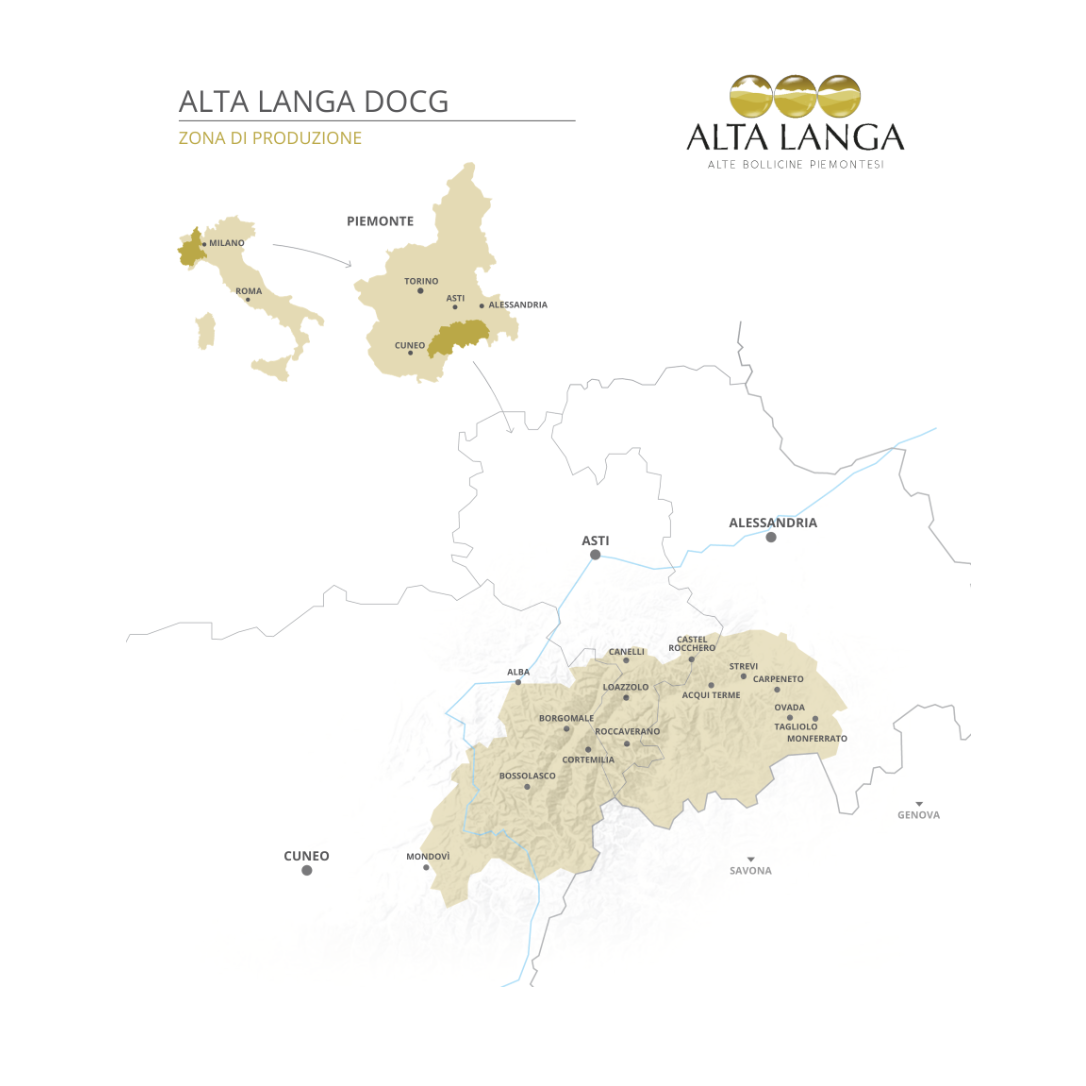
Where in Piemonte?
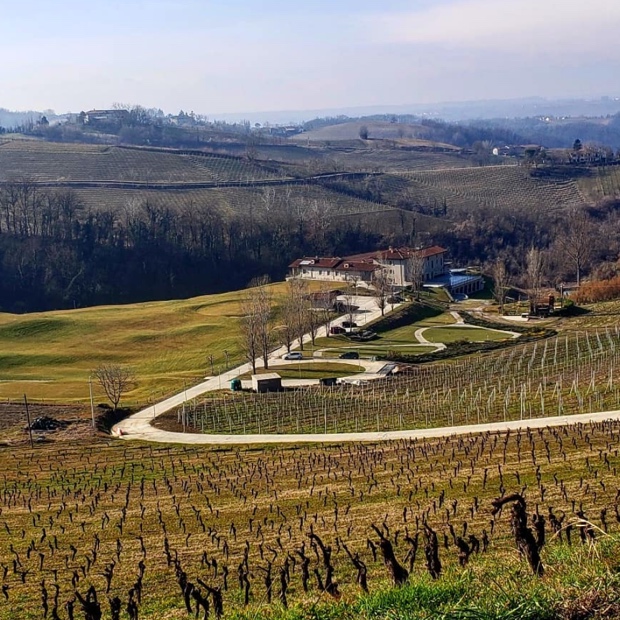
The Alta Langa DOCG area of production of grapes intended for the production of Alta Langa sparkling wines consists of the parcels on hillsides in the provinces of Cuneo, Asti and Alessandria, in the territories of the following municipalities:
Province of Alessandria: Acqui Terme, Alice Bel Colle, Belforte Monferrato, Bistagno, Bosio, Capriata d’Orba, Carpeneto, Cartosio, Casaleggio Boiro, Castelnuovo Bormida, Castelletto d’Erro, Castelletto d’Orba, Cassine, Cassinelle, Cavatore, Cremolino, Denice, Grognardo, Lerma, Malvicino, Melazzo, Merana, Molare, Montaldeo, Montaldo Bormida, Montechiaro d’Acqui, Morbello, Mornese, Morsasco, Orsara Bormida, Ovada, Pareto, Parodi Ligure, Ponti, Ponzone, Prasco, Predosa, Ricaldone, Rivalta Bormida, Rocca Grimalda, San Cris toforo, Sezzadio, Silvano d’Orba, Spigno Monferrato, Strevi, Tagliolo Monferrato, Terzo, Trisobbio and Visone.
Province of Asti: Bubbio, Calamandrana, Calosso, Canelli, Cassinasco, Castel Boglione, Castelletto Molina, Castelrocchero, Cessole, Coazzolo, Fontanile, Loazzolo, Maranzana, Monastero Bormida, Mombaldone, Mombaruzzo, Montabone, Olmo Gentile, Quaranti, Roccaverano, Rocchetta Palafea, San Giorgio Scarampi, San Marzano Oliveto, Serole, Sessame and Vesime.
Province of Cuneo: Alba (territori alla destra orografica del fiume Tanaro), Albaretto Torre, Arguello, Bastia, Belvedere Langhe, Benevello, Bergolo, Bonvicino, Borgomale, Bosia, Bossolasco, Briaglia, Camerana, Camo, Carrù, Castellino Tanaro, Castelletto Uzzone, Castiglione Tinella, Castino, Cerretto Langhe, Ceva (territori alla destra orografica del torrente Cevetta fino alla confluenza nel Tanaro, da qui i territori alla destra orografica del fiume Tanaro), Cigliè, Clavesana, Cortemilia, Cossano Belbo, Cravanzana, Diano d’Alba, Dogliani, Farigliano, Feisoglio, Cissone, Gorzegno, Gottasecca, Grinzane Cavour, Igliano, Lequio Berria, Levice, Mango, Marsaglia, Mombarcaro, Monchiero, Mondovi’ (territori alla destra orografica del torrente Ellero fino a raggiungere da sud l’abitato di Mondovi, quindi proseguendo verso nord-est i territori a destra della s.s. 28 per Fossano, fino al confine comunale con Magliano Alpi), Monesiglio, Monforte d’Alba, Montelupo Albese, Murazzano, Neviglie, Niella Belbo, Niella Tanaro, Novello, Paroldo, Perletto, Pezzolo Valle Uzzone, Piozzo, Prunetto, Roascio, Rocca di Cigliè, Rocchetta Belbo, Roddino, Rodello, Sale Langhe, Sale San Giovanni, Saliceto, San Benedetto Belbo, Santo Stefano Belbo, Serralunga d’Alba, Serravalle Langhe, Sinio, Somano, Torre Bormida, Torresina, Treiso, Trezzo Tinella and Vicoforte.
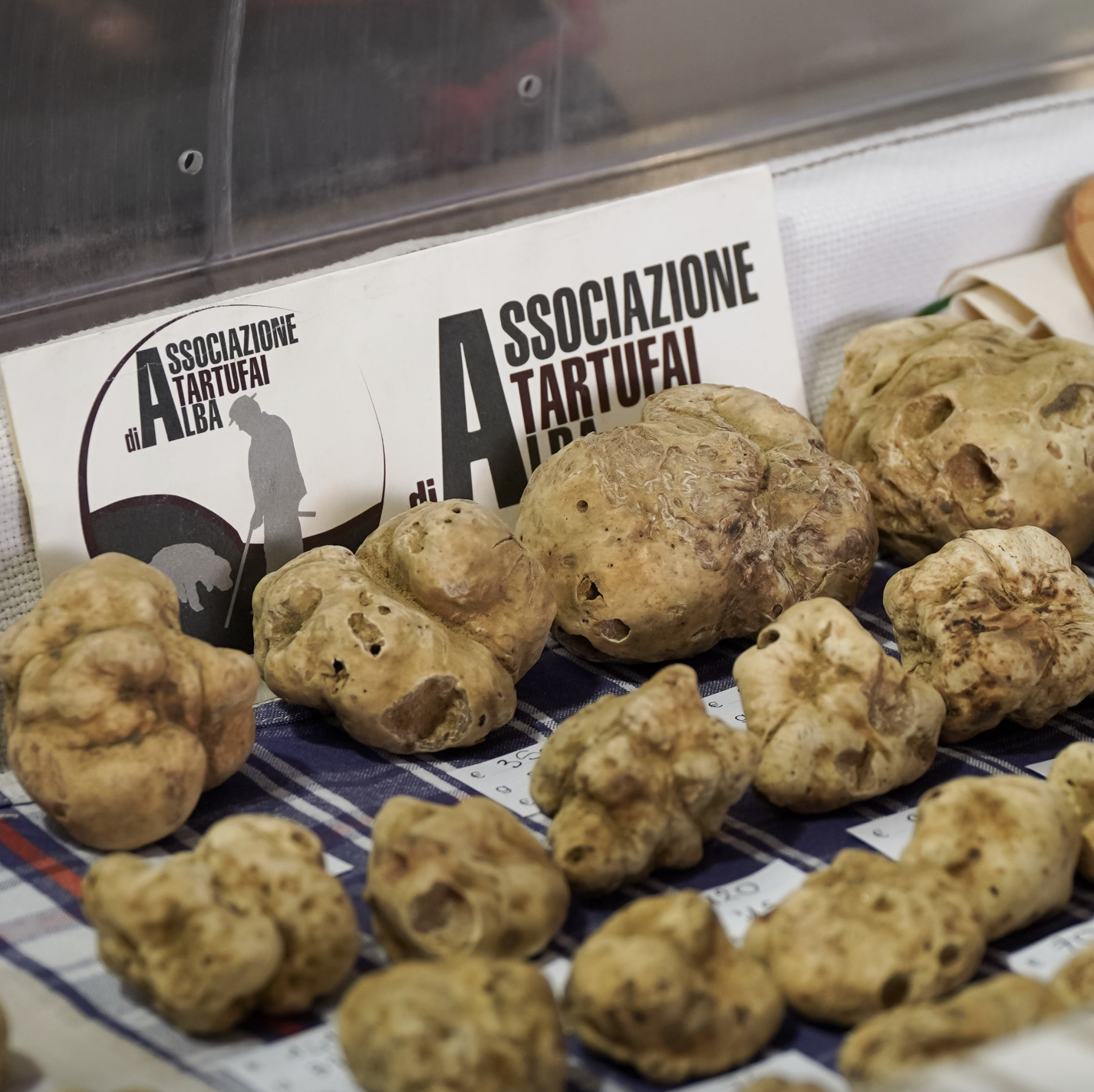
Alba truffles
The goods on geology
Two agronomy experts, Edmondo Bonelli (soils) and Maurizio Gily (viticulture) present Alta Langa to a group of local and foreign journalists. It begins with the sedimentary origin of crystalline rocks from two geological areas, first the firmer central and then the outer areas of alpine rocks. Currently there are no vineyards in this area yet but likely will be so in the future. Challenging terroir, but it’s coming. Sedimentary soils are of marine origin, silty or sandy, on hillsides and usually calcareous, most relatively high in water retention capacity. The calcaire is not the same as chalk but it is calcium carbonate. Layered rocks with marls, sand, conglomerates or gypsum, 30-2.5 million years in origin (Oligocene-Miocene-Pliocene), again sand-silt-clay-calcium carbonate. Sandstones are Pietra di Langhe and can be as deep as six kms of stratified rocks down into the earth. The descriptor “Langhe” comes from Langiano or Langian – a geological epoch named after this area. There are the Molare Formation, Cassinasco Formation and sandstones of Diano. Monseglio Formation, Cortemilla Formation, Cessole Formation, Lequio Formation, Murazzano Formation, each named after a village in the Langhe area (of sandy and silty layers and high calcium carbonate). Rochetta Formation, Marls of Parolo, Sant’Agata Marls (silty medium calcium carbonate).
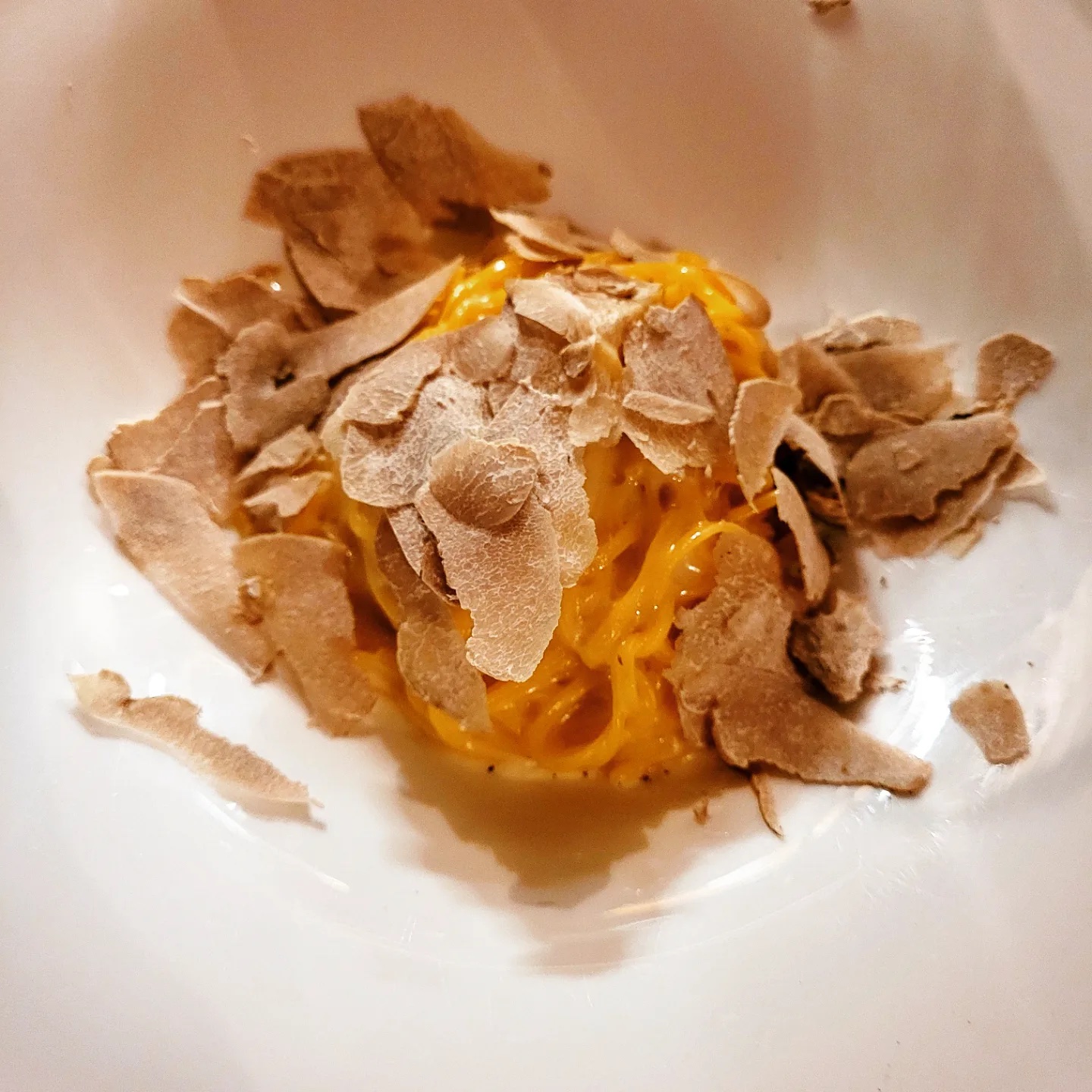
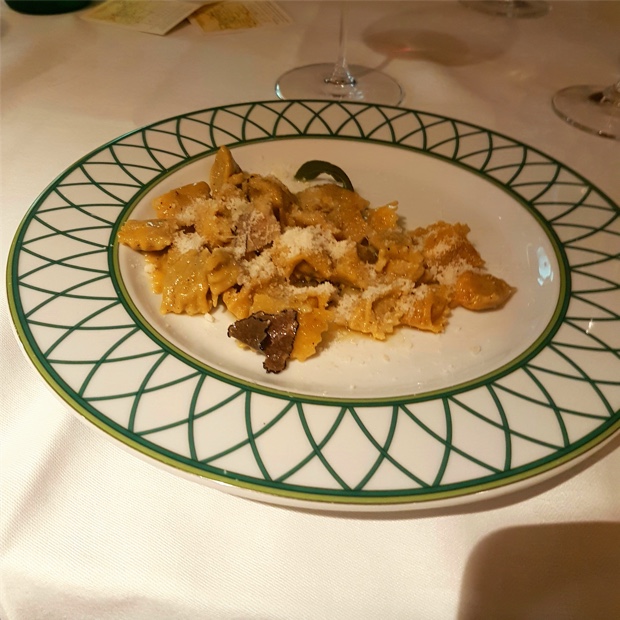
Tajarin con Tartufo Alba Bianco
The Carta Geologica dell’Alta Lange is spilt into eight formations, of eight colours, highlighted by La Malora Beppe Fenoglio, famous Romanzo from San Benedetto Belbo. If we compare Winkler zones, the area is ccooler than Barolo yet quite a bit warmer than Champagne. Biodiversity of the hills is always considered, as are the forests, animals and rivers, they being the Tanaro, Bello, Bormida and Orba. Light soils “dip,” darker soils “anti-dip.” Truth is they are relatively young geologically speaking with lots of erosion and soil movement. Their retention and release of water depends on soil structure and this is also what determines vine (and canopy) growth more than any other factor. But it is the type of soil that deals in different water dynamics. The vines adapt their metabolism by following their soil conditions. A lot of research has gone into picking the right clone of pinot nero for making Alta Langa.
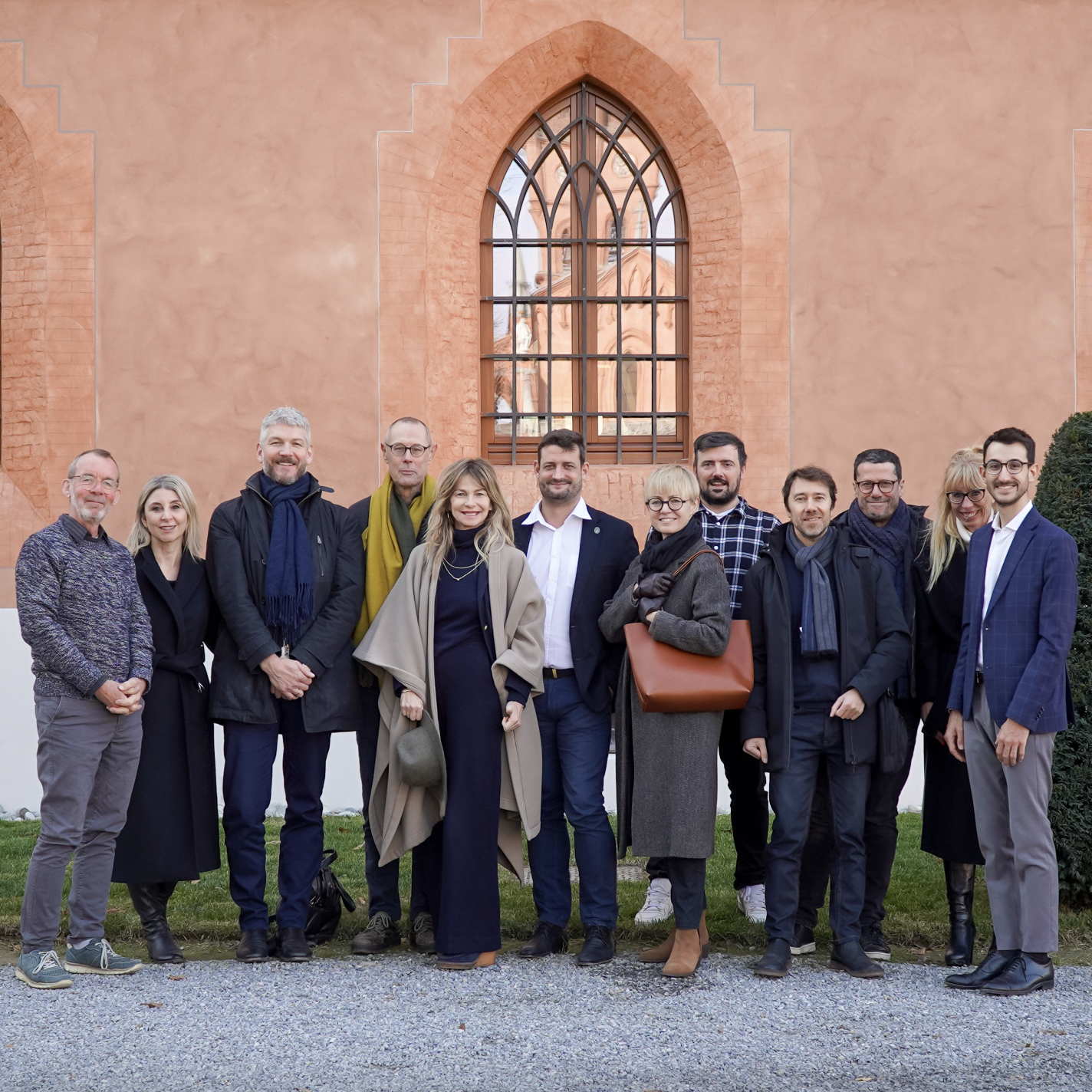
Alta Langa journalists with President Mariacristina Castelletta of Tosti1820 (c) Anastasia Florea and Consorzio Alta Langa DOCG
Disciplinare
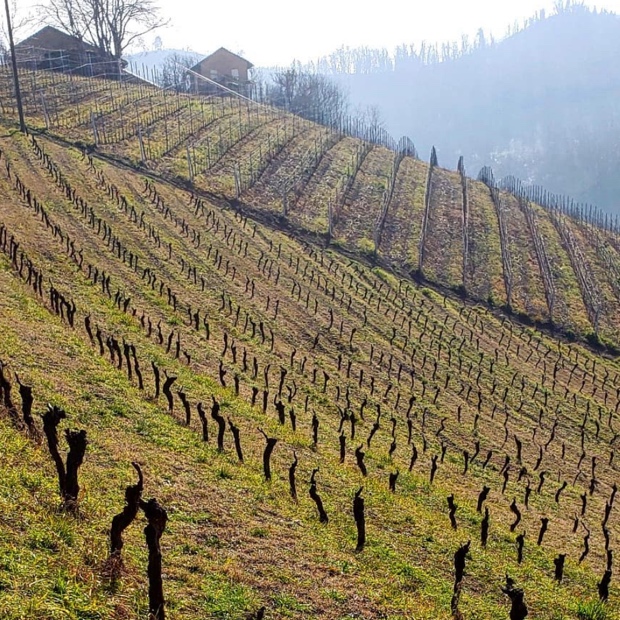
Alta Langa DOCG regulations say that pinot noir and/or chardonnay vines account for 90 to 100 percent of the wines and grapes from non-aromatic varieties suitable for cultivation in Piedmont and may contribute the remaining 10 percent. In the vineyards minimum elevation is set at 250 masl, planting density not less than 4,000 vines per hectare, training forms and pruning systems need be traditional, of low espalier with traditional Guyot or spurred cordon pruning. Maximum grape yields are 11 tonnes per hectare and minimum alcohol is set at 11.5 percent abv. Minimum total acidity is 5 g/l and minimum non-reducing extract is 15 g/l. Yields are subject to change, by approval, in circumstances of favourable and also challenging vintages. Vinification, bottling, processing and aging operations of “Alta Langa” wines must be carried out in Piedmont. From vintage to vintage the maximum addition is 15 percent, of younger “Alta Langa” to older “Alta Langa.”

With the AIS Piemonte Sommeliers
The use of the simple term “bottle fermentation” is prohibited in the designation of Alta Langa DOCG. Allowable definitions and descriptions are “bottle fermentation according to the traditional method,” or “traditional method,” or “classic method,” or “traditional classic method.” Lees aging rules are no less than thirty months for Alta Langa Spumante DOCG and Alta Langa Spumante Rosé DOCG. Wines labelled as Riserva require 36 months of lees aging.

Godello at the Masterclass given by Bonelli and Gily (c) Anastasia Florea and Consorzio Alta Langa DOCG
History
It was around 1850 when Marquis Leopoldo Incisa included several French grape varieties in his ampelographic collection located in the vineyards of Rocchetta Tanaro, in what was then the province of Alessandria (which also included Asti). At that time these grape varieties did not meet with much favour, especially among winegrowers. However Gancia created the first Italian Spumante with a Muscat base, in 1865, at a time when farmers held an aversion to foreign vines. This was still witnessed toward the end of the century by the complaints of the owner who succeeded Marquis Incisa, who could find no farmers willing to grow them. In fact, by the mid-19th century, there was no shortage of pinot noir plantings in Piedmont. As early as the first decades of the 1800s, the Counts of Sambuy had begun to introduce some renowned French grape varieties with the specific aim of improving local wine production.
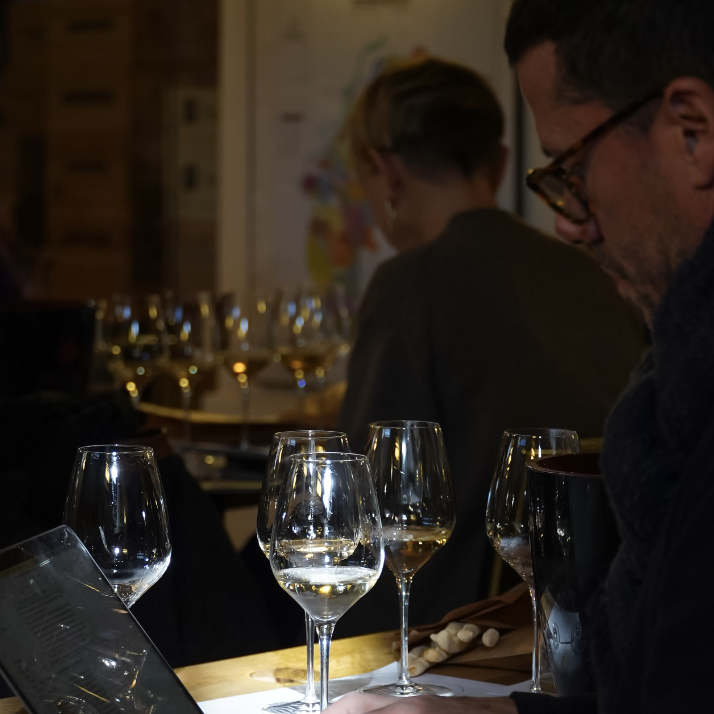
Blind tasting Alta Langa DOCG wines (c) Anastasia Florea and Consorzio Alta Langa
Carlo Gancia was the pioneer who favoured the spread of pinot noir and chardonnay among the winegrowers in the Canelli district. Gancia saw the possibilities for having a certain quantity to use in the production of his sparkling wines. With the Spumante Metodo Classico Project in Piedmont, of which the “Alta Langa” appellation was born, the Piedmont sparkling wine industry made a valuable contribution of economic and technological commitment to a vocation that had remained unexpressed for decades outside the mere scientific sphere. It was shown that the hills of Piedmont, where vines had over time settled a significant and enduring presence, could work very well with the French grape varieties.
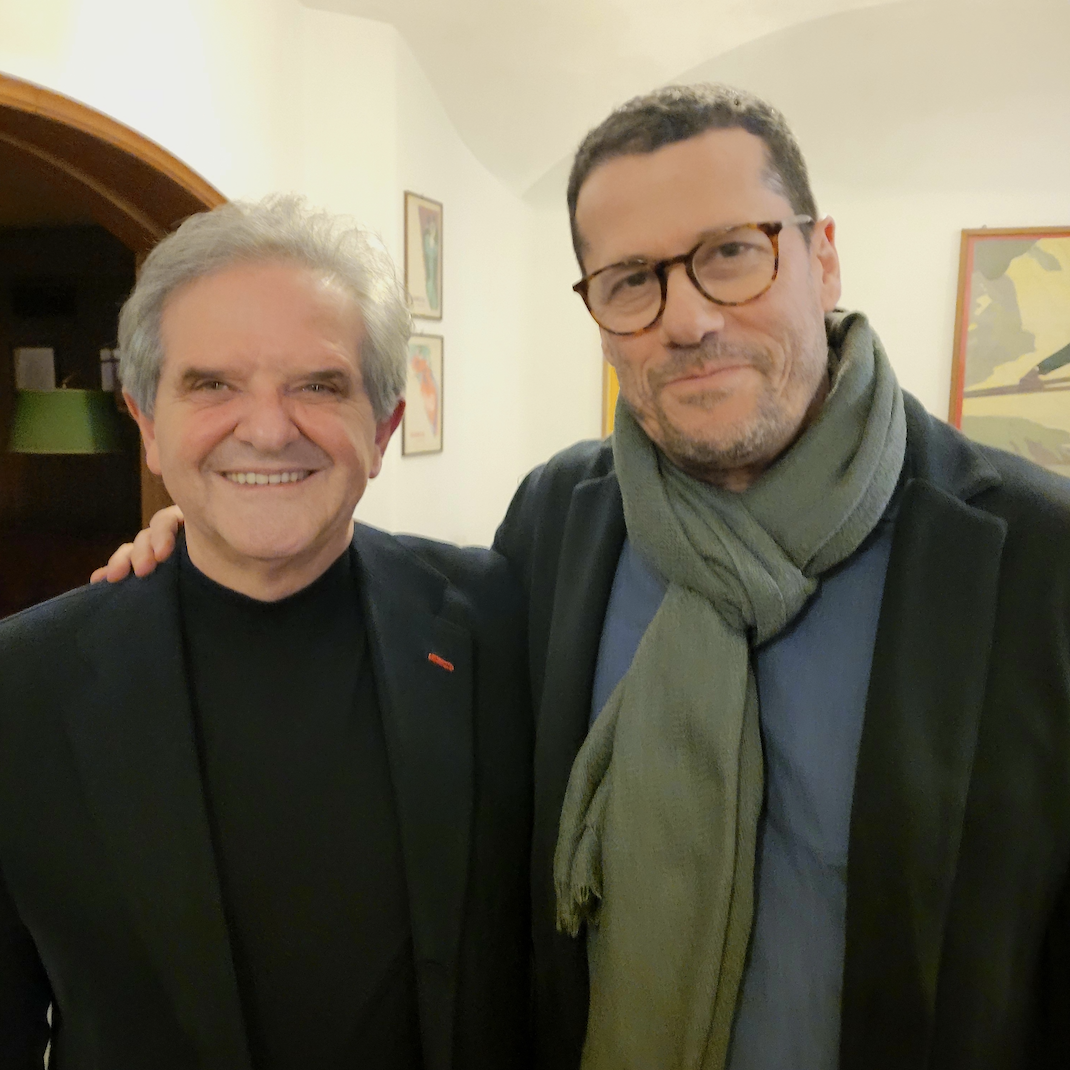
With Gancia oenologist Dr. Donato Lanati
The wines of Gancia today
Gancia is the forerunner of today’s experimental innovation that acts as the basis for the production of the Brut Alta Langa. In 1931 the company contributed to the creation of the denomination Asti for sweet sparkling wines made from muscat and also the first white vermouth made from the moscato. In 1980 they launched the first sparkling wine “pinot di pinot,” using three varieties of that family of grapes. The most important work has come with lees aging using a mix of Champagne grapes. “Whether or not you like a particular aroma in a wine is a subjective fact,” explains renowned Oenologist Dr. Donato Lanati. “It’s all about the amino acids coming together over time – they make the aromas.” Dr. Lanati believes the wines plateau after a 60-70 months stay on lees. After that they will not continues to develop enough favourable nuance and complexity. He recommends that after 10 years you have to turn the bottles nose down in storage to avoid unwanted excess oxidation.
Gancia Vino Base Pinot Nero 36 Mesi Rosé Alta Langa (Campione Da Vasca) 2023
A base wine destined for Alta Langa, still turbid with a high content of yeast activity using amino acids to get somewhere intentional over a long period of time. Salty entry and salty finish with intensities through the middle, grapefruit standing out and unrefined acids – rough for now. Comes from vineyards at 450m and the breeze does blow through this striking base wine. Dr. Donato Lanati explains that it is ”kept cloudy on purpose to avoid having to sulphur because the yeasts are a thousand times more effective as a protector against oxidation then sulphur dioxide.” Just a part of a cuvée and the process that sees an opaque sample mix with other cloudy base wines to create clarity in its final housing. Tasted December 2023
Gancia Cuvée Gancia 36 Mesi Alta Langa Rosé DOCG 2018
Minor reduction which is in fact something that is important because “things would be a lot more serious if drinking a glass would make you want to drink a glass of water,” kids Dr. Donato Lanati. Sounds like a joke but in these climate change and extreme times you can taste what would not have been tasted before and Gancia knows, with 150 years of experience in crafting sparkling wines. Aging some of the base wines in wood goes a long way to control the reduction and yet some reduction is a good thing. There is some sweetness in the perfume which is a result of a portion having been aged in a “sweet” wood. This sulphur dioxide character mixed with some acetates that have yet to fully dissipate are what drive aromatic pulchritude and it is the esters (within reason) which will bind with amino acids to eliminate any semblance of confection. There is a small dosage here but it in fact under wonderful control and while Rosé by nature is rounder than Bianco, well no matter or judgement because the mix of tension and elasticity is really well managed. Drink 2024-2029. Tasted December 2023
Gancia Cuvée Gancia 36 Mesi Brut Alta Langa DOCG 2015
Same amount of time on the yeasts and yet three years further bottle time although Bianco (Brut) is always different than Rosé with this Gancia Alta Langa immediately caught with more tension and overall taut behaviour. Freshness incarnate and scintillant intensity without compromise and all intentions are exercised for good and proper reason. Impressive balance and stage presence here from a master sparkling wine producer that is not just the original but currently under the supervisor of a master scientist, that being Dr. Donato Lanati who is one with the chemistry and physiology of these sparkling wines. Drink 2025-2032. Tasted December 2023
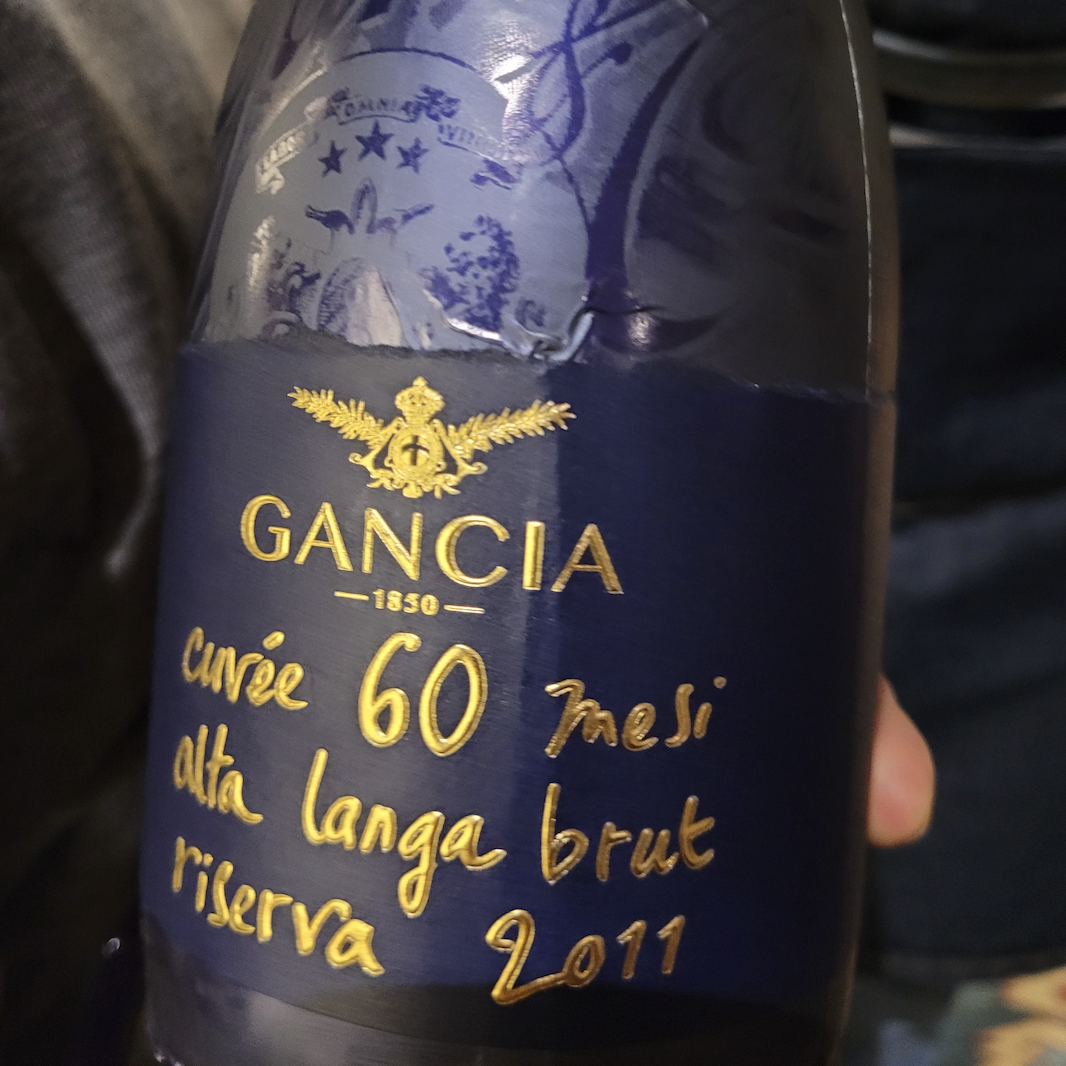
Gancia Cuvée Gancia Riserva 60 Mesi Brut Alta Langa DOCG 2012
Wild to taste this just about five years to the day after the 24 month-ages 2012 back in December of 2019. All the scientific tenets of sulphur dioxide, amino acids, yeasts and esters come to their development line at 60 months of aging on the less and this Brut has passed over by leaving any awkwardness of unresolved notes behind. It is now in fine linear verticality and drinks with Bianco distinction. Crisp, fresh, crunchy and fraught with important if profound tension, citrus and herbs, length and just that right amount of finishing bitters. Scientific does not begin to explain how precise and well designed this acts and delivers as Alta Langa sparkling wine. That said another year will only serve to solidify the evolution and set this up for all we, they and everyone else could hope it could be. Drink 2024-2034. Tasted December 2023
Cuvée Gancia Riserva 170 Mesi Brut Alta Langa DOCG 2005
From a wine made by previous illustrious oenologist Piergiorgio Cane and found by Dr. Donato Lanati who resisted any temptation to change, delete or add anything to the wine. That it has aged between 14 and 15 years on the lees begs the question of how long is too long or more to the point where is the line at which the wine no longer changes to develop more nuances for positive results. Intuitively, if also extrospectively in its maturation to arrive at this dried porcino mushroom and oxidative state. It’s a museum wine in every respect and while it does not deliver freshness or pretty pleasure it does deliver a most fascinating tasting experience. The palate is really in fine shape and that is where some excitement and freshness persists. Twenty minutes does not kill the wine and it continues to evolve, so in the end this does what it surely was intended and wanted to do. Drink 2023-2025. Tasted December 2023

Enrico Serafino
The innovation of Enrico Serafino
In a word, a visionary. Cavaliere Enrico Serafino (of the Romano Cavanese) is considered to be one of the “wise men of oenology” that defines Italian wine. He sold wine in China as far bak as 1910 and the winery is one of the first producers of Alta Langa to invest in concrete vats. Today the company led by President & CEO Nico Conta produces eight different sparkling wines from 56 parcels in 41 vineyards found in 16 villages. In 1994 Enrico Serafino joined the (1990 established) Piedmont Sparkling Wine Project, the year of the first experimental vintage, with the aim of identifying the best areas to plant pinot noir and chardonnay. The 2023 harvest marked their 145th and the annual sparkling production is approximately 200,000 (of 360,000 total) bottles. Serafino ws acquired in 2014 by Kyle Krause Gentile and the current ownership recently purchased Elena Penna and Luca Corrado’s Vietti.
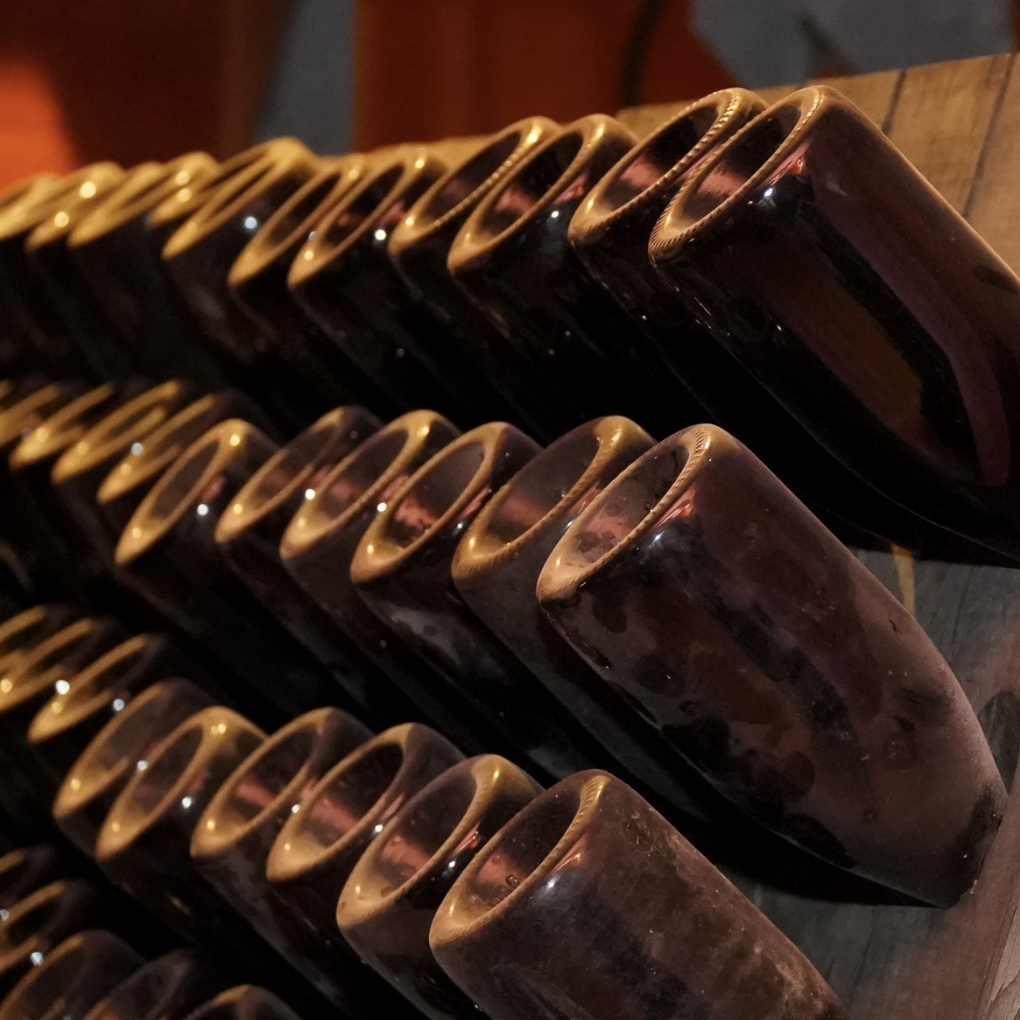
The company practices sustainable viticulture, biodiversity protection and the promotion of social initiatives. It actively works to reduce water consumption and uses 100 percent electricity from renewable sources. Bottles are made from at least 65 percent recycled glass, packaging from 70 percent natural paper (International Forest Certification System and corks are 100 percent recyclable. In 2021 Serafino obtained the renewal of VIVA Certification of Organization as well as product for Alta Langa Oudeis, the only Alta Langa certified. VIVA is a protocol of the Italian Ministry of Environment and Land and Sea Protection designed to assess sustainability performance and communicate it to consumers.

Enrico Serafino Alta Langa Riserva DOCG Zero Pas Dosé 2012
The no dosage metodo classico is known as Sboccatura Tardiva, meaning late disgorgement and a wine first made in 2004. Poured from magnum which is well known to deliver a markedly fresher and youthful sparkling wine when the traditional method is involved. The ’12 is the first to be a solo pinot noir, here with zero residual sugar and a disgorgment from 2018. Extreme level of toast and a pH under 3.0, wondrous and excitable because the total acidity runs higher than 8.5 g/L, yet comfortably under 9.0. Makes for a salty bubble compounded by the silty, calcareous soils of marine origin. Citrus zesty, both lemon and orange, with more spiced accents to this dry Martini of a sparkling wine. Lip-smacking, briny and effortlessly saline, chalky-dry and so well arranged from 100 months on its lees. Drink 2024-2028. Tasted December 2023
Enrico Serafino Alta Langa Riserva DOCG Zero 140 Pas Dosé 2012
“140,” as in that number of months “potentially” spent on lees which in many cases runs past the vanishing point of increased returns, but with Serafino the extra 40 (or more) seems plenty justified. A 20,000-30,000 bottle production that acts so much more demure and soft than the (100 – 2012) with aromatics spoken in a seductive whisper. Everything changes with a dynamic paradigm shift onto the explosive palate where the 85 percent pinot noir (and 15 chardonnay) begins to quiver with nervous tension and excitement before complex flavours emerge. This bottle was disgorged this year and so took the full 140 advantage. The longest level of aging suggests this should be left open to evolve in the glass as long as any sparkling wine on the planet. That is if you are looking for an aromatic emergence, with an awakening forest, pencil shavings and poached pear. Subtle at first, many layers to unfold, a toasty quality, acidity and chalky earth, less obvious than the ’12 but with more mystery, fantasy and possibility. Drink 2024-2030. Tasted December 2023
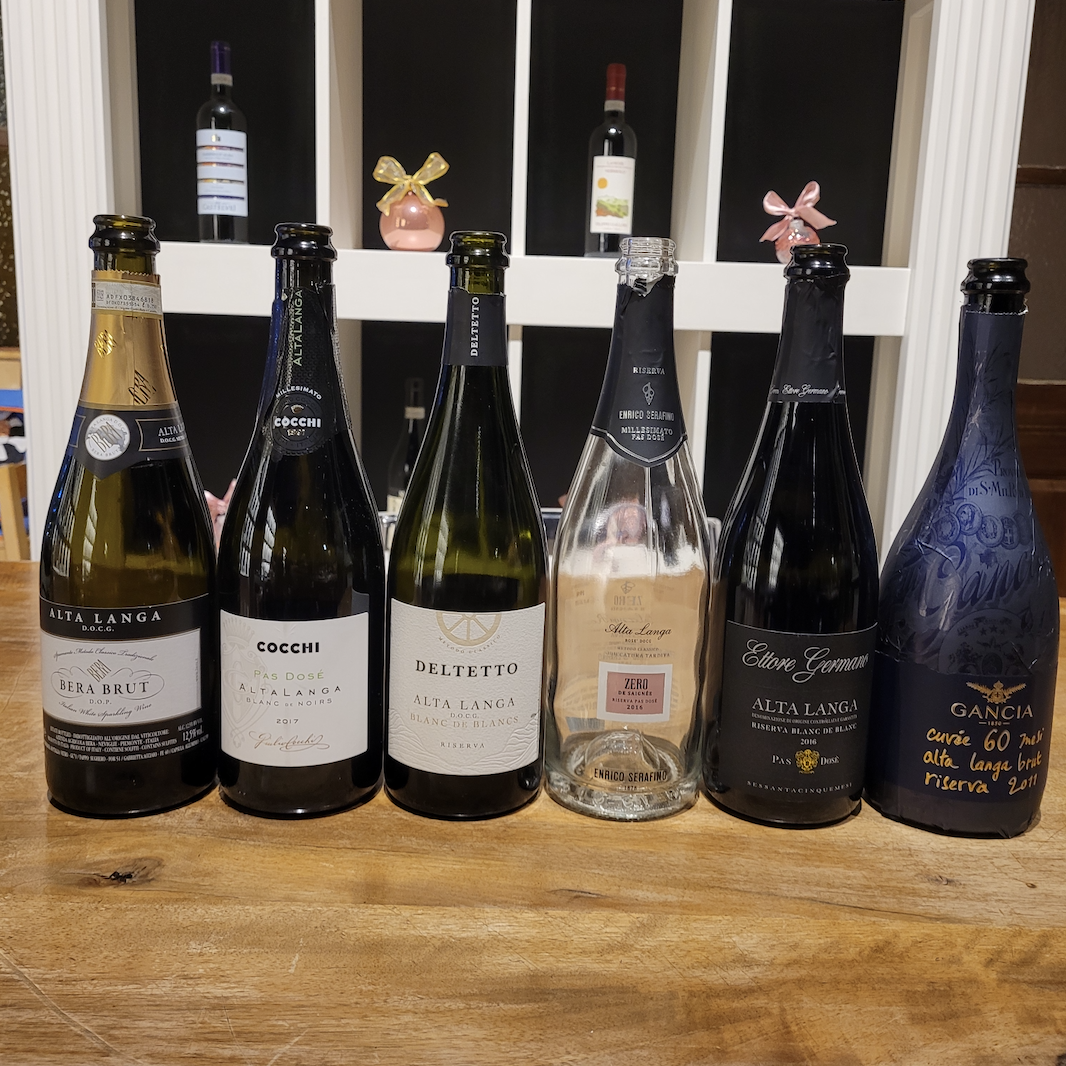
Alta Langa dinner at
Some dinner wines
Bera Alta Langa DOCG Brut 2018
Also labeled as DOP because “dad always believed that DOP stood for quality,” tells oenologist Umberto Bera. He was also one of the first 10 to join the Consorzio Alta Langa. The mix is 70 percent chardonnay and (30) pinot noir, 15 months on lees. A mix of toasty and autolytic notes, 5 g/L of RS, well beneath the Brut threshold. Disgorged in May, 2023 and so the aging time is nearly three times that 15 months and Bera disgorges three times per year. Showing some secondary level maturity with ample freshness preserved and a persistence of energy. Last tasted December 2023
Nothing overt but yes there is a phenolic and also metallic presence within the aromas. Lemon drop and also herbs, not quite sweet but like basil or better yet slightly more resinous like tarragon. Good crunch in palate texture with stuffing and a mouthful to be had before moving sideways into more metals and botanicals. A periodic wave of elements and emotions form this Extra Brut mix of chardonnay and pinot noir, likely close to half and half. Drink 2023-2026. Tasted Blind with the Consorzio Alta Langa in Asti, December 2023
Cocchi Alta Langa DOCG Blanc De Noirs Pas Dosé 2017
Under the ownership of Giulio Bava, created in 1981 and has always produced Alta Langa in Piemonte. “Alta Langa has a soul of its own,” tells Roberto Bava, “and a personality reflective of just two varieties, pinot noir and chardonnay.” The B de N is 100 percent pinot, five years spent on lees and Bava notes the sapidity of this wine. “next to (minerality), which all Alta Langa wines must have, played out in different ways.” Truly stoic and direct with dried herbal notes, pencil lead, sage and dry, dry, dry. Who needs sugar in such wines? Drink 2023-2026. Tasted December 2023
Deltetto Alta Langa DOCG Blanc de Blancs Pas Dosé 2016
“A great passion of my father was Spumante Método Classico, first made in 1980,” tells Carlo Deltetto. “The business card of the winery is the Alta Langa.” This despite the winery being primarily a Roero producer. The ’16 is the inaugural Riserva, pas dosé style which for Alta Langa incidentally is done incredibly well as a sparkling wine region. The key here is elevation, of vineyards averaging 470m, directing the sapid nature of this bubble. Who needs sugar when you have an arc of both richness and flavour, developed of natural sweetness, all leading to captured balance. Impressive acids help the wine be direct and precise, already now with good age in pocket. Drink 2023-2027. Tasted December 2023
Enrico Serafino Alta Langa Rosato Riserva DOCG Pas Dosé Zero De Saignée 2016
Ripe, high level fruit and mature, advancing and settling into a secondary state. Scents of lemon iced tea and this from a wine no longer part of the Serafino portfolio. Simple, 100 percent pinot nero, pas dosé, disgorged in 2022. Demure on the nose yet explosively expressive on the palate. Labeled saignée but like much of Alta Langa Rosato it’s really just a matter of a quick maceration to bring out the rusty hue. A curious acidity to make this seem as dry as any of the no dosage style. Drink 2023-2025. Tasted December 2023
Ettore Germano Alta Langa Riserva DOCG Pas Dosé Blanc De Blanc 65 Mesi 2016
If at first this seems to be par for the no dosage course well think again because with chardonnay the fruit stands out so very expressive. Germano’s dream was to make Bianco and so 1988 was the year to exploit riesling and chardonnay at 500-600m of vineyard elevation in the Tanaro River valley. In 2000 the sparkling journey began and the first cuvée was made in 2003. This ’16 marks the second vintage of the blanc de blanc, 65 months on lees, an equal mix of salinity and sapidity for gastronomy in a bottle. Three essential pillars of Alta Lang that give the sessantacinque its credibility and promise of top quality. Precise, chiseled and full of class. Fabulous traditional method sparkling white. Drink 2023-2029. Tasted December 2023
Gancia Cuvée Gancia 60 Mesi Brut Riserva Alta Langa DOCG 2011
Clarity of a blue sky with some density to it and the smoothest, most polished Gancia Alta Langa there ever was. For the entire denomination in fact, or any style of sparkling wine. Obviously vintage related but also the extra time allotted, above and beyond 60 months on lees. Luxe aromas and flavours, rich polyphenolic moments and the sweetset sapidity ever. Polyphonic, multi tonal, melodic lines melting into and becoming one another. Tonic, lemon preserve and the finest of bitters. Serious simultaneity and seamless presence. Drink 2023-2026. Tasted December 2023
Tosti1820 Alta Langa Riserva DOCG Bicentenario Pas Dosé 2010
Tosti has spent 200 years of making this 100 percent pinot noir, pas dosé cuvée, not always but this anniversary edition saw some wood aging. Just 2-3 g/L of (inconsequential) residual sugar an 105 months of lees aging, disgorged in 2020. From two plots in Canelli and Alba, estate and grower fruit. Rich, a mellow golden toast, intensity of flavour, fleshy and lengthy. Very all-purpose sparkling wine, well formed, formulated and generous. Quintessentially Alta Langa. Drink 2023-2026. Tasted December 2023

Alta Langa seminar
The blind tasting (69 wines)
Bianco
San Silvestro Alta Langa DOCG Albarè Pas Dosé 2020
Blanc de Blancs, only chardonnay as per the disciplinare and pas dosé so just the natural fruit facts. Subtlety and therefore what should be noted as a light toast and once again the fruity notes continue to press the theory that chardonnay performs more in this way with no dosage as compared to pinot noir. The sharpness and lightning strike on the palate is consistent with the theoretical style. Finishes with neutral citrus pith and minor bitters. Drink 2023-2026. Tasted Blind with the Consorzio Alta Langa in Asti, December 2023
Coppo Alta Langa DOCG Brut Luigi Coppo 2020
Strikes out at a higher aromatic tone, less subtle and demure as a chardonnay and so the terroir feels heavier, of more density in the soil structure and a weightier result comes out. Palate presence is sturdy and strong, flavours wild and exotic, lemongrass namely and also a guava to lemon curd connection. Great flavour intensity and length. Drink 2023-2027. Tasted Blind with the Consorzio Alta Langa in Asti, December 2023
Deltetto Alta Langa DOCG Brut 2020
A heavy aromatic inhalant, weighty and not easily induced with little to no aerosol quality. An oxidative style with lemongrass, ginger and cardamom, neither herbal nor particularly fruity. Quite tart, citrus namely and quite chardonnay of nature, though a bit gangly and awkward overall. Drink 2023-2024. Tasted Blind with the Consorzio Alta Langa in Asti, December 2023
Ferraris Agricola Alta Langa DOCG Brut Tenuta Santa Chiara 2020
Leaning oxidative with maturing notes up front. Complex and exotic, gingered, toasty and very expressive with a wide range of fruit, herb and mineral flavours. Textural as well to add another dimension and potentially three of them from this curious and crafty chardonnay. That early note of oxidation will serve it well. Not long on the lees, yet really well made. Drink 2023-2026. Tasted Blind with the Consorzio Alta Langa in Asti, December 2023
Terrabianca Alta Langa DOCG Brut 2021
Young specimen, a Bianco (therefore 100 percent chardonnay) not long, if likely the bare minimum on its lees. Tight, I mean really taut and wound around like a winch tightening a spindle. There is citrus but not really any other fruit to speak largely of. Lighting strike of Alta Langa without autolysis, bready-yeasty quality of density. Power is all up front and neutrality follows. Just too young to see through the trees but not certain much else will follow. Drink 2023-2024. Tasted Blind with the Consorzio Alta Langa in Asti, December 2023
Vite Colte Alta Langa DOCG Brut Cinquecento 2020
Quite the complex nose for a young Alta Langa Bianco with that nice little note of fresh cheese that should develop some nuttiness, compound butter flavour and receive its structure after some time in bottle. Even more so than other cuvées of similar vintage and ilk that have yet to be disgorged. Brut so there is some sugar but hardly noticeable because acids and intensity are both in charge. Drink 2024-2027. Tasted Blind with the Consorzio Alta Langa in Asti, December 2023
Cerrino Alta Langa DOCG Pas Dosé 2019
Nothing but chardonnay and a few years on lease for a yeasty, autolytic and on autopilot example. A bit too much autolytic behaviour and so some odd flavours have crept in. Not a pristine pour to be sure. Tasted Blind with the Consorzio Alta Langa in Asti, December 2023
Contratto Alta Langa DOCG Pas Dosé Blanc de Blancs 2019
Brilliant beginning to this 100 percent chardonnay without dosage. Power yet a restrained one and seamless transitions throughout. Fine balance between acidity and texture, intention and complexity. True deal in the Alta Langa style that delivers fruit from chardonnay while also a matter of soil and place. Drink 2024-2029. Tasted Blind with the Consorzio Alta Langa in Asti, December 2023
Fabio Perrone Alta Langa DOCG Pas Dosé 2019
Chardonnay and no dosage with that ever consistent play of fruit first on the nose and then replayed with lovely swirls as the palate presence and flavours march on. Good density and purity here with fine acid structure though either a bit young or not necessarily the most complex example. Perfect right now and will stay this way for another year – after that it will likely soften and the bitters expand upon. Drink 2023-2024. Tasted Blind with the Consorzio Alta Langa in Asti, December 2023
Mauro Sebaste Alta Langa DOCG Pas Dosé Avremo 2019
Some foraged fungi on the nose, not unusual for chardonnay however it replaces the fruit to a good degree. Good and fine bitters with lemon in many respects. A bit of preserve but mostly the juiced fruit if not the one most perfectly fresh. Drink 2023-2024. Tasted Blind with the Consorzio Alta Langa in Asti, December 2023
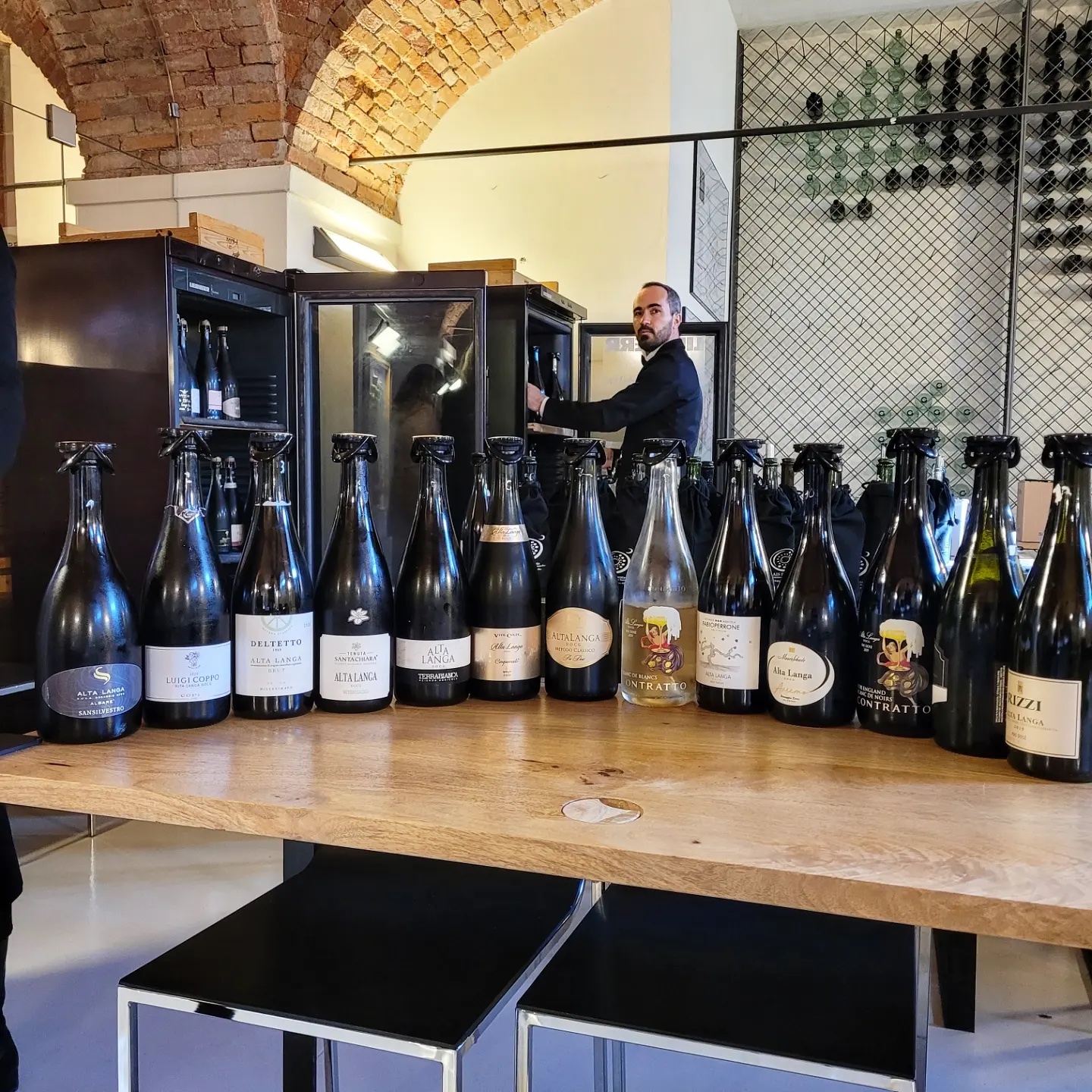
Alta Langa blind tasting revealed
Contratto Alta Langa DOCG Pas Dosé For England Blanc de Noirs 2019
Maturing and oxidative example, noted first in golden hue and then the bronzing, sun-tanned feeling on the aromatics. Gingered and orange scraped palate notes yet dry as the desert and caught up in taut intensity. Really complex, very “Cap Classique” in style or Champagne that leans notably oxidative. A specific way of doing things for sure and one done very well. Drink 2023-2026. Tasted Blind with the Consorzio Alta Langa in Asti, December 2023
Pianbello Alta Langa DOCG Pas Dosé Orme 2019
Quite classic, stoic, taut and yet highly tonal pronounced iteration of untreated chardonnay without dosage. Straightforward, unabashed, running hither and thither with just about everything Alta Langa will offer in this dry, untamed and free to be style. Very well made in all these knowable respects. Drink 2023-2027. Tasted Blind with the Consorzio Alta Langa in Asti, December 2023
Rizzi Alta Langa DOCG Pas Dosé 2019
Aromatic, more than many, especially considering the style, that being Blanc de Blancs without any dosage. The flavours and textures follow suit though the autolysis takes charge in notes of cheese rind plus bitters. A bit overdone in this regard and so the finish falls off as a result though there is certainly character and charm for short term drinking. Drink 2023-2024. Tasted Blind with the Consorzio Alta Langa in Asti, December 2023
Tenuta Carretta Alta Langa DOCG Pas Dosé Airali 2019
Quite phenolic and reserved aromatically speaking. True aridity in the pas dosé idiom and the palate changes nothing about that in this way. Crunchy Alta Langa and it does begin to change and become something other with some time in glass. Next level flavours and also texture comes out to finish with that pencil lead and bitter tincture drops of chardonnay God. Give this some time. Drink 2024-2028. Tasted Blind with the Consorzio Alta Langa in Asti, December 2023
Banfi Alta Langa DOCG Extra Brut Cuvée Aurora 2019
Another phenolic entry and so one of those sapid style of Alta Langa chardonnay is expected. And so it is with dry botanical aromatic notes followed by great flesh, lemon and lime in all their parts and extended play for a very important and lengthy example. Holds all the necessary tenets and stuffing to see this age well, but also evolve to become something special. Drink 2024-2028. Tasted Blind with the Consorzio Alta Langa in Asti, December 2023
Daffara & Grasso Alta Langa DOCG Extra Brut 2019
Very lemon up front, bigger aromatic thrust than many but we’re out of Pas Dosé and into Extra Brut with this Blanc de Blancs. Fine lines and pretty good purity with quite a notable level of bitters though we are aware of how well they integrate into the fabric and framework of a properly executed and structured sparkling wine. Drink 2023-2027. Tasted Blind with the Consorzio Alta Langa in Asti, December 2023
Ettore Germano Alta Langa DOCG Extra Brut 2019
Extra Brut accommodation and you feel the juxtaposition of sugars and acids in the aromatics. Feels riper and fleshier but only the palate can confirm or confound that idea. Does the first and then goes into full citrus juice squeeze, though it’s manifold, of lemon, lime and also grapefruit. The destiny of this wine is to see some cheese and funk in the future but so many will see the love and the beats in that next stage. Drink 2023-2026. Tasted Blind with the Consorzio Alta Langa in Asti, December 2023
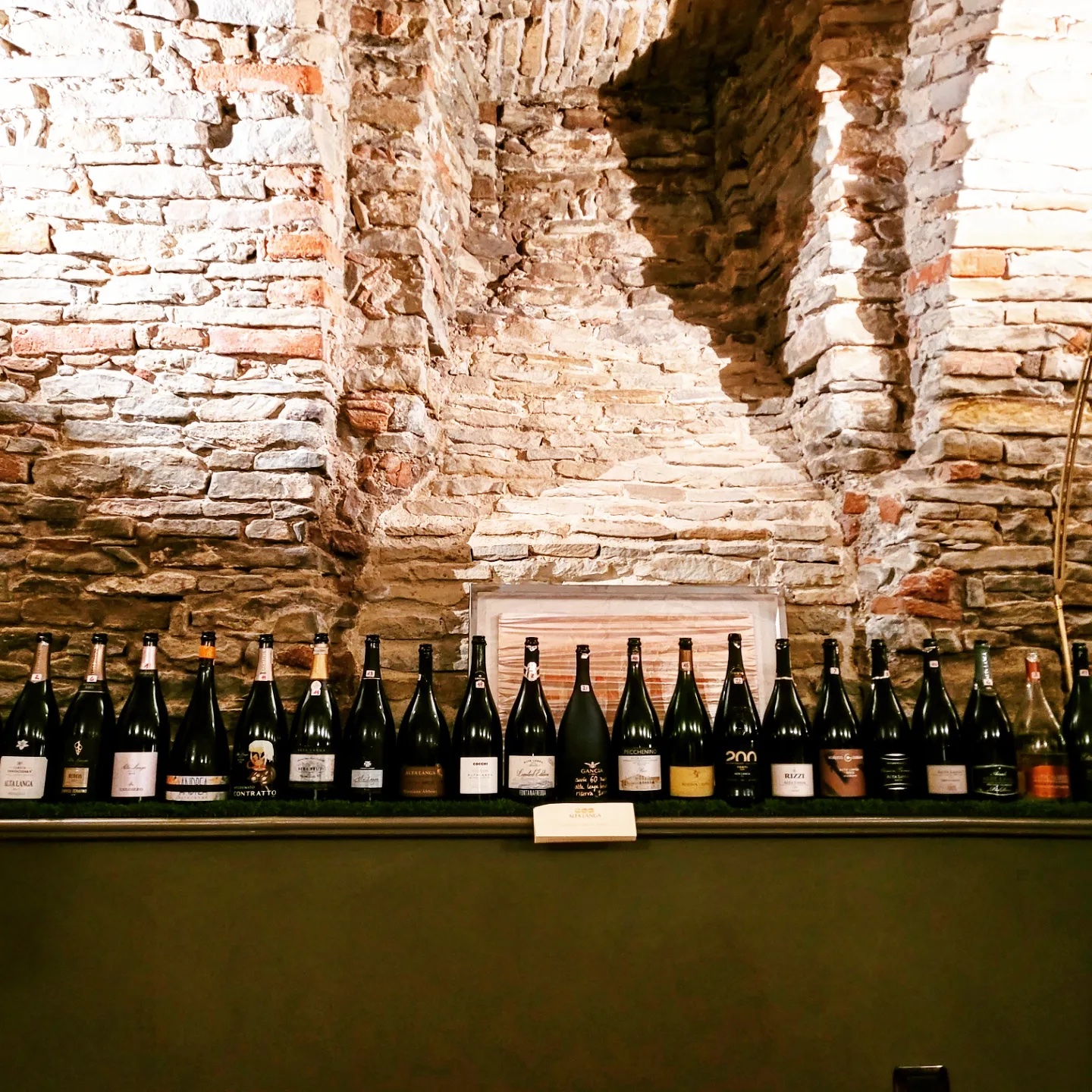
Alta Langa at Relais San Maurizio, Santo Stefano Belbo
Ivaldi Alta Langa DOCG Extra Brut Andrea Blanc de Blancs 2019
Quite phenolic, plenty of citrus flesh but also custardy orchard fruit. Extra Brut and you note the sweetness, nothing simple here and it does elevate the style. This will have wide appeal for its easy, if earlier drinking ability. Drink 2023-2024. Tasted Blind with the Consorzio Alta Langa in Asti, December 2023
Marcalberto Alta Langa DOCG Extra Brut Millesimo2mila19 2019
Truly proper in the Extra Brut Bianco ways of Alta Langa are extracted, exerted and extrapolated upon with a fine 2019. Lemons and apples, tart and tight on the palate, great acidity moving all ways including sideways, all parts together, linear, vertical and powerfully restrained. A very fine example from a warm and yet promising vintage. Drink 2024-2029. Tasted Blind with the Consorzio Alta Langa in Asti, December 2023
Marziano Abbona Alta Langa DOCG Extra Brut 2019
The sapidity spoken of by agronomists and producers is here on the phenolic front in this Bianco Extra Brut. Captures a certain side of Chardonnay and does so with stoic, reserved, complicated and trenchant nature. This wine has purpose and feels so very serious. It will need a few years to settle and hopefully prepare some flesh for a more pronounced Alta Langa experience. Drink 2025-2030. Tasted Blind with the Consorzio Alta Langa in Asti, December 2023
Massimo Rivetti Alta Langa DOCG Extra Brut 2019
More juiciness and terpene action up front as compared to many and so a slightly later harvest from a warm vintage seems to be the fruit matter on order. Some maturity and a bruised apple note in the flavour profile confirms this and while acidity is spot on there is this feeling of flattening out at the finish. Drink 2023-2024. Tasted Blind with the Consorzio Alta Langa in Asti, December 2023
Roberto Garbarino Alta Langa DOCG Extra Brut Le Rapide 2019
The Extra Brut Alta Langa as Bianco seem to act tart in one of the three ways. Sharp and restrained, maturing or as it does here which is phenolic to imagine a sapid sparkling wine. Not exactly the opposite of salty but a different sort of mineral style, that is to say a sparkling wine that is a direct result or at least one that speaks with true correlative nature to the place. That being a terroir surely sandstone based with some slit, minor calcareous parts and older soils, geologically speaking. A vertical wine with great apposite if transferring and complimentary fleshy texture and a wine as long as is gets. Drink 2024-2029. Tasted Blind with the Consorzio Alta Langa in Asti, December 2023
Roccasanta Alta Langa DOCG Extra Brut 2019
Phenolic, for the most part with some green notes and plenty of terpene as well. A bit overdone, likely picked a bit tardy and so acidity is more dense and botanical than the team probably wished it to be. Drink 2023-2024. Tasted Blind with the Consorzio Alta Langa in Asti, December 2023
Tenuta Rocca Alta Langa DOCG Extra Brut 2019
Expressive and quite tightly wound example of Extra Brut for chardonnay as a Bianco or Blanc de Blancs style. Lemon in every respect, more juice and zest than pith but it’s all truly represented. Fine work in a very specific, taut, direct and scintillant way. Drink 2023-2026. Tasted Blind with the Consorzio Alta Langa in Asti, December 2023
Roberto Garbarino Alta Langa DOCG Extra Brut Il Viaggio 2019
Still in the Extra Brut conceptualization for (chardonnay) Bianco and of the three styles this comes out phenolic and well extracted. An example that transfers really well onto the palate with tart juiciness and true blue varietal acidity that travels up and down the sides of the palate. Not the most complex sparkling wine and lacks some depth but it’s solid, well made and serves great purpose. Drink 2023-2026. Tasted Blind with the Consorzio Alta Langa in Asti, December 2023
Agricola Brandini Alta Langa DOCG Brut 2019
The first true reductive Alta Langa in flight of 69 with this being the 26th pour. Agitation does blow off some steam and allow fruit to rise like cream to the surface. What is next is great purity and a creaminess to the mousse unlike any other thus far. These flavours are rich and frankly delicious though that reduction will be a detraction for some. The finish is long and nurturing. Stick with this wine if you want the right kind of reward. Drink 2023-2027. Tasted Blind with the Consorzio Alta Langa in Asti, December 2023
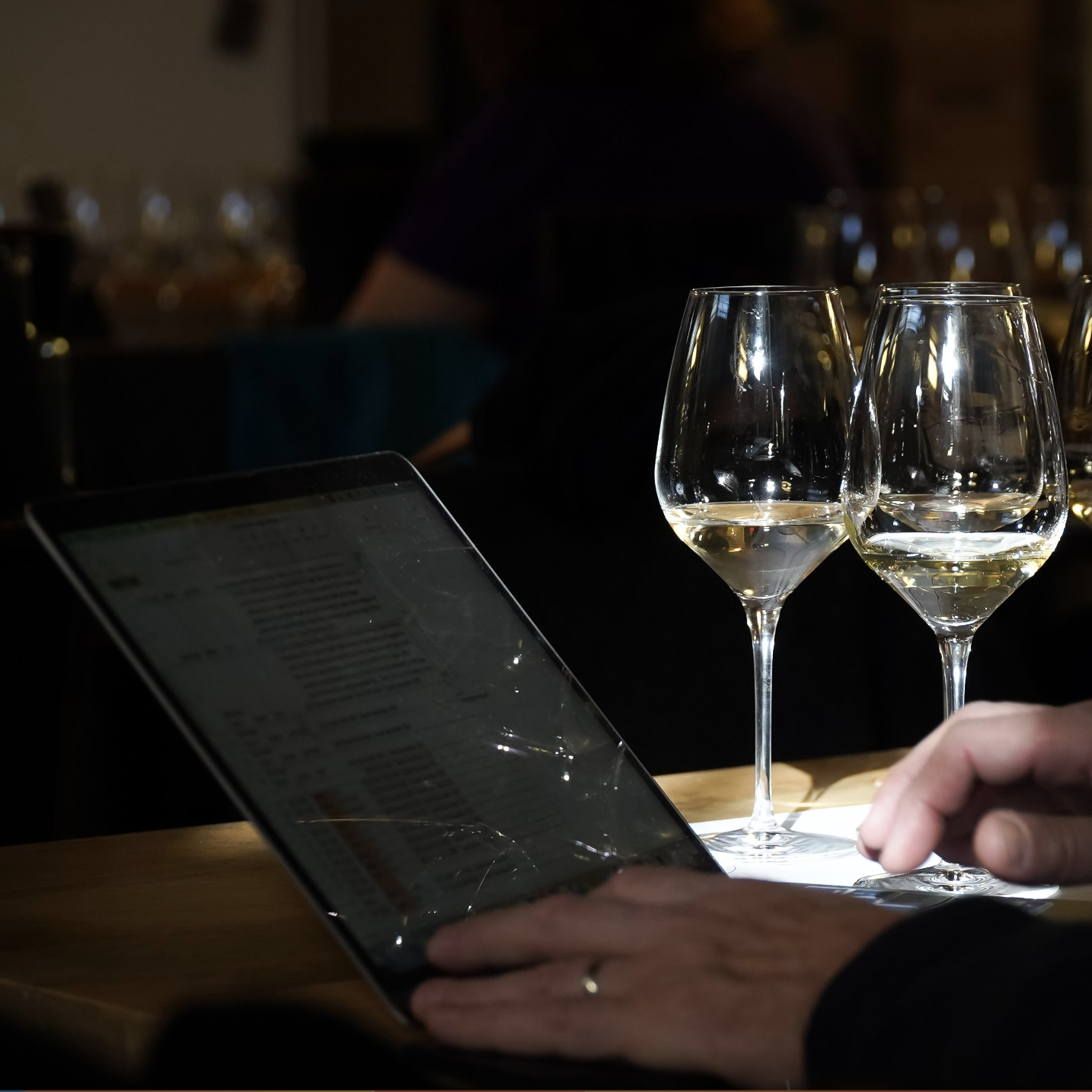
Blind tasting Alta Langa (c) Anastasia Florea and Consorzio Alta Langa DOCG
Bosca Alta Langa DOCG Brut Ispiro 2019
As quiet as it gets aromatically speaking from a Brut for chardonnay out of a warm and promising vintage. Though the entry was a reserved and yet giving one there is much more happening on the palate. Heavy dose of lemon, fresh squeezed and ready to integrate with the sapid-mineral wealth of this wishing to be serious example. Here is an Alta Langa with true karst from bones that stand upright with great skeletal verticality that suggests poor soils and plenty of calcium carbonate for a result that could only be like this. This winemaking team paid great respect to the terroir. Drink 2024-2029. Tasted Blind with the Consorzio Alta Langa in Asti, December 2023
Cascina Cerutti Alta Langa DOCG Brut Enrico Cerutti 2019
Well made, simple, straightforward, a bit bitter and creamy iteration of chardonnay in the local ways of Brut sparkling wine. Short and to the point. Drink 2023-2024. Tasted Blind with the Consorzio Alta Langa in Asti, December 2023
Fontanafredda Alta Langa DOCG Brut Blanc de Blancs 2019
Quite the phenolic lift as opposed to that aromatic ripeness style that can sometimes weigh down Alta Langa sparkling. A botanical example with replay on the palate that confirms the suspicion. Good integration of parts with acidity more than well and good but the phenols outweigh all else and take back power in the end. An herbal example, possibly because of heavier and more organic soils that deliver some increased vigour and therefore likely yields iin the vines. Drink 2023-2024. Tasted Blind with the Consorzio Alta Langa in Asti, December 2023
Il Cascinone Alta Langa Riserva DOCG Brut Alasia 2019
The first Alta Langa Riserva at pour number 30 in a flight of 69 and a stoic one at that, with must reserve in the tank. High ranking parts, namely substantial if notably compact fruit that puts this is a place of yet unresolved business. The acidity is similar of nature meaning its not of scintillant action but rather one of weight as well. This could use some time to see if it will open up and rise up as it likely wants to, after being interred by too much gravity. Drink 2024-2027. Tasted Blind with the Consorzio Alta Langa in Asti, December 2023
Paolo Berutti Alta Langa DOCG Brut 2019
High terpene level and so orchard fruit (namely apples) are front and centre for this chardonnay of Brut categorization. Crisp enough and acidity is elevated though the parts are a bit disparate and there is some bruising of the fruit. Drink 2023-2024. Tasted Blind with the Consorzio Alta Langa in Asti, December 2023
Pecchenino Alta Langa DOCG Brut Ecole 2019
Cheese funky and bruised. Not a good bottle or perhaps past prime. Tasted Blind with the Consorzio Alta Langa in Asti, December 2023
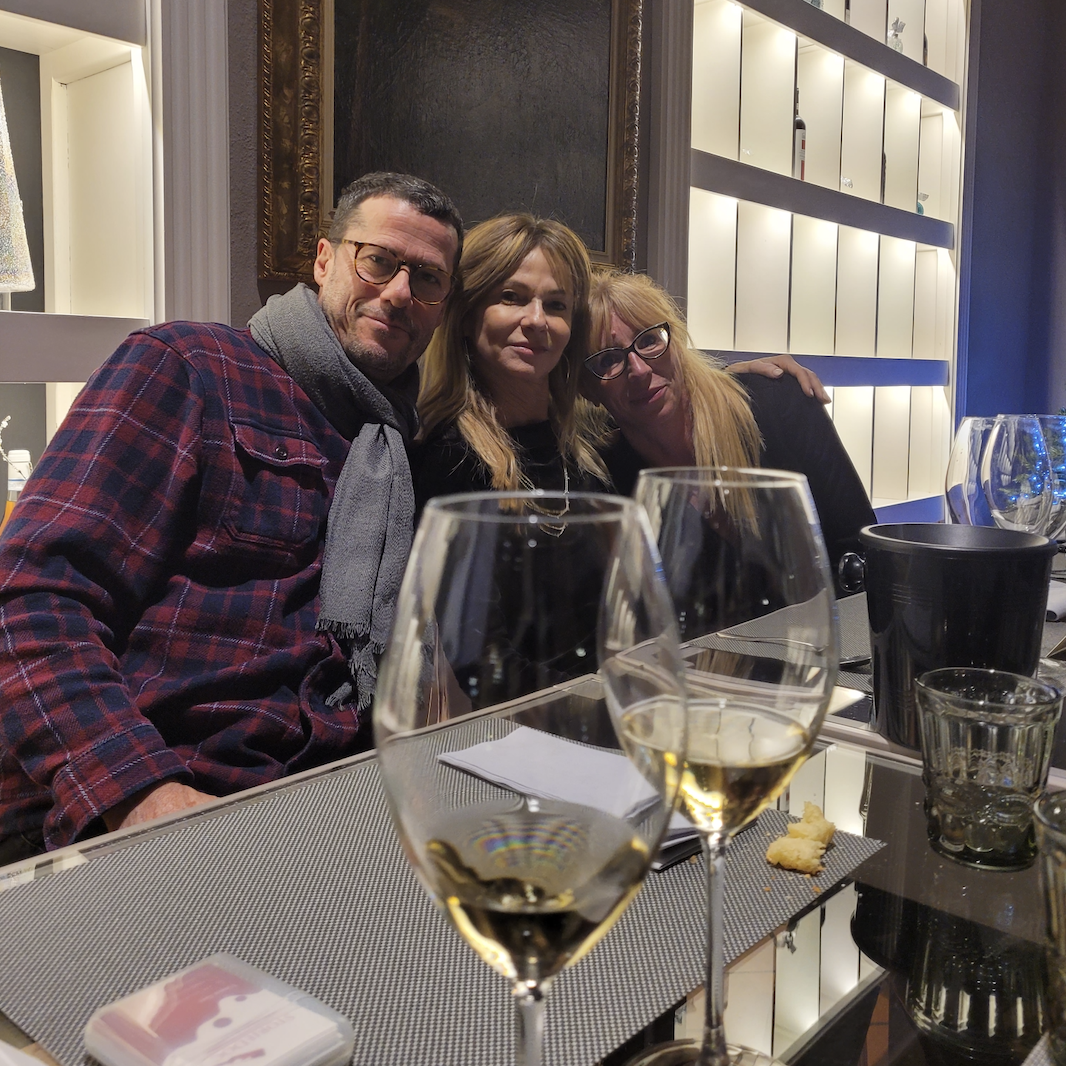
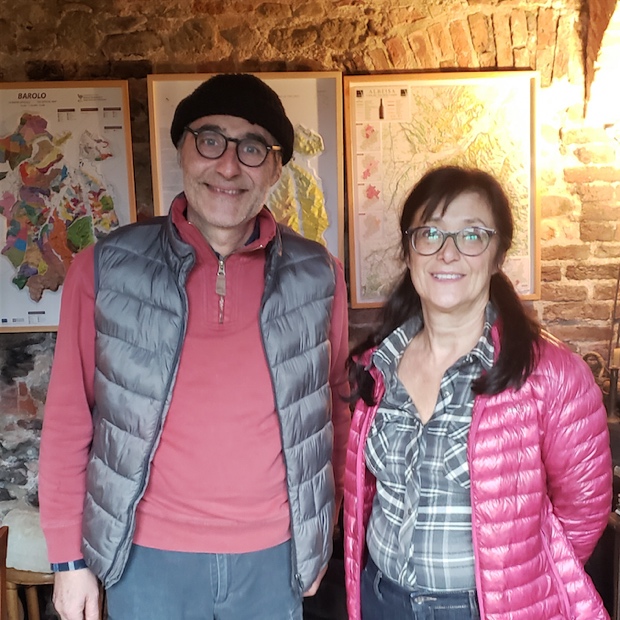
With Alta Langa Consorzio President Mariacristina Castelletta and Journalist Åsa Johansson (c) Anastasia Florea and Consorzio Alta Langa DOCG
Piazzo Comm. Armando Alta Langa DOCG Brut Ritorno in 2019
Reduction released by agitation quite quickly so note to self and to others be sure to give this sparkling Alta Langa a swish and a swirl. Grippy example, fully fleshed and giving much aromatic fruit, palate presence, fleshiness, some creamy texture and finally that local sapidity so often talked about. There is much going on in this Brut though it does not soften in the end. Drink 2023-2026. Tasted Blind with the Consorzio Alta Langa in Asti, December 2023
Sara Vezza Alta Langa DOCG Brut 2019
The kind of aromatic entry that causes a raise of one eyebrow because it’s a combination of maturity and intrigue. A very young wine in one respect and on the other also one of experience. Rich at first and then repeated, but also a matter of fine acidity before rising and then settling with tonic and bitters. Seriously complex activity here and if perhaps a polarizing Bianco then so be it because the chardonnay and pinot noir each do so much to variegate the blend. They make this work. Drink 2023-2028. Tasted Blind with the Consorzio Alta Langa in Asti, December 2023
Vinchio Vaglio Alta Langa DOCG Brut 2019
Cool, sapid, salt-licked, rising to meet the ethereal and the first notably mint-savoury Alta Langa noted in this long flight of 69. Tart and full on tang, fleshy, ripe and chewy – sure more than 95 percent of what can be tasted. This will have great appeal for its generosity and acumen. Tasted Blind with the Consorzio Alta Langa in Asti, December 2023
Ravasini Alta Langa Riserva DOCG Pas Dosé 2019
Mature, oxidative and not perfectly clean. Very natural feel, pas dosé and obvious for a style that was intended to be played out. Does not quite function as we, or at least some might have wished it to. Not convinced Alta Langa can yet do this style consistenly well, at least not this early in its tenure. Drink 2023-2026. Tasted Blind with the Consorzio Alta Langa in Asti, December 2023
Enrico Serafino Alta Langa DOCG Extra Brut Parcellaire 2019
An Extra Brut Bianco with some extra lees aging time, here from a cooler and wetter vintage which is duly noted on the aromatic entry of the wine. Part reduction and part reserve, a tight and grippy wine that shows its strength through structure overarching above all else. A sapidity that its maker surely wanted and a holding back so that it can continue to develop, morph and become something next or at at the very least, other. The palate delivers the full experience and there is some great flesh hanging taut on these solid bones. A fine Alta Langa in this specific style – there can be no arguing this as a fact. Drink 2024-2028. Tasted Blind with the Consorzio Alta Langa in Asti, December 2023
Terre del Barolo Alta Langa DOCG Extra Brut Vinum Vita Est 2019
Firm iteration of an Extra Brut stylistic that could use some generous aeration so that the aromas can be released. They will and do, though it would seem acting less effusive then some. This goes more at a line that is tight and the end of Alta Langa predicated on intensity and drive. Plenty of spirit here and a finish dotted by fine bitters, of pith and tubers. Drink 2023-2027. Tasted Blind with the Consorzio Alta Langa in Asti, December 2023
Bera Alta Langa DOCG Brut 2018
Also labeled as DOP because “dad always believed that DOP stood for quality,” tells oenologist Umberto Bera. He was also one of the first 10 to join the Consorzio Alta Langa. The mix is 70 percent chardonnay and (30) pinot noir, 15 months on lees. A mix of toasty and autolytic notes, 5 g/L of RS, well beneath the Brut threshold. Disgorged in May, 2023 and so the aging time is nearly three times that 15 months and Bera disgorges three times per year. Showing some secondary level maturity with ample freshness preserved and a persistence of energy. Last tasted December 2023
Nothing overt but yes there is a phenolic and also metallic presence within the aromas. Lemon drop and also herbs, not quite sweet but like basil or better yet slightly more resinous like tarragon. Good crunch in palate texture with stuffing and a mouthful to be had before moving sideways into more metals and botanicals. A periodic wave of elements and emotions form this Extra Brut mix of chardonnay and pinot noir, likely close to half and half. Drink 2023-2026. Tasted Blind with the Consorzio Alta Langa in Asti, December 2023
Ravasini Alta Langa DOCG Brut Cuvée Leonora 2018
Maturing aromas and so the vintage plus lees aging have come to a place where the wine is moving into secondary stage. Just that hint of fungi, basic like a meadow variety, horse or commercial button, but with no sign of truffle. That will likely happen soon enough so get at this Brut styled Bianco sooner rather than later. Flavour profile is open and strong though again evolution is in full movement forward. Drink 2023-2024. Tasted Blind with the Consorzio Alta Langa in Asti, December 2023
Cocchi Alta Langa DOCG Pas Dosé 2017
Now heading back a few years with a warm and dry vintage of little worry for a producer and their pas dosé methodology. The nose is quiet and comforting, the perfumes more demure and beautiful than many of similar ilk. This Alta Langa may not scream of its intentions nor will it appeal to a mass audience but it’s character is quietly impressive and its style something worth repeating. Consistently reserved, never demanding and always in complete control. Fine and proper if again not the most gregarious sparkling wine you are likely to encounter. Drink 2023-2027. Tasted Blind with the Consorzio Alta Langa in Asti, December 2023
Tosti1820 Alta Langa DOCG Brut Giulio I 2017
Truly unique nose on this 2017 Brut which seems to put pinot noir first though not convinced its percentage exceeds that of chardonnay. A clean funk or better said classic Langhe earthiness involved and so this seems to be an Alta Langa true to terroir. Plenty of textural chew and citrus preserve but also this cool, gelid and slightly bitter feeling to the fruit. The lees are a major part of this exercise and while they are not 100 percent clean they are the kind that lend and promote great character. Drink 2023-2026. Tasted Blind with the Consorzio Alta Langa in Asti, December 2023
Cocchi Alta Langa DOCG Brut Bianc’d Bianc 2017
Plenty of lees aging and effect here for a 2017 Alta Langa of a warm and extremely dry vintage. Seems to have really settled into its skin with softening aroma and creaming textures that are seamlessly integrated at this advanced stage. If getting to know and understand aged Alta Langa and its potential is on your wish list then this Brut is a very solid place to start that journey. Drink 2023-2025. Tasted Blind with the Consorzio Alta Langa in Asti, December 2023
Banfi Alta Langa DOCG Pas Dosé Cuvée Aurora Blanc de Noirs 2016
Truly toasty and piquant example of pas dosé Alta Langa with a curious cotton candy or slightly caramelized peachy note to begin. Really well aged with clean lees and a fine gem-metal aspect to join the maturing fruit notes. This holds its line and maintains its composure to great length and effect. Drink 2023-2027. Tasted Blind with the Consorzio Alta Langa in Asti, December 2023
Tenute Rade Alta Langa DOCG Pas Dosé 2016
No dosage and a very restrained example that whiffs of neutral or virgin concrete, dry and severe. Not a sound bottle perhaps though a second bottle delivers much of the same. The palate is improved with fleshy citrus flavours yet that musty note prevails. Tasted Blind with the Consorzio Alta Langa in Asti, December 2023
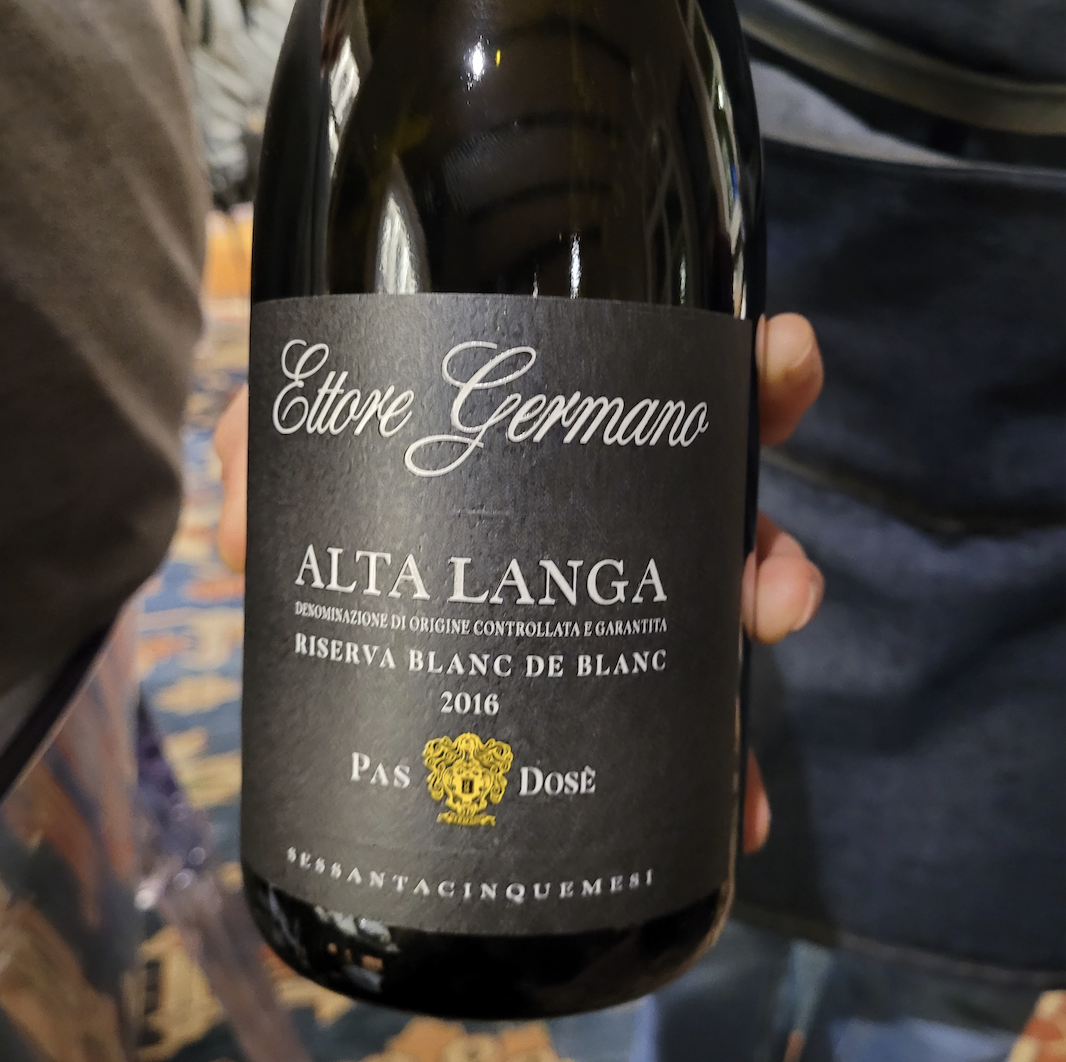
Ettore Germano Alta Langa Riserva DOCG Pas Dosé Blanc de Noir 65 Mesi 2016
It seems that Riserva is not just a matter of longer aging time but also a product of greater fruit quality. This 2016 from a powerful and tannic vintage brings the goods in ways few others seem want to deliver. Crisp and in charge, an intensity of parts that begin with quality fruit never letting up or seemingly willing to relent. Carries items with dignity and confidence for a wine or great Alta Langa respect, of its heritage and place. Feels like the clear juice from pinot noir stands above the chardonnay in this cuvée of great purpose and interest. Drink 2023-2030. Tasted Blind with the Consorzio Alta Langa in Asti, December 2023
Roccasanta Alta Langa Riserva DOCG Pas Dosé 2016
Not overly expressive in fact this holds back despite its age and lees aging time as per the Riserva style. The palate is appsoite, mature, of slight caramel and notably soft. This has done its time and the time is now to drink up. Has developed a minor cider note to confer that suggestion. Tasted Blind with the Consorzio Alta Langa in Asti, December 2023
Tenute Rade Alta Langa Riserva DOCG Pas Dosé 2015
From 2015 and a no dosage Bianco iteration of volatility, maturity and a mix of caramelization meets oxidation. A lovely old drop in one respect and because the acidity rises high it’s well preserved and so should be well perceived and received as a sparkling wine of age. Flattens after the initial weak palate display before fading off into the proverbial Alta Langa sunset. Tasted Blind with the Consorzio Alta Langa in Asti, December 2023
Daffara & Grasso Alta Langa Riserva DOCG Pas Dosé 290 mesi 2014
Alta Langa in Riserva form with that extension from extra Lees aging and no dosage for that magical combination. This has truly developed next level character while staying level on its legs and staying a course that will allow even further aging excellence. Labels Bianco though tasted blind it can be nothing but Blanc de Blancs because the chardonnay stands out like a hitchhiker with an extra large thump. A guide to the Alta Langa galaxy right here in the glass, heady, steady and grippy with a real plan, even if the world may not think that this place and these wines have this fully entrenched in mind. The real deal will reveal itself and this 2014 has done just that. Drink 2023-2027. Tasted Blind with the Consorzio Alta Langa in Asti, December 2023
Fontanafredda Alta Langa Riserva DOCG Pas Dosé Vigna Gatinera 96 mesi Blanc Noir 2014
Only Alta Langa it seems can effect this intricate mix of long lees aging time and no dosage for such great and curious effect. As here though this 2014 Bianco is showing some oxidative maturity even even while it persists as a reductive example by way of its pinot noir and chardonnay cuvée. Still crunchy and truly flavourful with both yellow citrus and small red berry fruit in combinative affair. Finds its groove late and accumulates more and more pleasantries as you taste through a few sips. You need to hang in with this nine year-old Alta Langa and if you do there will be greater reward. Drink 2023-2026. Tasted Blind with the Consorzio Alta Langa in Asti, December 2023. asted December 2023
Gancia Alta Langa DOCG Pas Dosé Cuvée 36 mesi 2014
A Bianco long on its lees and showing maturity though also a stoic nature to begin. Still crunchy and like a mouthful of citrus and stones. This would have been singing with its finest voice just a year ore two ago though still does so dutifully and truthfully today. Drink 2023-2025. Tasted Blind with the Consorzio Alta Langa in Asti, December 2023
Bera Alta Langa DOCG Brut (90 mesi) 2013
A mildly oxidative and advancing example though having strong 10 years in. Plenty of experience, of creamy fruit, almost a custard of the orchards and while pinot noir makes a play it is the Chardonnay making the bigger statement. Shows off heritage and good planning to exact more emotion for what kind of potential Alta Langa holds for wines to age this length of time. Drink 2023-2025. Tasted Blind with the Consorzio Alta Langa in Asti, December 2023
Coppo Alta Langa Riserva DOCG Brut Riserva Piero Coppo 2013
A Riserva of Bianco that reeks at least as much of pinot noir as it does so from chardonnay. At ten years of age it have proven to have lasted and lingered as well as could be expected with the best times presented right here and now. Feels like a wine of age and drinks with nurturing comfort at this stage, like a blanket or a parent. Drink up and savour every last moment. Last tasted blind with the Consorzio Alta Langa in Asti, December 2023
The 2013 vintage is the turning point to this 60 percent pinot noir and (40) chardonnay becoming and being labeled Alta Langa, recently disgorged in 2022. Previous disgorgements were labelled Vino Spumante di Qualità. Now into wildly vivid and famous complexity, toasty yes but there’s a crème frâiche and an almost strawberries and cream component. Eonologists GianMario Cerrutti, Guiliermo Grasso and Vittorio Pescarmona conspired to see this age 85 to 90 months on the lees, almost unprecedented around Asti. Has hit its stride, in the right place between crunchy and the kind of sparkling wine that you begin to ruminate with in the mouth. Cerebral wine in every respect. Drink 2023-2027. Tasted January 2023
Tosti1820 Alta Langa Riserva DOCG Riserva Giulio I 100 Mesi 2012
More than 10 years old and still a quietly demure and not overtly philanthropic example of Alta Langa Riserva. Getting as much red fruit pinot noir as citrus chardonnay on the nose though together they combine and accumulate for a very fruity sparkling wine. Also toasty and even just flinty enough to consider the calcari, the argilla and the arenaria in the earth from whence this once emerged and has now arrived. A beautiful ALR after all these years and I for one would relish a pour anytime it might be forthcoming. Drink 2023-2026. Tasted Blind with the Consorzio Alta Langa in Asti, December 2023
Enrico Serafino Alta Langa Riserva DOCG Pas Dosé Zero 140 2010
No sugar added at tirage and yet you will not find more natural fruit in an Alta Langa Bianco or Riserva, especially in this style. Magnificently organized and perfumed of all the fruit blossoms and then the ripeness of that fruit as it arrived at fruition. Toasty, even still slightly reductive and almost no signs of true maturity – certainly limited oxidation. The truth is alive and these bubbles prove that Alta Langa ages really, really well. Drink 2023-2027. Tasted Blind with the Consorzio Alta Langa in Asti, December 2023
Gancia Alta Langa Riserva DOCG Brut Cuvée 120 mesi 2010
Nearly 13 years of age and a wine doing well, thank you very much. Many years (upwards of 140 months) on its lees and using every bit of those clean yeasts to conduct a current and fully realize the fruit for dramatic effect. Just a bit toasty and over excited (as it must have always been) to rise above the fruit but acidity is fine, racy and its charge well executed to make this work as well as it should. Drink 2023-2026. Tasted Blind with the Consorzio Alta Langa in Asti, December 2023
Blind tasting Alta Langa (c) Anastasia Florea and Consorzio Alta Langa DOCG
Rosato
Colombo Alta Langa Rosato DOCG Brut 2020
Just a wee youthful one, of maximum 24 months on lees for a Rosato (namely Blanc de Noirs) that modernizes Alta Langa with ever increasingly utilized pinot noir. Well short of saignée and just a few hours run off with clean juice that came from pure fruit of a well timed sparkling pick. The clarity puts this in spot on territory for the idiom. Creates a dictionary entry Rosato for the denomination. Drink 2023-2027. Tasted Blind with the Consorzio Alta Langa in Asti, December 2023
Ivaldi Alta Langa Rosato DOCG Extra Brut Andrea 2020
Extra Brut with a bit more dosage that foils if not perfectly aligns with the fruit and acidity for what collates as a slightly rustic example. Well and substantial fruit and complimentary savour if just off-putting because the combinations create some mismatching and misappropriated flavours. More than serviceable if not truly representative of potential. Drink 2023-2025. Tasted Blind with the Consorzio Alta Langa in Asti, December 2023
Banfi Alta Langa Rosato DOCG Extra Brut Cuvée Aurora 2019
A few years of lees aging has done well to set this Extra Brut Rosato up for rusty copper Alta Langa success. More than ample richness, orchard fruit that involves crab apple and then a turn to more savoury elements with low-creeping vines that deliver leaf and red fruit in elastic flavours. Carries with nimble ability, without distraction and only purity. Very well made with the capability to age at least a few if not five-plus years. Drink 2023-2028. Tasted Blind with the Consorzio Alta Langa in Asti, December 2023
Massimo Rivetti Alta Langa Rosato DOCG Extra Brut 2019
Quite pale for Alta Langa Rosato and so though a factor of pinot noir and blanc de noirs it is noted how the maceration was quick and oh so gentle. Not as overtly aromatic as some though there is a yeasty autolytic note involved to tell us quite a bit about the style and also the intention. Pay attention to the stage presence and the seriousness with which this intends to capture your palate. Succeeds for the most part though does not hold on as long as some deeper and more impressive examples. Drink 2023-2026. Tasted Blind with the Consorzio Alta Langa in Asti, December 2023
Il Cascinone Alta Langa Rosato DOCG Brut Alasia 2019
Quiet aromas, a bit of citrus tablet dissolve and more dosage noted than many. Simpler, easy and getable ahead of the game. Lacks the complexity and drive of more serious examples in the Brut Rosato category. Drink 2023-2025. Tasted Blind with the Consorzio Alta Langa in Asti, December 2023
Ravasini Alta Langa Rosato DOCG Brut Cuvée Leonora Rosé 2019
Cider notes, of terpene and juiced orchard fruit that suggests more than pinot noir but is likely just a matter of how this was pressed. Acetic and volatile more than anything else. Something went wrong in this case. Tasted Blind with the Consorzio Alta Langa in Asti, December 2023
Tosti1820 Alta Langa Rosato DOCG Brut Rachele Rosè 2019
A funky cheese rind note mixes with a rusty and rustic red fruit style anchored by strawberry then accepted by rhubarb, baking spices and earth. A savoury kind of Brut Rosato that’s not so much a matter of overripe fruit bit more so terroir and then winemaking. An is what it is Alta Langa that succeeds because it is unique. Sweetness comes out at the finish to mix and merge with tonics and bitters. Drink 2023-2025. Tasted Blind with the Consorzio Alta Langa in Asti, December 2023
Agricola Brandini Alta Langa Rosato DOCG Brut 2018
Crisp, earthy and crunchy Rosato, savoury and with some strawberry sweetness across the board. Begins savoury and finishes on a sweeter if also earthier note. An interesting Rosato that will likely morph and change into something of greater interest because the yeasts are clean, the fruit pure and the potential quite good. Drink 2024-2027. Tasted Blind with the Consorzio Alta Langa in Asti, December 2023
Gancia Alta Langa Rosato DOCG Brut Cuvée 36 Mesi Rosé 2018
Rusty, savoury and cheese rind aromatic with plenty of yeasty lees notes that likely need more time to integrate. That said the rusticity can’t be ignored nor denied so keep in mind how parochial and local this will always purport to be. It’s really quite comforting and with some excited energy on the palate their is a true affinity with growers’ Rosé Champagne. That’s a compliment because authenticity and respect for terroir are more than half the battle and reason to appreciate an Alta Langa sparkling wine. Last tasted Blind with the Consorzio Alta Langa in Asti, December 2023
Minor reduction which is in fact something that is important because “things would be a lot more serious if drinking a glass would make you want to drink a glass of water,” kids Dr. Donato Lanati. Sounds like a joke but in these climate change and extreme times you can taste what would not have been tasted before and Gancia knows, with 150 years of experience in crafting sparkling wines. Aging some of the base wines in wood goes a long way to control the reduction and yet some reduction is a good thing. There is some sweetness in the perfume which is a result of a portion having been aged in a “sweet” wood. This sulphur dioxide character mixed with some acetates that have yet to fully dissipate are what drive aromatic pulchritude and it is the esters (within reason) which will bind with amino acids to eliminate any semblance of confection. There is a small dosage here but it in fact under wonderful control and while Rosé by nature is rounder than Bianco, well no matter or judgement because the mix of tension and elasticity is really well managed. Drink 2024-2029. Tasted December 2023
Enrico Serafino Alta Langa Rosato Riserva DOCG Pas Dosé Zero Rosé 2017
This Rosato may be pas dosé but screams form the glass with a wealth of ripe fruit captured to be put to great use. Richness and energy combine from start to finish, exert upon the palate and continue to rise through every moment of this fine Alta Langa sparkling wine. No let up, time off, sick days, stops or starts. Continuous and righteous. The potential is still great and the faint bitterness on the palate is just so appropriate. Drink 2023-2026. Tasted Blind with the Consorzio Alta Langa in Asti, December 2023
Cocchi Alta Langa Rosato DOCG Brut Rösa 2017
Good aromatic presence, a nose into Orange Pekoe tea and earth before the leafy red fruit notes become involved. Tight and bracing on the palate with piercing acidity, never acetic nor volatile but very much in charge. An intense example that still needs time to flesh out even if it’s a wine from back in 2017. Not sure it will ever really change but if you like this excitable style than this is the Alta Langa Rosato for you. Drink 2023-2026. Tasted Blind with the Consorzio Alta Langa in Asti, December 2023
Fontanafredda Alta Langa Rosato DOCG Brut Contessa Rosa Rosè 2017
Notable extra fruit substance and also yeasty notes determine the Riserva designation and set this Rosato up for plenty of slow maturing, unfolding and unraveling days ahead. Rusty, earthy, gingered and tonic-botanical notes but also evergreen so quite a variegate composition from pinot noir. Complex tones for sure if just that ever so slight disadvantage as a wine that will act and therefore be an acquired taste. Drink 2023-2026. Tasted Blind with the Consorzio Alta Langa in Asti, December 2023
Roberto Garbarino Alta Langa Rosato DOCG Extra Brut L’Istinto 2016
The oldest of the Roasto and the only one defined as Extra Brut in a flight of 13 Alta Langa examples. The most fruit blossom forward on the nose, rich and expressive, sweetness so well incorporated and the fruit comes away so finely crossed between citrus and berries. Really well delineated and defined, of accords struck and alliances formed. This will live a great long iife. Drink 2023-2028. Tasted Blind with the Consorzio Alta Langa in Asti, December 2023
Good to go!
godello
Godello, Alta Langa blind tasting
Twitter: @mgodello
Instagram: mgodello

















 Godello