Bloody vivid 2011 Vintage Ports

Vintage Port 2011 from left to right: Sandeman, Fonseca, Dow's, Graham's, Taylor Fladgate

Vintage Port 2011 from left to right: Sandeman, Fonseca, Dow’s, Graham’s, Taylor Fladgate

With the announcement of the Dow’s Vintage Port 2011 by Wine Spectator as the wine of the year for 2014, fortified is back on top of the extant pop heap. The number one ranking in the magazine’s annual Top 100 list of the most exciting wines is a big financial deal and another arranged feather in the Symington family’s cap. The region’s single biggest landowner just put on some extra weight.

The Dow’s Vintage Port 2011 was the highest-scoring wine of the vintage (by WS ) at 99 points, or “classic” on their 100-point scale. It was chosen because of its “fine value for the category at $82 a bottle and for being the best of the best of an amazing vintage.”

In wine, Vintage Port is about as specific as it gets primarily because for it to exist and prosper beyond the fossilized fringes of the genre, everyone in town must be on board. For the first time since 2007, the 2011 vintage was universally declared across the Douro. If the makers and pundits were polled, would it be proclaimed the greatest vintage of the century or, perhaps one of the best ever? The 95-plus scores from the top commercial critics, including more than a handful of 99’s and 100’s would lead us to believe that were the case.

An excited Jancis Robinson wrote “could 2011 be the vintage to put vintage port back on the fine wine map? I do hope so. I have never been as excited by the launch of a clutch of vintage ports.” Dow’s was not on Robinson’s “super-stunning list,” which included Fonseca, Graham, Quinta do Vesuvio, Capela Taylor and Vargellas Vinha Velha. Jamie Goode noted that “overall, the quality is very high indeed. I found the wines quite vinous and pretty, with very direct fruit and lovely purity.” When tasted from cask, Niepoort 2011 was Goode’s top scorer (98 points). Dow’s was well down the Goode line.

WineAlign‘s Julian Hitner, a.k.a. The Successful Collector declared 2011 a stunning and fabulous vintage, “one of spellbinding treats.” Hitner also awarded the Dow’s 99-points. Wine Enthusiast rated nine 2011 VP’s 95, nine at 96 (including the Dow’s) and eight more at 97 or better. Decanter took a lower road and was the scrooge of vintage point doling, having chosen Fonseca as their top rated Port, awarding it 19/20 or 96-points. Then there are the top ten reasons to buy 2011 Vintage Port according to the Fladgate Partnership.

Vintage Port does not always find itself at the top of the wine tasting note compendium replete with descriptors like graceful and elegant. “Just too goddamn vivid,” is more like it. Sometimes there is such a thing as too much of a good thing. Massive fruit and tannin is all well and good if that’s your cup of bomb tea but without balance, all is lost. The 2011 Vintage Ports have balance, well, the best do, but they are, and I speak in very general terms, collectively over the top. Though it may seem an oxymoron to put Vintage Port and elegance in the same sentence, what is a great wine without a sense of humility and restraint?
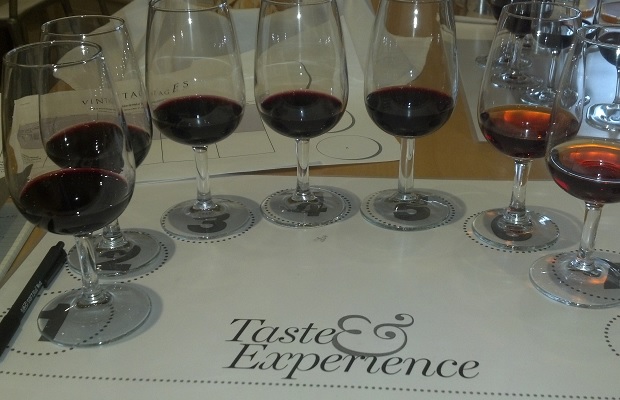
Vintage Port 2011 at Summerhill LCBO, November 3, 2014

Vintage Port 2011 at Summerhill LCBO, November 3, 2014

There are some remarkable examples. The VP’s in ’11 that stress the aromatic notions of perfume and florality strike the finest balance, despite their high-octane levels of fruit and texture. Others’ heads are just too big for their bodies. I am not as high on 2011 as you might think I should be.

One of the fortunate pleasures of writing about wine and directing a wine list in Toronto is being invited to taste with Robin Sirutis and Julie Hauser of VINTAGES. On Monday, November 3rd they held a horizontal tasting of 2011 Vintage Port at the LCBO’s Summerhill location. The bloody vivid 2011 Vintage Ports. Here are the notes.
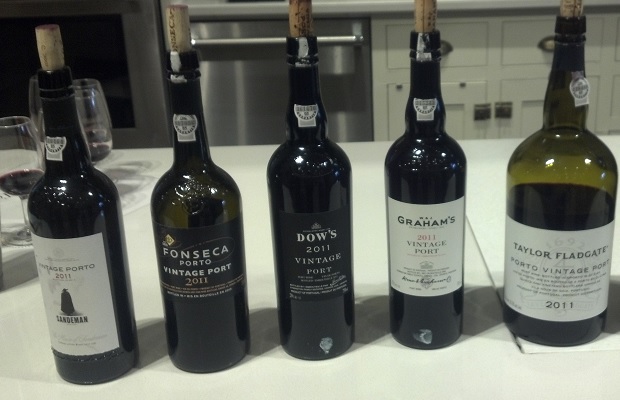
2011 Vintage Ports

2011 Vintage Ports

Sandeman Vintage Port 2011, Douro, Portugal (362491, $70.00, WineAlign)

Acutely dry, highly aromatic and crushed to smithereens, potpourri dusty floral. As glutinous and viscous as Sandeman has ever been or Vintage Port can ever be. Also marked by roasting coffee beans, brewed house chain dark roast and drying tannins. This Sandeman ’11 has “big plans, big time, everything.” It will appeal to a consumer in search of a department store hook penned for immediate gratification and a quick fortune. In 25 years, after the camphor, campfire and the earthy musk of camel-hair have dissipated, will it still be on top of the pops?  Will it be replayed again and again in the category of one hit wonder? It will be remembered fondly for being one of solid gold.  Tasted November 2014  @SandemanPorto  @ChartonHobbs

Fonseca Vintage Port 2011, Douro, Portugal (362244, $130.00, WineAlign)

With the most brilliant ’11 VP hue and an endless posit to plumb plump plum depths of fruit, the Fonseca dances with the moonlit knight. Its genesis begins with a raw must and animal musk, but beneath the skin lurk vessels pulsating with a sanguine rush and iron rich plasma. Smells of its fortifying spirit, not yet even close to integration, in high-toned aromatics so intensely perfumed. The wet winter and the moderating effects of a mild, verdant Spring have precipitated a controlled spice on the highly tannic, arid finish. When a sip is taken young, it pleases. When opened 40 years from now, it will fit with comfort and feel so secure. “Young man says you are what you eat – eat well. Old man says you are what you wear – wear well.” Will drink best from 2050 and for decades beyond.   Tasted November 2014  @FonsecaPort

Dow’s Vintage Port 2011, Douro, Portugal (362376, $90.00, WineAlign)

Straight out I will say that the Dow’s 2011 is unique to the vintage, possessive of a natural sweetness of its own making. It’s built upon a ga, ga, ga, ga vintage port language that is fairly formal and sometimes flowery. In fact the aromatics are so very pretty; violets, Bougainvillea and exotic spice. Such a perfume leaves a lasting memory, like a ghost of fortified wine that lingers. Add the heady sense of graphite and a silky spooning of blackcurrant liqueur. An underlay of brittle mineral hangs on the tip of the tongue. A spicy tang and a meatiness barrels seamlessly through the driest length to hang your Douro hat on. “Oh, would you ease my mind” Dow’s ’11? “Yeah,” but not until 30-35 of oscillation and settling have passed, in a relationship built on patience and virtue.  Tasted November 2014  @Dowsportwine  @winesportugalCA

Graham’s Vintage Port 2011, Douro, Portugal (362269, $95.00, WineAlign)

Quinta dos Malvedos leads the blend (35 per cent), as it has for more than a century. Quinta do Tua (16 per cent) lends firmness and structure while Quinta da Vila Velha (18 per cent) is the giver of violets and chocolate. Quinta das Lages (12 per cent) elevates concentration and density. Quinta do Vale de Malhadas (19 per cent) is responsible for the chains of grain in tannin. The final blend is Touriga Nacional (40 per cent), Touriga Franca (31 per cent), Vinha Velha (23 per cent, old mixed vineyards), and Sousão (6 per cent). From the Symington Family Group, Graham’s is the cleanest, purest, most fruit-forward and accessible expression of the five 2011’s tasted, thanks to that generous and gregarious Malvedos fruit. Plum and black cherry are accented by orange rind. A sweet, boisterous style, it slowly and purposely descends a ladder from full fruit flavours to drying tannins, more so than any of the others. A wine of great verve, with a cool northern soul, from lush to grain. Will drink well for a new decade and many more while “the radio plays the sounds we made and everything seems to feel just right.”  Tasted November 2014  @grahams_port

Taylor Fladgate Vintage Port 2011, Douro, Portugal (362293, $130.00, WineAlign)

A Fall of 2014 look at Taylor’s 2011, at this stupidly early point in trying to make sense of what he will become, shows him as the biggest, baddest and current king of the Porto hill. At this juncture he represents the penultimate combination of lush fruit, streaking acidity, drying, angry and crying tannins. The earthiest must oozes along with the silkiest juice which subsequently and willfully submit to those raging tannins. This is hydro-Port, a powerhouse of energy and tension. Black fruits, caked and rolled in stickum and solder, currently weighed down, are waiting to erupt. Once in a declared moon a Vintage Port takes a calculated yet unnecessary risk and thus channels its path into enlightenment. This is the Taylor 2011. Despite his tough exterior, “I can hear the sound of violins. I can hear the piper playin’.” When all is said and done, 40 plus years down the road, he will steal my heart away.  Tasted November 2014  @TaylorsPortWine  @Smarent

Good to go!

A cultivated tale of two Okanagan wineries

Blue Mountain Vineyards Photo: (c) www.bluemountainwinery.com

Blue Mountain Vineyards
Photo: (c) http://www.bluemountainwinery.com

Some wine is made all in the family. These days I am particularly intrigued by the ancestral homestead turned grape-growing entity. This past summer I paid a visit to Lightfoot & Wolfville Vineyards in Nova Scotia’s Gaspereau Valley. Mike Lightfoot‘s apple farm has transformed into a 21st century outpost for Vinifera and local, indigenous viticulture.

Related – Consider the Gaspereau Valley

Blue Mountain Vineyards has been a family business since 1971. For twenty years Jane and Ian Mavety grew and sold grapes to the commercial wine industry. In 1991 they began bottling under the Blue Mountain name. Next generation winemaker Matt Mavety came to Niagara in July for the annual 14C Cool Chardonnay event and I had the pleasure of tasting with him. His wines have been arriving in Ontario with record B.C. import speed. They have become a darling of the LCBO, the WineAlign crew and consumers for good reason. The purity of the all-estate grown wines are a study in South Okanagan clarity. The persistence in consistency across the board is increasingly apparent.

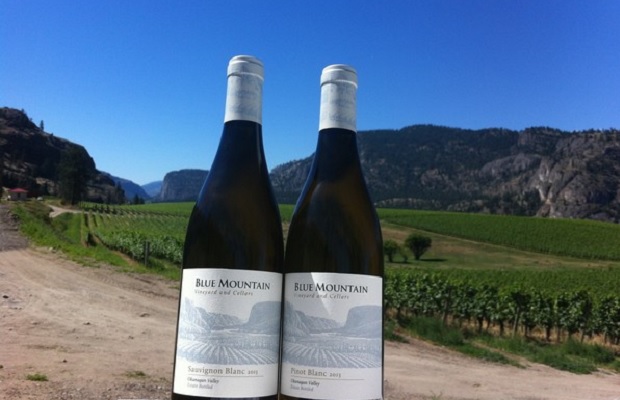
Blue Mountain Sauvignon Blanc and Pinot Blanc Phoo: (c) www.bluemountainwinery.com

Blue Mountain Sauvignon Blanc and Pinot Blanc
Phoo: (c) http://www.bluemountainwinery.com

Blue Mountain’s tale of cultivation is one of  intensive labour. It’s a hands-on approach in the vineyard; suckering, shoot thinning, shoot positioning, fruit thinning and harvesting are all done this way. The winery focuses on varietals;  Pinot Blanc, Pinot Gris, Sauvignon Blanc, Chardonnay, Gamay Noir, and Pinot Noir. In addition to the single-varietal bottles, no less than five different Sparkling variations are made in the traditional method. It’s a toss-up between the two styles to decide what the Okanagan farm does best. Neither analect should be missed.

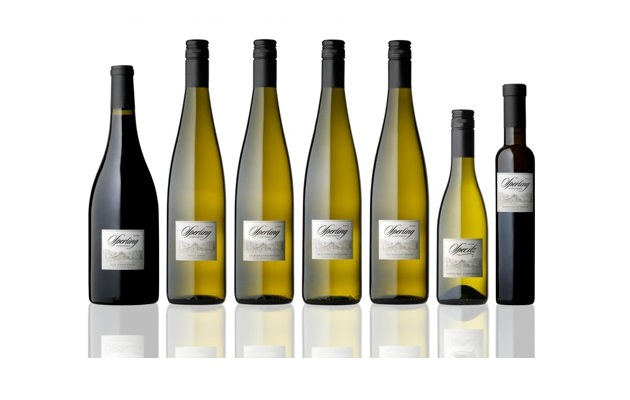
Sperling Vineyards Photo: (c) Stephen Elphick and www.sperlingvineyards.com

Sperling Vineyards
Photo: (c) Stephen Elphick and http://www.sperlingvineyards.com

Sperling Vineyards comes from along history near Kelowna, B.C. Giovanni and Lorenzo Casorso began the farm in 1884, going on to become the largest grower of fruits and vegetables in the area. Giovanni’s sons all planted vineyards in the Okanagan beginning in 1925. Pioneer Ranch, home to Sperling Vineyards, is one of those sites. Since 2008, Sperling has been harvesting and building the 21st century legacy of that famous Kelowna property.

Ann Sperling is one of Canada’s superstar winemakers. Alone and along with partner Peter Gamble, Sperling has elevated the efficacious fortunes of Southbrook Vineyards in Niagara and Versado in Argentina. Her categorical work on the home front has raised the bar for the Okanagan and for Sperling Vineyards.

The Kelowna winery concentrates on a Sparkling wine program, along with Pinot Noir, Chardonnay, Riesling, Gewürztraminer, Pinot Gris and Marechal Foch from some very old (1960’s planted) vines. Chances to taste the Sperling output have been more frequent of late, from i4C to VINTAGES releases and with Ann at a special LCBO tasting.

Here are notes on 17 wines tasted over the past few months from Sperling and Blue Mountain.

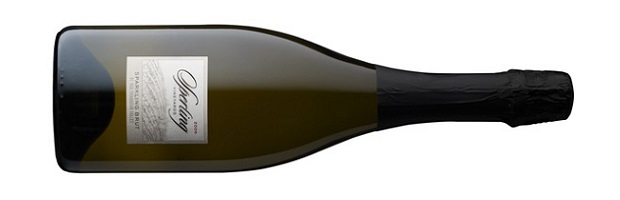
Sperling Vineyards Sparkling Brut 2009

Sperling Vineyards Sparkling Brut 2009

Sperling Vineyards Sparkling Brut 2009, Traditional Method, VQA Okanagan Valley, British Columbia (361436, $40.00, B.C. winery, $40.00, WineAlign)

From winemaker Ann Sperling’s Kelowna family vineyard (dating back to the 1880’s) this is fashioned from 100 per cent (Estate only) Pinot Blanc. The vineyard sits adjacent the Old Vines Riesling of Tantalus Vineyards, another quintessential B.C. example of vines that lambaste and biff out racy, tension filled grapes. Though the ’09 is more round than linear and an invitation to a more prescient pleasure or vatic gratification, the concept is base and relative to an assessment of the ’08. The Sperling citrus, the undefined citrus, is an amalgamation or vagary of lemon, lime, grapefruit, pomello and orchard fruit that acts like citrus in nature. This ’09 is initially warm but then builds with intensity, unlike the ’08 which was (and still is) that way from the outset. In a year this should join the accessibility shelf in parallel to its one year older sibling.  Tasted September 2014  @SperlingVyds

Sperling Vineyards Sparkling Brut 2008, Traditional Method, VQA Okanagan Valley, British Columbia (361436, $40.00, B.C. winery, $40.00, WineAlign)

The Sperling citrus layering is nowhere near locating the entrance to an unraveling descent. From an early vintage with an early frost, there is little wonder why it possesses so much pent-up aggression. Note to self: Wait another year, find Ann Sperling and must re-try. From my earlier, November 2013 notes: “Fasten the seatbelt for these Okanagan bubbles of tension nonpareil, acids beyond compare, fruit screaming to be heard. Estate-grown Pinot Blanc picked and aged at classic Champagne numbers, 18 brix, 2.95 PH and 36 months on the lees. Low in alcohol (11.3 per cent) and supportive in reverse balancing residual sugar (6 gr/l). Of note were green seeds, “so we’re not fighting green character,” says Sperling’s partner Peter Gamble. Non varietally-driven fizz that concentrates on mouthfeel, place and method. Does this Brut have the most tension ever from a B.C. Sparkling wine? Travels electrically from pole to pole, wired tight, inside a smart machine. A tale of a northern soul, “too busy staying alive.”  Last tasted September 2014

Sperling Vineyards Sparkling Brut Reserve 2010, Traditional Method, VQA Okanagan Valley, British Columbia (B.C. winery, $79.95, WineAlign)

This blend of Pinot Noir (70 per cent) and Chardonnay (30) was just recently riddled and disgorged so it comes across stonking and stomping on the freshness and fervor scale. After a few months in, the diminished low-dosage and Reserve style will settle and merge into an ever so slightly oxidized, Champagne stage, the platinum eyes will shine, the ginger spice will bite and the expansive mousse will blow. This is a very mature and wise bottle of Okanagan bubbles with a wistful look on its many faces, imagining what might have been, with today’s ability, in that lane of unmade Okanagan Sparkling wine. Ooh la la, Ann Sperling might say, ” I wish that I knew what I know now, when I was younger.”  Tasted September 2014

Sperling Vineyards Sparkling Brut Rosé 2012, Traditional Method, VQA Okanagan Valley, British Columbia (B.C. winery, $50.00, WineAlign)

Ann Sperling’s Rosé fizz is 100 per cent Pinot Noir of a style in high contrast to the Brut bottlings. Higher brix (19) and sugar dosage, shorter lees time, really low (though classic Champagne number – 2.95) pH and high-ranging acidity (10 g/L) all combine for a consistent yet very different airy apprehension. There is a sweet lavender soap aroma, a savoury edge and the classic Sperling citrus, here in lemon-lime pull. There is really nothing strawberry-rhubarb or berry-centric about it. This is Sparkling Rosé with hold the ball old school feel and modern era scoring ability.  Tasted September 2014

Sperling Vineyards Old Vines Riesling 2011, VQA Okanagan Valley, British Columbia (361204, $34.95, WineAlign)

From a 1978 planting, this teases late harvest-like with a sweet-sliding aromatic entry that glides effortlessly on the changeover to the palate and then bam! A red-letter sharp and acidulated takeover. The roots dug deep for the wise and wizened vines overtop a full limestone overlay “naturally stretch the nutrients in the bunches,” notes Sperling’s partner Peter Gamble. Low, old and slow, “all about circulation and flow.” Finishes with pith and citrus intensity. Yikes Riesling.  Tasted November 2013

Sperling Vineyards Chardonnay 2012, VQA Okanagan Valley, British Columbia (winery, $26.00, WineAlign)

High altitude expression from a vineyard perched atop a gravel bed, a rocky pool of stone that seems to toss-up pebbles at Sperling’s window to see if she would like to sneak away for a midnight drive. A crisp, clean and linear style, full of night-air freshness, white flowers and white fruit. This is undeniably picked early and ahead of any possible oxidative or overripe window, yet there is a rich quality about it that rages against the machine, calm like a bomb, “its narrative fearless.” Very mineral in its direct back and to the side of the mouth attack, full of salinity and lemon-lime acidity. Long, long Okanagan that will flesh with five years time. The slate bass line will soften, allowing the white fruit to further shine.  Tasted twice, May and July 2014

Sperling Vineyards Pinot Noir

Sperling Vineyards Pinot Noir

Sperling Vineyards Pinot Noir 2012, BC VQA Okanagan Valley, British Columbia (382283, $27.95, WineAlign)

Winemaker Ann Sperling stresses clonal selection for the success of this Okanagan Pinot Noir. The structured clone 144 inhabits a south-facing block, while 777 (higher degree of sugar, weaker acidity) and 828 are planted on the north facing side. Sperling’s goal is minerality, to seek a fine streak, drawn up from soil through vine, transmitted direct to berry, cutting a multi-dimensional line crossing and interpolating the finished wine. That success is here carved from hillsides, burrowed into must and released simultaneously into wine. Ministrations are gathered from small bunch pressings, indigenous yeasts and small puncheon aging to minimize wood impact. This ’12 is a buckaroo bright, light silt and gravel textured Pinot Noir of cherries fruity and pit-tinged. As for the mineral streak, call it metaphor hyperbole if you must, but how else to explain the subtle tickle in polytypic sensation? Like a banzai effect, “a simultaneous plane of existence with our own.” Minerality.  Tasted September 2014

Blue Mountain Brut, Méthode Traditionnelle, Okanagan Valley, British Columbia (206326, $27.95, WineAlign)

Blue Mountain is the poster child for B.C. bubbles and this forth-righteous, tight to expansive, quintessential cool-climate Okanagan is the stalwart for the genre. The unabashed intensity in citrus acidity, zero dosage style is exactly what it should be. If you have never experienced west coast bubbles, this is the pace to start.  Tasted December 2013

Blue Mountain Brut Rose R.D. 2010, VQA Okanagan Valley, British Columbia (Winery, B.C. $32.90, WineAlign)

A blend of primarily Pinot Noir with approximately 15 per cent Chardonnay, the Rosé bubbles by Blue Mountain rest 36 months on lees. Perpetuates the clear and concise house style, shared in common excellence with the Reserve Dry bottle. The smells of strawberries are key, the texture so important to character and aridity the driving force behind its level of elegance. So faintly pink, rusty really, this is blush fizz of the domicile kind; loyal, agreeable and persistent. It pleases from the first sip and lingers with consistent tones to the last drop. What beach sit, couch lag or special event stand wouldn’t be improved with a glass of these Okanagan bubbles?  Tasted October 2014

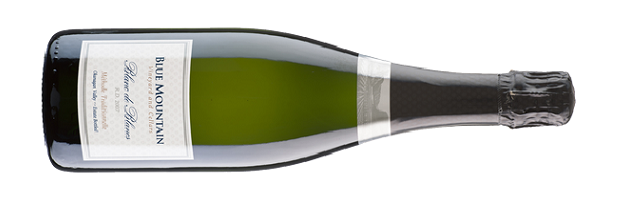
Blue Mountain Blanc de Blancs

Blue Mountain Blanc de Blancs

Blue Mountain Blanc De Blancs R.D. 2007, VQA Okanagan Valley, British Columbia (Winery, B.C. $39.90, WineAlign)

Blue Mountain’s B de B is all in Chardonnay, a 100 per cent estate fruit, cuvée first press, finished dry (6 g/L RS) and left on the lees sparkler for six years. This is quite an olfactory clot of yeast, yogurt and yellow fruit. Full and widening in the mouth, the flavours expand and contract, then expand again like fizz on life support. It’s hard to tell where this will go; the So2 is noticeable and though it blows to the mistral, beyond the element there are more elements. Magnetic to be sure and all over the mountain, these bubbles are confounding and exciting, but confounding nonetheless.  Tasted October 2014

Blue Mountain Reserve Brut R.D. 2006, VQA Okanagan Valley, British Columbia (Winery, B.C. $39.95, WineAlign)

The RD from estate fruit is Pinot Noir based, with approximately one-third support from Chardonnay and a pittance of Pinot Gris. The extended lees sit is seven years and if that is not the texture kicker than nothing is. Strawberries persist throughout this very dry sparkler, from leaves on the nose to bled fruit on the palate. This carries more arid character than the Blanc de Blancs, more texture and less atomic airiness. Finishes dusty and gingered, with a hint of mineral though the subtlety is sketched. The poise here is to be commended, the grace embraced. Calming fizz for any occasion. Tasted October 2014

Blue Mountain Chardonnay 2012, Okanagan Valley, British Columbia (350108, $23.95, WineAlign)

Juicy and immediately perceived as existing in unwavering balance. The juxtaposition of the stainless steel and (three year-old oak for seven months) barrel aging intertwines fresh and reductive aromas to a common meld. More orchard fruit than I remember, more linear acidity, more expression. Raises the bar and the score. From my earlier, April 2014 note: “Half barrel-aged, this Chardonnay has a silky mouth feel and as much nip as can be assimilated in a single mouthful. Green apple, blanched nuts and a metallic tickle give the sensation of chewing on crumbling stones. There is considerable girth and texture here, spicy folds and tangible tension. The alloy trumps the fruit so consider drinking up now and for another year or two.”  Last tasted July 2014

Blue Mountain Chardonnay 2011, Okanagan Valley, British Columbia (350108, $23.95, WineAlign)

A thick, rich and medicated goo this ’11 Blue Mountain Chardonnay. “Mother Nature just brewed it and there’s nothing really to it I know.” A traffic of oak waves in not so much woody but more so simply tannic. The palate is clenched, those tannins angular and ever so slightly bitter, intense and want to be bigger than the fruit would be willing to allow. This is Chardonnay with personality and ability, if just a bit big for its own head.  Tasted July 2014

Blue Mountain Sauvignon Blanc 2013, Okanagan Valley, British Columbia (Winery, $18.90, WineAlign)

Upfront, come and get me, juicy expression of Sauvignon Blanc, free of encumbrances. Avoids grass and spice, reaching instead for tree fruits, both stone and orchard. A bit ambiguous for that reason, acting less varietal and more Okanagan, but that is a very good thing. Has terrific sapidity and more than admirable length. A touch of distracting, caustic herbal intensity on the finish.  Tasted August 2014

Blue Mountain Pinot Gris 2013, Okanagan Valley, British Columbia (Agent, $21.00, WineAlign)

The astucity is palpable, the innuendo more than just a suggestion. This silent but deadly Pinot Gris is quietly explosive, fruit shuddering beneath a wall of texture and grain. Aromatically speaking it gives very little of itself but in the mouth the feel is so broad and coating. This is one of those very special wines that must be tasted with prejudice to appreciate just how dramatic and evidenced it can be. The acidity is stony laminous, the juice squeezed of many an orange variety, from Mandarin to Moros Blood. The finish gets an accent in Pomello. Blue-chip value in B.C. PG.  Tasted October 2014

Blue Mountain Reserve Pinot Noir 2011, Okanagan Valley, British Columbia (Winery, B.C. $36.00, WineAlign)

The Reserve Pinot is intoxicating to say the list. Some whole clusters in the fermentation process add mouth feel, cure and needed grit but how this can not be viewed overall in the shiniest west coast light would be confounding. The reserve ’11 is both “sky as I kite, sticky as lips” and “as licky as trips.” If there was ever an Okanagan Pinot Noir to get you high, this would be the one. What a boisterous effort out of a less than scorching vintage and considering the modest to riches price, no shame in visiting with flavourful fare, imbued with spice, any day of the week.  Tasted April 2014

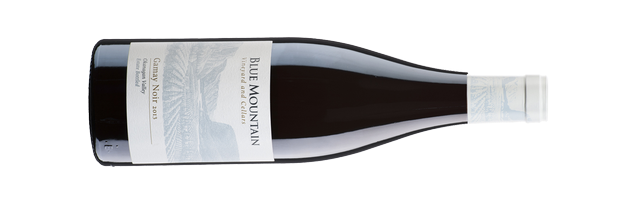
Blue Mountain Gamay

Blue Mountain Gamay

Blue Mountain Gamay Noir 2013, Okanagan Valley, British Columbia (Winery, B.C. $20.90, WineAlign)

The purity of fruit in Blue Mountain’s Gamay is without question in a distinct class of the few and far between. Older barrels (four year-old, fifth fill) were used and the impart should not be dismissed. While quintessentially Okanagan Gamay, the fruit is elevated, lifted, ripe like warmer Cabernet (dare it be said) with more berry and Cassis-like aromas. The palate tension and round acidity bring Morgon to mind. Just a bit gamy on the back end, which is nice. Planning to drink this through the end of the decade would not be a mistake.  Tasted October 2014

Good to go!

100 kilometre wine for spring

PHOTO: CHRIS KLUS/FOTOLIA.COM

as seen on canada.com

If you adhere to the 100 km rule, this wine’s for you.

Riesling. Can there be a more versatile white grape? From natural, mineral spring, bone-dry to concentrated, candied sweet, this grape runs the diversity gamut like no other. Riesling’s origins are from Oberrhein (Upper Rhine) Germany and it is the natural offspring of parent varieties Weißem Heunisch, Vitis sylvestris and Traminer. The earliest documentation of the name was in 1435, in Rüsselsheim. Riesling migrated to the Danube in Austria and to Alsace in France near the end of the 15th century but it has recently sunk roots all over the Diaspora. Australia’s Eden Valley, Marlborough in New Zealand and Washington State all produce exceptional examples.

A modern day Riesling narrative takes place less than a 100 kilometres away, along the Niagara Escarpment and above the pictorial towns of Beamsville, Jordan and Vineland. Representing the bench lands along the Niagara Escarpment, west of St. Catharines to Grimsby, this complex region encompasses three sub-appellations: Short Hills BenchTwenty Mile Bench, and Beamsville Bench. ‘The Bench’ is home to a mineral wealth of local Riesling, singular in composition not only by way of a global comparison, but also from plot to plot, soil to soil and vineyard to vineyard. The well moderated micro-climate diversifies away and down to Niagara-on-the-Lake, where Riesling finds and reinvents itself again and again.

As the sun climbs higher into the spring sky and the steady unfurling of buds, patios and backyards begins, what better time can there be to indulge in the fresh and spirited nature that is Niagara Riesling. Here are four examples to seek out and enjoy.

From left: Rosewood Estates Natalie’s Süssreserve Riesling 2010, Château des Charmes Old Vines Riesling 2010, Greenlane Estate Riesling 2011, and Thirty Bench Vineyards ‘Steel Post’ Vineyard Riesling 2011.

Rosewood Estates Natalie’s Süssreserve Riesling 2010 (258806, $14.95) is a throwback, where (16%) unfermented juice is added back into the fermented, finished wine. Tang, twang, vim and jump-kick honey-driven sensations sidle up to bursting aromas of tobacco, apricot and Ida Red apples. I’ve heard the makers say the pain in the arse Süss just wants to continue fermenting. Last October I noted, “arresting that and demanding a doffing is key, but when you choose a pioneering path, you get what you pay for.” 88  (From the VINTAGES March 30, 2013 Release)  @RosewoodWine

Château des Charmes Old Vines Riesling 2010 (277228, $16.95) from 30 year-old vines on the Paul Bosc Estate Vineyard is big sniffer assertive in flint, struck stone, seltzer and funk. Gold patina visage veers away from the Bench and leans lighter, down to Niagara-on-the-Lake. Darkness prevails and “French cream won’t soften them boots,” thanks to a piercing note on the finish, on the edge of town.  89  (From the VINTAGES March 30, 2013 Release) @MBosc

Greenlane Estate Riesling 2011 (327247, $15.95) streams citrus from the get-go with more juicy, stone fruit than winemaker Dianne Smith’s more serious bottling. Picks up verve and sapor on the palate, sparks the tongue and crashes down the hatch with a hallucinatory beat. Slides away, like a floating baseline, “A Storm in Heaven.”  89  (From the VINTAGES April 13, 2013 Release)  @GreenLaneWinery

Thirty Bench Vineyards ‘Steel Post’ Vineyard Riesling 2011 ($30, winery only) from the Andrew Peller stable leans late-harvest or Spätlese, with 18.5 grams per litre of residual sugar. Clean, crisp, precise and near perfect Beamsville Bench expression. Flinty minerality and fantastic whorl by way of winemaker Emma Garner. Equal to if not more of a bomb than the stellar ’09.  93  @ThirtyBench

Good to go!