Twenty-four mind-blowing wines of 2024

‘Tis an exercise performed year after year, a word processor’s per annum distillation to say thank you and recognize game. To consistently act as messenger, be conscious of hard work filed and to celebrate that excellence. The first list was conceived more than 10 years ago, now peaking at its current number with twenty-four mind-blowing wines chosen for 2024. Travels to fluctuating destinations mean from year to year wine regions will carry different weight and the list abides by the variance. In 2023 Bordeaux played a significant role, as did South Africa and Washington in 2022, Bourgogne in 2019, and so on. The rules of engagement never change but evolution plays its part, priorities pivot and you never can say or tell what sorts of matters will strike deep into the heart.

Related – Twenty-three mind-blowing wines of 2023
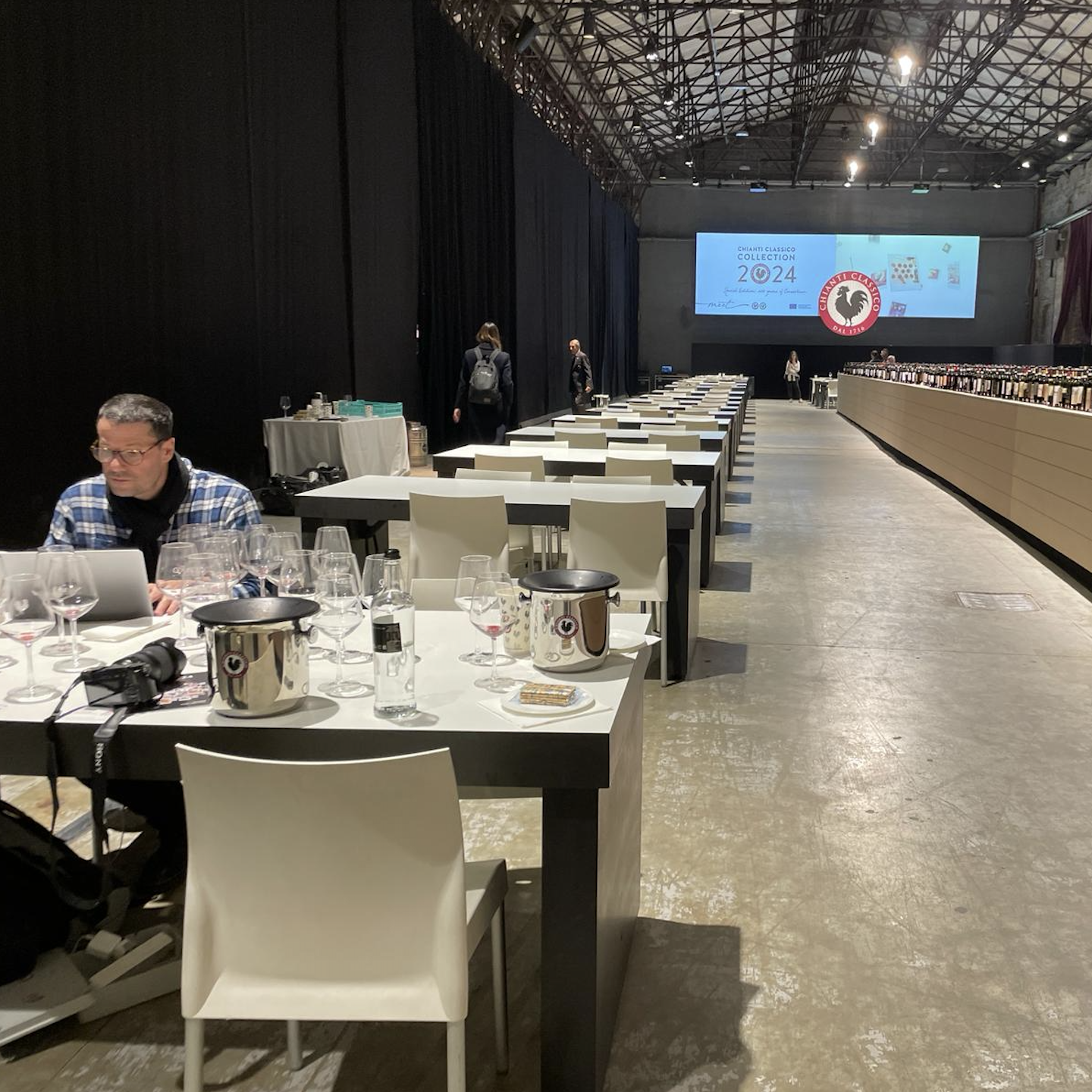
Last one standing (sitting and tasting) at the Chianti Classico Collection 2024

Godello needs to make a confession, shed some honesty, clear the air. He admits to a love for writing tasting notes and needing to do it, especially when a potentially mind-blowing wine is in the glass and what follows flows forth as a stream of consciousness, ending only when the creative tap closes naturally. When these notes are edited weeks or even months later there is the incredulous feeling of “how did this get written – where did these words come from?” They just did, from right out of the wellspring of creativity, but Godello does not know how he came to write those notes – as if they were magically written. Paragraphs woven from dots and thoughts for unsuspecting connections between writings and wine, such as “Ribelle è colui che si distingue.” Translated as, or better yet in reference to “the rebel is the one who recognizes the unjust law and breaks free from it,” from Ernst Jünger’s 1951 “The Rebel’s Treatise.” The German philosopher, essayist and WWII captain was once called die Burgunderszene because he watched a bombing raid in Paris while sipping Burgundy. The stylish supervillain of twentieth-century German literature’s disquisition shared dire and prophetic words on what a future world would be, in what he called the “Age of the Titans.”

Related – Twenty-two mind-blowing wines of 2022

Godello beneath a massive Tuscan Mazza di Tamburo/Parasol Mushroom

Or this. “The label represents the position of the vines in coordinates, echoed in the machicolations of a sangiovese that drops all the stones on unsuspecting palates through fruit openings between supporting acid corbels of a projecting tannic parapet.” Where did that come from? Or simply, “who needs fruit when you have rocks?”

Related – Twenty-one mind-blowing wines of 2021
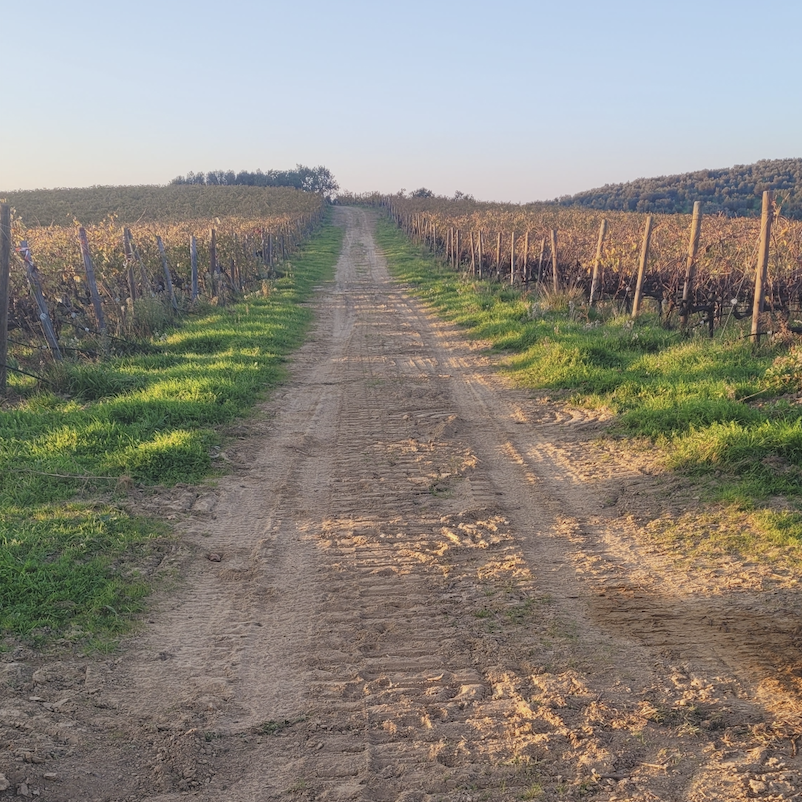
ColleMassari

More than rugs tie rooms together – lyrics, song titles, movie quotes, literary passages, exchanges between a journalist and a poet, thinker, writer, actor or composer – they are all a part of the masala. Reminds of a 2021 interview with a reluctant prophet. “Try to sit down and write something like that – there’s a magic to that and it’s not Siegfried & Roy kinda magic you know, it’s a different kind of penetrating magic.” All kidding comparisons aside with Bob Dylan’s answers to Ed Bradley in that famous 60 minutes exchange, but they may just be artistic words to live by. And why Godello? “You call yourself what you want to call yourself. This is the land of the free.” As for the relevance of wine tasting notes, sure it feels like being “a wordsmith from bygone days,” but it still feels right. And necessary. And unavoidable. A bottomless pit of cultural oblivion? No, not that. Tasting notes tell stories that need to be told. Relayed by messengers fulfilling a destiny to visit and break bread with good people making great wines and in turn agreeing to relay their tales. Tasting notes are the chronicles, expressed as narrative, of anecdotes woven through prose. If there is a better way to say what needs to be said it has not yet been found.

Related – Twenty mind-blowing wines of 2020

Chianti Classico’s Cento Anni

As of today’s date and the publishing of this year-end list Godello has reviewed 4,225 wines. If the origins of said wines were to be separated into categories than the breakdown would be as follows. Thirty percent would be from the LCBO’s VINTAGES release program, 24 percent for WineAlign Exchange curation and wine reviewing service, (12) Chianti Classico, (8) Piemonte, (6) Montalcino, (6) Sicilia and the remaining (14) from travels to other parts of Italy and around the world. A smaller part of one percent would be from wines enjoyed with friends, tasting groups, wine agent reps, visiting winemakers and at home. It all adds up to one great pool from which to create this list of 24, a number to represent just slightly more than half of one percent of the wines tasted by Godello in 2024. Here are his twenty-four mind-blowing wines of 2024.
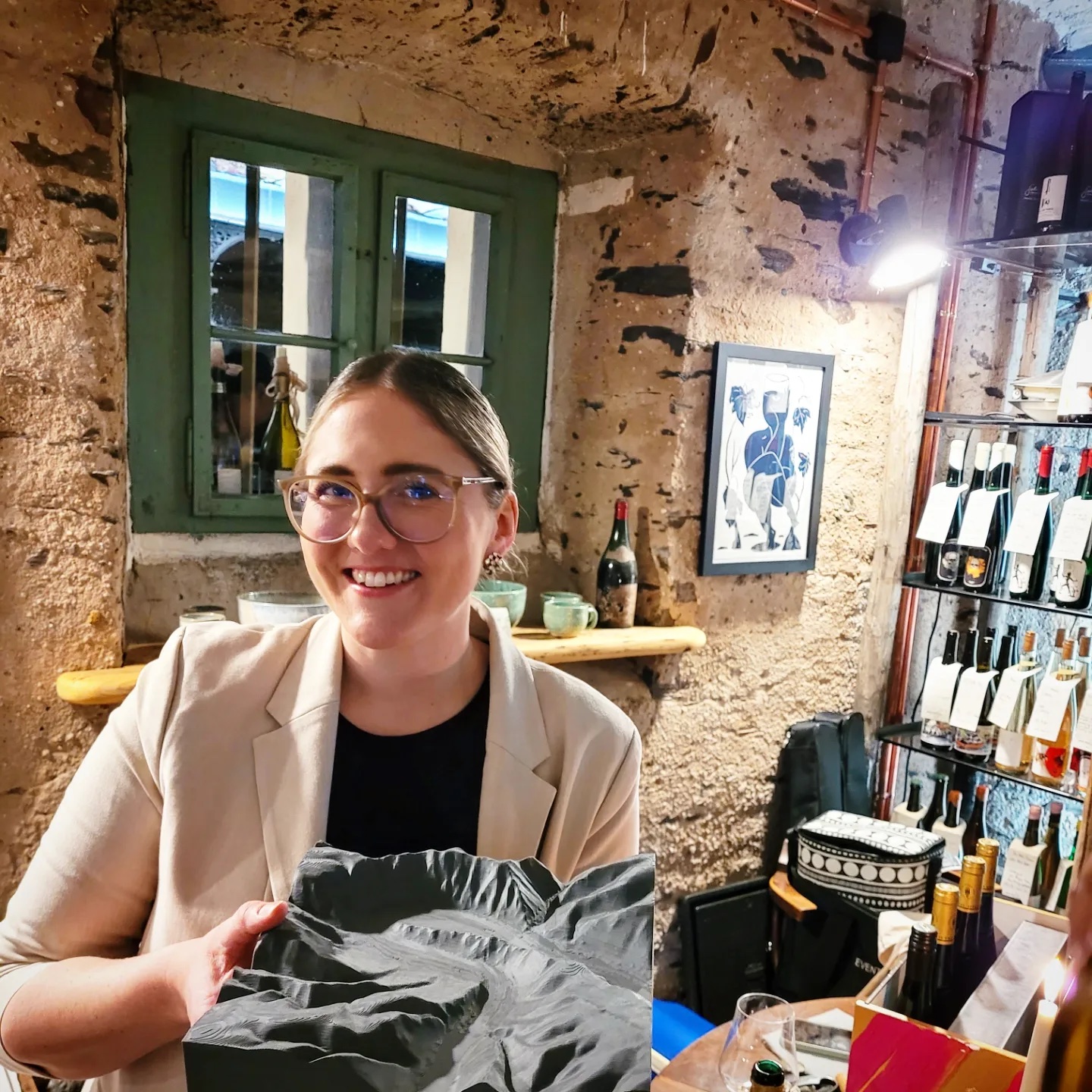
Angelina Franzen – Weingut Franzen

Weingut Franzen Riesling Sterneberg Großes Gewächs 2020, Große Lagen, Mosel

Killian and Angelina Franzen’s best plot in the Neefer Frauenberg is called Sterneberg. Vines were planted in 1938 on grey slate for a different, next level mineral quality and quotient for Mosel riesling. These are own-rooted vines, old, experienced and wise, their resulting dry wine coming away like the desert because sugar and acids near-equal come together seamlessly. The most viscosity and texture of the Franzen rieslings, from a hot vintage and so concentration, unctuousness, flesh, pulp and glissade are all at peak performance. Glorious and confident, outspoken but only to make sure we understand its origins and Franzen abides by its voice. Drink 2024-2033.   Tasted March 2024
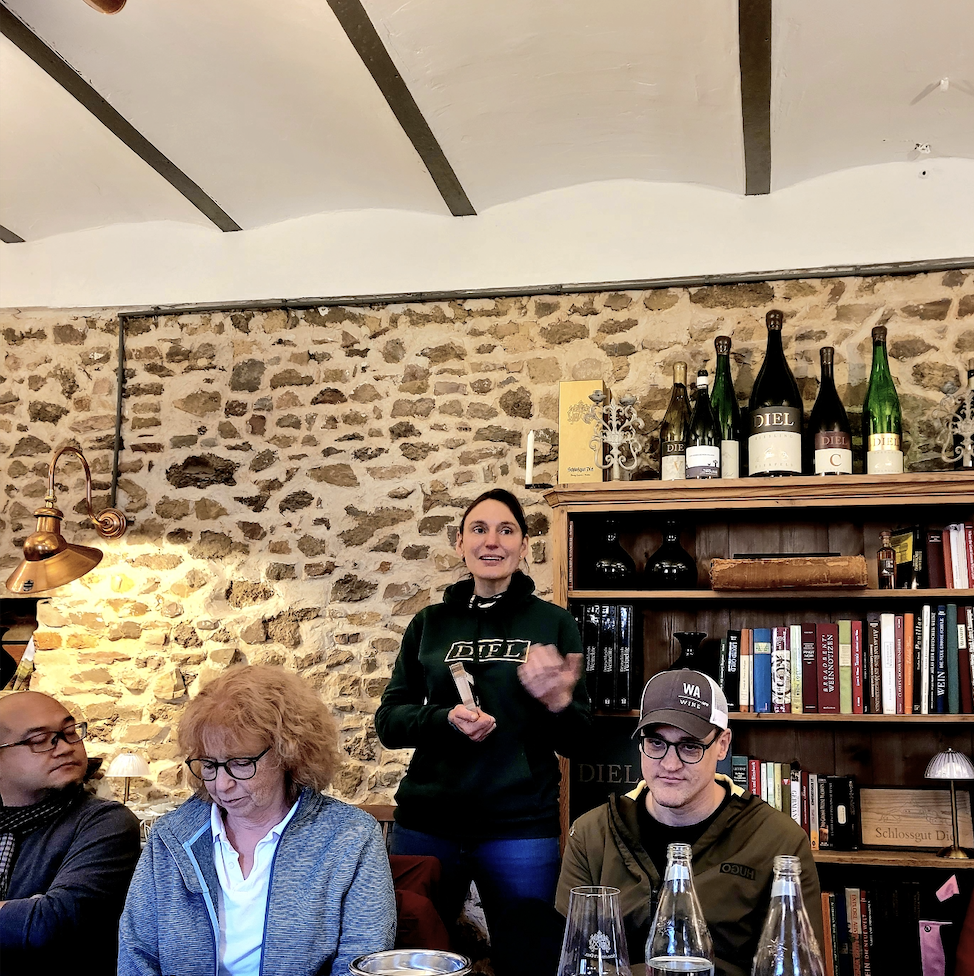
Caroline Diel – Schlossgut Diel

Schlossgut Diel Dry Riesling Pittermännchen GG 2022, Vdp. Grosses Gewächs

The tiny one hectare cru Pittermännchen is a name that dates to the middle ages with a connection to the people of Köln and Düsseldorf. Grand cru site of weathered grey (Devonian) slate atop Rotliegend conglomerate that dates back several million years. The geo-agricultural texture is small decomposed particles as opposed to the larger stones of the Mosel. Expressive flint stone aromatics undeniably soil related and not much fruit to discuss, save for some variegate currants but you really have to conjure imagination. There is a mille-feuille density to this riesling that peels away and delivers waves in layers without boundaries. Complexities are revealed without pause and dryness results because purity and grip replace the necessity for sugar-acid balance. So stony, long and our palates are held captive. Top shelf riesling within the idiom. Drink 2026-2033.  Tasted March 2024

Adega Do Vulcáo (c) entrevinhas.com

Adega Do Vulcáo Ameixâmbar 2022, Açores IG

A seriously volcanic blend of native grapes from two areas, first the ash of the Capelinhos and second the basalt of the Criaçào Velha. Add in the cold Atlantic influence and the result is something extraordinary to potentially mind-blowing. That depends on how much flint struck rock, mineral mouthfuls and deepening trajectories you may or not desire in your endemically-formulated white wines. Ameixambar is just such an animal and the profile, especially noted with verve and lashes upon the palate, is well, remarkable. Nothing else feels or tastes like this wine. Truly salty and there are notes that imagine powder created by crushing many different shells, inclusive of oyster, calm and mussel. You may ask yourself what is this, but you can answer with a simple word, or place. Açores. Drink 2024-2029.  Tasted July 2024
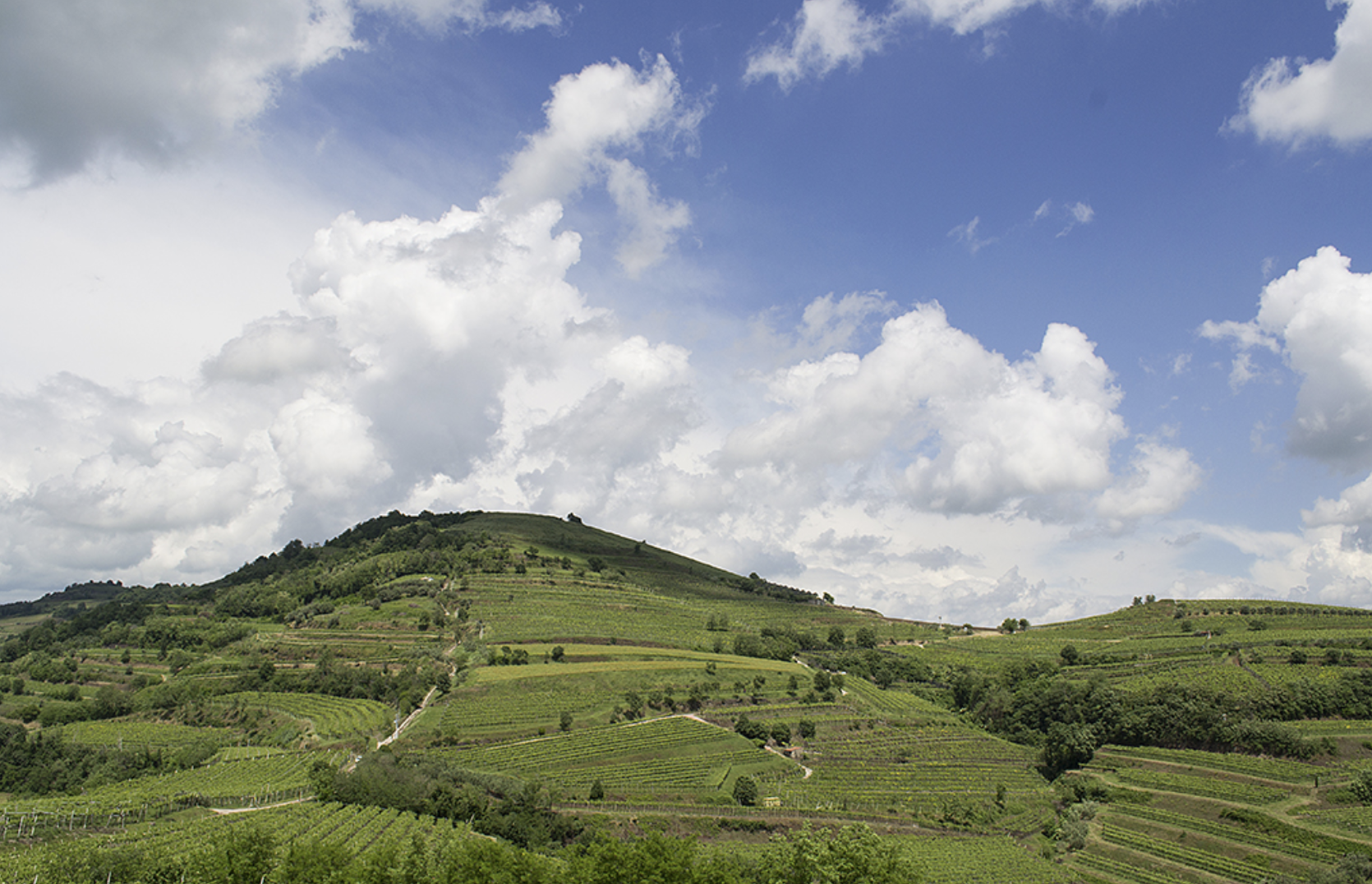
(c) inama.wine

Inama I Palchi Grande Cuvée Foscarino Soave Classico DOC 2021

I Palchi, as in the “stages,” a geographical term for a series of wide terraces aboard Monte Foscarino lined with pergolas of old garganega vines. In this case Inama’s highest level of Soave Classico meant to celebrate the ancients. As a surname it belonged to a cleric but also Antonio Foscarini (c. 1570 in Venice – 22 April 1622), member of the Venetian nobility, ambassador to Paris, London and later sentenced to death for high treason by the Council of Ten and executed. Yikes! This Foscarino ode is intended towards grapes and volcanic terroir for a bloody incredible garganega of substance and style. The ’21’s ability to attract and engage the taster’s attention is at the top of the Soave game. Fresh, flinty and wholly engaging. Mind-blowing actually. Drink 2024-2029.  Tasted December 2024
Marqués De Murrieta Capellanía Reserva Blanco 2018, Rioja DOCa

Only viura grapes are chosen from a six hectare calcareous clay plot off of 70 year-old vines located at the highest elevation of the Marqués De Murrieta Ygay Estate. The winemaking might well be working with sauvignon blanc and sémillon but with viura the ageing in French barrels takes a turn for the unexpected ethereal. The flinty smoulder is an intoxicant of the most hypnotizing order. The effect upon the palate and all the senes is extraordinary – mesmerizing. So what is Capellanía? In Spain it was a chantry or ecclesiastical endowment, one of several pious works commonly founded during the colonial period. A foundation in which certain assets are subject to the fulfillment of masses and other pious charges. Imaginatively speaking Capellanía is a rarity, monoceros, symbol of grace purity, power and transcendence. Not to mention healing powers and freedom. A unicorn. Drink 2024-2033.  Tasted June 2024
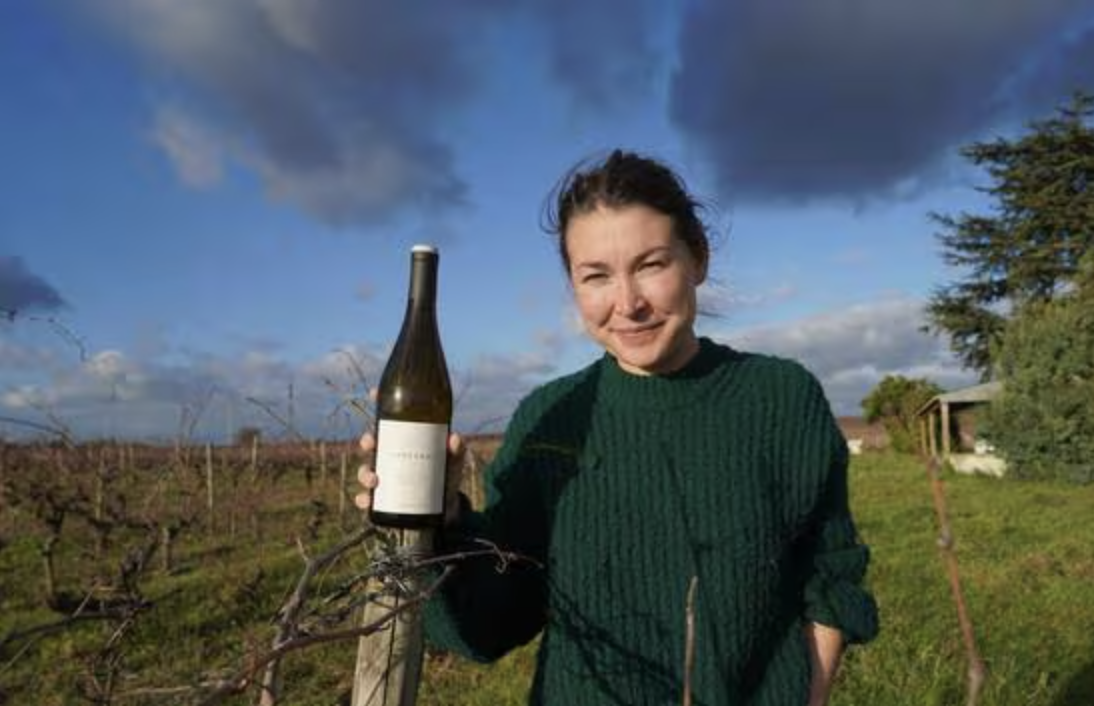
Vanessa Cherruau
(c) media.ouest-france.fr

Château De Plaisance Sur La Butte 2021, Anjou AOP

A wildly aromatic two cabernet blend from the Butte de Chaume where some of the finest wines made anywhere come from Chaume, Quarts de Chaume and Savennières. The curiosity and modernist approach is made two-fold by the presence of cabernet sauvignon to stride effortlessly alongside the usual franc. Yes this smells like the Loire but the aromas deliver so much more, in curiosity and intriguing sensations. Anjou in place and temperament but in design this may as well be a contemporary, abstract or Pop Art piece by François Morellet. The two related varieties form an almost intricate geometric pattern in the way they line the palate, so cleanly drawn with mathematical clarity. Yes this is serious Loire red wine but it’s also traceable, pre-minimalist and post conceptual by design. Drink 2024-2028.  Tasted April 2024

Godello and Giuseppe Russo

Girolamo Russo Etna Bianco DOC San Lorenzo 2023

San Lorenzo as Bianco from Giuseppe Russo is not like other Etna Bianco because well, San Lorenzo. Wow is the operative because no other EB gives like this. Beyond flesh and stone but something that defines what the two can effect, layered so invisibly and magically together. It seems impossible to believe that extract and conversions could come together this way, urged and supported buy some of the mountain’s finest quality of acidity and white grape tannins. This must be the place, eh? Carricante with 10 percent catarratto and grecanico makes it happen. Drink 2025-2033.  Tasted May 2024
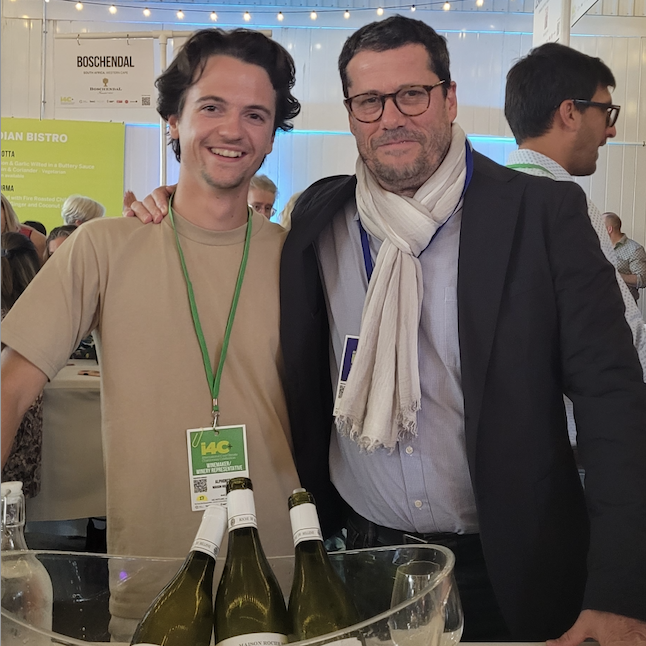
With Alphonse Potel – Domaine de Bellene

Domaine De Bellene Vosne Romanée Premier Cru Les Suchots Bourgogne AOC 2022

In the woods as they say, “souches” or here “Suchots,” a 0.2159 hectare block in Vosne-Romanée that hangs a little longer, likely because the forest asks it to. Fresher, high spirited and savoury Bourgogne comes from the vineyard, picked on September 5th, coming away with more phenolic grip and aromatic volume because of the place. Less defined in 2022 perhaps because of a vintage’s great munificence but as far as plots in this area are concerned there are few that will speak as clearly as Les Suchots. Seamless and focused, unique as they come in an era of technical proficiency and expertise. Drink 2026-2038.  Tasted August 2024
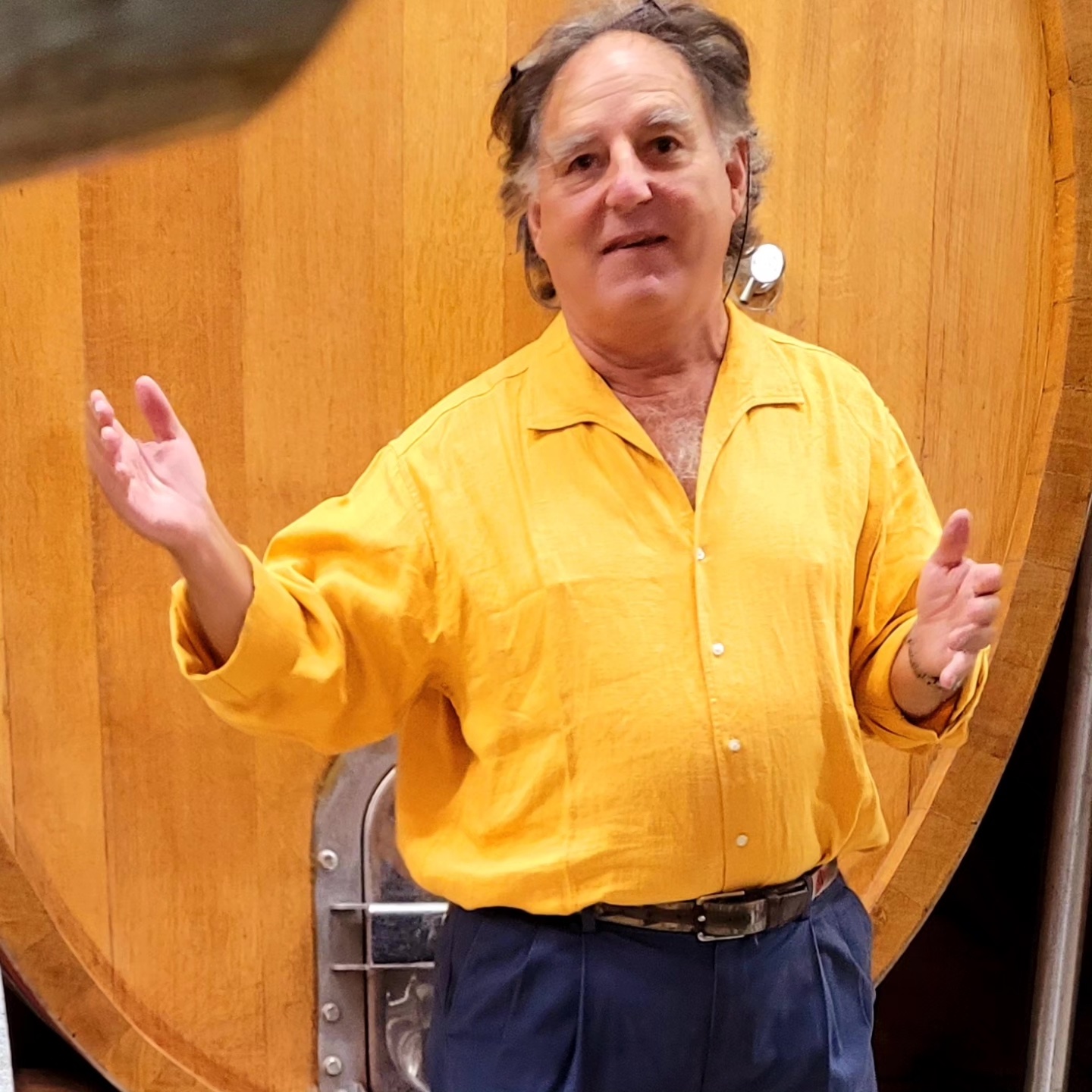
Marc de Grazia – Tenuta delle Terre Nere

Tenuta Delle Terre Nere Etna Rosso DOC Calderara Sottana 2022

What Marc de Grazia considers to be the finest contrada on the north slope and yet there are micro plots within the eight parcels that can only be made into Rosato in humid vintages. This comes from the oldest vines, more than 80 years old and just one look sees a brightness and transparency inciting the senses as they take in a bouquet not having yet nosed in the other Rossi. Calderara Sottana is the most demure, the finest of sound and vision, the one you take in slowest, without haste, to allow unfurling and length to travel as far as it wishes, evocatively so. “It asks delicate questions,” says de Grazia. “Rose petal perfume and tannins that don’t cut off your palate.” Even more is this elastic meander, not aimless but with purpose and our palates follow every step. Like Giuseppe Russo’s (though de Grazia sees little comparison) this provides the exception to so many Etna Rosso rules. Drink 2027-2038.  Tasted September 2024
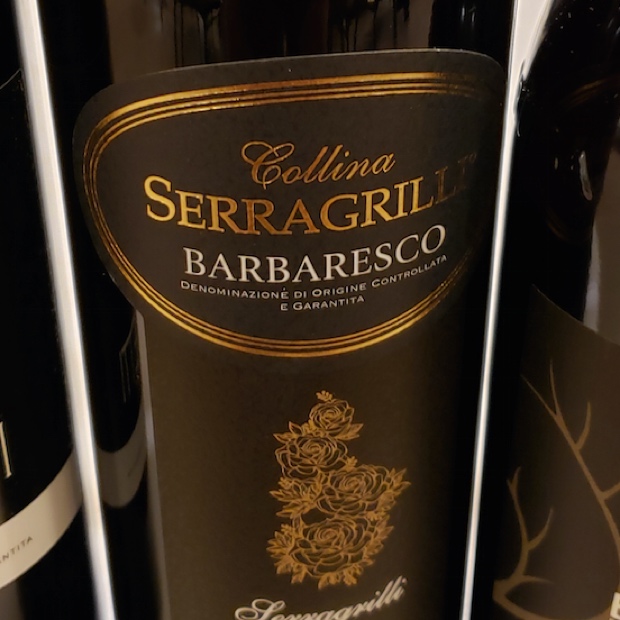
Collina Serragrilli Barbaresco DOCG Sorì Serragrilli 2021, Neive

Lovely aromatic presence, richly defined fruit of purity and expressiveness, fine and open. Exotic spicing and truly floral of a perfume that keeps one from needing to rush into a sip. The palate does not disappoint in fact it carries off and forward with equal ability to hold attention for as long as a participant is willing to hang around. These are tannins as fine as the sweet and supportive acids that precede them. A really impressive Barbaresco, forthright and a test of qualities held in reserve that can be counted upon for a decade and a half more time. Drink 2026-2037.  Tasted blind at Nebbiolo Prima January 2024
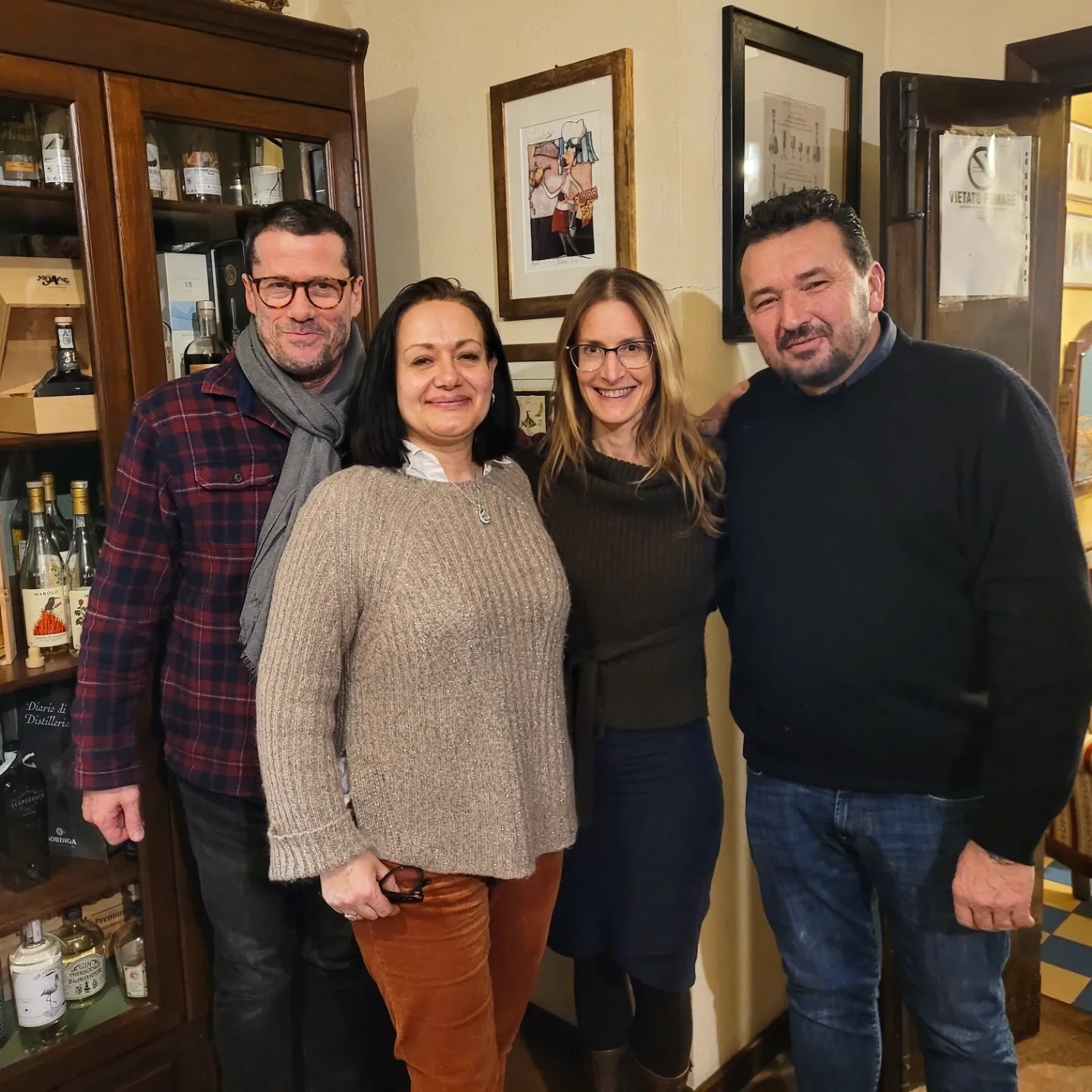
With Michela Morris, Nadia and Walter Fissore – Elvio Cogno

Elvio Cogno Barolo DOCG Ravera Bricco Pernice 2019, Novello

The hill within the hill, Bricco Pernice upon Ravera, isolated, insulated and encapsulated for nebbiolo of an insular and implosive intensity that’s likely unparalleled anywhere else in Novello. Closed and not because of vintage but due to time and really that’s about it A broad shouldered and muscular nebbiolo that must be given as much bottle time as it spent in cask, or double that for even better results. That means check back in 2026 or later to see if any part of the tannins have unfolded, unfurled or stretched out for some exercise. Likely not but then some parts will finally have as the decade unwinds. Also it’s normal in January for Pernice to be tight and a bit closed. Oh, by the way this was made with 100 PERCENT WHOLE BUNCH NEBBIOLO. For Barolo. Single vineyard Barolo from a storied MGA. Walter’s mid-life crisis begins right here and it’s glorious. Drink 2029-2045.  Tasted January 2024

Nebbiolo Prima 2024

Cavallotto Tenuta Bricco Boschis Barolo DOCG Bricco Boschis 2010, Castiglione Falletto

A top echelon cru, a producer that gets it as well as if not better than the rest and an eponymous label out of a relationship that develops longevity without equal. That would be the thrilling isosceles trilogy of Cavallotto Tenuta Bricco Boschis, Bricco Boschis and Barolo. Their 2010 is as youthful as any nebbiolo of this age, striking, rising, invigorating and still working through its operations. A performance piece of varietal for landscape as the most terroir driven Barolo as any of the best in the land can be. A triangle of Castiglione Falletto that speaks in unequivocal terms, fruit, acid and tannin intertwined, five years of this life still laid out ahead, 10 further for curiosity and interest beyond. Truth. Drink 2024-2029.  Tasted January 2024
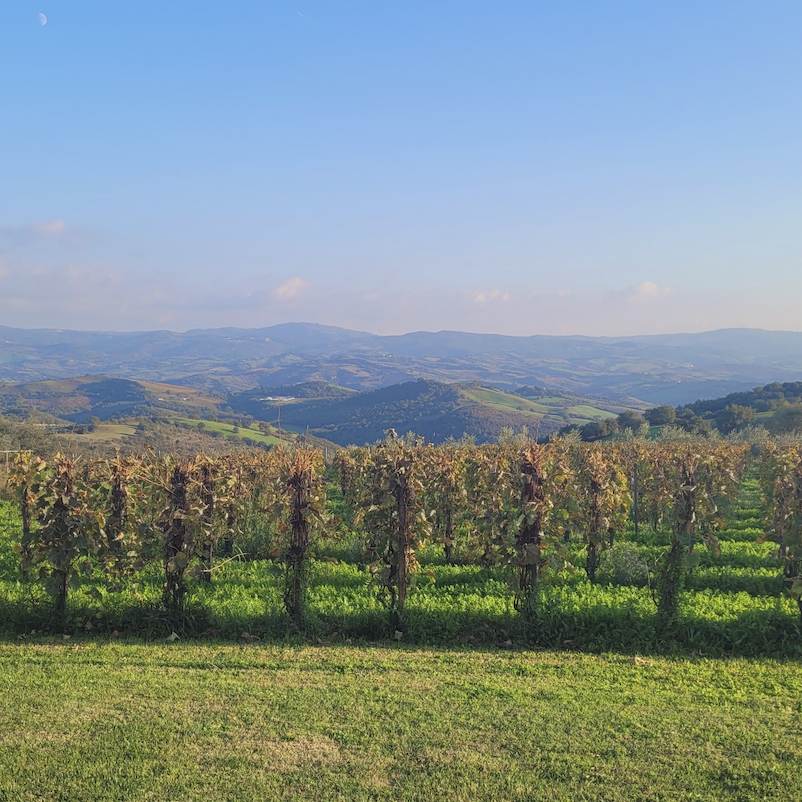
Poggio Lombrone, Tenuta di Montecucco

Collemassari Montecucco Sangiovese Riserva DOCG Poggio Lombrone 2018

I walked this vineyard only recently upon arriving to the Castello di Montecucco at the advent of a blue-lit twilight on the second Sunday in November. The impression was a captivating one, from the site, its undulating slopes casting a strong and forceful presence. Poggio Lombrone was first made in 2007 and ColleMassari’s voice was instrumental in securing the DOCG for Montecucco sangiovese. A special vineyard with older plant material than just about anywhere in Montecucco, upwards of 60 years now and THE place to promote the authenticity, but also to preserve the local savoir-faire that distinguishes Montecucco sangiovese. Longest ager in Riserva togs because of potential, a wine of località Cinigiano fermented for at least 30 days (and 45 in 2016) in open Gamba casks with daily (hand) punchdowns to realize a production of 9,000-10,000 bottles. Ages in only two or three year-old grandi botti but not in really old casks. French of a few years are ideal to seek and attain the desired elegance. The 2018 is a strong version of varietal independence off of the Lombrone hillside, upright and linear yet never found to be awkward, though it is a wine of tannic charge. Fine tannins in fact with good energetic pulse, still needing more integration, its ceiling set ultra high. Drink 2026-2033.  Tasted November 2024
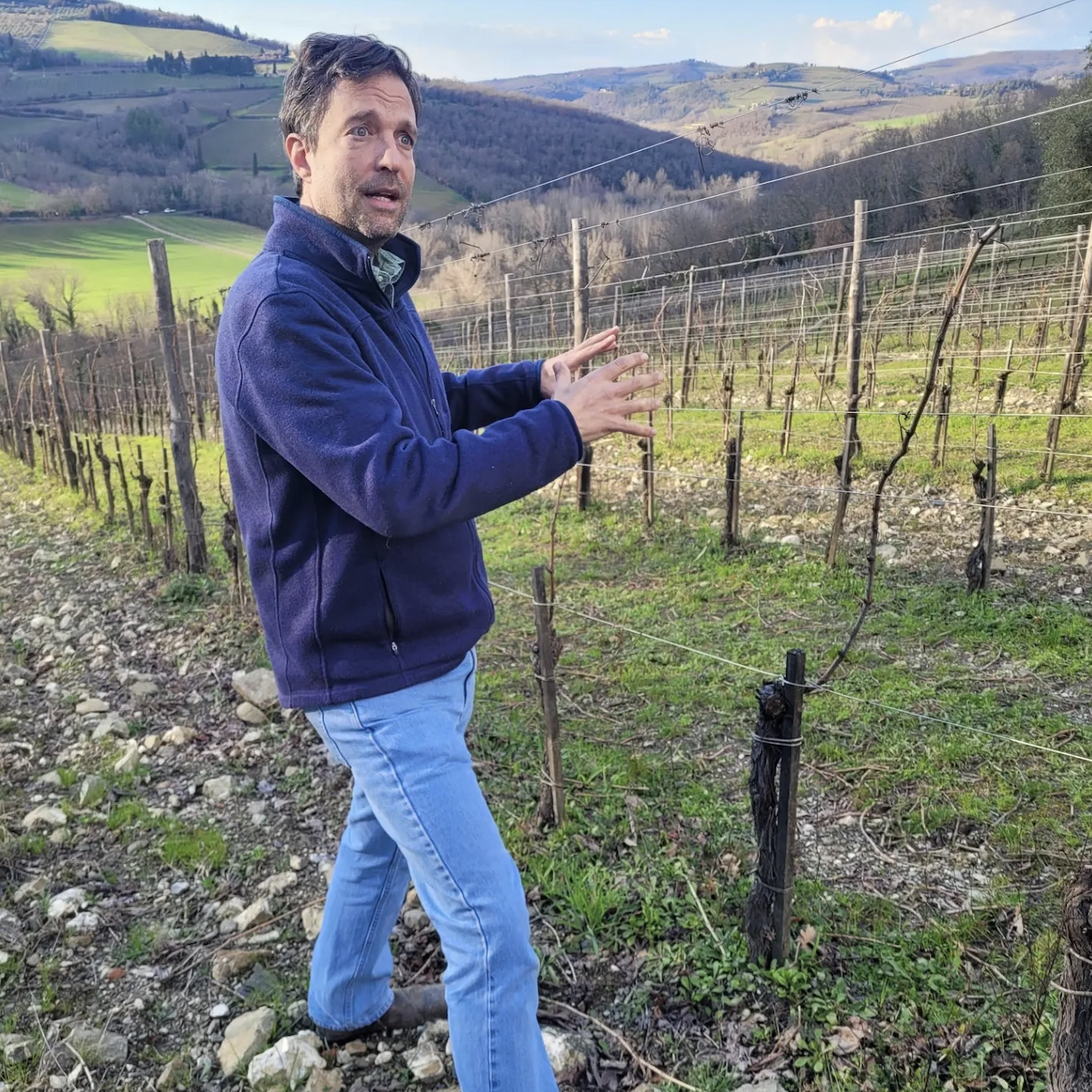
Michael Schmelzer – Monte Bernardi, Panzano

Monte Bernardi Chianti Classico DOCG MB1933 2021, Panzano

From the 90 year-old vigorous vineyard and insists Michael Schmelzer, “it would be insane to make it not the way it was planted.” Ten grapes which add up to a 100 percent field blend that may include sangiovese, colorino rosso, colorino bianco, malvasia nera, canaiolo and ciliegiolo. Once again the respect to agricultural heritage and long maceration conspire for complexities and flavours that most people don’t associate with Chianti Classico. If this is what the old farmers were producing then quality was actually a thing, at least in 1933. MB is Marcello Bartolini, teacher and mentor who just retired in December 2023. Crunchy, tart, red citrus intensity and a char of herbs. Perhaps not quite a unicorn but surely one of the most singular wines made in the entirety of the Chianti Classico territory. If classic is also a thing than this would be it but what it is not is Riserva, or Gran Selezione. Drink 2025-2033.  Tasted February 2024
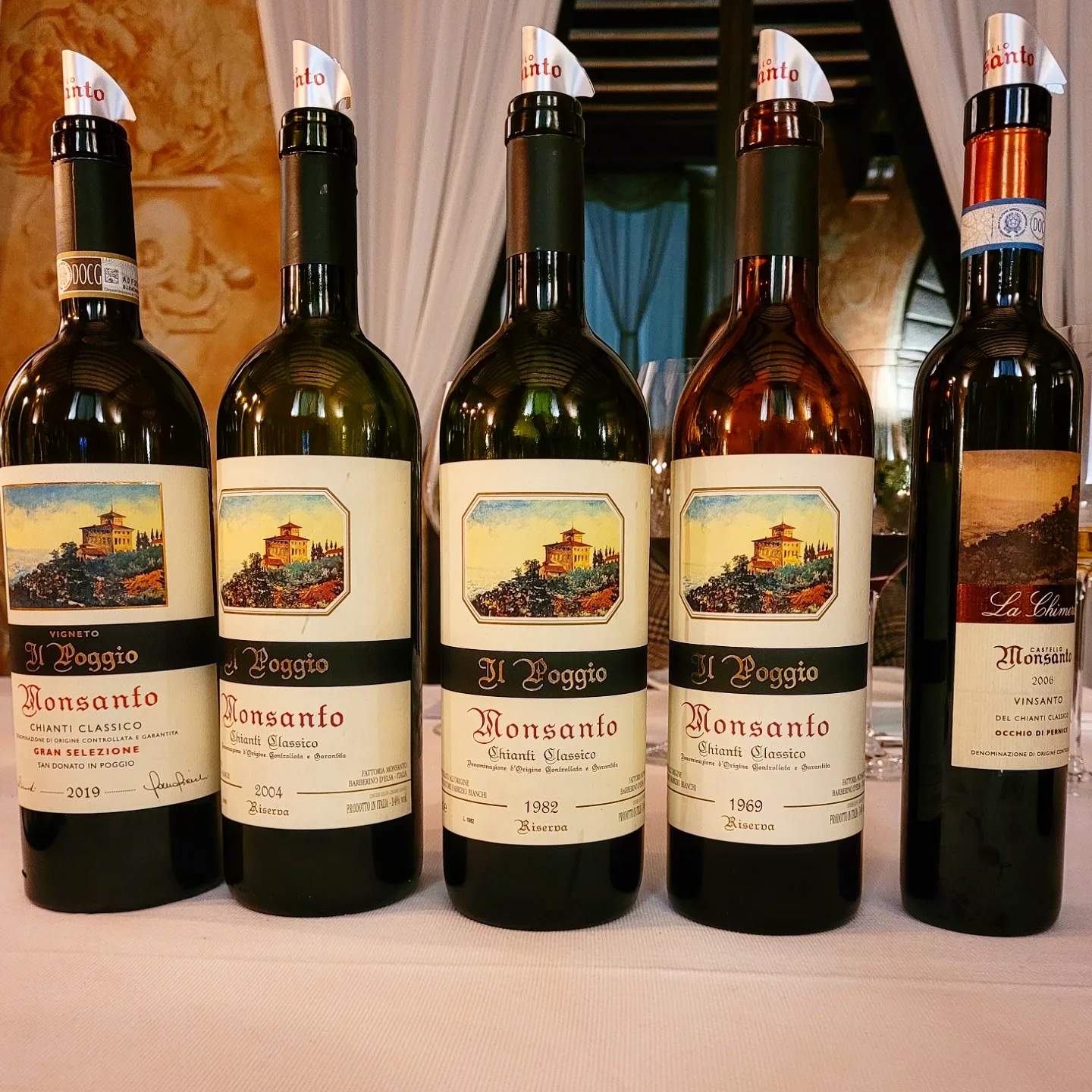
Monsanto, San Donato in Poggio

Castello Di Monsanto Chianti Classico Riserva DOCG 1982

One of the great vintages for Chianti Classico, in all of Tuscany, most of Italy and as everyone knows, also Bordeaux. At this point the 100 percent large Slavonian cask aging is in full swing for wood with which Fabrizio Bianchi began replacing his old chestnut barrels back in the early 1970s. This would have been a bomb when it first went to bottle, so massively structured and immovable in its first 15-20 years. Possibly up until 10 years ago but is now so crunchy and giving so that all is forgiven. About as ideal as a sangiovese can be, resolved, cool and impossibly fresh. Laura feels a connection looking forward to 2015. This remains to be seen. Come back after 10 minutes and the clove can’t be missed. Drink 2024-2029.  Tasted February 2024
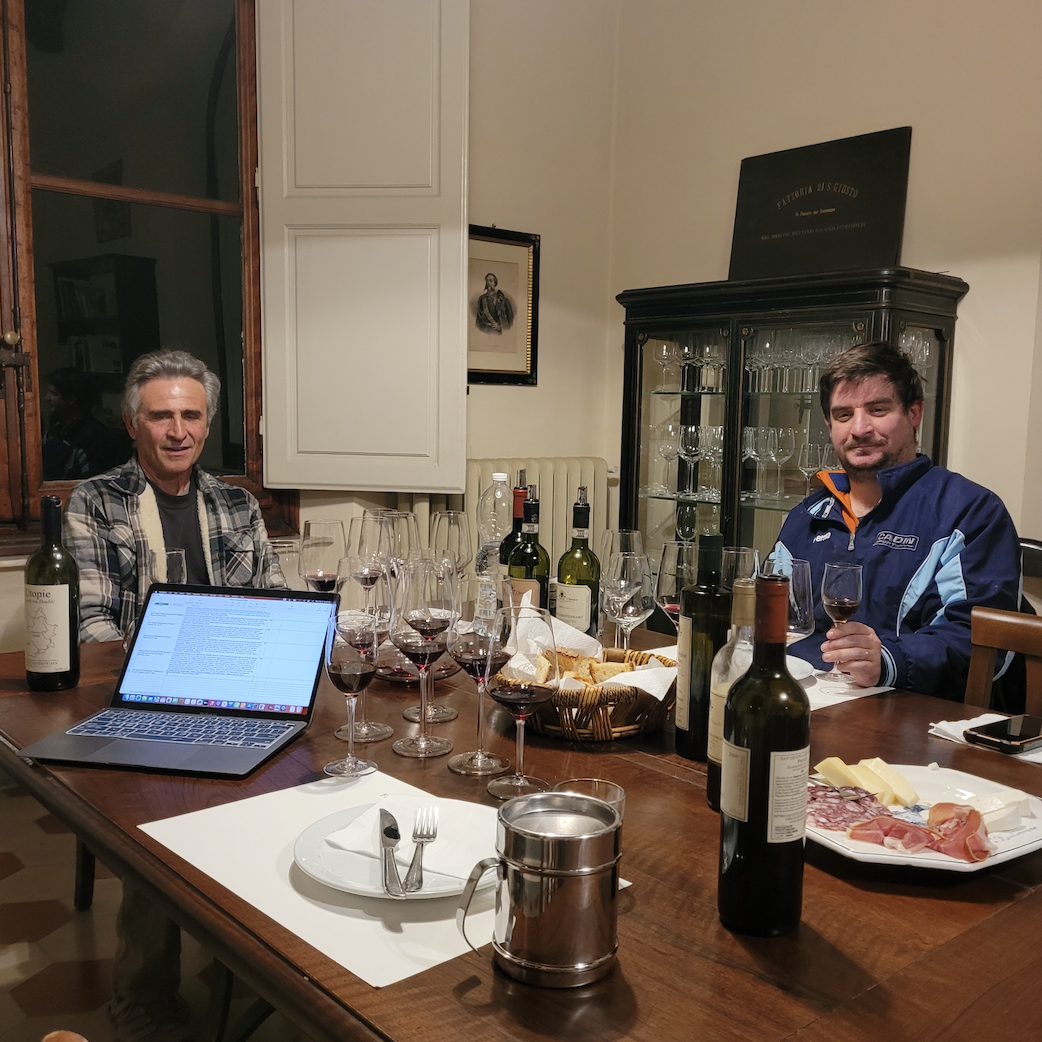
Luca Martini di Cigala and nephew Federico

Fattoria San Giusto A Rentennano Percarlo 2019, Toscana IGT

The 100 percent sangiovese that lives for itself and yet Luca Martini always feels that the wine shows the truest character of the place. Percarlo holds a higher percentage of grapes grown on Tufo soil (non volcanic sediment left behind by the water that was here three to four million years ago), a soil of sandy quality and pebbles. Results in a salty quality, a mineral quotient, a stream of airy brightness within a very structured and powerful sangiovese. Great saltiness and also fruit, a minty or mirto sensation that creates a cool, salt licked feeling. There is no other wine like this. Amazing freshness incarnate. Drink 2024-2034.  Tasted February 2024

Montevertine Le Pergole Torte 2021, Toscana IGT

As expected Le Pergole Torte expresses more volume and aromatic concentration than Montervertine mainly because its source are the oldest vines, namely the 1968 and 1972 original blocks. Twenty to 25 days of maceration with pump-overs, followed by a racking off and then a return to the concrete vats for another few months for malolactic fermentation. A year in barriques (on average 15-20 percent new) and another year in Garbellotto Slavonian cask, maximum 18 hL size. Martino Manetti is reminded of 2007, a vintage that acted closed early with the requiem of a minimum four to five years to be released from its tannic chains. And yet these days Manetti’s wines open sooner – it’s just a fact of change, maturity, growing and mapping out better sangiovese. The floral meets Macigno mineral expressiveness is present from the start yet without the intensity of 2017, nor is 2021 showy with the power of 2018. This 2021 resides right there in the balanced middle wheelhouse and should rightfully begin to give generously of itself starting in 2026. Some sangiovese are just in another league. Drink 2026-2040.  Tasted May 2024
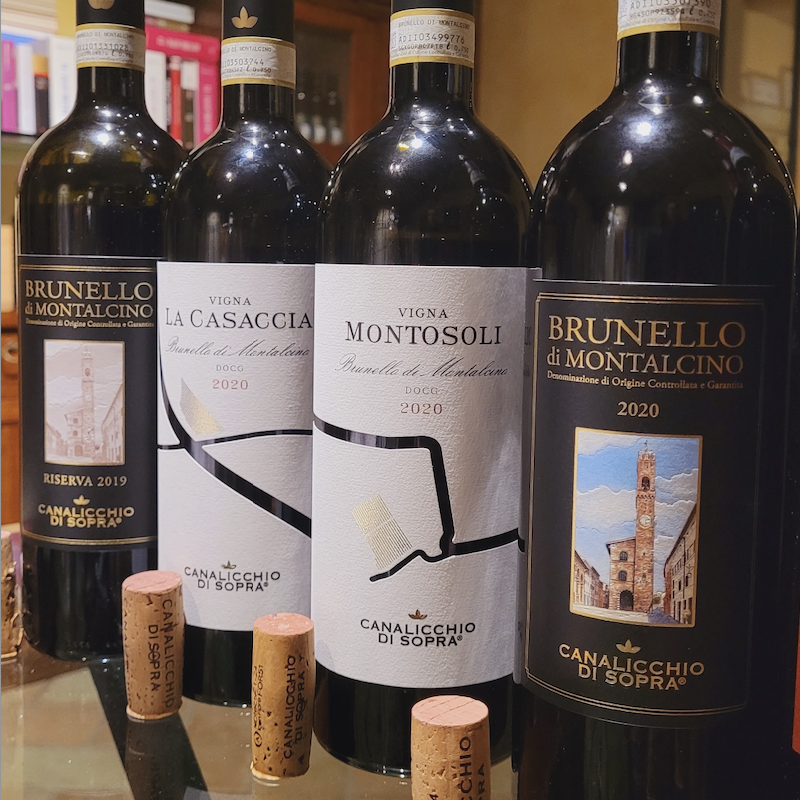
Canalicchio Di Sopra Brunello Di Montalcino DOCG Vigna Montosoli 2020

Montosoli the northerly Montalcino mound, the hill of freshness, the knoll where sangiovese gains grip, savour and elegance, where Canalicchio di Sopra’s Vigna designate Brunello from six hectares delivers approximately five into this wine. The precision and fluidity of this ’20 is just about as fine and graceful as the Ripaccioli have ever produced. Literally the juice or blood of Montosoli’s Galestro, a clay-schist flaking at the surface bleeding back down into the earth, acquired by the roots, vacuumed back up into the vines and gifted to the bunches. Sapidity is similar to 2018 and that year was cold(er) which explains how soil is such the driver, especially for Montosoli. This tastes as you might expect, concentrated, texturally full and without pause. Incredible Brunello. Poised, seemingly ready but not, looking ahead two decades, maybe more. With thanks to perfectly restrained cellar work, timing and decision making. In this moment, at least in terms of clarity, 2020 is a Montosoli vintage. Drink 2026-2036.  Tasted November 2024
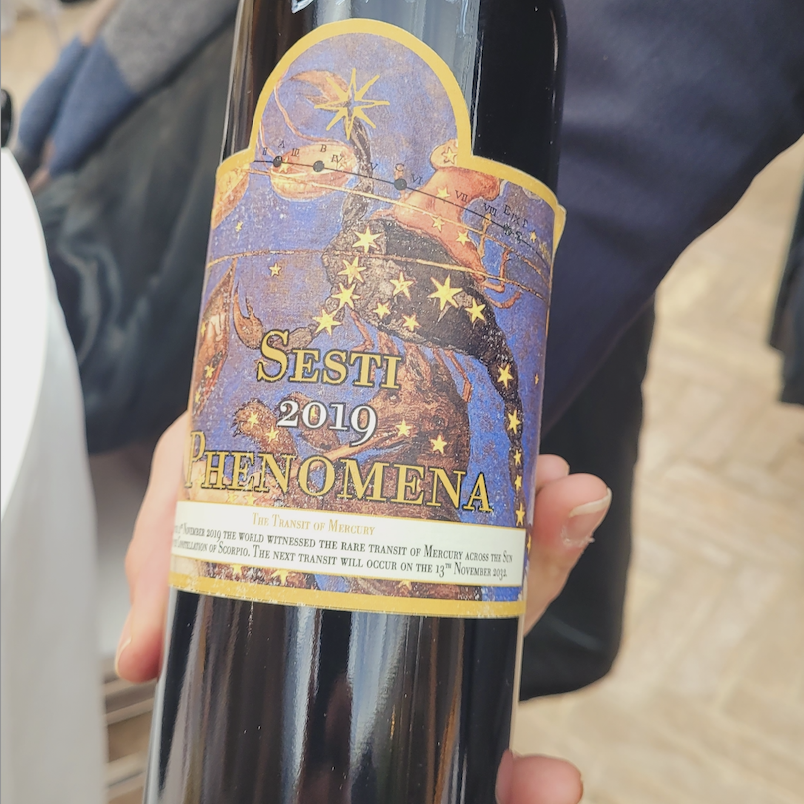
Sesti Brunello Di Montalcino Riserva DOCG Phenomena 2019

There are normal, standard Brunello di Montalcino Riserva, there are proper and representative examples, also exceptional versions and then there are the ones of ephemeral beauty. Fleeting in part because of their natural perfumes, scents that come from the fruiting bodies alone, mostly from the skins and yet like people there are some whose scents you never forget. Such is the case with Phenomena, a silent and measured creature of sangiovese but one that comes back to your thoughts and senses long after you are no longer in contact with the wine. Phenomena is also a Brunello of feeling, which means something ethereal, tactile and conclusive. Not seductive mind you, but suggestive and this 2019 will carry on, for some impossibly calculated infinite amount of time, as close to forever as could justifiably be imagined. Drink 2026-2038.  Tasted November 2024

With Giacomo Neri

Casanova Di Neri Brunello Di Montalcino DOCG Cerretalto 2019

The Cerretalto canyon is this singular Brunello’s origin, the place defined by Giacomo Neri as a “plintite,” of quartz, iron and magnesium elements residing next to and bleeding into the four hectare vineyard, which is incidentally a cooler località for Montalcino and very special place. Rare in the world, of an elemental-geological symbiosis found in parts of Australia, Brazil, China and here, in Montalcino. “It’s another planet” insists Giacomo Neri. You will smell blood and flint (a.k.a. gunpowder) because of the mineral personality. This is Brunello di Montalcino from sangiovese something altogether incomparable. A sangiovese wearing the terroir of a Tuscan trough on its sleeve, having spent two and a half years in tonneaux (more or less 20 percent new) and the same amount of time in bottle ahead of its much anticipated release. Yes the aromatics are concerned with trace metals and ingredients of the “canalone” of Torrenieri, but do not sleep on the purity and modernity of red to black fruit, or at least the perception brought forth because of the minerals involved. Sweetness of acidity is classic Casanova di Neri for 2020 but in Cerretalto they are near perfect and the tannins move from those noted out of Tenuta Nuova multiplied by the Giovanni Nero fineness to now enter into the arena of higher love. For the first time this estate’s Brunello di Montalcino should be given an absurd amount of time. Observing it change in the glass over 30 minutes explains much of what is needed to be known. Drink 2028-2043.  Tasted November 2024

Contrada Chiesa, Emidio Pepe

Emidio Pepe Montepulciano d’Abruzzo DOCG 2021, Colline Teramane, Torano Nuova

Nothing else noses like this montepulciano and what is also perceived is the extreme youth of such an example. Gifts with shadowy hints and generous ideas but the sensations yet to come are manyfold, if quite possibly infinite. Fruit source just feels tops and selection so much more stringent than just about any in the appellation. Tannins are about as tight as any in all of Abruzzo and the interplay between fruit and structure is both playful but also gripped by an intensity of tension. A few sips gathers the swarthiness of the vintage but time will elasticize and disperse the parts. The potential here is great and if this is not looked upon as a top vintage today there will be times over the next 25 years where that opinion is challenged. Drink 2027-2039.  Tasted March 2024
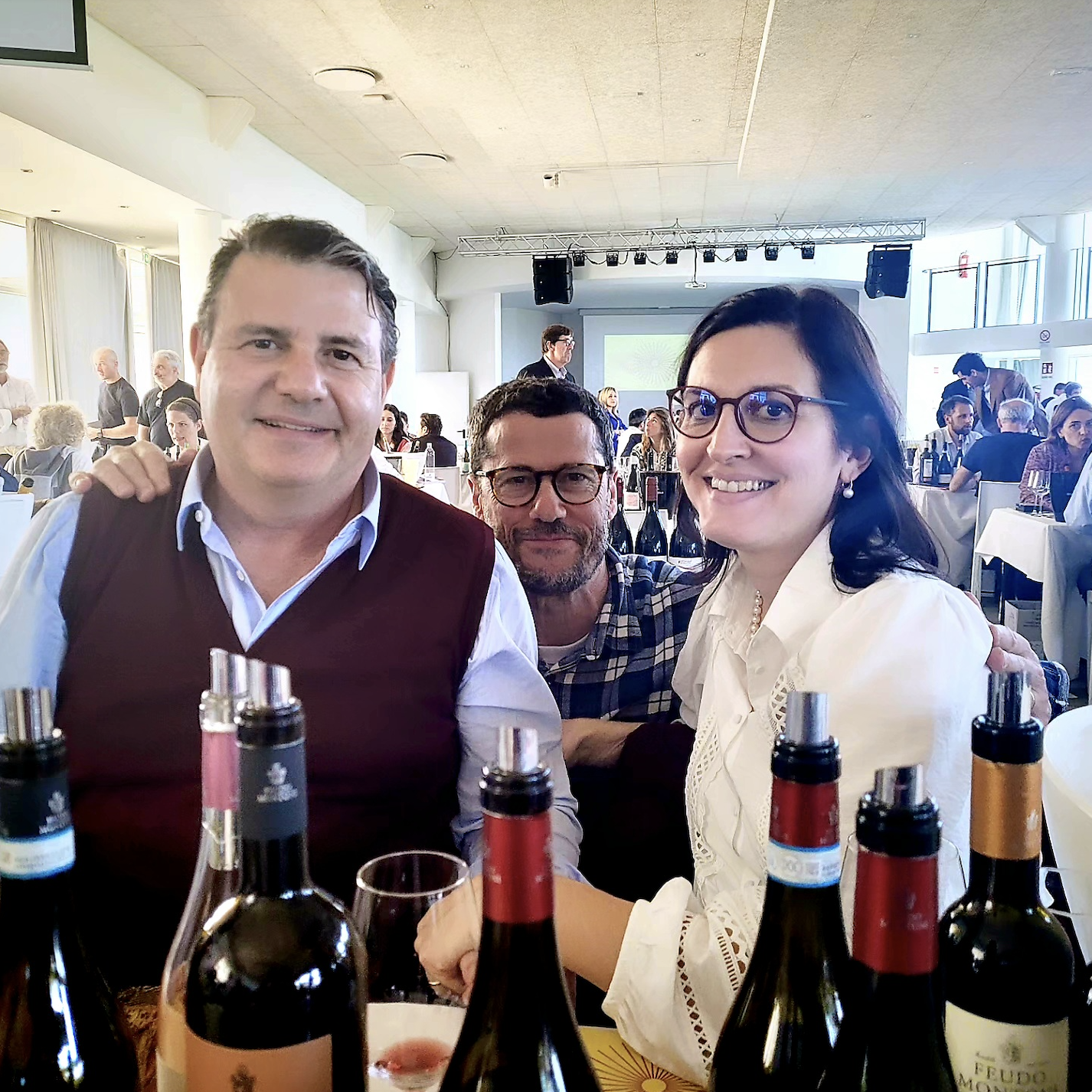
Feudo Montoni Sandwich – Between Fabio Sireci and Melissa Muller

Feudo Montoni Nero d’Avola Vrucara 2020, Sicilia DOC

Increasingly the use of sun-dried stems are added back in after some time, like sweet wood notes that alter Vrucara’s physiology for the best. The number is 20-25 percent in 2020. If there are weak vintages of Feudo Montoni’s Vrucara they are yet to be revealed and this 2020 resides near the top of the island’s nero d’Avola chain. Just walk the vineyard, in fact just hear the history and explanations from Fabio Sireci’s mouth and you will understand. Richness meets structure for balance at the vanishing point as if we sit at the bottom of the hill looking upwards from the vineyard, up to the Baglio and then the sky. The fruit is special from 2020, already showing the first subtle hints of maturity and the tannins are perhaps the sweetest ever designed. When Vrucara hits the five year mark it will entrench itself as one of Sicily’s finest drinking red wines for five more. It’s abilities transcend grape and island to last for five more after that before starting its slow five to ten year declension. Is there better value in top grade nero d’Avola from Sicilia? Drink 2025-2035.  Tasted May 2024
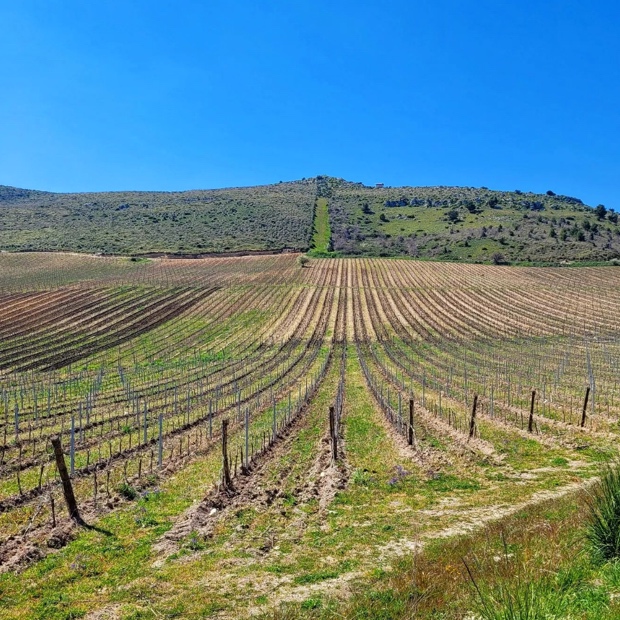
Vineyards in Ulmo

Planeta Cabernet Franc Didacus 2020, Sicilia Menfi DOC

Should there be a finer and more appropriate place to plant and raise cabernet franc on the entirety of Sicily that information should immediately be made public. Planeta’s Ulmo vineyard brings the grape to singular light, here 25 years after its introduction and it has become abundantly clear how it resides at the pinnacle and signature for reds out of Menfi. The 2020 is just now settling in and acting perfectly comfortable in its skin, fruit still swelling and always with the potential to burst free at any time. These are near perfect acids, sweet and sumptuous, allowing for movement and at this ideal stage, also development. There are hints at secondary character in the chiaroscuro shadows slow to reveal themselves. Sumac and pomegranate, a lightly browning and caramelizing eggplant before finishing with a wood encouraged dusting, as if by cocoa and clove. Drink 2024-2032.  Tasted September 2024
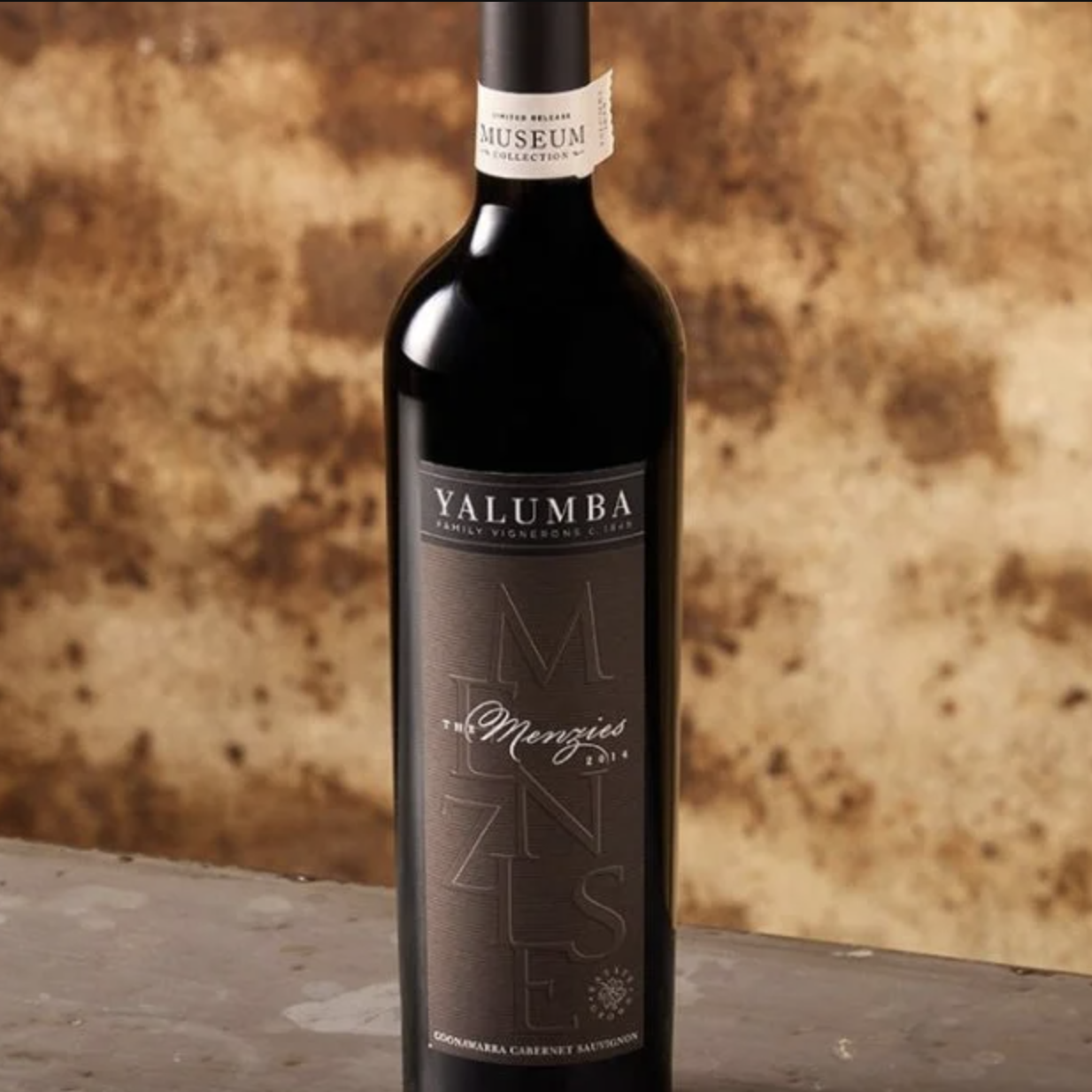
(c) web-assets-prod.yalumba.com

Yalumba The Menzies Cabernet Sauvignon 2017, Coonawarra, South Australia

From vines planted in 1994 and 1996 right there where it matters within Coonawarra’s terra rossa strip. The Menzies, as in the name of the estate where the Hill-Smith family saw the future back in 1992, there on a flat plain, approximately 70 km from the coast. The cooling Bonney upwelling is an influence and the red soil is, well everything. That said 2017 was a wet and cool season by Coonawarra standards and harvest required many passes over a 10-day period in April. Climate being what climate has become translates as a special cabernet sauvignon because the cool factor, for gelid fruit and sweet savour, not to mention more complex notions of herbs, spices and seasoning than you could seemingly fit into one bottle of cabernet sauvignon. Complexity be glory, as they say and the rest will be history. Drink 2024-2034.  Tasted October 2024

Good to go!

godello

Instagram

Facebook

Always tasting Italian wines, doin’ allright

Toscana

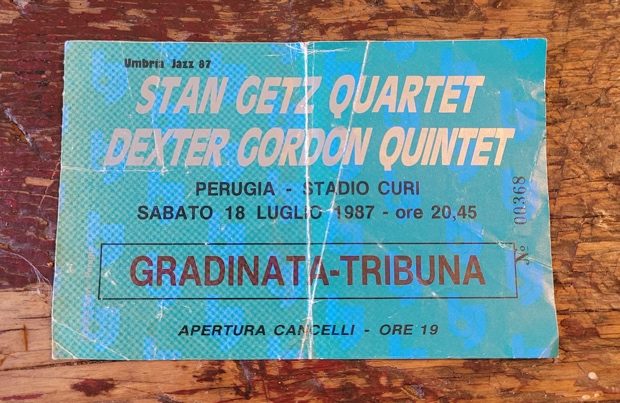
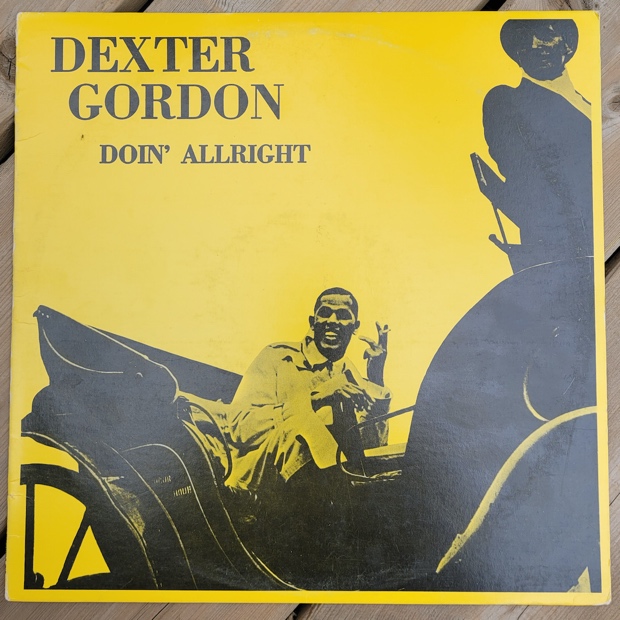
Back in the summer of 1987 I attended the Umbria Jazz Festival in Perugia. This was considered “the benchmark year for Umbria Jazz in terms of the Festival’s appeal, its quality, its ability to combine popularity with exclusivity, with mass concerts in the football stadium and the fantastic evenings inside St. Francis’ church.” The memories of that July 16th to 18th weekend are strong, persistently vivid and what happened there was clearly transformational in my life. Sting had played the weekend previous and though my crew could not stay long enough to see Miles Davis on Sunday the 18th still there were grand moments indelibly stamped upon our lives. Walking the Piazza IV Novembre up to Nicola and Giovanni Pisano’s Fontana Maggiore, drinking in the cafés, Sly and Robbie sitting at the next table. But the highlight happened at the Stadio Renato Curi where Dexter Gordon blew his horn and our minds. The saxophonist was fresh off of a revivalist’s record and hit movie. He was Doin’ Allright, as were we.


Jazz and wine. Two inextricably linked subjects and emotions in the summer of 1987. Now 35 years later I’m listening to Gordon’s seminal record and tasting wine. Time spent Far Niente. Tasting Italian wines from a wide ranging group of producers while paraphrasing from thoughts about the music of the OG big man, with no disrespect intended to Clarence Clemons. Dexter’s life and this group of wines are representative of that kind of size. Their rhythm section plays for the grape, seeming to sense what it wants, following the varietal lead and never falling out of balance. Full toned manner of wines, loping in medium tempo, solos unhurried, logical, warming and full of Italian melodies.

Umbria, July 1987

There are white wines that play beautifully and pensively while others pick up the mood by spinning out solos, staying texturally relaxed and thoughtful, ending with some perfumed chords. There are short bits and interludes but ultimately the way these wines handle their ballads is an indication of their length and depth. They know what it’s all about. The reds are at times wines of catchy and contrasting themes but they truly know how to build a solo. In today’s warming climate they climb up in temperature, chorus after chorus, until finally they satisfy at their apex. There are moments when the reds seem to be skipping and marching, alternating between funky riffs, leaping rhythmic figures and brightly lit burning flames of fruit and acidities. They build more slowly to climax while expanding in tones and for longer periods of time. There are chordal explorations in reds, blacks and of course blues. What connects them all is underlying substance in waves and weaves throughout each ensemble. Tasted consecutively or together theses wines all prove to be mutually significant. Thank you to Ira Gitler for the inspirational notes, to Stefania Tacconi and the prodcuers for sharing their wines.

Inama Vin Soave Classico DOC 2020, Veneto

Anything but entry-level from the grape garganega once known as Graecanicum grown in the basaltic lava, volcanic tuffs and orizzonti rossi. About as correct and defining as it gets for Soave, yellow and green floral, fruit recall more of the same and then the volcanic rock alterations that give the mineral-salty feel. While there might be a wish for a little bit more complexity and grape spirit there is some gelid to viscous texture in this 2020. In any case Inama’s is well made, educational and right on the varietal money. Drink 2022-2024.  Tasted March 2022

Abrigo Giovanni Favorita DOC 2020, Piedmont

As for white wines from Italy’s northern climes there are those that speak to many and then there is the “favorita” of others, the varietal Piedmontese white for the dreamers and the romantics. This from Abrigo out of Diano d’Alba avoids the bitters, pith and boozy thiol moments to instead capture all the white flowers and more. The scents are fruity over metallic and clean instead of waxy. There is precision and most importantly a toothsome grace over the palate that brings you back for more and more. A picnic in the hills, a chilled glass after the day’s movement and the scent of dusk. That is favorita when it’s right. Drink 2022-2024.  Tasted March 2022

Terra Costantino Etna Bianco DOC Deaetna 2019, Sicily

Terra Costantino’s is from Contrada Blandano in the Comune Viagrande, on soils sabbie di matrice vulcanica, a blend of carricante and catarratto, three to one, at 500m, part bush vine and part spurred cordon. Were the flinty smoulder the only beautiful thing going for this Etna Bianco it might almost be enough but the gelid and sweetly ripened fruit takes every moment to a higher caste and level. The thought of these wines being honeyed is not all that common and yet he we are, aromatically speaking, lemon meringue and curd, angel food cake, with the barrel impart knowable in vanilla and light caramel terms. A metallic feel as well, pure platinum gold, texture and some age already put behind. Not so typical but curious and highly enjoyable nonetheless. A drink now chardonnay or chenin blanc alternative that will begin to oxidize in a couple of years time. Drink 2022-2024.  Tasted May 2022

Poggio Argentiera Morellino Di Scansano DOCG Bellamarsilia 2020, Tuscany

High-toned in 2020 with a marked level of volatile acidity and good if not maximum ripeness from sangiovese grown either in a (relatively) cooler year near the (Maremma) Tuscan coast. It would seem the winemaker is also looking for restraint and maintaining positive acidity because at this low level (13.5 per cent) of alcohol the resinous and stemmy nature of sangiovese is duly noted, if also accentuated. Texture is a bit chalky, almost grainy and the tannins throw a touch of green. Drink 2022-2023.  Tasted May 2022

Usiglian Del Vescovo Il Barbiglione 2015, Terre Di Pisa DOC, Tuscany

From estate grapes in the Pisa DOC and from a winery also producing wines both coastal and in Chianti appellations. Centred around syrah with small percentages of cabernet grown in greyish, dry, shallow, sandy soil with some clay, lime and fossils. A bright, currants and other red fruit syrah with notable tang and wood resins. A touch pectin sappy while satisfying and complete. Held back to tame its wild side and drink upon purchase. Drink 2022-2024.  Tasted June 2022

La Regola 2018, Toscana Rosso IGT

A place of Etruscan origin just five kms from the Tyrrhenian Sea at Riparbella in the Cecina Valley. The vineyard lays within the Montescudaio DOC at 150-200m with soils described as Mediterranean with an abundance of stones. La Regola’s (the rule) is varietal cabernet franc, abundant, heady and as compared to the blended reds, so unfettered and uncluttered. The varietal purity is expressly coastal, of saltiness, algae, seaweed, tar and fruit so much more than a plenty. This is truly a stylistic and a place that makes wines just like this here screaming with clarity and truth. There seems to be little doubt that cabernet franc fits, unlike sangiovese, syrah or cabernet sauvignon. Franc is the signature red and 2018 announces its success. The structure, unimpeded drive and length confirm the pronouncement. Drink 2024-2029.  Tasted June 2022

Boscarelli Vino Nobile De Montepulciano DOCG 2019, Tuscany

Boscarelli is a name to conjure with, a producer from Montepulciano as direct and exciting as a communicator of sangiovese emotion as any, consistently declarative in attack. Case in point this 2019 though with the added advantage of a most generous and unselfish vintage. Fruit comes from estate vineyards in the parish or pieve of Cervognano, one of 12 newly minted UGAs, a.k.a. unità geografiche aggiuntive. These additional mentions for the overall appellation give us the consumer a more pinpointed sense of place and in Boscarelli’s world the vines were planted in the late 1990s. Depth burrows in an endless seeking of mineral wealth while highlights rise unencumbered, defying gravity and setting this local sangiovese free. When sangiovese does both it’s a bit of a revelation and in Montepulciano the truth is not always easy to come by. The wines can make you work for your pleasure and this 2019 gifts it freely. Drink now and for the next 10 years. Drink 2022-2028.  Tasted May 2022

Il Bocale Montefalco Rosso DOC 2018, Umbria

The Umbrian work of i famiglia Valentini based around sangiovese accented by the local sagrantino, then merlot and colorino. Unequivocally balanced if not quite the increasingly generous vintage that will follow in 2019. The succulence and juiciness of the Montefalco Rosso appellation is captured with precise and succinct advantage and done so without any due stress or adversity. The fruit spreads with ripples into fine acidity and supple tannins like a large rock dropped into a pool of water. The rock disappears but the fluidity and gentle set of wakes linger on, ever so slowly decreasing their size and intensity. Bocale’s ’18 is an effortless Rosso, aromatic, flavourful and elastic. This is just what a top producer knows how to do. Drink 2022-2025.  Tasted June 2022

Il Bocale Montefalco Sagrantino DOCG 2016, Umbria

From the Valentini family dating back to 2002 and a varietal sagrantino of the highest selection. “Bocale is the dialect word that indicates the two litre mug of wine or oil, but, above all, the name with which this family from Montefalco has always been identified.” From the most democratic of Montefalco vintages, long, studious and just, indeed a wine giusto e completo, time having settled the once formidable tannin and connecting the early unconnected parts. A wholly unique profile, indicative of tar, dark chocolate and espresso yet subtly so, with an allowance of many complexities to join the parade. Quite special in so many regards. Drink 2022-2026.  Tasted April 2022

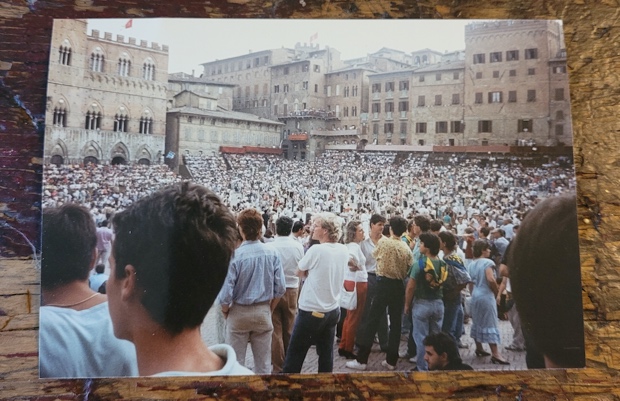
Il Palio, Siena, July 1987

Riecine Chianti Classico DOCG 2019, Tuscany

Grande Gaiole compass, cinch and girth in naturally swarthy sangiovese from Riecine in 2019, crunchy and tart. Inching up towards the volatile but such is the word in pace for the vintage. The fruit can handle the stark reality and veritable truth, equipped with grip and ready for the inevitable circumstance. Maybe wait a year for further resolution. Drink 2023-2027.  Tasted February 2022

Villa Di Capezzana Carmignano DOCG 2017, Tuscany

Consistently presents with an evolved aromatic tendency as it breathes maturity into every phrase it plays. The jazzy mix of violet, spice cupboard and freshly baked earthenware speaks in open and knowable truth for a wine so upwardly representative of a DOCG with roots dating back to 1716. That is when Cosimo III de’ Medici, Grand Duke of Tuscany granted exclusive status to Carmignano at the same time he did so for the Classico territory of Chianti. Was not the easiest vintage to deal with and yet this is one of the Tuscan stars what with the piquant yet elastic spice condition rolling off of the palate with sage, fresh tobacco, finnocchi and tartufo. Deals with 14.5 per cent alcohol without adversity while modelling symbiosis between sangiovese and cabernet sauvignon. Hard to do much better with the aridity and warmth, breathe life and plan for five-plus more years of pleasure. Drink 2022-2026.  Tasted June 2022

Azienda Agricola Reassi Sparviere 2018, Colli Euganei Cabernet DOC, Veneto

Reassi’s two-thirds cabernet sauvignon and one-third cabernet franc comes from the Padova area in the Veneto, famously home to some of Giotto’s most profound and important 13th/14th century frescoes housed in the Cappella degli Scrovegni. The estate’s 1997 planted wines are located in the zone of Carbonara di Rovolon, harvested near the end of September and only 3,500 bottles are produced. This is a cheeky cabernet at the lead for the Colli Euganei DOC, full of sweet tar and tobacco, petrol in cars, wood resins, fruit from pods that grown on trees and really quite bright in disposition. How can you not adore the vitality and low alcohol proposition (12.5 per cent) plus this genteel pectin and glycerol feel. “Oh, it’s magic, Uh oh, it’s magic. Just a little magic, you know it’s true.” Drink 2022-2025.  Tasted May 2022

Abrigo Giovanni Barbera d’Alba DOC Marminela 2019, Piedmont

At the DOC Barbera level it would be hard to find another example so open, forthright, up front, bright, getable and delicious than this Marminela by Abrigo. Classic interpretation indeed yet without rustic strings tethering it to the past, instead expressive of a freedom to explore. Here barbera throws aside traditions in a spirit of experimentation. This is a blend of grapes from two vineyards in the municipalities of Grinzane Cavour and Diano d’Alba and aging takes place for nine months in concrete vats. Freshness is dutifully captured, preserved and the barbera perseveres. Will drink this way for two, maybe even three full years ahead. Drink 2022-2025.  Tasted June 2022

Rocche dei Frisu is Abrigo’s top end, purest expression of barbera, from vineyards in Diano d’Alba and also nearby. The sites range in elevation between 230-360m, on clay-based soils mixed with sand and limestone, depending on the block. The name could mean “cones of frieze” in the literal sense but probably a name given to a hill of natural architecture that when looked at from afar there would be some sort of illusory effect. As in art, whereby a trompe l’oeuil or trick of the eye is created by a broad horizontal band of sculpted or painted decoration. In any case the barbera in this bottle does the exact opposite with its openly blatant and striking set of ripe fruit, varietal acidity and full throttle potency. Not shy to be sure, nor heavy neither but there is power contained within this bottle. Even after nearly four years the Frisu does not relent and as a member of the Alba Superiore fraternity the representation is bang on. Plenty of stuffing will see this through to the end of this decade. Drink 2022-2028.  Tasted May 2022

Abrigo Giovanni Nebbiolo d’Alba DOC 2019, Piedmont

Marked valuation in animal musk through the masculine scent of Abrigo’s nebbiolo from Diano d’Alba, a parochial example equally rich in classic DOC notes. Only the nebbiolo from Alba’s territory smells and tastes like this, accentuated by wood with spice infiltration inside and out. The animal magnetism is captivating, as much as the barrel accents are condiments to the fruit and earth that fill up this nebbiolo. Quite tight for 2019, needing some time, acids equally taut and being open three days helped immensely. Be patient with this Alba, it will reward those who are. Drink 2024-2028.  Tasted June 2022

Abrigo Giovanni Barolo DOCG Ravera 2017, Piedmont

Diano d’Alba producer of a Barolo in the municipality/cru/MGA of Novello. Meets the specs of Tortonian soil, laminated Sant’Agata fossil marl, in other words calcareous clay, deeply entrenched, at 400m, vine age ranging 20 to 35 years. Fifty per cent is treated to long skin maceration i.e. cappello sommerso and despite the aridity and heat of 2017 there is freshness captured in Abrigo’s Ravera. Luminous and immediately spicy, a piquancy of pure nebbiolo spiked by time, vintage and lastly barrel. Amazingly persistent Barolo, full, substantial and in charge. Must give this three more years to integrate and allow us to grow as tasters, eventually to be ready and willing to enjoy this wine. Drink 2025-2032.  Tasted June 2022

Tenuta Di Pietrafusa Villa Matilde Avallone Fusonero 2015, Taurasi DOCG, Campania

Varietal aglianico from the Taurasi DOCG and a producer that also fashions top quality wines at IGT Campania prices coming in at under $20 CDN. This top drop comes from the production zone of Montemarano e Paternopoli off of vines planted in 1968 and 1985. The first commercial vintage was 2004 and so here in the 12th iteration is a most generous vintage from which the best of all worlds is accessed. The world of aglianico is reached earlier than that which hesitantly emerges out of some hard, at times sufferable and surely tannic vintages. Here the fruit is nearly up front, artistically open and and even playing with musical swagger. There is room for all the aglianico because they provide the opportunity to enjoy the standards, originals and forward thinking examples. Fusonero is a delightful combination of all three and for that we are grateful. Drink 2023-2029.  Tasted June 2022

Good to go!

godello

Tuscany

Twitter: @mgodello

Instagram: mgodello

WineAlign

Twenty white and sparkling wines of the Veneto

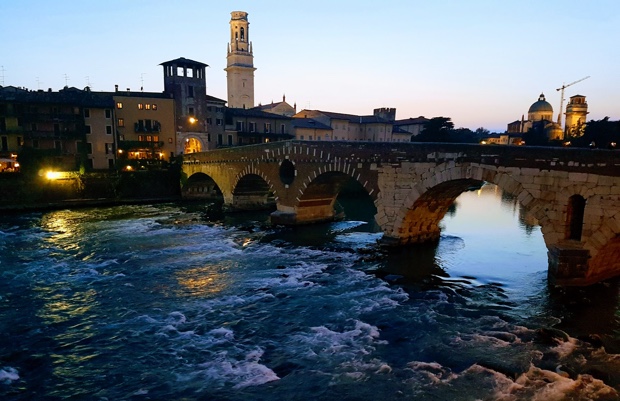
Ponte Pietra, Verona

My trip to Verona and its surrounding hills in September of 2016 was clearly destined to reveal the charms and intricacies of Valpolicella, Ripasso and Amarone. That much I made clear in a report published last week and though it included 64 tasting notes, I’ve yet to make public those on Amarone, in part because a July Masterclass in Barolo at Collisioni will need to join the party. Sooner rather than later all of those reviews are sure to follow.

Related – Valpolicella, Ripasso Valpolicella

I had been travelling with a Canadian contingent tighter than Spoon the Band and a 2014 Chablis Grand Cru. We were a group on the same page, collectively in knowledge and agreement of where we stood on the 100-plus wines we tasted and in how we viewed the 18 producers who poured them. Six of those Valpolicella wineries also presented some white and sparkling wines because they hold estate plots, farm or purchase grapes from Venezia, Soave and Prosecco area vineyards. Some grow garganega and chardonnay on Valpolicella lands. These are the twenty wines tasted.

Sparkling wines

Ca’ Rugate Fulvio Beo Spumante Metodo Classico, Italy (Winery, WineAlign)

Fulvio Beo Spumante Metodo Classico opens the portal to sparkling enriched by Brognoligo di Monteforte d’Alpone volcanic soils and the magic intendment clause it backs with second fermentation in bottle. Beo’s 100 per cent garganega spends 24 months on its lees, developing mid-range texture that will not use ego to steal from the flighty and haute-citrus aromatics. That said the broad palate welcomes plenty of acidity, seemingly equal and opposing to the (6-7 g/L) of sugar. Drink 2016-2019.  Tasted September 2017  carugatevini  oeno2   @oenophilia1  @carugate.aziendaagricola  @ConnexionOenophilia

Ca’ Rugate Amedeo Lessini Durello Riserva Doc Spumante Metodo Classico Pas Dosè, Italy (Winery, WineAlign)

The near solo 90 per cent durello particular sparkling takes on 10 per cent garganega for grounding. The elevated acidity (more than 9 g/L TA) can’t help but deliver this searing lemon nose, reminiscent of an early-picked Franciacorta Blanc de Blancs or generally speaking of a northern Italian chardonnay pierce. A patient 42 months on the lees makes for quite an extraordinary palate, yeasty and plush with plenty of fleshy texture. This is bubble tart and so very to the volcanic point replete with a green streak of mineral-herbal business. Very busy, wound tight and immediately satisfying. It may be taut but its amassed parts mean that it’s ultimately not overly acidic. Drink 2016-2020.  Tasted September 2017

Emilio Fidora

Fidora Tenuta Civranetta Prosecco Spumante Brut, Veneto, Italy (Agent, $19.95, WineAlign)

Fidora’s Tenuta Civranetta Spumante Brut comes from the estate close to Venezia and is composed of one hundred per cent glera. The base wine spends its time in stainless steel, followed by the addition of fresh must and (the 9 g/L RS) collects no extra sugar in dosage. Longer fermentation (six to eight weeks) is completed for a finer pelage, starting out at a low alcohol and then brought up to 11 per cent. The richness is an ulterior one, fruit-driven, must-augmented, double-juiced if you will. A mix of vines of many ages are used, up to 30 and as young as just a few years. Flavours are complex enough to pause at pears and delve into peach, even mango. It’s not creamy and the acidity has a directness to it. Quaffable but also for under $20 Prosecco, a step taken forward. Drink 2016-2017.  Tasted September 2016

Fidora Tenuta Civranetta Prosecco Spumante Extra Dry, Veneto, Italy (Agent, $18.95, WineAlign)

From the Venezia estate known as Tenuta Civranetta the Prosecco qualified as Extra Dry holds 14 g/L of RS but comes across as quite arid despite the healthy must dosage and curiously less aromatic than the Brut. Returns to straight pear and wet concrete, ginger, salinity and pinpoint accurate Prosecco rendering. There is more drinkablilty if less flavour compound complexity and this because the acidity is more direct and directed. A conundrum for sure if you can’t decide, so why not choose both? Drink 2016-2019.  Tasted September 2016  fidorawines  thelivingvine  @eugeniatorelli    @TheLivingVine  @fidorawines  The Living Vine inc.

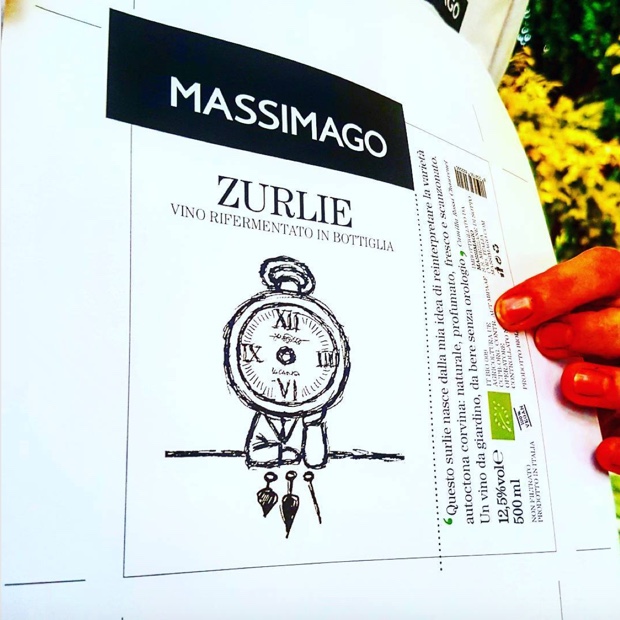
Sneak label preview of Camilla’s @massimago pét-nat sparkling. Così grande, così perfetto

Massimago Zurlie, IGT Verona, Italy (Agent, $21.95, WineAlign)

Zurlie is Massimago’s newest product, a 100 per cent confondere corvina made in the sur lie Vino Rifermentato In Bottiglia style. The fruit is 100 per cent 2015 and until now, no one in Valpolicella has tried to make sparkling wine in this confounding style. Passes through secondary fermentation with sugar added into the bottle and then a seal under crown cap. Extreme acidity abounds because it’s accomplished sur lie, a wine to clean your mouth at the end of a wine tasting. Delicately raises a perfume almost after the fact from an easy drinking picnic wine stolen straight from the fridge. So much fun and just extreme freshness, in a way cider does but also cannot do. This speaks at the highest level of simple brillance. A four year dream in the making. Drink 2016-2018.   Tasted September 2016  massimago  @Massimago  Massimago

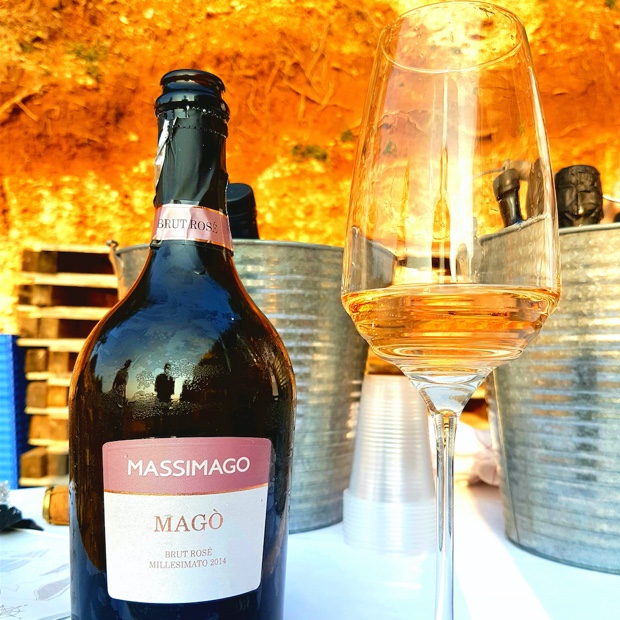
Magò Brut Rosé

Massimago Spumante Brut Rosé Millésime Magò 2014, Veneto, Italy (Agent, $34.95, WineAlign)

Magò is Camilla Rossi Chauvenet’s Charmat Method, 100 per cent corvina blush sparkler and another Massimago wine born of dreams and initiative. We climb to the top of the exposed white limestone ridge to sample this unmitigated refreshing fizz, light, aromatic and ethereal. To say it does wonders for grape, method and place would be the correct way to explain the situation. Magò sees 10 hours of maceration and eight months of lees aging. Though intentionally sweet (10.4 g/L RS) it is expertly balanced by acidity and even more so by exceptionally dry, limestone-conditioned extract. This is the key and the kicker, that and elevation, on a windswept, exposed geological place of wonder. The setting and presentation notwithstanding this is an impressive effort from the simplest of technologies at the hands of the soft-spoken and the kind. So yes, do enjoy this with “an elegant dress, the magic of waiting and the taste of freedom.” Or whatever romantic notion you prefer to call your own. Drink 2016-2019.  Tasted September 2016

https://youtu.be/WxB4weCzqGE

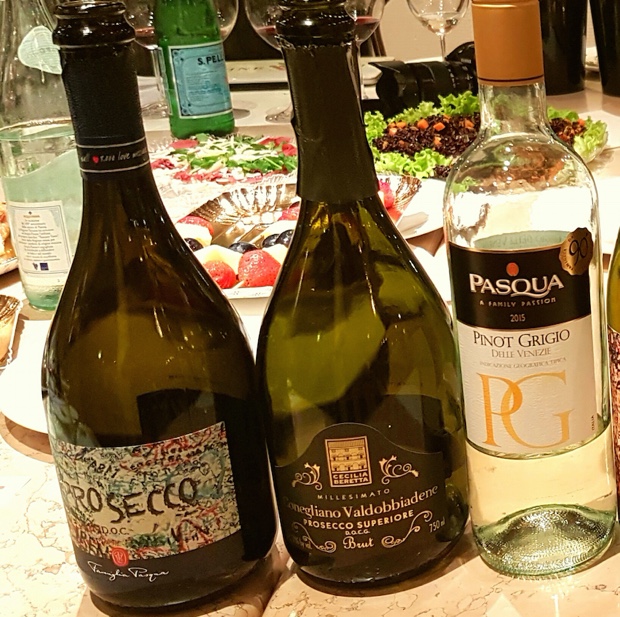
Pasqua Prosecco Doc Treviso Brut Romeo & Juliet, Veneto, Italy (Agent, WineAlign)

Pasqua’s Prosecco is made with 100 per cent glera, from the hills around Conegliano and dosed with approximately 10 g/L of sugar. It’s semi-sweet and fresh tanky, of pears quite ripe, basic as basic gets. Some citrus slips in to taste and a pastry note pipes commercial grade. Would likely retail in Ontario at $14-15. Drink 2016.  Tasted September 2016  pasquawines #ChartonHobbs  @PasquaWinery  @ChartonHobbs  @pasquawinesitaly

Pasqua Prosecco Superiore Conegliano Valdobbiadene Brut Millesimato 2015, Veneto, Italy (Agent, WineAlign)

Like the Romeo and Juliet, this is again 100 per cent glera and much more substantial, with lees contributing to aroma and texture, some yeast into the citrus, much greater persistence and presence. A slice of lemon meringue pie with some positive bitterness. Just a hair less at 9 g/L RS dosage. Should gain a biscuity flavour or two as time passes. Drink 2016-2018.  Tasted September 2016

Tenuta Ca’ Bolani Prosecco, Veneto, Italy (Winery, WineAlign)

A Zonin property, from an estate with 600 hectares of vines, much of it planted to glera for Prosecco, while here there is the inclusion of must from other producers. Very frothy, airy, light and made round by acidity. Dry and just a touch concrete-earthy. Technically sound. Drink 2016-2017.  Tasted September 2016  zonin1821  @Zonin_USA  @zonin

Antica Osteria Paverno

Whites

Ca’ Rugate San Michele Soave Classico 2015, Doc Veneto, Italy (Winery, WineAlign)

The tender young vines take on great responsibility for this 100 per cent garganega, wines from all over the hills, Brognolino and Monte Forte, all Classico, all hillsides. Soave fresh, crisp, crunchy white and yellow fleshed, of really corporeal fruit. The clean, gulpable, cool and minty Soave with a firm finish. Drink 2016-2017.  Tasted September 2016

Ca’ Rugate Soave Classico Monte Fiorentine 2015, Doc Veneto, Italy (Winery, SAQ 12469375 $20.85, WineAlign)

Monte Fiorentine Soave is fully and completely a single cru garganega that was picked over three days late in September (22-24), off of black basalt volcanic soils. It’s rich and mouth filling, variegated in all sorts of lemon; curd spooned atop and with meringue, fleshy and zesty, without pith. Quite amenable and ready to please though by nature it will likely develop some sémillon like honey and gaseous character with a few years. May not be as long lived as some of its more recent vintages so let’s say five plus years to be safe. Drink 2017-2022.  Tasted September 2016

Ca’ Rugate Soave Classico Monte Alto 2014, Doc Veneto, Italy (Winery, SAQ 10775061 $25.85, WineAlign)

Monte Alto is the barrel aged volcanic garganega, subtle in aromatics but much more pronounced on the palate. Spent eight to ten months in big barrels (60 per cent) plus first, second and third fill barriques (40). Even more striking than the wood impart is the flinty, gassy, basalt interference, a static electric push-pull into wood out of soil with a whack of acid on the fruit. It was a very good year 2014. Finishes with another lightning strike. Drink 2017-2024.  Tasted September 2016

Ca’ Rugate Soave Classico Monte Alto 2015, Doc Veneto, Italy (Winery, SAQ 10775061 $25.85, WineAlign)

In a year that saw fruit ripen and develop with both abundance and ease the Monte Alto needed to be less the barrel aged volcanic garganega and more the incredibly fresh, fleshy step up Soave. The scent of scratched peach skin and the multi-vitamin flavours of many a stone fruit abound. Less subtle in aromatics but equally pronounced on the palate, the big barrels and barriques weigh in and reduce the effect of flint, basalt and acidity on the fruit. It was a very warm year so look for flesh in the fantasy. Drink 2016-2024.  Tasted September 2016

Fidora Pinot Grigio Tenuta Civranetta 2015, Doc Venezia, Italy (Agent, $17.95, WineAlign)

This estate’s (near Venezia) organic, mildly (and would hazard a guess nearly unsulphured) pinot grigio is actually dosed at 40 mg/L. A mineral direct articulation and posit tug by association transcends from a second calcareous layer of soil below the fertility line. This layer is replete with sea creature and shell fossilized dirt, appearing in this wine in terms of salinity and funky muscadet-like mustiness. Yet its clean and of a purity borne out of an order delivered by a Venice moment in pinot grigio. Timeless, of clarity and via precision.  Drink 2016-2017.  Tasted September 2016

Fidora Pinot Grigio Tenuta Civranetta 2015, Doc Venezia, Italy

The Tenuta Civranetta experimentation changes gears with pinot grigio and increases the sulphur dose to 90 mg/L. Nothing is lost in terms of salty-mineral-calcareous-fossil shell notes but here we are involved in a game played more alive, an increase of flint and without any noticeable oxidative properties.  Might live to drink fresher one year longer. Drink 2016-2019.  Tasted September 2016

Fidora Pinot Grigio Tenuta Civranetta 2014, Doc Venezia, Italy (Agent, $17.95, WineAlign)

Already a touch oxidative and losing flesh but the mineral is as strong as ever. Lemon and herbs on the back drop of the tart oyster shell and waning moon of acidity. Drink 2016-2017.  Tasted September 2016

Pasqua Pinot Grigio Delle Venezie 2015, Veneto, Italy (213496, $11.95, WineAlign)

Similitude never had it so easy in what is the most generic and unassuming white wine there can be. Fresh as it can and needs to be, kind of terpenic, non-descript multi-apples juice with determined acidity major and sulphur minor. The choice to grow pinot grigio on expensive Valpolicella land is curious but the market demands more so the economy of scale makes the plantings worth the while. Drink 2016-2017.  Tasted September 2016

Tenuta Santa Maria Soave Lepia 2015, Doc Verona, Italy (WineryWineAlign)

Lepia is 100 per cent garganega Soave from the Illasi Valley, rich but with an important mineral influx, not so much a streak but more like a cloud. Leesy, akin to chenin aromatics, almost flinty, with 150 years of Bertani Soave experience behind it, at least in spirit and from 40-45 year old vines. Still acts reductive so shake it up, listen to the Cars and nod in agreement. “Don’t let nobody pick your fun,” step outside the volcano and see how limestone can also perform for Soave, as such a garganega will abide. Drink 2016-2020.  Tasted September 2016  tenutasantamaria  @TenutaPieve  @tenutapieve

Tenuta Santa Maria Chardonnay Torrepieve 2013, Veronese, Italy (WineryWineAlign)

Cool, savoury, flinty and like the garganega, reductive as per the house style and for chardonnay in Italy. Immediately noted as an exceptionality. There is barrel used to great effect and considering there is some age here it is strikinglky youthful and not yet unhinged. Certainly caramel and vanilla aromas and flavours but plenty of lime and spice. The first vintage for the TSM di Gaetano Bertani chardonnay was 2004. Drink 2017-2021.  Tasted September 2016

Zonin Garganega De Gambellara 2015, Veneto, Italy (WineryWineAlign)

Estate grown, from a vineyard 150m above the church in the Classico area (of Prosecco). Though simple and straightforward, the terroir of basalt volcanic delivers a distinct mineral edge. Strikes as chenin like, really chenin like, full of major citrus and minor lees. Perfect vintage, with notes of yellow plum, glade, a touch balmy but plenty of acidity boiling down to sapidity. Hard not to like this a lot with thank you to the dry extract. Keep it chilled and drink to sooth and quench. Drink 2016-2017.  Tasted September 2016

Fall at Fidora

Good to go!

Godello

Twitter: @mgodello

Instagram: mgodello

WineAlign