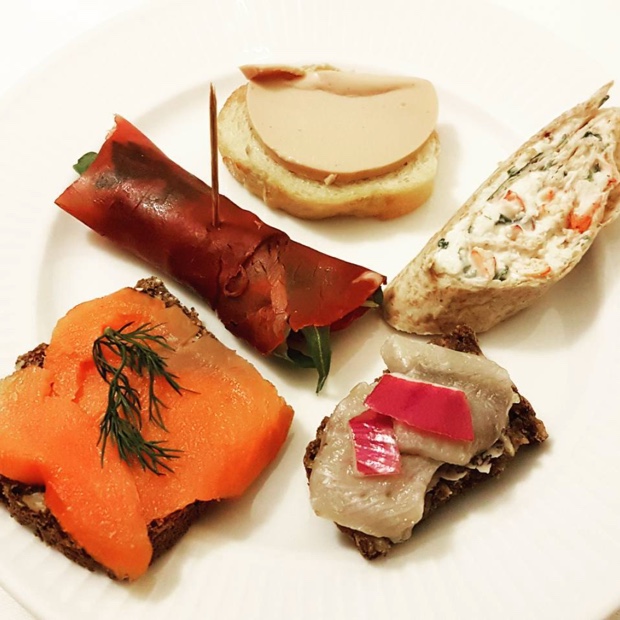
It’s only love when #french and #danish friends do dinner @michaelwuertz #herring #foiegras
I do like symmetrical things and prefer the irregular approach to writing and life. Method to madness is all in the perception and only really figured out when you learn to let your emotions run wild. You have to want to believe Godello as a writer knows what he’s talking about but you also need to trust the facts when you find them flooded into the seemingly unconnected mess of musical and multicultural references, veins and streams of consciousness.
Do you remember this commercial?
“You worked too hard and ate too much,
The cheesesteak made you green.
Let your aching head and stomach hear this message from old Speedy.”
Speedy here is voiced by the same guy (Dick Beals) that voiced Davey of “Davey and Goliath” and Ralph Phillips of “Looney Tunes.” Here we move forward, away from the mess and sting and sighs and slings of 2016, past the littering deaths of loved ones and icons, into the future that begins (in wine anyway), with the VINTAGES January 7th release. Forget the Alka Seltzer and listen up.
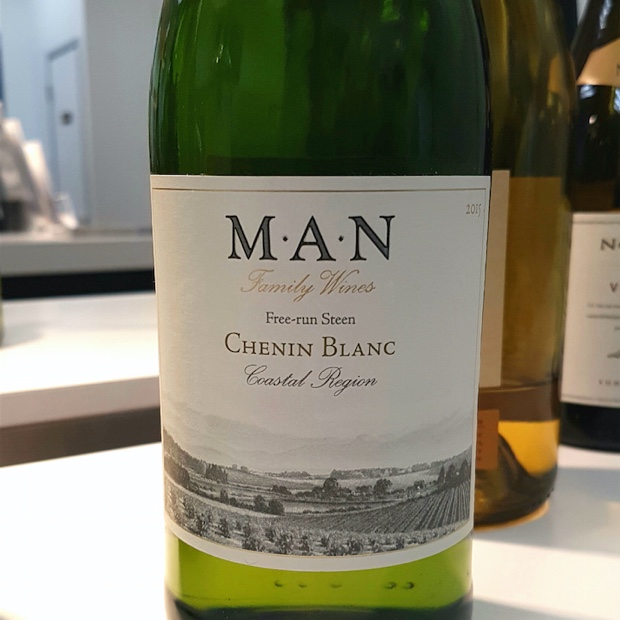
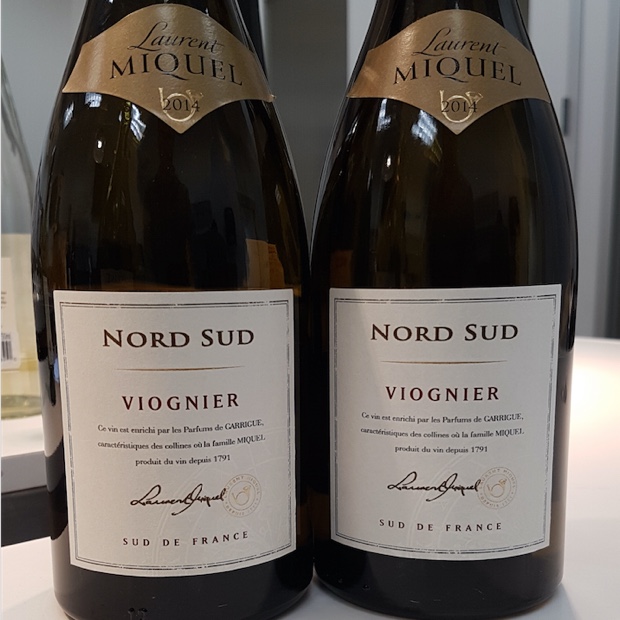
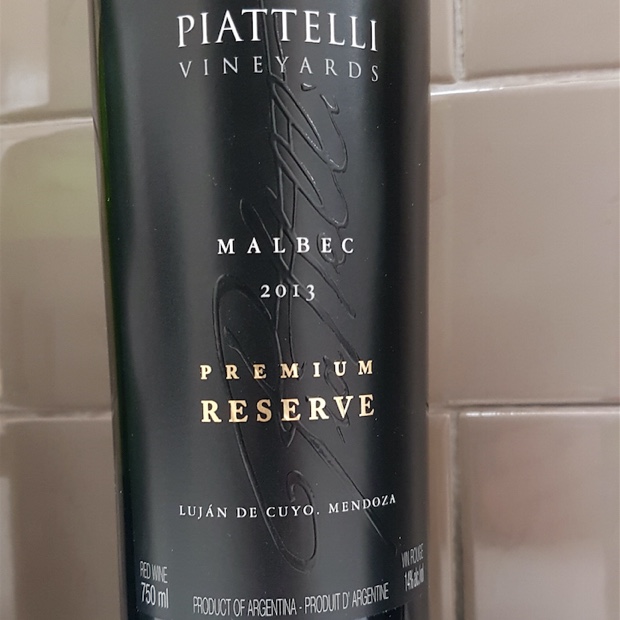
Drinking sparkling wine in January is a contagious and contiguous must for any self-respecting wine geek but who can afford Champagne after the bank-rolling of the holiday season? Fear not for alternative fizz is coming your way. So are tidy values for chenin blanc, viognier, grüner veltliner, malbec, negroamaro, tannat, graciano, sangiovese, garnacha, cabernet franc and syrah. You can also choose from five splendid blends from Dealu Mare, Valpolicella, Langhorne Creek, and Côtes Du Roussillon Villages. Please visit WineAlign for full reviews of these 17 in VINTAGES January 7th.
Budureasca Feteasca Regala 2015, Doc Dealu Mare, Romania (416800, $11.95, WineAlign)
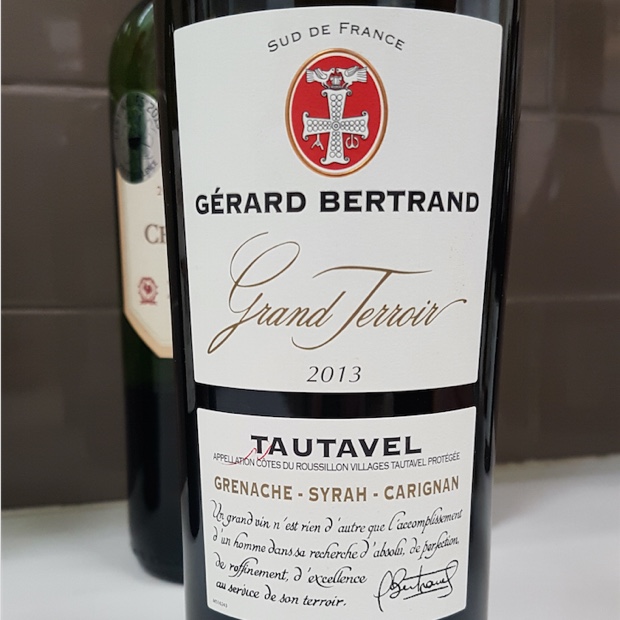
Gérard Bertrand Grand Terroir Tautavel Grenache/Syrah/Carignan 2013, Ap Côtes Du Roussillon Villages, Languedoc-Roussillon, France (272575, $18.95, WineAlign)
At a loess for words. Exceptional multi-vintage #grunerveltliner tasting with thanks to @austrianwine
On Tuesday, October 27th, 2015 Grüner Veltliner supervened in Toronto. It was long past due for the community of Sommeliers, Media and Austrian advocates to convene for the purpose of a vertical tasting followed by an Austrian wine bar of product currently available in Ontario. An ausbreitung of the highest Grüner order. I was fortunate to be a part of the Spoke Club fest and thought it high time I said something about it.
The Austrian Wine Fair comes to Toronto’s St. James Cathedral, Library & Snell Hall on April 14th, 2016. The Austrian Wine Marketing Board and 30 Austrian vintners will be showcasing 165 wines, to media, trade and in partnership with WineAlign, to an evening reception for consumers.
The Schedule
Tutored Tasting for Sommeliers and Media, 11 AM – 12:30 PM.
Austrian Wines – A Taste of Culture, consumer tasting 4:30 PM – 6:30 PM. Only $55 for WineAlign members (regular cost is $60). Reserve your tickets here.
WineAlign’s John Szabo, MS has this to say. “Austria has a terrific culture of wine, producing and drinking. Beyond the world’s best Grüner Veltliner, you’ll also find astonishing Riesling, as well as more exotic white grapes with singular flavours. But it’s the Austrian reds – Blaufränkisch, St. Laurent & co. – that may shock you most, in tune with the zeitgeist of the modern drinker. I look forward to reconnecting with the folks who make them.”
For more information contact Birgitta Samarvarchian, toronto@advantageaustria.org, 416 967 3348. The closing date for registration is April 13, 2016.
Traditionally known for its white wines, few realize that one third of Austria’s vineyards are planted to red. At the Austrian tasting an educational seminar will feature flights of the three red aces, the indigenous grape varieties Zweigelt, Blaufränkisch and St. Laurent, plus a rare flight of Austrian Pinot Noir. Two years ago I concurred:
“The whites, mainly centered around the signature variety Grüner Veltliner, showed the mineral and salinity so necessary to the grape’s success. Reds made from Zweigelt and Blaufränkisch are Austria’s trump card, ready and willing to take on the world’s reds imbued of elegance and finesse.”
Back to that October tasting. Outside of making the trip to Vienna and forging an itinerary that includes no less than a dozen high profile producers who generously agree to crack open some older vintages, what other setting could present Grüner Veltliner in such light? The age ability recognition factor knocked another one off the bucket list and opened new doors to perception. If for no other reason, and there are many, he Austrian tasting coming to Toronto should not be missed.
On the road w: @zoltanszabo & @tonyaspler we concur. Expert overture @austrianwine #grunerveltliner via @johnszabo
Flight #1
Stift Göttweig Grüner Veltliner Göttweiger Berg 2014, Kremstal, Austria
Freshness, with a minimal amount of Co2, herbal certainly, with pears and stones. The fruit finale is up, up and away. Very flavourful, almost tropical Grüner.
Fritsch Grüner Veltliner Ried Steinberg Ruppersthal 2014, Wagram, Austria
Has a candied meets medicinal nose and more than its share of mineral to taste. Lingers with a sweetness that is not sugar. It’s a tang derived from grape tannin.
Weixelbaum Grüner Veltliner Reserve Ried Wechselberg 2013, Kamptal, Austria
Very ripe, so tropical to nose and smells like candy floss, like enticing spun sugar. Mouthfeel is more like unoaked Chardonnay. Global entry strategy for Grüner to take the market by fresh storm turns exit strategy without reason.
Edlmoser Grüner Veltliner Ried Himmel 2013, Wien, Austria
The mineral expression of the young Grüner. Elemental and metallic. Good range of motion, right side of the mineral tracks. Really fine tracking and length.
Liegenfeld Grüner Veltliner Ried Himmelriech 2013, Burgenland, Austria
Full-ish and bullish, especially in flight comparison. Quite the fruit monster here, with a sugarless sour candy sensation and savoury linger. An eastern European cough candy with enough subtlety to keep it from crossing any uncomfortable lines. The outlier.
Flight #2
Holzapfel Grüner Veltliner Smaragd Ried Achleiten 2012, Wachau, Austria
A tiny bit of botrytis giving off a mushroom and truffle note, perfect at this stage for a ’12 though it will likely increase going forward, possibly at the compromise of the stellar fruit and even deeper mineral passion play. This is an intense wine with acidity that may be waning but the wine cuts a deep and serious bowie wound. The lees really rules and reigns in the rest. Turns to cider after 10-15 minutes. Changes. “Oh, yeah, Mmm. Still don’t know what I was waitin’ for. And my time was runnin’ wild.”
Domäne Wachau Grüner Veltliner Smaragd Ried Kellerberg 2012, Wachau, Austria
Quite stoic, clear, clean, steely, like unoaked Chablis. Wondering where the lees are in this, how much and for how long because it has that distinct mineral tang that lees will give to a wine made like this. Exemplary but simple. Though the acidity is low so it finishes fat. Still, proper and simple.
FJ Gritsch Mauritiushof Grüner Veltliner Smaragd Ried Singerriedel 2012, Wachau, Austria
This has the candied nose, the tropical fruit and the lactic feel. Quite a mouthful of same flavours in repeat on top of the aromatics and an overall layered tang. Like those white blends again.
Leth Grüner Veltliner Ried Scheiben “1ÖTW” 2012, Wagram, Austria
Powerful loess in concentration, smells like scraped wet soft tuff-like rocks, almost powdery and not a fruit-driven Grüner. Better acidity than some and finishing bitters. The first to do so.
Allram Grüner Veltliner Reserve Ried Gaisberg “1ÖTW” 2011, Kamptal DAC, Austria
Age is creeping in, with a petrol and tannic note that take this into steep slope, white stoicism. The slate is really in, the acacia barrel giving a near-nutty note and certainly white flower distillate. Like eau de vivre. Got a spark.
Gas and stone again, with more verve and life. The first to give soil funk without sweetness or botrytis. A slight Co2 note, a spark, very mineral character. Old vines give concentration, rocks do tannin and acidity lingers nicely. Got stein. Old Riesling reduction and energy equals implosive energy. Flight #2 really speaks to the loess and here is it definitely on high.
Flight #3
Rudi Pichler Grüner Veltliner Smaragd Ried Wösendorfer Hochrain 2008, Wachau, Austria
A fine slow decline in grace, elegance, bald, striking. Here the reason not to fear and for any and all decisions to protract age from Grüner. There has been no discernible deterioration and without a doubt the cleanest fruit in its original state. No flaws. So in that sense an ageless wonder. Strikes as so much younger; colour, aroma, flavour, tannin and linger. Ageless.
Brundlmayer Grüner Veltliner Reserve Ried Lamm 2007, Kamptal DAC, Austria
Certainly showing age here, through all its components and has a sugary gaseous feel. Says Trocken so I wonder what the RS really is. Mineral and acidity are in great interplay. Good length. Really smart and necessary look into aged Grüner. Reductive torque from a top vineyard. The French paradox in analogy is Sémillon.
Hiedler Grüner Veltliner “Familienreserve” 2006, Kamptal, Austria
There was some dirty fruit here, past its prime, late harvest certainly, smelling of tropical fruit past ferment and into decay. But, there is acidity so there is life. Lots of bitters. Some volatility. In a way, The Frick of Austria. Heavy lees, acacia barrels. No fining, no filtration, some biodynamic principals applied to grape growing.
Malat Grüner Veltliner “Das Beste vom Veltliner” 1999, Kremstal, Austria
I find this so much fun at 16 years of age with burnt orange, caramel, white pepper, spices, and an elemental, aerified glory that is some kind of serious inhalant and intoxicant. Late harvest again, clementine segments of flavour, with citrus acidity and great mental acuity. Great bitters. This is on par with some aged Alsace, somewhere between Riesling and Gewürztraminer. Weighs in and integrates its 19 g/L of RS with distinction.
Flight #4
Herbert Zillinger Grüner Veltliner Reserve “Radikal” 2013, Weinviertel DAC, Austria
Oxidative, spontaneous ferment, leading to tang upon tang. The methodology has led to tannin in layers, some orange segment and bitters. Acidity is not striking and its aridity means drink this early.
Geyerhof Grüner Veltliner “wildlux” 2013, Kremstal DAC, Austria
I get terpenes, like cool-climate Chardonnay, well, more cool than Chardonnay and then it gains in salinity, sea salts, brine, groove but not necessarily mineral. Has real verve, life and yet again, not for age. Known for their natural winemaking.
Zillinger Johannes Grüner Veltliner “Numen” 2013, Osterreich, Austria
Amphorae wine, old vines, certainly oxidative, thick texture from lees, but there is acidity. Orange again and edgy, with a piercing limestone tang that runs directly through. Numen “natural spirit inhabiting a place or just natural genius (of spirit).” No external intervention.
Sepp Moser Grüner Veltliner Ried Schnabel “Minimal” 2013, Weinland, Austria
Here is the Alsatian Grüner, natural and with the addition of slow micro-oxidation of old barrels. Eighteen months seems almost on the lee side of time, as we find so much preserved lemon and a lack of Grüner impression. Certified biodynamic. “Will not meet the expectations of wine consumers today.” Dill pickle meets a tomato of volatility.
Wimmer-Czerny Grüner Veltliner “Pur” 2012, Wagram, Austria
Hard to believe this is only 2 g/L of RS. Real Muscat character in aromatics and again terpenes but with a naturally oxidative bent.
One in the April 2nd, VINTAGES release
Loimer Grüner Veltliner 2014, Dac Kamptal, Austria (142240, $21.95, WineAlign)
Flat out delicious Grüner Veltliner with a nice split between fruit and mineral, mas o menos, neither really leading the other. Citrus and a bit of an airy, gravel feel. Drink 2016-2019. Tasted March 2016 @LeSommelierWine@FredLoimer
The privacy, intimacy and relaxed atmosphere of a subterranean hashery is something we should all experience at least once in a gustatory lifetime. We should also be afforded the opportunity of a salubrious 12-course tasting menu designed by a reluctant superstar. Why ought we not be handled with extreme Sommelier care by the caress of a total professional? Give me a reason to not spend three hours locked in a room with eight others, all of generous wine and spirit?
The location was Splendido‘s downstairs dining room. The chef was Victor Barry. The Sommelier was Ellen Jakobsmeier. The company a group of friends and friends of friends with a common goal. Eat, drink and be merry. Maybe trash talk a little. Trade a few thousand e-mails ahead of time to fire the vinous juices. Get down to business. Taste fourteen wines blind, poured from paper bags, discuss and be humbled by knowing everything and yet nothing at all.
Chef Barry’s selections and his staff’s execution were beyond flawless, culled from trial, error and perfection, bobbing up into the ethereal. Ms. Jakobsmeier had less than 20 minutes to receive, prepare and pour in order, with timely precision, the agglomerated and cumulative progression of the wines. Like Euro rail time. Not a hair out-of-place. Big props Ellen.
One dinner companion said this. “Thank you so much for inviting me to join your Pirate festivities! The food was incredible, thanks for hosting us Victor. The wines were exciting, generous and delicious! Thanks to all of you for sharing the gems from your cellars. And thank you Ellen for doing such a great job pairing all the wines. A feast worthy of Pirates!”
Victor added his own words. “Thanks everyone. I had a blast. I really enjoyed sitting down stairs it made it much more enjoyable for me. Looking forward to the next event. PS that Tokai was fucking delicious. And the Premier Cru from that “Niagara appellation.”
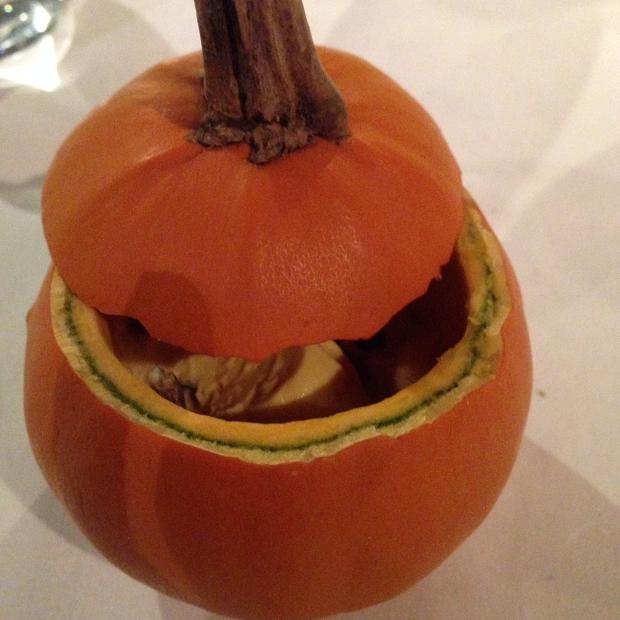
I wrote this to the group. “Laid in bed last night thinking about every course. Too many details to comprehend. And then it was morning and my kids wanted their lunches packed. Good thing there was this pumpkin in my wine sleeve…generosity in wine just amazing. All thoughtful and just fucking generous. Fortunate to have met new faces. Looking forward to this again, and again. Great work JB and Victor, stars all around.”
And to you JB, you sure do know how to throw a party.
Champagne begins the pirates on a picnic dinner in the downstairs private dining vineyard at Splendido Toronto
Champagne Larmandier-Bernier Rosé de Saignée Premier Cru NV, Champagne, France
Just a wee coppery this rusty blush, savoury to solecism and uprooted by a tremendous fault that forces metamorphic salinity, no check that, bleeds from rock into the bottle. If Champagne could commandeer the senses to stop and take note, this LB is the one. Stoic, purposed, frank and blushing like a winter Olympic athlete after a gruelling race. This Rosé is as confident and masculine as can be for the genre. It opens the eyes, pores and heart for a long haul ahead of pulls, in corks, sips and gulps. @LarmandierB
Larmandier-Bernier Champagne Rosé de Saignée Premier Cru NV and Domaine Dauvissat Chablis Premier Cru “Séchet” 2009
Vincent Dauvissat Chablis Premier Cru “Séchet” 2009, Burgundy, France
To be blinded by rocks is to taste such a wine without knowing what it is, slicing like Silex, cutting with a jagged edge of mineral take, yet gripping of aridity that must come from singular Chablis. Something whips like paraffin but again, the missing wood, the fennel talc, the absolute purity just says Chardonnay. With levity requested, gotta borrow from Burghound on this one because he was spot on, “way beyond the shadow of a doubt, yeah.” After 30 minutes the Sechet left the quarry to enter a sweat lodge of smoke and toast with an eventual pause at the charred Shishito capsicum station. The coarse wail is the young Dauvissat crooning but with fear set aside, the wine will soften in time, like the fashion poet, the prince of thieves. This Séchet, mythological in name, is Chablis brightly lit and accepts another sung substitute for yes. “Oh it cuts like a knife , yeah but it feels so right.” @BIVBChablis
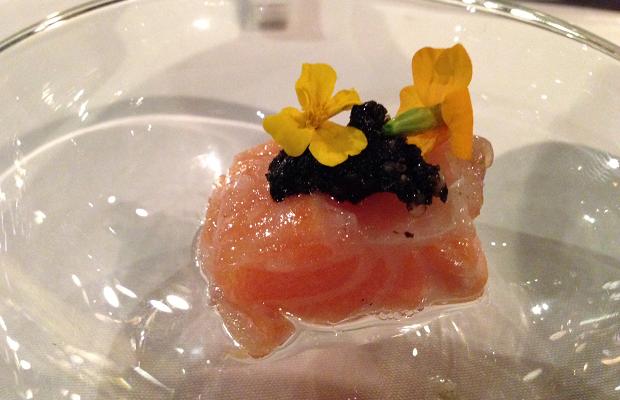
Oysters, popcorn, scallop dust
Popcorn dusted with dehydrated scallop dust? Damn straight.
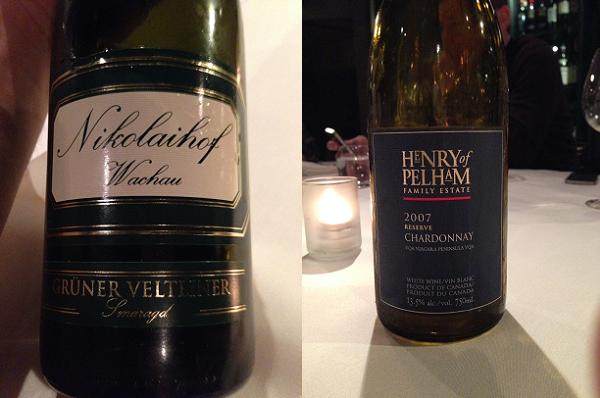
Nikolaihof Im Weingebirge Grüner Veltliner Smaragd 2007,Wachau, Austria(Agent, WineAlign)
Something grand is brewing, of that there is no doubt, despite the skinny, indehiscent first moments. A petrol that comes with age, a suckling piggy with melifluous honeycomb in its mouth roasting away, tinned fruit cup of a jellied, agar-agar mandarin orange type; these are the bold scents of what must be Austria, possibly Riesling, certainly Wachau. Tannin and stone drip Alsace Grand Cru, of Riesling again, like Rangen, but the reveal of Grüner Veltliner makes so much sense. Crazy, mind-blowing example, as good as it gets, a bench and high-water mark from which a free fall off the high springboard makes a perfect splash into the glass. Ninety minutes later only a word is needed to stem the waves of petulant emotion. Unbelievable. @TheLivingVine@AustrianWine
Nikolaihof Im Weingebirge Grüner Veltliner Smaragd 2007 and Henry of Pelham Reserve Chardonnay 2007
Henry of Pelham Reserve Chardonnay 2007, VQA Niagara Peninsula (2013 268342, WineAlign)
French oak kicks at the door, feeling young, dirty and fine though synchronicity is absent in most respects. This is certainly not Chassagne, definitely not Meursault, not even St. Aubin. Yet it is delicate and delectable despite its unkempt ways, selfless and if left to be, might settle into a relationship. To discover it’s the hot vintage of 2007 version of today’s Estate Chardonnay is nothing short of astounding and at the same time, disappointing, at odds, disassembled. After 20 minutes it falls apart, “in little pieces on the floor, too wild to keep together.” The wine’s inclusion was necessary, gave perspective and bent to receive the Uni, “and now the end has come.” The 2012 and 2013 will offer much more pleasure. @HenryofPelham@SpeckBros
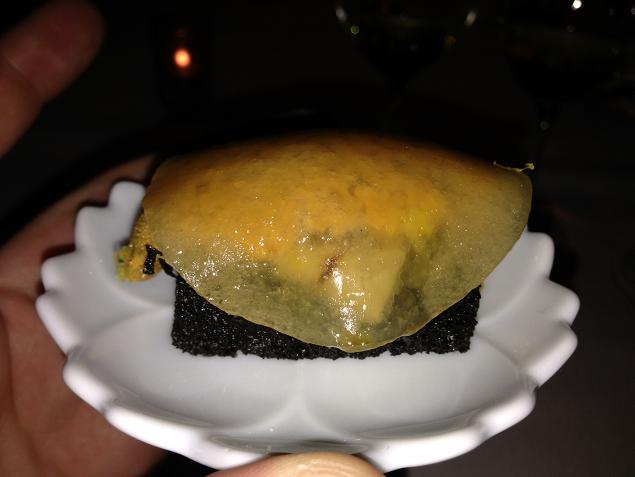
Sea urchin, toast, squid ink, lobster
Domaine Valette Pouilly-Fuissé ‘Clos de Monsieur Noly’ 2002, Mâconnais, Burgundy, France
May as well be Josko Gravner Ribollo Gialla, or Ann Sperling’s Whimsy! Orange and yet in contempt of the oxidized and underripe cantaloupe be damned, Jura should be the call. But then there is the question of messing with the man acidity and a trippy delicacy as per the cook’s butcher. It is certainly not faulty, nor should it be faulted for developing au natural, on top of the sheets, on the bare side of the beach. OK, so really old Chenin Blanc and a very natural Outback white blend would make for good conversation, or not. Like mushrooms for toffee. Like mulled apples for cider done wrong. Dirty in the most righteous 12 year-old Sherry way. Love it with Lobster on a rock, octopus and some kind of sea cucumber.
Domaine Valette Pouilly-Fuissé ‘Clos de Monsieur Noly’ 2002 and Louis Latour Corton-Charlemagne Grand Cru 2009
Louis Latour Corton-Charlemagne Grand Cru 2009, Côte de Beaune, France (Agent, WineAlign)
Can anything really be known from a fleeting moment spent with this? Classic, viscous, rich Burgundy and nothing but, with more mineral than should be gained from just a pass. The maker had the unconscious intent of remembering generations. When told that hey, it’s a Latour, in Beaune, of Corton Charlemagne, by Grand Cru, it’s hard to gather your inner we’re not worthy but focus and intent need be the outward act. You can really taste the limestone, imagine walking the Corton hillside, feeling the maximum exposure of the sun. When you know what it is you know to take a slice of humble pie and remember the soil, the soil, the soil. In Burgundy since 1797. @LouisLatour1797@LouisLatourInc
Equipo Navazos La Bota de Manzanilla Pasada 2011 nº 30 Capataz Rivas
Equipo Navazos La Bota de Manzanilla Pasada 2011, nº 30 Capataz Rivas, D.O.Manzanilla Sanlúcar de Barrameda, Spain
Tasted blind this pours as a glass of briny capers, sea peas, vetches and liquid basalt. It speaks a language that contains the ancient loneliness of ruins. Thoughts easily lean Manzanilla or Old Fino. Great nuts, bitters, horseradish, dry tang, daikon and like a dirty martini. Not to mention orange rind and lime rind, zest and akin to a Vin Doux. It’s origins are at the hands of capataz master Rafael Rivas, from juice originally preserved to add kick to more commercial releases but the decision instead was made to “touch” the 15 solera butts with “testimonial sacas” of only four or five arrobas (roughly 5 x 16 = 80 litres), to make a wine such as this. This is old school Manzanilla, the third saca, with a reductive flor, uniquely oxidative and an average age of around 15 years. @EquipoNavazos@SherryWines@JerezXrsSherry
Pop can seafood
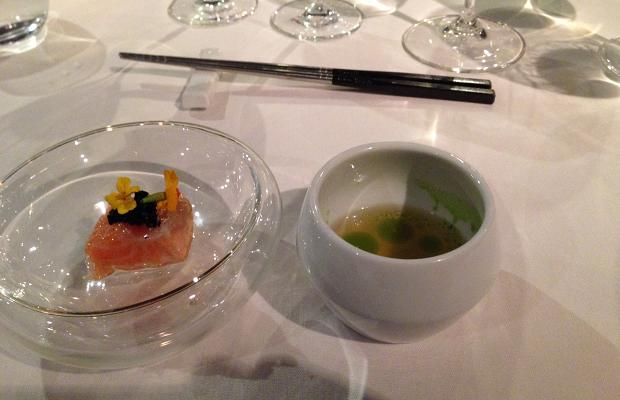
Intermezzo of smoked oyster and foam…
Splendido’s Five-hour carrot
“Friends – ridiculous dinner last night, in the best way. Great wines with great friends is my favourite way to spend a night. Already looking forward to the next one – at which I will bring more than one wine.”
Here the soprano sings, in bold, rich, deep tones, with a sense of entitlement and a swagger. It’s a royal, goodfella, masculine depth. The notes are sung, even danced in bourrée, crescendo, sostenuto and ritardando. The luscious bing cherry richesse gives it youth, intimating Sangiovese but true hematic Toscana can’t be this dark. The modernity of Nebbiolo it must be. Seamless, tireless and impossibly rose petal delicate with the omnipresent tar. Would be willing to go back to 1999 but for the black forest layering, though to find out it’s ’97 shatters myths, confidence and legend. Still dusty and tannic, with more years needed to shed the grains of sand chain. After 20 minutes it goes to candied flowers, oranges and Alba truffles. Bring on the soft scrambled eggs.
Podere Rocche dei Manzoni Barolo Vigna Cappella Santo Stefano 1997 and Marchesi di Barolo Sarmassa 1997
Marchesi di Barolo Sarmassa 1997, Piedmont, Italy
Smells like spirited, youthful, though decidedly modern Nebbiolo. Rich, chalky, dense, viscous, unctuous and yet the opposite of the Manzoni grit. More feminine, of more voices, in fugue, at times in tarantella, then into arpeggio. The notes play from a radio in my head. “In the deepest ocean, the bottom of the sea, your eyes, they turn me.” That it’s my contribution, this weird fish of a Nebbiolo, makes me amazed at the complex world of Piemonte and the absurdity of knowledge. Sensory appreciation rocks, spoken through this Sarmassa, like a chant from an ancient tribe, sitting cross-legged upon the clays of Lugagnano. It seems there may be 20 years left on the Marchesi’s Nebbiolo. I can’t believe how well it showed.
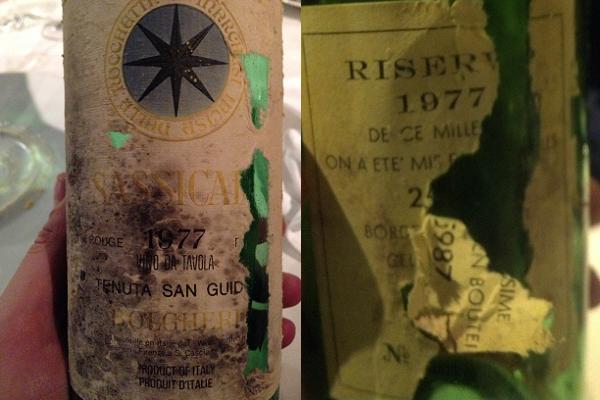
Though the vintage was reported to be less than exceptional, the chance to taste this 37 years in/on and the longevity it displays combines for full, blow me away effect. The first vintage of Sassicaia was 1968 and this 10th try hits the mark of experience. A blend of Cabernet Sauvignon (85 per cent) and (15) Cabernet Franc, the fruit came from vines over top soils of clay and limestone. The wine spent 20 months in Yugoslavian oak barrels (half of it being new, and half used once or twice before), while for the remaining 60 per cent, French oak was used (2/3 new and 1/3 used once or twice before. Tasted blind, the swirling and searching thoughts of Genesis retrospection assimilate aromas of truffle and mushroom, but at first there is no reply at all. Landing on a plot of excellence somewhere between Bordeaux and Piedmont, Tuscany rises from its hills. A silent conversation ask the Sassicaia “I get the feelin’ you’re tryin’ to tell me; Is there somethin’ that I should know?” Its condition is near perfect, its body full, its nature pristine and finally, so obviously in balance. After 30 minutes it begins to slide, to no surprise, but you can’t believe the expression it gives and the impression it leaves. And so, it is confirmed. 1977 was a fine vintage for Sassicaia. @Smarent
The crowd leans modern, young, New World Cabernet Franc or Bordeaux blend. Can’t help but concur. Turns out to be a blend, of Cabernet Sauvignon (75 per cent), Sangiovese (20) and Cabernet Franc (5). First produced in 1978, the Sangiovese was only introduced to Solaia in 1980. In 2003, the weather could be described with a single word. Hot. Limited rainfall and a record total of 2400° in daytime heat summation has brought this Solaia to its full on gain, 12 years in evolution. The vintage caused a full draw from stony calcareous soil of marl and friable albarese rock. The collective soul can appreciate its charms but the heavy aspect ratio can’t be denied. We sipped and “the punches came fast and hard.” Warm smacks to the face, rushes of heat and an ensanguined rush of chocolate fruit through the system. For now there is no caramel, no brûlée, no denoument. In the present there are caverns of tannin, the ‘sunny one’ playing the crowd, on a sunset strip. Soon and in the end, times fades away. @AntinoriFamily@HalpernWine
Marchesi Antinori Solaia Toscana IGT 2003 and Royal Tokaji Aszú 5 Puttonyos 1993
Here the caramel unctuousness and apricot in chains of liquid gold is the work of a legendary purveyor, the Royal Tokaji company. With sweetness upwards of 150 g/L and acidity pushing the 10 g/L mark, this is no shrinking violet of a dessert wine. With 12 years of road under its belt, the blend of predominantly Furmint and Hárslevelú grape varieties (with a small percentage of Muscat) is firing on all cylinders. Racy and intense, this captures the essence of the 1st growth Nyulászó vineyard and brings it to the world. Bullies the desserts a bit, but all is forgiven considering the range of flavours within and complimented from without. @Royal_Tokaji@HHDImports_Wine
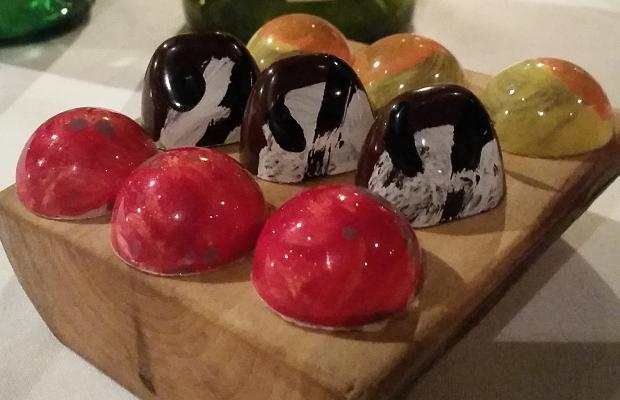
Then one more dessert course…”Milk and Cereal,” chamomile and maple tea gel, buttermilk quenelle, flaxseed granola.
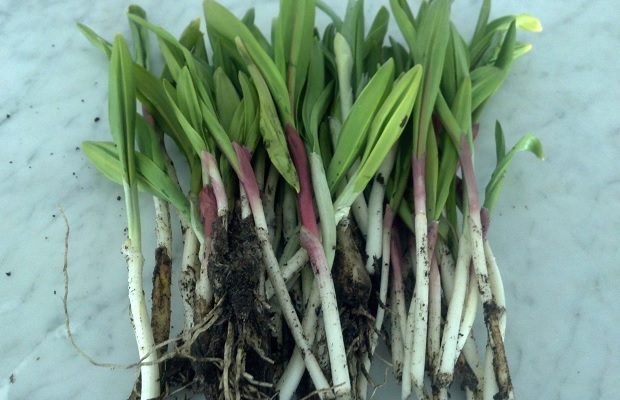
‘Tis the season to partake of two things denied opportunity the rest of the calendar year. Wild leeks and Austrian wine. The first is just a seasonal thing. The second, entirely my fault. The forest and my backyard provide the ramps. Two most excellent wine agents, Bernard Stramswasser of Le Sommelier and Mark Cuff of The Living Vine are the messianic purveyors of the wine.
Mark came to Barque Smokehouse last month to share his wares, talk organics, biodynamics and to teach a staff what honest wine is all about. More on that extensive tasting coming soon. Bernard brought top estates from Austria with Andreas Wickhoff, MW to Toronto’s Fine Wine Reserve on April 16th, 2014 for a special portfolio tasting. The Master of Wine is deeply passionate and terroir obsessed when it comes to the Austrian landscape. The presented set of whites and reds rose up to incline an exemplary ramp to the nature of that country’s fine wine tradition.
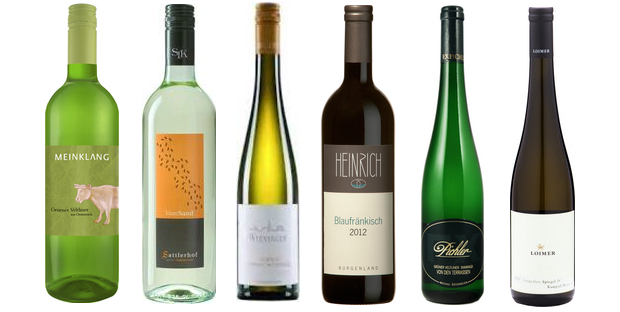
The whites, mainly centered around the signature variety Grüner Veltliner, showed the mineral and salinity so necessary to the grape’s success. Reds made from Zweigelt and Blaufränkisch are Austria’s trump card, ready and willing to take on the world’s reds imbued of elegance and finesse. Here are notes on the 12 Austrian wines tasted.
Meinklang is a passionate, biodynamic (Demeter farming) producer in eastern Austria, south of Vienna. Their practices include abstaining from the pruning of vines, called “graupert” and maturation in concrete egg-shaped containers. The vineyard is their biotope and they make compost from animal dung, pomace, plant cuttings and ground quartz. Their entry-level Grüner is so mineral dominant and saline it’s as if the stones are bleeding. Extreme tang, with that salinity that never lets go and so much lime. Then makes quick work of itself.
Weingut Loimer, Grüner Vetliner ‘Lois’ 2013, Niederösterreich, Austria ($18.95, WineAlign)
From Niederösterreich in the Kamptal region, from soil compositions of bedrock and loess, this is straightforward Grüner Vetliner made in 200,000 bottle loads. That it succeeds in spite of the quantity and the work with contract growers is a testament to Fred Loimer’s sense of quality control. A bit shy aromatically but really tangy on the palate. Clear, crisp, clean and appreciably pure. Lithe in body and with some salinity on the back-end. Versatile mingler.
Sattlerhof Sauvignon Blanc Vom Sand 2013, Südsteiermark, Austria ($19.95, WineAlign)
This is bewusst territory for the Südsteiermark producer, from organically farmed vineyards. An elegant Southern Styrian Sauvignon Blanc made from grapes previously destined to get lost with other traditional varieties. Most striking is the salinity on the nose, often abstruse for Sauvignon Blanc but most obviously explained by the land; sand, gravel and shell limestone. Estimable restraint in the whispered aromas of herbs, green vegetable and tangy tree fruit. Dewy finish that lasts well into the morning.
Wieninger Gemischter Satz 2013, Vienna, Kamptal, Austria ($20.95, WineAlign)
Though Grüner Veltliner, Weissburgunder, Welschriesling and Chardonnay make up most of the formidable aspects of this blend from the Vienna Hills, there are bit but integral parts played by 11 others. From bio-certified Bisamberg and Nussberg vineyard sites, this is antithetically seamless, the varieties drawing all possible logical relations woven by their finite collection. Approachable, gritless, effortless, integrated and bound together by a solid core of juicy acidity. Even if only because it agglomerates 15 grapes, this beats white Châteauneuf-du-Pape (by at least six varieties) at its own game.
Nigl Gartling Grüner Veltliner 2012, Kremstal, Austria ($21.95, WineAlign)
The locus point of Nigl’s single vineyard Grüner Veltliner is sharp and stinging in 2012. Although that chemically reactive laser pinning takes control, it is extremely refreshing to not have to talk about flat and flabby fruit. Mind you the fruit here is under stress so balance needs to be questioned. Ultimately there is a palpable sense of grapefruit, flowers and a finish marked by the scraping of stones.
Increased hang time has put this Kamptal in a deeper state of focus and understanding concerning the intricacies of Langenlois Grüner Veltliner. Continues the pure, clean and crisp axiom of the basic Lois but here the aromatics are spoken in acroamatic terms, obvious to disciples and yet available for all to comprehend. Though five per cent big wood barrel aging does not seem significant, that practice along with four months of aging on the fine lees has had a textural impact. The added weight is a questionable thing, though arguably just splitting hairs. Will help carry this vintage through five to seven years of graceful settling.
Dirty Ramps
Weingut Heinrich Pinot Noir Dorflagen 2013 (Tank Sample), Burgenland, Austria ($24.95)
From two sites in Gols, one being the gravelly Riede Goldberg on the Parndorf Plateau, the other a sand and loam slope of the Salzburg. Short-ish ferment in large-ish barrels. Marked by bright cherry of the upstanding young fruit kind and only a brushstroke of paint. Very linear in that a Rube-Goldberg Pinot machining ensues, as the dominoes fall into each other. One action creates another, mostly due to a fine-grained chain of tannin. As delicate and approachable as Pinot Noir ever was from this far east.
Weingut Heinrich Blaufränkisch 2012, Burgenland, Austria ($24.95, WineAlign)
From a combination of vineyards on both the eastern and western sides of steppe Lake Neusiedl, situated between the easternmost parts of the Alps and the western part of the Small Hungarian Plain. A Blaufränkisch with so much geological and climatic history behind it, with Alpine, Pannonic, Asian, Mediterranean, and Nordic influences. The inclination is to express this unique, later ripening red with terms of bright endearment but it’s much more serious than that. Deeper, earthier and entrenched in the limestone and slate vineyards on Burgenland’s Leithaberg slopes of the Parndorf Plateau. The terroir amplifies and cloaks the fathomage of what is ostensibly tangy, effulgent fruit. More tannin than one would expect, this is a complex organism from a variegated landscape.
Heinrich Zweigelt 2012, Burgenland, Austria ($24.95, WineAlign)
Though 2011 was the best vintage of the last three and Blaufränkisch is the estate’s signature red, this 2012 is a real charmer. The vines for this Zweigelt lay lower, on the flats east of the alpine, steppe lake. They benefit from gravel Heideboden soils and from a nurturing microclimate. The aromatic profile is of spice and dried fruit; licorice, tar, carob and even more specifically, Bokser. All the right pods. Hydrates to sweet cherry fruit and begs for slow-cooked, smoky protein.
From the Loiben basin where eroding, rocky Danube sands mix with gravel to produce lacey and textured Grüner Veltliner. This Federspiel (classified as wines between 11.5–12.5 per cent with a minimum must-weight of 17 degrees) shows more richness, viscosity and body than many with a pronounced spicy edge on top of the highly floral citrus zest. It gives the strange sensation of chewing spicy gum. A Grüner of good temperament beseeching the imbiber to have more than just one taste.
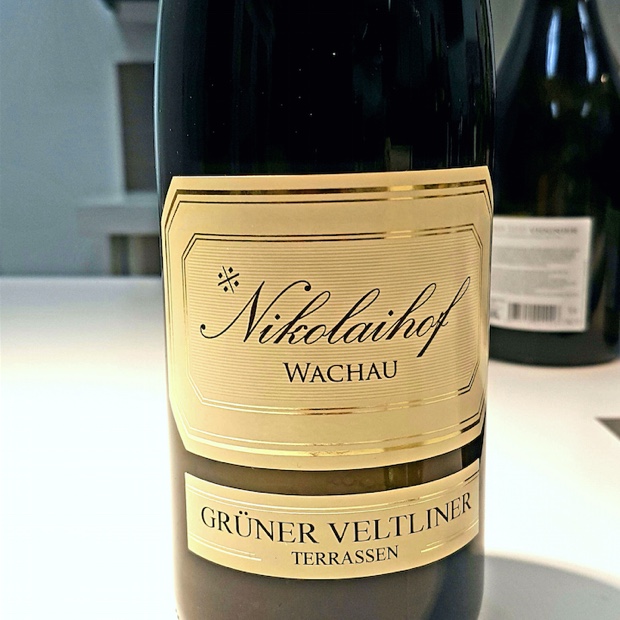
Loimer’s Terrassen is a Kamptal four vineyard Premier Cru (“Erste Lage”) schmear that is fermented in big wood barrels. The increased weight and body is helped along by extended time on the lees. The ligneous weave is underscored by wood spice and a waft of buff, calcareous Aeolian sediment. The character is as if this Langenlois is scenting a barrel ferment aura in a Chardonnay vein. Classic Grüner Veltliner that is all about texture. Will last for 10 or more years without shedding its baby fat.
Loimer Spiegel Grüner Veltliner 2012, Kamptal, Austria (agent, $64.95, WineAlign)
A site-specific Grüner Veltliner from the Speigel “Erste Lage” vineyard site, this is exemplary and definitive stuff. The 2012 vintage saw a two-day (May 16 and 17) frost that meant a 30 per cent loss in fruit. Not all vintages are profitable but ’12 is showing what top quality wines it was able to produce. A 12-month lay in Acacia barrels, natural vineyard yeasts and five months of aging on the fine lees have conspired for a climb to great Grüner heights. Blooming flowers, mellifluous honey and the freshest, most natural acidity abounds, elevating the aromatics and the buoyant flavours of just picked and bitten into apples. Tremendously wise and elegant wine.












 Godello