In the Campania of Vini Alois

There's a new obsession in town- #campania @vinalois #falanghina #greco #fiano #aglianico #pallagrello #pallagrellonero #palagrellobianco #cassavecchia #pontepellegrino #therealcampania #massimoalois #vinialois #brandnewdaywines #bndwines

There’s a new obsession in town- #campania @vinalois #falanghina #greco #fiano #aglianico #pallagrello #pallagrellonero #palagrellobianco #cassavecchia #pontepellegrino #therealcampania #massimoalois #vinialois #brandnewdaywines #bndwines

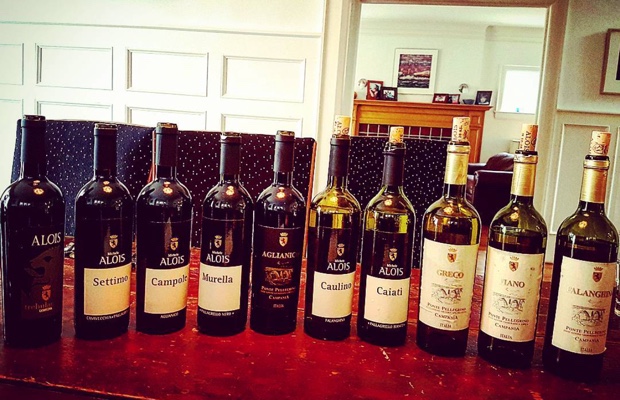
A few weeks back Devon Masciangelo of Brand New Day Wines and Spirits asked if I would have the time to taste through the full portfolio of Vini Alois. I first met Massimo Alois in the fall of 2014 when the Italian Trade Commission rolled out the red carpet at Toronto’s Roy Thomson Hall for the 19th annual tasting of Wines from Italy. At the time I was struck by Massimo’s varietal Cassavecchia called Trebulanum.

Related – Off the beaten Italian path

Last March a varietal Pallagrello Nero showed up through a VINTAGES In-Store-Discovery release and once again the light went on. With two memorable wines in the bank I was quick to respond to Devon’s request. IN! And then I broke two bones in my foot. So Massimo had to come to me, with BND chaperone Jarek Morawski. I don’t normally conduct tastings in my home but Massimo was happy to oblige.

Related – Eight is Enough

Massimo and his father Michele so perfectly fit the description I had considered after that Italian tasting two years ago. “You can’t help but notice that modern winemakers with a wistful eye are casting reflexively into the past with a hunger for vinous resurrection. By grafting their pre-Phylloxera ancient vines onto healthy root-stock they have turned the varietal compass on its head. As they have moved through their days with an open-mind to the panoply of grape interactions, they have beget the endemic revival. Old is new again. Meet the awakening of the Italian grape vernacular.”

Vini Alois is the dream of Michele Alois, his winery set amongst the Campania foothills of the Caiatini Moutains in the province of Caserta, on a plateau consisted of nine hectares. His family’s roots are in the silk business. “The name Alois is synonymous with quality in the production and creation of silk cloths that are present in the most famous rooms of the world: from the Italian Parliament to the White House, to the Louvre Museum. Born in 1885 in the time of Ferdinand IV of the Bourbon family, the Alois factory built a constant success under the head of the household, until 1992 when Michele Alois planted 9 autochthonous grape varietals and created a double activity for the already established family dynasty.”

Campania has enjoyed success from a holy trinity of whites, of Greco di Tufo, Falanghina and Fiano di Avellino. But it is in the higher altitudes and volcanic soils where these grapes, where aglianico and especially the ancient and endemic varietals, Casavecchia and Pallagrello, really find their special way. The Ponte Pellegrino “entry-level” wines from Alois should do very well and open the door to the rest of the portfolio. So thank you to Devon and Jarek for sending Massimo my way. Such a fascinating tasting to enforce the adage that endemic is the new vino da tavola.
pp

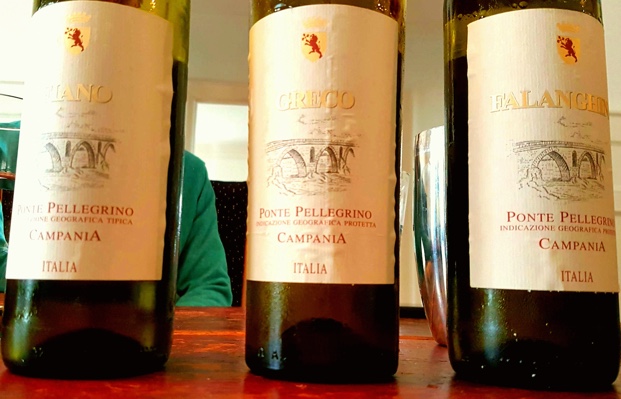
Ponte Pellegrino Falanghina 2015, Igp Campania, Italy (Agent, $17.00, WineAlign)

Tasted with Massimo Alois, the first of ten in a line-up covering two ranges, the Alois all estate and this Falanghina-Ponte Pellegrino from 10-15 percent estate plus purchased grapes from two provinces, Caserta and Benevento. There are approximately 200,000 bottles produced and the queu is so named for the tiny cellar and first vineyard location. This is honest to goodness spot on rich, almost waxy and very golden sunshine-amassed falanghina. It is blessed with such terrific acidity despite the warm but balanced vintage cast in a five-year span out of which systemization and harmonization change and challenge every year. This to Massimo is more like 2010, warm and balanced, unrelenting and typical in its assignment off of volcanic soil. Drink 2016-2018.  Tasted November 2016

Ponte Pellegrino Greco 2015, Igp Campania, Italy (Agent, $17.00, WineAlign)

Set up by Massimo Alois to be tasted between the falanghina and the fiano and for very good reason. The 200,000 bottle output of the Ponte Pellegrino “entry-level” wines are sectionally estate and regnant to the provinces of Caserta and Benevento. The greco channels more dry extract than the falanghina so conversely more weight and structure, a bit more intensity and acidity. This is true and yet foiled by a preserved lemon and chardonnay or chenin-like organoleptic quality from a wine that is not easy to vinify because it oxidizes easily. So here it resolves with such evolved flavours quite beautifully archived in a more than affordable entry-level package. Though it won’t age it presents for here and now pretty exposition. Draws less from its volcanic base and more from the clay. Drink 2016-2017.  Tasted November 2016

Ponte Pellegrino Fiano 2015, Igp Campania, Italy (Agent, $17.00, WineAlign)

Massimo Alois pours his fiano behind the falanghina and the greco in order to examine the ternary relationship between and the way in which the latter goes to great lengths to elicit strengths from the first two. This is a step up to an even richer pandemic Ponte Pellegrino from sandy soils in the provinces of Caserta and Benevento plus one seventh homespun estate fruit. The chomp down bite and elastic chew are subdued by a swelling tumescence on the palate, closer to greco than falanghina. Possesses that far reaches of the mouth acidity with similar weight to the greco. Really a best of both worlds Campania for either camp to seek indulgence, typicity and above board fiano relevance. Drink 2016-2018.  Tasted November 2016

Ponte Pellegrino Aglianico 2013, Igp Campania, Italy (Agent, $18.00, WineAlign)

So many things conspire to bring this provincial Ponte Pellegrino aglianico into perfect entry-level form here in the autumn of 2016. First and foremost is a sense of utter freshness from its gifted volcanic soil. Second is the less is more approach from Michele and Massimo Alois. Third is the volcanic terroir. Did I already mention that? It is presciently less pressed, smothered, angular, tannic and edgy than what secretes from other aglianico terroirs. Smoother in texture, red fruit redolent and potent from the Alois vineyard (60-70 per cent) and raised only in stainless steel. The question begs. Why doesn’t everyone make aglianico this way? The answer abjures. Because of the soil. Drink 2016-2020.  Tasted November 2016
alois

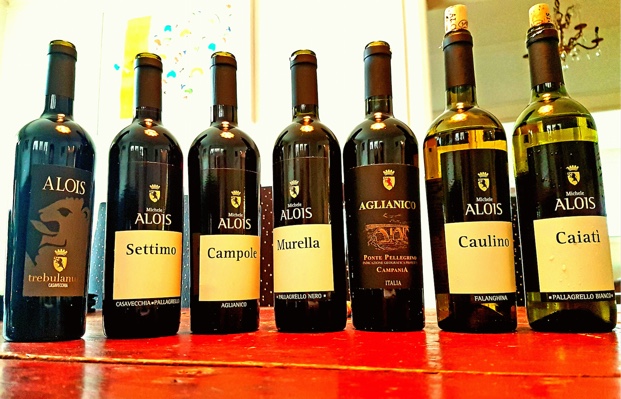
Alois Caulino Falaghina 2015, Igp Campania, Italy (Agent, $22.00, WineAlign)

Caulino is the estate grown falanghina raised of a totally different élevage than the Ponte Pellegrino. It is fermented for more than five to six weeks with regular batonnage and plenty of racking. Massimo Alois is seeking purity and clarity and so the lees are removed, always cleansing the wine. Immediate notice is given by the pure essence of stone edging to citrus, like kaolin liquified (go figure, with poetic namesake extrapolated license) or imagined from hydrous aluminum silica, like clay into china. Caulino comes by way of very low yields (less than 2kg per plant) and so the resulting inward impression is almost impossibly beautiful, so crisp and pure. There are less than 30,000 bottles made and you will note some bonafide structure and a real easy on the palate creaminess. If falanghina like this is approached with ulterior motives and misguided ways it will go dirty (torbido) as it is a grape (not unlike the others) very susceptible to the lees taking on microbes. Drink 2016-2020.  Tasted November 2016

Alois Caiatì Pallagrello Bianco 2014, Igp Terre Del Volturno, Italy (Agent, $27.00, WineAlign)

Caiatì is 100 per cent endemic to Campania pallagrello bianco, from the Casertan dialect “u pallarell,” or “small ball,” in reference to the grape’s tiny, round shape. Less than half (maybe 33 per cent or so) of the juice is racked to 3rd or 4th (neutral) oak, urged past malolactic with some batonnage into June for a long (seven month) fermentation. The other half makes use of some noble lees stirred once a month for four months in stainless steel. The two parts are bottled insieme after one year. Their accrued accumulation is nothing if not creamy, like unsweetened honey of naked, viscous purity. Such a grape requires the careful calculation of time, like this volcanic and limestone bianco grown at altitudes up to 900m on land friable with clay on the Caiatini Mountains. The name may carry little meaning passed down through generations but the wine shines like Chablis, albeit on a bank more fruit than mineral. Drink 2016-2021.  Tasted November 2016
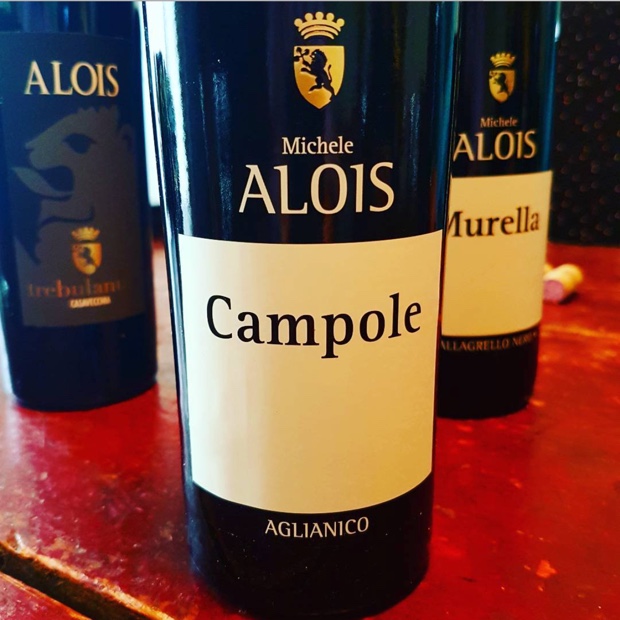
the-union-of-campania-massimo-vinalois-aglianico-and-volcanic-soil-magic-volcanicwine-campole-massimoalois-vinalois

The union of #campania. Massimo @vinalois #aglianico and #volcanic soil #magic #volcanicwine #campole #massimoalois #vinalois

Alois Campole Aglianico 2013, Campania, Italy (Agent, $22.00, WineAlign)

f you are looking for reasons or have ever wondered why aglianico is so difficult to grow successfully beyond Campania you only need a basic 101 sense of ancient geology. Or a few minutes with Massimo Alois. The Campanian simply doesn’t work in limestone insists Alois, why, because in such a terroir it goes strraight to the savoury and gets Damien mean. So if “you give me miles and miles of mountains…I’ll ask for the sea.” Or a volcano. Here from 100 per cent volcanic soil Campole comes across so naturally volcanic with blessedly terrific red fruit, like creamy rice cooked in aglianico, pulsating and alive. It’s simple really. “Volcanoes melt you down.” Drink 2017-2022.  Tasted November 2016

Alois Murella Pallagrello Nero 2013, Igp Terre Del Volturno, Italy (Agent, $30.00, WineAlign)

Pallagrello is native to the hills around the Campanian town of Caiazzo, and referenced in numerous historical texts, including the Roman “Pilleolata” from the work of Pliny the Elder. In the 19th century it was called by the name “Piedimonte Rosso.” The Pallagrello Nero from Alois sees 18 months in large (85 hL) botti followed by 18 in (25 hL) smaller 10-20 year old casks. The lengthy aging process is necessary for the rustic, natural, perfectly, expertly, so subtley volatile wine. Like greco in hot summers the varietal is subject to certain microbes and the conditioning brings a spicy, subtle volatility or “highlights.” The flavours recall salumi, in cured feelings of gastronomy and this is what makes this wine most drinkable. Such wise older barrel impart but a fruit expression with a citrus, limestone twist. Though this is ready for an immediate go it will offer a 10 year (from vintage) kind of ageablity. Drink 2016-2023.  Tasted November 2016

Alois Settimo Casavecchia Pallagrello Nero 2014, Igp Terre Del Volturno, Italy (Agent, $22.00, WineAlign)

Settimo is composed from casavecchia and pallagrello nero, a working combination of two Campanian horses, vinified separately and then thrown together. Well, not so much thrown as much as the pallagrello sidling up to the casavecchia left overs (as in second wine) after the top tier varietal Trebulanum. This is something special for a “second wine,” a national, seventh heaven, high-stepping over seven bridges affair bringing great breeds together. Shares affinities with high quality reds from disparate places, very Bordelais or perhaps even like a Rhône GSM. Savoury and decidedly Mediterranean, of black olive and tea, garrigue, herbal and dusty. Very cool. Drink 2017-2021.  Tasted November 2016
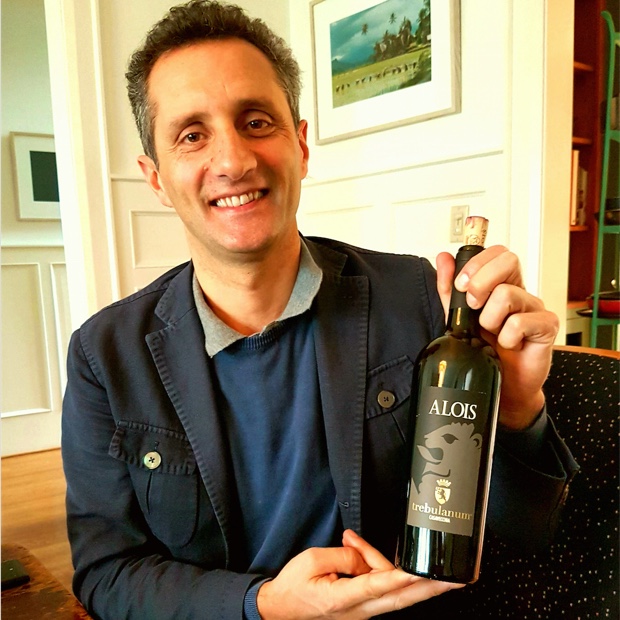
massimo-alois

Massimo Alois

Alois Trebulanum Casavecchia 2012, Igp Terre Del Volturno, Italy (Agent, $42.00, WineAlign)

Pliny spoke of a “Vinum trebulanum” from a place called Trebulanis in Campania. In Cicero’s letters a reference is made to Pontius’ house at Trebulanum. From high-level historical figures to a 21st century vine that survived Phylloxera and the parasite fungus of Oidio dated 1851,Trebulanum sits at the pinnacle of the Alois pyramid. The “old house” is from low-yielding hermaphroditic casavecchia, blessedly developed without tight bunches. The antithetical red Campanian, the organic varietal, so resistant to disease, hardy, tough and self-sufficient. Casavecchia is the “cleansed wine,” with 50 of the hL drawn from the 85 hL botti, while the other 35 go to Settimo. After separation it undergoes 18 more months in 25 hL casks, plus one extra year in bottle. A breath of Campania altitude and the frehest of air pervades the perfume. Here the hue is so much deeper, the wine deeply impressed. Unlike the Pallagrello or the blend this represents the perfectly natural expression of Campania, deep and pure. Flowers are redolent for the first time and then there is this exceptional note of citrus. So fresh, for now. I would expect this to gain a smoky stature, some porcine roast and naturally cured, nebbiolo-like tar and roses. Drink 2016-2022.  Tasted November 2016

Good to go!

Twitter: @mgodello

Instagram: mgodello
WineAlign

A common weal of September VINTAGES best buys

Innisfiil Sunflowers

Innisfiil Sunflowers

September has its share of excellence being revealed, particularly this coming weekend with the VINTAGES September 13, 2014 release. This is a perfect time to investigate the wares from this province. The weekend also marks the launch of the  initiative, in conjunction with Wine Country Ontario. Then on October 2nd, Wine Country is coming to the Royal Ontario Museum. There will be 255 wines poured by 55 producers at Taste Ontario.

Related – The LCBO and WineAlign go local

For years now the fine wine and premium spirits division of the LCBO, known benevolently to Wineontarians as VINTAGES, has been rolling out releases every two weeks. There are always somewhere between five and ten wines on each listing that, were I independently wealthy and helplessly wine obsessed in reckless abandon, would always buy. There are also upwards of 100 or more that I would not. Were I presented a glass half full, to most of them I would offer my thanks and sip away. There are also five to ten not worth the price of admission. As a member of the wine writer’s commonwealth of Ontario it is my trusted duty to help make sense of the bi-weekly barrage and to separate the wheat from the chaff.

Wine critics can be fussy people, tough mudders with palates sheathed by caparison. They can go from saying things like “not as good as the last shipment” to “I’m tired of tasting shit.” Even the most curmudgeonly of critics must play his part to promote the happiness, health, and wine safety of all of the people of a community. It is an honour to be trusted with a duty to taste, consider and then discard what is simply not right. The expectation and the responsibility is to find the most natural and honest wines made available, however fleeting and rare the opportunities may be.

Here are four from across the pond and 10 Ontario wines being unpacked onto LCBO shelves as we speak. Get out there and #LCBOGoLocal.

From left to right: Flat Rock Riesling 2013, Château Saint Estève Corbières 2011, Palazzo Maffei Ripasso Valpolicella Superiore 2011, Rosehall Run Cuvée County Chardonnay 2011, Peller Estates Private Reserve Cabernet Franc 2011, Southbrook Triomphe Cabernet Franc 2012, Thirty Bench Red 2012                                      Photos: Jason Dziver

From left to right: Flat Rock Riesling 2013, Château Saint Estève Corbières 2011, Palazzo Maffei Ripasso Valpolicella Superiore 2011, Rosehall Run Cuvée County Chardonnay 2011, Peller Estates Private Reserve Cabernet Franc 2011, Southbrook Triomphe Cabernet Franc 2012, Thirty Bench Red 2012 Photos: Jason Dziver, Photographer (http://www.jasondziver.com/)

Flat Rock Riesling 2013, VQA Twenty Mile Bench, Ontario (43281, $16.95, WineAlign)

The FR Riesling cover girl gets a swift kick in the backside by gas blanketed, dehydrated pear and a sprinkle of rock sugar. Citrus peel, candied again, with medicinal silt. Rocky Riesling spread liberally across a horizontal canvas. From my earlier April 2014 note: “Just bottled a few weeks ago so the note to self is to expect a subtraction of preoccupation. Anything but. Though not as frantic as the Nadja’s sampled from tank back in February, the preview to the ’13 Estate is in show of so much zest, premature acidity and an overly enthusiastic outpouring of juicy emotion. The scraped zest is present in every respect, along with green mango, Himalayan salt and a squeeze of lime. There is attitude and altitude from this precocious Riesling and there’s no doubt it and the ’13 Nadja will be better than anticipated out of tank. Forget the infancy, wow is it showing well.”  Last tasted August 2014  @Winemakersboots  @brightlighter1  @UnfilteredEd

Château Saint Estève Corbières 2011, Ap, Languedoc-Roussillon, France (377218, $17.95, WineAlign)

Corbieres excellence. Nothing funky going on here. A minor amount sees the inside of the fûts but how great it is to find such a clean, fruit forward, straight from the tank example. Made from (40 per cent) Grenache, (30) Syrah, (20) Carignan and (10) Mourvèdre. Certainly showing modern fruit but the low yield (35hl/ha) altruism and cleanliness is next to Midi-ness. A touch of chalk and milky chocolate with some vanilla and lavender too. Simple, effective (if a touch soapy) French red.  Tasted August 2014

Palazzo Maffei Ripasso Valpolicella Superiore 2011, Doc (338913, $17.95, WineAlign)

This is a massive Valpolicella, fully enriched by chocolate in countless ways, on many levels and in dry ice dreams. It’s a baby Amarone incarnate and if you are going that route, try this on instead for a mere pittance at $18. Huge wine, with exaggerated mannerisms in oak and high alcohol, though not volatile, even if the structure is value-driven pedestrian. Will work for a welcoming, big-hair crowd.  Tasted August 2014  @HHDImports_Wine

Rosehall Run Cuvée County Chardonnay 2011, VQA Prince Edward County (132928, $21.95, WineAlign)

Today Dan Sullivan’s Chardonnay concentrates on its excellence while compressing in reduction. Beyond the encapsulating abstraction there are the rocks beneath the earth and by extension, the vines of hard-working fruit. Fruit surrounded by the spice of barrel. Tasted extensively over a 24 hour period I found this walks the line, takes on all comers, hovers over and has the guts to merely sigh at the distractions. Give this Chardonnay years, more than most, perhaps even 10 plus. In 2011, Chablis trumps barrel.  Tasted August 2014  @Rosehall_Run  @sullywine

Peller Estates Private Reserve Cabernet Franc 2011, VQA Four Mile Creek, Ontario (598078, $21.95, WineAlign)

A touch of reduction but the thought goes straight to serious wine and attentive winemaking. The barrel is not king, the fruit big and boisterous. It’s a bit hyper-fruity, steroidal even but it is anything but thin and certainly not encumbered by process or wood. A hint of soap is a detractor admittedly, but the acumen and level of higher learning is evident and commendable. This will be a wine to look at for years to come.  Tasted August 2014  @PellerVQA

Southbrook Triomphe Cabernet Franc 2012, VQA Niagara On The Lake, Ontario (275958, $21.95, WineAlign)

The 2012 Triomphe Cabernet Franc receives a meld of mellow, blending support from 12.4 per cent Merlot and the marriage is quietly non-contentious. That blending decision by winemaker Ann Sperling, along with the praiseworthy choice to forego obtrusive oak is as good as a golpe on the Niagara Cab Franc oeuvre. The use of large format (80 hectolitre), no splinters allowed oak vats over wood spice and milkshake imparting barrels is an easy swallow for sore palates. The ’12 Triomphe is an elongated and elastic Cab Franc, with nary a foray into the tobacco, bell pepper and cloying currant currency of so many predecessors. The co-fermenting of disparate, north and south, estate blocks in those vats has done wonders on the preservation of a warm vintage’s, judiciously picked (21.8 per cent brix at harvest) fresh fruit. Terrific decisions all in for a highly accessible, brand and varietal ambassador for Niagara.  Tasted August 2014  @SouthbrookWine

Thirty Bench Red 2012, VQA Beamsville Bench, Ontario (320986, $24.00, WineAlign)

Big red machine, really ahead of the class, especially in this price range, with this much stuffing. A full complement of fruit, bushy and falling just as it’s picked from the trees, not to mention quality, quality, sweet earth. This is jazzy, boozy and sparked, from ‘round midnight, smoky, exotic and global. Has the discipline of a monk to groove low and low, the stuffing and Thelonious tannin to boot. Wait for it, let the band play then give way. The solo will be fantastic.  Tasted August 2014  @ThirtyBench

Norman Hardie Unfiltered Niagara Pinot Noir 2011, VQA Niagara Peninsula

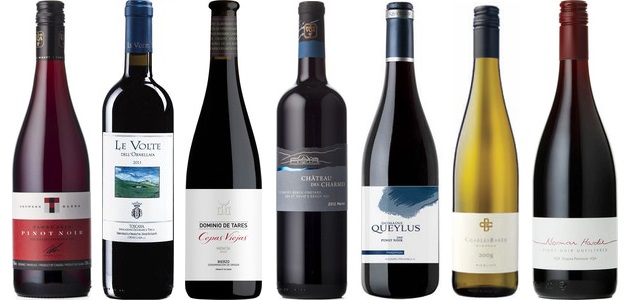
From left to right: Tawse Pinot Noir Growers Blend 2010, Tenuta dell’Ornellaia Le Volte Dell’ornellaia 2012, Dominio De Tares Cepas Viejas Mencia 2009, Château Des Charmes Merlot St. David’s Bench Vineyard 2012, Domaine Queylus Tradition Pinot Noir 2011, Charles Baker Wines Riesling ‘Picone Vineyard’ 2011, Norman Hardie Unfiltered Niagara Pinot Noir 2011 Photos: Jason Dziver, Photographer (http://www.jasondziver.com/)

Tawse Pinot Noir Growers Blend 2010, VQA Niagara Peninsula, Ontario (284570, $26.95, WineAlign)

Where at one time the GB Pinot Noir fought among its moving parts it now sits in permanent cease-fire mode. A position that realizes warm fruit, settled wood spice and linear acidity. Needs no more scaling or ropy ascension. It has reached the planing platform and going forward will glide effortlessly back down to ground. Where it began. From my earlier October 2013, April and May 2014 notes. “Though it’s a blend of several sites, this Tawse Pinot stands alone and of itself as a grower; it grows on you after multiple tastings. The first go ’round seems simple, vintage warm and tight. Taste again and the sappy wood seeps mineral, the phenolic red cherry ripeness turns black and the tempering is led by a sweet earth kind. Earth that smoulders in a rising Zeppelin kept afloat by tobacco and the swirling spores of pungent mushroom. Pinot Noir truth and value from a Niagara house of the holy kind. “You know-whoa, that’s right.” The univocal Pender perfume permeates the Tawse stable of Pinot Noir and seems only magnified in the multiple site Grower‘s Blend. Vintage related warmth and inferable incrassation of fruit. Delves into a deep connection to disparate lands possessive of a common goal.  As if making wine is “your taste combined with all the years of wasting time.” Graceful Pinot Noir with moments touched by hot rocks, toasted red rice, a gentle smoulder and delicate grains of sand.”  Last Tasted August 2014  @Tawse_Winery  @Paul_Pender

Tenuta dell’Ornellaia Le Volte Dell’ornellaia 2012, Igt Toscana (964221, $26.95,WineAlign)

What can you say about Le Volte? Is she the most immediately rewarding, fruit forward and accessible Super Tuscan ever put on offer? Does this cuvée  of Merlot (50 per cent), Sangiovese (30) and Cabernet Sauvignon (20) offer a portal through which to peer into the future of the Ornellaia grande? From a warm but not excessively hot season, the fruit teases, like a kiss that leaves a lipstick stain on the cheek, a taste that makes you crazy and dreaming of more. Time spent in barrels once used by the matron first wine equates to a morning of chocolate, Nutella and cappuccino in the piazza. Full on, with much more texture than ever before. She is beautiful, but is her beauty fleeting? Drink over the next two to four years.  Tasted August 2014  @Ornellaia  @AuthenticWineON

Dominio De Tares Cepas Viejas Mencia 2009, Bierzo, Spain (379891, $26.95, WineAlign)

Fruit for this Bierzo is from old vines and is aged in a combination of French and American oak. An industrious rolling stone and two steps up example above and beyond for what usually passes as basic and simple Mencia. The Dominio de Tares is exactly the reason to ante up. Bierzo as a region produces exceptional quality wines at this price point but suffers a stenosis in the lower ranges. Here the intoxicating and delicious fumes are resonant of just caramelizing brown sugared fruits, formidable though sweet tannins and an enveloping that’s “all right now, in fact, it’s a gas” Displays and prances about with an incredible amount of energy and jumping jack flash. “It’s a gas, gas, gas.”  Tasted August 2014  @oenophilia1

Château Des Charmes Merlot St. David’s Bench Vineyard 2012, VQA St. David’s Bench, Ontario (453431, $29.95, WineAlign)

The vintage does Merlot a wondrous gifting and coupled with what strikes as an unusual salinity, this is a most unique take on the Merlot perspective. In the middle vacuum what is expected takes a turn; shaken, crushed berries with chocolate shavings and brushstrokes made by a weighty utensil but in the end it returns to the vintage specific layering. Well made with caveat to and from Merlot.  Tasted August 2014  @MBosc

Domaine Queylus Tradition Pinot Noir 2011, VQA Niagara Peninsula, Ontario (392738, $29.95, WineAlign)

The passion from the Thomas Bachelder Niagara project has shifted into Domaine Queylus. With no disrespect to Thomas’ eponymous bottling from vineyards so nearby, the quality time has now been granted the Tradition. Here lies Mountainview and Le Petite Colline earth, here crushes Niagara cherries in hand, juice running down a clay caked forearm. Fresh and bright yet streaked by chalk and enveloping brush stroke. Sour? For a flash but in neither malic nor astringent form. This is a must buy. From my earlier June 2014 note: “Reverberates with the unmistakable calling card character of the storied Neudorf family La Petite vineyard with equal and opposite amounts of attraction and new life breathed in by the Lincoln Lakeshore fruit. Ethereally sifted earth of old meets cherries of new. Enriching Pinot Noir, a bit gangling like a primitive young giraffe but near to finding its legs. Hard working red, insistent, confident and having already paid some dirty fingernail dues. Excellent length.”  Last tasted August 2014  @QueylusVin

Charles Baker Wines Riesling ‘Picone Vineyard’ 2011, VQA Vinemount Ridge, Ontario (241182, $35.20, WineAlign)

You can take Riesling from out of the Vinemount Ridge but you can’t take Vinemount Ridge out from a Charles Baker Picone. The layers of tectonic shale and the slowly espressed fruit that swim within the waves of those layers make for the total oscillating package. Has moved nowhere, not sideways even, since last tasted, though today, from this bottle, there’s an awkward, shy adolescence. From my earlier May 2014 note: “Some sweetness now, but not in a flirting way. This will be a September VINTAGES release (with pink on the label as part of an LCBO/Princess Margaret fundraiser). Has not so much evolved but rather “come groovin’ up slowly,” since last tasted. Still got “joo joo eyeballs,” still tough in tension. Years left before it will come together, yeah.” From my earlier, October 2013 note: “does not so much pick up where cracking ’09 left off (with no offence meant to the soothing and tuneful ’10) but rather re-writes the Baker book. From the almost famous windswept vineyard atop the Vinemount Ridge, this Picone, from older Riesling plantings is crazy lively. That ’10 is now imbued with rich, oily glück. The ’11 will realize such a future, but much further along and in combination with its inborn tension. Right up there with Baker’s “perfect vintage” 2006.  Last tasted August 2014  @cbriesling  @StratusWines

Norman Hardie Unfiltered Niagara Pinot Noir 2012, VQA Niagara Peninsula, Ontario (125310, $39.00, WineAlign)

This County ’12 by Norman Hardie needs fresh air, County air and time. Leave the wine alone in bottle counted out in five years time. There is pure intensity in aerified flight. Shows length, persistence, purity, phenolic ripeness and in time will show its ability to wade across raging rivers. From my earlier April 2014 note: “Hardie’s 2012 County Pinot Noir is a beacon, a flashing light on the shore, an invitation to copycats because this is what making red wine from limestone foundations is all about. To taste this ’12 is to experience Hardie’s purest berry maceration and distillation to date. It’s as if there was no alcohol present and in fact, at 11.5 per cent it is a modest and transparent pronouncement. Longevity may not bless the ’12 as in other vintages but this is certainly the most groomed and coiffed County Pinot Noir.” From my earlier October 2013 note: “Cuts a rug with immense, stepping out juicy behaviour. It’s both turntable old-school, astatic in smooth groove rotation, but also digitally forward thinking towards a perdurable future. The nose is Norm’s most intense floral burst to date, with incredible brightness and sparkling acidity in the key of fresh plum. This brings to mind indelible Burgundy, enveloped in PEC’s warm ’12 blanket. Hardie’s measure of consistency abides in a Pinot of parity and undemanding polish.”  Last tasted August 2014  @normhardie

Good to go!

In a Pinot Noir province of mind

Niagara

Save for the Oregonian version, Ontario has become the place to produce Pinot Noir out of soils not called Côte de Nuits or Côte de Beaune
Photo: Rilasata/Fotolia.com

as seen on canada.com

No other grape causes more of a stir, is responsible for more hair to fall and breaks more hearts. It doesn’t play well with others. It refuses to share, to be blended, to give anything less than 100 per cent. For many, there is no other variety. How often does a conversation begin with “what is your favourite wine” and end invidiously with “Burgundy?” End of argument. Nothing more to discuss. While Burgundy certainly persists as the historic locale possessive of the title “when it’s great, it’s the best,” Pinot Noir has flown the coop. The expatriate extraordinaire has migrated about the globe and is no longer always a wannabe facsimile where it’s now grown and bottled.

A bold statement to be sure is coming, now. Save for the Oregonian version, Ontario has become the place to produce Pinot Noir out of soils not called Côte de Nuits or Côte de Beaune. The argument finds root in the climate (cool) and the terroir (ideally suited). The anomaly that is this season’s Polar Vortex notwithstanding, Ontario’s weather is Pinot weather. The thin-skinned variety thrives in Ontario’s typical autumn conditions, maturing evenly and with a phenolic ripeness necessary to fulfill complex tendencies. Soil could not compose itself any better. The huge rock beneath the surface in Prince Edward County screams Pinot Noir, if by way of Burgundy. The Niagara Escarpment and its foothills beg to support Pinot vines. No, really. Go stand in the Lowrey Vineyard on the peninsula. The land beneath your feet will whisper sweet Pinot nothings into your ear.

Arguing the meritorious benefits of grapes and specific sites is an exhausting though compulsory one. I have been a staunch supporter of the need for planting Riesling and Gamay everywhere. Ontario can and will do no wrong with these varieties, whether it be PEC, LENS or any Niagara Peninsula terroir. Chardonnay too, though it produces the greatest wines in the appellations of the Beamsville Bench, Twenty Mile Bench and Vinemount Ridge. The benches likewise work wonders for Cabernet Franc, though many producers make terrific renditions down by the lake.

Pinot Noir requires more site-specific consternation. The learning curve inhabited by our top Pinot producing stars has pinpointed certain neighborhoods that support their clairvoyance and expensive habits. Norman Hardie knows the Pinot innuendo of both Prince Edward County and the Niagara Peninsula. Hardie’s Unfiltered 2012 ”brings to mind indelible Burgundy, enveloped in PEC’s warm ’12 blanket.” Thomas Bachelder makes Pinot in Burgundy, Oregon and Niagara, but it is his Lowrey Vineyard 2011 that blows my mind. “The somewhereness of this St. David’s vineyard can’t be denied, and in the hands of Thomas Bachelder the extraordinary happens.” The micro-terroir studies of Ed Madronich and Jay Johnston is the stuff of quantum eonology. The Summit Block 2011 does “impossible Burgundy,” between a Flat Rock and an escarpment.

So where is the best site for making Pinot Noir in Ontario? Prince Edward County? Twenty Mile Bench? Beamsville Bench? Vinemount Ridge? St. David’s? Has the industry matured to such a level that a Cru system should now be defined? The answer may not be forthcoming today but it’s just around the corner. Pinot needs to be cultivated and fostered so that plots can continue to be identified and qualified. The future of the industry depends on it.

I have recently tasted more than 30 Ontario Pinot Noir. Many are worthy of a second look and more than a dozen a place in my cellar. Here are notes on five more, all deserving of their place in the Pinot sun.

From left: CAVE SPRING PINOT NOIR DOLOMITE 2011, INNISKILLIN MONTAGUE VINEYARD PINOT NOIR 2011, TAWSE GROWER'S BLEND PINOT NOIR 2010, HIDDEN BENCH ESTATE PINOT NOIR 2010, and 13TH STREET ESSENCE PINOT NOIR 2010

From left: CAVE SPRING PINOT NOIR DOLOMITE 2011, INNISKILLIN MONTAGUE VINEYARD PINOT NOIR 2011, TAWSE GROWER’S BLEND PINOT NOIR 2010, HIDDEN BENCH ESTATE PINOT NOIR 2010, and 13TH STREET ESSENCE PINOT NOIR 2010

CAVE SPRING PINOT NOIR DOLOMITE 2011, VQA Niagara Escarpment, Ontario (26351, $21.95, WineAlign)

Part Beamsville Bench (70 per cent) and part Twenty Mile Bench (30), this best of both worlds Pinot is full of calcium magnesium carbonate, Jurassic bark. Playful as opposed to angry, this is not so much Snoop Dogg’s Dolomite but more like an animated Futurama. Seduces with a sweet red berry entry and bound by a really fine acid/tannin/fruit balance. Admittedly not overly complex but for the price it shows good structure. As far as Pinot goes, this one is a made for beef or rack of veal.  89  Tasted October 2013  @CaveSpring

INNISKILLIN MONTAGUE VINEYARD PINOT NOIR 2011, VQA Four Mile Creek, Niagara Peninsula, Ontario (997353, $24.95, WineAlign)

Montague is a single-vineyard child of rain and heat. The flux of the growing season translates to a troubled and disjointed youth; musty, earthy and unforgiving. Still this Inniskillin is thick, unctuous, sharp, chewy and while currently situated on the darker side of Pinot, all this will change. Not yet showing what he is, the ’11 will “keep on keepin’ on, like a bird that flew,” and eventually be tangled up in blue.  89  Tasted October 2013  @InniskillinWine

TAWSE GROWER’S BLEND PINOT NOIR 2010, VQA Niagara Peninsula, Ontario (130989, $26.95, WineAlign)

The univocal Pender perfume permeates the Tawse stable of Pinot Noir and seems only magnified in the multiple site Grower‘s Blend. Vintage related warmth and inferable incrassation of fruit. Delves into a deep connection to disparate lands possessive of a common goal.  As if making wine is “your taste combined with all the years of wasting time.” Graceful Pinot Noir with moments touched by hot rocks, toasted red rice, a gentle smoulder and delicate grains of sand.  90  Tasted October 2013  @Tawse_Winery

HIDDEN BENCH ESTATE PINOT NOIR 2010, VQA Beamsville Bench, Niagara Peninsula, Ontario (winery, $40, WineAlign)

Clean, pure and crisp. As if raspberries covered in Beamsville dirt with an underlying lurk of grain and tannin. Crackling Pinot studded by caper berry and a sheer Mediterranean point of view. From an earlier note: “Takes my previous impressions to a higher plane. Standing correct by calling it a “a vintage relative release” but it’s so much more than “a quaffable, generous fruit sui generis.” Beets turn into plums. Opaque hue reminds of graceful Nebbiolo with a dancer’s legs in aperture. Wins in judicious use of French wood. Tannins persist in the rear-view mirror. Big ’10 that speaks of another level in Beamsville Pinot Noir. “Think about it, there must be higher love.” 91  @HiddenBench  @BenchVigneron 

13TH STREET ESSENCE PINOT NOIR 2010, VQA Niagara Peninsula, Ontario (237222, $44.95, WineAlign)

Only the second coming of The Essence. Lucid, willing and able Pinot Noir from an assemblage of fruit sourced across the region. Atypical in that sense, speaking to a broader range of terroir and to a wider audience. Breadth and depth much like a Côte de Beaune, earthy of serious dirt layered over top a cherry core. Attention now and for five plus years is needed because though to taste it’s currently confounding, time will see more complexity, development and emerging emotion. It will then solicit a cry of  ”baby, sweet baby, you’re my drug. Come on and let me taste your stuff.”  91  Tasted October 2013  @13thStreetWines

Good to go!