Ten best buys for June 25th

Summerland, Okanagan Valley, British Columbia

Summerland, Okanagan Valley, British Columbia

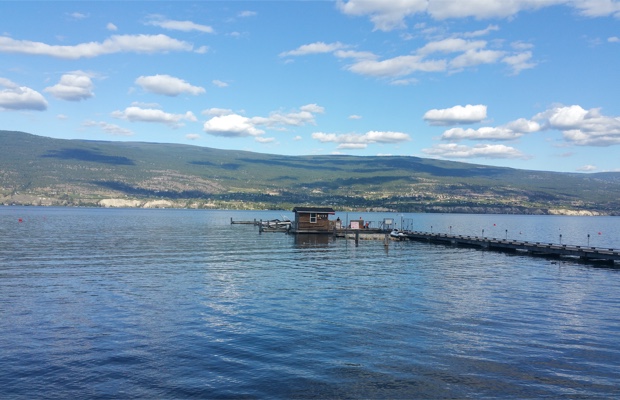
The Okanagan has my full, immediate attention, that and 1,525 wines from across Canada at the great show. We call them the WineAlign National Wine Awards of Canada, a.k.a. The Nationals and I will be judging all week from this glorious set of benches and hills in the golden west. Until next week, here are 10 picks from the June 25th VINTAGES release…Godello.

Jardin

Jardin Inspector Péringuey Chenin Blanc 2014, Wo Stellenbosch, South Africa (443473, $15.95, WineAlign)

A reductive chenin blanc with a distinctive struck stone aroma. With two minutes air the chenin begins to assert itself and from its Stellenbosch origins. Grest preserved and compressed citrus, lively acidity, soul from soil tang and terrific intensity. Length extrapolated from price of a better than good equation. Drink 2016-2019. Tasted June 2016  @Jordan_Wines  @AbconWine  @WOSACanada  @WOSA_ZA

Domaine Les Yeuses Les Épices Syrah 2013, Igp Pays D’oc, Languedoc-Roussillon, France (177584, $15.95, WineAlign)

Consistently one of the greatest Syrah values on the planet, Les Yeuses smells like the Northern Rhône with familial ties in the Swartland. Smoky and meaty, spiced with all hues of peppercorn, deep and variegated. A remarkably complex syrah for a pittance. Like cassoulet, “it’s a little bit of this and a little bit of that.” Even better with a whole roast; duck, chicken or hip of beef. Drink 2016-2019.  Tasted June 2016  @les_yeuses  @cartowines  @LanguedocWines
El Gordo

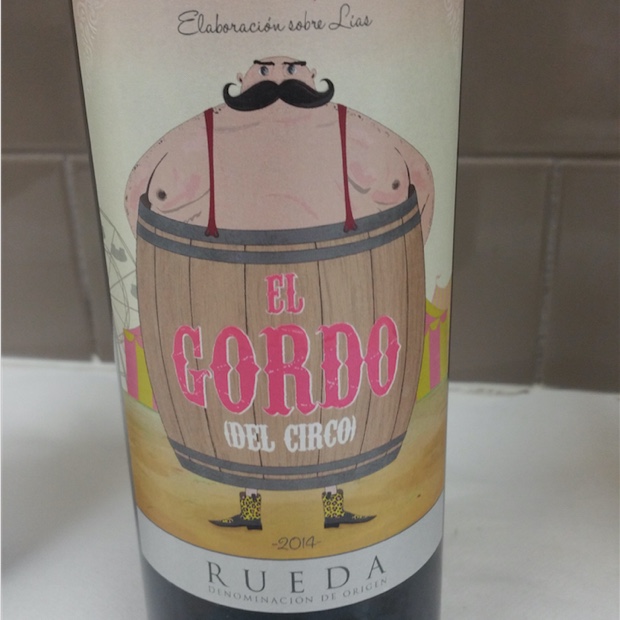
El Gordo Del Circo Verdejo 2014, Do Rueda, Spain (441220, $17.95, WineAlign)

The ballad of El Gordo is a soft and fuzzy peach big star. Yes this tastes just alot like the candy but with sweetness replaced by savour. This carries a country riff and electric tang of commercial, albeit alternative broadcast feel. El Gordo is El Goodo, verdejo to sip when “it gets so hard in times like now to hold on.” Rueda for the people, like a #1 record that stands the test of time even if it never really sold all that well. Drink 2016-2018.  Tasted June 2016 @RutaVinodeRueda  @WineLoversAgncy
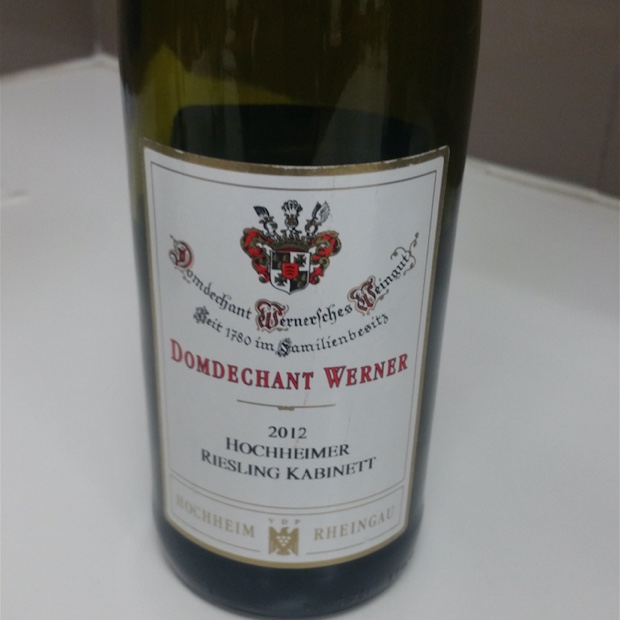
werner

Domdechant Werner Hochheimer Riesling Kabinett 2012, Rheingau, Germany (722413, $21.95, WineAlign)

A terrific off-dry riesling with intense tart flavours and omnipresent circulating acidity. A range or stone fruit invades the aromatics; peach, apricot and nectarine. Tropical yes but grounded, struck flinty and so full of energy. One sip and feel the energy buzz, the lightning strike, the rush of adrenaline. Amazing. Drink 2018-2025.  Tasted June 2016     @HHDImports_Wine  @germanwineca

cahors

Château Eugénie Cuvée Réservée De L’aïeul Cahors 2013, Ac Southwest, France (295949, $22.95, WineAlign)

This is a striking malbec with bursting aromas, mostly floral but also of an inhalant that elicits modern sangiovese, from grosso to Gran Selezione. It is rare for malbec and also Cahors to be imagined as born in an ancient cellar yet having come to fruition in a modern vineyard. This cuvée is a major step up from the house’s basic malbec, with deep, profound fruit and restraint found. Barrels and soil funk are certainly part of the mix, but so is traditional acumen. Beautifully crafted and structured red that will benefit from two years settling. Drink 2018-2025.  Tasted June 2016   

HB

Hidden Bench Estate Riesling 2014, VQA Beamsville Bench, Niagara Peninsula, Ontario (183491, $23.95, WineAlign)

The thing about a Hidden Bench riesling is its ability to mark a bench twain. Neither dry and stark nor sweet and unctuous, the balance struck is a factor of the house. This 2014 carries the strong torch of energy and vitality but it seems a bit more arid and direct than before. The lemon condense is at an all time high, the major zest and minor pith as important as the juice. Would like to see this find some age. Drink 2016-2021.  Tasted June 2016  @HiddenBench  @BenchVigneron

tawse

Tawse Laundry Vineyard Cabernet Franc 2012, VQA Lincoln Lakeshore, Ontario (130997, $31.95, WineAlign)

The richest and deeply phenolic Laundry Vineyard cabernet franc, likely to date, from fruits of labour expressed with plum, red currant, Ontario strawberry and raspberry compote, so much so that it warms the heart. Wood is but a blanket to keep the draught out, nothing more and it will slowly peel away as the years roll on. The spice in here is so beautifully baking with home kitchen delight. The sweetness is pure extraction, dry and rehydrated. Paul Pender’s management in Laundry ’12 is one of his finest works to date. You could absolutely drink this now and also watch it slowly turn over 10 years time. Might it have been the last? Drink 2016-2022.  Tasted June 2016  @Tawse_Winery  @DanielatTawse  @Paul_Pender

Cuvée Du Vatican Châteauneuf Du Pape 2012, Ac Rhône, France (719120, $38.95, WineAlign)

Though you know it’s going to be a big Rhône red it hits you anyway, with waves over the head by ripeness and mineral intensity. While balance is a four letter word in wines like this, you have to grow up and mature a bit to appreciate the nuance hidden in the brawn. There is nothing shy about Châteauneuf-du-Pape these days and especially in bottles like this, of unabashed hedonism and enthusiasm. This Sixtine will drink as it precociously does like this for a decade because the structure and the burly bones will take long to break. Drink 2017-2024.  Tasted June 2016  @VINSRHONE  @RhoneWine

Domaine Michel Juillot Mercurey Les Champs Martin 1er Cru 2012, Ac Burgundy, France (455089, $45.95, WineAlign)

This is a most beautifully volatile pinot noir that represents more than virility and exceptional quality for the village. Mercurey can be tough as nails and while the undercurrent here is firm, rigid and unbreakable, the roses are nothing short of flattering, hypnotizing and intoxicating. What this Mercurey lacks in preciousness it more than makes up for in talent, strength of character and trailing length. Drink 2018-20225.  Tasted June 2016  @TheCaseForWine   @BourgogneWines  @bourgognespress  

Bott

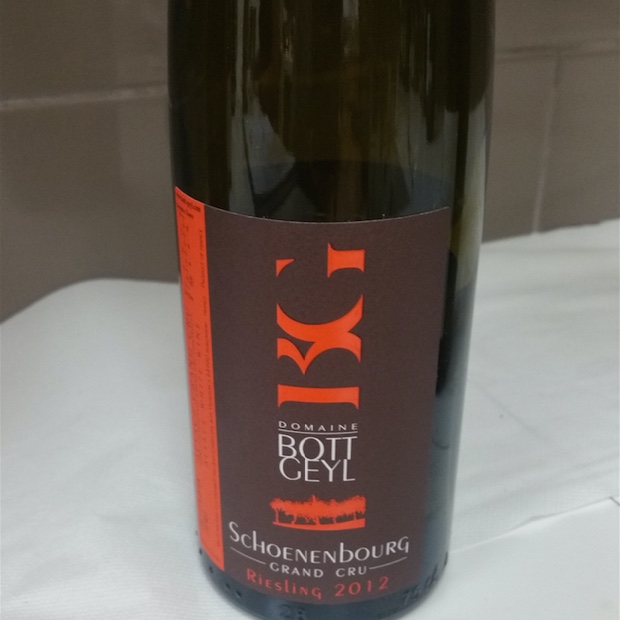
Domaine Bott Geyl Schoenenbourg Grand Cru Riesling 2012, Ac Alsace, France (456970, $50.95, WineAlign)

Incredible richness seeps from Christophe Bott-Geyl’s Schoenenbourg riesling, with alternating layers of aridity and tannic sweetness. So different from Bott-Geyl’s Mandelberg, in which early morning sun and hastily picked fruit resolves a more unctuous, nearly tropical expression. Here out of marl-gypsum you note the scratched and scraped stone, the liquid left behind as whitewash residue, the sugar playing upon that rock, devouring the mineral, defining the wine. It’s all quite remarkable. The Schoenenbourg lingers forever. Drink 2016-2022.  Tasted June 2016  @bott_geyl  @VinsAlsace  @AlsaceWines  @drinkAlsace  @VinsAlsaceQc
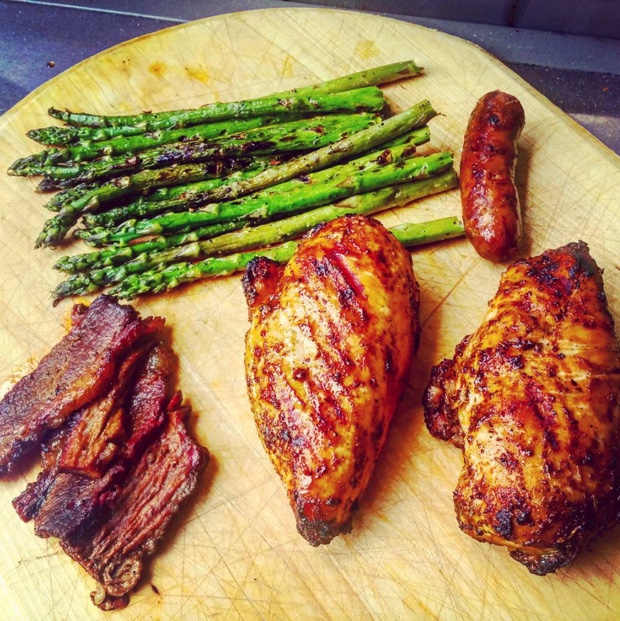
Why wouldn't you grill #asparagus and why wouldn't you use @barquebbq rubs?

Why wouldn’t you grill #asparagus and why wouldn’t you use @barquebbq rubs?

Good to go!

Twitter: @mgodello

Instagram: mgodello
WineAlign

Facebook

The froth on Crémant d’Alsace

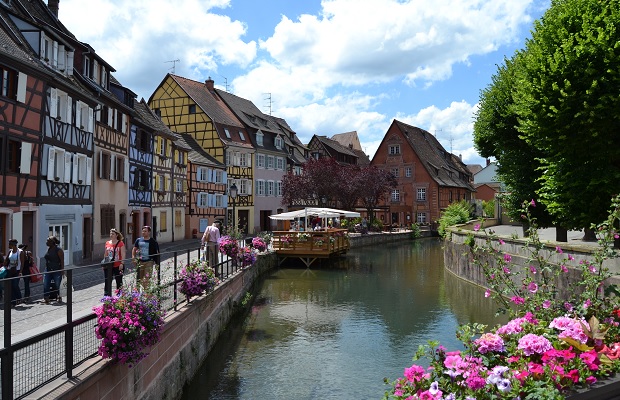
Colmar Canal PHOTO: Cassidy Havens, http://teuwen.com/

Colmar Canal
PHOTO: Cassidy Havens, http://teuwen.com/

The production of fizz by way of secondary fermentation in bottle is nothing to be ignored in Alsace. More than one in every five wines forged from the region’s vines is filled with bubbles. Most recently (in the past 18 to 24 months), certain things have come to light. A salient spike has been witnessed, with Sparkling wine increasing from 15 to more than 20 per cent of the region’s annual wine production. This means that Alsace now ranks second in France with a yearly production of more than 30 million bottles.

Six grape varieties are permitted for the production of Crémant d’Alsace; Auxerrois, Chardonnay, Pinot Blanc, Pinot Gris, Pinot Noir and Riesling. Chardonnay can only be used for Crémant and only Pinot Noir may be fermented to bottle a Rosé. More rules must be followed like grapes having to come from vines into its’ 3rd growing season and wines must rest a minimum nine months on the lees before bottling. Most lay longer, which helps to define this genre of Crémant’s creamy texture, matched in contrast by its stony, flinty and mineral style.

The effervescence of Crémant d’Alsace is known as prise de mousse. Basic wine is bottled with liqueur de tirage for second fermentation. Bottles are left to rest sur latte. Autolysis occurs and the dead yeast is removed by way of remuage. After aging on the fine lees, bottles are turned, deposits form in the collar, brought to the freezing point, evacuated by carbonic gas and replaced in volume by liqueur de dosage or liqueur d’expedition which yields a Crémant d’Alsace of three styles; Brut, Sec, or Demi-Sec. A balanced vintage for sparkling in 2012 yielded 270,000 hl of Crémant d’Alsace.

During my week in Alsace and with thanks to the Conseil Interprofessionnel des Vins d’Alsace (CIVA) I was able to taste more than 30 producer’s Crémant. Here are my notes on 14.

Crémant d'Alasace at Domaine Steuntz-Buecher

Crémant d’Alasace at Domaine Steuntz-Buecher

Jean-Marie Haag Crémant d’Alsace, tasted at Domaine Stentz-Buecher with Les diVINes d’Alsace

Exemplary bubbles from Soultzmatt in la Vallée Noble, 20 km south of Colmar, from out of clay-limestone soils. Grapes here are Pinot Blanc, Pinot Auxerrois, Riesling, Pinot Gris and Pinot Noir. A close-knit aridity and platinum tang are pronounced in an idiomatic lees-inflected language with a lightly oxidized lilt. A retaining wall of freshness and a slice of bitter honey-almond tart round out the complexity, intended or not, with elevated levels of Pinot vibrations making themselves known. Calls for a must return to see if it’s a one-off or a truly significant house style. Drink alongside a salty buffet.

Valentin Zusslin Crémant D’Alsace Sans Souffre Brut Zero, tasted at Domaine Stentz-Buecher with Les diVINes d’Alsace

The old vines blend from Clos Liebenberg is predominantly Pinot Auxerrois (95 per cent) with minor amounts of Chardonnay and Pinot Gris. It’s important to note the non-sulphur designation in that the not insignificant practice takes the wine to another level of Crémant sophistication. There is a savoury nut character to the Auxerrois but never in a fat, round or blanched way. The caryopsis are not like an almond but more like a roasted pistachio upon the mid-palate. Moving forward it’s like the smell of a nut-based, warm cereal. It’s quite intoxicating and lingers well into the finish.

Louis Hauller Crémant D’Alsace, tasted at Domaine Stentz-Buecher with Les diVINes d’Alsace

From 100 per cent Chardonnay, this is a fine, subtle, stylish, finessed and elegant interpretation that is a different sort of Alsace discrimination. Spent 11 months on the lees and sports more citrus than most others. Subtle bubbles here, with less froth and more Chardonnay character. Very good length.

Sipp Mack Crémant D’Alsace Rosé, tasted at Domaine Stentz-Buecher with Les diVINes d’Alsace

The smell of strawberry cream and the crème fraiche sapidity by way of sudoric lees. Fun and characterful if a bit of an ancestral taste.

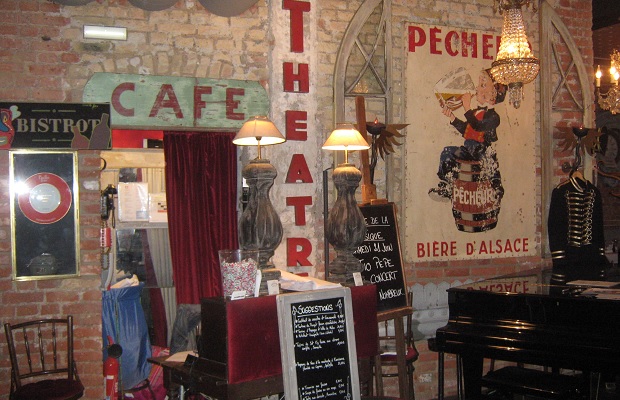
Restaurant Le Théâtre, Colmar

Restaurant Le Théâtre, Colmar

Albert Mann Crémant D’Alsace Brut 2011, tasted at Restaurant Le Théâtre, Colmar with Albert Mann’s Marie-Thérèse Barthelme

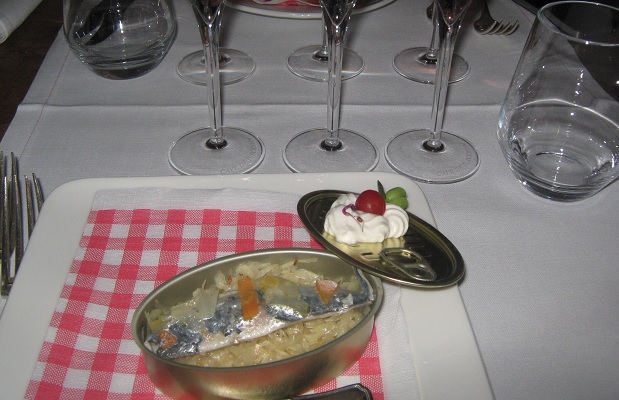
A four-squared Pinot affair, in Blanc (66 per cent), Auxerrois (16), Noir (12) and Gris (6). This from a bottle that had just been disgorged one week prior to tasting. Out of clay-limestone and sand soils in vineyards from Kientzheim and Wettolsheim. Like album art, the Mann label is a crucial, sixth sense aspect of the wine experience. The 2011 Crémant is the artwork of François Bruetschy, “like a turnstile of fireworks while projecting fine sparks.” The 2011 Mann is very fine, misty, delicate, wistful and waiting in longing for an amuse bouche of mackerel with choucroute in a can. The wine makes me long for a walk in the vines.  @albertmannwines

Mackerel and Choucroute, Restaurant Le Théâtre Colmar

Mackerel and Choucroute, Restaurant Le Théâtre Colmar

Gustave Lorentz Crémant D’Alsace, tasted at Restaurant Le Théâtre, Colmar with George Lorentz

Though the label denotes this as non-vintage, the blend of Chardonnay, Pinot Noir and Pinot Blanc is essentially from the 2011 vintage. This is what Lorentz describes as 2nd-tier house sparkling, with more ripeness in this bottle. That fruit maturity is all apple, with a minor note of oxidation and the full effect of 16 months on lees felt through texture. Once again the inclusion of Chardonnay takes the Crémant schematic condition to another level. Bring on the top-tier.

Louis Sipp Crémant D’Alsace Rosé, tasted at Restaurant Le Théâtre, Colmar with Etienne Sipp

The Sipp Crémant comes from various parcels in Ribeauvillé, from Weinbaum, Sulz and Rengelsbrunn. Etienne tells us it is made from Pinot Noir and Pinot Noir, playfully mocking the AOC’s rule that only that variety can be used for sparkling Rosé. Sipp’s Pinot is grown in mainly heavy and deep clay soils. Picked at optimum ripeness, this is fizz that has spent 18 months aging in bottle after not having gone the way of malolactic fermentation. The result is a dry, dense, savoury and layered Pinot Noir Rosé. This third Crémant in a group with Mann and Lorentz proves that though tonight is not a competition, we see that all three have won.

Hummus, La Table de Gourmet, Riquewihr<br />

Hummus, La Table de Gourmet, Riquewihr
PHOTO: Cassidy Havens, http://teuwen.com/

Paul Zinck Crémant D’Alsace, tasted at La Table du Gourmet, Riquewihr with Phillippe Zinck

An efficient, sparkling requiem for success in a blend of three vintages and varieties; Pinot Noir (60 per cent), Chardonnay (30) and Pinot Blanc (10). A soft receptive, inviting and proper amalgamation in which mousse apropos peach and soft French cream delight without needing to be tough or street savvy in any way. Crémant giving like une crème de luxe, to sip with Hummus, La Table de Gourmet style and with nary a difficult moment.

Domaine Bott-Geyl Crémant D’Alsace Cuvée Paul-Edouard Brut Millésime 2007, tasted at La Table du Gourmet, Riquewihr with Jean-Christophe Bott  @JLBrendel   

Jean-Christophe Bott’s may be the most complex and intriguing bottle of Crémant you would have a chance to taste in the course of a week in Alsace. Bott gathers top quality Pinot Blanc, Chardonnay and Pinot Noir from growers then lays the fruit low for four years on their lees. The rich and sunny vintage is vinified in what is really an Extra Brut style without any dosage whatsoever. This is small production Alsatian bubbles (2500+ bottles) disgorged in 2011 and in very early stages of development. The acidity stands in upright attention while the fruit submits to wait. The rocks and salinity raise upwards to march in extreme lengths. A sublime match to an Amuse Bouche of Cured Watermelon, pistachio, basil and mustard flower.

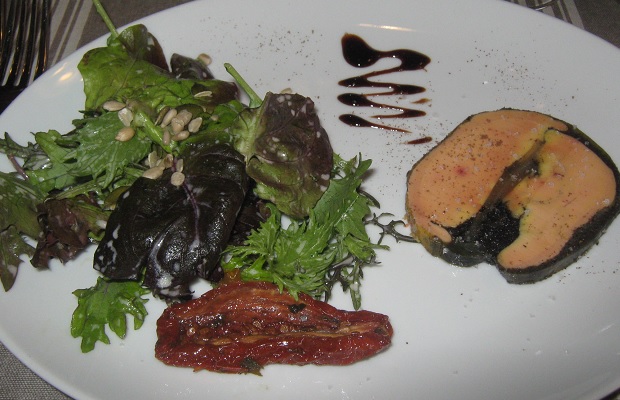
Foie Gras at Restaurant L'Épicurien, , Colmar

Foie Gras at Restaurant L’Épicurien, , Colmar

Charles Baur Crémant d’Alsace, tasted at Restaurant L’Épicurien, Colmar with Arnaud Baur

After its second ferment this blend of Pinot Blanc (40 per cent), Auxerrois (40) and Chardonnay (20) spent a compages-inducing 24 months on the lees. This is Baur’s main cuvée for Crémant, always made from two vintages, in this case 2009 and 2010. Most definitive and classic for the appellation. Falls within the aromatic white fruit/white flower spectrum with flavours that tease ripe Mirabelle, apricot and peach. Soft, elegant, feminine, demurred and clean. Baur’s take is a Catherine wheel of Alsatian bubbles with “all the things you dream while spinning ’round.”

Audrey et Christian Binner Crémant d’Alsace KB, tasted at Restaurant L’Épicurien, Colmar with Christian Binner 

Binner’s exotic-scented sparkling is from Kayserberg, “the emperor’s mountain,” next to the Schlossberg Grand Cru site. Old vines out of colder parcels more appropriate for making Crémant consist of Auxerrois, Pinot Blanc and Pinot Gris. The terroir here is granitic and poor in soil, if that is what it can be called. The house style is quite oxidative and distinctively earthy, as if the rocks were breaking down into a fine, funky soil remineralization. The most terpenes yet from bubbles tasted in Alsace, with a bruised apple hematoma, a pickle of some colonialist kind and a spice cupboard to fill a curry recipe. In the end this is unusual, yet vivid and jazzy fizz.

Schoenheitz Picnic<br />

Schoenheitz Picnic
PHOTO: Cassidy Havens, http://teuwen.com/

Vins Schoenheitz Crémant d’Alsace Millesimé 2007, tasted on the steep slopes of the valley of Munster with Dominique, Henri and Adrien Schoenheitz

Primarily focused upon Pinot Auxerrois and righteously so, with just a 10 per cent buoyancy from Pinot Blanc. The combination of striking Auxerrois fruit grown on the estate’s (400-500m) high altitude steep slopes and a memorable Alsace vintage is just deadly. The varietal choice in low acidity out of a vintage with character and temper here translates to aridity (1 g/L residual sugar) and long on lees texture. Like a Ron Sexsmith ballad, a listen, one look at its bronze patina, one taste and you will “see the forest for the trees,” because there’s gold in them hills. Perfect timing to break out an all-natural, no dosage ’07, marked by gratuitous acidity and mountain verve. An auspicious start to a picnic in the hills.  @VinsSchoenheitz

Pierre Frick Crémant d’Alsace 2013, tasted at Domain Pierre Frick with Jean-Pierre Frick

Jean-Pierre Frick poured two just bottled yet raw examples meant to set a perspective table for the 2013 finished wine that followed. The 50/50 Pinot Blanc et Noir (NV and 2013) were both picked ripe (nearly overripe), pressed direct and treated with nothing, nada, niente, zilch, rien. No sulphites, yeast or sugar. With zero dosage and opening too soon in evolution, these bottles were marked by arrested fermentation. The absence of the second fermentation meant for a flat, oxidative result. The experiment may have meant no Crémant but it helped to organize, define and ultimately assess the ’13. Same minimalist method but with a secondary ferment, this bottle (though warm) offered high citrus and biting, forceful, sharp acidity. When returned to an hour later and from a cold bottle, the wine was much brighter and atomically fresh. Frick’s method and style mean his sparkling must spend a minimum one year in bottle before it can be sold.

Casks at Jean-Pierre Frick

Casks at Jean-Pierre Frick

Pierre Frick Crémant d’Alsace 2012, tasted at Domaine Pierre Frick with Jean-Pierre Frick

One of JP’s “funny wines.” Once again, no sulphur but this time with natural yeasts. Notated by a slight coppery, salmon tinge and minimally oxidative, though in no way over the top. “My idea was a dry Crémant but he’s not dry. C’est la vie.” To Frick this is a wine for young and really old people. Toasted brioche, buttered toast and almond extract are joined by a late arriving, very interesting, savoury sweetness. The finish smoulders, with that ever-bearing herbiage adding another layer. This Pinot Noir and Pinot Blanc split comes in at 12.5 – 13.5 per cent alcohol. Frick doesn’t really know. “I write 13 per cent because I just have to put something on the bottle.”

Good to go!