Twenty-three mind-blowing wines of 2023

Chianti Classico Collection, Stazione Leopolda

Composing a year-end, these are the most thrillin’ wines tasted in the last 12 months list is kinda akin to scribbling up a little warble, if you get the director’s drift. The question begs, what’s the cause, what’s the meaning and ultimately why bother? Reminiscences are part of the human condition and while there is little amusement however in watching a wine critic taste wines, there just may be some interest in reading said list, checking it twice and coming to a personal conclusion as to which choices are worthy, and which are merely nice.

Related – Twenty-two mind-blowing wines of 2022

Nebbiolo Prima 2023

You will find a notable cadent shift in this year’s melody away from there being a substantial number of older wines chosen as having been the year’s most exciting. Not to mention a concentration of certain grapes and their OG places. It’s just, well, natural. For 2023 more of the choices are directed towards hopelessly romantic youthful wines in their extant moments still years away from entering their right proper drinking windows. No shortage of opportunities in 2023 to taste top examples – Of sangiovese, nebbiolo, nerello mascalese, nero d’avola, pinot noir, cabernet sauvignon, merlot, cabernet franc, grenache, syrah, chardonnay, riesling, assyrtiko and chenin blanc – Are but a range within the lion’s share of varietal moments.

Related – Twenty-one mind-blowing wines of 2021

Sicilia en Primeur

Old wines can elicit epiphanies but a conscious effort is made to include as many current vintages as possible, provided they represent a winery’s best of the best. This is the state of winemaking today because deeper understanding, the consummate use of technology and a passionate willingness to always improve are qualifying so many of the world’s finest wines at poll positions to a greater degree than before. There is little surprise that Italian wines coexist in highest favour if only because the author spends more than 25 percent of a 365-day timeframe in that country. Italy’s long, deep and intimate relationship with success is a serious attraction and so being afforded the opportunity to taste 2,000 Italian wines in a calendar year will almost certainly result in experiencing no less than 50 thrilling examples. A Bordeaux trip in September to 25 growth properties could and should rightly deliver wines to dot this list. Same could be said for many other palate awakening wine regions worldwide. All this and yet overall travels and tastings were less diverse and more focused in 2023. The author is known to follow the work.

Related – Twenty mind-blowing wines of 2020

L’Etna, Sicily

Act one: Nebbiolo Prima. Act two: Two weeks later, the Chianti Classico Collection. Act three: Three months later, Sicilia en Primeur and a Canadian Sommelier boot camp with Chianti Classico. Act four: Summer in Paris with Lambrusco, judging at the Nationals in the Okanagan Valley for WineAlign, shooting video in Florence, up to Collio and Hungary and finally 113 degrees in the smoky shade of Washington. Act five: Europe all fall, from Bordeaux to Monferrato, Chianti Classico to Montalcino, Piedmontazine Alta Langa and back to Chianti Classico. These decisions are not taken lightly, nor are they apocryphal fabrications, but they are Godello’s 23 mind-blowing wines of 2023.

Coppo 1892 Piero Coppo Riserva Del Fondatore 2013, Alta Langa Riserva DOCG, Piedmont, Italy

The 2013 vintage is the turning point to this 60 percent pinot noir and (40) chardonnay becoming and being labeled Alta Langa, recently disgorged in 2022. Previous disgorgements were labelled Vino Spumante di Qualità. Now into wildly vivid and famous complexity, toasty yes but there’s a crème frâiche and an almost strawberries and cream component. Eonologists GianMario Cerrutti, Guiliermo Grasso and Vittorio Pescarmona conspired to see this age 85 to 90 months on the lees, almost unprecedented around Asti. Has hit its stride, in the right place between crunchy and the kind of sparkling wine that you begin to ruminate with in the mouth. Cerebral wine in every respect. Drink 2023-2027.  Tasted January 2023

Hermann J. Wiemer Riesling HJW 2020, West Seneca Lake, Finger Lakes

Upper echelon aromatic stage presence, stoic and static as riesling must be if it wants to set a gold standard. Dry entry that sides and morphs into natural sweetness of peach and Forelle pear, almost lime cotton candy scented. From the original vineyard planted in 1976 closer to the lake where tender varieties excel. The elastic extension and tension together coexist as long as Seneca runs from the snow belt to Watkins Glen. Drink 2023-2030.  Tasted April 2023

Vineyards of the Szent György Hegy, Balatoni

Gilvesy Rajnai Rizling Tarányi 2020, Szent György Hegy, Balatoni, Hungary

Old vines over 50 years of age (planted sometime in the 1970s), right below the estate, just nine rows and once belonging to the cooperative. Named after a landowner from the 1920s (or 30s) connected to the local governmental administration. Crunchy as only a Gilvesy rizling can be, lime doused, acids so bloody intelligent and making sure fruit is put into flight. Aged in steel, Austrian Stockinger cask and Flex-Cube. There is no doubt that the single vineyard Tarányi delivers a richer and luxe expression of rajnai rizling but also one of flint, petrol and scintillant emission. This flashes across the palate like a supernova and lingers long after the wine is gone. That is powerful rizling. Drink 2024-2030.  Tasted July 2023

Related – Nineteen mind-blowing wines of 2019

Vassaltis Gramina Cuvee Des Vignerons 2021, PDO Santorini, Greece

Of course 100 per cent assyrtiko, picked and collected between six and eight AM, straight into the press, stainless steel vinified, no cooling, no passing go, no collecting 200 drachmas. All about preserving essential freshness, finesse and elegance. Spontaneous fermentation, a year on lees, in bottle six months. It is right here where we are to understand why Yiannis Valambous gave up a life 14 years ago that was not focused on Santorini, chose to return and altered his history. Santorini once a place of summers spent without purpose or tension is now all encompassing, focused on assyrtiko and for good reason. It is the variety to which all white grapes now aspire. Gramina sheds distraction and focuses on purity and 2021 is a great vintage. It celebrates assyrtiko from where it thrives and conveys that all important message of place. After tasting the Vassaltis Cuvée Des Vignerons 2021 winemakers around the world will ask their farmers to plant the grape in the place where they are. They will do so because even a fraction of this excellence will be worth pursuing. Drink 2023-2033.  Tasted February 2023


Ulmo Chardonnay

Planeta Didacus 2020, Sicilia Menfi DOC

From Vigneto Maroccoli, The Didacus home where vines were planted in 1997 and 1998. The connection with chardonnay “Classico” is obvious but whole bunch fermentation and seriously selected oak barrels change the complexion and even more so the spice cupboard of this high caste wine. It may seem that Didacus would fare at its best in the warmest of vintages but it does not really need the extra sunshine and ripeness. Didacus gets there quite easily thank you very much and so the slightly cooler and more classic 2020 is ideal for a wine of exceptional depth and weight. Harmony is the result. Che equilibrio! Drink 2023-2028.  Tasted May 2023

Related – Eighteen mind-blowing wines of 2018

With Sarah Goedhart and Christophe Hedges

Hedges Family Estate Red Mountain Reserve 1999, Red Mountain AVA, Yakima Valley, Washington

The artist formerly known as Red Mountain Reserve became Le Haute Cuvée with the 2012 vintage. Hedges was both ahead of their time (because the word Reserve was already losing its wine world lustre) and respectful of family history by labelling in a Champagne or at least a French vernacular. Here is a nearly 24 year-old red blend that has aged remarkably well and though thinking miraculously was a momentary thought – there is no miracle but something more profound at play. The Mountain for one thing and a family at least a decade ahead of the curve. Early Washington organics, no reverse osmosis, no mechanical filtration and no lobotomizing a bottle of red wine. Yes the secondary notes are present and they are settled in a state of absolute proprietary grace. Very little trace of tannin, nor any barrel that is but a superfine mountain induction that makes for a silky feeling in the mouth. There is a chance this will live another 24 years but the fruit is already leaving and so 12 should be the maximum with half that the truest and most honest recommendation. Drink 2023-2027.  Tasted August 2023

J.B. Neufeld Cabernet Sauvignon Two Blondes Vineyard 2021, Yakima Valley AVA

From Justin and Brooke Neufeld who first bottled their cabernet sauvignon in 2008. “In my opinion the Yakima is the state’s most diverse terroir,” explains Justin. “By focusing on one variety it forces me to concentrate on the nuances of the sites here in Rattlesnake Hills and the Upper Valley.” A cooler clime for a less granular if also reduced austerity as compared to what comes from Red Mountain. Here the ridges run east to west and Two Blondes is as cool a site as there is the Upper Valley where the cataclysmic glacial lake outburst Missoula Floods peaked at 1,200 feet. Early concrete raising for a cabernet of place above all else, conspicuously aromatic with a whole helluva lot of things (and love) going on. Famously and indelibly connected to the winemakers who created it. A cerebral cab that makes you perk up, ponader and pay attention. The wood factor is quite present, the wine is so young and this feeling of delicasse, grace and repose are on the indigo horizon. Should take about three years time to get to a point of heartsease and another three to gain serenity. Drink 2025-2033.  Tasted August 2023

Heitz Cabernet Sauvignon Trailside Vineyard 2008, Napa Valley, California

As Trailside Vineyard from Heitz will always do, is it the acid that is preserved. This was the case in both the ’06 and the ’07 but back in 2008 the aromatics were expressed in extra level florals, savoury elements and a charming layering of swarthiness. Five years of bottle aging before release plus nine more since have gathered the necessary elements and when you nose but then taste this wine you just know that it is Heitz, by style and out of a context that speaks to what the vineyard is want and purposed to say. Fine position, time and place right here, right now, ready, willing, able to please and without any moment of equivocation. Might just stay this way for another five, perhaps even ten years. Drink 2023-2031.  Tasted October 2023

Related – Seventeen mind-blowing wines of 2017

Spottswoode Estate Cabernet Sauvignon 2002, Napa Valley, California

Opened after a near 20-year stay in the cellar and just a few days after tasting the 2010 and 2020 with Beth Weber Novak in Toronto. The vintage has not been considered as one to hold as long as either 2001 or 2003 but there can be no questioning this 2002’s longevity on this very day. Inventiveness without reinvention because this scents as fresh as it must have been at the essence of its very nascence. All that can be crushed to express in aromas for which imagination conjures berries, stones, clay and flowers. Spottswoode ’02 defines a Napa Vally posit tug between power and grace while existing in a controlled state of confidence and calm. A wine that gently, privately seduces the palate, body and mind into the gentlest slumber of our lives. Drink 2023-2028.  Tasted October 2023

Graci Etna Rosso DOC Arcurìa Sopra Il Pozzo 2018

The southwest corner of Graci’s Arcurìa cru is Vigna Sopra Il Pozzo, identified as a most important block within a larger vineyard already qualified as something of great Etna Versante Nord value. Challenging season and every iota of energy captured and encapsulated inside a nerello mascalese of supreme freshness. The palate is the profound matter of this wine’s supreme expressive nature, with soft, graceful and subtly powerful tannins. An Etna Rosso that lays in waiting, not to pounce but to slowly and persistently keep hold of our attention. No density from Sopra Il Pozzo ’18 but compact layers of slow-release tension – and also energy. Drink 2024-2035.  Tasted May 202

Girolamo Russo Etna Rosso DOC Piano Delle Colombe 2020, Sicily, Italy

Piano delle Colombe is a single block (or vineyard if you like) identified within San Lorenzo aged in tonneaux and barriques. Not a different take on the contrada but one that considers some rows of nerello mascalese whose separated vinifications have consistently performed well (and more often than not better) in many consecutive vintages. Concentration and hyper purity is incredulous, encouraged to the point of hyperbole by the vintage. Would say yet another Girolamo Russo ’20 that opens the floodgates of Etna Rosso fruit potential so that this waterfall of beauty crashes over the palate. Which in turn abides if only because it has no choice or else be drowned in fruit. Submit and be graced with a fineness of structure that can only feel the condition of greatness. Texture and finish are tops. Drink 2025-2038.  Tasted May 2023

Il Poggio, Castello di Monsanto, San Donato in Poggio

Castello Di Monsanto Chianti Classico Gran Selezione DOCG Vigneto Il Poggio 2018, San Donato In Poggio, Tuscany, Italy

There can be little doubt that Gran Selezione is the wine to explain style from a place within a place, that being Monsanto’s Il Poggio Vineyard inside the UGA of San Donato In Poggio. Il Poggio is four things; famous, respected, stunning and structured to design formidably age-worthy sangiovese. Stylistically speaking this Gran Selezione is so very different than Riserva because older-school austerity and unrelenting tannic structure keep fruit locked in tight while also interpreting place with pinpoint precision. But 2018 is a warm and accumulating vintage and so all things being equal there are strong determining factors for the fate of this place. Highly aromatic, tripping with light, energy and the science of the soils, of Galestro and schisty fragments that must be a part of the make up, from stones through vines and vines to fruit. This Monsanto Selezione smells like the place’s dust kicked up by heels and hands dragged through the dirt. With 2018 in bottle there could be an argument that San Donato in Poggio’s are some of the richest of all the UGAs, but this is Monsanto where destiny is all. Drink 2025-2037.  Tasted February and May 2023

Related – 16 mind-blowing wines of 2016

Fèlsina Chianti Classico Gran Selezione DOCG Colonia 2009, Castelnuovo Berardenga, Tuscany, Italy

Colonia Vineyard is a short jog up the hill past Rancia and through the woods. In 1966 Domenico Poggiali found a cellar set into the “tufa” hills of his Fèlsina estate. It was small, built of stone and with a wide brick vault. It was a start. In 1967 he chose to plant Colonia in an impossibly challenging and extreme Alberese limestone rocky location. He used dynamite because that was the thing at the time but it was soon outlawed and made clearing the land near impossible. Twenty-four years later Giovanni Poggiali resumed the project and planted its first vines in 1993, just before Domenico passed away. Colonia 2009 is La Prima, the first Gran Selezione and this look back is one to recall roots (tethered to 2006), familial traditions and passing of the Chianti Classico torch. This vintage separates and leaves its original designations in the rear-view mirror. At 14 years of age it remains austere but austere can be beautiful. As here, with severe and chiseled features though the savoury elements differ from Rancia. More resinous evergreen and forested aromas but also a chalkiness that speaks directly out of the Alberese. The thing is Colonia remains still young and fresh, while the powdered mineral persists unresolved. One of the most fascinating retrospective looks at aged Chianti Classico. Drink 2023-2036.  Tasted October 2023

Il Molino di Grace

Il Molino Di Grace Gratius 2019, Toscana IGT

Gratius will make a very high quality Gran Selezione and the time is nigh to accord it the designation. All the qualities are inherent and intrinsic to the coming status, namely concentration, finest silken grains of texture and balancing tannin. Come now, the future is poetic and gracious.  Last tasted October 2023

Choosing not to compare Gratius to Chianti Classico at any level, let alone Gran Selezione, is wise and for several reasons. For one thing the blending in of canaiolo and colorino changes dynamics by setting and settling acidity, elevating pH and stabilizing colour. For more reasons check out the manual but here are the Coles notes. Gratius delivers two-toned liquorice, more direct solar radiated brightness, finer and yet less immediately understood structure and a chewiness that sets it apart. What matters is here is that Gratius is the representative for the single San Francesco vineyard and so it is a profound IGT ready, willing and able to become a wine graced with the Gallo Nero and labeled as Panzano. Two new Austrian casks will conceive 3,900 bottles going forward and the future is all about DOCG quality at the highest appellative level. Drink 2024-2030.  Tasted February 2023

Isole E Olena Cepparello 2021, Toscana IGT, Tuscany, Italy

Paolo’s first tasting of this finished 2021 Cepparello since bottling back in May is this right here. The frost vintage, namely on April 7th, with secondary buds on the Cordone vines being the source of most of the wine’s fruit. Not a disaster at Isole e Olena, maybe 35 percent loss in total but the quality was high and so less Chianti Classico was made. “That wine is less about the vintage for us,” says de Marchi and so this as the decision made to cope with the small crop. Once again (and since forever) Paolo employs the aromas and proteins inducing method of soft maceration, long délestage and skins connected back with already half fermented juice. The ’21 is a wine of “frescezza” and yet saying freshness does not do the description justice. There is tension and a nervous energy buzzing from Cepparello 2021 and one to really hold your attention. There may be no Italian word for texture but were there one that made any real sense it might be the dramatic threads of “weft” from this 2021 youthful work in progress. This will be a Cepparello for the ages, Buy it and bank on it. Drink 2026-2040.  Tasted December 2023

Related – 15 Mind blowing wines of 2015

Casanova Di Neri Brunello Di Montalcino DOCG Tenuta Nuova 2019, Tuscany, Italy

Tenuta Nuova is something next level and you know this from the moment you put nose to glass. It consumes the senses straight away with its intoxicating perfume as deep as it is strong. Muscular in that regard and exponentially so at the intersection of palate and structure. The stuffing, intensity, power and layers are what we call “off the charts” and there are but a few vintages that create, instil and then leave this kind of impression. Drink 2027-2038.  Tasted November 2023

Take a moment, reflect even before this has even begun, focus the senses and prepare for a long connection with a 2019 from Andrea Costanti. A Brunello di Montalcino that graciously requests full attention paid because vineyard, experience and vintage have taken no liberties as it pertains to what is the necessary requiem. Aromatic wealth void of force and punch without gratuity comes out of the glass like an apparition gliding through the halls of a medieval edifice. They are sweet, flowing and casually swift. The palate and mouthfeel are one in the same – in most wines made everywhere around the world this is simply not the case. Acidity is right and it is bloody correct – whatever that means but in this case it’s true. Costanti tannins are always their best self but then there are 2019 tannins which elongate with elastic ease, always stretching forwards and return they will though it is hard to say when that will happen. It just does not happen on the finish, which is something impossibly so. Who would not wish to be frozen in this youth, impeccably fresh, limber and athletic? May act this way with generosity and charm for decades. Drink 2026-2040.  Tasted November 2023

Biondi Santi Brunello Di Montalcino Riserva DOCG Tenuta Il Greppo 1988, Tuscany, Italy

It is very important to be reminded that Biondi-Santi is the original but also the estate that practiced early harvesting before just about anyone else. At the time the sangiovese grosso vines from the estate BBS11 clone (mainly intended for Riserva) would have been 25 years of age and while considered then and also now as a great vintage it is worth noting that in 1988 the final alcohol was 11 percent. When the estate style is reflected upon there is just something about the continuity which begins with the 1980s and especially the 1985 forward to the later part of that decade, all the way through to 2018 more than thirty years later. Yes there is in fact a connection despite the gap, the huge change in climate and the challenge to maintain identity. The last point is key because the contiguous teams focus on this ahead of all else. The ’88 now shows dried red fruits but also the wild strawberry and then frutta di bosco that are the hallmarks of an older Brunello that has not fallen over into the porcini and truffle zone. Not Biondi-Santi because wood was never the axis nor the focus and fruit was always carefully selected before being gently coaxed to arrive at this kind of secondary level. No matter the age the style persists as fresh red fruit, with fine acids more than alive and a specific succulence specific to place. Il Greppo the estate – which means the people abided by their charge to preserve this heritage. The original endowment of Montalcino. Respect. Drink 2023-2027.  Tasted November 2023

Related – Mind blowing wines of 2014

Cantina Del Pino Barbaresco DOCG Ovello 2017, Barbaresco, Piedmont

The 2017 is part of a life’s work and now legacy defining Barbaresco by Renatto Vacca of Cantina del Pino who three years ago was lost to the nebbiolo, Barbaresco, Piedmontese and Italian world, but most of all to his adoring family. For now and wishfully forever there is Aldo Vacca of Produttori del Barbaresco who will not just transition but consult in perpetuity to this great estate. In the meantime Renatto’s 2017 Ovello from the Grand Cru vineyard overlooking the Tanaro River is sumptuous, silken textured, fruit maximized and elegance incarnate. Easy to be romantic in this situation but also wistful and somber – yet the wine speaks so clearly and emphatically it’s all that matters at this very moment. These are complete, distinct and forward carrying tannins to take Ovello ’19 deep into this and well further through the next decade. Solo cose belle Cantina del Pino. Drink 2025-2034.  Tasted January 2023

Pio Cesare Barolo DOCG Ornato 2019, Serralunga d’Alba, Piedmont

Tasted with Cesare Benvenuto in Alba from the Serralunga cru and a vintage of round fruit set against a backdrop of understated if surely intense tannin. A year for which a winemaking team had to reset and not push anything too hard, lest there creep in notes of volatility and astringency. Jam as well and the report on Ornato by Pio Cesare speaks nothing of these things. A softness in the beginning and also a state of grace with the force of structure waiting in the wings, respectfully and knowing now is the merely the time for introductions. Some fruit from 1947 planted vines takes part in this nebbiolo play and the rest seem to follow, fill and support, dutifully in the tradition of this menzione. Though those vines are hard to define in how they affect overall concentration there is the unspoken aspect of experience and strength. Of character which leads to probability to say this Ornato will live long and prosper for decades. Another stunner from the world of Pio Cesare. Drink 2026-2039.  Tasted January 2023

Cavallotto Tenuta Bricco Boschis Barolo Riserva DOCG Bricco Boschis Vigna San Giuseppe 2017, Castiglione Falletto, Piedmont

Not entirely sure why there is a need or desire to show a Riserva 2017 from a cask sample but frankly this feels ready to be in bottle. The aromatics are resolved, the fruit laid in a state of preparedness and the nebbiolo character intact, with tact and in display of its varietal guarantee. No other 2017 exhibits this much acidity and while some might see it as edgy to verging on volatile, the reminder is this. Bricco Boschis, Castiglione Falletto and an old school soul for Barolo that will outlast them all. What a glorious Barolo, without holes and one hundred percent in charge of its emotions. Ours submit to the character of this great nebbiolo. Drink 2025-2040.  Tasted blind at Nebbiolo Prima, January 2023

Château Troplong-Mondot Premier Grand Cru Classé 2019, Saint-Émilion, Bordeaux, France

First vintage where the malolactic fermentation was done 100 percent in tank before being racked to barrel. Some simultaneous spontaneity overlapping with alcoholic fermentation but more often than that there will be control to have them happen one after the other. The fact that 35 percent of the vineyards at the top of the hill are filled with the hardest clay anywhere in Bordeaux, coupled with limestone all over creates the most mineral quotient around. This transmits as contained and controlled power, especially from the generously wooded 2019 but my goodness the saline freshness, chalky quality and silken tannin wrap up the fruit with a ying-yang of nurture and grip. Whether you are familiar with, an expert on or just arriving at a Troplong Mondot Grand Cru Classé for the first time – it just doesn’t matter. This 2019 will blow your mind. Drink 2025-2039.  Tasted September 2023

Château Les Carmes Haut Brion Grand Vin De Graves 2018, AC Pessac Léognan, Bordeaux, France

Extremely different vintage but not like ’17, here with much darker, riper and developed fruit. Freshness would have to have been a challenge but at 13.5 percent alcohol and high pH there comes this ulterior freshness with texture imposed by great and forceful will. More active infusion earlier on because there was so much colour and extraction on hand from a vintage where the blend was nearly the same as that of 2017. That being 38 percent cabernet franc, (35) cabernet sauvignon and (27) merlot. There really is no other chateau that creates this style, a mix of salt and pepper seasoning over blue to black fruit and in 2018 the whole bunch inclusion was 60 percent. If you are buying high end Bordeaux from 2018 then Château Les Carmes Haut-Brion is the place to be, though it’s likely sold out wherever you may live. Just about nothing else in the Left Bank finds this level of quality, balance and success. The whole bunch “infusion” methodology controls the heat and excess of the vintage to deliver finesse, precision, restraint and honesty. Drink 2025-2038.  Tasted September 2023

Good to go!

godello
Twitter: @mgodello

Instagram: mgodello

WineAlign

We are all Asti

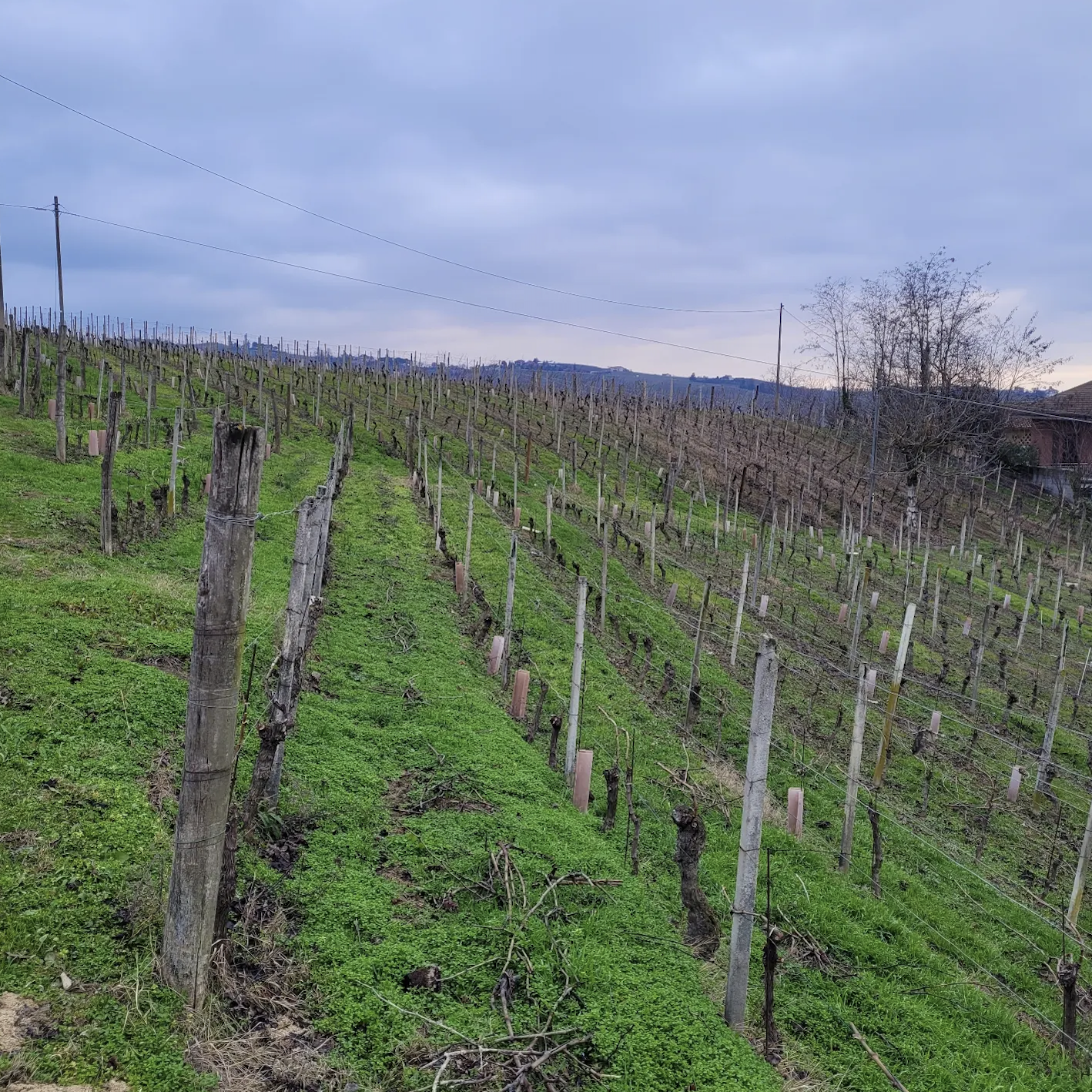
    Moscato vineyard, Castiglione Tinella

We search the world’s most famous regions for the most profound and moving wines but are caught up by a mix of pedigree and marketing, so often not truly making the connections. We are bought and sold, invested in the attractive and oft times the austere. Beauty is everywhere and sometimes right under our noses, yet are we not blinded or at the very least distracted by confidence and power? These thoughts can be applied to many things but as it pertains to wine there is a clear message. Open your heart, mind and palate to seek what others pass over, to experience what is real. And so en route to Alba for Nebbiolo Prima I first made way to the land of moscato. There and for the third time in four years I visited with seven prominent producers to further an education and understanding about a most important wine. Moscato d’Asti. Why? Simply because we are all Asti.

Moscato, Castiglione Tinella

Related – Asti DOCG 2022 – Special Report

In October of 2022 I hosted three events in Toronto to pour, speak about and celebrate the precocious joy of Moscato d’Asti. A sommelier lunch and consumer event, both held at Barque Smokehouse shared 18 examples of the lightly sparkling, low alcohol, impeccably balanced, multi-styled, food-friendly and Piedmontese heritage wines. More than 100 professionals and wine lovers chose to experience the wonders of these refreshing wines. Why? Once again the answer is the same. We are all Asti.

Monferrato Hills, Piemonte

I visited the region in December of 2018 and also 2019, then returned again this past January, to reconnect with the land and the people who share an imperative to keep heritage alive, but today growers and producers do so much more than merely follow tradition. New vinification and filtration techniques not only create the cleanest Moscato d’Asti ever made but also equip the wines with better aging potential than before. Moscato d’Asti does age well, in fact I tasted several examples of three to four year-old wines mired in a dumb phase but also seven to 10 year old wines that having now re-emerged, were drinking with giddy delight.

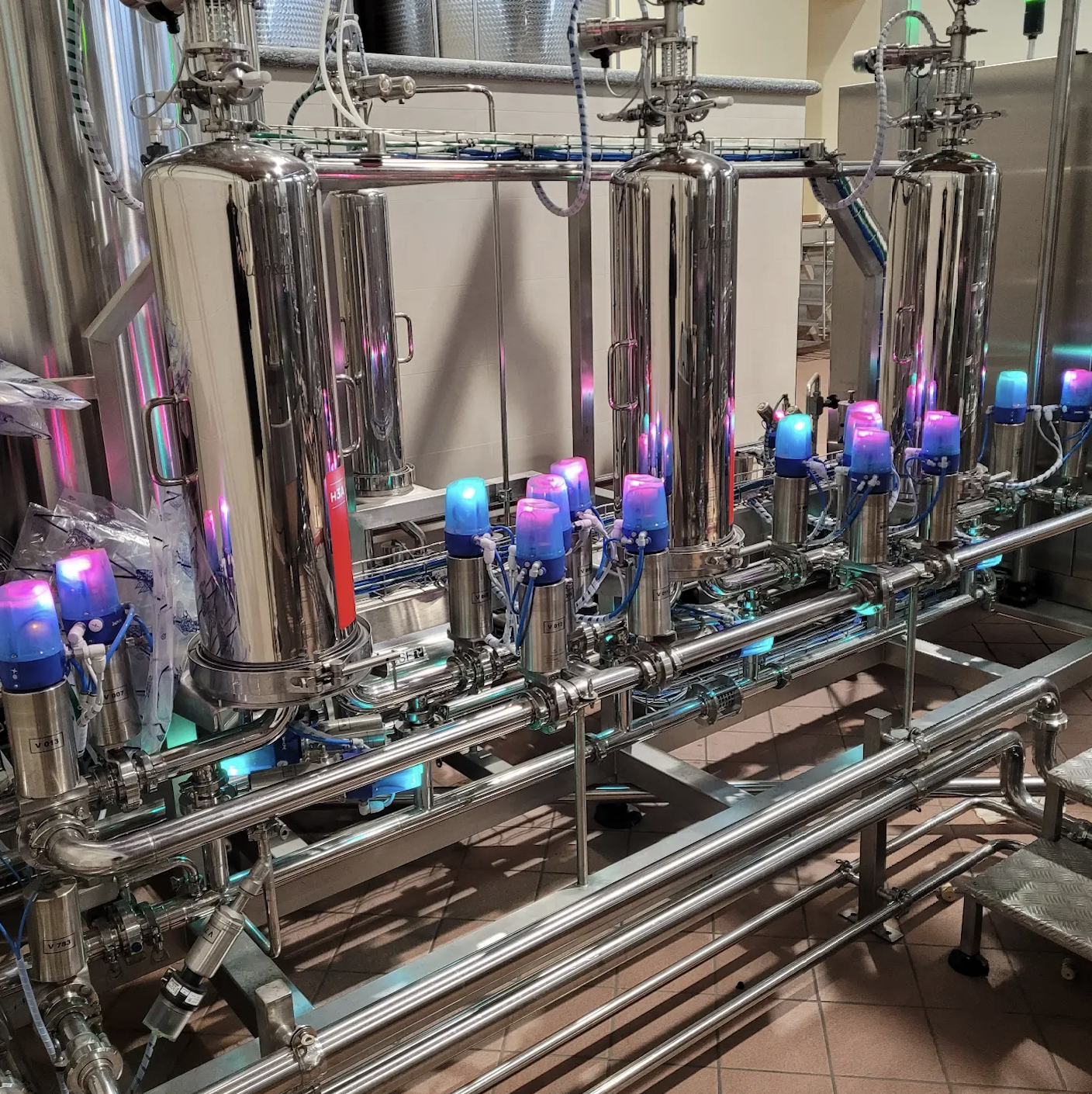
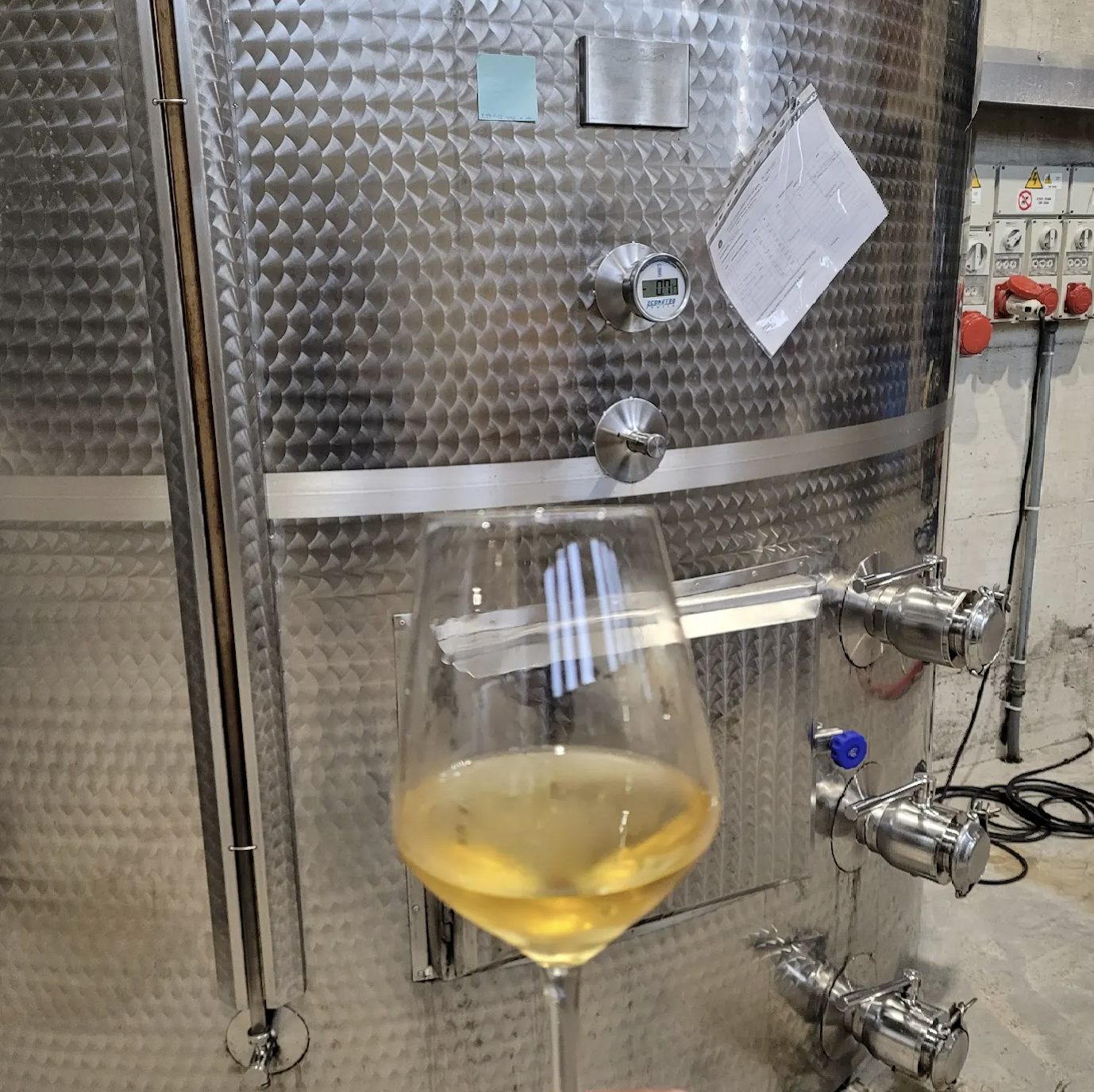
Filtration system, Matteo Sorìa

These moscato producers are 100 per cent all in. Many may make other wines but when it comes to Moscato d’Asti there are no distractions from any other grapes; not barbera, dolcetto, nebbiolo, chardonnay, etc. Some are experimenting with dry iterations while others are practicing long lees aging to craft complex moscato as traditional method sparkling wine. The permutations are endless and while promise is everywhere there is no deviation from the original. Every producer makes one because they could not imagine abandoning their heritage.

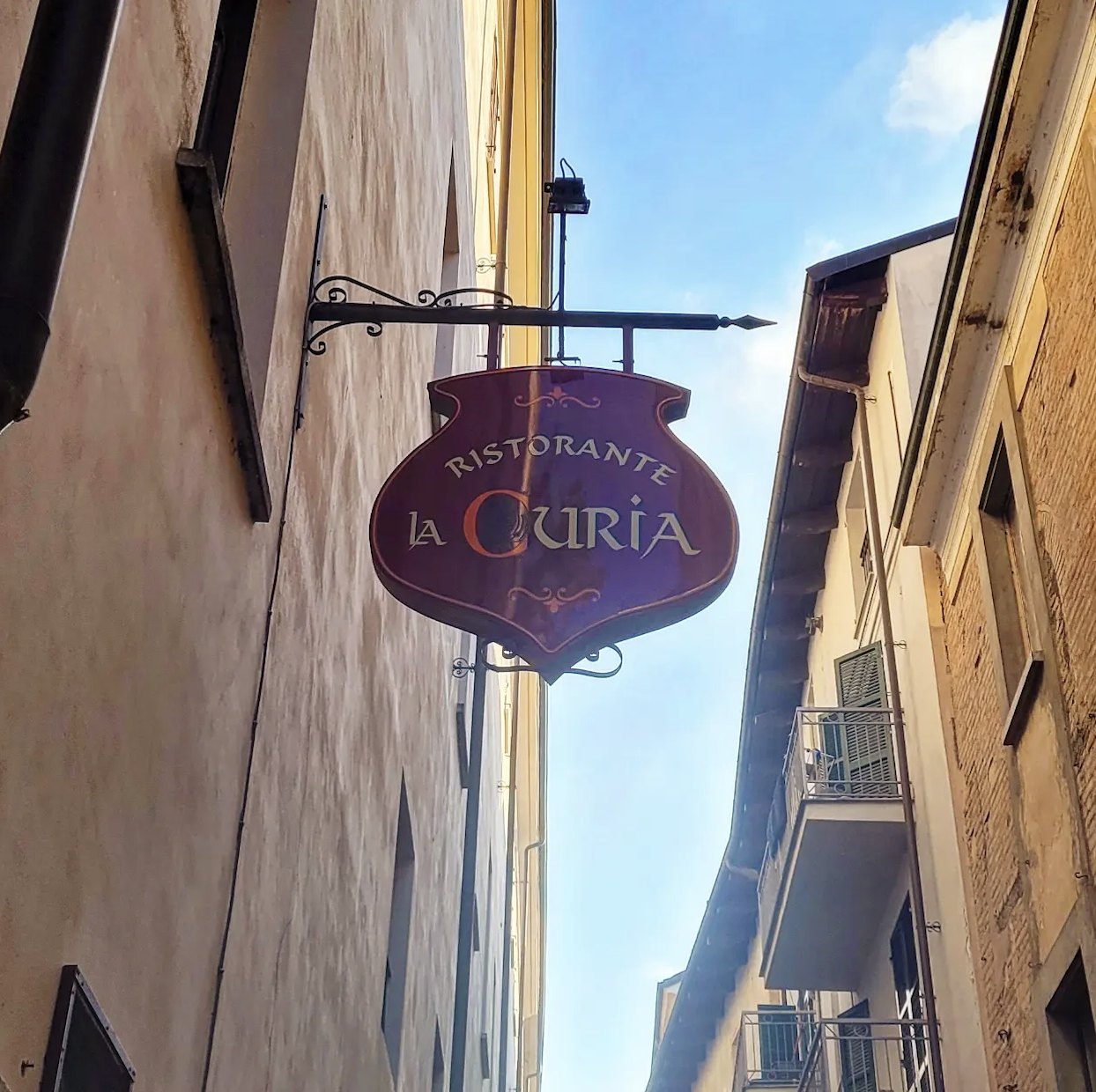
Ristorante Curia, Acqui Terme

With moscato one needs to avoid bacteria and fermentative aromas at all costs. Allows the machinery and modern technology to purify, cleanse and determine the purity of these wines though they are all made from hand-picked grapes. They are the cleanest wines in the territory but also expressive of their place, from Canelli to Castiglione Tinella to Strevi. In some cases each year a percentage of the last year’s must is integrated into the current vintage and so in the case of Matteo Soria, each time there is 15 per cent from two years previous, and three, and so on. It’s like a Solera in effect with a decreasing percentage of a previous vintage within the whole of current must amounts.

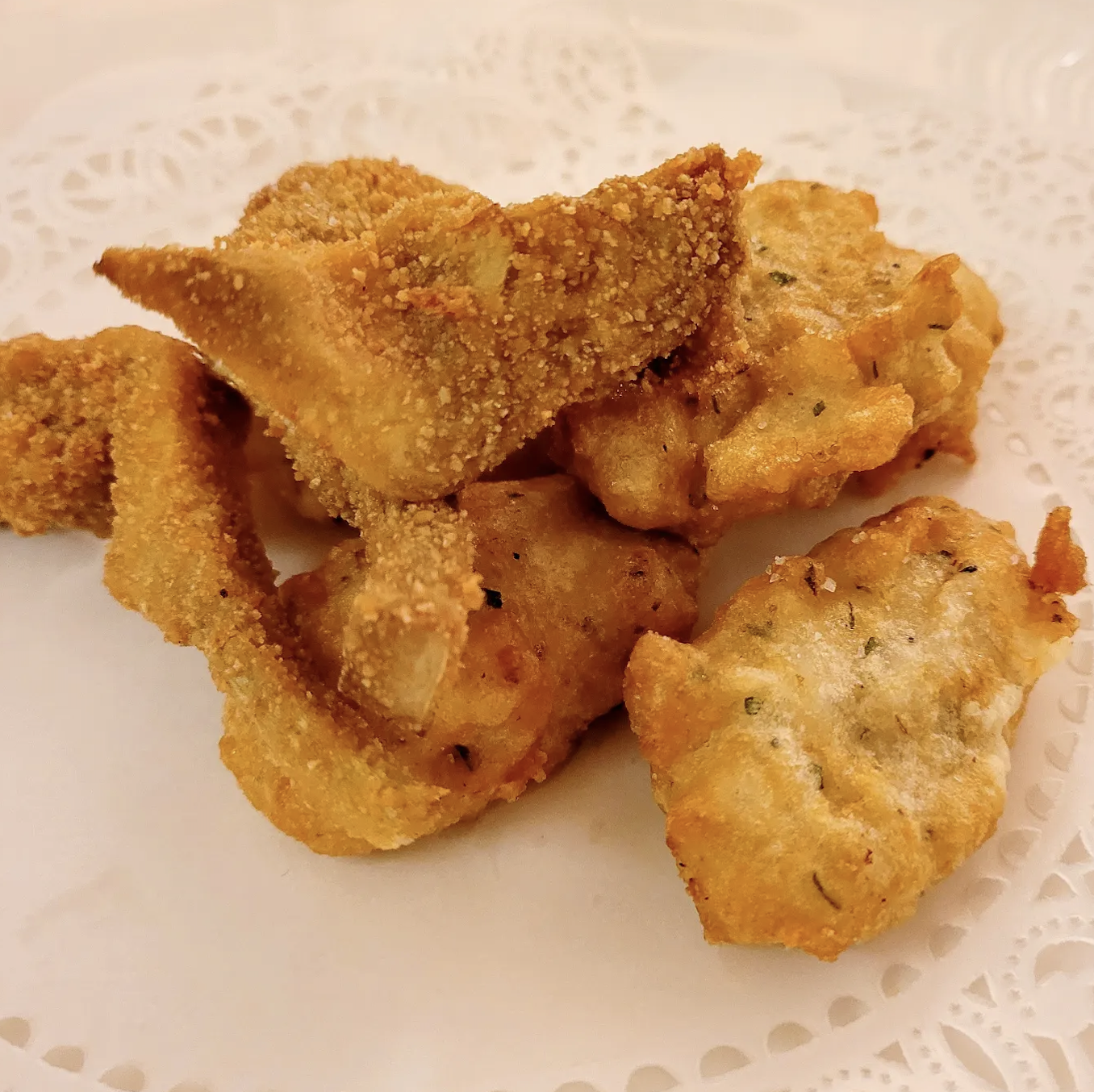
Carciofi Fritti at Ristorante Curia, Acqui Terme

The following are tasting notes on 18 Moscato d’Asti tasted in Piemonte back in January, 2023. The producers did of course share other wines and so those 28 reviews are included at the bottom of this report. A huge thank you to the Consorzio dell’Asti, to Direttore Giacomo Pondini, Martina Bukavec and my chaperone Paola Baldi. Ci vediamo.

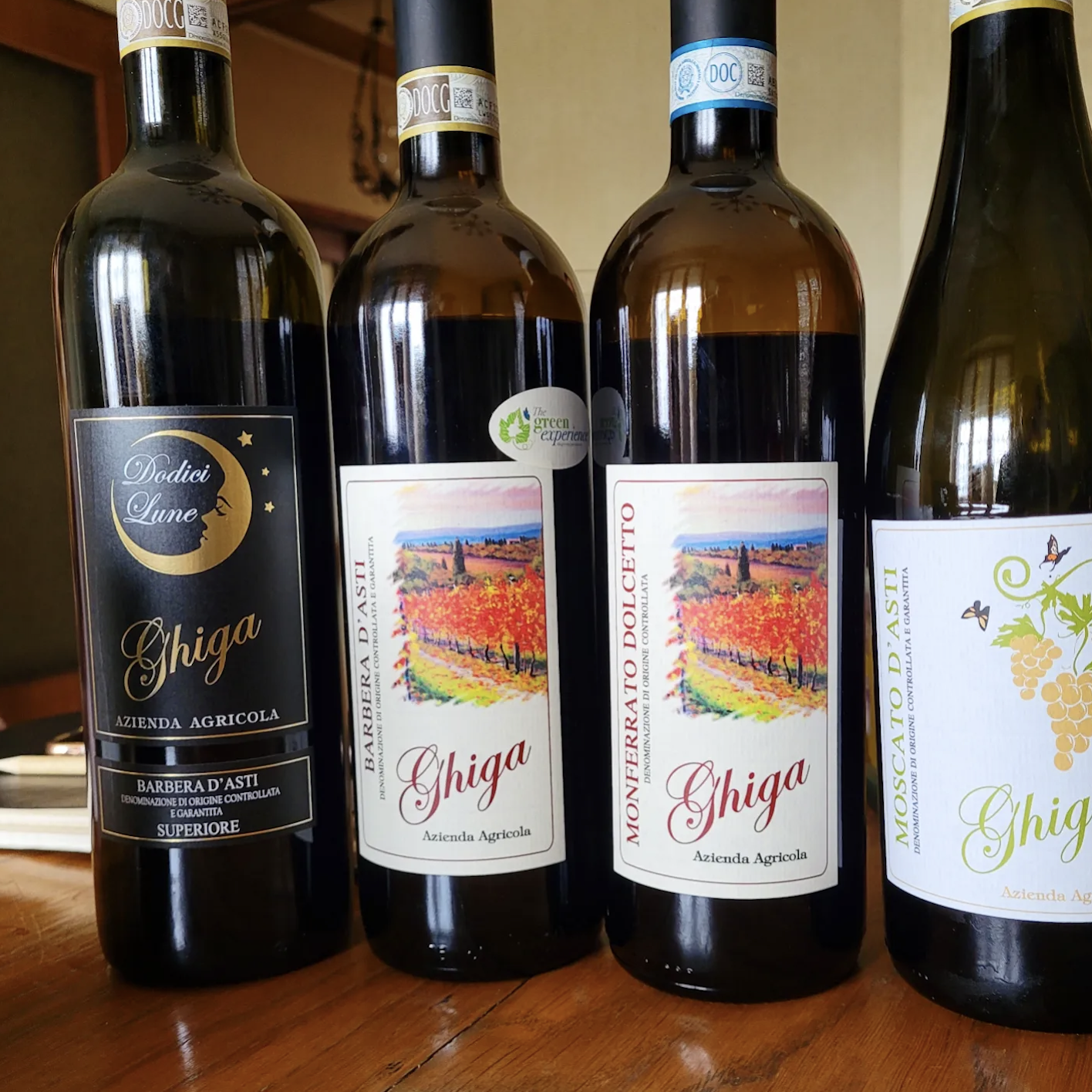
Azienda Agricola Ghiga Enrico Moscato d’Asti DOCG 2022

Davide Ghiga finished oenology school in Alba 2014, his brother in 2009. They are really the only young winemakers making a go of it in Castiglione, the first generation to make wines here, since 2012. Their uncle’s grapes were sold off to cooperatives before then and while barbera, dolcetto and nebbiolo have gained importance, the true heritage is still moscato. Freshness and high aromatic intensity are on full open display, as it must be with a varietal wine that bleeds this place, that being Castiglione Tinella. There are several exposures available, starting with the northern grapes and moving around the exposure wheel, east and west picked next and south the last, where sugars are high and acidity low. Pressed, three musts chosen from, kept at 0-1 degrees celsius, unfermented at this time. Blended, filtered, natural yeasts eliminated, back to zero degree holding tanks. Now in late October early November the vinification starts, selected yeasts are used, for 10-12 days, honing in on and fixing the aromatics and CO2. Done at 14-15 degrees with pressure at one bar. Followed by filtering again and tartaric stabilization at negative four or five degrees. Ready to bottle. Sugar at 120 g\L, acidity between 5.5 and 6, alcohol at five per cent. Tough work but someone has to do it. Spot on moscato in low alcohol, light fizz style with stone fruit and citrus aromatics on full display and in utmost control. Labour of love sets up true Ghiga success. Drink 2023-2026.  Tasted January 2023

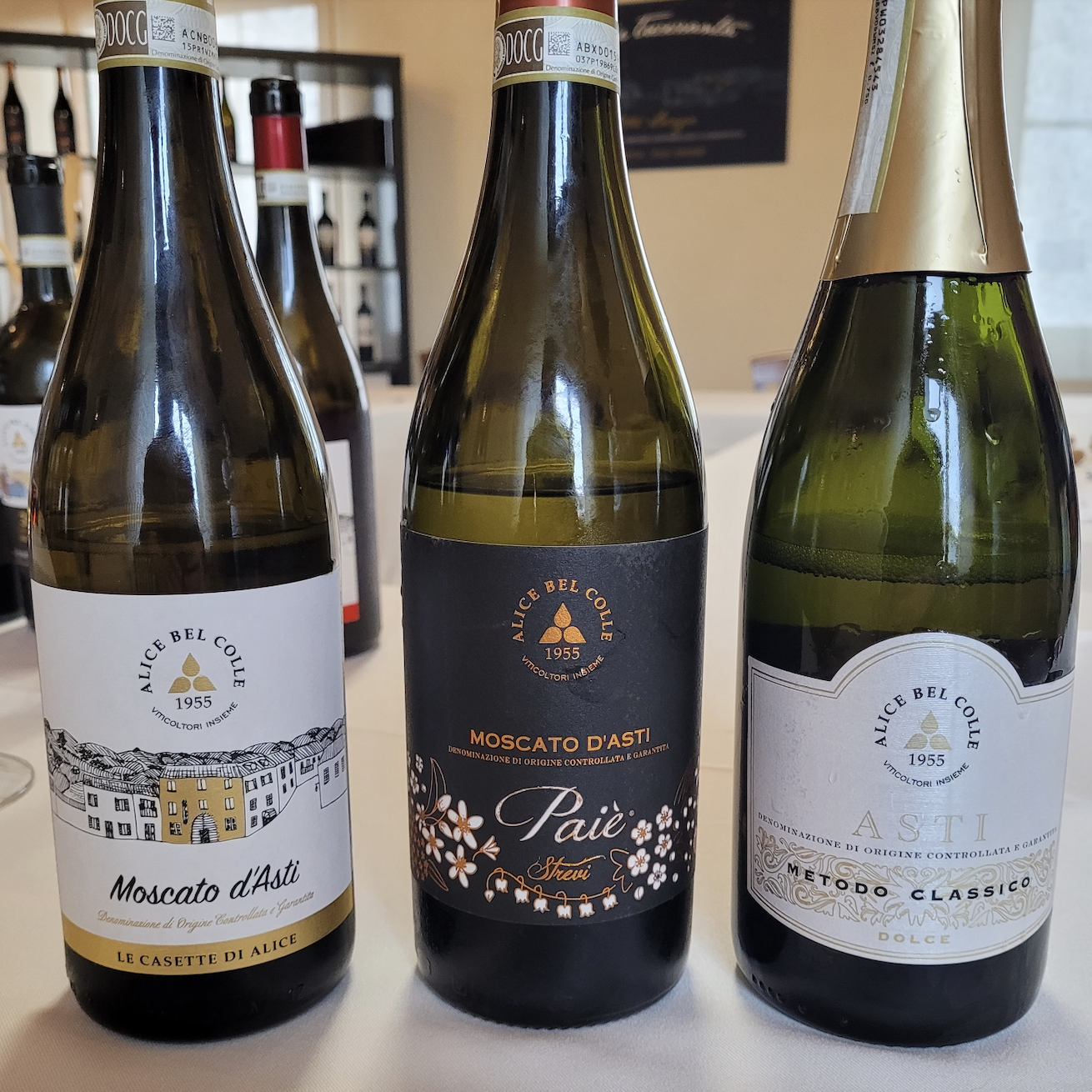
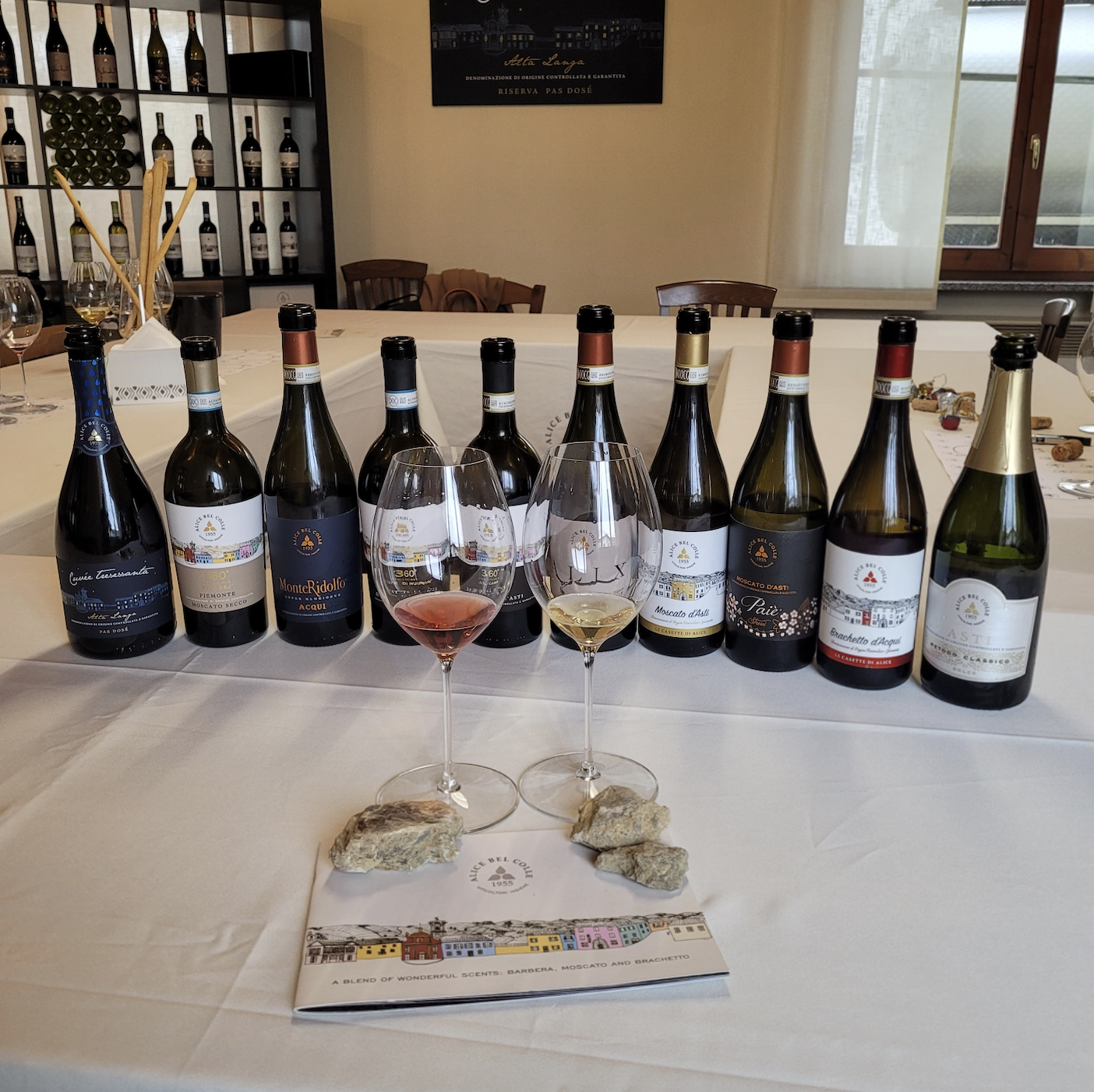
Cantina Alice Bel Colle Moscato d’Asti DOCG Le Casette di Alice 2022

A truly airy, frothy and easy moscato and yet the tannins of 2022 are there, as always across the board in this vintage. High acidity matches to the 120 g\L of sugar and 5.5 per cent alcohol. So much pear, soft and broken down by citrus with fresh white flowers. This is the straightforward and getable Md’A in all respects. Drink 2023-2024.  Tasted January 2023

Cantina Alice Bel Colle Moscato d’Asti DOCG Paiè 2020

The cooperative of Alice bel Colle comprises 350 hectares spilt between 200 moscato, 100 brachetto, 50 barbera plus small amounts of dolcetto and chardonnay. There are approx. 100 members and more than 2,000,000 annual bottles are produced. “Our idea is not to grow too much, otherwise we will lose quality” says President Claudio Negrino who oversees the Cantina along with Vice President Bruno Roffredo. Moscato d’Asti as Paiè is a contra style to the normale, a bit of age added on and yet shy of the dumb phase that is sure to follow. There is more concentration and density on the nose with fresh herbs, sage mainly and even white balsamic. Paiè is a small valley with a warmer micro-climate and the potential for over ripeness. This brings more sugar (140 g\L of RS here), body and stage presence. Stylistically this will attract a different consumer who wants to think about things a bit and also appreciates a bigger wine that matches to more specific cuisine. The suggestion here is of course dessert but also spicy coconut curries. Drink 2023-2026.  Tasted January 2023

Cantina Alice Bel Colle Asti DOCG Dolce Metodo Classico

Disgorged in 2015, seven-plus years on the lees and unmistakably white balsamic in aroma. The flowers and orange skin are now candied, the fennel slowly braised with Vidalia to bring out the sweetness. One of the most curious examples of using the moscato grape variety for a style of wine never really having been afforded the opportunity to try. Now a toasty expression fuelled by linalool that has turned to smouldering paraffin and camphor oil. Fine bitters though the sweetness still triumphs in the end. Nothing like this at all, a wine of experience and to experience, wholly unique. Drink 2023-2025.  Tasted January 2023

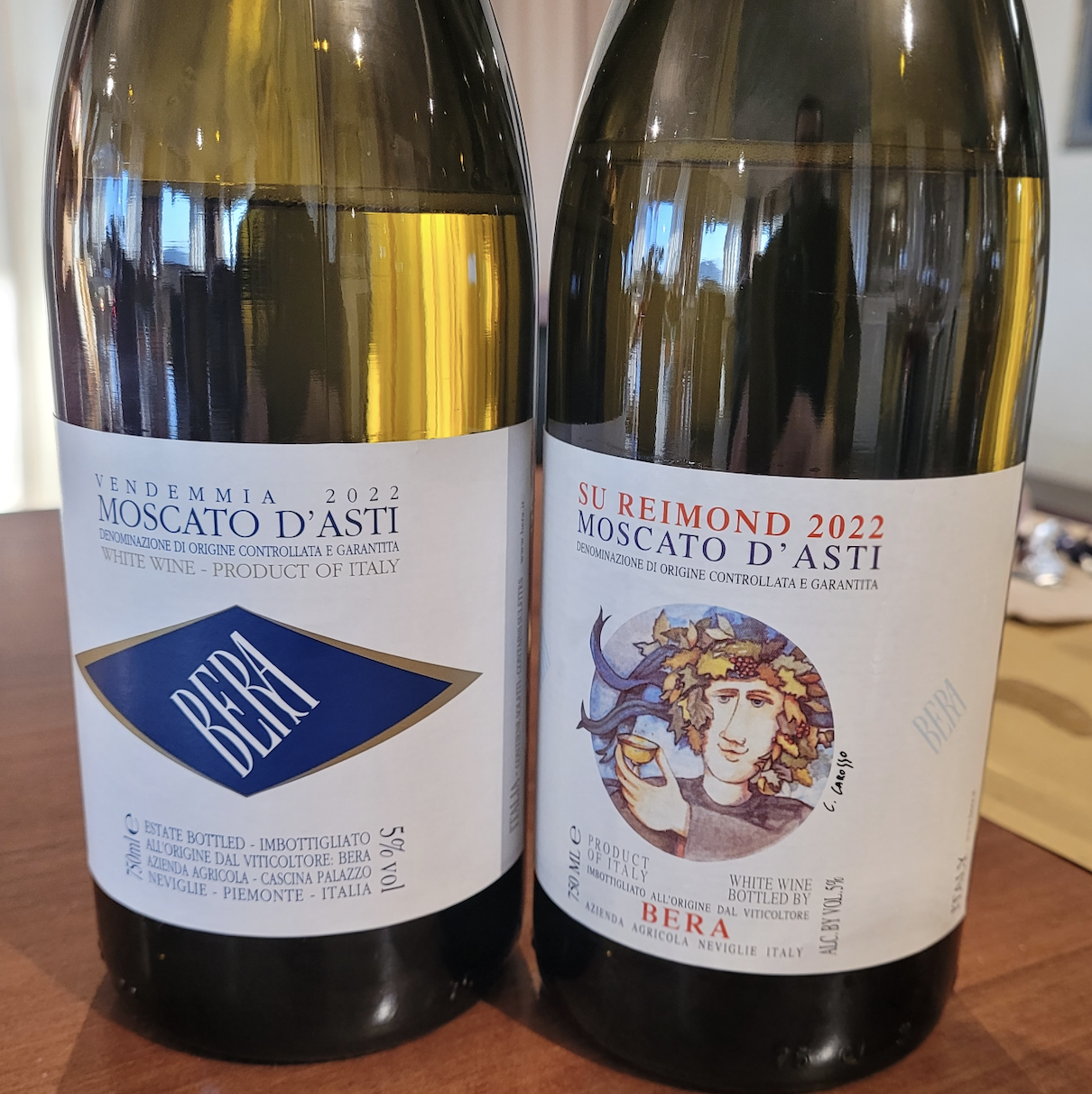
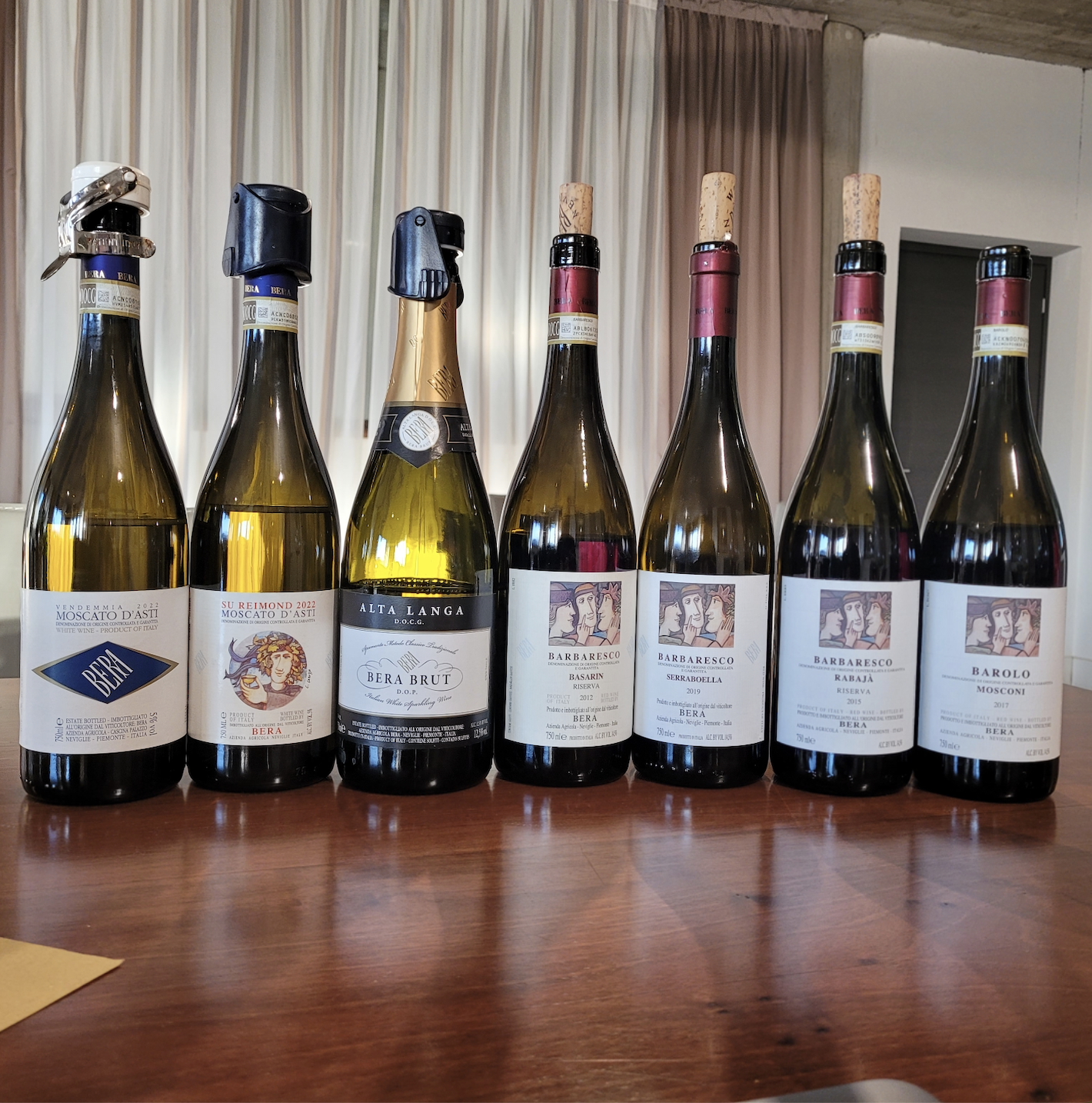
Bera Moscato d’Asti DOCG 2022

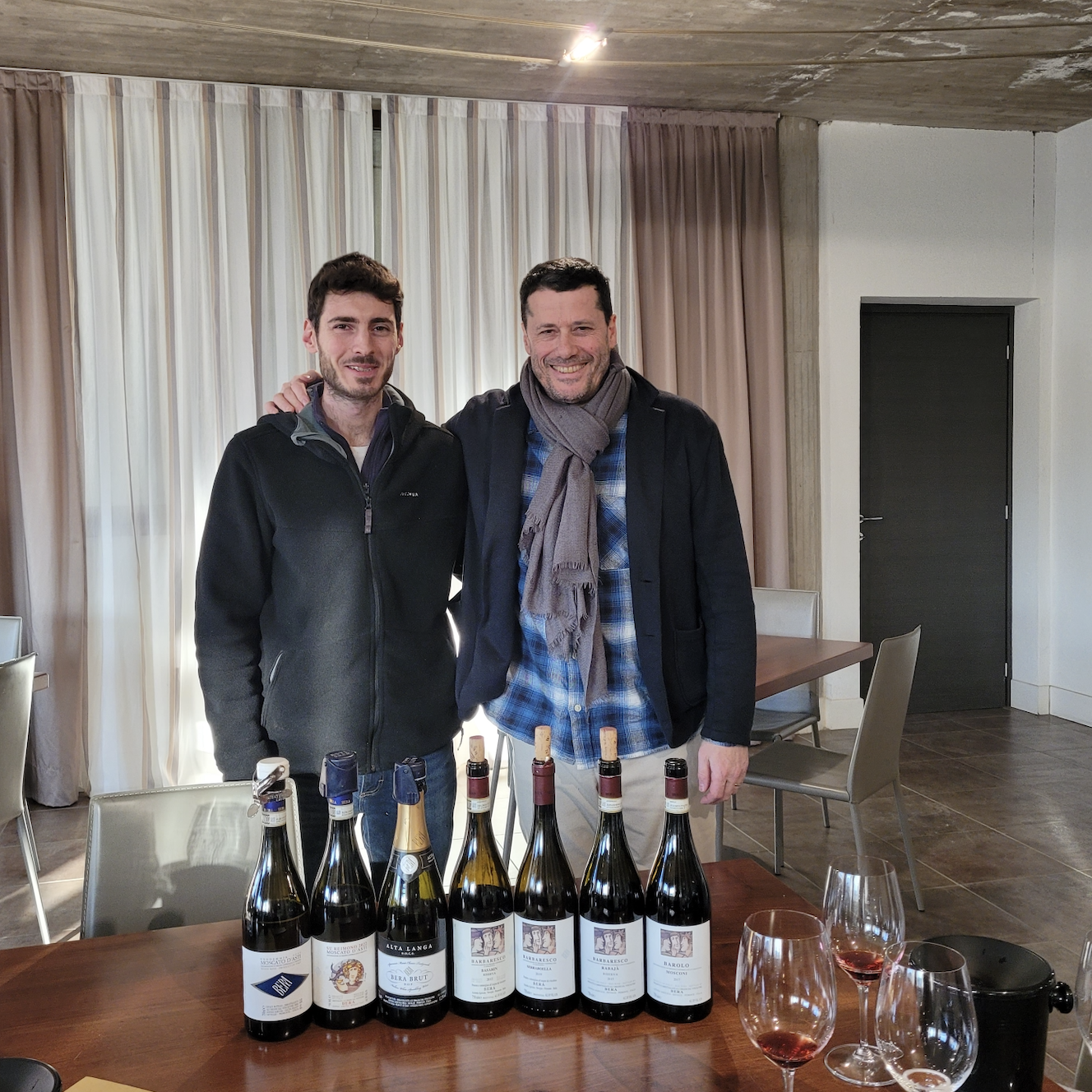
Walter Bera started the company in the 1970s with moscato grapes and it has always been a very important wine. His son Riccardo Bera tells that “this is pretty much the history of the winery when only a few guys were making moscato.” This is about the 1970s, along with Roman Dogliotti and others making this style of wine without the help of current technologies to keep the wines clean and safe from spoilage. Here in 2022 the wine is fresh off the charts and announcing its charm without equivocation. Approximately 130 g/L of RS, 6 of tA and five per cent alcohol. Again from 2022 tannin is involved, calling card of the vintage, not common but not impossible. Age some. They will drink well after four years and up to at least 10. Approximately 70,000 bottles made, half of what is made at Bera. Drink 2023-2028.  Tasted January 2023

Bera Moscato d’Asti DOCG Su Reimond 2022

Not a cru but a lieu-dit and literally below “Reimond’s house.” More concentration, doubling down on dry extract and also tannin because this is 2022. Aromatics are also intensified and yet so are the sugars but also the herbals in a soapy cilantro way. More idiosyncratic behaviour and specialized style. Not better than the classica, just different. Great curiosity and potential in any case. Drink 2023-2026.  Tasted January 2023

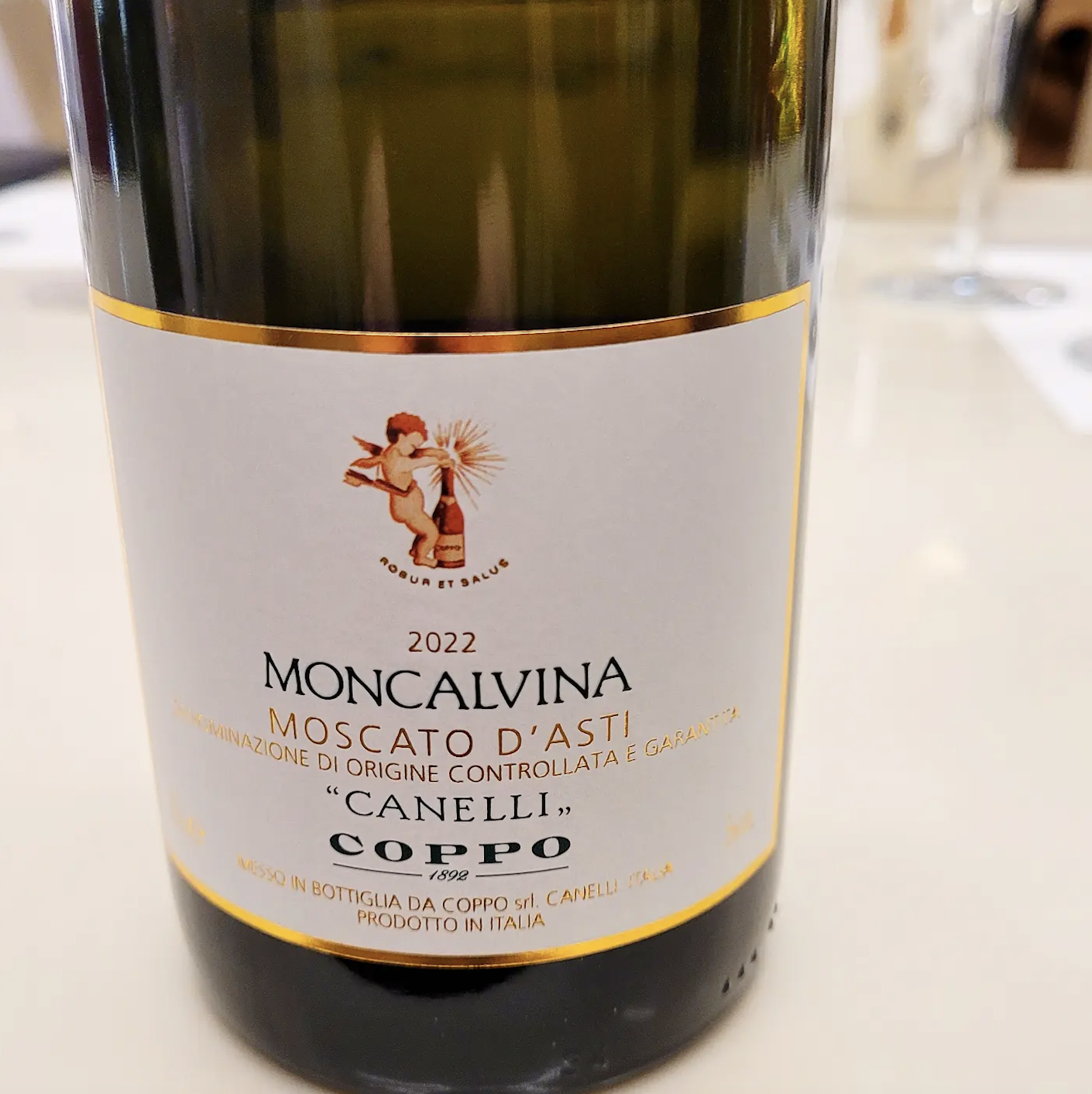
Coppo 1892 Moscato d’Asti DOCG Moncalvina “Canelli” 2022

The name Canelli is the key because going forward it may be the only name on the label. In a short time “Moscato d’Asti” could very likely be stricken from the front of the bottle. A wine of heritage and the hardest to produce, here at 2.5 bars of pressure and topped with specially designed Diam corks. The naturally occurring sugar is 245 g/L with upwards of 6 g/L of TA and 5 percent alcohol. Perfectly balanced, true, precise and honest moscato. Or shall we say, “Canelli.” Drink for a year, pause for the next three and then for five to six more after that. Drink 2023-2029.  Tasted January 2023

L’Armangia Moscato d’Asti DOCG Canelli 2017

Behold the moscato art meets science of Ignazio Giovine. Aromatics that temporarily disappeared into the Moscato d’Asti black hole are just now beginning to reemerge. The primary linalool beauty of years one and two went away and hid in the next 24-30 months but here they are again, albeit with new found interest and the beginnings of what naturally sweet moscato design is magically renowned to do. Now the peaches, apricots and nectarines, all them stone fruits and lemon segments are gelled, candied and crystallized. Renewed interest is the spark and imagination takes over, wonderment towards what might happen next. Will it be lemongrass tea, diesel emissions, petrol trails, strong scented terpenoids or cyclic ketones? Guesses are premium and another two years should answer the questions with real answers. Drink 2023-2027.  Tasted January 2023

L’Armangia Moscato d’Asti DOCG Canelli 2015

Ignazio Giovine’s 2015 has entered the zone where all great aged moscato from Canelli lands are want to go, that is to say their aromatics have re-emerged, been re-invented and replace or rather re-imagine what they were to begin with. The lemon factor runs high from this vintage, more verbena herbal than grassy and the green plant matter is exotic evergreen, oily and strong-scented, to touch and nose. Lots of petrol fuelling and vapour trailing in this ’15 and in many ways the secondary aromas are just the beginning. Still the best years are now up towards the nearing horizon. Drink 2023-2024.  Tasted January 2023

L’Armangia Moscato d’Asti DOCG Canelli 1998

Perhaps not the finest 1998 bottle version of what was surely a stellar vintage for Canelli moscato with full on oxidative notes, caramelization and all the lemon tisane that can be imagined on a naturally sweetened fizzy Asti white wine. Noting the excellence of the acidity and the gingered-apple-lemon crème brûlée tells much about what a perfectly sound bottle would offer. If ever the chance might arise again but alas not because Ignazio Giovine says this is it. Ah well, a great showing nonetheless. Drink 2023.  Tasted January 2023

L’Armangia Mesicaseu Vino Da Uve Stramature Bianco (375ml)

Aromatic perfume is a floral wave far exceeding that of Moscato d’Asti to little surprise considering the later harvest and serious fruit concentration. Lemon and rose hip tea, mandarin orange, cranberry and dried fruit, namely persimmon and apricot. Tannins, boozy flavours, more lemon and spices, spicy if crisp bite, herbals running like Amaro through veins. Tar and roses. Major curio dessert wine this one. Drink 2023-2027.  Tasted January 2023

Marenco Moscato d’Asti DOCG Scrapona 2022

Andrea Costa sets the table. “Strevi is always different from the rest of the Moscato d’Asti areas. You can really see the difference.” Leaner aromatics while conversely bolder in mouthfeel and fatter of structure. Limestone soil makes for fine acidity that is characteristic of this southern area, closer to the Appenines. The palate is full, wide and of a breadth impressive indeed that acts as a great distraction from the level of sweetness. And then comes that 2022 tannin, because of Strevi more forceful than most. Drink 2023-2025.  Tasted January 2023

Marenco Moscato d’Asti DOCG Scrapona 2017

Now going back five years and the winemaking no different then, just as it is still today. Though some 2017s are not yet showing a return to aging and development this from Strevi is just beginning its next level evolution and the fascination is upon us. Evergreen and petrol in cohorts, dried lemongrass and some sort of sweet and sour solvent. Grassy and chamomile plus the aromatic skin of “cedro,” aka fine strips of cedar bark. Great mouthfeel and persistence from what may be a vintage that will age quicker than some but for the next three-plus years it will do what we hope from aging moscato. Drink 2023-2026.  Tasted January 2023

Marenco Moscato d’Asti DOCG Scrapona 2012

Now we are really getting somewhere with an older moscato that is not only holding well but just a few minutes in the glass and everything begins to change. This bottle is in great shape, the hue of moscato brilliant golden yellow and the aromatics shining just like the wine’s hue. Sweet straw and lemon curd, like aged Icewine from riesling and the vintage just must have provided great balance. Acidity remains perfectly in tact and the tact of this wine is it’s seamlessness, unwavering, still holding a perfect line. Bravo. Buonissimo. Life yet to live. Drink 2023-2026.  Tasted January 2023

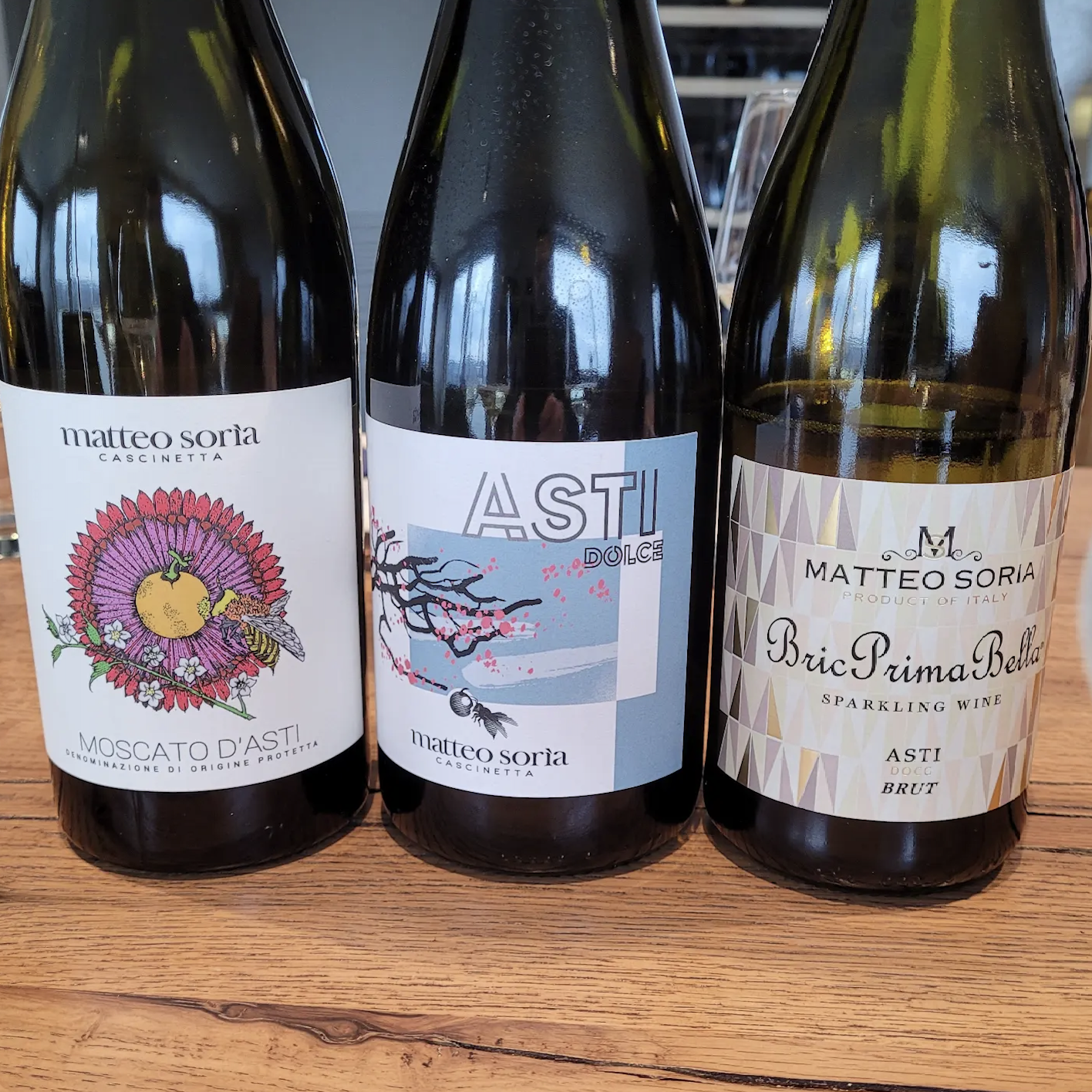
Matteo Sorìa Asti Brut DOCG NV Bric Prima Bella Sparkling Wine

Actually Extra Brut because there is only 1 g/L of residual sugar and in fact Matteo Sorìa is the only one making Asti Sparkling as bone dry. Maintains the aromatic profile of moscato from here in Castiglione Tinella but the profile is wholly, utterly and distinctly unique. A balanced Asti with slightly higher alcohol at 12 per cent though this is in reality 12.7 and yes, dry as the desert. Fennel seed, rosemary and yet never tart at all. Sees six to eight months on the lees with higher acidity at 6.3 g/L and this is what Sorìa is looking for. First disgorgement of this style and it has my attention. The only change going forward will be to keep extending the lees aging, albeit slowly, slowly. A reminder that it’s a tank method sparkling wine. Drink 2023-2025.  Tasted January 2023

Matteo Sorìa Cascinetta Asti DOCG Cascinetta NV

The area was called Cascinetta and also the name of one of Matteo Sorìa’s brands. This is the sweeter sparkler at 140 g\L with 7 g\L of total acidity and 7.0 percent alcohol. Also non-vintage so therefore a mix of at least (but up to 15 per cent) two or three older vintages. All for the purpose of consistency in style and a consumers’ taste. Sugar is quite hidden, flavours are very stone fruit and acidity rules the day. Looong finish, so clean and quite precise for this style of fizzy wine. Drink 2023-2025.  Tasted January 2023

Matteo Sorià

Matteo Sorìa Cascinetta Moscato d’Asti DOP

Bottled last week so yes this is about the freshest moscato you will ever find. Intensity of florals and aromatics off the charts and also here lower sulphites than most, with thanks to the newest of filtering technology used in the winery. Passes though 1.0, 0.65 and 0.45 micron filters and finishes with just 150 g\L of sulphites. The flowers and the stone fruit on the nose are matched by the white chalky-clay soil that determine what kind of moscato comes from Matteo Sorìa. Perfectly executed sweeter style. Drink 2023-2025.  Tasted January 2023

Matteo Soria Moscato d’Asti DOCG Soria 2012

Ten years old and bottled February 2013. A warm vintage with a great deal of rain and wow has this wine stood the test of time. The bubbles are preserved, it feels drier and the appearance is of a wine only a year or two old. Drier because the acidity is high and after 10 years that acidity hasn’t changed. Probably 120 g\L of sugar and the aromas are so beautifully preserved as well, though they have certainly morphed with some crème frâiche now, but also lemongrass, Vietnamese herbs and the beginning of petrol. Yet to express any solvents or waxiness. That may be coming, not soon but down the road. Incredible freshness. Magic. For now and it remains to be seen what can be gained from 10 more years of aging. Drink 2023-2028.  Tasted January 2023

Cantina Alice Bel Colle Cuvée Tresessanta Blanc De Blancs Pas Dosé 2018, Alta Langa DOCG

The alcohol is a bit high (at 13.5 per cent) due to “a bureaucratic problem,” explains President President Claudio Negrino, having obtained the appellative status a bit tardy and so the harvest was delayed, otherwise it would not have been called Alta Langa DOCG. Makes for more gastronomy in a few ways, even it it’s not perfectly suitable to be drunk own its own. All moscato, aged 36 months on the lees in the richest of possible moscato employed ways, like candied ginger, salty kewpie mayo and seasoned sushi rice in a bottle. Carries a metallic note as well, like viognier, but the acidity is really good. Also a golden hue and beneficial bitters. Drink 2023-2025.  Tasted January 2023

Cantina Alice Bel Colle Moscato Secco 360 degrees Collezione Filarej, DOC Piemonte

The label depicts a description, of standing at the top of the unnamed hill though it may be affectionately called “Belvedere,” a beautiful panoramic view, 360 degrees, overlooking the village itself. Here a dry moscato that has been made at Alice bel Colle for more than 10 years, well before the DOC was created. Still perfumed with more linalool than a dry example would usually emit and the sugar here is 3-4 g\L, essentially insignificant as it pertains to this grape. Once again there is as much a viognier feeling gained as there is moscato and that is fully attributed to a strong aromatic profile predicated on phenolics which masks the alcohol (at 14 per cent). Clearly a wine that benefitted from expert temperature control during fermentation to capture perfumes and avoid bitterness. A style of wine on the rise, modern and contemporary. Drink 2023-2025.  Tasted January 2023

Acqui Secco DOCG Monte Ridolfi Lupus Glorioso 2020

A dry version of brachetto and so an agreement they would be called simply “Acqui,” as opposed to “Brachetto d’Acqui,” which is the sweet version. Not a rule but a marketing choice made by the members of the Consorzio. Avoids consumer misconception. Again the aromatics are captured despite the dry factor and like the moscato concept there is a modernity and a sense of innovation involved. Red fruit with all the right moves, black cherry and just that fine little bit of bitterness from the stone. Fineness of tannin and long on the finish with good natural sweetness and impressive balance. Simple and not complex but quite satisfying. All stainless and some concrete tanks for a good level of freshness though interesting in that there is no real salumi or meaty skin muskiness. Really clean and focused. Drink 2023-2024.  Tasted January 2023

Cantina Alice Bel Colle Dolcetto d’Acqui DOC 360 Degrees Collezione Coste Di Muiran 2021

Not a wine of a single vineyard dolcetto but from a specific area out of which grapes are chosen. Bit of a funny barnyard aroma mixed with very ripe strawberry with some musky fruit skin leatheriness. Much lighter than Dogliani versions and yet also fruitier than those from the Monferrato Hills further west from Alice bel Colle. Smells like pizza dough in action, still a bit raw yet getting somewhere. Also mulberry bush, Ribena and yet good acidity keeping the grip and also balance in play. Solid and characterful, yet another wine of gastronomy. Fine bitterness upon the chewy finish. Drink 2023-2025.  Tasted January 2023

With Claudio Negrini, President – Cantina Alice bel Colle

Cantina Alice Bel Colle Barbera d’Asti DOCG 360 Degrees Collezione Al Casò 2021

Al Casò faces south-southeast heading from Alice bel Colle towards Nizza, very close, on the right, of vineyards somewhere between young and old, right in the sweet spot. Lions of cherry here, a variegation of ripenesses, in reds and green but mostly concentration. Selected from many small parcels, 95 per cent collected by hand. Fermentations are kept separate and blended after. Expressive of barbera’s acidity but also stringent behaviour, kept in check though surely present in this wine. There is a real presence and persistence and so the wine improves with time spent getting to know its grippy charms. Drink 2024-2026.  Tasted January 2023

Cantina Alice Bel Colle Barbera d’Asti Superiore DOCG Alix 2019

The flagship red for the cooperative Cantina Alice be Colle and almost counterintuitive because there is immediate brightness and effusive behaviour straight away. Alix was the ancient name of the village and there were at the time two roads running up and down the hill that formed an “X.” As in going to the X, to the village, now called Alice bel Colle. Now up to 15 per cent alcohol though it wears it well and the aromatics are surprisingly open-knit. Intensely or more so the kind of tart that is truly implosive, reflexive and recoiling. Wood is all about spice and structure, not overwhelming though unavoidably in charge. Ample purity which bequeathes originality and in the end a thank you to the calcareous-quartz soils. Drink 2024-2027.  Tasted January 2023

Cantina Alice Bel Colle Brachetto d’Acqui DOCG Le Casette Di Alice NV

The cousin of Moscato Casette, like-minded in sweetness and purpose though brachetto’s key ingredient is more particular, from strawberry to rose, depending on the vintage. An herbal vintage which doesn’t necessarily choose one over the other but brings in the leaves of both. Acidity is maintained and freshness guaranteed. This is quite open and lively with a scrape of orange zest that brightens the finish. Drink 2023-2025.  Tasted January 2023

Bera Brut Alta Langa DOCG And DOP 2016

Disgorged in late November from a wine that has been made the same way since the 1980s, 70 per cent chardonnay and (30). Walter Bera’s father Sisto had been growing pinot noir and chardonnay going back even further so he was one of the pioneers, like Carlo Gancia. The ’16 spent 48 months on the lees and this is the last bottle of this disgorgement. Grown on white chalk in the Langhe so yes there is some lightning in here with just 4 g/L of dosage, vintage related but that’s the median point overall. So much flavour, with mid-palate and structure, yet round and so getable. Drink 2023-2026.  Tasted January 2023

Bera Dolcetto d’Alba DOC 2021

“Dolcetto has been in our roots for a very long time, on a very historical piece of our land,” tells Riccardo Bera, from a Neive vineyard, once planted as the king of the Langhe as the most important grape. It fetched more money than nebbiolo. It was currency. Today it’s the easiest wine, low in structure and acidity, but also austerity and it’s the perfect match for local food. This ’21 smells so primary, as if it were from the tank and yet it’s more than a year old. Incredibly fresh, bursting with red fruit of every ilk, flesh and size. Supremely aromatic and Riccardo’s brother Umberto is the new gen oenologist keeping the old traditions alive. A week on skins, stainless steel only, some tannin that is Neive but not nebbiolo austerity at all. Perfect mid-weight dolcetto. Drink 2023-2026.  Tasted January 2023

Bera Barbera d’Alba Superiore DOCG La Lena 2019

Lena was the name of Riccardo Bera’s great-grandmother, as in Sisto’s mother. Aged in 25 hL casks, the fruit coming from Neive, same area as the dolcetto. Actually Gaia Principe, halfway between the villages of Neive and Barbaresco. Just fresh enough to stay happy and healthy even while temperatures rise and fruit concentrates exponentially. The structure here separates this from other barbera while the wood never dominates. Well thought out, considered, never hastily conceptualized or actualized but made well to deliver persistence and more than ample amenability. Drink 2023-2028.  Tasted January 2023

With Riccardo Bera

Bera Barbaresco DOCG Serraboella 2019

The western cru close to Neive village, exposition to the west, from the lower section at 350m. Planted 15 years ago with the intention to make classic “Villages” Barbaresco but the fruit from 2016 changed the family’s perspective. That vintage was the first cru label and here from the fourth consecutive the refinement time is 24 months in grandi botti, part Slovenian and part Austrian oak. Tannic to be sure yet not quite what you’d call austere. Greatly structured wine and still far from readiness. “That’s the young baby we’re talking about,” says Riccardo. “It’s the cru that surprises me.” Great aromatic presence and fine chalky liquidity running through. Drink 2025-2032.  Tasted January 2023

Bera Barbaresco Riserva DOCG Rabajà 2015

Rabajà faces southwest and this fruit comes right from the heart, only bottled as Riserva. Vines in and around 40 years of age and three years spent in Grandi Botti. Aromatically you intuit glycerin and as a Barbaresco there is clearly more acumen and experience from plants that first gave this wine life out of the 2011 vintage. Tannins are even more compact than Seraboella, trying to expand but they just keep weighing down and won’t fully relent. Layering of red fruit and they are beautiful layers but each one carries tannin of ilk upon ilk. This is Barbaresco of sapidity as a quotient of acids and pH working in cohorts. The palate attack is quite fantastical. Give this another year. Drink 2024-2033.  Tasted January 2023

Bera Barbaresco Riserva DOCG Basarin 2012

Basarin is home to much older vines, upwards of 65 years-old and is one of the steepest vineyards in Barbaresco. A snake of a vineyard and very challenging to work. South exposure, warm for sure and a soil composition higher in chalk than clay but not too dissimilar to Rabajà. Herbaceous notes come from Basarin and “when I was young, every time I went to the tank I had this feeling,” tells Riccardo Bera. The first vintage out of which the tannins are nearly resolved and yet the fruit persists in near whole and perfect freshness. A nebbiolo in wonderful condition and while the vintage was hot there might have been a different result. This is almost, not quite but nearly ready, as far as optimum or perfect windows are concerned. Liquorice here, a touch of tar and well, “most of this job for us is to start with the best grapes you can. The quality is in the vineyard. A good winemaker can keep the 10. A five you cannot fix.” Ten it is. Drink 2023-2032.  Tasted January 2023

Bera Barolo DOCG Mosconi 2017

From this vintage the fruit is not 100 per cent Bera and just shortly thereafter the Bera family purchased a portion of the famous Monforte cru. This is the first and only trial vintage before the purchase but the focus was on acquiring a piece. Straight away the dry and brushy vintage while some red fruit freshness persists. Some austerity yet starting, to advance, mature and soften. The reconciliation and full recovery may be a year or two away but this nebbiolo is showing the signs. Quality precursor to what is coming form the new plantation and Bera’s full control of their own Mosconi Barolo destiny. Drink 2024-2028.  Tasted January 2023

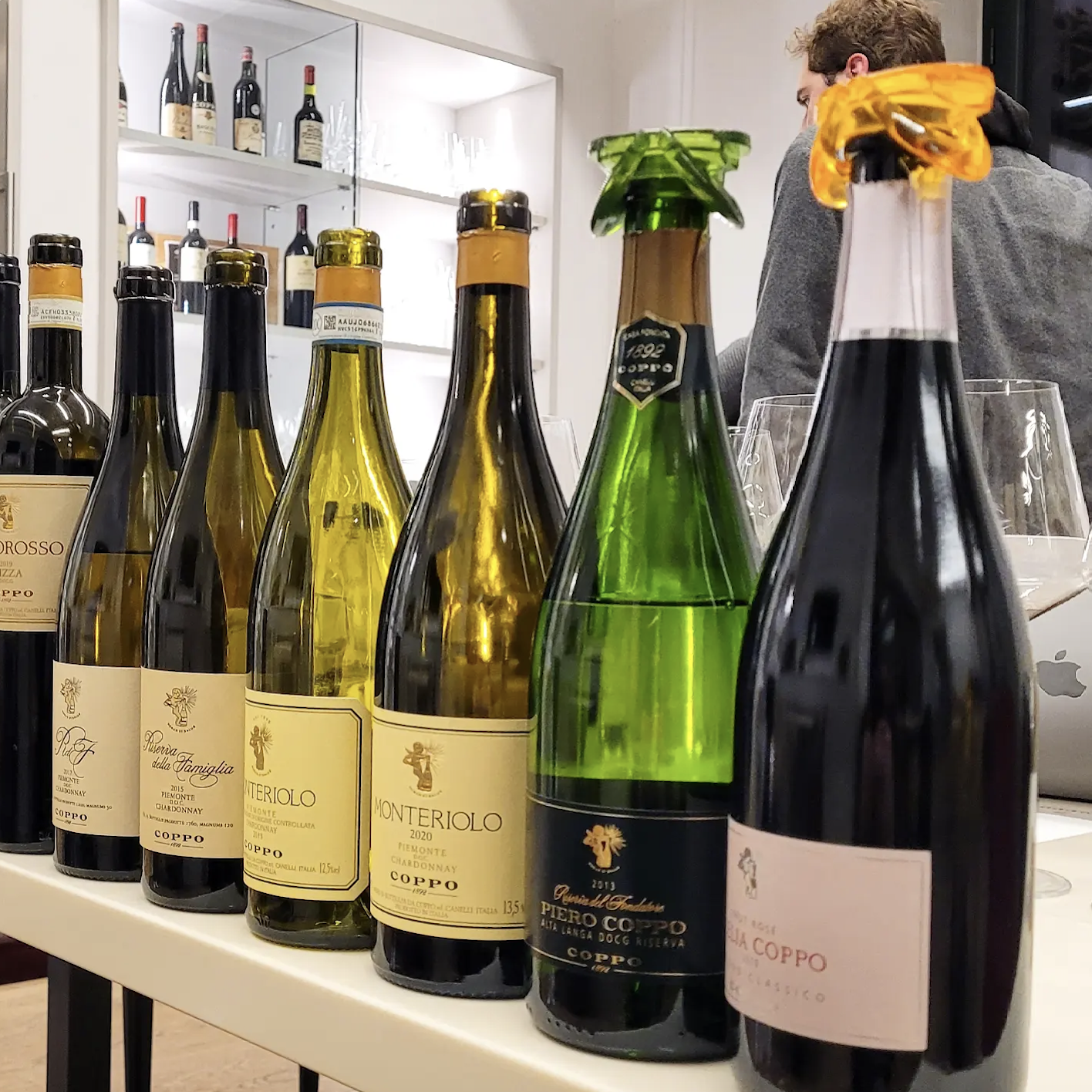
Coppo 1892 Brut Rosé Clelia Coppo Metodo Classico Vino Spumante Di Qualità 2019

Assemblage of chardonnay with only five per cent pinot noir in a cuvée named for Luigi Coppo’s grandmother. Just five per cent but red fruit really defines this traditional method sparkling wine. Red currants and a hint of strawberry, sweetly leafy and mildly tart. Drink 2023-2025.  Tasted January 2023

Coppo 1892 Piero Coppo Riserva Del Fondatore 2013, Alta Langa Riserva DOCG

The 2013 vintage is the turning point to this 60 percent pinot noir and (40) chardonnay becoming and being labeled Alta Langa, recently disgorged in 2022. Previous disgorgements were labelled Vino Spumante di Qualità. Now into wildly vivid and famous complexity, toasty yes but there’s a crème frâiche and an almost strawberries and cream component. Eonologists GianMario Cerrutti, Guiliermo Grasso and Vittorio Pescarmona conspired to see this age 85 to 90 months on the lees, almost unprecedented around Asti. Has hit its stride, in the right place between crunchy and the kind of sparkling wine that you begin to ruminate with in the mouth. Cerebral wine in every respect. Drink 2023-2027.  Tasted January 2023

Coppo 1892 Monteriolo 2020, DOC Piemonte

Mainly stainless steel with 10 per cent barriques. Reductive and yet wildly exotic, so much so the protective shell can’t seem to hold back the aromatics. Of minerals and elements, tropical fruit and wet stone. Turns flinty or rather encourages this note, followed by lit paraffin and finally a hit of lemon pith plus fine bitters. Everything in moderation, subtlety and restraint. The dream of generations continues. Drink 2023-2026.  Tasted January 2023

Coppo 1892 Monteriolo 2015, DOC Piemonte

Chardonnay at seven years is extraordinary, from the limestone and clay of Castelnuovo Calcea with all the hints of the early days now emerging into the secondary machinations so wished for in Nizza-Monferatto area chardonnay. Of solvents and camphor, paraffin and flintiness stretched elastic for miles and miles. Structured wine of sapidity which is once again the correct and beautiful way for chardonnay to complete its raison d’être. That and freshness so persistent. Drink 2023-2025.  Tasted January 2023

Coppo 1892 Chardonnay Monteriolo Riserva Della Famiglia 2017, DOC Piemonte

A warm and dry vintage for concentration to be guaranteed but looking forward to 2022 the lack of winter snow and spring/summer rain will make for a much more difficult proposition. This is not only beautiful as an aged chardonnay but also impressive in its Riserva style concentration. Takes the waxiness, phenolic meets solvent tonic and citrus to an entirely next level. Chardonnay and 2017 make for an ideal and lasting marriage in Nizza Monferrato. Drink 2023-2026.  Tasted January 2023

Coppo Barbera d’Asti Nizza DOCG Pomorosso 2019

A Barbera d’Asti from the highest level from Nizza where the soils are key, of fine and friable clay with sparkling mineral content above a layer of nearly pure though porous limestone to raise barbera no other Asti area is able to procure. Castelnuovo Calcea and Vinchio bring the grip and stage presence, mainly from old vineyards. The Pomorosso is a cuvée and while structurally speaking this is a very serious wine, there is a portion from near Agliano Terme that brings a roundness and ultimately balance. The components of acidity and tannin are strongest but they do not dominate as might be expected. There is a juiciness and fine if sharp red fruit presence part plum and part red berry plume. Pomegranate shares the spotlight and this is a very generous vintage. Surprisingly accessible. Agreeable and yet age worthy to. Drink 2023-2028.  Tasted January 2023

Coppo Barbera d’Asti Superiore Nizza DOCG Riserva Di Famiglia 2015

Notably evolved yet right in that secondary zone where things have become really interesting. Pine forest, limestone and espresso, a veritable caffè of barbera with juicy black cherries and finishing dark chocolate. A vintage where the wood is really felt and these are the final days of excellence. Thank goodness for top barbera acidity. Drink 2023-2025.  Tasted January 2023

With Davide Ghiga

Azienda Agricola Ghiga Enrico Dolcetto 2021, Monferrato DOC

The first of the Ghiga red grapes to be harvested and here from Monferrato the alcohol is still coming in at 13 per cent. Meat scented, a salumi skin but mostly freshness because this zone is still one of the lucky ones. Fruit is fleshy but again the skins are so much a part of determining style; musky plum and minerals cut by an almost raspberry tang. Lovely but complex dolcetto. Liking the length here. Production is approximately 2,000 bottles per year. Drink 2023-2024.  Tasted January 2023

Azienda Agricola Ghiga Enrico Barbera d’Asti DOCG 2021

Barbera from a very particular terroir that manages freshness really well because the soils of Costigiole and the winds that come in from the mountains create temperature wings and a maintenance of cooling acidity. A world away from barbera raised in Alba, here at 13.5 percent alcohol and no wood involved in the aging process. Fruit at the centre with great Scott acidity in the range of six to 6.5 g\L. Drinks in many ways like the dolcetto but there is more depth and even some tarry character involved. The vines are 40-50 years of age and it is both concentration and intensity that are provided. Also herbal, like Amaro and in the end a balanced effort. This is the wine for Bollito Misto. Truly. Drink 2023-2026.  Tasted January 2023

Azienda Agricola Ghiga Enrico Barbera d’Asti Superiore DOCG Dodici Lune 2019

In Superiore barbera gets special wood treatment, now and since 2016 with two foudres, two barriques and one tonneaux sitting like little Buddhas in a small aging room dedicated to this wine. The rest in those vessels is for one year and another in bottle. The wines are racked in tank to make the blend, usually in June or July. Fruit from the zone (località) of San Michele in Costigiole d’Asti, as always and one of the coolest barbera zones pretty much anywhere in Piemonte. Superiore is a 20-25 per cent selection of the best barbera grapes and the quality in terms of concentration but also purity is evident in this fine vintage of this fine wine. Acidity always high, especially from this place and “this is our style right now,” tells Davide Ghiga. Around 2,000-2,300 bottles annually. Drink 2023-2028.  Tasted January 2023

Marenco Rosato Acqui DOCG Ma Ré 2021

Ma Ré as in Marenco and also “Ro-Sé.” An experimental Rosé (third try) labeled Acqui which under the new understanding puts it on the drier side and spends a maximum of 48 hours on the skins. This puts it in similar vinification methodology to the sweeter Brachetto d’Acqui. That said fermentative temperatures don’t need to be cold because immediate gratification is the point of the exercise. Dry and salty, 2-3 g\L of RS, very tisane, namely bergamot, then pomegranate, orange and rose petal. Really nice Rosato. Drink 2023-2025.  Tasted January 2023

Moscato Secco Ma Mù 2021, DOC Piemonte

Ma Mù (which carries a Champagne story), is local dialect to speak about the grape moscato and this is also experimental in that dry iterations are neither traditional nor normal. Yet here we are with the grape and the sugar fermented away to finish at 13 per cent alcohol. Barrel fermented on the lees for six months, made to last, to age a few years. Able to capture and maintain the origins of varietal aromatics and so the result is almost pinot gris in temperament, a little bit salty and simultaneously white floral. Citrus is all juice and the terpenes stay in control. This is the second vintage though the first was problematic due to reduction. This 2021 is clean and precise. Drink 2023-2025.  Tasted January 2023

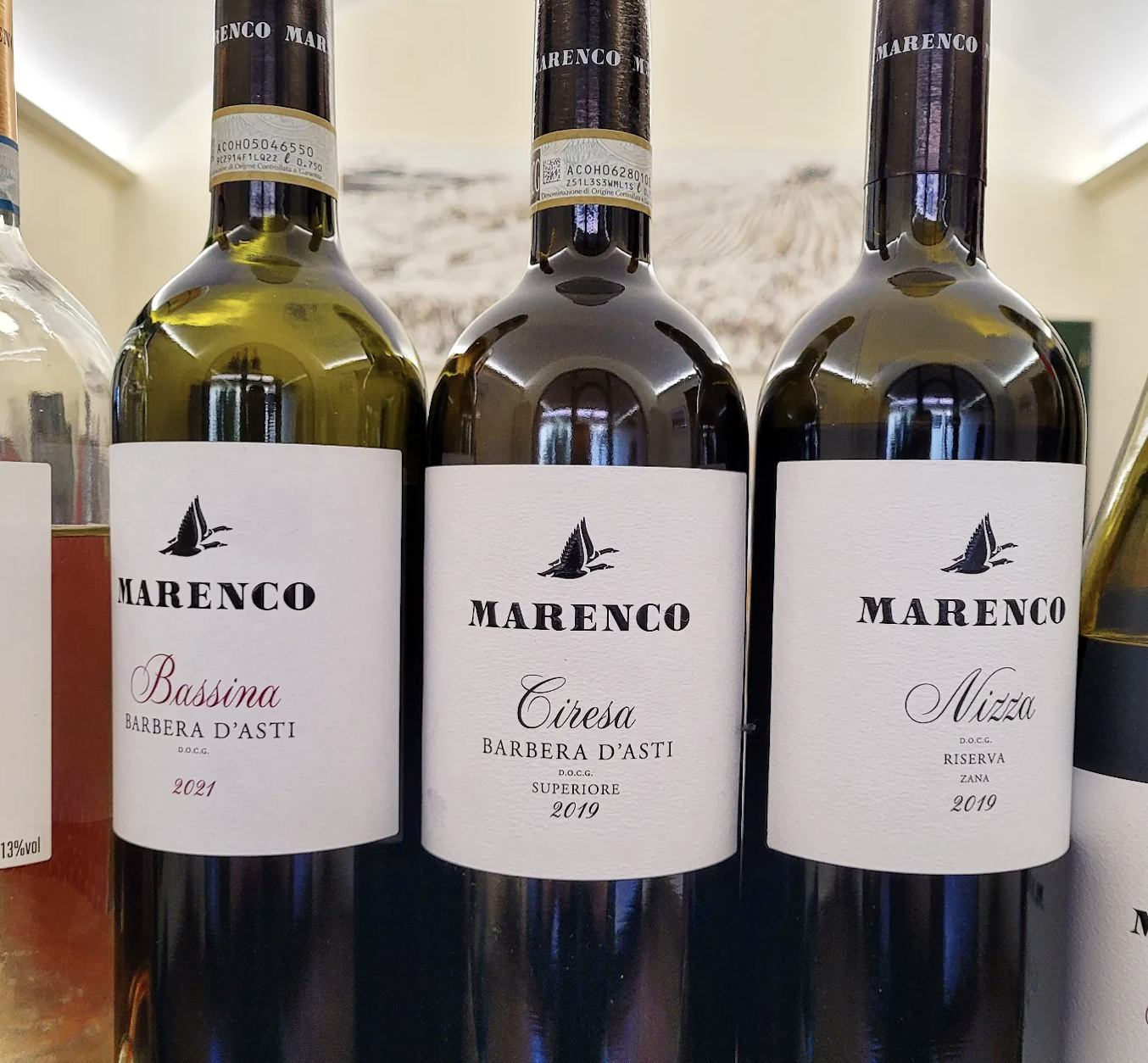
Marenco Barbera d’Asti DOCG Bassina 2021

Classic and traditional, never a thought of barriques, not even botti but only stainless steel and concrete. Modern and yet big enough to speak the language of red wine that thinks on its feet and walks a confident walk. “We have two advantages that makes better barbera than 10 years ago,” tells Andrea Costa. “One is climate which maintains acidity and the second is how we think better in both the vineyard and in the cellar.” Expressively juicy and bright, with roundness and mouth filling qualities. What we like to call generous and perfectly without astringencies. Clean as a whistle. Drink 2023-2026.  Tasted January 2023

Marenco Barbera d’Asti Superiore DOCG Ciresa 2019

The Superiore ages in botti for 18 months and the expression is much bolder, sanguine, accented by a number of herbs and spices. Caper and dill, tobacco, pine tree, balsamico, black cherry and persistent in its intensity. Needs air and agitation because the wood and the time have conspired for a bit of reduction that must be encouraged to leave the glass. It will if you have the patience and you will because there are charms and structural components worth waiting for. Drink 2024-2027.  Tasted January 2023

Marenco Barbera d’Asti Nizza Riserva DOCG Zana

Zana is a cru in Castiglione (recently mapped out by Alesssandro Masnaghetti), high in elevation and the barbera here from Nizza ages 18 months in barriques and tonneaux. Does not show its wood so readily and in fact the fruit aromatics are quite pronounced. The air and breathability from elevation definitely help to keep the windows open in a barbera that should by all accounts be closed and unwilling. Not the case as this sky brightens and the wine shares its charms. Good structure here because of high ranking acidity leaning part sweet and part sour into the tannins. More singularity from Marenco, this time for Nizza. Drink 2024-2028.  Tasted January 2023

Marenco Albrarossa Piemonte DOC 2019

Aged in the larger (15 hL) barrel, this time from a variety that has just one or two biotypes. Bottom line is that albarossa is dark matter, tarry, like heavy fuel and the wood only serves to accent what’s already there. Like petit sirah but in Piemonte, or perhaps malbec/tannat from Cahors but truthfully it’s what it is, of its own accord. But acidity here is all Monferrato meets Strevi and this kind of cimmerian red wine is an own character and style. Great acidity here that gives barbera a run for its money. A bit dill pickle and peppery reductive so give it some air. Drink 2024-2027.  Tasted January 2023

Marenco Brachetto d’Acqui DOCG Pineto 2022

Pineto, the name of the church across the way. “This wine just needs people to open the bottle and drink it,” not to compare or think about anything else in the world. “It’s so unique” says Andrea Costa. Less muscle as compared to moscato, some tannin aka tisane from a day on skins and just the way of the grape. The grapes were heavier in 2022 because of the skins and thus the tannic sensation is gained. Strawberry and orange zest, cranberry and basilico. An ideal brachetto right here. Drink 2023-2026.  Tasted January 2023

Good to go!

godello
Moscato vineyard, Castiglione Tinella

Twitter: @mgodello

Instagram: mgodello

WineAlign