
To perform an exercise 13 years running is commitment, on repeat annum per annum, the messenger thanking the maker. Tasting and assessing wine is like wandering a maze of streets folding in on themselves with travel playing the most significant role, adjusting weights and measures for how a list will be conceived. In 2024 Chianti Classico played their major roles, as did Sicily and in particular L’Etna. The mountain wines will again in 2025, so will South Africa and the Tuscan appellations once again. Expect Montepulciano to join the fray next year. These are the contiguous rules of vinous engagement, always in flux, committed to memory, ready for anything that comes this way.
Related – Twenty-three mind-blowing wines of 2024
This is alchemy, not science, trails in the ether, thoughts put to paper and tapped furiously across keys. Not necessarily best of, but instead that which intrigues to the highest of degrees. That which blows the mind.
Related – Twenty-three mind-blowing wines of 2023
Godello reviewed 3,500 wines in 2025, give or take, down eight percent from 2024 but such things are not a matter of wine or death. Than again the breakdown is quite consistent; thirty percent would be from the LCBO’s VINTAGES release program, 24 percent for WineAlign Exchange curation and wine reviewing service, (12) Chianti Classico, (10) Montalcino, (6) Sicilia and the remaining (18) from travels to other parts of Italy and around the world. A smaller part of one percent would be from wines enjoyed with friends, tasting groups, wine agent reps, visiting winemakers and at home. It all adds up to one great pool from which to create this list of 25, a number to represent just slightly more than half of one percent of the wines tasted by Godello in 2025. Here are his twenty-five mind-blowing wines of 2025.
Related – Twenty-two mind-blowing wines of 2022
Domaine Evremond Classic Cuvée, Chilham, Kent, England
This is the third Kent bubble being poured in these late November WineAlign fizz sessions and the third to impress. If only fruit would ripen every year in that part of the world then these vineyards and their makers’ work would really add up to something extraordinary. In time this will happen and as it stands the Evremond Classic Cuvée from Patrick McGrath MW and his Taittinger benefactors is a fine ode to a man buried in Poet’s Corner, Westminster Abbey. Sharp, focused and devilishly delicious, finely chisled and rich enough to become your great friend. Impressive indeed. Drink 2025-2029. Tasted November 2025
Perrier Jouet Champagne Belle Epoque Blanc De Blancs 2017, Champagne AC, France
First vintage of the Blanc de Blancs was 1993, 162 years after the house was realized by Pierre-Nicolas Perrier and his wife Rose Adélaïde Jouët. Chardonnay comes from two top Cramant crus, Bouron Leroi and Bouron du Midi, aged a minimum six years and with a dosage of eight g/L. There could not be another Blanc de Blancs as subtle, restrained and delicate as this Belle Epoque, the least startling of them all, simply put, a wine of indelible grace. Goes without saying that concentration is at peak and this is where the Champagne’s great intensity gets its lift. Have rarely tasted anything so full and developed, here with obvious autolysis though that’s simply not the leading aspect to focus upon. Once again texture is all and the palate wishes for nothing further, nor is anything left on the table. 30,000-40,000 bottles produced. Drink 2025-2041. Tasted April 2025
Vassaltis Santorini Assyrtiko PDO 2023, Santorini, Greece
Great passion vintage after vintage from proprietor Yannis Valambous alongside consulting oenologists Elias Roussakis and Yannis Papaeconomou. Now 11-plus years into their tenure with fruit coming from decades old vineyards planted by Valambous’ father Vassilis. The world of assyrtiko is the furthest from varietal one-dimensionality and in Valambous’ small corner the intricacies are boundless, multifarious and endless. The quality climbs another notch with this 2023 to speak for Santorini in not only clear vernacular but with great precision and style. Implosive and inward as they come, nowhere near opening and wound as if a wire around a winch. The volcanic salinity and coiled extract are entwined with tannins so pointed and sharp you can file your palate on its sold stone groove. All that said the levels substance and concentration are second to none. A discovery of highest interest and intensity awaits. Drink 2025-2030. Tasted May 2025
Hiedler Ried Schenkenbichl 1.ötw Grüner Veltliner 2022, Kamptal DAC, Austria
A year older and one closer to a grüner veltliner on the cusp of developing secondary character from 60 year-old vines raised on the Schenkenbichl. A vineyard of dark amphibolite geology that gives this varietal wine its distinct smoky character. The extra year in bottle is partly responsible but also the vintage which deliver more flesh and unction than the following one. The ’22 is special, not that ’23 is not but this mix of pulpy stone fruit and flintiness combines for extraordinary waves of grüner veltliner gifts. This time next year will mark an amazing moment for this wine. Drink 2026-2034. Tasted November 2025
Mullineux Old Vines White Wo Swartland 2024, WO Swartland, South Africa
The current and modern South African recursions of blending white varieties off of old vine plantings is a Swartland specialty that dates back approximately 25 or so years. Mullineux is entrenched in the revolution and this sku has long been a going concern. Their takes often provide more elegant solutions to certain problems with successes just as impressive as efficiencies. They generally look to two-thirds chenin blanc, with smaller proportions of clairette blanche, grenache blanc, semillon, viognier, and verdelho. Where else in the world can vine-growing and maturing experience from ancient soils and so many thriving grape varieties add up to this much complexity and pleasure? The 2024 is about as concentrated and fruit-centric as any, while the underlying mineral thematic controls the wine’s manifest destiny. This will be fascinating to taste eight to ten years from now and also each and every step along the way. Drink 2025-2034. Tasted August 2025
Château La Nerthe Châteauneuf Du Pape Blanc 2023, AOC Rhône, France
The 2023 Châteauneuf-du-Pape by La Nerthe is composed from 40 percent grenache blanc, (34) roussanne, (20) clairette and (6) bourboulenc. As golden hued and sun cumulate as any Rhône white could be for 2023, full of local riches and generosity off the proverbial southern charts. A pure Blanc with powerful restraint and controlled energy to shed complex layers one pixel at a time over the span of many years, potentially two decades long. Drink 2026-2036. Tasted December 2025
Beare Green Winery Chardonnay Clonal Blend 2023, Surrey, England
From Wine with Jimmy’s (jimmy Smith) and a project that started in 2022 with a real core aim to make “low intervention English wine.” A wine made beneath a “perennial dark cloud in a marginal maritime climate” tells Jimmy. A chardonnay of a short ripening season, an average of 700mm of rainfall (and 1,700 in 2024) for lean, edgy, on the edge of cool wine production. “I want English wines to have electric acidity,” says Smith. His chardonnay is lean yet charming, more than somehow because the wine is balanced in spite of its searing intensity. The intrigue is palpable and real. This chardonnay may age for a very long time. Drink 2025-2028. Tasted at i4c, July 2025
Rottensteiner Vigna Premstallerhof Santa Maddalena Classico 2023, Südtirol-Alto Adige DOC, Italy
Poster schiava (with seven percent lagrein) child to represent the DOC revolution that is Santa Maddalena Classico of a very special (and volcanic) single vineyard wine. The voice of South Tyrol at 12.8 percent alcohol. Pure and abundant, crushed velvet textured and luxurious. Remember the name Premstallerhof because this will surely become a Grand Cru site for Südtirol-Alto Adige. Feel the necessity of each year getting your hands on a few of the just 18,000 bottles produced. Drink 2024-2027. Tasted December 2024
Arianna Occhipinti Bb Frappato Vino Di Contrada 2022, Terre Siciliane IGT, Italy
BB, a.k.a Bomboliere feels like the OG for a contrada-designate frappato in the Vittoria occupied Occhipinti world, a varietal expression from the home front with more experience and acumen to treat all things equal, they being available and worthy of leaning against and leading towards ultimate balance. As here from a fine and rocking 2022, crunchy exterior and chewy interior, a Balsamico crust and mix of fruits captured within. Though the Villages frappato is the most accessible it is this BB that ranks as the most well-rounded and if there is any austerity it won’t cause any psychosocial pain. Yet BB is tannic enough to age, stirs up emotion and is truly representative as a best of all worlds wine, more so than either the FL or PT. Drink 2025-2033. Tasted May 2025

Palmento Costanzo Etna Rosso DOC Contrada Santo Spirito Pre Phylloxera 2021, Sicily, Italy
Not that the wine isn’t tight but my goodness how the tension is matched by fine verticality from Rosso with an intensity of volcanic chalkiness so specific to Santo Spirito’s 1870 lava. When vines are pre-phylloxera they have a true connection to the actual eruption and basalt because the lava had barely cooled when the first grapes appeared on the vines. A “no lo so” factor in this nerello mascalese character cools the Rosso so that herbal and stony notes prevail and persist, long after the wine has passed over the palate. A remarkable wine (isn’t it always) and another near perfect vintage. Drink 2027-2037. Tasted May 2025
Pietradolce Etna Rosso DOC Barbagalli 2020, Sicily, Italy
Grand and expressive, epically proportioned, factor of a remarkable vineyard brought to life through the coursing of its nerello mascalese. Hard to imagine an Etna Rosso so fine and linear could be considered crushable but this is Barbagalli and its vines more experienced than just about any aboard L’Etna. Crushable as a fleeting feeling but everything is truly in place, all parts inclusive of fruit, minerals, elements and constructions right where they should formulate. The last of the wine is no such thing because the weights, measures and taciturn moments linger for seemingly ever. Wowed and energized by Barbagalli. Drink 2027-2039. Tasted May 2025
Masseria Cuturi Primitivo Di Manduria 2021, Licuturi DOC, Puglia, Italy
A modest primitivo is many ways, especially with respect to the ways in which the world perceives how the grape is expressed and yet vintage is so essential as being the determining factor. In this case less than the hottest, acidity bursting upwards of 6.5 g/L and alcohol pleasant, present and restrained at 14 per cent. Even if it’s actually closer to 14.5 it does not matter because it would be hard to find a more balanced varietal wine like this anywhere in Puglia. The hard work, focus, respect and abiding by nature and place are so apparent and must be recognized. In the face of climate and time of history this is simply brilliant. Drink 2027-2033. Tasted June 2025
Tenuta Di Carleone Chianti Classico DOCG 2022, Radda, Tuscany, Italy
If it has not been mentioned there is more richness of 2022 with 40 percent whole bunch and a mix of all the vineyards. First go and drink many without even thinking, then age some, drinking them here and there. You will find new moments each time, different, never the same and worth the very moment. Last tasted September 2025
Tenacious freshness initiates this 100 percent Raddese sangiovese of blooming perfume caught at the pinpointed moment of its opening salvo. The beauty inherent is a factor of many things but who could not think that acumen is the impetus and the driver. Of plants and place, people and maker. The it factor can be affirmed with unequivocal doubt for this to be one of the top and critical Annata for 2022, expressed with a clarity and a focus at the height of all these aforementioned ideals. Drink 2025-2033. Tasted at The Chianti Classico Collection, February 2025
Castello Di Volpaia Il Puro Casanova Chianti Classico Gran Selezione DOCG 2021, Radda, Tuscany, Italy
The refinement of Il Puro is apparent from the start for a sangiovese as Gran Selezione 100 percent worthy of its grape and name. The pure one is Volpaia perfume incarnate, cool and floral, Chianti Classico spice masala developed low and slow, acidity as unctuous as any but always “di Volpaia.” Hypnotizing elements make this wine go straight to your head though there is clarity of thought. Also beating of hearts because of its philanthropy. The focus and finesse are grand, the hypnotic effect causing a loss for words. Il Puro 2021 is a thing of great beauty – what else needs to be said? Drink 2029-2040. Tasted February 2025
Querciabella Chianti Classico Gran Selezione DOCG 2021, Radda, Tuscany, Italy
One of three Gran Selezione and the first vintage for three UGAs to be singled out, split from one anothem, perform acts from Lamole, Greve and here out of Radda. Aromatic stunner this Radda and the ripest of sangiovese for a UGA where that now happens with more regularity than ever before. Hard to believe the level of luxe character and substantial fruit. That and an exaggeration of Raddese acid riches, stride for stride with the fruit, together intertwined and joined at the hip. As sturdy, vertical and grippy as it is expressive of unlimited generosity, ultimately a full and purposed wine that has it all going on. Drink 2027-2036. Tasted November 2025
Fontodi Flaccianello Della Pieve 2022, Toscana Centrale IGT, Tuscany, Italy
“Flaccianello for us is always the finest expression of Fontodi terroir and sangiovese grown in our territory,” says Giovanni Manetti. Truth and still a certain sense of irony as coming from the President of Chianti Classico consortium. Flaccianello was struck by hail in 2022 and so one third of the crop was lost because the western vineyard Poggio was obliterated on August 16th. The other two (Pecille and La Cappellina) survived and in the end the Pietraforte that runs through still granted the freshness, structure and especially acidity. There is a more immediate floral bloom and perceived balance from 2022, also sneakier tannins than the previous few vintages of Flaccianello. The longevity is a veritable guarantee, for 20-25 years and quite possibly more. Drink 2027-2042. Tasted February 2025

Castello Romitorio Brunello di Montalcino DOCG Filo di Seta 2021, Tuscany, Italy
Massive aromatic attack, assault on the senses, classical movement rising to a crescendo. Fruit, spice and a toasted nuttiness unique to this and only this sangiovese. A perspective like no other, mimic of the vistas from the perch of the place, not to be fully grasped understood less you stand and look out with wonder from where the wines are raised. The 2021 runs like a stream through an untouched virgin forest, silken texture phantom threaded with the invisible filaments of finest tannin. The delicacy and subtlety of this wine will surely be the impetus to see it live 20-25 years, most of them in this original state. Drink 2028-2043. Tasted November 2025
Il Marroneto Brunello Di Montalcino DOCG Madonna Delle Grazie 2021, Tuscany, Italy
A vintage sandwiched between two of established structure at harvest time and described by Jacopo Mori as one of finesse and equilibrium. The Madonna delle Grazie selection has so much in common with the Brunello but what separates this wine is more than just a matter of concentration and mouthfeel. Usually power extends from finesse and elegance but in 2021 all the fruit and then everything in barrel was very close in character. Quality too and so the grape selection was made easier, resulting in a Selezione the team held with full confidence in their choices. The 2021 delivers fruit with many levels of violet perfumes of multifarious quality as a by product of small berries with higher ratio of skins.“ A distinction that makes this wine different” explains Jacopo Mori. Purity incarnate and from the protégé and next generation, absolute truth spoken. 9,500 bottles. Drink 2028-2036. Tasted November 2025
Cortonesi La Mannella Brunello Di Montalcino Riserva DOCG 2019, Tuscany, Italy
Though released six-plus years after the harvest Tommaso Cortonesi says “this is the first Riserva that I bottled more than one year earlier than the rest.” This because he now prefers that the wine refines one extra year in bottle and not in botti. For him Riserva is not necessarily the “top pick” of the vineyards or vintage but rather a Brunello of a different or ulterior approach. “A matter of style,” he explains, “an example of northerly Montalcino.” Now in bottle two years and emphatically not a powerful Riserva but something cooler, more refined and well, fine. There are wines to speak as sangiovese, Brunello or Montalcino and then there are Riserva that amalgamate all three in equal pronouncement, in concentrated concern, executed with reserve and balance to speak as Riserva. Rich and generous, high level quality and quantity of acidity, no hidden fruit or brilliant disguise. Instead there is transparency, focused intensity, everything up front and personable. Like its maker. Drink 2027-2038. Tasted February 2025
Biondi Santi Brunello Di Montalcino Riserva DOCG 2019, Tuscany, Italy
The smile in winemaker Federico Radi’s eyes tells you much of what you need to know for how he feels about the 2019 vintage. Though Riserva (like the Brunello) is released a year later than almost all others in Montalcino there is a feeling about this wine that speaks to immediate gratification it is curiously capable of providing. The acidity is tops for ’19, sweet and oscillating, coming at the palate in waves, fruit surfing its crests and crashing across with maximum flavour. After the rains of August 31 through September 2 the balancing of atmospheric conditions during a dry two weeks created ideal ripening conditions between September 10th and 15th. The only part of 2019 that needs more time in bottle for integration is wood, this being the second vintage after which new casks were beginning to replace some older ones in the cellar. In that sense there is some resurfacing on this sangiovese yet also harmony and consistency from Riserva, two aspects that will guarantee not only longevity but also an abiding to what Radi, Giampiero Bertolini and their teams desire. Demand as well, to speak for the vineyards and relate the long Biondi-Santi story. Drink 2027-2045. Tasted November 2025
Domaine De Bellene Nuits St Georges 1er Cru Aux Chaignots 2023, Bourgogne AOC, France
Aux Chaignots is a newer and pint-sized 0.14 hectare plot of Premier Cru Nuits-Saint-Georges in the northerly Côte d’Or upslope and within a limestone throw over to those in the village of Vosne-Romanée. Makes for the most two-toned, dual-textured Bourgogne of the lot, at one crisp and crunchy and then chewy, from exterior to interior. Reminds somewhat of the formidable 2020 and its striking tannins, both capable of unleashing and crashing their power over our palates with impunity and trenchant intention. Of course this 2023 remains in an immovable state, grippy and suggestive of a hands off approach for a minimum five years post vintage. More would be the suggestion because the fortification is a secure one and there is really no sense trying to break down barriers that do not want to be broken down. Drink 2028-2037. Tasted March 2025
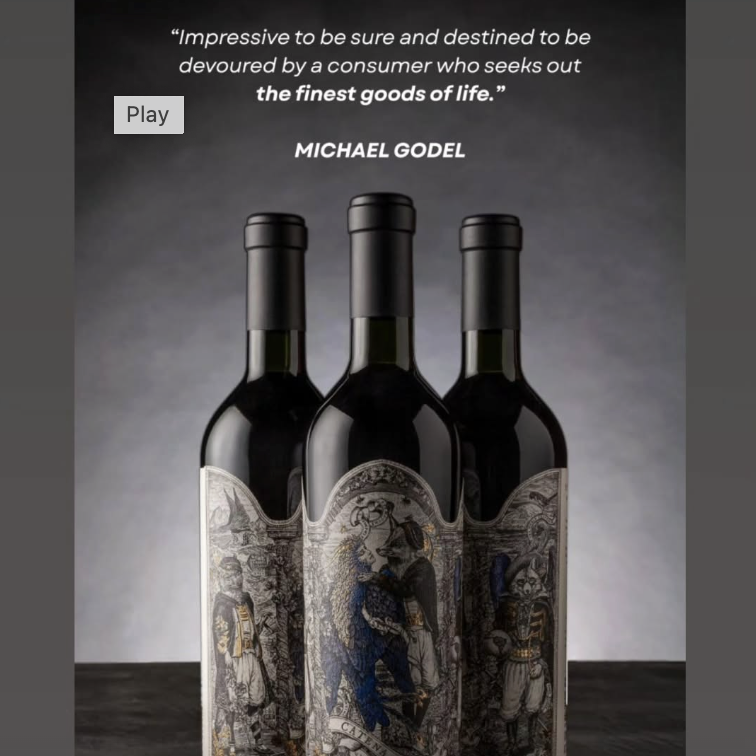
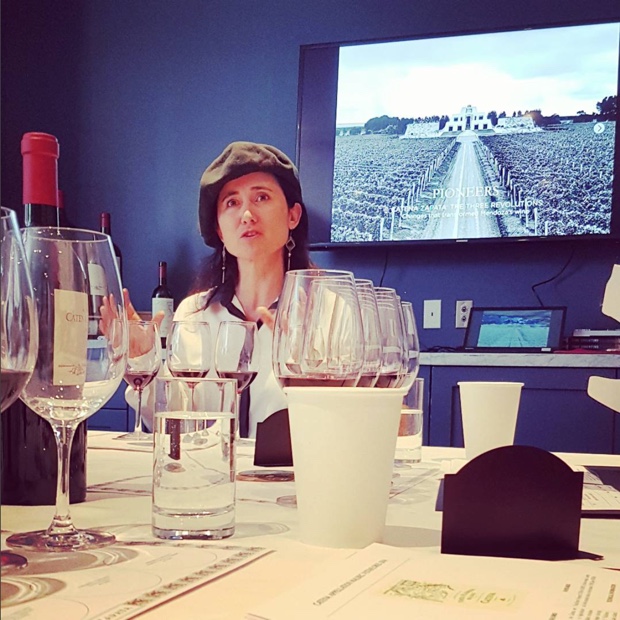
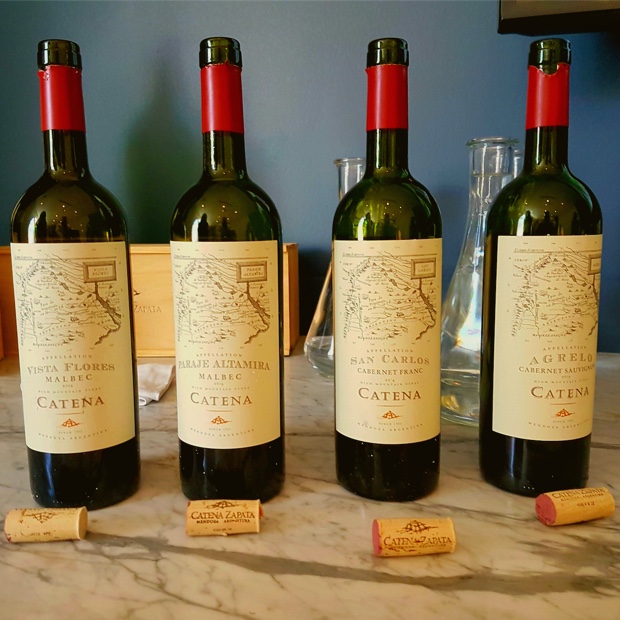
Catena Zapata Birth Of Cabernet Cabernet Sauvignon 2021, Mendoza, Argentina
The back label spins a yarn and a half, of a legend, fantasy and allegory all wrapped up in cultivar classification and grape lineage ampelography. From bees fertilization of cabernet franc to sauvignon blanc, a Cardinal Richelieu reference and farming cabernet sauvignon in Mendoza. All this to set the table for Catena’s new flagship varietal wine with a back story. The grand cuvée comes from a mix of vineyards; Angélica Sur Vineyard, Paraje El Cepillo, San Carlos, Valle de Uco; La Pirámide Vineyard, Agrelo, Luján de Cuyo. There is 10 percent cabernet franc included, macerated from 18-22 days and then aged in first, second and third use French oak for 18-24 months. A serious and layered construction with the most luxe and abundant ripe fruit meeting best barrels that Mendoza and money can produce, higher in acidity than most, in delivery of qualitative tannic conveyance and many years of slow energy release already set in motion. Impressive to be sure and destined to be devoured by a consumer who seeks out the finest goods of life. Drink 2027-2035. Tasted November 2025
Lorenzo Fede Malbec 2019, Agrelo, Mendoza, Argentina
Feels like Fede is Lorenzo dedicating this highest end, signature malbec for a family member named Federica and she should feel blessed because this is one seriously concentrated and impressive varietal wine. As punchy, grippy and purposeful as it gets for Agrelo, aged 18 months in only the finest wood available and with a terrific vintage in bottle. Does not sniff nearest the highest Mendoza vineyards but the stuffing and promise is up there with the best and the brightest. Nothing over the top or unmanageable but clearly refined and also quite finessed. Can’t see this changing much for 10 years and could very well live comfortable for five to ten more. Drink 2026-2039. Tasted October 2025 96
Il Poggiolino Vin Santo Del Chianti Classico DOCG 1987, San Donato In Poggio, Tuscany, Italy
Current vintage on the market. Yes, that is not a typo. A 27-28 year-old labour of love that from trebbiano and malvasia but in the late 1990s the switch was made for sangiovese as Occhio del Pernice. An elixir so silken and smooth, no rusticity and seemingly untouched by human hands. A Vin Santo as if made by the bees, with apricot, guava, jasmine, lemon, Japanese orange and lavender. Fine, fine spice and just so special. A dream, demure and engaging. On the right side of vivid. One of the finest ever and know that you can drink this meravigliosa dessert wine forever. Drink 2025-2050. Tasted February 2025 98
Pellegrino 1880 Marsala Vergine Riserva Doc Single Barrel Nº 018 2005, Sicily, Italy
Vergine means marsala fortified with soy alcohol and as Riserva (2005) it means more than 20 years of aging. Mainly grillo with (30 percent) catarratto and inzolia, limited production, 2,163 bottles and finished at 19.5 percent alcohol. The sugars developed could imagine honey, brown sugar or maple syrup but they are so much more complicated and therefore unnamed. Also fruit like apricot and pineapple but think moire exotically or better still just admit that something unusual and ethereal is happening. The palate is dry as the desert, the flavours, brown butter nutty, intense and spicy. This is not a dessert wine by any stretch of the imagination but something much more gustatory and ready to receive culinary inspiration. Drink 2025-2040. Tasted May 2025
Good to go!
godello


 Godello