Critics and journalists can get their fill by attending wine events in their home city, taste wines at the office space or in the comfort of their homes. This type of work situation has been a standard for decades and sure there are moments when just the writer and the bottle together can combine to produce some solid prose – but it’s not enough. To go further, to find the goods and get at the heart of the matter it is essential to travel, to visit with families and wine producers in their element. Climb hills, walk vineyards, get mud on your boots, touch vines, consider pruning decisions, crumble soils between the fingers. This is where the real stories come from, magnified in purpose when visits involve sitting down for a meal. Godello has been doing this with Chianti Classico producers consistently for the past 10 years and that is how he is able to write on this very subject without pause and about more than just the wines. People, roots, heritage and land are the impetus and catalyst for how the big picture is revealed.
Related – Report and reviews from the 2025 Chianti Classico Collection
Twenty trips and 52 articles based on more than 300 visits with 100-plus producers later and here we are with the latest set of wine reviews covering 10 visits made at estates producing Chianti Classico wines. Tenuta Casenuove (Panzano), Castello di Meleto (Gaiole), Poggerino (Radda), Calcamura (San Casciano), Il Poggiolino (San Donato in Poggio), Richiari Porciglia (Greve), Poggio Torselli (San Casciano), Fontodi (Panzano), Volpaia (Radda), Ricasoli (Gaiole), Nardi Viticoltori (Castellina), Castello di Verrazzano (Montefioralle), Castello di Ama (Gaiole) and also tasted in Montalcino, the small production wines of Baciate Me (San Casciano). An apology goes out to Castelnuovo Berardenga, Lamole and Vagliagli for being the UGA left out this time, although they have all been the focus of many previous excursions and will again soon. These are the 92 wines tasted with the 13 estates back in February of this year.
Related – Harvest report 2024: Retro Chianti Classico
Related – 100 Years of Chianti Classico and Collection Previews 2024
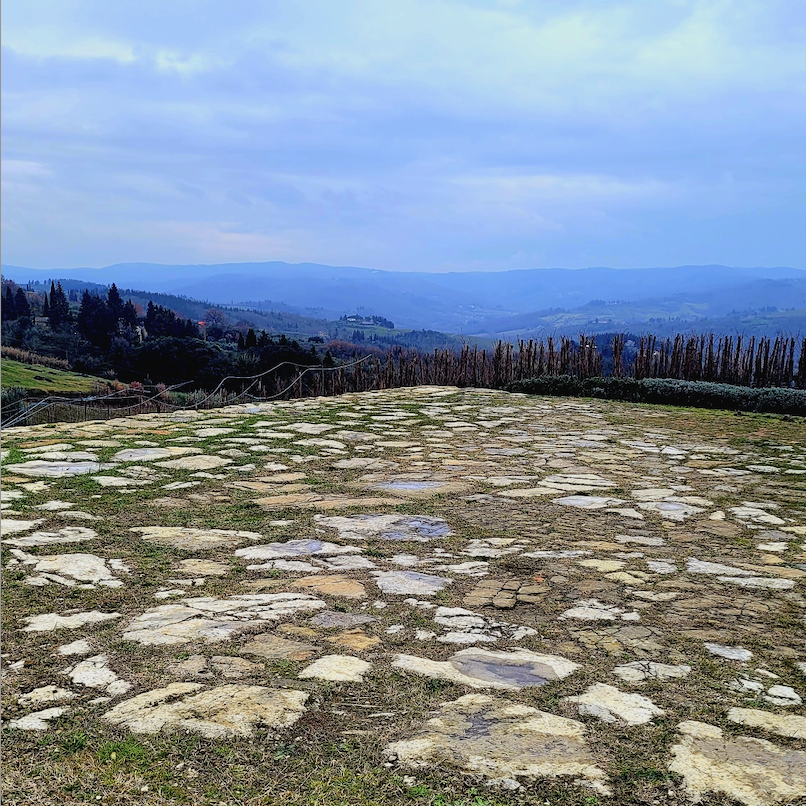
L’aia at Tenute Casenuove
Tenuta Casenuove – Panzano
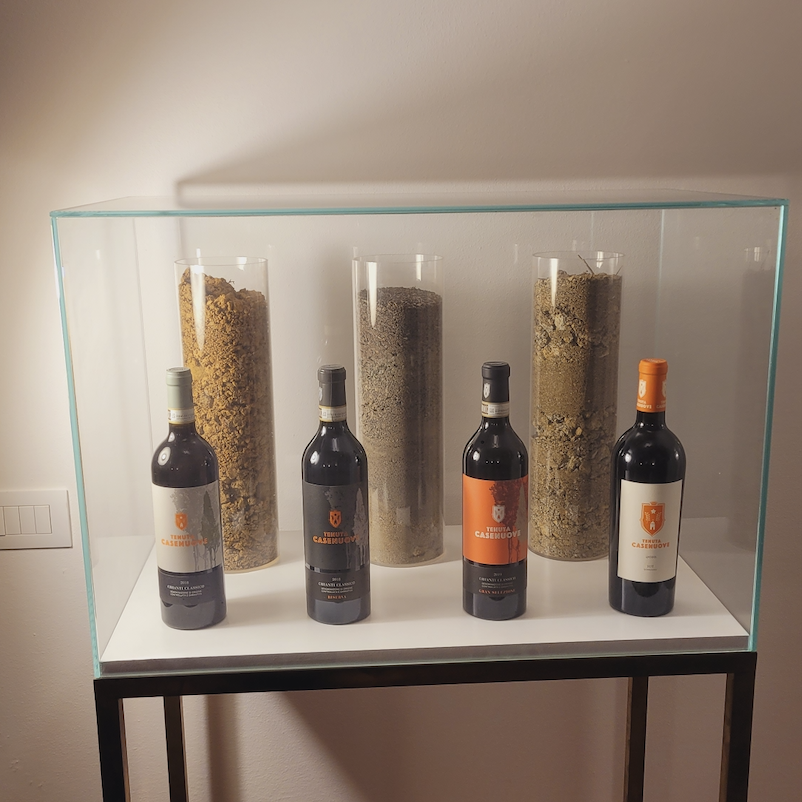
Out of Firenze’s Peretola Airport and direct to Panzano for a long overdue visit with winery director Alessandro Fonseca, enologist Cosimo Casini and cellar master Maria Sole Zoli. Under the ownership of Philippe Austruy, 35 hectares are at elevation between 370 to 490 metres. Previously owned by Chianti Classico négoce Pietro Pandolfini from 1954-2015. We stood on the small stone square, “l’aia,” where the grain was once worked, looking south over the Pesa River, towards Castellina. In 2015 there were 15 hectares of vineyards, now doubled to 30, including a new site at the top on Alberese stone planted to sangiovese, colorino, canaiolo, malvasia and ciliegiolo. The top of the (east) ridge is a soil led by Pietraforte, the rest argilla and schist with a manifestation of compact, purple-veined Galestro. Identified vineyards are Poggio Asso, Vigna Somassa which comes from Arenaccio, an iron sandstone block, Vigna San Martino (fine decomposition of Galestro) and Vigna Camperi (calcareous clay).
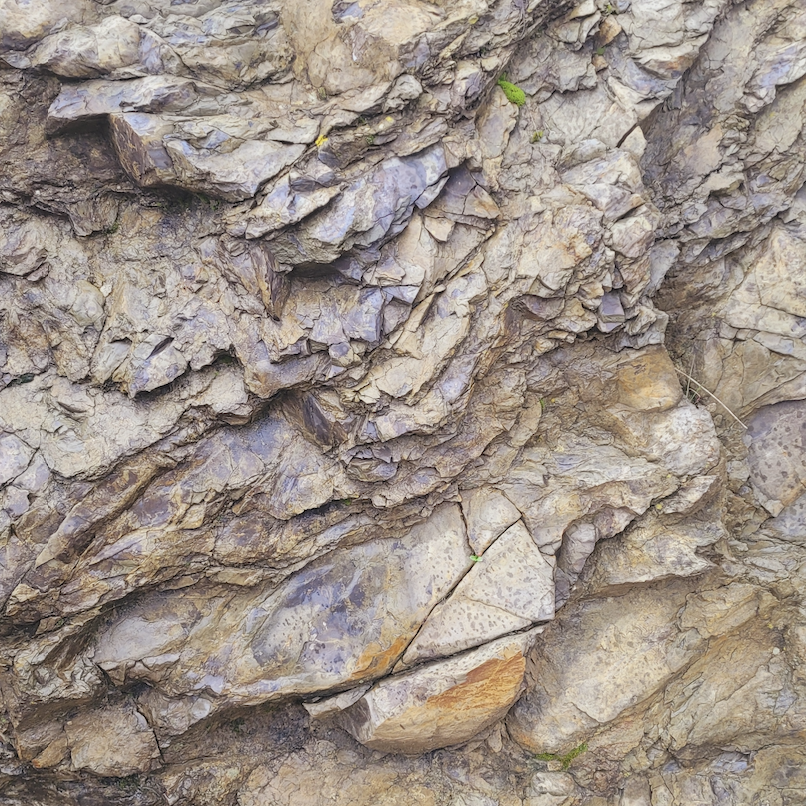
Purple-veined Galestro of Tenuta Casenuove
Tenuta Casenuove Chianti Classico DOCG 2021, Panzano
Another beautiful season, not at the beginning because of the April 7th frost which delayed development by a month – though in the end the wines showed with great balance. In part because of less bunches and bunch weight per plant but also because of a great September rain that followed a hot summer for the latest finish to harvest in recent times – September 25th. Everything in this wine moves in unison, all parts working together for a polished and luxe example of Chianti Classico. Drink 2025-2028. Tasted February 2025
Tenuta Casenuove Chianti Classico DOCG 2020, Panzano
The vintage following that seminal 2019 marking a transition for Casenuove away from aging in small wood and making use of various larger format casks. Once again you get the feeling of highest level of extraction and here the most glycerol and silken texture to date. A warm vintage with 12 days exceeding 35 degrees to stress the vines, especially the young ones. Drink 2025-2028. Tasted February 2025
Tenuta Casenuove Chianti Classico DOCG 2019, Panzano
Here the new plantings began to be used in the Classico. The first vintage to represent the transformation away from Cordone Speronato to Guyot training resulting in bunches not as tight for a shot at the juiciest sangiovese expression to date. Tannins are still working with grip and force, acidity is high and the wine has a serious chewy quality as well. Also with thanks to Maria Sole in her second vintage in the capacity of managing the cellar. Tells Cosimo “you can see the transition, the new sensibility and the extraction level in the wines.” This certainly marks new territory and an understanding of the potential for the estate. Last tasted February 2025.
Fruit quite mature of 90 percent sangiovese with five each merlot and cabernet sauvignon, a focused expression and very much the warmest of (western) Panzano style. You can taste the Bordeaux grapes in here, with a Cassis for sure but also some desiccation of small berries. Minty and a cherry stone bitterness on the palate with drying tannins. Give an hour of air and drink over the next three years. Drink 2023-2026. Tasted February 2023
Tenuta Casenuove Chianti Classico DOCG 2018, Panzano
Plenty of rain, humidity and cooler temps and “it scared me,” admits Cosimo though the shift from humidity with the northeastern Tramontana wind brought about a great day for night temperature excursion. High solar radiation and cold nights at the end of September, especially here in Panzano created this truly unique set of harvest ripening circumstances. Feel the mix of ripenesses in both the fruit and acidity, the long-chained tannins and talons that hold on to your palate. Still acting this way six years later. Last tasted February 2025
Fruit quite fresh for 2018 and in a way more so than the following 2019, here again from a consistent blend of 90 percent sangiovese with five each merlot and cabernet sauvignon. Juicy Panzano expression, ready and willing to please, tannins softening now and acidity captured with truth. Raspberry and blueberry, fruit captured at peak and here an Annata with silky tannins, everything in line and ready to roll. Tasted February 2023
Crunchy Panzano Annata here from Tenuta Casenuove, peppered as opposed to peppery, as if with freckles or micro-sized bits of earth. Plenty of salt and pepper seasoning but again nothing sharp or spicy about it and fruit so very berry red. Tasted March 2022
From the southwest corner of Greve in Chianti, southwest of Montefioralle and close to Panzano. Modish and modern for 21st century sangiovese is just this, stylish, chic and highly motivated. Quite fully developed and felt red fruit of glycerin, pectin and mouthfeel but you want more and more. Impressive magnitude in bringing so much fruit into the mix. Not overtly high in acid or tannin so use this early and often. Drink 2020-2022. Tasted twice, February 2020
Tenuta Casenuove Chianti Classico DOCG 2017, Panzano
The experience of 2015 and 2016 were critical towards dealing with the hot 2017 season, especially because the south by southwest expositions at Casenuove are what they call “a hot spot.” Yes you can feel the desiccation but the 80mm of rain that fell between September 4th and 8th really saved the day. As smart producers are want to do the harvest was delayed, started two weeks after the rain and continuing through to the 15th of October. Acidity is different and special though the fruit is now just starting to fall away. Drink 2025-2027. Tasted February 2025
Tenuta Casenuove Chianti Classico DOCG 2016, Panzano
From 2016 all the blocks of the estate were now being vinified separately. The season began in a different way, first with a cool and humid Spring which delayed development by a month and then things sped up during the warm summer. Harvest began on Sept. 26th, finishing at the same time as 2015 which means just two and a half weeks for the same 13 hectares. A wine of more density and development than 2015 though still tannic and today maintaining an important level of freshness. Drink 2025-2029. Tasted February 2025
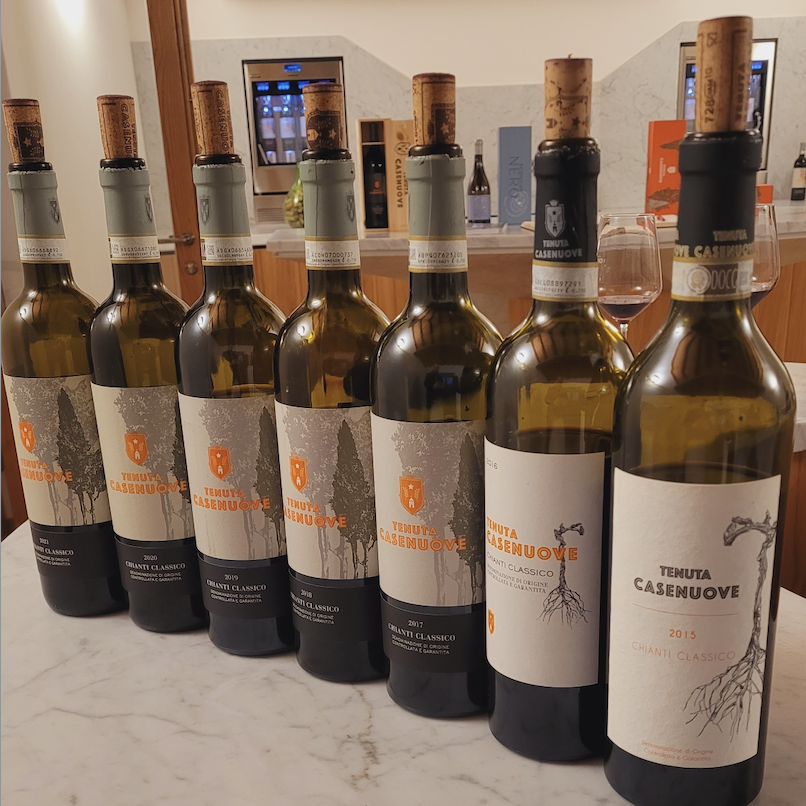
Tenuta Casenuove Chianti Classico DOCG 2015, Panzano
First year of production under the new ownership of Philippe Austruy and Oenologist Cosimo Casini arrived in June just a few months after the acquisition. His grandmother was born in Panzano and so this was a true return to his roots. Very much a part of this first vintage that he describes as “almost too easy” which suggest he thinks some things were taken for granted. Harvest from September 12th to October 10th, 13 hectares in total. “But I’m waiting for a season like 2015 to happen again.” Last tasted February 2025
The first vintage, 80 sangiovese with 15 merlot and 5 cabernet sauvignon. The sangiovese was raised in 25hL botti and the international grapes in tonneaux. Darker and deeper than the ’16 to come. Good acidity keeps it moving through the waves of vanilla and graphite. Drink 2019-2020. Tasted September 2019
Tenuta Casenuove Chianti Classico Riserva DOCG 2019, Panzano
Riserva at 100 percent sangiovese is a change from the Classico where smallest bits of colorino, canaiolo and merlot are involved. Riserva comes from a strict selection of the best part of estate vineyards where clay-schist soils spill over with iron-rich Galestro outcroppings. As in Panzano in all its glory for a true expression of Casenuove’s warm location. Creates this clean sangiovese of utmost clarity. Last tasted February 2025
Riserva is 100 per cent sangiovese, a bit dusty and reserved, acids and tannins very much in charge. Crisp and crunchy for Riserva with notable fennel and balsamic notes with a nuttiness that is a palate extension from palate sweetness. A factor of new and used barriques with baking spice that in conjunction with full on ripeness to the edge creates a feeling of sleepiness. Enervating sangiovese. Drink 2023-2025. Tasted February 2023 and February 2024
Tenuta Casenuove Chianti Classico Gran Selezione DOCG 2019, Panzano
The first vintage of Gran Selezione happened in 2018 after a cask tasting in the cellar where the team found something different from fruit taken out of a single vineyard. A place called Sopra Torre above the base of a hill up and away from the humidity at the lowest part, a place where the wind slashes through, and the exposition is pretty much perfect. Makes for the richest of all Casenuove sangiovese, longer in wood and you feel it but who feels it knows it. Last tasted February 2025
Serious, experienced, structured and vertical example of Gran Selezione. Maturity of fruit but also layered acids and most impressively developed tannins. This walks with great stature, sure of its meaning and intent. As a Panzano sangiovese it knows exactly what it wants to be. Drink 2024-2028. Tasted October 2024
Castello di Meleto
Castello di Meleto – Gaiole
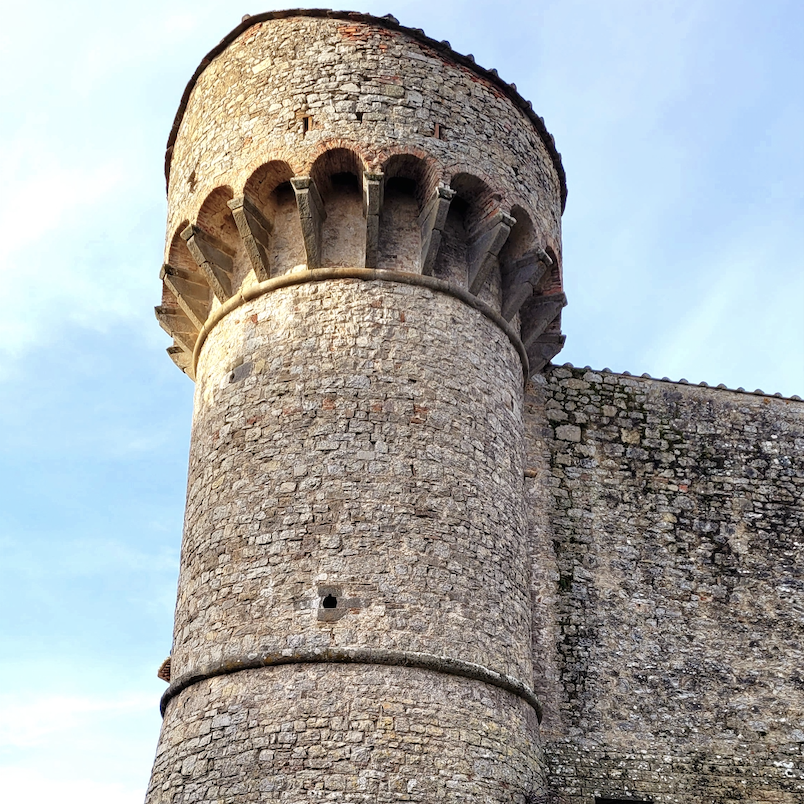
A studious and vigna intensive first visit with Victor Camilo Duque Crociani, GM Francesco Montalbano and agronomist Mattia Achenza. Gaiole’s famous Castello di Meleto has been a territorial guardian watchtower and fortress since 1256 with 1000 hectares, nearly 800 of which are forested. There are 130 hectares of vines in two località, Meleto and San Pietro, 80 percent planted to sangiovese, with merlot, cabernet sauvignon, trebbiano, malvasia and (0.5 ha) san colombano. The team has gone all in to isolate and exult the identified single vineyards, now with three Vigna labels; Trebbio, Poggioarso and Casi, the last one located on the road to Radda. Trebbio is collee, with red argilla soils. Poggioarso (the arid hill) is higher elevation with Alberese and outcroppings of Galestro out of the clay. Casi is in a ventilated zone with Galestro out of Macigno (sandstone) soils but it’s uniqueness comes from some alterations involving some Alberese and sandstone-based Pietraforte. The vines have been in transition since 2020 from Cordone to Guyot training, organic now for 10 years and largest such estate in the territory. Consulting oenologist and agronomist are Valentino Ciarla and Giacomo Sensi.
Castello di Meleto Método Classico
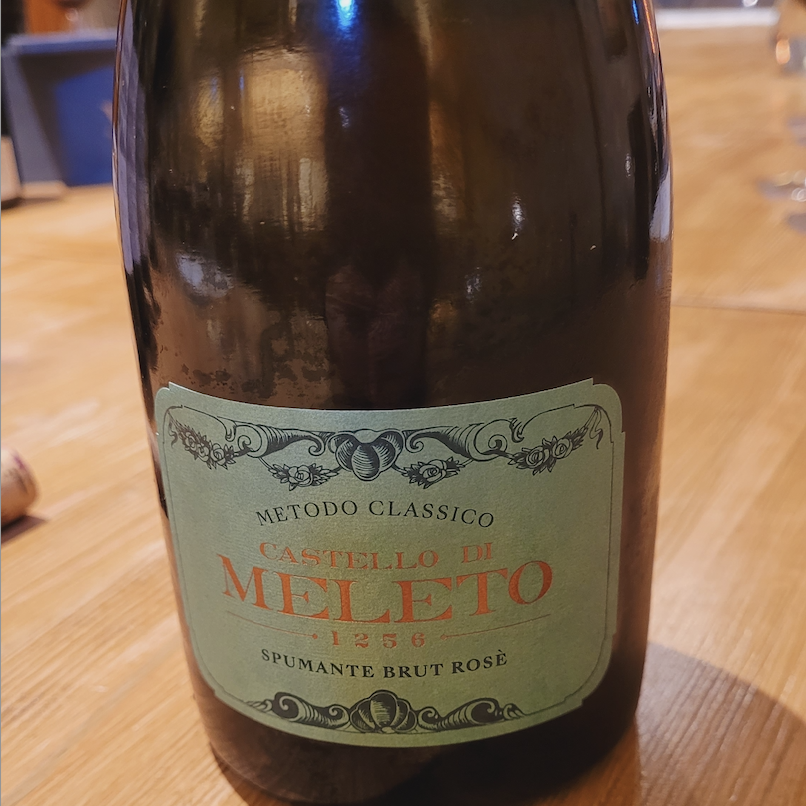
A traditional method sparkling that began 12 years ago. A spot of TCA on the first bottle. Only sangiovese, harvested early, usually late August, soft whole bunch pressed with minimal skin contact if just enough to give this Spumante a Rosé hue. Get the freshness and complexity. Drink 2025-2028. Tasted February 2025
Castello di Meleto Chianti Classico DOCG 2022, Gaiole
Just five percent merlot softens the sangiovese with many vineyards of the 130 hectares in total contributing. Usually the youngest vines and also some of the plots that experience the warmest climate for the season. Ages 15 months, half in cement and half in large (really old) French cask. No tannic impart and this is about as correct, clean, acid retentive and well adjusted a Chianti Classico as you are want to find. Warm vintage yet freshness and fruit quality is knowably ripe and easy. Less savoury and more fruit centric than in years past. Last tasted February 2025
Intensity of red fruit, almost searing while this young and immovable but surely a far cry from overly pressed or done. Surely a matter of Gaiole and vintage with Meleto sure to respect and deliver what it’s meant to bring. Another ’22 that must be waited on, again confirming how different these are to 2017. Drink 2025-2029. Tasted February 2024
Castello di Meleto Chianti Classico Riserva DOCG 2021, Gaiole
The first vintage where Riserva is certified organic, also with five percent merlot and fruit drawn from many areas of the estate, maximum two week maceration. Ages in large French cask (up to 500L) and plenty of fruit ripeness fills the mouth, with a local Balsamico specific to and expressive of a Meleto sangiovese. Clean and precise with all the attributes of Riserva in pocket from the finest mixing and matching of vineyard fruit as a true example of Chianti Classico assemblage. You can drink this anytime. Drink 2025-2029. Tasted February 2025
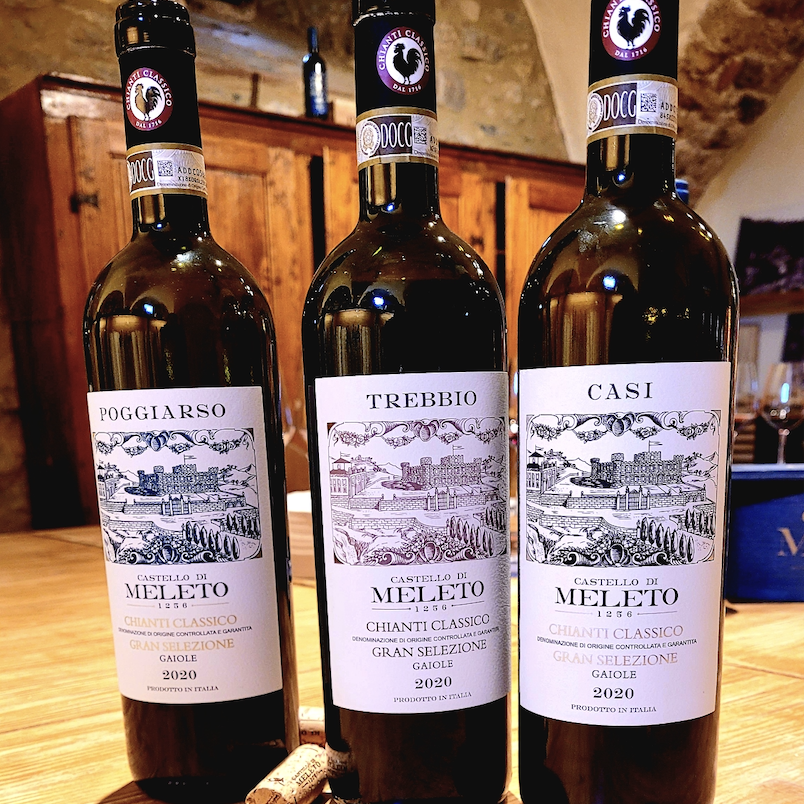
Castello di Meleto Chianti Classico Gran Selezione DOCG 2020, Gaiole
For Gran Selezione there is only sangiovese taken from the most important identified blocks from which the three cru are made. These are the grapes not chosen from and for the Casi, Poggioarso and Trebbio ultra specific expressions. Sees 10 days of maceration post fermentation and like the other wines (Classico and Riserva) there is a silky smooth character to the Selezione. More concentration is what separates this from the others but also a refinement of the Balsamico, spice and herbals of the wine. Sapid to a good degree, almost ready to rock and the kind of sangiovese that will age slowly, incrementally and long. Drink 2025-2028. Tasted February 2025
Castello di Meleto Chianti Classico Gran Selezione DOCG Poggioarso 2020, Gaiole
The first vintage labeled as Poggioarso was 2017 and here for 2020 the vintage to launch with the UGA Gaiole on the label. Poggioarso is at the highest elevation, from 450-530m and the freshness matched by stony-mineral quality is truly high. The vineyard with the most temperature excursion, high solar radiation during the day and cold at night. Unique aromas that separate this cru from the others with a sulphur sensation that’s not sulphur. You can sense the sandstone derived mix of lime and Pietraforte that gives this mix of salinity and mineral flavour. It’s namely potassium and that is the unique perfume of Poggioarso. Drink 2025-2030. Tasted February 2025
Castello di Meleto Chianti Classico Gran Selezione DOCG Trebbio 2020, Gaiole
Trebbio is the new cru designation for Castello di Meleto, medium of elevation between 380 and 410m located to the northeast of the castle. A very clay soil with some Alberese (limestone) and Galestro. Also iron in the ground with red hues throughout the soils. More sanguine and sweeter notes, in the fruit and with spice. Only sees the largest (3000L) French casks and the Balsamico presence can’t be denied. More density and intensity here, bigger wine, stronger and with more grip. Older schooled in a sense yet the red fruit quality is dominant as well. Drink 2025-2028. Tasted February 2025
Castello di Meleto Chianti Classico Gran Selezione DOCG Casi 2020, Gaiole
One of two Castello di Meleto cru artists that originally existed as Riserva. Elevation from 450 to 530m and a really concentrated sangiovese high in poly-phenolic character. A smoulder here with tobacco that comes from the interaction between grapes and wood, compounded by the longest maceration. The most tannic and without a doubt the most potential of the three. A serious wine, profound expression of the vineyard and the sort of Gran Selezione that will live through to the next decade. Drink 2026-2032. Tasted February 2025
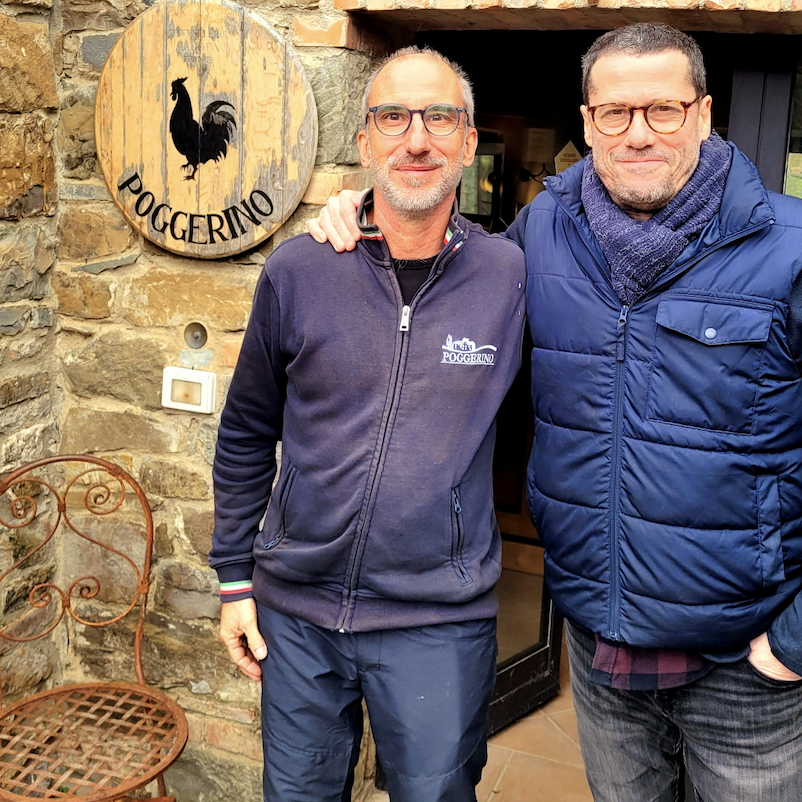
With Piero Lanza – Poggerino
Poggerino – Radda
Piero Lanza has embarked on a shorter pruning window because of the warming climate and is now keeping more bunches on the vines (1.2 to 1.5 kg per plant), to slow down ripening and to result in balanced, juicy wines. “There are no rules, not any more.” For Lanza it has been a slow evolution, a step-by-step process. As for which artistic winemaking period he’s now in, with 20 years on his back he says “it’s been about 15 years that I’ve been doing things this way.” The 2024 vintage was challenging, like 2013 with heavy Spring rains which made it hard to get into the vineyard and then a warm March encouraged early budding, but thankfully no frost followed in April. Rains ended in early June with none until the 26th of August. Veraison started early but by the 15th of August the water table had dried up and the vines shut down. Rains came just before harvest, a good thing and yet it was necessary to remove leaves to reveal bunches and speed up ripening. More importantly to reduce humidity around the bunches. Lanza finished picking on the 14th of October and mould was everywhere. One day fine, the next not so much – sometimes just a mater of six hours. “The evolution of the grapes was changing hour by hour. It reminded me of the 1990s,” said Piero, “but the most challenging vintages make the best wines.”
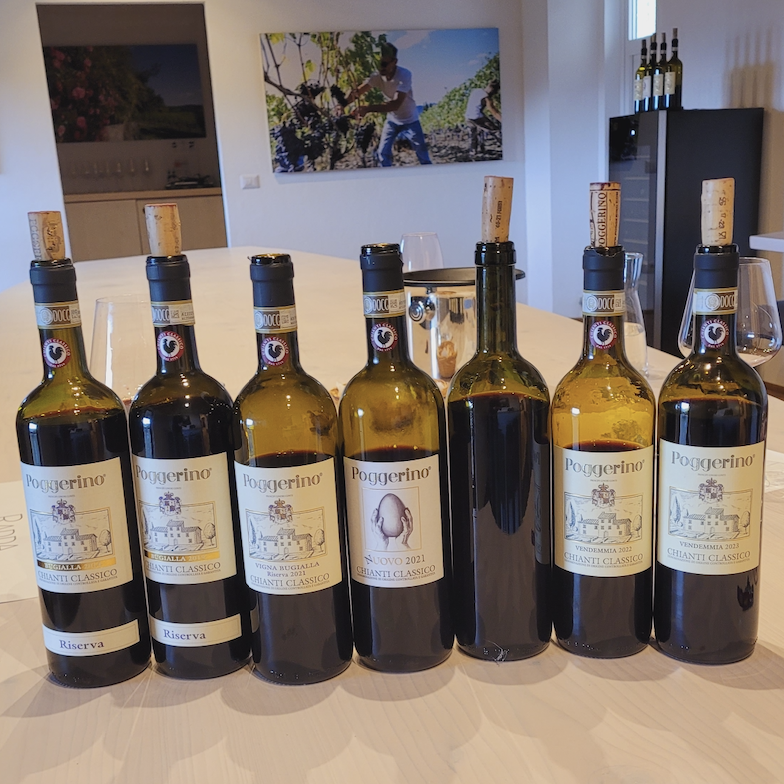
Poggerino
Poggerino Chianti Classico DOCG 2023, Radda
The Perenospera (resulting in downy mildew) vintage but Piero Lanza only lost 10 percent of his production. Yes – he fared much better than many in the region. He remembers the 24th of June, at the time of the festival of San Giovanni in Florence. “I woke up on the 24th, a foggy morning, I went in the vineyard and everything was white. We sprayed and managed it.” The 2023 is only sangiovese, of 15 different clones and vineyards, a sweetly herbal example, oh so glycerin textured, holding more Bugialla (Riserva) fruit because none was made in 2023. Freshness from concrete aging mixes with wood spice for an easy drinking, balanced and well made Classico. Just recently bottled in December 2024. Drink 2025-2028. Tasted February 2025
Poggerino Chianti Classico DOCG 2022, Radda
The 2022 has been in bottle just a little bit more than a year now and has settled comfortably into its Classico skin. Quite a warm year with high level fruit and more importantly phenolic development with less herbal and tobacco notes that come from the very young ’23. Concentration is higher and again the red fruit is everything. There is a chalky underbelly of tannin and despite the vintage heat you have to remember this is Radda and so freshness is still a guarantee. Piero Lanza tried to have great respect for the grapes by pressing easy and macerating short. As s result the wine will go long, not 2016 or 2021 long, but it will last. Drink 2025-2030. Tasted February 2025
Poggerino Chianti Classico DOCG 2014, Radda
It’s incredible! The longevity of 2014 is justified and now solidified. Adds Piero Lanza, “the quality and balance between the acidity and phenolic (compounds) have allowed the wine to age,” and age so well. Last tasted February 2025
The vines date back to 2004 and 1994 for Poggerino’s Chianti Classico, a 100 per cent sangiovese that sits at a zenith where the most red limestone earth and sour intensity is noted above all 14s almost anywhere, not just from Radda but for all of the territory. Almost over the top in this regard but stand up and counted is what this amounts to. Then it grooves forward and rebounds with warmth and depth before returning to that earthy calacari bonding. Gathers itself, the moving parts and glides along with solid length. Very interesting, honest, organic and naturally curated work from Piero Lanza. Drink 2018-2022. Tasted September 2017
Poggerino Chianti Classico DOCG Nuovo 2022, Radda
Nuovo is the new-ish Chianti Classico label, first made in 2013 as the sangiovese aged in concrete eggs. The 2022 is now one year in bottle and a manifestation of what Piero Lanza looks at “like being a chef in a fine dining restaurant.” That is to say trying a recipe 20 times before it is perfected. The roots came from Lambardier in Champagne where they aged their wines in eggs ahead of the secondary fermentation in bottle. In 2010 Piero put sangiovese in one empty egg after removing the previous wine intended for Sparkling Rosé and the experimentations began. Year two fibreglass fermentation and egg. Beginning in 2016 the fermentations happened in the new (5,000 and 8,000) concrete tanks then transferred to eggs in December. Ten years later there are 4,500 Nuovo bottles made and my how this sangiovese emits a very specific aroma. Certainly a matter of the natural swirl inside the concrete eggs but also a seriously oxygenated wine that shows no signs of oxidation. Feels like a wine of località hyperbole and says Lanza, “the egg increases the terroir.” This is the limit of quantity and yet more bottles would be a blessing. More terroir is expressed from egg in a warm vintage. Drink 2025-2029. Tasted February 2025
Poggerino Chianti Classico DOCG Nuovo 2021, Radda
A top vintage and a fortunate one for Poggerino where the prevailing frost in Chianti Classico did not affect this località. A warm yet temperate year with heat but nothing like 2017 and just a perfect season from which to put sangiovese into concrete eggs. “For me it was a fantastic vintage, normal but the big difference was September with great temperature fluctuations between day and night.” The result is top level Raddese acidity and finest quality in the tannins. No this is neither Riserva nor Gran Selezione but being the unique wine that it is – it could very well be a manifestation of the latter. But we won’t name that and so for now we’ll just call it Classico-plus. Last tasted February 2025
One thing you can count on is for Piero Lanza’s sangiovese to come out ripe as any in the territory and 2021 would surely not be an exception to the rule. The fruit is remarkable and the structural parts equally formative and formidable so I’m not sure Lanza has made such a wine in quite some time. Years are needed to settle the pieces, parts and puzzles of this magnanimous affair. Don’t care that Annata is the appellation. Drink 2025-2032. Tasted February 2023
Poggerino Chianti Classico Riserva DOCG Vigna Bugialla 2021, Radda
First vintage of Bugialla as Riserva was 1990 though it was made as far back as 1985. Now labeled as Vigna Bugialla which puts this in cru territory and a wine that has come about after Piero Lanza’s 20 plus years of making wine, including many mistakes. It would be easy to simply think about the concentration but the true nature of Bugialla is the vineyard and its predilection for growing the finest Poggerino sangiovese. Quintessentially Raddese with the highest quality tannins available from the vineyard planted in 1994, surrounded by forests. Only the smallest and perfect bunches are chosen, like Lorenzo Magnelli at Le Chiuse for Diecianni and Luca Martini at San Giusto Rentennano for Percarlo. Aged in old Slavonian cask for two years, this 2021 is now in bottle just one year. Drink 2027-2036. Tasted February 2025
Poggerino Chianti Classico Riserva DOCG Vigna Bugialla 2019, Radda
Not a cool vintage but is was in September and so the finishing concentration is not quite, well let’s say 2021. Allows the Raddese Balsamico and herbal qualities to come out a bit more. Tons of character, very expressive and time in the bottle have allowed for this coming out party and makes one wonder how 2021 will show in time. Drink 2025-2030. Tasted February 2025
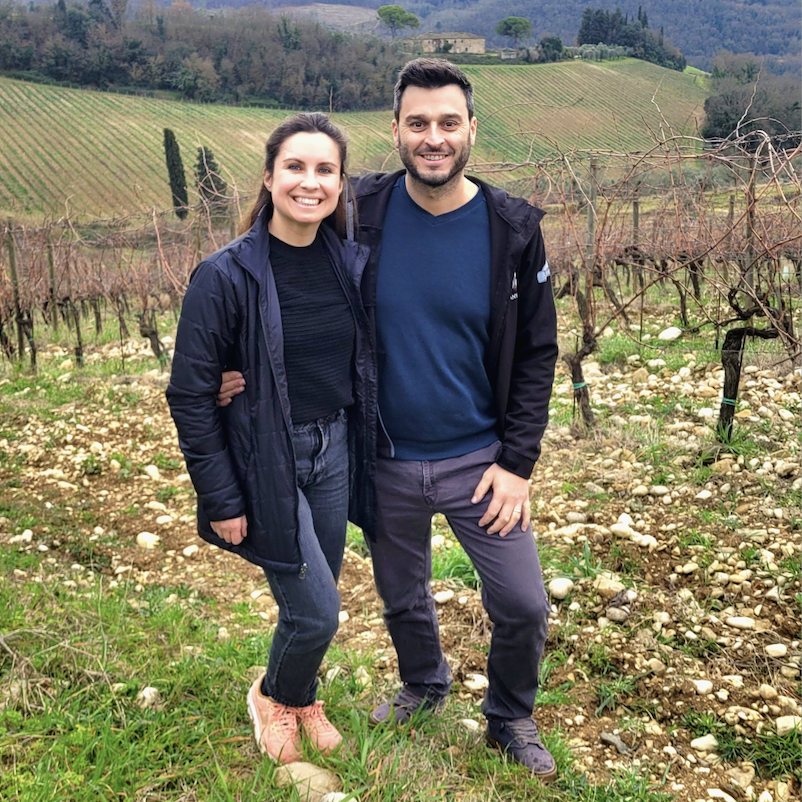
Andreita Rojas and Stefano Marinari – Calcamura
Calcamura – San Casciano
The semi-virtual winery co-owned by partners Andreita Rojas (from Chile) and Stefano Marinari, winemaker at Castello di Bossi. The two met in 2014 while working harvest abroad. Calcamura, a vineyard located between two poderi, Calcaorelli and Mura, both located on Via Mura. A conjunction of the two, as opposed to calling the brand “Stefandreita.” The località of their vineyard is Poggio ai Grilli over and down the hill from Villa Le Corti and sharing the same topography plus geology, that being the famous San Casciano river stone strewn vineyard reminiscent of Les Galets in Châteauneuf-du-Pape. Their’s is a 25 year-old, 0.5 hectare block owned by their immediate neighbour to the west with a second 6,000 square metre block rented since 2021. A third will be a 1.05 hectare plot, they will be certified organic (on their labels) as of 2024 are are still currently crushing in Radda at Istine.
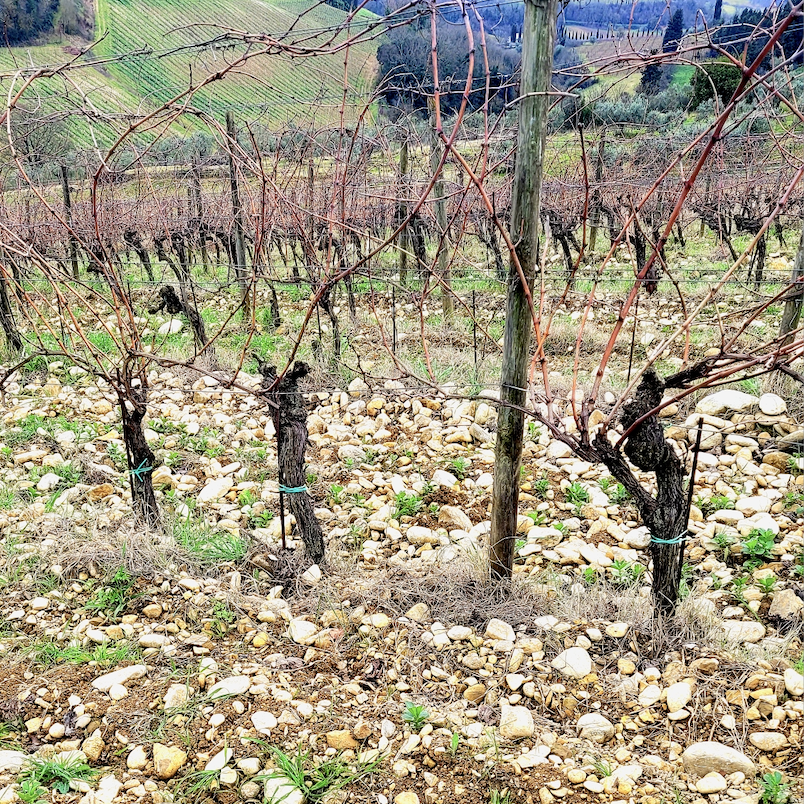
River stone strewn vineyard at Calcamura
Sussulto, as in “to gasp or being startled,” but in a good way. A reaction as if to say, “oh my God, I’ve been jolted by something.” Made from the first passage of 100 percent sangiovese Calcamura grapes picked in late August. The idea came from a dinner with friends, to use these grapes and never consider a green harvest. Quite a phenolic sparkling wine and also one of incredible richness. This is matched and balanced by the smoky mineral, rustic style and a light mushroom consommé. So unique and worthy of any sort of fizz detour you are willing to make. 4,000 bottles produced. Drink 2025-2029. Tasted February 2025
Calcamura Chianti Classico DOCG 2022, San Casciano
Now in the third vintage for Calcamura the aging is only in tonneaux, two Slavonian and one French. Only sangiovese from a vineyard in the middle of nowhere but a località called Poggio ai Grilli. Could that be the name of a coming Gran Selezione for Stefano and Andreita? The Annata will be a grand total of 430 bottles that spent a year in Slavonian tonneaux and one in ceramic Tava terracotta. A light touch for a San Casciano sangiovese for which acidity is tempered with 10 percent canaiolo to affect a sangiovese between salinity and sapidity. A wine made by experienced hands not trying to coax too much from the rockiest river stone soils available to anyone in the whole of Chianti Classico. Never ambitious, always respectful and a feeling gained from out of the receded waters (so to speak) to make Annata as pinot noir Burgundian, nebbiolo Piedmontesino or nerello mascalese Etnean as any in the entirety of the territory. A more precise and verging on profound Chianti Classico with that terrific combination of drinkability and structure. Drink 2025-2030. Tasted twice, at Borgo Machiavelli and The Chianti Classico Collection, February 2025

Calcamura Chianti Classico DOCG 2021, San Casciano
Only sangiovese (because the cabernet sauvignon was grafted over with canaiolo) and now aged in used tonneaux (plus two barriques). Picked earlier than 2020, in mid-September at a time when alcohol can be kept at 13.5 percent and to a softer extraction in this second vintage. What results is a red citrus-styled sangiovese with a bit of sussulto of its own, in other words an acidity so very San Casciano and in a bridge year between cabernet sauvignon and canaiolo to soften, raise pH and lower acidity. Indelible vibrancy, “a style that we want – drinkable,” says Andreita. Even though the tannins are lower it is the acidity that will preserve the wine. And with no sense of overripeness or over-extraction. Represents the place and its makers. Last tasted February 2025
Campione: Limited production, 100 percent sangiovese of San Casciano bones, saltiness and energy. Notable as always for the herbs and verdancy but this edges up in volatility before descending into its tannic well. Taut finish and in need of two years to settle. Drink 2026-2030. Tasted February 2024
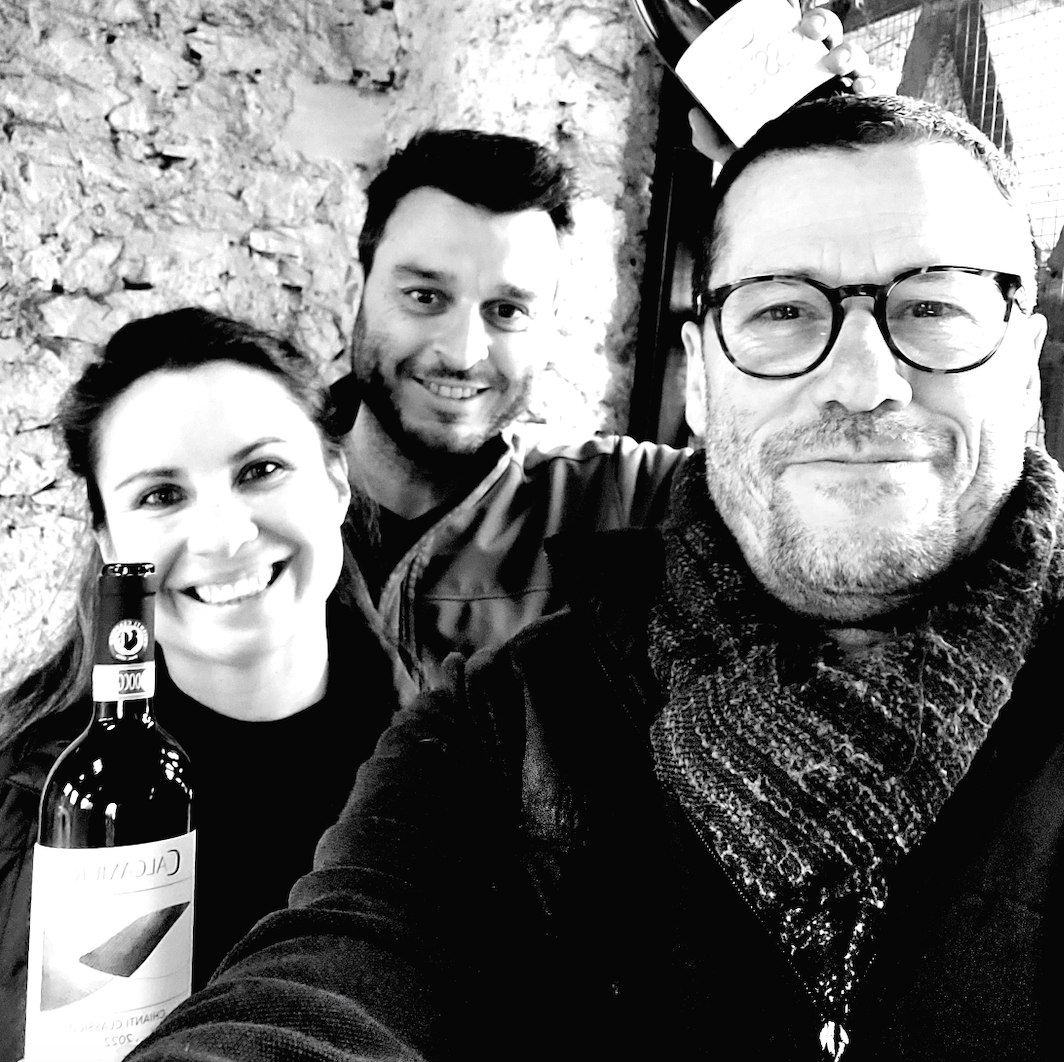
With Andreita Rojas and Stefano Marinari – Calcamura
Calcamura Chianti Classico DOCG 2020, San Casciano
c First vintage for Stefano and Andrea with the vineyard they purchased in 2019. “We were very happy with the result but we knew we could do better. People told us the wine was great but we also knew it was important to maintain quality.” Yes this is an impressive first kick at the can and there is some greenness in the tannin but it’s exaggerated somewhat by the cabernet’s pyrazine. Aged in used barriques for a year. This first Calcamura sangiovese reminds a bit of a Castello di Bossi Chianti Classico mixed with a Renieri Brunello. Wink, wink, say no more. Drink 2025-2028. Tasted February 2025
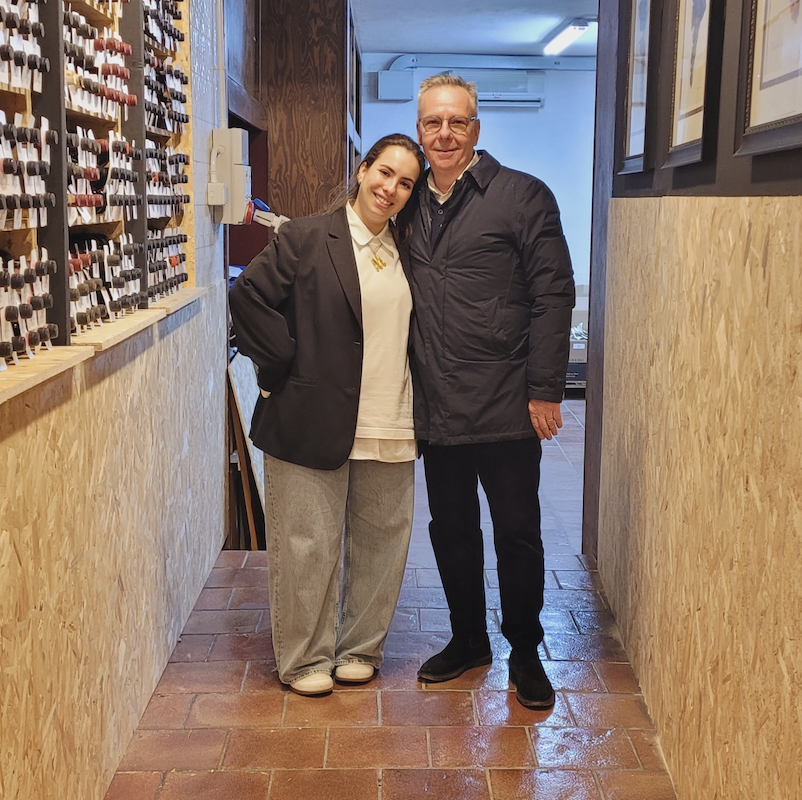
Martina and Alberto Fabbri – Il Poggiolino
Il Poggiolino – San Donato in Poggio
First visit to one of San Donato and Chianti Classico best kept secrets on the hill above and across the river from Sambuca with another more famous neighbour, Badia a Passignano. Carlo Pacini purchased the farm in 1974 and today his daughter Alessandra Pacini, Alberto Fabbri and family run the 18 hectares with with vines planted between 320 and 400m. The seminal plot is a north by northeast vineyard up on the hill overlooking the winery called Le Balze, a.k.a. “the terraces.”
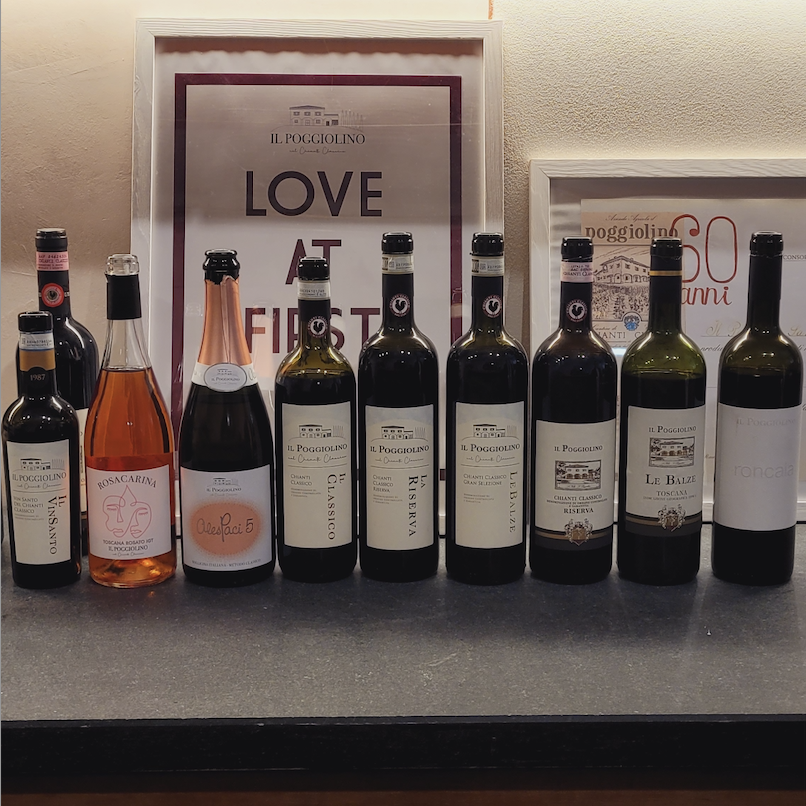
Il Poggiolino AlesPaci5 Bollicina Italiana Método Classico
AlesPaci5 stands for Alessandra Pacini, better half to Alberto Fabbri and her birthday being December 5th. Solo sangiovese 30-36 months on the lees made in Rosato form with just a few years of Il Poggiolino experience augmented by greater experience from consulting oenologist Giacomo Cesare. Really aromatic and autolytic with the finest tight bubble, scraped orange skin and ginger. Truly well made. Drink 2025-2028. Tasted February 2025
Il Poggiolino Rosacarino 2023, Toscana Rosato IGT
Rosato made in the salsasso method (a.k.a saignée) run-off from the Gran Selezione maceration. A Rosé not focused on colour and not even aromas but with the intention of flavour as the driver. The nose is expressive of some formaggi, an aged Pecorino meets Beemster sort of thing and yes the taste is what draws you in. Rhubarb and orange with a lot going on with respect to taste. High in tang and needing food for balance. Drink 2025-2026. Tasted February 2025
Il Poggiolino Chianti Classico DOCG 2022, San Donato in Poggio
The vineyards at Il Poggiolino may reside at moderate elevations between 250 and 350m but there are no south by southwest expositions and so in a hot vintage like 2022 the freshness remains a guarantee. Just three percent colorino goes a long way to raise up character of a Classico that only sees concrete and stainless steel for aging. Sweet acids match the fruit stride for stride and what you want is what you get – A level of drinkability that represents Classico and this northwest corner of San Donato in Poggio. Drink 2025-2028. Tasted February 2025
Il Poggiolino Chianti Classico Riserva DOCG 2021, San Donato in Poggio
A terrific vintage and yes many estates in Chianti Classico lost production to the April frost but at Il Poggiolino the maximum loss was 10 percent. And so come for the quantity and stay for the quality. Rich and concentrated, lightly chalky with a clay and stony feeling. Structure asks that we wait a year before opening the window and set this sangiovese with three percent colorino for aging through to the end of the decade. Drink 2026-2030. Tasted February 2025
Il Poggiolino Chianti Classico Gran Selezione DOCG Le Balze 2021, San Donato in Poggio
From a north by northeast vineyard up on the hill overlooking the winery which may have been a expositional detriment 20 years ago but no longer. The change of climate puts this steep single vineyard sangiovese in great light today and so welcome to the third in a row of vintages that may just shock as to its character and quality. Le Balze 20 years ago was organized as large terraces and in Tuscany you say “le balze,” when you take a giant leap. This Gran Selezione has improved and grown by leaps and bounds in the last few years to join other greats to reside near the top of the appellative pyramid. Last tasted February 2025
Another perfumed and expressive Le Balze comes with as much if not more pulp and flesh a la mode than those San Donato in Poggio Gran Selezione that have come before. The depeche florals are Spring bloom fresh, the volume set at ideal pitch and you just need to keep putting glass to nose because, well you just can’t get enough. Richness is never compromised but it is belied by the beauty of a tannic caress about as graceful and gracious as there are. This is Il Poggiolino’s finest GS to date and that is saying a lot. “Just like a rainbow.” Drink 2025-2034. Tasted October 2024
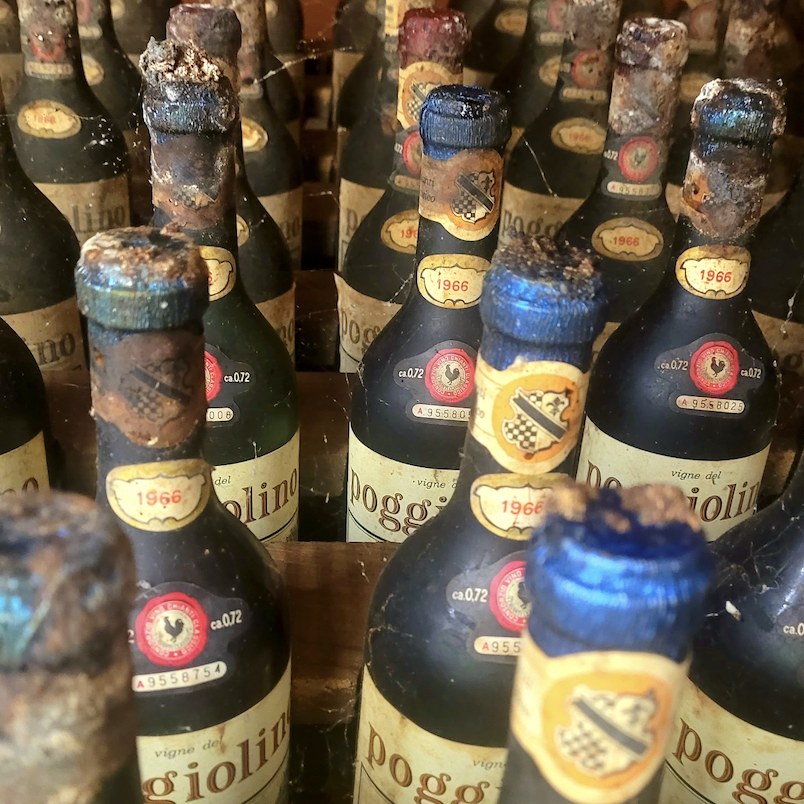
Il Poggiolino Chianti Classico Riserva DOCG 2001, San Donato in Poggio
Wow. Seriously wow from a 23-24 year-old sangiovese that speaks in such a clear vernacular. A language so specific to the space of this place nearest to Sambuca in the UGA of San Donato in Poggio. Yes this is from another era and the wood (though it has disappeared) and tannins (which have melted) have set this up for the longest run through history. The freshness of primary fruit lingers and merges with an ideal window of softening secondary notes. Soft yes but refreshing sip after comforting sip. Just a lovely linger of Chianti Classico as Riserva the way it was surely intended, with or without luck would have it. Drink 2025-2027. Tasted February 2025
Il Poggiolino Roncai 2020, Toscana Rosso IGT
From the 20 year-old vineyard right in front of the house and cantina facing the village of Sambuca that ages 30 months in mostly, but not all new barriques. A wine conceived approximately 10 years ago and Roncaia is the name of an old label produced at Il Poggiolino back in the 1970s, resurrected four decades later with this single vineyard fruit. The meaning comes from roncola, a traditional viticultural knife used to cut grape bunches off of the vine. Rich and chalky, well-structured, elegant and poised for merlot put to new wood for as long as it is. Remarkable really and only produced in years “when the grapes are truly perfect.” Drink 2025-2027. Tasted February 2025
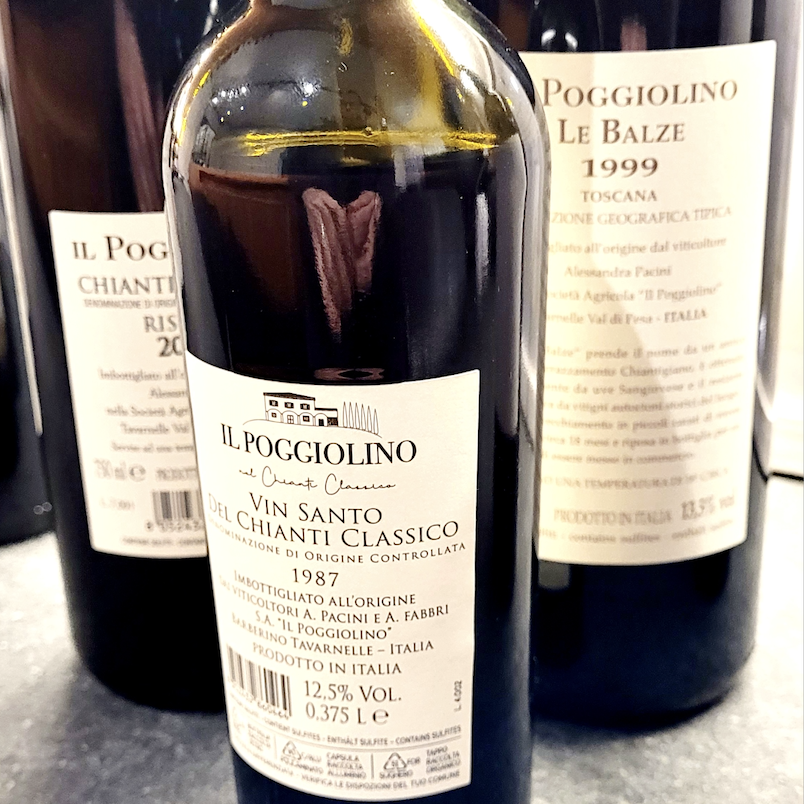
Il Poggiolino Le Balze 1999, Toscana IGT
The artist has always been known as Le Balze, a.k.a. “the terraces,” to the wine that would eventually become Gran Selezione. What matters is the steps’ north by northeast facing vineyard and here from what was considered a top vintage at the time. The sweetness of fruit is still so evident and while there should be zero complaint about how well this has aged – the wine still feels like its maturing into the beginning of its denouement. The 2001 (Chianti Classico Riserva) feels much younger and still there is great pleasure to gain from 1999. Great fortune to taste, the wood very much a master of the flavour and sweetness through the entirety of the wine. Tasted February 2025
Il Poggiolino Vin Santo del Chianti Classico DOCG 1987, San Donato in Poggio
Current vintage on the market. Yes, that is not a typo. A 27-28 year-old labour of love that from trebbiano and malvasia but in the late 1990s the switch was made for sangiovese as Occhio del Pernice. An elixir so silken and smooth, no rusticity and seemingly untouched by human hands. A Vin Santo as if made by the bees, with apricot, guava, jasmine, lemon, Japanese orange and lavender. Fine, fine spice and just so special. A dream, demure and engaging. On the right side of vivid. One of the finest ever and know that you can drink this meravigliosa dessert wine forever. Drink 2025-2050. Tasted February 2025
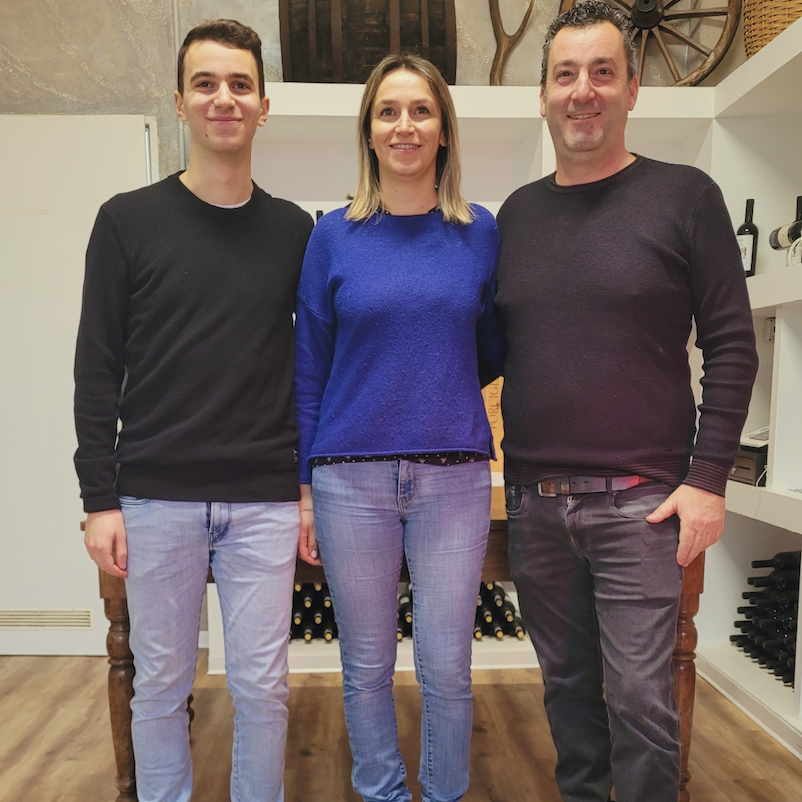
Federico, Martina and Leonardo Tatini – Richiari Porciglia
Richiari Porciglia – Greve
One of the most intriguing and rewarding discoveries of the last 10 years in this family estate on the east side of the Greve River at the base of the Ruffoli hill. The origon is 1980 and 1985 was when Greve in Chianti’s Emilio Tatini and his wife Lidia Martinelli established the winery with the first commercial wines having been bottled in 2009. Brothers Leonardo and Alessandro are now in charge of the vineyards, winemaking and cellar. Leonardo’s wife Martina runs the business and their precocious son Federico is now working alongside his parents and uncle when he not studying oenology at the University of Florence. Considering the continuity of the local and familial, there should be no surprise if daughter Irene joins the team seven or so years from now. The single vineyard or cru “Il Paccio” Classico comes from the oldest vineyard of 40 years of soils based upon Alberese and Pietraforte.
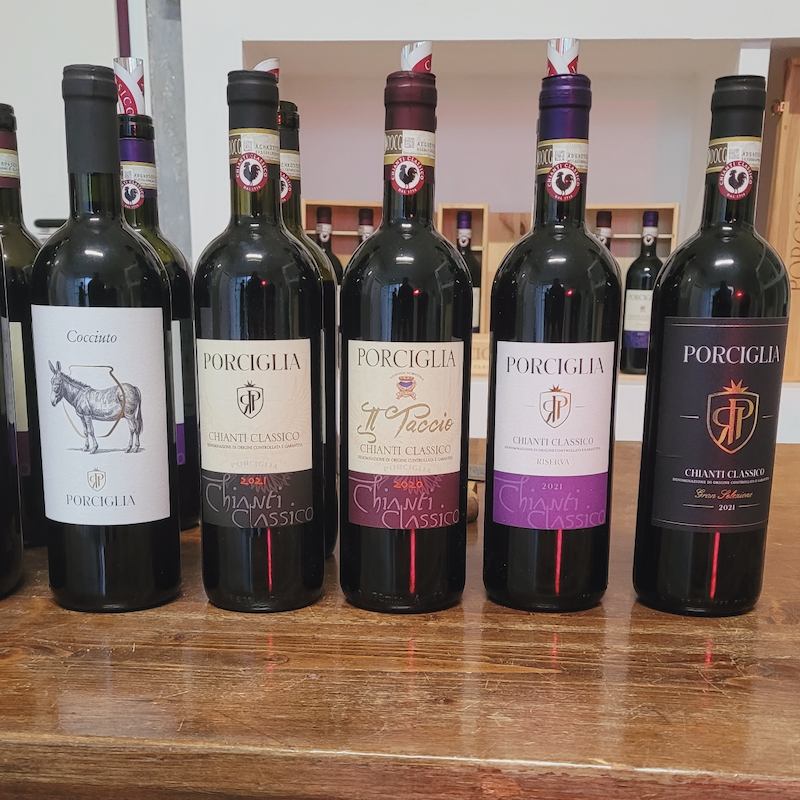
Richiari Porciglia Chianti Classico DOCG 2021, Greve
First vintage of the “regular,” non single vineyard Chianti Classico was 2009. An Annata conceived from vines between 250 and 350m at the base of Greve’s Ruffoli hill. A perfectly correct Classico, dark of fruit, easy to enjoy, fine though never tart, acidity spot on and smooth. Clean as there could be and a clarity that speaks to style, precise winemaking and place. Made with 95 percent sangiovese with (5) canaiolo. Drink 2025-2028. Tasted February 2025
Richiari Porciglia Chianti Classico DOCG Il Paccio 2020, Greve
The single vineyard Classico from the oldest vineyard of 40 years where Alberese and Pietraforte predominate the soils. Not made in every vintage because, well quality and passion matter dearly to brothers Leonardo and Alessandro. You can clearly see the choices passed down from father Emilio and the stubbornness to only make quality wines with the season dictating the choices. Made in ’20, skipped in ’21 (though Riserva was made) and aged for six months in 15hL Botti after fermentation in stainless, followed by one year in cement vats. Il Paccio the name is just what every generation called this vineyard and place but no one really knows why it is called this. Such a proper Classico and representation of the designation “cru” because there is something so specific and distinct about this sangiovese (with eight percent canaiolo) in its sapid style. Ready to drink though you can see this aging five more years without any real change and certainly zero decline. Drink 2025-2030. Tasted February 2025
Richiari Porciglia Chianti Classico DOCG Il Paccio 2016, Greve
Though already eight-plus years old there has been almost no movement in Il Paccio 2016 from a warm vintage making for stronger and deeper sangiovese. You can smell the place with such expressive strength, the Piteraforte and Alberese stone committing to a local Balsamico with grip that does not come from the 2021. This is Chianti Classico in a nutshell, fine-grained and exceptional of prescriptive tannins for great longevity. You can tell just how gentle the press and maceration process were because for 22-28 days this is Chianti Classico with the finest and sweetest tannins around. Drink 2025-2032. Tasted February 2025
Richiari Porciglia Chianti Classico Riserva DOCG 2021, Greve
Riserva is a selection of specific vines and so the choices are made in the fields for 95 percent sangiovese with (five) cabernet sauvignon that makes up just a half hectare of the 14-15 total on the estate. There is more of a Ruffoli feel to Riserva albeit of a darker and exaggerated Balsamic profile from lower elevations. More tart intensity and higher acidity noted as compared to the Classico and the style, or better yet the result is actually quite different. Tannins are grippier as well, fine yet with some austerity here. Needs time, at least two years further in bottle. Reminds somewhat of a Castello di Querceto. Drink 2027-2032. Tasted February 2025
Richiari Porciglia Chianti Classico Riserva DOCG 2012, Greve
A pleasure of fascination to taste a 12-plus year-old Riserva from this part of Greve and once again the longevity is remarkable. The combination of clones chosen in the 1980s and 90s matched to this terroir clearly decides the fineness of tannin but even more so the incredulous acidity that drives the Balsamico and savour of this sangiovese. This reminds of Lamole more than Ruffoli but 2012 is unique as a vintage and therefore a wine like this will stand up to be counted from an accord forged on its own. Drink 2025-2028. Tasted February 2025
Richiari Porciglia Chianti Classico Gran Selezione DOCG 2021, Greve
The first year of Gran Selezione for Porciglia with decisions made in the field for sangiovese with (inclusive of five percent colorino). The best grapes are chosen and left on the vines two more weeks for the final harvest. A combination of best solar exposition, highest quality and smallest bunches are isolated for the Selezione. Sees 12 months in cement vats and then 18 months in second use barriques. A clear line is drawn from the Classico but especially from the Riserva because that is the wine used to season the barriques before they are passed on to the Gran Selezione. The intensity of the Balsamico and fine grained tannins here are a hyperbole of the other wines with so many years needed to soften and integrate the parts. More old school behaviour while up there with other fine GS examples in terms of precision and focus. Drink 2028-2035. Tasted February 2025
Porciglia Cocciuto 2023, Toscana Rosso IGT
A play on words, first on the Coccio stone but also cocciuto which describes a stone-headed Tuscan, like a donkey. There was a donkey on the farm (belonging to Martina’s father) named Cocciuto though he’s no longer with us. The blend is 70 percent sangiovese with (15 each) merlot and canaiolo co-fermented in Manetti (Impruneta) terracotta. Once again the use of of aging vessels puts a Porciglia wine in vineyard light which means that time spent hidden away does nothing to take the land and soil out of the wines. As here with an IGT of acidity and tannins meant to express what the vines request. This is a very fine example of an ulterior Greve in Chianti (Classico) style. Drink 2026-2031. Tasted February 2025
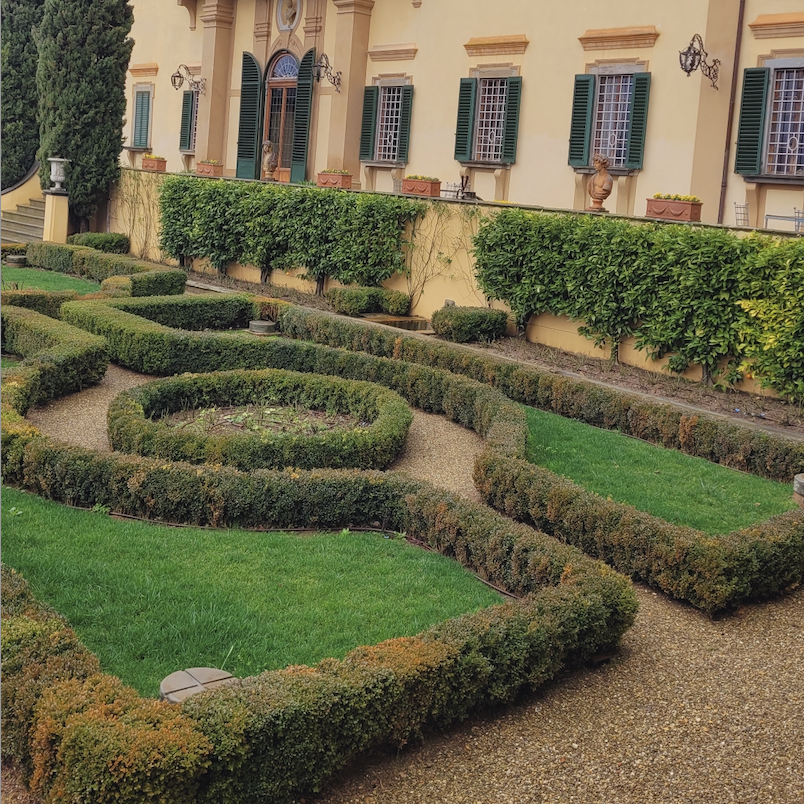
Poggio Torselli – San Casciano
Poggio Torselli – San Casciano
A return visit to Poggio Torselli but this time with the new branding is called “Il Contadino Cusano” under the ownership of Italian-Canadian Pasquale Cusano from Puglia who moved to Vancouver after the famous Florentine flood of 1966. Cusano is a jeweller, publisher of Nuvo Magazine and proprietor of Poggio Torselli since 2021. There may be 83 hectares of vineyards but just 25 percent are used to bottle the wines and the rest is sold off as bulk.
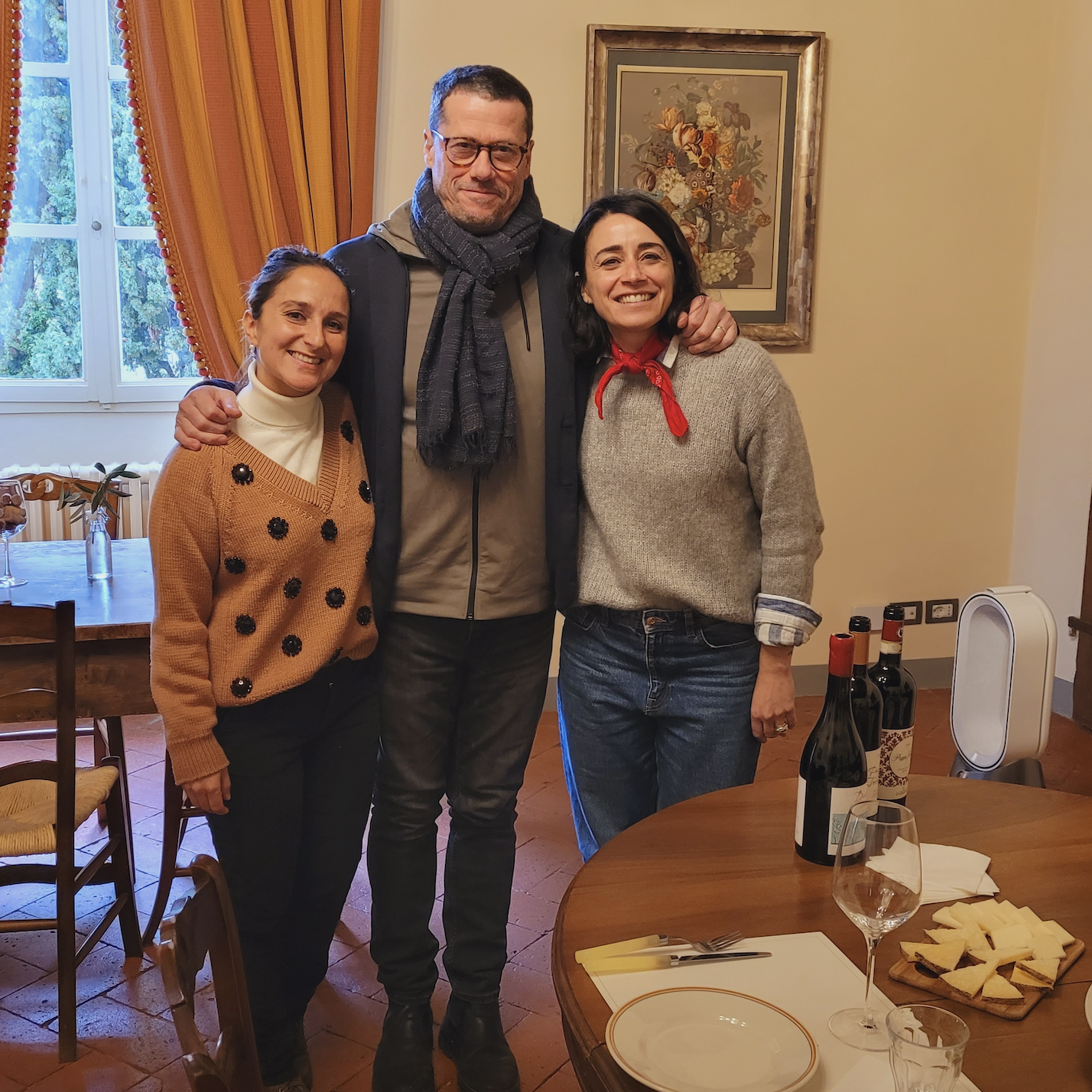
With Cristina Fonte and Margherita Romagnoli – Poggio Torselli/Il Contadino Cusano
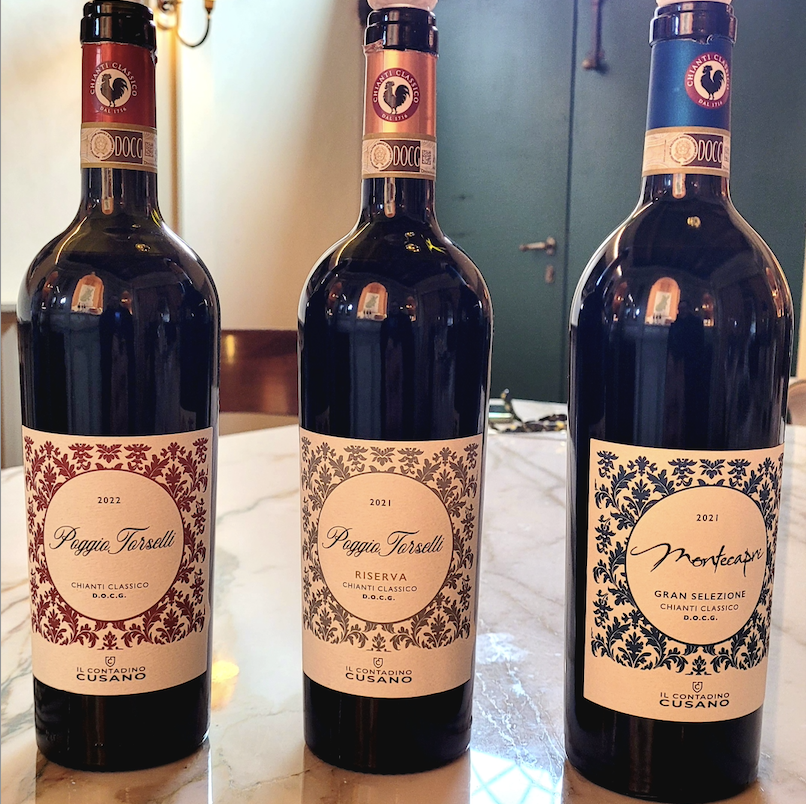
Poggio Torselli Chianti Classico DOCG 2022 Il Contadino Cusano, San Casciano
The 2022 Annata and ’21 Riserva/Gran Selezione are the first set of wines to be made strictly as 100 percent sangiovese. As a reaction to the 2021 season’s severe reduction of yields there was no Annata produced and so this is the follow-up to the previous 2020. A new age of style and quality really begins with this vintage, of such sweet Balsamico character in a Chianti Classico of equally positive acidity and simple, if fine tannins. Great length on the Annata and a pleasure to drink. Last tasted February 2025
Campione: Second vintage with oenologist Carlo Ferrini with a different process and yes the difference is immediately obvious. New tonneaux and 30 hL botti now housing the Annata, old barriques tossed out the window and the new balance is felt in the most palpable way. Rosso di Montalcino comes to mind and while that comparison may seem sanctimonious or anti-Classico, well just taste the style and level of quality. Juicy, blood orange in that regard and pretty much a finished wine. Stands up to be noticed. Drink 2024-2027. Tasted February 2024
Poggio Torselli Chianti Classico Riserva DOCG 2021 Il Contadino Cusano, San Casciano
The new brand “Il Contadino Cusano” takes flight in 2021 with Riserva (and no Annata produced) because of frost-related reduced yields. An exaggeration of the local Torselli Balsamico and also really tightly wound acidity matched with equal force by grippy tannins. This is a different wine than the Torselli Riserva of the past, now with greater vibrancy and energy. At this stage the wines are made by Alessandro Campatelli with consultancy assistance by Carlo Ferrini. Something special begins and brews with ’21. Drink 2026-2030. Tasted February 2025
Poggio Torselli Chianti Classico Gran Selezione DOCG 2021 Il Contadino Cusano, San Casciano
The new branding is called “Il Contadino Cusano” under the ownership of Italian-Canadian Pasquale Cusano from Puglia who moved to Vancouver after the famous Florentine flood of 1966. Now a jeweller, publisher of Nuvo Magazine and proprietor of Poggio Torselli since 2021. There may be 83 hectares of vineyards but just 25 percent are used to bottle the wines and the rest is sold off. The wound intensity of Riserva gives way to greater concentration and depth in Gran Selezione but the nervous energy is not the same. Here a more settled and luxe 100 percent sangiovese that will age well yet drink beautifully pretty much all the way through. Sneaky tannins creep onto the back palate and take hold. Drink 2026-2032. Tasted February 2025
Poggio Torselli Il Contadino Cusano Bizzarria 2023, Toscana Rosso IGT
Just sangiovese, no wood, fermented and aged only in brand new concrete tanks. Carbonic maceration meets alcoholic fermentation. Made by Carlo Ferrini from fruit out of the Gentilino Vineyard purchased by Cusano in 2022 on the edge of San Casciano village behind the COOP grocery, direction Sant’Andrea in Percussina. The name refers to the “Citrus Bizzarria and fittingly the name translates as “oddity.” Bizzaria is the only citrus tree that produces three kind of fruits, a lemon, bitter orange and a third that combines the qualities of the two. That said there is nothing truly bizarre about this wine. Served chilled it might create a buzz on the palate and the uninitiated might see it as a surprise effect but in today’s vinously hip world this fits right in. The dictionary entry of glou-glou – and clean. Drink 2025-2026. Tasted February 2025
Poggio Torselli Il Contadino Cusano 2020, Toscana Rosso IGT
A blend of cabernet sauvignon, cabernet franc and merlot at that time made by winemaker Alessandro Campatelli, fermented in steel and aged one year in barriques. A rich, concentrated, spiced, aromatically spicy and woody Bordeaux blend, but the local Balsamico can’t be denied entry into the overall character. Some toast in the barrels is broadly evident and this reminds of a South African red. Got that soil funk and earthy/peaty quality, finishing at ground espresso. Needs another year to integrate though the stuffing will only give it three more after that. Drink 2026-2029. Tasted February 2025
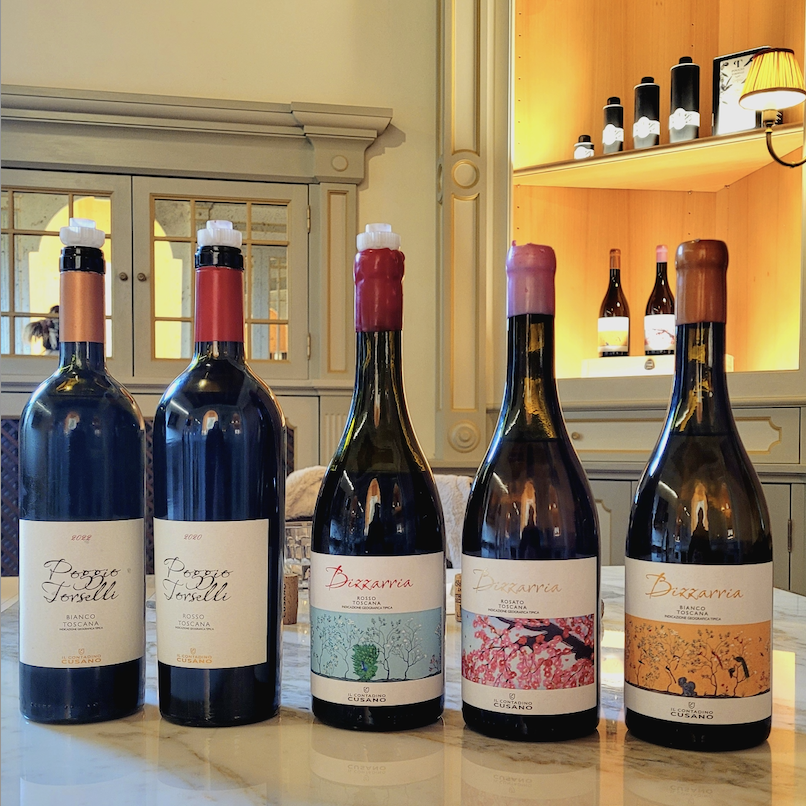
Poggio Torselli Il Contadino Cusano Bizzarria 2023, Toscana Rosato IGT
The Bizzarria is a grafted tree combining Florentine citron with sour orange, was studied in the Medicean Gardens in the mid-17th century and produces separate branches of both citrus fruits. This Rosé. is made with equal parts sangiovese and pugnitello by way of a micro-generous two hour macerate skin-contact style so that the cheese rind and musky citrus skin combine for something you’ve experienced before. Extract and tannin compound the earthy complexity to mean that food is pretty much necessary as an accompaniment. Sformatino di Zucca with goat cheese just has to be the pairing. Drink 2025-2026. Tasted February 2025
Poggio Torselli Il Contadino Cusano Bizzarria 2023, Toscana Bianco IGT
The last of the Citrus Bizzarria trees were discovered in 1980 by Paolo Galeotti, the “Citrus Archaeologist.” He grafted a twig from his find and waited three years before announcing the find of the strange citrus tree that grows lemon, orange and a fruit that is a combination of both. Il Contadino Cusano is an apt producer to use the name considering Poggio Torselli’s passion and aptitude for growing citrus in their incredible gardens. Bizzarria as Bianco is made with trebbiano and (less than five percent) malvasia with a long skin maceration and only stainless steel to age the wine. Negligible cheese and musky citrus as compared to the Rosato but also less extract and tannin because the grapes do not call for or are want to deliver the same kind of results. A clean and direct Bianco with ultra vibrant frescezza for refreshing use. Much easier to drink and a wine that would not necessarily require food alongside. Drink 2025-2026. Tasted February 2025
Poggio Torselli Il Contadino Cusano 2022, Toscana Bianco IGT
Of chardonnay, sauvignon blanc and gewürztraminer growing and picked together, co-fermented and aged for six months in tonneaux. This being the second vintage from fruit out of just one hectare for the mildest of orange wines, sharp, tart, quite focused and developing texture as it goes. Like the juices of lemon, mandarin and something tropical (guava perhaps) with the consistency of a simple syrup. An unusual wine, semi-aromatic and the gewürz does not take any real control. There is a hint of rosewater and yet the chardonnay takes the lead. Pretty easy to knock back. Drink 2025-2026. Tasted February 2025

With Bernardo Manetti, Jessica Dupuy and Giovanni Manetti
Fontodi, Panzano
Conca d’Oro, Vigna del Sorbo, Terraze de San Leolino, Pastrolo, Pietraforte, Macigno di Marne, Dino, Amphora, Flaccianello delle Pieve, Il Presidente del Consorzio and Manetti. So much has been written on these Godello pages about Fontodi over the years and so this link should sufficiently fill you in.
Related – Fontodi’s one hundred per cent sangiovese
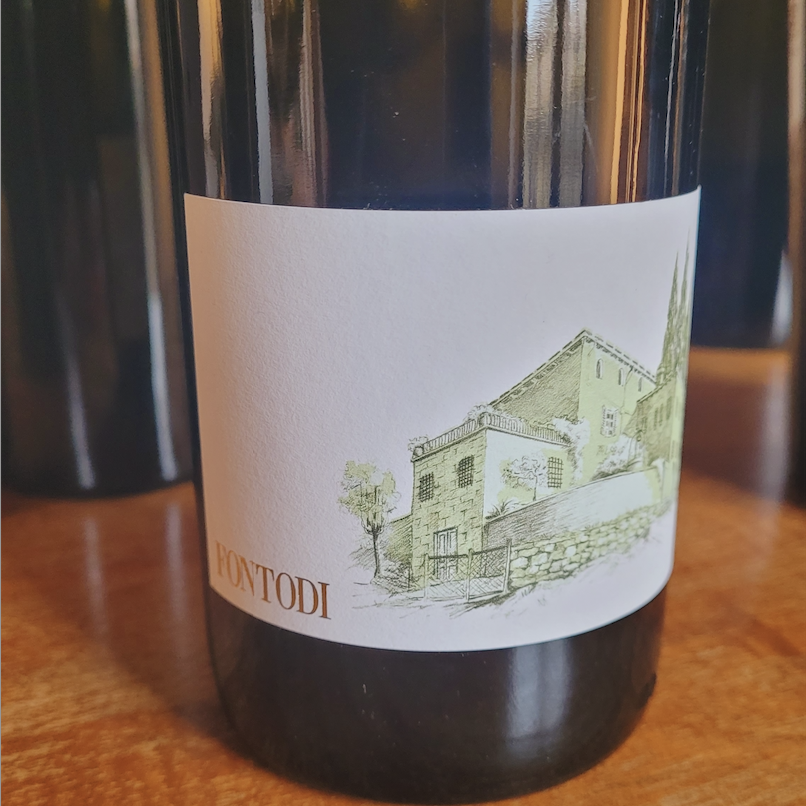
Fontodi Bianco Vino Biologico 2022, Colli Toscana Centrale IGT
From a mixed vineyard, mainly of trebbiano and san colombano but just the trebbiano is chosen from the 50 year-old vines for a project that started in 2016 in response to climate change and a vineyard more consistently ripening the fruit. “You need to put your glasses on to find it,” says Bernardo Manetti and this being the sort of white that sees a maximum alcohol potential of 12.5 percent alcohol. Picked in mid October, aged in used 600L casks for six to eight months. Higher pH and lower acidity as compared to the sauvignon blanc and so a sapid white, never vivid or dramatic, chosen to develop character through wood and not maceration. Still the wine travels on an upward trajectory up the sides of the palate and back down again. “Effete tampone” is a sponging that happens with thanks to the lees naturally cleaning the wine to get it to this place of clarity. Just 800 bottles are produced. Last tasted February 2025
A new sku for Fontodi and the inspiration comes from the next generation, that being Bernardo Manetti. Made with vermentino, 50 year-old vines, fermented in 600L barrels, 2nd passage (previously used for sauvignon blanc Merrigio). Low temps, every day bâttonage, whole cluster pressed, no skin contact and use of dry ice. Picked at high acid and this is just about spot on but thankfully a dry if not exceptionally hot season has resulted in great freshness, piquant personality and a truly linear Bianco. This is smart and focused. Just a bit more than 12 percent alcohol. 780 bottles produced. Drink 2023-2024. Tasted October 2023
Fontodi Chianti Classico DOCG 2022, Panzano
Just only recently bottled, a 100 percent sangiovese from a very hot season and the challenge faced because of a devastating hailstorm that occurred on the night of August 15th. Thirty hectares (of 105 total) were lost to this rarest, once in a century happening. “It was revolting,” says Bernardo Manetti, “if you smelled the grapes after the hail.” The approach for 2022 became one of lower extraction and less aging, the wines taken out of wood in July after just nine months. The severely reduced crop yielded this concentration and inedible stamp of Conca d’Oro richness with a fine tannic presence and ripeness at peak both adding to the compaction of the wine. Drink 2026-2031. Tasted February 2025
Fontodi Chianti Classico DOCG Dino 2022, Panzano
Dino is the sangiovese fermented and aged in amphora, from the southwest facing vineyard lower down in the Conca d’Oro overlooking the Chianina stables. A strangely low alcohol wine at 13 percent “and we don’t fully know why,” says Bernardo Manetti, but it is in fact a cooler site where temperatures really drop down in the night. Bottled in June of 2024 after three months of maceration and just a year and a half of aging. Always the push-pull between earthy and musky, as here with high poly-phenolic character. There is a presence to the 2022 with thanks to the lithe frame housing fleshy red fruit. Drink 2025-2029. Tasted February 2025
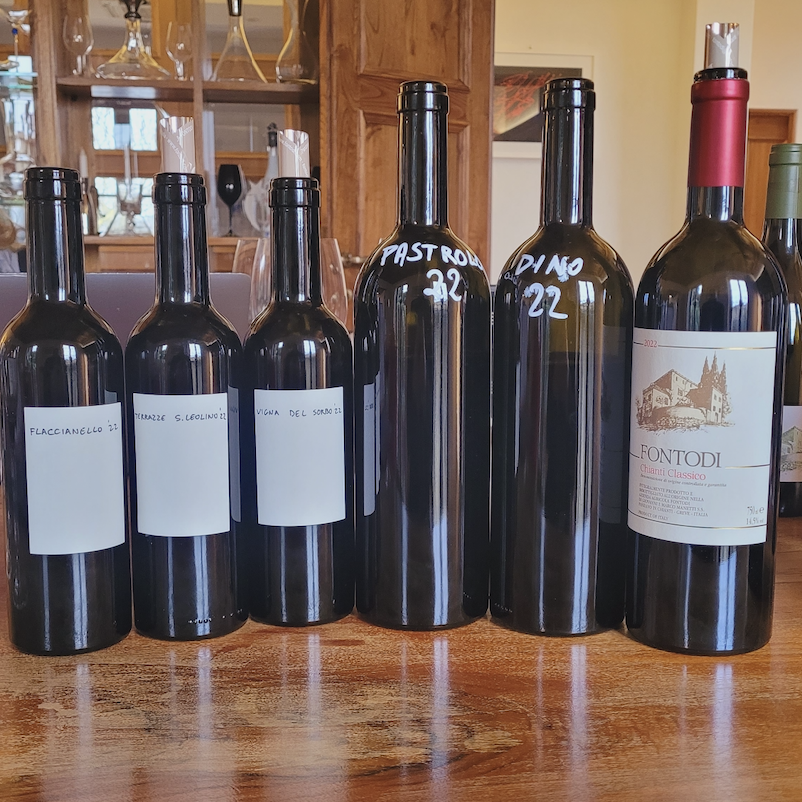
Fontodi Chianti Classico Gran Selezione DOCG Pastrolo 2022, Panzano
Like Dino (in amphora) the aging time in wood for Pastrolo is shorter and so this 2022 put to bottle in June of 2024. From the Lamole (UGA) vineyard pruned in a variation of alberello or goblet training style but the vines run higher due to Pastrolo’s steep terraces. The soils are unique, marine in origin and called marna di macigno, in other words a Galestro type of cracked or flaky manifestation, but in this case from sandstone. The grace and harmony of ’22 Pastrolo is soothing with a delicasse that no other Gran Selezione will ever show. It’s remarkable from this more than warm vintage and the 14.5 percent alcohol is barely perceived. This will wake you up, especially if you are tasting in the first part of the morning. Thank you Pastrolo. I needed that. Drink 2027-2035. Tasted February 2025
Fontodi Chianti Classico Gran Selezione DOCG Vigna del Sorbo 2022, Panzano
A finished wine because today is bottling day and what serendipity to taste it on the day. Vigna Del Sorbo is one of the vineyards that escaped the August 16th hail because it’s on the other side of the (Conca d’Oro) valley. Full quantity as a result, approximately one-third matured in new wood, the second year spent in older cask. Freshness captured and as always Vigna del Sorbo is the spiciest of the Gran Selezione but also the one of the three with the finest, if grainiest tannic profile. This after an aromatic wave of floral and mineral before giving way to a sangiovese that integrates with impunity. You’ve got to figure that the age of the vines are responsible for handling the heat of 2022. Drink 2027-2036. Tasted February 2025
Fontodi Chianti Classico Gran Selezione DOCG San Leolino 2022, Panzano
Just being bottled as we speak and the quietest opening pronouncement as compared to Pastrolo (Lamole) and Vigna del Sorbo (Panzano – Conca d’Oro). This from the terraces below and in surround of the Pieve up on the hill where Alberese soil predomimates, unique to Fontodi because schisty clay (with Galestro), Pietraforte (calacreous sandstone conglomerate) and Marna di Macigno (marine sandstone) define the other wines. The Alberese limestone makes for a crispier and more croccante sangiovese, magnified in 2022 and while this is also quite tannic the catalyst to exaggeration is made by the highest acidity of the three. Vinoso but even more succulenza, a very specific character that is San Leolino. In fact this Gran Selezione will take longer to come together, but again the vintage dictates and solicits this response. Drink 2028-2037. Tasted February 2025
Fontodi Flaccianello delle Pieve 2022, Toscana Colli Centrale IGT
“Flaccianello for us is always the finest expression of Fontodi terroir and sangiovese grown in our territory,” says Giovanni Manetti. Truth and still a certain sense of irony as coming from the President of Chianti Classico consortium. Flaccianello was struck by hail in 2022 and so one third of the crop was lost because the western vineyard Poggio was obliterated on August 16th. The other two (Pecille and La Cappellina) survived and in the end the Pietraforte that runs through still granted the freshness, structure and especially acidity. There is a more immediate floral bloom and perceived balance from 2022, also sneakier tannins than the previous few vintages of Flaccianello. The longevity is a veritable guarantee, for 20-25 years and quite possibly more. Drink 2027-2042. Tasted February 2025
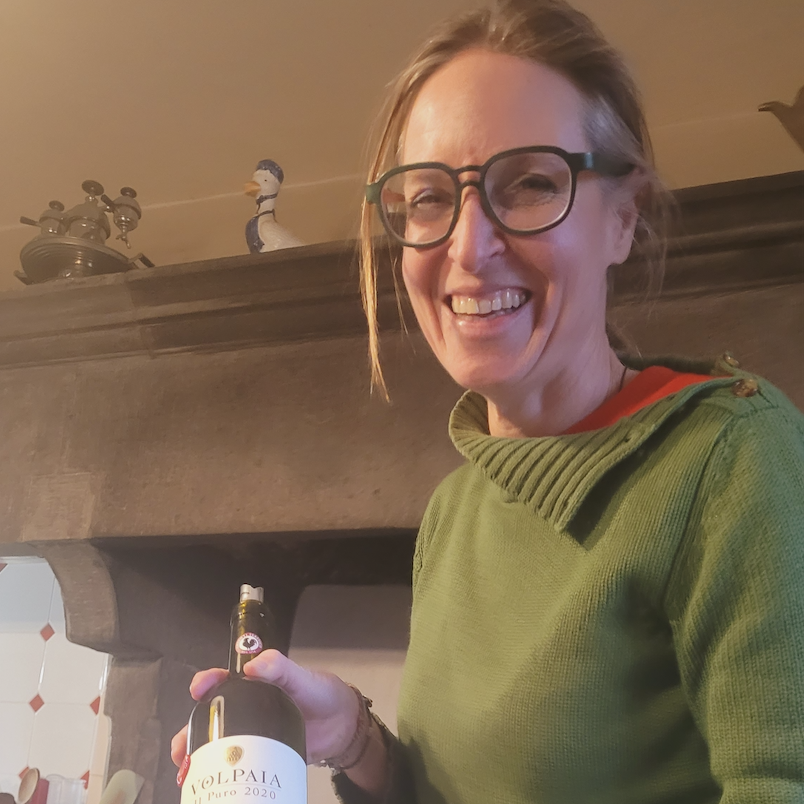
Federica Mascheroni – Volpaia
Volpaia – Radda
There are times when it feels as though in the Chianti Classico territory “all roads lead to Volpaia,” a saying that mimics the most famous one of “all roads lead to Rome.” Yet apropos in the context of Castello di Volpaia, meaning “fox’s lair,” though not actually a castle but formerly a walled in medieval village. Also the gateway to Monte San Michele at the peak of the Monti del Chianti. Historically significant within Radda and much of the village is owned by the Stianti-Mascheroni family, makers of Volpaia wine and oil. There is La Leggenda, the great tale of how the Gallo Nero came to be the symbol of Chianti Classico and then there is another La Leggenda, that being the matriarch of Volpaia, Giovanella Stianti. Her daughter Federica Mascheroni brings the family’s work to the world.
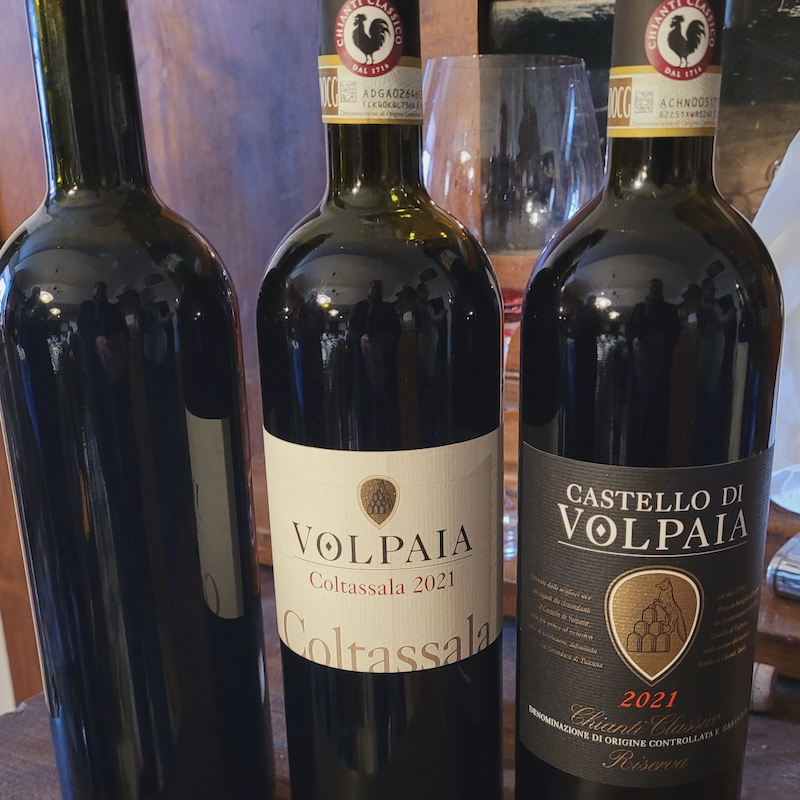
Volpaia Chianti Classico Riserva DOCG 2021, Radda
Surprising perhaps because 2021 and well, Riserva but acidity is tops from Volpaia. Then again it’s sangiovese and should there really be any surprise? Just three-plus years in but my goodness how the holy trinity has come together to make this work right here, right now. Fruit, acid, tannin, all aligned horizontally, the first sliding into the second and in turn to the third. Ready and willing. Last tasted February 2025
Fine swirl of sangiovese with the highest quality 2021 fruit that must and will show the fineness of Volpaia’s high elevation Radda no matter the quantity gained or lost. And the vintage was not easy though the estate’s position was a plus for making cool and fresh Riserva from the vaults of a hot vintage. For Volpaia this is darker fruit, not full-on 2020 dark but thankfully the location is there to keep deep breathes alive with the freshest of Raddese air. Still this is bigger for Riserva and bones are truly strong. Drink 2025-2032. Tasted February 2024
Volpaia Chianti Classico Riserva DOCG 2000, Radda
Twenty-four years (and 25 to the vintage) later the Riserva from a cool-ish vintage shows its predicted predilection to arrive with acidity intact. The fruit is fully into chewy leather as dried plum and liquorice with the baking spice cupboard providing the accents. One of the first years of Lorenzo Reggoli’s tenure at Volpaia and very much one of his vintages – so there will always be an affinity for 2000 to be connected to the present day wines. Drink 2025-2028. Tasted February 2025
Volpaia Chianti Classico Gran Selezione DOCG Coltassala 2021, Radda
The artist formerly known as Riserva and previous to 1999 also Toscana IGT is now become Gran Selezione, as of the 2015 vintage. Still it’s always been Coltassala, sangiovese inclusive of (five percent) mammolo. Like Riserva there is acidity more than merely qualified as Raddese but with this label extrapolated as Volpaia. Volpaia the hill below the Chianti mountains where structure is texture and mouthfeel is length. The Gran Selezione that speaks clearly in youth and so long as the catalyst driver leads the way it will persist like this for another 20 years. Last tasted February 2025
Always a concentrated sangiovese, from high elevation, solar radiated and night cooled vineyards. Still a five percent mixing in of ultra specific mammolo, spice bringer and catalyst to create this unique interaction with sangiovese. A fulsome vintage, fruit and tannins thick as thieves, luxe behaviour guaranteed and time on side for one of the longest runs to be had in Chianti Classico. The palate and mouthfeel are already showing signs of great activity and you could actually drink this now with the correct salty protein alongside. Drink 2025-2032. Tasted October 2024

Volpaia Chianti Classico Riserva DOCG Coltassala 2000, Radda
Impressive freshness persists because of Volpaia acidity, owing to location, location and location. Compared to the first Riserva 2000 there may not by any more concentration but there is more specificity and cool factor herbal notation. The Coltassala feels like it comes from a cooler vintage, even more so as compared to the non etichetta label and that puts it in a more complex situation. Drink 2025-2028. Tasted February 2025
Volpaia Chianti Classico Gran Selezione DOCG Il Puro 2021, Radda
The refinement of Il Puro is apparent from the start for a sangiovese as Gran Selezione 100 percent worthy of its grape and name. The pure one is Volpaia perfume incarnate, cool and floral, Chianti Classico spice masala developed low and slow, acidity as unctuous as any but always di Volpaia. Hypnotizing elements make this wine go straight to your head though there is clarity of thought. Also beating of hearts because of its philanthropy. The focus and finesse are grand, the hypnotic effect causing a loss for words. Il Puro 2021 is a thing of great beauty – what else needs to be said? Drink 2029-2040. Tasted February 2025
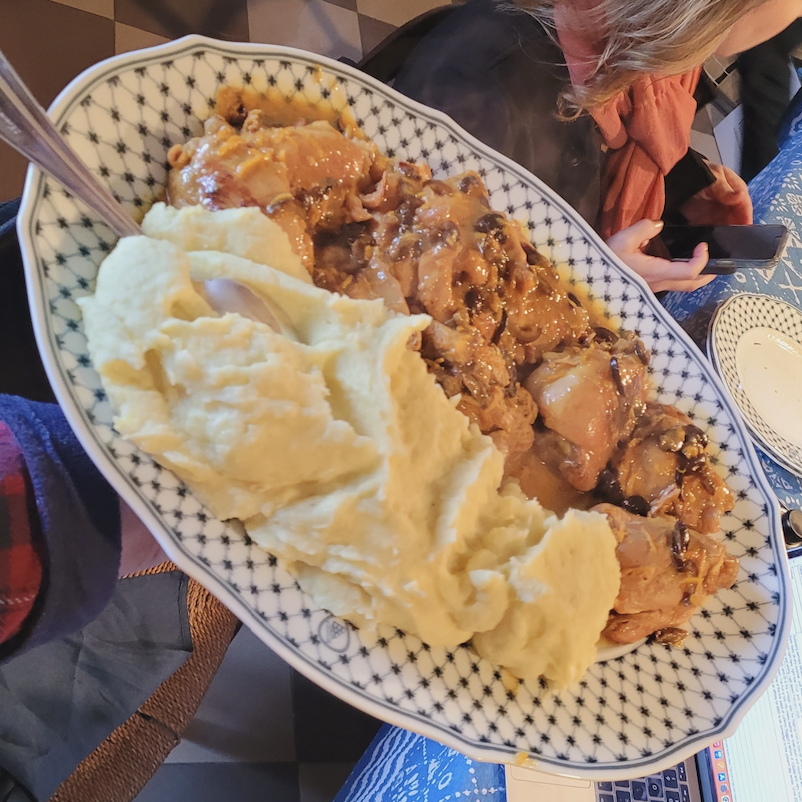
Roast Chicken and Mash Comfort lunch by Giovanella Stianti
Volpaia Chianti Classico Gran Selezione DOCG Il Puro 2020, Radda
Truly a different vintage for Il Puro as compared to 2021 for the Gran Selezione transformed in 2010, first made in 2006 after having been planted in 2000. This the GS understood to be worthy a full five years before Coltassala because the single vineyard concept and the greatness of the plot was noted earlier on. More herbology, dusty Balsamico quality and a notable aroma of wild “finnochio.” More rugged by comparison, rough and tumble, crunchy and taut. Tannins will take long to resolve and roasted protein is currently (and for the next five years will be) a must alongside. Drink 2027-2036. Tasted February 2025
Volpaia Balifico 2021, Toscana IGT
Still and always two-thirds to one sangiovese and cabernet sauvignon, here from a wine almost too young to appreciate and yet at Volpaia there is always a window of accessibility because, well acidity. Location, elevation and the natural world conspire to allow every wine a chance at speaking about itself, even before the elements have come together to truly do so. The Mascherone-Stianti family always knew that sangiovese could speak for the place, to be understood by people who knew Bordeaux varieties better and to this day the IGT is based that way. This Balifico plays a part in the estate basilica for a vintage of many gifts abided by with utmost respect and expertise. Drink 2028-2036. Tasted February 2025
Volpaia Balifico 2000, Toscana IGT
Oh the delight of a chocolate “After-Eight” mint in a 24-25 year-old IGT from high elevation in Chianti Classico territory at the upper steps of the Chianti Mountains. Many local reds at the stage will just feel old or at least taste like a mouthful of liquid truffle but Balifico’s acids are intact, even though the aromas are already losing their lustre. One-third cabernet meets sangiovese and by now they may as well be equally dispersed because together they conjoin as one. Just a hint of tannin remains, likely not real but sensed anyway. Drink 2025-2026. Tasted February 2025
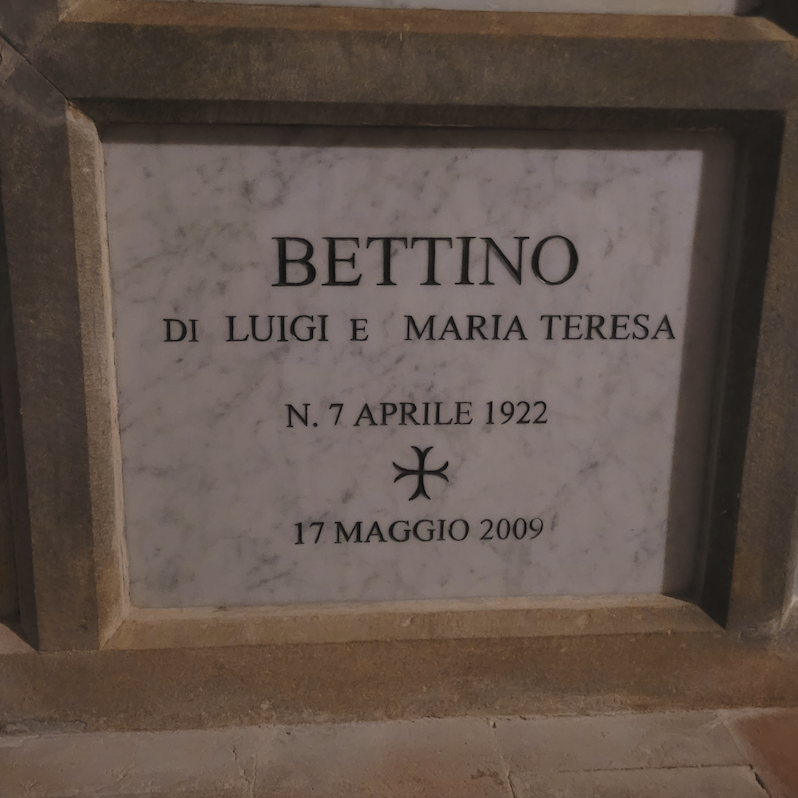
Shared birthday between Godello and Bettino Ricasoli
Ricasoli – Gaiole
Ricasoli and Castello di Brolio are two historic locations that have been visited on several occasions. This link will bring you back.
Related – Ricasoli, Barone Ricasoli
The last decade has been dedicated to the cru investigations above and beyond Gran Selezione. The three Gran Selezione are now Colledilà, Roncicone and CeniPrimo, each a unique and distinct iteration of Ricasoli’s most important identified blocks of their large amassment of Gaiole’s Chianti Classico terroir. Relatively recent news for Ricasoli is that the company now owns nine hectares in the UGA of San Donato in Poggio and also recently purchased two point five in Vagliagli, at 350m of elevation just below the Tolaini estate.
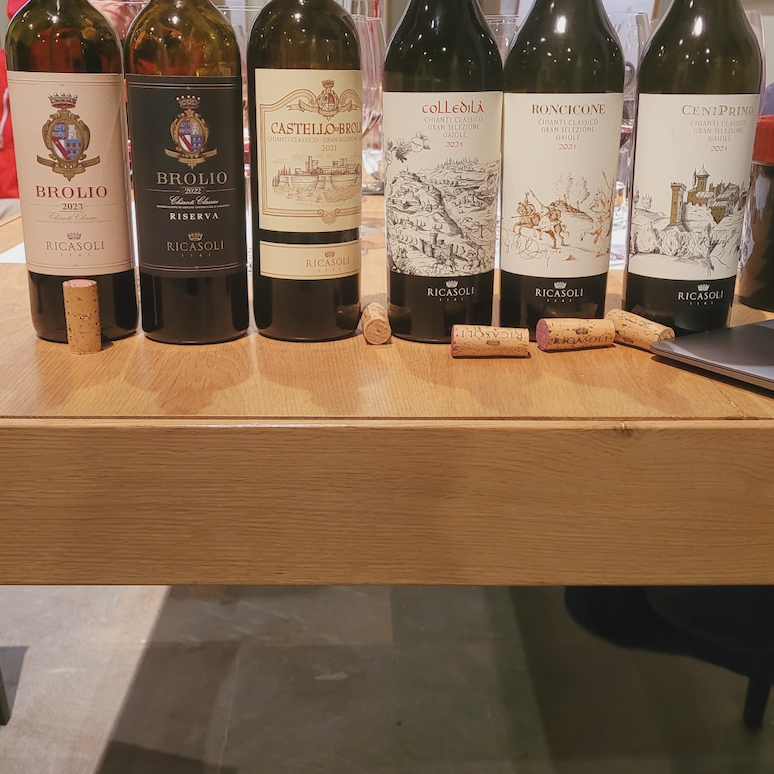
Ricasoli Brolio Chianti Classico DOCG 2023, Gaiole
Francesco Ricasoli sets the 2023 up by describing it as “crispy,” which translates as freshness but who could not think of Brolio ‘23 as juicy. Classic black cherry for this label of 600,000 bottles encompassing all five soil types, 250 hectares and everything that is collected, layered and transcribed as the Ricasoli estate. Drink 2025-2027. Tasted February 2025
Campione: Youthful, still a bit reductive in a sweet bell peppery way, herbal amaro yet to stretch and let the fruit speak first. Good fruit however, substantial and showing Gaiole’s abilities for 2023. Tasted at The Chianti Classico Collection, February 2025
Ricasoli Chianti Classico Riserva DOCG Brolio 2022, Gaiole
Riserva is truly the extension of Annata, from across the entirety of the Ricasoli estate and aged longer. Accedes to more concentration but still the Ricasoli style must be attended to; sharp, clean, drinkable and a provider of joy. This much is true and yes, the clarity is on display, so obvious in its openly generous and frank transparency. If there were rustic aspects 10 years ago they have long since left the building. It has been a matter of fine tuning, vintage after vintage. Drink 2025-2028. Tasted February 2025
Ricasoli Chianti Classico Gran Selezione DOCG Castello di Brolio 2021, Gaiole
The jump from Riserva to Gran Selezione is a significant one though the conceptualization remains similar, to draw from the various soils, of Alberese, Macigno and schistous clay manifesting as Galestro. There are other places within Chianti Classico that hold the cards to all the major soil groups but Ricasoli holds the great advantage of being able to variegate out of several micro-zones and climates. This makes for the most rounded Gran Selezione but also one with more layers than that of the other two appellative wines. And tou can drink this non-cru GS straight away. Drink 2025-2031. Tasted February 2025
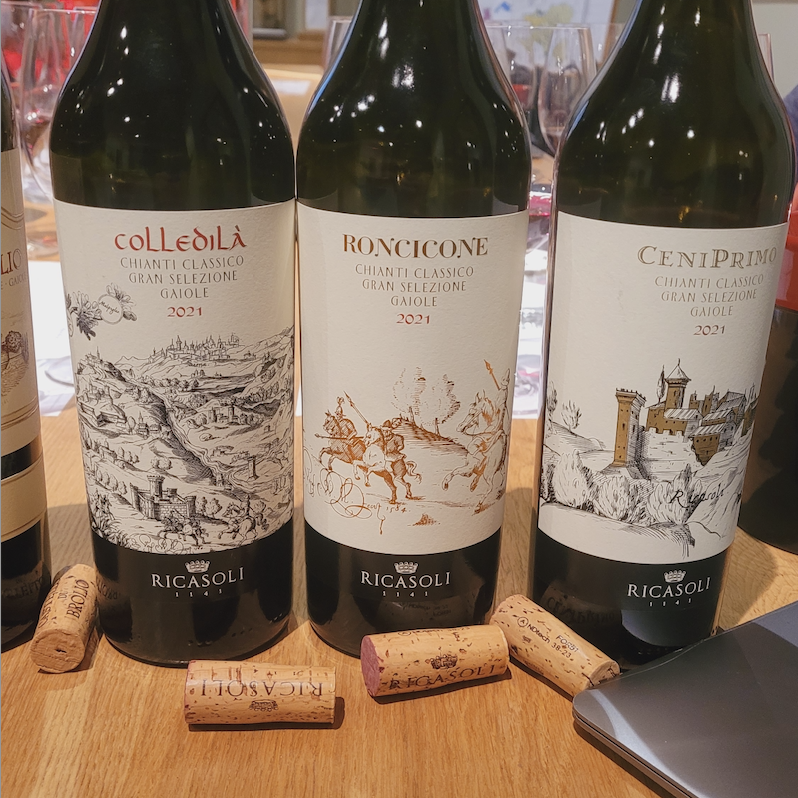
Ricasoli Chianti Classico Gran Selezione DOCG Colledilà 2021, Gaiole
The first single-focused Gran Selezione (and one of four) is at its most floral and juiciest. In other words a sangiovese of great succulenza, accessible and no doubt the sort to attract great international attention, gracing top vintage and year-end lists, and for great reason. It draws you in and nurtures the palate with philanthropic generosity. No longer shy, already open and forthright, its character wise and strong. Drink 2025-2032. Tasted February 2025
Ricasoli Chianti Classico Gran Selezione DOCG Roncicone 2021, Gaiole
The soils are marine in origin, sandstone based with fossils present. The most sapidity of the three single-focused Gran Selezione, driven by soil, profound of conception, deeper thought and finally understanding. The sapid one indeed, taut and botanical, the soil type bringing out an herbal, verdant and tonic-inflected style. Baritone, with a low rumble and cool pool of fruit with seriousness of acidity. High level poly-phenolic sangiovese, recognizable as such to the greatest degree. Drink 2026-2033. Tasted February 2025
Ricasoli Chianti Classico Gran Selezione DOCG CeniPrimo 2021, Gaiole
Comes from the vineyard with a west facing hill leading down to the Arbia River with fluvial terraces. The terroir of a geologist’s dream, pebbly with silt deposits on steep slopes that require three harvest passages, mainly due to the different fertilities of lower, middle and high parts. Like the Roncicone the phenolic presence is strong and in connection with the Colledilà the generosity is so very attractive. CeniPrimo might be a terrific mix of the two but soil and style conspire to make sure it’s a Selezione of its own accord. That is also defined by the highest tannins of the three and more time is needed to release its charm. Drink 2027-2035. Tasted February 2025
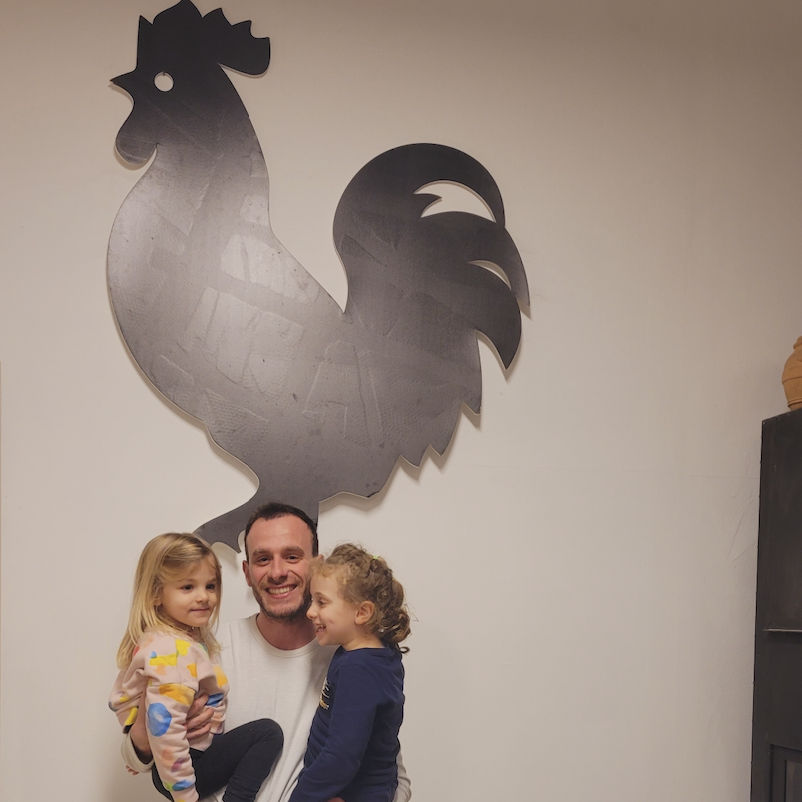
Proud dad, uncle and Gallo Nero producer Giacomo Nardi
Nardi Viticoltori – Castellina
Giacomo Nardi worked at Castellare in Castellina and his brother at Casanova di Neri in Montalcino. Giacomo takes great pride in the wines being made at Nardi Viticoltori and when asked for what he considers to be a list of top winemakers, this was his response. Alessandro Cellai (Castellare), Carlo Ferrini (Pietradolce, Giodo, etc.), Gioia Cresti (Carpineta Fontalpino) and Paolo Salvi (Montevertine and Gagliole).
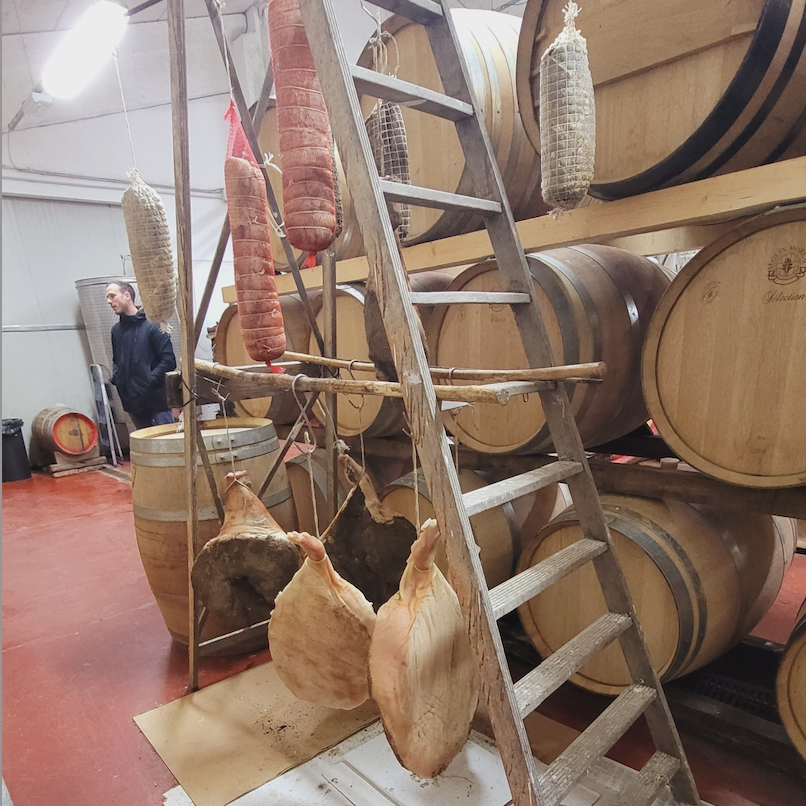
Curing salumi at Nardi Viticoltori
Nardi Viticoltori Farfaro 2024, Toscana Bianco IGT
Made with 85 percent trebbiano and (15) malvasia just bottled three weeks ago. Simply meant as a white of “easy drinkability.” Sapid, mineral-metallic and well, juicy. Just 11 percent of alcohol, a bit leesy and quick to the point. Drink 2025-2026. Tasted February 2025
Nardi Viticoltori Baccheri 2022, Toscana Rosso IGT
Baccheri was the name of Giacomo Nardi’s great-grandparents that lived on the farm more than 100 years ago. A 60-40 sangiovese and merlot blend, six months in wood. “Must be a gastronomic wine – 100 percent.” Red fruit, merlot softness and sangiovese acidity. Restaurant by the glass. Drink 2025-2026. Tasted February 2025
Nardi Viticoltori Chianti Classico DOCG 2022, Castellina
Sangiovese with five percent colorino and canaiolo first produced in 2014 now with the image of Siena’s skyline on the label. Soils are clay with some limestone and for Giacomo “the 2022 is better in the mouth.” Aged in a mix of Tuscan, Slovenian and French oak, “essential for aromatic complexity.” Now just in bottle for a bit more than a month, expressive of fruit in a broad way and the tannins are present in two parts, of softness and then in fine grains. Nardi picks on skin and alcohol – not on the pips. He insists they don’t necessarily have to be crunchy and brown. Surely a reaction to climate change and because he wants to make a wine of drinkability. Makes sense in Castellina and yes, there is more than ample ripeness in his 2022. Well done, Giacomo. Drink 2025-2028. Tasted February 2025
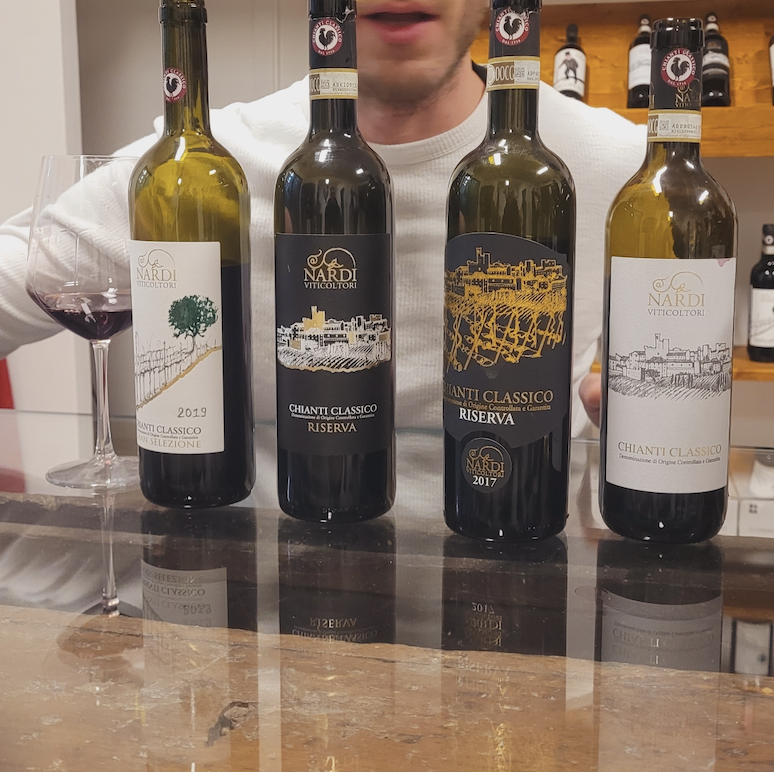
Nardi Viticoltori Chianti Classico DOCG 2021, Castellina
Quite a different vintage now that the 2022 has been tasted and it sure seems like Giacomo Nardi and his brother took another step forward in 2022. This 2021 is a bit more rugged and just not as finessed in the mouth. Last tasted February 2025
For Giacomo the Classico is a “traditional blend and vinification.” Elevated and lifted aromatics from Castellina for Annata, aromatically charged, lifted, phenolic and allied to the palate with well ripened fruit. Sees time in Botti (Tuscan from near Ruffina) and Slavonian wood. Not so much a matter of volatility as about freshness, but a verdant stripe does run thorough the perfume’s middle. Cool, minty savoury, sapid and salty with a feeling of the endemic ethereal. Great curiosity and controlled intensity for Nardi’s 2021. Drink 2024-2029. Tasted twice, February 2024
Nardi Viticoltori Chianti Classico Riserva DOCG 2021, Castellina
The first vintage was 2016, the following vintage was so hot and dry but Nardi did the yeoman work and made a truly drinkable wine. The 2021 is blessed of the good if basic red fruit vintage, here with more polish and refinement as compared to the Annata. You can feel the passion and the piety in this work. Drink 2025-2028. Tasted February 2025
Nardi Viticoltori Chianti Classico Riserva DOCG 2017, Castellina
Now five to nearly six years in bottle and still going strong, with thanks to moderate alcohol and even though Giacomo does not feel like the acidity is up to par – it still does what matters. There is in fact some elegance and plenty of life left in this challenged wine. Last tasted February 2025
Hot year and one of the great recent challenges for a Chianti Classico vintage but Nardi’s Riserva comes out at 13 percent alcohol. What is this witchcraft? What kind of wizardry or magic is practiced on this farm? Finished harvest on the 22nd of September, two full weeks after rains finally came and nearly fulfilling the requiem to arrive at phenolic maturity. Still this is Castellina and waiting through to October would have been impossible. Yes acidity is lower but still very present and the wine has aged beautifully. You feel here that you are drinking the attention and passion of a small production with this being the very best that could have come from such a challenge. Fundamental instincts followed and sangiovese that speaks to the connection between family and place. Just a touch of drying maturity coming out at the finish. Drink 2024-2026. Tasted February 2024
Nardi Viticoltori Chianti Classico Gran Selezione DOCG 2021, Castellina
Annata is a bit burly, Riserva more refined and Gran Selezione 2021 takes the finesse and focus to another level altogether. Certainly a more approachable GS as compared to the 2019 and again you can see just how much the Nardi brothers have figured out from one vintage to the next. Still vertical and yes the structure is serious but the integration of the Slavonian wood is more in tune with the fruit. Balsamico and croccante crunch for a special Gran Selezione out of 2021. Just 1,800 bottles produced. Drink 2028-2033. Tasted February 2025
Nardi Viticoltori Chianti Classico Gran Selezione DOCG 2019, Castellina
The first vintage, from Vigna del Pino to mark the pine tree at the top part, with only clay and no limestone in this block. Typical Castellina soil in this valley, a top vintage for Nardi and the fruit separated. “Old style of sangiovese that my father planted to the D12 clone.” Long maceration, up to 35 days after alcoholic fermentation and the style is indeed old school, vertical, fruit as purple as they come and it was Alessandro Cellai who identified the block when the grapes were being sold to Castellare. Sees 20 months in Slavonian Botti, acidity maintained is really high and the structure rumbles low below. Wait two more years for the grip to relax and the tannins to integrate. Last tasted February 2025
First vintage from the one hectare vineyard, “our vision of the different sangiovese,” the dark soul and D12 (Emilia-Romagna) clone planted by Giacomo’s father back in 2002. Small bunches, strong and thick-skinned leading to a requiem of longer macerations (as many as 30-35 days). Darker of colour and a richer version of Nardi but more important is the croccante and graffiante nature of the tannins. Great acidity captured (at 6.2 tA), a full half to three-quarters higher than the Annata and Riserva. Th exposure is northeast (which makes dad look like a genius) and the soil is a very strong clay. Sees 20 months in Slavonian oak and evolution is low, slow and relatively forever. Balsamico finish and acidity (more than tannin) is the driver. Think Brunello if you like but this is purely Chianti Classico Gran Selezione. A father is and a grandfather would surely be proud. Drink 2026-2033. Tasted February 2024
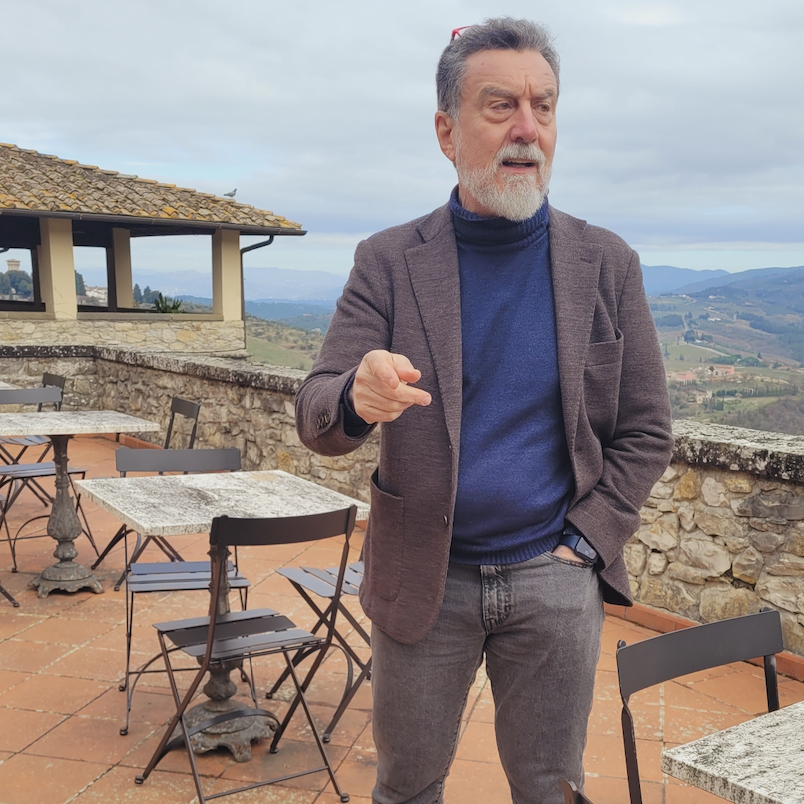
The one and only Luigi Cappellini – Castello di Verrazzano
Castello di Verrazzano – Montefioralle
There is arguably no visit in the Chianti Classico territory with more ambience, thrills, history, humour, top Tuscan comfort cuisine and quality wines than at Castello di Verrazzano. A few hours spent with Luigi Cappellini and daughter Maria-Sole Cappellini can’t be repeated enough. It all began with Giovanni da Verrazzano, Italian navigator and explorer for France who was the first European to sight New York and Narragansett bays and today the The Verrazzano-Narrows Suspension Bridge connects the New York City boroughs of Staten Island and Brooklyn. Verrazzano wa known as a humanist and man of science, much like Cappellini who came along 500 years later.

Castello di Verrazzano Chianti Classico DOCG 2022, Montefioralle
Worthy exercise to taste 2022 next to the settled 2021 because you see how much bolder this next vintage really is. Silky sangiovese impurezza as it is said, warm and sun-ripened at elevation with a look to the Chianti Mountains due east. A syrup of fruit and acidity swirled and seductive, acids purely Montefioralle and a balance discovered throughout. Deeper and darker fruit, sinking into brooding and a sangiovese that will need time to shed it’s weight and rise up again. The acidity will see to that rising and when the weather warms in 2027 this Verrazzano will begin to drink as it should. Fine Annata and one that resembles the Gran Selezione, albeit as parts of the appellative whole. Drink 2027-2031. Tasted twice, at the winery and at The Chianti Classico Collection, February 2025
Castello di Verrazzano Chianti Classico DOCG 2021, Montefioralle
Seems appropriate to taste ’21 almost exactly one year to the day later because this exact amount of time has settled the score. The energy has not waned even an iota and today’s pulse is triggered yet measured, like an athlete at rest. Behold a definitive Annata. Last tasted February 2025
For Verrazzano a complicated and in the end balanced vintage but who could have forecasted the restrained power and elegance. A 100 percent sangiovese vintage and one of somewhat shortened vindication to capture the grace and especially acidity of the vintage. A bit of maceration that hints at carbonic but no fizzy pulse. Almost a spicy sensation on the palate but really a matter of total energy. Bravo. Drink 2024-2028. Tasted February 2024
Castello di Verrazzano Chianti Classico DOCG 2008, Montefioralle
Aromatics indicate an older wine, pleasant and in the throes of primary to secondary transference, but the palate remains immersed in freshness. Succulence and energy in the mouth, cool, sweetly herbal and the fruit still pops. Ignore the historical thought of naysayers who said the 2008s would not age well – Verrazano’s has travelled through life without obstacle because its balance is impeccable. Why not imagine three more years at this level? Drink 2025-2028. Tasted February 2025
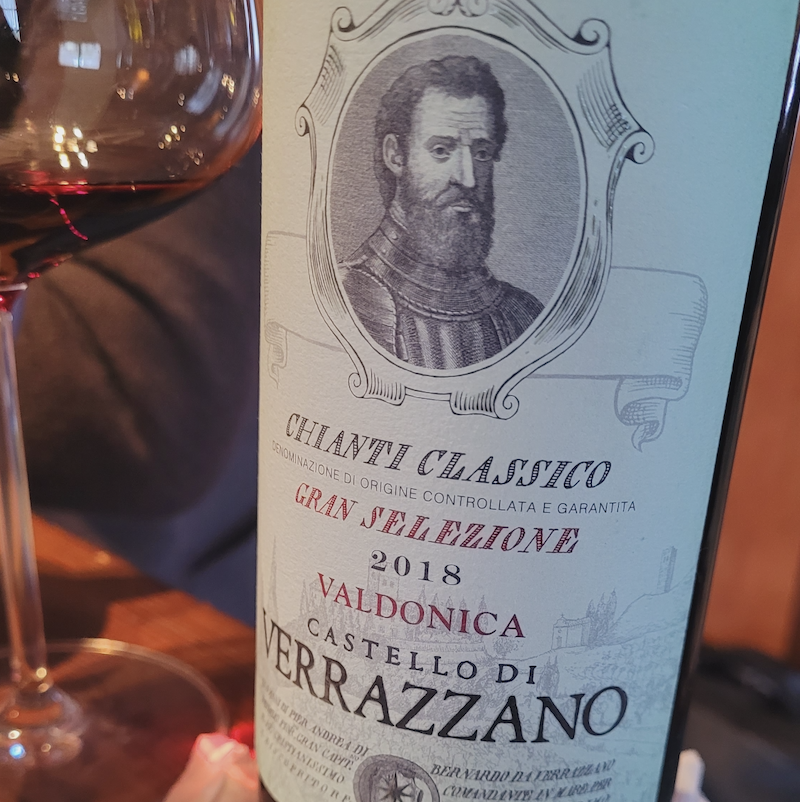
Castello di Verrazzano Chianti Classico Gran Selezione DOCG Sassello 2018, Montefioralle
Not sure if any significant movement was expected but none is forthcoming for Sassello 2018. Persistently punchy and grippy with tannins still at their peak. Feels formidably sapid at this stage and perhaps another six months will lighten the load. Last tasted February 2025
Not yet released and will have at lest three more months in bottle before that can happen. A strong vintage and normally the release would be the fall but both wood and fruit need to time to find each other. The substance in Sassello 2018 is, well substantial, in fact something more than that. Richness at the height of Verrazzano’s abilities but my goodness this packs a punch while also showing off the modernity and harmony that define this estate today. Bravissimo. Drink 2026-2033. Tasted February and October 2024
Castello di Verrazzano Chianti Classico Gran Selezione DOCG Valdonica 2018, Montefioralle
More delicate than Sassello and the contrast is even more obvious from 2018 than it had been for 2017. Though the season developed darker fruit it is the freshness, luminosity and sweeter style of Balsamico that see great lift in this Gran Selezione. In a way a true expression of the word “onica” for mineralogy, “a variety of agate with concentric black and white streaks, or, more generally, with areas that present strong contrasts in colour.” As here from the wine’s core to its edges, in hue and feel, vinous meets gemstone and stony cool. Last tasted February 2025
The thing that connects Sassello and Valdonica is the vintage, the power and the full on substantial effects compactly packed yet carefully multi-layered. A swarthiness really separates this GS from Sassello in ways that put this in its own light. The aromas and flavours also bring in exotic spices but also a succulence that show how special and different this sangiovese truly is. It walks a fine line, flirts with danger and comes out singing. Drink 2026-2036. Tasted February 2024
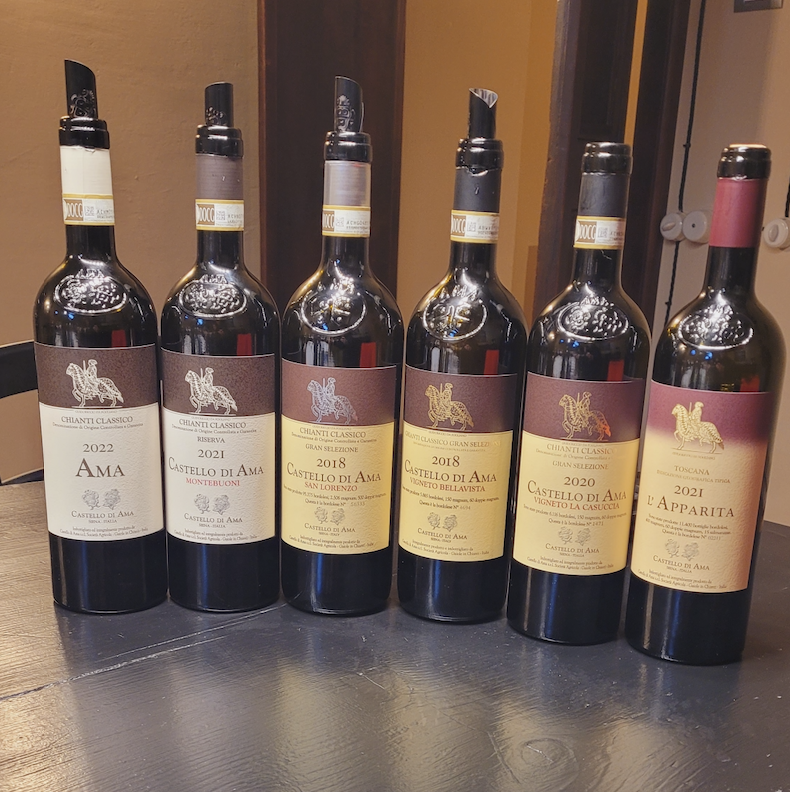
Castello di Ama
Related – Castello di Ama’s state of the art
Questa non è una finestra at Ama – Daniel Buren, Sulle vine punti di vista
Castello Di Ama Ama Chianti Classico DOCG 2022, Gaiole
Only Ama could pull and gift this much upfront fruit to draw us in as quickly as we do. Richness accrued and balance incarnate, more than juicy acidity and fully encapsulating tannin. If this is what Annata is all about the ceiling is unlimited for San Lorenzo and the more interlocutory and focused single vineyard Gran Selezione. Drink 2025-2032. Tasted February 2024 and 2025
Castello Di Ama Chianti Classico Riserva DOCG Montebuoni 2021, Gaiole
A mouthful of acidity, tannin and mineral direct and defining Ama’s Montebuoni 2021, a wine not yet mature enough to say the window has opened. Quite woody at this age while the dark fruit is so very substantial and so time is needed to melt them into one another. That acidity and seriousness of Balsamic quality speaks to the Gaiole origin as the source for this level of appellation. Drink 2026-2030. Tasted twice, at Ama and at The Chianti Classico Collection, February 2025
Castello Di Ama Chianti Classico Gran Selezione DOCG San Lorenzo 2021, Gaiole
San Lorenzo the concept comes from the vineyard with that name and now the ideal conceives of Gran Selezione as a wine to speak for all of Ama’s Gaiole. The vintage is renowned to be important and so arrive expecting fullness of everything involved, but also a fortress yet to be breached. A tough one indeed still at this stage with verticality and immovability. Needs at least two more years. Drink 2027-2032. Tasted at The Chianti Classico Collection, February 2025
Castello Di Ama Chianti Classico Gran Selezione DOCG San Lorenzo 2018, Gaiole
Aromatic, spicy, lifted and genuine. Extra layers, fruit of course and then floral, calcareously white peppery, luxe as per the appellative level and a matter of time. Vintage but also patience, the latter needed to understand the former, warm and developed, compact and yet never dense. To achieve this kind of acidity is remarkable. A matter of matching same parts to make up a whole. As per Marco Pallanti’s decades of dedication. “I am not a flying winemaker, I am a pedestrian one.” Drink 2024-2034. Tasted May 2023 and February 2025
Castello Di Ama Chianti Classico Gran Selezione DOCG Vigneto Bellavista 2020, Gaiole
Bellavista is first and foremost the Gran Selezione only made in select vintages, inclusive of 20 percent malvasia nera and also the one of ripest fruit with a view. The depth in 2020 is serious, the wine at once grounded and then acidity of a Gaiole nature kicks in to lift and see this Bellavista rise. Full and beautiful, seamless, orchestrated by a master of decades and artistic appreciation while delivering a modernist’s virtuoso performance. Drink 2027-2035. Tasted at The Chianti Classico Collection, February 2025
Castello Di Ama Chianti Classico Gran Selezione DOCG Vigneto Bellavista 2018, Gaiole
Bellavista the Gran Selezione is only made in select vintages and 2018 marks the first of three consecutive (likely with a fourth 2021 coming soon) after 2017 was passed over. A rare example of GS to include 20 percent malvasia nera and the beautiful view comes replete with riper than ripeset fruit. The depth from 2018 is akin to 2020 but with two further years having come and gone there is now a soft middle in between two grippy pieces of structure. This unique high elevation sector of southern Gaiole with its formidable ridges delivers the acidity of a località which always lifts Bellavista up to its precipice. At this stage it does already feel like looking back at a wine with its window fully open and the breezes blowing in. Drink 2025-2032. Tasted February 2025
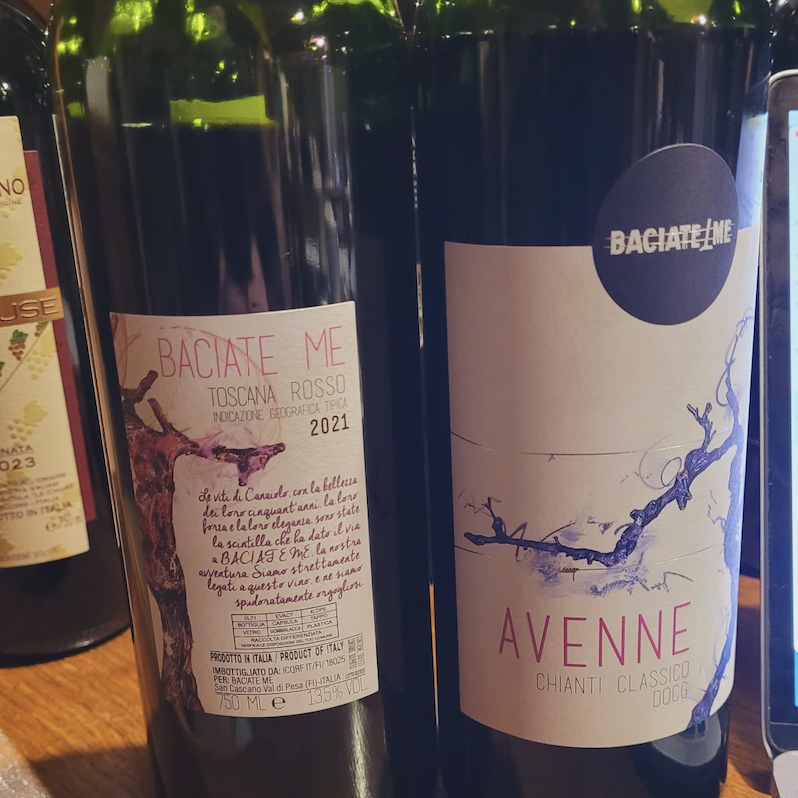
Baciate Me, San Casciano (Tasted with Lorenzo Magnelli at Le Chiuse in Montalcino)
Baciate Me Chianti Classico DOCG Avvenne 2020, San Casciano
“Kiss me,“ a play on words for the three men who own the winery, including Le Chiuse and Castello di Meleto oenologist Valentino Ciarla and a vineyard he purchased in San Casciano during Covid. Avvenne loosely translates as “please let me have some more of something, but in one word” and truthfully that is how you will feel after a glass of this wine. It’s is a sangiovese with some canaiolo of very old vines, truly San Casciano with a feeling of the local macchia and a natural wild quality, of great temper matched by restraint. The wine rolls and oscillates in waves, acts juicy, very aromatic, light, at times dusty and yet the texture is flowing. Never sharp and just the right balance from a super tiny production. Drink 2025-2029. Tasted at Le Chiuse in Montalcino, February 2025
Baciate Me 2021, Toscana Rosso IGT
An old vineyard and from the aromatic grape higher in pH and lower in acidity but when really old vines are involved the balance is better. Tasted with Le Chiuse’s Lorenzo Magnelli who believes that canaiolo should be bottled under glass cork (or why not screw cap) because under nature cork “the wine will lose more then it will gain.” In other words the grape can oxidize faster than sangiovese but here the freshness of the vintage persists and there is a unique, almost corrugated tannic profile. Currants and the Tuscan Corbezzolo, a unique expression that is in fact really expressive. Drink 2025-2027. Tasted February 2025
Good to go!
godello
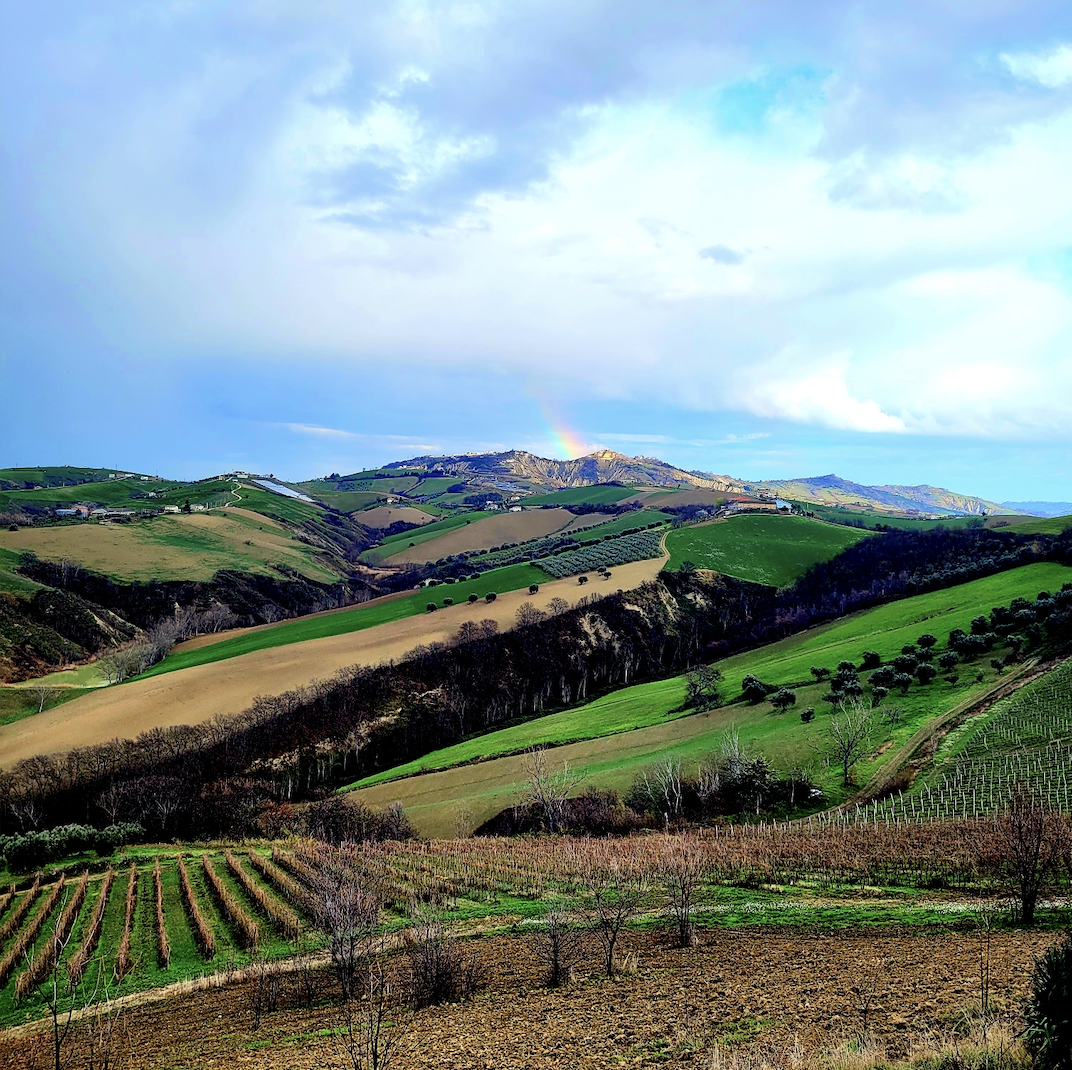
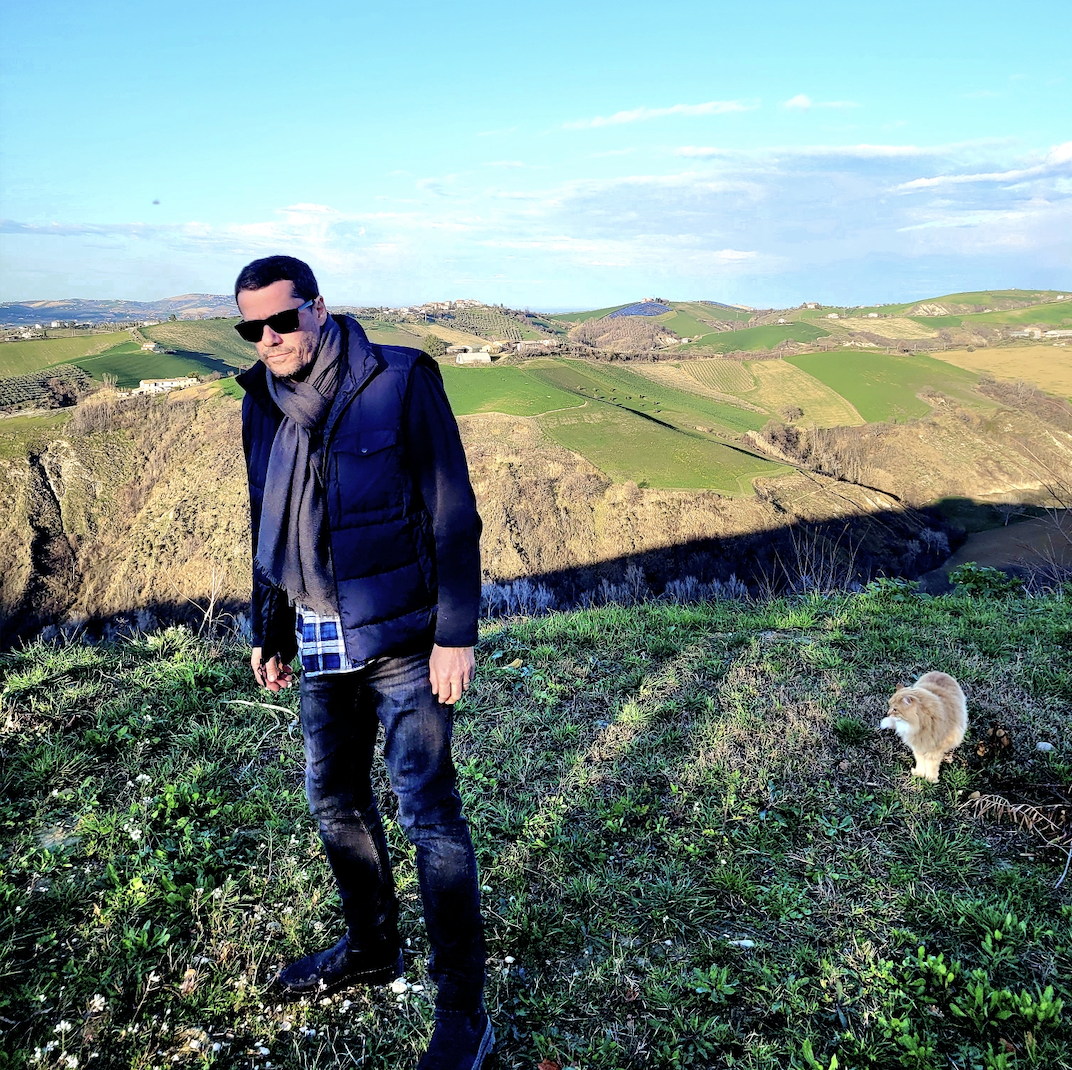
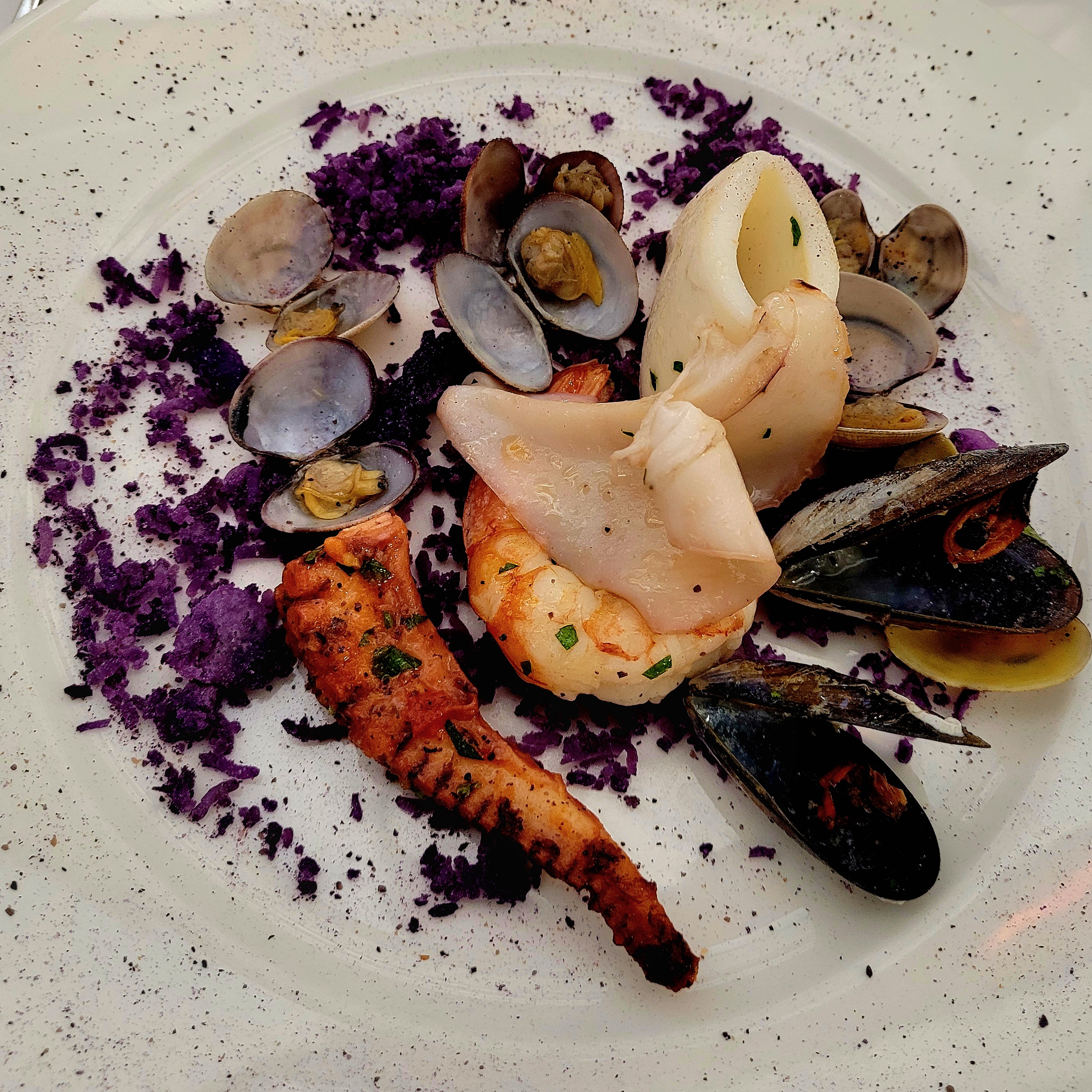




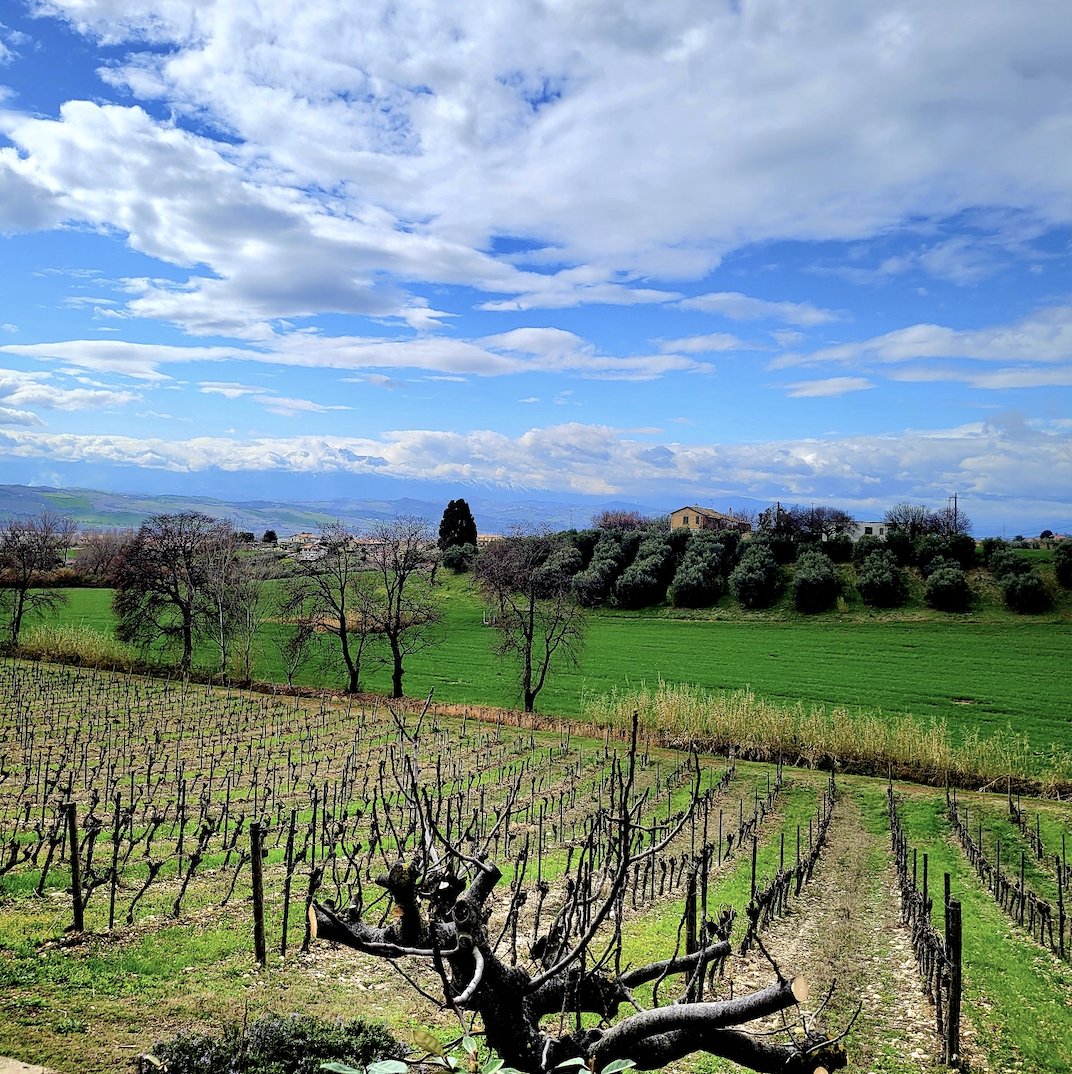



 Godello