A Blanck slate in Alsace

Paul Blanck et fils Photo (c): https://www.facebook.com/Domaine.Paul.Blanck

Paul Blanck et fils
Photo (c): https://www.facebook.com/Domaine.Paul.Blanck

Philippe Blanck‘s wines are his tabula rasa; Riesling, Muscat d’Alsace, Pinot Blanc, Sylvaner, Chasselas, Pinot Auxerrois, Pinot Gris, Gewürztraminer and Pinot Noir. They are like children, young and innocent in their infancy, uncomplicated canvases, unaware of what complexities may befall them. Blanck begins with quires like Aristotle’s “unscribed tablets” and transforms these epistemological blank slates through nurturing, experience and perception. His wines are those of expression, not impression.

Domaine Paul Blanck announces to the world they are “Vignerons d’Emotions depuis 1610 en Alsace.” They embody “family spirit” with the objective “to create wines of pure pleasure for wine-lovers throughout the world.” Thirty different wines are produced from the property, separated into three main types. First there are the fruit driven wines to “enable the wine-lover to discover the aromatic finesse of the Alsace grape varieties.” Second are the wines with mineral characteristics, “the single vineyards and grands crus which express the plenitude of limestone, the sweetness and firmness of clay, the harmony of manganese and the racy bouquet and power coming from silica.” Then there are “les nectars,”  the late harvest and “grains nobles” issued from overripe grapes “which are mysterious, opulent, complex and exuberant.”

The English philosopher John Locke brought forth the nature versus nature proposal of the blank slate as “a tacit theory of human nature, namely, that human behavior is caused by thoughts and feelings.” The application of the premise to wine is viable because of the naked stage at which a yet fermented grape exists.

During the grape’s life cycle, genealogy and climate shape its development. But even after it is plucked from the vine it still carries no true identity, in so far as what it will become as a wine. This is the point where nature gives way to nurture. Environment now acts as the catalyst to shape the wine’s life. Wine does not evolve because of natural selection. It evolves at the hands of the winemaker.

The tabula rasa theory works with respect to wine with the only exception being “when innate characteristics are considered because “innate ability and blank slate are two totally opposing ideas, so how can they coexist?” Wine is a blank slate before it is crushed and sent to ferment. Its en route ability to acquire knowledge is anything but innate. Domaine Blanck’s wine is different. It’s tactility defines how it develops and ages. The Blanck 1983 Muscat proves the point. It’s mien is almost impossible to comprehend. Experience imprints knowledge.

Blanck the Darwinian is the keeper of blank slates baring little resemblance to those of his contemporaries. Not because their development incorporates the concepts of heredity, genealogy and culture. It is here within that the Blancks share a commonality with other traditionalists. Where Philippe’s take differs is in the anti-Descartes approach to making wine. Alsace is certainly a wine region with a storied history. It’s a place where sixth and eight and tenth generation winemakers have been passed down the torch of practice and the tools to work with varietals and their idiosyncratic tendencies. For this learned reason and because he approaches l’élevage with feelingPhilippe Blanck’s wines need to be assessed with a combination of art and science.

While it may seem absurd to think about Philippe Blanck‘s wines, or any winemaker’s for that matter as evolved and developed in direct connectivity to musings and dissertations, spend three hours tasting with him. You too will walk away with a poet’s perception, a musician’s intuit and a writer’s reverie. Philippe Blanck makes full use of human intellect and empirical familiarity to help realize his wine’s potential.
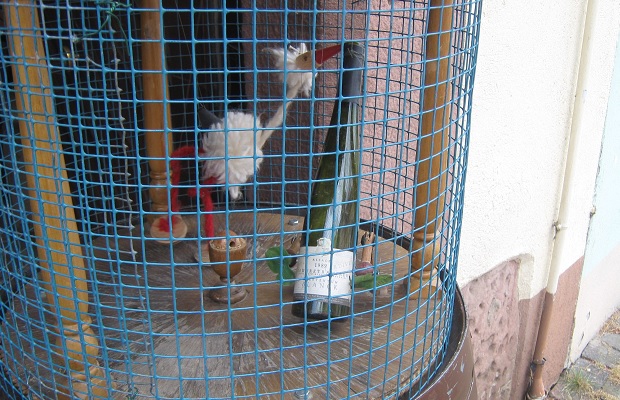
The Gewürztraminer Bird of Alsace, Domaine Paul Blanck

The Gewürztraminer Bird of Alsace, Domaine Paul Blanck

Philippe makes the wines with his brother Frédéric, “the artist, the solitary one.” Philippe self-describes himself as the “people person.” The domain is not organic but “we are close. Plowing is the key to organics, and grass, and compost. It’s enough.” No chemical products are used, unless it’s entirely necessary, like in 2006 and 2012 when botrytis ran rampant. “If you want to have low yields, why have fertilizers?” Blanck notes the importance of building up resveratrol in the grapes, essential for disease resistance and vine health.

The Blanck portfolio includes Les Classiques, single, classic-varietals with less than five g/L of residual sugar. Then there are Les Cépages Oubliés, a category which defines a series of wines, but not what they are capable of becoming. They are in fact a set of outliers, a group of grape varieties having fallen from vogue, kept alive by vignerons like Paul Blanck et fils. The varietal eccentricity of Chasselas, Sylvaner and Auxerrois. Les Vins de Terroir come from lieux-dits, spend one year in vats and another one to two in bottle. Les Grands Crus need six to seven years to reach potential but as Blanck exclaims, “after two or three years of cellaring the wine is exploding.” Les Nectars include Les Vendanges Tardives (late harvest) and Les Sélections de Grains Nobles.
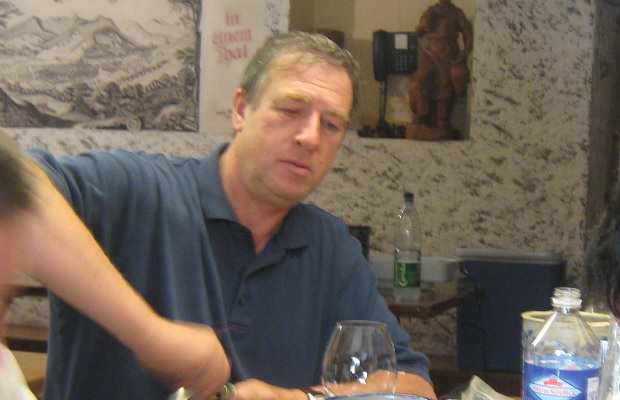
Philippe Blanck, Domaine Paul Blanck

Philippe Blanck, Domaine Paul Blanck

In June of 2014 I sat down with Philippe Blanck at the winery in Kientzheim to taste 17 of his wines, along with Montreal’s Fred Fortin, Sommelier au Restaurant Laurea, New York’s Jonathan Ross, Sommelier at  and Chicago’s Doug Jeffirs, Director of Wine Sales for Binny’s Beverage Depot.  Philippe pulled out 10 bottles with at least 15 years of age on them, including an ’83, two ’85’s and an ’89, because “how often do you have the opportunity to open wines like this?” Philippe’s response? “When people come.”

Related – Giving Grand Cru Pinot Noir d’Alsace its due

Here are notes on 14 wines tasted that day in June. The other three are Pinot Noir, published (as noted within the link), back in September.
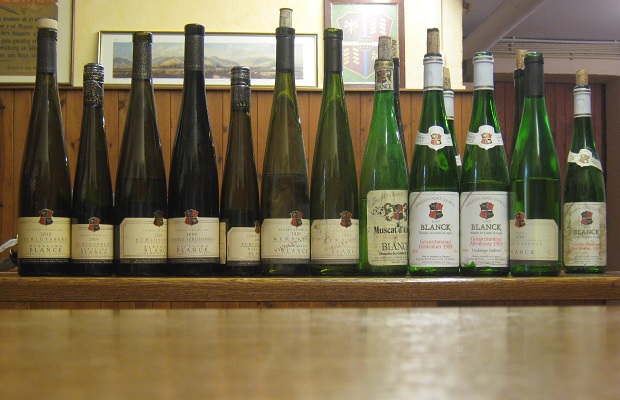
Tasting with Philippe Blanck, Domaine Paul Blanck

Tasting with Philippe Blanck, Domaine Paul Blanck

Pinot Blanc Classique 2013

Has an unoaked Chardonnay approach, from early-ripening fruit vinified in a clean, fresh style. The soils are gravel, sand and south-facing clay and limestone. The vintage is what Alsatians would call classic; consistently cool with low yields. Aromatic purity, of citrus and flowers move to a solid and slightly weighty bitter mid-palate, then give way to a sliding scale finish.

Auxerrois Vieilles Vignes 2010

This grape variety from Luxembourg came to Alsace in the 18th century. Blanck leaves it for one year on the lees, to add richness and to bring out aromas from gentle oxidization. The wine is then left in bottle for three more years before release. The oxygen-free environment couples with the earlier air transfer to complicate matters in beautiful didacticism. The aromatics are massively tropical and the wine is imperfectly clean. Full and fleshy, accessible but intensely cerebral. Auxerrois in awe of what must be.

Pinot Blanc 1989

This from granite soils, full of mineral and white tannin, yet never saw a moment in barrel. The location is the Grand Cru Furstentum, in a windy area, perfect for Pinot Blanc. Has that sense of Burgundian metallurgy, that texture and that buttery malo feel. “This is a paradox without being a paradox” says Blanck, because the tannins are in the vineyard. Even in hue you get a sense of the botrytis. “She’s a beautiful blonde,” quips Philippe, she’s “the sensuality of humanity,” adds Ross. Here Pinot Blanc lets it be, amazes with a pure, silky, textural feeling and a cleanse of the mouth. “All these years I’ve been wandering around, wondering how come nobody told me” there could be Pinot Blanc like this. Now I’ve got a feeling I’ll find more.

Riesling Grand Cru Schlossberg 2010

This is what Philippe Blanck calls “a flagship wine.” From a cold vintage with excruciatingly low yields. The Schlossberg gives mineral and more mineral; Kaysersberg migmatite, granite of Thannenkirch, potassium, magnesium, fluorine and phosphorus. Blanck’s Riesling distills its rock heredity in classicism and minimalism. Matured on its lees in large oak barrels for 12 months, this is possessive of a roundness despite the vintage, with Sémillon like wax and back-end intensity. It should be considered a two to three-year Riesling, maxing out at the six to seven-year range.

Pinot Gris Grand Cru Schlossberg 1998

The bottle had been open 10 days so we were tasting this just for fun, for experience. Philippe did not see the purpose in a formal tasting note. With allegiance to the informal tasting note, the presented wine conjured up one word: Incroyable. So very alive in depths despite the heart worn on its sleeve. Flowers seemed to suddenly enter the room as its complexities were revealed. I could only ask how this could not work itself into my passive consciousness, this wine that had shed its skin and borne its naked ass to the world for so long. It had nothing to hide and nothing left to prove.
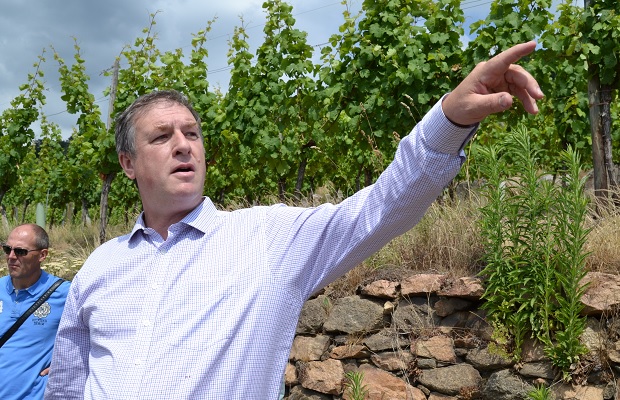
Philippe Blanck in the Schlossberg Photo (c): Cassidy Havens, http://teuwen.com/

Philippe Blanck in the Schlossberg
Photo (c): Cassidy Havens, http://teuwen.com/

Riesling Grand Cru Schlossberg 2009

Tasted from a 375 mL bottle, under screwcap. A crystalline expression, touched by silky tannins, citrus angles and dry, chaste class. The vintage has bestowed it with a broad mid-palate, excellent structure and admiral length, all in admonition of its preparation. The ’09 Schlossberg will live long, in ways that a current look at the ’03 is showing, by gaining tropical flesh and a meringued texture as it ages.

Riesling Grand Cru Schlossberg 2003

At nearly 11 years of age this archetypal Blanck confab to Alsace Grand Cru clambake sips swimmingly youthful and offers the first and most near-recent look at the house style. Restraint, beauty and intensity are summed up in citrus, mineral and granitic tannin. Quite a quenelle or three of creamy, sherbet-like texture fills the centre of the gelid exterior. Will develop to maturity with another 11 years and a retrospective look back at that time will reveal the glory of the Blanck Schlossberg narrative.

Riesling Grand Cru Schlossberg 1994

Popped from a 375 mL bottle, the ’94 is the first to be propelled by petrol. Twenty years ago it came from the Schlossberg’s crenelated granite summits with the simple thought of “gonna be a blank slate, gonna wear a white cape.” Two decades on it’s a national symbol of a father to son enfeoffment, a Riesling of handed down knowledge and analysis. Now in phase two of the atomic launch, it’s also quite sexy, skirting flesh, cut above the knee and showing magical, mineral flanks. A sweet bitterness prescribes its packed and protracted punch. This 1994 shows signs of a melting, leading it into the finest years of its life.

Riesling Vieilles Vignes Grand Cru Schlossberg 1991

From a tough vintage, especially considering the trilogy of exceptional wines made in 1988-1990. The yields were frighteningly low (less than 20 l/hL) but this, in Blanck’s estimation, “is a poetic wine.” The oeuvre here is all about tannin and acidity, from granite (of course), which is what gives it the intangible quotient of age. The ultramafic rock, igneous and nurturing in origin, intrusive by nature. Drink it any earlier, says Philippe and “you miss the culture and the experience.” There’s a mineral funk here, like a crust upon the granite, a slice of stinky wet rock, chiseled off and dissolved into the wine. This Schlossberg lacks the flesh and the naphtha of the 1994, nor will it suddenly discover it. Time to drink up.

Riesling Grand Cru Wineck-Schlossberg 1992

Wineck-Schlossberg gets its name from the ruined 13th-century Wineck Castle, between the villages of Ammerschwihr and Katzental, three km’s south of the Schlossberg. The soil is granite, like the Schlossberg, so it’s the same, but different. The advanced decomposition means more granitic fine material, a geological phenomenon that seems to make for a finer and more palpable mineral texture in this Riesling. Yet it seems more terpenic, with a level of orchard fruit in both aroma and flavour not present in the Schlossberg Rieslings. A calm and purposed ’92 from Blanck.
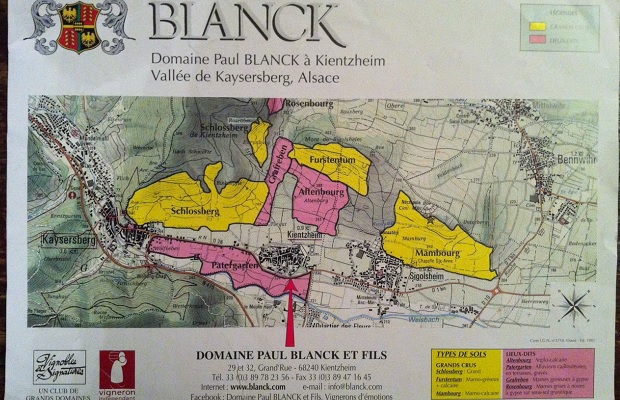
Domaine Paul Blanck st fils

Domaine Paul Blanck st fils

Riesling Grand Cru Furstentum 1993

Switching geological gears here, this is Riesling from limestone, obviously a different animal. Philippe Blanck does not offer his understanding of what calcaire does for Riesling as much as he muses on the poetic and the abstract. “This is a wine that gives an understanding that is just about being.” The existentialist take is curious, coming from a winemaker who speaks more like Donne or Baudelaire than Nietzsche or Dostoevsky. The investigation requires more precision and a foray into the gestalten, something that is made of many parts and yet is somehow more than or different from the combination of its parts. There is a feeling of miel in this ’93, the first in the line-up to give that sweet feeling. The Furstentum shows Philippe as a dreamer and a lover. He and this Riesling are a matter of election, not selection. This wine is the exception to the Blanck rule.

Muscat d’Alsace Réserve Spéciale 1983

From Altenbourg, a lieu-dit located at the base of the Furstentum vineyard. Here is Blanck’s “fairy tale,” a wine you would have always heard about but never had a chance to taste or likely ever seen. The terroir is limestone mixed with clay and you will have to excuse my Alsatian, but a single sniff and taste releases the expression, “are you fucking kidding me?” This 31-year old Muscat is an impossibility, a first time feeling, a never before nosed perfume. Speaks in a limestone vernacular, of grapes given every chance to survive long after their innocence had been lost. A forest herb, tree sap, evergreen resin, lemongrass and bitter orange coagulation rises from its viscous mist. The acidity has lost nothing on the fruit, acts in perfect foil and leaves you with a sense of loneliness that is just beautiful.
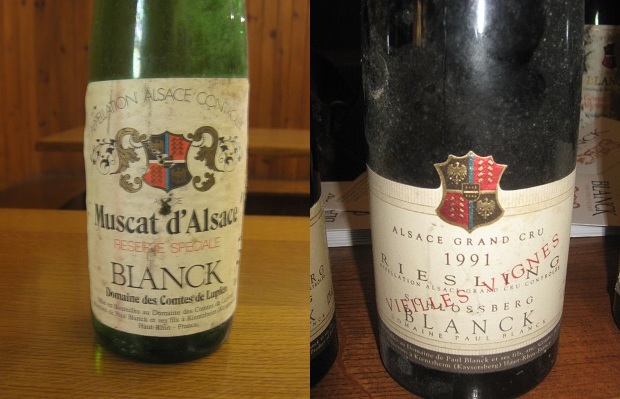
Paul Blanck Muscat d'Alsace Réserve Spéciale 1983 and Riesling Vieilles Vignes Grand Cru Schlossberg 1991

Paul Blanck Muscat d’Alsace Réserve Spéciale 1983 and
Riesling Vieilles Vignes Grand Cru Schlossberg 1991

Gewürztraminer Grand Cru Furstentum 1985

Elegant and refined but decelerated in the old ways, “my father’s and uncle’s way,” admits Blanck. Here a wine defined by aromatics and tangible consciousness. Spices abound, of the far east, tomato pulp, tarragon, sage, tangerine, mint and eucalyptus. It’s balmy with a streak of cool garrigue. It’s Gothic in its green grandiosity. So, it reflects pure Furstentum Alsace, back to the doyen, to the territory of the wise.

Gewürztraminer Altenbourg Vendanges Tardives 1985

Nearly 30 years have condensed and melded this late harvest wine together. This represents the Blanck intangible revenge. The series of sneaks. It’s a veritable, tropically creamy and alcoholic shake of coconut, pineapple, guava and mangosteen. Mixed in are herbs and spices. In their infancy, wines like this are a “big blank slate every day.
Big blank canvas staring at me every day.” With time they creep into my consciousness. The ’85 VT is silky, evolved and very much alive. It’s so deep and so pure it absorbs every colour of visible light expect what is to come, so it reflects back the purity of the past. Might require a spoon to enjoy to the fullest.

Good to go!
 

A day in WineAlign life: 15 new releases from Ontario and B.C.

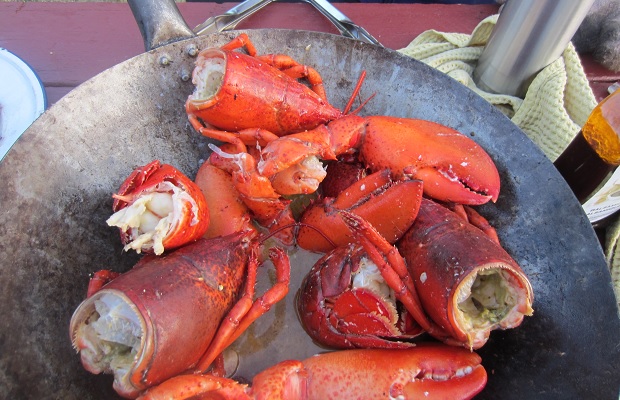
East Coast Lobsters Photo: Michael Godel

East Coast Lobsters
Photo: Michael Godel

Yesterday I settled in at the WineAlign offices with the critics crew (David Lawrason, John Szabo, Steve Thurlow and Sara D’Amato) to taste some new releases. I chose to focus on British Columbia because of all the wines that cross my path, those from out west seem to be the few and the far between. Some Ontario wines not yet investigated were open and available so I worked through a handful of them as well.

Here are my notes, posted to WineAlign, gathered together here, in one place.

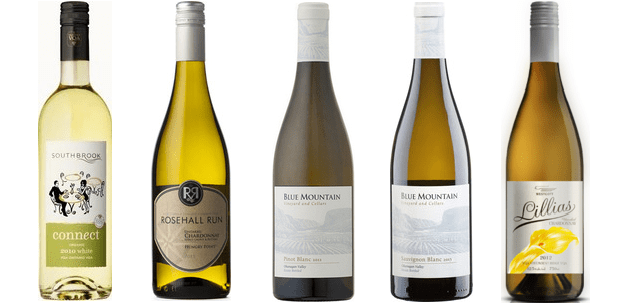
Southbrook Connect White 2013, Rosehall Run Hungry Point Unoaked Chardonnay 2013, Blue Mountain Pinot Blanc 2013, Blue Mountain Sauvignon Blanc 2013, Westcott Lillias Unoaked Chardonnay 2012

Southbrook Connect White 2013, Rosehall Run Hungry Point Unoaked Chardonnay 2013, Blue Mountain Pinot Blanc 2013, Blue Mountain Sauvignon Blanc 2013, Westcott Lillias Unoaked Chardonnay 2012

Southbrook Connect White 2013, Ontario (249078, $14.95, WineAlign)

Gone from the blend in 2013 is the Reimer Vineyard Gewürztraminer, essentially replaced with an increase of Vidal. A solid dose of Riesling and a smidgen of Sauvignon Blanc round out the blend. The sum of the parts means a stoic and supine white wine, submissive and malleable, ready for anything it needs to be. That it’s organic is a matter of good choice though not necessarily a contributing factor to this simple drinker’s personality. This is not a wine from stressed vines nor will it ever be in any sort or state of distress. Quality yet round acidity keeps it buoyant and free from any excess oxidation, allowing the flavour of basic orchard fruit with a lemon squeeze to shine. Perfectly good juice.  Tasted August 2014

Rosehall Run Hungry Point Unoaked Chardonnay 2013, VQA Prince Edward County, Ontario (Winery, $19.95, WineAlign)

What is so striking about Dan Sullivan’s unaoked Chardonnay is the classic and unmistakeable County perfume that can only be his. No matter the grape, a Sullivan white is a cold play of pear and citrus, made most obvious when oak is not around to confuse. A Rosehall white is always the most glycerin-textured in the County and Sullivan’s light touch ensures this PEC Chard is made in the vineyard. There is a lightness in its being but it is one of the better unoaked wines made in the region.  Tasted August 2014

Blue Mountain Pinot Blanc 2013, Okanagan Valley, British Columbia (winery, $17.90, WineAlign)

Incredibly youthful Pinot Blanc, still in possession of its infant’s smell. A combination of baby powder and unadulterated sweat, in other words, a recent sulphuring and bottle unsettling. Peering beyond it is nearly quintessential B.C. PB. Hints of green apple, tangy white candy, lemon basil and lime sherbet make for a savoury-sweet appetizer in a glass. Got verve this Blue Mountain and when it relaxes by early fall it will be as versatile a shot of pure white wine adrenaline as you could ever hope to find. Will bring simple cohabitation pleasure to a wide range of food, from raw to smoked, from marinated to reduced.  Tasted August 2014

Blue Mountain Sauvignon Blanc 2013, Okanagan Valley, British Columbia (Winery, $18.90, WineAlign)

Upfront, come and get me, juicy expression of Sauvignon Blanc, free of encumbrances. Avoids grass and spice, reaching instead for tree fruits, both stone and orchard. A bit ambiguous for that reason, acting less varietal and more Okanagan, but that is a very good thing. Has terrific sapidity and more than admirable length. A touch of distracting, caustic herbal intensity on the finish.  Tasted August 2014

Westcott Lillias Unoaked Chardonnay 2012, VQA Vinemount Ridge, Ontario (Winery, $20.00, WineAlign)

You may ask who is Westcott and what is Lillias? They are Grant and Carolyn Westcott, a new player in the Chardonnay market and Lillias is a most unique expression from the Vinemount Ridge appellation. There is a grape spirit sensation, a limestone-influenced lemon-lime chord and a moscato-like medicinal glade component. Though it’s a bit scattered, unsure whether its softer or harder and running anyway, anyhow, anywhere, the personality is certainly on display. Though it “don’t follow the lines that been laid before,” there is always room for a new kind of Chardonnay, one that pushes boundaries and lays new tracks. Winemaker Arthur Harder has it all happening here; viscous fruit, citrus zest, limestone impart, milky texture, minute oxidation and rapturous acidity in a Chablis vein. The most serious unoaked Chardonnay, if not yet everyone’s cup of tannin. Auspicious beginning.  Tasted August 2014

Laughing Stock Pinot Gris 2013, Laughing Stock Blind Trust White 2013, Upper Bench Zweigelt 2012, Laughing Stock Viognier 2013, Upper Bench Pinot Noir 2012

Laughing Stock Pinot Gris 2013, Laughing Stock Blind Trust White 2013, Upper Bench Zweigelt 2012, Laughing Stock Viognier 2013, Upper Bench Pinot Noir 2012

Laughing Stock Pinot Gris 2013, BC VQA Okanagan Valley, British Columbia (123604, $22.00, WineAlign)

This Pinot Gris will get you high and the question is will it leave you dry. Laughing Stock’s whites are not shy, elevated in alcohol (here 13.8 per cent) and full-out striking in texture and tannin. The wondering here is if there may be enough dry extract so to keep the wine fresh, lively and willing to bend. Or, will it dry out and leave you hanging, with a head full of radio fuzz and wanting more fruit. This is a surly and brazen attempt at slightly botrytized Pinot Gris, with enough grit and grind to set it apart from a cloud of every day juice. It’s just a bit tough and overdone in my opinion.  Tasted August 2014

Laughing Stock Blind Trust White 2013, BC VQA Okanagan Valley, British Columbia (123604, $25.00, WineAlign)

Two Pinots (Blanc and Gris) and nearly a fifth of Viognier conjoin to conspire in cohorts for this well-defined B.C. white. Put your trust in winemaker David Enns as he leads you on this trip around the Okanagan through the eyes of co-existing white grapes. The first steps are those of spice and tree fruit pith, the second steps are those of good medicine. Dogged persistence brings near closure and a desire for another sip. Tasted August 2014

Upper Bench Zweigelt 2012, BC VQA Okanagan Valley, British Columbia (Winery, $25.00, WineAlign)

Of all the international varieties to plant and attempt to establish a cottage industry in B.C., Zweigelt should certainly be near the top of the list. The grape lends well to the cool climate and the altitude. It grows well in sandy and loam soils, especially with some gravel content. Penticton should become a haven for Zweigelt. Upper Bench’s take is overtly flavourful, sweet-smelling and easily approachable. It’s respectably dry (2.3 g/L residual) and appropriately balanced with good acidity. The flavours of black cherries come directly to mind. There’s the rub. Like many New World (and even some Austrian) Pinot Noir, the dark fruit flavours of ripe fruit, while they may taste delicious, lead the wine down a road of immediate gratification and a short stay. Personally I would like to see subsequent vintages picked earlier and at lower brix (here at 24.2) for a fresher and more vigorous take on Zweigelt. There is much promise in this program.  Tasted August 2014

Laughing Stock Viognier 2013, BC VQA Okanagan Valley, British Columbia (B.C., $26.00, WineAlign)

Of all the big whites in the Laughing Stock range, this Viognier fits the style and ragged glory pursuant the course. This hits the mark with flying colours, a rich and juicy wine full of peach flavours punching along with orchard fruit and white flower aromas. This is really crunchy and vigorous Viognier, with a kick of pepper along with some highly tropical moments along the way. Long finish to what will be 10 years of evolution. Tasted August 2014

Upper Bench Pinot Noir 2012, BC VQA Okanagan Valley, British Columbia (Winery, $28.00, WineAlign)

This is a lovely, fragrant and boisterous Pinot Noir with a warm heart and a balanced personality. Notes of orange and cherry blossom circle around the black cherry centre with just a hint of dusty chocolate. That is the 14 months in 30 per cent new French oak talking, adding a bit of sinew, but mostly dusty cocoa flavours and fine-grained tannin. A well made Pinot Noir with that wood adding a finishing touch of spice strung along the linear acidity.  Tasted August 2014

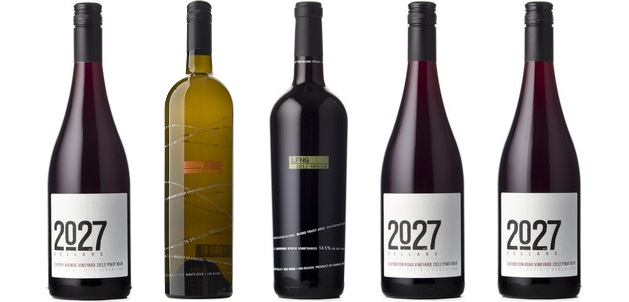
2027 Cellars Cherry Avenue Vineyard 2012, Laughing Stock Vineyards Amphora Vrm 2013, Laughing Stock Blind Trust Red 2012, 2027 Cellars Pinot Noir Queenston Road Vineyard 2011, 2027 Cellars Pinot Noir Queenston Road Vineyard 2012

2027 Cellars Cherry Avenue Vineyard 2012, Laughing Stock Vineyards Amphora Vrm 2013, Laughing Stock Blind Trust Red 2012, 2027 Cellars Pinot Noir Queenston Road Vineyard 2011, 2027 Cellars Pinot Noir Queenston Road Vineyard 2012

2027 Cellars Cherry Avenue Vineyard 2012, VQA Twenty Mile Bench, Ontario (Winery, $30.00, WineAlign)

There are a scant 105 cases made of this Cherry, a site close to a similar national Pinot Noir made by Paul Pender at Tawse. The vineyard encourages a scrap of the vinous kind between earth and its manifest cherry-scented fruit. Cherry seems to hold back its charms and ask that patience be the virtue. “Loose lips sink ships,” so “can we show a little discipline” and leave it alone? The ripeness is certainly here but what is most promising is the lack of heat, the absence of volatility and the wall of pure fruit. Though a bit subdued this is a much more approachable, not quite as serious and all around friendly expression of Twenty Mile Bench Pinot Noir. The price is more than reasonable for the quality in the glass. Wait three years and watch it age easily to 2020.  Tasted August 2014

Laughing Stock Vineyards Amphora Vrm 2013, Okanagan , BC VQA Okanagan Valley, British Columbia (agent, $30.00, WineAlign)

Here blends one-third each Viognier, Rousanne and Marsanne, a veritable Rhône orgy in wild fermentation, aged on the skins in terra-cotta and amphorae. While I would not go so far as to call it an “orange wine,” I will use the “N” word to describe its agrarian ways. As natural as anything you are likely to taste out of B.C., this is a most untamed experiment and should not be missed. It verges on oxidation but refuses to climb over the edge. It’s floral, spicy and crowded. The texture is chalky and so full of rusty, clay rubbed streaks. Everything about this is unkempt and exotic, including the never cease and desist fermenting lychee and longan feel. Hard not to be wowed by this blend’s presence.  Tasted August 2014

Laughing Stock Blind Trust Red 2012, BC VQA Okanagan Valley (B.C., $30.00, WineAlign)

“Past performance is not an indicator of future returns.” A statement on the bottle insists that full trust be afforded the winemaker, his whimsy and the blending choices made from vintage to vintage. Not unlike a similar program that Ann Sperling employs at Southbrook, albeit not nearly as brash or brazen in attitude. The ’12 BT has the swagger and the oomph. A powerhouse of a Cabernet-based blend, full of B.C.’s finest black fruits and teeth gnashing tannins. Is this wine too serious for its own good? I don’t think so but it is no shrinking violet (though it smells like some, in a very modern Maremma or even Nebbiolo way). Thick juice, ramped up and yet delicious if too much young syrup to work past one full glass. Time will sooth the savage beast but it will never be a pussycat.  Tasted August 2014

2027 Cellars Pinot Noir Queenston Road Vineyard 2011, St. Davids Bench, Niagara Peninsula (Winery, $35.00, WineAlign)

There is definite gregarious character to this Pinot Noir and it finds a positive, altruistic methodology in its gathering of some obvious Niagara traits. Increased ripening from its Queenston Road Vineyard on the warm St. David’s Bench is its most obvious pronouncement. A shyness from out of what is an enigmatic Pinot vintage walks with the later harvest, dusty and earthy fruit. Most of all it can’t help but be Niagara Peninsula Pinot Noir, albeit in high caste and hyper-sensitive attention to detail. There is cola, rust, cherry, paint and extreme acidity. It’s hot, actually. Would like to see where this goes with anti-volatile time. Methinks a settling will happen. Tasted August 2014

2027 Cellars Pinot Noir Queenston Road Vineyard 2012, St. Davids Bench, Niagara Peninsula (Winery, $35.00, WineAlign)

A highly perfumed Pinot Noir from winemaker Kevin Panagapka in 2012, complete with an exotic spice box of aromatics; potpourri, roses, cassia, clove and aamchur. The profile hydrates to a mulled simmer as the wine is once again warmed by the vineyard’s ability to ripen, exaggerated in ’12 but with more grace, bringing its personality in line with its modest (13 per cent) alcohol. The cherry flavour veers black with a paste of tar and charcoal, but again, the psyche is smooth and elongated. Long finish to this Queenston which should see it sing to 2018 and beyond. Tasted August 2014

Good to go!

https://twitter.com/mgodello


Lean on, Macduff

Leaning Post Wines
Leaning Post Wines, PHOTO: Michael Godel

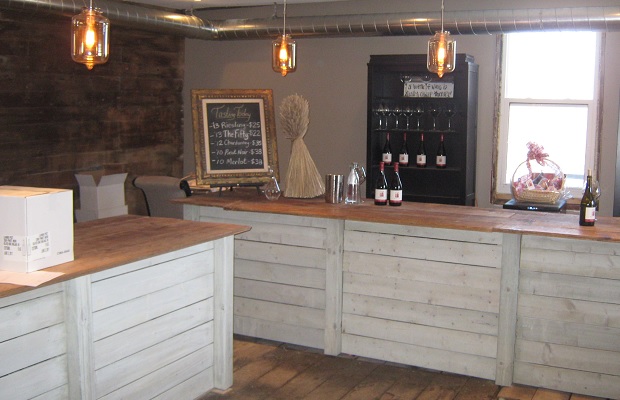
Leaning Post Wines was until very recently virtual and to the uninitiated, wholly abstract. The young Niagara Peninsula operation located at 1491 Highway 8, in Winona, Ontario is now the real deal, a bricks, barn board, mortar and hand fashioned nails winery. The risk taken and the effort put into establishing a winery in Winona is nothing short of heroic. LPW is the hands and knees, sweat and blood project of winemaker Ilya Senchuk and wife Nadia, Winnipeggers living the dream on the eastern edge of Niagara’s winegrowing Escarpment.

Related – Vineyards, winemakers and their sense of place: Bachelder and Leaning Post

Grapes need the support of posts and wires, thus the name. With a couple of vintages under his actual Winona belt, new acreage planted and only a couple of years away from producing estate fruit, now is the time to lean on Ilya Senchuk for righteous Niagara wine. Senchuk is no Macbeth. His tasting room is no Dunsinane Castle. The alternative choices he has made are emphatic but not combative ones. He would not say, “Lay on, Macduff, and damned be him who first cries ‘Hold! enough!’” He’s confident his locale and his methods will lead to success. He believes in the microclimate and soil composition of the Winona flats tucked in like a pocket between the Escarpment and the Lake. Ilya has taken up the good fight. He is an antagonist and a hero in the Niagara play.

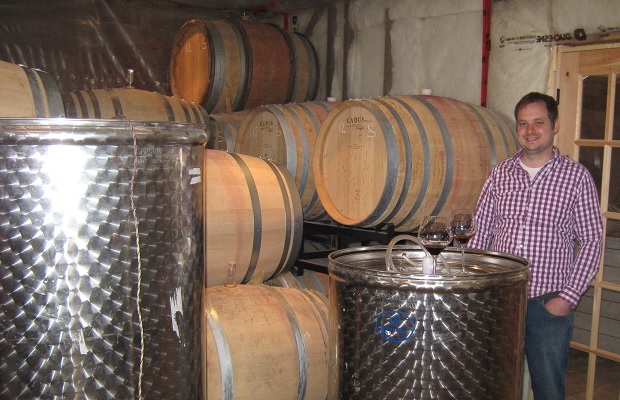
Winemaker Ilya Senchuk in the Leaning Post Barrel Room

Winemaker Ilya Senchuk in the Leaning Post Barrel Room

Senchuk is part of a breed of young and risk-taking Niagara winemakers ready and willing to push the envelope. Ilya’s wines may not fall into a stylistic category defined and categorized by standard Niagara varietal or appellative descriptions. Some of his wines challenge the notion of what is considered a true representation of the Niagara Peninsula. Though he may run into VQA panel consternation on some future occasions, he will be a part of the evolution and reworking of its mandate towards the open-minded acceptance of modern, varietal expression. He believes in ripe fruit. He’s a strong proponent of terroir, even if it means redefining or pioneering new plots.

Leaning Post Tasting Room

Leaning Post Tasting Room

The wines will offer a balance of Bench terroir, with its vigorous, heavy clay meets loam and the Winona landscape, where sandy soil is maculated by largish stones three to four feet down. This atop a bed of grey clay so the low vigor of the sandy soil will be offer up a flipside, a foil to the heavy clay of the Bench. The agglomeration should be more than interesting to follow.

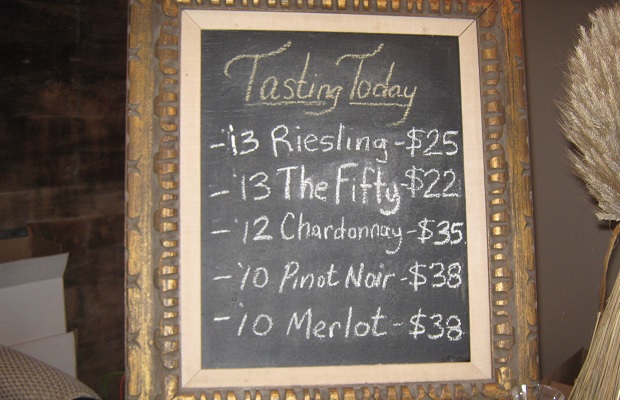
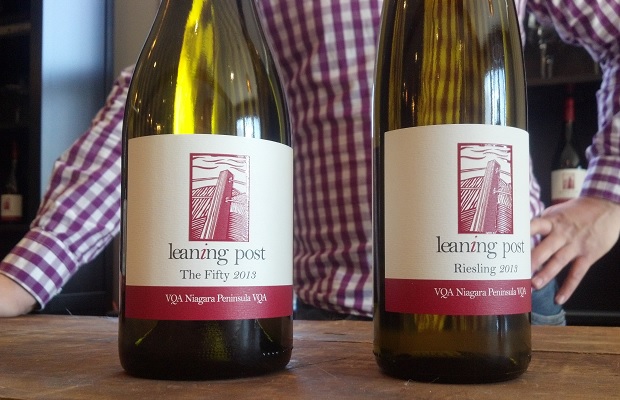
On the occasion of the “eve eve” for two new Leaning Post releases, the 2013 Chardonnay ‘The Fifty’ and the 2013 Riesling, here are some notes on the wines I tasted two weeks ago at the Winona winery. Senchuk led me through the new releases, along with the comings along of his wines in barrel and in tank.

Leaning Post 'The Fifty' Chardonnay 2013 and Riesling 2013

Leaning Post ‘The Fifty’ Chardonnay 2013 and Riesling 2013

Leaning Post Chardonnay 2012, VQA Niagara Peninsula, Ontario (Winery, $35.00, WineAlign)

The 2012 Chardonnay has now been in bottle four months, just enough settle time to grant access to its magnanimous 14.2 per cent alcohol frame. This from fruit that came in at 22.5 – 23.5 brix, or as winemaker Ilya Senchuk calls “the conversion rate of the century.” From a warm year that offered a sweet Smörgåsbord for the inoculated (as opposed to wild) yeast. Chewy, dense, catalytic toast with butter. Butterscotch flavour atop a waft of Crème Brûlée, the sugar in a feverish pitch to reach hardball. This is a really big wine, a confident expression, a national statement. Lean on this Chardonnay and let it lead because “everybody wants a sip of wine to drink, everybody wants a little more time to think.”  Tasted April 2014

Leaning Post Chardonnay ‘The Fifty’ 2013, VQA Niagara Peninsula, Ontario (Winery, $22.00, WineAlign)

This is a barrel-fermented but not barrel-aged Chardonnay that borrows its name from the old town of Winona. From approximately 9-10 barrels of Foxcroft fruit racked off and thrown into tank. The aught omission of full Malolactic fermentation means a clean and jerk feel, though the wine’s lees perform the middle palate and textural duty. Bottled just eight days before sampling and yet eminently drinkable. “A wine to make friends” and make friends with. A soft and creamy sensation brings to mind Bordeaux Blanc, or more specifically Semillon’s contribution, but also the notion of Wismer Sauvignon Blanc. Make no mistake, it’s absolutely Chardonnay, in toto unique and still influenced by both the barrel and the vineyard.  Tasted April 2014

Leaning Post Riesling 2013, VQA Niagara Peninsula, Ontario (Winery, $25.00, WineAlign)

Marks a return to the variety for Senchuk, with a dynamic and resounding charge. This barely resembles what may be pigeon-holed as Niagara Peninsula Riesling as it disses the lean, citrus pierce of the dry norm. Don’t panic, it’s not that different, but it does comment on “homes, places we’ve grown, all of us are done for.” From 18 year-old (south block) Foxcroft vines, 15.8 grams of residual sugar and 11.3 grams acidity. Bottled just eight days ago, this is a wine that was “left to develop on its own,” on it lees and with no stirring. “It’s not late harvest, it’s mature, with just enough sugar to make it palatable.” Makes a cold play for warmth, extract, viscosity and natural sweetness. Reaches for complexity beyond acidity, to places old and new, to Germany and to Niagara. Gotta citrus back, endgame palate. I can’t say with certainty that in time this vintage will push the sweetness to the background and develop leathery, gamey and earthy characters. I can say that given some more experience, Senchuk will develop the acumen to make it happen. “There’s nothing here to run from ’cause here, everybody here’s got somebody to lean on.”  200 cases made.  Tasted April 2014


Notes on wines from barrel and tank

Gamay 2013 – Guiltless and virtuous straight out of stainless, the meaty side of Gamay game boldly goes where few from the Bench have gone before. Like a rare venison steak sitting in a silky pool of lavender-scented demi-glace. Floral like Fleurie and despite zero new oak, vanilla joins the gravy. A Senchuk steal of quality Wismer (McLeary…sort of) fruit sets this Gamay up for easy sell success.

Pinot Noir Lowrey 2012 – Sweet fruit, remarkable purity, length and certainly warm.

Pinot Noir Mcnally 2012 – The vineyard made famous by Peninsula Ridge. In Ilya’s hands and from young vines higher in elevation there is spice-spiked orange, in clove, cardamom and also black cherry. A bigger style, akin to Central Otago (as per the Senchuk half-beat). Only two barrels (45 cases) will be made.

Syrah Keczan Vineyard 2012 – White pepper, smoked meat, game all in but still somehow delicate. Mediterranean sensation, in black olive and with some salinity. The least ripe and the most savoury of all the wines. Has got grit, tang, florality, hubris and verdigris.

Good to go!