Is writing making a mess of wine?

Rave Review

Rave Review

Wine today is suffocated by an industrial and disproportionate number of writers, critics, reviewers and judges. There are so many voices vying for airtime, filling up virtual white pages with their comments, feelings and dissertations. There are homers and there are curmudgeons. When in balance, both keep the ship afloat, but more often than not the questions begs. Which ones are causing the wreck? The answer is both. The problem is not the intent but rather the execution.

You may have noticed that when I write about wine, which is pretty much all of the time, I use a whole lot of words. A mess of vocabulary. An inordinate amount of adjectives. A boundless number of references to music, song and pop culture. It’s how I roll. And it has got me thinking, again.

Tis’ about that time of year. A period for reflection and review, not on what was so great in the previous vintage but about the things that will be critical going forward in this new one. Please excuse the interlude while I hang suspended within the interval of hermeneutic, contemplation and debate. Reading books on anthropology, art world shenanigans and a post-holocaust personal journey are seeping into my thoughts like Sémillon into Sauvignon Blanc and the varietal blend is coming up complicated.

Related – Wine: It’s a matter of tasting notes

Old guard tasting notes are losing their relevance and not because they are wrong or inaccurate. They just don’t speak to wine in the 21st century. They don’t tell a story and they surely don’t have any fun. So what? Imagine taking a video of yourself working on your computer, browsing the internet, reading and interacting on social media. What would you see? A world of links and associations. A world where thoughts and comments bounce around like children in a jumpy castle. This is the realm of the new tasting note. This is what wine can do for you in the 21st century. It can lead you forward and take you back. Most of all it can really tie your life together.

Related – Three-chord wines, hold the rants

Then the whining. The constant shrill voice of conceit mixed with complaint. The words minced to poison with a hunger to attack. Paragraphs penned to warn of apocalypse and to relegate decent writers to the scrap heap and back to the depressing nine to five. Writers reacting only to what others do without creating anything of their own. Comedians of the wine world lashing out, ranting, shouting “got ’em, need ’em, hate ’em.”

These attitudes and still the truth is not to be ignored. Reading a wine through a tasting note is like kissing a woman through a veil. “Translation is a kind of transubstantiation,” where one wine becomes another and another. You can choose your philosophy of critiquing just as you choose how to live. The freedom to personalize or substantiate thoughts on structure sacrifices the detail to meaning and meaning to preciseness. The winemaker is the writer or poet, moving from vines to vinous language. The critic moves in the opposite direction, or should, by attempting to read between the lines, to identify what can’t be seen, to interpret the mysterious implications of smell, taste and texture.

The lede firmly and flatly backs the headline, states, if asks, “is writing making a mess of wine?” Yes, that is a double entendre, a loaded gun of meaning and hypothesis, a million dollar question. While we want to know who’ll stop the rain, we also desperately need to understand the meaning of wine. So we put it down in words. We explain how wonderful life is with wine in the world. We also break it down, grape by grape, to a point where it often lies broken, disassembled, deconstructed, left for naked. What is it for? Are wine writers leaving behind a city of ruins?

Have they decided and determined that the winemaker’s works can be used to make a point? A point that belongs to the critic? Has the wine writer taken away the artist’s right to be, has the intent been obscured, or worse, the opposite and turned it into a curator’s right?

There are wines that claim you and wines that warn you away. Maybe the writers are just looking for wine that would teach them everything, like searching for one language, just as some would look for one woman’s face. The combined fugitive pieces of wine and its critics pose “questions without answers.” They must be asked very slowly.

To the beleaguered point five wines are here venerated and disfigured, assessed and cut to size. They are sniffed and sipped, thought of in song and regurgitated on the page. Do they lift or bury their maker’s plan? You be the judge.
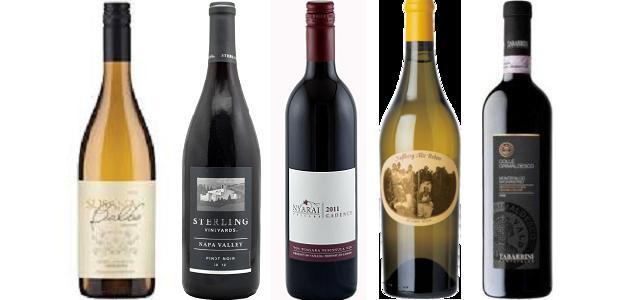
From left to right: Susana Balbo Signature Barrel Fermented Torrontés 2014, Sterling Vineyards Pinot Noir 2012, Nyarai Cellars Cadence 2011, Wieninger Nußberg Alte Reben Gemischter Satz 2012, Tabarrini Colle Grimaldesco Montefalco Sagrantino 2009

From left to right: Susana Balbo Signature Barrel Fermented Torrontés 2014, Sterling Vineyards Pinot Noir 2012, Nyarai Cellars Cadence 2011, Wieninger Nußberg Alte Reben Gemischter Satz 2012, Tabarrini Colle Grimaldesco Montefalco Sagrantino 2009

Susana Balbo Signature Barrel Fermented Torrontés 2014, Uco Valley, Mendoza, Argentina (384339, $17.95, WineAlign)

Here, from Dominio del Plata, an experiment with clear merit. The attributes are so sizeable, with weight depth and no compromise. The dramatic effect works to ignore the “clouds of mystery pourin’ confusion on the ground.” The floral aromatic integrity of Torrontés is upheld within the leaden shackles of the wood, as is the savour. This is a honeyed white, suckling and mellifluous, like fully extracted ripe Sémillon, from and with the benefit of a warm vintage. Puts the fun back into varietal revival by way of a giant leap up from the thin, medicinal water clogging the arteries of South American white wines so often put to market. Here is a Torrontés to stop the rain.  Tasted January 2015  @ddpwinery  @ProfileWineGrp

Sterling Vineyards Pinot Noir 2012, Napa Valley, California (424179, $19.95, WineAlign)

There are so many reasons not to find a thrill in this regional blend of Pinot Noir fruit but none of them stick. Sweetness, simple syrup silky fruit, brown sugar, every red and purple berry in all varieties of fields (plus ripe plums) and warm to temperate alcohol (14.5 per cent declared) all combine for full California sunshine effect. All this and I just can’t turn away. With all the excess fruit, texture and multiplicity in good times, how can I? I ask this Pinot, “how come you, how come you dance so good?” The answer lies in the feel and the ability to turn a Noir trick or two. Not to mention a rolling of barrels and Napa Valley stones through its very core. Well done.  Tasted January 2015  @sterlingwines  @Diageo_News

Nyarai Cellars Cadence 2011, VQ Niagara Peninsula, Ontario (Winery, $21.95, WineAlign)

Steve Byfield’s crimson blend of Cabernet Franc (42 per cent), Merlot (33), Cabernet Sauvignon (20) and Syrah (5) is at once so very Niagara while acting out anomalously in the 2011 vintage. Ripe, extracted fruit appears warm-vintage drawn, with its coated layers of primer, brushstroke and plummy stone fruit. The warmth is tempered by savour, oranges, figs and psalms. Its ability to find cadence and cascade keeps it “cool in the shade.” The varietal combining is delineated in balance, “sliding mystify, on the wine of the tide.” This effort, with its new name, could become one of the king’s amongst Ontario blends.  Tasted January 2015  @NyaraiCellars

Wieninger Nußberg Alte Reben Gemischter Satz 2012, Vienna, Austria (Agent, $40.00, WineAlign)

Here, the intensity of multi-varietal wine defined. From next to the Danube, out of the Ulm Vineyard, on a very steep southern slope on the eastern part of the Nussberg. The composition is nine-fold; Weissburgunder, Neuburger, Welschriesling, Grüner Veltliner, Sylvaner, Zierfandler, Rotgipfler, Traminer and Riesling. The aridity (1.3 g/L RS) is visionary. Beneath the vineyard there is coral from the tertiary period and in this wine you can hear the Geiger counter amplifying the faint eupnea of fossilized shells, thousands of years ago. Its resinous, sappy and majestic floating flowers are like “potions in a traveling show.” The layering is heavy (14.5 per cent ABV) and variegated, like sands and snails in a bottle or a vessel filled with an alcohol made from nature’s natural and fermenting bounty; carboniferous forest cosmology and the unpronounceable names of exotic fruit. Then there is the wooden smoulder, the white rock solder, the pine and the scene where “I sat on the roof and kicked off the moss.” The Gemischter Satz is granular but in liquid form, marbled and with a lovely wisp of oxidation. It exudes lemon custard and tonic in a wild yet beautiful breath of sauvage. It is your song. Tasted January 2015

Tabarrini Colle Grimaldesco Montefalco Sagrantino 2009, Docg Umbria, Italy (403139, $49.95, WineAlign)

Here thickness is applied in every way imaginable. Sagrantino from the maw of the beast; raw, big-boned, musky, chewing sinew and spitting out teeth. Though fierce and ancient, eliciting vegetal scents as if Pliny’s natural history were scoured for every trace of pungent plants grown in iron rich earth, it is also the most modern expression of Umbria, or all of Italy even. In so many ways it’s pretty Gestanko, composted and of an incomparable spume. But it also desensitizes and endears in a soulful, ethereal way “like scattered leaves,” blowing in a stiff breeze. It folds back the skin of time, in waves of heat and at times is so very sweet. Bring this to the apocalyptic marshmallow roast. Leaves the red wine city in ruins and in the dust. Sagrantino at 16.5 %. Burn, baby burn.  Tasted January 2015  @TrialtoON  @TABARRINI

Good to go!
A ramp to Austrian wine

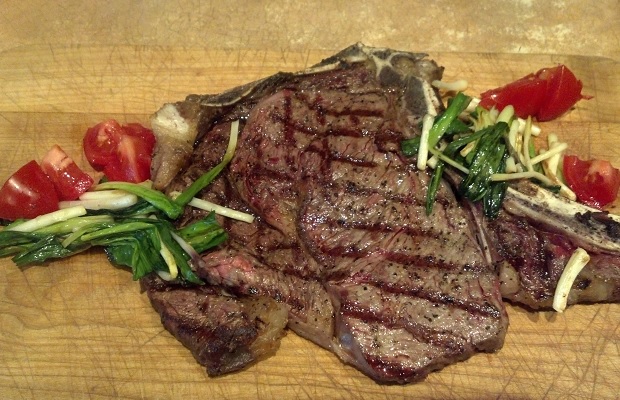
Rib Steak and Ramps PHOTO: Michael Godel

Rib Steak and Ramps
PHOTO: Michael Godel

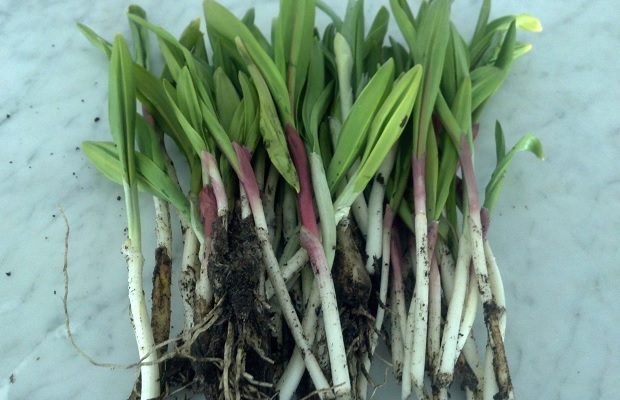
‘Tis the season to partake of two things denied opportunity the rest of the calendar year. Wild leeks and Austrian wine. The first is just a seasonal thing. The second, entirely my fault. The forest and my backyard provide the ramps. Two most excellent wine agents, Bernard Stramswasser of Le Sommelier and Mark Cuff of The Living Vine are the messianic purveyors of the wine.

Mark came to Barque Smokehouse last month to share his wares, talk organics, biodynamics and to teach a staff what honest wine is all about. More on that extensive tasting coming soon. Bernard brought top estates from Austria with Andreas Wickhoff, MW to Toronto’s Fine Wine Reserve on April 16th, 2014 for a special portfolio tasting. The Master of Wine is deeply passionate and terroir obsessed when it comes to the Austrian landscape. The presented set of whites and reds rose up to incline an exemplary ramp to the nature of that country’s fine wine tradition.

The whites, mainly centered around the signature variety Grüner Veltliner, showed the mineral and salinity so necessary to the grape’s success. Reds made from Zweigelt and Blaufränkisch are Austria’s trump card, ready and willing to take on the world’s reds imbued of elegance and finesse. Here are notes on the 12 Austrian wines tasted.

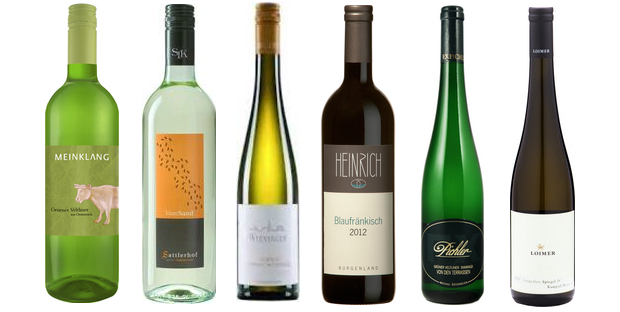
From left: Meinklang Grüner Veltliner 2013, Burgenland, Sattlerhof Sauvignon Blanc Vom Sand 2013, Südsteiermark, Wieninger Gemischter Satz 2013, Vienna, Weingut Heinrich Blaufränkisch 2012, Burgenland, F.X. Pichler Federspiel Loibner Klostersatz Grüner Veltliner 2012, Loimer Spiegel Grüner Veltliner 2012

From left: Meinklang Grüner Veltliner 2013, Burgenland, Sattlerhof Sauvignon Blanc Vom Sand 2013, Südsteiermark, Wieninger Gemischter Satz 2013, Vienna, Weingut Heinrich Blaufränkisch 2012, Burgenland, F.X. Pichler Federspiel Loibner Klostersatz Grüner Veltliner 2012, Loimer Spiegel Grüner Veltliner 2012

Meinklang Grüner Veltliner 2013, Burgenland, (Agent, $15.95, WineAlign)

Meinklang is a passionate, biodynamic (Demeter farming) producer in eastern Austria, south of Vienna. Their practices include abstaining from the pruning of vines, called “graupert” and maturation in concrete egg-shaped containers. The vineyard is their biotope and they make compost from animal dung, pomace, plant cuttings and ground quartz. Their entry-level Grüner is so mineral dominant and saline it’s as if the stones are bleeding. Extreme tang, with that salinity that never lets go and so much lime. Then makes quick work of itself.

Weingut Loimer, Grüner Vetliner ‘Lois’ 2013, Niederösterreich, Austria ($18.95, WineAlign)

From Niederösterreich in the Kamptal region, from soil compositions of bedrock and loess, this is straightforward Grüner Vetliner made in 200,000 bottle loads. That it succeeds in spite of the quantity and the work with contract growers is a testament to Fred Loimer’s sense of quality control. A bit shy aromatically but really tangy on the palate. Clear, crisp, clean and appreciably pure. Lithe in body and with some salinity on the back-end. Versatile mingler.

Sattlerhof Sauvignon Blanc Vom Sand 2013, Südsteiermark, Austria ($19.95, WineAlign)

This is bewusst territory for the Südsteiermark producer, from organically farmed vineyards. An elegant Southern Styrian Sauvignon Blanc made from grapes previously destined to get lost with other traditional varieties. Most striking is the salinity on the nose, often abstruse for Sauvignon Blanc but most obviously explained by the land; sand, gravel and shell limestone. Estimable restraint in the whispered aromas of herbs, green vegetable and tangy tree fruit. Dewy finish that lasts well into the morning.

Wieninger Gemischter Satz 2013, Vienna, Kamptal, Austria ($20.95, WineAlign)

Though Grüner Veltliner, Weissburgunder, Welschriesling and Chardonnay make up most of the formidable aspects of this blend from the Vienna Hills, there are bit but integral parts played by 11 others. From bio-certified Bisamberg and Nussberg vineyard sites, this is antithetically seamless, the varieties drawing all possible logical relations woven by their finite collection. Approachable, gritless, effortless, integrated and bound together by a solid core of juicy acidity. Even if only because it agglomerates 15 grapes, this beats white Châteauneuf-du-Pape (by at least six varieties) at its own game.

Nigl Gartling Grüner Veltliner 2012, Kremstal, Austria ($21.95, WineAlign)

The locus point of Nigl’s single vineyard Grüner Veltliner is sharp and stinging in 2012. Although that chemically reactive laser pinning takes control, it is extremely refreshing to not have to talk about flat and flabby fruit. Mind you the fruit here is under stress so balance needs to be questioned. Ultimately there is a palpable sense of grapefruit, flowers and a finish marked by the scraping of stones.

Loimer Langenlois Grüner Veltliner 2013, Kamptal Dac, Kamptal, Austria ($23.95, WineAlign)

Increased hang time has put this Kamptal in a deeper state of focus and understanding concerning the intricacies of Langenlois Grüner Veltliner. Continues the pure, clean and crisp axiom of the basic Lois but here the aromatics are spoken in acroamatic terms, obvious to disciples and yet available for all to comprehend. Though five per cent big wood barrel aging does not seem significant, that practice along with four months of aging on the fine lees has had a textural impact. The added weight is a questionable thing, though arguably just splitting hairs. Will help carry this vintage through five to seven years of graceful settling.

Dirty Ramps

Dirty Ramps

Weingut Heinrich Pinot Noir Dorflagen 2013 (Tank Sample), Burgenland, Austria ($24.95)

From two sites in Gols, one being the gravelly Riede Goldberg on the Parndorf Plateau, the other a sand and loam slope of the Salzburg. Short-ish ferment in large-ish barrels. Marked by bright cherry of the upstanding young fruit kind and only a brushstroke of paint. Very linear in that a Rube-Goldberg Pinot machining ensues, as the dominoes fall into each other. One action creates another, mostly due to a fine-grained chain of tannin. As delicate and approachable as Pinot Noir ever was from this far east.

Weingut Heinrich Blaufränkisch 2012, Burgenland, Austria ($24.95, WineAlign)

From a combination of vineyards on both the eastern and western sides of steppe Lake Neusiedl, situated between the easternmost parts of the Alps and the western part of the Small Hungarian Plain. A Blaufränkisch with so much geological and climatic history behind it, with Alpine, Pannonic, Asian, Mediterranean, and Nordic influences. The inclination is to express this unique, later ripening red with terms of bright endearment but it’s much more serious than that. Deeper, earthier and entrenched in the limestone and slate vineyards on Burgenland’s Leithaberg slopes of the Parndorf Plateau. The terroir amplifies and cloaks the fathomage of what is ostensibly tangy, effulgent fruit. More tannin than one would expect, this is a complex organism from a variegated landscape.

Heinrich Zweigelt 2012, Burgenland, Austria ($24.95, WineAlign)

Though 2011 was the best vintage of the last three and Blaufränkisch is the estate’s signature red, this 2012 is a real charmer. The vines for this Zweigelt lay lower, on the flats east of the alpine, steppe lake. They benefit from gravel Heideboden soils and from a nurturing microclimate. The aromatic profile is of spice and dried fruit; licorice, tar, carob and even more specifically, Bokser. All the right pods. Hydrates to sweet cherry fruit and begs for slow-cooked, smoky protein.

F.X. Pichler Federspiel Loibner Klostersatz Grüner Veltliner 2012, Wachau, Austria ($37.95, WineAlign)

From the Loiben basin where eroding, rocky Danube sands mix with gravel to produce lacey and textured Grüner Veltliner. This Federspiel (classified as wines between 11.5–12.5 per cent with a minimum must-weight of 17 degrees) shows more richness, viscosity and body than many with a pronounced spicy edge on top of the highly floral citrus zest. It gives the strange sensation of chewing spicy gum. A Grüner of good temperament beseeching the imbiber to have more than just one taste.

Loimer Langenlois Terrassen Grüner Veltliner 2012, Kamptal, Austria (149674, $39.95, WineAlign)

Loimer’s Terrassen is a Kamptal four vineyard Premier Cru (“Erste Lage”) schmear that is fermented in big wood barrels. The increased weight and body is helped along by extended time on the lees. The ligneous weave is underscored by wood spice and a waft of buff, calcareous Aeolian sediment. The character is as if this Langenlois is scenting a barrel ferment aura in a Chardonnay vein. Classic Grüner Veltliner that is all about texture. Will last for 10 or more years without shedding its baby fat.

Loimer Spiegel Grüner Veltliner 2012, Kamptal, Austria (agent, $64.95, WineAlign)

A site-specific Grüner Veltliner from the Speigel “Erste Lage” vineyard site, this is exemplary and definitive stuff. The 2012 vintage saw a two-day (May 16 and 17) frost that meant a 30 per cent loss in fruit. Not all vintages are profitable but ’12 is showing what top quality wines it was able to produce. A 12-month lay in Acacia barrels, natural vineyard yeasts and five months of aging on the fine lees have conspired for a climb to great Grüner heights. Blooming flowers, mellifluous honey and the freshest, most natural acidity abounds, elevating the aromatics and the buoyant flavours of just picked and bitten into apples. Tremendously wise and elegant wine.

Good to go!

Cleaned Ramps

Cleaned Ramps