Feb. 21 wine and song salute

Godello's Tamales

Godello’s Tamales

Fear not good reader, this is only a list of seven, a set lucky wines and songs to play as you sip. On February 21st VINTAGES will roll a mid-winter classic release and though my recommendations will think globally next week, here the choices come out of Ontario, from parts Niagara and Lake Erie North Shore.

My picks are varied and the wines of a coagulated character best described as sui generis. Grapes come from old vines, are dried in kilns, fashioned in the Venetian Ripasso method and left on the vine to be stricken by the noble rot known as botrytis.

The brilliant leap of modern winemaking science allows the ancient to be realized in the present. Wines that pour themselves. Just as the earth has invisibly predisposed the vines, from cataclysms and through its evolution, so history is the unhurried intent. Winemakers are the messenger.

All this from Wine Country Ontario. Get to know it.

Speaking of WCO, if you happen to be heading to Ottawa for Winterlude this coming weekend, the VQA Wine Truck will be there, in Confederation Park.

Meanwhile back in Toronto, my seven wine and song salute begins here.

From left to right: Château Des Charmes Old Vines Riesling 2012, Ridgepoint Merlot 2010, Bricklayer's Reward Block 7 Cabernet Sauvignon 2012, Burning Kiln Stick Shaker Savagnin 2013, Thirty Bench Small Lot Chardonnay 2012, Andrew Peller Signature Series Sauvignon Blanc 2012, Inniskillin Discovery Series Botrytis Affected Viognier 2013

From left to right: Château Des Charmes Old Vines Riesling 2012, Ridgepoint Merlot 2010, Bricklayer’s Reward Block 7 Cabernet Sauvignon 2012, Burning Kiln Stick Shaker Savagnin 2013, Thirty Bench Small Lot Chardonnay 2012, Andrew Peller Signature Series Sauvignon Blanc 2012, Inniskillin Discovery Series Botrytis Affected Viognier 2013

Château Des Charmes Old Vines Riesling 2012, VQA Niagara On The Lake, Ontario (277228, $16.95, WineAlign)

Showy and yet so balanced and pristine. The cleanest fruit representing classic Niagara Peninsula Riesling from the ’12 vintage yet with an open mind to be walking far from home. Though void of agitation, there is plenty of verve and life. It comes by way of a mineral meets saline intensity, of iron and life, in wine. Like “sour building high as heaven,” and the components all kiss each other clean. Full of fine pastry layering, glycerine textured but not oily fruit, full and yet somehow so lacy. A really special Riesling from down by the lake.  Tasted January 2015  @MBosc

Ridgepoint Merlot 2010, Ripasso Style, VQA Twenty Mile Bench, Ontario (270488, $19.95, WineAlign)

Ridgepoint’s Ripasso style Merlot takes the varietal, stands it on its head and shakes the rust from out of its bones. It wears “a coat of feelings and they are loud,” with drying and painted flavours over top porcine, cocoa, wild and tight aromas. Merlot in a purple bottle, an animal collective, peppery, interesting, very Niagara, very Ripasso. Good length.  Tasted January 2015  @Ridgepointwines

Bricklayer’s Reward Block 7 Cabernet Sauvignon 2012, VQA Lake Erie North Shore, Ontario (406124, $19.95, WineAlign)

In Colio’s Cabernet Sauvignon there is dark chocolate everywhere, at every turn, in every crevice. Black pepper, fleur de del, currants and tobacco accent that chocolate ubiquity, with warmth and oak spice. Cherries seeped in astringent tannin offer a silky sweet sadness and “under this skin, there lies a heart of stone.” Counting for value, the Bricklayer’s reward is mercy, by way of character, texture and that wholesome chocolate. It may not be everyone’s cup of cocoa but it will age as long as the crow flies, into the next decade.  Tasted January 2015  @ColioWinery

Burning Kiln Stick Shaker Savagnin 2013, VQA Ontario (367144, $24.95, WineAlign)

Burning Kiln’s latest rendition of Vin de Curé, the “Parish Priest’s,” and the Jura’s Vin de Paille (Straw Wine) is that much more exceptional than what came before. The peaceful, heavy yet easy feeling continues, in alcohol weight and aromatic lift, ’cause it’s “already standin’ on the ground.” Like an eagle soaring, the Savagnin is a wild creature and yet solid, of a gamey, textural density. Imagine dried grasses and fruits, baked bricks, steamed crabs and honey. A wine so unique, mouth filling, viscous and tangy, from a wine region (province) with a maximum 10 planted acres. A white elixir in search of roast pork, braised belly and cured bacon. Not to be missed.  Tasted January 2015  @BurningKilnWine

Thirty Bench Small Lot Chardonnay 2012, VQA Beamsville Bench, Ontario (203703, $30.00, WineAlign)

Thirty Bench’s vintage-affected Chardonnay is rounded, full of warm, ripe fruit and noticeable oak. No darts are tossed, neither by woodsmoke nor spice and it ventures quite outward bound. This adventurous, appealing wine takes some chances, looks beyond its borders, reaching for notes both gravelly and scented; like cumin, coriander and a beautifully bittersweet Tom Collins. The rocks are certainly in, as are the sticks and stones, though they do not break bones. The price is another matter, affordable to some, prohibitive to “the little boys who never comb their hair.” For a Chardonnay such as this, of layers and riches, “they’re lined up all around the block, on the nickel over there.” It time waits for this, value will increase and it will become a wine for tomorrow.  Tasted January 2015  @ThirtyBench

Andrew Peller Signature Series Sauvignon Blanc 2012, VQA Niagara On The Lake, Ontario (405043, $30.20, WineAlign)

Here Sauvignon Blanc is wild and free, bares then sells its soul and is runnin’ with the devil. The expression is a free dance of varietal character, flinty and extremely juicy in simultaneous movements. Though the SO2 level is high (it cleans the passages), the compote is peachy, at times canned and soaking in syrup, but the accents are laden with capsicum, lactic white plums and wet grasses. Slightly bruised and/or oxidative, the mineral tang is pushy and formative. This is serious Niagara-on-the-Lake SB, crazy and compressed stuff. It lives its “life like there’s no tomorrow, finding “the simple life ain’t so simple.” Like vintage Van Halen.  Tasted January 2015  @PellerVQA

Inniskillin Discovery Series Botrytis Affected Viognier 2013, VQA Niagara Peninsula (375ml), Ontario (405027, $39.95, WineAlign)

Inscribed into the Inniskillin ‘Discovery Series” for good reason, the BA Viognier is a product of luck and circumstance, a small parcel of grapes blessed with the not oft success of climate leading to ripening and noble rot. Grapes left to hang into late harvest (as opposed to freezing on the vine for the production of Icewine) is not a common Viognier practice. While the frank and masculine aromatic presence may be compromised here (the nose is quite reserved), the overall ubiquity is omnipresent and enveloping. Such a clean and young botrytis offers soft chords and a lifting voice. You can smell the fruits east and west; green and yellow plantain, peaches and plums. Flavours of lemon curd and pineapple arrive at a point where the tannin finds a way to “fuse it in the sun.” It can be imagined this Vendanges Tardives simulation will go long so “dream up, dream up, let me fill your cup, with the promise of a man.”  Tasted January 2015  @InniskillinWine

Good to go!

http://www.winealign.com/profile/2058-mjg

Giving Grand Cru Pinot Noir d’Alsace its due

The Vineyards of Domaine Albert Mann<br /> photo (c) https://www.facebook.com/albertmannwines "Pinot Noir, like Riesling, is a mineralogist."

The Vineyards of Domaine Albert Mann
photo (c) https://www.facebook.com/albertmannwines
“Pinot Noir, like Riesling, is a mineralogist.”

You won’t find a rare or carefully considered older vintage of Pinot Noir tasted and discussed at a Millésimes Alsace Master Sommelier class. Nor will it be featured in a magazine article’s varietal spotlight on the great wines of the region. The world may ignore the potentiality and the well-established roots of the expatriate Burgundian in Alsace, but there are winemakers who know. The future of the grape with a long history is already entrenched in the Alsace progression.

Pinot Noir is the only red grape variety authorized in Alsace. The official marketing and regulatory board for the region, Le Conseil Interprofessionnel des Vins d’Alsace (CIVA) recognizes the trenchant antiquity. “What is today considered a novelty in the region is in reality a legacy of the past that is becoming increasingly successful.” According to the Wine Society, the oldest recorded grape variety in Alsace is in fact Pinot Noir, predating Riesling by at least seven centuries.” That exaggeration aside, records dating back to the 16th century indicate that the grape variety was stored in Abbey caves and poached in tithes by the Church.

Out in the diaspora the affirmation of what best indicates Burgundy is the requiem for respect. Oregon, Central Otago and certain pockets of (cooler) California are well into their seasons of repute. Yet sometime around 10-15 years ago the $60 Sonoma Pinot Noir became serious fashion. Thanks to darlings like Kosta Browne, the sky became the limit, in California and elsewhere. A host of producers joined the ranks of the rich and famous. Looking back now, the black cherry bomb initiative temporarily cost the New World its mojo.

Those growing pains have worked to great advantage. Today you have to be better and fashion elegant Pinot Noir to attract an audience and become a hero. This goes for Sonoma County, Napa Valley, Santa Maria Valley, Santa Barbara, the Willamette Valley, Marlborough, Martinborough, Nelson and Otago. This applies to the Okanagan Valley and South Africa too. Niagara and Prince Edward County have followed suit. Vignerons like Norman Hardie, Thomas Bachelder, Moray Tawse and Harald Thiel understand what needs. Their wines have ushered in a $40-plus Pinot Noir era in Ontario. But Alsace? Please. Today a reckoning about Pinot Noir incites nothing but a series of car wrecks along the wine route from Thann to Marlenheim.

Burgundy and Bordeaux do not accept varietal expatriate inclusions. So, why should Alsace? For one, global warming. Say what you will about that load of scientific horse crap but the biodynamic culture that permeates much of Alsace is in tune and well aware of temperature change and ripening schedules. More and more growers are picking their whites earlier, to preserve freshness and acidity, not to mention the conscious decision to cheat botrytis and elevated residual sugar. Embracing Pinot Noir is on many of their minds. Some are ahead of the curve and have already made some exceptional wines. Many examples from the first eight years of the 21st century are showing beautifully in 2014. Phillipe Blanck poured a very much alive 1991. How many Alsace wineries can lay claim to one of those in their cellars?

It’s common knowledge to an Alsatian cognoscenti that white wines drive the mecca. Riesling, Pinot Gris and Gewürztraminer and their associations with the Grand Cru and lieu-dits are the it vines. Vendanges Tardives (VT or, Late Harvest) and Sélection de Grains Nobles (SGN, or selection of noble berries) sit on thrones of glory. Even traditional varieties like Auxerrois and Muscat continue to outshine and suppress the possibilities for Pinot Noir.

Pinot Noir has yet to receive any proper respect both in and outside of Alsace. Can there be justice served in a wine region where a noble variety must share nomenclature with a bottom feeder like Pinot d’Alsace, which is not really a Pinot at all. The scavenging white blend draws attention while making unsubstantiated use of the Pinot prefix. Pd’A need only contain a small percentage of any type of Pinot (Blanc, Auxerrois, Meunier or Noir) in conjunction with other white Alsatian varieties. According to wikipedia:”Lack of acidity and complexity often prevent Alsatian Pinot Noir from achieving anything more than pleasant, easy drinking, quality levels.” Them’s fighting words.

That faux Pinot sideshow is really a whole lot of nothing. The real terror is that if you grow exceptional quality Pinot Noir on Grand Cru terroir in Alsace you can’t label it as such. If you produce Riesling in the Hengst, you are good to go. If you grow Pinot Noir in any of the storied “male horse,” vineyards, the resulting wine, with respect to the variety, is only considered lieu-dit and must be labeled as such. This is the Alsace Grand Cru taboo.

As part of his recent three-part report on Alsace, British journalist Tom Cannavan covers some of the wines of the Grand Cru Hengst. Cannavan so rightly notes that “the problem is, not only is Pinot Noir ineligible for Grand Cru status, but the name Hengst cannot even appear on the label.” He did sample some basic Pinot examples and wondered aloud about the injustice being a non-sequitur. He missed the boat. Case in point Domaine Albert Mann. Back that up with Pinot Noir made elsewhere by Pierre Blanck, Jean-Pierre Frick and Mélanie Pfister, among others.

Maurice and Jacky Barthelmé of Domaine Albert Mann shirk the system with the use of a simple letter, an “H” or a “G” in place of Hengst and Pfersigberg. Philippe Blanck of Paul Blanck & Fils does the same thing with an “F” for Furstentum. It’s a wink-wink, say-no-more kind of approach. A grand parade of life-giving packaging. The brothers Barthelmé and Mr. Blanck know what excellence lies in their Pinot Noir holdings and understand the bright red future for Alsace. “Pinot Noir, like Riesling, is a minerologist,” insists Maurice. Don’t think of the brothers as pioneers so much as pragmatists. CIVA has surely taken note and despite the resistance to add Burgundy to the charges, change is inevitable. The Pinot Noir eyes never lie.

Here are two dozen Pinot Noirs tasted in Alsace during a week in June.

Domaine Albert Mann

@Smallwinemakers

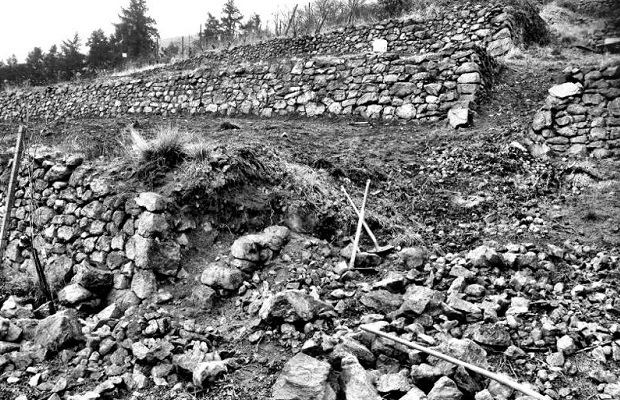
Diversity of the parcels of land, disseminated and however subtly intertwined, which are the particularity of the domaine

François Bruetschy

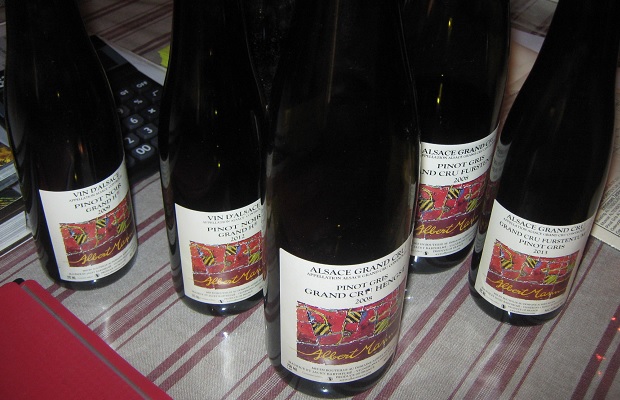
Pinot Noir (and Pinot Gris) of Domaine Albert Mann

Pinot Noir (and Pinot Gris) of Domaine Albert Mann

Pinot Noir Clos De La Faille 2012

Though geologically speaking this Pinot Noir out of 1997 plantings in calcaire and redstone soils is a fault on the hill of nature, as a wine it shows no discernible impropriety. This represents a tectonic shift for Alsatian Pinot Noir, a lithe and floral wine of articulation and an eye opener to prepare for the intensity of Mann’s Grand letters. It’s a lightly woven, silky soft Pinot, with a furrowed brow and the necessary Mann clarity of responsibility. Density is through a looking-glass, a gateway to Alsace and what future varietal decorum may be achieved.

Pinot Noir Les Saintes Claires 2012

From calcareous soil and still the Albert Mann zealous clarity, with similar intensity and protracted density. There is a lacuna permeated by a hint at black cherry but the ken is never fully realized. At 13 per cent abv and with a set of fine, sweet tannins (even more so than La Faille), these 20 year-old vines have procured a piled Pinot Noir.

Pinot Noir Les Saintes Claires 2010

A top-notch (though cool and late harvested from a small crop) vintage for Mann (and Alsace) Pinot Noir, here the calcareous parcel at Sigolsheim above an old monastery called “Les Clarisses.” Some early rot and bottle reduction have both been stabilized as the wine peels off the rust and goes mellow, in full humanizing and sensual mystery. “How great the wine is when you can see the vintage, ” chimes Maurice. Controlling the effects of both nature and fermentation seems no biggie to the brothers Barthelmé. The act is of such minor tragedy, the climax characterful and sacred. A tingle of eastern spice twitches over bright fruit and a certain florality, materializing what can only be described as obvious commitment. It’s all about the journey.

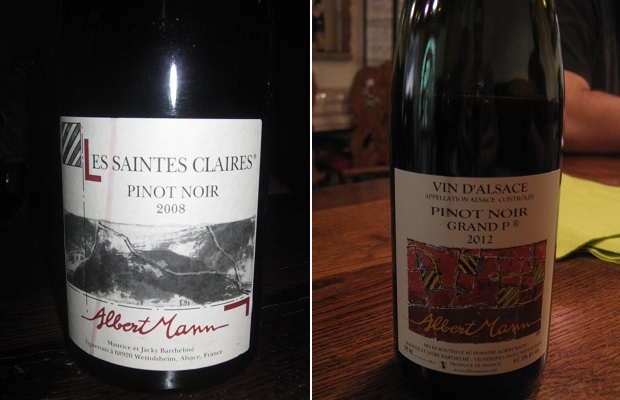
Domaine Albert Mann Pinot Noir Les Saintes Claires 2008 and Grand P 2012

Domaine Albert Mann Pinot Noir Les Saintes Claires 2008 and Grand P 2012

Pinot Noir Grand “P” 2012 (Tasted from a 375 mL bottle)

From a blend of plantings (1975 and 2004) in Wintzenheim limestone-sandstone soils on the Grand Cru Pfersigberg. Whole bunch pressed grapes (60 per cent) saw a range of oak; 25 per cent new, 50 one-year old and 25 older barrels. A light filtration was used to combat some reduction. This P is a touch ferric, not unlike Volnay but also because of the vintage. The vines in ’12 were subject to cool, then humid, then dry weather. The flux makes for a full floral display, from iron through to roses, but the wave stays linear and rigid. In its youth, the P is calm and on a level plain along its ECG-considered PQRST journey. It will soon spike past Q, up to R and then settle in for the long haul. Will hit its glide at S and T at the end of the decade.

Pinot Noir Grand “P” 2011

From what Maurice Barthelmé describes as a “paradoxical vintage” that started out dry and turned rabidly humid. This has huge personality, less refinement but more delicacy than the Hengst. Once again it’s a touch reductive and that tenuity is in the form of cured meat. The style here emulates Burgundy more than any of the P’s, much more than the H’s and worlds beyond the Failles and the Claires. The iron gait exceeds ’12 with a railroading layer of grand P funk. A chain of earth-resin-tannin has “got the knack,” jumps up, jumps back, does the locomotion with “a little bit of rhythm and a lot of soul.” The 2011 Pfersigberg is unlike any other Alsatian Pinot. It requires plenty of air and even more time to unwind. Look for it to become a classic 20 years after release.

Pinot Noir Grand “P” 2009 (Tasted from a 375 mL bottle)

In the ’09 you can smell how five years of bottle time (slightly accelerated by the small format) brings Pfersigberg Pinot fruit into a Grand Cru station. This is in the zone and just about as perfect an example can be to represent the young cottage industry that is Alsace Pinot Noir. Five more years would send it into philosophical complexity. The classic “P” reduction is there, with amazing structure from the palate. Wonderful funk, the proverbial Brett-esque creature of Pfersigberg, along with cherry and resin of pine. Wonderful animal.

Pinot Noir Grand “H” 2012 (Tasted from a 375 mL bottle)

From a south-facing plot in Wintzenheim on the Grand Cru Hengst. The soils are deeper, the clive made of consolidated clay or marly limestone and sandstone. All aspects of the Pinot Noir here are enriched by the density of nutrition; extract, spice and tannin. Any thoughts of overripe character in any way are thwarted a circular saw of energy that cuts through the cake, breaking it down with extreme prejudice. Tasted at 9:00 am this is a wake up call of the highest order. Notes Maurice Barthelmé, “this must be planted in calcaire soil.” Strike another notch on the Grand Cru petition.

Pinot Noir Grand “H” 2009, 

Typically Hengst, with a whiff of reduction, though never as pronounced as the Pfersigberg. In the ’09, which was a star-caste vintage, the “H” stands for high. As in hue, extract and phenolics. It could be imagined that Syrah were blended in (Maurice said it) and like its namesake (German translation), “Hengst is a stallion.” The reduction is (sic), as Eleven Madison Park’s Jonathan Ross noted, “favourable flavour. A creaminess comes from grape tannin, not oak.” This is meaty Pinot Noir, seeking out rare flesh, in beef or game. It will travel well and live for a decade or more.

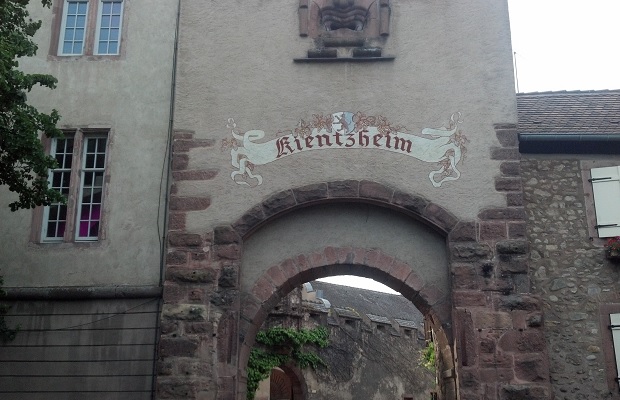
Kientzheim, Alsace

Kientzheim, Alsace

Pinot Noir 2008

This vintage preceded forward seasons that brought out warm, fully ripe and optimal phenol-realized fruit. From Maurice Barthelmé’s vineyard, between Mambourg and Furstentum, in Kientzheim. Clear, clean and precise. This was perhaps a bit ambitious in its oak soak from a year that Maurice considers “difficult and early,” but the parcel never lies and what a parcel it is. “Pinot Noir, like Riesling, is a mineralogist, ” says Barthelmé. This is Mann’s purest Pinot, if a touch under ripe, but that is the key. Whole bunch pressing and the oak envelopment has created a round flavour lock and Maurice feels he needs 10 more years to master this technique. Though this may have been the early stages in the development of the Mann Pinot candidacy, by 2018 it will reign in Alsace.

Paul Blanck & Fils

@rogcowines

“We’re looking for authenticity. Not wines of impression, but wines of expression.

Philippe Blanck

Phillipe Blanck, Domaine Paul Blanck & Fils

Philippe Blanck, Domaine Paul Blanck & Fils

Pinot Noir 2012

From granite and gravel soils, the former bringing a bitter component, the latter what Philippe Blanck calls “a facile aspect.” Dark fruits, like black cherry and plum are flecked with pepper and cloaked in a silky robe. “Almost a sort of texture wine,” considers Blanck. The bitterness is beautiful and offers a window of proof towards the ageing capabilities of Pinot Noir in Alsace. “Everybody has an idea of what is a Pinot Noir in the world,” says Philippe. “This is a classic one. And they age crazy.” Classic vintage too. From now and for 10 years.

Pinot Noir 1991

From 20-year old vines (at the time) and a low-yielding (20 hl/ha), cold vintage. The wine was not filtered and 13 years on remains very much alive. Retains the unmistakable smell of Fragaria Vesca, fraise de bois, the herbaceous and wild alpine strawberry. Mix in a metallic, iron and wine tinge and still viable tannins and you’ve got yourself a wonderfully aged Alsace Pinot. An example to encourage a future for the grape variety in Alsace. “So may the sunrise bring hope where it once was forgotten.” Blanck said “nothing to prove, just to experiment. Some wet, moldy berry in here.” Roasted game lends a note as well to this upward, over the “mountain wine.”

Pinot Noir “F” 2009 

The F is for Furstentum, the Grand Cru on the northern slopes of the Weisbach valley split between the communes of Kientzheim and Sigolsheim. The soil is marl. Philippe Blanck insists “we’re looking for authenticity. Not a wine of impression, but a wine of expression.” Here is cherry set on high, bright and exploding, with savoury wild herbs and direct linear of acidity. Authentic yes, silky no. Can age for 10 more years and somewhere along that line the direction will find a more approachable intersect.

Domaine Pfister

Pinot Noir 2009

From a vintage Le Conseil Interprofessionnel des Vins d’Alsace (CIVA) called “precocious” and of irresistible wines. Mélanie Pfister’s ’09 comes from the calcareous Clos Bamhauer, went through two weeks maceration in Inox and then spent a slow 18 months in Burgundy barriques. Incredibly fragrant, with a rich density and a charge of wood spice. Its black cherry waft brings Burgenland to mind, that and the elastic, silty grit by way of some vines grown on gravelly soil. What sets it apart from everywhere else not called Burgundy is the lack of any sort of varnished note. Purity prevails.

Domaine Zind-Humbrecht

@TrialtoON

Pinot Noir 2012

To Olivier Humbrecht, the location and managing the ripeness of Pinot Noir is key. “You can’t hide green character in Pinot Noir,” he asserts. Fruit comes from the Heimbourg vineyard, from west-facing slopes out of marl and limestone. This is a cooler, later ripening position with a draught between the hills. At 13 per cent alcohol it is pleasantly ripe but not as rich and intense as 2009. Still ripe enough for positive and effective phenols. Tannins are present and accounted for, wrapping a veil over the chalky, chewy, slighted coated fruit. The mineral is felt in texture coming from what is a simple, proper and elegant palate.

Domaine Pierre Frick

“Wine is not intellect, it’s emotion.”

Jean-Pierre Frick

@LeCavisteTO

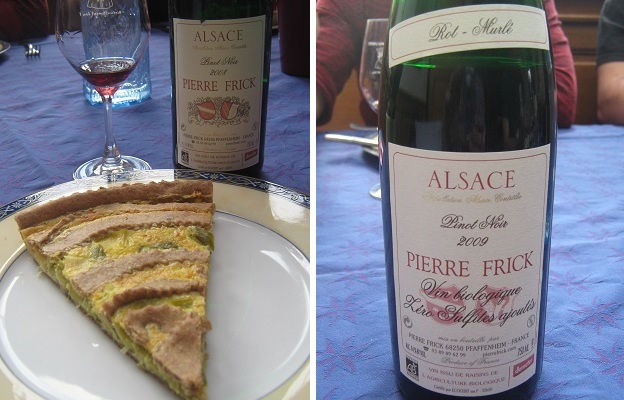
Pierre Frick Pinot Noir 2008 and 2009

Pierre Frick Pinot Noir 2008 and 2009

Pinot Noir Rot-Murlé 2009

This block is literally le muret rouge or, the red stone wall. From brown, ferric (ferrugineux), hard calcaire soils. In 2008 you could not write organic on the label (this changed with the 2012 vintage) so Frick sub-labeled the bottle Vin Biologique Zéro Sulfites Gioutés. Natural wine. Rustic, full of horns on acidity. The combination of clay, marl and the fact that the plot benefits from extended late-afternoon sun all lead to vigor, rigor and rigidity. This is Jean-Pierre Frick’s thickest and most Romantic brushstrokes. Richly textured like a Gaugin portrait of the The Schuffenecker Family. Post-impressionist Pinot Noir.

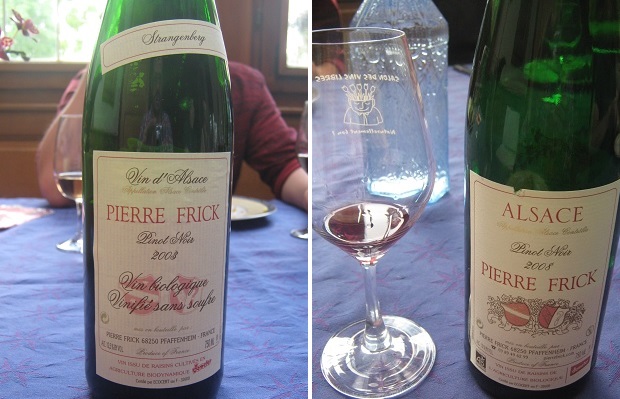
Pinot Noir 2008

From the Strangenberg lieu-dit, a hill parcel known as la colline aux pendus. Soil composition is hard, durable brown calcaire. After a quick whiff of farm droppings blow off, Jean-Pierre Frick’s Pinot Noir reveals a bright, light and feminine side. It is now blessed by gentle, resolved tannins. The generous spirit, kind heart and gentle soul of this Pinot offer nothing but calm pleasure. Its coat has not even a trace of primer. It is simply thoughtful and considerate. The iron minerality persists but with static and clinging trace fibers. A wine perfectly suited for a middle course at today’s table.

Pierre Frick Pinot Noir Strangenberg 2003 and Pinot Noir 2008

Pierre Frick Pinot Noir Strangenberg 2003 and Pinot Noir 2008

Pinot Noir Strangenberg 2003

Sub-label notes this ’03 as Vin Biologique Vinifié Sand Souffre. Years before it was fashionable or righteous to farm and vinify organically and without sulphites, Jean-Pierre Frick was looking to the stars. The Strangenberg is a very dry part of Alsace, Mediterranean in climate. This is earthy Pinot, like reds from Corbières or Sardinia, with its mutton-funky and roasted game aromas. Here is proof that non-sulphured wine can age, with the simple equation of fruit, acidity and tannin. It’s actually hard to believe so much tannin can emit from the collines of Haut-Rhin in Pinot Noir. Crazy actually. There is an underdeveloped green note along with some roasted and cooked flavours so peak has been reached. When left for 30 minutes in the glass the tannins begin to dry out. Like southern French and Italian reds, another 10 years would bring caramel, soy, figs and raisins. Either way. now or then, this Frick will also be interesting.

Domaine Schoenheitz

Pinot Noir Linzenberger 2013 (Barrel Sample)

Spent six months in one-year old (Allier forest) barrels. Bright, tight, full-on red cherries. A quick, fun, pure expression, clean and full of cherry. A two to three-year Pinot Noir.

Pinot Noir Sainte Gregoire 2012

From the Val Saint Grégoire lieu-dit, the historic name of the Valley of Munster (before the Protestant reform). The soil is decomposed granite rich in micas. Leans warm and extracted but with a high-toned, spiced coat tension. A generalization would place it more New World than Old, verging to black cherry, though again, the spirit is high. In contrast the yields were low (17 hl/ha) from the Cru, let alone the top-level of output from such a low yielding vintage. “When nature isn’t generous the yields go down fast,” confirms Dominique Schoenheitz. Good balance and well-judged.

Gustave Lorentz

@AmethystWineInc

Pinot Noir La Limité 2009

From the lieu-dit Froehn on the edge (the limit) of the Grand Cru Altenberg de Bergheim. Such a spicy florality and the underlay of calcaire from what is ostensibly hard limestone and Jurassic Lias marls meet one another in a geological confluence of fossils, red ferruginous soil and hard rock. A slow 12-month accumulation to fermentation has brought this Pinot Noir to land’s end. It bares un uncanny resemblance to the Prince Edward County Pinot Noir ’12 by Norman Hardie. Over exposure to sun, wind and everything else nature delivers gives this wine its vigor, its core strength and its vibrant personality.

Edmond Rentz

Pinot Noir Piece de Chene 2011

The Rentz take on Pinot Noir grows up in oak for 14-18 months, from a mix of new and used (no older than four years) barrels. The style is decidedly rich Pinot of a sweet tooth with a soft spot for quality chocolate. Spice supplements of orange and cinnamon, along with ethical acidity bring forth a wine bien charpentée, agreeable and ready for PDQ consumption.

Domaine Paul Zinck

@liffordretail

Pinot Noir Terroir 2012

Flat out fresh, mineral Pinot Noir. Only 100 cases were produced from a chalk and clay single parcel, on the Grand Cru Eichberg. GC yes to Phillipe Zinck, “but not official.,” Very little barrel influence here, in fact two-thirds of the Terroir was fermented in stainless steel, “to keep the mineral.” The cherry scents has tinges of plum, licorice and black olive, but just around the periphery. It’s otherwise bright and fresh with a quiescent streak throughout. Excellent.

Domaine Boyt-Geyl

Pinot Noir Galets Oligocène 2010

From the village of Beblenheim, this Pinot Noir gets the moniker from deposits of Oligocène of the tertiary period consisting of conglomerated rock on a base of marl. Jean-Christophe Bott considers the low-lying grapes of this terroir on lower slopes to be Grand Cru (in quality). Picked early to avoid resinning, cooked or jammy flavours, the wine was matured in (one year-old) barriques for 14 to 18 months. Quite earthy and spiced explicitly by cinnamon, though delicious, this is Pinot that flirts with what Bott wants to avoid. Served with a good chill it harmonizes its intent.

Good to go!


Winter white out wine, beer and food conditions

White wine in the snow

The weather will step aside in April. Until then, satiate yourself.
Photo: Sergio Di Giovanni/Fotolia.com

as seen on canada.com

The winter that never ends. White out conditions, snow squalls, wind advisory and chill warnings. Everything just feels heavy. The OPP’s request? Just stay home, Ontario. Prepare for the worst, hunker down and warm the belly with full-bodied wines, strong mocker, beer and hearty winter meals. The weather will step aside in April. Until then, satiate yourself.

Here are six strength fortifying libations to ride the final wave of winter’s brutal conditions.

Clockwise from left: Innis & Gunn Irish Whiskey Finish, 13th Street White Palette 2011, Ara Single Estate Pinot Noir 2011, Planeta Chardonnay 2010, Bachelder La Petite Charmotte Nuits Saint Georges 2011, and Antinori Pian Delle Vigne Brunello Di Montalcino 2008

Clockwise from left: Innis & Gunn Irish Whiskey Finish, 13th Street White Palette 2011, Ara Single Estate Pinot Noir 2011, Planeta Chardonnay 2010, Bachelder La Petite Charmotte Nuits Saint Georges 2011, and Antinori Pian Delle Vigne Brunello Di Montalcino 2008

Innis & Gunn Irish Whiskey Finish, Scotland, United Kingdom (279349, $3.25)

Stout matured over American Oak Heartwood and infused with Irish Whiskey. A Cimmerian entry in hue and hunger peels back to a curious lightness of being. The wood tends to an Arabian mocha aroma, the whiskey to molasses and gingerbread baking spice. The 7.4 per cent alcohol is integrated though an incendiary smoky magic weighs in to toast biscuits and braise a beefy pot au feu. “The Smoky Life is practiced everywhere,” in the I & G. A beer of good charm, smooth, silky, singing in melodic grace and with confidence.  90  Tasted March 2014  @InnisandGun

The grapes: Riesling, Sauvignon Blanc, Gewürztraminer and Chardonnay Musqué

The history: Niagara winery founded in 1998. Chablis native Jean-Pierre Colas joined 13th Street as winemaker in 2009. Co-owners of the winery, the Whitty family has been farming fruit in Niagara for well over 100 years

The lowdown: Much of the fruit comes from the estate’s Creek Shores appellation vineyards, sedimentary, well-drained lighter soils on a landscape highly dissected by its many streams.

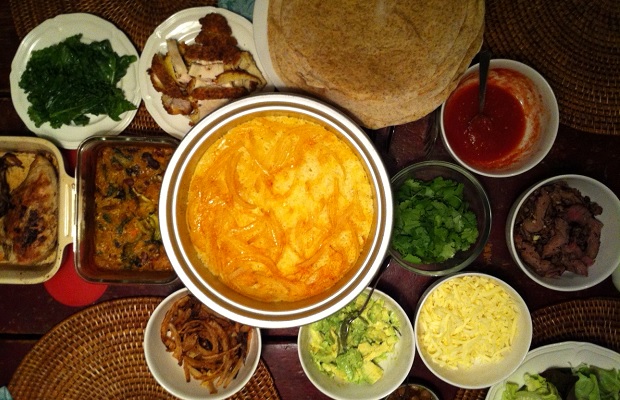
The food match: Fish Tacos

13th Street White Palette 2011, VQA Niagara Peninsula (207340, $15.95, WineAlign) From the VINTAGES March 15, 2014 release

JP’s who’s who bottle of white grapes, a mad scientist’s blend, the flask filled with Riesling, Sauvignon Blanc, Gewurztraminer and Chardonnay Musque. A re-release and much improved with a year’s extra weight, its “got your body right now.” Fortified by a carapace of grape spirits and purposeful in a white meritage sense of community, plus citrus, pith and a far-reaching, right correct absinthian length. You better you bet.  88  Tasted October 2013  @13thStreetWines

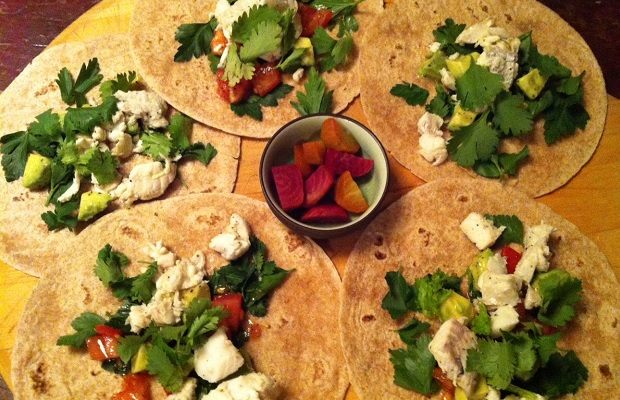
Fish Tacos Photo: Michael Godel

Fish Tacos
Photo: Michael Godel

The grape: Pinot Noir

The history: From Marlborough on the western side of the Waihopai Valley. The name is both the indigenous Maori word for “pathway” and Latin for “altar”

The lowdown: “With rugged mountains on either side and two icy rivers cutting through, it’s a pretty extreme place. The very definition of raw, cool climate conditions.”

The food match: Potato Frittata with Feta and Green Onions

Ara Single Estate Pinot Noir 2011, Marlborough, New Zealand (361279, $23.95, WineAlign) From the VINTAGES March 15, 2014 release

Immediate impressions are of a user-friendly Pinot Noir in conceit of black cherry, chocolate and blueberry spice. These are surface notes quickly displaced by an adventurous senses of living on the edge. The wine dips into a brine and lithic earth saturated by glacial melt. This is a different sort of Marlborough Pinot that speaks a modern english, if too young to be understood. “I’ve seen some changes but it’s getting better all the time.” Will try the Ara again in a year or two and likely say I melt with you.  89  Tasted February 2014  @AraWine_UK

The grape: Chardonnay

The history: Planeta first made this wine 20 years ago in 1994. It has become “the image illustrating the changes taking place in Sicilian wines.”

The lowdown: From Ulmo (calcareous with sections of deep vegetable matter) and Maroccoli (medium clay soil rich in limestone) vineyards in the area of Sambuca di Sicilia. Powerful Chardonnay.

The food match: Taco Night

Planeta Chardonnay 2010, Sicily, Italy (109652, $38.95, SAQ 00855114, $39.15, WineAlign) From the VINTAGES March 29, 2014 release

Wantonly lavish, heavy and tropically delicious. If ever there were a red wine substitute this is the one for the wishful thinker. Tasting this Sicilian is like liquid breathing sweet and salty, drawn butter. It’s a glass of dessert Chardonnay, dichotomous and oxymoronic in congealed warmth like cold-stabilized, oxygen-rich, perfluorocarbon. The tropical warmth is a combination of honey and lemon-glade, like Savennières with an unexpected aged Jura, oxidized, herbal angle. There can be no arguing the complexity of this Sicilian dream. Extreme humidity, with a bitter middle streak and ground nut flavours.  90  Tasted March 2014  @Noble_Estates  @PlanetaWinery 

Taco Night Photo: Michael Godel

Taco Night
Photo: Michael Godel

The grape: Pinot Noir

The history: Thomas Bachelder, flying winemaker, architect of the Bachelder Project, of trois terroirs, in Niagara, Oregon and Burgundy

The lowdown: “Burgundy is my favourite place to make wine,” admits Thomas Bachelder. “The large négociant control all (44) 1er cru vineyards so there are not a lot of small growers working with Beaune fruit.” Enter terroirman.

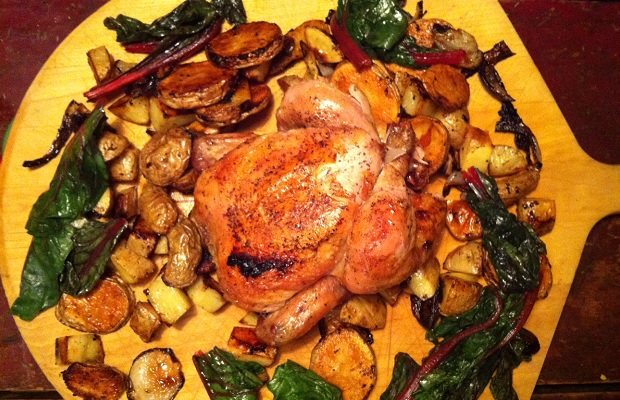
The food match: Roast Chicken, Potatoes, Swiss Chard

Bachelder La Petite Charmotte Nuits Saint Georges 2011, Burgundy, France (357228, $49.95, WineAlign) From the VINTAGES March 15, 2014 release

Is so floral, mineral, intense and hypnotic it might be dubbed the Serpent Charmer. Iron and wine indeed, the iron of Nuits, the perfume of Beaune. This provocative bottling represents the third year of production, is conspicuous in Anis de Flavigny and an underlying gate. If montagnes is the harming one, this is the charming one. These are all from the same barrels, so what really affects the wines the most? Land and hand.  93  Tasted November 2013  @Bachelder_wines

Roast Chicken, Potatoes, Swiss Chard Photo: Michael Godel

Roast Chicken, Potatoes, Swiss Chard
Photo: Michael Godel

The grape: Sangiovese Grosso

The history: The family has been in the wine business since Giovanni di Piero Antinori joined the Florentine Guild of Vintners in 1385. The Antinori estate is responsible for some of Tuscany’s most famous wines; Solaia, Tignanello and Guado al Tasso.

The lowdown: As stalwart a Brunello as any, Pian Delle Vigne is not immune to critical conjecture. Applying kudos to any big house in this polarizing vintage will raise an eyebrow or two. Why not Antinori?

The food match: Herb Crusted Pork Tenderloin

Antinori Pian Delle Vigne Brunello Di Montalcino 2008, Docg, Tuscany, Italy (651141, $59.95, Nova Scotia 1006431, $64.80, WineAlign) From the VINTAGES March 15, 2014 release

Goes at it older, bolder, tried and truer than had recently been the case, especially in 2007. Leather, cherries, seeping tea and peppery, earthy, funky dates. Purity of fruit, obviousness in Sangiovese Grosso aromatics and it is only when you taste that you are dealt with the full effect of its power and girth. Quite viscous on the palate, tough, gritty chain of tannin and qualified, felicitous bitters on a very long finish.  Best Pian delle Vigne in some time, at least back to 2001.  93  Tasted November 2013  @AntinoriFamily

Good to go!

Vineyards, winemakers and their sense of place: Bachelder and Leaning Post

In Ontario wine folks are constantly and consistently in debate as to what grape varieties should be farmed and on which tracts of land.
PHOTO: ELENATHEWISE/FOTOLIA.COM

as seen on canada.com

Winemakers are very much like architects, in fact they are the architects of the agricultural world. They survey every square metre and scrutinize each handful of dirt to decide where to plant and cultivate their vines. No other farmed produce requires such specificity as grapes and where they are grown.The winemaker postulates with deep consternation the notion of terroir, the attributes that enable a plot of land as a conducive and necessary place to grow grapes. They consider the soil, the rocks within and beneath, the slope, the proximity to water, the air temperatures and the prevailing winds.

In Ontario wine folks are constantly and consistently in debate as to what grape varieties should be farmed and on which tracts of land. Cabernet Sauvignon, Merlot and Cabernet Franc are often at the centre of the discussion, as are Riesling, Chardonnay and more recently, Syrah. The most controversy concerns Pinot Noir. Passionate Pinotphiles can get outright irate at the thought of the difficult grape being cultivated in the wrong place. In Niagara, no variety receives more attention, causes growers and producers to lose more sleep and requires so many years of trial and error to gain headway into it’s mysteries.

Two local winemakers have made career decisions, to educate themselves and to discover what makes Pinot Noir tick. Thomas Bachelder produces wines in three countries, each imbued with its own unique sense of terroir. Ilya Senchuk of Leaning Post Wines is just a few years shy of launching a project that is both new and unique to Niagara. Three distinct Pinot Noirs produced out of three disparate and specific locales.

The common ground here, both figuratively and literally is the land. Micro-block Pinot Noir. Bachelder and Senchuk both make wines from a St. David’s Bench vineyard owned by the Lowrey family. Wilma Lowrey came to Thomas 10 years ago and said, “I think we’re going to grow a single vineyard, and call it Five Rows.” Thomas followed it from the start. It turns out that Wes Lowrey, their son, “is a great winemaker in his own right, and boom, he makes a brilliant Pinot at $50 a bottle,” says Thomas. “They define small grower.”

Small grower. Senchuk and Bachelder want to define what a négociant is, as opposed to a small grower. When it comes to Burgundy, the general idea says that the Beaune négociant is bad while small growers are good. Not necessarily. Notes Bachelder, “Jadot has, at most times been beyond reproach. Has Drouhin ever faltered? Their wines may sometimes be light, but they last, and are elegant.” The large négociant control all (44) 1er cru vineyards so there are not a lot of small growers working with Beaune fruit. Here Bachelder shows the other side of the conglomerate tracks. “At any big domain, how often is the winemaker in the vineyard? You can’t do it all. You have to be in contact with and trust your vineyard managers and growers.  You have to let them farm.” This is where a farmer such as Lowrey creates and defines the niche in Ontario. Grand Cru terroir and a small grower paying loyal, careful attention to their fruit.

Over the past two weeks I had the opportunity to taste wines with these forward thinking men of wine acumen. They both share a desire to seek out essential soil and to manufacture exemplary wines that speak of the land from which they have come. Here are my notes on a group of crazy, gifted Pinot Noirs, along with a fascicle of consummate Chardonnay and one truly exceptional Merlot.

Thomas Bachelder Wines

“My origins are Quebecoise, in Burgundy and coming to Ontario.” So says Thomas Bachelder, flying winemaker, architect of the Bachelder Project, of trois terroirs, in Niagara, Oregon and Burgundy.  Missing from that statement is a stopover in Oregon, making memorable wines at Lemelson Vineyards. Not to mention the more than significant detail of establishing a world-renowned set of Pinot Noir and Chardonnay while running the wine show at Jordan’s Le Clos Jordanne.

Thanks to the generous wine enabler Tony AsplerBachelder and partner Mary Delaney procured last week’s comprehensive tasting– literally a one-off only chance to taste the wines comparatively, in one room, side by each.  The LCBO missed the boat on the Bachelder Burgundian reds, all scooped up by the SAQ. The single-vineyard Pinots from Oregon and Niagara are already library bound. Bachelder quips, in quite serious tone, “I’d like you guys to have an influence on the tasting but we can only go one way.” Terroir over pedigree.When talking about Ontario wine, he’s adamant that technique should reveal Niagara terroir, the caveat being that he uses French oak.  ”If we had a superb Cooper in Ontario, we could put all the wines on the same stage.” On Oregon, “if you don’t like their wines, it’s because they are being made by an American palate.” Burgundy vs Niagara? “If you know it’s my favourite, I’m not pushing Niagara out of chauvinism.” Thomas is all about “bringing up your children the same way, but letting them express themselves in their own way.” Most importantly, he begs the question “how do you define an elegant, refined Pinot that has staying power.” Let the wines answer the question.

PHOTO: Michael Godel
Bachelder Wines

Oregon

PINOT NOIR 2011 (333278, $34.95)

In its first year is mostly Johnston Vineyard fruit. Warm plum, cool femininity, linear acidity. A base and primal building block as foundation for future excellence. Licorice, a mother earth’s perfume, and I must disagree with the group. This can be nothing but Oregon. Reminds me of Lemelson Thea’s 2001.  89  Tasted Nov. 6, 2013

PINOT NOIR JOHNSON VINEYARD 2011 (SAQ, 12065338, $44.25)

Here there wafts an increased “blister in the sun,” more terroir from a tight vintage full of pumped over tannins. An accented aromatic membrane envelops this Johnson, of orange zest and studded rind, in violet tendency, with more flesh. Even if she speaks in Frainc-Comtou dialect when she walks through the door, she walks out distinctly Oregonian singing as a Violent Femme. Pure and clean up front, she builds, then leaves a trail of tangy fruit behind. Tangled web of Pinot.  91  Tasted Nov. 6, 2013

Ontario

PINOT NOIR LOWREY VINEYARD 2011 (361816, $44.95)

Defies logic in laying out the welcome mat. Fleshy St. David’s fruit, relentless aromatics, a glue of tannins pushing on the pedal. From my earlier note in Top wines shine at Taste Ontario 2013 “springs eternal from an ocean of cranberry and an island of spice. The somewhereness of this St. David’s vineyard can’t be denied, and in the hands of Thomas Bachelder the extraordinary happens. I am simply blinded by the light, by the weight and the weightless gravity. By a sweetness that just isn’t sweet, like exotic red fruit that knocks you sideways upside the cerebral cortex. Not to mention an iron madness that “plays that song with the funky break.”  94  Tasted Oct. 10 and Nov. 6, 2013

Beaune

PERNAND VERGELESSES 1er CRU ‘LA CREUX DA LA NET’ 2011 ($39.95)

Has the sense to be subtle, effortless and akin to Chambolle. Not so much openly ripe fruit but more the flowers that come before. Cherries dabbed by a citrus fragrance, or the spritz of squeezed zest and an unusually smoky musk. Insinuates new world (think Oregon) though it tells a rubble tale of its limestone slope climat.  90  Tasted Nov. 6, 2013

BEAUNE 1er CRU ‘LES RÉVERSÉES’ 2011 ($44.95)

Concentrated with cocked flowers in aperture and libanophorous floral lift. Juicier cherries still, with emerging, higher grained tannin. Chewy throughout, with increased anatomy but also clean and pure. Leans to Pommard, noted by an austerity on the finish in demand for patience towards realizing a settled future.  91  Tasted Nov. 6, 2013

Cotes du Nuits

CÔTE-DE-NUITS-VILLAGES AUX MONTAGNES 2011 ($37.95)

A yeomans work performs on the nose, though there is a fullness lacking on the palate. Still there is tension to tie the drone together. He’s a mason, hard-working, full of sauvage. Anti-plush,agréable mince, noted by Mr. Aspler, “a blue-collar Burgundy.”  88  Tasted Nov. 6, 2013

NUITS-ST.-GEORGES LA PETITE CHARMOTTES 2011 ($58.95)

Is so floral, mineral, intense and hypnotic it might be dubbed the Serpent Charmer. Iron and wine indeed, the iron of Nuits, the perfume of Beaune. This provocative bottling represents the third year of production, is conspicuous in Anis de Flavigny and an underlying gate. Ifmontagnes is the harming one, this is the charming one. These are all from the same barrels, so what really affects the wines the most? Land and hand.  93  Tasted Nov. 6, 2013

PHOTO: Michael Godel
Bachelder Line-Up

Oregon

CHARDONNAY 2011 (273334, $29.95,  SAQ, 11845359, $29.95)

While Burgundian in hopes and dreams, this is very much a $29 Oregon white.  No mask, no hidden altruism, simply the right Chardonnay for the right price. Bone dry, orchard driven, high acid, void of harmful terpenes. There is a salinity and piquancy not influenced by PH, perhaps by the ocean, by sandstone, but regardless it’s unique to place, unlike Niagara, Prince Edward County, or for that matter Burgundy.  88  Tasted Nov. 6, 2013

CHARDONNAY ‘JOHNSON VINEYARD’ 2011 (SAQ 12065338, $44.25)

Increased in perpetual density, butter, tine and philosophy. The barrel ferment has moreagréable onctuosité  (verbal sic), like Meursault or Côte de Nuits Villages. Renders thenormale (classique) pedestrian by comparison, but only in relative, neo-tropical terms. Bachelder’s barrel ferments concentrate on micro-oxygenation, on air passage. That’s what matters. These Chardonnay may be the least favourite for Thomas, but he is amazed at how well they mature when treated properly.  91  Tasted Nov. 6, 2013

Niagara

Bachelder: “When you are absolutely sure you that you can’t put all of a single vineyard into one bottle, that you only need some of the barrels, you move the ones that smell too much of specific things (butter, popcorn, lanolin) and send them to the blend, the classique. The ones that speak of the vineyard, the terroir, they become Saunders and Wismer.”

CHARDONNAY CLASSIQUE 2011 (302083, $29.95, SAQ 11873721, $29.95)

Lean and mean Niagaran, in a hue and a style that brings Burgundy to mind. Comblanchienlayers of limestone salinity, like a villages from Côte de Beaune. Tang, pine forest, Warheads sour candy and just a hint of the barrel but you know it’s there. A simple, Chuck Berry three chord arrangement. “I was anxious to tell her the way I feel,” even if I had no particular place to go.  90  Tasted Nov. 6, 2013

CHARDONNAY ‘SAUNDERS VINEYARD 2011 (324103, $44.95)

From Beamsville, right beside 30 bench, has a texture, a depth and a mouth feel  in ’11 that bounds and leaps towards the ethereal. A dancing stag, displaying, performing a mating ritual dance.  Melons, ripe and fleshy are in this Saunders. “What’s carrying this wine is site, site and site.” A great clay slice of the Beamsville Bench. From my earlier note: ”Takes the baton from Wismer ’10 in a transfer of power, tension and excitement. Clarity of textural fruit is driven by Beamsville Bench clay-silt soil. Highly dependent on yeast chains, sticking, spreading and expanding. Savoury, buttered stones show negligible encumbrance due to vines that will not carry an excess of new oak.”  93  Tasted July 20 and Nov. 6, 2013

CHARDONNAY ‘WISMER VINEYARD 2011 (345819, $44.95, SAQ 12089591, $44.95)

From the Wingfield Block within the 20 Mile Bench grand cru vineyard, ’11 Wismer is greener, in apple and sapid behaviour. The tension is palpable, quarryful, querulous, more calciferous. Fruit here is picked at an altitude as high as the lowest part of Flat Rock’s vineyard. Can a spot be pinpointed, anywhere on the peninsula that produces more piercing Chardonnay in 2011 as this Wismer micro-block?  91  Tasted Nov. 6, 2013

Burgundy

BOURGOGNE CHARDONNAY 2011 (SAQ, 11856040, $26.95)

Mines mineral in a funky key and electrolyzes the slightest bruise of a crisp apple upon a swirl. Goosed by a boisterous and tickling palate, a masticate of buttered toast, crunch of popcorn and a mercurial temperature as if St. Aubin. Brings in the inner cheeks with held suction.  89  Tasted Nov. 6, 2013

BEAUNE ‘LES LONGES’ 2010 ($44.95)

This Chardonnay is forged sarcophagus tight and concurrently plush. Rocks for cubes in the glass, this a fantastic elastic Beaune, full of stretched and wound tension. Pulls on the palate and snaps it sharply back. Sometimes you taste the Beaune, sometimes it tastes you.  93  Tasted Nov. 6, 2013

PULIGNY- MONTRACHET EN CORVÉE DE VIGNES 2011 ($63.00)

Is an enigma, its parts ensnared in current astriction. Fruit just scratching the surface, trying so hard to come up for air, “so far you have nothing to say.” I dare to say there is a hint of tropical fruit or a decoy posing as such (because it’s so tight). Classic stony salinity runs a direct line across its marbled façade. Very difficult to assess but in five years the saga will begin to unfold. 92  Tasted Nov. 6, 2013

Leaning Post Wines

Ilya Senchuk may as well be Niagara’s fresh face poster boy for the young and brilliant but he already holds a wealth of Niagara winemaking experience. He worked for Daniel Lenko going back to 2002 and has made the wines at Foreign Affair Winery since 2008. In February 2011 Senchuk and his wife laid it all on the line and bought property in Winona, defined as Hamilton/Grimsby by geography, Lincoln Lakeshore by appellation.

Senchuk began making (virtual) wines under his private label in 2009 on premise at Foreign Affair. He made a 2009 Pinot Noir from the Lowrey Vineyard and a Riesling from the Foxcroft block of the Wismer Vineyard. In 201o there came another Lowrey Pinot and also a Merlot, from the McCleary block on the Wismer property. In 2011 there was only the Lowrey Pinot and 2012 was the first vintage he made on site in Winona, “in a barn” he notes. Just this past month he opened the tasting room. Virtual no more.

To the uninitiated, Senchuk’s chosen Winona locale may seem unconventional, curious and even peculiar to make wine in Niagara. Make no mistake about it. Ilya Senchuk is obsessed with Niagara soil and terroir. Set right off 50 road and straddling drawn circles within a Hamilton/Lincoln lakeshore Venn diagram, five of the 11 acres (10 plantable) were planted the past spring. Senchuk used clone 777 (reliable) along with 115, 667 for Pinot Noir. The Chardonnay are from clones 96 and 548.

Leaning Post has added Pinot Noir from the Mcnally Vineyard (Beamsville). By the time the 2015 harvest has come and gone, Senchuk will have made Pinot Noir from three Niagara terroirs. How many other Niagara winemakers will have that claim to make? There will also be Syrah from Keczan, from the east side of Beamsville and adjacent Tawse Winer’s David’s Block (formerly Thomas & Vaughan Estate). This unique spot is a clay bowl of climatic specificity, with a natural slope and dubious, vigorous vines.

I sat down with Ilya and tasted through four wines from his Leaning Post line-up. I was struck by the concentrated flavours but even more so by the language of the land clearly spoken in the vernacular of each sample. I have no doubt that Senchuk’s experience and deft hand will make the most from his soon to be realized young vines.

PHOTO: Michael Godel
Leaning Post Wines

CHARDONNAY FOXCROFT 2011 ($34, winery)

Sourced from fruit split 50% each north and south blocks and picked a bit (September 26th) later than Bachelder, towards the end of a very warm vintage. Sharp, piquant and kissed ever so tenderly by older (100 per cent) oak. Full malolactic gauging, this 14 per cent ’12 comes across ripe, without pushing the envelope. A minute trace of tropical fruit draughts in a mineral wake. Quite an astonishing first solo Chardonnay effort, in constitution and viscidity where the solder is king. 170 cases.  91  Tasted Nov. 7, 2013

PINOT NOIR ST. DAVID’S BENCH ‘LOWREY VINEYARD’ 2009 ($38, winery)

From a tight, late-picked vintage (Oct. 25th), this Lowrey pushes chance’s unpredictable climatic envelope and scores a crouched, subjacent, slowly gained ripeness. Grapes come from the most sloped part of the farm, rows that are actually a hybrid of St. David’s Bench and flats of Niagara-on-the-Lake. Perfumed of the earth, where soil and beet meet raspberry. Wears its vigor on the palate’s sleeve, in spiking spice, as if new world Burgundy. “If central Otago and Pommard had a child,” this ripe but earthy Pinot were it. Tannins are still in effect so four plus years of downtime need be part of the package. 160 cases.  92  Tasted Nov. 7, 2013

PINOT NOIR ST. DAVID’S BENCH ‘LOWREY VINEYARD’ 2010 ($38, winery)

Can’t say I’m all that surprised but this is so much more approachable, pretty and glamorous. From an unrelenting hot vintage (picked Sept. 11th), a full six weeks earlier than ’09 and from the same vineyard. This was necessary as a means to preserve freshness. More sunshine, less earth but still there’s a cure and metal tendency that really defines Lowrey. Could of course be considered more of a crowd pleaser but it’s not as simple as that. That I can taste these twomano a mano, in my life is a rubber soul stamp. ”All these places have their moments.” 125 cases.  92  Tasted Nov. 7, 2013

MERLOT ’MCCLEARY VINEYARD’ 2010 ($38, winery)

Uniquely cultivated and fashioned at the top of the Escarpment, this “Niagara Peninsula” designated Merlot is lush, dusty, full of phite and barn door tannins. It’s cool, minty, cast by an iron, sanguine tendency and chalky, metal funk. No simple song this McCleary, whacking away at the shins. Were it listening, you might say to him, “I know that things can really get rough when you go it alone, don’t go thinking you gotta be tough, and play like a stone.” Never mind. Senchuk gets it right: “Merlot has to be in the right spot, treated the right way.” 115 cases.  91 Tasted Nov. 7, 2013

Good to go!
Fiddleheads, Morels, Ramps, Rhubarb and Gamay


May 22, 2012

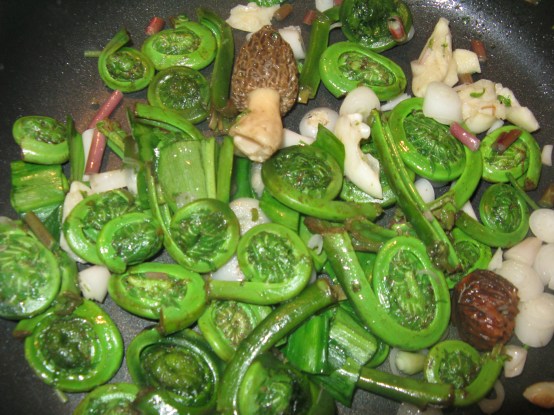
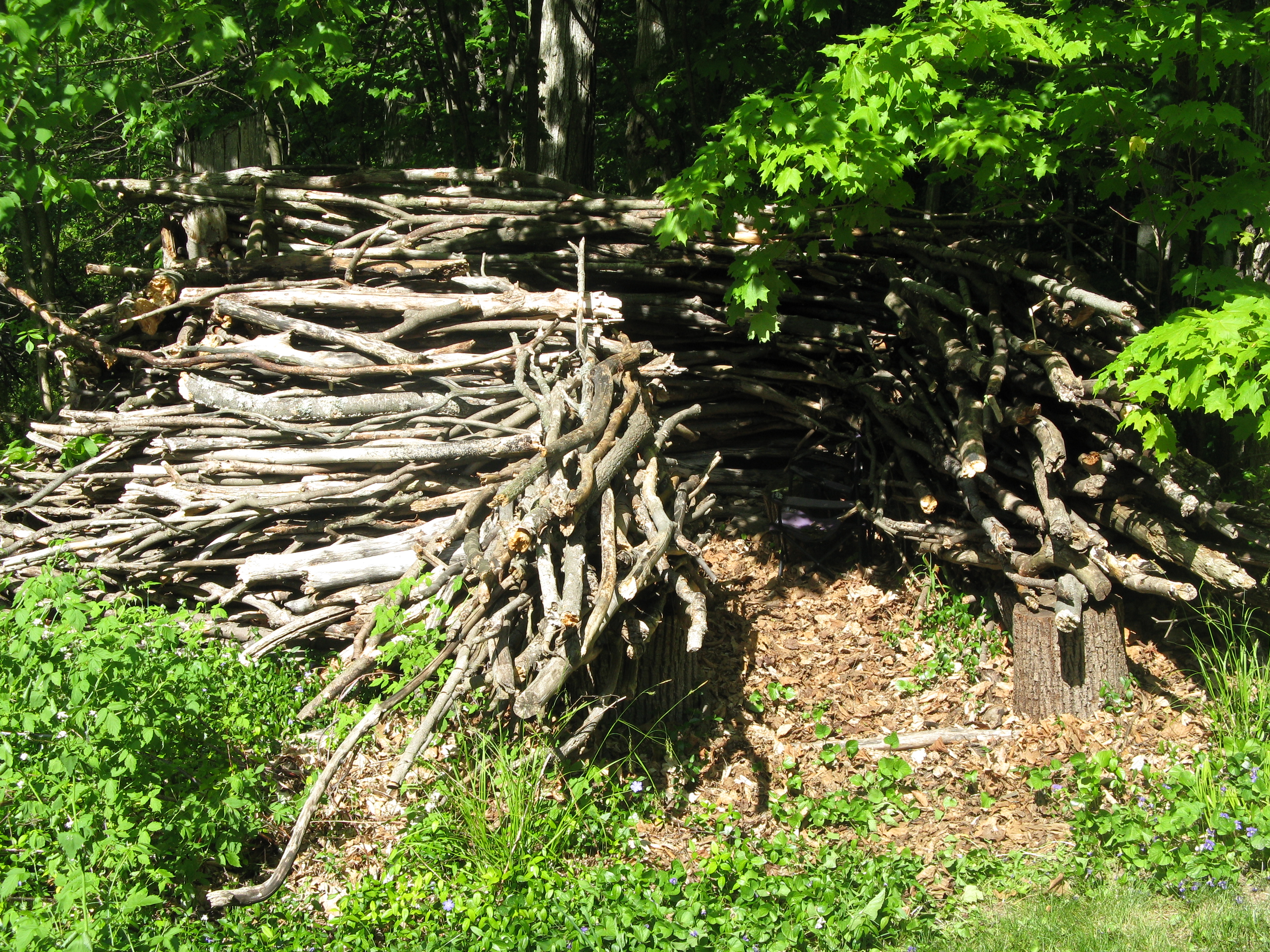
Fiddleheads already as adult ferns. Leeks unswelled, Morels hiding underground. Have I ever noted the forest so dusty, so dry? No rain. No moisture in the ground. This on the heels of the previously alluded to heterodoxical winter of no white stuff. Peer beneath the surface and a modest harvest is discovered.

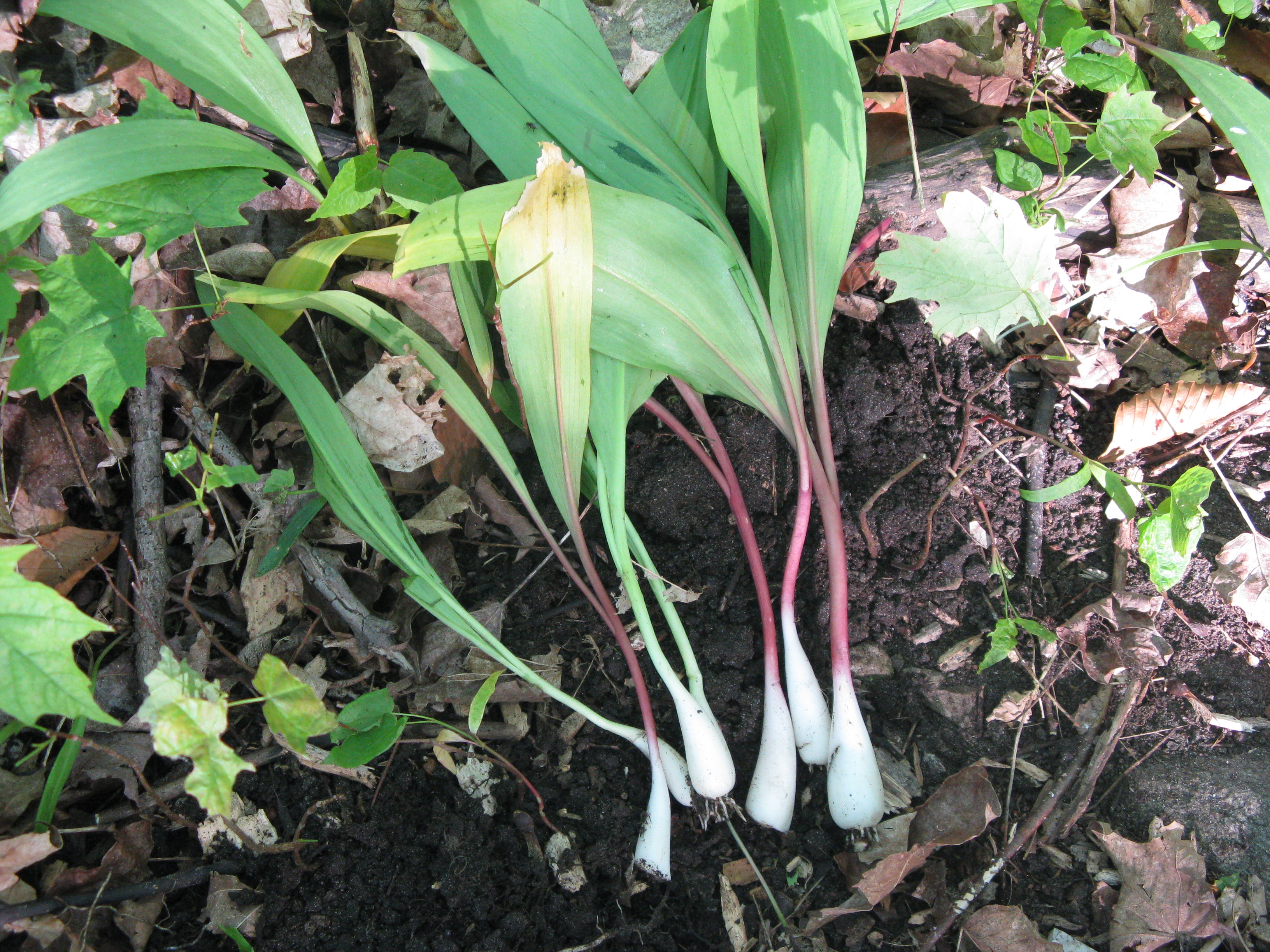
Ramps of Modest Swell

At this point in the Spring Wild Leeks tend to burrow deeper underground but the lack of moisture finds them much closer to the surface. The unearthing is done with ease.

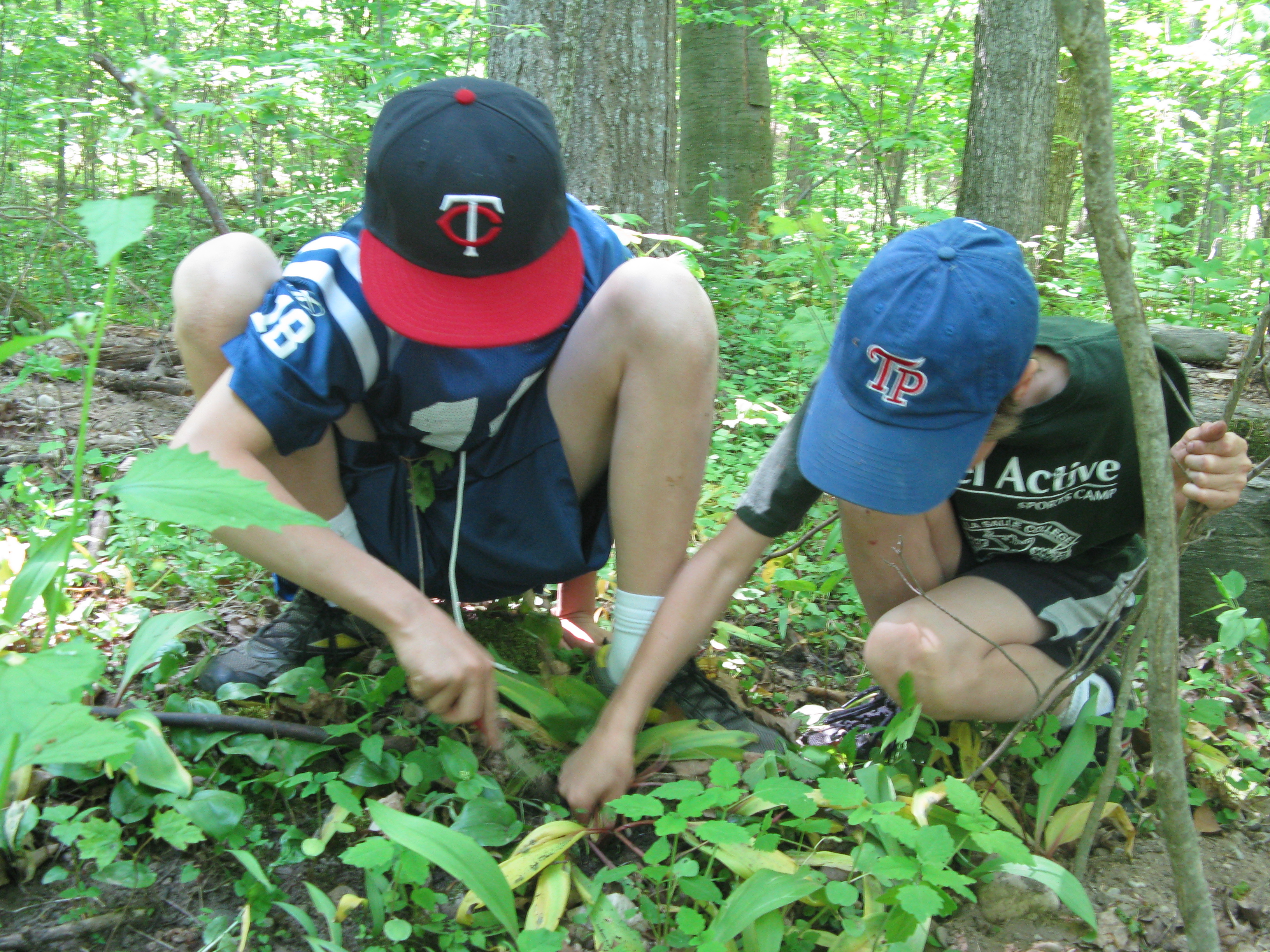
The boys dig in

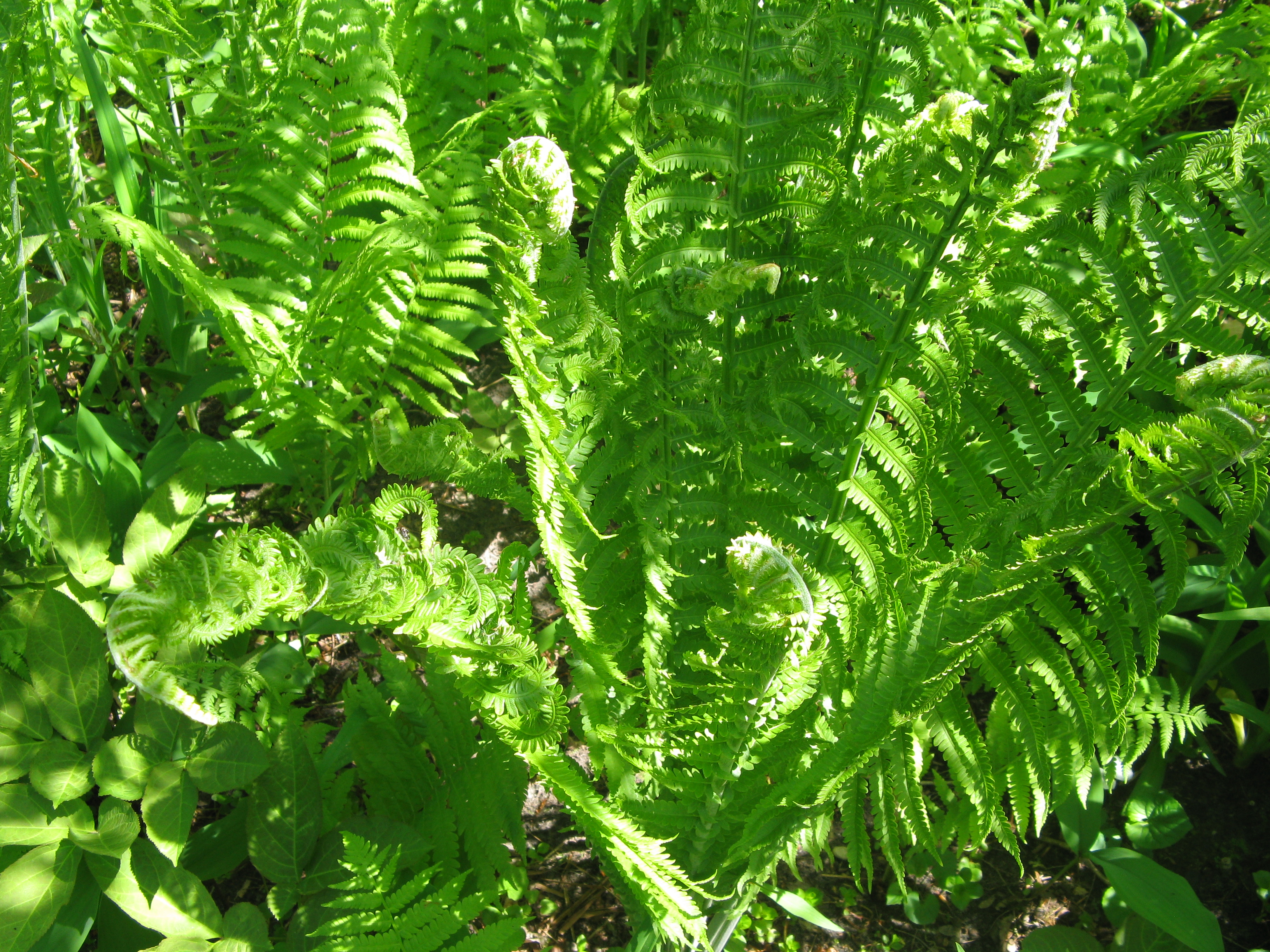
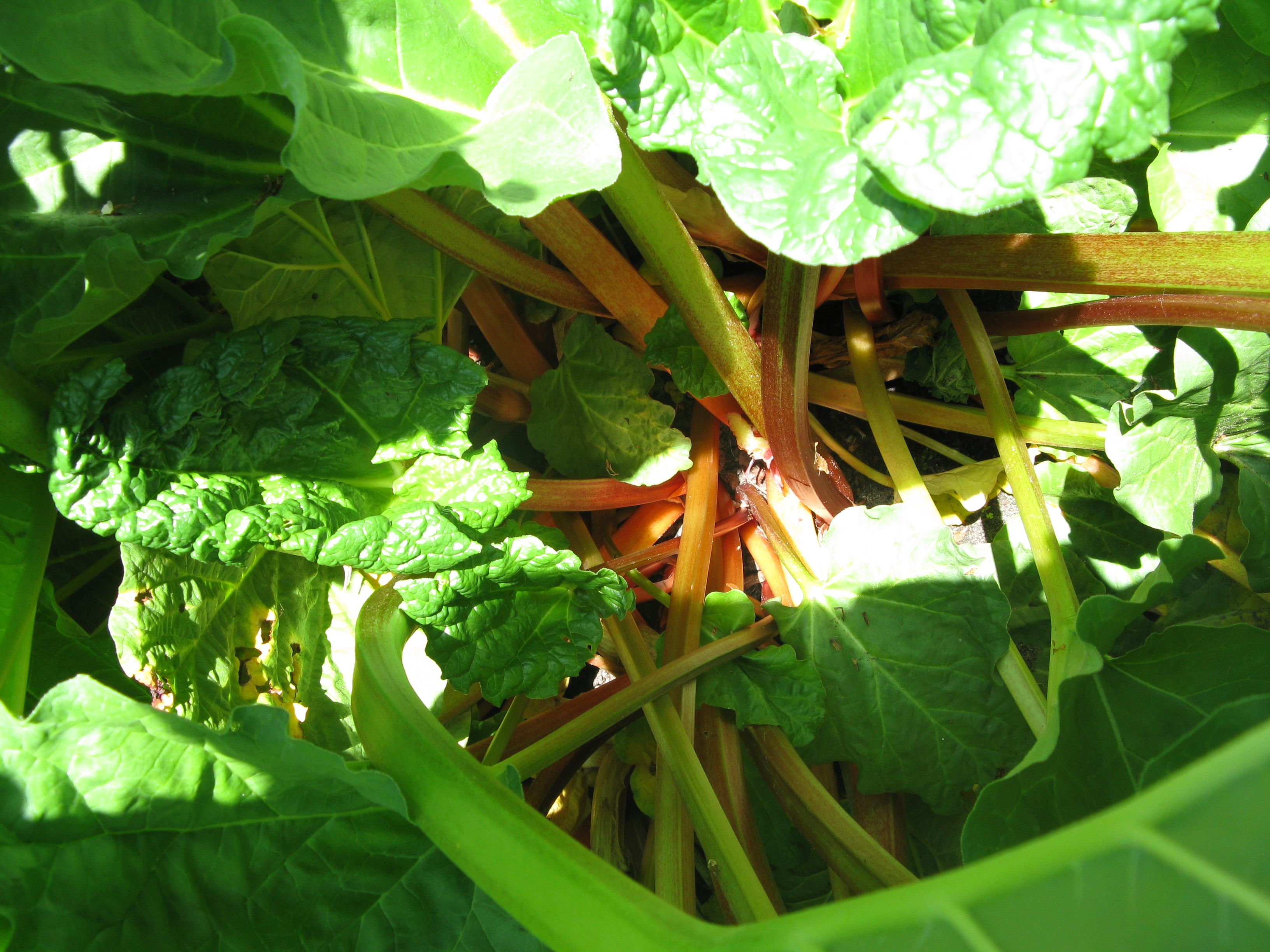
The ferns are tall as a tree, wide as a house. The bracken sweeps across the forest floor. Healthy and climbing rhubarb is on the verge of going to seed.

Giant Ferns


Rhubarb

Dominique Piron Les Pierres Morgon 2009 (231969, $22.95) loads up on black cherries seeped in a floral bath of Brunnera, Heuchera and unfurled Matteuccie fougère-à-L’Autriche. Schist, granite and iron minerality imbue the wine with dynamic volume. The relationship between the Gamay and earthy vegetables are “all the more a pair of underwater pearls, than the oak tree and the resurrection fern.”  89

Piron Morgon 2009


The fort continues to take shape…

Forest for The Fort


Good to go!