Recent uploads

Recently grilled

Recently grilled

It’s a themed based life. Most of what we taste is packaged into categories; country, region, appellation, varietal, blends, White, Red, Sparkling, Rosé and Dessert. Tastings promote a place or at the very least a gathering of sympathies, of wines meant to share a table.

Sometimes we taste in random preoccupation, with holistic hazard grace, in absence of direction, without a care to the world. More often than not my tasting notes are uploaded to WineAlign. Here are nine uploaded singles, in no particular and seemingly random order, save for the prices. They are all available at the LCBO.
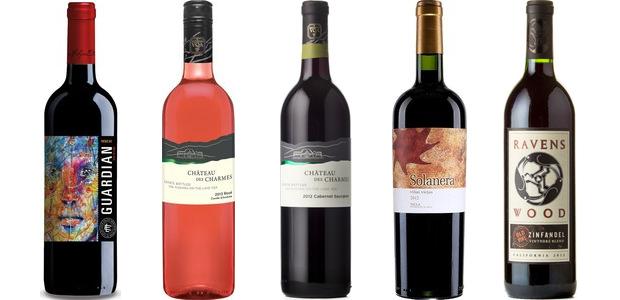
From left to right: Guardian Reserva Red 2012, Château Des Charmes Cuvée D'andrée Rosé Estate Bottled 2014, Château Des Charmes Cabernet Sauvignon Estate Bottled 2012, Bodegas Castaño Solanera Viñas Viejas 2012 and Ravenswood Vintners Blend Zinfandel 2013

From left to right: Guardian Reserva Red 2012, Château Des Charmes Cuvée D’andrée Rosé Estate Bottled 2014, Château Des Charmes Cabernet Sauvignon Estate Bottled 2012, Bodegas Castaño Solanera Viñas Viejas 2012 and Ravenswood Vintners Blend Zinfandel 2013

Guardian Reserva Red 2012, Colchagua Valley, Chile (392787, $13.60, WineAlign)

A commencement red in which the parts control the sum, before, during and after. Quite frankly that’s okay. That Cabernet Franc and Carménère can be picked out so glaringly yet without harsh tones is a reward of sorts, an investigation into the varietal relationship with Colchagua, the guardian of these grapes. More fruit than earth is the basic tenet of the dependancy, again just fine, with the secondary players acting out the vibes of smoke, very ripe flowering shrubs and oak. Good show. The length says three to four acts more. Drink 2015-2019.  Tasted March 2015  @LFEWINES  @DrinkChile  @Noble_Estates

Château Des Charmes Cuvée D’andrée Rosé Estate Bottled 2014, VQA Niagara On The Lake, Ontario (333260, $14.95, WineAlign)

If any Rosé intimates a blush Niagara Brut (sans bubbles) I’d have to give the nod to this CdC named for family matriarch Madame Andrée Bosc. Early picked at less than 20 brix in a Sparkling wine state of mind and balanced in which sugar (6.1 g/L) and acidity (6.1 g/L) countermand one effacing the other. From out of the void comes pure Pinot Noir fruit, in varietal articulation, lustrous, vivid and painted in cool, receding sheen. The flavours are an early summer bowl of berries. Strawberries to mark the beginning of hope. In 2013 the complexity reached for another level. Here in 2014 the Cuvée D’andrée keeps it simple. A Foy Vance tune. “That was the last day of June. This is the first of July.” Drink 2015-2016.  Tasted April 2015  @MBosc

Château Des Charmes Cabernet Sauvignon Estate Bottled 2012, VQA Niagara On The Lake, Niagara Peninsula, Ontario (370320, $14.95, WineAlign)

Grabs hold of the vintage and runs with it, in a sprint. Everything about this is comfortable, expressive, flannel blanketed for warmth. Soft, cuddly Cabernet with huge potential in consideration of price. The oak on top of extraction speaks of a handled totality alongside great fruit. Contending fruit. Basks in a blinding glow in a fine example of what Cabernet can do in Niagara, from warmer spots. That said I do believe that fresh fruit like this, left to its own devices, without any significant barrel coverage, would have managed just fine for five years or more. Drink 2015-2018.  Tasted April 2015  @MBosc

Castaño Solanera Viñas Viejas 2012, Do Yecla, Spain (276162, $16.95, WineAlign)

Crafted specifically for a North American market palate, this blends Mourvedre dominated (70 per cent), maximum extraction Yecla fruit with equal supporting bits of Cabernet Sauvignon and Garnacha Tintorera. The latter two juicy bombshells help to smooth, flesh and melt the ooze of the firm, dredging and heavy of foot Mourvedre. Reeking of modernity, machination and posturing, the gangly, brambly and grippy old vines Solanera is a huge wine, a macho, manly, masculine and muscular red. It’s a shaken mess of fruit, edible flowers and has a smoky, cigar leaf edge. The only real concern is a lack of chivalrous acidity. What is there feels added, not integrated and will be quick to abandon ship when the fruit needs a life raft. At present there is no disputing the quantity of the composition for the money. Two years from now it will have less to say. Drink 2015-2017.  Tasted April 2015  @BodegasCastano  @andrewhanna

Ravenswood Vintners Blend Zinfandel 2013, California (359257, $17.95, WineAlign)

The Vintner’s Blend is Ravenswood’s opportunity to anatomize disparate, old vine California fruit into one Wonka blend, to craft a harmonious if homogeneous Zinfandel expression. The house style in consistency is nothing short of something palmary, here perpetuated in the dried fruit crannies of this 2013. Zinfandel and nothing but, though the variety carries a three quarters presence, the remainder in Petite Sirah, Syrah and “Mixed Blacks.” When the paltry asking price is considered, the VB gives the oak away, asking for little in return, save for a stoked grill or smoker and some well-rubbed slabs of protein. Combine the sweet, savoury, dark, brambly fruit with slow-cooked ribs and a fuligin crust. Men from all around will come calling. Drink 2015-2018.  Tasted April 2015  @CBrandsCareers  @TheZinfandelOrg

From left to right: Southbrook Vineyards Triomphe Cabernet Franc Rosé 2014, Pedroncelli Alto Vineyards Sangiovese 2012, Brezza Cannubi Barolo 2010 and Château Lafon Rochet 2004

From left to right: Southbrook Vineyards Triomphe Cabernet Franc Rosé 2014, Pedroncelli Alto Vineyards Sangiovese 2012, Brezza Cannubi Barolo 2010 and Château Lafon Rochet 2004

Southbrook Vineyards Triomphe Cabernet Franc Rosé 2014, Niagara Peninsula, Ontario (279117, $19.95, WineAlign)

Southbrook’s Rosé is a triumph of philosophy and direction in varietal election. Fundamental to a matter of degree, this is a wine to help cast little doubt on Cabernet Franc’s pink necessity for Niagara. Only CF adds a sweet, sour and savoury push to to a blush bleed, with a push-pull undertone of earth. Only this variety can draw salinity and funk from the soil without requiring additional reductive, rubbery underpinning. Here the sour berries are bright and the wine is light on its feet, yet clear and precise. If not for the apocopic finish, this would be exceedingly exceptional Rosé. Drink 2015-2016.  Tasted April 2015  @SouthbrookWine  @AnnSperling

Pedroncelli Alto Vineyards Sangiovese 2012, Dry Creek Valley, Sonoma County, California (204461, $20.00, WineAlign)

Genuine take on Sangiovese, ebullient in red cherry, leather and chestnut. Swelling pulpy and if acidity does not at first succeed, it tries and tries again until vehemence is achieved. Sangiovese never looked so good in expatriate clothing for $20. Worth trying one now and putting a few away to see how they evolve. Sends a message to growers and producers in the Dry Creek Valley. Treat the variety with minimal oak love and seek out special terroir like the Alto Vineyards. Done right, Sangiovese can provide a bright and complementing alternative to Zinfandel. Drink 2015-2020.  Tasted April 2015  @Pedroncelli  @drycreekvalley

Brezza Cannubi Barolo 2010, Docg Piedmont, Italy (713511, $64.95, WineAlign)

Here, in the Cannubi vineyard, the classic impossible dichotomy of Nebbiolo, like an anvil and a feather, falling at the same rate, in a vacuum. The floral tones are set to eleven, while layers of many elixirs, liqueurs and tonics swirl in B-52 activity, bled from candied roses and chestnuts. A flavour that brings to mind fresh leather in cream sauce and a nutty glaze, like pistachio crème brûlée. Spiky, silken texture is akin to a web spun of savoury cookies strands. Tannins take over late and the sour finish, of fruits fed through a syringe by fills of intensity and verve. Wow Cannubi. Drink 2020-2030.  Tasted April 2015 @NaturalVines   @regionepiemonte

Château Lafon Rochet 2004, Ac St Estèphe, 4e Cru, Bordeaux, France (197228, 2009 $84.25, WineAlign)

An adolescent resolved, on the whole and as a rule for 2004’s, now advanced to adulthood. Chocolate and dusty weigh in straight away, as per the wood smothering of the time, so upfront and prevalent the fruit is the understudy. The whole in the heart of the middle is like the only living boy in New York, “half of the time we’re gone but we don’t know where, and we don’t know where.” So it must be filled with popular song. Then the wine shines, in Mediterranean tones, savoury ways, with black olives and sweet yet bitter solemnity. Quite perfectly fine, oldish Bordeaux, two-part harmony St. Estèphe. It will not rock your world but it will play scaling, soothing bass lines and lend echoing acoustics. Drink 2015-2017.  Tasted April 2015  @Lafonrochet  @BordeauxWines

Good to go!

https://twitter.com/mgodello

http://www.winealign.com/profile/2058-mjg

The death of wine scores?


Is the rating simply a tool understood within the context of marketing? Photo: Maria Vazquez/Fotolia.com

Is the rating simply a tool understood within the context of marketing?
Photo: Maria Vazquez/Fotolia.com

as seen on canada.com

Not so fast.

As time goes by, I am hearing less comments like, “well that one got a 95,” and “that one is better value because it got a 90.” Wine ratings may increasingly becoming maligned and less frequently employed but that does not mean they don’t have their place. Scores continue to be necessary as a way to evaluate wines that lack a certain level of honesty. Wines on the edge of being dodgily made, encumbered by heavy-handed, industry-fed, mass marketing machines. Scores separate and differentiate the wheat from the chaff when dealing with over the top residual sugar, hyper-acidification, bloated alcohol and (lack of fruit) masking. Embrocating one Malbec an 85 over another’s 84 makes a comment on the relative validities of those two sweetened confections.

Attaching a rating to a tasting note is not a question of right versus wrong. Ratings measure a bottle of wine against its peers. That is the simple answer. The problem is that the tasting experience is a subjective one and each reviewer has personal preferences, so in order to align with one (or more), the consumer must self-calibrate alongside a critic whose palate they’ve figured out. Very difficult to do, so relying on scores has always been the easiest road to travel.

Part of the problem is that tasting notes, on their own, are often fleeting and impossible to grasp. Guilty as charged. Fred Swan put this is the most eloquent terms. “Tasting notes are like photographs, portraying a subject at one brief moment in time and without a back story.” If tasting notes are just snapshots, is that not compelling testimony as to the need for an accompanying score? Or is the rating simply a tool understood within the context of marketing?

Jamie Goode’s take. “I find myself in a tricky position: I use points even though I don’t like to because readers find them useful. And I have to calibrate my scale with the major critics. This pushes me into a corner.”

Still the debate is growing and for good reason. The wine community is tiring of seeing scores, especially those tabulated using the Robert Parker Jr. anointed 100-point scale, attached to a critic’s wine tasting note. The question has always been this. Why would you need scores to sell wine?

Mr. Parker feels so strongly about the entrenched longevity of his system that he’s announced the launch of a new lifestyle magazine called “100 Points by Robert Parker.” Does this sound like a last gasp fling from a captain going down with his ship? Bill Zacharkiw seems to intimate the idea, but the Montreal Gazette wine critic is smarter than to lash out and drag anyone through the mud. Taking a high road, Zacharkiw writes, “from grapes to wine styles, there is truly a wine for everyone. I have my taste, you have yours, and Parker has his.” No, nor scores neither. Nor scores neither.

The fervor and sometimes rage in the argument reminds me of the (second) most famous of Hamlet soliloquys. “Why it appeareth nothing to me but a foul and pestilent congregation of vapours. What a piece of work is a man!” Most of the voices chiming in on this hot topic only see the ratings world in black and white. There are more shades of grey than many would freely admit. Scores have their place.

Meanwhile, Decanter is reporting that Château Pontet-Canet made a bold decision to test (more than 20 years) of uncharted waters by setting their en Primeur pricing in advance of the taste and ratings levies by the major critics. Since the nineties the likes of Parker, Decanter and Wine Spectator have all but determined Bordeaux Futures pricing. Pontet-Canet’s move is being seen as another nail in the 100-point coffin. One Bordeaux négociant commented, “If other chateaux follow this same pricing model, we might as well go home now.”

The real issue is the bottle itself. In the new world of wine, who has not thrown new stock and a vested interest into wines made naturally, in sustainable, biodynamic or organic ways? Who has not made a resolution to drink more honest wine? Producing good wine still trumps the natural theatre of viticulture and viniculture but honesty is the new order. Honest wines should go forth and be free of wine ratings.

Wine scores can be ignored if we concentrate on what matters. Like apiculate yeast, fermentative vigor, microflora, clonal selection and soil. We also need to talk more about and mention flaws, like chlorinated compounds, hydrogen sulphide and volatile acidity. These are things that are too often brushed under the rug.

I will continue to post ratings of the wines I review on WineAlign because as a community of critics we offer a round table of opinions that allow the wine buyer to make gathered, educated and informed decisions. In consideration that this forum is a singular expression of opinions, this column will no longer attach scores to tasting notes. It’s quite obvious, plain and simple. I only write about honest wines for canada.com. The prose speaks for itself.

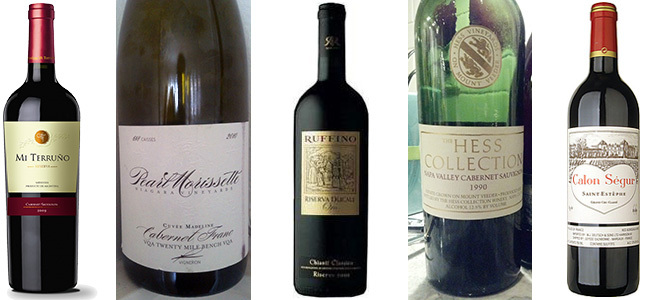
With spring beginning this Friday, no joke, here are the last of the great big winter reds. Five wines recently tasted that thrilled by way of their fairness, their honor and their virtue. Wines that need no score.

From left: Mi Terruño Reserve Cabernet Sauvignon 2010, Pearl Morissette Cabernet Franc Cuvée Madeline 2010, Ruffino Ducale Oro Riserva Chianti Classico 2008, The Hess Collection Cabernet Sauvignon 1990, and Château Calon Ségur 2010, Ac Saint Estèphe

From left: Mi Terruño Reserve Cabernet Sauvignon 2010, Pearl Morissette Cabernet Franc Cuvée Madeline 2010, Ruffino Ducale Oro Riserva Chianti Classico 2008, The Hess Collection Cabernet Sauvignon 1990, and Château Calon Ségur 2010, Ac Saint Estèphe

Mi Terruño Reserve Cabernet Sauvignon 2010, Mendoza, Argentina (364133, $15.95, WineAlign) From the VINTAGES March 29, 2014 Release

Stands out for its honest fruit, this Mendozan from San Roque district in Maipú county. Qualified by an admirable level of restraint, low in residual sugar and alcohol, straightforward, unencumbered. Winemakers María Eugenia Baigorria and Sergio Giménez have let the fruit speak in clean, level tones, in red berries, licorice red and black, a dusting of spice, red cherry and even strawberry. This is textbook hands off winemaking with nearly exceptional length and simply solid from start to finish. Mi sueno, mi terruño.  Tasted March 2014

Pearl Morissette Cabernet Franc Cuvée Madeline 2010, VQA Twenty Mile Bench, Niagara Peninsula (winery, $38, WineAlign)

Francois Morissette’s 2010 is a pioneering example towards defining Bench appellation Cabernet Franc isomeric reactions. Relationships between grapes of a growing area and their ultimate destination in bottle. An affair of veraison, leaf drop, frost, hand harvesting, whole cluster sorting and berry oak fermenting.  Indigenous yeast, punch downs and overs for phenolic skin extraction and polymerization. Neutral oak and sulfur dioxide to provide antimicrobial and antioxidant protection. An eighteen month somniac’s rest, fine lees and no filtration. The structural arrangement in cohabitation of radicals and ions leads to such a Cabernet Franc. Fully expressive of an endemic, very ripe, vegetal varietal vicissitude that is both inbred and necessary. Currants and peppered berries of power and grit. Dry (2 g/L residual sugar), plump (13.7 per cent alcohol) and scarce (618 cases made). Reflective of the warm 2010 vintage and will always act in stark contrast to the elegant 2011.  Tasted July 2013 and March 2014  @PearlMorissette  On the card at Barque Smokehouse

Ruffino Ducale Oro Riserva Chianti Classico 2008, Tuscany, Italy (353201, $43.95, WineAlign) From the VINTAGES March 29, 2014 Release

A re-release showing an exuberance of advanced character. Now acting out the strikingly rich and golden vintage, in Lamé and gilded iron. Speaking a most Tuscan, elite vernacular, already recognizable and evolving into its own skin, with a notion towards herbaceous, dried fruit. A classic pasta and roasted meats red wine. Nonna’s Trattoria kitchen in a glass. Drying just a touch, so drink up. Earlier note: “Slight earthy funk, imparted by the vineyard floor and in part from the wood. Sappy, resinous, distinctively warm-blooded, plummy fruit. Tuscan tang though light on pucker.”  Tasted October 2013 and March 2014

The Hess Collection Cabernet Sauvignon 1990, Mount Veeder, Napa Valley, California, USA (662015, $59.00, WineAlign)

A seminal bottling from a game-changing year, for two all important reasons. One, it was a great vintage for Napa reds and two, the Mount Veeder sub-appellation was established. While only 24 years ago, a mere five wineries existed there at the time, including Mayacamas, Mt. Veeder and Hess. No hyperbole to say this is tasting a piece of history. Despite my “shouting all about love,” this splendidly aged Cabernet is not so much about resilience as it is persistence and infinite wisdom. All those years ago there were Napa reds made at a mere 12.5 per cent alcohol, with finesse and a sense of George-like calm. With little aeration there is fig, prune and toffee gently weeping but with air the aged fruit is swept away by a wave of gob stopping Cassis before its time. Preconceived notions of banausic, early days Cabernet are smothered by the magic dust of this Hess religion, a Dharma of licorice, ash and enlightenment. A wine to make you forget where you are. Depth, length and up to a half decade yet of reserved life lay ahead.  Tasted March 2014  @HessCollection 

Château Calon Ségur 2010, Ac Saint Estèphe, Bordeaux, France (259010, $149.85, WineAlign) An In-Store Discovery from the VINTAGES March 29, 2014 Release

A blend that in 2010 is extremely high in Cabernet Sauvignon (86 per cent), with support from Merlot (12) and Petit Verdot (2). Immaculate hue in blue jasmine meets red ochre, echoed by blue and red fruit aromas. A purity of freshness and an exotic perfume distracts from the absurdity of the price, if just long enough to become intoxicated by its qualifications. It really does have it all. Red velvet layer cake made of the finest chocolate, the world’s least refined and highest quality sugar, spices only found in places reached and hand-picked by agile, primate-like humans. So approachable and marked by sweet tannins that will carry this Saint Estèphe for three decades.  Tasted March 2014

Good to go!

The Wine Diaries: Hockey and tasting notes

PHOTO: KYBELE/FOTOLIA.COM

as seen on canada.com

I’ve been for a walk. On a winter’s day.

Just in case you were not privy to the wisdom, I’m here to put you in the know. Some phenomenal wine is made here in Ontario. A rather large and excited group at #ONWineChat talks about this very fact every Wednesday night. You can chime in or just eavesdrop. We also have some dedicated, propitious traffickers of the red, white and sparkling stuff, including Wines in Niagara, the Wine Council of Ontario, the Ontario Wine SocietySpotlight Toronto and Wine Align Cru.

If you are looking for an event that brings Ontario’s greatest wines, wineries and winemakers together, don’t miss CUVÉE WEEKEND 2013, taking place March 1 to March 3, 2013 in Niagara Falls and throughout the Niagara region.

Attending a wine festival is one way to spend three days away from the dolor and calamity of the city. Another way is to head north and leave the noisome and constant freezing/unfreezing behind. The freedom to seek peace and quiet is in itself a gift of something very special. It’s called time. Time to spend with family. Time to transcribe thoughts and notes, to watch a movie. Time to enjoy a glass of wine.

Three wines, hockey stick and puck

The kids clamber down through parapets of snow to the natural boathouse rink, a glassine envelope, like a reef’s teeming tide pool left behind by retreating waters. Inside is a sheltered 12′ x 40′ basin frozen in time with the lake laid out beyond the gate as far as the eye can see. Others bring the wine. Here are three calming selections to enjoy on such a winter’s day.

From left to right: Trius Pinot Grigio 2011, Kunde Zinfandel 2007, Tawse Estate Chardonnay 2010

Trius Pinot Grigio 2011 (316414, $15.95) continues to throw smoke and amaze with its hue, this time reminiscent of crocus sativus linnaeus meets malachite green with an added fogging of rime. Herbal and balmy sweet, like pistachio halvah. Consistent with my previous note. “Out of the shell Ontario white.”  88  @TriusWines

Kunde Zinfandel 2007 (965921, $16.95) remains faithful in quiescence while we await the next incredibly valued vintage. The ’07’s bramble and brier are now more subtle, the sanguine notes now stanched. A Zinfandel in its later years, comfortable, content, grandfatherly. Enter retirement zin-city.  89  @KundeEstate  @imbibersreport

Tawse Estate Chardonnay 2010 ($37.95) like its half-sister Quarry Road, stands firm and smacks stubbornly up to the heat of the vintage. Opaque green of agate stone. Combines the apples and citrus from Quarry with Robyn’s musk and pear, but also the searing, mineral tang of Hillside. The assemblage is the most fleshy and forthcoming Chardonnay of the lot. Promises the best of all Tawse’s worlds, without stealing the spotlight from its single vineyard sistren.  90  @Tawse_Winery  @Paul_Pender

Boathouse wines

Winter tasting notes:

Related – VINTAGES February 16th, 2013 Release

Boutari Grande Reserve 2007 (140111, $16.95) from the family @boutari is rusty and evinced of a slight, smokey corrosion though not yet nearly ancient, especially by Macedonian standards. Tough red, granting notes of smoked gyros, Kalamata olive and acetic, Bebecou apricot. Unique and worth a try.  88  @KolonakiGroup

Fielding Estate Cabernet/Syrah 2010 (258657, $24.95) from @RichieWine is a veritable smoked porcine charcuterie board sprinkled with potpourri. Black currant and fig, expertly extracted fruit in a ripe and round package.  88  @FieldingWinery

Creekside Reserve Cabernet Sauvignon 2007 (662247, $34.95) from @CreeksideWine offers up 31 months of sweet oak scents and flavours yet resists over-mochafication. Rarely does a Niagara Cab bask in such a rich and full-bodied bath like this robin red, Queenston Road Vineyard beauty. Currants, citrus and herbs make appearances.  89 

Mocali Vigna Raunate Brunello Di Montalcino 2007 (162552, $46.95) is a pin-up babe indicative of the vintage, of crimson visage, flaunting a tanned and curvy figure. Brunello as a sexy twitter pic. Red cherry, smoky tobacco, mouth-puckering dried fruit. Spicy, sassy, ready to party.  90  @liffordwine

Altesino Brunello Di Montalcino 2007 (994095, $57.95) is not, contrary to the LCBO information page, a VQA wine. Offers instant permeate gratification with a stunning translucence studded by a faint, rustic and sweet cherry resonance. Fine, downy texture and corporeal substance for near wild heaven indulgence, followed by R.E.M. sleep. “My heart thrown open wide.”  91  @rogcowines

Château de Pez 2009 (202697, $58.95) is no kidding Johnny, this pirate in Saint-Estèphe clothing. Firm, cedar, mocha saveur and shakin’ all over. “Sends quivers down my backbone” and while it may be unapproachable today, this will aim to please when it settles down in ten years time.  90

And the fort still stands.

Winter Fort

Good to go!

Nothing Simple About This Wine Dinner


12 Tasters, Five Courses, 13 Wines

Simple Bistro, 619 Mt. Pleasant Rd.

Chef: Matt Cowan


Well, I float in liquid gardens.”

Large group, small pours, plenty to go around. A Tour de France of the mind-altering kind. Champagne, White and Red Burgundy, Bordeaux. A line up to prostrate the palate. Thank you AZ for the invite, the planning and the execution. A formidable feast matched with precision expertise and the company not bad either. Band of Gypsys (Jimi Hendrix) playing over the sound system. Who knew so much unintentional comedy would grace this evening.


Three Colville Bay Oysters, shallot mignonette

Oysters of this calibre are a treat. Shell swelling, sweetmeat, toothsome.

Roederer Champagne 1996

Apples in stereo. Intro succinct as a toasted energy chord, yeast still runs deep. Soul of the bubbles intact, velocity winding down. Tone has seen its evolution. Not quite Madeira but heading down that road. Beauteous bird.  90


Seared Sablefish, spinach, beurre blanc

Teaser, delicious, best crispy Cod crackling 

Vincent Sauvestre Corton Charlemagne Grand Cru 2004

Sadly, surprisingly oxidized. Flavour of fruit long time gone, now generic, walking a flat earth. Mildly redemptive aromatic qualities, most notably and oddly tequila/caramelized agave, pineapple and honey. Burnt banana too.   NR  

Vincent Girardin Corton Charlemagne Grand Cru 2006

Sleeping baby, horse with no name. Soft, floral, feminine, dry, lost in the desert. then the filly awakens. Evocative scents and images emerge as “plants and birds and rocks and things.” Minerality kicks in, moist sea air fills the bowl. Drink up within two to three years.  93 


Roasted Squabsauce chasseur, gnocchi, shiitake

Brilliant dish, earth, mahogany, herb spiked, foul the texture of foie

Château de La Tour Clos de Vougeot 1990

Climbs over the enclosure to dwell in the suburbs of paradisiacal Burgundy. Redolent orchard of plum, coppice of resinous trees. Smokey, nary a sign of champignon. Later stages of ontogeny, post gallic acid but still long as the Saône flows. Choice Côte de Nuits92

Domaine Henri Perrot-Minot Morey-St.-Denis En La Rue De Vergy 1996

The dark knight of the three red Burgundies. Smells like merde at first, a pumpkin left to compost long after the hallow night is done. A few swirls and the funk blows away, leaving behind a smashing MSD. Oracular utterances are in the air now. “Lazer beam of acidity” says AM, “Pinot on a frozen rope” says I.  93

Domaine Joseph Drouhin Clos Vougeot 2002

Concludes the flight of the Conburgs. Ctunning clarity on a new world frame. Oregon of course. AZ notes a “zin, zinging character.” It’s in a sweet, candied Wonka way. “The hard candied shell of the apple” adds the doc. Despite the sacchariferous notes this Vougeot may just be the underappreciated WOTN.  91   

Lamb Saddle, roast root vegetables, brussels sprouts, spiced prune jus

Bison for MJG. Once again, Chef Cowan shows his penchant for rare meat as dentil frieze on a canvas of deep, earthy demi-glace.

BORDEAUX FLIGHT #1  

Château Cos D’estournel, Saint Estephe 1986

Corked, volatile acidity or disjointed? No clear consensus from the group. Despite the fact that I am not overly TCA sensitive I know it is corked. Muted nose, what the wine might have been masked by the taint.  NR

Château Beychevelle, Saint Julien 1996

Brick red, having entered its later stages of evolution. Luster and loin giving way but sweet fruit hanging on. At this stage a house, not a home. Once mighty, mighty, the ’96 Beychevelle “make a old man wish for younger days.”  90

Château Pichon Baron Longueville, Paulliac 1988

This PBL is throwing rocks tonight. I am dazzled by its youth. Purity, clarity, vitality. Embodies Cclaret’s dictionary entry. Opened in the heart of its window. While ’89 and ’90 continue to hog that era’s spotlight, here lies reason number one to endorse ’88.  The turkey of the triple flight.  95   

BORDEAUX FLIGHT #2

Château Léoville-Las Cases, Saint Julien 1996     

Utopian, foxy, rubicund health. Voluptuous tomato, classy and luxurious on every level. Unabashed, showing off unblemished, curvy fruit. Pellucid, transparent, honest. A player, even if the highest caste keeps the dark LLC down. The sixth major94

Château Léoville Barton, Saint Julien 1986

The right honourable LB, consummate professional, trusted friend. Works the room with a politician’s charm, open to debate, unscathed after 25 years in bottle. Cast firm, time honoured through oak, cedar and lead, now showing spice notes in middle age. Stalwart SJ.  92   

Château Monbousquet, St. Émilion 1998

Napa bent with rich cassis and blackberry jam, verging on chewy raisin, resinous Amarone, even Vintage Port liquor. Precious, juiced Bordeaux in a hedonistic state. Pretender or professional? “I was feeling kind of ethereal…had my eye on your imperial.” Not so sure. Tastes great but is it the real deal?  89   

Château Lagrange, Saint Julien 1990

Funky barnyard entry, unfailing after all these years. Dissipates, leaving behind a most noble, prosaic, seasoned specimen. “Pleasant, short, competent, you get what you pay for” is heard from around the table. This was a back-up bottle as understudy to the corked Cos. My take? This ‘Bourgeois’ can saddle up to my picnic bench in a paper cup any day of the week. Thank you for the icing on the cake AZ.  91  


Cheese, benedictin, roasted fig


Good to go!