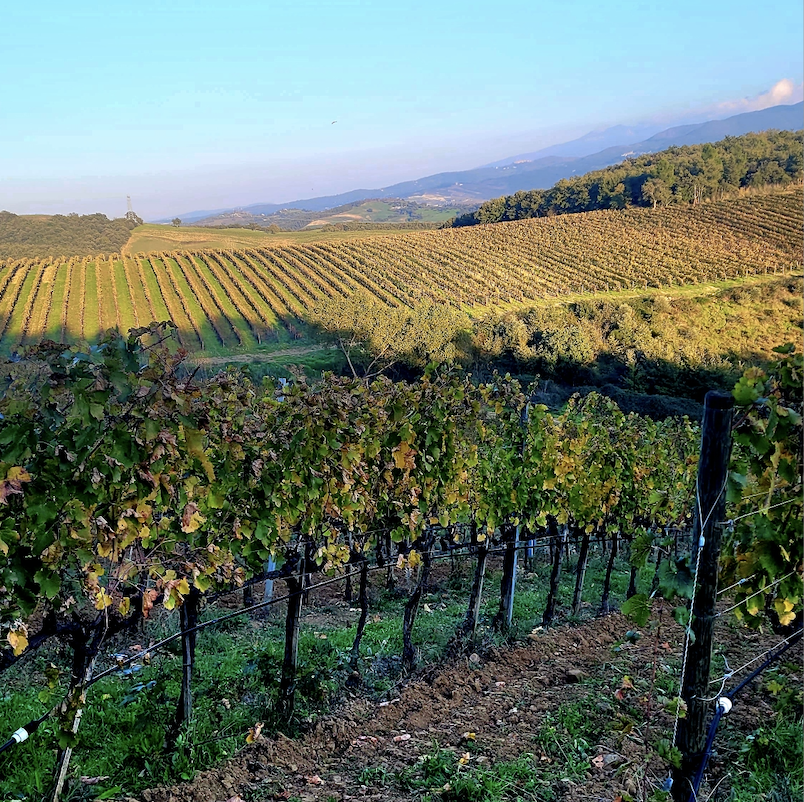
Montecucco looks to the future

Montecucco vineyards

Mountain wine, territorial identity, sangiovese at the heart of quality, revelatory discoveries, sustainability and a Silver anniversary

If your presence was requested for a few mid-November days to take in the vineyards and forests on the sub-steppes and aboard the slopes of Tuscany’s Monte Amiata, how might you choose to respond? Could you be of sound mind to resist an invitation to visit wine estates at the behest of the Consorzio Tutela Vini Montecucco and taste their wines? How about a Monday morning solo horizontal tasting in the consortium’s digs with a chance to assess 30 multifarious and diverse iterations of Montecucco Vermentino DOC, Montecucco Rosso DOC, the Montecucco Riserva DOC and Montecucco Sangiovese DOCG? Perchance to follow that up three months later for more visits with producers in February of 2025, along with a dinner at the consortium offices accompanied by 15 local winemakers and Castel del Piano’s most famous Lasagne? The answer to all these questions would have to be an emphatic yes and Godello most certainly made the wise choice of travelling twice in four months to experience the wonders of Montecucco.

Consorzio Tutela Vini Montecucco

In 2025, the Consortium for the Protection of Montecucco DOC and DOCG Wines has begun to celebrate a Silver anniversary – 25 years since its foundation. “A quarter of a century dedicated to the enhancement of an authentic territory suited to viticulture, which today can finally celebrate significant growth after complex years marked by climate challenges and difficulties related to the pandemic.” The 25th launched with a February presentation of the denomination’s wines at the “L’Altra Toscana” event held at Palazzo degli Affari, in Florence. The Consortium announced that the previous year closed with a 41 percent increase in grapes delivered to the cellar compared to the previous year – from 12,682 quintals in 2023 to 17,924 in 2024. Bottled wine recorded a plus-10 percent increase with 5,500 hectolitres in the DOC and DOCG categories, equivalent to just over 720,000 (750 mL) bottles, as well as a few thousand in other formats. “At last a year that lets us catch our breath after a series of complicated seasons and that fills us with satisfaction and optimism for the future of our denomination,” commented Giovan Battista Basile, President of the Consortium for the Protection of Montecucco Wines. “Growth data confirm the value of our territory and the production choices of our companies, increasingly oriented towards quality and sustainability.”

Godello tasting at the offices of the Consorzio Tutela Vini Montecucco

The survey

A 2024 Consorzio Tutela Vini Montecucco survey was conducted among member wineries “to certify, in addition to production and certification data, various other aspects and elements linked to the activities of the area’s wineries, in order to provide the most detailed and extensive overview of the status quo of the denomination and promote its growth and development.” Taking into consideration the total production of  the Montecucco DOC and DOCG appellations, the sample represented 76 percent of (member) and 79 (non-member) companies, not to mention including the largest companies in the area holding most of the production and bottled quotas. In other words producers in possession of the greatest sales and market presence. The results collected were therefore able to provide an extremely accurate general picture of the state of health and trends of the denomination. The most important and essential talking points of the study concerned the areas of sustainability, strengthening of domestic and foreign markets, wine tourism and a focus on new market trends. The ultimate take-away? Montecucco looks to the future without losing sight of its territorial identity.
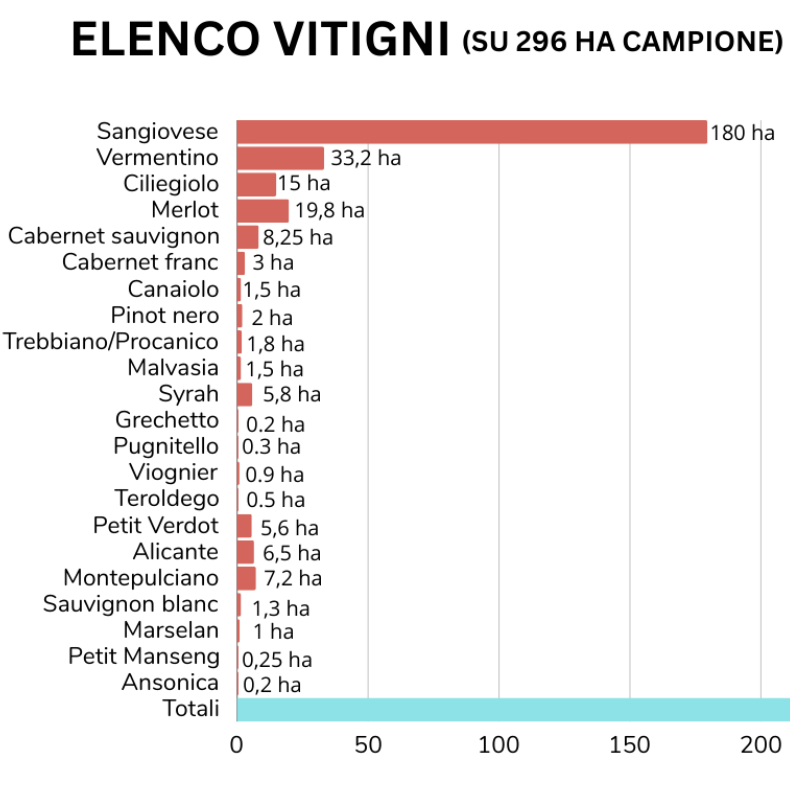
Varietal plantings of Montecucco

Sustainability is today’s wine buzzword and yet the concept is so specifically personal for any wine denomination that uses it as a vehicle for promotion of its activities. The Montecucco survey showed that the share of certified organic production among the sample companies stands at 95 percent for the DOC and 91.5  for the DOCG. These are more than significant numbers, even for a region of relatively small size. They express leadership and commitment – but also community. Just three years prior many companies were still in the process of conversion and so the word growth can be added to the list of positive superlatives that can be attached to the Montecucco name. The territory’s “green DNA” becomes synonymous with innovative agronomic practices, the protection of nature, including the biodiversity found in cultivated lands and its forests. Agriculture is defined by the ampelography of the area, composed of 61 percent sangiovese, (11) vermentino and the remaining percentage coming from international vines, including (7) merlot. Native vines have seen increased plantings in recent years, lead by ciliegiolo now with a five percent share. Montecucco is rising to meet current challenges with a look expanding allowable vineyard space at higher (Monte Amiata) elevations. “In light of the conditions linked to climate change, of an extension of the production territory to the entire administrative area of the mountain municipalities, with the aim of increasing the altitude of the denomination’s land.” Diversity is further noted in the raising of cattle and farming of non-wine related crops.
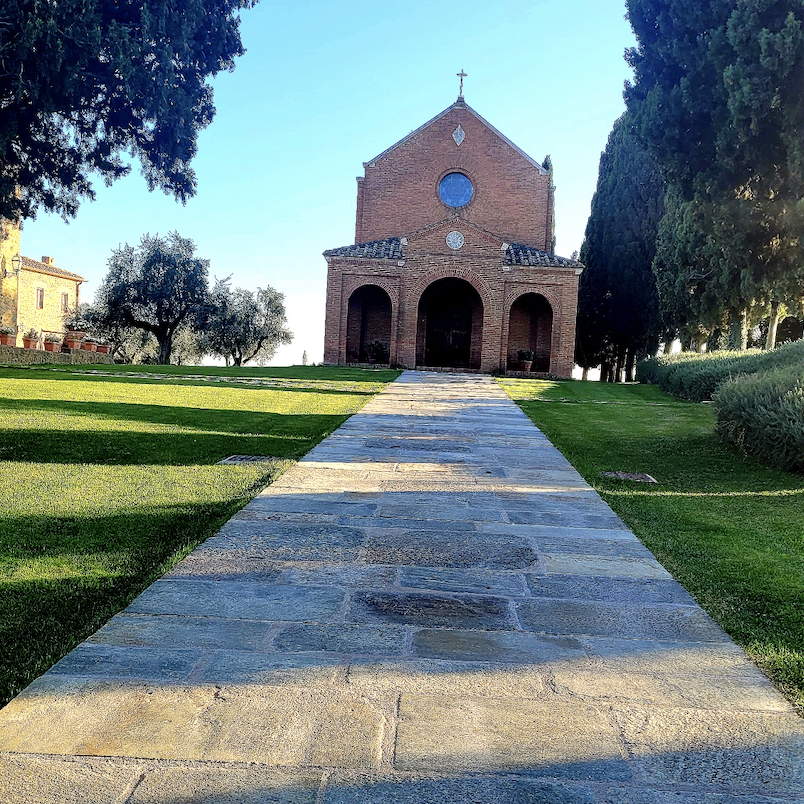
Castello ColleMassari Church of St. Peter and St. Anthony

The information and regulations

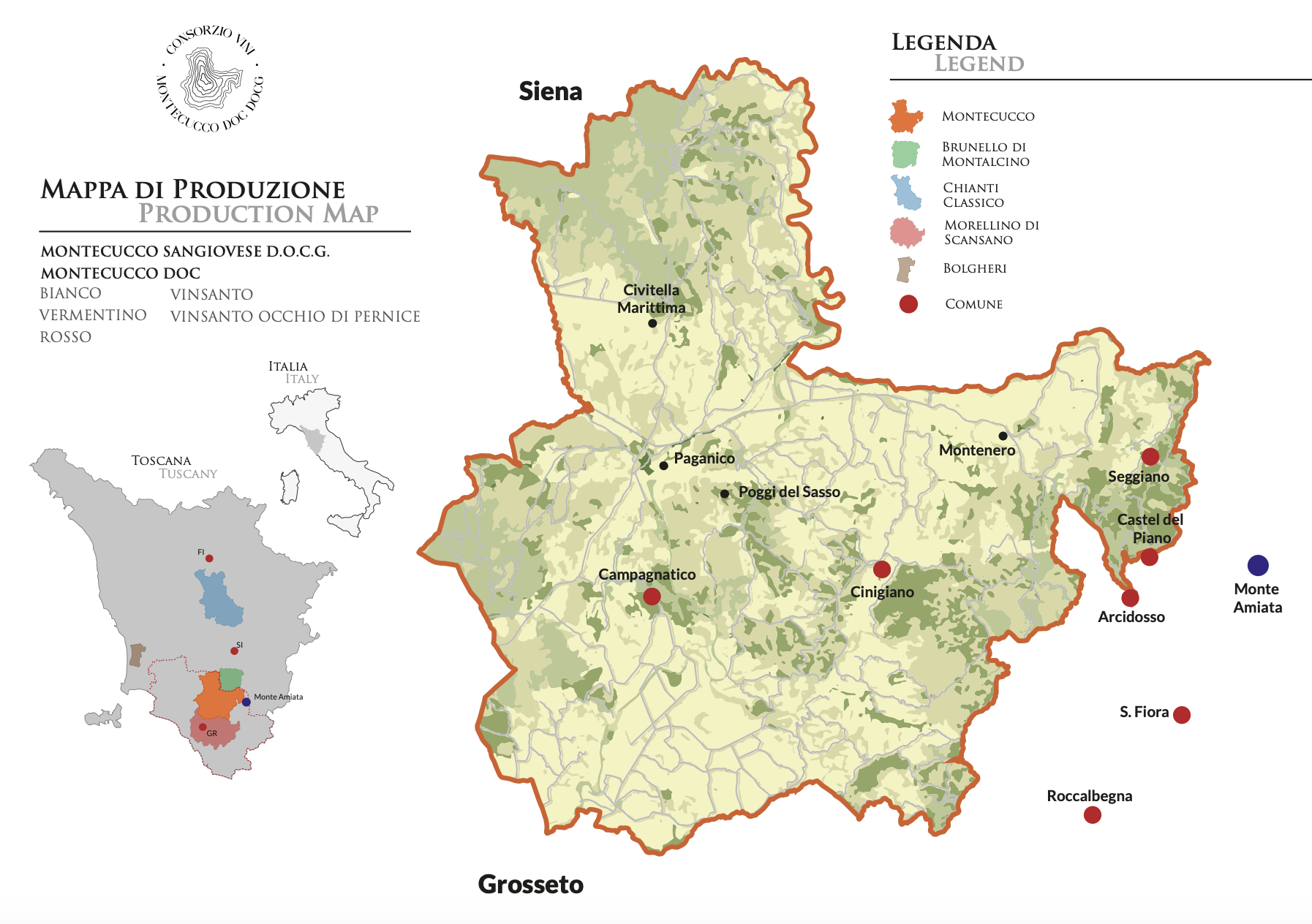
  • The Montecucco territory in southwestern Tuscany’s Grosseto Province is located between the hills overlooking Monte Amiata and on the other the Maremma valleys. To the south is Morellino di Scansano and across the Ombrone River there is Montalcino. The region shares a small amount of vineyard hectarage with Maremma which primarily lies to the west in the direction of the Tuscan coast. Montecucco vineyards are found in three distinct areas: To the north on the flats by the Ombrone, up on a plateau with Cinigiano at its heart and in the east up on the foothills of Monte Amiata.
  • Montecucco’s 300 working hectares are comprised of seven municipalities; Cinigiano, Castel del Piano, Seggiano, Civitella Paganico, Campagnatico, Arcidosso and Roccalbegna. Within these comuni the recent survey’s analysis showed 243.39 hectares with the potential to produce wines that can be labeled Montecucco DOC (of both Rosso and Vermentino), while 197.42 hectares hold the potential for the production of Monteccucco Sangiovese DOCG.
  • Montecucco DOC was awarded in 1998. The Montecucco Rosso DOC must be made with a minimum 60 percent of sangiovese. The minimum alcohol levels are 13 percent for Montecucco Rosso DOC and 13.5 for Montecucco Rosso Riserva DOC. Montecucco Rosso DOC must age Until September 1st following the harvest, including 12 months in wood while for Montecucco Rosso Riserva DOC the minimum is 24 months, inclusive of a minimum 12 months in wood and six in bottle. There are now 170 hectares of Montecucco Rosso DOC. Montecucco Rosato DOC is based on 60 percent or more of ciliegiolo and/or sangiovese.
  • Sangiovese was separated from the Rosso and awarded its own DOCG in 2011. The Monteccucco Sangiovese DOCG must be made with a minimum 90 percent sangiovese,  reach 13 percent alcohol by volume and be aged until November 1st of the third year following the harvest, with at least 12 months in barrel. A Monteccucco Sangiovese Riserva DOCG must be aged for 30 months, including two years in wood, six months in bottle and reach a 13.5 percent alcohol. There are now 180 hectares of Montecucco Sangiovese DOCG, accounting for 61 percent of total vineyard plantings.
  • Montecucco Vermentino DOC must contain a minimum of 40 percent vermentino grapes and the DOC has rapidly become the region’s most important white wine. The other principal grapes planted and blended in are trebbiano toscano, grechetto and malvasia. The recent survey’s analysis also showed 32.76 hectares with the potential to produce wines that can be labeled Montecucco Vermentino DOC. The variety accounts for 11 percent of total vineyard plantings.
  • In terms of sub-zones and geographic mentions, bottles can be labeled with any of the seven communes and 18 frazioni
  • In 2024 and early 2025 the sangiovese at the Montecucco DOCG level appearing on the markets are 2021s, though 2020 is current for the Rosso and Rosso Riserva blends. In other words the DOCG wines are readied earlier than the DOC blends. The DOC and DOCG appellations account for 65.5 percent of all bottled Montecucco wines. No wineries trade in bulk wine.
The first trip in November was an awakening, a chance to experience revelatory discoveries for a southern Tuscan territory poised and ready at the precipice of soon to arrive next levels of attention and success. The return in February was the paragon to seek deeper meaning into the wine and people with the Consorzio Tutela Vini Montecucco. There were walks through old vines, chances to taste age-worthy wines, chats with passionate producers and the hidden discovery of Tuscany’s best kept secret lasagne. All in the presence and looming awe of Monte Amiata. There are many people and producers to thank for organizing and facilitating exceptional November 2024 and February 2025 itineraries over the course of those two excursions to the Montecucco area. In particular Consorzio President Giovan Battista Basile, Carlotta Faenzi, Valentina Fraccascia and the many producers who hosted visits and attended dinners. In total there were 90 wines tasted. These are the reviews.
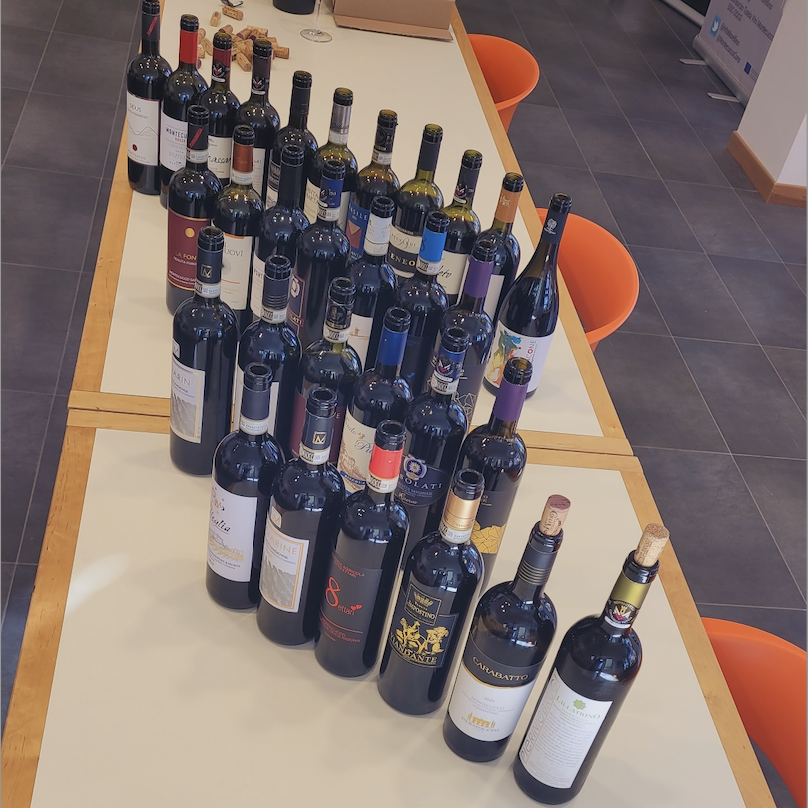
Montecucco Consorzio tasting

Montecucco Vermentino DOC

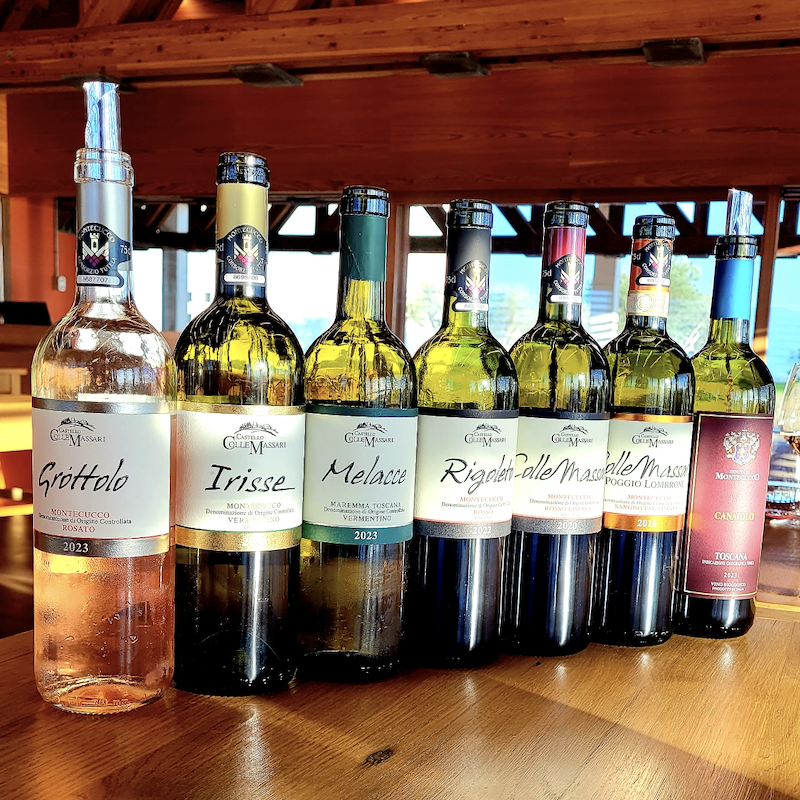
ColleMassari Montecucco Vermentino DOC Irisse 2023

Irisse as in “faith,” and a vermentino from the most important vineyards right at the winery where the winds blow in hardest from the Tyrrhenian coast. Also grechetto, fermented separately, both in wood and kept that way for up to nine months. The serious, Bordeaux-styled white for Collemassari, save for the unique bedfellow match. In Umbria you would never see grechetto blended this way and yet the experiment that started in 2005 has worked out very well. Irisse is actually dedicated to Claudio Tipa’s sister, Maria-Iris, a big fan of this style of white wine. Drink 2024-2027.  Tasted November 2024

Parmoleto Montecucco Vermentino DOC 2023

A vermentino from the area of Castel del Piano with a zesty citrus aerosol airiness about it. Also some wild plants, fennel at first and then thyme. Serious dry extract and also tannic presence from a white wine you’d expect to be easy drinking. It can be but it’s also set up to change, transform and age into something more. Reminds of Marche verdicchio in some ways and then it’s just vermentino all by itself. The length is more than impressive. Drink 2024-2027.  Tasted November 2024

Peteglia Montecucco Vermentino DOC 2023

Fermented in stainless steel and aged five months, the cleanest lees giving this a Chablis feeling and that is the heart of the matter because vermentino can be challenging in Tuscany. Here the solids in the tank bring the fresh yogurt and ricotta note that mixes so well with the freshness and succulence of the wine. Drink 2025-2028.  Tasted February 2025

ColleMassari Montecucco Vermentino DOC Irisse 2022

Of 85 percent vermentino with (15) grechetto and the only local producer to make such a blend. Grown at Poggio Sasso upwards of 300m and aged in ionly stainless steel. Spice and smoulder on the nose, fruit in simpatico and gliding easily across to express over all corners of the palate. Delicate, balanced and lengthy vintage, finishing with utmost richness and roundness. Drink 2024-2026.  Tasted November 2024

Pierini E Brugi Montecucco Vermentino DOC Lillatrino 2022

From Campagnatico in the western reaches of Montecucco and a vermentino showing some evolution with an extra year in bottle. Clearly ripened to the max and what prevails is this mature example of the variety. Still some crunch but that is starting to to melt and molt into a chewy texture. Phenolic as well which speaks to the ripening and well-pressed style. Drink 2024-2025.  Tasted November 2024

ColleMassari Montecucco Vermentino DOC Irisse 2021

Named after Claudio Tipa’s sister Maria-Isse for a unique Montecucco of oldest vines vermentino blended with 15 percent grechetto. First made in 2006 and this from a vintage to remember because all of Tuscany experienced an Easter frost followed by a scorching hot summer. Lower yield and a much more concentrated wine as compared to what will follow with ’22 and ’23. More phenolic and grippy, less delicate and of sapid force. Ready to drink. Drink 2024-2025.  Tasted at Prowein, March 2024

Peteglia Montecucco Vermentino DOC 2014

Dio mio, man, you might think you have riesling in the glass. Marco says it takes the vermentino approximately five to six years to arrive at the secondary petrol moment but here at 10-plus the result is exponentially fascinating. Mineral times 10, still crispy, croccante on the palate and herbal-botanical at the finish. Drink 2025-2027.  Tasted February 2025
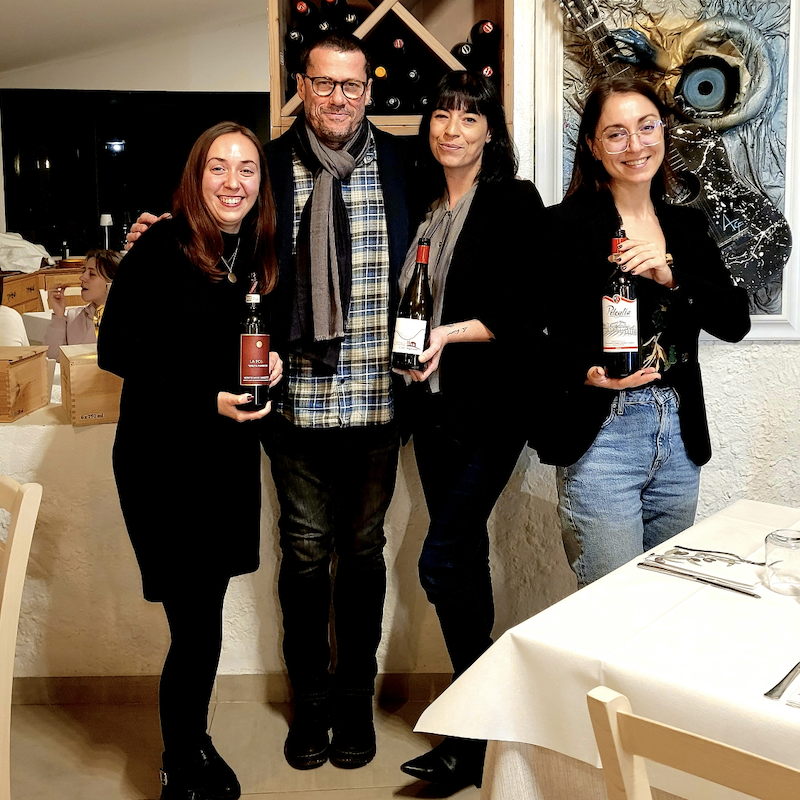
With Caterina Sincini, Carlotta Faenzi and Valentina Fraccascia

Montecucco Rosato DOC

ColleMassari Montecucco Rosato DOC Gróttolo 2023

Same grape make-up as the Rigoleto and also vineyard that is, of sangiovese, montepulciano and ciliegiolo. Smart use of plants lower down with higher acids, those that would not have the perfect skins and also some that would otherwise be removed (to de discarded) in a green harvest. Maximum two hours of skin contact and the lightest pressing for a Rosato of fruity meets salty connectivity. Now making 25,000 bottles per year for a wine that started as 5,000 annually. Very good, easy drinking and seriously proper with a salty finish. Drink 2024-2026.  Tasted November 2024

Peteglia Rosato Montecucco DOC 2023

Made with sangiovese, an easy vintage and also a wine for nothing but a glou-glou experience. Still the sapidity in spite of what is ostensibly the simplest act of expression. Drink 2025-2026.  Tasted February 2025
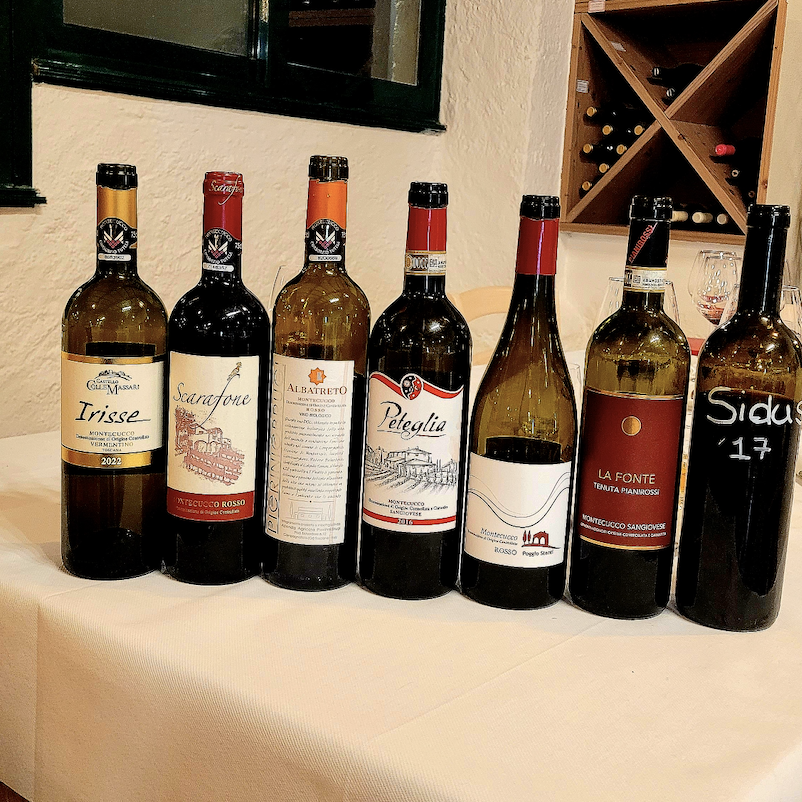
Dinner tasting of Montecucco wines

Montecucco Rosso DOC

ColleMassari Montecucco Rosso DOC Rigoleto 2022

Rigoleto is a tributary of a river that is a tributary of the Ombrone River. A “torrente,” as they say. Based on sangiovese with 15 percent each ciliegiolo and montepulciano. The former variety was here when the families purchased in 2002 and the latter went in shortly thereafter. Bright red and dusty fruit, an “on the border” type of Montecucco Rosso, edge of Maremma typology but like an island in between for the broader denomination and its wines rising up to 300m onto the Amiata. Inimitable ColleMassari feels, comfortably mid-range with only steel aging and that knowable home cooking sort of feel. Just seems like this is a spot on and correct representative of the 2022 vintage, especially for the area of Cinigiano. That being said this 2022 will live longer than most. Drink 2024-2027.  Tasted at Prowein March 2024 and twice in Montecucco, November 2024

Salustri Montecucco Rosso DOC Marleo Vino Biologico 2022

Aromatic richness more than many Montecucco Rosso, a mix of red fruit skins and roses, musky and dusty before the balsamico takes over. That brush-savoury quality is certainly not unexpected considering the warm Cinigiano location where the evergreens grow. Tart with thickening chalky texture and a similar bitter mineral finish, subtle and long. Drink 2025-2028.  Tasted November 2024

Sassetti-Livio Montecucco Rosso DOC La Querciolina Lorenzo Sassetti 2022

From Cinigiano in the Maremma-Montecucco from a Montalcino producer looking to make a fresher and easier drinking red as a compliment to their Rosso di Montalcino. The choice was to use only ciliegiolo, not sangiovese and just stainless steel used to keep things uncomplicated for easy to market access. Ripe, phenolic, clean and fresh, with some corporeal quality though not particularly pulpy or fleshy. Highest quantity of any wine in the family’s portfolio at 100,000 bottles on average per year. Drink 2024-2026.  Tasted November 2024

Amantis Montecucco Rosso DOC Birbanera 2020

Amantis, from the oenologist team of Drs. Paolo and son Jacopo Vagaggini near the village of Castel del Piano at the foot of Mount Amiata. This is sangiovese with up to 10 percent of canaiolo and all you have to do is take one nose and one sip to understand the levels of quality and understanding put into this bottle. A finely finessed and focused Montecucco Rosso – No more questions needed to be asked. Drink 2024-2027.  Tasted November 2024

Brunetto Montecucco Rosso DOC Montenero 2020

Made with 90 percent sangiovese and (10) ciliegiolo with less tannins and structure than many, “and with this wine I want to obtain a drinkability and the right balance, but also freshness,” insists Stefano Brunetto. “My business card wine.” Ticks all those boxes. Goals achieved. “I like when the bottles are finished.” Finishes as a note that is quite ferrous, attributing to these soils at the base of Monte Amiata. Drink 2025-2028.  Tasted February 2025
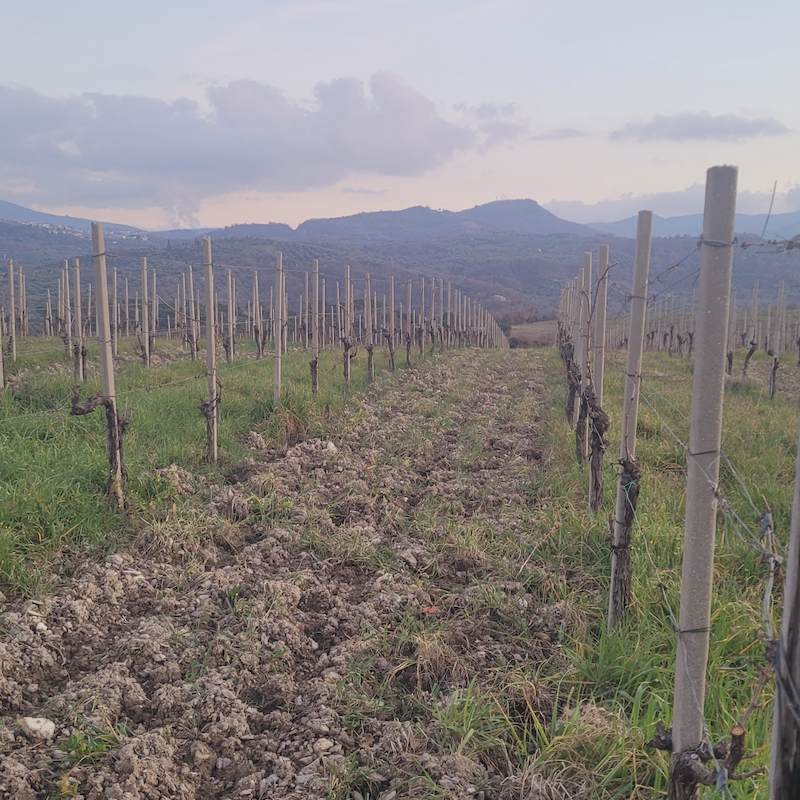
Vineyard in Montenero

Brunetto Montecucco Rosso DOC Montenero 2019

A meander of sangiovese volatility cruises through this Rosso, nothing edgy or distracting but definitely there in the linings. Not so much on the demure aromas but more so swirled into the glycerol palate. A sangiovese that reflects Monte Amiata’s higher slopes where grapes conflagrate and regale in high elevation style. Brunetto’s does not actually denote the producer on the front label and so the decision puts Montecucco (the place) and Montenero (also the place) up front and centre while Stefano’s surname sits idly by. A curious decision which could be construed as an identity crisis but more to the point as something ahead of its time because elevation is sexy, Montenero speaks to that and Montecucco is the current matter. Stefano Brunetto’s Rosso is a wave on a rising tide to float all boats. Drink 2024-2028.  Tasted November 2024

Le Pianore Montecucco Rosso DOC Tiniatus 2019

From the area of Cinigiano to the northwest of Monte Amiata in what is surely the heart of the Montecucco DOC. A well adjusted, very ripe and now fully settled Rosso that has shed its baby fat and tannic presence. There seems to be a common thread of acidity running through the wines of this commune, Rosso that include ColleMassari and Pianirossi. Pianore’s is built by more straightforward red fruit, snaps quite citrus zesty and remains uncomplicated. A solid dictionary example. Drink 2024-2026.  Tasted November 2024

Palmoletino Montecucco Rosso DOC Scarafone 2019

Vines are in vineyards of 35 and 10 years of age along the Orcia River in the lower part of the Montecucco and Cinigiano commune catchment areas. Feels like a throwback to another era in the Montecucco world with a warm and mature Rosso balanced by the truth of acidity that only sangiovese can provide. The additional cabernet sauvignon grapes are not forgotten but they are the background ambience and echoes. Low-lying, settled and easy drinking Rosso. Drink 2025-2027.  Tasted February 2025

Poderi Borselli Montecucco Rosso DOC Marracone Biologico 2019

Marracone is the Montecucco Rosso of Davide Borselli’s Poderi Borselli out of Castel del Piano on the northern slope of Monte Amiata. An organic wine at elevation that climbs to its frescezza heights with open air, arms and heart. Aromatically effusive, playfully volatile and coursing plasmic because the slightly diluted sanguine liquid of stretched elastic glycerol run freely through the veins of this glou-gou wine. Credible and frankly incredible with a sense of place, fine acidity and an unencumbered sangiovese soul. The kind of Montecucco you want to drink before even thinking about considering some of the richer, deeper, darker and increasingly wooded wines. Showing with exceptional freshness and grace for a 2019. Drink 2024-2026.  Tasted November 2024

Poggio Stenti Montecucco Rosso DOC 2019

A DOC Rosso for Montecucco though sangiovese is at 90 percent, accented by (10) cabernet sauvignon. Warmth begets more warmth, from aromas to mouthfeel and earthy accents. Grounded and just when you think it might muddle in the mire there are piques of freshness peaking through. Seems wholly typical for the Rosso as a red of heritage and locality. The cabernet serves to soften the overall feeling and the wine drinks easily if also with generosity. Drink 2024-2026.  Tasted November 2024
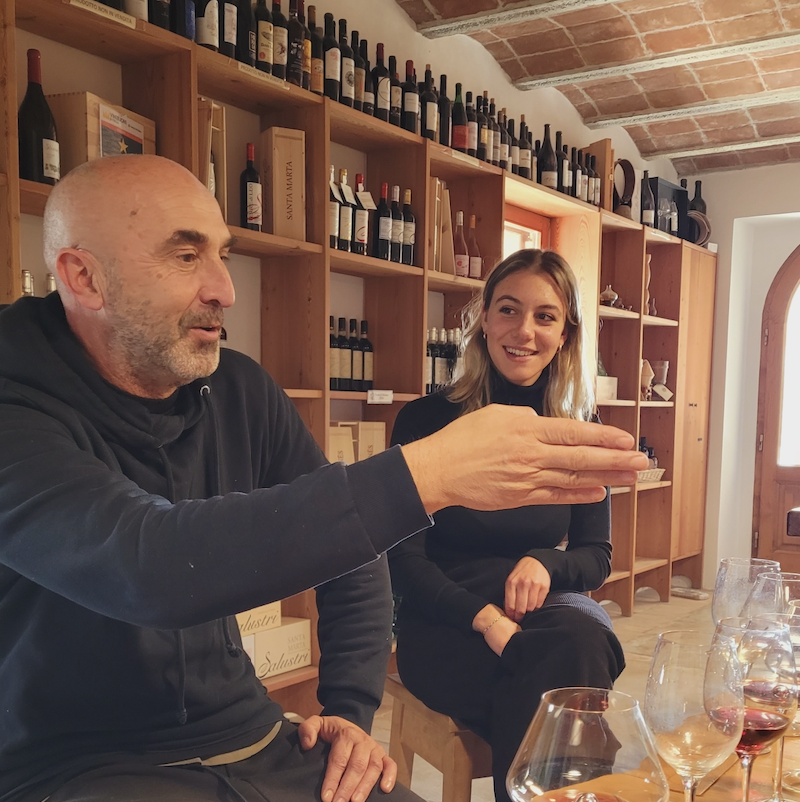
Marco Salustri

Salustri Montecucco Sangiovese DOCG Grotte Rosse 2019

First of all the vintage is simply tops for Montecucco and especially sangiovese. In the case of Salustri the fruit and floral aromatics climb up, over and off the proverbial charts while the aging style in old botti really places this where old-school, mellowed and calm sangiovese like to live. Inches into confiture yet with complexities throughout and so the interest level is high. As is the length of this sangiovese specialty. Drink 2024-2030.  Tasted November 2024

Le Pianore Montecucco Rosso DOC Tiniatus 2018

Organic since 1999, also biodynamic since 2017. The blend is 70 percent sangiovese and (30) merlot, one-third aged in tonneaux. The freshness comes from elevation at 550m and “Tiniatus” is the old Latin name for Monte Amiata. Closyre is Nomacorc made with sugar cane. “I grew up with the stuff,” quips Filippo Micillo.  Last tasted in Montecucco, November 2024

This organic sangiovese from Le Pianore hails from Montecucco and the house also produces in Maremma on the Tuscan coast. If 2017 was tight and careful of avoiding dried out fruit it is this 2018 that acts so opposite in its embrace of a glorious vintage. The fruit is more developed, riper but also phenolically speaking and built with equal high energy acidity. More substantial volume and weight from the red fruit merges into the incremental structure built into this wine. Surely a high quality example of what is possible in Montecucco. Drink 2021-2026.  Tasted November 2020

Tenuta Pianirossi Montecucco Rosso DOC Sidus 2017

Second of two Pianirossi Montecucco, a Rosso DOC because the blend is 60 percent sangiovese with (40) montepulciano, curiously only indicated on the back label. The intention, tells Caterina Sincini, is to make a lighter and easier drinking Rosso, but this is from 2017, a hot and dry vintage with no rain. Required a stringent selection of grapes from the Cinigiano area. The result is a warm Rosso with deeper plummy fruit and high acidity for juxtaposed conditioning that well represents the house style. Tart, meaningful and surprisingly more than ample frescezza though some changes in the winemaking could really effect new vitality and elevate this to become top tier Montecucco Rosso DOC. Still impressive, especially tasted side by side with La Fonte ’19 and then a second time opposite 2021. Drink 2024-2026.  Tasted November 2024
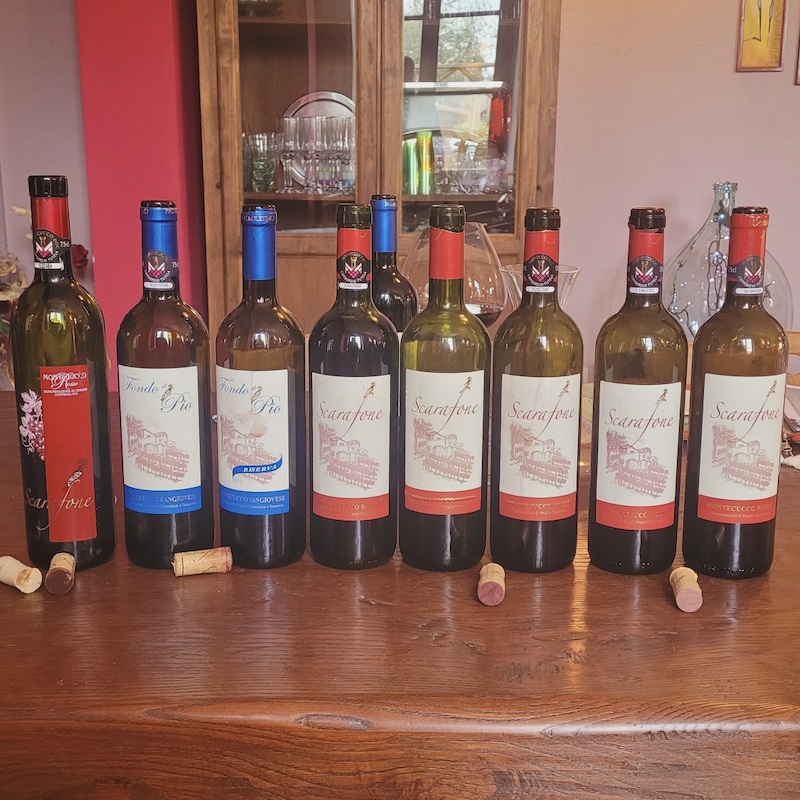
Palmoletino Montecucco Rosso DOC Scarafone 2016

Indicative of vintage but also time because 2016 is far more open and expressive that that of 2019. The latter is soft enough but somewhat quiet and the former so vibrant and exclamatory of its fruit. Definitive for the appellation and clearly the kind of Rosso (as sangiovese inclusive of 10 percent cabernet sauvignon) Marco would want to make. A truly correct Rosso to classify place and pace within that place. Drink 2025-2027.  Tasted February 2025

Palmoletino Montecucco Rosso DOC Scarafone 2015

Certainly a warmer and more mature vintage as compared to 2016 but the acidity captured is special and so there is this red citrus aspect in pomegranate and red currant to make the vintage stand out as a sangiovese (with 10 per cent cabernet sauvignon) individual. My this reminds of a Castelnuovo Berardenga Chianti Classico. Reminiscent of Castell’In Villa. Drink 2025-2027.  Tasted February 2025

Palmoletino Montecucco Rosso DOC Scarafone 2010

Truly another era in Montecucco sangiovese that might just conjure connections and memories, to other appellations and places you’ve been. Acidity still rages though now in complete control of emotions. Sweetness in the aromas, childlike and carefree, without a care in the world. The Balsamico is less savoury then from the Montecucco wines made up in the higher hills and there is a cool, chocolate mint feel to the second half of this wine. Drink 2025-2026.  Tasted February 2025
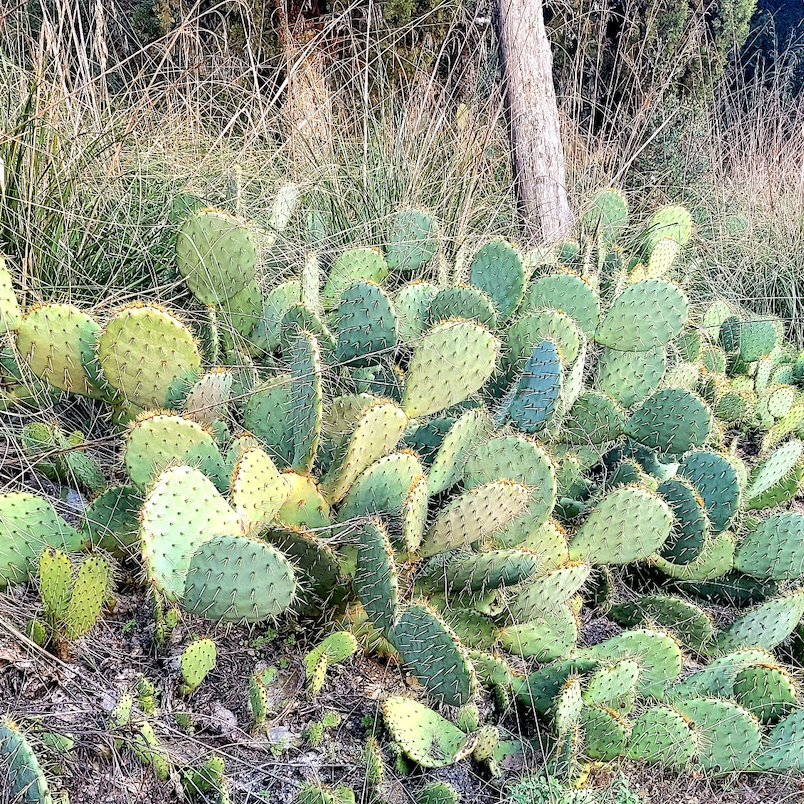
Cacti in the area of Cinigiano

Montecucco Rosso Riserva DOC

ColleMassari Montecucco Rosso Riserva DOC ColleMassari 2020

Sangiovese at 80 percent with (10 each) ciliegiolo and cabernet sauvignon. In this vintage you can really feel the cab’s strength which serves to increase the notes of balsamico, specifically “planta silvestre” or “fiore selvatico,” a.k.a. wildflowers. From the area at Cinigiano, west and just a degree or two north as the vineyards are oriented in relation to Monte Amiata. A sangiovese blend that denotes the Macchia Mediterranea as much as if not more than most. Of mirto and conifers, pine more than any other evergreen and all the herba selvatica you can imagine. A strong presence of the land with chalky tannins underneath the submissive fruit and in the end a wholly unique Riserva experience for Montecucco Rosso. Needs another year to settle down and relieve the pressure from a hot vintage that added hyperbole to this island of a wine. Drink 2025-2030.  Tasted twice, November 2024

ColleMassari Montecucco Rosso Riserva DOC ColleMassari 2019

Called the “black sheep” by the ColleMassari team because of its make-up with 10 percent each ciliegiolo and montepulciano lending spirit and spice to the sangiovese. Conceived in 1999 and first labeled in 2000, raised in Slavonian Botti for a wild and subtly woollen Rosso that has now hit its intended stride. After 18 years of childhood experience the 2019 is an adult now, on its head and shoulders in the pursuit of happiness. The vintage is in fact an ideal one to grow up and prepare for the 20s. Drink 2024-2026.  Tasted at Prowein, March 2024

Tenuta L’Impostino Montecucco Rosso Riserva DOC Impostino 2019

Tenuta L’Impostino’s is an organic sangiovese with smaller amounts of merlot, syrah and petit verdot aged 18 months in Botte (Grandi) and six further in bottle. Not atypical for Montecucco, especially in Riserva and 2019 is the most common vintage available in 2024. Impostino is the località within the commune of Civitella Paganico, west-centre for Montecucco and northwest of the Amiata slopes. The sangiovese dominates which is a positive and the “other” varieties smooth and press this into a neatly ironed Rosso. Full and weighty, acids sweet and helpful, a good and solid Riserva though it’s more “made” than some others which respectfully abide by there specific sense of place. Drink 2024-2026.  Tasted November 2024

Pierini e Brugi Montecucco Rosso Riserva DOC Sugherettaio 2018

The location is Campagnatico, western Montecucco area, lower elevation and closest to the sea. Wild and woolly sangiovese with smaller parts of merlot and cabernet sauvignon aged in Slavonain oak casks. Old school here with notable volatility and minor, though far from egregious quotient of Brettanomyces. Just feels like a wine from another era with compatriots in Montalcino but also a place like the Rhône Valley. Tannic as you know what with a slight brittle quality because of the microbial presence. Those who love this way of making slightly wild red wine will take in all of what Pierini e Brugi’s Rosso is willing to give. Drink 2024-2027.  Tasted November 2024

Brunetto Montecucco Rosso DOC Montenero 2016

First vintage for Stefano Brunetto and self-professed to be a time when he really did not yet know about the soils and climate of Montecucco. Especially after coming from La Maccioche in Montalcino because so many things are different. Quite advanced by now, also musty, showing the volatility that Brunetto is able to tame going forward, especially when he begins to hit his winemaking stride in 2019. The flavours are porcini broth, truffle and yet still there is a verticality of the day.  Tasted February 2025

Palmoletino Montecucco Rosso Riserva DOC Scarafone 2016

The Montecucco Rosso work of Erika Dotti in the area of Cinigiano and truthfully like no other because of this kind of controlled enthusiasm. Not a wild red blend but surely unencumbered, free-range and untethered to constraints of rule. Natural as they come and nearly clean – though not perfectly so. Nor does it want to be and as a 2016 the staying power is surely impressive for how long it persists. Not just lasted but holding strong. Drink 2024-2026.  Tasted November 2024

Vines are in vineyards of 35 and 10 years of age along the Orcia River in the lower part of the Montecucco and Cinigiano commune catchment areas. Feels like a throwback to another era in the Montecucco world with a warm and mature Rosso balanced by the truth of acidity that only sangiovese can provide. The additional cabernet sauvignon grapes are not forgotten but they are the background ambience and echoes. Low-lying, settled and easy drinking Rosso. Drink 2025-2027. Tasted February 2025.
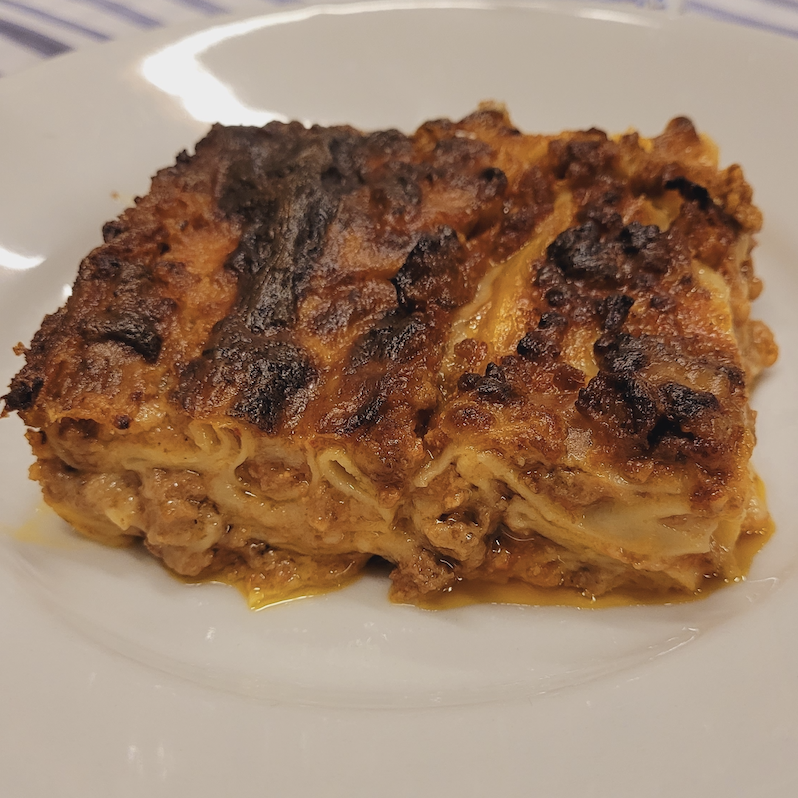
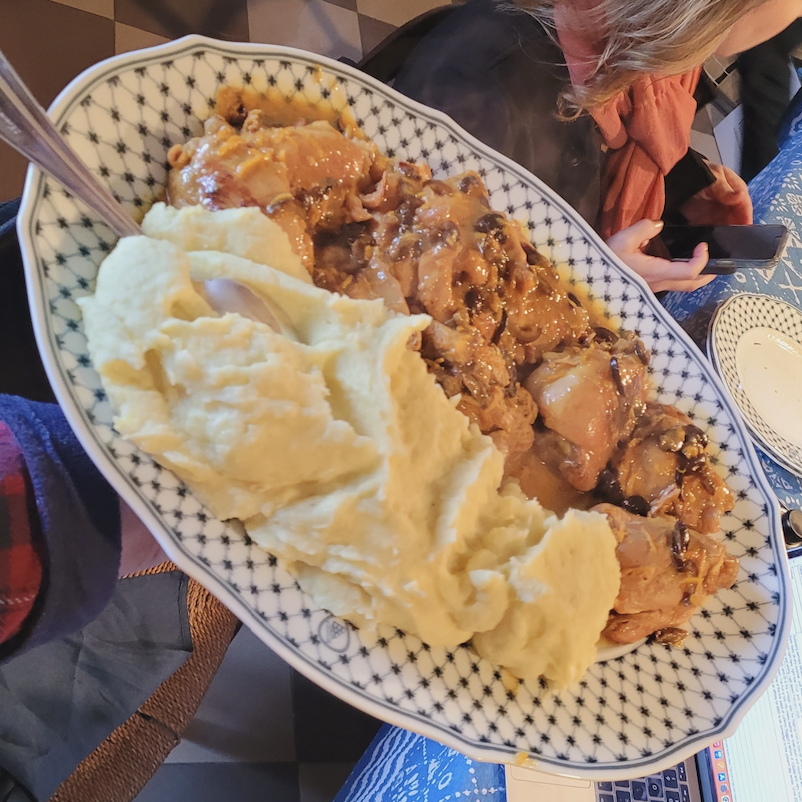
Castel del Piano’s famous Lasagne courtesy of Poggio Stenti/Macelleria Norcineria/Carlo Pieri’s mother

Montecucco Sangiovese DOCG

Basile Montecucco Sangiovese DOCG Cartacanta 2021

Basile is located in the heart of the denomination at Cinigiano, also where the Consorzio headed up by President Giovan Battista is found. Basile purchased the 30 years abandoned and derelict property at the end of the 90s. Cartacanta is his entry level wine because he does not make Montecucco Rosso, a quintessential sangiovese, not only for the territory but also for what we imagine the grape to be for Tuscany. Largest production wine, selection in the vineyards separating this label from Ad Agio (Riserva). Made in a Piedmontese Capello Sommerso style, sometimes up to 45 days of maceration in conical vats. Maximum 50 days, de-stemmed and whole berry fermentation, infusions (a.k.a délestage) instead of pump-overs. Pure sangiovese and it smells just that way, a pinch of white pepper with ripe, mature and settled fruit. A sweetness of acids that unequivocally make this one to enjoy. Early drinking vintage in any case, admittedly more approachable and drinkable than most, youthful yet accessible. Rolls across the palate with sweet tannins below to see the promise of linger for three-plus years laid out ahead. Incidentally it was Cartacanta ’13 that was tasted by Barack Obama and Justin Trudeau in Montréal during an informal visit in January of 2017.  Last tasted November 2024

The work of Giovan Battista Basile with his entry to market Montecucco sangiovese called Cartacanta, of two Italian words strung together, map and sing, perhaps as a reference to the beauty of his estate’s location. As sangiovese it’s surely a style made by the place, that being a southerly Tuscan location where ripeness is easily captured. Yet there is a cool, sweetly herbal and also savoury quality because freshness is so finely preserved. Understated sangiovese of humility and ease, without any real ambition or austerity of tannin. Makes for a fine and drinkable glass. Drink 2024-2026.  Tasted June 2024

Begnardi Montecucco Sangiovese DOCG Ceneo 2021

Another 2021 for the DOCG and wines readied earlier than the DOC blends. Begnardi is in the territory’s west at Civitello Paganico and Monte Antico with what feels like sandier soils as compared to areas further east. The fluidity and smooth consistency with darker fruit tells the story. Not particularly tannic nor is the acidity setting this up for long aging. A simple expression, totally drinkable this year and through the next. Drink 2024-2025.  Tasted November 2024

Salustri Montecucco Sangiovese DOCG Santa Marta 2021

Santa Marta is Salustri’s Cinigiano solo sangiovese and a pioneer/driver for the DOC which first came into being back in 2011. Here 10 years after that appellative adjunctive is a 2021 from an ideal vintage if perhaps one that saw quantities diminished because of an April frost. Salustri fared OK and sangiovese survived just fine thank you very much. The tannic structure here is impeccable, balanced and acting very much the anchor, but also foundation for properly judged (in terms of macerated) fruit. If this does not explain how and why sangiovese is Montecucco’s future then there will be problems finding out what will. Drink 2025-2029.  Tasted twice, November 2024

Tenuta Pianirossi Montecucco Sangiovese DOCG La Fonte 2021

Stefano Sincini purchased the farm in 2002, planted 14 hectares in 2007-2008 and there are now 20 in total producing six labels. The area of Cinigiano is the source for Pianirossi’s solo sangiovese sourced from this località. La Fonte refers to a fountain that was once in the vineyard, a hydration source for animals when it was still running. It must be down there somewhere but a vineyard is now the focus for this ripe, measured and fully formulated sangiovese. Sees 12 months in (500L) tonneaux. More tannin than many, judicious wood accentuated and liquid chalky in such regard. A dichotomous example because its both ready and grippy with quite a sheathing of wood all around. A bit extracted and heavy though time will settle the score. Tasting the maturing ’19 a day earlier explains quite a bit about the evolution of this wine. Drink 2025-2028.  Tasted November 2024

Amantis Montecucco Sangiovese DOCG 2020

Solo sangiovese going back to 2020 because “the real sangiovese needs some time for aging and you can’t rush a pure one.” No acceleration insists Dr. Jacopo Vagaggini, “it needs time to be right.” Serious sangiovese too, as here with fine lines, straight and never angular, purely Amiata, bright, mineral, proper high acidity and of course, salinity. Low layered structure buoying fruit and setting it up on a perch to merge with wood spice and that which delivers and develops texture. Great chalky clay and Galesto texture. Hyper real. Drink 2025-2030.  Tasted November 2024

Azienda Agricola 8 Ettari Montecucco Sangiovese DOCG 2020

The work of Gianni Bartolommei and son Mattia along with oenologist Jacopo Vaggagini. The etstae us called 8 Ettari because, well eight total hectares though now actually nine, six of vines and three olives, started at the end of 2015. The youngest in a vertical of 2016-2020 Montecucco sangiovese and still a certain sort of maturity in a style of Montenero wines that get where they need to go and then linger there in a very similar state for up to five years. Makes for a sangiovese of immediate drinkability and gratification. Herbal and sapid, Montenero to Monte Amiata sapidity without any ability to avoid acting out the place. Drink 2026-2030.  Tasted February 2025

Brunetto Montecucco Sangiovese DOCG Montenero Vino Biologico 2020

Campione: Single vineyard sangiovese fermented in concrete, 15 days of maceration, a year in large 35 hL botti and a year in bottle. Tannic and tight but there is plenty of freshness and it will go to bottle within a month. Grabs the palate with the classic gancha hooks, travelling up the sides of the palate and back with indiscriminate grip. Not Stefano’s favourite vintage but should well develop into a very promising wine. Always remember that Stefano Brunetto is the winemaker who says “I am more a drinker than a producer.” Wink-wink, say no more. Drink 2026-2032.  Tasted February 2025

Campinuovi Montecucco Sangiovese DOCG 2020

Another sangiovese from the heart of that variety’s main growing area around the village of Cinigiano where soils mixed between sand, clay and sometimes schist stone will effect the variety as well, in a variety of ways. Here it’s more of a blood orange and tart style, sandy with stones it would seem for a bright, high-toned example. Nothing pressed or brooding about this out of what feels like a cooler vintage. Tannins get a bit austere and dry at the finish. Drink 2025-2028.  Tasted November 2024
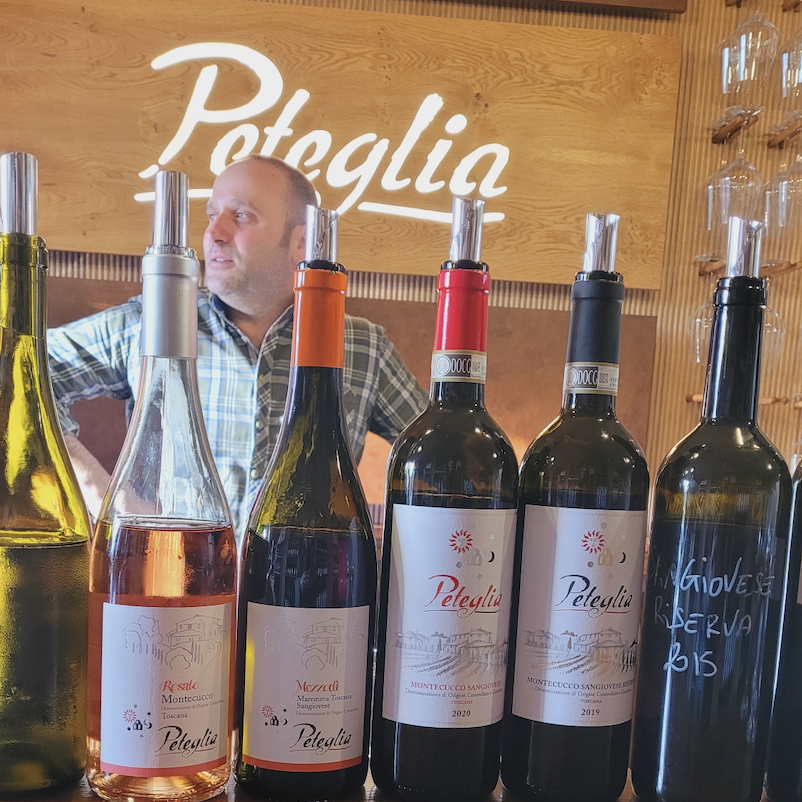
Peteglia Montecucco Sangiovese DOCG 2020

Steel followed by eight months in botti and retuned back again for four more to finish refining. A mix of Venetian Garbellotto and Austrian Klaus Pauscha botti are used and the total time is less than many other Montecucco makers. And so the freshness is more pronounced, also as compared to wines like these being made just five years ago. Marco never used barriques, maybe for caberent sauvignon but not for sangiovese. Drink 2025-2029.  Tasted February 2025

Assolati Montecucco Sangiovese DOCG 2019

From aboard Amiata’s northern slope at Castel del Piano and a whopper of a sangiovese labeled at 15 percent. Vintage directed but then again there are others from this commune and località at alcohol denoted as one or 1.5 degrees less. Picked late at end stage maturity it feels with a heavier set of fruit circumstances, lower acidity and mild tannins. Some of this fruit is desiccated and that wild strawberry meets frutta di bosco is unmistakeable. Drink up this Riserva styled sangiovese that does not have years of life left to live. Drink 2024-2025.  Tasted November 2024

Azienda Agricola 8 Ettari Montecucco Sangiovese DOCG 2019

Though 2020 shows early accessibility the same should not excatly be said about 2019. A vintage harder to come by to find immediate joy and though considered as a very good Montecucco vintage that sentiment concerns age-ability. The ’19 is still taut and compact, yet to open, full of fruit and even more sapidity but here in a very mineral salty way. That’s the style and it means Gianni paid attention to the season.The spicy finish confirms all of this.  Last tasted February 2025

From one of Montecucco’s signature sangiovese areas at Castel del Piano on Monte Amiata’s northern slope. Another huge 2019 though this from Otto Ettari (yes, meaning eight hectares) neither broods nor lays low. It’s quite effusive and aromatically startling with captured acidity both tart and sweet. The fruit is so expertly ripe and macerated with great acumen, the tannins coming though on a level that puts all in balance. This is a big sangiovese for Montecucco but the equanimous capture needs to be admired. Drink 2025-2029.  Tasted November 2024

Brunetto Montecucco Sangiovese DOCG Montenero Vino Biologico 2019

Montenero is the name of the wine for a Montecucco Sangiovese DOCG from the producer (Stefano) Brunetto out of the higher Amiata reaches near Castel del Piano. A different set of parameters and circumstances that might make one blind taste such a wine and consider nebbiolo or nerello mascalese but in any case we can certainly view this as mountain wine. A wild herb and floral nose, of bergamot and vetiver from a wine made by an Ombrone river poet in search of naïveté. It’s well made to be sure, pressed a bit which brings out a slight greenness in the not perfectly ripe tannins and yet the wine does impart that necessary ethereal-like character. Feels like a work in progress from Brunetto and the sky feels like the limit for his wines. Also, a lighter weight bottle, please. Drink 2024-2029. Tasted November 2024.

Maciarine Montecucco Sangiovese DOCG 2019

A Seggiano sangiovese, north slope of Monte Amiata yet lower down in elevation, warmer and exaggerated by the vintage. A 2019 with a heavy set of fruit and well-developed alcohol, something absolutely necessary because phenolic ripeness is everything. Which this expresses and along with it comes the glycerol, silken texture and vague impression of sweetness. Well made and good to go from now to the end of winter next. After that the softness and muddled flavours will begin to set in. Drink 2024-2026.  Tasted November 2024

Podere Montale Montecucco Sangiovese DOCG 2019

The area is Seggiano, località Podere Montale just north of Castel del Piano on the north slope of Monte Amiata. A sangiovese with a feeling of dried herbs and even more so local balsamico which refers to a more Mediterranean climate than that of the higher reaches. More akin to certain micro-climates near Cinigiano with evergreen very much on the nose of this wine. Darker fruit as well, a unique expression with good presence, silken and gliding across the palate. Not particular grippy or tannic and so ready to drink whenever you are. Drink 2024-2026.  Tasted November 2024

Poggio Stenti Montecucco Sangiovese DOCG Tribulo 2019

Coming upon Poggio Stenti’s 75th anniversary and here six years before 2025 for a mountain sangiovese that speaks in a clear Castel del Piano vernacular. Purely and expressly sangiovese, sanguine and in tune with so many other high level wines from other (more famous and also expensively priced) Tuscan denominations. Poggio Stenti’s feels like it can ride alongside and offer similar experiences with its medium-toned floral aromas and glycerin glide over the palate. Just a hint of green tannin detracts from its own version of perfection but all in all this is a very good wine. Drink 2025-2028.  Tasted November 2024

Tenuta Pianirossi Montecucco Sangiovese DOCG La Fonte 2019

First vintage was 2011 when the DOCG Montecucco came into being. Essentially from a single vineyard with a balanced vintage (minus the heat of 2017) housed within. The name considers the animals that would come to drink from the spring. Layers of abundant richness and a chalkiness part wood and part vineyard. Judicious yet reserved use of the barrel for a sangiovese where both variety and land may speak their truths. Usually 5,000-6,000 bottles are produced. Drink 2025-2028.  Tasted November 2024
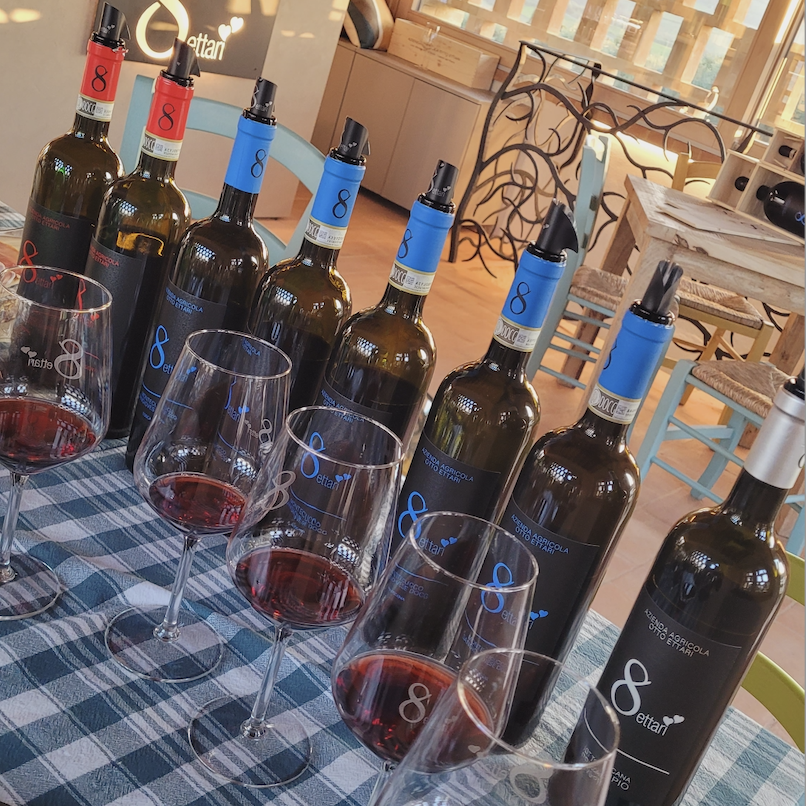
Azienda Agricola 8 Ettari Montecucco Sangiovese DOCG 2018

Lighter vintage for Montecucco sangiovese, brighter fruit, more transparency and dried floral aromas. Rises in spirit and also delivers a true balsamico, not quite macchia but something you get from proximate volcanic terroir in these foothills of Monte Amiata. More presence on the palate that remind of the 2020 IGT. This is an in between vintage for the sangiovese, neither structured nor fresh and fruity but a bit of both. Drink 2025-2027.  Tasted February 2025

Azienda Agricola 8 Ettari Montecucco Sangiovese DOCG 2017

Not as light and transparent like 2018 but more expressive of this parochial local Balsamico and dried floral elements. Showing quite a bit more maturity than all the other wines but also wood. Still there is some charm, certainly località and understood qualità. Drink 2025-2026.  Tasted February 2025

Azienda Agricola 8 Ettari Montecucco Sangiovese DOCG 2016

The biggest vintage of all the wines in this 2016-2020 vertical and a sangiovese that has moved very little in its eight-plus year tenure. Still fresh, taut and compact, the herbs everywhere, the Balsamico and this amazing iron meets hematic character very much in play. Drink 2026-2029.  Tasted February 2025

Brunetto Montecucco Sangiovese DOCG Montenero Vino Biologico 2016

This was Stefano’s first vintage after leaving Montalcino’s Le Macioche in 2014 and setting up shop on Monte Amiata. Vines are between 20-40 years old at this time and organic certification will follow in 2019. Based on sangiovese at 90 percent as per the regulations with a few points of ciliegiolo and merlot from a 1.5 hectare vineyard that shares space with trebbiano di toscana, malvasia and insolia. Montenero is a firm, concrete and linear example aged a year in 30 hL botti showing some age yet remaining quite vertical. An extra year in bottle ahead of release and a further six-plus ahead of this tasting tells us how well it works as a structured sangiovese of Montecucco. The best vintages are yet to come. Drink 2024-2025.  Tasted November 2024

Peteglia Montecucco Sangiovese DOCG 2016

From vineyards in Montenero at 450m for sangiovese treated to a long (up to 28 days) maceration. Ages in Slavonain Botti Grandi for 18 months and a further six in bottle ahead of release. Serious sangiovese in the vein of say Chianti Classico by Bucciarelli and quite frankly 2016 is still in its adolescent stage. Tannins remain firm and the wine is getting close with acidity persistently sweet and the elevation very much the driver. Still delivers freshness and with another year this should be at peak. Can age this to the end of the decade. Drink 2024-2030. T asted November 2024
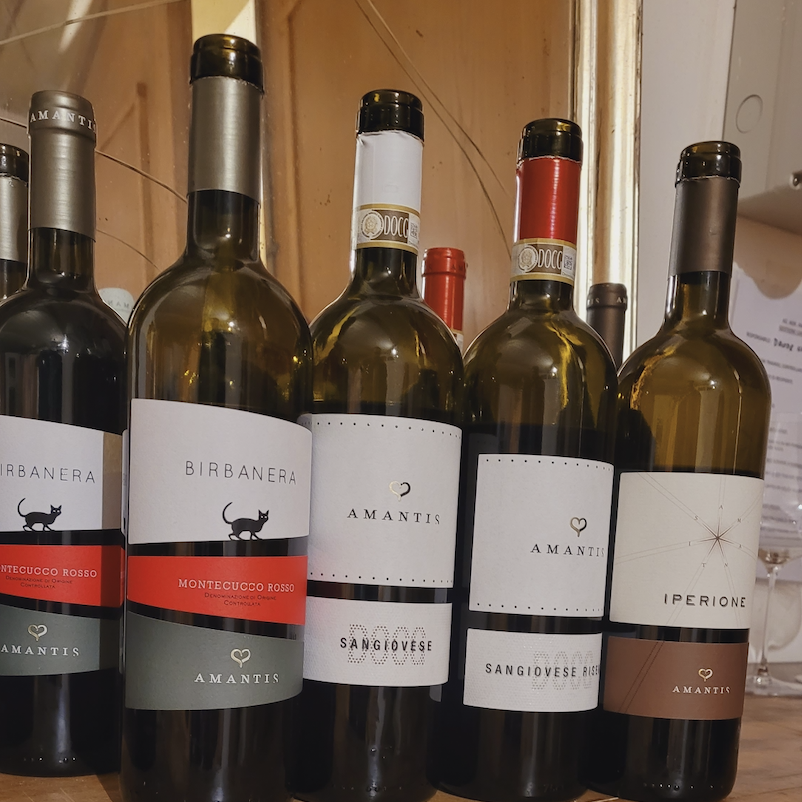
Montecucco Sangiovese Riserva DOCG

Amantis Montecucco Sangiovese Riserva DOCG 2019

Riserva sees 24 months in (500L) tonneaux only and then like all of the Amantis sangiovese it must wait even longer before release, Not made in every vintage. Last three vintage produced are 2015, 2016 and this 2019 which is hitting the market now. For the first time we might make a comparison to (wink, wink) Brunello di Montlacino, not because we want to but due to the fact that Drs. Paolo and Jacopo Vagaggini have worked there with many wineries and produce their own 10,000 bottles at Croce di Mezzo. And so Biondi-Santi and Canalicchio di Sopra (amingst others) are connections, also with the style and effect of this kind of Montecucco sangiovese. As fine, focused and determined as tannins will get from this territory. A reminder that the perceived sense of acidity is higher here (and maybe highest for Montecucco) so time is the absolute requiem. Amants Riserva 2019 is one of the top Montecucco wines made through time. Drink 2025-2034.  Tasted November 2024

Assolati Montecucco Sangiovese Riserva DOCG 2019

Castel del Piano is the source upon Monte Amiata for sangiovese at Riserva DOCG status with a keen sense of maturity and resolution. A wealth of fruit, exuberance of acidity but also wood shedding plenty of spice, though even more acting like a flannel blanket. A case of ready to go but also needing some time to melt, integrate and soften further. There is just so much chocolate on the finish. Drink 2024-2026.  Tasted November 2024

Azienda Agricola 8 Ettari Montecucco Sangiovese Riserva DOCG 2019

Fine work from 2019 Riserva because the wood is not up front, the sangiovese is on the lighter and transparent side and what this does is take the pinpointed place to transpose and exaggerate its character. That should be and is in fact the point, but what also comes through is a gently developed if higher concentration of fruit. Softer than the Classico sangiovese, available to enjoy just about now though clearly structured to age. A wine just as impressive as the most excellent 2016. Drink 2026-2031.  Tasted February 2025

Basile Montecucco Sangiovese Riserva DOCG Ad Agio 2019

Pure Sangiovese, top drop for Basile and made in the vineyard. That is where plants are isolated for this Riserva but the story goes back much further, into the agriculture. Minimal tilling, sowing of seeds and cover crops, grasses etc., always improving biological organics, feeding the bacteria and fungal matter to allow these organisms to in turn generate energy and positivity for the plants. You can count how many times Giovan Battista Basile talked about his enumerative feelings for the vintage and truth be told 2019 delivers the classicism of waves rolling over the palate, through fruit, acidity and all that drives the fineness of the wine. Also for its ability to age, like a tide coming in, slowly with each wave gaining incrementally and seemingly infinite in action. Five months passed on by and yes, Ad Agio is becoming at ease which means it is indeed ready to fly. Great spirit and energy right now which is perfect for transition seasons with bright warm days and big time cooling down at night. Bring on the ragù di cinghiale!  Last tasted November 2024

Ad Agio, “at ease,” a label indicative of a double entendre. The Maremma label is Comandante and so the first interpretation for this Montecucco Riserva would be a military one but the second would speak to the beauty and tranquility of place. Here from just south of Montalcino, not near the coast like the Maremma but still a place where the Basile family finds and creates wines of calm. This is decidedly deeper and more structured than the “Classico” but still within reason. Notably seasoned with spice and a toasted nut quality but in a way less austere than the Maremma because the tannins are softer from Montecucco. There is some fine energy here and a luxe feeling gained because of the vintage. Just about ready to go. Drink 2024-2026.  Tasted June 2024

Palmoletino Montecucco Sangiovese Riserva DOCG Fondo Di Pio 2019

With 100 percent sangiovese the style, or better said the effect is as much Orcia Valley as it is Montecucco from vines growing at lower elevation above the banks of the Orcia River. Deeper and darker fruit, cooler, metallic and gelid.  Last tasted February 2025

The producer is Azienda Agricola Palmoletino (the work of Erika Dotti) though she does not put her estate on the front label. Instead it reads as Fondo di Pio, a curious expression which feels like it could mean “the end of religion,” or perhaps “losing my religion.” In any case the sweet volatility, controlled wild character and unctuous glycerol define this sangiovese and remind us of what grape and place combined are meant to deliver. Feels like a wine of commentary, of trying to act so natural in the face of too much commercialism. Succeeds for the most part and surely Dotti loses no sleep over her work (and in phases where most dreams occur), but Fondo Di Pio is also vulnerable, innocent and out of time. “Consider this the hint of the century, consider this the slip.” Drink 2024-2027.  Tasted November 2024

Parmoleto Montecucco Sangiovese Riserva DOCG 2019

Mountain wine, a sangiovese out of Castel del Piano as Riserva that curates its accommodations by absorbing wood (likely Botte Grandi) with ease and style. A fine aromatic swirl of sweetness and volatility, flavours that go well beyond fruit into the soil and the forest, especially the forest with the floor drumming up an aromatic return. Goes round and round in circles, makes you think about terroir, keeps you connected and takes you places you’ve perhaps never been. Classic sangiovese. Drink 2025-2031.  Tasted November 2024

Peteglia Montecucco Sangiovese Riserva DOCG 2019

From 40 year-old vines only put to Riserva in the best vintages, with ’16, ’15, ’13, ’12, ’09, ’06 and 2005 being the previous seven. Same botti use as the non-Riserva, Klaus Pausha mainly now and for longer than that normale. Seriously structured, still a bit hard and taut even though it’s already at five-plus years of age. Impressive structure, not aggressive but tight and length is exceptional. Marco says soon, it will soften soon.  Last tasted February 2025

The location is Montenero d’Orcia within Castel del Piano, down at the early rise of the northern slope aboard Monte Amiata. A wildly aromatic sangiovese but one from a certain micro-climate where the Macchia Mediterranea rules. All about balsamico, a bush and brush savour much more pronounced than herbs fresh or dried and here the elements of what grows around the vineyard is key to understanding these aromas. The palate and texture are profound, the overall experience something that feels attuned with terroir. If you want to know about Montecucco sangiovese with great ability to age then this is an ideal place to begin such a journey. It is the real deal. Drink 2026-2031.  Tasted November 2024

Podere Montale Montecucco Sangiovese Riserva DOCG La Casetta 2019

Seggiano, località Podere Montale just north of Castel del Piano on the north slope of Monte Amiata. An aromatic potpourri that concentrates the local balsamico, not herbal per se but something more distinctly savoury and brushy, denoting a true sense of place. The pine tree element is strong, as is the fruit and ripeness of the grippy tannins. This will age so very well and waiting a year for the green elements to settle down and in is high recommended. Drink 2025-2030.  Tasted November 2024
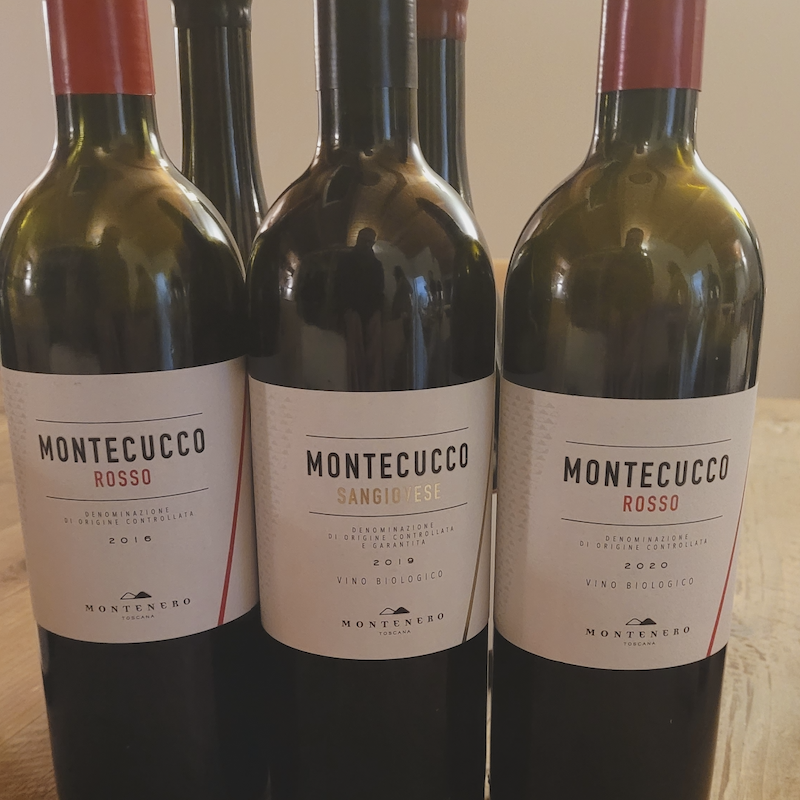
Azienda Agricola Otto Ettari Montecucco Sangiovese Riserva DOCG 2018

So consistent with the 2019 in that Riserva does not express gratuitously as a stronger, grippier and more muscular sangiovese. Instead one of more fruit, a mineral-chalky structure and a relative softness as compared to the classico.  Last tasted February 2025

Castel del Piano on Monte Amiata delivers great fruit for warm 2018 and an aromatic potpourri dominated by spice. Smells like dried roses, cinnamon, nutmeg and a faint resonance of bergamot. Quite woody mind you but this is Riserva style and even though the wine is coming upon six years of age there is still some further maturing yet to do. Clearly well made, slightly overambitious but wholly acceptable considering the quality of all parts available. Will be at its best come late winter. Drink 2024-2028.  Tasted November 2024

ColleMassari Montecucco Sangiovese Riserva DOCG Poggio Lombrone 2018

I walked this vineyard only recently upon arriving to the Castello di Montecucco at the advent of a blue-lit twilight on the second Sunday in November. The impression was a captivating one, from the site, its undulating slopes casting a strong and forceful presence. Poggio Lombrone was first made in 2007 and ColleMassari’s voice was instrumental in securing the DOCG for Montecucco sangiovese. A special vineyard with older plant material than just about anywhere in Montecucco, upwards of 60 years now and THE place to promote the authenticity, but also to preserve the local savoir-faire that distinguishes Montecucco sangiovese. Longest ager in Riserva togs because of potential, a wine of località Cinigiano fermented for at least 30 days (and 45 in 2016) in open Gamba casks with daily (hand) punchdowns to realize a production of 9,000-10,000 bottles. Ages in only two or three year-old grandi botti but not in really old casks. French of a few years are ideal to seek and attain the desired elegance. The 2018 is a strong version of varietal independence off of the Lombrone hillside, upright and linear yet never found to be awkward, though it is a wine of tannic charge. Fine tannins in fact with good energetic pulse, still needing more integration, its ceiling set ultra high. Drink 2026-2033.  Tasted November 2024

Maciarine Montecucco Sangiovese Riserva DOCG 2018

From the northern slope of Monte Amiata at Seggiano and a vintage with plenty of late season heat to develop sugars, phenolic ripeness and also alcohol. As such the maturity, advanced fruit character and density are all part of this sangiovese. Reminds of dried fruit roll up but that is not to say that freshness is absent. It acts as a spirited wine but there is no mistaking the weight and also wood come along to help supply the emulsified style. Drink 2024-2027.  Tasted November 2024

ColleMassari Montecucco Sangiovese Riserva DOCG Poggio Lombrone 2017

“Poggio” and “L’Ombrone,” the hill and the river, a solo sangiovese from 40 year-old vines growing at 450m that represent some of the highest elevation in the foothills by the Ombrone looking up to Monte Amiata. Ferments in 1000L wood vats and sees 30 months in big barrel. Irrepressible frescezza for a 2017 which speaks to the advantage of elevation in the Montecucco territory. Plenty of vitality for sangiovese found right now to exist in a great place, for location and time. Drink 2024-2027.  Tasted at Prowein, March 2024

Tenuta L’Impostino Montecucco Sangiovese Riserva DOCG Viandante 2017

The oldest of the Riserva being poured in this tasting of 30 Montecucco wines, here from the west-central area in Montecucco. Impostino is the name of the località inside the commune of Civitella Paganico and this from the warmest and even more so driest vintage of the last, well many years. Notable herba selvatica on the nose, more so than let’s say balsamico, of rosemary and thyme. Smells like a dry-rub spice mixture with pomegranate and red currant. Dried and leathery fruit flavours are quite old-school sangiovese for a wine that just feels like it comes from another time. Drink 2024-2026.  Tasted November 2024

Basile Montecucco Sangiovese Riserva DOCG Ad Agio 2016

Tasted in a mini vertical from 2014-2016 and all three are showing maturity, though within the context of a holding pattern. The secondary notes are exclusive to the aromas while the palate reigns in to remains broad, full and with acids keeping great energy alive. This is the crux of Montecucco, of ripe wines that evolve somewhat quickly but this sweet acidity keeps everything moving swimmingly along. Ad Agio ’16 has arrived at stage two but it will hold this way for another four, possibly even six more years. Drink 2024-2028.  Tasted November 2024

ColleMassari Montecucco Sangiovese Riserva DOCG Poggio Lombrone 2016

Winemaker Giovani Puccioni will tell you that 2016 was as perfect a vintage as there has ever been in recent times. The kind of season to gift fruit generosity and also quantity for the most concentrated and flattering sangiovese off of the hill known as Poggio Lombrone. This vintage arrives 18 years after the birth of the estate and marks the ninth for Puccioni. No other label represents the twain marked by this vineyard between sea and mountain, as the harbinger for effect because of PL’O being such a windy place. The now 60 year-old vineyard (or 50-plus at the time of this ’16) gifted optimum fruit sent to open-top Gamba fermenters for 45 days (though the usual number is 30), punched down by hand. Seven hectares produce 9,000-10,000 bottles. As sleek as it is silky, smooth as it feels polished and with the lion’s share of its freshness still intact. Stylish – seriously stylish sangiovese. Drink 2024-2028.  Tasted November 2024

Palmoletino Montecucco Sangiovese Riserva DOCG Fondo Di Pio 2016

Vintages are everything for these wines and 2016 is reflective of a season for red fruit repeated in the mirror by instinctive an distinctive sangiovese acidity. Not something noted in 2019 but here a different level of grace and charm. Both are wines of focus and finesse but 2016…this is something other and will ultimately be longer lived. È buono. Drink 2025-2029.  Tasted February 2025

Basile Montecucco Sangiovese Riserva DOCG Ad Agio 2015

The ’15 is in fact very different to the ’16, namely because of the blood orange meets chocolate character that maturity brings to the current glass. Secondary time and a next plateau that should stay like this for a few more years but I would personally drink the warm and developed ‘15s sooner rather than later, The tannins are fully resolved and while the acidity shines bright it’s not quite as grippy and sweet as that of the ’16. A bit tart to be honest but still a fine sangiovese as Montecucco. Drink 2024-2026.  Tasted November 2024

Peteglia Montecucco Sangiovese Riserva DOCG 2015

Marco and Emanuele Innocenti farm nine hectares of vineyards plus nine of olive trees, along with a herd of 60 Chianina cows. Their Peteglia Riserva ’15 continues to express an amazing freshness and the search for success lies in the aging, the time allowed, the requiem to bring the wine into a place of charm, beauty and grace. Can’t keep these wines in the cellar? Think that Montecucco does not age? The proof is right here but the market still does not know, or chooses not to understand. The ’15 is impressive for its great persistent fruit and acidity. Will stay this way for three or more years and then perhaps transform into something truly interesting, with even more spezzatura and sanguinella. Bloody refreshing, screams terroir and not wood. Drink 2026-2029.  Tasted February 2025

Basile Montecucco Sangiovese Riserva DOCG Ad Agio 2014

Now this is sangiovese. High acid, thriving and forward thinking sangiovese. But purely Montecucco and do not confuse these Riserva as anything but. They have a signature, a sense of place abided and defined, but also a mark of their vintages. The 2014 season was much maligned and should not have been because cool, a little bit wet and later harvested grapes can accumulate great character – and lead to longevity. This is the example you should taste to understand the connections and also the irony. Great length, believe it and teach others about how these things can come to be. Drink 2024-2027.  Tasted November 2024

Basile Montecucco Sangiovese Riserva DOCG Ad Agio 2009

A solo sangiovese back then not fermented in wood yet aged in tonneaux for two years, followed by an additional two in bottle before release. The ’09’s acidity is still thriving, very much alive and kicking to maintain a high level of energy in the wine. Really good showing here – as well as if not exceeding expectation. Drink 2024-2026.  Tasted November 2024

Palmoletino Montecucco Sangiovese Riserva DOCG Fondo Di Pio 2006

A throwback, a sangiovese from another era in the Montecucco, looking forward to what will eventually become with the 2019 Riserva, of a similar warmth and maturity balanced by the truth of acidity that only the Tuscan variety can provide. The truffle and porcini broth have arrived but not without other complexities swimming in the pool. Notes of liquorice, carob and cocoa, drops of herbal Amaro and a finishing delicasse that has sweetened with 18-plus years in bottle.  Tasted February 2025
Sparkling, Toscana IGT and Maremma DOC

Peteglia Blanc De Noir Método Classico Pas Dosé Millésimato 2020

First fizz vintage for Petaglia, a solo sangiovese 48 months on lees and no dosage. Blanc de noirs, golden hue, oxidative style, gingery, cardamom, further exotic spicing and truly complex character. You think about the beach in a salty way but it’s more of sapid and botanical feel. When a winemaker’s approach is this way and there is great energy then there is success. Clearly a leader in Montecucco sparking made in the traditional method. There aere and will be 3,000 bottles produced every second year, this first of which is to be released this coming July. Brilliant wine, concept and production plan. Drink 2025-2028.  Tasted February 2025

Salustri Rosé di Chiara 2023, Toscana IGT

A Rosé made with ciliegiolo, mammolo and other indigenous varieties, skin-macerated to result in a true posit tug between saltiness and sapidity, sweet red currant fruit and botanical phenolics. Unique even in the widest range of a wine category, not the only one of its kind but likely no other Montecucco producer is making Rosato this way. Can see this garnering great appeal. Drink 2024-2026.  Tasted November 2024

ColleMassari Maremma Vermentino DOC Melacce 2023

A varietal vermentino grown in the Montecucco area that used to be labeled as such but marketing prevails and now Maremma gets the nod. From the vineyard at the tiny river or stream as tributary to another that is the same to the Ombrone. The best vermentino material goes into The Irisse (with grechetto) and here Melacce is namely concerned with fruit. That it is, not the saltiest white by any stretch of the imagination and so please proceed to drink away. Drink 2024-2026.  Tasted November 2024

Salustri Vermentino Nara’ 2023, Toscana IGT

Would be hard to find more fruit in any vermentino as here in Nara’ 2023, a truly ripe, vinous example. A vermentino that would require great willpower to not kill a bottle all by oneself. So crushable, sweetly phenolic and equipped with ample attack. Nothing really salty about this one. Drink 2024-2025.  Tasted November 2024

Montenero Arturo 2018, Toscana IGT

“This wine was born as an experiment” explains Stefano Brunetto. A blend of 50 percent trebbiano di toscana, (30) malvasia di candia and (20) ansonica, planted by the previous owner for a kind of Vin Santo but Stefano does not really like sweet wines. And so here is a sort of Orange wine, clean and savoury, a dry marmalata of orange, persimmon and lemon. Five day maturation on skins ahead of fermentation at 10-12 degrees temperature, just for colour. Ages one year in concrete egg and also very old barriques from a Loire producer that makes Sancerre. A truly curious wine, dry as the desert, tang at full and sharp right through to what is a surprisingly long finish. An affinity with Oslavia but without oxidation, replaced by extract and tannin. Drink 2025-2027.  Tasted February 2025

Salustri Bianco Marco Salustri 2018, Toscana IGT

“A wine of the house,” says Marco Salustri but in his shy way it feels like he’s very proud of this trebbiano. A little bit of skin contact goes a long way to develop a wild set of aromas, including the uncanny scent of beeswax and surely a result of the transformation in the cellar. Trebbiano alone would not cause this effect, nor the pear butter, apricot or longan note. Tropical and my goodness it smells like some Ontario Icewine, in other words maple syrup, but this is perfectly dry Tuscan trebbiano. Drink 2024-2026.  Tasted November 2024

Peteglia Sangiovese Maremma DOC 2023

The young sangiovese, aged only in steel for five months and so it can’t be labeled Montecucco. The vines are younger than 10 years for fruit used in sparkling, Rosato and here as a varietal sangiovese. Some reduction in a peppery way, a bit carbonic, no whole bunch however, non-vegetal and fresh. A bowl of berries. Basic and glou-glou. Drink 2025-2026.  Tasted February 2025

Montenero Sangiovese Rebruno 2019, Toscana IGT

For 2019 Stefano Brunetto did a four week maceration with 20 percent whole bunch and three years of aging, one each in concrete, botti and tonneaux. “When I started I didn’t want to make three different sangiovese but by 2019 the vineyards were all different and so I decided I needed to make three different expressions.” Quite vinous this one, completely different than the Montecucco sangiovese, almost sinewy and devilishly chewy. So curious, verdant and savoury with a real lime soil impart. Still young and finding its way. Drink 2026-2030.  Tasted February 2025

Montenero Sangiovese Rebruno 2016, Toscana IGT

Now this is a wine that has retained its freshness, keeping its joy and faith alive in spite of the exotic chocolate and spice flavours in the wine. Still some chalky tannin to resolve but for the most part this sangiovese is drinking well, with poise and grace. Drink 2025-2026.  Tasted February 2025

ColleMassari Tenuta di Montecucco Canaiolo 2023, Toscana IGT

A rare varietal canaiolo grown at the Tenuta di Montecucco, a famous church with outside buildings and chattels up on a hill near Cinigiano – A property acquired by ColleMassari in 2008. No wood involved, just the sapid canaiolo facts. A very particular grip and floral element, quite a black pepper finish but also a balsamico that comes from place. This is Montecucco in a nutshell, typical yet different and nothing in Chianti Classico expresses like this. Great curiosity and the team abides so dutifully by its requests. Drink 2024-2027.  Tasted November 2024

Montenero Ciliegiolo Pàmpano 2019, Toscana IGT

A 100 percent ciliegiolo fermented in concrete with one day (of two weeks total) of carbonic maceration. Sees two years of aging in tonneaux followed by one in bottle. Here at Montenero the ciliegiolo is picked two weeks before sangiovese and so it must be treated differently but also more akin to French, as opposed to Italian grapes. Gamay for sure but also parts of it like syrah. Less than decade working with it but the journey is on track for gainful understanding. Pàmpano (from Verona) describes a giovane, a stupidotto, something a grandmother calls a young man every day. Drink 2025-2027.  Tasted February 2025

Salustri – Marco e Giulia Salustri Ciliegiolo Numero Due 2023, Toscana IGT

One of the very few varietal ciliegiolo made in the Montecucco area, from a terroir situated between the Tyrrhennian Sea and Mount Amiata, on well decomposed Arenaria sandstone soils. A typically rustic and musky fruitiness, the aromas of scraped skins off of red fruits, including pomegranate and that fruitiness is everything for this lithe and transparent wine. The finish holds the slightest cherry stone or almond bitterness. Clean and fresh but like a young person with an old soul. Spot on, never complex but just right. Drink 2024-2026.  Tasted November 2024

Montenero Chimanera 2019, Toscana IGT

A 100 percent merlot from a small plot “with the same philosophy as the sangiovese, although it’s harder to obtain a merlot that is drinkable and fresh” says Stefano Brunetto. Fermented in concrete and aged three years in 500L tonneaux, followed by another in bottle. No it’s not Saint-Émilion, Galatrona or Masseto but it is in fact good merlot. In spite of climate conditions not perfectly suitabl to the grape due to the intensity of the sun, this does takes advantage of its lime and clay soils with the presence of iron to make a merlot with energy and Brunetto’s desired drinkability. The vintage made for some tannic and hard to get at sangiovese but it worked well for this grape. Acidity is high but the wine is softer and quite accessible. Drink 2025-2028.  Tasted February 2025
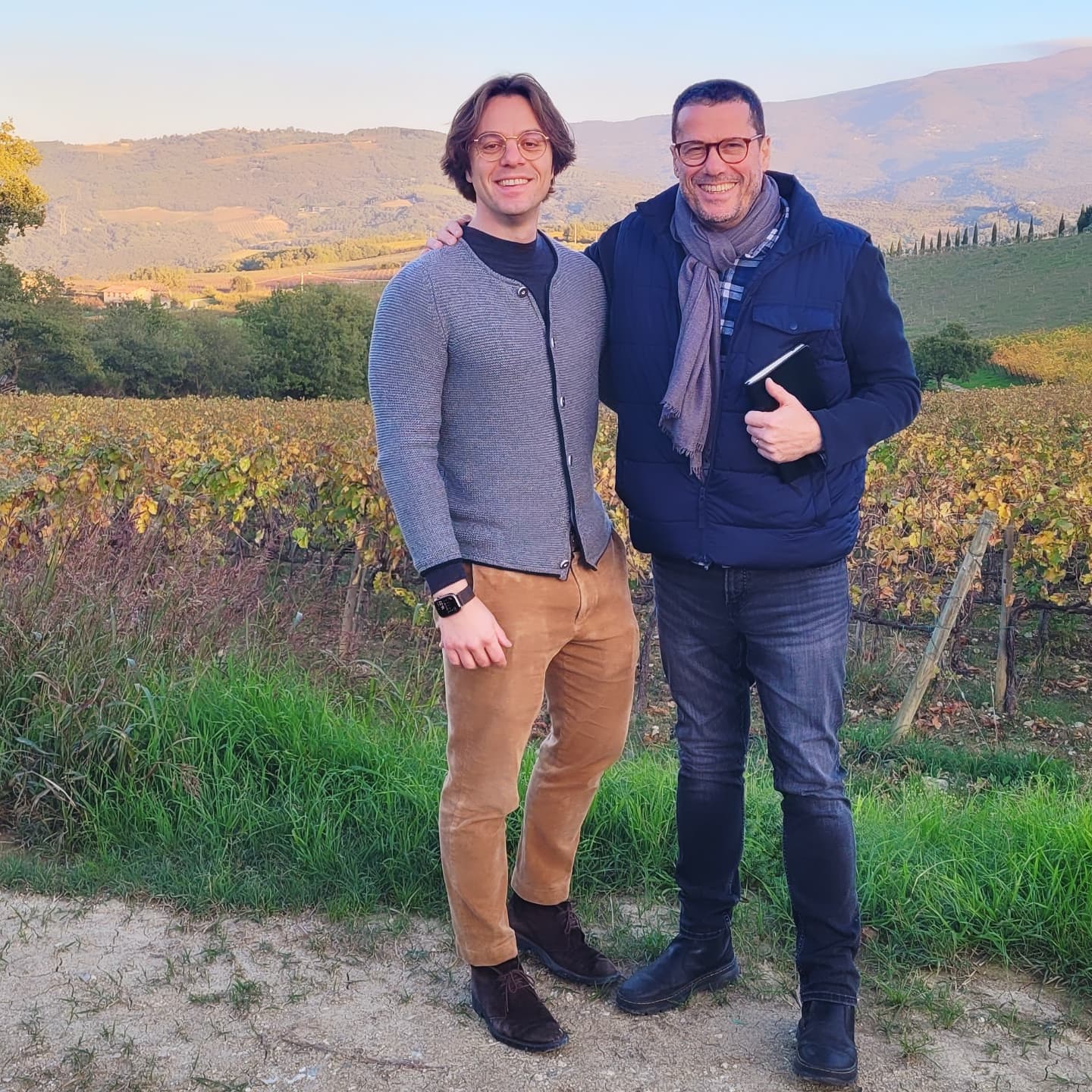
With Jacopo Vaggagini – Amantis

Amantis Imperiore Cabernet Franc 2019, Toscana IGT

First made in 2005, then 2007, 2010, 2013, 2016 and here from 2019. Fermented in steel, aging in new (100 new) wood for 24 months. Thank goodness this is high quality fruit because the wood is all encompassing though the result is not heavy. On the contrary the elegance is discovered and though chocolate is omnipresent there is no denying the silken texture and cool, even salty disposition. The quality of the grapes and the wood is almost stupid. Some kind of weird science and magic happening here. Mineral, mint and length, all in. Drink 2026-2032.  Tasted November 2024

Azienda Agricola 8 Ettari Principio 2020, Toscana IGT

An IGT made with 80 percent sangiovese and a (20) mix of cabernet sauvignon, canaiolo and colorino aged in tonneaux. Sweet fruit, silky yet liquid pasty and no particular structure to speak of. Crunchy enough with a spicy Amaro finish. Drink 2025-2026.  Tasted February 2025

Basile Maremma Toscana DOC Comandante 2020

A Maremma label which means the grapes come from within the administrative Grossetto boundaries which include all of Montecucco. All the sangiovese and merlot are from Montecucco but the blend does not qualify for that (Rosso) DOC. Giovan Battista and oenologist Maurizio are so adept at making these settled, smooth and palate nurturing wines, never with a moment of green, hard, edgy, austere or grippy tannins. These wines drink well early but have the acidity to match, with thanks to north and east exposures, wind and elevation between 400 and 500m. Very fine.  Last tasted November 2024

From the heart of the Basile family’s estate in the Tuscan coastal Maremma in the Municipality of Cinigiano. Comandante (commander) is a blend of 50 percent each sangiovese and merlot aged 18 months in French wood. There is richness and yet no real feeling of too much heat because the place is cooled by maritime breezes and even in hot vintages the place and the vines can breathe. The freshness is captured, as is the unmistakable quality defined as Macchia Meditteranea, a brushy-herbaceous aromatic splendour that defines wines proximate to the coast made in honest ways. This is such a wine, even while the wood needs to settle in. Drink 2025-2028.  Tasted June 2024

This article is sponsored by the Consorzio Tutela Vini Montecucco

Good to go!

godello

Instagram

Facebook

Chianti Classico Collection 2025 part two: The visits

Critics and journalists can get their fill by attending wine events in their home city, taste wines at the office space or in the comfort of their homes. This type of work situation has been a standard for decades and sure there are moments when just the writer and the bottle together can combine to produce some solid prose – but it’s not enough. To go further, to find the goods and get at the heart of the matter it is essential to travel, to visit with families and wine producers in their element. Climb hills, walk vineyards, get mud on your boots, touch vines, consider pruning decisions, crumble soils between the fingers. This is where the real stories come from, magnified in purpose when visits involve sitting down for a meal. Godello has been doing this with Chianti Classico producers consistently for the past 10 years and that is how he is able to write on this very subject without pause and about more than just the wines. People, roots, heritage and land are the impetus and catalyst for how the big picture is revealed.

Related – Report and reviews from the 2025 Chianti Classico Collection

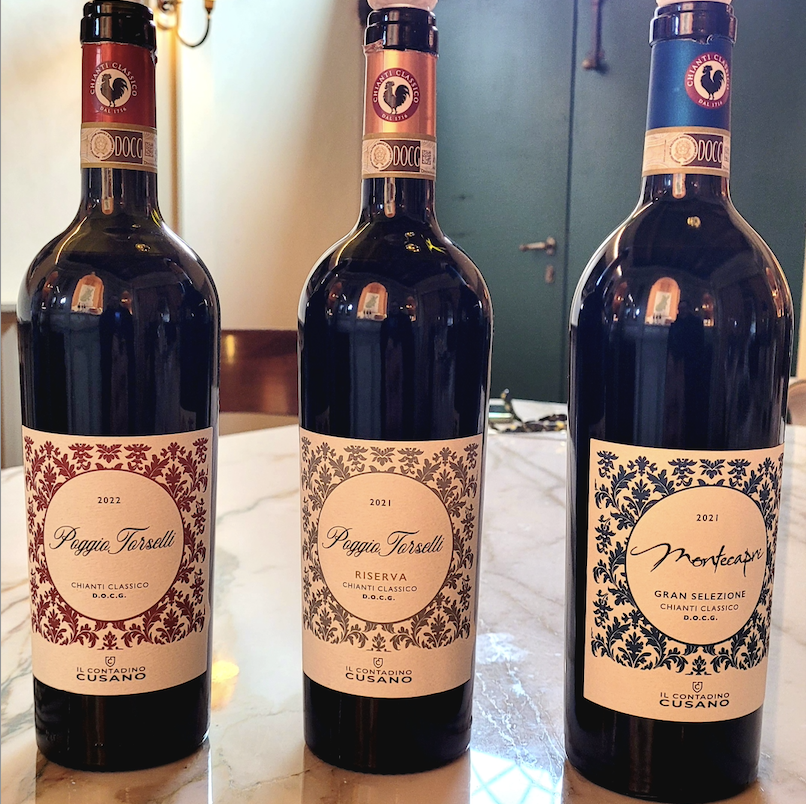
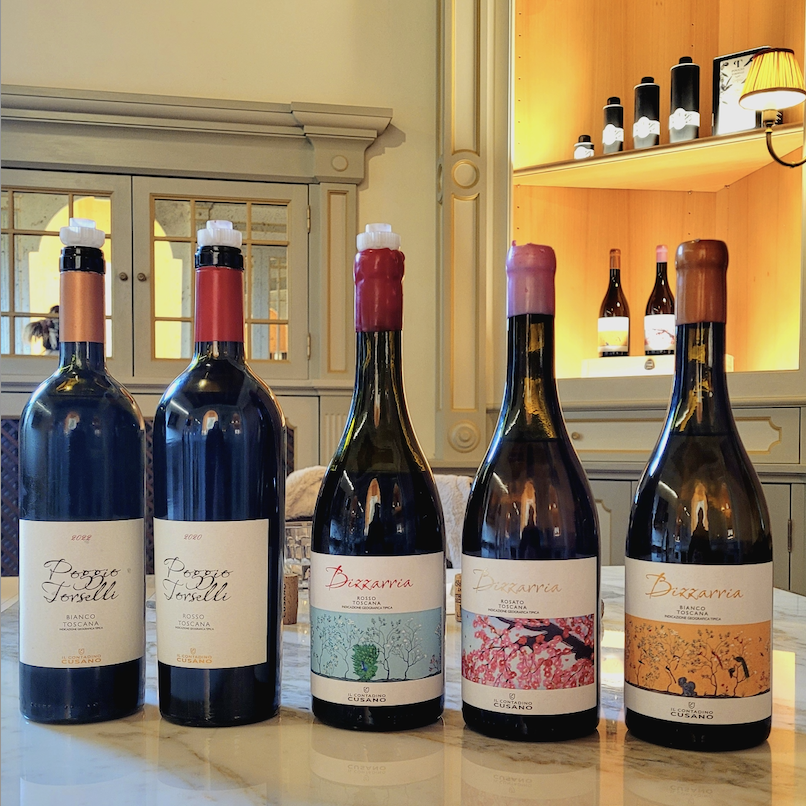
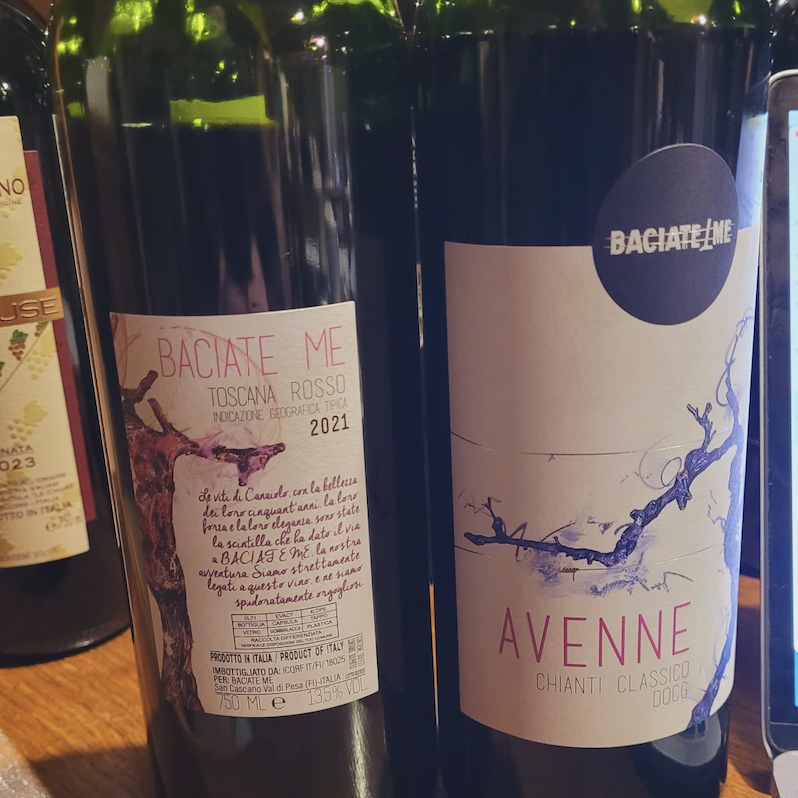
Twenty trips and 52 articles based on more than 300 visits with 100-plus producers later and here we are with the latest set of wine reviews covering 10 visits made at estates producing Chianti Classico wines. Tenuta Casenuove (Panzano), Castello di Meleto (Gaiole), Poggerino (Radda), Calcamura (San Casciano), Il Poggiolino (San Donato in Poggio), Richiari Porciglia (Greve), Poggio Torselli (San Casciano), Fontodi (Panzano), Volpaia (Radda), Ricasoli (Gaiole), Nardi Viticoltori (Castellina), Castello di Verrazzano (Montefioralle), Castello di Ama (Gaiole) and also tasted in Montalcino, the small production wines of Baciate Me (San Casciano). An apology goes out to Castelnuovo Berardenga, Lamole and Vagliagli for being the UGA left out this time, although they have all been the focus of many previous excursions and will again soon. These are the 92 wines tasted with the 13 estates back in February of this year.

Related – Harvest report 2024: Retro Chianti Classico

Related – 100 Years of Chianti Classico and Collection Previews 2024

L’aia at Tenute Casenuove

Tenuta Casenuove – Panzano

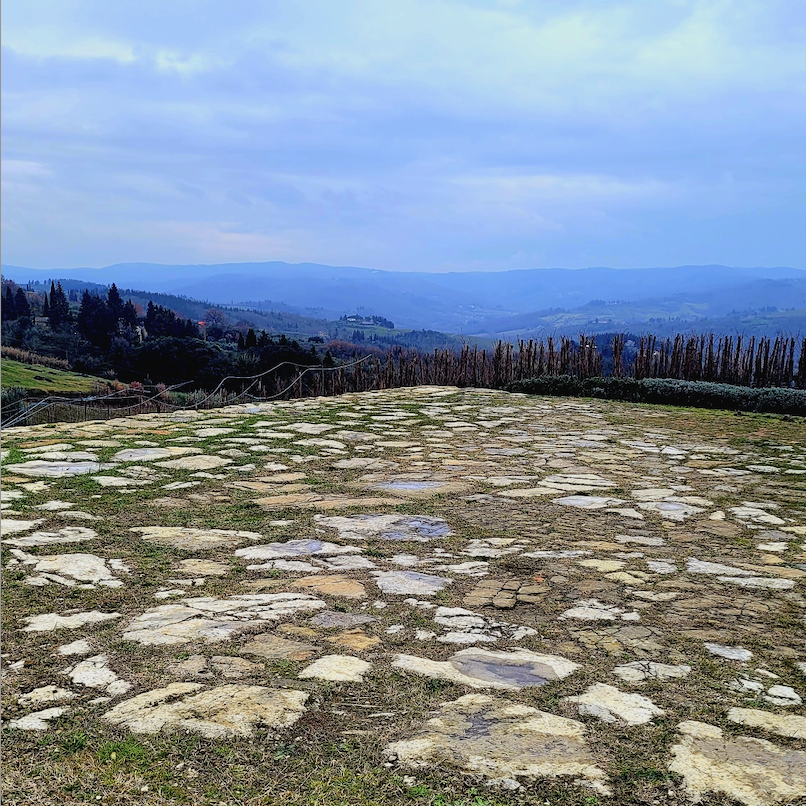
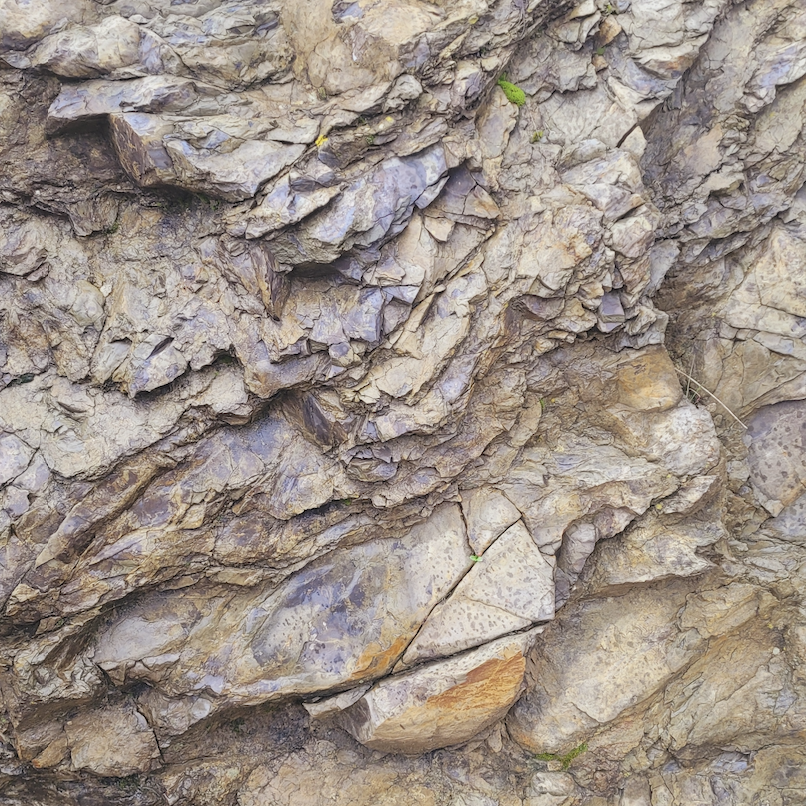
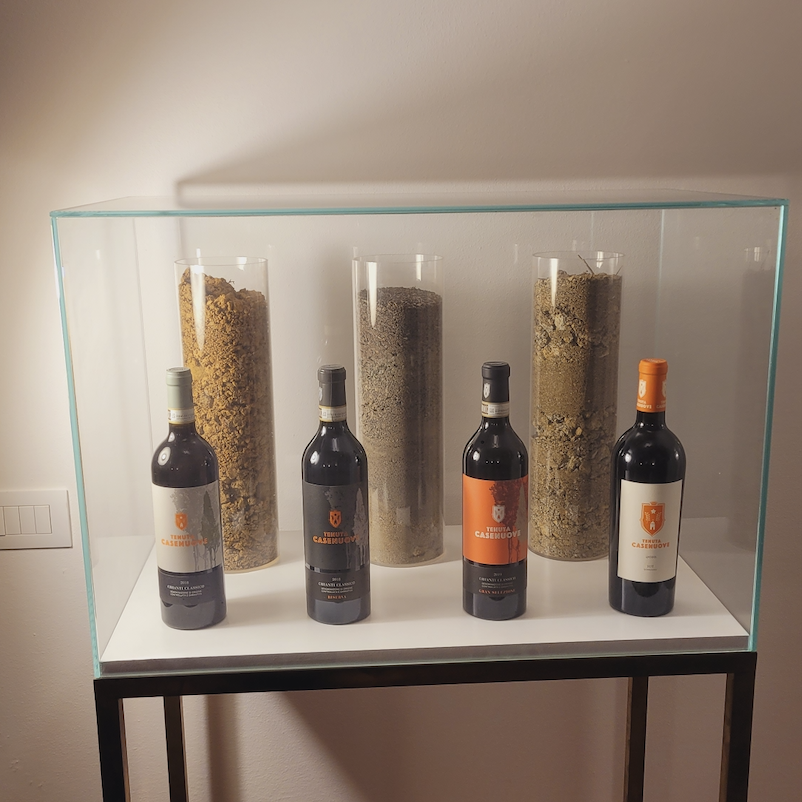
Out of Firenze’s Peretola Airport and direct to Panzano for a long overdue visit with winery director Alessandro Fonseca, enologist Cosimo Casini and cellar master Maria Sole Zoli. Under the ownership of Philippe Austruy, 35 hectares are at elevation between 370 to 490 metres. Previously owned by Chianti Classico négoce Pietro Pandolfini from 1954-2015. We stood on the small stone square, “l’aia,” where the grain was once worked, looking south over the Pesa River, towards Castellina. In 2015 there were 15 hectares of vineyards, now doubled to 30, including a new site at the top on Alberese stone planted to sangiovese, colorino, canaiolo, malvasia and ciliegiolo. The top of the (east) ridge is a soil led by Pietraforte, the rest argilla and schist with a manifestation of compact, purple-veined Galestro. Identified vineyards are Poggio Asso, Vigna Somassa which comes from Arenaccio, an iron sandstone block, Vigna San Martino (fine decomposition of Galestro) and Vigna Camperi (calcareous clay).

Purple-veined Galestro of Tenuta Casenuove

Tenuta Casenuove Chianti Classico DOCG 2021, Panzano

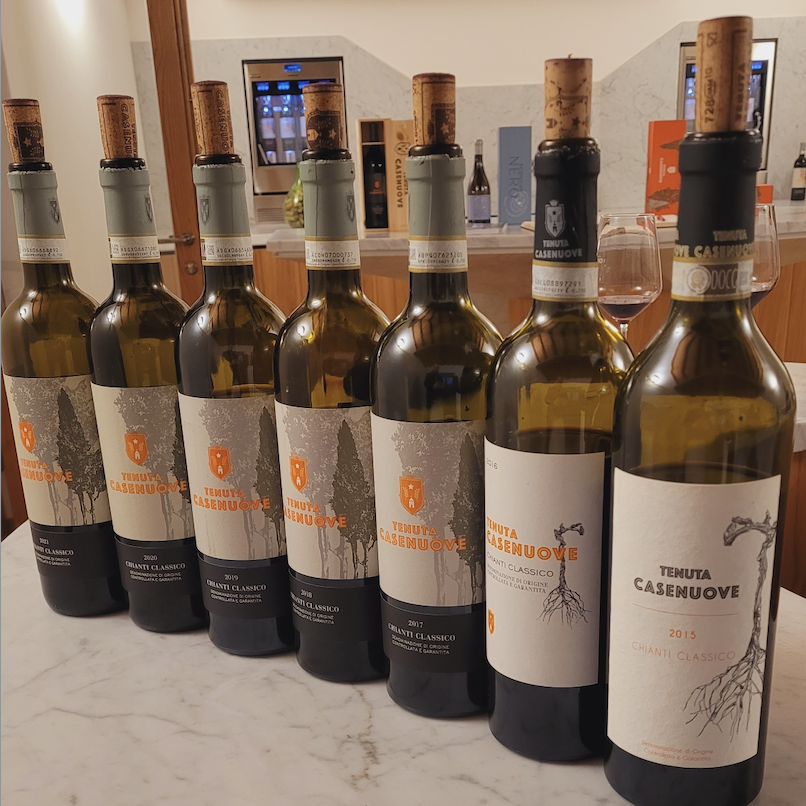
Another beautiful season, not at the beginning because of the April 7th frost which delayed development by a month – though in the end the wines showed with great balance. In part because of less bunches and bunch weight per plant but also because of a great September rain that followed a hot summer for the latest finish to harvest in recent times – September 25th. Everything in this wine moves in unison, all parts working together for a polished and luxe example of Chianti Classico. Drink 2025-2028.  Tasted February 2025

Tenuta Casenuove Chianti Classico DOCG 2020, Panzano

The vintage following that seminal 2019 marking a transition for Casenuove away from aging in small wood and making use of various larger format casks. Once again you get the feeling of highest level of extraction and here the most glycerol and silken texture to date. A warm vintage with 12 days exceeding 35 degrees to stress the vines, especially the young ones. Drink 2025-2028.  Tasted February 2025

Tenuta Casenuove Chianti Classico DOCG 2019, Panzano

Here the new plantings began to be used in the Classico. The first vintage to represent the transformation away from Cordone Speronato to Guyot training resulting in bunches not as tight for a shot at the juiciest sangiovese expression to date. Tannins are still working with grip and force, acidity is high and the wine has a serious chewy quality as well. Also with thanks to Maria Sole in her second vintage in the capacity of managing the cellar. Tells Cosimo “you can see the transition, the new sensibility and the extraction level in the wines.” This certainly marks new territory and an understanding of the potential for the estate.  Last tasted February 2025.

Fruit quite mature of 90 percent sangiovese with five each merlot and cabernet sauvignon, a focused expression and very much the warmest of (western) Panzano style. You can taste the Bordeaux grapes in here, with a Cassis for sure but also some desiccation of small berries. Minty and a cherry stone bitterness on the palate with drying tannins. Give an hour of air and drink over the next three years. Drink 2023-2026.  Tasted February 2023

Tenuta Casenuove Chianti Classico DOCG 2018, Panzano

Plenty of rain, humidity and cooler temps and “it scared me,” admits Cosimo though the shift from humidity with the northeastern Tramontana wind brought about a great day for night temperature excursion. High solar radiation and cold nights at the end of September, especially here in Panzano created this truly unique set of harvest ripening circumstances. Feel the mix of ripenesses in both the fruit and acidity, the long-chained tannins and talons that hold on to your palate. Still acting this way six years later.  Last tasted February 2025

Fruit quite fresh for 2018 and in a way more so than the following 2019, here again from a consistent blend of 90 percent sangiovese with five each merlot and cabernet sauvignon. Juicy Panzano expression, ready and willing to please, tannins softening now and acidity captured with truth. Raspberry and blueberry, fruit captured at peak and here an Annata with silky tannins, everything in line and ready to roll.  Tasted February 2023

Crunchy Panzano Annata here from Tenuta Casenuove, peppered as opposed to peppery, as if with freckles or micro-sized bits of earth. Plenty of salt and pepper seasoning but again nothing sharp or spicy about it and fruit so very berry red.  Tasted March 2022

From the southwest corner of Greve in Chianti, southwest of Montefioralle and close to Panzano. Modish and modern for 21st century sangiovese is just this, stylish, chic and highly motivated. Quite fully developed and felt red fruit of glycerin, pectin and mouthfeel but you want more and more. Impressive magnitude in bringing so much fruit into the mix. Not overtly high in acid or tannin so use this early and often.  Drink 2020-2022. Tasted twice, February 2020

Tenuta Casenuove Chianti Classico DOCG 2017, Panzano

The experience of 2015 and 2016 were critical towards dealing with the hot 2017 season, especially because the south by southwest expositions at Casenuove are what they call “a hot spot.” Yes you can feel the desiccation but the 80mm of rain that fell between September 4th and 8th really saved the day. As smart producers are want to do the harvest was delayed, started two weeks after the rain and continuing through to the 15th of October. Acidity is different and special though the fruit is now just starting to fall away. Drink 2025-2027.  Tasted February 2025

Tenuta Casenuove Chianti Classico DOCG 2016, Panzano

From 2016 all the blocks of the estate were now being vinified separately. The season began in a different way, first with a cool and humid Spring which delayed development by a month and then things sped up during the warm summer. Harvest began on Sept. 26th, finishing at the same time as 2015 which means just two and a half weeks for the same 13 hectares. A wine of more density and development than 2015 though still tannic and today maintaining an important level of freshness. Drink 2025-2029.  Tasted February 2025

Tenuta Casenuove Chianti Classico DOCG 2015, Panzano

First year of production under the new ownership of Philippe Austruy and Oenologist Cosimo Casini arrived in June just a few months after the acquisition. His grandmother was born in Panzano and so this was a true return to his roots. Very much a part of this first vintage that he describes as “almost too easy” which suggest he thinks some things were taken for granted. Harvest from September 12th to October 10th, 13 hectares in total. “But I’m waiting for a season like 2015 to happen again.”  Last tasted February 2025

The first vintage, 80 sangiovese with 15 merlot and 5 cabernet sauvignon. The sangiovese was raised in 25hL botti and the international grapes in tonneaux. Darker and deeper than the ’16 to come. Good acidity keeps it moving through the waves of vanilla and graphite. Drink 2019-2020.  Tasted September 2019

Tenuta Casenuove Chianti Classico Riserva DOCG 2019, Panzano

Riserva at 100 percent sangiovese is a change from the Classico where smallest bits of colorino, canaiolo and merlot are involved. Riserva comes from a strict selection of the best part of estate vineyards where clay-schist soils spill over with iron-rich Galestro outcroppings. As in Panzano in all its glory for a true expression of Casenuove’s warm location. Creates this clean sangiovese of utmost clarity. Last tasted February 2025

Riserva is 100 per cent sangiovese, a bit dusty and reserved, acids and tannins very much in charge. Crisp and crunchy for Riserva with notable fennel and balsamic notes with a nuttiness that is a palate extension from palate sweetness. A factor of new and used barriques with baking spice that in conjunction with full on ripeness to the edge creates a feeling of sleepiness. Enervating sangiovese. Drink 2023-2025.  Tasted February 2023 and February 2024

Tenuta Casenuove Chianti Classico Gran Selezione DOCG 2019, Panzano

The first vintage of Gran Selezione happened in 2018 after a cask tasting in the cellar where the team found something different from fruit taken out of a single vineyard. A place called Sopra Torre above the base of a hill up and away from the humidity at the lowest part, a place where the wind slashes through, and the exposition is pretty much perfect. Makes for the richest of all Casenuove sangiovese, longer in wood and you feel it but who feels it knows it.  Last tasted February 2025

Serious, experienced, structured and vertical example of Gran Selezione. Maturity of fruit but also layered acids and most impressively developed tannins. This walks with great stature, sure of its meaning and intent. As a Panzano sangiovese it knows exactly what it wants to be. Drink 2024-2028.  Tasted October 2024

Castello di Meleto

Castello di Meleto – Gaiole

A studious and vigna intensive first visit with Victor Camilo Duque Crociani, GM Francesco Montalbano and agronomist Mattia Achenza. Gaiole’s famous Castello di Meleto has been a territorial guardian watchtower and fortress since 1256 with 1000 hectares, nearly 800 of which are forested. There are 130 hectares of vines in two località, Meleto and San Pietro, 80 percent planted to sangiovese, with merlot, cabernet sauvignon, trebbiano, malvasia and (0.5 ha) san colombano. The team has gone all in to isolate and exult the identified single vineyards, now with three Vigna labels; Trebbio, Poggioarso and Casi, the last one located on the road to Radda. Trebbio is collee, with red argilla soils. Poggioarso (the arid hill) is higher elevation with Alberese and outcroppings of Galestro out of the clay. Casi is in a ventilated zone with Galestro out of Macigno (sandstone) soils but it’s uniqueness comes from some alterations involving some Alberese and sandstone-based Pietraforte. The vines have been in transition since 2020 from Cordone to Guyot training, organic now for 10 years and largest such estate in the territory. Consulting oenologist and agronomist are Valentino Ciarla and Giacomo Sensi.

Castello di Meleto Método Classico

A traditional method sparkling that began 12 years ago. A spot of TCA on the first bottle. Only sangiovese, harvested early, usually late August, soft whole bunch pressed with minimal skin contact if just enough to give this Spumante a Rosé hue. Get the freshness and complexity. Drink 2025-2028.  Tasted February 2025

Castello di Meleto Chianti Classico DOCG 2022, Gaiole

Just five percent merlot softens the sangiovese with many vineyards of the 130 hectares in total contributing. Usually the youngest vines and also some of the plots that experience the warmest climate for the season. Ages 15 months, half in cement and half in large (really old) French cask. No tannic impart and this is about as correct, clean, acid retentive and well adjusted a Chianti Classico as you are want to find. Warm vintage yet freshness and fruit quality is knowably ripe and easy. Less savoury and more fruit centric than in years past.  Last tasted February 2025

Intensity of red fruit, almost searing while this young and immovable but surely a far cry from overly pressed or done. Surely a matter of Gaiole and vintage with Meleto sure to respect and deliver what it’s meant to bring. Another ’22 that must be waited on, again confirming how different these are to 2017. Drink 2025-2029.  Tasted February 2024

Castello di Meleto Chianti Classico Riserva DOCG 2021, Gaiole

The first vintage where Riserva is certified organic, also with five percent merlot and fruit drawn from many areas of the estate, maximum two week maceration. Ages in large French cask (up to 500L) and plenty of fruit ripeness fills the mouth, with a local Balsamico specific to and expressive of a Meleto sangiovese. Clean and precise with all the attributes of Riserva in pocket from the finest mixing and matching of vineyard fruit as a true example of Chianti Classico assemblage. You can drink this anytime. Drink 2025-2029.  Tasted February 2025

Castello di Meleto Chianti Classico Gran Selezione DOCG 2020, Gaiole

For Gran Selezione there is only sangiovese taken from the most important identified blocks from which the three cru are made. These are the grapes not chosen from and for the Casi, Poggioarso and Trebbio ultra specific expressions. Sees 10 days of maceration post fermentation and like the other wines (Classico and Riserva) there is a silky smooth character to the Selezione. More concentration is what separates this from the others but also a refinement of the Balsamico, spice and herbals of the wine. Sapid to a good degree, almost ready to rock and the kind of sangiovese that will age slowly, incrementally and long. Drink 2025-2028.  Tasted February 2025

Castello di Meleto Chianti Classico Gran Selezione DOCG Poggioarso 2020, Gaiole

The first vintage labeled as Poggioarso was 2017 and here for 2020 the vintage to launch with the UGA Gaiole on the label. Poggioarso is at the highest elevation, from 450-530m and the freshness matched by stony-mineral quality is truly high. The vineyard with the most temperature excursion, high solar radiation during the day and cold at night. Unique aromas that separate this cru from the others with a sulphur sensation that’s not sulphur. You can sense the sandstone derived mix of lime and Pietraforte that gives this mix of salinity and mineral flavour. It’s namely potassium and that is the unique perfume of Poggioarso. Drink 2025-2030.  Tasted February 2025

Castello di Meleto Chianti Classico Gran Selezione DOCG Trebbio 2020, Gaiole

Trebbio is the new cru designation for Castello di Meleto, medium of elevation between 380 and 410m located to the northeast of the castle. A very clay soil with some Alberese (limestone) and Galestro. Also iron in the ground with red hues throughout the soils. More sanguine and sweeter notes, in the fruit and with spice. Only sees the largest (3000L) French casks and the Balsamico presence can’t be denied. More density and intensity here, bigger wine, stronger and with more grip. Older schooled in a sense yet the red fruit quality is dominant as well. Drink 2025-2028.  Tasted February 2025

Castello di Meleto Chianti Classico Gran Selezione DOCG Casi 2020, Gaiole

One of two Castello di Meleto cru artists that originally existed as Riserva. Elevation from 450 to 530m and a really concentrated sangiovese high in poly-phenolic character. A smoulder here with tobacco that comes from the interaction between grapes and wood, compounded by the longest maceration. The most tannic and without a doubt the most potential of the three. A serious wine, profound expression of the vineyard and the sort of Gran Selezione that will live through to the next decade. Drink 2026-2032.  Tasted February 2025

With Piero Lanza – Poggerino

Poggerino – Radda

Piero Lanza has embarked on a shorter pruning window because of the warming climate and is now keeping more bunches on the vines (1.2 to 1.5 kg per plant), to slow down ripening and to result in balanced, juicy wines. “There are no rules, not any more.” For Lanza it has been a slow evolution, a step-by-step process. As for which artistic winemaking period he’s now in, with 20 years on his back he says “it’s been about 15 years that I’ve been doing things this way.” The 2024 vintage was challenging, like 2013 with heavy Spring rains which made it hard to get into the vineyard and then a warm March encouraged early budding, but thankfully no frost followed in April. Rains ended in early June with none until the 26th of August. Veraison started early but by the 15th of August the water table had dried up and the vines shut down. Rains came just before harvest, a good thing and yet it was necessary to remove leaves to reveal bunches and speed up ripening. More importantly to reduce humidity around the bunches. Lanza finished picking on the 14th of October and mould was everywhere. One day fine, the next not so much – sometimes just a mater of six hours. “The evolution of the grapes was changing hour by hour. It reminded me of the 1990s,” said Piero, “but the most challenging vintages make the best wines.”

Poggerino

Poggerino Chianti Classico DOCG 2023, Radda

The Perenospera (resulting in downy mildew) vintage but Piero Lanza only lost 10 percent of his production. Yes – he fared much better than many in the region. He remembers the 24th of June, at the time of the festival of San Giovanni in Florence. “I woke up on the 24th, a foggy morning, I went in the vineyard and everything was white. We sprayed and managed it.” The 2023 is only sangiovese, of 15 different clones and vineyards, a sweetly herbal example, oh so glycerin textured, holding more Bugialla (Riserva) fruit because none was made in 2023. Freshness from concrete aging mixes with wood spice for an easy drinking, balanced and well made Classico. Just recently bottled in December 2024. Drink 2025-2028.  Tasted February 2025

Poggerino Chianti Classico DOCG 2022, Radda

The 2022 has been in bottle just a little bit more than a year now and has settled comfortably into its Classico skin. Quite a warm year with high level fruit and more importantly phenolic development with less herbal and tobacco notes that come from the very young ’23. Concentration is higher and again the red fruit is everything. There is a chalky underbelly of tannin and despite the vintage heat you have to remember this is Radda and so freshness is still a guarantee. Piero Lanza tried to have great respect for the grapes by pressing easy and macerating short. As s result the wine will go long, not 2016 or 2021 long, but it will last. Drink 2025-2030.  Tasted February 2025

Poggerino Chianti Classico DOCG 2014, Radda

It’s incredible! The longevity of 2014 is justified and now solidified. Adds Piero Lanza, “the quality and balance between the acidity and phenolic (compounds) have allowed the wine to age,” and age so well.  Last tasted February 2025

The vines date back to 2004 and 1994 for Poggerino’s Chianti Classico, a 100 per cent sangiovese that sits at a zenith where the most red limestone earth and sour intensity is noted above all 14s almost anywhere, not just from Radda but for all of the territory. Almost over the top in this regard but stand up and counted is what this amounts to. Then it grooves forward and rebounds with warmth and depth before returning to that earthy calacari bonding. Gathers itself, the moving parts and glides along with solid length. Very interesting, honest, organic and naturally curated work from Piero Lanza. Drink 2018-2022.  Tasted September 2017

Poggerino Chianti Classico DOCG Nuovo 2022, Radda

Nuovo is the new-ish Chianti Classico label, first made in 2013 as the sangiovese aged in concrete eggs. The 2022 is now one year in bottle and a manifestation of what Piero Lanza looks at “like being a chef in a fine dining restaurant.” That is to say trying a recipe 20 times before it is perfected. The roots came from Lambardier in Champagne where they aged their wines in eggs ahead of the secondary fermentation in bottle. In 2010 Piero put sangiovese in one empty egg after removing the previous wine intended for Sparkling Rosé and the experimentations began. Year two fibreglass fermentation and egg. Beginning in 2016 the fermentations happened in the new (5,000 and 8,000) concrete tanks then transferred to eggs in December. Ten years later there are 4,500 Nuovo bottles made and my how this sangiovese emits a very specific aroma. Certainly a matter of the natural swirl inside the concrete eggs but also a seriously oxygenated wine that shows no signs of oxidation. Feels like a wine of località hyperbole and says Lanza, “the egg increases the terroir.” This is the limit of quantity and yet more bottles would be a blessing. More terroir is expressed from egg in a warm vintage. Drink 2025-2029.  Tasted February 2025

Poggerino Chianti Classico DOCG Nuovo 2021, Radda

A top vintage and a fortunate one for Poggerino where the prevailing frost in Chianti Classico did not affect this località. A warm yet temperate year with heat but nothing like 2017 and just a perfect season from which to put sangiovese into concrete eggs. “For me it was a fantastic vintage, normal but the big difference was September with great temperature fluctuations between day and night.” The result is top level Raddese acidity and finest quality in the tannins. No this is neither Riserva nor Gran Selezione but being the unique wine that it is – it could very well be a manifestation of the latter. But we won’t name that and so for now we’ll just call it Classico-plus.  Last tasted February 2025

One thing you can count on is for Piero Lanza’s sangiovese to come out ripe as any in the territory and 2021 would surely not be an exception to the rule. The fruit is remarkable and the structural parts equally formative and formidable so I’m not sure Lanza has made such a wine in quite some time. Years are needed to settle the pieces, parts and puzzles of this magnanimous affair. Don’t care that Annata is the appellation. Drink 2025-2032.  Tasted February 2023

Poggerino Chianti Classico Riserva DOCG Vigna Bugialla 2021, Radda

First vintage of Bugialla as Riserva was 1990 though it was made as far back as 1985. Now labeled as Vigna Bugialla which puts this in cru territory and a wine that has come about after Piero Lanza’s 20 plus years of making wine, including many mistakes. It would be easy to simply think about the concentration but the true nature of Bugialla is the vineyard and its predilection for growing the finest Poggerino sangiovese. Quintessentially Raddese with the highest quality tannins available from the vineyard planted in 1994, surrounded by forests. Only the smallest and perfect bunches are chosen, like Lorenzo Magnelli at Le Chiuse for Diecianni and Luca Martini at San Giusto Rentennano for Percarlo. Aged in old Slavonian cask for two years, this 2021 is now in bottle just one year. Drink 2027-2036.  Tasted February 2025

Poggerino Chianti Classico Riserva DOCG Vigna Bugialla 2019, Radda

Not a cool vintage but is was in September and so the finishing concentration is not quite, well let’s say 2021. Allows the Raddese Balsamico and herbal qualities to come out a bit more. Tons of character, very expressive and time in the bottle have allowed for this coming out party and makes one wonder how 2021 will show in time. Drink 2025-2030.  Tasted February 2025

Andreita Rojas and Stefano Marinari – Calcamura

Calcamura – San Casciano

The semi-virtual winery co-owned by partners Andreita Rojas (from Chile) and Stefano Marinari, winemaker at Castello di Bossi. The two met in 2014 while working harvest abroad. Calcamura, a vineyard located between two poderi, Calcaorelli and Mura, both located on Via Mura. A conjunction of the two, as opposed to calling the brand “Stefandreita.” The località of their vineyard is Poggio ai Grilli over and down the hill from Villa Le Corti and sharing the same topography plus geology, that being the famous San Casciano river stone strewn vineyard reminiscent of Les Galets in Châteauneuf-du-Pape. Their’s is a 25 year-old, 0.5 hectare block owned by their immediate neighbour to the west with a second 6,000 square metre block rented since 2021. A third will be a 1.05 hectare plot, they will be certified organic (on their labels) as of 2024 are are still currently crushing in Radda at Istine.

River stone strewn vineyard at Calcamura

Calcamura Sussolto

Sussulto, as in “to gasp or being startled,” but in a good way. A reaction as if to say, “oh my God, I’ve been jolted by something.” Made from the first passage of 100 percent sangiovese Calcamura grapes picked in late August. The idea came from a dinner with friends, to use these grapes and never consider a green harvest. Quite a phenolic sparkling wine and also one of incredible richness. This is matched and balanced by the smoky mineral, rustic style and a light mushroom consommé. So unique and worthy of any sort of fizz detour you are willing to make. 4,000 bottles produced. Drink 2025-2029.  Tasted February 2025

Calcamura Chianti Classico DOCG 2022, San Casciano

Now in the third vintage for Calcamura the aging is only in tonneaux, two Slavonian and one French. Only sangiovese from a vineyard in the middle of nowhere but a località called Poggio ai Grilli. Could that be the name of a coming Gran Selezione for Stefano and Andreita? The Annata will be a grand total of 430 bottles that spent a year in Slavonian tonneaux and one in ceramic Tava terracotta. A light touch for a San Casciano sangiovese for which acidity is tempered with 10 percent canaiolo to affect a sangiovese between salinity and sapidity. A wine made by experienced hands not trying to coax too much from the rockiest river stone soils available to anyone in the whole of Chianti Classico. Never ambitious, always respectful and a feeling gained from out of the receded waters (so to speak) to make Annata as pinot noir Burgundian, nebbiolo Piedmontesino or nerello mascalese Etnean as any in the entirety of the territory. A more precise and verging on profound Chianti Classico with that terrific combination of drinkability and structure. Drink 2025-2030.  Tasted twice, at Borgo Machiavelli and The Chianti Classico Collection, February 2025

Calcamura Chianti Classico DOCG 2021, San Casciano

Only sangiovese (because the cabernet sauvignon was grafted over with canaiolo) and now aged in used tonneaux (plus two barriques). Picked earlier than 2020, in mid-September at a time when alcohol can be kept at 13.5 percent and to a softer extraction in this second vintage. What results is a red citrus-styled sangiovese with a bit of sussulto of its own, in other words an acidity so very San Casciano and in a bridge year between cabernet sauvignon and canaiolo to soften, raise pH and lower acidity. Indelible vibrancy, “a style that we want – drinkable,” says Andreita. Even though the tannins are lower it is the acidity that will preserve the wine. And with no sense of overripeness or over-extraction. Represents the place and its makers.  Last tasted February 2025

Campione: Limited production, 100 percent sangiovese of San Casciano bones, saltiness and energy. Notable as always for the herbs and verdancy but this edges up in volatility before descending into its tannic well. Taut finish and in need of two years to settle. Drink 2026-2030.  Tasted February 2024

With Andreita Rojas and Stefano Marinari – Calcamura

Calcamura Chianti Classico DOCG 2020, San Casciano

Calcamura, a vineyard located between two Poderi, Calcaorelli and Mura, both located on Via Mura. A conjunction of the two, as opposed to calling the brand “Stefandreita.” First vintage for Stefano and Andrea with the vineyard they purchased in 2019. “We were very happy with the result but we knew we could do better. People told us the wine was great but we also knew it was important to maintain quality.” Yes this is an impressive first kick at the can and there is some greenness in the tannin but it’s exaggerated somewhat by the cabernet’s pyrazine. Aged in used barriques for a year. This first Calcamura sangiovese reminds a bit of a Castello di Bossi Chianti Classico mixed with a Renieri Brunello. Wink, wink, say no more. Drink 2025-2028.  Tasted February 2025

Martina and Alberto Fabbri – Il Poggiolino

Il Poggiolino – San Donato in Poggio

First visit to one of San Donato and Chianti Classico best kept secrets on the hill above and across the river from Sambuca with another more famous neighbour, Badia a Passignano. Carlo Pacini purchased the farm in 1974 and today his daughter Alessandra Pacini, Alberto Fabbri and family run the 18 hectares with with vines planted between 320 and 400m. The seminal plot is a north by northeast vineyard up on the hill overlooking the winery called Le Balze, a.k.a. “the terraces.”

Il Poggiolino AlesPaci5 Bollicina Italiana Método Classico

AlesPaci5 stands for Alessandra Pacini, better half to Alberto Fabbri and her birthday being December 5th. Solo sangiovese 30-36 months on the lees made in Rosato form with just a few years of Il Poggiolino experience augmented by greater experience from consulting oenologist Giacomo Cesare. Really aromatic and autolytic with the finest tight bubble, scraped orange skin and ginger. Truly well made. Drink 2025-2028.  Tasted February 2025

Il Poggiolino Rosacarino 2023, Toscana Rosato IGT

Rosato made in the salsasso method (a.k.a saignée) run-off from the Gran Selezione maceration. A Rosé not focused on colour and not even aromas but with the intention of flavour as the driver. The nose is expressive of some formaggi, an aged Pecorino meets Beemster sort of thing and yes the taste is what draws you in. Rhubarb and orange with a lot going on with respect to taste. High in tang and needing food for balance. Drink 2025-2026.  Tasted February 2025

Il Poggiolino Chianti Classico DOCG 2022, San Donato in Poggio

The vineyards at Il Poggiolino may reside at moderate elevations between 250 and 350m but there are no south by southwest expositions and so in a hot vintage like 2022 the freshness remains a guarantee. Just three percent colorino goes a long way to raise up character of a Classico that only sees concrete and stainless steel for aging. Sweet acids match the fruit stride for stride and what you want is what you get – A level of drinkability that represents Classico and this northwest corner of San Donato in Poggio. Drink 2025-2028.  Tasted February 2025

Il Poggiolino Chianti Classico Riserva DOCG 2021, San Donato in Poggio

A terrific vintage and yes many estates in Chianti Classico lost production to the April frost but at Il Poggiolino the maximum loss was 10 percent. And so come for the quantity and stay for the quality. Rich and concentrated, lightly chalky with a clay and stony feeling. Structure asks that we wait a year before opening the window and set this sangiovese with three percent colorino for aging through to the end of the decade. Drink 2026-2030.  Tasted February 2025

Il Poggiolino Chianti Classico Gran Selezione DOCG Le Balze 2021, San Donato in Poggio

From a north by northeast vineyard up on the hill overlooking the winery which may have been a expositional detriment 20 years ago but no longer. The change of climate puts this steep single vineyard sangiovese in great light today and so welcome to the third in a row of vintages that may just shock as to its character and quality. Le Balze 20 years ago was organized as large terraces and in Tuscany you say “le balze,” when you take a giant leap. This Gran Selezione has improved and grown by leaps and bounds in the last few years to join other greats to reside near the top of the appellative pyramid.  Last tasted February 2025

Another perfumed and expressive Le Balze comes with as much if not more pulp and flesh a la mode than those San Donato in Poggio Gran Selezione that have come before. The depeche florals are Spring bloom fresh, the volume set at ideal pitch and you just need to keep putting glass to nose because, well you just can’t get enough. Richness is never compromised but it is belied by the beauty of a tannic caress about as graceful and gracious as there are. This is Il Poggiolino’s finest GS to date and that is saying a lot. “Just like a rainbow.” Drink 2025-2034.  Tasted October 2024

Il Poggiolino Chianti Classico Riserva DOCG 2001, San Donato in Poggio

Wow. Seriously wow from a 23-24 year-old sangiovese that speaks in such a clear vernacular. A language so specific to the space of this place nearest to Sambuca in the UGA of San Donato in Poggio. Yes this is from another era and the wood (though it has disappeared) and tannins (which have melted) have set this up for the longest run through history. The freshness of primary fruit lingers and merges with an ideal window of softening secondary notes. Soft yes but refreshing sip after comforting sip. Just a lovely linger of Chianti Classico as Riserva the way it was surely intended, with or without luck would have it. Drink 2025-2027.  Tasted February 2025

Il Poggiolino Roncai 2020, Toscana Rosso IGT

From the 20 year-old vineyard right in front of the house and cantina facing the village of Sambuca that ages 30 months in mostly, but not all new barriques. A wine conceived approximately 10 years ago and Roncaia is the name of an old label produced at Il Poggiolino back in the 1970s, resurrected four decades later with this single vineyard fruit. The meaning comes from roncola, a traditional viticultural knife used to cut grape bunches off of the vine. Rich and chalky, well-structured, elegant and poised for merlot put to new wood for as long as it is. Remarkable really and only produced in years “when the grapes are truly perfect.” Drink 2025-2027.  Tasted February 2025

Il Poggiolino Le Balze 1999, Toscana IGT

The artist has always been known as Le Balze, a.k.a. “the terraces,” to the wine that would eventually become Gran Selezione. What matters is the steps’ north by northeast facing vineyard and here from what was considered a top vintage at the time. The sweetness of fruit is still so evident and while there should be zero complaint about how well this has aged – the wine still feels like its maturing into the beginning of its denouement. The 2001 (Chianti Classico Riserva) feels much younger and still there is great pleasure to gain from 1999. Great fortune to taste, the wood very much a master of the flavour and sweetness through the entirety of the wine.  Tasted February 2025

Il Poggiolino Vin Santo del Chianti Classico DOCG 1987, San Donato in Poggio

Current vintage on the market. Yes, that is not a typo. A 27-28 year-old labour of love that from trebbiano and malvasia but in the late 1990s the switch was made for sangiovese as Occhio del Pernice. An elixir so silken and smooth, no rusticity and seemingly untouched by human hands. A Vin Santo as if made by the bees, with apricot, guava, jasmine, lemon, Japanese orange and lavender. Fine, fine spice and just so special. A dream, demure and engaging. On the right side of vivid. One of the finest ever and know that you can drink this meravigliosa dessert wine forever. Drink 2025-2050.  Tasted February 2025

Federico, Martina and Leonardo Tattini – Richiari Porciglia

Richiari Porciglia – Greve

One of the most intriguing and rewarding discoveries of the last 10 years in this family estate on the east side of the Greve River at the base of the Ruffoli hill. The origon is 1980 and 1985 was when Greve in Chianti’s Emilio Tattini and his wife Lidia Martinelli established the winery with the first commercial wines having been bottled in 2009. Brothers Leonardo and Alessandro are now in charge of the vineyards, winemaking and cellar. Leonardo’s wife Martina runs the business and their precocious son Federico is now working alongside his parents and uncle when he not studying oenology at the University of Florence. Considering the continuity of the local and familial, there should be no surprise if daughter Irene joins the team seven or so years from now. The single vineyard or cru “Il Paccio” Classico comes from the oldest vineyard of 40 years of soils based upon Alberese and Pietraforte.

Richiari Porciglia Chianti Classico DOCG 2021, Greve

First vintage of the “regular,” non single vineyard Chianti Classico was 2009. An Annata conceived from vines between 250 and 350m at the base of Greve’s Ruffoli hill. A perfectly correct Classico, dark of fruit, easy to enjoy, fine though never tart, acidity spot on and smooth. Clean as there could be and a clarity that speaks to style, precise winemaking and place. Made with 95 percent sangiovese with (5) canaiolo. Drink 2025-2028.   Tasted February 2025

Richiari Porciglia Chianti Classico DOCG Il Paccio 2020, Greve

The single vineyard Classico from the oldest vineyard of 40 years where Alberese and Pietraforte predominate the soils. Not made in every vintage because, well quality and passion matter dearly to brothers Leonardo and Alessandro. You can clearly see the choices passed down from father Emilio and the stubbornness to only make quality wines with the season dictating the choices. Made in ’20, skipped in ’21 (though Riserva was made) and aged for six months in 15hL Botti after fermentation in stainless, followed by one year in cement vats. Il Paccio the name is just what every generation called this vineyard and place but no one really knows why it is called this. Such a proper Classico and representation of the designation “cru” because there is something so specific and distinct about this sangiovese (with eight percent canaiolo) in its sapid style. Ready to drink though you can see this aging five more years without any real change and certainly zero decline. Drink 2025-2030.  Tasted February 2025

Richiari Porciglia Chianti Classico DOCG Il Paccio 2016, Greve

Though already eight-plus years old there has been almost no movement in Il Paccio 2016 from a warm vintage making for stronger and deeper sangiovese. You can smell the place with such expressive strength, the Piteraforte and Alberese stone committing to a local Balsamico with grip that does not come from the 2021. This is Chianti Classico in a nutshell, fine-grained and exceptional of prescriptive tannins for great longevity. You can tell just how gentle the press and maceration process were because for 22-28 days this is Chianti Classico with the finest and sweetest tannins around. Drink 2025-2032.  Tasted February 2025

Richiari Porciglia Chianti Classico Riserva DOCG 2021, Greve

Riserva is a selection of specific vines and so the choices are made in the fields for 95 percent sangiovese with (five) cabernet sauvignon that makes up just a half hectare of the 14-15 total on the estate. There is more of a Ruffoli feel to Riserva albeit of a darker and exaggerated Balsamic profile from lower elevations. More tart intensity and higher acidity noted as compared to the Classico and the style, or better yet the result is actually quite different. Tannins are grippier as well, fine yet with some austerity here. Needs time, at least two years further in bottle. Reminds somewhat of a Castello di Querceto. Drink 2027-2032.  Tasted February 2025

Richiari Porciglia Chianti Classico Riserva DOCG 2012, Greve

A pleasure of fascination to taste a 12-plus year-old Riserva from this part of Greve and once again the longevity is remarkable. The combination of clones chosen in the 1980s and 90s matched to this terroir clearly decides the fineness of tannin but even more so the incredulous acidity that drives the Balsamico and savour of this sangiovese. This reminds of Lamole more than Ruffoli but 2012 is unique as a vintage and therefore a wine like this will stand up to be counted from an accord forged on its own. Drink 2025-2028.  Tasted February 2025

Richiari Porciglia Chianti Classico Gran Selezione DOCG 2021, Greve

The first year of Gran Selezione for Porciglia with decisions made in the field for sangiovese with (inclusive of five percent colorino). The best grapes are chosen and left on the vines two more weeks for the final harvest. A combination of best solar exposition, highest quality and smallest bunches are isolated for the Selezione. Sees 12 months in cement vats and then 18 months in second use barriques. A clear line is drawn from the Classico but especially from the Riserva because that is the wine used to season the barriques before they are passed on to the Gran Selezione. The intensity of the Balsamico and fine grained tannins here are a hyperbole of the other wines with so many years needed to soften and integrate the parts. More old school behaviour while up there with other fine GS examples in terms of precision and focus. Drink 2028-2035.  Tasted February 2025

Porciglia Cocciuto 2023, Toscana Rosso IGT

A play on words, first on the Coccio stone but also cocciuto which describes a stone-headed Tuscan, like a donkey. There was a donkey on the farm (belonging to Martina’s father) named Cocciuto though he’s no longer with us. The blend is 70 percent sangiovese with (15 each) merlot and canaiolo co-fermented in Manetti (Impruneta) terracotta. Once again the use of of aging vessels puts a Porciglia wine in vineyard light which means that time spent hidden away does nothing to take the land and soil out of the wines. As here with an IGT of acidity and tannins meant to express what the vines request. This is a very fine example of an ulterior Greve in Chianti (Classico) style. Drink 2026-2031.  Tasted February 2025

Poggio Torselli – San Casciano

Poggio Torselli – San Casciano

A return visit to Poggio Torselli but this time with the new branding is called “Il Contadino Cusano” under the ownership of Italian-Canadian Pasquale Cusano from Puglia who moved to Vancouver after the famous Florentine flood of 1966. Cusano is a jeweller, publisher of Nuvo Magazine and proprietor of Poggio Torselli since 2021. There may be 83 hectares of vineyards but just 25 percent are used to bottle the wines and the rest is sold off as bulk.

With Cristina Fonte and Margherita Romagnoli – Poggio Torselli/Il Contadino Cusano

Poggio Torselli Chianti Classico DOCG 2022 Il Contadino Cusano, San Casciano

The 2022 Annata and ’21 Riserva/Gran Selezione are the first set of wines to be made strictly as 100 percent sangiovese. As a reaction to the 2021 season’s severe reduction of yields there was no Annata produced and so this is the follow-up to the previous 2020. A new age of style and quality really begins with this vintage, of such sweet Balsamico character in a Chianti Classico of equally positive acidity and simple, if fine tannins. Great length on the Annata and a pleasure to drink.  Last tasted February 2025

Campione: Second vintage with oenologist Carlo Ferrini with a different process and yes the difference is immediately obvious. New tonneaux and 30 hL botti now housing the Annata, old barriques tossed out the window and the new balance is felt in the most palpable way. Rosso di Montalcino comes to mind and while that comparison may seem sanctimonious or anti-Classico, well just taste the style and level of quality. Juicy, blood orange in that regard and pretty much a finished wine. Stands up to be noticed. Drink 2024-2027.  Tasted February 2024

Poggio Torselli Chianti Classico Riserva DOCG 2021 Il Contadino Cusano, San Casciano

The new brand “Il Contadino Cusano” takes flight in 2021 with Riserva (and no Annata produced) because of frost-related reduced yields. An exaggeration of the local Torselli Balsamico and also really tightly wound acidity matched with equal force by grippy tannins. This is a different wine than the Torselli Riserva of the past, now with greater vibrancy and energy. At this stage the wines are made by Alessandro Campatelli with consultancy assistance by Carlo Ferrini. Something special begins and brews with ’21. Drink 2026-2030.  Tasted February 2025

Poggio Torselli Chianti Classico Gran Selezione DOCG 2021 Il Contadino Cusano, San Casciano

The new branding is called “Il Contadino Cusano” under the ownership of Italian-Canadian Pasquale Cusano from Puglia who moved to Vancouver after the famous Florentine flood of 1966. Now a jeweller, publisher of Nuvo Magazine and proprietor of Poggio Torselli since 2021. There may be 83 hectares of vineyards but just 25 percent are used to bottle the wines and the rest is sold off. The wound intensity of Riserva gives way to greater concentration and depth in Gran Selezione but the nervous energy is not the same. Here a more settled and luxe 100 percent sangiovese that will age well yet drink beautifully pretty much all the way through. Sneaky tannins creep onto the back palate and take hold. Drink 2026-2032.  Tasted February 2025

Poggio Torselli Il Contadino Cusano Bizzarria 2023, Toscana Rosso IGT

Just sangiovese, no wood, fermented and aged only in brand new concrete tanks. Carbonic maceration meets alcoholic fermentation. Made by Carlo Ferrini from fruit out of the Gentilino Vineyard purchased by Cusano in 2022 on the edge of San Casciano village behind the COOP grocery, direction Sant’Andrea in Percussina. The name refers to the “Citrus Bizzarria and fittingly the name translates as “oddity.” Bizzaria is the only citrus tree that produces three kind of fruits, a lemon, bitter orange and a third that combines the qualities of the two. That said there is nothing truly bizarre about this wine. Served chilled it might create a buzz on the palate and the uninitiated might see it as a surprise effect but in today’s vinously hip world this fits right in. The dictionary entry of glou-glou – and clean. Drink 2025-2026.  Tasted February 2025

Poggio Torselli Il Contadino Cusano 2020, Toscana Rosso IGT

A blend of cabernet sauvignon, cabernet franc and merlot at that time made by winemaker Alessandro Campatelli, fermented in steel and aged one year in barriques. A rich, concentrated, spiced, aromatically spicy and woody Bordeaux blend, but the local Balsamico can’t be denied entry into the overall character. Some toast in the barrels is broadly evident and this reminds of a South African red. Got that soil funk and earthy/peaty quality, finishing at ground espresso. Needs another year to integrate though the stuffing will only give it three more after that. Drink 2026-2029.  Tasted February 2025

Poggio Torselli Il Contadino Cusano Bizzarria 2023, Toscana Rosato IGT

The Bizzarria is a grafted tree combining Florentine citron with sour orange, was studied in the Medicean Gardens in the mid-17th century and produces separate branches of both citrus fruits. This Rosé. is made with equal parts sangiovese and pugnitello by way of a micro-generous two hour macerate skin-contact style so that the cheese rind and musky citrus skin combine for something you’ve experienced before. Extract and tannin compound the earthy complexity to mean that food is pretty much necessary as an accompaniment. Sformatino di Zucca with goat cheese just has to be the pairing. Drink 2025-2026.  Tasted February 2025

Poggio Torselli Il Contadino Cusano Bizzarria 2023, Toscana Bianco IGT

The last of the Citrus Bizzarria trees were discovered in 1980 by Paolo Galeotti, the “Citrus Archaeologist.” He grafted a twig from his find and waited three years before announcing the find of the strange citrus tree that grows lemon, orange and a fruit that is a combination of both. Il Contadino Cusano is an apt producer to use the name considering Poggio Torselli’s passion and aptitude for growing citrus in their incredible gardens. Bizzarria as Bianco is made with trebbiano and (less than five percent) malvasia with a long skin maceration and only stainless steel to age the wine. Negligible cheese and musky citrus as compared to the Rosato but also less extract and tannin because the grapes do not call for or are want to deliver the same kind of results. A clean and direct Bianco with ultra vibrant frescezza for refreshing use. Much easier to drink and a wine that would not necessarily require food alongside. Drink 2025-2026.  Tasted February 2025

Poggio Torselli Il Contadino Cusano 2022, Toscana Bianco IGT

Of chardonnay, sauvignon blanc and gewürztraminer growing and picked together, co-fermented and aged for six months in tonneaux. This being the second vintage from fruit out of just one hectare for the mildest of orange wines, sharp, tart, quite focused and developing texture as it goes. Like the juices of lemon, mandarin and something tropical (guava perhaps) with the consistency of a simple syrup. An unusual wine, semi-aromatic and the gewürz does not take any real control. There is a hint of rosewater and yet the chardonnay takes the lead. Pretty easy to knock back. Drink 2025-2026.   Tasted February 2025

With Bernardo Manetti, Jessica Dupuy and Giovanni Manetti

Fontodi, Panzano

Conca d’Oro, Vigna del Sorbo, Terraze de San Leolino, Pastrolo, Pietraforte, Macigno di Marne, Dino, Amphora, Flaccianello delle Pieve, Il Presidente del Consorzio and Manetti. So much has been written on these Godello pages about Fontodi over the years and so this link should sufficiently fill you in.

Related – Fontodi’s one hundred per cent sangiovese

Fontodi Bianco Vino Biologico 2022, Colli Toscana Centrale IGT

From a mixed vineyard, mainly of trebbiano and san colombano but just the trebbiano is chosen from the 50 year-old vines for a project that started in 2016 in response to climate change and a vineyard more consistently ripening the fruit. “You need to put your glasses on to find it,” says Bernardo Manetti and this being the sort of white that sees a maximum alcohol potential of 12.5 percent alcohol. Picked in mid October, aged in used 600L casks for six to eight months. Higher pH and lower acidity as compared to the sauvignon blanc and so a sapid white, never vivid or dramatic, chosen to develop character through wood and not maceration. Still the wine travels on an upward trajectory up the sides of the palate and back down again. “Effete tampone” is a sponging that happens with thanks to the lees naturally cleaning the wine to get it to this place of clarity. Just 800 bottles are produced.  Last tasted February 2025

A new sku for Fontodi and the inspiration comes from the next generation, that being Bernardo Manetti. Made with vermentino, 50 year-old vines, fermented in 600L barrels, 2nd passage (previously used for sauvignon blanc Merrigio). Low temps, every day bâttonage, whole cluster pressed, no skin contact and use of dry ice. Picked at high acid and this is just about spot on but thankfully a dry if not exceptionally hot season has resulted in great freshness, piquant personality and a truly linear Bianco. This is smart and focused. Just a bit more than 12 percent alcohol. 780 bottles produced. Drink 2023-2024.  Tasted October 2023

Fontodi Chianti Classico DOCG 2022, Panzano

Just only recently bottled, a 100 percent sangiovese from a very hot season and the challenge faced because of a devastating hailstorm that occurred on the night of August 15th. Thirty hectares (of 105 total) were lost to this rarest, once in a century happening. “It was revolting,” says Bernardo Manetti, “if you smelled the grapes after the hail.” The approach for 2022 became one of lower extraction and less aging, the wines taken out of wood in July after just nine months. The severely reduced crop yielded this concentration and inedible stamp of Conca d’Oro richness with a fine tannic presence and ripeness at peak both adding to the compaction of the wine. Drink 2026-2031.  Tasted February 2025

Fontodi Chianti Classico DOCG Dino 2022, Panzano

Dino is the sangiovese fermented and aged in amphora, from the southwest facing vineyard lower down in the Conca d’Oro overlooking the Chianina stables. A strangely low alcohol wine at 13 percent “and we don’t fully know why,” says Bernardo Manetti, but it is in fact a cooler site where temperatures really drop down in the night. Bottled in June of 2024 after three months of maceration and just a year and a half of aging. Always the push-pull between earthy and musky, as here with high poly-phenolic character. There is a presence to the 2022 with thanks to the lithe frame housing fleshy red fruit. Drink 2025-2029.  Tasted February 2025

Fontodi Chianti Classico Gran Selezione DOCG Pastrolo 2022, Panzano

Like Dino (in amphora) the aging time in wood for Pastrolo is shorter and so this 2022 put to bottle in June of 2024. From the Lamole (UGA) vineyard pruned in a variation of alberello or goblet training style but the vines run higher due to Pastrolo’s steep terraces. The soils are unique, marine in origin and called marna di macigno, in other words a Galestro type of cracked or flaky manifestation, but in this case from sandstone. The grace and harmony of ’22 Pastrolo is soothing with a delicasse that no other Gran Selezione will ever show. It’s remarkable from this more than warm vintage and the 14.5 percent alcohol is barely perceived. This will wake you up, especially if you are tasting in the first part of the morning. Thank you Pastrolo. I needed that. Drink 2027-2035.  Tasted February 2025

Fontodi Chianti Classico Gran Selezione DOCG Vigna del Sorbo 2022, Panzano

A finished wine because today is bottling day and what serendipity to taste it on the day. Vigna Del Sorbo is one of the vineyards that escaped the August 16th hail because it’s on the other side of the (Conca d’Oro) valley. Full quantity as a result, approximately one-third matured in new wood, the second year spent in older cask. Freshness captured and as always Vigna del Sorbo is the spiciest of the Gran Selezione but also the one of the three with the finest, if grainiest tannic profile. This after an aromatic wave of floral and mineral before giving way to a sangiovese that integrates with impunity. You’ve got to figure that the age of the vines are responsible for handling the heat of 2022. Drink 2027-2036.  Tasted February 2025

Fontodi Chianti Classico Gran Selezione DOCG San Leolino 2022, Panzano

Just being bottled as we speak and the quietest opening pronouncement as compared to Pastrolo (Lamole) and Vigna del Sorbo (Panzano – Conca d’Oro). This from the terraces below and in surround of the Pieve up on the hill where Alberese soil predomimates, unique to Fontodi because schisty clay (with Galestro), Pietraforte (calacreous sandstone conglomerate) and Marna di Macigno (marine sandstone) define the other wines. The Alberese limestone makes for a crispier and more croccante sangiovese, magnified in 2022 and while this is also quite tannic the catalyst to exaggeration is made by the highest acidity of the three. Vinoso but even more succulenza, a very specific character that is San Leolino. In fact this Gran Selezione will take longer to come together, but again the vintage dictates and solicits this response. Drink 2028-2037.  Tasted February 2025

Fontodi Flaccianello delle Pieve 2022, Toscana Colli Centrale IGT

“Flaccianello for us is always the finest expression of Fontodi terroir and sangiovese grown in our territory,” says Giovanni Manetti. Truth and still a certain sense of irony as coming from the President of Chianti Classico consortium. Flaccianello was struck by hail in 2022 and so one third of the crop was lost because the western vineyard Poggio was obliterated on August 16th. The other two (Pecille and La Cappellina) survived and in the end the Pietraforte that runs through still granted the freshness, structure and especially acidity. There is a more immediate floral bloom and perceived balance from 2022, also sneakier tannins than the previous few vintages of Flaccianello. The longevity is a veritable guarantee, for 20-25 years and quite possibly more. Drink 2027-2042.  Tasted February 2025

Federica Mascheroni – Volpaia

Volpaia – Radda

There are times when it feels as though in the Chianti Classico territory “all roads lead to Volpaia,” a saying that mimics the most famous one of “all roads lead to Rome.” Yet apropos in the context of Castello di Volpaia, meaning “fox’s lair,” though not actually a castle but formerly a walled in medieval village. Also the gateway to Monte San Michele at the peak of the Monti del Chianti. Historically significant within Radda and much of the village is owned by the Stianti-Mascheroni family, makers of Volpaia wine and oil. There is La Leggenda, the great tale of how the Gallo Nero came to be the symbol of Chianti Classico and then there is another La Leggenda, that being the matriarch of Volpaia, Giovanella Stianti. Her daughter Federica Mascheroni brings the family’s work to the world.

Volpaia Chianti Classico Riserva DOCG 2021, Radda

Surprising perhaps because 2021 and well, Riserva but acidity is tops from Volpaia. Then again it’s sangiovese and should there really be any surprise? Just three-plus years in but my goodness how the holy trinity has come together to make this work right here, right now. Fruit, acid, tannin, all aligned horizontally, the first sliding into the second and in turn to the third. Ready and willing.  Last tasted February 2025

Fine swirl of sangiovese with the highest quality 2021 fruit that must and will show the fineness of Volpaia’s high elevation Radda no matter the quantity gained or lost. And the vintage was not easy though the estate’s position was a plus for making cool and fresh Riserva from the vaults of a hot vintage. For Volpaia this is darker fruit, not full-on 2020 dark but thankfully the location is there to keep deep breathes alive with the freshest of Raddese air. Still this is bigger for Riserva and bones are truly strong. Drink 2025-2032.  Tasted February 2024

Volpaia Chianti Classico Riserva DOCG 2000, Radda

Twenty-four years (and 25 to the vintage) later the Riserva from a cool-ish vintage shows its predicted predilection to arrive with acidity intact. The fruit is fully into chewy leather as dried plum and liquorice with the baking spice cupboard providing the accents. One of the first years of Lorenzo Reggoli’s tenure at Volpaia and very much one of his vintages – so there will always be an affinity for 2000 to be connected to the present day wines. Drink 2025-2028.  Tasted February 2025

Volpaia Chianti Classico Gran Selezione DOCG Coltassala 2021, Radda

The artist formerly known as Riserva and previous to 1999 also Toscana IGT is now become Gran Selezione, as of the 2015 vintage. Still it’s always been Coltassala, sangiovese inclusive of (five percent) mammolo. Like Riserva there is acidity more than merely qualified as Raddese but with this label extrapolated as Volpaia. Volpaia the hill below the Chianti mountains where structure is texture and mouthfeel is length. The Gran Selezione that speaks clearly in youth and so long as the catalyst driver leads the way it will persist like this for another 20 years.  Last tasted February 2025

Always a concentrated sangiovese, from high elevation, solar radiated and night cooled vineyards. Still a five percent mixing in of ultra specific mammolo, spice bringer and catalyst to create this unique interaction with sangiovese. A fulsome vintage, fruit and tannins thick as thieves, luxe behaviour guaranteed and time on side for one of the longest runs to be had in Chianti Classico. The palate and mouthfeel are already showing signs of great activity and you could actually drink this now with the correct salty protein alongside. Drink 2025-2032.  Tasted October 2024

Volpaia Chianti Classico Riserva DOCG Coltassala 2000, Radda

Impressive freshness persists because of Volpaia acidity, owing to location, location and location. Compared to the first Riserva 2000 there may not by any more concentration but there is more specificity and cool factor herbal notation. The Coltassala feels like it comes from a cooler vintage, even more so as compared to the non etichetta label and that puts it in a more complex situation. Drink 2025-2028.  Tasted February 2025

Volpaia Chianti Classico Gran Selezione DOCG Il Puro 2021, Radda

The refinement of Il Puro is apparent from the start for a sangiovese as Gran Selezione 100 percent worthy of its grape and name. The pure one is Volpaia perfume incarnate, cool and floral, Chianti Classico spice masala developed low and slow, acidity as unctuous as any but always di Volpaia. Hypnotizing elements make this wine go straight to your head though there is clarity of thought. Also beating of hearts because of its philanthropy. The focus and finesse are grand, the hypnotic effect causing a loss for words. Il Puro 2021 is a thing of great beauty – what else needs to be said? Drink 2029-2040.  Tasted February 2025

Roast Chicken and Mash Comfort lunch by Giovanella Stianti

Volpaia Chianti Classico Gran Selezione DOCG Il Puro 2020, Radda

Truly a different vintage for Il Puro as compared to 2021 for the Gran Selezione transformed in 2010, first made in 2006 after having been planted in 2000. This the GS understood to be worthy a full five years before Coltassala because the single vineyard concept and the greatness of the plot was noted earlier on. More herbology, dusty Balsamico quality and a notable aroma of wild “finnochio.” More rugged by comparison, rough and tumble, crunchy and taut. Tannins will take long to resolve and roasted protein is currently (and for the next five years will be) a must alongside. Drink 2027-2036.  Tasted February 2025

Volpaia Balifico 2021, Toscana IGT

Still and always two-thirds to one sangiovese and cabernet sauvignon, here from a wine almost too young to appreciate and yet at Volpaia there is always a window of accessibility because, well acidity. Location, elevation and the natural world conspire to allow every wine a chance at speaking about itself, even before the elements have come together to truly do so. The Mascherone-Stianti family always knew that sangiovese could speak for the place, to be understood by people who knew Bordeaux varieties better and to this day the IGT is based that way. This Balifico plays a part in the estate basilica for a vintage of many gifts abided by with utmost respect and expertise. Drink 2028-2036.  Tasted February 2025

Volpaia Balifico 2000, Toscana IGT

Oh the delight of a chocolate “After-Eight” mint in a 24-25 year-old IGT from high elevation in Chianti Classico territory at the upper steps of the Chianti Mountains. Many local reds at the stage will just feel old or at least taste like a mouthful of liquid truffle but Balifico’s acids are intact, even though the aromas are already losing their lustre. One-third cabernet meets sangiovese and by now they may as well be equally dispersed because together they conjoin as one. Just a hint of tannin remains, likely not real but sensed anyway. Drink 2025-2026.  Tasted February 2025

Shared birthday between Godello and Bettino Ricasoli

Ricasoli – Gaiole

Ricasoli and Castello di Brolio are two historic locations that have been visited on several occasions. This link will bring you back.

Related – Ricasoli, Barone Ricasoli

The last decade has been dedicated to the cru investigations above and beyond Gran Selezione. The three Gran Selezione are now Colledilà, Roncicone and CeniPrimo, each a unique and distinct iteration of Ricasoli’s most important identified blocks of their large amassment of Gaiole’s Chianti Classico terroir. Relatively recent news for Ricasoli is that the company now owns nine hectares in the UGA of San Donato in Poggio and also recently purchased two point five in Vagliagli, at 350m of elevation just below the Tolaini estate.

Ricasoli Brolio Chianti Classico DOCG 2023, Gaiole

Francesco Ricasoli sets the 2023 up by describing it as “crispy,” which translates as freshness but who could not think of Brolio ‘23 as juicy. Classic black cherry for this label of 600,000 bottles encompassing all five soil types, 250 hectares and everything that is collected, layered and transcribed as the Ricasoli estate. Drink 2025-2027.  Tasted February 2025

Campione: Youthful, still a bit reductive in a sweet bell peppery way, herbal amaro yet to stretch and let the fruit speak first. Good fruit however, substantial and showing Gaiole’s abilities for 2023.  Tasted at The Chianti Classico Collection, February 2025

Ricasoli Chianti Classico Riserva DOCG Brolio 2022, Gaiole

Riserva is truly the extension of Annata, from across the entirety of the Ricasoli estate and aged longer. Accedes to more concentration but still the Ricasoli style must be attended to; sharp, clean, drinkable and a provider of joy. This much is true and yes, the clarity is on display, so obvious in its openly generous and frank transparency. If there were rustic aspects 10 years ago they have long since left the building. It has been a matter of fine tuning, vintage after vintage. Drink 2025-2028.  Tasted February 2025

Ricasoli Chianti Classico Gran Selezione DOCG Castello di Brolio 2021, Gaiole

The jump from Riserva to Gran Selezione is a significant one though the conceptualization remains similar, to draw from the various soils, of Alberese, Macigno and schistous clay manifesting as Galestro. There are other places within Chianti Classico that hold the cards to all the major soil groups but Ricasoli holds the great advantage of being able to variegate out of several micro-zones and climates. This makes for the most rounded Gran Selezione but also one with more layers than that of the other two appellative wines. And tou can drink this non-cru GS straight away. Drink 2025-2031.  Tasted February 2025

Ricasoli Chianti Classico Gran Selezione DOCG Colledilà 2021, Gaiole

The first single-focused Gran Selezione (and one of four) is at its most floral and juiciest. In other words a sangiovese of great succulenza, accessible and no doubt the sort to attract great international attention, gracing top vintage and year-end lists, and for great reason. It draws you in and nurtures the palate with philanthropic generosity. No longer shy, already open and forthright, its character wise and strong. Drink 2025-2032.  Tasted February 2025

Ricasoli Chianti Classico Gran Selezione DOCG Roncicone 2021, Gaiole

The soils are marine in origin, sandstone based with fossils present. The most sapidity of the three single-focused Gran Selezione, driven by soil, profound of conception, deeper thought and finally understanding. The sapid one indeed, taut and botanical, the soil type bringing out an herbal, verdant and tonic-inflected style. Baritone, with a low rumble and cool pool of fruit with seriousness of acidity. High level poly-phenolic sangiovese, recognizable as such to the greatest degree. Drink 2026-2033.  Tasted February 2025

Ricasoli Chianti Classico Gran Selezione DOCG CeniPrimo 2021, Gaiole

Comes from the vineyard with a west facing hill leading down to the Arbia River with fluvial terraces. The terroir of a geologist’s dream, pebbly with silt deposits on steep slopes that require three harvest passages, mainly due to the different fertilities of lower, middle and high parts. Like the Roncicone the phenolic presence is strong and in connection with the Colledilà the generosity is so very attractive. CeniPrimo might be a terrific mix of the two but soil and style conspire to make sure it’s a Selezione of its own accord. That is also defined by the highest tannins of the three and more time is needed to release its charm. Drink 2027-2035.  Tasted February 2025

Proud dad, uncle and Gallo Nero producer Giacomo Nardi

Nardi Viticoltori – Castellina

Giacomo Nardi worked at Castellare in Castellina and his brother at Casanova di Neri in Montalcino. Giacomo takes great pride in the wines being made at Nardi Viticoltori and when asked for what he considers to be a list of top winemakers, this was his response. Alessandro Cellai (Castellare), Carlo Ferrini (Pietradolce, Giodo, etc.), Gioia Cresti (Carpineta Fontalpino) and Paolo Salvi (Montevertine and Gagliole).

Curing salumi at Nardi Viticoltori

Nardi Viticoltori Farfaro 2024, Toscana Bianco IGT

Made with 85 percent trebbiano and (15) malvasia just bottled three weeks ago. Simply meant as a white of “easy drinkability.” Sapid, mineral-metallic and well, juicy. Just 11 percent of alcohol, a bit leesy and quick to the point. Drink 2025-2026.  Tasted February 2025

Nardi Viticoltori Baccheri 2022, Toscana Rosso IGT

Baccheri was the name of Giacomo Nardi’s great-grandparents that lived on the farm more than 100 years ago. A 60-40 sangiovese and merlot blend, six months in wood. “Must be a gastronomic wine – 100 percent.” Red fruit, merlot softness and sangiovese acidity. Restaurant by the glass. Drink 2025-2026.  Tasted February 2025

Nardi Viticoltori Chianti Classico DOCG 2022, Castellina

Sangiovese with five percent colorino and canaiolo first produced in 2014 now with the image of Siena’s skyline on the label. Soils are clay with some limestone and for Giacomo “the 2022 is better in the mouth.” Aged in a mix of Tuscan, Slovenian and French oak, “essential for aromatic complexity.” Now just in bottle for a bit more than a month, expressive of fruit in a broad way and the tannins are present in two parts, of softness and then in fine grains. Nardi picks on skin and alcohol – not on the pips. He insists they don’t necessarily have to be crunchy and brown. Surely a reaction to climate change and because he wants to make a wine of drinkability. Makes sense in Castellina and yes, there is more than ample ripeness in his 2022. Well done, Giacomo. Drink 2025-2028.  Tasted February 2025

Nardi Viticoltori Chianti Classico DOCG 2021, Castellina

Quite a different vintage now that the 2022 has been tasted and it sure seems like Giacomo Nardi and his brother took another step forward in 2022. This 2021 is a bit more rugged and just not as finessed in the mouth.  Last tasted February 2025

For Giacomo the Classico is a “traditional blend and vinification.” Elevated and lifted aromatics from Castellina for Annata, aromatically charged, lifted, phenolic and allied to the palate with well ripened fruit. Sees time in Botti (Tuscan from near Ruffina) and Slavonian wood. Not so much a matter of volatility as about freshness, but a verdant stripe does run thorough the perfume’s middle. Cool, minty savoury, sapid and salty with a feeling of the endemic ethereal. Great curiosity and controlled intensity for Nardi’s 2021. Drink 2024-2029.  Tasted twice, February 2024

Nardi Viticoltori Chianti Classico Riserva DOCG 2021, Castellina

The first vintage was 2016, the following vintage was so hot and dry but Nardi did the yeoman work and made a truly drinkable wine. The 2021 is blessed of the good if basic red fruit vintage, here with more polish and refinement as compared to the Annata. You can feel the passion and the piety in this work. Drink 2025-2028.  Tasted February 2025

Nardi Viticoltori Chianti Classico Riserva DOCG 2017, Castellina

Now five to nearly six years in bottle and still going strong, with thanks to moderate alcohol and even though Giacomo does not feel like the acidity is up to par – it still does what matters. There is in fact some elegance and plenty of life left in this challenged wine.  Last tasted February 2025

Hot year and one of the great recent challenges for a Chianti Classico vintage but Nardi’s Riserva comes out at 13 percent alcohol. What is this witchcraft? What kind of wizardry or magic is practiced on this farm? Finished harvest on the 22nd of September, two full weeks after rains finally came and nearly fulfilling the requiem to arrive at phenolic maturity. Still this is Castellina and waiting through to October would have been impossible. Yes acidity is lower but still very present and the wine has aged beautifully. You feel here that you are drinking the attention and passion of a small production with this being the very best that could have come from such a challenge. Fundamental instincts followed and sangiovese that speaks to the connection between family and place. Just a touch of drying maturity coming out at the finish. Drink 2024-2026.  Tasted February 2024

Nardi Viticoltori Chianti Classico Gran Selezione DOCG 2021, Castellina

Annata is a bit burly, Riserva more refined and Gran Selezione 2021 takes the finesse and focus to another level altogether. Certainly a more approachable GS as compared to the 2019 and again you can see just how much the Nardi brothers have figured out from one vintage to the next. Still vertical and yes the structure is serious but the integration of the Slavonian wood is more in tune with the fruit. Balsamico and croccante crunch for a special Gran Selezione out of 2021. Just 1,800 bottles produced. Drink 2028-2033.  Tasted February 2025

Nardi Viticoltori Chianti Classico Gran Selezione DOCG 2019, Castellina

The first vintage, from Vigna del Pino to mark the Pine Tree at the top part, with only clay and no limestone in this block. Typical Castellina soil in this valley, a top vintage for Nardi and the fruit separated. “Old style of sangiovese that my father planted to the T12 clone.” Long maceration, up to 35 days after alcoholic fermentation and the style is indeed old school, vertical, fruit as purple as they come and it was Alessandro Cellai who identified the block when the grapes were being sold to Castellare. Sees 20 months in Slavonian Botti, acidity maintained is really high and the structure rumbles low below. Wait two more years for the grip to relax and the tannins to integrate.  Last tasted February 2025

First vintage from the one hectare vineyard, “our vision of the different sangiovese,” the dark soul and D12 (Emilia-Romagna) clone planted by Giacomo’s father back in 2002. Small bunches, strong and thick-skinned leading to a requiem of longer macerations (as many as 30-35 days). Darker of colour and a richer version of Nardi but more important is the croccante and graffiante nature of the tannins. Great acidity captured (at 6.2 tA), a full half to three-quarters higher than the Annata and Riserva. Th exposure is northeast (which makes dad look like a genius) and the soil is a very strong clay. Sees 20 months in Slavonian oak and evolution is low, slow and relatively forever. Balsamico finish and acidity (more than tannin) is the driver. Think Brunello if you like but this is purely Chianti Classico Gran Selezione. A father is and a grandfather would surely be proud. Drink 2026-2033.   Tasted February 2024

The one and only Luigi Cappellini – Castello di Verrazzano

Castello di Verrazzano – Montefioralle

There is arguably no visit in the Chianti Classico territory with more ambience, thrills, history, humour, top Tuscan comfort cuisine and quality wines than at Castello di Verrazzano. A few hours spent with Luigi Cappellini and daughter Maria-Sole Cappellini can’t be repeated enough. It all began with Giovanni da Verrazzano, Italian navigator and explorer for France who was the first European to sight New York and Narragansett bays and today the The Verrazzano-Narrows Suspension Bridge connects the New York City boroughs of Staten Island and Brooklyn. Verrazzano wa known as a humanist and man of science, much like Cappellini who came along 500 years later.

Castello di Verrazzano Chianti Classico DOCG 2022, Montefioralle

Worthy exercise to taste 2022 next to the settled 2021 because you see how much bolder this next vintage really is. Silky sangiovese impurezza as it is said, warm and sun-ripened at elevation with a look to the Chianti Mountains due east. A syrup of fruit and acidity swirled and seductive, acids purely Montefioralle and a balance discovered throughout. Deeper and darker fruit, sinking into brooding and a sangiovese that will need time to shed it’s weight and rise up again. The acidity will see to that rising and when the weather warms in 2027 this Verrazzano will begin to drink as it should. Fine Annata and one that resembles the Gran Selezione, albeit as parts of the appellative whole. Drink 2027-2031.  Tasted twice, at the winery and at The Chianti Classico Collection, February 2025

Castello di Verrazzano Chianti Classico DOCG 2021, Montefioralle

Seems appropriate to taste ’21 almost exactly one year to the day later because this exact amount of time has settled the score. The energy has not waned even an iota and today’s pulse is triggered yet measured, like an athlete at rest. Behold a definitive Annata.  Last tasted February 2025

For Verrazzano a complicated and in the end balanced vintage but who could have forecasted the restrained power and elegance. A 100 percent sangiovese vintage and one of somewhat shortened vindication to capture the grace and especially acidity of the vintage. A bit of maceration that hints at carbonic but no fizzy pulse. Almost a spicy sensation on the palate but really a matter of total energy. Bravo. Drink 2024-2028.  Tasted February 2024

Castello di Verrazzano Chianti Classico DOCG 2008, Montefioralle

Aromatics indicate an older wine, pleasant and in the throes of primary to secondary transference, but the palate remains immersed in freshness. Succulence and energy in the mouth, cool, sweetly herbal and the fruit still pops. Ignore the historical thought of naysayers who said the 2008s would not age well – Verrazano’s has travelled through life without obstacle because its balance is impeccable. Why not imagine three more years at this level? Drink 2025-2028.  Tasted February 2025

Castello di Verrazzano Chianti Classico Gran Selezione DOCG Sassello 2018, Montefioralle

Not sure if any significant movement was expected but none is forthcoming for Sassello 2018. Persistently punchy and grippy with tannins still at their peak. Feels formidably sapid at this stage and perhaps another six months will lighten the load.  Last tasted February 2025

Not yet released and will have at lest three more months in bottle before that can happen. A strong vintage and normally the release would be the fall but both wood and fruit need to time to find each other. The substance in Sassello 2018 is, well substantial, in fact something more than that. Richness at the height of Verrazzano’s abilities but my goodness this packs a punch while also showing off the modernity and harmony that define this estate today. Bravissimo. Drink 2026-2033.  Tasted February and October 2024

Castello di Verrazzano Chianti Classico Gran Selezione DOCG Valdonica 2018, Montefioralle

More delicate than Sassello and the contrast is even more obvious from 2018 than it had been for 2017. Though the season developed darker fruit it is the freshness, luminosity and sweeter style of Balsamico that see great lift in this Gran Selezione. In a way a true expression of the word “onica” for mineralogy, “a variety of agate with concentric black and white streaks, or, more generally, with areas that present strong contrasts in colour.” As here from the wine’s core to its edges, in hue and feel, vinous meets gemstone and stony cool.  Last tasted February 2025

The thing that connects Sassello and Valdonica is the vintage, the power and the full on substantial effects compactly packed yet carefully multi-layered. A swarthiness really separates this GS from Sassello in ways that put this in its own light. The aromas and flavours also bring in exotic spices but also a succulence that show how special and different this sangiovese truly is. It walks a fine line, flirts with danger and comes out singing. Drink 2026-2036.  Tasted February 2024

Castello di Ama

Related – Castello di Ama’s state of the art

Questa non è una finestra at Ama – Daniel Buren, Sulle vine punti di vista

Castello Di Ama Ama Chianti Classico DOCG 2022, Gaiole

Only Ama could pull and gift this much upfront fruit to draw us in as quickly as we do. Richness accrued and balance incarnate, more than juicy acidity and fully encapsulating tannin. If this is what Annata is all about the ceiling is unlimited for San Lorenzo and the more interlocutory and focused single vineyard Gran Selezione. Drink 2025-2032.  Tasted February 2024 and 2025

Castello Di Ama Chianti Classico Riserva DOCG Montebuoni 2021, Gaiole

A mouthful of acidity, tannin and mineral direct and defining Ama’s Montebuoni 2021, a wine not yet mature enough to say the window has opened. Quite woody at this age while the dark fruit is so very substantial and so time is needed to melt them into one another. That acidity and seriousness of Balsamic quality speaks to the Gaiole origin as the source for this level of appellation. Drink 2026-2030.  Tasted twice, at Ama and at The Chianti Classico Collection, February 2025

Castello Di Ama Chianti Classico Gran Selezione DOCG San Lorenzo 2021, Gaiole

San Lorenzo the concept comes from the vineyard with that name and now the ideal conceives of Gran Selezione as a wine to speak for all of Ama’s Gaiole. The vintage is renowned to be important and so arrive expecting fullness of everything involved, but also a fortress yet to be breached. A tough one indeed still at this stage with verticality and immovability. Needs at least two more years. Drink 2027-2032. Tasted at The Chianti Classico Collection, February 2025

Castello Di Ama Chianti Classico Gran Selezione DOCG San Lorenzo 2018, Gaiole

Aromatic, spicy, lifted and genuine. Extra layers, fruit of course and then floral, calcareously white peppery, luxe as per the appellative level and a matter of time. Vintage but also patience, the latter needed to understand the former, warm and developed, compact and yet never dense. To achieve this kind of acidity is remarkable. A matter of matching same parts to make up a whole. As per Marco Pallanti’s decades of dedication. “I am not a flying winemaker, I am a pedestrian one.” Drink 2024-2034.  Tasted May 2023 and February 2025

Castello Di Ama Chianti Classico Gran Selezione DOCG Vigneto Bellavista 2020, Gaiole

Bellavista is first and foremost the Gran Selezione only made in select vintages, inclusive of 20 percent malvasia nera and also the one of ripest fruit with a view. The depth in 2020 is serious, the wine at once grounded and then acidity of a Gaiole nature kicks in to lift and see this Bellavista rise. Full and beautiful, seamless, orchestrated by a master of decades and artistic appreciation while delivering a modernist’s virtuoso performance. Drink 2027-2035. Tasted at The Chianti Classico Collection, February 2025

Castello Di Ama Chianti Classico Gran Selezione DOCG Vigneto Bellavista 2018, Gaiole

Bellavista the Gran Selezione is only made in select vintages and 2018 marks the first of three consecutive (likely with a fourth 2021 coming soon) after 2017 was passed over. A rare example of GS to include 20 percent malvasia nera and the beautiful view comes replete with riper than ripeset fruit. The depth from 2018 is akin to 2020 but with two further years having come and gone there is now a soft middle in between two grippy pieces of structure. This unique high elevation sector of southern Gaiole with its formidable ridges delivers the acidity of a località which always lifts Bellavista up to its precipice. At this stage it does already feel like looking back at a wine with its window fully open and the breezes blowing in. Drink 2025-2032.  Tasted February 2025

Baciate Me, San Casciano (Tasted with Lorenzo Magnelli at Le Chiuse in Montalcino)

Baciate Me Chianti Classico DOCG Avvenne 2020, San Casciano

“Kiss me,“ a play on words for the three men who own the winery, including Le Chiuse and Castello di Meleto oenologist Valentino Ciarla and a vineyard he purchased in San Casciano during Covid. Avvenne loosely translates as “please let me have some more of something, but in one word” and truthfully that is how you will feel after a glass of this wine. It’s is a sangiovese with some canaiolo of very old vines, truly San Casciano with a feeling of the local macchia and a natural wild quality, of great temper matched by restraint. The wine rolls and oscillates in waves, acts juicy, very aromatic, light, at times dusty and yet the texture is flowing. Never sharp and just the right balance from a super tiny production. Drink 2025-2029.  Tasted at Le Chiuse in Montalcino, February 2025

Baciate Me 2021, Toscana Rosso IGT

An old vineyard and from the aromatic grape higher in pH and lower in acidity but when really old vines are involved the balance is better. Tasted with Le Chiuse’s Lorenzo Magnelli who believes that canaiolo should be bottled under glass cork (or why not screw cap) because under nature cork “the wine will lose more then it will gain.” In other words the grape can oxidize faster than sangiovese but here the freshness of the vintage persists and there is a unique, almost corrugated tannic profile. Currants and the Tuscan Corbezzolo, a unique expression that is in fact really expressive. Drink 2025-2027.  Tasted February 2025

Good to go!

godello
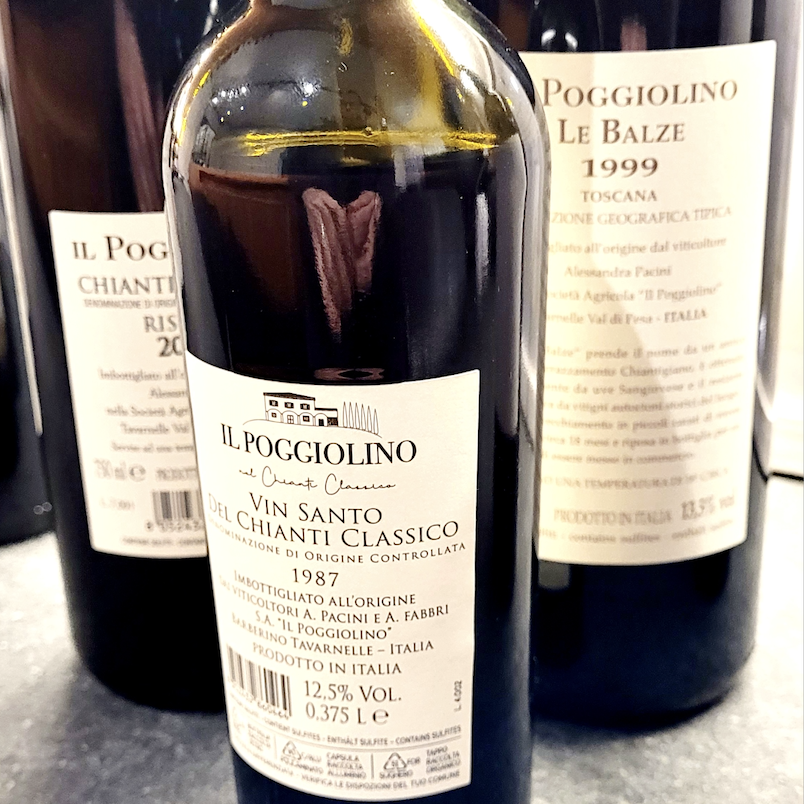
Instagram

Facebook

Report and reviews from the 2025 Chianti Classico Collection

At the Chianti Classico Collection 2025

Warm days have awoken the vines in Tuscany, the defiant 2025 Ontario winter has been reluctant to end, Spring has not sprung and 45 days have past since the 32nd edition of the Chianti Classico Collection came to another decisive and triumphant conclusion. Sustainability was the central theme in 2025 with talk of a new commitment by producers in their move towards a “sustainable future and respect for the region.” As always sangiovese remained the star for two-days of intensive tasting and continuing education studies with never enough thanks afforded to the organization of the Consorzio Vino Chianti Classico and execution of the Tuscan sommeliers. The most recent vintages showed off their prowess to a macroscale contingent of fully attentive international journalists seated at the Stazione Leopolda tasting tables for two immersive days. Between 2016 and 2024 recurrent hyperbole has been expressed on these Godello pages about the consistent forward strides made by Chianti Classico producers and still their passion and ethic persists. Chianti Classico wines have never acceded the level they are at right now, reputation is at an all-time high and the peak is far from reached. Should you either be blind to the obvious or just beginning to realize the importance of the Gallo Nero, fear not because the best is yet to come.

Related – Harvest report 2024: Retro Chianti Classico

Godello tasting at The Chianti Classico Collection 2025

Hai le fette di salame sugli occhi

A short note from Consorzio Vino Chianti Classico President Giovanni Manetti on US tarrfis: “We are particularly concerned about the repercussions that the 20% tariff imposed on imports could have on the export of our wines, and we must have faith that the choice made by the Trump Administration will be addressed as soon as possible by our Italian and European leaders. Us producers will now have to work together to shoulder the heavy economic burden that will result from the imposition of these tariffs on the U.S. market.  We will continue on, though, strong in our conviction that the American consumers who have always loved and enjoyed Chianti Classico will remain loyal to our quality wines, the Black Rooster, and to our unique region that’s present in each of our bottles.”

Chianti Classico Collection 2025

What to expect from 2024 Chianti Classico?

Near the end of 2024 Godello speculated on the quality of  the 2024 vintage, but also how it may resemble some blasts from the past. “The summer of ’24 was typically hot and dry but all that changed after September 7th because in some parts of the region nearly 400 ml of rain fell over the following seven weeks. Unprecedented amounts of water, well at least if you look back at the previous 30 years. August of 1995 saw rain like that and previous to that there was plenty of precipitation and cool harvest temperatures in 1991 and 1993. Fast forward again to 2024 and the the constant deluge of mid-September through to late October ends up becoming the cruelest stretch. Days on end when tractors are unable to enter the vineyards, harvest crews repeatedly pause on stand by because picking wet grapes is a cardinal sin and prayers are made for two straight days of sunshine to happen anytime and anywhere. From Greve to Castellina, San Donato in Poggio to Castelnuovo Berardenga, Vagliagli to Gaiole, San Casciano to Radda, in Montefioralle, Panzano and Lamole. Bunches are dropped because tight sangiovese clusters encourage the development of mold from within and the waiting game is excruciating for many. Patience is the greatest virtue and yet sugars are developing slowly, like the old days, piano-piano, as they like to say. In the end a classic vintage in the ways of days of old is declared, with phenolic ripeness achieved because of the longest hang-time since 1993, the same year Juventus’ Roberto Baggio scores five goals in seven international matches for Italy. Drinkable sangiovese, elegant, ripe, low alcohol and a good number blessed with sneaky structure. Producers are pleased with the freshness and ethereal beauty. The tank samples are bloody delicious. Pure sangiovese. Retro Chianti Classico.”

Related – 100 Years of Chianti Classico and Collection Previews 2024

“First and foremost on so many producers minds are the alcohol levels topping out at 13.5 percent. If you see 14.0 abv on a bottle in 2026 or beyond you can bet the actual number is just above that 13.5 Mason-Dixon line and in some cases 13.5 could in actuality be just a shade above 13.0. Lighter wines as a general rule, but age-worthy because of phenolic ripeness, at least in cases where producers waited, waited some more and picked as late as possible. Expect to see straight through the transparent hues of Chianti Classico sangiovese for 2024, to sense, taste and feel the brightest and potentially sweetest acidities, then finally the silkiest if also most elastic tannins. The 2024 acids will be the catalyst for aging these sangiovese. Anyone under the age of 50 will have likely never experienced a Chianti Classico vintage like 2024 and potentially never will again.”

Related – Chianti Classico 2023: A year in review

With Michaela Morris at Stazione Leopolda, Chianti Classico Collection 2025

A reminder that any Chianti Classico anteprime report on the Florence Collection must make clear that it is always a multi-vintage presentation. Also incumbent on a journalist is to express the importance of understanding the Annata in terms of what kinds of wines will come from a same vintage Riserva and Gran Selezione. The three appellative wines are intrinsically connected and so the Annata will foreshadow the future. There are producers who choose to present their just bottled Annata each February, if only because they qualify for what can be released under Consorzio rules, which in this case means the 2023s and this year unfinished tank samples account for 35 percent of that season’s total. The bulk (meaning nearly three out of every four) Annata made available to taste are from 2022, 2021 and 2020. The assessment of the campione is more of a trial and error exercise because hit or miss raw samples are so often challenging to get a read on. For the 2025 Collection it is safe to say that the 2022 Annata are to be considered as the current vintage. They are a powerful lot and though lower in quantity, they arrive in stark contrast to 2021s of truly exceptional quality. The 2022s are stringently stubborn, requiring time and several producers choose to keep their wines behind, to give these next releases a few more months in the bottle.

The 2025 Collection also marked the 50th Anniversary of the Chianti Classico DOP Olive Oil Consorzio and included a record number of Black Rooster exhibitors. There were 2018 wineries presenting 790 labels to the press, industry professionals and general public. In addition to the Collection presentation in Firenze, this most recent trip also included visits made with producers within the territory. As a follow-up, a second report will publish next week to include the wines tasted at those estates. There were 544 wines available at the sommelier-assisted tables and the following are 185 reviews covering all 11 UGAs for the three appellative levels of Chianti Classico DOCG tasted over two consecutive days in the Stazione Leopolda at the February 2025 Chianti Classico Collection.

Gagliole Chianti Classico DOCG Rubiolo 2023, Nessuna Unità

Campione: Juicy as they come and while a sample it is simply too early to fully assess the full extent known of this very forthright Rubiolo 2023. A pure sangiovese of high fruit content red and juicy, open and generous, nearly ready to express itself. Another six months and this could not only be bottled but rearing to please.  Tasted at The Chianti Classico Collection, February 2025

Istine Chianti Classico DOCG 2023, Nessuna Unità

Campione: Really full and substantial sangiovese if like many 2023 barrel samples there is a tightness about its aromatics. Not close fisted like other vintages but also not completely open or generous either. Tannins are a bit grippy and their muscular pipes must come down from the mountain and relax before any sort of joy can be found. And it will.  Tasted at The Chianti Classico Collection, February 2025

Istine Chianti Classico Riserva DOCG Levigne 2021, Nessuna Unità

LeVigne, Riserva from the Istine vines in Radda plus Gaiole to create Angela Fronti’s full scale selection. LeVigne and the reason why these vineyards all need to be the best they can be, to justify a Riserva label, especially now that each of the three are giving fruit to produce Gran Selezione. No severe loss for Riserva although it may take a few years for allocations to truly be figured out so that this wine will continue to stay at peak.  Last tasted at The Chianti Classico Collection, 2025

After experimenting for a few years this is Angela Front’s first use of whole bunches intero, approximately 20 percent in the mix, to wildly aromatic acclaim. Seriously, for better, worse or best, of a floral intensity now announced, with immediacy and the flavours burst, pop and finally explode upon the palate. Wholly complex notions and diversions that take you, here, there and everywhere. Dios mio Batman! Fronti has mixed in different percentages of whole bunch, 10 at first, 50 in the fermentative middle and 40 at another to arrive at the average of 20 and the final result is something extraordinary. You simply can’t look or turn away. The energy is palpable and infectious. Drama! Emozione. Drink 2025-2032.  Tasted February 2024

Castellina

Banfi Chianti Classico DOCG 2023, Castellina

Juicy, soft, amenable, drinkable to each and every degree. That is the point and the exclamation. Just the faintest hint of grainy texture and vanillin by wood that will integrate with six more months in bottle. Drink 2025-2027.  Tasted at The Chianti Classico Collection, February 2025

Brancaia Chianti Classico Gran Selezione DOCG 2022, Castellina

Big bones and a wave of exotic perfume defining the vintage and for Castellina. I mean it’s Gran Selezione and so 2022 is really young. Feels like the wine is still refining while it stiff arms your palate to ward off the tackle and so surely too early to be tasting. Speaks to the idea of a window opening before a some other number UGA ‘22s but the time is far from nigh. Drink 2026-2032. Tasted at The Chianti Classico Collection, 2025.

Buondonno Chianti Classico DOCG Podere Casavecchia Alla Piazza 2023, Castellina

Warm and inviting aromatic condition with this high elevation part of Castellina’s eastern ridge effecting a combination of sweet volatility and cool factor. A curious and potentially profound juxtaposition provided time chooses to sooth the grip and force that exists in the earliest stages of this wine. Just sangiovese and meaningful, raw and powerful, boozy to a degree but know that this place makes this kind of Chianti Classico. Return two years from now for the opening salvo. Drink 2027-2033.  Tasted at The Chianti Classico Collection, February 2025

Buondonno Chianti Classico Riserva DOCG Casavecchia Alla Piazza 2022, Castellina

Big and bountiful, rich and powerful while always just restrained enough to feel the natural beauty in the face of fruit meeting alcohol brawn. The place determines the result and 2022 could do nothing but make a big Buondonno as Riserva. A wow factor mélange of fruit and fine-grained tannin looking for the catalyst of acidity to control this manifest destiny. Two years rest will secure the result. Drink 2027-2033.  Tasted at The Chianti Classico Collection, February 2025

The beautiful family of Marta Buondonno

Capraia Chianti Classico DOCG 2023, Castellina

Wood off the top with a blush of make-up in vanilla, lavender and almond paste. Coats the palate with a salve and while the hope could be for a soft and creamy sangiovese – the wine does not come to that. Drying and chalky but in a liquid grainy way. Drink 2025-2026.  Tasted at The Chianti Classico Collection, February 2025

Capraia Chianti Classico Gran Selezione DOCG Effe 55 2021, Castellina

Spices all over the nose, baking and those that define the stews and braises of Toscana. A truly woody Gran Selezione, grabbing our attention, letting us know it’s there for the taking. Tannins do dry out at the finish but do not wait because the fruit will not improve or get any younger. Drink 2025-2027.  Tasted at The Chianti Classico Collection, 2025

Casale Dello Sparviero Chianti Classico DOCG 2022, Castellina

A most pure and surely glycerol sangiovese with (five percent) canaiolo as soft and creamy as they come from Castellina, or anywhere in the territory. Generous and amenable, a veritable mouthful of fruit and wood softened and melted into the fabric of the wine. Very modern, plush and easy. Drink 2025-2027.  Tasted at The Chianti Classico Collection, February 2025

Casale Dello Sparviero Chianti Classico Gran Selezione DOCG Paronza 2019, Castellina

Paronza 2019 has bided time and allowed itself to mature into an adult version of Gran Selezione. Now mature and settled, caramelizing into secondary character and showing like a sangiovese having entered its postmodern age. Chewy, of liquorice and dried persimmon, its acidity expressed in the reduced Balsamico way.  Last tasted at The Chianti Classico Collection, 2025

Unique example with aromatics unlike any other but for now they are mostly caused by the stay in wood. Vanilla yes but also what feels like the effects of American oak. Coconut like Rioja mixed with Napa Valley but sangiovese is rendered “different” because, well sangiovese. Needs two years to come fully together and will outlive many, darkening and thickening as it matures. Drink 2026-2032.  Tasted October 2024

Castagnoli Chianti Classico DOCG 2022, Castellina

A grand mix of aromas, in part from the surround of forest and the other a vineyard exposition at elevation and open to the elements. A lightning strike of sangiovese as bright and intense as any you will find in the whole of the territory but that is the crux of this Castellina situation. Intensity thy name is Castagnoli.  Last tasted at The Chianti Classico Collection, February 2025

Great example of juiciness and acidity in the face of a dry, concentrated and hydric-stressed vintage. Alternatively crispy but there is some reserve-style, reductively backward actionability and yet conversely also forgiving character. Tart and expressive with two years needed to integrate and complete this picture. Drink 2026-2031.  Tasted February 2024

Castellare Di Castellina Chianti Classico DOCG 2023, Castellina

Well made, drink early sangiovese with acidity in tow behind fruit though just sapid enough with thanks to (five percent) mitigating canaiolo. A thoughtful and well judged Annata with 2023 bones and flesh for open season Chianti Classico hunting. Get at Castellare now because it offers more than most without the necessary requiem for aging. Drink 2025-2027.  Tasted at The Chianti Classico Collection, February 2025

Castellare Di Castellina Chianti Classico Riserva DOCG 2022, Castellina

Solid construct in Riserva form from Castellare, rich and fulsome, dark fruited, red-faced and fine. Elegant sangiovese, so well thought about and crafted, spicy, spiced and open. Drink 2025-2029.  Tasted at The Chianti Classico Collection, February 2025

Castello Di Fonterutoli Chianti Classico Gran Selezione DOCG 2021, Castellina

High tonality, brightness and also lightness of red, red fruit though this sample of the 2021 Castellina Gran Selezione houses some Brettanomyces. Sweet fruit and acidity though tannins are somewhat hard as a result. Hoping for some relief after time brings all the elements together.  Last tasted at The Chianti Classico Collection, 2025

This Gran Selezione is in fact 2021, shown here as an anteprima because the rules allow (after January 1st), but it surely won’t be released on the market anytime soon. The hold on the fruit is serious and the wine is still ground into a masala paste without having rehydrated, settled and showing what it should become. Nevertheless there is plenty of substance and tonic weight to rely on for a Gran Selezione that shall provide, like 2016, but also with modern timing in pocket. Drink 2026-2032.  Tasted February 2024

Castello La Leccia Chianti Classico DOCG 2022, Castellina

Fine liquid elixir of sangiovese without adornment or distraction in this pure example of Castellina Chianti Classico. Simple and so bloody effective for what the Annata needs to express and how they should attract a willing audience. Drink without any care in the world. Drink 2025-2027.  Tasted at The Chianti Classico Collection, February 2025

Cecchi Chianti Classico DOCG Storia Di Famiglia 2022, Castellina

The story of a family – this to explain the reasons behind a Chianti Classico Annata of accumulation, of the years and a season. Warm and peach fuzzy, red cherry stylish with a hint of citrus pit bitters and acidity as cracker sharp as ever. A touch lactic and therefore tang is the operative word.  Last tasted at The Chianti Classico Collection, February 2025

Campione: Tight, reductive, a swirl of glycerol syrupy red fruits held in a tight acid embrace. This will be rich and also emulsified sangiovese made doubly thick and ready to impress one or two years from now. Take note and be ready. Drink 2025-2027.  Tasted February 2024

Cecchi Chianti Classico Gran Selezione DOCG Valore Di Famiglia 2021, Castellina

Taut and still somewhat reductive Gran Selezione from Castellina, not yet ready to calm, settle and release. A red fruit profile quite intense and acidity doing much the same. Needs to chill, relax and integrate, melt in its upfront barrel and come away with a new attitude, in new light. Drink 2027-2031.  Tasted at The Chianti Classico Collection, 2025

Fattoria Pomona Chianti Classico DOCG 2022, Castellina

Still working through its motions and machinations, this for a sangiovese from Castellina that fits the vintage profile, of fruit darker than almost any since 2016. Quite tannic, still a bit grainy and the impressive stature by structure is in charge. Big for Pomona, likely higher in alcohol than many, not a throwback by any stretch and drying at the finish. Give this time, plenty of precious time and look to better days ahead . Drink 2026-2032.  Tasted at The Chianti Classico Collection, February 2025

Gagliole Chianti Classico Gran Selezione DOCG Gallule 2021, Castellina

Riserva may be on its own but it already reveals much about itself. The separate entity that is Gran Selezione (from Castellina, not Panzano) does the opposite with wood so very much upfront and a tannic touch weighing down as freight below. As full a wine as Gagliole will make, however the barrel holds all the current cards. Comes away creamy and there needs to be some integration to get where it wants to go. Drink 2027-2033.  Tasted at The Chianti Classico Collection, 2025

Lornano Chianti Classico DOCG 2022, Castellina

There has never been a Lornano Chianti Classico with more upfront dark fruit and manageable structure as this out of the 2022 vintage. Nothing previous has acted so open and generous as this Annata, nor have we not had to wait for so short a time for grip and tannin to subside. Perhaps they were never fully there? Well no, the wine shows the stuffing of a warm and fulfilling year but there are few from Castellina that act this way. What sorcery is this pray tell? So curious and frankly also delicious. Drink 2025-2029.  Tasted at The Chianti Classico Collection, February 2025

La squadra – Casale Dello Sparviero

Nardi Viticoltori Chianti Classico DOCG 2022, Castellina

Sangiovese with five percent colorino and canaiolo first produced in 2014 now with the image of Siena’s skyline on the label. Soils are clay with some limestone and for Giacomo “the 2022 is better in the mouth.” Aged in a mix of Tuscan, Slovenian and French oak, “essential for aromatic complexity.” Now just in bottle for a bit more than a month, expressive of fruit in a broad way and the tannins are present in two parts, of softness and then in fine grains. Nardi picks on skin and alcohol – not on the pips. He insists they don’t necessarily have to be crunchy and brown. Surely a reaction to climate change and because he wants to make a wine of drinkability. Makes sense in Castellina and yes, there is more than ample ripeness in his 2022. Well done, Giacomo. Drink 2025-2028.  Tasted February 2025

Nardi Viticoltori Chianti Classico Gran Selezione DOCG Vigna Del Pino 2021, Castellina

The first vintage was 2016, the following vintage was so hot and dry but Nardi did the yeoman work and made a truly drinkable wine. The 2021 is blessed of the good if basic red fruit vintage, here with more polish and refinement as compared to the Annata. You can feel the passion and the piety in this work. Drink 2025-2028.  Tasted February 2025

Piemaggio Chianti Classico DOCG Le Fioraie 2020, Castellina

Campione: A 2020 and still not bottled which can only be for two reasons. Either the wine has been a serious challenge to clean up or the tannic structure is so formidable as to be the requiem for further time. In any case there is some noted volatility but no major faults or issues with sweet fruit, equal acidity and yes the backbone of the wine is sangiovese serious. Upright, vertical and the tannic profile demanding. Needs more time.  Last tasted at The Chianti Classico Collection, February 2025

Campione: Tight, peppery but only slightly reductive and quite fresh. Breathable and no oxidative moments as with so many samples taken from cask. Still the wine is far from shwoing any semblance of openness or readiness.  Tasted February 2024

Querceto Di Castellina Chianti Classico DOCG l’Aura 2023, Castellina

Herbal entry, a pesto of sweet greens swirled into tomato and tart fruits for another unique 2023 when many others feel cut from a similar cloth. In any case the unction runs deep and the flavours too, the acidity keeps pace and the structure is solid, if not the kind that measures quite the same. Adds up to a promising mid-term Annata. Drink 2025-2028.  Tasted at The Chianti Classico Collection, February 2025

Rocca Delle Macìe Chianti Classico DOCG 2023, Castellina

Unsurprising as a 2023 already bottled and ready for the market. Prèt a porter, fruit set up to talk the Maciè talk without hesitation and for all to take in right here, right now. Acids are soft and sweet, tannins never there. Drink 2025-2027.  Tasted at The Chianti Classico Collection, February 2025

Rocca Delle Macìe Famiglia Zingarelli Tenuta Le Maciè Chianti Classico Riserva DOCG Sergioveto 2022, Castellina

Indubitably Famiglia Zingarelli as a Riserva and for that matter any or all of their sangiovese. A mix of ripest fruit available at Le Maciè put to great barrel for thickening effect. This is the sort of Riserva you can chew on, swirling around the palate with creamy, red berry goodness. There are no holes or moments taken off, just a seamless and consistent wine from start to finish. Drink 2025-2028.  Tasted at The Chianti Classico Collection, February 2025

Rocca Delle Macìe Chianti Classico Gran Selezione DOCG Sergio Zingarelli 2021, Castellina

Really quite amazed at how approachable the Sergio Zingarelli Gran Selezione 2021 is acting this early in its tenure. A great vintage no doubt and yet not necessarily a sangiovese with it’s back against the wall, nor is there any reason to fear it’s tannic presence. No, fruit is king, generous and beautiful. A fine and fortuitous example that leads with its best foot forward, open and likely to stay this way for a few years. Drink 2025-2031. Tasted at The Chianti Classico Collection, 2025

Tenuta Di Bibbiano Chianti Classico DOCG 2022, Castellina

Visibly luminescent, highly aromatic and distinctly seasoned for 2022 Chianti Classico Annata. Crisp and vocal, crunchy and liquid chalky, squared at its corners, yet not far away from softening, rounding and curving those edges. Tannins are still firm and in command.  Last tasted at The Chianti Classico Collection, February 2025

Arch classic Bibbiano for Annata, fresh, impeccably clean and open, more so than most 2022s. No reduction, oxidation or volatility but a pleat of substance and noble power. The acids of ’22 improve upon ’17 and ’18, tannins follow suit and all is known to be on the right track. Drink 2025-2028.  Tasted February 2024

Tenute di Bibbiano Chianti Classico Gran Selezione DOCG Vigne Del Montornello 2021, Castellina

Montornello shows its stripes and flavours, wearing its emotions on the sleeves of its structure with all the vineyard notions in tow. Magnificent array of colours, aromas and flavours, in reds, blacks and blues, never relenting, welling up from a well of mineral and elemental happenstance. Big vintage for this Gran Selezione. Drink 2027-2032.  Tasted at The Chianti Classico Collection, 2025

Tenuta Di Lilliano Chianti Classico DOCG 2022, Castellina

Youthful and yet reductive, lightly white peppery infiltrate through the red rose floral bouquet. Syrupy in mouthfeel with high level tang and a fullness welling for the palate and low down at the finish. Lots of glycerin and a slight paste feel at the finish. Drink 2026-2028.  Tasted at The Chianti Classico Collection, February 2025

Tenute Squarcialupi La Castellina Chianti Classico DOCG Cosimo Bojola 2022, Castellina

The work of next generation winemaker Cosimo Bojola and his natural of natural procurements, the firsts from ’21 and ’20 with their classic earthy funk – but no more, The clean and crisp clarity out of 2022 is a cause for sense of wonder and the precocious abilities of said maker are in plain view. Fruit is securely ripe, tannins are severely restrained and the orange citrus acidity does the rest. The risk has clawed back to a safer space which sterilizes the wine just a touch. The best is still to come and yet with 2022 you have to give credit because it’s due. Bravo Cosimo. Drink 2025-2033.  Tasted at The Chianti Classico Collection, February 2025

Tregole Chianti Classico DOCG 2023, Castellina

In bottle from 2023 and so not a sample but for a maker who picks relatively late (often well into October) the time spent before bottling is less than many. And so come expecting some awkward moments, even from the beginning because the wine has just not settled and transformed into what it will be. Not for a moment and many will be confounded if tasted this early. Revisit in eight months time.  Tasted at The Chianti Classico Collection, February 2025

Tregole Chianti Classico Gran Selezione DOCG 2021, Castellina

The world of Tregole comes to the Gran Selezione appellation with late harvested fruit for it to translate as a fuller and more concentrated wine. More tannic freight then Annata and Riserva combined, now weighing in with trenchant and layered intention. Needing time to settle and find its way, this 2021 from Sophie Conte is some kind of unexpected tour de force. Drink 2026-2031.  Tasted at The Chianti Classico Collection, 2025

Villa Trasqua Chianti Classico DOCG 2021, Castellina

A Castellina Annata always held back and aged longer than most, at least one year and released as much as two later than the current 2023s coming to market. With thanks because my goodness the tannic profile is a tight and immovable one. Getting there slowly, nearly in stride and the wine should offer its height of pleasure by this time next year. For now there should be a lean cut of beef on the grill, a baseball top sirloin if you will, rested and sliced rare alongside. Drink 2026-2030.  Tasted at The Chianti Classico Collection, February 2025

Castelnuovo Berardenga

Carpineta Fontalpino Chianti Classico DOCG 2023, Castelnuovo Berardenga

Campione: Reductive and über primary with a sweet volatility in charge of the aromas. So very much in the house style where fruit is large and structure larger. There is no reason to expect the world and pass early judgement because there is little to see here in terms of a finished wine. Time needs to pass before it finds its way.  Tasted twice at The Chianti Classico Collection, February 2025

Carpineta Fontalpino Chianti Classico Gran Selezione DOCG Montaperto 2020, Castelnuovo Berardenga

Mineral, material, meaningful and of a clarity that Dofana does not show nor declare in 2020. Montaperto is clean living, sharp and focused Gran Selezione. Ripeness secured, acidity rising and tannins seething like a slow-simmered sauce, never rushed and developing complexities. A fine GS that shows the way for this Castelnuovo Berardenga terroir though still needing a few years to realize its potential. Drink 2027-2034.  Tasted at The Chianti Classico Collection, 2025

Castell’In Villa Chianti Classico DOCG 2020, Castelnuovo Berardenga

To taste a Castell’In Villa this early seems unusual to say the least and maybe even wrong. These are some of Chianti Classico’s longest lived wines, even at the Annata level and yet…and yet there is joy, light and promise right from the start. Hard to believe but here we are in the modern world and the house rolls with the changes – with no compromise to structure. Drink 2026-2032.  Tasted at The Chianti Classico Collection, February 2025

Castell’In Villa Chianti Classico Riserva DOCG 2019, Castelnuovo Berardenga

Well settled and comfortable within its Riserva Skin, softening and yet acidity persists at every turn. The driver is just that, sweet and salty, lightly caramelizing the deep red fruit into a state of its maturing accord. Feels like sangiovese from a warm southerly Chianti Classico location surrounded by all the macchia brush and herbs that a forest will provide. The development here tells us this will not be the longest aging Riservas from this estate. Drink 2025-2031.  Tasted at The Chianti Classico Collection, 2025

Castello Di Bossi C. Berardenga Chianti Classico DOCG 2022, Castelnuovo Berardenga

A clear reflection of the house style and the coolest, smoothest and silkiest iteration of Castelnuovo Beradenga. Elevation helps, as does riposte fruit caught at ideal maturity, but also the hands of knowledge, calm demeanour and experience. Bossi’s is such a well-judged, layered and syncopated sangiovese, Bio and proper, come to the world with great effect. Drink 2025-2028.  Tasted at The Chianti Classico Collection, February 2025

Castello Di Bossi Chianti Classico Gran Selezione DOCG 2021, Castelnuovo Berardenga

Bossi’s 2021 is truly a different animal as compared to its Riserva, less forthright, not quite as open or soliciting of immediate gratification. A vertical solo sangiovese expression, seriously structured and needing time. That said there is a brightness and citrus aspect that’s quite invigorating. Drink 2026-2031.  Tasted at The Chianti Classico Collection, 2025

Castello Di Bossi Berardo Chianti Classico Riserva DOCG 2021, Castelnuovo Berardenga

Lovely perfume from Bossi’s Riserva and a 100 percent sangiovese that immediately attracts in just this way. A deep well of red fruit rises, coats and then fills the palate for what is simply definitive Riserva for Chianti Classico. No lack for tannins here neither and so come back year after year for five or more for the enhanced and continued experience. The work of a winemaker honing his or her craft is more than apparent. Drink 2026-2031.  Tasted at The Chianti Classico Collection, February 2025

Fèlsina Berardenga Chianti Classico DOCG 2023, Castelnuovo Berardenga

An early release 2023, realizing its potential ahead of usual to mark a minor shift in design and expression from Fèlsina. Never missing the evergreen note always prevalent in these sangiovese of southeastern Castelnuovo Berardenga and Chianti Classico. A touch dusty and with the Balsamico of the località, though never shocking and really quite expected. Drink 2026-2030. Tasted at The Chianti Classico Collection,  February 2025

Fèlsina Chianti Classico Gran Selezione DOCG Colonia 2021, Castelnuovo Berardenga

There have been great Colonia made over the past 12 years but does it not just feel like Giovanni Poggiali and his intelligent team have been waiting for 2021 to come along and take this cru to another level? The can’t ever miss style and macchia notes are present and accounted for, but here in the most hyperbole of ways. An exaggeration of riches, a highest level of fitness and fullness not yet uncovered. The 2021 is an amazing wine, minty and white chocolate woody but always evergreen and cool in the face but also as a compliment to its warming heart. Virtuoso performance by ’21 Colonia, a Gran Selezione with the nurturing care of Pietro Pettinaio, in the school of Giuseppe Collignon and Domenico Beccafumi, all in the name of Castelnuovo Berardenga. Drink 2027-2036.  Tasted at The Chianti Classico Collection, 2025

Losi Querciavalle Chianti Classico DOCG 2022, Castelnuovo Berardenga

There’s something happening in Castellina from 2022 because there are wines with darker fruit and more depth than most of the Chianti Classico UGAs. Here with grip and this feeling of sangiovese liqueur exaggerated in colour and heft by the 10 percent colorino in the wine. Quite the extraction and the tannic presence for a profile bigger than Losi of the past. Another curious ’22 Castellina that can’t be ignored. Drink 2026-2029.  Tasted at The Chianti Classico Collection, February 2025

San Felice Chianti Classico DOCG 2022, Castelnuovo Berardenga

Quite the silky Castelnuovo sangiovese seasoned with salt, pepper and spices by 10 percent altri vitigni and there is no doubt the team led by Leonardo Bellaccini have found the sweet spot with this vim, relish and vigour 2022. Fruit and structure, one, the other, then back again for more. Incredible considering the quantities produced. Drink 2025-2028.  Tasted at The Chianti Classico Collection, February 2025

Tenuta Di Arceno Chianti Classico DOCG 2023, Castelnuovo Berardenga

Campione: Quite forward and understandable as a sample, fruit certainly full, ripe and still a touch dusty. Not exactly rigid though not yet malleable in terms of mouthful and certainly structure. Well reasoned and so will round out into a good Annata, seasoned and understandably forward. Drink 2025-2027.  Tasted at The Chianti Classico Collection, February 2025

Tolaini Chianti Classico DOCG Vallenuova 2023, Castelnuovo Berardenga

Nothing else scents like a Tolaini Chianti Classico, no matter the appellative level and in Annata the florals, mint and chocolate are at the height of heights. As is the luxe showiness, strut with feathers extended and beauty for all to see. Tannins are fierce and extensive, not to mention stretched far and long. Wholly impressive at this appellative level. Drink 2027-2032.  Tasted at The Chianti Classico Collection, 2025

With Gregorio Boscu Bianchi Bandinelli – Villa di Geggiano

Villa Di Geggiano Chianti Classico DOCG 2021, Castelnuovo Berardenga

Intensity from an ultra specific località with its descending fluvial screes between two hills. A microclimate unlike those on either side for which the sangiovese receives a mineral deposit all its own and 2022 brings the metal forward in full and proper distribution. Cuts through the fruit with sapid intent while fine if persistent tannins surround the whole. Best to let this ’21 sit for a couple of years. Drink 2027-2032.  Tasted at The Chianti Classico Collection, February 2025

Villa Di Geggiano Chianti Classico Riserva DOCG 2020, Castelnuovo Berardenga

Big vintage for Geggiano’s south-westerly Castelnuovo location transmitted through Riserva with all the fruit, and more. All the silky, cool and gelid feels there could and would ever want to be. Intensity of minerals, Alberese namely and who could not feel this mouthful of metal, gemstone and elements in the mouth. How could you possibly miss it? Sangiovese that stays with you for minutes on end. Drink 2025-2032. Tasted at The Chianti Classico Collection, 2025

Gaiole

Badia A Coltibuono Chianti Classico DOCG 2022, Gaiole

Not exactly closed yet not particularly expressive and so maybe the wish would be for this 2022 from Badia a Coltibuono to wait another year ahead of release. Still it has aged in bottle a year longer than some ‘23s now being presented and time will shift the gears for the wine to express its Coltibuono località. The savour and acidity of forests, elevation and mixed indigenous varieties accenting sangiovese delivers another ultra-specified Chianti Classico Annata. Close your eyes, conjure and recall BdC’s of the past and the 2022 will fall right into line. It could not have been made by just anyone nor have come from anywhere else. Drink 2026-2031.  Tasted at The Chianti Classico Collection, February 2025

Badia A Coltibuono Chianti Classico Riserva DOCG 2020, Gaiole

A bit seductive this Riserva from Badia a Coltibuono, it should be supposed because of the vintage and fruit stands up to counted with more immediacy than memory will try to recall. Ripeness to the edge and lingering, suggestive of maturity but in a holding pattern. Liquorice on the palate and again this sort of palaver involved, but then the wine steps back once again. An immediate gratification, in other words a phrase not ever used before to describe a Coltibuono Riserva but there it is and so this vintage is more ready to drink. Drink 2025-2028.  Tasted at The Chianti Classico Collection, 2025

Bertinga Chianti Classico DOCG La Porta Di Vertine 2022, Gaiole

The door to “Vertine,” a località within Gaiole that Luca Vitiello and his Bertinga team have chosen to exult, explain and present to the world. Their’s brings more fruit and modern styling to Gaiole and in turn to the whole that is Chianti Classico. A ready for drinking, juicy and openly generous, 100 percent sangiovese for every reason to believe. Drink 2025-2028.  Tasted at The Chianti Classico Collection, February 2025

Cantalici Chianti Classico DOCG Baruffo 2022, Gaiole

A new epoch for Cantalici’s Baruffo begins with this feeling of a transition having happened. Not just because of the clean, cool and ultra clear modernity but also the absence of barrel, or the feeling that wood sheds little importance into this wine. Only sangiovese, expressly Gaiole and yet new for the UGA, or at least different. There is substantial chew in texture that reminds of liquorice and because of aromas meeting style, but also a chalky tannin underneath. No bitters at the finish confirm the change in direction where less has become more. Drink 2026-2029.  Tasted at The Chianti Classico Collection, February 2025

Castello Di Ama Chianti Classico Riserva DOCG Montebuoni 2021, Gaiole

A mouthful of acidity, tannin and mineral direct and defining Ama’s Montebuoni 2021, a wine not yet mature enough to say the window has opened. Quite woody at this age while the dark fruit is so very substantial and so time is needed to melt them into one another. That acidity and seriousness of Balsamic quality speaks to the Gaiole origin as the source for this level of appellation. Drink 2026-2030.  Tasted at The Chianti Classico Collection, February 2025

Castello Di Ama Chianti Classico Gran Selezione DOCG San Lorenzo 2021, Gaiole

San Lorenzo the concept comes from the vineyard with that name and now the ideal conceives of Gran Selezione as a wine to speak for all of Ama’s Gaiole. The vintage is renowned to be important and so arrive expecting fullness of everything involved, but also a fortress yet to be breached. A tough one indeed still at this stage with verticality and immovability. Needs at least two more years. Drink 2027-2032.  Tasted at The Chianti Classico Collection, 2025

Castello Di Ama Chianti Classico Gran Selezione DOCG Vigneto Bellavista 2020, Gaiole

Bellavista is first and foremost the Gran Selezione only made in select vintages, inclusive of 20 percent malvasia nera and also the one of ripest fruit with a view. The depth in 2020 is serious, the wine at once grounded and then acidity of a Gaiole nature kicks in to lift and see this Bellavista rise. Full and beautiful, seamless, orchestrated by a master of decades and artistic appreciation while delivering a modernist’s virtuoso performance. Drink 2027-2035.  Tasted at The Chianti Classico Collection, 2025

Castello Di Cacchiano Chianti Classico DOCG 2022, Gaiole

Southerly directed Gaiole, Monti in Chianti sangiovese with the bits of malvasia and colorino lending colour and spice accent with liquorice and bokser pod for a dried herb, leathery fruit and botanical iteration. Nicely balanced affair with ample freshness and a settled disposition. Drink 2025-2028.  Tasted at The Chianti Classico Collection, February 2025

Castello di Meleto Chianti Classico DOCG 2022, Gaiole

Just five percent merlot softens the sangiovese with many vineyards of the 130 hectares in total contributing. Usually the youngest vines and also some of the plots that experience the warmest climate for the season. Ages 15 months, half in cement and half in large (really old) French cask. No tannic impart and this is about as correct, clean, acid retentive and well adjusted a Chianti Classico as you are want to find. Warm vintage yet freshness and fruit quality is knowably ripe and easy. Less savoury and more fruit centric than in years past.  Last tasted February 2025

Intensity of red fruit, almost searing while this young and immovable but surely a far cry from overly pressed or done. Surely a matter of Gaiole and vintage with Meleto sure to respect and deliver what it’s meant to bring. Another ’22 that must be waited on, again confirming how different these are to 2017. Drink 2025-2029.  Tasted February 2024

Fattoria San Giusto A Rentennano Chianti Classico DOCG 2023, Gaiole

Campione: I mean of course its tight and yet to resolve but this sample by San Giusto shows more wealth of upfront fruit than could have been expected. Darker fruit than 2022 and also 2021, closer to 2020 but once again the individual character of modern vintages can’t be denied. Feels a bit serious at this very early stage but substance at this level will mean a wine that will be held in high regard.  Tasted at The Chianti Classico Collection, February 2025

Fattoria San Giusto A Rentennano Chianti Classico Riserva DOCG Le Baròncole 2022, Gaiole

Campione: Unsettled sample here from San Giusto, chalky and finely grainy at this earliest of stages. Just a glimpse into what 2022 will become, years further down the road. Can’t really recall a sangiovese from the house showing wood like this but the vintage will show more taciturn moments in wines built to last. Far more tannins present than noted in the last several years, a freight of weight tethered to the fruit, keeping it low and below.  Tasted at The Chianti Classico Collection, February 2025

Romantic dinner for two

Le Miccine Chianti Classico DOCG 2022, Gaiole

Sharp and clean while oh so 2022 but how could it not be? Well to be honest Le Miccine gets the vintage so bloody correct because the mix of fruit and body come together as one. There is no doubt this Annata is just where maker and place wanted it to be so kudos to both for abiding by their mutual bond. Drink 2025-2028.  Tasted at The Chianti Classico Collection, 2025

Campione: Stewed and pruned. Oxidative barrel sample that gives no indication as to the quality or any sense of what the finished wine will be. Palate tells a better story though it’s challenging to fit the pieces together when the launch point is problematic. An example that speaks to avoiding tasting samples.  Tasted February 2024

Marchesi Frescobaldi Chianti Classico Gran Selezione DOCG Tenuta Perano Rialzi 2020, Gaiole

In Gran Selezione terms for Chianti Classico Rialzi is about as singular as it gets. Just drive up the road from La Villa in Radda, into Gaiole and through to Perano to know what you are dealing with. Olive trees, cypress, pine, other evergreens, rosemary, sage and brushy greens on your left give away to the single Rialzi Vineyard on your right. All that verdancy translates into these 25 year-old, cordone speronato vines for a very specific Balsamico, drawn from the greens, through the experienced vines and into the fruit. The vineyard was called “I Rialzi,” literally “the lifted up,” or now “the steps, or terraces. Lamberto Frescobaldi always insists “the vineyard matters most,” and in this case that is simply true. Aromatic confusion in a way but more so volume, palate tension and also vintage. Incidentally warmer than 2019, lending more volumetric credence and tending towards a bigger iteration of Gran Selezione. Feels more like the Rialzi of expectation and the kind of structure to go on and on. Drink 2026-2033.  Tasted October 2024 and at The Chianti Classico Collection, February 2025

Podere Ciona Chianti Classico DOCG Proprieta Gatteschi 2021, Gaiole

Freshness incarnate from the small single hillside Gaiole estate, a quintessential extension from a forest località, whole and fulfilled of its own accord. As equanimous as any Chianti Classico that exists. Silk-threaded and sumptuous from the first through filamented acidity and elastic texture. Tannins are fine, unobtrusive and acquiescing. Drink 2025-2030.  Tasted at The Chianti Classico Collection, February 2025

Ricasoli Brolio Chianti Classico DOCG 2023, Gaiole

Francesco Ricasoli sets the 2023 up by describing it as “crispy,” which translates as freshness but who could not think of Brolio ‘23 as juicy. Classic black cherry for this label of 600,000 bottles encompassing all five soil types, 250 hectares and everything that is collected, layered and transcribed as the Ricasoli estate. Drink 2025-2027.  Tasted February 2025

Campione: Youthful, still a bit reductive in a sweet bell peppery way, herbal amaro yet to stretch and let the fruit speak first. Good fruit however, substantial and showing Gaiole’s abilities for 2023.  Tasted at The Chianti Classico Collection, February 2025

Ricasoli Chianti Classico Riserva DOCG Brolio 2022, Gaiole

Riserva is truly the extension of Annata, from across the entirety of the Ricasoli estate and aged longer. Accedes to more concentration but still the Ricasoli style must be attended to; sharp, clean, drinkable and a provider of joy. This much is true and yes, the clarity is on display, so obvious in its openly generous and frank transparency. If there were rustic aspects 10 years ago they have long since left the building. It has been a matter of fine tuning, vintage after vintage. Drink 2025-2028.  Tasted February 2025

Rocca Di Castagnoli Chianti Classico DOCG 2023, Gaiole

Another ready to rock 2023 Annata and if any commune slash UGA is set up to deliver early it feels like Gaiole is the one. The naturally matured fruit and especially sweet acidity mixes with plush tannins that need not grip the wine but inserted allow for ease and drinkability. In fine form with a real neural swirl throughout. Drink 2025-2028.  Tasted at The Chianti Classico Collection, February 2025

Rocca Di Montegrossi Chianti Classico DOCG 2022, Gaiole

Still in rapid pulse mode, agitative, unsettled and excited. High tones and fruit working from left to right, red to black, low to high. Croccante and crackling to the nth degree, rigid and vertical, structured as Annata can be but with a light, bright and transparent Burgundian like character. Remembering tasting this from barrel and not surprised to see this as the next stage result. Drink 2026-2030.  Tasted at The Chianti Classico Collection, February 2025

With Federico Pini and Riccardo Bucciolini – Torcibrencoli

Greve

Carpineto Chianti Classico DOCG 2023, Greve

Indelible stamp of the house, estate style present, accounted for and oft repeated, again as here, in perpetuity. For 2023 there is a deeper well of sweet fruit that hides the macchia and so a less savoury Carpineto is the result. Quite fine and openly generous this early to allow access ahead of most contemporaries Drink 2025-2027.  Tasted at The Chianti Classico Collection, February 2025

Carpineto Chianti Classico Riserva DOCG 2021, Greve

Consistently a matter of dark fruit, dusty qualities and Balsamico swirled into reductive syrup. Maximum ripeness from 2021 while località and winemaking style make sure to remind of every vintage that came before. There is no mistaking a Carpineto wine, exaggerated in Riserva and doubly so as Gran Selezione. Without any shadow of a doubt. Drink 2026-2029.  Tasted at The Chianti Classico Collection, February 2025

Carpineto Chianti Classico Gran Selezione DOCG 2021, Greve

The dusty song reminds of the same and in such a Carpineto way, from Annata to Riserva and straight through to Gran Selezione. Also from vintage to vintage and expect the top from 2021. That it delivers in terms of fruit if just some overripeness and yet still the acidity, Balsamico and as a combinative result, also here Amaro. Drink 2025-2030. Tasted at The Chianti Classico Collection, 2025.

Castello Di Querceto Chianti Classico DOCG 2023, Greve

Rich and unctuous 2023 from the Dudda Valley, still quite tight, yet layered and fibrous. A fabric of place quilted into a tapestry of fruit and acidity with tannins at the edges to roll up and lock it all in. Should unravel, reveal its textures and brighten with time. Will be welcomed. Drink 2026-2029.  Tasted at The Chianti Classico Collection, February 2025

Castello Di Vicchiomaggio Chianti Classico DOCG Guado Alto 2023, Greve

One of the earlier released and drinking sangiovese is this from Greve in all its accessible and amenable glory. Classically styled with red fruit that speaks to what so many know and understand as Chianti Classico. Crisp and ultra fruity, like a bite out of a perfectly ripened piece of stone fruit, juices dripping with natural sweetness in overload. So well judged and made. Drink 2025-2028.  Tasted at The Chianti Classico Collection, February 2025

Castello Vicchiomaggio Chianti Classico Riserva DOCG Agostino Petri 2022, Greve

Classic Vicchiomaggio styling for an up the middle Riserva road with ripest fruit and sweet acids before the softest and mildest tannins say hello. Easy, creamy, generous and correct. Drink 2025-2028.  Tasted at The Chianti Classico Collection, February 2025

Castello Vicchiomaggio Chianti Classico Gran Selezione DOCG Le Bolle 2021, Greve

Time has done well to bring Le Bolle into a fine light and this from a Gran Selezione never pushy, heavy or tense. Does not demand too much form our palates and gives senselessly of itself. Quality wine in good temper and very much alive. Last tasted at The Chianti Classico Collection, 2025.

Le Bolle, the name of the cluster of houses in a specific locality and therefore in the register inside the frazione of Greti within the commune of Greve. A Gran Selezione single vineyard of just sangiovese, initially made in 2006 and first presented as a GS at VinItaly in 2019. More aromatic volume and power than La Prima but also a smooth as silk sensation on the nose and also on the palate. Stylish, certainly more woodiness and perceived sweetness because the tannins are in fact ripe and the mouthfeel classically scorrevole. Longer and more persistent from a GS that represents the house style. Drink 2025-2033.  Tasted October 2024

Podere Poggio Scalette Chianti Classico DOCG 2022, Greve

Wildly aromatic Annata from Jurji Fiore’s Greve UGA (hill of) Ruffoli Annata for Chianti Classico individuality. Fruit is on the darker side of the hill’s spectrum to speak for 2022 and not only ripneness, but how things ended up to be. Complex and structured, vertical, mineral and zested by dark citrus, inclusive of the imagined feeling of juiced pomegranate. So well made, unforced, non-plussed and yet to reach its peak. Drink 2026-2031.  Tasted at The Chianti Classico Collection, February 2025

Querciabella Chianti Classico DOCG 2022, Greve

Now here is a 2022 that shows us the greatness of the finest agricultural work, followed by studious attention in the cellar. Adds up to am Annata that truly abides by what the last 10 years have all been about. There is a balance and flow to this 100 percent Ruffoli sangiovese that some ‘22s struggle to find. Fruit first and foremost but then this proper mix of acidity and tannin, neither demanding more than the other and both supportive. So well managed and executed Annata, nearly ready to drink. Drink 2026-2032.  Tasted at The Chianti Classico Collection, February 2025

Richiari Porciglia Chianti Classico DOCG 2021, Greve

First vintage of the “regular,” non single vineyard Chianti Classico was 2009. An Annata conceived from vines between 250 and 350m at the base of Greve’s Ruffoli hill. A perfectly correct Classico, dark of fruit, easy to enjoy, fine though never tart, acidity spot on and smooth. Clean as there could be and a clarity that speaks to style, precise winemaking and place. Made with 95 percent sangiovese with (5) canaiolo. Drink 2025-2028.   Tasted February 2025

Richiari Porciglia Chianti Classico DOCG Il Paccio 2020, Greve

The single vineyard Classico from the oldest vineyard of 40 years where Alberese and Pietraforte predominate the soils. Not made in every vintage because, well quality and passion matter dearly to brothers Leonardo and Alessandro. You can clearly see the choices passed down from father Emilio and the stubbornness to only make quality wines with the season dictating the choices. Made in ’20, skipped in ’21 (though Riserva was made) and aged for six months in 15hL Botti after fermentation in stainless, followed by one year in cement vats. Il Paccio the name is just what every generation called this vineyard and place but no one really knows why it is called this. Such a proper Classico and representation of the designation “cru” because there is something so specific and distinct about this sangiovese (with eight percent canaiolo) in its sapid style. Ready to drink though you can see this aging five more years without any real change and certainly zero decline. Drink 2025-2030.  Tasted February 2025

Terreno Chianti Classico DOCG Le Tre Vigne 2022, Greve

Le Tre Vigne, two in Greve and the third in Montefioralle, three individualistic places, three separate geological entities drawn upon, gathered and collected for great Annata complexity. A liquid chalky, openly assuming and stand up to be noticed three vineyard set that struts but does not sit down, or still. Exercise some patience to allow it all to come together. Drink 2026-2029.  Tasted at The Chianti Classico Collection, February 2025

Torcibrencoli Chianti Classico DOCG Maria Giaconda 2020, Greve

The boys of Torcibrencoli have not only found something special for Gran Selezione but also the kind of sangiovese in Annata that takes their work to another level. Dark fruit of depth and breadth for this northerly Greve location and a saline undercurrent to cut through the drupe. Amazing work from young winemakers feeling their way through this appellative world.  Last tasted at The Chianti Classico Collection, February 2025

Still a sample because it won’t released until next year but it is a finished wine. A vintage of quality though not completely there in terms of quantity. Unfortunately the next three years will be even smaller but things will turn around in 2024. Les flesh as compared to 2019 but the linear quality seems highly appropriate and the backbone will serve this wine well. Some austerity in the tannins to resolve but they are part of the trenchant plan. A masala of spice defines the finish. Drink 2025-2030.  Tasted October 2024

Lamole

Castellaccio Chianti Classico Riserva DOCG 2019, Lamole

In the hands of young Davide Bottai after the work from Lorenzo Bottai and Federico Lozzi. A light, bright, nearly ethereal Chianti Classico now with vines growing up at the highest part of Lamole above 700m with Monte San Michele looming overhead. This is impressive sangiovese from Lamole deserving of attention. Drink 2025-2029.  Tasted at The Chianti Classico Collection, 2025

Castellinuzza E Piuca Chianti Classico DOCG 2023, Lamole

Campione: There are Classico and then there are Lamole Classico which this emphasizes with a capital “L” as a cool, savoury and airy sangiovese. With a few percentage points each of endemic varieties canaiolo and malvasia which do effect an alteration with their ability to inject complexity into sangiovese. There is liquorice and Amaro, herbal pesto and a liquid chalky underbelly that speaks in the clearest of sandstone soil voices. Proper and reflective of 2023.  Tasted at The Chianti Classico Collection, February 2025

Castellinuzza Proprieta Cinuzzi Chianti Classico DOCG 2021, Lamole

So much more modernity from 2021 in the Cinuzzi label for this faction of the Castelinuzza Lamole cartel with more glycerin and softness on the mid-palate than seemingly ever before. Can’t previously recall this much ripeness and in this style yet here we are with a sweetly generous and warming 2021. Get at it. Drink 2025-2026.  Tasted at The Chianti Classico Collection, February 2025

I Fabbri Chianti Classico DOCG Terra Di Lamole 2021, Lamole

Susanna Grassi’s 2021 continues to be the vintage of record and the extra year in bottle has done wonders to see her sangiovese (with 10 percent canaiolo) come through its period of transition. Aromas have concentrated, flavours conjoin with fleshiness and the wine now fully justifies the nomenclature. Terra di Lamole, master of its own terroir, terraces peeking upwards from 550m to 600-plus for a destiny above. Red fruit intensity elevated by the quintessential Lamole perfume forever and always. Terra di realtà, Lamole di cuore. Drink 2025-2029.  Tasted at The Chianti Classico Collection, February 2025

I Fabbri, Chianti Classico Riserva DOCG 2020, Lamole

Full sangiovese for I Fabbri, high acidity working alongside Lamole perfume with a feeling of wood because of the vintage. Quite a bit of earth on the nose in 2020, spice cupboard and liquorice. Unique for a Susanna Grassi sangiovese and nothing soft or light about it. So curious! Drink 2026-2030.  Tasted at The Chianti Classico Collection, 2025

I Fabbri Chianti Classico Gran Selezione DOCG 2020, Lamole

Like Riserva there is a wealth of fruit in I Fabbri’s Gran Selezione but this time the Lamole minerals strike first and fast. They take aim to inject an elemental jangling into fruit and coupled with the local perfume there is this wild at heart feeling about the wine. Major happenings in 2020 GS, complexities found throughout, bound up in the book of Lamole and with length from Greve to Casole and back. Drink 2027-2035.  Tasted at The Chianti Classico Collection, 2025

Montefioralle

Castello Di Verrazzano Chianti Classico DOCG 2022, Montefioralle

Worthy exercise to taste 2022 next to the settled 2021 because you see how much bolder this next vintage really is. Silky sangiovese impurezza as it is said, warm and sun-ripened at elevation with a look to the Chianti Mountains due east. A syrup of fruit and acidity swirled and seductive, acids purely Montefioralle and a balance discovered throughout. Deeper and darker fruit, sinking into brooding and a sangiovese that will need time to shed it’s weight and rise up again. The acidity will see to that rising and when the weather warms in 2027 this Verrazzano will begin to drink as it should. Fine Annata and one that resembles the Gran Selezione, albeit as parts of the appellative whole. Drink 2027-2031.  Tasted twice, at the winery and at The Chianti Classico Collection, February 2025

Conte Capponi/Villa Calcinaia Chianti Classico Gran Selezione DOCG Vigna Bastignano 2021, Montefioralle

One of three Capponi Gran Selezione and in 2021 this just has to be the succulent one with the most up front mastery. Easy to understand, full and persuasive, flowing, languid and long. Bastignano is the sangiovese that takes it all in stride, of verse flowing into refrain, a composition never delivering a moment of gratuity. There without forcing anything, balanced as they come, earlier drinking than the other grippier Selezione. Drink 2026-2032.  Tasted at The Chianti Classico Collection, 2025

Conti Capponi/Villa Calcinaia Chianti Classico Gran Selezione DOCG Vigna Contessa Luisa 2021, Montefioralle

Contessa Luisa, closer in style to Bastignano then to Fornace with more glycerol and silken texture. Also a metal-mineral cloud burst through, like ink in slow motion, injected into water. Fruit feels purple or nearly so and here again the 2021 vintage is full of fruit so ripe and expressive. Memories of discussing the April frost and the state of Chianti Classico with Sebastiano Capponi flood back with a taste of Contessa Luisa. Such a fine Gran Selezione. Drink 2027-2033.  Tasted at The Chianti Classico Collection, 2025

Conti Capponi/Villa Calcinaia Chianti Classico Gran Selezione DOCG La Fornace 2021, Montefioralle

The grandest statement of the three Capponi Gran Selezione is made by La Fornace, of the vineyard nicknamed “the furnace,” a place where solar radiation, especially in a vintage like this brings all the fruit out to play. More tension than the others, a greater demand made on our palates and a sapidity unlike the rest. Serious Selezione, perhaps less finessed and one to savour for years, but not quite yet. Drink 2028-2034.  Tasted at The Chianti Classico Collection

With Neri Capponi

Maurizio Brogioni Chianti Classico DOCG H’Amorosa 2023, Montefioralle

A rare reductive 2023 though nothing serious, however there is a candied shell in surround of cherry/red candy apple fruit. Wood imparts vanilla and it’s hard not to feel a sense of syrupy style. A bit cloying while admittedly flavourful. Drink 2025-2027.  Tasted at The Chianti Classico Collection, February 2025

Montefioralle Chianti Classico DOCG 2022, Montefioralle

Quite the rich and famous sangiovese to lead the Montefioralle charge with dark fruit for 2022 and more character than in many of its neighbouring UGAs. A liqueur of fruit and acidity in great swirl for Chianti Classico unction. Namely sangiovese with (five percent each) canaiolo and colorino, full and substantial, tannic primarily at the finish. Drink 2025-2028.  Tasted at The Chianti Classico Collection, February 2025

Viticcio Chianti Classico DOCG 2022, Montefioralle

Quite the full and substantial fruit-filled ’23 from Viticcio, an estate on a Montefioralle roll. Still taut and chalky but there is great promise from this set of presented probabilities. A relished effort that will lead to a just reward. Drink 2026-2028.  Tasted at The Chianti Classico Collection, February 2025

Viticcio Gran Selezione Chianti Classico DOCG Prunaio 2019, Montefioralle

Prunaio is beginning to resolve, to see a next level of integration and a drinkability not too far away. Fruit is persistently fresh, acids sweet and fattening, structural parts in play though without any austerity or great tannin. There is some mind you, but in good control and working well alongside the pleasurable parts of this Gran Selezione. Fine work here in 2019 from Vitticio. Drink 2024-2028.  Tasted October 2024 and at The Chianti Classico Collection, February 2025

Shenanigans at Enoteca Baldi, Panzano

Panzano

Cafaggio Chianti Classico DOCG 2022, Panzano

For 2022 this represents perfectly fit and proper sangiovese with balance accorded and afforded all the way through. A wine of Panzano riches but also tannic austerity connected by the acidity made available and captured to strengthen the overall bond. A Cafaggio vintage that impresses with its mix of fortitude and charm. Drink 2026-2029.  Tasted at The Chianti Classico Collection, February 2025

Ca’ Di Pesa Chianti Classico DOCG Burrone 2022, Panzano

Grippy and glycerin sangiovese from 2022, a reflection of Panzano through more recent times, here magnified out of Ca’ di Pesa’s corner. An exaggeration of warm vintage riches confiscated and expressed in this near simple Galestro syrup sangiovese. Wood is still an early factor and needs to dissolve into the fabric of this wine. Give it more time. Drink 2026-2028.  Tasted at The Chianti Classico Collection, February 2025

Fattoria Rignana Chianti Classico DOCG 2022, Panzano

Consistent with the warmth and specificity of red fruit from 2022 that just keeps on keeping on. It’s uncanny how many Annata of the vintage are juiced from the same sangiovese vine, expressed as citrus in the most ripe and pith spiced way. Not a bitterness per se and nothing like black cherry but there’s something so distinct and unprecedented about the sangiovese, at least not as a profile that has come around in the last ten years. Drink 2025-2028.  Tasted at The Chianti Classico Collection, February 2025

Fattoria Rignana Chianti Classico Riserva DOCG 2021, Panzano

One of the only Chianti Classico using cabernet franc (at 10 percent) to spice up sangiovese. This is Rignana’s use of the Loire (but in Tuscany) more so Bordeaux-styled grape variety for great sense and full expression. Brings another kind of verdancy and spiciness to Riserva and also to Panzano. More than curious, always sumptuous and for 2021 resulting in a great combination.  Drink 2026-2030.  Tasted at The Chianti Classico Collection, 2025

Fontodi Chianti Classico DOCG 2022, Panzano

Just only recently bottled, a 100 percent sangiovese from a very hot season and the challenge faced because of a devastating hailstorm that occurred on the night of August 15th. Thirty hectares (of 105 total) were lost to this rarest, once in a century happening. “It was revolting,” says Bernardo Manetti, “if you smelled the grapes after the hail.” The approach for 2022 became one of lower extraction and less aging, the wines taken out of wood in July after just nine months. The severely reduced crop yielded this concentration and inedible stamp of Conca d’Oro richness with a fine tannic presence and ripeness at peak both adding to the compaction of the wine. Drink 2026-2031.  Tasted February 2025

Fontodi Chianti Classico DOCG Dino 2022, Panzano

Dino is the sangiovese fermented and aged in amphora, from the southwest facing vineyard lower down in the Conca d’Oro overlooking the Chianina stables. A strangely low alcohol wine at 13 percent “and we don’t fully know why,” says Bernardo Manetti, but it is in fact a cooler site where temperatures really drop down in the night. Bottled in June of 2024 after three months of maceration and just a year and a half of aging. Always the push-pull between earthy and musky, as here with high poly-phenolic character. There is a presence to the 2022 with thanks to the lithe frame housing fleshy red fruit. Drink 2025-2029.  Tasted February 2025

Fontodi Chianti Classico Gran Selezione DOCG Pastrolo 2022, Panzano

Like Dino (in amphora) the aging time in wood for Pastrolo is shorter and so this 2022 put to bottle in June of 2024. From the Lamole (UGA) vineyard pruned in a variation of alberello or goblet training style but the vines run higher due to Pastrolo’s steep terraces. The soils are unique, marine in origin and called marna di macigno, in other words a Galestro type of cracked or flaky manifestation, but in this case from sandstone. The grace and harmony of ’22 Pastrolo is soothing with a delicasse that no other Gran Selezione will ever show. It’s remarkable from this more than warm vintage and the 14.5 percent alcohol is barely perceived. This will wake you up, especially if you are tasting in the first part of the morning. Thank you Pastrolo. I needed that. Drink 2027-2035.  Tasted February 2025

Fontodi Chianti Classico Gran Selezione DOCG Vigna del Sorbo 2022, Panzano

A finished wine because today is bottling day and what serendipity to taste it on the day. Vigna Del Sorbo is one of the vineyards that escaped the August 16th hail because it’s on the other side of the (Conca d’Oro) valley. Full quantity as a result, approximately one-third matured in new wood, the second year spent in older cask. Freshness captured and as always Vigna del Sorbo is the spiciest of the Gran Selezione but also the one of the three with the finest, if grainiest tannic profile. This after an aromatic wave of floral and mineral before giving way to a sangiovese that integrates with impunity. You’ve got to figure that the age of the vines are responsible for handling the heat of 2022. Drink 2027-2036.  Tasted February 2025

Fontodi Chianti Classico Gran Selezione DOCG San Leolino 2022, Panzano

Just being bottled as we speak and the quietest opening pronouncement as compared to Pastrolo (Lamole) and Vigna del Sorbo (Panzano – Conca d’Oro). This from the terraces below and in surround of the Pieve up on the hill where Alberese soil predomimates, unique to Fontodi because schisty clay (with Galestro), Pietraforte (calacreous sandstone conglomerate) and Marna di Macigno (marine sandstone) define the other wines. The Alberese limestone makes for a crispier and more croccante sangiovese, magnified in 2022 and while this is also quite tannic the catalyst to exaggeration is made by the highest acidity of the three. Vinoso but even more succulenza, a very specific character that is San Leolino. In fact this Gran Selezione will take longer to come together, but again the vintage dictates and solicits this response. Drink 2028-2037.  Tasted February 2025

Gagliole Chianti Classico Riserva DOCG 2021, Panzano

Pietraforte conglomerate sandstone in full relatable regale suggests a most mineral Riserva from Gagliole for 2021. A Riserva of its own accord, owing less of a connection than some to the estate’s Annata or to Gran Selezione. Mainly because the former works with Castellina fruit and the latter is more block specific. Riserva from Panzano comes replete with exciting acidity and a blues note that bend…and hangs. Fruit in the middle with great confidence and tannins on the periphery. As good as it gets.  Last tasted at The Chianti Classico Collection, 2025

Truly youthful Riserva from Gagliole and a representation of 2021 that we as tasters simply want to drink. The nose delivers sweet mineral sensations drawn through Pietraforte stone and simply rendered juiciness with negligible to almost no noticeable barrel. Spicy and tart, tannic and linear, vertical and built for the perfect space between Annata, Gran Selezione and big boy IGT. This is what we call the sweet spot. Drink 2025-2032.  Tasted February 2024

Il Molino Di Grace Chianti Classico DOCG 2023, Panzano

Tasted as a Campione (sample) just five days ago and now the finished blend just bottled is in remarkably ready condition. As far as 2023 is concerned the combination of freshness and structure are about as connected as it gets. A Pietraforte meets Galestro mineral juiciness that bleeds terroir, Panzano and the purity of sangiovese. No reduction, nor volatility neither. An Il Molino di Grace Chianti Classico cleans up really, really well. Drink 2026-2032.  Tasted at The Chianti Classico Collection, February 2025

Il Molino Di Grace Chianti Classico Riserva DOCG 2021, Panzano

A bit closed, not locked in or shut tight but quiet, in waiting, always the hardest part. Not the palate however, expressive, shot through with acidity, quite intense and with a few minutes passing the aromatics begin to come around. What is that scent? What perfume is that? A Panzano savour, Balsamico, Pietraforte as active rock in transference to sangiovese. Sneaky tannins and conspicuous if clear-cut structure, elegant wine, not ready, a true Riserva. Would that it were a blast from the past but manifested clean, crisp and modern. Tops for Molino di Grace at this appellative level.  Last tasted February 2024 and at the Chianti Classico Collection, February 2025

Campione (Sample): Riserva is high quality in 2021 though lessened in quantity thanks to an angry April frost around Easter time. Nothing much has changed in that Riserva takes the best fruit from special vineyards including that of Al Bosco. Very youthful so bottling in November or December may by necessary but there is tension, a twitchiness and an aggressive personality that speaks to top level structure. This will age very well. Smaller production of 18,000 bottles. Drink 2026-2033.  Tasted October 2023

Il Palagio Di Panzano Chianti Classico DOCG 2021, Panzano

Just sangiovese from the Panzano perch where Pietraforte runs through the ridge and only these sangiovese reek and taste of this particular mineral-rich sangiovese blood. As here with one that takes this thought to a high level from the vintage. Still quite a bit of structure here.  Last tasted at The Chianti Classico Collection, February 2025

The crunchiest and most piqued of Panzano vintages is juicy and peppery in the hands of Il Palagio di Panzano. Just ever so slightly reductive and in that space caught inside a hard shell, acids and tannins circulating like protons around the atom. Drink 2024-2027.  Tasted February 2024

Geology of Panzano

Le Cinciole Chianti Classico DOCG 2022, Panzano

A vintage predicated sangiovese as much as any and evev more so one that speaks to Panzano’s reaction to the season. There is a tendency to extract just a bit too much but Le Cinciole hits the proverbial nail on the head. The capture is precise, restrained and the wine acts undeterred. This to say it shows balance and potential, especially for Annata. Drink 2026-2030.  Tasted at The Chianti Classico Collection, February 2025

Le Cinciole Chianti Classico Gran Selezione DOCG Aluigi Campo Ai Peri 2020, Panzano

Panzano expression incarnate, red fruit ripe and silken without glycerol gratuity and flirting with untethered gravity. A richness while also barrel work lending a creamy mouthfeel that still needs to soften further, integrate the associated spice and see this become a Gran Selezione of parts develop into the whole. Just some austerity in the structure stands in the way. Drink 2026-2032.  Tasted October 2024 and at The Chianti Classico Collection, February 2025

Le Fonti Di Panzano Chianti Classico DOCG 2022, Panzano

Juicy and forthright 2022 as much as any in Panzano and perhaps the 10 percent (9 + 1) merlot and cabernet sauvignon are to thank for the softening of this wine. Without their additions this might be one serious and tough nut to track. As it stands there is great structure involved and the expert blending has led this ’22 in a very proper direction. Drink 2025-2028.  Tasted at The Chianti Classico Collection, February 2025

Le Fonti Di Panzano Chianti Classico Gran Selezione DOCG 2021, Panzano

Le Fonti’s is a 100 percent sangiovese from east facing Panzano vineyards with all the morning sun captured for Gran Selezione of truly effusive character. Tannins are a bit in charge however and there needs to be a reckoning sometime soon. A wealth of flavour, touch of mocha and so much more. Drink 2027-2032.  Tasted at The Chianti Classico Collection, 2025

Monte Bernardi Chianti Classico DOCG Sangió 2022, Panzano

The unmistakable touch and feel of a Monte Bernardi sangiovese here from 2022, up in the air where rare and vacuous receive the fruit of a most passionate and discerning labour. Sangio’ is Annata born in the fields and nowhere but, cumulate of proper but also determined decisions to make full use of every grape available. Once in the cantina it fends for itself because it is equipped to do so and yes this is the most natural of wines in the way you would ask for it to be. Acids are elastic but will become even more so as the sangiovese stretches, fleshes and finishes its giretto.  Last tasted at The Chianti Classico Collection, February 2025.

Fourth vintage of Sangio’, second of two Annata made by Michael Schmelzer, namely from the younger nine hectare parcels grown at the highest elevation. Brighter and yet chalkier than Retromarcia, though increasingly less of an almost “Riserva” style that the Retro M. has become. Delivers that blood orange sensibility in sangiovese. Tannins feel less experienced and stylish but the potential (looking ahead five-plus years) is nevertheless striking. Drink 2024-2027.  Tasted again, February 2024.

A windy place between 550 and 600m above Panzano a few kms northeast of the estate, a wine with a less serious name but not so in terms of the classicism that defines cool climate sangiovese. Crunchy or as it is said croccante, a beautiful and important use of (10 percent) stems, profoundly Monte Bernardi and the sort of tannins that grab hold of the senses, hold on tight, smiling and we in turn nod knowingly each moment along the way. A cooler yet sunny place, Alberese limestone helping to maintain the acidity and 16 months aging (barrels but skewed more towards concrete) so that in the end the wine you want to drink flows consistently from the bottle.  Tasted February 2024

Monte Bernardi Chianti Classico Riserva DOCG 2022, Panzano

Purity and natural beauty for this Panzano Riserva. Something primary about it to be sure but c’mon it’s 2022 and the wine has barely touched the sky. Down to earth yes but bright and of a purple fruit exclusive to this estate and label. Monte Bernardi’s tastes like none else, in a class of its own and a sangiovese (with five percent colorino) such as this will change your mind about how to grow, ferment and bottle Chianti Classico. Just those three tenets of the process. Especially when they are as clean and pure as this. Drink 2026-2032.  Tasted at The Chianti Classico Collection, February 2025

Renzo Marinai Chianti Classico DOCG 2021, Panzano

High quality fruit, ripe and luxe, expressive as any and thankful we all are for the wait. A 2021 kept a year (and in many cases two) longer than much of the rest, well executed in composition and all this in light of just a bit too much wood still on top. Nevertheless this will resolve and a very good Annata will impress with its wealth of fruit and complex character. Drink 2026-2029.  Tasted at The Chianti Classico Collection, February 2025

Tenuta Casenuove Chianti Classico DOCG 2021, Panzano

Another beautiful season, not at the beginning because of the April 7th frost which delayed development by a month – though in the end the wines showed with great balance. In part because of less bunches and bunch weight per plant but also because of a great September rain that followed a hot summer for the latest finish to harvest in recent times – September 25th. Everything in this wine moves in unison, all parts working together for a polished and luxe example of Chianti Classico. Drink 2025-2028.  Tasted February 2025

Radda

Arillo In Terrabianca Chianti Classico DOCG Sacello 2022, Radda

You can feel the warmth and lack of precipitation from the vintage, not quite 2017 aridity but the Macchia and Selvatica are surely present in every aspect of the wine. A mix of brushy and rosemary character, dried herbs and still the Raddese acidity keeps the fruit buoyed and alive. Drink 2025-2028.  Tasted at The Chianti Classico Collection, February 2025

Arillo In Terrabianca Chianti Classico Riserva DOCG Poggio Croce 2021, Radda

Just the second Chianti Classico Riserva turned out under the new ownership at Terrabianca and quite the refined example here from 2021. There is beauty and restraint, far, far less wood than in the past and a transparency that keeps things open, lithe and airy. Though the acidity is high in zest and piquancy there is a softness about how it presents on the palate. It results in a wine ready to drink but there is no hurry because it will stay focused like this for a few years yet. Drink 2025-2029.  Tasted at The Chianti Classico Collection, February 2025

Arillo In Terrabianca Chianti Classico Gran Selezione DOCG Terrabianca 2020, Radda

Some Gran Selezione 2022s are hitting the market and 2021 is the current main stage for the appellation but still there are estates staying focused on 2020. Like the new team at Arilla that must have watched this wine like a hawk over its aging tenure. Finally arrived and settled it has, not into maturity per se but ready to open and be consumed. Loving the captured acidity, so distinctly Raddese though not from the UGA’s upper reaches. A structural composition unto itself. Drink 2025-2030.  Tasted at The Chianti Classico Collection, 2025

Brancaia Chianti Classico DOCG 2023, Radda

More fruit and developed substance than the average and also compared to recent Brancaia Annata. The 100 percent sangiovese child of a long, slow, gentle and cumulative maceration to result in the most modern and seductive Chianti Classico. A pour of Brancaia’s 2023 Annata will be the one to convince world markets just how far the territory has come in the last 10 years. Definitive for the current state of the Gallo Nero. Drink 2025-2029. Tasted at The Chianti Classico Collection,  February 2025

Brancaia Chianti Classico Riserva DOCG 2022, Radda

The most exotically perfumed Riserva in the territory, at least from 2022, with the scents of lemongrass, fenugreek and in the oddest way the aromatics that create a Thai Curry. Unusual? Yes. Seductive? Absolutely. Feels like a percentage of American wood and 20 percent merlot are the answers to the questions and still the seduction is real. If you like Rioja Riserva this will be right up your alley and if you can appreciate the different than you should also be pleased. Drink 2025-2028.  Tasted at The Chianti Classico Collection, February 2025

Caparsa Chianti Classico DOCG 2021, Radda

Bright and beaming, bursting with Raddese frescezza for a 2021 Annata now knocking on the door of success mode after nearly the right amount of extra time in bottle. Still quite crunchy, sure as Caparsa herbal and tannins not quite yet justified. Plenty of reserve in the tank for an Annata yet to fully reach its peak. Drink 2026-2030.  Tasted at The Chianti Classico Collection, February 2025

Castello Di Albola Chianti Classico DOCG 2023, Radda

Youthful early release of Albola’s Annata, still tight and yet focused, crisp, crunchy and as they say, croccante. Crushable but not quite yet because the rocks have yet to pulverize and melt into the fabric of this 100 percent sangiovese. Truly Radda considering the quantity and worthy of you $20 bill. Drink 2026–2028. Tasted at The Chianti Classico Collection,  February 2025

Castello Di Albola Chianti Classico Riserva DOCG 2022, Radda

A ripe and dark fruit organized Riserva with high skin to pulp feeling in the musky perfume and husky flavours filling the mouth. Plenty of texture and tannin involved in the make-up and positioning with wood a factor and age ability the promise. Solid construct in a fine if recognizable Riserva contract. Drink 2026-2029.  Tasted at The Chianti Classico Collection, February 2025

Castello Di Fonterutoli Chianti Classico Gran Selezione DOCG Badiòla 2021, Radda

Much darker, compressed and more seriously compacted of substantial fruit defining Badiòla’s Radda character as compared to the less distinct Castellina label. Here a Gran Selezione from a terrific concave vineyard next to the 11th century church with a view to die for. Richesse and sweet acidity, a note of forest Balsamico and full palate fills without pause. Top drop for the family Mazzei. Drink 2027-2035.  Tasted at The Chianti Classico Collection, 2025

Castello Di Radda Chianti Classico DOCG 2022, Radda

Distinct and recognizable for this south-central westerly part of Radda with an herbaceous edge to the scintillant of red fruit. Charged and semi-electric, black cherry stone bitterness to the fruit’s back side and the presence of quality tannins made edgy by bits of green. Drink 2026-2027.  Tasted at The Chianti Classico Collection, February 2025

Castello Di Volpaia Chianti Classico DOCG 2023, Radda

Campione: Quite a youthful mouthful of fruit and tannin from Volpaia’s serious 2023, long macerated and viscous with time so necessary to settle it all down. Even the 10 percent merlot does little to soften the Raddese intensity at a time when the wine is yet to be put to bottle. Poetry of crunch and chew, botanicals and tonic, things all needing time. Drink 2027-2031.  Tasted at The Chianti Classico Collection, February 2025

Castello Di Volpaia Chianti Classico Riserva DOCG 2022, Radda

Truth for 2022 is Riserva as only Volpaia can gift, that is to say with restraint and respect for vintage. Perfumed yet never gratuitously so and the barrel work is done with a slightly heavier hand than in recent years past. Effects balance for a 100 percent sangiovese that feels cool, gelid, mineral and elastic. The wood does well to integrate the parts for Riserva without airs with thanks to its micro-oxygenating effects. Drink 2026-2030.  Tasted at The Chianti Classico Collection, February 2025

Volpaia Chianti Classico Gran Selezione DOCG Il Puro 2021, Radda

The refinement of Il Puro is apparent from the start for a sangiovese as Gran Selezione 100 percent worthy of its grape and name. The pure one is Volpaia perfume incarnate, cool and floral, Chianti Classico spice masala developed low and slow, acidity as unctuous as any but always di Volpaia. Hypnotizing elements make this wine go straight to your head though there is clarity of thought. Also beating of hearts because of its philanthropy. The focus and finesse are grand, the hypnotic effect causing a loss for words. Il Puro 2021 is a thing of great beauty – what else needs to be said? Drink 2029-2040.  Tasted February 2025

Castello Monterinaldi Chianti Classico DOCG 2022, Radda

Fine fruit-centric Annata from southeast Radda’s Monterinaldi with a gentle easing in and glide on through. Plum and orange citrus work the room to keep the energy up. Bigger than 2019, on par with 2020 and consistently extended from 2021. That’s the way you do it and like it. Uh-huh, uh-huh. Drink 2025-2028.  Tasted at The Chianti Classico Collection, February 2025

Castello Di Monterinaldi Chianti Classico Riserva DOCG 2020, Radda

Clean and bright, a 2020 Raddese acidity sharp and focused, so very different and as a whole in the vintage this sangiovese is day for night unlike the wines of nearby Panzano. As effusive and lithe as they come though wood is detected and not quite consumed. Still the light touch is noted and appreciated.  Last tasted at The Chianti Classico Collection, 2025

For Monterinaldi Riserva resides between Classico and Classico Vigneto Boscone and picking happens between the two, though Boscone is an entity all on its own. This fruit usually comes from middle elevation. Riserva sees Botti and it’s just so obvious because there is more texture and compaction, not necessarily concentration but certainly tight grained layering because of the use of wood. So curious that even with wood this feels less barrel affected than most so Riserva. Monterinaldi’s is still a fresh and sapid sangioivese. Crunchiest Riserva in the territory, bar none. Drink 2025-2029.  Tasted February 2023

Castello Monterinaldi Chianti Classico Gran Selezione DOCG 2020, Radda

A much more mature, fruit fulfilling and also barrel-affected sangiovese from Radda’s Monterinaldi for 2020. The wood speaks boldly yet within reason and under the bar. As with Riserva the requiem of time will aid but also abet the highest quality fruit wishing to be chaperoned through. The feels here are high and airy, acidity remains in charge yet also requiring some settling. The 2020 represents an early ideological approach for the category and might be viewed as a youthful work in progress. Drink 2027-2033.  Tasted at The Chianti Classico Collection, 2025

Colle Bereto Chianti Classico DOCG 2022, Radda

Knowably visible vivid seasonal style presented in the way of 2022, that is to say of dark fruit in a citrus vein, tart and intense but also a lactic quality involved. A different vintage, certainly warm but also one with a singular profile. Not a dried brushy or herbal one but something different, unique and without any obvious precedent. Unlike all previous vintages from this house. Still this from Radda is, well Raddese. Drink 2025-2028.  Tasted at The Chianti Classico Collection, February 2025

With Angela Fronti at Enoteca de Giusti, Firenze

Istine Chianti Classico Gran Selezione DOCG Vigna Istine 2021, Radda

Now labeled Gran Selezione. Here the Radda vineyard for Istine delivers all the Alberese and more in one of the more salty sangiovese you will ever taste. Like squeezing the limestone rocks for the juice to run into the grapes. The entirety of the wine tastes, notes and feels this way, It’s truly uncanny, lending definition to Gran Selezione as lithe and transparent as any Bourgogne. Vigna Istine need not be powerful and brawny – it’s musculature comes from finesse, determination and core strength.  Last tasted at The Chianti Classico Collection, 2025

There can be little doubt that of the three Istine wines that could be Gran Selezione it is the homefront Vigna Istine that quietly settles upon the palate with the most elegance and grace. That and a private austerity, yet nothing to do with asilita, loosely translated as “skininess.” No, there is flesh and body but in an elastic and layered way. Then a return to the elegance and the grace. This is Istine of elevation and Alberese soils. Not labeled Gran Selezione. Drink 2026-2034.  Tasted February 2024

L’Erta Di Radda Chianti Classico DOCG 2023, Radda

Campione: In the ways of L’Erta di Radda you will note the sapid streak through saline waters but more than ever there is the most naturally sweet and pulpy fruit swelling in mouthfeel for what has to be Diego Finnochi’s finest hour. The potential on 2023 Annata is as strong a guarantee as any of the vintage and in his tenure. Tasted at The Chianti Classico Collection, February 2025

Poggerino Chianti Classico DOCG 2023, Radda

The Perenospera (resulting in downy mildew) vintage but Piero Lanza only lost 10 percent of his production. Yes – he fared much better than many in the region. He remembers the 24th of June, at the time of the festival of San Giovanni in Florence. “I woke up on the 24th, a foggy morning, I went in the vineyard and everything was white. We sprayed and managed it.” The 2023 is only sangiovese, of 15 different clones and vineyards, a sweetly herbal example, oh so glycerin textured, holding more Bugialla (Riserva) fruit because none was made in 2023. Freshness from concrete aging mixes with wood spice for an easy drinking, balanced and well made Classico. Just recently bottled in December 2024. Drink 2025-2028.  Tasted February 2025

Tenuta Di Campomaggio Chianti Classico DOCG 2023, Radda

Campione: A barrel sample and the question is whether or not this should have been pulled for assessment. Does the choice help or hinder the estate? The open fragrance and specific Radda località perfume in this case answers the question with an emphatic yes, though it still depends on the finish of the wine. Again there is generosity and length, an extension of ripeness in all aspects of the cuvée and so again, yes. The issue is awkwardness and a middle palate section that feels gangly but all living things grow up and mature, as will TdC’s 2023.  Tasted at The Chianti Classico Collection, February 2025

Tenuta Di Carleone Chianti Classico DOCG 2022, Radda

Tenacious freshness initiates this 100 percent Raddese sangiovese of blooming perfume caught at the pinpointed moment of its opening salvo. The beauty inherent is a factor of many things but who could not think that acumen is the impetus and the driver. Of plants and place, people and maker. The it factor can be affirmed with unequivocal doubt for this to be one of the top and critical Annata for 2022, expressed with a clarity and a focus at the height of all these aforementioned ideals. Drink 2025-2033.  Tasted at The Chianti Classico Collection, February 2025

Val Delle Corti Chianti Classico DOCG 2022, Radda

Val delle Corti, Raddese to the core, still unknown to many but those who know are keenly aware of the fineness in these Chianti Classico. Roberto Bianchi’s 2022 is not as sleek and silken as some long macerated wines he has made before and it’s also quite tannic for Val delle Corti. In that sense I think newcomers to his work will see this as more classically Chianti Classico sangiovese and so a new breed of consumer will join the parade. Line up people – this should also not be missed. Drink 2026-2032.  Tasted at The Chianti Classico Collection, February 2025

Val Delle Corti Chianti Classico Riserva DOCG 2021, Radda

Full wealth of macerated sangiovese, nothing but the gold from old vineyards planted 50-plus years ago in high elevation and steep-sloped Radda. As textured in its silken robes as ever and also any, acids in line, fineness from entry to exit. Here the confluence of elevation, a vintage’s climate happenstance, worked to be cut from a new cloth and to the future coincide. No accident but a fully executed plan from a producer who gets it. Drink 2027-2036.  Tasted at The Chianti Classico Collection, 2025

San Casciano

Antinori Chianti Classico Riserva DOCG Villa Antinori 2022, San Casciano

Villa Antinori label for Chianti Classico Riserva is far less consistent, or rather its consistency is not as refined as the Marchese label. More of a forced nature which is to say winemaking and styling take precedence over seasoning and complexity because of altre varietà complementari that round out the sangiovese. More palate paste, red crayon, liquorice and balm in this wine. Especially because of the vintage. Drink 2025-2027.  Tasted at The Chianti Classico Collection, February 2025

Antinori Chianti Classico Riserva DOCG Marchese Antinori 2022, San Casciano

Consistency thy name is Chianti Classico Riserva, Antinori – Marchese Antinori. Close you eyes and imagine 2020, 2019, 2018 and now 2022. The repetition and same level of quality persists and educates about the power, the ability to refine, rinse and repeat. Liquid red gold, gemstone sangiovese with the mysterious addendum defined as altre varietà complementari. Could there be merlot and/or cabernet sauvignon? Likely. Endemic varieties as in colorino, canaiolo and malvasia? Probably. All adds up to the naturally sweet, accumulation of fruit, acid and tannin, come together at the hands of a top notch winemaking team. Drink 2025-2028.  Tasted at The Chianti Classico Collection, February 2025

Marchesi Antinori Chianti Classico Gran Selezione DOCG Badia A Passignano 2022, San Casciano

The Gran Selezione of 2022 are at the top of the perfume heap, exotically charged and seriously effusive. Case in point Badia a Passignano with its waves of tropical spice mixed with Amaro botanicals. Chewy mouthful of spicy fruit, liquorice and a touch of tar. Liquid chalky, structured for aging and looking ahead for truffles. Drink 2027-2032.  Tasted at The Chianti Classico Collection, 2025

Azienda Agricola Mori Concetta Chianti Classico DOCG Morino 2023, San Casciano

Young and brawny, tannic beyond the pale because truth be told this ’23 still feels to be in a Campione setting. As such the volatile elements, syrupy fruit, reduction and intensity are a bit over the top. Judgment of assessment must be stayed to allow for this wine to become more “finished” than it is in the current state.  Tasted at The Chianti Classico Collection, February 2025

Baciate Me Chianti Classico DOCG Avvenne 2020, San Casciano

“Kiss me,“ a play on words for the three men who own the winery, including Le Chiuse and Castello di Meleto oenologist Valentino Ciarla and a vineyard he purchased in San Casciano during Covid. Avvenne loosely translates as “please let me have some more of something, but in one word” and truthfully that is how you will feel after a glass of this wine. It’s is a sangiovese with some canaiolo of very old vines, truly San Casciano with a feeling of the local “macchia” and a natural wild quality, of great temper matched by restraint. The wine rolls and oscillates in waves, acts juicy, very aromatic, light, at times dusty and yet the texture is flowing. Never sharp and just the right balance from a super tiny production. Drink 2025-2029.  Tasted at Le Chiuse in Montalcino, February 2025

With Stefano Marinari and Federico Pini

Calcamura Chianti Classico DOCG 2023, San Casciano

Campione: Primary, exciting and confounding in its profundity. A mouth full of sangiovese (plus 10 percent) canaiolo as if bled direct from the crush and run-off of San Casciano river stones. The aromatics are twisted and entangled, nearly strangled yet the palate expresses with intense platitudes. Oxymorons and misunderstandings commit to seeing a Chianti Classico of greatness when the wine will be bottled, settled and set free.  Tasted at The Chianti Classico Collection, February 2025

Calcamura Chianti Classico DOCG 2022, San Casciano

Now in the third vintage for Calcamura the aging is only in tonneaux, two Slavonian and one French. Only sangiovese from a vineyard in the middle of nowhere but a località called Poggio ai Grilli. Could that be the name of a coming Gran Selezione for Stefano and Andreita? The Annata will be a grand total of 430 bottles that spent a year in Slavonian tonneaux and one in ceramic Tava terracotta. A light touch for a San Casciano sangiovese for which acidity is tempered with 10 percent canaiolo to affect a sangiovese between salinity and sapidity. A wine made by experienced hands not trying to coax too much from the rockiest river stone soils available to anyone in the whole of Chianti Classico. Never ambitious, always respectful and a feeling gained from out of the receded waters (so to speak) to make Annata as pinot noir Burgundian, nebbiolo Piedmontesino or nerello mascalese Etnean as any in the entirety of the territory. A more precise and verging on profound Chianti Classico with that terrific combination of drinkability and structure. Drink 2025-2030.  Tasted twice, at Borgo Machiavelli and The Chianti Classico Collection, February 2025

Capaccioli Poggio Niccolini Chianti Classico DOCG 2023, San Casciano

Campione: Truly primary and still quite a reductive element in charge of the wine. As with other 2023 samples there is not enough in the aromas to really set the tone but the palate delivers a luxe wealth of fruit and texture. Acids are running high, mighty and amok while the overall structure seems poised to see this Annata get set for a long and fruitful run.  Tasted at The Chianti Classico Collection, February 2025

Capaccioli Poggio Niccolini Chianti Classico DOCG 2022, San Casciano

Beautifully perfumed Riserva from Capaccioli in 2022 with experienced fruit from an old vineyard knowing just what to do. Exotically charged with aromatics by seed and tuber, star anise to galangal for a south by south east Asian spice bouquet. The ripenesses are necessary to keep up and all three do their part, if also the bidding to secure longevity. That will be the case for Riserva that should drink dutifully for up to 10 years time. Drink 2026-2032.  Tasted at The Chianti Classico Collection, February 2025

Castelli Del Grevepesa Castelgreve Chianti Classico DOCG 2023, San Casciano

Lactic and confected, liquid chalky and tart. Hard in the end. Tasted at The Chianti Classico Collection, February 2025

Castello Di Gabbiano Chianti Classico Riserva DOCG 2021, San Casciano

Rich, full and creamy, acidity sweet and supportive while tannins don’t seem so interested in causing a stir. A no fuss nor muss Riserva that fills the mouth and the heart. The five percent merlot feels significant, bringing another element of softness to a sangiovese eager to please. Drink 2025-2027.  Tasted at The Chianti Classico Collection, 2025

Castello Di Gabbiano Chianti Classico Gran Selezione DOCG Bellezza 2021, San Casciano

High and mighty, bright and airy, marked by macchia and a bit of reduction. Herbaceous for sangiovese like Loire cabernet franc and so curious this way. Crunchy and really quite fun withs sneaky structure for a really good Bellezza – different but good. Drink 2026-2031.  Tasted at The Chianti Classico Collection, 2025

Cigliano Di Sopra Cigliano Di Sopra Chianti Classico 2023, San Casciano

The brightest star shines from San Casciano with this ray of carbonic light, admittedly with a touch of Brettanomyces but one that hides in the layers, nooks and crannies of the wine. A 2023 and oh, so very young which says the wine will be cleaned and clean itself up given enough time. This is the natural world in sangiovese and Chianti Classico so be neither surprised nor alarmed because the risk-reward is palpable and should you accept the terms the price is worth the pay. Drink 2026-2030.  Tasted at The Chianti Classico Collection, February 2025

Cigliano Di Sopra Chianti Classico DOCG Vigneto Branca 2022, San Casciano

Riserva exists in a similar vein as Annata though it is chosen form the identified block known as Vigneto Branca. Let’s face it, the approach, the precocious idealism and the intention are the same. This sangiovese needs time, to settle and flesh so that the nervous notes fall into line. The natural world again approached and infiltrated is something many love to join and be a part of the unbridled fun. Still others are troubled by the naked aggression and willingness to let wines be wines. This is that, non-plussed nor deterred and unencumbered by the constraints of faculty and pedagogical education. Drink 2026-2032.  Tasted at The Chianti Classico Collection, February 2025

Conte Guicciardini Belvedere Campòli Chianti Classico DOCG 2022, San Casciano

Work in progress which means vineyards recently updated en route to becoming vines that will produce higher quality sangiovese. Also agriculture and winemaking assimilating the movement to prepare for Chianti Classico of a much improved, inching up to higher order. This is a next step but still one of the first for an estate on the precipice to deserving much greater attention.  Last tasted at The Chianti Classico Collection, February 2025

Solo sangiovese from “a normal vintage,” fruit from young vines not yet come into their own, aged for one year in large 25 hL French cask. Grapes are harvested at Belvedere Campòli, delivered to be processed and vinified at Castello di Poppiano and coming soon is a cellar project to the Chianti Classico property. Quite pure and yet savoury with the finest grainy structure laying below the pulpy red fruit. Missing a point of acidity to say that ripeness comes first. A factor of vintage and therefore necessity.  Drink 2024-2026. Tasted October 2024

Belvedere Campóli Guicciardini Campoli Chianti Classico Gran Selezione DOCG 2020, San Casciano

Belvedere Campóli’s ownership is Guicciardini of Castello di Poppiano – Chianti Colli Fiorentini and Massi di Mandorlaia – Maremma – Morello di Scanzano. Francesco Guicciardini was an Italian historian and statesman, a contemporary and critic of Niccolò Machiavelli and considered one of the major political writers of the Italian Renaissance. The Belvedere Campóli estate dates to 1915, was abandoned after the end of the mezzadrie system and purchased by Italian historian and mathematician Niccolò Guicciardini and family in 2015. They have been restoring and replanting vineyards since 2020. From the single vineyard called Tabernocolo, set just below the large forest above and indicative of the chapel on the estate. Identifying the vineyard as the one to define Chianti Classico as Gran Selezione was paramount while the aromas and palate notes remain so perfectly consistent with both the Classico and Riserva. Steps up the concentration, the mineral and elemental aspects drawn from the Pietraforte and the cool, almost minty savour in the flavours. Drink 2024-2028.  Tasted October 2024 and at The Chianti Classico Collection, February 2025

Fattoria Di Luiano Chianti Classico DOCG 2023, San Casciano

Open, fragrant, savoury and of a lovely oxidative style from 2023 that brings this sangiovese to a welcome and ready place, even before it might have needed be. But it and we are happy to have it drink with such ease because sometimes Annata must be a defender against tannin and time. The 10 percent merlot demos well to soften the blows and arrows of sangiovese’s San Casciano seriousness, with thanks and praises. Drink 2025-2028.   Tasted at The Chianti Classico Collection, February 2025

La Sala Del Torriano Chianti Classico DOCG 2022, San Casciano

High quality fruit from La Sala’s San Casciano vines for 2022 with a mix of warmth and a cool factor that cuts comfortably through. Some imaginative red crayon and liquorice notions put this in a bit off a rigid place to say that time is the requiem for the wine to flesh into the juicy sangiovese it wants to be. Loads of potential here. Drink 2026-2030.  Tasted at The Chianti Classico Collection, February 2025

Poggio Torselli Chianti Classico DOCG 2022 Il Contadino Cusano, San Casciano

The 2022 Annata and ’21 Riserva/Gran Selezione are the first set of wines to be made strictly as 100 percent sangiovese. As a reaction to the 2021 season’s severe reduction of yields there was no Annata produced and so this is the follow-up to the previous 2020. A new age of style and quality really begins with this vintage, of such sweet Balsamico character in a Chianti Classico of equally positive acidity and simple, if fine tannins. Great length on the Annata and a pleasure to drink.  Last tasted February 2025

Campione: Second vintage with oenologist Carlo Ferrini with a different process and yes the difference is immediately obvious. New tonneaux and 30 hL botti now housing the Annata, old barriques tossed out the window and the new balance is felt in the most palpable way. Rosso di Montalcino comes to mind and while that comparison may seem sanctimonious or anti-Classico, well just taste the style and level of quality. Juicy, blood orange in that regard and pretty much a finished wine. Stands up to be noticed. Drink 2024-2027.  Tasted February 2024

Poggio Torselli Chianti Classico Riserva DOCG 2021 Il Contadino Cusano, San Casciano

The new brand “Il Contadino Cusano” takes flight in 2021 with Riserva (and no Annata produced) because of frost-related reduced yields. An exaggeration of the local Torselli Balsamico and also really tightly wound acidity matched with equal force by grippy tannins. This is a different wine than the Torselli Riserva of the past, now with greater vibrancy and energy. At this stage the wines are made by Alessandro Campatelli with consultancy assistance by Carlo Ferrini. Something special begins and brews with ’21. Drink 2026-2030.  Tasted February 2025

Villa Le Corti  – Principe Corsini Chianti Classico DOCG 2023, San Casciano

Not atypical for 2023 with blood orange juiced sangiovese of a high and mighty if also glycerol order and the intensity of savoury-herbal-higher acid (for San Casciano) tang. Fulsome and layered by all these aspects still unsettled and needing time. There is nothing ordinary happening here, in fact this is the sort of Chianti Classico that will wake you up should you fall into a slumber. Drink 2026-2030.  Tasted at The Chianti Classico Collection, February 2025

Villa Le Corti – Principe Corsini Chianti Classico Gran Selezione DOCG Don Tommaso 2021, San Casciano

Don Tommaso is Gran Selezione of the ripest order, satiny and elastic, metallic and sapid. A river stone vineyard reasoning, fullness of darkening tart acidity and serious tannins from 2021. Minty cool, Amaro herbal and again serious. Drink 2027-2032.  Tasted at The Chianti Classico Collection, 2025

San Donato In Poggio

Casa Emma Chianti Classico Riserva DOCG Vignalparco 2021, San Donato In Poggio

Hello Riserva 2021 from Casa Emma’s important Alberese stone-strewn Vignalparco that delivers the fortune of fruit and structure to a dark red-black sangiovese moving right of centre with all its accumulated glory. All the blood orange and serum right there on display and for the taking, unfettered and ready for action. Big Riserva with a soft heart, generous, open and free. Consistency in Riserva thy name is Vignalparco. Drink 2025-2028.  Tasted at The Chianti Classico Collection, February 2025

Casa Emma Chianti Classico Gran Selezione DOCG 2021, San Donato In Poggio

Though extremely youthful you can do nothing but imagine the rocky soils of Casa Emma from this excitable 2021. Lighter in hue, brighter and transparent by comparison to Riserva Vignalparco – which leads to the determining element and factor for calling this a Gran Selezione a most elegant wine. So stony mineral from the quantifiable Alberese found in these San Donato in Poggio hills. Drink 2027-2033.  Tasted at The Chianti Classico Collection, 2025

Castello Di Monsanto Chianti Classico DOCG 2023, San Donato In Poggio

Campione: Feeling another level of concentration from Annata which tells us two things: First is that Monsanto escaped the challenges of 2023 unscathed and second that the quality of their generous quantity of fruit was exceptional. Though this is but a sample and way too early to really capitulate there is no doubt just how blood orange citrus mixed into red fruit San Donato in Poggio this sangiovese truly is. The five percent canaiolo adds some drops of tonic while the colorino brings it all forward in technicolour.  Tasted at The Chianti Classico Collection, February 2025

Castello Di Monsanto Chianti Classico Riserva DOCG 2021, San Donato In Poggio

Another Riserva of a unique set of circumstances, so floral and gauged by the stoniness of soils. Rich and unctuous, high acidity in place, fruit set up for success and tannins clearly lining the floor below. Beauty incarnate, the proviso of sangiovese perfumes returning again and again, sip after sip, promising and providinf all that we ask for. Drink 2026-2032.  Tasted at The Chianti Classico Collection, 2025

Castello Della Paneretta Chianti Classico DOCG 2021, San Donato In Poggio

No shocker to find this San Donato in Poggio 2021 in a state of freshness, openness and availability without impediments, obstacles or borders. Just the fruit and a sweetness of acidity to match its ripeness stride for stride. Delicious as they say and ready to roll.  Last tasted at The Chianti Classico Collection, February 2025

Singular aromatic profile for Castello della Paneretta’s 2021 Annata, superbly perfumed if with a Ribena infiltrate cutting through the florals. More than obvious red fruit, especially citrus from the likes of blood orange and noticeable wood on the palate, Dries out and separates form the whole so be patient with this wine. Drink 2025-2029.  Tasted February 2024

Fattoria Di Montecchio Chianti Classico DOCG 2022, San Donato In Poggio

Indelible stamp of Montecchio and incredible substance of fruit, darkening in the way of black cherry with nary a moment of bitterness. Adds much glycerol and unction into that fruit as much as ever from this estate. Taut acidity and fine lines with backbone as structure does its work to provide the basis for longevity. Drink 2026-2032.  Tasted at The Chianti Classico Collection, February 2025

Fattoria Le Masse Chianti Classico DOCG 2022, San Donato In Poggio

Wow! Something so different for 2022, of dark fruit but like something out of Chambolle, silken and so bloody complex you wonder where to turn. First you must sidestep the sweet and tender volatility and once that happens there are fruit and mineral notes clashing, mingling, singing and smiling. Dio mio, man this Le Masse is a mouthful to consider. Drink 2026-2032.  Tasted at The Chianti Classico Collection, February 2025

Martina and Alberto Fabbri – Il Poggiolino

Il Poggiolino Chianti Classico DOCG 2022, San Donato in Poggio

The vineyards at Il Poggiolino may reside at moderate elevations between 250 and 350m but there are no south by southwest expositions and so in a hot vintage like 2022 the freshness remains a guarantee. Just three percent colorino goes a long way to raise up character of a Classico that only sees concrete and stainless steel for aging. Sweet acids match the fruit stride for stride and what you want is what you get – A level of drinkability that represents Classico and this northwest corner of San Donato in Poggio. Drink 2025-2028.  Tasted February 2025

Il Poggiolino Chianti Classico Riserva DOCG 2021, San Donato in Poggio

A terrific vintage and yes many estates in Chianti Classico lost production to the April frost but at Il Poggiolino the maximum loss was 10 percent. And so come for the quantity and stay for the quality. Rich and concentrated, lightly chalky with a clay and stony feeling. Structure asks that we wait a year before opening the window and set this sangiovese with three percent colorino for aging through to the end of the decade. Drink 2026-2030.  Tasted February 2025

Il Poggiolino Chianti Classico Gran Selezione DOCG Le Balze 2021, San Donato in Poggio

From a north by northeast vineyard up on the hill overlooking the winery which may have been a expositional detriment 20 years ago but no longer. The change of climate puts this steep single vineyard sangiovese in great light today and so welcome to the third in a row of vintages that may just shock as to its character and quality. Le Balze 20 years ago was organized as large terraces and in Tuscany you say “le balze,” when you take a giant leap. This Gran Selezione has improved and grown by leaps and bounds in the last few years to join other greats to reside near the top of the appellative pyramid.  Last tasted February 2025

Another perfumed and expressive Le Balze comes with as much if not more pulp and flesh a la mode than those San Donato in Poggio Gran Selezione that have come before. The depeche florals are Spring bloom fresh, the volume set at ideal pitch and you just need to keep putting glass to nose because, well you just can’t get enough. Richness is never compromised but it is belied by the beauty of a tannic caress about as graceful and gracious as there are. This is Il Poggiolino’s finest GS to date and that is saying a lot. “Just like a rainbow.” Drink 2025-2034.  Tasted October 2024

Isole E Olena Chianti Classico DOCG 2022, San Donato In Poggio

Crunchy sangiovese from Isole e Olena and the first vintage of the new era, blended and finished by the next team of winemaking. The ten percent canaiolo serves this 2022 well, striking a sapid chord to infiltrate what feels like super salty sangiovese with a decidedly lime-elemental strike. Almost piecing but the toothsome quality keeps things moving swimmingly along. The blend shifts from its original form and yet the DNA will not be denied. Genetics are strong and many years will have to pass by before the memories are forgotten. Drink 2026-2030.  Tasted at The Chianti Classico Collection, February 2025

Podere La Cappella Chianti Classico DOCG 2022, San Donato In Poggio

Intensity of aromas so high and mighty for 2022 but also the tang, acidity and fine grainy texture to speak for San Donato in Poggio. Few ’22 Annata are this intense and implosive with the most blood orange juicing of any in the area. Ten percent merlot or not, all the aspects of this wine are at the high end of the spectrum and time is the requiem to bring them back down to a place of comfort. Drink 2026-2030.  Tasted at The Chianti Classico Collection, February 2025

Podere La Cappella Chianti Classico Gran Selezione DOCG Corbezzolo 2019, San Donato In Poggio

Going back a few years to look at the inaugural Podere La Cappella Gran Selezione, a wine that joins the appellative fray for the first time out of a high quality vintage. The artist formerly labeled as IGT was last made in 2016 and here three years later it joins the Chianti Classico pyramid’s highest distinction. More barrel than the past and therefore spice, espresso and finally structure are really in. So much so you will still have to wait on the wine to integrate. First showing and the future will surely see to greater results. Drink 2027-2030.  Tasted at The Chianti Classico Collection, 2025

Quercia Al Poggio Chianti Classico DOCG 2023, San Donato In Poggio

Heavy Chianti Classico at this earliest of stages and one wonders why it needed to be rushed to b bottle. Nothing open or nurturing about it, so primary and hard to access. Needs to be revisited several months if not at least eight to 12 from now.  Tasted at The Chianti Classico Collection, February 2025

Tenuta Cinciano Chianti Classico Gran Selezione DOCG 2019, San Donato In Poggio

Still tightly wound and somewhat reductive with a skin to pulp ratio resinous effect in place. Still much to wait for and to receive from what will surely be a giving and abiding Gran Selezione that acts out a distinguished and defined San Donato in Poggio sangiovese style. Comes from relatively low elevation vineyards at 250m of medium textured soils, Alberese based, stony with some low-lying clay. Drink 2025-2029.  Tasted October 2024 and at The Chianti Classico Collection, February 2025

Vagliagli

Bindi Sergardi Tenuta Mocenni Chianti Classico DOCG La Ghirlanda 2022, Vagliagli

The times it takes for a Chianti Classico estate to perfect a formula for turning sangiovese into beauty is long and those who figure this out make wines like these. Annata from estate vineyards treated and handled with the gentlest of touch, low and slow, collated through processes that identify the vintage, tempering and refining its challenges. Presenting La Ghirlanda which expresses its own balance involving fruit, texture and weight, making use of acidity to distract from tannin and find a wine that drinks proportionally from now through to the end of its tenure. To the next decade. Drink 2025-2031.  Tasted at The Chianti Classico Collection, February 2025

Bindi Sergardi Chianti Classico Riserva DOCG I Colli 2020, Vagliagli

Riserva of experience and layering, a   of fruit and acidity intertwined, interchangeable and complimentary. One then the other taking turns at the wheel, got each others’ backs, defending from tannins coming forward sweet yet fierce. Full and substantial in most every regard but especially those parts that exemplify optimum ripeness. No lack for beauty and grace – never a doubt or question. Drink 2026-2031.  Tasted at The Chianti Classico Collection, 2025

Bindi Sergardi Chianti Classico Gran Selezione DOCG Mocenni ’89 2019, Vagliagli

Mocenni 89 is a special Gran Selezione, open, ethereal and generous. And it is just now entering its window of beauty with new surprise at every turn.  Last tasted October 2024 and at The Chianti Classico Collection, February 2025

Tenuta Mocenni presides at one of the higher points in the Vagliagli UGA at 500m with vineyard blocks impounded with great Alberese stones and outcroppings of Galestro. The south facing amphitheater is one of Chianti Classico’s most impressive sites and sights. The latest vintage is not yet released and there is no shock how youthful and tightly wound you will find this 2019 to be. The one that follows will proudly display the UGA on the front label. More than just a few years of time in more than one kind of vessel has equipped this major potion of fruit with ample layers of structure in a Gran Selezione so bloody big, substantial and beautiful. Will most definitely require five to seven years of unwinding. Drink 2025-2034.  Tasted October 2023 and February 2024

Borgo Scopeto Chianti Classico DOCG 2022, Vagliagli

Tighter Chianti Classico than many from 2022, acids wound around fruit and less of a softening from merlot plus colorino than in some vintages past. More dried herbal savoury than the Vagliagli norm, dimming of the brightness and not quite one cast into the great wide open. Brushy and Mediterranean like Vagliagli will be. Drink 2025-2027.  Tasted at The Chianti Classico Collection, February 2025

Cantine Bonacchi Chianti Classico DOCG 2023, Vagliagli

Sweet perfume, a mix of fresh berries and Amaro, high in glycerin, quite concentrated and fully completely red, red wine. Juicy 2023, as seems to be the vintage case. Classic acidity and mild tannin make for early drinking. Drink 2025-2027.  Tasted at The Chianti Classico Collection, February 2025

Dievole Chianti Classico DOCG Petrignano 2022, Vagliagli

Warmth of a vintage becomes and begets something different in Chianti Classico. The season is different than any of the last 10 and really just be looked at within the parameters of itself. There is this blood orange and red citrus feeling that can’t be shaken, incrementally different from one UGA to the next and yet consistently run through the entirety of the territory. Has there been another vintage so consistently perceived since 2014 or 2013? This wine speaks to that. Drink 2025-2028.  Tasted at The Chianti Classico Collection, February 2025

Dievole Chianti Classico Riserva DOCG Novecento 2022, Vagliagli

Big-boned Novocento from Dievole put of 2022, dark of fruit and very mineral. Shows the warmth of the season in its grip after a palate that can’t help but be full and satisfy. Truly mouth-filling, sapid, not particularly high in acidity and long. Drink 2026-2030.  Tasted at The Chianti Classico Collection, February 2025

Dievole Chianti Classico Gran Selezione DOCG Vigna Sessina 2021, Vagliagli

Vigna Sessina leads with its structure without apology or hesitation, of a palate attack taking hold straight away. A whole mouth of crushed rocks, very much in the way of packed and tannic Châteauneuf-du-Pâpe, warming and coating in mouthfeel. So full and substantial without a moment’s softening. Drink 2027-2034.  Tasted at The Chianti Classico Collection, 2025

Good to go!

godello
At the Chianti Classico Collection 2025
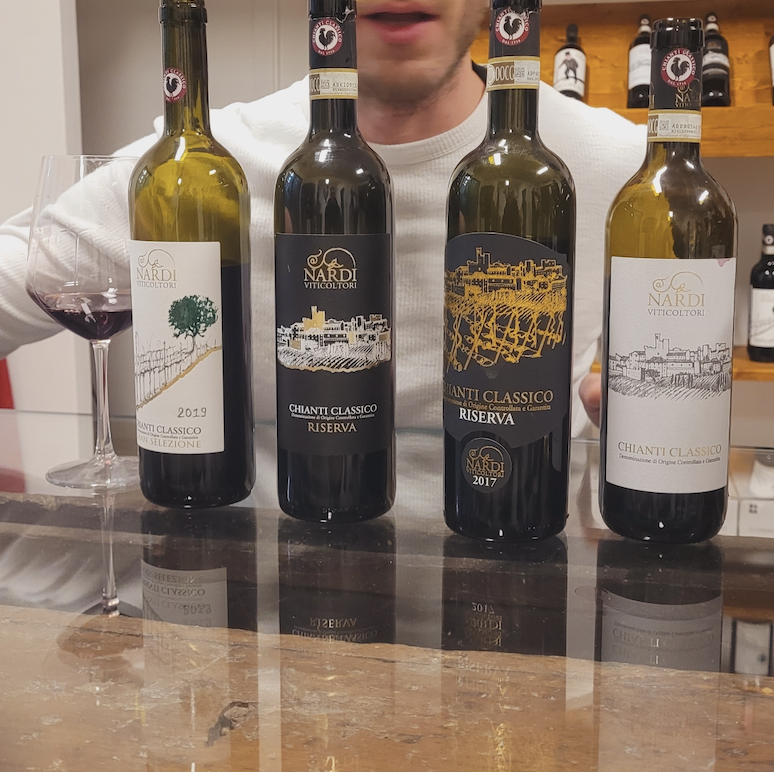
Instagram

Facebook