Pull up a chair with Angelo Gaja in Barbaresco

Gaja and Godello

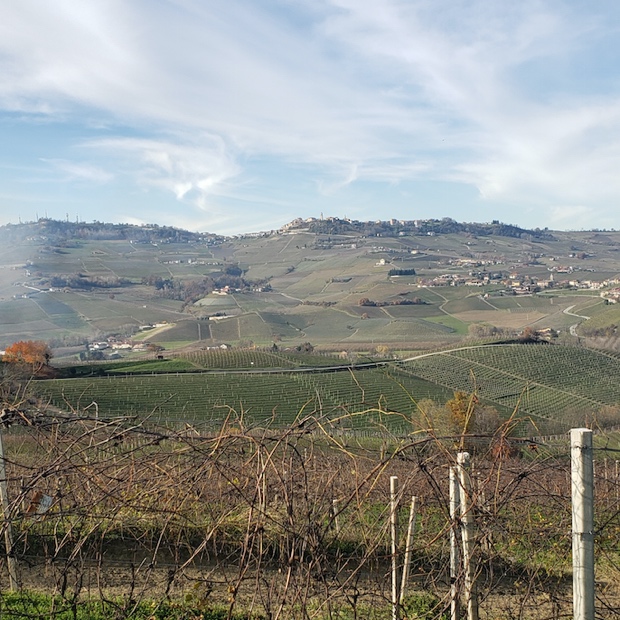
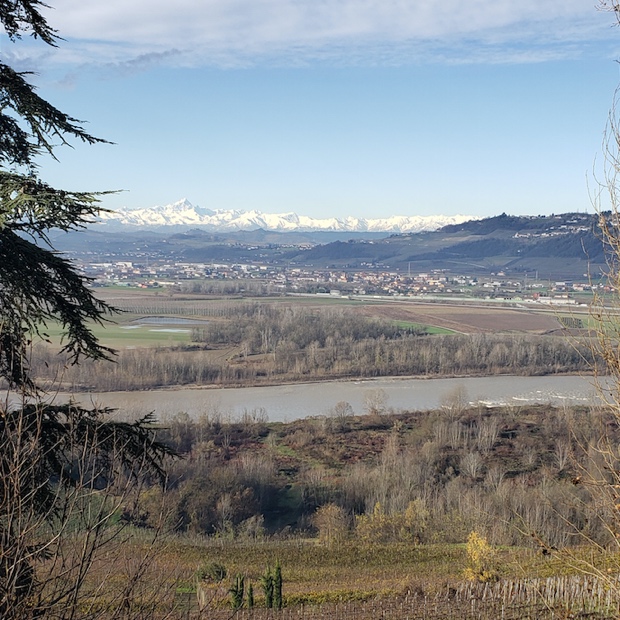
On the first of December the morning light hits the tiny hamlet of Barbaresco with such dazzling clarity you have to squint to look out at any distance. Coupled with a cloudless sky, a patient and necessary visual adjustment will take in the Tanaro River and the Roero beyond. The vast Langhe expanse comes into perfect view, subtly emerging in layers of topography and incremental hue. The river runs through, Tanarus as it was known in ancient times, Tane or Tani in Piedmontese language, dividing line snaking through Langhe lands, plural form of langa, “a long, low-lying hill.” The origin is likely Celtic, combining the words bascule and tunga or lunga, “a moveable bridge, balance or seesaw” and “a narrow spit of land jutting out into the water or sea.” These moments, thoughts and considerations prepare one in advance of walking through the portal into the world of Gaja.

Related – One on one with Gaia Gaja

Barbaresco and the Langhe

The new garden

Sonia Franco, personal assistant to Angelo Gaja takes me on a trip back in time. We stand on the small terrace extending out from a northwest facing window with a view of the mountains in the background. Shifting land plates over one another in the Langhe created soils of silt and clay left behind by the ancient salty lakes. This affected the Roero and the Langhe in two very different ways. Irrigation would be pointless and potentially devastating due to erosion in the former because of the poor sandy soils. In the Langhe the limestone acts as a natural sponge, storing snow melt and spring rain to transfer to vine roots for the hotter summer months. Climate change has altered plantings and the view is no longer one of the “family’s garden” because densities have increased to encourage roots to dig deeper into the strata. Even more dramatic is the lack of rain between June 1st and September 30th, unless of course it comes by way of hailstorm and thunderstorm.
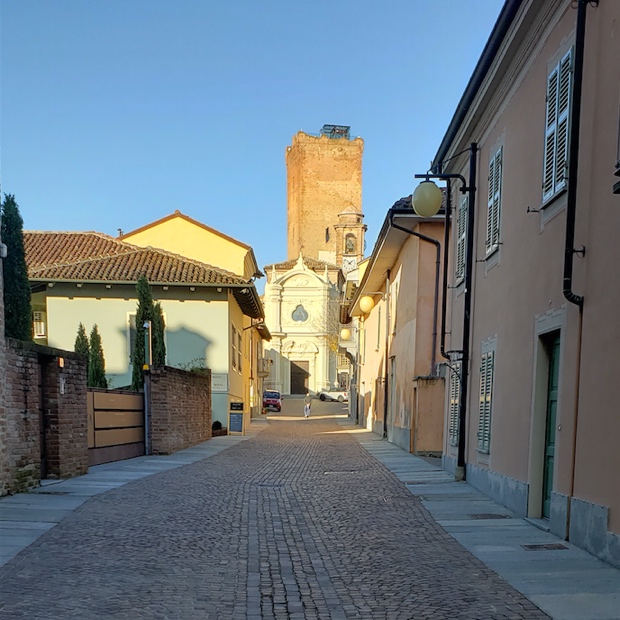
Morning in Barbaresco

Gaja works with 100 hectares split between Barolo and Barbaresco. It was Angelo’s father Giovanni who was so smitten with and sold on the latter in particular, especially around Treiso and the eponymous village. He acquired the land in the 1960s, including the three crus; Sorì San Lorenzo, Sorì Tildìn and Costa Russi. The oldest part of the cellar is from the 17th century and the second from the 18th. A great year sees a total production of somewhere between 300,000 and 350,000 bottles.

The Pope of Piemonte

Angelo Gaja has been referred to as “The King of Barbaresco” and for good measure. A man of utmost sincerity and reason, promoter and traveller in tireless work ethic. Producer who has spent the better part of sixty years explaining to anyone who will listen of Barbaresco’s importance while rising to the pinnacle of the local wine producing pantheon. Mr. Gaja’s reputation for storytelling is well-known and his ability to fashion excellence from his homeland is one of the great success stories of the 20th century. No one in Italy has found such intense success at his level nor can there be any question in how he has been raising the bar and floating all surrounding boats. Simply unparalleled in the world of wine. To bestow a moniker that merely encompasses Barbaresco is parochial and short-sighted. Say what you will about titles and honours but truth be told and many of his contemporaries believe it and in fact utter the term aloud. Angelo Gaja is indeed the Pope of Piemonte.
“They are very concerned in Nuits-Saint-Georges to keep an identity of site,” begins Mr. Gaja. He’s in free-form, stream of consciousness mode, just as a one-on-one meeting with him should be imagined. He’s dead serious. “We need to recognize that it belongs to us. I believe that we have in mind a great variety like nebbiolo, but it’s only in the last 15 years that it has been recognized around the world.” While so many look to technology and clean winemaking practices, Gaja looks at climate change as a major factor in quality increases over the last 20 years. “Five of ten vintages in the 60s, 70s and 80s were poor. The two years of 1965 and 1966 were very poor. The climate we have now, the ripening process is much more condensed and so there are less possibilities of problems. Summer heat is raising sugar and alcohol. This is more problematic for Barolo. All of these things are beneficial for late ripening varieties because of more ripeness and maturity but less aggressive tannins.”
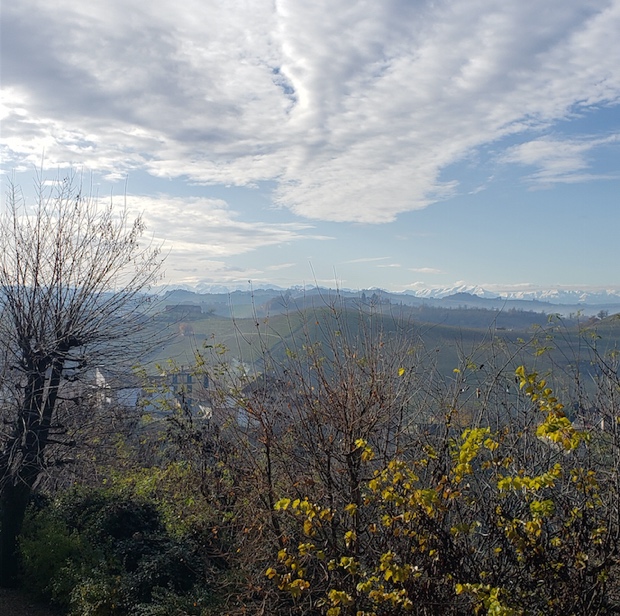
The identity of the Langhe

“There is now a perception of Barolo and Barbaresco that was unthinkable 20 years ago. Think about it. Nebbiolo is 7,000 hectares. Cabernet Sauvignon is 350,000. For this reason the scarcity gives it a much better position of identity. In old vineyards you can sense white truffle and hazelnut, connecting it to its area. Also, the protection of the Alps helps to assist in the cultivation of late ripening varieties. If we are able to protect this combination of history and experience we don’t need any tourism. We need an authentic experience.” As for the identity of Barbaresco Gaja insists that “we have to protect medium-bodied wines and keeping a kind of balance.” Still believing that the work done in the cellar is just as important as the identity created in the vineyard, Angelo wonders aloud what will happen for the next 15-20 years as a result of further climate change. When asked directly if he is concerned “of course I am,” is the response. “In the past there was thick fog, like milk. What has happened to the fog?” Also less rain and more tourists. Perhaps what has transpired in the first half of 2020 will see a return of the fog.

“The perception is less risk,” he explains with regards to producers thinking that times are better. “That’s a mistake. We are in a time of climate change. That’s a big word.” If what has happened in the last four months is any harbinger than the overall problems are bigger than ever. It was the vintages of 2002 and 2003 that opened Angelo Gaja’s eyes and forced him to open his mind. “We have to modify our habits,” is not something new for Gaja but something he has been doing for decades, often 15-20 years ahead of everyone else. In the mid to late 2000s he hired ten scientific consultants in the fields of entomology, chemistry, agronomy, meteorology, etc., etc. to conduct a two decade study on soil, climate, parasites and pests. They have found that where once these natural disturbances attacked the vines one month a season it can now be as much as six months at a time. Doubling down are dramatic weather events and now viral assaults on humans. Time to hire an epidemiologist as well.

Better wines?

“If we have made better wines from better grapes I cannot say but what we have learned can be very useful for the future. The final goal can be recuperation and resilience for the grapes. A natural defence.” Ultimately the goal is what Gaja refers to as Gramló, a fantasy name in a special language that brings together notions and in contribution from French, German, Italian and dialectical Piedmontese. It’s operatic and means “clarity” but with no real words as its source. Gramló is what we all want to achieve but we have to take risks, be ahead of the curve and never stop looking, listening and learning. Trust Angelo Gaja to lead the way and that his children Gaia, Rossana and Giovanni will take the torch and do the same.

We all have wine tasting experiences that result in a-ha moments, revelations and epiphanies. At the outset of that first week of December I had such a moment because of a conversation. A long chat with Mr. Angelo Gaja. Mr. Gaja’s foresight to look and plan 15-20 years ahead means that both problems and successes are faced even before they have come. If you want to talk about climate change, do so with Angelo Gaja. If you would like to taste autorevole nebbiolo, go straight to Sorī San Lorenzo and Sorì Tildìn. On that December 1st day in Barbaresco I tasted the following five wines with Sonia Franco and Mr. Gaja.
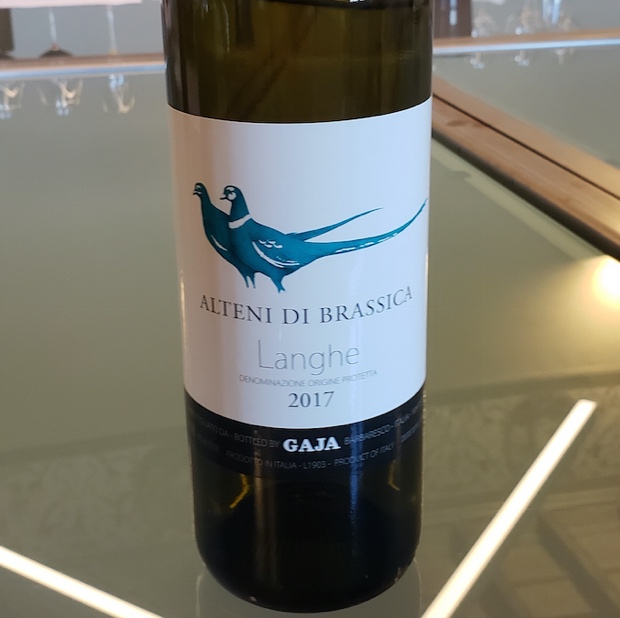
Gaja Alteni Di Brassica 2017, Langhe DOP, Piedmont, Italy ($199.00)

Snow melt from a proper winter meant promise but there’s no avoiding climate change. Thus warm winds from North Africa saw to the vines anticipating early bloom. But in the flash of an eye the weather crashed and sent the plants reeling. While the challenge was propagated, miraculously the hail was avoided, though not the frost. Then a 36-39 degree summer and 80 days without rain. Major stress. A tiny production that marries Serralunga d’Alba with Barbaresco. The flinty sauvignon blanc relevance here may look Bordelais but is in fact Langhe because of the specificity of the saltiness that lines the fruit. Alteni means “stone walls” and Brassica a fragrant yellow flower. Not salted but running through the veins of the wine. A resilient and philosophically mineral wine structured with concentrated fruit and grape tannin. Drink 2021-2027.  Tasted December 2019
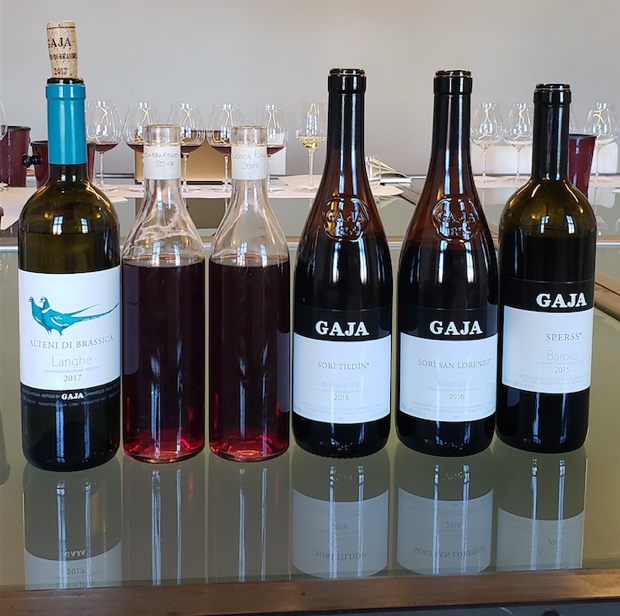
Gaja Costa Russi 2017, Barbaresco DOP, Piedmont, Italy ($810.00)

Far ahead of harvest the reasons for 2017’s success were varied. Winter snow and its natural irrigation ignited early promise and climate change-influenced high density plantings sent roots down deeper. Warm North African winds, early bloom and a fast crash of the weather put the plants on edge. No hail though yes there was frost. Heat like no other summer and no rain for three and a half months. All added up to low yields and unprecedented stress. Costa Russi is a deeper and furthered wine which means a longer and more mature experience. Drawn from the “sharecropper’s side of the hill” in a lower to mid-slope position but with a different aspect and position (than the sorì) facing the sun. Oh how you feel the marl and the calcaire, surely exaggerated by the heat of the summer. Rich, luxe and intentionally fuller than many because you can’t go against a vintage grain. This Costa Russi follows the natural order of things. The Gaja Barbaresco that remember’s “the family’s garden.” Drink 2025-2040. Tasted December 2019
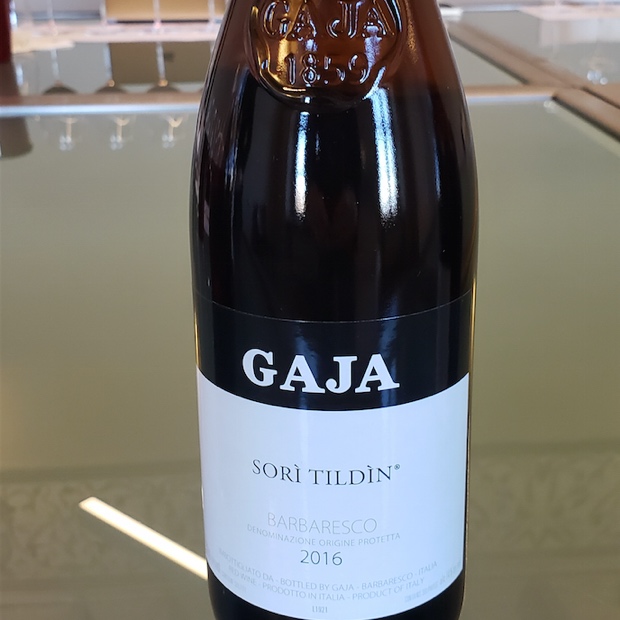
Gaja Sorì Tildìn 2016, Barbaresco DOP, Piedmont, Italy ($810.00)

Angelo Gaja sees 2016 as a perfect vintage in Barbaresco and the one from which climate change is viewed with great irony in the wink-wink guise of parenthetical thanks. That means the cosmic and astronomical alignment makes for wines that are both pleasant in their youth and also impossibly structured to age. Named for the sunny position of the slope and Mr. Gaja’s grandmother Clotilde. Now the clay and the calcaire have conspired, along with the purchased land of which Clotilde was custodian and in how she pushed her husband to make great wine. The vines are now on average 50 years-old and the composition meeting aspect bring a depth of complexity as poignant as it gets in this tiny part of nebbiolo production. All the flowers, rocks and elements are contained within the interior walls of this gently forceful Langhe red. It mimics the matriarch by the strongest power of suggestion and will not take no for an answer. Perhaps never will. Drink 2025-2045.  Tasted December 2019

Gaja Sorì San Lorenzo 2016, Barbaresco DOP, Piedmont, Italy ($810.00)

Was a perfect vintage and the one from which climate change is viewed with great thanks. That means wines are both pleasant younger and also structured to age. Sorì San Lorenzo like Tildin is the sunny spot facing south, the patron saint and protector of Alba’s Cathedral. Incidentally the church owned this vineyard and Gaja purchased the plot in the 1960s. The vineyard drops directly from the village and its vines average 55 years of age. You feel the wood at this young stage but of course you do. Sorì San Lorenzo carries a connection to the land that is deep into hubris and humus. No disrespect to Tildin but the connection here is formidable, the bond unbreakable. There is no exaggeration in saying that ’16 Sorì San Lorenzo offers up a moment of nebbiolo epiphany, that is takes control of the senses and instills a feeling of comfort, but at the same time an unexplained awe. That is due in fact to the place and no further explanation is required. Drink 2025-2045.  Tasted December 2019
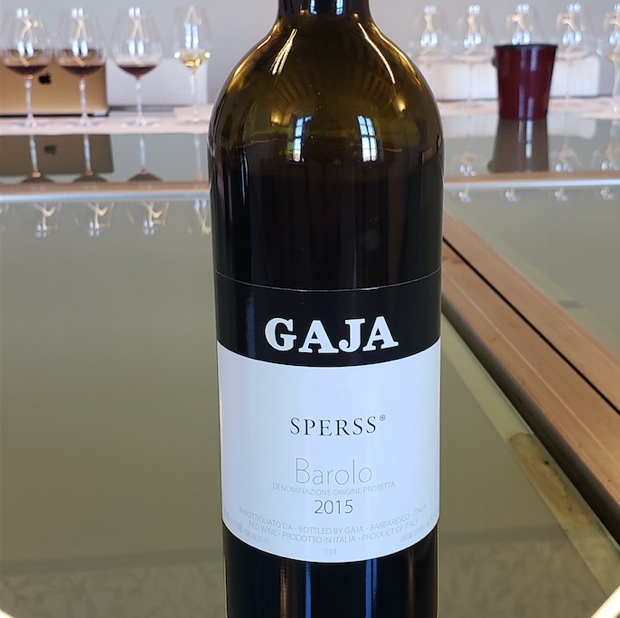
Gaja Sperss 2015, Barolo DOP, Piedmont, Italy ($435.05)

The vintage of 2015 offered weather slightly warmer than 2016 and yet less blocks of structure. Not to mention moving further south by 25 kilometeres into Barolo where it really is just that much warmer. Twelve hectares purchased in 1988 are located in Serralunga d’Alba and Sperss refers to the name of the land. In Piedmontese the word is “nostalgia” and the connection is for Angelo’s father Giovanni and his childhood memories. Marenca-Rivette sub-region of Serralunga and the fruit comes out so red in nature, beautifully chalky and very influenced by the one year in smaller barrels, accentuated further by six months in grandi botti. That is why it is released a year later than the Barbaresci. The texture is silkier in a way while not as transparent but comparisons are fruitless in the end. This nebbiolo stands alone and worthy of its own regal position. Warm and complex, more than intriguing and so age worthy. Drink 2024-2035.  Tasted December 2019

Good to go!

Godello

Gaja and Godello

Twitter: @mgodello

Instagram: mgodello
WineAlign

Barolo’s Sister and Brother Boschis

Giorgio and Chiara Boschis

Many have visited E. Pira & Figli’s cellars, tasted and broken bread with sister Chiara and brother Giorgio Boschis. I am certainly not the first nor the 500th but looking back at my visit with the Barolo sorella e fratello team on December 1st now seems to carry more weight than even I could have imagined. When we consider what has happened in Piemonte, up and down Italy and increasingly around the world over these past four months makes the timing all the more special.

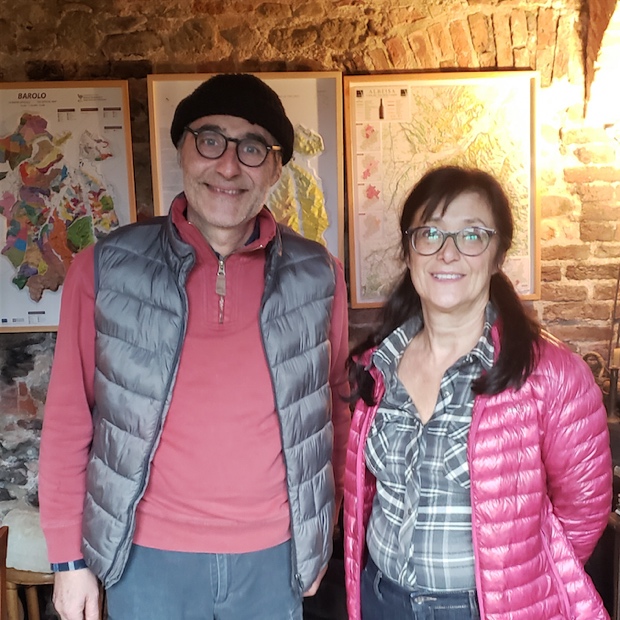
Godello and Chiara Boschis

I did in fact have the great fortune to taste and spend more time with Giorgio in January over dinner in Alba during the days of Nebbiolo Prima 2020. There is so much to know, admire and appreciate about these two special Piedmontesi, the level of respect afforded the work they’ve put in and a level of humanity to give meaning to the spiritual endearment “Brother Giorgio and Sister Chiara.” They are part of the integral and collective soul of Piemonte, Barolo, the vineyards they steward and the wines they fashion from lands larger than life.

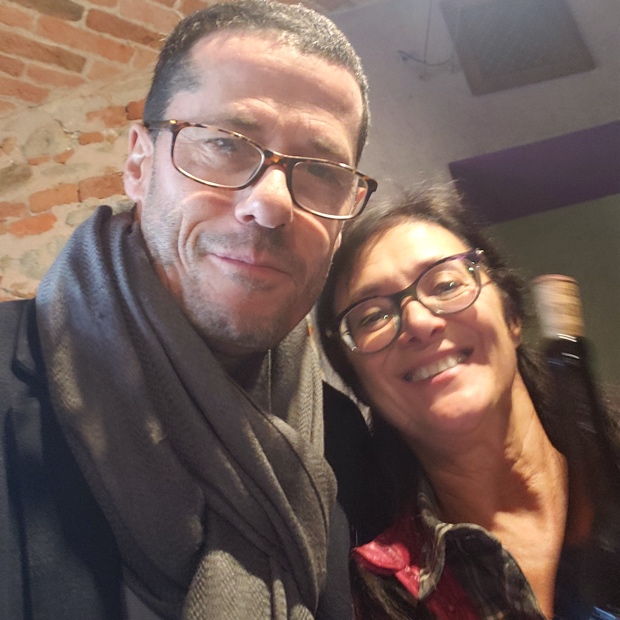
Godello and Giorgio Boschis in Alba, January 2020

Going back to the 1700s the Pirras were from Sardegna and the name morphed into Pirra. Then in more recent times Pira. In 1980 the legendary Gigi Pira, owner of E. Pira passed away. With no heirs to carry on a request for assistance was made to the Boschis-Borgogno family. Chiara Boschis’ father Franco purchased the cantina and vineyards and made the wines for a spell. She finished studies in Turin, cut her teeth working at Rivetti and took over Pira. This was by now long after the winery was established and present in the village of Barolo, in what Chiara refers to as the “Golden Ages” that begun in the 1850s. After Phylloxera ravaged the vineyards and did away with prosperity the youth left and the old remained, including Franco, one of the very few. Fast forward to the new golden times and Chiara Boschis becomes one of the “Barolo Boys,” a rat pack moniker bestowed on young nebbiolo toting winemakers, including Elio Altare, Giorgio Rivetti, Roberto Voerzio, Elio Grasso, Lorenzo Accomasso, Alessandro and Bruno Ceretto, Beppe and Marta Rinalidi, Beppe Caviola and Marc de Grazia. The lone woman? Chiara Boschis.

Chiara the pioneer was the scrappiest of the scrappy winemakers, carrying the Pira torch through the growth period of the late 80s and into the 90s, in a time when the collective plan involved “improving quality and the attention of the international markets.” She worked to reduce production, clean the cellars, install new wood and equipment and most important, the vinification of single crus. She started with Cannubi and Terlo, then in 2010 registered a “fantasy name” to make a cru assemblage. The new equipment refined the wines and practicing cellar hygiene led to the elimination of the dirty smells.

Giorgio Boschis

Robert Parker came to Alba in the 90s and announced the wines as too rustic. A light shone in the minds of the youngest winemakers who knew what had to be done. There were only 30 wineries in the area after the second world war, now there are more than 600. Boschis has always avoided the temptations. “We didn’t want to become the California winemaker. The pride of our roots took us to a much higher level and now it’s fancy to be traditional, even if so few are truly family anymore. The fact is we really just wanted to have clean wines.”

Chiara Boschis

Chiara has always farmed organic and was finally certified in 2010, the year Giorgio joined hands. Together they purchased more vineyard space in the areas of Monforte and Serralunga. Cannubi and Mosconi are the two crus and they also produce their assemblage Via Nuova from several significant plots like Terlo and Liste in the commune of Barolo; Gabutti and Baudana in Serralunga d’Alba; Ravera from Monforte and Mosconi in Monforte d’Alba. Total farmed is 11 hectares producing 35-40 thousand bottles. Generally speaking the barrel program is one-third each new, one year and two years old wood of half and half barriques and botti. The exception is Mosconi which sees more barriques because, “it’s so much fruit.”

These are the five wines tasted with Chiara in the cantina plus one more with Giorgio in Alba.

E. Pira & Figli Dolcetto d’Alba DOC 2018, Piedmont, Italy ($30.95)

In the words of Chiara Boschis. “For me the dolcetto is part of my background, my history, the memories of the family.” Now listen closely to this dolcetto because a challenge will bring the best out of a winemaker and her wines. “This is the dolcetto that i like, fresh, fruity, drinking well.” The fruit comes from three plots in Monforte; Le Coste, Mosconi and Ravera. Not for aging, lacking structure but certainly not lacking in elegance and pleasure. Finishes with a white peppery kick. Drink 2019-2022.  Tasted December 2019

E. Pira & Figli Barbera d’Alba DOC 2017, Piedmont, Italy ($43.95)

More potential than dolcetto and here the triangular travelling from flowers, through spice and into avid acidity makes this real, honest, true and long. One year in barrel (old only) and fruit drawn out of vineyards in Mosconi, Ravera (Monforte) and the lower, south facing part of Gabutti (Serralunga). Refreshing and so perfectly aligned, plus essentially designed to handle olive oil in every incantation, especially meats cooked and fried in the fats of the area. Only 4,000-5,000 bottles produced. Drink 2021-2027.  Tasted December 2019

E. Pira & Figli Langhe Nebbiolo DOC 2017, Piedmont, Italy ($50.95)

Now into nebbiolo that is highly floral from one dedicated vineyard in Le Coste, of “bello” respect. High-level nebbiolo factor, traditional and extreme clarity. If most of the Barolo were drawn, executed and nurtured to prepare themselves to be this elegant than all would command full and utter attention. So pretty and wise, so joyous to be with. Clearly the vineyard is to thank. Might as well be Barolo? Nah, that misses the point. Drink 2021-2029.  Tasted December 2019

E. Pira & Figli Barolo DOCG Via Nuova 2016, Piedmont, Italy

Via Nuova is the assemblage, the house wine, Vigna della Casa and a wine of all encompassing perfume. A mix of finesse and structure. Also textured with a charming glycerin and experiential moments in thyme. There is much pride and dreaming hope for 2016, with great aging potential. The tannins creep up, take hold and remain, secured and bonded. That’s nebbiolo grip and persistence incarnate. Drink 2023-2035.  Tasted December 2019

E. Pira & Figli Barolo DOCG Mosconi 2016, Piedmont, Italy

Why is Mosconi so special. “Why is anyone more beautiful than the other?” Nature. A connection to Domenico Clerico and when Chiara had a chance to join this plot she jumped. The flowers come at you in waves. The fruit is everywhere and all is stored inside, kept safe, comforted and comfortable. South facing below the village and again it just must be the place that brings this level of joy, elegance and structure. There are 25-30 years of life ahead for this 2016. So glad Chiara became a part of la squadra Mosconi. Drink 2020-2025.  Tasted December 2019

E. Pira & Figli Barolo DOCG Mosconi 2015, Piedmont, Italy

Mosconi is simply Mosconi, exquisite, powerful, elegant and grippy. Mosconi in the hands of Chiara Boschis in possession of so much 2015 fruit (though when is it void in such a regard) and so more barriques to less botti ratio increases the textural component. Mosconi comes at you in waves, oscillations there of and with swaths of Rothko tactility. Paints Barolo red in incremental minutia through all the advancing warmth that can be coalesced in one bottle of nebbiolo. Generosity incarnate and the one to drink whilst you wait for 10s, 11s, 12s and especially 16s. Drink 2020-2030.  Tasted December 2019

Good to go!

Godello

Giorgio and Chiara Boschis

Twitter: @mgodello

Instagram: mgodello
WineAlign

November 30th in Piemonte: Sandrone and Punset

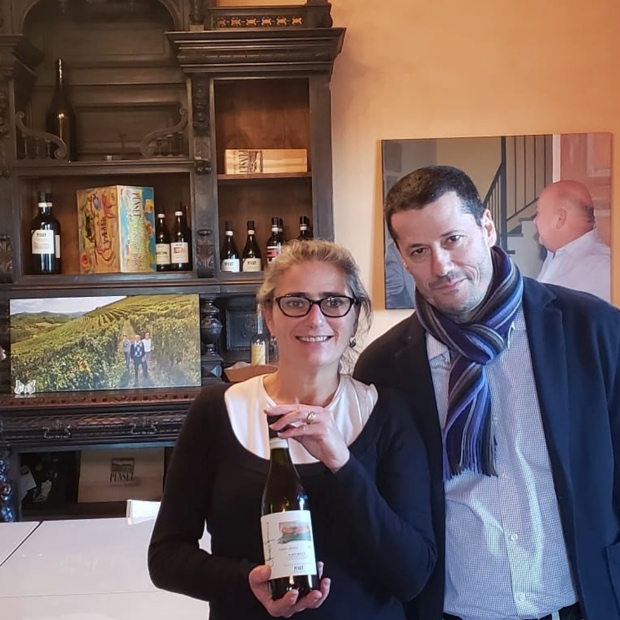
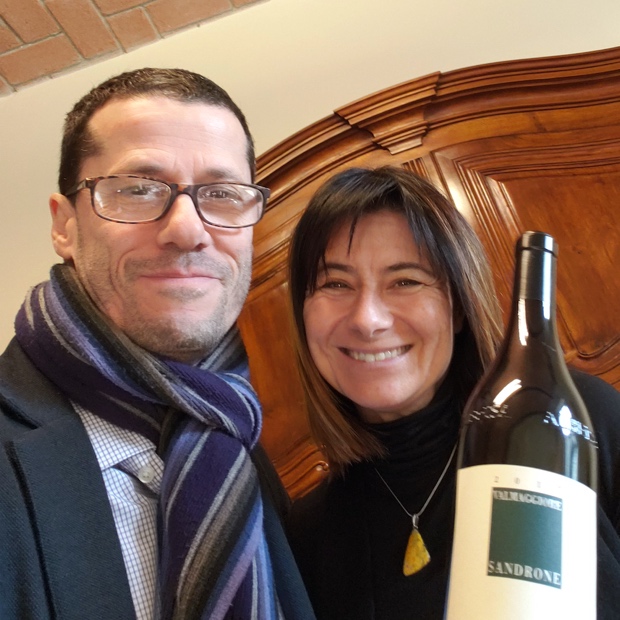
In quieter, happier and still innocent times there were days when you could freely take a Saturday morning drive down the A33 from Asti, skirt past Alba and into the sleepy environs of Castiglione Falletto. On that last sunny one of November I did just that to pay a visit with Barbara Sandrone. Later that day I moved north to Barbaresco to do the same with Marina Marcarino at Azienda Agricola Biologica Punset. I am thinking of them both and their families at this most challenging time of the past 75 years. Their estates are so very different and yet both Barbara and Marina are two of Piemonte’s strongest women, fearless in their pursuit of excellence, integrity and their respective family’s dreams to tell exacting stories of very specific places.

With Marina Marcarino

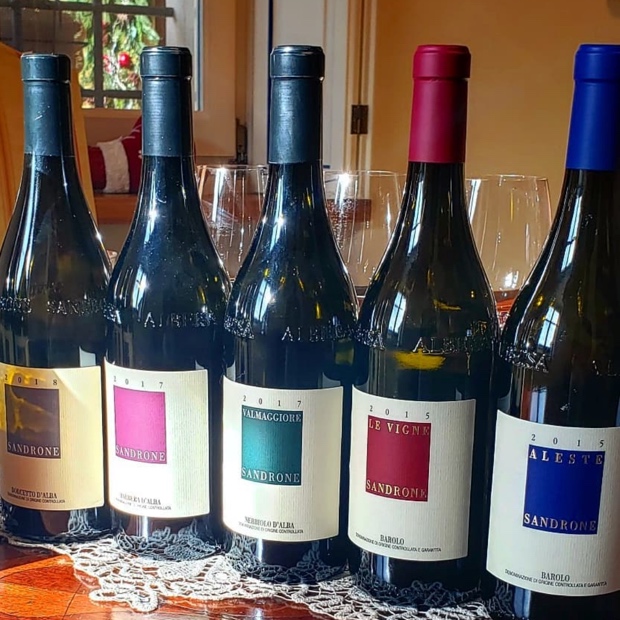
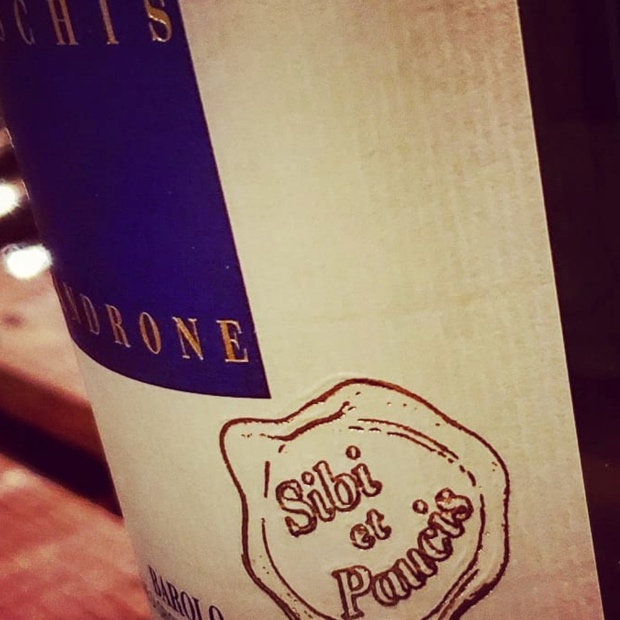
Sandrone in found south down the slope and slightly to the west of the tiny hamlet of Castiglione Falletto, also the name of the commune in the Province of Cuneo. The town of Barolo is further afield south down SP3 Via Alba. Barbara’s family wines are made by her father Luciano, pioneer, founder and visionary, along with her uncle Luca. Luciano founded the winery in 1978 after working at Borgogno and being the cellar master in charge at Marchesi di Barolo. One of the winery’s most progressive concepts is actually a retro one. They concern Barolo that are neither selections nor Riserva but rather of intuition, “to free nebbiolo’s innate resistance to time.” Sibi et Paucis, “a few who are the favoured,” in that a small percentage of the three seminal nebbolo bottlings are held and stored in the winery’s cellar. “The harmony of wine expressed through passion and patience” is Sandrone’s credo and it is the Valmaggiore, plus Le Vigne and Aleste Barolo that are released six, 10 and 10 years forward (respectively) to supply restaurants with a desire to sell old vintages, but don’t necessarily have the space to store them. Here are the five wines I tasted that morning at Sandrone. Thank you Barbara and I hope you and your family are well.

With Barbara Sandrone

Sandrone

Sandrone Dolcetto d’Alba DOC 2018 ($29.95)

The keys to the dolcetto city are granted when fruit, freshness and high level acidity coordinate as they do in bringing 10 different plot expressions together from Monforte and Barolo. High level excitability in control and though it has a short life expectancy (three to four years) there is charm and there is balance. Drink 2019-2022.  Tasted November 2019

Sandrone Barbera d’Alba DOC 2018 ($44.95)

From the area very close to Grasso at the top of the hill at 450m. Dark black cherry and weight from a hot vintage and so the wind and the aerification up at this great Langhe height has kept the wine fresh and breezy. Works well to accede and succeed going forward. Crisp for barbera d’alba. Drink 2019-2024.  Tasted November 2019

Sandrone Nebbiolo d’Alba DOC Valmaggiore 2017 ($59.95)

Comes from sandy soils in Roero, the youngest and more openly friendly of the three brothers, along with Le Vigne and Aleste. One year in tonneaux and one year in bottle. Chalky and largely chunky but always the acidity and the charm. Solid as it can possibly get for the appellation, a mid-term traveller with everything under control. Drink 2019-2023.  Tasted November 2019

Saturday morning @sandroneluciano on a perfectly November Piedmontese day. Grazie Barbara. Yours, your father’s and your family’s wines take care to do what’s good and beautiful and right.

Sandrone Barolo DOCG Le Vigne 2015 ($159.95)

A formidable construct forms the outline and strengthens the bones of Sandrone’s Le Vigne. This nebbiolo strikes the heart with what just seems like the crux-filling soul of these nebbioli standing at its own attention with intention and promise. The inner sanctum of succulence and intentionally high-strung parts moves the dial in the direction of forever with time-stopping ability. There seems no way forward now while at the same time the earth revolves because you just know it does. But you can’t feel it. What you can feel is yourself breathing and Le Vigne is teaching you through the moment. Drink 2023-2035.  Tasted November 2019

Sandrone Barolo DOCG Aleste 2015 ($179.95)

Aleste goes deeper and more introspectively into the clay and limestone with this uncanny ability and intuitiveness to mimic its compact terroir. You can imagine the nebbiolo here softening in cold, wet months and hardening when dry and warm. The tannic structure is not that of Le Vigne and in a way (if I can be allowed to say) there is more Luciano Sandrone’s youth years in Aleste and more morbido times of wisdom in Le Vigne. There can be no reason to consume cases of Aleste any earlier than the age of 10, or even 15. It’s packed so tight and without holes in its armour for to ensure longevity with the greatest Baroli and that includes the most historical, traditional and famous. What a moment this wine gives and will bring to those who make one their own. Drink 2025-2040.  Tasted November 2019

Azienda Agricola Biologica Punset

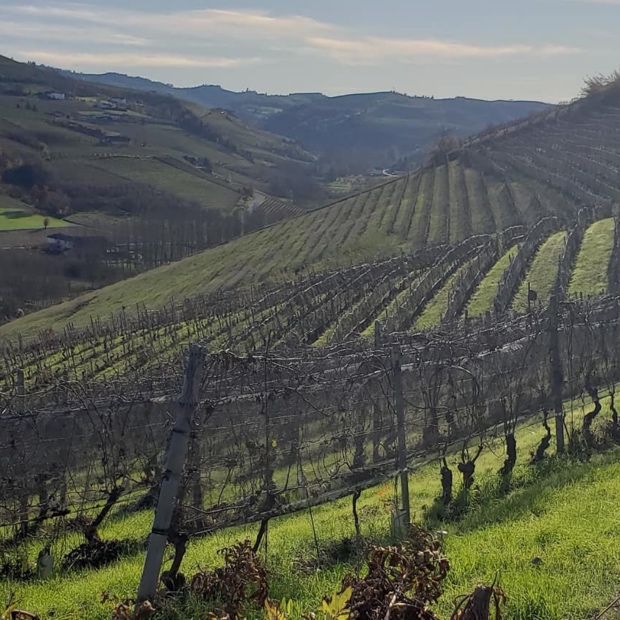
After a brief stop for lunch in Castiglione Falletto I made my way back up the Autostrada, took the SP3 Barbaresco off-ramp, crossed over the Tanaro, turned towards Castagnole Lanze and headed for Neive. In the hills above the village is Azienda Agricola Biologica Punset. The literal meaning is “beautiful hill” or “peak,” a name derived from dialectical Piedmontese legend which tells of this nickname given by the Count of Neive. Punset is run by fifth generation winemaker Marina Marcarino, organic instrumentalist, agricultural trailblazer and arguably the Langhe’s greatest disco dancer. Marcarino made a decision to farm organically in the 80s when commercialism, conventionalism and conservatism were the rampant norm. She was the witch of Barbaresco, feared and surely admired though many did not yet understand the breadth of her powers.

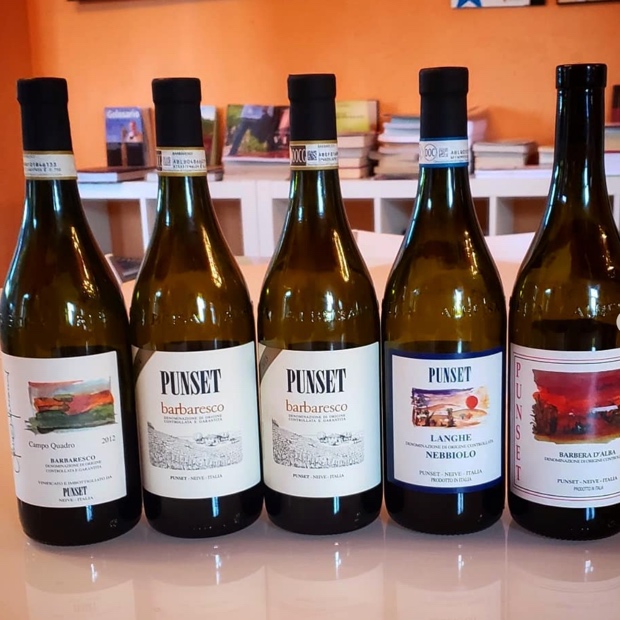
Today’s world of natural wine has got nothing on Marina Marcarino. She was into the match long before today’s winemakers were even out of huggies. Marina explains what her wishes are going forward. “What I would like for the future? Being able to communicate my experience as an example of personal achievement to the new generations, spurring them to get into the game.” Never before have philosophies like this meant so much. Most recently Marcarino has devoted an incredible amount of time and effort as President of the L’Associazione Produttori Vini Albesi. Dear Marina, I trust you are staying positive through these troubling months and I have an important request. When we all come through this, please save the next dance for me. These are the nine wines tasted with Marina on that day in late November.

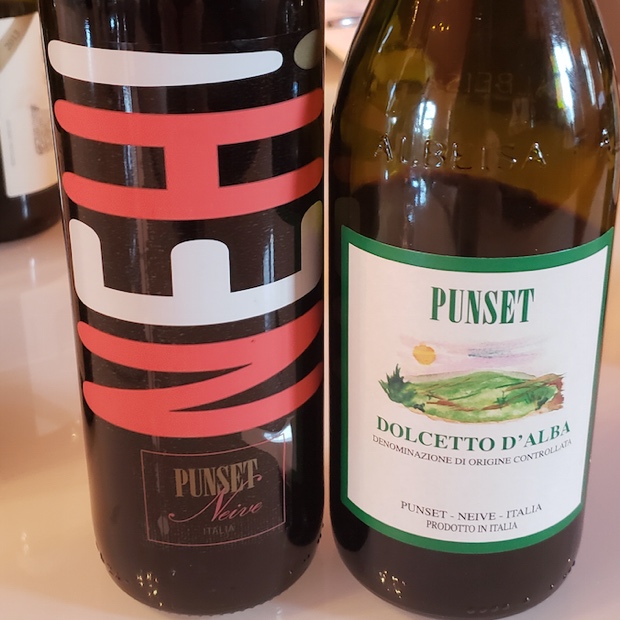
Punset Neh! Langhe Bianco DOC 2018 ($18.95)

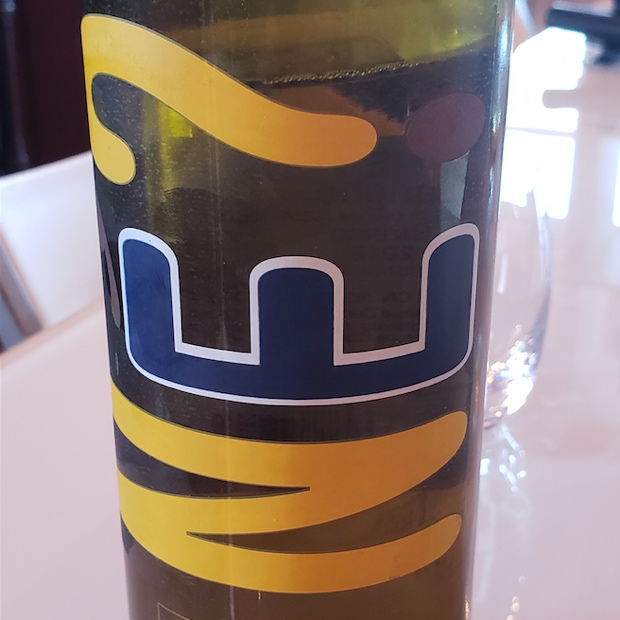
Ne’? is the “Piedmontese” way of ending a sentence, like ‘eh in Canada. A 50-50 arneis and favortita mix, salt missive over fruit and extremely fresh. The aperitíf white that connects dialectal territory with those in the diaspora that want a taste. Drink 2019-2021.  Tasted November 2019

Punset Neh! Langhe Rosso DOC 2017 ($18.95)

Mainly dolcetto (70 per cent) with barbera and nebbiolo. Not much of the latter but necessary to widen the expression of the Langhe. Here it’s an explanation point, not a question, as in a confirmation of the exclamatory Piedmontese expression. Bright red amalgamated fruit with proper acidity and the ability to work alongside anyone and all. Drink 2019-2022.  Tasted November 2019

Punset Arneis Langhe DOC 2018 ($26.95)

The gastronomic DOC Langhe with 100 per cent arneis and right from the top you can tell the difference. Not just the increase in limestone mineral push but also texture and even structure. Liquid salty wave, creamy without abandoning roots and reason. Lingers longer than most arneis and you’re very pleased to have it hang about. Besides it’s more a winter white than a summer one. Drink 2019-2024.  Tasted November 2019

Punset Dolcetto d’Alba Langhe DOC 2017 ($21.95)

The luxuriously natural dolcetto, richly phenolic and rustic, lactic and reasonably so. A pure varietal expression, true to place and to form. Great fruit and essential first course red. Drink 2019-2023.  Tasted November 2019

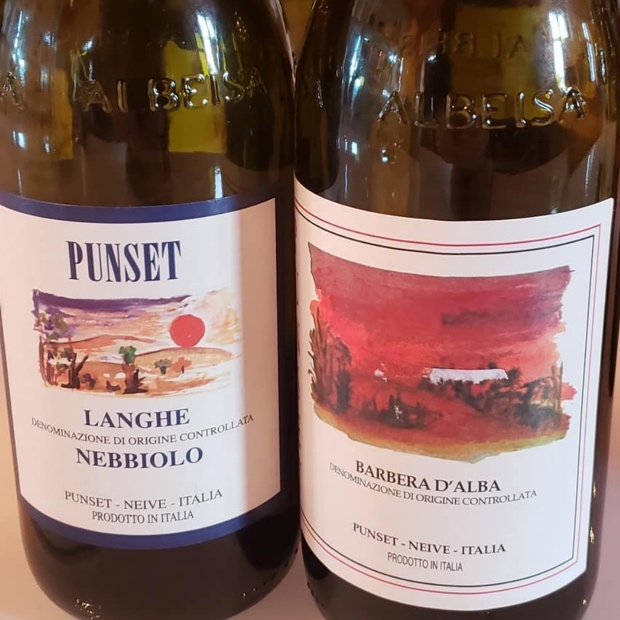
Punset Barbera d’Alba DOC 2018 ($24.95)

From two vineyards, one planted in 1996 and one in 2003. Rich and spicy with some of the varieties’ greatest clarity. Very few comes across with this sort of red fruit. Maintains the fragrance and the “frankness” of the variety. No French oak, no confiture. “It’s the easiest wine for us because we do nothing,“ shrugs Marina Marcarino, expect for picking at the right times and pressing gently. That and cement. Drink 2019-2023.  Tasted November 2019

Punset Langhe Nebbiolo DOC 2017 ($31.95)

From the tiniest production made from the youngest vines from times when there is more vegetation and verticality for health. This practice started about 20 years ago, which harks to a very specific pruning system and because Guyot is tough on the vines. They are nurtured like the children they are and the results are in the natural order of things and in the personality of this genuine Langhe. It’s volatile you should know. It’s also biodynamic, dynamic and beautiful. Drink 2019-2023.  Tasted November 2019

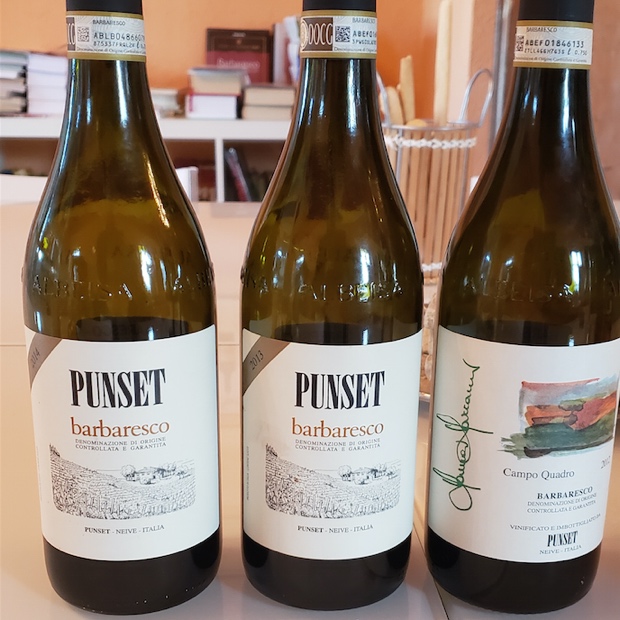
Punset Barbaresco DOCG Basarin 2014 (302786, $66.95)

Very traditional nebbiolo coming from the southeast part of Marina Marcarino’s vineyards, very steep, the rock bed 8m deep. Classic nebbiolo with classic tannins, 40 days on skin, softly removed. Slavonian 2500L and no less than two years refining time, 14 months of that in the wood. Emits a not to be missed scent of menthol and faint herbs mixed with fennocchio, It’s the vineyard talking and though we would want to there’s nothing more to specifically name, so just chalk it up to memories created, of another time and in this same place. Drink 2022-2033.  Tasted November 2019

Punset Barbaresco DOCG Basarin 2013 (302786, $66.95)

If 2014 in general was not considered a great vintage it might as well have been so here, of mild temperatures and not so wet. Fresh and excitedly savoury with a mint-vegetative note but it matters little because this ’13 is different and was built with bigger structure, not the power of some and many, though surely these never are. The aroma is very similar and so we deduce that this is what Punset Barbaresco smells exactly like. Something growing in the vineyard, or maybe something deep and well within the ground, or even in the air. It’s just what it smells like. An aroma divine. Drink 2022-2033.  Tasted November 2019

An afternoon tasting through the Neive wines of Italy’s first organic wine producer. Marina Marcarino began her impassioned and unwavering journey in 1982 ~ Shout out to @nicholaspearcewines for getting these gems to Ontario.

Punset Barbaresco DOCG Campo Quadro Riserva 2012 ($71.95)

A cru Barbaresco, meaning squared, and the place is just like a painting. Carries a double entendre and as Marina Marcarino explains, there “probably is a third meaning that we don’t know.” Take in the math of 12,000 square metres and 12,000 bottles of wine produced, making use of 70 per cent of the potential. Different aromatics than the very traditional, non-Riserva Barbaresco, deeper and richer, more sweet red fruit and less savour. A bigger vintage, with a similar fermentation and aged in French barriques and botti. Some spice for sure, with 36 wood aging a major part of the profile, followed by 36 further months in bottle. Great structure, wild ride, all in total control. Drink 2022-2033.  Tasted November 2019

Good to go!

godello

Castiglione Falletto from Via Alba

Twitter: @mgodello

Instagram: mgodello
WineAlign

Avoid the LCBO. Buy local. Support wine agents. Start now.

This public service message will be brief. My colleague and great friend John Szabo M.S. has already made the pronouncement in his weekly VINTAGES round-up over at WineAlign. I only wish to reiterate and help show you the way. Wine is woven into the fabric of our lives and the time is impressed upon us to change what, how, from where and why we make our purchases. In these unprecedented times we the people must act to plank the COVID-19 curve and we must do so together. We must stay home. We should not be making trips to the LCBO.

Related – Buyers’ Guide to VINTAGES March 21st, 2020

The LCBO is not an essential service. Their employees should not be put in the uncompromising position of working through the pandemic while their head offices remain shuttered tight. Hospitality giants choose to save lives and act as heroes by closing their doors for the common good. Even if it means going out of business. If the LCBO will not do the right thing then the people of Ontario need to act for them. The alternatives for finding booze are too numerous to count, safer and by trusting the word of writers, restauranteurs and sommeliers you will open your eyes and palates to the world class wines, beers and spirits found right here in your backyard.

Please see attached a Press Release from the Wine Marketing Association of Ontario, VQA Wines of Ontario and Wine Country Ontario announcing that over 95 Ontario VQA wineries are offering free shipping to Ontario residents, with most of them extending this offer until Easter Weekend, including April 13th, 2020.

https://www.newswire.ca/news-releases/over-95-ontario-vqa-wineries-offer-free-shipping-to-ontario-residents-870436522.html

Please follow this link to see this list.

https://winecountryontario.ca/wp-content/uploads/2020/03/VQA-Wineries-Free-Shipping.pdf

To see which Ontario importing wine agencies are offering free shipping on cases (and mixed cases) of wines in their portfolio from across the globe, please click here.

Related – Wine Agents Offering Free Shipping in Ontario

One more thing. During these suffocating, devastating and potentially bankrupting times for the local hospitality industry it would be a business-saving adjustment if our restaurants could sell wine and beer to go along with their take-out and delivery sales. Please sign the petition to lobby our politicians.

Related – Allow Ontario Restaurants to include wine, beer, cider, spirits in take-out & deliveries

Good luck to all, stay inside, stay healthy and stay safe. I am looking forward to sharing a lesser distancing glass of wine with each and every one of you when we all emerge together, better than we were before, on the other side.

Good to go!

godello

Twitter: @mgodello

Instagram: mgodello
WineAlign

Gone Vajra in Piemonte

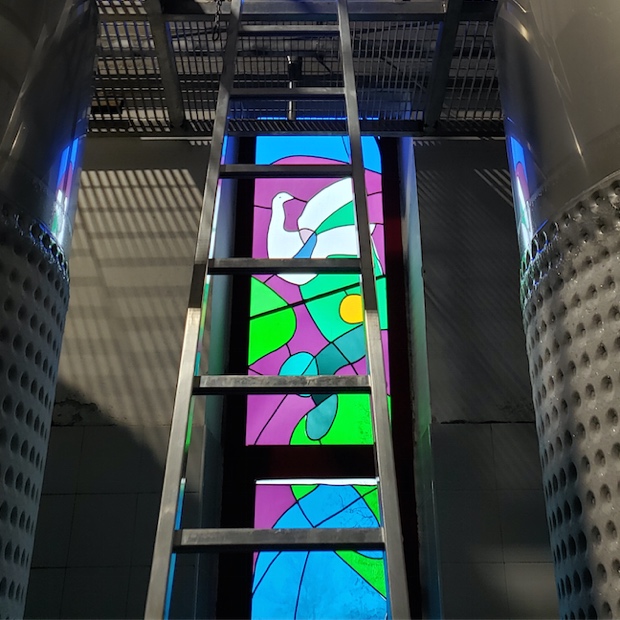
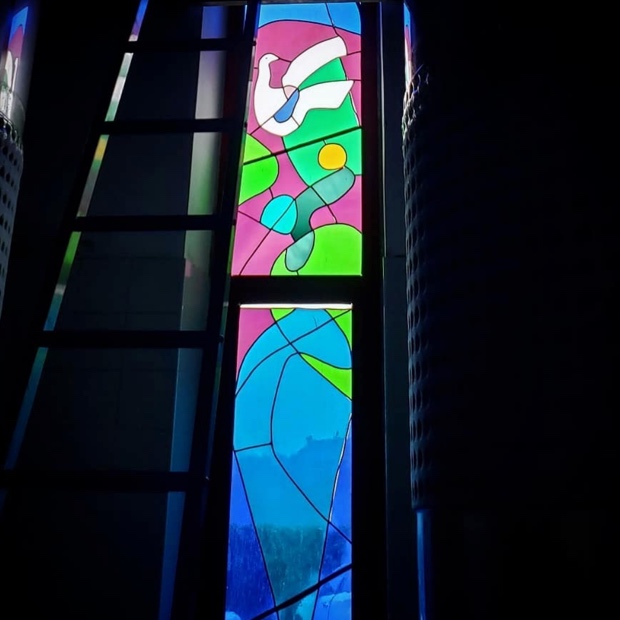
Stained Glass Window by Padre Costantino Ruggeri and Vajra’s Inox Tanks

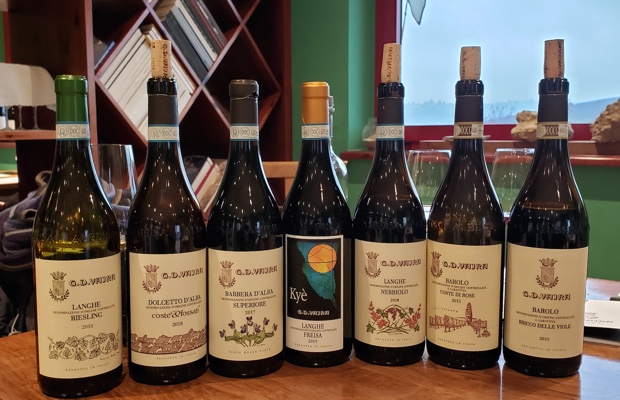
Head west from the village of Barolo, climb the SP3 up to 400 metres above sea level and you will arrive in Vergne, the highest village of the regal Piedmontese appellation. This is where the most forward thinking, visionary and traditionally romantic estate of G. D. Vajra is found. Vajra is the house that Aldo and Milena Vaira built, are in the continued process of building (literally) and produce wines along with their children, Francesca, Giuseppe and Isidoro. On a recent December 2019 trip to Piemonte I drove down the A33 from Asti through Alba, skirted Barolo up the SP3 to spend a few hours with Isidoro and Francesca Vaira on a soggy Sunday morning. Vajra’s wines have been trending big time, gaining ground, rising in prominence and spreading fast. I knew it was time to find out why things have gone Vajra.

Family, roots and vineyards. Having talked and tasted with Francesca and Isidoro @vajra_barolo there can be no doubt many words and feelings will follow. Their’s is a story of resilience and constant renewal.

If you engage in obsessive study or even share a casual interest in religious iconography and emblematic ordnance then the term Vajra will no doubt be recognizable. Vajra, a symbolic ritual tool or object used in Buddhism, Hinduism, and Jainism to represent the unyielding power of spirit. Vajra, the symbol of the Vajrayāna school of Buddhism, a type of club with a ribbed spherical head, the “diamond thunderbolt.” The family may not adhere to the far eastern credo or for that matter even mention any possibility of connection, but a listen to their story and a study of their life’s work can be looked at in the emblematic light of ideals relating to indestructibility and irresistible force. An explanation is forthcoming and in due course.

Dude’s getting married next week. No wonder Isidoro Vaira is a happy man.

It’s only one week before his wedding and Isidoro generously takes the time to meet. He begins with a winter’s tale, extolling the virtues of snow cover, which incidentally arrived to the slopes in December and early January, then subsequently disappeared for the remainder of the mild 2020 winter. The Piedmontese saying goes like this. Sotto la neve, il pane, orunder the snow, the bread.” Snow is better than water because it holds more oxygen and encourages the plants to draw more nutrients from the soil. This is an example of generational knowledge because as Isidoro reminds us, when you spend time with your father and the elders “you learn the importance of nature.”

sotto la neve, il pane

under the snow, the bread

Aldo Vaira began this six decades old journey in 1970 with a 0.3 hectare plot at Bricco Viole. The first vintage was 1972, of no ripeness and fruit sold away. He thought “with this money I don’t pay for my work,” and so began to bottle for himself. By 1986 Aldo was farming seven hectares but on the 29th of May the storm of the century killed everything, save for 300 bottles worth of fruit. He was in his mid-30s, with one child already born and two more to come over the next four years. It was what we call the point of calling it quits or forging ahead with no turning back. Milena stepped up, in fortitude, conviction and an ultimatum issued to her husband. Aldo responded, made a life decision and ploughed ahead.

The Vairas began anew, hailstorms occurring five to seven times each decade be damned and dug their heels into the Vergne terra firma.  With experience as a teacher and having built a winery Aldo became affectionately known as Dutur, a dialectical Piedmontese term of endearment which could allude to the word doctor but also as a part of the Italian word for producer, or produttore. Francesca tells me that 1986 is the vintage form which “you could have (or begin) your dream, by being resilient, persistent and move forward.” She shrugs. “It had to be a priority.” And so from 1986 on the Viaras completely changed direction and course.

Thirty-three years have beget great success. Francesca explains the impetuses for how her family goes about their lives. “What we have learned from our parents is not just life and to make wine but a social motivation to have the life of the people. Imagine a life without these things; music, art, books and wine. It’s not possible.” The goal is to make connections. “We need to make wine to make people happy. Our prices are very democratic.” There are always new considerations, like the “diversification of risk” and it has become the ingrained philosophy, in terms of wines and varieties but also the idea of a two-month long picking time. Always diversity, all the time. One step inside the winery and the light shines in. The stained glass windows that adorn the fermentation room are a reflection of everything that is embodied by the Vajra oeuvre.

They hang in their stark and prolate ways as a severe yet arrant contrast to the line of steel tanks below. When Aldo and Milena went to visit the artist at Canepanova Convent in Pavia he answered the door dressed as a Franciscan Monk with a blue hat. A crazy man in a crazy beautiful studio. Padre Costantino Ruggeri was in fact a real monk, ordained a priest in 1951 by Cardinal Schuster in the Cathedral of Milan. That meeting yielded no conclusion for a commission, or so thought the Vairas, that is until the Father showed up with the first installation, in 1989. He was given no instruction or direction. The rest as they say is history and the works are nothing short of magnificent. They succeed, in Ruggeri’s words, “in that moment of light and mystery the stained glass window captures (the infinite) and introduces it naturally into the temple, as a total dimension that is divine as well as human.” The metal that holds the glass is effected a piombo, aplomb, vertical, exact. No two pieces are the same.

What congruence links a Ruggeri stained glass to other masterpieces of art? Gazing upon the padre’s windows elicits a feeling of consonance and beauty is easy to find. They are arranged exactly as they should be, that much is clear. Their power is felt because of their interaction with their cold and utilitarian surroundings. They hold our gaze and work together with us, inexplicably and without reservation. Their universal appeal transfers energy, pivots, solicits our personal and singular nature so that we share in their consonant form.

On June 24th 2007, his last sculptural work representing “Franciacorta’s Facets” was presented in Adro, his birthplace. On the following day, June 25th 2007, Costantino died at the hospital of Merate, near the convent of Sabbianello, where he had spent the last weeks of his life. The spirit of his work carries on at Vajra where 160 different fermentations are carried out because explains Francesca “harvest is the only time of year when you can really learn. If you have to ask for permission then you are not a true artist.” Just like Father Costantino who created without asking.

“Always think of the cherry. The grapes will follow,” reminds Isidoro. Organics. Methodologies. Patience. Picking decisions are made day by day, by brother Giuseppe and by Aldo. For them 2018 was a great nebbiolo vintage, of cold nights and warm days with humidity. The high risk of rainstorms at harvest made for some sleepless nights and the weather was tough on the skins of the grapes. So 100 pickers were employed, to ensure quality but Vajra’s altitude and attitude makes them one of the last to pick so the harvesters were available. They finished on October 22nd and in 2019 on the 23rd. 

On that day in December Francesca poured seven of her family’s wines, including riesling, dolcetto, freisa, barbera and nebbiolo. These are my notes.

G.D. Vajra Riesling Pétracine 2018, Langhe DOC ($55.95)

The law changed to be able to plant in 1985 and a new opportunity arose in 2018 for a vineyard with sandy soil beneath the clay. Going back the first planting came from a Geisenheim clonal selection and planted at the top of the hill above the cru Fossati. The second vineyard is from Marcel Deiss clonal selection material, just outside the Barolo production area. Here a combination of the two, and the first wine that got together was 2011. There’s weight, energy and balance to this riesling and it is so very real. Remarkable verve and youthful freshness and the impression of great aridity. It is in fact quite dry. Drink 2021-2029.  Tasted December 2019

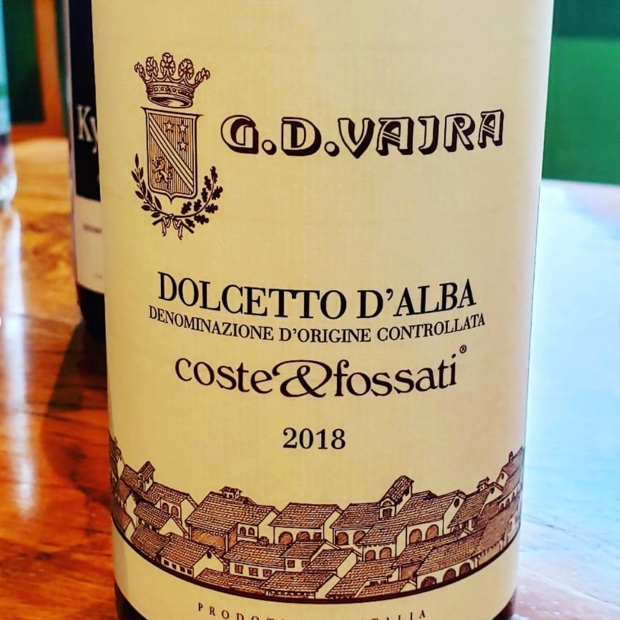
G.D. Vajra Coste & Fossati 2018, Dolcetto d’Alba DOC ($31.95)

From two old cru Barolo vineyards, Coste di Vergne and Fossati, close by to one another at the top of their shared hill. De-stemmed and crushed separately, of vines 40 years in age. If there is dolcetto that carries the structure to age you best believe this is the one. Tannic in its youth, a house with the potential to grow roses in one year and then violets in another. Modern and grounded, better with fresh eggs and delicate proteins, certainly the romantic tartufo Piemondtese. Already teasing something floral but still in a shell and cast under a spell. Wait two years or more. Drink 2021-2027.  Tasted December 2019

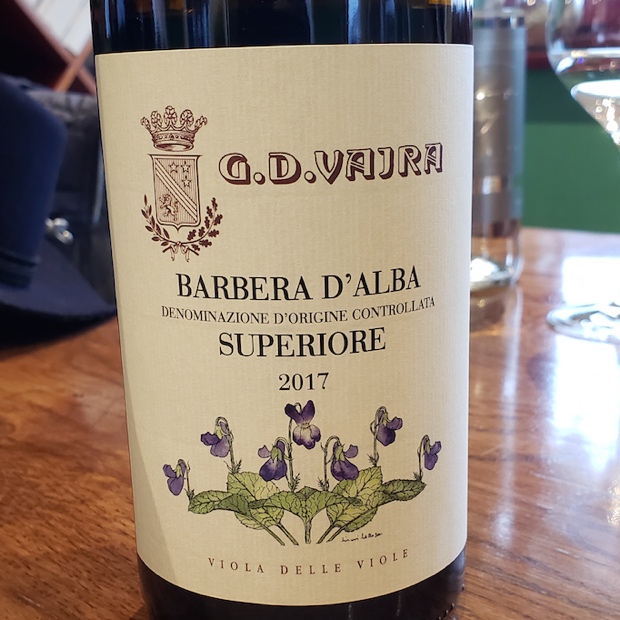
G.D. Vajra Barbera d’Alba DOC 2017 ($31.95)

Like the dolcetto, barbera is drawn off of two vineyards with tow soil types, from Bricco delle Viole and in Serralunga d’Alba, Bricco Bertone. An east-west expression, at once rich and luxurious and then inward, implosive and almost intolerant. Could only be barbera with its sweet fruit and dark berry compote but it’s a variety that needs time, it needs the bottle and then, the glass. Somehow bright through all the dark fruit, like the singular stained glass that allows light to shine in.  Drink 2022-2028.  Tasted December 2019

G.D. Vajra Kyè 2015, Freisa Langhe DOC ($60.95)

Like the French “C’est qui?” this dialectical freisa is actually two syllables, key-eh, and you cannot define this wine with anything or any other freisa. Darker, woolly and a bit of wild, feral and animale beauty. Like somewhere between red Sancerre and Faugères but bigger, more power and also more control. Herbaceous, iron-clad and hematic. Mimics blood-red preparations of proteins; duck breasts, rack of lamb, venison. Also Rhône-ish and laying somewhere between barbera and nebbiolo. Make your head spin with comparisons when none are correct. There is evidence of climatic cut and biodynamic preparations. Earthy, rich and poignant. Drink 2022-2029.  Tasted December 2019

G.D. Vajra Langhe Nebbiolo DOC 2018 ($34.95)

The Baroli are made from vines minimum 10 years old and the younger vines are used for this Langhe, which includes fruit from Bricco Bertone just outside the territory. Creeps up with its structure, nothing powerful or demanding but nebbiolo architecture nonetheless. Cherries, pencil lead and mountain herbs. Keeps the vineyard faith and accumulates even as it opens which tells us it is also youthfully closed. The potential is two years and thence forth. Tasted from two bottles opened a day apart, the first ready and willing, the second yes at first and then making a request for time. Drink 2022-2030.  Tasted December 2019

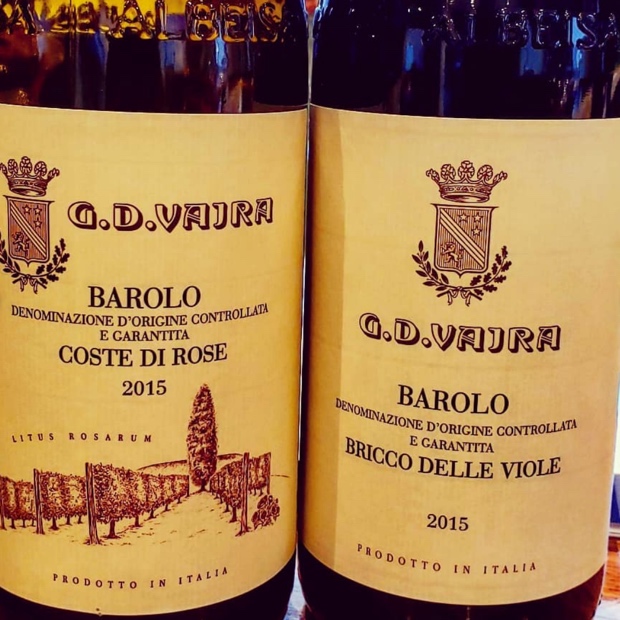
G.D. Vajra Barolo DOCG Coste Di Rose 2015 ($101.95)

A very sandy decomposed peculiar site and soil type rich in Arenaria (sandstone) with the presence of sandstone rocks of quite decent size. The first vintage is this 2015 and from vines 30 years old going up the hill from Bussia. Delivers very pretty fruit of sneaky structure and intent. The rose floral gift of a vineyard, part apposite and part complimentary to Bricco delle Viole. It’s a ventilated place translating to a great freshness in the wine. Drink 2021-2029.  Tasted December 2019

G.D. Vajra Barolo DOCG Bricco delle Viole 2015 ($113.95)

An about face in style and character with more dimensions accessed and so many aromatics acquiesced. Vines are 40-80 years old and the handling involves a diversification of treatments; longer maceration and fermentation, up to 45-60 days. A tight, compact and fine-grained construct with so much taken from the beneficial skins and the assistance of a submerged cap (a merso) during that fermentation (in stainless steel), followed by at least 24 months in large casks, some 25hL and some 50 hL. Some tonneaux but just as an addendum. Such a tactile nebbiolo, fruit of presence and intricacy out of a Cru that is felt as much as it is nosed or tasted. It’s not just a matter of nebbiolo and Barolo but a thing of great importance, mainly tradition and family. Drink 2023-2034.  Tasted December 2019

Good to go!

godello

Stained Glass and Inox Tanks

Twitter: @mgodello

Instagram: mgodello
WineAlign

Malivoire gets Mottiar and Mottiar

Back in January a group of Ontario-centric, local-fanatical and intrepid Toronto-based journos made the annual trek around the QEW horn and down into the Niagara Peninsula’s land of plenty. The Friday night destination was Fallsview Casino for the annual Niagara Icewine Festival, annual gala of wine and dine stars. We dressed to the occasion; John Szabo M.S., Jamie Drummond, Malcolm Jolley, Sara d’Amato and Godello. You can read up more about that essential event in Sara’s roundup over on WineAlign.

Godello, Sara d’Amato and John Szabo M.S.

Related – Buyers’ Guide to VINTAGES January 25th, 2020

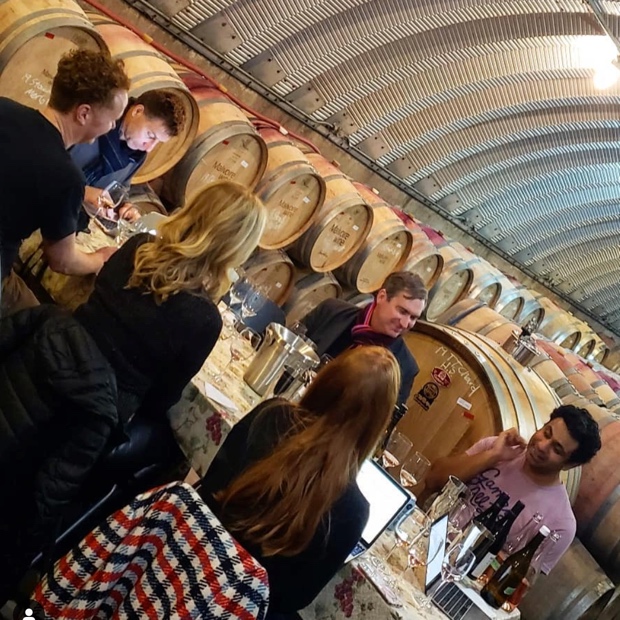
On the morning after we five and the Wine Marketing Association of Ontario’s (WMAO) Magdalena Kaiser paid a visit with winemaker Shiraz Mottiar of Malivoire, a Beamsville Bench producer moving from strength to strength and purveyor of Bench wines simply getting hotter and hotter. Or, as it is said, Mottiar and Mottiar. Malivoire’s are some of Ontario’s most thoughtful varietal wines occupying all the necessary levels and tiers; estate bottlings, small lots and single-vineyards. The whites focus on chardonnay and melon de bourgogne, the reds in gamay and pinot noir. The ace in the hole concerns the province’s finest grouping of Rosé and in fact the Moira Vineyard gifts arguably the best in Ontario. That vineyard along with the winemaker’s home Mottiar block are inching upwards into Premier Cru territory.

Shiraz Mottiar is a thoughtful man of grace, empathy and conviction. He’s also an experimenting scientist with an artist’s brush touch, at the leading edge of his work through wild ferments, whole bunch fermentation, stem inclusion and carbonic styling. He pushes boundaries, slides into percentages many would fear to tread and his wines always come out clean. He has the magic touch and everyone knows it. And he makes wines everyone can afford. You could build an entire cellar by way of Malivoire’s multi-varietal work and the many tiers they fashion from drink now, through mid-term aging and those that will go long. I’ve tasted a few older Malivoires lately and have been blown away by their longevity.

Meeting the Bench man of great insight for a morning’s barrel through the @malivoire oeuvre ~ All carefully, thoughtfully and properly conceived. New marketing and labels pretty sharp too.

The group tasted through 10 examples with Shiraz and these notes reflect that gathering, along with two tasted at the Icewine Festival and one older Melon from last summer. The notes on the 2019 Pinot Noir and Gamay barrels tasted through are restricted to internal rumination and imagination but know this. When those wines hit the bottle they will re-write the varietal script for Ontario. Wait for them.

Malivoire Bisous Rosé, VQA Beamsville Bench, Ontario ($29.95)

The latest disgorgement of Bisous Rosé from Bench pinot noir still sees 24 months of lees aging but now strikes drier than expected. There’s crème fraîche and strawberry tang, more angst than before, crunchy fruit and well-propositioned delineation.  Last tasted January 2020

This ambitious dry Rosé from Malivoire is all about the kisses, not so much in a tuck you in at night sort of way, but in a greet you at the beginning of the night peck on both cheeks. It’s really quite down to earth this Bisous, taken from the rich limestone chalky and cakey soil up on the Beamsville Bench. Twenty-four months of lees aging deliver a strong message of texture but not enough to harden what is ostensibly soft and hugging, traditional method sparkling wine. Now in bottle 18 months this has settled into a comfortable and familiar ambient space, “it’s like heaven to me I must confess.” I’ll be happy to steal my kisses from you, Bisous. Drink 2017-2020.  Tasted December 2017

Malivoire Melon 2019, VQA Beamsville Bench, Ontario ($21.95)

Just about to be bottled (Tuesday January 14th). Picked late because the acids extended longer than usual and 10 per cent of the fruit comes from winemaker Shiraz Mottiar’s home vineyard. Sugary (not sugared) melons, undeniable and absolute salty and marine shell-like melon de bourgogne notations. The specificity of citrus with ever-present neutral grape spirit streak of embracing acidity. Woke melon, wake-up call to more please. Imagine the possibilities with an increased sur-lie styling. More plantings and potential yields could make this happen. Will receive one last sulphuring before bottling. Drink 2020-2024.  Tasted January 2020

Malivoire Melon 2013, VQA Beamsville Bench, Ontario

Impeccable balance and extension have come to this in what is the freshest white you could want at six years of age and almost no cost towards getting it here. Melons and lemons and plenty of unction. An argument for this grape, that beautiful Bench and the amount of time invested. Drink 2019-2021.  Tasted September 2019

Malivoire Rosé Moira 2019, VQA Beamsville Bench, Ontario ($24.95)

Production is “as much as I can get from that site,” tells Shiraz Mottiar, so maximum 800 cases. As always the aridity and the salinity continue to rise, the acids, minerality, near brininess and ultimate stoic balance so secure at the top of the game. Such a high acid vintage for everything but certainly that includes Rosé, yet still the least amount of skin-contact of the three Malivoire blush. Acids just don’t correlate to hue and flesh. Thank pH for the needle’s movement in how this translates from vintage to vintage. Drink 2020-2024.  Tasted January 2020

Malivoire Vivant Rosé 2019, VQA Beamsville Bench, Niagara Escarpment, Ontario (498535, $19.95)

The production can max out at 1,300 cases and yes there is more vivant life, energy and expression than the Moira. Different fruit makes for different strokes yet same folks will love what’s going on. Sharp, high acid vintage, sapid, salty and fine. Drink 2020-2023.  Tasted January 2020

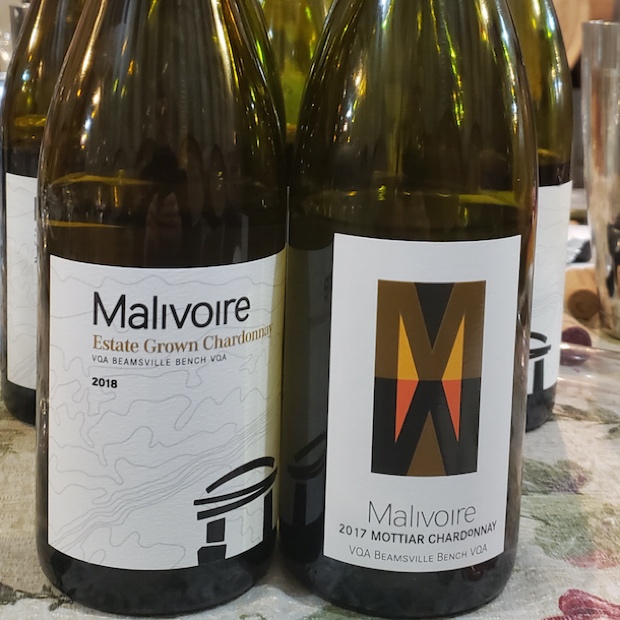
Malivoire Chardonnay Estate Grown 2018, VQA Niagara Peninsula, Ontario (573147, $19.95)

A blend of fruit from three farms, though mostly Moira in origin. Rich and developed vintage, fruit considered and managing to climb up another rung to imagine fruit from all over, orchards everywhere. Nothing buttery about this chardonnay, just crisp, cracking, “aggression played with,” Shiraz style. More oxygen at the juice level, half fermented in old barrels, through April/May. It’s ideal at this cost and you can’t do much better in Ontario. Approximately 2,500 cases made, a VINTAGES Essential. Drink 2020-2023.  Tasted January 2020

Malivoire Mottiar Chardonnay 2017, VQA Beamsville Bench, Ontario ($34.95)

To be released imminently, meaning Spring at some point. A block picked early at high acid and low pH, whole cluster fermented, natural fermentation and only 10 months in barrel. For chardonnay it was a vintage for freshness, quite wet throughout but hot and ideal through harvest. The adapted vines caught up, came to speed and delivered high quality. This is a prime example of what is possible when minor miracles come about and for a Mottiar chardonnay that means stoicism, structure and length. Very balanced and poised MC. Drink 2020-2025.  Tasted January 2020

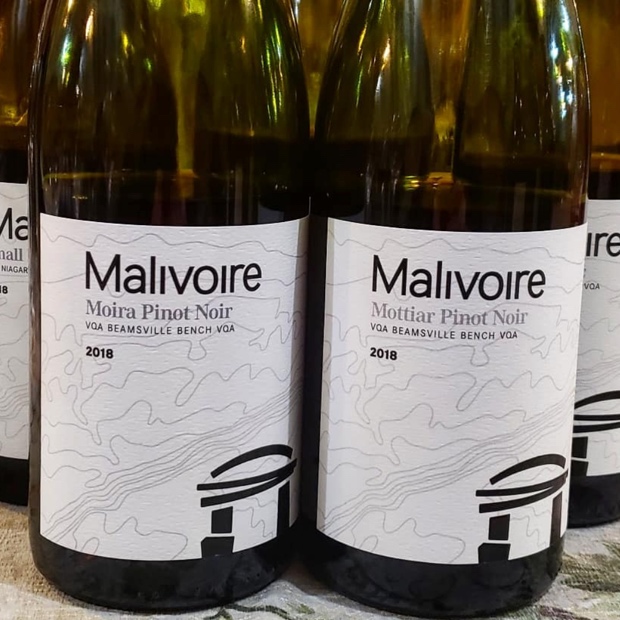
Malivoire Pinot Noir Moira 2018, VQA Beamsville Bench, Ontario ($34.95)

A short amount of time in barrel (only five to six months), needing a modicum of structure strengthening and keeping freshness intact. High fruit pectin from what is ostensibly a top Rosé block though not a top red made from pinot noir site. As straightforward and easily understood pinot noir as the Bench will ever give. Such a high-end entry point for varietal and place. Drink 2020-2022.  Tasted January 2020

Malivoire Pinot Noir Mottiar 2018, VQA Beamsville Bench, Ontario ($34.95)

The fruit is just juicier, sweeter, more mature and expressive than Moira but also equipped with a next level structure that elevates the Bench game. The one sitting on the darker savour side as opposed to the red popping one. A healthy stem inclusion raises the tension though truth be told you just can’t escape from the beauty of this vintage, the flowers that emit and the pleasure you just get from what can’t help but simply be. Pretty wine from a pretty time. Drink 2020-2023.  Tasted January 2020

Malivoire Small Lot Gamay 2018, VQA Niagara Peninsula, Ontario ($21.95)

Gamay as we know and love, peppery and jolting, embracing and inclusive for all to find joy. From a Malivoire site up aboard a ridge that may not have always been the best site for planting but is increasingly rising into the golden age of gamay reality. More plantings are not merely trend follows but knowing the next 10-20 years of good sites for good wine. Juicy stuff, invigorating and affirming. Drink 2020-2023.  Tasted January 2020

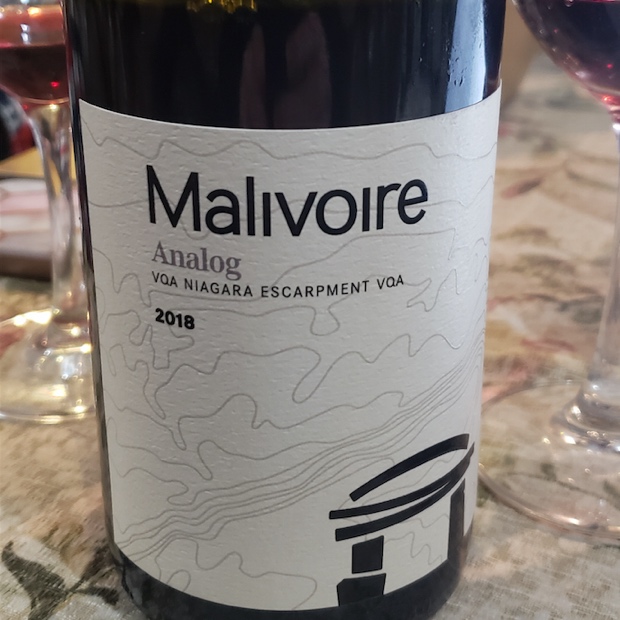
Malivoire Analog 2018, VQA Niagara Escarpment, Ontario ($34.95)

Semi-carbonic, whole cluster fermented cabernet franc with (the same) in gamay and then some pinot noir. A blend of Wismer and Bench fruit, “tuffeau reverb” and dialled up to “11.” Less than 200 cases made of this most curious and never before connected three-pronged blend, like a Euro receptacle for power plugged in with northern North American grooves. An as is red blend with a bit of sweetness for sipping purpose while rocking out .“Why not just make 10 louder?” Drink 2020-2023.  Tasted January 2020

Malivoire Wismer Cabernet Franc 2017, VQA Twenty Mile Bench, Niagara Peninsula, Ontario ($26.95)

Quite the juicy little cabernet franc number with all the notes sung as expected, some savoury, some sweetly peppery and some just red fruit juicy. Red citrus, red current and red liquorice. Easy and nary a heady or anxious moment. Drink 2020-2021.  Tasted January 2020

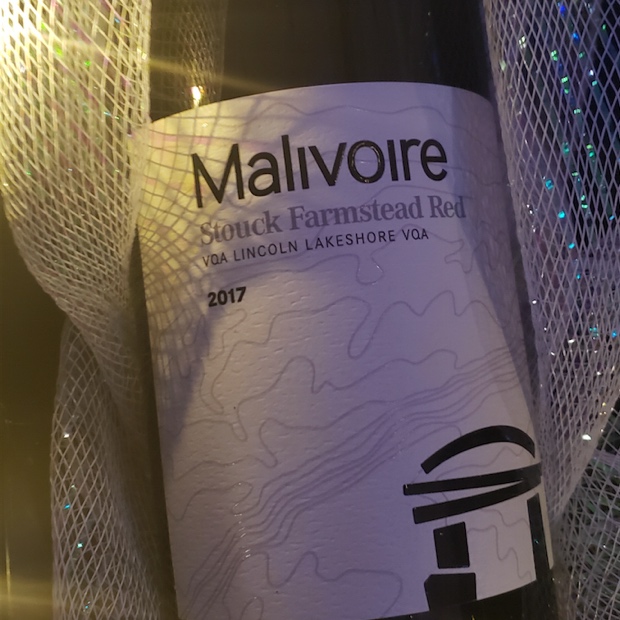
Malivoire Stouck Farmstead Red 2017, VQA Lincoln Lakeshore, Ontario ($29.95)

The Farmstead carries forward from the red blend previously known simply as Meritage, of 60 per cent merlot and (40) cabernet sauvignon. Still so very youthful, quite reductively protected and mired behind a varnished and savoury candied shell. There’s a litany of high quality 2017 Stouck Vineyard fruit lurking behind and also stuck behind a veil of oak curtains, of French and also American in origin. Acts as if Niagara in Rioja clothing by way of Bordeaux styling. Perhaps confusing in youth that will reveal all charms and dignities, not to mention Lincoln Lakeshore nobility when some mid-range years have melted past. Drink 2022-2026.  Tasted January 2020

Good to go!

godello

Twitter: @mgodello

Instagram: mgodello

WineAlign

Gaiole’s great nuance

Gaiole Sangiovese

Every time I go to Gaiole something memorable happens. Mayor Michele Pescini knows what I’m talking about. He too recalls the deluge of August 1995. A walk through Castello di Ama’a art installations; a room with a view at Cappanelle; a moment of geologiocal, micro-block and micro-climatic epiphany with Angela Fronti in her Istine Cavarchione Vineyard; A perfect meal 25 years ago in San Polo; cooking dinner in the Coltibuono Abbey; sifting through epochs of Galestro and Alberese in Rocca di Montegrossi’s Monti in Chianti San Marcellino Vineyard; a drive with Francesco Ricasoli circumnavigating 270 hectares on a perfect Gaiole afternoon; a sombre moment in Castellio di Brolio’s crypts to find a shared birthday and death date with not one but two Bettino Ricasolis. Everything set to permanence and forever etched in memory.

Related – Because the night in Gaiole

Each and every commune in Chianti Classico carries a distinction that defines them, a set of character traits to speak of a collective past and a vision for the future. In Gaiole the sangiovese farmed and magically transformed is not immune to idiosyncratic behaviours and the southeastern sector proudly boasts some of the territory’s most singular spirit and peculiarity. The frazione question comes into focus inside of Gaiole because Monti in Chianti is one of Chianti Classico’s most prestigious, prodigious and policy defining. All this to say that gaining a deeper understanding into the nuance of Gaiole requires a heed of great attention.

The Gaiole Winegrowers Association was conceived in 2017 by Barone Ricasoli – Castello di Brolio’s Francesco Ricasoli and Badia a Coltibuono’s Emanuela Stucchi Prinetti. Created to promote the collective ideas and wines of the commune, The Associazione Viticoltori di Gaiole (AVG) held their first public tasting back in October of 2018. Upwards of 25 of the nearly 30 Gaiole producers participated. Fast forward two years and in September of 2019 13 Canadians met at the Coltibuono Abbey to taste through the work of 16 Gaiole Producers.

Badia a Coltibuono’s Roberto Stucchi

Related – They say all roads lead through Greve

There’s no such thing as being ‘not anti-menzione’ or believing in an ‘anti-menzione neutral’ policy

Gaiole is one of the three towns of what was once defined as Chianti Storico and remains at the heart of the Chianti Classico area. It is also the town within which the Iron Baron, Bettino Ricasoli defined the formula of the region’s “perfect wine” in 1872 after dedicating a great deal of time to research in the field of wine-growing and producing. It is also the host of the world’s most famous antique bike race, L’Eroica Gaiole in Chianti, “born for the love of the cycling that formed a good part of the history and literature of Italy. The idea was to seek out the authentic roots of this fantastic sport, with its great, popular heart, and rediscover the beauty of fatigue and the thrill of conquest.”

Related – San Casciano’s nascent time in Chianti Classico

There’s no such thing as being ‘not anti-menzione‘ or believing in an ‘anti-menzione neutral’ policy.” We’ve talked a considerable amount lately about the sub-zones that need to be addressed in adjunctive terms, not just for wine labels but also with regards to teaching and talking about Chianti Classico. The issue is that we are acting for or abstaining from the subject of menzione geografiche, or menzione geografiche aggiuntive (MGA). The middle ground proves that we’re in denial about the subject because there can be no such thing as being neutral. Saying you have no opinion or that this is not the time is saying that you are anti-menzione. Monti in Chianti is one of Gaiole’s most prized terroirs and it’s time to show up on labels is either now or not but either way it needs to be discussed with great pursuit. I can’t imagine Ricasoli, Stucchi or Rocca di Montegrossi’s Marco Ricasoli Firidolfi would disagree.

A writer and a winemaker walk out of a winery… #chianticlassicobootcamp #chianticlassicoeducation #chianticlassico

Related – Chianti Classico’s big Raddese

“Located in Siena province Gaiole is one of two sub-zones with exactly two neighbours, in this case Castelnuovo Berardenga to the south and Radda to the west/northwest. It is one of the more complicated, diverse and checkered Chianti Classico zones, with many switchbacks, elevation changes and soil types. That said a thread certainly runs through, of wines that carry their own confident and specific structure.” I wrote these words after a September 2018 tasting, one month ahead of that first official AVG gathering. The 2019 assessment once again confirmed that the sangiovese of Gaiole have great aging potential, albeit often wrapped up in robes of rusticity, shacked up with the finest of Chianti Classico.”

Before we convened at the Abbey on Gaiole Mountain the group paid a visit to Riecine, one of the commune’s more modern, forward thinking and avant-garde producers. The following 29 tasting notes cover that meeting and the nuanced Chianti Classico wines tasted with the association’s producers at Badia a Coltibuono.

Badia A Coltibuono Chianti Classico DOCG 2016 ($27.99)

Endemic grape varieties are always kept alive in Badia a Coltibuono’s Gaiole vineyards and always will be as long as Roberto Stucchi is around. And so his exemplary Annata is built upon a foundation of sangiovese with 10 per cent aiding and abetting by colorino, canaiolo and ciliegiolo. There is an unresolved chalkiness to the 2016, a textural and structural aspect owed to the forests, altitude and soils of the place. Clay limestone as per the party line but clearly a variegated mix of rocks, decomposition and blocks that give this distinct sangiovese its parts; bone, tissue and blood. All together the conveyance is an illusion of meticulousness and a frisson of simplicity. Stucchi will always keep us on our toes. Drink 2021-2028.  Tasted on several occasions throughout 2019

Badia A Coltibuono Chianti Classico Riserva DOCG 2016 (683474, $43.99)

It may not purport to act as single-vineyard or plot specific, nor does Roberto Stucchi’s appellative Riserva seek to glorify as a 100 per cent varietal sangiovese, but from a Gaiole abbey that does not venture into Gran Selezione territory this is indeed the top Chianti Classico expression of castle and house. Like the Annata it feeds with colorino, canaiolo and ciliegiolo and here is drawn from four Monti in Chianti (frazioni) vineyards; Poggino, Vignone, Montebello and Argenina. All the chalky aspects of the Annata are liquified, silkened and elasticized throughout this seductive sangiovese. Even if the proprietor may passive aggressively stalk the idea of eliciting a spatiotemporal dimension free of any striving for beauty I will tell you that this from Badia a Coltibuono is indeed beautiful. It surely is Monti, Gaiole and Chianti Classico incarnate and will drink dutifully for two decades. Drink 2021-2036. Tasted twice, October and November 2019

Barone Ricasoli Brolio Chianti Classico DOCG 2017

Impressive in how Ricasoli has taken the vintage and kept it intact, embracing the speed of ripeness and yet preserved as classic Gaiole in its spirited and savoury red fruit splendour. Lovely tang, plenty of drive, worthy of kudos for a positive cause and effect. Perfect for its ilk. Drink 2019-2022.  Tasted September 2019

Ancient Fluvial Terrace of the Ricasoli Estate

Barone Ricasoli Brolio Chianti Classico Riserva DOCG 2016 (418822, $34.95)

Riserva is but a bambino, locked tight, with great acidity, fruit agglomerated as one from a selection of all the vineyards. It’s the Ricasoli signature sangiovese dish, a true estate combinative Riserva. This is like taking a tour through all of the plots scattered around 270 hectares, to gain an understanding of what goes into making this Gaiole in Chianti body of work. The insight and grasp is yet unfulfilled because in this case it will take some time for all the moving parts to come together. Solid work in Riserva regardless, really really solid. Drink 2021-2026. Tasted February and September 2019

When you take a drive with @francescoricasoli you stop to breathe in the air. Castle behind sold separately ~ #gaioleinchianti #baronericasoli

This is the flagship Chianti Classico established in 1997, always the man, the most important and expensive wine of the estate. It’s also the first to shun the Super Tuscan commodities, eschewed to establish a Chianti Classico at the top of the game. Pioneer for a place that was once and can forever be great, now travelling retroactively back to the future of fame. In this context it surely makes sense that it then moved forward into the Gran Selezione category going back to 2007, always priced near the top. This generous and mostly easy vintage brings together classic Brolio cherries and acidity with powerful, linear and soliciting 2015 tannins. Draws you in, ties you up and keeps you around for the long run. Drink 2021-2029. Tasted September 2018 and September 2019

Cantalici Baruffo Chianti Classico DOCG 2016 (403733, $24.95)

Located in Castagnoli, organic since 2015. Baruffo the most beloved cinghiale hunting dog. Varietal sangiovese, rich, thick and on the dark plum side of Castagnoli. Good acidity keeps it swimming downstream. Drink 2019-2021.  Last tasted September 2019

Quite a barrel affected Annata with a richness of fruit that can handle the toasty wood and carry forward with expressive character, along with quite alimentary tannin. It’s not so much an older schooled Chianti Classico as much as it’s one of swagger, ambition and going hard for the vintage. Drink 2020-2025.  Tasted February 2019

Cantalici Chianti Classico Gran Selezione DOCG 2015

Varietal sangiovese selected from the oldest blocks and than selected again in the samples tasted in the winery. Not made in every vintage and was first made in 2013. Rich in fruit, chocolate and balsamic, high acidity and very solid architecture. Classic really for the early stages of the appellation. Controlled, professional and even slightly romantic work from Carlo Cantalici. Drink 2020-2025.  Tasted September 2019

Casa Al Vento Chianti Classico DOCG Aria 2016 (378026, $19.95)

The estate dates back to 1982 under the current ownership. The Annata is 100 per cent sangiovese, “to tell the people about this place,” at 450m in the southeast corner of Gaiole, on marl and clay. A really silky sangiovese, modern CC with real classic undertones. Tart, tangy, rich in acidity and tannin. Tells a commune story but a territorial one as well.  Last tasted September 2019

‘Tis a savoury and yet also rich Chianti Classico, pretty much what you’d want and expect from Gaiole in Chianti. At present it’s found somewhat in a shell with inherent structure from what seems like a pretty solid variegate of soil. You can sense Alberese, Galestro and clayey-marl in the layers of fruit and the blocks that stack one upon the other. An unmistakeable sangiovese albeit well-extracted and very modern. Drink 2021-2025.  Tasted February 2019

Casa Al Vento Chianti Classico Riserva DOCG FOHO 2015

Refers to Foco as in the fire, to give it a Gaiole+Casa al Vento accent, relating to a 175 year-old story. Here also 100 per cent sangiovese. From an estate micro-climate with vines at 500m and a windy, southern exposure. Rich and luxurious, very Riserva in the way of welling and layering, stylish and chic. Vanilla melting into white pepper Riserva is so known to be. Drink 2020-2024.  Tasted September 2019

Castello Di Meleto Chianti Classico DOCG 2017 (332114, $18.95)

All sangiovese and classic red fruit specific to Gaiole, dusty-savoury and cumulatively lush. Succulence for the commune, elongated and enough restraint considering the warmth. Drink 2019-2022.  Tasted September 2019

Fietri Chianti Classico DOCG 2017

Grown at altitudes between 460 and 580m in the “end of Gaiole” quite near to Castelnuovo Berardenga. If ’16 was classic Gaiole and Chianti Classico then ’17 is not but it is exactly what the vintage demands. And Fietri has dialled back the wood to make a more lightning red sangiovese with high tonality and lime-Galestro undertones. Once again really well made. Drink 2019-2023.  Tasted September 2019

Fietri Chianti Classico Riserva DOCG 2012

Grown at altitudes between 460 and 580m in the “end of Gaiole” quite near to Castelnuovo Berardenga. In Riserva form this sangiovese from a single vineyard called Cillegio is the seventh incarnation and at this time is showing more than expected age. Oxidative yet still with sharp acids the fruit is turning to umami in tartufo. Drink up. Drink 2019-2020.  Tasted September 2019

I Sodi Chianti Classico DOCG 2016 (435123, $18.95)

From Andrea Casini in the frazione of Monti in Chianti, in the woods southeast of Brolio and close to the village of Cacchiano. With seven per cent canaiolo, traditionally fermented and aged for 16 months in Slavonian oak. Rich, herbal and high in acidity. Proper, old-school, well-expressed. Drink 2020-2024.  Tasted September 2019

I Sodi Chianti Classico Riserva DOCG 2015 ($29.95)

From the best sangiovese and from an estate that makes no Gran Selezione. Deepens all the Annata’s exemplary old-school contributions; pressing, concentration, herbal qualities. A hyperbole in exactitude. Drink 2021-2026.  Tasted September 2019

Monterotondo Chianti Classico DOCG Vigna Vaggiolata 2016

From Arenaria sandstone and schisty clay Galestro soils. The name is a fantasy, a fantasia vecchia. From Saverio Basagni and very old school at the highest altitudes in Gaiole, at approximately 560m. Just lovely classic Gaiole with the absolute truth spoken in Gaiole savour, of the woods, the porcini and the perfume of wildflowers. Tart acids, sharp and elastic. Drink 2020-2025.  Tasted September 2019

Monterotondo Chianti Classico DOCG Vigna Seretina 2015

A Riserva from the Vineyard deemed to be the better of the two, more worthy of producing grapes that can handle the aging and the structure to age. Smells like cinnamon it’s uncanny. Drink 2020-2025. Tasted September 2019

Riecine Chianti Classico DOCG 2017 ($29.85)

Varietal sangiovese first made in 1973, fermented in concrete tanks and then sent to old tonneaux and grandi botti. Aged for 18 months. Final blend is done up in cement and released two years after the harvest in February the following year. A quick maceration makes for red lightning fruit, as far from cooked and jammy as there can be. Pure delight, exacting and proper for Gaiole and Riecine’s specific, iron-clad soils. Also the apposite of aggressive and overdone. That can’t be overstated and should never be under-appreciated.  Last tasted September 2019

Riecine’s is the true limestone sangiovese, of pure and striking, fast as lightning red fruit. This is without any equivocal wavering a Chianti Classico for purists, for those who look to tradition and who seek the truth, with the most clarity and modernist’s approach. The acids are perfectly succulent, defined and refined. An Annata that will live in infamy, fifteen to twenty years or more I should think. Drink 2021-2035.  Tasted February 2019

Riecine Chianti Classic Riserva DOCG 2016

Sangiovese 100 per cent, a selection, fermented in concrete tank, followed by large barrels for 24 months. Quite a departure from the Annata and also stylistically very different to Riecine di Riecine. So much more lush texture and weight though still the deep red fruit, just in hyperbole. Acids are developed, tangy and full.  Last tasted September 2019

Older schooled, tart, tangy, intense, welling and oozing Riserva. Very, truly, obviously Riserva. Like ’13 in a way but the vintage is almost a polar opposite so it’s clearly an estate style in as much as there ever could be. Built to age for a long time. Drink 2022-2029.  Tasted February 2019

Riecine winemaker Alessandro Campatelli

Rietine Chianti Classico DOCG 2015

Southern exposures at 450m. Sangiovese (80) and merlot. Sappy, jammy and layered though truth be told its ripe in both ways so works well and into balance. Very soft acidity, almost non-existent and easy. Drink 2020-2023.  Tasted September 2019

Rietine Chianti Classico Riserva DOCG 2015

Riserva is 100 per cent sangiovese and planted in 1997, five years after the first planting. Dark liqueur, fully rendered, daring and quite frankly a better acidity than the Annata. Rich and chalky, so full of barrel notes; graphite and especially vanilla. Good work. Drink 2020-2026.  Tasted September 2019

Rietine Chianti Classico Riserva DOCG 2012

Riserva is 100 per cent sangiovese and planted in 1997, five years after the first planting. Really beginning to show age, with balsamico notes and soy. Really getting past the point. Volatile too. Drink 2019-2020.  Tasted September 2019

Rocca Di Castagnoli Chianti Classico DOCG 2017 (222810, $19.95)

Vineyards are between 420 and 600m, very near to the village of Castagnoli. Plenty of imbalanced or at least inconsistent ripening from the driest of vintages, in vineyards planted between 1993 and 2018. Very fruity and I mean fruity, lively, red cherry bright and accentuated by colorino. Steely and sweetened by new big oak barrels. Low toast and high on soil. Spicy and raging with fun, mixing Alberese and Galestro for a very integrated style. Drink 2019-2021.  Tasted September 2019

Rocca Di Castagnoli Chianti Classico Riserva DOCG Poggio A Frati 2015 (23358 $32.95)

At 550m, Poggio A ‘Frati of 15 hectares planted to sangiovese and a small amount of canaiolo. A single-vineyard wine on Alberese soils, feeling the acidity, lightning tannins and grip into structure. That said this is made to be consumed so there is some soft, lush and plush sensations. It’s still grippy and really tangy regardless of what you say.  Last tasted September 2019

Poggio A Frati 2015 is primarily sangiovese though usually contains a few percentage points of canaiolo, for tradition. The vines grow on 12 hectares of schisty Alberese soil at Poggio Frati, “the hills of the friars.” The generous season is blessed of beautifully defined tannins, fine and sweet, with that vintage’s glycerin fruit and really intense acidity. This is such a baby but with tannins so accomplished there will be a really fine future, sooner and later. Drink 2021-2029.  Tasted February 2019

Rocca Di Montegrossi Chianti Classico DOCG 2017

“Not easy but in the end I’m very satisfied by the vintage.” The words of Marco Ricasoli Firidolfi. Only 11 per cent less production for Montegrossi. A mature but to the maximum without going over and a saltiness from Alberese soils rich in limestone. So very classic Montegrossi with balancing acidity and plenty of dark sangiovese fruit. So well made and precise Monti in Chianti, of kept humidity and energetic vigour out the vines.  Last tasted September 2019

Monti in Chianti is a special tour de force location for grooming sangiovese and the vintage takes this terroir for a real spin. The Galestro rocks heated up in a way they had not recently been accustomed to doing, having received so much intense sun and you can feel the accumulation in this 2017 Annata. The fruit is particularly sweet-scented and richly developed. It needs little settling time and with acids not overly demanding I would suggest early enjoyment. Drink 2020-2023.  Tasted February 2019

San Marcellino Vineyard, Monti in Chianti

Rocca Di Montegrossi Chianti Classico Gran Selezione DOCG Vigneto San Marcellino 2015

If you don’t know by now it is San Marcellino that defines the single-vineyard oeuvre for Gran Selezione and so many could learn about what needs to be done to elevate the category. Sangiovese from vines as old as 70 years is joined by six per cent pugnitello. It’s certainly rich and lush but the quality and maturity of the acidity is exceptional in ways only this Alberese corner of Monti in Chianti can gift. Fine tannins will help this develop complexities for two decades. Drink 2021-2035.  Tasted September 2019

San Vincenti Chianti Classico DOCG 2017 (399907, $19.95)

At Gaiole mountain at 400-450m, vinified in concrete then moved to 500L tonneaux. Texture first and a look at modernity within the classic oxidative red cherry liqueur sangiovese that we’ve come to know so well. Made for texture through planned execution. Drink 2019-2020.  Tasted September 2019

San Vincenti Chianti Classico Riserva DOCG 2015

At Gaiole mountain at 400-450m, established in 1984, vinified in concrete then moved to 500L tonneaux. Oxidative, lacking lustre and full of dried fruits, followed by a similar grain of tannin. Drink 2020-2023.  Tasted September 2019

Tenuta Perano Chianti Classico Riserva DOCG 2016 ($35.00)

There are no vineyard textures like Perano, white and yellow calcareous chalky, steep, well-draining, full of rocks and minerals. This sangiovese (with just a few points of merlot) reflects this composition, just as the soils reflect and collect the sun. Few Chianti Classico have as much lightning red fruit ripeness as this Riserva. It is simply chock full of flavour. Drink 2020-2027.  Tasted September 2019

Welcome #lambertofrescobaldi @frescobaldivini to Chianti Classico. So many reasons to smile ~ incredible vineyards #alberese #galestro #steepslope #gaioleinchianti #tenutaperano #peranoestate #collinedigaiole

Tenuta Perano Chianti Classico Gran Selezione DOCG Rialzi 2015

This first vintage of Rialzi “the terraces” reflects a plot with small berries of great colour and concentration. Three hectares that produces only 5000 kilos of grapes. And so Frescobaldi does right by the appellation with not just a single-vineyard but more so a single block for Gran Selezione. It took only a few years to isolate this block as having different and special fruit. Very ripe, very lush and high in acidity. Will age dutifully. Drink 2021-2029.  Tasted September 2019

Good to go!

godello

Gaiole Sangiovese

Twitter: @mgodello

Instagram: mgodello

WineAlign

They say all roads lead through Greve

In Greve’s Piazza Giacomo Matteotti there is a Chianti Classico institution of local gastronomy called Oliosteria la Terrazza. Could there be a finer location to meet up with six wine producers from the commune, listen to them pour out their hearts and their finest sangiovese? I think not.

Related – Montefioralle (more than a feeling)

La Squadra Canadese, Piazza Giacomo Matteotti, Greve

Twelve other intrepid Canadian wine travellers agreed, abided and tasted through 12 Chianti Classico whilst the benefactors explained the origins, underscored the merits and revealed their expectations for what these Riserva and Gran Selezione could become.

Piazza Giacomo Matteotti, Greve

Related – Two sides of the River Greve

Over the last two years I have capitulated about the larger notion of Greve on this site in two published occasions. To read up on the history, geography, geology and general realities of the double-banked, extensive and magnificent commune, please click on the link above, and also below.

Related – A river runs through Greve

Post Greve tasting, snacks at OliOsteria La Terrazza

As I noted two years ago, “Chianti Classico is not one of the more famous left versus right bank terroirs in Europe but in the case of Greve in Chianti a river does run through it. My recent September 2017 sangiovese exploration brought me to Greve and a retrospective concern…explains a contrast in landscape meets topography, position and soil that at the time was not fixed on my menzioni geografiche radar. What happens left or west of the river is one thing and to the right something other. Were that it were so simple I wouldn’t have to expand, but it’s not and I do.”

#tranquillo #greveinchianti #ChiantiClassico

Related – Feeling Panzano’s pull

The estates who came to the central piazza in September 2019 were Carpineto, Castello di Querceto, Querciabella, Tenuta di Nozzole, Vicchiomaggio and Vignamaggio. This is my seventh recently published exposé (and fourth for Greve) on i frazioni and i communi that are the smaller sub-zones and greater micro-territories within Chianti Classico. These are the 12 wines tasted that day in Greve.

Related – A Lamole is a Lamole is a Lamole

Carpineto Chianti Classico Riserva DOCG 2015 ($29.95)

A 90 per cent sangiovese with (10) canaiolo. Meaty, cured, porcine. Minty, sharp, white peppery. Puts a tease intro the nose. A vintage of generosity taken over by a pressing focus. Will not likely age with some of the estate’s more recent highest of quality vintages so take advantage of what’s on offer, right here, right now. Drink 2019-2022.  Tasted September 2019

Carpineto Chianti Classico Gran Selezione DOCG 2015

Dusty and high-toned mixed with well reasoned, seasoned and developed fruit. Reminds of southern Montalcino, in a way.  Last tasted September 2019

Packed in suitcase from Greve by Antonio M. Zaccheo for this Toronto tasting. True to the Carpineto, Greve in Chianti, Classico style in that there is no real departure in stretch to the Gran Selezione, at least in terms of a thickening to syrup or shaken consistency. The cool, minty, dusty, high-toned and big red fruit personality are on headlights display, front, centre and all in. Here is the highest quality acidity that ’15 can gift and the fruit takes full advantage. Great cupboard spice and length. Really well done. Drink 2021-2028.  Tasted April 2019

Castello Di Querceto Chianti Classico Riserva DOCG 2016 (650754, $28.95)

families that have maintained their properties for more than 100 years. One of the founding members of the Consorzio in 1924. Always love the aromatic front of a Querceto. It’s a mix of place, indigenous varieties and tradition. In Riserva styling it’s also like overripe pinot noir, a.k.a. strawberry jam. In sangiovese that’s perfectly cool. Drink 2019-2023.  Tasted September 2019

Castello di Querceto’s Marco Fizialetti

Castello Di Querceto Chianti Classico Gran Selezione DOCG Il Picchio 2016 (938738, $49.00)

Querceto’s unique location in Greve is the Dudda Valley, an angular and broad swath of evergreen terroir in the northeast sector of the commune and the greater territory. Il Picchio is an old name referring to the land of the vineyard and perhaps “the woodpecker.” From only three hectares, “an aisle in the sea of the forest.” Dark red soil in iron and magnesium, dry, rich in stones. Almost a desert floor, not a woodland. Only one bottle per bunch, per vine, of Il Picchio. That says so much. Mainly (95 per cent) sangiovese with five per cent of the five local grapes. That combination of great richness and mineral streak – it cuts through the fat, enlivens and lifts. Same big extraction, concentration and in 2016 an earthy high note that speaks to hyperbole of nose, palate and tannin provided by this particular terroir. Old traditions and sense of place dies hard in these parts so expect dark fruit, a posit grab of structure, conservative styling and a tug on the sangiovese heartstrings. That and the unction meets beauty of 2016 fruit. Drink 2022-2029.  Tasted September, October and November 2019

Querciabella Chianti Classico DOCG 2016 ($48.95)

Presented by Valentina Bertoli, Sales & Marketing Assistant Manager and Winemaker Manfred Ing. Has been 100 per cent sangiovese since 2010 and it is in fact a rare occurrence of a confluence of estate managed grapes located in Greve, Radda and Gaiole. Spicier than I remembered and conversely more settled than last February. Seems to have lightened and brightened. “Every single vineyard has its own recipe of cover crops,” tells Ing, “specific to the biodynamic and climatological needs of each of the 70 plots around the Chianti Classico.”  Last tasted September 2019

On the ripest side of 2016 life, Querciabella’s Annata is all in, developed, deep and pure. The fruit already there, unencumbered by holds barred and of a picking that pushes the envelop to gratify at the highest level. There’s nothing stopping the early enjoyment and while the tannins are anything but astringent they are there, albeit sweet and fine. Drink 2020-2023. Tasted February 2019

Querciabella Chianti Classico Riserva DOCG 2015

Greater balance is happening in the vineyard between the top, middle and lower parts. Cover crop workings are leading to equal vigour in all parts of the vineyard, no longer soaking up moisture run down at the lower sections. Clearly no compromises in the Querciabella Riserva 2015, fruit exemplary, lively and layered, lush and elastic, ripe of little compare. A right, forward and courteous example of aromatic overstatement, so perfumed and surely special. Right at the forefront of Riserva culpability at the verge of possibility to the grander appellation. Drink 2020-2028.  Tasted September 2019

Tenuta Di Nozzole Chianti Classico Riserva DOCG Nozzole 2015 (324160, $24.95)

From the Folonari family, originally from Ruffino. Ambrogio Giovanni Folonari is still at the head of the family. Special bottling for the North American market, 150,000 in the US alone. A varietal sangiovese, as is the sister Riserva La Forra and are the Gran Seleziones. Sees aging time in Grandi Botti. Perfectly ripe, ubiquitous and modern classic version of Chianti Classico. Made for the markets. Approximately a $25 Canadian price. Drink 2019-2021.  Tasted September 2019

Tenuta Di Nozzole Chianti Classico Riserva DOCG La Forra 2015 (362731, $36.95)

Very specific single vineyards and selection of grapes. Ages for two to four months longer than Nozzole and in some small barrels, along with Grandi Botti that Nozzole sees alone. Quite reductive, chewy, ropey, like red and black liquorice intertwined. Approximately a $37 Canadian price. Drink 2019-2022.  Tasted September 2019


Vicchiomaggio Chianti Classico Gran Selezione DOCG Le Bolle 2016

The vineyard borders on the hamlet called “La Bolle.” One of the few locales where another producer could quite possibly plant a vineyard on the same “cru” where this clay landscape is located. “This is what we call uncompromising sangiovese, Gran Selezione,” tells John Matta. This is a Selezione with an unmistakable character that is a sense of the place, even if we don’t fully yet know about the true and full capabilities of this particular place. I imagine we will come to know it through the generations of this wine.  Last tasted September 2019

Named for the small group of houses to which the vineyard abuts, a vineyard where the large gathering of stones resembles Les Galets of Châteauneuf-de-Pâpe. The total prodcution is 50 hL (6,000 bottles). Just going into bottle as we speak, there is a structural architecture to this Gran Selezione that stands apart. La Prima is the wine for everyman while Le Bolle will appeal to ye who wants edgy, artistic and deferential. The blood orange, cranberry, pomegranate and sapid-herbal attributes are all part of the extenuating mix. Terrifc single-block within a single-vineyard expression of solo sangiovese Gran Selezione. Drink 2022-2031.  Tasted February 2019

Vicchiomaggio’s John Matta

Vicchiomaggio Chianti Classico Gran Selezione DOCG La Prima 2015

Sangiovese (90) and merlot (10), on average. ”Our style is to make very elegant wines with oak in the background.” Wines that can from a picking time that is so precise. “A race of age,” meaning two or three extra days will make all the difference. Like 1/10 of a second in a car race.  Last tasted September 2019

Made with a few percentage points of merlot, this is the a small-ish production Gran Selezione, a 100 hL output so the number is approximately 15,000 bottles produced. Really high-toned aromatically for Gran Selezione and then a palate of great richness and layering. Truly a selection created sangiovese, with drinkability and steak house amenability. Suits the style and the intent so perfectly. Drink 2020-2027.  Tasted February 2019

Vignamaggio Chianti Classico Riserva DOCG Gherardino 2015

Presented by Stefano Bernabei. In the Greve valley on the Right Bank, Lamole side. “Vignamaggio has a double identity because half of the vineyards are located in the Panzano area,” explains Bernabei. Double indemnity more like it. Selection of vineyards. Chewy sangiovese with 10 per cent merlot. Rich and luxe, easy to understand, not hard to see the great commercial appeal.  Last tasted September 2019

Gherardino is Greve in Chianti old school, in a way, with dried fruit, potpourri and a wealth of fennel-liquorice savour. Spice notes are very prevalent, as is the idea that in three years or so this will turn over into balsamico, porcini and tartufo. Wise and traditional Riserva. Drink 2018-2023.  Tasted February 2018

Vignamaggio’s Stefano Bernabei

Vignamaggio Chianti Classico Gran Selezione DOCG Monna Lisa 2015

There is five per cent cabernet sauvignon in the 2015 vintage. “Now Vignamaggio is concentrating more and more on sangiovese,” having rid Monna Lisa of merlot. Once again the luxe swagger and chic, smooth and silken texture completely distracts and renders the other parts inconsequential. Fulsome as much as any GS, easy to get at and with little need for air, or time. Drink 2019-2023.  Tasted September 2019

Good to go!

godello

Twitter: @mgodello

Instagram: mgodello

WineAlign

Montefioralle (more than a feeling)

Montefioralle #sleeper frazione

They are growing in sangiovese divinity, or should it be said, divino. L’Associazione Viticoltori di Montefioralle, producers with more than a feeling, who share common ground but also something bigger, stronger, more profound. Montefioralle Divino is a September festival that unites this tiny Greve in Chianti frazione and with a purpose all its own. Theirs is a small section of Chianti Classico and one to call their own. This band is so good they named a medieval village after it.

Castello di Verrazzano’s Luigi Cappellini and the Granfondo del Chianti Classico squadra Canadesi

Related – Two sides of the River Greve

Let’s orient you on Montefioralle’s location. Montefioralle is situated on the west bank of the Greve River and close to Castello di Montefioralle, essentially, ostensibly and mostly southwest of Greve and south of Greti. The hamlet has 79 residents and sits at an elevation of 352 meters. As for their famous harvest festival, “Montefioralle Divino è una manifestazione organizzata e promossa dall’Associazione Viticoltori di Montefioralle che saranno presenti alla manifestazione e offriranno i propri vini in degustazione sui banchi di assaggio per due giorni.”

Montefioralle, Greve in Chianti

Two days of wine tasting in Piazza Santo Stefano in the historic centre of medieval Montefioralle, presented by a group in flux, from time to time. In 2019 they were Azienda Agricola Altiero, Brogioni Maurizio, Castello di Verrazzano, Montefioralle, Podere Bucine, Podere Campriano, San Cresci, Grassi Roberto, Terre di Baccio, Terre di Melazzano, Terreno, Villa Calcinaia and Fattoria Viticcio. From year to year membership rises, wanes and changes. And so there are others who bottle within this micro-terroir of i cru di enogea; Belvedere, Le Palei, Luciano Meli, Poggio Riccioli, Schietto and Tenuta Monteficali.

Dinner at Terreno

Related – Feeling Panzano’s pull

The zonazione’s terroir is mostly calcareous clay, with sand and in some cases, outcrops of “compresso indifferenziato argille scagliose,” part schisty calcaire with less instances of Galestro or Alberese and more Macigno. Once again yet another micro-territory in Chianti Classico for Masnaghetti and the geologists to consider in the cartological advancement with an eventual conclusion in menzione geographiche aggiuntive.

Related – Chianti Classico’s big Raddese

Tasting at Calcinaia

Related – Looking out for San Donato in Poggio

The following wines were tasted with Conte Sebastiano Capponi at Villa Calcinaia, followed by a tasting with the producers of Montefioralle in the same location. The members are producers with estates and/or vineyards holdings around the Montefioralle hill. Two years earlier my group had met with eight such producers at Calcinaia. These 21 tasting notes cover the September 2019 speed dating sit-down with nine estate principals, followed by dinner at Terreno.

Wines of Montefioralle

Altiero Chianti Classico DOCG 2016

Always 100 per cent sangiovese, from winemaker Paolo Baldini, from the southeast exposure off the the younger vineyard. This is the perfume of Montefioralle, inexplicable in a way, a very specific combination of flowers and herbs but there is a calm and when made this way, a purity, a clarity. A tradition from before that is forever. Slightly more unctuous and full on the palate with some wood addendum. Proper Annata. Drink 2019-2025.  Tasted September 2019

Altiero Chianti Classico Riserva DOCG 2016

Like the Annata always 100 per cent sangiovese, this time from the older vineyard facing southwest, away on an angle from Montefioralle and looking towards Panzano, the Conca d’Oro and Le Fonti. The red fruit liqueur is quite silky, savoury in a sweet and almost amaro way, so in a word, stunning. Full and polished with some tradition fully stashed away in pocket. From Galestro and Alberese. And it shows. Drink 2019-2025.  Tasted September 2019

Castello Di Verrazzano Chianti Classico DOCG 2016 ($30.45)

Essential balance in Chianti Classico Annata, obviously with thanks to the ’16 vintage but even more of a many splendored thing. Concentration and intensity intertwined but truth be spoken this really climbs the hills and then descends, with grace, power and ease. A brilliant Annata from Luigi Cappellini. Drink 2020-2026.  Tasted September 2019

Castello Di Verrazzano Chianti Classico Riserva DOCG 2015 ($49.60)

A sangiovese raised organic and a textural matter really defined by the quality and the length of time in contact with its skins. While not too long the extension was embraced and the certainty of a spot on result is certainly admired. Excellent skins, earthy, rich in tannin and also used to great structural advantage. This Riserva will travel long and go deep. Bank on it. Most rewarding work from il cicliste Cappellini. Drink 2021-2029.  Tasted September 2019

Castello Di Verrazzano Chianti Classico Gran Selezione DOCG Sassello 2015

This is the wine at Verrazzano first made in 1982 as a Vino de Tavola, then as Riserva and finally as Gran Selezione, first in 2013. The Sassello is the small bird that seeks out the best grapes, in this case at 450m from the highest vineyard on the estate. This just intuits and explains vintage, place and appellation, together in harmony. It’s a cool sangiovese of smooth savour, with great length and slow developing parts. Needs more time. Just does. Drink 2021-2029.  Tasted September 2019

Lorenzi Sieni, Montefioralle

Montefioralle Chianti Classico DOCG 2017

Dry vintage, full fruit, deep red, almost out of cherry and into plum, better acidity than some of its ilk and says Lorenzo, “not greens tannins.” Agreed. Quite silky, almost glycerin and long. Well done Sieni, well done. Drink 2020-2025.  Tasted September 2019

Montefioralle Chianti Classico Riserva DOCG 2016

Riserva is quite lush and full from 2016, no shocker to be sure and of a perfume that moves from Annata and into what grows low to the ground. Really proper appellative effort for the estate and for the frazione, richly embrued in liquified glowing embers and wet spice for days. Needs time to settle in. Very structured Riserva in which to imbibe after some time. Drink 2021-2027.  Tasted September 2019

Podere Campriano Chianti Classico DOCG 2016

A perfectly consistent follow-up to a ’15 that stole that vintage’s show, here with equal aromatic excellence in 2016. Now showing as a great floral expression (remarkably early it should be noted) in a full bouquet bursting from the glass. There is a level of roundness and fine acid tang with circulative layers as good as it gets. Succinct as sangiovese, Greve and hanging around the finest of Montefioralle. A true Galestro idea presented clear as a clear blue frazione day. Drink 2020-2026.  Tasted September 2019

Two sides of the Greve River

Podere Campriano Chianti Classico Riserva DOCG Le Balze di Montefiorealle 2015

Perhaps not as balanced a vintage as the follow-up 2016 will bring to this Montefioralle Riserva but ’15 can stand on its feet, no problem at all. No sway but plenty of torque indeed. Love the fruit of 2015, as much as one needs to love fruit. The fruit goes in and then back out of your mouth in equal and opposing fashion. In balance, with acids and tannins in tow. Drink 2020-2026.  Last tasted September 2019

Exactly Campriano, distinct and luxurious in its own perfect way. it’s so very Riserva, unctuous with red fruit that seems almost completely absent of wood. It’s because of the land, a vineyard set in the forest “and still so very present.” That also means it’s in the wine. recognizable every year. Always. The vineyard is west facing above the Greve River, on old terraces, with old stones. You can drink this now even if it’s so young.  Tasted February 2019

Just put to market, the vintage will surely have so much to say and in fact already does, with a combination of perfume and spice. Still dusty, with fennel and endemic herbs, teas and brushy plants. There’s a raspberry to dried currant fruitiness that ’14 doesn’t have, also more mid-palate flesh and overall juiciness. A different sort of structure, still with long capabilities but will likely go into a drier fruit profile after the seven year mark. Elena Lapini is a very busy agriturismo and viticoltore proprietor these days and if these most recent 100 per cent sangiovese from two sides of the Greve river tracks are any indication, she’ll be busier than ever before. Drink 2019-2025.  Tasted September 2018

Terreno Chianti Classico Riserva DOCG San Pietro di Sillani 2017

A cru at the highest altitude at 480m of sangiovese and merlot (five per cent) with some time spent in new wood. Altitude meant no frost and also less heat from the arid vintage. Eighteen months in big oak casks, this time in new and while the high up frazione perfume is indeed fully emitting its rays there too is a silky smooth note that recalls the new wood. Looks really good and seems very fine though the wood is very involved. Should be very, very interesting. It’s quite refined. Way too young to call. Drink 2021-2028.  Tasted September 2019

Tenuta Monteficali Chianti Classico DOCG Vigna Mezzuola 2015

The vigna-designate Annata is likewise a modern take on Chianti Classico label appearances notwithstanding but the smooth texture detail and lush glycerin flavours pale in comparison with the new barrique-aged Riserva. Here second and third passage tonneaux allow the marl and limestone of Montefioralle vineyards to speak a bit clearer and to breath a breath of 500m fresh air into this (85 per cent) sangiovese. The merlot (10) and cabernet sauvignon (5) smooth out all the wrinkles for a lush take on Annata. Drink 2019-2021.  Tasted September 2019

Tenuta Monteficali Chianti Classico Riserva DOCG Guardingo Di Passignano 2015

Do not be fooled by the whimsical classicism of the label into thinking this Greve Chianti Classico from the heart of Montefioralle will be old-schooled, rustic and ancient-styled sangiovese. It is in fact a facsimile of such a notion and in point of fact the opposite is true. The salt and pepper seasoning of 10 per cent merlot and five cabernet sauvignon are more like spice and sauce to prove the first point. The small barriques aging for 18 months is the second, acceding into a textural Riserva at once silky smooth and then oozing with vanilla, balsamic and resiny syrup. A mouthful to be sure and in the style so well made. A fun fact to know is about the Guardingo Di Passignano, a medieval road and the only passage that connected the three main valleys of the Florentine countryside; Val d’Elsa, Val di Pesa and Val di Greve, Drink 2020-2025.  Tasted September 2019

Terre Di Melazzano Chianti Classico Riserva DOCG Cantinato 2015

“Born in the cellar,” of sangiovese with 10 per cent merlot and five cabernet sauvignon. A true glycerin Chianti Classico for Montefioralle, with unction and spice. Sings like a blackbird. Truly Cantinato, truly. Drink 2019-2021. Tasted September 2019

Calcinaia

Villa Calcinaia Mauvais Chapon Rosato Metodo Classico 2014

A tirage of VinSanto in 2015, 37 months on lees and disgorged April 2018. In reference to a siege of Florence by the French in 494, an offer was made, not accepted and the trumpets were sounded. Piero Capponi responded with a call to arms at the gates. A matter of familial propaganda and a wine that reminds of France. Linear, sharp, citric, toasty and so very fine. Really crisp, of utter clarity and streamlined like a sail on a fast vessel. Impressive to say the least. Drink 2019-2024.  Tasted September 2019

Sebastiano Capponi

Villa Calcinaia Mammolo 2017, IGT Toscana

Varietal mammolo, fully, completely, capably in control of the wet wool character that only Sebastiano Capponi and (Monte Bernardi’s) Michael Schmelzer can effect, establish and conquer in unique red wine made in the Chianti Classico territory. This is good, righteous and proper volatility surrounding red fruit formed in a cake. Thick and unctuous from 2017 with endless character. Had been looking forward to tasting this finished wine since a first encounter out of concrete tank. Lives up to the billing and the hype. Drink 2019-2022.  Tasted September 2019

This limestone, that Alberese

Conti Capponi/Villa Calcinaia Chianti Classico Gran Selezione DOCG La Fornace 2016 ($74.95)

A warm and unctuous La Fornace in fine form, consistent to its loam-sand origins, planted in 1975, at 250m of elevation. Faces due south and sees oak casks, 10 hL, approximately six years old. Showing secure and prevalent texture admitting everything about itself, a single-vineyard sangiovese sight that draws the sun and uses every iota of its energy. Good showing from the furnace, Surely not a shocker from ’16.  Last tasted September 2019

Vigna Fornace, “The Furnace” is indeed the warmest of the Capponi Gran Selezione, full of gathered 2016 sunshine, ready to melt in the mouth acidity, tannins and in this case, chocolate. The acidity is very different to Bastigano, here cured, developed and dare it be said in such a young wine, assimilated. Drink this younger while ye wait for the bigger structure and high tonal Bastigano.  Drink 2019-2024. Tasted February 2019

Conti Capponi/Villa Calcinaia Chianti Classico Gran Selezione DOCG Vigna Contessa Luisa 2016 ($67.95)

The magical Gran Selezione from the old lady of a vineyard, dating back to 1959. A plot marked by Colombino rock, not quite limestone and not quite sandy Alberese. There is a character in Luisa that no other Gran Selezione displays, neither from Calcinaia or elsewhere. Done up in oak cask, 10 hL, approximately six years old and showing the ease meets power of 2016. Bravissima.  Last tasted September 2019

Now for something completely different. The Contessa’s vineyard is a lifelong dream and confounding sangiovese from which to grab attention. She’s immediately elegant and charming and then so closed. She is predicated on darkening red cherry fruit but her acidity is formidable and so the connection is severe to establish. She lingers with you for so long that you don’t know what to do because she was never really accessible to begin with. Teasing Gran Selezione, an incubus for now, but eventually you will realized the dream. FYI, the oldest estate 1959 planted Contessa Luisa vineyard was dedicated to matriarch Luisa Vonwiller. Drink 2023-2033.  Tasted February 2019

Conte Capponi/Villa Calcinaia Chianti Classico Gran Selezione DOCG Vigna Bastignano 2016 ($74.95)

A component of cement egg on top of the 10 hL, approximately six years-old oak casks brings new layers and light to Bastignano and separates it from the other two sangiovese. It also clay darkens and broods, hides in shadows and remains softer, fleshier, but also sneaky in structure. There’s less pinpointed Calcinaia character and more outside in the diaspora personality. If that splits hairs so be it though it needs saying that Bastignano is a man of means.  Last tasted September 2019

Capponi’s Bastignano is a Gran Selezione consistent and repetitively persistent to speak its singular truth. It is truly hematic, a sumptuous, oozing full-fruit sangiovese with above the left bank of the river Greve coursing through its blood. Very smooth, seamless, finely tannic and beautifully high in ripe acida. If all GS carried such acid then the category would float even higher. Drink 2021-2029.  Tasted February 2019

Villa Calcinaia Casarsa 2014, IGT Colli Toscana Centrale ($54.95)

Capponi’s varietal merlot is from the 1967 planted vineyard not realized as merlot until many years later. Fermented in cement vats and then 24 months are spent in barriques. A beast really, young at five years in ways most sangiovese are not. So much verdancy, spice, grip, grit, power and need for space, not to mention time. Drink 2023-2030.  Tasted September 2019

Viticcio Chianti Classico DOCG Vendemmia 51 2016 ($23.95)

Only two points of merlot with the sangiovese from two picks, the first of which goes here, for increased acidity. Dark floral and fruit scents for sure and some spice. Really like the mouthfeel and the acid-fruit structure. Tannins are quite easy. Drink 2019-2022.  Tasted September 2019

Viticcio Chianti Classico Riserva DOCG 2015 ($31.95)

With small amounts of merlot and syrah, it’s quite sappy and resinous. Plenty of smooth chocolate ganache, blackberry and backbone with thanks to a Galestro and Alberese soil mix filled with stone. Big Riserva. Really big. Drink 2019-2023.  Tasted September 2019

Good to go!

godello

Montefioralle #sleeper frazione

Twitter: @mgodello

Instagram: mgodello

WineAlign

A Lamole is a Lamole is a Lamole

Lamole

In a previous post about Lamole I posed a question. What is I profumi di Lamole? How is it the wines produced from Lamole’s eastern Greve in Chianti hills are so particular and distinct? What gives them their singular perfume? The quick answer is location, location, location. This is the story of Lamole, frazione within Greve commune, of vineyards upwards to 700m blessed with great sun by day and cold nights. Nothing else in Chianti Classico or the world carries a perfume like these sangiovese. A Lamole is a Lamole is a Lamole. Smells like, Lamole.

The portal into #lamole and what a portale meraviglioso it is to peer into. Parfumi, tradizione, altitudine. Grazie ai viticoltori.

Related – I Fabbri’s perfume of Lamole

Lamole is perhaps Chianti Classico’s least celebrated, a hidden gem set in an amphitheatre of gliding and sliding terraces around the horseshoed ringing hills of a unique viticultural landscape. There has been no obvious reason to travel there unless you knew what it is you were looking for. So what exactly is there to find in Lamole? For one thing, the aforementioned high altitude vineyards. The hamlets of Casole and Lamole are another, accessed east of Panzano and the SR 222 Chiantigiana by way of the Località Petriolo road. Ristoro Di Lamole is reason enough to make the trip, accessed off of the Località San Leonina road that connects to Via Lamole.

Sangiovese of Lamole

Related – Feeling Panzano’s pull

The Galestro terra is filled with marl and schisty rocks but also Macigno del Chianti decomposed into sandstone soil on terraces. The magical acclimazione del sottosuolo has attracted many producers in search of the special fragrance found in the frazione‘s sangiovese, including Chianti Classico President Giovanni Manetti, producer of Fontodi’s Filetta Di Lamole off of fruit grown at his cousin’s farm. Jurji Fiore of Podere Poggio Scalette makes small lots from Lamole.

Pasta al Tartufo, Ristoro di Lamole

Related – Chianti Classico’s big Raddese

Lamole sangiovese is the collective soul of less than 10 producers; Azienda Storica Castellinuzza Proprieta Cinuzzi, Castello Di Lamole, Fattoria Di Lamole Vigna Grospoli Antico Lamole by Paolo Socci, I Fabbri, Lamole Di Lamole, Le Masse Di Lamole, Podere Castellinuzza and Castellinuzza E Piuca.

Ristoro di Lamole

Related – Looking out for San Donato in Poggio

The valley is not a common thoroughfare or often transversed en route from greater territorial points A to B, so to arrive in Lamole you climb with gradual ascendance from way down along the Greve River and up through an amphitheatre that graces the horseshoe ringing hills of its unique viticultural landscape. The origin of the Lamole perfume. Diurnal temperature fluctuations and high solar radiation are also important, resulting in wines that are lithe, crunchy and ethereal.

Paolo Socci

Every association of producers is led by a great mind, by a historian and philosopher with the knowledge and the experience to educate on behalf of the community and their land. In Lamole that would be Paolo Socci. Sit down with Paolo every chance you get. The following notes cover 18 sangiovese tasted at Lamole di Lamole in September 2019. As with many Chianti Classico there are some that had been previously tasted so those have now been updated to reflect these most recent observations. Your next visit to Chianti Classico must include Lamole because while the territory has many frazioni worth knowing, when it comes to perfume in these wines, nothing else smells like Lamole.

Azienda Storica Castellinuzza Proprieta Cinuzzi Chianti Classico DOCG 2016

There are a few Castellinuzza aziende and this from Cinuzzi is off of two hectares cultivated to old sangiovese, malvasia nera and canaiolo. The top of a well-ventilated promontory is the sunny spot on well-draining soils of clay and shale. Diurnal temperature swings most often result in an aromatic heritage that is Lamole. However, 2016 is somehow different. The juice factor here is almost uncanny; blueberry and boysenberry mostly but also Ribena. It’s just the fruit and cement and old wood. Simply rendered, structured and easy. Happy to have a quick glug and notable for its singularity, if not entirely synaptic and syncopated to I parfumi di Lamole. Drink 2019-2020.  Tasted September 2019

Azienda Storica Castellinuzza Proprieta Cinuzzi Chianti Classico Riserva DOCG 2013

The blueberry and musky melon is met by pomegranate and blood orange in this tangy mess of fruit, acidity and feral furtive moves. Dances with the lupi, cinghiali and cervi. Drink 2019-2020.  Tasted September 2019

Castelli Del Grevepesa Chianti Classico Gran Selezione DOCG Lamole 2013

From the larger Chianti Classico cooperative and their Lamole holdings, a ’13 of high tones, blackberry fruit and liquid chalky, wood-derived tannin. Spiced and vanilla tinged with good bones and length. Drink 2019-2023.  Tasted September 2019

Castellinuzza E Piuca Chianti Classico DOCG 2017

A classic Lamole house melds in 10 per cent canaiolo to support the local sangiovese. Dark if high toned and dusty, riper than might be expected (surely because of a hot vintage in the coolest of Chianti Classico frazioni) and if a bit demure for the place it still reeks and rages with Lamole acidity. And the perfume. That Lamole perfume. Drink 2020-2025.  Tasted September 2019

Castellinuzza E Piuca Chianti Classico Gran Selezione DOCG Vigna Piuca 2016

Not your lower elevation Gran Selezione and while the finest selection is made in the Piuca Vineyard there is no escaping the high black cherry baritone swirling through the dusty, dried and edgy volatility. A good energy, tense and nervous, really structured and full of possibility. Needs time. Drink 2022-2028.  Tasted September 2019

Castello Di Lamole Chianti Classico DOCG Le Stinche 2013

Quite fresh and youthful, reductive even. Also dried fruit and herbs, mildly mephitic and stodgy.  Last tasted September 2019

From the Lamole producer connected to one of Tuscany’s oldest castle properties, going back one thousand years and a high altitude vineyard restored 16 years ago. This is the sangiovese of the Macigno (sandstone) soil terraces of Lamole, richer than many of the frazione and deeper in textures and transitions. Raised in cement and tonneaux there are floral as well as smoky notes, almost tobacco but more like wild herbs and wood smoulder. You’ve not likely ever whiffed (or tasted) anything quite like Le Stinche, also known as “carcere delle Stinche,” the prison on Via Ghibellina in Florence. Drink 2020-2024.  Tasted February 2019

Fontodi Chianti Classico DOCG Filetta Di Lamole 2016

Filetta is fermented in concrete vats then sent to large casks fore 18 months, but no small barrels. From Macigno soils at 550-600m in Lamole. This is the third vintage and 17,000 bottles are produced, on average. What is referred to as succulenza, but also salata and volontà.  Last tasted September 2019

Once again Lamole both astonishes and confounds. It’s make-up, constitution and display are unlike any other in Chianti Classico. It’s both liquid lava flowing and petrified, salumi cured and fresh as just picked red fruit. It’s quite a scene this Fontodi from land occupied by cousins to Giovanni Manetti, sangiovese that is chewy but linear, chalky while viscous, savoury but far from herbal. It’s the umami of Chianti Classico sangiovese I suppose. It’s so singular and needs to be investigated, nosed and tasted, again and again. Drink 2022-2029.  Tasted February 2019

I Fabbri Grassie E Figlio Chianti Classico DOCG Lamole Olinto 2017 ($26.95)

The 2017 is a rich number to be sure, high on solar radiation and warmed by just a few plus percentage points of merlot. Great ’17 fruit to the point of welling and bursting with i profumi and that natural high acidity of Lamole. Crunchy for ’17 and in a way only this ancient Etruscan frazione can effect.  Last tasted September and November 2019

“A true expression of this terroir,” says Susanna Grassi, from the organic vineyards, and the tiniest (3,000) bottles of production. At altitudes as high as any in Chianti Classico and from the warmest of vintages, the fresh factor is as high as there will be. The fruit goes beyond cherry, into what careens like raspberry and the savoury aspect is almost sweet, but not. Aged in concrete and just so pleasurable meets territorial. Exactitude for Lamole. Drink 2019-2024.  Tasted February 2019

I Fabbri Chianti Classico Riserva DOCG ‘I Fabbri’ 2016

Susanna Fabbri’s highest elevation raises vines capable of producing grapes that are Lamole’s most impressive and afford her a selection to isolate the best of the best. The schisty marl in Galestro and sandy decomposition of Macigno are a soil source to reckon with. The chalky texture and simulate of structure look forward a decade or more and yet with this vintage that run is on hold because there is a pause. A Riserva of extreme youth this just is, mired for the time being in darkness and tannin. Also a tone that rings in current perpetuity to prevent the fruit from singing. No shortage of Lamole scent, stuffing and engagement though and also a locked in freshness. Possibilities once again speak of a potential for greatness. Drink 2021-2028.  Tasted September 2019

Susanna Grassi @ifabbriclassico

I Fabbri Chianti Classico Riserva DOCG ‘I Fabbri’ 2015

From the highest vineyard’s vines and a selection at a point which allows for the picking of what is best. Richly rendered, liquid Galestro and Macigno chalky and structured for a 10-15 year run. There’s plenty of Lamole, stuffing and possibility. Fresh enough for the vintage and certainly capable of greatness.  Last tasted September 2019

From the first passage through the vineyard, when all the fruit is ripe and ready to go. Now Riserva gets serious, or not really at all, but the table is set anew with an entirely new look at the category. Chew on this fresh and leathery wine for awhile. Take your time, feel the heights and the aspects. The acidity is incredibly fine and the effect like a blood red sunset to the west of the Lamole valley. There may be five per cent canaiolo in here, hard to say because of the way and the timing of the picking. Sapidity and salinity are perfect streaks through the sunken, drunken, oxygenated red fruit. Length all the way up to Terrata and La Sala at 100m and back. Drink 2020-2029.  Tasted February 2019

Jurij Fiore Viticoltori Chianti Classico DOCG Punto Di Vista Lamole 2017

From Poggio Scalette’s Jurji Fiore of the Ruffoli hill in Greve and his other project off of a 645m vineyard in Lamole. This is truly something other, of 70 year-old vines planted to sangiovese and other endemic varieties. Captures the civility of heritage vines and older times albeit with optimally ripened fruit and kept Lamole acidity. It’s also from the challenge of 2017 though loss was modest in Lamole and heat less of a problem. If what you want in Chianti Classico from 2017 is big, beautiful and structured then this from Lamole is a great bet. Dark fruit, great protection and protracted ability to age gracefully for two decades. Drink 2021-2033.  Tasted September 2019

Jurji Fiore of #PoggioScalette

Jurij Fiore Viticoltori Chianti Classico DOCG Porcacciamiseria 2017

The second Lamole from Jurij Fiore is from younger vines (50 years of age) which is downright youthful as compared to the PuntadiVista field blend. There is indeed more spirit and energy, more spice and lift, more intensity and masterful Lamole spirit. I parfumi di Lamole for certain and without any equivocation. Same structure on brighter fruit. Up to you which matters more. Drink 2021-2032.  Tasted September 2019

Lamole Di Lamole Chianti Classico Riserva DOCG 2016

Full expression of Lamole shrouded and rung up the ladder with merlot and cabernet. The use of an optical sorter at crush time finds only perfect berries of provenance, concentration and internationally delegated varietal purity. The generosity of wood compounds the deep, dark and silky perfection. All is laid out for the here and now. Drink 2019-2021.  Tasted September 2019

Lamole Di Lamole Chianti Classico Riserva DOCG 2015

Full expression of Lamole clouded and raised up a bar with merlot and cabernet. The optical sorter finds the grapes for maximum concentration and internationally designed varietal purity. That and the very generous barrels. A bit higher toned and lighter at this point. That is all and all in all this Riserva is all in. Drink 2019-2020.  Tasted September 2019

Le Masse Di Lamole Chianti Classico DOCG 2017

From Lamole’s highest estate and sangiovese (95 per cent) at 630m. Raised in Tuscan chestnut barrels. Big and fresh, absolute classic Lamole perfume and acidity, what you expect and exaggerated to many degrees. That is because of grapes hung long into October it is suspected. Big wine for the frazione. Sings with the classic cuisine of the place. Drink 2019-2022.  Tasted September 2019

Le Masse Di Lamole Chianti Classico Riserva DOCG 2015

Like the ’17 Annata this ’15 Riserva continues the thread of big and bountiful but with Tuscan oak instead it climbs into spice and volatility. Quite sappy albeit lean and so much balsam in many respects. A bit of innocence lost as a result. Drink 2019-2020.  Tasted September 2019

Podere Castellinuzza Chianti Classico DOCG 2015

An all cement, 95 per cent sangiovese with colorino. Lamole specimen of salinity, sapidity and spirit. There’s great freshness, energy and life to this one of simple pleasure and from an aromatic standpoint it is pure Lamole. Classica standout in every respect. Drink 2019-2023.  Tasted September 2019

Serena Coccia

Podere Castellinuzza Chianti Classico Riserva DOCG 2015

A 100 per cent sangiovese in Riserva clothing that comes through with lithe appellative action but is sneaky spicy and structured. Getting into a sleepy moment but just woke enough to be classed on its own.  Last tasted September 2019

Podere Castellinuzza’s Riserva is one of Lamole’s most generous (100 per cent) sangiovese though not without the very particular salty-mineral-sapid streak the hill always delivers. Only 1,500 bottles were produced of this highly traditional Greve-Lamole ’15 and it’s most certainly a perfect foil for fresh pasta with pumpkin, roast chicken, pork and rabbit. Drink 2020-2027.  Tasted February 2019

Good to go!

godello

Lamole

Twitter: @mgodello

Instagram: mgodello
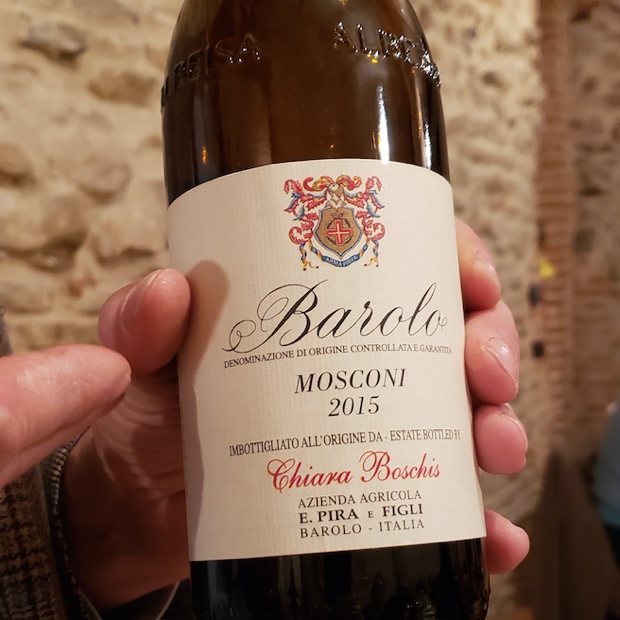
WineAlign