Can Chardonnay get any cooler?

Cool Chardonnay at Ridley College

Cool Chardonnay at Ridley College

Five is a big number. Any annual convention that survives and thrives into a fifth caucus must be divined by some unseen force, a guiding hand perhaps, by avatar or prosopopoeia. And something other. The International Cool Climate Chardonnay Celebration has priceless equity on its side. Three aces in the hole. Canadian climate and geology, adroit farmers and winemakers, simpatico of communities.

West coast writer Alder Yarrow spent three days in Ontario and referred to The Brilliance of Canadian Chardonnay. Wine Spectator contributing editor Matt Kramer said that Ontario is possessive of a “luminosity of flavour” and that its Chardonnay offers up “the element of surprise.” In Modern Wine Myths he tells the world about the measure of Canadian wine.

What is it that draws foreign winemakers and journalists to Canada? If people will come, their work meets vacation migration must want for a cause and effect to be a part of something special. South Africa’s Anthony Hamilton Russell said that “a layered, complex wine has to have completed its phenolic journey.” Despite what the world might think and think they know, peregrination by wine grapes, from bud break, through fruit set, véraison and into ripening, is a beautiful reality in Canada.

We walked away from the fourth Cool Chardonnay Conference last year wondering, asking that ubiquitous question, the same one we ask at the Expert’s Tasting every year.

And where do we go from here?
Which is the way that’s clear

Who among us had not believed that the pinnacle of hype had been compassed? Had four years of gatherings not fully realized a conspiracy to inject more than enough cool Chardonnay into thousands of minds and veins? Had anyone not wholly submitted to a seemingly seized reality in apogee of conversions, of maximum, critical mass?

Godello in the media room, White Oaks Conference Resort and Spa

Godello in the media room, White Oaks Conference Resort and Spa

Yes, we thought these things and then year number five blew our minds. We had been wrong. We found out that the bar had yet been breached. Further was still out there, not yet claimed, hovering in the realm of the possible and still, going forward, yet remains plausible. Looking back on the weekend of July 17-19, 2015, at locations blanketed across the Niagara Peninsula, Chardonnay got even cooler.

Related – Eleven Chardonnays to the coolest show on earth

Eleven days in advance of the fifth International Cool Climate Chardonnay Celebration, known in hashtag locution as #i4c15, I tasted and wrote notes on eleven examples of Chardonnay and it was good. On a weekend built for beauty in Wine Country Ontario, at Jackson Triggs, White Oaks Conference Resort and Spa, 13th Street Winery, Westcott Vineyards, Ridley College and at Ravine Vineyard Estate Winery, I tasted upwards of 50 more. I will admit that previous Cool Chardonnay weekends laid a beating on my palate. Not in 2015. On July 20th I wished for more Chardonnay.
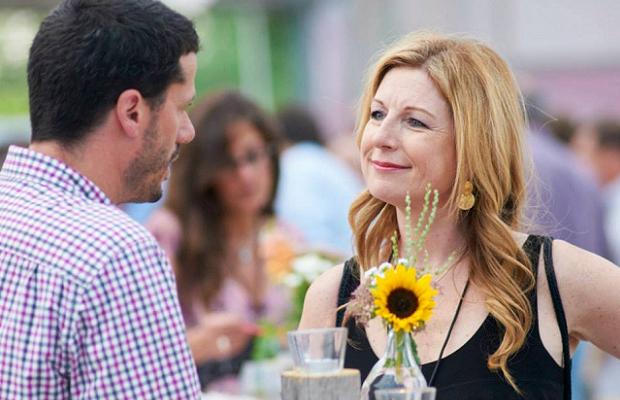
Godello and Magdalena Kaiser of Wine Country Ontario at Barrels and Bonfires, 13th Street Winery (c) Elena Galey-Pride, www.winestains.ca

Godello and Magdalena Kaiser of Wine Country Ontario at Barrels and Bonfires, 13th Street Winery
(c) Elena Galey-Pride, http://www.winestains.ca

Related – 50 cool Chardonnay in 5,000 words or more

With a cavalry in cavalcade of Chardonnay volunteers making it real and sealing the deal, the surfeited excellence of events crossed with happenings rolled on, from the School of Cool – Viticultural and Winemaking Sessions, through Barrels & Bonfires, past Cool Chardonnay World Tour Tasting & Dinner and into The Moveable Feast. There were maestri to applaud – Master Sommelier Bruce Wallner, Angie Jewell and MJ Macdonald – trumpeters of Chardonnay. Did you seek out and thank Dorian Anderson, Trisha Molokach, Magdalena Kaiser and Joanna Muratori? – concierge and purveyors of cool climate heaven. Had you a word or two with Del Rollo, Suzanne Janke and the vintners of the i4C? – gatekeepers of the plans and secrets, where Ontario schemes, greets, welcomes and celebrates frore, global brilliance.

The school of Cool, White Oaks Conference Resort and Spa

The school of Cool, White Oaks Conference Resort and Spa

The School of Cool presented by Wine Country Ontario and the Grape Growers of Ontario moved to White Oaks Conference Resort & Spa for the first time in 2015. Panel partners included the passer of the torch Cool Climate Oenology and Viticulture Institute at Brock University, VineTech Canada, Kerry Canada and Riedel Canada. Master Sommelier John Szabo once again moderated three sessions focused on international perspectives to viticulture and winemaking in cool climate regions, with a special feature on Sparkling Chardonnay. In 2011 Wine Spectator‘s Matt Kramer was the keynote speaker and he reprised that contribution in 2015.
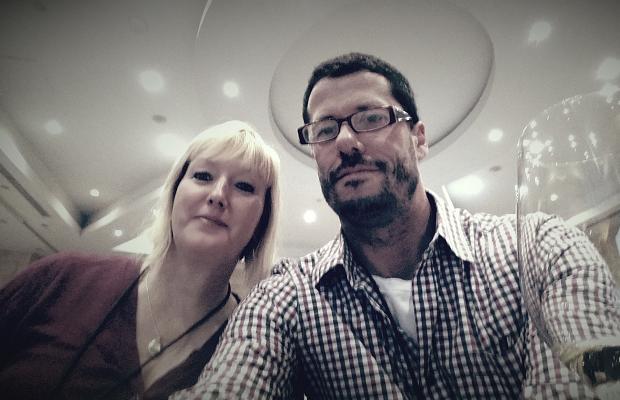
Dr. Belinda Kemp, CCOVI Brock Univeristy and Godello at The School of Cool, White Oaks Conference Resort and Spa

Dr. Belinda Kemp, CCOVI Brock Univeristy and Godello at The School of Cool, White Oaks Conference Resort and Spa

Related – The meaning of Chardonnay: You’ve gotta be cool to be kind

The School of Cool 2015 sessions were controversial, heated and extremely effective. On them I will need to expand upon at another time, in another post. For now, the crux of the conversation concerned two intense Chardonnay algorithms. First, consequence versus cosmetics. Said Kramer, “Niagara has the ability and the opportunity to create Chardonnays of consequence.” Marlize Beyers of Hidden Bench allowed this. “I do believe Chardonnay needs a little bit of cosmetics. Mouthfeel is important.” Discuss.

The second and most managed thread of discussion concerned the idea of minerality. Is it real? Dr. Gary Pickering: “Who cares?” Dr Alex Maltman: “It’s a lovely idea, journalists love it, has marketing capability, but it doesn’t hold up.” Paul Pender: “It’s a great story. I’m not 100 per cent sure its true. It’s more complex than that.” Albrecht Seeger: “Minerality is part of the terroir.” Matt Kramer: “The scientists don’t know a goddamn thing about wine.” Discuss.
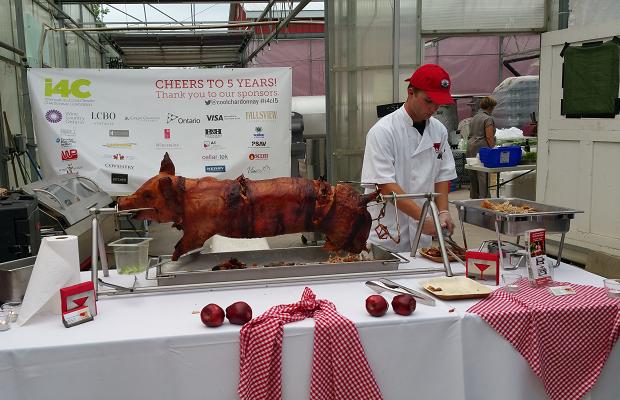
Barrels and Bonfires, 13th Street Winery

Barrels and Bonfires, 13th Street Winery

On Friday night at 13th Street the theme was “boots & blue jeans,” to compliment Chardonnay, with a smoke-inspired feast, live music and cozy bonfires set amongst the vines.
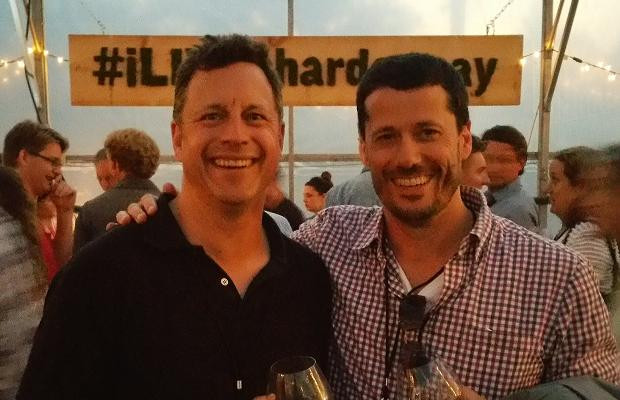
Jay Johnston of Flat Rock Vineyards and Godello at Barrels and Bonfires, 13th Street Winery

Jay Johnston of Flat Rock Vineyards and Godello at Barrels and Bonfires, 13th Street Winery

On Saturday Chardonistas blanketed the Niagara region.
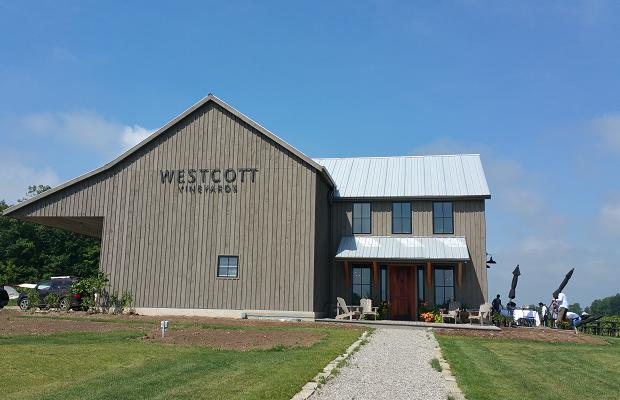
Westcott Vineyards

Westcott Vineyards

I spent the afternoon with winemaker Arthur Harder, Grant, Carolyn and Victoria Westcott at their Vinemount Ridge Westcott Vineyards property.
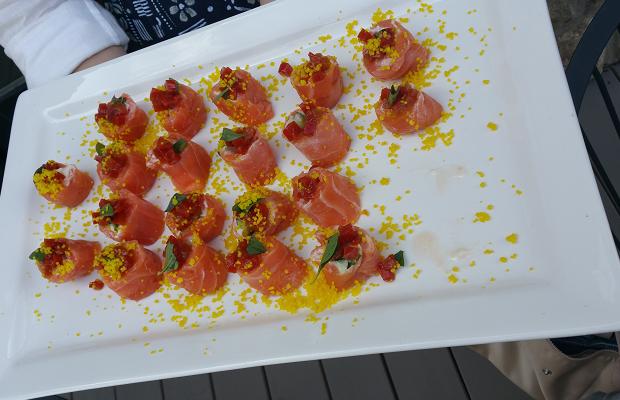
Fresh Salmon hors d'oeuvre by Lorenzo Loseto of George Restaurant, at Westcott Vineyards

Fresh Salmon hors d’oeuvre by Lorenzo Loseto of George Restaurant, at Westcott Vineyards

George Restaurant Chef Lorenzo Loseto and Sommelier Christopher Sealy came to cook and pour. They went to town. Appetites were whetted, palates amused, bellies satiated, hearts skewered, minds hooked and time was lost to well spent.

Lunch at Westcott Vineyards

Lunch at Westcott Vineyards

The main event’s setting was St. Catharines’ Ridley College, at which Chef Paul Harber (Ravine Vineyard Restaurant) and Chef Craig Youdale (Canadian Food & Wine Institute) assembled a dream team of the region’s top Vineyard Chefs to present an Ontario-centric family-style feast. Beer and red wine, “oh my,” “gasp,” “what sacrilege,” followed dinner.
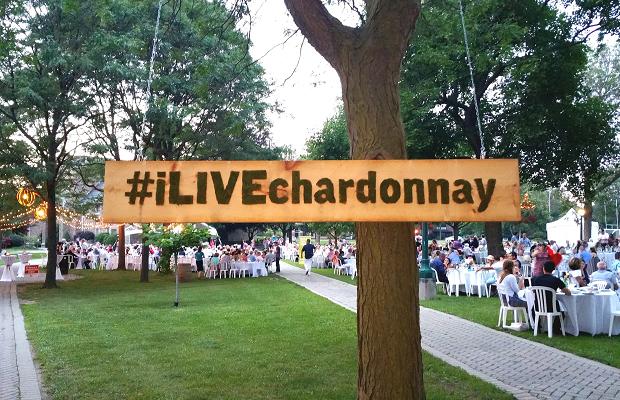
#ILiveChardonnay at the Cool Chardonnay World Tour Tasting and Dinner at Ridley College

#ILiveChardonnay at the Cool Chardonnay World Tour Tasting and Dinner at Ridley College

Related – ‘I4C’ a future filled with Chardonnay

On Sunday morning the final convene took place, as it always does, at Ravine Vineyard. More stellar bites, oysters from Tide and Vine, Niagara cured gold Pingue prosciutto from Niagara Food Specialties and ping-pong in the vineyard. In the end, the love was felt, for the community that celebrates Ontario wine, for all the cool climate folks who came thousands of miles to participate and for Chardonnay.

Related – ‘I4C’ a future filled with Chardonnay

The events provided opportunities to taste the Chardonnays on hand and with thanks to Wine Country Ontario, a media room was set up at White Oaks with full representation. Many of my tasting notes were formulated in that space. Here are twenty-five new Chardonnay reviews from the weekend at i4C15.
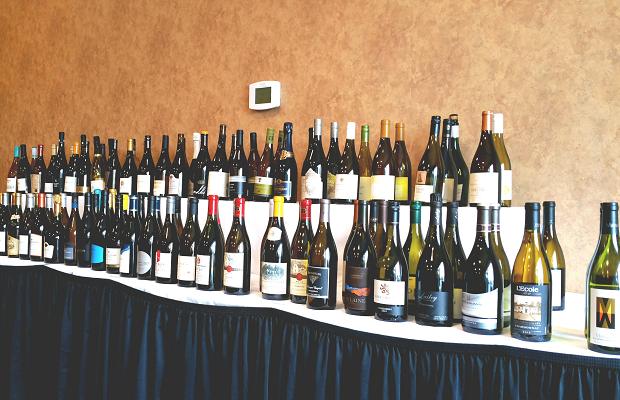
Cool Chardonnay in the media room at White Oaks Conference Resort and Spa

Cool Chardonnay in the media room at White Oaks Conference Resort and Spa

Calmel & Joseph Villa Blanche Chardonnay 2014, Languedoc-Roussillon, France (375071, $13.95, WineAlign)

Quite simple and surprisingly lush with more than ample acidity to keep vitality in the air. A balanced effort in a pretty plush Chardonnay. Drink 2015-2017.  Tasted July 2015

Malivoire Chardonnay 2013, VQA Niagara Peninsula, Ontario (573147, $17.95, WineAlign)

If you reside in Ontario or happen to be passing through before September 13, 2015, the perfect value storm of Chardonnay swirls in your corner. It may be the most excellent 2012 you will find on shelves but looking forward to this (2013) vintage you will encounter a varietal tempest, a house crafted dictionary entry and in retrospect, memories regarding that two dollar limited time offer price reduction that doled out 10 per cent more satisfaction. The essentia of fresh glade aroma, cream in your corn texture and a gaol of circulating acidity add up to one seriously fleshy ($20 and/or $18), cool-climate, hovering in and around the Beamsville Bench Chardonnay. The Malivoire base wine is one of no beginning and no end so in that sense it will always get inside you. Drink 2015-2018.  Tasted July 2015  @MalivoireWine  @ShirazMottiar

Toro De Piedra Grand Reserve Chardonnay 2014, Maule Valley, Chile (417493, $17.95, WineAlign)

Rich, toasty and nutty Maule Chardonnay, full on, out and in favour of ambitious, lofty heights. Has massive creamy meets chalky mouthfeel and tropical fruit with spice by wood in spikes, not to mention high toned acidity and alcohol. It’s an aggressive if clumsy expression. Drink 2015-2018. Tasted twice, June and July 2015  @VinaRequingua  @DrinkChile

Hillebrand Trius Barrel Fermented Chardonnay 2013, Niagara Peninsula, Ontario (46595, $19.95, WineAlign)

Sur-lie barrel fermented Chardonnay all in for texture and fabric with a taste of soft French cream. Very ripe, especially in consideration of the vintage. The late flavours recall lemon curd and a touch of rind. In the end an elemental tonic push carries this skyward, as opposed to downward in earthy dredge, so imagine forward to a petrolish driven future, the engine leaving a trail of disposed energy. Quite complex and certainly fixed with boards to add nuts to the melting, oozing bolts. I would recommend leaving this for two years for the tension to subside. Then the creamy centre will spill out from beneath the pastry crust. Drink 2017-2020. Tasted July 2015  @TriusWines

13th Street June’s Vineyard Chardonnay 2013, VQA Creek Shores, Niagara Peninsula, Ontario (Winery, $21.95, WineAlign)

The vineyard speaks louder and clearer with every passing vintage. In 2013 the level of atomic and aerified atmospheric pressure is unparalleled, from June and for any Chardonnay produced in the Creek Shores sub-appellation. At this early stage the ’13’s awkward, backward and racy character is uncomfortable but impossible to taste away from. This is Chardonnay on gym candy to be sure, rocking like a hurricane, dancing up a storm. The terpenes are titillating, the enzymes discharging. There is a bronze/patina/inside of a pipe metallic feel that adds to the texture improvisation. Nothing about this says drink now nor does it let you settle into a comfort zone. It’s just that all over the place. Will revisit in three years.  Tasted December 2014 and July 2015  @13thStreetWines  @Noble_Estates
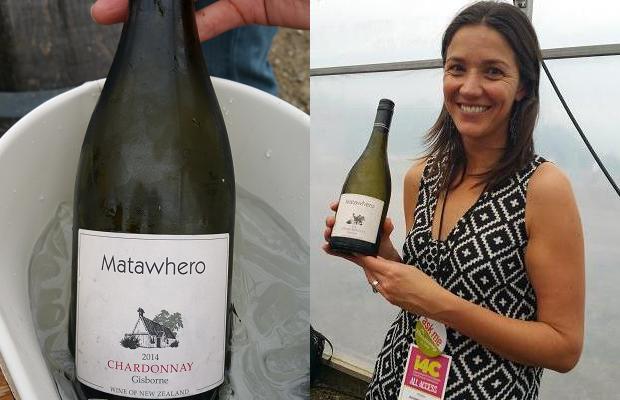
Kirsten Searle, Matawhero Wines

Kirsten Searle, Matawhero Wines

Matawhero Chardonnay 2014, Gisborne, North Island, New Zealand (Agent, $21.95)

Unoaked but full malo crisp up this true blue, north island Chardonnay. A bob of fruit from the oldest (40 years) winery in the region and under current ownership for the past eight. You can tell after tasting with Kirsten Searle that the project has been a labour of love. Her words seem to say “heading out for the East Coast Lord knows I’ve paid some dues gettin’ through. Tangled up in blue.” Round and properly bitter, the world should not be demanded. East coast will do. Drink 2015-2018.  Tasted July 2015

https://vimeo.com/76422105

Quails’ Gate Chardonnay 2013, BC VQA Okanagan Valley, British Columbia (377770, $21.95, WineAlign)

A strength in aromatic temper initializes the confrontation and the relationship. Once hooked, lemon and a waxy texture usher the palate through the middle reaches, then a swirl, tongue on a swivel, off to glide with sweetness into a gin and tonic backside ride. Goes fat and caressing for a spell, through a toasty phase and yet the wood is hidden or at least negligible. Could very well pass for unoaked in a way, especially considering the tang and the persistence. A very solid wine at a very workable price. Drink 2015-2018.  Tasted twice, June and July 2015  @Quails_Gate  @hobbsandco

Josef Chromy Chardonnay ‘Pepik’ 2014, Tasmania, Australia (Agent, $22.95)

Combines beauty and bitters for a streak of natural selection through a field of texture. Heads for the cream risen to the top of rich, pulls over and steps aside to allow for a crunch of green apple. The bite is real, lit by match and cut with spice. Great length. Drink 2015-2020.  Tasted July 2015  @JosefChromy  @bwwines

Domaine Laroche Chablis Saint Martin 2013, Burgundy, France (289124, $24.95, WineAlign)

Climbs more than a rung or two up the reverent Chablis ladder to mingle with the Cru boys. Something about 2013 strikes as more serious, punctilious and free. This is benchmark Saint Martin, chalky and textured from soup to nuts, of spirits high and sky-scraping tang. The acidity is frank, the structure unwavering and the fruit to mineral dichotomy of a pure, mature and essential hookup. From verve to intensity and back again. Up and down, primary and natural. Drink 2015-2019.  Tasted July 2015  @DomaineLaroche  @Select_Wines  @BIVBChablis

Chamisal Stainless Chardonnay 2014, Central Coast, California (416065, $24.95, WineAlign)

Quite classically cooled and unplugged yet intensely sunshine tangy. Fun yet on a seesaw of play and a boat on a rough sea up and down in balance. That is not to say that acidity does not exist but the tang is like heavy salad dressing, emulsified and sultry. No malolactic equates to green apples and blanched nuts, or those hulled direct from the tree. Texture is the thing, a child of crisp, cool fermentation. Freshness could use just a bit more ventilation. Drink 2015-2017.  Tasted twice, June and July 2015  @ChamisalVyd  @LiffordON

Chamisal Estate Chardonnay 2013, Edna Valley, California (Agent, $24.95)

French oak (45 per cent) and (25 per cent) of it new mixed with (50 per cent) malo has created an herbal cream piqued by spice. It’s kind of a chewy Chardonnay, well-judged, blended and crafted with both stainless steel and wood ramifications in meld together mind. A true dichotomy of pleasures, green and red, old and new, yes and no. Drink 2015-2021.  Tasted July 2015  @ChamisalVyd  @LiffordON

Domaine Queylus Chardonnay ‘Tradition’ 2013, VQA Niagara Peninsula, Ontario (Agent, $24.95)

From vines planted by soil guru Alain Sutre, two km’s from the lake, close to Green Lane. If you make a comparison to Bench sites, this is an understated, hyper elegant version of a Chardonnay. It’s an underdog, plain and simple. Sixteen months of élevage has raised a beautiful, bitter green dignity, pith nicety and polite terpenes. A child in many ways who’s offspring will only serve to honour the family name. Drink 2015-2018.  Tasted June and July 2015  @QueylusVin  @LiffordON

Vasse Felix Filius Chardonnay 2013, Margaret River, Western Australia (Agent, $25)

At a third of the cost of the Heytsbury, expectations for the Filius need not exceed prediction. Screw cap has sealed in reduction, sulphur and acidity so that upon liberation the wave of anxiety is nearly overwhelming. The Filius transmits waves of complexity, layers of predilection and outright Margaret River coolness but decanting that character is not unthinkable. Smoulder, struck match and green apple fruit are massively intertwined. Bold Chardonnay. Drink 2016-2020.  Tasted July 2015  @vassefelix  @bwwines

Jean Bourdy Côtes De Jura White 2008, Ac Jura, France (Agent, $28.00, WineAlign)

Tasting his Jura whites with Jean Bourdy can’t help but funnel the exercise into a tunnel, a vacuum and a bilateral directive inward and centripetal. Tradition is everything and this ’09 is neither the exception nor the anti-establishment rebel to the rule. Herbal balm and oxidized character persist but nowhere in the world can so much implosive energy exist in wine such as a Bourdy Jura. This vintage does not reinvent the oueille but the four fermenting years in oak, as per the centuries-old Côtes du Jura method seems to improve with the cleanliness of the process. Another white to follow well into the third decade of this century. Drink 2015-2035. Tasted July 2015  @CAVESJEANBOURDY  @LiffordON

Westcott Vineyards Reserve Chardonnay 2013, VQA Vinemount Ridge, Ontario (Winery, $29.00, WineAlign)

The 2012 early picked Reserve Chardonnay was the raw player, the talented yet unproven one, all about foreplay. Here in ’13, from fruit picked on October 7th is a different rock ‘n roll animal, wiser to vintage, mature in acumen, confident, a Ziggy Stardust. This charismatic leader of the Vinemount Ridge Chardonnay band, “could lick ’em by smiling, he could leave ’em to hang, came on so loaded man, well hung and snow white tan.” Works opulence with prejudice and here acts, sings, dances and displays equipped with nothing short of immediate distinction. There is nothing held back, no remedial work in progress and wisdom oozes beyond its years, in and of learning. The right time and the right place for the winemaker, the accomplice, the peer and the confidence of the partners. Drink 2015-2021. Tasted July 2015  @WestcottWines  @VWestcott

Westcott Vineyards Reserve Chardonnay 2012, VQA Vinemount Ridge, Ontario (Winery, $29.00, WineAlign)

What should small Vinemount Ridge yields, collected solar units and wise, thinking ahead of the curve decision making combine to procure? Grace under pressure. This is what winemaker Arthur Harder, proprietors Grant and Carolyn Westcott and Chardonnay have conspired to achieve out of the warm and challenging 2012 vintage. They picked in very early September. They laid the fruit down for 12 months in (four) 1st, 2nd and 3rd fill barrels. They sat back and waited for amalgamation. If 2012 shows this level of restraint, respect and reserve, well, let’s not get ahead of ourselves. This is deserving of meritorious accolades at a very reasonable price. Drink 2015-2019.

From my earlier note of February 2014:

From vineyards planted in 2005, this new kid on the Jordan block spent 12 months in oak, half of it new. To a taster, you would never know it. In clone cousin to Le Clos Jordanne’s Chardonnay, this special project is the nephew of a set aside, four-barrel selection. Winemaker Arthur Harder (Calamus) has fashioned a head-turning clean, pure and most mineral-driven Chardonnay from impossibly young Vinemount Ridge vines. A quartz chord runs through it and with just two or three more years of vine age the fruit and adjoining texture will catch up to the rock. That integrated, subtle oak impart is of a Granny Smith apple kind, crisp and taut. Such a memorable inauguration with so much promise that lays ahead.

Last tasted July 2015

Cave Spring CSV Estate Bottled Chardonnay 2012, VQA Beamsville Bench, Niagara Peninsula, Ontario (529941, $29.95, WineAlign)

The omnipresent Escarpment stone etched, nicked and saturated into ferment from out of the Cave Spring Vineyard may never have extolled virtue any more so than out of the 2012 vintage. A tropical CSV and its accompanying mild, understated toast combs the faces for balance and bobs its keel in well-structured, puff pastry layering. A bitter sachet of schist on the back end steps into a really fine linger. CSV of real presence even in the midst of a summer swelter. Drink 2016-2020.  Tasted twice, June and July 2015  @CaveSpring  @TheVine_RobGro

Lailey Brickyard Chardonnay 2013, VQA Niagara River, Ontario (2908, $30.20, WineAlign)

There are many variations on the Lailey Chardonnay theme but none speaks as clear a Brother Derek Barnett vernacular as the Brickyard, a wine composed in clarity of Niagara River fruit. The former cherry tree and yes, brickyard site is blessed with a red clay soil and Niagara micro-climate that just circulates with enunciated vowels, consonants and graceful intonations. That this seminal vintage will be Barnett’s Lailey swan song is not lost on gist or preponderancy. The full intention, weight and breadth of fruit circles the wagons, prepares the last supper and the silence that follows knows this. This winemaker and this Chardonnay work harder than a great bulk of the competition and in the end, they together are a seamless, relentless and unflappable study in cool climate success. This wine must hold a rightful place in every wine country Ontario inamorato cellar. Drink 2016-2023.  Tasted July 2015  @LaileyWinery
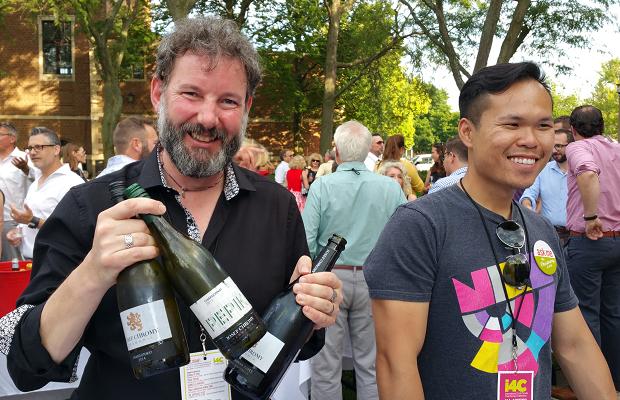
Jeremy Dineen of Josef Chromy Wines, Tasmania

Jeremy Dineen of Josef Chromy Wines, Tasmania

Josef Chromy Chardonnay 2014, Tasmania, Australia (416339, $30.95, WineAlign)

Jeremy Dineen’s 2014 takes over the conversation at the precise moment the previous vintage left off, grabs attention and travels further along. With baton firmly in grasp, the ’14’s acidity dances in a filly’s realm, jittery, agitated, ready to jump out ahead of the pack. The citrus flavours are implosive, concentrated, in demand, distinctly Tasmanian. Though our time was short, to this Texas Tazzy I say, “we were together, I was blown away, just like paper from a fan.” If the ’13 was a creeping crooner, this ’14 is more a smoky-voiced songstress, trotting a longer track. It would be hard not to imagine seeing this Chardonnay as nearly unchanging in its first decade of life. Drink 2016-2025.  Tasted July 2015  @JosefChromy  @bwwines

Gérard Bertrand Domaine De L’aigle Chardonnay 2013, Limoux, Languedoc-Roussillon, France (Agent, $33.00, WineAlign)

A purposed effort from 2013 with even more direct precision, spice, freshness and linear strike flurry. A vital Limoux, of higher yield, lowered oak and acidity defined simply as the real deal. A tremendously exceptional and experiential vintage and one to help define the true identity of cool Chardonnay. Drink 2015-2022.  Tasted July 2015  @GBvins  @FwmWine  @LanguedocWines
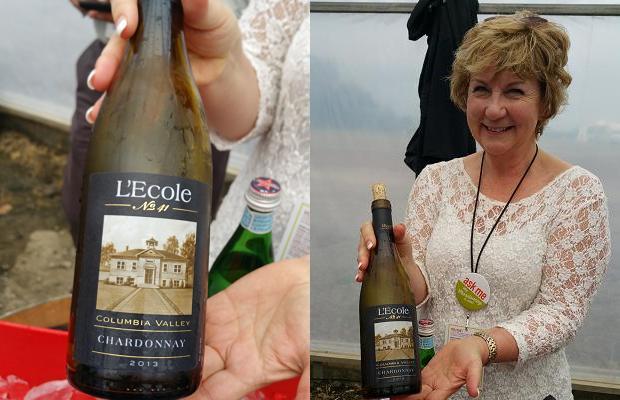
Megan Clubb of L'ecole 41 Wines

Megan Clubb of L’ecole 41 Wines

L’ecole 41 Chardonnay 2013, Columbia Valley, Washington (416370, $34.95, WineAlign)

A co-composed 60 per cent Yakima Valley (planted in the 1970’s) and 40 per cent Evergreen (mineral slope) Chardonnay extensive and extended of orchard fruit with a penchant for texture. The house style reached for uniformity, employing mostly older barrels and laying out bed linens for a brief five-months slumber. Hear this though, the 41 is the sum of its parts and may sport a fat lip but it’s no “victim of your conformity.” Texture is the thing, a result of a warm vintage, cool Evergreen nights in the fall and rampant malolactic fermentation (despite attempts to block it). A Chardonnay “strollin’ to the party like (his) name is El ninio.” Arabesque weave and flavours that go punk and pop. Drink 2015-2020.  Tasted July 2015  @lecole41  @TrialtoON  @WineCommission

Trius Showcase Chardonnay Wild Ferment Oliveira Vineyard 2012, VQA Lincoln Lakeshore, Niagara Peninsula, Ontario (Winery, $36.20, WineAlign)

If the 2011 Wild Ferment spoke in treble clef, this ’12 pounds out a deeply resonating bass note, from instruments wooden and speaking on behalf of the vintage. Deeply smoky, layered and rich beyond yeasty belief, this is a massively structured wine for Niagara, specific to the Lincoln Lakeshore and its ability to ripen fruit of such density. The tang factor is set to 12, above and beyond what winemaker Craig McDonald has reached for before. This vintage, surmised with such yeast, takes ’10, layers it with ’11 and pops out the most plush to date. Missing is the exceptional acidity of 2011 though the overall anatomy and architecture can’t be denied. Drink 2016-2021.  Tasted July 2015

Hidden Bench Felseck Vineyard Chardonnay 2012, VQA Beamsville Bench, Niagara Peninsula, Ontario (381699, $38.00, WineAlign)

The 2012 Felseck is a wine dramatically and diametrically opposed to many other vintages from out of this fundamental Hidden Bench vineyard. Here oozes Chardonnay so very lees layered, emulsified, misty-eyed and far from reductive, having left the 44 per cent new, 14 months in barrel behind. From fruit culled off of east-west Felseck rows in a hot year that saw fundamental leaf plucking/canopy management. The wondrous emotion is condensed in taste and texture, with the bitters turned up a notch, though in their finale they use spice to conjure up ardor, for to melt into length. Unwavering Chardonnay. Drink 2016-2020.  Tasted July 2015  @HiddenBench  @BenchVigneron

Domaine Queylus Chardonnay ‘Reserve’ 2013, VQA Niagara Escarpment, Ontario (Agent, $39.95)

Winemaker Thomas Bachelder combed the blocks of the lowland “villages” sites and in slow-forward cohorts with the most subtle barrels, came up with the cuvée for the Reserve ’13. The same percentage of new oak fed the fruit with love, time, juncture and encouragement. A creamy lustre careens into honey, giving retrospective cue to suckle and accumulating richness. What fortune to work with 2013 for the purpose of announcing a Queylus take on tiers of Chardonnay to the world. Drink 2016-2021.  Tasted June and July 2015

Flowers Sonoma Coast Chardonnay 2013, Sonoma Coast, California (215210, $64.95, WineAlign)

If 2013 is turning out to be the first truly great Chardonnay vintage of the century out of Sonoma, the Flowers SC is categorically up front and centre in that discussion. The epic’s lead paragraph initializes here in a wine that is severely accurate, a blinding and gorgeous expression that brings the flowers in its game. A wield of pulchritude and balance by acidity spot on. Pure flavour extract expands and the components zing on the finish. Could there lurk a Meursault notion in its lace? You know what, forget that. Strike comparisons from the record. The Flowers is extraordinary of Chardonnay, by Chardonnay and for Chardonnay. Drink 2016-2025.  Tasted July 2015  @FlowersWinery  @rogcowines  @sonomavintners

Taittinger Comtes De Champagne Blanc De Blancs Vintage Brut Champagne 2005, Champagne, France (Agent, $225.00, WineAlign)

From a warm vintage out of the top Grand Cru terroir of the Comptes. Essential white flower essence, pure driven snow and liquid chalk. Even though at this 10 year mark this is essentially a gift to assess, the Comtes is entirely approachable in requiem for no further delay. Plenty of energy drives the flavours straight to the back of the buds and were they to linger longer than they prolong to do, the wine would be an utter stroke of genius. As it is, that bench is nearly marked. Drink 2015-2025.  Tasted July 2015  @Taittinger_FR  @TaittingerUSA  @FwmWine

Twenty-five previously reviewed Chardonnays poured at the 2015 Cool Chardonnay weekend:

Angels Gate Old Vines Chardonnay 2010, VQA Beamsville Bench, Niagara Peninsula, Ontario (116350, $23.95, WineAlign)  @angelsgatewines

Angels Gate Archangel Chardonnay 2011, Niagara Peninsula, Ontario (227009, $23.95, WineAlign)

Bachelder La Grande Châtelaine Côte De Beaune 2011, Ac Burgundy, France (332536, $37.95, WineAlign)  @Bachelder_wines  @liffordwine

Bachelder Niagara Chardonnay 2012, VQA Niagara Peninsula, Ontario (VINTAGES Essential 302083, $29.95, WineAlign)

Bachelder Niagara Chardonnay Wismer Vineyard 2012, VQA Niagara Peninsula, Ontario (345819, $44.95, WineAlign)

Bachelder Chardonnay Oregon 2012, Willamette Valley, Oregon, USA (273334, $29.95, WineAlign)

Bachelder Chardonnay Johnson Vineyard 2012, Willamette Valley, Oregon, USA (416644, $44.95, WineAlign)

Cave Spring Blanc De Blancs Brut, VQA Niagara Escarpment, Ontario (213983, $29.95, WineAlign)  @CaveSpring

Flat Rock Cellars Chardonnay 2012, VQA Twenty Mile Bench, Niagara Peninsula (681247, $18.95, WineAlign)  @Winemakersboots

Flat Rock The Rusty Shed Chardonnay 2012, VQA Twenty Mile Bench, Niagara Peninsula, Ontario (1552, $24.95, WineAlign)

Flat Rock Cellars Riddled Sparkling 2009, VQA Niagara Peninsula, Ontario (383315, $24.25, WineAlign)

Olive and Anthony Hamilton Russell at Ridley College

Olive and Anthony Hamilton Russell at Ridley College

Hamilton Russell Chardonnay 2013, Wo Hemel En Aarde Valley, Walker Bay, South Africa (931006, $37.95, WineAlign)  @OliveHR

Henry Of Pelham Estate Chardonnay 2013, VQA Short Hills Bench, Ontario (268342, $19.95, WineAlign)  @HenryofPelham  @SpeckBros

Henry Of Pelham Chardonnay Speck Family Reserve 2013, VQA Short Hills Bench, Ontario (Winery, $29.95, WineAlign)

Lailey Barrel Select Chardonnay 2013, VQA Niagara River, Ontario (Winery, $26.00, WineAlign)  @LaileyWinery

Le Clos Jordanne Claystone Terrace Chardonnay 2012, VQA Twenty Mile Bench, Ontario (Winery, $40.00, WineAlign)  @LeClosJordanne

Norman Hardie Chardonnay Niagara Unfiltered 2013, VQA Niagara Peninsula, Ontario (184432, $39.00, WineAlign)  @normhardie

Pearl Morissette Cuvée Dix Neuvieme Chardonnay 2012, VQA Twenty Mile Bench, Niagara Peninsula, Ontario (303602, $38.00, WineAlign)  @PearlMorissette

Pearl Morissette Cuvée Dix Neuvieme Chardonnay 2011, VQA Twenty Mile Bench, Niagara Peninsula, Ontario (303602, $38.00, WineAlign)

Stratus Chardonnay 2012, VQA Niagara On The Lake, Ontario  (Winery, $48.00, WineAlign)  @StratusWines

Tawse Quarry Road Chardonnay 2012, VQA Vinemount Ridge, Niagara Peninsula, Ontario (111989, $35.95, WineAlign)  @Tawse_Winery

Two Sisters Unoaked Chardonnay 2013, VQA Creek Shores, Ontario (Winery, $24.00, WineAlign)  @2SistersVine

Two Sisters Chardonnay 2013, VQA Creek Shores, Ontario (Winery, $32.00, WineAlign)

Westcott Vineyards Lillia’s Chardonnay 2013, VQA Vinemount Ridge, Ontario (Winery, $20.00, WineAlign)  @WestcottWines

Westcott Vineyards Estate Chardonnay 2013, VQA Vinemount Ridge, Ontario (Winery, $26.00, WineAlign)

Good to go!
http://www.winealign.com/profile/2058-mjg

March 21 big guns

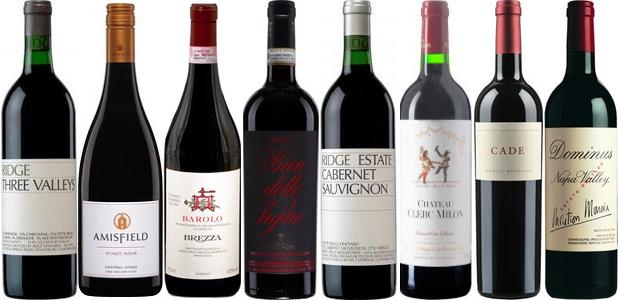
From left to right: Ridge Three Valleys 2012, Amisfield Pinot Noir 2011, Brezza Barolo 2010, Antinori Pian Delle Vigne Brunello Di Montalcino 2009, Ridge Estate Cabernet Sauvignon 2011, Château Clerc Milon 2011, Cade Cabernet Sauvignon 2011 and Dominus 2011

From left to right: Ridge Three Valleys 2012, Amisfield Pinot Noir 2011, Brezza Barolo 2010, Antinori Pian Delle Vigne Brunello Di Montalcino 2009, Ridge Estate Cabernet Sauvignon 2011, Château Clerc Milon 2011, Cade Cabernet Sauvignon 2011 and Dominus 2011

The first day of spring strikes me as a strange time to roll out a VINTAGES release full of big guns, from Cabernet Sauvignon passing by Pinot Noir to Zinfandel and from Nebbiolo to Sangiovese Grosso. A bold group in large numbers is usually reserved for the November and December offers leading up to wallet emptying Christmas shopping days. If the March 21st release is any indication, the powers that be at the LCBO must feel pretty good about the current state of Ontario’s economy.

Related – I shall be Riesling

How else to explain the laying out of the fine red wine carpet in purchasing timeline purgatory? The other alibi in justification is a concern of surplus and overcrowded warehouse shelving, caused by a back log of unsold Bordeaux futures and a consumer shift to less vivid, decreased drama and all around #GoGamayGo sentiment.

For all my reviews from the March 21, 2015 VINTAGES release, see them @WineAlign

I tasted through most of the bad boys on this release and while many are more overpriced than a $20 bucket of bullfrogs in an Algonquin Park bog, these six wines stood tall and shook their value obvious money-maker amongst a slouching and gouging crowd. Forceful wines, all meant to spend at least some slumbering time in the cellar.

Ridge Three Valleys 2012, Sonoma County, California (652875, $35.95, WineAlign)

This Sonoma County Zinfandel melting pot was first produced in 2001 and the 12th vintage contains grapes from seven different Sonoma vineyards. Many of Ridge’s wines bull the intent of single-vineyard, terroir-driven expression. The TV is more about bear assemblage, the search for differential balance and winemaking. Zinfandel (79 per cent) is joined by Carignane (12), Petite Sirah (8) and Alicante Bouchet. Approximately one fifth of the American oak is new, with the wood waft leaning to spices directed by clove, cocoa kernel and faint coconut that infiltrates the Draper perfume. The rich red fruits combine for a brawny voice, bold, peppery and so very ripe. Though not hesitant or introverted, this Zinfandel avoids excessive character and exemplifies the fine art of blending.  Tasted March 2015  @RidgeVineyards  @rogcowines

Amisfield Pinot Noir 2011, Central Otago, South Island, New Zealand (179754, $41.95, WineAlign)

The agglomeration of Central Otago wild vegetative conglomerate is in this Pinot Noir. Strawberries and their leaves, dug up clay, saturated syrup with dark cherries and braising meat make for big aromatics. This is a very meaty, terrifically cimmerian Pinot, with a replay in flavour of loamy and corpulent stock, like a reduction of mire poix and beef bones. Finishes with dried fruits, marigold, a kick of cinnamon spice and pine needles. A bit of wow from the hinterland of Central Otago.  Tasted March 2015  @Amisfield  @COPinotNoirLtd  @CentralOtago_NZ  @HalpernWine

Brezza Barolo 2010, Piedmont, Italy (711788, $46.95, WineAlign)

The gusto and earnestness of antiquity is right upfront in this Nebbiolo, the silliness of modernity left to the practices of more fickle and irresolute houses. A faint and impertinent percussion of volatility beats the near term olfaction into temporary submission, but the wine is bright and the acidity chants with proper diction. The tannic grain is sweet and savoury, well-structured and you can certainly smell the roses. The taste of Nebbiolo is succinct and the overall design is a seven to year plan, with nothing but pleasure on the next decade’s horizon.  Tasted March 2015  @NaturalVines  @jcmeli

Antinori Pian Delle Vigne Brunello Di Montalcino 2009, Docg, Tuscany, Italy (651141, $59.95, WineAlign)

Here flatters definitions of Sangiovese Grosso, of rusty and rustic pasts, big, bold beginnings and distant, slowly etched futures. A faint tease of soy in feign of premature corrosion is the product of the terroir’s liquor. This is so far from its secondary times. It’s as though it teases with an aroma and flavour of melted caramel but the mirage is tantalizing and unreal. The lack of sweetness confirms the notion and instead this Brunello offers dried flowers in dreams and fresh ones placed in vessels not yet tangible, nor yet set upon the table. Wild sauvage, sage and garriga are transubstantiated into liquorice, game and distilled amari. This is perhaps the finest Pian Delle Vigne of the (post 1990) modern age. Very exciting wine. Drink 2019 – 2029.  Tasted March 2015  @AntinoriFamily  @HalpernWine  @ConsBrunello

Ridge Estate Cabernet Sauvignon 2011, Monte Bello Vineyard, Santa Cruz Mountains, California (89284, $61.95, WineAlign)

A perennial three plus one quarter blend of Cabernet Sauvignon and Merlot, give or take a few points, that always punches well above its weight and cost. Not just in relation to similarly priced Cabernets but when looked at alone and on its own merit. There is a searing red intensity in 2011, with steroidal currants and a whiff of lodge smoke, plenty of creamy vanilla and lavender. An injection of liquid chalk, circulating acidity and in the end, some bold coffee notes. No bell pepper. None. Well made, of course and despite the cold and the wet, the omnipresent Draper perfume and very good length. My only cavil would be a degree of over-employed new oak in a vintage where less would ironically be more.  Tasted March 2015  @RidgeVineyards  @rogcowines

Château Clerc Milon 2011, Ac Pauillac, 5e Cru, Bordeaux, France (301119, $89.95, WineAlign)

The principals at Clerc Milon consider 2011 “to be ranked among the finer, or perhaps even the finest” of Bordeaux vintages. The better news is that despite that declaration the price on this classic, structured and flat-out enjoyable Médoc is relatively affordable, especially considering the astronomy of pricing since 2000. This early picked (finished by September 28th) blend of Cabernet Sauvignon (54 per cent), Merlot (37), Cabernet Franc (7), Petit Verdot and Carmenère has vintage steal written all over its painted berry face. Terrific wood spice, more fruit from plum and rapturous acidity travel great lengths to pleasure. The coffee component is in but with just a light alcohol spike. This is really fine Paulliac, elegant, refined and not outrageously priced.  Tasted March 2015  @Noble_Estates

Cade Cabernet Sauvignon 2011, Napa Valley, California (325027, $112.95, WineAlign) LCBO Inventory

Though prepped by notions of a cooler and later ripening vintage, there is even more savoury, tobacco and cool clime (altitude) aromatics than might have been imagined. This Cade is so very bright in a cherry-plum-pomegranate continuum yet in contrast to a (negatively impacting) sweet-sour-tang drupe. Tends to angles more akin to Tuscan summer savour, like lavender, rosemary, sage, and vanilla. The overall impression to palate is that of a chew of the toffee that might be made by the aromatic combination, or a pull of syrupy tea. In the end there is nothing simple about this thoughtfully crafted Cade.  Tasted October 2014  @CADEWinery  @TheVine_RobGroh

Dominus 2011, Napa Valley, California (212381, $176.95, WineAlign)

In 2011 the breakdown is Cabernet Sauvignon (86 per cent), Petit Verdot (9) and Cabernet Franc (5). From an antithetical Napa growing season, wet, cold and in requiem of acumen to deal with what the winemaker in Bordeaux faces in every vintage not hailed as best of the century. The ’11 Dominus has been in the market for just a shade under a year, just the right amount of time for a poured glass to reveal its charms. The new barrel count is approximately 40 percent, a substantial but not egregious number. We want to know what fruit the vintage gives, regardless of the conditions and in ’11 that drupe is savoury, more sage than nettle, and saliferous. That minerality is cute and key because the expression remains huge, so the cure helps to leave an indelible mark. The attributes of massive fruit, (no small feat considering the weather), smoke and phite makes for a mess of aromatic intensity. The flavours are accessible and the texture quite full. Though not the thickest Dominus to date (due to the oak not overwhelming the fruit) this will offer up seven to 10 staid years of development, followed by another five to 10 of minor decline.  Tasted March 2015  @rogcowines

Good to go!

http://www.winealign.com/profile/2058-mjg

Château Margaux hits the road

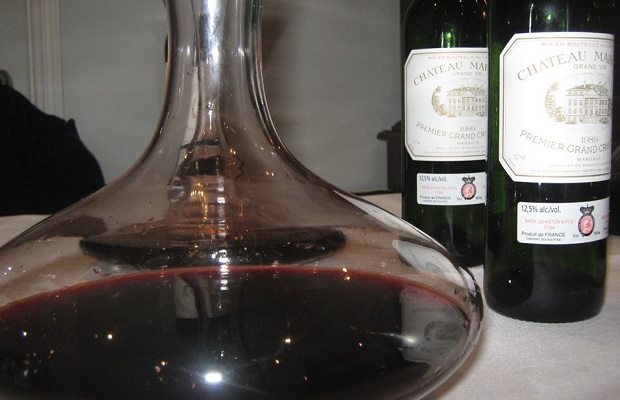
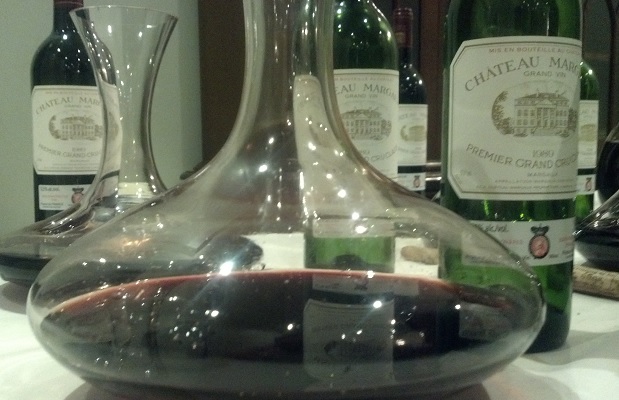
Decanted Château Margaux 1989, The National Club, Toronto, May 1, 2014 PHOTO: Michael Godel

Decanted Château Margaux 1989, The National Club, Toronto, May 1, 2014
PHOTO: Michael Godel

The wines of Château Margaux need no introduction. First Growth Bordeaux. One of the most famous brands in the world. Iconic and beyond mortal means, especially in the greatest vintages; 1953, 1961, 1982, 1989, 1996, 2000, 2009. So why is Paul Pontallier on the road to promotion? Do the wines not automatically sell themselves?

The answer is both yes, and no. Château Margaux annually produces 130,00o bottles of its Grand Vin. The 2009 is listed at nearly $1,800 in Ontario. They will sell through, if not this year, certainly eventually and inclusive of the calculated, incremental cost of inflation. The more pressing incendiary matter is a concern of distributive demand. Chinese and other south Asian markets have spent the better part of the last decade scooping up First Growths by the palette load. Mr. Pontallier clearly understands if you can’t see the forest for the trees, you risk losing touch with how you arrived here in the first place. Château Margaux needs to reconnect with North America.

Paul Pontallier is the Managing Director of Château Margaux. He joined the team of Corinne Mentzelopoulos in 1983. Along with Aurélien Valance, Senior VP Commercial Director, the most distinguished of Margaux houses came to Toronto’s The National Club at the facilitating invitation of wine agent Noble Estates on Thursday May 1, 2014. A 10:00 am start. Château Margaux for breakfast. “Probably the best time to taste wine,” quips Pontallier.

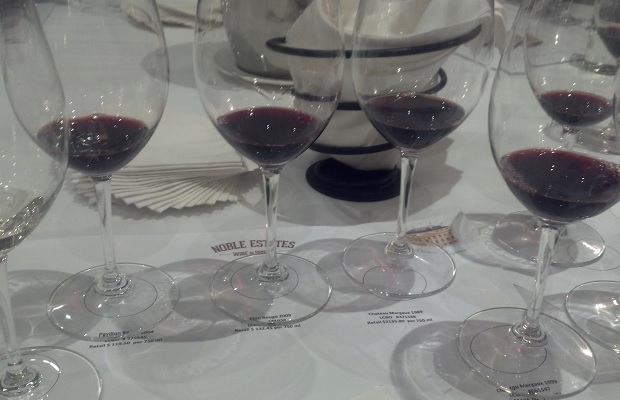
Château Margaux Tasting

Chateau Margaux Tasting

At the estate’s crux is the significance of territory. The wines are “not just a marketing ploy,” asseverates Pontallier, “they are based on the insistence of the terroir.” There exists a significant heterogeneity between the plots. “We try to protect them as much as possible. We can’t expand.” There is a sense of frustration in the director’s voice. “Château Margaux hasn’t changed since the late 17th century.”

Then there is savoir-faire. “Even three or 400 years isn’t a lot of experience. There is only one possibility, one harvest each year, for experimentation. But, the asset, the depth of experience is as important as the terroir.” Does the excellence of top Bordeaux require genius? No, contends Pontallier. He speaks of hard work, respect for history and the constant need to change, not just for its own sake, but to doubt what’s come before and to improve every gesture. Organic, though it won’t ever be noted on the label, is the end result of many years of research and development. “Our tradition in not a closed one. We are open to what science can bring us.”

On change? “How can we pretend that our tastes do not change. Language, accents, words, everything changes.” Though the accusation is of a response to market demand, the Margaux position is one that insists that it is about a natural evolution, not a response to consumer demand. Change is inevitable. “It would risk not reaching excellence. It would write off the wonderful experience we have inherited. We can adapt, we can play, within reason.”

On the 2013 (challenging) vintage from which weather during flowering affected the quantity. A wonderfully dry, hot summer gave way to damp and wet weather at the end of September. Perfect conditions were set up for rot (botrytis) to develop. Margaux rushed to pick five to six days earlier than usual. “In these conditions, the exceptionality of terroir was so important.” The conclusion? “Less complexity, less depth, less quality. In Bordeaux as a whole, the lesser terroirs were affected by the situation.” According to Pontallier the result of the mediocre conditions did not result in mediocre wines because of the technical progress achieved over the last 25-30 years.

Pontallier is a pragmatist, a funny thing to say considering the domain he oversees. “It’s not always the most impressive wines that are the most pleasurable to drink,” he admits. “Burgundy has a wonderful balance.” His thoughts on the primeur system? “It has always been efficient for some, or just a few wines. If you can find wines a few years later on the market at the same price, it doesn’t make sense.” Here are notes on the fives wines poured.

From left: Pavillon Blanc Du Château Margaux 2011, Pavillon Rouge 2004, Pavillon Rouge 2009, Château Margaux 1999, Château Margaux 1989

From left: Pavillon Blanc Du Château Margaux 2011, Pavillon Rouge 2004, Pavillon Rouge 2009, Château Margaux 1999, Château Margaux 1989

Pavillon Blanc Du Château Margaux 2011, Ac Bordeaux, France (374579, $142.40, WineAlign)

Extreme temperatures in June sent signals to convince the grapes to begin ripening in mid July. Though harvest would be the earliest since 1893, vintage imbalance was averted by cooler summer temperatures. A limited production, 100 per cent Sauvignon Blanc with 300 years of experience in its blood. Once known as Vin Blanc de Sauvignon, the Pavillon earned its modern era moniker in 1920. From a single block that was abandoned near the turn of the century because it was sensitive to frost. Re-discovered and re-planted in the 1970’s and 80’s, the plot is a haven for aromatic protection and preservation. Today’s Pavillon is made from only one-third of the estate’s Sauvignon Blanc production, the rest secretly sold off in bulk. The ’11 saw eight months in barrel, 25 per cent new oak. Sparks with intense minerality and creamy corpulence contained within an acidity enclosure. Feigns early advancement though not near ready to burst and bust open, with the sense that terroir will trump variety. A slow release of ripe fruit will be measured in decades. Tremendous concentration, density and depth. Has Sauvignon Blanc ever ingratiated itself with such poise? Will begin to open in two to three years and ripple in waves for 20-25 more.

Pavillon Rouge 2009, Ac Margaux, 2nd Wine Of Château Margaux, Bordeaux, France ($132.45, WineAlign)

From a wine that “used to be a tool,” comments Paul Pontallier to a “second wine” out of an incredible vintage “at least as good, or better than the four previous vintages of the first wine.” Them are fighting words and no sooner are they more truthfully spoken then over a swirling glass of the wine that has improved the most at Château Margaux. The Pavillon Rouge ’09 is indeed the best in modern times, in part due to immaculate selection and because it makes up just one-third of the total red grape production at Margaux. In the 1980’s it was the opposite but with a third wine now pushed to the European and Japanese restaurant market beginning in this vintage, Pavillon is now a grand brand, in a connected and assiduous way as never before. There are 100 lesser ’09 Bordeaux that fail to assimilate the wood and the crush of density, not to mention the tannin and Expressionist brushstroke. Pavillon manages a suppression of the admiral elements, including the scientific ones. The fruit is deeper, riper, with more brooding levels of pectin and anthocyanin. An earthy funk makes a late appearance on a finish of extended length to indicate where this Pavillon will range, forward 25-30 years and back to a 1989 type of history.

Pavillon Rouge 2004, Ac Margaux, 2nd Wine Of Château Margaux, Bordeaux, France ($119.50, WineAlign)

The Pavillon 2004 was and remains a “second wine,” insomuch that it predates the greatness of the modern Pavillon and because it finds itself sandwiched between two magnanimous harvests, 2003 and 2005. “We accept the fatalism of lesser vintages,” admits Mr. Pontallier, “selection is key to success.” The goal is to always make a good wine so it was necessary the Pavillon ’04 set out to benefit from “extreme” berry selection. Spent 18 months in 50 per cent new oak. Persistently young and overwhelmingly perfumed, in violet, tobacco and strawberry so ripe yet still must fight for aromatic airspace with dewy earth. Soft, velvety tannins envelop the Margaux notion of restraint and elegance. The ’04 has found success, despite the conditions, something that could not be said of the Château’s wines made 25-30 years ago. Drinking well now and will continue to do so for five to 10 more years.

Château Margaux 1999

Château Margaux 1999

Château Margaux 1999, Ac Margaux, Bordeaux, France (BCLDB 187799 $1,000.00, WineAlign)

The 1999 Château Margaux is a timeless wine. Tasted alongside the notorious 1989, its inhibitions are forced on display. Though repressed by the diluting effects of late September heavy rain, the 1999 may be subtle and modest, lack any discernible funk, but by no means is it soft. Wondrous aromatically like a hanging garden, with roses everywhere. “This is the perfume of Château Margaux,” notes Paul Pontallier. A difficult wine to describe. Its complexity, warmth and perfumed character define Margaux. Not as dense as the ’89, from grapes that benefitted from maturation conditions, from perfectly ripe if slightly diluted fruit. The proportions and shape (12.5 per cent alcohol by volume) are perfect and exacting but on a smaller scale. Smooth and resolved at a young 15 year-old, teenage age. The tenuous tranquility can be a point of deception. Beneath the lace there is body and hidden depth to give it 15 to 25 more years of growth. “Fall fall fall fall, into the walls. Jump jump out of time.” Though not the beast that is the ’89, this ’99 is a suffused bottle of remarkable concentration, of luxe, calme et volupté. A wine to help cure what ails.

Chateau Margaux 1989

Château Margaux 1989

Château Margaux 1989, Ac Bordeaux, France (176057, $1,645.00, WineAlign)

The 1989 Château Margaux wears the response to a mondo Bordeaux axiom on its sleeve. Are First Growth wines made for people who want darts of instant pleasure?” Twenty years earlier and now like the 2009, here is a quintessential and exemplary vintage, from day one of bud break to the last day of harvest. Its appraisal as anything but incredible is to assassinate it as if it were the Franz Ferdinand of Bordeaux. The examination 25 years later sees a mellow funk meet a peerless and sublime perfume. A wine cast in utmost density, complexity and length. It noses strength, warmth verging on heat but only for a fleeting moment, to gain attention. The iconic wine has reached the first major peak, up a ways from base camp. In this second phase of young adulthood it looks with conceit to the top of the mountain, seeing 25 to 50 more years on the climb. Mr. Pontallier regrets he won’t be around to taste this wine at full maturity. Moi aussi. The fruit lingers in its full, original state, from the moment it passes lips and for minutes onward. Violets trump roses. Château Margaux 1989 is from a vintage that offers the blessing of ethereal balance. Hear her sing, “Ich heisse Superfantastisch!”

Good to go!

Wine begins to flow across Canadian provinces

(Source: rudall30/Fotolia.com)

as seen on canada.com

When Canadian premiers met this summer in Niagara-on-the-Lake, British Columbia’s Christy Clark had every intention of sending a message to Ontario’s Kathleen Wynne: free my grapes and consider abolishing Ontario’s archaic liquor laws. Both sentiments fell on deaf ears.

Ask Vancouver lawyer Mark Hicken and he will tell you that Wynne continues to side and stand beside an “apparent adoption of a LCBO scripted anti-consumer position regarding inter-provincial wine shipping.” Despite a wave of protest, both the provincial monopoly and the Premier refuse to budge on the idea of relinquishing control of domestic sales for fear of losing billions in tax dollars.

Editorial and social media protests are colonizing the airwaves. The information is now coming fast and furious. Publications across Canada are printing love letters to the grape sharing movement and the endorsements have encouraged inter-provincial unions to emerge from the proverbial closet. As of today, the much discussed topic of inter-provincial wine shipping has just heated up to a whole new level. The anti-establishment entities of Free My Grapes and The Foodie Pages are actively seeking reform and they are not shy to act on it. In fact, the FP just launched a new faction of their website to actively promote, connect and enable Canadian wineries to ship directly to consumers in provinces where receiving wine is taboo.

Wait, is that allowed? The short answer is no, but rules are not necessarily laws. The province of Ontario may endorse the LCBO’s policy of not allowing its residents to order from beyond its borders, but there is no statute to stop them from doing so. The laws would have to be amended to make shipping practices illegal. Even if that were to happen, it could never be worth the cost, and how exactly might it be enforced?

So what’s the big deal? True, nothing has really changed, but the Foodie Pages are the first to publicly declare a war on provincial stubbornness. It’s no secret that Canadian wineries have been shipping (with the aid of Canada Post) their product around the country; it’s just that no one has had the cohones to build a business model around such an out-of-bounds subject.

Three weeks ago, two Canadian Sommeliers, Nillo Edwards and Matt Steeves, together wrote in the Vancouver Sun, “B.C. winemakers want to expand across Canada, but entrenched bureaucracy resists change…Simply put, when it comes to fostering success for the Canadian wine industry, our political decision-makers are being ill-advised by liquor boards that cannot see the vineyard for the grapes.”

In the September edition of Toronto Life Magazine, David Lawrason encourages Ontario consumers to order wines direct from British Columbia, despite the rules. There have been Successful contraband smuggle operation from ON to NS and from B.C to Ontario.

Foodie Pages CEO Erin Maynes says her initiative will connect Canadian wineries with out-of-province consumers. Master Sommelier John Szabo notes “with the recent changes in federal law permitting direct shipping, the timing is perfect for FoodiePages.ca to step in, as they do for local food producers, and connect artisanal winemakers with consumers.”

A wide range of Canadian wines that aren’t available through provincial liquor stores are marketed on the Foodie Pages website, but the actual buying and selling is direct with the winery. If, as a Canadian winery, you can’t meet LCBO requirements such as producing and offering 300 cases of a particular product, you can likely forget about finding shelf space. This is where Foodie Pages comes in, to help the little guy enable connections. When asked if she fears repercussions from provincial monopolies, Maynes’ answer was an emphatic, no. She insisted the website breaks no laws and the nine B.C. wineries who have chosen to ship direct to Ontario have every right to do so. As do the oppressed residents of Ontario to receive them.

Let’s face it. The current restrictions on ordering wine are built of concepts that date back to Prohibition days. That in itself is simply ridiculous. British Columbia, Alberta and Manitoba have opened their doors. Canada is emerging from the dark ages and its medieval wine marketplace. To uphold protectionism and prohibit your citizens from purchasing a few hundred dollars worth of fermented produce from the smallest of farmers in another province is beyond rational. Mark Hicken has so rightly pointed out that wine drinkers are voters too. Will the next Ontario election effect change? Sadly, no, but this is a wave that will not die. The grapes will one day be free.

Good to go!

VINTAGES May 26, 2012 Release: Chardonnay

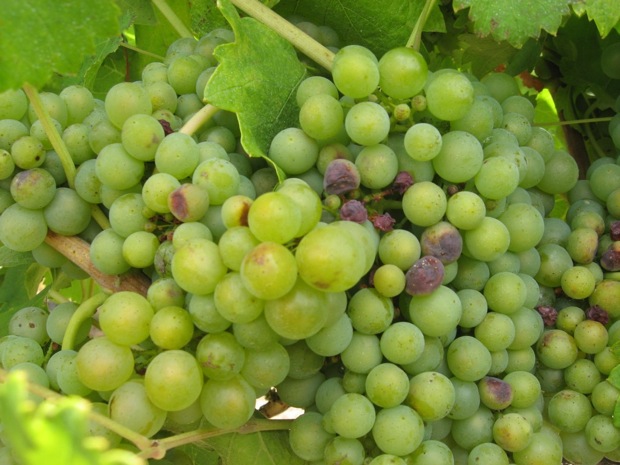
Chardonnay Grapes


May 21, 2012

http://blogs.canada.com/2012/05/21/vintages-may-26-2012-release-chardonnay/


May 24th happens to be the third annually designated Chardonnay Day so this quintet of quality gold comes in right on cue. This a marketing concept using social media as the thread that connects the global conversation together. All the while raising a glass to Chardonnay’s continued ascension back to global prominence.


Closson Chase K.J. Watson Vineyard Chardonnay 2009 (230912, $34.95) teaches an elementary lesson in Upper Canada terrior. The best Chard sites along the Niagara River grow fierce, fighting vines, in turn producing “green tiger” grapes of great colour. The Watson is viscous, with aromatics as if Stag’s Leap Viognier, where white peach and rock lobster are fruggin’ on the beach at cocktail hour. “Pass the tanning butter.”  90

Closson Chase    KJ Watson Chardonnay 2009


Kistler Les Noisetiers Chardonnay 2010 (251223, $74.95) of laser focus allows the complex nature of this cuvée to “glitter, glisten, gloss, floss.” The Sonoma Noisetiers is often hazy hued as is the nature of its unfined and unfiltered ways but here in’10 it’s metallic, shiny, scaled back a notch and open to the whole world. Less nut, more gold and very focused. My favourite to date.  91

Kistler Les Noisetieres Chardonnay 2010


Mount Eden Vineyards Wolff Vineyard Chardonnay 2009 (17988, $25.95) is a toddler as compared to its extraordinary adult, Santa Cruz cousin. This SV was the wolf’s howl back when it came in under $20. It is worth admitting that junior is heavy on the toasty BTU’s, green apple core, band aid and tang the juice (sorry, drink) crystal.  87

Mount Eden Wolff Chardonnay 2009


Vasse Felix Chardonnay 2010 (903617, $20.95) darts to and fro like a cat. Intense, verdigris, cheeky CVR**and soft as banana cream pie. Oscillates but has remarkable balance and Margaret River reflexes, landing on all fours. Length to cure an odd coupling thirst and ‘unger89

Vasse Felix Chardonnay 2010


Domaine Chenevières Fourchaume Chablis 1er Cru 2009 (277921, $29.95) the bittersweet symphony traverses a grippy, yellow moonscape. Tart pears and peppery spice drift in the zero gravity air but do not persist. The lack of verve renders this Fourchaume weightless and down to earth. A Burgundian urban hymn.  88

Domaine Chenevières Fourchaume Chablis 1er Cru 2009


Good to Go!


IVR* – Vintage Direct Intrigue-To-Value Ratio

CVR* – Vintage Direct Curiosity-To-Value Ratio


Toronto Life Names Top 10 New Restos

Friday March 9, 2012


http://blogs.canada.com/2012/03/09/toronto-life-names-top-10-new-restos/


Since opening in April 2011, the wine card at Barque Smokehouse has been in my charge. Weighed favourably towards VINTAGES releases, the list makes friends with and flatters the meats smoked ’round the clock. The wine program is unique to this city; affordable, accessible and stamped by a carbonic footprint in the sand. Wine outsells both beer and spirits and 15 choices are available by the glass at $10 or less. The same operose research afforded tasting and writing goes into picking wines from the LCBO and through some of our most assiduous and industrious agencies; Barrel Select, Halpern, Lifford, Liquid Art, Profile, Stem, 25Brix and Woodman.

The cover story for yesterday’s release of the April 2012 Issue is “Where to eat Now, Toronto’s Best New Retaurants.”  Toronto Life has published this cutting top ten list with Barque listed at number six. Good on you David, Jon and crew. These boys are in, and in for good, so it’s no surprise they are going the whole hog. Not bad to be gracing a list inhabited by Yours Truly, Acadia, Aria, Keriwa, Ortolan, F’amelia, Modus, Volos and Mideastro. Here three deep reds available in the here and now on Barque’s wine list.

H.M Borges Douro Lello 2010 the fortitudinous one was born with a complaint in its voice. Spicy po’boy BBQ feel crossed by electric kool-aid acid, black cherry jello. “New blood joins this earth” as the Unforgiven wooden wolf, opening a door to Portuguese perception. Prune and Aussie licorice concentrate. The Lello says “‘I’m sorry I kicked you in the ass, but I’m not sorry I’m an ass-kicker.” It’s cheap so please forgive.  87


Pietro Marini Malbec 2008 (269045, $13.95) of alpine altitude up Cafayate way searches low and high for that synaesthetic middle ground. A no nose start, awakens, naps and rises again. Notes of smoked allspice, juniper and blueberries come and go. Flavours are faint at first, develop with time, end abruptly, then return and linger. Intriguing and certainly not like your mother’s Mendozan Malbec. It’s “got values but I don’t know how or why.”  87

Kenwood Jack London Vineyard Cabernet Sauvignon 2007 (944843, $34.95) alights with its prominent, perfumed proboscis. A Katherine Hepburn nose in fact, classy, confident, twitching, pretty. Swirl a second time and Texas tea laced cassis persists, with a hint of solder. A multi-coloured and peppered berry interchange tongue lashes the inner cheeks then settles in for a long haul chopper journey. A balanced attack both on ground and in air. Dreamt about under a bed of California Stars. Easy rider. 92

Kenwood JL Cab 2007


Good to go!