Post ProWein tasting crawl trough the Ahr, Mosel, Nahe and Rheinhessen

In March of 2024 Godello reprised a Düsseldorf redux by attending the annual ProWein Wine Fair and then hitting the road for a three-day, four region transversal of German wine-growing regions. Prowein, Messe Düsseldorf and the German Wines Institute brought international journalists through the Ahr, Nahe, Mosel and Rheinhessen. The producers visited were Weingut J.J. Adeneuer (Bad Neuenahr-Ahrweiler); Weingut Forster (Rümmelsheim), Schlossgut Diel and Piri Naturel Christine Pieroth (Burg Layen) and Weingut Anette Closheim (Langenlonsheim); Four producers from Der Ring 1899, a.k.a. the Bernkasteler auction company hosted the group at Die Mosel Vinothek und Winebar, Traben-Trarbach; Weingut Franzen (Bremm), Weingut Walter (Briedel), Weingut Rebenhof (Hochheim am Main) and Weingut Erben Von Beulwitz (Mertesdorf); Last stop was with Weingut J. Neus (Ingelheim am Rhein) in Rheinhessen and finally the press tour concluded with a fascinating Rheinhessen tasting at the Ingelheim Vinothek, presented by Sommelier Shanna Reis. Special thank you goes out to Christiane Schorn, Senior Manager Press & PR, ProWein, Michael Mandel, Messe Düsseldorf and Carola Keller, Marketing Manager, German Wines (DWI). These are the estates, their makers and notes on a collective 80 wines tasted between the 12th and 14th of March.
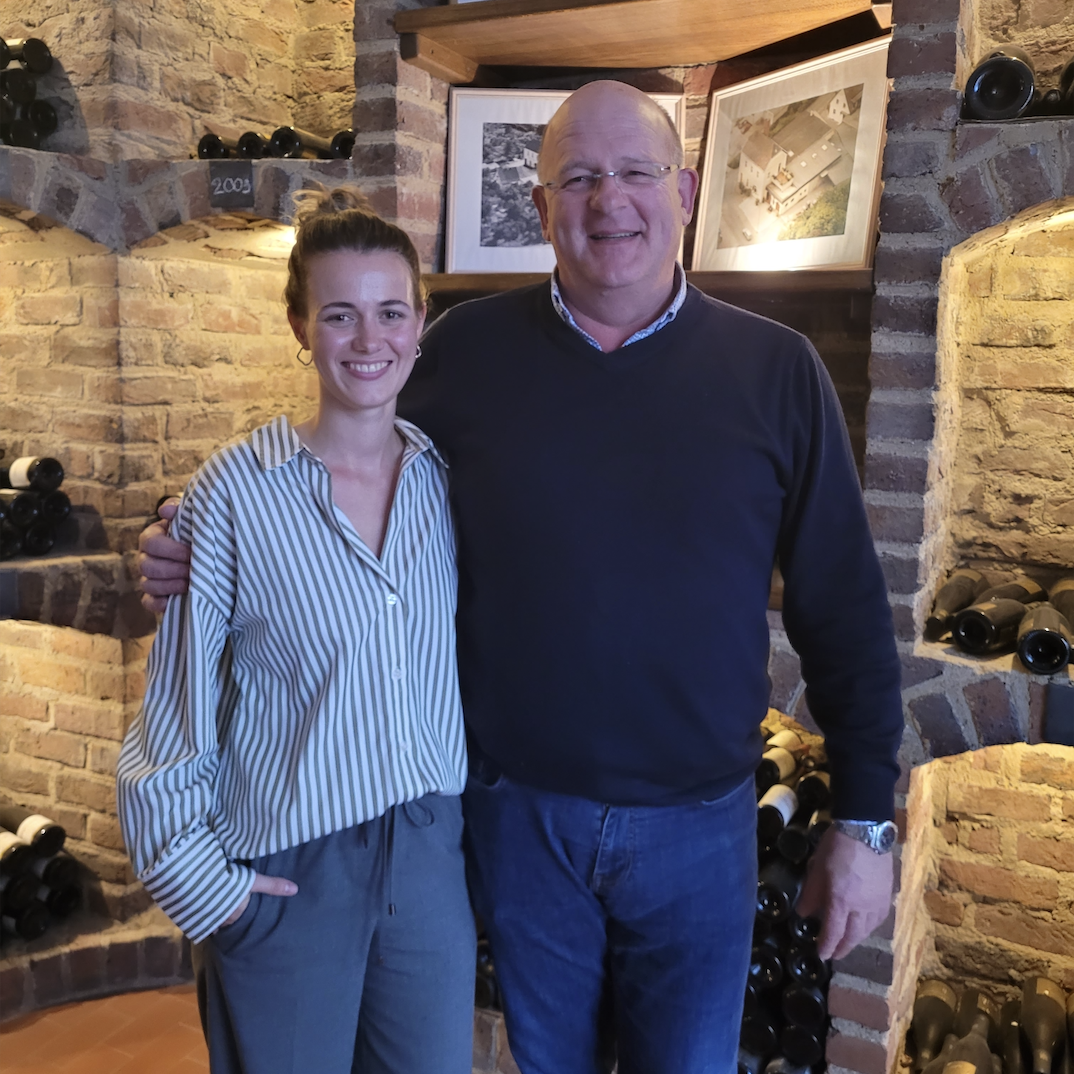
Marc Adeneuer with daughter Francisca – J.J. Adeneuer

Ahr Valley

Weingut J.J. Adeneuer –  Bad Neuenahr-Ahrweiler

Weingut J.J. Adeneuer Blanc De Noir Purist 2022, Ahr Valley

Saignée method Blanc de Noir, reduced from the Grosses Gewächs spätburgunder, finished at three g/L of RS. Simple, fresh and dry. Quite pure as Rosé with a mild pith bitters finish. Drink 2024-2025.  Tasted March 2024

Weingut J.J. Adeneuer Weissburgunder Purist 2022, Ahr Valley

Juts a month on the lees for pinot blanc, now a year in bottle, more about texture and mouthfeel than primary fruit. About as crisp and clean as it gets but again with a mild lime pith bitter finish, much like the Rosé. Length adds to the refreshment of the wine. Drink 2024-2025.  Tasted March 2024

Weingut J.J. Adeneuer Spätburgunder 2022, Ahr Valley

Mildly reductive and also a factor of Ahr Valley terroir, making pinot noir flinty and taut while still this youthful. As with all the Adeneuer pinots they all fall in at 13 percent alcohol, the wood factor only from Bourgogne forests and just 10 percent new. A mix of red berry fruit, more flint stone character and the faintest touch of red fruit but also almond bitters. Would never see this as jammy and chilling it down for maximum freshness is wholly encouraged. Drink 2024-2026.  Tasted March 2024
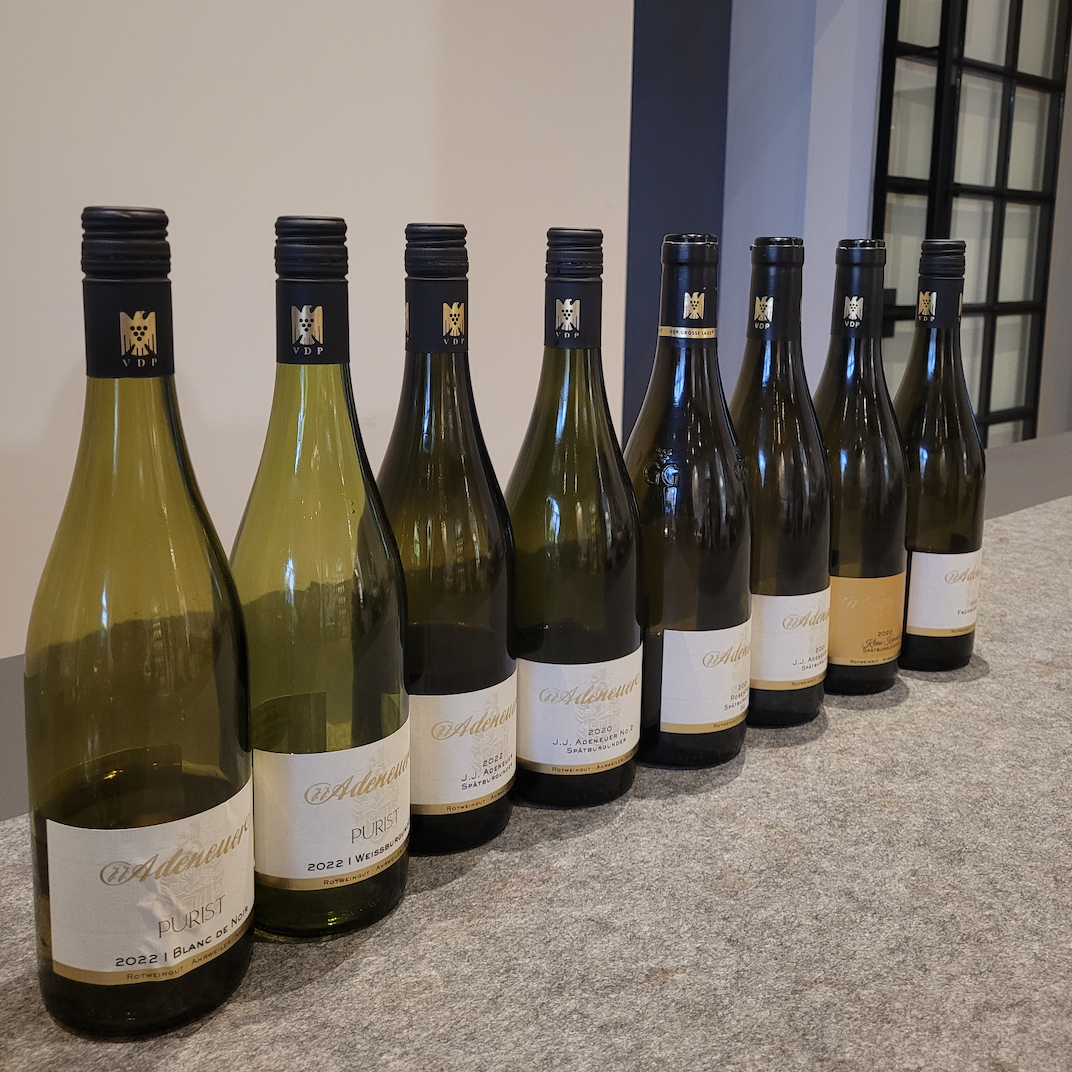
Weingut J.J. Adeneuer Spätburgunder No. 2 2020, Ahr Valley

A pinot noir from after the floods of 2021 and normally bottled after 12 months. Circumstances meant that after the barrels were saved the vintage had to remain in wood for 18 months, only able to be bottled after the clean-up. Caused the alcohol to finish at 13.5 percent instead of the usual 13 and there is more texture as a result. Feels like a bigger and creamier pinot noir with tang and more red berry plus a toastier quality than that of the coming ’21s and ‘22s. Drink 2024-2026.  Tasted March 2024

Weingut J.J. Adeneuer Spätburgunder No. 1 2021, Ahr Valley

A later harvest, two weeks later the 2018-2020 but also the flood vintage when on the night of July 14th and into the 15th the waters filled the cellars and basements plus halfway up the ground floor of the winery. The No. 1 always remains 18 months in barrel, fruit coming from the lower Ahr Valley vineyards in three villages. The soils are 60 percent volcanic rock and the basaltic reek is felt in palpable aromatic display. Much more lactic and blood red citrus style plus this porcine smokiness, like Speck bacon. More structure and only GG plots are used – three of them. Drink 2025-2029.  Tasted March 2024

Weingut J.J. Adeneuer Spätburgunder Kleine Kammer 2022, Ahr Valley

J.J. as in Johannes Josef (ancestor from the 18th century, dating to 1776). Kleine Kammer, meaning “small (fermentation) chamber.” This Adenauer pinot noir comes off of soils of only pure slate with sandy loam, the second choice from a GG site, a terraced plot measuring only 0.68 hectares in size. The rule in Germany for GG is such that you can’t use a site’s name twice, thus the fantasy name. Vines are 50-60 and 80-100 years of age with the younger vines giving fruit for this wine. Ages in 1,800 to 2,000L barrels, namely Taransaud. No real toast to speak of, nor new wood feels or bitters in any notable way. Classic slate example that expresses its terroir and since 1776 as a Monopole. from vines with deep roots that never see their berries get sunburnt. A beauty and grace about this, quite getable and with sneaky structure. Made with the Kastenholz clone, grandchild of a pinot noir original. Drink 2024-2028.  Tasted March 2024

Weingut J.J. Adeneuer Spätburgunder Rosenthal GG 2021, Ahr Valley

J.J. Adenauer is now Marc Adeneuer with daughter Francisca and together they farm 13 of 540 hectares in the region, third most from the fourth smallest region in Germany. A red wine specialist with 90 percent red grapes, mainly pinot noir while the rest is weissburgunder and now just starting with chardonnay. Basically a place where Bourgogne grapes thrive. Rosenthal is mainly sandy loam and graywacke soils to gift pinot noir with a purity, crispiness and liveliness. You simply will not find more fresh fruit purity from any of the other Adeneuer pinot noirs. Comes from 2.5 hectares in the GG vineyard and the acid structure here is sensational – the catalyst and reason why this will age longer and slower than the other wines. This was the flood vintage too so kudos to the estate for sticking with it and creating this delight of a pinot noir. Drink 2025-2031.  Tasted March 2024

Weingut J.J. Adeneuer Frühburgunder 2022, Ahr Valley

Varietal frühburgunder, fresh and clean, clean, clean. Floral, without musculature, gamay like and though labeled at 13 per cent it’s really 12.7. Chill this and put away the serious talk. More than go gamay go – it’s fly frühburgunder fly. Approximately 1,500 bottles produced (plus 500 of the GG). Drink 2024-2025.  Tasted March 2024
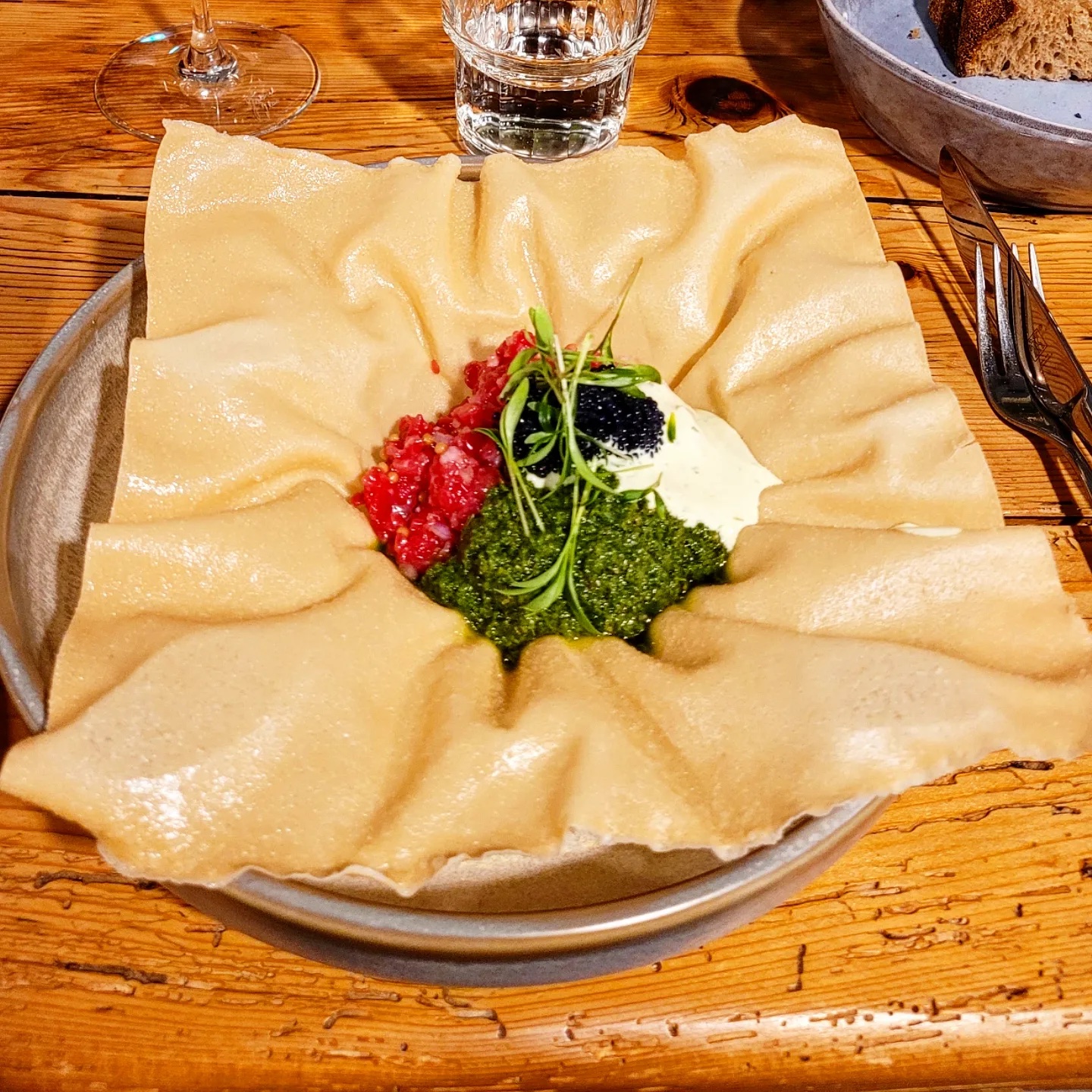
Beef Tartar – Kräter Sauce, Pinienkerne, Koriander, Chips – Die Mosel Vinothek und Winebar, Traben-Trarbach

Mosel

Der Ring 1899 at Die Mosel Vinothek und Winebar, Traben-Trarbach

Weingut Franzen – Bremm

Weingut Franzen Riesling Der Sommer War Sehr Groß 2022, Gutsweine, Mosel

A dry Mosel riesling which means 10.2 g/L of RS, 7.3 TA and finished at 11 percent alcohol. “Winegrowing on a razor’s edge” for a riesling “summer project” begun in 2011, “a cuvée that presents the cross-section of our vineyards and combines all the advantages of the individual locations in one wine.” Spontaneous ferment, as with all the wines, not far from Cochem where the steepest vineyard in Europe slopes to 68 degrees. A riesling of what feels like crazy conversion rates coming from red slates and seasoned with many spices. You would literally have no idea there is any sugar in this wine and the length is exceptional. Drink 2024-2027.  Tasted March 2024

Weingut Franzen Riesling Bremmer Calmont Großes Gewächs 2022, Lagenweine, Mosel

Bremmer Calmont delivers far more spice and power than the Franzen blend, here off of pure slate on a 65-degree slope which happens to be one of the steepest vineyards in Europe. Calmont is about as dry as riesling gets and its scintillant-mineral quality delivers true Großes Gewächs distinction. Extreme aridity perceived matched by intense sapidity that only this specific Mosel red slate provides. A riesling of trenchant intention, compact and stone cold concentrated. Serious wine. Drink 2024-2029.  Tasted March 2024
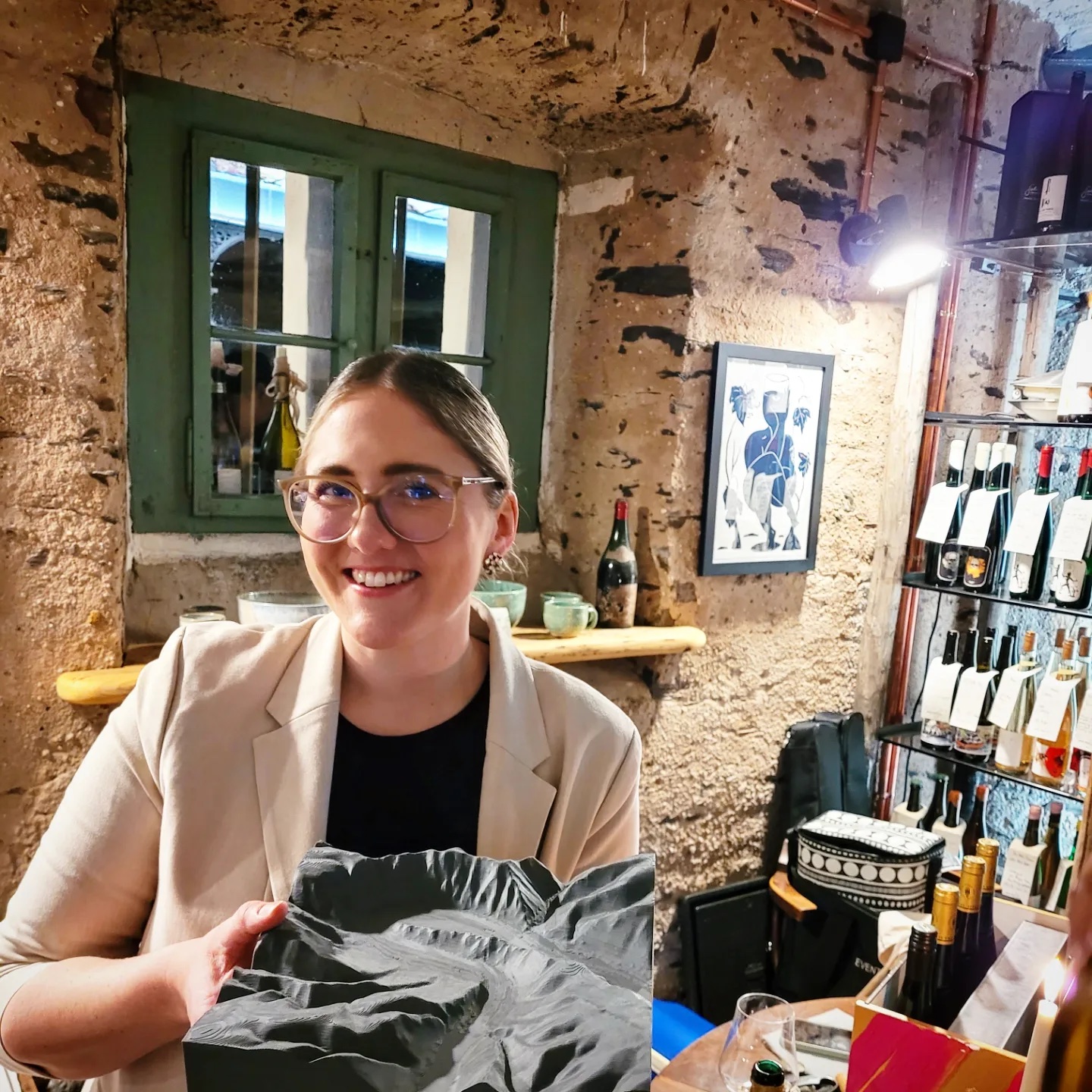
Angelina Franzen – Weingut Franzen

Weingut Franzen Riesling Calmont Trocken 2021, Lagenweine, Mosel

Dry riesling from the steepest 65 degree vineyard of oxidized red Devonian slate and quartzite raised only in steel. The specs are 8.5 g/L of residual sugar matched by 7.6 g/L of acidity with 11.0 percent alcohol and as far as vintages are concerned this would be one to really age. Namely because of palate density but also because the acidity is as fine and finessed as it gets for this composition. May not pierce your riesling heart, or soul but it will age well. Drink 2024-2030.  Tasted March 2024

Weingut Franzen Riesling Fachkaul Großes Gewächs 2020, Große Lagen, Mosel

Fachkaul is the parcel which forms a kind of mini-amphitheater-shaped bowl where at the end of the 1990s Kilian Franzen’s father Ulrich restored and replanted the vines. The epitome of Killian and Angelina’s story, a Calmont tale fraught with adversity, challenges and heartache, but this small (1.6-ish hectare) plot means everything. Mineral that matters, red slate and the steepest slope where all that is important, essential and profound result in singular riesling. Not quite as dry as the Bremmer but higher in acid, more stark, expletive and magical. Sapid lime intensity, long, significant, precise, consequential and just recently bottled in January. Drink 2025-2032.  Tasted March 2024
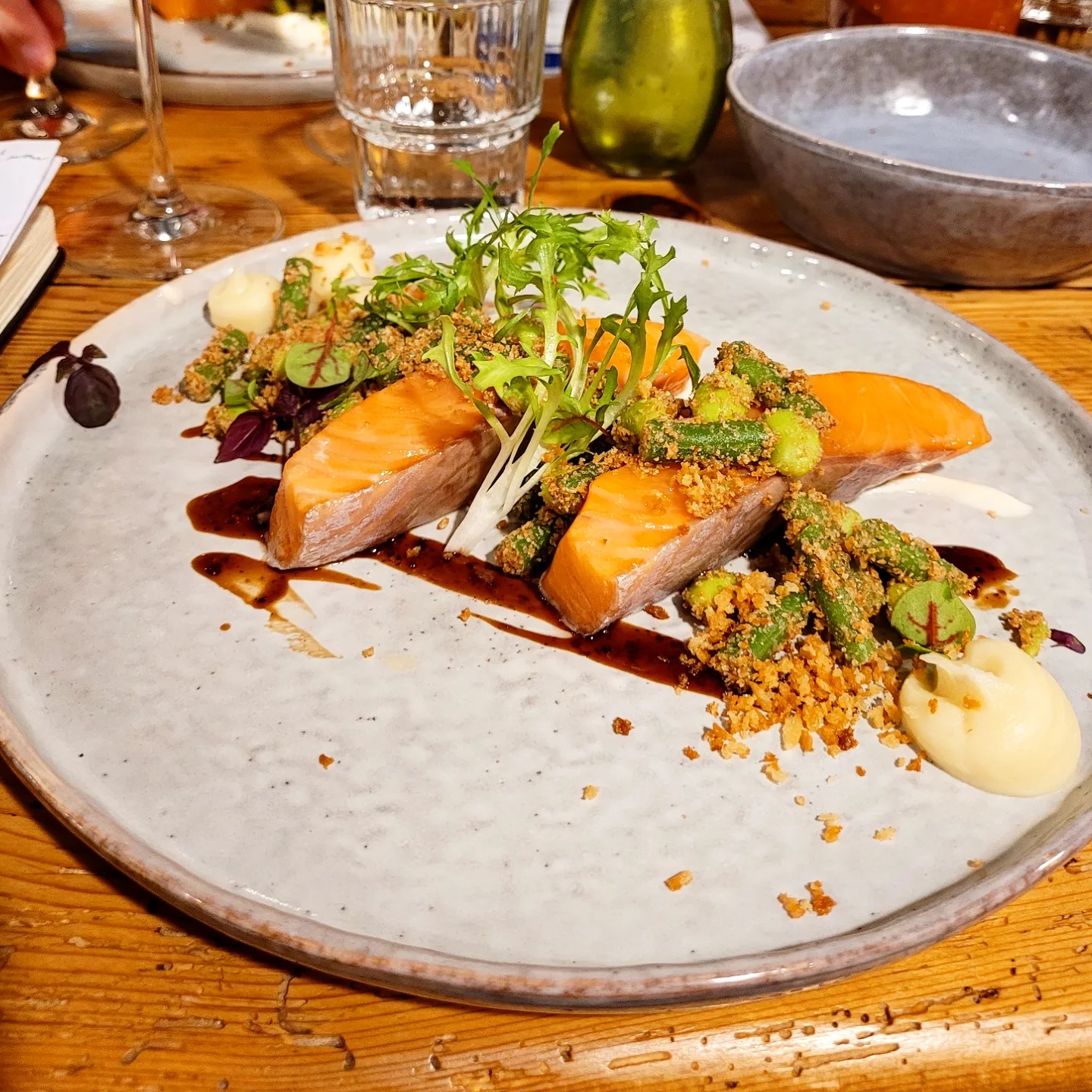
Lachs – Tofu Puree, Edamame, Bohnen, Dijon Sauce – Die Mosel Vinothek und Winebar, Traben-Trarbach

Weingut Franzen Riesling Fachkaul Großes Gewächs 2017, Große Lagen, Mosel

In a perfect place at this six to seven year stage, from one of the warmest seasons with lots of rain at harvest. Picking began in the second week of September and required many passes in the vineyard with a stringent selection to create (an overall) 15 skus for 11 hectares. The work of Killian and Angelina, students from Geisenheim who began this journey of family necessity at the ages of 23 and 20. A softer Fachkaul but that is the maturity speaking for riesling of a sapid tug on red slate, one and a half hectare mineral-varietal heartstrings. Quite remarkable and with three great years still laid out ahead. Drink 2024-2027.  Tasted March 2024

Weingut Franzen Riesling Sterneberg Großes Gewächs 2020, Große Lagen, Mosel

Killian and Angelina Franzen’s best plot in the Neefer Frauenberg is called Sterneberg. Vines were planted in 1938 on grey slate for a different, next level mineral quality and quotient for Mosel riesling. These are own-rooted vines, old, experienced and wise, their resulting dry wine coming away like the desert because sugar and acids near-equal come together seamlessly. The most viscosity and texture of the Franzen rieslings, from a hot vintage and so concentration, unctuousness, flesh, pulp and glissade are all at peak performance. Glorious and confident, outspoken but only to make sure we understand its origins and Franzen abides by its voice. Drink 2024-2033.  Tasted March 2024

Gerrit Walter and Angelina Franzen

Weingut Walter – Briedel

Weingut Walter Riesling Trocken 2022, Gutsweine, Mosel

From Briedel, next village out of this tight turn in the Mosel from Pünderich where Clemens Busch farms their riesling. The Walter Trocken is just 6.5 g/L of residual sugar pretty much hidden by 6.9 of TA. Six to eight hours of skin contact for a phenolic, taut, lime doused example off of the grey slate of the Briedel Vineyard. Solid effort and notably modern. Drink 2024-2025.  Tasted March 2024

Weingut Walter Riesling Feinherb Briedeler 2022, Ortsweine, Mosel

Villages quality wine from Briedel, not as dry as the Trocken with three times the residual sugar, here at 10 g/L. A floral-herbal expression, fresh, light and modular. The acidity functions to make the malleable wine travel to the back palate and structure is formed because of this movement and interaction. Very well made Feinherb style by Gerrit Walter for simple pleasure, especially with a piece of cheese or beef tartare with pine nuts and a high acid mustard sauce . Drink 2024-2026.  Tasted March 2024
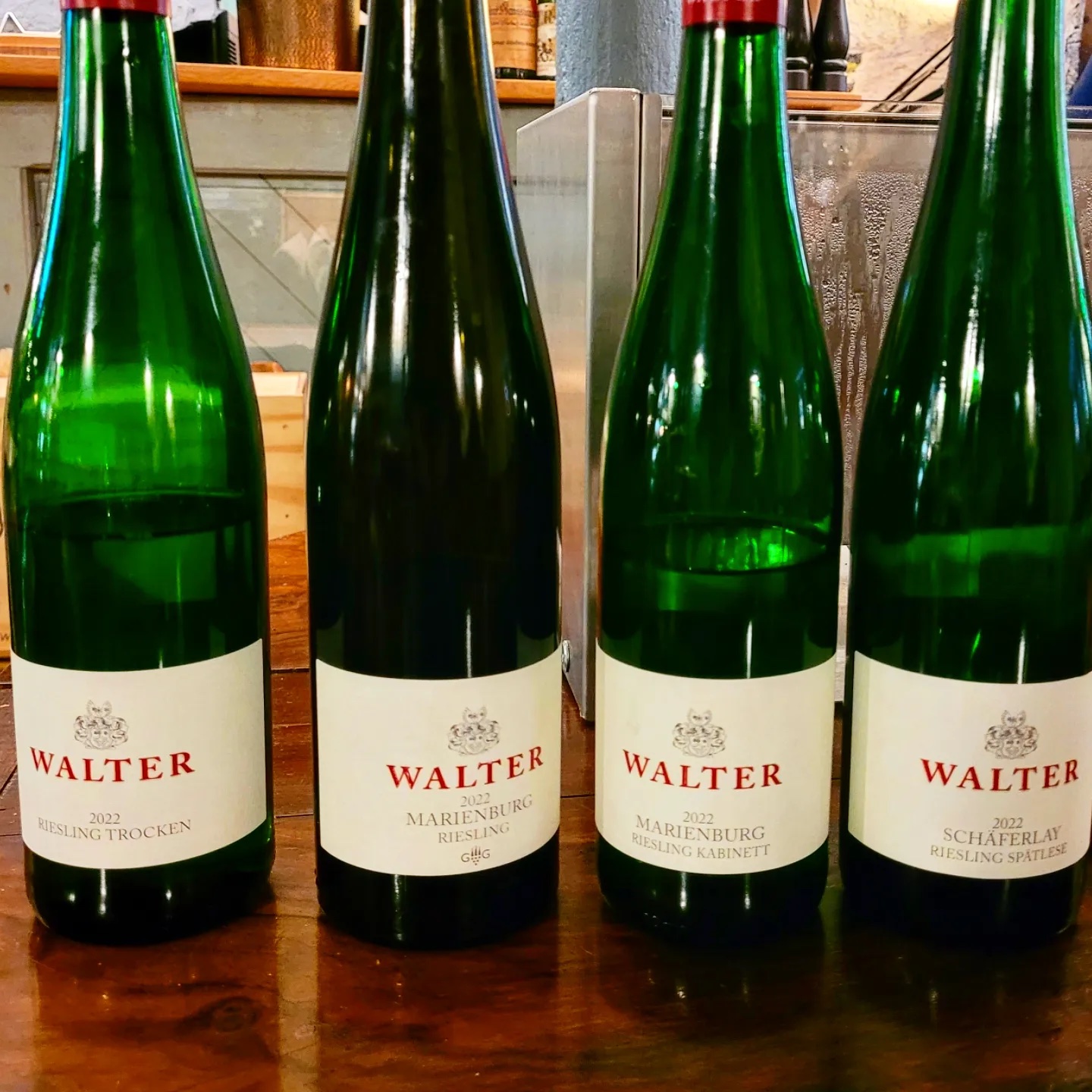
Weingut Walter Riesling Pünderricher Marienburg Großes Gewächs 2022, Mosel

Gerrit Walter is the next generation producer of this GG riesling out of Briedel’s grey slate vineyard. Sees a longer maceration of 12-15 hours, comes away super dry (3.1 g/L), matches the Trocken’s acidity and finishes at a Mosel high 12.6 per cent alcohol. This is not about fruit but rather the type of mineral focus that comes from Marienburg, with increased seasoning, spice, elements and tonic-edgy florals, though it is not the most phenolic of rieslings. Cracker example, truly dry and in command of the palate. Drink 2024-2028.  Tasted March 2024

Weingut Walter Riesling Kabinett Pünderricher Marienburg 2022, Lagenweine, Mosel

One of two recognizable styes of riesling made by Gerrit Walter to carry on with Mosel tradition even while he and many young generation winemakers are turning to drier and drier. This from an early harvest resulting in 45 g/L of residual sugar, far from searing 8.0 TA and low-ish alcohol at 8.6 percent. There is more fruit here in a light, refreshing yet in its own way also intense style that the estate has been making for 10 years. “Kabinett means light, vibrant and elegant,” explains Gerrit and his Pünderricher is without any real skin contact, but the tangerine-orange peel aroma really kicks things off. The length is indeed outstanding. Drink 2024-2029.  Tasted March 2024

Weingut Walter Riesling Kabinett Marienburg 2016, Lagenweine, Mosel

When talking about his 2022 Pünderricher from Marienburg Gerrit Walter noted that “Kabinett means light, vibrant and elegant,” three things this 2016 most surely had been. Not anymore because age has exaggerated the aromas if also softened the palate flavours. This divergence has resulted in maturity and a dispersion of parity. There is some interest for this fine if past prime look at a Marienburg riesling.  Tasted March 2024

Weingut Walter Riesling Spätlese Briedeler Schäferlay 2022, Lagenweine, Mosel
No botrytis came about for Walter’s late harvest riesling with 63.2 g/L of RS, higher 9.3 at TA and 8.6 percent alcohol. Elegant, concentrated and optimum if unassuming ripeness for this lime cordial, mineral salts and cracker acidity style. In fact the blade swipe makes for an intensely serious and stood up to be counted riesling that demands attention. Serious but as mentioned also elegant which is a very good combination. Drink 2025-2031.  Tasted March 2024

Weingut Rebenhof – Hochheim am Main

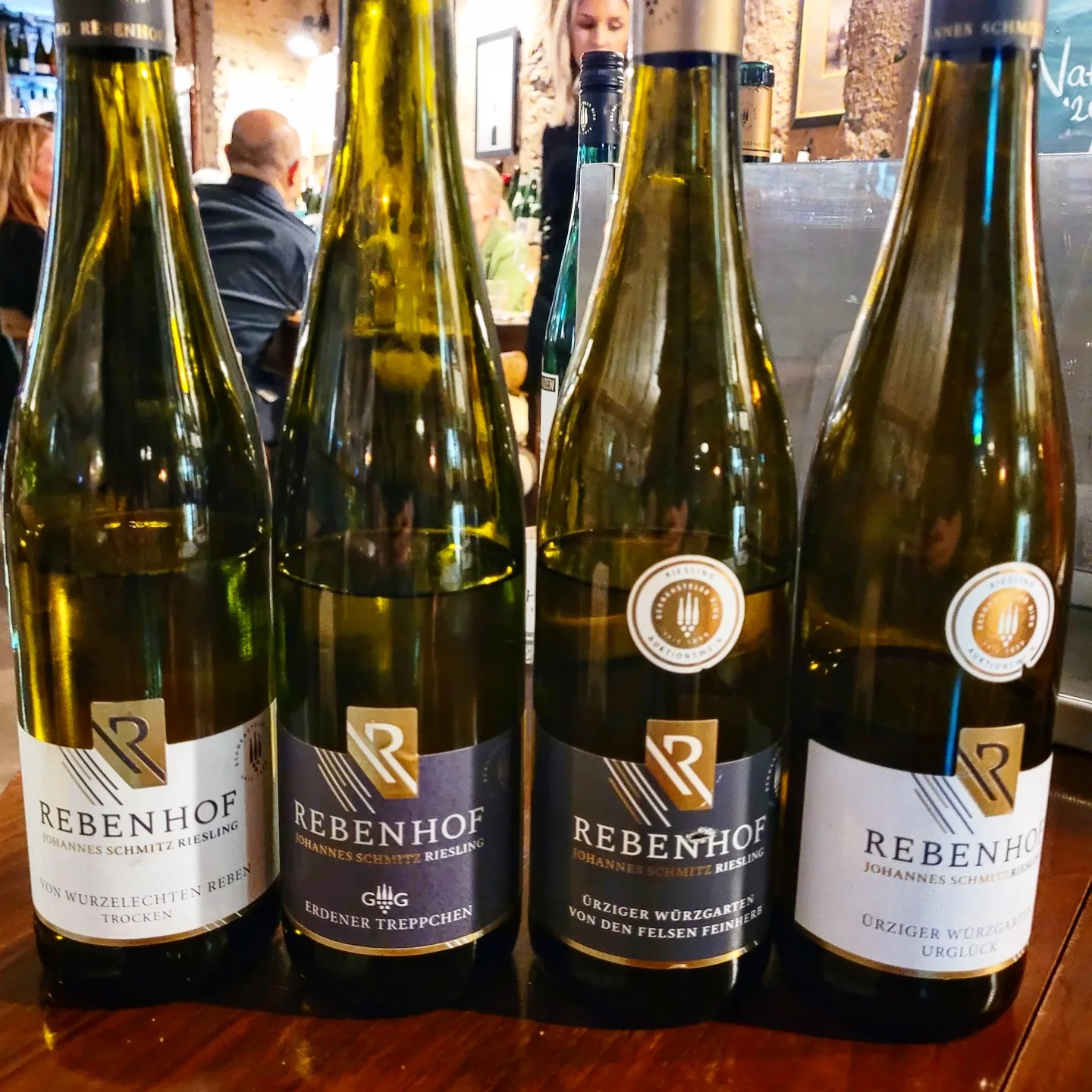
Weingut Rebenhof Riesling Kabinett Trocken Ürziger Würzgarten Von Wurzelechten Reben 2022, Hochheim am Main

Ürzig is a village in the Bernkastel district of the Mosel and the Ürziger (vineyard) is a place of red slate, often lending a spicy or salty character to the riesling grown there. Wurzelechten basically means “own or unrooted,” a significant case because there are between 50-60 hectares of un-grafted vines in all of Germany, about half of them planted between 1910 and 1935. Topsoil must exist over stoney soils for Phylloxera to attack and the slate in this part of the Mosel is not one of those locations. Rebenhof’s Kabinett is the truest form of Trocken and one of the zestiest you are ever likely to encounter. Matching sugar and acidity numbers create the equilibrium, both at 6.8 g/L with alcohol right there in the median sweet spot at 11 percent. Tons of lime, mostly zest and the intensity never relents. Still there is a fulsome aspect and so time should soften the attack and coax out some flesh. Unique riesling in any case. Drink 2025-2029.  Tasted March 2024

Weingut Rebenhof Riesling Großes Gewächs Auktionswein Erdener Treppchen 2020, Hochheim am Main

A riesling with the Auktionswein classification which means it its part of the Bernkasteler Ring E.V., which is the oldest wine auction company in Germany. A Großes Gewächs (a mark of quality by top producers from best sites making dry wines) from the iron-rich, red slate soils of the Erdener Treppchen (village of Erden in the Mosel’s Bernkastel area). The 2020 is a wine of dichotomies, still on the dry side but with elevated numbers as compared to the Ürziger. Here riesling is at once salty but the acid presence (as a quotient of this vineyard’s minerals) creates an opposing sense of sapidity. Diversity from start to finish, a wine of waves and oscillations, multifold mineral movements and a gelid texture to the palate. Higher alcohol contributes to the elevated weight. Drink 2024-2028.  Tasted March 2024

Weingut Rebenhof Riesling Spätlese Ürziger Würzgarten Von den Felsen 2018, Hochheim am Main

A new style of Spätlese riesling, well ahead of its time from 2018 out of the Ürziger Würzgarten with just a bit more than one-third of the residual sugar of the Kabinett. Here at 29.5 g/L and higher alcohol (11.0 percent) than might have been thought. This modern approach makes for a sapid riesling despite the sweetness, quite phenolic, ripe and grippy, rich and creamy yet intensely mineral. A lime cordial meets sherbet style with backbone, attitude and potential. Drink 2025-2031.  Tasted March 2024
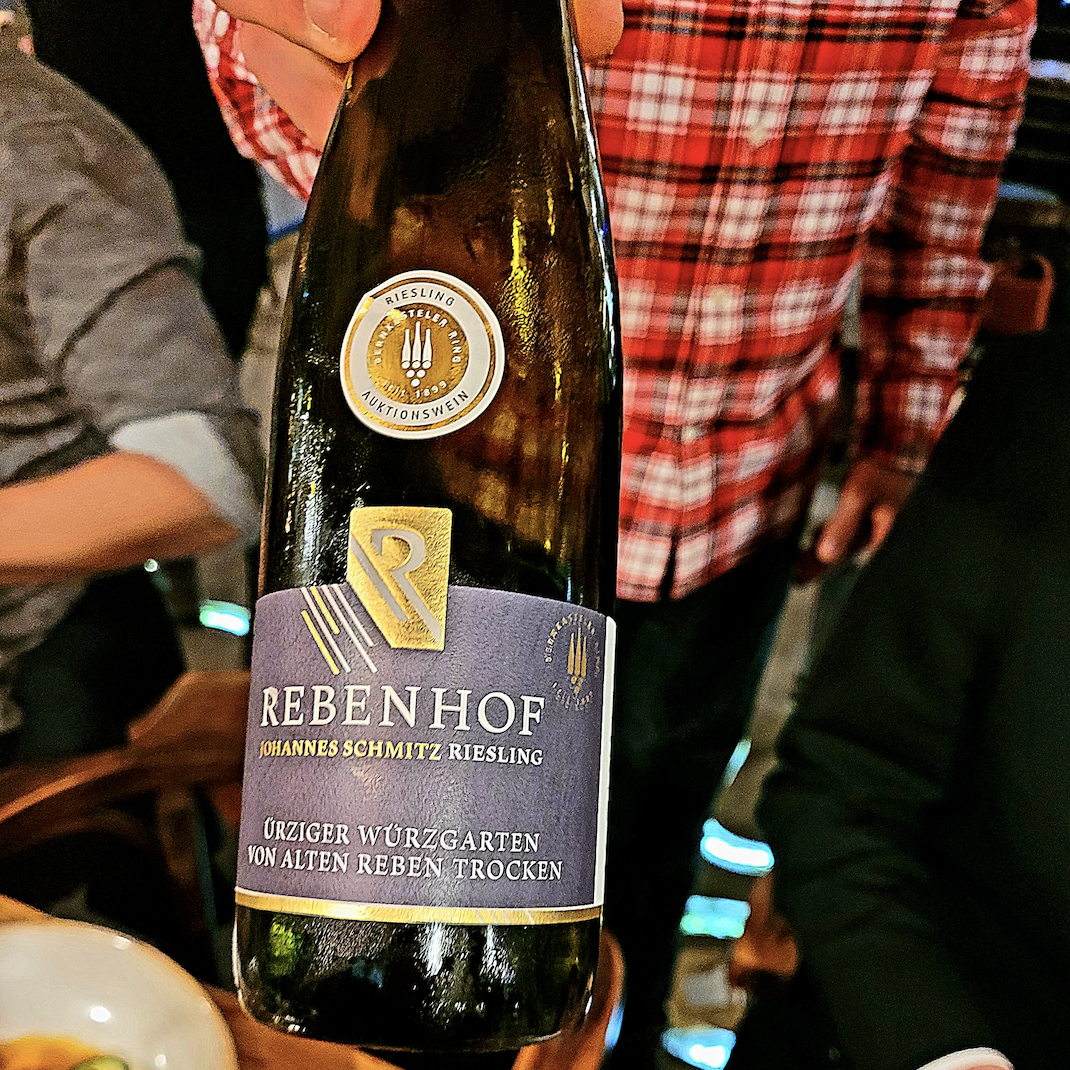
Weingut Rebenhof Riesling Kabinett Auktionswein Ürziger Würzgarten Urglück 2022, Hochheim am Main

Fabulous nose with exceptional aromatics mark the entry of this very sweet riesling made in a singular Kabinett style. A riesling of nectarine and peach stone, creamy like the Spätlese but more bodied and emulsified as texture with acidity really buoying the fruit. The method, application and intention might suggest a challenge but Rebenhof does their best work when sugars are elevated because that is how they see riesling and its capabilities. Drink 2024-2030.  Tasted March 2024

Charlie and Caroline Weis – Weingut Erben Von Beulwitz

Weingut Erben Von Beulwitz – Mertesdorf

Weingut Erben Von Beulwitz Riesling Kaseler Nies’chen No. 15 Im Steingarten 2023, Mertesdorf, Mosel

Caroline Weis describes the steep and exposed Nies’chen vineyard as the “mountain,” an extreme and specific Steingarten site with blue slate and sparse stony topsoil. It is anything but a “garden” of a vineyard to farm. Labeled Trocken and while anything but severely dry it is the intensity of this riesling’s acidity that plays tricks upon both the nose and palate. The TA is in fact higher (at 7.9) than the sugar (at 7.5 g/L). The new (and local) winemaker Phillip Steffes likes this style, more open than rigid and definitely sapid without any gratuitous generosity. Drink 2024-2027.  Tasted March 2024

Weingut Erben Von Beulwitz Riesling Großes Gewächs Trocken Mertesdorfer Herrenberg No. 14 2022, Mertesdorf, Mosel

As with the Nies’chen there is slate in the topsoil of the Mertesdorfer (Mertesdorf Village) Herrenberg but more blue on the lower slope, as opposed to black at the “mountain” top. Also a dry riesling though even more so (at 5.5 g/L) in this Großes Gewächs edition with an acidity number (at 6.7) that dominates to make this feel like one of the most arid Mosel rieslings around. A modern and modish take that commands attention, broadens the mouthfeel and so that fruit-mineral swirl becomes one of serious breadth. A credible example with acidity that is not sharp, but certainly powerful, impeccable balance and high level age-worthiness in the Trocken idiom. Drink 2025-2032.  Tasted March 2024
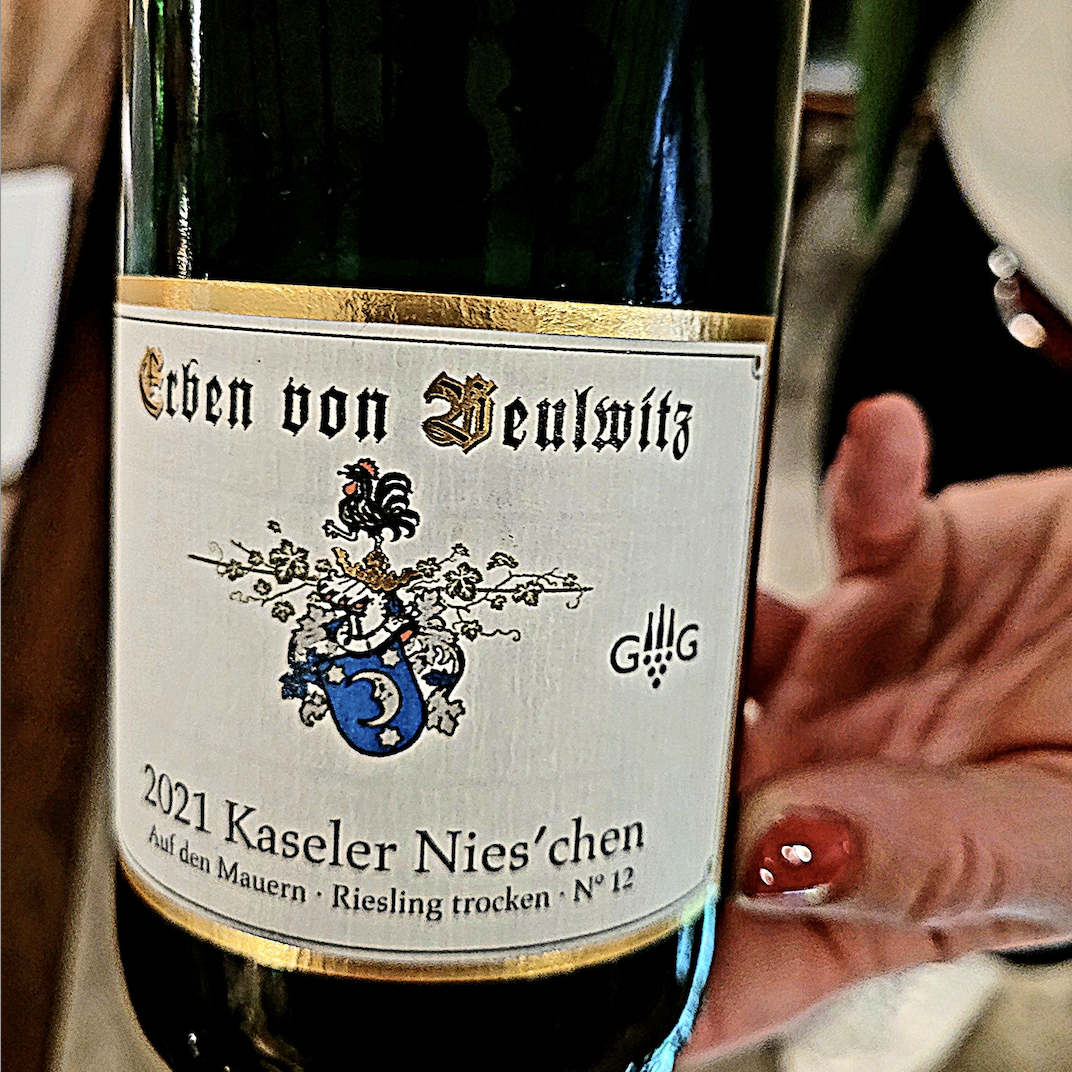
Weingut Erben Von Beulwitz Riesling Großes Gewächs Trocken Kaseler Nies’chen No. 12 Auf Den Nauern 2021, Mertesdorf, Mosel

Auf Den Mauern is a 60 percent steepness portion of the Nies’chen Vineyard and considered to be the most important riesling section where high slate walls support the slope. Though this does come across as dry there is more sugar (at 8.6 g/L) and also acidity (7.2) as compared to the Herrenberg. What stands out now is the saltiness in a way only this riesling from Erben Von Beulwitz is want to show. A different expression results, also because it’s still young, reductive and yet to open. Caroline Weis notes its 10-year potential and truth be told there will be two more years of waiting before any significant changes begin to occur. It could be suggested to open bottles at the 2,4, 6, 8, 10 and 12 year marks to see the evolution. It was a rainy summer of 2021 in this part of the Mosel and so things slows down for riesling. Drink 2026-2034.  Tasted March 2024
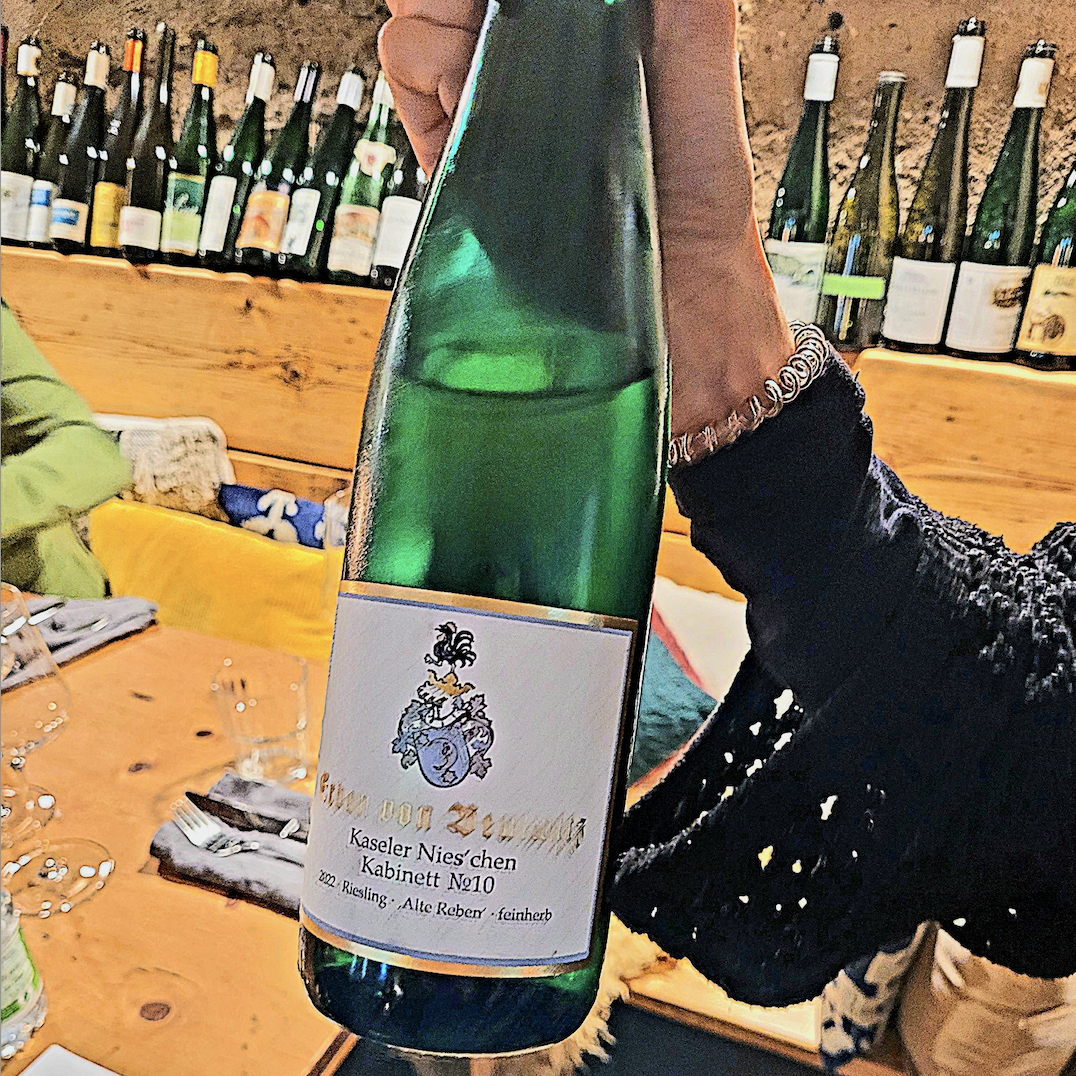
Weingut Erben Von Beulwitz Riesling Kabinett Feinherb Kaseler Nies’chen No. 10 2022, Mertesdorf

Classic Mosel style in the ways of the 90s and 2000s and “Dad’s favourite,” tells Charlie Weis. The kind that expertly balances high sugar and acid, layered like mille-feuille pastry, light on its feet and melting with ethereal ability in the mouth. Creates a symbiotic relationship with the Spätlese, the other Herbert classic styled riesling. The combination of 150 years of history and a family’s efforts since 1982 are what make a riesling like the Kaseler Nies’chen No. 10. Drink 2024-2029.  Tasted March 2024

Weingut Erben Von Beulwitz Riesling Spätlese Alte Reben Kaseler Nies’chen No. 6 2023, Mertesdorf, Mosel

Now into late harvest territory, old-school if you will, “Dad’s riesling” admits both Caroline and Charlie, Weis daughters and face of the estate. What a contrast to the Trocken, fruity, pulpy and forward, blast from the past though a very recent one to be honest. No holding back, zero reduction and ready to please. The specs are 95.0 g/L of residual sugar, 9.1 TA and 7.1 percent alcohol. Classic in so many respects, namely the tart stone fruit, sweetness elevated by the specific kind of acidity and good energy all-around. A clean and protected riesling that should have no problem living a long and productive life. Drink 2024-2033.  Tasted March 2024

Weingut Erben Von Beulwitz Riesling Auslese Alte Reben Auktionswein Kaseler Nies’chen 2015, Mertesdorf, Mosel

Tasted side by side with the 2020, a wine so incredibly youthful it seems years too early to be tasted. This 2015 is just beginning to show the first early stage of maturity, an Auslese from a hot summer with heavy rains. This fortunately stopped and the harvest saw cooling temperatures with beneficial drying winds. The end result was small berries and low yields for highly concentrated riesling fixing high quality Auslese. The acidity is still ripping through, keeping the sugars low and at bay, way down below. Kaleo rhythm, pure Mosel aromatic if perhaps the melodic-Icelandic gelid coolness, and “whoa, we get what we deserve.” Drink 2024-2031.  Tasted March 2024
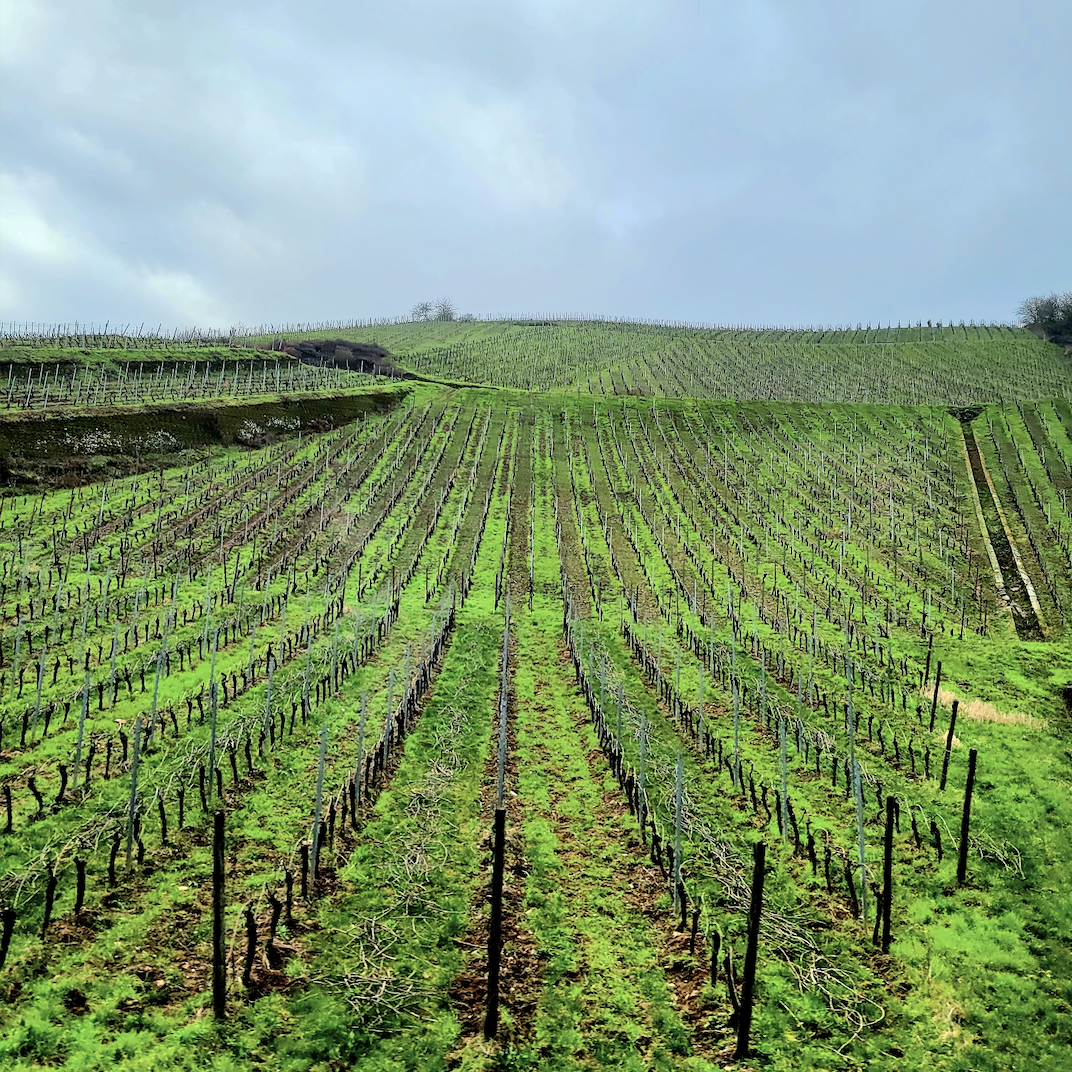
Nahe Vineyard

Nahe

Weingut Forster – Rümmelsheim

Weingut Forster Sekt Brut Nature Chardonnay and Weißburgunder 2016, Nahe

The 2016 Sekt of zero dosage spent 90 months on the lees. Still showing good freshness and aromatics are more than joyous. The wine turns quite botanical and it’s all sweet herbs throughout the second half of this unique sparkling wine. Drink 2024-2026.  Tasted March 2024

Weingut Forster Weißburgunder Dry 2023, Nahe

Fermentation is 70 percent in stainless and (30) in wood. A few hours of skin contact, bâttonage and lees contact for a few months. Organic, with neutral yeasts in the steel and spontaneous in the barrels. Low sulphur, vegan and unfined. Just grapes, no additions, proper ripeness, tasting like fruit and admittedly never creamy, oaky or gratuitously soft. Clean, satisfying, of medium acidity and surely just a matter of healthy grapes out of a good pinot blanc vintage. Well thought out, environmentally and sustainably conscious white wine. Drink 2024-2025.  Tasted March 2024

Weingut Forster Riesling KABInett 2023, Nahe

A German word play, the use of KABI in bold, as in “I’d like to have a Kabi, short for Kabinett.” One of the first riesling harvested at lower sugar and higher acidity though like all Kabinetts the residual sugar is essential, though here it’s in the lower range at 36.2 g/L. A cool climate vineyard that is now warming to be able to make this style in the Nahe, plus Laura Forster wanted this style to be made, especially because of the low alcohol. Only the third vintage, a fine mix of peach and lime, richness and tang. Well balanced though not one to age like many from the Mosel. Only 3,000 bottles made. Drink 2024-2027.  Tasted March 2024

Weingut Forster Riesling vom Kies Dry 2022, Nahe

From gravel (kies) soils and the aromatic profile is not only so opposite to the Schiefer but to 99 percent of rieslings made in Germany. A botanical tonic and a cheese rind that really expounds on the idea of this being a natural wine. Yes the soil comes through but also the vinification process, of 10-12 hours of skin contact, first press juice only, spontaneous fermentation in steel, finished at Christmas. Very dry, lime finish and just a bit “horsey.” Drink 2024-2025.  Tasted March 2024
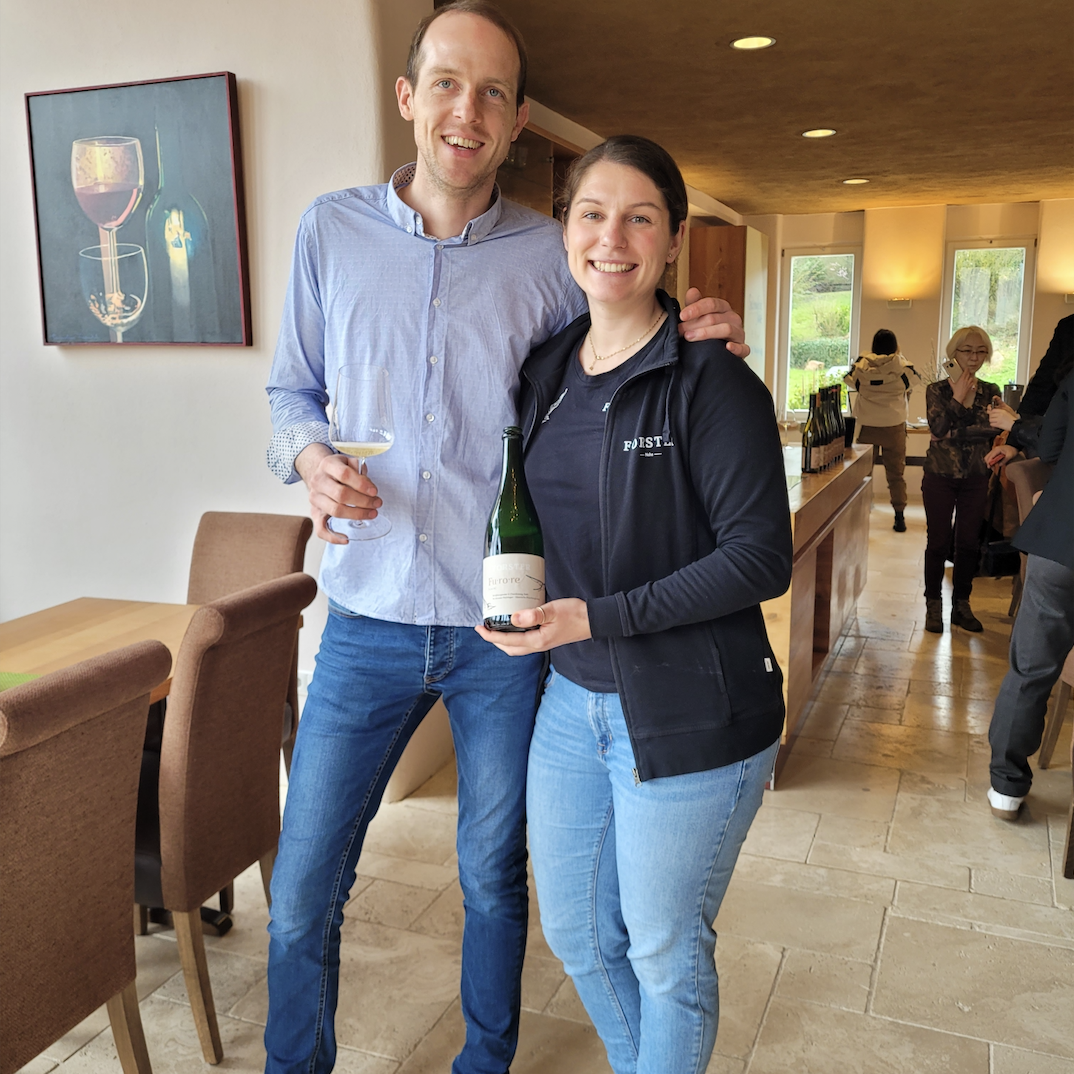
The Forsters

Weingut Forster Riesling vom roten Schiefer Dry 2022, Nahe

From red slate soils, same fermentation-vinification process as the Kies (granite) riesling. Less lactic and more phenolic, dry as can be and in better balance with thanks to the soil. Still it is the mix of style, use of compost, organics and low intervention, including sulphuring that creates this very natural scenting, a notably earthy and cheese rind notated riesling. Drink 2024-2026.  Tasted March 2024

Weingut Forster Riesling Burg Layer Schlossberg Dry 2018, Nahe

Warm, south facing red slate hill, 52 degrees of steepness, right behind the winery. Warm vintage though cooler than 2019, higher in sugar though still just about bone dry at 2.9 g/L. Also higher in alcohol at 13.5 with more flesh and body and the balance afforded this clean riesling from clearly healthy soils is just right there where we want it to be. Tannins and structure aided by long lees aging (up to a year) in stainless steel. Freshness fully captured, longevity a true matter of potential and acidity still a great catalyst for all that is happening and will continue to develop in the wine. Drink 2024-2028.  Tasted March 2024

Weingut Forster Riesling Burg Layer Schlossberg Dry 2019, Nahe

Mild though detectable TCA. Warm, south facing red slate hill, 52 degrees of steepness, right behind the winery. A complete and utter apposite vintage to the cooler 2018, here warm and dry, the sugar under 1.0 g/L and the acids also a point lower. Alcohol 1.5 less at 12 and overall the balance afforded by 2019 was surely more of a challenge. Warm nights up to harvest sacrificed some acidity and so structure overall here, included tannin is lessened. Just not as balanced and without the top energy of 2018 but still well and naturally made. Drink 2024-2025.  Tasted March 2024
Weingut Forster Grauburgunder Réserve Dry 2022, Nahe

Short 12 hour but effective skin contact for pinot gris, fermented in 500L tonneaux, 12 months of lees contact and healthy alcohol at 13.5 though less than much warmer vintages. Grows on the red slate soil of the Rotenberg (red mountain), sun richness and good metallurgy in the aromatics. Juicy, fleshy and just enough acid to keep things moving swimmingly along. Great diversion from a sea of pinot grigio ubiquity. Drink 2024-2026.  Tasted March 2024

Weingut Forster Frühburgunder Burg Layer Johannisberg 2022, Nahe

A single vineyard red from the rare variety (only 440 hectares planted in all of Germany), a cru frühburgunder not oft seen in the Nahe. Early ripening grape planted by Johannes Forster’s father 20 years ago. Softer tannin structure as compared to spätburgunder and grown in the cooler site where the riesling for Kabinett also grows. Some whole bunch, fermented on skins for four weeks and yes just enough tannin has come through. Some aging in low toast new barrels, a bit more structure than some though it stays below the threshold of too much extraction and tannin. Just a bit of spice and again gamay or perhaps even pelaverga is the mind’s launching point. Just a hair ambitious for what the grape is want to deliver. Drink 2024-2026.  Tasted March 2024

Weingut Forster Spätburgunder Kies 2022, Nahe

Grown on the Kies (granite) soil, four weeks of skin fermentation, very little wood usage, soft but still just enough grip to effect structure. Similar natural feel like many of the rieslings and more viscous mouthfeel than the frühburgunder, liquid chalky and again the cheese rind note, Also a verdancy and red citrus tang, desiccated roses and minty cool savour at the finish. Tannins are just a bit hard, chalky-grainy and friable. Drink 2024-2026.  Tasted March 2024
Schlossgut Diel – Burg Layen, Nahe

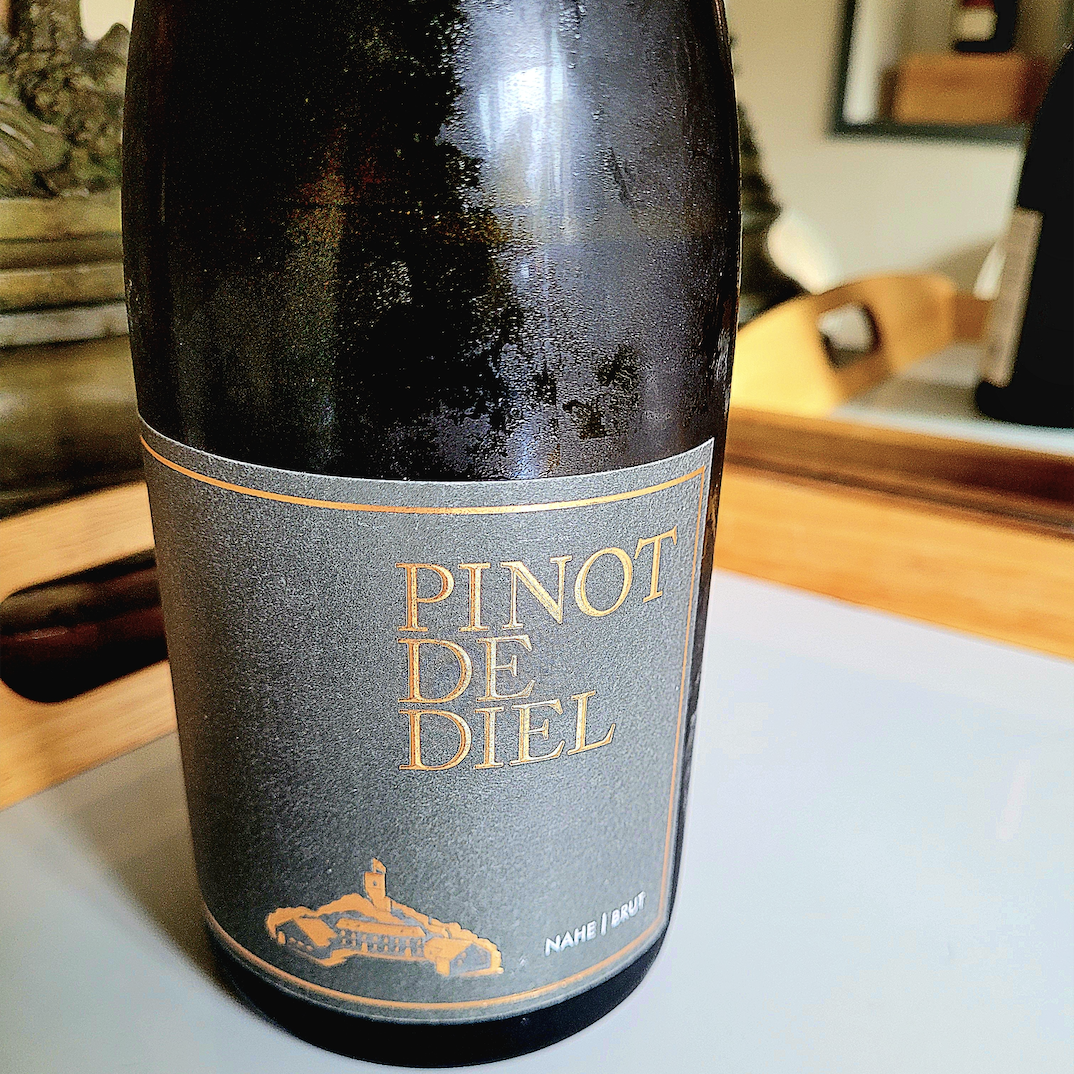
Schlossgut Diel Pinot De Diel, VDP.Sekt, Nahe

A vibrant mix of pinot noir and pinot gris from Caroline Diel, seventh generation winemaker at Burg Layen which came into the possession of the Diel family in 1802. The base wine is 2020 fruit with some residual 2019 involved, two years on the lees and of an aperitivo intent. Easy drinking and on the dry side which feels like another Brut Zero style is well within Diel’s capable reach. Like a bite into a tart and juicy green apple with a drip of red fruit and a fairly tart finish. Satisfying bubble all around. Drink 2024-2026.  Tasted March 2024

Schlossgut Diel Dry Riesling Dorsheim 2017, VDP.Orstwein

Villages organized riesling from neighbouring village Orstwein with seven-plus years of age, dry and now pretty much in the perfect zone. Has aged beautifully, sitting up vertical and straight, giving generously with a clear and present amount of grace in restraint. The balance between extract and tannin, fruit and acid is simply structured, allegedly and unequivocally spot on. Drink 2024-2027.  Tasted March 2024
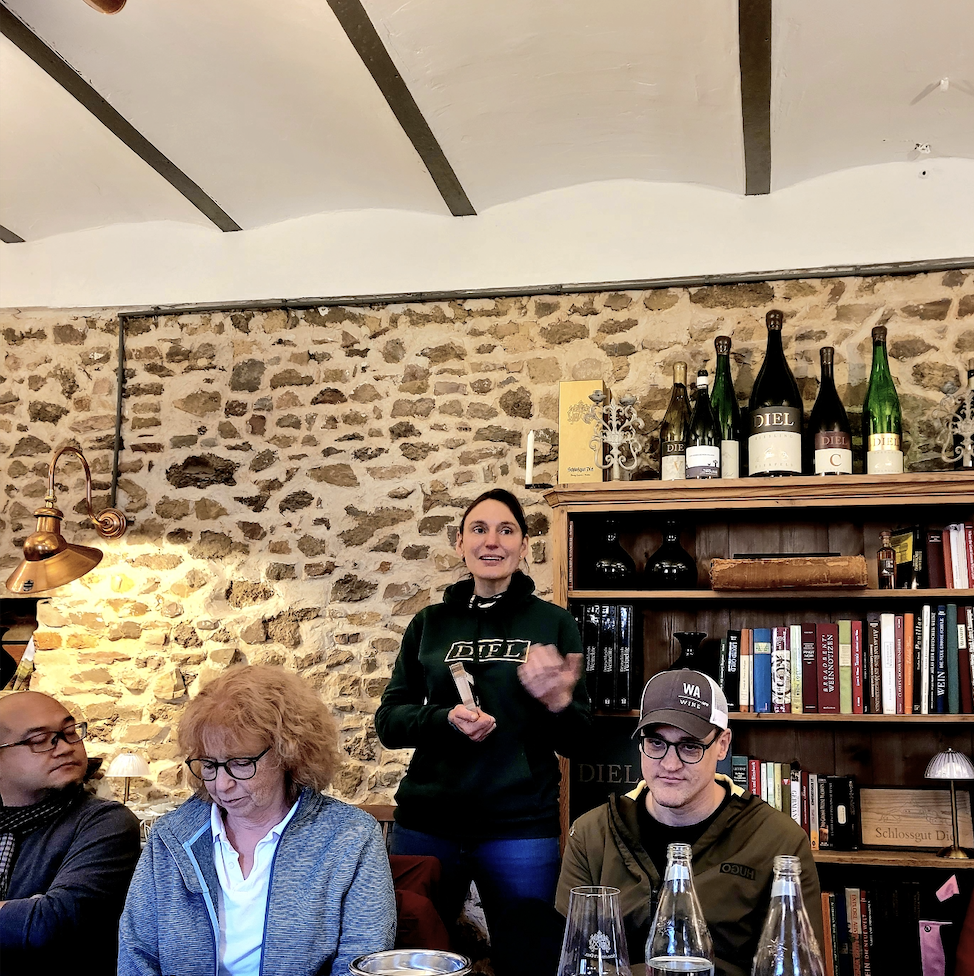
Caroline Diel – Schlossgut Diel

Schlossgut Diel Cuvée MO Brut Nature 2014, VDP.Sekt Prestige

“I believe sparkling wine does not need any dosage,” and Caroline Diel followed this when she joined the family in 2007, continuing what started going all the way back to the 2004 beginning of this project. Cuvée MO Brut Nature is ninety months on the lees, made with pinot noir and chardonnay. Developed richness for a sparkling wine made at the time in an oxidative style,. Showing aldehydic notes, of brioche to the end of a smoky and really old style of Champagne. Should actually stay this way for a few more years to come. Drink 2024-2027.  Tasted March 2024

Schlossgut Diel Pinot Noir Réserve 2020, Nahe

Most of the vines were planted in the mid to late 90s by Caroline Diel’s father Armin. Approximately 20 percent whole cluster, the rest hand de-stemmed, all vineyards in the cuvée fermented naturally and kept separate. A year and a half in barrel, spontaneous malolactic settling, racked now and then and no filtration. Rich fruit, high acid, truly complex aromatics, meaty perfume, full, juicy, lively and finally a truly substantial finish. Neither derivative nor imitative. This is Caroline’s mid-level pinot noir for a 7th generation winemaker who would go on to do the 2022 harvest at Romanée Conti. Mid-level will surely rise up to even greater heights. Drink 2024-2028. Tasted March 2024
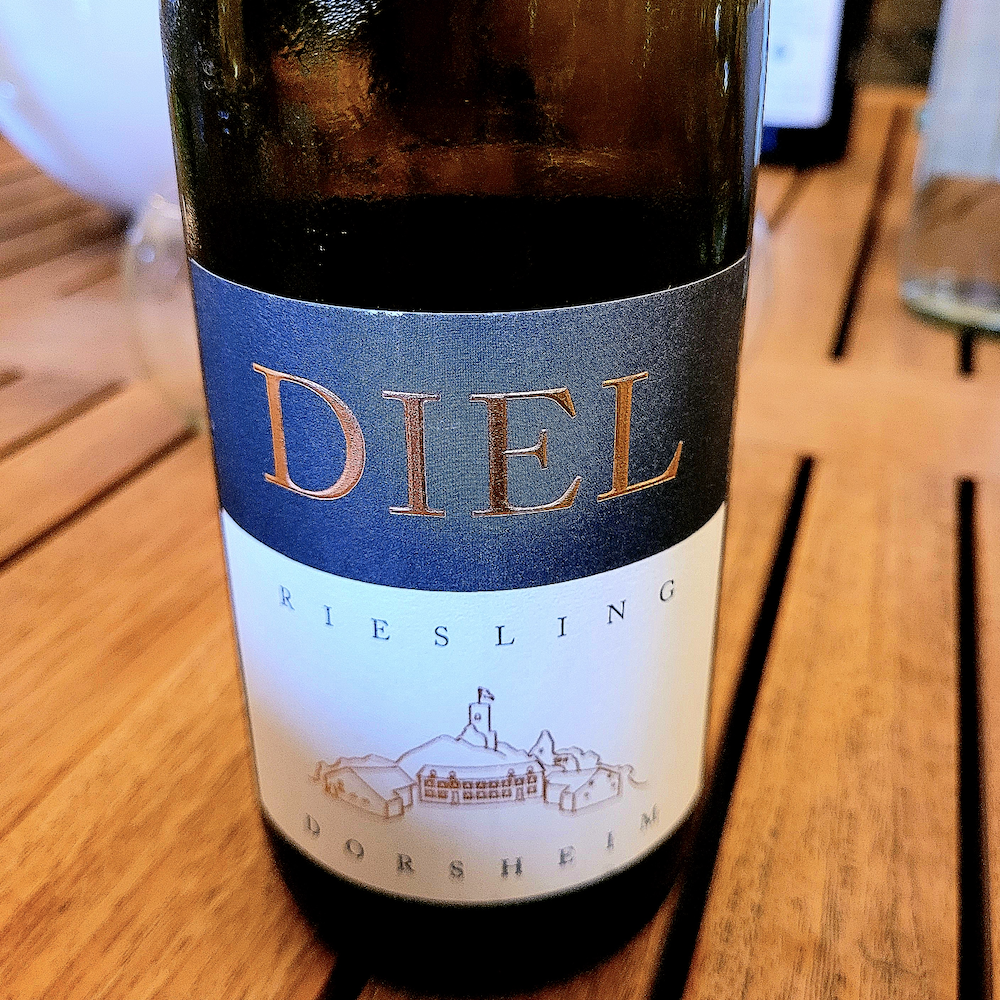
Schlossgut Diel Dry Riesling Pittermännchen GG 2022, VDP.Grosses Gewächs

The tiny one hectare cru Pittermännchen is a name that dates to the middle ages with a connection to the people of Köln and Düsseldorf. Grand cru site of weathered grey (Devonian) slate atop Rotliegend conglomerate that dates back several million years. The geo-agricultural texture is small decomposed particles as opposed to the larger stones of the Mosel. Expressive flint stone aromatics undeniably soil related and not much fruit to discuss, save for some variegate currants but you really have to conjure imagination. There is a mille-feuille density to this riesling that peels away and delivers waves in layers without boundaries. Complexities are revealed without pause and dryness results because purity and grip replace the necessity for sugar-acid balance. So stony, long and our palates are held captive. Top shelf riesling within the idiom. Drink 2026-2033.  Tasted March 2024

Schlossgut Diel Riesling Kabinett Goldloch 2022, VDP.Grosse Lage

When she returned to the family in 2007 Caroline Diel’s first order of business was to not use herbicides “and it was a disaster,” she remembers, “not being prepared with staff, machine and experience.” Good things take time and now organic certification will come in 2024. The 2022 vintage was not the hottest but was an extremely dry one that saw vines on steep hillsides have to work hard to resist the dangers. Healthy vines can in fact digest the climatic extremes and this riesling of Kabinett style is a testament to facing the challenges head on. The gravelly bedrock of Dorsheimer Goldloch is of the Permian age and its rieslings are juicy as it gets, fruit forward and truly antithetical to the über mineral of the Pittermännchen. Makes sense that Kabinett is the choice for this naturally sweet meeting equal factored acidity that connects for a kick mix of sweet, salty, sapid and savoury. A quotient of 42 g/L of RS so hidden by the acids, grip and energy of the wine. Drink 2024-2031.  Tasted March 2024
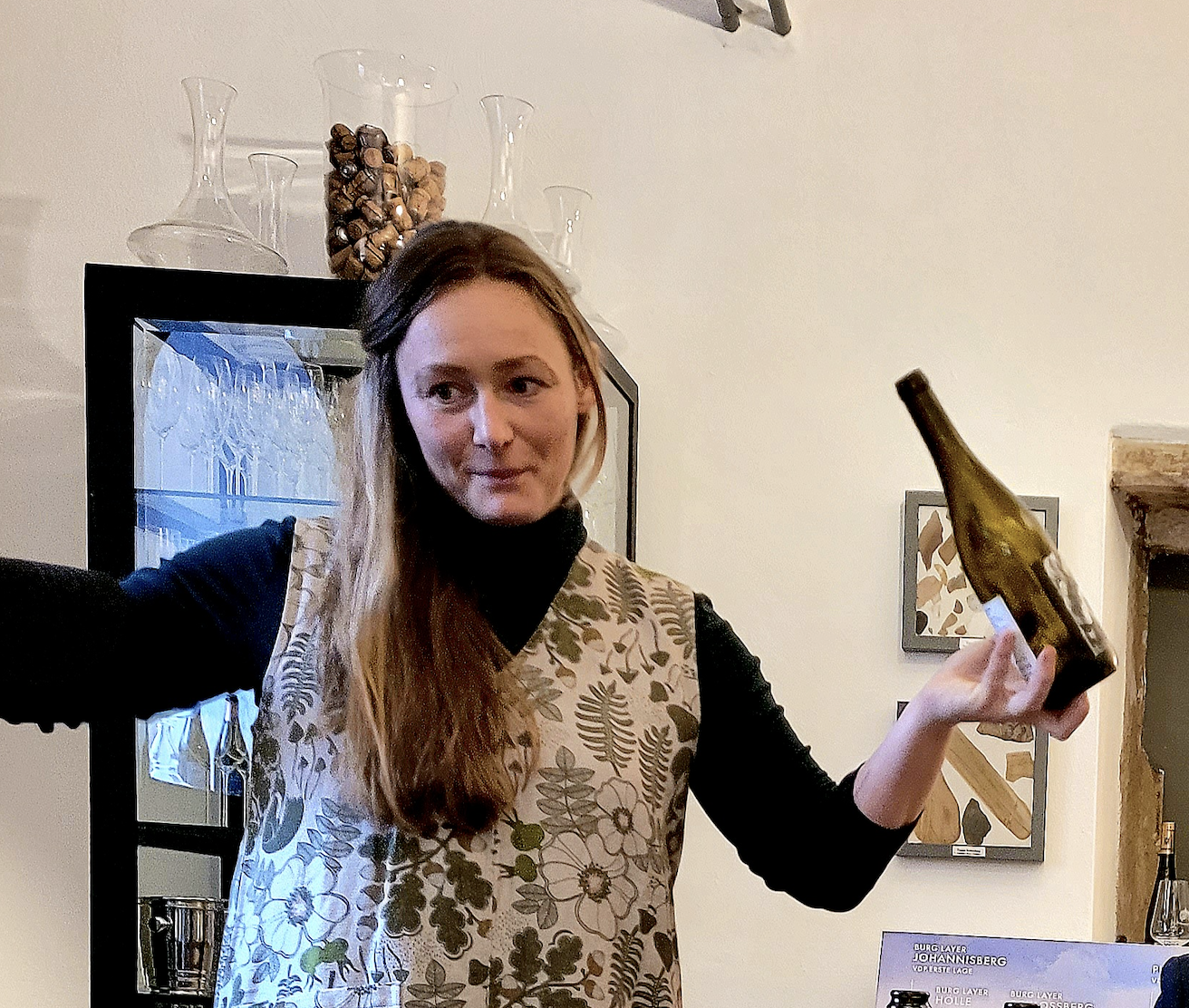
Christine Pieroth – Piri Naturel

Piri Naturel Christine Pieroth – Burg Layen, Nahe

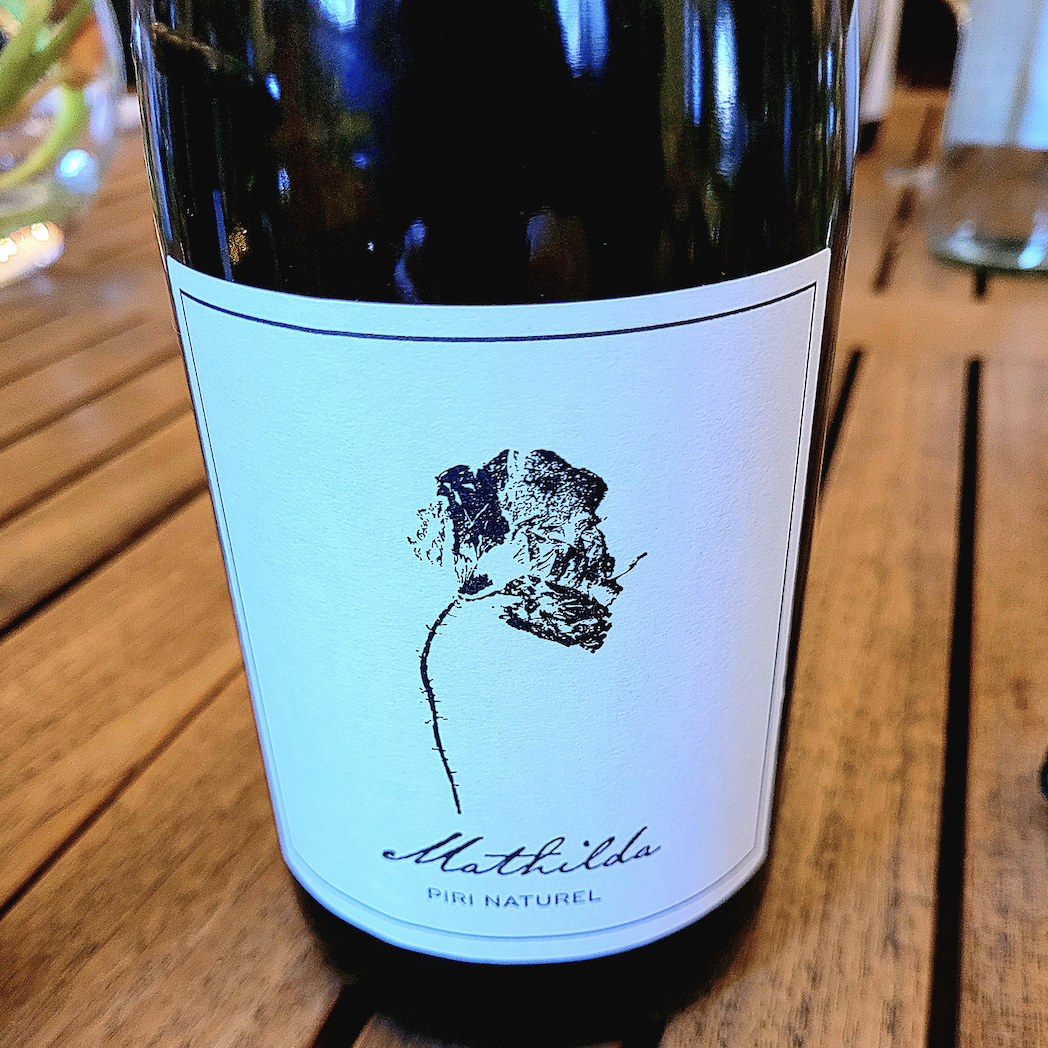
Piri Naturel Christine Pieroth Mathilda 2021, Nahe

Christine Pieroth is 7th generation for a winery dating back to 1789. Mathilda is a blend of sylvaner, riesling and kerner, made for simple drinking pleasure. Bottled under screwcap to capture the natural effervescence, skin contact and cloudy character for a characterful example of what a nurturing and deft touch can do for grapes that just want to be together. Clean and well made without any pretence, trend or commercial design. Natural for the simple reason of pour me a glass. Drink 2024-2025.  Tasted March 2024

Piri Naturel Christine Pieroth Riesling 2021, Nahe

Christine Pieroth studied at Geisenheim and worked in the Okanagan. Her philosophy is really quite direct. “Agriculture is really separated from nature.” Piri Naturel is riesling grown on granite-based, (ancient) sandy seashore pebbles called the Kieselstein. Macerated on the skins for one day, to capture the cool climate region, especially with riesling, then ages two years on full lees in big Stückfässern. “One of the vintages (2021) with the highest acidity I’ve ever experienced” she remembers. Beautiful purity captured without oxidative or any idiomatic orange ornateness. Brilliant riesling work in the style for those who like and want, but also those skeptical of what this kind of wine can be. Acids are captured, tamed and on time release. Drink 2024-2028.  Tasted March 2024
Piri Naturel Christine Pieroth Ponderosa 2021, Nahe

A family nickname for the vineyard and incidentally also the Matsutake mushroom, a.k.a. Armadillo Ponderosa. Comes from a schist slope that changes colour from top to bottom, here for a single vineyard though it can’t be labeled this way. Not filtered and so it can’t have a classification. “In the last year I’m turning things upside down” says Christine Pieroth. Ponderosa is 90 percent pinot gris with (10) pinot noir treated to carbonic maceration and my if this isn’t the pink juice you really want to drink. Pink grapefruit, jelly belly, pomelo and guava, dry and tropical, crunchy and tart though never searing. Drink this with a grilled striploin – seriously. Forget Rosé or chardonnay – the acid structure, grip and tannins will do well especially, with a marbled cut. After all it is called Ponderosa. Drink 2024-2027.  Tasted March 2024

Piri Naturel Christine Pieroth Pinot Blanc 2019, Nahe

Piri farms 7.5 hectares for an average of 80,000 bottles, mostly estate. Permaculture and regenerative farming are practiced with organics as the basis for everything, including no fining or sulphites. The pinot blanc is from 70 yer-old vines, “a very special vineyard, planted by my grandpa,” tells Christine Pieroth. Red schist soil to gift passion and texture to pinot blanc that sees three years in oak, all the while on its lees. No complication, a wine of perfume and nuance, abstract expressionist style, an incredible natural sweetness. A unicorn wine, infinite in ways that can and also can’t be described. The most alcohol of Christine’s wines at 13.5 percent but acidity and spices share the stage and spread the wealth. A slight amount of oak flavour, but fermentative notes have all resolved. Drink 2024-2027.  Tasted March 2024
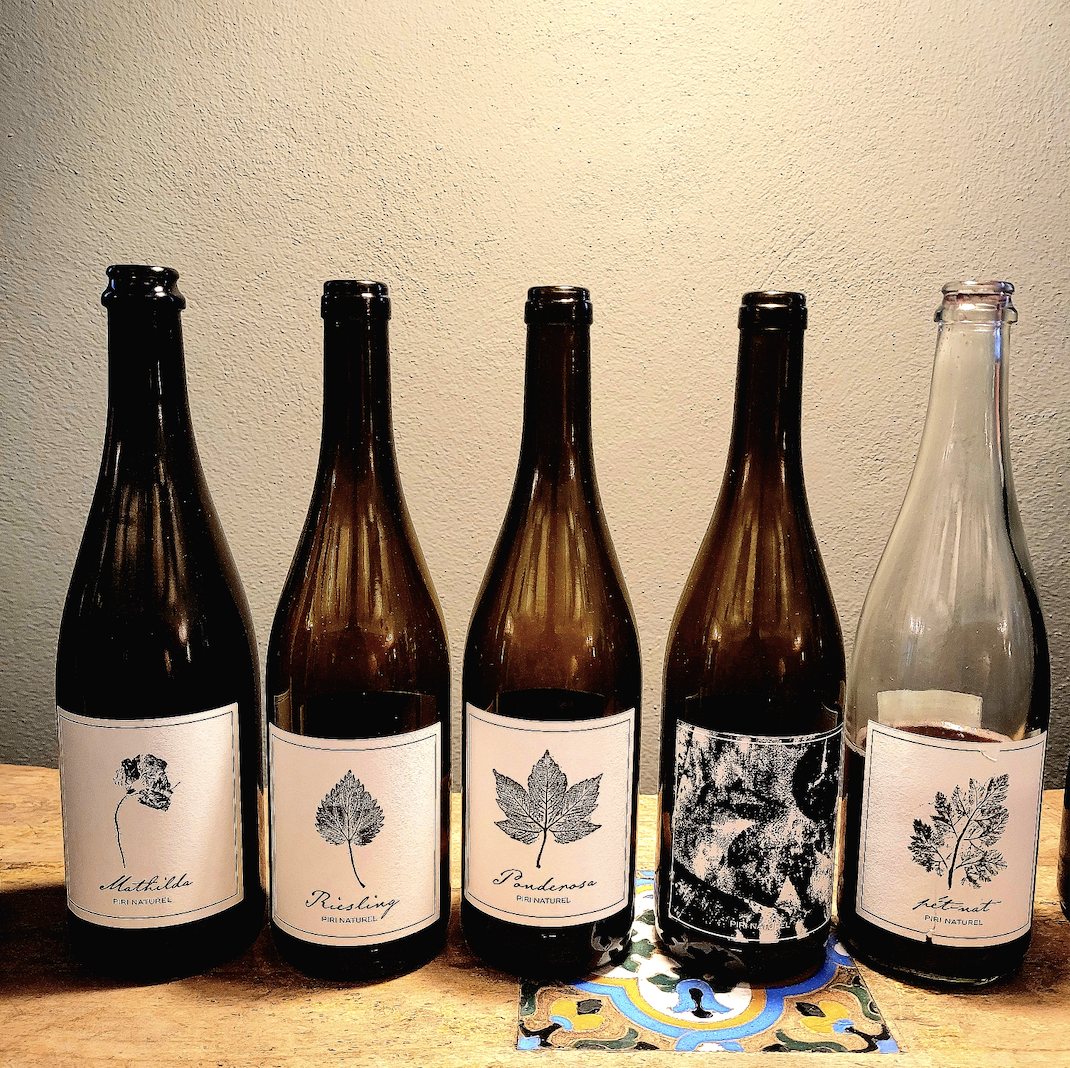
Piri Naturel Christine Pieroth Pét-Nat 2021, Nahe

A Germanic-styled Pétillant-Naturel in the Lambrusco idiom, bone-dry, made from Piwi grapes planted 20 years ago. They being dornfelder and regent (the piwi variety). Talk about foresight and seeing the challenge ahead of the curve. Leesy and cheesy, the most reductive and natural of all Christine’s wines. The kids will love this.  Tasted March 2024

Weingut Anette Closheim – Langenlonsheim

Weingut Anette Closheim Calardis Blanc Dry 2023, Nahe

Calardis is a Piwi variety crossed with bacchus (as opposed to sauvignon blanc or cabernet sauvignon especially) and this is just the second vintage of trying it. Quick  on skins, fermentation and just bottled in February. Picked on the 22nd and 23rd of September after a picture perfect season. A muscat aromatic way about this unique hybrid example, light, fresh, clean and this elastic push-pull between fizzy and botanical. Bit of white peach and peach pit too. Finished at 12.5 percent alcohol with 4.7 RS and 5.8 TA. Drink 2024-2025.  Tasted March 2024

Weingut Anette Closheim Riesling With Friends Dry 2022, Nahe

For friends who are or may not be friends with riesling, but they can be. Acts dry but there is 7.0 g/L of residual sugar and a near equal amount of acidity. Entry riesling in style, juicy, high citrus, only steel raising and uncomplicated. Lime in every way, especially the juice and the zest. Bit of a Mojito you might say. Drink 2024-2025.  Tasted March 2024

Weingut Anette Closheim Riesling Fifteen Dry 2022, Nahe

From Langenlonsheim, Nahe. A long and narrow, “street village” a.k.a. the Naheweinstraße that lines the Nahe. Anniversary riesling of the label, a blend of two single vineyards, planted in 1963 and 1965, red limestone and Nahe gravel. Vinified separately in old wood and in the 2022 there is some residual sugar because one half did not quite finish its fermentation. Seems like rising pH numbers in a vintage like 2022 is the reason for lower acidities and while riesling still seems immune you can’t say the same about pinot grigio and pinot noir which are hitting numbers at or exceeding 3.5. Quite a balanced riesling, a bit higher in RS than the “With Friends” but also more vibrant, less rounded and more quenching. Drink 2024-2026.  Tasted March 2024

Weingut Anette Closheim Riesling Pastorei Dry 2018, Nahe

The last vintage of this near 40 year-old south facing riesling vineyard which has since been re-planted to chardonnay because it’s just too warm a place and 2018 was such a vintage. Finished at 13.5 percent which is about as high as you’re going to accept from riesling, with acidity at a healthy 6.3 though anything but creating a searing experience. Lime juicy, ripe and reduced, like a creamy cordial, sapid as it gets, sweetly botanical upon the finish. Drink 2024-2026.  Tasted March 2024
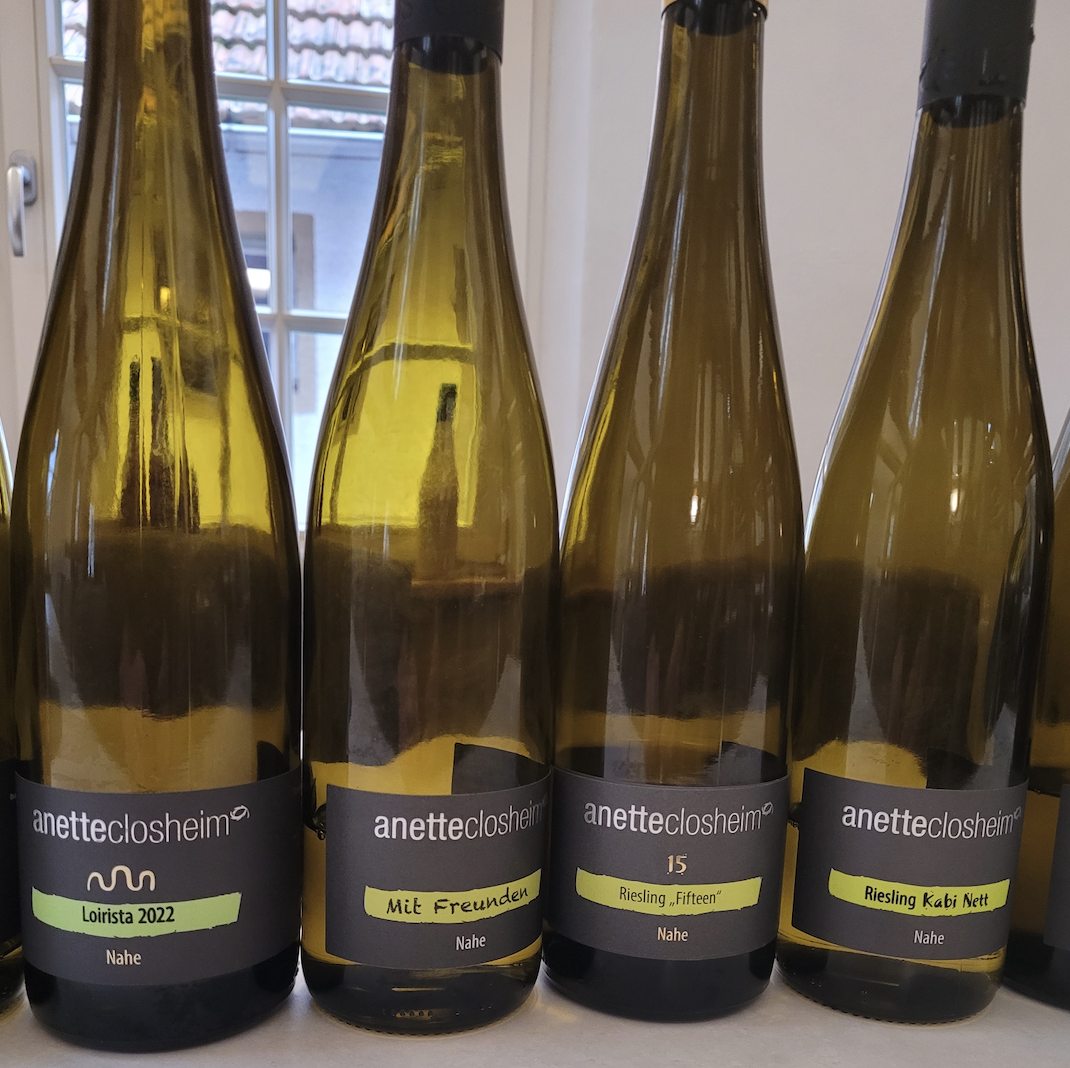
Weingut Anette Closheim Riesling Kabinett Löhrer Berg Medium Sweet 2022, Nahe

From the right side gravel soils for a different mineral experience and while sugar (at 36 g/L) runs high in the Kabinett style you can’t deny how forceful the (8.1) acidity really is. A good if not highest level vineyard site, vines 10-12 years of age, nectarine and lime, well integrated and such a grippy wine. Will hit its balanced stride in a year or two. Drink 2025-2028.  Tasted March 2024

Weingut Anette Closheim Sauvignon Blanc Maturis Dry 2022, Nahe

Single vineyard sauvignon blanc called Maturis, as in ripe, well matured and experienced. The clones are mostly from Alto Adige but also some from France, the vines now 16-18 years of age, in seven vineyards, picked across a week’s time. Verdant, botanical and there is a CO2 buzz on the palate. Lime intensity with just six percent wood aging. One of the most unique SBs ever tasted, like green eggs and ham. Tonic fuelled finish. Drink 2024-2025.  Tasted March 2024

Weingut Anette Closheim Sauvignon Blanc Lorista Dry 2022, Nahe

Higher, drier, similar acidity to the Maturis and now the barrel aged version, with the latest picked grapes (near to the end of September) and a much preferred iteration for Langenlonsheim. From a quickly settled, cloudy and protected pressing that clarifies itself and delivers this amazing richness in spite of the austere aridity. The acidity feels closer to riesling for the Lorista and yet there is some roundness, a creamy consistency based on lime because of the wood. Really unique for the variety, made with the Leimbourg (LB) 36 clone out of Alto Adige. Drink 2024-2026.   Tasted March 2024

Weingut Anette Closheim Pinot Noir Dry 2020, Nahe

Pretty big pinot noir, not exactly traditional German spätburgunder, from German research clones with bunches of small berries and space. Results in more airflow, less botrytis and good ripeness. Low yielding and good colour. Stays on the skins for 16-18 days and then wood for 14-16 months, mainly from François Frères, 25-35 new, plus second, third and fourth fill. Dark berries, sweet savour (with help from 30-40 percent stems added back) for a level of verdancy expected and well integrated. Solid work here. Drink 2024-2027.  Tasted March 2024
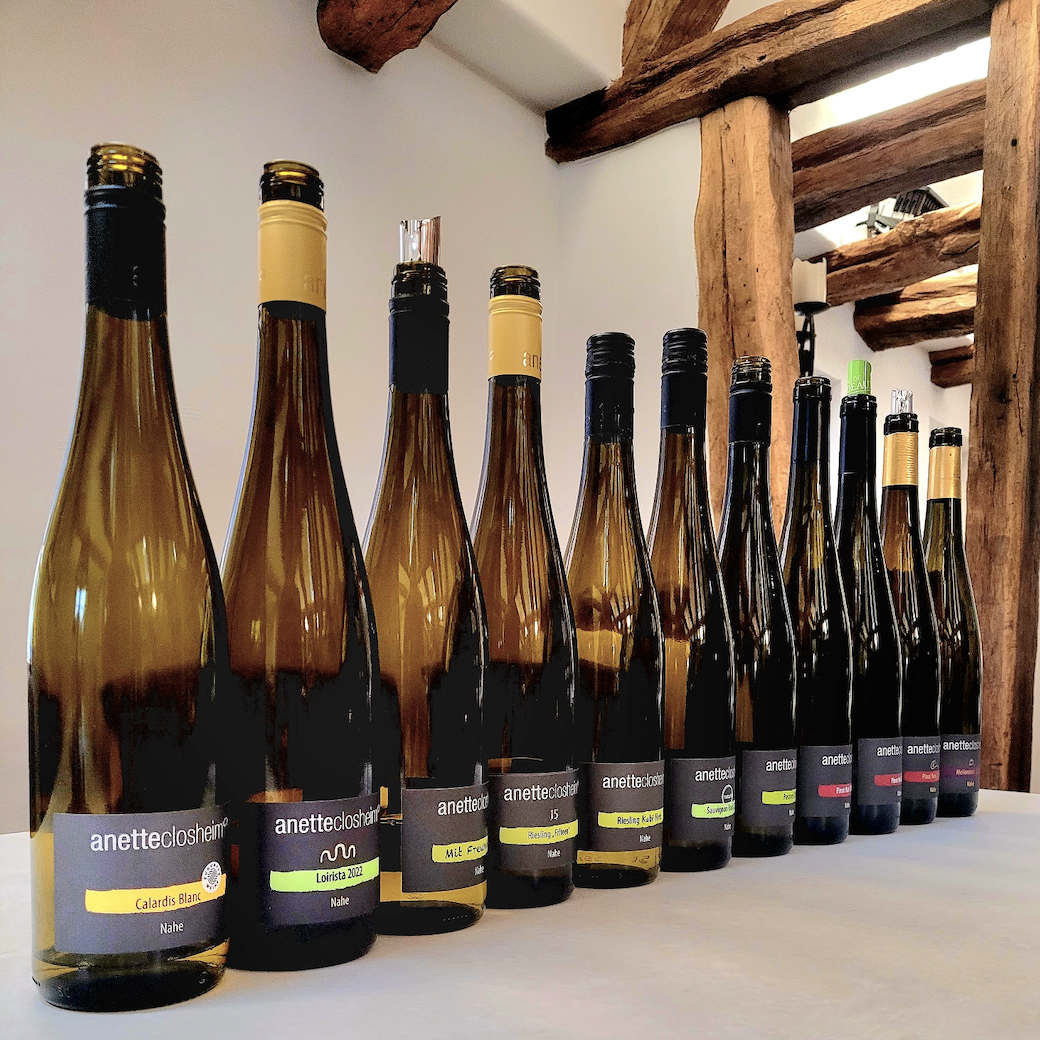
Weingut Anette Closheim Pinot Noir Dry 2016, Nahe

Considering the ripeness, well integrated chemistry and complexity of 2020 it should be really fascinating to look back at 2016. Still peppery reductive and surely a matter of vintage meeting winemaking that both changed within two years after this one. Quite a bit lower in alcohol, here at 13 percent and a perceivable verdant-savoury accent with no shortage of salt and pepper seasoning and added spice. Beyond the reduction this is showing really well, with cool freshness and what could be called a classic German vintage. A pinot noir naked to the world of beauty and that could not be hidden. First vintage was 2008 and since 2012 the same two vineyards have been making this wine. Drink 2024-2025.  Tasted March 2024

Weingut Anette Closheim Pinot Noir Dry 2019, Nahe

Higher percentage of stems (over 50) as compared with 2020, with moderate alcohol (at 13 percent like 2016). Now things are really interesting, also more new oak involved and clearly the thought was that this combination of ripeness and moderation could handle more structure and anti-jam developing fruit. Which turns out to have been the correct move because the wood is hidden, the succulence raised and the overall effect one of best balance. Truly well made, judged and effected pinot noir. Drink 2024-2027.  Tasted March 2024

Weingut Meilenstein 2020, Nahe

Meilenstein, meaning milestone and a wine that marked a big step from a wine that used to be based on point noir with st. laurent. A richness and a pyrazine quality, mildly smoky and really warming on the back end going down. A mix of 65 percent cabernet franc, (25) merlot and 10 acolon (a crossing of dornfelder and lemberger). A quarter new wood and 24 months for a spicy red blend with good energy. It’s woody and a bit awkward still but another year or so will do well to get it into a good place. Drink 2025-2028.  Tasted March 2024
Rheinhessen

Weingut J. Neus – Ingelheim Am Rhein

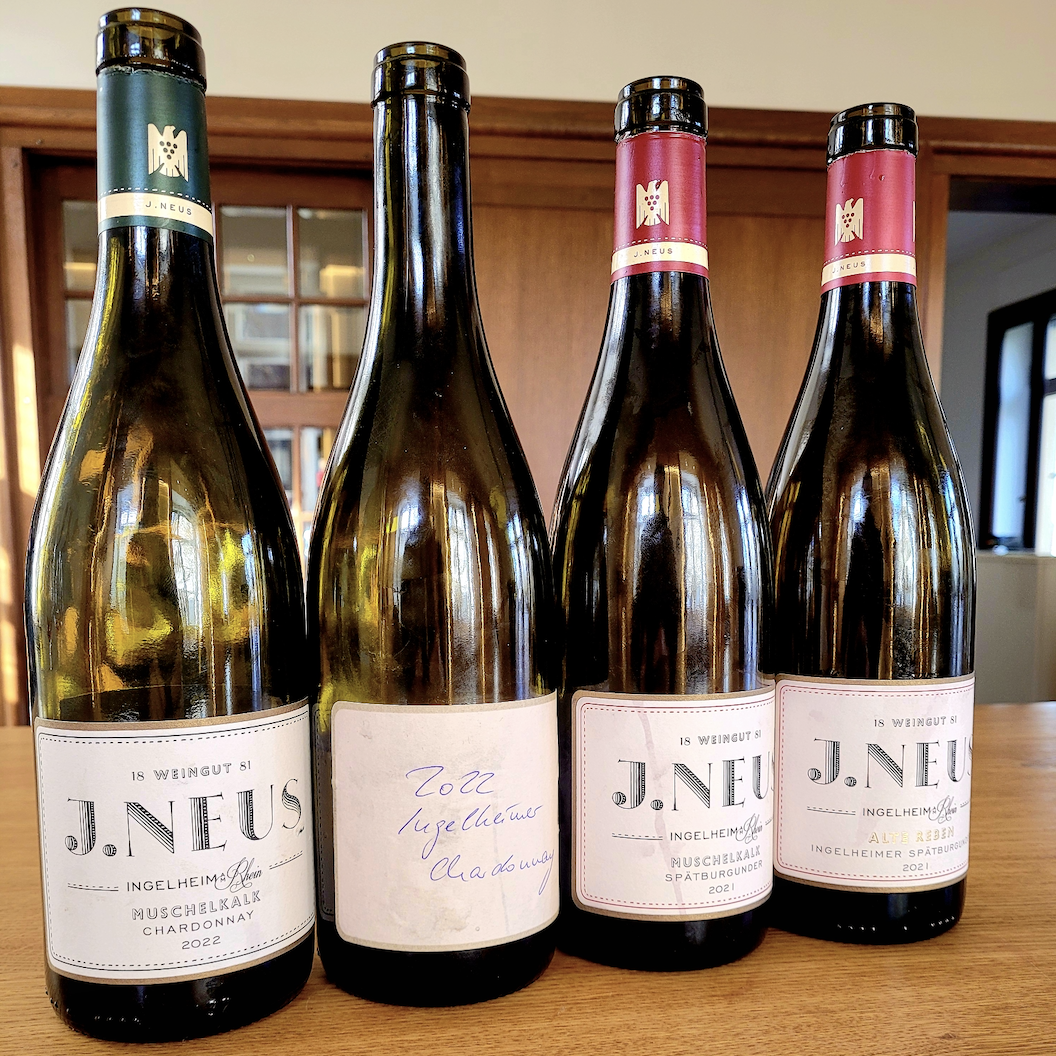
J. Neus Chardonnay Muschelkalk 2022, Ingelheim Am Rhein, Rheinhessen

Chardonnay is increasingly important at J. Neus and while pinot noir represents 70 percent of the portfolio it is this kind of entry-level varietal wine that speaks to what is possible. All chardonnay is barrel fermented and aged in 500L tonneaux and some German wood. Simple but proper, subtle in all the important ways, especially texture. Impressive work for a barrel fermented and aged, full malolactic chardonnay. Good crunch, energy, vitality and persistence. Pure chardonnay expression, the new Rheinhessen personified for what white wine can be, especially in and around Ingelsheim. Drink 2024-2026.  Tasted March 2024

J. Neus Chardonnay Ingelsheimer 2022, Ingelheim Am Rhein, Rheinhessen

Ingelheim is the village and this is currently the higher tier chardonnay though a third is on the way so it will soon fall into the middle. Certainly shows more newer tonneaux and compactness on the aromatic front, less forthcoming and yet clearly more stylish. Smells richer and more expensive, transitions with tighter grain and intensity, fills the spaces in between with riper, woven and textured fruit. Then it’s all chalky limestone strikes with spice over the last moments of the wine. Vanilla rests and settles on the finish. Drink 2025-2029.  Tasted March 2024

J. Neus Spätburgunder Muschelkalk 2021, Ingelheim Am Rhein, Rheinhessen

The introductory pinot noir with a great part of it made with Neus clone grapes, genetically selected by Josef Neus who came from the Mosel and started the winery in 1881. Full on berry aromas in red but also blues, still quite primary as if it just recently come out of its fermentative machinations. So fruit forward and floral, truly unique oi the world of pinot noir and the vintage must have more than something to do with this result. Drink 2024-2026.  Tasted March 2024

J. Neus Spätburgunder Alte Reben Ingelheimer 2021, Ingelheim Am Rhein, Rheinhessen

Eminently and immediately notable to recognize more reduction, flint stone and less fermentative aromas as compared to the entry level Muschelkalk spätburgunder. The wood lends an early and persistent toasty quality while dried herbs and botanicals remind of the phenolics that a Neus pinot noir has been showing for a decade. That said the style has for sure softened and refined over the last seven years to arrive at this well founded time in its tenure. Many people will be surprised at this high level of Rheinhessen quality. Drink 2025-2028.  Tasted March 2024

J. Neus Spätburgunder Pares GG 2021, Ingelheim Am Rhein, Rheinhessen

A hot summer though the Grosses Gewachß spätburgunder are made from fruit grown in the coolest spots and picking was done in mid September ahead of the rains. Lively and spicy aromatics with acidity showing up even before a sip is taken. Red fruit of many ilk, from stone through citrus and yet the palate is quiet, namely because Pares is a much more mineral example than the other GG called Horn. Again the refinement compared to vintages such as 2014 shows the progression and evolution of Neus’ work with pinot noir. Approximately 3,000 bottles are produced between the two GGs. Drink 2026-2031.  Tasted March 2024

J. Neus Spätburgunder Horn GG 2021, Ingelheim Am Rhein, Rheinhessen

One of two single vineyard sites (along with Pares) on the Meinsebach side of the river and Ingelheim village. Horn is the warmer of the two sites and so the great immediacy of the Pares acidity gives way to greater depth of gratifying fruit maturity on Horn. More stone and less citrus but really the differences are subtle even while the breadth here surely elevates this unique GG. The vineyard faces southwest and texture really concentrates in a pinot noir that still shows off sweet acidity with top level spiciness and energy. Ripest stems are added back and again it just feels like this process has been refined over the last seven years to come to this really stylish point. Drink 2026-2032.  Tasted March 2024
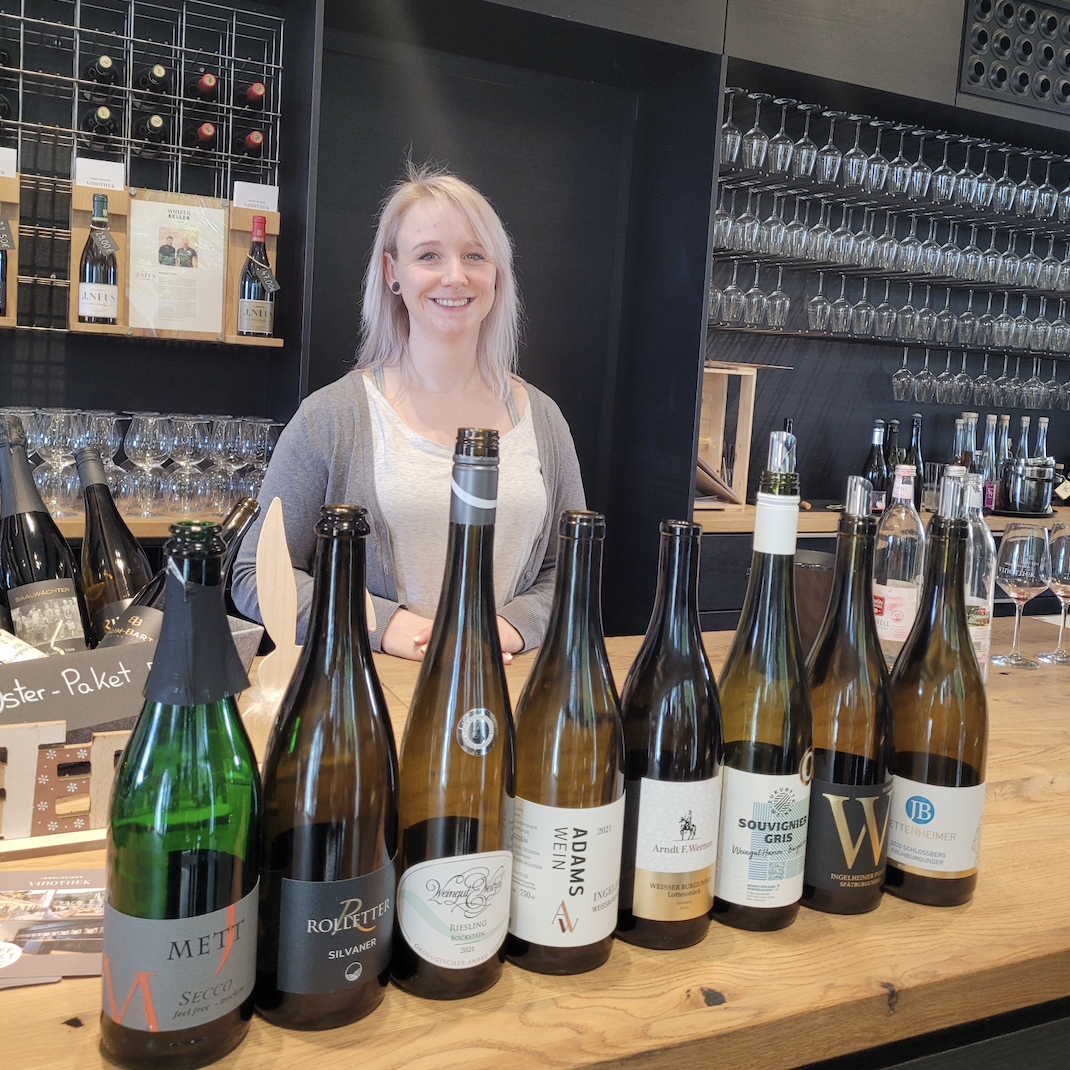
Shanna Reis – Ingelheim Vinothek

Rheinhessen tasting at the Ingelheim Vinothek with Shanna Reis

Organic Weingut Weitzel Riesling Spätlese Trocken Bockstein 2021, Rheinhessen

The work of Elke & Eckhard Weitzel with riesling of late harvest (somewhere between Kabinett and Spätlese) designation though also classified as dry. A bit of an oxymoron but this is in fact of a much lower residual sugar content for a late picked riesling. Lacks the energy and drive in the sugar-acid relationship of true or classic late harvest and so the simplified style drinks easily with straight lines and one-dimensional lime. Drink 2024-2025.  Tasted March 2024

AdamWein Weißburgunder Trocken Ingelheim 2022, Rheinhessen

Simona Adam is the winemaker, having taken over from her parents nearly 10 years ago. Creamy wood on the nose and even more so on the palate. Spice and pencil lead first, followed by lactic peach and vanilla after. A shot of tonic at the finish for a nicely complex if easy drinking white. Drink 2024-2026.  Tasted March 2024
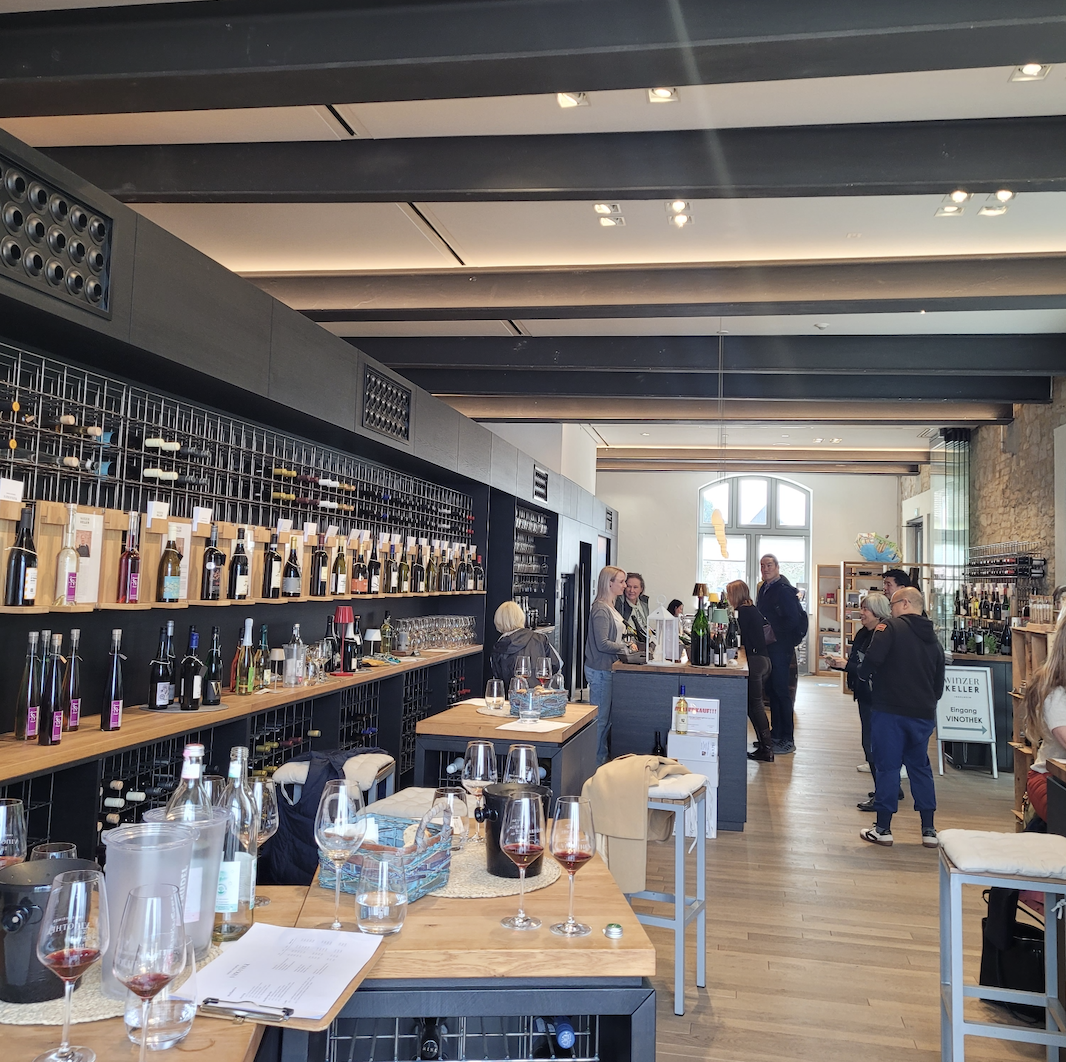
Ingelheim Vinothek

Weingut Arndt Werner Weißer Burgunder Trocken Lottenstück 2022, Rheinhessen

One of two local organic wineries doing weißburgunder (though for the consumer confusingly labeled “Weißer Burgunder) and a much fruitier, almost fruit punch, up front and round style of pinot blanc. Lower in acid and really just about the fruit. It’s weisser, meaning whiter, so the question is, how much more white can this pinot be? The answer is none more white. Drink 2024-2026.  Tasted March 2024

Weingut Hamm-Burgkirsch Souvignier Gris Weiss Trocken Zunkunftswein 2022, Rheinhessen

A Piwi grape, German cross between seyval blanc and zähringer created in 1983 by Dr. Norbert Becker. Strange that it was originally thought to be a cross between cabernet sauvignon and bronner and maybe because the grapes are quite dark pink in colour. The idea is sauvignon gris meets viognier and the style is not far from that type of union. The palate is more tropical and unctuous than what the nose might have indicated but there is a pungency and passion fruit-like note that advances aromatically after a sip is taken. Some sweetness and good acidity. Could really see people enjoying this. Drink 2024-2025.  Tasted March 2024
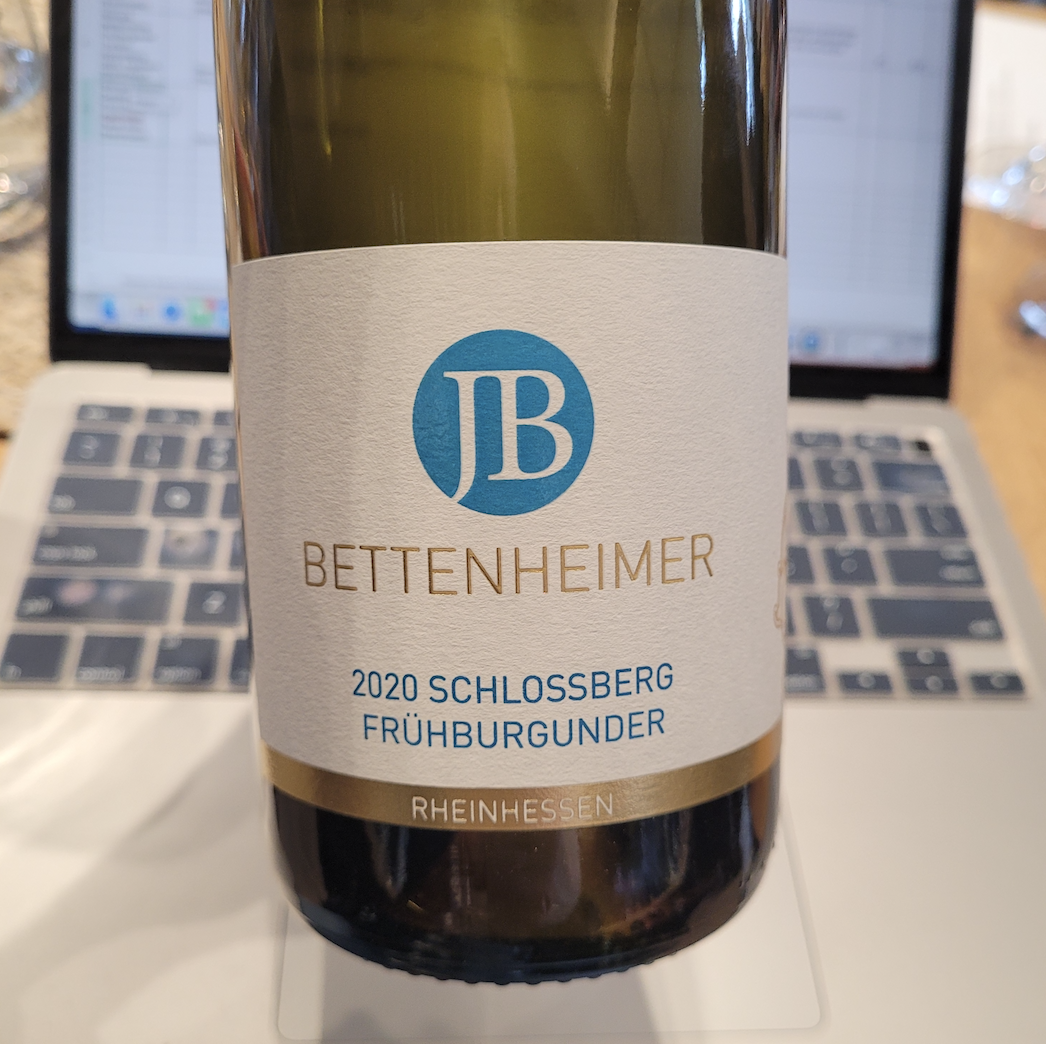
Weingut Bettenheimer Frühburgunder Trocken Schlossberg 2020, Ingelheim, Rheinhessen

Germany’s most interesting grape and perhaps its red future is frühburgunder, a.k.a pinot noir précoce or pinot madelaine, a cultivar that needs to be treated without great oak or pressed ambition. This is neither lithe nor heavy but some not so perfect wood makes the texture quite pasty and it settles uncomfortably on the palate. Some green tannin as well – pressed just a bit heavy it feels. Drink 2024-2025.  Tasted March 2024

Weingut Wasem Doppelstück Pinot Noir Trocken Ingelheimer Pares 2020, Rheinhessen

Some micro oxidative notes at this three-plus year stage though also a taut and compact sensation both on the nose and palate. Rich glycerin and viscous, plenty of cherry and cherry stone bitters for complexity but also a harshness at the finish. Doppelstück is a barrel name where more than one family makes wines but this pinot noir is made by two sisters of the family’s next generation – Doppelstück, meaning twice as big as a regular sized barrel. Very promising varietal wine, just a bit heavy pressed at this stage in its tenure. Drink 2024-2026.  Tasted March 2024
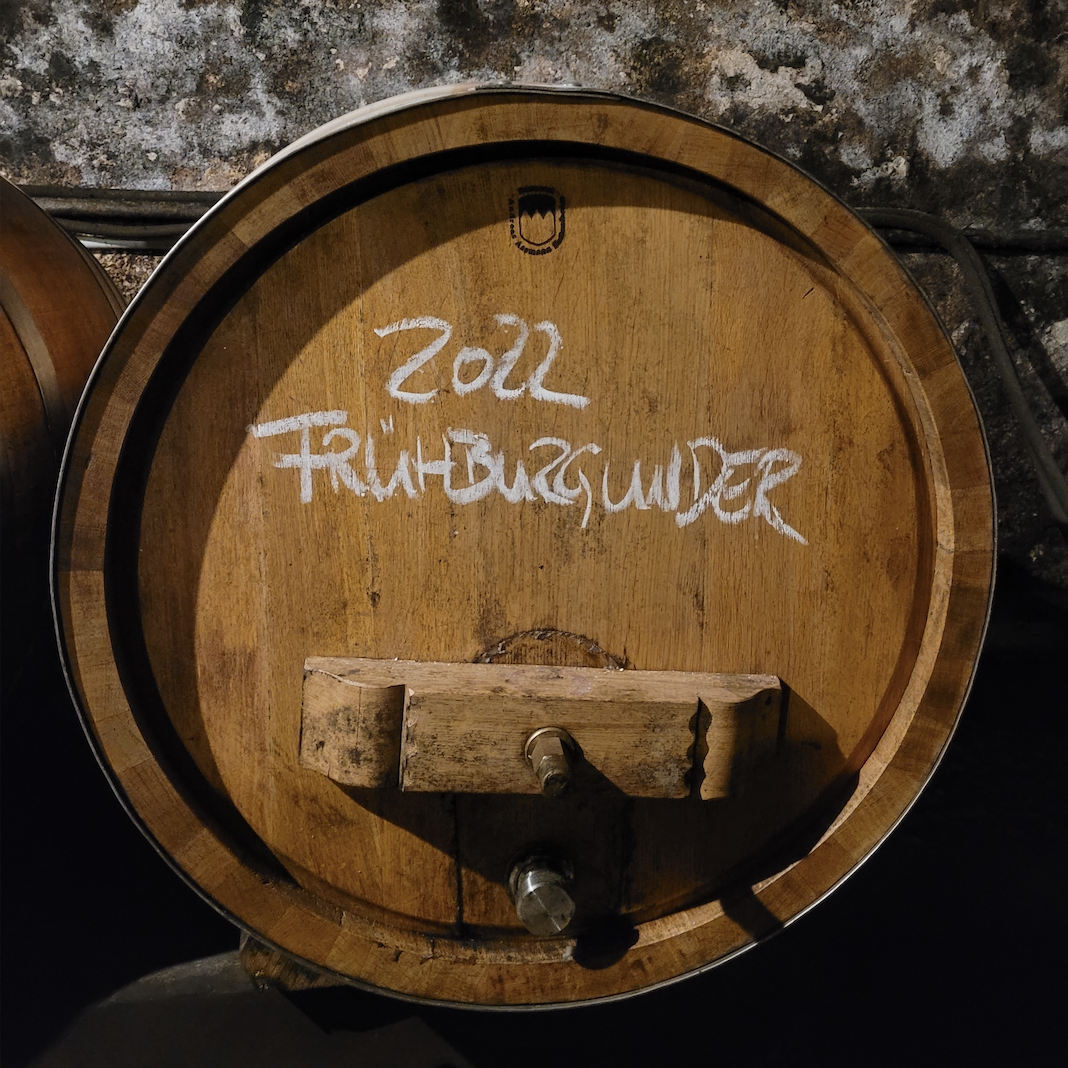
Menk Frühburgunder Trocken 2021, Ingelheim, Rheinhessen

Fresh and energetic frühburgunder with a briny note but some nice fresh raspberry fruit with leafy accents. Palate is a bit syrupy while overall acidity and drive are quite good. Drink 2024-2025.  Tasted March 2024

Baum-Barth Ingelheimer Frühburgunder 2021, Rheinhessen

Good ripe fruit, a bit oxidative but the bottle has been open for a few days. That said the tannic structure and energy are clearly based on an uptick of quality and overall intensity is really fine. Drink 2024-2025.  Tasted March 2024

Sebastian Münster Frühburgunder Cosmographia 2020, Ingelheim, Rheinhessen

Fine and well made frühburgunder with a lactic way about it and fruit really well connected to the structural aspect of the wine. A bit of red fruit paste and austere tannins so there is potential and the pressing was done with some fine restraint. No overriding green tannin but a tisane quality is part of the deal. Drink 2024-2026.  Tasted March 2024

Good to go!

godello

Twitter: @mgodello

Instagram: mgodello
WineAlign

Wines of Austria: The tension of opposites

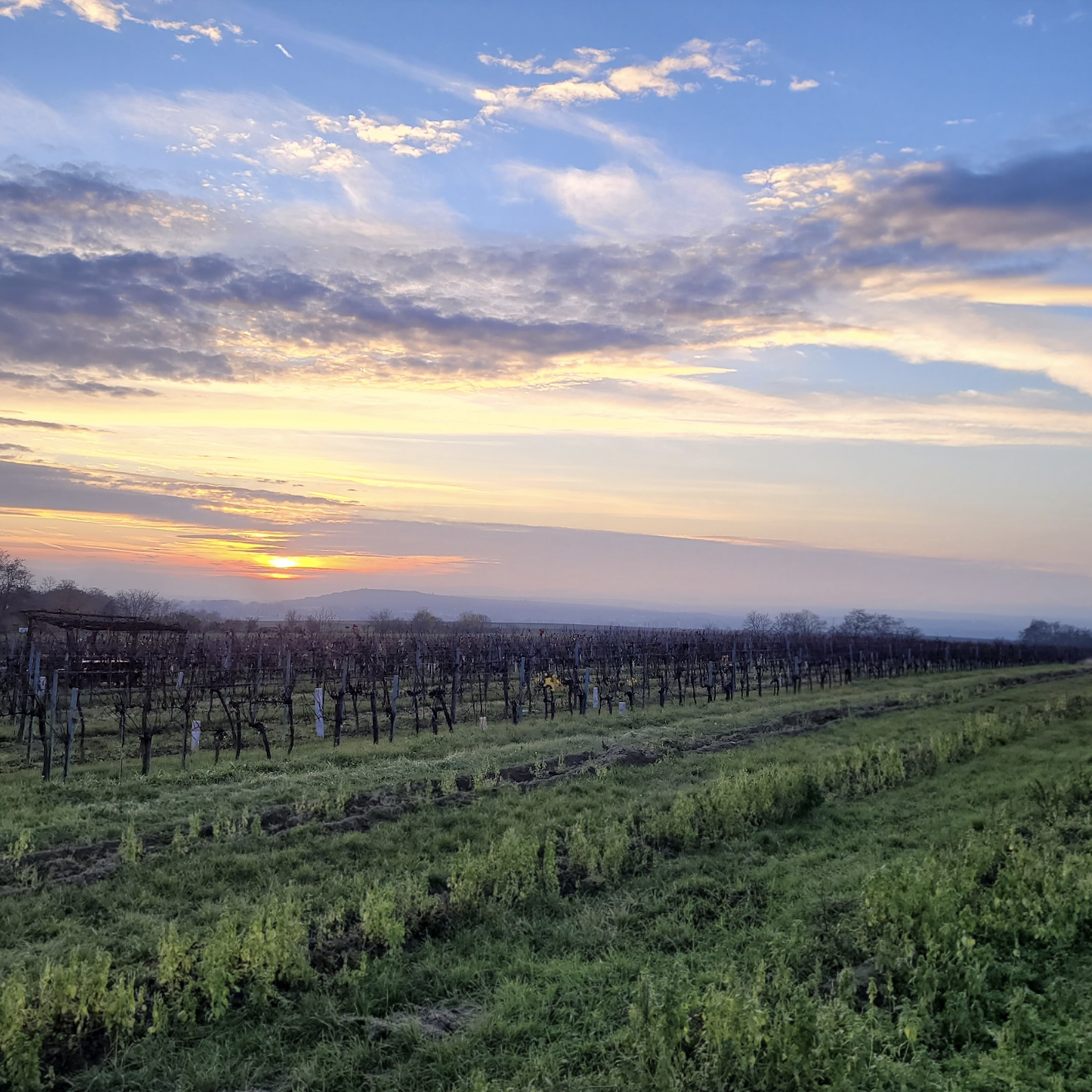
Sunset over Niederösterreich

Life is a series of movements, from pillar to post and decision making often culminates in negative results. Every day there are deliberations, shuttles and bargaining for positivity, all inherently matters of the human condition, experienced through the tension of opposites, simply because choices made more often than not feel diametrically opposed to one another in some unavoidable way. This is one of Carl Jung’s foundational precepts and while it is often a source of frustration and confusion, for grapes and the wines they create it can be the source of greatest joy. A vine planted in poor soils and subjected to the tensity of elements may succeed but it must find a way to suffer through the strain and pressure. Jung noted that in fact it can be a necessary pre-condition (in the case of people) for real transformation to occur. Antithetically speaking grapevines are not human and nature is exceedingly if also impressively resourceful. Roots dig deeper in search of nutrients, the plant stretches and adapts, learns to embrace the tension of opposites and in turn grows stronger. Wine lovers know the feeling, of tasting that which was raised on terroirs where the vine struggle is real, survival is the necessity and the wine results are pure glory.

Godello in Wagram

Which brings us directly to Austria, where incidentally I visited, albeit briefly, back in late November of 2022. It was there that this theory was brought to light. Extreme climate, gradience and geology can lead and convince a vine to beat the odds, case in point examples from near and far. Places such as the Côtes d’Or, Rangen de Thann, Radda in Chianti, The Mosel, Salta, Lanzarote, Camargue, Bekka Valley, Santorini, Aosta Valley, Patagonia, Ahr Valley, Prince Edward County, Hunter Valley, Annapolis Valley, Lamole and Limarí Valley. Just to name a large handful! Let us add Austria to the list, Lower Austria that is (Niederösterreich) and more specifically the Wagram and the Traisental. Three aspects determine the viability for these two growing areas to qualify as those where the experience concerns the tension of opposites. Cool climate, poor soils and windswept ridges. Stand atop any one of these spots in late November, feel the chill drill straight down into your bones and know just what a vine must do to not only survive, but also thrive.

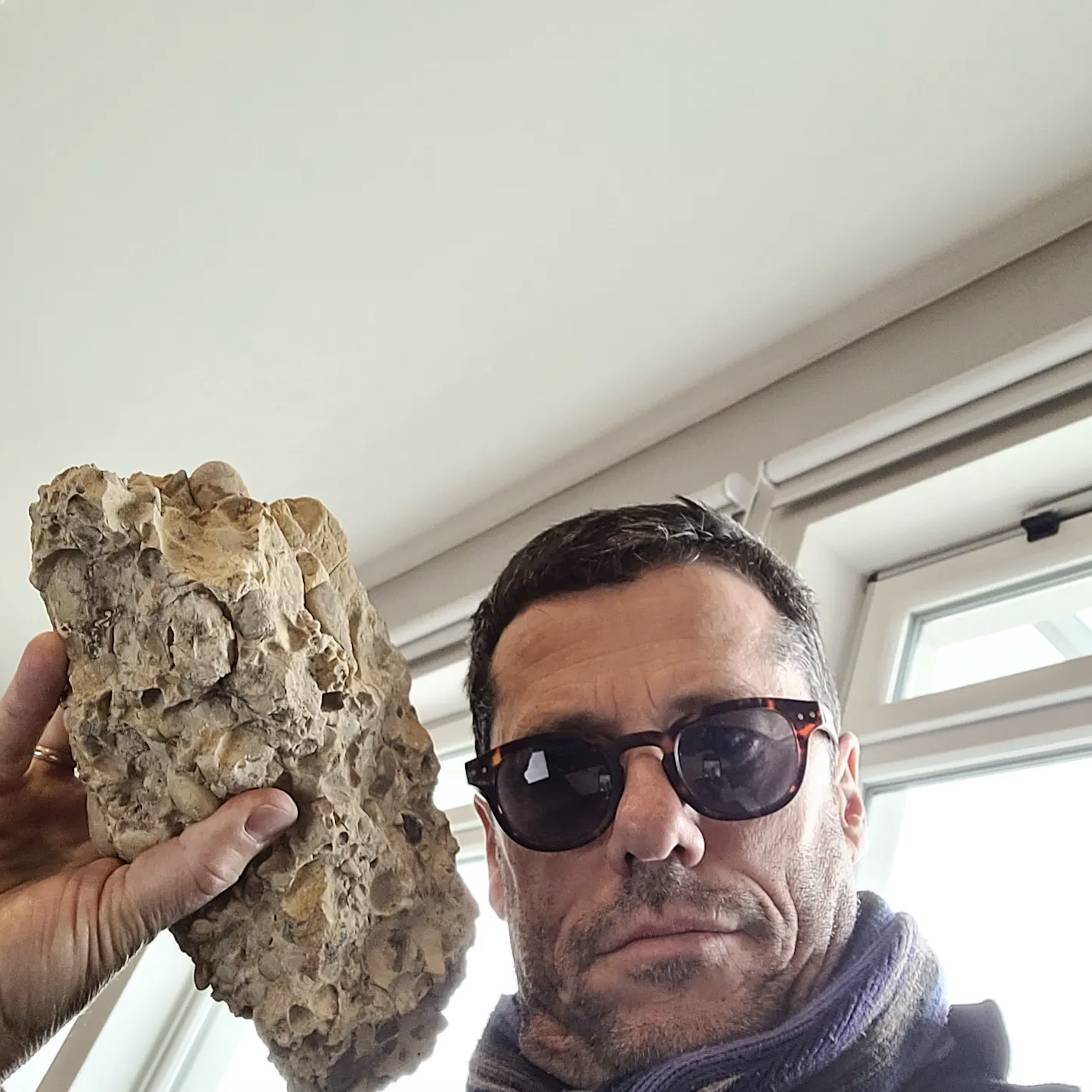
The Loess of Clemens Strobl

Wagram

In the Wagram the vineyards are divided between two distinct zones. The first is north of the Danube, directly to the east of the Kamptal where a vast terrace of land stretches eastwards for approximately 30 kilometres. The second zone runs south of the Danube, home to the small wine villages of the Tulln Basin, as well as the historic wine-growing town of Klosterneuburg which is just a stone’s throw away from Vienna. There are 250 wineries in the wagram, 2,459 hectares under vine and the three principal grape varieties are grüner veltliner, riesling and roter veltliner. The main viticultural villages are Feuersbrunn, Fels, Grossriedenthal, Gösing, Kirchberg, Großweikersdorf and Klosterneuburg.

Kirchberg am Wagram

It’s really all about rich, aromatic wines. The name Wagram is derived from the word Wogenrain, roughly translated as “surfside.” This is because the substratum of alluvial gravels and sedimentary marine deposits is covered by loess,  blown in during the ice ages and has since played a significant role in shaping the landscape. From the 2021 vintage onwards, regionally typical wines can be labelled as Wagram DAC. The top tier of the pyramid is represented by the region’s Riedenwein (single-vineyard wines) and here is where grüner veltliner, riesling and roter veltliner truly shine. Moving down from the Ried there are the Ortsweine or Villages wines that can also include chardonnay, weißburgunder, blauburgunder, and zweigelt. Finally there are the Gebietsweine, monovarietal, as a cuvée blend or Gemischter Satz (field blend)). The above mentiioned grape varieties are joined by frühroter veltliner, grauer burgunder, gelber muskateller, sauvignon blanc and traminer.

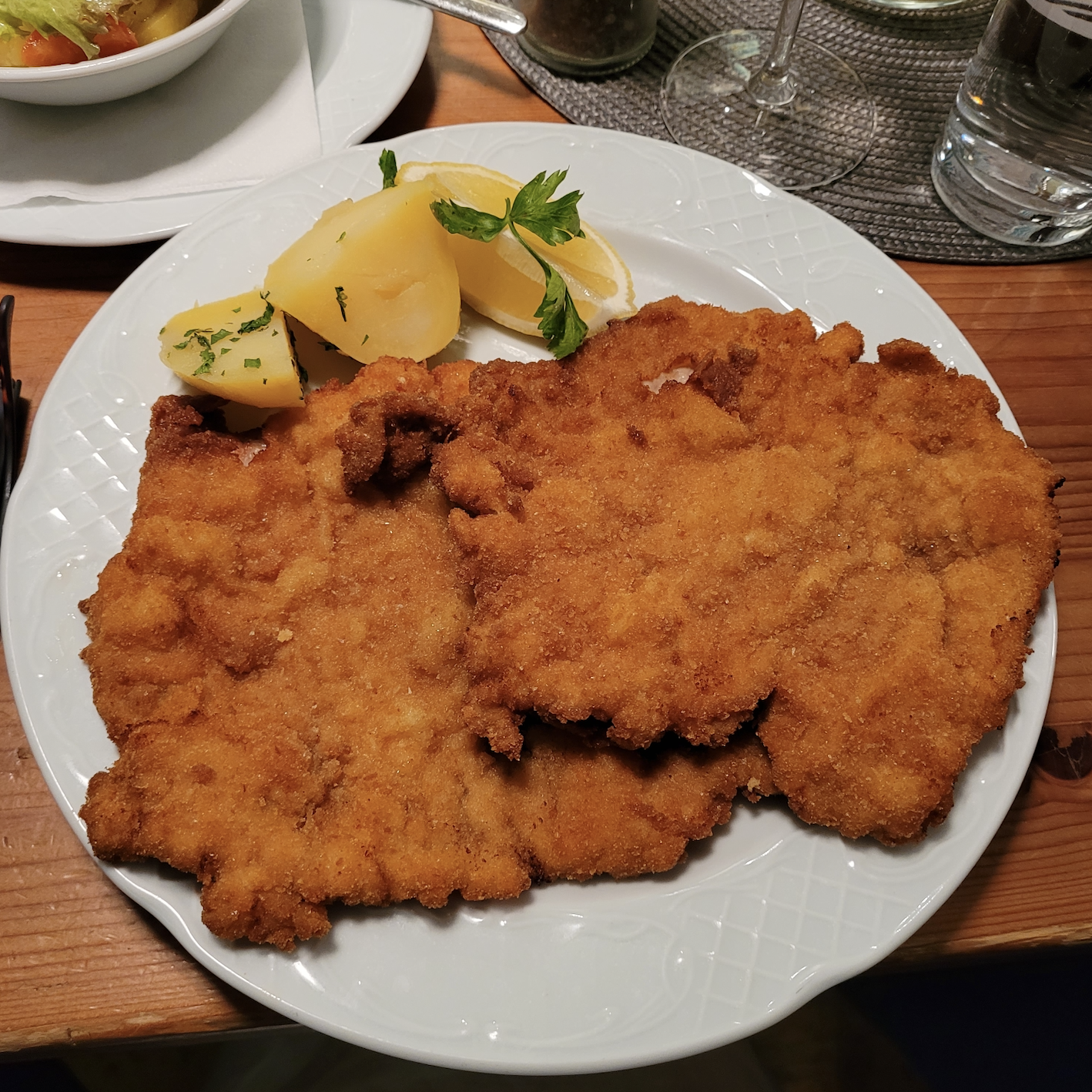
Schnitzel in Langenlois

Traisental

The Traisental is the youngest wine-growing region in Austria, only dating back to 1995 in the way we know it today with their corresponding DACs having been cemented in 2006. Of all the Austrian DACs it is one of the smallest with a shade over 800 hectares under vine. Nowhere does grüner veltliner lead as it does in Traisental, relatively speaking, where nearly two-thirds of all vineyards are planted to the signature Austrian white grape variety. Also riesling which holds great importance and perhaps increasingly so. The growing areas are tied to the villages and their signature taverns where these wines flow and also revered. Two such places are Traismauer and Herzogenburg, towns with windows into the past. Smallest of terraces are where vines grow on gravelly and often calcareous soils. Weather can be extreme, especially winds, of Pannonian influences along with cold air from the foothills of the Alps. The nearby Danube River balances temperature and day/night fluctuations. Wine culture dates back to the Romans and modern times place most importance on grüner veltliner and riesling thoughb there are smatterings of other varieties in white and red, namely pinot blanc and noir.

Godello and Traisental Geology

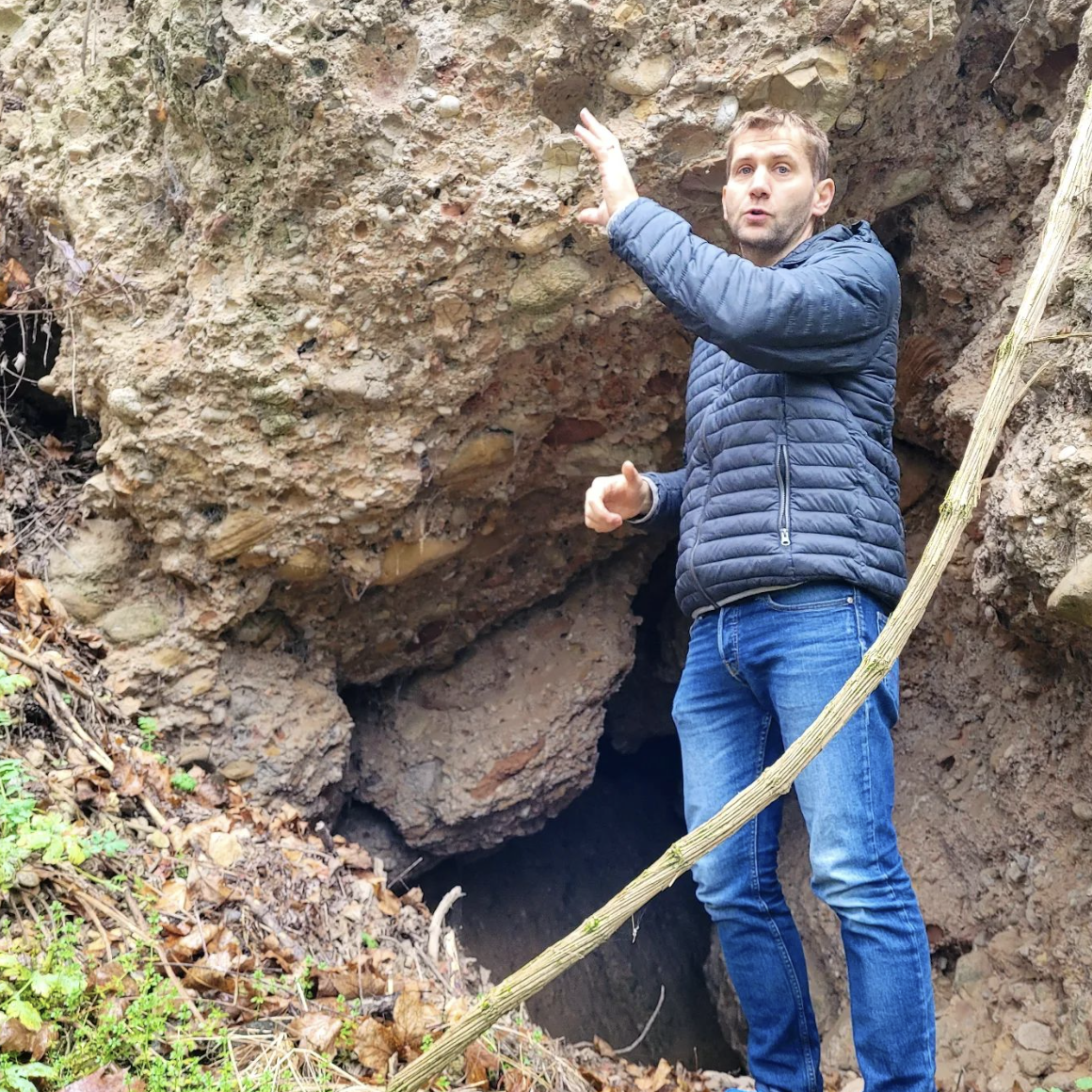
Ten million years ago the Traisen river ran through what is now the Traisental Valley, a growing area so apropos to talk about tension of opposites. The limestone conglomerate and poor soils south of the Danube house a mere 25 producers plus growers and their focus on grüner veltliner and riesling is all about making magic where vines suffer before begetting incredible fruit. The vineyards are planted up to 380m and what was once a four to five kilometre wide river is now just 100-150 metres across at its widest. The build up from 10,000 years of hummus is such that now if you screw up your soil it can takes decades to build it back up again. And so growers like Markus Huber have certified organic but are not content with just the rules, but concern themselves with always being one step ahead. Producers have to be open for things available on the markets, especially preparations, like Trichoderma and other microorganisms used against downy mildew. Huber remarks how herb extracts applied over the last five years have led to very good results.

The Art of Wine – Down to Earth

This two-part expression are but two ways to look at Austrian wine. From Styria, the Burgenland and Vienna in Lower Austria there are 17 DACs from a bit less than 45,000 hectares of planted vineyard. They speak collectively in a typically Austrian vernacular and with a connectivity as real and transparent as any wine producing nation in Europe. Draw a line through the village of Saint Pölten from the Traisental to the Wagram and a most specific association is forged, by geography, geology and climatic patterns. There are recurring characteristics in the grüner veltliner and riesling throughout these two DAC wines and in turn their relatedness to Niederösterreich as a whole is forged through the lands on either side of the Danube.

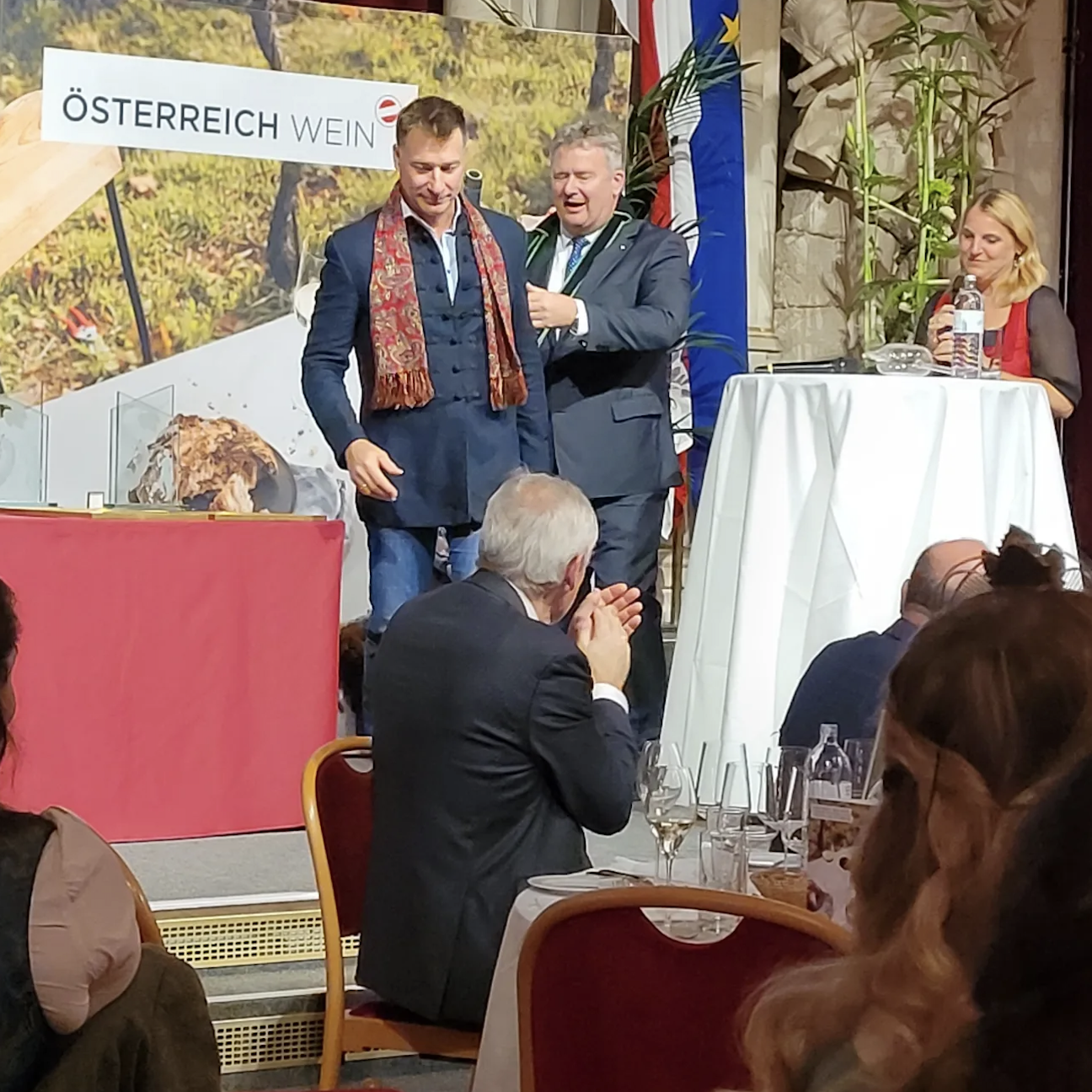
John Szabo M.S. receives the Bacchus Award from Chris Yorke, Wines of Austria

In November of 2022 our small group of four spent two and a half days wandering these two Lower Austrian wine regions with the chaperone assistance of Matthias and Wines of Austria. We also spent two evenings in Vienna, one at dinner with Zahel’s Alex Zahel and another at the Wiener Rathaus as our colleague John Szabo M.S. received Wines of Austria’s most prestigious International Bacchus Award for his two decades of commitment in writing about and educating on behalf of Austrian wines. Our visits in Wagram and Traisental took us to Domaine Ott, Weinmanufaktur Clemens Strobl, Dockner Tom, Jurtschitsch, Markus Huber, Matthias Warnung and Weinkultur Preiß. Just before flying to Europe John and Roman Horvath MW had delivered a November 9th masterclass in Toronto on Austrian wines and those notes are also included in this report. In total I share 90 tasting notes with you.

Domaine Ott – Feuersbrunn, Wagram

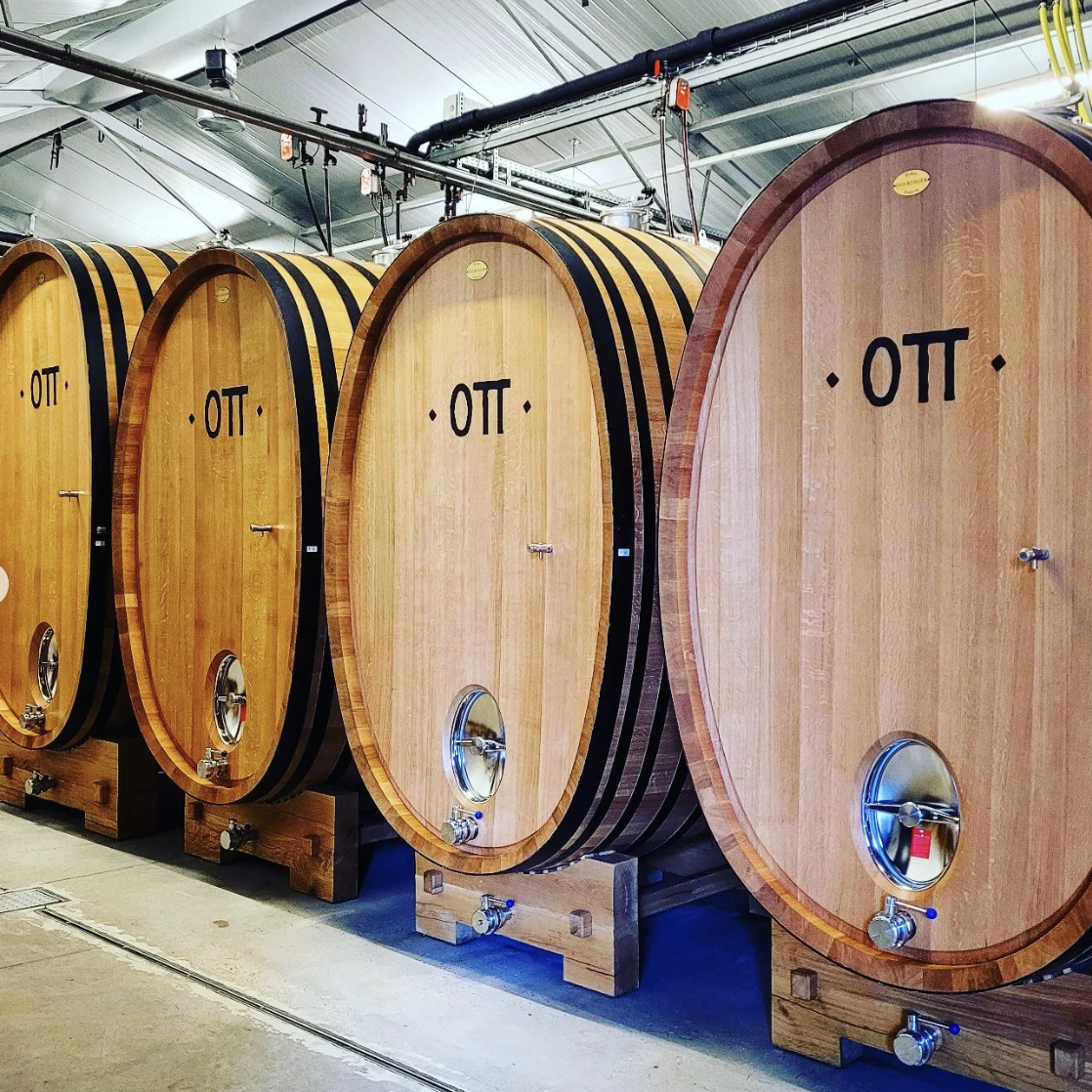
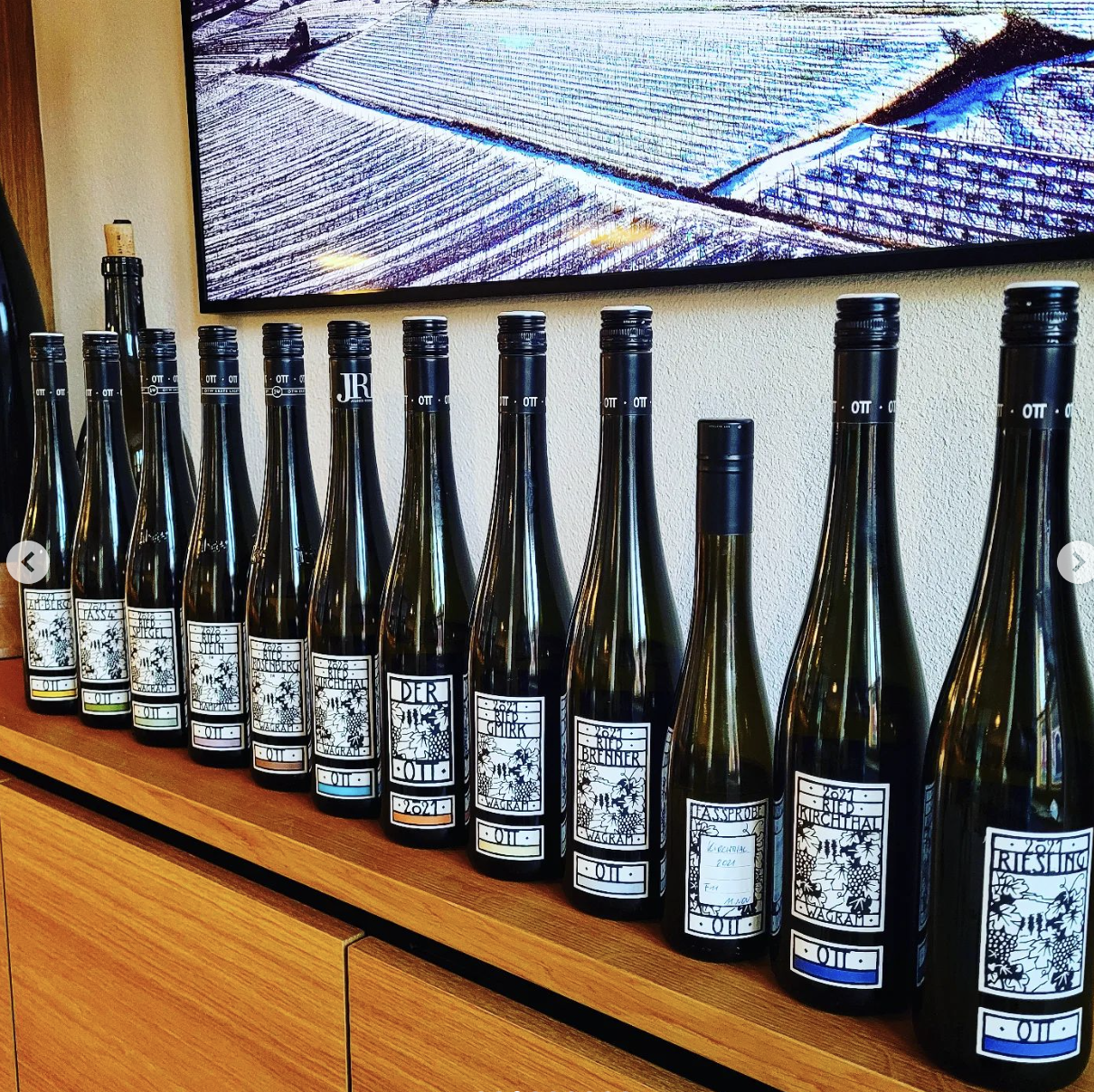
Bernhard Ott is a fourth generation winemaker, at the helm since 1993 for an estate dating back to 1889. Ott farms and bottles from 32 different plots, including three prized premium sites, one in Kamptal (Engabrunner Stein) and two in Wagram (Feuersbrunner Spiegel and Rosenberg). Bernhard’s initial goal was to make use of stainless steel though in 2018 he began working with varying sizes of Stockinger fuders. These traditional Mosel casks literally translate to a “wagonload, cartload; A unit of measure for wine equal to roughly 1000 litres.” In total there are 55 hectares and it was after tasting a 1933 Rosenberg GV that Ott decided to go back to his roots, to what his grandfather would have been doing and moved to basket press. The first to do so with white wine. In the early 2000s Bernhard began composting, with organic cow manure, became certified organic in 2006 and later visited the biodynamic property of Domaine La Romanée Conti in Vosne with Hans Reisetbauer. This was the impetus towards committing to biodynamic viticulture. He formed Respekt in 2007 with Johannes Hirsch, Fred Loimer and a group of like-minded producers, Respekt was formed. The oldest vines in the Rosenberg were planted in 1954 in very deep loess soil. Stein is Gföhler gneiss at the bottom, with red and white sands, a layer of chalk and a little loess on top. At Spiegel the soils are a mix of deep, chalky loess and red gravel, part Rosenberg and part Stein. Most of the production is grüner veltliner with 10 percent riesling.

Bernhard Ott Grüner Veltliner Am Berg 2021, Lower Austria

Frankly as direct and rounded as grüner veltliner will ever get, three parts gathered together, estate fruit, biodynamic growers’ and two hectares from agronomist Hans Reisetbauer’s father’s GV. The dictionary entry, easy to access, wisps of smoke and white pepper, finishing with a tincture’s drops of fine tonic and bitters. Drink 2022-2025.  Tasted November 2022

Bernhard Ott Grüner Veltliner Fass 4 2021, Wagram

The fourth barrel, named for Bernhard Ott’s father, a big brand poured in wine bars all over Europe. All estate fruit (which separates it from the Am Berg) and all the vines used are a minimum 12 years of age. More aromatic presence, fruit substantiality, single-vineyard edginess and concentration. Now some smoulder and layered vim, even into volupté territory. Drink 2022-2027.  Tasted November 2022

Bernhard Ott Grüner Veltliner Ried Spiegel Feuersbrunn 1ÖTW 2020, Wagram

Seriously smouldering out of the glass, so much so you are surprised to not see some smoke rising. From Ott’s six hectare portion, high in loess, gravel and (15-20 per cent) chalk. A very windy spot, seemingly always, a very exposed place. Almost the highest part of Hengstberg, a cool and understated wine, shy in its early stage yet blessed with grand cru vineyard DNA, beauty and tangible length. Drink 2023-2029.  Tasted November 2022

Bernhard Ott Grüner Veltliner Ried Stein Engabrunn 1ÖTW 2020, Kamptal

All Kamptal fruit, from a vineyard mentioned in 1427, loess with granite, firestone, gravel and a “fruity” hummus in the top few centimetres of the soil. Bigger fruit expression as compared to Spiegel, also in slide over to Kamptal there is more generosity and up front openness. No paraffin wax or lightning strikes though the back palate is alive, layered and kicking. Though consistently at 13 per cent alcohol like the rest it is felt with more oomph in Stein, thanks to the bigger amount of flesh on the palate. Drink 2023-2027.  Tasted November 2022

Bernhard Ott Gruner Veltliner Ried Rosenberg Feuersbrunn 1ÖTW 2020, Wagram

Ott took over this vineyard from his father in 1993 and decided at this time to focus on the white wines, trading the planted red vineyards for this Rosenberg, planted in 1956. Roots go down 30 metres in pure loess soil with 30-33 per cent free (or active) chalk. Man does this taste like chalk incarnate but with salty, smoky and elemental veins cut through carrying the lifeblood of the soil beneath. Luxe enough to imagine a wine going on with great flesh over a long period of time and more because the chalk will morph, transmigrate and develop a whole new level of smoulder, always connected to that chalk. Drink 2024-2035.  Tasted November 2022

Bernhard Ott Grüner Veltliner Ried Kirchtal 2020, Wagram

On the east shoulder of Hengstberg with mainly loess but also gravel and some heavy clay. The nose delivers Rhône like or more specifically Châteauneuf-du-Pâpe heady aromas in flowers like roses in oil and a density or booziness. The vineyard was planted in 2010 and 2014 was the first vintage. Seems like a big and gorgeous wine that’s a bit funny on its feet, like a breed still as a puppy with big feet and not having yet grown into itself. Clumsy yet amazing, juicy and excitable, not as focused as the grand crus, nor finessed neither. Look for iterations from 2025 onwards to get there. Drink 2023-2027.  Tasted November 2022

Bernhard Ott Grüner Veltliner Der Ott 2021, Wagram

Combines three Erste Lage (Grand Crus) in one wine. One hundred per cent basket pressed and large cask aged. Approximately 45 percent Spiegel with equal parts Stein and Rosenberg. These pressings are separated from the single-vineyard wines, picked separately (essentially from younger vines). Exciting levels of grand cru, layers and layers to stack, unfold and peel away, perhaps not as linear, focused and precise but worthy of the ideal. Bloody delicious at a high level for the short term and offering a window into all three crus after they age well into the future. Drink 2023-2027.  Tasted November 2022

Bernhard Ott Grüner Veltliner Ried Gmirk 2021, Wagram

Gmirk, from the German, only 500L of juice available, from 30 year-old vineyards demarcating the border to a village (Gösing) that deserves to be on its own as a high level wine. The concentration is rather remarkable, the smokiness thick like fog and the texture palpable. A delicious grüner veltliner that satisfies as much as it impresses. Drink 2023-2027.  Tasted November 2022

Bernhard Ott Grüner Veltliner Ried Brenner 2021, Wagram

Only 1000L of juice available, from a few rows in Spiegel that deserve to be bottled on their own. The intensity is palpable, a chiseled grüner veltliner of finesse, focus and linearity. Also power and drive, horsepower really, full speed ahead that can run both the sprint and the marathon. Drink 2024-2035.  Tasted November 2022

Bernhard Ott Riesling Ried Kirchthal 2021, Wagram

Youthful, stoic and reticent, not really giving away much at this very early stage. Layers of typical riesling necessity, intensity and sprit, needing time, slowly unfolding towards the greatness that awaits, Not quite what is available, possible and probable with grüner veltliner but impressively profound just the same. Drink 2024-2028.  Tasted November 2022

Bernhard Ott Riesling Kabin(O)TT 2021, Lower Austria

Made with some more residual sugar, Kabinett style (obviously) as a wink and a nod towards the Mosel. Green mango and peach, flowers as well, top quality acids and overall a proper if professional balance. Drink away though careful of how easy it disappears. Drink 2022-2024.  Tasted November 2022

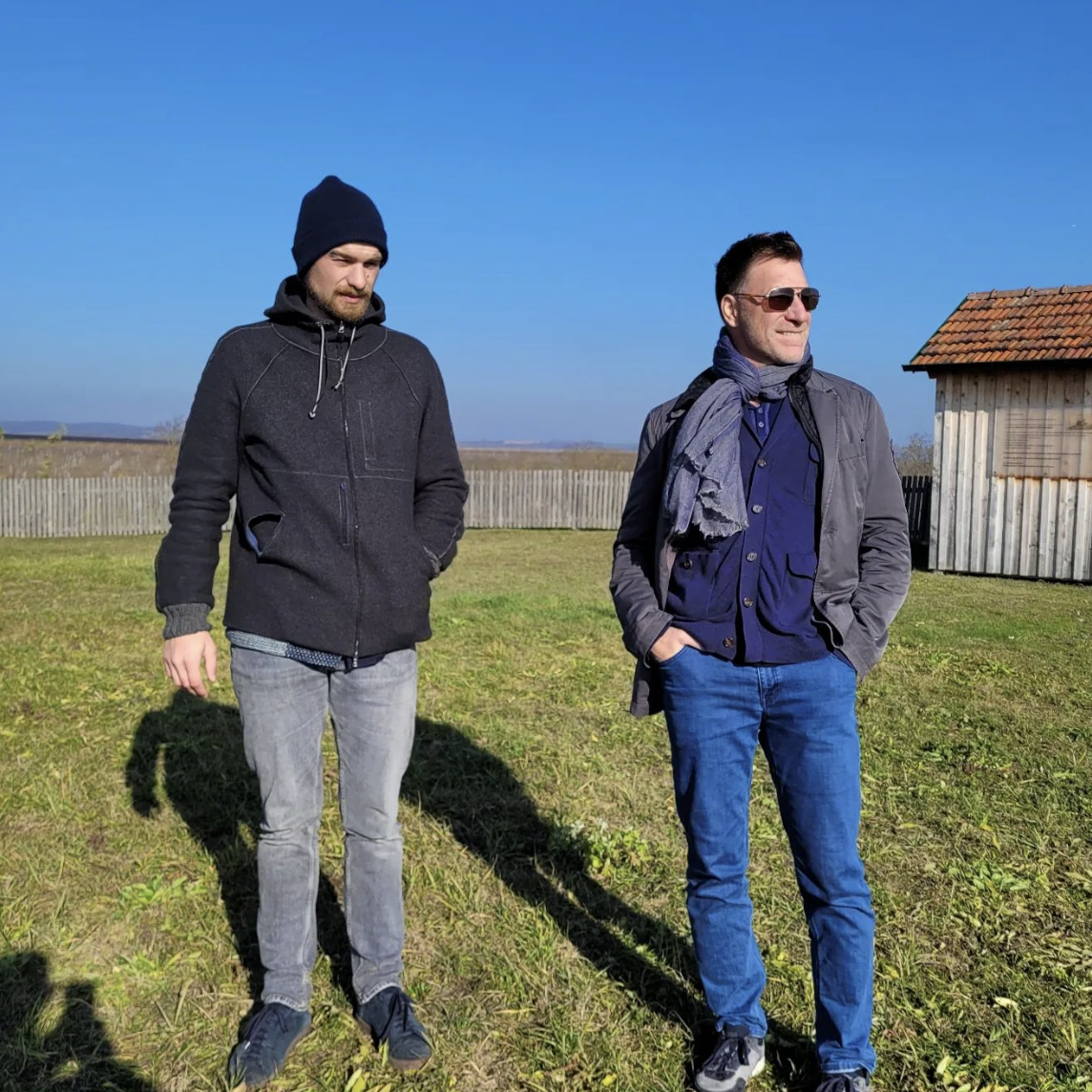
Lukas Strobl and John Szabo MS

Weinmanufaktur Clemens Strobl – Kirchberg am Wagram

Clemens Strobl is a second generation family-owned winery started in 2008, led by Clemens and son Lukas. They started with one hectare, “wanting to know what is behind winemaking.” Today there are 15 hectares, mostly terraced above the winery. The 2012 vintage was the first to make use of native yeasts and the beginning of a conversation towards organics. They are self-professed “unbound to tradition” and so there are no appellations on the wines. Experimentation is key, yet also with winemaking ideas in the skin-contact, unfined, unfiltered and minimal sulphuring realm. They may be uncomfortable to be tagged as makers of natural wine but their actions speak for themsleves. For Clemens and Strobl wine is directly connected to soil and this means loess. Metres of loam and loess, tertiary gravel dating back millions of years. Their’s is “the region of the future.” Burgundian conditions, of loess and limestones, expressly Wagram.

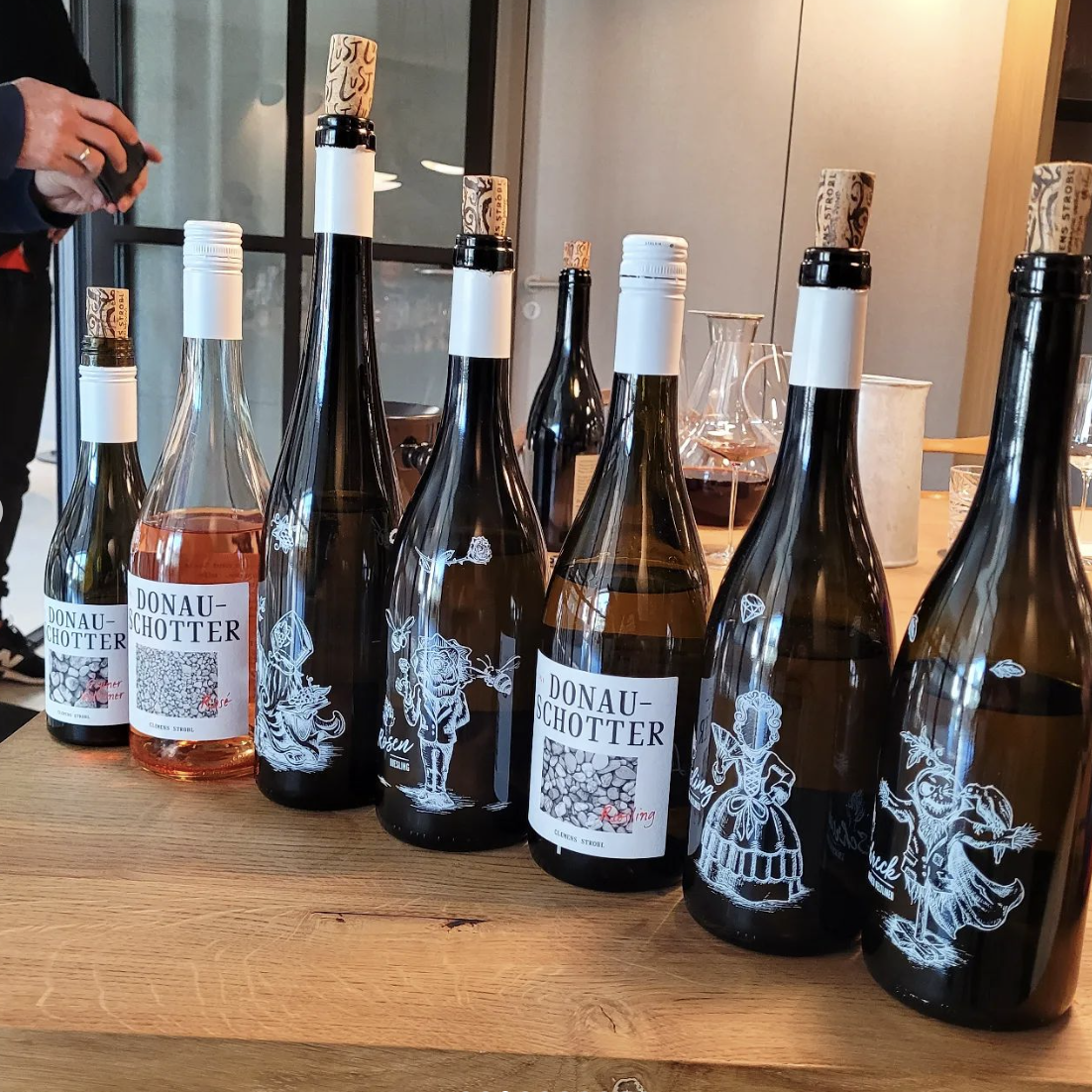
Clemens Strobl Donauschotter Grüner Veltliner 2021

Clemens Strobl purchased the property in 2016, renovated the vineyards, built the winery over three years and opened the doors in 2019. The soils are rich loess to create a cuvée of grüner veltliner from grapes excluded from the single block labels. Natural ferment, malolactic as well, stable, round and offering easy access. Bottled in May and always sold out within six months – as in now. There are 20-25k bottles produced of this GV licked by flinty smoulder, flavours imagining a dry lime cordial, salty, light-hearted and with that classic white pepper. Über correct. Drink 2022-2025.  Tasted November 2022

Clemens Strobl Grüner Veltliner Schrek 2019

From the Schrekenberg, abutting the Kamptal, surrounded by forest, filled with wildlife. Vineyards face more east than south, a cooler spot that’s increasingly warming and this being one of those really warm years. Fermented in 100L oak vats. More concentration exaggerated in this 2019, but also that flinty smoulder and malolactic induced mouthfeel. Not a wine concerned with primary flavours and more about impression, in a way that reminds of some aged Domaine Paul Blanck, albeit in grüner veltliner clothing. The clarity is admirable, focus and purity as well. Drink 2022-2026.  Tasted November 2022

Clemens Strobl Lössling Grüner Veltliner 2019

From Weissbrün on heavy Loess soils, “one of our warmest vineyards, especially for grüner veltliner, now quite challenging with warming temperatures and yet we don’t lose acidity.” The warmth is so up front and immediately nurturing, soft and creamier than Schrek from a vintage in requiem of a quicker maceration, less than six hours, working on brown juice, unconcerned with primary fruit flavours. Keeps the pH lower and acids higher, maintaining flow and mouthfeel. The roundness and barrel effect are felt here in that Bourgogne chardonnay way. Apposite to Schrek. Drink 2023-2027.  Tasted November 2022

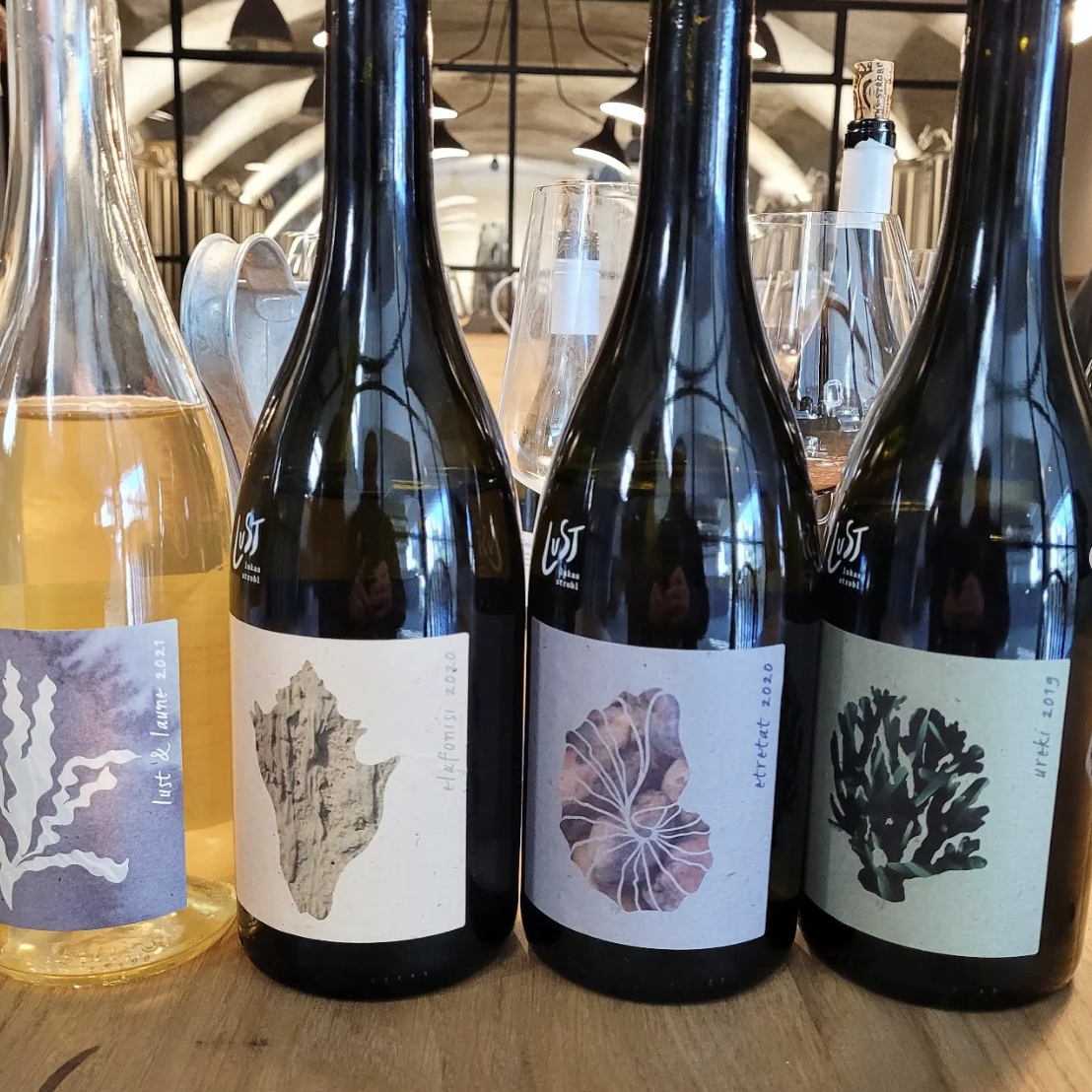
Lust By Lukas Strobl Lust & Laune 2021, Wagram

“Not a big fan of the term but it is natural wine,” tells Lukas Strobl, son of Clemens. His skin contact blend combines grüner veltliner with chardonnay, unfined, unfiltered and sulphured minimally at bottling. From Clemens Strobl estate fruit and as noted in his and his father’s wines you can expect this subtly orange example to be as clean and crisp as possible. This first vintage is 2,600 bottles. Orange and lemon skin, persimmon and no off-putting funk, just the Mark Ronson and Pharrell Williams kind. Just a dream. Drink 2022-2025.  Tasted November 2022

Clemens Strobl Donauschotter Riesling 2021

The Loess soils are heavy, aka Danube gravel and they can produce overly rich and fruity riesling so this is made in the driest possible style,. High in lime, acids in and around 7 g/L, a bit of boosted alcohol and more than anything a feeling of fullness in the mouth. Tart yellow plum, white peach and lemony finish. Classic dry riesling. Drink 2022-2024.  Tasted November 2022

Clemens Strobl Rosen Riesling 2019

From the Rosenberg, one of the highest (380m) in terms of elevation which is at the height of the Wagram. A place of sunny and warm days through summer plus really cold winter nights. Also one of the rockiest/stoniest vineyards, worked botrytis free, passed through several times during harvest. Again in the arena of dry though clearly elevated in viscous mouthfeel, noticeable alcohol matched by some residual sugar though far less than many counterparts. Elegant and refined, age-able to a mid-term degree. Drink 2022-2025.  Tasted November 2022

Clemens Strobl Riesling Pfaff 2019, Kremstal

From a 40-45 year-old vineyard, having been taken over in 2015, a stony, east facing block almost on a cliff. Drier, more intensity, precision and finesse. This is not about primary fruit at all and more concerned with drive, freshness and the kind of character that can accept great changes over time through the canals of elemental, mineral and gaseous shifts. Has begun and will accede to the secondary before too long. Drink 2022-2027.  Tasted November 2022

Clemens Strobl Donauschotter Rosé 2021

From pinot noir and st. laurent aged in 25 different vessels, including clay amphora. The effect felt here is as much orange as it is Rosé but also a style that is dry, pale, elegantly tart and of a tang that’s also just faintly there. Would not refer to it as serious but certainly refined, akin to the agreeable whites and of a clear, focused and distinct advantageous style. Can really see this alongside braised pork, either belly or guanciale in pasta. Drink 2022-2024.  Tasted November 2022

Clemens Strobl Pinot Noir Hengst 2019, Wagram

Not THAT Hengst but a single vineyard in the Wagram and 2011 being the first vintage. Spends nearly three years in wood and the style is one that wants flinty-smoky reduction from the natural yeasts, clearly spoken from 2019 though the warm vintage speaks right up. While it seems that this is not the past personality exhibited by this deliciously creamy pinot noir it also seems that this will be a big part of its future. Drink 2023-2027.  Tasted November 2022

Lust Lukas Strobl Etretat 2020

Of sauvignon blanc, unfined, unfiltered and nowhere near the vicinity of grassy, green nor blowsy styles. That said there is more fruit than any of the Clemems Strobl wines, and also the orange. There is an immense wealth of fruit, layering character and possibility in this singular sauvignon blanc. It’s bloody delicious. Drink 2022-2026. Tasted November 2022

Lust Lukas Strobl Elafonisi 2020

Made from grüner veltliner, eight days on the skins, 30 per cent whole bunch, approaching orange but not quite at that territory. Natural in any case, by nature of the unfined, unfiltered and minimal sulphuring (at bottling) treatment. Captures the flinty-smoky smoulder though with more viscosity and palate density. Comes away with great stage presence, here as a the second try just after working harvest in the Mosel at Clemens Busch. Drink 2023-2027.  Tasted November 2022

Lust Lukas Strobl Ureki 2019

Only 300L produced from one of the oldest cabernet sauvignon parcels in the Wagram, purchased in 2009 and becoming easier and easier to ripen the grapes. Much better adapted to this climate than it surely was when planted in the 1980s. OK so it’s still cool climate cabernet but this is the warmest of vintages from which ripeness is just about as close to phenolic fruition as it will get for the place. Just carries the feel of the Wagram, in spite of the variety, with a kind of evergreen and as with the whites, a smoky-flinty mineral feel, always present. From land and also winemaking, wanted and relished. Super refined and elegant tannins. Drink 2023-2027.  Tasted November 2022

Ground Control to Dockner Tom

Dockner Tom – Thayern

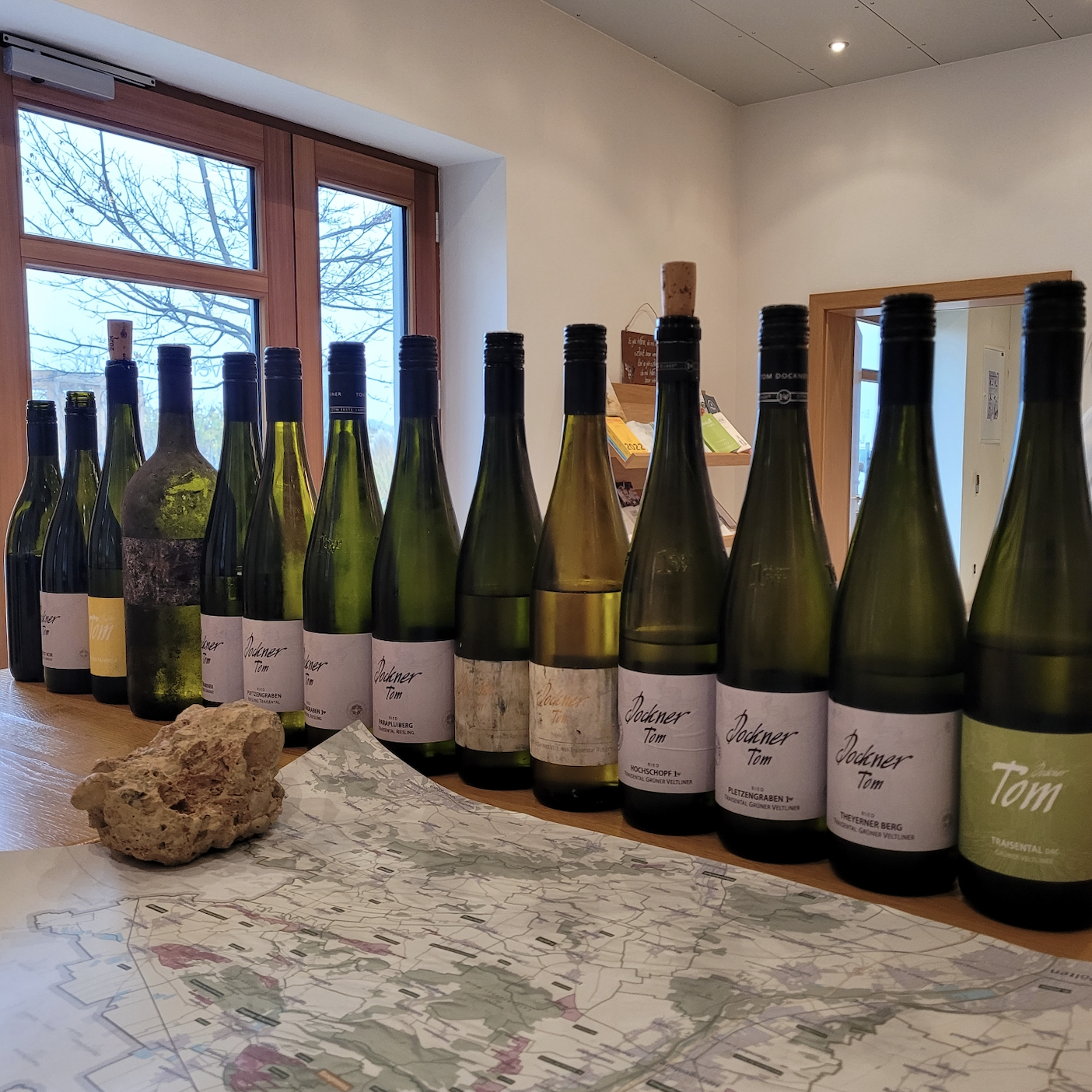
The winery dates back to 1912 while the house is 580 years old. Dockner is a producer with a large and well-rounded portfolio, bottling regional, village, single-vineyard and 1ÖTW premium vineyard classified wines. The Dockner family have been vintners in Theyern for four generations and Tom credits his father for teaching him a great deal. His pursuit of quality and sustainable cultivation is integral to the family’s estate. Ried Theyerner Berg, Pletzengraben and Hochschopf are the most important sites, especially for grüner veltliner while riesling also thrives at Parapluiberg Mountain.

Dockner Tom Grüner Veltliner Tom 2021, Traisental DAC

Quite a golden rich grüner veltliner of elevated ripeness and sapidity over salinity, über freshness and a drinkable nature that most people can really understand. A high-level entry wine with a top fruit core and no complications. Nor distractions and tangents neither. Drink 2022-2023.  Tasted November 2022

Dockner Tom Grüner Veltliner Nussdorf 2021, Traisental DAC

A village wine from Nussdorf off of loess soils and always a bit creamy yet persistently fresh. Carries the classic white pepper and here with that light buzz, not effervescence but a definite hum. Tart and sapid again, almost blanched nut but not fully and all the while equally salty, direct and again, an easy wine to understand. Clean, crisp and really well made. Drink 2022-2024.  Tasted November 2022

Dockner Tom Grüner Veltliner Ried Theyerner Berg 2021, Traisental DAC

From very chalky soil, a cool climate location, intensely taut and so very affected by the soil. Clearly, unequivocally and directly with more salinity than the regional or village examples to be frank and sure. Not an elastic texture or length but so very linear, upright and long. Drink 2023-2028.  Tasted November 2022

Dockner Tom Grüner Veltliner Ried Pletzengraben 1ÖTW 2021, Traisental DAC

The Pletzengraben is place abutting a forest and blessed by cool, fresh winds. Here a knowable tonic and cordial character, lime and botanicals, quite taut but still with some give. Work with the wine to allow the chalkiness to come through and the wine carries just a hint of residual sugar. Arrests on its own at 3.5 g/L of RS. Drink 2022-2027.  Tasted November 2022

Dockner Tom Grüner Veltliner Ried Hochschopf 1ÖTW 2021, Traisental DAC

East facing hill on terraces, very chalky, with loess and stones. Fermented in large oak casks, just like the past and the result is a creamy, softly textured and downy wine with white chalky salinity though not really intense. An billowy example that drinks with ease. Drier than the Pletzengraben. Drink 2022-2025.  Tasted November 2022

Dockner Tom Grüner Veltliner Ried Hochschopf 1ÖTW 2013, Traisental DAC

East facing hill on terraces, very chalky, with loess and stones. Fermented in large oak casks, just like the past. An older example and there is some terpene here, like apple juice, the fruit having been originally a bit bruised. Lemon preserve and decent acidity for sure so not a hot year but just some fruit that likely should have been sorted out. Drink 2022.  Tasted November 2022

Dockner Tom Grüner Veltliner Ried Hochschopf 1ÖTW 2010, Traisental DAC

East facing hill on terraces, very chalky, with loess and stones. Fermented in large oak casks, just like the past. An older example (tasted blind) from what feels like a much cooler vintage and the fruit is again apple though tart, green and with a white peppery bite. Good acid crunch here, lovely energy, so very grüner. Turns out to be 2010 and so the coolest vintage of the last 15 where picking lasted all the way into mid-November. Drink 2022-2024.  Tasted November 2022

Dockner Tom Riesling Ried Parapluiberg 2021, Traisental DAC

Parapluiberg as in the hill with the umbrella and a fresh, saline and acid led riesling. Really high acidity manages the 6-7 g/L of RS in a very Germanic style, more Rheinhessen than anything else, lime sharp, juiced and zesty. Good fruit here, vibrancy and really tart. Drink 2022-2025.  Tasted November 2022

Dockner Tom Riesling Ried Pletzengraben 1ÖTW 2021, Traisental DAC

Quite a rich and concentrated riesling, not quite the lime cordial of the Pletzengraben grüner veltliner but there is still this rich viscosity and texture that is very mouth filling. Quite an aromatic beauty and a wine that integrates its parts very well. Drink 2022-2027.  Tasted November 2022

Dockner Tom Riesling Ried Pletzengraben 1ÖTW 2017, Traisental DAC

Again, tasted blind this reminds of an older grüner veltliner, like that green apple, white pepper and sharp 2010. This one snaps and bites, with searing acids and an intensity off the proverbial charts. Drink 2022-2025.  Tasted November 2022

Dockner Tom Riesling Ried Pletzengraben 1ÖTW 2016, Traisental DAC

Really interesting vintage tasted blind, very much in line with the grüner veltliner of 2013, fruit a bit bruised and here in riesling there is saffron, banana and pineapple. Acids are good though the fruit was obviously very ripe. Secondary stage showing petrol and botanicals. Drink 2022-2023.  Tasted November 2022

Dockner Tom Traminer Konglomerat 2021, Traisental DAC

Off-dry gelber muskateller and gewürztraminer, high in sgars but also acids for balance, from a rich vintage with highly tropical fruit like guava and pineapple. Actually a matter of 12 g/L of RS but only 6.5 of acidity, high for traminer. Drink 2022-2027.  Tasted November 2022

Dockner Tom Traminer Konglomerat 20007, Traisental DAC

Off-dry gelber muskateller and gewürztraminer, much older vintage but also one of extreme ripeness because the litchi is full on, as are the roses and blanched nuts. Not quite the richness of the warmest vintage but surely sharp and older at the same time. Drink 2022-2023.  Tasted November 2022

Dockner Tom Gelber Traminer Natur 2021

A natural white from gelber muskateller meets gewürztraminer 10 months on skins. Lemon and quite sweet fruit meets acids in a lovely wine, of no salve or distraction, very clean and fresh. Drink 2022-2025.  Tasted November 2022

Dockner Tom Pinot Noir Konglomerat 2019

Sees 300L barrels for 30 months after a long skin maceration. Light and creamy, tart and with enough tension to match the soft palate. Of a cool climate style where fruit hangs long, develops good phenolics and eerily like Nova Scotia actually. Could be a Lightfoot & Wolfville Ancienne, ostensibly if truly in the way it presents itself. Drink 2022-2025.  Tasted November 2022

Dockner Tom Pinot Noir Konglomerat 2008

Older vintage tasted blind, showing plenty of age, caramel and bitters, warm vintage, a bit astringent. Quite volatile. Drink 2022.  Tasted November 2022

Alwin Jurtschitsch

Jurtschitsch – Langenlois

Alwin Jurtschitsch and Stephanie Hasselbach (formerly of Gunderloch in the Rheinhessen) have been working the vineyards since 2006 and immediately began transforming to organic back then. Their wines are a combination of old style classics and the new natural, loyal to grandparents while simultaneously focused on a new generation of wine drinkers. There are Pét-Nats and bottles made by skin-contact, unfined, unsulphured and unfiltered. There are also 1ÖTW premium site grüner veltliner and riesling in the tradition of modern day Wagram. Some wines are labeled Jurtschitsch while others carry the name of Alwin und Stefanie Jurtschitsch or Weingut Fuchs Und Hase.

Weingut Fuchs Und Hase Pet Nat Vol 3

Simply allowing sugar and yeast to make a second fermentation in the bottle but with high level and quality grüner veltliner. More than a different Pét-Nat but one that is more connected to grape variety and vineyard. How? You can just feel it. Leathery orange, candied fennel and root vegetables, toasty and sweet. Natural as far as the saying and the ideal goes. Far, far away from funkier and all the better for it. Drink 2022-2024.  Tasted November 2022

Jurtschitsch Grüner Veltliner Ried Lamm 1ÖTW 2020, Kamptal

No doubt a reductive style of Kamptal winemaking and after tasting through a half dozen barrels of 2021 and 2022s the stylistic is fully confirmed. A two weeks partial stem maceration gives this Erste Lage so much texture, a wine you can chew, for a while and on from which you can extract all the juice, flavour and tannin. Orange, a tisane, sugar cane, lemon thyme and great length in a fine, thoughtful and uplifting wine. Drink 2022-2026.  Tasted November 2022

Jurtschitsch Grüner Veltliner Ried Kaferberg 1ÖTW 2020, Kamptal

Less reduction than the Lamm though even more extract and tannin, viscosity, unctuousness and a mineral-boozy feeling. Still it is linear, focused and upright. This reduction is linked to lees only, not sulphur, it’s not stinky and in fact completely a matter of fruit. A Burgundian one if you will and very practical for freshness and also longevity. From a southeastern parcel of the Kaferberg where the old vines grow. More filigranite and not just loess, a place of pyre rock. Makes for a most amazing expression of grüner veltliner, on the lee side where prevailing winds cool and instigate this very specific type of smoulder. Drink 2022-2027.  Tasted November 2022

Jurtschitsch Grüner Veltliner Ried Loisenberg 1ÖTW 2021, Kamptal

Loisenberg is the only single-vineyard erste lage bottled ahead of the harvest simply because it had done its work, unlike the Kaferberg and Lamm which were not. In fact the Lamm had not net even gone dry. Another reductive grüner but we’re lessening as we go through the range. Herbals, sweet ones that is, tonics and Limoncello. Searing, sharp, serious tang and the most citrus of any of the grand cru. Drink 2022-2025.  Tasted November 2022

Jurtschitsch Grüner Veltliner Amour Fou Natural Wine Trocken 2020, Kamptal

Full on Ried Loisenberg fruit under Alwin and Stephanie Jurtschitsch’s natural range, skin-contact, unfined, unsulphured and unfiltered. Skin maceration was quick, sent straight to barrel from press. Clearly Kamptal, not an amphora or orange stylistic, just something to distill the place into a transparent example. Nothing crazy about it, knowable, tannins at the top, extract in line, no funk, nor salve on the palate or earthiness at all. So clean and yes like looking in a Kamptal mirror. Drink 2022-2025.  Tasted November 2022

Jurtschitsch Riesling Heligenstein 1ÖTW Alte Reben 2020, Kamptal

Alte Reben, aka old vines, and some say Heligenstein is the most unique reddish, desert sandstone soil not found anywhere else. Just this little hillside, also a very historical place. A great terroir, but not an easy one. Requires compost and hummus and if you get it right there is an entirely new kind of mineral and elemental push run through the vines and into the wines. Truly, that and a botanical density, a viscous herbology and lime intensity. My how this will develop and morph into something new, time after time. Completely dry, a result of vintage and barrel, not cru. Drink 2022-2027.  Tasted November 2022

Jurtschitsch Riesling Quelle 2019

Made from a unique spot aboard the hill that is the Heligenstein where a natural spring exists in one of the driest places in Austria. Bottled natural and unfiltered, no enzymes, yeast and certainly no botrytis. Still buzzing with a minor amount of what feels like CO2 but really just sexy energy. Super juicy, orange distillate, tisane and zest. Crunchy, salty and fine. Drink 2022-2027.  Tasted November 2022

Markus Huber – Reichersdorf, Traisental

The vineyards are cultivated according to organic guidelines and the entire winery is certified according to the “Sustainable Austria” criteria. Markus Huber tries to improve biodiversity by sowing plants that are favourable to vines, keeping bushes, trees and hedges around the vineyards and by using animals and beneficial organisms. All these measures come together to result in better soil quality and increased vine health – and, ultimately, in expressive and authentic wines typical of the region.  The vines are mainly planted on terraces – some of them quite minuscule – comprised of dry and very limy gravel soils. The Traisental valley is the only wine producing region of lower Austria where a most important limestone soil type can be found. Huber is the spearhead for the Österreichischen Traditionsweingüter, and organization of vintners from the Danube areas in Kremstal and Kamptal with the intention to identify and understand the diverse soils, the microclimate of the different vineyards and the impact of these factors on the varieties. The question posed was how do these conditions support quality and character in the wine? Thus in 2010 an attempt was made to classify the classic vineyards objectively. The awareness that great wines only thrive in great vineyards is inherent in this philosophy. The terms Klassifizierte Lage, Erste Lage and Große Erste Lage were thus defined.

Markus Huber

Markus Huber Grüner Veltliner Terassen 2021, Traisental, Niederösterreich, Austria

Esssentially the “estate” grüner veltliner, of 15 parcels from north to south separated by 10 kms harvested between 10 days and two weeks in the Traisental. As precise as it gets for grüner with a little bit of skin contact, zero botrytis, bone dry (with help from a cultured yeast). Big licensee pour so it has to be dry and consistent. White liquid peppery, taut yet not tight and notably sapid, surely an agglomerated grab of conglomerate rock from around the region. Drink 2022-2024.  Tasted November 2022

Markus Huber Grüner Veltliner Nussdorfer Obere Steigen 2021, Traisental, Niederösterreich, Austria

Essentially the “villages” grüner veltliner, from Nussdorfer, of six vineyards, vines in and around 25 years and picked on average 10 days later than the Terrassen. More weight, physiological ripeness and complexity than the Terrassen. Focus and precision as well though still an averaged out or at least layered expression to speak of a more confined sense of Traisental space. Saltier as well though hard not to notice the sapidity too. This just has that balanced posit tug between the two. Drink 2022-2025.  Tasted November 2022

Markus Huber Grùner Veltliner Ried Alte Setzen 1ÖTW 2021, Traisental, Niederösterreich, Austria

Single vineyard from the pressed rock of the name that combines limestone with sand and clay formed by the retreating Traisen River formed 10 million years ago. the soils here are very shallow and roots dig very deep to find nutrients in the water table below. Saltier, slightly lower in pH and conversely not as sapid as the Zwirch. Fermented in large traditional oak casks and the result here speaks to limestone in the most direct, fresh and high spirited way. Chiseled for grüner veltliner. Drink 2023-2028.  Tasted November 2022

Markus Huber Grùner Veltliner Ried Zwirch 1ÖTW 2021, Traisental, Niederösterreich, Austria

Single vineyard from the conglomerate rock of the name that combines limestone with small stones and clay formed by the retreating Traisen River form 10 million years ago. Fermented in large traditional chestnut casks from the 1960s of 10 years minimum for micro-oxidation. Old vines as well, some 70 years of age for a truly sapid expression of grüner veltliner with thanks to this specialized geology that is very high in pH. Power in this wine though the clarity and determinative focus is estimable. The winemaking too. Drink 2023-2027.  Tasted November 2022

Markus Huber Grüner Veltliner Ried Berg 1ÖTW 2021, Traisental, Niederösterreich, Austria

Highest and coolest vineyard of the Traisental Erste Lage because by three or four pm the forest casts shade over the vineyard. Limestone based soil as well, upwards of 380m and the only portion that has iron rich red elements in the earth. Actually finding a richness in this, surely vintage related and that is unexpected but it’s also the most savoury, minty cool, eucalyptus accented, or the like. Curious by comparison to Alte Zetsen and Zwirch, in what is assessed as almost dark, smoky, spicy volcanic-simulate stuff. Brings whole and utter meaning to grüner veltliner at the Grand Cru level. Drink 2023-2028.  Tasted November 2022

Markus Huber Grüner Veltliner Ried Berg 1ÖTW 2016, Traisental, Niederösterreich, Austria

Berg is so bloody apposite to Rotenberg even though they both come from the same geology but here the block is the highest and coolest vineyard of the Erste Lage because by three or four pm the forest casts shade over the vineyard. A cool vintage when quite a bit of selection was necessary where some unusually present botrytis did occur. Definitely moving into a savoury secondary stage though the great factor is the emerging petrol, great for grüner, the white pepper now so liquified and the texture really quite layered yet compressed. Advancing and will drink with lovely sway for another two or three years. Drink 2022-2025.  Tasted November 2022

Markus Huber Grüner Veltliner Ried Berg 1ÖTW 2017, Traisental, Niederösterreich, Austria

A warm summer and cool fall, considered as a very strong vintage, doused in lime, no real petrol and this was in fact the first year where the vines sat under the hail nets so that they received dappled light instead of direct sun. The Berg is a top site and makes grand jour, grand cru wines. This is cracker riesling. Top, top. Drink 2022-2027. Tasted November 2022

Markus Huber Riesling Ried Berg 1ÖTW 2021, Traisental, Niederösterreich, Austria

Berg is so bloody apposite to Rothenberg even though they both come from the same geology but here the block is the highest and coolest vineyard of the Erste Lage because by three or four pm the forest casts shade over the vineyard. And so the focus here is intense, the herbology present and the sapid savour almost flying off the charts. Incredible determination and what has to be as good a vintage for this Grand Cru as there as ever been. Drink 2023-2023.  Tasted November 2022

Markus Huber Getzersdorfer Riesling Engelsberg 2021, Traisental, Niederösterreich, Austria

A villages wine, from Getzersdorf, of vineyards that stretch over two crus, and an example of dry wine with all the varietal characteristics of the area. Like white flowers as opposed to peach and the limestone tightens the palate. Provides the sapidity though the wine is balanced in equanimous behaviour by salinity. Drink 2023-2027.  Tasted November 2022

Markus Huber Riesling Rotenberg 1ÖTW 2021, Traisental, Niederösterreich, Austria

From Dolomite limestone soil, as with the sister riesling Berg, and it is pretty obvious that south facing slopes make for a richer, luxe, viscous and textured style. No skin contact (as opposed to the grüners) but whole bunch pneumatic pressed. The phenols are in fact not eliminated but the precursive petrol notes are encouraged and phenols are pulled from the whole bunch breakdown. Most important the berries are protected from ultra violet light under hail nets and so dappled light improves the aromatics in the grapes while still on the vines. Yet another example of capturing what you want in the vineyard and not in the winemaking. Salty number, taut, finessed, yes rich but also so focused. Drink 2023-2028.  Tasted November 2022

Markus Huber Weissburgunder Rosenweg 2021, Traisental, Niederösterreich, Austria

From a single vineyard Hochschopf which is a grand cru for grüner veltliner and riesling only, a place to deliver high ripeness and the winemaking is a blend of the grüner veltliner and riesling in that the fermentation is done in Acacia barrels after receiving a long skin-contact maceration (69 hours). Definite phenolic presence, grip and circumstance, no botrytis or malo, cool, silky textured and yet crunchy enough to keep our attention. A really smooth drinking weissburgunder. Drink 2022-2024.  Tasted November 2022

Markus Huber Metamorphosis 2021, Traisental, Niederösterreich, Austria

A natural wine made since 2017, always changing, thus the name. Varietal grüner veltliner picked earlier to lessen alcohol, ferments for four months in concrete egg, racked off, sent back in without sulphur for six more months on the gross lees and only sulphured minimally (20 bbm) at bottling. Preserved lemon is the crux and the focus, that being how textured it presents as a varietal wine in the natural vein. Even the tisane and the poached or blanched flavours are yellow citrus with creamed pine nuts or hummus in the mix. Drink 2022-2025.  Tasted November 2022

Markus Huber Pinot Noir Rosenweg 2021, Traisental, Niederösterreich, Austria

Grown on blocks where the grüner veltliner and riesling don’t and yet this is from an Erste Lage site. Harvested on the 30th of October so the phenolic vernacular is one from a long growing season. A mix of 30 percent whole bunch and 70 from separated grapes for a minor carbonic maceration. Maximum two weeks for the whole process and racked off into 500L Bourgogne barrels, left on lees for 10 months. Vines were planted in 2004, 777 (Bourgogne) and one German clone. Waited 10 years before bottling as pinot noir. Quite round and creamy, unfiltered and low by intervention. Finishes with just a fraction of extending tension to keep interest and see the wine age just a few years. Drink 2022-2024.  Tasted November 2022

Matthias Warnung

Matthias Warnung – Kamptal

Welcome to the low intervention winemaking world of Matthias Warnung. Warnung farms 10 hectares in the Kamptal after taking over the winery from his father in 2010. Matthias has worked with other winemakers, including Craig Hawkins, the South African natural winemaker behind the brand Testalonga. He also worked alongside Tom Lubbe of Matassa in the Roussillon. Organically raised grüner veltliner and riesling rest in large old casks for several years, always after wild ferments, extended skin contact and minimal sulphuring.

Matthias Warnung Grüner Veltliner Potato Land 2021

“It is Kartoffelland around here” smiles Matthias Warnung. Potatoes are everywhere and the jest is real though Warnung is anything but a tongue and cheek comic. No, he is a dead serious vine-grower and winemaker, young, precocious and deeply rooted in the tradition of the Ernst Warnung estate. Just calling a spud a spud and this grüner veltliner is an agriculturalists’ way of keeping in touch with 10-plus hectares of vines surrounded by the Kartofel. Perhaps there is a wink-wink suggestion here from a producer who sometimes makes wines unconnected to appellation but in any case the minor skin-contact and playful nature offers plenty of good fun. A joyous and textural grüner, herbal, dry and expertly spoken in layers of loess, clay and chalk. A terrific and affordable cuvée, knowable and yet just a bit different. Cheeky even. Drink 2022-2024.  Tasted November 2022

Matthias Warnung Grüner Veltliner Espere 2020

This step up in grüner veltliner character and texture puts this minimal intervention example into a “Villages” level of expression, first from higher quality and older vines’ fruit but also with thanks to two years spend in large older casks. Tightly wound whilst in that balanced middle zone, above a regional roundness yet still shy of a rich and not quite opened single-vineyard style. In fact it seems that only this level delivers a truly authentic grüner veltliner experience, at least so far as it registers under the guidance of Matthias Warnung. Overall this smoulders lightly and finishes wholly and unequivocally sharp. Drink 2022-2026.  Tasted November 2022

Matthias Warnung Grüner Veltliner Lossling Single Vineyard (Barrel Sample) 2017

Younngest vineyards are bottled after one year. Village wines are two years. The single vineyards minimum five. Aging is done in a cold and humid cellar, barrels cleaned of the nitrates every ten odd years. The grüner veltliner is whole bunch pressed, of a wild ferment and straight to 300L barrel in the 350 year-old cellar. Will be bottled in December after five years, sulphured 15-25 mg at the end. The Jean-Pierre Frick of the Kamptal but this is incredibly clean and pure, far less oxidative and nervous. Now honeyed, paraffin waxy, of lemon preserve with great tension and energy. Acids run the show and texture is lovely. Carefully considered, slowly developed, a process and structured to last. Drink 2022-2030.  Tasted November 2022

Matthias Warnung Riesling Single Vineyard (Barrel Sample) 2017

The oldest part of the grüner veltliner vineyard houses riesling, vines around 40 years of age, made in the same way as the Lossling grüner veltliner. Whole bunch pressed, wild ferment and straight to 300L barrel in the 350 year-old cellar. Will be bottled in December after five years, sulphured 15-25 mg at the end. Noses more like older riesling than the grüner does for that variety but the tension here is greater, the fruit skin scents muskier and more intense. Some evergreen here, pencil shaving and more skin-contact feeling in a Gravner meets Fino kind of way. Green olive, almond skin and lime. Complex and fascinating.  Drink 2022-2029.  Tasted November 2022

Klaus and Viktoria, Weinkultur Preiß

Weinkultur Preiß – Thayern

Fifth generation winemaker Viktoria Preiss and partner Klaus are most concerned with nurturing balanced and healthy soils, healthy vines and grapes. It is what they call “close-to-nature cultivation, certified organic by Austria Bio Garantie and from the 2025 vintage forward they will be officially certified organic. They employ self-produced compost and most importantly diverse cover crops for the purpose of increasing biodiversity, control erosion, provide nutrition, work against soil compaction and produce humus for long term gains. To combat the grape vine moth they use pheromones instead of insecticides. Of great interest has been the decision to use the pruning method of Simonit & Sirch, to increase the overall balance of their vines and to make them more resistant against viral diseases.

Weinkultur Preiß Grüner Veltliner Kammerling 2021, Traisental DAC

From fifth generation winemaker Viktoria Preiss and partner Klaus on a Thayern farm working towards and converting to organic agriculture. A grüner veltliner right up the middle for a regional agglomeration of fruitiness, mineral and acidity – all the proverbial bests. Tart, medium-bodied, middle of the road taken, well made. Sharp value. Drink 2022-2024.  Tasted November 2022

Weinkultur Preiß Grüner Veltliner Ried Rosengarten 2021, Traisental DAC

Moving to the most northern vineyard in the valley with a grüner veltliner of notable vintage richness, warmth and clear late harvest concentration. An elevated pH for high sapidity and while the acidity is perfectly fine it is certainly not high or up front, nor centre stage. Classic ripe to ripest tonic finish. Drink 2022-2024.  Tasted November 2022

Weinkultur Preiß Grüner Veltliner Ried Rosengarten 2019, Traisental DAC

Retreating back two years and again from the most northern vineyard in the valley with here another warm, if quite a bit warmer vintage. Already showing some secondary character, petrol and saffron, likely due to a touch of botrytis in this vintage. Drink 2022.  Tasted November 2022

Weinkultur Preiß Grüner Veltliner Reserve Ried Brunndoppel 2021, Traisental DAC

Moving from the most northern vineyard (Rosengarten) to further south where the bedrock of limestone makes it difficult for the vines to burrow down in search of nutrients. Brunndoppel refers to two water sources beneath the vineyard and is a monopole under the framing of the Preiß famly, high in elevation and approximately three hectares total. Still the richness and ripeness but this is very youthful and sharp, working through its edges, tight and stretching. Drier than the previous 2020 and 2017, more focused and well made out of a very good vintage. Drink 2022-2025.  Tasted November 2022

Weinkultur Preiß Grüner Veltliner Reserve Ried Brunndoppel 2020, Traisental DAC

Southern reaches of the Traisental, where limestone bedrock is hard and vines must burrow to seek nutrients below. The name Brunndoppel makes reference to two water sources beneath the soil, a monopole farmed only by the family Preiß – their three hectare Grüner Veltliner grand cru if you will. Works to converse positivity, here from a very cool vintage. Lovely movement and a good balance between ripeness and tension, fruit and rock, all wrapped up in sweet acidity. Well made here. Drink 2022-2025.  Tasted November 2022

Weinkultur Preiß Grüner Veltliner Reserve Ried Brunndoppel 2017, Traisental DAC

Showing age and a warmer vintage to create this warm, fuzzy, soft and creamy wine. What grüner veltliner was and still can be, likely some botrytis involved, certainly some residual sugar and tastes like traditional Alsace pinot gris or blanc. Drink 2022.  Tasted November 2022

Weinkultur Preiß Grüner Veltliner Reserve Ried Berg 2021, Traisental DAC

Highest and coolest vineyard of the Cru because by three or four pm the forest casts shade over the vineyard. Limestone based soil as well, upwards of 380m and the only portion that has iron rich red in the earth. Vines are young, just about 10 years of age at this point and chardonnay was planted here before. With her third vintage in pocket is shows that Viktoria Preiß has this innate understanding of the vineyard better then the others she works with. This grüner veltliner shows more precision and finesse, clarity too. Then again this is Berg. It’s exceptionality is consistent, so long as its custodians don’t mess it up. The connection between richness and tension is justly executed. Drink 2022-2027.  Tasted November 2022

Weinkultur Preiß Grüner Veltliner Reserve Ried Berg 2020, Traisental DAC

Highest and coolest vineyard of the Cru because by three or four pm the forest casts shade over the vineyard. Limestone based soil as well, upwards of 380m and the only portion that has iron rich red in the earth. Vines are young, just about 10 years of age at this point and chardonnay was planted here before. Again Berg shows its stripes and produces a fine grüner veltliner though really at the maximum ripeness here with some, but not too much residual sugar. Luxe and soft, already moving forward. The winemaking is spot on, that much is clear. Drink 2022-2023.  Tasted November 2022

Weinkultur Preiß Riesling Kammerling 2021, Traisental DAC

Floral riesling, smelling like white roses, lilacs and white peach. Flavour profile is quite similar though with a pretty distinct orange juicing. Like fresh squeezed, a wet stony note and the name Kammer comes from chamber, as in the holes in conglomerate chalky limestone rocks where fossils fit in. Lovely wine, sugars a bit heavier than acids can withstand, but a lovely wine. Drink 2022-2024.  Tasted November 2022

Weinkultur Preiß Riesling Pletzengraben 2021, Traisental DAC

In Viktoria Preiß’s estimation her part of the Pletzengraben is close to the woods and so it benefits from the cooling effect but also from some wind coming down from the alps. That said it’s not a windy block and so hard work has to be done in the vineyard. Her harvest last four weeks, often stretching into the first week of November. Truly sapid riesling, apposite to salty, so mineral either way. Not as much tension as some of the other crus but a really fine wine. Drink 2022-2025.  Tasted November 2022

Weinkultur Preiß Riesling Pletzengraben 2020, Traisental DAC

Relatively soft fruit, mashed peaches and guava, much richer than 2021. Bright and enough freshness maintained though again almost traditionally older-schooled Alsatian, with more residual sugar and elasticity. That said the acidity is also noticed a bit higher in this particular 2020. Drink 2022-2023.  Tasted November 2022

Top, top seminar for @austrianwine with our @winealign own @johnszaboms and Roman Horvath MW of @domanewachau

Toronto Austria Tasting, Nov. 11th, 2022

Zull Grüner Veltliner 2021, Weinviertel DAC

From the first DAC, created in 2002, here made in a classic, 12.5 per cent abv style. The traditional bottle and label indicate classic birthright and heritage housing a grüner veltliner that dutifully follows the line. The grind of white pepper is right there, that influence of Rotundone unavoidable and correct. Fruit of actionability and purpose with the tonic and bitter hints consistently pushed on the palate and back end of the wine. Fennel and green herbs, crisp and fresh. It will be some time before this begins to show any maturity though it does feel as though it has already eased in to a place soft and settled. Yet the good energy persists and the wine sparks in fits and spurts, leaving behind that white pepper fuelled vapour trail. Look back at the final peak of performance in 2025 and likely say still crunchy after all these years. Drink 2023-2025.  Tasted November 2022 and January 2023

Domäne Baumgartner Grüner Veltliner Reserve Kti By Katharina Baumgartner 2021, Weinvertel DAC

In Reserve style the ripeness and by consequence the alcohol raises a point up to 13.5 per cent abv and in this Weinvertel from a winemaker who plays cellar music to her wines in tank and barrel, that being Katharina Baumgartner. The dry factor keeps this clean, fresh and precise and though the alcohol is upwards to generosity this is grüner that stays fine, focused and in balance. No wood but yes some malolactic and an elastic to ever so slightly creamy mouthfeel. Think lime cordial but one dry and satisfying. Drink 2022-2025.  Tasted November 2022

Winzer Krems Grüner Veltliner Reserve Ried Kremser Wachtberg 2021, Kremstal DAC

In Reserve the alcohol will always rise and here with just a point or point and a half of extra residual sugar the result finishes at 14 per cent abv. That said the vintage is very positive and so winemakers could play here and there, as this Krems shows. Feels a touch boozy, like a spirit and a dry mixer, botanical, herbal, green pepper to a degree and a hyperbole of white pepper, yet liquid as opposed to powdery. Quite a punch and pungent single vineyard example. Makes its presence known. Drink 2022-2025.  Tasted November 2022

Jurtschitsch Grüner Veltliner “Belle Naturelle” 2021, Österreich

Newer style, well-known producer and from their natural wine range. Some skin contract and in actuality two full weeks because you’d not really guess that. Dry as the Styrian desert (sic) and seriously taut though not a wine of texture or salve dissolve. Edgy with sound roundness at its edges, middle of the road in natural wine terms. Clean expression, in a post or neo-alternative way. Drink 2022-2024.  Tasted November 2022

Sonnemulde Riesling “Organic” 2021, Burgenland

From Burgenland where there really isn’t much planting of riesling but here from stony sites in the Danube the result is lean, simple and just lovely. Easy of residual sugar (5.3 g/L) and really well balanced, charming even, matched by (6.6) of acidity. Gains flesh and stature with time and offers peach, lime and moderate intensity. Drink 2022-2025.  Tasted November 2022

Rabl Riesling Ried Langenloiser Steinhaus “Rote Erde” 2020, Kamptal DAC Reserve

A bit more alcohol and technically a “dry” wine because under 9 g/L of residual sugar (and here just below that number) the balance is struck with even more total acidity. This is cool climate riesling and so no shock or problem with this elevated stylistic conditioning. There is no lack of tension but the stone fruit generosity is even stronger in a true nectarine meets lime doused green mango flavour profile. Fresh and full which is a really good combination. Drink 2022-2026.  Tasted November 2022

Deim Gerhard Riesling Ried Irbling 2019, Dac Kamptal

Another top site for riesling in Austria, here the intensity is matched by fruit flesh because of a warm vintage and fuller if quicker ripening. Tart in the most readily available implosive way and though there is some noted residual sugar there is also classic acid balancing and finishing tonic. Incredibly well made wine. Drink 2022-2027.  Tasted November 2022

Domäne Wachau Riesling Smaragd Ried Achleiten 2021, Wachau

One of the top sites for riesling in Austria and with the great if dry vintage on record there is a magnificent presence but also balance accorded this riesling. Certainly more phenolic with thanks to a combination of cool fermentation and also extended skin contact while aromatics are at peak because of this pitch-perfect capture. The length is just amazing. Controlled power and grace run throughout. Drink 2022-2027.  Tasted November 2022

Ziniel NV Weinland Muskatteler “Muskat”

Fun with muscat, lively, juicy, 11 per cent low, no musk or funk, just summertime beauty. Imagine certain modern beers or ciders that are just dry enough and sparked for glory. Made from the yellow muscat variety and simply glou-glou. Essentially natural but not the matter at the end of the day when you just want a quench of thirst. Drink 2022-2023.  Tasted November 2022

Zahel Wiener Gemischter Satz Grosslage Nussberg 2021, Vienna

From the category where something like 27 grape varieties are permitted and in a field blend drawn out of beneficial ecosystems, regenerative agriculture and maybe most importantly – bio-diversity. A truly flesh-centric and stone fruit notable GS, just ever so slightly sweet and a ripe example from Vienna vineyards on the north side of the city. Drink 2022-2027.  Tasted November 2022

Muster Gamlitz Sauvignon Blanc Ried Grubthal 2021, Südsteiermark DAC

Not only a dry, stoic and pragmatic example of sauvignon blanc but an intense one in the most expressive way possible. But not only this. The impression left on one’s mind and palate is both profound and imagination will go to the crazy steep Syrian slopes in this part of Austria. Hard not to notice this wine that was almost certainly a challenge to produce. Needs time to digest the 28 months of lees aging in wood. There is gravitas, density and texture in ways others would appreciate like those from Graves. Drink 2023-2026.  Tasted November 2022

George Toifl Weissburgunder Ried Seeleiten “Ge.Org” 2021, Niederösterreich

Quite amazing how pinot blanc will always express as itself, regardless of place. This could be from Alsace, southern Germany, the Okanagan Valley and also here from Austria. The fruit is all stone orchard, the texture almost glycerin, the nut notes both sweet and fleshy. Aged in new large casks which is almost incredible to believe because the assimilation is just ideal. Drink 2022-2024.  Tasted November 2022

Taferner Zweigelt Ried Bärnreiser 1ÖTW 2019, Carnuntum DAC

From a predominantly red wine area though in Carnuntum there are only 900 hectares (in total) planted. Exuberant fruitiness, soft and sweet tannins, quite Burgundian in a regional to good Villages example kind of way. Light, fresh and really elegant with good extraction, some oak influence and as you work with it the flesh from maceration becomes apparent. Dry, of healthy alcohol, ripe and ultimately serious. Drink 2022-2025.  Tasted November 2022

Johanneshof Reinisch St. Laurent Thermenregion 2019

Quite a heavy example of st. laurent from a highly emblematic producer and their look at a variety related to pinot noir. The connection feels relatable to that cooler part of Bourgogne near Vézelay where some wild, rustic, reductive and musky animale is both distinctive and knowable. Chewy, leathery and for those who don’t know or haven’t had the pleasure, surely an acquired taste. Needs a year (or preferably two) to settle and integrate. Drink 2023-2027.  Tasted November 2022

Groszer Wein Blaufränkisch “Tiroler” Österreich 2020

Clear example of a grape variety that knows how to express terroir and here from the Burgenland the case is open and shut. Chalky from clay and schist, hematic, less fruity in style, heavy but not dense, textural, just beginning to begin the slow dissolve. Leathery and savoury, a varietal soul stew of blue and red fruit with impressive structure. A hit of bretty volatility comes late and explains the need to lay this down for two years plus. Drink 2024-2028.  Tasted November 2022

MAD Blaufränkisch Ried Marienthal 2018, Leithaberg DAC

A lighter and fruitier style yet that is relative because there is also some peppery reduction, tension and structure in this blaufränkisch. Botanicals and earthy scrub plus foliage mix with the damson plum, red to black currants and really textural, wood influenced in an almost creamy palate way. Really long and less reductive but also volatile as time works wonders on the wine. Drink 2023-2027.  Tasted November 2022

Good to go!

godello

Twitter: @mgodello

Instagram: mgodello
WineAlign