Is writing making a mess of wine?

Rave Review

Rave Review

Wine today is suffocated by an industrial and disproportionate number of writers, critics, reviewers and judges. There are so many voices vying for airtime, filling up virtual white pages with their comments, feelings and dissertations. There are homers and there are curmudgeons. When in balance, both keep the ship afloat, but more often than not the questions begs. Which ones are causing the wreck? The answer is both. The problem is not the intent but rather the execution.

You may have noticed that when I write about wine, which is pretty much all of the time, I use a whole lot of words. A mess of vocabulary. An inordinate amount of adjectives. A boundless number of references to music, song and pop culture. It’s how I roll. And it has got me thinking, again.

Tis’ about that time of year. A period for reflection and review, not on what was so great in the previous vintage but about the things that will be critical going forward in this new one. Please excuse the interlude while I hang suspended within the interval of hermeneutic, contemplation and debate. Reading books on anthropology, art world shenanigans and a post-holocaust personal journey are seeping into my thoughts like Sémillon into Sauvignon Blanc and the varietal blend is coming up complicated.

Related – Wine: It’s a matter of tasting notes

Old guard tasting notes are losing their relevance and not because they are wrong or inaccurate. They just don’t speak to wine in the 21st century. They don’t tell a story and they surely don’t have any fun. So what? Imagine taking a video of yourself working on your computer, browsing the internet, reading and interacting on social media. What would you see? A world of links and associations. A world where thoughts and comments bounce around like children in a jumpy castle. This is the realm of the new tasting note. This is what wine can do for you in the 21st century. It can lead you forward and take you back. Most of all it can really tie your life together.

Related – Three-chord wines, hold the rants

Then the whining. The constant shrill voice of conceit mixed with complaint. The words minced to poison with a hunger to attack. Paragraphs penned to warn of apocalypse and to relegate decent writers to the scrap heap and back to the depressing nine to five. Writers reacting only to what others do without creating anything of their own. Comedians of the wine world lashing out, ranting, shouting “got ’em, need ’em, hate ’em.”

These attitudes and still the truth is not to be ignored. Reading a wine through a tasting note is like kissing a woman through a veil. “Translation is a kind of transubstantiation,” where one wine becomes another and another. You can choose your philosophy of critiquing just as you choose how to live. The freedom to personalize or substantiate thoughts on structure sacrifices the detail to meaning and meaning to preciseness. The winemaker is the writer or poet, moving from vines to vinous language. The critic moves in the opposite direction, or should, by attempting to read between the lines, to identify what can’t be seen, to interpret the mysterious implications of smell, taste and texture.

The lede firmly and flatly backs the headline, states, if asks, “is writing making a mess of wine?” Yes, that is a double entendre, a loaded gun of meaning and hypothesis, a million dollar question. While we want to know who’ll stop the rain, we also desperately need to understand the meaning of wine. So we put it down in words. We explain how wonderful life is with wine in the world. We also break it down, grape by grape, to a point where it often lies broken, disassembled, deconstructed, left for naked. What is it for? Are wine writers leaving behind a city of ruins?

Have they decided and determined that the winemaker’s works can be used to make a point? A point that belongs to the critic? Has the wine writer taken away the artist’s right to be, has the intent been obscured, or worse, the opposite and turned it into a curator’s right?

There are wines that claim you and wines that warn you away. Maybe the writers are just looking for wine that would teach them everything, like searching for one language, just as some would look for one woman’s face. The combined fugitive pieces of wine and its critics pose “questions without answers.” They must be asked very slowly.

To the beleaguered point five wines are here venerated and disfigured, assessed and cut to size. They are sniffed and sipped, thought of in song and regurgitated on the page. Do they lift or bury their maker’s plan? You be the judge.
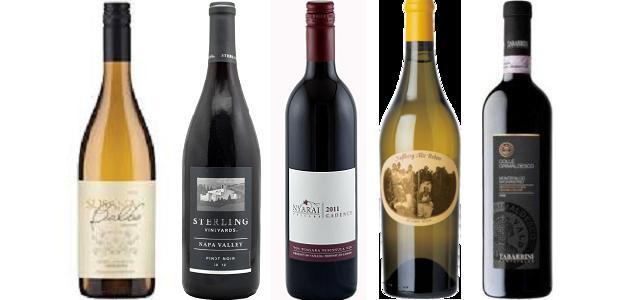
From left to right: Susana Balbo Signature Barrel Fermented Torrontés 2014, Sterling Vineyards Pinot Noir 2012, Nyarai Cellars Cadence 2011, Wieninger Nußberg Alte Reben Gemischter Satz 2012, Tabarrini Colle Grimaldesco Montefalco Sagrantino 2009

From left to right: Susana Balbo Signature Barrel Fermented Torrontés 2014, Sterling Vineyards Pinot Noir 2012, Nyarai Cellars Cadence 2011, Wieninger Nußberg Alte Reben Gemischter Satz 2012, Tabarrini Colle Grimaldesco Montefalco Sagrantino 2009

Susana Balbo Signature Barrel Fermented Torrontés 2014, Uco Valley, Mendoza, Argentina (384339, $17.95, WineAlign)

Here, from Dominio del Plata, an experiment with clear merit. The attributes are so sizeable, with weight depth and no compromise. The dramatic effect works to ignore the “clouds of mystery pourin’ confusion on the ground.” The floral aromatic integrity of Torrontés is upheld within the leaden shackles of the wood, as is the savour. This is a honeyed white, suckling and mellifluous, like fully extracted ripe Sémillon, from and with the benefit of a warm vintage. Puts the fun back into varietal revival by way of a giant leap up from the thin, medicinal water clogging the arteries of South American white wines so often put to market. Here is a Torrontés to stop the rain.  Tasted January 2015  @ddpwinery  @ProfileWineGrp

Sterling Vineyards Pinot Noir 2012, Napa Valley, California (424179, $19.95, WineAlign)

There are so many reasons not to find a thrill in this regional blend of Pinot Noir fruit but none of them stick. Sweetness, simple syrup silky fruit, brown sugar, every red and purple berry in all varieties of fields (plus ripe plums) and warm to temperate alcohol (14.5 per cent declared) all combine for full California sunshine effect. All this and I just can’t turn away. With all the excess fruit, texture and multiplicity in good times, how can I? I ask this Pinot, “how come you, how come you dance so good?” The answer lies in the feel and the ability to turn a Noir trick or two. Not to mention a rolling of barrels and Napa Valley stones through its very core. Well done.  Tasted January 2015  @sterlingwines  @Diageo_News

Nyarai Cellars Cadence 2011, VQ Niagara Peninsula, Ontario (Winery, $21.95, WineAlign)

Steve Byfield’s crimson blend of Cabernet Franc (42 per cent), Merlot (33), Cabernet Sauvignon (20) and Syrah (5) is at once so very Niagara while acting out anomalously in the 2011 vintage. Ripe, extracted fruit appears warm-vintage drawn, with its coated layers of primer, brushstroke and plummy stone fruit. The warmth is tempered by savour, oranges, figs and psalms. Its ability to find cadence and cascade keeps it “cool in the shade.” The varietal combining is delineated in balance, “sliding mystify, on the wine of the tide.” This effort, with its new name, could become one of the king’s amongst Ontario blends.  Tasted January 2015  @NyaraiCellars

Wieninger Nußberg Alte Reben Gemischter Satz 2012, Vienna, Austria (Agent, $40.00, WineAlign)

Here, the intensity of multi-varietal wine defined. From next to the Danube, out of the Ulm Vineyard, on a very steep southern slope on the eastern part of the Nussberg. The composition is nine-fold; Weissburgunder, Neuburger, Welschriesling, Grüner Veltliner, Sylvaner, Zierfandler, Rotgipfler, Traminer and Riesling. The aridity (1.3 g/L RS) is visionary. Beneath the vineyard there is coral from the tertiary period and in this wine you can hear the Geiger counter amplifying the faint eupnea of fossilized shells, thousands of years ago. Its resinous, sappy and majestic floating flowers are like “potions in a traveling show.” The layering is heavy (14.5 per cent ABV) and variegated, like sands and snails in a bottle or a vessel filled with an alcohol made from nature’s natural and fermenting bounty; carboniferous forest cosmology and the unpronounceable names of exotic fruit. Then there is the wooden smoulder, the white rock solder, the pine and the scene where “I sat on the roof and kicked off the moss.” The Gemischter Satz is granular but in liquid form, marbled and with a lovely wisp of oxidation. It exudes lemon custard and tonic in a wild yet beautiful breath of sauvage. It is your song. Tasted January 2015

Tabarrini Colle Grimaldesco Montefalco Sagrantino 2009, Docg Umbria, Italy (403139, $49.95, WineAlign)

Here thickness is applied in every way imaginable. Sagrantino from the maw of the beast; raw, big-boned, musky, chewing sinew and spitting out teeth. Though fierce and ancient, eliciting vegetal scents as if Pliny’s natural history were scoured for every trace of pungent plants grown in iron rich earth, it is also the most modern expression of Umbria, or all of Italy even. In so many ways it’s pretty Gestanko, composted and of an incomparable spume. But it also desensitizes and endears in a soulful, ethereal way “like scattered leaves,” blowing in a stiff breeze. It folds back the skin of time, in waves of heat and at times is so very sweet. Bring this to the apocalyptic marshmallow roast. Leaves the red wine city in ruins and in the dust. Sagrantino at 16.5 %. Burn, baby burn.  Tasted January 2015  @TrialtoON  @TABARRINI

Good to go!
Down on the Ornellaia

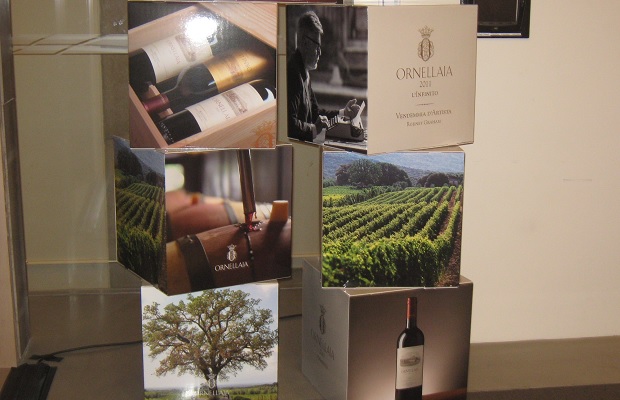
Ornellaia 2011 PHOTO: http://www.ornellaia.com/

Ornellaia 2011
PHOTO: http://www.ornellaia.com/

It’s no secret the heart’s soft spot will gladly make room for fine and expensive wine, but not all will walk through that open door. Much Bordeaux intimidation vicariously hectors by way of outlandish collusion in en primeur dictation and so hardens the arteries. Though less so, the Burgundy intimidation relegates the lesser earthling to hide, cower and tense up in circulatory distress. Champagne can be quite kind. Even more so is the Bolgheri.

Tenuta Dell’ornellaia is the benchmark for Super Tuscan solicitude. It pours with pleasure. It reminds us of what was once good and approachable in the pretentious and obnoxious world of expensive wine. It resembles its patriarch, a man who comes to Toronto as a patron of the arts and as a steward of his wine’s goodness.

After tasting through mind-altering back vintages of Ornellaia I am typing away on my laptop in the Art Gallery of Ontario where the Marchesi de’ Frescobaldi and winemaker Axel Heinz are generously sharing their wares with a group of journalists, sommeliers and restaurateurs. Ferdinando leans over on a knee, like Brando in the garden of the grand film and smiles at me. “Perché non mangi?” he asks. “Si accende, anche una piastra. Si prega, si mangia.” I may as well be in his home, in Tuscany, in his kitchen, snacking on formaggi. But I am in Toronto and contemplating $1000 worth of exceptional red wine.

One of the softest spots is for Ornellaia. It’s a gorgeously perfumed principessa. Both the previously tasted and reviewed 2010 and 2009 perpetuate the notion.

Related – Holiday wine gems hit November shelves and The Best Wine Releases of 2012

Facilitated by Authentic Wines and Spirits and Sherry Naylor and Associates, the Marchese Ferdinando Frescobaldi and Mr. Giovanni Geddes da Filicaja came to represent Ornellaia for a vertical tasting presented by Axel Heinz. The visit coincided with the 2011 vintage and its association with “Vendemmia d’Artista.” Beginning with the 2006 vintage, the Estate launched the special art project, purposed to celebrate the unique character of each new vintage matched by an artist’s interpretation of that vintage.

Vendemmia d'Artista

Vendemmia d’Artista

For 2011, the “Infinity” character or “L’Infinito” was interpreted by Canadian born artist Rodney Graham. Graham created a work of art and a series of exclusive labels for large format bottles. Each one individually signed and numbered and adorned 100 3-litre Double Magnums, 10 6-litre Imperials and a unique 9-litre Salmanazar. An auction was held at the AGO and raised $126,000 for the institution.

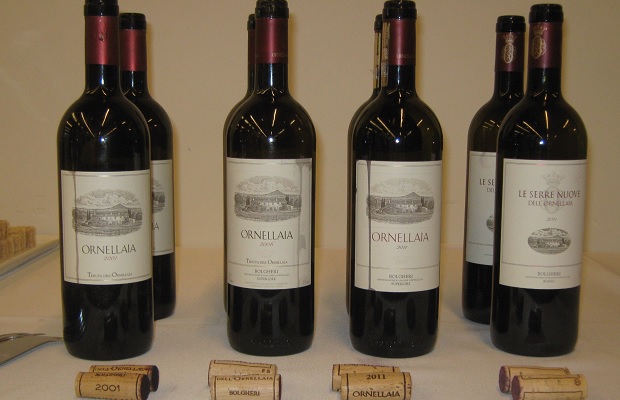
There are vertical tastings and then there are vertical tastings that bring you up. One such as this makes just cause to say I am down on Ornellaia. “People come from all around to watch the magic boy…Bring a nickel, tap your feet.” Here are my notes on the Ornellaia wines tasted at the AGO.

Ornellaia Vertical

Ornellaia Vertical

Le Serre Nuove Dell’ornellaia 2011, Doc Bolgheri Rosso, Tuscany, Italy (606194, $59.95, WineAlign)

Produced since the 1997 vintage, from younger vines and with the intent to produce a ripe and approachable wine. Agefd in barriques (25 per cent new and 75 per cent one year-old). Left for 15 months though assembled after 12 and returned for the last three. The practice induces settling and approachability. Cleary focused with an Ornellaia intent, with the goings on of deep, dark fruit and dusty hedonistic, mulberry fruit. Not quite the Da Vinci muscled cherub that is the big brother renaissance wine, but still the Serre Nuove can’t help show an uncanny resemblance as a younger sibling to Ornellaia. Rich, vanilla mocha, thick and mildly tannic. A three to five-year full-on gamut of pleasure awaits.  Tasted twice, October 2013 and June 2014

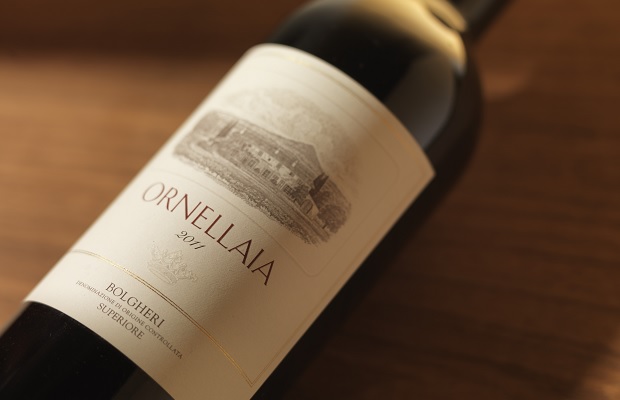
Ornellaia 2011, Doc Bolgheri Superiore, Tuscany, Italy (SAQ, 11973238, $189.25, LCBO, 722470 (2010), $189.95, WineAlign)

The blend of the 2011 Rosso Superiore is Cabernet Sauvignon (51 per cent), Merlot (32), Cabernet Franc (11) and Petit Verdot (6). From a near-sweltering vintage, tempered by a cooling spell in June and July. The late August heat spike brought on early ripening which explains the intense aromatic waft that fills the AGO’s tasting room air. Though following the same (post 12-month) assemblage and return to barriques for a further six months, the richesse in fruit quality and 70 per cent new oak envelopes this ’11 with so many structured layers there remains many years to see where it will go. The rose petal meets violet florality can elicit no parochial parallel, the anxiety in hematological ooze neither. A consideration of the phenolic exceptionality follows suit. Chalky tannins follow chains in a world spinning ’round in lush circles. This is the reference point for such assemblage in Bolgheri. The breakdown will not begin for a minimum 10 years and evolution will continue comfortably, gently and effortlessly for 15-30 after that.  Tasted June 2014

Ornellaia 2006, Doc Bolgheri Superiore (722470, $189.95, WineAlign)

The blend of the 2006 Rosso Superiore is Cabernet Sauvignon (56 per cent), Merlot (27), Cabernet Franc (12) and Petit Verdot (5). Tasting its not yet developed charms, what is most clear is its strength and vigor. A different Ornellaia, with perfect conditions to ripen Merlot and Cabernet Franc so that their characters have combined to speak their peace. Rolling huge but cool, mint-spiked, black currant and stone emotions come across the aromatic profile. Those right side of the river brain varieties and the Cabernet Sauvignon dominant fruit were clearly all picked at such levels of ripeness as to put the ’06 at harmonious level of sugar, alcohol and rich fruit likely never before seen from this grand vin. The ’06 was fashioned with each vineyard block fermented separately, for a total of 66 different base wines. “So stealthy, so animal quiet,” give this Ornellaia 15 more years of time and it will come to your emotional rescue. It will whisper in a falsetto voice, “I’ll be your savior, steadfast and true.”  Tasted June 2014

Ornellaia 2001, Doc Bolgheri Superiore (Agent, $189.95, WineAlign)

The blend of the 2001 Rosso Superiore is Cabernet Sauvignon (65 per cent), Merlot (30) and Cabernet Franc (5). Though strange to say and admittedly a retrospective comment, the minute quantity of Cabernet Franc and not yet inclusion of Petit Verdot result in a more straightforward and not as heavily layered Ornellaia. The structure is more linear and understandable, the fruit not as variegated. Complexity and Tuscan spiritualism are not compromised by the Cabernet Sauvignon and Merlot dominant line, in fact, assessing the evolution at 13 years on reveals the Bolgheri terroir in ways the magnanimous and opulent more recent vintages just don’t reach. There is a refreshing acidity in this young and developing ’01 in a streak that again, the baby Superiore do not seem to possess. This is a striking Ornellaia, a wine that would work with exceptional cuisine of varied cultures. It can be enjoyed now and will respond with grace and thanks for 30 plus years more. Tasted June 2014

Good to Go!


Great whites, fall colours

The Road. Photo courtesy Kiowaman

as seen on canada.com

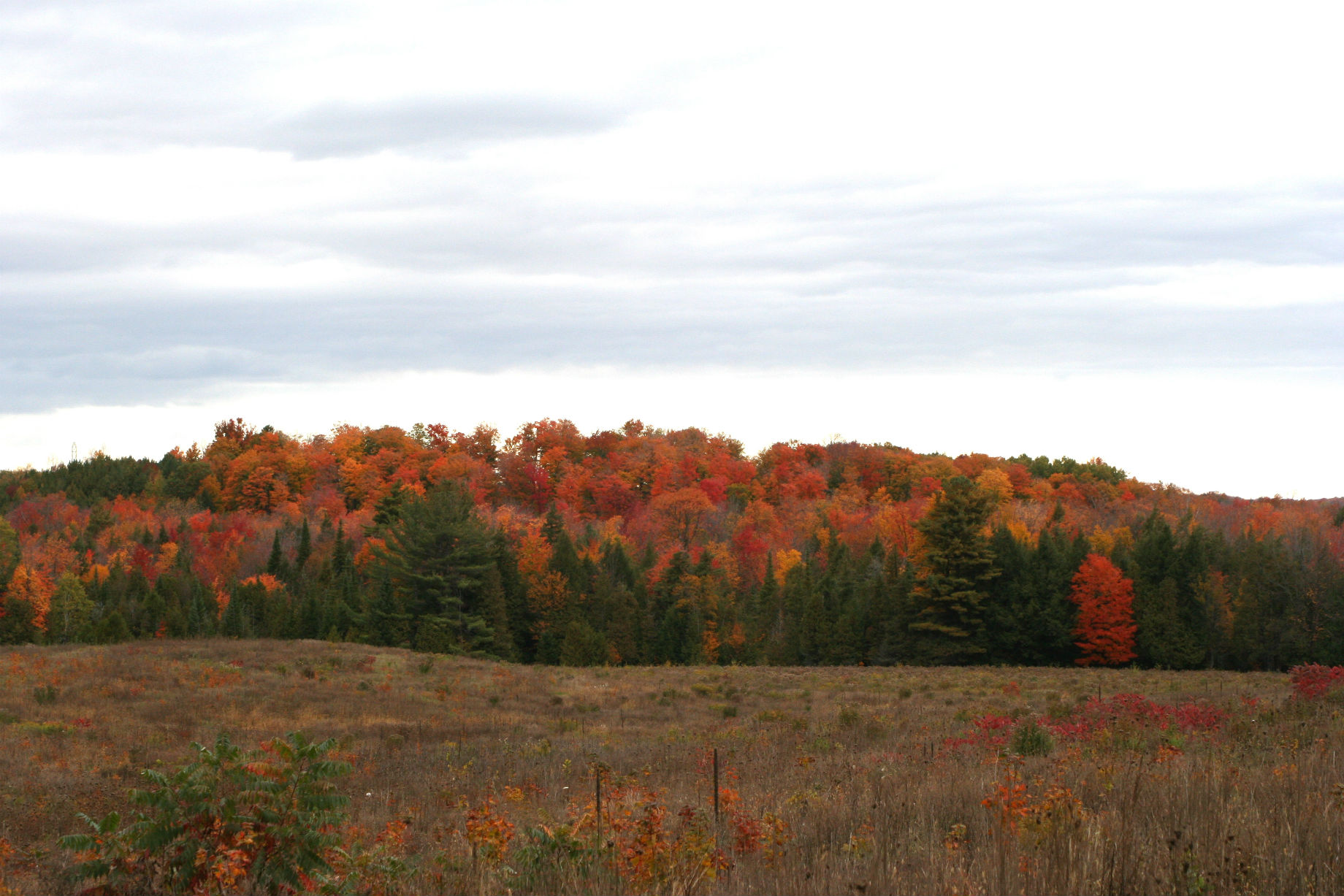
We are distinctly Canadian. In summer we paddle, navigating canoes through marshes, bogs and streams, traversing lakes and meandering down rivers. In the fall we are more likely to pack up the car and drive the road to northern climes, marveling at the changing season, elucidated by fall’s bright oranges, yellows and reds.

Our taste and choice in wine follows suit. When the heat is on we look to sharp, vigorous and thirst quenching white wines. Sauvignon Blanc, Vermentino, Garganega, Riesling and Chenin Blanc. Jumping forward a month or two there will be the need for full-bodied whites; Chardonnay, Semillon, Viognier, Marsanne and Rousanne. In the autumn interim we bridge the gap with Unoaked Chardonnay, Pinot Gris and Grenache Blanc.

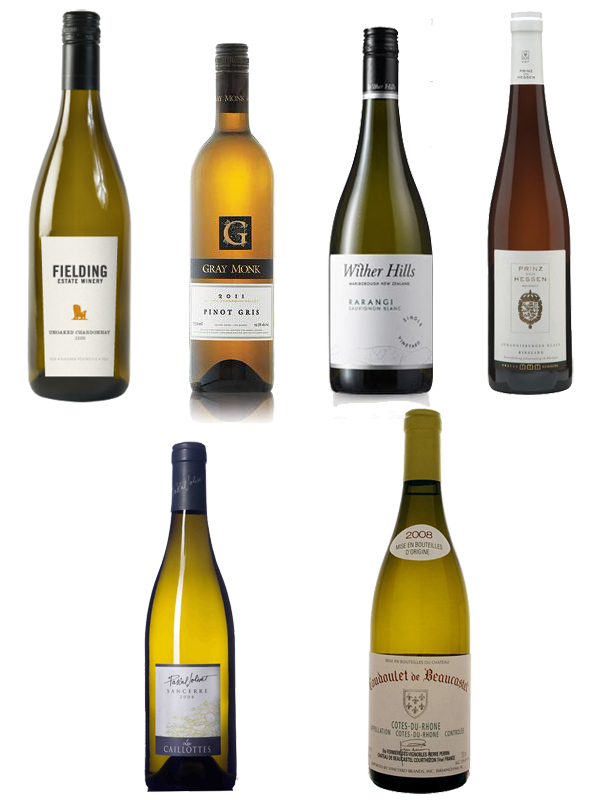
Here are six great whites for fall and for the early stages of the coming winter cold.

The grape: Chardonnay

The history: Take away the oak influence and Chardonnay goes crisp and clean

The lowdown: Winemaker Richie Roberts is without peer for this method, at this price

The food match: Perfumed Chicken Broth , chinese dumplings

Fielding Unoaked Chardonnay 2011 (164491, $13.95) continues to will clear water talent for value. A revivalist po’ boy made of ascetic industrialism; efficient, reasonable and utilitarian. Drinks well down on the corner, with enhanced juicy fruit. All orchard fruit, all the time. Very satisfying for the coin. “Bring a nickel, tap your feet.”  87

The grape: Pinot Gris

The history: A widely planted and signature grape for B.C. due to its ability to ripen in all three of the major regions: Island, Okanagan and Similkameen Valleys.

The lowdown: This Okanagan version may be sweeter and softer than others but winemaker George Heiss Jr. has struck gold with his 2011

The food match: Warm Pulled Soft Chicken Tacos, romaine, candied bacon, caesar dressing

Gray Monk Pinot Gris 2011 (118638, $19.95, B.C. 118638, $16.99) is a purling wind of crisp, sprite Mutsu apple, honey, molasses and castile. Certainly not the pepper and spice of its Alsatian brethren but manages to lift Okanagan prurience into B.C. repartee.  88

The grape: Sauvignon Blanc

The history: The ode to Bordeaux and the Loire is fading. Kiwi SB rocketed to stardom, went through a recession and has emerged a major player

The lowdown: Marlborough at its finest

The food match: Caprese Corn Meal Galette Tart, tomato, fior di latte and basil

Wither Hills Single Vineyard Rarangi Sauvignon Blanc 2011 (288134, $21.95) coagulates sea air above Cloudy Bay, arsenopyrite and carapace to imbue the Rarangi SV with density and intensity. A white grapefruit, lime and sugar syrup sangria void of gooseberry and asparagus. A breath of Marlborough fresh air.  90

The grape: Riesling

The history: Germany’s trademark grape

The lowdown: Spätlese means “late harvest” and as a Prädikatswein it carries with it Germany’s highest quality designation

The food match: Lemon Curd Short-breads

Prinz Von Hessen Johannisberger Klaus Riesling Spätlese 2002 (295659, $21.95) of graceful, gold regal colour is a dessert wine now, for all intents and purposes. The citrus tang of acidity persists and melds into what is now a scintillating, cider apple stage. A big thanks for aging this one for us, it’s now ready to go.  90

Fall Colours. Photo courtesy Kiowaman

The Splurges

The grape: Sauvignon Blanc

The history: From its true home in the Loire where the ancient refuse of the varietal is traced in the soil

The lowdown: Jolivet is king and this bottling is one of his finest made to date

The food match: Smoked shrimp, chive crème fraîche, garlic chips

Pascal Jolivet Les Caillotes Sancerre 2010 (287086, $31.95) starts out with subtle herbs and spice. Drifts to flint, pericarp and chalk then builds and lifts to edgy crystalline and jeweled gem. Accomplishes all its aromas and tastes with refinement. Flies away with the barrel on the longest flight imaginable for a Sauvignon Blanc.  91

The grapes: Marsanne, Viognier, Bourboulenc and Clairette

The history: Southern Rhône white blend from a house that makes some of the greatest white wine on the planet

The lowdown: Beaucastel’s “second” wine is at it’s very best in 2011.

The food match: Fresh Ravioli, sage butter, extra-virgin olive oil, reggiano parmesan

Château Beaucastel Coudoulet De Beaucastel Blanc 2011 (48892, $33.95, SAQ 449983, $30.25) may just be the lowly, new ‘second’ home of the pope (papal coach house if you will) but ahhhh…white Rhône blossoms, so many varietals, so little opportunity to taste them. This is faintly nutty like Oloroso, fragrant, and annotated for interpolations. “Smells divine,” “gorgeous colour” and “tastes great.”  90

Good to go!