Twenty-four mind-blowing wines of 2024

‘Tis an exercise performed year after year, a word processor’s per annum distillation to say thank you and recognize game. To consistently act as messenger, be conscious of hard work filed and to celebrate that excellence. The first list was conceived more than 10 years ago, now peaking at its current number with twenty-four mind-blowing wines chosen for 2024. Travels to fluctuating destinations mean from year to year wine regions will carry different weight and the list abides by the variance. In 2023 Bordeaux played a significant role, as did South Africa and Washington in 2022, Bourgogne in 2019, and so on. The rules of engagement never change but evolution plays its part, priorities pivot and you never can say or tell what sorts of matters will strike deep into the heart.

Related – Twenty-three mind-blowing wines of 2023

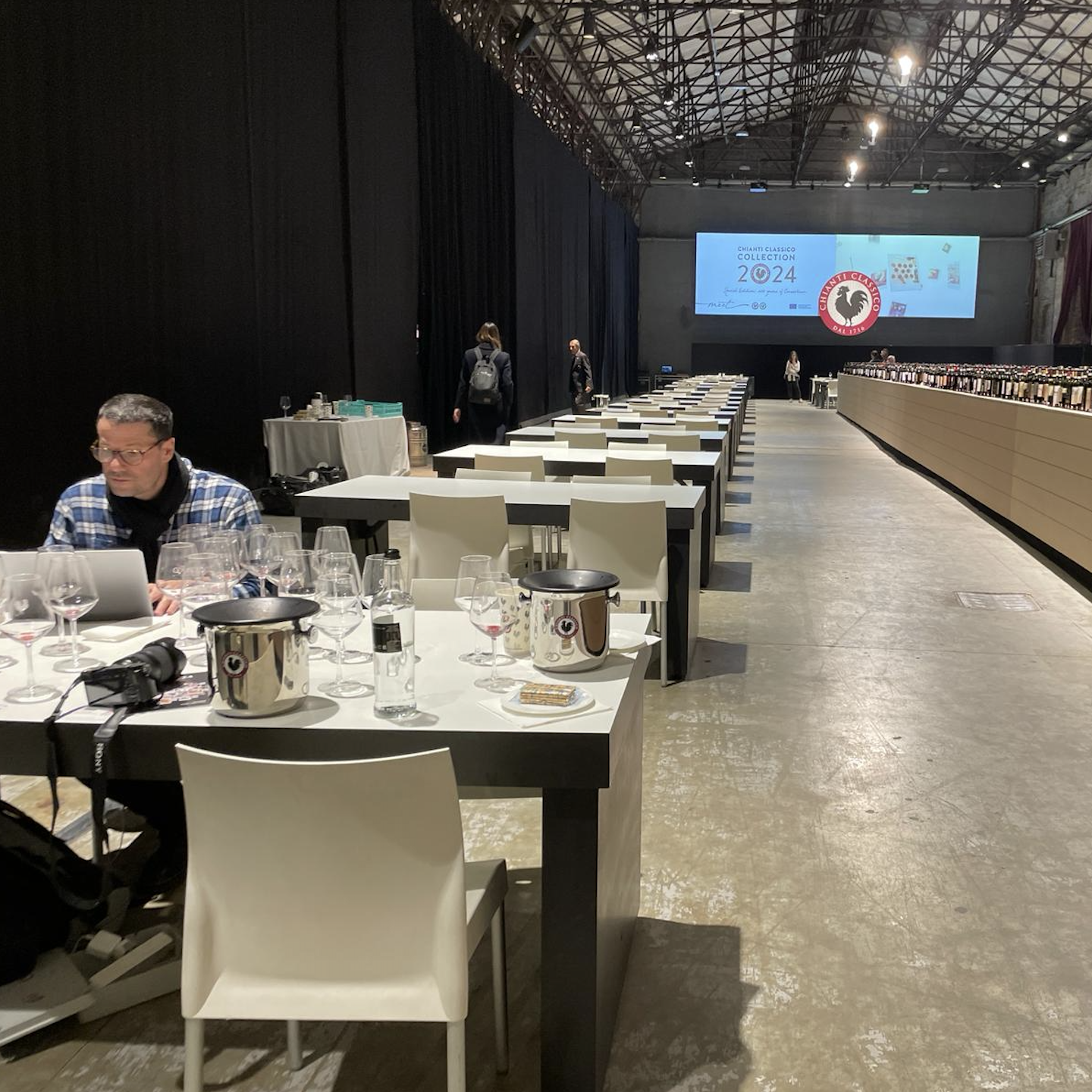
Last one standing (sitting and tasting) at the Chianti Classico Collection 2024

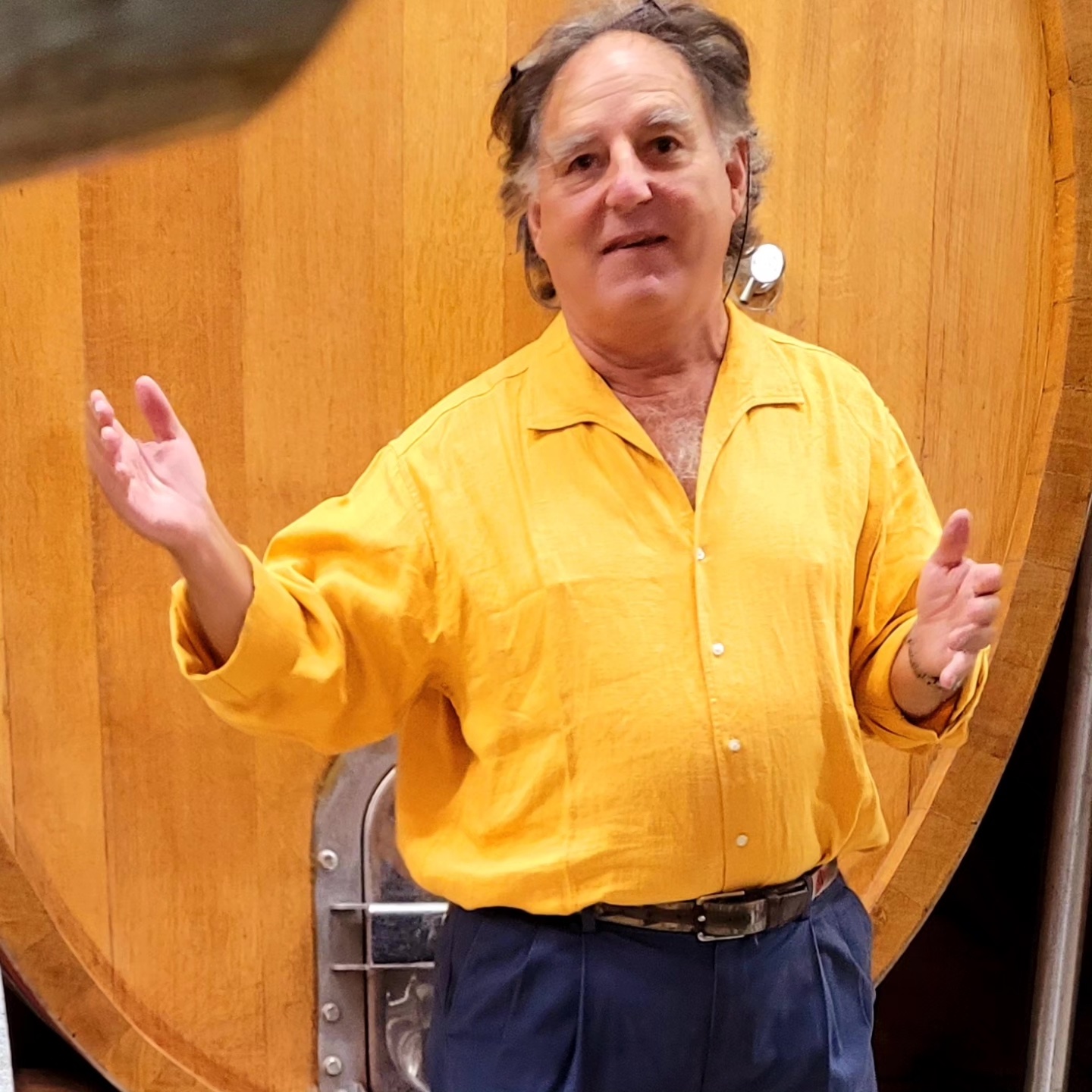
Godello needs to make a confession, shed some honesty, clear the air. He admits to a love for writing tasting notes and needing to do it, especially when a potentially mind-blowing wine is in the glass and what follows flows forth as a stream of consciousness, ending only when the creative tap closes naturally. When these notes are edited weeks or even months later there is the incredulous feeling of “how did this get written – where did these words come from?” They just did, from right out of the wellspring of creativity, but Godello does not know how he came to write those notes – as if they were magically written. Paragraphs woven from dots and thoughts for unsuspecting connections between writings and wine, such as “Ribelle è colui che si distingue.” Translated as, or better yet in reference to “the rebel is the one who recognizes the unjust law and breaks free from it,” from Ernst Jünger’s 1951 “The Rebel’s Treatise.” The German philosopher, essayist and WWII captain was once called die Burgunderszene because he watched a bombing raid in Paris while sipping Burgundy. The stylish supervillain of twentieth-century German literature’s disquisition shared dire and prophetic words on what a future world would be, in what he called the “Age of the Titans.”

Related – Twenty-two mind-blowing wines of 2022

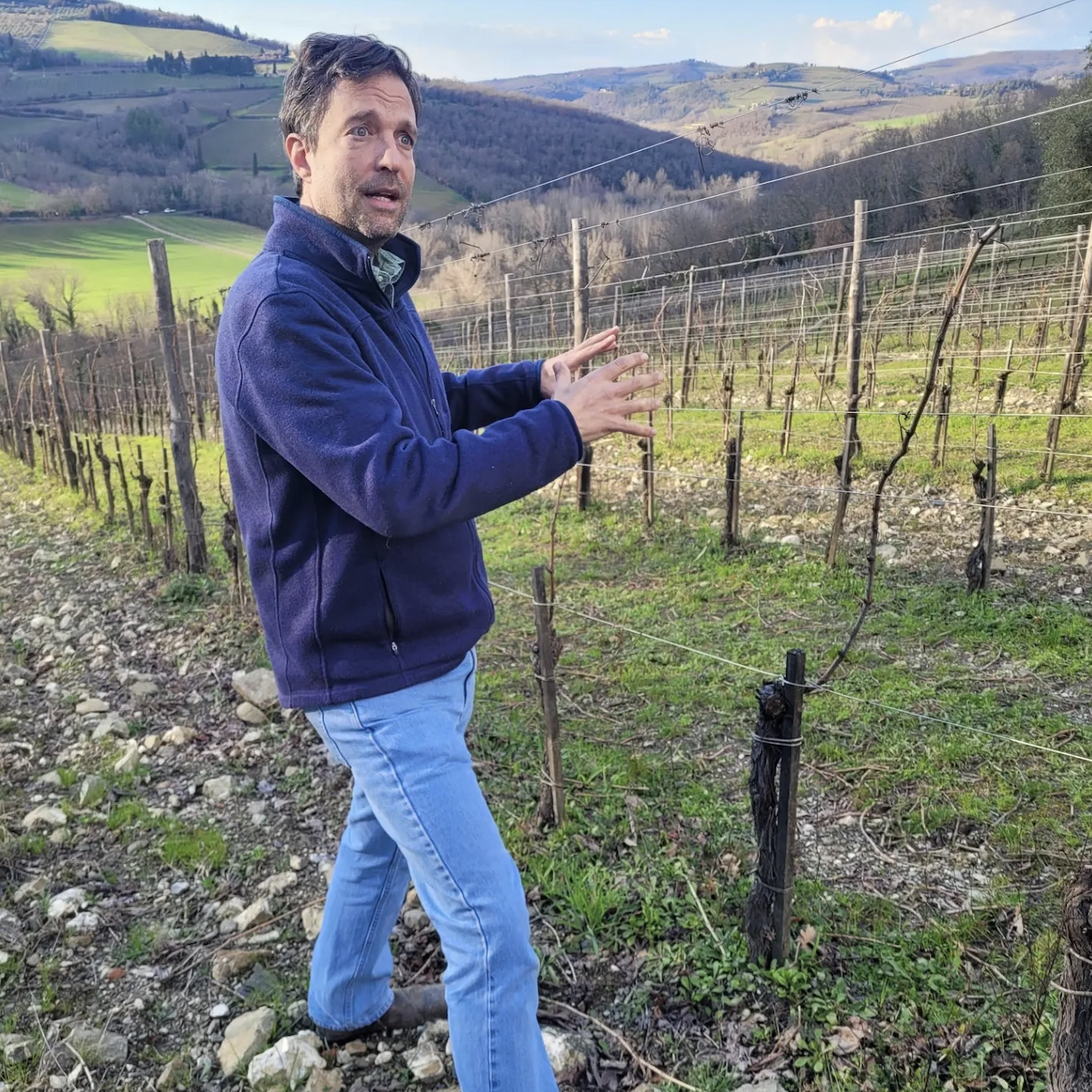
Godello beneath a massive Tuscan Mazza di Tamburo/Parasol Mushroom

Or this. “The label represents the position of the vines in coordinates, echoed in the machicolations of a sangiovese that drops all the stones on unsuspecting palates through fruit openings between supporting acid corbels of a projecting tannic parapet.” Where did that come from? Or simply, “who needs fruit when you have rocks?”

Related – Twenty-one mind-blowing wines of 2021

ColleMassari

More than rugs tie rooms together – lyrics, song titles, movie quotes, literary passages, exchanges between a journalist and a poet, thinker, writer, actor or composer – they are all a part of the masala. Reminds of a 2021 interview with a reluctant prophet. “Try to sit down and write something like that – there’s a magic to that and it’s not Siegfried & Roy kinda magic you know, it’s a different kind of penetrating magic.” All kidding comparisons aside with Bob Dylan’s answers to Ed Bradley in that famous 60 minutes exchange, but they may just be artistic words to live by. And why Godello? “You call yourself what you want to call yourself. This is the land of the free.” As for the relevance of wine tasting notes, sure it feels like being “a wordsmith from bygone days,” but it still feels right. And necessary. And unavoidable. A bottomless pit of cultural oblivion? No, not that. Tasting notes tell stories that need to be told. Relayed by messengers fulfilling a destiny to visit and break bread with good people making great wines and in turn agreeing to relay their tales. Tasting notes are the chronicles, expressed as narrative, of anecdotes woven through prose. If there is a better way to say what needs to be said it has not yet been found.

Related – Twenty mind-blowing wines of 2020

Chianti Classico’s Cento Anni

As of today’s date and the publishing of this year-end list Godello has reviewed 4,225 wines. If the origins of said wines were to be separated into categories than the breakdown would be as follows. Thirty percent would be from the LCBO’s VINTAGES release program, 24 percent for WineAlign Exchange curation and wine reviewing service, (12) Chianti Classico, (8) Piemonte, (6) Montalcino, (6) Sicilia and the remaining (14) from travels to other parts of Italy and around the world. A smaller part of one percent would be from wines enjoyed with friends, tasting groups, wine agent reps, visiting winemakers and at home. It all adds up to one great pool from which to create this list of 24, a number to represent just slightly more than half of one percent of the wines tasted by Godello in 2024. Here are his twenty-four mind-blowing wines of 2024.

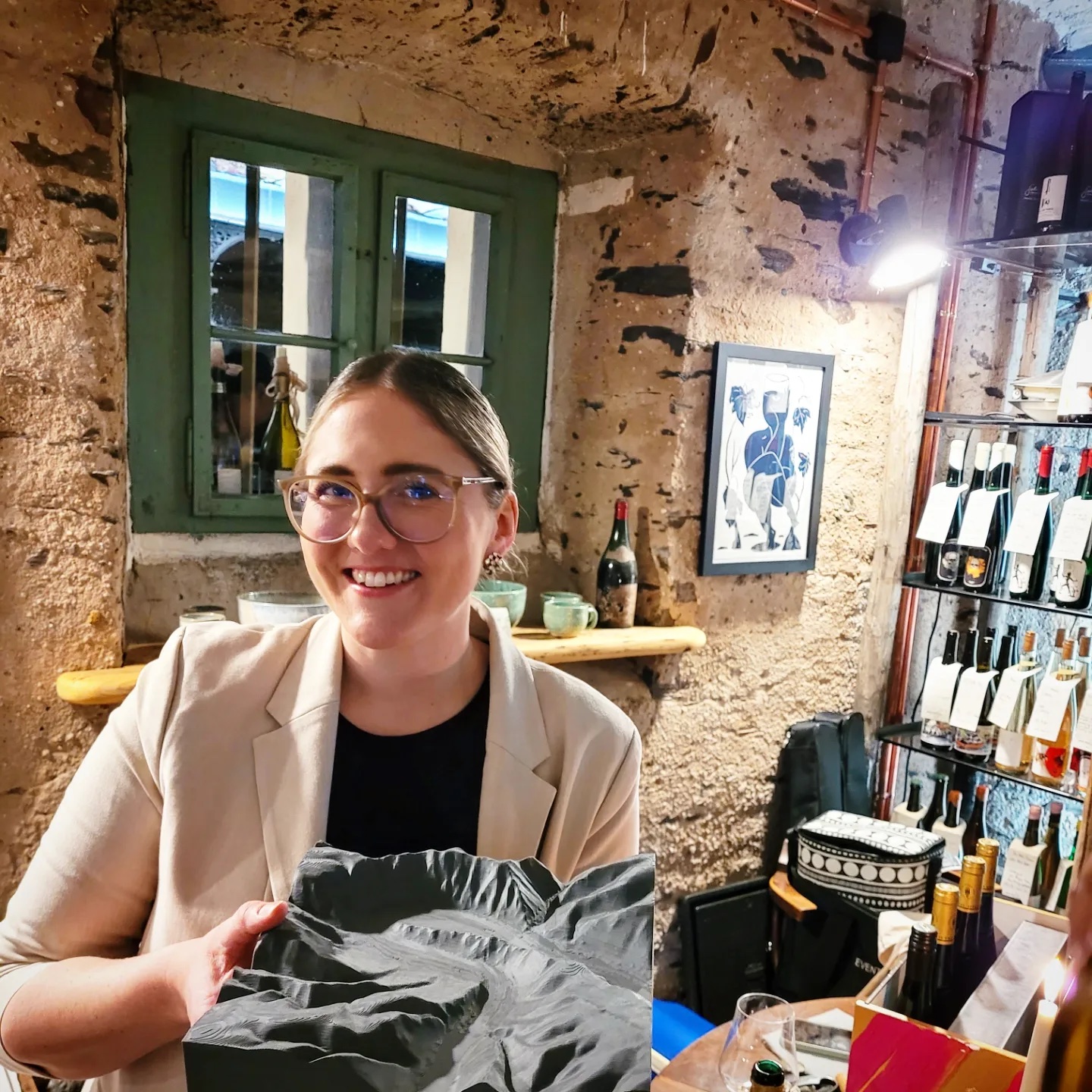
Angelina Franzen – Weingut Franzen

Weingut Franzen Riesling Sterneberg Großes Gewächs 2020, Große Lagen, Mosel

Killian and Angelina Franzen’s best plot in the Neefer Frauenberg is called Sterneberg. Vines were planted in 1938 on grey slate for a different, next level mineral quality and quotient for Mosel riesling. These are own-rooted vines, old, experienced and wise, their resulting dry wine coming away like the desert because sugar and acids near-equal come together seamlessly. The most viscosity and texture of the Franzen rieslings, from a hot vintage and so concentration, unctuousness, flesh, pulp and glissade are all at peak performance. Glorious and confident, outspoken but only to make sure we understand its origins and Franzen abides by its voice. Drink 2024-2033.   Tasted March 2024

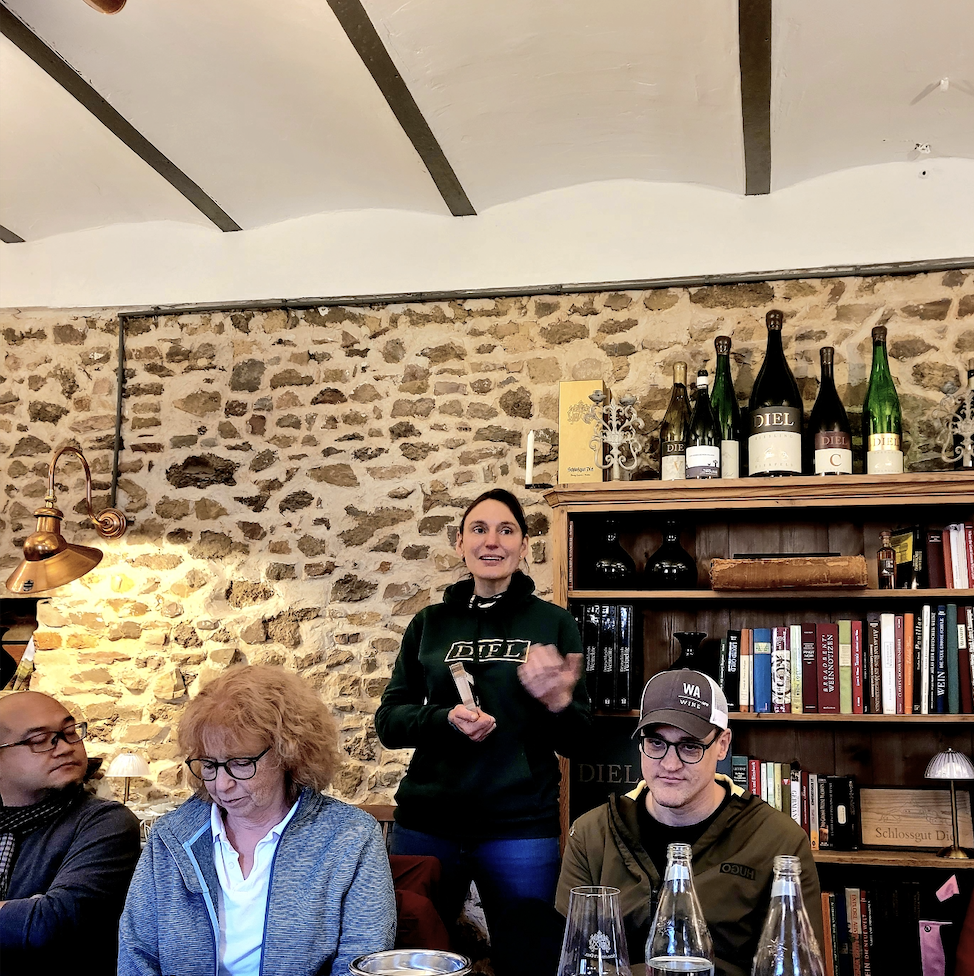
Caroline Diel – Schlossgut Diel

Schlossgut Diel Dry Riesling Pittermännchen GG 2022, Vdp. Grosses Gewächs

The tiny one hectare cru Pittermännchen is a name that dates to the middle ages with a connection to the people of Köln and Düsseldorf. Grand cru site of weathered grey (Devonian) slate atop Rotliegend conglomerate that dates back several million years. The geo-agricultural texture is small decomposed particles as opposed to the larger stones of the Mosel. Expressive flint stone aromatics undeniably soil related and not much fruit to discuss, save for some variegate currants but you really have to conjure imagination. There is a mille-feuille density to this riesling that peels away and delivers waves in layers without boundaries. Complexities are revealed without pause and dryness results because purity and grip replace the necessity for sugar-acid balance. So stony, long and our palates are held captive. Top shelf riesling within the idiom. Drink 2026-2033.  Tasted March 2024

Adega Do Vulcáo (c) entrevinhas.com

Adega Do Vulcáo Ameixâmbar 2022, Açores IG

A seriously volcanic blend of native grapes from two areas, first the ash of the Capelinhos and second the basalt of the Criaçào Velha. Add in the cold Atlantic influence and the result is something extraordinary to potentially mind-blowing. That depends on how much flint struck rock, mineral mouthfuls and deepening trajectories you may or not desire in your endemically-formulated white wines. Ameixambar is just such an animal and the profile, especially noted with verve and lashes upon the palate, is well, remarkable. Nothing else feels or tastes like this wine. Truly salty and there are notes that imagine powder created by crushing many different shells, inclusive of oyster, calm and mussel. You may ask yourself what is this, but you can answer with a simple word, or place. Açores. Drink 2024-2029.  Tasted July 2024

(c) inama.wine

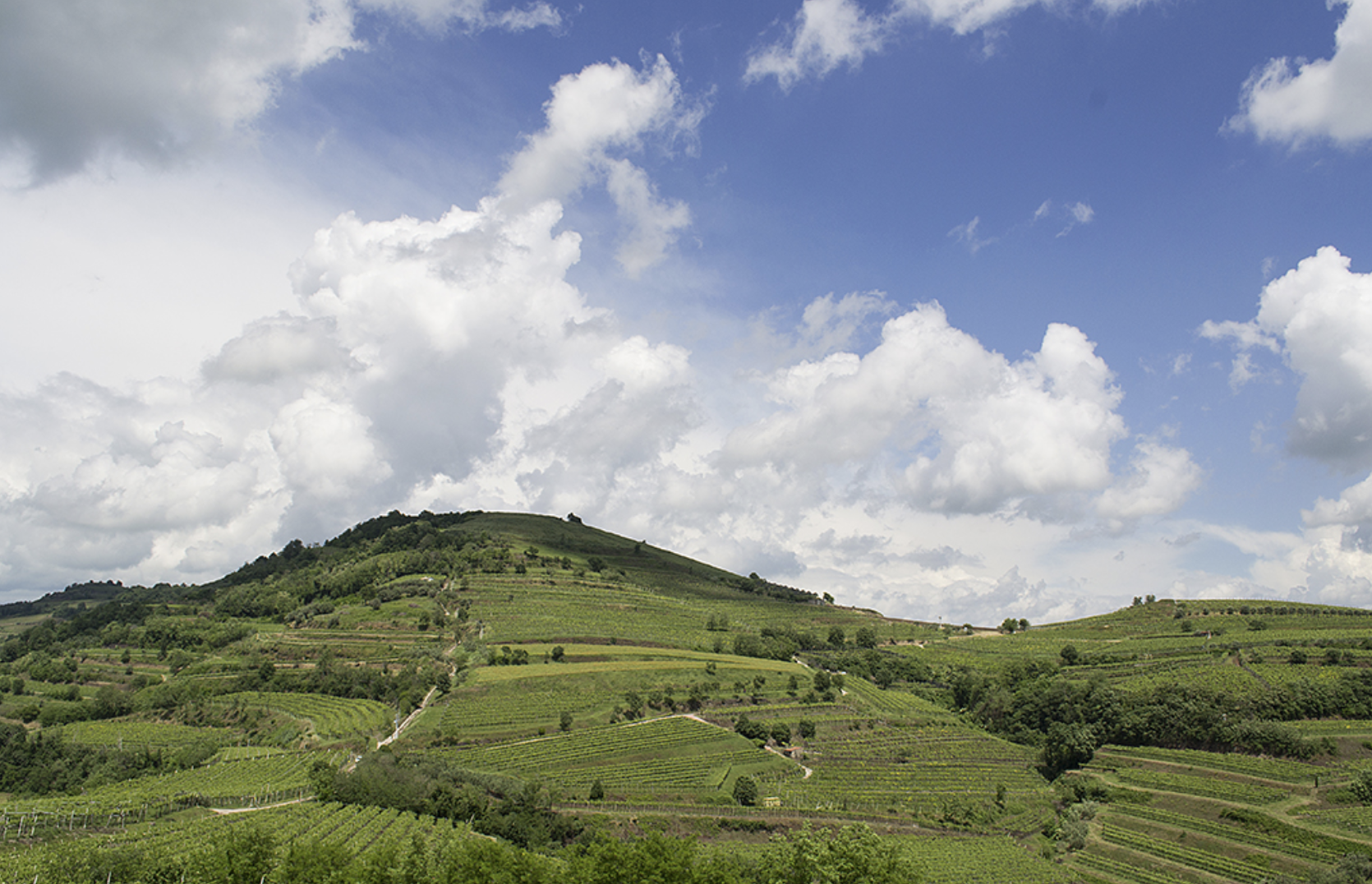
Inama I Palchi Grande Cuvée Foscarino Soave Classico DOC 2021

I Palchi, as in the “stages,” a geographical term for a series of wide terraces aboard Monte Foscarino lined with pergolas of old garganega vines. In this case Inama’s highest level of Soave Classico meant to celebrate the ancients. As a surname it belonged to a cleric but also Antonio Foscarini (c. 1570 in Venice – 22 April 1622), member of the Venetian nobility, ambassador to Paris, London and later sentenced to death for high treason by the Council of Ten and executed. Yikes! This Foscarino ode is intended towards grapes and volcanic terroir for a bloody incredible garganega of substance and style. The ’21’s ability to attract and engage the taster’s attention is at the top of the Soave game. Fresh, flinty and wholly engaging. Mind-blowing actually. Drink 2024-2029.  Tasted December 2024

Marqués De Murrieta Capellanía Reserva Blanco 2018, Rioja DOCa

Only viura grapes are chosen from a six hectare calcareous clay plot off of 70 year-old vines located at the highest elevation of the Marqués De Murrieta Ygay Estate. The winemaking might well be working with sauvignon blanc and sémillon but with viura the ageing in French barrels takes a turn for the unexpected ethereal. The flinty smoulder is an intoxicant of the most hypnotizing order. The effect upon the palate and all the senes is extraordinary – mesmerizing. So what is Capellanía? In Spain it was a chantry or ecclesiastical endowment, one of several pious works commonly founded during the colonial period. A foundation in which certain assets are subject to the fulfillment of masses and other pious charges. Imaginatively speaking Capellanía is a rarity, monoceros, symbol of grace purity, power and transcendence. Not to mention healing powers and freedom. A unicorn. Drink 2024-2033.  Tasted June 2024

Vanessa Cherruau
(c) media.ouest-france.fr

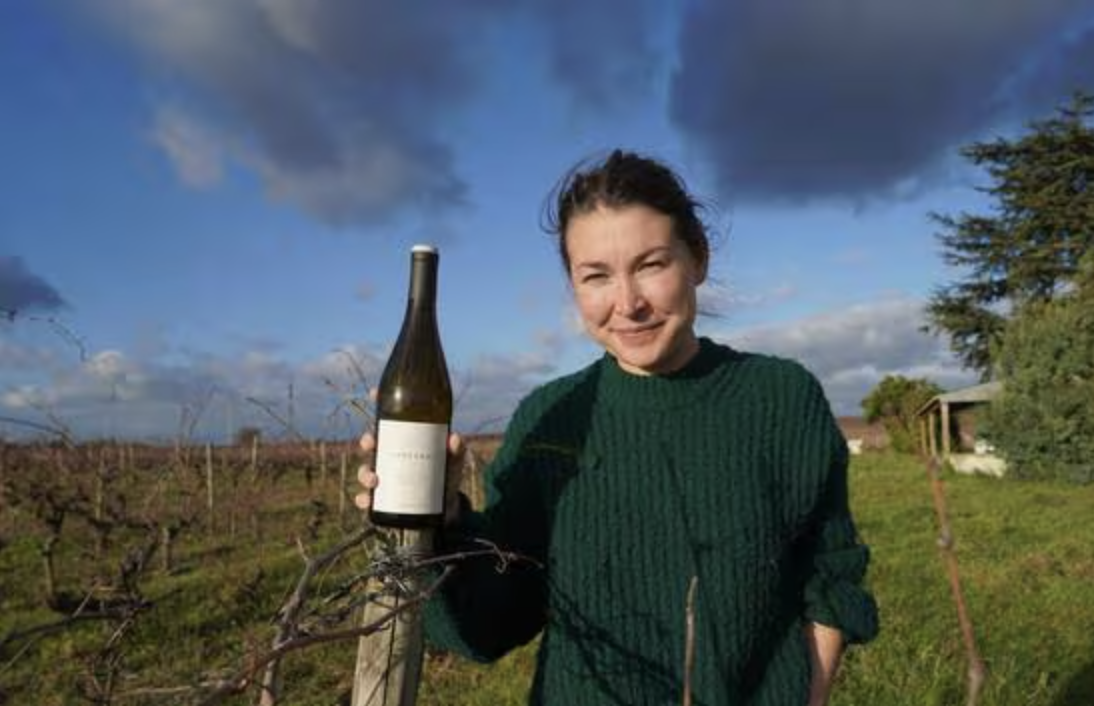
Château De Plaisance Sur La Butte 2021, Anjou AOP

A wildly aromatic two cabernet blend from the Butte de Chaume where some of the finest wines made anywhere come from Chaume, Quarts de Chaume and Savennières. The curiosity and modernist approach is made two-fold by the presence of cabernet sauvignon to stride effortlessly alongside the usual franc. Yes this smells like the Loire but the aromas deliver so much more, in curiosity and intriguing sensations. Anjou in place and temperament but in design this may as well be a contemporary, abstract or Pop Art piece by François Morellet. The two related varieties form an almost intricate geometric pattern in the way they line the palate, so cleanly drawn with mathematical clarity. Yes this is serious Loire red wine but it’s also traceable, pre-minimalist and post conceptual by design. Drink 2024-2028.  Tasted April 2024

Godello and Giuseppe Russo

Girolamo Russo Etna Bianco DOC San Lorenzo 2023

San Lorenzo as Bianco from Giuseppe Russo is not like other Etna Bianco because well, San Lorenzo. Wow is the operative because no other EB gives like this. Beyond flesh and stone but something that defines what the two can effect, layered so invisibly and magically together. It seems impossible to believe that extract and conversions could come together this way, urged and supported buy some of the mountain’s finest quality of acidity and white grape tannins. This must be the place, eh? Carricante with 10 percent catarratto and grecanico makes it happen. Drink 2025-2033.  Tasted May 2024

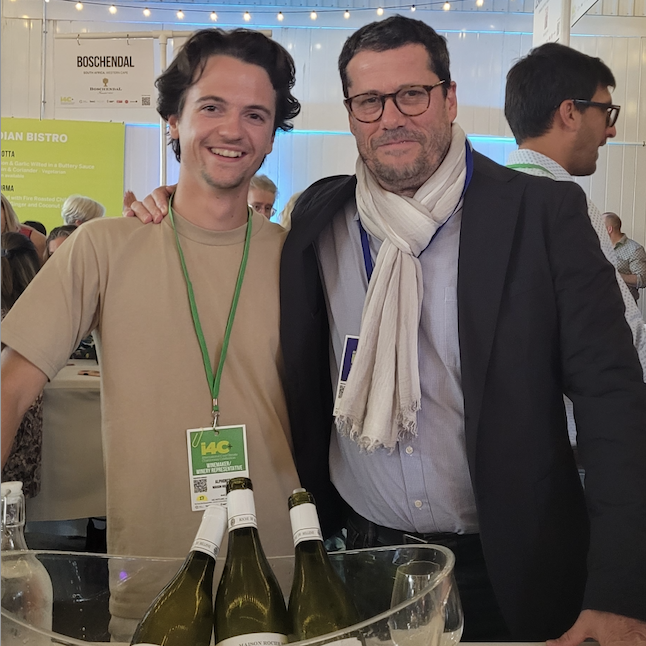
With Alphonse Potel – Domaine de Bellene

Domaine De Bellene Vosne Romanée Premier Cru Les Suchots Bourgogne AOC 2022

In the woods as they say, “souches” or here “Suchots,” a 0.2159 hectare block in Vosne-Romanée that hangs a little longer, likely because the forest asks it to. Fresher, high spirited and savoury Bourgogne comes from the vineyard, picked on September 5th, coming away with more phenolic grip and aromatic volume because of the place. Less defined in 2022 perhaps because of a vintage’s great munificence but as far as plots in this area are concerned there are few that will speak as clearly as Les Suchots. Seamless and focused, unique as they come in an era of technical proficiency and expertise. Drink 2026-2038.  Tasted August 2024

Marc de Grazia – Tenuta delle Terre Nere

Tenuta Delle Terre Nere Etna Rosso DOC Calderara Sottana 2022

What Marc de Grazia considers to be the finest contrada on the north slope and yet there are micro plots within the eight parcels that can only be made into Rosato in humid vintages. This comes from the oldest vines, more than 80 years old and just one look sees a brightness and transparency inciting the senses as they take in a bouquet not having yet nosed in the other Rossi. Calderara Sottana is the most demure, the finest of sound and vision, the one you take in slowest, without haste, to allow unfurling and length to travel as far as it wishes, evocatively so. “It asks delicate questions,” says de Grazia. “Rose petal perfume and tannins that don’t cut off your palate.” Even more is this elastic meander, not aimless but with purpose and our palates follow every step. Like Giuseppe Russo’s (though de Grazia sees little comparison) this provides the exception to so many Etna Rosso rules. Drink 2027-2038.  Tasted September 2024

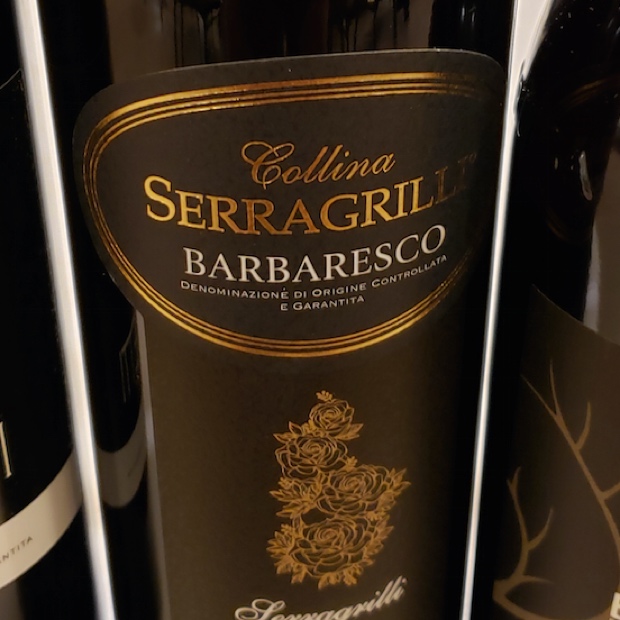
Collina Serragrilli Barbaresco DOCG Sorì Serragrilli 2021, Neive

Lovely aromatic presence, richly defined fruit of purity and expressiveness, fine and open. Exotic spicing and truly floral of a perfume that keeps one from needing to rush into a sip. The palate does not disappoint in fact it carries off and forward with equal ability to hold attention for as long as a participant is willing to hang around. These are tannins as fine as the sweet and supportive acids that precede them. A really impressive Barbaresco, forthright and a test of qualities held in reserve that can be counted upon for a decade and a half more time. Drink 2026-2037.  Tasted blind at Nebbiolo Prima January 2024

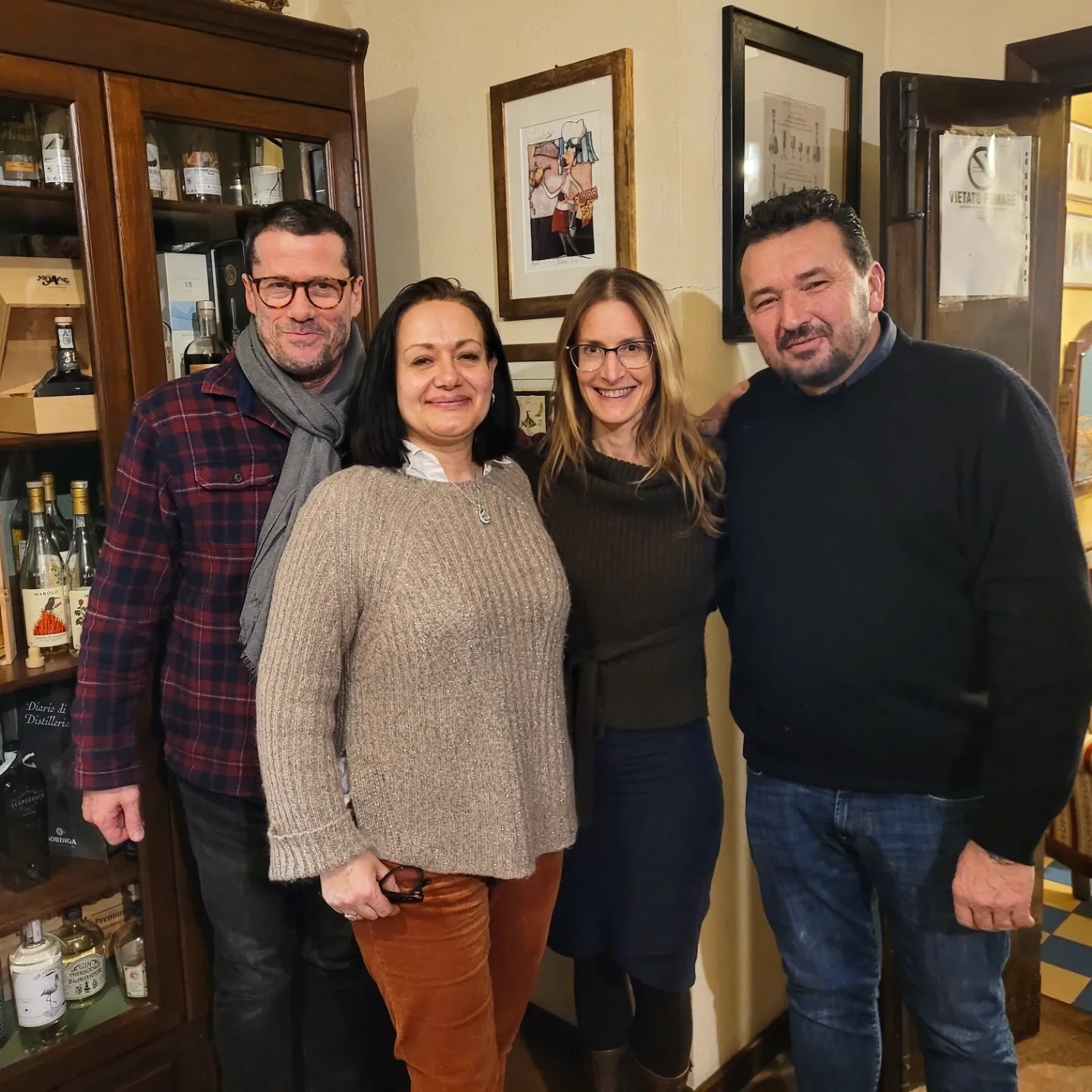
With Michela Morris, Nadia and Walter Fissore – Elvio Cogno

Elvio Cogno Barolo DOCG Ravera Bricco Pernice 2019, Novello

The hill within the hill, Bricco Pernice upon Ravera, isolated, insulated and encapsulated for nebbiolo of an insular and implosive intensity that’s likely unparalleled anywhere else in Novello. Closed and not because of vintage but due to time and really that’s about it A broad shouldered and muscular nebbiolo that must be given as much bottle time as it spent in cask, or double that for even better results. That means check back in 2026 or later to see if any part of the tannins have unfolded, unfurled or stretched out for some exercise. Likely not but then some parts will finally have as the decade unwinds. Also it’s normal in January for Pernice to be tight and a bit closed. Oh, by the way this was made with 100 PERCENT WHOLE BUNCH NEBBIOLO. For Barolo. Single vineyard Barolo from a storied MGA. Walter’s mid-life crisis begins right here and it’s glorious. Drink 2029-2045.  Tasted January 2024

Nebbiolo Prima 2024

Cavallotto Tenuta Bricco Boschis Barolo DOCG Bricco Boschis 2010, Castiglione Falletto

A top echelon cru, a producer that gets it as well as if not better than the rest and an eponymous label out of a relationship that develops longevity without equal. That would be the thrilling isosceles trilogy of Cavallotto Tenuta Bricco Boschis, Bricco Boschis and Barolo. Their 2010 is as youthful as any nebbiolo of this age, striking, rising, invigorating and still working through its operations. A performance piece of varietal for landscape as the most terroir driven Barolo as any of the best in the land can be. A triangle of Castiglione Falletto that speaks in unequivocal terms, fruit, acid and tannin intertwined, five years of this life still laid out ahead, 10 further for curiosity and interest beyond. Truth. Drink 2024-2029.  Tasted January 2024

Poggio Lombrone, Tenuta di Montecucco

Collemassari Montecucco Sangiovese Riserva DOCG Poggio Lombrone 2018

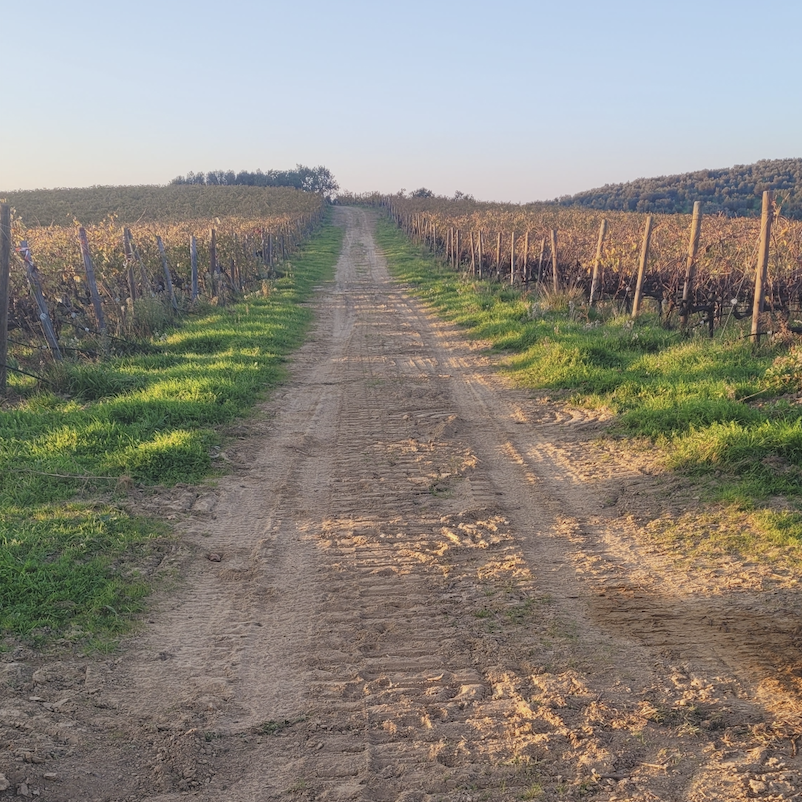
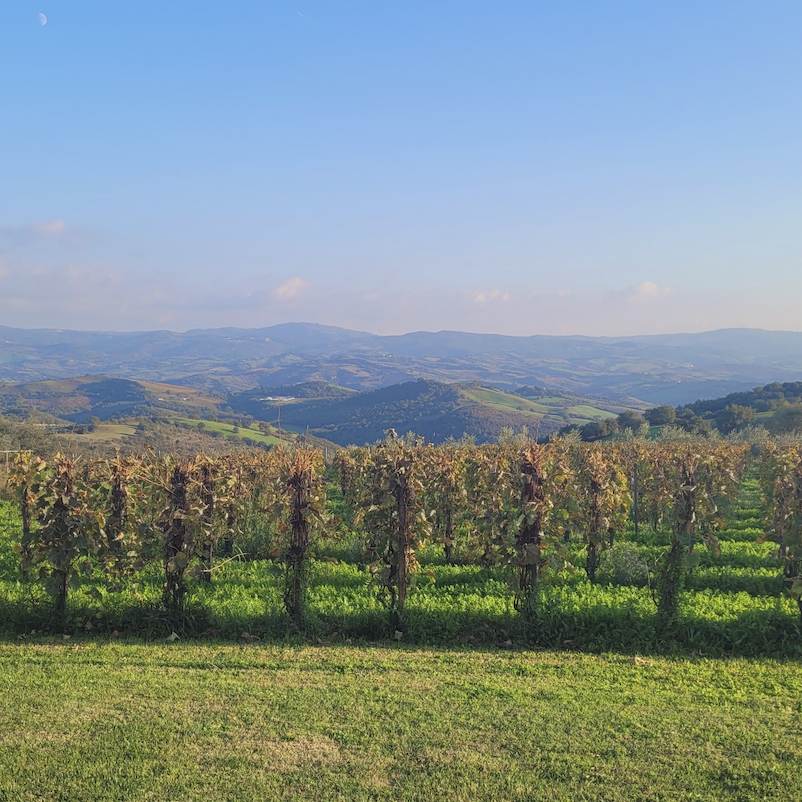
I walked this vineyard only recently upon arriving to the Castello di Montecucco at the advent of a blue-lit twilight on the second Sunday in November. The impression was a captivating one, from the site, its undulating slopes casting a strong and forceful presence. Poggio Lombrone was first made in 2007 and ColleMassari’s voice was instrumental in securing the DOCG for Montecucco sangiovese. A special vineyard with older plant material than just about anywhere in Montecucco, upwards of 60 years now and THE place to promote the authenticity, but also to preserve the local savoir-faire that distinguishes Montecucco sangiovese. Longest ager in Riserva togs because of potential, a wine of località Cinigiano fermented for at least 30 days (and 45 in 2016) in open Gamba casks with daily (hand) punchdowns to realize a production of 9,000-10,000 bottles. Ages in only two or three year-old grandi botti but not in really old casks. French of a few years are ideal to seek and attain the desired elegance. The 2018 is a strong version of varietal independence off of the Lombrone hillside, upright and linear yet never found to be awkward, though it is a wine of tannic charge. Fine tannins in fact with good energetic pulse, still needing more integration, its ceiling set ultra high. Drink 2026-2033.  Tasted November 2024

Michael Schmelzer – Monte Bernardi, Panzano

Monte Bernardi Chianti Classico DOCG MB1933 2021, Panzano

From the 90 year-old vigorous vineyard and insists Michael Schmelzer, “it would be insane to make it not the way it was planted.” Ten grapes which add up to a 100 percent field blend that may include sangiovese, colorino rosso, colorino bianco, malvasia nera, canaiolo and ciliegiolo. Once again the respect to agricultural heritage and long maceration conspire for complexities and flavours that most people don’t associate with Chianti Classico. If this is what the old farmers were producing then quality was actually a thing, at least in 1933. MB is Marcello Bartolini, teacher and mentor who just retired in December 2023. Crunchy, tart, red citrus intensity and a char of herbs. Perhaps not quite a unicorn but surely one of the most singular wines made in the entirety of the Chianti Classico territory. If classic is also a thing than this would be it but what it is not is Riserva, or Gran Selezione. Drink 2025-2033.  Tasted February 2024

Monsanto, San Donato in Poggio

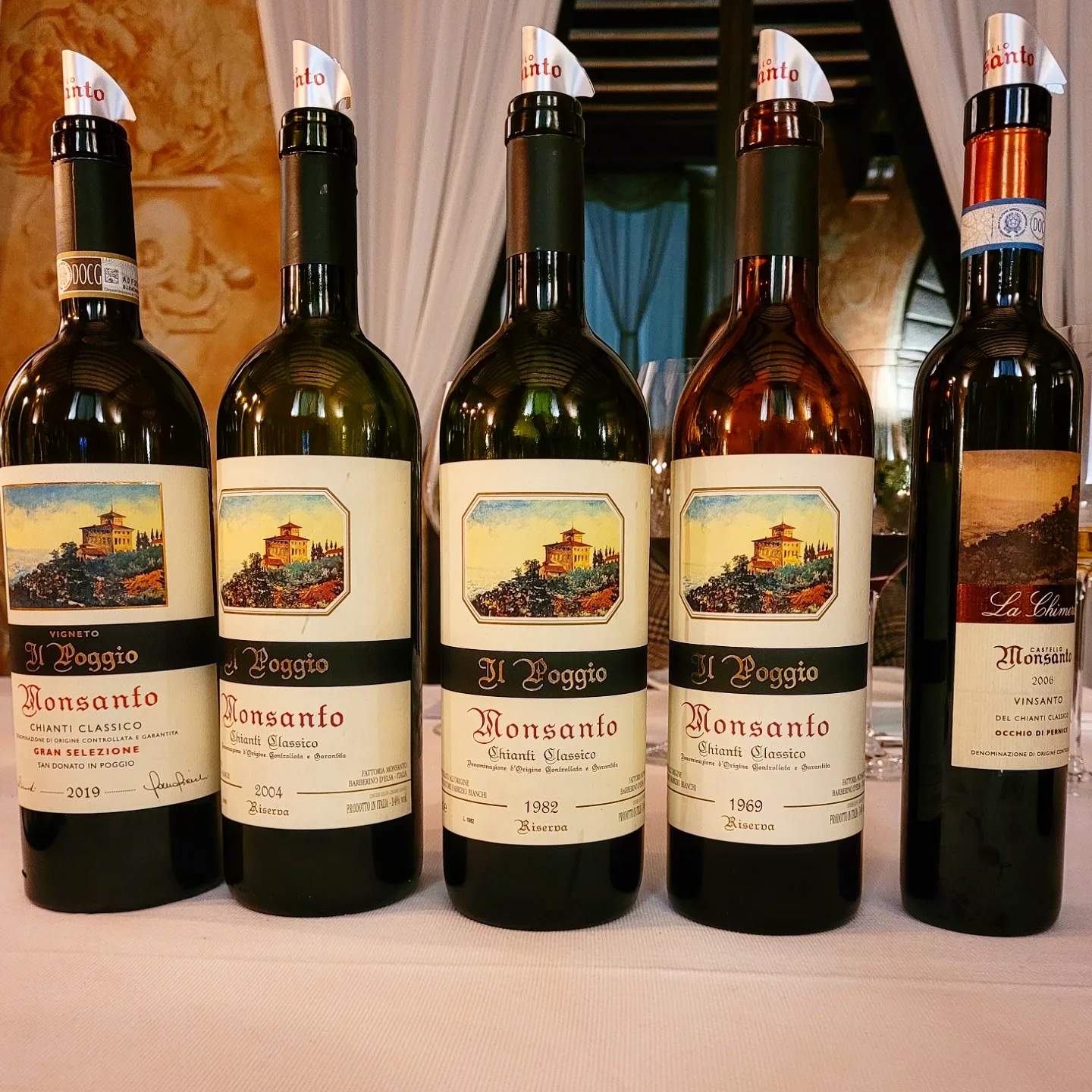
Castello Di Monsanto Chianti Classico Riserva DOCG 1982

One of the great vintages for Chianti Classico, in all of Tuscany, most of Italy and as everyone knows, also Bordeaux. At this point the 100 percent large Slavonian cask aging is in full swing for wood with which Fabrizio Bianchi began replacing his old chestnut barrels back in the early 1970s. This would have been a bomb when it first went to bottle, so massively structured and immovable in its first 15-20 years. Possibly up until 10 years ago but is now so crunchy and giving so that all is forgiven. About as ideal as a sangiovese can be, resolved, cool and impossibly fresh. Laura feels a connection looking forward to 2015. This remains to be seen. Come back after 10 minutes and the clove can’t be missed. Drink 2024-2029.  Tasted February 2024

Luca Martini di Cigala and nephew Federico

Fattoria San Giusto A Rentennano Percarlo 2019, Toscana IGT

The 100 percent sangiovese that lives for itself and yet Luca Martini always feels that the wine shows the truest character of the place. Percarlo holds a higher percentage of grapes grown on Tufo soil (non volcanic sediment left behind by the water that was here three to four million years ago), a soil of sandy quality and pebbles. Results in a salty quality, a mineral quotient, a stream of airy brightness within a very structured and powerful sangiovese. Great saltiness and also fruit, a minty or mirto sensation that creates a cool, salt licked feeling. There is no other wine like this. Amazing freshness incarnate. Drink 2024-2034.  Tasted February 2024

Montevertine Le Pergole Torte 2021, Toscana IGT

As expected Le Pergole Torte expresses more volume and aromatic concentration than Montervertine mainly because its source are the oldest vines, namely the 1968 and 1972 original blocks. Twenty to 25 days of maceration with pump-overs, followed by a racking off and then a return to the concrete vats for another few months for malolactic fermentation. A year in barriques (on average 15-20 percent new) and another year in Garbellotto Slavonian cask, maximum 18 hL size. Martino Manetti is reminded of 2007, a vintage that acted closed early with the requiem of a minimum four to five years to be released from its tannic chains. And yet these days Manetti’s wines open sooner – it’s just a fact of change, maturity, growing and mapping out better sangiovese. The floral meets Macigno mineral expressiveness is present from the start yet without the intensity of 2017, nor is 2021 showy with the power of 2018. This 2021 resides right there in the balanced middle wheelhouse and should rightfully begin to give generously of itself starting in 2026. Some sangiovese are just in another league. Drink 2026-2040.  Tasted May 2024

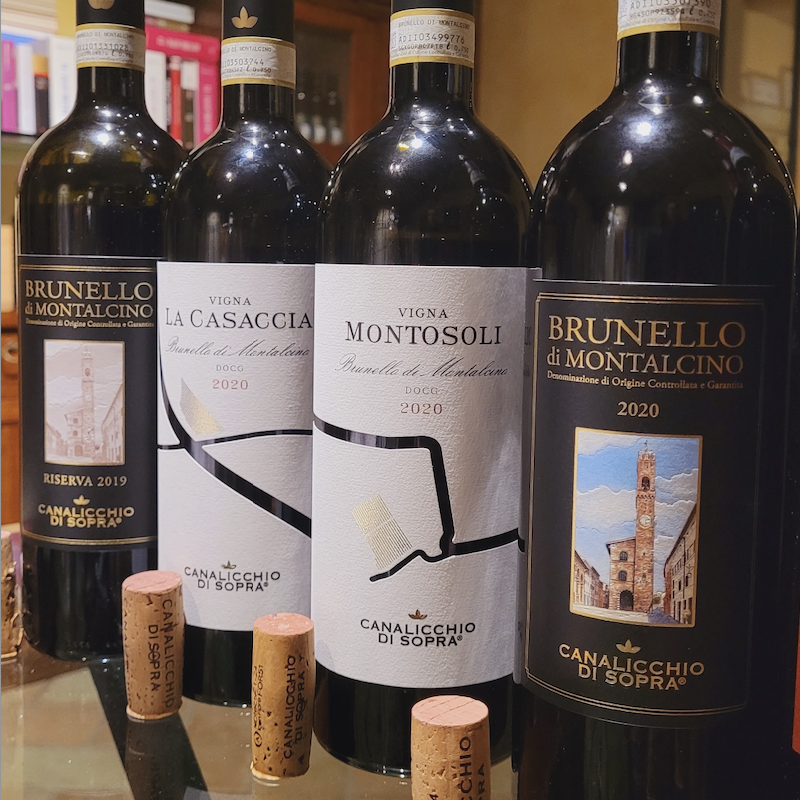
Canalicchio Di Sopra Brunello Di Montalcino DOCG Vigna Montosoli 2020

Montosoli the northerly Montalcino mound, the hill of freshness, the knoll where sangiovese gains grip, savour and elegance, where Canalicchio di Sopra’s Vigna designate Brunello from six hectares delivers approximately five into this wine. The precision and fluidity of this ’20 is just about as fine and graceful as the Ripaccioli have ever produced. Literally the juice or blood of Montosoli’s Galestro, a clay-schist flaking at the surface bleeding back down into the earth, acquired by the roots, vacuumed back up into the vines and gifted to the bunches. Sapidity is similar to 2018 and that year was cold(er) which explains how soil is such the driver, especially for Montosoli. This tastes as you might expect, concentrated, texturally full and without pause. Incredible Brunello. Poised, seemingly ready but not, looking ahead two decades, maybe more. With thanks to perfectly restrained cellar work, timing and decision making. In this moment, at least in terms of clarity, 2020 is a Montosoli vintage. Drink 2026-2036.  Tasted November 2024

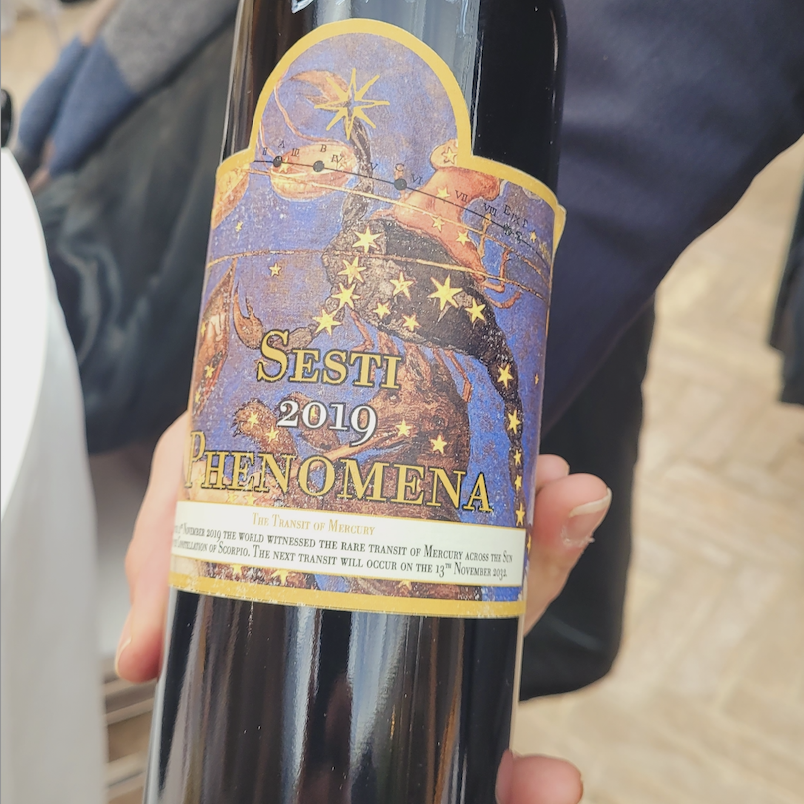
Sesti Brunello Di Montalcino Riserva DOCG Phenomena 2019

There are normal, standard Brunello di Montalcino Riserva, there are proper and representative examples, also exceptional versions and then there are the ones of ephemeral beauty. Fleeting in part because of their natural perfumes, scents that come from the fruiting bodies alone, mostly from the skins and yet like people there are some whose scents you never forget. Such is the case with Phenomena, a silent and measured creature of sangiovese but one that comes back to your thoughts and senses long after you are no longer in contact with the wine. Phenomena is also a Brunello of feeling, which means something ethereal, tactile and conclusive. Not seductive mind you, but suggestive and this 2019 will carry on, for some impossibly calculated infinite amount of time, as close to forever as could justifiably be imagined. Drink 2026-2038.  Tasted November 2024

With Giacomo Neri

Casanova Di Neri Brunello Di Montalcino DOCG Cerretalto 2019

The Cerretalto canyon is this singular Brunello’s origin, the place defined by Giacomo Neri as a “plintite,” of quartz, iron and magnesium elements residing next to and bleeding into the four hectare vineyard, which is incidentally a cooler località for Montalcino and very special place. Rare in the world, of an elemental-geological symbiosis found in parts of Australia, Brazil, China and here, in Montalcino. “It’s another planet” insists Giacomo Neri. You will smell blood and flint (a.k.a. gunpowder) because of the mineral personality. This is Brunello di Montalcino from sangiovese something altogether incomparable. A sangiovese wearing the terroir of a Tuscan trough on its sleeve, having spent two and a half years in tonneaux (more or less 20 percent new) and the same amount of time in bottle ahead of its much anticipated release. Yes the aromatics are concerned with trace metals and ingredients of the “canalone” of Torrenieri, but do not sleep on the purity and modernity of red to black fruit, or at least the perception brought forth because of the minerals involved. Sweetness of acidity is classic Casanova di Neri for 2020 but in Cerretalto they are near perfect and the tannins move from those noted out of Tenuta Nuova multiplied by the Giovanni Nero fineness to now enter into the arena of higher love. For the first time this estate’s Brunello di Montalcino should be given an absurd amount of time. Observing it change in the glass over 30 minutes explains much of what is needed to be known. Drink 2028-2043.  Tasted November 2024

Contrada Chiesa, Emidio Pepe

Emidio Pepe Montepulciano d’Abruzzo DOCG 2021, Colline Teramane, Torano Nuova

Nothing else noses like this montepulciano and what is also perceived is the extreme youth of such an example. Gifts with shadowy hints and generous ideas but the sensations yet to come are manyfold, if quite possibly infinite. Fruit source just feels tops and selection so much more stringent than just about any in the appellation. Tannins are about as tight as any in all of Abruzzo and the interplay between fruit and structure is both playful but also gripped by an intensity of tension. A few sips gathers the swarthiness of the vintage but time will elasticize and disperse the parts. The potential here is great and if this is not looked upon as a top vintage today there will be times over the next 25 years where that opinion is challenged. Drink 2027-2039.  Tasted March 2024

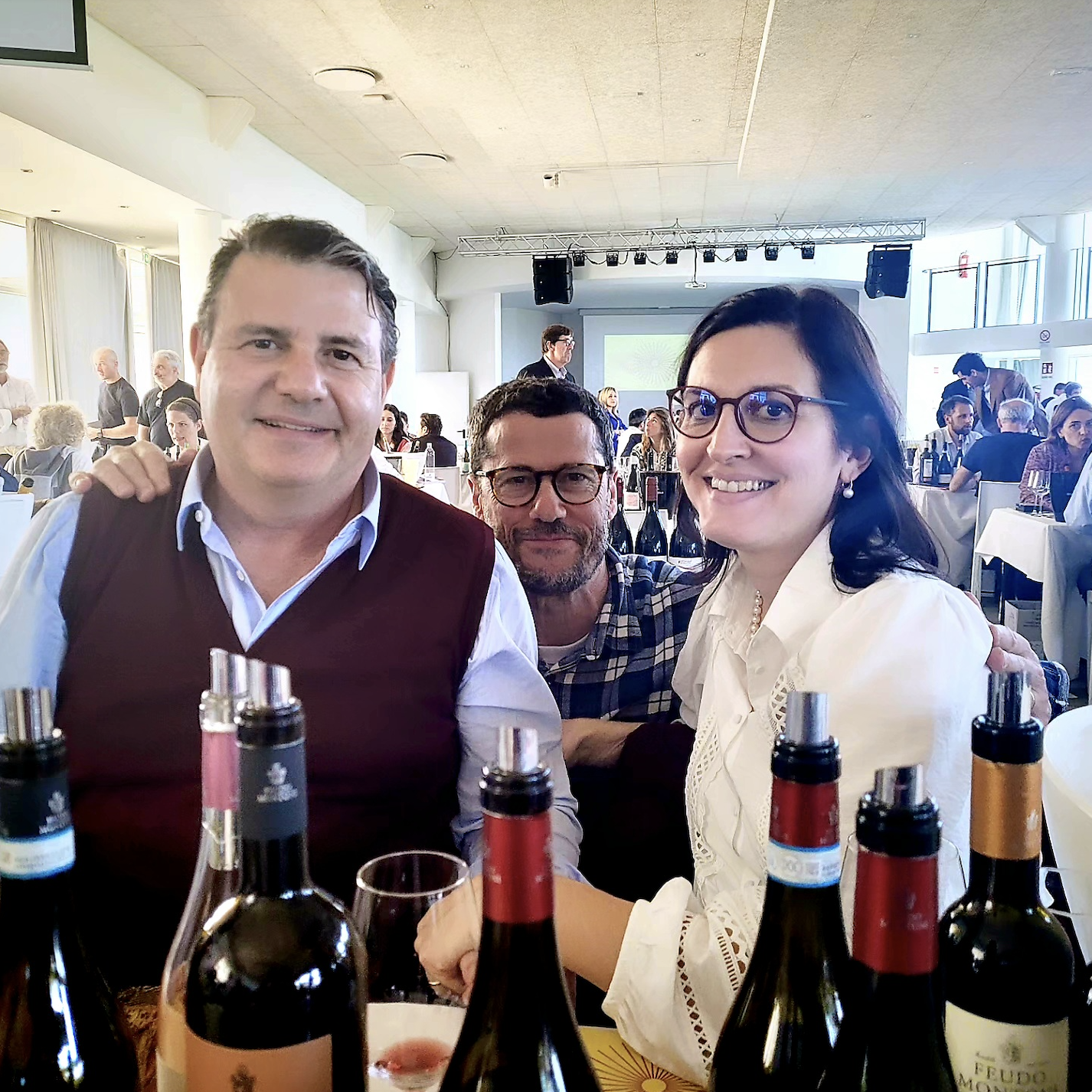
Feudo Montoni Sandwich – Between Fabio Sireci and Melissa Muller

Feudo Montoni Nero d’Avola Vrucara 2020, Sicilia DOC

Increasingly the use of sun-dried stems are added back in after some time, like sweet wood notes that alter Vrucara’s physiology for the best. The number is 20-25 percent in 2020. If there are weak vintages of Feudo Montoni’s Vrucara they are yet to be revealed and this 2020 resides near the top of the island’s nero d’Avola chain. Just walk the vineyard, in fact just hear the history and explanations from Fabio Sireci’s mouth and you will understand. Richness meets structure for balance at the vanishing point as if we sit at the bottom of the hill looking upwards from the vineyard, up to the Baglio and then the sky. The fruit is special from 2020, already showing the first subtle hints of maturity and the tannins are perhaps the sweetest ever designed. When Vrucara hits the five year mark it will entrench itself as one of Sicily’s finest drinking red wines for five more. It’s abilities transcend grape and island to last for five more after that before starting its slow five to ten year declension. Is there better value in top grade nero d’Avola from Sicilia? Drink 2025-2035.  Tasted May 2024

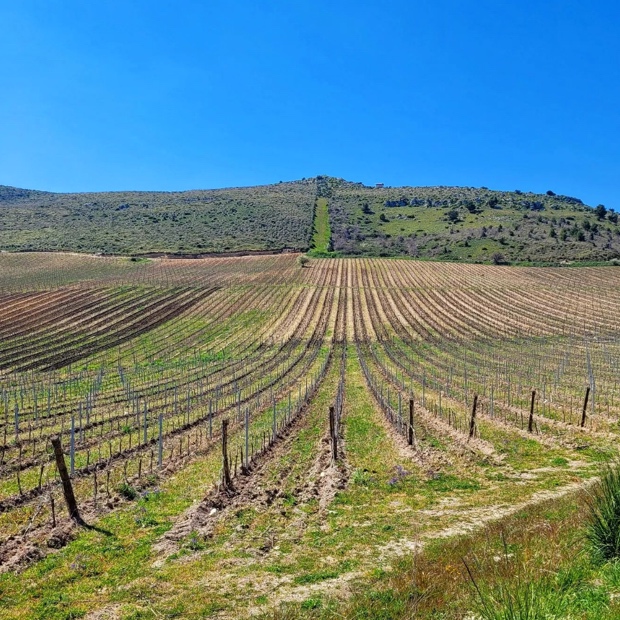
Vineyards in Ulmo

Planeta Cabernet Franc Didacus 2020, Sicilia Menfi DOC

Should there be a finer and more appropriate place to plant and raise cabernet franc on the entirety of Sicily that information should immediately be made public. Planeta’s Ulmo vineyard brings the grape to singular light, here 25 years after its introduction and it has become abundantly clear how it resides at the pinnacle and signature for reds out of Menfi. The 2020 is just now settling in and acting perfectly comfortable in its skin, fruit still swelling and always with the potential to burst free at any time. These are near perfect acids, sweet and sumptuous, allowing for movement and at this ideal stage, also development. There are hints at secondary character in the chiaroscuro shadows slow to reveal themselves. Sumac and pomegranate, a lightly browning and caramelizing eggplant before finishing with a wood encouraged dusting, as if by cocoa and clove. Drink 2024-2032.  Tasted September 2024

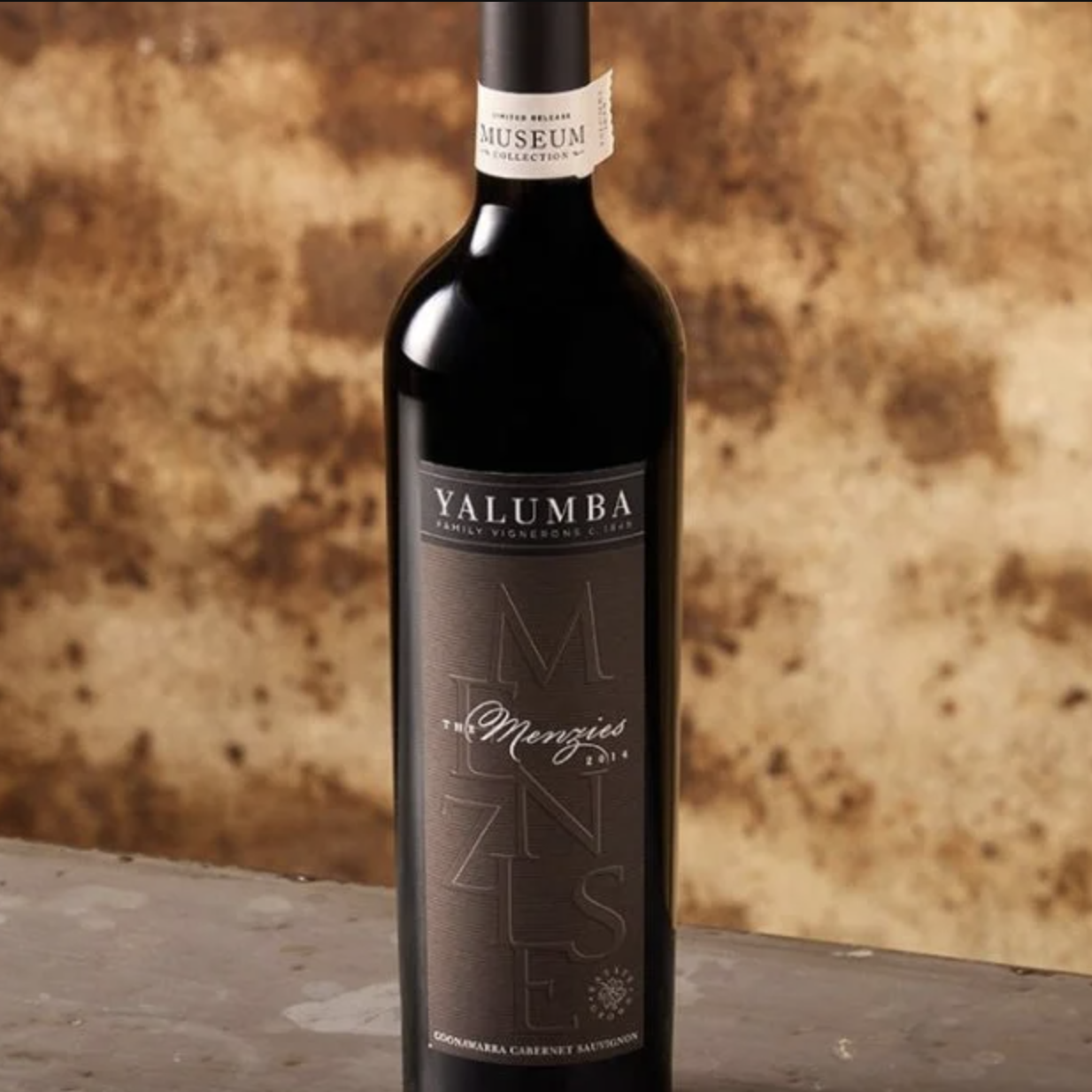
(c) web-assets-prod.yalumba.com

Yalumba The Menzies Cabernet Sauvignon 2017, Coonawarra, South Australia

From vines planted in 1994 and 1996 right there where it matters within Coonawarra’s terra rossa strip. The Menzies, as in the name of the estate where the Hill-Smith family saw the future back in 1992, there on a flat plain, approximately 70 km from the coast. The cooling Bonney upwelling is an influence and the red soil is, well everything. That said 2017 was a wet and cool season by Coonawarra standards and harvest required many passes over a 10-day period in April. Climate being what climate has become translates as a special cabernet sauvignon because the cool factor, for gelid fruit and sweet savour, not to mention more complex notions of herbs, spices and seasoning than you could seemingly fit into one bottle of cabernet sauvignon. Complexity be glory, as they say and the rest will be history. Drink 2024-2034.  Tasted October 2024

Good to go!

godello

Instagram

Facebook

Abruzzo, from the mountains to the sea

Ausonia (Atri, Teramo)

In the last days of February and first days of March the focus zeroed in on Montepulciano d’Abruzzo, “flagship grape of our region,” in the words of Franco D’Eusanio, Vice-President of the Consorzio Vini d’Abruzzo. The Abruzzo Wine Experience served a threefold purpose, to present the Anteprima Colline Teramane DOCG, a Montepulciano d’Abruzzo DOC preview and allow journalists to make visits with regional producers. Success was achieved in all three ways, from insight into Colline Teramane’s specificities, Montepulciano d’Abruzzo DOC’s continuing evolution and the hyper-intense passion, dedication and growth experienced through the work of several Abruzzo estates.

Colline Teramane Montepulciano d’Abruzzo is Abruzzo’s only DOCG appellation. Situated on the border with Marche, in the hills around Teramo, it was previously a sub-zone of Montepulciano d’Abruzzo DOC, elevated to DOCG status in 2003. “Colline Teramane is not just an appellation for Montepulciano grapes,” explains Enrico Cerulli Irelli, former president of the Consorzio Colline Teramane, “but it is a designation that indicates a territory where people, traditions, environment, and history have defined viticulture and with it, the unique identity of the wines. Today, this excellence becomes the flagship in the world of the outstanding quality of Abruzzo wines.”
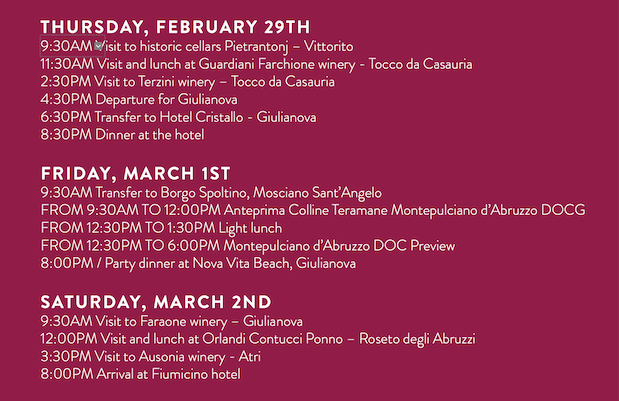
Abruzzo Program

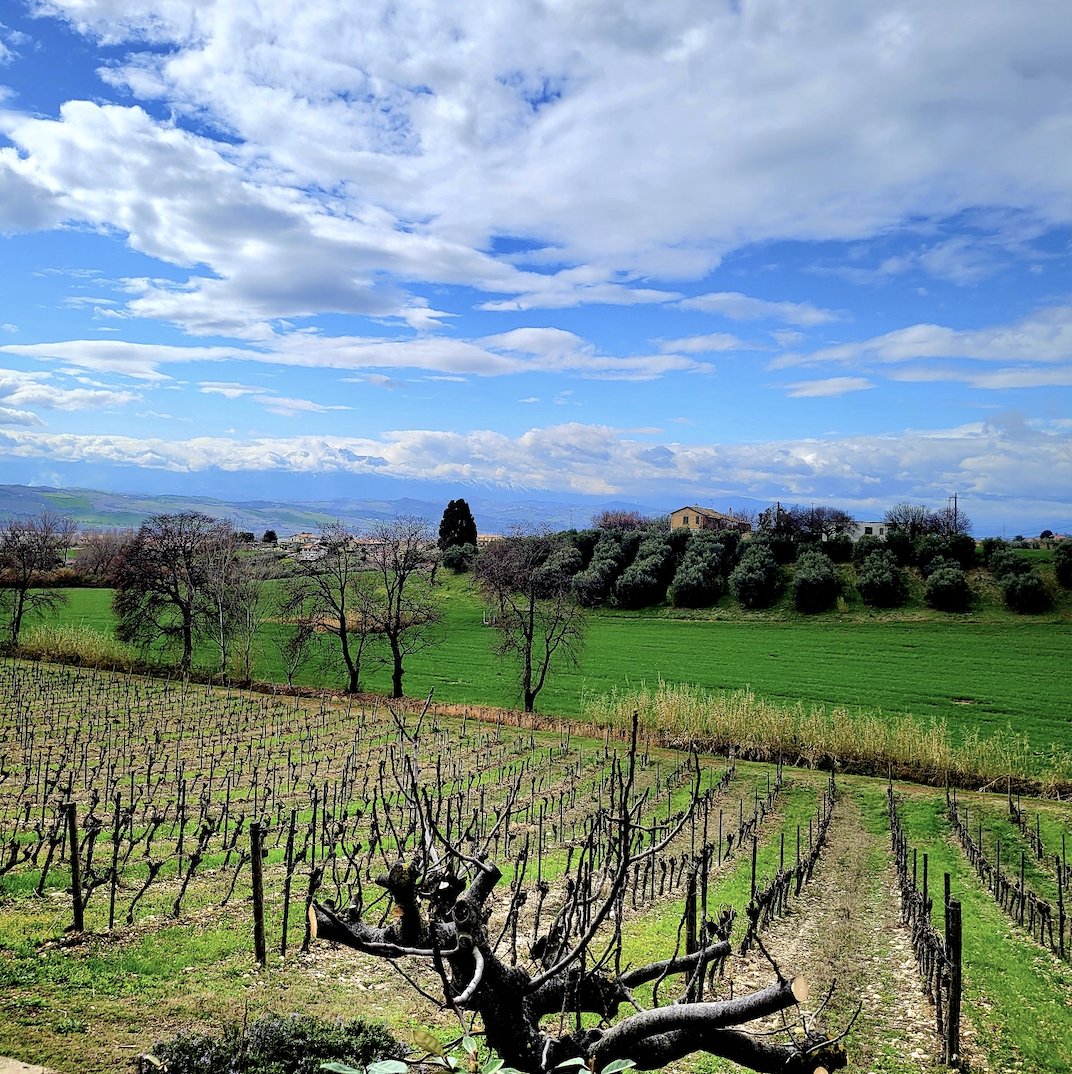
While being naturally predisposed to viticulture may not separate Abruzzo from dozens of other Italian wine regions, what has thus far challenged its global market share will only make it stronger. Rome (and Italy’s most used, largest airport) is only a few hours away and anyone with half an ability to read a map can clearly find it smack dab in the central part of Italy. Yet Abruzzo finds itself isolated, both literally and conceptually,  located between the Adriatic Sea and the massifs of Gran Sasso d’Italia and Majella, within which three National Parks and more than ten national and regional reserves are situated. The region can be divided into two zones: the mountainous interior, which constitutes over 65 percent of the entire regional territory, along with the coastal area with its wide hilly belt. A traveller could find weeks of interest in these hills and along hundreds of kilometres of Adriatic shoreline and still somehow Abruzzo is considered “out there.” There is the rub; the region should and going forward will in fact attract an adventure seeker yet once inside its ropes the more obvious and accessible tenets of its offerings will be revealed. This will trickle down to more conventional tourism, both that which is associated with wine and also not, and before too long Abruzzo will become known to all.

The climate of the region is Mediterranean along the coast, with sea breezes moderating temperatures. It becomes more continental as one moves towards the hilly and mountainous areas, and with increasing altitude, temperature variations become more pronounced. The average level of precipitation is good, less on the coast and more abundant inland.
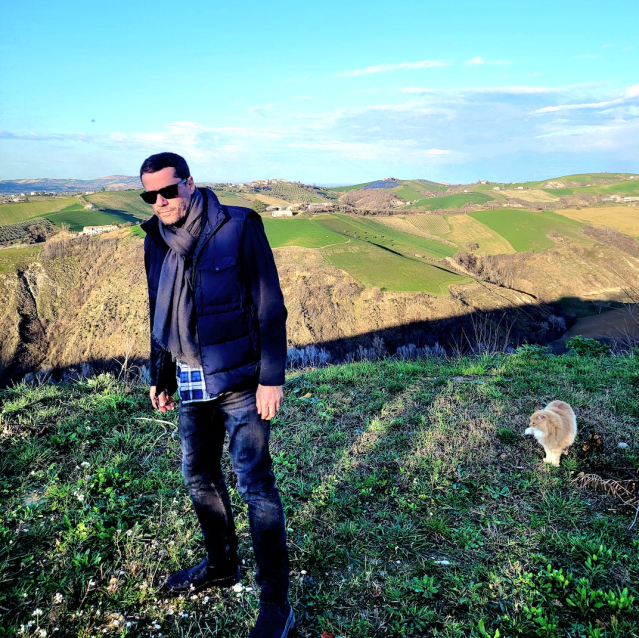
Godello in Atri with unidentified cat

Montepulciano d’Abruzzo is undoubtedly the most representative among the Abruzzo grape varieties. Numerous historical documents demonstrate that the grape has been present in the region since the mid-1700s, where it found its ideal terrain. Cultivated in the past in the Valle Peligna (province of L’Aquila) and in the inland hills of the province of Pescara, since the 1950s its cultivation has spread throughout the entire coastal hilly belt, and today it constitutes the main red grape variety of the region. Alone, it represents over 80 percent of the total denomination wines produced in Abruzzo and is among the top three DOC wines produced in Italy. Montepulciano d’Abruzzo DOC is obtained solely from vineyards located in hilly or plateau terrain, whose altitude must not exceed 600 meters above sea level, exceptionally up to 700 meters for those facing south; the surface area on which it is cultivated is around 17,000 hectares. It is almost exclusively obtained from grapes of the same variety. With approximately 800,000 hectoliters bottled (2023 data), it is established as one of the top DOC wines produced in Italy.

Abruzzo wine dinner at Hotel Cristalo, Giulianova

The Consorzio Tutela Vini d’Abruzzo is a non-profit associative body tasked with the protection, promotion, and overall care of interests related to the denominations it oversees. It was established in 2003 by Decree of the Ministry of Agricultural, Food and Forestry Policies (MiPAF) and over the past three years its membership has grown by 20 percent, reaching the current count of 220 members, representing over 4,000 producers of DOC and IGT grapes. The Consortium oversees compliance with the regulatory discipline of the denominations, formulates any proposals for updating it, and coordinates the work of the production sectors to enhance the individual denominations. The Consortium protects the wines with the Designation of Controlled Origin:

  • Colline Teramane DOCG
  • Montepulciano d’Abruzzo DOC
  • Trebbiano d’Abruzzo DOC
  • Cerasuolo d’Abruzzo DOC
  • Abruzzo DOC
  • Villamagna DOC

Starting from the 2024 harvest, with the entry into force of the “Abruzzo Model,” all IGT wines will be grouped under the single Terre d’Abruzzo IGT designation. Starting from the 2023 harvest, the subregion “San Martino sulla Marruccina” has been introduced, joining the existing subregion “Terre dei Vestini,” “Teate,” “Terre dei Peligni,” and “Alto Tirino.” The most significant novelty is the introduction of the distinctive label Superiore, aimed at highlighting productions characterized by stricter production criteria and intended for refinement for important and distinctive reserve productions of the various provincial territories. Only for the Superiore designation will it be possible to highlight on the label references to smaller and more identity-affirming territories such as provincial ones and, in the future, even more restricted ones like Additional Geographical Units, until, of course, the individual mention of a Vigna. Both the Superiore and Riserva categories will be required to feature on the label the provincial subregions of Colline Pescaresi, Terre de L’Aquila, and Terre di Chieti.
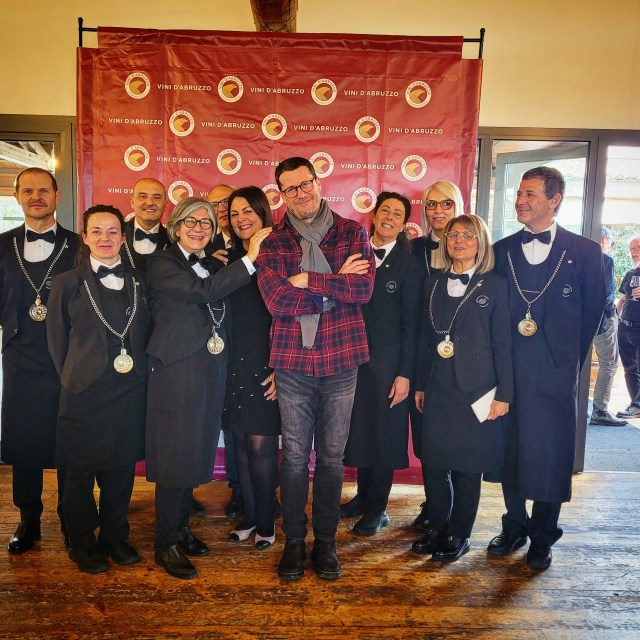
Godello with the AIS Sommeliers

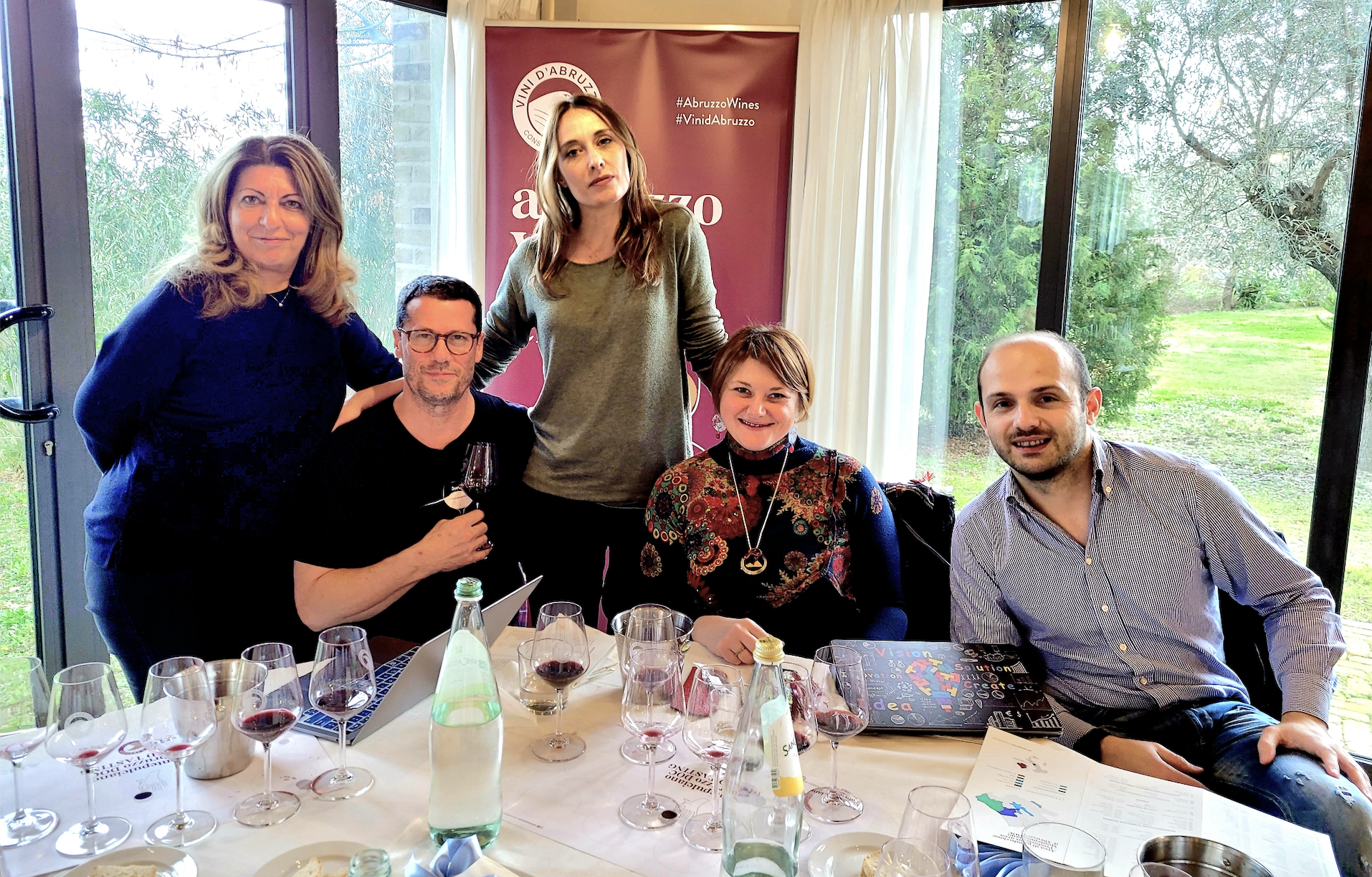
Obvious thank you from the heart to the team at Consorzio Tutela Vini d’Abruzzo and IEM Communications out of Verona and Miami, but also to the AIS Sommeliers and La Squadra Abruzzese; Francesca Granelli, Fosca Tortorelli, Simone Roveda and Daniela De Morgex. A good number of Godello’s blind tasting notes came about as a result of careful panel deliberation and collaboration. Here are 140 notes from three days of tasting and touring in Abruzzo.
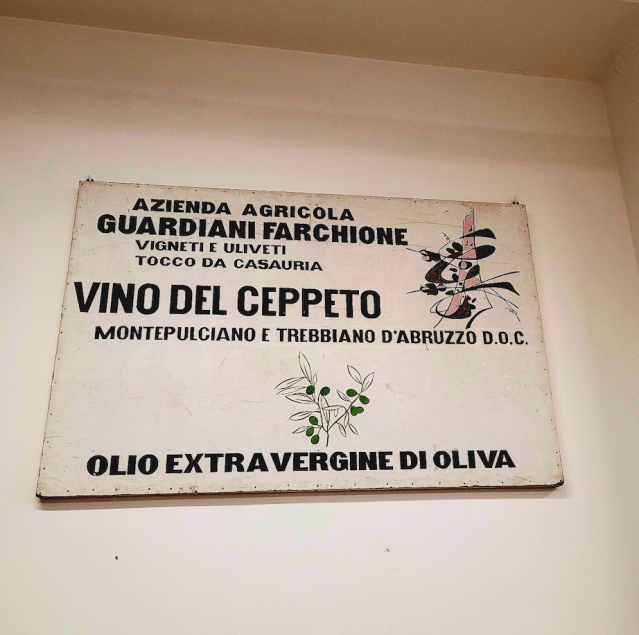
The Visits

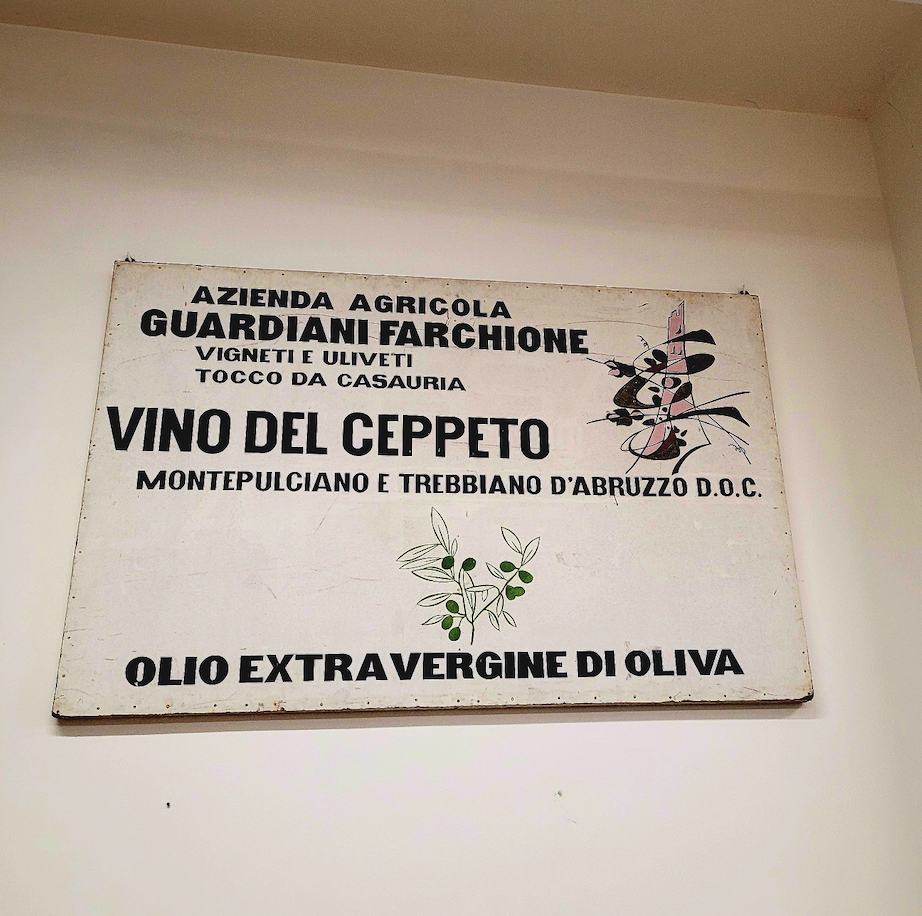
Guardiani Farchione (Tocco da Casauria, Pecara)
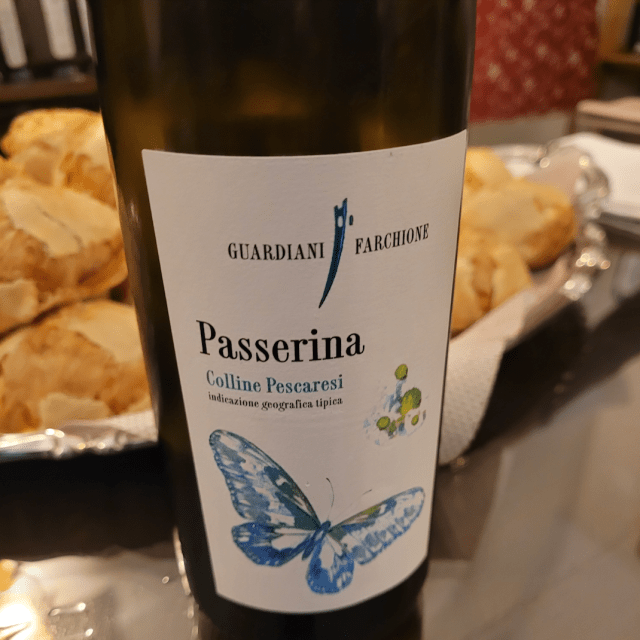
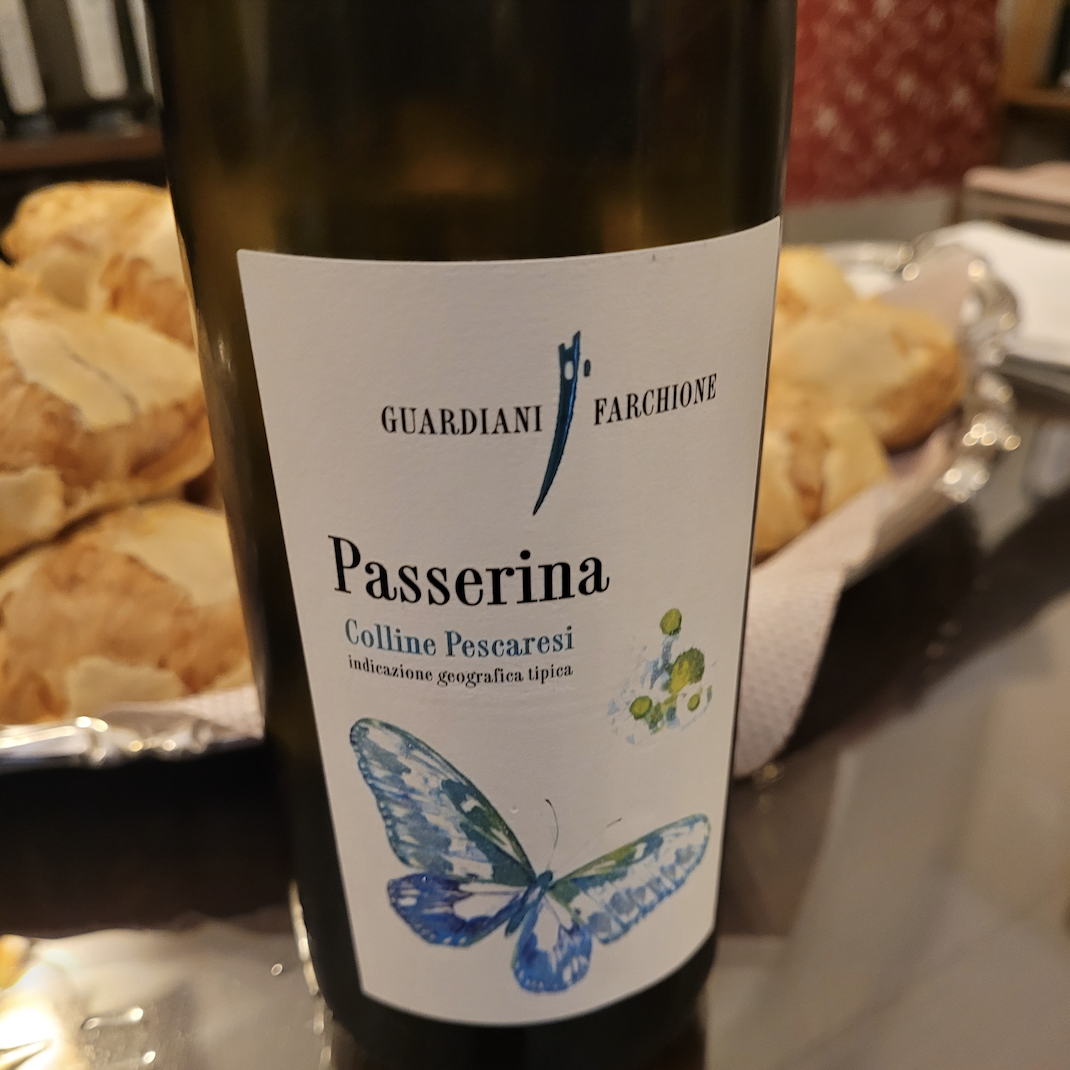
Guardiani Farchione Passerina 2023, Colline Pescaresi IGT

A substantial summer white at 13 percent alcohol, dry, phenolic and floral. Green figs, low acid, mineral-metallic savoury and a good match with fatty meats of fish. A passerina with some connection to volcanic soil with an orange note – no zest but a juicing and quite the botanical finish. Drink 2024-2025.  Tasted February 2024

Guardiani Farchione Pecorino Abruzzo Superiore DOC 2023

If it can be the favourite grape of the migrating sheep then why not ours as well, here from the short wood aging in old wood, experimental for some, incidental for others. A honeyed-beeswax note, not surprisingly phenolic and botanical but also woolly, of both gravity and fantasy considered. A thread of spring herbs and juniper late. Not a rich pecorino but one with a little bit of experience. Drink 2024-2026.  Tasted March 2024

Guardiani Farchione Mille Papaveri Rosso 2023, Colline Pescaresi IGT

A stronger version of the Cerasuolo normale, a ten day soak that brings montepulciano closer to montepulciano, away from the pale and the delicate. A modern experiment that appeals in a retrospective way to the older way of ordering and drinking red wines in Abruzzo. Quite classic gummy bear fruity of red and blue berries, dry and far from savoury. Fruit essence captured because of the extended maceration and really quite focused to deliver with unapologetic consistency. Glou glou montepulciano and so very clean. Drink 2024-2026.  Tasted March 2024
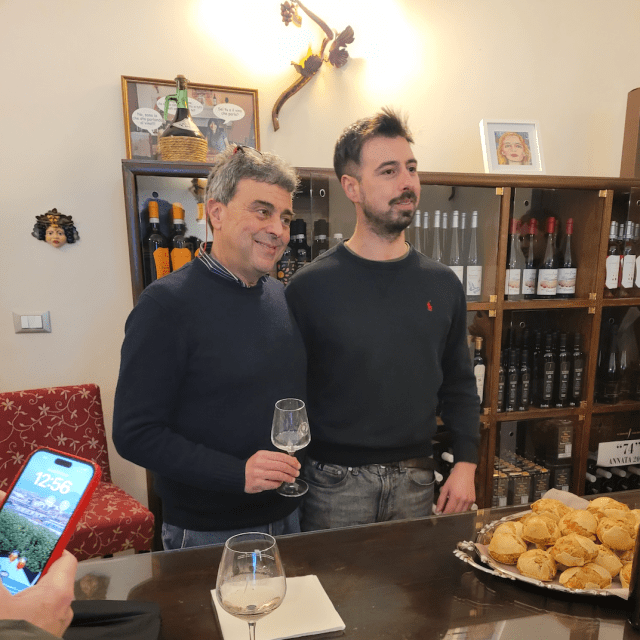
Paolo and Giampaolo Guardiani

Guardiani Farchione Tenuta Del Ceppete 74 2018, Montepulciano d’Abruzzo DOC

Commemorates the year of the first bottled wine for the company by Paolo’s father. Sees two years in cement and 12-18 months in barriques, depending on the season. Another crystal clear varietal wine from Guardiani Farchione. Structured and tannic, long contact with the skins (10-plus days), full textured, cocoa to mocha, meant for (sheep) arrosticini every day you go that way. With a side of sformato you may just rise up to Abruzzo heaven, or in this case the Tocco version of it. Don’t even think of taking any of this for granted. As for the skewers, “any less than five would be a capital sin.” Would like to see this ’18 develop another gear, for energy and integration. Drink 2025-2026.  Tasted March 2024
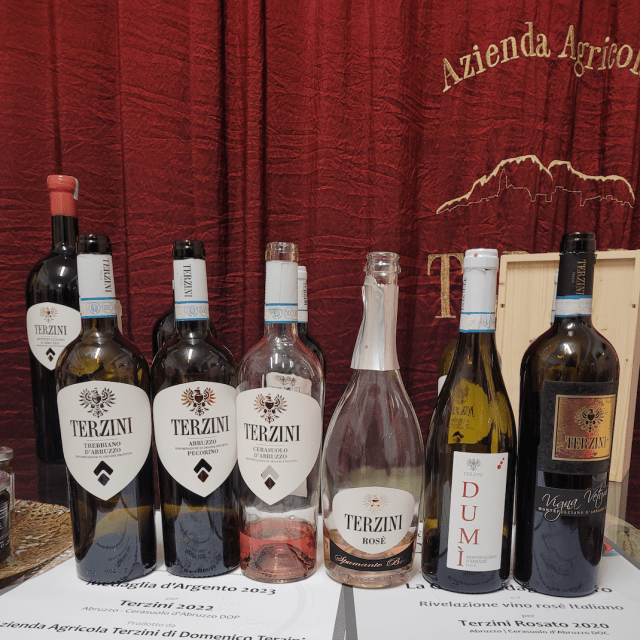
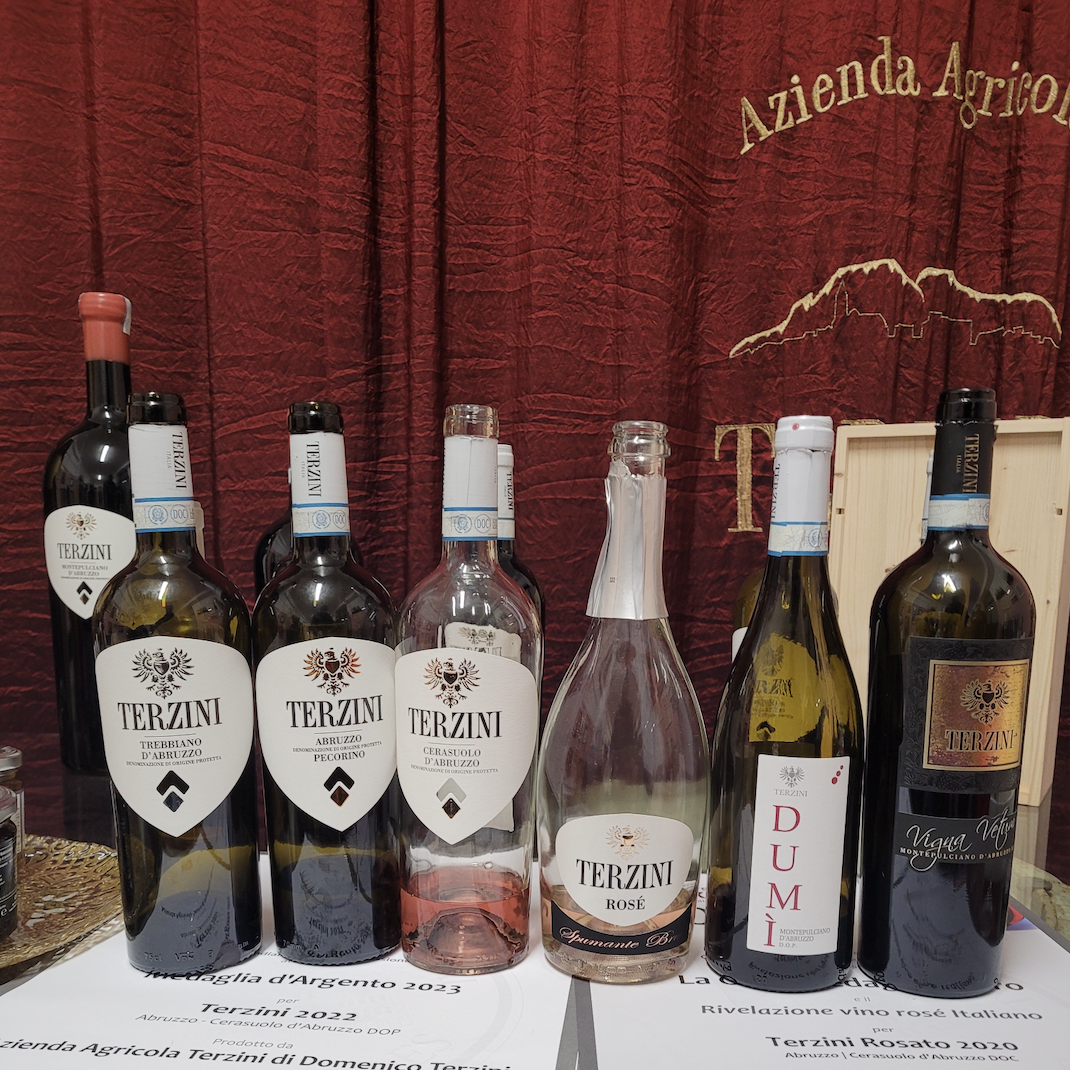
Cantina Terzini (Tocco da Casauria, Pecara)

Cantina Terzini Trebbiano d’Abruzzo DOP 2023

From Tocco da Casauria, of clay soils in an old volcanic area and vines trained by Pergola at 350m. Only steel, clean, sharp and suitable. A serviceable white whenever for hot days when a cool glass is needed to quench a thirst. Fresh as fresh can be, helped by Pergola Abruzzese “roof over a house” training. Drink 2024-2025.  Tasted March 2024

Cantina Terzini Pecorino d’Abruzzo DOP 2023

Pecorino grown in the valley between two massifs, the Maiella and Morrone where day for night temperature swings are great and consistent winds will blow. The endemic Marche grape continues to gain traction in Abruzzo and the history goes back to Benedictine monks in the 1200s. Pale and spicy, quite a lot of intensity for pecorino and again very botanical, a specific Abruzzo style that seems exaggerated in Tocco di Casauria. Not lacking for energy and the very reason why Terzini uses pecorino to make sparkling wine. Drink 2024-2025.  Tasted March 2024

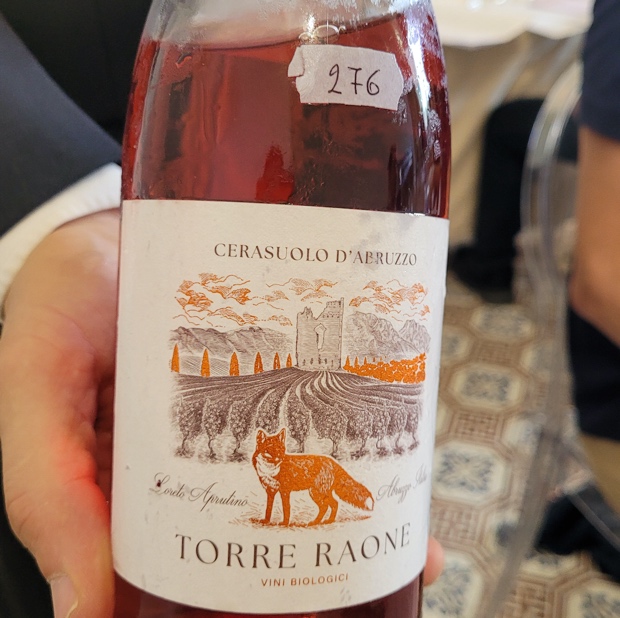
Cantina Terzini Cerasuolo d’Abruzzo DOP 2023

Skin-contact for six to eight hours, followed by six months in stainless steel. True Cerasuolo, made from only montepulciano grapes, finished at 14 percent alcohol. Clean, crisp, fresh and proper. Just that hint of phenolic grip and spiciness but more subtle than pecorino and stylish in its very respectful Cerasuolo way. Good intensity and what the appellative wine needs to be. Drink 2024-2026.  Tasted March 2024

Cantina Terzini Abruzzo Rosé DOP 2023

Sparkling montepulciano and in a way Cerasuolo but only at 12 percent alcohol, as fresh as it is savoury and drier than many sparkling Rosé, especially those made in the Italian method. Can’t be more than 10-ish g/L of RS and the acidity is superb. Still a bit phenolic which might turn the sugar crowd away but there is without a doubt good character and energy. For those who simply like sparkling pink – it’s really that simple. Drink 2024-2025.  Tasted March 2024

Cantina Terzini Montepulciano d’Abruzzo DOP Dumi’ 2022

Domenico Terzini, grandson of Domenico Sr., took the reigns in 2009 and brother Roberto runs the business side of the family winery. Dumi’ is Sr., a pet or nickname in Abruzzo. As in ”Dumi” come here.” Sees juts a few months in wood after stainless steel aging, just a kiss for texture and a year or three of longevity. Reductive in both a rubbery and peppery way, needing agitation to release both floral and fruity charm. Swell of dark fruit and liquorice, mint and heavy fuel phenols. Strong tannins, big time bitters and time is needed in every way. Must be tannin season. Can only imagine what 12-18 months in tonneaux might do. Drink 2025-2028.  Tasted March 2024

Cantina Terzini Montepulciano d’Abruzzo DOP Vigna Vetum 2020

Essentially a Reserve montepulciano, but also a single vineyard or cru. Oldest vines of more than 60 years of age, thus the Latin name. A year in steel and another in barriques. When you think about the recent past of grape and place this is probably just what you would imagine; dark and stormy, rich and oaky, full and substantial fruit, warming and all those wood notes very much in charge. Vanilla, lavender, spice cupboard, tobacco, mocha, perceived sweetness and a softness despite the dense presence of tannins. Energy is fine if not invigorating. Solid example for five-plus years. Drink 2025-2028.  Tasted March 2024

Federico Faraone

Faraone (Mosciano Sant’Angelo, Terame)

Faraone Metodo Classico dal 1983 Dossagio Zero 2021

As with the first bottles made in 1983 by Federico’s father the grape is passerina, first chosen and still the top for Bianco because of pH and acidity on par with Champagne. This means 3.0-3.10 in a good season, as opposed to pecorino which is more like 3.30-plus, meaning closer to a red wine. On the lees for 24 months, mild toasty quality, impeccable balance really and dry as it gets because you can find richness without dosage from the grape and place. Acidity is admirable though just a point one or two below what would really see this sail into scintillant territory. Drink 2024-2026.  Tasted March 2024

Faraone Metodo Classico dal 1983 Rosé 2019

Made with sangiovese, 100 per cent and one of the very few like this in Abruzzo. First trials began in 2010 and 2017 was the first production for selling. The sangiovese sees 48 months on the lees and while there is a rustic earthy quality there is also higher acidity and surely double the complexity as compared to the passerina bianco. Crisp enough but also a sparkling of body and a sense of what can be considered soul. Interestingly it is a sip of the sangiovese and a return to the passerina that makes the Bianco’s acidity seem greater. Counterintuitive but true. Meanwhile there are some fine phenolic bitters on the finish of the sangiovese. Drink 2025-2028.  Tasted March 2024

Faraone Trebbiano d’Abruzzo DOC 2022

Properly fresh and conversely phenolic trebbiano but neither character overwhelm or dominate in any way or sternly towards one another. More scented than many, not what should be considered perfume but more in the vein of plants you brush by in between vineyard rows and on the lower steps of hillsides in the mountains. Pencil shavings and while the grape may seem “neutral” this young it does suggest hints of what may come a few years down the road. Good acidity and low pH for teasers of the sea but please, only in season. Drink 2024-2029.  Tasted March 2024
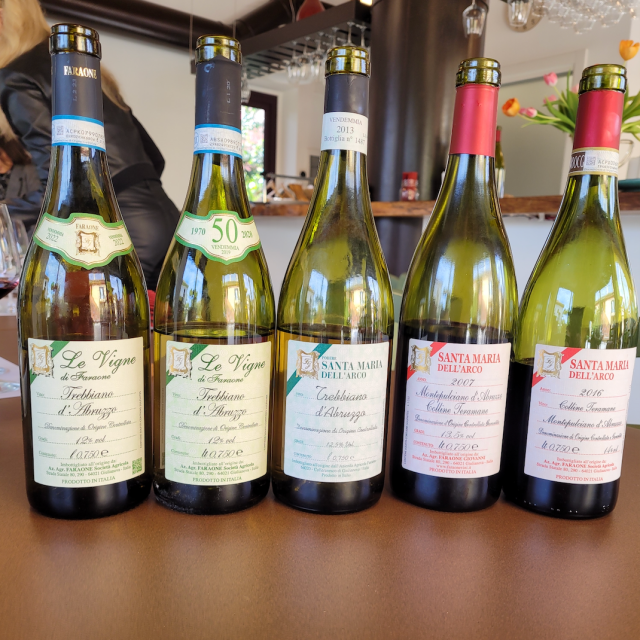
Faraone Trebbiano d’Abruzzo DOC 2019

Just beginning to develop and express some nuance and next stage character but in the hands of Federico and Faraone this is really just a baby. Now the citrus steps up and rises to the fore to make us think that acidity has risen but phenolics have lessened, or at least our perception of them. A mild lemon preserve, a balance so consistent with the 2022 tasted side by side and then an about face to the side by each comparison with 2013. Drink 2024-2027.  Tasted March 2024

Faraone Trebbiano d’Abruzzo DOC 2013

After 10-plus years the perception really changes and the arena now entered is entirely re-designed and thoughts must be re-written. Fully and completely in delivery of secondary notes, by vanilla, not wood derived but naturally vegetal and other verdant sensations having joined the fray. Paraffin and a roasted parsnip character, not quite caramelized but heading in that direction. The age has surely brought secondary notes while freshness would have been finer just two or three years ago. Suggests that seven or eight years is the sweet spot. Drink 2024.  Tasted March 2024

Faraone Montepulciano d’Abruzzo Colline Teramane DOCG 2007

A fine vintage for the area, in particular for montepulciano and the juiciness but also fleshy character is about as high as it gets, especially as compared to 2016. It’s almost incredulous how fresh and far from evolved this is for 2007 – it’s a weird magic that’s seems virtually impossible, to note considering this was made by Federico’s father who did not study oenology and learned by his own experience. Successful showing with fresh fruit intact and sweet secondary notes just in their infancy. Drink 2024-2028.  Tasted March 2024

Faraone Montepulciano d’Abruzzo Colline Teramane DOCG 2016

From 2016 but about as close to a recent release as it gets for Faraone because extra time in botti is the order of necessity for Federico, just as it was for his father before. Refinement in 30-35 year old cask that ever so slowly develops this relationship between grape and its home. Kinds of reminds of Ca’Bionda in Valpolicella, thoughtful, soulful and simply a representation in respect to the exact place from whence it came. Nothing curious about this but something so real and we are given the opportunity to taste exactly what montepulciano from this pinpointed part of the Colline Teramane must be. Controlled and restrained in every way with many years left in its sure to be long life. Lower production because of Perenospera brought on by May rains and so no surprise how high the quality runs because of a warm and dry summer. Drink 2024-2028.  Tasted March 2024
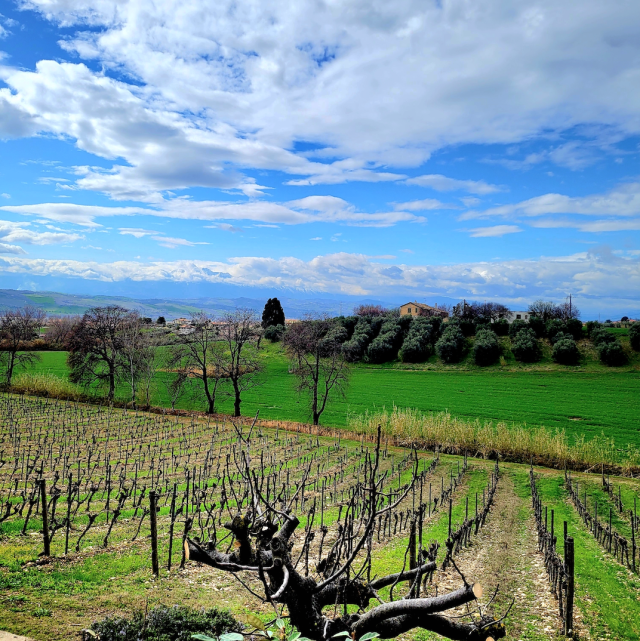
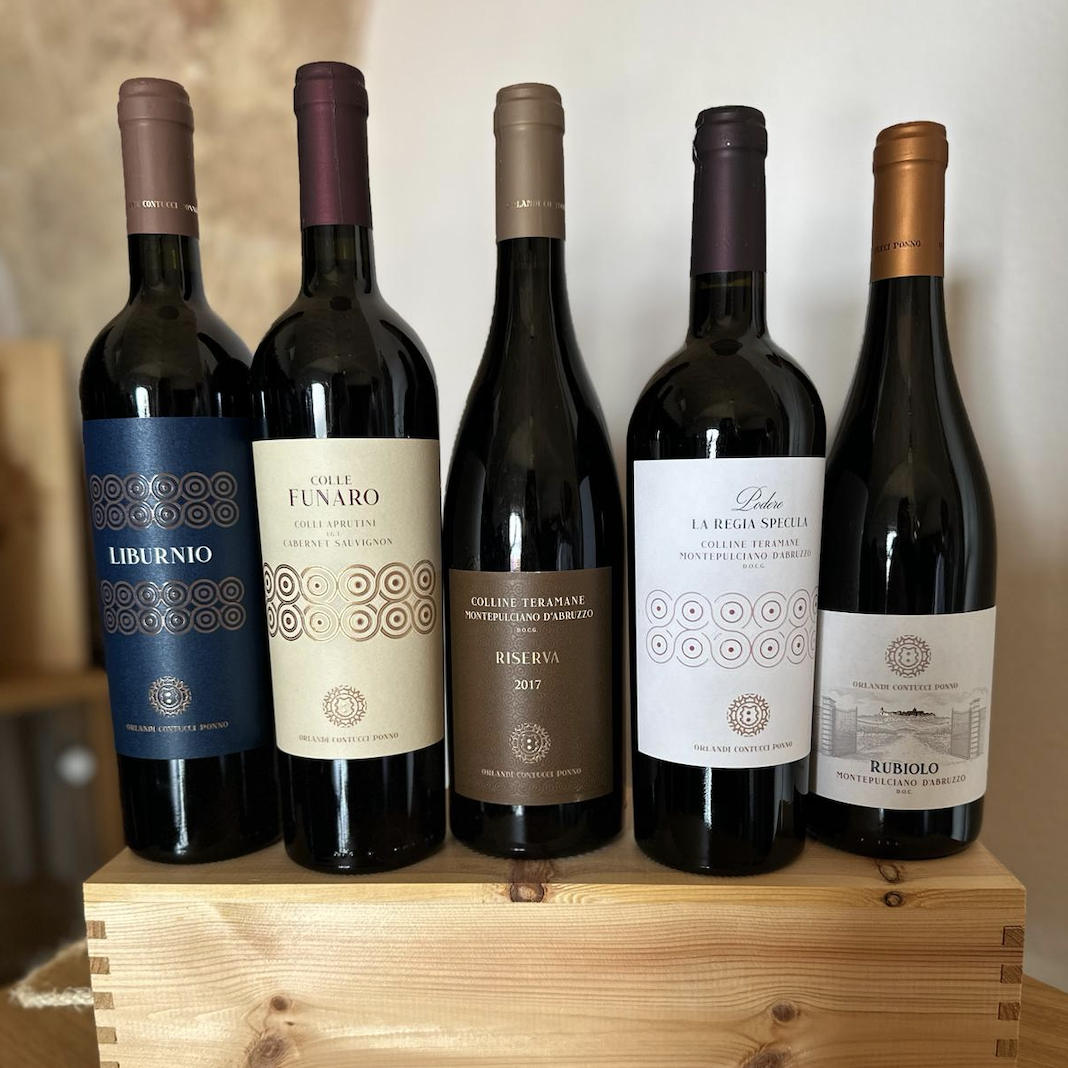
Orlandi Contucci Ponno (Roseto degli Abruzzi, Teramo)

Orlandi Contucci Ponno (Roseto degli Abruzzi, Teramo)

Orlandi Contucci Ponno Pecorino d’Abruzzo Superiore DOC 2022

Will hit the market after May the year following vintage, with higher in acidity in this part of the Colline Teramane, now acid driven but with a year or two the citrus will almost surely morph into fruit more tropical in nature. Already there because as a 2022 the early stages of maturity have already begun to form. Good sapidity but lower level phenols than some other similarly composed and minded examples. Bit of balsamico-gariga at the finish. Drink 2024-2025.  Tasted March 2024

Orlandi Contucci Ponno Trebbiano d’Abruzzo DOC Podere Corte della Corte 2022

More phenolic than the pecorino, less salinity and higher sapidity, herbal in a different way, sweeter and less dried conditions. Impeccably balanced using 90 percent trebbiano d’abruzzo with (10) passerina, clearly in the hands of a team most comfortable with this appellative wine. Half fermented in steel and the other in cask with the result another clear and present indication of equality and balance. Clean, no toast and filtered with great technology to deliver a crystalline varietal experience. Should age a year and possibly up to three longer than the pecorino. Drink 2024-2026.  Tasted March 2024

Orlandi Contucci Ponno Cerasuolo d’Abruzzo Superiore DOC Vermiglio 2022

Super dry Cerasuolo from the montepulciano grape, again extremely clean but also here with the subtlest CO2 buzz. Macerates for seven or more hours and is then separated from the skins. The next steps are white wine method fermentations, allowing for classic appellative colour and most importantly the floral and fruit musky capture of aromas. Soft and stylish, fresh, clear and smoothy sapid. Clinical and precise with a mild cherry stone bitter finish. Drink 2024-2026.  Tasted March 2024
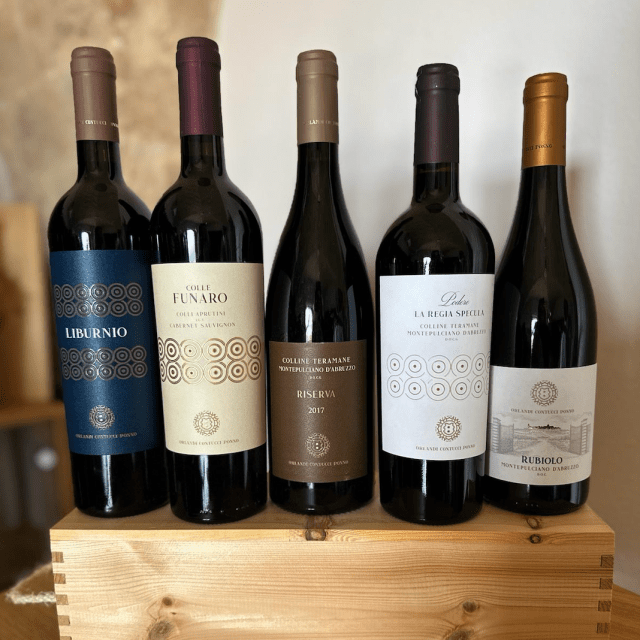
Orlandi Contucci Ponno Liburnio 2016, Colli Aprutini Rosso IGT

Based on cabernet sauvignon (70 percent), with (15) malbec, (10) cabernet franc and (5) petit verdot. Liburnio as in Liburnium, along with Corsica. Ages in barriques for three years, followed by the bottle for two more. Sure the richness is the most prominent feature and matter but the ageing has brought this Bordelais-esque wine into a fine place. Softened for the most part, a spice cupboard masala emulsified into the overall silky texture and acidity still pretty much the energy that keeps the wine keeping on. Drink 2024-2027.  Tasted March 2024

Orlandi Contucci Ponno Colline Teramane Montepulciano d’Abruzzo DOCG Podere la Regia Specula 2020

Ages for minimum 12 months in 20hL botti of Slavonian wood, a high level and quality vintage by estate and appellation standards, warm and dry – but here affected by TCA. Requires a re-taste.  Tasted March 2024

Orlandi Contucci Ponno Colline Teramane Montepulciano d’Abruzzo Riserva DOCG 2018

Barriques and tonneaux for 24 months, now showing the softness of age, the montepulciano in dried leathery fruit notes beginning to replace the fresh plum and berries of the wine. Drink 2024-2025.  Tasted March 2024

Orlandi Contucci Ponno Montepulciano d’Abruzzo DOCG 1999

Corks were replaced five years ago but this particular bottle was already infected with TCA and so could unfortunately not be saved.  Tasted March 2024
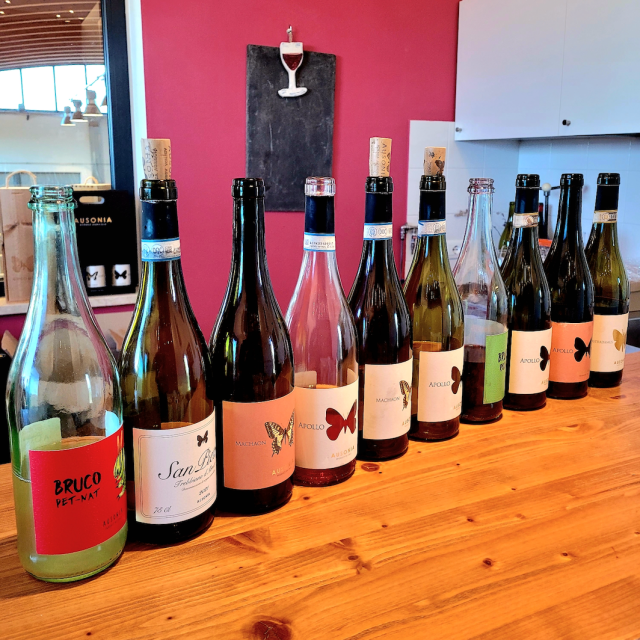
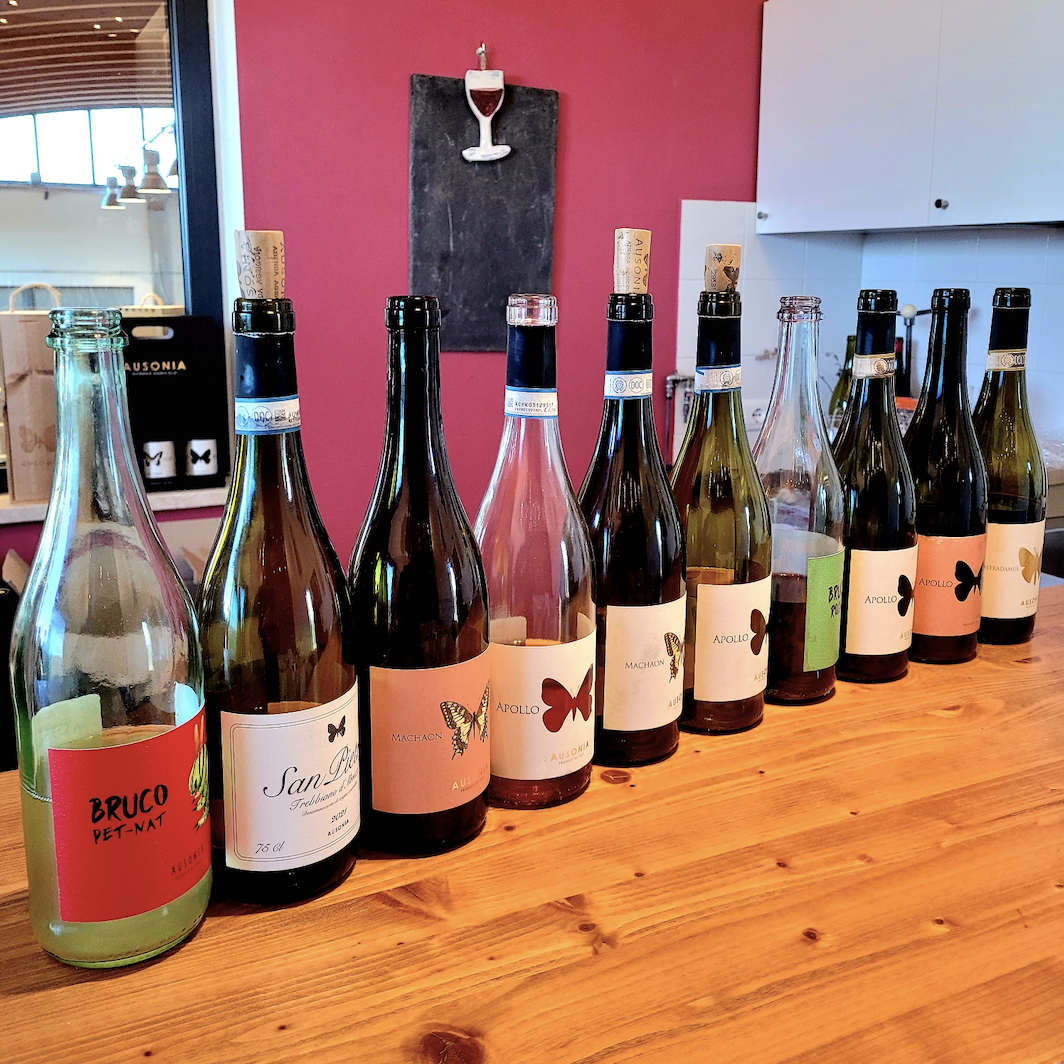
Ausonia (Atri, Teramo)

Ausonia Bruco Pet-Nat 2022, Colli Aprutini Bianco Frizzante IGP

The work of Simone and Francesca (Franca) Binelli from Lombardia, he the pharmacist who studied oenology in Florence, she the mechanical engineer. “Natural is the best way to make wine, but not all natural wines are the best,” explains Simone. Their Pét-Nat is made from trebbiano, all in yeasty though quite clean with a raw dough aspect to what must be seen as a unique Abruzzese iteration. Kind of tastes like a Japanese Orin Apple, a connection not often found but there it is. Really drinkable and getable for the genre. Drink 2024-2025.  Tasted March 2024

Ausonia Trebbiano d’Abruzzo DOP Apollo 2022

The name Ausonia is from the original name for Italy, as in Auson, sone of Ulysses and father of the Ausone people. The Apollo line trebbiano is only made with fruit from the youngest vineyard, coming away sharp, fresh and phenolic trebbiano, as per the usual, but the biodynamic aspect sure plays a role in its fruit and crisp, just picked vegetable personality. More than most this is a representation of vintage for these particular vineyards. Inherently natural and characterized this way. Drink 2024-2025.  Tasted March 2024

Ausonia Pecorino d’Abruzzo DOP Machaon 2022

A Canadian connection with Ausone, the name being assigned to one of three 1920s Class “A” Intermediat San Pietro 2022e emigrant and refrigerated cargo carrying ships that sailed from England to Pier 21 in Halifax. The winery’s name however is actually a connection with Italy’s original name. In any case this is wholly unique and excellent pecorino, once again organic and biodynamic through spontaneous fermentation, with only stainless steel aging. Sharp and tight, sweetly tart and clean, fresh and sparked. Great energy and the kind of natural pecorino to pour alongside and eat with sharp salty cheeses and afternoons of the same, all the live long day. Drink 2025-2028.  Tasted March 2024

Ausonia Trebbiano d’Abruzzo DOC Apollo – San Pietro 2022

The trebbiano aged in fermented without skins in cask and aged in Austrian. A “French” style of trebbiano, first made in 2020, creamy and also tart, spiced and high acid, well captured, kept and energy refuses to wane despite the wood. Actually brings out the aromatics in the grape and the older vines deliver concentration from the cru most important planted in 1984. About as special for trebbiano as it gets from the Colline Teramane. Drink 2024-2028.  Tasted March 2024

Ausonia Cerasuolo d’Abruzzo DOP Apollo 2022

Fabulous Cerasuolo, full hue, aroma and flavour profile that gives and gives some more. Rich in poly-phenolic compounds with intensities that never relent. Truly generous and fresh, sparked and clean as Cerasuolo to the limit of enhancement for naturally curated montepulciano. Drink 2024-2027.  Tasted March 2024

Ausonia Pecorino d’Abruzzo DOP Machaon 2022

Sees 10 days of maceration, followed by amphora for 11 months and while this follows suit for so many expected attributes with respect to natural wine aged this way – well the purity of fruit and clean character are at the top of the game. Sure the phenols and the fine bitters are very much a part of the mix but believe it or not a few years of age to resolve the tannins might do more good than bad. Will lead to a pecorino that would be considered affinamento, with the development of refinement and glissade. Drink 2025-2028.  Tasted March 2024

Ausonia Montepulciano Bruco 2022, Colli Aprutini IGP

The sister to the Bianco Frizzante but not sparkling, in fact just the youngest vines and shortest maceration for the most glou-glou montepulciano on the planet. Super juicy and no thought required. Grape juice that’s just about fun.  Tasted March 2024

Ausonia Montepulciano d’Abruzzo DOP Apollo 2021

Aged in concrete and a part stays some months in barrel. Just bottled and now released so yes the youngest stage to taste this finished wine. Crisp, croccante and crunchy, of fresh liquorice, tart and juicy. Quite a pure and unadulterated expression, some verdancy and fresh herbs, still a bit austere because the tannins need time to resolve. Drink 2025-2028.  Tasted March 2024

Ausonia Montepulciano d’Abruzzo Riserva DOCG Apollo 2021

Amphora montepulciano from which you will feel the oxidation and while the effort is clearly yeoman it would hard to not see this as a work in progress. Bitters and herbs are exaggerated, spices are smoky and the fruit feels charred. Roasted nightshades and real austerity but there are some juicy and energy redeeming qualities. Will feel more generous once the dust settles. Drink 2025-2028.  Tasted March 2024

Ausonia Montepulciano d’Abruzzo Riserva DOCG Apollo 2019

Though also organic and biodynamic this is most certainly the most conventional of all the wines made by Simone and Francesca Lodi. Rich, woody, caky and equipped with serious austere tannins. Not the easiest vintage for a montepulciano and Abruzzo but this does well to capture grape and Riserva style. Really well. Drink 2025-2031.  Tasted March 2024

Tasting team Abruzzo

A baker’s dozen dinner wines

Barba Pecorino Collemorino 2023, Colli Aprutini IGT

Just a 60 days stay on the fine lees but that works to great fresh advantage for Barba’s properly herbal and still truly fleshy pecorino. Catches and captures the variety’s Abruzzese essence with a posit tug effected between salty and creamy. Delightful example. Drink 2024-2026.  Tasted February 2024

San Lorenzo Pecorino d’Abruzzo DOC 2023, Teramo – Castilenti

Oily and phenolic, somewhat brooding or as much as this can happen with pecorino. A resemblance with viognier or perhaps more akin to some verdicchio at the elevated style where ripeness and alcohol become the discerning factors. Drink 2024-2025.  Tasted February 2024

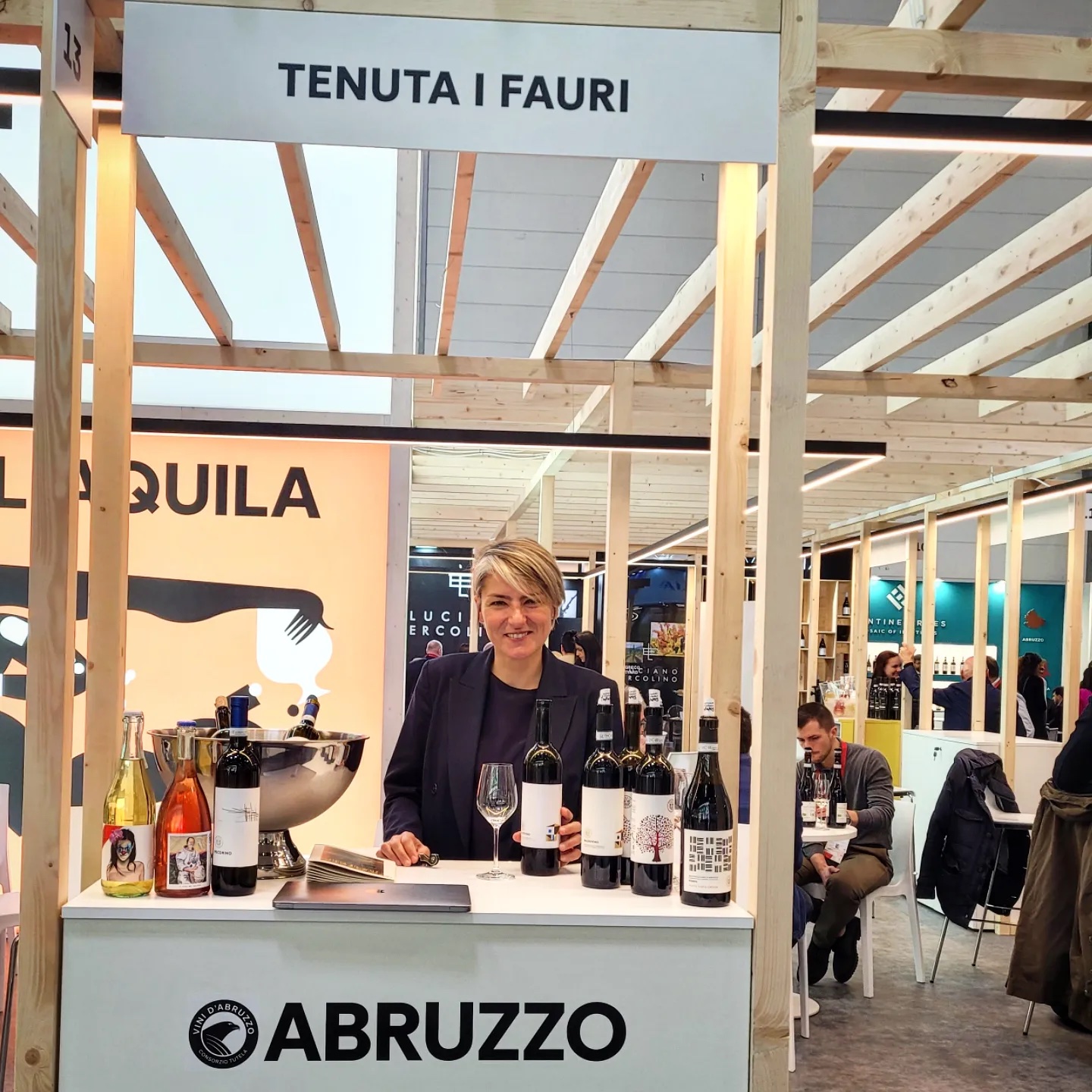
Tenuta I Fauri Pecorino d’Abruzzo Vino Biologico 2022, Chieti

Perfectly ideal and comfortable middle ground with two varietal feet firmly planted into the ground for pecorino gifting the holy trinity – Salinity, sapidity and roborant herbology. This translates as a combined feeling gained that is at first phenolic, followed by creamy, oily and finally grippy pecorino. The salts are elementally mineral, drawn up and into a wine expressive of Chieti, from the mountains to the sea. Botany, grapes and seasoning in the glass. Drink 2024-2026.   Tasted February 2024

Bossanova Trebbiano d’Abruzzo DOC Contraguerra 2022

Same skin-contact style as before and a similar result though the acetic quality is tamed from 2022. A tisane effect now, which is in fact something proper as it pertains to making skin-macerated whites but once again this lacks the necessary lustre and medium-scintillant behaviour that makes the genre successful. I am a big fan of Bossanova’s montepulciano work but the orange idiom feels forced and not (yet) quite understood.  Tasted February 2024

Nicodemi Trebbiano d’Abruzzo DOC Cocciopesti 2021, Notaresco

Raising takes place in clay pots for trebbiano of character and style. Not to mention colour, texture and a sapidity elevated to the nth degree. High phenolic presence which means a grippy treb, metallic and famously Abruzzese personality. Drink 2024-2026.   Tasted February 2024

Cerulli Spinozzi Trebbiano d’Abruzzo DOC Torre Miglioro 2021, Canzano

A trebbiano of a developing idea and story, rich and rising to the edge of phenolic danger, without crossing over. Sapidity in droves, precious gem and metal sheen, some reduction but again things settle themsleves in the face of potential adversity. All things considered this is quite successful and certainly more interesting than Cerulli Spinozzi’s Gruè trebbiano. Drink 2024-2026.   Tasted February 2024

Tenuta Terraviva Trebbiano d’Abruzzo Superiore DOC Mario’s 48 2022, Colline Teramane – Tortoreto

Some reduction requiring resolution but there is breadth, a broad swath of fruit and necessary stuffing to set this up well. The grip and also balance say drink now but also look to see what’s coming around the next few corners. Fulsome, fleshy enough but also grounded. The potential is there. Drink 2024-2027.   Tasted February 2024

Masciarelli Trebbiano d’Abruzzo Superiore DOC Castello Di Semivicoli 2020

Tasting 28 months later and this trebbiano has resolved into a straight shooter. Simple, easy and little complexity. Still a serviceable example.  Last tasted February 2024

Candied florals in sugary perfume as if white cotton candy or a confectioners’ marshmallow vein. Soft, downy and light, smooth and suave trebbiano. Drink 2021-2022. Tasted October 2021

Bucciacatino Trebbiano d’Abruzzo DOC Biologico 2022, Chieti – Vacri

Another straight shooter of varietal mineral truth, plant extracts and elements run through. Some flesh to back it up for quality trebbiano of easy accessibility. Drink 2024-2026.   Tasted February 2024

Le Vigne Di Faraone Cerasuolo d’Abruzzo DOC 2023, Terame – Giulianova

Terrific by appellation standards, so proper and extremely satisfying. Fruit, acids, tannin and flesh are all onside. Not just arch classic but the sort of Cerasuolo to consider eliminating the use of montepulciano grapes for red wine. Sorry, not sorry and funny, not funny because when the varietal result is this delicious meeting the profound, well you understand the hyperbole. Drink 2024-2028.   Tasted February 2024

Ciavolich Cerasuolo d’Abruzzo DOP Fosso Cancelli 2021, Loreto Aprutino

Transparently scintillant and lithe example of montepulciano as if from another era, yet so clean and modern for today. Sharp Cerasuolo of excitement, seductive because its eyes never wander and it wears high-level emotions of generosity and empathy on its sleeves. Yet it is somehow troubled, unstable in youth and for a 2021 Cerasuolo you would have thought’d should be past the tense and nervous stage. But it is not and that is surely part of the fascination. Cheese note on the nose (ha ha pecorino) with lightning quick reflexes to extol the virtues of fruit combined with sweet acidity for excitations and exultations of a higher order. In the end Fosso Cancelli acts out a passion play for an appellative dichotomy wrapped inside a paradox. Drink 2024-2028.  Tasted February 2024

Stefania Pepe Trebbiano d’Abruzzo DOC Pepe Bianco 2020

Natural smoulder and flint struck, a glissade of trebbiano made from old vines requiring a listen because its speaks in passionate tones. Flint monster in fact, that smoulder in surfeiting seduction, full on willing, able to please yet 2020 is still not quite ready. For some the unresolved sulphides and smokiness will give a heavy feeling but where is the hurry? There is a glou-glou effect behind the veil and given another year there should be no distraction. There is sex appeal inherent do don’t be shy or this will will walk all over you. Just try to enjoy the rapture. Drink 2024-2027.   Tasted February 2024

Abruzzo Wine Experience

Colline Termane

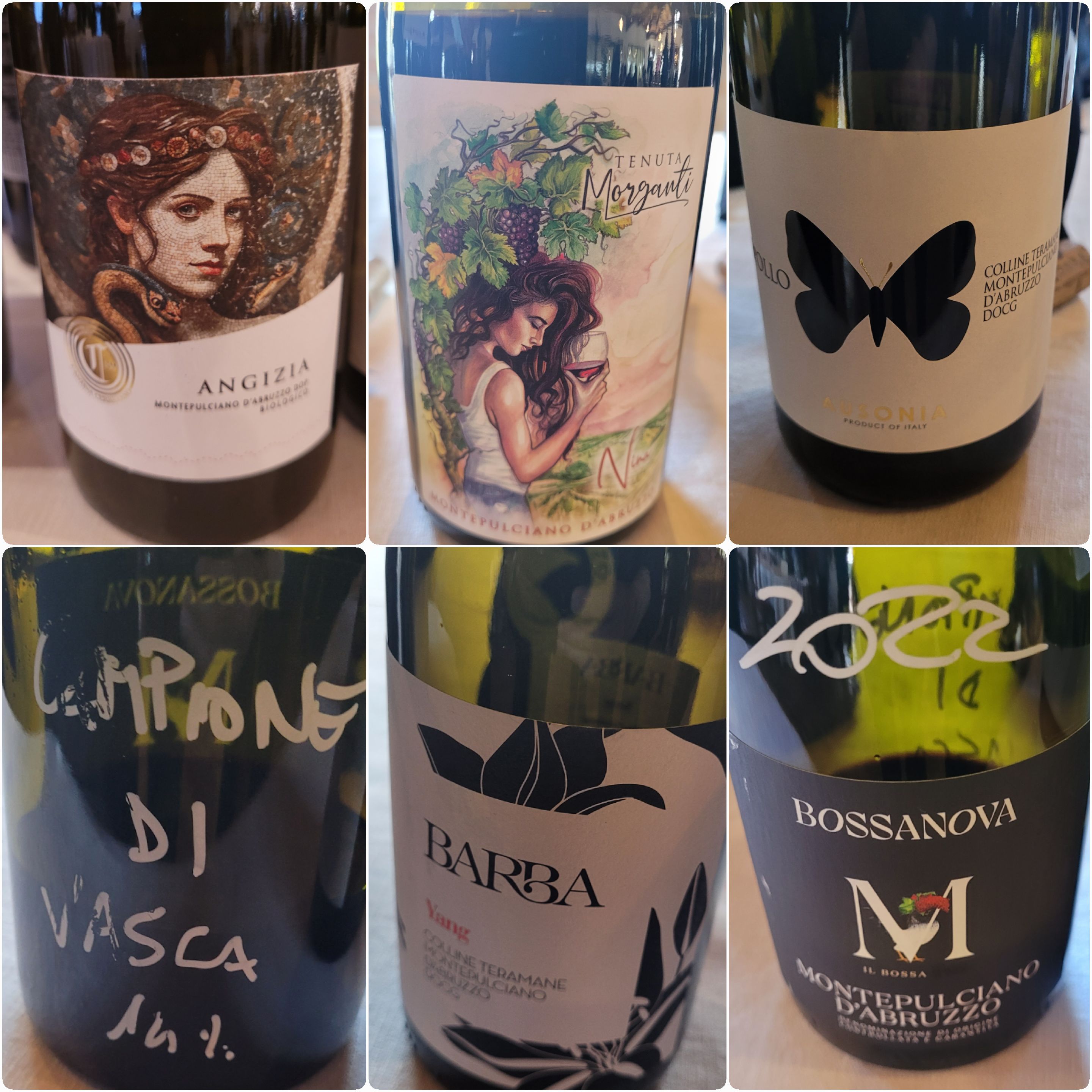
Bossanova Montepulciano d’Abruzzo DOCG Il Bossa 2022, Colline Teramane – Controguerra

Inviting straight away. Spices and chalk on the nose, complexities bounding with immediacy for a smart, tart and fresh montepulciano announcing its arrival. Lots of wood though that feeling of older and bigger format very much involved. Classic liquorice and unlit tobacco, spices again and again, long through to the finale. No denying the quality of the tannins. Drink 2026-2030.  Tasted February 2024

Tenuta Terraviva Montepulciano d’Abruzzo DOCG Terraviva 2022, Colline Teramane – Tortoreto

More than notably reductive, at the top for such a distinction with montepulciano locked in oh so tight. Spiced and lit to the hilt, almost flinty with some unresolved sulphides as well. Wood a major factor and time essential to see development and evolution take this somewhere positive. Quite frankly feels like a barrel sample still. The jury is out and in the end may very well (or not) be hung. Drink 2026-2029.  Tasted March 2024

Barba Yang Montepulciano d’Abruzzo DOCG 2022, Colline Teramane – Roseta degli Abruzzi

Brightness and freshness at the foremost of importance and clarity reels high for what has to be a montepulciano to drink both early and then four to five easy years of sliding, gliding and effortlessly developing maturity. A hint of semi-carbonic pulse, a buzz of energy and notes through chalky tannin that suggest waiting a year or two. My if this dopes not resemble Cru Beaujolais, especially Fleurie with the bold and floral notes. Not particularly typical at this stage but so curious and perhaps still a factor of campione (tank sample). Drink 2025-2029.  Tasted March 2024

Fosso Corno Montepulciano d’Abruzzo DOCG Il Grande Silenzio 2021, Colline Teramane – Roseta degli Abruzzi

Weedy, dill pickles and nettles – surely problematic, either from the wood or a moment of danger near the latter stages of alcoholic fermentation.  Tasted March 2024

Cerulli Spinozzi Montepulciano d’Abruzzo DOCG Gruè 2021, Colline Teramane – Canzano

Fine if reserved, reductive, stoic and its freshness locked in tight. Aromas are caught behind the walls of acidity, tannin and reduction though the latter is nothing more than a thin veil of currency. Great acids actually and fine-grained chalky tannins, nearly ready to open and reveal the true florals of the wine. Wood is important here but it is good quality and used judiciously. Could very well still be fermenting. Drink 2026-2030.  Tasted March 2024

Tenuta Antonini Montepulciano d’Abruzzo DOCG P. 121 2021, Colline Teramane – Ancarano

The barrel first and foremost, indicative of American oak, of vanilla, lavender and coconut, not unlike Rioja Reserva. Lacks the body politic and stuffing to keep up with the wood. In the end that’s all there will be. That said there are fans of the style. Drink 2026-2028. Tasted March 2024

Velenosi Montepulciano d’Abruzzo DOCG Versosera 2021, Colline Teramane – Controguerra

If a montepulciano could be classified and considered as classically modern than this would fit that ideal to a “T.” Or a “V” in this case, for valedictorial conduct and victory. Rich and delicious, full and substantial, wood used generously and also properly for a fine weave of fruit and vessel in easy intertwine. Drying at the finish yet floral and naturally sweet berries without pause or distraction. A prime and proper Colline Teramane Montepulciano d’Abruzzo DOCG with just that small hint of danger-inducing oxidation, though also one that speaks for all in a truly fruitful way. Drink this now because that oxidative suggestion will develop within two years. Drink 2025-2027.  Tasted March 2024

Ausonia Apollo Montepulciano d’Abruzzo DOCG 2021, Colline Teramane – Atri

Quiet, youthful and reserved, reminiscent of old school styles prevalent in recent past epochs but truthfully they can be well made and delivered examples of montepulcioano. As here with quality fruit, nothing mind-blowing but the weight and balance are well maintained. Simpler than some, not perfectly clean and yet made with heritage and traditional purpose. Drink 2026-2029.  Tasted March 2024

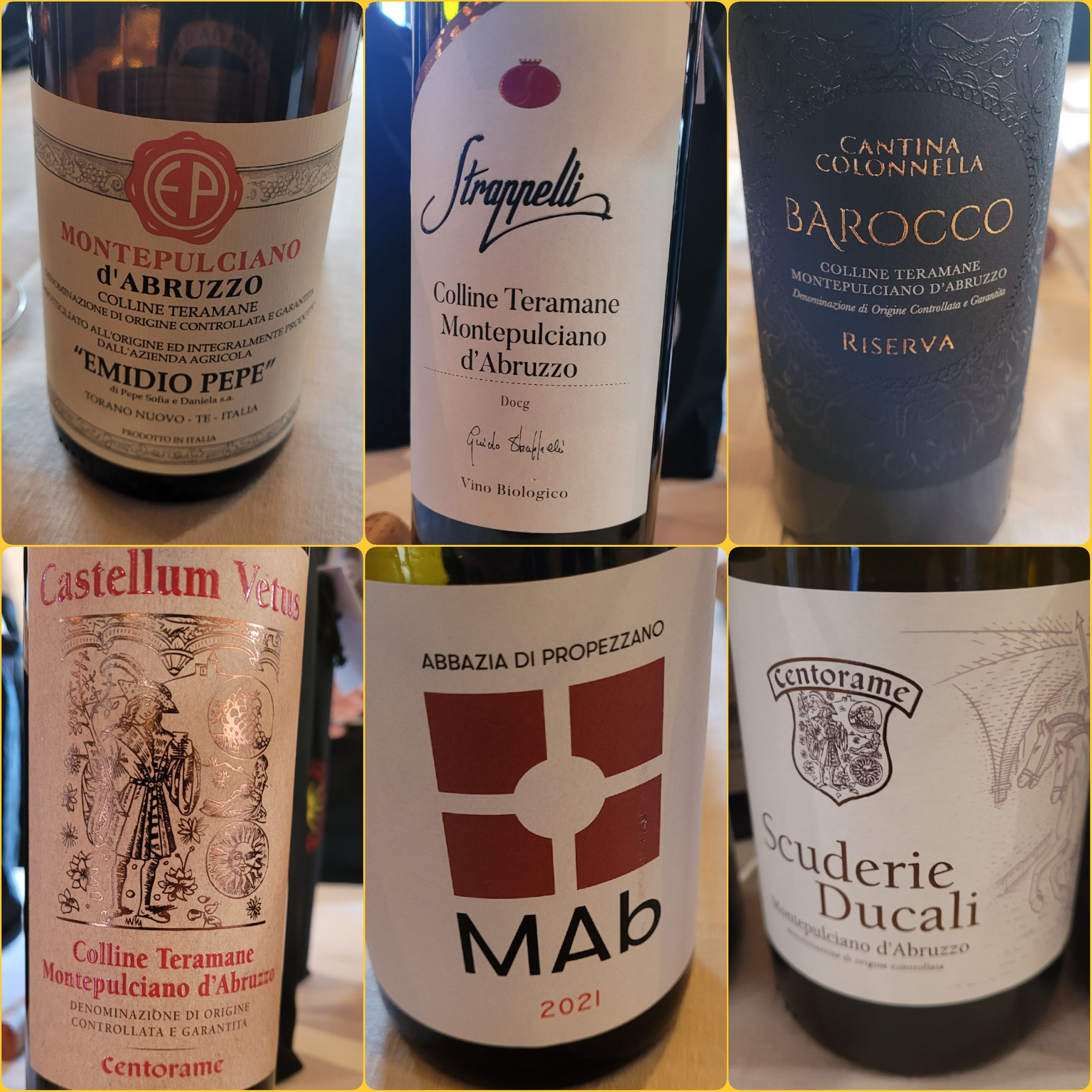
Emidio Pepe Montepulciano d’Abruzzo DOCG 2021, Colline Teramane – Torano Nuovo

Nothing else noses like this montepulciano and what is also perceived is the extreme youth of such an example. Gifts with shadowy hints and generous ideas but the sensations yet to come are manyfold, if quite possibly infinite. Fruit source just feels tops and selection so much more stringent than just about any in the appellation. Tannins are about as tight as any in all of Abruzzo and the interplay between fruit and structure is both playful but also gripped by an intensity of tension. A few sips gathers the swarthiness of the vintage but time will elasticize and disperse the parts. The potential here is great and if this is not looked upon as a top vintage today there will be times over the next 25 years where that opinion is challenged. Drink 2027-2039.  Tasted March 2024
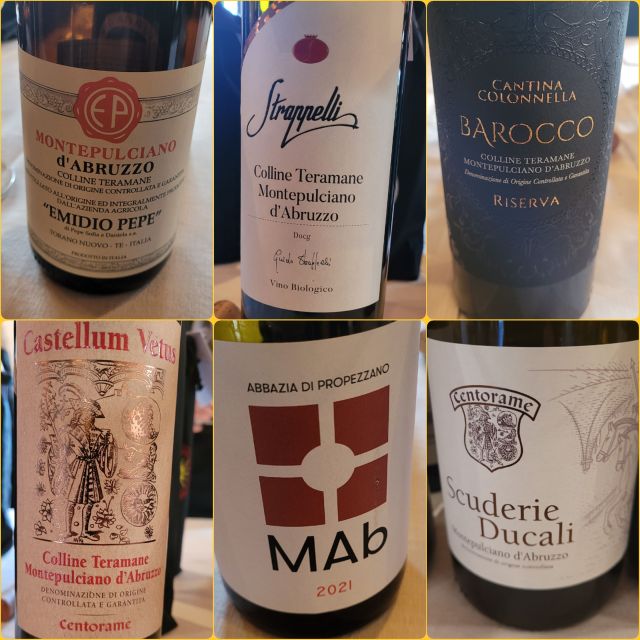
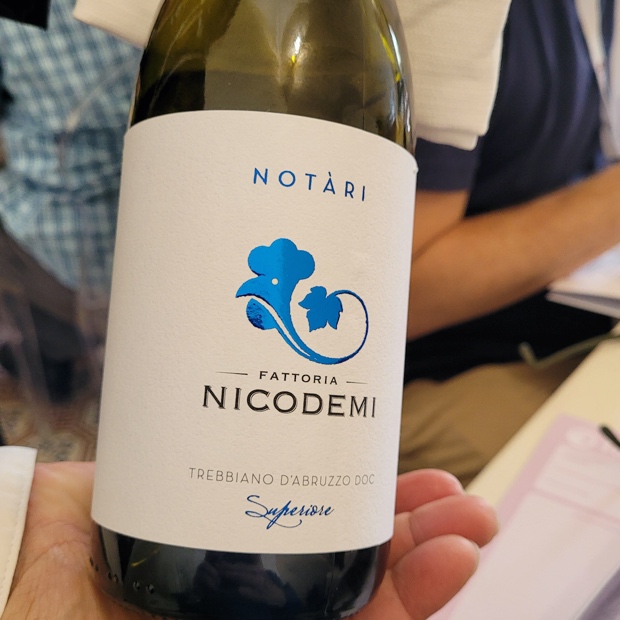
Fattoria Nicodemi Notari Montepulciano d’Abruzzo DOCG 2021, Colline Teramane- Notaresco

Fine, straight-faced, laces tied tight, lean and linear issue of montepulciano as Colline Termane for Montepulciano d’Abruzzo DOCG. Cool, salt-licked, stony and also vertical. Will not live past this decade but will soon begin to offer up a soothing and cool glass in the short term. Drink 2025-2028.  Tasted March 2024

San Lorenzo Montepulciano d’Abruzzo DOCG Antares 2021, Colline Teramane – Castilenti

Aromas of red onion skin and pickling spices. Vintage directed and the sort of montepulciano that has listened to the season’s wind to deliver just what was on order. Fruit juicy, punchy and simple, if also pleasing, serviceable and effective. All parts that follow are equal and consistent with the first. Drink 2024-2026.  Tasted March 2024

Abbazia di Propezzano Montepulciano d’Abruzzo DOCG 2021, Colline Teramane – Morro d’Oro

Reductive, tart and woolly, working through fermentative machinations with both manic and lactic undertones. Needs to settle and function confidentially within itself, though time will also dry out the fruit. Try to find the sweet spot two or three years down the road. Drink 2025-2027.  Tasted March 2024

Cioti Alarius Montepulciano d’Abruzzo DOCG 2021, Colline Teramane – Paterno

Fresh, semi-carbonic, still in a bubble gum and candy floss time frame. Tart and simple, wood not such a distraction though the montepulciano tannins cannot be ignored. Their drying and savoury qualities are not so in synch with the fruitiness and will never fully come together. Drink 2025-2027.  Tasted March 2024

Tenuta Morganti Nina Montepulciano d’Abruzzo DOCG 2021, Colline Teramane – Torano Nuovo

Much interest to start if also demure but there are florals and sweets natural red fruit scents that do invite further inquiry. The palate is furry, woollen and just that right amount of swarthy so again, curiosity runs high to look for complexities and fascinations to come. Chewy and tannic, in fact this is montepulciano that you truly sink your teeth into. Will mature and oxidize with beauty and old soul character to drink with distinction several years forward. Pay attention to the signs and see what lays ahead. Drink 2026-2032.  Tasted March 2024

Cantina Strappelli Montepulciano d’Abruzzo DOCG 2020, Colline Teramane – Torano Nuovo

Super reductive to block receptors and hide away potential. There are hints of beauty and charm back there but a warm and grippy vintage is reluctant to give away too much, too early. Firm and also marked by ripe acids that control and also keep the fruit’s emotions in check. The potential for great positivity and true to appellation drinking should not be ignored nor denied. This will find its way. Drink 2026-2031.  Tasted March 2024

Fosso Corno Montepulciano d’Abruzzo Riserva DOCG Orsus 2020, Colline Teramane – Roseta degli Abruzzi

A Riserva of montepulciano that relies on the barrels for most of its character and while the further aging time in vessels should develop more structure (and will) there is a bit too much distraction involved. Once again it is a Rioja-like stylistic that comes to mind and that is not a great look for Abruzzo. Drink 2025-2027.  Tasted March 2024

Tenuta Terraviva Montepulciano d’Abruzzo Riserva DOCG Terraviva 2020, Colline Teramane – Tortoreto

Floral, candied nose, tart and distracting because of the way wood interposes against the simplicity of fruit. Odd in many ways, relatively clean yet oddly fermentative in its freshness seeking way. Unusual Riserva style and hard to understand. In the end the tannins are brittle and crumble under pressure. Drink 2025-2028.  Tasted March 2024

Fattoria Nicodemi Montepulciano d’Abruzzo Riserva DOCG Luì 2020, Colline Teramane – Notaresco

No real surprise from grape and appellation because substance is next level and acids well heeded to support and drive the point forward. There is a lot of wood to resolve but it too helps and acts as a catalyst to make all parts of this montepulciano feel naturally sweet and connected. The style is normal and the execution well accomplished. A clean 2020 with plenty of life ahead. Drink 2025-2031.  Tasted March 2024

Illuminati Montepulciano d’Abruzzo Riserva DOCG Pieluni 2019, Colline Teramane – Controguerra

Plenty of wood and somewhat forced upon the fruit and our senses in that regard though this will serve an important purpose moving forward. Fruit quality is quite fine if not yet feeling precise and the style is one of winemaking to create a structured wine that will last a good long time. But the style will always be front and centre for a montepulciano by way of the Colline Termane’s professional construct. Tastes like a $60 J. Lohr Red, at the peak of Abruzzo commerciality and impressive all the same. Drink 2025-2027.  Tasted March 2024

Barone Cornacchia Montepulciano d’Abruzzo Riserva DOCG Bizzarro 2019, Colline Teramane – Torano Nuovo

No surprise that Riserva for montepulciano is so much about up front wood from a wine going back to 2019 that delivers this swaying kind of feeling. Tang, tart and controlled intensity of parts moving together in ways that just seem better and more tightly gathered than many. It’s a style and one issued on repeat but some producers do this better than others. As here because the acidity is forceful yet sweet and the culminating balsamico note clearly indicates a sense of place. That would be Torano Nuovo and here the sub-zone is promoted through a fine 2019. Drink 2025-2030.  Tasted March 2024

Centorame Castellum Venus (Campione Vasca) Montepulciano d’Abruzzo Riserva DOCG 2019, Colline Teramane – Atri

Going back four and a half to five years with a still reductive montepulciano though cleaner than it at first seemed. Dark, cool, sweetly savoury fruit with tobacco, liquorice, fennel, espresso and finishing spice. Plenty of character and complexity but also a linear traction and tractive ascent. Grips the rungs and the tracks without hover or disconnect to express fruit and place (that being Atri) with distinction. Drink 2025-2031.  Tasted March 2024

San Lorenzo Montepulciano d’Abruzzo Riserva DOCG Escol 2019, Colline Teramane – Castilenti

An oaky feeling from the start with American notes of coconut and here also blanched nuts. The fruit wants to shine through, of currants and pomegranate, culminating at a proper balsamico shudder but the wood is all over this mess of fruit. Wholly distracting from start to finish. Drink 2025-2027.  Tasted March 2024

Fattoria Giuseppe Savini Montepulciano d’Abruzzo Riserva DOCG 2019, Colline Teramane – Castilenti

As fresh and fruit forward as Riserva for montepulciano will be to tell us maturity and resolution have arrived – with thanks to simply and judiciously used wood. Yes, a simple and easy drinking Teramane example but thankful it neither reeks nor swells with barrel overuse. Drink 2024-2026.  Tasted March 2024

Cantina Colonnella Montepulciano d’Abruzzo Riserva DOCG Barocco 2019, Colline Teramane – Colonnella

Oddly carbonic for a Riserva level appellative montepulciano but sometimes the style will dominate the aromas no matter how or why. Presents a bubble gum fruitiness and also leathery compaction with fruit the main factor in the wine. Sweet acids to be sure and while a consumer might be unaware of what they are drinking, many will find delight. That said you have to know that to other local producers an eyebrow of concern would be raised in reaction to the style. Drink 2025-2027.  Tasted March 2024

Montori Montepulciano d’Abruzzo Riserva DOCG Fonte Cupa 2019, Colline Teramane – Controguerra

Quite thick, rich and emulsified montepulciano with all parts integrated, resolving and coming together. Fine acidity is this 2019, leading the construction and fully entrenched as catalyst for the quality Colline Teramane fruit. Clean and proper, ready to drink and willing to please for two-plus years or more. Drink 2024-2027.  Tasted March 2024

Cantina Strappelli Colle Trà Montepulciano d’Abruzzo Riserva DOCG 2019, Colline Termane – Torano Nuovo

Dio mio so much up front and in charge wood on this 2019 Riserva made in the ways of grand Italian selections, trying in a most sincere attempt to access old school charm and grace. Succeeds to a pick the best barrels degree, yet neither fruit source nor a true sense of place are in play. More about style, structure and winemaking and yet there is no denying the precision and clarity of the execution. Has its place and many will find the neo-classicism in its ways. Drink 2025-2028.  Tasted March 2024

Biagi Ipnosi Montepulciano d’Abruzzo Riserva DOCG 2018, Colline Termane – Colonnella

Chewy and caky example of montepulciano that clearly indicates Riserva style with more than a marked presence of French wood. Vanilla, lavender and emulsified elements to create a swirl of floral, fruity and woody elements. No shock to find such an example and many will be comfortable with this glass. Drink 2025-2028.  Tasted March 2024
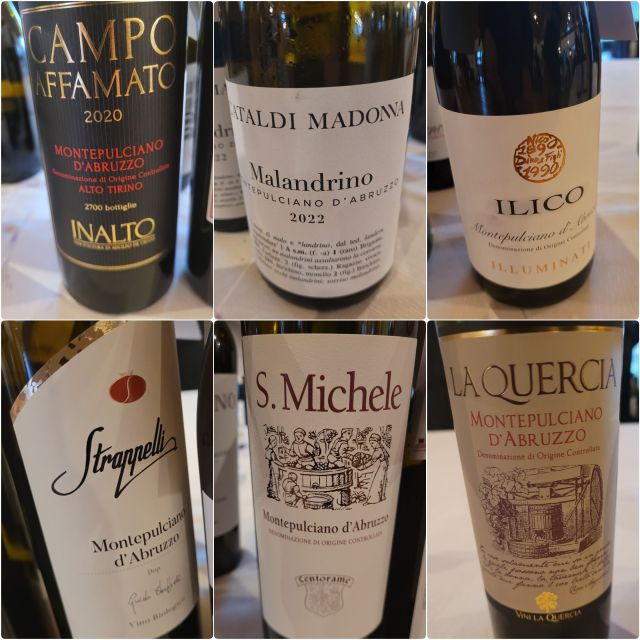
Terre di Chieti

Azienda Till Montepulciano d’Abruzzo DOC Lupus 2022, Terre di Chieti – Casoli

Open, fragrant, floral and naturally sweet fruit forward montepulciano. Clean and bright, fresh as the day it was born and bottled, stopping only it seems for a few months in steel. Ideal entry point with hints at but no real showing from and for wood. Drink 2024-2026.  Tasted March 2024

Tenuta I Fauri Montepulciano d’Abruzzo DOC Baldovino 2022, Terre di Chieti

Extremely youthful with that natural feel by carbonic pulse, fresh and gassy fruit and sweetly reductive. Simple in a way but so getable and appealing to a naive and willing crowd. Something lactic about it and for those set in their ways this may act uncomfortably primary but the glou-glou style will woo and kill it with the bottle shop crowd. Drink 2024-2025.  Tasted March 2024

Tenuta Ulisse Montepulciano d’Abruzzo DOC Ulisse 2022, Terre di Chieti – Crecchio

Openly fragrant, clean and inviting, fresh bouquet of just cut flowers and sliced red fruit. No wood soak to consider as a distraction so really just fruit and nothing but the fruit. Freshness incarnate urged forward by equally clean and even racy acidity. Drink 2024-2026.  Tasted March 2024

Cantina Cerretano Montepulciano d’Abruzzo DOC Angizia 2022, Terre di Chieti – Orsogno

A bit closed yet über fresh, spirited and lifted montepulciano. Perhaps a short stay in barrel this time because the spices and textures are also raised to move alongside the red and blackberry fruit. Well made and an excellent entry point. Drink 2024-2026.  Tasted March 2024

Cantina Frentana Montepulciano d’Abruzzo DOC Frentano 2022, Terre di Chieti – Rocca San Giovanni

Fresh, fruity, slightly candied and easy montepulciano to once again explain the high fructose and bright content provided by 2022. Solid entry level activity right here. A hit of Amaro bitters at the finish. Spot on. Drink 2024-2026.  Tasted March 2024

Cantina Tollo Montepulciano d’Abruzzo DOC Insetti Bio 2022, Terre di Chieti – Tollo

Tight and reductive though not far from its impending release. Crisp and crunchy, tart and salty, even with a slight botanical bite as well. Solid with just a kiss of barrel for texture and structure. Will age a year and then drink well for three more. Drink 2025-2028.  Tasted March 2024

Vigneti Radica Montepulciano d’Abruzzo DOC Vigneti Radica Bio 2022, Terre di Chieti – Tollo

Lighter and brighter village example from Tollo, tart and even sour-edged red berries with very minimal (if any) wood influence. An herbal side here, verdant and a bit rustic but there is plenty of bright energy and succulence in the mix. Noting the wood more on the palate with a caky and even chalky feel that is also surely provided by the distinct terroir. Drink 2025-2028.  Tasted March 2024

Jasci & Marchesani Montepulciano d’Abruzzo DOC Bio 2022, Terre di Chieti – Vasto

Classic perfume and style, salty upfront for montepulciano with florals part fresh and part dried. Rich as need be, full and substantial on the mid palate and then a return to savoury and also salty at the finish. Really good barrel usage and integration. Clean and classic. Will age a bit. Drink 2025-2029.  Tasted March 2024

Cascina del Colle Montepulciano d’Abruzzo DOC Ducaminimo 2022, Terre di Chieti – Villamagna

More spices and spiciness on the nose than almost any of the montepulciano 2022s, more wood noted as well though integrated into both fruit and acidity. A well designed and executed package from a well-formed example, if not as big in terms of vintage expectation. Excellent drive and length. Drink 2025-2030.  Tasted March 2024

Famiglia de Cerchio Montepulciano d’Abruzzo DOC Valle Maris 2022, Terre di Chieti – Villamagna

Lighter, brighter, leaner and also lifted montepulciano from 2022, liner and vertical, salty and conversely sapid. A crunchy wine that needs time to resolve its chalky tannins and mildly bitter Amaro back side. Potential is good though hard to shake the feeling that wood usage is just a bit heavy handed. Drink 2026-2029.  Tasted March 2024

Casal Thaulero Montepulciano d’Abruzzo DOC Orsetto Oro 2021, Terre di Chieti – Ortona

Rich if also a bit forced, a montepulciano 2021 of fruit not up to snuff and so wood fills in the holes. Just feels like a made wine with overbearing intervention. Drink 2024-2025.  Tasted March 2024

Fantini Group Montepulciano d’Abruzzo DOC Casale Vecchio 2021, Terre di Chieti – Ortona

Basic, clean and sharp montepulciano, heavy wood and a spoonful of medicine. Contrived and very “made.”  Tasted March 2024

Nododivino Montepulciano d’Abruzzo DOC Monovarietale 2020, Terre di Chieti – Ortona

Problematic aromas, medicinal and artificial. Sweet, of confection and powdery accents. Basic and serviceable in a pinch.  Tasted March 2024

Cantina Frentana Montepulciano d’Abruzzo DOC Torre Vinaria 2020, Terre di Chieti – Rocca San Giovanni

Perfumed if obtusely so, not exactly floral but something exotic, dried and spiced. The whole cupboard here, a masala of many aromas and flavours that for now confuse the overall plan but when the wine resolves there will be better understanding. A rich proposition and a complex one at that. Drink 2025-2027.  Tasted March 2024

Olivastri Montepulciano d’Abruzzo DOC La Grondaia 2020, Terre di Chieti – San Vito Chietino

Reductive and tart, tight and nutty. Lots of wood involved but thankfully there is a brightness and an energy provided by the acidity. Finishes at balsamico and that is a fine way to leave off. Length is very good. Drink 2025-2027.  Tasted March 2024

Fonetico Montepulciano d’Abruzzo DOC Cocca di Casa 2020, Terre di Chieti – Vasto

The entry is neither floral nor fruit perfumed but there is a musky skin and salumi scent that provides interest. The barrel work is high level and well used, not yet integrated but the acidity does the yeoman to move things swimmingly along. A fine example of mid-weight for mid-term aging and complexity developing with a few years in bottle. A bit commercial with smokiness and toasted nuts, but ultimately solid. Drink 2025-2028.  Tasted March 2024

Cascina del Colle Montepulciano d’Abruzzo DOC Mammut 2020, Terre di Chieti – Villamagna

Solid, oaky, toasty, tobacco lit and also reductive montepulciano. Really spicy and charred on the palate. Almost feels like they could be secretly growing carmenère in Abruzzo. Absurdities aside there are aspects of this montepulciano that excite and riase eyebrows, of holy roasted peppers, verdancy and char. Drink 2025-2027.  Tasted March 2024
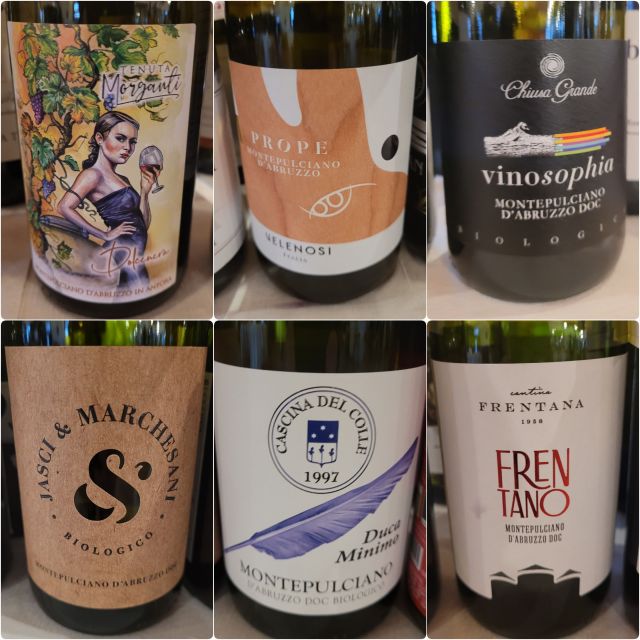
Colline Pescaresi

Cantina Zaccagnini Montepulciano d’Abruzzo DOC Il Vino dal Traghetto Bio 2022, Colline Pescaresi – Bolognano

Artificial, bland and lifeless. No biodiversity, complexity or life to be found. The result of what happens in a vineyard translated into wine.  Tasted March 2024

Contesa Montepulciano d’Abruzzo DOC Contesa 2022, Colline Pescaresi – Collecorvino

Perfectly fruity, fine and lifted montepulciano. Quiet, simple and introductory to speak of grape and place. Teachable, educational and spot on at the level it intends to discuss. Drink 2024-2026.  Tasted March 2024

Talamonti Montepulciano d’Abruzzo DOC Modà 2022, Colline Pescaresi – Loreto Aprutino

Basic, clean, vaguely complex, conversely tannic and utilitarian montepulciano. May not express a true sense of place but does confidently and properly speak for the greater good. Drink 2024-2025.  Tasted March 2024

Tenuta Arabona Montepulciano d’Abruzzo DOC Mia Natura Bio 2022, Colline Pescaresi – Manoppello

Fresh, mildly carbonic, spiced, white peppery, fragrant and generous. Mild oak work and usage, sliding and gliding across the palate, gracious texture and well defined finish. Very solid and proper example. Drink 2025-2028.  Tasted March 2024

Chiusa Grande Montepulciano d’Abruzzo DOC Vinosophia 2022, Colline Pescaresi – Nocciano

Really notable for the juicy and succulent character and clearly montepulciano treated with the respect it deserves to shine. The wood is indeed felt in mouthfeel but only for a moment before a full on wet of the appetite occurs. Arrosticini happens next.  Last tasted March 2024

Light and fresh, expressly clean and impressively so, inviting to a fine varietal degree without any real wood distraction. More so on the palate but as an entry level or a half step up from there this does the trick to envier, invite, entice and deliver correct responses. Nocciano for the early win. Drink 2024-2026.  Tasted February 2024

Tenuta Pescarina Montepulciano d’Abruzzo DOC Torre Bio 2022, Colline Pescaresi – Spoltore

Reductive and a bit dirty, crisp and also a note of char. This is not clean wood nor does it do the fruit any favours.  Tasted March 2024

Chiusa Grande Montepulciano d’Abruzzo DOC In Petra 2021, Colline Pescaresi – Nocciano

A bright and perfumed montepulciano, tart and expressive but mostly on the nose. A good chalkiness and more substance coming later with a gap up the middle thankfully not filled in by wood. Yeoman work from 2022 which may not be the grandest vintage of the last five, yet here still well represented. Drink 2025-2027.  Tasted March 2024

Ciavolich Montepulciano d’Abruzzo DOC Divus 2020, Colline Pescaresi – Loreto Aprutino

First montepulciano of swarthy interest from a flight 27-in strong and while some may feel the brittle possibilities there can be no doubt that character and potential exist in this bigger 2020. Rich and expressive, the Brettanomyces a potential danger but for now we’ll accept the rest of the wine as something into which we are curious to partake. Drink 2025-2028.  Tasted March 2024

Caprera Montepulciano d’Abruzzo DOC La Vasche 2020, Colline Pescaresi – Pietronico

Fine, caky and well developed example of montepulciano, wood used too a high degree but already beginning to integrate without issue. A medium-bodied and good acid inflected example that serves a purpose, to exult grape and place as well as can be reasoned, seasoned and expected. Drink 2025-2028.  Tasted March 2024

Tenuta Pescarina Montepulciano d’Abruzzo DOC Mascolino 2020, Colline Pescaresi – Spoltore

Full disclosure Montepulciano, rich and full vintage developed fruit, high toned and expressive. A whole whack of fruit, acidity and tannin combining for the whole package delivered. Drink 2025-2030.  Tasted March 2024
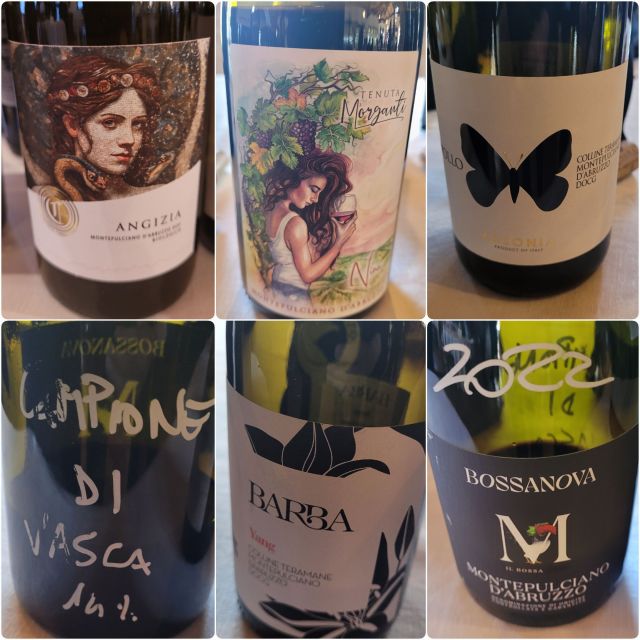
Teramo

Barone di Valforte Montepulciano d’Abruzzo DOC 2023, Teramo – Silvi

As much fruit perfume and palate presence as any with high acidity, lift and only the gentlest amount of swarthiness. This will appeal to both lovers of clean wines and also natural wine aficionados that look for the cleaner examples. Drink 2025-2028.  Tasted March 2024

Centrorame Montepulciano d’Abruzzo DOC Scuderie Ducali 2023, Teramo, Atri

Touch of reduction but also confection from wood in a montepulciano that will need some time to develop charm and hopefully also some grace. Drink 2025-2028.  Tasted March 2024

Velenosi Montepulciano d’Abruzzo DOC Prope 2022, Teramo – Ancarano

Fruit at the fore, berries in full force, perfumed if not exactly floral and wood very much in the mix if not wholly aligned with the fruit. Perfectly reasoned and seasoned example that serves great purpose in the short term. Drink 2025-2027.  Tasted March 2024

San Lorenzo Montepulciano d’Abruzzo DOC Aldebaran 2022, Teramo – Castilenti

Fruity and aromatic with fruit pulp and skin perfumes that really stand at the fore. Full flavour and wood well integrated without spiciness or caky spice. Good seasoning if not high complexity. Drink 2025-2028. Tasted March 2024

Biagi Montepulciano d’Abruzzo DOC 2022, Teramo – Colonnella

Medicinal and artificial. Smoky and caky textured. No joy in Colonnella-ville.  Tasted March 2024

Cantina Collonella Montepulciano d’Abruzzo DOC Parhelia 2022, Teramo

Reductive and peppery, slight rubbery feel and plenty of wood though the lift meeting drying sensation speak to potential. Though the tannins are severe and even austere there is something strong that indicates more charm a few years down the road. Remains to be seen. Drink 2025-2031.  Tasted March 2024

Illuminati Montepulciano d’Abruzzo DOC Riparosso 2022, Teramo – Controguerra

Brighter than some but simpler than many. Clean, fresh and unexciting. No complexities to speak of, nor austerity in the tannins neither. Chill a bit for just a good glass of montepulciano. Drink 2024-2026.  Tasted March 2024

Tenuta Morganti Montepulciano d’Abruzzo DOC Dolcenera, Affinamento in Anfora 2022, Teramo – Controguerra

Lovely brightness and freshness from a wine that expectation might have see it being moved or leaning in another direction but grace and charm are tops for this montepulciano. So much beauty and a wine that holds your attention for as long as you are willing to abide. Drink 2026-2033.  Tasted March 2024

La Quercia Montepulciano d’Abruzzo DOC Peladi 2022, Teramo – Morro d’Oro

Solid work with oak for fruit of a big if not grand vintage and as 2022 is concerned this finds the way. The way with lots of wood but fruit, acidity and tannins are all sweet to the edge of energy from which the palate draws invigoration. Nothing incendiary or enervating here but instead a wine that works the glass and room with style. Drink 2025-2030.  Tasted March 2024

Orlando Contucci Montepulciano d’Abruzzo DOC Rubiolo 2022, Teramo, Roseto degli Abruzzi

Reductive in a part rubbery and part peppery way, with cool fruit and austere tannins. Lots of wood to resolve and scores to settle. Another montepulciano for which the phrase “remains to be seen” must be employed. Drink 2025-2029.  Tasted March 2024

Centorame Montepulciano d’Abruzzo DOC San Michele 2021, Atri

Reductive and tight, clean and pure behind the shell and a montepulciano with plenty of notable French oak. Seasoned and spiced but also spicy. There will be many fans of the style. Drink 2025-2028.  Tasted March 2024

Cirelli Montepulciano d’Abruzzo DOC Anfora 2021, Atri

Simple, clean and very fruity without strings or exceptionalities. Basic and far from complex. Drink 2024-2025.  Tasted March 2024

Fattoria Giuseppe Savini Montepulciano d’Abruzzo DOC Rondineto 2021, Morro d’Oro

Off-putting aromas to indicate microbial activity. Problematic and not correct.  Tasted March 2024

Cantina Strappelli Montepulciano d’Abruzzo DOC 2021, Torano Nuovo

Quite tight and reductive for 2021, not yet having moved through its workings surely inner and implosive in design. A crunchy and crisp example for which the wood is a great helper but acidity is the true driver. No the mid-palate is not fully formed but surely this will be an example that needs to be re-tasted again and again to see how it is progressing and will continue to do so. Drink 2026-2032.  Tasted March 2024

San Lorenzo Montepulciano d’Abruzzo DOC Casabianca 2020, Castilenti

Big montepulciano, muscular and intense, full frontal, fit substantial and ready for anything that comes its way. Good if not exceptional acidity, lots of sweetening wood and then bigger tannins. An ambitious example that needs years to mature and will surely show truffle and possibly also porcini in its future. Drink 2026-2031.  Tasted March 2024

Illuminati Montepulciano d’Abruzzo DOC Ilico 2020, Controguerra

Tight yet not reductive, rich and oak caky, textured with tart edginess and really tight tannins. Austere even but there is plenty of substance involved. A big wine that’ll have broad appeal once it integrates and settles down. Drink 2026-2030.  Tasted March 2024

Podere San Massimo Montepulciano d’Abruzzo DOC Colle Rosso 2020, Giulianova

Decaying matter.  Tasted March 2024

La Quercia Montepulciano d’Abruzzo DOC La Quercia 2020, Morro d’Oro

Reductive and truly savoury but specifically tomato – the leaves and also a thick-skinned cherry variety. Tannins are brittle and so there is a yeasty aspect that creates this issue. What to make of this chaotic montepulciano? Drink 2025-2026.  Tasted March 2024

Barone Cornacchia Montepulciano d’Abruzzo DOC Casanova 2020, Torano Nuovo

An improvement aromatically speaking for the oft challenging and sometimes tragic 2020s. Plenty of substantial fruit and richness though also some bitters and rusticity. This is montepulciano that flies all over the map and the question is where will it land? Likely in secondary character that feels mushroom, brothy, earthy and tannic. Drink 2025-2028. An improvement aromatically speaking for the oft challenging and sometimes tragic 2020s. Plenty of substantial fruit and richness though also some bitters and rusticity. This is montepulciano that flies all over the map and the question is where will it land? Likely in secondary character that feels mushroom, brothy, earthy and tannic. Drink 2025-2028. Tasted March 2024.  Tasted March 2024

Cataldi Madonna Montepulciano d’Abruzzo DOC Malandrino 2022, Terre dell’Aquila – Ofena

Now here flies out a perfume not yet nosed in 50-plus previous examples of montepulciano from Abruzzo. But also a strange advance of flavours that feel lost in time, therapeutic and curative. Shows that iron and iodine quality. Hard to find the true joy, especially in this youthful stage. Sit on this montepulciano for at leats a year – it surely represents its place. Drink 2025-2028.  Tasted March 2024

Cataldi Madonna Montepulciano d’Abruzzo DOC Girovago 2021, Terre dell’Aquila – Ofena

Fulsome, substantial, full-bodied and all in montepulciano with fruits, acidities and sweet tannins all in line. A perfect storm of the holy trinity and trilogy that will see the best of all worlds for 2020 from Terre dell’Aquila. Surprising and what joy to come across this special wine. Drink 2026-2033.  Tasted March 2024

Cataldi Madonna Montepulciano d’Abruzzo DOC Tonì 2021, Terre dell’Aquila – Ofena

Briny and salty with other reductive assets set this up for a different sort of advance. Hard to see the forest through the herbaceous trees and spices run amok but once again time will almost certainly be the ally. Not to mention the catalyst to explain how such a montepulciano is surely one to define its location. Drink 2025-2028.  Tasted March 2024

Inalto Montepulciano d’Abruzzo DOC Campo Affamato 2020, Terre dell’Aquila – Ofena

Really tight and full on in Riserva-plus style that will need years to integrate, resolve and ultimately mature. More than most. Yes there is plenty of wood and also a swarthiness about the volatile compounds circulating around fruit but my goodness the stuffing and therefore potential are great. Come back in four years. Drink 2027-2034.  Tasted March 2024

Tenuta i Fauri Montepulciano d’Abruzzo Riserva DOC Vigna Santa Cecilia 2020, Terre di Chieti – Chieti

Lighter and brighter than some Riserva but just as substantial in terms of fruit and acidity than any from the 2020 vintage. Really chalky and still austere as far as tannins are concerned, but there is some great and purposeful reasoning to see this live a very long life. Drink 2026-2033.  Tasted March 2024

Pasetti Montepulciano d’Abruzzo Riserva DOC Testarossa 2020, Terre di Chieti – Francavilla al Mare

True purpose for bright varietal fruit matched against serious structure put this Riserva in promising steading because the fruit is pitted up towards the wall of tannin. Holy moly is this a serious and potentially impressive wine. Again the facts are facts and the rest remains to be seen. Drink 2027-2035.  Tasted March 2024

Casal Thaulero Montepulciano d’Abruzzo Riserva DOC Duca Thaulero 2020, Terre di Chieti – Ortona

A bit of pickling here, more spice than brine but nevertheless the seasoning is markedly driven by wood. The fruit is strong and for the most part stands up to the task but the middle palate wanes and so wood wins in the end. Drink 2025-2029.  Tasted March 2024

Citra Vini Montepulciano d’Abruzzo Riserva DOC Caroso Limited Edition 2020, Terre di Chieti – Ortona

Rich and caky, a very barrel directed example of montepulciano that for Chieti does in fact do well to fill in the mid palate. Ultimately black forest cake in style and as an example that will live long if not far away from secondary and even tertiary notes taking centre stage. Drink 2026-2029.  Tasted March 2024

Masciarelli Montepulciano d’Abruzzo Riserva DOC Marina Cvetic ISKRA 2020, Terre di Chieti – San Martino sulla Marruccina

Mamma Mia all oak and very little else. The fruit tries to poke through the woody and woollen clouds but fails to express itself with any truly credible opposite of confusion. Will become more and more about wood as time goes by. Drink 2026-2029.  Tasted March 2024

Famiglia De Cerchio Montepulciano d’Abruzzo Riserva DOC Colle Maggio 2020, Terre di Chieti – Villamagna

Unique aromatic perspective, especially for Chieti because the barrel is not the first thought as it pertains to the approach for Riserva style wines. Still there is black forest cake and heavy berry-mocha-chocolate with a toasty aspect that overtakes the rest. A smothered montepulciano. Drink 2026-2028.  Tasted March 2024

Cantina Zaccagnini Montepulciano d’Abruzzo Riserva DOC Il Vino dal Tralcetto 2020, Colline Pescaresi – Bolognano

Reductive and mephitic, a dark and dank basement where the air can’t ever clear.  Tasted March 2024

Talamonti Montepulciano d’Abruzzo Riserva DOC Tre Saggi 2020, Colline Pescaresi – Loreto Aprutino

Proper Riserva nose, rich and lifted, oak so full and in charge but fruit stands up and alongside. A firm, grippy and intelligent example if again an impressive amount of wood involved. Can’t help but see this as a top style for Riserva for a fine example of vintage (2020) and place (Colline Pescaresi). Age worthiness is a certain guarantee. Drink 2026-2034.  Tasted March 2024

Fosso Corno Montepulciano d’Abruzzo Riserva DOC 2020, Teramo – Torano Nuovo

Stinky, reductive and dill pickle juice overrun.  Tasted March 2024

Citra Vini Montepulciano d’Abruzzo Riserva DOC Ferzo 2020, Teate – Ortona

Tannic as you know what with austerity and toasted wood notes all over the fruit. Will this ever find the light? To a decent extent yes. Drink 2027-2032.  Tasted March 2024

Nododivino Montepulciano d’Abruzzo Riserva DOC Torrepasso 2020, Teate – Ortona

Plenty of lift from montepulciano as Riserva with heavy fuel delivered in tanker after tanker by the barrels. The soy, varnish and heavy espresso is almost out of control. Tertiary character is just around the corner. Drink 2024-2026.  Tasted March 2024

Contesa Montepulciano d’Abruzzo Riserva DOC Chiedi alla Polvere 2020, Terre dei Vestini – Collecorvino

Cool, minty-savoury, very wood seasoned and reasoned for what can only act like a heavy set of fuel. Fruit and barrel will conspire for a decade-long run. Drink 2025-2033.  Tasted March 2024

Marramiero Montepulciano d’Abruzzo Riserva DOC Inferi 2020, Terre dei Vestini – Rosciano

As rich, dense and concentrated as montepulciano will get. Heavy oak-driven style in the wooded, brewed soy, dark ganache of chocolate and mocha way. If you have come looking for a quick varietal fix with fruity transparency than thjis will seem so very over the top because of barrel usage and just too much for whatever fruit you would like to see expressed. If you want texture and structure than this will satisfy greatly, but not before another three years have passed. Drink 2026-2032.  Tasted March 2024

At Prowein with Valentina di Camillo, Tenute I Fauri

Tasted at Prowein with Valentina Di Camillo

Tenuta I Fauri Passerina Vino Biologico 2023, Colline Teatine IGT

Campione: Grandfather abandoned these vines because of low production and they were re-planted 20 years ago on clay-calcareous soils with a great skeleton of limestones. Delivers salty notes but as a coincidence because these are not vines by the sea, closer to Chieti, 15 kms away from the water. Raised in concrete vats, holdovers from Valentina’s grandfather and restored to modern standards. Lost 85 percent of production to Perenospera with only this pecorino and Cerasulo being made. A wine of right choices and direction, what with passerina being the future. Drink 2024-2026.  Tasted March 2024
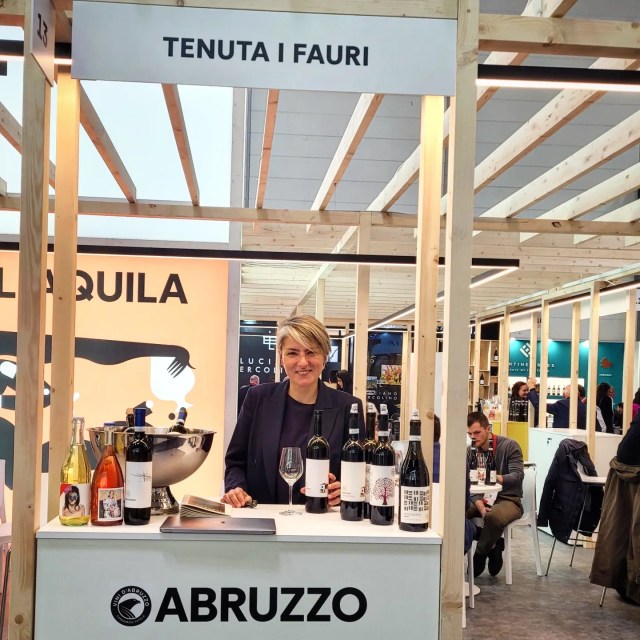
Valentina di Camillo, Tenute I Fauri, Prowein 2024

Tenuta I Fauri Passerina Baldovino 2023

Campione: At 14 percent in alcohol and so light, bright, balanced and beautiful. This is the cuvée of all 14 plots of montepulciano and my goodness this is what you want to drink. “No matter what my mom cooks,” says Valentina, “especially gnocchi al sugu.” This is the energy from Cerasulolo you need. There it is, doing its job. Subtle almond aftertaste for a 7,000 bottle production that usually reaches 15. Drink 2024-2026.  Tasted March 2024

Good to go!

godello

Ausonia (Atri, Teramo)

Instagram

Facebook

Abruzzo in four-part harmony


A sing-song morning in #atri in the province of Teramo, Abruzzo _ #hadrianum and the Sound of Music at #teatrocomunalediatri

A sing-song morning in #atri in the province of Teramo, Abruzzo

The Italian wine experience and lexicon of denominational constructs are a varied and complex weave that follow no true script as it pertains to appellative laws. There are many regions where the decrees of DOC, DOCG and IGT (or IGP) tow a definitive line and yet others where the system is either turned on its head or clouded by sub-appellative titles that bring multiplicity, but also confusion to the exercise. Abruzzo is a territory that embraces it all, ever-changing, adding new sub-contexts and for many producers an opportunity to express the territory through the title of their wines. Yet there is a refrain that stands out, a four-part ideal clear and above all the noise. It takes but four or five days travelling, visiting, listening and tasting with Abruzzese producers to learn, intuit and fully understand the concept. The DOCs of Montepulciano d’Abruzzo, Trebbiano d’Abruzzo, Pecorino d’Abruzzo and Cerasuolo d’Abruzzo are the four members of the regional band. Together they sing in four-part harmony, in sound bites as pop songs, to explain with clarity about the nature of this special land.

Floating restaurant experience on the Trabocchi Coast – Creative crudo, marvelous mussels and @vinidabruzzo _ Grazie tantissimo Davide @traboccopuntacavalluccio and crew for your seamless service, efficiency and respect – #costadeitrabocchi

By the numbers

There are 12 protected zones in Abruzzo, seven as IGPs and five as DOCs. In addition to the aforementioned four pillars the fifth is Villamagna. The region’s surface area to vines is 36,000 hectares, more than half of which are planted to montelpuciano and the total production is 3.8 million hectolitres. Montepulciano d’Abruzzo is responsible for more than 800,000 hL, Trebbiano d’Abruzzo (192,000), Controguerra DOC (4,000) and Montepulciano d’Abruzzo Colline Teramane DOCG (4,000). Like the four-part appellative harmony of Trebbiano, Pecorino, Cerasuolo and Montepulciano there are four connected provinces or growing areas in Chieti, Pescara, Teramo and L’Aquila, accounting for 76, 10, 10 and 4 percent of wines respectively.

Contrada Chiesa, Emidio Pepe

Related – Bucket list visit with Emidio Pepe

The simplest approach would be to divide the winelands into two areas; 65 per cent inland mountain region and its continental climate and the mild climate of the coastal area with its broad yet modest escarpment perched above the Adriatic Sea. La Pergola Abruzzese still stands at 80 per cent to represent the traditional, tried-and-true regional method of vine-training style for the 6,000 growers, 40 cooperatives and approximately 260 (of which 120 bottle their own) “other” aziende or estates in the whole of Abruzzo. More than 30 percent of the territory is protected by four parks (three national and one regional) and a dozen nature reserves and protected areas. The tope three export market breakdown is as follows: Germany (23 per cent), United States (20) and Canada (10). The British and Northern European markets such as Sweden, Denmark and Norway are seeing the highest new growth.

Vasto

The Consortium

The Consorzio Tutela Vini d’Abruzzo was born in 2002 as a system of control and protection, today constituting 200 members. The current statute, approved by the Ministry of Agricultural and Forestry Policies with decree dated 4 June 2012, attributes diverse and different levels of duties to the Consortium. The Consorzio Tutela Vini d’Abruzzo is led by President Alessandro Nicodemi along with Vice-Presidents Pino Candeloro and Franco D’Eusanio. The Consortium protects wines with controlled designation of origin: Montepulciano d’Abruzzo DOC, Trebbiano d’Abruzzo DOC, Cerasuolo d’Abruzzo DOC, Abruzzo DOC and Villamagna DOC. In addition, under its articles of association, it also protects wines with a typical geographical indication: Colline Pescarasi IGT, Colline Teatine IGT, Colline Frentane IGT, Colli del Sangro IGT, Del Vastese or Histonium IGT, Terre di Chieti IGT, Terre Aquilane or Terre de L’Aquila IGT.

Godello at Castello Piccolomini Capestrano

The grapes

Evidence shows that the montepulciano variety has been in Abruzzo since the mid-1700s. Today it is simply everywhere and represents more than half the regional ampelographic base, as well as defining the Montepulciano d’Abruzzo DOC, which also includes the Cerasuolo type. The grape is cultivated on about 17,000 hectares, with a trend in continuous growth (in recent years over 70 per cent of new vineyards have been created with this vine). The idea of Cerasuolo was born in the mountains where the difficulty in ripening led to a Rosé-like wine being produced. Cerasuolo is anything but Rosé and when made correctly in a style that suits its idiosyncratic nature is in fact one of the most unique wines of Italy. The existence of the white grape trebbiano is specific to Abruzzo and that is why the denominational term holds two-fold meaning, both as a description and as an appellative wine: Trebbiano d’Abruzzo. Old trebbiano vines are constantly being discovered and their DNA transformed into new plantings as a way of preserving heritage and biodiversity. There are approximately 14,000 hectares, followed by pecorino to a much lesser degree. But pecorino’s future is bright and also essential for making white wines of longevity in Abruzzo. Finally, there are a series of native, national and international grape varieties such as passerina, cococciola and then sangiovese, chardonnay, cabernet sauvignon and merlot.

Related – Just a spoonful of Tiberio

Team Yellow

The Experience

Rugged and beautiful Abruzzo is found in Italy’s central-southeast, situated between the Adriatic Sea and the two massifs of Gran Sasso d’Italia and Majella. Every jaunt, from Rome to the Adriatic sea, sea to village and village to estate is a journey through hills and mountains, always with one of the two massifs and the water as markers for establishing position. One’s head must always be on a swivel to manage bearings and assimilate direction because roundabouts, switchbacks and natural obstructions are constantly acting to disorient and confuse. At the Vini d’Abruzzo Grand Tasting in Vasto 335 wines from upwards of 75 producers were poured to more than 100 international representatives (some of them journalists) in a dramatically beautiful palazzo placed under challenging professional circumstances. Some of the following 48 tasting notes are drawn from that tasting but mostly transcribed from estate visits and dinners during a glorious week spent in Abruzzo back in June of 2022.

Abbazia Di Propezzano Trebbiano d’Abruzzo DOC “TAB” 2020

TAB, as in trebbiano d’Abruzzo. Extreme trebbiano (filare) grown by Guyot, skins only during the pressing, for the immediacy it can bring, ripeness at fruition, essential oils and all the sun together as one. Preserved lemon and tonic, ending quick and to the proper Teramo point. Drink 2022-2023.   Tasted June 2022

Abbazia Di Propezzano Cerasuolo d’Abruzzo DOC “CAB” 2020

CAB, as in cerasuolo d’Abruzzo. Not saignée method, instead four hours on skins in direct press. Clean and fragrant, strawberry and cherry, exactly like early June, right in season. A clear vision of cerasuolo within the established DOC, focused and precise. Shows a verdancy at the finish, not by stems but as a variability in the cuvée. Drink 2022-2023.  Tasted June 2022

Bellissima e splendida proprietà @abbaziadipropezzano with thoughtful Trebbiano, Pecorino, Cerasuola and Montepulciano. Grazie Cristiana e Paolo _ #morrodoro #viniabruzzesi #viniabruzzo #collineteramane

Abbazia Di Propezzano Pecorino d’Abruzzo DOC “PEC” 2021

PEC for pecorino. Both more freshness and also texture as compared to the trebbiano, while less glück, though there is always a level of that feeling. Ripe in a melon meets guava way, but the sensation is citrus led, not preserved but still fresh and quite vibrant. Drink 2022-2025.  Tasted June 2022

Barone Cornacchia Trebbiano d’Abruzzo DOC Macerato 2020

Some skin contact, as per the moniker macerato, though nothing that climbs into a fully natural realm. Punchy and tart, in control of emotions and our senses, nothing oily about it. Not a textural effect created but surely one that works the palate with connectability. Drink 2022-2024.  Tasted June 2022

Cataldi Madonna (Ofena) Trebbiano d’Abruzzo DOC Malandrino 2021

Green herbs and near neutral citrus, a spritz of lemon and lime, fresh and crisp. Good clarity if narrowing its focus into one dimension. Crusted exterior and creamy interior. All the dried herbs, fennel pollen and Abruzzese liquorice upon the finale. Drink 2022-2023.  Tasted June 2022

Cataldi Madonna Pecorino d’Abruzzo DOC Giulia 2021

Named by Luigi Cataldi Madonna for his daughter Giulia, next and current generation winemaker and face of the family business. Pecorino is also a next step white, seeming to hyperbolize from the trebbiano where fresh herbs and the aerosol of lemon and lime spritz on through, light and with excitable character. Giulia speaks about this wine and in turn a sip transmits more information and emotion as compared to Malandrino. Drink 2022-2024.  Tasted June 2022

Giulia Cataldi Madonna

Cataldi Madonna Pecorino d’Abruzzo DOC Super Giulia 2019

A wine of double selection, from the best parcels of pecorino over two hectares and of course named after the winemaker. Takes pecorino to another level for the estate, for Terre Aquilane and Abruzzo. Increased body and mouthfeel, all the summer herbs and now true squeezed citrus captured. Character pecorino with balanced intensity and linger. Drink 2022-2026.  Tasted June 2022

Cataldi Madonna (Ofena) Cerasoulo d’Abruzzo DOC Malandrino 2021

Quite proper Cerasulo because it heeds the under phenolic call where montepulciano is vinified half as a white and half as a red maceration, aka svacata, then finished together in fermentation. A retro-fitted way to make neither a red nor a white wine but a doppio, not exactly Rosato though you might be conditioned to think of it this way. Really smart and traditional in modern rags not to mention wholly in balance. Drink 2022-2025.  Tasted June 2022

Cataldi Madonna (Ofena) Cerasuolo d’Abruzzo DOC Piè Delle Vigne 2021

Not red and not white “but something in the middle.” Like the Malandrino it is montepulciano vinified half as white and half as red through macerations, i.e. svacate, then finished together in fermentation. Here the red portion is greater than the white yet the sum of parts is similar, albeit reductive. Not surprising considering the philosophy at Cataldi Madonna where oxygenation means trouble. Makes haste to access and assess just what Cerasuolo must be, in respect to tradition from a place where that notion is everything. Piè Delle Vigne, like the ilk of Piè Franco hitting the proverbial nail straight on the head. Some tannins tell us to wait six to eight months and then consume with impunity for four years after. Drink 2023-2027.  Tasted June 2022

Cataldi Madonna (Ofena) Montepulciano d’Abruzzo DOC Malandrino 2020

Montepulciano is also reductive in the way of Cerasuolo yet in all out red the salumi character is omnipresent. Abruzzese skins, musky and fortifying, the local equivalent of finnochiona, perhaps Ventricina Picantino, spiced and also just a bit toasted nutty. Lovely aromatic front and serious tannin right up front. My goodness what a tannic and intensely chalky montepulciano. Aging is only in concrete and stainless steel to make sure the fruit stands erect and at the fore. Yes it is tart to the nth but the bones, stuffing and potential are all there. Better acids than many and while there is some structure it’s really not demanding at all. Still it needs time to assimilate all the structural parts. Long finish confirms the quality and the trenchant intendment. Drink 2023-2027.  Tasted June 2022

The gem of Ofena, Il Forno d’Abruzzo, Madonna del Piano and Terre Aquilane is Giulia’s @cataldi_madonna where this beautiful fertile valley transforms into terroir representative in Trebbiano, Pecorino, Cerasuolo and Montepulciano

Cataldi Madonna (Ofena) Montepulciano d’Abruzzo DOC Giovago 2020

An experiment at least as far as elévage is concerned, to make a wine from the best selection of montepulciano grapes without any wood; no tonneaux, barriques nor botti neither. And yet there is creamy lees, malolactic texture and also a cupboard of spice. The concept is to see if this montepulciano can age with the best of them, going it alone with only stainless steel as the vessel in which it was raised. Five-plus years should be a guarantee. Drink 2023-2027.  Tasted June 2022

Cataldi Madonna (Ofena) Montepulciano d’Abruzzo DOC Toni 2018

Montepulciano that spends a year in botti (25 hL) and then one year in bottle. So apposite to Giovago, with oak resins and toasted notes though really just a relative turn against the other two montepulciano from Cataldi Madonna. Compared to many other Abruzzese this is really quite tame and subsequently floral, crunchy and acid-driven. Tannins are firm and ripe, in slight rigorous demand though with more bark than bite. Tastes like Swartland syrah, of meaty pancetta and iron. Tripping awkwardly in the present though a really solid wine, a bit boozy though that too should settle in. Drink 2024-2028.  Tasted June 2022

Costa dei Trabocchi, Trabocchi Coast, Italy

Cantine Mucci Pecorino Santo Stefano 2021, IGT Terre Di Chieti

Nicely rendered and delineated pecorino, inching into tart and edgy but always residing on the ledge and remaining in that necessary location of fruit to acid balance. Really long finish indicates proper farming and cellar attention to detail. Drink 2022-2024.  Tasted June 2022\

Cerulli Spinozzi Trebbiano D’abruzzo DOC Gruè 2021

A trebbiano that turns inward in a taut and implosive way yet also showing a true juiciness. Citrus all over. Drink 2022-2023.  Tasted June 2022

Cerulli Spinozzi Cerasuolo d’Abruzzo DOC Coralto Superiore 2020

Deeper and more pressed though within reason. Brings out a minor amount of brittle tannin through that maceration. Not a hard wine per se but a bit austere, green even. Green and red cohabitants. Drink 2022-2024.  Tasted June 2022

Day-glo, cotton candy yet tart red citrus in currant and pink grapefruit. Crunchy and searing. Drink 2022-2024.  Tasted June 2022

D’Alesio Vini Trebbiano d’Abruzzo DOC Tenuta Del Professore 2015

Dedicated to current generation’s gradfather Mario D’Alesio, Professor of Agriculture for 45 years, born in Colle di Moro (Città Sant’Angelo) in 1922. Airy, fragrant and aromatic, a gently pressed trebbiano meant to satiate a parched palate, here and right now. Straight lemon citrus juicing. Drink 2022-2023.  Tasted June 2022

With Emidio Pepe

Emidio Pepe Trebbiano d’Abruzzo DOC 2009

The youthfulness of honey after ten years turns to racy citrus and a vapour trail smoulders behind in this petrol-mineral and flinty trebbiano. The tenure is just about 35 deep for Emidio Pepe and this seems to exist in a transitional-next level aging epoch (in and around 2009) for an Abrusseze trebbiano that shows 12-plus year-old wisdom. Not only wisdom but calm and good nature. The finish carries a Manzanilla character that is an EP speciality but only in certain vintages. I suppose this would be one. Drink 2022-2028.  Tasted June 2022

Emidio Pepe Trebbiano d’Abruzzo DOC 2004

As with all aged trebbiano (d’Abruzzo) from Emidio Pepe there comes about an almost (if I may) Jura meets Hunter Valley character, here by the hands of Sofia Pepe who was winemaker at the time. A seasonal profile for sure, cool-ish and comparatively more so than the 2009 tasted alongside. Chamomile and scraped orange skin, a true juiciness and most of all a textural element that sets it apart. There is a tart component as well, almost grapefruit, a peppery kick and piques everywhere, especially on the back end. Drink 2022-2025.  Tasted June 2022

Emidio Pepe Pecorino d’Abruzzo DOC 2013

Emidio Pepe have been working with the grape since 2010, after planting in 2006 and 2007. A variety connected to the mountains, north facing, protected from the sun. Aromatic, thick skinned in tight punches like pinot noir. Glistening, viscous, a scintillant of a white wine and leave it to Emidio Pepe to see it age. A one point four hectare vineyard right behind the house. Acidity is easily maintained, especially from a cool vintage which also happened to be wet. A saffron note suggests a smile of botrytis and now like all aged EPs there is honey and here, also green fig. A grape high in pH and yet the opposite seems to be what 2013 delivers. And with age the viscosity builds, the aromatic compounds multiply and mingle with frâiche flavours in Abruzzese cahoots. Drink 2022-2024.  Tasted June 2022

Emidio Pepe Montepulciano d’Abruzzo DOC 2007

Hard to imagine a montepulciano of this age could be so fresh and indeed it was a warm vintage but remember two things. Concrete and no wood. Aged in one and without any contact with the other. Also consider it resting in an aging room and then after 15 years, coming away cool, crisp and clean. That it exhibits with grace and esteem is the problem solved, like grandfather and the way he walks, carries himself, passes the torch. A smoky subtlety and even now the initialization of fungi porcini but truth is only secondary notes are at the fore. Drink 2022-2027.  Tasted June 2022

Emidio Pepe Montepulciano d’Abruzzo DOC 2003

Much further advanced as compared to 2007, not surprising considering the heat of the vintage and yet acidity is so very preserved. Also consider this having rested in an aging room and then, after 10 years, opened to decant from sediment and then re-corked to ensure its ultimate refinement. That is has kept and behold as it still rolls along.  Last tasted June 2022

At the teenage (in wine years) number 12 this is showing less evolution than expected, especially in consideration of the European year that was 2003. Another divaricating Abruzzo, with a dried fruit component that pullulates in a very hydrated way. From a scorching season where anxiety was felt by both the vines and their keepers. Possessive of a bricking that gives of the cracked earth, of dusty, ambivalent rocks and warm, pulpy air. Through the humid tones and with thanks to pergola trellising, balance prevails with close encounters in acidity of the rampant kind. Tannins rage as well, strong and bullish above the earthy notes and peppery berry bites. The old vines and sleight of winemaking hand are ensconced to this vision, void of faults and yet advancing from the frame. Needs just a few more years to find the median point on the chronometer. Drink 2018-2023.  Tasted March 2015

Emidio Pepe Montepulciano d’Abruzzo DOC 2002

The subtle and gentle elegance of 2002 is almost mystifying, if at least a surprise that kinda hypnotizes. Memory serves up a case of conflict and adversity, if also vintage envy for the bookends of 2001 and 2003. And yet the cool of the night prevails to elongate a montepulciano for our pleasure and make it sing 20 years later. It was also decanted to reduce the lees sediment and then re-corked for our benefit. Words cannot express what a beautiful place this 2002 EP is found to be. It is a treat to taste and also behold, exactly as of right now. Drink 2022-2026.  Tasted June 2022

Emidio Pepe Montepulciano d’Abruzzo DOC 2001

Laden with Brett and other exceptional volatility. The lift and high tonality are at the threshold of problematic. Less so on the palate but there are clearly concerning elements in this bottle.  Last tasted June 2022

If the ’03 acts a bit like a hormonal, impulsive, testy, cavilling or petulant teenager, this 2001 is the adolescent. Full of boundless energy, willingly and excitably adventurous and ready to participate in the game. This from a terrific vintage with great aging potential, here Montepulciano manifests with gravity defying weight, like careful Nebbiolo or graceful Burgundy. Where this separates itself from other Grand Cru varietal infinity is in its yeast directive. Singular, remarkable, devoid in spice as if by wood. The structure is innate, indigenously calculated, developing in bottle, verbalizing flavour. Like a bone from the skin of the clay, piaculum by limestone, passed through and brought to light by the leavening catalyst. Drink 2020-2036.  Tasted March 2015

The line-up from Emidio Pepe

Emidio Pepe Montepulciano d’Abruzzo DOC 1983

After seven more years this 1983 remains and persists as one of the greats. “It was the first important vintage that we piled up bottles so high in the aging cellar,” explains Chiara. It marked a turning point for her grandfather and while the tannins are of course long gone the acidity still rises, bringing it into balance at nearly 40 years of age. “It was undrinkable to grandfather because it was so dense and powerful in its first years. The key to understanding and making his wine was time.” This is not a wine that has too much of anything and it is so organized. The aromatics, of cinnamon, rose petal and fenugreek are in multifold metaphysical existence and concentration. They are the driver for all else to follow.  Last tasted June 2022

In 1983, the bottling is the Riserva. Give Emidio Pepe’s reds thirty odd years to develop and the impossible happens. To postulate in a moment’s assessment without remembering the pious tradition with which this was made would be a crime against Pepe, Abruzzo, the natural world and the wonders of the universe. With this much passage the spice cupboard that emits is wow times a thousand. Clove, cinnamon, cardamon, orange peel, galangal and like golden raisins that pass through quarries to become rubies. This wine is perfect. It has not broken down an iota. It requires no decanting. It defies logic, perception and time. There is no sediment, only energy. Speaks from the glass as if it were a child of destiny and mythology. The 1983 Emidio Pepe Montepulciano d’Abruzzo Riserva arrives from along the same road taken but its transmogrification proves that the result, with thanks again to the endemic froth, is different every time. Drink 2015-2029.  Tasted March 2015

Jasci Pecorino d’Abruzzo 2021, IGT Terre Di Chieti

This is not only high level but tremendous value pecorino with both drive and multifarious flavour compounds. It’s about as ripe and fruitful as it gets for the grape out of Abruzzo but there’s a great foil provided by energy, acidity and most of all salinity. Gives and gives of itself some more, lingers and finishes at wet stones, botanical tonic and a return of fruit once again. All around winner.  Last tasted October 2022

Well aged and very flinty, struck chord of saltiness and searing citrus. Will age quite well by showing real secondary character. Drink 2022-2024.  Tasted June 2022

Masciarelli Cerasuolo d’Abruzzo DOC 2021

Sheds a sour and acetic layer but next up is salty and invigorating. The intensity of this rustic Cerasuolo demands food. Drink 2022-2024.  Tasted June 2022

Nicodemi Trebbiano d’Abruzzo DOC Notari Superiore 2020

Well thought out trebbiano, quite taut and wound yet generous enough to deliver some satisfaction. Mainly lemon with moments of both grapefruit and green citrus. Perfect little sipper. Drink 2022-2024.  Tasted June 2022

Nicodemi Trebbiano d’Abruzzo DOC Cocciopesti 2020

Clearly more concentration and depth of flavour, but also character for a trebbiano that works the glass and especially the palate. A fine step up from the already impressive Notari Superiore. Drink 2022-2025.  Tasted June 2022

Rosarubra Montepulciano d’Abruzzo DOC 2018

Smells like proper Abrusseze montepulciano, of fully reasoned and formed dark fruit and then come the soy, resins and depth provided by the barrel. Juicy with great acidity and just a hint of verdancy, merlot like in the tannins. Has energy and drive and given three or four years should really settle into its thick skin. Drink 2022-2027.  Tasted June 2022

Savini Montepulciano d’Abruzzo DOC Bibbio Bio 2020

Characterful and has got the funk, more volatility than anything other extra plus some pressed astringency pulled out in the tannin. Hard and brittle, not likely to ever soften, at least not fully. Drink 2022-2024.  Tasted June 2022

Vineyards at Strappelli

Strappelli Trebbiano d’Abruzzo DOP 2020

From 50 year-old vines on the farm of Guido Strappelli, organic and now a matter of precision farming for old clones kept alive as much as possible. To maintain their relationship with the terroir in Torano Nuovo. Quite a stony nose with a hint of reduction that comes through in minor smoulder. Lime is the citrus and there is more (apple) orchard fruit than many or most examples of Td’A. Also the good green notes, herbal to botanical but not overtly phenolic. Drink 2022-2024.  Tasted June 2022

Strappelli Pecorino d’Abruzzo DOP Soprano Controguerra 2020

The pecorino vineyard ripens earlier and the early pick results in more phenolic, botanical, oily and dried lime character. Green fruit, plum being the closest idea and nothing sour or tart whatsoever. Early picked but not high in acidity yet a balance is struck between the two concepts of citrus in this wine. Lots of poise here and a wine that grows in stature as you work with it. Drink 2022-2025.  Tasted June 2022

Strappelli Pecorino Soprano 2020, IGT Colli Aprutini

Aged pecorino may not be something of great knowledge and also understanding yet here from 2016 the evolution is really quite slow and unintentionally deliberate. The fruit is stable and yet moving into leathery white, yellow and green fruit. Salato, as opposed to sale and sapori as opposed to sapidite. Has aged really well and is quite satisfying right now. Drink 2022-2023.  Tasted June 2022

Strappelli Cerasuolo d’Abruzzo DOP 2021

Oh the magnetic, magic and day-glo pink of it all, a true Rosé in cerasuolo of good red fruit but certainly acetic and with unresolved fermentation aromas. Like raspberry beer and kind of odd in cerasuolo. The native yeasts and low sulphur are the impetus for how this shows, sweet yet sour, of candy floss and bubble gum. Drink 2022-2024.  Tasted June 2022

Strappelli Montepulciano d’Abruzzo DOP 2018

A 75 per cent stainless steel fermentation and then 25 per cent is aged in barriques. Bold, tannic, structured and full in every respect. Plenty of berry, cake and wood but truth be told there is precision and balance here, followed by just some hard brittleness in the tannins. Fruit is true quality and while the seeds lag just behind the drupe it’s par for the course and in a wine of concentration plus extraction there’s no shock in the result. All in all the quality can’t be denied. Drink 2024-2028.  Tasted June 2022

Strappelli Montepulciano d’Abruzzo Colle Trá 2015, Colline Teramane DOCG

After spontaneous fermentation Colle Trà spent 18 months in tonneaux and 18 more in bottle. Takes the normale to the nth level, similar concentration and yet the intensity of flavours and chalky texture add up and reside at the top of the Teramo mountain. A soupy stew of dark fruit, soy, balsamic and everything wood can deliver. It’s what people make and what many like to drink. Old school to represent these last three decades of making big red Italian wines. Drink 2022-2026.  Tasted June 2022

Talamonti Trebbiano D’abruzzo DOC Aternum Riserva 2018

Good flinty beginning and a honeyed motion bringing some texture and balance to a trebbiano that serves intensity of citrus and really long linger. Satisfying and complex. Drink 2022-2024.  Tasted June 2022

Terre d’Erce Cerasuolo d’Abruzzo DOC 2021

Sour cerasuola, vivid and while strawberry and lemon are all over this is just a bit acetic and edgy. Drink 2022-2024.  Tasted June 2022

Torre Raone Cerasuolo d’Abruzzo DOC 2021

Fine aromatic harmony between fresh fruit and ocean air, or at the very least a valley misted by winds blown in, around and down from mountains. Properly tart and never bracing, light on its feet and with great complexity. Drink 2022-2024.  Tasted June 2022

Godello and Tiberio

Tiberio Trebbiano d’Abruzzo DOP 2021

Mainly limestone soil with sand and from an area rich in water. Tiberio dry farms broad shouldered vines because the roots can always find water below. Trebbiano comes off of five hectares including vines planted in 2012 not yet used in this production. The Tiberio example carries itself with grace and the feeling experienced at a level above. Like night versus day and touchstones fully realized in this elegant and textured trebbiano rising. Taste the juiciness and the energy, cherish it, mimic the eating of ripe picked grapes straight from the vine at a time when there is neither bitterness nor astringency. This is the harmony now, despite the sprint and chaos in seasons of climate change crisis. Trebbiano ’21 is seamless and satisfying. Drink 2022-2027.  Tasted June 2022

Healthy vines and lands in Pescara

Tiberio Pecorino d’Abruzzo 2021, IGP Colline Pescaresi

Tiberio’s 30 hectare Pesacara location is a windy place, ideal to avoid mildew and disease, at 380m with no severe problems by frost. Very close to the mountains so a true mountain climate but also Mediterranean, especially as witnessed by the results of the 2021 vintage. The vines are drawn from organic material found on the property. Started with five vines in 2000, propagated, kept healthy, further planted in 2000 and 2001. Almost one full hectare was created this way. No need to initiate the pecorino discussion by thinking along the lines of intensity because Cristiana Tiberio’s is too free form, openly sensory and one that expresses through full disclosure. Leaves off from trebbiano and accesses another level of grace. No vivid glare or drama but a playful, extended soliloquy, without intermission. Seamless, golden and mellifluous, aromatics transitioning to flavours with undetectable chord changes, palate organza of texture. A reminder that pecorino is a variety born of a mountain climate and not one always capable of fully ripening. This is about as good as that probability will offer but really there is no matter because eight or 8.5 out of ten is ideal. This Tiberio gets there and has the touch in a wine with a strong and pure identity. Drink 2022-2028.  Tasted June 2022

Tiberio Cerasuolo d’Abruzzo DOP 2021

“Cerasuolo has character that is not Rosé,” insists Cristiana Tiberio and when a producer makes one of this kind of energy and crunchiness they can say whatever they like. Born in the mountains where montepulciano couldn’t fully ripen and in this style of wine there has to be bite. Which is exactly what Tiberio’s has, in fact it explains what that means. Free-run juice and one look followed by a taste will make you wholeheartedly believe in the proposition. This Cerasuolo retains the identity of the variety and the place, without compromise. These are a people in the mountains who were trying to make red wine and this was the result. And it was good. Tiberio’s is a memory of fruit, in a vintage, as it has to be. Drink 2022-2024.  Tasted June 2022

Tiberio Pecorino d’Abruzzo IGT 2009

How can it be possible to exist in a vacuum where 12-plus years do almost nothing to advance the timeline of a wine? Well, perhaps some maturity but all things being equal there is very little secondary character in Tiberio’s 2009 pecorino. Some honeyed notes and a toasty, white peppery edge but oven roast or smoke some meats and the match will interact in very beneficial ways. This organic fruit has persevered, remained subtle and in total control. The story unfolds like that of Cristiana Tiberio’s graceful life, as she is, not just what she does. Drink 2022-2025.  Tasted June 2022

Sharp, platinum, straight ahead trebbiano. Light and neutral citrus, simple, quaffable. Reminds of Lugana whites. Drink 2022-2023.  Tasted June 2022

Made for 10 years now at Zaccagnini, as fresh, simple and neutral as it gets. Basic fruit and herbs, from juicy to drying. Turns botanical at the finish. Juice, product, grapes, lines blurred between the three. Drink 2022.  Tasted June 2022

Zaccagnini Montepulciano d’Abruzzo Tralcetto DOC 2019

Spiced monteulciano, of baking mainly by cinnamon, nutmeg and clove. Notably chalky and driven by wood for a highly concentrated and ripe vintage. Reminds of a certain ilk of Rioja though fully versed in dark cherry, then leather and some green tannin creeping in. Drying with tannic austerity. Made with cooperative grapes from Soceita Agricola in Bolgnano. Drink 2022-2023.  Tasted June 2022

Zaccagnini Clematis Passito Rosso 2014, IGT Colline Pescaresi

Made from late harvested montepulciano grapes aged in caratelli style small barrels for three years. Finishes at approximately 140 g/L of residual sugar and only 900 bottles are made. An adversarial task to say the least, to manage and tame the grape’s formidable tannins. Inky of reduced balsamic, black cherry, soy and iodine. Thick as oil, sweet like treacle and meaty in a mince way. Requiem for panna cotta or something of the ilk to cut through the density. Drink 2022-2029.  Tasted June 2022

Good to go!

godello

A sing-song morning in #atri in the province of Teramo, Abruzzo _ #hadrianum and the Sound of Music at #teatrocomunalediatri

A sing-song morning in #atri in the province of Teramo, Abruzzo _ #hadrianum and the Sound of Music at #teatrocomunalediatri

Twitter: @mgodello

Instagram: mgodello

WineAlign

Bucket list visit with Emidio Pepe

Chiara de Lulis Pepe and Emidio Pepe

If someone said you could only visit 10, or five, or even three wine producers anywhere, which estates would make your shortlist? Emidio Pepe in Contrada Chiesi, Abruzzo has long been on that list for me, for so many reasons, all of which are the right ones. Senore Pepe and the next two generations have been making some of Italy’s greatest wines but that is only part of the story. The family’s humanity is their reason for being. Their sustainable and regenerative approach to agriculture, culture and people is what sustains them and attracts so much good. In June of 2022 I finally made my pilgrimage and five months later I am still feeling so right about who I am, having been granted the good fortune to spend time with this special family.

With Emidio Pepe

Related – The natural wines of Emidio Pepe

By way of recall I first met Emidio Pepe’s granddaughter Chiara de Lulis Pepe when I hosted her in Toronto at Barque Smokehouse back in May of 2015. After that meeting and tasting I wrote the following: “Natural, healthy viticulture. No chemicals ever. Ever. Organic, biodynamic, only indigenous yeasts (more on that later), no fining or filtration. Red berries de-stemmed by hand. White grapes trod by foot. Fermentation in concrete. Bottling in early March and laid to rest. Then the bottles are decanted by hand, re-corked and released. The entire premise begins and ends with amazingly clean and pure fruit.” Seven years later più cambia, più è la stessa cosa. Translated from the famous epigram by Jean-Baptiste Alphonse Karr, but I’m sure you get the drift. Today Chiara will tell you that soils are persistently in flux, constantly eroding and failure always precedes success. The maintenance of healthy vineyards is a never-ending battle, the decision to treat nature and people with respect a choice that turns problems into solutions.

Contrada Chiesi

I am the lucky one, having been gifted the opportunity to meet a legend in his 90th year. “Emidio Pepe founded his winery in 1964, after working alongside his father and his grandfather which already back in 1889 where making wine at Casa Pepe. Before anyone else, he strongly believed in the great ageing potential of trebbiano and montepulciano d’Abruzzo and he dedicated all his energies to those two indigenous grape varieties, proving their incredible potential and showing it to the entire world.” Emidio and Rosa, followed by Sofia and Daniela, then granddaughters Chiara and Elisa. Sofia the oenological one, in production and for quality; Daniela in administration and finance; Chiara, spokesperson and export markets; Elisa, the next chosen one, to guide Emidio Pepe forward. Their vineyards are located 10 km from the Adriatic and 45 minutes from the Gran Sasso d’Italia mountains. The unique saddle and its clay-limestone soil encourage roots to burrow five to six metres downward, to a subterranean comfort zone, where the temperature is always constant.

Chiara stands in the vineyard and explains “it is the diversity of genetic materials in this plot that seems to have an ability to adapt and adjust, to withstand the changing climate. All plantations make use of their genetics. We don’t only make use of previous genetics but also the ones that have been added on top of them. This is the beauty.” Chiara goes on to say that the specific of skins on these grapes must also be preserved because their specificity keeps elegance and a softness in the tannins of the wines they produce, especially from those raised in the pergola vines, which she says, grandfather has always loved.”

When asked “how many hectares do you have” Chiara will say, “we don’t have surfaces, we have volumes.” Trees bring up water from the deeper soils, aiding in nutrient sharing with vine roots that interact in the space between them. “There must be a symbiotic relationship between the roots of vines and trees. They need to be ensconced, especially in times of climate change, strife and crisis. It’s not just about what is above ground.” Anyway, she does eventually concede that the current 17.5 will soon become 19 hectares. As time passes more vegetative growth is encouraged, no leaf plucking and pruning is done in a “bigger” way. “All the great winemakers around the world are the ones who show the most sensitivity to their vines and their lands.”

Silica spray is used early in the morning to capture light refraction and encourage photosynthesis. “A magical preparation within the biodynamic system at Pepe.” There are 80,000 bottles produced annually, 45 trebbiano, 35 montepulciano, 15 pecorino and five cerasuolo. whites are hand-stomped, skins and stems removed and then straight to basket press. Th juice is put to concerte tanks for two years on the gross lees. As for reds, friction skin versus non-friction skin of montepulciano is key. “If you know the difference then you understand montepulciano. The basket press is responsible for zero friction.” Chiara adds “for me the lees are very important for their reductive power and we make sure to do nothing that encourages cloudy ferments,” And so because Pepe wants to do everything to avoid sediment, wines 20 years and older are decanted, rid of solids and re-corked.

Again, “if there is one single winemaker who defines natural, who lives, breathes and embodies the much maligned phrase “minimal intervention winemaking,” Emidio Pepe is the one. Not because of the techniques, practices and religious adherence to undomesticated viticulture, unadulterated and soulful viniculture. The reason Emidio Pepe is the benchmark and the ragione d’essere for natural wines to matter is because the wines are impossibly fantastic.”

Seven years after first meeting Chiara in Toronto I am humbled for my time spent with the Emidio Pepe family in Abruzzo. Chiara’s relationship with her grandfather and unwavering commitment to their land is everything that matters in making exceptional and memorable wine. It’s not only what you do but also who you are. Thank you and thank you to Vini d’Abruzzo for bringing us together. These nine tasting notes chronicle an afternoon and an evening spent with the famiglia Pepe and I am richer for the experience in ways tangible and intangible. I count the days to the next encounter. Manteniamoci giovani.

Emidio Pepe Trebbiano d’Abruzzo DOC 2019

Rainy vintage, ill gifted for montepulciano so not made in this vintage but for trebbiano and pecorino it was a good season. A honeyed vintage, beeswax and lanolin, phenolic but so in control. Super herbal yet again a bottled, instigated and estimable one, in dried florals too. Then the transition to luxe and palate lavishing, nurturing and care taken for the duration. More honey, mellifluous and mixed with tannins just a touch drying while the last note played hums for minutes. A day in Emidio Pepe life. Would like to wait two more years to see this cross over into the world where it occupies a mature sense of itself. Drink 2023-2037.  Tasted June 2022

Emidio Pepe Trebbiano d’Abruzzo DOC 2009

The youthfulness of honey after ten years turns to racy citrus and a vapour trail smoulders behind in this petrol-mineral and flinty trebbiano. The tenure is just about 35 deep for Emidio Pepe and this seems to exist in a transitional-next level aging epoch (in and around 2009) for an Abrusseze trebbiano that shows 12-plus year-old wisdom. Not only wisdom but calm and good nature. The finish carries a Manzanilla character that is an EP speciality but only in certain vintages. I suppose this would be one. Drink 2022-2028.  Tasted June 2022

Emidio Pepe Trebbiano d’Abruzzo DOC 2004

As with all aged trebbiano (d’Abruzzo) from Emidio Pepe there comes about an almost (if I may) Jura meets Hunter Valley character, here by the hands of Sofia Pepe who was winemaker at the time. A seasonal profile for sure, cool-ish and comparatively more so than the 2009 tasted alongside. Chamomile and scraped orange skin, a true juiciness and most of all a textural element that sets it apart. There is a tart component as well, almost grapefruit, a peppery kick and piques everywhere, especially on the back end. Drink 2022-2025.  Tasted June 2022

Emidio Pepe Pecorino d’Abruzzo DOC 2013

Emidio Pepe have been working with the grape since 2010, after planting in 2006 and 2007. A variety connected to the mountains, north facing, protected from the sun. Aromatic, thick skinned in tight punches like pinot noir. Glistening, viscous, a scintillant of a white wine and leave it to Emidio Pepe to see it age. A one point four hectare vineyard right behind the house. Acidity is easily maintained, especially from a cool vintage which also happened to be wet. A saffron note suggests a smile of botrytis and now like all aged EPs there is honey and here, also green fig. A grape high in pH and yet the opposite seems to be what 2013 delivers. And with age the viscosity builds, the aromatic compounds multiply and mingle with frâiche flavours in Abruzzese cahoots. Drink 2022-2024.  Tasted June 2022

A perfect plate at Emidio Pepe

Emidio Pepe Montepulciano d’Abruzzo DOC 2007

Hard to imagine a montepulciano of this age could be so fresh and indeed it was a warm vintage but remember two things. Concrete and no wood. Aged in one and without any contact with the other. Also consider it resting in an aging room and then after 15 years, coming away cool, crisp and clean. That it exhibits with grace and esteem is the problem solved, like grandfather and the way he walks, carries himself, passes the torch. A smoky subtlety and even now the initialization of fungi porcini but truth is only secondary notes are at the fore. Drink 2022-2027.  Tasted June 2022

Emidio Pepe Montepulciano d’Abruzzo DOC 2003

Much further advanced as compared to 2007, not surprising considering the heat of the vintage and yet acidity is so very preserved. Also consider this having rested in an aging room and then, after 10 years, opened to decant from sediment and then re-corked to ensure its ultimate refinement. That is has kept and behold as it still rolls along.  Last tasted June 2022

At the teenage (in wine years) number 12 this is showing less evolution than expected, especially in consideration of the European year that was 2003. Another divaricating Abruzzo, with a dried fruit component that pullulates in a very hydrated way. From a scorching season where anxiety was felt by both the vines and their keepers. Possessive of a bricking that gives of the cracked earth, of dusty, ambivalent rocks and warm, pulpy air. Through the humid tones and with thanks to pergola trellising, balance prevails with close encounters in acidity of the rampant kind. Tannins rage as well, strong and bullish above the earthy notes and peppery berry bites. The old vines and sleight of winemaking hand are ensconced to this vision, void of faults and yet advancing from the frame. Needs just a few more years to find the median point on the chronometer. Drink 2018-2023.  Tasted March 2015

Chiara and Elisa

Emidio Pepe Montepulciano d’Abruzzo DOC 2002

The subtle and gentle elegance of 2002 is almost mystifying, if at least a surprise that kinda hypnotizes. Memory serves up a case of conflict and adversity, if also vintage envy for the bookends of 2001 and 2003. And yet the cool of the night prevails to elongate a montepulciano for our pleasure and make it sing 20 years later. It was also decanted to reduce the lees sediment and then re-corked for our benefit. Words cannot express what a beautiful place this 2002 EP is found to be. It is a treat to taste and also behold, exactly as of right now. Drink 2022-2026.  Tasted June 2022

Emidio Pepe Montepulciano d’Abruzzo DOC 2001

Laden with Brett and other exceptional volatility. The lift and high tonality are at the threshold of problematic. Less so on the palate but there are clearly concerning elements in this bottle.  Last tasted June 2022

If the ’03 acts a bit like a hormonal, impulsive, testy, cavilling or petulant teenager, this 2001 is the adolescent. Full of boundless energy, willingly and excitably adventurous and ready to participate in the game. This from a terrific vintage with great aging potential, here Montepulciano manifests with gravity defying weight, like careful Nebbiolo or graceful Burgundy. Where this separates itself from other Grand Cru varietal infinity is in its yeast directive. Singular, remarkable, devoid in spice as if by wood. The structure is innate, indigenously calculated, developing in bottle, verbalizing flavour. Like a bone from the skin of the clay, piaculum by limestone, passed through and brought to light by the leavening catalyst. Drink 2020-2036.  Tasted March 2015

Emidio Pepe Montepulciano d’Abruzzo DOC 1983

After seven more years this 1983 remains and persists as one of the greats. “It was the first important vintage that we piled up bottles so high in the aging cellar,” explains Chiara. It marked a turning point for her grandfather and while the tannins are of course long gone the acidity still rises, bringing it into balance at nearly 40 years of age. “It was undrinkable to grandfather because it was so dense and powerful in its first years. The key to understanding and making his wine was time.” This is not a wine that has too much of anything and it is so organized. The aromatics, of cinnamon, rose petal and fenugreek are in multifold metaphysical existence and concentration. They are the driver for all else to follow.  Last tasted June 2022

In 1983, the bottling is the Riserva. Give Emidio Pepe’s reds thirty odd years to develop and the impossible happens. To postulate in a moment’s assessment without remembering the pious tradition with which this was made would be a crime against Pepe, Abruzzo, the natural world and the wonders of the universe. With this much passage the spice cupboard that emits is wow times a thousand. Clove, cinnamon, cardamon, orange peel, galangal and like golden raisins that pass through quarries to become rubies. This wine is perfect. It has not broken down an iota. It requires no decanting. It defies logic, perception and time. There is no sediment, only energy. Speaks from the glass as if it were a child of destiny and mythology. The 1983 Emidio Pepe Montepulciano d’Abruzzo Riserva arrives from along the same road taken but its transmogrification proves that the result, with thanks again to the endemic froth, is different every time. Drink 2015-2029.  Tasted March 2015

Good to go!

godello

Chiara de Lulis Pepe and Emidio Pepe

Twitter: @mgodello

Instagram: mgodello

WineAlign

15 Mind blowing wines of 2015

Old Sherry at the Cariñena Museo del Vino

Old Sherry at the Cariñena Museo del Vino

“You can choose your philosophy of critiquing just as you choose how to live. The freedom to personalize or substantiate thoughts on structure sacrifices the detail to meaning and meaning to preciseness.” I wrote that nearly a year ago. It holds true, as before, near, dear and clear to me today.

Extreme cold ushered in January of 2015 and the obvious lede was Coming wine from the cold. Halfway through the month an epiphany of sorts knocked upside the cerebral cortex, elaborated upon in Varietal Spanish wine. That smithy precursor would lead to revelations in October.

As January wound down and I prepared to hit the Niagara Icewine Festival, (revealed in We the Icewine) I first asked a matter of fat cat factual question, Is writing making a mess of wine? “The combined fugitive pieces of wine and its critics pose questions without answers. They must be asked very slowly.”

Related – Mind blowing wines of 2014

The weeks of suffering through frozen days and night breeds reflection and thought. While the temperatures remained cursedly south of 20 I begged the question, Why drink that?, “looking for heroic entablature and architectural wonder in bottles of wine. We see them as DNA and in their liquids we can read their entire future. We sip them again and again until we taste them for the first time. To remember generations.” Have wine forget winter.

Good bye and thank you for your hospitality South Africa @WOSA_ZA @WOSACanada @CapeWine2015

Good bye and thank you for your hospitality South Africa @WOSA_ZA @WOSACanada @CapeWine2015

I penned If it’s value you want, it’s South Africa you need and later in May, Shades of South Africa. Oh sweet, naive, wait until you travel there and see what’s really up, Godello. Same for A new Greek morning and Getting into Greece. One week in the Peloponnese and my psyche would be altered forever.

In March I explained Why it matters to taste wines again, urged sharing through the practice of Take a bottle, leave a bottle and waxed parenthetical in yet another meaningful soul-searching moment. Why hate wine? was waged with a comment on “the wine geek who hates certain wines. The wine aficionado who picks on specific bottles, bullies them to the point of hatred. Slags them beyond reproach. Rants to the world about the injustice of their existence.” Bugger off.

The Old Third, Pinot Noir 2008

The Old Third, Pinot Noir 2008

Then April. “The Ontario wine industry is the best kept secret in the world. It has grown, accelerated and advanced with more success than might have been imagined as recently as five years ago. Ontario winemakers have figured it out. The “world-class” comparative humanities of aging and longevity aside, the comprehensive and widespread phenomenon of excellence, regardless of vintage, is now an Ontario reality.” Now you know the answer to Why taste Ontario?

Related – 15 Canadian wines that rocked in 2015

In May further validation with Searching for Somewhereness and I’m a little bit County, setting the stage for an October visit to proportion enormity across ridges and eskers. Further understanding culled in The Old Third and older County wines and The ridges of Prince Edward County.

Saturday night @barquebbq #smokerschoice and '08 @bodegasmuriel #rioja #spain

Saturday night @barquebbq #smokerschoice and ’08 @bodegasmuriel #rioja #spain

“Wine is a commensurate animal, altricial such as it is, acaudal, acersous, agnostic, aculeate and allocryptic such as it is not. Wine that is not so much off the beaten path as actually growing on one.” Path straying wines. The game changer happened one day in May at Barque Smokehouse with Chiara De lulis Pepe and The natural wines of Emidio Pepe.

Cool Chardonnay at Ridley College

Cool Chardonnay at Ridley College

The June WineAlign National Wine Awards of Canada followed Ontario Wine Awards judging, inclusive of tastings at Niagara College, Creekside Estates, Ravine Vineyard, Trius, Treadwell CuisineDomaine Queylus and The Good Earth Wine Company. A great, learned experience at Master classes of Terroir shed brilliant light on Gamay. Then the most important query of the summer. Can Chardonnay get any cooler? Well, one of two. Great Chardonnay and Pinot Noir from Nova Scotia? My maritime wine sojourn is summarized in East coast swing 2015: Time, tides and wine.

View of the mountains from Tetramythos, Aigialia, Peloponnese

View of the mountains from Tetramythos, Aigialia, Peloponnese

My great Greek Achaian adventure was told in three tales, Till I reach Achaia groundBring me Achaia love and Gateway to Achaia, from Roditis to Mavrodaphne

South Africa’s memories spilled out in waves, from Once upon a time in the Western Cape to Wines of South Africa: It’s the fling itself, through South African duck dynasty and Wines of South Africa: Go Cars Go.

The Empire of Garnacha

The Empire of Garnacha

October and November trips to Aragaon, Catalonia and Franciacorta opened eyes and expanded minds like never before. We’ve Garnacha covered part one: Campo De Borja was followed by CariñenaSomontanoTerra Alta and Calatayud.

With Pablo Alvarez (#vegasicilia) and Laurent Drouhin (#josephdrouhin) at #fourseasonstoronto for #primumfamiliaevini Can there be a more visceral wine experience than tasting some of the world's greatest wine estates and all the while their principals just seem to only talk about history and family? Makes me think about parents, grandparents and children. About accomplishments, passing torches and smelling roses. Or something like that.

With Pablo Alvarez (#vegasicilia) and Laurent Drouhin (#josephdrouhin) at #fourseasonstoronto for #primumfamiliaevini…Can there be a more visceral wine experience than tasting some of the world’s greatest wine estates and all the while their principals just seem to only talk about history and family? Makes me think about parents, grandparents and children. About accomplishments, passing torches and smelling roses. Or something like that.

Far out, man

Far out, man

Here are some mind blowing wines tasted in 2015.

Tetramythos Roditis 2014

Tetramythos Roditis 2014

Tetramythos Roditis 2014, PDO Patras, Greece (SAQ 12484575, $15.75, WineAlign)

Pulled from four vineyards at 650-850m of altitude and from vines 19-42 years old. No skin contact though it shows a light, slight tinge of colour. Nearly platinum in its yellow hue, perhaps attributed to organics says Papagiannopoulos, Eighty per cent was achieved through natural ferment (with zero malolactic) plus “one tank for security.” Roditis can go clean or develop anti-austerity, texture, viscosity in the direction of a dirty projector. The Tetramythos glides “forward through the clover and the bergamot.” I can see what she’s seeing. Tasting like a leesy ripe peach, this is the best “basic” Roditis tasted in Achaia. Serious match of Aleria Restaurant‘s Sea Bass Tartare. Drink 2015-2020.  Tasted July 2015

To taste again @lafouceller in @doterraalta is today's master plan @VINOS_ICEX #lovegarnacha #garnatxablanca #crdoterraalta

To taste again @lafouceller in @doterraalta is today’s master plan @VINOS_ICEX #lovegarnacha #garnatxablanca #crdoterraalta

Lafou Celler Garnatxa Blanca 2014, DO Terra Alta, Spain (WineryAgentWineAlign)

Ramon Roqueta Segalés, winemaker, soothsayer, visionary, seeker of the Garnatxa Blanca of today from “a narrow valley.” Ramon is very concerned with the valleys, the landscape, the geology, how the wind, the mediterranean climate and the ancient rivers that run through, having left their glacial deposits, all combine for this particular and most important expression of Garnatxa Blanca. Established in 2007, this wine was first released in 2011. Combines old and young fruit, some harvested fresher at a greener stage and others picked later, riper, brought together. Vinified separately, with some skin maceration, looking for fat to surround acidity. Ripe fruit (10 per cent) sees oak, the rest in egg shape concrete tanks with six to seven months of lees contact. Smells like a ripe peach, fresh and without sugar but instead a sprinkling of subterranean, ancient riverbed harvested salt. The tang is layered, variegated, mineral, mastered over and in corralling of oxidation, elaborated with gentle but forceful demand. “We learned that you can get a balance by harvesting and an early and a later stage, sometimes three times.” Finishes with lime, fresh squeezed, sweet tonic and distilled flowers. A wine that has succeeded in “mastering the oxidation process.” Plus the tannic (anti-oxidative) aspects offered in micro-oxygenation from the slightly toasted new oak. Approximate price $28.95 CAN. Drink 2015-2025.  Tasted October 2015  @lafouceller  @oenophilia1

Maps & Legends, from Cartology to Flotsam & Jetsam @ChrisAlheit @ZooBiscuitsWine #alheitvineyards #hermanus #capewine2015

Maps & Legends, from Cartology to Flotsam & Jetsam @ChrisAlheit @ZooBiscuitsWine #alheitvineyards #hermanus #capewine2015

Alheit Vineyards Flotsam & Jetsam Days of Yore 2014 (Winery)

Chris Alheit’s brand might allude to a chapter in J. R. R. Tolkien’s The Two Towers but Days of Yore must pay some homage to the 80’s thrash metal band and with great irony. This Cabernet Sauvignon and Cinsault blend is no Doomsday for the Receiver and certainly No Place for Disgrace. What it is instead is pure liquid brilliance. Old 1960 Cabernet Sauvignon bush vines are (even if unintentionally) farmed the way they used to be, back in the days of yore. Now cropped, tended and produced in pitch perfect cure, the resulting wine (when Cabernet is blended with Albeit’s dry-farmed, stomped and tonic-singular Cinsault) shows smoky depth and musicality. Sour-edged or tart can’t begin to describe the tang. It’s something other, unnameable, sapid, fluid and beautiful. It brings South Africa from out of the heart of its wayfinding darkness. Drink 2015-2025.  Tasted September 2015  @ChrisAlheit  @ZooBiscuitsWine

"If you can see the differences of terroir in Gewürz, then you won’t see it in Riesling" @AlsaceWines #olivierhumbrecht

“If you can see the differences of terroir in Gewürz, then you won’t see it in Riesling” @AlsaceWines #olivierhumbrecht

Domaine Zind-Humbrecht Gewürztraminer Clos Windsbuhl 2011, Ac Alsace, France (Agent, $64.00, WineAlign)

This is the most northerly Zind-Humbrecht vineyard, in Hunawihr. Like oil and water from this to 2012. So much more richness, unctuousness, classic western European riverbank gluck and heavy weighted metal. Layers upon layers of texture though not nearly as dramatically sweet as it might appear to be. Hides it so well, thanks to those remarkable Windsbuhl gifting phenols and intense grape tannin. This has presence so very rare in Gewürztraminer. In the end its a glass full of liquid gems, polished, elegant and refined. Allow the sugars several more years to fully realize its potential relationship with the acidity. Drink 2018-2033.  Tasted November 2015  @olivier_dzh  @TrialtoON  @AlsaceWines  @VinsAlsace  @drinkAlsace

Don Melchor Cabernet Sauvignon 2010

Concha Y Toro Don Melchor Cabernet Sauvignon 2010, Maipo Valley, Chile (403980, $70.00, WineAlign)

The 2010 Don Melchor harkens backwards, to years like 2001 and 2003, rephrasing and rewriting the paradigmatic book. From seven contiguous, sub-divided blocks of Cabernet, the ’10 speaks most highly of Lot Two, emphasized by chocolate, menthol and mineral, in cohorts with Lot Four, in elegance and depth. Extended glom and time-lapse picking between April 22 and May 27 was the casualty turned blessing of a cooler growing season in the semi-arid Mediterranean-like scrub desert of Puente Alto. The alluvial motion hauteur of slow-ripened fruit can’t be overestimated. The frame by frame capture has resulted in aromatics wafting off the charts; violet, anise, roasting cocoa bean, garrigue, ferric filings, mortar on wet stone, Cassis and eucalyptus. There is no heat, rendering the 14.6 declared alcoholic irrelevant. Best of all, it smells like Chile as much as it does Cabernet. There is no need to discuss the (97 per cent) CS in terms of Bordeaux, that is until you taste. Then the tobacco angst and silky texture elicit Margaux. Black currants and fine chocolate melt on the finish, still with a mouthful of stones. For winemaker Enrique Tirado, this may be his “El opus.” It will age effortlessly for 12-15 years. For anyone who purchased this wine more than 10 vintages ago, comparing current cost can be a byproduct in natural preoccupation. Who would not want a return to the sub-$50 Don Melchor going back a decade or more? Yet while tasting the present decimus, $100 crosses the fiscal mind and seems completely apropos. At $70 the clarity and sonority of its value is the blazon of an epistle. Few Cabernet Sauvignon dominant wines from Bordeaux or Napa Valley can compare. Drink 2016-2025.  Tasted April 2015  @conchaytoro  @MikeAikins1  @DrinkChile

Mullineux & Leeu Syrah Iron 2013, Wo Swartland, South Africa (WineryAgentWineAlign)

If such cure, grip, ferric grab and intense tannin has ever infiltrated South African Syrah it has not yet found its way over to me. In a side by side comparative tasting with the Schist Syrah this one wrestles to win. The Schist is all perfume and soft elegance. The Iron draws power to strength from strength. It is an unrelenting conduit of energy, from soil clearly designed to outlive humanity. The Syrah is a product of geological wonder and winemaking that steps aside to let the terroir speak its mind. Demanding and filled with tension now, time will soften the stranglehold and loosen the wires. Lots of time. Drink 2019-2028.  Tasted September 2015  @MullineuxWines  @MullineuxChris  @Nicholaspearce_

Fleury Père et Fils Cépages Blancs Extra Brut Champagne 1990, Champagne, France (Winery, Agent, WineAlign)

The expediency of weighted oxidation in flight flies effortlessly as a traveller propelled with verve and intrepid behaviour. Dried tangerine and so many tannic aspects are exaggeratedly exceptional for Champagne, fast forward thrusted and draughted with effortless urge. Derived as if from concrete shaped in purest form, of and before life. The dried fruits and a pith so calming are gathered for a level of citrus almost never before encountered. A very, very special 25 year-old bottle of bubbles from a pioneering organic and biodynamic producer in Courteron. Drink 2015-2020. Tasted February 2015  @ChampagneFleury

Most exciting wines tasted in a long time @winesorarg #carasur #bonarda #criolla #argentina #valledecalingasta

Most exciting wines tasted in a long time @winesorarg #carasur #bonarda #criolla #argentina #valledecalingasta

Cara Sur Bonarda 2014, Barreal, San Juan, Agrentina (Approx. $140)

Dry farmed, mordant and agile varietal red, a garagiste of a dirt road, in minuscule production, from natural run-off water and wild yeast. Only 500-600 bottles are produced, from north of Mendoza, in the Valle de Callingasta and Zuccardi funded. The natural cure is off the charts, the Emidio Pepe of Argentina, in which winemaking is really just perfect. Smells like the scrape of the amphora, already imbued of the aromatics of years, the answers of age, the design of ancients. You could keep this in the glass for a week and it will hardly evolve. Imagined as a 40 year wine for sure. Purity incarnate. Drink 2015-2040.  Tasted August 2015  @winesofarg

As I get on the 707 @penfolds 1999 #cabernetsauvignon carries me far away #treasurywineestates #southaustralia #bookofdreams

As I get on the 707 @penfolds 1999 #cabernetsauvignon carries me far away #treasurywineestates #southaustralia #bookofdreams

Jonata La Sangre De Jonata Syrah 2008, Santa Ynez Valley, Santa Barbara County, California (220517, $150.00, WineAlign)

A tremendously ripe, rich and layered Syrah that has few equals or rivals in California so in that sense the price is benevolently justified. Winemaker Matt Dees is no flash in the pan. His wines are cerebrated and cogitated with no stone left unturned. They are showy, chiselled wrestlers, boxers and ultimate fighters but they are the real deal. This ’08 is a veritable protein potpourri, of wafts from the finest boucherie, all hung limbs and wrapped sheep’s cheeses, in caves, on counters and under glass. The expression is also very Côte Rôtie meets côte de bœuf rôtie, with added luxe perfume, chalk and lacy grain. The fruit boundaries are endless, the chew meaty, cured and smoky. Ultra Syrah of never wavering red fruit in a packed vessel with alcohol declared at a meagre 14.9 per cent. Even if it is really more like 15.5, the wealth of fruit, acidity, tannin and structure can handle the heat. With so much happening, this wine will age like the prized hind quarters and mother’s milk solids it smells of. Jonata La Sangre De Jonata Syrah 2008 says something and I’d love to hear what that is 15 years down the road. Drink 2018-2028.  Tasted May 2015  @WoodmanWS  @CalifWines_CA

As I get on the 707 @penfolds 1999 #cabernetsauvignon carries me far away #treasurywineestates #southaustralia #bookofdreams

As I get on the 707 @penfolds 1999 #cabernetsauvignon carries me far away #treasurywineestates #southaustralia #bookofdreams

Penfolds Bin 707 Cabernet Sauvignon 1999, South Australia, Australia (Agent, $175.00, WineAlign)

The Bin 707 was first produced in 1964 though passed over from 1970 to 1975 and then in 1981, 1995, 2000, 2003 and 2011. With Grange in mind, were it to look in the mirror, it would see its reflection as Cabernet Sauvignon. A true South Australian Claret, multi-regional blend from Barossa Valley, Coonawarra, Padthaway, Robe and Wrattonbully. The ’99 was the 28th and as I get on board in 2015 and taste the 707, it carries me so far away. Today, in this world and how we play it, this is as fresh as Cabernet Sauvignon can be. It reads like a book of dreams. It is a miller of fruit, in secondary ester of refinement. It is a jet airliner, leaving behind a voluminous, velutinous trail of exhaust. “I feel like it’s all been done,” but not like this, aged for 18 months in 100 per cent new 300 litre American oak hogsheads. Not with this precision from veraciously selected fruit. Not like this. Look to 2025 for the tertiary period to begin. Drink 2015-2024. Tasted August 2015 @penfolds  #treasurywineestates 

Fino, Don P.X. '86 and '62 w: @sorgatoBTA @toroalbala @LeSommelierWine Magical, impossible, unchanging. Bucket list to revisit in 150 years #pedroximenez #bodegastoroalbala #montillamoriles #spain

Fino, Don P.X. ’86 and ’62 w: @sorgatoBTA @toroalbala @LeSommelierWine Magical, impossible, unchanging. Bucket list to revisit in 150 years #pedroximenez #bodegastoroalbala #montillamoriles #spain

Bodegas Toro Albalá Don P.X. Reserva Especial 1962, Do Montilla Moriles (424085, $205.00, WineAlign)

Unlike the 1986 which under recent European law (because it is not a red wine) must not be named Gran Reserva, this grandfather of a Pedro Ximenez is free to be what it’s supposed to be. A wine that was housed in a home somewhere in the village 10 years before the winery was created. A wine harvested in 1962, then took two months to ferment (to 7 or 8 per  cent alcohol). Estate distillate was added to fortify and raise it to 17 per cent, followed by a slumber for two years in concrete vats. The final resting place was in American wood where it slumbered peacefully for 49 years until it was bottled in 2011. In a show of future forward thinking and in retrospect, of historical allegiance, the signature on the bottle belongs to its original maker. Egresses from such delicate aromas, from citrus to coffee and stands in remarkable freshness belying its 50 years. The nuts are smoked with a zesting by citrus and a dusting in nutmeg. Chestnut and hazelnut curiously form a crasis of sensation, airy and creamy like mousse, sabayon or Caudreau. If you allow it, the finish will not let go. The sugar (300 g/L RS) and acidity (5.73 g/L TA) are the tangible aspects of its futuristic longevity. Like the ’86 this is another dessert wine secured of natural preservatives; undefined, magical, impossible. These wines opened could last for 20 plus years, unchanged. Unopened that number could surpass 100, without question, no problem. Like honey, this is an earthly substance that can last, seemingly forever. So, one glass of P.X. every day, going forward, for self-preservation. Drink 2015-2060. Tasted October 2015  @LeSommelierWine

The line-up from Emidio Pepe

The line-up from Emidio Pepe

Emidio Pepe Montepulciano d’Abruzzo Riserva 1983, DOC BIO Abruzzo, Italy (Agent, $279.95, WineAlign)

Give Emidio Pepe’s reds thirty odd years to develop and the impossible happens. To postulate in a moment’s assessment without remembering the pious tradition with which this was made would be a crime against Pepe, Abruzzo, the natural world and the wonders of the universe. With this much passage the spice cupboard that emits is wow times a thousand. Clove, cinnamon, cardamon, orange peel, galangal and like golden raisins that pass through quarries to become rubies. This wine is perfect. It has not broken down an iota. It requires no decanting. It defies logic, perception and time. There is no sediment, only energy. Speaks from the glass as if it were a child of destiny and mythology. The 1983 Emidio Pepe Montepulciano d’Abruzzo Riserva arrives from along the same road taken but its transmogrification proves that the result, with thanks again to the endemic froth, is different every time. Drink 2015-2029.  Tasted March 2015

Gaia Gaja and 1978 Barbaresco #veryproud #nebbiolo @StemWineGroup

Gaia Gaja and 1978 Barbaresco #veryproud #nebbiolo @StemWineGroup

Gaja Barbaresco 1978, Piemonte, Italy (Agent)

Tasted with Gaia Gaja as an added, as good a bonus as there ever was to an already exceptional line-up of Gaja wines, the 1978 Barbaresco is untangled, untwisted and liberated. Nebbiolo spoken with the utmost clarity. Cherries falling from the tree the moment the tips of fingers come within a hair of the touch. Spring is indeed in the air (despite it being early fall), a trick of the Gaja Genesis tale, “fields of incentive covered with green.” A mesmerizing Barbaresco, pure as driven snow, clear as a pool of fallen rain, quiet as an undisturbed slumber. Ancient longings of leather and dusty cocoa are but pipe stuffing, not yet lit. This Nebbiolo is pretty, feminine, beautiful and forcefully elegant. “When you’re asleep they may show you, aerial views of the ground, Freudian slumber empty of sound.” Only available from Nebbioli of the highest caste and order. Drink 2015-2028.  Tasted September 2015

Five little ducks all in a row @BellaVistaVino #anothersongaboutthefizz #franciacorta #largeformats #1987 #1989

Five little ducks all in a row @BellaVistaVino #anothersongaboutthefizz #franciacorta #largeformats #1987 #1989

Bellavista Winery Brut Sparkling 1987, Franciacorta, Italy (From a Six litre bottle, Agent, Winery)

Tasted alongside a 750 mL, Magnum, Jeroboam and nine litre 1989. The Methuselah is the first wine to show similarly to any of the others so the comfort level rises and yet this rocks out flinty and reductive most like the 3L. The energy is consistent, but here the spice is magnified and the nutty sense that showed in the Magnum has come forth. This seems to combine the pique aspects of both the Magnum and the Jeroboam. A best of all worlds bottle plus what it brings that neither had. Absolute freshness. Does not evolve in the glass in its first few minutes like the others that came before. It evens glistens unlike the others, as if it knows how complex, special and alive it is. This is the bomb for sure. Dart straight through the heart. Crazy exceptional Sparkling wine. It should be interesting to try and assess, which is a major act of liberty in assumption, to gauge with accuracy how format affects age. To close one’s eyes tight and place a number on each wine, to where it has evolved and why. Here, Jeroboam still three to five years away from even that beginning. Truly. Drink 2018-2037.  Tasted November 2015  @BellavistaVino  @Noble_Estates

Good to go!

Twitter: @mgodello

Instagram: mgodello

WineAlign: Michael Godel

Facebook
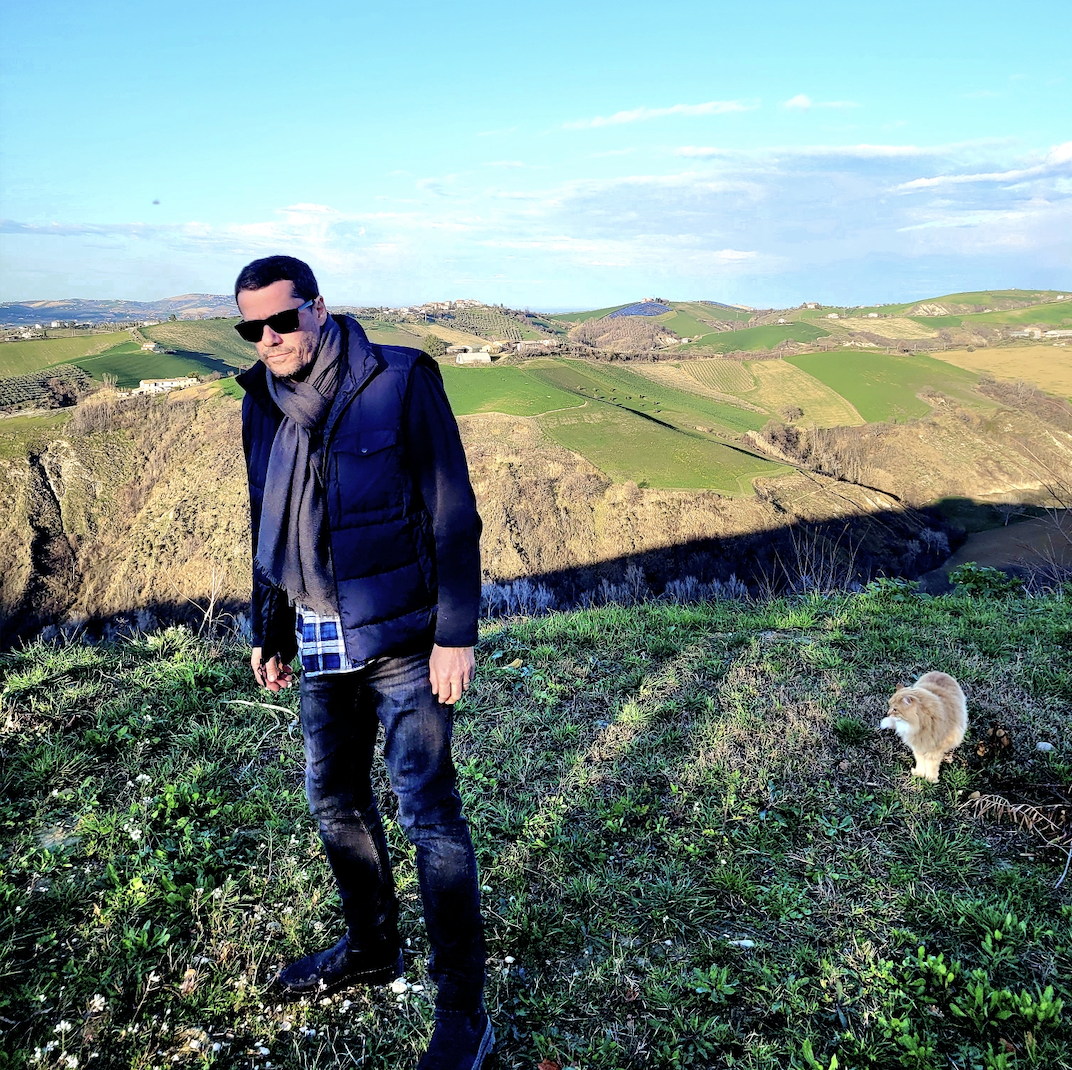
The natural wines of Emidio Pepe

Chiara and wines

Chiara De Lulis Pepe and the wines of Emidio Pepe at Barque Smokehouse, March 10, 2015

Emidio Pepe‘s granddaughter Chiara De Lulis Pepe says that in 5o years of winemaking nothing has changed. Nothing, save for a conglomerate-like expansion from 1.5 to 15 hectares of farming vines in Abruzzo. No seriously, do the math. Emidio Pepe remains and likely always will be a tiny, boutique, garagiste, artisan producer.

To say Emidio Pepe is unique and singular for Abruzzo and outwards into the natural winemaking diaspora is as gross an understatement as can be made. Consider the approach. Natural, healthy viticulture. No chemicals ever. Ever. Organic, biodynamic, only indigenous yeasts (more on that later), no fining or filtration. Red berries de-stemmed by hand. White grapes trod by foot. Fermentation in concrete. Bottling in early March and laid to rest. Then the bottles are decanted by hand, re-corked and released. The entire premise begins and ends with amazingly clean and pure fruit.

Pundits and critics will sit across a table and discuss. Point. “This is the essence of natural wine. No manipulation and zero handling.” Counterpoint. “There is no such thing. All wine is handled. All winemakers influence the outcome of their wines.” Point. “It’s all about the yeasts. They and their grapes are the heart and soul of natural wine.” Counterpoint. “To sell the wines, those yeasts and their grapes, once inside the bottle, must travel on planes, trains and automobiles. What is natural about that?”

The fact is Emidio Pepe‘s wines do not have to travel. They do not produce enough for that necessity but by heading out on tour they spread the gospel and bring a natural crush to the people. They are spokes-wines of history, health and possibility. They defy the naysayer’s argument because they are the godparents of natural wine.

If there is one single winemaker who defines natural, who lives, breathes and embodies the much maligned phrase “minimal intervention winemaking,” Emidio Pepe is the one. Not because of the techniques, practices and religious adherence to undomesticated viticulture, unadulterated and soulful viniculture. The reason Emidio Pepe is the benchmark and the region d’essere for natural wines to matter is because the wines are impossibly fantastic.

Chiara De Lulis Pepe and Emidio Pepe

Chiara De Lulis Pepe and Emidio Pepe © https://www.facebook.com/emidiopepewines?fref=ts

The vineyards are located 10 km from the Adriatic and 45 minutes from the Gran Sasso D’Italia mountains. The unique saddle and its clay-limestone soil encourage roots to burrow five to six metres downward, to a subterranean comfort zone, where the temperature is always constant.  Hand de-stemming is a tradition “but we believe it makes a superior product,” says Chiara. Concrete fermentation is done “to keep the integrity of the wine.”

For Emidio Pepe it begins and ends with the yeasts. Complexity and richness comes from “the family of yeasts that started the fermentation.” Chiara truly believes that yeasts will determine the flavours of the wine. “Selective yeasts make for simple wines,” she insists. “If you use them in different countries, 50-60 percent of the taste of those wines will be the same.” With indigenous yeasts, “the years will put a stamp on the personality of the wine.”

I sat down with Mark Cuff and Zinta Steprans of The Living Vine, John Szabo M.S., Will Predhomme and Peter Boyd to taste with Chiara De Lulis Pepe at Barque Smokehouse in March. Chiara brought some special wines to the table. Here are the notes.
The line-up from Emidio Pepe

The line-up from Emidio Pepe

Emidio Pepe Trebbiano d’Abruzzo 2007, DOC BIO Abruzzo, Italy (Agent, $154.95, WineAlign)

Skip straight past the naming and intimating of aromas and flavours. Here it is not the point. Trebbiano that is a product of having finished fermentation in bottle, with natural CO2, now virtually dissipated but persisting in echoes, to act as a natural preservative. The moniker natural does this little justice. The sweet sapidity and etching of acidity are so very grown-up, classically-styled, mature, precise. Trebbiano in which texture, above all else, stands out and firm. There is a dichotomous relationship, between viscosity and delicatezza. Natural respect, of a grace on a face, in twinkling wrinkles and gossamer flowers tucked impossibly into an aigrette of golden hair. In every facet to acting natural with a stupidly frank elegance to defy age, showing no signs of movement after eight years. The Robin Wright of white wine, expressive of tenderness but certainly not shy. Drink 2015-2025.  Tasted March 2015

Emidio Pepe Montepulciano d’Abruzzo 2003, DOC BIO Abruzzo, Italy (Agent, $94.95, WineAlign)

At the teenage (in wine years) number 12 this is showing less evolution than expected, especially in consideration of the European year that was 2003. Another divaricating Abruzzo, with a dried fruit component that pullulates in a very hydrated way. From a scorching season where anxiety was felt by both the vines and their keepers. Possessive of a bricking that gives of the cracked earth, of dusty, ambivalent rocks and warm, pulpy air. Through the humid tones and with thanks to pergola trellising, balance prevails with close encounters in acidity of the rampant kind. Tannins rage as well, strong and bullish above the earthy notes and peppery berry bites. The old vines and sleight of winemaking hand are ensconced to this vision, void of faults and yet advancing from the frame. Needs just a few more years to find the median point on the chonometer. Drink 2018-2023.  Tasted March 2015

Emidio Pepe Montepulciano d’Abruzzo 2001, DOC BIO Abruzzo, Italy (Agent, $169.95, WineAlign)

If the ’03 acts a bit like a hormonal, impulsive, testy, cavilling or petulant teenager, this 2001 is the adolescent. Full of boundless energy, willingly and excitably adventurous and ready to participate in the game. This from a terrific vintage with great aging potential, here Montepulciano manifests with gravity defying weight, like careful Nebbiolo or graceful Burgundy. Where this separates itself from other Grand Cru varietal infinity is in its yeast directive. Singular, remarkable, devoid in spice as if by wood. The structure is innate, indigenously calculated, developing in bottle, verbalizing flavour. Like a bone from the skin of the clay, piaculum by limestone, passed through and brought to light by the leavening catalyst. Drink 2020-2036.  Tasted March 2015

Emidio Pepe Montepulciano d’Abruzzo Riserva 1983, DOC BIO Abruzzo, Italy (Agent, $279.95, WineAlign)

Give Emidio Pepe’s reds thirty odd years to develop and the impossible happens. To postulate in a moment’s assessment without remembering the pious tradition with which this was made would be a crime against Pepe, Abruzzo, the natural world and the wonders of the universe. With this much passage the spice cupboard that emits is wow times a thousand. Clove, cinnamon, cardamon, orange peel, galangal and like golden raisins that pass through quarries to become rubies. This wine is perfect. It has not broken down an iota. It requires no decanting. It defies logic, perception and time. There is no sediment, only energy. Speaks from the glass as if it were a child of destiny and mythology. The 1983 Emidio Pepe Montepulciano d’Abruzzo Riserva arrives from along the same road taken but its transmogrification proves that the result, with thanks again to the endemic froth, is different every time. Drink 2015-2029.  Tasted March 2015

Good to go!

http://www.winealign.com/profile/2058-mjg