Release the summer wine

A white wine for all seasons, Pinot Gris, by Maison Trimbach<br />

A white wine for all seasons, Pinot Gris, by Maison Trimbach
PHOTO: http://www.trimbach.fr/

These are the wines of summer.  Dry, saline Rosé made from classic varieties; Grenache, Syrah and Cinsault. Crisp, flinty Riesling, turned to stone. All things Pinot. B.C. Cured Pinot Blanc struck by both juicy fruit and mouth-watering acidity. Pinot Gris from Alsace, impossibly dry. The same grape but from across the Rhine and under another name: Grauburgunder. Pinot Noir from Prince Edward County. Nothing else in the world smells like it. Smells like, teen spirit.

White wine that feigns bubbles and brings the wonder of Nova Scotia to the world. Chardonnay by a young winemaker in Ontario just coming into his own, ready to become a star. Classic varieties for summer grilling; Cabernet Sauvignon for a green day, Sangiovese to make your day, Merlot, Cabernet Franc and that melting pot of red wines, Châteauneuf Du Pape. All VINTAGES Ontario releases for July 19th. These are some of my summer wines. All 13 of them.
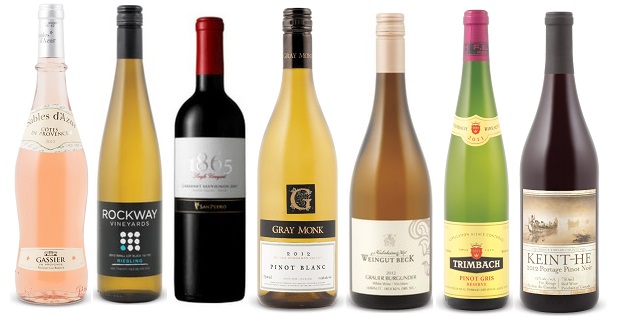
From left to right: Gassier Sables D'azur Rosé 2013, Rockway Small Lot Block 12 150 Riesling 2012, San Pedro 1865 Single Vineyard Cabernet Sauvignon 2011, Gray Monk Pinot Blanc 2012, Hedesheimer Hof Weingut Beck Grauer Burgunder Kabinett Trocken 2012, Trimbach Réserve Pinot Gris 2011, Keint He Portage Pinot Noir 2012

From left to right: Gassier Sables D’azur Rosé 2013, Rockway Small Lot Block 12 150 Riesling 2012, San Pedro 1865 Single Vineyard Cabernet Sauvignon 2011, Gray Monk Pinot Blanc 2012, Hedesheimer Hof Weingut Beck Grauer Burgunder Kabinett Trocken 2012, Trimbach Réserve Pinot Gris 2011, Keint He Portage Pinot Noir 2012

Gassier Sables D’azur Rosé 2013, Ac Côtes De Provence, France (33621, $14.95, WineAlign)

Always dry, dusty and salt lick oriented. A mineral bath of verdigris and rusty rainwater.  Light but all about minerals, salinity, beach and sun. What more should be requested and ascertained from value given Côtes De Provence Rosé?   Tasted June 2014  @MichelGassier

Rockway Small Lot Block 12 150 Riesling 2012, VQA Twenty Mile Bench, Niagara Peninsula, Ontario, Canada (372441, $18.95, WineAlign)

Noticeably dry but also earthy/funky. Struck match and plowed earth. As it settles into its skin and your consciousness it develops body, depth and acidity. Grows and expands, reaches heights you thought it would not. The vintage works wonders for the Twenty Mile Bench and this block has expansive stuffing to take it long, not to mention the earthy complexity to see it change and evolve. It may go through a disturbing, unusual phase but be patient and set one aside for 15 years from now. You will be amazed what honey and deep geology it discovers and uncovers.  Tasted June 2014  @RockwayVineyard

San Pedro 1865 Single Vineyard Cabernet Sauvignon 2011, Maipo Valley, Chile (37911, $19.95, WineAlign)

When it comes to Cabernet Sauvignon, “well, I heard it all before.” This Maipo beauty begs to be different. Here is a $20 Cab with a $50 reductive funk. A heady, heavy red that needs more than just a swirl. The average Joe may smell a green day and not get it straight away. My advice would be to hang in there because with 10 minutes aeration the fresh currant, mint and rain-soaked flower aromatics will come around. And come around they do. Mocha and semi-chocolate driven, tannic like crazy and banging out a beat of crazy acidity. A ton of wine for $20.  Tasted June 2014  @Dandurandwines

Gray Monk Pinot Blanc 2012, BC VQA Okanagan Valley, British Columbia  (321612, $19.95, WineAlign)

Ah, terrific cool climate Pinot Blanc, with juicy acidity from a bite into a nectarine just falling from the tree. On a night like this “it goes deep, it goes deeper still,” in neo-tropical fruit (from seemingly slightly elevated alcohol). A most cured white wine, with a tannic quality that gives it texture and structure. Strike another Lloyd Braun mark on the British Columbia-Pinot Blanc free competition continuum to develop this variety with prejudice.  Seamless, with excellent length.   Tasted June 2014  @GrayMonkWinery

Hedesheimer Hof Weingut Beck Grauer Burgunder Kabinett Trocken 2012, Prädikatswein, Germany (378349, $20.95, WineAlign)

This rare Pinot Gris VINTAGES sighting is a jet-gassy funky, disparate complex mess of penciled, earthy, grassy and off-dry stone fruit aromas. It’s also viscous, distracting, and propelled by thriving acidity. While the Grauburgunder hails from the other side of the Rhine, it shares a tannic, saline and mineral affinity with the Vosges PG’s of Alsace. Lives up to its Trocken designation through a rocky impart yet seems just slightly sweet in a very Kabinett way. Herbal and long. Contemporary Prädikatswein worth a look and a more than temporary place in the cellar.  Tasted June 2014  @TandemSelection

Trimbach Réserve Pinot Gris 2011, Ac Alsace, France (971762, $23.95, WineAlign)

For Trimbach this is a top quality vintage to make an example for one of the domain’s signature value wines. This firm and straight shooting Pinot Gris comes from limestone-dominant parcels not so different from the PG taken out of the winery’s Osterberg Grand Cru, just above Ribeauvillé. That a Pinot Gris can bring a nearly (8 g/L) elevated level of residual sugar to the table and come across bone dry, like a walkabout in the outback, remains one of life’s great mysteries. Picked prudently early, or as Alsatians like to say, “right on time,” this Trimbach is eloquent, reeks of wet, cold stone and lies over an ocean tasting of salty minerals. Pour it with the freshest, uncooked fish and a light vegetable pickle. Tasted June 2014  @trimbach

Keint He Portage Pinot Noir 2012, Prince Edward County, Ontario (373415, $25.00, WineAlign)

The most juicy, fruit forward and gregarious of the estate’s Pinots. Only Keint He Pinot smells like this, in Ontario, or elsewhere for that matter. Smells like teen spirit. It really is that unique but at the same time, undeniably Pinot. Just picked and torn cherry blossom petals and bitter chocolate dust strewn overtop fresh macerated cherries. Further coated with iron fillings. “And I forget just why I taste, oh yeah, I guess it makes me smile.” Prince Edward County Pinot Noir on the road to nirvana.  Tasted June 2014  @KeintheWinery

Benjamin Bridge Nova 7 2013, Gaspereau Valley, Nova Scotia (256289, $25.95, WineAlign)

From a bumper crop, there came to market 11,000 cases of this Nova Scotian feel good, faux-sparkling story. Winemaker Jean-Benoit Deslauriers’ Nova 7 dissimulation in bubbles is a true trick of the trade and though this white wine strikes as if it were a child of a warm vintage, there is a classic lightness of Rosé fizz being in its ever so slight effervescence. A singular wine in many hybrid incarnations, in Muscat ways, of pink Perle de Csaba, segmented and pressed for a sweet burst of grapefruit. It’s low (7 per cent) in alcohol, excellent in acidity, sweet and sour, citrus zesty, juicy and dry at the same time. Batch delineated and loyal to continence, though if the quantity creeps much higher that may come in to question. Grown up pink lemonade and so easy to consume.  Tasted June and July 2014  @Benjamin_Bridge  @jbdeslauriers
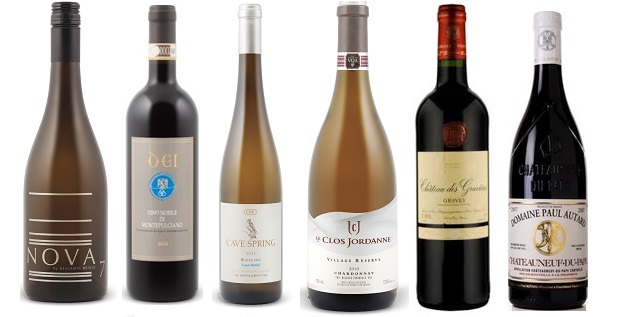
From left to right: Benjamin Bridge Nova 7 2013, Dei Vino Nobile Di Montepulciano 2010, Cave Spring Riesling Csv 2011, Le Clos Jordanne Village Reserve Chardonnay 2011, Château Les Gravières 2010, Paul Autard Châteauneuf Du Pape 2010

From left to right: Benjamin Bridge Nova 7 2013, Dei Vino Nobile Di Montepulciano 2010, Cave Spring Riesling Csv 2011, Le Clos Jordanne Village Reserve Chardonnay 2011, Château Les Gravières 2010, Paul Autard Châteauneuf Du Pape 2010

Dei Vino Nobile Di Montepulciano 2010, Docg, Tuscany, Italy (285510, $27.95, WineAlign)

The entry of Dei’s balanced Vino Nobile was very juicy but at the same time serious and brooding. At first rhythmic, tight and anxious, you couldn’t but help but feel the strong mocker of this Sangiovese. Iron, hard rocks, knocks and a day in medieval life. If it should be opened any time in the next five years it will require a rare fleshy partner and plenty of air time. Though there was nothing faint about it, with time it found a path to a crescendo and then changed chords. It sang like a bird for a verse or two, softened enough to open a window to its future and when it spoke “I went into a dream.” Finished with a piano bass note that droned on for nearly a minute.  Tasted June 2014  @LeSommelierWine

Cave Spring Riesling Csv 2011, VQA Beamsville Bench, Ontario  (566026, $29.95, WineAlign)

The 2011 issue is the driest, slate-driven, flinty Cave Spring Csv as it can ever be. Don’t be looking at its heart for richness and body but there is a wall of texture forged in stone. The Csv speaks “of everything that is alive in my blue world.” One taste and all goes electric, lights up and the orchestra begins to play. Turn the stone of this statuesque Riesling to drink in the long and true loyalty to ever fibre and fissure of its rocky being. Excellent. What more could you expect, or want?  Tasted June 2014  @CaveSpring

Le Clos Jordanne Village Reserve Chardonnay 2011, VQA Niagara Peninsula, Ontario  (33936, $30.00, WineAlign)

Winemaker Sébastien Jacquey’s “entry-level” Chardonnay currently resides in a bitten and certainly not shy mode. The 2011 is a Villages Reserve that is in a bit of a purgatorial place at the moment, closed down since its grand opening last summer. The rocks are speaking, as is the hubris of wood, but the fruit is up there, wafting in the proverbial wind. Let it blow and gather atmosphere, to return two or three years on, to reintegrate with the earthly elements and reform a convivial bond.  Tasted June 2014  @LeClosJordanne

Château Les Gravières 2010, Ac Saint-Émilion, Right Bank, Bordeau, France (257733, $36.85, WineAlign)

Highly concentrated, big berry crushed Saint-Émilion. Floral too and the fruits are exquisitely ripe and red. There is great tension and acidity. Crazy tannins. Exceptional wine but will need 15 years time to settle, integrate and play nice. Qualifies as the finest 14 per cent Bordeaux I’ve tasted in quite some time. A wild sense of mineral and animale climb on top. Highly ferric. Really fine.  Tasted June 2014

Paul Autard Châteauneuf Du Pape 2010, Ac, Rhône, France (380667, $49.95, WineAlign)

A refreshingly lithe and graceful 14.5 percent Châteauneuf Du Pape with every bit of richness necessary to fulfill its contract to typicity. Just a hint of both earth and animal musk, demanding tannin and more than its share of rocks and mineral give. A real winner for the vintage and in fresh air contrast to the gaining ridiculousness of extract and over-bearing alcohol-driven Rhônes. This might just be the bottle to reaffirm my waning faith in the region.  Tasted June 2014

Good to go!
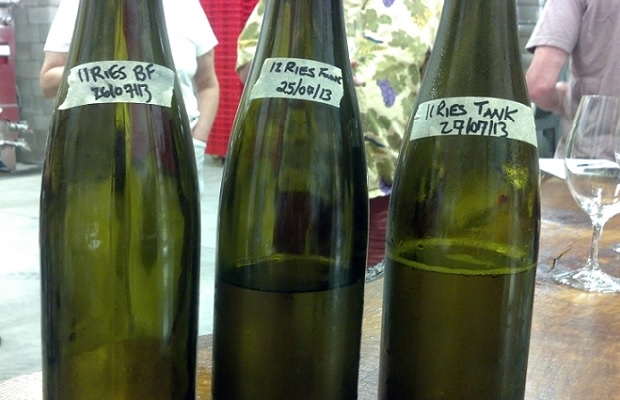
The pearls of Morissette’s wisdom

Pearl Morissette Riesling samples

Pearl Morissette Riesling samples

So you make wine from Ontario-grown grapes and it fails VQA inspection. The economic impact is potentially crippling. Here’s the short story. The sale of an Ontario VQA-certified bottle of wine sends approximately 15-20 per cent of the profit to the province. Without the stamp the tax cost is upwards of 50. There is no money to be made if your wine has not been blessed by VQA. Here is the long version:

The total Landed Cost (what the winery keeps) is calculated based on this:
Basic Price (retail price)  
minus Environmental Tax fee (same for VQA and non-VQA)
minus Bottle Tax/Levy (same for VQA and non-VQA)  
minus LCBO Wine Levy (applied to non-VQA only, yet minimal – $1.15 for $26btl)
minus LCBO mark-up (which is completely different between VQA and non-VQA – $0 for VQA, $8.5039 for a non-VQA wine based on a $26)
For a $25.20 ($25 + bottle deposit) bottle of wine, this is what the winery (Total Landed Cost in VQA language) keeps:
VQA retail: $20.56
VQA licensee: $20.56
non-VQA licensee: $12.44
These numbers come from a calculator, designed by VQA and the LCBO themselves that gives you the breakdown, once you enter the retail price.

François Morissette has that crazed look in his eye. The Quebec native faces the professional fight of his young winemaking life and has no intention of backing down. There will be no compromise of the viniculture oeuvre. Morissette’s day in, day out plight has been instigated by the Vintners Quality Alliance (VQA), the regulatory board that determines whether or not a wine made in Ontario gets its stamp of approval. It has already happened four times. VQA has rejected his Rieslings.

The pearl Morissette Cuvée Blackball Riesling 2011 is a $26 (retail price including bottle deposit) non-VQA bottle of wine and so the winery’s profit (before operating and production costs) is $12.98. Do the math. Sounds like a loss leader to me.

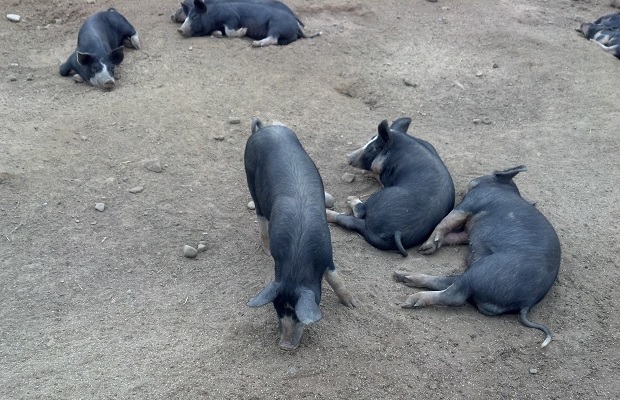
Pearl Morissette pigs

Pearl Morissette pigs

Morissette makes the wines at Pearl Morissette out of the Twenty Mile Bench in Jordan, Ontario. He’s opinionated and sometimes just plain pissed off. There are those who surely consider him a rogue, a dissident and an SD but at the end of the day, just how is he so different from his Niagara brethren and sistren? He is a farmer and a purveyor of fermented grapes. Granted his methods are progressive and experimental but the goal is the same as any honest and passionate winemaker. François Morissette wants to make memorable wine. Last July François Morissette told me “it’s not that we don’t want to make natural wines. We want to make wines with the least amount of impact.”

In July of 2013 at the i4C Cool Chardonnay Conference in Niagara, Francois expounded on some of the more important facets of making wine in Ontario. “Climate is the number one terroir driven aspect. The clone is nothing without the rootstock. They are inextricably linked.” He is a man who believes wholeheartedly in natural acidity. “You will have riper fruit on dry matter.” These are the ideas of a “rebel,” of a winemaker willing and ready to push the envelope. “I cannot ever apply what I learned in Burgundy as a farmer to Niagara. It’s a totally different animal.” These are the words of “pot-stirrer” Francois Morissette.

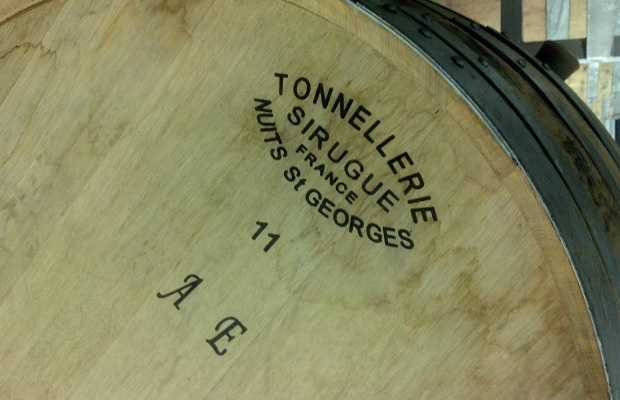
Foudre at Pearl Morissette

Foudre at Pearl Morissette

Today, Monday, May 26th, François and his girl Friday Svetlana Atcheva will once again go before the powers that be at VQA.  In their meeting with Executive Director Laurie Macdonald they will argue that their four-time rejected Riesling is bio-chemically sound, that it is a wine with no technical faults. The question of penalizing innovation will be raised, albeit in the spirit of cooperation. They will assert that the level of residual sugar (which the VQA panel seems to feel is “atypically” too low) and perceived sense of dryness must not be the focus. Morissette and Atcheva will explain to the panel that their Riesling is not oxidized but that the use of wood foudres (in addition to typically employed stainless steel tanks) allows for a gentle yet natural, controlled oxygen transfer. Ms. Macdonald will be asked the question on everyone’s mind. “How can an organization that reigns over such a young wine region be so sure what is correct and what is not?” What they should really say is “who are you to play God with wine?”

The sensory evaluation panel and decision makers maintain the necessity that “VQA wine grapes meet standards such as minimum ripeness levels (degrees brix) attained through careful viticultural practices.” This statement suggests that the Pearl Morissette Riesling fails to meet the criteria laid out by the decided governance. Does the system not sound like it is seeking conformity in the name of typicity? I spoke with Atcheva last Monday at the Generation Riesling tasting and she adamantly refutes the VQA position on Pearl Morissette’s wines. Skin ripeness, not sugar levels, indigenous yeasts, minimal interventionist winemaking and most of all quality should be the determining factors to passing their Ontario wine to VQA status. François just wants to be free to sell his wines to whoever he pleases without being shackled to taxes and bureaucracy. “My preference would be for 1,000 people to buy one bottle. But that takes time.”

Atcheva spoke at length this past weekend with a senior LCBO product consultant who elaborated on the selection process for the VQA panel. Up until a few years ago panel members were chosen based on their tasting experience. Today seniority lands spots on the tribunal. Work an LCBO cash for fifteen years and you too can decide the financial future of an Ontario winery.

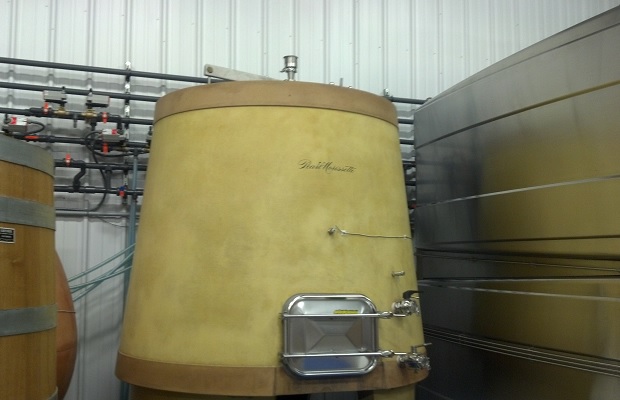
Conrete Egg Fermenter

Conrete Egg Fermenter

For a full account on VQA evaluation processes and the rejection of Morissette’s wines, read Rick VanSickle’s article, The ‘black-balled’ Riesling from Pearl Morissette in Niagara and the storm that’s brewing over VQA rejection: Let’s talk about it. Another response by Tim Reed Manessy brings the VQA system’s shortcomings into proper focus. Behind the ‘Black Ball’ is Manessy’s take on his blog, Somm on the Run.

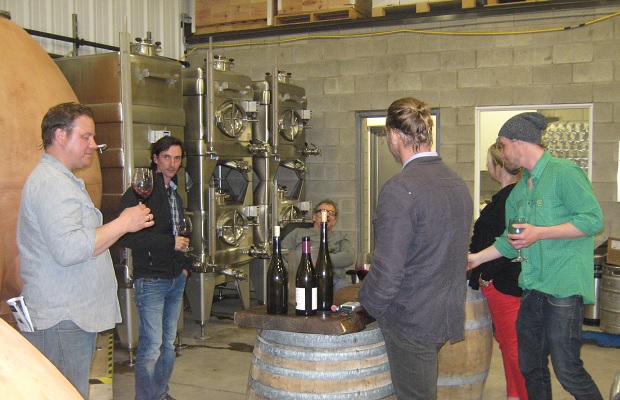
Hinterland's Jonas Newman, François Morissette, Montreal Gazette and Chacun Son Vin's Bill Zacharkiw, WineAlign's John Szabo M.S. , Wine Country Ontario's Magdalena Kaiser Smit and Assistant Winemaker Ryan Corrigan tasting Cabernet Franc

Hinterland’s Jonas Newman, François Morissette, Montreal Gazette and Chacun Son Vin’s Bill Zacharkiw, WineAlign’s John Szabo M.S. , Wine Country Ontario’s Magdalena Kaiser Smit and Assistant Winemaker Ryan Corrigan tasting Cabernet Franc

Through the generosity of François Morissette, Naomi Laurie, Ryan Corrigan, Cameron MacDonald and Svetlana Atcheva I have had the opportunity to taste, consider and assess the wines of Pearl Morissette out of tank, barrel, concrete egg fermenter and bottle on several occasions in the past year. Here are my notes on many of those moments.

Riesling Cuvée Blackball 2010, Niagara Peninsula, Ontario ($26)

This introduction to the experimental oeuvre of François Morissette holds attention and water. The delve into texture shaping by way of progressive malolactic fermentation during primary fermentation is a stirring exercise in character building. The ’10 is a conjoined cuvée of two, one of which contained 20% botrytis affected grapes. It spent eight months on fine lees in stainless steel and finished so very dry, at 1.27 g/L residual sugar. Biochemically correct, reeking and bleeding of the Peninsula’s veins, Blackball was submitted for VQA approval four times and rejected because it “lacked varietal typicity.” Perhaps it was the lack of human intervention, the anti-Bonzai approach, that doomed this diffident Riesling. Perhaps the texture should take it on the cheek for its brilliant disguise, for changing the subject and forcing the taster to open their mind and act innocent for a moment in time. The Blackball has that effect. Sadly, it too will be typical one day.  Tasted July 2013

Riesling Cuvée Blackball 2011, Niagara Peninsula, Ontario ($26)

The 2011 Cuvée Blackball picks up where the ’10 left off. When tasted from a stainless steel, not yet labeled sample in bottle back in July of 2013 it showed high acidity and citrus but also a bottle-shock musky note. Nearly one year later the wine has fleshed into that sought after experimental texture, as if it were aged in foudres. It’s flexibility was encouraged by three months of aging on its fine lees. The ’11 is the jumping off point and the bridge towards understanding where the Riesling program is heading. Others will follow. “There’s no real reference for these wines,” admits Morissette and that’s the clue to understanding why haste judgments are passed. Fear of the unknown empowers tradition to stagnate and end up getting left behind.  Tasted July 2013 and May 2014

Riesling Cuvée Blackball Barrique 2011, Niagara Peninsula, Ontario ($29)

The craving for texture led François Morissette to employ small barrels to ferment a small (68 case) amount of 2011 Riesling, in this instance eight year-old neutral barriques. Close-minded, new world wine geeks might fear anarchy but ask any winemaker from Pfalz and they would say, “tell me something new.” The succor is so benign and simultaneously, subtly huge. The increased lees contact on small volumes of wine promotes corpulence and viscidity. The methodology results in more fruit presence; in pear and yellow plum, not to mention that unmistakable Niagara citrus. This ’11 has the most levels of expression. There is nothing revelatory or regulatory about it, beyond the fact that it works and that it would stand out as an excellent example in a flight of Trocken Riesling. The ’11 exemplifies the flesh versus acid continuum. The freshness of this Riesling has emerged, thanks to meticulous sorting, ne0-liberal winemaking and the use of a -1°C fridge. François Morissette does not like to race against time. His Riesling speaks volumes about that.  Tasted July 2013 and May 2014

Riesling Cuvée Blackball Barrique 2012, Niagara Peninsula, Ontario ($29, WineAlign)

When tasted in July of 2013 the ’12 Barrique had only been in bottle for three days so the musk was quite front and centre. Aged in foudres (neutral, old wood casks) it held much latitude at such a young age with notes of herbiage (mint, tarragon), nary a drop of residual sugar and a wholly unique type of dry acidity. “It will not always show this way,” commented Morissette. Tasted 10 months later I can say this. The ’12 Riesling Barrique avoids excessive malic and tartaric acid, not to mention any amount of volatile acidity. It is viable, vital and technically sound. “This is a wine that will take time,” pleads François . “I care about texture, not about varietal character.” Though perplexing and untamed, the wine has undeniable body and that noble bitterness in its unsung tang. It is the anti-Riesling hero, full of experiential conceit and needs to be revisited often, to see where it will go.  Tasted July 2013 and May 2014

Riesling and The Lamb Lies Down on Broadway

Riesling and The Lamb Lies Down on Broadway

Rosé Cuvée LPR 2012, Niagara Peninsula, Ontario (Sold out, $25)

Stylistically speaking, the bottles (and kegs) that emerged from the 225L hemorrhaging of Cabernet Franc from both oak and concrete vessels have no reference point. In fact, the advertence is one created by Francois Morissette. The flexible disposition is difficult to pinpoint and without trying to sound blowsy in assessment, this goes places yet visited by bone-dry Rosé. If it were the only wine made on premises the barn doors would always be banged upon. A most current wine, exigently red and almost indiscernible as Cabernet Franc. It suffers no stenosis and does not live a single green day. Another VQA rejected wine, the LPR walks down a boulevard of broken dreams and it sings, “I walk a lonely road, the only one that I have ever known.”  Last tasted November 2013

Pinot Noir 2011, Niagara Peninsula, Ontario (Sold out, $36)

With utmost integrity Pearl Morissette chose not to vinify Pinot Noir from the fruit of the 2008, 2009 and 2010 vintages due to unacceptable levels of sour rot. With the 2011 harvest came inspiration. It was noted that local tree fruit farmers make use of the practice of storing their harvested fruit at 1° Celsius in a large refrigerator. This pseudo-cryogenic cooling practicum worked to halt the progression of the dreaded rot. Buying time allowed the crew to clean sort without having to worry about a single berry contaminating the lot. So what? So a pure, clean Pinot Noir was the result. Tasted four months after bottling, the modest (12.7 per cent alcohol) and vinified so dry (2 g/L residual sugar) ’11 held barking fruit on a tight leash and a moonscape of dusty, grainy tannin. Nine months later (to the day) the sensory evolution became as if cherries, strawberries and the tension in seeking ripe perfection were wine.  Tasted July 2013 and April 2014

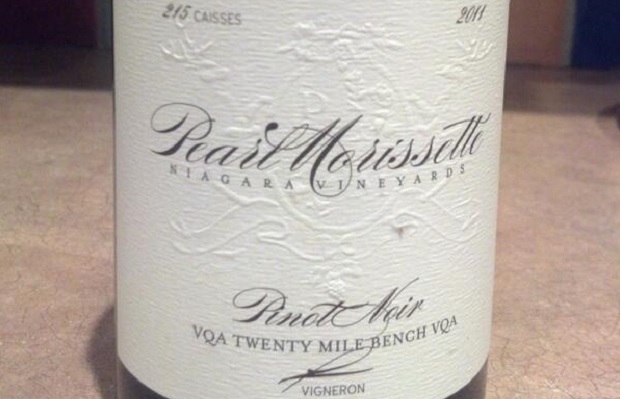
Pearl Morissette Pinot Noir 2011

Pearl Morissette Pinot Noir 2011

Cuvée Madeline Cabernet Franc 2010, VQA Twenty Mile Bench, Niagara Peninsula, Ontario  (winery, $38, WineAlign)

François Morissette’s 2010 is a pioneering example towards defining Bench appellation Cabernet Franc isomeric reactions. Relationships between grapes of a growing area and their ultimate destination in bottle. An affair of veraison, leaf drop, frost, hand harvesting, whole cluster sorting and berry oak fermenting. Indigenous yeast, punch downs and overs for phenolic skin extraction and polymerization. Neutral oak and sulfur dioxide to provide antimicrobial and antioxidant protection. An eighteen month somniac’s rest, fine lees and no filtration. The structural arrangement in cohabitation of radicals and ions leads to such a Cabernet Franc. Fully expressive of an endemic, very ripe, vegetal varietal vicissitude that is both inbred and necessary. Currants and peppered berries of power and grit. Dry (2 g/L residual sugar), plump (13.7 per cent alcohol) and scarce (618 cases made). Reflective of the warm 2010 vintage and will always act in stark contrast to the elegant 2011. Tasted July 2013 and March 2014

19th Street Cabernet Franc 2011, VQA Twenty Mile Bench, Niagara Peninsula, Ontario  (winery, $38, WineAlign)

First tasted from a barrel sample in July 2013. “From what is turning out to be a very elegant vintage, the 2011 Cabernet Franc is early proof that on the Twenty Mile Bench “we can turn a vineyard very quickly, in three years we can turn a vine.” This is significant in consideration that in Europe, vine age is always key.” Now in bottle the aromatics are hyper-pronounced and though the tannins are less rigid, less exerting and less demanding, they are not nearly ready to throw in the towel. Longevity will define ’11 and it will be the genesis of Pearl Morissette’s CF program used to compare future vintages. “The day of judgement’s come,” and you can bet that the wine’s been “resting, for this testing, digesting every word the experts say.” With the ambient transition of a hairless heart, the 2011 Cabernet Franc segues from anxiety to counting out time.  Tasted May 2014

Chardonnay ‘Dix-Neuvième’ 2009, VQA Twenty Mile Bench, Niagara Peninsula, Ontario (limited library, $40, WineAlign)

Was the ’09 DN this lush and so pretty last summer? Was it bronzing as if sun-kissed and so delicate? Tasted alongside Chef Cameron MacDonald’s White Bean Cassoulet, duck and pork neck wrapped pate it sings in a Lindley-esque falsetto. From my earlier, July 2013 note: “Tragically singular in expression, regardless and in spite of the terroir, mixes metaphors and pulls it off. “Takes arms against a sea of troubles,” by convincing ADHD fruit of an uncertain vintage to settle, play nice and “by opposing, end them.” Now entering the load out zone, this Hamlet cuvée is “the first to come and the last to leave, working for that minimum wage.” A sentimental ballad here to stay, be remembered and to set the stage for all dix-neuvième to come.”  Last tasted May 2014

Chardonnay ‘Dix-Neuvième’ 2010, VQA Twenty Mile Bench, Niagara Peninsula, Ontario (sold out, $35, WineAlign)

Having had the opportunity to taste the 2010 Cuvée Dix Neuvieme on several occasions over the past 10 months, every layer and fibre of its being has ingratiated itself to me. The tropical, solar 2010 vintage required that steps were taken to preserve freshness for when the final blend was to be assembled. A small portion of the juice was fermented separately in stainless steel tank and then injected into the 18-month, neutral barrel mass. The ’10 is full of verve, rigor and grinning elegance. It speaks of a salinity so typical for PM Chardonnay which comes from the usage of lees. This is what could be referred to as a “tannic” white. While it lacks the intensity of the bookending vintages on either side, as a middle sibling it is the glue and the rock that speaks diplomatically and most eloquently for the family.  Last tasted May 2014

Chardonnay ‘Dix-Neuvième’ 2011, VQA Twenty Mile Bench, Niagara Peninsula, Ontario (303602, $35, WineAlign)

A child of a hot and dry summer, a stress-free winter slumber and a non-invasive spring awakening.  Sets out lean, tight and mean, but the dry extract invites spicy, stone fruit and an emergence of tropical lushness. Can there be another specimen that so rightfully defines Pearl Morissette, the top of the Bench or Niagara as a whole in 2011?   Tasted July 2013

Barrel and Tank Samples tasted July 2013 and May 2014

19th Street Cabernet Franc 2012

Tasted in July 2013 from one of two barrels, it’s not so (amazingly reductive) and redolent of the most earthly currants. From a very immense year, in primary quality, barely evolved. Blessed with such ripe tannins this will have even bigger structure. Francois declares “I’m now a believer that Cabernet Franc is the most important grape to grow in Ontario (on this side of St. Catherines). Nine months later, with the wine still sitting on its primary lees and not yet racked “it’s so torqued,” notes John Szabo. “We made a monster CF without cream,” adds François . Pure, énorme, immovable yet so stable. There was a nearly volatile spike during fermentation and malo but it’s done. A death metal beast.  Tasted July 2013 and May 2014

19th Street Cabernet Franc 2013

From juice housed in concrete, wood and open top fermenters this occupies impossible Cabernet Franc colour territory. Sweaty, chalky and bloody, it’s a bit reductive in extract and intensity. Lifted florally and very savoury, this is quintessentially Cabernet Franc in character. Crunchy tannins come late in magnanimous fashion.  Tasted May 2014

Chardonnay 2013

Tighter than it looks, sitting on its lees, pushing the envelope. In a German 2,500L barrel it’s rounder and softer. In second fill Alsatian Foudre it gains tang, spirit and backbone. From the Koscis Vineyard’s heavy red clay there is less texture and mid-palate. Out of a smaller (228L) barrel the wood is felt in fluidity, structure and creamier, clearer fruit. The largest barrel adds (10 per cent) new oak and finishes the ferment the earliest. It brings textural tack and a chewy finish. “New oak doesn’t make it better. It energizes the wine,” says Morissette. Overall this will be a rich, ripe-fruit based opulent Chardonnay, high in potential (13+ per cent) alcohol with a remarkable sweetness despite little or no residual sugar.  Tasted May 2014

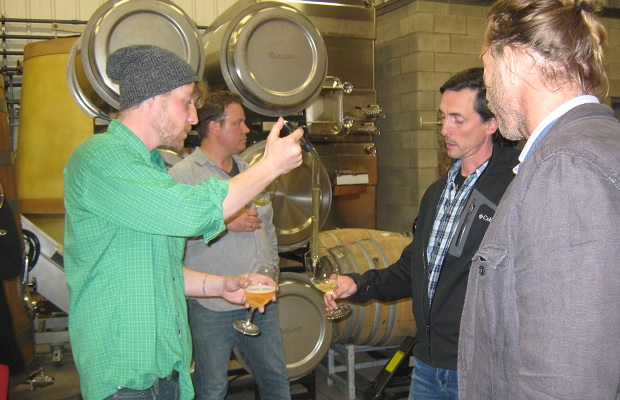
Chardonnay from barrel with Ryan Corrigan, Jonas Newman, Francois Morissette and John Szabo

Chardonnay from barrel with Ryan Corrigan, Jonas Newman, Francois Morissette and John Szabo

Rosé 2013

If this Cabernet Franc is flirting with an acetic danger it is not enough to scare me away. Certainly edgy and there is a chance it may be pushed to the fringe, hippest markets but that also may just be a necessity if it is once again rejected as VQA. And it should not be.  Tasted May 2014

Bill Zacharkiw making notes at Pearl Morissette

Bill Zacharkiw making notes at Pearl Morissette

Gamay 2013

In July 2013 Francois Morissette made this statement. “If we can’t make Gamay in a Cru Beaujolais Style, I’m not interested.” In May 2014 his ’13 Gamay causes Bill Zacharkiw to comment with blatant honesty, “just line up at the tank. Forget the bottle.” From 100 per cent whole clusters sent to cement fermenters. Once again the hue is just impossible. Sulphur-free, this walks a fine and perfect line of Cru banana Gamay. Pushes the Gamay envelope in that it’s gulpable but with a duress to remind you not to overdo it. A Gamay with a chamber of 32 doors. In it “I’d rather trust a man who doesn’t shout what he’s found.” François Morissette.   Tasted May 2014


Good to go!

Wine on St. Patrick

Do you have the time to listen to me whine, about nothing and everything all at once

Basket case. Surely you didn’t die your wine green today. If you insisted on drinking something green, I hope you added the food colour to your weak domestic or discount imported beer, but not to anything micro or craft brewed. Better yet, to toast the Roman0-Brit, patron saint of Ireland’s day, a shamrock shake would have done the trick.

What did St. Patrick’s Day mean to Canada in 2013? Marc Weisblott provided the answer.

The most obvious isovolumetric libations to celebrate the anniversary of the  ‘The Apostle of Ireland’s’ passing included Irish Whiskey and beer, like Guinness or better yet, McAuslan St-Ambroise Oatmeal Stout. But what came to mind first in terms of wine? The cue should likely have been Portugal’s Vinho Verde, meta phrased as “green wine” but it’s freshness and effervescence shares little in common with the cask influence so prevalent in Irish Whiskey and heavy men’s beer.

Unconsciously, I veered in the direction of a Spanish white, built upon a Catalan variety named Viura and aged in new French barrels. Oak along with the verdant, green notes found in the whites of the Iberian peninsula are key. White wine from Rioja reminds me of chilled yet warming Irish tipples and if you know anything about me, wine goes with everything, including St. Paddy’s Day.

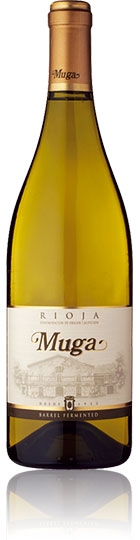
Muga Barrel Fermented White 2011

Muga Barrel Fermented White 2011 (958736, $15.95) is creamy like a dark stout’s head or Bailey’s Spanish equivalent, Senaris Crema de Licor. Hazelnutty and piquant, like Tilford Licor Avellana. Suave, steeped coconut, pomello, grapefruit blossom, organoleptic Sangria. Muga’s selfless Blanco defines the winery. Consistent sweet/bitter/acid interplay from a grape that can withstand drought, tough vintages and extreme conditions. Makes you want to wrap yourself up in a sheet, head for a St. Patrick’s Day party chanting, “Muga, Muga.”  88  @bodegasmuga

Good to go!