The future is now for Lightfoot and Wolfville Vineyards

In the throes of judging 1,700 plus Canadian wines at the WineAlign National Wine Awards of Canada I slipped away to reconnect with Mike Lightfoot at his property in Wolfville, Nova Scotia. The last time I paid the family a visit, Mike, Jocelyn, Rachel and winemaker Josh Horton were planning, scheming and on the cusp of breaking new ground, figuratively and literally speaking. The new Lightfoot & Wolfville winery facility was beginning to take cerebral, engineered, augurate and anticipatory shape. It’s now well into the building phase, in fact, at some point this summer L & W’s unprecedented facility will open to the public. When it does it will change the wine landscapes that include more than just Wolfville, the Gaspereau, Annapolis Valleys and Nova Scotia. It will reset the needle, compass and artfully strategized standard for Canadian wineries everywhere.

Related – Consider the Gaspereau Valley

Mike and Jocelyn have taken a once thriving apple farm and turned its rolling hills into Nova Scotia’s most progressive organic and biodynamic winery while also perpetuating the raising of animals in the heritage meets modern agriculturist way. In 2014 I made the following ambitious statement. “Lightfoot & Wolfville will take everything anyone has ever thought about the Nova Scotia wine industry and turn it on its head. Hybrids and local varieties will continue to be a part of the stratagem. In the unpredictable climate of Nova Scotia’s wine growing regions that is a necessity but it’s what chardonnay and pinot noir will do that will put the province on the map and the world’s stage.” Mean it.
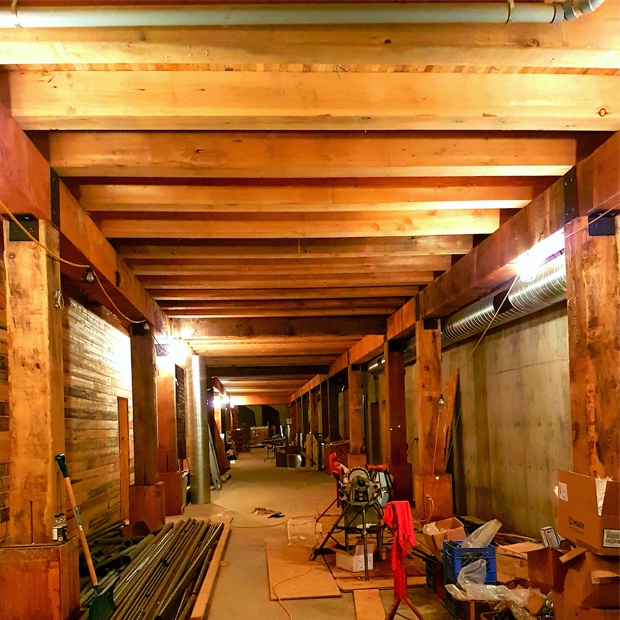
Cellar dining space at Lightfoot & Wolfville

Related – Great Chardonnay and Pinot Noir from Nova Scotia?

The external vineyard planted near Avonport called “Oak Island” is perched on a hill with a view of the Minas Basin at the head of the Gaspereau Valley. “Le Corton,” as it is known, or as I like to call it,  “Oak Isle Knoll” is where consulting oenologist Peter Gamble has placed 100 per cent certainty in the future success of Vinifera grapes. Vigorous vines will increase the possibilities for chardonnay, sparkling plus a host of expected and eclectic varieties, like riesling, sauvignon blanc, gewürztraminer, chenin blanc, chasselas and scheurebe.
Mike and winemaker Josh Horton ushered me through a tour of the new facility. A state of the art retail shop, quick production kitchen, al fresco pizza oven and a subterranean cellar, private dining facility and commercial kitchen to make iron chefs drool. The mammoth-sized, reemployed beams alone are pieces of reclaimed and refashioned wood to send one into a state of awe. It felt as though I were walking through the massive hull and underbelly of a great romantic period ship.
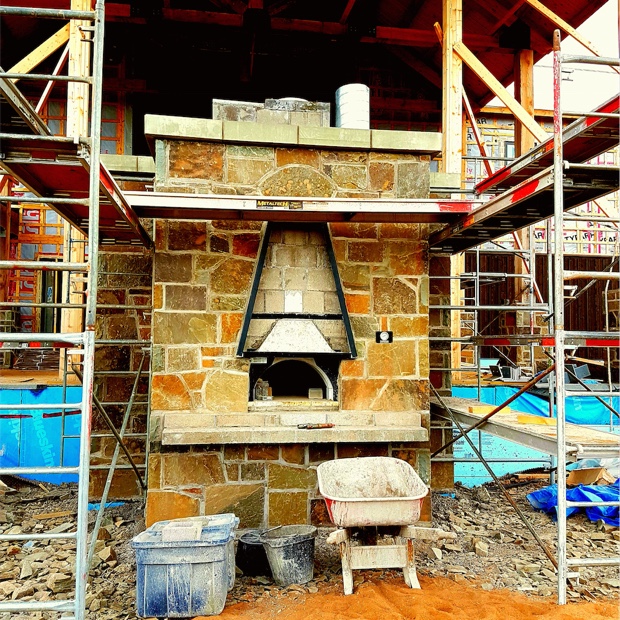
Al Fresco Pizza Oven

Mike Lightfoot has spent the past 15 years watching Nova Scotia’s wine industry transform from an unknown cottage entity to a destination that attracts thousands of visitors, heavily weighted to the summer months. He is drawing on experience but also careful to avoid repeating the mistakes some of his peers have made in trying to build and develop wine tourism at their nearby facilities. He is also grateful for what they have accomplished and how they have opened the door for the possibility of L & W’s imminent operation. Mike points out how in July and August the trail of cars moving along the Evangeline Trail is endless, cars that travel right past his property. Truly a case of “if you build it they will come.”

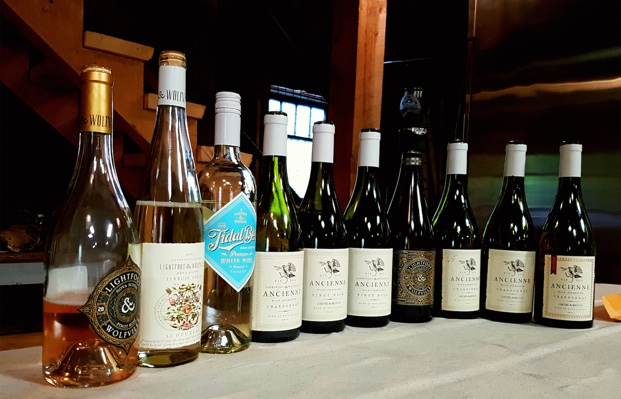
I sat down with Mike and Josh to taste 10 wines, some new and some revisits, for perspective and to expound on some personal theories of L & W relativity. Josh Horton is coming into his own as a winemaker and just in the nick of time. The nigh fact of this property’s history and ineluctable expansion will weigh on the ancienne ideology but Horton’s de facto ability and unaffected personality equip him with the tools to face the challenge head on. The future is now for Lightfoot and Wolfville Vineyards.
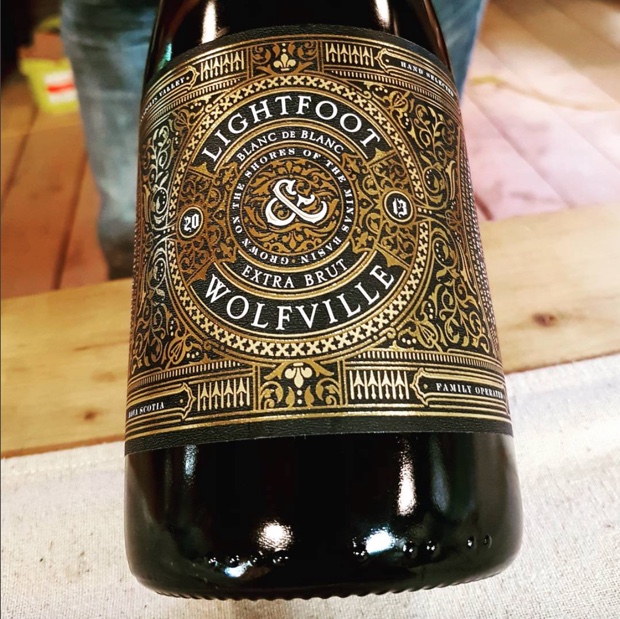
Sparkling wine you need to know @lwwines Blanc de Blanc Extra Brut 2013, from the shores of the #minasbasin #annapolisvalley #novascotia

Lightfoot & Wolfville Blanc De Blanc Extra Brut 2013, Nova Scotia, Canada ($45.00, WineAlign)

Josh Horton and Rachel Lightfoot presented an early, less leesy glimpse of their 100 per cent estate chardonnay at i4c in July of 2016. It was a different animal than this recently disgorged (late February/early March) sparkling wine. The Extra Brut lives up to its designation, from fruit grown on the shores of the Minas Basin under the auspices of a markedly warm year with exceptional phenolic ripeness and 25 per cent malolactic gain. The time relative to texture lees accumulation is approximately 40 months and it’s an accurate representation of Nova Scotia low and slow. The flavours are wisely developed ripe and spicy, leaning into a moment or two of oxygenation, but seemingly richer than the amount of lees time that was given. Now emerging from the shell of not just a warm but a great chardonnay year (as previously proven by the Ancienne released two years ago). The notion here is of a sparkling wine that has been brought home, a B de B that you need to get to know. There are layers and layers of character that fold and unfold. The precision, focus and rendering is citrus tamed, mouthfeel in perpetual expansion and contraction, length linear and elastic. And it’s just the beginning. Drink 2017-2023.  Tasted June 2017
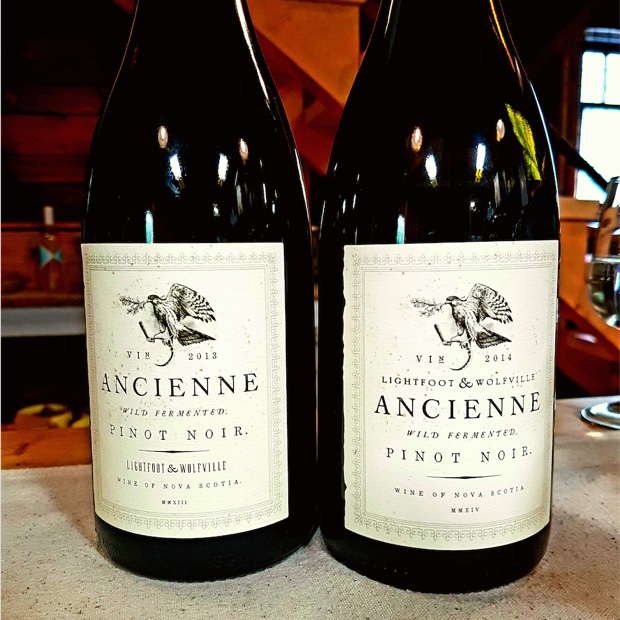
Lightfoot & Wolfville Pinot Noir Ancienne 2014, Nova Scotia, Canada ($40.00, WineAlign)

Pinot Noir Ancienne is a product of a wild ferment and here in 2014 is possessive of a larger percentage of estate fruit, but still with a significant portion skimmed from (Al) McIntyre’s Blomidon vineyard. The typical Nova Scotia growing season means this was harvested during the last week of October and at approximately 20.5-21.5 brix, but of a lower crop level. Like the inaugural 2013 this still carries the elegant, highly cool climate provincial stamp, not skinny or lean by any means but certainly lithe and helped calmly and curatively along by 3rd and 4th fill neutral oak. The ’15 will be bottled in July, which will be 100 per cent estate fruit. Here is the second image of Nova Scotia pinot, built upon a well-designed foundation and an architectural struggle in search of structure. Ancienne is old-school, traditional, hand-made, artisanal. It is a wine that others will not yet know what to do with but the launching point is precise, progressive, poignant and teeming with wonder meets possibility. The fruit purity and transparency speaks to the honesty delivered. Drink 2017-2020.  Tasted June 2017

Lightfoot & Wolfville Pinot Noir Ancienne 2013, Nova Scotia, Canada ($40.00, WineAlign)

Retrospection, reflection and what we know now places this so obviously in the exact spot where it began. So now we establish a minimum five years going forward to reach the sweetest of sweet spots. This now gives perspective and a reference point for where ’14 is and will be going forward. This 2013 is less immediate, a wonder of first time luck, pomp and circumstance. It is nothing short of remarkable. Last tasted June 2017.

If de novo for Pinot Noir is to be found in Nova Scotia then count me in because the inaugural release from Lightfoot & Wolfville is the trailblazer for and from the extrinsic frontier. Tasting the painstakingly measured yet barely handled 2013 for the first time (from bottle) is like falling into a glass of Nova Scotia cherries. Somehow there is this simultaneous and virtual voyage abroad to imagine a comparison with Nuits-Saint-Georges, in its earth crusted, sanguine, welled up tension that begs questions and belies answers. A year yonder the taste from barrel and what can be said? Pinot Noir adjudicated, into a cortex of recognizable consciousness and thus into the natural Nova Scotia mystic. Ignore and forgive the dope of first returns, for no one could have imagined such ripeness and immediate gratification. Future releases will dial back in the name of structure. That said, in 2013 there is a red citrus, ferric debate that will send this to an exordium seven years down the road. Impossible inaugural release. Approximately 50 cases made. Drink 2015-2022.  Tasted July 2015
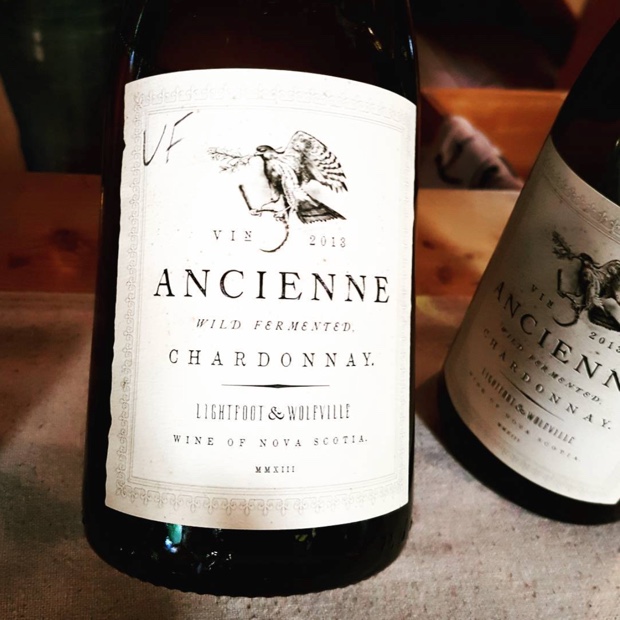
Experiments are for more than sharing #perspective #teachingmoment #progress @lwwines #unfiltered

Lightfoot & Wolfville Chardonnay Ancienne 2014, Nova Scotia, Canada ($40.00, WineAlign)

The name Ancienne and the proximate irony appraised is not lost for its translation as endemic or indigenous for wines made from Burgundian grape varieties raised on Nova Scotia soil. The sophomore chardonnay speaks in a vernacular a year to the wiser but at the expense of excitement, which is actually a good thing. A step back taken will result in two going forward, as I shall explain. The same regime exercised mimics the ’13, of 20 per cent new, 18 months in barrel, but a slight course altered with some reductive play in ’14, as an experiment but also as a plan. There seems to be more lees richness and spice notes that flit like direct darts on the palate. Different clones are harvested at different times, so now the vinifications are staggered and layered, which really shows on the stratified and almost germinating palate. Another year older allows these vines to bring diversified variegation, more Nova Scotia and as a consequence, less winemaking. The growth here is fascinating and enlightening. In the interim it may compromise the flavour profile and the wow factor but in the long run it is structure, longevity and impressibility that will give the green light to estate grown, Minas Basin success. Drink 2017-2021.  Tasted June 2017

Lightfoot & Wolfville Chardonnay Ancienne 2013, Nova Scotia, Canada ($40.00, WineAlign)

The ’13 seems to at first have really softened but that’s only relative to tasting it side by side with the 2014. It’s also leaner when considered side by each though still carries weight and creaminess on the palate. Winemaker Josh Horton also pours an unfiltered experimental bottle. It is so clean, almost indiscernible to the filtered ’13, except perhaps with more bite on the palate and yet less creaminess than the ’14.  Lasted Tasted June 2017.

Welcome to the new Chardonnay ethos, an east coast compages for la belle nouvelle écosse, the new borderland for Canadian vinifera. The respite found in Lightfoot & Wolfville’s first release is like breathing for the first time. As I noted a year ago while tasting through (mostly older) barrel trials, I have unearthed a Canadian winery animated in the architectural rendering of Premier Cru Chablis. Full textured, creamy aromatics, layers of lace and luxe, popping acidity and with length stretched to service now and later. Approximately 135 cases made. Drink 2015-2019.  Tasted July 2015

Lightfoot & Wolfville Chardonnay Ancienne Reserve 2013, Nova Scotia, Canada ($56.00, WineAlign)

The Chardonnay was planted in 2009 in a block that sits on the crest of the hill on the Wolfville vineyard site and the Ancienne Reserve is a barrel selection more than anything. It sees an additional six (to 24) months and because one of the barrels was new, it’s therefore 50 per cent new. Now tasting this for the second time a year later (the first time being at i4c 2016), the wood is melting and dissolving so all is coming together, but the unmistakeable L & W acidity meets Nova Scotia vines spice and bite is all over the palate. There is length here to last a decade. Never ending. Nothing if not a coup for new world/cold climate/NS chardonnay. You will not understand unless you taste it. Consulting oenologist Peter Gamble and his protégés Josh Horton and Rachel Lightfoot have allowed the fruit to speak without encumbrance. This chardonnay is neither stark nor beyond ripe and oak has been used with terrific restraint. I am not sure how Gamble could have known it would work but to a veteran of decades of Canadian harvests, it must be an absolute revelation. Drink 2017-2023.  Tasted June 2017
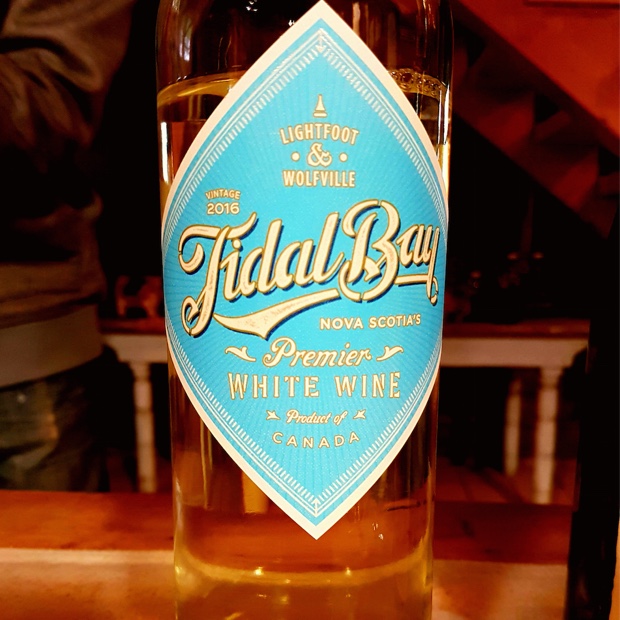
Lightfoot & Wolfville Tidal Bay 2016, Nova Scotia, Canada ($22.00, WineAlign)

The blend is l’acadie, geisenheim, chardonnay and riesling plus a smidgen of vidal. Just a great year, the l’acadie coming from rocky soil and the difference maker in the use of riesling. There is some residual sulphur, still activated citrus tablet and its aromas are propitiously fresh, from lean to piercing. The palate carries terrific texture and flesh, great citrus and a bit of unction. It even suggests fleshy citrus and stone fruit, with just that minor note of peach to make this so drinkable. The vinifera provides the structure while l’acadie is the back bone and this has plenty of it. The reams of citrus are simply striking. The better to best yet, a no doubter and without argument. For Tidal Bay it’s almost perfect. Drink 2017-2019.  Tasted twice, at L & W and blind at NWAC17, June 2017
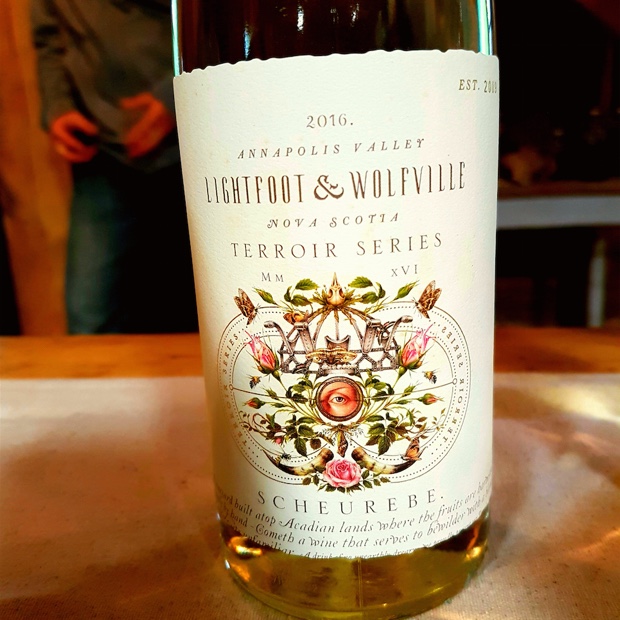
Lightfoot & Wolfville Schuerebe 2016, Nova Scotia, Canada (WineAlign)

The schuerebe comes from up on the Oak Isle in Avonport, now just past the stage of baby vines, this the introduction as far as a style is concerned. That style combines elevated sugar and acidity. It’s highly floral and of incredible acidity, from vines that ripen later than riesling, though the plants are young of just a few years. Schuerebe is a wine that can beat its own sibling chardonnay in a wine competition, with some fat and flamboyance, alcohol near 9.5 per cent and those sugars (whose actual number is pointless) will track across some complex notions and age three to six years with ease. Drink 2017-2021.  Tasted June 2017
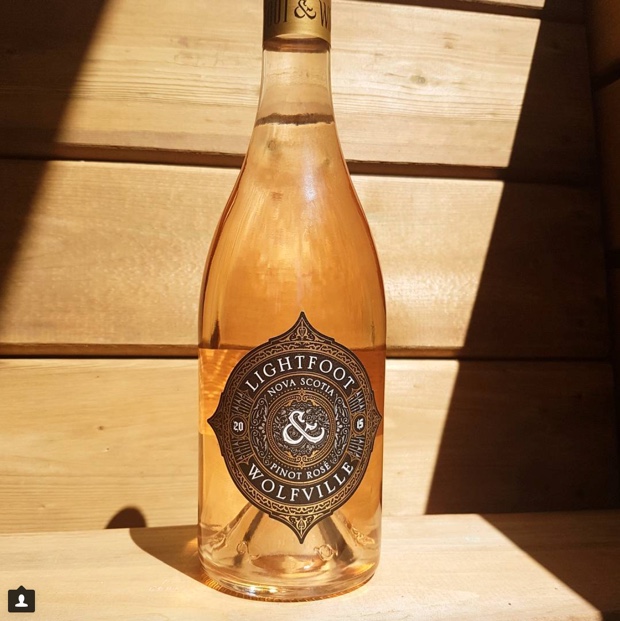
Lightfoot & Wolfville Pinot Noir Rosé 2016, Nova Scotia, Canada ($28.00, WineAlign)

The Rosé from pinot noir is 100 per cent estate varietal fruit destined for this purpose and not from a bleed, or as one. At $28 it doesn’t hit the same $20 Rosé crowd, here dry, saline, south of France ringing and as a ringer. The notes are distinctly lime and grapefruit, floral but not quite meunier floral. “When pinot noir can give you structure you keep making it this way,” notes winemaker Josh Horton. Good plan. Drink 2017-2019.  Tasted June 2017

Lightfoot & Wolfville Pinot Noir Rosé 2015, Nova Scotia, Canada ($28.00, WineAlign)

L & W’s will surely appear, perform and consummate as the lightest of all Rosés in any Canadian flight and as pinot noir it suffices to say all that needs in terms of rusty, rustic and taut. There is good salinity, perhaps one or two elevated blowsy notes of sulphur but all is forgiven in consideration of fine precision, presence and lightness of being. The minor leesy and lactic fromage melts into acidity and tasted blind it could be the closest of Moira cousins, à la Malivoire. Lemon and lime finish and very long. Drink 2017-2019.  Tasted June 2017

Good to go!
Godello

Twitter: @mgodello

Instagram: mgodello

WineAlign

East coast swing 2015: Time, tides and wine

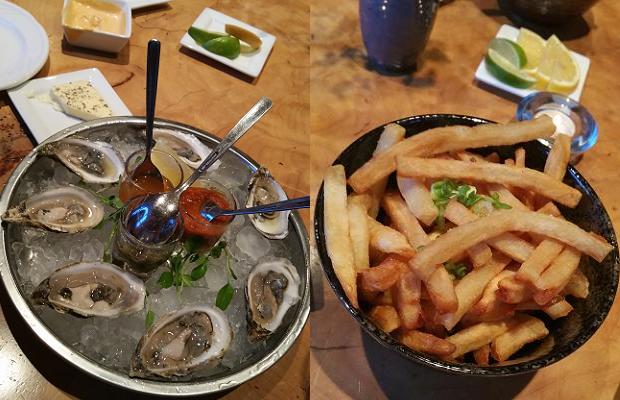
Oysters and Double Duck Fries at Le Caveau Restaurant, Domaine De Grand Pré Vineyards

Foot bridge to grand L’Acadie

as seen on WineAlign

Time, tides and wine. In a place like the Bay of Fundy, the three intertwine with nearly inexplicable lightness of being. The traveler covets these things in wistful retrospection. East coast movement, water and the new frontier for viniculture. “Each day the tides carried us to promulgate layovers, to begin flowing again each seriate day, at the hour of its reversal.”

Related – The tides that bind: East Coast swing

The wineries of the Annapolis Valley are few and yet not very far between. It feels as though you could tread, sans automobile, to Lightfoot & Wolfville, over Benjamin Bridge, back to Domaine De Grand Pré Vineyards and up the hill to L’Acadie Vineyards. Foot bridge to grand L’Acadie. All in a day’s walk.

While the exercise of a vinous walking tour would seem to fitly tread the boards of Nova Scotia’s watery ways, even more so for stations achieved by bicycle, a car makes possible the desire to learn more in less time. The roads in Nova Scotia wine country lay out as an inferential and navigable labyrinth, in the Gaspereau Valley and along the shores of the Minas Basin, from Wolfville to Grand-Pré of King’s County. There, unbeknownst to who knows how many zonked global winos, the wines of Nova Scotia not so much hide as crouch. They are a real, new deal, fervidly expensive to those who don’t yet understand them, free to those who do. They are poised to join the ranks along with Canada’s best.

Related – Consider the Gaspereau Valley

Peter Gamble has reached out a major hand to three essential facets for Nova Scotia’s wine renaissance. His consultancy has raised the profile and the bar for Sparkling wine from Benjamin Bridge Vineyards. He has been instrumental in the creation of the provincial appellative blend Tidal Bay, a regionally defining and commercially essential white wine. Ontario has fallen behind in not seeking out to create the same. Gamble’s work with the vinifera producing wines of Lightfoot & Wolfville Vineyards is the single most important revolution to happen in the Canadian wine industry in 20 years. I wrote this last summer. “What he will touch in his new appointment at Lightfoot & Wolfville Vineyards will make Nova Scotia history.”

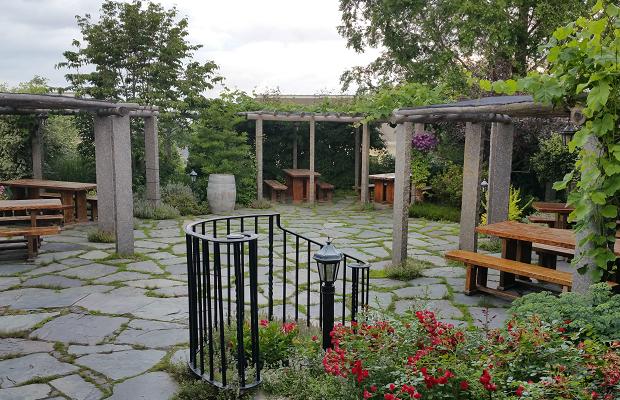
Courtyard of Le Caveau at Domaine de Grand Pré Vineyards

Courtyard of Le Caveau at Domaine de Grand Pré Vineyards

Over the course of two days in late July I foraged through a second annual investigation into the Wines of Nova Scotia. It began with a tasting through the Domaine De Grand Pré Vineyards portfolio led by Hanspeter Stutz. The estate’s Vintner’s Reserve Riesling 2013 was recently awarded one of three Awards for Excellence in Nova Scotia Wines at the recent Lieutenant Governor’s Vice-Regal Wine Awards. The other two winners were Blomidon Estate Winery Cuvée L’Acadie 2010 and Avondale Sky Winery Martock 2012. Blomidon and Avondale Sky are two estates at the top of my WONS bucket list I have yet to visit.

Post anything but haste tasting with HansPeter dinner then followed at the estate’s incomparable Le Caveau Restaurant, in the company of L & W’s Mike, Jocelyn and Rachel Lightfoot, with Chef Jason Lynch manning the stoves.

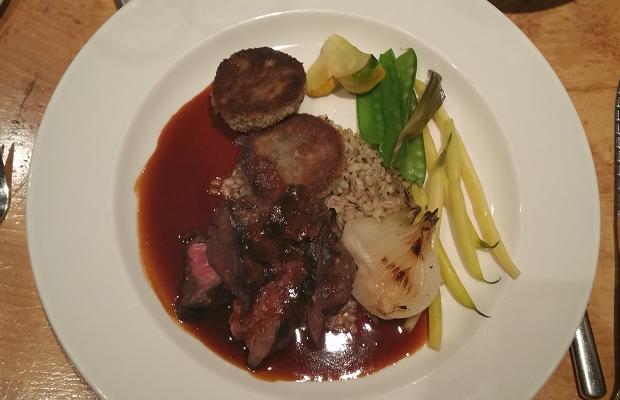
Le Caveau's Beef Two Ways, grilled AAA hanger steak, beef shank galette, seasonal vegetables, barley

Le Caveau’s Beef Two Ways, grilled AAA hanger steak, beef shank galette, seasonal vegetables, barley

The following morning I sat down with Rachel and winemaker Josh Horton at Lightfoot, then travelled shotgun with Mike to taste at Bruce Ewart’s L’Acadie Vineyards. The estate’s Cuvée Rosé 2011 was awarded a Silver medal and the Vintage Cuvée 2012 a Bronze at the 2015 WineAlign National Wine Awards of Canada (NWAC15). We then paid a visit to Benjamin Bridge to peruse a Sparkling meets still appraisal with head winemaker Jean-Benoit Deslauriers and vineyard manager Scott Savoy.

Smell the slate and taste the natatory saliva, like liquid shells from the grape that transmits nascent maritime theology. Consider this variety that accentuates the terroir and reaches beneath the mud, to imagined aquifers for deep-rooted flavour

L’Acadie the grape variety harbours one of the great acidity secrets on the planet. Sparkling wine is possessive of dramatic excellence in Nova Scotia. Chardonnay and Pinot Noir are moments away from certain greatness.

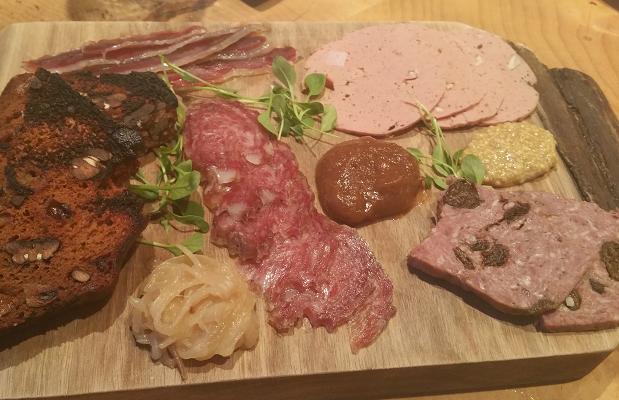
Le Caveau's Charcuterie Plate, house-made and locally sourced, served with chutney, shallot compote and spiced bread

Le Caveau’s Charcuterie Plate, house-made and locally sourced, served with chutney, shallot compote and spiced bread

Domaine De Grand Pré Vineyards

“The wines of Nova Scotia could not be drunk in the 1990’s. None of them.” These are the words of a now very proud Hanspeter Stutz, who in 1993 purchased the estate and re-planted 30 acres. The doors opened in 2000. In can be argued that no one in Nova Scotia has accomplished more and furthered the credibility of hybrid-produced wines than Hanspeter and (winemaker-son) Jürg Stutz.

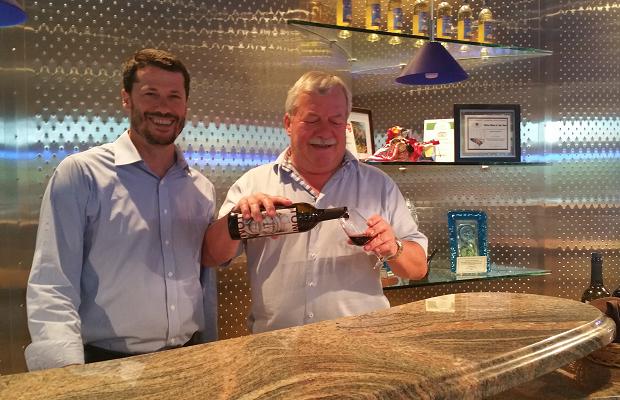
Godello and Hanspeter Stutz at Domaine de Grand Pré Vineyards

Godello and Hanspeter Stutz at Domaine de Grand Pré Vineyards

Domaine de Grand Pré Riesling Vintner’s Reserve 2013, Nova Scotia (Winery, $20, WineAlign)

Imagine lime as a tide, ripening in extreme oscillating waves and layers like the highs and lows of Fundy’s Minas Basin. Only a dike could stop the citrus from rising and falling twice at normal sipping speed within the time it takes to assess through a glass. Lactic and piercing with a finish that pops, like no other Riesling in the world. Such a lingering finish. Healthy in correct perspective at 11 per cent alcohol. Drink 2015-2022.  Tasted July 2015

Domaine de Grand Pré Tidal Bay 2014 and Riesling Reserve 2013

Domaine de Grand Pré Tidal Bay 2014 and Riesling Reserve 2013

Domaine de Grand Pré Tidal Bay 2014, Nova Scotia (Winery, $20, WineAlign)

Hanspeter’s favourite wine is this blend of L’Acadie Blanc, Seyval Blanc, Ortega, Muscat and Vidal Blanc. Using the maximum allowable 15 per cent Muscat Hanspeter explains the choice to “do fruity, with our strength and to a dry finish.” Muscat acts as the catalyst to achieve this end. At 11 per cent abv it is not overdone, remains in balance and leads the Tidal Bay armada. Defines terroir within a properly determined fragrant framework specific to the Nova Scotia appellative intention. Rocks no boats and expresses more character than a rhyme with bucket or most. Drink 2015-2017.  Tasted July 2015

Domaine de Grand Pré Seyval Blanc 2013, Nova Scotia (Winery, $17, WineAlign)

The DGP equivalent of Chasselas along the Lake Geneva shoreline, straightforward, 12 per cent alcohol juicy, pure white simplicity. For those who would pin this hybrid to “empty cold and bare,” open your mind and conceptualize Seyval to be fish friendly to a Swiss degree. Terrific lemon acidity and smoke on the water bitters put this in perfect mind of place, with good length. White flames to deep purple. Drink 2015-2018.  Tasted July 2015

https://www.youtube.com/watch?v=zUwEIt9ez7M

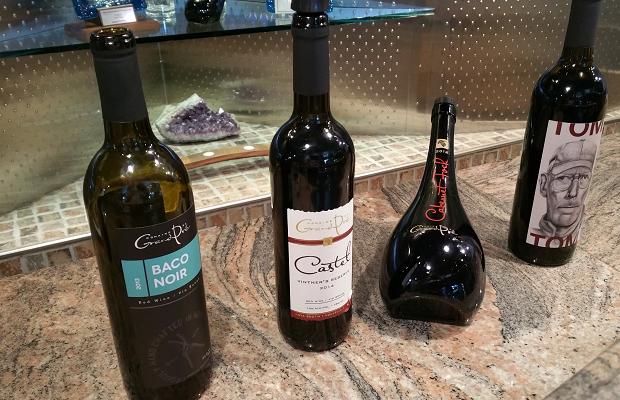
Domaine de Grand Pré Baco Noir 2013, Nova Scotia (Winery, $18, WineAlign)

A smoky, unambiguous tobacco kiln and blueberry Baco. Sour cherry, salumi and pepper infuse the vina da tavola feel and like Syrah goes as meaty as can be. Refreshing because it smacks of Baco Noir, not oak. Rad sour finish. Drink 2015-2019.  Tasted July 2015

Domaine de Grand Pré Castel Vintner’s Reserve 2014, Nova Scotia (Winery, $19.50, WineAlign)

The crossroads varietal happening is on display here with Cinsault and a member of the native North American Vitis ruprestis family (by Pierre Castel). Four to five thousand bottles of peppery black run off convey a taste of pickled black raspberries, cut by major chalk and minor tannin. Juicy and ready for roast game. Drink 2015-2017.  Tasted July 2015

The reds of Domaine de Grand Pré Vineyards

The reds of Domaine de Grand Pré Vineyards

Domaine de Grand Pré Cabernet Foch 2012, Nova Scotia (Winery, $25, WineAlign)

Only made in top vintages (when Cabernet Sauvignon ripens) and in those years the Foch welcomes the bones and body, for ageability in accord with agreeability. Travels from Cassis to tar, chocolate to sour cherry. Chalk again, this time in grains of liquid sand and a pepper-laced finale. Drink 2015-2020.  Tasted July 2015

Domaine de Grand Pré Foch Vintner’s Reserve 2012, Nova Scotia (Winery, $25, WineAlign)

Without the parenting role performed by Cabernet Sauvignon the Foch abandons the homestead and goes it alone. Kind of ironic considering the vinifera is the guest but old world pedigree and custom is hard to replicate. A mix of lead pencil, a curtailment of fruit and fermentation by attrition. A wild ride of savoire verte, tar and resilient verity. Drink 2015-2018.  Tasted July 2015

Domaine de Grand Pré Tom Tom NV, Nova Scotia (Winery, $25, WineAlign)

And I quote. “This blended red wine was created in honour of Tom Preston. Tom was probably the longest-serving field hand in the Nova Scotia wine industry. His career at Grand Pré placed him near the center of its remarkable growth; as witness, contributor and mentor to those who tend the vineyards today. Tom passed away in 2014 only two years after his retirement from the vineyards.” This 1300 bottle debut tribute consolidates 60 per cent Marquette from two vintages with Baco Noir and Cabernet Foch. The second encomium will go under another moniker. A blend that softens in simpatico, ripens with one another and pitches in together. There is cure in its depth with red plum on the road to palate. Quite the coat of veneer. All red fruit, incumbent acidity and red lactic citrus circulating throughout. To Tom. Drink 2015-2020.  Tasted July 2015

Domaine de Grand Pré Riesling Icewine 2013, Nova Scotia (Winery, $54.50, WineAlign)

From Warner Vineyards in Lakeville, Nova Scotia. Barrel fermented and aged in American oak for 10 months. Incredible acidity on top of pure fruit that indicates pear and white fleshed peach. The yield comes from an orchard’s northern clime stone groove with nary an apricot in mind. This wine, as with the table whites and reds, never takes itself too seriously. In the words of Hanspeter “just have fun and work on it. That’s a start.” Drink 2017-2025.  Tasted July 2015

L’Acadie Vineyards

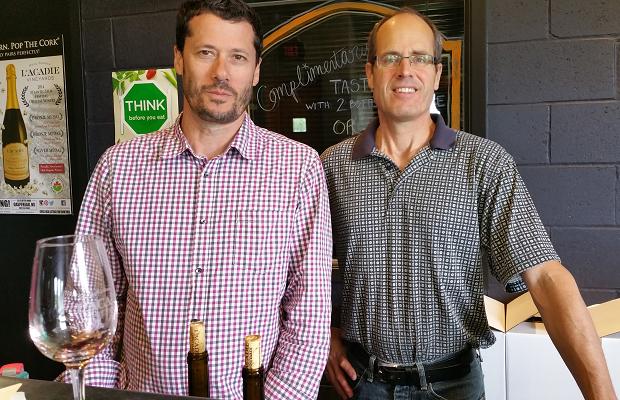
“Tirage and terroir,” asserts Bruce Ewart, a pile of vineyard rocks and stones separating he and I on the tasting counter between us. The rocks are quarried out of slopes in the Gaspereau Valley spilling down towards the Bay of Fundy, from vineyards built of glacial till in the soil mixed with clay and loam. “Mineral flavours from mineral soils,” adds Ewart. Then we taste.

Godello and Bruce Ewart of L'Acadie Vineyards

Godello and Bruce Ewart of L’Acadie Vineyards

L’Acadie is the signature grape of the L’AV command. When sourced from clay-loam it produces fruitier wines, from still to sparkling. The mineral increases from out of the glacial till. L’Acadie is certified organic and all of their wines are made with 100 per cent Nova Scotia grapes.

Glacial till stones of L'Acadie Vineyards

Glacial till stones of L’Acadie Vineyards

Bruce goes straight for the critical jugular and pulls out the best Sparklers in his portfolio. Make no mistake, no matter the hybrid content, the wines are cogent sticks of Nova Scotian dynamite with unprecedented levels of balance. They are as unheralded as any in North America. The only other house with less attention yet paid to its méthode traditionnelle programme that I have encountered is Sparkling Pointe on the North Fork of Long Island. Yet another example for a cool-climate region’s reason to make bubbles.

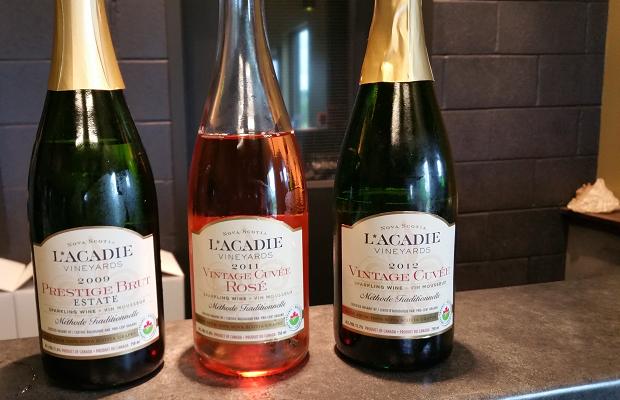
Sparkling wines of L'Acadie Vineyards, Gaspereau Valley, Nova Scotia

Sparkling wines of L’Acadie Vineyards, Gaspereau Valley, Nova Scotia

L’Acadie Vineyards Prestige Brut Estate 2009, Gaspereau Valley, Nova Scotia (Winery, $45, WineAlign)

From the second harvest (following the 2008 vintage was from 2005 fruit) of the certified organic vineyard, a south facing Gaspereau Valley rocky plot blessed of ancient geology, like crushed pills of polar pottery and with perfect natural low vigour conditions. That first vintage of some 100 odd bottles still rests and will do so for likely up to seven or eight years. The 2009 is made in the traditional method and aged for five years on the lees. All estate fruit and that 60 months is needed to bring about harmony. Toasty, part cruller, part panettone and brut to the point of profundity (was six and is now 3 g/L of residual sugar). Bitters melt into length with alcohol set at 11.6 per cent. Drink 2015-2021.  Tasted July 2015

L’Acadie Vineyards Vintage Cuvée 2012, Gaspereau Valley, Nova Scotia (Winery, $26, WineAlign)

A Cuvée cut with a bowie from grower’s fruit on clay-loam soils with less triage (24 months) than the other sparklers in the L’Acadie oeuvre. A fruit forward expression, persistent in biscuit baking but the result is more cookie than croissant. Reads like an eight line poem, the higher dosage (8 g/L) in drama of orchard fruit and lime zest. Hunky dory bubbles, “the key to the city, is in the sun that pins the branches to the sky, oh, oh, oh.” Drink 2015-2019.  Tasted July 2015

L’Acadie Vineyards Cuvée Rosé 2011, Gaspereau Valley, Nova Scotia (Winery, $26, WineAlign)

Blends dramatically early-picked Marechal Foch (40 per cent) with less antecedent specific to bubbly-grown L’Acadie (60) grapes. The Foch brings can/rasp/strawberry to the system of sparkling reckoning, in subject meaning for the latter to chastise with acidity. Comes to light like a new sparkling day, an awakening of bubbles senses, with a balanced attack of fruit flavours ushered within the pressured caisson of L’Acadie’s mineral chamber. Salinity, brine, sapidity and red citrus roll on. Drink 2015-2020.  Tasted July 2015

L’Acadie Vineyards Rosé 2014, Gaspereau Valley, Nova Scotia (Winery, $20, WineAlign)

An early picked Marechal Foch, lithe 11.6 per cent alcohol, crushed berry beauty. Terrific aridity, aromatic allure and redundant in nix of residual sugar. Another nerdy, essential example of what can be done with Rosé in Nova Scotia. Cranberry and strawberry expressed through citrus with the always necessary mineral balance provided by L’Acadie, in every reason, for harmony. Drink 2015-2017.  Tasted July 2015

L’Acadie Vineyards Estate L’Acadie 2013, Gaspereau Valley, Nova Scotia (Winery, $20, WineAlign)

Here the mineral and bone in till from the strong, outstretched arm of the sea lends sentient clarity, joined by the earth it bares. Smell the slate and taste the natatory saliva, like liquid shells from the grape that transmits nascent maritime theology. Consider this variety that accentuates the terroir and reaches beneath the mud, to imagined aquifers for deep rooted flavour. Think about vines that delve into the glacial recesses to divine subaqueous locution.  As a hybrid L’Acadie may seem obtuse but as a Nova Scotian reality it may as well be Muscadet, or even Chablis. Drink 2015-2020.  Tasted July 2015

L’Acadie Vineyards Passito 2012, Gaspereau Valley, Nova Scotia (Winery, $23, WineAlign)

A Ripasso-style red made from 30 per cent dried grapes. An intriguing approach for hybrids and cool climate viticulture. Marechal Foch and Leon Millot are aged in American oak. The discerning is of dried figs and prunes, foxy and slick. Characterful, like duck prosciutto and dried, sour cherry liquorice, spiked by fennel seed and dipped into a pool of savoury syrup. Very interesting. Drink 2015-2018.  Tasted July 2015

L’Acadie Vineyards Alchemy 2010, Gaspereau Valley, Nova Scotia (Winery, $43, WineAlign)

Here the Ripasso steps up to Appassimento. In 2009 the work was performed with 75 per cent Leon Millot and 25 Luci Kuhlmann aged for 24 months in American oak. The 100 per cent methodology in 2012 in the 500 mL bottle is all Foch and nothing but. Leads to a deeper brood, of rich, chocolate flavour melted and hardened over blackberry and a wild hit of sauvage. Intense red smouldering with tobacco and finishing in pulsating fashion, like currants on steroids. Drink 2015-2020.  Tasted July 2015

Benjamin Bridge

Jean Benoit Deslauriers, along with viticulturalist Scott Savoy leads Mike Lightfoot and I through a transaction of Sparkling and still wines in the BB portfolio. Deslauriers offers a concise dissertation on phenolic maturity as a journey incarnate, out of the Gaspereau Valley’s long growing season, mitigated by the east west corridor. He talks on moisture vs heat and the dichotomy of swelling berries. “Its not California here” he says with a wry smile and I can tell he’s pleased with his winemaking lot in life. Here it’s real, tapping into hang time, phenolics and utterly eccentric levels of dry extract.

Tasting at Benjamin Bridge, Gaspereau Valley, Nova Scotia

Tasting at Benjamin Bridge, Gaspereau Valley, Nova Scotia

Benjamin Bridge Nova Scotia Brut 2008, Gaspereau Valley, Nova Scotia (381533, $49.95, WineAlign)

Even if it’s not the first Bridge record, a milestone moment is here in this the last wine with hybrid contents (within this particular BB program). Though it houses 10 per cent Chardonnay and 10 per cent Pinot Noir, the remainder (80) is Seyval Blanc, L’Acadie Blanc and Vidal. At this Brut level it’s so very bluesy and deceptive in consideration that it is a hybrid based wine, but at the sensory level, miles beyond and a whole other matter. The tempo is furious, the muscularity of tone like bebop in chorus. It has citrus fleshed, aromatically autolytic patisserie and caramelizing onion richness. It’s a searing, raging scintillant, still throbbing and thriving. There is so much grapefruit here in crazy intensity. Work with it and the toast, the brioche and the baking spices come out, come clean and linger. Drink 2015-2023.  Tasted July 2015

https://www.youtube.com/watch?v=1pvmfbOEjKY

Benjamin Bridge Brut Reserve Methode Classique 2004, Annapolis Valley, Nova Scotia (275396, $95.00, WineAlign)

The ’04 is hanging in beautifully, on a wire of impossible balance, at 11 years old not yet really transitioning. There is simply too much brightness for it to give up its youth. You have to strain your ears, nose and throat to assuage just a hint at oxygen, life affirming breaths and then a keener sense of toast and yeast. Still behold the grapefruit, a sign of remarkable adolescence, the hang time amplified and in mass hyperbole here, in this current appraisal, address and time. How can richness act and display with such alpha freshness? How can an aging body not shed baby weight, turn lanky, lean and awkward? How is it neither the bitter pill of juvenility or senility has been swallowed? That is not the case here in a Blanc de Blancs which still has five to seven years of very active life ahead. Drink 2015-2021.  Tasted July 2015

Benjamin Bridge Brut Reserve 2008, Gaspereau Valley, Nova Scotia (275396, $74.95, WineAlign)

From dry extracts that were off the charts, the ’08 comes to play with massive intensity. A unique Co2 effervescence, expansive instead of contracting. A wine of palate sensory driven speculation and assessment. Unrelenting mousse, exploding outwards, persisting straight through to the finish. Richness matches the foundation of freshness, with a full citrus fruit palate. Density from super low yields (a decadent tonne per acre, 1/6th of champagne) in another cool year, or in other words, “a vintage of opportunity.”

From my earlier note of July 2014:

The 2008 Brut Reserve is composed of 61 per cent Chardonnay and 39 Pinot Noir. If any wine in the Benjamin Bridge continuum defines the legacy left behind by Raphaël Brisebois and passes the sparkling torch to Jean-Benoit Deslauriers, this ’08 is it. Here is the vintage that begins to emulate the grower’s Champagne of the motherland, in deeper learning, understanding and connection to the estate’s vineyards. At present this is such an infant, reductive and with a blowzy palate that suggests a fidgety, elemental state. The attack is in burgeoning mousse. After spitting, the wine persists, as if there remains a mouthful, causing the cheeks to expand. The citrus is weighty in texture and this ’08 goes deeper than the previous Brut reserves. Three years will be required to allow for a settling and 20 years lay further ahead for secondary, tertiary and quaternary development.

Last tasted, at the winery, July 2015

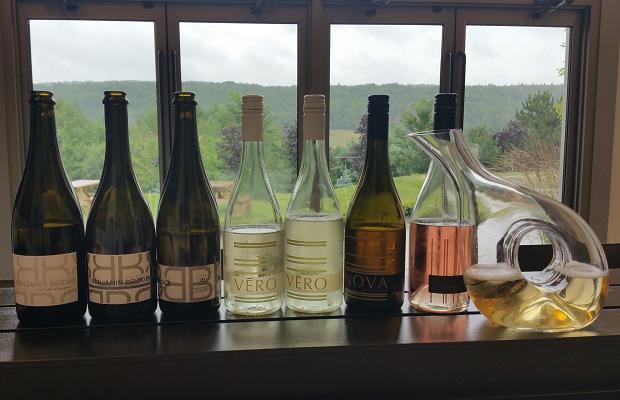
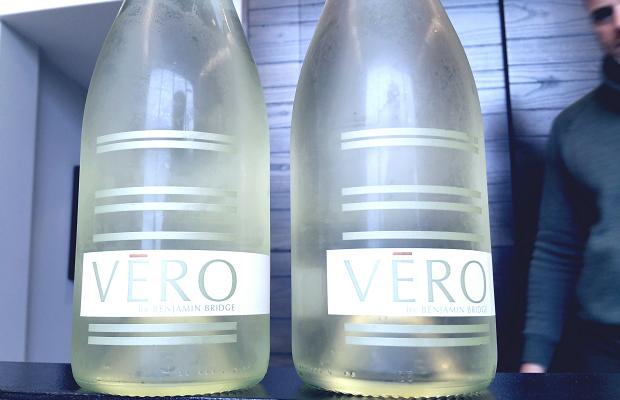
Benjamin Bridge Vēro 2013 and 2014

Benjamin Bridge Vēro 2013 and 2014

Benjamin Bridge Vēro 2014, Nova Scotia (Winery, $22, WineAlign)

Derived from veritas, the Latin word for truth. If Tidal Bay is an appellative Nova Scotia blend that walks from the sea, Vēro is the Bridge’s worthy adversary that emerges from the land. This vintage is composed of 35 per cent Chardonnay, 10 Sauvignon Blanc, 15 Riesling, 20 Ortega and 20 Vidal. It appeals with an increase of ore and aridity, despite and in spite of 17 g/L of residual sugar. It is a formidable, linear, focused, 11 per cent alcohol straight shooter. Hybrids speak in foxy white linen and lace. A striking and popping white blend. Quite wild, really. 500 cases made. Drink 2015-2018.  Tasted July 2015

Benjamin Bridge Vēro 2013, Nova Scotia (Winery, $22, WineAlign)

As in the forward ’14, this ’13 is again built on the foundation of freshness and the highest of aromatic components. Percentages are (60) Chardonnay, (30) L’Acadie and (10) Riesling, the latter of which is noticeable, adding petrol and terpene to the still beating, vibrant palate. Compounded by full flesh on viscous mouthfeel. Has a natural, nearly oxidative feel just beginning to happen so it behooves to ask if these are the wines that define idealism as adversary to the stylistic Tidal Bay way? Finishes with terrific bitters and a L’Acadie oyster shell coarseness. Drink 2015-2016.  Tasted July 2015

Benjamin Bridge Cabernet Franc Rosé 2014, Nova Scotia (Winery, $22.95, WineAlign)

A Nova Scotia first, this blush made from 100 per cent Cabernet Franc. The minerality comes straight from stone, sans flint, and the epigrammatic aromatic notion is saucissons and rillettes, not wild berry. Simulacrum to a Loire Valley format, like Chèvre on a log after a forest rainstorm. Stone age Breton on exhibit. Salinity and aridity in spite of its meagre 7 g/L RS. Bright, fresh and vivid tones are wrapped up in the enigma of very cool climate grown Cabernet Franc. Sea and brine entrammel the flavours. Drink 2015-2018.  Tasted July 2015

Benjamin Bridge Nova 7 2014, Nova Scotia (Winery, $24.95, WineAlign)

There is really no vintage in, vintage out agenda on a journey to categorical dryness for Nova 7, so it is thrown like caution to the Fundy wind and fermented at lower temperatures. The risk road taken preserves the Co2, which stays in the solution instead of leaving, thanks to the cool temperatures. Terpenes, phenols and esters remain. Low alcohol (8 per cent), elevated (80 g/L) RS, aromatics and effervescence are the amalgamated result. A unique wine out of an extreme environment, this is a plainly, nearly painfully mother humming cliffhanger from Benjamin Bridge. Beautifully waxy, of a pink aridity, brightness, fresh acidity with a dry finish, in as much as such a level of sweetness can allow. Will stay fresh, age and linger for five to seven years, easy. Drink 2015-2022.  Tasted July 2015

Lightfoot & Wolfville

Natural challenges, winter temperatures in the -20 range, late frosts, hurricanes. Welcome to growing grapes in Nova Scotia. And yet Lightfoot & Wolfville is producing Chardonnay and Pinot Noir. Mike Lightfoot attributes vine survival to nutritional balance in the natural systems through organic and biodynamic viticulture.

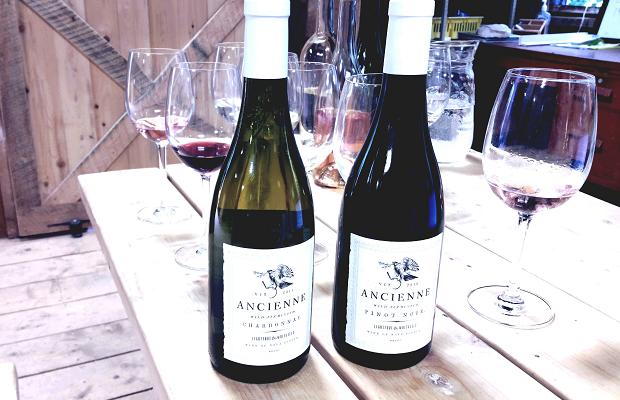
Ancienne Chardonnay and Pinot Noir 2013 with a glass of soon to be released Rosé

Ancienne Chardonnay and Pinot Noir 2013 with a glass of soon to be released Rosé

The pioneering activities do not end there. L & W has also added 4.5 acres of rare and classic vinifera to their “Corton” Oak Island vineyard. Chenin Blanc, Scheurabe, Sauvignon Blanc, Kékfrankos just to name a few. “These grapes were chosen based on climate and soil chemistry,” with the future in mind, for sparkling, still, and sweet wines.

These are the wines I tasted (from bottle and tank/barrel samples) in July with winemakers Josh Horton and Rachel Lightfoot.

A sneak peak at Lightfoot and Wolfville's Tidal Bay

A sneak peak at Lightfoot and Wolfville’s Tidal Bay

Lightfoot & Wolfville Tidal Bay 2014, Nova Scotia (Winery, Approx. $21-22, WineAlign)

A Muscat-less blend of Geisenheim, L’Acadie Blanc, Chardonnay and Chasselas with a directive to drive by aromatics if easy on the turns. A Tidal Bay borne on the architecture of spine, a step shy of sacra perfume. A white to pair with local necessity, a seafood marker, a buoy to the stock pot and the grill. Its release is imminent (the intention was between August 17th to 27th). Represents pure citrus distillate, in lemon and lime, with a median balancing action in 12 g/L of residual sugar, which really doesn’t show, no, not even close, though certainly the acidity balance helps (9 g/L of TA). Drink 2015-2017.  Tasted July 2015

Lightfoot & Wolfville Rosé 2014, Nova Scotia (Winery, Approx. $18-20, WineAlign)

Pinot-driven, of Noir and Pinot Meunier with tiny amounts of Geisenheim and Frontenac Rouge. Arid, rusty, simply and purposefuly pale red that emerges straight from the earth. Has a plasma sensation, with lemon and dry red earth. Natural feel. A cure of veal. More structured than even its makers are giving early credit for. A portal to the more ”serious” solo, mano a mano Pinot/Pinot to come. A hue and style originated and heading in the right direction. Drink 2015-2018.  Tasted July 2015

Lightfoot & Wolfville Chardonnay Ancienne 2013, Nova Scotia (Winery, $40, WineAlign)

Welcome to the new Chardonnay ethos, an east coast compages for la belle nouvelle écosse, the new borderland for Canadian vinifera. The respite found in Lightfoot & Wolfville’s first release is like breathing for the first time. As I noted a year ago while tasting through (mostly older) barrel trials, I have unearthed a Canadian winery animated in the architectural rendering of Premier Cru Chablis. Full textured, creamy aromatics, layers of lace and luxe, popping acidity and with length stretched to service now and later. Approximately 135 cases made. Drink 2015-2019.  Tasted July 2015

I see the light. Innaugaural releases of Lightfoot and Wolfville's Ancienne Chardonnay and Pinot Noir 2013

I see the light. Innaugaural releases of Lightfoot and Wolfville’s Ancienne Chardonnay and Pinot Noir 2013

Lightfoot & Wolfville Pinot Noir Ancienne 2013, Nova Scotia (Winery, $40, WineAlign)

If de novo for Pinot Noir is to be found in Nova Scotia then count me in because the inaugural release from Lightfoot & Wolfville is the trailblazer for and from the extrinsic frontier. Tasting the painstakingly measured yet barely handled 2013 for the first time (from bottle) is like falling into a glass of Nova Scotia cherries. Somehow there is this simultaneous and virtual voyage abroad to imagine a comparison with Nuits-Saint-Georges, in its earth crusted, sanguine, welled up tension that begs questions and belies answers. A year yonder the taste from barrel and what can be said? Pinot Noir adjudicated, into a cortex of recognizable consciousness and thus into the natural Nova Scotia mystic. Ignore and forgive the dope of first returns, for no one could have imagined such ripeness and immediate gratification. Future releases will dial back in the name of structure. That said, in 2013 there is a red citrus, ferric debate that will send this to an exordium seven years down the road. Impossible inaugural release. Approximately 50 cases made. Drink 2015-2022.  Tasted July 2015

Lightfoot & Wolfville Sparkling Blanc de Blancs 2012 (Sample)

Not yet disgorged with a plan for leaving them for five to seven years on the lees. From estate fruit (five year-old vines at the time) tanking in stainless, with no dosage. Full input charged citrus reminds of Brut Zero (i.e. Tarlant) in its classic, linear, straight pierce, dart to the heart. Needs lees texture for body which time will accord. Really classically styled.

Lightfoot & Wolfville Sparkling Blanc de Blancs 2012 (Second Sample)

Here the use of a small amount of oak. A slight bit of reductiveness (being employed as an idea going forward in defining a house style) shows up as smoke and flint. The triage leads to green apple and a different kind of citrus, with more body and warmth, partly in alcohol but more so elegance and a linger  in this not so fleeting fizz.

Lightfoot & Wolfville Chardonnay 2014 (Barrel sample)

Ripeness, of phenolic targets hit for the second year on a row. In 2014, marked a reduction experiment, from a brand new demi-barrel, seeking a covering up of the reductive qualities. An approach to amalgamate the best of both worlds.

Lightfoot & Wolfville Rosé 2014 (Tank Sample)

Pinot Noir and Pinot Meunier. An hour or two quick breaking of the skins on the press. Incredible aromatics, chewy, with a pepper kick, of an edge that will be smoothed over by a bit of residual in the finished wine. Just the right proper citrus ands a touch of animale. So special. Potential release is late September/Early October.

The recent releases of Lightfoot & Wolfville’s Tidal Bay and Rosé 2014 were met with much ado in the Halifax wine bars, just like the reception given the Pinot Noir and Chardonnay one month before. Naysayers (including some critics who have tasted these wines) want to burst the bubble, not because of truth but out of a closed mind set that will not allow for change, or evolution. The treatment in contempt of possibility is born of narrow, jaded vision. Despite the exceptional and opprobrious hurdles that climate places on vinifera and its attempted journey to phenolic ripeness, L & W, Benjamin Bridge, Domaine de Grand Pré and L’Acadie Vineyards are ripening grapes, beyond and along with winter-resistant hybrids. Advanced viticulture and winemaking prowess are primed for the new Nova Scotia millennium, on the new frontier. Pay a visit and see for yourself. Then get ready for a policy change of the mind.

Good to go!

http://www.winealign.com/profile/2058-mjg

Great Chardonnay and Pinot Noir from Nova Scotia?

See the light? Inaugural releases of Lightfoot & Wolfville's Ancienne Chardonnay and Pinot Noir 2013

See the light? Inaugural releases of Lightfoot & Wolfville’s Ancienne Chardonnay and Pinot Noir 2013

It was July 2014. As my family and I grazed and lazily traversed our way around Cape Breton Island, the decisive, proximate sojourn came catgorically to mind, in lucid, axiomatic extension, extrapolated in thought as naturally and forcefully as a Fundy tide. A call to the upper Annapolis Valley, along the shores of the Minas Basin towards points in and around Wolfville and Grand-Pré of King’s County. Maybe check out the wine scene aforementioned only a week before by Peter Gamble.

What happened next could not have been imagined in any wildest dream. The samples I tasted in the barrel cellar at the yet to open Lightfoot & Wolfville winery were too good to be true. Peter Gamble told me this. “We consider the fruit from Pinot Noir and Chardonnay on this property to be Grand Cru.”

The first vintage of these ground-breaking wines are now in bottle. They are called Ancienne, as in old-school, traditional, hand-made, artisanal. The irony is not lost in the use of a word that might also translate to endemic or indigenous, for wines made from Burgundian grape varieties raised on Nova Scotia soil.

The divulge is now. The wines are currently pouring at a private function at Obladee Wine Bar and will be open for tasting at Bishop’s Cellar in Halifax from 5-7 pm EST. For Mike and Jocelyn Lightfoot, along with Rachel, their oenologist-prodigal daughter come home from Brock University, winemaker Josh Horton and Gamble, the realization, without equivocation, is that their pioneering accomplishments signal the turning point for growing vinifera in Nova Scotia. Today is the first release of Ancienne, the Chardonnay and Pinot Noir 2013’s from Lightfoot & Wolfville Vineyards.

The concept may seem entirely outlandish but hear this. Planting, cultivating and vinifying Chardonnay and Pinot Noir to craft Nova Scotian wine is no castle in the air, no giant beanstalk, no pie in the sky. These wines are made from 100 per cent locally raised fruit. Nova Scotia grapes. European roots.

In 2014 I went through the barrels with Josh, Mike, Jocelyn and Peter. Blending trials too. I saw the light. No, really, I walked into the tunnel and towards bright light. I knew then and even more so now, after tasting them a year later in bottle, that there is no going back. Here marches forth the future of vinifera in Canada.

Ancienne

Ancienne

I was duly impressed at the passion, knowledge and maturity to belay their years manifested in the tutorials from Josh and Rachel as we tasted through the wines on July 27th. The Pinot and Chardonnay are really nothing short of amazing, especially considering the absence of reference points from Nova Scotia soils. Most important are the levels of maturity and understated character. Gamble and his protégés have allowed the fruit to speak without encumbrance. They are neither stark nor beyond ripe and oak has been used with terrific restraint. Not sure how he could have known it would work but to Gamble, as a veteran of decades of Canadian harvests, it must be an absolute revelation.

Related – Consider the Gaspereau Valley

The Chardonnay was planted in 2009 in a block that sits on the crest of the hill on the Wolfville vineyard site. For the 2013 vintage of Ancienne Pinot Noir the fruit came from grower Al MacIntyre’s Racca Vineyard in the Blomidon/Canning area. These vines are approximately 15 years old. The L & W journey fell upon great fortune with the Racca Vineyard fruit, allowing the team to gauge possibilities for the future. The successive (2014) vintage will be the first year L & W harvested fruit from their estate Pinot vines (Planted in 2012 at their Avonport site). Rachel tells me that “given the philosophies behind the Ancienne tier, we will likely use exclusively estate-grown fruit in the future.” The ideology includes farming practices in adherence to both organics and biodynamics.

The Chardonnay is made from six of (eight total) barrels, using a minimalist approach, with no fining (use of a rock stopper) and an élevage of 18 months in (18-20 per cent new) and the rest, older barrels. The last two barrels will likely go to 24 months for a reserve wine. There are 1600 bottles produced with future targets currently set at 2500+. The Pinot Noir was also bottled after a light, coarse filtration (using a rock stopper), but no fining. At this point there are approximately 600 bottles produced. The goal is 1500-17oo bottles. Here are my tasting notes on the new releases:

Ancienne Chardonnay and Pinot Noir 2013 with a glass of soon to be released Rosé

Ancienne Chardonnay and Pinot Noir 2013 with a glass of soon to be released Rosé

Lightfoot & Wolfville Chardonnay Ancienne 2013, Nova Scotia (Winery, $40, WineAlign)

Welcome to the new Chardonnay ethos, an east coast compages for la belle nouvelle écosse, the new borderland for Canadian vinifera. The respite found in Lightfoot & Wolfville’s first release is like breathing for the first time. As I noted a year ago while tasting through (mostly older) barrel trials, I have unearthed a Canadian winery animated in the architectural rendering of Premier Cru Chablis. Full textured, creamy aromatics, layers of lace and luxe, popping acidity and with length stretched to service now and later. Approximately 135 cases made. Drink 2015-2019.  Tasted July 2015

Lightfoot & Wolfville Pinot Noir Ancienne 2013, Nova Scotia (Winery, $40, WineAlign)

If de novo for Pinot Noir is to be found in Nova Scotia then count me in because the inaugural release from Lightfoot & Wolfville is the trailblazer for and from the extrinsic frontier. Tasting the painstakingly measured yet barely handled 2013 for the first time (from bottle) is like falling into a glass of Nova Scotia cherries. Somehow there is this simultaneous and virtual voyage abroad to imagine a comparison with Nuits-Saint-Georges, in its earth crusted, sanguine, welled up tension that begs questions and belies answers. A year yonder the taste from barrel and what can be said? Pinot Noir adjudicated, into a cortex of recognizable consciousness and thus into the natural Nova Scotia mystic. Ignore and forgive the dope of first returns, for no one could have imagined such ripeness and immediate gratification. Future releases will dial back in the name of structure. That said, in 2013 there is a red citrus, ferric debate that will send this to an exordium seven years down the road. Impossible inaugural release. Approximately 50 cases made. Drink 2015-2022.  Tasted July 2015

A sneak peak at Lightfoot & Wolfville's Tidal Bay

A sneak peak at Lightfoot & Wolfville’s Tidal Bay

More releases will be forthcoming in the coming weeks.

Good to go!

http://www.winealign.com/profile/2058-mjg