Gateway to Achaia, from Roditis to Mavrodaphne

Gate to Achaia Clauss Winery, Achaia

Gate to Achaia Clauss Winery, Achaia

A week of immersion on the ground running in Achaia drafts a new set of varietal tasting parameters. What is new to me are anent varieties of old. Roditis, Sideritis, Mavrodaphne and Mavro Kalavryta may be the grapes of ancients but obscurity be sprinkled, their resurrection blows forth in full paroxysmal scatter. The appeal is symptomatic of the new search for greatness in far away places.

Related – Till I reach Achaia ground

In  the second week of July I tasted through Patras and Achaia in the Greek Peloponnese. Here are 55 reviews from 10 producers.

Tetramythos

8ο kil. Pounta-Kalavrita, Ano Diakopto, 25003, Greece, 2691097500 The most modern facility in all of Achaia, re-built after a fire destroyed the property more than 10 years ago. Owned and operated by the brothers Aristos and Stathis Spanos.
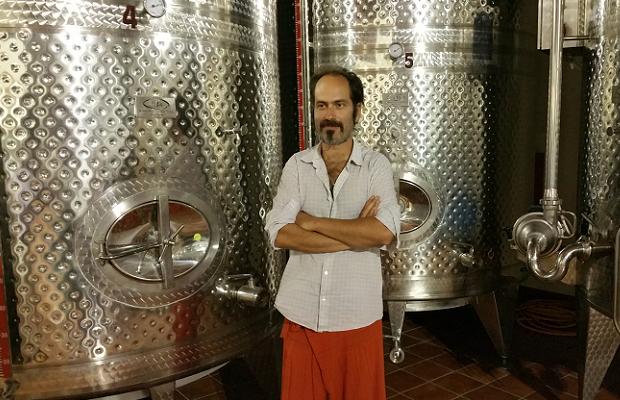
Panyiotis Panagianopoulos, Tetramythos Winery

Panyiotis Panagianopoulos, Tetramythos Winery

Oenologist since 1999 is Panayiotis Papagiannopoulos, a winemaker who may just have been separated from twin Frank Zappa at birth. Located at Ano Diakopto of Egialia, on the slopes of Mount Chelmos, the 14 hectares of vineyards (450-1,000m) are farmed organically (and have been since 1997). Bush vines make up 80 per cent and endemic varieties (85 per cent) cultivated (plus some expatriates) are Roditis, Malagousia, Sauvignon Blanc, Mavro Kalavryta, Agiorgitiko, Cabernet Sauvignon and Merlot. The total production is 13,000 cases with export to foreign markets (80 per cent) that exceeds peers by a wide margin.
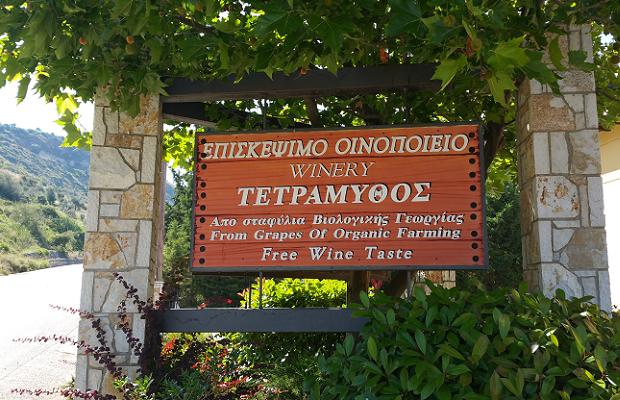
Tetramythos Winery

Tetramythos Winery

Tetramythos Roditis 2014, PDO Patras, Greece (SAQ 12484575, $15.75, WineAlign)

Pulled from four vineyards at 650-850m of altitude and from vines 19-42 years old. No skin contact though it shows a light, slight tinge of colour. Nearly platinum in its yellow hue, perhaps attributed to organics says Papagiannopoulos, Eighty per cent was achieved through natural ferment (with zero malolactic) plus “one tank for security.” Roditis can go clean or develop anti-austerity, texture, viscosity in the direction of a dirty projector. The Tetramythos glides “forward through the clover and the bergamot.” I can see what she’s seeing. Tasting like a leesy ripe peach, this is the best “basic” Roditis tasted in Achaia. Serious match of Aleria Restaurant‘s Sea Bass Tartare. Drink 2015-2020.  Tasted July 2015

Tetramythos Roditis 2014, PGI Peloponnese, Greece (WineAlign)

Here speaks the truth in endemic Roditis, raised in unconscious, wild ferment, unfiltered, forsaken to fining and treated to minimal sulphur. From 47 year-old vines, this most natural Peloponnese is made for the French market (that includes Quebec) with elevated acidity, deeper mineral, higher tang, pomp, circumstance and attitude. Latin, really, striking actually. Drink 2015-2018.  Tasted July 2015

Tetramythos Roditis 2014, PGI Achaia, Greece (WineAlign)

Roditis is here designated as the traditional Retsina, subjugated to wild yeasts in clay amphora and no sulphur during alcoholic fermentation. From 25 year-old vines out of a single vineyard and pine resin collected from trees on the edge of the vineyard. Post low and slow fermentation the wine rests on its lees for two months.  Such a wild and sauvage display of terroir; pine resin, beeswax, sealants and amphora. Like pure pine distillate without excessive herbaceousness and in subtlety of its own complacency. The palate follows the other roditis renditions and the pine again returns on the finish. 14,000 bottles made. Drink 2015-2019.  Tasted July 2015

Tetramythos Malagoussia 2014, PGI Achaia, Greece (WineAlign)

A single vineyard at an altitude of 750m guided by 30 hours of skin contact, for mouthfeel, to saddle the cool climate herbiage, needed for structure and for distance. Exudes poise, presence, precision, not oily but somehow creamy, glistening, this glow of malagousia. Expresses the longest hang time in the mouth, lingering like no roditis can or is willing to. Thanks to early picking to preserve acidity, the alcohol is low (12.4 per cent) and that acidity (7.2 g/L) above and beyond. Only here does malagousia keep this kind of flinty bite, in kind to a mid-September pick, keeping on the right side of soft and hot. I think this will live longer than you think.  Drink 2015-2020.  Tasted July 2015

Tetramythos Roditis 2008, PDO Patras, Greece (WineAlign)

A wine to fulfill the promise of my own personal vindication. I had asked Angelos Rouvalis about laying Roditis down for three to five years or more, to see where it may go and he said, “why?” Here is why. Has fan vaulted to the skies, urged by petrol and a symphony of mythology. Akin and within aromatic mineral reach of sémillon or riesling, with just a basal drip of ambrosial, gaseous honey. The green notes (of pea and nettle) are exaggerated but that is attributed to 2008 fruit that may have never been fully ripe. Drink 2015-2017.  Tasted July 2015
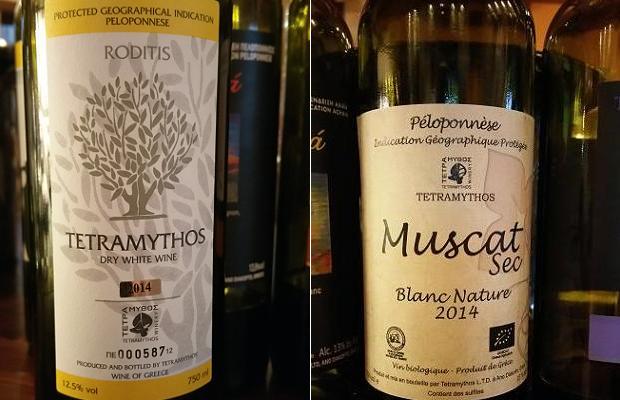
Tetramythos Roditis 2014 and Muscat Sec Blanc Nature 2014

Tetramythos Roditis 2014 and Muscat Sec Blanc Nature 2014

Tetramythos Muscat Sec 2014, PGI Peloponnese, Greece (WineAlign)

A slightly carbonic, reductive character – its natural protection, to keep the oxygen at bay, as if nouveau white Beaujolais. Combines bay laurel and beatific citrus, namely grapefruit after the banana blows off through the shutters of the cabana. Quite silky for muscat, of keys and zests citrus (major) and resin (minor). It may be sorry to leave you high and dry though there is no reason to feel a need to be weened off its charms. Far-out, groovy and compelling vin nature. Drink 2015-2018.  Tasted July 2015

Tetramythos Muscat Sec Blanc Nature 2014, PGI Peloponnese, Greece (WineAlign)

Nothing short of lucent, this friable, direct and crunchy raw muscat. Effusive of individual vowels and consonants, typically Achaian, extrapolated to Greek in its lambent and inventive simplicity. More glade than wax, it coats with orange and the spirit of lime. So different and yet so familiar, inevitably dry and straight as an arrow. Drink 2015-2018.  Tasted July 2015

Tetramythos Sauvignon Blanc Milia White 2014, PGI Achaia, Greece (WineAlign)

Not so many places are out there where sauvignon blanc grows at 1000m of altitude, so its got that going for it, which is nice. Add to that four months in new oak. What results is such a melon, citrus and high acidity tropical fruit mess. Wow is this piercing, almost over the top. Like sémillon this struts, in nod to the Hunter Valley. With time there is a varietal emergence. Eventually. Will age a spell. Drink 2015-2019. Tasted July 2015

Tetramythos Mavro Kalavryta 2014 (SAQ 11885457WineAlign)

A terrific example for a grape saved from extinction, Tetramythos owns 1.9 of a total four hectares of MK. Kudos for the effort especially considering the variety is thin skinned, slow to mature and difficult to cultivate. Saw nearly 20 days of skin contact because “the variety dictates the practice,” notes Konstantinos Lazarakis M.W. The fruit and bitters express a push-pull of terroir. One of two wineries making dry wines from the endemic variety, here the fresh red grape, the food friendly marker. Here confidently struts modern Achaian winemaking, from the ashes of naturalism and antiquity, the way Gamay or Loire Cabernet Franc are wont to do. Vibrant, with verve and a necessary natural funk. Herbal and with a rub of tomato skin, creamy, cool yet resinous, followed through from aroma to texture. Drink 2015-2018.  Tasted July 2015

Kotrotsos Moschofilero Erasmios 2014 and Tetramythos Mavro Kalavryta 2014

Kotrotsos Moschofilero Erasmios 2014 and Tetramythos Mavro Kalavryta 2014

Tetramythos Agiorgitiko 2013, PGI Peleponnese (SAQ 12178957WineAlign)

Raised in old oak barrels, it carries the wooden ship scent on the sea. Possessive of a world up in the wind, roofless, like an August cathedral and yet a grounding sense to burrow into earth. In all that sense it drafts like Nebbiolo indenture. Ferric and tannic, with end spice. Drink 2015-2018.  Tasted July 2015

Tetramythos Milia Red 2012, PGI Peloponnese, Greece (WineAlign)

A kaleidoscopic, cosmopolitan blend of merlot (66 per cent), cabernet sauvignon (20) and mavro (black) kalavrita (14) aged in 2nd, 3rd and 4th fill barrels. Here, again the use of Bordeaux varietals that cloud the vision of what the land wants to say. Sure it will speak in a language that resembles Terra Alta or some IGT but it has a nowhere man feel, a lack of somewheress and surely no word from the mouth of Papagiannopoulos. Very Mediterranean in feel, with a tapenade of black olive and caper. Drink 2015-2018.  Tasted July 2015

Tetramythos Cabernet Sauvignon 2011, PGI Aegialia Slopes (WineAlign)

A new Bordeaux language is created, in natural wild ferment, unfiltered and housed for 30 months in 2nd and 3rd fill barrels. A highly savoury cabernet sauvignon, with a lean and mean green streak. Tannic and very tight. Coated by a veneer and seething in teeth chattering acidity. Not for the faint of cabernet sauvignon heart and in need of double bottle time, in minimum two to one ratio of what it saw in wood. Much appreciation for the vision and the effort. Drink 2018-2021.  Tasted July 2015

Tetramythos Mavrodaphne Vin Naturellement Doux, Peleponnese, Greece (WineAlign)

As with so many of the Tetramythos line-up, this regional blend is the same but different. First it’s non vintage and second it is out of zone so not considered for PDO Mavrodaphne of Patras status. At 16 per cent alcohol and 58 g/L the sweet elixir spent nearly three years spent spinning in the excruciatingly slow centrifuge of natural fermentation. Traditional method adherence with the addition of organic, sun-dried raisins, “to increase the sugar levels.” The house quotient is three kilos of dried Black Corinth Raisin for every 100 L of must, in purport to increase the alcohol by one per cent. Here sweeps clean, sweet Mavro,  its port sensibility an aged, natural, dried fruit, nut and caramel melange. Pure beauty. Drink 2015-2025.  Tasted July 2015

Domaine Mega Spileo (Cavino)

The domain is set within a dramatically oriented steppe of an amphitheatre, in a bowl beneath the shadow of a 940m rock that houses the great Greek Orthodox monastery of Mega Spileo (Grand Cave). Nowhere else in the Chelmos mountains does monk viticulture resonate as it does here. The great vineyard (Megali Ambelos) perches above the Vouraikos Canyon at 800m of height. The winemaker for the wines of Cavino and Mega Spileo is Stelios Tsiris. Varieties grown since re-planting in 1999 include Mavrodafne, Mavro Kalavritino, Cabernet Sauvignon, Merlot, Syrah, Lagorthi, Assyrtiko, Malagousia and Riesling.

Mega Spileo Monastery

Mega Spileo Monastery

Roditis 2014, PDO Patras, Greece

A textured Roditis, its constant refrain one of herbiage, mineral, savoury bite and a direct pinch of austerity. Radiates fashioned with poise and meaning. Drink 2015-2017.  Tasted July 2015

Malagousia 2014, PGI Achaia, Greece

From a blend of three vineyards at 800m in altitude, this is a creamier, riper, more tropical take on the categorical grape. It’s tropical even, leaving peach to ascertain mango. Like a comfortable broth of warm emotions, this Malagousia belongs to the generality of varietal Greek persistence. Drink 2015-2018.  Tasted July 2015

Moschato 2014, PGI Achaia, Greece

Nearly bone dry (4 g/L RS) and well-nigh nicked by acidity (6.2 g/L TA) this is really a true expression of the Muscat Blanc à Petits Grains, an elegant cold pour into a glass on a breezy, sunny day. Until now Muscat in Achaia “could never look me in the eye” but the flurry of aromatics sing like a songstress in white lace. Its gaze is like lemon and olive oil and its tongue like the sweet wax on the rind. Here the Moschato path has been properly and soulfully taken. Rich in gold, like the kingdom of Agamemnon at Mycenae. Drink 2015-2017.  Tasted July 2015

Deus NV, Peloponnese, Greece

A blend of Moschato (80-90 per cent) and Sideritis, with a prodigious dosage to leave this sparkling wine larboard in the realm of 55 g/L of residual sugar. Translates to a tropical, custardy, sticky and waxy bubble that will repeatedly get you back in Achaia life again. Take a few sips “and I’ll drink and dance with one hand free.” You could really get stoned on this fizz. Drink 2015-2018.  Tasted July 2015

Deus Rosato NV, Peloponnese, Greece

Made from 100 per cent Syrah and slightly sweeter than the Muscat, here at 60 g/L RS. The lees, cheese and funk from Syrah turned to sparkling distracts from the sweetness, sending this to parts of southern France in meditative, Mediterranean, savoire savour faire. Raspberry and cranberry vie for sweet and sour supremacy and the wine actually, seemingly turns dry on the peppery, fizzy, tanky and spirited back side. Never backs down and the last conceit is one of tannin. So much more successful than the Moschato. Drink 2015-2019.  Tasted July 2015

Mega Spileo Moschato 2014 Deus and Deus Rose

Mega Spileo Moschato 2014 Deus and Deus Rose

Domaine Mega Spileo Grand Cave 2009, PGI Achaia

A dry vinified blend of Mavrodaphne (60 per cent) and Mavro (black of) Kalavritino that slumbers for 18-24 months (depending on who is offering the dissertation) in “squeaky clean” French oak. A pioneering bottle leading the charging trend to make dry wines from Mavrodaphne. Here so very layered, rich, ferric and in that vein, so very IGT. The oak is judged with a direct gaze into the eyes and density is furthered by demanding Daphne tannin, while flesh and elasticity is the work of the Kalavritino. Like a missile of tannic Syrah with Tuscan like cure in its veins and clotted plasma hanging on its dangling hook. Formidable to be sure. Drink 2017-2022.  Tasted July 2015

Domaine Mega Spileo Cabernet Sauvignon 2008, Peloponnese, Greece

An internationally stylized red that invokes the highest thoughts of all in, all out hedonism, more so than just about any varietal Bordeaux outside of Napa, Sonoma or the original mother land.

Thirty-two “boom shaka-laka-laka boom shaka-laka-laka” months in new French and american oak will do that, shouting “I want to take you Achaia” and in retort you should plead don’t leave me Achaia dry.

Looking back, in making decisions to make a wine like this, the thought would be “it’s the best thing that you ever had, the best thing you ever, ever had.” Fruit showtime is now fruit showing its age while oak is determined to suspend structure in purgatory. “Ain’t no valley low enough” so this style must have been tempting to have a go at the time, but times are changing. Ain’t no mountain Achaia enough? Not these days. Drink 2017-2022.  Tasted July 2015

Cavino Mavrodafne Reserve 2000 (Winery)

“We are about to experience one of the best underdogs of Greece,” says Konstantinos Lazarakis M.W. by way of introduction. The world had to wait 18 months plus seven years years for this to appear. A Port-style fortified red, fashioned from the 27 best judged oak barrels and finished in October of 2000. The mix is Mavrodaphne (70 per cent) and Black Corinth (30), expertly amassed and positioned at a time when using the 49 percent maximum allowance of dried raisin was the norm. Ahead of its time in that regards but also because of its rangy acidity, incredible acidity actually, something that gives this dessert wine the essence and spirit of raisin radio. That and a beautiful oxidation and it succeeds in wooing palates, not to mention fulfilling the promise laid bare by Mr. Lazarakis. Drink 2015-2020.  Tasted July 2015

Parparoussis

Achilleos str., 264 42 Proastio, Patras, Greece, 30 2610 420334, info@parparoussis.com
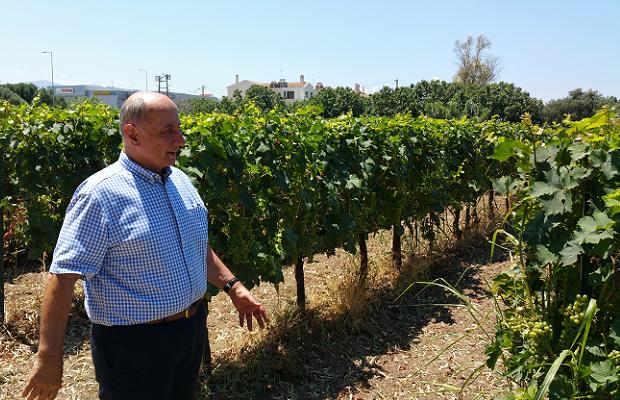
Antanassis Parparoussis and Moschato Vines, Domaine Parparoussis

Athanassios Parparoussis and Moschato Vines, Domaine Parparoussis

Founded in 1974 by oenologist Athanassios Parparoussis who works as winemaker while daughters   Erifili and Dimitra support on the business and marketing side. The winery is located in Patras and the property includes 10 hectares at Movri Achaias. Grapes are farmed organically and Parparoussis is one of only two vintners ion the region making wines from the rare and indigenous Sideritis. Parparoussis farms organically in principal but is not certified, nor is Athanassios concerned with the designation. It’s a matter of being devoutly pragmatic. “The soil is alive, so why kill it.”

Parparoussis Sideritis Dons De Dionysos 2014, Peloponnese, Greece (SAQ 11900995, $21.00, WineAlign)

The 2014 “gift of Dionysus” is herbal, arid, directly unassuming and fixed with a very savoury, nearly resinous pastel palate. The wind blows rosemary and lavender and truthfully it’s like a naturally cured red feeling in a white package. All lemon citrus at the tail. Drink 2015-2016.  Tasted July 2015

Parparoussis Rosé “Petite Fleur” 2014, PGI Achaia, Peloponnese, Greece

Just under 300 cases are made of this pale, lithe and prodigiously lithe blush wine, like the Dionysus, made from 100 per cent Sideritis. Skin maceration was performed overnight, “a one night stand,” while indigenous yeast was employed for a natural, dry vinification. The light and rust-directed antiquity of caste excess has caused an exaggerated herbal, namely oregano aroma. The overall feel is suppositious and may just be one of the great Rosé stories ever told. Drink 2015-2016.  Tasted July 2015
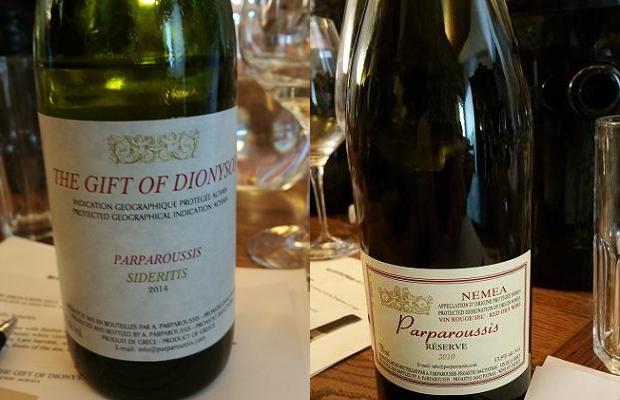
Parparoussis Sideritis Gift of Dionysus 2014 and Agiorgitiko Reserve 2010

Parparoussis Sideritis Gift of Dionysus 2014 and Agiorgitiko Reserve 2010

Parparoussis Les Dons de Dionysus 2010, PGI Achaia, Greece

Barrel Fermented blend of Assyrtiko (75 per cent) and Althorn (25). The first bottle is “not exactly as it should be,” oxidized and unpropitious, while the second pour much less so. In fact it tethers and teeters beautifully near that edge, on that razor the small creature walks, in a Dylan “what’s a sweetheart like you” way. So much more gumptive, anti-preemptive of depth, perception and possibility. Striking in its layering, stinging pierce of Assyrtiko with a suction of Althiri authority. Climbs upon itself and lingers in the air. “It’s done with a flick of the wrist.” Drink 2015-2020.  Tasted July 2015

Parparoussis Reserve Epilegmenos Oenos 2010, PDO Nemea, Greece

Further afield south in the Peloponnese comes this 100 per cent Agiorgitiko. The first bottle has a lactic-cheesy flaw, as if acetate of a mercaptan. One man’s flaw is another man’s history so the question does beg, was this meant to be? A winemaker’s intention? Apparently not. The second bottle, while still blessed of of a definite funk but one that is cleaner, unturned, a washed rind. So very dry. Drink 2015-2018.  Tasted July 2015
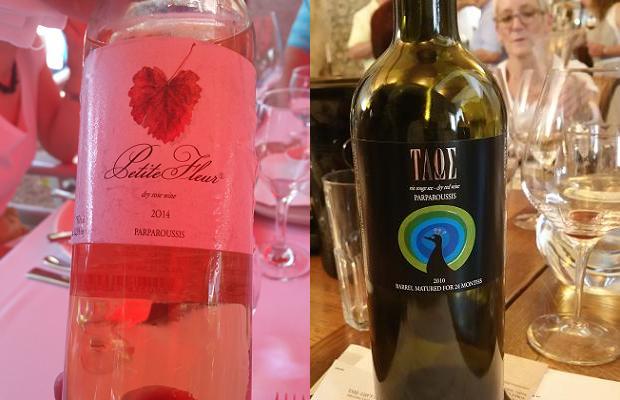
Parparoussis Rose Petite Fleur 2014 and Taos 2010

Parparoussis Rose Petite Fleur 2014 and Taos 2010

Parparoussis Taos 2010, PGI Achaia, Greece

A barrel fermented, dry vinified, 100 per cent Mavrodaphne. Naturally pitchy, high in acidity and purposed in tannin. A rare zero dilution at the hands of Black Corinthian Raisin and therefore not so high in alcohol, despite the richness of hue. Actually has a modern next tier level of complexity, complexion and aromatic intensity. Purple flowers and plum swirl in its circuitous, cycloid multiplicity. The savoury, resinous black bay laurel and chalky, cooked lentil, the grill and its smouldering charcoal are all in. Further resinous of bay oil on the back bitters and a very Tentura finish. Wild, sauvage, beautiful and built for the ling haul. Drink 2018-2025.  Tasted July 2015

Paparoussis Mavrodaphne of Patras Reserve 2003, PDO Patras, Greece

Vin Doux Nature poured from a 500 mL bottle, at 19 per cent, this is intensely nutty, of crème caramel and Cassis together as one. A marriage of godly sanctified vin santo cordial, with quite the balance from a brilliant vintage. There is heat that never burns, and a piquancy that offers no needed warning, Mavrodaphne of an aged, expertly developed expression. Such bitters at the finish end with wow. Drink 2015-2023.  Tasted July 2015

Paparoussis Muscat of Rio 2010, PDO Rio Patra

The sugar here is a strapping 160 g/L and the cost 15 euros for a 500 mL bottle. A vin de paille with so much more delicacy, structure and elegance and at only 13.5 per cent, a remarkable wine. Spice and relish is so smothered, coddled and pampered. The length is incredible. This is remarkable dessert wine with all tempos in balanace. Drink 2015-2030.  Tasted July 2015

Oenoforos (Rouvalis)

Selinous, 25100 – Aiyion, Greece, 30 2691029415, info@rouvaliswinery.gr.
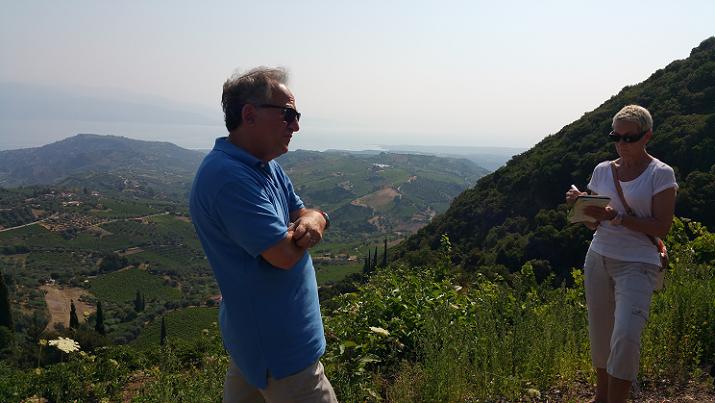
Aneglos Rouvalis and WineAlign's DJ Kearney

Aneglos Rouvalis and WineAlign’s DJ Kearney

Eonologist is Angelos Rouvalis, a winemaker with an encyclopedic knowledge of every hill and slope in the mountains above Patras and where each variety grows best. Established in 1990 by Rouvalis, a Bordeaux-trained winemaker, recognized internationally as a pioneer in the renaissance that has taken place in the Greek wine industry in recent years. In 1994 Yannis Karabatsos, an agricultural engineer and expert in Greek viticulture joined the winery. “The Oenoforos winery consists of five levels on the slopes of Aigialeia in the village of Selinous. It combines monastic simplicity with state-of-the-art technology.”

Oeneforos Roditis ‘Asprolithi’ 2014, PDO Patras, Greece (SAQ 978197, $16.50, WineAlign)

The “white stone” could be considered the Pinot Grigio of Greece though the pink-skinned variety grown here between 800-1000m is such a bleed of high altitude calcaire. An amalgamated, aromatic accumulation is all about citrus without the airs of pierce and secondary sandarac meets kedros that reminds of clementine. At 11.5 per cent alcohol and low pH it might confuse for Trocken Riesling if not for its classic herbiage and austerity. Drink 2015-2018.  Tasted July 2015

Oenoforos Chardonnay Ianos 2009, Peloponnese, Greece

So buttered and creamy, in condition of its two years in oak. Age has delivered corn to popcorn. It’s both unambiguous and atypically Peloponnese, if certainly symptomatic of Chardonnay in a diaspora that veers from its regional path. Like the oak of all clothed Chardonnays, expect the excepted and drink up. Drink 2015-2016. Tasted July 2015

Oenoforos Cabernet Sauvignon Ianos 2004, Peloponnese, Greece (SAQ 11607342, $22.95, WineAlign)

A current release, all in Cabernet Sauvignon 10 plus years down its road after two years in French oak. A bold and state-of-the art for its time cool-climate take, with a clear and ad hoc Sonoma-like intention, with attitude out of altitude despite ’04’s nothing but average growing season. Herbaceous and currant direct Cabernet with plenty of fruit that has remained true and in the bottle. Sweet scents, floral and red citrus and expressly, naturally Greek. Red fruit from red soil. Has a natural, slightly oxidative cure that has emerged out of that oak shell. Strikes as a wine that needed this extended held-back time to get to this place. The palate’s fruit is dried and saline now, with tannin insistent in persistence. Rich but not nearly so, a gently rolling and evolving Cabernet with life in it yet, though the raisin character suggests now is better than tomorrow. Not so much mythologically invented, as it is internationally purposed, so it’s more a matter of higher and lower. The wine’s universe is a flat disc with hills, touched at its rims by the vast dome of the heavens. Drink 2015-2016.  Tasted July 2015

Oeneforos Rosé Mikros Vorias 2014, Peloponnese, Greece

Syrah with Viognier and Roditis. A layer upon layer blush combing of dry extract over full extract. Another example of the region’s ability to achieve Rosé excellence and the practice should both be encouraged and expanded upon. Drink 2015-2016.  Tasted July 2015

Oeneforos Chardonnay-Sauvignon Blanc Mikros Vorias 2014, Peloponnese, Greece

The white blend representation for the house line of fresh and direct wines translates to “small northern wind,” and here the SB sticks out like an Achaian thumb, dominating the nose with grass and capsicum. It’s toasty and almost Pouilly-Fumé smokey mixed with a pinch of Fuissé. The identity quandary brings Galician Albariño to mind, seen in the spirited almost effervescent tinniness. Very lime palate and fast forwards to stage right, running all the way. Drink 2015-2016.  Tasted July 2015

Oenoforos Merlot-Cabernet Sauvignon Mikros Vorias 2014, Peloponnese, Greece

Rusty and cured, just not quite ripe red plum, from a 60-40 combo, with a healthy level of veneer. Has gumption, pierce and a citrus red bleed. Drink 2015-2018.  Tasted July 2015
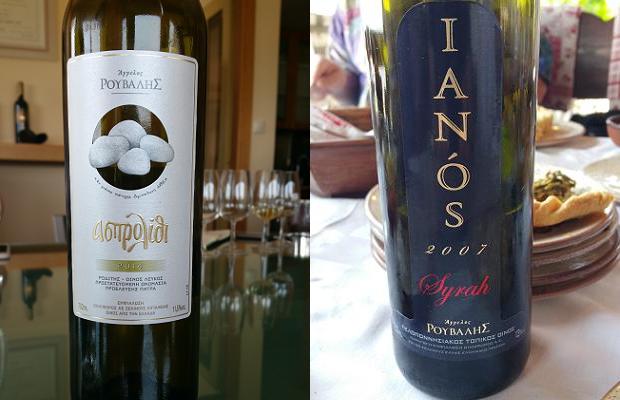
Oenoforos Asprolithi 'White Stones' 2014 and Syrah Ianos 2007

Oenoforos Asprolithi ‘White Stones’ 2014 and Syrah Ianos 2007

Oenoforos Syrah Ianos 2007, Peloponnese, Greece

Ferric, volatile, bretty but believe me when I say, all in a good way. The lingering meaty chew and porcine Mulligatwany is the expatriate Syrah equivalent of high gastronomy. A wild and wooly match to the Beef Stifado at To Katafygio. Drink 2015-2016.  Tasted July 2015

Antonopoulos Vineyards

25008 Vassiliko Chalandritsas, Patra, 30 2694061447, info@antonopoulosvineyards.com

The winery was founded by the late visionary winemaker, Constantinos Antonopoulos near the city of Patras in the northwestern of Peloponnese. Constantinos saw the vast, untapped potential of this diverse landscape, especially the mountainous region of Achaia and the unique winemaking opportunities it presented. A new up to-date winery has been built recently at Vasiliko, Achaia, where the majority of the winery’s vineyards are. Indigenous Greek varieties are the focus. All three Antonopoulos wines tasted at the winery Achaia Clauss were clearly achieved through very serious work. Though clean beyond the pale, they all exhibit slightly to more than leesy and all finish with so much salinity and limestone inflection. The only thing missing is the crustaceous accent.
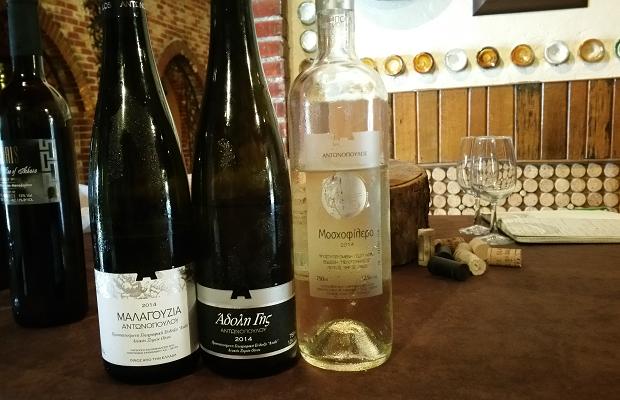
Antonopoulos Vineyards

Antonopoulos Vineyards

Antonopoulos Moschofilero 2014, PGI Arkadia, Greece

A rich, striking, citrus Moschofilero with a beautifully severe tannic tang and many layers, scraped from a stone’s bleed and a gaze into the rock’s mirror. A wine akin to a creation of a true alphabet, made complex like the dactylic hexameter in poetry or a rhythmic scheme. Drink 2015-2018.  Tasted July 2015

Antonopoulos Adholi This White 2014, PGI Achaia, Greece

Essential and pedigreed blend of Lohorthi 65 per cent), Chardonnay (20) and Roditis (15) that expresses increased aromatics much like Viognier. Nearly profoundly tropical but so very dry, like Assyrtiko in its cracking open but with the feel of wild yeast and the feign of barrel. Chalk it up to 800-900m clay-limestone speak and no more than that, creasing to a crisp effervescence without bubble, yet it does tingle of the tongue. Like it’s working all the while, then on to citrus on the end, in lemon and lime torque as if by Riesling. The Moschofilero might be Mycenaean Linear B and this the other, later Greek alphabet. Drink 2015-2018.  Tasted July 2015

Antonopoulos Malagousia 2014, PGI Achaia, Greece

From sand and clay vineyards in the region of Aghios-Athanasios at a height of 600-900m. Picked late near the end of September to early october and cocrete and thought the ferment is a stainless one, this Malgousia exhibits a natural yeasty funk commingling with moving texture and savour that incorporates grasses. The sting of nettle wins over the softness and spumes a hay fever of grass. A warming, adult of a wine, with some power to age. Drink 2016-2021.  Tasted July 2015

Acheon Winery

Korinthou 121, Aigio, Greece, 30 26910 28062, info@acheonwinery.gr.

Sosanna Katsikosta is Oenologist and General Manager while Katerina heads up business and marketing operations. The sisters are carrying on a winemaking tradition passed on to them from their late father. Konstantinos Katsikostas carried the torch from his father Luke who founded the winery in 1946 in the area of Palaiokamares of Aegio. Annual production of 2,000 cases. Katsikosta is desperately, passionately practicing, experimenting, trying to stir up vinous ghosts and find their way back to ancestry, to ways of elders, to bring to light what used to be and to establish an identity for the world to see.

Acheon Roditis 2014, PDO Patras, Greece

A quintessential “Fox” Roditis, from low yields (40 hL/L), 900 m above sea level, in organic balance at 12 per cent alcohol. A distinct stone tang, push, pierce and a slight tingle or fizz on the tip of the tongue. Highly concentrated out of an elevated dry extract, with mineral and lemon. One of the more expressive push-pull of fruit and mineral. For everyday consumption with a bit of honey in its two to three year future. Drink 2015-2018.  Tasted July 2015

Acheon Sideritis 2014, PGI Achaia, Greece

The nearly extant one, a rare variety, being revived, planted at low altitudes, with yields 70-75 hL/L. Aromatic and misunderstood, with a Savagnin character, a funky, musky skin, like leather but not as deep, yet something oddly tropical, like jackfruit, or gummy bear, dusty ginger, and resin, like thyme. Another variety being worked with to see what it can be and to link back to what once was. Really good acidity. Drink 2015-2016.  Tasted July 2015

Acheon Sideritis 2014 and Rose Fairytale 2014

Acheon Sideritis 2014 and Rose Fairytale 2014

Acheon Moschato 2014, PGI Achaia, Greece

A banana and metal White Muscat, with plenty of herbal qualities, terrific saline and stony acidity dominating the palate. A medicinal grapefruit chew, not of pith, but of skin. Arid as a grove in wind and finishing with good length. Very interesting. Drink 2015-2017.  Tasted July 2015

Acheon Laura Nera 2012, PGI Eigialia Slopes

Mavrodaphe and nothing but, vinified dry, subjected to no aging. The smell of bay laurel (thus the varietal name) and fashioned for freshness. Still in command of a musty emmision this one, a strange cure, like some cool-climate, winter hardy hybrids, like Maréchal Foch and Frontenac. Perhaps a touch warmer, like opening the doors to Pinotage without the toast and the oak to fill and sweeten the green, reductive gaps. Has the roadhouse blues so “Keep your eyes on the road, your hands upon the wheel.” Drink 2015-2017.  Tasted July 2015

Acheon Rosé Fairytale, Peloponnese, Greece

A semi-sweet Rosé composed from 90 per cent Muscat co-fermented with 10 per cent Mavrodaphne. Dessert of blush hue and sappy, leesy, medicinal bitters. Very orange rind and chlorite, somewhat port-esque but so much more a tisane of pekoe and cough elixir. Totally off the charts different. Really like nothing tasted before. Drink 2015-2016.  Tasted July 2015
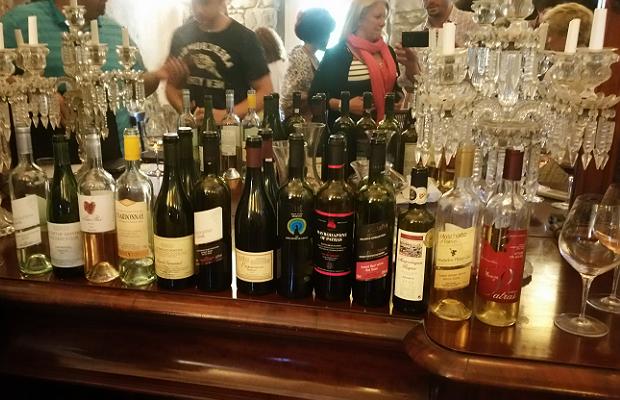
Wines of Parparoussis, Loukatos and Kontrotsos, Parparoussis Winery, Patras

Wines of Parparoussis, Loukatos and Kontrotsos, Parparoussis Winery, Patras

Kotrotsos

Vassiliko Achaias TK. 25008, 30 26940 61 900, vinko@otenet.gr. Winemaker is Giannis Kotrotsos.

Kotrotsos Erasmios Moschofilero 2014, Peloponnese, Greece

An unctuous, ambrosial Moschofilero, highly aromatic, of citrus and orange grove. A 12.5 appealing alcohol per cent and surround sound of acidity, good length and a bitter ending that follows a twinge of steely crick. Drink 2015-2018.  Tasted July 2015

Kotrotsos Muscat NV, PDO Muscat of Rio Patras

Also based on the 2013 vintage and c charging in at 15 per cent alcohol, here there is more rust, funk and metal, certainly not as fruit forward as expected. Sweetness is elongated, stretched and elastic, then snaps back to linear and upright. Drink 2016-2022.  Tasted July 2015

Kotrotsos Mavrodaphne NV, PDO Mavrodaphne of Patras, Greece The standard 15 per cent alcohol and in this plugged in, short fuse sweet wine is highly intense and lit caper green, dried fruit and a serious pasticcio of botanicals, distilled into a major excitative and concentrated sweetness.  The second bottle tasted has so much more life and character. Much more sweet floral attractiveness and the sweetness is less pronounced as a result. Goes from spice and piquancy to sweetness with the right transitory methodology, culminating in a great LBV Port finish. Nutty and spicy. Tremendous fruit forward expression.  Drink 2016-2024.  Tasted July 2015

Kotrotsos Chardonnay Oinos Aekos 2014, PGI Achaia, Greece

Combinbes barrel and resin for a full on savoury effect and so much noticeable, piercing grape tannin. Fierce, uncompromising, non-integrating invaluable invalid of tannin. So very cool climate savoury Chardonnay. Striking actually and a very acquired taste. Drink 2015-2016.  Tasted July 2015

Kotrotsos Agiorgitiko Erasmios 2012, Nemea, Greece An intoxicating perfume, of violets and charcuterie, floral and cure, vegetative and saline. Lactic, talcy, opaque and dusty, like Cabernet Franc from the coolest locale. Finishes saline again, chewy even. Drink 2015-2018.  Tasted July 2015

Karelas Winery

Georgios J. Karellas A.V.E.E, 41-43, Skagiopouliou Str., Patras, 262 22, 30 2610 321 000, karelas7@hotmail.com

Karelas Winery was founded in 1936 by Georgios Karelas. Using the native ‘Mavrodaphne’ grape, the company is renowned for it’s sweet, dessert style Mavrodaphne wine.

Karelas Pelagos 2013, PGI Achaia, Greece

Merlot and Mavrodaphne share the cure and the veneer of a strange bedfellow blend, the old and the new, the rust and the dust, the red and the black, the visitor and the been there done that. Tough acidity and tannin over red citrus fruit. Not shy. Drink 2016-2020.  Tasted July 2015

Karelas Achais 2013, PGI Achaia, Greece

Cabernet Sauvignon and Mavrodaphne smothered in more  obvious oak, though less tension and demand. A softer wine in using Cabernet over Merlot, ripened easier, better, with a second gear and then  into acidity mode. Again the cool climate veneer with a warm, savoury, minty middle. Drink 2015-2019.  Tasted July 2015
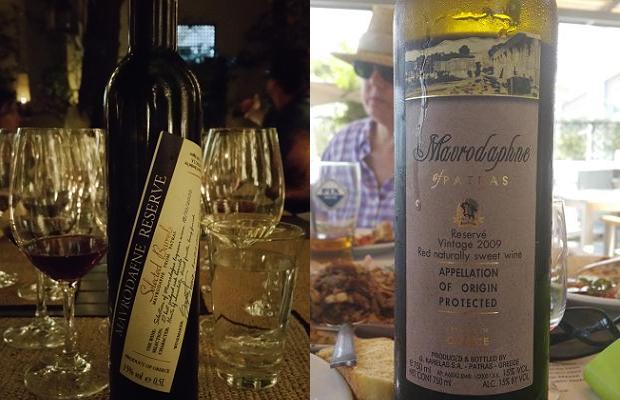
Mega Spileo Mavrodaphne and Karelas Mavrodaphe Reserve 2009

Mega Spileo Mavrodaphne and Karelas Mavrodaphe Reserve 2009

Karelas Mavrodaphne Reserve 2009, PDO Mavrodaphne of Patras, Greece

The only Mavrodaphne aged in highly seasoned toasted new French barrels. The standard weight bearing 15 per cent alcohol and a similar feeling as with previous kicks at the sweet Mavrodaphne can, but more red fruit and brighter raisins in the sun. The spice and liqueur here seem less spirited and combine for a more mature, seasoned, reasoned, direct and ultimately cleaner expression. Captain Jack (or George) will get you Achaia tonight “and take you to your special island.” Drink 2015-2022.  Tasted July 2015

Loukatos

Loukatos Bros, Β 3 & ΟΤ 24, Industrial Zone Patra 25018 Achaia / Patra, Greece, 30 2610 647588,  info@loukatos.com.gr

Perhaps most famous for their local production of spirits, namely Tentura and Mastic, Loukatos does a bang up job with dessert wines, especially in their handling of Muscat from Patras.

Loukatos Mavrodaphne NV, PDO Mavrodaphne of Patras, Greece

Vin de liqueur clocking in at 15 per cent alcohol. The dried roses and red flowers in liqueur link it to the likes of a Late Bottle Vintage Port. Wakes with a start, in sting and presence. Really lingers, tasting of blanched nuts and Halls mentholyptus. This batch was blended with 47 percent corinithian grape. The finish is so Manischevitz. Drink 2015-2023.  Tasted July 2015
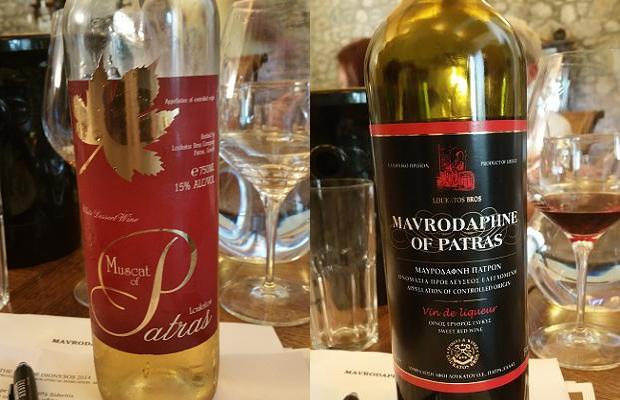
Loukatos Muscat of Patras and Mavrodaphne of Patras

Loukatos Muscat of Patras and Mavrodaphne of Patras

Loukatos Muscat NV, PDO Muscat of Patras (WineAlign)

A 15 per cent abv Vin de Liqueur largely based on the 2013 vintage. Very clementine and apricot nosed, impeccably balanced from viscous to intensity in grape, with nothing musty or musky about it, though there is a musk melon sense, a botrytis that is very clean. Another excellent, natural sweet Patras example of what Muscat can do, again at super low cost, with high flavour and here, more fruit forward than the Kotrotos. Drink 2015-2021.  Tasted July 2015

Hahalis (Chahalis) Mavrodaphne 2011, PDO Mavrodaphne of Patras, Greece

Spent one year in barrel, the Tentura Castro “The Castle” is raisined and resinous with so much heavy artillery and coats of armour. The macro intent so black and porous, oxidative but alive, heavy and warm in alcohol but spirited and shooting cupid’s arrows. Sweet and Amarone trophy in a sense, with licorice and spice unlike anything else. Idiosyncratic to the nth degree. Drink 2015-2021.  Tasted July 2015

Achaia Clauss Mavrodaphne NV, PDO Mavrodaphne of Patras, Greece

From a lot penned Bin 601 at the standard 15 per cent alcohol and acting like it came from a 100 year-old barrel, of sitting bull wisdom and Bavarian history. Much like port, like brandy spirits and liquorice melting into cinnamon and clove. Not so idiosyncratic but resinous, sappy and piquant. Once you come to know these wines they speak this very direct language. Drink 2015-2025.  Tasted July 2015

Patraiki Mavrodpahe NV, PDO Mavrodaphne of Patras, Greece

A direct, rich, full-bodied leathery red of fruit the same that soaks in simple, sweet liqueur. The most accessible, commercial macro-intention of the black laurel lot. Drink 2015-2020.  Tasted July 2015

Crisis? No one’s gonna bring Greece down, nor me neither, ’till I again reach Achaia ground.

Good to go!

http://www.winealign.com/profile/2058-mjg

Till I reach Achaia ground

View of the mountains of Achaia from Tetramythos Winery and Homestay, Ano Diakopto of Aegialia, on the slopes of Mount Chelmos, Peloponnese

View of the mountains of Achaia from Tetramythos Winery and Homestay, Ano Diakopto of Aegialia, on the slopes of Mount Chelmos, Peloponnese

as seen on WineAlign

Man I wish I was there right now. Have you recently pondered or are you considering a visit to Greece? Have the sensational media reports of the last month cast a shadow of doubt on your travel plans? Are you worried about economic crises, ATM line-ups, looting and civil unrest? Don’t be. Do not fall victim as prey to dictum on what you or those who are telling you really do not know. You should go. Greece is just fine thank you very much. She welcomes visitors with open arms. This is what she wants and what she needs.

Crisis, what crisis? 

I am no John Maynard Keynes, have never rooted with Milton Friedman and can’t confidently say that my economic stars align with Paul Krugman, but on my recent trip to Athens and Achaia I saw nary a sign of unparalleled and utter economic disaster, of panic, anarchy or civil disobedience. I had many a conversation about government, taxes and the Euro. I learned that no is the new yes, “but whatever…” and that Greek wine aligns with the functions of the European union.

Write your problems down in detail Take them to a higher place

I am inclined to say, with indubitable and unequivocal doubt that Greece is the safest, most affordable and stupidly beautiful place on the planet. There is adventure, breathtaking vistas and scarcely, if commensurately discovered antiquity at every turn. And there is wine. Exceptional wine. Singular wine. Mythological wine. I can tell you five things I learned about the 21st century state of things Greece.

  1. Athens is a busy, hot, labyrinthian metropolis that somehow feels like an ancient village. It may just be the most unassailable and secure Gotham I have ever encountered. It did not leave me tired, on the contrary, it fuelled invigoration.
  2. Encounters with beautiful, nurtured and erudite folks along the course of a given day affords an equipotentiality to reaffirm faith in humans. Doors are always open.
  3. Bad governance may lead to civil jeremiad and global media strategies built upon the inevitable crumbling foundations of sensationalism and hyperbole, but Greece’s main concern is just that. Bad governance. Business carries on as usual, albeit with a noticeable reduction in smoking and petrol usage, but restaurants, cafes, coffee shops and shopping are not on hold. Centuries have seen such woe and yet Greece persists, remains and progresses. “Believe only half of what you see and nothing that you hear.” America may have long ago entered its Last Great American Whale period but Greece? Not even close. “They say things are done for the majority” and in the case of Greece, that just may be true. In a time of crisis, there are many business opportunists. Hard times? Grow better grapes. Can’t sell them at home? Export more than before and make better money.
  4. The combination of mountains, ocean, beaches and the symbiotic proximity of the appositeness is nothing short of mind-altering, awe-inspiring and soul-asservating.
  5. Forget the idea that Greek wine offers up some of the best values, anywhere. Consider that sort of posturing a given and or inconsequential in consideration of the adage that good wine is good wine, period, regardless of price. The wine producing regions of Santorini (Aegean), Thessaloniki/Naoussa (Macedonia) and Nemea (Peloponnese) have made wide inroads on the global scene. Yet how many of you have ever heard of Achaia and Patras in the northern Peloponnese? It is on the verge of breaking out. Obscurity no longer. Uncertainty be gone.

At the pass

Greece has been mired in waiting, or depending on your level of positivity and how to spin, poised to break out. The Greek wine industry is securely fastened in a place somewhere between the relic glow of early period brilliance and the cusp of legacy defining, career opus penning compositions. It is a work in process and the best is yet to come. The wines of Achaia are entirely indicative of this intellection. Antiquity is an amazing tourist attraction and in Achaia, as in the entirety of Greece, you can’t blink without stumbling upon a metaphorical doric this or an allegorical ionic that. Cradles of civilization just have a certain den xéro̱ ti and Greece is the world super-power. The question begs. How does this apply to wine?

Like so many wine producing nations not called France, Germany or Italy, Greece is poised for modern greatness but it has one distinct advantage. It lays ownership to some absolute conditions that easily separate it from emerging and developing, New World regions, but also from European peers. The first is obvious and that of course is a centuries old tradition of making wine. The second may come as a surprise, especially as it relates to wine. Mythology covets a paradigmatic relationship with Greek culture, however intangible it can be quantified. A visit to Achaia offers tantamount proof of such a notion. This from New Wines of Greece: “The fascinating archaeological sites with the notable museums and the grape-growing and wine-making history directly tied to the myth of Hercules are just some of the attributes that will appeal to those who indulge in wine tourism in the Peloponnese.”

Then there is the confluence from the slopes of Egialia, said to form the centre of the triangle of Ancient DelfiOlympia and Epidavros. It was not long ago that I connected the divine and the allegorical with Greek wine. I quote myself. “Me, I’ll concentrate on the divine mythology of Greek wine, of its place in the fractal world, how it can beautify and simplify, through recursion in dynamic systems, the bleak chaos of wine landscapes. Like the Morai, Greek wines are thread with motherly nurturing. For mere mortals, they direct fate from the birth of their drinking days to death. They are a highly independent bunch, unobstructed and driven by necessity.” It would be obtuse to ignore the hyper-reality of all these extraordinary things, to discount the divined revelation through profound symbols of religious myth. To see the analogy and pertinency with the mathematics of wine; pH, sugar, acidity and alcohol. Not exactly Pythagorean, certainly not Orphic, but mysterious somehow.

The Achaia advantage: From PGI to PDO and endemic varietals

The Peloponnese is located in the southernmost section of continental (western) Greece, its western and northern borders lining the Ionian Sea and the Corinthian Gulf. Homer called it Ampeloessa, meaning “full of vines.” The Achaian advantage is more than just a matter of slope and soil. The Nazi attrocities committed at Kalavryta will always be remembered as the darkest of Peloponnese days but neither war nor Phylloxera has truly interrupted centuries of growth and tradition.

Achaia is one of Greece’s largest wine regions and its 31 wineries accounts for approximately 10 per cent of the national wine output. The mesoclimate of Achaia is determined by a combination of mountain and sea. Erymanthos, Panachaikos and Chelmos range for vines at up to 850m though in Egialia grapes grow as high as 1050m. There are slopes here with a northern aspect, a factor which is not lost on the winemaker in search of cool-climate viticulture. The mountain man of Eigalia Angelos Rouvalis points to the hills and talks of  “a rare terroir, where facing north can achieve a significant drop in temperatures, creating specific vine balances, which is difficult to achieve in other places.” It is also here that the waters of the gulfs (Patras and Corinth) cool and temper the climate. Stronger winds ward off the warmer streams blowing up from Africa, creating a much cooler viticultural area than Patras.

The northern Peloponnese vineyards are divided into four distinct viticultural locales. In the east, in the areas of Egialia (Aegialia) and Kalavryta, the PGI Egialia wines are produced. Egialia’s temperate climate and northerly orientation on (250 to 850m) slopes are protected by the cool summer sea breezes of the Gulf of Korinthos (Corinth). Pausanias was a Greek traveler and geographer of the 2nd century AD, who lived in the times of Hadrian, Antoninus Pius and Marcus Aurelius. He referred to the villages of Egialia as ideal for cultivating vines. Egialia soils vary from white calcareous to fertile sandy loam with good drainage.

It is in Egialia that the endemic white (blush) and highly aromatic variety Roditis ripens ever so gently. The varietal take in the lower (450 to 500m), yet similar climate for the vineyards of Patras makes for wines of fuller body. Lower Patras slopes are positioned for another indigenous grape, the red varietal Mavrodaphne. Traditionally purposed for desert wine, modern usage of the “black” Daphne is happening for dry table wine, as is the black of Kalavryta (Mavro Kalavryta), from grapes grown on slopes close to the tourist town of Kalavryta. The coastal flatlands between Patras and Rio to the east are dominated by the white Muscat. The varietal watch is on for Mavro Kalavryta, a grape that performs like Gamay or perhaps Cabernet Franc. In the hands of a winemaker like Panayiotis Papagiannopoulos it will be a wine to help mark the act of Achaia’s second renaissance. Konstantinos Lazarakis M.W. sees it as “the best Gamay that is not Gamay.” This is a man who knows his audience. 😉 This is a grape that will define fresh and further down the Peloponnese road for red wines and begin to separate from itself from other red attempts. It’s future will see the establishment of plots into crus, to make simple fruity reds to drink and also more serious wines, to experiment and to use some older barrels and to envision the future when it has been given some age.

Konstantinos Lazarakis M.W. and Sofia Perpera, New Wines of Greece at the Sailing Club Restaurant, Patras

Konstantinos Lazarakis M.W. and Sofia Perpera, New Wines of Greece at the Sailing Club Restaurant, Patras

The four officially recognized PDO‘s are Muscat of Patras, Muscat of Rio Patras, Mavrodaphne of Patras and Patras. The first three are produced in the central and western section of Achaia. The local Muscat is known to the world as Muscat Blanc à Petits Grains and in Achaia as Moschidi. Under the regulations of both Muscat PDOs the wines may be vin naturellement douxvin doux or vin doux naturel. PDO Patras is made from 100 per cent Roditis, though there are several clones of this variety. Specific clones are generally chosen based on altitude, as each variant has been proven to work on particular slopes. The top wines are produced from a red Roditis, also known as Alepou. The PDO Mavrodaphne of Patras (Fortified, Vin De Liqueur) can be fashioned with up to 49 per cent dried and rehydrated Corinthian Raisin (Black Currant) in the mix.

Black Corinth Grapes

Black Corinth Grapes

Despite the fact that the predominant amount (almost 99 per cent) of Black Corinth ends up in a pouch full of currants, its agricultural significance continues to play a role in the sweet red Mavrodaphne of Patras. Top quality vineyards have historically been cultivated with the Black Corinth because they fetch as much as 300 per cent more money than wine grapes. The bizarre terroir-varietal-trade flow chart is changing for the better but the raisins remain a long way from extinction. Slopes that face the sun perpetuate the propagation. Then there is the unusual scenario of the earthquake factor. “In Patras we are either raisining or shaking,” quips Lazarakis.

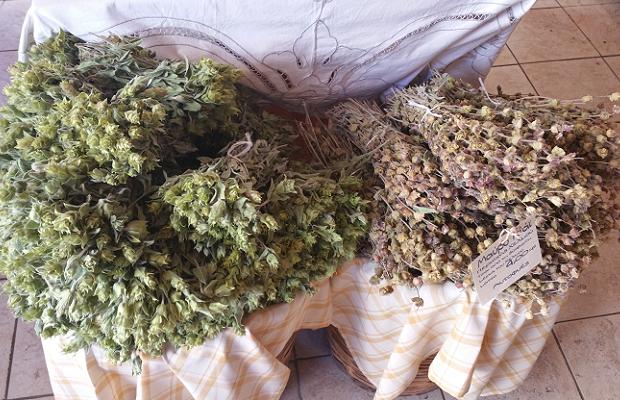
Kalavryta Mountain Tea

Kalavryta Mountain Tea

Other white varieties grown in the region include the extremely rare Sideritis (only two producers for the variety that shares a name in common with a flowering plant known as Greek Mountain Tea), Malagousia, Lagorthi, Chardonnay and Sauvignon Blanc. Other red grapes cultivated include Agiorgitiko, Xinomavro, Merlot, Cabernet Sauvignon and Syrah. The wines of Achaia are built upon an alcohol premise that keeps them stable, in balance and immune from oxidation. Their attitude fights the life work of Louis Pasteur and Jean-Antoine Claude Chaptal. If the wines lost some footing due to the trending towards bacteria and sugar mien, now, with the world peeling back from manipulated wines, the Achaian style is poised to grab their market share.

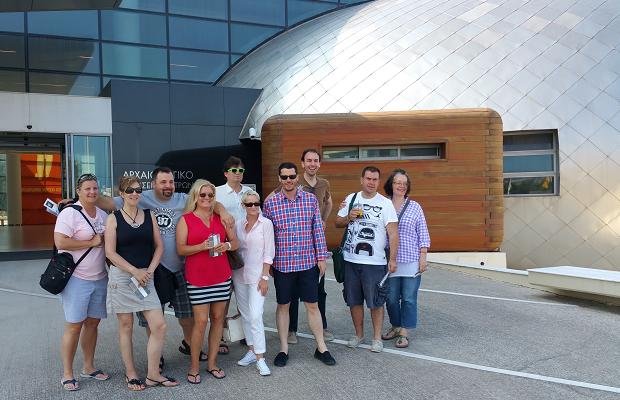
Accidental tourists at the Archaeological Museum of Patras

Accidental tourists at the Archaeological Museum of Patras


Tetramythos

8ο kil. Pounta-Kalavrita, Ano Diakopto, 25003, Greece, 2691097500 The most modern facility in all of Achaia, re-built after a fire destroyed the property more than 10 years ago. Owned and operated by the brothers Aristos and Stathis Spanos.

Panayiotis Papagiannopoulos, Tetramythos Winery

Panayiotis Papagiannopoulos, Tetramythos Winery

Oenologist since 1999 is Panayiotis Papagiannopoulos, a winemaker who may just have been separated from twin Frank Zappa at birth. Located at Ano Diakopto of Egialia, on the slopes of Mount Chelmos, the 14 hectares of vineyards (450-1,000m) are farmed organically (and have been since 1997). Bush vines make up 80 per cent and endemic varieties (85 per cent) cultivated (plus some expatriates) are Roditis, Malagousia, Sauvignon Blanc, Mavro Kalavryta, Agiorgitiko, Cabernet Sauvignon and Merlot. The total production is 13,000 cases with export to foreign markets (80 per cent) that exceeds peers by a wide margin.

Ano Diakopto of Egialia

Tetramythos Winery, Ano Diakopto of Egialia

Tetramythos Roditis 2014, PDO Patras, Greece (SAQ 12484575, $15.75, WineAlign)

Pulled from four vineyards at 650-850m of altitude and from vines 19-42 years old. No skin contact though it shows a light, slight tinge of colour. Nearly platinum in its yellow hue, perhaps attributed to organics says Papagiannopoulos, Eighty per cent was achieved through natural ferment (with zero malolactic) plus “one tank for security.” Roditis can go clean or develop anti-austerity, texture, viscosity in the direction of a dirty projector. The Tetramythos glides “forward through the clover and the bergamot.” I can see what she’s seeing. Tasting like a leesy ripe peach, this is the best “basic” Roditis tasted in Achaia. Serious match of Aleria Restaurant‘s Sea Bass Tartare. Drink 2015-2020.  Tasted July 2015

Tetramythos Roditis 2008, PDO Patras, Greece

A wine to fulfill the promise of my own personal vindication. I had asked Angelos Rouvalis about laying Roditis down for three to five years or more, to see where it may go and he said, “why?” Here is why. Has fan vaulted to the skies, urged by petrol and a symphony of mythology. Akin and within aromatic mineral reach of Sémillon or Riesling, with just a basal drip of ambrosial, gaseous honey. The green notes (of pea and nettle) are exaggerated but that is attributed to 2008 fruit that may have never been fully ripe. Drink 2015-2017.  Tasted July 2015

Tetramythos Roditis 2014 and Muscat Sec Blanc Nature 2014

Tetramythos Roditis 2014 and Muscat Sec Blanc Nature 2014

Tetramythos Muscat Sec Blanc Nature 2014, PGI Peloponnese, Greece

Nothing short of lucent, this friable, direct and crunchy raw Muscat. Effusive of individual vowels and consonants, typically Achaian, extrapolated to Greek in its lambent and inventive simplicity. More glade than wax, it coats with orange and the spirit of lime. So different and yet so familiar, inevitably dry and straight as an arrow. Drink 2015-2018.  Tasted July 2015

Tetramythos Mavro Kalavryta 2014 (SAQ 11885457WineAlign)

A terrific example for a grape saved from extinction, Tetramythos owns 1.9 of a total four hectares of MK. Kudos for the effort especially considering the variety is thin skinned, slow to mature and difficult to cultivate. Saw nearly 20 days of skin contact because “the variety dictates the practice,” notes Konstantinos Lazarakis M.W. The fruit and bitters express a push-pull of terroir. One of two wineries making dry wines from the endemic variety, here the fresh red grape, the food friendly marker. Here confidently struts modern Achaian winemaking, from the ashes of naturalism and antiquity, the way Gamay or Loire Cabernet Franc are wont to do. Vibrant, with verve and a necessary natural funk. Herbal and with a rub of tomato skin, creamy, cool yet resinous, followed through from aroma to texture. Drink 2015-2018.  Tasted July 2015

Kotrotsos Moschofilero Erasmios 2014 and Tetramythos Mavro Kalavryta 2014

Kotrotsos Moschofilero Erasmios 2014 and Tetramythos Mavro Kalavryta 2014

Domaine Mega Spileo (Cavino)

The domain is set within a dramatically oriented steppe of an amphitheatre, in a bowl beneath the shadow of a 940m rock that houses the great Greek Orthodox monastery of Mega Spileo (Grand Cave). Nowhere else in the Chelmos mountains does monk viticulture resonate as it does here. The great vineyard (Megali Ambelos) perches above the Vouraikos Canyon at 800m of height. The winemaker for the wines of Cavino and Mega Spileo is Stelios Tsiris. Varieties grown since re-planting in 1999 include Mavrodafne, Mavro Kalavritino, Cabernet Sauvignon, Merlot, Syrah, Lagorthi, Assyrtiko, Malagousia and Riesling.

Mega Spileo Monastery

Mega Spileo Monastery

Moschato 2014, PGI Achaia, Greece

Nearly bone dry (4 g/L RS) and well-nigh nicked by acidity (6.2 g/L TA) this is really a true expression of the Muscat Blanc à Petits Grains, an elegant cold pour into a glass on a breezy, sunny day. Until now Muscat in Achaia “could never look me in the eye” but the flurry of aromatics sing like a songstress in white lace. Its gaze is like lemon and olive oil and its tongue like the sweet wax on the rind. Here the Moschato path has been properly and soulfully taken. Rich in gold, like the kingdom of Agamemnon at Mycenae. Drink 2015-2017.  Tasted July 2015

Deus Rosato NV, Peloponnese, Greece

Made from 100 per cent Syrah and slightly sweeter than the Muscat, here at 60 g/L RS. The lees, cheese and funk from Syrah turned to sparkling distracts from the sweetness, sending this to parts of southern France in meditative, Mediterranean, savoire savour faire. Raspberry and cranberry vie for sweet and sour supremacy and the wine actually, seemingly turns dry on the peppery, fizzy, tanky and spirited back side. Never backs down and the last conceit is one of tannin. So much more successful than the Moschato. Drink 2015-2019.  Tasted July 2015

Mega Spileo Moschato 2014 Deus and Deus Rose

Mega Spileo Moschato 2014 Deus and Deus Rose

Cavino Mavrodafne Reserve 2000 (Winery)

“We are about to experience one of the best underdogs of Greece,” says Konstantinos Lazarakis M.W. by way of introduction. The world had to wait 18 months plus seven years years for this to appear. A Port-style fortified red, fashioned from the 27 best judged oak barrels and finished in October of 2000. The mix is Mavrodaphne (70 per cent) and Black Corinth (30), expertly amassed and positioned at a time when using the 49 percent maximum allowance of dried raisin was the norm. Ahead of its time in that regards but also because of its rangy acidity, incredible acidity actually, something that gives this dessert wine the essence and spirit of raisin radio. That and a beautiful oxidation and it succeeds in wooing palates, not to mention fulfilling the promise laid bare by Mr. Lazarakis. Drink 2015-2020.  Tasted July 2015

Parparoussis

Achilleos str., 264 42 Proastio, Patras, Greece, 30 2610 420334, info@parparoussis.com

Antanassis Parparoussis and Moschato Vines, Domaine Parparoussis

Athanassios Parparoussis and Moschato Vines, Domaine Parparoussis

Founded in 1974 by oenologist Athanassios Parparoussis who works as winemaker while daughters Erifili and Dimitra support on the business and marketing side. The winery is located in Patras and the property includes 10 hectares at Movri Achaias. Grapes are farmed organically and Parparoussis is one of only two vintners ion the region making wines from the rare and indigenous Sideritis. Parparoussis farms organically in principal but is not certified, nor is Athanassios concerned with the designation. It’s a matter of being devoutly pragmatic. “The soil is alive, so why kill it.”

Parparoussis Sideritis Dons De Dionysos 2014, Peloponnese, Greece (SAQ 11900995, $21.00, WineAlign)

The 2014 “gift of Dionysus” is herbal, arid, directly unassuming and fixed with a very savoury, nearly resinous pastel palate. The wind blows rosemary and lavender and truthfully it’s like a naturally cured red feeling in a white package. All lemon citrus at the tail. Drink 2015-2016.  Tasted July 2015

Parparoussis Rosé “Petite Fleur” 2014, PGI Achaia, Peloponnese, Greece

Just under 300 cases are made of this pale, lithe and prodigiously lithe blush wine, like the Dionysus, made from 100 per cent Sideritis. Skin maceration was performed overnight, “a one night stand,” while indigenous yeast was employed for a natural, dry vinification. The light and rust-directed antiquity of caste excess has caused an exaggerated herbal, namely oregano aroma. The overall feel is suppositious and may just be one of the great Rosé stories ever told. Drink 2015-2016.  Tasted July 2015

Parparoussis Sideritis Gift of Dionysus 2014 and Agiorgitiko Reserve 2010

Parparoussis Sideritis Gift of Dionysus 2014 and Agiorgitiko Reserve 2010

Parparoussis Taos 2010, PGI Achaia, Greece

A barrel fermented, dry vinified, 100 per cent Mavrodaphne. Naturally pitchy, high in acidity and purposed in tannin. A rare zero dilution at the hands of Black Corinthian Raisin and therefore not so high in alcohol, despite the richness of hue. Actually has a modern next tier level of complexity, complexion and aromatic intensity. Purple flowers and plum swirl in its circuitous, cycloid multiplicity. The savoury, resinous black bay laurel and chalky, cooked lentil, the grill and its smouldering charcoal are all in. Further resinous of bay oil on the back bitters and a very Tentura finish. Wild, sauvage, beautiful and built for the ling haul. Drink 2018-2025.  Tasted July 2015

Oenoforos (Rouvalis)

Selinous, 25100 – Aiyion, Greece, 30 2691029415, info@rouvaliswinery.gr.

Aneglos Rouvalis and WineAlign's DJ Kearney

Aneglos Rouvalis and WineAlign’s DJ Kearney

Eonologist is Angelos Rouvalis, a winemaker with an encyclopedic knowledge of every hill and slope in the mountains above Patras and where each variety grows best. Established in 1990 by Rouvalis, a Bordeaux-trained winemaker, recognized internationally as a pioneer in the renaissance that has taken place in the Greek wine industry in recent years. In 1994 Yannis Karabatsos, an agricultural engineer and expert in Greek viticulture joined the winery. “The Oenoforos winery consists of five levels on the slopes of Aigialeia in the village of Selinous. It combines monastic simplicity with state-of-the-art technology.”

Oeneforos Roditis ‘Asprolithi’ 2014, PDO Patras, Greece (SAQ 978197, $16.50, WineAlign)

The “white stone” could be considered the Pinot Grigio of Greece though the pink-skinned variety grown here between 800-1000m is such a bleed of high altitude calcaire. An amalgamated, aromatic accumulation is all about citrus without the airs of pierce and secondary sandarac meets kedros that reminds of clementine. At 11.5 per cent alcohol and low pH it might confuse for Trocken Riesling if not for its classic herbiage and austerity. Drink 2015-2018.  Tasted July 2015

Antonopoulos Vineyards

25008 Vassiliko Chalandritsas, Patra, 30 2694061447, info@antonopoulosvineyards.com

The winery was founded by the late visionary winemaker, Constantinos Antonopoulos near the city of Patras in the northwestern of Peloponnese. Constantinos saw the vast, untapped potential of this diverse landscape, especially the mountainous region of Achaia and the unique winemaking opportunities it presented. A new up to-date winery has been built recently at Vasiliko, Achaia, where the majority of the winery’s vineyards are. Indigenous Greek varieties are the focus. All three Antonopoulos wines tasted at the winery Achaia Clauss were clearly achieved through very serious work. Though clean beyond the pale, they all exhibit slightly to more than leesy and all finish with so much salinity and limestone inflection. The only thing missing is the crustaceous accent.

Antonopoulos Vineyards

Antonopoulos Vineyards

Antonopoulos Adholi This White 2014, PGI Achaia, Greece

Essential and pedigreed blend of Lohorthi 65 per cent), Chardonnay (20) and Roditis (15) that expresses increased aromatics much like Viognier. Nearly profoundly tropical but so very dry, like Assyrtiko in its cracking open but with the feel of wild yeast and the feign of barrel. Chalk it up to 800-900m clay-limestone speak and no more than that, creasing to a crisp effervescence without bubble, yet it does tingle of the tongue. Like it’s working all the while, then on to citrus on the end, in lemon and lime torque as if by Riesling. The Moschofilero might be Mycenaean Linear B and this the other, later Greek alphabet. Drink 2015-2018.  Tasted July 2015

Acheon Winery

Korinthou 121, Aigio, Greece, 30 26910 28062, info@acheonwinery.gr.

Sosanna Katsikosta is Oenologist and General Manager while Katerina heads up business and marketing operations. The sisters are carrying on a winemaking tradition passed on to them from their late father. Konstantinos Katsikostas carried the torch from his father Luke who founded the winery in 1946 in the area of Palaiokamares of Aegio. Annual production of 2,000 cases. Katsikosta is desperately, passionately practicing, experimenting, trying to stir up vinous ghosts and find their way back to ancestry, to ways of elders, to bring to light what used to be and to establish an identity for the world to see.

Acheon Sideritis 2014, PGI Achaia, Greece

The nearly extant one, a rare variety, being revived, planted at low altitudes, with yields 70-75 hL/L. Aromatic and misunderstood, with a Savagnin character, a funky, musky skin, like leather but not as deep, yet something oddly tropical, like jackfruit, or gummy bear, dusty ginger, and resin, like thyme. Another variety being worked with to see what it can be and to link back to what once was. Really good acidity. Drink 2015-2016.  Tasted July 2015

Kotrotsos

Vassiliko Achaias TK. 25008, 30 26940 61 900, vinko@otenet.gr. Winemaker is Giannis Kotrotsos.

Kotrotsos Mavrodaphne NV, PDO Mavrodaphne of Patras, Greece The standard 15 per cent alcohol and in this plugged in, short fuse sweet wine is highly intense and lit caper green, dried fruit and a serious pasticcio of botanicals, distilled into a major excitative and concentrated sweetness.  The second bottle tasted has so much more life and character. Much more sweet floral attractiveness and the sweetness is less pronounced as a result. Goes from spice and piquancy to sweetness with the right transitory methodology, culminating in a great LBV Port finish. Nutty and spicy. Tremendous fruit forward expression.  Drink 2016-2024.  Tasted July 2015

Karelas Winery

Georgios J. Karellas A.V.E.E, 41-43, Skagiopouliou Str., Patras, 262 22, 30 2610 321 000, karelas7@hotmail.com

Karelas Winery was founded in 1936 by Georgios Karelas. Using the native ‘Mavrodaphne’ grape, the company is renowned for it’s sweet, dessert style Mavrodaphne wine.
Mega Spileo Mavrodaphne and Karelas Mavrodaphe Reserve 2009

Mega Spileo Mavrodaphne and Karelas Mavrodaphe Reserve 2009

Karelas Mavrodaphne Reserve 2009, PDO Mavrodaphne of Patras, Greece

The only Mavrodaphne aged in highly seasoned toasted new French barrels. The standard weight bearing 15 per cent alcohol and a similar feeling as with previous kicks at the sweet Mavrodaphne can, but more red fruit and brighter raisins in the sun. The spice and liqueur here seem less spirited and combine for a more mature, seasoned, reasoned, direct and ultimately cleaner expression. Captain Jack (or George) will get you Achaia tonight “and take you to your special island.” Drink 2015-2022.  Tasted July 2015

Loukatos

Loukatos Bros, Β 3 & ΟΤ 24, Industrial Zone Patra 25018 Achaia / Patra, Greece, 30 2610 647588,  info@loukatos.com.gr

Perhaps most famous for their local production of spirits, namely Tentura and Mastic, Loukatos does a bang up job with dessert wines, especially in their handling of Muscat from Patras.

Loukatos Muscat of Patras and Mavrodaphne of Patras

Loukatos Muscat of Patras and Mavrodaphne of Patras

Loukatos Muscat NV, PDO Muscat of Patras (WineAlign)

A 15 per cent abv Vin de Liqueur largely based on the 2013 vintage. Very clementine and apricot nosed, impeccably balanced from viscous to intensity in grape, with nothing musty or musky about it, though there is a musk melon sense, a botrytis that is very clean. Another excellent, natural sweet Patras example of what Muscat can do, again at super low cost, with high flavour and here, more fruit forward than the Kotrotos. Drink 2015-2021.  Tasted July 2015

Old cask and young DJ Kearney at Achaia Clauss, Aigialia, Achaia

Old cask and young DJ Kearney at Achaia Clauss, Egialia, Achaia

Crisis? No one’s gonna bring Greece down, nor me neither, ’till I again reach Achaia ground.

Good to go!

http://www.winealign.com/profile/2058-mjg

Getting into Greece

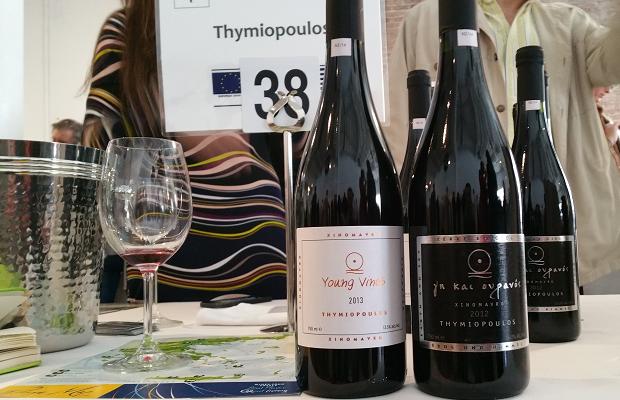
Thymiopoulos Young Vines Xinomavro 2013 and Yn Kai Oupavós 'Earth and Sky' Xinomavro 2012

Thymiopoulos Young Vines Xinomavro 2013 and Yn Kai Oupavós ‘Earth and Sky’ Xinomavro 2012

Tomorrow I fly to Greece. The Globe and Mail and most of the global media would have you believe that the country is gripped by fear and uncertainty. I’m going anyway. I would imagine the people of Greece understand your concerns but in the world of New Wines of Greece everything is business as usual and the country remains of the safest places to visit. It will be the most interesting of times, in life and in wine.

My Greek adventure will focus on the region of Achaia, in Patra, Diakofto and Kalavryta. I will visit with and taste the wines of Parparoussis, Kotrotsos, Loukatos, Achaia, Antonopoulos, Karelas, Hahalis, Union of Cooperatives of Patras, Aegialia, Oenoforos, Katsikostas, Cavino and Tetramythos.

A capital and paramount taste of Greece came to Toronto’s Sudbury-Glass Factory on May 5th. Fifty-one wineries were represented. The ingress to the New Wines of Greece was formidable and collectively the 150 plus wines spoke of a language that contains the ancient loneliness of ruins. They also spoke in presence of a present that looks with modern eyes to the future.

Related – A new Greek morning

Tomorrow I will head to Achaia, a part of the northern coast of the Peloponnese. The sweet red vin doux of Mavrodaphne, the Muscat of Patras and the lemon-saline whites of Roditis await. There will also be surprises I am not yet able to fathom.

In addition to a handful of exceptional wines tasted at the May event, on July 11th VINTAGES will be releasing two worthy adversaries to consider against a world of whites for the summer patio, cottage and all-around quenching season. Once you go Malagousia you may never go back.

Alpha Estate Axia Malagousia 2014, Pgi Florina, Greece (371666, $16.95, WineAlign) From the VINTAGES July 11th, 2015 release

Alpha Estate Axia Malagouzia 2014

Alpha Estate Axia Malagouzia 2014

A northwestern Greece, Amyndeon cuvée fashioned by winemaker Angelos Latridis, this Malagouzia resides on the metallic meets mineral spoke. The alloy is spoken in medium-bodied tones though it lengthens recursively to include bright, ripe orchard fruit. A solid, reputable and worthy venture into the world of new and varied varietal play, set to repeat. Drink 2015-2018.  Tasted June 2015  @EstateAlpha  @Eurovintage

Cavino

Cavino

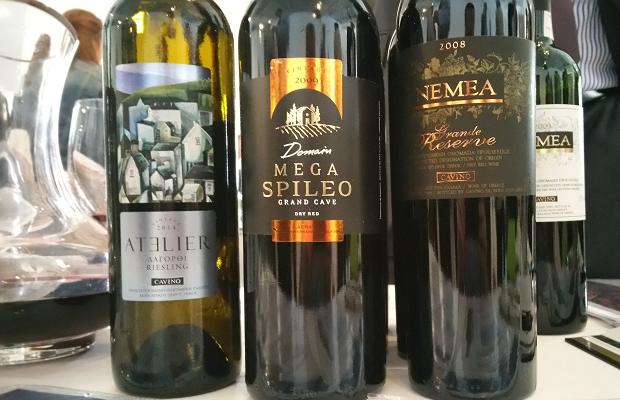
Cavino Grande Reserve Nemea 2008, Pdo Greece (295618, $17.95, WineAlign)

Tasted once again, this time beside the $15 Nemea Reserve 2009, a wine that shows the subtle difference, namely the antiquity and rust that pronounces in the GR. If the fruit is cleaner and more direct in the Reserve, in the GR it is more like Schetos, black and strong. Try it at @BarqueButchers. Drink 2015-2018.
From my earlier note of April 2015:
St. George persists as a tremendous deal in Peloponnese red. Rustic charm and righteous liqueur fill the air from drift to waft. Prime Agiorgitiko acidity and fine-grained tannin. This will live for 7-10 years. Drink 2015-2018.

From my earlier note of November 2014:

Nemea strikes again. Dark rust, earth juiced on and of the . Like Sangiovese with attitude, made by Romans, like Syrah the way it was made in mythological times, by Greeks. A classical garden. This is actually quite modern and expressive for Agiorgitiko. Acts as if it were a touch clay (or amphora) baked but it’s really just a Peleponnese take on oak aging (18 months) and further bottle rest (12 months). This is right in its window and will be friendly for three to five years more. What a steal.

Last tasted May 2015

Thymiopoulos Vineyards Yn Kai Oupavós ‘Earth and Sky’ Xinomavro 2012, Unfiltered, Naoussa, Greece (371666, $19.95, WineAlign)

By my count this is Apostolos Thymiopoulos’ ninth vintage of the “Ghi kai Uranos,” a Xinomavro that while consummately Naoussan, could sketch out in seriatum somewhere between Cru Beaujolais and Barolo. The 2012 leans further to the side of the Nebbioli, but of a deep, dark and richly modern variety. More earth than sky, the ferric grit mixed with tar and roses symbiotically subsume one another. This intoxicating perfume goes right to the back of the aromatic and aneurusma eye. This wine has never shown so much body and wealth of layered flavour. Earth and sky, both, together meeting as if for the first time, love immediate, in whole accord, nodding and acknowledging the ten years of time needed to consummate their union. Drink 2017-2022.  Tasted May 2015  @thymiopoulosvin

Nicole Artopoulos of Victory wines and Spirits with Godello

Nicole Artopoulos of Victory wines and Spirits with Godello

Thymiopoulos Young Vines Xinomavro 2013, Naoussa, Greece (Agent, $20.00, WineAlign)

The Young Vines is an orange to the Earth and Sky’s apple, of a change of fruit and a pace that is hot off the press. Yet it is not without some ancient wisdom. In some new world sites vines up to 15 years of age would be considered old growth adults. In a Greek vineyard like that of a Naoussan like Thymiopoulos, they are babies of the sun. The Xinomavro here is fresh, momentarily acts strikingly brazen, bracing and ultimately, blatantly beatific. With a glass of the young vines in hand to it I say, “it’s not the pale moon that excites me, that thrills and delights me. Oh no, it’s just the nearness of you.” Like Norah Jones in a glass, sultry, contemporary, lightly smoky, of a jazz aesthetic and a pop sensibility. And wild berries. So fresh, so good. Drink 2015-2019.  Tasted May 2015

Domaine Gerovassiliou Malagousia Vieilles Vignes 2014, Thessaloniki, Greece (416792, $23.95, WineAlign) From the VINTAGES July 11th, 2015 release

Domaine Gerovassiliou Malagousia Vieilles Vignes 2014

Domaine Gerovassiliou Malagousia Vieilles Vignes 2014

Malagousia of a singular concentration and energizing as if by waters of Okeanos. Intensely, organically and historically purposed, of salinity that is perfectly mineral, but also fleshy and fruity, as if sourced from fresh water. Flavours are echoed in the guise of briny sea creatures and flinty eruptions coming together in a pool of ancient waters. Full open water rolling swells of unctuous palate depth, mineral to a titan degree and offering such a perfect foil for grilled seafood, dropped with pungent herbs and squeezes of citrus. Drink 2015-2020.  Tasted June 2015  @ktimagerovass  @KolonakiGroup  @DrinkGreekWine  @ShopGreekWine  @SteveKriaris

Peza Union Nissos

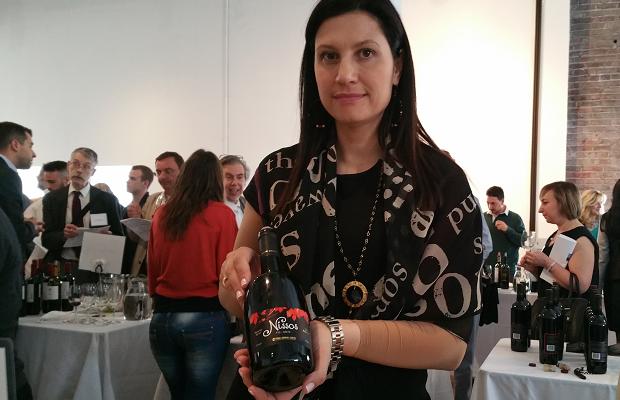
Peza Union Nissos Red 2013

Peza Union Nissos Red 2013, PGI Crete (Winery, No CDN price)

A fascinating red blend composed of Kotsifali (80 per cent) and Syrah (20) grown in south-central Crete. The thick-skinned variety Kotsifali releases resin and essential oils into the must and in the final product there is a keen sense of dark plums. It’s rich and dusty, not unlike Merlot but so much more island rustic Mediterranean, with attributes akin to the black olive, caper and garrigue aspects of southern France. The Syrah ensures this ratio and also helps to soothe the tannic grit. The Nissos also possesses a sense of coffee, but of a more natural crushed concoction, like chicory. Fine wine but certainly verdant, agrarian and countrified, though beautifully charming.  @winesofcrete

Gavalas

Gavalas

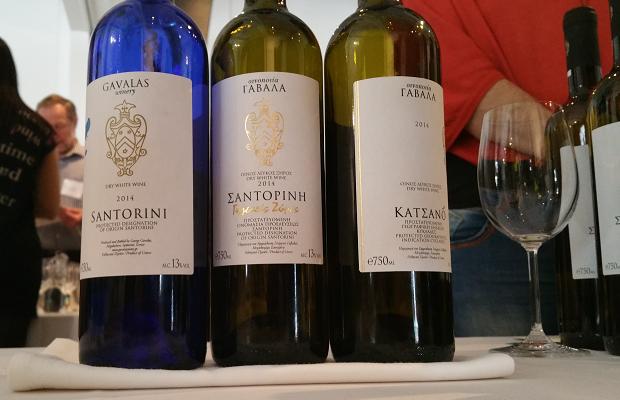
Gavalas Winery Assyrtiko Natural Ferment 2014, PDO Santorini, Greece (Winery, No CDN price)

A completely different animal in Assyrtiko, an edible that makes contact, by skin, with a nose that is entirely spontaneous and natal. The blanketing of perfunctory aromatics is startling, invigorating and comforting. In some ways it is a more dangerous Assyrtiko, as if it walks a razor’s edge and might bleed out its character at any moment. That tension and risk esteem is what drives the natural mechanism and renders it oxidative in just the right sort of way. So very pronounced in citrus, even at the expense of mineral until the finish. Its fullness and complexity allows acidity to survive and thrive. A wild one to be sure. Drink 2015-2020.  Tasted May 2015  @Santoriniwines

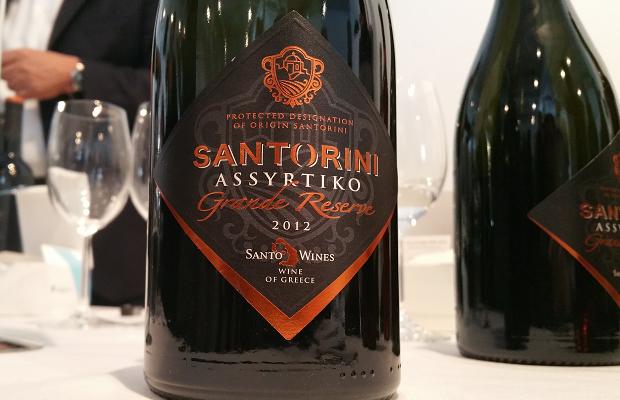
Santo Santorini Grand Reserve 2012

Santo Santorini Grand Reserve 2012

Santo Santorini Grand Reserve 2012, Pdo Santorini (Agent, Price Unknown)

Here Assyrtiko of an aroma never before nosed, like a bleed of fresh concrete, minerals under a computational microscope focused on the sense of smell. Like a wreath of dried white roses. This is an elixir of immortality, a nectar of gods and demigods. Already indicating the initialization of a slow-honeyed development, there will be 15 years in its quiescent and recessed future. This is the Greek equivalent of Bordeaux Blanc, a Grand Cru Classé in the guise of Santorini. Drink 2017-2027.  Tasted May 2015  @santo_wines  @KolonakiGroup

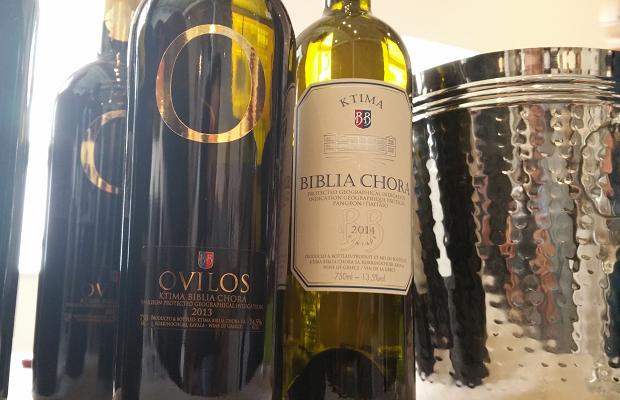
Biblia Chora

Biblia Chora

Biblia Chora Olivos White 2013, PGI Pangeon, Greece (Agent, Price unknown)

A remarkable and au courant 50/50 blend of Assyrtiko and Sémillon, like stumbling upon an undiscovered truth in assemblage. The wine spent nine months in oak, solidifying and hydrating the salinity. It certainly has an essence and a presence that reminds of OZ, of a Hunter Valley structure but the Olivos is so much more piercing, of citrus and mineral, due to the confidence and alpha variety élan of Assyrtiko. It’s also more direct and linear, of acidity and a double whammy of minerality. Salient brackish brine, chalky limestone like Burgundy and yet thinking, feeling, dreaming in Bordeaux. Just wow. Drink 2016-2022.  Tasted May 2015  @KolonakiGroup  @Wines_ofNorthGR

Good to go!

http://www.winealign.com/profile/2058-mjg

A new Greek morning

Smythe Park

Smythe Park

Every day brings a new morning when wine tasting in on the schedule. There are many tasters, writers, critics and Sommeliers who do not love working in such a way, tasting wine so early in the day. A table full of jammy Shiraz or warm vintage Bordeaux might scare me too but a Greek tasting? In. There. Any time, night or day. Bring it on.

If you have not recently acquainted or re-acquainted yourself with the new wines of Greece, which are actually the old ones save for advancing technologies, clean as whistle viti-viniculture and winemaking brilliance from masters to young apprentices, it’s Mt. Olympus time you did.

Can’t you hear that rooster crowing?
Rabbit running down across the road

From Assyrtiko to Retsina, Debina to Moschofilero, Agiorgitiko to Xinomavro, Amyndeon to Zitsa, Nemea to Thessaloniki, Naoussa to Santorini, Greek wine is diverse, complex and critical to wine blessedness. Don’t even get me started on volcanic. That opus shall be left to Master Sommelier John Szabo.

Me, I’ll concentrate on the divine mythology of Greek wine, of its place in the fractal world, how it can beautify and simplify, through recursion in dynamic systems, the bleak chaos of wine landscapes. Like the Morai, Greek wines are thread with motherly nurturing. For mere mortals, they direct fate from the birth of their drinking days to death. They are a highly independent bunch, unobstructed and driven by necessity.

The call to assembly of WineAlign critics last week for a table full of Greek whites, reds and one righteous Rosé meant that fate was on side, ready and willing to facilitate a tasting full of exemplary and impressive wines. For a full report on Greek wines, read John Szabo’s words of necessity at WineAlign: Confident wines from Original Vines: Reasons to Drink Greek.

In anticipation of next week’s Greek wine show at which 50 wineries will pour for media and trade in Toronto, I tasted through 25 samples on that new morning. An exceedingly promising number (more than half of what was presented) showed state-of-the-art antiquity and eternal modernity. I’ve chosen ten to highlight here, all worthy of your attention, time and palate. All under $25.

From left to right: Kechri Kechribari Retsina, Kir Yianni Akakies Rosé 2013, Boutari Agiorgitiko 2013, Domaine Glinavos Primus Zitsa 2013 and Tselepos Classique Mantinia Moschofilero 2013

From left to right: Kechri Kechribari Retsina, Kir Yianni Akakies Rosé 2013, Boutari Agiorgitiko 2013, Domaine Glinavos Primus Zitsa 2013 and Tselepos Classique Mantinia Moschofilero 2013

Kechri Kechribari Retsina, Greece (581942, 500ml $7.75, WineAlign)

The resin, the steam room herbal essential oil, the ancient feeling of tonics to heal a wounded soul. It’s all in this tidy little $7 package of wine mythology. That there still exists a market for wine made in this way, with this attention to wise, classic detail, is just amazing. Rosemary and here, even more so oregano are distilled, purely, effortlessly, with peat and macro-oxygenated matter of fact sensibility. Unctuous and viscous elixir, old school to the xyz degree and a pure form of abc ancient Greece. As JS nots, “everyone needs a flagon of Retsina.” Truer words may not be spoken. One must debate, with well into the night philosophy, drawing inspiration from Plato and Aristotle, whether the long, long finish is good, or evil. I’m not sure this will ever tire, or spoil. Drink 2015-2022.  Tasted April 2015

Kir Yianni Akakies Rosé 2013, Ao Amyndeon, Greece (71050, $9.95, WineAlign)

Xinomavro from the Amyndeon vineyards in northwestern Greece done in a funky lactic, savoury and mom’s feta way. Dry, rhubarb wafting, rosemary branch smouldering, lime and pink grapefruit tasting Rosé. This will and should have many fans, particularly those of Tavel on holiday in the ancient continent and needing salinity to match their suckling roast. Clear, concise Rosé. Proper. Drink 2015-2106. Tasted April 2015

Kechri Kechribari Retsina and Kir Yianni Akakies Rosé 2013

Kechri Kechribari Retsina and Kir Yianni Akakies Rosé 2013

Boutari Agiorgitiko 2013, Nemea, Greece (172148, $11.85, WineAlign)

Fun, exuberant, fresh, modern cherry explosion expression. Simple, direct, positive energy and ease of drinkability. Has just enough spice, floral lift and back end bite to afford it three years of service, with any sort of roast meat or salty cheese. Good stuff. Drink 2015-2017.  Tasted April 2015

Domaine Glinavos Primus Zitsa 2013, Zitsa, Greece (395962, $12.55, WineAlign)

From the Debina variety in Ioannina, it would be hard to find another Greek white that offers up as much orchard fruit, primarily from the apple and pear tree thicket. Accents of white peach and lemon make a quick entry and exit just as quick. This is a really crunchy green apple white, picked ripe and finishes with ripe white tannin. It’s not very long but I can think of many, many savoury dishes that would complement with symbiotic pleasure. Drink 2015-2017.  Tasted April 2015

Tselepos Classique Mantinia Moschofilero 2013, Mantinia, Greece (724583, $14.75, WineAlign)

An example for racing Moschofilero against Pinot Grigio and passing it on the stretch run from the outside lane. There are many reasons to go with this variety when narrow thinking leans PG, mostly because it has more depth, mineral grain and positive energy. This is a basic but prime entry into the category. Has the passage of time in its wheelhouse but also the verve to keep it afloat in a sea of sun drenched whites. Drink 2015-2016.

From my earlier November 2014 note: A textured, minutely oxidative and bronzing Moschofilero with a confident sense of itself. The orchard has ripened and spilled into this bottle with peaches, apricots and citrus Portokalia Lakonias. Great metal tang, world turning acidity and length as long as the Nestani’s walk to Demeter’s Temple.

Last tasted April 2015

From left to right: Santo Assyrtiko 2014, Cavino Grande Reserve Nemea 2008, Argyros Assyrtiko 2014, Ktima Kir Yianni 2011, Domaine Gerovassiliou Malagousia Vieilles Vignes 2013

From left to right: Santo Assyrtiko 2014, Cavino Grande Reserve Nemea 2008, Argyros Assyrtiko 2014, Ktima Kir Yianni 2011, Domaine Gerovassiliou Malagousia Vieilles Vignes 2013

Santo Assyrtiko 2014, Pdo Santorini, Greece (Agent, $17.95, WineAlign)

Assyrtiko seemingly dredged in volcanic tuff erosion and tightly wound by straight-shooting citrus smack. A rocky cragg of funk leads to desire, for hearth roasted sea beauties and yet this is not even near the oxidized line. Such a white from Santorini needs at least three years to see where it might truly go. I know a sucker for acid driven volcanic wines that evoke the god Apollo. This is yet another fine example that will bring him sunshine and the moon. Drink 2017-2021.  Tasted April 2015

Cavino Grande Reserve Nemea 2008, Pdo Nemea, Greece (295618, $17.95, WineAlign)

St. George persists as a tremendous deal in Peloponnese red. Rustic charm and righteous liqueur fill the air from drift to waft. Prime Agiortiko acidity and fine grained tannin. This will live for 7-10 years. Drink 2015-2018.

From my earlier November 2014 note: Nemea strikes again. Dark rust, earth juiced on and of the rocks. Like Sangiovese with attitude, made by Romans, like Syrah the way it was made in mythological times, by Greeks. A classical garden. This is actually quite modern and expressive for Agiorgitiko. Acts as if it were a touch clay (or amphora) baked but it’s really just a Peleponnese take on oak aging (18 months) and further bottle rest (12 months). This is right in its window and will be friendly for three to five years more. What a steal.

Last tasted April 2015

Argyros Assyrtiko 2014, Santorini, Greece (387365, $19.95, WineAlign)

The most distinct, pure and crisp expression of Assyrtiko comes from this Argyros bottle, magnified with more platinum rock bonding in ’14 than even in the previous few vintages. Exotic evolution has arrived early in this stoic and timelessly chronic Assyrtiko with dramatic fleshing, a hint of hloro tiri and ashen black sand grit. A volcanic goddess in patina hued dress, very mineral, very direct, that drives straight for the lumbar zone. Saline, full of shells and mollusc brine. Anything grilled on charcoal, of white flesh, whether porcine, foul or sea sweet will shine alongside, as it always does. Drink 2015-2019.  Tasted April 2015

Greek back labels

Greek back labels

Ktima Kir Yianni 2011, PGI Imathia, Greece (419234, $19.95, WineAlign)

Xinomavro (40 per cent) submits to Merlot (60) in a rather weighty and warm Imathia out of Naoussa. Chewy to dense and yet floral dark fruit gives this eminent drinkability, especially with salty protein, though it would be hard to distinguish this from Tuscan Sangiovese or IGT. Very modern, really well made and certainly no stranger to oak. Drink 2015-2020.  Tasted April 2015

Domaine Gerovassiliou Malagousia Vieilles Vignes 2013, Thessaloniki, Greece (Agent, $24.95, WineAlign)

From old parcels planted to the indigenous variety Malagousia, resurrected like a Greek Jesus in the 1970’s by winemaker Vangelis Gerovassiliou. A classical composition with unexpectedly modern eccentricity. It would be hard not to fall for this Adonis of Greek whites; a strikingly beautiful Phoenician whose drops of liqueur turn to liquid alloy in a glass, of a striking green-gold patina, old barrel spirits and precious metals. This has layers of vine wisdom, fruit that holds its own against the mineral drubbing and ghosts of immortal gods in its aura. Rarely does a Greek white exude such ferocity of history and flesh to match. Calamari and octopus await, in whole roast over charcoal, not to mention great cheeses and roast pork. Fantastic. Will age dutifully. Drink 2016-2025.  Tasted April 2015

Good to go!

http://www.winealign.com/profile/2058-mjg