What the winemakers drink: Rosso di Montalcino

Culturally speaking Rosso di Montalcino is the most important wine: It’s what the Montalcinese drink daily

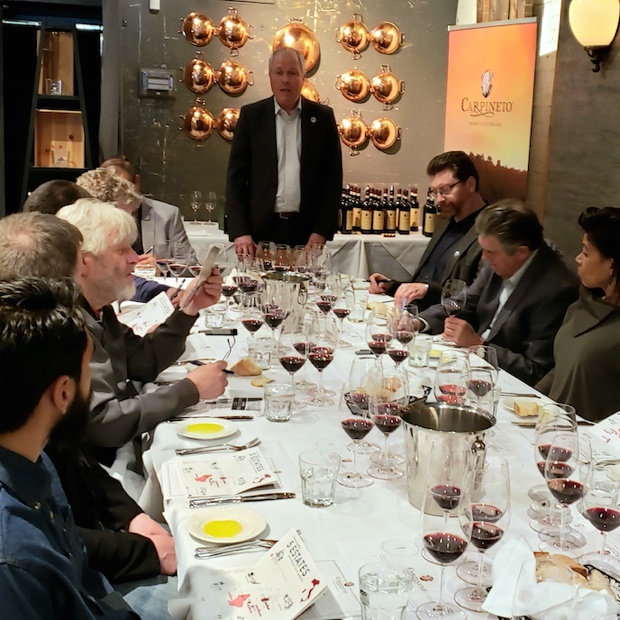
It’s a Monday night, a winemaker’s night off. There is work to be done in the morning so it wouldn’t be prudent to drink anything heavy or expensive. What to open? The answer is obvious and easy. Rosso di Montalcino. More than one Montalcino winemaker has used the phrase “it’s what we like to drink” and just as many will tell you that Rosso must reflect sangiovese’s character more than any other wine. What we know is that the Rosso are the protagonists of the new market. On Monday, November 23, 2020 I will play host and moderator for the third of six online seminars covering all aspects of Montalcino, with the help and support from 25 producers and their sangiovese wines. “What the winemakers drink: Rosso di Montalcino” will celebrate the region’s young sangiovese. The webinar will welcome winemaker and Consorzio Vice-President Giacomo Bartolommei with his Caprili Rosso 2018; Brunello, Montepulciano and Chianti Classico producer Antonio Michael Zaccheo Jr. and his Carpineto Rosso 2016; Robin Shay of San Polo with their Rosso 2017; and for comparison, Alessandra Angelini be will showing her Altesino Brunello 2015.

Related – Backstage pass to Brunello di Montalcino

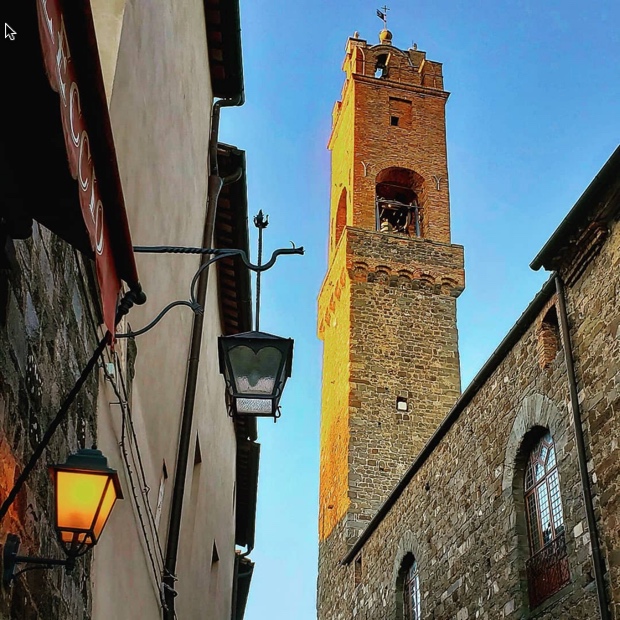
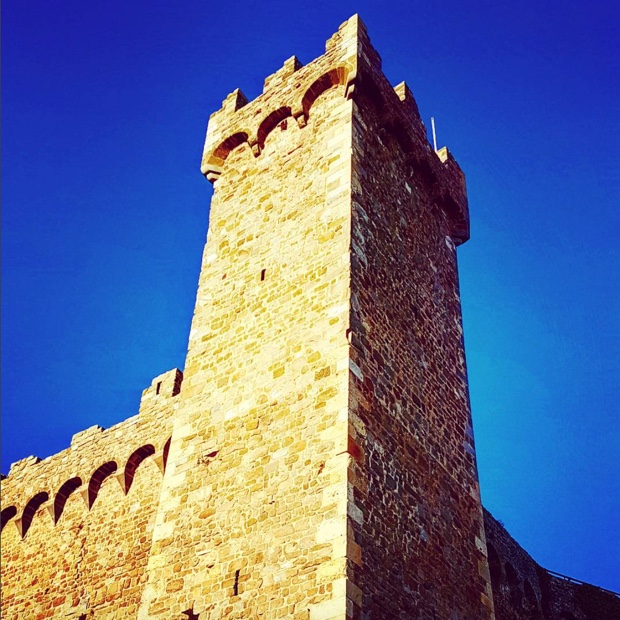
#torrecampanaria

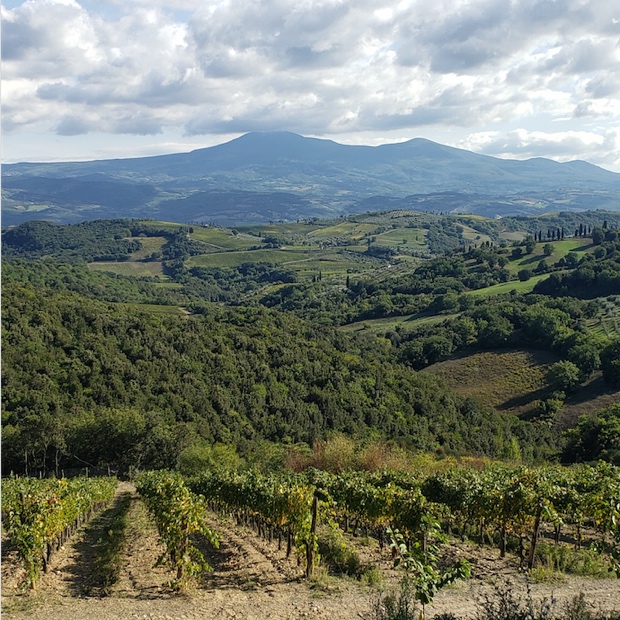
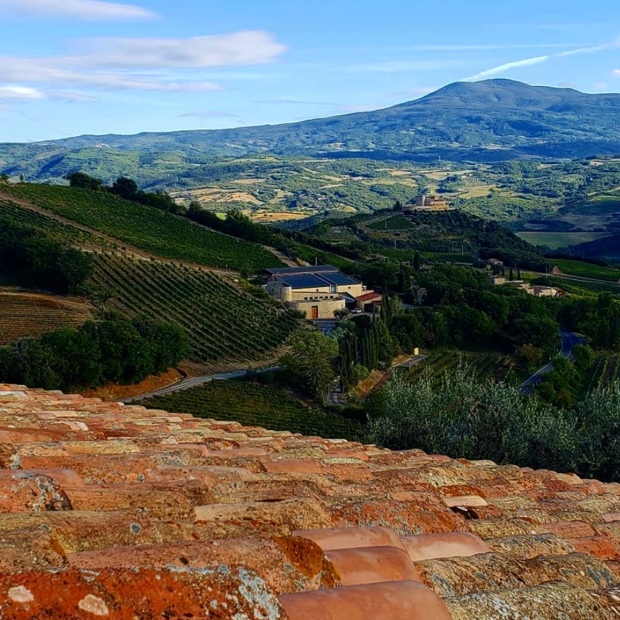
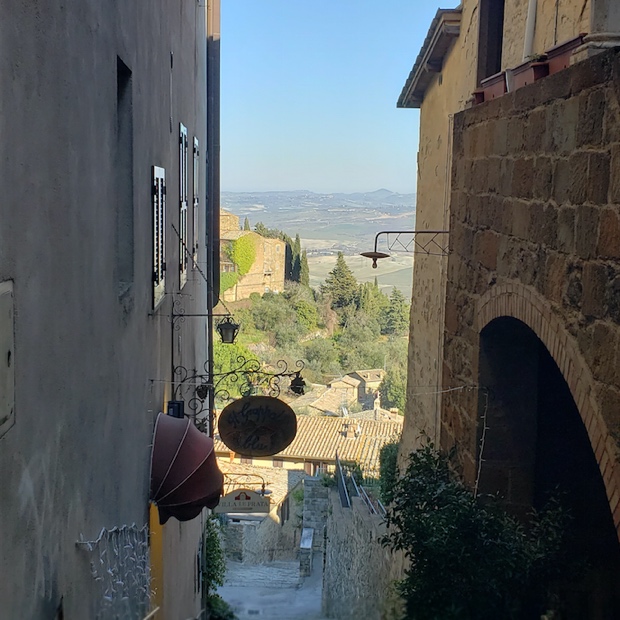
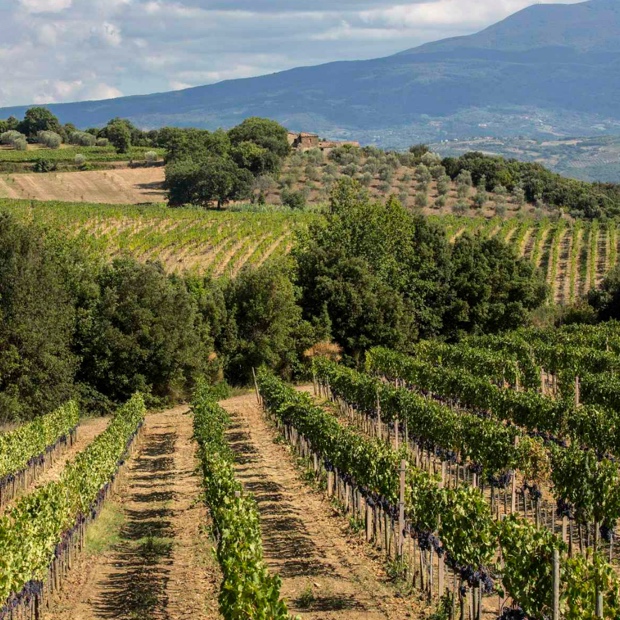
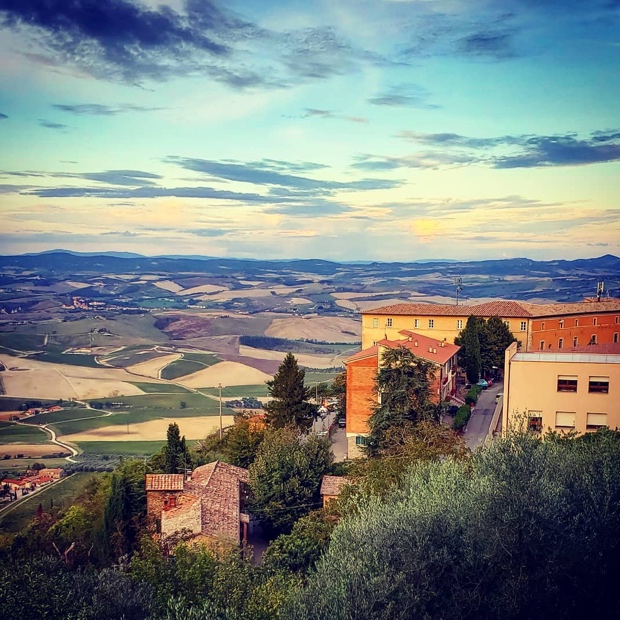
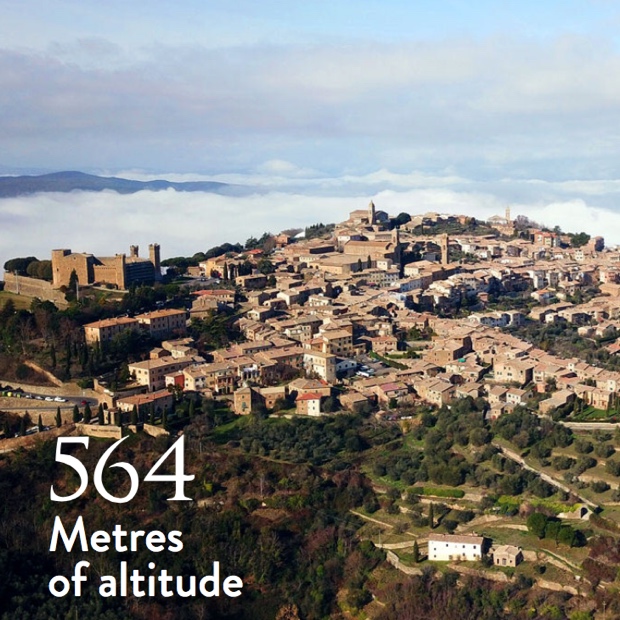
Montalcino. Harmony and Unesco Heritage Centre of a surface area totalling 31,200 hectares, 3,660 of which are vineyards planted predominately to sangiovese. An accord of 2,100 to Brunello di Montalcino and 510 for Rosso di Montalcino, delineated and defined in consensus by the late 1990s, set into the GalestroArenaria and Calcare soils on hills and over valleys in surround of its medieval village. The merits of change, alteration or expansion have been debated, voted upon and ultimately dismissed every three years and so there has yet to pass any thought of increase or reconfiguration. Neither for Rosso nor for Brunello. Montalcino. Village at 564 metres above sea level and many vineyards reside at a similar altitude. Plots, blocks and Italy’s most famous village overlooking great swaths of rolling valleys; Asso, Orcia, Arbia, Ombrone. The first known wine label dates back to the 1800s and the DOC was recognized in 1966. Brunello was afforded DOCG status in 1980, Italy’s first, followed by Rosso as a DOC in 1984.

Related – Boomers, Gen Xers and Millennials: 40 years of Brunello di Montalcino DOCG


What we know is that the Rosso are the protagonists of the new market


Related – Benvenuto Brunello 2020: Montalcino surges ahead

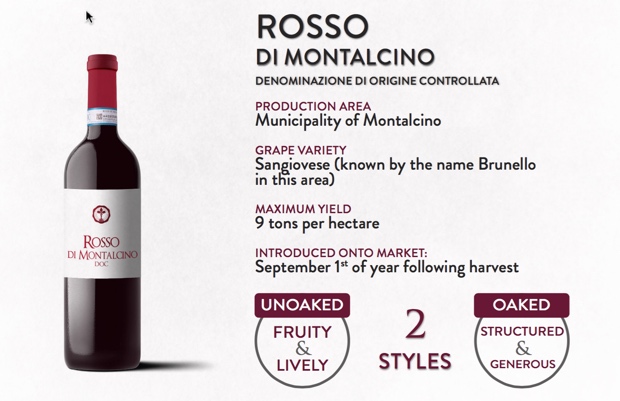
Brunello’s maximum yields are eight tonnes per hectare (approximately 52 hl/ha of wine) and the aging requirement is five years (six for Riserva), of which two must be in oak barrels, followed by four months in bottle. It may be introduced to market on January 1st of the 5th year after harvest (January 1st of the 6th year for Riserva). Rosso’s maximum yields are nine tonnes per hectare and it may be introduced to market on September 1st of the year after harvest. There are nine million bottles of Brunello and half that of Rosso produced on average each year. More than a quarter are certified organic and/or biodynamic and that is double as compared to just five years ago. Seventy per cent of the wines are exported. Current vintages on the market are 2015 for Brunello, 2018 for Rosso.

The most fascinating thing about Rosso di Montalcino is that every producer has a unique philosophy and a personal relationship with the appellative wine. To some it persists in the old-school way, that is to think of it as a “baby Brunello,” or second wine, if you will. The days of Rosso being considered only in this way are long past. The baby Brunello concept now acquiesces to the notion of Rosso strictly made for Rosso, with great purpose and also meaning. There are some Rosso that really need to be considered and assessed just as you would Brunello and it is only where such structured sangiovese fit relative to the estate’s other Brunello that need qualify it as Rosso. In today’s Montalcino one’s Rosso is another’s Brunello. It’s now more than ever a matter of location, soil and altitude.

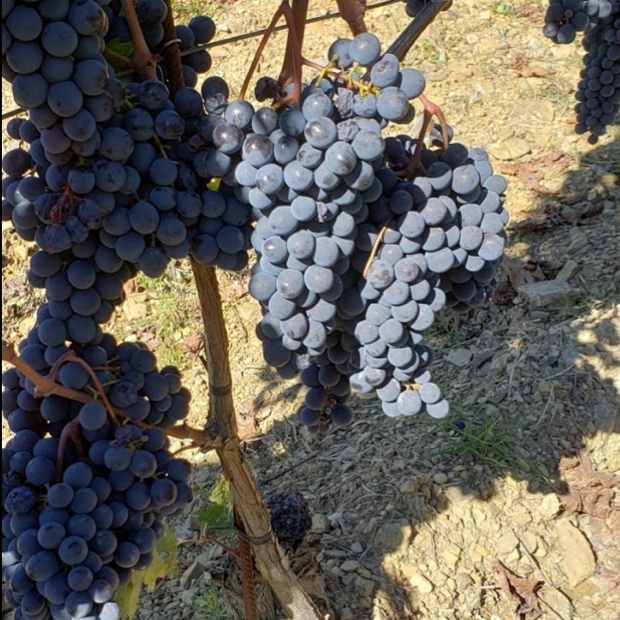
Rosso can refer to the sangiovese berries themselves, meaning the winemaker will pick the largest for Rosso, the medium berries for Brunello and the smallest ones for Riserva. Others will designate vineyards to the Rosso, or plant new ones and use the youngest fruit. Still there will be some who pass through all their vines and designate specific blocks, referring to it and even labelling it as a cru. Finally there are some who wait and craft Rosso in the cellar, after the fruit has come in and been pressed. There are many ways to skin a Rosso but these days it is always a wine treated with respect. In terms of elévage, Rosso will more likely than not be raised in big barrels but not the Grandi Botti often used for the Brunello. As for vine age it seems the sweet spot is between 15 and 20 years.

Montalcino
(c) Consorzio Vino Brunello di Montalcino

What about Rosso vintages?

2018: A vintage from which acceptance is required, to seek pleasure only, not to look too deep into the future. The kind of tart and tang on cherry and more cherry is what you want from sangiovese meant for the table each and every night. Freshness and youthfulness is a beautiful thing. The wildcard of 2018 is sprezzatura, which translates as contempt but refers to Rosso with old school structure and texture in defiance to the average or general lightness of vintage. Some 2018 Rosso just have that disregard for normal.

2017: The driest and hottest of vintages and so making really high quality Rosso was like Sisyphus pushing a boulder up a hill. If you did it a day late you were likely going to come up a dollar short. If you got it right you made great wine with surprising structure. Advice to Sommeliers? Don’t miss out on selling Rosso from 2017.

2016: These are Rosso for Rosso sake, discriminant, linear, and vertical. If Rosso can be spiritual they would be these, poignant and so good. In 2016 these are the acids of Montalcino and the depth of earth which holds you firm in the face of a fluent perfume. What you need to know and what you want to drink. Rosso in 2016 should be crispy and crunchy with juicy fruit in the savoury candy way up against high and ripe acids. When this happens the best of the 2016 Rosso can live for a dozen years.

2015: So many Mediterranean wine regions reaped huge benefits from the 2015 growing season but I’ve not personally seen such an across the board level of quality from a group of structured wines as I saw in the Rosso Annata. You would have to go back to 2010 to find a vintage with a near-chivalrous level of generosity and as far back as 2001 for its equal. That said I would suggest with extreme prejudice that 2015 Rosso di Montalcino is the vintage to change your mind about its quality and its ability to stand alone. As an entity, the Rosso are produced from grapes farmed explicitly for a purpose and it is this ’15 vintage that can be used to back up that very proposition. Rosso are fashioned to make a young sangiovese distinctive and antithetical to Brunello, but with the resolution to forge ahead with an intrinsic and personal level of structure. I have tasted several 2010 Rosso in the last year and their remarkable freshness shows just how long they can go.

Altesino

Altesino

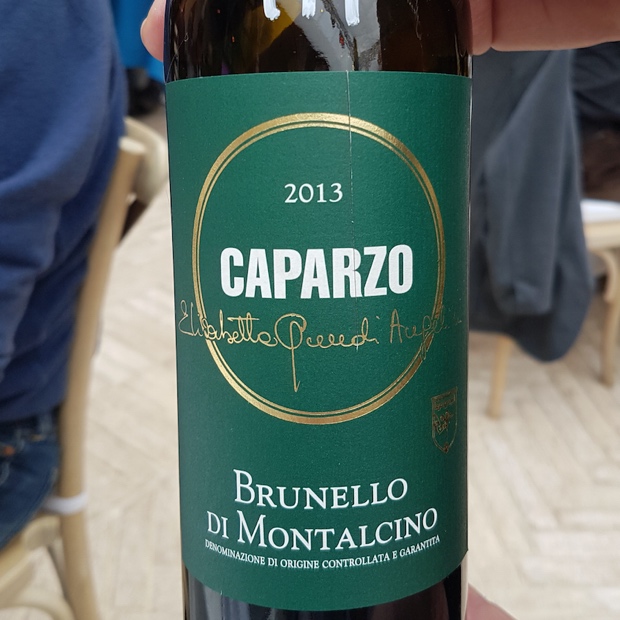
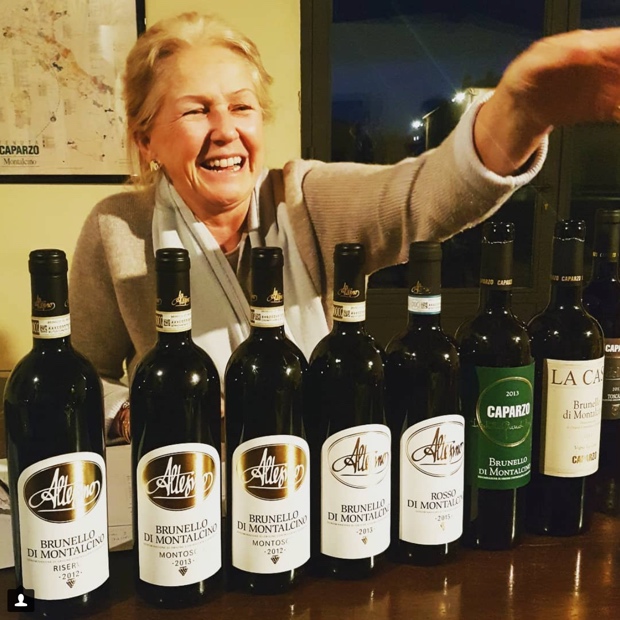
Located in the north of Montalcino where you can find the famous Montosoli hill and cru. Giulio Consonno purchased the property in 1970 and Altesino became part of the new Brunello revolution as one of a handful of Brunello producers who pushed for increased quality through the 1970s and into the 1980s. In 2002, the winery changed hands with new owner Elisabetta Gnudi Angelini taking over, adding to Tenuta Caparzo she owned nearby, also to the north of Montalcino. There are approximately 44 acres under vines and 220, 000 annual bottles produced under the winemaking team led by Simone Giunti and Alessandro Ciacci. Altesino is responsbile for not merely introducing but successfully marketing one of Montalcino’s most famous cru wines, Montosoli Brunello, named after the sought after vineyard. Rosso di Montalcino is a selection of sangiovese sourced from the younger vines in the Altesino, Pianezzine, Macina, and Castelnuovo dell’Abate vineyards. North and south combine for an estate Rosso.

Alessandra Angelini earned her undergraduate degree in Aerospace Engineering from La Sapienza University in Romeand participated in research projects designing Formula 1 cars and racing dinghies. In 2013, she began working for Rolls Royce North America designing airplane engines. In 2008 she was a member of the Italian Olympic Sailing team. She returned to the family business of wine and hospitality in 2017.

Emotional tasting through #altesino & @caparzowines with #elisabettagnudiangelini #brunellodimontalcino #montosoli #vignalacasa

Altesino Rosso Di Montalcino DOC 2018

Altesino’s is consistently rich and baritone for Rosso, even in light ’18 and gone in all for one with not much left to the imagination. An amenable, commercial and viable proposition for anyone and everyone to take part. Drink 2020-2021.  Tasted February 2020

Altesino Rosso Di Montalcino DOC 2016

Generally aged right to 10 months is large Slavonian oak barrels. Takes off straight from where 2015 left us, that is to say from fruit and into more fruit, of sangiovese in wild berry form, expected and imagined. Exactitude from winemaker Alessandro Ciacci, polished, crunchy and then more tannic as a vintage. Drink 2019-2022.  Tasted October 2019

Altesino Rosso Di Montalcino DOC 2015

Certainly richer and deeper than cousin Caparzo but really just a different child for Elisabetta Gnudi and just as important in its own right. This Altesino Rosso exhibits the ’15 freshness but with a year further under wing it has settled and added some weight, albeit in liquidity, sweet, viscous liquidity. So much joy here. Drink 2018-2021.  Tasted February 2018

Altesino Brunello Di Montalcino DOCG 2015

Very polished and made Brunello with a wealth of statuesque parts sculpted out of the high level materials presented the team that crafts this wine. Speaks to a very broad swath of place and a perfectly good drink of consumer appeal.  Last tasted February 2020

From the vintage where agriculture, winemaking and now selling came and will come easy so you can expect the warm, fuzzy, generous and soft. Perhaps too straightforward to be what the powers that be call a five-star vintage but if Brunello is what you want or even what you think you need then begin or continue the journey right here. Very berry, ultra liquorice and über morbido. Soft, amenable and unencumbered. Positive but certainly not overbearing structure. A now and through mid-term years drinking Annata. Drink 2019-2024.  Tasted October 2019

Caprili

Caprili is located in the southwestern sector of Montalcino near the small village of Tavernelle. The podere dates back to 1965 after Alfo and his father Alberto Bartolommei decided to buy the property from the Castelli-Martinozzi family and split from the famous Pieve Santa Restituta estate. Alfo’s family originated from Podere Marzolo in the Municipality of Cinigiano (Province of Grosseto). In the same year they planted the first vineyard, still called “Madre” and their first bottle of Brunello di Montalcino from the 1978 harvest was put on the market in 1983. In 1997,  Alfo’s children Manuele, Paolo and Paola took charge of the estate.

Fast forward another couple of generations and 23 further years to arrive in the world of current owner and winemaker Giacomo Bartolommei who is also one of three incumbent Vice-Presidents of the Consorzio Vino Brunello di Montalcino. Giacomo’s first actual vintage of Brunello was 2010 though he had been active in the family business for many years prior. 

Caprili Brunello Di Montalcino DOCG 2014

Caprili is quite tense, nervous, unable to relax. It pulses with acidity and tannin, structure is certain and intensity over the moon. Welcome to one side of the tracks, the one without compromise and where Brunello is Brunello and over on the other side sangiovese is sangiovese. Drink 2020-2025.  Tasted February 2019


Carpineto

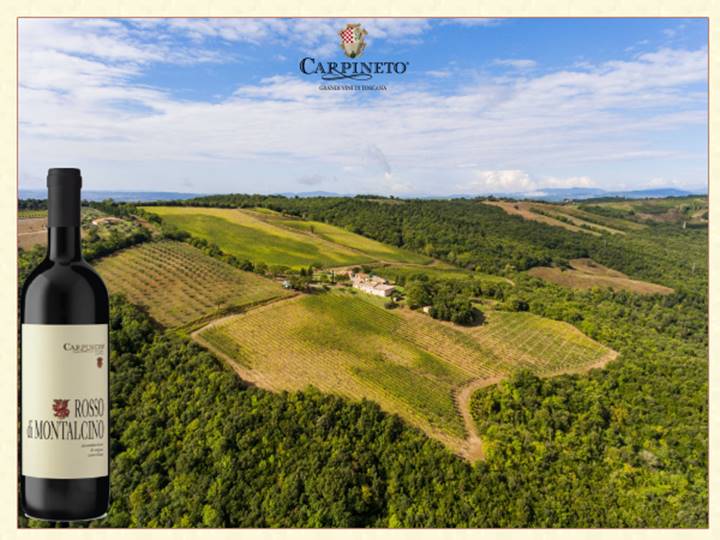
Carpineto Appodati comprises five Tuscan estates; Dudda and Gaville (Greve in Chianti), Montepulciano, Montalcino and Gavorrano (Maremma). No less than 28 different wines are produced off of the five properties and while their Vino Nobile sangiovese from Montepulciano have garnered the most international accolades, it is the Rosso and Brunello that concerns us most today. After all, as noted by Antonio Michael Zaccheo, Carpineto brings “la Toscana e i suoi vini magliori” to the world.

Carpineto Rosso Di Montalcino DOC 2016

Carpineto’s 2016 comes from higher (450-500m) elevation than many, is aged longer (three years in large oak barrels) and so 2020 is just about the perfect time to enjoy its charms. This 100 per cent sangiovese off of marl and clay was picked into October and it so dutifully expresses the appellation, grape and territory. The all in fulsome red cherry is now joined by a silkiness of texture because the calcaire and the wood have softened, liquified and swirled right through the fruit. A fresh one from a structured vintage and put succinctly into that five to six years Rosso di Montalcino aging window. Drink 2020-2023.  Tasted February and November 2020

Carpineto Brunello Di Montalcino DOCG 2014

Carpineto and proprietor Antonio Zaccheo Jr. produce 28 Tuscan labels on five Tuscan estates; Dudda and Gaville (Greve in Chianti Classico), Montepulciano, Montalcino and Gavorrano (Maremma). The Montalcino property is at 450m on a ridge just on the southwest corner to outskirts of the hilltop village. For 2014 it continues to swim in deep, dark and ripe waters but there is an ethereal coolness here and as such makes this a real winner for the season. Just entering an optimum window now it would be hard to figure any reason not to make this a go-to Brunello for the 20/21 and 21/22 winters. Smooth in all ways, most notably the palate and the ganache of chocolate across the finish. Drink 2020-2024.  Tasted August 2020

Carpineto Brunello Di Montalcino DOCG 2012

Carpineto’s is not just an exemplary 2012, it’s a bloody delicious one. The aromatics are pure vintage-related, of the deeper than many (darkening to black) cherry liqueur and the liquid dusty pearls of all things Montalcino sangiovese fruit, acidity and tannin. A very balanced Brunello in all regards, ready to be enjoyed and blessed with structure for five years (plus) moving forward. Drink 2017-2022.  Tasted October 2017

Poggio San Polo

San Polo

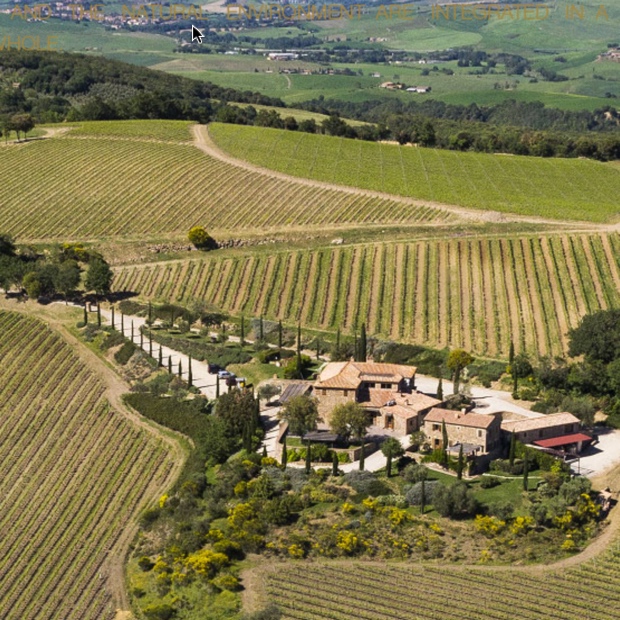
Poggio San Polo was tarted in 2005 and is situated in Podernovi, on the southeastern slope of the Montalcino hill above the valley of Sant’Antimo with Mount Amiata looming to the south. The locals call this area a “Mezzopane,” meaning that to admire the beautiful view is to ‘take one’s fill’, like food for the soul. Two years later 2007 marked the beginning of the new era for San Polo and the Allegrini family, one of Veneto and Valpolicella’s most famous names in Fumane. The Estate is composed of two holdings: San Polo, planted in 1990 and Monteluc, planted more recently with a density of 7,000 vines/hectare, for a total of 22 hectares, The first winery in Tuscany and the second in the world to have earned the Quality Seal from the CasaClima Wine Certification. CasaClima Wine is a Quality Seal issued by the Bolzano-based agency, created to provide objective, credible evidence of the efforts made by wineries towards achieving more careful management of their business and to assess the environmental compatibility of winery buildings, comfort and suitability of work spaces, consumption of energy and water in the production of wines, choice of packaging materials, as well as the impact of transport.

San Polo Rosso Di Montalcino DOC 2017

San Polo’s Rosso grows at 400m so it speaks in a high elevation appellative voice. The wine is usually the Allegrini estate’s most floral and mineral expression of sangiovese grosso but then along comes this 2017 vintage. The usual bracing acidity is there but a tripling of warmth is the result of hot ’17, southern vineyard fruit and southern exposure. San Polo dry farms which only accentuates the atypical profile. Most accumulation ever, at least in recent times when it comes to richness, extract and colour. Not a baby Brunello but structure and power are truly there. That said its best years will be the first so get at it and defend the cellar. Drink 2020-2023.  Tasted February and November 2020

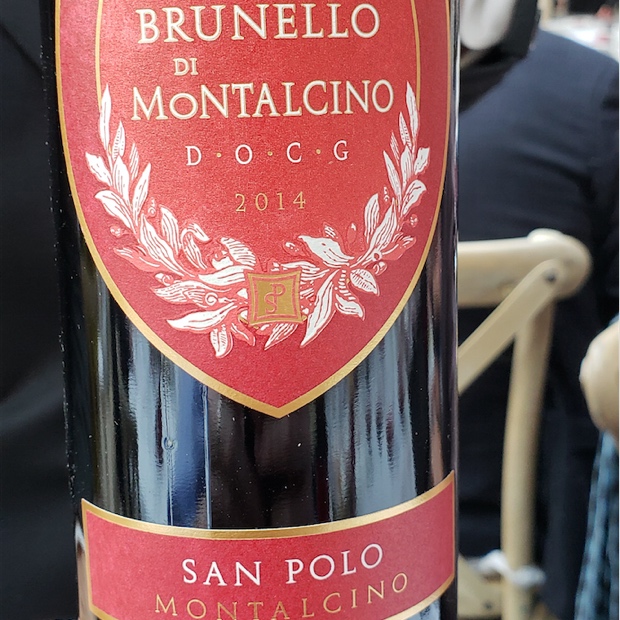
San Polo Brunello Di Montalcino DOCG 2014

Lovely sweet candied rose and herbal nose to this sangiovese and for the first time some reduction. Quite intense, locked down, massive and working for a living. Give some credit to this wine. It will settle into a lovely place in a few years time. Drink 2021-2025.  Tasted February 2019

San Polo Brunello Di Montalcino DOCG 2013

The vintage is a terrific one for San Polo, transparent in its fruit clarity, inflective of warm south Montalcino vineyards. Località Podernovi is found on the southern slope with Mount Amiata acting as the mitigator for winds whipping in from the sea. The vintage was not a scorcher and how this walks a neither hot nor cold line is how it finds its grace. The fruit and acids are both of the appetizing and epicurean kind, equally opposing and nicely in synch. Lovely freshness to this Brunello. Drink 2019-2023.  Tasted March 2019

Good to go!

godello

Twitter: @mgodello

Instagram: mgodello

WineAlign

Backstage pass to Brunello di Montalcino

La Fortezza di Montalcino

VIP tickets to taste four Brunello di Montalcino from the acclaimed 2015 vintage

On Tuesday, November 17, 2020 I will play host and moderator for the second of six online seminars covering the entirety of Montalcino, joined by 25 producers and their exceptional wines. “Backstage pass to Brunello di Montalcino” welcomes Winemaker Francesca Arquint with her Collemattoni Brunello 2015, Oenologist and Proprietor Hayo Loacker and his Corte Pavone Brunello 2015, Violante Gardini Cinelli Colombini with Donatella Cinelli Colombini Brunello 2015 and oenologist Stefano Tofanelli pouring his Il Grappolo Brunello 2015 Sassochetto.

Related – Boomers, Gen Xers and Millennials: 40 years of Brunello di Montalcino DOCG

Montalcino, looking east

The Rosso and Brunello of Montalcino have for decades been recognized as residing in the premium realm of Europe’s finest red wines. You might think that a territory with such rich history, iconic figures, foremothers, forefathers and next generation figureheads would be content to rest on laurels and see little need to fix something that isn’t broken. Not so and while the new or next era of wine producers are certainly the obvious catalyst for exacting evolution, if at times gentle revolution, the answers run deeper and the interconnectivity with the past is well, unavoidable. I’m not a clairvoyant. If nothing out of the ordinary happened or presented itself I’d still see things the way everyone else does, or sees. In that sense I am the epitome of the boring writer. But I am a most fortunate writer because I travel a considerable amount. My game can’t help but to be elevated with the knowledge that a confident Montalcino is once again passing through a portal into a time of re-invention. I am trying to get to the source of what in recent years has been the impetus for a more than discreet across the board profound rise in quality.

Related – Benvenuto Brunello 2020: Montalcino surges ahead

Benvenuto Brunello 2020

The 2015 Brunello di Montalcino vintage

This return to an unequivocally and universally declared vintage of prominence for Brunello in one of both quantity and quality. It has been described as one “made by God,” that is to say all a winemaker had to do was not screw things up. Pundits and critics can’t help but try to break Montalcinio apart by affirming that one area or sub-zone is better than another. What ’15 does is level the playing field and remind us all that the whole is far more profound than any single part. The vintage is one of those automatic ones, marketing itself due to so many good wines having been made. A very good one for business while delivering high quality and most importantly without having caused any undue stress, especially relative to 2014. Despite lockdowns and pandemic related complications many Montalcino estates have pre-sold much of their 2015 Brunello. Will it be one of the longer lived in Brunello lore? Does it compare to let’s say 2001, 2004, 2006 and 2007 and 2010? Best that we allow the producers to address that question. What I can say is that the 2015 Brunelli speak to the wounded zeitgeist of our current situation with a knife that cuts straight through to the matter. They are sangiovese of purity, eloquence, accuracy and power.

These are some more comments I have made about 2015:

“A vintage of classic Brunello colour and the dichotomous relationship that bridges power and drinkability.”

“There is a perfume about 2015, a ripe cherry that stands apart.”

“The vintage question is far from a concern with respect to ripeness and a far more important consideration is more about the management of extraction, wood and acidity.”

“The come and get me vintage but don’t be misled, distracted or misunderstood. There are sneaky tannins everywhere.”

“In 2015, inexplicably and inescapably you can recognize the sangiovese from Montalcino.”

Collematoni

Collemattoni is the name of the podere in southern Montalcino dating back to 1672, very close to the village of Sant’Angelo in Colle. Giuseppe Bucci was the first Bucci,  a.k.a. Zappaterra, “the digger,” but there are some other possible meanings that might not exactly make it the most flattering of nicknames. The amazing thing about Montalcino’s oldest families is how they don’t sugar coat their ancestry. Sinners and saints are all remembered as they were. Marcello Bucci is the current generation, son of Ado and Vera, who in the mid-1980s decided to start bottling their own wine. Marcello is responsible for having created what is today Collematoni, an organic company in Montalcino.

The wines are made from 11 hectares of estate-owned vineyards, divided into five areas (Collemattoni, Fontelontano, Sesta, Cava and Orcia) for an average production of approximately 50,000 Brunello and Rosso di Montalcino. In favourable years Collematoni might prodcue 2,500 bottles of Brunello Riserva from grapes out of the Fontelontano vineyard. It is worth noting that thanks to the presence of a biomass fuelled heating system and solar panels, Collemattoni produces the 80 per cent of the electricity needed at the winery. The winemaker is Francesca Arquint who also happens to be married to Marcello. Arquint has also worked and made wines for Mâté and Caparzo in Montalcino.

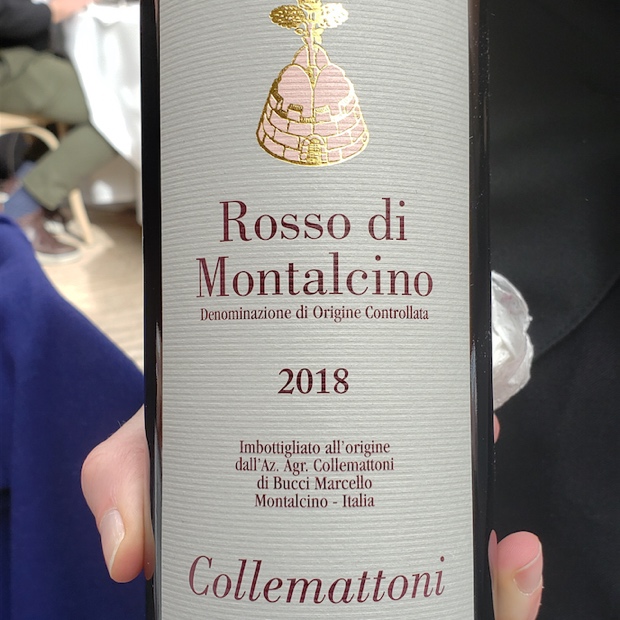
Collemattoni Rosso Di Montalcino DOC 2018

Such a consistently fashioned Rosso from Collemattoni, also a posit tug between freshness and structure, always to the proper precipice and edge of tang, tart and sour. Lingers with texture and wood rendering. A subtle wine that gains flesh as it works through the nervous system. Drink 2020-2023.  Tasted February 2020

Collemattoni Rosso Di Montalcino DOC 2017

A highly specialized terroir-driven Rosso with intensely structured tannins shaped over solid and strong bones. Really intense Rosso with leathery cherries and lots of dried herbs. Very good length. Drink 2021-2027.  Tasted February 2019

Collemattoni Brunello Di Montalcino DOCG 2014

Collematoni is a ripe one without breaching the grey areas of 2014 Brunello. Fruit in the pomegranate and red currant spectrum is protected beneath a hard tannic shell with circulating acids. Quite a beast this young and needing three to five years to gain its charms. Drink 2023-2028.  Tasted February 2019

Collemattoni Brunello Di Montalcino DOCG 2013

Take a trip away from all you have noted, felt and perceived in the first 25 Brunello tasted from this 2013 vintage and begin anew. Imagine you know nothing of sangiovese nor how it translates from the Montalcino terroir. Take in this Collematoni with open eyes, nose and mouth. It’s traditional, you would have to say and the most layered and variegated sangiovese imaginable. It transcends ubiquity and suggests a very personal affair. This is a religious, personal imposition from which there is no escape. The fruit is characteristic of vintage and specific to Sant Angelo in Colle but it comes replete first as a swell from the western sea and then a squall in the eastern wind. The fruit wave is massive, the stiff breeze of acidity equal to task and the tannins building, aboard ships whose masts flutter upon these seas. But it’s both a comfort and a charm, under a spell that you will not be able to avoid, not for a decade or more. Drink 2021-2033.  Tasted February 2018

Collemattoni Brunello Di Montalcino DOCG 2012

Gorgeous red fruit as generous and dare it be said, magnanimous as it gets. Collemattoni is a fruit machine, but also a mineral maker and a long-distance, slow-evolutionary walker. The calcareous-clay impression (from San Angelo in Colle on the southern hill of Montalcino) leaves a lasting imprint on your Brunello soul. This carries fine millefoglie layers of fruit, woven in lattice and with alternative material from that fruit, of ground stone, acidity and sweet, fine-grainy tannin. No shards, no cruising and no need for rehydration. Carries it all in one bag, or bottle. Drink 2020-2032.  Tasted February 2017

Corte Pavone

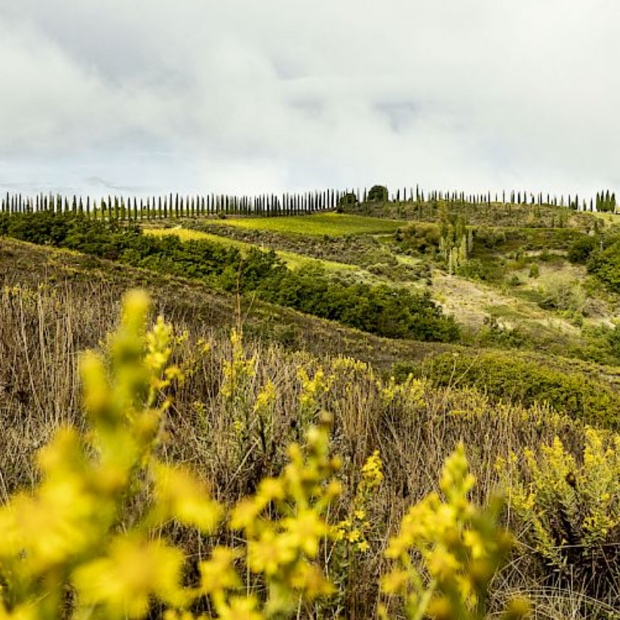
Since 1996 Corte Pavone has been owned by Rainer Loacker and his sons, Hayo and Franz. Hayo is the winemaker. It is located in the Casanuova area to the west of Montalcino with hillside clay soils upwards of 450-500m, certainly one of the higher elevations in the territory. Much of the 90 hectares of the estate is covered with meadows and forests. Rainer Loacker is from the family that owns Biscotti Loacker and Remedia Loacker which produces and markets enzymes and other natural nutrients. He also owns Tenuta Schwarthof near Bolzano in Alto-Adige and Valdifalco in the Maremma. We often think about Brunello as coming from either northern or southern vineyards. In Casanuova and what separates it from other zones is the consideration of its western position and how the vineyards are affected by a closer proximity to the sea. More than this is the great altitude so that a cooler prevalence and diurnal temperature swing means Brunello of higher acidity. Hayo Loacker started carefully observing his organic terroir and vines 10 years ago and has set up a dynamic micro parcelling of the land, dividing it in different areas to define seven individual single vineyard of Brunello – what he refers to as the “7 dynamic Brunello crus.” They are Campo Marzio, Fior di Meliloto, Poggio Molino al Vento, Fiore del Vento, Anemone al Sole, Terra di Ginestra and Terra Nuova.

(c) Weingut Loacker

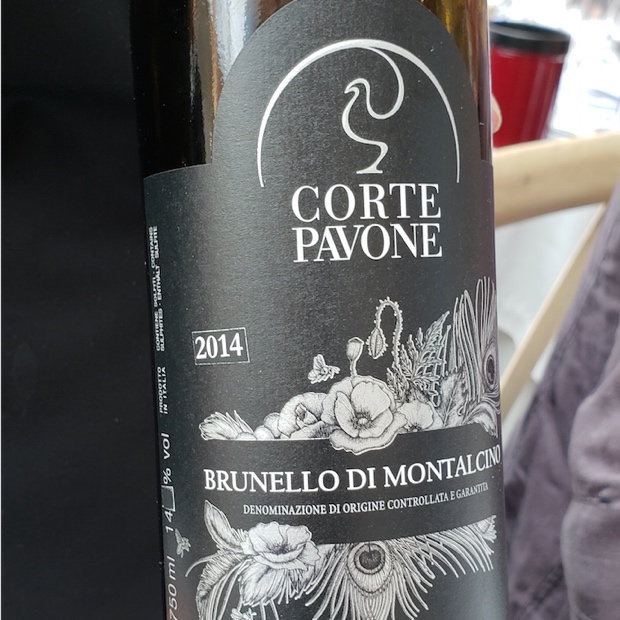
Corte Pavone Brunello Di Montalcino DOCG 2015

Heady and high floral aromas beget a formidable Brunello of fortitude and strength. Deep as black cherry emits in sangiovese from a certainty of high elevation, warm vintage solar radiation. A different sort of ’15 from the northwest adjacent Romitorio and surely a soil so different despite being so close. Rich, strong acids and loose tannin. Drink 2022-2028.  Tasted February 2020

Tenute Loacker Corte Pavone Brunello Di Montalcino DOCG 2014

From Rainer, Hayo and Franz Loacker in Casanuova to the west of the village. The clay soils pack at upwards of 450-500m on slopes at one of the higher elevations in Montalcino. Here is a big wine from Corte Pavone and one that could only have been difficult to manage in a vintage that tested the communal mettle. Dark fruit, wood spice and finishing chocolate. Drink 2020-2023.  Tasted February 2019

Tenute Loacker Corte Pavone Brunello Di Montalcino DOCG 2013

Since 1996 Corte Pavone has been owned by Rainer Loacker and his sons, Hayo and Franz. Hayo is the winemaker. It is located in the Casanuova area to the west of Montalcino with hillside clay soils upwards of 450-500m, certainly one of the higher elevations in the territory. Much of the 90 hectares of the estate is covered with meadows and forests. Only four hectares are dedicated to vineyards with vine age 30-35 years old and with a plan of converting another four also blessed with the best exposures. The organic wines are aged in Slavonian casks, French Barrique and Austrian oak barrels. Rainer Loacker is from the family that owns Biscotti Loacker and Remedia Loacker which produces and markets enzymes and other natural nutrients. He also owns Tenuta Schwarthof near Bolzano in Alto-Adige and Valdifalco in the Maremma. We often think about Brunello as coming from either northern or southern vineyards. In Casanuova and what separates it from other zones is the consideration of its western position and how the vineyards are affected by a closer proximity to the sea. More than this is the great altitude so that a cooler prevalence and diurnal temperature swing means Brunello of higher acidity. Though quite approachable for Montalcino sangiovese this ’13 is also reductive, fresh, energetic and its tones are set to high. Great food Brunello. Drink 2018-2026. Tasted March 2018

With Violante Gardini, Azienda Agricola Donatella Cinelli Colombini

Donatella Cinelli Colombini

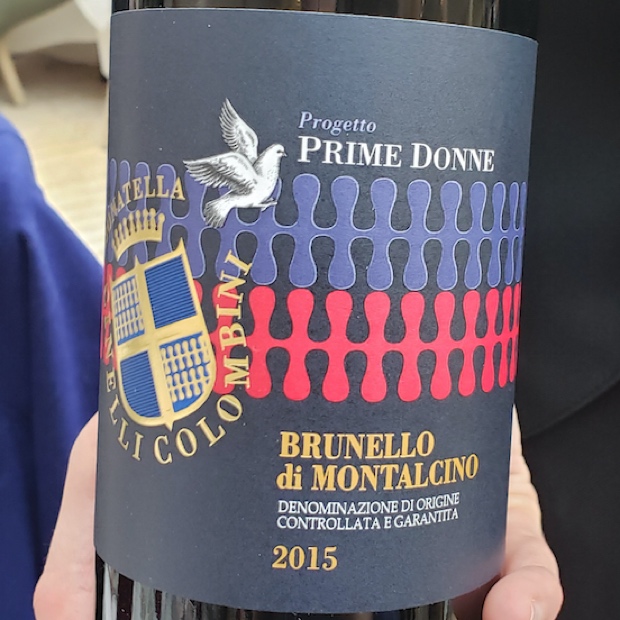
Donatella Cinelli Colombini comes from one of Montalcino’s longest running families, of a history and I quote, “where the lives of heretics, jurists, men of the church and grape growers entwine.” In 1998 when she went out on her own to create a new project and in reaction to the fact that wineries in Montalcino did not trust a female cellar master, Donatella created the first all-female run winery in Italy. The restored Casato Prime Donne is on the northern side of Montalcino on the road to Buonconvento, with sandy clay and Galestro soils and has been in Donatella Cinelli Colombini’s family since the end of the 16th century. Of the total surface of 40 hectares, 16.5 are planted to sangiovese and are cultivated organically. Aging for the first year was in (5-7 hL) tonneaux and then continued in (15-40 hL) Allier wood and Slavonian oak casks. The wine comes from six small vineyards in a 10 hectare area surrounding Casato Prime Donne. Two interesting facts about Donatella. One, she teaches wine tourism in the Master graduate programmes of three universities and two, in 2016 she was elected National president of the Donne del Vino Association. As for her daughter Violante, from 2013 to 2019 she was President of the Movimento Turimso del Vino Italiano, from 2016 to 2019 she was Vice President AGIVI (Young Italian Vine and Wine entrepreneurs) ands in December 2019 was elected President.

Donatella Cinelli Colombini Rosso Di Montalcino DOC 2016

Of the first couple of dozen Rosso tasted this is the one with some true, purposed reduction, if only as an early veil of protection, to lock in freshness and deliver this forward. Some pretty firm and fleshy fruit directs the body politic so that the first two years will seem hushed and suppressed. It will open like a flower and reveal some charm, soon after that. Another clear winner of purpose and focus from Donatella Cinelli Colombini. Drink 2020-2026.  Tasted February 2018

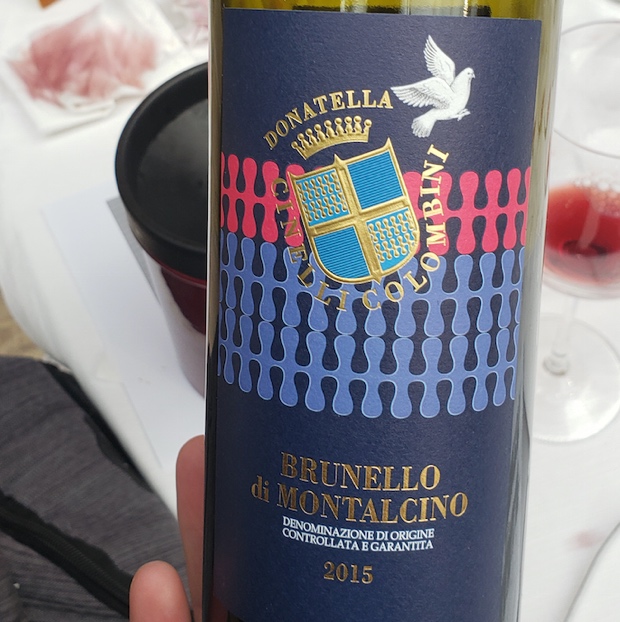
Donatella Cinelli Colombini Brunello Di Montalcino DOCG 2015

The 2015 is a deeper study in DCC soil and Brunello invention. You need to know that the northerly Donatella Cinelli Colombini terroir is more than offset, singular and testable. The makers of these Brunelli investigate every grain of sand, mould of clay and tumble of stones to forge the various cuvées of their sangiovese stable. This Annata carries a lyrical contralto in as much as that is a thing in Montalcino. A Cher, Annie Lennox, Nina Simone voice. It is precise and profound. It will live longer than the men. Drink 2023-2033.  Tasted February 2020

Donnatella Cinelli Colombini Brunello Di Montalcino DOCG Prime Donne 2015

Prime Donne is a highly specific single expression of the most important fruit raised by Donatella, Violante and team. The dichotomy here is more perfume cross referenced in adjacency to more barrel inflected structure. More notions to consider, vineyard dirt expressed through morbido tones and wood scents in gentle baking spice. Quite weighty in tannins, surely a love song so divine, certainly a wine that will stand the test of time. Drink 2022-2032.  Tasted February 2020

Donatella Cinelli Colombini Brunello Di Montalcino DOCG 2014

Despite and in spite of the northern vineyard’s location of six small plots in a 10 hectare area surrounding Casato Prime Donne this from Colombini is quite ripe for the vintage. Strawberries and dusty, savoury accents drive the fruit into a pool of fine, welling and syrupy acidity. It’s an unusually simplified and somewhat flatlined wine for Donatella out of a vintage neither old-school nor flashy modern, yet major challenges are no obstacle for this estate and so her sangiovese is still very full of charm and grace. Drink 2021-2027.  Tasted February 2019

Donatella Cinelli Colombini Brunello Di Montalcino DOCG 2013

In 1998 when she went out on her own to create a new project and in reaction to the fact that wineries in Montalcino did not trust a female cellar master, Donatella created the first all-female run winery in Italy. It is now an estate run by a team of no fewer than eight passionate women. The restored Casato Prime Donne is on the northern side of Montalcino, with sandy clay soils and has been in Donatella Cinelli Colombini’s family since the end of the 16th century. Of the total surface of 40 hectares, 16.5 are planted to sangiovese and are cultivated organically. Aging for the first year was in (5-7 hL) tonneaux and then continued in (15-40 hL) Allier wood and Slavonian oak casks. The wine comes from six small vineyards in a 10 hectare area surrounding Casato Prime Donne. Donatella describes 2013 as “an old style vintage, a Brunello that is elegant, complex, deep and harmonious, that will last decades. The scarce vintages are nearly always the higher quality ones.” There have been exceptional wines from Donatella in the recent past but the most impressive thing she can do is make a great wine in a challenging vintage. This 2013 does what needs; it’s delicately passed fruit avoids the intensity and drying angst of others, keeping the bright faith, binding it to tannin through the coursing dialectical collection of acidities and then making a valid request for patience. All 2013 Brunello need time, some will never come into their marriages and others, like the ’13 from Casato Prime Donne are already there. It will go further than many. Drink 2020-2029.  Tasted February and March 2018

Donatella Cinelli Colombini Brunello Di Montalcino Riserva DOCG 2013

Welcome to the Brunello Riserva you may just want to drink right now. From estate vineyards at Casato Prime Donne. The fruit is luscious and as full as ’13 can be, ripe to the max and this from the northern zone. Herbal in an Amaro way, some desiccation to create this red, black and blue sangiovese liqueur. Rich and chewy with a silky mouthfeel and even chewier tannins. Not particularly grippy or tannic by demand, it flows and apportions full circle, ode to the earth, all in and blood orange bright. Drink 2019-2025.  Tasted February 2019

(c) Il Grappolo Montalcino

Il Grappolo

On 25 hectares with 16 planted south of Montalcino around Camigliano, in an area dense with Mediterranean scrub lying between the Tyrrhenian Sea and the Val d’Orcia. The vines look south towards Monte Amiata and west towards the valleys of the Maremma. Sassocheto, meaning “stone quiet” is Il Grappolo’s iconic Brunello made from 20-plus year-old vines in the south-facing Piano Nero vineyard, planted at 300 metres of elevation in deep, pebble-rich schist soils with decomposed rocks of Galestro, Alberese, and sandstone.  The wine ferments in temperature-controlled open vats and is given a lengthy maceration; it then matures at least 24 months in French and Slavonian oak barrels and a further 6/12 months in the bottle. Without equivocation and to keep us comfortably seated in the plush authenticity of traditional Brunello it is Sassocheto that confirms our notion of a sangiovese-Montalcino world.

Il Grappolo Brunello di Montalcino DOCG Sassocheto 2015

“Stone quiet,” signature wine for Il Grappolo, from 20-plus year-old vines in the south-facing Piano Nero vineyard, planted at 300m near Sant’Angelo in Colle. Schist soils are strewn with Galestro, Alberese and sandstone, the whole Montalcino masala, all in veritable contribution. Sassocheto, exacting sangiovese, as in Brunello that is just like looking in the territory’s mirror. Pure and harmonious with sly power both “subdolo” and “furbo,” because tannins like these wind in two directions, depending on which was the fruit winds just happen to blow. A worthy “campione” of the 2015 vintage, to set an example for how to win when your vineyards gift such exemplary fruit. One of the great values of the year. Drink 2021-2029.  Tasted February and November 2020

Il Grappolo Brunello di Montalcino DOCG Sassocheto 2013

On 25 hectares with 16 planted south of Montalcino around Camigliano, in an area dense with Mediterranean scrub lying between the Tyrrhenian Sea and the Val d’Orcia. The vines look south towards Monte Amiata and west towards the valleys of the Maremma. Sassocheto is Il Grappolo’s iconic Brunello made from 20 year-old vines in the south-facing Piano Nero vineyard, planted at 300 metres of elevation in deep, pebble-rich schist soils with decomposed rocks of galestro, alberese, and sandstone.  The wine ferments in temperature-controlled open vats and is given a lengthy maceration; it then matures at least 24 months in French and Slavonian oak barrels and a further 6/12 months in the bottle. Without equivocation and to keep us comfortably seated in the plush authenticity of traditional Brunello it is Sassocheto that confirms our notion of a sangiovese-Montalcino world. Should Il Grappolo’s be considered as more traditional than most? Yes, but just as this 2013 tells us with utmost clarity, the vernacular is spoken through an ever evolving and forward thinking lens. No pretence and all in for the right reasons. Drink 2020-2029.  Tasted March 2018

Il Grappolo Brunello di Montalcino DOCG Sassocheto 2012

The 2012 Brunello vintage is taken to an extreme side in Il Grappolo’s Sassocheto, with very firm and vacuumed aromatics shut and locked in so very tight. The depths are occupied by cherries drying, losing their body weight and settling into a floor of forest leaves and a future occupied by mushroom and truffle. The old-school, fine leathery and old barrel tonic bequeathes much hope for the mouthfeel and it gives every reason to confirm the possibilities. The world as we have known it here in Brunello sits right in this glass. It’s both comforting and filled with ancient wonder. Drink 2019-2027. Tasted February 2017

Il Grappolo Brunello di Montalcino DOCG Sassocheto 2010

Sassocheto is Il Grappolo’s Vigna 2010, a Sant-Angelo in Colle ripper, intense, brooding, formidable and still raging. Some 2010’s have already evolved and settled into their skin but Sassocheto is just getting started. If you are unfamiliar with the house then think of Poggio al Vento from Col D’Orcia for a stylistic comparison. The leather and cherry liqueur mix into roses and volatile syrup for a heady stew that is more traditional than modern. This is serious sangiovese, Montalcino style. Drink 2019-2027.  Tasted July 2017

Good to go!

godello

Twitter: @mgodello

Instagram: mgodello

WineAlign

Boomers, Gen Xers and Millennials: 40 years of Brunello di Montalcino DOCG

Montalcino, 6pm

My first of six online seminars will trace back through history to the origins of the DOCG classification for Montalcino’s Brunello

No one of sound mind passes up the opportunity to taste Brunello from Montalcino

It was the Baby Boomers in the late 1960s who looked on during the declining years of Italy’s Mezzadria sharecropping system while the founding mothers and fathers of Montalcino got together and forged a territory’s path. These Tuscan pioneers committed to unifying, marketing and selling their wines under the auspices of one consortium. Then through the 1980s and into the 1990s the watchful eyes belonged to Gen Xers at a time when Brunello di Montalcino passed through its formative years and began to develop a recognizable and powerful global identity. Generation X beget Millennials who then bore witness to wines that took the world by storm through the late 1990s and well in the 2000s. By the time Montalcino progressed through the decade of 2010 to 2020 Brunello had cemented its worldwide reputation as one of the most important, cellar-worthy and respected wines.

Municipality of Montalcino, “The land of Wine.” With a capital W, covering a surface area of 24,000 hectares, only 15 per cent of which is occupied by vineyards. Montalcino, 40 km away from the sea and 100 from the Apennines, protected at its southern reaches by Mount Amiata, looming at 1740m, diverter of storms; rain, fog and hail. The zone is roughly a square bordered by the rivers Ombrone, Asso, and Orcia. Sparsely populated, Montalcino the village and surrounding hamlets are inhabited by an overall population of just over five thousand. Since 1967 the territory and its sangiovese have been organized, charted, governed and protected by the Consorzio del vino Brunello di Montalcino. On Thursday, November 12, 2020 the first of six online seminars will cover the entirety of Montalcino and its exceptional wines. Over the course of these six sessions we will welcome 25 archetypal Montalcino producers and their wines.

Coming this Thursday, November 12, 2020

In the trusted duty as ambasciatore for Montalcino and its vital sangiovese I will play host and moderator to four of the territory’s most prominent and illustrious producers in this first of six pivotal seminars. Representatives from Canalicchio di Sopra, Fattoria dei Barbi, Tenute Silvio Nardi and Poggio di Sotto will chat up a select group of media and sommeliers through 40 years of Montalcino’s history. The territory’s controlled denominational guarantee has established its reputation since 1980. Boomers, Gen Xers and Millennials have seen it all, from humble beginnings through worldwide recognition.

With the introduction of Italy’s DOC quality appellation (Denominazione di origine Controllata) in 1963, Brunello quickly thereafter rose in the ranks of the eight most important Italian wines bearing that designation. In 1966, it became a DOC wine, and a year later the Brunello Consortium was founded, “as a free association of vignerons whose aim was to safeguard their product and emphasize its best qualities.” In 1980, it was the first wine to be granted the most important DOCG classification (Denominazione di origine Controllata e Garantita), a superior designation for select wines in Italy bearing a specific seal from the government.

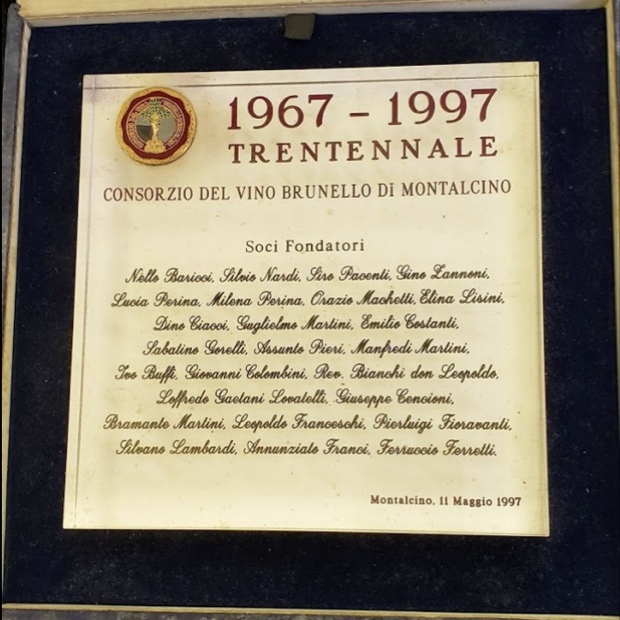
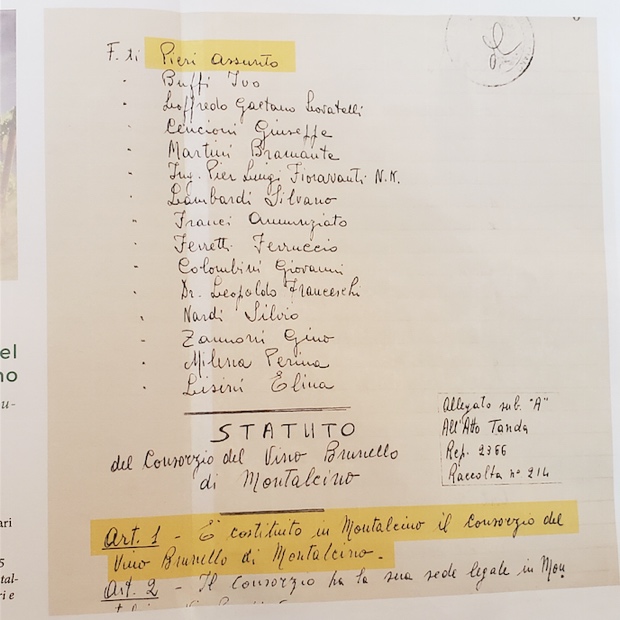
The Consorzio del Vino Brunello di Montalcino was formed in 1967 as a coalition of 25 original members. There were 15 producers who signed the page on this accord kept at Bellaria Estate: Assunto Pieri, Ivo Buffi, Loffredo Gaetani Lovatelli, Giuseppe Cencioni, Bramante Martini, Pierluigi Fiovaranti, Silvano Lambardi, Annunziato Franci, Ferruccio Ferretti, Giovanni Colombini, Dr. Leopoldo Franceschi, Silvio Nardi, Gino Zannini, Lucia Perina and Elina Lisini. The other nine original members were Nello Baricci, Siro Pacenti, Milena Perina, Orazio Machetti, Dino Ciacci, Guglielmo Martini, Emilio Costanti, Sabatino Gorelli and Rev. don Leopoldo Bianchi.

The territory’s wine appellations cover Brunello di Montalcino DOCG, Rosso di Montalcino DOC, Moscadello di Montalcino DOC and Sant’Antimo DOC, all exclusively made from grapes grown within the city limits of the Town of Montalcino. There are 221 registered producers and bottlers with the Consorzio del vino Brunello di Montalcino. The President is Fabrizio Bindocci, Vice-Presidents are Giacomo Bartolommei, Stefano Cinelli Colombini and Riccardo Talenti. The Director is Michele Fontana.

Brunello di Montalcino is made from the sangiovese grape, a variety traditionally referred to as Brunello in this area. The regulations governing wine production dictate that the maximum production of grapes per hectare must be less than eight tons per hectare (approximately 52 hl/ha of wine). It also dictates the date of the wine being released onto the market, which is January 1st of the fifth year after harvesting. During this long period, the wine must spend at least two years in wooden barrels and age at least four months in the bottle. The Riserva wine must age at least six months in the bottle and is released a year later onto the market. Rosso di Montalcino DOC is proof of the great versatility of the Montalcino terroir, as it is made from the same sangiovese variety, but is a red wine to be enjoyed earlier. In fact, Rosso di Montalcino is introduced to the market on the September 1st following the year of harvest. Starting with the 1984 vintage, it attained DOC status. There are nine million bottles of Brunello and half that of Rosso produced on average each year. More than a quarter are certified organic and/or biodynamic and that is double as compared to just five years ago. Seventy per cent of the wines are exported. Current vintages on the market are 2015 for Brunello, 2018 for Rosso.

Benvenuto Brunello

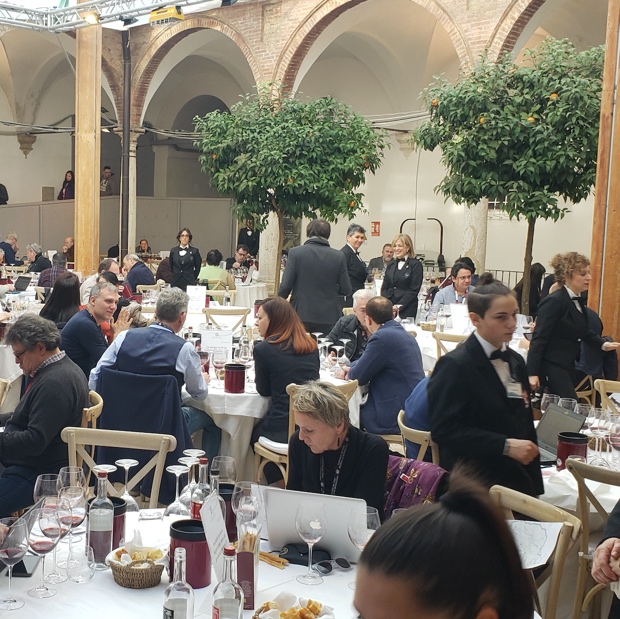
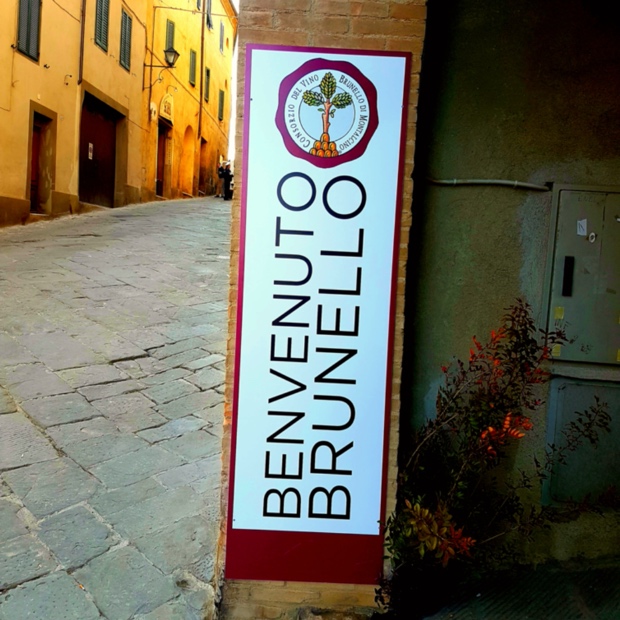
The Consorzio’s members come together each February at The Chiostro Museo Montalcino and home to the Consorzio’s offices for Benvenuto Brunello, a two day showcase of the most recent vintages to wrap up Anteprime di Toscana. I recently attended a fourth consecutive collection at Anteprime di Toscana. The culminating 2020 presentation of 2018 Rosso DOC and 2015 Brunello DOCG raised the bar for Montalcino’s venerable sangiovese. You can read all about it here, inclusive of my tasting notes for 150 sangiovese; 36 Rosso di Montalcino DOC and 114 Brunello di Montalcino DOCG.

Related – Benvenuto Brunello 2020: Montalcino surges ahead

(c) Consorzio Vino Brunello di Montalcino

Related – Benvenuto Brunello 2020: Montalcino surges ahead

I recently asked a a host of Montalcino producers some pressing questions. Six questions in fact and here is what a couple of our first seminar participants had to say.

What recent vintage would you say marked the turning point for your winemaking, to bring your wines into a place and style that speaks of your particular vineyards, their location and terroir in Montalcino? What or why is the reason?

Stefano Cinellí Colombini, Fattoria dei Barbi: “We have had some turning points. 1931 was the first vintage with “important numbers,” 35,000 bottles instead of the normal 5,000/10,000 we had for a century because my grandfather Giovanni Colombini decided to try to sell it more widely. By mail and through agents in Rome, Naples, Florence and Milan. It was a success, the wine was more alcoholic and very austere. 1964 was rated the best red wine of Italy by the Italian Ministero dell’Agricoltura, obtaining the “Torchio d’Oro” It was a rich, powerful Brunello in a very traditional style, and our first vintage in which we produced more than 100,000 bottles. This was our first vintage appreciated by the Italian journalists, and also the first widely sold abroad. 1975 was a very classic Brunello but more “easygoing”, a turning point in style and marketing. Not so tannic as our previous wines, ready to drink after only five years but able to age very well for decades, it was the final result of years of research on fermentation and on a shorter period in wooden vats. This was very probably the first “modern” Brunello, a style that became the normal one for all the producers. It was an unbelievable commercial success, 235,000 bottles sold from the USA to Japan. 1995 was again something new, still in a very traditional style but larger, bolder even if very elegant. It was our first “fat” Brunello, in a period in which the wines had to be more and more “important” we reached this result avoiding any mechanical concentration with osmosis or similar devices. We increased the vineyards from 50 to 100 hectares, and reduced very strongly the production per hectare. 2007 was another important turning point, after five years of experience we could use for all our production dry ice, the new Ganimede fermenters and a completely “vintage program” which reduced to less than one hour the time from the picking of the grapes to the arrival in the fermenting vats. The result was a better extraction and a better concentration of the traditional flavours of Sangiovese. A more typical and more intense one.

Francesco Ripaccioli, Canalicchio di Sopra: “2013 may have marked the turning point for our winemaking, in looking for their particular sense of place, for a unique eastern to northeastern Montalcino sapidity in our wines.”

What mistakes have you made and how have you learned from them so that you can make better wines and the wines you need to make from your property?

Stefano Cinellí Colombini, Fattoria dei Barbi: “I am really lucky, because my ancestors take notes of the many mistakes they did in the last two centuries. In vineyards they tried at least two times very dense plantation, 1.5 metres per 0.80 and then in 1930 2 metres per 1. They tried alberello, guyot and cordone speronato on two levels. They tried to anticipate the vintage or to delay it. They tried chestnut vats. They tried warmer fermentation, and fermentation from three days to six months with the skins. Any kind of chemical, organic or mist fertilization. The modern Brunello is the result of centuries of mistakes of a group of producers, frequently friends and sometimes parents, which shared their good and bad results. I did just some small mistakes, because somebody else did the big ones.”

Francesco Ripaccioli, Canalicchio di Sopra: “We are learning from our mistakes, such as those we made in 2007. We are now much more going in the direction of purity in fruit and clean clarity out of the cellar. Brunello is all about freshness, verticality and depth. These are the three parameters of necessity, especially for Riserva.”

What effect do the Tramontane and Grecale winds have on your vineyards and can you pinpoint a particular vintage when the winds made a big difference in the wines?

Stefano Cinelli Colombini, Fattoria dei Barbi: “Montalcino is always very windy, so windy that our vineyards are accustomed. The only vintage in which I was able to note a special difference due to wind was 2013, at the beginning of September we had four days which dried the grapes on the top of the hills, which normally are the best places. The valley vineyards, which normally have mould problems, had a serious increase in quality.”

Francesco Ripaccioli, Canalicchio di Sopra: “In 2018 the Tramontana wind came on September 16th and the harvest began on the 29th for Rosso. The second wind called the Grecale also blew in to cause up to 30 per cent drying of the grapes. The resulting reduced yields meant for grapes of concentration in both fruit and acidity but also a high number for dry extract.”

How or why did 12 or 24 months, or in rare cases, 60-plus months further become the defined reason for how to make and qualify Riserva?

Stefano Cinellí Colombini, Fattoria dei Barbi: “In my opinion any true Brunello is at his best between eight and 20 years, it is due to the peculiar character of the Montalcino Sangiovese grapes.”

Francesco Ripaccioli, Canalicchio di Sopra: “The oak is not an ingredient. It’s a kneading for the wine.”

Do you prefer the oldest vines for Riserva or Vigna? And do you prefer them in colder or warmer vintages for these wines?

Stefano Cinellí Colombini, Fattoria dei Barbi: “I tried to find a mathematical connection between colder or warmer vintages and quality, but I had so success. The same happened with the rains. I prefer the best vintages for Vigna and Riserva, but sometimes these are warmer vintages and sometimes are the colder ones. Frequently the top vintages are the most “balanced” ones, but not always.”

Francesco Ripaccioli, Canalicchio di Sopra: “With vintage variation I prefer the oldest vines (Vigna Mercatale at Canalicchio) in the coldest vintages for Brunello and Vigna. For Riserva I choose the vineyard on the Montosoli hill.”

How are things going for Montalcino?

Stefano Cinelli Colombini, Fattoria dei Barbi: “Va a macchia di leopardo. It goes wild. More than a third of the Brunello “vintage” has already been sold and there are only two vintages in the last ten in which more has been sold. The prices of the bottles have not dropped. However, the bulk Brunello market (only 8% of the total) is at a standstill and the bulk price has dropped by 40%. Those who have an advanced commercial and / or a large brand suffer little or nothing, while the less organized ones have some problems. But there are not many. Bolgheri is fine, Maremma and Mo rellino benino, the rest of Tuscany ouch ouch.”

The following are my notes for Canalicchio di Sopra, Fattoria dei Barbi, Tenute Silvio Nardi and Poggio di Sotto Rosso di Montalcino DOC and Brunello di Montalcino DOCG tasted over the past two and a half years.

Canalicchio view

Canalicchio di Sopra

Canalicchio di Sopra has been farming the lower northeastern slope below the village of Montalcino since 1962 on 60 hectares, including 19 cultivated with vineyards within a context rich in biodiversity and natural beauty that was granted UNESCO heritage status back in 2004. The vineyards are split within two identified cru; the estate plots at Canalicchio and on the Montosoli hill. Canalicchio is split into six vineyards, including Casaccia which acts for a Vigna, or single-vineyard label. The first bottle of Canalicchio di Sopra Brunello di Montalcino was produced in 1966 and in 1967, the estate was one of the twelve founders of the Consorzio del Vino Brunello di Montalcino. Primo Pacenti founded the winery in 1962 and his of son-in-law Pier Luigi Ripaccioli began working side by side with him in 1987. Since 2001 the three grandchildren Francesco, Marco, and Simonetta have been involved in the family’s business.

While the others have real defined roles in vineyards and the office it seems that Francesco Ripaccioli has his hands in every aspect of Canalicchio di Sopra. Winemaking is clearly his focus and love but marketing the family’s wines and putting them in a bigger, wider and more collective Brunello di Montalcino context is clearly a life goal. Francesco is one of the territory’s most precocious team player that understands his family’s place in the context of a greater good. He is a fantastic ambassador for all of Montalcino and his wines are off the charts in excellence.

Canalicchio Di Sopra Rosso Di Montalcino DOC 2018 ($39.95)

Only raised in big barrels but not the 2500L larger oak used for the Brunello. Lovely red fruit purity and transparency from a vintage that was at a near all-time low pH. Higher acidity conversely and serious enough to use for food matching ability. Just a hint of pressing is felt but it’s really just a matter of de-stemming that makes a push but not a crush. A little bit of whole berry helps ward of oxidation and the freshness is truly a matter of gentile handling. Such a fine, drinkable and complex Rosso. Drink 2020-2025.  Tasted February 2020

Canalicchio Di Sopra Rosso Di Montalcino DOC 2016

The ’16 Rosso takes all the extract and acidity of the combined coming two vintages and gleans every ripe aspect for the ambitious way that Rosso can go. Deeper and less crushable and truth be told the Brunello appellation is cozied up to. Salty and full of proper tang with seasoning and spice. Drink 2020-2024.  Tasted February 2020

Francesco Ripaccioli

Canalicchio Di Sopra Rosso Di Montalcino DOC 2010 ($39.95)

Wildly fresh considering Rosso was not often thought to show such longevity, but in can and will exhibit such tendencies. Potential ability is magnified in a dark fruit vintage that advances with wisdom, morphs and settles. Lives and evolves within itself. Sweet fruit persistence is more than admirable, it’s outright amazing. Scents of carob, dried orange and liquorice, now coming into a baking spice place with persistent acidity. Drink 2020-2023.  Tasted February 2020

Canalicchio Di Sopra Brunello Di Montalcino DOCG “Canalicchio Di Sopra” 2015

Back to prominence for Brunello quantity is what 2015 does for business while delivering great quality without causing any undue relative stress. Both Canalicchio vineyards and Montosoli cru fruit make up the cuvée. Welcome to the beauty in cherry liqueur and outright unction from the generous vintage out of which every extra day meant more ripeness, more extract and more texture. The acidity factor is what drives this Brunello because staggered picking equates to an agglomeration of perfect timing. The true estate expression in no unspoken terms. Drink 2022-2031.  Tasted February 2020

Canalicchio Di Sopra Brunello Di Montalcino DOCG Casaccia 2015

Casaccia as in the name of the house and the registered name of the vineyard, here a monopole look at Brunello from the larger 14 hectares for eastern Montalcino’s Canalicchio. The idea here is to celebrate a place within a place but without compromising the larger cuvée expression. Takes extract, concentration and purpose to another level, not to mention polish, precision and potential. The acids are elevated and the texture more refined, converse and complimentary. A tightness makes for some early attack that needs time to get past. Quite cool, tannic and intense. Will hit its stride quite far down the road. Drink 2024-2035.  Tasted February 2020

Canalicchio Di Sopra Brunello Di Montalcino Riserva DOCG 2015

A preview sample. Comes from fruit grown in the oldest two hectare vineyard of Vigna Vecchia Mercatale. The vines were planted in 1987 and in good vintages the potential is gifted, not a matter of grand impact but one of the land, the soil, the brown clay minerals and the elements. And so it’s a matter of longevity and potential, not brut strength. A beautiful example of Riserva, focused, precise and fine. And yet the style is poised in position along a line that includes the Brunello and the Riserva so homogeneity in these soils is more than apparent. This part of Montalcino makes this kind of wine and this house celebrates the consistency. Drink 2022-2036.  Tasted February 2020

Canalicchio Di Sopra Brunello Di Montalcino DOCG 2014

There is a substantiating reality to this sangiovese, typical of the sourness that vintage will not allow to be hidden though with more concentration than many. Chewy really comes to mind when you attack and in turn allows the palate to wage battle on your buds. Things fall into place well enough in spite of what 2014 wants to do to distract from the truth. Clearly a set above the norm. Drink 2020-2025.  Tasted February 2019

Canalicchio Di Sopra Brunello Di Montalcino DOCG “Canalicchio Di Sopra” 2013

This ’13 from Francesco Ripaccioli and Canalicchio di Sopra is sangiovese out of the excellent, variable, at times confounding and now at the seven year mark, nothing if not profound vintage. Perhaps even marks the turning point for a winemaker looking for his and his family’s sense of place, for a unique eastern to northeastern Montalcino sapidity in his wines. “We are learning from our mistakes,” he admits, “such as those we made in 2007. We are now much more going in the direction of purity in fruit and clean clarity out of the cellar.” Brunello is all about freshness, verticality and depth. The 2013 comes from what Francesco would still qualify as “not so easy a vintage, a vintage of interpretation.” Cold for a Montalcino season so he, his siblings and team passed through the vineyards on several occasions for preparation, timing and selection. “We like to clean the vineyard, to prepare for the harvest,” he adds. Picking happened in October “of amazingly floral fruit, finishing on the 11th, just as the rain arrived. Better to be lucky than good.” ‘Tis Brunello first of flowers in bloom, a candied scent and fresh herbs. Fulsome and openly fragrant, a silky texture, some chocolate and ultimately, beauty. Drink 2020-2030.  Tasted February 2020

Canalicchio Di Sopra Brunello Di Montalcino Riserva DOCG 2013

Showing beautifully, in a calm stage even, a respite from power and now, simply attractive. All the Canalicchio elements from clay soil show up; mild sweetness, furthered salinity and a deep sort of sapidity. Nothing fully pronounced but all there. Great Riserva vintage.  Last tasted February 2020

Riserva is a selection in the cellar though certain blocks from certain vintages are premeditated and in fact 2013 Riserva is solely selected from the Montosoli hill. The perfume stands apart, rising, haughty and full of fresh roses. The expression of rocks drawn into vines from the new age, climate-affected northern exposure are for perhaps the first time in the Cru’s history a brand new Canalicchio di Sopra Brunello. Salinity, sapidity, power and elegance. Truly. Drink 2022-2035.  Tasted October 2019

Canalicchio Di Sopra Brunello Di Montalcino Riserva DOCG 2012

“Reduction is a way to preserve the freshness and the florals of the wine,” tells winemaker Francesco Ripaccioli. Sangiovese is better set up and suited this way and while some Balsamico is now speaking through this ’12 Riserva’s voice, much of the aromatics are still situated in the realm of a high-toned grace.  Last tasted February 2020

A year previous to the ’13 Riserva (which will be made exclusively from Montosoli hill fruit) there is the depth of clay and controlled power out of Canalicchio cru vines. The absolute attention paid to patience and time is noted from a Brunello such as this, spoken out within the constructs of fruit extraction and wood usage. The tannins are red meaning they are ripe and request that you give this wine as much time as it gave before going to bottle and then to market. Lush, consistent from start to finish and just hinting at notes not quite Balsamico but something other, something derived from sangiovese grown in the grey clay of La Casaccia. Drink 2021-2032.  Tasted October 2019

Canalicchio Di Sopra Brunello Di Montalcino Riserva DOCG 2016 (Barrel Sample)

Barrel Sample. A deeper well filled with that cherry liqueur and clearly more extract and concentration. The tannins are still fierce, intensely chalky and fine bitters are very much a part of the mix. A furthered texture Brunello with no less strength than most 16s will surely exhibit but the power is tempered by this feel and polish. Quite a potential here for 20 plus years of longevity. Drink 2024-2035.  Tasted February 2020

Canalicchio Di Sopra Brunello Di Montalcino DOCG Casaccia 2016 (Barrel Sample)

Barrel Sample. Now this is something exceptional. This is what Casaccia is obviously capable of producing, The sweetest Canalicchio fruit of all, to date and with a rising low and slow angling of acidity (as opposed to straight verticality) that carries the fruit to great heights. This will be a triumph and in fact it is already tasting like a piece de Canalicchio resistance while it sings a long maestro song. A soloist that needs no accompaniment although food, company and peace would not hurt at all. Obviously this is more than just the northern side of Montalcino and more than Canalicchio.  This is Casaccia.  Drink 2025-2040.  Tasted February 2020

Stefano Cinelli Colombini

Fattoria Dei Barbi

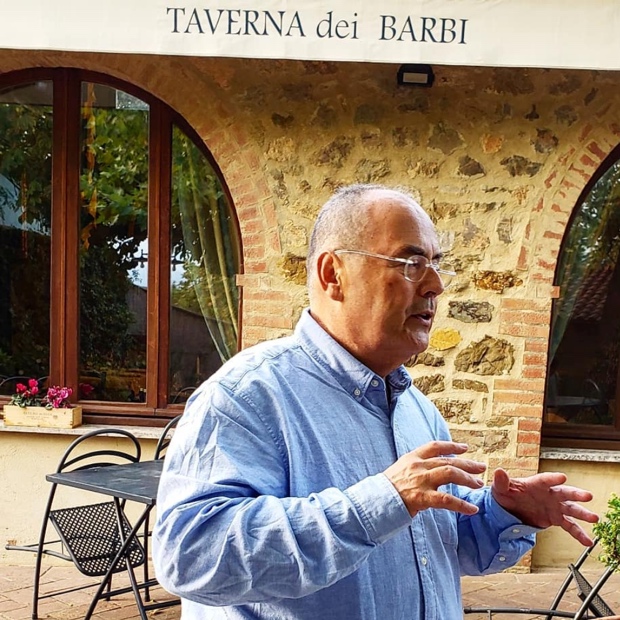
All visits to Montalcino must include La Fattoria dei Barbi. Barbi has been owned by the Cinellí Colombini family in Montalcino since 1352. The property extends over 300 hectares of fields and vineyards in southern Tuscany, in Montalcino and Scansano. Production of Brunello dates to 1892 and Barbi were the first to export it to Europe, America and Asia. Fattoria dei Barbi is now run by Stefano Cinellí Colombini, current heir to 848 years of lineage, educator, historian, keeper of tales, lore, mythology and chosen one who continues a story that has seen the Colombini family connected to these lands for more than six centuries. Fattoria dei Barbi has been referred to as being “among a prestigious group of estates that has played an integral part in writing the history of Italian wine.” That is the truth.

Fattoria dei Barbi was the first firm in Montalcino to export bottled wine to France (1817), the first to sell Brunello by mail order (1832), the first to export it to America (1962), England (1969) and Japan (1975). After the death of Giovanni Colombini in 1976, Fattoria dei Barbi has been managed first by his daughter Francesca and today by his nephew Stefano. And yet there is also humility and comedy in this family. As stated on the website and reiterated by Stefano last October in Montalcino as we walked through the cellars, “not all the Colombini were saints, others were womanizers and hedonists, like Tommaso Colombini, a mediocre poet member of the early Renaissance group of literates moving around Cecco Angiolieri. Another weird member at the end of the XVI century was Stefano, who in a fight blinded the Governor of Montalcino and had to run away.”

Guided tours of the historic cellars and the onsite museum of wine for the territory are unrivalled in all of Montalcino. Experiencing them with Stefano Cinellí Colombini is more than memorable. Cinellí Colombini’s ability to relive and rejoice every iota of this territory’s history is the crux of everything Montalcino. His deeper understanding is what you need to know and is based in his family’s long time defence of the traditions and values of the culture of Montalcino, whose ultimate and most valuable fruit is the Brunello. A Montalcino education begins with Stefano Cinellí Colombini and their wines are at the peak of traditional combined with always moving forward with the times. Along with Stefano, no one knows more about Barbi’s history and wine producing prowess than Raffaella Guidi Federzoni who is International Sales Manager for the company. In March of 2020 Rafaella penned a letter to our great mutual friend Jeremy Parzen in which she wrote, “Buy wine. The products of people that share with you a past in some remote village of the South or a medieval town in the Centre or a prosperous bunch of districts in the North. Buy wine made with an identity that belongs only to this small and strange country.
A country that now needs help.” That plea was to Americans but it resonated to Canadians as well.

With Raffaella Guidi Federzoni

Fattoria Dei Barbi Rosso Di Montalcino DOC 2018

Barbi’s vintage acceptance and celebration is commendable to the degree that 2018 from vineyards ripened for pleasure is to be set this way. Such fruit, sweet thing, like “gardens misty wet with rain.” The kind of tart and tang on cherry and more cherry is what you want from sangiovese meant for the table each and every night. So right, walking and talking without ever growing old. Fresh youth is a beautiful thing. Drink 2020-2022. Tasted February 2020

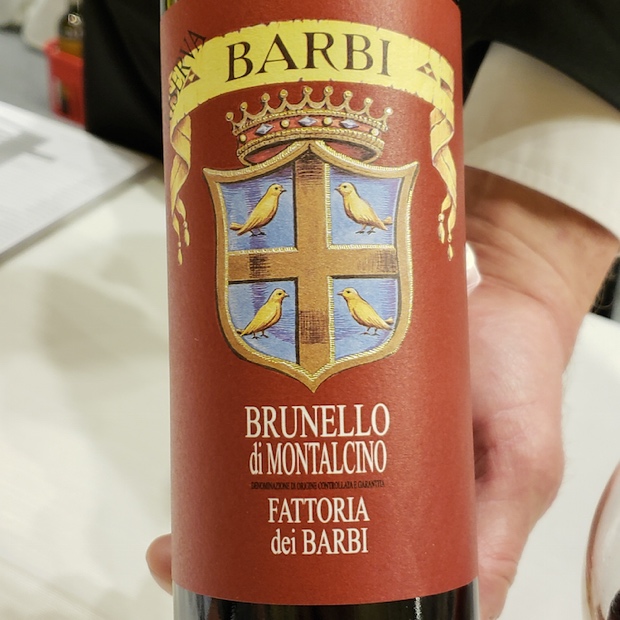
Fattoria Dei Barbi Brunello Di Montalcino DOCG 2015 (928028, $54.95)

C’mon classic Barbi here and the request is for this effectual realization to continue on forever, through the decades of vintages and their Brunelli. You come to expect the sort of juice that needs time, more time, precious time, endless time. You look for this tug of firmness, this posit strength and this creamy centre that ties the sangiovese room together. This does not and don’t ever abandon these roots Stefano, always keeps the Cinellí Colombini family’s Barbi faith alive. They are the lifeblood of this wine. Drink 2023-2030.  Tasted February 2020

With Stefano Cinellí Colombini

Fattoria Dei Barbi Brunello Di Montalcino DOCG Vigna Del Fiore 2015 ($79.95)

Vigna del Fiore. Salty number for the Montalcino location and yet this ease of amenability and the way the Barbi effort solicits affectation is undeniable. This secrecy of structure is a house and Vigna speciality and the sauce is spread liberally across the succulence of the fruit. No denying the effort, the acumen and the persistence of unwavering potential. Drink 2022-2030.  Tasted February 2020

Fattoria Dei Barbi Brunello Di Montalcino DOCG 2014

The difficult vintages separate the adulte from the bambine and so expectation can’t help but run high for this storied house. I expect the 2014 may be misunderstood. Though quiet and maybe even needing to be described as in a state of demure, this from Barbi translates to grace. Forget vintage for this is Barbi, albeit in a world occupied by some not so unusual aromatics and flavours. Apples? Limes? Apricots? Perhaps. For now the state of grace is not fully accessible or appreciated. After some passage of time, in conjunction with good grip and slowly dissipating astringency, this will live on as a Barbi Brunello. It will do so in honesty, as if there could be any doubt. Drink 2023-2029.  Tasted February 2019

Fattoria Dei Barbi Brunello Di Montalcino DOCG 2013

If there is another estate in Montalcino with more ode in pocket to tradition and history while always moving and thinking forward then I’d like to meet it. Barbi’s ’13 takes an express leap ahead, away from where it came but with notes and stories that recall its past. This fruit is serious, wise, salumi-frutta di bosco meets fragola based, chewy, ropey and exact. The tannins are drying over round and bounding acidity while the age potential never wavers. It’s a baby, like so many, but in a Brunello as here, as always, there is no speculation, only certainty. Drink 2020-2027.  Tasted February 2018

Fattoria Dei Barbi Brunello Di Montalcino Riserva DOCG 2013

There are Barbi Riservas and there are Barbi Riservas. Many are the toughest nuts to crack and then along comes a fruit beauty like 2013. Not sure I’ve ever tasted this sort of gregarious nature from a Barbi, normale, Riserva, or Vigna del Fiore. There is no compromise to tradition but there too is no holding back in delivery of ripe, fattened red fruit, sweet acidity and even sweeter tannins. The picking, selecting, vinifying and aging of the components that made up this wine were spot on. A gift to the consumer. Start your Brunello Riserva journey right here. Drink 2019-2027.  Tasted February 2019

Fattoria Dei Barbi Brunello Di Montalcino DOCG 2012

Barbi accomplishes an Annata Brunello just haste in 2012, taking expressly written sangiovese red fruit and pushing it to the limits of its natural tendencies, in hue and expression. I would have to say that consistency from this house is an absolute guarantee and that its style trumps vintage as much as any other. This is simply more Barbi than 2-12. That’s all there is to it. Tannins are firm, acidity is strong and fruit is up to the 15 year task. Nothing time sensitive about it and its timeless structure cements the absolution. Drink 2019-2027.  Tasted February 2017 and October 2019

Fattoria Dei Barbi Brunello Di Montalcino DOCG Vigna Del Fiore 2012

Barbi has also listened to the wind and vintage ear worms sung from their iconic, 16th century vineyard known as Vigna del Fiore. Red fruit of clarity and purity reigns while acidity is at its finest for the house. The rusticity of cherry, leather and roasted beets combine for full gastronomic effect and lead into a rather sumptuous and mouth coating texture for the palate. This scales the wall and retreats again to stay in the game in which you can play now (well, soon), then repeatedly, at consistent increments, later and later. VdeF from Barbi is a best of both worlds Brunello for both consumer and collector. Drink 2019-2031.  Tasted February 2017 and October 2019

Fattoria dei Barbi Brunello Di Montalcino DOCG Vigna del Fiore 2011

Having tasted the follow-up 2012 a year earlier in Montalcino made for more than a curious moment to look at this 2011 one year later and in Toronto. Nothing against the rock solid ’12 but this vintage is simply glorious. Waiting 12 months was not just worth it but clearly essential. The walls have come down, the sea departed, volcano stepped aside and all that is right in a Castelnuovo dell’Abate Brunello world is also righteous and beautiful. Some of Montalcino’s most famous and iconic wines have come from Stefano Cinelli Colombini and Fattoria Barbi, the oldest of which date back to 1870. There are two centuries of history with thanks to Francesca Colombini. The Vigna del Fiore “vineyard of the flower” or maybe “flower garden vineyard” is unique to Castelnuovo dell’Abate, one of the oldest (and furthest south) in Montalcino. The block is just under six hectares from an area where vines have been cultivated since the XVI century. It sits on the top of a hill that descends toward the Asso and Orcia rivers and faces Mt. Amiata. The hill is a natural corridor between Montalcino and Mt. Amiata and it connects the Crete Senesi in the Val d’Orcia and the basin of the Ombrone valley as you head to the sea. The production varies a lot; in some years it is not produced and at a maximum it reaches the 13,000 bottles range. The first vintage was 1981, chosen to celebrate the 50th anniversary of Francesca Colombini Cinelli. Aged in small to medium size (that is 5-20 hL) oak barrels for the first months, it completes the aging in larger oak barrels for a total period of two years and then is bottled at least four months before it’s released. The oenologist is Paolo Salvi. This represents what matters in terms of Vigna-designate Brunello and what it means compared to broader expressions drawn from and combining several vineyards. So close to drinking perfectly but to tell you the truth, you don’t have to wait. Drink 2019-2033.  Tasted March 2018

Poggio di Sotto

Poggio Di Sotto

Poggio di Sotto’s certified organic estate was founded in 1989 on the south-eastern side of Montalcino overlooking the Orcia valley and in 2011 became part of the ColleMassari family of wines. Monte Amiata looms and protects while sea breezes blow in for a property that enjoys a unique microclimate immediately southeast of Castelnuovo dell’Abate. The estate’s founder was former shipping executive Piero Palmucci who worked with famed sangiovese oenological consultant Giulio Gambelli. Together they held a deep interest in clonal selection and so in 1997 a collaboration with the University of Milan was established in order to plant new vineyards. Today the Tipa Bertarelli Family is the custodian of the original vision, albeit with Italian passion and Swiss precision. Claudio Tipa is the owner of ColleMassari and Grattamacco and beginning in 2011 he and his team committed themselves to the same quality standards and production techniques that have made the estate’s reputation.

Palmucci believed that dark Brunellos are disingenuous and the wines could not possibly be pure varietal expressions unless they were light and transparent reds. The same winemaking team led by Luca Marrone of nearly three decades an Oenologist Federico Staderini continue to produce sangiovese of great traditional and authentic construct. The sangiovese are timeless, unparalleled for this special part of Castelnuovo dell’Abate. Perpetual upholding for decades of generational standards.

Poggio Di Sotto Rosso Di Montalcino DOC 2016

Very fine quality of tannins wind their way around the ripest fruit picked right in time to keep the acidity (6.3 tA) not just in line but up there in full regale with the gathered parts. The red fruit is so very specific to appellation and place, two interchangeable parts that make Rosso shine. Crispy and crunchy with juicy fruit in the savoury candy way that’s just what this ideal new deal has to be. Few Rosso will age like this from Poggio di Sotto. Drink 2020-2028.  Tasted October 2019

Poggio Di Sotto Brunello Di Montalcino DOCG 2015 (337774, $180.00)

No less than a finessed coax of pure higher altitude sangiovese fruit delivers the southern territorial goods in 2015. That and a staggered pick, layered atop one another for a stack of juicy, ripe acid and fine grained chain of tannic goods. The seamlessness and positively structured finesse is beyond comprehensible commend-ability. It’s outright impressive.  Last tasted February 2020

The red fruit of this place and only this place is amplified or better still exemplified in appellative Brunello. There is a glycerin derived and in possession of balance, from soils, elements and climate that is unparalleled for this specific area of Montalcino just to the west and below Castelnuovo dell’Abate. The fine shift from earth to fruit and into tannin through mineral bleed and finally peppery savour all works on the palate. This ’15 is proof of how a team continues to uphold standards of these vineyards no matter the ownership or the hopes, dreams or wishes of those who support and also those who drink from the deep well of this project. Drink 2022-2033.  Tasted October 2019

Poggio Di Sotto Brunello Di Montalcino DOCG 2014

Substance, glycerin and concentration gather for a Brunello of Brunello standards in Poggio di Sotto’s ’14. Intensely saturated and insular the nose is closed and for good reason. What you notice about the quality here is the silk across the palate and the length., It surely indicates quality, fine and ripe tannins and an ability to age. Drink 2022-2029.  Tasted February 2019

Poggio Di Sotto Brunello Di Montalcino Riserva DOCG 2013

Poggio di Sotto’s Riserva persists in a void occupied by reduction and grip, in full protection of fruit not yet needing to really be set free. A few years lay ahead before it will open, bloom and reach towards the the blue light of a Montalcino day. This Riserva is not shy but it sees no reason to open up. The fruit beneath is chewy and crunchy, fresh as the day it was born from the barrel. Very stylish, traditional, culpable in clarity and five years away from laying out the hand it was dealt. Drink 2023-2035.  Tasted February 2019

Poggio Di Sotto Brunello Di Montalcino DOCG 2013

A highly serious, concentrated, richly endowed and full-fruit acquiesced sangiovese with extremely fine tannins overtop just as fine acidity. The style is by now well-known and persistent though it would not be a stretch to note that it’s also something almost impossible to repeat with fruit from anywhere else. The confidence and quiet ego of this wine is owned by Poggio di Sotto and Poggio di Sotto alone. Drink 2019-2026.  Tasted February 2018  #poggiodisotto    Poggio di Sotto

Poggio Di Sotto Brunello Di Montalcino Riserva DOCG 2012

There is no shortage of grandiosity in Poggio di Sotto’s Riserva though it does not reach for too much hedonism or flamboyance. Fruit is a wealthy player while acidity ranges from wild to extreme. There is a feeling of tonic embrace and plumped up stone fruit bitters though fleshy and spirited is really the operative. There is this juicy orange note on the back end of the acidity with a long, stretched and syrupy finish. Really big Riserva. Drink 2021-2033.  Tasted February 2018

Tenute Silvio Nardi

Tenute Silvio Nardi is located in Casale del Bosco which is in Montalcino’s most northwestern sector just at the reach of the east/west portion of the Ombrone River. The estate farms 80 hectares of vines divided into 36 vineyards. Casale del Bosco is the western estate while Manachiara is the east, near Castelnuovo dell’Abate. It was purchased by Silvio Nardi in 1962 and is split into three parcels: Colombaiolo, Manachiara and Pinzale. Manachiara is responsible for production of the Brunello cru label Vigneto Manachiara. Casale del Bosco dates back to XVII century, but the origins of this site are Etruscan. It was bought by Silvio Nardi in 1950 and is the source for the cru Brunello Poggio Doria.

Silvio Nardi was from neighbouring Umbria and produced agricultural machines. He is considered to be the first “foreigner” to invest in the wine business in Montalcino and later in 1967 became one of the territory’s founding members. Emilia joined her father’s business in 1985 and through 1990 made many integral changes to the vineyards and also wine production. She has held a most curious and tireless interest in clonal selection. Now 30 years into her winemaking tenure, Emilia Nardi was once quoted as saying “ff Manachiara is the wine of dawn, Poggio Doria can be defined as the one of dusk.” Manachiara was first made in 1995, Poggio Doria in 2004.

Tenute Silvio Nardi Rosso Di Montalcino DOC 2018

Very cherry, ripe mainly, some sour edges and all dominant in a very fruit forward wine. Explores the essence of sangiovese with a heart struck and set into a Montalcino land. Could be from nowhere else and demands drinkable attention. Drink 2020-2022.  Tasted February 2020

Tenute Silvio Nardi Rosso Di Montalcino DOC 2016

Radiant, fresh and effulgent Rosso is a wonderful thing and although this has yet to shed its barrel fat it offers a great glimpse into its fruit-filled, long-lasting and expressive future. There is much to admire in how this puts the fruit at the forefront and then welcomes both fine acidity and some fineness that incorporates structure. Solid Rosso from a range of vineyards by winemaker Emanuele Nardi. Drink 2019-2026.  Tasted February 201

Tenute Silvio Nardi Brunello Di Montalcino DOCG 2015 (922054, $46.95)

Lovely little ’15 from Nardi that grows in stature as you work the glass. Begins with classic dusty cherry and leather earthy fruit then climbs upward with high level acidity. Crescendoes at a higher point and lingers well into the next hour. I can hear this one ‘knockin’. Great Brunello blues riff and groove. Vintage in, vintage out one of the most consistent Montalcino wines. Drink 2022-2028.  Tasted February 2020

Tenute Silvio Nardi Brunello Di Montalcino DOCG Vigneto Manachiara 2015

Serious wine here from Nardi, rich and nectareous, exotic and welling with big fruit flavours. The secondary and tertiary attributes can do nothing but lift and lengthen this wine towards epochs of imitable time. Look to open six bottles every three years for up to 20 in total. Drink 2022-2033.  Tasted February 2020

Tenute Silvio Nardi Brunello Di Montalcino DOCG Poggio Doria 2015

Poggio Doria is the wild child of Silvio Nardi, a high acid, bigger tannic structure sangiovese of pulse, energy and drive. Fruit substance is high, tones are equally elevated and time will do great things to this wine. Full throttle, edgy, briny, intense, grippy and full of so much Montalcino love. Drink 2024-2034.  Tasted February 2020

Tenute Silvio Nardi Brunello Di Montalcino DOCG 2014

Nardi takes the vintage hand and likewise opens up their hearts, throws their cards down and makes public the plan. Ripe fruit, short to moderate structure and relatively easy early drink ability. Some more tannin than a few, some it of underdeveloped but for the most part sweet, fine, ready and willing to work with protein, preferably on the saltier side of hard rock life. Drink 2021-2026.  Tasted February 2019

Tenute Silvio Nardi Brunello Di Montalcino DOCG 2013

Extreme unction and sultry personality separate Nardi’s ’13, in definition and construct away from so many peers. Oenologist Emanuele Nardi draws his classic Brunello from the fluvial Cerralti parcel, a mix of jasper which is a type of opaque, granular quartz, along with shale and clay. There is no sense of drying fruit and tough tannin in this luxurious sangiovese, no, rather its bright, effulgent and outwardly sexy. Classic liqueur and modern texture give way to grippy acidity and more than necessary structure. This is one of those Brunello that speak with fruit early but with a knowing nod to longevity. Drink 2019-2028.  Tasted February 2018

Good to go!

godello

Montalcino, 6pm

Twitter: @mgodello

Instagram: mgodello

WineAlign

The confidence of Romagna Albana and Sangiovese

Afford me the opportunity to explain something about Romagna albana and sangiovese. The endemic white and widely planted red are ready to be heard from out of Italy’s Emila-Romagna region, a northerly Italian province extending from the Apennine Mountains to the Po River. Together they form a brave little raft in a sea of vinous confusion and do so differently, with a confident and self-assured tone. Listen up. As long as grapes and wines exist there will be a few dissadatti who will cavort them in a spirit of affronto, that is to put them deep into the clay. Faenza is the historical centre and the surrounding hills are filled with a set of clays so impressive it simply is the local terroir. While more famously Tuscan, it is the sangiovese that come off vines emerging from these variegated clays speak that speak a vernacular of high tonality and power. There may be a tendency to make Romagna sangiovese an appanage of the Tuscan but truth be told it must be considered a varietal world unto itself. 

Tasting at Vini ad Arte, Faenza

The world was poised to change, forever to exist in a bubble unlike any time before and yet there we were, a gaggle of wine journos who had just completed eight days of Anteprime di Toscana. With a calming mid-afternoon February 22nd sun overhead we were gathered at 3:00 pm in Montalcino’s Piazza Cavour, awaiting the transfer by bus to Faenza. “Train wheels (were) runnin’ through the back of my memory,” and next stop on this Italian tour was Anteprima Romagna Sangiovese, the 15th edition of Vini ad Arte held at Casa Spadoni. My headphones continued to sound out, “someday, everything is gonna sound like a rhapsody, when I paint my masterpiece.” Quando Il Sangiovese é un capolavoro indeed.

Vini Ad Arte, Casa Spadoni

While on the bus we broke down on the highway just outside of Florence. Dramatic foreshadowing perhaps because two days later our erudite and expert chaperone Paola Chiapasco announced that the tour would have to be halted due to the spread of Covid-19 in northern Italy. What happened in between was magical, dramatic and vivid, a confluence of wine, art and gastronomy unequalled. 

Museo delle Ceramiche, Hotel Vittoria, Faenza

Speaking of masterpieces, the Hotel Vittoria is one such edifice with a lobby to send you back in time and the Ceramics Hall a.k.a. Museo delle Ceramiche adjacent my hotel room is filled with some of the world’s greatest collection of majolica pieces. The hotel is intrinsically connected to the late great Faenza artist Carlo Zauli who died in 2002, one of the most important and infleuntial ceramist sculptors of the 20th century. Just a few blocks away is the Museo Carlo Zauli, located in the historical workshop of the artist with the permanent collection displayed in the very rooms where the artist used to work. With Matteo Zauli we paid a visit to the clay cellar, enamel room, kiln room and the high and low relief room where large pieces of earth would become sculptures. Finally we forged our own clay vessels under the tutelage of artist Monica Zauli. Next time in Faenza I hope to see my finished work.

The distorted, broken, profound and revolutionary work of Carlo Zauli ~ Holy Moses, let us live in peace. #museocarlozauli #carlozauli #ceramica #artecontemporanea #faenza

The welcome dinner with the CdA of Consorzio Vini di Romagna was held at the Pizzeria O’ Fiore Mio, yeast museum in its own right, fermentative and leavening temple of Chef Davide Fiorentini. The next night in Sala Griglia – Sala Italia with Romagna producers at Casa Spadoni we were treated to 3 Chef Dinner: Cavallucci, Cammerucci e Mascia, Oh Sangiovese, per te la Romagna si fa in tre. The next morning a seminar: “Romagna Sangiovese: Climate change and territorial markers.” Data and main characteristics of Sangiovese from each sub-zone were presented with an introduction by President of the Consorzio Vini di Romagna Giordano Zinzani (who since July 2020 is now the President of the Enoteca Regionale Emilia Romagna). The Enoteca Regionale Emilia Romagna is an association that has been in place since 1970 to promote and improve the regional wine production. This purpose was officially acknowledged in 1978 by the Emilia Romagna Region through a specific law, defining Enoteca Regionale Emilia Romagna as “the most suitable means of promoting regional wines in Italy and abroad.” Enoteca Regionale is located inside the Sforza Castle of Dozza, a little hilly village right on the “border” between Emilia and Romagna.

Chef Davide Fiorentini and his yeast

Romagna holds one DOCG; Romagna Albana and five DOCs; Romagna Sangiovese DOC, Romagna Sangiovese Sottozone DOC, Romagna Sangiovese Superiore DOC, Romagna Sangiovese Riserva DOC and Romagna Sangiovese Riserva Sottozone DOC. Other DOCs Romagna Albana Spumante DOC, Romagna Trebbiano DOC, Romagna Pagadebit DOC, Colli d’Imola DOC, Colli di Faenza DOC and Colli di Rimini DOC. Within the Consorzio Vini di Romagna there are seven cooperative wineries, 103 wine producers, six bottlers and 5,200 wine farms with vineyards registered in the DOC/DOCG register.

Jounalists at Casa Spadoni, Faenza

Romagna Sangiovese DOC 

There are 12 sub-zone (sottozone) areas, noted as menzione geographica, or MGA and also MGA Riserva. The pyramid runs down from Romagna Sangiovese MGA DOC through Romagna Sangiovese Superiore DOC and to Romagna Sangiovese DOC. Yield are set to nine and eight tonnes respectively and wines need be a minimum of 95 per cent pure. Release dates are the first and third year after harvest, aging at least 6 months in bottle. The 2017 vintage was defined by a hot spring with later cold and some frosts, scorching in late summer with storms post “great drought.” The ten days early budding and frosts meant up to and exceeding 40 per cent loss of fruit, with health due to lack of disease (as opposed to 2018). As for ’18, there were lots of cases of shedding, some September botrytis, with a delayed harvest to the last week of September through to mid-October. Forget the consideration of ”normal,” from ’17 to ’18 the difference is a 30 day swing, Then there is 2019 with a wet spring, late blooming, rise in June temperatures and a similar harvest times to 2018.

The 12 Sub-Zones (Sottozone) for Romagna Sangiovese DOC

  • Serra, 50-250m, clay and sandstone higher up (more spice)
  • Brisighella, 100-400m, to the west of Faenza, old pliocene soils, clay and limestone, mineral wines, harvest began late August (balsamica)
  • Marzeno, as per Cristina Geminiani, 100-200m, village of Sarna, clay-calcari, tannic and austere
  • Oriolo, Andrea Balducci, 60-200, Pleistocene yellow sands and Marzana clay, harvest last 10 days of August
  • Modigliana, Claudio Fiore, 180-570m, lots of forest, low humidity, marly-sandstone Arenaria, salinity, day night fluctuations, citrus
  • Castrocaro, Fiorino Fiorentini, 100-350m, clay and calcareous, Spungone, cliff of the Rio Cozzi, soft tannins, herbaceous
  • Predappio, Stefano Berti, 120-400m, calcareous clays, Pliocene, sand in the heart of the Rabbi valley, spungone, silky tannins, low yields
  • Bertinoro, Mauro Sirri, 100-350m, light clay-loam soils with limestone and spungone, harvest 20 days early, salinity
  • Cesena, proximate to the Adriatic, less continental climate, clayey, more fertile
  • San Vicinio, Silva Casali, 160-400m, calcareous clays and alluvial, especially near the riverbed, freshness, smaller growth in 2017
  • Longiano, Roberto Ronchi, 60-200m, yellow ochre clay, some calcari, erosion with sandstone
  • Meldola, vinous sangiovese, intense, dry, full-bodied, harmonious and tannic

The following are 51 reviews, 14 for Romagna Albana DOCG and 37 For Romagna Sangiovese DOC out of 118 wines tasted in total (108 of them tasted blind). If you would like to see all the reviews please click on the following link.

Godello’s 2020 Romangna Albana and Sangovese

Guarda! Let’s taste 100 #sangiovesediromagna @vinidiromagna #consorziovinidiromagna #viniadarte #viniadarte2020 #anteprimaromagnasangiovese

***** denotes wines of the vintage

Romagna Alba Secco DOCG 2019 (10 reviews)

Branchini Romagna Albana Secco DOCG Dutia 2019

From Marco Branchini, located in Dozza, in the centre of Emilia Romagna, zone of Imola. Branchini cultivates 70 sustainable acres of albana, pignoletto and sangiovese. Fresh, herbal and metals. Lime and good persistence. A salty finish with ripe melon sweetness. Drink 2020-2022.  Tasted blind at Vini Ad Arte, Casa Spadoni, Faenza February 2020

Merlotta Romagna Albana Secco DOCG Fondatori GP 2019

In 1962, Paolo Minzolini and Giovanna Mimmi, the founders of the winery, started to work as sharecroppers at the Merlotta estate. On 28th November 1983, after twenty years of hard labour, they fulfilled their dream and purchased Tenuta Merlotta. Today the winemaker is Fabio Minzolini. Skin-contact, orange style, of mouthfeel by salve, light, breezy and easy. Good tang, much interest. A touch of beneficial botrytis. Drink 2020-2024.  Tasted blind at Vini Ad Arte, Casa Spadoni, Faenza February 2020

With Chef Davide Fiorentini and Fosca Tortorelli

Tenuta Masselina Romagna Albana Secco DOCG Albana Masselina 2019

Tenuta Masselina is located in Serra on a hilly ridge extending over the plain between Imola and Faenza, upstream of Castelbolognese. It is the westernmost sub-area of Romagna Sangiovese, characterized by soils composed of red, fertile and deep clays. Here fermentation is in stainless steel and a small portion in French oak barriques. Maturation also in stainless steel for 10 months and for a small portion, in French oak barriques for four months. More extract, development and texture. Lemon and lime forever. Drink 2020-2022.  Tasted blind at Vini Ad Arte, Casa Spadoni, Faenza February 2020

***** Tre Monti Romagna Albana Secco DOCG Vitalba 2019

From oenologists Nicola Tucci, Vittorio Navacchia and the Navacchia family, the grapes come from the Bacchilega vineyard, one of the oldest vineyards on the Tre Monti estate. Vitalba is albana of maceration on skins between 80 and 120 days, spontaneous fermentation and aging in Georgian amphorae for 10 months. Good consistency, lots of flavour, lemon, lime and orange. Rich, satisfying and benchmark. Drink 2020-2026.  Tasted blind at Vini Ad Arte, Casa Spadoni, Faenza February 2020

3 Chef Dinner, Casa Spadoni

Quadalti Davide E Marco Romagna Albana Secco DOCG Giada 2019

The Quadalti farm was founded in the 1970s by the brothers Bruno and Luciano. Grown in the Forli Hills within the Serrra sub-zone. Fresh, a bit salty, crackers, biscuity, lean and fine. Drink 2020-2022.  Tasted blind at Vini Ad Arte, Casa Spadoni, Faenza February 2020

***** Treré Romagna Albana Secco DOCG Arlus 2019

From Compadrona in the zone of Brisighella and vines planted in 1984, then again in 2012 on soils of “limoso di medio impasto,” silty of medium texture. Arlùs, from the Roman dialect, “luccicare, rilucere, splendere,” or shimmer, shine. Mineral start, very fresh, bath salts, cool spring water. Lovely wine and a moniker so apropos of its style and effect. Drink 2020-2023. From Compadrona in the zone of Brisighella and vines planted in 1984, then again in 2012 on soils of “limoso di medio impasto,” silty of medium texture. Arlùs, from the Roman dialect, “luccicare, rilucere, splendere,” or shimmer, shine. Mineral start, very fresh, bath salts, cool spring water. Lovely wine and a moniker so apropos of its style and effect. Drink 2020-2023.  Tasted blind at Vini Ad Arte, Casa Spadoni, Faenza February 2020

With the Sommeliers of Anteprima Romagna

Bulzaga Romagna Albana Secco DOCG Coronilla 2019

Located in the hills of Brisighella, on the border between Romagna and Tuscany, a (commercial since 2009) farm of six hectares of vineyards at about two hundred meters above sea level. Curious nose for albana but then herbal, brushy, again curious. Look, sniff and taste again, on repeat. Unrelenting in how it keeps drawing you back. Drink 2020-2022.  Tasted blind at Vini Ad Arte, Casa Spadoni, Faenza February 2020

***** Celli Romagna Albana Secco DOCG I Croppi 2019 (893288, $22.85, The Small Winemakers Collection)

Celli in the zone of Bertinoro dates back to 1963. From the sub-zone of Fratta-Maestrina and soils of clayey-limestone. The oenologist is Emanuele Casadei whose family (along with the Sirri) have been custodians since the beginning. Lovely albana with developed lemon preserve, almost marmalada but dry and energetic. Fleshy too. The saltiness works well to foil the healthy alcohol spirit. Drink 2020-2023.  Tasted blind at Vini Ad Arte, Casa Spadoni, Faenza February 2020

Pizzeria @ofioremio Faenza

La Grotta Romagna Albana Secco DOCG Damadora 2019

From the zone of Cesena, 230m off of sandy, soft and draining soils, rich in minerals and with good organic content. Lime cordial, developed as if into second season fleshiness and yet still energetic. Reminiscent of verdicchio. Drink 2020-2022.  Tasted blind at Vini Ad Arte, Casa Spadoni, Faenza February 2020

***** Tenuta Casali Romagna Albana Secco DOCG 2019

Dates to 1978 from the Casali brothers Valerio and Paolo, on grandfather Mario’s farm in Mercato Saraceno, in the hills of the Savio Valley. Their work with family members Silvia, Francesco and Daniele produce albana in the zone of San Vicino. Valleripa is from a 30-plus year old vineyard trained to single Guyot pruning, aged for six months in stainless steel on the lees. Blessed of a recognizable and natural scent, skin-contact feel, delivering a mild salve, textural, acidity all in. A benchmark for varietal and region. Drink 2020-2025.  Tasted blind at Vini Ad Arte, Casa Spadoni, Faenza February 2020

Romagna Alba Secco DOCG 2018 (4 reviews)

***** Fattoria Zerbina Romagna Albana Secco DOCG Bianco Di Ceparano 2018

The company credo reads, “the knowledge of tradition, the strength to dare the new. Thus the land becomes wine.” Lovely. From the zone of Marzeno and the intuitive work of Maria Cristina Geminiani. Wild nose and finally something to sink your olfactory straight down into. Transfers well onto the palate. Scrapes of citrus and crunchy fruit. Guava and mango but dry, salty and tart. Drink 2020-2024.  Tasted blind at Vini Ad Arte, Casa Spadoni, Faenza February 2020

Tenuta Il Plino Romagna Albana Secco DOCG Albadiplino 2018

Tenuta Il Plino lies in the hills between S. Carlo and Bertinoro, named by the Plino della Taverna which flows inside the property at the bottom of a small valley fed by a rich spring. Some fun and joy on the nose out of this albana grown in the zone of Cesena, citrus, then brightness meets tannin to taste. Maybe a touch of wood, with a nuttiness and faint caramel, acting as alvarinho would in the northern parts of Vinho Verde. Drink 2020-2023.  Tasted blind at Vini Ad Arte, Casa Spadoni, Faenza February 2020

Tenuta La Viola Romagna Albana Secco DOCG Frangipane 2018 ($23.00 – Estimate)

Frangipane is Tenuta La Viola’s blast and ode to the past “when the albana was the main grape variety vinified in our Estate. Frangipane is the name of the Countess of Bertinoro Aldruda Frangipane, famous for her heroic participation in the defence of Ancona under siege by German imperial troops. As for its work as albana the almond cream delivers just that, fresh, spirited and texturally creamy, thanks to six months of stirring some quality lees. Has a saltines that owes to this small portion the 14 farmed San Martino estate vineyards. Reminds of alvarinho made in a gilded, salted white caramel style. Drink 2020-2023.   Tasted at Vini Ad Arte, Casa Spadoni, Faenza February 2020

***** Tenuta La Viola Romagna Albana Secco Docg In Terra Bianco 2018 ($50.00 – Estimate)

Interra is albana raised in amphorae from 1.27 hectares of estate owned vineyards in San Martino, vines at 250m and averaging 17 years-old. An “ancestral wine,” alcoholic fermentation completed with indigenous yeasts and maceration on the skins for six months in 400 and 300L Georgian amphorae. Tenuta La Viola was the first to do so with albana in Romagna and to be honest and pardon my Emilian, this is fucking delicious. A little bit of whole bunch goes all the way to direct traffic and steer this albana in a straight direction. Vibrant and floral. In a dogma eat dogma world we need wines like this, clean and funky, texturally edacious and eliciting a soupçon of mainstreaming commercial amusement. Drink 2020-2025.  Tasted at Vini Ad Arte, Casa Spadoni, Faenza February 2020

Romagna Sangiovese DOC 2019 (3 reviews)

***** Fattoria Nicolucci Romagna Sangiovese Superiore DOC Tre Rocche 2019 (SAQ 14248437, $27.05)

From oenologist Alessandro Nicolucci and an estate that has been in Predappio since 1880. Making wine is kept simple for land and the purity of sangiovese to be coaxed and kept through a short maturation in wooden casks, followed by the same refinement in bottle. The relationship makes this special, complex and if perhaps misunderstood, so be it. Tannins are fine. Yes, a fine example of land-driven, precise and hands-off, well-made sangiovese. Drink 2021-2025.  Tasted blind at Vini Ad Arte, Casa Spadoni, Faenza February 2020

***** Noelia Ricci – Pandolfa Romagna Sangiovese Superiore DOC Pandolfo 2019 ($20.95, The Vine Agency)

From Marco Cirese, grandson to Noelia Ricci, whose mother took over in 2008 and he joined in 2010. Cirese’s goal is “to valourize sangiovese,” with seven hectares farmed organically for the past two years and will be certified in 2021. The Pandolfo is from the zone of Predappio, a blend of fruit off of three terraces between 250 and 400m and of only wild yeast catalytic spontaneity. The fermentation lasts approximately 20 days and the wine stays for six months in Grandi Botti. The mostly clay soil at 200m leads to “sweet and sticky tannins,” tells Marco, so a bigger wine with solid structure is almost always a possibility. So recognizable as sangiovese, surely at its source and then a matter of selection. As for Romagna, Pandolfo is truly Predappio and markedly Cirese. Drink 2021-2026.  Tasted at Vini Ad Arte, Casa Spadoni, Faenza February 2020

***** Noelia Ricci – Pandolfa Romagna Sangiovese Superiore DOC Il Sangiovese 2019 ($28.95, The Vine Agency)

Yes, perhaps more serious sangiovese right here. Argiloso chalky and peak plum fruity with a light dusting of pepper. You need to return again and again to understand the charm and the grace in the steps and advances. The structure is born of demure and builds with sneaky, creeping stealth. Later on I tasted ’18s with Marco Cirese and Alice Gargiullo and only then did the epiphanies come clear in understanding some profound truths about the secrets bound within the youth of Noelia Ricci’s sangiovese 2019s. Drink 2021-2026.  Tasted blind at Vini Ad Arte, Casa Spadoni, Faenza February 2020

That Marco Cirese Sangiovese stare. His Noelia Ricci and Pandolfo are crucial, fundamental and illustrative of what is possible in Emilia-Romagna. #sangiovesediromagna #viniadarte #viniadarte2020

Romagna Sangiovese DOC 2018 (17 reviews)

***** Noelia Ricci – Pandolfa Romagna Sangiovese Superiore DOC Pandolfo 2018 ($20.95, The Vine Agency)

Marco Cirese’s follow-up to his benchmark Romagna Superiore 2018 shows how the structure off of Predappio’s clays can mute, demure and even muddle up this sangiovese so early in its tasting life. More than just a matter of existing in a primary vacuum, even the tannins seem confused, acting milder and middling in a medium bitter pith state. But tasting the 2018 one hour later reveals an explosion of fruit and complexity that this ’19 is surely hiding. Behind the wall there is a brave set of sangiovese expressions drifting overs waves in a sea of youthful confusion. Also a tang and a spirit underestimated and yet they are sensations zen-like in their current inaction. I would surely wait 18 months or more to let this sangiovese stretch its Predappio legs. Drink 2022-2027.  Tasted blind at Vini Ad Arte, Casa Spadoni, Faenza February 2020

***** Noelia Ricci – Pandolfa Romagna Sangiovese Predappio DOC Godenza 2018 (The Vine Agency)

Godenza was the name of the podere (house) on site at a one hectare vineyard at 340m, the highest section of Ricci’s land. The introduction of concrete tanks is surely responsible (in part) to the freshness and reduction but also poor, well-draining calcareous soils that complete a relationship with open-knit and fragrant red fruit. Adds up to complexities and beauty, not to mention the hands-off, unadulterated feel of this wine. At the top end of quality and elaborate expression for the appellation. Drink 2021-2026.  Tasted twice at Vini Ad Arte, Casa Spadoni, Faenza February 2020

Branchini Romagna Sangiovese Superiore DOC Contragrande 2018

From Marco Branchini, located in Dozza, in the centre of Emilia Romagna, zone of Imola. Branchini cultivates 70 sustainable acres of albana, pignoletto and sangiovese. His Superiore carries a tang held securely out of a strong entry and though it’s a touch pressed and astringent the origins are clearly from a good fruit source. Drink 2020-2022.  Tasted blind at Vini Ad Arte, Casa Spadoni, Faenza February 2020

Poderi Delle Rocche Romagna Sangiovese Superiore DOC Canovaio 2018

From Imola zone and land cultivated since 1995 between Dozza, Linaro and Montecatone, from three friends Ettore, Paolo and Roberto. Fine sangiovese nose right here. Takes the clay and the calcaire, runs up and down slopes, flaunts blood orange. Straightforward, correct and simple for every occasion. Drink 2020-2022.  Tasted blind at Vini Ad Arte, Casa Spadoni, Faenza, February 2020

Ballardini Riccardo Romagna Sangiovese Superiore DOC Vigna Le Case 2018

Ballardini dates back to 1980 and their sangiovese grapes are from Brisighella’s first hill at 150m facing southwest and argiloso soils. Solid sangiovese, if dark fruit and blessed by full sun. Yet no roast, toast or bake, just good quality wine. Drink 2020-2022.  Tasted blind at Vini Ad Arte, Casa Spadoni, Faenza, February 2020

Podere La Berta Romagna Sangiovese Superiore DOC 2018

Podere La Berta overlooks the hillsides just a few kilometers from Faenza, amidst the erosion furrows and the Olmatello woods. This Brisighella raised sangiovese on argiloso soils is a cracker one of freshness protecting reduction. Armed with quality fruit and plenty of tannin though ripe (acids too) and there is true potential, both from a clarity of learned wisdom and Romagna sangiovese with the ability to age. Drink 2021-2025.  Tasted blind at Vini Ad Arte, Casa Spadoni, Faenza, February 2020

***** Treré Romagna Sangiovese Superiore DOC Sperone 2018

From Compadrona in the zone of Brisighella. Fruit is top notch. Fresh, youthful, spirited. Piqued! Yes, like mencía from Bierzo. Juicy, drinkable and really quite beautiful. An edacious sangiovese if ever there was from Romagna. Drink 2021-2025.  Tasted blind at Vini Ad Arte, Casa Spadoni, Faenza, February 2020

Torre San Martino Romagna Sangiovese Modigliana DOC Gemme 2018

From the Costa family and 10 hectares of vines at 300m found in Monte Loc Casone Modigliana, including a lost vineyard unearthed in 2000 that dates to 1922. This part of Modigliana is located above a sandstone bubble, “the prized yellow sands.” A bit reductive but the guarding and protecting works to preserve a peppery and peppy freshness. Chalky, structured, tannins are persistent. Good fruit and a bit extra wood though it should integrate. Solid wine, salty and sapid, while in the end still reductive. Drink 2021-2025.  Tasted blind at Vini Ad Arte, Casa Spadoni, Faenza, February 2020

Poderi Morini Romagna Sangiovese Oriolo DOC Morale 2018

Began in 1998 by Natale Morini, now from Alessandro and Daniela Morini, who grown on 40 hectares of vineyards on Faenza’s hills around the Oriolo Tower. The sangiovese is from Podere Cà Donati at 170m on soil of medio impasto, clay of medium texture and picked at the beginning of October, on the later side for Romagna sangiovese. Deep red fruit with fully ripened sugars and phenolics, good for drinking early and beautifully without a care in the world. Not a structured Oriolo but a proper one. That’s for certain. Drink 2020-2021.  Tasted blind at Vini Ad Arte, Casa Spadoni, Faenza, February 2020

***** Condé Romagna Sangiovese DOC Al Caleri 2018 ($25.00 – Estimate, Sélection Frechette)

Sangiovese di Predappio by Chiara Condello who in 2015 took over the reigns from her father Francesco. The intent is freshness, effusive red fruit behaviour and unencumbered beauty. All the parcels are checked and the most youthful, freshest and brightest fruit is selected. Herbal, mineral, tart, tight and bracing. Smells like all the cover crops that grow in between and in support of the vines, not to mention crushed ripe grapes on your skin. Drink 2020-2022. Tasted at Vini Ad Arte, Casa Spadoni, Faenza, February 2020

Tenuta Piccolo Brunelli Romagna Sangiovese DOC Il Conte Pietro 2018

Sangiovese from Predappio, from 10 million year old soils at 350-450m of altitude. Vineyards facing north west, “towards the future.” The estate thinking is in limiting the impact of sunlight because of the ever-warming vintages. This frim 2018 shows off bright, high toned acids and volatility. Sour and really up there. A wild fermentative style that many will appreciate. Lightning red fruit, highly mineral, very natural. Drink 2020-2022.  Tasted blind at Vini Ad Arte, Casa Spadoni, Faenza, February 2020

***** Tenuta Piccolo Brunelli Romagna Sangiovese Predappio DOC Cesco 1938 2018

Records show the estate dates back to the 14th centrury and in 1936 was purchased by Dante Fiorentini. Then in 1945 gets passed on to his son in law Pietro Piccolo Brunelli. Finally, in 1945, Pietro Piccolo Brunelli, Dante’s Great grandson, becomes the manager. Shifts organic in 2019. As with Il Conte Pietro, the Cesco 1939 is also a wild-eyed, volatile sangiovese though with more fruit substance. Tart and so much tang. Calcaire and lightning. The natural, unaffected and unadulterated one, so clean and gulpable. Drink 2020-2022.  Tasted blind at Vini Ad Arte, Casa Spadoni, Faenza, February 2020

Bissoni Raffaella Romagna Sangiovese Superiore DOC Girapoggio 2018

Raffaella Bissoni founded her eponymous winery in 1988, nestled on the beautiful hillside of Casticciano, a natural terrace overlooking the sea in the medieval town of Bertinoro. Raffaela’s agglomerates as an effusive efficacy of aromatics. If at first the palate seems not quite in line, pause, breathe and take it in again. As with the first wave, the perfume dances the second time around but this time the palate catches up. As such and with some structural caveats I imagine this will need at minimum a year to flesh up and tie it all together. Drink 2021-2025.  Tasted blind at Vini Ad Arte, Casa Spadoni, Faenza, February 2020

Tenuta Casali Romagna Sangiovese San Vicino DOC Vigna Baruccia 2018

Dates to 1978 from the Casali brothers Valerio and Paolo, on grandfather Mario’s farm in Mercato Saraceno, in the hills of the Savio Valley. Their work with family members Silvia, Francesco and Daniele produce sangiovese in the zone of San Vicino. This Vigna Baruccia is nice sangiovese. Good red sour cherry fruit and proper tannins. Mid term ager and proper. Honest wine. Like the persistence and the succulence, then the length. Drink 2020-2023.  Tasted blind at Vini Ad Arte, Casa Spadoni, Faenza, February 2020

Tenuta La Viola Romagna Sangiovese Superiore DOC Oddone 2018

Oddone, borrowed from an 11th century character from Bertinoro, who loved wine and fun. The label bears the “colonna Delle anella” (the column of rings), ancient symbol of Bertinoro’s hospitality. Early September harvested from estate vineyards at 100-200m, averaging 12 years-old. A new type of sangiovese and quite frankly this is how it should be. Back up the truck for the purity, freshness, energy and honesty. There were 32,000 bottles made.  Tasted at Vini Ad Arte, Casa Spadoni, Faenza, February 2020

Stefano Berti Romagna Sangiovese DOC Nonà 2018

Nonà is Stefano Berti’s sangiovese “sensa sulfiti” which means neither dirty nor volatile, a testament to the winemaker’s confidence, ability and just dumb luck. Berti’s recognizes this work as an ideal, not an ordeal and sangiovese this clean could not be happier. If you didn’t know you wouldn’t know, just red fruit shining bright and as naked as the varietal play can be. Drink 2020-2022.  Tasted at Vini Ad Arte, Casa Spadoni, Faenza, February 2020

***** Stefano Berti Romagna Sangiovese DOC Ravaldo 2018

Ravaldo is Predappio sangiovese chosen as a selection at harvest because quite frankly, the cru way of separating his wines is just not Stefano Berti’s thing. He’s a harvest director and a reaping separator from fruit bursting of full-fledged, journey complete phenolics at September’s end off of spritely vines 12 to 15 years of age. That youthful exuberance bursts from these sangiovese aromatics and that is pretty much all you need to know. A little tonneaux time adds texture, spice and a construct that will see this drink just like this, as a perfect window into Predappio for five solid years. First vintage was 2000 for this “Ravaldino in Monte.” Grande Stefano. Drink 2021-2026.  Tasted at Vini Ad Arte, Casa Spadoni, Faenza, February 2020

Oh Sangiovese, per te la Romagna si fa in tre. 3 Chef opera; Cavallucci, Cammerucci, Mascia. #viniadarte #viniadarte2020 #emiliaromagna #anteprimaromagnasangiovese

Romagna Sangiovese DOC 2017 (11 reviews)

Villa Papiano Romagna Sangiovese Modigliana Riserva DOC I Probi Di Papiano 2017 ($34.95, The Vine Agency)

Organically farmed from the vineyard “above the clouds,” on poor soils of Marnosa-Arenacea, marl and sandstone. No issues here whatsoever, holding its line and showing little advancement, which so many warm vintage 17s are already doing. Perfumed, clean and serviceable, honest and proper if stretched and in Riserva terms, a bit thin. Tannins strong for the concentration of fruit though at least through now is holding its own. Drink 2020-2022.  Tasted blind at Vini Ad Arte, Casa Spadoni, Faenza, February 2020

Calonga Romagna Sangiovese Superiore DOC Leggiolo 2017

From Oriolo zone in in the province of Forlì-Cesena, from vines located in Castiglione, facing west and at a height of 100m. Leggiolo, which literally translates to “read it,” and a sangiovese with a percentage of cabernet sauvignon depending on the vintage, to a maximum 12 per cent. Aged in stainless steel tanks and casks. Liking the perfume and the nose as a whole. There is true promise. Proper tang in red fruit. Follows a proper line. Again gritty tannin but this should morph into charm. Truth be told it is reductive in the cracker peppery way that sangiovese can be and the wood is a bit tough, leading to some drying tannin. Otherwise would be one of the best 17s. Drink 2021-2024.  Tasted at Vini Ad Arte, Casa Spadoni, Faenza, February 2020

Villa Bagnolo Romagna Sangiovese Superiore Riserva DOC Sassetto 2017

Founded in 1997, located in Castrocaro Terme. The Riserva is from vineyards in the Castrocaro zone and something really proper here brings a sense of place with fortifying Riserva tones. Lots of wood but structured, presence and well made. Drink 2020-2024.  Tasted blind at Vini Ad Arte, Casa Spadoni, Faenza, February 2020

Poggio Della Dogana Ottoviti Romagna Sangiovese Castrocaro E Terra Del Sole DOC Santa Reparata 2017

From two brothers and their friend, Aldo and Paolo Rametta and Cristiano Vitali on 20 hectares, nine in Castrocaro and 11 in Brisighella. Santa Reparata sangioivese comes from the former. Juicy wine here, plum fruit, good acidity and tannic. A bit overripe and so three years forward it is beginning to lose some grip but now and for another year it is a lovely drink of Riserva. Drink 2020-2022.  Tasted blind at Vini Ad Arte, Casa Spadoni, Faenza, February 2020


***** Condé Romagna Sangiovese Predappio DOC Chiara Condello 2017 (SAQ, 14215141, $24.65 and BCLDB, 7664, $27.99)

Chiara Condello is the winemaker for a special sangiovese di Predappio in just her third vintage since taking over from her father Francesco in 2015. The nose on her ’17 is very pretty. Palate strong and grippy. Has potential. Tannins are fine. Yes this is really honest and proper, vibrant, succulent acids and so much forward drive. Five years easy and ten to enjoy. Drink 2021-2026.  Tasted blind at Vini Ad Arte, Casa Spadoni, Faenza, February 2020

Fattoria Nicolucci Romagna Sangiovese Superiore Riserva DOC “Preddapio Di Predappio” Vigna Del Generale 2017

From oenologist Alessandro Nicolucci and an estate that has been in Predappio since 1880. Good juice. Not too much extract so no bitter phenols or tannic edginess. Honest and forthright. Drink 2020-2022.  Tasted blind at Vini Ad Arte, Casa Spadoni, Faenza February 2020

***** Condé Romagna Sangiovese Predappio Riserva Doc Le Lucciole 2017 (Estimate – $75.00, Sélections Frechette)

“The fireflies,” one of two Conde’ labels made specifically by winemaker Chiara Condello in just her third vintage since taking over the work with some of the estate’s prized vineyards, a Predappio torch passed on in 2015 from her father Francesco. Le Lucciole is sangiovese off of clay soils, treated to wild fermentation, long (up to 40 days) maceration and proper time spent in large-ish Slavonion oak casks. Good tension straight up on red citrus fruit. Admiration afforded the strength, confidence and the restraint. Edgy acidity and fine tannins. Really good wine. A lighter and brighter touch than the Condello with an effusive, elegant and lightning reflex ability. What I and you should want to drink. New benchmark for not only Riserva, but all of Romagna sangiovese. Drink 2022-2028.  Tasted twice at Vini Ad Arte, Casa Spadoni, Faenza, February 2020

***** Noelia Ricci Pandolfa Romagna Sangiovese Superiore Riserva DOC Pandolfo Riserva 2017 (The Vine Agency)

From winemaker Marco Cirese and while his Riserva is earthy and juicy sangiovese, there seems to be more energy, punch and high tones, surprising considering the appellative level. Chalk that up to Predappio soils and fruit concentration bleeding a sense of place and sprinkling cracked pepper in what is ostensibly so perfectly reductive sangiovese. Plums and fragola, frutti di bosco and a subtle sidle through its stages of perfume, palate, acidity and structure. A touch cracker boxy and closed with thanks to that reductive attitude, for freshness preservation and ultimately, longevity. Sees 12 months in botti and 12 in bottle before release. Very, very good wine. Drink 2022-2027.  Tasted twice at Vini Ad Arte, Casa Spadoni, Faenza, February 2020

Bissoni Raffaella Romagna Sangiovese Superiore DOC Girapoggio 2017 ($21.95, Violet Hill Imports)

Raffaella Bissoni founded her eponymous winery in 1988, nestled on the beautiful hillside of Casticciano, a natural terrace overlooking the sea in the medieval town of Bertinoro. The 2017 sangiovese Girapoggio grown on Bertinor’s sand and clay at 150m is so very interesting. Sweetly herbaceous, like Chinon cabernet franc. So good. Drink 2020-2023.  Tasted blind at Vini Ad Arte, Casa Spadoni, Faenza February 2020

Celli Romagna Sangiovese Bertinoro Riserva DOC Bron & Ruseval 2017

Celli in the zone of Bertinoro dates back to 1963. From the sub-zone of Fratta-Maestrina and soils of clayey-limestone. The oenologist is Emanuele Casadei whose family (along with the Sirri) have been custodians since the beginning. Lots of wood but also substance. Ripeness and plums, namely Damson. Peppery, ambitious, structured. Drink 2020-2023.  Tasted blind at Vini Ad Arte, Casa Spadoni, Faenza February 2020

Carlo Zauli

Giovanna Madonia Romagna Sangiovese Bertinoro Riserva DOC Ombroso 2017

On 35 acres across a ridge on the hill of Montemaggio in Bertinoro. Giovanna’s grandfather used to cultivate a few acres and her father was elected as the first President of the Consorzio Tutela dei Vini Romagnoli. Ombroso is alberello bush -trained sangiovese from six hectares planted in 1993/94, on calcareous-clay at an altitude of 250-300 m. The Riserva ’17 is blessed of a clean, red fruit perfumed nose. Chalky, tannic, in your face direct. No bones about the direction, intent and purpose of this tell it like it is sangiovese. Drink 2020-2022.  Tasted blind at Vini Ad Arte, Casa Spadoni, Faenza February 2020

Romagna Sangiovese DOC 2016 (6 reviews)

***** Condé Romagna Sangiovese Riserva DOC Raggio Brusa 2016 ($75.00 – Estimate, Sélection Frechette)

Raggio Brusa, or ”Burning Ray,” a Predappio signature sangiovese from Condé’s winemaker Chiara Condello. From a cru, registered, the name of the vineyard, only three hectares and for Romagna this is more than new, exciting, forward thinking and still tied to family, history and tradition. Vibrant, as silky as a kimono, chanting with intellectual rigour. Like a charred cherry atop a sangioivese sundae, with the splendour or smoulder drifting through sneaky, sultry and splendid structure. Benchmark Riserva. Drink 2021-2025.  Tasted at Vini Ad Arte, Casa Spadoni, Faenza, February 2020

***** Fattoria Zerbina Romagna Sangiovese Marzeno Riserva DOC Pietramora 2016

From the zone of Marzeno and the intuitive work of Maria Cristina Geminiani. Pietramora 2017 sangiovese worked to show promise but this 2016 is something other, something more than correct. Dark fruit, ripe, in balance with its parts, all three, acids, tannins and before that, the wood. Very polished and accomplished wine. Lush. All in and all together. One of the best in show. Drink 2020-2023.  Tasted blind at Vini Ad Arte, Casa Spadoni, Faenza February 2020

Poderi Morini Romagna Sangiovese Oriolo Riserva Doc Nonno Rico 2016

Began in 1998 by Natale Morini, now from Alessandro and Daniela Morini, who grown on 40 hectares of vineyards on Faenza’s hills around the Oriolo Tower. The sangiovese is from Podere Cà Donati at 170m on soil of medio impasto, clay of medium texture and picked at the beginning of October, on the later side for Romagna sangiovese. Nonno Rico is solid wood aged wine with a bit of make up and extra work. Drink 2021-2023.  Tasted blind at Vini Ad Arte, Casa Spadoni, Faenza February 2020

Condé Romagna Sangiovese Predappio DOC Predappio 2016 ($25 – Estimate, Sélections Frechette)

Going back to 2016 the Conde’ is a most concentrated sangiovese from Predappio zone and it seems that the style of their Annata is converse or antithetical to Riserva, or at least what we think of in terms of what sangiovese should be. A vanilla wave and titanic tannins untamed. Wow spice everywhere, hot, beautiful and bothered. Drink 2020-2022.  Tasted blind at Vini Ad Arte, Casa Spadoni, Faenza February 2020

Stefano Berti Romagna Sangiovese Predappio Riserva DOC Calisto 2016

Stefano Berti is located in Ravaldino in Monte, Forlì and his first wines were produced in 2000. He’s not so much a cru guy as one who prefers fruit selection. This Calisto could refer to “a nymph loved by Zeus, changed into a she-bear by Hera, and subsequently changed into the Great Bear constellation,” minus one “L.” Or perhaps “the second-largest moon of Jupiter,” also missing an L. It certainly isn’t Italian for “it sucks” because this sangiovese is fresh and tart, a bit lean but who could not appreciate the restraint and very little (apparent) wood. A good drink and fresh enough still. The barrel shows up as the wine airs and the length is quite good. Drink 2021-2024.  Tasted blind at Vini Ad Arte, Casa Spadoni, Faenza February 2020

Tenuta La Viola Romagna Sangiovese Bertinoro DOC P. Honorii 2016 ($23.00 – Estimate)

From the Gabellini family in Bertinioro, organic and biodynamic. Like fresh squeezed blood orange juice. A proper freshness just now heading over to the other side. Good acidity, fading tannin. More elegant and less humid than the 2015 tasted table-side later that day. Drink 2020-2022.  Tasted blind at Vini Ad Arte, Casa Spadoni, Faenza February 2020

Good to go!

godello

Twitter: @mgodello

Instagram: mgodello

WineAlign

California Update: Napa Valley

Speed date afternoon with some of @napavintners finest

We have all been thinking about California lately. As of September 15th a staggering 7,718 wildfires have burned 3,154,107 acres, damaged or destroyed 5,412 structures and killed 20 people. Devastating numbers and when you begin to read headlines like “Maps: Fires and Air Quality in California, Oregon and Washington,” “California wildfires leave behind trail of devastation and death” and “Smoke from the U.S. wildfires has reached six Canadian provinces,” well then you begin to worry about so many more people and places. Be thankful there is wine.

If intoxicating then well, wine is also nourishing, may even heal the ulcers through which we in the world are bleeding and the acreage where those on the west coast are burning. That is why yesterday’s communication from Napa Valley Vintners struck a chord. The press release began this way. “Wine has the power to bring people of all different backgrounds together. The vintners in Napa Valley believe our community and industry should be open and welcoming to people of colour, whether working in the industry, visiting Napa Valley or enjoying our wines anywhere. With that in mind, today we pledge over $1,000,000 in scholarship and mentorship programs to increase diversity, inclusivity and opportunity in all aspects of the wine industry.” Amazing. The world is burning all around and Napa Valley keeps working towards what’s better, planning for what’s essential and announcing the following:

We are proud to team up with the following organizations to achieve this goal:

  • Bâtonnage: Educating on the challenges and opportunities women and minorities face in the wine industry
  • UNCF (United Negro College Fund): Giving all Americans equal access to a college education
  • Wine Unify: Amplifying the diverse voices of wine professionals

This new support builds on NVV’s longtime commitment to youth mentorship programs in Napa County through Auction Napa Valley proceeds. This year alone, nearly $2 million was invested in nine local non-profits whose mission is to close the achievement gap and help at-risk youth succeed. We have asked our members and trade partners to join us in this effort. While there is still much work ahead, we look forward to welcoming an increasingly diverse chorus of voices to our valley and our industry. Learn more about the NVV efforts.

Invest $1 million in new scholarships

NVV will partner with UNCF to create a new scholarship program for people of color to pursue college degrees in subjects ranging from grape growing, winemaking, marketing, business and more. Each year over the next five years, NVV will invest $200,000 in scholarships and will encourage its members to bolster the scholarship program with donations to help even more students and to ensure the effort extends beyond five years. UNCF has been managing scholarships for minority students for 75+ years and is the largest and most successful minority organization of its kind.

Invest more than $100,000 in two new mentorship programs

  • Bâtonnage fosters solutions for a more positive, inclusive path forward for women and ethnic and racial minorities to achieve equal representation, equal opportunities and equal leadership positions within our industry. Over the next three years, NVV will help fund a mentorship program aimed at providing resources, guidance, recommendations, internships and training programs.
  • Wine Unify was founded by Napa locals Martin Reyes MW, DLynn Proctor, and Mary Margaret McCamic MW. Their mission is to welcome, elevate, and amplify the voices of underrepresented minorities through mentorship and education. NVV has committed to work with Wine Unify over the next three years to help fund their ongoing programs.

Which brings me back to an event in Toronto one year ago, hosted by Napa Valley Vintners and their Canadian partner Paula Oreskovich at Energy Plus Communications. Napa Valley “Celebration of Excellence” Speed Tasting and Trade Tasting was held on November 7th at the Royal Ontario Museum. More than 25 vintners from the Napa Valley were on hand. Trade were afforded three minutes with each producer/vintner to hear their story, taste their two wines per station and ask questions before moving on to the next vintner. It was a thrilling experience as a dating journey to Napa Valley from grape to glass. Wines from Napa, Spring Mountain, Oak Knoll, Oakville, Stags Leap, St. Helena, Yountville, Rutherford, Calistoga and other appellations were poured. Most impressive were the many varied back vintages shared by these producers and their Ontario agents. 

Donate here to California Wildlife Fire Funds and also here

So the question begs, why am I sharing my tasting notes with you now, almost one year later. First and foremost to remind us all that California needs to be front and centre in our minds and hearts. Second, many of these singular wines are still available in very limited quantities through VINTAGES. Third, because I feel like it. Here are my notes on 24 wines tasted.

Artesa Vineyards And Winery Estate Pinot Noir 2016, Carneros (12519, $60.00, Andrew Peller Import Agency)

From the Napa Valley side of Carneros but also with fruit grown up as far as the foothills of Mount Veeder. Very pure and clear pinot, red fruit juicy, candied in a terrifically stylish and delicious way. Drink 2019-2022.  Tasted November 2019

Blackbird Vineyards Arise 2016, Napa Valley ($79.00, Paradigm Fine Fine Agency)

From winemaker Aaron Pott, mainly Oak Knoll fruit off of 20-plus lots sourced in Napa Valley off mountain tops, from hillsides, on bench lands and off of valley floor vineyards. Nearly two years in half new, half seasoned French barrels. A blend of merlot (55 per cent), cabernet franc (25) and cabernet sauvignon 17) with a splash of petit verdot in a mere mortal’s affordable flagship red. Surely a nod to Pomerol with a wink at Napa Valley. Tart, intense tang and really good acidity but also woody and yes the name is Beatles related. “All your life, you were only waiting for this moment to arise.” Drink 2021-2025.  Tasted November 2019

Black Stallion Estate Winery Cabernet Sauvignon Transcendent 2015, Napa Valley (439968, $200.00, Select Wine Merchants)

From the Oak Knoll District of Napa Valley and surely Black Stallion’s head of the stable, signature triple-crown wine. A top tier cabernet sauvignon made from the best grapes grown on mountain sites above the fog line. Not just one hilltop vineyard with a view but several; Veeder, Spring, Diamond and Howell, with two per cent Oakville tossed in for good grounding and balancing measure. A four-part essential, Mountain Napa a cappella performance that simply demonstrates, in complex music written for four voices, what a layered wine cane be and in doing so, expresses wow factor times four. Drink 2022-2028.  Tasted November 2019

Cain Vineyard And Winery Cain Five 2013, Napa Valley (727925, $199.95, Rogers and Company)

Bordeaux idea with fruit from Spring Mountain, five pronged and truth be told only Cain Five smells this. Earth and soil, elevation and intensity. Botanicals, tar, hillside tea, brush and weeds, natural yeasts and so bloody savoury. Sensorial experience in the fifth degree. Persistently doles out palate amercements with seamless consistency and the pain is all pleasure, each lashing accepted submissively like the one before. Drink 2020-2028.  Tasted November 2019

Clos Du Val Cabernet Sauvignon Estate 2015, Napa Valley (12544, $100.00, The Vine Agency)

Fruit sources are both Stags Leap District and Yountville AVAs with smaller portion support by petit verdot, merlot and cabernet franc. It’s predominately SLD with one quarter coming from Yountville in a most classically dark-berried and unctuous Napa Valley style. The aridity of the vintage and at this point the age have conspired to accentuate the concentration and the spice. Correct to the nth degree. Drink 2019-20212.  Tasted November 2019

Clos Pegase Cabernet Sauvignon Hommage 2014, Napa Valley (739219, $156.00, Azureau Wines and Spirits)

A reserve cabernet sauvignon at 77 per cent with petit verdot in Calistoga. Bloody unctuous, deliciously lush and luxe cabernet. Though set into a price range with parameters of equivocation, for those who seek the tête de cuvée of a professional Napa Valley estate’s cabernet range with a true microcosmic sense of place, this Hommage signature from Clos Pegase will rise to that fore. Drink 2020-2027.  Tasted November 2019

Darioush Napa Signature Cabernet Sauvignon 2016, Napa Valley ($150.00, Breakthru Beverage Canada Inc.)

The signature cabernet sauvignon from southern valley sites where cooler winds can prevail and off of estate vineyards in the Mount Veeder and Napa Valley AVA’s. This ’16 is possessive of it all with twang acidity tang surrounding the rich chalky liquidity of the southern valleys’ cabernet beauty. Highly composed wine, in total clarity, control and surprisingly fresh alacrity. Drink 2019-2025.  Tasted November 2019

Eleven Eleven Wines Cabernet Sauvignon Laki’s Vineyard 2016, Napa Valley

From winemaker Kirk Venge who practices the art of fashioning varietal wines “for more glasses”, and making a wish for all of us to stop everything you’re doing, to take stand and notice that “this is what we’ve made.” Not so much a contemplation, rumination or meditation as a recognition and an appreciation. In this case a 100 per cent estate Oak Knoll cabernet aged in 80 per cent new French Oak for silky smooth texture and dry as the desert styling. Quite finessed and harnessed for exemplary balance. Ready to rock. Drink 2  020-2024.  Tasted November 2019

Emmolo Sauvignon Blanc 2015, Napa Valley (96016, $25.00, Andrew Peller Import Agency)

Hand-brushed vineyards, which is winemaker Jenny Wagner’s way of crop thinning. Good acidity lean and sharp, really impressive and in a vein quantifiable as the most appreciable of all the Caymus stylings. Drink 2019-2021.  Tasted November 2019

Gallica Wines Cabernet Sauvignon 2012, St. Helena (12521, $269.00, Lifford Wines and Spirits)

From the family property in St. Helena and cabernet sauvignon planted in 1990 on deep and low fertility Cortina soils. Mixes in one-quarter cabernet franc from Rosemary Cakebread’s vineyards in the Oakville range, 130m above the Silverado Trail. All organic, with the franc brining in components of florals and posit tugs of savour, sapidity and physicality. Not that the sauvignon needed any help because that fruit is rich, wise and complex as a stand alone but the franc surely elevates the entire collective into rareified air. Tasted with Gallica’s Sales Director Alex French. Drink 2021-2031.  Tasted November 2019

Groth Cabernet Sauvignon 2015, Oakville (606517, $120.00, The Vine Agency)

Suzanne Groth’s 2015 is the first vintage with new Director of Winegrowing Cameron Parry, hired in 2014 as only the third winemaker in Groth’s history since the family’s first vintage in 1982. The estate cabernet’s fruit comes from right in Oak Knoll and may just be the dictionary entry for parochial red fruit with its distinct savoury edginess. That said you feel or at least intuit the 14 per cent inclusion of merlot what with a subtle doubling down of brushy autumnal dried fruit and verdant notes. Overall tart and beautiful, an honest and true expression of Groth and Oak Knoll. Drink 2020-2027.  Tasted November 2019

Hall Cabernet Sauvignon 2016, Napa Valley (273391, $99.00, Noble Estates)

Hall is based in St. Helena and in a Napa Valley tasting of 24 diverse options of great and elevated quality it is unequivocally the most forward and naturally understood wine in the room. If perhaps it presents as simple on the outside it is confidently complex on the inside. In this regard you can imagine the sentiment provided by 50 per cent new oak but you feel it bigger, better and more so on the palate. Provides the context for texture, of a seamless blending in chocolate and chalk. Drink 2021-2027.  Tasted November 2019

Hoopes Vineyard Cabernet Sauvignon 2014, Oakville (534800, $113.00, Wilson Group Wines & Spirits)

From the 1983 planted 10 acre estate vineyard in Oakville, very much considered the flagship wine. Only To Kalon shares a volcanic element affinity with the quarter portion at Hoopes, an important if not profound geological inclusion in the Oakville sub-appellation. Lindsay Hoopes is justifiably high on this 2014 from Spencer Hoopes and fruit found at the base of Yountville Hill. In addition to being basaltic it’s also the most geologically diverse on the valley floor; contains sand and clay in packed density and as determined by the legend David Howell, ’tis is magical place, here confirmed in what is truly a cabernet of magic. Now having arrived in its window, have a go and then repeat for the next 10 years. Drink 2019-2029.  Tasted November 2019

Keenan Merlot 2015, Napa Valley ($50.00, Profile Wine Group)

Plum dusty, chalky and verdant. Showing some dried fruit. Spring Mountain portion is quantifiably structured, though also agreeable in ageable fruit. Thirty five is Carneros fruit so a merge of two cool climates. Quite charming in the end. Drink 2019-2021.  Tasted November 2019

Long Meadow Ranch Cabernet Sauvignon 2014, Napa Valley ($84.95, Breakthru Beverage Canada Inc.)

Ashley Heisey’s 2014 is more than just a child of a most arid vintage in Napa Valley’s recent history, it was also early and with no frost during bud break, the strong, early fruit set in the vineyard organized the season on a collision course with all things warmth. High temperatures and no rain meant an early August harvest of cabernet fruit already deep into black cherry and blackberry. By 2019 this LMR signature red is speaking in Mayacamas Mountains tones, resonant, baritone and profound. The drying of fruit, spices and tannins are combining at a vanishing point from which perspective optimizes in the here and now. Drink this in perfect window opportunity over the next two years. Drink 2019-2021.  Tasted November 2019

Luna Vineyards Sangiovese 2016, Napa Valley (La Céleste Levure)

From two elevations, floor and foothills, mainly planted in 1999. Game Farm Vineyard on the Silverado Trail below Rector Creek Dam is the most important source, of shallow, rocky soils that stress the deprivation out of need to struggle sangiovese. The cooler Napa Valley sites bring the savour and ulterior form of tension to the mix. Elévage is warm fermentation, malolactic encouraged, 30 per cent new French and Hungarian oak barrels for 20 months. The result is in a Chianti Classico Riserva vein, fruit highly concentrated with some dried desiccated notes and no shortage of local savour. That’s really what separates it into a Napa Valley thing, far away from the Tuscan homeland. Drink 2019-2021.  Tasted November 2019

Pine Ridge Cabernet Sauvignon Stags Leap District 2010, Napa Valley ($140.00, Andrew Peller Import Agency)

Fabulous retrospective look back at a wine produced by the then 32 year-old winery from a selection of grapes from all four estate vineyards located in the home lands of the winery. A highly specific gander into Napa Valley’s smallest AVA, very influenced by marine essence for a guarantee of freshness that persists even today. Rich but compressed and dried herb sumptuous. Beautiful wine, so textured and having been purposed for structure now resides in a realm dominated by sweet spice. Drink 2019-2021.  Tasted November 2019

Revana Family Vineyard Cabernet Sauvignon 2009, St. Helena (12528, $265.00, Le Sommelier Inc.)

Revana Family Vineyards is owned by Dr. Madaiah Revana who currently is a practicing Cardiologist in Houston, Texas. Thomas Rivers Brown is now employed as winemaker and Jim Barbour as Vineyard Manager. Taken from eight acres, planted in 1998 with the first vintage being 2001, originally in the hands of Heidi Barrett and this was her last vintage. A geological site in St. Helena of alluvial flow off of the Mayacamas range. Intense black olive and very Mediterranean in complex scenting with great acidity. All in Cassis fills the flavour profile. Ten year-old cabernet sauvignon still going strong. Drink 2019-2023.  Tasted November 2019

Rocca Family Vineyards Vespera 2016, Napa Valley ($84.00, Brand New Day Wines & Spirits)

“Vespera,” as in late-evening, gathering time. Estate grown and organically farmed red blend from Collinetta Vineyard in Coombsville and Grigsby Vineyard in Yountville. Varietal composition is 57 per cent cabernet sauvignon, (37) syrah and (6) merlot, aged 17 months in small French oak barrels, 65 per cent new. Floral and beautiful, silky, silken, lush and so elongated. Spiced and juicy peppery, warm to humid with generous alcohol though very fluid and forward. Drink 2020-2025.  Tasted November 2019

Signorello Cabernet Sauvignon 2015, Napa Valley (60152, $124.95, Profile Wine Group) 

A massively structured and concentrated wine with teeming and oozing fruit, heavy barrel accord in which texture and tannin weave a future likely to unwind over two decades time. Classic Signorello spice and red citrus. Very limited quantities (by mailing list only) and out of the hands of a new winemaking team. Drink 2019-2021.  Tasted November 2019

Silenus Cabernet Sauvignon Tyros 2015, Napa Valley (16409, $49.95, Carpe Vinum International)

From Oak Knoll and fruit that used to be sold to Mondavi, very modern and with 22 per cent merlot. Verdant liqueur tones and real glycerin. Herbal and slick with a thinning in elasticity. “Mini” debauching here. As for the name, Tyros means apprentice, in reference to Silenus being mentor to charge or beginner Dionysus. Also an old Greek naval town in Arcadia, Peloponnese. Drink 2019-2021.  Tasted November 2019

Taub Family Beckstoffer Vineyard Georges Iii Cabernet Sauvignon 2016, Napa Valley (12538, $225.00) 

From proprietor Marc Taub who’s family is part of the Napa Valley wine fabric since prohibition and who in 2013 acquired Napa Valley producer Heritance, later evolving into Taub Family Vineyards. His winemaker is Tom Hinde, a Sonoma and Napa specialist who cut his teeth for seven years at Flowers, but also at Kendall-Jackson, Hartford, La Crema, Lakoya, Cardinale, Stonestreet and Verite. Add in a mere three acres within the historic 300-acre Beckstoffer Vineyard first purchased by Beaulieu founder Georges de Latour in 1928, called Beaulieu Vineyard Number 3 and made by winemaker Andre Tchelistcheff. The overall pedigree is at the top of the unparalleled game and so huge fruit expected, hedonistic result gained. So much fruit, spicy and massive structure with the future holding so much truffle and charcoal, figs so very Rutherford and could only be from the place. Massive chew of cabernet sauvignon fruit and also very seasoned into the Ribena. All that said there is something hidden, something potentially profound about the Chiaroscuro magic concealed within. Wouldn’t be in a such a hurry to find out what lurks inside this rare Napa Valley wine. Drink 2023-2033.  Tasted November 2019

Trefethen Family Vineyards Merlot The Cowgirl And The Pilot 2016, Napa Valley ($125.00, Vinexx)

A tribute to Janet & John Trefethen, Cowgirl and Pilot respectively, from a vineyard planted in 2003. Merlot grows best on the clay-loam-silty soil valley floor and the site confirmed the potential from the very first vintage, so says Jon Ruel, CEO and viticulturalist. This truly is Napa merlot, from thinned clusters, trimmed of tips and shoulders like pinot, evenly ripened and it shows. Seamless merlot to be sure with a beautifully spicy finish. Drink 2020-2026.  Tasted November 2019

Trinchero Cabernet Sauvignon BRV 2013, Napa Valley (514224, $120.00, Philippe Dandurand Wines Ltd.)

Part of the third generation Heritage Collection line in the hands of Bob Torres nearly 70 years into the family’s work at Trinchero. Off of soils ranging from gravelly to loamy to alluvial, the BRV comes from the Atlas Peak AVA and my is it big and brawny. So much black olive, brood and badass attitude, inclusive of a 10 percent mix of malbec and petit verdot. They add structure in a wine of crazy high pH (3.95). Just wow. Still a bambino. Drink 20121-2031.  Tasted November 2019

Good to go!

godello

Speed date afternoon with some of @napavintners finest

Twitter: @mgodello

Instagram: mgodello

WineAlign

Four questions to Chianti Classico

The Gallo Nero, Chianti Classico

Timely questions to 17 Chianti Classico producers about their appellative wines, how and why they do what they do, plus their reflections on the state of Italy’s battle with Covid-19 and projections for the 2020 harvest

by Michael Godel

Over the past four and a half years I have written about, extrapolated upon, waxed rhapsodic over and flat-out smothered Chianti Classico with hundred’s of thousands of words, reviews and tasting notes. It’s time for Godello to take a break and switch the focus on current events, what’s happening now and to hear about Chiantishire dirt from the mouths of the producers themselves. In 2020, the $64,000 dollar question is “why is this vintage different than any other?” As we fall back into impending autumn and perhaps another great global unknown, when pressed with four poignant questions, 17 Chianti Classico producers are all the youngest child at the table. They ruminate over their cultural past, viticultural present and perchance, express some postulations about the future. 

Chianti Classico Collection 2020, Stazione Leopolda, Firenze

Passport to Chianti Classico: The Sequel

But first some exciting news. Fresh on the heels of the WineAlign Exchange’s successful inaugural partnership with the Consorzio Vino Chianti Classico and two sold-out international Passport case offers, this next collaboration stands to further cement our collective relationship with Tuscany’s famous wine region. Twelve more indispensable sangiovese in one mixed case. The territory’s sangiovese of exceptional quality is not limited to a mere 12 producers and so this next wave of Passport cases is poised to pack eight more prime examples in a mixed 12-pack. The WineAlign critic’s fortuitous summer of 2020 continued as they once again were given the opportunity to taste though many examples of wines stamped with the iconic symbol of the Gallo Nero. The June Chianti Classico boxes were the first of their kind for WineAlign and these new wines chosen are foremost a decision made collectively after the critics each sat down to taste many examples. They are indeed an extension of what new facets and nuances about Chianti Classico’s sangiovese the writers have learned over the past weeks.

This Passport to Chianti Classico mixed case celebrates the three levels of the region’s appellations. Passport to Chianti Classico: The Sequel explores the youthful freshness of sangiovese and the subtle differences found in the eight communes and their soils. It also brings together bolder, fuller-bodied, more structured and cellar worthy Chianti Classico.

Since 1716 Chianti Classico has preserved the unique qualities of its native land and soils and it is the Black Rooster that protects the wines from all imitations.

And so this latest article is an exposé of interpretation as I ask 17 iconic producers four timely questions regarding Chianti Classico’s appellative wines, how and why they do what they do and a request for their reflections on both the state of Italy’s battle with Covid-19 and projections for the 2020 harvest. Their answers further the confirmation of the territory’s ability to consistently achieve another level of quality. Sometimes sequels match or even exceed the original.

Panzano, Chianti Classico


I love the smaller vintages like 2014 and in my opinion both of them (with 2016) were able to reflect the Panzano characters

  Giovanni Manetti, Fontodi


Estate identity (terroir or better said, “genius loci”) is a very delicate concept, easy to ruin if you go by the book

  Duccio Corsini, Principe Corsini – Villa Le Corti


There’s no strict or clear rules to follow, because the climate affects each decision, and month after month you may need to chance or revise the decisions that were taken earlier

  Marco Ricasoli-Firidolfi, Rocca di Montegrossi


Sixteen producers, four questions

What recent vintage would you say marked the turning point for your winemaking, to bring your wines into a place and style that speaks of your particular vineyards, their location and terroir in Chianti Classico? What or why is the reason?

Giovanni Manetti, Fontodi, Panzano-Greve: “It is always a work in progress, every vintage is a challenge and my efforts, like everyone in the Chianti Classico region, are concentrated in trying to improve as much as possible the quality. Quality that means more and more terroir expression and identity. The recent vintage that excited me much was 2016 because almost perfect but I love also the smaller vintages like 2014 and in my opinion both of them were able to reflect the Panzano characters.”

Laura Bianchi, Castello di Monsanto, San Donato in Poggio-Barberino Tavarnelle: “I can say that at Monsanto since the beginning we have always tried to respect the terroir and the vintage characteristics in all our wines. In the almost 60 years of our history there have been several changes in the winemaking processes and also the viticultural ones but I can say that they have always been marginal towards the imperative dictated that all our wines needs and needed to show the peculiarities of our piece of land together with the respect of the indigenous varietals. We have never changed the blend of our Chianti Classico wines – even in the 90’s “Super Tuscans” period… when it was really difficult to sell sangiovese wines.”

Duccio Corsini, Principe Corsini – Villa Le Corti, San Casciano in Val di Pesa: “As you know when I started managing Villa Le Corti I had no viticultural background or specific family tradition, even though my family has owned Le Corti since 1363. So I would set the first pin in 1997 after five years of observing and learning. What I understood was the wines needed not only to be good because there was a good amount of good wine in Chianti Classico; they needed to be different in the sense of unique. So I abandoned the market trend, “the Parker style” and started searching for a Ville Le Corti natural style and identity in wine. I introduced a punchdown system and open vats vinification. I also understood that estate identity (terroir or better said, “genius loci”) is a very delicate concept, easy to ruin if you go by the book so there comes the second pin date 2005. This is the year I introduced after five years of experimentation, our unique selection of yeasts. Expensive but very important to emphasize terroir. 2010 was the vintage when I discovered the extensive use of cement vats to age Le Corti vintage (Annata). This is also the year I decided to reduce dramatically the use of new barriques and introduced 500 and 700L barrels for Don Tommaso Gran Selezione. 2014 like all hard years allowed me to understand how important is the quality of the fruit and how much added value you get in wine when you preserve the berry and you don’t crush it before putting it in the fermentation tank. That is the year when I changed the de-stemming machine, (instead) introducing a selecting machine. But the major change came in 2015 with my son Flippo starting the Fico Wine project. Perfection and integrity of fruit produced in my opinion is the most transparent representation of our terroir. In addition of no added sulfites and no filtration. Fermentation happened in barrels and ageing in the same barrels. In 2019 the main fermentation cellar was equipped with conveyor belts that brought the berry to the vats without ruining the skin; fermentation did the rest in a very natural timing and no hurry.”

Marco Ricasoli-Firidolfi, Rocca di Montegrossi, Monti-Gaiole: “I can’t say that a particular vintage has marked the turning point for me as a winemaker. I believe that each vintage, year after year has added a new chapter to the winemaking history, giving me a deeper understanding on the choices to make in the vineyards. Sadly, there’s no strict or clear rules to follow, because the climate affects each decision, and month after month you may need to chance or revise the decisions that were taken earlier. But, after more than 25 vintages I feel I now have some understanding of viticulture. Additionally, since 2015 I also have two consulting agronomists that help me to make the best decisions.”

Roberto Stucchi Prinetti, Badia a Coltibuono, Gaiole: “I started managing Badia a C in 1985 and I always tried to allow the wines to express the place so I have a hard time finding a turning point because I always maintained the course. However in the last few decades the challenge has been adapting to the dramatic variations in climate. From this point of view a turning point was 2011, one of the hottest and driest vintages (until then…  we break records frequently nowadays).  In 2011 we had a record sized crop and one the most outstanding vintages and realized that in today’s climate it actually helps to have a larger crop that will delay maturation a bit.”

Sergio Zingarelli, Rocca delle Macìe

Sergio Zingarelli, Rocca delle Macìe, Castellina in Chianti: “I would say that vintage 2010 was the result of our company’s major investments, renovation of the vineyards and of the cellars, as well as the ageing procedures and containers, which began at the end of the 1990s with the aim of obtaining excellent grapes. That one was also the year in which Lorenzo Landi started his consulting activity with our winemaking team and the first vintage of the Gran Selezione Sergio Zingarelli. This I would say was really the harvest and the year of the turning point!”

Sebastiano Capponi, Villa Calcinaia, Montefioralle-Greve: “I think 2014 was a recent vintage that really set a watershed for the whole appellation as it showed to the wine world that in Chianti Classico even in small vintages producers were able to make not only delicious wine but age worthy ones. If you think of the last rainy vintage in Chianti Classico which was 2002, I have to admit that it was a worse harvest than 2014, and you look at which important wines each winery decided to make that year and you compare it with the 2014 winemaking decisions, it feels like a century has gone by not just a little over a decade. I think that winemakers in Chianti Classico now have the ability, like Roberto Conterno had in 2002 when he made Monfortino, to interpret every single vintage without distorting what nature bestows to them.”

Iacopo Morganti, Il Molino di Grace, Panzano-Greve: “Vintage 2016 is the turning point in the cellar, by taking up the Grand Selection and trying to bring freshness, cleanliness and fruit – all characteristics for making a wine that I like.”

With Federica Mascheroni

Federica Mascheroni, Volpaia, Radda: “I think it’s not a vintage but luckily it is a team :-). I have the same team In the vineyards and the cellars, working for Volpaia since a long time. The experience collected in these years and in the different vintages help us to make the right choices; but at the same the particular microclimate of Volpaia, terroir, exposition and soil are making the difference. As you know, we are over 600meters above sea level in the Radda district where we have a nice quantity of surface cover by forest and this changes very much the clime of the area and makes hot summers much “fresher.”

Alessandra Casini Bindi Sergardi, Bindi Sergardi, Castelnuovo Berardenga: “2016. It is a great vintage for Tuscany, for Chianti Classico generally speaking; it is a “must have in my cellar vintage”. 2016 allowed our Chianti Classico Pyramid to express itself at its best. The season was perfect and our vineyards had the possibility of expressing their personality, style and authenticity without having to compromise with frost, drought, excessive heat etc. The vineyards of Tenuta Mocenni, in the Vagliagli area, face south, are at 1600 feet (500 meters) and are surrounded by woods; they need time to reach maturation. The weather of 2016 allowed us to harvest after the first week of October reaching the peak of maturation and quality of their terroir.”

Francesco Ricasoli, Ricasoli 1141 – Barone Ricasoli, Gaiole: “I would say that there have been several “turning points” because the wish is always improve and getting “ahead” with experience and learning from mistakes. If I have to mention a vintage I would say 2015 or when we decided to release this vintage as the first one of our single vineyard pure sangiovese, Colledilà, Roncicone and CeniPrimo. These three wines are the result of many years of researches in trying to find the different “expression” of sangiovese planted on different soils (limestone, marine deposit and fluvial terraces). This work has been done in a very meticulous way, year after year, without being impatient or finding the shortest cut to prove something. It gave us the satisfaction of something done properly and the work is still ongoing.”

Susanna Grassi, I Fabbri, Lamole-Greve: “The vintage is 2015: This has been generally a warm vintage, which at the highest elevation of Lamole is the best. In this year we had the chance to produce all our range, even Gran Selezione I Fabbri (100 per cent sangiovese) and Il Doccio (100 per cent merlot) that we produce in rare vintages and that are able to show the best of our quality. In 2015 every variety we cultivated in all the vineyards showed an incredible quality which allowed us to vinify them separately and bottle them with different labels. Each, in my opinion, was able to show its unique terroir: Acidity and freshness for Lamole (100 per cent sangiovese); acidity and velvet for Olinto (sangiovese/merlot); incredible and surprising minerality for Lamole origin (100 per cent sangiovese) and Il Doccio (100 per cent merlot); Terra di Lamole:  structure in unison with acidity (sangiovese/canaiolo); I Fabbri Riserva:Elegance and depth, best selection (sangiovese/canaiolo); I Fabbri Gran Selezione – embroidery of authentic finesse.”

Vicky Schmitt-Vitali and Guido Vitali, Le Fonti in Panzano

Vicky Schmitt-Vitali, Le Fonti, Panzano-Greve: “Starting with 2006 and 2007 for us – first top years in our making without my dad. Perfect vineyard conditions, great growing conditions & weather. Then later on with the constant weather changes and ever hotter summer 2015 and 2016 taught us a lot about managing the dry heat better, leaving the “green harvest” for much later in the season to even out the sugars and not over burden the single grape bunches. So many seasonal works had to be adapted due to the extreme weather conditions.”

Michael Schmelzer, Monte Bernardi, Panzano: “I can’t say there was a recent vintage that marked a turning point in my style per se, as our philosophy has been pretty much the same since the beginning. Evolving with experience but always with the same goals and philosophy. That being said, the 2005 vintage was the most important vintage experience of my career beacuse it shaped the way I think as grower and as a winemaker. It was my third vintage at Monte Bernardi and it was a difficult one. It rained five out of seven days for weeks on end as we approached harvest. I was practicing organic farming from day one at our farm but not with a whole lot of experience. This finish to season was truly challenging my notions of whether we could farm organically. Every time a new storm approached at night I’d look out the window, worried about how much rain was on its way with this new storm. Would it be too much for our berries to handle? Would the berries split or would grey mold start and ruin our whole crop before it had a chance to fully ripen, before we had a chance to harvest? It was so stressful. In the end we did have mold, a significant percentage, but we hand sorted every bunch and made our wines. The resulting crop was smaller, however the wines ended up being a wonderful reflection of a difficult vintage. I came away from that experience with more confidence in organic farming because neighbouring Panzano farms who did not farm organically lost a lot more crop to mold than we did and we were able to keep our fruit on the vine longer which gave us a better quality wine. We fermented that harvest with native yeasts, like the previous years, even though with so much mold I had my doubts there too, doubts seeded from my university degree in enology. I am so glad I didn’t succumb, as I would have convinced myself it wasn’t possible to ferment with native yeasts in such a difficult year. I have never had another doubt about farming organically or fermenting with native yeasts after that early challenging vintage at Monte Bernardi. It was the most formative experience and has influenced how I think about everything we do both in the fields and in the winery.”

Roberto Bianchi, Val delle Corti, Radda: “It is a progression/combination of experiences and of constantly changing – and challenging – vintages, that made us and our wines what they are, more than a specific point in the recent history of Val delle Corti. There are nevertheless three ‘turning points’ along it that may well represent this evolution. In 1999 my father Giorgio died quite unexpectedly and the sky – and Val delle Corti – fell on my head. No idea how to run a winery nor how to make a great wine. I just continued what I thought my father would do and added a lot of intuition of my own. But I was immensely scared. Later on I could realize that the millenium switch had exactly corresponded with the true beginning of a steady climate change. To the advantage of Radda and Val delle Corti. 2005 was the “2TP,” a difficult, rather hot but then dominantly cool year. The wine was for the first three years after picking quite undrinkable, hard, acidic, really grumpy. Desperate. And then sudden epiphany : A subtleness, an elegance, an unexpected finesse. Val delle Corti could bring out fine but complex, delicate wines. And especially on cooler, difficult, Bourgogne-reminding vintages. The proof of this came then in 2014, a cold, dark, humid, mould-haunted, devilly difficult year. We lost about 40 per cent of the crop. But what was left gave us some of the most delicate and moving wines we have ever produced. Indeed Val delle Corti identity is to be searched in the vertical dimension, must express the Radda-sangiovese straightness, vertical intensity and ‘droiture’. This is the mission we are committed to.”

Paolo de Marchi, Isole e Olena, Barberino-Tavarnelle: “Michael, very difficult to give short answers to your questions, building a wine estate after the collapse of sharecropping in the late sixties has been a lifetime project where decisions taken many years ago have determined what we are today. Living on a vineyard I had to understand what the difference between animals (i.e. humans) and plants: we react and make quick decisions, changing our lives for the best (or worse…), plants (vines) cannot move and tend to adapt themselves to ever changing conditions. I think a successful vintner has to understand the needs of his vines and help them in the effort of adapting. As a result, no quick events, no life changing revelations but a vision and lots of small decision tending to make the vision become real…What Isole e Olena is now, is the result of a path I briefly resume here: 1977: In my second vintage I started to tag all sangiovese vines showing above average quality. I bought the first small new oak barrels and I started to use less white grapes in the Chianti blend. 1980: First vintage of Cepparello, pure sangiovese issued from the tagged vines (= massal selection).1982: A huge hail storm in May ended in a very limited but really excellent quality: Mother Nature was showing me that we were producing too high yields. 1986: After the Italian wines “methanol scandal”, a five days meeting with a group of young new vintners discussing how to overcome the crisis and invest in territorial vines, this was really a mind opening experience. 1987: Planted my first new vineyard, higher density of plantation, an in depth study of the soils of the estate (what today is called “zoning”). Rootstock were field grafted with all the best vines tagged in the ten years period. This has really been the foundation vineyard of Isole e Olena of the future. 1990s: Micro-vinifications of single vines grapes in order to select the best individuals among the previously tagged vines. 2001:Fiirst new vineyard planted entirely with our own selections. 2011: The research on local strains of yeasts and the importance of social insects in preserving them from year to year: defining how the origin is a much deeper concept involving all the life around our vineyard. 2010/2020: Working on canaiolo the same path of research done with sangiovese, more and more convinced how important canaiolo is to give the real Chianti Classico expression.”

Manfred Ing, Querciabella, Greve: “Since joining Querciabella in 2010, the turning point for me was around the 2015 and 2016 vintages. Thanks to our hard work with our plant based biodynamics, I feel we reached a great understanding of the minute details of our vineyard sites and consequently we started to truly express their uniqueness. This particularly applies to our Sangiovese which we grow in the 3 different sub zones in the three communes. In the cantina, with the same meticulous attention to details we fine-tuned our winemaking to really bring to life these unique characteristics in our wines. For the first time in 2016 our blend of 60+ single vineyard micro-fermentions from Greve, Radda and Gaiole were aged predominately in larger oak vessels (500L and 3000L) as opposed to smaller barrels (225L). These finer details, such as this gradual transition of the oak vessels sizes, are all just some of the small steps we continually take to optimise our expression of Sangiovese moving forward.”


The tendency of over-extracting during the maceration process and the fixation on the amount of polyphenols in the wine, the more the better, were as we say in Italy, “peccati di gioventù.”

  Sebastiano Capponi, Villa Calcinaia


Rushing belongs to humans and not to nature, always respect conditions and the needs of nature, never force time and wait patiently

  Susanna Grassi, I Fabbri


I’ve made a lot of mistakes – I’ve been in wine for 30 years now, but what I remember was bottling a white wine that’s not ready yet, very good to drink but ugly to look at

  Iacopo Morganti, Il Molino di Grace


Quality could be defined in different ways. In my way complexity with balance became the absolute priority, well above power

   Paolo de Marchi, Isole e Olena


Alessandra Casini Bindi Sergardi introduces the Mocceni Estate

What mistakes have you made and how have you learned from them so that you can make better wines and the wines you need to make form your property?

Alessandra Casini Bindi Sergardi, Bindi Sergardi: “We have learned to trust the vine, the specific vineyard, more than anything else. Years ago, when we did not produce cru wines, if the wine form a very good vineyard did not taste as we expected, we would blend it. Through time we have learned to believe in the vineyard and even if it may be disappointing in a specific moment, it will eventually show its personality. It is a matter of time. Of course every vintage is different but the essence does not change. We have learned to trust sangiovese 100 per cent; Mocenni has a soil and a microclimate that produces outstanding sangiovese, the essence of the Chianti Classico tradition. We have learned not to generalize. Attention to details can make a huge difference – giving specific attention to each vineyard; they need to be treated differently even if a few meters apart.”

Francesco Ricasoli, Ricasoli 1141 – Barone Ricasoli: “The market is always asking for “news” and the pressure is always on our neck for “new” things to bring on the market but when you learn to take the time you need to reach your goals you feel better and your products are of much higher quality and integrity.”

Susanna Grassi, I Fabbri: “Mistakes? Well, I have always made them in every aspect of my life! Yet, I’m an optimist and I’m always ready to accept and to learn from them…! The major mistakes I have done are related to timing. Each time I tried to force nature and its course because I was in a hurry, it always created problems for me and I needed to wait double the initial time to resolve it! In particular I have one memory. Once I had to bottle for one of my customers who was in a hurry but conditions were not right. It was a cold winter, early January, our basic cellar has no heating system, as a consequence the temperature was too cold! When the wine left its warm concrete tank the thermic shock was so important that the wine needed double the normal amount of time to refine before it could reach its perfect balance! Rushing belongs to humans and not to nature, always respect conditions and the needs of nature, never force time and wait patiently. In Lamole,  more than in other areas, temperature is an important factor, especially if cold! ( this for sure was a simple mistake. At the time I was a beginner wine producer and was afraid to loose an important order. However, what an important lesson for was it for me!)

Vicky Schmitt-Vitali, Le Fonti: “Quite a few and one constantly learns. Adapting to making a 100 per cent sangiovese compared to always having our five to 10 per cent merlot and cabernet added changed the oak ageing quite a bit. Wine making is constantly evolving, better methods, less intervention.”

Roberto Bianchi, Val delle Corti: “I make mistakes every day. Luckily they haven’t been too relevant – until now … In 2014 I had a stainless steel vat which was refusing to start fermenting. I introduced a long infrared heating lamp from above, wanting to pierce the one-meter thick skin layer in order to reach the liquid most underneath. But the skins where so thick and solid, that the lamp didn’t make it through and turned up again, unseen in the skins. I lit the lamp and went out or dinner with my wife. When we came back some 3 hours later, we so already by parking the car thick smoke coming slowly out of the outdoor part of the cellar. The vat was slowly burning, the skins, dried out by the overheating of the big lamp, caramelized and finally took fire. I had invented a new way to give premium wine a ‘toast’ scent without investing fortunes in useless and redundant new french barriques …Only old wood should come in touch with our sangiovese.”

Paolo de Marchi, Isole e Olena

Paolo de Marchi, Isole e Olena: “Most times, even mistakes become clear time after they have been made when you realize the vines have taken a different direction from the one you wanted…When my genetical work started to show huge improvements, I got very excited with the the results and planted some vineyard with very limited genetical richness. The consequence: The wines from those vineyards showed high quality but lack of complexity. The lesson: Quality could be defined in different ways. In my way complexity with balance became the absolute priority, well above power and in the more recent vineyards I planted good material but as diverse and rich as possible.”

Manfred Ing, Querciabella: “Probably underestimating our vines ability to handle the vintage extremities. In the last decade that I have been here in the valley, I have witnessed diverse climate changes and challenges that Mother Nature has thrown at us, forcing us to pay even more attention in the vineyards. Thanks to our plant based approach to biodynamics, we have become more knowledgeable and responsive. For example, the lessons we learned by handing the warmth of the ’11 and ’12 vintages, which produced some spectacular wines, allowed us to make even better wines in ’15 and ’17 which had similar conditions. The cooler ’14 vintage with its challenges resulted in us deciding not to release our Camartina, Palafreno and Turpino. But out of it came our Chianti Classico and Riserva which were produced in smaller quantities but still of the highest quality as expected at Querciabella.”

Giovanni Manetti, Fontodi: “Mistakes are useful to improve and to learn that working hard is a must. When I was young sometimes in the winemaking I was looking more for extreme limits than harmony and balance but getting older with maturity I realized that it was a mistake.”

Laura Bianchi, Castello di Monsanto: “At the end of the 90s and beginning in 2000 we started to use barriques on Il Poggio. I remember in particular the vintage 2001 when we decided to age the wine entirely in new oak barriques. The wine was overpowered by the oak. It took almost 10 years to rebalance the oak. Now it is a beautiful wine, the wine won over the oak, but for sure was a winemaking mistake that made us learn how careful we need to be in picking the right type of oak for sangiovese. It also taught to us that sangiovese needs its time, we can not force it, we need to wait and the bottle aging is so important. This is way we do not release Il Poggio before five years from the harvest, with a minimum of two years in bottle.”

Duccio Corsini, Principe Corsini – Villa Le Corti: “I cannot count the mistakes made in these 28 years. I am considered a hands on education program. Only curious people make mistakes and learn from them.”

Marco Firidolfi-Ricasoli, Rocca di Montegrossi

Marco Ricasoli-Firidolfi, Rocca di Montegrossi: “To be wrong and admit your own errors is a big help to improvement. Certainly, in agriculture the climate/weather has a big influence on the final results, so if it difficult to rate this single variable. You can make predictions, but at the end some choices based on the weather trend are all very similar to “small bets.” What I’ve learned in all those past years is trying to listen to the people and professionals that are your consultants but at the end taking the final decision for yourself. But in the end, those who come with the smallest mistakes have the best results! I don’t think I’ve done any big or unfixable mistakes in my winemaking history. But I can recall the last one, last year, when I have left a little too much grape on few vineyards. The fortunate thing is that the weather in September was so favourable that nonetheless the grapes managed to ripen very well and given an excellent result. I still need to get the hang of the guyot, which is more productive than the cordone. This year, I  have certainly learnt a lesson …”

Roberto Stucchi Prinetti, Badia a Coltibuono: “In 1997 when we moved production to the new winery we also started using commercial yeast and for a few vintages we had serious problems of reductions, stuck fermentations and Brettanomyces.  Going back to biodiverse fermentations with a starter of grapes from our vineyards turned out to be all that was needed to solve these problems. Also, with Sangiovese the wines fermented with their own yeast tend to be more complex.”

Sergio Zingarelli, Rocca delle Macìe: “In 1980 my father planted many hectares of vineyards, with the aim of obtaining quality grapes, but with an obsolete technique and agricultural vision. With the new vinicultural knowledge and from the observation of our vineyards we decided to renew most of those vineyards with the new goal of “excellence” so more plants per hectare, extremely careful attention and parcel control of the individual vineyards to let every single soil express at its best. Actually I do not feel like to say that we made mistakes, surely we were and are in continuous growth and every day we work hard to be better than the day before using all the experience collected in these almost 50 years of Rocca delle Macìe.”

Sebastiano Capponi, Villa Calcinaia: “The mistakes I have made are the typical mistakes of youth when you are trying hard to leave your own imprint in your management and make things in the different way than before. Mind you some of the innovations, like the organic farming or preserving the estate genome by planting all the different varietals found in the old share cropping vine lanes, were good decisions. Others like the tendency of over-extracting during the maceration process and the fixation on the amount of polyphenols in the wine, the more the better, were as we say in Italy, “peccati di gioventù.” In time you come to understand that in order for a wine to be great, and I am quoting Paul Trimbach here, it needs only three main features; balance, balance, balance.”

Iacopo Morganti, Il Molino di Grace: “I’ve made a lot of mistakes – I’ve been in wine for 30 years now, but what I remember was bottling a white wine that’s not ready yet, very good to drink but ugly to look at.”

Federica Mascheroni, Volpaia: “Every day we have to work with nature and every day we can try to predict the future, but each moment it is the nature, clime, etc. that make the change and the more we grow the more we have to listen to them. This is one of the reasons why I think it is important to be organic, fill the nature and follow it instead of “acting and trying to contrast them.”


I do believe that Gran Selezione must be a single vineyard

  Laura Bianchi, Castello di Monsanto


It is again the nature that make the first difference. The second important moment is the work in the cellar where we wish to find in our wines the terroir and the vintage

  Federica Mascheroni, Volpaia


The quality and style of the wine, at the end, is more important than the classification!

  Francesco Ricasoli, Ricasoli 1141 – Barone Ricasoli


So you see Michele, we have been producing a ‘Gran Selezione’ already for 45 years now…”

   Roberto Bianchi, Val delle Corti


The endless complexities that come from the different villages is a very unique situation for us in the Chianti Classico

   Manfred Ing, Querciabella


Roberto Stucchi Prinetti, Badia a Coltibuono

What defines your reasoning in how you produce Riserva and other then aging time, what truly differentiates it from your Annata? 

Roberto Stucchi Prinetti, Badia a Coltibuono: “We make Riserva selecting each year the best vineyards or part of vineyards for that vintage. We do a partial early harvest in those vineyards and pick the grapes for Riserva last, usually in early October at the end of harvest. The next step is after a first year of aging when we do the final selection (…la vera grande selezione ) of the lots that will be part of the blend. Usually at that point we finalize the Annata blend and reincorporate some of the Riserva lots in it. Compared to the Annata the Riserva has more stamina, more body, denser tannins. With Annata we want a fresher expression, with Riserva a much deeper one.”

Sergio Zingarelli, Rocca delle Macìe: “Obviously our Gran Selezione wines refine more in wood than the Riservas, but the important thing is that for us, in addition to being produced with proprietary grapes, they are also derived from selections of individual vineyards. Our Riserva black label is the result of all our terroirs as a selection of the best grapes from our vineyards as well as the Chianti Classico Annata, but obviously we use grapes from younger vineyards, with the aim of obtaining fresher wines with great fruit, but also more adaptable to every palate and meal.”

Sebastiano Capponi, Villa Calcinaia: “The three wines have different purposes in my opinion. When we make the blending for the Annata the main feature we think the wine should have is “serbevolezza,” which is a similar concept to one expressed by the French word “digestible,” often used by Eric Asimov to describe wines which are easy to drink without being simple. A Chianti Classico Annata should be first and foremost “serbevole,” allowing the wine to be paired with many different dishes without smothering them. It’s like those great Hollywood actors who were often used in supporting roles because they could play different parts in such an amazing way and without overshadowing the main star of the movie. I have a soft spot for these wines and they are probably the ones I drink most. When you make the blending for the Riserva instead your are trying to make a wine that will not be ready to drink right away but which will disclose its qualities slowly over time. It will not have the same versatility of the Annata therefore it should be paired with more structured dishes which one does not usually eat everyday. If I can make a whisky comparison our Riserva is our best “blended,” even if it is made nine times out of 10 with only Sangiovese from a selection of grapes coming from multiple vineyards. If the Riserva is the winery’s best “blended” then our Gran Selezione are the winery’s Single Malts. In this case it’s not the winemaker showing his blending skills by mixing the different vineyards together but the single vineyard expressing herself in a more natural and distinctive way. The only evaluation the winemaker needs to make before bottling is if the vineyard has expressed her character distinctively enough in that specific vintage in order to be allowed to be bottled by herself. Certain single vineyards may have a character which reminds more of the Annata, others more of the Riserva, but the important thing for me is that they should be distinctive and recognizable throughout the different vintages.”

With Iacopo Morganti of Il Molino di Grace at Castellana, Montefioralle

Iacopo Morganti, Il Molino di Grace: “La Riserva is always an important historical wine even if when the Grand Selection arrived I would have liked not to do it again. Then I changed my idea also because the market always required that type. For me the Riserva must have the characteristics of the vintage but with a different body, greater concentration and elegance.”

Federica Mascheroni, Volpaia: “One of the first differences starts since the beginning, during the picking of the grapes. The Riserva and the Annata come from the same vineyards but for the Riserva we select the best grapes. It is again the nature that make the first difference. The second important moment is the work in the cellar where we wish to find in our wines the terroir and the vintage.”

Alessandra Casini Bindi Sergardi, Bindi Sergardi: “Chianti Classico Riserva and Chianti Classico come from two different vineyards and although both are 100 per cent Sangiovese, they reflect two different concepts and styles of wine. The soils, the specific vineyards give birth to wines with specific taste and characteristics that correspond to what we have grown to believe a Riserva and a Chianti Classico are. Calidonia, our Riserva coming from the Vineyard Signora Chiara, is a tremendously elegant wine, you can lose yourself in the glass finding the different nuances that change continuously. It is a wine that is more apt to age, a wine that you can enjoy through its evolution with continuous surprises. The Riserva is intelligent, experienced and knowledgeable. You have to discover her sip after sip. La Ghirlanda, Chianti Classico Annata, is a bit easier to understand, more fruit forward, you can drink it young and yet you can keep it for some years in your cellar and enjoy its elegant evolution. La Ghirlanda is like a book that you read to relax, it gives you the joy to travel with your imagination through the Chianti Classico region; its sunny climate, its hills, its landscape.”

Francesco Ricasoli, Ricasoli 1141 – Barone Ricasoli: “I have been among those producers of Chianti Classico favouring for the introduction of Gran Selezione because Riserva was not representing anymore the peak of excellence in our appellation. Chianti Classico has been going through a “revolution” in the last 25 years or more, re-inventing itself, producing among the most interesting and elegant sangiovese around the world. Having said the above you know that our grand vin Castello di Brolio is now Gran Selezione, but until 2009 it was just labelled Chianti Classico (Not Riserva) although from a production and quality point of view nothing has changed from before or after 2010 in the way we produce it. The quality and style of the wine, at the end, is more important than the classification!”

Deep into Greve there is Lamole ~ Tasting at Casole with Susanna Grassi and 17 years of @ifabbriclassico ~ what a great night in Chianti Classico

Susanna Grassi, I Fabbri: “At I Fabbri, Riserva is produced using grapes cultivated in specific vineyards, our old vines that are located in lower altitude (450- 550m). In those vineyards (Pianaccio, Pian del Doccio, Terrazze), the first day of harvest is dedicated to the harvest of the best grapes which will be vinified separately to be bottled as Riserva. A longer ageing in French oak tonneaux of 12 months completes the process. Our recipe? Specific vineyards, selected grapes and longer ageing. On the other hand, our Chianti Classico Annata from the same vineyards is produced with the rest of the grapes and the wine has a different ageing: French oak tonneaux for 50 per cent of the wine and traditional concrete tanks for the other 50. Other Chianti Classico (Lamole and Olinto) are produced with different vines, the one located in highest elevations (630-680m) and the wine produced is aged just in traditional concrete tanks.”

Vicky Schmitt-Vitali, Le Fonti: “Each vineyard parcel is picked on its own and fermented on its own. We have a lot of small fermentation vats to enable these selections. Generally we already have an idea before harvest which parcels will make it for Riserva or Annata or Gran Selezione, but only after the fermentation has finished do we confirm or change it. So for Riserva only the best selections of sangiovese together with a tiny bit of merlot and cabernet sauvignon are added. The Riserva then stays 24 months in barrels, about 20 per cent new oak, mostly French but usually also one 500 litre Hungarian oak tonneaux, before being bottled and then resting in bottle for another nine to 12 months.”

Roberto Bianchi, Val delle Corti: “Easy answer: Single vineyard. Ever since my father’s time the higher located, wood-surrounded vineyard north of the house is the very best cru in Val delle in Corti. The Riserva selection has always come from there: 100 per cent sangiovese old clones, separately picked, fermented and aged in very old barriques and tonneaux. If we are not satisfied with the result, this selection may be downgraded back to the Chianti Classico Annata. So you see Michele, we have been producing a ‘Gran Selezione’ already for 45 years now…”

Paolo de Marchi, Isole e Olena: “I do not produce an official “Riserva,” not since the mid 80s, when Cepparello got well established on the market, but I think we could say that in my mind sangiovese in Chianti Classico has a great flexibility expressed in two different styles, both great. It delivers wines which are a joy as medium bodied, fresh and enjoyable in their youth, with lively acidity, easy to match with an ample array of food, even drunk slightly cool: A perfect “table wine” to be enjoyed on the table with friends, the Italian way. On the other side, wines with much more structure, which have the potential to age for a long time and gain complexity. It depends on the vineyards, the vintage, the Winemaker but both expression are as noble and great, I refuse the concept of first and second wine but rather like the idea of two different expressions. With the recent introduction of Gran Selezione I was hoping to see a home back in the Appellation for many so called “super Tuscan” whose compositions could now fit in the new appellation rules, wines where small additions of other varietals could tame sangiovese when it becomes too angular… But this is a different story and it seems it is not going to happen…”

Manfred Ing, Querciabella: “Starting in 2010 we introduced a new vineyard by vineyard, site by site approach to picking the grapes, micro-fermentation in 3 and 5 ton oak and cement tanks of each site, followed by separate ageing in oak barrels and tonneaux of the various lots right up until blending. What distinguishes the Riserva from the Annata is that the grape picking decisions and selections of the parcels of fruit for the Riserva not only depend on the vineyard/village as a whole, but can sometimes be the first 3 rows of vines or up until the 5th pole in the vineyard. With this more specific approach and thanks to the symbiosis of the vineyard and winemaking team, we decided to release a 100% Sangiovese Riserva from a small selection of the 2011 vintage. A special moment for us considering we stopped releasing our Riserva back in 1999. The intensity of our Riserva I think is down to a combination of parcels for fruit from the 3 different sub zones where we grow our Sangiovese. The endless complexities that come from the different villages is a very unique situation for us in the Chianti Classico where producers generally make wines from one village or hillside where their winery is situated. The ageing of the Riserva is similar to the Annata in the sense that they both age for 14-16 months in oak with just the new oak percentage being slightly higher for the Riserva (always less than 20%).”

Giovanni Manetti, Fontodi: “I don’t produce any Riserva but only Fontodi CC and Vigna del Sorbo CC Gran Selezione. The main difference is that VdS is a single vineyard, one of the most beautiful of Fontodi estate with very old vines capable to make a superior quality with more finesse and depth every year.”

Laura Bianchi, Castello di Monsanto

Laura Bianchi, Castello di Monsanto: “Since 20 years we have vinified all our Chianti Classico parcels separately. This method (more than 50 parcels) allows us to know exactly what is going on in each single parcels vintage after vintage. Then we start to taste them blind (so not to be influenced by knowing the origin) and after several tastings we define which parcel is going into Annata and which one into Riserva. Gran Selezione is always produced in the single vineyard Il Poggio. I do believe that GS must be a single vineyard.”

Duccio Corsini, Principe Corsini – Villa Le Corti: “Today i don’t think that Riserva is qualifying; Gran Selezione is the great challenge for the future, At  Le Corti we decide what is fit to age in bottle with added value at the end of vinification.

Marco Ricasoli-Firidolfi, Rocca di Montegrossi: “I do not produce Riserva. I only produce Gran Selezione. Compared with the Chianti Classico Annata (that I like to call battleship), the Gran Selezione is a single-vineyard wine from partly 50 and partly 26 year-old plants. It comes from a very strict selection, with a two to three weeks maceration at the end of the alcoholic fermentation, which is carried out in conic shaped barrels. Our Gran Selezione has the contribution of a small percentage of pugnitello which gives its special touch to the final result.”


However Canada has held up very well and we are very proud of this, sign of the great branding work done in the past

 Sergio Zingarelli – Rocca delle Macìe


Covid has confirmed our values and human relationships are fundamental in our ethos

  Alessandra Casini Bindi Sergardi, Bindi Sergardi


The virus, crossing fingers, is under control and sales are going back to pre-Covid

  Giovanni Manetti, Fontodi


The situation could become very critical for many producers

  Roberto Stucchi Prinetti, Badia a Coltibuono


Vintage 2020 has been a challenge in part, many more beasts around. With the pandemic and no traffic on the main roads for nearly three months I ended up having three mamas with more than 20 little ones

  Vicky Schmitt-Vitali, Le Fonti


Sebastiano Capponi, Villa Calcinaia

How are things going in Chianti Classico, both from the perspective of the vintage and from the pandemic?

Sebastiano Capponi, Villa Calcinaia: “The 2020 vintage is looking good but the grape quantities will be less in Chianti Classico than last year. It will not be an early harvest, the grapes are slowly going through veraison as we speak, but if the weather holds it will be another year like 2016 or 2010. About the pandemic things are tough especially for wineries, like mine, which dealt mainly or exclusively with the HO.RE.CA. sector but the Capponi have survived the black plague of 1348 and the plague of 1630 and I am sure that we will manage to recover from the COVID of 2020.”

Iacopo Morganti, Il Molino di Grace: “At the moment the vintage 2020 is good. We decided to reduce the quantity and make probably 40 per cent less like the turnover so far. In Chianti area we are probably one week in advance for the maturation but all can change in the last mount. For the pandemic we have to see what happens in September and October otherwise the problem became very big. Speriamo bene.”

Federica Mascheroni, Volpaia: “For the vintage I can give you a personal perspective. I didn’t call my winemaker who is finally taking some holiday after the difficult period we are living. The next weeks we will start with the picking of the grapes in Maremma. It looks a very nice vintage, with a nice rainfall during spring and now the good clime for the growing. In Maremma we are already planning the picking of the grapes but in Volpaia we still have in the front several weeks and you know better than me, everything is still possible. Anyhow for the moment I’m thinking it could be a good vintage, but I will talk more later. :-)”

Alessandra Casini Bindi Sergardi, Bindi Sergardi: “The 2020 vintage started off with challenges: we faced two frosts in March that luckily did not hit us too hard (approximately five per cent production loss). Up to now Summer has not been too hot and the vines did not suffer drought due to rainfalls during Spring. The vineyards are enjoying a big difference between day and night temperatures. Quality is looking good but as always we need to wait until we harvest in October. The pandemic has hit our territory. Chianti Classico is a wine that is distributed mainly through restaurants and hotels which have been closed for some time all over the world. In Chianti Classico we all suffered the absence of foreign wine lovers and tourists. At the same time Italians started travelling again in Italy and it is great to have people from other regions coming and ‘rediscovering’ Chianti Classico. Generally speaking we faced a reduction of turnover, but if we all have a positive attitude we can overcome the difficulties. It is crucial that we all concentrate on what can be done instead of complaining about what we have lost. Covid is a challenge and a source of deep reflection. As Bindi Sergardi we focused on people. People – our team: all of us attended online courses for professional growth, we made our team feel protected and aware that we are behind them and not planning to downsize them; – People – our partners: trying to help where and when possible, listening to their difficulties and thinking of different ways to stay close to the sales team; — People – our consumers: maintained the contact as much as possible, we have opened a Wine Club with a shop on-line in order to keep them close while in safety. Covid has confirmed our values and human relationships are fundamental in our ethos.”

When you take a drive with @francescoricasoli you stop to breathe in the air. Castle behind sold separately ~ #gaioleinchianti #baronericasoli

Francesco Ricasoli, Ricasoli 1141 – Barone Ricasoli: “We are close from harvest and right now (August 20th) we would need some healthy rainfall. This vintage could turn out such as a 2017 or also another excellent vintage (if it rains). COVID-19: Still too early to say but for the majority of quality wine producers it has been (and still is) a big problem because of the shut down of HORECA. For the lucky few that sell to supermarkets it has been a double digit growth. Let’s see what happens in autumn…”

Susanna Grassi, I Fabbri: “The vintage in Lamole seems very nice, however we have to wait until the grapes are in the cellar. We had a nice spring, good water in late spring and now there is an alternation of hot and rainy days. Finger crossed, we will see! Pandemic has affected the Chianti Classico wine and zone. The area is empty, no tourism, which is an important factor for our economy; sales have been affected due to the lockdown of restaurants, especially for small “niche” wineries that don’t have any access to the supermarkets. I personally think e-commerce can be a good opportunity…but…this is another skill to add!”

Vicky Schmitt-Vitali, Le Fonti: “Generally it is going ok-ish here. We continued working in the vineyards and cellars throughout the whole time and got lots of things done in the vineyard and olive groves due to the good weather and no outside distraction as visitors or wine fairs… since mid-July there has been quite a busy European and domestic tourism for wine tastings and tours. Vintage 2020 has been a challenge in part, many more beasts around. We normally have about three to four wild boars coming around all year around, with the pandemic and no traffic on the main roads for nearly three months I ended up having three mamas with more than 20 little ones (who are now not so little anymore and starting to eat). Adding to that a bit of mildew (oidium) which luckily we managed to control. If all goes well we should have quite a fine 2020 harvest by end of September. fingers crossed.”

Ladies and gentlemen may I introduce to you, Roberto Bianchi @valdellecorti

Roberto Bianchi, Val delle Corti: “Difficult situation. We have lost some 6 months of sales and we are all concerned about the risk of speculation on the wine price in hls. Cellars are still full and picking is approaching. Bottling wolves are already howling in the distance …We are lucky, ’cause we produce wines which get excellent while aging, so a longer bottle aging period can only be positive. Will all the small producers be able to resist or will they have to sell under price because they need cash ? This is the main question now, which the Consorzio has to manage now. The market will hopefully recover next year. Beside this, vintage 2020 is looking great: The big starting drought has been defeated just yesterday by long-lasting generous rain. The wished end-of-August weather break has not deceived us. Let us see and think positive.”

Paolo de Marchi, Isole e Olena: “2020 is not in yet, but it seems it is going to be a good vintage, regardless the fact that the climate has been challenging. Covid-19 is certainly charging a huge toll on the estates, sales are down and it will take time to recover. We are on the good side though as at least we have a product which in fact improves in quality if it stays a little longer in the cellars. It is for me very difficult to imagine the long term effect of this disaster, but I think I’m not alone. We will need patience, time and lot of fantasy…”

Giovanni Manetti, Fontodi: “Things are going much better. The virus, crossing fingers, is under control and sales are going back to pre-Covid. At the end of July sales of CC appellation is -10 per cent in comparison with 2019. Regarding the vintage, we have great expectations. The grapes are healthy and ripening well, one week in advance than last year. The vineyards benefit of the extra time that all the vintners dedicated them because the lack of wine fairs and promotional trips.”

Laura Bianchi, Castello di Monsanto: “The 2020 vintage started with a mild winter, the spring was mild in March, cooler in April but without frost problem in our area. May was beautiful and fresh, June with several days of rain which helped the vines. July has been warm but without extreme temperatures. First two weeks of August very hot (35-38°) …grapes look great … but for my superstitious attitude I am not adding anything else ’till all the grapes are in the cellar :-). The markets situation due to Covid : April and May have been really difficult months … most of the markets (with the exception of Northern Europe , like Denmark, Norway, Germany and Belgium ) slowed down dramatically. In June we started to see a reaction, also in Italy. July closed with the same income of last year and August started with a great increase in orders. Of course we are suffering in the on-premise business worldwide but most of our importers react to the situation addressing their sales to different channels. In Italy, where we lost 90 per cent of the on-premise business in April, May and until the beginning of June, we see in the last two months an encouraging recovery of restaurants business. Of course we all are praying that there will not be a second wave…”

Manfred Ing, Querciabella: “After a typical warm Tuscan summer, in the last week of August we received some welcome rain which is setting us up for a pretty special vintage after optimal spring conditions. I’m incredibly happy with our first few barrels of Chardonnay and Pinot bianco for Batar 2020 that are fermenting away… so fingers crossed for the rest of season. It’s the best we can hope for after what has been a challenging year for everyone with this pandemic. At Querciabella were are always concerned about the wellbeing of those around us and we took the whole situation very seriously.  We implemented all measures suggested to contain the spreading of the virus, some of our colleagues were granted parental leave to look after their children and families, and we had to adopt different schedules and spilt shifts in the cellar to guarantee the basic operations. Of course, all trips and events have being cancelled or postponed until further notice, so we are starting to evaluate new strategies and diverse business opportunities. We are confident that we’ll come back with a strong proposition once the situation improves. Personally, I got to spend more time with my kids and wife which was quite special looking back on it.. And after all, if you had to be under lockdown, may as well be in one of the most beautiful wine regions in the world ;)”

With @principecorsini at Le Corti and the many varied shades of his sangiovese. The genesis of San Casciano, right here, as always, right now.

Duccio Corsini, Principe Corsini – Villa Le Corti: “2020 vintage looks good; the colouring of the grapes started some 10 days ahead of normal (17th of July). All can still happen but I feel it will be a good year with some 20% less production due to a front in the beginning of April. The Covid ’19 is hitting very bad. Chianti Classico system showed clearly the week points; Mostly exported. Mostly sold to restaurants. Very long and expensive sales system where were most of the margin is left to middle people. At villa Le Corti we were already organized with a good shop online for consumers and a new b2b online platform for the Italian restaurant that reopened. That said we lost only 40% of sales.”

Marco Ricasoli-Firidolfi, Rocca di Montegrossi: “In Chianti Classico region I can’t say, but for Rocca di Montegrossi things are going well. The first semester of sales have even registered a slight increase than in 2019. During the first three months of 2020 and in the month of June we have sold very well and this allowed us to make up for the -50 per cent of April and -33 per cent of May. So I can’t really complain! So far, the vintage is very promising, but anything can still happen. However, May, June and July had quite cool night average temperatures and moderately warm days, so this has kept the grape in perfect condition. Now it is very warm and we would need some rains … let’s hope to get some rain because a few vineyards are starting their suffering, and I suffer with them …”

Roberto Stucchi Prinetti, Badia a Coltibuono: “The vintage is very promising, and conditions are ideal. The rest is very problematic. Even though Italy did a good job of controlling the pandemic the effects of the lockdown on restaurants and the reduced tourism are having a major impact on sales in Italy. Export markets are also affected by the pandemic again because the closure of restaurants. The situation could become very critical for many producers.”

Sergio Zingarelli, Rocca delle Macìe: “The 2020 vintage is anticipated in all phases, and we are not experiencing any phyto-sanitary issues. Certainly the production this year will not be huge, but for the moment there are all the conditions for a hot but very high quality harvest. As about Covid ,Italy is in great recovery since June, unfortunately there is not the same scenario in the US, one of our main markets. However Canada has held up very well and we are very proud of this, sign of the great branding work done in the past.”

Good to go!

godello

The Gallo Nero of Luiano

Twitter: @mgodello

Instagram: mgodello

WineAlign

Grande, Chianti Classico

      Tasting through 175 Chianti Classico DOCG from the last three vintages confirms the territory’s ability to consistently achieve another level of quality

Passport to Chianti Classico

In February I made the annual pilgrimage to Tuscany for the Chianti Classico Collection to taste through a few hundred examples of the local sangiovese, a perennial workload that is my pleasure and indeed, my privilege. Feel free to scroll down past the next few thousand words to read the reviews. I have been repeatedly fortunate to take in the renowned history, food, olive oil and vineyards but most importantly have been the forged relationships with so many producers and custodians of what is affectionately called the Gallo Nero. At this time travel for work and also pleasure remains unknowable and it will be this way, at least for the immediate future. All of us have to wait and see when the next visit can be possible, to again take in the hills and landscapes where Italy’s most important grape variety is grown. That is why the partners at WineAlign have joined virtual hands with the Consorzio Vino Chianti Classico, Chairman Giovanni Manetti, the producers and sangiovese to orchestrate a different kind of sensory experience. They created an opportunity for the region’s wines to be delivered directly to the consumer’s doorstep. Two unique Chianti Classico mixed cases, each a masterclass in a box. A second set will follow in late summer/early fall.

The Passport cases are a culmination of years of learning, tasting and hard work. They are the first of their kind for WineAlign and the 12 wines chosen are foremost a decision made collectively after the critics each sat down to taste dozens of examples. The wines are also an extension of what new facets and nuances about Chianti Classico’s sangiovese John and I learned in Florence back in February. For me that continuing education goes back several years now. Since May of 2016 I have made nine visits to Chianti Classico and tasted more than 1,700 different wines. In February 2017 I was honoured as an official ambassador by the Consorzio Vino Chianti Classico. I take my role as ambasciatore to heart and feel the profound weight of the title and the endearment. It is a great professional honour to speak, write and educate on behalf of the region but the work and the messaging from and for the farmers, producers and the land is a two-way street. The people who bottle Chianti Classico are shepherds of place and I, along with many others, act as messengers of their wines, but more importantly, their story. We all take this journey together. The sentiment is a shared one, the relationship symbiotic and the feeling entirely mutual. And so the Passport Cases are a product of much thought, purple teeth, blood, sweat and joyous sangiovese tears.

Since 1716 Chianti Classico has preserved the unique qualities of its native land and soils and it is the Black Rooster that protects the wines from all imitations.

Chianti Classico Consorzio President Giovanni Manetti

Sangiovese and the quality pyramid

Sangiovese. The grape that defines Chianti Classico. Other endemic grape varieties may or may not augment the wines; canaiolo, colorino, pugnitello, malvaisa nera and others. So too might cabernet sauvignon, merlot or syrah but at the heart and the crux (at a minimum 80 per cent to qualify for DOCG status) of the matter there is always the local and unwavering sangiovese. Then I would imagine many of you are wondering about the levels of appellation that make up the tiers of Chianti Classico’s DOCG pyramid. There are three, Chianti Classico DOCG, Chianti Classico Riserva DOCG and Chianti Classico Gran Selezione DOCG. Each and every bottle that is made from 100 per cent grapes grown in the delineated Chianti Classico area is stamped with the Gallo Nero, a 304 year-old symbol of guaranteed quality for the territory. What separates the tiers is aging in barrel and bottle (12, 24 and 30 months minimum) but also thresholds for extract and alcohol. As a general rule the price rises as the pyramid is ascended but some Annata (as they are referred to) can be more expensive than Riserva and vice versa. Same goes for each of these levels in relation to Gran Selezione, but for the purposes of simplicity, for an estate that bottles one, expect the GS to be at the peak of importance and also cost the most. For others the traditional Riserva or perhaps a self declared cru rises to the top. Keep in mind that Chianti Classico is a region of vineyards farmed by single estates. You need to get to know them, one at a time. We all want to compare apples to apples but one producer’s silver may be another’s gold.
PDO Olive Oil is a guarantee of quality

Partnerships also travel across commodity lines and one of Italy’s most symbiotic affairs lies within the joint ventures of Chianti Classico DOCG and Olio DOP Chianti Classico. The two are inextricably linked, not just by territory but by a shared passion of estates. Winemaker and Olive oil producer are in so many instances one in the same. While many consumers don’t know the difference between a PDO oil, an Italian extra virgin oil, and non-Italian or even non-extra virgin olive oils, there are profound reasons to care. Looking at price without understanding the real value of a PDP product is key to the message.

Start with preventative benefits and a healthy lifestyle. Two spoons a day of Italian extra virgin olive oil, or better still, PDO oilcan prevent serious illnesses. Some Italian doctors have proved that oleic acid creates an anti-inflammatory barrier that can prevent, for example, some forms of tumour from growing. The Food and Drugs Administration (USA), also maintains that oil is, to all intents and purposes, a “medicinal food”, if it contains at least 70 per cent of oleic acid: Italian extra virgin olive oil certainly does. But although this information is easily accessible to everyone though multiple means of communication, there is still a great deal of confusion and even ignorance surrounding the oil sector.

The first organized (and voluntary) Consortium of Extra Virgin olive oil produced in Chianti Classico dates back to 1975. From the beginning this structure defined strict regulations to obtain a traditional, fine quality product. In the year 2000 oil produced in the Gallo Nero hills obtained European recognition with PDO certification, thanks to those very specific chemical and organoleptic features that link it inextricably to its terroir of origin. Twenty years on, PDO Chianti Classico olive oil is still a small niche production of very high quality.

Gallo Nero Lounge, Chianti Classico Collection 2020

Regulations and the 2019 harvest

The fruit must be processed within three days of harvesting, in temperature-controlled conditions. All PDO Chianti Classico oil is cold-extracted and the processing temperature may not exceed 27°C. Yields may vary from 2-3 kg per tree, depending on the number of olive trees per hectare (but it is actually much lower). As with sangiovese for DOCG wines PDO Chianti Classico must include at least 80 per cent of olives from the four main varieties grown in the production zone; frantoio, correggiolo, leccino and moraiolo. The year of the olive harvest must always be shown on the label. Lastly, it must correspond to certain chemical and organoleptic parameters which are an improvement on and/or more selective than those for non-PDO extra virgin olive oil.

In 2019 the total quantities were hugely affected due to the weather and compared to the previous year’s harvest PDO Chianti Classico suffered a 75 per cent loss of oil destined for certification and 50 per cent of non-certified extra virgin oil. Despite all this organoleptic qualities were high, showing the pleasant, piquant hints of fresh and aromatic herbs on the nose, typical of Chianti Classico PDO oil and the bitter olive/raw artichoke flavours with a spicy finish of rocket, chilli pepper and black pepper. All these features are typical of Gallo Nero PDO oil, and of the terroir, problematic for olive growing but generous in the complex sensations it offers.

Stazione Leopolda, Firenze

Come on up for sangiovese’s rising

When we look retrospectively back at the last seven vintages in Chianti Classico the upward trend in quality argues in favour of the law of increasing returns. Producers have invested time, money and hard work, small farms have moved from home-gardening to professional vignaioli and larger estates have ticketed block-specific projects to compliment commercial continuity. Chianti Classico’s agglomerated return is more than proportionate to investment. Any graph will show the rising, from market share through qualitative studies of ripeness, extract and balance, to critical praise across the board. Writers everywhere are on the bandwagon, circling the region with written hyperbole in recognition of the good becoming great with a kind of religious and spiritual belief.

Chianti Classico Ambassadors, 2020

Vintage reports

The 2013 vintage saw great variabilities, first from the weather, in spikes and storms, then in the resulting wines of which no two seemed the same. The “blood orange” vintage I like to call it and the first in recent memory to really speak of sangiovese’s great complexity, multiplicity and diversity. What followed might have ended things altogether and prevented the current streak from continuing. The 2014 growing season was fraught with challenge; inclement weather of frosts, rain and cool temperatures, not ideal to make impressive and strutting sangiovese, but producers hunkered down and their mettle tested, showed what experience, acumen and forward thinking could produce. Like 1998 and 2008 before, 2014 was and still is a vintage of sneaky structure.

Sommeliers of the Chianti Classico Collection

Then comes along the easy, breezy and close your eyes year that is 2015. Virtually no climate hurdles and wines that make themselves. Is ’15 one for the ages? In a word, no. Will these sangiovese drink beautifully and defend cellars everywhere from bottles snatched, their corks pulled and the wine spilled too early? In another word, yes. All wine regions need a 2015 in the throes of enigma and glory. That’s where 2016 fits in, after the calm and before the storm, or in the case of 2017, the fire. The 2016 vintage was about as perfect as it gets, allowing sangiovese to fully ripen at 600, 650 and even more meters above sea level, to turn vineyards in places like Radda, Ruffoli, Lamole and Monti into veritable Edens. The wines of 2016 are glorious and structured. They will live in infamy, respectfully, without grandstanding, low and slow in development, long into a sangiovese night. This is where Chianti Classico became the future.

John Szabo M.S., a.k.a. Il Professore

It may have rained some in the last months of 2016 but after the calendar turned there was no precipitation until the beginning of the second week in September. Imagine what the berries looked like on vines before those rains. Picture the desiccation, consider the sugars and know the unevenness of phenolic ripening. Once again the farmer’s imperative for digging deep to trust intuition became paramount to save the vintage. Patience encouraged those sangiovese clusters to swell and take advantage of three blissful weeks that followed. Warm by day, cool at night, phenolics hitting their peak. The sangiovese of 2017 are singular and in the most concentrated wines their tannins are really something, at times dire, aforementioned in terms like “so-called death squads.” At the base of the appellative pyramid they can be consumed early but as a general rule, the higher you climb, the wider the gap becomes and the longer you may need to allow for the structural components to settle in. A complete about face comes with 2018 in Chianti Classico of grace, understated beauty and ease of drink-ability. They are a fresh collective breath of sangiovese air, a break from adversity and a set of wines to enjoy in advance of another vintage that will bring yet another step up in quality and ultimately glory.

If nine were eight

In Chianti Classico we break the territory down by commune. Chianti Classico will always come first but in all of Toscana only it is possessive of such distinct communes. I am not alone in truly believing that the sangiovese changes from commune to commune. Even recently it may have been far too difficult to say that each commune has a specific set of characteristics, but with so much good wine on the market the qualifying of definitions is becoming clearer and easier to do. The sangiovese made by each producer are in fact singular and surely related to the soils, however complex they may be, within the boundaries of their commune.

Through to December 31st, 2018 there were nine communes. Greve in Chianti, Gaiole in Chianti, Castelnuovo Berardenga, Castellina in Chianti, Poggibonsi, San Casciano in Val di Pesa, Barberino Val d’Elsa and Tavarnelle Val di Pesa. On January 1, 2019 Barberino Tavarnelle became a new commune, thus reducing the total in Chianti Classico from nine to eight, by merging the municipalities of Barberino Val d’Elsa and Tavarnelle Val di Pesa. The joining is one of fourteen mergers of municipalities in Tuscany approved in recent years. These days of writing feature articles about a place within a commune inside a territory tells and potentially schools us about something highly profound. Riddles, mysteries and enigmas are now yielding to solutions, comprehension and understanding. The special nooks in Chianti Classico are geographically defined pockets where vineyards and villages align for organized, like-minded production and same-belief system marketing.

With Dario Cecchini and Nadia Fournier

The territory is commonly divided by commune but its tiers of structure do not end there. There lies within more specific sub-zones, zonazione, places of interest where microclimates and shared geologies bring land and producers together. Five of the nine Chianti Classico communes have their own Associazione Viticoltori or Vignaioli; Castellina in Chianti, Castelnuovo Berardenga, Gaiole in Chianti, Radda in Chianti and San Casciano Val di Pesa. San Donato in Poggio has also banded together within their commune of Barberino Tavarnelle. Greve is the notable exception because the precincts of Lamole, Montefioralle and Panzano in Chianti have each formed their own associations. These three exist inside the greater neighbourhood that is Greve in Chianti. Panzano may not be the only sub-zone of its kind but at this triennial level of the place within a place, within a place pyramid it is arguably the most unified and defined frazioni of all.

Chianti Classico Collection 2020, Stazione Leopolda, Firenze

The reviews

Which brings us to the wines. In February I tasted and reviewed the following 177 examples of sangiovese. Please feel free to advance forward to the DOCG level and vintage you wish to read about by right-clicking on their WineAlign-linked sub-headings.

Passport to Chianti Classico: Case #1

Passport to Chianti Classico: Case #2

Chianti Classico DOCG 2018 (31 Notes)

Chianti Classico DOCG 2017 (50 notes)

Chianti Classico DOCG 2016 (13 notes)

Chianti Classico DOCG 2015 (2 notes)

Chianti Classico Riserva DOCG 2017 (12 notes)

Chianti Classico Riserva DOCG 2016 (32 notes)

Chianti Classico Riserva DOCG 2015 (6 notes)

Chianti Classico Riserva DOCG 2014-2004 (5 notes)

Chianti Classico Gran Selezione DOCG 2017 (8 notes)

Chianti Classico Gran Selezione DOCG 2016 (16 notes)

Chianti Classico Gran Selezione DOCG 2015 (2 notes)

Chianti Classico DOCG 2018

Badia A Coltibuono Chianti Classico DOCG 2018 ($29.02)

Tasted with Roberto Stucchi from a tank sample ready to be bottled. Stucchi reminds of the 220mm of rain in August which causes a déja vu Gaiole reminiscence for me going back to August of 1995.  A wet and auspicious start fasts forwards to a a happy ending. So fresh. Light yes but back up the truck and imbibe with reckless if joyous abandon. You just want to drink this while Roberto quips, “and present it as Grand Selezione.” Wink wink, nudge, nudge for the tongue-in-cheek gamay of sangiovese vintage in Chianti Classico. Shine sangiovese shine. Drink 2020-2025.   Tasted February 2020

Bibbiano Chianti Classico DOCG 2018 (168286, $23.95)

The brightest Bibbiano to date is this 2018 from Tommaso, ripe to ripest and with an extended cappello sommerso feel to the glycerin fruit. Crunchy in as much as you could want, very Castellina (or at least Bibbiano’s two-pronged valley within) and perfectly positioned as a Chianti Classico sangiovese of character. Drink 2020-2025.  Tasted February 2020

Cantine Bonacchi Chianti Classico DOCG 2018

Fresh sangiovese from Castelnuovo Berardenga and quite heady in its rich constitution with a wooly character and sneaky thick texture. There is a sour if supportive edging to the acidity and it rolls right along with the fruit. New version of old school if a label needed to be put on what this is. Still crazy after all these years. Drink 2020-2024.  Tasted February 2020

Buondonno Chianti Classico DOCG Podere Casavecchia Alla Piazza 2018

You need to consider the micro-climate of these terraced vineyards of Casavecchia alla Piazza in the heights of Castellina at the western limit of Panzano’s Conca d’Oro. ’Tis a weightless weightiness, a crafty way to compose sangiovese with energetic blood orange winter lightness of citrus being and to make for a wild ride in Chianti Classico expression. Big and invisible simultaneously while conversely stretched, elastic and regaling. You must taste this to not understanding but smile trying to do so. The only living boy in Chianti Classico. Drink 2021-2027.  Tasted February 2020

Carpineto Chianti Classico DOCG 2018 (356048, $19.95)

Classic Carpineto, savour in and out of every red fruit poured pore, sip and savour. Long as a Greve in Chianti summer’s day and so worthy of carrying across and through several winters. Keep warm with this comforting and soothing Chianti Classico. Drink 2020-2024.  Tasted February 2020

Castagnoli Chianti Classico DOCG 2018

Extreme brightness of Castellina in Chianti sangiovese in Castagnoli’s 2018, tightly wound and crunchy herb and earth crusted, tart and properly focused on both its intentions and the small lot crafting it purports to tell. Good story right here and one worth knowing. Drink 2021-2025.  Tasted February 2020

Castellare Di Castellina Chianti Classico DOCG 2018 (970095, $24.95)

Solid work in 2018 from Castellina’s Castellare, fresh as you might desire and developed to a starting point that’s ready to enjoy as the words are spoken. Structure is somewhat sneaky, more so than initially realized. Drink 2020-2025.  Tasted February 2020

Castello Di Ama Chianti Classico DOCG Ama 2018 ($34.95)

Forget about launching points for 2018, Castello di Ama’s is the whole matter, all points 360 degrees on the compass covered, at the beginning, through the middle and extended at the end. More than just a fresh face there is a density of fruit-acid circling on the palate and then this slow simmering warmth developing late, later and latest. “I never, never wanted water once.” Quenching. Drink 2021-2028.  Tasted February 2020

Castello Di Querceto Chianti Classico DOCG 2018 ($24.95)

Quite the startling and striking sangiovese from Querceto’s Dudda Valley in Greve vineyards from 2018. Real savour over fruit attack, short perhaps of full glycerin though no slouch in terms of macerated texture. Just a touch, if properly volatile. Drink 2020-2023.  Tasted February 2020

Volpaia Chianti Classico DOCG Volpaia 2018 (953828, $28.95)

In terms of 2018 this from Volpaia is one of the harder vintage Annata to crack and in fact the traditional construct speaks to sangiovese’s need for time. A crunchy exterior protects the soft and layered interior to double down on suggestions that say wait five years before diving straight in. You of course can enter this Radda sanctum earlier but 2024 or 2025 will see the beginning of true glory. The worth will prepare, support and enrich the wait. Volpaia’s is truly one of the most structured Annata for the vintage. Drink 2022-2029.  Tasted February 2020

Vicchiomaggio Chianti Classico DOCG Guado Alto 2018

Guado Alto is indeed a high level Annata and spoken in upwardly mobile tones for Greve sangiovese. Rich as ’18 can thrust upon fruit and then really wound acidity that strides and even sings baritone along. Big wine, very red and layered with the tops of them. The smallest and the the first of four Vicchiomaggio cru that provides for only 50 hL (6,000 bottles). Drink 2021-2025.  Tasted February 2020

Coccia Giuliano/Castellinuzza E Piuca Chianti Classico DOCG 2018

Perfume of an ulterior sort, not just exotica but also something sappy, resinous, oozing even. Pine and more herbology than many this speaks to Lamole certainly but even more so altitude and all the Mediterranean shrubs that grow at altitude. Also speaks to wind and aromatics flying hither and thither. Such parochial stuff oh my. Drink 2021-2024.  Tasted February 2020

Colle Bereto Chianti Classico DOCG 2018 ($31.95)

Radda perfume for sure and certain, but the most pertinent aspect to note and ultimately take away from Bernardo Bianchi’s 2018 is architecture. His is structured Annata that cries for patience and expects to be at best three years forward from Anteprima. The fruit content and variegated intermingling with the structural parts is elastic in its seamlessness so you can envision a ten year or more development before real secondary character interjects. Drink 2022-2029.  Tasted February 2020

Journalist taste at Chianti Classico Collection 2020

Famiglia Nunzi Conti Chianti Classico DOCG 2018 ($27.95)

Floral and candied aromas, rose petal and a liquid, San Casciano Galestro melted and stirred into red juice. Quite juicy and liquid chalky in fact. Simple, quite pretty and very drinkable straight away. Drink 2020-2022.  Tasted February 2020

Fattoria Cigliano Di Sopra Chianti Classico DOCG 2018

From a place (San Casciano) that gifts perfume but in the most savoury of ways. There too is a deep red darkness to the fruit and here the full advantage of 2018 is taken into consideration. Everything here is done with acumen intention, including maceration, pressing and extraction. The redundancy effects the outcome, restricts the subtleties and brings immediate gratification. Fourth vintage for the estate’s young winemakers and expect two steps forward from 2019. Drink 2020-2022.  Tasted February 2020

Fèlsina Chianti Classico DOCG Berardenga 2018 (730788, $29.95)

Fèlsina’s Berardenga is a fully developed 2018 with massive attack of the greatest generosities offered and with zero inhibition. Crunchy, Castelnuovo fluff-earthy and in a world where “you drink my wine, so why don’t you make your world mine.” Trouble moves away with a sip of this ’18, leaving a feeling of warmth and settled intensity. This will develop remarkable secondary attributes in only ways Fèlsina can. Drink 2021-2027.  Tasted February 2020

Le Miccine Chianti Classico DOCG 2018

Subtly aromatic, seemingly brushy, forested and mountainous in origin. Gaiole in fact, surrounded by olive groves and plenty of cinghiale housing woods. You can feel the wood and the woods in the way it smothers, exhales and reels you in. Very rich and highly irascible in its voracious meatiness. Singular expression to be sure. Drink 2021-2025.  Tasted February 2020

Fattoria Di Luiano Chianti Classico DOCG 2018 ($24.50)

This is perhaps the most approachable, amenable and refreshing Luiano ever made by the unflappable Alessandro Palombo. Beautiful wine here made by the man with the mitts, the maestro from San Casciano. Fruit first, fulsome, flying and mouth-filling. What else needs to be said? Perhaps that this will live in a certain kind of infamy, to be opened in 2055 at which point Palumbo will taste, shrug and walk away. Drink 2020-2028.  Tasted February 2020

Brogioni Maurizio Chianti Classico DOCG 2018

Big, deep and low-toned sangiovese is just this, having taken full vintage advantage for the great welling effect. Dark, purposed and attacking. Leaves everything on the table, securely weighted and fastened. From Greve. Drink 2020-2022.  Tasted February 2020

Monte Bernardi Chianti Classico DOCG Retromarcia 2018

Let’s talk about the passion. Let us discuss the care, the careful consternation and the vineyard work that leads to something so effusive, effulgent and expressive. Let’s consider this southern Panzano perfume. Once we have exhausted all the shadowy hyperbole we can then begin to understand how Michael Schmelzer builds or rather stands back and watches as his sangiovese constructs itself. The present and the future are right here. Drink now, then and forever. Would love to see this in 15 years, or perhaps more. Drink 2020-2030.  Tasted February 2020

Monteraponi Chianti Classico DOCG 2018

There can be no denial or denying the knowing, no lack of understanding in fully accepting a Radda height accessed, performed and used for full effect. Sangiovese knows how to make über plausible use of its hillside altitude and by association the forested surroundings, but in certain cases it requires a sanctimonious winemaking intuition and that right re dihere is the crux of Monteraponi’s situation. A corner of Radda expressed by Michele Braganti in ways no one else may try and as such, exercised as it must be. This is Chianti Classico for what it is. Drink 2022-2029.  Tasted February 2020

Podere Poggio Scalette Chianti Classico DOCG 2018

If ever a Poggio Scalette adapted to, extended from and celebrated a vintage it is this from 2018 that hyperbolizes the context. Richesse like never before or perhaps memory serves short and blinders allow for new beginnings at every time and turn. Big sangiovese for Ruffoli in Greve here from Jurji Fiore and one that speaks to what can happen at heights in warm times. A bit apposite to expectation and causing some wild thoughts. Need to re-visit this time and time again. Drink 2021-2028.  Tasted February 2020

Poggio Regini Chianti Classico DOCG 2018

Quite resinous and sappy sangiovese, reminding of Lamole but without the accompanying floral perfume. A touch beyond, on top of and reaching over the subtle line. Fine enough and better to drink this young. From Castellina in Chianti. Drink 2020-2021.  Tasted February 2020

Riecine Chianti Classico DOCG 2018 ($28.95)

Fully conceived, attacked and modernized sangiovese in the brightest red fruit vein, of berry mixed with red lightning. Amazing Gaiole vineyard gives life to the 21st century. Fabulous acidity and freshness from the hands (or lack there) of Alesandro Campatelli. Structure creeps in and confirms without conforming to any static standard or typicality, in mixed levels of attack. Drink 2021-2026.  Tasted February 2020

Rocca Di Castagnoli Chianti Classico DOCG 2018 (222810, $19.95)

Full on attack from warm, ripe and concentrated 2018 fruit defines Rocca di Castagnoli’s 2018. This brings and delivers the whole lot of goods right from the top for immediate enjoyment. Total extraction to throw every iota of acidity and available tannin into the mix. Acts youthful and wise at the same time. Terrific three to five year Annata that expresses everything at once and all the time. Drink 2020-2023.  Tasted February 2020

Rocca Di Montegrossi Chianti Classico DOCG 2018 ($34.95)

Monti in Chianti is gathered, accumulated and condensed into this Annata with extreme prejudice. That which is left to the imagination in the work of Marco Ricasoli Firidolfi is sottosuolo, in the Galestro of his Gaiole vineyards. Not that the ’18 is less than intense because Marco’s sangiovese takes nothing for granted and leaves little behind on the canes, spurs and leaves of his vines. It’s all here in this Annata, boasting of great confidence and every rock that can be bled into sangiovese’s varietal lifeblood. Extreme tightness of acidity and structure for to speak of freshness, protracted towards potential. Drink 2021-2028.  Tasted February 2020

San Fabiano Calcinaia Chianti Classico DOCG 2018 (234308, $21.95)

Quite heady and excitable Castellina here in San Fabiano Calcinaia’s Annata out of 2018. Crunchy, classically rustic, in request of patience, time and the need to wait in bottle. Pretty traditional and fresh stuff right here for you who like what style of Chianti Classico you’ve known, seen and wish to continue drinking. Drink 2022-2026.  Tasted February 2020

San Felice Chianti Classico DOCG 2018 (282996, $19.95)

The most extracted and distracting sangiovese comes from San Felice and in 2018 the fruit is met, matched and driven by the barrels from whence it came. What a full bodied, throttle and concentrated Annata this is, truly, unabashedly and completely. The hands of Leonardo Bellaccini go all out to brings even bigger parts for the all in example. Drink 2020-2026.  Tasted February 2020

Tenuta Casenuove Chianti Classico DOCG 2018

From the southwest corner of Greve in Chianti, southwest of Montefioralle and close to Panzano. Modish and modern for 21st century sangiovese is just this, stylish, chic and highly motivated. Quite fully developed and felt red fruit of glycerin, pectin and mouthfeel but you want more and more. Impressive magnitude in bringing so much fruit into the mix. Not overtly high in acid or tannin so use this early and often. Drink 2020-2022.  Tasted twice, February 2020

Terra Di Seta Chianti Classico DOCG 2018

Reductive and peppery stuff here from Kosher Chianti Classico producer Terra di Seta in Castelnuovo Berardenga. Quite representative for the capabilities of the commune in warmth, strength and early tension. The shell needs to crack before the charm may spill forth. Drink 2021-2026.  Tasted February 2020

Panzano

Vallone Di Cecione Chianti Classico DOCG 2018

Newfangled and old-school actionable in simultaneousness Panzano activity, an entanglement of classic sangiovese and colorino in a web of reductive meets candied shell beauty. Very tannic in a surprising turn away from the fast and furious fruit welling. Wait for the twain to be met. Drink 2021-2025.  Tasted February 2020

Chianti Classico DOCG 2017

Bindi Sergardi Chianti Classico DOCG La Ghirlanda 2017

Such a pretty, focused and far from enigmatic 2017 is this comforting sangiovese, the floral and sweetly perfumed La Ghirlanda from Bindi Sergardi. Yes it’s an expression of Castelnuovo Berardenga but so much so a feeling of Mocenni, at least in great part. Also peppy, wryly and with a devilish smile, like an ironic Leonard Cohen song. “Is this what you wanted?” Not to worry, La Ghirlanda is not haunted by the ghost of you and me. Drink 2021-2027.  Tasted February 2020

Borgo La Stella Chianti Classico DOCG 2017

Warmth and altitude combine for Radda beauty in a modish sangiovese so much more fine than beast. The earliest onset of drinkable recognition comes straight from the charm of this well-made wine. Cracks the whip quickly to solicit structural notes for a fast interaction with fruit to find an immediate and insistent coefficient of existence. Drink 2020-2023.  Tasted February 2020

Borgo Scopeto Chianti Classico DOCG 2017 (23325, $16.95)

The warmth and the development make this the most approachable and get me now sangiovese you ever did encounter. Well done for 2017 in that the fruit was allowed to develop its phenolics across a broad spectrum of high yield vineyard fruit. Solid reasoning and seasoning makes this work. Drink 2020-2022.  Tasted February 2020

Ca’ Di Pesa Chianti Classico Riserva DOCG Burrone 2017

Quite wildly aromatic this from new and exciting Ca’ di Pesa with a deeper set of structural values than the initial fruitiness would have led you to believe. Just feels like a conglomerate bleed, full of Panzano Galestro, Alberese and even a streak of wispy Arenaria running through like dark cherry in its veins. Very impressive indeed. Drink 2021-2027.  Tasted February 2020

Cantalici Chianti Classico DOCG Baruffo 2017 (403733, $24.95)

Deep feelings from this Gaiole sense of sangiovese wonder. All that 2017 can gift is settling in with comfort, warmth and the R.E.M. subconsciousness of a Chianti Classico dream. Richly fruity, layered, dramatic and fine. Finest modern day Annata from the house in a vintage that makes the result even more impressive, poignant and important. Drink 2021-2028.  Tasted February 2020

Caparsa Chianti Classico DOCG 2017

In bottle from a tank sample and essentially a finished wine yet bottled. Picking started on September 19th. Quite heady for 2017, full of all the acids and Caparsa tannin that came of 2016. Lively sangiovese with drive, structure and one of the greater abilities to age. There’s a perpetual triangle of motion and precision that keeps the drive alive. An Annata in Radda that clearly benefited from the heat of the vintage. Drink 2022-2029.  Tasted February 2020

Tenuta Carobbio Chianti Classico DOCG 2017 ($33.60)

Tank sample – a finished wine but not yet bottled. The 2017 Annata from Carobbio comes as such a surprise, a complex equation identified with the sweetest tannins imaginable. Really quite unexpected, fresh and feels silky in the mouth, clearly one of the finer ’17 Annata’s produced. Structure’s candle may not hold up to the vintages that came before but that does not seem to matter. Don’t think too much, just drink this one and thank Dario Faccin for making it this way. Drink 2021-2026.  Tasted February 2020

Castelvecchi Chianti Classico DOCG Capotondo 2017

Classic Radda and savoury, dusty and quickly reached sangiovese for Capotondo and exacted as would have been expected. The traditional quotient is reached, breached and put into full effect. Drink 2020-2024.  Tasted February 2020

Casa Sola Chianti Classico DOCG 2017

From Barberino Tavarnelle. High tonality and dusty, reductive and closed young sangiovese. Pressed and picked early with heat and kept acidity though somewhat greenish tannins and not wholly formed phenols. Needs time and then not so much. Drink 2021-2023.   Tasted February 2020

Casale Dello Sparviero Chianti Classico DOCG 2017 (10358, $17.95)

Such a big and polished wine, like something out of reach neither in the immediate nor in the deep past. The barrel is everything and yet nothing at all. Fruit swoons and hides behind the wood and waits in wings, static, without wings. Strong and not far from balsamic and cedar notes of the next stage to quickly come. Drink 2021-2024.  Tasted February 2020

Casaloste Chianti Classico DOCG 2017

A subtle, quiet and reserved Annata from Panzano’s Casaloste, a bit in demure and not the 17s of many other. That said there is plenty of fruit traction and interaction. The warmth of the year is noticed, the pepperiness exaggerated and the acidity quite the same. Pretty big and boisterous. Drink 2021-2025.  Tasted February 2020

Castelli Del Grevepesa Chianti Classico DOCG Clemente VII 2017

All sorts of fruit collects and weighs down in this attacking sangiovese, of tart raspberry, strawberries red and green, currants and a spice masala that speaks to sources here, there and everywhere. Savoury dried nuts, meats and cures make this complex if a bit all over the place. Drink 2020-2022.  Tasted February 2020

Castello Della Paneretta Chianti Classico DOCG 2017 ($24.00)

San Donato is Poggio orange, hematic and of a specific tang and that makes for a notably distinct and obvious sangiovese. This aromatic recognizability is comforting and conditions the palate to accept the reality that one need’s to pair this wide open red so that it and all feel supported. Fresh pasta ands cinghiale would do right. Such a proper version of ’17 for the frazione. Drink 2021-2026.  Tasted February 2020

Castello Di Albola Chianti Classico DOCG 2017 (339937, $19.95)

Albola’s 2017 is one of the deepest sangiovese expressions, more flavourful than aromatic, fully formed, developed and realized. That means the vines, vintage and veins run deep in Radda’s blood and the feeling is of deep concentration. Nothing is left on the table. It’s all in the glass. Drink 2020-2024.  Tasted February 2020

Castello Di Gabbiano Chianti Classico DOCG Cavaliere d’Oro 2017 (219808, $18.95)

If the all-purpose Chianti Classico is what you seek from 2017 and for immediate gratification than you have arrived and that can be pronounced unequivocally. This is a Mercatale-San Casciano in Val di Pesa beeline straight to the right place. Crisp, clean, fresh and elastic fruit speaks of the grand time and place. Warm and inviting with a concrete freshness that does what needs. Drink 2020-2023.  Tasted February 2020

Castello Di Radda Chianti Classico DOCG 2017 ($22.95)

Quite bright and effusive in 2017 there’s a feeling of the gentle and the comforting in this from the Castello di Radda. The liquid chalky texture is a bit distracting while the wine strolls uncaringly along. A bit aloof and unremarkable but surely no offence meant or taken. Happy is a glass in hand. Drink 2020-2022.  Tasted February 2020

Castello Di Verrazzano Chianti Classico DOCG 2017 ($30.45)

Such a unique aromatic expression here from Castello di Verrazzano and the pattern is becoming a thing of great consistent beauty. The judgement is sound if nearly spot on from a challenge and so the structure supporting makes for a resounding drink of sangiovese speciality. Very impressive for the year. Drink 2021-2027.  Tasted February 2020

Castello Monterinaldi Chianti Classico DOCG 2017 (383604, $19.95)

The bulk of the juice ferments and ages in concrete vats and a mere 20 per cent sees time in old barrels. A house that travels from strength to strength says so much about the supporting cast of characters that have elevated the game over these last three vintages. Just as this has happened you wonder what will come next. In the meantime this ’17 walks lightly, speaks confidently and pours a charming glass of deliciousness. Drink 2020-2025.  Tasted February 2020

Tenuta Cinciano Chianti Classico DOCG 2017

Pretty wine here from Cinciano, ripe and really acting out the vineyard play of multi-faceted sangiovese coming together for a seamless estate expression. No holes, plenty of charm and more than what is needed from varietal, vintage and place. Drink 2020-2025.  Tasted February 2020

Conti Capponi/Villa Calcinaia Chianti Classico DOCG 2017 ($31.78)

Hard to imagine how a 2017 Chianti Classico can raise the bar across all its constituent parts as this from Conti Cappone is able to effect. The level of primary meeting intellectual notability is well, notable. Fruit rises up to meet acidity and acidity to rise for the challenge of sweet tannin., The bond and the chain is unbreakable. In Annata. No less. Drink 2021-2027.  Tasted February 2020

Dievole La Vendemmia Chianti Classico DOCG 2017 ($23.95)

A sweet and salty liqueur from Dievole’s 2017 with all the layers that great modern aging vessels can gift. A highly skilled effectuation and subsequent result gives this Annata such a drinkable and amenable feeling. Very polished and chic wine right here. Drink 2020-2025.  Tasted February 2020

Fattoria Di Valiano Chianti Classico DOCG 2017 (354019, $19.95)

A wide array of fruit qualities come together with hope, dreams and anticipation. Along with the pressing also comes a reductive and slightly baritone note thats speaks to the style as it repeatedly goes out, seeking love. It will find some, in time and for a few good drinking years. Drink 2021-2024.  Tasted February 2020

Fattorie Melini Chianti Classico DOCG Granaio 2017 (395145, $19.95)

Candied florals, a sour note with hard-pressed fruit and brittle tannins. Plenty of wood and a tough nut to crack. Drink 2020-2022.  Tasted February 2020

Lamole

Fontodi Chianti Classico DOCG Filetta Di Lamole 2017 ($36.95)

Un unmistakeable moment begins right away with I Parfumi di Lamole, forging an immediate connection by way of aromatic emissions from the always suave and conversely strengthening Filetta from Fontodi. The vintage is both fortifying and also hyperbolizing for the frazione and with this stellar house’s ability it just comes out equal and right. So long and never dissipating. Drink 2022-2027.  Tasted February 2020

Fontodi Chianti Classico DOCG 2017 (933317, $39.95)

Equally if oppositely aromatic to the Filetta from Lamole and so properly judged, with wood less interested in taking over the project in this vintage. The production seems to have taken a step away and just allows the lightness of structure to mellow along with the litheness of being. Great decision making puts this in a league of its own. Drink 2021-2026.  Tasted February 2020

I Sodi Chianti Classico DOCG 2017 (435123, $18.95)

Ripe and relatively pretty sangiovese from I Sodo, a touch pressed but within reason. Goes for all the marbles early and so that is when you must make use to pair, match, sip and enjoy. Drink 2020-2022.  Tasted February 2020

Il Molino Di Grace Chianti Classico DOCG 2017 (85209, $24.95)

Recently bottled and more than a pleasant surprise because 2017 is a vintage that you had to make exaggerated adjustments then wait to see if the chances taken would lead to positive results. For Il Molino di Grace the proof is in the depth of fruit expression but also in the consistency, or rather the torch taken and growth forward. The best 17s are those that adapted to challenge, adversity and were willing to change. In that way they resemble themselves and add new breath to the light that is sangiovese. Here Annata shows off idiosyncrasy, complexity and multiplicity. As fresh as 2017 can be with enough structure to keep moving forward. Drink 2021-2028.  Tasted February 2020

Il Poggiolino Chianti Classico DOCG Il Classico 2017

The savour and dustiness of sangiovese coupled with a challenge are on display from this deeply rendered wine. Il Poggiolino’s is not uncommon for the vintage and the fruit is dug in so deep, into ripeness and the earth. There’s surely a dried component, both fruit and herbs but also acids and tannins in their tight angles. Will settle a bit and drink well for three years. Drink 2020-2023.  Tasted February 2020

Isole E Olena Chianti Classico DOCG 2017 (704346, $34.95)

The vintage sends sangiovese in so many directions, some into the well filled with simple fruit and others over the wall into ultra-savoury territory. Paolo di Marchi’s does both and more. There’s a freshness and a depth to the not so serious but oh so serious conflagration. What’s special is the supple and actionable structure, of acidity embracing and unproblematic tannin. Works like an Isole e Olena Annata should, with imaginary Riserva folded in, with all stones rendered and all points looking north. Drink 2022-2031.  Tasted February 2020

Lamole Di Lamole Chianti Classico DOCG White Label 2017 (476317, $24.95)

A solidly constructed Annata from Lamole here with some advanced features that have it drinking well at exactly this juncture. Tart and rich in converse relationship but conjoined as required. Well made and a triumph for the estate. “Had to keep walking” to find the amazing. Sensei Lamole. Drink 2021-2026.  Tasted February 2020

Fattoria Le Masse Chianti Classico DOCG 2017

Very pretty wine again from Le Masse with greater acids and bigger tannins than many. That this was accomplished without too much consternation or pressed aggression is a true testament to all facets of the process. Commendable in many ways. Drink 2021-2026.  Tasted February 2020

L’erta Di Radda Chianti Classico DOCG 2017

A wild berry sangiovese if ever there was one from Radda and clearly a vintage matter coupled with the want of L’Erta to happen. So much fruit substance and not exactly a drive to age. Matters not in cases such as this. Crushable as a result. Drink 2020-2021.  Tasted February 2020
Montefioralle Chianti Classico DOCG 2017

Expect Montefioralle to deliver something other at all times but especially from this. Expect the unexpected, the idiosyncratic and the unusual. Look out for the beauty from things even if you have little frame of reference. Then take in the Damson plum and the dusty tannins. Most of all don’t be shocked at the acidity that can only come from Lorenzo Sieni’s parochial sangiovese.  Last tasted February 2020

Dry vintage, full fruit, deep red, almost out of cherry and into plum, better acidity than some of its ilk and says Lorenzo, “not greens tannins.” Agreed. Quite silky, almost glycerin and long. Well done Sieni, well done. Drink 2020-2025.  Tasted September 2019

Monterotondo Chianti Classico DOCG Vigna Vaggiolata 2017

One of the tougher sangiovese nuts to crack, Gaiole or otherwise and yet this Vaggiolata vineyard Annata is so very brushy and bushy Chianti Classico. This maker is that kind and the heart is soft beneath the stony exterior. A perfect example of Chianti Classico needing time to enter the fields of agreeable and charming. Drink 2022-2028.  Tasted February 2020

Podere Capaccia Chianti Classico DOCG 2017

Things turn brighter in a sangiovese like this from Radda, not so much lighter as one from which fruit can shine. Light in terms of tannin but sneaky enough to elevate and extend. More chew than crunch in a pressed fruit roll-up carnival of the heart ’17. Drink 2020-2024. Tasted February 2020

Podere Cianfanelli Chianti Classico DOCG Cianfanello 2017

Quite a boat filled with sweet and herbal notes are part fruit and part tannin though less so in terms of acidity. A bit soft that way even while the grains keep things seized at present. Drying late in that way and not ready to say three words, like yes, now and integrate. Drink 2021-2023.  Tasted February 2020

Podere La Cappella Chianti Classico DOCG 2017

A little bit of San Donato in Poggio goes a long way into defining a special sort of Chianti Classico with this by Podere La Cappella a prime example. The white Alberese is herein always a factor with the orange so deeply sensory and frankly distracting. In a good way to even better so think about fruit and acids as one with the strength to receive and work alongside structure. Rich 2017 here.  Last tasted February 2020

Sangiovese with merlot in two and three year old botti and barriques, to be bottled in two weeks. Smells like Colombino stone, licked by rain with the fruit at its highest La Cappella promise. It’s never been this rich or full but sapidity will always streak through these wines. It reminds me of really high quality mencìa, in a way, piqued by toasty spice, juicy and ready for great meats and roasted vegetables. Drink 2020-2028.  Tasted February 2019

Poggerino Chianti Classico DOCG 2017 ($26.75)

Almost always set at the centre of the heart, of richness and hematic depth. The warmth and development of Piero Lanza’s Radda sangiovese are never to be underestimated nor should there ever be shock from the accumulated results. They are made exactly as the vineyard and the vintage dictate. And they are in balance. This 2017 falls right into line. Drink 2021-2027.  Tasted February 2020

Poggio Al Sole Chianti Classico DOCG 2017

Tons of fruit and fruit pectin content in Poggio al Sole make for a delightful if quite sumptuous 2017. There is nothing light or lacking here and in the short term it’s a good a bet as you are likely to taste. Not all vintages and every estate need to provide structure. Seek, find and imbibe. Drink 2020-2022.  Tasted February 2020

Fattoria Pomona Chianti Classico DOCG 2017

The way of Pomona is carefree and natural yet knowing and exacting. The Castellina in Chianti sangiovese here may seem at ease, mellow and even soft but it can bite if it so chooses. The fruit sources are wise, the chance they are afforded high and the way the slow build careens then slides is magic. Few Chianti Classico can do what this can. Get to know the plan. Drink 2021-2027.  Tasted February 2020

Francesca Semplici and Riccardo Nuti, Fattoria Montecchio

Fattoria Montecchio Chianti Classico DOCG ‘Primum Line’ 2017

From 95 per cent sangiovese with colorino, picked smartly over the course of September, if a bit variable the stacking and layering saves and fills, covers and extends so that the middle palate gains flesh and the tannins are ripe enough. Going strong.  Last tasted February 2020

Spring frost has resulted in minuscule quantities from a very young vineyard (though 22 years of age). Pretty impressive for Annata, with enough freshness to balance the weight and the sheer presence of this wine. This is the Premium (Primum) alternative to the original and much larger production Chianti Classico DOCG. Drink 2020-2025.  Tasted February 2019

Quercia Al Poggio Chianti Classico DOCG 2017

Vineyard truths are spoken in a San Donato vernacular with exceptional grace and humility. This is a bit richer and pressing than might have been ideal so the tannins are somewhat brittle and drying but the overall togetherness is more than proper. Finds the ways to reach back for more when needed and to hold back when necessary. Mostly in balance as a result. Drink 2021-2026.  Tasted February 2020

Querciabella Chianti Classico DOCG 2017 (728816, $48.95)

The Querciabella warmth and relative hedonism is on display in 2017 but knowing what a year or two can effect on this sangiovese is so essential to looking at them in their youth. This 2017 will turn into one of the finest of the territory for two most important reasons. A collection of grapes from more than one commune source and a stringent sorting process that pulls out then combines the best. The tannins are really fine here. Let it rest and look for the great relish between five and ten years on. Drink 2022-2031.  Tasted February 2020

Renzo Marinai Chianti Classico DOCG 2017

Deep, hematic, rich and also ferric. This fully extracted and concentrated sangiovese brings it all up front, centred and with furious haste. Gives everything now and for all to want. Wants for nothing moving forward so use it, abuse it and don’t pause too much in case you are thinking to cellar and then reuse it. Drink 2020-2022.  Tasted February 2020

Risotto, Caffe dell’Oro, Firenze

Ruffino Santedame Chianti Classico DOCG 2017 (523076, $19.95)

The advantage in vintages like ’17 is clearly one enjoyed by larger estates because moving fruit around for cuvée speciality makes blending the crux of the matter. And so Ruffino’s is a well-managed, masterly arranged and all purpose Chianti Classico. This is a time to try Ruffino’s beautiful Annata. It will not disappoint. Drink 2020-2024.  Tasted February 2020

Val Delle Corti Chianti Classico DOCG 2017

Welcome to Roberto Bianchi’s wonderful world of sangiovese foraged, forged and formed by a cappello sommerso beginning. Creates a texture that captures Radda and the new Chianti Classico from out of the ashes of a hot vintage and a really old Piedmontese technique. Nowhere can locked in freshness and texture combine for such great effect. Dramatic and grounded, each with as much necessity as feeling and time will dictate. Drink 2021-2028.  Tasted February 2020

Vecchie Terre Di Montefili Chianti Classico DOCG 2017

Not so many reductive sangiovese in 2017 and those that are tend to be peppery with brittle tannin. Not the case in Vecchie Terre di Montefili’s as the shell protects freshness without compromise to safety. Aromatics therefore come through the cloud and talk in floral tones. This sits elevated at a lovely precipice but not so high as to extend volatility above and beyond the fruit. Organic, from Panzano and truth be told no other sangiovese smells as exotic as this. Just delicious and will age really well. A highlight of the year. Bravissimo. Drink 2021-2029. Tasted February 2020

Vignamaggio Chianti Classico DOCG Terre Di Prenzano 2017

The middle of the road is properly taken for a 2017 Annata of medium bodied notability. Hard to say what the winner is but going with fruit is a good bet. Acids and tannin are a bit soft and a bit hard, neither really winning or losing. Drink 2020-2022.  Tasted February 2020

Villa Di Geggiano Chianti Classico DOCG 2017 ($35.95)

Truth be told this 2017 from Geggiano persists as a youthful and too early to call Annata. The particular Galestro and Alberese in these micro-climate championed western wing of Castelnuovo vineyards make for some of the communes most charming meets structured sangiovese. Why should the heat and the challenge effect anything otherwise. So much here, so many levels of Chianti Classico to unfurl. Drink 2022-2030.  Tasted February 2020

Viticcio Chianti Classico DOCG 2017 (283580, $23.95)

Beautifully drinking 2017 Annata with a Montefioralle smile and charm. All the adjustments have been made so that acidity fully supports, surrounds and extends the fruit. Some tannin at the finish but thankfully quick and not the point that matters most. Drink 2020-2023.  Tasted February 2020

Giulia Bernini, Bindi Sergardi

Chianti Classico DOCG 2016

Bindi Sergardi Chianti Classico DOCG Ser Gardo 2016

The newer of the two Bindi Sergardi Annata is Ser Gardo, taken from vineyards on the producer’s I Colli Estate. Dedicated to Niccolò Sergardi, a.k.a. Sir Gardo, Governor of the city of Siena (1530) and guardian of the city. I Colli gives way to the IGT (Achille) and this Chianti Classico off of stony, calcium carbonate soils rich in Alberese. Epitomizes the Bindi Sergardi-Castelnuovo Berardenga cherries and roses freshness. If lighter then great, if sneaky structured even better and it is those roses (mixed with nasturtium) in an imagined spice that comes from chewing on fresh petals. Ripe, 2016 and intensely satisfying. Drink 2020-2024.  Tasted February 2020

Caparsa Chianti Classico DOCG 2016

Caparsa, name of the estate and the main house. One hundred per cent sangiovese aged mainly in cement. A straight ahead and crunchy Annata with a noblesse and a natural accountability that speaks in Paolo Cianferoni’s body language. Still a touch aggressive and yet the acid-tannin structure is quite impressive. Also tasted from a bottle open four days ago and truth be told the difference is negligible at most.  Last tasted February 2020

Lovely glycerin and elastic sangiovese not without a generous component from barrel. A touch of greenish tannin from that wood but plenty of fruit to swallow it up, or at least will do so in time. Drink 2021-2026.  Tasted September 2019

Tenuta Carobbio Chianti Classico DOCG 2016 ($33.60)

Stop in here for a rest and exult in the near perfect grace, charm and collective soul in the heart of an Annata. To say that the Novarese family and Dario Faccin should feel the greatest sangiovese reward from this appellation would be a grand understatement. This version of Panzano and Chainti Classico DOCG is what it is, what it can and must be. Should be. Has to be. Richly glorious and confidently understated. The cleanest sangiovese and the one that speaks most succinctly of the land. These are the reasons why Carobbio is the most underrated, but for how long? This ’16 will see proof to that and so much more. Drink 2021-2031.  Tasted February 2020

Castello Di Bossi Chianti Classico DOCG C. Berardenga 2016 (994608, $22.95)

The push-pull of conversion takes richesse and melts it into firm grip for sensations only a ’16 of such style can drift. The cherries of Chianti Classico are so magnified in maceration and liqueur, so much so this may just be the dictionary entry. Wild and so full of energy as if this were not Annata and yet not quite Riserva. Wow from this wine. Drink 2020-2027.  Tasted February 2020

Castello Monterinaldi Chianti Classico DOCG Dall’Anno Mille 2016 (383604, $19.95)

Five months in there is really not a huge amount of movement to speak of save for a rise in energy that indicates this Annata is coming out of its slumber. It also means that six more months should really see it blossom, flower and sing.  Last tasted February 2020

A huge leap in quality for the Radda producer, clearly a sign of work put in the vineyard and steps towards making the right, correct and delicious local sangiovese. A really textural wine and of really fine acidity. Molta buona. Drink 2019-2023.  Tasted September 2019

Castello Monterinaldi Chianti Classico DOCG Vigneto Boscone 2016

The single vineyard at the top of the hill at 450m is the Alberese dominant site for this stunning sangiovese of concrete and barrel, but the treatment is just about as hands off as it gets. The vineyard was planted in 1988 and these 28 year-old vines at the time are surely in their prime. Yes time is important but the actionable gestures are already playing with our emotions and tugging on our heartstrings. Such a focused wine. As a reminder there is no Gran Selezione produced at Monterinaldi and so think about the isolated cru in the best vineyard making this wine. Just think about it. Drink 2020-2025.  Tasted February 2020

Fattoria di Valiano Chianti Classico DOCG Poggio Teo 2016 (250563, $17.95)

A solid Annata in 2016, fruit already moving forward in development, acidity hanging strong and tannins melting in. One of the more silky, creamy and chocolatey of Chianti Classico. Well-made to be sure and offering plenty of maximum consumer friendly pleasure. Drink 2020-2023.  Tasted February 2020

Il Barlettaio Chianti Classico DOCG 2016

Quite an extracted and well-pressed 2016 from Il Bartellaio that has steamed straight ahead and come into drinking window view. Take this and use it now for best results. Solid sangiovese to clear the senses and begin anew. Drink 2020-2021.  Tasted February 2020

Lornano Chianti Classico DOCG 2016 (211599, $18.95)

Lornano is one of those Chianti Classico estates that requires patience, both from its makers and its buyers. The soils and the compounding elévage work insist that the wines remain in bottle before revealing their charms. This 2016 is exactly one of those wines that speak to the manifesto. The fruit is here and the possibilities are long and endless. Wait to embrace them. Drink 2021-2028.  Tasted February 2020

Losi Querciavalle Chianti Classico DOCG 2016 ($19.95)

Talk about time. Losi’s sangiovese demands it, insists it be granted and brings beauty when we are properly listening. The Alberese remains in charge and the fruit is aching, waiting, nearly ready to bust out. So crunchy and chewy in simultaneous rumination, so cherry hematic and full of vintage wealth. One of the estate’s best Annata to date. Drink 2021-2028.  Tasted February 2020

Piemaggio Chianti Classico DOCG Le Fioraie 2016 ($29.99)

A remarkably rich and layered 2016 from Piemaggio, full on with impressively concentrated fruit. The cherry ooze and chocolate melt are unrelenting, coating the palate with each subsequent sip. Leaves a mark in many coats. Drink 2020-2024.  Tasted February 2020

Tenuta Perano Chianti Classico DOCG 2016 (10360, $24.95)

The white and grey clay plus fine decomposed Galestro soil mixes with great 2016 promise for one of Gaiole and the greater territory’s most polished ’16s. Almost too good to be true and in just Frescobaldi’s second vintage. Almost feels like a peak has been reached so the question is, how far can this property go. Sky’s the limit? Drink 2020-2025.  Tasted February 2020
Villa A Sesta Chianti Classico DOCG Il Palei 2016 ($23.99)

Lovely wine from the kids at Catelnuovo’s Villa a Sesta in 2016 with so much grace and beauty. Not that this has been lacking before but this takes a wonderful step forward. Helps to wait another year to taste the pure cherries and the fine liqueur. Has really integrated and is ready to roll. Drink 2020-2024.  Tasted February 2020

Chianti Classico DOCG 2015

Castell’in Villa Chianti Classico DOCG 2015

The wait is almost over and the opportunity nearly upon us to seek and find what grace comes from Castell’in Villa’s Annata 2015. There are few peers that require this much attention to detail and patience but it is the Principessa Coralia Pignatelli della Leonessa who demands that she ands also we do this. The estate gifts sangiovese from so many plots, blocks and micro-climates and yet we still must wait for these parts to come together. They are and in rhyme will only slide in for the ultimate glide, in time from fruit, herbs, wood and in the fineness of what lives. Drink 2021-2027.  Tasted February 2020

Pruneto Chianti Classico DOCG 2015

Developed dried fruit resides in Radda space, oxidative and old-school. A charmer with a very specific style. Know what it is. Spice all over the finish, both from wood and in that dried drupe. Drink 2020-2021. Tasted February 2020

Chianti Classico Riserva DOCG 2017

Buondonno Chianti Classico Riserva DOCG Casavecchia Alla Piazza 2017

Gabriele Buondonno’s 2017 is what you might refer to as a tour de force, a recklessly controlled gangly and gregarious mulch of ripe fruit and massively structured maintenance. That it maintains its poise is remarkable considering the heft and the fortitude. Warm spot where these vines grow and so there was no avoiding the sun in this torching vintage. So young and far from innocent, fruit so priceless and anything but precious. Let it ride for a while. Drink 2022-2027.  Tasted February 2020

Castellare Di Castellina Chianti Classico Riserva DOCG 2017 (508507, $29.95)

So much cherry and so little time. Not the biggest expression of Castellina though surely one of the most effulgent there is. Rich in the faux sugary ways of sangiovese from warmth and in youth. Drink 2021-2025.  Tasted February 2020

Castello Di Volpaia Chianti Classico Riserva DOCG 2017 (705335, $40.00)

Quite reductive for a sangiovese from Volpaia and so indicative of what the land requests, matched be the efforts of the team. A liquid white pepper pique is so unique, so interesting and so much the catalyst to create the lift and the character. The possibilities for changes through the aging process are of a stronger potential here than from so many 17s, though time remains for the results to be seen. Real length from this high altitude sangiovese purports to promise that Volpaia’s ’17 Riserva is in true Radda form and charm. Drink 2022-2031.  Tasted February 2020

Fattoria Di Fèlsina Chianti Classico Riserva DOCG Rància 2017 ($55.75)

Few Riserva can seem so far away and yet so close to within reach. Rancia would have survived the 2017 crazies as unscathed as any, of that there can be little doubt. Quite reductive and youthfully challenging the matter here is one of no holds barred and options yet unexplored. The mild astringency is perfectly normal and Rancia Riserva will find its way out. Bank on it. Drink 2022-2029.  Tasted February 2020

Il Molino Di Grace Chianti Classico Riserva DOCG 2017 ($29.95)

Only from the upper vineyards closest to the cellar, one of the more pristine Riservas, of freshness, purity and clarity that Molino di Grace sangiovese did not used to show, but changes have led to this. You don’t think about the transitions or the structure because they just present themselves effortlessly and seamlessly. A remarkably fresh ’17 that was picked late, on time and best decisions were made in the cellar.  Last tasted February 2020

Wow ’17 Riserva could handle waiting until 2021 to be released. So grippy, such acidity, so much concentration and while quality is exceptional still the vintage quantities are so low. A number in and around 40 per cent of normal. Wooly tannins, so in control and very fine. Remember there was also a frost in May that decimated the vines, followed by three months of intense heat. Vineyard management and the most pragmatic, accepting and realistic team in place made sure to do everything right. “Corretta” to the nth degree. As is this organic and biodynamic Riserva. Drink 2021-2029.  Tasted September 2019

Luiano Chianti Classico Riserva DOCG 2017 ($39.95)

Luiano’s ’17 Riserva is a bad boy, a troubled youth of rebellion and great strength, its frontal cerebral cortex not yet fully formed. Massive attack of fruit and tannin, not to mention natural acidity of another mother. Really wants to see you and be with you, ‘but it takes so long my Lord.“ Hmmn my lord. What a formidable San Casciano Riserva, still full of innocence, searching for its elegance. May turn out to be one of the best. Drink 2023-2030.  Tasted February 2020

Marchese Antinori Chianti Classico Riserva DOCG Marchese Antinori 2017 (512384, $49.95)

Quite reductive and yet relenting for an Antinori Riserva with a dollop of cream silkening the formidable fruit and its shellac of structure. This is ’17 at the height of warmth and everything else that makes the vintage one of great interest, To some the tannins could be seen as unrelenting and more than challenging for balance. That they are yet when they give in the fruit should be at its peak. Drink 2022-2027.  Tasted February 2020

Monte Bernardi Chianti Classico Riserva DOCG 2017

“I’m happy with our 17s but I don’t know that i would classify them as Monte Bernardi wines, in fact Retromarcia was missing 50 per cent of its fruit due to frost.” The honesty of Michael Schmelzer. That said it’s as delicate and pretty as it gets for the vintage and while a bit of an anti-Riserva so to speak, I have to beg to disagree because the mild swarthiness is very recognizable, comforting and always lends to energy and excitement in the wines, especially when they are young. What wan’t necessarily noted in Monte Bernardi’s Annata that shows in Riserva is the silky and elastic woolliness of the texture and the coating tannins. This is a most unique expression of Panzano and the vintage, a coagulated, hematic and crunchy earth-driven sangiovese with some of the finest varietal tannins around. Crisp and taut, fresh and promising with a long future laid out ahead. If Monte Bernardi is what you seek, this will satisfy your every desires, and your means. Drink 2022-2029.  Tasted February 2020

Poggerino Chianti Classico Riserva DOCG Bugialla 2017 ($45.00)

Another hefty and balanced piece of Radda sangiovese heaven here from the Bugialla label, a Poggerino sign of true reality and success. A Riserva of the land, of the vineyards and of specific blocks, rows and vines. What tannins these are, demanding, of a time, certainly a vintage and a place. Make ‘em as they are given to you, That’s what winemakers like Piero Lanza do. Drink 2023-2031.  Tasted February 2020

Riecine Chianti Classic Riserva DOCG 2017

Such a fine liquid intensity with deeply sensorial acidity makes Riecine’s 2017 an unmistakably dramatic one. You have to appreciate the lightning fruit matched against the savoury herbal Gaiole backdrop and the sheer luminosity that brightens the fruit. This is a formidable Riserva but for reasons not usually noted. In a world and a class of its very own. Drink 2022-2028.  Tasted February 2020

Rocca Delle Macìe Chianti Classico Riserva DOCG Famiglia Zingarelli 2017 (930966, $24.95)

Rich and so developed, a Riserva for the people and one to hang an early hat on. So many have to wait but the Zingarelli is telling you the time is now to seek enjoyment. While the unapproachable ones work their way through trials and troubles this Famiglia will welcome you to the table. Drink 2020-2025.  Tasted February 2020

Rocca Di Castagnoli Chianti Classico Riserva DOCG Poggio A Frati 2017 (23358, $32.95)

Poggio a’ Frati is consistently layered with all its categorical character, beginning in the soil and finishing in the glass. Never overbearing and always filled to the tang in prim brim with ever-bearing berries. Quite tannic this 2017, less than ready, impressively structured and fashioned in a Gran(d) way of design. Could easily slide appellative categories, up, down, side to side. Drink 2022-2029.  Tasted February 2020
With the brothers Boscu Bianchi Bandinelli

Chianti Classico Riserva DOCG 2016

Cantalici Chianti Classico Riserva DOCG Baruffo 2016 (541078, $32.95)

Ahh, that Gaiole essence. The hills, the bush, the things that grow, all the scents and perfumes. All found tucked under the arm and laid beneath the skin of this glorious sangiovese. Carlo Cantalici is surely proud of this 2016 and he has pressed his fortune for a ticket to longevity. The wine is almost ready, almost but not quite. “Under my thumb, the girl who once had me down.” Won’t be for long.. soon the change will have come and it’s down to Baruffo. Drink 2022-2028.  Tasted February 2020

Capannelle Chianti Classico Riserva DOCG 2016

Few Chianti Classico Riserva exhibit this combination of heft and also hard to get demure. Mildly smoky and with a tar-roses-char like some nebbiolo and more so because of the gangly wood spice and tannic thrush. Big wine with years to go before the herbs and the grains relent. The fruit needs to be patient and hope holds for that to happen.  Drink 2023-2027. Tasted February 2020

Caparsa Chianti Classico Riserva DOCG Caparsino 2016

If you can’t smell and taste the Galestro soil specific to Carparsa’s corner of Radda than you may need to heed a bit more attention. There’s an elegance and a fortitude mixed with a fine sour cherry that makes this singular, specific and a wine that mimics the place. Very structured, acids sharp, pointed and fine, linearity sure and trustworthy. Clean, finessed and definite with all the organic, natural and compost plusses kept in mind. Carries all the necessary bones and attributes to arrive at a seven year mark up to double that time. Inimitable saltiness that’s not really noted anywhere else.  Last tasted February 2020

From Paolo Cianferoni on a 12ha Radda estate at 450m. A citrus note lines the aromatic front, almost white grapefruit but also bleeding red, of pomegranate and red currant. Lovely mid palate, pure and purely ’16, with purest Radda acidity and chaste laser focus. Great attention to detail in the vineyard is more than apparent, translating with utmost unalloyed and unsullied clarity straight down through the glass. Drink 2021-2028.  Tasted September 2019

Caparsa Chianti Classico Riserva DOCG Doccio A Matteo 2016

A single-vineyard Riserva from the plot above the smaller second house called Caparsino and filled with all the soils; argile, Galestro and Alberese. Surely an absolute about face expression with higher volatility and a high, near and nigh potential for advancing porcini notes. A deeper and darker black cherry. Characterful and mature in such a different way, The acidity is uncompromising even while the wine acts oxidative with more wood than the other Riserva. Drink 2021-2026.  Tasted February 2020

Carpineto Chianti Classico Riserva DOCG 2016 (47118, $29.95)

The classic Carpineto way, done in the vein of ancients with a look to the future. There’s a high tone running amok with a toast of the fruit and a plum maceration deeper down. High level acidity and “you can’t disguise” the type of work done here. Tell me lies? Not so much. The truth in clarity of a Carpineto CCR is always spoken. Drink 2021-2025.  Tasted February 2020

Casa Emma Chianti Classico Riserva DOCG 2016

A San Donato in Poggio vernacular comes closer into view with this Riserva from Paolo Paffi. The orange is studded with aromatics and the local limestone runs through every vein. It also bleeds from every pore before talking tannins and the probabilities for a long future. Tightly structured wine here, compact, versatile and voracious in its virtuous pursuit to eat, drink, sleep and extoll the vintage. Drink 2020-2025.  Tasted February 2020

Castello Della Paneretta Chianti Classico Riserva DOCG 2016

Castello di Paneretta strives for clarity and purity from a gorgeous vintage that could have allowed for more depth and density. The decision to stay clear of overdone and overwrought is a beautiful thing and so much pleasure is our fortune. Lithe, open, fragrant and sumptuous. A Riserva reserved strictly for drinking. Drink 2020-2025.  Tasted February 2020

Castello Di Bossi Berardo Chianti Classico Riserva DOCG 2016 (113316, $38.95)

A Riserva from Bossi is one that makes so much sense in what we’ve come to expect from the appellation, that is sweetly rendered fruit, spice primarily oak derived and great punch. A crunchy Riserva this is, taut, tight, tannic and worthy of time. Give it that and more. The fruit is 2016 after all and from the great wide open Castelnuovo Berardenga space. Drink 2022-2028.  Tasted February 2020

Castello Di Monsanto Chianti Classico Riserva DOCG 2016 (719864, $34.95)

Great godly perfume, San Donato to the nth degree, welling and simultaneously rising. The glass is full no matter the quality of the contents, the texture filling and seamless, the extension forever forward. What you have is the portal into Il Poggio and know this. That Riserva and that Gran Selezione can and must be extraordinary and off the charts. The launching point here seems plenty great enough for all combined and concerned. Drink 2023-2031.  Tasted February 2020

Castello Di Verrazzano Chianti Classico Riserva DOCG 2016 ($49.60)

Deep Riserva from Verrazzano in 2016, full of all things driven, ambitious and tonal. Volatile at this stage because of a reductiveness multiplied by fruit liqueur that can’t help but rage. Really needs to settle and become itself. For now there’s angst and intensity. Drink 2023-2028.  Tasted February 2020

Vicchiomaggio Chianti Classico Riserva DOCG Agostino Petri 2016 (993360, $29.95)

The appellative category is looked at, considered, scrutinized and a decision on its stereotype lands here. Petri is the cornerstone and the exactitude, especially for Greve in that it just acts in ways you expect there to always be. Earthy crunch, crusted fruit, herbs, Amaro and sweet tannins. Drink this early. Drink 2020-2024.  Tasted February 2020

Colle Bereto Chianti Classico Riserva DOCG 2016 ($41.95)

You really do need to pay a visit to Colle Bereto’s slice of the amphitheatre pie in their sector of Radda in Chianti because the soil, expositions and micro-climate beg for this response. How else to try and understand the tenderness and desire multiplied for such high level and full-bodied result. Few if any combine richness with elegance, mid-level volatility with down to earth sensibility. Clear and animal magnetic together. It’s remarkable. Drink 2022-2032.  Tasted February 2020

Castello Di Gabbiano Chianti Classico Riserva DOCG 2016 (216309, $24.95)

Come and get me is the quick, early and olive branch extension from Castello di Gabbiano’s ’16 Riserva with all the Mercatele in Val di Pesa confluence that can be jam packed into one voluptuous bottle of sangiovese. Plenty of stuffing and deep red flavours, into plums and a clafouti full of softened berries. Drink 2020-2023.  Tasted February 2020

Castello Di Monterinaldi Chianti Classico Riserva DOCG Dall’Anno Mille 2016

The Riserva is a highly refined wine but it is not wood that makes it this way. Concrete is the order of the way that wines are refined, with some old barrels and some amphora. No it is the vineyards the cause this Riserva to act so polished and stylish with so many herbal and woodsy hints it flashes before your nose, brain, taste and eyes. As a reminder there is no Gran Selezione produced at Monterinaldi and so think about the Riserva as being the wine of best selection and has always been this way. Hard to find a reason to change. Perhaps soon from another set of parameters (including concrete eggs and amphora) and vines.  Last tasted February 2020

Lovely vintage in Riserva form for Daniele Ciampi, of fruit sweetly developed, ripe and effusive. Full extract, tang and force all combine to grip the palate and keep it all swimming upstream. Drink 2020-2027.  Tasted September 2019

Castello Monterinaldi Chianti Classico DOCG Amphora 2016

From a tank sample. The in process sangiovese with no name that includes quite a compliment of concrete eggs and amphora raised fruit. Fermentation as with the others one year in concrete vats and then to the new vessels which could become the Monterinaldi answer to Gran Selezione. The fruit sources are part Boscone and part Riserva sites that are in the middle of the hill below the borgo. Same silk texture, same stylish classicism and yet the brushy, fennel savour is somewhat lost. Same but different and in this opinion completely worthy of the Gran Selezione appellation. Drink 2022-2029.  Tasted February 2020

Conti Capponi/Villa Calcinaia Chianti Classico Riserva DOCG 2016 ($43.95)

Still a youthful, closed and reductive 2016 in Riserva form there is a whole helluva lot going on in Capponi’s wine. Wooly, swarthy, volatile, uninhibited and nearly exhibitionist from all there is to nose and in showing its natural self. There’s something of a missive vernacular far from soft spoken in how this acts like whole bunches redacted in unstoppable fermentation. Like a waterfall rush of flavours, textures so wild and so free. What have you done here Sebastiano? Gotta give in and try, put some away and see if you can figure out the reasons why. Drink 2022-2029.  Tasted February 2020

Famiglia Cecchi Chianti Classico Riserva DOCG Villa Cerna 2016 (14200, $29.95)

Proper, rich and savoury, very soil driven Riserva, ubiquitous in that it speaks for a large set of parcels and remains focused. Chewy with fully developed fruit sets, some dried sweetly in leather jackets, some perfectly ripe and yet to advance. A verdant note mixes in. All there, layered and at times disparate but complex as needed. Drink 2020-2024.  Tasted February 2020

Fattoria Montecchio Chianti Classico Riserva DOCG 2016

Fashioned from 95 per cent sangiovese with a richness that reaches peak San Donato. Elevates so much so it speaks to layering, variegation and intention. Warm, inviting and alleviates any concerns about nervousness or undue tension. So carefully extracted, crafted and exacted. A house in flux of experimentation and the pushing of boundaries moves from strength to strength. Drink 2022-2028.  Tasted February 2020

Il Palagio Di Panzano Chianti Classico Riserva DOCG 2016 ($39.95)

A warm and fuzzy Panzano feeling felt straight away, humid, spicy, Galestro instructed. Some pretty serious tannin, weight, magnitude and a considerably deep impression. Quality with high acid notes acting as a foil to the formidable thing of it all. Bigger that ’15 in so many respects. Drink 2021-2026.  Tasted February 2020

Istine Chianti Classico Riserva DOCG Levigne 2016

Levigne from Angela Fronti delivers a duality that talks in a vernacular made of more than a commune. The concept is Gaiole meets Radda and each has its say though their mingle and intersectionality layering clouds the distinction in the way you’d hope they would. There’s a softness and a brut strength behind the exterior that tells something conceptual and educational is happening. Forget light, bright and easy. Bring on the ambition, the execution and the swagger. Drink 2023-2032.  Tasted February 2020

Le Fonti Di Panzano Chianti Classico Riserva DOCG 2016 (282921, $44.95)

The full compliment fills Le Fonti’s 2016, led by a purity of vintage fruit second to none and a fineness of aromatic spice that repeats with delicate bite after you taste and let it linger. So subtle and balanced, danced with agility and poise. A wonderfully understated and stealthily structured 2016. Remarkably delicate. Truly. 20 years easy. It’s the good shit from Guido Vitali. Drink 2021-2034.  Tasted February 2020

Ormanni Chianti Classico Riserva DOCG Borro Del Diavolo 2016 (435149, $44.00)

So you say you want a feeling for how things once were, how there was a time when steeping in tradition made for comfort, understanding and nobility. So you want to taste sangiovese with the intuition of ancients but you want crisp, clean and pure. So look to Ormanni, dual commune citizen, Poggibonsi meets Barberino Tavarnelle soil and climate. Big and gracious this is, magnanimous and generous too. Drink 2022-2030.  Tasted February 2020

Podere Capaccia Chianti Classico Riserva DOCG 2016

The bright light and fresh face of Capaccia is something exceptional, exciting and new. So much fruit and rose petal emits from the nose and while comparing sangiovese to other important grape varieties is neither necessary or my style I have to say that the Premier Cru (Nuits-Saint-Georges) feeling of this fruit can be imagined in pinot noir terms. Rarely do I feel the need to do this but this Riserva takes me there and then comes home. Huge stride forward for the estate. Drink 2022-2032.  Tasted February 2020

Poggio Torselli Chianti Classico Riserva DOCG 2016 ($29.95)

Just what you might, would and will expect from a 2016 Riserva in the hands of Poggio Torselli, leader for the modern San Casciano. Silken, sweet fruit filled, creamy, soft oak and mellow. A menthol note runs through and cools. Drink 2020-2023. Tasted February 2020

Quercia Al Poggio Chianti Classico Riserva DOCG 2016

Surprising or not the ’16 Riserva from small batch Quercia al Poggio is a pretty heady and serious wine, reductive, rich and a tough nut to crack. Plenty of wood sheathing at this very stage brings texture, silken and quite creamy. A whole lot of everything that will require time. Drink 2022-2028.  Tasted February 2020

Querciabella Chianti Classico Riserva DOCG 2016

Querciabella is entrenched deep in its roots in that Riserva is a true extension of Classico, stylistically speaking. While there are moments of density and hedonism the grounded nature keeps it cool, calm and collected. The level of development is something that has begun but the low and slow process is born of a structural guarantee. Aging potential is really there. Drink 2021-2030.  Tasted February 2020

Renzo Marinai Chianti Classico Riserva DOCG 2016

Once again the same 90 sangiovese with 10 per cent cabernet sauvignon mix, an extra six months in bottle with some barriques. More of the same, an extension from the Annata and with great consistency. Two peas in a pod. Wood off the top, spice, spicy and full of sultry notes. So specific to place and its just understood. Crafty Riserva with sweet tannin and an effortless swagger. Soft enough to begin drinking well in late Spring 2020. In Riserva the notation is a big wine, of big oak and with big plans that will take quite some time to unfold. Drink 2021-2028.  Tasted September 2019 and February 2020

Rocca Delle Macìe Chianti Classico Riserva DOCG Ser Gioveto 2016 (974964, $28.95)

Some Riserva need time and some are so fresh they beg to be had. Sergioveto is one unto itself, of a moniker that says I am a clone and a different sort of sangiovese. In fact the herbal and dried fruit notes mixes with graphite and incense make for a distinct Castellina affair. Drink this early and often for best results. Drink 2020-2024.  Tasted February 2020

San Felice Chianti Classico Riserva DOCG Il Grigio 2016 (716266, $29.95)

A Leonardo Bellacini sangiovese will always seek top ripeness and first rate barrel and so no shocker here. Reached the expected heights with 2016 fruit carefully crafted for best results. Leo did not press matters or go too far despite the vintage temptation and a really fine wine has been made. Classic, pristine and enticing. Drink 2020-2026.  Tasted February 2020

Terreno Chianti Classico Riserva DOCG 2016

Greve is the source and Terreno’s gorgeous fruit comes from a Right Bank spot that warmed to the task in 2016. The silkiness and quality glycerin texture is so inviting and truth be told, born of fruit so pure and true. A highly polished wine with so much upside. Drink 2020-2026.  Tasted February 2020

Villa A Sesta Chianti Classico Riserva DOCG 2016

Rich and high acid Castelnuovo Berardenga ’16 from Villa a Sesta, warming, caring and smooth. No fruit has been missed or harmed in making this lush and lightly spiced Riserva. Real quality and clarity with just a hint of local savour. Makes this the real deal. Drink 2021-2027.  Tasted February 2020

Viticcio Chianti Classico Riserva DOCG 2016 (599308, $31.95)

Montefioralle savour and development covers the phenolically parochial fruit for Viticcio’s well made 2016. Pressed for success, showing its full plume and locally developed flavours. Very much a sangiovese with a sense of place. Drink 2020-2022.  Tasted February 2020

Paolo Cianferoni, Caparsa

Chianti Classico Riserva DOCG 2015

Caparsa Chianti Classico Riserva DOCG Caparsino 2015

Warm, inviting, broad shouldered but on the leaner side of muscular. Rich liqueur, fine tannins and here sharp acids. Crunchy Alberese and Galestro earthiness and real savoury as a textural ideal. Just drinking right well in the here and now. Use it up while waiting for the great 16s. Drink 2020-2025.  Tasted February 2020

Lornano Chianti Classico Riserva DOCG Le Bandite 2015 (230672, $24.95)

Anyone who knows the Lornano oeuvre knows that looking at a 2015 Riserva so soon in its life is like looking at a stopped clock. Gets you thinking about wanting to leave. The zeppelin walls of tannic fortitude, faux reduction and rock led solid elemental credit are far from paying out. In this neck of the Castellina woods they make Alberese sangiovese the way they used to do. In five years time we’ll be able to say “I can hear it calling me back home.” Drink 2023-2031.  Tasted February 2020

Losi Querciavalle Chianti Classico Riserva DOCG 2015 ($24.95)

Losi Querciavlle, bastion of one of the globe’s most impressive Alberese landscapes and home to some of this territory’s finest chiselled sangiovese. Like marble structures slowly formed by only those who know how to separate the form from the mass. This is the intuition Pietro Losi and his prodigies know and gift to the world. Give their wines time and you will understand. Like this ’15 Riserva, strong, confident, understated, perhaps yet misunderstood but surely pure and true. Bravissimo. Drink 2023-2033.  Tasted February 2020

Lunch, Terre di Seta

Terra Di Seta Chianti Classico Riserva DOCG Pellegrini Della Seta 2015

A Kosher Chianti Classico Riserva made from 95 per cent sangiovese with cabernet sauvignon. Aged in tonneaux and barriques, half new. A smoky touch and very silky texture. A selection of grapes as opposed to the cru of the Gran Selezione. The first vintage was 2010 and while there persists the style of peppery reduction there too is a smoothness and a mentholated note to what happens when fruit hits wood. Sangivoese with agreeability, age ability and certainly a step up for the table when the category needs to be employed. Drink 2021-2025.  Tasted February 2020

Villa Di Geggiano Chianti Classico Riserva DOCG 2015

Now to introduce you to the Boscu Bianchi Bandinelli brothers, Alessandro and Andrea, two men who covet, own and articulate their western wing of Castelnuovo terroir. As custodians of these classic southern Chianti Classico Alberese and Galestro vineyards they have come to understand their nuance and their specialities. So, Riserva from 2015 now comes to its beginning having needed every bit of the extra two years in bottle it has received. Yes this Geggiano ’15 Riserva still needs time and if you abide by the premise it will come alive, surmise and in turn, surprise. In fact it will make a lasting impression and stay with you forever. Drink 2022-2030.  Tasted February 2020

Villa Trasqua Chianti Classico Riserva DOCG Fanatico 2015

Villa Trasqua Riserva comes into its own no less than five years after vintage so the window of opportunity for pleasure seeking is really just now opening. The glimpse into what it can be reveals a recent school of stylistic thought, rich and extracted, full of concentrated sangiovese with a savoury edge. This ’15 is one of the warmest yet, resolute and resilient to keep moving with energy and constant speed. Riserva in the marathon, not the sprint. Drink 2021-2027.  Tasted February 2020

Chianti Classico Riserva DOCG 2014-2004

Caparsa Chianti Classico Riserva DOCG Caparsino 2014

The quercetina vintage, from which vines protected themselves with flavinoid, anti-oxidant properties in response to solar radiation and changing weather. The crystals that form in the wines and on the corks are harmless and do not alter aromas or flavours and Paolo tells the world they are there. Funny because it was a cold and wet vintage. The Caparsa style, cool excitability, finesse and structure are here in the way they will be in ’16 albeit with more cool thoughts. Under appreciated and undervalued. Drink 2021-2028.  Tasted February 2020

Caparsa, Radda in Chianti

Chianti Classico Riserva DOCG Caparsa Doccio A Matteo 2012

Lovely bit of development from a vintage of great fortitude and possibility though seemingly only recently softened. Now smooth tannin and yet so, so very sangiovese. The red fruit carries a liquorice note not noted in later wines and here the complexities are blooming, changing and renewing their vows. Lovely look back and easy on the volatility scale. Drink 2020-2025.  Tasted February 2020

Castello Di Ama Chianti Classico Riserva DOCG 2007 (1500ml, $115.00)

There is a depth here and a development that says ’07 will not last another fortnight though while it acts this way it will continue delving in the sort of secondary truffled and porcini notes that dole great pleasure. Solid start right here to a 13 year-old Riserva that is simply a treat to behold, wonder and nod in agreement at the 2020 Chianti Classico Collection. Drink 2021-2023.  Tasted February 2020

Poggerino Chianti Classico Riserva DOCG Bugialla 2007

A warm vintage and Piero Lanza would say “similar to 2015,” higher in extract and well-developed phenolics. Has aged really well, the secondary notes fine and so closely recalling a dried strawberry mind. Acids are very persistent and strengthen the drying tannin and the longevity of this wine. Won’t travel another 13 years but should linger nicely for a few more. Drink 2020-2023.  Tasted February 2020

Poggerino Chianti Classico Riserva DOCG Bugialla 2004

While 2004 has aged considerably as compared to 2007 the style and character are so different you would almost think they are not linked at all. Deeper, stronger and of a plum fruit way, with balsamic and lightly truffled notes. More wood, wood spice and a brown butter nuttiness. The palate is staying alive with a Tuscan flavour that was the order of that time and eventually leaves the door open for a Raddese character 10 years forward to take its place. Drink 2020-2022.  Tasted February 2020

Chianti Classico Gran Selezione DOCG 2017

Castello Di Ama Chianti Classico Gran Selezione DOCG San Lorenzo 2017 ($48.95)

The first of the so-called death squads to be released, a.k.a 2017 Gran Selezione is this from Castello di Ama, collective soil of top estate Gaiole fruit and fully recognizing the soul from whence and where is came. Quintessentially Castello di Ama and full of all the warmth and succulence in the way that fruit can act out of such a heat-scorched and arid season. Crunchy and dusty, plenty of macerating plums and no lack of wishful tannin. Drink 2022-2026.  Tasted February 2020

Castello Di Fonterutoli Chianti Classico Gran Selezione DOCG 2017 ($75)

So apposite to the Fonterutoli Annata “normale” in that the tonality is high, mighty and still rising. More crisp notes, feathered ripeness and a liqueur that seeps, steeps and spills. Some might feel it hot, others bothered and here the sentiment is like indoor winter comfort. That must be the idea; farmhouse dining room, hearth alight, hearty fare, company, sangiovese to the maximum degree. Drink 2022-2027.  Tasted February 2020

Castello Di Fonterutoli Chianti Classico Gran Selezione DOCG Vicoregio 36 2017

Of the Fonterutoli Gran Selezione Vicoregio 36 is the biggest, baddest and most tannic beast of them all. The fruit seems worthy and task equal though time is of that essence in understanding. Such a wild ride and yet so like 2017 to make that happen. Drink 2022-2026.  Tasted February 2020

Castello Di Fonterutoli Chianti Classico Gran Selezione DOCG Badiola 2017

Badiola is an entirely new way to investigate Gran Selezione in that it hits all the high notes. Tripping the acidity light fantastic and sweet tannic grains of mighty proportion. Where the fruit is at is anyone’s guess but let’s assume it will emerge when the lights begin to dim. Drink 2023-2028.  Tasted February 2020

Castello Di Querceto Chianti Classico Gran Selezione DOCG Il Picchio 2017 (938738, $49.00)

Il Pichio 2017 is a fully formed, rich endeavour of concentrated fruit and a bastion of structure. Delivers all the necessary goods to develop, pivot, morph and turn into something secondary that will be no less interesting to behold. Watch it unfold and behold the pleasure. Top styling, balance and wonder that captures, subdues and puts a vintage in its place. Drink 2022-2029.  Tasted February 2020

Volpaia Chianti Classico Gran Selezione DOCG Coltassala 2017 ($84.00)

Volpaia’s Coltassala is a really concentrated Gran Selezione and one of the vintage’s early risers. That tells us it will go to bed equally early and slumber for quite some time. The architectural wonders of Radda heights are acclimatizing as we speak but will not open up the shutters and the doors for years it seems. A full compliment of ready and willing fruit is there but kept and suppressed. The emergence will be a vintage exceptionality and live that way for longer than the average ’17. Drink 2023-2032.  Tasted February 2020

Conte Capponi/Villa Calcinaia Chianti Classico Gran Selezione DOCG Vigna Bastignano 2017 ($74.95)

Magnificent and magnanimous perfume emanates from Bastignano 2017 in ways never noted, nosed or thought to be needed. Jackie Wilson Gran Selezione. A wine that can “step up and face the world.” Listen. The roses and violets mix with that ’17 savour and the dried notes match the fresh ones step for step. “Your love keeps lifting me higher and higher.” Drink 2022-2030.  Tasted February 2020

Querceto Di Castellina Chianti Classico Gran Selezione DOCG Sei 2017 ($57.95)

Querceto di Castellina’s varietal Gran Selezione sangiovese is the work of oenologist Gioia Cresti (Carpineta Fontalpino) and agronomist Valerio Grella. Sei is the number six in Italian and there were many instances of this number coinciding with the production of their Gran Selezione. The (Belvedere) single-vineyard wine comes from a special selection of grapes in a vineyard area measuring 6.6 hectares with a density of 6,666 vines per hectare. The tonneaux barrels predominantly used hold 666 bottles of wine and family matriarch Laura was born on 6/6/46. Another wild and carefree Gran Selezione from the Castellina estate brings acidity to new sangiovese heights, to no surprise at 480m, with a tone not oft seen in this territory. Serious tang and seriously tart, fruit buzzing of currants and citrus everywhere. Will evolve into the most singular GS that can be next level imagined. Drink 2022-2027.  Tasted February 2020

Chianti Classico Gran Selezione DOCG 2016

Bibbiano Chianti Classico Gran Selezione DOCG Vigna Del Capannino 2016

Capannino’s side of the Bibbiano tracks makes Gran Selezione that dissolves like good dark chocolate on the tongue. Never relenting, piquing of energy and spice, here the land makes sangiovese buzz and pulse with drive and intensity. Rich and rendered, still a meaningful two to three years away from integration. Drink 2022-2028.  Tasted February 2020
Bindi Sergardi Chianti Classico Gran Selezione DOCG Mocenni ’89 2016

Mocenni takes all the advantage that 2016 can possibly pass its way and runs carefree into the wind. The fruit is pretty much as ripe as there can ever be in sangiovese struck by silver acidity and gold tannins, so you can imagine the result. This needs 10 years to fully unfurl, unwind and unfold. Please give it at least half that much time. Drink 2024-2034.  Tasted February 2020

Cantalici Chianti Classico Gran Selezione DOCG 2016 ($60.00)

Just a lovely smooth, acidity supported, chocolate and spice Gran Selezione with stage presence and drawn by an artist’s fine line. Great attitude here, a mix of the new and the old. Presents Gaiole to the world in beautiful hyperbole and with accredited distinction. Drink 2022-2029.  Tasted February 2020

Carpineto Chianti Classico Gran Selezione DOCG 2016

Classic Carpineto with big juicy fruit, high acidity and a dusty volatility that speaks to youth like few others of its ilk. Will settle and turn into something lengthy, characterful and fine. Drink 2022-2028.  Tasted February 2020

Casa Emma Chianti Classico Gran Selezione DOCG 2016

From San Donato in Poggio and some of the territory’s juiciest sangiovese is magnified and hyperbolized in Gran Selezione form. Plenty of wood though not overly suppressive of the fruit. Nice balance and spice to boot. The vineyard is a piece of heaven on a hill and Paolo Paffi’s touch is full of grace. Drink 2021-2030.  Tasted February 2020

Castello Di Verrazzano Chianti Classico Gran Selezione DOCG Sassello 2016

The richest of Verrazzano’s wines is this Sassello and the story is a great one. One of history, progression and birds with great taste. Grapes gone from table wine to Annata through Riserva and now in Gran Selezione form grown at 480m. So much chocolate and wood derived spice. Thick and unctuous for the category and that’s really saying something. Drink 2022-2027.  Tasted February 2020

Dievole Chianti Classico Gran Selezione DOCG Vigna Disessina 2016

Vigna Dissesina occupies a Castelnuovo Berardenga world of high level fruit, acids and tannin encouraged and accumulated at the highest professional level around. All the necessities that resources can provide do what’s right necessary and abide by making high level Gran Selezione. All are here in this bottle. Exceptional wine with style, layering and class. Drink 2023-2031. Tasted February 2020

Fèlsina Chianti Classico Gran Selezione DOCG Colonia 2016 ($208.99)

The consistency of Fèlsina in terms of well pretty much everything reaches the summit, apex and summit of this Colonia. Fruit, acidity, style and effect are all accessed in a similar way while barriques fatten and enrich this Gran Selezione to the point of bracing. Perhaps the most accumulation ever in a Colonia fills this 2016 with supreme fruit quality and a base of acidity that drives the engine. Massive tannic extension and energy of intensity. Huge wine with big plans and twenty years lay ahead. Drink 2023-2033.  Tasted September 2019 and February 2020

Il Molino Di Grace Chianti Classico Gran Selezione DOCG Il Margone 2016

Extremely youthful ’16 but the clarity of that vintage’s fruit can’t help but be up front and present. The accountability begins right here, with 2016s out of which fruit was allowed to stay fresh and yet in Gran Selezione form there has to be time. Allow for development and the accumulation of flesh, but also succulence. This sumptuous Margone comes replete without the old style of hammer on head mentality. It’s the new and elegant one. Tasting this offers a clear picture into how Iacopo Morganti has impressed his talents and his will onto the wines of this estate. Sip one here and there over the next 15 years and it will be as close as one gets to standing in these Panzano vineyards in a pair of the Grace’s shoes. Drink 2023-2036.  Tasted February 2020

Le Fonti Di Panzano Chianti Classico Gran Selezione DOCG 2016

Begins at a point just exactly where the Riserva ’16 takes its leave and carries the torch of purity and delicacy. Efficacy too, efficiency for sure and an effusive level of strength that belies its lightness of being. Yes it takes richness in sangiovese from Panzano and this estate to another level but never forgets the heeded understatement it demands to pay forward. Another outstanding effort and worthy of 20 plus years in the cellar. Drink 2023-2035.  Tasted February 2020

Principe Corsini/Villa Le Corti Chianti Classico Gran Selezione DOCG Zac 2016

The transition from 2015 to 2016 takes Zac out of the IGT realm and into the appellative one occupied by Gran Selezione at the top of the heap. This new position atop the pyramid is the right and apropos one as a legacy of love and respect. Extreme juiciness defines this Zac from Duccio Corsini’s Le Corti and the amount of kudos it deserves has everything to do with how it has been given every opportunity to shine. Succulent acids and grand red ripeness are what you want and hope for. That and a long life ahead. Grande Duccio. Drink 2023-2033.  Tasted February 2020

Ricasoli Chianti Classico Gran Selezione DOCG Colledilà 2016 (293522, $59.95)

Of the three Ricasoli Gran Selezione Colledilà is the succulent and opulent one, of candied roses with spice and high quality, succinctly Gaiole acids. Sumptuous, unctuous and built for pleasure. Amore even. Drink 2022-2028.  Tasted February 2020

Ricasoli Chianti Classico Gran Selezione DOCG Roncicone 2016

The Monti in Chianti artist formerly known as IGT is now a knight in shining Gran Selezione appellative armour. The 2016 vintage marks the launching point for one of Francesco Ricasoli’s sangiovese explorations and believe when it is said that one thousand years of Ricasoli thought have led to this. Roncicone is varietal strength embodied, also wisdom, methodology and in potion terms, herbolgy. Mixed an elemental Amaro with chewy red fruit in hyper-sangiovese reality. Ripe and concentrated, a tour de GS force. Single vineyard, proud and opulent. Drink 2023-2032.  Tasted February 2020

Barone Ricasoli Chianti Classico Gran Selezione DOCG Ceniprimo 2016

As with the Roncicone, Ceniprimo moves from IGT to Gran Selezione in a catgory shift to peak pyramid appellative Chianti Classico that is, well, categorical. The dine first single terroir sangiovese exploration is the biggest of Ricasoli’s three and also the one submerged under the most amount of barrel. Gaiole and Monti are reasoned and seasoned in GS framing with richness and über smooth consistency. While surely a big big wine it too will silken and lengthen after enough time has elapsed. Sangiovese. It needs the bottle. Drink 2023-2035.  Tasted February 2020

Rocca Delle Macìe Chianti Classico Gran Selezione DOCG Sergio Zingarelli 2016 ($122.95)

Sergio Zingarelli the Grand Selezione is the rock, the gentle giant, the patriarch of the company’s wines. As a Grand Selezione it allows its actions to speak for the rest of the portfolio to follow. It leads the estates; Macìe, Sant’Alphonso, Fizzano and La Tavelelle. In 2016 the sangiovese is so different and yet so Castellina in that red cherry fruit core teased by spice. Smells like roses and the feel in the mouth is swelling, rising like a tide increasing as it barrels in. In the scheme of timing it would be prudent to allow those waves in years to go out several times before looking for that window of Grand Selezione opportunity to begin. Drink 2024-2034.  Tasted February 2020

Terra Di Seta Chianti Classico Gran Selezione DOCG Vendemmia Assai 2016

Assai is the estate cru, of the oldest vines on the property and 100 per cent sangioevse aged only in tonneaux A step up in fruit quality handles the wood and the category (including the Kosher angle) with more energy and finesse. Also a reductive rubberiness that so reminds of South Africa. Quite the dark chocolate component though also vanilla in waves. Drink 2022-2027.  Tasted February 2020

Chianti Classico Gran Selezione DOCG 2015

Castello Di Monsanto Chianti Classico Gran Selezione DOCG 2015

The acumen, wisdom and also the persistent reduction are formidable in this incredibly concentrated wine. So Monsanto, so in delivery of San Donato in Poggio, so Laura Bianchi. Seemingly equipped with the needed stuffing in the way that 1968 managed to accrue over 50 years of travels. Here in Gran Selezione form the tendencies and the abilities are multiplied tenfold. Magnificent and magnanimous, the concentration is foiled by focus and precision, from all that has come before, moving into the present and then going forward with everything that occupies, in hopes and dreams. Drink 2025-2037.  Tasted February 2020

Carpaccio at Terre di Seta

Terra Di Seta Chianti Classico Gran Selezione DOCG Vendemmia Assai 2015

Assai is the estate cru, of the oldest vines on the property and 100 per cent sangioevse aged only in tonneaux. A hyperbole of dark fruit, strong wood adage and fully reasoned meets seasoned Gran Selezione with all the protective, resinous, wood-spiced and tacky tannic bite. Really needs to settle and mellow. A top Kosher expression of firm, big-bodied reds will satisfy a high end corner of a very specific market. Drink 2022-2027.  Tasted February 2020

Good to go!

godello

Twitter: @mgodello

Instagram: mgodello

WineAlign

A Barque Smokehouse pack of Smoke’s finest wines for home

The Barque Smokehouse Restaurant Relief Case is a mixed 12-pack of wines curated by Chef/Owner David Neinstein and Wine Director Michael Godel. The wines are representative of local and international producers that have been a part of the Barque family of wines during the restaurant’s nine years in existence. The choices for the mixed case are thanks to four outstanding Ontario wine agents who have consistently been some of the restaurant’s most loyal and supportive partners.

Click here to view the Barque Smokehouse wines for home offer from the WineAlign Exchange Agency Cases

The collective challenge during the COVID-19 pandemic has forced many hard choices and put great demands on both the physical and mental health and well-being of so many in the hospitality industry. The Barque team is not immune to such adversity and that is why there is great need plus the will to pitch in and help. Part of the proceeds from the sales of these cases will go towards helping The Restaurant Relief Fund as well as much needed financial support for Smokehouse staff currently isolating at home.

Three wines each from Noble Estates Wines and Spirits, Nicholas Pearce Wines, Brand New Day Wines and Spirits and Le Sommelier Wine Agency make up the case. You will receive one sparkling wine, one Rosé, three whites and seven reds, along with a complimentary signature Barque rub.

The final case price will be $275/case plus delivery. Delivery fees are estimated at $17 in Ontario (shipping locations, fees & COVID-19 update). Delivery is expected in late May 2020. The $275 price includes all taxes and our $20 procurement, admin, storage & handling fee.

CHECK OUT THE WINES & ORDER A CASE!

Corretta Chianti Classico DOCG
2015
Italy
Tuscany
Sangiovese
No Place Wines “As Is” Field Blend
2017
Canada
VQA Niagara Lakeshore, Ontario
Pinot Noir, Merlot, Cabernet Franc
Bussoletti Ciliegiolo di Narni
2018
Italy
Umbria
Ciliegiolo
Sepp Moser Grüner Veltliner Classic
2018
Austria
Niederösterreich
Grüner Veltliner
Alpha Box & Dice Tarot Grenache
2018
Australia
McLaren Vale, South Australia
Grenache
Fita Preta Red
2018
Portugal
Alentejo
Aragonêz, Trincadeira, Alicante Bouschet
Pearce-Predhomme Chenin Blanc
2019
South Africa
Stellenbosch
Chenin Blanc
Marco Zunino Malbec
2018
Argentina
Mendoza
Malbec
Gilvesy Bohém
2017
Hungary
Lake Balaton
Olaszrizling, Riesling, Pinot Gris, Sauvignon Blanc
Pares Balta Brut Cava
NV
Spain
Penedès
Parellada, Macabeu, Xarel-Lo
Mas Buscados
2018
Spain
La Mancha
Tempranillo, Petit Verdot
Les Oliviers Rosé
2017
France
Languedoc
Grenache, Cinsault

Good to go!

godello

Twitter: @mgodello

Instagram: mgodello

@BarqueBBQ

Facebook: Michael Godel

Barque Smokehouse

WineAlign

Gaiole’s great nuance

Gaiole Sangiovese

Every time I go to Gaiole something memorable happens. Mayor Michele Pescini knows what I’m talking about. He too recalls the deluge of August 1995. A walk through Castello di Ama’a art installations; a room with a view at Cappanelle; a moment of geologiocal, micro-block and micro-climatic epiphany with Angela Fronti in her Istine Cavarchione Vineyard; A perfect meal 25 years ago in San Polo; cooking dinner in the Coltibuono Abbey; sifting through epochs of Galestro and Alberese in Rocca di Montegrossi’s Monti in Chianti San Marcellino Vineyard; a drive with Francesco Ricasoli circumnavigating 270 hectares on a perfect Gaiole afternoon; a sombre moment in Castellio di Brolio’s crypts to find a shared birthday and death date with not one but two Bettino Ricasolis. Everything set to permanence and forever etched in memory.

Related – Because the night in Gaiole

Each and every commune in Chianti Classico carries a distinction that defines them, a set of character traits to speak of a collective past and a vision for the future. In Gaiole the sangiovese farmed and magically transformed is not immune to idiosyncratic behaviours and the southeastern sector proudly boasts some of the territory’s most singular spirit and peculiarity. The frazione question comes into focus inside of Gaiole because Monti in Chianti is one of Chianti Classico’s most prestigious, prodigious and policy defining. All this to say that gaining a deeper understanding into the nuance of Gaiole requires a heed of great attention.

The Gaiole Winegrowers Association was conceived in 2017 by Barone Ricasoli – Castello di Brolio’s Francesco Ricasoli and Badia a Coltibuono’s Emanuela Stucchi Prinetti. Created to promote the collective ideas and wines of the commune, The Associazione Viticoltori di Gaiole (AVG) held their first public tasting back in October of 2018. Upwards of 25 of the nearly 30 Gaiole producers participated. Fast forward two years and in September of 2019 13 Canadians met at the Coltibuono Abbey to taste through the work of 16 Gaiole Producers.

Badia a Coltibuono’s Roberto Stucchi

Related – They say all roads lead through Greve

There’s no such thing as being ‘not anti-menzione’ or believing in an ‘anti-menzione neutral’ policy

Gaiole is one of the three towns of what was once defined as Chianti Storico and remains at the heart of the Chianti Classico area. It is also the town within which the Iron Baron, Bettino Ricasoli defined the formula of the region’s “perfect wine” in 1872 after dedicating a great deal of time to research in the field of wine-growing and producing. It is also the host of the world’s most famous antique bike race, L’Eroica Gaiole in Chianti, “born for the love of the cycling that formed a good part of the history and literature of Italy. The idea was to seek out the authentic roots of this fantastic sport, with its great, popular heart, and rediscover the beauty of fatigue and the thrill of conquest.”

Related – San Casciano’s nascent time in Chianti Classico

There’s no such thing as being ‘not anti-menzione‘ or believing in an ‘anti-menzione neutral’ policy.” We’ve talked a considerable amount lately about the sub-zones that need to be addressed in adjunctive terms, not just for wine labels but also with regards to teaching and talking about Chianti Classico. The issue is that we are acting for or abstaining from the subject of menzione geografiche, or menzione geografiche aggiuntive (MGA). The middle ground proves that we’re in denial about the subject because there can be no such thing as being neutral. Saying you have no opinion or that this is not the time is saying that you are anti-menzione. Monti in Chianti is one of Gaiole’s most prized terroirs and it’s time to show up on labels is either now or not but either way it needs to be discussed with great pursuit. I can’t imagine Ricasoli, Stucchi or Rocca di Montegrossi’s Marco Ricasoli Firidolfi would disagree.

A writer and a winemaker walk out of a winery… #chianticlassicobootcamp #chianticlassicoeducation #chianticlassico

Related – Chianti Classico’s big Raddese

“Located in Siena province Gaiole is one of two sub-zones with exactly two neighbours, in this case Castelnuovo Berardenga to the south and Radda to the west/northwest. It is one of the more complicated, diverse and checkered Chianti Classico zones, with many switchbacks, elevation changes and soil types. That said a thread certainly runs through, of wines that carry their own confident and specific structure.” I wrote these words after a September 2018 tasting, one month ahead of that first official AVG gathering. The 2019 assessment once again confirmed that the sangiovese of Gaiole have great aging potential, albeit often wrapped up in robes of rusticity, shacked up with the finest of Chianti Classico.”

Before we convened at the Abbey on Gaiole Mountain the group paid a visit to Riecine, one of the commune’s more modern, forward thinking and avant-garde producers. The following 29 tasting notes cover that meeting and the nuanced Chianti Classico wines tasted with the association’s producers at Badia a Coltibuono.

Badia A Coltibuono Chianti Classico DOCG 2016 ($27.99)

Endemic grape varieties are always kept alive in Badia a Coltibuono’s Gaiole vineyards and always will be as long as Roberto Stucchi is around. And so his exemplary Annata is built upon a foundation of sangiovese with 10 per cent aiding and abetting by colorino, canaiolo and ciliegiolo. There is an unresolved chalkiness to the 2016, a textural and structural aspect owed to the forests, altitude and soils of the place. Clay limestone as per the party line but clearly a variegated mix of rocks, decomposition and blocks that give this distinct sangiovese its parts; bone, tissue and blood. All together the conveyance is an illusion of meticulousness and a frisson of simplicity. Stucchi will always keep us on our toes. Drink 2021-2028.  Tasted on several occasions throughout 2019

Badia A Coltibuono Chianti Classico Riserva DOCG 2016 (683474, $43.99)

It may not purport to act as single-vineyard or plot specific, nor does Roberto Stucchi’s appellative Riserva seek to glorify as a 100 per cent varietal sangiovese, but from a Gaiole abbey that does not venture into Gran Selezione territory this is indeed the top Chianti Classico expression of castle and house. Like the Annata it feeds with colorino, canaiolo and ciliegiolo and here is drawn from four Monti in Chianti (frazioni) vineyards; Poggino, Vignone, Montebello and Argenina. All the chalky aspects of the Annata are liquified, silkened and elasticized throughout this seductive sangiovese. Even if the proprietor may passive aggressively stalk the idea of eliciting a spatiotemporal dimension free of any striving for beauty I will tell you that this from Badia a Coltibuono is indeed beautiful. It surely is Monti, Gaiole and Chianti Classico incarnate and will drink dutifully for two decades. Drink 2021-2036. Tasted twice, October and November 2019

Barone Ricasoli Brolio Chianti Classico DOCG 2017

Impressive in how Ricasoli has taken the vintage and kept it intact, embracing the speed of ripeness and yet preserved as classic Gaiole in its spirited and savoury red fruit splendour. Lovely tang, plenty of drive, worthy of kudos for a positive cause and effect. Perfect for its ilk. Drink 2019-2022.  Tasted September 2019

Ancient Fluvial Terrace of the Ricasoli Estate

Barone Ricasoli Brolio Chianti Classico Riserva DOCG 2016 (418822, $34.95)

Riserva is but a bambino, locked tight, with great acidity, fruit agglomerated as one from a selection of all the vineyards. It’s the Ricasoli signature sangiovese dish, a true estate combinative Riserva. This is like taking a tour through all of the plots scattered around 270 hectares, to gain an understanding of what goes into making this Gaiole in Chianti body of work. The insight and grasp is yet unfulfilled because in this case it will take some time for all the moving parts to come together. Solid work in Riserva regardless, really really solid. Drink 2021-2026. Tasted February and September 2019

When you take a drive with @francescoricasoli you stop to breathe in the air. Castle behind sold separately ~ #gaioleinchianti #baronericasoli

This is the flagship Chianti Classico established in 1997, always the man, the most important and expensive wine of the estate. It’s also the first to shun the Super Tuscan commodities, eschewed to establish a Chianti Classico at the top of the game. Pioneer for a place that was once and can forever be great, now travelling retroactively back to the future of fame. In this context it surely makes sense that it then moved forward into the Gran Selezione category going back to 2007, always priced near the top. This generous and mostly easy vintage brings together classic Brolio cherries and acidity with powerful, linear and soliciting 2015 tannins. Draws you in, ties you up and keeps you around for the long run. Drink 2021-2029. Tasted September 2018 and September 2019

Cantalici Baruffo Chianti Classico DOCG 2016 (403733, $24.95)

Located in Castagnoli, organic since 2015. Baruffo the most beloved cinghiale hunting dog. Varietal sangiovese, rich, thick and on the dark plum side of Castagnoli. Good acidity keeps it swimming downstream. Drink 2019-2021.  Last tasted September 2019

Quite a barrel affected Annata with a richness of fruit that can handle the toasty wood and carry forward with expressive character, along with quite alimentary tannin. It’s not so much an older schooled Chianti Classico as much as it’s one of swagger, ambition and going hard for the vintage. Drink 2020-2025.  Tasted February 2019

Cantalici Chianti Classico Gran Selezione DOCG 2015

Varietal sangiovese selected from the oldest blocks and than selected again in the samples tasted in the winery. Not made in every vintage and was first made in 2013. Rich in fruit, chocolate and balsamic, high acidity and very solid architecture. Classic really for the early stages of the appellation. Controlled, professional and even slightly romantic work from Carlo Cantalici. Drink 2020-2025.  Tasted September 2019

Casa Al Vento Chianti Classico DOCG Aria 2016 (378026, $19.95)

The estate dates back to 1982 under the current ownership. The Annata is 100 per cent sangiovese, “to tell the people about this place,” at 450m in the southeast corner of Gaiole, on marl and clay. A really silky sangiovese, modern CC with real classic undertones. Tart, tangy, rich in acidity and tannin. Tells a commune story but a territorial one as well.  Last tasted September 2019

‘Tis a savoury and yet also rich Chianti Classico, pretty much what you’d want and expect from Gaiole in Chianti. At present it’s found somewhat in a shell with inherent structure from what seems like a pretty solid variegate of soil. You can sense Alberese, Galestro and clayey-marl in the layers of fruit and the blocks that stack one upon the other. An unmistakeable sangiovese albeit well-extracted and very modern. Drink 2021-2025.  Tasted February 2019

Casa Al Vento Chianti Classico Riserva DOCG FOHO 2015

Refers to Foco as in the fire, to give it a Gaiole+Casa al Vento accent, relating to a 175 year-old story. Here also 100 per cent sangiovese. From an estate micro-climate with vines at 500m and a windy, southern exposure. Rich and luxurious, very Riserva in the way of welling and layering, stylish and chic. Vanilla melting into white pepper Riserva is so known to be. Drink 2020-2024.  Tasted September 2019

Castello Di Meleto Chianti Classico DOCG 2017 (332114, $18.95)

All sangiovese and classic red fruit specific to Gaiole, dusty-savoury and cumulatively lush. Succulence for the commune, elongated and enough restraint considering the warmth. Drink 2019-2022.  Tasted September 2019

Fietri Chianti Classico DOCG 2017

Grown at altitudes between 460 and 580m in the “end of Gaiole” quite near to Castelnuovo Berardenga. If ’16 was classic Gaiole and Chianti Classico then ’17 is not but it is exactly what the vintage demands. And Fietri has dialled back the wood to make a more lightning red sangiovese with high tonality and lime-Galestro undertones. Once again really well made. Drink 2019-2023.  Tasted September 2019

Fietri Chianti Classico Riserva DOCG 2012

Grown at altitudes between 460 and 580m in the “end of Gaiole” quite near to Castelnuovo Berardenga. In Riserva form this sangiovese from a single vineyard called Cillegio is the seventh incarnation and at this time is showing more than expected age. Oxidative yet still with sharp acids the fruit is turning to umami in tartufo. Drink up. Drink 2019-2020.  Tasted September 2019

I Sodi Chianti Classico DOCG 2016 (435123, $18.95)

From Andrea Casini in the frazione of Monti in Chianti, in the woods southeast of Brolio and close to the village of Cacchiano. With seven per cent canaiolo, traditionally fermented and aged for 16 months in Slavonian oak. Rich, herbal and high in acidity. Proper, old-school, well-expressed. Drink 2020-2024.  Tasted September 2019

I Sodi Chianti Classico Riserva DOCG 2015 ($29.95)

From the best sangiovese and from an estate that makes no Gran Selezione. Deepens all the Annata’s exemplary old-school contributions; pressing, concentration, herbal qualities. A hyperbole in exactitude. Drink 2021-2026.  Tasted September 2019

Monterotondo Chianti Classico DOCG Vigna Vaggiolata 2016

From Arenaria sandstone and schisty clay Galestro soils. The name is a fantasy, a fantasia vecchia. From Saverio Basagni and very old school at the highest altitudes in Gaiole, at approximately 560m. Just lovely classic Gaiole with the absolute truth spoken in Gaiole savour, of the woods, the porcini and the perfume of wildflowers. Tart acids, sharp and elastic. Drink 2020-2025.  Tasted September 2019

Monterotondo Chianti Classico DOCG Vigna Seretina 2015

A Riserva from the Vineyard deemed to be the better of the two, more worthy of producing grapes that can handle the aging and the structure to age. Smells like cinnamon it’s uncanny. Drink 2020-2025. Tasted September 2019

Riecine Chianti Classico DOCG 2017 ($29.85)

Varietal sangiovese first made in 1973, fermented in concrete tanks and then sent to old tonneaux and grandi botti. Aged for 18 months. Final blend is done up in cement and released two years after the harvest in February the following year. A quick maceration makes for red lightning fruit, as far from cooked and jammy as there can be. Pure delight, exacting and proper for Gaiole and Riecine’s specific, iron-clad soils. Also the apposite of aggressive and overdone. That can’t be overstated and should never be under-appreciated.  Last tasted September 2019

Riecine’s is the true limestone sangiovese, of pure and striking, fast as lightning red fruit. This is without any equivocal wavering a Chianti Classico for purists, for those who look to tradition and who seek the truth, with the most clarity and modernist’s approach. The acids are perfectly succulent, defined and refined. An Annata that will live in infamy, fifteen to twenty years or more I should think. Drink 2021-2035.  Tasted February 2019

Riecine Chianti Classic Riserva DOCG 2016

Sangiovese 100 per cent, a selection, fermented in concrete tank, followed by large barrels for 24 months. Quite a departure from the Annata and also stylistically very different to Riecine di Riecine. So much more lush texture and weight though still the deep red fruit, just in hyperbole. Acids are developed, tangy and full.  Last tasted September 2019

Older schooled, tart, tangy, intense, welling and oozing Riserva. Very, truly, obviously Riserva. Like ’13 in a way but the vintage is almost a polar opposite so it’s clearly an estate style in as much as there ever could be. Built to age for a long time. Drink 2022-2029.  Tasted February 2019

Riecine winemaker Alessandro Campatelli

Rietine Chianti Classico DOCG 2015

Southern exposures at 450m. Sangiovese (80) and merlot. Sappy, jammy and layered though truth be told its ripe in both ways so works well and into balance. Very soft acidity, almost non-existent and easy. Drink 2020-2023.  Tasted September 2019

Rietine Chianti Classico Riserva DOCG 2015

Riserva is 100 per cent sangiovese and planted in 1997, five years after the first planting. Dark liqueur, fully rendered, daring and quite frankly a better acidity than the Annata. Rich and chalky, so full of barrel notes; graphite and especially vanilla. Good work. Drink 2020-2026.  Tasted September 2019

Rietine Chianti Classico Riserva DOCG 2012

Riserva is 100 per cent sangiovese and planted in 1997, five years after the first planting. Really beginning to show age, with balsamico notes and soy. Really getting past the point. Volatile too. Drink 2019-2020.  Tasted September 2019

Rocca Di Castagnoli Chianti Classico DOCG 2017 (222810, $19.95)

Vineyards are between 420 and 600m, very near to the village of Castagnoli. Plenty of imbalanced or at least inconsistent ripening from the driest of vintages, in vineyards planted between 1993 and 2018. Very fruity and I mean fruity, lively, red cherry bright and accentuated by colorino. Steely and sweetened by new big oak barrels. Low toast and high on soil. Spicy and raging with fun, mixing Alberese and Galestro for a very integrated style. Drink 2019-2021.  Tasted September 2019

Rocca Di Castagnoli Chianti Classico Riserva DOCG Poggio A Frati 2015 (23358 $32.95)

At 550m, Poggio A ‘Frati of 15 hectares planted to sangiovese and a small amount of canaiolo. A single-vineyard wine on Alberese soils, feeling the acidity, lightning tannins and grip into structure. That said this is made to be consumed so there is some soft, lush and plush sensations. It’s still grippy and really tangy regardless of what you say.  Last tasted September 2019

Poggio A Frati 2015 is primarily sangiovese though usually contains a few percentage points of canaiolo, for tradition. The vines grow on 12 hectares of schisty Alberese soil at Poggio Frati, “the hills of the friars.” The generous season is blessed of beautifully defined tannins, fine and sweet, with that vintage’s glycerin fruit and really intense acidity. This is such a baby but with tannins so accomplished there will be a really fine future, sooner and later. Drink 2021-2029.  Tasted February 2019

Rocca Di Montegrossi Chianti Classico DOCG 2017

“Not easy but in the end I’m very satisfied by the vintage.” The words of Marco Ricasoli Firidolfi. Only 11 per cent less production for Montegrossi. A mature but to the maximum without going over and a saltiness from Alberese soils rich in limestone. So very classic Montegrossi with balancing acidity and plenty of dark sangiovese fruit. So well made and precise Monti in Chianti, of kept humidity and energetic vigour out the vines.  Last tasted September 2019

Monti in Chianti is a special tour de force location for grooming sangiovese and the vintage takes this terroir for a real spin. The Galestro rocks heated up in a way they had not recently been accustomed to doing, having received so much intense sun and you can feel the accumulation in this 2017 Annata. The fruit is particularly sweet-scented and richly developed. It needs little settling time and with acids not overly demanding I would suggest early enjoyment. Drink 2020-2023.  Tasted February 2019

San Marcellino Vineyard, Monti in Chianti

Rocca Di Montegrossi Chianti Classico Gran Selezione DOCG Vigneto San Marcellino 2015

If you don’t know by now it is San Marcellino that defines the single-vineyard oeuvre for Gran Selezione and so many could learn about what needs to be done to elevate the category. Sangiovese from vines as old as 70 years is joined by six per cent pugnitello. It’s certainly rich and lush but the quality and maturity of the acidity is exceptional in ways only this Alberese corner of Monti in Chianti can gift. Fine tannins will help this develop complexities for two decades. Drink 2021-2035.  Tasted September 2019

San Vincenti Chianti Classico DOCG 2017 (399907, $19.95)

At Gaiole mountain at 400-450m, vinified in concrete then moved to 500L tonneaux. Texture first and a look at modernity within the classic oxidative red cherry liqueur sangiovese that we’ve come to know so well. Made for texture through planned execution. Drink 2019-2020.  Tasted September 2019

San Vincenti Chianti Classico Riserva DOCG 2015

At Gaiole mountain at 400-450m, established in 1984, vinified in concrete then moved to 500L tonneaux. Oxidative, lacking lustre and full of dried fruits, followed by a similar grain of tannin. Drink 2020-2023.  Tasted September 2019

Tenuta Perano Chianti Classico Riserva DOCG 2016 ($35.00)

There are no vineyard textures like Perano, white and yellow calcareous chalky, steep, well-draining, full of rocks and minerals. This sangiovese (with just a few points of merlot) reflects this composition, just as the soils reflect and collect the sun. Few Chianti Classico have as much lightning red fruit ripeness as this Riserva. It is simply chock full of flavour. Drink 2020-2027.  Tasted September 2019

Welcome #lambertofrescobaldi @frescobaldivini to Chianti Classico. So many reasons to smile ~ incredible vineyards #alberese #galestro #steepslope #gaioleinchianti #tenutaperano #peranoestate #collinedigaiole

Tenuta Perano Chianti Classico Gran Selezione DOCG Rialzi 2015

This first vintage of Rialzi “the terraces” reflects a plot with small berries of great colour and concentration. Three hectares that produces only 5000 kilos of grapes. And so Frescobaldi does right by the appellation with not just a single-vineyard but more so a single block for Gran Selezione. It took only a few years to isolate this block as having different and special fruit. Very ripe, very lush and high in acidity. Will age dutifully. Drink 2021-2029.  Tasted September 2019

Good to go!

godello

Gaiole Sangiovese

Twitter: @mgodello

Instagram: mgodello

WineAlign

Montefioralle (more than a feeling)
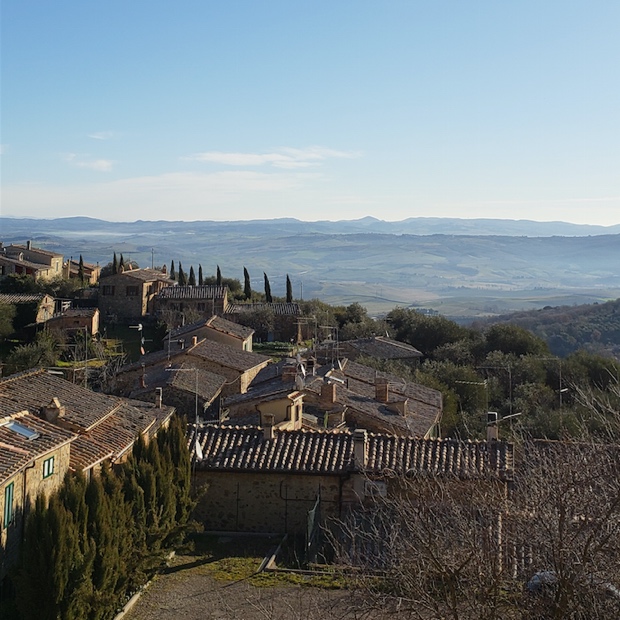
Montefioralle #sleeper frazione

They are growing in sangiovese divinity, or should it be said, divino. L’Associazione Viticoltori di Montefioralle, producers with more than a feeling, who share common ground but also something bigger, stronger, more profound. Montefioralle Divino is a September festival that unites this tiny Greve in Chianti frazione and with a purpose all its own. Theirs is a small section of Chianti Classico and one to call their own. This band is so good they named a medieval village after it.
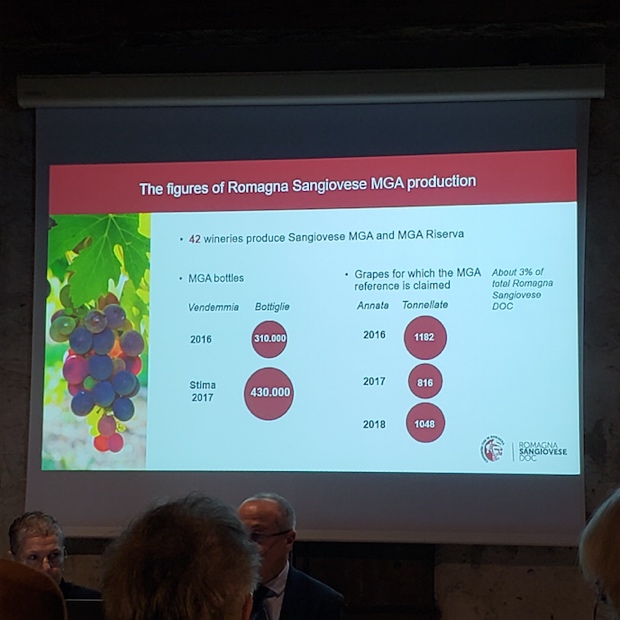
Castello di Verrazzano’s Luigi Cappellini and the Granfondo del Chianti Classico squadra Canadesi

Related – Two sides of the River Greve

Let’s orient you on Montefioralle’s location. Montefioralle is situated on the west bank of the Greve River and close to Castello di Montefioralle, essentially, ostensibly and mostly southwest of Greve and south of Greti. The hamlet has 79 residents and sits at an elevation of 352 meters. As for their famous harvest festival, “Montefioralle Divino è una manifestazione organizzata e promossa dall’Associazione Viticoltori di Montefioralle che saranno presenti alla manifestazione e offriranno i propri vini in degustazione sui banchi di assaggio per due giorni.”

Montefioralle, Greve in Chianti

Two days of wine tasting in Piazza Santo Stefano in the historic centre of medieval Montefioralle, presented by a group in flux, from time to time. In 2019 they were Azienda Agricola Altiero, Brogioni Maurizio, Castello di Verrazzano, Montefioralle, Podere Bucine, Podere Campriano, San Cresci, Grassi Roberto, Terre di Baccio, Terre di Melazzano, Terreno, Villa Calcinaia and Fattoria Viticcio. From year to year membership rises, wanes and changes. And so there are others who bottle within this micro-terroir of i cru di enogea; Belvedere, Le Palei, Luciano Meli, Poggio Riccioli, Schietto and Tenuta Monteficali.

Dinner at Terreno

Related – Feeling Panzano’s pull

The zonazione’s terroir is mostly calcareous clay, with sand and in some cases, outcrops of “compresso indifferenziato argille scagliose,” part schisty calcaire with less instances of Galestro or Alberese and more Macigno. Once again yet another micro-territory in Chianti Classico for Masnaghetti and the geologists to consider in the cartological advancement with an eventual conclusion in menzione geographiche aggiuntive.

Related – Chianti Classico’s big Raddese

Tasting at Calcinaia

Related – Looking out for San Donato in Poggio

The following wines were tasted with Conte Sebastiano Capponi at Villa Calcinaia, followed by a tasting with the producers of Montefioralle in the same location. The members are producers with estates and/or vineyards holdings around the Montefioralle hill. Two years earlier my group had met with eight such producers at Calcinaia. These 21 tasting notes cover the September 2019 speed dating sit-down with nine estate principals, followed by dinner at Terreno.

Wines of Montefioralle

Altiero Chianti Classico DOCG 2016

Always 100 per cent sangiovese, from winemaker Paolo Baldini, from the southeast exposure off the the younger vineyard. This is the perfume of Montefioralle, inexplicable in a way, a very specific combination of flowers and herbs but there is a calm and when made this way, a purity, a clarity. A tradition from before that is forever. Slightly more unctuous and full on the palate with some wood addendum. Proper Annata. Drink 2019-2025.  Tasted September 2019

Altiero Chianti Classico Riserva DOCG 2016

Like the Annata always 100 per cent sangiovese, this time from the older vineyard facing southwest, away on an angle from Montefioralle and looking towards Panzano, the Conca d’Oro and Le Fonti. The red fruit liqueur is quite silky, savoury in a sweet and almost amaro way, so in a word, stunning. Full and polished with some tradition fully stashed away in pocket. From Galestro and Alberese. And it shows. Drink 2019-2025.  Tasted September 2019

Castello Di Verrazzano Chianti Classico DOCG 2016 ($30.45)

Essential balance in Chianti Classico Annata, obviously with thanks to the ’16 vintage but even more of a many splendored thing. Concentration and intensity intertwined but truth be spoken this really climbs the hills and then descends, with grace, power and ease. A brilliant Annata from Luigi Cappellini. Drink 2020-2026.  Tasted September 2019

Castello Di Verrazzano Chianti Classico Riserva DOCG 2015 ($49.60)

A sangiovese raised organic and a textural matter really defined by the quality and the length of time in contact with its skins. While not too long the extension was embraced and the certainty of a spot on result is certainly admired. Excellent skins, earthy, rich in tannin and also used to great structural advantage. This Riserva will travel long and go deep. Bank on it. Most rewarding work from il cicliste Cappellini. Drink 2021-2029.  Tasted September 2019

Castello Di Verrazzano Chianti Classico Gran Selezione DOCG Sassello 2015

This is the wine at Verrazzano first made in 1982 as a Vino de Tavola, then as Riserva and finally as Gran Selezione, first in 2013. The Sassello is the small bird that seeks out the best grapes, in this case at 450m from the highest vineyard on the estate. This just intuits and explains vintage, place and appellation, together in harmony. It’s a cool sangiovese of smooth savour, with great length and slow developing parts. Needs more time. Just does. Drink 2021-2029.  Tasted September 2019

Lorenzi Sieni, Montefioralle

Montefioralle Chianti Classico DOCG 2017

Dry vintage, full fruit, deep red, almost out of cherry and into plum, better acidity than some of its ilk and says Lorenzo, “not greens tannins.” Agreed. Quite silky, almost glycerin and long. Well done Sieni, well done. Drink 2020-2025.  Tasted September 2019

Montefioralle Chianti Classico Riserva DOCG 2016

Riserva is quite lush and full from 2016, no shocker to be sure and of a perfume that moves from Annata and into what grows low to the ground. Really proper appellative effort for the estate and for the frazione, richly embrued in liquified glowing embers and wet spice for days. Needs time to settle in. Very structured Riserva in which to imbibe after some time. Drink 2021-2027.  Tasted September 2019

Podere Campriano Chianti Classico DOCG 2016

A perfectly consistent follow-up to a ’15 that stole that vintage’s show, here with equal aromatic excellence in 2016. Now showing as a great floral expression (remarkably early it should be noted) in a full bouquet bursting from the glass. There is a level of roundness and fine acid tang with circulative layers as good as it gets. Succinct as sangiovese, Greve and hanging around the finest of Montefioralle. A true Galestro idea presented clear as a clear blue frazione day. Drink 2020-2026.  Tasted September 2019

Two sides of the Greve River

Podere Campriano Chianti Classico Riserva DOCG Le Balze di Montefiorealle 2015

Perhaps not as balanced a vintage as the follow-up 2016 will bring to this Montefioralle Riserva but ’15 can stand on its feet, no problem at all. No sway but plenty of torque indeed. Love the fruit of 2015, as much as one needs to love fruit. The fruit goes in and then back out of your mouth in equal and opposing fashion. In balance, with acids and tannins in tow. Drink 2020-2026.  Last tasted September 2019

Exactly Campriano, distinct and luxurious in its own perfect way. it’s so very Riserva, unctuous with red fruit that seems almost completely absent of wood. It’s because of the land, a vineyard set in the forest “and still so very present.” That also means it’s in the wine. recognizable every year. Always. The vineyard is west facing above the Greve River, on old terraces, with old stones. You can drink this now even if it’s so young.  Tasted February 2019

Just put to market, the vintage will surely have so much to say and in fact already does, with a combination of perfume and spice. Still dusty, with fennel and endemic herbs, teas and brushy plants. There’s a raspberry to dried currant fruitiness that ’14 doesn’t have, also more mid-palate flesh and overall juiciness. A different sort of structure, still with long capabilities but will likely go into a drier fruit profile after the seven year mark. Elena Lapini is a very busy agriturismo and viticoltore proprietor these days and if these most recent 100 per cent sangiovese from two sides of the Greve river tracks are any indication, she’ll be busier than ever before. Drink 2019-2025.  Tasted September 2018

Terreno Chianti Classico Riserva DOCG San Pietro di Sillani 2017

A cru at the highest altitude at 480m of sangiovese and merlot (five per cent) with some time spent in new wood. Altitude meant no frost and also less heat from the arid vintage. Eighteen months in big oak casks, this time in new and while the high up frazione perfume is indeed fully emitting its rays there too is a silky smooth note that recalls the new wood. Looks really good and seems very fine though the wood is very involved. Should be very, very interesting. It’s quite refined. Way too young to call. Drink 2021-2028.  Tasted September 2019

Tenuta Monteficali Chianti Classico DOCG Vigna Mezzuola 2015

The vigna-designate Annata is likewise a modern take on Chianti Classico label appearances notwithstanding but the smooth texture detail and lush glycerin flavours pale in comparison with the new barrique-aged Riserva. Here second and third passage tonneaux allow the marl and limestone of Montefioralle vineyards to speak a bit clearer and to breath a breath of 500m fresh air into this (85 per cent) sangiovese. The merlot (10) and cabernet sauvignon (5) smooth out all the wrinkles for a lush take on Annata. Drink 2019-2021.  Tasted September 2019

Tenuta Monteficali Chianti Classico Riserva DOCG Guardingo Di Passignano 2015

Do not be fooled by the whimsical classicism of the label into thinking this Greve Chianti Classico from the heart of Montefioralle will be old-schooled, rustic and ancient-styled sangiovese. It is in fact a facsimile of such a notion and in point of fact the opposite is true. The salt and pepper seasoning of 10 per cent merlot and five cabernet sauvignon are more like spice and sauce to prove the first point. The small barriques aging for 18 months is the second, acceding into a textural Riserva at once silky smooth and then oozing with vanilla, balsamic and resiny syrup. A mouthful to be sure and in the style so well made. A fun fact to know is about the Guardingo Di Passignano, a medieval road and the only passage that connected the three main valleys of the Florentine countryside; Val d’Elsa, Val di Pesa and Val di Greve, Drink 2020-2025.  Tasted September 2019

Terre Di Melazzano Chianti Classico Riserva DOCG Cantinato 2015

“Born in the cellar,” of sangiovese with 10 per cent merlot and five cabernet sauvignon. A true glycerin Chianti Classico for Montefioralle, with unction and spice. Sings like a blackbird. Truly Cantinato, truly. Drink 2019-2021. Tasted September 2019

Calcinaia

Villa Calcinaia Mauvais Chapon Rosato Metodo Classico 2014

A tirage of VinSanto in 2015, 37 months on lees and disgorged April 2018. In reference to a siege of Florence by the French in 494, an offer was made, not accepted and the trumpets were sounded. Piero Capponi responded with a call to arms at the gates. A matter of familial propaganda and a wine that reminds of France. Linear, sharp, citric, toasty and so very fine. Really crisp, of utter clarity and streamlined like a sail on a fast vessel. Impressive to say the least. Drink 2019-2024.  Tasted September 2019

Sebastiano Capponi

Villa Calcinaia Mammolo 2017, IGT Toscana

Varietal mammolo, fully, completely, capably in control of the wet wool character that only Sebastiano Capponi and (Monte Bernardi’s) Michael Schmelzer can effect, establish and conquer in unique red wine made in the Chianti Classico territory. This is good, righteous and proper volatility surrounding red fruit formed in a cake. Thick and unctuous from 2017 with endless character. Had been looking forward to tasting this finished wine since a first encounter out of concrete tank. Lives up to the billing and the hype. Drink 2019-2022.  Tasted September 2019

This limestone, that Alberese

Conti Capponi/Villa Calcinaia Chianti Classico Gran Selezione DOCG La Fornace 2016 ($74.95)

A warm and unctuous La Fornace in fine form, consistent to its loam-sand origins, planted in 1975, at 250m of elevation. Faces due south and sees oak casks, 10 hL, approximately six years old. Showing secure and prevalent texture admitting everything about itself, a single-vineyard sangiovese sight that draws the sun and uses every iota of its energy. Good showing from the furnace, Surely not a shocker from ’16.  Last tasted September 2019

Vigna Fornace, “The Furnace” is indeed the warmest of the Capponi Gran Selezione, full of gathered 2016 sunshine, ready to melt in the mouth acidity, tannins and in this case, chocolate. The acidity is very different to Bastigano, here cured, developed and dare it be said in such a young wine, assimilated. Drink this younger while ye wait for the bigger structure and high tonal Bastigano.  Drink 2019-2024. Tasted February 2019

Conti Capponi/Villa Calcinaia Chianti Classico Gran Selezione DOCG Vigna Contessa Luisa 2016 ($67.95)

The magical Gran Selezione from the old lady of a vineyard, dating back to 1959. A plot marked by Colombino rock, not quite limestone and not quite sandy Alberese. There is a character in Luisa that no other Gran Selezione displays, neither from Calcinaia or elsewhere. Done up in oak cask, 10 hL, approximately six years old and showing the ease meets power of 2016. Bravissima.  Last tasted September 2019

Now for something completely different. The Contessa’s vineyard is a lifelong dream and confounding sangiovese from which to grab attention. She’s immediately elegant and charming and then so closed. She is predicated on darkening red cherry fruit but her acidity is formidable and so the connection is severe to establish. She lingers with you for so long that you don’t know what to do because she was never really accessible to begin with. Teasing Gran Selezione, an incubus for now, but eventually you will realized the dream. FYI, the oldest estate 1959 planted Contessa Luisa vineyard was dedicated to matriarch Luisa Vonwiller. Drink 2023-2033.  Tasted February 2019

Conte Capponi/Villa Calcinaia Chianti Classico Gran Selezione DOCG Vigna Bastignano 2016 ($74.95)

A component of cement egg on top of the 10 hL, approximately six years-old oak casks brings new layers and light to Bastignano and separates it from the other two sangiovese. It also clay darkens and broods, hides in shadows and remains softer, fleshier, but also sneaky in structure. There’s less pinpointed Calcinaia character and more outside in the diaspora personality. If that splits hairs so be it though it needs saying that Bastignano is a man of means.  Last tasted September 2019

Capponi’s Bastignano is a Gran Selezione consistent and repetitively persistent to speak its singular truth. It is truly hematic, a sumptuous, oozing full-fruit sangiovese with above the left bank of the river Greve coursing through its blood. Very smooth, seamless, finely tannic and beautifully high in ripe acida. If all GS carried such acid then the category would float even higher. Drink 2021-2029.  Tasted February 2019

Villa Calcinaia Casarsa 2014, IGT Colli Toscana Centrale ($54.95)

Capponi’s varietal merlot is from the 1967 planted vineyard not realized as merlot until many years later. Fermented in cement vats and then 24 months are spent in barriques. A beast really, young at five years in ways most sangiovese are not. So much verdancy, spice, grip, grit, power and need for space, not to mention time. Drink 2023-2030.  Tasted September 2019

Viticcio Chianti Classico DOCG Vendemmia 51 2016 ($23.95)

Only two points of merlot with the sangiovese from two picks, the first of which goes here, for increased acidity. Dark floral and fruit scents for sure and some spice. Really like the mouthfeel and the acid-fruit structure. Tannins are quite easy. Drink 2019-2022.  Tasted September 2019

Viticcio Chianti Classico Riserva DOCG 2015 ($31.95)

With small amounts of merlot and syrah, it’s quite sappy and resinous. Plenty of smooth chocolate ganache, blackberry and backbone with thanks to a Galestro and Alberese soil mix filled with stone. Big Riserva. Really big. Drink 2019-2023.  Tasted September 2019

Good to go!

godello

Montefioralle #sleeper frazione

Twitter: @mgodello

Instagram: mgodello

WineAlign