Varietal Spanish wine

Meat Me in the Junction http://meatmeinthejunction.com

Meat Me in the Junction
http://meatmeinthejunction.com

In which camp do you take up permanent and loyal residence? Do you listen to, build your cellar around and taste exclusively of the singer-songwriter, the solo artist, the grape that goes it alone? Who are you? Varietal or blend?

Many a quarrel has landed on the subject of pitting meritage versus the single-varietal. The purist will argue that no combination of grapes can combine to make for the greatest of wines (save for Champagne). They will insist the skilled and important winemaker is one whose favourite medium is difficulty. That only the ones who are possessive of the cabalistic code can truly unlock the inner secrets of their art. That it can only done through the secret concentration and religious attention paid solely to one partner.

Pinot Noir and Chardonnay perpetuate in globally made, 100 per cent single solutions, not to mention the behemoths of Shiraz, Malbec, Tempranillo, Sauvignon Blanc and Riesling. To a lesser extent there are great vats composed of Cabernet Sauvignon, Sangiovese, Cabernet Franc, Merlot, Nebbiolo, Gamay, Chenin Blanc, Pinot Gris and Gewürztraminer.

The viticultural right of assemblage is one of the perks in modern winemaking, propped up by and standing on the shoulders of Bordeaux giants. The blending of grapes in summations to argue that the whole is the proper gross of fractions is a celebration of the 21st century avant garde.

Related – Off the beaten Italian path

Yet times evolve, change and tesselate. Old becomes new again. In November I travelled off the beaten Italian varietal path in an investigation of the B-sides, the ones that no one else knows about. I met the awakening of the Italian grape vernacular, engineered for companionless a cappella troubadours, from Albana to Ribolla Gialla, endemic (or indigenous, if the nomenclature suits you) and ancient varieties that have entered a time of new dawn. A similar renaissance is happening in Spain.

In October, at the invite of the downright honourable good Dr. Barry Brown of the Spanish Wine Society, I had the opportunity to taste through a wide selection of the wines of Navarra. The region lies between Pamplona in the north and the Ebro River plain to the south. Non-native varieties like Chardonnay, Cabernet Sauvignon and Merlot were introduced in the eighties, but it is the native Viura, Tempranillo and Garnacha that drive the Navarran machine.

The Rosado of Navarra were exceptional and the best examples were composed from 100 per cent Garnacha. The single-varietal compositions in Garnacha and Tempranillo by Bodegas Principe de Viana drove the companionless point. The exception to the rule was found in the wines of Bodegas Tandem. The small winery in Tierra Estella (Yerri Valley) is fashioning blends using Tempranillo with Cabernet Sauvignon and Merlot in a combination of concrete vats and French oak. The slow ripening, meticulous handling and extended aging in wines crafted by José María Fraile is nothing short of exceptional. After all, they are called grape varieties and variety is the spice of life. Why shouldn’t blends have more fun?

In November I continued my Spanish odyssey with the wines of Garnacha. It was there that the solo records, in red and white really began to play in my varietal head. Garnacha (also known as Grenache) is one of the world’s oldest and most widely planted grapes. Its ability to assimilate the double-pronged effect of a Mediterranean climate and an Atlantic suffusion make it ideal for the Iberian Peninsula.

From left to right: Bodegas Tandem Ars Nova 2011, Bodegas Principe de Viana Garnacha Vinas Viejas 2013, Viñas del Vero La Miranda de Secastilla 2012, Lafou Els Amelers 2013, Edetària Selecció Blanc 2012, Bodegas Pirineos Garnacha 2013 and Grandes Vinos y Viñedos El Anayón Selección Garnacha 2011

From left to right: Bodegas Tandem Ars Nova 2011, Bodegas Principe de Viana Garnacha Vinas Viejas 2013, Viñas del Vero La Miranda de Secastilla 2012, Lafou Els Amelers 2013, Edetària Selecció Blanc 2012, Bodegas Pirineos Garnacha 2013 and Grandes Vinos y Viñedos El Anayón Selección Garnacha 2011

As the most notorious grape variety with the ability to go ying or yang, Ac or Dc, red or white, Garnacha makes for a fascinating study. Three examples expressive of Blanca’s western European white vinous supremacy opened my eyes to its capabilities. Viñas del Vero La Miranda de Secastilla 2012 (Agent, $16.00) from Somontano made use of four months in two year-old oak barrels to help develop texture in as good a value Garnacha Blanca as could hope to find. The Lafou Els Amelers 2013 (Agent, $28.95) from Terra Alta is a gorgeous wine of salinity, calcium, white flowers, fine lines and elegance. The Edetària Selecció Blanc 2012 (Agent, $39.95) also from Terra Alta is the pure distilled embodiment of Garnacha Blanca with its own unique and distinct aroma.

The Toronto Garnacha tasting ushered by Sopexa Canada brought into focus the grape’s diverse spectrum spread liberally around Spanish wine regions. When Garnacha goes it alone the results are extremely varied, from simple syrup, inexpensive drops to seriously structured compositions. As a varietal wine it is extremely accessible and offers exploratory song lines for all walks of wine consumer life.

From Somontano there is the Bodegas Pirineos Garnacha 2013 (Agent, $17.00), a prime starter’s example all about structure, with rock, chalk and lime-like citrus accents. This is a red Garnacha for the white wine drinker. Grandes Vinos y Viñedos El Anayón Selección Garnacha 2011 (Agent, $30.00) hails from Cariñena. Reeking ethereal and attenuated in American Oak, the high toast, citrus tone, vanilla and Rhône-esque garrigue is palpable. Crazy sweet tannins will carry this big fruit Garnacha to the next decade with pleasing clarity.

So with thanks to Macabeo, Prieto Picudo, Mazuelo, Graciano, Garnacha and the people who brought them to us, the individual is freed from the collective. In a twist of Descartian philosophy, of mind and mechanism, varietal wine is handled with the treatment of oxymoronic social sciences. The result is a triumph of secular materialism, the conceit of modernity and the reduction of the world to a single, simple mechanism. Varietal atom splitting is a resource to be exploited in blind interaction with the living planet.

In the end there is only one vine, one grape, concentrating, developing, existing one at a time. Here are six full tasting notes on varietal wines, each allowed to shine without intrusion and on their own line.

From left to right: Torre Oria Reserva Brut Cava, Dominio Dostares Estay Prieto Picudo 2011, Señorío De Sarría Viñedo No.8 Mazuelo Crianza 2009, Finca Los Alijares Graciano 2009, Baron De Ley Varietales Graciano 2010 and Viñas del Vero Secastilla 2009

From left to right: Torre Oria Reserva Brut Cava, Dominio Dostares Estay Prieto Picudo 2011, Señorío De Sarría Viñedo No.8 Mazuelo Crianza 2009, Finca Los Alijares Graciano 2009, Baron De Ley Varietales Graciano 2010 and Viñas del Vero Secastilla 2009

Torre Oria Reserva Brut Cava, Método Tradicional, Do Valencia, Spain (402255, $15.95, WineAlign)

Made from 100 per cent Macabeo, this is from a winery that is the first to produce Cava from outside of the Penedes DO. Here, from Valencia, up front there is dust, must and concrete, evidence of a lees-induced oxdative lean and wish upon a star aridity. There comes a time when dry fizz does not have to be the way to go, especially when trying to please many palates in too tight a space. So up steps this formidable Cava (with 9-10 g/L RS), in quality, with a crush of gala apple, a weight and a texture like a shag rug. Sure, it may be a bit disco but it’s also so very retro hip. Like Gorillaz and Clint Eastwood with “the essence, the basics,” and its “got sunshine, in a bag.” On the oxidative side? Yes and “the future is coming on.” Drink up.  Tasted January 2015  @cavaswine  @DO_Cava

Dominio Dostares Estay Prieto Picudo 2011, Vino De La Tierra De Castilla Y León, Spain (393140, $15.95, WineAlign)

A rare sighting of Prieto Picudo, one of the more idiosyncratic of grape varieties. This is the entry-level offering from Dominio Dostares (they make more precious best plot selection versions). Vines as ancient as 90 years old contribute briery cedar and leathery veins but this is quite modern, straightforward and aiming to please. Though a bit hot and heavy, the aridity (2 g/L RS) and the mineral streak keep it real. A harmonious if gangly red (from high acid soils), keeping warm and huddled within its hermetic, endemic environment. Short and simple, sweet and tart. Represents striking value in something other. Tasted January 2015  @oenophilia1  @_Cast_y_Leon

Señorío De Sarría Viñedo No.8 Mazuelo Crianza 2009, Do Navarra, Spain (391656, $17.95, WineAlign)

The release of relief in the activity of opportunity to taste something other, like 100 per cent Mazuelo, is just excellent. Compounded with the breath of fresh Spanish DO brought to the table by the current wave of Navarran wines, the experience is made that much more enjoyable. The wine is neither modest nor is it a mouse. Its body travels “on a road shaped like a figure eight.” It builds more than nothing out of something. The traced aromas are filled with pots of fresh flowers and the space is occupied by plenty of stuffing. No. 8 has a seamless, put together structure from the start. Silky and so very juicy with a streak of reminiscing rusticity. Great proper acidity and very stretched length. A very pretty if grounded and ode to history made wine.  Tasted January 2015  @navarrawine

Finca Los Alijares Graciano 2009, Vino De La Tierra De Castilla, DO La Mancha, Spain (392522, $17.95, WineAlign)

Not unlike Rioja, the wines of Tierra De Castilla in the heart of Spain are blessed with a Mediterranean climate augmented by an Atlantic influence. This organic winery is located beneath the Gredos Mountains in the Province of Toledo. The vineyards are protected from the northern winds by the mountain ranges. Though oft considered lower in quality, the Vino de la Tierra de Castilla designation is emerging from out of the Castilla-La Mancha shell. Tasting this 100 per cent Graciano just after a few months in oak and a bunch more in bottle before release would have shown more bright fruit and verve. Now four plus years later there is still much to admire in the high notes and brightness of the nose. Hard not to notice the strikingly and hauntingly beautiful aromatics. Also some dried fruit, like prune and turkish apricot. Akin to some Dão and some Rhône, without ever flirting with being baked or stewed flavours. Aridty juiced from rocks, acidity that follows suit and to nudge it forward in longer strides.  Tasted January 2015

Baron De Ley Varietales Graciano 2010, Doca Rioja, Spain (397166, $21.95, WineAlign)

Such a unique and life reaffirming, giving back red Riojan. The singular, singled out Graciano comeback revolution is upon us and we are all the beneficiaries. Here there exhibits a different sort of profile. A veritable profiterole of anise, cured chorizo, dried flowers and some spices (violets and the wafting aromas of Patatas a la Riojana). Not to be left off the redolent list is a funk, one that is not merde, but rather an old school, skinned hide. At the price and best of all is that the Graciano is so very, very long, like the Camino Frances, from the Pyrenees, through Roncesvalles and to Rioja.  Tasted January 2015  @RiojaWine

Viñas del Vero Secastilla 2009, DO Somontano, Spain (Agent, $32.00)

Took a sip and “the breeze blew back my hair.” Made from 100 per cent Garnacha, the elevated liqueur on the nose is invigorating and initially, somehow disturbing.  The combined forces of macerated, steeping cherries, melting liquorice and bubbling tar is extraordinary. Enveloped by a tinging, pinging acidity, the wine is structured in chalk, grain and gravelly tannin. The barrel influence is ingrained and the wine is most certainly huge but the overall composition is fresh, red and viscid. What to do after being hit in the face with a wine such as this? “How can I measure up to anyone new, after such a love as this?” Who are you Secastilla? Be patient, let it ride for years, let it soften. The comeback tour will be fun.  Tasted November 2014  @VinasdelVero  @WoodmanWS

Good to go!
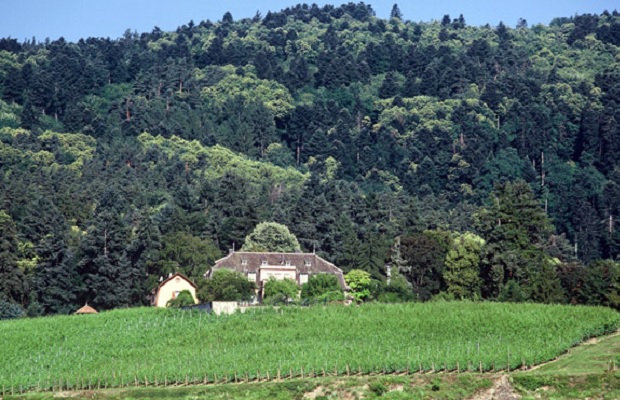
The cru chief of Alsace: Zind Humbrecht

Le Clos Windsbuhl de Hunawihr PHOTO: http://www.zindhumbrecht.fr

Le Clos Windsbuhl de Hunawihr
PHOTO: http://www.zindhumbrecht.fr

Were Olivier Humbrecht, MW a Rock ‘N Roll star, he would be the guy, the man, the boss, the one everyone wants to hang around. He’d be invited to every benefit concert, like No Nukes at MSG, Live Aid, Live 8 and a Tribute to Heroes. He would sing the biggest parts on the raise awareness and relief funds records like We are the World. He would headline every star-studded gathering to celebrate an influential musician’s career, like that of George Harrison, Roy Orbison, Chuck Berry and Bob Dylan.

Olivier Humbrecht is a winemaker. He’s also smart, France’s first Master of Wine, rooted in his region’s history and hyper aware of every nuance in each terroir. He’s an extreme scientist, biologist, geologist, viniculturalist and viticulturalist. Olivier Humbrecht is a student of many Alsace genres, techniques and methods. He’s a bit of a perfectionist. So are many Alsatian winemakers. But Olivier also has the charisma, the persona and the drive to strive for bigger and better. People want to be near that.

The rock star complex manifests itself at a tasting of the Zind-Humbrecht portfolio. Olivier has laid 14 wines on the cellar room table for a group of eight journalists and sommeliers. After leading the group through the lot, he checks his watch and sees there are a few minutes left in the allotted time. He opens two more bottles, then two more. Time is up. The group must press on. He opens another. Just one more, “for perspective,” he says. He can’t stop. The adrenaline is pumping. One more encore. Just one more Sélection de Grains Nobles…

Domaine Zind-Humbrecht is well-known to the world, considered the consummate professional vigneron d’Alsace. The wines are immaculate to a fault; pure, precise considerations out of a multitude of variegated and diverse terroirs; of those around the winery’s home in Turckheim, Wintzinheim, in Gueberschwihr, Thann and in Hunawihr. The Grand Cru holdings of Brand, Hengst, Goldert and Rangen de Thann provide the stuffing for exceptional produce but can any other winery in Alsace lay claim to so many exceptional wines from their lieu-dit and single-vineyards not classified Grand Cru? The trifecta phenomena of the Zind-Humbrecht hill parcels, “Les Clos”; Häuserer, Windsbuhl and Jebsal may as well be Grand Cru squared. The wines from these most worthy soils are dreamy and in top vintages, impossibly perfect.

Most vintners in Alsace are connected to a village, have vineyard holdings surrounding or on slopes leaning upwards from the town. Many crush and ferment in caves beneath their homes right there in the ancestral village. Above ground Zind-Humbrecht is more modern than most, in many ways the embodiment of the 21st century Alsatian facility but Olivier’s wines are deeply connected to Turckheim, the village closest to a large proportion of his vines. The region’s regulatory board decision to eliminate a village like Gueberschwihr from being used on a Riesling label is both curious and counter-productive. Olivier is an island here, not having found any other producer’s support to keep such a designation alive. The irony is not lost. A winemaker incredibly passionate about soil having to label his wine by that very concept and against his will.

I had the opportunity to taste with Olivier Humbrecht on two occasions, thanks to CIVA and SOPEXA, at the winery and at the Millésimes Alsace trade event on Monday, June 16th, 2014. Humbrecht’s brain is in constant churning motion. He will never rest and settle for the status quo. He has learned everything and has everything yet to learn.

Biodynamic farming is at the nucleus of Zind-Humbrecht’s practicum and by now spoken as an apothegm, not ad nauseam. Olivier notes that Colmar, the vinous hub of Alsace and just down the road from Turckheim, is the driest town in France. “We are in a region that in the past we had to fight for ripeness. This is not the case anymore. I have not had to chaptalize in 20 years.” Global warming has had a great effect on phenols but Olivier stands firm on timing. Plants, including grapevines, have very specific life cycles, from flowering to ripening. “I will be ready for picking September 1st,” he insists, “regardless of the weather.”

On varieties, Muscat D’alsace remains “important and fantastic.” Humbrecht insists on keeping it viable and alive. “Reds are trendy,” but not significant to Zind-Humbrecht, adding up to less than one per cent of total production. Ninety per cent are single-varietal wines. Riesling persists as the core variety. It’s a grape that hates to ferment so noble rot should be avoided, because it arrests fermentation.” For Riesling to succeed? “You need a majority of tartaric acid, slowly, coolly, through the cold of winter, to achieve proper malic acid, to achieve good Alsace Riesling. Basically you don’t even want to know it’s happening.”

Olivier is an ally to both phenol and tannin. “Phenols in white wine is something that is always neglected,” he says, and “I do appreciate tannins in white wine, especially in low acidity grapes like Gewürztraminer.” Too many people do not understand the aging capabilities in the wines of Alsace. “We’ve gotten rid of too many phenols in white wine,” he complains. “We love the anti-oxidants, which will not allow the wines to age well, with no protection against oxidation.”

The phenol-tannin-sugar-acidity sequence only succeeds when PH is in the mix. “PH is more important than acidity. Low PH is a guarantee for good evolution in bottle, and good phenols.” That said, skin contact is to be avoided in Humbrecht’s world. “Alsace already has high aromatics so contact is contradictory.” It can lead to the inclusion of green phenols which would be detrimental to making sound wine. Ripe phenols come from the vines and Olivier continues to refer to structure and acidity as a direct consequence of what happens in the vineyard.

The ZH processes include high density planting, hand harvesting, gravity feeding, cold cluster pressing and the use of wild (indigenous) yeasts. The total annual output is approximately 300,000 bottles from 40 hectares, a capacity reached in the mid 1990’s. “We are not interested in getting any bigger,” concedes Humbrecht.

The last piece and going forward of the Zind-Humbrecht puzzle concerns vintages. “Vintages are very important and different in Alsace,” says Olivier. “2014 is very precocious.” Flowering was done the first week of June, almost two weeks ahead of the norm. This is similar to 2003 and 2011. “We made a lot of mistakes then, because it was the first time we had this.” The plan is to adapt to the climate by cooling down the soil, with more grasses to retain moisture. They will also let more branches grow to restrict sun and more canopy management. Biodynamic farming at work.

Olivier Humbrecht and Godello PHOTO: Cassidy Havens, http://teuwen.com/

Olivier Humbrecht and Godello
PHOTO: Cassidy Havens, http://teuwen.com/

Here are notes on the 20 Zind-Humbrecht wines tasted in Alsace on Monday June 16th and Wednesday June 18th, 2014.

Pinot Noir 2012

To Olivier Humbrecht, the location and managing the ripeness of Pinot Noir is key. “You can’t hide green character in Pinot Noir,” he asserts. Fruit comes from the Heimbourg vineyard, from west-facing slopes out of marl and limestone. This is a cooler, later ripening position with a draught between the hills. At 13 per cent alcohol it is pleasantly ripe but not as rich and intense as 2009. Still ripe enough for positive and effective phenols. Tannins are present and accounted for, wrapping a veil over the chalky, chewy, slighted coated fruit. The mineral is felt in texture coming from what is a simple, proper and elegant palate.

Muscat Goldert 2012

Like any self-respecting winemaker in Alsace, Olivier Humbrecht is intent on keeping Muscat d’Alsace alive with hopes that someday it will once again thrive. The white and red coloured, longer ripening, small berry Muscat Petite Grains receives minor (one or two per cent) support from grapey, soft and aromatic Muscat Ottonel. Raised from olitic limestone and marl soil, this Muscat is blessed with terroir inducing greater acidity and a dichotomous, silty ripeness, like a green, unripe Sauvignon Blanc. One has the sense that in this unique vintage the noble variety may age with an almost unexpected stride through the years.

Riesling Terroir d’Alsace Vin Sec 2012

This is the most basic and tenable wine in the Zind-Humbrecht portfolio. For the uninitiated it is an ideal embarkation point from which to engage the dry elegance and saline minerality of Alsatian Riesling. This “entry-level” effort is from 11 year-old vines, a slow ripening vintage and the stark reality of granite soils. The ever-present Humbrecht honesty and richness is here but in its most subtle (and only 2 g/L residual sugar) scale. Quick notes of lime, chalk and ginger. Olivier says it is made for the Brasserie or the Gastropub market. Never mind that it’s the most junior of his Rieslings. Nobility begins here with this reassuring, air-dried, easy to understand wine.

Riesling Herrenweg de Turckheim 2012

Here rolls the rock of the ZH stable. From gravelly, well-drained, poor soils around the winery. The citrus factor is front, centre and in surround sound but a natural richness and sweetness brings balance. This means the wine will gracefully incline through to a dry yet fruity future. A savoury austerity will increase the ageing quotient, in addition to the omnipresent mineral flavours by way of old (47 year-old) vines that burrow deep in the gravel, providing grit and strength, especially in drought vintages.

Riesling Calcaire 2012

The artist formerly known as Gueberschwihr is no longer. The new regulation regarding the production of village wines became effective with the 2011 harvest so, alone in its support for the quality of wine for the village, Humbrecht had no choice but a switch to the Calcaire nomenclature. From richer, cooler, alkaline soils. A touch more sugar (8 g/L) than the Turckheim counterparts, this also has higher acidity. Technically not so dry but this is the elevated, though not quite astronomical PH talking. It is dry enough to be considered Sec. Momentarily stuck in the proverbial petrol and mineral fence. The door will open shortly, to the ZH airy density and so physically speaking, this will taste drier as it ages. Even if “all this science I don’t understand,” I do know “it’s gonna be a long, long time” before the Calcaire comes down to earth and settles into its skin. Ten years to be sure. Rocket man.

Riesling Clos Häuserer 2012

Also Turckheim in origin (specifically Soedlen) but from marl soil atop really aggressive limestone from just under the Grand Cru Hengst’s nose. One of the highest in PH, this is austere and currently shut tight within a dry (4 g/L sugar) free lime zeppelin drum. Though aromatically mute, the mineral density on the palate is striking, like a reduction of half and half spread on sourdough toast. The 18 month lees program is most noticeable here and this Riesling will be led towards a petrol induction future. When it gets there, a taste will bring you into the Häuserer of the holy. The deep marl soil on top of calcareous Oligocene mother rock will speak and it will ask  “are you dizzy when you’re stoned?”

Riesling Brand Grand Cru 2012 (SAQ 11532951 $73.00, WineAlign)

There is a roundness to the Brand, in beautiful calming aromatics in defiance of the hard biotite granite, black and white mica soils. The pure mineralized clay silica brings heat to the land, with a high surface exchange quotient, not so different from the Schlossberg. This is precocious and precious Grand Cru that demands the wisdom and the fortitude of old vines, of a minimum 25-30 years of age. Zind Humbrecht’s average 66! With two per cent noble rot in the mix the wine reaches for more sugar (11.5 g/L) out of its desperately low yields. There is a high mineral ripeness and a tropical tingling, in melon and clementine.

Riesling Clos Saint Urbain Rangen de Thann Grand Cru 2012 (SAQ 12133871 $101.00, WineAlign)

The Thann is a 22-hectare, low yielding Grand Cru. The terra is volcanic and dark sedimentary soil, very steep and homogeneous. The high mineral altitude and poor attitude means the Zind Humbrecht ambition is aromatically challenging to assess, even if to taste it’s so obviously exquisite in concentrated depth. Such a rich, intense grapey nose but the flint smothers the smoky smoulder that should be present. A tight, angular and sobering expression, more isometric and idiosyncratic than anything tasted to this point. An island in the line-up. Not the most loveable Rangen, like its name, which is too old to even know its meaning.

Riesling Heimbourg 2012

From the village of Turckheim, the vines are planted on the steepest aspect of the marl covered, oligocene limestone slope. More noble rot present here than in the Brand, resulting in, naturally higher sugar (15 g/L), richer fruit and a deeper hue. “The sweetest Riesling we’ve made in 2012,” admits Olivier. A most interesting specimen too, an upside down cake in alternating layers of apricot and crushed rocks. The flavours are high-toned, not necessarily tropical, but lush.

Riesling Clos Windsbuhl 2011, Alsace, France (agent, $80.00, WineAlign)

“Vintages are very important and different in Alsace,” notes Humbrecht, exemplified by this blasted 2011 in contrast to all the ’12’s at these tastings. Here the fruit leans in the most elevated petrol direction, from a warm year and an earlier harvest. A younger evolution is taking place, showing immediate and gratified balance. The terroir is cool, rocky limestone with shells, similar to Burgundy. The clos is a gently sloping, six-hectare parcel. Overall it’s anti-floral, wet chalky creamy and striped by linear acidity. Only 4.5 g/L of sugar. These last two numbers mean nothing if you don’t recognize the PH because there are different acidities in wine. Here the acidity walks the fine line, side by side with its partners.

Riesling Clos Windsbuhl 2007

From a different era, this was fermented bone-dry, dire, with less than 1 g/L of residual sugar. A Riesling to show just how tight the Zind-Humbrecht band was back then and it is just beginning to communicate in its mid-life, mineral voice. If as a lieu-dit subject it was once “incommunicado,” with no comment to make, this has changed. The notes are layered and together, the mid-palate extraordinarily full, the length in reverberating, extended play. Here in today’s communique he’s come clean, having moved on from the strict, straits style, once spun unbending. The experience of great players and exceptional monopole (Grand Cru deserving) terroir has given the ’07 Windsbuhl the foundation to realize a classic Riesling.

Pinot Gris Calcaire 2012

Fruit comes from the Heimbourg, providing pure limestone effect and a great nutty character. The sugar is nothing to forget about (10.6 g/L), here already commissioned and integrated. Provides support for Olivier’s declaration that “if anything should happen to a wine, it should be before you bottle it.” Much more accessible than the fastball-curveball-changeup, out of the strike zone ’11. Here it’s all down the middle,  juicy, hittable fastballs.

Pinot Gris Rotenberg 2012

The Rotenberg’s shallow, red soils (located on top of the Hengst) bring a whole new set of parameters to Pinot Gris, in stark contrast to the Calcaire. Two bottles were poured. A two-day old sample showed settled and mellow flavours. A new bottle was crackerjack reductive, leesy and with a shocky aridity so unusual for Pinot Gris. The soils bring concentration, here magnified and compressed by the hastened moment. All the hallmarks of the Zind-Humbrecht style are there, if suppressed; tang, herbiage and a spicy spike. Very dry (4 g/L) and really invigorating white wine.

Pinot Gris Clos Saint Urbain Rangen de Thann Grand Cru 2012 (SAQ 11545233 $74.25, WineAlign)

The noble grape in this Muschelkalk (calcareous) vineyard comes through in high concentration, with an increase in noble rot from very low yields (12 hl/L). There was hail here in 2012, just after flowering, not a devastating storm but enough to minimize quantity. The sweetness (35 g/L) is heightened and uncompromising yet always mitigated by intense mineral activity. The richest and most unctuous wine of the morning (to this point) with direct, pure ripe tree-fruit flavours. This is a Pinot Gris that remains firm against the dangers of oxidation and it will develop smoky and toasty aromas. The structure is what I would call remarkable but not exceptional. Time will tell. Here the wait needs to be a minimum five years and then to drink well past 2025.

Gewürztraminer Calcaire 2012

As of the 2011 vintage, the Wintzenheim bottling became the Calcaire, for village designation (or lack thereof) reasons. Fruit here in 2012 is mostly (not necessarily typically) from the Hengst Grand Cru vineyard. The marl and limestone leads to a very typical Alsatian and even more typical Zind-Humbrecht Gewürztraminer. Full on glycerin, creamy, perceptibly sweet and protracted wine. Even at 35 g/L it is tempered by high tannic animation, as much as in Burgundy. Skin tannins are much more interesting than those from oak because they elevate the acidity by way of contrasting balance to the sugar. This is why they succeed.

Gewürztraminer Hengst Grand Cru 2012

From old vines of the Hengst, the yield is half of the Calcaire, the concentration raising the bar in the opposite direction. The residual number is the same but the sugars are more complex, intensely natural and variegated. The texture and flavours cover a creamier, wider spectrum and even though some typical rose petal/lychee components are noted, they remain submerged beneath the piquancy and the richness. This Hengst will gain flesh and weight as it ages, elevating the potential for late harvest sensations and alcohol.

Gewürztraminer Clos Windsbuhl 2012

The Muschelkalk calcareous, southeast facing slopes of this Clos employ slightly cooler temperatures and the stretched elasticity of slow-ripening to bring a sense of balance and poise to Gewürztraminer. The same can’t be said for Riesling on the same site, at least not in 2012. The Windsbuhl here speaks in more sweetness and less alcohol. “If you can see the differences of terroir in Gewürz,” says Olivier, “then you won’t see it in Riesling.” Here is an example that backs up one of his most telling axioms. “It’s the phenols of the grape that make it age gracefully better.” Age it will. Drink this beginning in 2020 and through 2040.

Gewürztraminer Vendanges Tardives Hengst Grand Cru 2011

A wine not often made because of the dry climate in this Herrenweg vineyard. The gaining of full botrytis expression only happens once in every five or six years and when it does, this eager and vivid sweet wine is the result. Harvested at high ripeness and proportion (50 per cent) of noble rot, with a quick (one month) fermentation to achieve a sweet balance (vin liquoreux) not that far from some SGNs. At 102 g/L it is obviously quite sweet though once again, with acidity, PH and exceptional phenolic character it strikes a balance. I don’t normally imagine late harvest wines to speak in terms of elegance or restraint and I’m not sure those are the most apt descriptors here. Yet the Hengst is as subtle as it gets for the genre and never enters the arena of the cloyingly sweet and absurd.

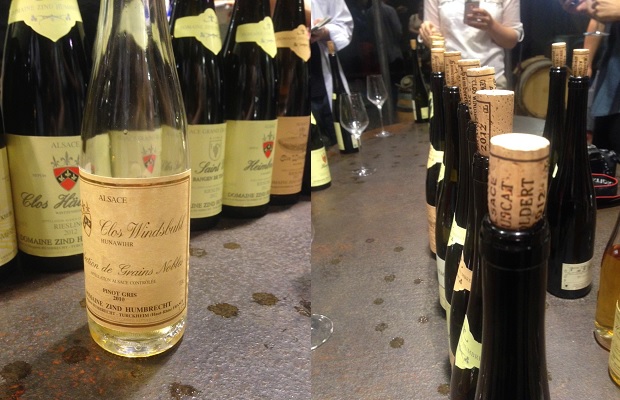
Pinot Gris Clos Windsbuhl Sélection de Grains Nobles 2010 and the tasting table PHOTO: Cassidy Havens, http://teuwen.com/

Pinot Gris Clos Windsbuhl Sélection de Grains Nobles 2010 and the tasting table
PHOTO: Cassidy Havens, http://teuwen.com/

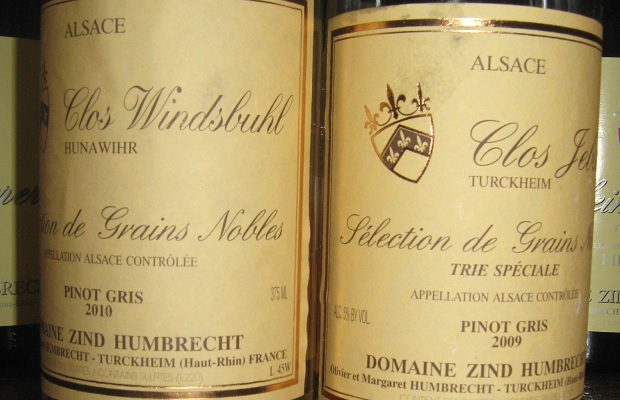
Pinot Gris Clos Windsbuhl Sélection de Grains Nobles 2010

The residual on the 2010 Windsbuhl is remarkably high, this as a result of its long but (not compared to 2009) fermentation. From a historic vintage, with top-notch acidity (the goal was 16 g/L) and clean, precise botrytis. With the complexity and structure provisos of the Muschelkalk calcareous terroir and (43 year-old) vines, this exceptional dessert wine was given all the tools necessary for success. A parabola of a dessert wine, one sip and “we barely remember who or what came before this precious moment.” Attacks the mouth with an unparalleled sugar/acidity/tannin continuum. The flavours bring to mind quince, apricot and creamy mangosteen in out of control concentration. There is a reason sweet wines like these are so rare and receive such high praise. Exceptional fruit of uncompromising quality and a winemaker’s reverence are the reasons. Olivier Humbrecht prepared this 2010 to succeed and to live for decades. Drink from 2025 to 2055.

Pinot Gris Clos Jebsal Sélection de Grains Nobles Trie Spéciale 2009

A south-facing, very steep slope of grey marls and gypsum. A vineyard that yielded a miniscule 10 hl/H. A stratospheric residual sugar quotient (in the realm of 500 g/L) and incredulous acidity to prevent the development of the yeasts. A fermentation that finally finished in the late winter of 2012. A wine aged in demi-guid. Selection of grapes of a botrytis so pure and dry. These are the specs of a wine I may never taste again. Olivier concedes he “really tries not to obtain the highest sugar concentration possible” but this 2009 is a “monster of a wine.” It will take forever to assimilate and digest the sugar. Unctuous, lush, rich and gorgeous does not do it justice. Pure distillation of fruit and stone, accented by spice, wild herbs and flowers. Like an injection of pure, Pinot Gris adrenaline. All this from dry extract, slowly rehydrated with magic pixie dust and the wonders of the natural world.  Will live for a century and then some.

Pinot Gris Clos Jebsal Sélection de Grains Nobles Trie Spéciale 2009

Pinot Gris Clos Windsbuhl Sélection de Grains Nobles 2010 and Pinot Gris Clos Jebsal Sélection de Grains Nobles Trie Spéciale 2009

Good to go!

In a Grand Cru state of mind

Grand Cru Riesling, Alsace

Grand Cru Riesling, Alsace

I have been in Alsace now just over 48 hours and already feel as though I have been introduced to a lifetime of wine. Yet with every taste of the Alsace pansophy I am reminded just how long the unfathomable road to the region’s enlightenment remains to be. The combination of nuance, complexity and acuity of the Alsatian wine spirit may have no equal. Some highlights of the first two days in Alsace with SOPEXA and CIVA.

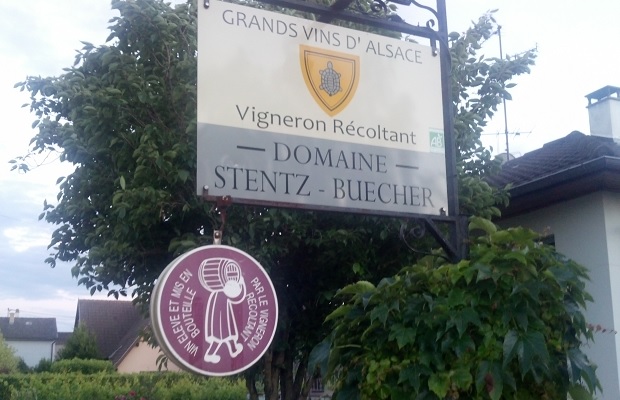
Domaine Steuntz-Buecher

Domaine Stentz-Buecher

What a way to be introduced to Alsace in 2014. Les diVINes d’Alsace, an organization of 70 industry women and Domaine Stentz-Buecher rolled forth a genealogical pedigree of Alsace past and present with food station matching in the winery’s garden and in the barrel rooms. First Crémant, then whites of many incarnations; Pinot Gris, blends, Gewürztraminer and many, many Rieslings. The final prize at the end of a long scroll of grand achievements were Grand Cru Riesling from the vintage 2000. The eight acted out a Grand Cru finale of generous spirit via and the women of

Louis Haller Brut Crémant D'Alsace / @diVINeSDaLSACE

Louis Haller Brut Crémant D’Alsace / @diVINeSDaLSACE

Les vigneronnes Mélanie Pfister and Carolyn Sipp introduced the three year-old organization, the winemakers, winemaker’s wives and sommeliers that form the membership of l’Association des Femmes de la Vigne & du Vin d’Alsace. “We are feminine but not feminism,” quipped Sipp. The idea began in 2009, following in the footsteps of similar women in the Rhône, Bourgogne and the Southwest of France. Women who have banded together to promote their region’s wines.

Laurence Hauller showed the 100 per cent Chardonnay Louis Hauller Crémant d’Alsace, a fine, subtle, stylish, finessed and elegant interpretation of Chardonnay that is a different sort of Alsace discrimination. Eliane Ginglinger presented her bone dry, citrus in laser focus Ginglinger Riesling Vieilles Vignes 2012. Myriam Haag offered up Domaine Jean-Marie Haag’s Riesling Grand Cru Zinnkoepfle 2011, an enervating wine with richness bled from rocks and a finishing noble bitterness. Myriam Schmitt brought her Domaine François Schmitt Riesling Grand Cru Pfingstberg 2012 that though in sweet emotive intention remains buoyant in the persevering air of aridity. It defines the transformative trend towards Dry Alsatian Riesling. Josiane Griss of Domaine Maurice Griss’ Riesling Sonnenberg 2010 if asked the question, “how long have you been a Riesling” would surely answer simply, “from creation.”

Grand Cru Riesling 2000

Grand Cru Riesling 2000

The Riesling Grand Cru from 2000 were a varied and electric bunch. The Caves François Schmitt Riesling Grand Cru Pfingstberg 2000 is a baby still and in hallmark readiness of its necessary terroir. The Domaine Sipp-Mack Riesling Grand Cru Rosacker 2000, also young and primary teases and feigns late harvest but don’t be fooled by its sunshine. This chew of salted stones has a long, long finish. the show stealer was the Magnum of Riesling Grand Cru Kaefferkopf 2000 by Vins Jean-Baptiste Adam. Incredibly atomic with a vineyard flinty stink that exhumes and exudes the benevolent bitterness of time. Wildness and purity.

Godello and Pierre Gassman of Rolly Gassman

Godello and Pierre Gassmann of Rolly Gassmann

The main event of Monday, June 16th was the Millésimes Alsace, the professional trade fair for Alsace, Wines. Nearly 90 exhibitors showed off their terroir, in Crémant d’Alsace, Riesling, Pinot Gris, Gewürztraminer, Pinot Blanc, Sylvaner, Auxerrois, Muscat and Pinot Noir. A morning Master Class seminar featured eight world-class Sommeliers leading the room through seven “typical” Alsace wines. Maison Rolly Gassmann’s Riesling Kappelweg de Rorschwihr Vendanges Tardives 2000 is late harvest mineral expression in bitterness unchained yet restrained.

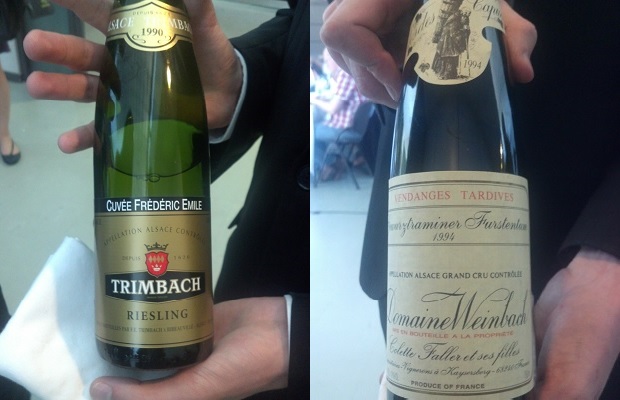
Trimbach Cuvée Frédéric Emile 1990 and Domaine Weinbach Gewurztraminer Furstentum 1994

Trimbach Cuvée Frédéric Emile 1990 and Domaine Weinbach Gewurztraminer Furstentum 1994

The afternoon Master Class covered older vintages. Trimbach Riesling Cuvée Frédéric Emile 1990 lays in an evolution that has come to a balance in weightlessness. Domaine Weinbach Gewürztraminer Furstentum 1994 has a tannic impression and smells like flowers from warmer France. Caroline Furstoss reminded everyone that it is “an expression of a daughter.” Impeccable balance.

Mélanie Pfister

Mélanie Pfister

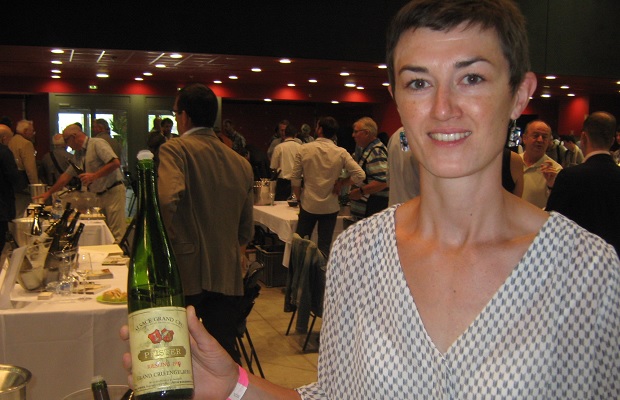
The third of a most excellent Alsatian vintage trilogy was represented by Domaine Pfister’s Riesling Grand Cru Engelberg 1990. With a clotted cream note the wise Cru remains youthful and nearly primary.

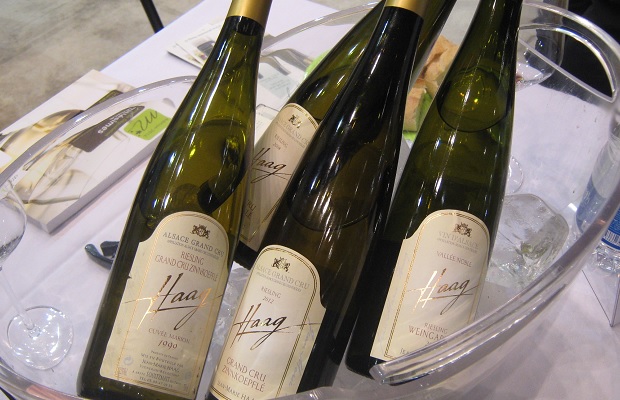
The wines of Jean-Marie Haag

The wines of Jean-Marie Haag

Domaine Jean-Marie Haag’s Riesling Cuvée Marion 1999 showed rich, viscous complexity with the sensation of star anise and menthol.

Kuentz-Bas Riesling 1983 and Domaines Schlumberger Riesling Grand Cru Kitterlé 1945

Kuentz-Bas Riesling 1983 and Domaines Schlumberger Riesling Grand Cru Kitterlé 1945

The high point of the day came with a rare and beautiful chance to taste the Domaines Schlumberger Riesling Grand Cru Kitterlé 1945. The heart and the hearth. Just the thought of producing this wine at that time is unfathomable. There are no superlatives to do it justice. This must end on that note. More on the Kuentz-Bas Riesling 1983 another day.

Good to go!

Tasting the village heart and regional soul of Burgundy

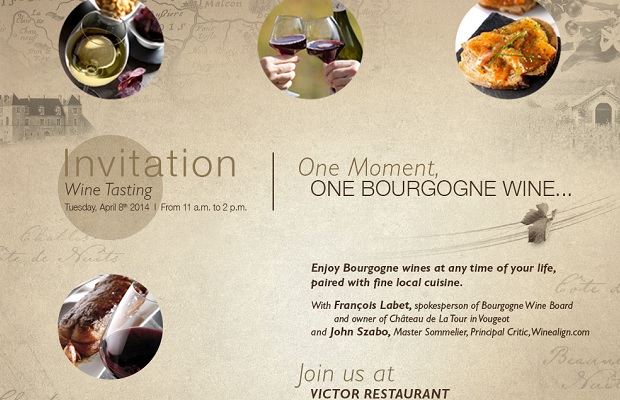
One Moment, One Bourgogne Wine... www.bourgogne-wines.com

One Moment, One Bourgogne Wine…www.bourgogne-wines.com

I would never turn down an invitation to taste des Grands Crus de Bourgogne. I would not hesitate to partake in a free for all of Premiers Crus. If the call came to experience the village heart and the regional soul of Burgundy’s Appellation wines, I would run, not walk to the show.

One Moment, One Bourgogne Wine... www.bourgogne-wines.com

Bourgognes

So, that’s what I did. At the gracious invitation of The Siren Group and Sopexa Canada Ltée I attended the One Bourgogne Wine event at Hôtel Le Germain, along with François Labet, Burgundy viticulture pioneer and chairman of the Bourgogne Wine Board (BIVB) and Communication Commission. Mr. Labet expounded on terroir; from climats to lieux-dits. Burgundy is a geographical and geological landscape of Jurassic age and proportion. Its heritage is ancestral and has been shaped by twenty centuries of activity. The appellation d’origine contrôlée (AOC) acts as its guarantor of quality, of terroir, production methods and what typifies the most famous Chardonnay and Pinot Noir anywhere on the planet.

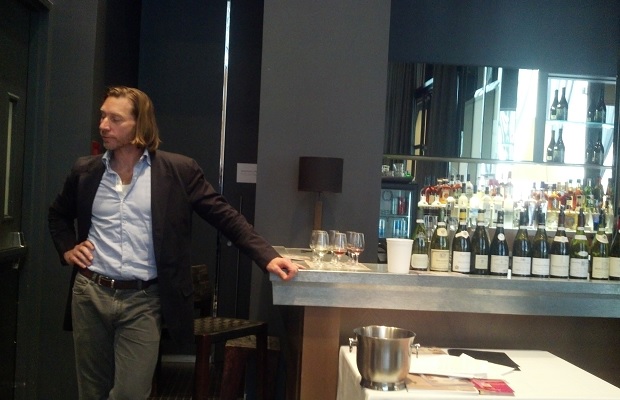
John Szabo presents 15 wines from Burgundy at Hôtel Le Germain's Victor Restaurant on April 8, 2014

Master Sommelier John Szabo of WineAlign presents 15 wines from Burgundy at Toronto’s Hôtel Le Germain Victor Restaurant on April 8, 2014

The Bourgogne event was presented and moderated by Master Sommelier and WineAlign principal critic John Szabo. At the heart of the presentation was the regional diversity that defines real and affordable Burgundy. Mr. Szabo’s chosen wines delved deeper into the soul of the village and regional appellations beyond the Côte de Nuits and the most iconic parts of the Côte de Beaune. Textbook examples from Chablis to the Côte Chalonnaise and the Mâconnais were chosen to offer a true representation of the immensity that is the region.

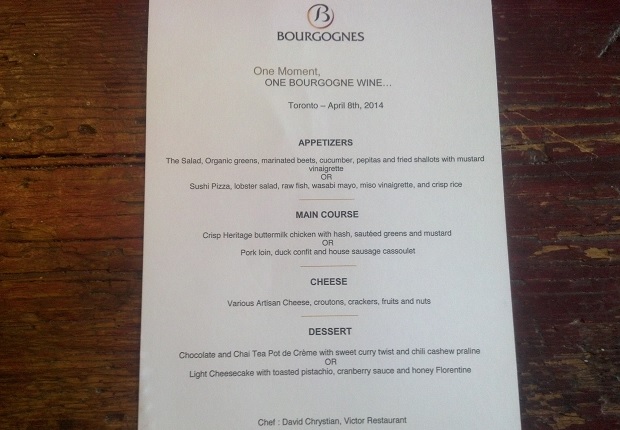
Bourgogne Menu, Victor Restaurant

Bourgogne Menu, Victor Restaurant

The lunch that followed by way of Hôtel Le Germain’s Victor Restaurant was a reconnect for me and the cuisine of Chef David Chrystian. I first encountered chef’s raw and rooted flavours when he assuaged the Garlands at Café Societa on College Street. I remember with fond confusion his earthly layering foiled by the sterile mall, futuristic canvas of the Colonnade (Patriot). After Chef Anthony Rose left the Drake it was dead to me so mistakenly missed Chrystian’s lauded stint. Thanks to the Siren Group for luring me to Victor to reconnect with Chef David Chrystian once again.

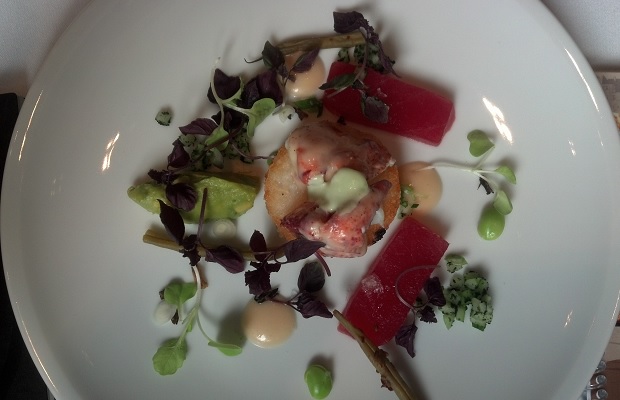
Chef David Chrystian's  Sushi Pizza

Chef David Chrystian’s Sushi Pizza

Here are notes on the 15 wines poured and discussed at One moment, one Bourgogne wine.

Domaine Gautheron Chablis 2012, Burgundy, France (207902, $24.95, WineAlign) From the VINTAGES February 15, 2014 release

Canonical Chablis by the hands of independents. Family farmed and fruit fastidiously judged in timely picking and traditional vinification methods. Produced in allegiance to regional typicity, its nose is pierced by limestone’s necessary metallic tang. Apple tart yet ripe and balanced by plumbic weight. Proper, enjoy it all summer long, Chablis.  @ProfileWineGrp

La Chablisienne Montmains Chablis 1er Cru 2010, Ac, Burgundy, France (265090, $28.95, WineAlign) From the VINTAGES November 23, 2013 release

La Chablisienne alone represents nearly 25 per cent of the region’s plantings. The orchard’s juicy fruit brings expression to this Chablis though it’s more savoury than many and it’s document is read in an angular accent. That and patina transposing into aroma, like the smell of a wet, platinum pipe breaching the fruit’s ability to flesh out. Lubricant at the pipe’s elbow and a moment of quince, even melon, offer weight. This is very good but lacks heft and only shows fossilized mineral on the back palate. Good length but a bit carbonic and needs more flesh and bone to elevate its stratus.  Tasted twice, October 2013 and April 2014   @purechablis

Louis Jadot Chardonnay Bourgogne 2013, Ac, Burgundy, France (933077, $20.95, WineAlign)

Jadot’s Bourgogne Blanc is so essential it calls itself Chardonnay. From a vintage in which weather wreaked some havoc and fruit maturity was anything but consistent, the Jadot enterprise found a continued way to get it right, no small feat considering the quantity of triage required for a wine of such quantity. This entry-level white made full use of the warm summer heat, picking was clearly done in advance of the October chill and sorting found the right mix. It’s buttery, nut-browned and figuratively bubbly. The thick and rich texture is key to romancing the fruit into a riper realm than it likely really is. Commendable success from Jadot.   @ljadot

Joseph Drouhin Mâcon Villages 2012, Burgundy, France (356956, $17.95, WineAlign) From the VINTAGES February 15, 2014 release

Simple, pleasant, solid and effective Chardonnay. A true and literal portrayal of the Bourgogne goût de terroir. Warm, gently expressed fruit along with requisite mineral, chalk and lime. Made of a quick resolve to satisfy, quench and move on. An open door to true Chardonnay with nothing shocking, striking or problematic.  @JDrouhin

Domaine Jaeger Defaix Rully 1er Cru, Mont-Palais 2011, Burgundy, France (Agent, $41.99, WineAlign)

From the holdings of Chablis specialist Bernard Defaix, the domain’s variegated clay/chalk vineyards are located in the south of Côte de Beaune. The Mont-Palais vineyard comes from the Niepce family, winegrowers since the 16th century. Now managed by Hélène Jaeger-Defaix, this Rully is utterly unique to Chardonnay. There is a steely, patina Chablis quality to it, but also a concentration in magnetic aroma, whirling in an unstoppable centrifuge, not yet ready to spill those aromas forth. Screams both southern and cool climate, new world Chardonnay, in forward ways like South Africa and like Niagara on the Lake. Not to mention a silty, white salinity. Roger Wilco that. “There’s a light, what light. There’s a light, white light.”  @liffordnicole

Château Vitallis Vieilles Vignes Pouilly Fuissé 2010, Burgundy, France (360495, $27.95, WineAlign)

From 45-70 year old vines, from clay and limestone (Marls). Really, really smart, succulent and mathematical Chardonnay. A stony example who’s tangent space is complexified by a vector of gritty, spiked leaden aromas, like lime, ginger and lemon zest but also by a second vector of herbiage, as in torn, sweet basil leaf. Length stretched by a scalar multiplication, engaging another consideration. Would such a fine example not benefit, at least in theory, from a Premier Cru classification? Surely the winemaker and the vintner would abide.

Château De Beauregard Vers Cras Pouilly Fuissé 2010, Burgundy, France (agent, $48.99, WineAlign)

The famous “Cras” climat on the windy and chalky plateau of Beauregard means “chalk” in the local dialect. Not surprisingly, the chalky mineral impart takes centre stage and the oak treatment fleshes the fruit out in the early stages of the wine’s life. This Pouilly Fuissé solicits attention, love and engagement. An example in clarity of débourbage, the strict sorting technique employed before pressing. Exuberant fruit acts as if it were of a higher caste, a higher Cru. This is a testament to treatment, to extreme minerality. This makes the expression. A very good vintage, ready to consider and expect it to keep on seducing to at least 2020.

Vincent Girardin Vieilles Vignes Chassagne Montrachet 2011, Burgundy, France  (364141, $55.95, WineAlign)

The quality of Girardin’s Chassagne Montrachet is clear, the age and maturity of the vines explicitly noted. There is an increased sense of depth and density that clearly required attention and coaxing. The 14-month, scaled down (15 percent) new oak barrel concept pushes substance to the forefront and wood to the rear. This is rich without being fat, textured but not splintered. The stirred lees add layers to the essentia, accruing a woven tapestry of phenols, lunar-driven gravity and anaerobic activity.  Tasted twice, January and April 2014  @HalpernWine

From left to right: Domaine Gautheron Chablis 2012, La Chablisienne Montmains Chablis 1er Cru 2010, Louis Jadot Chardonnay Bourgogne 2013, Joseph Drouhin Mâcon Villages 2012, Château Vitallis Vieilles Vignes Pouilly Fuissé 2010, Château De Beauregard Vers Cras Pouilly Fuissé 2010, Vincent Girardin Vieilles Vignes Chassagne Montrachet 2011

From left to right: Domaine Gautheron Chablis 2012, La Chablisienne Montmains Chablis 1er Cru 2010, Louis Jadot Chardonnay Bourgogne 2013, Joseph Drouhin Mâcon Villages 2012, Château Vitallis Vieilles Vignes Pouilly Fuissé 2010, Château De Beauregard Vers Cras Pouilly Fuissé 2010, Vincent Girardin Vieilles Vignes Chassagne Montrachet 2011

André Delorme Bourgogne Pinot Noir 2010, Burgundy, France (366427, $20.95, WineAlign)

The thought here is catholic Burgundy, entry-level, old-school, from antiquity and for the people. Smells like and tastes like grand-père’s Bourgogne Rouge. Cherry fruity, dare I say, Gamay like and marked by tannin that doubles the astringency on the drying finish. Nothing scandalous and well-plundered.

Domaine Thénard Givry 1er Cru Cellier aux Moines 2008, Burgundy, France (Agent, $32.50, WineAlign)

The Thénard family has owned land in Givry since 1760 and this Cellier aux Moines vineyard dates to 1258, named by the Cistercian Monks of the Abbey of Ferte. This is iconic 1er Cru for Givry, from relatively old vines (35-40 years) on a single plot, in mid-slope of southern exposure. Straight out notes of sinew, stem and savour. Esses all around. A vegetal and rustic infirmity comes across and travels through the wine as you work with it. Smells oddly like…hemp. Or perhaps it’s a more delectable weed than that, like rapini, or dandelion. The charred back-end scent reminds of a just extinguished joint. The flavours are dubious, maritime and of the antediluvian earth. For the brave Burgundy heart. Perhaps five to 10 years will soften its edges, peel away the foreign matter and allow a hidden fruit purity to shine.

Bouchard Père & Fils Beaune Du Chateau Rouge 2009, Burgundy, France (325142, $36.90, WineAlign)

If today is the day to splurge on red Burgundy but crossing to the dark side of the VINTAGES section is not going to happen, take comfort in this LCBO general (Signature) listing. Dictionary entry actually, but also something funky this way Beaunes. Produced from a whole whack (17 parcels) of Premier Cru, the animal is strong but decidedly feminine. Clear, precise, distinct perfume with each swirl and replayed with every sip. Like raspberries and the sweet smell of the trodden earth after the dew subsides. Could drink this for breakfast with organic bacon post morning stroll and before a dreamy nap.

Maison Roche De Bellene Beaune 1er Cru Les Grèves 2010, Burgundy, France  (Agent, $46.95, WineAlign)

So very primary, this Beaune, from the work of Nicholas Potel and winemaker Matt Chittick. Some of Les Grèves vines are nearly 110 years-old and there is clear wisdom beyond the edgy, masculine fruit. Those vines are selected for selection massale, a propagation technique that breeds perpetual health and consistency of style for present and future wines. A different sort of animal resides in this one, of musk, and mineral. Like the Beaune equivalent to traditional Brunello. Yet this Beaune from a very desirable vintage is nimble, moves with quick steps and cat-like reflexes.  @RochedeBellene

Albert Bichot Domaine Du Pavillon Clos Des Ursulines Pommard 2011, Burgundy, France (23820, was $49.95, now $40.75, WineAlign)

The funk in this Pommard is unflappable, modish, flirting and so elevated in stained high-acid and tone. Incredibly tight and sour upon sour. A strenuous Pinot Noir to ponder and even harder to ignore. If the tasting were to last for hours into the afternoon I could imagine a resurgence but often the old adage is true. If it isn’t there to begin with, it will never be. Would like to look ahead and say “it’s not what it was before,” but this is either lacking fruit or it’s just so far away. The texture is plush, the mouthfeel aching, breaking hearts. Mineral, astringent long finish. Tough as nails.  Tasted twice, November 2013 and April 2014

Aurélien Verdet Morey Saint Denis ‘En La Rue De Vergy’ 2010, Burgundy, France  (353416, was $44.95, now $36.25, WineAlign) From a storied vineyard just above the very famous Clos Du Tart in the Côte de Nuits. This producer may not be a household name for its holdings in this Burgundy plot but step aside Bruno Clair, Lignier-Michelot and Pascal Marchand. Verdet can handle the terroir of Morey-St.-Denis. Was and still is an unexpected gem. Rich, textured, layered cran-raspberry and earthy flavours. Persistent though sweet and engaging tannins. From my earlier, September 2013 note. “Noses my kind of MSD aromatics. Soft vanilla, black cherry, smoke and obdurate limestone toughness. Coated in fine, tinny tannin and stretchy length, this represents big value for the appellation.”  Last tasted April 2014

Daniel Rion & Fils Vieilles Vignes Nuits St Georges 2011, Burgundy, France  (356600, $53.95, WineAlign) Classic and as representative as it gets for the appellation, this is firm, time-honoured Burgundy. The old vines, the earth beneath its tendrils and the medieval forest are all in the glass. Though terse and tense, this Pinot Noir will come around to fill glasses with humanistic pours 10 to 15 years down the road. That extended wait will be needed to integrate the earthiness into the formidable tannins so that the lurking red fruit can rise to the top. A fine example with a model, lengthy finish.

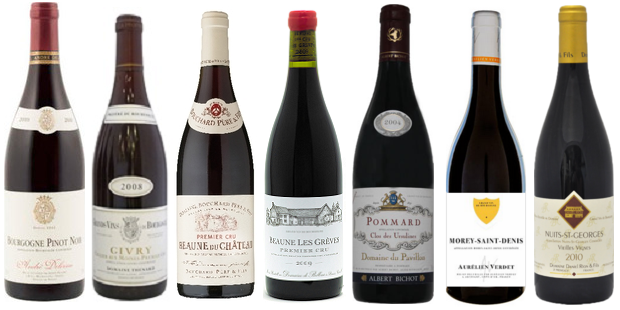
From left to right: André Delorme Bourgogne Pinot Noir 2010, Domaine Thénard Givry 1er Cru Cellier aux Moines 2008, Bouchard Père & Fils Beaune Du Chateau Rouge 2009, Maison Roche De Bellene Beaune 1er Cru Les Grèves 2010, Maison Roche De Bellene Beaune 1er Cru Les Grèves 2010, Aurélien Verdet Morey Saint Denis ‘En La Rue De Vergy’ 2010, Daniel Rion & Fils Vieilles Vignes Nuits St Georges 2011

From left to right: André Delorme Bourgogne Pinot Noir 2010, Domaine Thénard Givry 1er Cru Cellier aux Moines 2008, Bouchard Père & Fils Beaune Du Chateau Rouge 2009, Maison Roche De Bellene Beaune 1er Cru Les Grèves 2010, Maison Roche De Bellene Beaune 1er Cru Les Grèves 2010, Aurélien Verdet Morey Saint Denis ‘En La Rue De Vergy’ 2010, Daniel Rion & Fils Vieilles Vignes Nuits St Georges 2011


Good to go!