New fizz on the Brock

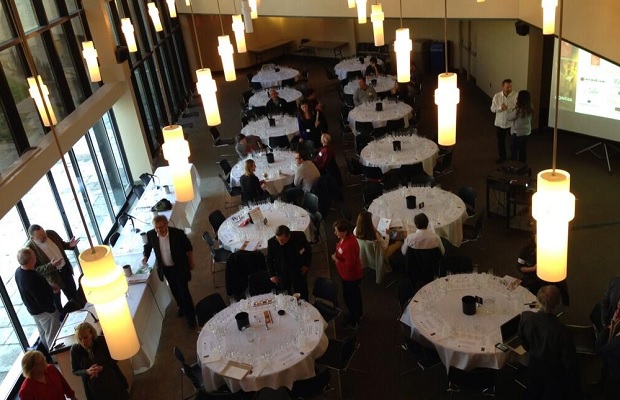
Brock U. CCOVI Sparkling Wine Technical Symposium Photo: http://brocku.ca/ccovi/

Brock U. CCOVI Sparkling Wine Technical Symposium
Photo: http://brocku.ca/ccovi/

The Ontario Sparkling Wine Technical Symposium. Like a Trekkie convention for oenophiles. To a wine geek it was eight hours spent searching for the meaning of life. To a consumer who just likes to drink it would have been time lost forever with no chance to get it back. The Brock University Cool Climate Oenology & Viticulture Institute’s Pond Inlet was the setting. The presentations were very technical, that is until Dr. Jamie Goode took the podium and breathed context into the room.

According to the LCBO, in 2013, sales in Vintages of VQA sparkling wine were up 59.2 per cent from 2012 sales data. In Canada there are 36 wineries producing sparkling wine and that number is growing. As it should.

The abstruse conditions of the #ONfizz event set the table as a vocational assurance draw for Ontario winemakers, viticulture and viniculture research specialists. Seated at my table were a butcher, a baker and a candlestick maker. That should be loosely translated as a scientist (Dr. Jim Willwerth), a product manager (LCBO’s Ontario expert Astrid Brummer) and two winemakers (Hinterland’s Jonas Newman and Gaspereau Vineyards’ Gina Haverstock).

Brock’s Dr. Debbie Inglis introduced Bertrand Robillard, Ph.d., Director of Research and Development at the Institut Oenologique de Champagne. Before getting to the subject at hand, on disgorging, gushing and foaming, he first laid an open attack on beer. “The form is always better in a crystal glass,” insisted Robillard. For Champagne. Not beer. “That’s just false. It’s just appearance. People in Champagne do not appreciate this kind of resolute,” comparing the pouring of Champagne to beer.

Then on to Sparkling wine’s integral and necessary marketing draw. Bubbles. “No dishwashing,” begged Robillard. “It’s a very efficient way to kill the foam.” By principle, to have foam you need bubbles. It’s all about stabilizing the foam. High ethanol (five per cent) in fizz is good content for foam stabilization. CO2 (protein concentration and polysaccharides) all contribute to stability.

So why do the bubbles collapse? Why do they not make it from the centre to the wall of the glass? Why is a hole in the middle created and the bubbles fall into the hole and disappear? The answer is gushing. A “shameful disease” that can be considered as a disequilibrium between foam formation and foam collapse. Bubbles cannot exist if their radius are less than 0.1 microns, or they will dissolve into the wine. Bubbles are detached when gravity forces are higher than capillary forces.

The conclusion? Surface area and CO2 are the driving force behind gushing. Contaminations inside the wall of the bottle must be eliminated. Oxygen heterogeneity is essential, even more so more than CO2 and sugar. The news that there is no relationship between wine composition and gushing means winemakers can make the Sparkling wine style of their choosing. The representative from Champagne said so.

Next up was Ed Carr, Sparkling winemaker, Accolade wines in Australia. Carr plies his trade in Tasmania. Not the Tasmania of The English Passengers full of exiled convicts, invading Brits, sinister men like Dr. Thomas Potter and his thesis about the races of men. No, Carr makes bubbles on an island quickly becoming a (vinous) garden of Eden, known to a heroic aboriginal and envisioned by Reverend Geoffrey Wilson. Carr explained the company’s choice of locale. “These (cold and mostly maritime influenced climate) numbers are a gross simplification of what the world is really like, but this is why we went to Tasmania, looking at that 1000 number for heat degree days.”

On spacing: “The guy growing your vines is likely using the same tractor to grow spuds.” On vineyard management: “Lots of leaf plucking done, bunch thinning…canopy management is key. Supplemental irrigation a must.” On Sparkling wine stylistic choices: “Oxidation is a big thing, a real style choice. Chilling picked fruit reduces phenolic extraction and oxidation but also reduces fruit.”

On flaws: “Brettanomyces I refer to the ‘black death of Europe’ for wine. The little buggers love sulphur dioxide conditions. Residual sugar left in the bottle on the way to second fermentation helps the yeasts on their way. Rapid ferment and as dry as possible is the way to go.”

On closures: “I don’t really think you apply screw cap closure trials from still wines to sparkling. It does not translate to the reductive character of sparkling. We primarily believe in the use of traditional cork, with some agglomerate closure usage.”

Third speaker was Larry Mawby of Michigan’s Leelanau Peninsula L. Mawby Vineyards. “The thing that I realized was negatively impacting on my ability to make good sparkling wine was the fact that I wasn’t just making sparkling wine.” The response from Hinterland’s (Prince Edward County Sparkling wine maker) Jonas Newman. “I like his style.” I can hear you thinking, Sparkling wine in Michigan? More than this. Mawby makes 21 different renditions, with the usual suspects, Chardonnay and Pinot Noir, in traditional ways. He also goes at it Charmat-style with Riesling, Pinot Gris and Vignoles. Not to mention Cayuga, Vidal, Regent, Marechal Foch and Muscat in the Cuve Close method.

Continued Mawby, “in this century we’ve made nothing but sparkling wines.” During the terrible winter of 2003 there were temperatures of 45 degrees (Fahrenheit) and below. “Killed any vine not beneath the snow. I panicked.” So Mawby added his ‘Cuve Closed’ a bulk production, Charmat-style sparkling wine. On the technicalities of making fizz: “I don’t believe the chemistry of fruit should be your guideline. What does the fruit taste like?” On varietal integrity: “Almost nobody on the planet buys Sparkling wine based on grape variety.”

Jamie Goode, Ph.D., London-based wine writer (www.wineanorak.com) and wine columnist, The Sunday Express talked on wine closures and purchaser perception of local, national and international sparkling wines. Mostly he spoke about incontestable truths.

On closures: “Traditional is best but the Mytik in an excellent alternative.” It now closes 192 million of 6 billion bottles. The Crown Cap? “Yes, why not? It’s recognizable, like beer and comfortable. With the right liner it’s OTR transmission is very acceptable.” Dr. Goode’s closure talk resulted in some wine writer comedy.

On the world’s most famous fizz: “Champagne can be wonderful, but there’s some ropey stuff coming to the UK. With Champagne, your expectation is everything.” On Cava, “People don’t really like it. It’s made in the traditional method and it should be a really good product but it’s trying to be something it’s not.”

On vintage dated bubbles, Goode spoke from an unequivocal marketing perspective. “People don’t really care about vintage.” On the emerging Canadian and British sparkling wine industries. “Do English or Canadian wines need a special name?” No.”

On the now-universal nomenclature: “Sparkling wine has become an accepted one, not a pejorative one.” Goode’s perspective is always fresh, nearly cynical and full of truth. On leaving the country he bade farewell with thanks.

Participants also had the opportunity to taste two sparkling wine research trials that are currently underway at local wineries as well as a comparative blind tasting.  The blind tasting presented a selection of local and international Sparkling wines and Champagnes and was moderated by Jamie Goode.  The three flights featured Blanc de Blancs, Cuvée/blends and alternative varieties. Thank you can never be said too many times to Barbara Tatarnic, Magdalena Kaiser-Smit and Trisha Molokach for their generosity in invitation and unwavering hospitality. I am always humbled to be included in their warm world of wine.

I will admit that I would have liked to see more Ontario representation in the flights, as well as at least one example from both British Columbia and especially Nova Scotia’s Gaspereau Valley. With that emerging region and vintners like Benjamin Bridge and Gaspereau Vineyards on the Sparkling stardom stage/horizon, including their wines would have upped the complexity factor tenfold. Not to mention something British. New York State’s Finger Lakes (Chateau Frank Célèbre) and North Fork of Long Island’s (Sparkling Pointe Brut Seduction) should definitely be players in the next #ONfizz symposium.
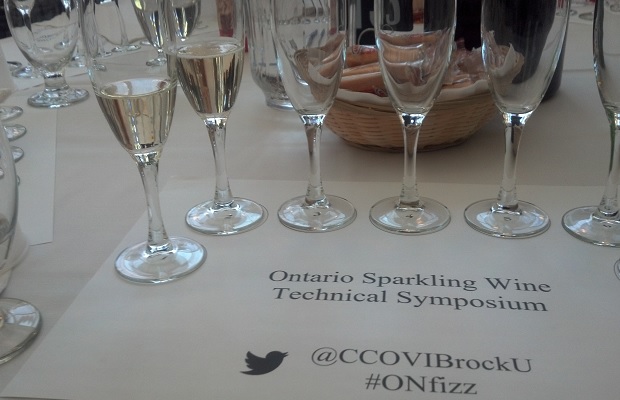
Brock University CCOVI Sparkling Wine Technical Symposium

Brock University CCOVI Sparkling Wine Technical Symposium

Sparkling Wine Trial Tasting – Unfinished samples from Trius Wines

  1. Trius Base on lees two years. Chardonnay (70 per cent), Pinot Noir (25), Pinot Meunier (5). Each (cane sugar) dosage was 20 mL towards an end of 8 g/L of residual sugar. Barrel fermentation and barrel aging leans this towards an oxidixed style. Arid, high in citrus and high-toned oak character.
  2. Blanc de Noirs 2009. Left on the lees for four years. Use of cane sugar. Less giving and resolute in micro-wood spice. This sample is from the oldest (sparkling) wine in their cellar.
  3. From the Trius Brut wine. Dosage again with cane sugar. Acts the most polished and finished, the most accomplished. This is the rock and the anchor.

Comparative Blind Tasting – Flight 1: Blanc de Blanc

Family Estate Cuvée No. 1 Blanc De Blancs NV, Méthode Traditionelle, Marlborough, New Zealand (56358, $34.95, WineAlign)

The sample poured at the OSWTS was unfortunately corked but here was my previous review: “Aromatic rhetoric would argue this Marlborough bottle of bubbles is a ringer for classic Blanc de Blancs. Promises pleasure and class from the first whiff. Decidedly lemon citrus tight and stony until an herbal, splintered, stemmy tarragon balm takes over, rendering the wine more of its place than what it tries to emulate. Still, a really terrific effort.”  Tasted November 2013  @oenophilia1

From left to right: L. Mawby Vineyards Blanc de Blanc Chardonnay NV, Cave Spring Blanc De Blancs Brut, Henry Of Pelham Cuvée Catharine Carte Blanche Blanc De Blanc 2008, Drappier Signature Blanc De Blancs Brut Champagne, House of Arras Blanc de Blancs 2004

From left to right: L. Mawby Vineyards Blanc de Blanc Chardonnay NV, Cave Spring Blanc De Blancs Brut, Henry Of Pelham Cuvée Catharine Carte Blanche Blanc De Blanc 2008, Drappier Signature Blanc De Blancs Brut Champagne, House of Arras Blanc de Blancs 2004

L. Mawby Vineyards Blanc de Blanc Chardonnay NV, Michigan, USA (winery, US $23)

Like distilled white Swedish berries high on acidity. Herbal, tight, gainful simplicity. Pear ciderish and clear as a cool climate bell.  @mibubbly

Angels Gate Archangel Chardonnay Brut 2011, VQA Niagara Peninsula, Ontario (227009, $21.95, WineAlign)

A not so dry (9.8 g/L residual sugar) stylistic choice leads this angel to sparkling late harvest territory with ripe orchard fruit that buzzes with terpenes, surface bruises and slight oxidized notes. The archangel rolls over a knife’s edge and sits too long in the sun but it’s neither cut nor cooked. There is beauty in its 90’s big hair, big sound and you might tell her that “tears drop like diamonds from your golden eyes.” There’s yet a spring in her step and a hay note from afield.  Tasted May 2014  @angelsgatewines

House of Arras Blanc de Blancs 2004, Tasmania, Australia (winery, $80 AUS)

Big barrel oak influence leaves splinters in the mouth, albeit gentle and dissolvable ones. Creamy and chalky like ice cream made from tea. Not much yeast and biscuit activity as it’s all about fruit and barrel.  @AccoladeWinesAU

Cave Spring Blanc De Blancs Brut, VQA Niagara Escarpment, Ontario (213983, $29.95, WineAlign)

The freshest style of the #ONfizz B de B flight. Fruit, escarpment bench stone layering, richesse, biscuits and toast are all in. Acidity meets complexity. From my earlier, December 2012 note: “Sees no malolactic fermentation and sits at the top end of dry (12-14 dosage). Most of the fruit is 2008, despite the NV designation. A soda fountain of argon and nitrogen bunsens forth through clean lines and carries an entire cider house orchard of Spartan apple. This one certainly hints at Champagne-like characteristics, of brioche and toast. The apples never relent.”  Last tasted May 2014  @CaveSpring

Drappier Signature Blanc De Blancs Brut Champagne, Ac, Champagne, France (599860, $46.95, WineAlign)

Here showing a bruised apple note with the lees and PH on steroids. Fruit seems to be in from a less than stellar vintage and so the lack of consistency is disappointing. “It’s a style,” says Jonas Newman. “He’s a natural wine guy.” NV Champagne needs aggregate scoring so my 90 comes down. From my earlier, April 2013 note: “Continues a VINTAGES string of excellent value in Champagne releases. Made from 100% Chardonnay, this BdB is pronounced in , yeasty dough definition, hinting at agave and unwashed cheese rind. Where there’s bubbles there’s a way and I like where this one is going. The agave replays in sweet waves, as does the sour in faint yet discernible sloshes. Much to contemplate in this NV sparkler.” Last Tasted May 2014

Henry Of Pelham Cuvée Catharine Carte Blanche Blanc De Blanc 2008, VQA Short Hills Bench, Niagara Peninsula, Méthode Traditionnelle, Ontario (315200, $44.95, WineAlign)

Rocks the driest end of the free world Blanc de Blanc spectrum. Lets carte blanche reign in a taut style and reeks of a minimum four years of autolytic lees activity. In that sense it loses some of its sense of place, in Catherine’s case that Short Hills Bench clay-silt-loam-gravel agglomeration. The soil composition usually brings vigor and richness to Chardonnay but here as a sparkling wine the sensation is of citrus soaked concrete. Racy bubbles of intensity that do not quite match the weight and elegance of the 2007.   @HenryofPelham
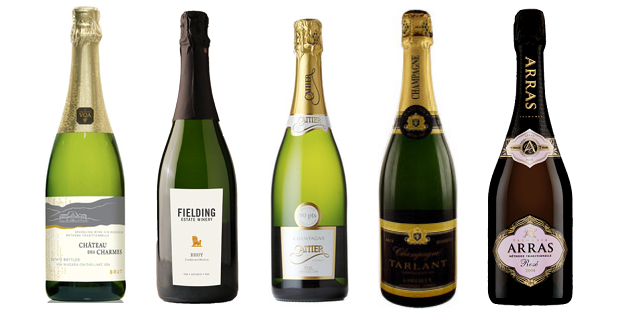
From left to right: Château Des Charmes Brut Méthode Traditionnelle, Fielding Estate Brut NV, Cattier Brut Premier Cru, Tarlant Brut Reserve Champagne, House of Arras Rosé 2005

From left to right: Château Des Charmes Brut Méthode Traditionnelle, Fielding Estate Brut NV, Cattier Brut Premier Cru, Tarlant Brut Reserve Champagne, House of Arras Rosé 2005

Comparative Blind Tasting – Flight 2: Blends

Fielding Estate Brut NV, VQA Niagara Peninsula, Ontario (winery, $34.95, WineAlign)

An impressive debut for winemaker Richie Roberts and team. This is a classic Chardonnay (55 per cent) and Pinot Noir (45) cuvée from Fielding’s Tufford Road vineyard. A surprisingly rich example, toasty and with a sweet meets sweaty, minty-herbiage. A primer for even greater vintages (this is essentially 2009) to come, where the focus will be more on yeast fielding to citrus and less about yielding to a non-metallic elemental finish.   @FieldingWinery

L. Mawby Vineyards Talismon NV, Michigan, USA (winery, US $37)

Tasted blind this strikes out as heteromorphic fizz from less than charted territory (like Michigan) with juicy, hybrid acting histrionics. Though it’s actually a blend of Pinot Noir, Pinot Gris and Chardonnay it lacks vinifera varietal complexity. The fruit is clear and fair but the méthode champenoise brings no enzymatic or citric display.

Tarlant Brut Reserve Champagne, France (325167, $43.95, WineAlign)

Here is a cuvée of égalité that combines one-third each Chardonnay, Pinot Noir and Pinot Meunier. Like the varietal make-up, these slightly reductive yet elegant bubbles offer up thirds of brioche, toast and demi-glacé. Fashioned from the 2006 harvest with reserve wine added and aged in oak. Chic and affordable but in no shape or form a knock off of the real deal. There’s a theoretical Champagne void within filled with citrus, sharp ginger and pungent spice. Blessed with unmatched length as compared to the others in the #ONfizz cuvée flight.

House of Arras Grand Vintage 2004, Tasmania, Australia (winery, $60 AUS)

“A polarizing wine,” notes winemaker Ed Carr. Full of savoury, herbal notes but also the unmistakable scent of that other white meat. The cure is indeed a porcine one, sweating in a hung game way, which gives this fizz such an old-world, old cellar quality. A slow (spring) malolactic evolution in barrel gives this (65.9 percent) Chardonnay and (34.1) Pinot Noir its silky, milky feel. Good to even better than good length.

Cattier Brut Premier Cru, Champagne, France (325720, $44.60, WineAlign)

This is really bitter, in a really good way. The nobility in brine is likely a result of whole (non-separated) bunch pressing, the Pinot Noir skins impart giving the fruity must its resident bitterness. A highly distinctive style of high caste and longevity, composed of Pinot Meunier (45 per cent), Pinot Noir  (35) and Chardonnay (25). As deep as any tasted at #ONfizz 2014.

Château Des Charmes Brut Méthode Traditionnelle, VQA Niagara On The Lake, Ontario (224766, $22.95, WineAlign)

Chardonnay (75 per cent) and Pinot Noir (25) at an attractive price. Attacks with a gently cloying, weeping sweetness, string-bending terpenes and fades out with a savoury, bitter finish. Light, approachable and wide-reaching style. Bubbles with broad appeal.   @MBosc

House of Arras Rosé 2005, Tasmania, Australia (winery, $60 AUS)

The composition here is Pinot Noir (62.5 per cent) and Chardonnay (37.5) from pickings in Lower Derwent, Upper Derwent and the Houn Valley. Emerges out of a year where warmer temperatures coaxed an increase of richer fruit from the rounder and fatter white grape. Good lees effect (seven years) in 2005 and also a balmy tarragon accent atop strawberry, verging to cherry fruit. Finishes with expert balancing acidity, this fizz trumps its Blanc de Blanc and Grand Vintage sistren at this tasting.
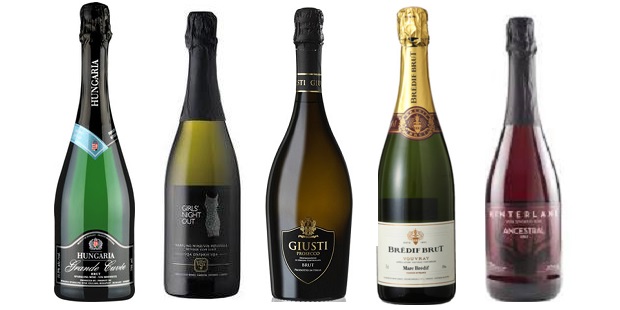
From left to right: Hungaria Grande Cuvée Brut, Girls' Night Out Sparkling, Giusti Brut Prosecco Asolo, Brédif Brut Vouvray NV, Hinterland Ancestral 2013

From left to right: Hungaria Grande Cuvée Brut, Girls’ Night Out Sparkling, Giusti Brut Prosecco Asolo, Brédif Brut Vouvray NV, Hinterland Ancestral 2013

Comparative Blind Tasting – Flight 3: Alternative Varieties

Trius at Hillebrand Sparkling Sauvignon Blanc 2009, VQA Niagara Peninsula, (winery, $35.20)

Spent 12 months ageing ‘sur lie’ in the estate’s underground sparkling caves. Winemaker Craig McDonald comments to the negative effect of light on bubbles. “Light strike causes a serious reaction on sparkling wine.” Here a mephitic aroma should likely be attributed to reduction or the beam of sunlight blanketing the room. There is a resinous salinity to this SB that does not want to blow off. Needs to be revisited from 2015 to 2018.

Green Extra-Sec by M. Lawrence, Michigan, USA (winery, $15)

The Green is part of Larry Mawby’s colourful, sexy and artfully named M. Lawrence investigation into the diversity of Sparkling wine. Absurdly dry, this put together Vidal and Cayuga concept is all about musky grape dehydration. Its cool climate constitution rescues the fruit to rehydrate and act like an orange picked straight from the greenhouse tree. There’s a malic medicinal tone that buries the sweet (17 g/L residual), resulting in a tart, low in alcohol, unwoven bottle of slim bubble.

Girls’ Night Out Sparkling, Ontario VQA, Ontario, Canada (215632, $14.95, WineAlign)

Here is a modest and useful 100% Riesling, Charmat Method, Cuve Close bottle of fizz from Lake Erie North Shore producer Colio Estates. With a residual remainder of nearly 20 g/L it falls into the off-dry category with aromatic notes that stroll directly through Ontario orchards. Tasty, easy to enjoy and smelling peculiarly like bubble gum. Well-made, good quality bubbles nouveau.

Giusti Brut Prosecco Asolo DOCG, Veneto, Italy (agent, $20.99, WineAlign)

A 100 per cent Glera, from Veneto’s Montello and the Asolo hills. As per Giusti’s description, this definitive Prosecco is “appropriately evanescent, with fine and lingering perlage.” Though reserved on the nose, the palate is very lively. A case in point for any aridity-driven examples to follow.

Brédif Brut Vouvray NV, Loire, France (352179, $20.95, WineAlign)

A touch yeasty, with citrus and large bubbles. Good verve, complex palate with a Champagne bent, or at least a toasted sentiment. From my earlier, November 2013 note: “Arid, frothy and fitful, atomically speaking. White peach and preceding spring flowers. Charcoal rubbed, also clean and fine. Sparkling Chenin Blanc done right.”  Last tasted May 2014

Hungaria Grande Cuvée Brut, Hungary (619288, $12.25, WineAlign)

A more than interesting set of aromatics define and drive this blend of Királyleányka Rizling (Rhine Riesling), Pinot Noir and Chardonnay. A stinky, reductive twang is joined by peach, rubber, pencil, duff and sandy sediment. Although the palate is a bit dullish with a taste of wet concrete there thickens a liqueur-like viscous texture to win sweet hearts. Would win even more were the residual (9 g/L) even higher.

Hinterland Ancestral 2013, Prince Edward County (winery, $25, WineAlign)

Released back in October of 2013, the Ancestral is what Hinterland’s Vicky Samaras refers to as the “unicorn” or the “babymaker.” This is Gamay Noir in postal service of the ancient process known as méthode ancestrale. Fermentation, which produces the carbon dioxide, occurs in the bottle and lees disgorgement is skipped. Hinterland’s Ancrestral brings sweet currant jelly, strawberry and mint notes (36 g/L residual sugar) to a wine low in alcohol (8 per cent) yet high in balancing (7.8 g/L) natural acidity. The components are all lifted to such great heights. A babymaker because the aromatics, palate, texture and finish “are mirror images and when we kiss they’re perfectly aligned.”


Good to go!

Take them home, County wines

County in the City PHOTO: Michael Godel

County in the City at the Berkeley Church

Life is old there, older than the trees,
Younger than the mountains, blowing like a breeze

Can you think of an island (leaving Australia, Tasmania and New Zealand out of the discussion) of greater interest anywhere for growing grapes and making world-class wine? Prince Edward County’s just a shade more than 1000 square kilometers, 800 kilometers of shoreline and tiny 22,000 population is that place. It’s geology and climate eerily mimics that of Burgundy. A superficial layer of limestone peppered clay loam hovers above penetrable layers of larger limestone. Fissures in that bedrock allow vines to reach deep into its crevices. It’s a veritable mineral wonderland.

Related – You can lead a county to the city

Huff Estates Photo: Michael Godel

Huff Estates

More than 30 wineries dot the land and water interspersed honeycomb of a wine trail. Pinot Noir and Chardonnay are the obvious cornerstone varieties but unique Riesling, Cabernet Franc and Pinot Gris have joined the attention gaining fray. Ontario’s finest Sparkling wine is being made at Hinterland. Vintners like Rosehall Run and Keint-He Winery exemplify top to bottom consistency. They and others like Lacey Estates are involved in the yeoman’s ambassador work, in the field, at tastings or through social media. Smaller production houses like The Old Third Vineyard, Hubbs Creek and Exultet Estates are sought after by those who know.

Stanners

Stanners

The County returned to the city on April 3, 2014 to showcase a cross-section of their wares at Toronto’s Berkeley Church. The usual suspects continued to impress, yet the collective needs to embrace the Sparkling example set by Jonas Newman and Vicky Samaras at Hinterland. If White Cap and Ancestral are any beacon to be drawn towards, plantings of Vidal, Riesling and Gamay should be employed in earnest in the turning towards pressure in the bottle. Lighthall’s Glen Symons gets it, as does Frédéric Picard, with his Cuvées, not to mention Bill Turnbull and his 3630 Bubbles. True, Casa Dea has the shy Dea’s Cuvée and the Grange makes a Sparkling Brut and a Riesling (346726, $24.95). But the questions begs, is fizz just another word for everything to lose in the County?

Here are notes on 23 wines tasted. The soundtrack to these PEC Wines includes Foo Fighters, Cracker, Nine Inch Nails, Modest Mouse, REM, Sufjan Stevens, The Beatles and Dire Straits.

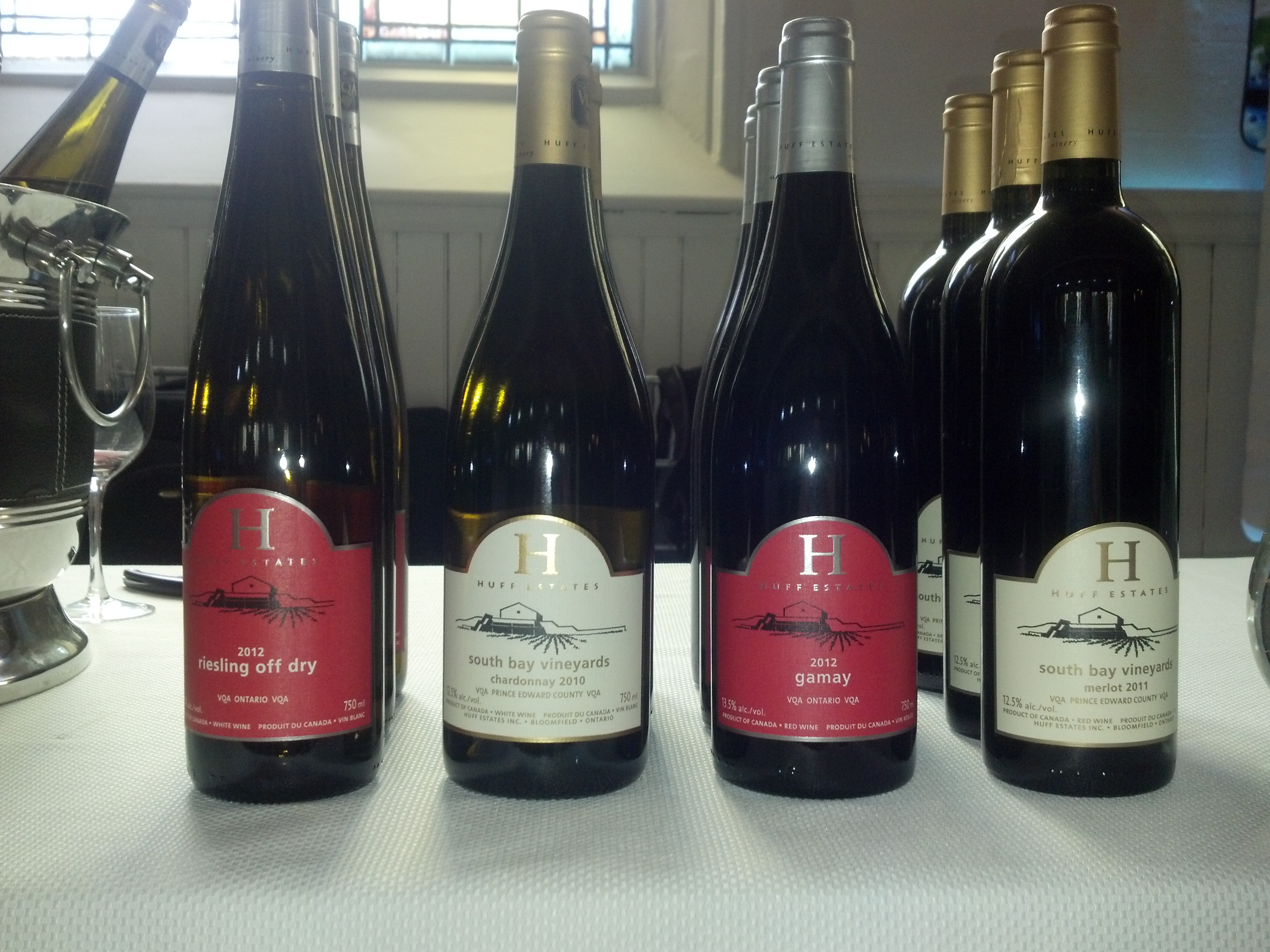
From left to right: Casa Dea Riesling 2011, Huff Estates Winery Off Dry Riesling 2012, Harwood Estate Pinot Gris 2012, Lighthall Progression Sparkling Vidal 2012, Norman Hardie Riesling 2012, Huff Estates South Bay Vineyards Unoaked Chardonnay 2012, Karlo Estates Lake On The Mountain Riesling 2012

From left to right: Casa Dea Riesling 2011, Huff Estates Winery Off Dry Riesling 2012, Harwood Estate Pinot Gris 2012, Lighthall Progression Sparkling Vidal 2012, Norman Hardie Riesling 2012, Huff Estates South Bay Vineyards Unoaked Chardonnay 2012, Karlo Estates Lake On The Mountain Riesling 2012

Casa Dea Riesling 2011, VQA Prince Edward County, Ontario  (winery, $16.95, WineAlign)

Pours and perches in the glass dry and stoic, as if bled from concrete or amphora. Swirled or not this fighter begins to rumble in a growing momentum of tang and acidity, as if it were being fed by sugar and feeding on yeast. So primary, like a sample in thief, yet already circling in complexity. A spike of spicy sweetness, a delicate dressing of aglio e olio, a chiffonade of basil on top. The County does this style of dry Riesling at this price in ways no one in Niagara can. This is no foo but rather a “blessing in disguise. Believe it or not, hands on a miracle.”   @casadeawinery

Huff Estates Winery Off Dry Riesling 2012, VQA Ontario (155606, $17.95, WineAlign)

Note the VQA Ontario designation, meaning the fruit is a combination of PEC and Niagara. The former brings limestone to the table while the latter weight and substance. Typically soda-driven and spatially atomic in maximum thrust. Turns towards the lake with sweet emotion and sails off into the sunset. Multi-purposed, works to great summer afternoon effect, especially with the waves of the bay lapping at the shore.  @HuffEstatesWine 

Harwood Estate Pinot Gris 2012, VQA Prince Edward County, Ontario (Winery, $18.00, WineAlign)

Light, airy, delicate and nearly ethereal Pinot Gris that takes few chances, instead choosing an acquiescence with life’s simple pleasures. The vanilla of Gris, malleable, agreeable and ready to pair with whatever comes its way. A minor spike of Hillier minerality gives accent to pears and its blossoms.

Lighthall Progression Sparkling Vidal 2012, VQA Ontario (Winery, $20.00, WineAlign)

A most non-pretentious sparkler that holds a pertinacious attitude towards anything but serious fun. From estate Vidal grapes that has seen a second fermentation using the Charmat Method, Lighthall’s ’12 picks up right where its solid ’11 left off. Picked early to preserve freshness and acidity, the Progression is big on tart green apple preserved by a squeeze of lemon. Chill it, refresh with it, serve it up and bring the house down.

Norman Hardie Riesling 2012, VQA Ontario (131169, $21.00, WineAlign)

Twenty Mile Bench in Niagara borrows 30 per cent County fruit to complete Hardie’s cracker Riesling. Low in alcohol (9.1 per cent) and residual, bound by jacked up acidity and tension. Pale platinum with an old-school aromatic sentiment that “fruit is rusting on the vine,” and flavours recalling that “the fruit is calling from the trees.” A masonic force of winemaking, “like being low, hey hey hey like being stoned.”  @normhardie

Huff Estates South Bay Vineyards Unoaked Chardonnay 2012, VQA Prince Edward County, Ontario (Winery, $21.95, WineAlign)

The Huff Chardonnay bent has seen a shift as strong as South Bay’s prevailing winds, away from the weight of barrel ferment to a clean, Chablis-like style. The ’10 might just have been the turning point and though they now make two versions, this ’12 is the cementing of the attitude. What is most amazing is that the texture, aromas and feel remain those of an oak-influenced wine. Huff manages the linear consistency without the need to encumber, toast or char the purity of its glade, glycerin and citrus fruit. Only Prince Edward County’s limestone soil can effect this kind of nine inch nails drive into Chardonnay without oak and only Huff can do it with this kind of elegance. A wine “less concerned about fitting into the world.” Do not miss this singular effort.  @HuffEstatesWine

Karlo Estates Lake On The Mountain Riesling 2012, VQA Prince Edward County, Ontario (Winery, $22.00, WineAlign)

Karlo’s take is Riesling in torsion, barrel fermented & aged in older (six-year) French Oak. The program adds wax and herbal mucilage to what otherwise would have been a frenetic study in bone chilling acidity. This unique and neo-progressive intuit invites a global Riesling symposium to the County to learn something old and something new within this single bottling. Riesling with attitude that’s got glycerin and a medicinal meets floral, pear extract meets candied lilac viscidity. Though so young, it seems wise, with an anamnesis for old Mosel, a coolant aroma and a taste that recalls white sangria. Yes, it’s different and eclectic. Anti-bracing stuff, not for everyone, but everyone should be for it.

From left to right: Stanners Vineyard Riesling 2011, Closson Chase The Brock Chardonnay Unfiltered 2011, Lighthall Vineyards Gewurztraminer 2012, Karlo Estates Chardonnay C.H.O.A. 2012, Norman Hardie County Cabernet Franc 2012, Huff Estates South Bay Vineyards Chardonnay 2010, Closson Chase Vineyard The Loyalist Chardonnay 2012

From left to right: Stanners Vineyard Riesling 2011, Closson Chase The Brock Chardonnay Unfiltered 2011, Lighthall Vineyards Gewurztraminer 2012, Karlo Estates Chardonnay C.H.O.A. 2012, Norman Hardie County Cabernet Franc 2012, Huff Estates South Bay Vineyards Chardonnay 2010, Closson Chase Vineyard The Loyalist Chardonnay 2012

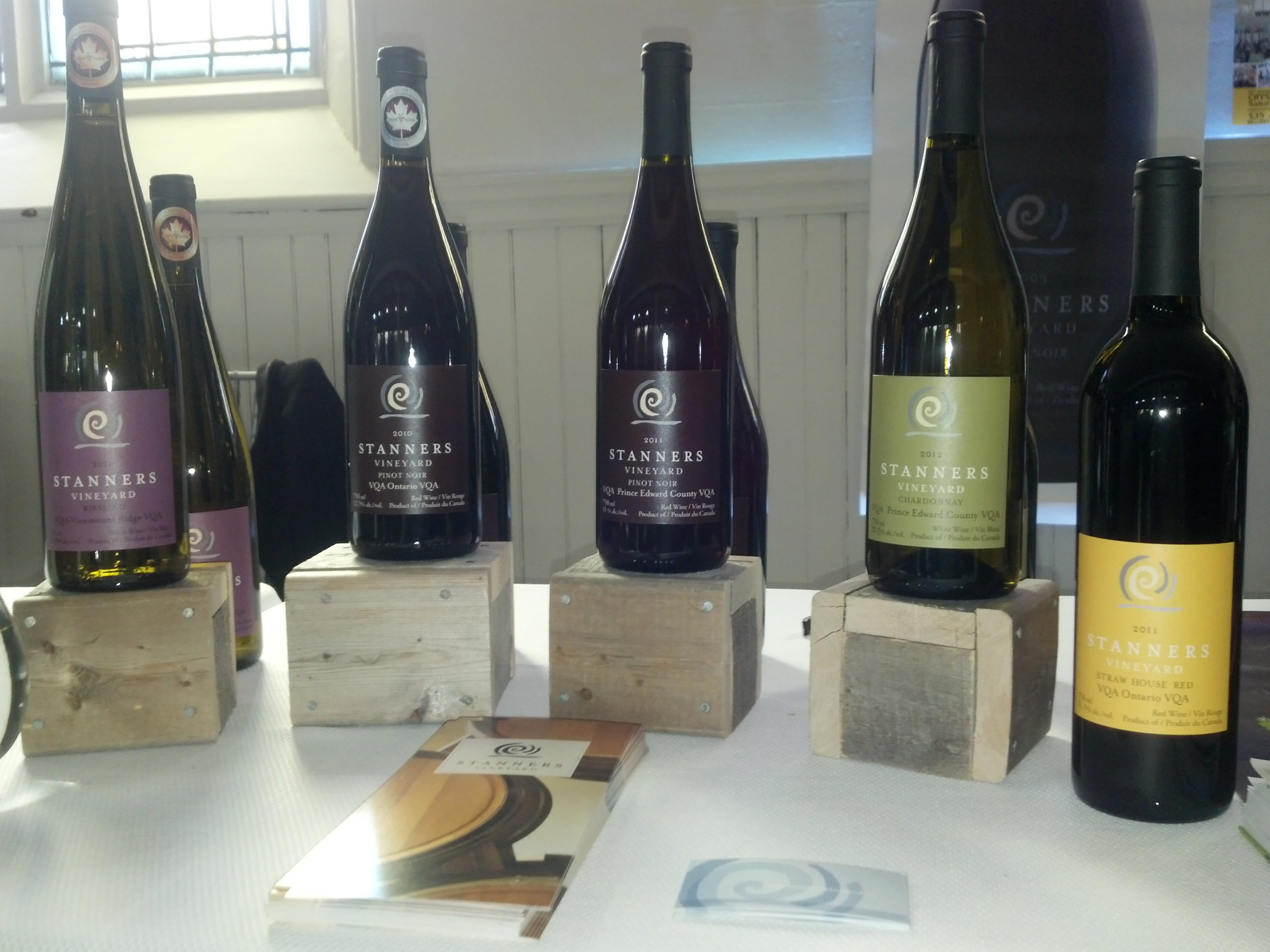
Stanners Vineyard Riesling 2011, Vinemount Ridge, VQA Ontario  (winery, $23, WineAlign)

This is the inaugural Riesling release for Stanners, from a single Vinemount Ridge plot. If it were not so winged-footed it might gain more positive repute from the appellation’s quarry effect, but in time and with experience, Colin Stanners will settle the grassy aromas into the limestone demand. For now it remains effortless and balanced with a dismounting of acidity and well provided apple and lemon flavours.  @StannersWines

Closson Chase The Brock Chardonnay, Unfiltered 2011, Niagara River, VQA Ontario (Winery, $24.95, WineAlign)

The 2011 Brock has settled into its Niagara River appellative skin, having now been in bottle 18 months. Working with fruit from 300 kilometres away increases the unknown quotient, magnifying the adage that you have “one chance to get everything right,” Closson’s ’11 is neither modest nor is it a mouse but it is less frenetic than it acted when tasted repeatedly last year. The hard deposits have oozed into liquid metal gold and the ripe orchard fruit has mellowed into a creamy pudding with a hint of spice. I don’t see the Brock as a very public wine, but more from a maker, for friends, from habit, for family. A wine that you need to get to know, to patronize with repeated listening’s, to accept.   @ClossonChase

Closson Chase The Brock Chardonnay, Unfiltered 2012, VQA Niagara River, Ontario (Winery, $24.95, WineAlign)

The 2012 Brock was only sulphured and bottled a month ago so it’s quite shocky and shaky. Still in the REM sleep stage, the ’12 is not quite ready to reveal the warmth so generously granted by the Niagara River appellation’s extending growing season. The ripe tropical fruit notes are there, if subdued and the omnipresent minerality will rear its rocky head before too long. This Brock will see a lifting “but gravity is holding” it down for now. Look to see the weights fall away late in 2014 “and in review,” you will have noted “the air was singing,” all the way to 2020.

Huff Estates Gamay 2012, VQA Prince Edward County, Ontario (winery, $25, WineAlign)

If $25 seems a premium to pay for Ontario Gamay, consider all that is on offer in winemaker Frédéric Picard’s take on the friendly French grape. Picard caddies for 13th Street (Niagara) fruit, vinifies it bone-dry with the minimalist edge of 14 months in 15 per cent new French oak.  The fruit is so very ripe, in raspberry and gritless, creamy blueberry. Like savoury adult ice cream, silky smooth and with nary a hint of chalky grain. Well-designed and consumer-friendly as any Gamay has ever graced the Ontario consciousness. So you’ve “got that going for you, which is nice.” Shack up with Huff’s Gamay treat.

Lighthall Vineyards Gewurztraminer 2012, VQA Ontario (Winery, $25.00, WineAlign)

Proprietor Glen Symons sources his fruit for this unctuous Gewürztraminer from Vineland at the base of the Escarpment’s steps. Highly tropical and exaggerated by the warm summer of 2012 to the point of candied, but with an edge. Just restless enough to divine temptation for further sips which when multiplied, relax the palate rather than excite it. The flavours turn nutty, waxy, even and calm. A mistral wind blows through in a breezy finish.

Karlo Estates Chardonnay C.H.O.A. 2012, VQA Prince Edward County, Ontario (Winery, $25.00, WineAlign)

It should be assumed that the four types of wood used to house this warm and inferential Choa (cherry, hickory, oak and ash) would smother and smoulder other aromatic suitors but those woods are actually quite subtle. The other woods, as in forest, backyard and compost are the acute players. The Choa goes from fromage to funky, from an enzymatic leesy feeling to inner, inward innards. It barks of a dogged persistence, I will give it that. Most definitely singular of style to be sure and will need a few years to settle down.

Norman Hardie County Cabernet Franc 2012, VQA Prince Edward County, Ontario (winery, $25.00, WineAlign)

Hardie’s 2012 Cabernet Franc comes of age out of a preternatural and ontological perfect storm. Casts odds into the river of ideal weather, procures phenolic grape ripeness out of the vineyard, avoids the green and embraces the brown stems. Ferments under the natural eye of indigenous yeasts and settles into its silky skin at a low, low 10.8 per cent (give or take a lab sample) alcohol. Cabernet Franc of impossible soul, its “burden is the weight of a feather.” Pepper and currants are noted, tobacco and tomato are not. Comes “bearing a sword” but seduces with primal proclamations. Radical County red.

Huff Estates South Bay Vineyards Chardonnay 2010, VQA Prince Edward County, Ontario (Winery, $29.95, WineAlign)

The oak repeal in decreased new barrel impact allows the County to speak in the clearest of voice. As it should, from a South Bay landscape and terroir as rugged and dramatic that can be found anywhere Chardonnay is made in Ontario. There is a honeyed unctuous and viscous feel to the South Bay ’10, no doubt a result of its middle filled in by a meritorious and pure lees. Limestone wraps up the fruit in a clean, crisp and pure package.

Closson Chase Vineyard The Loyalist Chardonnay 2012, VQA Prince Edward County, Ontario (Winery, $29.95, WineAlign)

The licensee only Loyalist is the micro-embodiment of the Deborah Paskus style. Rich, compact and built to satisfy a need for lush, nearly tropical Chardonnay. From a vintage that saw bud reducing spring frosts and resulting yields of only one tonne per acre. The oak influence comes to it with a scaled back embracing, allowing the County’s rock bent to connect and form a bond with the acidity’s bracing intent. Perhaps the profits will suffer from the year’s miniscule crop, but the level of quality will making it all right.

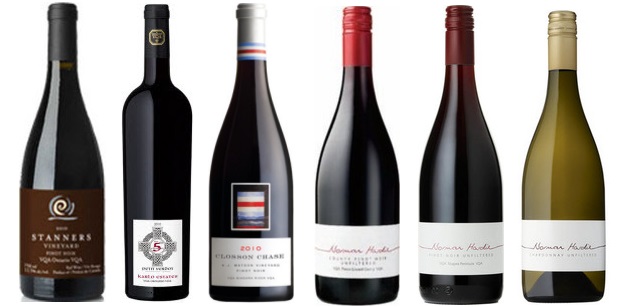
From left to right: Stanners Vineyard Pinot Noir 2011, Karlo Estates The Fifth Element Petit Verdot 2010, Closson Chase Pinot Noir K.J. Watson Vineyard 2011, Norman Hardie County Unfiltered Pinot Noir 2012, Norman Hardie Unfiltered Niagara Pinot Noir 2010, Norman Hardie Unfiltered County Chardonnay 2012

From left to right: Stanners Vineyard Pinot Noir 2011, Karlo Estates The Fifth Element Petit Verdot 2010, Closson Chase Pinot Noir K.J. Watson Vineyard 2011, Norman Hardie County Unfiltered Pinot Noir 2012, Norman Hardie Unfiltered Niagara Pinot Noir 2010, Norman Hardie Unfiltered County Chardonnay 2012

Stanners Vineyard Pinot Noir 2010, VQA Ontario (winery, $30, WineAlign)

A year later has softened considerable and thinking of laying down in softer pastures.  From my earlier, April 2014 note: “Combines 60% (horizontal) County fruit with 40 per cent (vertical) Niagara (Lincoln Lakeshore) grapes in balance and with finesse. Simply apply the distance formula to figure out the length of the hypotenuse. Bridging the kilometres that lie between, though inadmissible to some, comes by way of a deft winemaker’s vision and touch. Plum good, mineral rich and perceptibly tannic without breaching a threshold of varnish. Cherry toffee speaks of the sunshine and indicates time is of the essence. Will look forward to full-on County issue for 2013 in the hands of Cliff and Colin Stanners.”  Last tasted April 2014

Stanners Vineyard Pinot Noir 2011, VQA Prince Edward County (winery, $30, WineAlign)

After wetting their Pinot Noir feet with a few vintages that coalesced Niagara and County fruit, this is the first go it alone release for Stanners. It’s yet another effortless and quiet handed response to impressionist County fruit. A noticeable step up from what came before, this has primary balance, secondary (floral) aromatics and tertiary brightness. Like Hillier lavender, drying on the rocks in the waning afternoon sun.

Karlo Estates The Fifth Element Petit Verdot 2010, VQA Ontario (Winery, $33.00, WineAlign)

Mounds of respect are due any Ontario winemaker that decides to tackle single-varietal Petit Verdot, especially in a climate-forsaken locale like the County. Richard Karlo tackles such a struggle between good and evil, looking to elevate this fifth most important Bordeaux grape (not Malbec?) to great PEC heights. His dark, brooding wine of massive extraction starts off into the toffee, the after dinner mints and a suck of coffee cream through a wood straw. Twiggy, angular, resinous and wired, the wine then turns incredibly floral, in violets, from boron to aether and then returns to its roots. The rebound is to acidity, freshness and tang. An intriguing wine that “used to be angry young man” but the evolution it shows in glass bodes well for its future. Give it three to five years to achieve quintessence. “I’ve got to admit it’s getting better, a little better all the time.”

Closson Chase Pinot Noir K.J. Watson Vineyard 2011, VQA Niagara River, Ontario (Winery, $34.95, WineAlign)

Only 165 cases were produced of this Niagara born Pinot Noir. Discreet and unpretentious in every facet of its being. Like the colour of beautiful Rosé, the Watson causes such small-scale tannic pain. Though elegant and lithe, don’t be fooled. It’s not Burgundy. It’s Deborah Paskus. It’s Closson Chase. Profoundly appointed, in mind of those who mind. A signal to the understanding and knowledge of what the variety is and from this place. Clarity comes from an intensity in flowers, quality from a high sense of purpose.  Really fine.

Norman Hardie County Unfiltered Pinot Noir 2012, VQA Prince Edward County, Ontario (125310, $35.00, WineAlign)

Hardie’s 2012 County Pinot Noir is a beacon, a flashing light on the shore, an invitation to copycats because this is what making red wine from limestone foundations is all about. To taste this ’12 is to experience Hardie’s purest berry maceration and distillation to date. It’s as if there was no alcohol present and in fact, at 11.5 per cent it is a modest and transparent pronouncement. Longevity may not bless the ’12 as in other vintages but this is certainly the most groomed and coiffed County Pinot Noir.

Norman Hardie Unfiltered Niagara Pinot Noir 2010, VQA Niagara Peninsula, Ontario  (208702, $39.00, WineAlign)

The calcareous clay, the edgy stone, the molt of the earth. Dense, cluttered and clamorous fruit. A different animal then what walks the County. Magnanimous Pinot Noir full of fruity flesh and medieval attitude. From my earlier, October 2013 note: “That Norman Hardie can make Pinot Noir in Prince Edward County that could never be confused with any other makes it that much more incredulous to nose this Niagara cousin and know it can only be his. A barb on the very verge of ripe, tart cranberry and as smoky a nose as Hardie’s Pinot wants to be. Strawberry and raspberry red beret. Ashes to ashes but not funk to funky, we know Hardie is a Pinot junkie. Still, this is a warm and melodious example with only one coat of primer. Impressive.

Norman Hardie Unfiltered County Chardonnay 2012, VQA Prince Edward County, Ontario (184432, $39.00, WineAlign)

Norman Hardie’s uncanny ability to coax hyperbole at the lowest alcohol levels is again blatantly apparent in this climatically epochal, yet restlessly cool County Chardonnay. Recalling and expanding on the exceptional ’08, the tonality, texture and motion are achieved by way of a) early picking, b) indigenous yeasts, c) arrested fermentation, d) lees and e) moxie. The dire straits of the vintage wants to exaggerate the fricassee, the roasted nuts and the chemical flow but who might argue against the gape at Burgundian reduction? She’s a roller girl this ’10, taking chances. She skates away, “making movies on location,” all in the name of learning ahead of the curve.

Good to go!

The group of twelve

History may one day remember them as the group of twelve, or perhaps, “The Ontario School.” They are the 12 wineries who have banded together to ensconce a strange but beautiful word on the tongue, in the dictionary and out in the world. Somewhereness.

They are purveyors of the land from which their grapes grow and ferment into wine. Facilitators of terroir, working a canvas forged by millions of years of geological and climatic evolution. Their assembly is based on both exigency and on Moira; destiny, share, fate.

Like that other famous group, “collectively they agree.” Ontario’s cool-climate wine regions need to qualify and certify a distinctive winemaking style. In juxtaposition to old world, European tradition, the intensity of Somewhereness needs to reflect an increasingly Ontario-centric partiality.

These are the members. 13th Street, Bachelder, Cave Spring, Flat Rock, Hidden Bench, Hinterland, Malivoire, Charles Baker, Norman Hardie, Southbrook, Stratus and Tawse. Matt Kramer of Wine Spectator used the term and now it defines an enterprise. “As a group of 12 wineries growing small lots of site-specific vines in Ontario’s ancient glacial soils, we’ve invoked Somewhereness as a word enabling us to articulate in one collective voice.”

How do you get to Somewhereness? As related to wine that is like asking, Who am I? Why do we exist? What is the meaning of life? The Somewhereness movement, the notion, comes to light through this statement. “Somewhereness is revealed in the mysterious time capsules we know as bottles of wine. As ethereal gifts of a carefully tended location and a moment in time, each is imprinted with a vineyard’s sense of place,
its soil, climate, seasons, vintage variations — and its maker’s methods.”

In 2013 I wrote about Somewhereness over the Canadian wine rainbow. “Above all else, the rainbow’s fulcrum is the “somewhereness” of Canada’s wine regions. Terroir is the great catch word for wine. A vine’s home determines its potential, its structure, its sense of place. Micro-climates, soil, geology, altitude, slope and vegetation all contribute to the make-up of a wine forged from that specific parcel, lot or locale.”

In Come together, over wine I continued the discussion. “Intensity is in the air. The artists are at work, blessed with a geographical, geological and climatic canvas unique to the planet. They share arts and letters, compare and contrast methods, style and results. The sense of community is palpable, obvious and quite frankly awesome. They are Ontario winemakers and they are coming together. Right now.”

At the end of last year my column 13 Canadian wines that rocked in 2013 reviewed what Canadian winemakers do best. “That is producing unique, cutting edge and brilliant takes on cool climate grapes. They also match beautifully with the songs referenced in their tasting notes. When the wines are assessed and considered in part or as a whole, who would dare to say there are no great wines being produced?”

On Wednesday April 9th, Somewhereness brought the band to St. James Cathedral for a full-on tasting that is rapidly being recognized as a must not miss Ontario event. Here are notes on some of the wines I sampled.

From left to right:

From left to right: Malivoire M2 Small Lot Gamay 2012, Flat Rock Nadja’s Vineyard Riesling 2012, 13th Street Sandstone Old Vines Gamay Noir 2012, Southbrook Whimsy! Cabernet Sauvignon 2009, Tawse Laundry Vineyard Cabernet Franc 2011, Charles Baker Picone Vineyard Riesling 2008 and Norman Hardie County Unfiltered Pinot Noir 2012

13th Street Pinot Gris 2012, VQA Creek Shores, Niagara Peninsula, Ontario (Winery, $19.95, WineAlign)

Here you have an honest, 100 per cent stainless steel treated Pinot Gris from an estate vineyard located adjacent the market on Fourth Avenue in the Creek Shores appellation. So very dry and really fine fruit, crisp, neoteric, rising and falling in waves of tempered acidity. Made in a comfortable, country-twanged, folk-rock style, like a Cowboy Junkie. Juicy, mouth-watering work and very easy to fall for. An angel mine, this 13th Street, “and I know that your skin is as warm and as real as that smile in your eyes.” This effort by Jean-Pierre Colas is as good as it gets, a tally for Creek Shores and its kinship with the variety.

Malivoire M2 Small Lot Gamay 2012, VQA Niagara Escarpment, Niagara Peninsula, Ontario (Winery, $19.95, WineAlign)

A six-month lay in French oak for 60 per cent of the Gamay fruit sourced exclusively from Malivoire’s Beamsville Bench estate vineyard is just what the go doctor ordered. Only Malivoire’s Gamay smells specifically like this; of tart and savoury capers, of small, earthy gemstones, of peppery currants, of meaty braising Bouille. A striking wine from a fortuitous Gamay vintage and great value that puts me in mind of how special the Courtney will be. Though the soils may differ, proximity wise they are close cousins.

Flat Rock Nadja’s Vineyard Riesling 2012, VQA Twenty Mile Bench, Niagara Peninsula, Ontario (578625, $19.95, WineAlign)

Just add three months and witness a new evolution, a density, from a honeyed thing. Entering a pre-adolescence with a new bounce in its step. From my earlier, January 2014 note: “A champion cyclone of forces combined to elevate the already incumbent position of this Twenty Mile Bench Riesling. An ideal growing season magnified transmission upon a paradigmatic two and a half-acre block. This southern-most and highest altitude section of Flat Rock’s vineyard rests aboard a solid bed of limestone and wake me up if that rock was not drawn up into the vines in this stellar Riesling vintage. Sure its warm and nearly off-dry but such an effortless squeeze of lemon hydrates and elevates orchard fruit and honey out of the year of the lemon. After each sip its “every time you kiss me, lemon crush.” Love this prince of a Twenty Mile white in 2012, the dynamism smiling on the tart, succulent fruit. The length is one of outright bravado. This will develop for 20 years, of that I am convinced. There is just so much fruit. A Nadja for the ages.”

Cave Spring Dolomite Pinot Noir 2011, VQA Niagara Escarpment, Niagara Peninsula, Ontario (winery, $21.95, WineAlign)

Part Beamsville Bench (70 per cent), part Twenty Mile Bench (30), this best of both worlds Pinot is full of calcium magnesium carbonate, Jurassic bark. Playful as opposed to angry, this is not so much Snoop Dogg’s Dolomite but more like an animated Futurama. Seduces with a sweet red berry entry and bound by a really fine acid/tannin/fruit balance. Admittedly not overly complex but for the price it shows good structure. As far as Pinot goes, this one is a made for beef or rack of veal.

Hinterland Whitecap 2013, VQA Ontario, Charmat Method, Ontario (332809, $22.00, WineAlign)

The most versatile fizz in the Hinterland portfolio, what winemaker Jonas Newman refers to as his “chameleon.” As aromatically floral as this Charmat method bubbles (secondary fermentation in tank) ever gets, the ’13 brings out the garden under the mist of a sprinkler, late on a summer evening. It’s not so much about fruit as it is about texture, pollen and wet rocks. Try it at Barque.

Bachelder Niagara Pinot Noir Wismer Park/Lowrey (Tank Sample) 2013, Niagara Peninsula, Ontario (146985, $29.95, WineAlign)

This binary vineyard symbiosis will be bottled as the Niagara Pinot. Just filtered a few days ago it strides out with the utmost confidence in swagger, with a purity of fruit is spite of Thomas’ shock, awe and reductive apology. A bright sway of terroir gives rapture to a peaking raspberry bush imagined forward into a cooled pie. A renewed elegance abides with an absence of humidity and with a fully ameliorated knowing that a fleshing will happen. Really fine.

Malivoire Mottiar Chardonnay 2011, VQA Beamsville Bench, Niagara Peninsula, Ontario (146985, $29.95, WineAlign)

Gamay may be winemaker Shiraz Mottiar’s decisive resource but Chardonnay is his thing. The Moira’s ranks as one of Niagara’s best, vintage in, vintage out and this Mottiar, from the winemaker’s home vineyard is the trump card. This Malivoire special agent is set in 2 – 5 year old 300 L French oak hogsheads and aged on the lees in barrel for 10 months. The result? Texture. With the use, or lack thereof in new oak, Mottiar’s Chardonnay becomes a study in compages, with strong abilities and the accents of green orchard fruit and a faint sensation of blanched nut. Nothing toasty mind you because it’s all about density and girth; a Shiraz thing. I find his Chardonnay is all about texture.

13th Street Sandstone Old Vines Gamay Noir 2012, VQA Four Mile Creek, Niagara Peninsula, Ontario (130195, $29.95, WineAlign)

If roses were stones they would produce an aroma that only 13th Street’s Sandstone Gamay would recall. Some previous vintages have pushed the boundary to sky-high excess and a subterranean ferrous burrowing but in 2012 the perfume is both grounded and ethereal. The sandy tuff rock is so in that glass, like the smell of a rugged beach, mist and salinity spraying and rising off the rocks. The ’12 now knows “I don’t have to sell my soul.” Wholly singular Gamay and with hopes it will always be this going forward. Where as before it said “I want to be adored,” it now confirms “you adore me.”

Tawse Laundry Vineyard Cabernet Franc 2011, VQA Lincoln Lakeshore, Niagara Peninsula, Ontario (130997, $34.95, WineAlign)

A lean Laundry with as much finesse as winemaker Paul Pender has ever shown in his poignant Cabernet Franc realm. When a vintage deals you calm and scale you sit back and relax. The Lincoln Lakeshore advancing in years vines bring yet unseen front end red berry, licorice and red currant softness in 2011. There is elegance but also a refusal to yield its back-end bite. A level of enveloping grain and chalk is unique to this bottle and should be seen as a very good effort with the possibility ahead for movement and a gaining of flesh. A graceful, gently pressed Laundry.

Southbrook Whimsy! Cabernet Sauvignon 2009, VQA Niagara On The Lake, Niagara Peninsula, Ontario (260281, $34.95, WineAlign)

A 100 per cent Cabernet Sauvignon whose barrel aging specs are integral to discussing its unfolding. This Whimsy is a seven barrel (172 case) lot of which 86 per cent was aged for 13 months in (71 per cent) French oak. Plain and simple, a wood-heavy decision that has provided allied excellence five years after that demanding vintage. The agglomeration is one of steroidal currants, rocket red berries and an assiduous savoury edge. Just now are the beginnings of a caramel oozing from out of the centre of a dark chocolate house. Really quite an amazing, rich cake example from the vintage. Showing so right and so strong now, in its territory and wheelhouse.

Norman Hardie County Unfiltered Pinot Noir 2012, VQA Prince Edward County, Ontario (125310, $35.20, WineAlign)

Hardie’s 2012 County Pinot Noir is a beacon, a flashing light on the shore, an invitation to copycats because this is what making red wine from limestone foundations is all about. To taste this ’12 is to experience Hardie’s purest berry maceration and distillation to date. It’s as if there was no alcohol present and in fact, at 11.5 per cent it is a modest and transparent pronouncement. Longevity may not bless the ’12 as in other vintages but this is certainly the most groomed and coiffed County Pinot Noir.

Charles Baker Picone Vineyard Riesling 2008, VQA Vinemount Ridge, Niagara Peninsula, Ontario (241182, $35.20, WineAlign)

Tasted at Somewhereness 2014 as part of a vertical retrospective going back to 2007. The Vinemount Ridge’s now famous Picone Vineyard is set within a 10-acre estate on the Niagara Escarpment. Planted to the Weis 21 clone, the Riesling grown here digs in for complexity from sectional moieties of clay and sandy soil atop a unique base of limestone bedrock. Charles Baker began working with these grapes in 2005 and it is this 2008 where the learning curve took a turn for the Riesling stratosphere. The ’06 found luck in the stars but this vintage lays the framework and foundation for a master plan. At this stage in the ’08 evolution there is a prodigious and viscous honeyed textured. Ripening tree fruit juices run like maple sap in spring and the run off is beginning to think syrup. A cutting ridge of acidity arrests the sugaring, allowing citrus and flinty rock to recall the wine’s first, fresh steps. Baker’s Riesling time travels in circles with no real beginning and no real end. From my earlier, September 2012 note: ““Whoo-ahhh” Mojito, green apple skin scent of a Riesling. Seductive to sip, a bodacious body of influence, then back-end bite. A wolf pack in sheep’s clothing.”

Hidden Bench Terroir Caché 2010, VQA Beamsville Bench, Niagara Peninsula, Ontario (505610, $38.20, WineAlign)

No other Niagara red and for sure no alternative Peninsula Bordeaux blend exists in such a vacuum of dichotomous behaviour. Act one is an out-and-out boastful, opulent show of Rococo. Act two a gnawing and gnashing by beasts. The pitch and pull of the Terroir Caché 2010 optates and culls the extraordinary through the practice of extended délestage, what Hidden Bench notes as “a traditional method of gently draining the wine and returning it to tank with its skins during fermentation.” The ’10 is about as huge as it gets, highly ferric and tannic. Still chemically reactive, you can almost imagine its once small molecules fitfully growing into long chains. Berries of the darkest night and he who should not be named black fruit are confounded by minerals forcing the juice into a cold sweat. Will require a minimum of 10 years to soften its all-powerful grip. From my earlier March 2013 note: “has rich, voluptuous Napa Valley written all over it. Sister Merlot dominant, Beamsville Bench sledge monster. Plumbago, mineral, blackberry and coffee in a wine that will be the ringer in a blind tasting 10 years on. Harald may be saying “this is our family jewel.” Mr. Thiel, you make good wine”

Stratus Cabernet Franc 2010, VQA Niagara Peninsula, Ontario (winery, $38.20, WineAlign)

Patient as ever with the cool-climate, slow and low ripening Cabernet Franc, winemaker J-L Groux stuck with belief, regardless of the warm 2010 vintage. The Stratus single varietal space and time continuum of let it hang (though not to December), 20ish months of aging, nearly half in French oak barrels, has brought forth the most dense and luxe Cabernet Franc to date. “It’s never old school, all brand new,” with Groux so this red swells in wholly pure black currant fruit and is as big as it gets for J-L, which is saying something. This beastie boy will age over a 20-year period. Style is the thing, and yes, the aromatics.

Hidden Bench Locust Lane Vineyard Pinot Noir 2011, VQA Beamsville Bench, Niagara Peninsula, Ontario (winery, $48.00, WineAlign)

The Locust Lane Vineyard, originally planted in 1998, was Hidden Bench’s first acquisition, in 2003. It has a unique perpendicular cross-slope effect, undulating in all four directions, gathering sun hours in its own special way. The vineyard produces the richest and warmest Pinot Noir with fruit flavours more akin to ripe plum and black cherry than almost anywhere on the Beamsville Bench, certainly as any from the Hidden Bench stable. While the ’11 is not the biggest beast nor the Bordeaux bully of the Terroir Caché, it is surprisingly tannic and strong. It’s anything but hot, though it attacks with fervor. Big berry fruit, macerated strawberry, rich pie notes and spice. A great Locust vintage.

Good to go!