All in the Primum Familiae Vini

Primum Familiae Vini tasting at Toronto's Four Seasons Hotel, April 23rd, 2015

Primum Familiae Vini tasting at Toronto’s Four Seasons Hotel, April 23rd, 2015

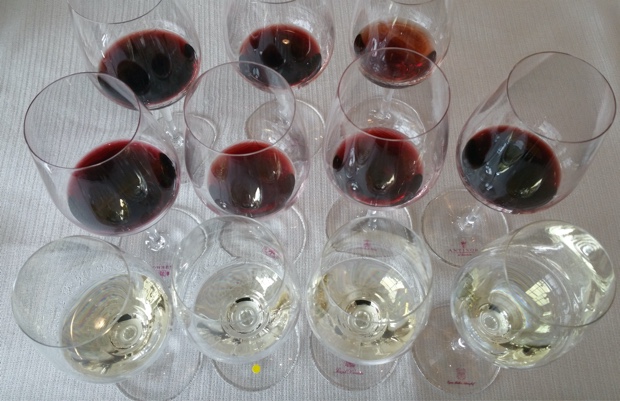
Can there be a more visceral wine experience than tasting some of the world’s greatest wine estates and all the while their principals just seem to only talk about history and family? Makes me think about parents, grandparents and children. About accomplishments, passing torches and smelling roses. Or something like that.

Perhaps it was the news of Etienne Hugel’s passing that was the impetus for me to relive this day, where giants gathered and mere mortals did their best to take in the magnitude of such a coterie of distinction. That afternoon gifted me and others their five minutes with Mr. Hugel, the epitome of Alsatian, a tireless ambassador for the Hugel brand, Alsace wines and the Primum Familiae Vini congregation of producers. Or maybe it was just the right time, a crossroads one year later where the confluence of circumstance and thought conjoined to let the notes come out.
Primum Fam

Tastes of PFV

As a stark contrast to the increasingly agitating globalization of wine, the Primum Familiae Vini members stand out as leading wine families whose aim it is “to defend and promote the traditions and values of family owned wine companies, and ensure that such ideals survive and prosper for future generations.” The PFV is an international association of some of the world’s finest wine producing families from France, Germany, Italy, Portugal and Spain. Created in 1992, membership into the organization is by invitation only, with a maximum of 12 highly respected families contributing generations of expertise.
PFV

PFV

The PFV estate principals arrived in Toronto for an April 23rd, 2015 Press Lunch at the Four Seasons Hotel organized by wine ambassador Christophe Brunet. On hand were Hubert De Billy, Etienne Hugel, Laurent Drouhin, Egon Müller, Miguel Torres, Priscilla Incise della Rocchetta, Thomas Perrin, Allegra Antinori, Julien Beaumarchais de Rothschild, Pablo Alvarez and Rupert Symington. Each arrived to represent eleven of the world’s leading families that at the time of the tasting, made up the association: Marchesi Antinori, Château Mouton Rothschild, Joseph Drouhin, Egon Müller Scharzhof, Hugel & Fils, Champagne Pol Roger, Famille Perrin, Symington Family Estates, Tenuta San Guido, Miguel Torres and Vega Sicilia. Each family owns vineyard estates, is one of its country’s most prestigious producers, and enjoys an international reputation for its wines. Each year in turn, a member of the association is elected President. The 2014/2015 President was Alessia Antinori, while in 2015/2016 she was succeeded by Miguel Torres.
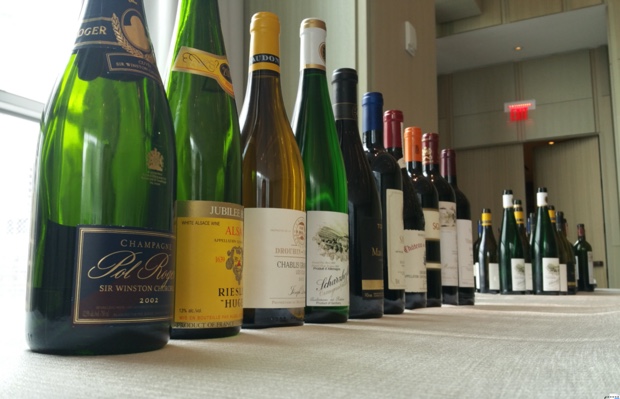
PFV wines

PFV wines

Primum Familiae Vini supports charitable causes, hosting gala dinners to raise funds for a local charity by auctioning a PFV Collection Case. The beneficiaries have primarily been focused on helping disadvantaged children, the handicapped and specialist hospitals including. Some of these beneficiaries have been Childhood Brazil, Brasil, San Patrignano Charity, Italy, Grapes for Humanity, USA, Somdetya Charity Fund, Thailand, Kidney Dialysis Foundation (KDF), Singapore, The Public Welfare of Bunkyo Ward, Tokyo and the The Toronto Foundation for Student Success. In total, over $325K has been raised.
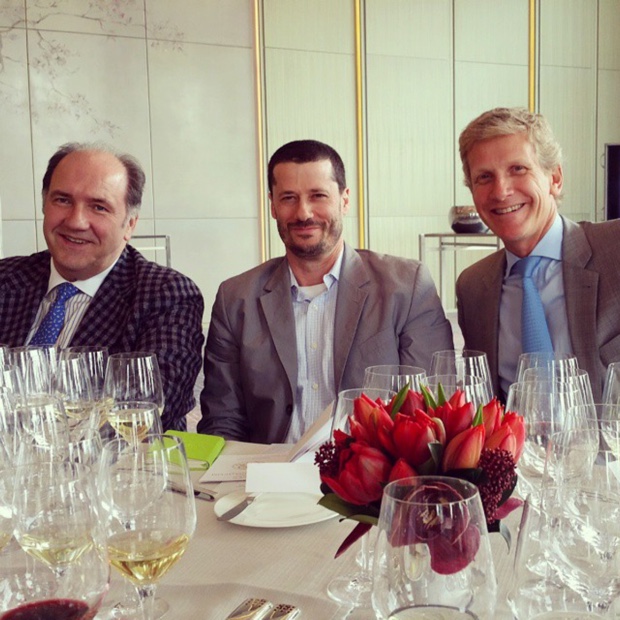
Pablo Alvarez, Vega Sicilia with Godello and Larent Drouhin, Maison Joseph Drouhin

Pablo Alvarez, Vega-Sicilia with Godello and Larent Drouhin, Maison Joseph Drouin

As you well know it’s all about the wine and the tasting note for Godello. The art of composing snapshots of wines tasted is a cathartic experience and the only way to bring about closure. It is a necessary process, cannot and will not be abandoned. The scores attached can stay put or go away. Neither relevant nor essential, scores are merely road signs on the exegetical path through wine. Once you pass them by their use is no longer needed.

My notes for the wines tasted are long and prosaic, even longer than most that I write, which says something about the profundity of such a tasting. That it took me the better part of a year to finalize my thoughts is not surprising. Until now I found no way to serve proper justice to these wines.
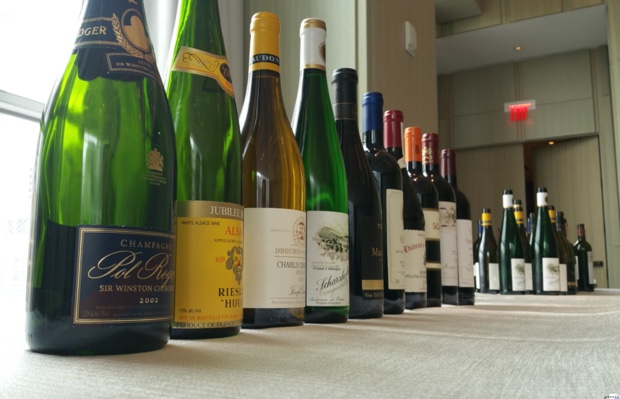
Primum Familiae Vinum

Primum Familiae Vini

Famille Hugel Riesling Jubilee 2010, Aoc Alsace, France (731448, $55.00, WineAlign)

The Jubilee’s style mirrors a reflection, of name, its maker and in the ripples it will gently spread as it progresses through time. Riesling that will eventuate to luxe, calme et volupté, like coming home after 50 years, resolved of sin, “in this year of jubilee each of you shall return to his property.” Hugel’s Jubilee is sourced from family-owned vines on the steep slopes of the Grand Cru Schoenenbourg above the village of Riquewihr. Terroir of great variegation; Keuper, marl, dolomite and gypsum, quaternary siliceous gravel, Vosges sandstone, Muschelkalk and periphery Lias marl limestones. The vintage is special, with no allowance for yields to climb and rife with sought after Riesling attributes. That of tannic intent, coursing coarseness of mineral condensation and repossessing acidity wrapped up in an enigma. Going forward it will gently give back but also remain rigid, slightly hidden, at times dormant, until such time when paraffin and honey take over. One of the finer Riesling cuvées of Alsace. Drink 2018-2022.  Tasted April 2015  @FamilleHugel  @HalpernWine  @AlsaceWines  @VinsAlsace  @drinkAlsace
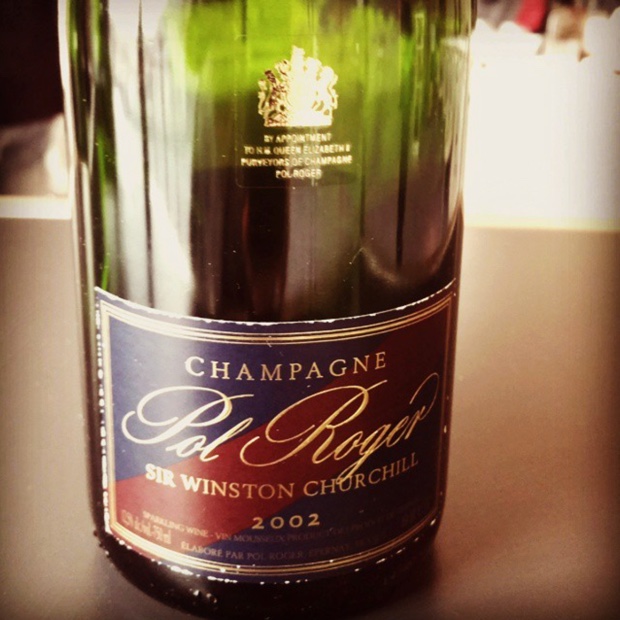
Super #champagne overture. I will always surrender. @Pol_Roger #sirwinstonchurchill 2002 #primumfamiliaevini

Super #champagne overture. I will always surrender. @Pol_Roger #sirwinstonchurchill 2002 #primumfamiliaevini

Pol Roger Cuvée Sir Winston Churchill Vintage Brut Champagne 2002, Champagne, France (SAQ, 12027016, $247.25,  WineAlign)

From one of the great Champagne vintages of the last 20 years, the 2002 ode to the British Bulldog is full of French vigor and supernatant rationalism. In 2015 its hue is golden gingered and the fine mousse causes sensory skips in the heart’s beats. These bubbles pay attention and tease the most sensitive olfactory nerve endings. The brioche baking and crumbs toasting are still just mere twinkles in the aromatic eye. The year 1996 is on many tasters’ minds and this wine has no qualms telling a direct lineage tale. Can there be more proof than what is spoken in the structure of this young wine? The bitters are forged from compression, without weight and void of oppression. A pleasure to taste, this Champagne is a deactivated refugee from an ancient European dominion. It’s hard to imagine it ever being anything but elegant and cool. Drink 2016-2027.  Tasted April 2015  @Pol_Roger  @Champagne  @HalpernWine
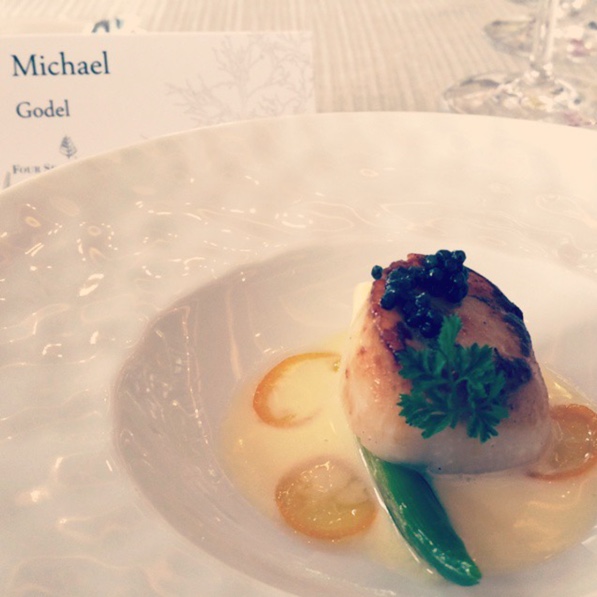
Scallop, kumquat, baby leek, caviar #fourseasonstoronto #julienlaffargue #primumfamiliaevini with #drouhin #chablis grand cru les clos 2012 and #egonmuller #riesling #scharzhofberger kabinett 1994
Scallop, kumquat, baby leek, caviar #fourseasonstoronto #julienlaffargue #primumfamiliaevini with #drouhin #chablis grand cru les clos 2012 and #egonmuller #riesling #scharzhofberger kabinett 1994

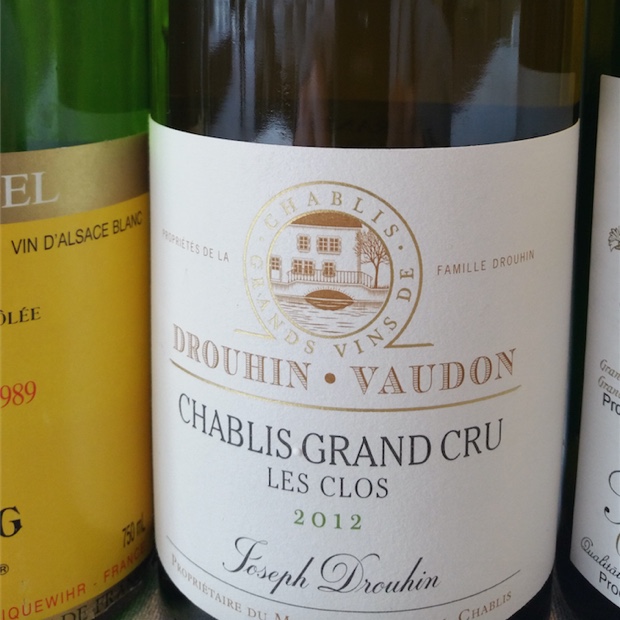
Drouhin Chablis Grand Cru Les Clos 2012

Joseph Drouhin Chablis Grand Cru Les Clos 2012

Joseph Drouhin Chablis Grand Cru Les Clos 2012, Burgundy, France (SAQ, 10998708, $88.00, WineAlign)

Drouhin’s Les Clos is Chablis incarnate. It delivers the importance of form and structure, with the incantatory power of storytelling to foresee the eventuality of its Moirai. It possesses the staying power to reveal the truth and reward with the fullness of gratification. Imagine pears, some dried and some fresh, pulverized and turned into gold stone. That is Les Clos. Barrels used are one to four years old and since 2004 there is no stirring of the lees. This determination arranges to opt for longevity of structure over immediacy in elegance. The enclosure is lacy organza, the interior filled with ripe fruit. Time (60 minutes) induces a mine of mineral wealth emergence, of shifting plates and rising outcrops from the quarry underfoot. Patience is required to bring all the moving parts in line. Drink 2017-2027.  Tasted April 2015  @JDrouhin   @BIVBChablis @BourgogneWines  @FWMCan  @Dandurandwines
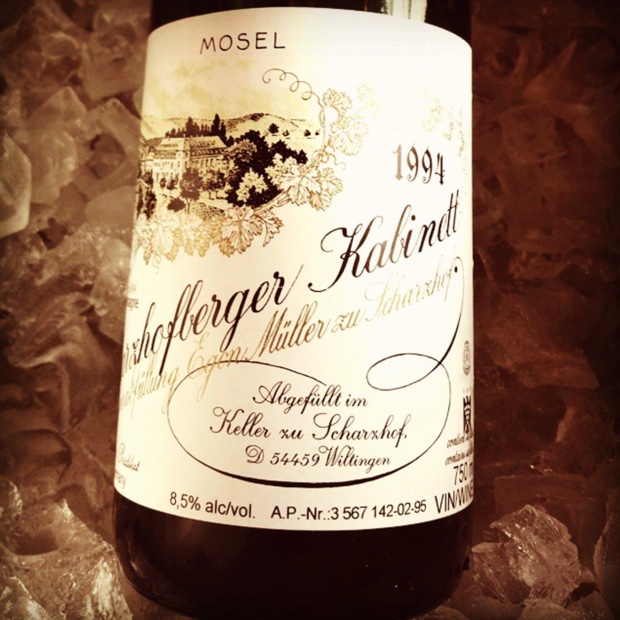
Keep the car running. Magic 1994 #riesling from #egonmuller #primumfamiliaevini #scharzhofberger #rieslingkabinett

Keep the car running. Magic 1994 #riesling from #egonmuller #primumfamiliaevini #scharzhofberger #rieslingkabinett

Egon Müller Scharzhofberger Kabinett Riesling 1994, Mosel, Germany (SAQ, 12587945, $79.75, WineAlign)

It must first be said that after 90 minutes in the glass the orange blossoms open in the early morning to release their spring fragrance into the room. In a conference room at Toronto’s Four Seasons Hotel. Now I don’t really know if the Scharzhofberg vineyard was actually planted by the Romans or if it was occupied by eighth century Trier St Marien ad Martyres monks. If following the French Revolution it was in the possession of the Duchy of Luxembourg I couldn’t say. I can equivocate, with irrefutable conviction that tasting Egon Müller’s 1994 twenty one years after its release confirms the vineyard’s reputation for housing irreverent Riesling. The arcade fire of remarkable hue, life-affirming aromatic energy and sky-lift brilliance is palpable. At 20 plus years the ideology, eventuality and passionate progression of purely distilled Mosel fruit is realized. Currently suspended in jet-trail animation, the sugars over gas of this Kabinett are quantitatively resilient. The relationship has seen a symbiotic feeding for longevity. Riesling of stoicism, classic prevalence and perfect balance. The specific Scharzhofberg tang has been revised to elevate a new order derivative recorded in every pure note. “There’s a weight that’s pressing down, late at night you can hear the sound.” Time held will move forward ever so slowly. Keep the car running. Drink 2015-2034.  Tasted April 2015    @germanwineca

Miguel Torres Mas La Plana 2010

Miguel Torres Mas La Plana 2010

Miguel Torres Mas La Plana Cabernet Sauvignon 2010, Penedès, Spain (129676, $59.00, WineAlign)

The Torres Mas La Plana explains to the world why Penedès is one of the most important Cabernet Sauvignon outposts on the planet. In deference to its moniker, flat is not the operative word. With such lifted exuberance, richness and depth of fruit, it must be dared said that Bordeaux wisdom speaks from its Spanish roots. If Mas La Plana can always be good, this vintage is great. The layering of wood over Penedès soil gives it spice and subterranean pungency; cinnamon, clove, truffle and morel. This wine is now an internationally-styled giant, an expatriate made French wine with Spanish flair. Layered, structured and so much special fruit. All about the fruit. Drink 2016-2023.  Tasted April 2015  @TorresWines  @dopenedes

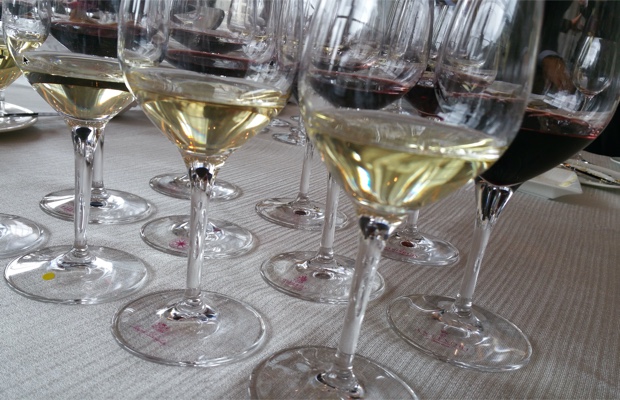
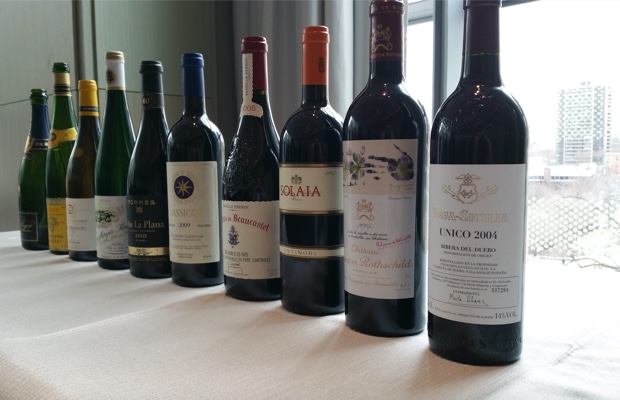
The reds of lunch. #vegasicilia #moutonrothschild #sassicaia #solaia #chateaudebeaucastel #maslaplana #primumfamiliaevini
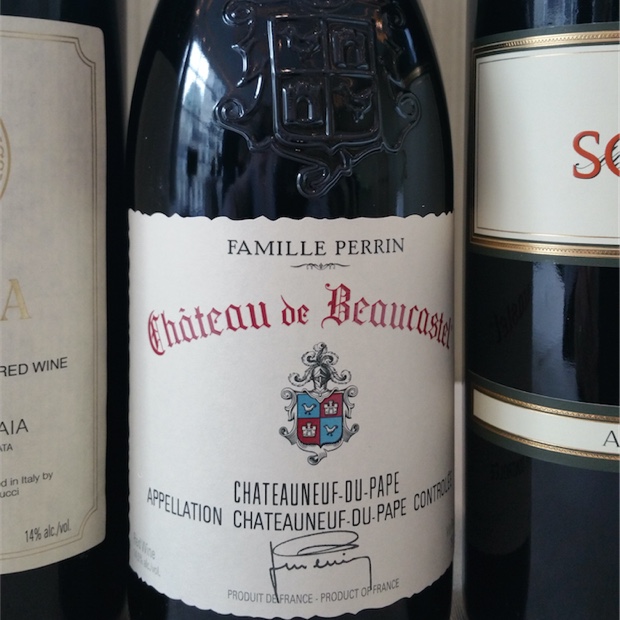
The reds of lunch. #vegasicilia #moutonrothschild #sassicaia #solaia #chateaudebeaucastel #maslaplana #primumfamiliaevini

Château De Beaucastel Châteauneuf Du Pape 2005

Château De Beaucastel Châteauneuf Du Pape 2005

Château De Beaucastel Châteauneuf Du Pape 2005, Rhône, France (711317, $89.95, WineAlign)

Expectations are high for 2005 and the opening notes of warmth, amenity and avail confirm the dream. Soon thereafter the Beaucastel plays hard to get, walks away and closes down. At this 10 year juncture its evolution is only matched by its elegance, especially considering the initial arterial ardor in mimic of the vintage. Resurfacing to conjure up character in aromatics, mint, eucalyptus, garrigue, coal and tar evince this pure Châteauneuf Du Pape. A wine of global receptiveness, the 2005 rendition tames the conception. There is very little about its personality that is parochial but rather it represents what it means to be a star, everywhere, omnipresent, for everyone. After 60 minutes it actually closes down again. This will be one of the longest lived Beaucastels. Drink 2017-2045.  Tasted April 2015  @Beaucastel  @RhoneWine  @VINSRHONE  @ChartonHobbs
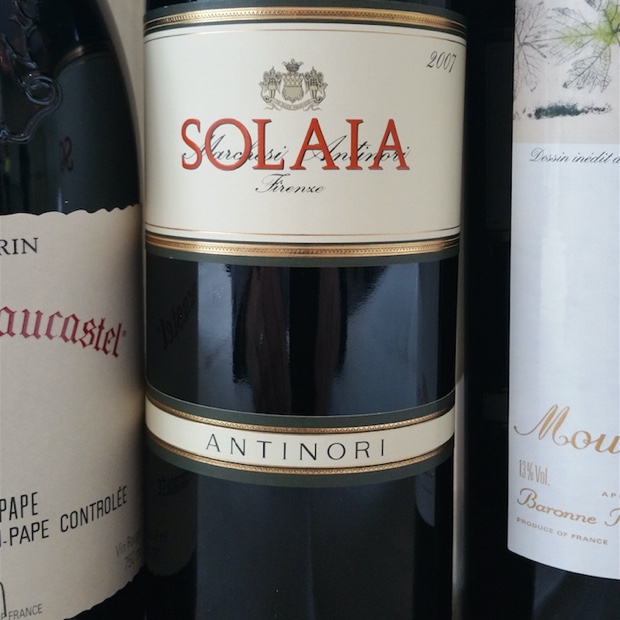
Antinori Solaia 2007

Antinori Solaia 2007

Antinori Solaia 2007, Igt Toscana, Italy (987586, $249.95, WineAlign)

Tasting the 2007 Solaia feels like looking directly skyward into the high noon sun with a semi-peeled orange in one hand, juices dripping, zest split and fragrant. Flowers bloom all around, cypress trees stand as sentries, sentient and giving off a savoury musk. The rosemary joins in, as do the lavender and the fennochio, because there is a breeze. Then there is only the pitchy darkness, the iron and the animale. This Solaia exudes sunshine, creme caramel and maturity. As per the style, especially in warmer vintages, Solaia always speaks of early evolved character though you know it will last for a very long time. This I have come to know, expect and believe. Drink 2015-2022.  Tasted April 2015  @AntinoriFamily  @HalpernWine
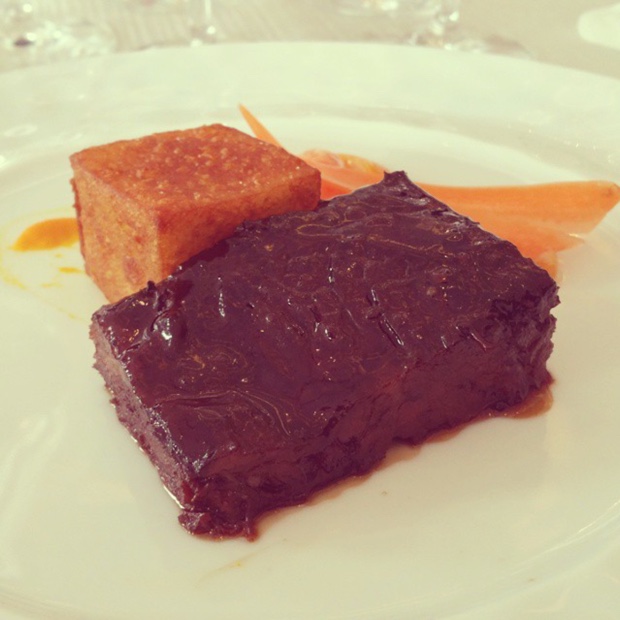
Braised Bison Shortrib, spring carrot, pommes dauphines @FSToronto #solaia 2007 #moutonrothschild 2005 #vegasiciliaunico 2004 #primumfamiliaevini #julienlaffargue #fourseasonstoronto

Braised Bison Shortrib, spring carrot, pommes dauphines @FSToronto #solaia 2007 #moutonrothschild 2005 #vegasiciliaunico 2004 #primumfamiliaevini #julienlaffargue #fourseasonstoronto

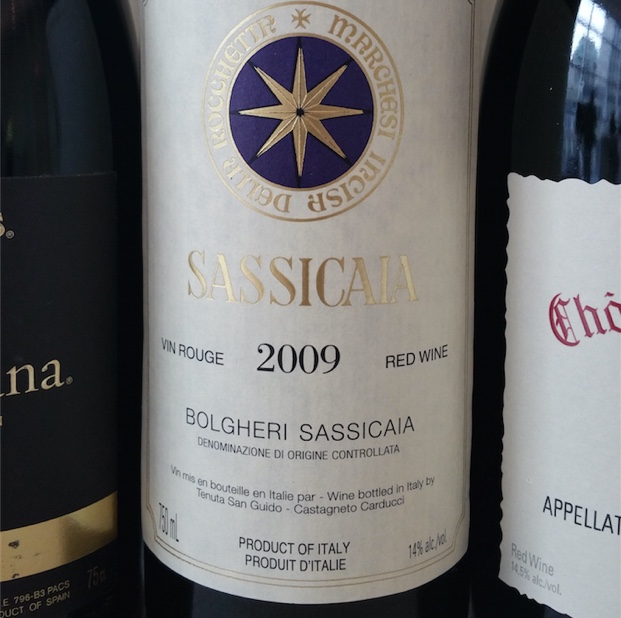
Sassicaia 2009, Doc Bolgheri Sassicaia, Tuscany, Italy (480533, $199.95, WineAlign)

Now increasingly accessible, the ripe and ferric Sassicaia ’09 continues to roar but the gamy musk of the wild beast is on the subside. The tannins have begun to relent and yet no holes, empty spaces or time-outs are to be found. With 60 minutes of air time the fruit speaks of plum hyperbole and dried flowers fill the air. Ten more years lay comfortably ahead. Drink 2015-2025. Last tasted April 2015     @Smarent

Sassicaia 2009

Sassicaia 2009

From my earlier note of November 2012:
The raven brunette is anything but sappy or syrupy yet is impossibly viscous. Hints at ripe berries growing in the crags of maritime gravel and the most expected hits of sanguine, animal musk. A huge wine in the making, the adolescent hunter Sassicaia off-roads up a steep incline to go tell it on the mountain of tannin. Disappears into parts unknown and will only reappear as a mature adult. Look to 2025 and it may say “the perspective to say the very least, changes only with the journey.”
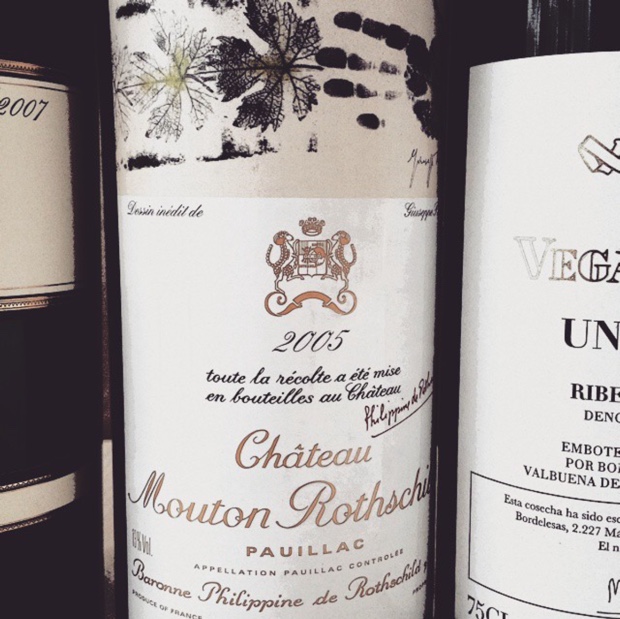
No cartoon. The real deal. Gehry lines. #chateaumoutonrothschild 2005 @PFvini #firstgrowth #paulliac #bordeaux #onceinalifetime #primumfamiliaevini

No cartoon. The real deal. Gehry lines. #chateaumoutonrothschild 2005 @PFvini #firstgrowth #paulliac #bordeaux #onceinalifetime #primumfamiliaevini

Château Mouton Rothschild 2005, Ac Pauillac, Bordeaux, France (SAQ 10654286, $965.00, BCLBDB, 649582, $1895.00, WineAlign)

Where to begin? That Cabernet Sauvignon can so facilely lay down the law, with deputy Merlot and deputized Cabernet Franc in support, that it can syncopate and elucidate the infinite, of soil information into warmth and depth, that is does so in such a wondrous way, well, that is the crux. Mouton of incredulous form, of a liqueur that is wholly unique, even to Bordeaux. An intoxicant and yes, funky, a distilled terroir, compressed, eschewing the fractional and essaying to integration. Reduced, layered and yet bereft of cheese, cloy or cake. Healthy as a community of organisms can be, wealthy in its archetypal discretion and drawn of an architectural line to ritualize structure. Precise, innate, insistent and balanced. The cleanest, purest and ripest fruit from 10 years ago had always and continues to cut an exegetical rug on one of the greatest dance floors of wine. An age exemplary Mouton in requiem of Italian sculptor Giuseppe Penone’s label design. After 60 minutes it neither closes nor shrinks away. Open for business. Drink 2015-2045.  Tasted April 2015  

Vega-Sicilia Único 2004

Vega-Sicilia Único 2004

Vega-Sicilia Único 2004, Ribera Del Duero, Spain (702852, $475.00, WineAlign)

In a room full of Primum Familiae Vini no iconic red stands out with more singular parlous deference than the 2004 Unico. Sitting next to Pablo Alvarez and seeing his immediate reaction speaks volumes about its place in time and how it is showing. Alvarez does not smile so much as he simply acknowledges the work put in. Unico is correct and it is priceless. Is Alvarez making a comparison in his mind? Is he thinking 1970 or perhaps 1994? It does not matter because this blend of Tempranillo (87 per cent) and Cabernet Sauvignon (13) obviates derivative characteristics and so exhibits a kind of synoptic insatiability. Its persona is simply me, myself and I. The liqueur is not Bordeaux or IGT. The aromatics are exotic to the nth degree. The succulence and sucking inward grape tension is old and wise but the wine has 30-40 years of undetected evolution ahead. There is no need for a longevity prayer, just let it be. My ears hear “mais qu’est-ce que c’est bon!” perhaps from Alvarez, or maybe it came from Laurent Drouin to my left. The youthful Unico is like Les Enfantastiques, it has the “no se que” and we can call it terroir, from place, soil, climat and culture. Something that advances this early and yet has gone nowhere should be impossible. The precocious wisdom is beyond years, has reached a point at 10 that is palpable and yet so far from what it may become. It should be left alone for five more to find out. Drink 2020-2055.  Tasted April 2015  @Tvegasicilia  @DORibera

1977 @grahams_port...Oh to live to 111 and re-taste in 2077. @PFvini #symington #symingtonfamilyestates #rupertsymington #port #vintageport #primumfamiliaevini

1977 @grahams_port…Oh to live to 111 and re-taste in 2077. @PFvini #symington #symingtonfamilyestates #rupertsymington #port #vintageport #primumfamiliaevini

Graham’s Vintage Port 1977, Douro, Portugal (706663, $109.00, WineAlign)

The year 1977 was a huge one for the Douro and this Peter Symington vintage interpretation echoes the overemotionalism. The pitchy rim seems to be writhing, the aromatics roiling and my first thought is one of a houseguest that wishes he could escape an over vivid host. Vegetative freshness calms the savage beast; bouquet garni, garrigue and savoury herbiage from high yielding fruit. If cherries were roses and vice versa, they too would deter and distract. This VP has presence and distinction. It changes tempo, wades in the waters of age and treads with minimum effort. The toasted nut component is subtle, more than many and certainly in comparison to the modern era of Graham’s and others. The dry florals whiff as if the petals never dropped or ever will. The perfume drives upwards, to the ethereal. Nice little piece of Vintage Port history. Drink 2015-2022.  Tasted April 2015  @grahams_port  @winesportugalCA

Good to go!

Twitter: @mgodello

Instagram: mgodello

WineAlign: Michael Godel
Facebook

Trimbach, rhythm and soul

Anne et Jean Trimbach, Maison Trimbach

Anne et Jean Trimbach, Maison Trimbach

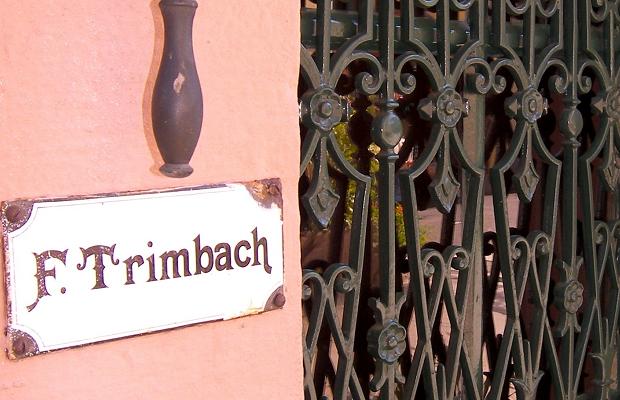
Maison Trimbach

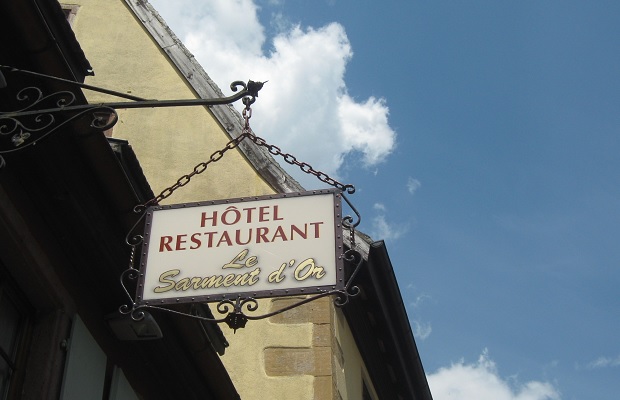
A visit to Alsace cannot be complete without a stop at Trimbach, the epicentre of rhythm in Ribeauvillé. If that excursion includes a jaunt over to Riquewihr and lunch at Le Sarment d’Or with Jean and Anne Trimbach and their soulful wines, the exercise can be surmised in one word: élan.

Le Sarment d'Or, Riquewihr

Le Sarment d’Or, Riquewihr

The Trimbach aura is triggered by joie de vivre, in pulse, metre and cadence. The wines reflect their makers and out there in the Alsace diaspora Trimbach is what I would refer to as an approachable, accessible and ever-so friendly icon. The wines are paradigmatic and emblematic of Alsatian acidity, from entry-level to preeminence. They are professional and represent the purest form of Alsatian confessional. The wines of Trimbach open up to the world, hide no skeletons, spin no agenda and simply ride out on a prosperous, musical mission to please. Here are notes on four wines tasted in Alsace, June 2014.

Fish Tartare, Le Sarment d'Or, Riquewihr

Fish Tartare, Le Sarment d’Or, Riquewihr

Réserve Pinot Gris 2011, Ac Alsace, France (971762, $23.95, WineAlign)

For Trimbach this is a top quality vintage to make an example for one of the domain’s signature value wines. This firm and straight shooting Pinot Gris comes from limestone-dominant parcels not so different from the PG taken out of the winery’s Osterberg Grand Cru, just above Ribeauvillé. That a Pinot Gris can bring a nearly (8 g/L) elevated level of residual sugar to the table and come across bone dry, like a walkabout in the outback, remains one of life’s great mysteries. Picked prudently early, or as Alsatians like to say, “right on time,” this Trimbach is eloquent, reeks of wet, cold stone and lies over an ocean tasting of salty minerals. Pour it with the freshest, uncooked fish and a light vegetable pickle.

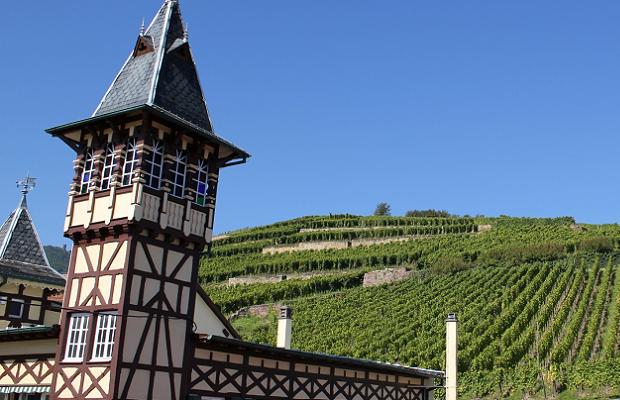
Trimbach Vineyards Ribeauvillé © http://www.trimbach.fr/en/

Trimbach Vineyards Ribeauvillé © http://www.trimbach.fr/en/

Pinot Gris Réserve Personelle 2008 (971762, $22.95, WineAlign)

Seductively Sauternes-like in its orange marmalade viscosity. An immense Gewurz-like PG. Off-dry tropical fruit, lanolin and a macadamia nut streak foils lemon, peppery orange and gold nasturtium. The edible florals are replayed in its sun-blazing technicolour. At 14 g/L of residual sugar and 14 per cent alcohol it marks the vintage but with incredible acidity. Jean Trimbach notes the balance is due to the efforts of his brother Pierre, in spirit, energy, texture and acidity. Drink 2015-2020. Tasted July 2012 and June 2015

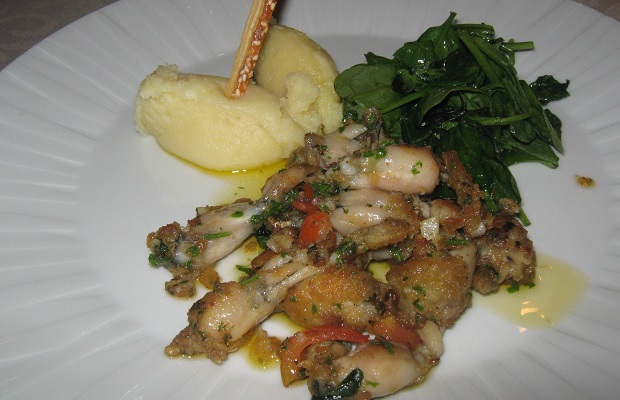
Cuisses de Grenouille, Le Sarment d'Or, Riquewihr

Cuisses de Grenouille, Le Sarment d’Or, Riquewihr

Trimbach Riesling Cuvée Frédéric Émile 1998, Alsace, France (2006 – 728535, $55.00, WineAlign)

Talk begins, if only because of its arresting singularity and how it flashes like a beacon, with the 1998 Cuvée Frédéric Émile’s acidity. Vintage-bound and determined with an exceptional focus that is clear, crisp and precise. From marl-limestone-sandstone and fossil-flecked Muschelkalk out of the Ribeauvillé terroirs Geisberg and Osterberg. A bone dry Riesling with a microscopic number of botrytis in absolute control of its 16 year-old adolescent body and emotions. Decidedly masculine, strong, confident and of a musculature that is developed yet immature. Not quite reckless and not yet taking any unnecessary risks, this will go through a racy period over the next few years before maturing into an industrious and wise adult. In this 1998, with the vineyards in mind, a parallel is drawn from 1990. Drink 2018-2028.

On Monday, June 16th at the Millésimes Alsace, the professional trade fair for Alsace wines, older vintages were poured at the Master. Among them was one of Trimbach’s iconic Riesling.

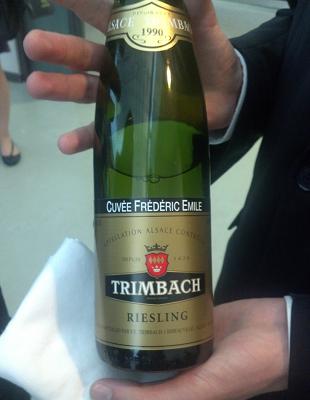
Trimbach Emile 1990

Trimbach Riesling Cuvée Frédéric Émile 1990, Alsace, France (2006 – 728535, $55.00, WineAlign)

Introduced as a wine with “the capacity to air” by Sommelier Caroline Furstoss at the Millésimes Alsace Master Class. Riesling from a near-perfect and clean vintage (less than five per cent botrytis) that lays reclined in an evolution that has come to a balance in weightlessness. Frédéric Émile is a cuvée of beautifully impossible chemistry, a meld of dichotomous terroirs, of Geisberg and Osterberg, of stony clay geologically folded into both multicoloured sandstone and calcareous marl. The two plots may be hard to tell apart but this wine is so important because it innately knows how to make magic from the subtle differences and idiosyncratic intricacies of those soils. In 1990 the execution found results in the grandiose. There is no adipose tissue in this Riesling, no wasted notes, no moments of daydreaming. Laser clarity and still wagering its 25 year-old impetuous limestone acidity against the energy that might oppose it. “You can feel the granite soil in the body of the wine,” notes Furstoss. Aromatics call upon orange peel, ginger and a brulée imbued of a late, finishing noble bitterness. Amaranthine Alsace.

Maison Trimbach, © http://www.trimbach.fr/en/

Maison Trimbach, © http://www.trimbach.fr/en/

Good to go!

http://www.winealign.com/profile/2058-mjg

Whites of passage

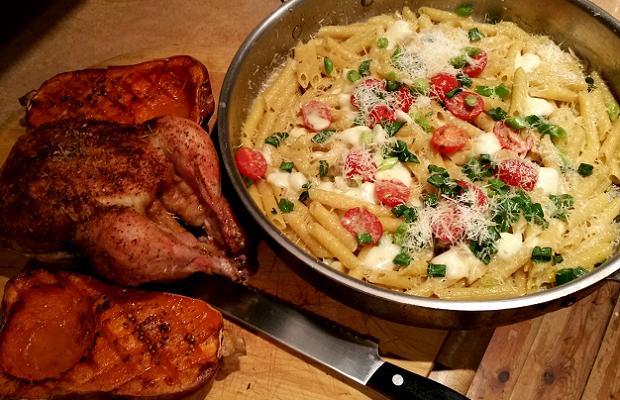
Slightly Barque dry-rubbed Roast Chicken, scored butternut squash with butter, agave and backyard coriander seed and penne with grape tomato, padano and scallion

Slightly Barque dry-rubbed roast chicken, scored butternut squash with butter, agave and backyard coriander seed and penne with grape tomato, bocconcini, padano and scallion

Spring has finally sprung. The air and the psyche have found collective exosmosis, leaving the colder, thicker air of winter behind, to begin passage through the membrane into lower pressure. With the exhale and lighter sense of being comes the same in wine. We egress to ferments of lower concentration. In reds we will welcome Gamay, Pinot Noir, Zweigelt, Blaufränkisch and Cabernet Franc.

White wine has more potential in legerity and litheness of being. While Riesling, Pinot Gris and Pinot Blanc are most certainly apropos choices for spring, there are others, variations on the theme, not technically “white” per se, but fitting the bill nonetheless. Like Sparkling wine, and Sake.

Tastings of late have focused on the white stuff and there are many that have already left an indelible mark during this period of emergence, this recent transudation through conduit, out of too many months mired in ice and snow. The parameters of white wine blurred a bit, this group of twelve wines will do you no harm. In fact, any or all will help restore that healthy attitude so desperately needed in this time of rejuvenation. Spring.

From left to right: Château De La Bretesche Muscadet Sèvre Et Maine Sur Lie 2013, Emiliana Adobe Reserva Sauvignon Blanc 2014, La Joya Viognier Reserve 2014, Charles & Charles Chardonnay 2013, Hugel Gentil 2013 and Tokaj Kereskedoház Grand Selection Semi Dry Tokaji Furmint 2012

From left to right: Château De La Bretesche Muscadet Sèvre Et Maine Sur Lie 2013, Emiliana Adobe Reserva Sauvignon Blanc 2014, La Joya Viognier Reserve 2014, Charles & Charles Chardonnay 2013, Hugel Gentil 2013 and Tokaj Kereskedoház Grand Selection Semi Dry Tokaji Furmint 2012

Château De La Bretesche Muscadet Sèvre Et Maine Sur Lie 2013, Ac Loire, France (412163, $12.95, WineAlign)

From the VINTAGES April 18, 2015 release

From the stable of Domaine de la Chauvinière, the Château De La Bretesche is a gneiss Melon de Bourgogne, crafted at the hands of Muscadet master Jérémie Huchet. Melon of lightness, finesse, ripe restraint, elasticity and breadth beyond the norm. Karpos of many herbs and briny berries. Capable of nurturing and buttressing intensity. Though the scent here is subtle, when it comes to Muscadet, the fresh sea and shell of Pholas dactyls is necessary. In conjunction with its length and a price of $13, in this section of the Loire, the littoral zone and the peak are reached. Drink 2015-2020.  Tasted March 2015  @MyLoireValley  @LoireValleyWine

Emiliana Adobe Reserva Sauvignon Blanc 2014, Casablanca Valley, Chile (266049, $13.05, WineAlign)

It would be hard to imagine Sauvignon Blanc with wilder eyes, as much pop and nearly the zesty fortitude as the Emiliana Adobe. The clarity of organic/biodynamic health in vine and by extension fruit is on blinking display. Fresh and popping, the zest of ripe citrus circulates naturally, as acidity, in juicy squeezes and with nothing but tireless pep. This is an example of exemplary SB for Chile and one can only imagine the depths that might come from older vines and/or a wild yeast meets barrel ferment trial. Drink 2015-2016.  Tasted April 2015  @VinosEmiliana

La Joya Viognier Reserve 2014, Colchagua Valley, Chile (168542, $15.95, WineAlign)

From the VINTAGES April 18, 2015 release

As impressive as this very New World take on Viognier was in 2013, the follow-up furthers the absorption. The accented matters of alcohol, residual, mineral, bright fruit and soil continue the train of thought with forward ’14 thinking. This is nothing but a feel good, “why don’t you touch me now” Viognier, a gem-filled musical box of herbs, blanched nuts, flowers and spices. It’s a round and melodic nursery rhyme that’s fun to sniff, taste and listen for its mysterious ministrations and magical charms. Drink 2015-2018.  Tasted March 2015  @VBisquertt  @DrinkChile  @vonTeichman  @vonterrabev

Charles & Charles Chardonnay 2013, Columbia Valley, Washington (394734, $15.95, WineAlign)

I would liken this Columbia Valley Chardonnay to the Fourth of July. It’s got tiny moving parts, all in motion, trying to put it all together. Cool orchard fruit, a minor kiss of barrel, a raft of lees, some sweet tropical flavours and round acidity. Needs some time. If it succeeds “it will be like fireworks blowing up in the air like a Fourth of July night sky.” For now it’s a reserved, quietly efficient and harmless Chardonnay. But it does show signs of building momentum. Drink 2016-2020.  Tasted March 2015  @KVintners  @Dandurandwines

Hugel Gentil 2013, Ac Alsace, France (367284, $15.95, WineAlign)

From the VINTAGES April 18, 2015 release

The five grape blend works confidently and vehemently strives with more love and sympathy than the austerely commandeered Riesling. Sylvaner and Pinot Blanc matter here, helping to negate the dominant aromatic push of the Gewürztraminer and Pinot Gris. Quite dry (3.9 g/L RS), with twitching (5.86 g/L) though steady acidity. This has ingratiating integration and unswerving tannic grain. A coherently textured Riquewihr conflation that is more than well-made. Drink 2015-2020.  Tasted March 2015  @Hugelwine  @HalpernWine  @VinsAlsace

Tokaj Kereskedoház Grand Selection Semi Dry Tokaji Furmint 2012, Pdo Tokaj Hegyalja, Hungary (396366, $16.95, WineAlign)

From the VINTAGES April 18, 2015 release

Hungary and more succinctly Hegyalja is on a terrific role of late. I would put many marbles into the probability basket and roll straight to the quality bank on the backs of so many Tokaji examples. This Furmint is not on the lighter, fresher side, but more so the seasoned and effluvious strand. “Regardless of the balance life has become” this Furmint is lush and conversely piercing, an acquired density, thick and profoundly cumbersome. Though it rallies and rails in many ways, “too heavy too light, too black or too white, too wrong or too right, today or tonight,” it’s also honeyed and a riot to drink. Would like to give this seven Mary three years to settle down. Drink 2017-2020.  Tasted March 2015  @TokajCE  @WineofHungary

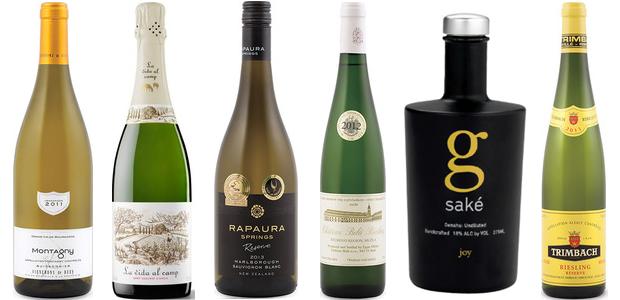
From left to right: Vignerons De Buxy Buissonnier Montagny 2011, La Vida Al Camp Cava Brut, Château Belá Riesling 2012, Rapaura Springs Reserve Sauvignon Blanc 2013, Momokawa G Joy Junmai Ginjo Genshu and Trimbach Réserve Riesling 2011

From left to right: Vignerons De Buxy Buissonnier Montagny 2011, La Vida Al Camp Cava Brut, Château Belá Riesling 2012, Rapaura Springs Reserve Sauvignon Blanc 2013, Momokawa G Joy Junmai Ginjo Genshu and Trimbach Réserve Riesling 2011

Vignerons De Buxy Buissonnier Montagny 2011, Ac Burgundy, France (382879, $19.95, WineAlign)

From the VINTAGES April 18, 2015 release

Another VINTAGES (2011) shipment of this great value in Côte Chalonnaise Chardonnay from the most southerly portion of the Côte d’Or is fortuitous because eight months has only helped to extricate the fruit from its Marly soil, variegated with White Burgundy-loving limestone shell. This is Montagny with intensity and in language of Burgundy’s essential tenets. Aromas scheme as white fruit punch and fruit that packs a punch. Might be thought of as heavy, syrupy even, in terms of Chardonnay, but the meeting of equal and opposing tannin terms balance. The clay-crusted pebbles in the marl have crawled inside the bottle. Suck on them long enough and they will reveal their inner stone. I dare you to spit them out. Drink 2015-2020.  Tasted March 2015  @VinexxWine

La Vida Al Camp Cava Brut, Penedès, Spain (Agent, $19.95, WineAlign)

This blend of Macabeu, Xarel-Lo and Parellada is not only distinguished for Cava, it should be highly regarded in the pantheon of all Sparkling wine. Swelling with personality and urging in demonstrative energy that fizzes and suspends with fervent animation. The activity is one of quick reactions and accumulation. From sweet yeast in lees, from an on the line oxidative cold front and through the warmth of tropical spice. Cava like clouds combing stormy skies from equal and opposing directions and densities. Though marked by a leathery aromatic rind, it’s creamier and less lactic than outright citrus. These are fine bubbles, of twinkling titillations and striking flavours. Drink 2015-2018.  Tasted March 2015  @lavidaalcamp  @TheVine_RobGroh

Château Belá Riesling 2012, Muzla, Slovakia (410951, $19.95, WineAlign)

From the VINTAGES April 18, 2015 release

For something completely different and yet not, look to Slovakian Riesling at the hands of a German icon. Here from Muzla, a most elemental, atmospheric and petrol driven wine, out of Loess, with blessings beyond Riesling character. A bit reductive, funky and porcine like Baden Grauburgunder, frankly. Heads to an off-dry intersection on the palate, in Spätlese-like headiness. Returns to Trocken in angles of mineral tang and a late, ferocious bite down. Stays this way for nearly a minute. A challenging and compelling respite away from the Mosel. Drink 2016-2022.  Tasted March 2015  @ChateauBela  @WinesOfSlovakia

Rapaura Springs Reserve Sauvignon Blanc 2013, Marlborough, South Island, New Zealand (388421, $21.95, WineAlign)

From the VINTAGES April 18, 2015 release

Blame it on the midnight, the rain or the Wairau River, but the flow past a rocky aquifer and into the vineyard weaves through this Sauvignon Blanc to achieve an uncanny Marlborough balance. The accord is struck between high tones and mineral undertones. Between tropical lushness and direct citrus connectivity. Between herbal grounding and stratospheric elevation. Really flavourful and structured by texture. In a saturated world it is noted “everywhere is all around, comfort in the crowd,” through a sea of Sauvignon Blanc. Shame on the moon but the Rapaura Springs Reserve stands out for its gentle, meandering and crooning ways. It is highly recommended. It is possessive of an ability to braid, reticulate and evolve. Drink 2015-2020.  Tasted March 2015  @Rapaurasprings  @nzwine  @VinexxWine

Momokawa G Joy Junmai Ginjo Genshu, Oregon (239426, $26.95, WineAlign)

From the VINTAGES April 18, 2015 release

Made from pure, Sacramento Valley Calrose rice polished to 60 per cent and undiluted. The short trek to Oregon is made for the G, a Saké with a foot in two worlds. The Koji-kin and yeast strains are from Japan and the water from Oregon. The American-Japanese arrangement will succeed in pleasing palates east and west. Sacramento soil is in here, enriching the rice with savoury tall grasses and expanding spice. Oregon water draws subterranean salinity and combined with the Japanese elements, comes out like toasted nori. This is lovely and floral, rich and finishes with a feeling of wet stones.  Tasted March 2015  @SakeOne  @MetroWineSake

Trimbach Réserve Riesling 2011, Ac Alsace, France (995316, $29.95, WineAlign)

From the VINTAGES April 18, 2015 release

Some old vines and a strict selection of grapes from Ribeauvillé and vicinity compose the Trimbach Réserve, another storied chapter of sharpness and focus. Builds upon the similar 2010 and with greater depth. At this price on the Riesling plain this will be a star for the vintage, even it it takes five more years to reach adjudication. With this portal to the finest fruit and handling in mind, it can only be imagined what the same vintage will convey from the terroirs of Geisberg and Osterberg for Cuvée Frédéric Émile. The standard Réserve is rich and propelled to compounding causatum. Aromas go through lemon glade and glaze, then turn the key to lime. The texture is a crackling bite of corral with salinity drawn from oceans far away. The stone cold austerity is a frozen moment of time, a long pause in which there is nothing to do but swallow and forget. Small price to pay for such a thing. Drink 2016-2022.  Tasted March 2015  @trimbach  @WoodmanWS  @AlsaceWines

Good to go!

http://www.winealign.com/profile/2058-mjg

https://instagram.com/mgodello/

The froth on Crémant d’Alsace

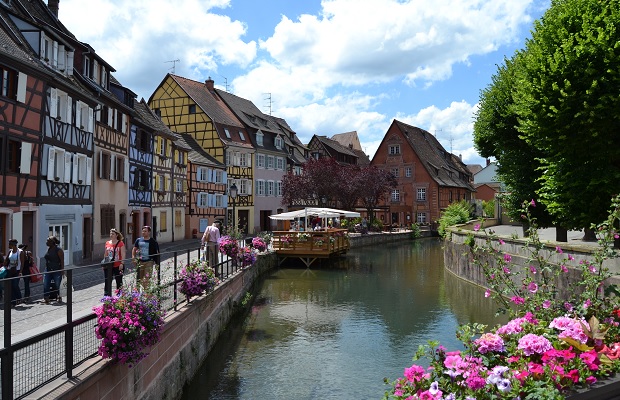
Colmar Canal PHOTO: Cassidy Havens, http://teuwen.com/

Colmar Canal
PHOTO: Cassidy Havens, http://teuwen.com/

The production of fizz by way of secondary fermentation in bottle is nothing to be ignored in Alsace. More than one in every five wines forged from the region’s vines is filled with bubbles. Most recently (in the past 18 to 24 months), certain things have come to light. A salient spike has been witnessed, with Sparkling wine increasing from 15 to more than 20 per cent of the region’s annual wine production. This means that Alsace now ranks second in France with a yearly production of more than 30 million bottles.

Six grape varieties are permitted for the production of Crémant d’Alsace; Auxerrois, Chardonnay, Pinot Blanc, Pinot Gris, Pinot Noir and Riesling. Chardonnay can only be used for Crémant and only Pinot Noir may be fermented to bottle a Rosé. More rules must be followed like grapes having to come from vines into its’ 3rd growing season and wines must rest a minimum nine months on the lees before bottling. Most lay longer, which helps to define this genre of Crémant’s creamy texture, matched in contrast by its stony, flinty and mineral style.

The effervescence of Crémant d’Alsace is known as prise de mousse. Basic wine is bottled with liqueur de tirage for second fermentation. Bottles are left to rest sur latte. Autolysis occurs and the dead yeast is removed by way of remuage. After aging on the fine lees, bottles are turned, deposits form in the collar, brought to the freezing point, evacuated by carbonic gas and replaced in volume by liqueur de dosage or liqueur d’expedition which yields a Crémant d’Alsace of three styles; Brut, Sec, or Demi-Sec. A balanced vintage for sparkling in 2012 yielded 270,000 hl of Crémant d’Alsace.

During my week in Alsace and with thanks to the Conseil Interprofessionnel des Vins d’Alsace (CIVA) I was able to taste more than 30 producer’s Crémant. Here are my notes on 14.

Crémant d'Alasace at Domaine Steuntz-Buecher

Crémant d’Alasace at Domaine Steuntz-Buecher

Jean-Marie Haag Crémant d’Alsace, tasted at Domaine Stentz-Buecher with Les diVINes d’Alsace

Exemplary bubbles from Soultzmatt in la Vallée Noble, 20 km south of Colmar, from out of clay-limestone soils. Grapes here are Pinot Blanc, Pinot Auxerrois, Riesling, Pinot Gris and Pinot Noir. A close-knit aridity and platinum tang are pronounced in an idiomatic lees-inflected language with a lightly oxidized lilt. A retaining wall of freshness and a slice of bitter honey-almond tart round out the complexity, intended or not, with elevated levels of Pinot vibrations making themselves known. Calls for a must return to see if it’s a one-off or a truly significant house style. Drink alongside a salty buffet.

Valentin Zusslin Crémant D’Alsace Sans Souffre Brut Zero, tasted at Domaine Stentz-Buecher with Les diVINes d’Alsace

The old vines blend from Clos Liebenberg is predominantly Pinot Auxerrois (95 per cent) with minor amounts of Chardonnay and Pinot Gris. It’s important to note the non-sulphur designation in that the not insignificant practice takes the wine to another level of Crémant sophistication. There is a savoury nut character to the Auxerrois but never in a fat, round or blanched way. The caryopsis are not like an almond but more like a roasted pistachio upon the mid-palate. Moving forward it’s like the smell of a nut-based, warm cereal. It’s quite intoxicating and lingers well into the finish.

Louis Hauller Crémant D’Alsace, tasted at Domaine Stentz-Buecher with Les diVINes d’Alsace

From 100 per cent Chardonnay, this is a fine, subtle, stylish, finessed and elegant interpretation that is a different sort of Alsace discrimination. Spent 11 months on the lees and sports more citrus than most others. Subtle bubbles here, with less froth and more Chardonnay character. Very good length.

Sipp Mack Crémant D’Alsace Rosé, tasted at Domaine Stentz-Buecher with Les diVINes d’Alsace

The smell of strawberry cream and the crème fraiche sapidity by way of sudoric lees. Fun and characterful if a bit of an ancestral taste.

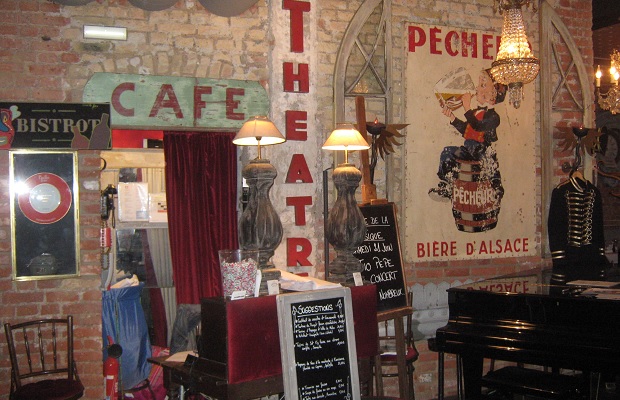
Restaurant Le Théâtre, Colmar

Restaurant Le Théâtre, Colmar

Albert Mann Crémant D’Alsace Brut 2011, tasted at Restaurant Le Théâtre, Colmar with Albert Mann’s Marie-Thérèse Barthelme

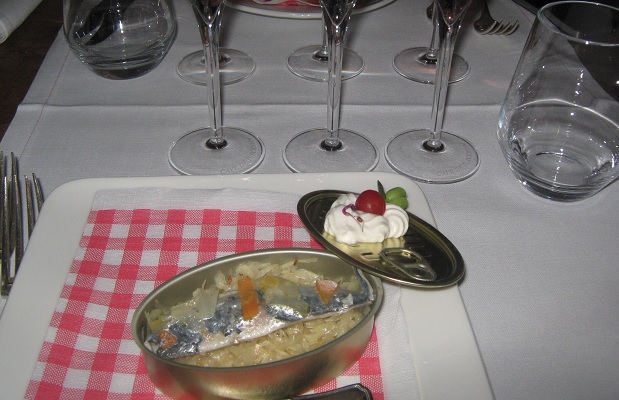
A four-squared Pinot affair, in Blanc (66 per cent), Auxerrois (16), Noir (12) and Gris (6). This from a bottle that had just been disgorged one week prior to tasting. Out of clay-limestone and sand soils in vineyards from Kientzheim and Wettolsheim. Like album art, the Mann label is a crucial, sixth sense aspect of the wine experience. The 2011 Crémant is the artwork of François Bruetschy, “like a turnstile of fireworks while projecting fine sparks.” The 2011 Mann is very fine, misty, delicate, wistful and waiting in longing for an amuse bouche of mackerel with choucroute in a can. The wine makes me long for a walk in the vines.  @albertmannwines

Mackerel and Choucroute, Restaurant Le Théâtre Colmar

Mackerel and Choucroute, Restaurant Le Théâtre Colmar

Gustave Lorentz Crémant D’Alsace, tasted at Restaurant Le Théâtre, Colmar with George Lorentz

Though the label denotes this as non-vintage, the blend of Chardonnay, Pinot Noir and Pinot Blanc is essentially from the 2011 vintage. This is what Lorentz describes as 2nd-tier house sparkling, with more ripeness in this bottle. That fruit maturity is all apple, with a minor note of oxidation and the full effect of 16 months on lees felt through texture. Once again the inclusion of Chardonnay takes the Crémant schematic condition to another level. Bring on the top-tier.

Louis Sipp Crémant D’Alsace Rosé, tasted at Restaurant Le Théâtre, Colmar with Etienne Sipp

The Sipp Crémant comes from various parcels in Ribeauvillé, from Weinbaum, Sulz and Rengelsbrunn. Etienne tells us it is made from Pinot Noir and Pinot Noir, playfully mocking the AOC’s rule that only that variety can be used for sparkling Rosé. Sipp’s Pinot is grown in mainly heavy and deep clay soils. Picked at optimum ripeness, this is fizz that has spent 18 months aging in bottle after not having gone the way of malolactic fermentation. The result is a dry, dense, savoury and layered Pinot Noir Rosé. This third Crémant in a group with Mann and Lorentz proves that though tonight is not a competition, we see that all three have won.

Hummus, La Table de Gourmet, Riquewihr<br />

Hummus, La Table de Gourmet, Riquewihr
PHOTO: Cassidy Havens, http://teuwen.com/

Paul Zinck Crémant D’Alsace, tasted at La Table du Gourmet, Riquewihr with Phillippe Zinck

An efficient, sparkling requiem for success in a blend of three vintages and varieties; Pinot Noir (60 per cent), Chardonnay (30) and Pinot Blanc (10). A soft receptive, inviting and proper amalgamation in which mousse apropos peach and soft French cream delight without needing to be tough or street savvy in any way. Crémant giving like une crème de luxe, to sip with Hummus, La Table de Gourmet style and with nary a difficult moment.

Domaine Bott-Geyl Crémant D’Alsace Cuvée Paul-Edouard Brut Millésime 2007, tasted at La Table du Gourmet, Riquewihr with Jean-Christophe Bott  @JLBrendel   

Jean-Christophe Bott’s may be the most complex and intriguing bottle of Crémant you would have a chance to taste in the course of a week in Alsace. Bott gathers top quality Pinot Blanc, Chardonnay and Pinot Noir from growers then lays the fruit low for four years on their lees. The rich and sunny vintage is vinified in what is really an Extra Brut style without any dosage whatsoever. This is small production Alsatian bubbles (2500+ bottles) disgorged in 2011 and in very early stages of development. The acidity stands in upright attention while the fruit submits to wait. The rocks and salinity raise upwards to march in extreme lengths. A sublime match to an Amuse Bouche of Cured Watermelon, pistachio, basil and mustard flower.

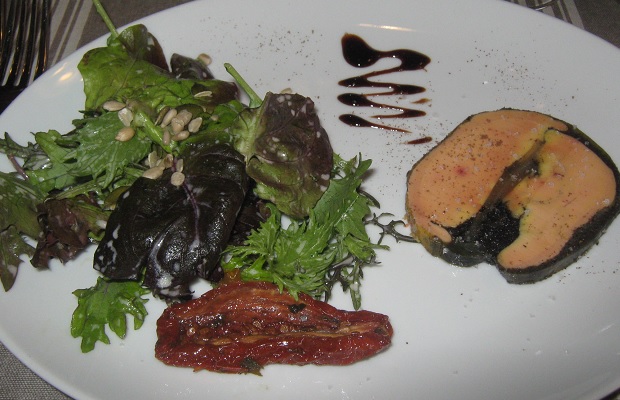
Foie Gras at Restaurant L'Épicurien, , Colmar

Foie Gras at Restaurant L’Épicurien, , Colmar

Charles Baur Crémant d’Alsace, tasted at Restaurant L’Épicurien, Colmar with Arnaud Baur

After its second ferment this blend of Pinot Blanc (40 per cent), Auxerrois (40) and Chardonnay (20) spent a compages-inducing 24 months on the lees. This is Baur’s main cuvée for Crémant, always made from two vintages, in this case 2009 and 2010. Most definitive and classic for the appellation. Falls within the aromatic white fruit/white flower spectrum with flavours that tease ripe Mirabelle, apricot and peach. Soft, elegant, feminine, demurred and clean. Baur’s take is a Catherine wheel of Alsatian bubbles with “all the things you dream while spinning ’round.”

Audrey et Christian Binner Crémant d’Alsace KB, tasted at Restaurant L’Épicurien, Colmar with Christian Binner 

Binner’s exotic-scented sparkling is from Kayserberg, “the emperor’s mountain,” next to the Schlossberg Grand Cru site. Old vines out of colder parcels more appropriate for making Crémant consist of Auxerrois, Pinot Blanc and Pinot Gris. The terroir here is granitic and poor in soil, if that is what it can be called. The house style is quite oxidative and distinctively earthy, as if the rocks were breaking down into a fine, funky soil remineralization. The most terpenes yet from bubbles tasted in Alsace, with a bruised apple hematoma, a pickle of some colonialist kind and a spice cupboard to fill a curry recipe. In the end this is unusual, yet vivid and jazzy fizz.

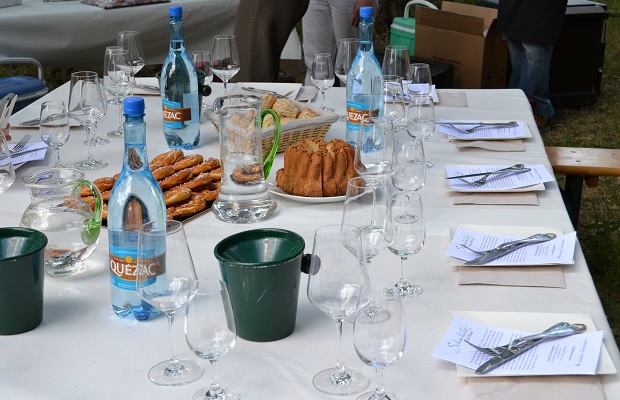
Schoenheitz Picnic<br />

Schoenheitz Picnic
PHOTO: Cassidy Havens, http://teuwen.com/

Vins Schoenheitz Crémant d’Alsace Millesimé 2007, tasted on the steep slopes of the valley of Munster with Dominique, Henri and Adrien Schoenheitz

Primarily focused upon Pinot Auxerrois and righteously so, with just a 10 per cent buoyancy from Pinot Blanc. The combination of striking Auxerrois fruit grown on the estate’s (400-500m) high altitude steep slopes and a memorable Alsace vintage is just deadly. The varietal choice in low acidity out of a vintage with character and temper here translates to aridity (1 g/L residual sugar) and long on lees texture. Like a Ron Sexsmith ballad, a listen, one look at its bronze patina, one taste and you will “see the forest for the trees,” because there’s gold in them hills. Perfect timing to break out an all-natural, no dosage ’07, marked by gratuitous acidity and mountain verve. An auspicious start to a picnic in the hills.  @VinsSchoenheitz

Pierre Frick Crémant d’Alsace 2013, tasted at Domain Pierre Frick with Jean-Pierre Frick

Jean-Pierre Frick poured two just bottled yet raw examples meant to set a perspective table for the 2013 finished wine that followed. The 50/50 Pinot Blanc et Noir (NV and 2013) were both picked ripe (nearly overripe), pressed direct and treated with nothing, nada, niente, zilch, rien. No sulphites, yeast or sugar. With zero dosage and opening too soon in evolution, these bottles were marked by arrested fermentation. The absence of the second fermentation meant for a flat, oxidative result. The experiment may have meant no Crémant but it helped to organize, define and ultimately assess the ’13. Same minimalist method but with a secondary ferment, this bottle (though warm) offered high citrus and biting, forceful, sharp acidity. When returned to an hour later and from a cold bottle, the wine was much brighter and atomically fresh. Frick’s method and style mean his sparkling must spend a minimum one year in bottle before it can be sold.

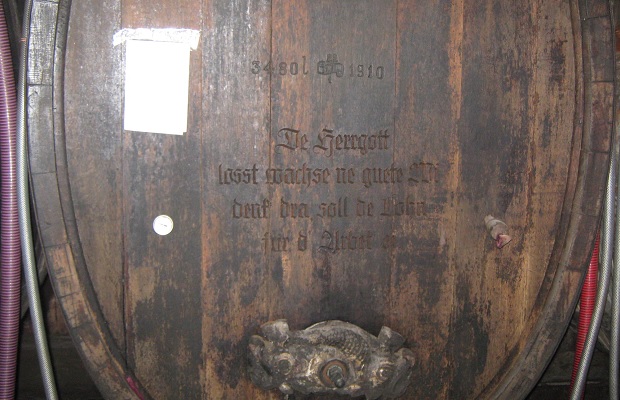
Casks at Jean-Pierre Frick

Casks at Jean-Pierre Frick

Pierre Frick Crémant d’Alsace 2012, tasted at Domaine Pierre Frick with Jean-Pierre Frick

One of JP’s “funny wines.” Once again, no sulphur but this time with natural yeasts. Notated by a slight coppery, salmon tinge and minimally oxidative, though in no way over the top. “My idea was a dry Crémant but he’s not dry. C’est la vie.” To Frick this is a wine for young and really old people. Toasted brioche, buttered toast and almond extract are joined by a late arriving, very interesting, savoury sweetness. The finish smoulders, with that ever-bearing herbiage adding another layer. This Pinot Noir and Pinot Blanc split comes in at 12.5 – 13.5 per cent alcohol. Frick doesn’t really know. “I write 13 per cent because I just have to put something on the bottle.”

Good to go!