
Bolgheri
The allure of the Etruscan Coast, its accessible inland plateau, emerald wine-growing hills and what is affectionately referred to as La Macchia Mediterranea have attracted great investment into Bolgheri. The region’s most famous reds are known to be big, luxe, bold and structured, most commonly as blends of cabernet sauvignon, cabernet franc and merlot. In many cases these Bordelais treatises are accented with additions of syrah, petit verdot and on rare 21st century occasions also by sangiovese. The most endemic of Tuscan grapes predates the expatriate varieties with its own parochial, rich and important history. Vermentino now makes up 10 percent of all plantings and that number is sure to increase in earnest because of the need for climate adaptation and a demand to satisfy changing consumer tastes.
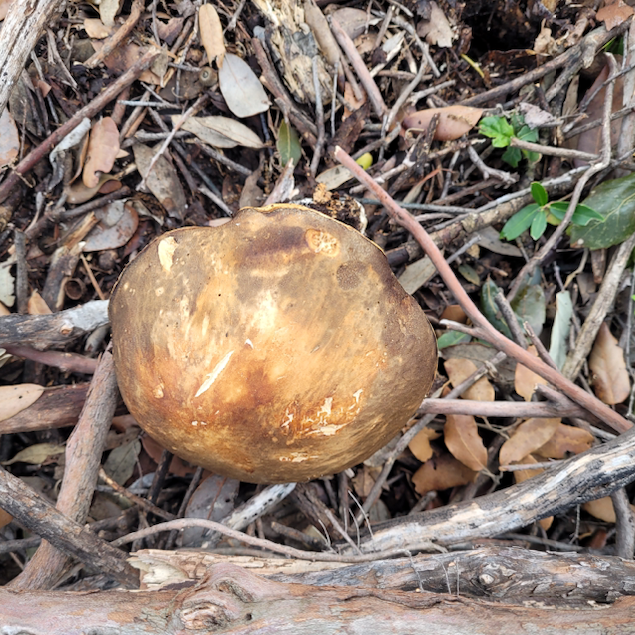
Foraging for Porcino, Castagneto Carducci
Just a shade under 1,000 hectares planted to vines in Bolgheri produce nearly 500,00 hectolitres or more than 550,000 cases annually. The DOC for Bianco and Rosé wines were written into Italian law in 1983, followed by Rosso in 1994 as Bolgheri Rosso DOC and Bolgheri Superiore DOC. At the same time Sassicaia was awarded its own sub-zone, Bolgheri Sassicaia DOC and then partitioned as a separate DOC in 2013. The Consorzio di Tutela Bolgheri e Bolgheri Sassicaia was founded in 1995 and is responsible for the protection of DOC Bolgheri and DOC Bolgheri wines. No other key Italian wine consortium is as compact and teams up as harmoniously with 73 members strong whose vineyards represent 99 percent of the territory’s overall hectarage.
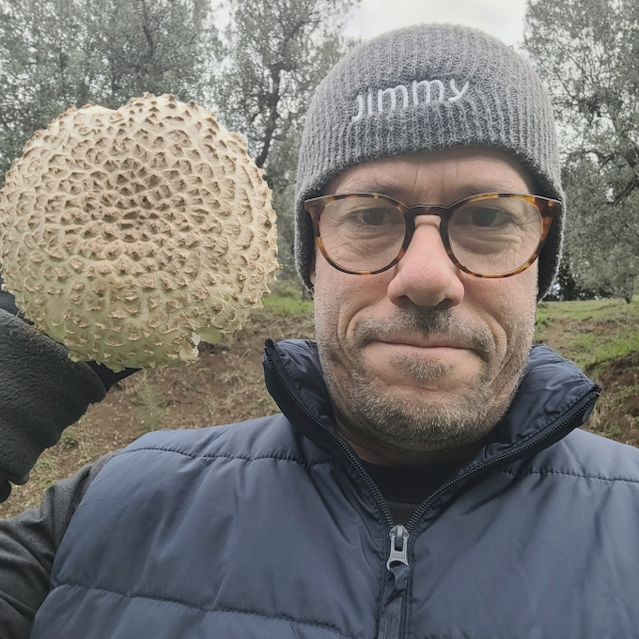
Finding Puppole (or Mazze di Tamburo) in Castagneto Carducci
Bolgheri’s demarcated growing area is concurrent with the political boundaries of the Municipality of Castagneto Carducci in the province of Livorno, with the exception of the stretch of coastline west of Via Ulvino Aurelia. The area’s construct is akin to a natural amphitheater with the Colline Metalifere to the east that gradually slopes downwards towards the coastline so typical of the Ligurian sea’s platform push. Here the cause and effect is two-fold; Flysch (an alternating sequence of sedimentary limestones, sandstones, and shales, the beds of which are thin, regular, and alternating) is this frazione‘s ace up the sleeve. That and the Galestro (schisty clay with friable white, grey, blue and charcoal rocks) typical of the greater territory are the soils with which all of these producers have in their vineyards to some varying degree.

La Macchia Mediterranea at Castagneto Carducci
Thickset forests cover the hillsides and anyone who has had designs on foraging for autumn mushrooms or simply chosen to have a walk will concur with having experienced the woven thicket that must be stealthily navigated to make any real progress through the dense brush. This veritable Tuscan jungle serves a great and refreshing purpose, that is to maintain and protect a complex ecosystem and breathe great life into vines (and olive trees) sharing valuable space and resources. The tiered hillsides slowly descend towards the central arena marked by a flat if ever so gently sloping terrain (in a way reminiscent of Mendoza) where most of the vineyards grow. The distance from vine to water is anywhere from six to 13 kilometres as the crow flies, where the Tyrrhenian sea is dominated by the Tuscan archipelago and Corsica visible at a vanishing point upon the horizon.
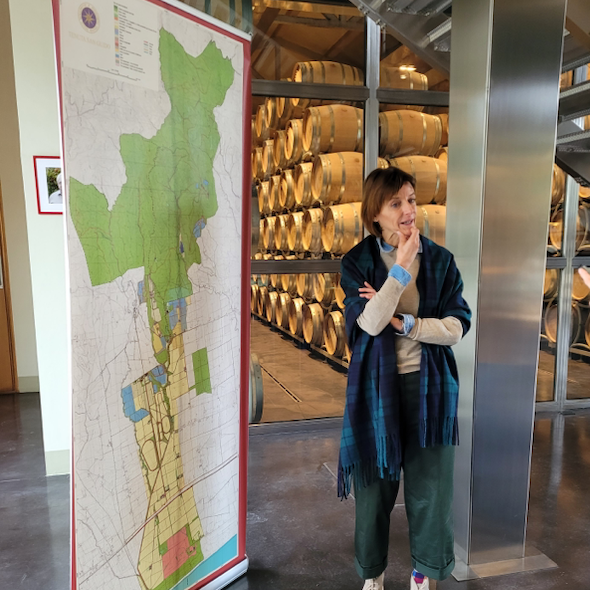
Elena Brachini – Tenuta San Guido
Tenuta San Guido, its founder Marchesi Mario Incisa della Rocchetta, Marchesi Nicolò Incisa della Rocchetta and current Consorzio Vice-President (as well as Primum Familiae Vini President) Priscilla Incisa della Rocchetta will always reside at the heart of Bolgheri. The Grand Vin Sassicaia was first released on the market with the 1968 vintage and today continues to act as benchmark for the region’s wines. The Consorzio President is Guado al Tasso’s Albiera Antinori of Marchesi Antinori and the other Vice-President is Le Macchiole’s Cinzia Merli. In 2023 Godello visited Bolgheri on two occasions. The first in late May, to gregarious Grattamacco and grand Tenuta Argentiera. The second in early November, to the Bolgheri unicorn estate of Podere Il Castellaccio, movimentata Le Macchiole, veramente un azienda enorme Tenuta San Guido and again to Grattamacco. These are the 32 wines tasted on the occasion of those two excursions.
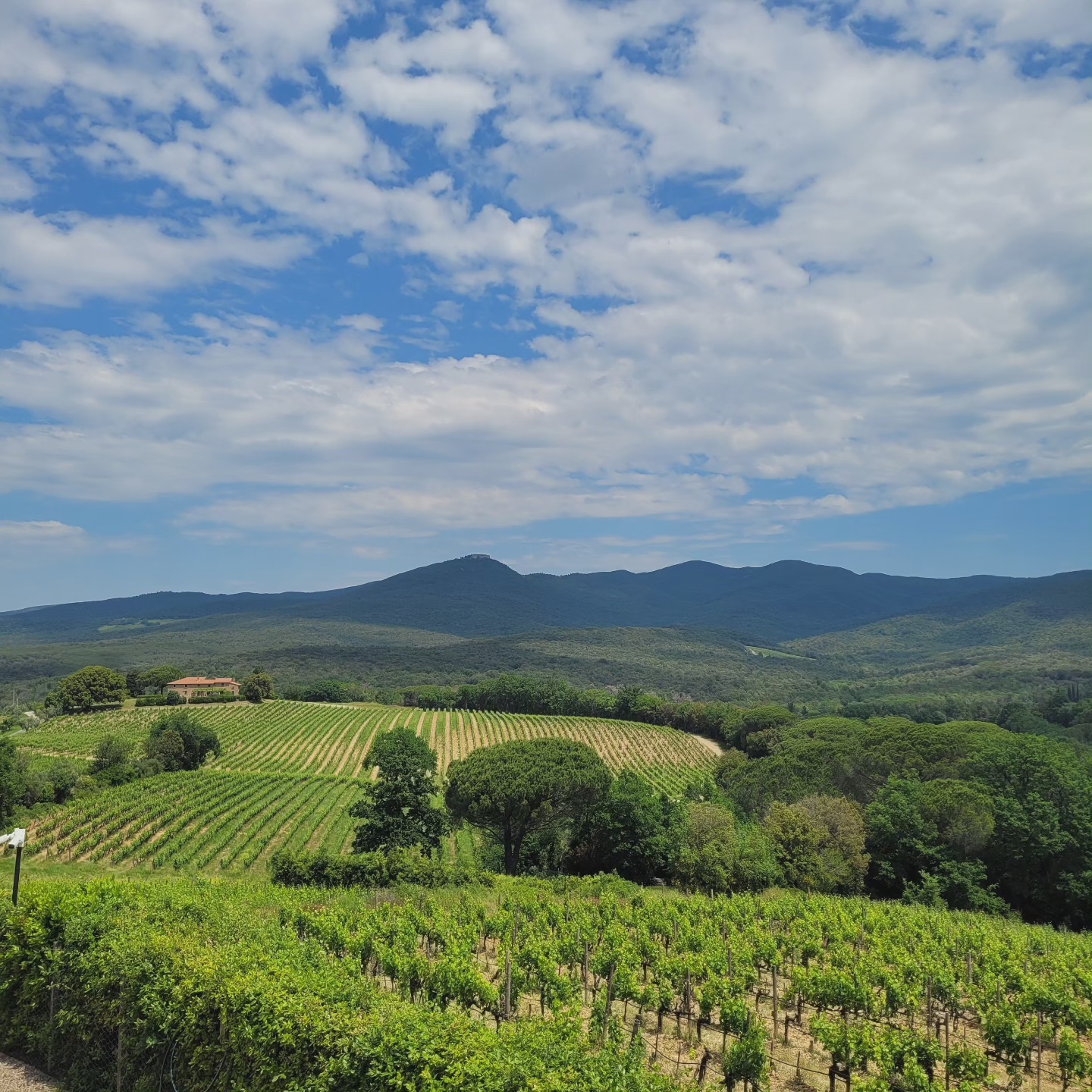
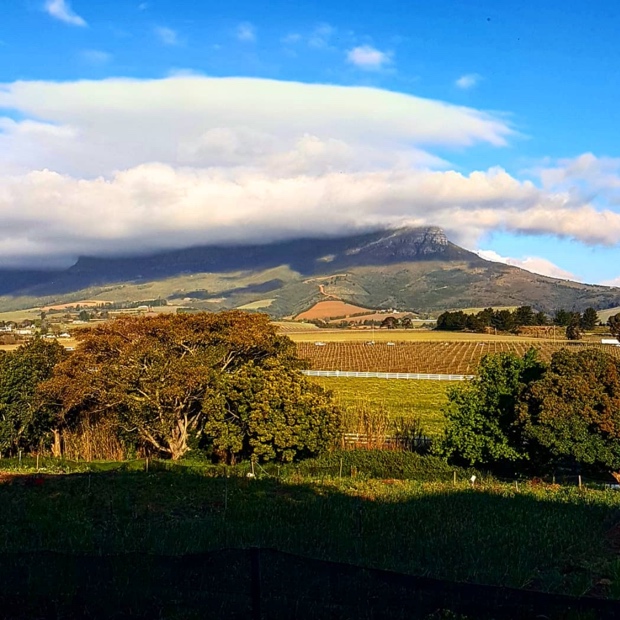
The view from Grattamacco
Grattamacco
The organically certified Grattamacco estate originally founded in 1977 on that Maquis shrub-land as Bolgheri’s second winery became part of the Colle Massari Group in 2002. Siblings Maria Iris and Claudio Tipa are Grupo Colle Massari, proprietors of four Tuscan properties; Montalcino’s Poggio di Sotto (2011) and Tenuta San Giorgio (2017), along with Montecucco’s Castello Colle Massari (1998) and Bolgheri’s Grattamacco with its perfect view of the Castello di Castiglioncello. Bolgheri’s modern wine production may be less than 100 years old but its rise has been swift, its potential a gold mine and Grattamacco has marked its presence from the earliest days.

Hills above Grattamacco
The name Grattamacco or Gratta Macca translates as “scratched iron.” When Colle Massari purchased 12 new hectares at Casa Vecchia it was sangiovese that was planted straight away, while a full cellar renovation followed 11 years later, in 2013. The endemic Tuscan grape variety sangiovese is well-suited to the estate’s unique Galestro and Flysch soils with their alternating sequences of sedimentary limestones, sandstones and shales. That orogenic belt’s design now helps to breathe light and elegance into the region’s full-bodied Bordeaux blends made with cabernet sauvignon, cabernet franc and merlot. Grattamacco’s are thankfully not the most powerful of Bolgheri’s wines but they are its truly sapid outliers, indelibly stamped with the sangiovese, a sense of place and no compromise to acidity.
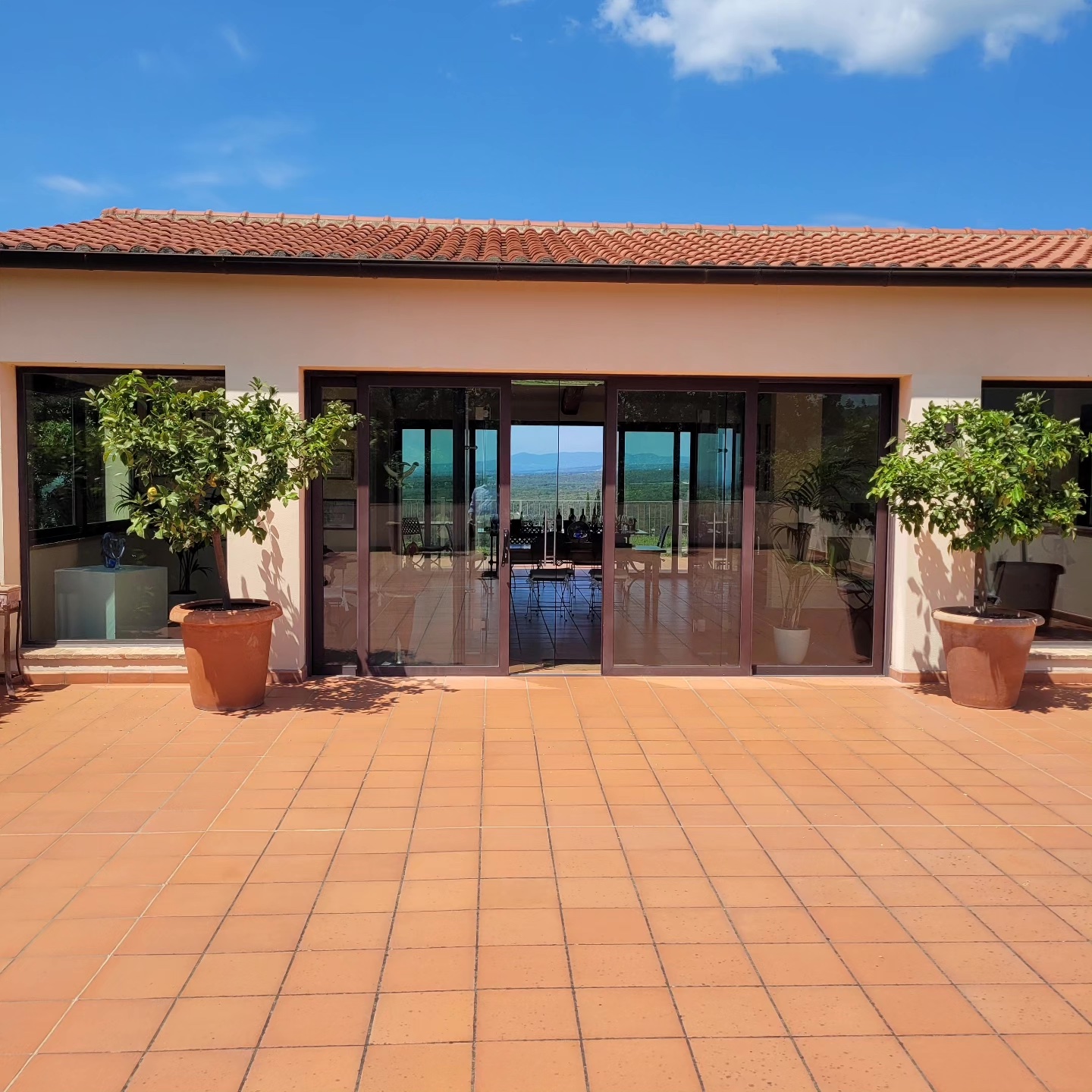
Tasting room at Grattamacco
Grattamacco also constructs Bolgheri’s unicorn wine, made from vermentino off of the first such local vines planted in 1986 and this white wine has not only changed the landscape for the grape in Tuscany’s coastal areas, it promises to be its future. Vermentino ages in new Chassagne Burgundy barriques and with the rapidly changing climate there will be more wineries choosing to eschew the likes of problematic merlot for vineyard space dedicated to the virtues of vermentino.
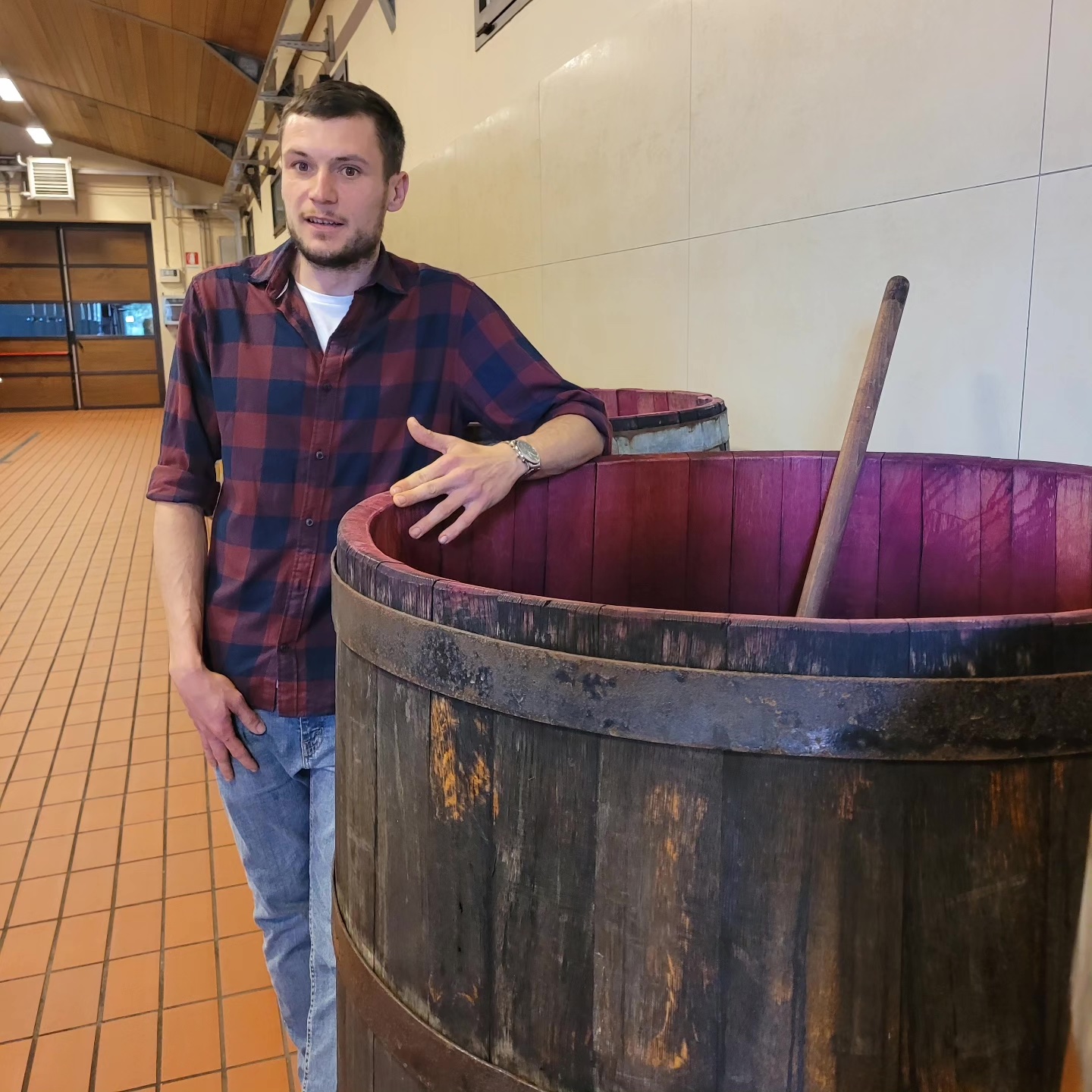
Davide Torchio at Grattamacco
With 29 hectares in production Grattamacco’s labels comprise four wines: Vermentino Bolgheri DOC, Bolgheri Rosso DOC, L’Alberello Bolgheri Superiore DOC and Bolgheri Superiore DOC. The cellar is marked by stunning stained glass designed by Michael Zyw. Famed oenologist Luca Marrone and winemaker Davide Torchio’s usage of a peristaltic pump system, the Piedmontese technique of cappello sommerso and natural fermentations are what give the reds their advantage and silken textures. The sangiovese is the tie that binds, the catalyst to raise the perception of acidity in Bolgheri reds of grace, charm and greatness.

In the Grattamacco Cellar
Grattamacco Vermentino Bolgheri DOC 2021
A reminder that this is vermentino from the oldest such vines in Bolgheri. Storied vineyards blessed by a terroir of “argilla bianca.” The chalk in the soils is crucial to the personality of this wine, lending en elemental salinity because magnesium is much more prevalent than sodium. In fact the lees creaminess and alcohol are what effect the balance and without their inflations this might be too “salty” a vermentino. Meanwhile this 2021 always seems to be in its right place. Last tasted October 2023
Good rains in February and March, dry all the way through and then some rains in the middle of September to delay harvest, for the better, to achieve a great ripeness level for vermentino. Such fruit changes the landscape for the grape in Bolgheri and the wood (one new and seven used barrels, all from Chassagne) lends just a popping or piquing of spice on the back of the palate. An exotic or tropical and cloudy fermentation transforms into the cleanest and fleshiest fruit gathering with essential structure to see the best years in fact lay ahead. That being three of four years forward. But drink it now. Why not and what could go wrong? Wait 30 minutes and it may just smell like roasted rosemary potatoes. Drink 2023-2027. Tasted May 2023

Enoteca Tognoni, Bolgheri
Grattamacco Vermentino Bolgheri DOC 2013
If you happen to pop a bottle of the historic 2013 vermentino from Bolgheri’s original varietal wine do not be bemused by a little bit of mustiness. Open the closet and window to let the two airs mix before passing judgement. Perhaps a moment of cacchi (persimmon) like botrytis marks the next entry but what is most prevalent is the white clay-limestone-schist smoulder of fruit and soil that conspire with 10 years gone by to affix this vermentino into a lovely situation. Acidity fixed is acidity persistent. This is not a perfect wine but it does open a portal into Bolgheri vermentino looking retrospectively in ways no other can offer. Drink 2023-2024. Tasted November 2023
Grattamacco Bolgheri Rosso DOC 2022
Bolgheri Rosso is first and foremost a vineyard selection, mainly from the youngest vineyards but also a first pass/pick out of the older blocks. There may also be some vats destined for Superiore that are shifted to the Rosso. A challenging follow-up to what was a very good 2021 but 2022 is up to the task, especially because the cabernet franc thrived in this vintage and it does not end up in the Superiore. This franc comes from vineyards new and old, suitable for the bigger wine but with respect to style and tradition it only ends up here. Even at just 25 percent the franc speaks loud and clear. The merlot makes up (30) with cabernet sauvignon and sangiovese rounding out the rest. The fact remains that this ’22 is a seriously structured Rosso, more than that ’21 and this tells us how much high quality fruit is diverted here, not to mention the increasing maturity of those younger vines. Succulent and top tier acidity puts this in high steading. It stands to be counted and counts out time. Will drink with distinction for five to seven years easy. 120,000 bottles produced. Drink 2024-2030. Tasted October 2023
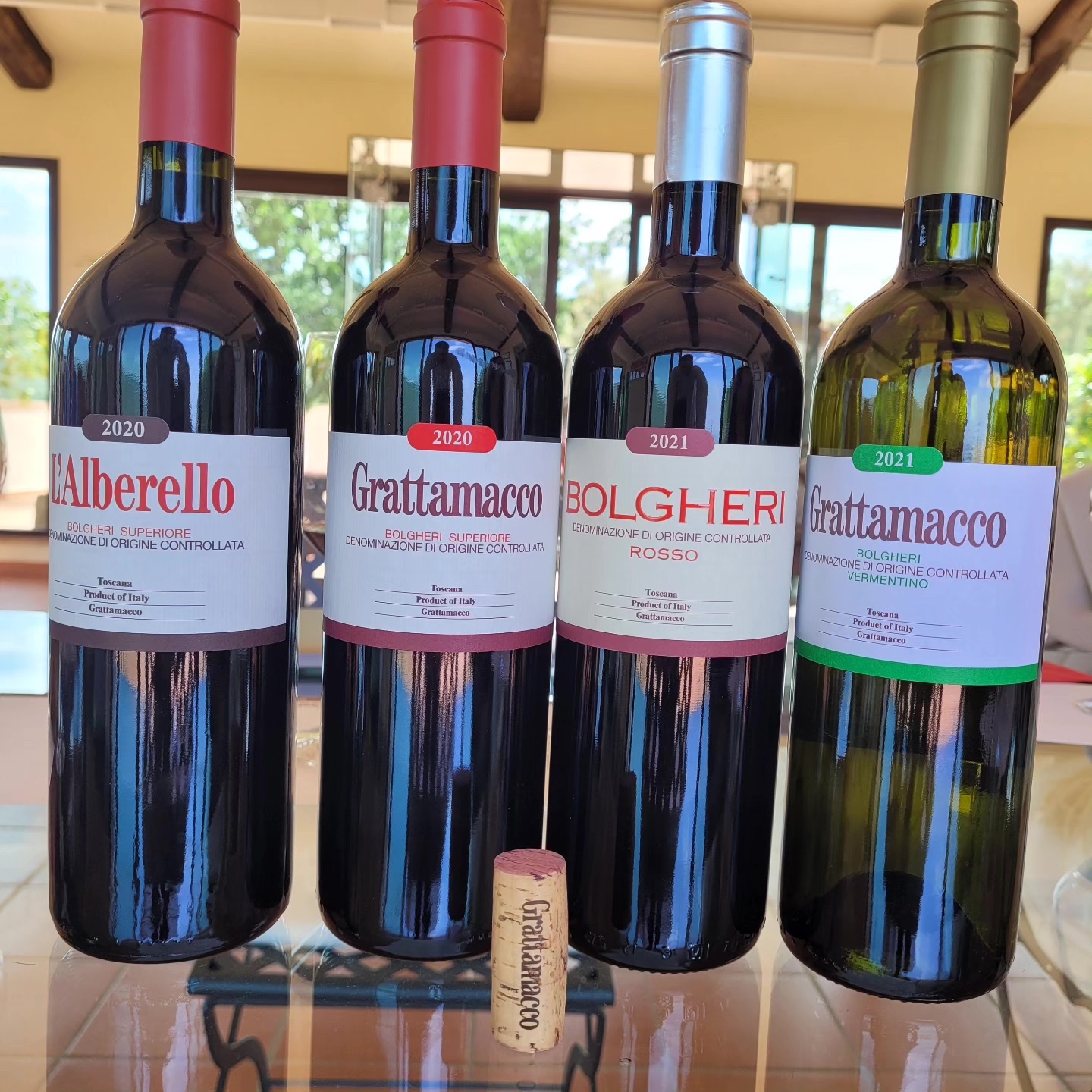
Grattamacco Bolgheri Rosso DOC 2021
The fruit first Bolgheri Rosso is 30 each cabernet sauvignon and merlot, (25) cabernet franc, (10) sangiovese and (five) petit verdot. Could age longer than when it is released (after one year in September) but cellar master Davide wishes it could rest another year. So very “Mediterranean” and in the early stages the red fruit is strong, overpowering the spices and pushing the merlot too up front. With age the franc especially and its aromatics will emerge, as they are just about imposing their will right now. The sangiovese is the tie that binds, the catalyst to raise the perception of acidity and make it all happen. The cabernet sauvignon will linger and last above all else, sending this “Classico” through the years, with its sweet tannins in tow. Drink 2024-2029. Tasted May 2023
Grattamacco L’Alberello Bolgheri Superiore DOC 2021
Same blend percentages as 2020, of 70 percent cabernet sauvignon with (30) franc and so youthful to make the 2021 seems like it’s just as big a vintage but we just know the balance tells us otherwise. Freshness on steroids, rich in cherry fruit depth mixed with the Flysch earth and dried herbs weaponizing the berry liqueur. Savoury, serious and needing to be re-tasted next fall to really gain an understanding of aspects more than predicated on potential. Meanwhile these tannins are fine-grained, chained, intentional and propositional. Drink 2026-2034. Tasted at Prowein, March 2024
Luca Marrone – Grattamacco
Grattamacco L’Alberello Bolgheri Superiore DOC 2020
Two cabernets involved, head-pruned, two hectares of 16 year-old vines in a single vineyard. Alberello training is unique and essential for the future of the sauvignon (70 percent) and franc, field picked and co-fermented, built on acid structure with a liquidity spiced by black pepper and what just feels like Sardegnan mirto. Beautiful if just ever so slightly rustic field blend. Drink 2024-2028. Tasted May 2023
Grattamacco L’Alberello Bolgheri Superiore DOC 2013
Impossibly near perfect shape for this field blend’s amelioration 10 years forward from 2013 to 2023 with Grattamacco’s cabernet franc, cabernet sauvignon and petit verdot. Belive the idea that secondary character is only a recently transacted transition, acidity has not been suppressed and tannins have only sweetened. The succulence and continued speculation serve notice that no supplication is necessary to see the best in this Rosso, also because energy is never compromised, not for a moment. This bottle is in excellent shape. Drink 2023-2027. Tasted November 2023
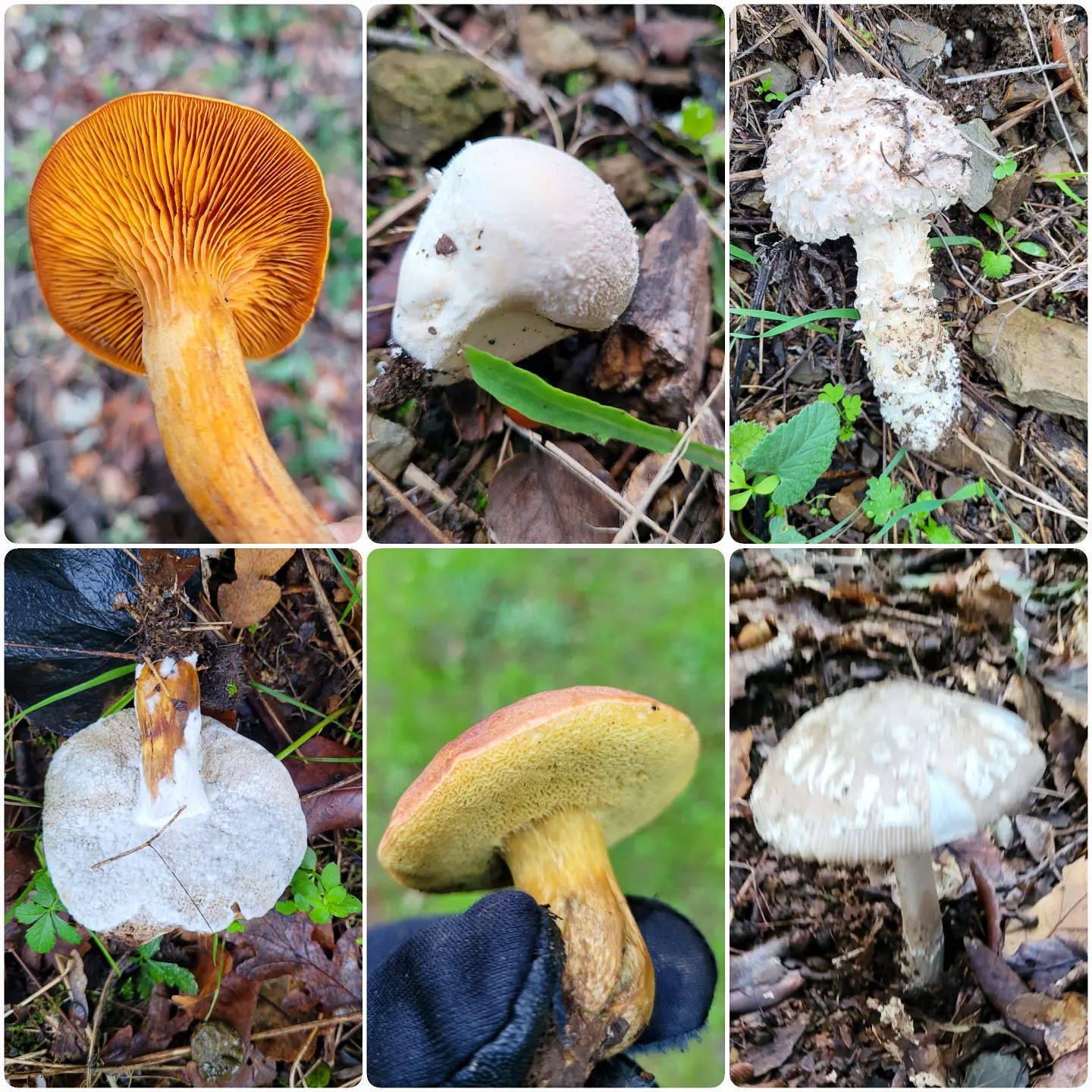
Mushrooms of Castagneto Carducci
Grattamacco Bolgheri Superiore DOC 2020
The “skinny” vintage, surely not as fleshy as the bookending years on either side but also the sneaky one, possibly destined to outlive them all. Very Mediterranean aromatics, something akin to garrigue but cleaner and less vegetal. Both crunch and chew, a combination of before and after, ying and yang. All right and no wrong in 2020, tight and closed now but given 20 minutes the wine will open up, better yet taste it the next day, even without sealing the wine overnight. Tannic structure exceeds the promise of Rosso and also Alberello though there is no compromise to acidity. Truly sapid. Made with 65 percent cabernet sauvignon and near equal parts between sangiovese and merlot. Drink 2024-2028. Tasted May 2023
Grattamacco Bolgheri Superiore DOC 2013
L’Alberello 2013 shows energy and exuberance but what of Superiore? Two feet in the soil that’s what but not only is this Rosso as fresh as the day it was conceived, it’s also mature and wise, experienced even beyond its 10 years from vintage. If L’Alberello is a teenager than Superiore is a young adult, both perfect compliment to one another. Tasted side by each they both work wonders with the fresh porcini of the current vintage. Drink 2023-2028. Last tasted November 2023
So fortuitous and surely fascinating to travel back ten years for a look at the Rosso Superiore. Where does it stand in terms of freshness, verticality and longevity? This is the wine simply referred to as “Grattamacco,” spokesperson and flagship, spinal label to tell the story of this place and the ColleMassari dedication. Unfortunately there is some TCA and so the tannins are brittle and dry. 120,000 bottles produced. Tasted October 2023

With Cokie Ponikvar and Jeremy Bonia – Agriristoro La Cesarina, Castagneto Carducci
Grattamacco L’Alberello Bolgheri Superiore DOC 2020
No doubt time is the catalyst towards explaining more and more subtleties, idiosyncrasies and eccentricities of an Alberello-trained field blend like this creative and singular red by Grattamacco. Really showing its chalky structured personality six months later and this shows how it’s working through its adolescence. Six further months should see that chalkiness liquify and create the most stunning textured example of Bolgheri Superiore. When all is said and done, peccato di gioventu” Rushing belongs to humans, but nature will always follow its own pace. Last tasted October 2023
Two cabernets involved, head-pruned, two hectares of 16 year-old vines in a single vineyard. Alberello training is unique and essential for the future of the sauvignon (70 percent) and franc, field picked and co-fermented, built on acid structure with a liquidity spiced by black pepper and what just feels like Sardegnan mirto. Beautiful if just ever so slightly rustic field blend. Drink 2024-2028. Tasted May 2023

Agriristoro La Cesarina, Castagneto Carducci
Grattamacco Bolgheri Superiore DOC 2020
Was released in April 2023, just ahead of the last tasting and now six months forward there is no movement, literally not an iota. What is noticed is the presence of a certain saltiness, predicated on the vineyard where magnesium is stronger than sodium and so the Grattamacco elemental salinity energizes without obstacle. For oenologist Luca Marrone this vintage sides more to cool then warm and you can’t rush its progress. As predicted the tannins and overall architecture of the Superiore is the most formidable of all the Grattamacco wines, not to mention the one wound taut with great and measurable tension. You can cut it with a knife. Be patient, as a taster that is not a luxury afforded, but as a buyer it is a must. Last tasted October 2023
The “skinny” vintage, surely not as fleshy as the bookending years on either side but also the sneaky one, possibly destined to outlive them all. Very Mediterranean aromatics, something akin to garrigue but cleaner and less vegetal. Both crunch and chew, a combination of before and after, ying and yang. All right and no wrong in 2020, tight and closed now but given 20 minutes the wine will open up, better yet taste it the next day, even without sealing the wine overnight. Tannic structure exceeds the promise of Rosso and also Alberello though there is no compromise to acidity. Truly sapid. Made with 65 percent cabernet sauvignon and near equal parts between (15) sangiovese and (20) merlot. Drink 2024-2028. Tasted May 2023
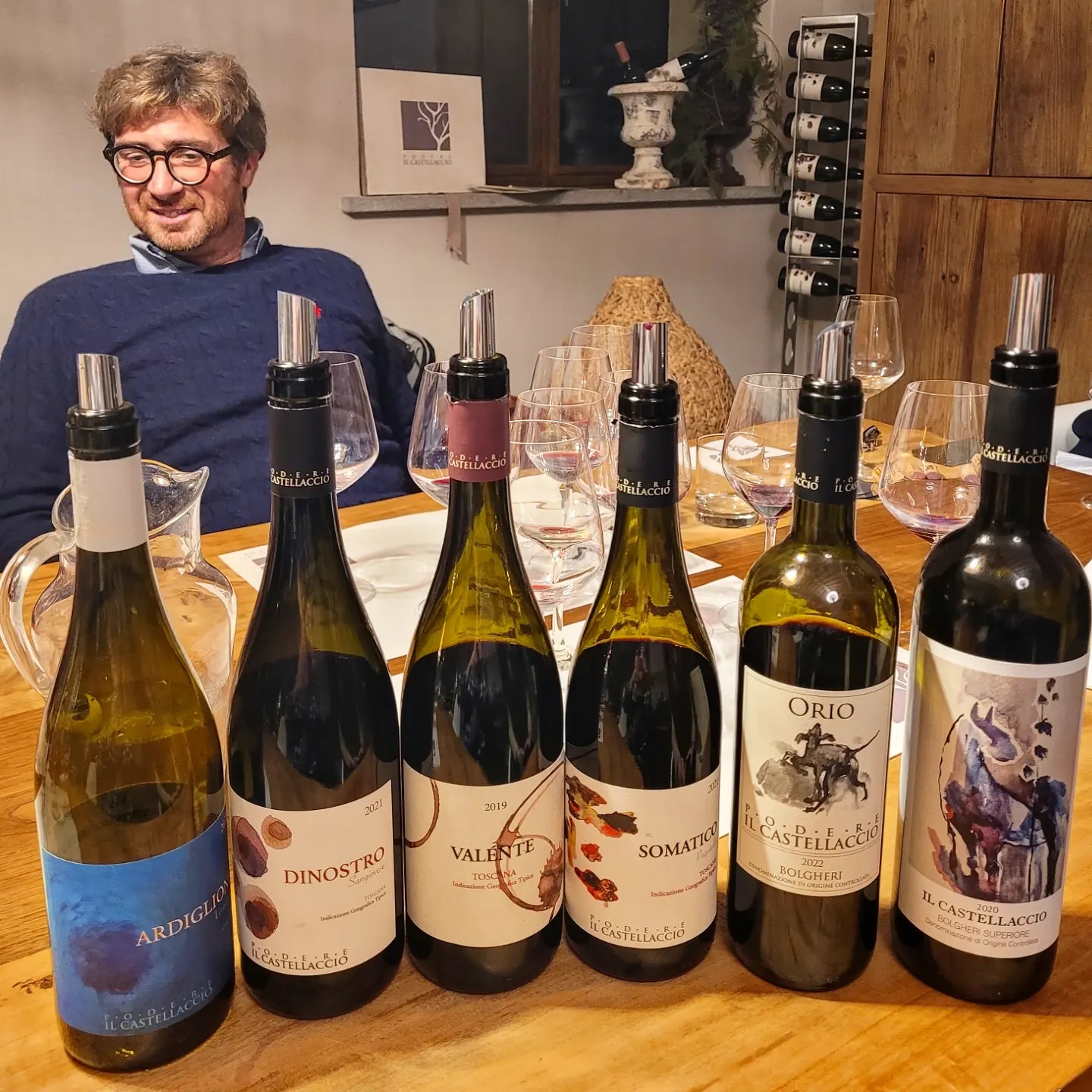
Alessandro Scappini – Podere Il Castellacio
Podere Il Castellaccio
Attention Ontario sommeliers and agents. Speaking directly to you. These beautiful wines from Podere Il Castellaccio are the freshest in Bolgheri, most made from endemic varieties; sangiovese, pugnitello and foglia tonda. Top echelon work from Alessando and Enrica Scappini. In the Bolgheri area their’s is a vineyard with forty years of history and only they are protecting varieties that have disappeared from local winemaking. Their work concentrates on salvaging these ancient varieties because they are inextricably linked to the tradition of Tuscan wine so specific to Bolgheri.

Forest above Podere Il Castellacio
Podere Il Castellaccio Ardiglione Vermentino 2022, Costa Toscana IGT
A coastal vermentino that is a blend of three components, skin maceration, some aging time in wood and also amphora. Scents of the not far away sea and the green hills combine for a sweetly herbal, subtly phenolic and in the end salty vermentino. The vineyards are closer to the sea than the red vines and this second vintage of Castellaccio’s white is a win. There is also this white balsamic and pine nut character that is so very local. True identity of place and that is so crucial to the success of this kind of wine. Yet another reason to opine on how vermentino will be such an important part of Bolgheri’s future. The wood and the clay refining will see this age for a few extra years to become something even more interesting later on. Drink 2023-2027. Tasted November 2023
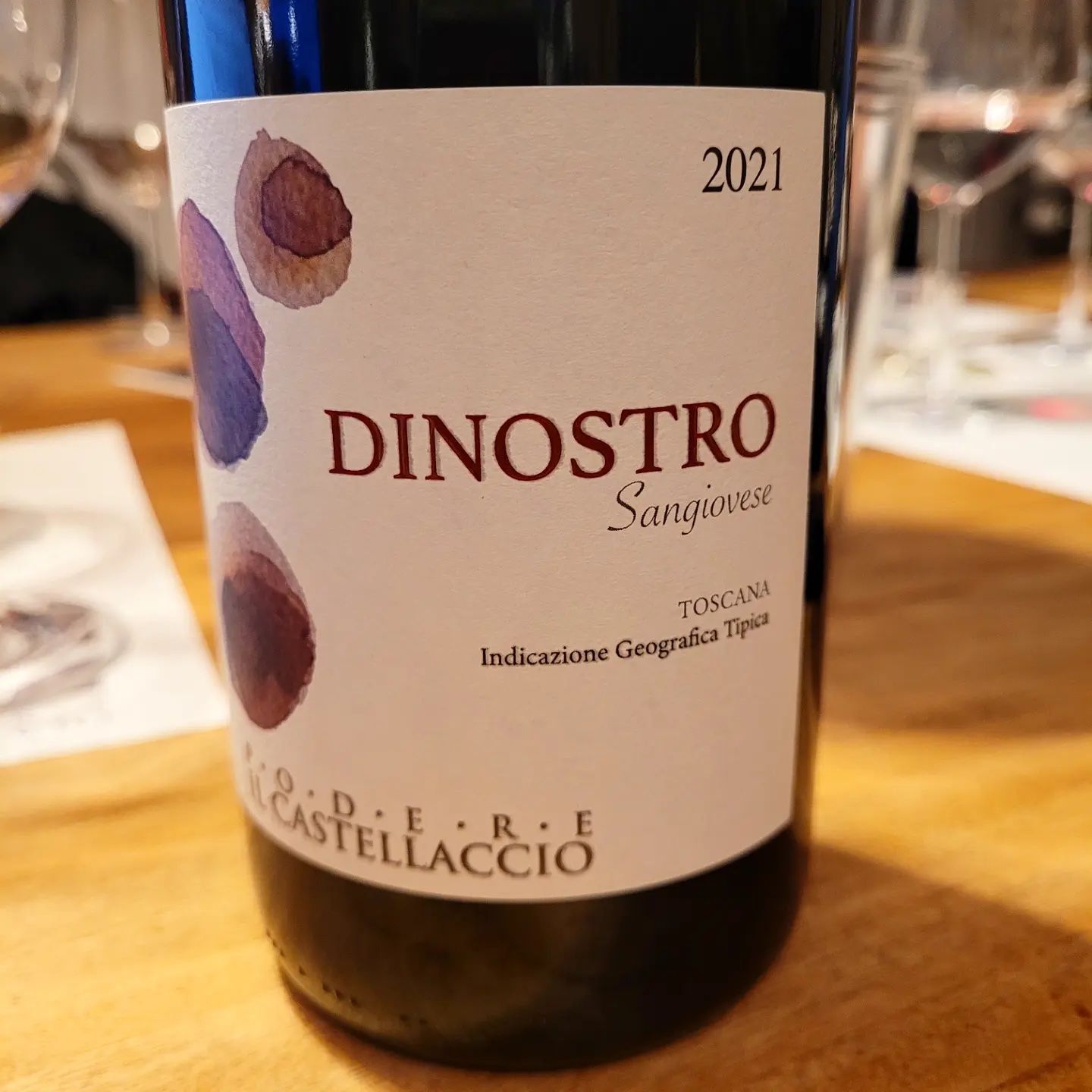
Dinostro, Podere Il Castellacio
Podere Il Castellaccio Dinostro Sangiovese 2021, Toscana IGT
Alessandro Scappini’s grandfather grew endemic varieties here in Bolgheri where thaye have been cultivated since the 1960s. They may not jive with the last forty years of what Bolgheri has concentrated upon but Scappini considers them the heritage of this place. They are sangiovese, pugnitello and foliotonda. These are the original peasant grapes of the poderi and their DNA has been preserved to plant more vines. There is no doubt that a Bolgheri red like this is expressive of more identity and heritage than what the Bordeaux grapes can even fathom to deliver. There just feels to be a connection with the wines of Roberto Stucchi (Badia a Coltibuono) because this feels like sangiovese growing with forests all around, green in the ways of flora, but not ripeness. There is a rustic notion here but again it’s more of a country one and this sangiovese is indeed elegant. There is Gaiole and there is Bolgheri. The affinity is kind of uncanny don’t you think? The difference is the Mediterranean (or Ligurian) feeling gained, of resinous green herbs, evergreen and the sea. This is the tightest of all Il Castellaccio’s wines, high in acidity, seriously tannic though they are neither brooding nor baritone. Not austere neither but they are serious and they are profound. That said the fruit is like red lightning, a strike of intensity from that which is tart and also über fresh. This captures the essence of Castagneto Carducci. Drink 2024-2028. Tasted November 2023
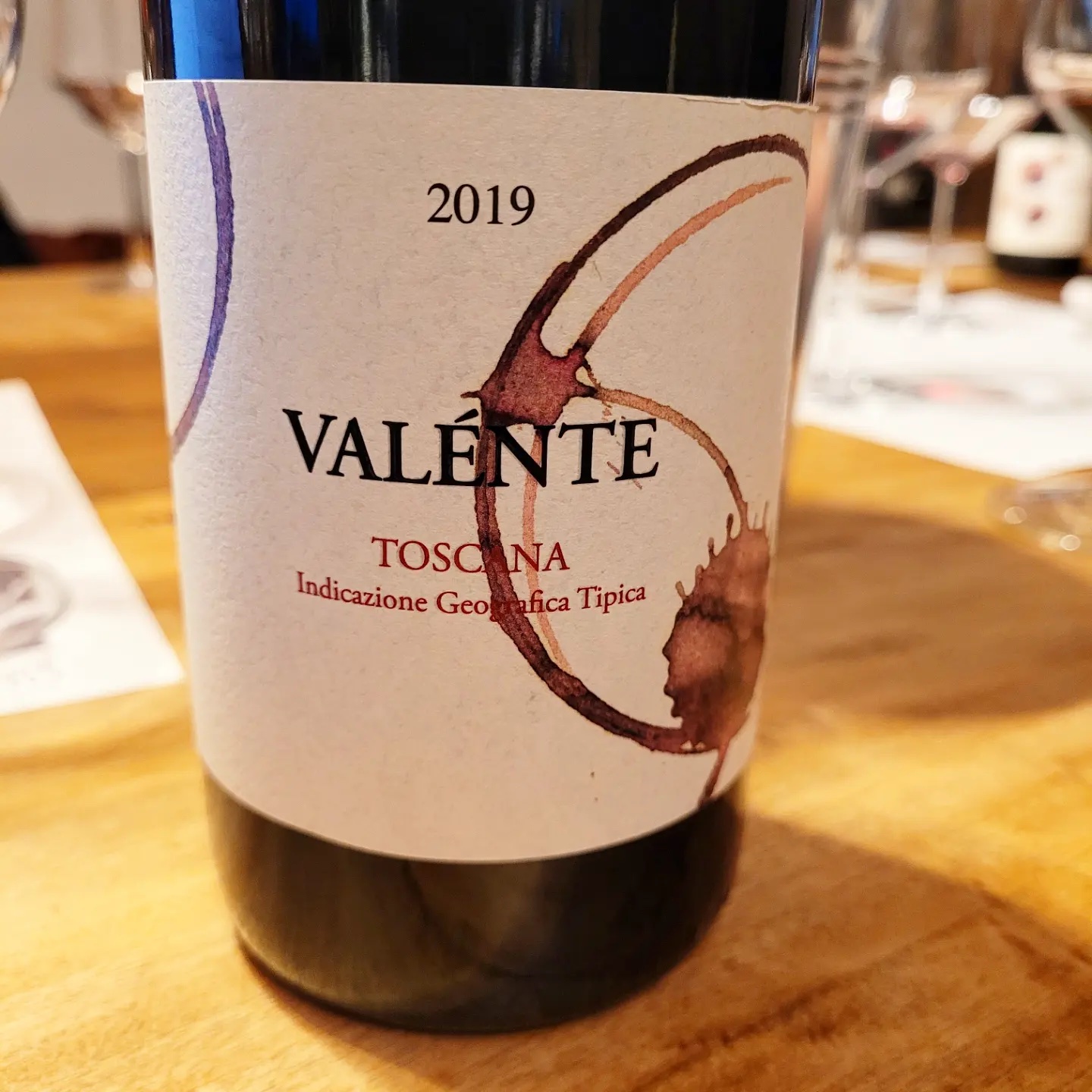
Valénte – Podere Il Castellacio
Podere Il Castellaccio Valenté Vitigni Autoctoni 2019, Toscana IGT
As particular a red blend as there is in all of Bolgheri, first because it’s not a DOC wine and also not just any IGT. It is a blend of the three endemic local varieties grown by Alessandro’s grandfather on the estate since the 1960s. They are sangiovese, pugnitello and foliotonda, the middle of which is connected to and revered with equal level at San Felice in Castelnuovo Berardenga. In total the average age of all three sets of vines is 50 years. The ferments see two weeks of maceration, raising the glycerin levels before the wine ages in large Slavonian cask and concrete. Acids are in control and this glaringly logical, local blend may be from 2019 but its persistent freshness is undeniable. Truly important work for Bolgheri. Drink 2024-2027. Tasted November 2023
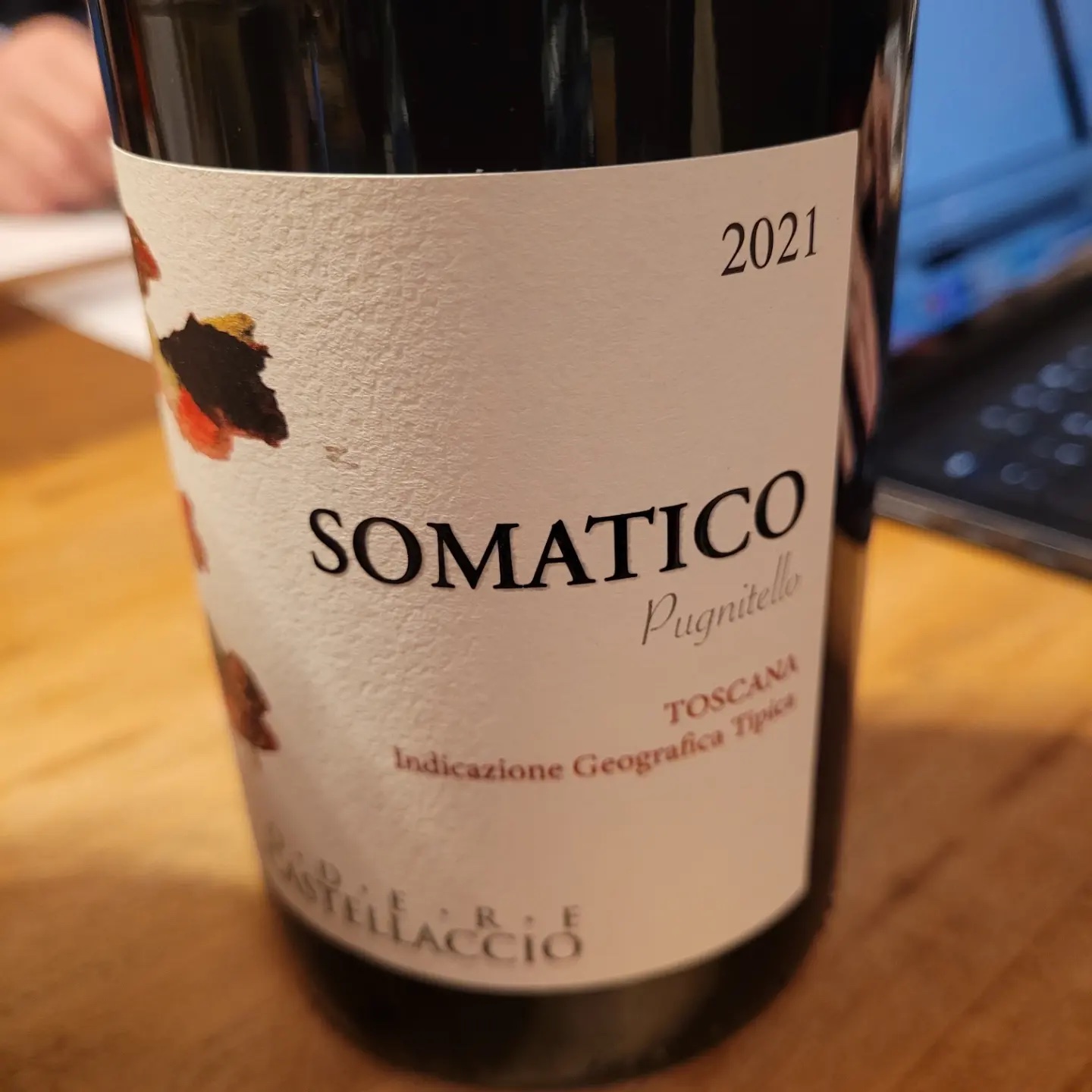
Somatico – Podere Il Castellacio
Podere Il Castellaccio Somatico Pugnitello 2021, Toscana IGT
Truly rare varietal pugnitello with just 300 or so hectares of vineyard planted in all of Italy. The vines are 50-plus years of age, Guyot trained and growing in mineral soils of Galestro outcroppings coming from schist. Deep hue and such a spicy red (though truly purple) Bolgheri example. Chalky though silken in its liquidity and and tannic presence that’s so unlike sangiovese, in fact there’s something more akin to cabernet sauvignon or franc in this wine. This is spezzatura by way of pugnitello, something that would likely be planned and crafted but the result just feels effortless and so very real. Drink 2025-2031. Tasted November 2023
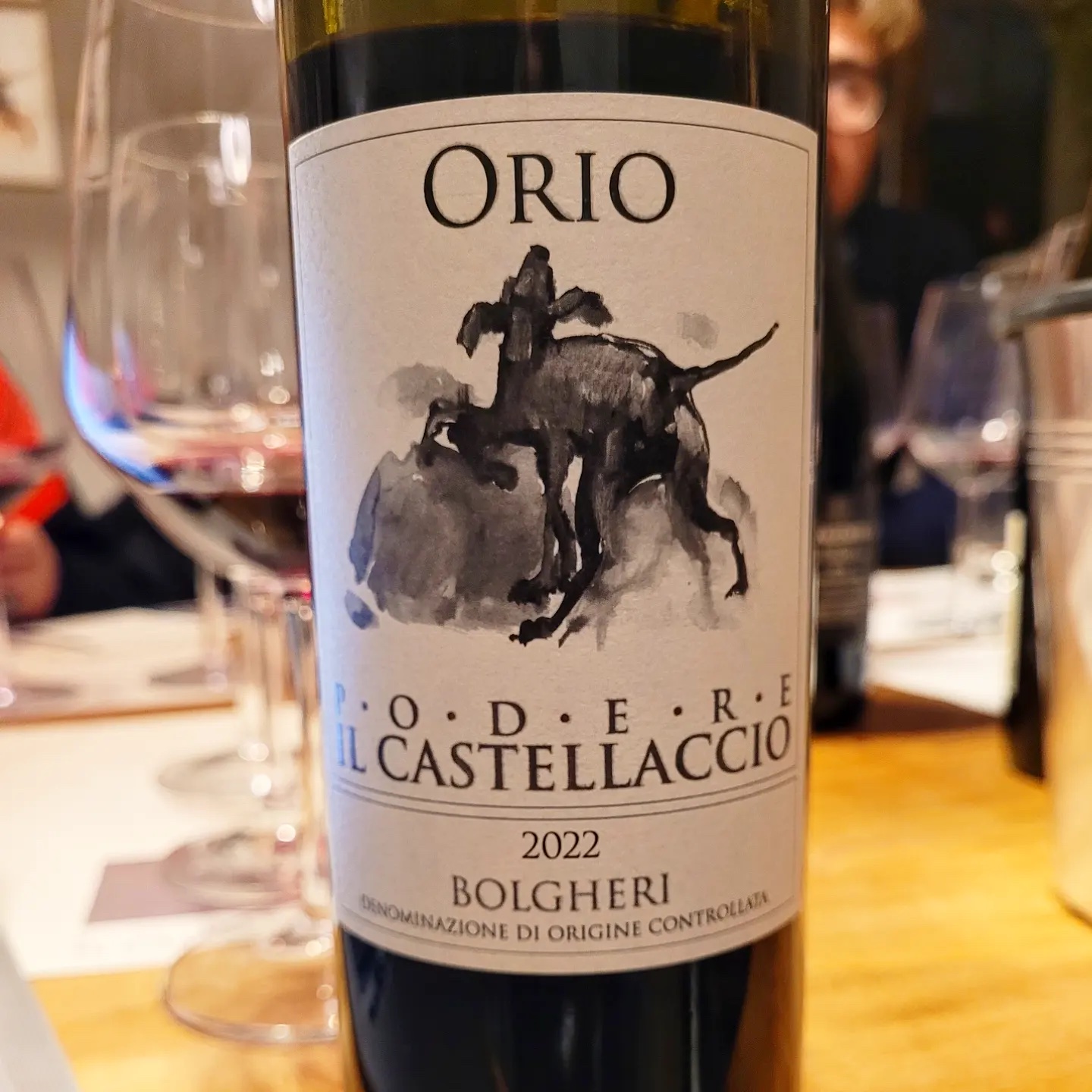
Orio – Podere Il Castellacio
Podere Il Castellaccio Orio 2022, Bolgheri DOC
Moving away from autochthonous varieties and now into the denominational wines with the three varietal blend of 60 percent cabernet franc, (30) merlot and (10) syrah. Vines are 10-20 years of age and aging happens over 12 months in second passage, 500L tonneaux. There is a temptation to automatically think that the French grapes will take away from the place and the resulting wine to be so different than those made from endemic varieties. But you can’t take the place out of any of Alessandro Scappini’s reds and so the evergreen, brushy herbs, balsamic and sea air are all in this wine. So is extra richness and peppery piques or bites with tobacco moments and chalky ground espresso on the finish. Drink 2024-2030. Tasted November 2023
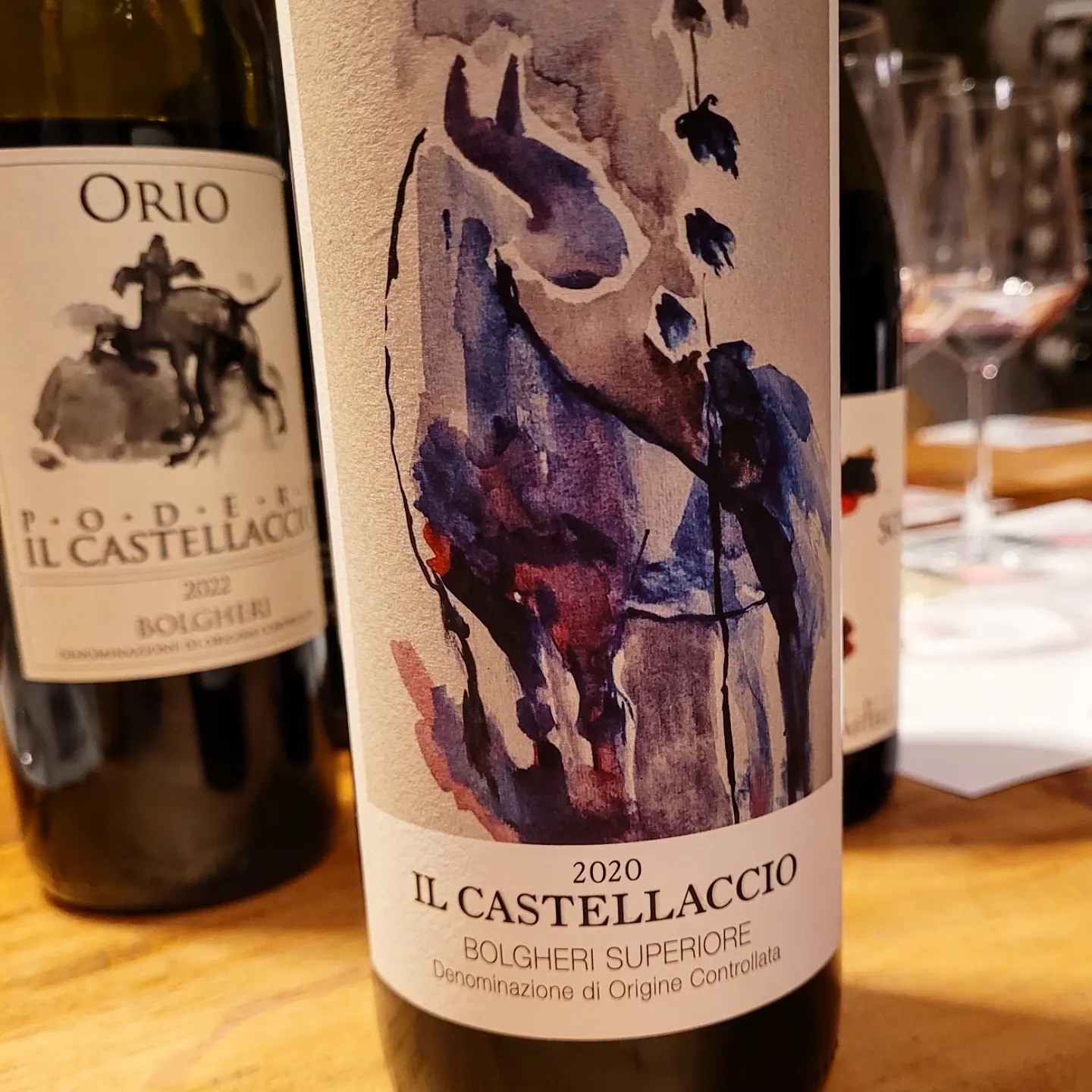
Il Castellacio – Podere Il Castellacio
Podere Il Castellaccio Il Castellaccio 2021, Bolgheri DOC
The Superiore is a two-part harmonic bend of mostly cabernet franc plus pugnitello from the Alberello-trained vines up on the hill of a terroir known as “cisto di galestro di scheletro. Sees a year in both barriques but also clay amphora which puts this in a whole other Bolgheri light. The French wood certainly lends a richness, depth and spice cupboard set of elements but the texture accedes a new manifest destiny because of the clay. The biggest though not what should be looked at as a baddest red wine, on the contrary the freshness is captured as with all of Il Castellaccio’s wines. The length on this wine is exceptional, exceeding all of the others and so it is deserving of the flagship calling. Profundtà e lunghezza. These are the elements that set this apart. Drink 2025-2033. Tasted November 2023
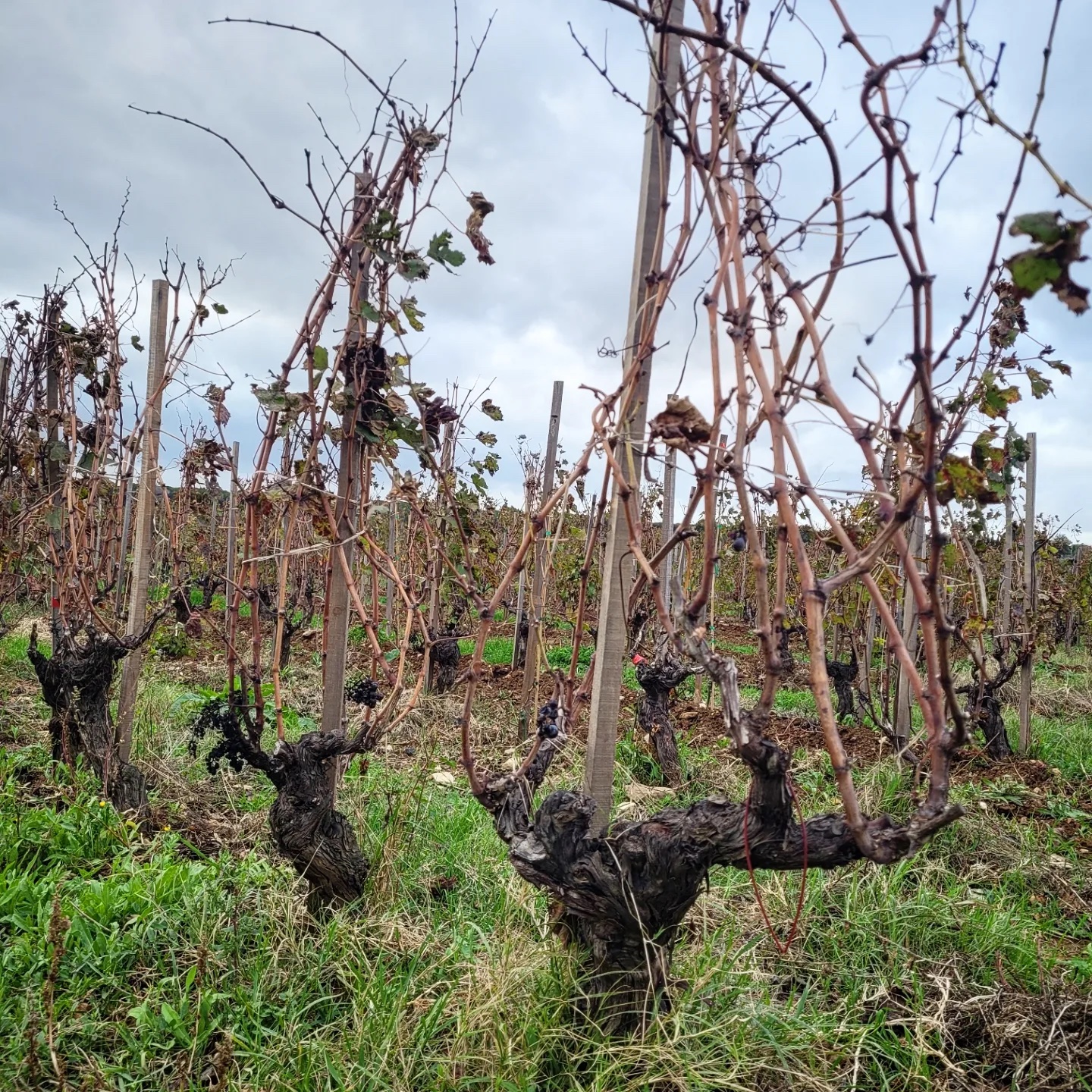
Old vines at Le Macchiole
Le Macchiole
There have been opportunities in Ontario to taste the Bolgheri wines of Le Macchiole over the years, but now there is greater understanding after this first visit with agronomist Elia Campolmi, winemaker Luca Rettondini and proprietor Cinzia Merli. Decades of commitment and the development of 10 vineyard plots around the denomination see the fruition of their work today best explained as modestly profound. The estate plots travel from the sea to the hills of Castagneto Carducci at 220m of elevation on 32-33 total hectares.
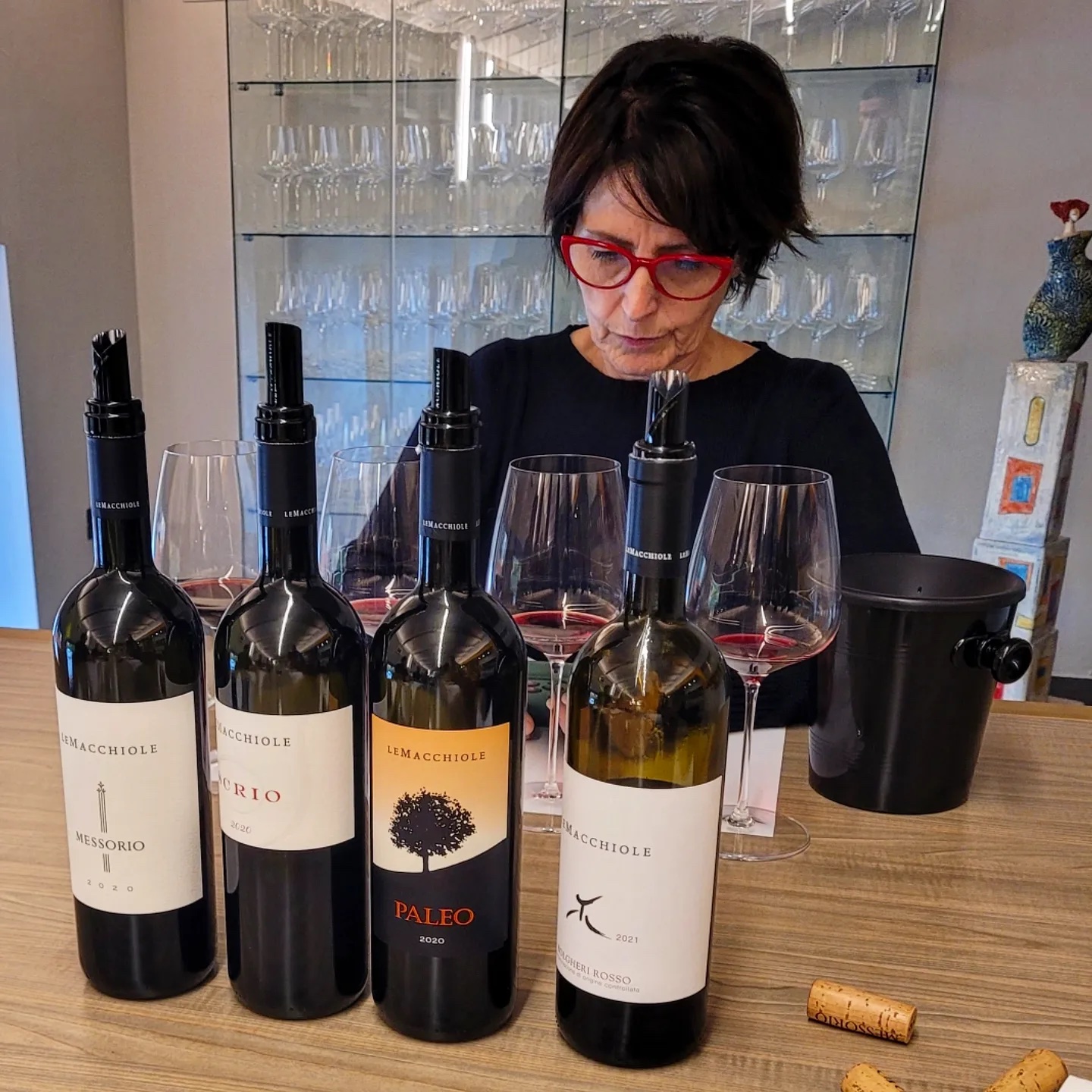
Cinzia Merli – Le Macchiole
Puntoni Vineyard was planted in 1994 and Vignone in 1999, both to cabernet franc, syrah and merlot, Casanuovo went in the ground in 1998, to cabernet franc and syrah; Casanuovo 2 in 2009 to cabernet franc, chardonnay and sauvignon blanc; Casanuovo 3 in 2013 with cabernet franc and cabernet sauvignon. Sommi Vineyard was planted in 2015 with all four red varieties. Casavecchia and Ulvino are more recent plantations, back in 2016, the first only with syrah, the second to cabernet franc, merlot, chardonnay and sauvignon blanc. Livrone Vineyard dates to 2020, only to cabernet franc. Finally it was Quercione (syrah and cabernet franc), Lamentano (syrah and cabernet franc) and Vallone (merlot) back in 2021.
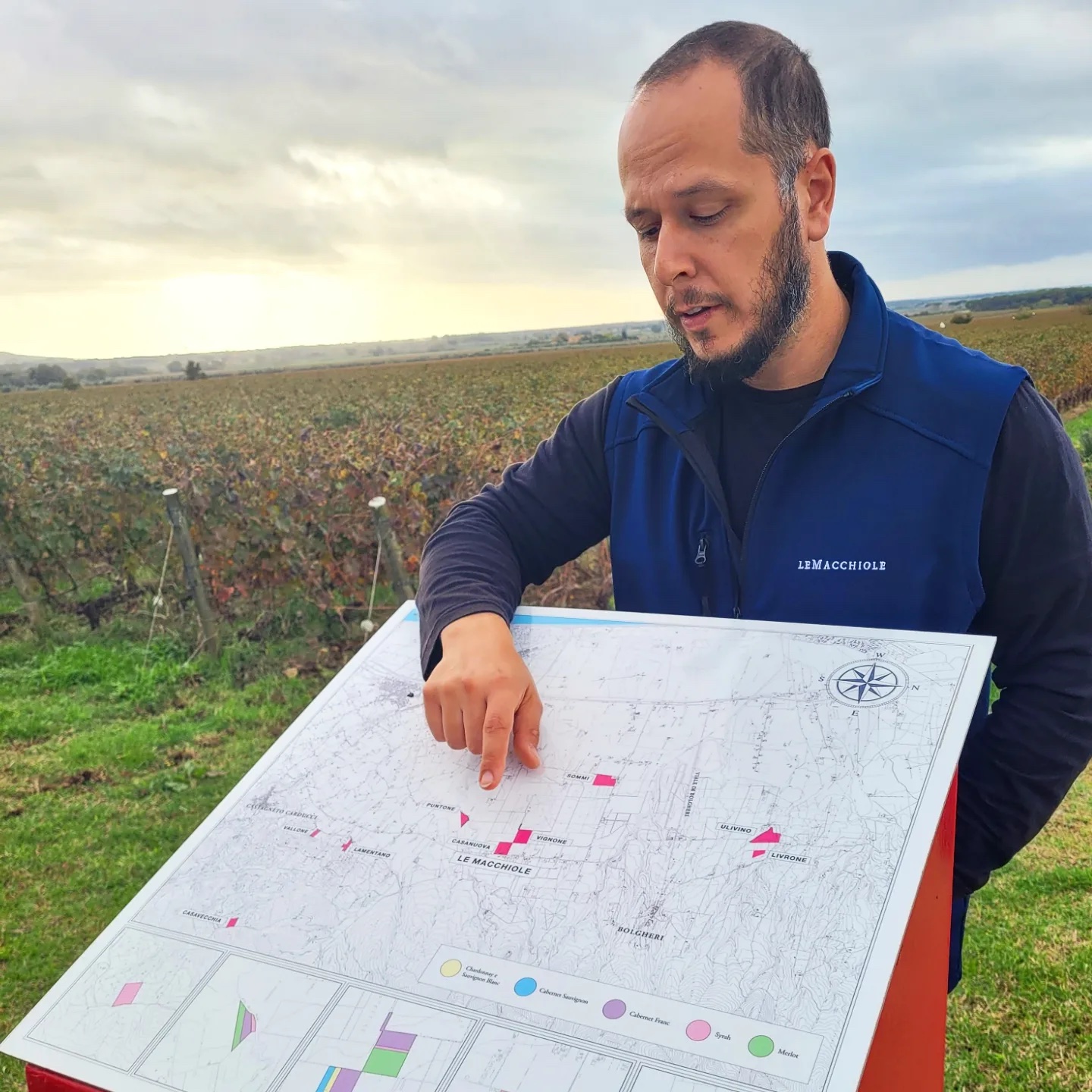
Elio Campolmi – Le Macchiole
An optical sorter was introduced in 2023 and the cement vats date to 2003. Some Cappello Sommerso (Piedmontese-style submerged cap) is used in some of the fermentations. Pours included a mini vertical of Paleo (cabernet franc), Scrio (syrah), Messorio (merlot) and Bolgheri Rosso. Fascinating to witness the transformation from argile stratificata and salty sea breezes into these wines of tension and emotion.
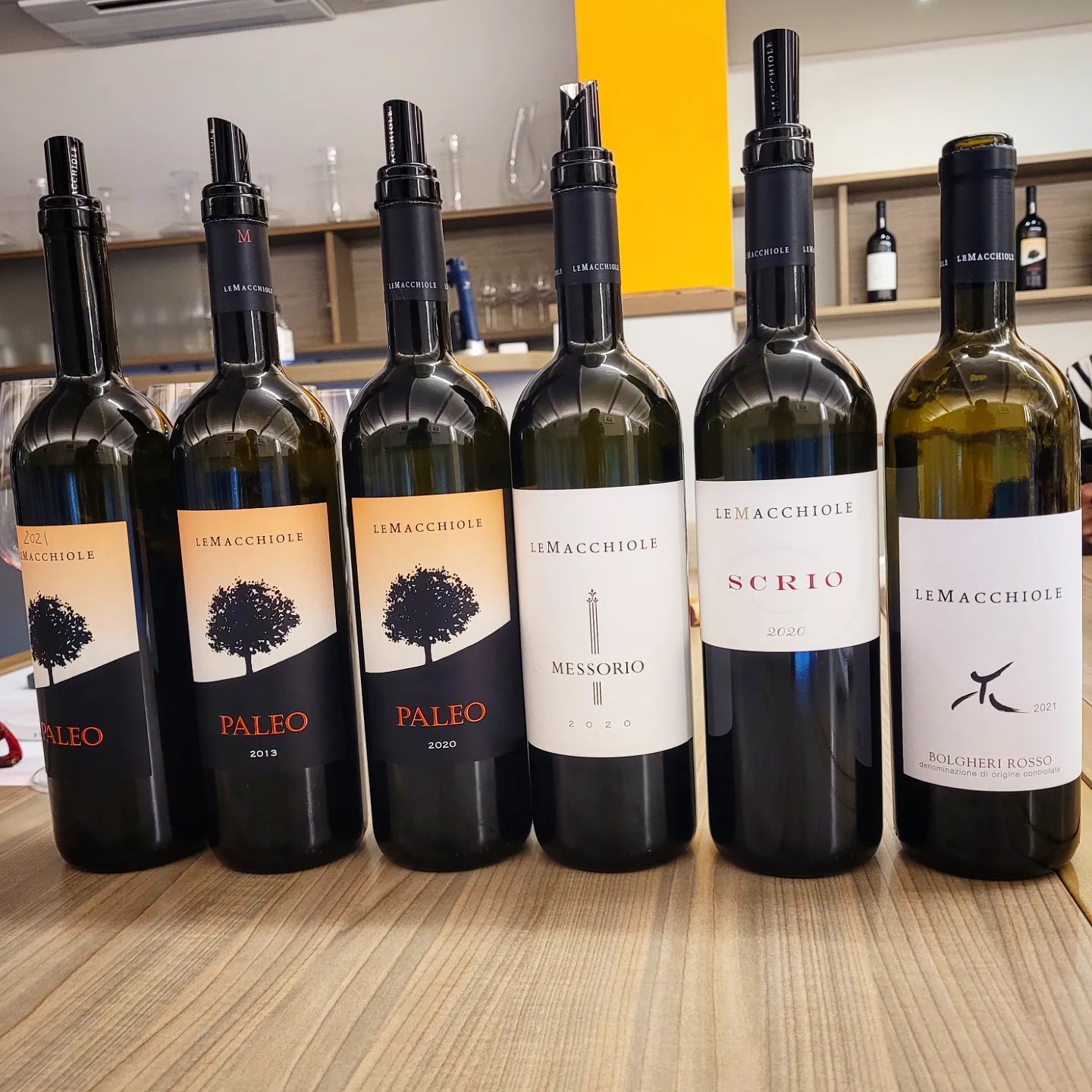
Le Macchiole Bolgheri Rosso DOC 2021
What Cinzia Merli introduces as “our Bolgheri blend, a wine that is the “Classico” for the denomination.” Blends the four red varieties of Le Macchiole’s 32-33 hectares of vineyards, led by 55 percent merlot, then (15-20 each) cabernet franc and sauvignon, rounded out with (10) syrah. One of the more suave and refined Bolgheri Rosso from anywhere in the denomination with an aromatic tug between fresh roses and balsamico. Silky and yet for what feels like the first time is it’s perfume, structure and freshness that do everything to make mouthfeel the lesser of this wine’s many sensations. Plenty of emotion however and while this is a very drinkable wine it’s so much more than that. The syrah grows on the hill where it receives even more marine saltiness on its skins then it would were it planted on the flats. And so it acts as both salt and pepper seasoning the merlot and cabernets. Everything is elevated and captured in this vintage, culminating in a thorough and captivating Rosso. Drink 2024-2028. Tasted November 2023

Paleo – Le Macchiole
La Macchiole Paleo 2021, Toscana Rosso IGT
Bottled quite recently, around six weeks ago so this is kept in mind. That said the cabernet franc (especially) of Le Macchiole may be the most aromatic of all in Bolgheri so there is little shock this youthful 2021 is right there from the beginning. Yes it needs some air and agitation but it’s also 2021, an impressively structured vintage that dresses and acts as linear and vertical as any of the recent past. The tannins are all fruit and no wood, as are the spices and seasonings. Fruit is a hyperbole of itself, a double entendre of 2020 multiplied upon itself to entertain as 2021. Exotic and salty, depth of entangled clay out of which friable rock sears into memory and cuts through like a diamond for a red Bolgheri wine indelibly stamped from place. The potential here is palpable, to create feelings and elicit emotions but in the end the salinity really incites tension and tang. Wow vintage of Paleo. Drink 2026-2034. Tasted November 2023

La Cantina – Le Macchiole
La Macchiole Paleo 2020, Toscana Rosso IGT
Paleo takes up where the Bolgheri Rosso leaves off and exaggerates perfume, not quite times 10 but surely to a few squared degrees. The red to purple fruits, fresh roses and balsamic are hyperbolized and made beautiful to great end. Add in elements reminiscent of pencil lead, graphite and dried wild herbs but here the 100 percent cabernet franc is what Cinzia Merli calls movimentata. Paleo was once blended with cabernet sauvignon and sangiovese but is today a solo act from the various cabernet franc plots collectively acting varietally intense if also obvious as it gets. The key is to find equilibrium In the wine’s density and 2020 could not have been the easiest to decipher. Warm vintage overall, especially in concentrated times if thankfully ideal through harvest. The wood is generous and important but it is already melted, integrating and at this stage acting as seasoning for welcoming cabernet franc. Will be ready for the commercial market in March of 2024. Drink 2025-2030. Tasted November 2023
La Macchiole Paleo 2013, Toscana Rosso IGT
Nearing 10 years of age and showing remarkable freshness from a wine that at the time was 100 percent cabernet franc, dating back to 2001. There is zero surprise to find this wealth of generous aromas because, well this is a wine made by the aromatic genius that is Le Macchiole. Very special in that varietal is not only captured but exulted, made the star and preserved for decades so that wines live long and stay true to their nature. A vintage of heat but also really long maturation, of mature tannins and wood usage in 2013 that was of a heavier toast and much more involved. Everything began to change beginning with the 2015 vintage but the truth is the kind of toast and sweetness of oak back then did in fact serve this wine well so that it can show the way it does today. He who would complain for a lack of freshness would not be paying attention to detail. Interestingly this vintage finished at 15 percent alcohol while the 2020 and 2021 fall in at 14, give or take. Drink 2023-2026. Tasted November 2023

Cabernet Franc – Le Macchiole
Le Macchiole Scrio 2020, Toscana Rosso IGT
Once again the wines from 2020 were a challenge but as long as the work was put in every day from vineyard through cellar it would become the friend of any willing and committed producer. This is Le Macchiole’s strength, with a team from field to table that worked so bloody hard to make are freshness and aromatic beauty stand front and centre in the wines. The exotic perfume of Scrio screams from the glass, of cinnamon, nutmeg out of 100 percent syrah that is the micro of micro productions. It’s syrah of Bolgheri so anything but easy though the salty skins from sea breezes blowing across the hills where it his cultivated make for a most uniquely seasoned varietal wine. The terroir is argilla stratificata out of which Galestro from schist manifests at the surface of the soils. Imparts a richness cut by slaty mineral in the syrah. Most curious and unlike any that you might think you already know. The rotundone is there but it comes with a twist. Will be ready for the commercial market in March of 2024. Drink 2025-2029. Tasted November 2023

Vineyard map – Le Macchiole
La Macchiole Messorio 2020, Toscana Rosso IGT
Combine the aromatics of Bolgheri Rosso, Paleo and Scrio to arrive at Messorio because the fresh roses, balsamic and exotic spicing are all here in this 2020. But there’s more, of fresh herbs and dried hillside brush before you realized you’ve been nosing this wine for 10 minutes without having yet taken a sip. Then the linearity meeting richness of flavours, palate attack and texture all add up to the most accumulation of any wine inLe Macchiole’s profile. Graced by and soaks up more new wood than any of the other wines yet receives it all so well, integrates the barrel into the fruit of the wine’s labour and exacts structure like no other. An impressively composed, compressed, accumulated, vertical and intense 100 percent merlot that delivers grape, place and handling with substantial distinction. Finishes with a return of fruit freshness to reinforce the idea about a Messorio that will travel far and long. Will be ready for the commercial market in March of 2024. Drink 2025-2034. Tasted November 2023
Tenuta Argentiera
Tenuta Argentiera
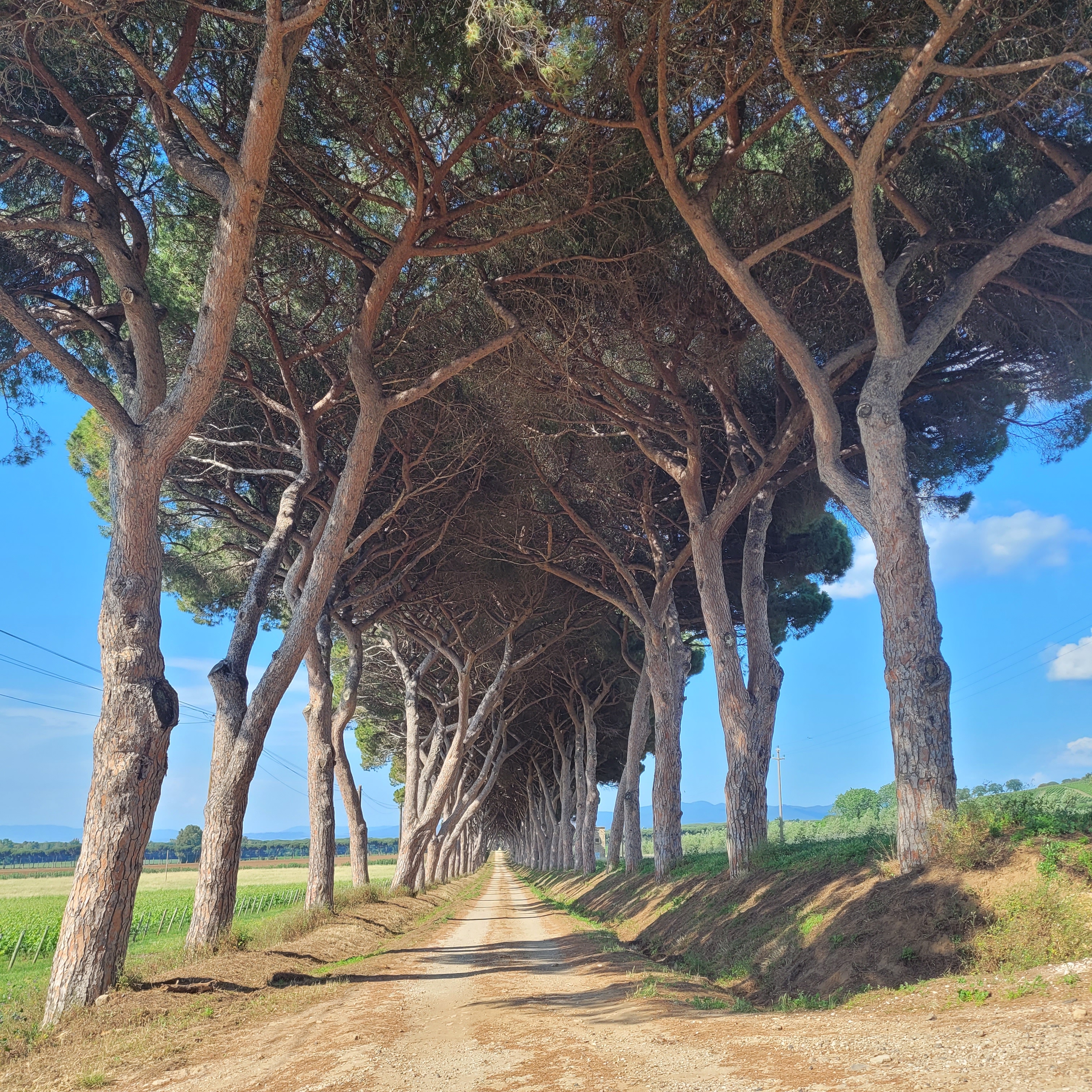
The name Tenuta Argentiera derives from ancient Etruscan silver mines and the peninsula’s first metallurgy. The wine estate is a project that began in 2000 by the Fratini brothers at the southern end of the Castagneto Carducci area on the site of the ancient Donoratico Estate. Formerly the summer home of the notable Serristori family of Florence, the estate has been owned by Stanislaus Turnauer since 2015. The southwest oriented vineyards are 23 years old, on 84 hectares of a total 150 of the estate. Soils are generally Flysch and calcareous marine in origin. Today there are six base wines, down from what was once 40, namely because the team have qualified the cabernets and merlot into their cru sections. The syrah goes into 30,000 bottles of Rosé. Federico Zileri is Chief Executive Officer, Leonardo Raspini is General Manager, Massimo Basile is Sales & Marketing Director, Fabio Fedeli is Direttore Commerciale Italia and Nicolò Carrar is the Winemaker.
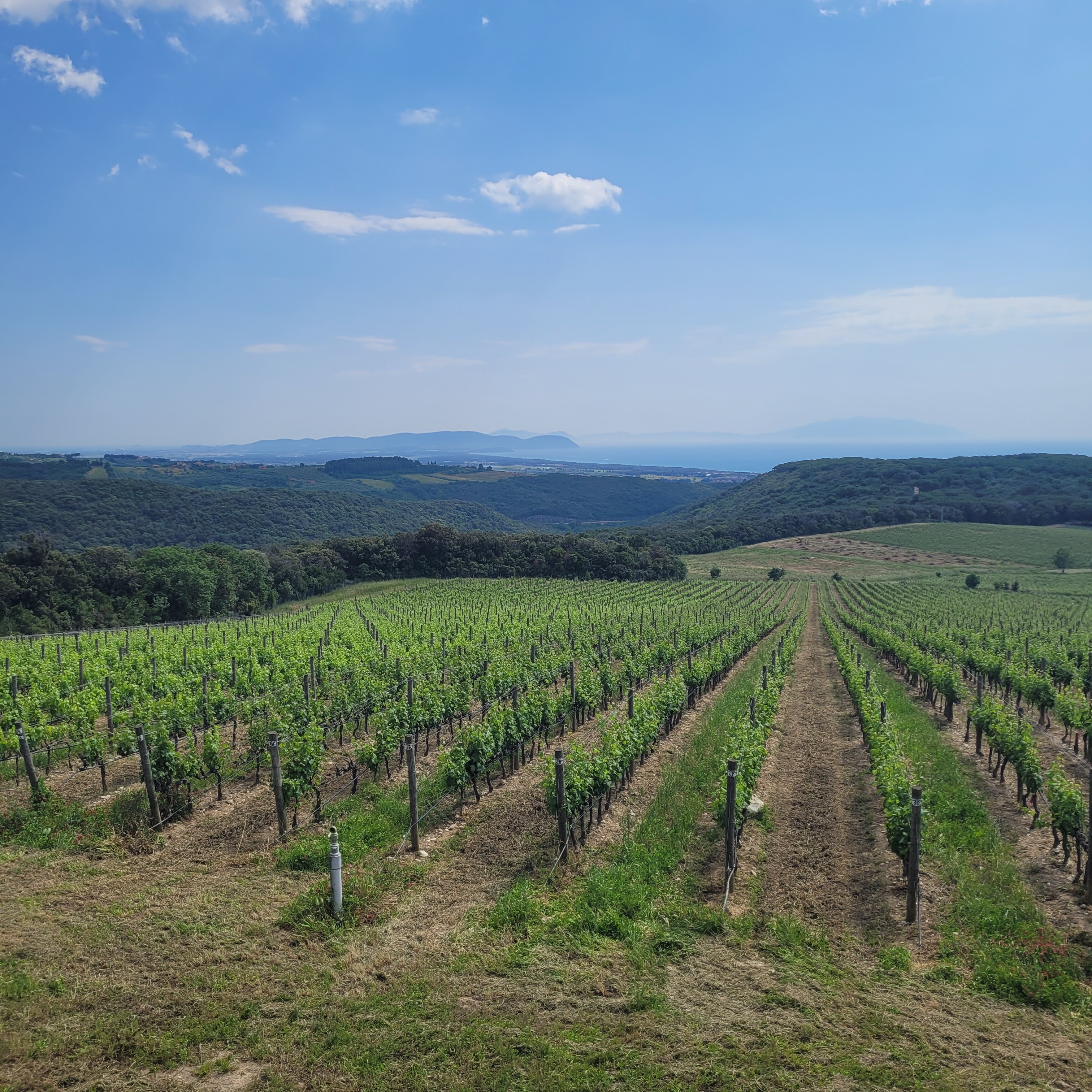
The vineyards of Tenuta Argentiera
Tenuta Argentiera Poggio Ai Ginepri 2021, Toscana IGT
Amazing freshness for a warm place, 40 percent each merlot and cabernet sauvignon, (15) cabernet franc and (5) petit verdot. Rich and herbal cool, not mint but certainly other locally scented verdancy. Fruit just seems to come away sweet and succulent. Tannins are never austere or even dry, the wine is all about these varietal aromas, even their green parts. Great vintage. A wine that just works on every level for so many markets. Drink 2023-2026. Tasted May 2023
Tenuta Argentiera Villa Donodoratico Bolgheri Rosso DOC 2021
Tasted side by side with Ai Ginepri, here with 45 percent cabernet sauvignon, 40 merlot and 15 split between cabernet franc and petit verdot. From a much more complex soil and merlot grows with the aid of water retention that also serves to exte the ripening season. The greens are still here but they should be and must be celebrated. They come from the geological flysch system of these old soils. So much texture and a cupboard of spice but also a structure that will begin to really open in two, better still three years time. The transparency of red fruit is a direct result the vintage and while it is young. Drink 2025-2030. Tasted May 2023
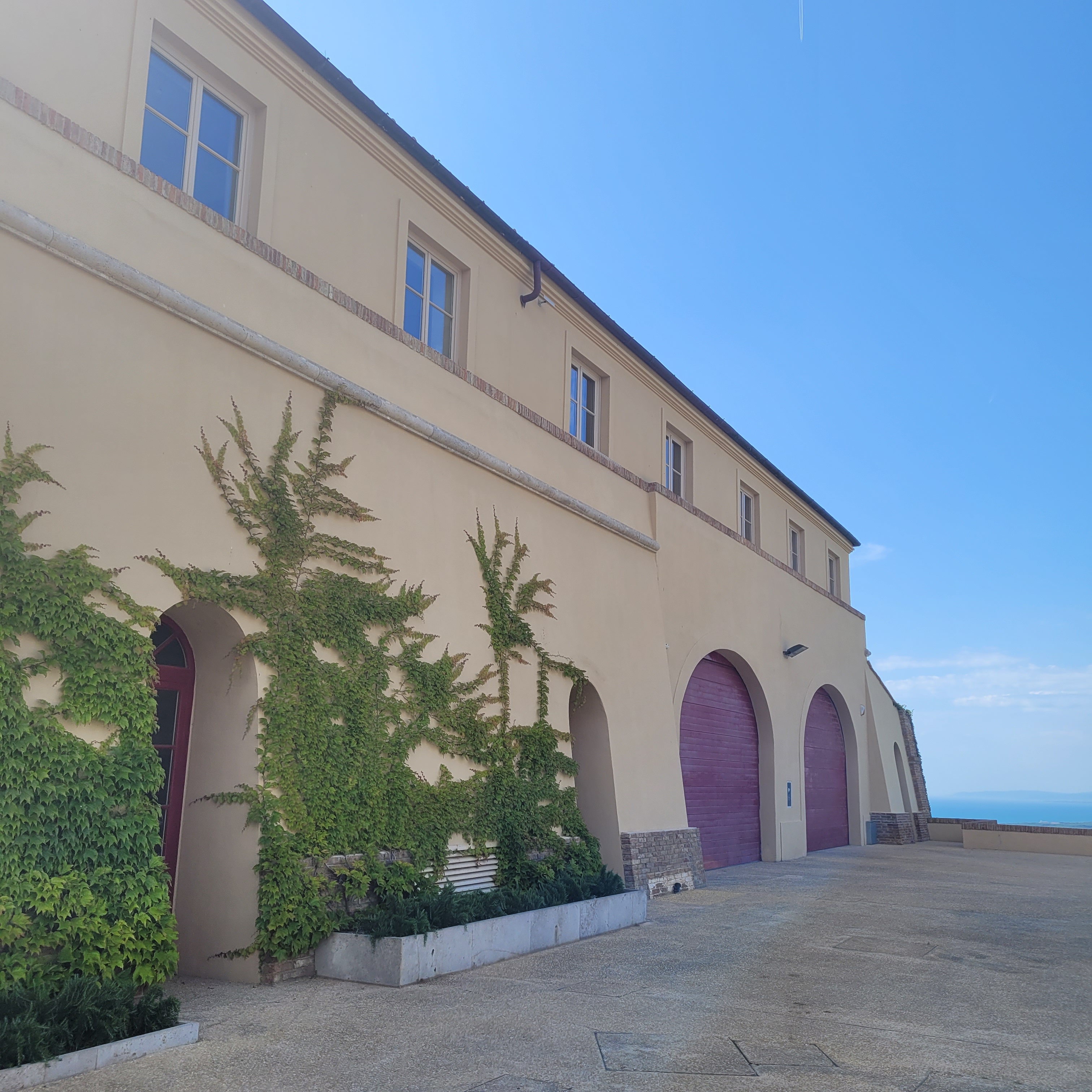
La Cantina, Tenuta Argentiera
Tenuta Argentiera Bolgheri Superiore DOC 2020
A “vintage with two souls,” first drought and not so much heat but then quick ripening in August, especially at the lower elevation growing merlot. September rains arrived and changed the ripening of cabernet sauvignon. Very ripe merlot and “classic” pyrazine cabernet sauvignon. Reds and greens and back again. But the delay of the cabernet made for elastic stretched tannins and combined with the merlot resulted in a true marriage of disparate parts. This is the sneaky one. Drinking well already and will so for 20 more years. Drink 2024-2030. Tasted May 2023
Tenuta Argentiera Bolgheri Superiore DOC 2017
Such a challenging vintage and yet Bolgheri found a way to succeed, as seen especially in this Superiore. Humidity was maintained in the soils despite no rain and yes, more than impressive freshness has been preserved. Acidity is not the best ever but it does perform solid yeoman works to extend the life and energy in this blend of 60 cabernet sauvignon, (35) merlot and (5) cabernet franc. A most floral vintage which is exciting and enticing. Drink 2024-2028. Tasted May 2023
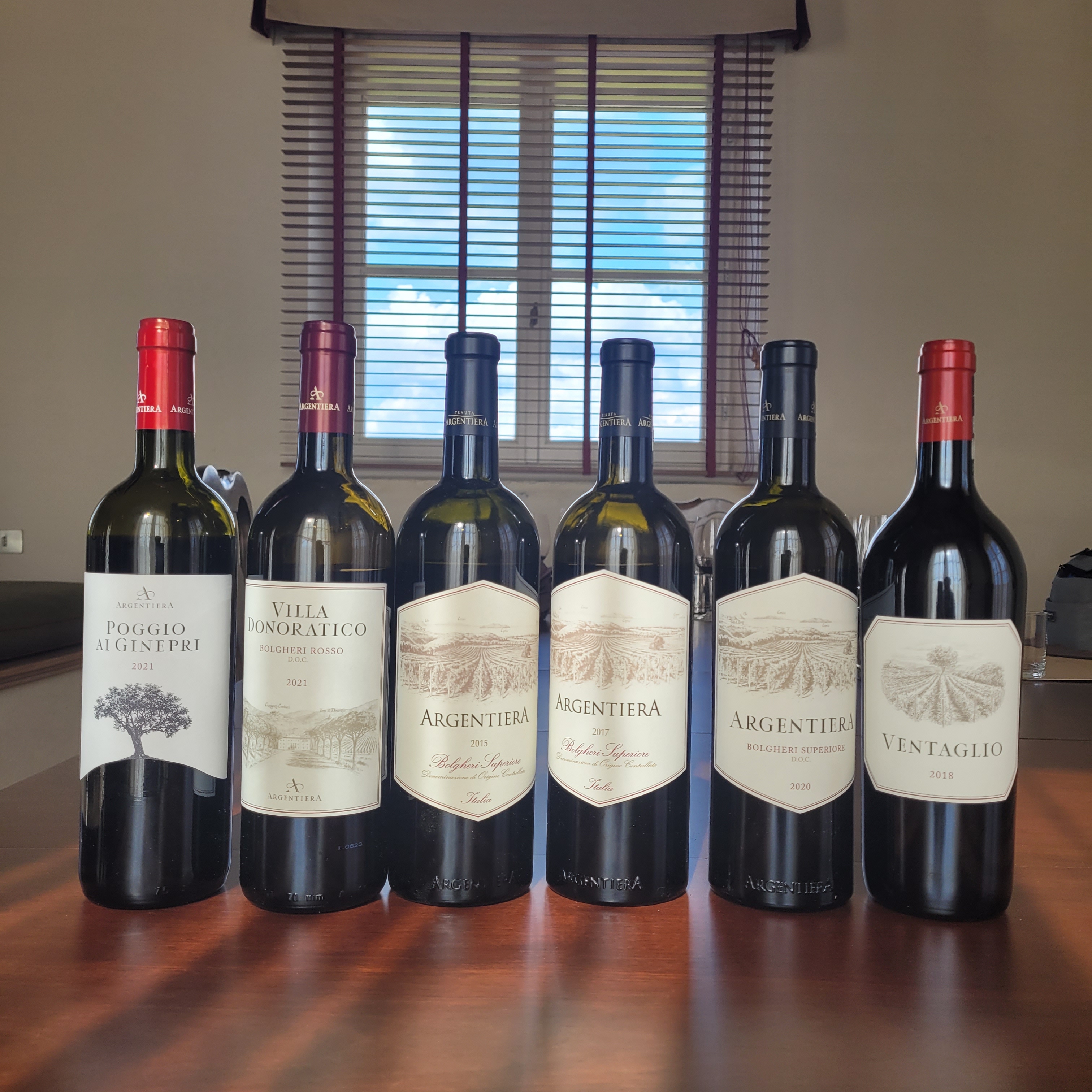
Tenuta Argentiera Bolgheri Superiore DOC 2015
A celebrated vintage in Tuscany and most certainly Bolgheri while 2015 ages gracefully with the greens still intact. ripe but not too ripe and more than ample acidity. The blend is 55 merlot, (35) cabernet sauvignon and (10) cabernet franc. The palate is where the acidity and piquancy really attack the back of the sides of the mouth. Great ambling length. Drink 2024-2027. Tasted May 2023
Tenuta Argentiera Ventaglio, Toscana IGT 2019
Amazingly aromatic varietal cabernet franc. Spice cupboard, liquorice, tar, roses and so much black tea and also olive. Herbal cool, some Amaro, the cabernet franc so specific to the place and the respect it so righteously deserves. No need to compare to anything Right Bank because the Franc does not act like this anywhere else but it is duly suited to these calcareous-flysch soils. Drastic and dramatic wine, vivid and full of energy, pulse and even some hypnotics. Great, great vintage. Wait one more year. 4,000 bottles are made from just one hectare. Drink 2025-2034. Tasted May 2023
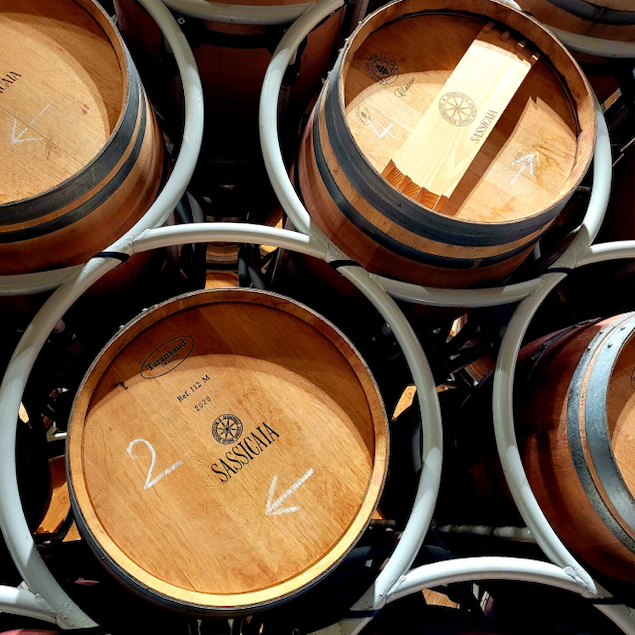
Barrels at Tenuta San Guido
Tenuta San Guido
The estate is 250 hectares in total, veramente un azienda enorme, with approximately 100 hectares under vine. A place famous not only for Sassiccaia but also Ciocco e Duna, le cicogne (storks) di Bolgheri. Each of the vineyards are cultivated specifically for the three estate wines, Le Difese, Guidalberto and Sassiccaia. Sangiovese is only used in Difese with cabernet sauvignon, cabernet franc and merlot for Guidalberto and Sassiccaia. The history is of two Antinori marrying two Incise (cousins) and this is why the two families have been linked for so long, especially for international distribution of their wines. Niccolò Antinori was at the centre of the transformation to major business activities.

Carlo Paoli – Tenuta San Guido
Each vineyard is a small parcel completely surrounded by forests and so harvest takes a long time, up to four weeks, usually moving from east to west, from the sea to the hills. Sassicaia is transferred back and forth between barrels for a settling of the sediments, to clean the wines and thus to eliminate filtration before bottling. This system went into effect withy the opening of the new cellar in 2008. Carlo Paoli, Tenuta San Guido’s General Manager and Production Manager has been with the estate since 2009.
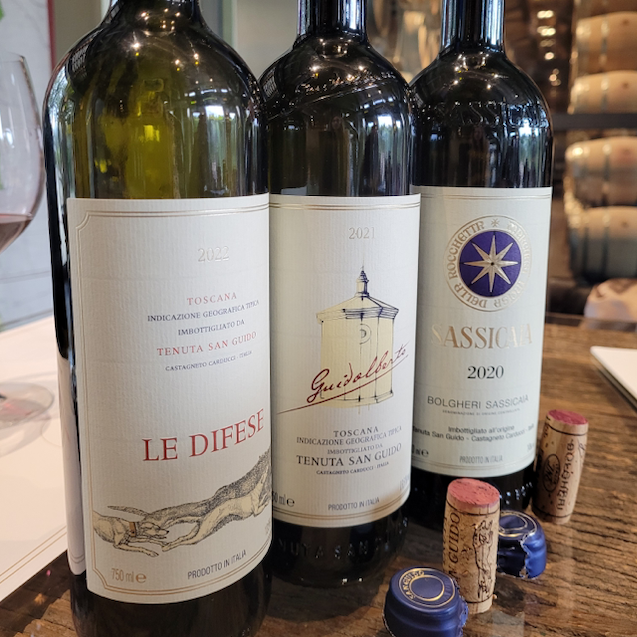
La Difese, Guidalberto and Sassicaia
Tenuta San Guido Le Difese 2022, Castagneto Carducci, Toscana IGT
The modernist blend of Tenuta San Guido and while it is considered by many as an IGT of thirds, the truth is 50 percent or more sangiovese qualifies Le Difese as its own entity, also because the vineyards that supply the fruit are cultivated specifically for this purpose alone. Carlo Paoli certifies 2022 as a vintage of excellent and harmony, no matter the heat because growing conditions, especially at harvest time were more than ideal. The ability to pick grapes over a month long period identified parcels and secured acidity to make ripe if balanced wines. There is an energy and a fervour to Difese, a spry aspect and a lovely swirl of liqueur present and fortuitous as Bolgheri in the wine. The season’s warmth puts the sangiovese in blood orange territory and overall there is a serious juicy quality to the drinkability of ’22. Also the sensation of black olive and just that right amount of structure to carry this forward for an appropriate four to six years. Approximately 150,000 bottles are produced. Drink 2024-2028. Tasted November 2023
Tenuta San Guido Guidalberto 2021, Toscana IGT
No movement to speak of in fact the wine has gone a step or two backwards as compared to 70-odd days ago. At this time the knowledge of great structure and verticality are kept in mind to explain the grip, impenetrability and drying skins at the finish. Walk away and don’t come back for at least a year and preferably more. Last tasted February 2024
Hard not to see 2021 as a unique vintage and while Guidalberto may be viewed more as a second wine to Sassicaia then Le Difese is a third, there is a distinct feeling that it stands alone, especially out of a vintage like 2021. A season of warmth but after staggered starts before arriving at a fine conclusion. A vintage quite proper for Bordeaux varieties within a context that requires both ripeness and acidity to be captured. Those acids are very present in a Bolgheri (as IGT) wine that wears the local balsamic notes on its sleeve. That and a gentle swarthiness but also a sense of structure that is pliable, extendable and elastic so that the vision of this wine could very well be that of a decade and a half. Guidalberto Gherardesca planted the cypress trees on the estate, which incidentally stands alone and away from Sassicaia, so even more reason to see this as a separate entity for Tenuta San Guido. Not forgotten is the constantly engaging perfume of Guidalberto, yet another reason to imagine the many possibilities and transformations that lay ahead. Drink 2025-2036. Tasted November 2023 in Toronto and November 2024 at Tenuta San Guido in Bolgheri.
Tenuta San Guido Sassicaia 2020, Bolgheri Sassicaia DOC
The cabernet sauvignon dominated Sassicaia is more demure and reserved in 2020, or at least that’s how it acts at this near three year mark post vintage. Less perfumed at this stage than the 2019 was showing when assessed in September of 2022 but there are shadows and meanings hidden in the chiaroscuro that will surely begin to emerge with the first warm days and weeks of 2024. Still there is great structure and architecture in the 2020 Sassicaia from its 27th vintage as a Bolgheri Sassicaia DOC to set this grand vin up for decades of slow, sure and incremental evolution. Succulence is noted in both the fruit and then of course the acids to remind us that Sassicaia is always the most elegant, secure and divined example of Bolgheri. It’s presence as an own DOC entity is not taken lightly nor is there any gratuity, certainly not from the 2020. As a vintage it seems 2020 was misunderstood early but as time goes by the excellence comes into focus one wine at a time. The advantage of making an example from something like Sassicaia explains so much and there will be a great future, likely past 2040 for this grand dame of Bolgheri. If Guidalberto 2021 is any indication, that Sassicaia will be one for the epochs. Drink 2025-2040. Tasted November 2023
Good to go!
godello
Bolgheri
Twitter: @mgodello
Instagram: mgodello

 Godello