A paradox of wine accents

Soil and birthplace predetermines both wine and language.
PHOTO: JUNGE REBE/FOTOLIA.COM

as seen on canada.com

Wine and language, two very complex organisms, first and foremost predetermined by the land from which they’ve come. Soil and birthplace. Climate is so very important too, in ripening fruit and developing speech. Weather and pedigree. Then there are the clones, genetic variants of a cultivar, or in language, slang and urban/rural diction. Variety and dialect. The study of wine (oenology) is very much like the study of language (linguistics). It’s all in the accents, in articulation and tonality, in aroma, taste and texture.

Related – More from the VINTAGES August 17th, 2013 release

Wine is generally divided into Old and New World styles, old school versus new wave. Though many New World wines have bested Old World stalwarts in blind tastings, are those results more than just a matter of taste? Old World varieties of a common region who have been cohabiting side by side exhibit a wide assortment of accents. New World clones from disparate backgrounds that have been living together for just a few generations show similar accents.

Old World stereoisomer stereotypes suggest that if your wine smells like vanilla, it was likely aged in American oak. Got flint and steel? Chablis. Brioche and yeast? Champagne. All this may be true but the grand wines within a particular growing area like Chablis, Champagne, the Rhône Valley, Burgundy, Bordeaux, Mosel-Saar-Ruwer, Tuscany and Piedmont might share and yet bogart an infinite number of subtleties and dominant traits, each specific to the monopole, villages, indicazione geografica tipica, or appellation of origin. Napa Cabernet, whether from Oakville, Rutherford, St. Helena or Howell Mountain, shares a commonality and decreased peculiarity so much more so than counterparts in the communes on the Left Bank in Bordeaux, including Paulliac, St-Estèphe, Pessac-Léognan, Margaux and St. Julien.

New World Chardonnay growing sites produce less delineation as compared to the various lieu-dites in Burgundy. Niagara is beginning to enter into an Old World state of mind, so now winemakers, and by extension wine geeks, are posturing over micro-terroirs; Niagara-on-the-Lake, Beamsville Bench, Niagara Escarpment, St. David’s Bench, Lincoln Lakeshore, etc. While many will disagree, if you consider growing sites as circles within a Venn Diagram, the shared subtleties get buried or muddled within the common areas. The lines may be drawn but the web is tangled.

In Old World locales such as France, Italy, Germany, Spain and Portugal, the sustained adjacency of wine regions ought to carry considerable weight against differences in accents, while in a vast but small growing area like Canada, the relative isolation of wine regions ought to encourage regional intonations. Yet comparatively speaking, there is a great deal of similar speak among Canada’s various cool climate wines. So, the question begs. Has the maturity of Canadian vines and its isolated industries increased or decreased the diversity of dialects?

If you stood with one foot in a Niagara vineyard and the other in Prince Edward County, you might be disappointed to find that the geology, climate and wine accent are nearly indiscernible. A wine patriot might disagree with that statement with reverence or indifference, yet the average wine consumer would be hard pressed to intuit the subtlest of idiosyncrasies. Even in the case of, let’s say, the temperature disparity between a St. David’s Bench vineyard and one from the Queenston Road, as a winemaker, who are you speaking to anyway?

The wine world has attempted the vinous equivalent of heteroglossia, “a blending of world views through language that creates complex unity from a hybrid of utterances.” This heteroglossia is an abstract convenience for the benefit of geographical oenophiles. In the New World (especially), we are dealing with huge generalities. To say that each viticultural area is singularly unique from another is to suggest that one region’s accent starts where another one ends. This is simply not true.

The argument is no longer about good and bad, natural and synthetic, Old and New World. We’re not talking about a Roman Paradox here. In a short period of time it seems we have gone from saying “there’s a remarkably great deal of homogeneity in wine today” to now, “some wines are so over the top they could only be from that place.” A recent California Pinot Noir, heretofore known as “he who shall not be named” laid insult and depression upon a group of tasters. Pushing 16 per cent alcohol by volume and thicker than a McFlurry, this Pinot could not have been from just anywhere. Only the hot California sun and heavy winemaker’s hand could have produced such an utterly undrinkable, faux-chocolate, simulated berry shake.

Special thanks to Bill Bryson, who’s good read “Mother Tongue” was the inspiration for this column. Here are six examples of really fine wine, from the Old and the New World, each expressive of a particular set of accents, out of a specific place.

Clockwise from left: André Blanck Pinot Blanc Rosenberg 2011, Pillitteri Estates Viognier 2011, Daniel Lenko Estate Winery Old Vines Chardonnay 2010, Greenlane Estate Winery Cabernet 2010, Zema Estate Cluny Cabernet Merlot 2008 and Château La Croix De Gay 2009

André Blanck Pinot Blanc Rosenberg 2011 (626606, $14.95) is high on lime citrus and heavy in stones, so much more so than in ’09 and ’10. Green apple in tart tonality, lean and mean.  Much juicier and riper to taste, with the faintest lees note to ground it firmly on Alsatian terrain ferme.  Love this designation. Same vintage release from a year ago.  89  @drinkAlsace

Pillitteri Estates Viognier 2011 (330894, $19.95) from 20+ year old estate vines is really quite pretty. Honeysuckle and white flower aromas with a taste of honey dew, tangy mango fruit, creamy and soft, and  a hint of white pepper.  Will look for it to flesh a bit in a year or so.  88  @Pillitteriwines

Daniel Lenko Estate Winery Old Vines Chardonnay 2010 (352328, $22.95) punches its ticket to Niagara stardom but a toast and punch down period is the requiem to mellow before the fruit can truly and fully be assessed. It’s certainly large, inviting and warm, a cedar cottage with its hearth flaming and crackling. Borrows a page from Quarry Road’s handbook and takes risks, if ambitiously over-seasoning a bissel. The late buttery seafood note is striking and just makes you want to suck back a bucket of claw. Must pay heed to Lenko’s uncompromising winemaking. Were you to ask me what 10 Ontario Chardonnay would I buy, in any vintage, to study, follow the evolution and ultimately learn about cool climate Chardonnay, this Lenko OV 2010 would be a must.  91  @daniel_lenko

Greenlane Estate Winery Cabernet 2010 (winery, $14.95) combines Cabernet Franc and Cabernet Sauvignon (80/20) fruit in demurred Niagara/Vineland modulation for full, soft and silky effect. Black pepper in a key of fire-roasted sweet capsicum, anise and gun flint are met by the plasticity of black and red berries and cherries.  Deal.  88  @GreenLaneWinery

Zema Estate Cluny Cabernet Merlot 2008 (325910, $26.95) hollers modernity, in oxy-toffee, blueberry pie, eucalyptus and smoldering earth. Bordeaux fettle yet GSM-like in mineral meets lush fruit.  Frantic verve in acidity, crazy actually and certainly no fruit bomb. Almost citrus spiked, punchy and grainy on the finish. Requires patience. Intriguing Coonawarra.  90 @ZemaEstate

Château La Croix De Gay 2009 (192955, $51.95) is flat-out delicious. Grilled meat, licorice, big black fruit, raspberry, Merlot to the max and yet a very affordable Pomerol ’09. At $52 you may not find a better deal. Tannic heft deep as a coal mine, where mineral meets herbal bondage. Very long and true.  92

Good to go!

B.C. Wine part two: Eat, drink, love Vancouver

PHOTO: MICHAEL GODEL
Stanley Park beach

as seen on canada.com

L’Abattoir, 217 Carrall St., Gastown, Vancouver, BC V6B 2J2 (604) 568-1701

Some restaurant experiences leave a mark. A night at L’Abattoir inks an indelible, permanent tattoo. Located in the heart of Gastown between Gaoler’s Mews and Blood Alley, the buzzing Vancouver resto is self-described as “French influenced West Coast fare.” My take was this:

To be fair, perspective is often limited to a single night’s snapshot but the staff and service want not for honing. Palate expanding cocktails break ice. Ministration pleases in perfect pace and pitch. Post-minimalist wine list dotted by just enough global diversity and local accent indulges comfort zones. Sommelier Robert Herman, while busy in occupation and clearly gliding confidently within his domain, did so right by me. First by pouring a tiny lot, rare Okanagan and then a monopole white Burgundy, punching so far above its pedigree.

Chef Lee Cooper’s canvasses are like tectonic, subterranean plates. Each dug in beneath the crust, reaching deeper layers, uncovering a treasure here, a fossil there. Memorable and sublime experience. Mean it.

PHOTO: Michael Godel
L’Abattoir kitchen

Domaine Michelot ‘Clos de Montmeix’ Monopole 2011 (wine-searcher.com, $28.60) from the heart of Meursault village is enervetic and yes, Meursault-ish in all the right ways. Lifted by layers of limestone and grounded by clay earth. Rich, refined and refreshing vixen, “gorgeous and alone, face to face.” Impossible Burgundy.  91

PHOTO: Michael Godel
L’Abattoir Steelhead and Potato Salad

Poplar Grove Viognier Haynes Creek 2012 ($14/68) made exclusively for L’Abattoir (45 cases) is resplendent as an orchard of orange blossom. Harnessed intensity, suggesting Condrieu but expressing Okanagan inward and outward. Sweet, fleshy fruit mottled with aka or edible tree lichen as of the Ponderosa Pine. Savoury quality in Viognier really ties the flavours and textures of salty, chewy, crunchy and piquant together.  91  @poplargrovewine

Upon departing L’Abattoir, I found Gastown in the crowded throes of the final laps of the Grand Prix, Global Relay. Nothing like a bit of high-level cycling to send you home spinning.

PHOTO: Michael Godel
Global Relay Gastown Grand Prix

Cross the Burrard Street Bridge or cycle around False Creek, past Granville Island and find yourself in the quieter climes of Kitsilano. Kits Beach buzzes on a beautiful day and just in case there’s trouble, the fuzz are deployed in position.

PHOTO: Michael Godel
Vancouver Police, Kitsilano Beach

Fable Kitchen, 1944 W 4th Ave Vancouver, BC V6J 1M7, (604) 732-1322

PHOTO: Fable Restaurant
Fable Restaurant, farm to table, top, and Fable ‘Canned Tuna’

The name forms an abridge from farm to table, coined by Top Chef Canada contestant Trevor Bird. Enter Fable, the Kitsilano buy local, serve fresh, keep it chill eatery. Bird’s vision? “Sourcing local product and delivering great flavors in a fun and non-pretentious setting.”

B.C.’s wineries are more than well represented, thanks to Bird, Kathy Schleyer and Ron MacGillivray. The wine card affords ample opportunity to sample the Okanagan Valley. ‘Canned Tuna’ not so much deconstructs as coddles Albacore, to be playful, sweet, soft shale lifted by necessary Maldon Salt.

From left: Tinhorn Creek Gewürztraminer 2012, Pentâge Winery Gamay Noir 2012, Intersection Milepost Red 2011, and Liquidity Pinot Noir 2011

Tinhorn Creek Gewürztraminer 2012 ($18.49) from the sandy gravel soils of Tinhorn Creek Vineyard (Golden Mile) is 100% cold fermented in stainless steel tanks. Aglow in bright, band twanging ripe orchard aromas, makes you want to climb a tree and pick forbidden fruit. Intense flavours “gave my heart a throb, to the bottom of my feet.” Over delivers with the full intent to solicit early consumption. Sends you Up on Cripple Creek.  90  @TinhornCreek  @SandraOldfield

A most excellent appetizer I am convinced could offer repeated pleasure, once a week for a year is the “Spaghetti and Meatballs.” A study in luxe, calme et volupté. Duck, tender Tagliatelle and harmonious demi-glace demands a full basket of bread.

PHOTO: Fable Restaurant
Fable Spaghetti and Meatballs

Pentâge Winery Gamay Noir 2012 ($20) carries cherry in necessary Cru Beaujolais style spice and adds even more leagues of depth to the duck. A faculty of tobacco deepens the stratum, down to earth. Most righteous #GoGamayGo.  89  @PentageWinery

Intersection Milepost Red 2011 ($20) is 100% Merlot (Estate Grown) from Oliver, B.C. Impressive, direct and adroit red from such a young operation. A feeling of fine, friable tannin intersects ripe, erubescent maraschino.  88

Liquidity Pinot Noir 2011 ($24.90) is the pride of Okanagan Falls and despite a cool growing season gives fully and completely of itself. Relucent Pinot, working for Pickerel and for Slow Cooked Spring Salmon. Vivid violet mauve in bloom, approachable and delectable.  88  @liquiditywines

PHOTO: Michael Godel
Lynn Canyon, British Columbia

A great deal of eating and drinking needs to be followed by some quiet time in quiet settings. A morning in Lynn Canyon and an afternoon at North Vancouver’s Deep Cove does the trick.

PHOTO: Michael Godel
Deep Cove, British Columbia

Good to go!

A sound return to North Fork wine

Kontokosta Winery, Greenport, Long Island PHOTO: MICHAEL GODEL

as seen on canada.com

Just under I year ago I trekked to the western reaches of the North Fork wine region of Long Island, N.Y. I visited a few wineries on a spit of land between Long Island Sound and Peconic Bay, an area no wider than the geography between the Humber and Don Rivers of Toronto. Tasting sessions at Clovis Point and Palmer Vineyards opened my eyes to the exceptional wines that can be forged from such a rugged landscape and demanding climate.

I returned in 2013 to seek out wines made further east, in Greenport and in Southold. The former, Kontokosta Winery, is a brand new facility just opened in June, 2013 and the latter, Sparkling Pointe, a specialist of Champagne-style fizz. The common thread is winemaker Gilles Martin and a sharp view of the future for the region’s grapes. The wines of New York’s North Fork are piercing, intuitive and kind. They speak of the stark terrain, the abrupt and spontaneous terroirand the eleemosynary earth.

Kontokosta Winery

825 North Road – Rte. 25, Greenport, New York 11944

Brothers Michael and Constantine Kontokosta are the owners of Greenport Long Island’s newest and most easterly winery, alone in Greenport and one of few LEED gold certified wineries in North America. Situated on sixty-two acres, the winery boasts over a quarter-mile of Long Island Sound waterfront. The winery’s sustainable elements include reclaimed wood siding, 90% recycled-content steel, an enormous wind turbine feeding the property energy, xeriscape method landscaping and an organic community garden that support local non-profits.

PHOTO: Michael Godel Kontokosta Winery tasting room exterior

Beginning with the 2012 vintage, the winemaker is Gilles Martin who is rapidly gaining a reputation as North Fork’s go to consultant. The first vines at Kontokosta Winery were planted in 2002 under the guidance of the late Long Island wine pioneer Ray Blum. Cabernet Franc, Merlot, Cabernet Sauvignon, Syrah, Viognier, Sauvignon Blanc and Riesling produce 3,000 cases annually, with some bottlings currently on offer having been fashioned from fruit sourced further west, mainly near Peconic Bay. Eric Fry of Lenz Winery made the wines prior to 2012.

I tasted the wines on Canada Day, July 1st, a mere 18 days after the winery’s opening. Despite such a brief time period of public interaction, Miles Trautman ushered me through with precision and passion. Though I was certainly no John Rambo to his cool, calm and collected colonel, I did my best to gain a true picture of the brother’s philosophy to “combine the latest technological innovations with centuries-old traditions in the cellar to develop and ensure the best expression of the unique Long Island vineyard site.” And by the way, the First Blood reference is real. Trautman is related to the uncle who was the writer’s inspiration for the fictional Richard Crenna chatacter.

PHOTO: kontokostawines.com Kontokosta Winery

Anemometer White NV ($16) combines Sauvignon Blanc from two vintages. The goal here is Loire so for parochial intents and purposes it succeeds. The fruit does yeoman’s works through the albedo of white grapefruit and a citric acid shell. Refreshing and acceptably tart.  86

Sauvignon Blanc 2012 ($25) is both ahead of the curve and a harbinger for white vinifera North Fork expectations resulting out of the warm 2012 growing season. Blessed by the luck of an early bud break and wisely picked ahead of Sandy’s torrent. Intimates the tropical flavours of pollarded, fruit trees but also races with vitesse.  89

Orient Chardonnay 2009 ($17) makes use of non-estate purchased fruit from out of the Sargon Vineyard bathed in neutral French oak to achieve an opinionated Chablis termagant in green apple and chèvre. Tongue-tying and teasing metallic but rolls out no stones.  89

Rosé 2011 ($15) is uniquely 100 per cent Merlot and though its girth is diluted by the rains of Irene, the herbiage, strawberry and rhubarb more than make up for the lack of concentration. Made in a decidedly French, dry style. Works the vin de pays grape with ease.  87

Viognier 2010 ($25) excels beyond expectation from one of only two local vineyards extolling the virtues of Condrieu. A touch of tiger balm but certainly not OTT, warm cashew buttery, viscous and radiant. Terrific sense of balance at 13.8 percent out of the maritime vineyards of the North Fork.  91

PHOTO: Michael Godel Kontokosta tasting room

Anemometer Red 2006 ($19) is 100 per cent untrodden Syrah having already laid down long enough to now give of itself. An angel of red raspberry, rhubarb, plum and loose tannin marked by lit charcoal. All told it brings Greek reds to mind, like Agiortiko. “Don’t let me hear you say life’s taking you nowhere.” Cool Syrah from young vines living beyond its golden years.   89

Merlot ‘Blum’ 2007 ($19) from the late grower’s Ackerly Pond Vineyards achieves toothsome mouthfeel from solid brix and 13.3 per cent Peconic Bay fruit at the hands of the local Long Island AVA pioneer. Here French oak imparts generous vanilla and spice and an ever so slight coat. Sinewy stickum from unresolved tannin settles and fleshes out while in the glass. Ends with a pretty, floral and feminine note. Just now beginning to fade, like the sun over the sound.  89

Merlot Estate 2007 ($29) elevates to 13.9 per cent in estate fruit, seemingly more masculine than the Blum. Richer, fuller in body mass, increased in concentrate.  Akin, if I may, to IGT Merlot, not quite Masseto but Super Tuscan (in hopes and dreams) nonetheless. Struts in increasedstrada tension, acidity and tannin. Less agreeability, more ageability.  90

Cabernet Franc 2007 ($29) remains dark and mysterious under the canopy though light creeps in on the edge of the forest. Spiralling cedars, bough smoke and vanilla from new oak have mellowed into a soft, approachable and aromatic cool climate Cab Franc. A red and black commingling of never too ripe fruit lingers on.  88

Cabernet Sauvignon 2010 ($22) achieves definitive varietal ripeness from what should be a harsh host environment. Soft red berries, an ebullience of ease and suave felt ready this warm vintage red for immediate and only immediate pleasure. Hard to coax much better out of the sand and grass.  88

Sparkling Pointe

39750 County Road 48 Southold, NY 11971

The winery can be found along Long Island’s North Fork Wine Trail and is the sole producer in New York State dedicated to the exclusive production of Méthode Champenoise Sparkling Wines. Fully estate grown seen 2007, don’t be fooled by the Brazilian carnival kitsch surrounding the tasting room. These bubbles are refined and serious. Sure, I will admit that Roederer EstateSchramsberg and Domaine Chandon make some terrific wines in the California sun but Sparkling Pointe speaks volumes towards yet another cool-climate region’s reason to make bubbles. If you lead them, they will follow. Look for more fizz on the North Fork in the coming years.

Champagne fans and founders Cynthia and Tom Rosicki manage 29 acres of vineyard, planted with the traditional Champagne grape varieties: Pinot Noir, Pinot Meunier, and Chardonnay. Their winemaker is North Fork’s super winemaking human Gilles Martin. Tasting room manager Kelsey Cheslock led me through a portfolio of six sparklers, half of which turned my head full round.

PHOTO: Michael Godel Sparkling Pointe

Brut 2009 ($29) goes long on tradition with 59 percent Chardonnay, 31 Pinot Noir and five Pinot Meunier, then bucks the trend by adding five per cent reserve wine into the mix. A fine mousse dissipates in haste from a bottle that had been opened longer than a while. Readied by oak influence with green apple flavour and tropical fruit from the added juice reserves. Despite the heavy rains of the vintage a citrus acidity carries on and the wine is remarkable dry.  88

Blanc de Blancs 2008 ($42) is 100 per cent Chardonnay noticeable in bread, biscuit and yeast. Four years spent on its fine yeast lees leads the toast to a bigger note than the plum fruit but a magnum of grapefruit and its pith are even stronger. Large in breadth and long on depth. Handsome B de B with a hairy chest. Selleckian.  90

Topaz Imperial 2010 ($37) is a dry, rosy Rosé composed of a 55/41 per cent Chardonnay and Pinot mix. Two and a half years spent sur lie here results in more toast, less tart and a vivid display of North Fork salinity. Watermelon, strawberry cream and a savoury note show the finesse, structure and balance of a wholesome, inviting and unintimidating natural wine. Sadly, there were none for sale.  91

Brut Seduction 2003 ($60) is a 51/49 Chardonnay and Pinot Noir mix and most clearly demonstrates the house style. Nuts, yeast bolts and an organoleptic finesse find their way inside this enigmatic fizz. A mature cuveé that would be interesting to taste blind against other house-blend Bruts, like Veuve or Bollinger.  92

Blancs de Noirs 2008 ($75) makes use of the year’s Pinot excess, is the first and only vintage of this Pinot man, with Meunier leading Noir 54 to 46. A copper patina, like a certain style of dry Rosé, shows off the contact with the red skins. Not quite as seductive like the 10 year-old Brut but this one is full frontal fruit with an accent of savoury, smoked meat, slow-roasting over shimmering red coals.  92

Cuveé Cardinal NV ($27) is a rare Merlot (66) and Chardonnay (34) blend, a one-off as the vines are now gone, replaced by Pinots. Flirty and forward with all kinds of fruit. Strawberry and rhubarb from the tangy Merlot, mango and apricot from the soft Chardonnay. Pushes sparkling boundaries, with a bowie knife in hand, in dramatic make-up and alternative dress. “You’ve got your mother in a whirl. She’s not sure if you’re a boy or a girl,” this rebel rebel.  87

Good to go!

See the humanity in real value wine

Glass of red wine PHOTO: FONS LAURE/FOTOLIA.COM

as seen on canada.com

There is no secret that Canadians and especially the wine consumer from Ontario, desperately want more choice. We want private wine shops that can specialize in niche products. We want all Canadian grapes to be granted passports to travel freely from province to province. We want access to real wines made by passionate human beings. We don’t want plonk.

Twice a month I taste through in excess of 100 hundred wines scheduled for release through VINTAGES, the fine wine and spirits division of the LCBO. On some days the wines, as a group, seem merely “better than dough.” On other days they cause one or more of my colleagues to say things like “this is the worst red wine day of my life.” The public knows that we have lagged for many years in wine retail. The public is ahead of the LCBO think tank on this.

Fortunately, or not, depending on how bright a side of life you look, more often than not I can look through and beyond the barbaric fringes and pick out a few primitive, unfettered warriors from the monopolistic offering. Once in a while the sea of humanity reveals itself and many wines shine, express their terroir, their somewhereness, their completeness. Here are nine estimable examples ready for immediate enjoyment, now in a store near you.

Clockwise from left: Delas Frères Saint-Esprit Cotes Du Rhône Rosé 2012, Le Gravillas Plan de Dieu Cotes Du Rhône Villages 2010, Marechal Brut Crémant De Loire, Domaine Des Aubuisières Cuvée De Silex Vouvray 2011, Domaine Schlumberger Les Princes Abbés Pinot Gris 2010, Château Lyonnat 2006, Château La Grange De Bessan 2009, Sigalas Santorini Assyrtiko 2011, and Bonaccorsi Viognier 2010

Delas Frères Saint-Esprit Cotes Du Rhône Rosé 2012 (224964, $13.95) is all sun and strawberry, almond and grapefruit tree scents after dark, so much spirit in the night. Salinity, markedly well-made and Muga-like. “Stand right up now and let it shoot through you.”  87  @HHDImports_Wine

Le Gravillas Plan de Dieu Cotes Du Rhône Villages 2010 (264648, $14.95) is simply a ton of wine for $15. That said, it takes extraction to the maximum and is yet blessed with a graceful level of gravitas. I wouldn’t want to drink too much of this, or any other similarly concentrated and heavily fruit- endowed Rhône but there is enough mineral and tar character to keep Le Gravillas honest.  88

Marechal Brut Crémant De Loire (141077, $15.95) foams frothy forth alive and expansive out of a yeasty starter, spins lightly on its A16 axis and revolves tightly wound around a citrus spindle. A working class Marechal, real and made for the people. Perhaps not La Grande Illusion but a wine that will “show the common humanity present across these divisions.” About as good as Méthode Traditionnelle sparkling Loire Chenin Blanc can be and priced to fly.  89

Domaine Des Aubuisières Cuvée De Silex Vouvray 2011 (57042, $17.95, SAQ, 858886, $17.60) speaks sedimentary cryptocrystalline vernacular to narrate its Loire Chenin Blanc story by way of a ripe apple and blooming rose style. Off-dry and dehydrated by the chert, that defining, dusty silex soil. There should be land-driven $18 wine available, always and everywhere.  89  @LoireValleyWine

Domaine Schlumberger Les Princes Abbés Pinot Gris 2010 (21253, $19.95, SAQ, 913897, $22.85) returns the storied Alsatian to top form after a confounding ’09. Cool climate, perfervid pear considers dressing up in lime-spiked papaya but chooses to turn on its heel to put on a sequin-dotted silk dress. Spot on, shimmering scintillant.  90  @drinkAlsace

Château Lyonnat 2006 (243774, $19.95) built upon 85 percent Merlot, 11 per cent Cabernet Sauvignon and four percent Cabernet Franc has ancient and learned Right Bank morphology written all over its sweet, scorched earth perfume. Has entered the zone, in toasted cedar and grilled beef on the bone integration but caramel and kindling are just around the corner. Get in while the coals are smoking. Reminds me of the good oak days.  89

Château La Grange De Bessan 2009 (321331, $19.95) is a poster child for affordable, humanistic Médoc, Left Bank, hyped vintage Bordeaux. Mutton on the reductive nose does not impose a run and hide. Purple flowers, parquet smoke and dark chocolate co-mingle with iron, calcium and limestone. Meat-friendly, complex, well-structured.  90  @BordeauxWines

Sigalas Santorini Assyrtiko 2011 (74781, $21.95) must be a fairy tale, a Boucles d’or narrative of structure and complexity from the first swirl and sniff. Airy, saline, built of rich, gold guts. Perfectly ripened orchard fruit and fresh-squeezed grapefruit. Taste it and there’s a joyous dance, a kefi bursting inside, like great Champagne but minus the bubbles.  92  @KolonakiGroup

Bonaccorsi Viognier 2010 (318121, $23.95) from Santa Barbara’s Happy Canyon is bottled, golden Californian sunshine, rich, unctuous and tanned. Will be accused of being obnoxious, bellicose, even Sisyphean, but she and I don’t care. Spicy, candied yellow apple, sappy, honeysuckle scent meets an efflux of buttery cashew, like toasted Chardonnay crossed with aged Chenin. Grand Cali Viognier.  91  @jbonaccorsi

Good to go!

The year of drinking better wine

PHOTO: ONDREICKA/FOTOLIA.COM

as seen on canada.com

“I don’t mind the red wine or the pick-up line as long as it’s cheap.”

Only two days into the New Year and already the familiar refrain replays. So much talking up the wrong vine. That heinous recurrent smoke and mirror theme blurring the path to righteous wine.

VINTAGES January 5th, 2013 Release

In December caution gyrates in tossed abandon, swirling figure eights in the wind. Industry folk bear witness to a wild meritage month of over-spending and reckless wine activity. Then New Year’s is followed by a hangover that causes a confused, annual parade of resolutions. So many swear away indulgence and when it comes to wine, personal restocking gets stymied by rigid, penny-wise action. Know this ‘smart buys’ buyers and beware. You should never drink bad wine. Life really is too short.

Try drinking outside the box. Look to varietals and regions never before considered. Return to old favourites dissed for years. Broaden your wine mind. Take chances. Live a little. Your goal for 2013 must be to drink better wine. Here are five current releases under $20 to re-shuffle and reconsider in the New Year.

The grapes: Chardonnay and Viognier

The history: A South African twist on traditional Burgundy made unusual with the 5+% addition of a Northern Rhône white grape

The lowdown: Remarkably rich and robust for the price and at 14% abv it defies logic. And seriously, what’s in a name anyway?

The food match: Chinese-Style Steamed Tilapia

Bellingham Chardonnay With A Splash Of Viognier 2010 (295345, $13.95) is a chewy white, at first like bubble gum, with juicy fruit flavours that don’t quit. Melds butter into batter, slowly caramelizes and pops out toasty, seeking roast turkey. No Tom foolery here, this plugged in Wellington bruiser, Skinny Legs and All, sports a Jet Airstream design equipped with a battery that lasts and lasts.  87

The grapes: Tempranillo and Cabernet Sauvignon

The history: Stainless Steel fermented juice grown out of La Viña Cooperative in Valencia, at a range of altitudes from 300 to nearly 900 meters above sea level

The lowdown: 10% Cab elevates the Molet to mini, Super-Tempranillo status

The food match: Potato, Bacon and Gruyère Soup

El  Molet Tinto 2009 (305904, $14.95) goes optimum in freshness, ripeness and balance. A full complement of fruit; purple to red to black to blue. Vibrant, piquant, chalky and contused. Presses all the right Tempranillo buttons.  89

The grape: Pinot Grigio

The history: Euro trash wine often so hard to distinguish one from another

The lowdown: Hillebrand’s winemaker Craig MacDonald has come out and rolled a natural

The food match: BBQ Shrimp Grits, preserved lemon rouille

Trius Pinot Grigio 2011 (316414, $15.95) burnishes patina copper and works an unprecedented, osphretic angle for the Niagara Peninsula. Diced pear, lemon pepper, herbs and honey roll prodigally from the glass, pausing to allow for analysis and lingering longer than would be thought. Wholly unique and satisfying. Out of the shell Ontario white.  88

The grape: St. Laurent

The history: Varietal from Alsace, having made a stop in Germany before settling comfortably in Austria

The lowdown: Like Pinot Noir, this varietal sheens best by the light of day

The food match: Loaded Sweet Potatoes, roasted garlic

Rabl St-Laurent 2009 (301960, $15.95) is flat-out delicious, peppy, peppery and buoyed by bright flavours . The kind of wine that makes you wonder if it’s red or white, makes you “not sure if you’re a boy or a girl.” A rebel, pretty in a volcanic way, in full make-up, fresh yet firm. “Hot tramp, I love you so!”  88

The grapes: Sangiovese, Sagrantino and Merlot

The history: Sagrantino of Montefalco produces Umbria’s most iconic red. When blended (typically with Sangiovese), the result is the Rosso di Montefalco

The lowdown: Though Sangiovese leads with 70% in the blend, the Sagrantino’s blackberry and deep earth character cannot be held down

The food match: Smoked Paprika Braised Beef

Arnaldo Caprai Rosso Montefalco 2009 (303065, $19.95) simply has the ‘it’ factor. I’d walk over the hills and far away for this super-Umbrian. A high-flying Zeppelin of pencil lead and animale perfume balanced by ultra-ripe red berries, verging to rapturous black. “Hey lady you got the love I need.”  90

Good to go!

Eight big time value wines

PHOTO: SHOCK, FOTOLIA.COM

as seen on canada.com

Anyone who has dared to venture into wine stores within a week of Christmas knows that the pickings accelerate quickly from slim to none.

Related – VINTAGES, December 8th, 2012 release

Sure, January will bring new releases, but a paucity of good value wine at any time, let alone late December is tantamount to scandal. Staring forlornly into barren cubicles and languishing in long cash-out lines is no way to go through the holiday season. There will be no excuse for getting caught having to serve sickly-sweet, mass-produced plonk to hopeful party guests. As my friend Bob repeatedly reminds me, “it’s not an option.”

The plenitude on wine shelves over the next four days will make the other 361 pale by comparison. Get out there and stock up on the year’s last wine offer. Here are eight big time values to seek out from the final December release of 2012.

Eight big time value wines

The grape: Viognier

The history: Hails from the Northern Rhône in the wines of Condrieu

The lowdown: Alamos is the high-altitude, value offspring line from Argentina’s Laura (@MalbecLife) Catena

The food match: Mahi-Mahi with Blood Orange, Avocado, and Red Onion Salsa

Alamos Viognier 2011 (507830, $13.95) is pretty fly for a white guy. I get Acacia blossom, nectarine and sweet cream. A Viognier to fool as to its origin and sure it sets out to “do that brand new thing” but this is no wannabe. Huge value from winemaker Felipe Stahlschmidt and brand manager Jimena Turner.  Pleased to tout the value for both its phrenic and copacetic manner.  87

The grape: Grüner Veltliner

The history: White Austrian varietal known for its crisp, bright character

The lowdown: One of the most magnetic white wine producers anywhere

The food match: Potato Rösti, horseradish cream

Domaene Gobelsburg Grüner Veltliner 2011 (965368, $13.95) is bar none, the best value in its class. Buffet of exotics; mandarin orange, longan, rambutan. Simmering acidity, no bitter nut, pith or endgame. Not necessarily long, yet satisfying .  88

The grapes: Xarello and Riesling

The history: Traditional varietal from Catalonia, often used in the production of  Cava

The lowdown: Blended with 15% Riesling, the Xarello comes alive

The food match: Seared and Slow Roasted Salmon, crumbled chorizo, salsa verde drizzle

Terraprima White 2011 (303552, $17.95) shows off a pastel but vivid colour, sidled by scents of spring almond tree blossom and autumn arbequina olive. Riesling injection adds more verve in the mouth, indicated by lemon and lime concentrate. Will work all seasons for a Penedes siesta chill.  88

The grape: Chenin Blanc

The history: From dry to sweet, the Loire’s expression of Chenin seems limitless

The lowdown: This one leans far left, sapless, not socialist

The food match: Roasted Kabocha Squash Soup, caramelized apple, spiced pumpkin seeds

Marc Brédif Vouvray 2010 (685362, $19.95) perches high atop a parched, molecular hilltop. Bread starter nip promises stuffed pastry filled with friable, early harvest apples. Wonderful, classic and dehumidified Vouvray.  91

The grapes: Negroamaro and Malvasia Nera

The history: Salice Salentino tends sun-dried, caramelized and sometimes even burnt, but in a good way

The lowdown: Puglia has turned Salice Salentino into an international sensation

The food match: Smoked and Braised Beef Short Rib, dried fruit, carrots, thyme

Leone De Castris Maiana Salice Salentino 2009 (717959, $13.95) is full-bodied like its brethren and definitive of the dark-skinned Negroamaro. Appasimento-like raisin, Amarone quality, peppered by anise and finishing near oxy by sun-ripened tomato, black plums and stewed prunes. If long and slow braised beef convinces it to relax, it will work just fine.  87

The grape: Gamay

The history: From the vineyard of Les Vins Aujoux in the Côte Du Py

The lowdown: Cru Beaujolais, especially from Morgon, can be exhilarating stuff

The food match: Gamay Risotto, candy beets, white truffle oil

Jacques Depagneux Côte De Py Morgon 2011 (299925, $18.95) parlays Gamay in the prettiest purple package. Violaceous, like young and approachable Nebbiolo, or even Montsant. Hawkish and snappy in its play calling with a volcanic, mineral feel that elevates its game. “I’m glad I know you” Beaujolais, from it’s a wonderful life of Py.  89

The grape: Pinot Noir

The history: Unheralded (until now) winemaker Paul Battilana does his best Beaune impression

The history: Burgundy emerges as a limestone-influenced, light-bodied red in Prince Edward County

The food match: Turkey and Cranberry Pie with Sweet Potato Crust

Casa-Dea Pinot Noir 2009 (296210, $19.95) has won me over two years in a row as a top value Pinot Noir, not just in PEC, but in Ontario. Plush ruby robe, expertly extracted though it is so light on its feet. Less earth and clay than cousin Rosehall but this smells exactly as Pinot should. There is a minor note of fromagerie so consider pairing it so.  89

The Splurge

The grape: Petite Sirah

The history: Not to be confused with Syrah, this is the French varietal Durif

The lowdown: There is nothing remotely petite about this grape or this wine. Durif=énorme

The food match: Grilled Venison Loin, blackberry compote

Trentadue La Storia Petite Sirah 2010 (291047, $23.95) is massively concentrated out of the Alexander Valley in Sonoma County, as if it were packed with five centuries of the Italian American experience. Manages 14.9% alcohol with George Bailey-esque, heady grace. Tasted blind I commented, “if this is under $30 it’s an outrageous deal.” “Well whaddya know about that!!!. ” 92

Good to go!
See the wine for the money

<em>Photograph by NLo, Fotolia.com</em>

Photograph by NLo, Fotolia.com

as seen on canada.com

So much detail goes into crafting quality wines. Dedicated vineyard management, precise and timely picking of fruit, crushing, pressing, racking and fermenting. Not to mention blending, fining, filtering, aging and choosing closure. The winemaker has more decisions to scrutinize over than a Blue Jay’s general manager.

Related – more from the VINTAGES November 24th, 2012 Release

As a consumer you may find yourself caught like a deer in the headlights, bound by brands you blindly return to again and again. Or you might be lost in the details, challenged and unable to see the forest for the trees. When it comes to seeking value it can be difficult to sift through the lees and the slag. The key is to let the makers deal with the ABC’s, sidestep minutiae and focus on the big picture. Step out of your comfort zone. See the wine for the grapes, for the money. Here are five current release whites that demonstrate more than just the sum of their parts.

White wines for the money

The grape: Moschofilero

The history: From a Greek winery located in the heart of Arcadia, in the ‘Polyampelos Mantinia’

The lowdown: Organically grown and produced in a state-of-the-art facility

The food match: Greek Chicken Kebabs, red onion, oregano, tzatziki

Domaine Spiropoulos Mantinia 2011 (710970, $14.95) takes a salt bath in crystalline, Aegean waters. Honey, manna, aconite blossom and marmalade scents give way to a stoney, tangy soupçon sprinkled with feta. Crisp and pure Moscho.  89

The grape: Sauvignon Blanc

The history: Two years ago Richard Kershaw took over vinification from legendary Western Cape winemaker Mike Dobrovic

The lowdown: We’re definitely not in the Loire anymore

The food match: Poached Chicken Breast in Dark Chicken Demi-Glace

Mulderbosch Sauvignon Blanc 2011 (933424, $18.95) defines the saying plus ça change, plus c’est la même chose for South African SB. Unchained, unique, woody, herbal and welling with gregarious acidity. Brilliant SB actually. “Non-stop talker, what a rocker!”   89

The grape: Riesling

The history: Made by the Eden Valley terroir master, Louisa Rose

The lowdown: Find me a better Aussie Riesling under $20 and I will buy a boatload

The food match: Pork Fried Rice, sambal oelek, kecap manis

Pewsey Vale Riesling 2011 (686600, $19.95) shimmers an iridescent emerald-green on gold patina. Cracks like a whip straight in your face with lemon, lime and slate than lowers a sledgehammer of petrified wood. Snake-like Sasak fruit tang and acidity “goes dancin’ in,”  “builds that power” and lingers long after its skin has been shed.  91

The grape: Riesling

The history: The Berres family is recorded to have resided and worked in the vineyards of Ürzig since the year 1510

The lowdown: Ürzig and Erden are famous for their red slate soils and singular rock outcroppings that retain heat and concentrate the typical herb-spice of the wines. These are the only villages in the Mosel allowed to replant without grafting, as phylloxera was never able to penetrate the rock barriers.

The food match: Hu Tieu My Tho Noodles, shrimp, pork, baby bok choy

C.H. Berres Ürziger Würzgarten Riesling Kabinett 2009 (207274, $19.95) certainly represents its number 16 spot on the periodic table and bursts from the Bunsen Burner with wafts of coconut, lime and pear. Chemistry in an Erlenmeyer, puffing carbon smoke, petrol fumes and giving way to a lively palate of apple and glucose. Goes smoking, dry ice at the finish. Love this.   90

The splurge

The grapes: Semillon, Sauvignon Blanc, Chardonnay, Viognier and Gewurztraminer

The history: The most famous Ontario white blend

The lowdown: Low yields, late picking, a winemaker’s (J-L Groux) tour-de-force

The food match: Roasted chicken with Jerusalem artichoke & lemon

Stratus White 2009 (660704, $44.20) is a vision of glittering gold, an atomic L’Européenne white blend that reminds me of the Loire. The 31% Sauvignon Blanc stands out with green peas and pepper berries. Waxy yellow apple (Semillon), peach blossoms (Viognier), elemental viscosity (Gewurz) and buttery caramel (Chardonnay) all come into play. Tough acidity and autoroute length look to extend the life of this iconic Niagara-on-the-Lake white.  91

Good to go!

Rhône like the wind

Rhône Valley, France (photograph by PHB.cz, Fotolia.com)

Rhône Valley, France (photograph by PHB.cz, Fotolia.com)

as seen on canada.com

Related – VINTAGES October 27th Release

Golden October is upon us today like an Indian Summer, but I sense a mistral ready to blow through these parts. That can only mean one thing. This is a week to drink Rhône varietals. A tiger in autumn giving way to masterly winds calls for master grapes made by Rhône rangers around the globe. Here are four wines to look for on the October 27th VINTAGES release.

The Grapes: Syrah, Grenache and Carignan

The history: Minervois is a (primarily) red wine-producing appellation in the Languedoc-Roussillon/Midi region of France

The lowdown: From a négociant house in the South of France with a goal to discover the extraordinary quality and wealth of the region

The food match: Minervois Braised Beef Shanks, fresh tagliatelle, truffle oil

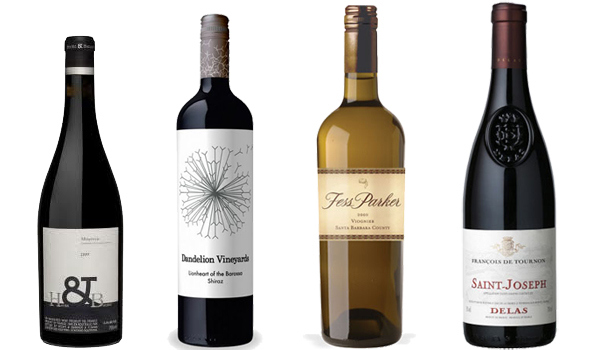
Hecht & Bannier Minervois 2010 (17764, $20.95) is yet another stellar selection from the appellation. Minervois produces piceous and proud Syrah-dominated juice marked by anesthetizing acidity. Van Gogh colour, black, blue and shimmering like a starry night. Mint and tarragon accent fruit surely helpful as an anti-oxidant and delectable to the artibeus obscurus88

The Grape: Shiraz

The history: What once was simply Rhône is now distinctly Australian

The lowdown: Old and bold Barossa vines make the brashest Syrah on the planet, especially these gnarly old ones

The food match: Beef Knuckle Croquettes, fig jam

Dandelion Vineyards Lionheart of the Barossa Shiraz 2009 (0167189, $20.95) is streaked with deep pastels of tropical fruit. At once Aussie licorice, then Sicilian blood orange and finally holy land pomegranate, date and fig. A troubadour, Coeur de Lion traveling the globe in search of adventure. Perhaps wicked for a Shiraz, this Dandelion is deeply rooted.  88

The Grape: Viognier

The history: Signature varietal from Condrieu in the Northern Rhône

The lowdown: Remarkable effort from 1960’s TV Western actor turned Santa Barbara winemaker

The food match: Roasted Butternut Squash Soup, caramelized apple, raita foam

Fess Parker Viognier 2010 (297523, $24.95) of bountiful bouquet is both aphrodisiac and sedative. Built like they used to, of  antique wood, nuts and bolts, to last and linger when the “appliances have gone berserk.” Head of its California class so pour a glass, turn up the radio and smell the Last Flowers90

The Splurge

The Grape: Syrah

The history: Pitchy varietal from the Northern Rhône, the region that expresses it most sincerely

The lowdown: Delas has discovered the secret Syrah formula to combine exceptional quality with tremendous value

The food match: Seared Lamb Saddle, fingerling potatoes, mint chutney

Delas Frères Francois De Tournon Saint-Joseph 2009 (17525, $33.00) is both militaristic and the stuff of gushing Renaissance literature. Serious Syrah and foxy, Faerie Queene.  Cardinal colour, striking and dreamy. Augustinian diplomat meets allegorical fantasy. Crushed berries, truffles caked by earth, sol de la foret. Built of elegance and power, “such endlesse richesse, and so sumptuous shew.”  92

Good to go!

Great whites, fall colours

The Road. Photo courtesy Kiowaman

as seen on canada.com

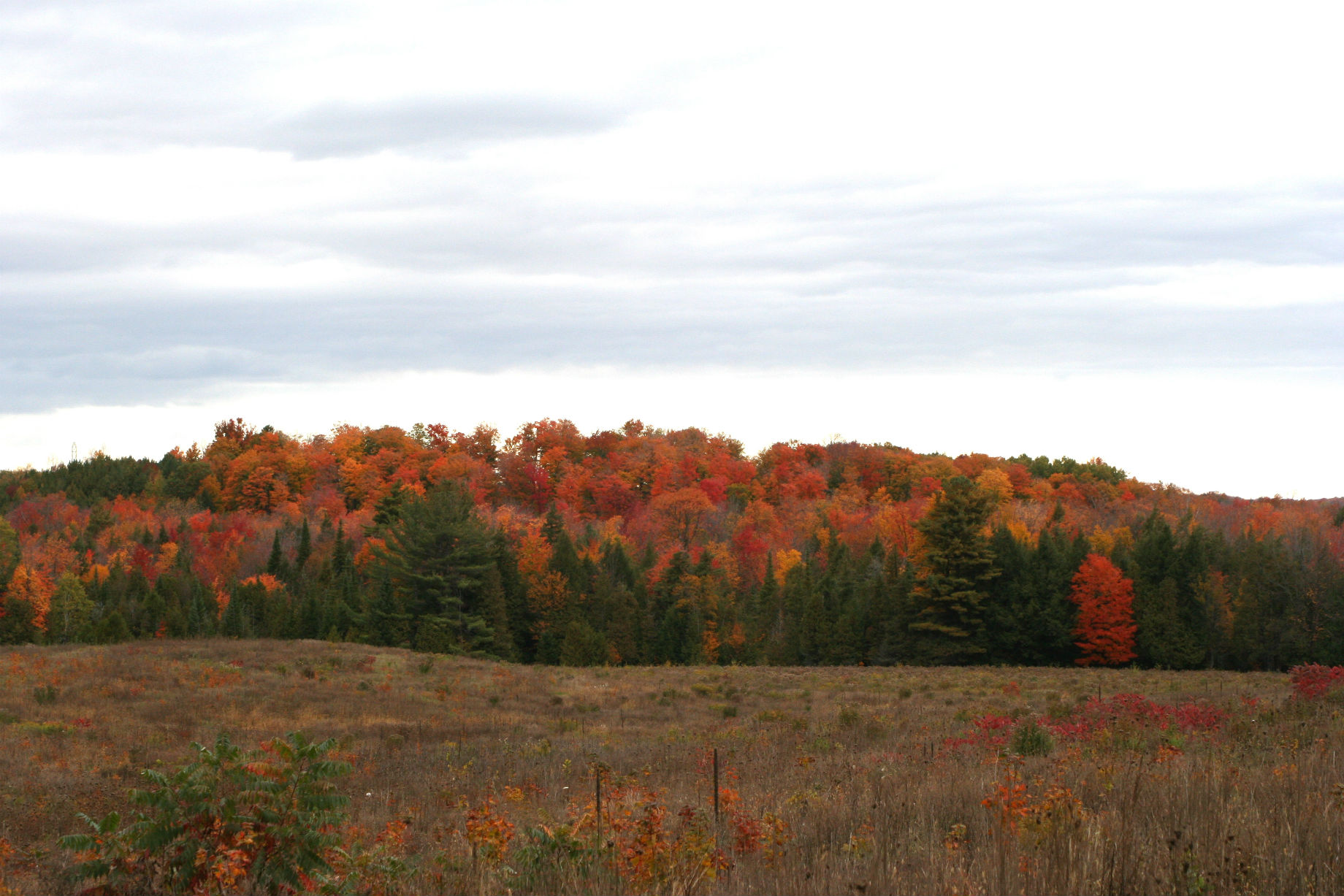
We are distinctly Canadian. In summer we paddle, navigating canoes through marshes, bogs and streams, traversing lakes and meandering down rivers. In the fall we are more likely to pack up the car and drive the road to northern climes, marveling at the changing season, elucidated by fall’s bright oranges, yellows and reds.

Our taste and choice in wine follows suit. When the heat is on we look to sharp, vigorous and thirst quenching white wines. Sauvignon Blanc, Vermentino, Garganega, Riesling and Chenin Blanc. Jumping forward a month or two there will be the need for full-bodied whites; Chardonnay, Semillon, Viognier, Marsanne and Rousanne. In the autumn interim we bridge the gap with Unoaked Chardonnay, Pinot Gris and Grenache Blanc.

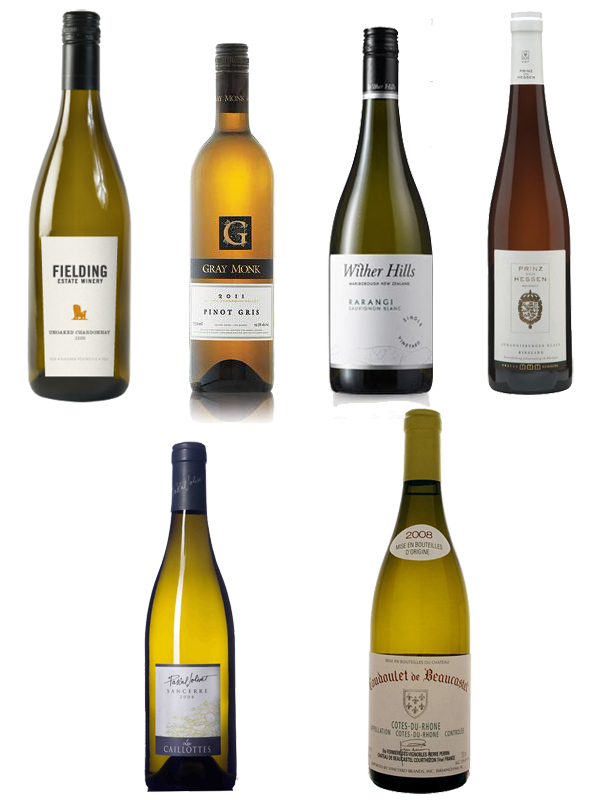
Here are six great whites for fall and for the early stages of the coming winter cold.

The grape: Chardonnay

The history: Take away the oak influence and Chardonnay goes crisp and clean

The lowdown: Winemaker Richie Roberts is without peer for this method, at this price

The food match: Perfumed Chicken Broth , chinese dumplings

Fielding Unoaked Chardonnay 2011 (164491, $13.95) continues to will clear water talent for value. A revivalist po’ boy made of ascetic industrialism; efficient, reasonable and utilitarian. Drinks well down on the corner, with enhanced juicy fruit. All orchard fruit, all the time. Very satisfying for the coin. “Bring a nickel, tap your feet.”  87

The grape: Pinot Gris

The history: A widely planted and signature grape for B.C. due to its ability to ripen in all three of the major regions: Island, Okanagan and Similkameen Valleys.

The lowdown: This Okanagan version may be sweeter and softer than others but winemaker George Heiss Jr. has struck gold with his 2011

The food match: Warm Pulled Soft Chicken Tacos, romaine, candied bacon, caesar dressing

Gray Monk Pinot Gris 2011 (118638, $19.95, B.C. 118638, $16.99) is a purling wind of crisp, sprite Mutsu apple, honey, molasses and castile. Certainly not the pepper and spice of its Alsatian brethren but manages to lift Okanagan prurience into B.C. repartee.  88

The grape: Sauvignon Blanc

The history: The ode to Bordeaux and the Loire is fading. Kiwi SB rocketed to stardom, went through a recession and has emerged a major player

The lowdown: Marlborough at its finest

The food match: Caprese Corn Meal Galette Tart, tomato, fior di latte and basil

Wither Hills Single Vineyard Rarangi Sauvignon Blanc 2011 (288134, $21.95) coagulates sea air above Cloudy Bay, arsenopyrite and carapace to imbue the Rarangi SV with density and intensity. A white grapefruit, lime and sugar syrup sangria void of gooseberry and asparagus. A breath of Marlborough fresh air.  90

The grape: Riesling

The history: Germany’s trademark grape

The lowdown: Spätlese means “late harvest” and as a Prädikatswein it carries with it Germany’s highest quality designation

The food match: Lemon Curd Short-breads

Prinz Von Hessen Johannisberger Klaus Riesling Spätlese 2002 (295659, $21.95) of graceful, gold regal colour is a dessert wine now, for all intents and purposes. The citrus tang of acidity persists and melds into what is now a scintillating, cider apple stage. A big thanks for aging this one for us, it’s now ready to go.  90

Fall Colours. Photo courtesy Kiowaman

The Splurges

The grape: Sauvignon Blanc

The history: From its true home in the Loire where the ancient refuse of the varietal is traced in the soil

The lowdown: Jolivet is king and this bottling is one of his finest made to date

The food match: Smoked shrimp, chive crème fraîche, garlic chips

Pascal Jolivet Les Caillotes Sancerre 2010 (287086, $31.95) starts out with subtle herbs and spice. Drifts to flint, pericarp and chalk then builds and lifts to edgy crystalline and jeweled gem. Accomplishes all its aromas and tastes with refinement. Flies away with the barrel on the longest flight imaginable for a Sauvignon Blanc.  91

The grapes: Marsanne, Viognier, Bourboulenc and Clairette

The history: Southern Rhône white blend from a house that makes some of the greatest white wine on the planet

The lowdown: Beaucastel’s “second” wine is at it’s very best in 2011.

The food match: Fresh Ravioli, sage butter, extra-virgin olive oil, reggiano parmesan

Château Beaucastel Coudoulet De Beaucastel Blanc 2011 (48892, $33.95, SAQ 449983, $30.25) may just be the lowly, new ‘second’ home of the pope (papal coach house if you will) but ahhhh…white Rhône blossoms, so many varietals, so little opportunity to taste them. This is faintly nutty like Oloroso, fragrant, and annotated for interpolations. “Smells divine,” “gorgeous colour” and “tastes great.”  90

Good to go!
Big night of wine at Barque Smokehouse

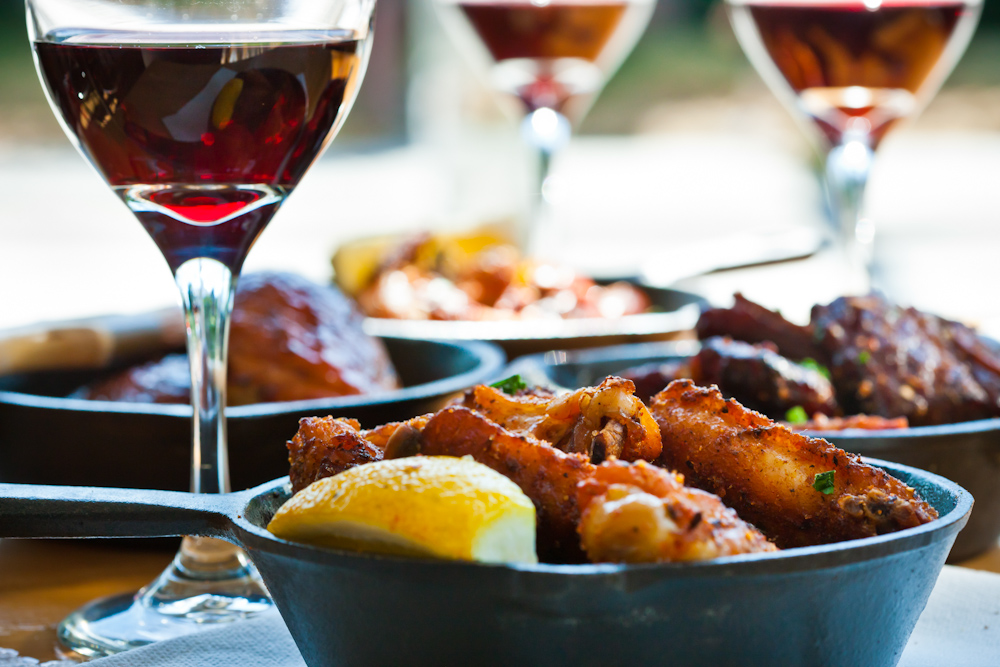
Wine and BBQ. Photo courtesy Jill Chen @ freestylefarm.ca

as seen on canada.com

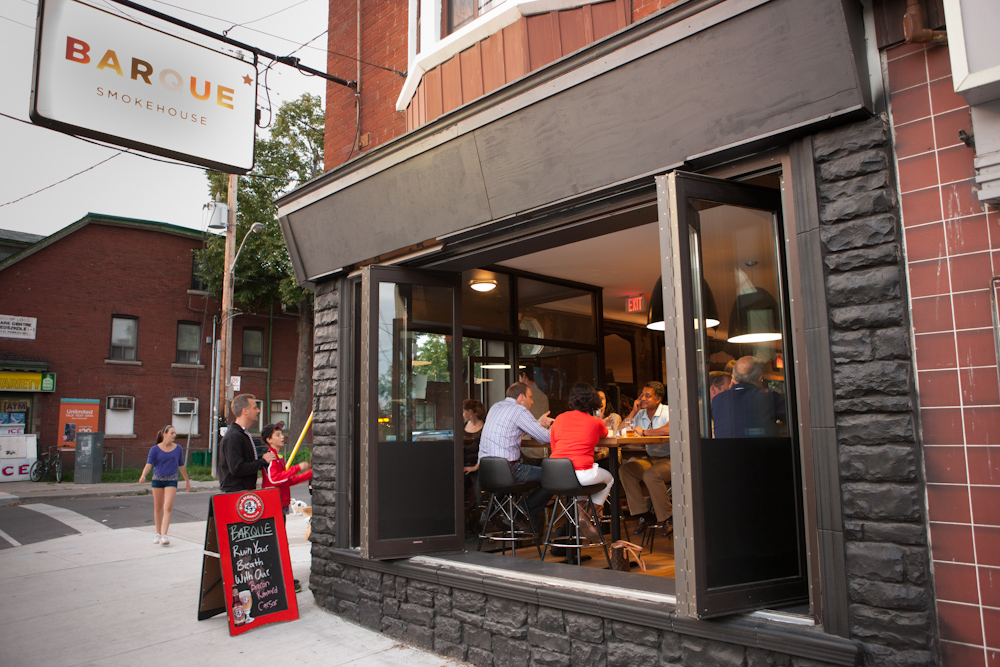
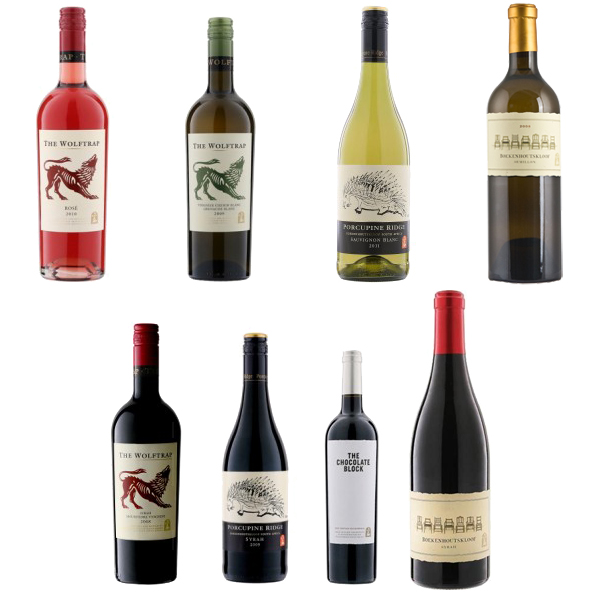
On Tuesday night Barque Smokehouse welcomed South African winemaker Marc Kent and RKW Imports for an eight course paired tasting event alongside eight wines from the Boekenhoutskloof portfolio. The ambitious Kent is the vintner equivalent of an air force pilot. Thrill seeker, pioneer, risk-taker, restless soul and difference maker. Very few South African outfits manage to fill two polar niches with such a high level of success ; the Porcupine Ridge and Wolftrap ranges appeal to the market inhabited by the everyday drinker and Kent’s serious Syrah goes out to the collector.

Barque Smokehouse

The cellar master from this outrageously efficacious Franschhoek operation works tirelessly to champion Syrah and to indulge in atypical varietals (for South Africa) like Semillon. Now in his (very) early 40’s, the buoyant Kent’s wines continue to express a longing for the northern Rhône,  though they fall into their own, unique category. To a red, the sanguine, savoury, warm climate, mountain and maritime sensation is always present. Syrah of liquid white pepper sprinkled over a periodic table of elements.

Marc Kent

The affable Kent and master of ceremonies Zoltan Szabo led a group of 85 diners through the Boekenhoutskloof range concomitant to an astute and benevolent menu from chefs David Neinstein and Bryan Birch.

Shrimp with tarragon crème fraiche, garlic chips

Wolftrap Rosé 2012 (169409, $12.95) talks turkey and shrimp of a Turkish delight, candied strawberry and cream tongue. Sprinkled with spiced nuts. 86

Salad of warm fior de latte, heirloom tomatoes, basil and reduced balsamic

Wolftrap White 2011 (263608, $14.95) makes use of a balanced and warmer vintage, allowing the honey and pep of Chenin Blanc to truss the Viognier and Grenache Blanc together as one. “It’s richer in ’11, ” says Kent, “and still commercial, if I can use the term.” My thoughts too.  87

BBQ Chicken and Goat Cheese croquettes

Porcupine Ridge Sauvignon Blanc 2011 sees no oak, only the cool, steel walls of the tank. High acidity and herb pistou, unctuous and great value for SB, anywhere.  88

White Fish En Papillote leeks, oyster mushrooms, lemongrass broth

Boekenhoutskloof Semillon 2009 is my WOTN. Made in miniscule quantities, a near-Bordeaux ringer attributed with white CDP-like Marsanne, Roussane vigor. Runs a gamut of aromas and mouthfeel; honey, wax, acorn, lime, ginger, peach and orange blossom. “The truth is in the second half of the bottle, ” notes Kent.  91

Marc Kent wrapping briskets

Pulled Duck Tacos , pickled carrots, scallions, ahoy sauce

Wolftrap Red 2011 (292557, $13.95) is a wolf in sheep’s clothing. Dictionary red fruit in every sense of the inclination. The South African version of broad appeal Australian Shiraz. The only bottle without SA typicity. Tasty yet homeless and residing in Smallville. Begs the question. “What are you, man or Superman?”  86

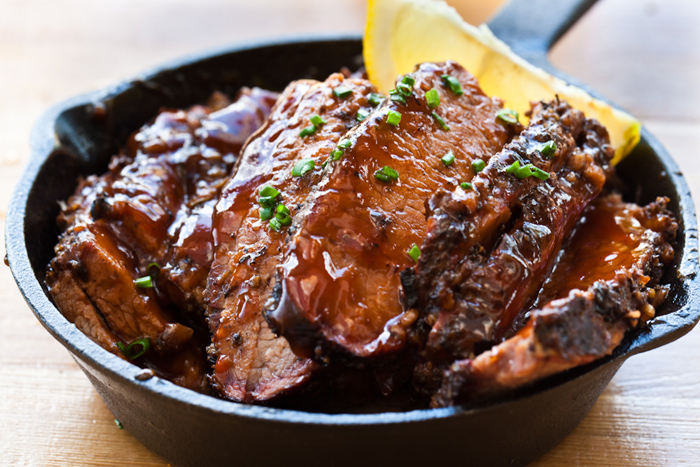
Brisket (photo courtesy of Jill Chen @ freestylefarm.ca)

BBQ Brisket with hush puppies

Porcupine Ridge Syrah 2011 (595280, $14.95) the consistent one outsells all other VINTAGES Essentials. Why? Because it’s well-made, affordable and precocious. Dips into Northern Rhône waters and swims with the fishes. Walks out unscathed, vintage after vintage.  88

Braised Short Rib, creamy polenta, green peppercorn jus

The Chocolate Block 2010 (129353, $39.95) sends Syrah to study abroad. Though the blend is Rhône plus 13% Cab, the intense chocolate notes (go figure) seem not unlike Chile’s elite Carmenère and Cabernet blends. Montes Purple Angel and Don Melchor come to mind.  Dusty Theobroma cacao, purple flowers and reduced red berries join forces for what really is an elegant brew.  Knows the pathway to your heart. 89

NY Striploin with black pepper dumpling

Boekenhoutskloof Syrah 2009 (52076, $59) is the doctrine to preach Marc Kent’s ability to procure excellence. Balanced and focused to a sip and in every sip. Distinctly Guigal and even Delas in refinement. A varietal likeness no other SA Syrah can touch. Never over the top, here “quality is in the second half of the bottle.” Kudos Kent.  90

Good to go!