Ontario wines shine on

Shine {ON} Ontario Wine Map PHOTO: LCBO

as seen on canada.com

After spending the last two days tasting through 150 plus wines as a deputy judge for WineAlign’s World Wine Awards of Canada 2013, a reprieve is in order. Today I shift gears, shut off the global wine valve, return home and focus local.

Fresh on the heels of the National Wine Awards of Canada 2013 results, the #WWAC13 threw a gauntlet of grapes my way; international red blends under $15, up to $25 and up to $50. Same for an amphitheater of white blends. According to fellow panelist David Lawrason, “there was no white grape variety not on this page.” We also tasted, took notes, scored and passed judgement on Pinot Noir, Chardonnay, Agiorgitiko, Xinomavro, Shiraz/Syrah and Riesling.

A year ago less two weeks this supplicating statement, Ontario wine. Can you feel the love? was posed. This reflexive, rhetorical question was quickly responded to with an emphatic, yes. A year on, I continue to talk with myself, with increasing focus on the wines of Ontario’s three most prominent producing regions, The Niagara PeninsulaPrince Edward County and Lake Erie North Shore. Self, I preach, Ontario wines continue to shine on. The $64K question is why?

People. Passion. Community. Quality. Climate. Spend a little time in wine country and the first four points explain themselves. Then there is the weather. Mother nature has hurled everything at Ontario’s vines this growing season. Spring frosts, unseasonable cool and wet weather for most of Spring and Summer, tempests, wind damage, torrential rain and flooding. Then an early September spike of intense, humid heat. This will be followed by a twenty-five degree dip in temperature at the end of this week. Despite the mercurial, tsunami fluctuations, Ontario winemakers will make terrific whites and reds in 2013. This is because of the industry’s maturity. Global climate craziness no longer holds a candle to the ability, knowledge, innate understanding and confidence found in Ontario’s wine houses. Going forward, lesser and greater are the terms to consider. Bad vintages are a thing of the past.

For the next 30 days, Ontario’s grape growers and wineries will be receiving some tender, loving, marketing care. The LCBO has rolled out their Shine ON program, an eat and drink local, in-store promotion that runs from September 15 through October 12. A dozen food trucks, representing a wide range of food styles, will be visiting an LCBO location for a special outdoor wine and food sampling. The September 14th, 2013 VINTAGES release features 38 pages of print and photos in discussion with sommeliers, restaurateurs, chefs and international wine critics.

But wait, there’s more. Wine Country Ontario, always the most devout and righteous of Ontario’s wine promoters, is encouraging an experiential twitter colloquy:

Spotlight Toronto champions the campaign in a big way, by way of their extensive 30 Days of Ontario Wine coverage. Wine Country Ontario and VINTAGES will bring the fall celebration to a vinous crescendo when Taste Ontario comes to Ottawa and Toronto, October 7th and 10th. These events mark the largest assembly for sampling Ontario’s wines in one go around.

I have tasted more Ontario wines in the past year than I had combined in all my years previous. Here are six exemplary choices slated for release this coming weekend.

Clockwise from left: The Foreign Affair The Conspiracy 2011, Fielding Estate Pinot Gris 2012, Daniel Lenko Gewurztraminer 2009, Lighthall Vineyard Chardonnay 2010, Bachelder Niagara Chardonnay 2011, and Henry Of Pelham Cuvée Catharine Carte Blanche Blanc De Blanc 2007

The Foreign Affair The Conspiracy 2011 (149237, $19.95) from ‘It’s Only Rock ‘n Roll’, (but I like wine), “kissed, re-passed over and threatening to push boundaries as if it were singing “if I could stick a knife in my heart, suicide right on stage.” This Ilya Senchuk beauty may only be ripasso but I like it. Eases my pain and my brain. Excellent verve and honed of a rock star’s capacity to be loved, with tart, red and black fruit in waves, tar and charcoal. Svelte balance in fruit, alcohol, sweet and sour. This is THE vintage for this wine. Ten plus years lay ahead for a long affair and it will be rewarded with praise in future tastings.”  92  @wineaffair

Fielding Estate Pinot Gris 2012 (251108, $21.95) unlike, or as much as any Niagaran, intimates Alsace. Greasy, well, not greasy but jet propelled, viscous and rich in texture.  Seems to indicate a sweet/nut/salt/stone fruit pit conundrum but never crosses into that dangerous zone where any of these notes might cause interference. Really solid Gris and says a lot about the vintage for this grape. “Will shine on, for everyone.”  89  @FieldingWinery

Daniel Lenko Gewurztraminer 2009 (356832, $24.95) offers obvious, distinct and succinct lychee-induced pleasure. Off-dry with an embolden, mineral tang and good acidity. Early picked yet quite ripe and almost “tannic” for Gewurz. A diamond in the aromatic white wine rough, “blown on the steel breeze.” Sings a long, long song.  90  @daniel_lenko

Lighthall Vineyard Chardonnay 2010 (278226, $25) from A Wine Pentathlon, “has that crazed look in its eye, as does vintner Glenn Symons when he talks about it, knowing full well this Prince Edward County juice is a bursting and rising, rocket launching supernova. Steely like Chablis, sharp and shimmering in defiance to the heat of the vintage, the LVC is a dartle to the collective consciousness of the County. Startling revelation. It’s all about the rocks.”  91  @lighthallvyard

Bachelder Niagara Chardonnay 2011 (302083, $29.95) burrows towards, reaches and fleeces limestone with amplified ramifications. This weather whipped Chardonnay is both Bachelder’s kookiest and most severe. That is succeeds in agminate partying of power and pop is a tribute to savvy winemaking. Though the fruit does not currently ride the breakers, the wine’s length oscillates in waves. Will wait for this one and make an appeal. “Won’t you shine, shine on?”  90 @Bachelder_wines

Henry Of Pelham Cuvée Catharine Carte Blanche Blanc De Blanc 2007 (315200, $44.95) currently resides on the leesy side of the Blanc tracks. Rich, nervy, stoked by putty, pith and tankhouse grit. In toast mode and a full on attack of chalk and limestone. Not the faint-hearted bubbles of yesteryear. Must always take it’s rightful place in discussion of top sparkling wines from Ontario.  90  From my earlier notes: Lock, Stock and Sparkling Wines, “turns the brioche quotient up several notches and is consistent with last month’s note: “combines the exceptional ’07 growing season’s rich fruit with early harvested acidity and extreme patience to result in one serious Ontario sparkling wine. A frothing tonic of citrus zest, baking apples, soda bread, cut grass and creamy grume. Long and true.”  90  @HenryofPelham

Good to go!

B.C. Wine part two: Eat, drink, love Vancouver

PHOTO: MICHAEL GODEL
Stanley Park beach

as seen on canada.com

L’Abattoir, 217 Carrall St., Gastown, Vancouver, BC V6B 2J2 (604) 568-1701

Some restaurant experiences leave a mark. A night at L’Abattoir inks an indelible, permanent tattoo. Located in the heart of Gastown between Gaoler’s Mews and Blood Alley, the buzzing Vancouver resto is self-described as “French influenced West Coast fare.” My take was this:

To be fair, perspective is often limited to a single night’s snapshot but the staff and service want not for honing. Palate expanding cocktails break ice. Ministration pleases in perfect pace and pitch. Post-minimalist wine list dotted by just enough global diversity and local accent indulges comfort zones. Sommelier Robert Herman, while busy in occupation and clearly gliding confidently within his domain, did so right by me. First by pouring a tiny lot, rare Okanagan and then a monopole white Burgundy, punching so far above its pedigree.

Chef Lee Cooper’s canvasses are like tectonic, subterranean plates. Each dug in beneath the crust, reaching deeper layers, uncovering a treasure here, a fossil there. Memorable and sublime experience. Mean it.

PHOTO: Michael Godel
L’Abattoir kitchen

Domaine Michelot ‘Clos de Montmeix’ Monopole 2011 (wine-searcher.com, $28.60) from the heart of Meursault village is enervetic and yes, Meursault-ish in all the right ways. Lifted by layers of limestone and grounded by clay earth. Rich, refined and refreshing vixen, “gorgeous and alone, face to face.” Impossible Burgundy.  91

PHOTO: Michael Godel
L’Abattoir Steelhead and Potato Salad

Poplar Grove Viognier Haynes Creek 2012 ($14/68) made exclusively for L’Abattoir (45 cases) is resplendent as an orchard of orange blossom. Harnessed intensity, suggesting Condrieu but expressing Okanagan inward and outward. Sweet, fleshy fruit mottled with aka or edible tree lichen as of the Ponderosa Pine. Savoury quality in Viognier really ties the flavours and textures of salty, chewy, crunchy and piquant together.  91  @poplargrovewine

Upon departing L’Abattoir, I found Gastown in the crowded throes of the final laps of the Grand Prix, Global Relay. Nothing like a bit of high-level cycling to send you home spinning.

PHOTO: Michael Godel
Global Relay Gastown Grand Prix

Cross the Burrard Street Bridge or cycle around False Creek, past Granville Island and find yourself in the quieter climes of Kitsilano. Kits Beach buzzes on a beautiful day and just in case there’s trouble, the fuzz are deployed in position.

PHOTO: Michael Godel
Vancouver Police, Kitsilano Beach

Fable Kitchen, 1944 W 4th Ave Vancouver, BC V6J 1M7, (604) 732-1322

PHOTO: Fable Restaurant
Fable Restaurant, farm to table, top, and Fable ‘Canned Tuna’

The name forms an abridge from farm to table, coined by Top Chef Canada contestant Trevor Bird. Enter Fable, the Kitsilano buy local, serve fresh, keep it chill eatery. Bird’s vision? “Sourcing local product and delivering great flavors in a fun and non-pretentious setting.”

B.C.’s wineries are more than well represented, thanks to Bird, Kathy Schleyer and Ron MacGillivray. The wine card affords ample opportunity to sample the Okanagan Valley. ‘Canned Tuna’ not so much deconstructs as coddles Albacore, to be playful, sweet, soft shale lifted by necessary Maldon Salt.

From left: Tinhorn Creek Gewürztraminer 2012, Pentâge Winery Gamay Noir 2012, Intersection Milepost Red 2011, and Liquidity Pinot Noir 2011

Tinhorn Creek Gewürztraminer 2012 ($18.49) from the sandy gravel soils of Tinhorn Creek Vineyard (Golden Mile) is 100% cold fermented in stainless steel tanks. Aglow in bright, band twanging ripe orchard aromas, makes you want to climb a tree and pick forbidden fruit. Intense flavours “gave my heart a throb, to the bottom of my feet.” Over delivers with the full intent to solicit early consumption. Sends you Up on Cripple Creek.  90  @TinhornCreek  @SandraOldfield

A most excellent appetizer I am convinced could offer repeated pleasure, once a week for a year is the “Spaghetti and Meatballs.” A study in luxe, calme et volupté. Duck, tender Tagliatelle and harmonious demi-glace demands a full basket of bread.

PHOTO: Fable Restaurant
Fable Spaghetti and Meatballs

Pentâge Winery Gamay Noir 2012 ($20) carries cherry in necessary Cru Beaujolais style spice and adds even more leagues of depth to the duck. A faculty of tobacco deepens the stratum, down to earth. Most righteous #GoGamayGo.  89  @PentageWinery

Intersection Milepost Red 2011 ($20) is 100% Merlot (Estate Grown) from Oliver, B.C. Impressive, direct and adroit red from such a young operation. A feeling of fine, friable tannin intersects ripe, erubescent maraschino.  88

Liquidity Pinot Noir 2011 ($24.90) is the pride of Okanagan Falls and despite a cool growing season gives fully and completely of itself. Relucent Pinot, working for Pickerel and for Slow Cooked Spring Salmon. Vivid violet mauve in bloom, approachable and delectable.  88  @liquiditywines

PHOTO: Michael Godel
Lynn Canyon, British Columbia

A great deal of eating and drinking needs to be followed by some quiet time in quiet settings. A morning in Lynn Canyon and an afternoon at North Vancouver’s Deep Cove does the trick.

PHOTO: Michael Godel
Deep Cove, British Columbia

Good to go!

Finding the wine pulse of the Finger Lakes

Grape crush at Shaw Vineyards

Grape crush at Shaw Vineyards
Photo: Shaw Vineyards

as seen on canada.com

New York’s Finger Lakes is the largest wine growing region in the state, located along and adjacent the south-north flows of Keuka, Seneca, Cayuga and Canandaigua. The pastures perched nearly 1000 feet high upon the plateaus terraced upwards from their shores teem in colour and fertility; in red cherry, in knobbly purple asparagus, in wild, green grasses and grapevines.

Though pastoral and eerily quiet, the Finger Lakes area is anything but boring or benign. It necessitates some required reading and historical courting. That begins with Elmira’s own Mark Twain and without question a visually stunning and cerebral cortex stimulating visit to the Corning Museum of Glass. The collection of royal and ancient glass, interactive exhibits and live demonstrations are mind-blowing and utterly unique. Best of all, the @corningmuseum is run like a business and a cooperative, free from the suffocating, bureaucratic strings of government interest. Employees are young, near-hipster, informed and confident, with and without attitude.

Drive north from Corning in the late afternoon sun and see deer grazing in farmer’s fields. Walk the pier at the southern tip of Seneca Lake and go old school dining. Watkins Glen State Park is the site of a set of waterfalls so gorgeous you will imagine yourself anywhere but in the heart of New York. Oft-referred to as the Grand Canyon of the East (a stretch for sure), it truly is something else.

https://twitter.com/mgodello/status/352941041390845953

The caveat to this report begins with an admission of remission to the wineries, distilleries and breweries not visited on account of not being located on the western trail of Route 14 up Seneca Lake. Certainly remiss to have missed visiting the iconic Dr. Frank, the emerging star Anthony Road, Two Goats Brewing and Finger Lakes Distilling. A pang of regret lingers for lost time spent underwhelmed at Magnus Ridge. The 1970’s tasting room and stemware felt like a mirror that adds 30 lbs and who can concentrate on MOR Riesling, Pinot Gris and Lemberger while the vineyard manager (at least that’s the part he seemed to be playing) sweats, rehydrates and flashes a never-blinking, hairy eyeball your way. I felt like Pudd’nhead Wilson, tasting through wines as Cauliflower, “nothing but cabbage with a college education.” I suppose a rain check benefit of the doubt should be extended, considering the owners were away in Florida.

A 10 deep tasting at Fulkerson Wines showed off every style under the FL sun and that was only a small percentage of what could have been sampled. Dry Rieslings, in particular the William Vigne showed best. Gruner Veltliner 2012 and Pinot Noir 2010 ponied up the highest level of intrigue to walk out with a bottle of each. Still, the excess of portfolio dilutes and commercializes the exercise.  Riesling and Cabernet Franc are and should be the region’s signature wines. Dabbles in Chardonnay, Gewürztraminer, Pinot Noir, Merlot and Brut-style bubbles are all to be encouraged.

“High and fine literature is wine, and mine is only water; but everybody likes water.”

The sense of community and cohesion that to me defines Ontario’s wine industry, especially in Niagara, is here not at once obvious. Many vintners make reference to the oenology research and development department at Cornell University and so it seems to be both the region’s patriarch and unifying factor. Next weekend’s Finger Lakes Wine Festival would likely go a long way to impress upon a taster a truer sense of famiglia. A myriad of wine making and production styles mark the region’s 100 plus wineries and two Seneca Lake houses struck me as buoy markers for the past and as harbingers for the future of viticulture in Yates County. Hermann J. Wiemer clearly sets the Finger Lakes standard while unheralded Shaw Vineyards shines as the hidden gem. Though polar opposites in attitude and execution, together they mark the Finger Lakes twain. They to me present a model to compare and contrast the stylistic spectrum of wine production found in the Finger Lakes.

Hermann J. Wiemer Vineyard

Dundee, NY, http://wiemer.com/, @HermannJWiemer

Hermann J. Wiemer Vineyard

PHOTO: wiemer.com
Hermann J. Wiemer Vineyard

To those who say that the concept of terroir is bullshit, the principals at Wiemer scream to disagree. They believe so strongly in micro-climates and site specific growing areas that they designed the greatest ever wine map of their vineyard holdings and hung it in the tasting room for all to see. “Seneca Lake is the conduit between the sun and soil, giving its blessing and transforming the land fortunate enough to be near it to become terroir.” Wiemer has set the modern era bar for excellence and international approval in the Finger Lakes. Their Riesling speaks of the soil, shale and bedrock below, their facility of grace, elegance and architectural fine lines. Sustainability and biodynamic practices are more than buzz words. I’ve never seen so many ‘regulars’ paying a visit to say hello, taste through the portfolio and walk away with so much product. Wiemer has it figured out – their finger is pointed directly upon the pulse of the lakes. Co-owner Oskar Bynke lead me through the distinguished line-up.

Hermann J. Wiemer Vineyard wine map

PHOTO: Michael Godel
Hermann J. Wiemer Vineyard wine map

Rosé Cuvée NV ($12.50) argues old-school values by blending vintages and does so in sheer modernity from Pinot Noir, Cabernet Franc and a quick date with Chardonnay. Suggests a dry, southern French attitude.  87

Dry Riesling 2012 ($18.50) seems near-Kabinett to nose but is really what Oskar calls “Trocken Spätlese,” or dry, late-harvest. A smack dosage of tree fruit in hyper-ripe tone gets upside and personal with your sense of smell. Terrific entry into the world of Wiemer Riesling.  89

Riesling Reserve 2012 (not yet released) tasted from a tank sample increases in viscous velocity and fueled tension. With this one “I think it’s gonna be a long, long, time ’til touchdown brings me ’round again to find” the reserve ready to offer Riesling gratification. In terms of this grape, in this part of the world, this one’s a rocket man90-91

Dry Riesling Magdalena Vineyard 2012 (not yet released) from tank ramps up the citrus and petrol and at an increased level of concentration. Magdalena comes from a more Northern site, away from the sheltered warmth of the lake. Cooler in dimension, not unlike the laser-pitch of Beamsville’s Thirty Bench Steelpost. This is dazzling juice, with diamond clarity and pure, cool-climate fruit.  91-92

Semi-Dry Riesling 2012 ($17.00) summers in warmer climes, snacks on ripe, tropical fruit and lays down for a siesta. Closest of the line-up to a true Mosel Kabinett, minus the slate, mineral and flint. Flirty and foxy, “a cute little heartbreaker.” Lady of the house.  88

Hermann J. Wiemer wines, from left: Dry Riesling 2012, Gewürztraminer 2012, Cuvée Brut 2006, Cabernet Franc Reserve 2009, Bunch Select Late Harvest Riesling (TBA) 2008

Hermann J. Wiemer wines, from left: Dry Riesling 2012, Gewürztraminer 2012, Cuvée Brut 2006, Cabernet Franc Reserve 2009, Bunch Select Late Harvest Riesling (TBA) 2008

Late Harvest Riesling 2012 ($24.50) emulates the Spätlese thematic and unlike its Ontario counterparts is really not like dessert wine at all. Has enough atomic weight to match food of spice and capsicum-laced ethnicity while still remaining earthbound. A honeyed accent speaks for the bees. Delicate and floral on the lighter (5.6 per cent alcohol) side of vinous life.  90

Gewürztraminer 2012 ($25.00) from the oldest plantings in the region is as good as it gets in North America. No, really. This is the best expression to date. Impeccable balance, nary a bitter note and all the varietal components are there. Rosewater, South-Asian tree fruit, almond blossom, citrus and density. Dry and dewy. Delish.  91

Cuvée Brut 2006 ($32.00) disgorged in 2013 is tightly wound around itself, magnetic, animated, indefatigable bubbles. Yeasty bread speaks of the Champenoise, as does the arid Tarlant Zero tart apple style. Good fizz.  90

Cabernet Franc 2010 ($23.00) spends time in neutral barrels so a scant trace of vanilla succumbs to ripe cranberry, red rose and July Chemung cherries. Peppery without ringing a bell and current but not tart currant. For pleasure in the here and now.  88

Cabernet Franc Reserve 2010 ($28.00) deepens the focus. Fermented in individual 100 gallon lots and aged for 10 months in new and older French oak barrels. More bite, grit and conversation here. “The average man don’t like trouble and danger,” but I’ll chew on this CF any day.  A Huckleberry Finn to the normale‘s Tom Sawyer.  90

Bunch Select Late Harvest Riesling (TBA) 2008 ($95.00, 375 mL) does German Trockenbeerenauslese like no one else on this side of the pond. As a dessert wine it walks that fine sugary line, refusing to sacrifice acidity for love. An expertly extracted and refined sweety that holds “the ends out for the tie that binds.”  Just a drop will do you.  Cash money.  93

Shaw Vineyard

Himrod, NY, http://shawvineyard.com/

Steve Shaw has been involved in Finger Lakes viticulture for 40 years. In appearance, he and his winery seem the antithesis of their state-of-the-art brethren down the road. But don’t be fooled by appearances. Serious winemaking and an experimental scientist’s work is at hand. Shaw is part J. L. Groux (Stratus Vineyards), Arlo Guthrie and Jim Clendenan. His wines currently on the market have been aged low and slow. “I know we are a little off the radar compared to other Finger Lakes wineries, but we kind of like it like that” he says. “We are working hard to offer a nice line up of aged and age worthy wines for the wine drinkers that want something a little different.” Shaw chooses not to focus on the over-discussed. He is unconcerned with disingenuous wine speak. He needs not linger over the merits of indigenous yeasts and pseudo bio-dynamics. He avoids bâtonnage, is frank about the necessity of sulphuring and concerning a winemaker’s duty to resist overburdening wine with heavy oak distraction. His reds reach healthy brix levels and they are encouraged to speak their mind. They are pure expressions of Seneca and Keuka Lake grapes and are truly made in the vineyard. He notes, “our unique approach to wine making uses gentle extraction methods with both our red and white wines.”

Kubota

PHOTO: Shaw Vineyards
Kubota

Chardonnay 2005 ($15.00) was whole cluster pressed and barrel aged in (two to three year-old) French oak for approximately 24 months. Reminiscent of older Chablis, in green apple, citrus and ever so slightly blooming cheese.  Lithe and ready to desist. Catch a Lake Trout, grill and match.  87

Sauvignon Blanc 2011 ($19.00) was hand-picked at optimal varietal ripeness and flavor, whole cluster pressed and shocked with an initial cold ferment. Shaw then went Dr. Frankenstein on his juice by choosing to leave it on the fine lees for over one year to help develop complexity and mouthfeel. Singular to itself, incomparable to Loire, Marlborough or Stellenbosch for that matter. Possessed of a perfume, like honey-fragrant dogwoods, like marshy white cranberry. “Nothing in the world smells like this” SB. “Smells like, victory.”  90

Riesling 2008 ($17.00) developed some Botrytis (noble rot), was whole cluster pressed, cool fermented,  properly sulphured and left on fine lees for 36 months. Riesling vinified by a rogue master’s attitude. Exculpates sweetness and humidity, turns arid and is metered by citrus cohones and prickly petrol. Crazy cool.  91

LiBella Pinot Grigio NV ($15.00) blends the cool ferments of 2011 (60 per cent) and 2012 (40) and also receives the Shaw proprietary lengthy 12-24 months of fine lees contact. Similar in aromatic profile to the Chardonnay but with a richer palate. Certainly not your Alto Adige PG, nor Veneto neither. All Finger Lakes.  85

Pinot Noir Reserve 2008 ($30.00) was unfiltered, unfined and subjected to a lengthy cold soak. Whole berry fermentation, repeated punch downs and gentle, low pressure pressing has allowed for what Shaw sees as a “fuller, more complex flavor and surprising aromatics.” Spent 36 months in French oak searching for and discovering the holy trinity balance between alcohol, fruit and acidity.  89

Keuka Hill Reserve 2007 ($30.00) looks to the Gironde with 40 per cent Cabernet Sauvignon, 30 Cabernet Franc and 30 Merlot. Deft and coddling vinification processes were employed as they are with all of Shaw’s reds. A lengthy 48 months in French oak barrels has done the tannin softening and perfused this Bordeaux blend with a complex, Old World style. A glass of warming, resolved and velvety carmine ink.  91

Cabernet Sauvignon 2007 ($35.00) saw very similar treatment and also spent 48 months in primarily French oak barrels but also some Pennsylvania oak, resulting in already soft tannins and subtle aromatics. Another one of Shaw’s gracefully-aged experiments “more interested in laying up the riches of the mind” than burdening the taster with mocha jam and crème anglaise.  89

Cabernet Franc 2007 ($35.00) slumbered cryogenically for 48 months in primarily French and with some American oak. The variety’s kinship with the climate and a winemaker’s keen understanding of crop reduction makes for a more aromatically profuse wine and so I prefer it over the Cabernet Sauvignon. Avoids the grape’s natural vegetative tendency and finds natural balance. Has retained more bite and looks to have plenty of life ahead.  90

Shaw Vineyard Riesling 2008

PHOTO: Michael Godel
Shaw Vineyard Riesling 2008

Good to go!

Money back guarantee wines

Here are five wines that will present no reason to be looking for a refund or an exchange. PHOTO: ARCADY/FOTOLIA.COM

as seen on canada.com

Ever opened a bottle of wine, had a sip or two and decided you just didn’t like it? Happens all the time, right? The thing is, in most cases you can return that wine, especially if it was purchased at one of the many provincial monopolies in Canada. Here’s a short primer on refund, return and exchange policies across Canada.

Related – more current releases

“The SAQ exchanges or refunds any product purchased in an SAQ outlet less than a year before. You must present the sales receipt when requesting a refund. For exchanges, the sales receipt is optional.” The LCBO used to offer their customers that same level of respect to offset the negative impact a monopoly’s policies can effect upon a helpless consumer (monochromatic and or lack of quality choice, lottery selections for small lot and hard to acquire selections, indifferent deference to local product, hyperbolic inflation on comparable US supermarket wines, archaic laws towards inter-provincial shipping, import agent strong arming, to name a few). As of April of 2012, you now have only 30 days to return a bad bottle and unlike the SAQ, you need the receipt for a direct exchange. For LCBO returns, wines “must be in ‘saleable condition’ and accompanied by the original receipt. Saleable means that the product must be unopened and have the label intact, for example.  Defective product is treated differently.” Manitoba follows suit. Who brought these guys to the party?

The same applies to defective products; wines with perceptible flaws, such as TCA (cork taint) or VA (volatile acidity). The 30-day LCBO rule is a sham, I mean shame. The open-ended return policy made up for so much of the monopoly’s shortcomings. Alas, no more.

British Columbia’s Liquor board is no piece of cake either. You can only “return a product in B.C for a full refund, provided the product is unopened, in saleable condition an official BC Liquor Stores receipt for the product is presented.” At least they’ve thrown a bone to caterers who can now return unopened liquor products. Nova Scotia follows Quebec’s policy. “Defective or broken product may be returned to any NSLC store for full exchange or refund and does not require a receipt. All customers returning defective or broken product must be willing to provide name, address and telephone number to the NSLC store representative.”

In Saskatchewan it appears that only “permittees can return any unopened spirit and wine bottles and sealed, full beer cases that were purchased for the event provided they provide the original sales receipt.” Remind me not to purchase defective wine in that province. As far as New Brunswick is concerned “at the discretion of the Liquor Store Manager, Alcool NB Liquor will accept product returns for full refund. The sales slip should accompany the returned item.”

Newfoundland’s system, at least on paper, is very fair and civilized, though all returns seem to be in the powerful hands of a store manager. “NLC will accept product returns, at the discretion of the Liquor Store Manager. In the case of defective merchandise, NLC will permit product returns or exchange, at the discretion of the Liquor Store Manager for a full refund where the product is no more than half empty and he product was listed by NLC within the last 12 months. Better than the LCBO. Best of all may me Prince Edward Island. “At the discretion of the Liquor Store Manager, the PEILCC will accept product returns for full refund. The sales slip should accompany the returned item. All returns will be on a “bottle-for-bottle” basis.” Civilized.

Alberta’s Gaming and Liquor Board only accepts “refunds for the following types of faulty products; returned due to customer complaint; a sealed bottle(s) which: is partially filled; has a damaged cap or cork; or is contaminated with a foreign material. A claim for a refund for a faulty product must be received by the AGLC Product and Pricing Department within 30 days of receipt of product by the claimant.” Quality retailers in provinces with a private system (like Alberta) will also take back an unwanted bottle, though they might not be so lenient when you try to bring back that bottle of First Growth Bordeaux. Some wines are sold with an unwritten rule. You lay down your money and you takes your chances.

Everybody’s got a hungry heart. “Lay down your money and you play your part.” So, to avoid disappointment and disappointing your local monopoly or retailer, here are five bargain wines, one for each day of the week beginning today, Monday June 10th. Five wines that will present no reason to be looking for a refund or an exchange.

From left: Place In The Sun Shiraz 2012, Fielding Estate Gewürztraminer 2010, Lealtanza Crianza 2009, Flat Rock Cellars Riesling 2012, and A & G Papaioannou Estate Agiorgitiko SV Nemea 2007

The Grape: Shiraz

The history: New range of fair trade and sustainable wines from 321 year-old Stellenbosch winery Zonnenbloem

The lowdown: This is not a cheap bottle of fermented sugar. A breath of restrained, balanced and fresh grapes awaits

The food match: Grilled Rib-Eye Steaks and Local Asparagus

Place In The Sun Shiraz 2012 (286088, $13.10) is a balanced effort “at half the price” of many similar South African wines, here crafted by the Cape’s Zonnenbloem Winery from vineyards cooled by False Bay. Campfire smoke, grilled meat, spice and antipasti char attribute this chewy, biltong red. Characterized by a musical, magical, folk spirituality. A Hoodoo Guru88  @APlaceintheSunSA

The Grape: Gewürztraminer

The history: Grape King Curtis Fielding and winemaker Richie Roberts are swiftly crafting a mid-range, diverse portfolio into the Ontario wine industry, unparalleled in execution and success

The lowdown: This Gewürz leans Alsace in a sweet sense but not in heft or a serious, contemplative way

The food match: Grilled Cumin Salmon

Fielding Estate Gewürztraminer 2010 (146753, $15.95) acts likes lees dessert as almond vanilla pudding with a side of lychee preserve. While I heart more the Riesling and Pinot Gris from winemaker Richie Roberts, this sugarplum Gewürztraminer has earned a rightful place at the table.  88  @FieldingWinery  @RichieWine

The Grape: Tempranillo

The history: Tempranillo specialist from Spain, located in Fuenmayor, in the heart of Rioja

The lowdown: Consistent value Tempranillo from a modern facility crafting wine with a foot in the austerity of the past

The food match: Barque Smokehouse Brisket

Lealtanza Crianza 2009 (114835, $16.95) exhibits more heat and caramelization than previous vintages. Vivid Sangria, pumped up by cherries in simple syrup and fleshy plum fruit. Accented by fennel and basil. Good length and even better value.  89  @bodegasaltanza  @ProfileWineGrp

The Grape: Riesling

The history: Founded in 1999 on the Jordan Bench and operated today by Ed Madronich and his father Ed Madronich Sr. Winemaker is Jay Johnston

The lowdown: This just might be the most trocken Ontario Riesling on the market today

The food match: Grilled Veal Chops and Wild Leeks

Flat Rock Cellars Riesling 2012 (43281, $16.95) is a single varietal conundrum, intensely dry, dusty yet dripping in grape concentration. Huge soda nose, I mean a crazy proboscis. Love the dry entry and off-dry tangent. Twenty Mile Bench issue reminiscent of Rheinhessen. Admirable length and trebled finish.  90  @Winemakersboots @UnfilteredEd

The Grape: Agiorgitiko

The history: Main cultivar from a modern winery of the Ancient Nemea, located in the district of Corinth

The lowdown: A 100% indigenous Greek varietal, aged for one year in oak barrel and further matured in the bottle for six months

The food match: Halloumi

A & G Papaioannou Estate Agiorgitiko SV Nemea 2007 (47977, $19.95) has reached a ripe oxy age but this weathered and sensuous, sun-kissed by gods Greek red is still a classic beauty. Quintarelli-like toffee, tobacco acetic reduction and spiced plum seem like high praise I know but the acidity renders it a wash. Look out, buckets of cherries, tart currants and tar join the fun in this very interesting and intriguing Nemean single vineyard stunner.  89  @KolonakiGroup

Good to Go!

Stratus and Momofuku: Modernity incarnate

Momofuku Daisho

Momofuku Daishō
Photo: Gabriele Stabile

as seen on canada.com

Consider the winemaker’s style not merely embraced but created by J.L. Groux of Stratus Vineyards. Most wine folks know him as a mad scientist, a mathematician, as Niagara’s ‘Master of Assemblage.’ Groux is a precise counting man, proud to share the barrel fermentation periods of each and every wine in his stable. He reminds me of the Sesame Street guy, the one who shows up in elevators and emerges from swimming pools carrying painted number signs.

J.L. Groux, Winemaker, Stratus VineyardsPhoto: Michael Godel

J.L. Groux, Winemaker, Stratus Vineyards
Photo: Michael Godel

As I found out this past Monday, wine blends may be the maker’s M.O., what he refers to as “a way of life for us,” but Groux is also an artful dodger, proof laid thick by the pouring of nine single varietal wines alongside the art cum science cuisine of Matt Blondin at Momofuku Daishō. I quipped at a hypothetical Groux change of direction but the course will in fact be stayed.

The Stratus portfolio resides in a conspicuous niche, sometimes criticized for over diversifying and noted to employ the most opulent Niagara fruit but who can refute the underlying and unequivocally consistent thematic running through this solo tour.

Stratus Wine Tasting Glasses

Stratus Wine Tasting Glasses

David Chang’s New York Momofuku empire is embraced by those who appreciate the Luxecalme et volupté. The detractors complain and express loathing at a lack of somewhereness and that same bitter pill is sometimes offered up to Mr. Groux. This single varietal tasting shatters the naysayer’s venom as each wine calmly expresses its terroir. Chef Blondin is not unlike J.L. Groux, or Baudelaire. Chef’s plates are clusters of colour, texture and imagery offering an “escape to an imaginary, tranquil refuge.” Groux’s Stratus White and Red iconic blends enter such territory but these grape a capelle are the windows into the winemaker’s forays. The media lunch was a treat of the highest order, also thanks in part to Charles Baker and Suzanne Janke of Stratus, along with Beverage Director Jonathan Gosenhauser and the Momofuku Daishō team.

Stratus Line-Up

Stratus Line-Up

The Wines

Gamay 2010 ($29) from very low yields (2 tonnes/acre) is possessed of a soft mouth feel corrected by tart currants and is a deep, smokey and confounding example of itself. Pushing 15% abv with a concentration of sugars and mature phenolics. Vanilla, black licorice and though not like Pinot at all, you can tell it was treated that way. Naturally, through green harvesting, picked shriveled and “with patience.”  90-91

Syrah 2010 ($48) is picked early as compared to other well-known varieties like the Cabernets and this vintage saw a 25% yield decrease/concentration increase. Pretty, focused and indicative of candied flowers in replay with a note of citrus blossom. A Syrah that clearly speaks of Groux’s infatuation with aromatics. “What I do know, my Syrah is improving overall.”  89-90

Merlot 2010 ($32) was picked early enough (October 25th) so as to avoid a sun-burn and overcooked aromatics. Always a great contributor to assemblage in Ontario, this Merlot from clonal plantings in ’85, ’01 and some unknown old block of (clonal) fruit was picked at a restrained (24.7 brix) number on the sugar scale. Dusty and blessed with juicy, mulberry fruit, this to me is the epitome of the winemaker’s SV style. Delicious Merlot. Damn!  91-92

Malbec 2010 ($48) is imbued with the brightest hue and aromatic tenderness. Wild yielding from vines planted in 2001, a hard-cropped life is the grape’s necessity. From my earlier note: “Made with the help of consulting oenologist Paul Hobbs in an “Alta Vista,” high-altitude style. Cool-climate rendition, a window to the future for the grape in Ontario. Hits a blue note, kind of like Philly soul. Unheard of 10 years ago, this one’s saying “just trust in me like I trust in you.”  90-91

Petit Verdot 2010 ($38) seems the most muted thus far though it has the most acidity and tannin. The two seem to struggle with one another though the warmth of 2010 helps, as Groux notes “I’m not convinced they are not friends.” He also states “I think Petit Verdot makes better wine in Niagara than in Bordeaux.” From my earlier note: “with its bounce is the Happy Jack of the flight. Thick in weight and texture, a steak sandwich in a glass. Remarkable effort for stand alone Petit Verdot in Niagara-on-the-Lake. Has a certain Spanish modernity and is certainly neither “petite” nor “little.” Say what you want about this PV but never “prevent Jack from feeling happy.”  89-90

Chardonnay 2010 ($55) from natural yeast, full batch (bunch) pressing and heeded by Paul’s call to full malolactic fermentation, this fruit was picked on November 15th, a day “you had to go run and pick fast.” Groux is not trying to make California or Burgundy but make the best in Niagara. Clarity and sun drenched hue, tropical fruit dominance, sweetness, malo-butterscotch obviousness. Some tart orchard fruit late but certainly warm vintage wine. Not the most arid Chardonnay but blessed with great length. 90-91

Sauvignon Blanc 2010 ($29) is barrel aged (like the Chardonnay) on the lees to offer roundness, not residual sugar. It’s sweetness is related to sugar, but it’s not the real thing. So much cool gooseberry and passion but lacking acidity and there is very little asparagus stink. Perhaps a green pea or two. Groux seeks boxwood and hemlock and there are hints here. “I don’t care for any tropical style,” he says. This one clearly leans more Sancerre than anything else.  89-90

Sémillon 2010 ($32) is very fresh though muted in tone, verve and gumption. But this is Sémillon and I would not expect any sort of true personality indicator for at least three years. Elegant, with a hint of grapefruit and bigger palate developing in the glass. Awaiting the wax, sandalwood, lemon and honey.  88-89

SALSIFY, cured roe, tapioca, grains of paradise

SALSIFY, cured roe, tapioca, grains of paradise

Lunch

LAKE ERIE, ON PICKEREL, brassicas, celeriac, arctic rose

JERUSALEM ARTICHOKES, salt cod, pickled walnut, sorrel

SALSIFY, cured roe, tapioca, grains of paradise

Gewürztraminer 2011 ($29.95, 251447) has already improved since tasting it six weeks ago. “I’ve been working 20 years to make Gewürz,” says Groux. Micro oxidation protects the aromatics though they are low-toned, in rose and lychee. Uni-dimensional, not 100% dry, made with a homeopathic approach in mind, always with an eye on the assemblage white.  87-88

BEEF SHORTRIB, beet root, horseradish, caramelized fennel

SWEET POTATO, crème fraîche, amaranth, green onion

TOASTED BUCKWHEAT, pistachio, cured squab, preserved apricot

Stratus Cabernet Franc 2009 ($38) shows a bit of green but not of the inhibiting kind. From fruit picked on December 8th (what???) in Niagara-on-the-Lake, a type of gamble that can go very wrong, but Groux is a winemaker who knows his climate. Young at heart, full of smokey, tangy, currant baking aromas. Maternal but blessed with firm, plush tannin. “Some people like cupcakes,” I prefer a muffin man.  “Always a pleasure to grow (Cabernet Franc), if you are patient.  89-90

CARROT, condensed buttermilk, pecan, verjus

CARROT, condensed buttermilk, pecan, verjus

CARROT, condensed buttermilk, pecan, verjus

Mosaic 2010 ($25) is a balanced dessert wine giving equal credit despite the 70-30 Riesling-Gewürztraminer split. All natural sweetness, allowing a focus on the acidity. Only one ever made. Will they make it again? “Perhaps.”  89-90

Good to go!

Top juice flows at 25th Cuvée anniversary

Cuvée 2013 Bubbles and Icewine Bar PHOTO: MICHAEL GODEL/CANADA.COM

You’ll declare it’s simply topping

To be there and hear them swapping

Smart tidbits

as seen on canada.com

It was a night for putting on the ritz at the Fallsview Casino Resort in Niagara Falls, Ontario. On Friday March 1, 2013 the 25th Cuvée was held, a singular celebration of meritorious VQA wines and celestial, local comestibles. Part Toronto Taste and part Taste Ontario, the evening was presented by the Niagara Community Foundation. Established in 2000, the NCF is dedicated to improving the quality of life in Niagara through building endowment funds ($16 million raised), providing grants (in excess of $4.1 million) and enabling philanthropic partnerships.

In the tradition of a grand tasting, more than 40 Ontario wineries were asked to pour their vintners’ personal favourites, determinate wines forged of passion and craft. Many of these signature, nomes de plume will reemerge in future tastings and will help to define their maker’s legacies. This 2013 event signaled a format shift in direction, away and to the dismay of some, from a wine awards ceremony towards a forward thinking industry’s show of togetherness.

Fallsview Casino Resort, Cuvée 2013 Food Station

Live cooking stations, many staffed with armies of chefs, spared no expense to design layered dishes built upon house-cured larder, local and artisanal ingredients. The food component was certainly no afterthought and threatened to steal away the VQA thunder. Fortunately many of the chosen wines were some of Ontario’s best and if you have followed anything I have been writing this past year, you will know that I am serious about Ontario’s wine industry. If nothing else, Cuvée 2013 succeeded to entrench an indisputable truth. The Niagara wine industry is the bomb.

In the words of Hidden Bench Vigneron and Proprietor Harald Thiel, “if Canada wants to have a place in the wine world, we need to carve it.” This sentiment is shared and pursued in kind with the efforts of the Cool Climate Oenology and Viticulture Institute at Brock University (CCOVI) and the VQA Promoter Awards, but also by the Wine Council of Ontario, The Ontario Wine Society and Wine Country Ontario.

Smoked Meat (Timothy Mackiddie/Jackson-Triggs Estate Winery) Cuvée 2013

The grand tasting gave way at 9:30 for Après Cuvée, complete with an ice sculpted Icewine & Bubbles bar opposite a host of local craft beers. It was the Niagara wine world’s version of Après-ski, with cheese, charcuterie and dancing along with Jonesy, a five-piece pop/rock cover band from St. Catharines. Inglorious 80’s mercenaries, morphing Corey Hart, Platinum Blonde, INXS, U2 and George Michael into one wedding band package. The Ontario wine cognoscenti danced. So did their sons and daughters, thanks and with props to the Adele and Bruno Mars covers.

But I digress. The night and the weekend belonged to the wine. In addition to the gala, the Cuvee En Route passport allowed wine fans to tour, taste and attend events along the wine route Friday through Sunday. Here are notes on ten exceptional wines from Cuvée 2013 with a nod to the winemakers who made them.

From left to right: Chateau Des Charmes Equuleus 2010; Flat Rock Cellars Pinot Noir Reserve 2009; Henry of Pelham Family Estate Winery Speck Family Reserve Cabernet-Merlot 2010; Pillitteri Estates Cabernet Franc Reserve ‘Exclamation’ 2010; and Riverview Cellars Estate Winery Gewurztraminer 2011.

Bachelder Wismer Chardonnay 2010 (Thomas Bachelder, $44.95, coming to VINTAGES) from the Twenty Mile (Vineland) Bench is the most righteous, understated charred butterscotch remoulade sauce of dreams. Richly textured and built upon a sneaky, slow and stretched breath of wild yeasts. A creeper, gatherer and traveler of both knowledge and persistence. The journey with Thomas Bachelder as related by partner Mary Delaney, from out of Quebec, by way of Ponzi and Lemelson in Oregon and to Niagara is the stuff of dreams. Tasted twice same night and hypnotized both times.  94   @Bachelder_wines

Château Des Charmes Equuleus 2010 (Paul Bosc, $40, ONT, winery only, SAQ,  11156334, $41.25) from the Paul Bosc Estate Vineyard is a classically styled blend of 50% Cabernet Sauvignon, 25% Cabernet Franc and 25% Merlot, only made in exceptional years. Apropos choice from 25-year old vines (in 2010) from the warmer St. David’s Bench for Cuvée’s 25th show.  Poised, balanced and regal yet this mare is temporarily a head-shy, sensitive equine red. Will trot out furlongs of tobacco and meaty aromas from now and through maturity in five plus years. A saddle of round, red fruit will age gracefully.  92  @MBosc

Coyote’s Run Estate Winery Rare Vintage Pinot Noir 2010 (David Sheppard, $49.95, winery only)  was vinified out of the five best barrels narrowed down from one specific (828) vineyard block. Sheppard’s RV Pinot is a Red Paw/Black Paw block party only thrown in a year possessed of the finest Pinot fruit. In 2010 there is zing cherry, coal, cola, cold stone, fennel, vanilla and a touch of raw ewe milk cheese. Complex PN.  91  @coyotesrun

Flat Rock Cellars Pinot Noir Reserve 2009 (Jay Johnston, $45, winery only) is a breath of fresh ’09 air calmly hovering amid a sea of flamboyant 2010’s. Lush, smooth and silky with a Gevrey-Chambertin verve in acidity so perfectly denoting the ’09 (Twenty Mile) Bench vintage. Assistant winemaker Tom Holt makes the bold statement that Flat Rock owns the best Pinot soil in all of Niagara. The plan is to produce three micro-soil/vineyard Pinots from the 2011 vintage. Can you say Grand Cru?  91  @Winemakersboots @UnfilteredEd

Henry of Pelham Family Estate Winery Speck Family Reserve Cabernet-Merlot 2010 (Ron Giesbrecht, $50, 616433) from the sunnier and warmer sponge that is the Short Hills Bench is built of a learned structure that only a select few Niagara wines can boast. Fresh, juicy fruit and blitzing acidity for a 38/35/29 Merlot/Cabernet Sauvignon/Cabernet Franc family sledge blend. “I’d like to see you reach your peak” SFR but I’ll have to heed Giesbrecht’s warning of oeno-infanticide and wait five to ten years. Tasted twice over the weekend.  92  @SpeckBros

Kacaba Vineyards and Winery Syrah Reserve 2010 (John Tummon, $69.95, winery only) from terraced estate vineyards on the Vineland Bench was co-fermented with 4% Viogner. Clearly marked for a Northern Rhône, Côte-Rôtie effect not to intrude on the Syrah but to soften its edges. There is pencil lead, black peppery fruit and citrus zest. Large and yet unsettled, this complex wine is whiles away from showing its true personality.  89  @KacabaVineyards

Lailey Vineyard Winery ‘Impromptu’ Syrah/Malbec/Petit Verdot 2010 (Derek Barnett, $45, winery only) from the Niagara River appellation is a 75/13/12 split and only produced in the finest vintages. Unique and distinctly Rhône-like in style though not easy to pinhole with 25% Bordeaux varietals confusing the issue. Varnished by a dichotomous combination of tar and roses with an obvious wall of meaty tannin. Perhaps a chip off of Mcinerney‘s soulful and earthy, Delta Blues Cornas block.  90  @laileywinemakr

Pillitteri Estates Cabernet Franc Reserve ‘Exclamation’ 2010 (Alex Kolundzic, $35, winery only) from family vineyards in Niagara-on-the-Lake ventures into voluptuous, black forest, fruitcake territory. A 24-month soak in French oak imparts espresso and leather and it’s as if this CF was raised in Napa or designated IGT. But this is NOTL were talking here. Improbable and believable. Tasted twice.  91  @Pillitteriwines

Riverview Cellars Estate Winery Gewurztraminer 2011 (Angela Kasimos, $18.95, 319830) was sadly not presented to the media in advance of the Feb. 16, 2013 VINTAGES release or I would surely have recommended it a month ago. Straddles a spring flower and tropical fruit line, married as it is by two NOTL blocks, one planted in 1992, the other in 2004. The munificent lychee aroma trumps the Mandarin orange blossom and the 100% stainless steel ferment shrouds no mask over the freshest fruit. Impressive, huge Gewurztraminer, if too much of a good thing.  88  @RiverviewWinery

Vineland Estates St. Urban Vineyard Elevation Riesling 2011 (Brian Schmidt, $19.95, 38117) is, as Brian Schmidt says “simply the best wine that we make.” From Niagara’s most famous and benchmark Riesling vineyard, the Elevation’s pale blue stone eyes is a Pointillist painting both pointed and poignant. As I noted previously, “Riesling made in the vineyard like no other. Off-dry, lingering lemon/lime and utopian acidity. Who knows what minerality lurks in the vineyard of St. Urban? The Escarpment knows.”  88  @benchwineguy

Good to go!

A wine prescription for cold and flu

Resveratrol molecule
PHOTO: LISHA/FOTOLIA.COM

as seen on canada.com

A glass or two of wine might just be the thing to help ward off the common cold and the flu. OK, 15 minutes of daily exercise will help too. And Vitamin C, Echinacea, lemon ginger tea, chicken soup and washing your hands… and did I mention wine? Research indicates that it interferes with viral replication. Very personal hermeneutic public service announcement? Maybe. Perverse mantra of belief? Perhaps.

There are researchers and doctors who believe that certain chemical compounds in wine can help immunize the body against 100’s of common viruses. The antioxidant properties, called flavonoids, lower blood pressure and absorb harmful toxins in the body, including the nasty stuff in nasal passages. Though red wine generally contains more positive attributes like resveratrol and polyphenols (compounds that also attack bacteria), it’s effectiveness may be negated because, not unlike dairy, it can increase the production of mucus. The solution? Go white, but don’t mix it with medication.

But it’s cold outside, you say, and you don’t want to drink benumbed white wine on a frigid winter night. The esteemed NY Times wine critic once wrote, “Not so cold…doctor’s order. Good white wine shouldn’t be too cold.” The question is, what kind of white wine serves well, not so chilled. The answer lies in body, balm and colour, in opulent, canorous and warmer-hued wines. But mostly it’s about the aromatics. Look for clement whites with hyperbolic, expressive aromas. Seek out varietals such as Gewürztraminer, Viognier, Roussanne, Marsanne, Altesse, Colombard, Chenin Blanc, Pinot Gris/Grigio, Scheurebe, Riesling and Chardonnay. Whites made from grapes endowed with the most exaggerated scents; of spring flowers, citrus, tropical and stone fruit.

Here are five mellow whites to seek out this week for when the mercury falls on a frosty winter’s night.

Five mellow white wines

The grape: Chardonnay

The history: Formerly Macon-Farges Paul Talmard, now produced by Mr. Talmard’s daughter Mallory and son-in-law Benjamin

The lowdown: The Mâconnais may be lower down on the Burgundy totem pole but quality is at an all-time high

The food match: Roasted Butternut Squash, maple syrup, toasted pistachios

Mallory & Benjamin Talmard Mâcon-Uchizy 2010 (733956, $14.95) forsakes oak for crystalline lucidity, green apple mineral punch and a late-night pistachio snack. Considered a lamb to some by Burgundian standards, but “as the neons dim,” this Chardonnay turns “to the coat of white.” A Genesis of great #ffffff value.  88  @TalmardMallory

The grape: Roussanne

The history: 100% Stainless Steel fermented Rhône ranger out of Mendocino by way of the Parducci family

The lowdown: The rarest of VINTAGES California sightings for this Southern Rhône varietal and only 225 cases produced

The food match: Roast Halibut, tabbouleh, beet hummus,

McNab Ridge Shadow Brook Farms Roussanne 2009 (312892, $18.95) waves the elderflower wand and casts a code white spell. Florally over the top, almost violent or even combative but what’s wrong with that? Balanced by a sweet shadowfall of peach marmalade. For something other, range to this Mendocino Rhône.  89  @McNabWines

The grape: Gewürztraminer

The history: A signature bottling for founder George Weiss

The lowdown: From Okanagan vineyards in both Kelowna and Kaleden at an average of 21 Brix. Their ’11 Pinot Gris and Unwooded Chardonnay were also terrific

The food match: Za’atar Crusted Roast Chicken, saffron rice, peach preserve

Gray Monk Gewürztraminer 2011 (321588, $19.95) articulates stone fruit from white peach to nectarine and citrus from clementine to mandarin. Does lychee, rose and pink grapefruit on a quieter note. White pepper and spice (cardamom, coriander) dust this dry yet profuse specimen. If only we would see their Siegerrebe here in Ontario.  88  @GrayMonkWinery

The grape: Pinot Grigio

The history: Three generations, forty years, from Tauriano di Spilimbergo within Friuli

The lowdown: This PG comes from Collio grapes near the Slovenian border

The food match: Roasted Brussel Sprouts with Toasted Almonds and Pomegranate Seeds

Fantinel Sant’Helena Pinot Grigio 2011 (310144, $19.95) shines copper in humid hue and is both herbal and cerebral for Pinot Grigio. A dashboard confessional suggesting tarragon, sage, capers, Acacia Flower and Adriatic salinity. A portrait for “cold nights and fires and white wine,” the only gift I need, though it may not strike the faint of PG hearts.  90  @ProfileWineGrp

The Splurge

The grape: Riesling

The history: The Berres family has lived and worked in Ürzig’s vineyards since 1510

The lowdown: Late harvest Riesling at its best, in vintage, quality and price. This vineyard is the “spice garden” of Ürzig, an amphitheater formed by a dramatic bend in the river Mosel. Loved the Kabinett too.

The food match: Panko Fried Shrimp, sweet, sour and spicy glaze

C.H. Berres Ürziger Würzgarten Riesling Spätlese 2010 (301952, $24.95) casts a whiter shade of pale, and trips the shining, soda light fantastic. Dances the spicy fandango perversely across the tongue and after just one sip that tongue has “turned cartwheels ‘cross the floor.” Dry, saline, seltzer up the nasal passage, sweet, exotic tropical fruit past the taste buds and a lengthy held note plays on.  91  @imbibersreport

Good to go!

See the wine for the money

<em>Photograph by NLo, Fotolia.com</em>

Photograph by NLo, Fotolia.com

as seen on canada.com

So much detail goes into crafting quality wines. Dedicated vineyard management, precise and timely picking of fruit, crushing, pressing, racking and fermenting. Not to mention blending, fining, filtering, aging and choosing closure. The winemaker has more decisions to scrutinize over than a Blue Jay’s general manager.

Related – more from the VINTAGES November 24th, 2012 Release

As a consumer you may find yourself caught like a deer in the headlights, bound by brands you blindly return to again and again. Or you might be lost in the details, challenged and unable to see the forest for the trees. When it comes to seeking value it can be difficult to sift through the lees and the slag. The key is to let the makers deal with the ABC’s, sidestep minutiae and focus on the big picture. Step out of your comfort zone. See the wine for the grapes, for the money. Here are five current release whites that demonstrate more than just the sum of their parts.

White wines for the money

The grape: Moschofilero

The history: From a Greek winery located in the heart of Arcadia, in the ‘Polyampelos Mantinia’

The lowdown: Organically grown and produced in a state-of-the-art facility

The food match: Greek Chicken Kebabs, red onion, oregano, tzatziki

Domaine Spiropoulos Mantinia 2011 (710970, $14.95) takes a salt bath in crystalline, Aegean waters. Honey, manna, aconite blossom and marmalade scents give way to a stoney, tangy soupçon sprinkled with feta. Crisp and pure Moscho.  89

The grape: Sauvignon Blanc

The history: Two years ago Richard Kershaw took over vinification from legendary Western Cape winemaker Mike Dobrovic

The lowdown: We’re definitely not in the Loire anymore

The food match: Poached Chicken Breast in Dark Chicken Demi-Glace

Mulderbosch Sauvignon Blanc 2011 (933424, $18.95) defines the saying plus ça change, plus c’est la même chose for South African SB. Unchained, unique, woody, herbal and welling with gregarious acidity. Brilliant SB actually. “Non-stop talker, what a rocker!”   89

The grape: Riesling

The history: Made by the Eden Valley terroir master, Louisa Rose

The lowdown: Find me a better Aussie Riesling under $20 and I will buy a boatload

The food match: Pork Fried Rice, sambal oelek, kecap manis

Pewsey Vale Riesling 2011 (686600, $19.95) shimmers an iridescent emerald-green on gold patina. Cracks like a whip straight in your face with lemon, lime and slate than lowers a sledgehammer of petrified wood. Snake-like Sasak fruit tang and acidity “goes dancin’ in,”  “builds that power” and lingers long after its skin has been shed.  91

The grape: Riesling

The history: The Berres family is recorded to have resided and worked in the vineyards of Ürzig since the year 1510

The lowdown: Ürzig and Erden are famous for their red slate soils and singular rock outcroppings that retain heat and concentrate the typical herb-spice of the wines. These are the only villages in the Mosel allowed to replant without grafting, as phylloxera was never able to penetrate the rock barriers.

The food match: Hu Tieu My Tho Noodles, shrimp, pork, baby bok choy

C.H. Berres Ürziger Würzgarten Riesling Kabinett 2009 (207274, $19.95) certainly represents its number 16 spot on the periodic table and bursts from the Bunsen Burner with wafts of coconut, lime and pear. Chemistry in an Erlenmeyer, puffing carbon smoke, petrol fumes and giving way to a lively palate of apple and glucose. Goes smoking, dry ice at the finish. Love this.   90

The splurge

The grapes: Semillon, Sauvignon Blanc, Chardonnay, Viognier and Gewurztraminer

The history: The most famous Ontario white blend

The lowdown: Low yields, late picking, a winemaker’s (J-L Groux) tour-de-force

The food match: Roasted chicken with Jerusalem artichoke & lemon

Stratus White 2009 (660704, $44.20) is a vision of glittering gold, an atomic L’Européenne white blend that reminds me of the Loire. The 31% Sauvignon Blanc stands out with green peas and pepper berries. Waxy yellow apple (Semillon), peach blossoms (Viognier), elemental viscosity (Gewurz) and buttery caramel (Chardonnay) all come into play. Tough acidity and autoroute length look to extend the life of this iconic Niagara-on-the-Lake white.  91

Good to go!
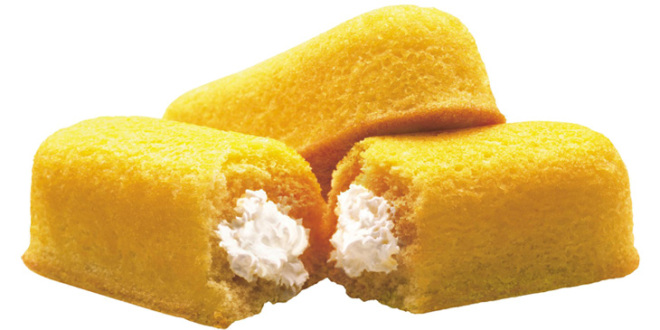
A toast to the endangered Twinkie

Photograph by AP Photo/Interstate Bakeries Corporation via PRNewsFoto

as seen on canada.com

It was many moons ago that Rachel Sa challenged me to post a tasting note on a not-so Simpsons inspired D’Oh wine. Imagine my delight to find her column re-appear on a sunny Sunday in the form of a spiritual ode and lament to the never to be inhaled again Hostess Twinkie.

No prompting needed this time around. Even the most serious and dedicated wine geek has a soft spot, whether they admit it or not, for packaged sweets. If Twinkies are on the verge of extinction, do they not deserve a proper toast? The issue is that the iconic sponge cake with the synthetic cream filling is a tough pairing for the fermented grape, as are other sugary snacks. Dessert wines do not work. The sugars compound and the cloying factor flies off the charts. Cake, sugar and laboratory invention is a difficult match to dry, savoury and tannic substances.

Look for wines that hint at sacchariferous behaviour but are actually of a dry table sensibility. White blends and Rosés first come to mind but some fresh and fruity reds will also do the trick. And I would be dissing 82 years of snack service were I not to include some bubbles for the Twinkieapocalypse. Here are four current releases to wash down the last of the great Twinkies.

Four current releases to wash down the last of the great Twinkies.

The grapes: Riesling, Gewürztraminer, and Chardonnay Musqué

The history: The aromatic white blend is becoming a signature Niagara wine style

The lowdown: Nobody does it cheaper or more effectively than wizard winemaker and potions master Richie Roberts

The food match: What else? The endangered Hostess Twinkie

Fielding Fireside White 2011 (303040, $13.95) will lead you to dance a firelight waltz. The pale, seemingly sweet nectar aromatically reminds me of fun and fizzy Moscato D’Asti. Gorgeous and grapey as if fountaining through the press, tropical blossoms blooming. Like the snack itself, the blend is “a tune from your childhood and a soft yellow moon,” even if it’s waning.  87

The Grapes: Gamay and Cabernet Franc

The history: Pink discrimination is a thing of the past

The lowdown: Ontario Rosé is extremely versatile so why not pair it with packaged confection or  match it as a sweet and savoury apéritif

The food match: Strawberry and Fior Di Latte Bruschetta

Featherstone Rosé 2011 (117861, $14.95)  stops just short of day-glo in a pastel, strawberry hue. The ever-bearing, mild candy fruit gives way to a salty, savoury middle and finishes with subtle yet pungent pink grapefruit. Vastly improved pinky.  88

The grape: Cabernet Franc

The history: The Saumur-Champigny appellation was created in 1957

The lowdown: Though Cab Franc has been cultivated for centuries in the area, this is the modern Loire in action

The food match: Hush Puppy Hot Lips Pocketbook Rolls

Domaine Langlois-Château Saumur-Champigny 2010 (7179, $17.95) is cracker correct Cabernet Franc befitting the appellation’s modern directive. A pepper electric, beet red, currant current runs through it, like a rolling river of stones. Sweet and sour hot lips, cinnamon spicy and playing a lick in open G. Rock ‘n roll Cabernet Franc.   88

The Splurge

The grapes: Chardonnay and Pinot Noir

The history: Classic 50/50 blend from an outfit that dates back to 1811 and makes a boatload of fizz

The lowdown: Excellent quality in under $50 Brut

The food match: French Fries, followed by Twinkies

Charles De Cazanove 1er Cru Brut Champagne (299750, $43.95) shows off a very distinct ripe, golden delicious apple aroma and a white grapefruit twang. The pettilement, subliminal tinkling of bubbles comes from a persistent, fine mousse. Toasty seltzer, dry and dusty with just a hint of poutine. A charmer and potential lady killer.  90

Good to go!

Wine and remembrance

<em>File photograph, National Post</em>

File photograph, National Post

Wine, wit, and beauty still their charms bestow,
Light all the shades of life, and cheer us as we go.”

On Sunday Canadians gestured in solemn contemplation to the fallen, lest we forget and celebrated heroes. We also gave the thumbs up to a local champion. Congratulations to Moray Tawse, Paul Pender and their team for being chosen Canada’s number-one winery for the third straight year in a recent Wine Access magazine poll.

Pender’s vision for Tawse, while wholly modish in tune, remains deeply rooted in an “antediluvian” wisdom with respect to making wine. The same cannot be said for a mess of ethanolic ferment proliferating present day LCBO shelves. Off I go towards yet another personal hermeneutic. This fall I have nosed, tasted, sampled and jotted down notes on more than 1000 wines. More than half have weighed in above 14% alcohol by volume. One in four have pushed the 15% abv envelope and beyond.

Biblical thought says there was a time when “wine” was simply the juice of pressed fruit, non-fermented, void of alcohol, the “pureblood of the grape.”  As Ben Franklin noted, before the flood the Antediluvians Were All Very Sober. They may as well have been drinking unadulterated milk.

Then, according to theological theory, along came Noah, vintner number one. The post-deluge patriarch purportedly discovered that if you let natural yeasts run wild they would turn grape juice and sugar into mocker, “strong drink.” Researches say that ancient barm barely peaked at 12% abv.

Thousands of years passed and nothing really changed, save for theories on the Babylonian effect of wine upon a godless and anarchistic populace. Today the real Babylon resides in extreme ripeness hyper-extending to alcohol levels once thought impossible. Cooler heads do sometimes prevail, perhaps not exactly to antediluvian standards, but at least with a degree of sanity. The great Chilean poet wrote, “let the simple man remember, to think of the soil and of his duty, to propagate the canticle of the wine.” Here are four current releases to stem the tide of vinous revelation.

Related – More from the VINTAGES November 10th, 2012 Release

Château Peyros Tannat/Cabernet 2007 (208249, $14.95) shocks as a direct current of dry, dusty and impenetrable “out of the sight” fortress of pitch. Alternatively, Supper’s ready with figs dipped back in black chocolate, roasted chestnut, truffle and the mind blow of seven trumpets getting “right down inside your soul.” Yowza and at a respectable 13.5%.  88

Vieil Armand Médaille Gewurztraminer 2010 (260158, $17.95) is a classic. Gewurz as gewurz, off-dry, lychee floral, tropical spice, crisp and fresh. No bitter pith.  88

Coyote’s Run Red Paw Vineyard Pinot Noir 2010 (79228, $24.95) shies away from the Burgundian mushroom, Epoisses and bourse, not to mention the Beaune-like price of the sister Black Paw. Yet like a good villages Pinot, the Red Paw weighs in at 13% abv framed by cocoa dust, red earth, density and girth. Swelling and a bit dirty like a proper Martini tsunami.  89

Regali La Lus Albarossa 2008 (291575, $24.95) can be nothing short of an ancient miracle. A Nebbiolo and Barbera hybrid, Albarossa is the Baco Noir or Cinsault of Monferrato. A whisper of vanilla oak imparts elegance into the finest leathery hide. Good on the Banfi conglomerate for this uniquely homogeneous half-blood.  89

Good to go!