A day in WineAlign life: 15 new releases from Ontario and B.C.

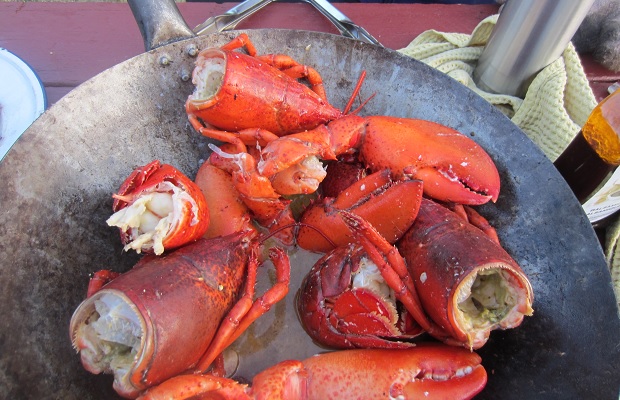
East Coast Lobsters Photo: Michael Godel

East Coast Lobsters
Photo: Michael Godel

Yesterday I settled in at the WineAlign offices with the critics crew (David Lawrason, John Szabo, Steve Thurlow and Sara D’Amato) to taste some new releases. I chose to focus on British Columbia because of all the wines that cross my path, those from out west seem to be the few and the far between. Some Ontario wines not yet investigated were open and available so I worked through a handful of them as well.

Here are my notes, posted to WineAlign, gathered together here, in one place.
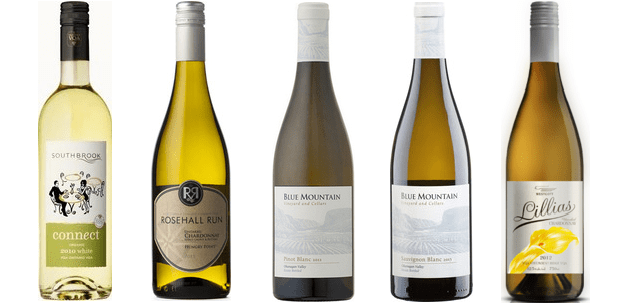
Southbrook Connect White 2013, Rosehall Run Hungry Point Unoaked Chardonnay 2013, Blue Mountain Pinot Blanc 2013, Blue Mountain Sauvignon Blanc 2013, Westcott Lillias Unoaked Chardonnay 2012

Southbrook Connect White 2013, Rosehall Run Hungry Point Unoaked Chardonnay 2013, Blue Mountain Pinot Blanc 2013, Blue Mountain Sauvignon Blanc 2013, Westcott Lillias Unoaked Chardonnay 2012

Southbrook Connect White 2013, Ontario (249078, $14.95, WineAlign)

Gone from the blend in 2013 is the Reimer Vineyard Gewürztraminer, essentially replaced with an increase of Vidal. A solid dose of Riesling and a smidgen of Sauvignon Blanc round out the blend. The sum of the parts means a stoic and supine white wine, submissive and malleable, ready for anything it needs to be. That it’s organic is a matter of good choice though not necessarily a contributing factor to this simple drinker’s personality. This is not a wine from stressed vines nor will it ever be in any sort or state of distress. Quality yet round acidity keeps it buoyant and free from any excess oxidation, allowing the flavour of basic orchard fruit with a lemon squeeze to shine. Perfectly good juice.  Tasted August 2014

Rosehall Run Hungry Point Unoaked Chardonnay 2013, VQA Prince Edward County, Ontario (Winery, $19.95, WineAlign)

What is so striking about Dan Sullivan’s unaoked Chardonnay is the classic and unmistakeable County perfume that can only be his. No matter the grape, a Sullivan white is a cold play of pear and citrus, made most obvious when oak is not around to confuse. A Rosehall white is always the most glycerin-textured in the County and Sullivan’s light touch ensures this PEC Chard is made in the vineyard. There is a lightness in its being but it is one of the better unoaked wines made in the region.  Tasted August 2014

Blue Mountain Pinot Blanc 2013, Okanagan Valley, British Columbia (winery, $17.90, WineAlign)

Incredibly youthful Pinot Blanc, still in possession of its infant’s smell. A combination of baby powder and unadulterated sweat, in other words, a recent sulphuring and bottle unsettling. Peering beyond it is nearly quintessential B.C. PB. Hints of green apple, tangy white candy, lemon basil and lime sherbet make for a savoury-sweet appetizer in a glass. Got verve this Blue Mountain and when it relaxes by early fall it will be as versatile a shot of pure white wine adrenaline as you could ever hope to find. Will bring simple cohabitation pleasure to a wide range of food, from raw to smoked, from marinated to reduced.  Tasted August 2014

Blue Mountain Sauvignon Blanc 2013, Okanagan Valley, British Columbia (Winery, $18.90, WineAlign)

Upfront, come and get me, juicy expression of Sauvignon Blanc, free of encumbrances. Avoids grass and spice, reaching instead for tree fruits, both stone and orchard. A bit ambiguous for that reason, acting less varietal and more Okanagan, but that is a very good thing. Has terrific sapidity and more than admirable length. A touch of distracting, caustic herbal intensity on the finish.  Tasted August 2014

Westcott Lillias Unoaked Chardonnay 2012, VQA Vinemount Ridge, Ontario (Winery, $20.00, WineAlign)

You may ask who is Westcott and what is Lillias? They are Grant and Carolyn Westcott, a new player in the Chardonnay market and Lillias is a most unique expression from the Vinemount Ridge appellation. There is a grape spirit sensation, a limestone-influenced lemon-lime chord and a moscato-like medicinal glade component. Though it’s a bit scattered, unsure whether its softer or harder and running anyway, anyhow, anywhere, the personality is certainly on display. Though it “don’t follow the lines that been laid before,” there is always room for a new kind of Chardonnay, one that pushes boundaries and lays new tracks. Winemaker Arthur Harder has it all happening here; viscous fruit, citrus zest, limestone impart, milky texture, minute oxidation and rapturous acidity in a Chablis vein. The most serious unoaked Chardonnay, if not yet everyone’s cup of tannin. Auspicious beginning.  Tasted August 2014

Laughing Stock Pinot Gris 2013, Laughing Stock Blind Trust White 2013, Upper Bench Zweigelt 2012, Laughing Stock Viognier 2013, Upper Bench Pinot Noir 2012

Laughing Stock Pinot Gris 2013, Laughing Stock Blind Trust White 2013, Upper Bench Zweigelt 2012, Laughing Stock Viognier 2013, Upper Bench Pinot Noir 2012

Laughing Stock Pinot Gris 2013, BC VQA Okanagan Valley, British Columbia (123604, $22.00, WineAlign)

This Pinot Gris will get you high and the question is will it leave you dry. Laughing Stock’s whites are not shy, elevated in alcohol (here 13.8 per cent) and full-out striking in texture and tannin. The wondering here is if there may be enough dry extract so to keep the wine fresh, lively and willing to bend. Or, will it dry out and leave you hanging, with a head full of radio fuzz and wanting more fruit. This is a surly and brazen attempt at slightly botrytized Pinot Gris, with enough grit and grind to set it apart from a cloud of every day juice. It’s just a bit tough and overdone in my opinion.  Tasted August 2014

Laughing Stock Blind Trust White 2013, BC VQA Okanagan Valley, British Columbia (123604, $25.00, WineAlign)

Two Pinots (Blanc and Gris) and nearly a fifth of Viognier conjoin to conspire in cohorts for this well-defined B.C. white. Put your trust in winemaker David Enns as he leads you on this trip around the Okanagan through the eyes of co-existing white grapes. The first steps are those of spice and tree fruit pith, the second steps are those of good medicine. Dogged persistence brings near closure and a desire for another sip. Tasted August 2014

Upper Bench Zweigelt 2012, BC VQA Okanagan Valley, British Columbia (Winery, $25.00, WineAlign)

Of all the international varieties to plant and attempt to establish a cottage industry in B.C., Zweigelt should certainly be near the top of the list. The grape lends well to the cool climate and the altitude. It grows well in sandy and loam soils, especially with some gravel content. Penticton should become a haven for Zweigelt. Upper Bench’s take is overtly flavourful, sweet-smelling and easily approachable. It’s respectably dry (2.3 g/L residual) and appropriately balanced with good acidity. The flavours of black cherries come directly to mind. There’s the rub. Like many New World (and even some Austrian) Pinot Noir, the dark fruit flavours of ripe fruit, while they may taste delicious, lead the wine down a road of immediate gratification and a short stay. Personally I would like to see subsequent vintages picked earlier and at lower brix (here at 24.2) for a fresher and more vigorous take on Zweigelt. There is much promise in this program.  Tasted August 2014

Laughing Stock Viognier 2013, BC VQA Okanagan Valley, British Columbia (B.C., $26.00, WineAlign)

Of all the big whites in the Laughing Stock range, this Viognier fits the style and ragged glory pursuant the course. This hits the mark with flying colours, a rich and juicy wine full of peach flavours punching along with orchard fruit and white flower aromas. This is really crunchy and vigorous Viognier, with a kick of pepper along with some highly tropical moments along the way. Long finish to what will be 10 years of evolution. Tasted August 2014

Upper Bench Pinot Noir 2012, BC VQA Okanagan Valley, British Columbia (Winery, $28.00, WineAlign)

This is a lovely, fragrant and boisterous Pinot Noir with a warm heart and a balanced personality. Notes of orange and cherry blossom circle around the black cherry centre with just a hint of dusty chocolate. That is the 14 months in 30 per cent new French oak talking, adding a bit of sinew, but mostly dusty cocoa flavours and fine-grained tannin. A well made Pinot Noir with that wood adding a finishing touch of spice strung along the linear acidity.  Tasted August 2014
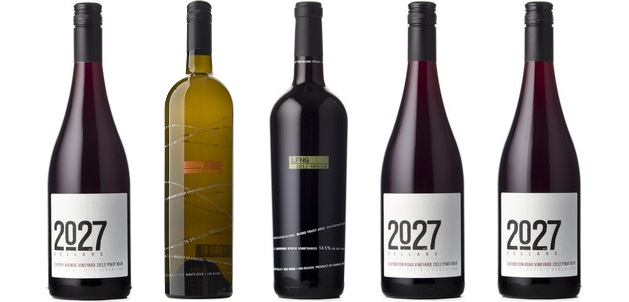
2027 Cellars Cherry Avenue Vineyard 2012, Laughing Stock Vineyards Amphora Vrm 2013, Laughing Stock Blind Trust Red 2012, 2027 Cellars Pinot Noir Queenston Road Vineyard 2011, 2027 Cellars Pinot Noir Queenston Road Vineyard 2012

2027 Cellars Cherry Avenue Vineyard 2012, Laughing Stock Vineyards Amphora Vrm 2013, Laughing Stock Blind Trust Red 2012, 2027 Cellars Pinot Noir Queenston Road Vineyard 2011, 2027 Cellars Pinot Noir Queenston Road Vineyard 2012

2027 Cellars Cherry Avenue Vineyard 2012, VQA Twenty Mile Bench, Ontario (Winery, $30.00, WineAlign)

There are a scant 105 cases made of this Cherry, a site close to a similar national Pinot Noir made by Paul Pender at Tawse. The vineyard encourages a scrap of the vinous kind between earth and its manifest cherry-scented fruit. Cherry seems to hold back its charms and ask that patience be the virtue. “Loose lips sink ships,” so “can we show a little discipline” and leave it alone? The ripeness is certainly here but what is most promising is the lack of heat, the absence of volatility and the wall of pure fruit. Though a bit subdued this is a much more approachable, not quite as serious and all around friendly expression of Twenty Mile Bench Pinot Noir. The price is more than reasonable for the quality in the glass. Wait three years and watch it age easily to 2020.  Tasted August 2014

Laughing Stock Vineyards Amphora Vrm 2013, Okanagan , BC VQA Okanagan Valley, British Columbia (agent, $30.00, WineAlign)

Here blends one-third each Viognier, Rousanne and Marsanne, a veritable Rhône orgy in wild fermentation, aged on the skins in terra-cotta and amphorae. While I would not go so far as to call it an “orange wine,” I will use the “N” word to describe its agrarian ways. As natural as anything you are likely to taste out of B.C., this is a most untamed experiment and should not be missed. It verges on oxidation but refuses to climb over the edge. It’s floral, spicy and crowded. The texture is chalky and so full of rusty, clay rubbed streaks. Everything about this is unkempt and exotic, including the never cease and desist fermenting lychee and longan feel. Hard not to be wowed by this blend’s presence.  Tasted August 2014

Laughing Stock Blind Trust Red 2012, BC VQA Okanagan Valley (B.C., $30.00, WineAlign)

“Past performance is not an indicator of future returns.” A statement on the bottle insists that full trust be afforded the winemaker, his whimsy and the blending choices made from vintage to vintage. Not unlike a similar program that Ann Sperling employs at Southbrook, albeit not nearly as brash or brazen in attitude. The ’12 BT has the swagger and the oomph. A powerhouse of a Cabernet-based blend, full of B.C.’s finest black fruits and teeth gnashing tannins. Is this wine too serious for its own good? I don’t think so but it is no shrinking violet (though it smells like some, in a very modern Maremma or even Nebbiolo way). Thick juice, ramped up and yet delicious if too much young syrup to work past one full glass. Time will sooth the savage beast but it will never be a pussycat.  Tasted August 2014

2027 Cellars Pinot Noir Queenston Road Vineyard 2011, St. Davids Bench, Niagara Peninsula (Winery, $35.00, WineAlign)

There is definite gregarious character to this Pinot Noir and it finds a positive, altruistic methodology in its gathering of some obvious Niagara traits. Increased ripening from its Queenston Road Vineyard on the warm St. David’s Bench is its most obvious pronouncement. A shyness from out of what is an enigmatic Pinot vintage walks with the later harvest, dusty and earthy fruit. Most of all it can’t help but be Niagara Peninsula Pinot Noir, albeit in high caste and hyper-sensitive attention to detail. There is cola, rust, cherry, paint and extreme acidity. It’s hot, actually. Would like to see where this goes with anti-volatile time. Methinks a settling will happen. Tasted August 2014

2027 Cellars Pinot Noir Queenston Road Vineyard 2012, St. Davids Bench, Niagara Peninsula (Winery, $35.00, WineAlign)

A highly perfumed Pinot Noir from winemaker Kevin Panagapka in 2012, complete with an exotic spice box of aromatics; potpourri, roses, cassia, clove and aamchur. The profile hydrates to a mulled simmer as the wine is once again warmed by the vineyard’s ability to ripen, exaggerated in ’12 but with more grace, bringing its personality in line with its modest (13 per cent) alcohol. The cherry flavour veers black with a paste of tar and charcoal, but again, the psyche is smooth and elongated. Long finish to this Queenston which should see it sing to 2018 and beyond. Tasted August 2014

Good to go!
https://twitter.com/mgodello


Release the summer wine

A white wine for all seasons, Pinot Gris, by Maison Trimbach<br />

A white wine for all seasons, Pinot Gris, by Maison Trimbach
PHOTO: http://www.trimbach.fr/

These are the wines of summer.  Dry, saline Rosé made from classic varieties; Grenache, Syrah and Cinsault. Crisp, flinty Riesling, turned to stone. All things Pinot. B.C. Cured Pinot Blanc struck by both juicy fruit and mouth-watering acidity. Pinot Gris from Alsace, impossibly dry. The same grape but from across the Rhine and under another name: Grauburgunder. Pinot Noir from Prince Edward County. Nothing else in the world smells like it. Smells like, teen spirit.

White wine that feigns bubbles and brings the wonder of Nova Scotia to the world. Chardonnay by a young winemaker in Ontario just coming into his own, ready to become a star. Classic varieties for summer grilling; Cabernet Sauvignon for a green day, Sangiovese to make your day, Merlot, Cabernet Franc and that melting pot of red wines, Châteauneuf Du Pape. All VINTAGES Ontario releases for July 19th. These are some of my summer wines. All 13 of them.

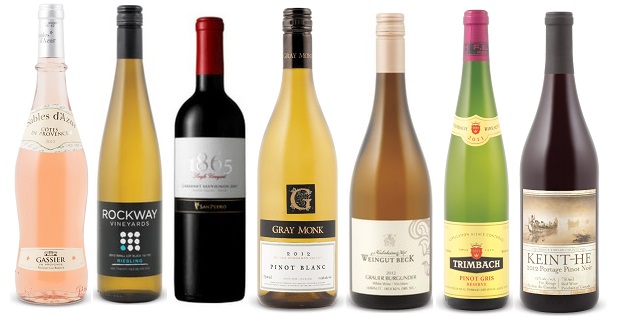
From left to right: Gassier Sables D'azur Rosé 2013, Rockway Small Lot Block 12 150 Riesling 2012, San Pedro 1865 Single Vineyard Cabernet Sauvignon 2011, Gray Monk Pinot Blanc 2012, Hedesheimer Hof Weingut Beck Grauer Burgunder Kabinett Trocken 2012, Trimbach Réserve Pinot Gris 2011, Keint He Portage Pinot Noir 2012

From left to right: Gassier Sables D’azur Rosé 2013, Rockway Small Lot Block 12 150 Riesling 2012, San Pedro 1865 Single Vineyard Cabernet Sauvignon 2011, Gray Monk Pinot Blanc 2012, Hedesheimer Hof Weingut Beck Grauer Burgunder Kabinett Trocken 2012, Trimbach Réserve Pinot Gris 2011, Keint He Portage Pinot Noir 2012

Gassier Sables D’azur Rosé 2013, Ac Côtes De Provence, France (33621, $14.95, WineAlign)

Always dry, dusty and salt lick oriented. A mineral bath of verdigris and rusty rainwater.  Light but all about minerals, salinity, beach and sun. What more should be requested and ascertained from value given Côtes De Provence Rosé?   Tasted June 2014  @MichelGassier

Rockway Small Lot Block 12 150 Riesling 2012, VQA Twenty Mile Bench, Niagara Peninsula, Ontario, Canada (372441, $18.95, WineAlign)

Noticeably dry but also earthy/funky. Struck match and plowed earth. As it settles into its skin and your consciousness it develops body, depth and acidity. Grows and expands, reaches heights you thought it would not. The vintage works wonders for the Twenty Mile Bench and this block has expansive stuffing to take it long, not to mention the earthy complexity to see it change and evolve. It may go through a disturbing, unusual phase but be patient and set one aside for 15 years from now. You will be amazed what honey and deep geology it discovers and uncovers.  Tasted June 2014  @RockwayVineyard

San Pedro 1865 Single Vineyard Cabernet Sauvignon 2011, Maipo Valley, Chile (37911, $19.95, WineAlign)

When it comes to Cabernet Sauvignon, “well, I heard it all before.” This Maipo beauty begs to be different. Here is a $20 Cab with a $50 reductive funk. A heady, heavy red that needs more than just a swirl. The average Joe may smell a green day and not get it straight away. My advice would be to hang in there because with 10 minutes aeration the fresh currant, mint and rain-soaked flower aromatics will come around. And come around they do. Mocha and semi-chocolate driven, tannic like crazy and banging out a beat of crazy acidity. A ton of wine for $20.  Tasted June 2014  @Dandurandwines

Gray Monk Pinot Blanc 2012, BC VQA Okanagan Valley, British Columbia  (321612, $19.95, WineAlign)

Ah, terrific cool climate Pinot Blanc, with juicy acidity from a bite into a nectarine just falling from the tree. On a night like this “it goes deep, it goes deeper still,” in neo-tropical fruit (from seemingly slightly elevated alcohol). A most cured white wine, with a tannic quality that gives it texture and structure. Strike another Lloyd Braun mark on the British Columbia-Pinot Blanc free competition continuum to develop this variety with prejudice.  Seamless, with excellent length.   Tasted June 2014  @GrayMonkWinery

Hedesheimer Hof Weingut Beck Grauer Burgunder Kabinett Trocken 2012, Prädikatswein, Germany (378349, $20.95, WineAlign)

This rare Pinot Gris VINTAGES sighting is a jet-gassy funky, disparate complex mess of penciled, earthy, grassy and off-dry stone fruit aromas. It’s also viscous, distracting, and propelled by thriving acidity. While the Grauburgunder hails from the other side of the Rhine, it shares a tannic, saline and mineral affinity with the Vosges PG’s of Alsace. Lives up to its Trocken designation through a rocky impart yet seems just slightly sweet in a very Kabinett way. Herbal and long. Contemporary Prädikatswein worth a look and a more than temporary place in the cellar.  Tasted June 2014  @TandemSelection

Trimbach Réserve Pinot Gris 2011, Ac Alsace, France (971762, $23.95, WineAlign)

For Trimbach this is a top quality vintage to make an example for one of the domain’s signature value wines. This firm and straight shooting Pinot Gris comes from limestone-dominant parcels not so different from the PG taken out of the winery’s Osterberg Grand Cru, just above Ribeauvillé. That a Pinot Gris can bring a nearly (8 g/L) elevated level of residual sugar to the table and come across bone dry, like a walkabout in the outback, remains one of life’s great mysteries. Picked prudently early, or as Alsatians like to say, “right on time,” this Trimbach is eloquent, reeks of wet, cold stone and lies over an ocean tasting of salty minerals. Pour it with the freshest, uncooked fish and a light vegetable pickle. Tasted June 2014  @trimbach

Keint He Portage Pinot Noir 2012, Prince Edward County, Ontario (373415, $25.00, WineAlign)

The most juicy, fruit forward and gregarious of the estate’s Pinots. Only Keint He Pinot smells like this, in Ontario, or elsewhere for that matter. Smells like teen spirit. It really is that unique but at the same time, undeniably Pinot. Just picked and torn cherry blossom petals and bitter chocolate dust strewn overtop fresh macerated cherries. Further coated with iron fillings. “And I forget just why I taste, oh yeah, I guess it makes me smile.” Prince Edward County Pinot Noir on the road to nirvana.  Tasted June 2014  @KeintheWinery

Benjamin Bridge Nova 7 2013, Gaspereau Valley, Nova Scotia (256289, $25.95, WineAlign)

From a bumper crop, there came to market 11,000 cases of this Nova Scotian feel good, faux-sparkling story. Winemaker Jean-Benoit Deslauriers’ Nova 7 dissimulation in bubbles is a true trick of the trade and though this white wine strikes as if it were a child of a warm vintage, there is a classic lightness of Rosé fizz being in its ever so slight effervescence. A singular wine in many hybrid incarnations, in Muscat ways, of pink Perle de Csaba, segmented and pressed for a sweet burst of grapefruit. It’s low (7 per cent) in alcohol, excellent in acidity, sweet and sour, citrus zesty, juicy and dry at the same time. Batch delineated and loyal to continence, though if the quantity creeps much higher that may come in to question. Grown up pink lemonade and so easy to consume.  Tasted June and July 2014  @Benjamin_Bridge  @jbdeslauriers

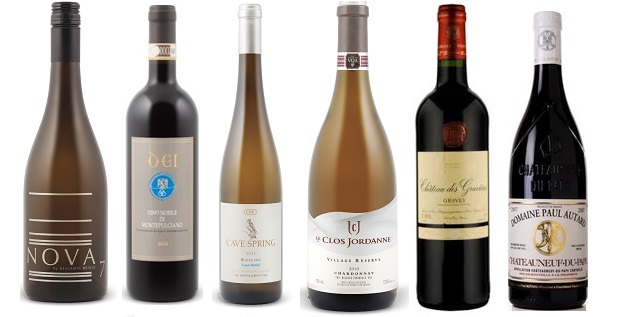
From left to right: Benjamin Bridge Nova 7 2013, Dei Vino Nobile Di Montepulciano 2010, Cave Spring Riesling Csv 2011, Le Clos Jordanne Village Reserve Chardonnay 2011, Château Les Gravières 2010, Paul Autard Châteauneuf Du Pape 2010

From left to right: Benjamin Bridge Nova 7 2013, Dei Vino Nobile Di Montepulciano 2010, Cave Spring Riesling Csv 2011, Le Clos Jordanne Village Reserve Chardonnay 2011, Château Les Gravières 2010, Paul Autard Châteauneuf Du Pape 2010

Dei Vino Nobile Di Montepulciano 2010, Docg, Tuscany, Italy (285510, $27.95, WineAlign)

The entry of Dei’s balanced Vino Nobile was very juicy but at the same time serious and brooding. At first rhythmic, tight and anxious, you couldn’t but help but feel the strong mocker of this Sangiovese. Iron, hard rocks, knocks and a day in medieval life. If it should be opened any time in the next five years it will require a rare fleshy partner and plenty of air time. Though there was nothing faint about it, with time it found a path to a crescendo and then changed chords. It sang like a bird for a verse or two, softened enough to open a window to its future and when it spoke “I went into a dream.” Finished with a piano bass note that droned on for nearly a minute.  Tasted June 2014  @LeSommelierWine

Cave Spring Riesling Csv 2011, VQA Beamsville Bench, Ontario  (566026, $29.95, WineAlign)

The 2011 issue is the driest, slate-driven, flinty Cave Spring Csv as it can ever be. Don’t be looking at its heart for richness and body but there is a wall of texture forged in stone. The Csv speaks “of everything that is alive in my blue world.” One taste and all goes electric, lights up and the orchestra begins to play. Turn the stone of this statuesque Riesling to drink in the long and true loyalty to ever fibre and fissure of its rocky being. Excellent. What more could you expect, or want?  Tasted June 2014  @CaveSpring

Le Clos Jordanne Village Reserve Chardonnay 2011, VQA Niagara Peninsula, Ontario  (33936, $30.00, WineAlign)

Winemaker Sébastien Jacquey’s “entry-level” Chardonnay currently resides in a bitten and certainly not shy mode. The 2011 is a Villages Reserve that is in a bit of a purgatorial place at the moment, closed down since its grand opening last summer. The rocks are speaking, as is the hubris of wood, but the fruit is up there, wafting in the proverbial wind. Let it blow and gather atmosphere, to return two or three years on, to reintegrate with the earthly elements and reform a convivial bond.  Tasted June 2014  @LeClosJordanne

Château Les Gravières 2010, Ac Saint-Émilion, Right Bank, Bordeau, France (257733, $36.85, WineAlign)

Highly concentrated, big berry crushed Saint-Émilion. Floral too and the fruits are exquisitely ripe and red. There is great tension and acidity. Crazy tannins. Exceptional wine but will need 15 years time to settle, integrate and play nice. Qualifies as the finest 14 per cent Bordeaux I’ve tasted in quite some time. A wild sense of mineral and animale climb on top. Highly ferric. Really fine.  Tasted June 2014

Paul Autard Châteauneuf Du Pape 2010, Ac, Rhône, France (380667, $49.95, WineAlign)

A refreshingly lithe and graceful 14.5 percent Châteauneuf Du Pape with every bit of richness necessary to fulfill its contract to typicity. Just a hint of both earth and animal musk, demanding tannin and more than its share of rocks and mineral give. A real winner for the vintage and in fresh air contrast to the gaining ridiculousness of extract and over-bearing alcohol-driven Rhônes. This might just be the bottle to reaffirm my waning faith in the region.  Tasted June 2014

Good to go!

The froth on Crémant d’Alsace

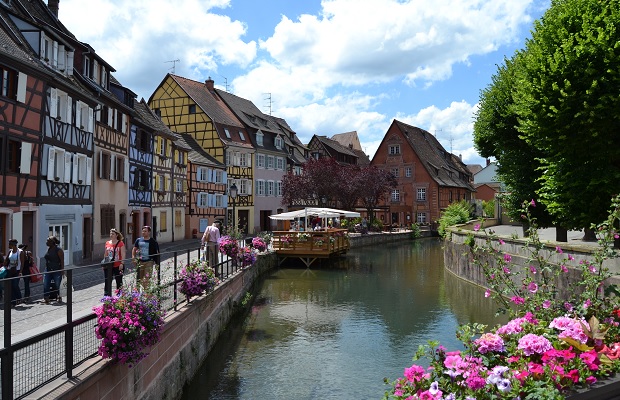
Colmar Canal PHOTO: Cassidy Havens, http://teuwen.com/

Colmar Canal
PHOTO: Cassidy Havens, http://teuwen.com/

The production of fizz by way of secondary fermentation in bottle is nothing to be ignored in Alsace. More than one in every five wines forged from the region’s vines is filled with bubbles. Most recently (in the past 18 to 24 months), certain things have come to light. A salient spike has been witnessed, with Sparkling wine increasing from 15 to more than 20 per cent of the region’s annual wine production. This means that Alsace now ranks second in France with a yearly production of more than 30 million bottles.

Six grape varieties are permitted for the production of Crémant d’Alsace; Auxerrois, Chardonnay, Pinot Blanc, Pinot Gris, Pinot Noir and Riesling. Chardonnay can only be used for Crémant and only Pinot Noir may be fermented to bottle a Rosé. More rules must be followed like grapes having to come from vines into its’ 3rd growing season and wines must rest a minimum nine months on the lees before bottling. Most lay longer, which helps to define this genre of Crémant’s creamy texture, matched in contrast by its stony, flinty and mineral style.

The effervescence of Crémant d’Alsace is known as prise de mousse. Basic wine is bottled with liqueur de tirage for second fermentation. Bottles are left to rest sur latte. Autolysis occurs and the dead yeast is removed by way of remuage. After aging on the fine lees, bottles are turned, deposits form in the collar, brought to the freezing point, evacuated by carbonic gas and replaced in volume by liqueur de dosage or liqueur d’expedition which yields a Crémant d’Alsace of three styles; Brut, Sec, or Demi-Sec. A balanced vintage for sparkling in 2012 yielded 270,000 hl of Crémant d’Alsace.

During my week in Alsace and with thanks to the Conseil Interprofessionnel des Vins d’Alsace (CIVA) I was able to taste more than 30 producer’s Crémant. Here are my notes on 14.

Crémant d'Alasace at Domaine Steuntz-Buecher

Crémant d’Alasace at Domaine Steuntz-Buecher

Jean-Marie Haag Crémant d’Alsace, tasted at Domaine Stentz-Buecher with Les diVINes d’Alsace

Exemplary bubbles from Soultzmatt in la Vallée Noble, 20 km south of Colmar, from out of clay-limestone soils. Grapes here are Pinot Blanc, Pinot Auxerrois, Riesling, Pinot Gris and Pinot Noir. A close-knit aridity and platinum tang are pronounced in an idiomatic lees-inflected language with a lightly oxidized lilt. A retaining wall of freshness and a slice of bitter honey-almond tart round out the complexity, intended or not, with elevated levels of Pinot vibrations making themselves known. Calls for a must return to see if it’s a one-off or a truly significant house style. Drink alongside a salty buffet.

Valentin Zusslin Crémant D’Alsace Sans Souffre Brut Zero, tasted at Domaine Stentz-Buecher with Les diVINes d’Alsace

The old vines blend from Clos Liebenberg is predominantly Pinot Auxerrois (95 per cent) with minor amounts of Chardonnay and Pinot Gris. It’s important to note the non-sulphur designation in that the not insignificant practice takes the wine to another level of Crémant sophistication. There is a savoury nut character to the Auxerrois but never in a fat, round or blanched way. The caryopsis are not like an almond but more like a roasted pistachio upon the mid-palate. Moving forward it’s like the smell of a nut-based, warm cereal. It’s quite intoxicating and lingers well into the finish.

Louis Hauller Crémant D’Alsace, tasted at Domaine Stentz-Buecher with Les diVINes d’Alsace

From 100 per cent Chardonnay, this is a fine, subtle, stylish, finessed and elegant interpretation that is a different sort of Alsace discrimination. Spent 11 months on the lees and sports more citrus than most others. Subtle bubbles here, with less froth and more Chardonnay character. Very good length.

Sipp Mack Crémant D’Alsace Rosé, tasted at Domaine Stentz-Buecher with Les diVINes d’Alsace

The smell of strawberry cream and the crème fraiche sapidity by way of sudoric lees. Fun and characterful if a bit of an ancestral taste.

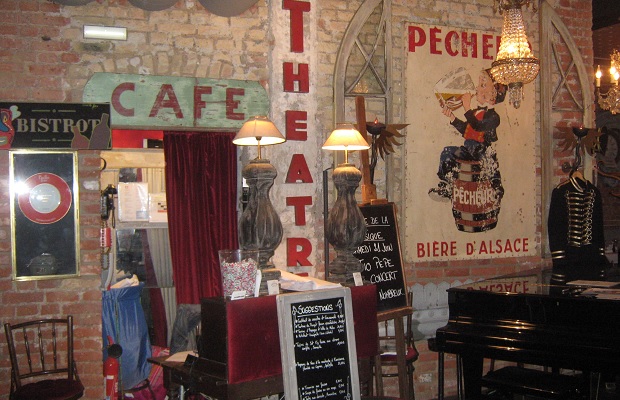
Restaurant Le Théâtre, Colmar

Restaurant Le Théâtre, Colmar

Albert Mann Crémant D’Alsace Brut 2011, tasted at Restaurant Le Théâtre, Colmar with Albert Mann’s Marie-Thérèse Barthelme

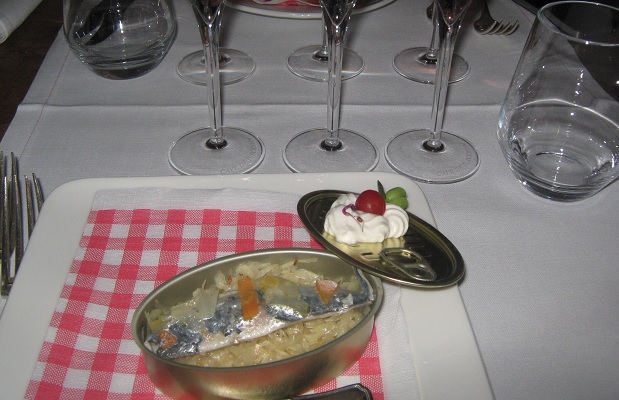
A four-squared Pinot affair, in Blanc (66 per cent), Auxerrois (16), Noir (12) and Gris (6). This from a bottle that had just been disgorged one week prior to tasting. Out of clay-limestone and sand soils in vineyards from Kientzheim and Wettolsheim. Like album art, the Mann label is a crucial, sixth sense aspect of the wine experience. The 2011 Crémant is the artwork of François Bruetschy, “like a turnstile of fireworks while projecting fine sparks.” The 2011 Mann is very fine, misty, delicate, wistful and waiting in longing for an amuse bouche of mackerel with choucroute in a can. The wine makes me long for a walk in the vines.  @albertmannwines

Mackerel and Choucroute, Restaurant Le Théâtre Colmar

Mackerel and Choucroute, Restaurant Le Théâtre Colmar

Gustave Lorentz Crémant D’Alsace, tasted at Restaurant Le Théâtre, Colmar with George Lorentz

Though the label denotes this as non-vintage, the blend of Chardonnay, Pinot Noir and Pinot Blanc is essentially from the 2011 vintage. This is what Lorentz describes as 2nd-tier house sparkling, with more ripeness in this bottle. That fruit maturity is all apple, with a minor note of oxidation and the full effect of 16 months on lees felt through texture. Once again the inclusion of Chardonnay takes the Crémant schematic condition to another level. Bring on the top-tier.

Louis Sipp Crémant D’Alsace Rosé, tasted at Restaurant Le Théâtre, Colmar with Etienne Sipp

The Sipp Crémant comes from various parcels in Ribeauvillé, from Weinbaum, Sulz and Rengelsbrunn. Etienne tells us it is made from Pinot Noir and Pinot Noir, playfully mocking the AOC’s rule that only that variety can be used for sparkling Rosé. Sipp’s Pinot is grown in mainly heavy and deep clay soils. Picked at optimum ripeness, this is fizz that has spent 18 months aging in bottle after not having gone the way of malolactic fermentation. The result is a dry, dense, savoury and layered Pinot Noir Rosé. This third Crémant in a group with Mann and Lorentz proves that though tonight is not a competition, we see that all three have won.

Hummus, La Table de Gourmet, Riquewihr<br />

Hummus, La Table de Gourmet, Riquewihr
PHOTO: Cassidy Havens, http://teuwen.com/

Paul Zinck Crémant D’Alsace, tasted at La Table du Gourmet, Riquewihr with Phillippe Zinck

An efficient, sparkling requiem for success in a blend of three vintages and varieties; Pinot Noir (60 per cent), Chardonnay (30) and Pinot Blanc (10). A soft receptive, inviting and proper amalgamation in which mousse apropos peach and soft French cream delight without needing to be tough or street savvy in any way. Crémant giving like une crème de luxe, to sip with Hummus, La Table de Gourmet style and with nary a difficult moment.

Domaine Bott-Geyl Crémant D’Alsace Cuvée Paul-Edouard Brut Millésime 2007, tasted at La Table du Gourmet, Riquewihr with Jean-Christophe Bott  @JLBrendel   

Jean-Christophe Bott’s may be the most complex and intriguing bottle of Crémant you would have a chance to taste in the course of a week in Alsace. Bott gathers top quality Pinot Blanc, Chardonnay and Pinot Noir from growers then lays the fruit low for four years on their lees. The rich and sunny vintage is vinified in what is really an Extra Brut style without any dosage whatsoever. This is small production Alsatian bubbles (2500+ bottles) disgorged in 2011 and in very early stages of development. The acidity stands in upright attention while the fruit submits to wait. The rocks and salinity raise upwards to march in extreme lengths. A sublime match to an Amuse Bouche of Cured Watermelon, pistachio, basil and mustard flower.

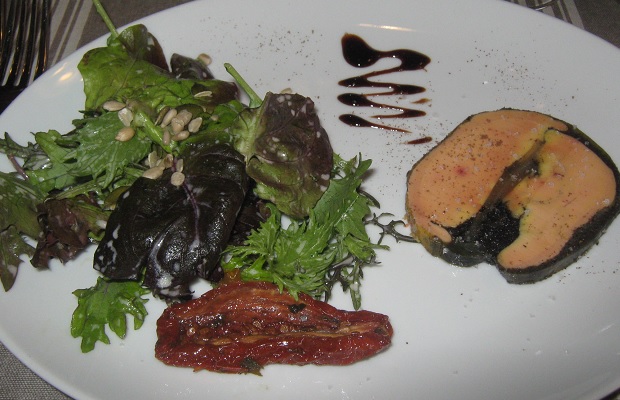
Foie Gras at Restaurant L'Épicurien, , Colmar

Foie Gras at Restaurant L’Épicurien, , Colmar

Charles Baur Crémant d’Alsace, tasted at Restaurant L’Épicurien, Colmar with Arnaud Baur

After its second ferment this blend of Pinot Blanc (40 per cent), Auxerrois (40) and Chardonnay (20) spent a compages-inducing 24 months on the lees. This is Baur’s main cuvée for Crémant, always made from two vintages, in this case 2009 and 2010. Most definitive and classic for the appellation. Falls within the aromatic white fruit/white flower spectrum with flavours that tease ripe Mirabelle, apricot and peach. Soft, elegant, feminine, demurred and clean. Baur’s take is a Catherine wheel of Alsatian bubbles with “all the things you dream while spinning ’round.”

Audrey et Christian Binner Crémant d’Alsace KB, tasted at Restaurant L’Épicurien, Colmar with Christian Binner 

Binner’s exotic-scented sparkling is from Kayserberg, “the emperor’s mountain,” next to the Schlossberg Grand Cru site. Old vines out of colder parcels more appropriate for making Crémant consist of Auxerrois, Pinot Blanc and Pinot Gris. The terroir here is granitic and poor in soil, if that is what it can be called. The house style is quite oxidative and distinctively earthy, as if the rocks were breaking down into a fine, funky soil remineralization. The most terpenes yet from bubbles tasted in Alsace, with a bruised apple hematoma, a pickle of some colonialist kind and a spice cupboard to fill a curry recipe. In the end this is unusual, yet vivid and jazzy fizz.

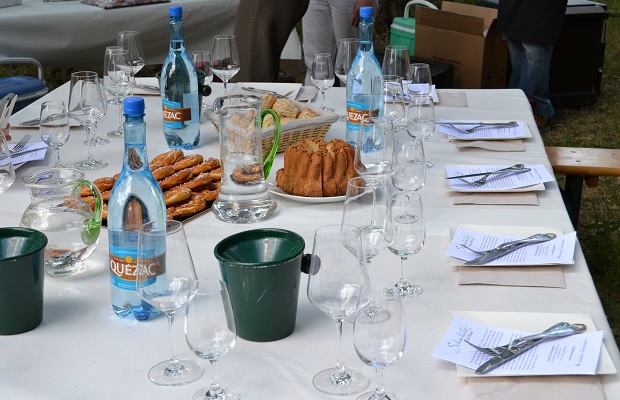
Schoenheitz Picnic<br />

Schoenheitz Picnic
PHOTO: Cassidy Havens, http://teuwen.com/

Vins Schoenheitz Crémant d’Alsace Millesimé 2007, tasted on the steep slopes of the valley of Munster with Dominique, Henri and Adrien Schoenheitz

Primarily focused upon Pinot Auxerrois and righteously so, with just a 10 per cent buoyancy from Pinot Blanc. The combination of striking Auxerrois fruit grown on the estate’s (400-500m) high altitude steep slopes and a memorable Alsace vintage is just deadly. The varietal choice in low acidity out of a vintage with character and temper here translates to aridity (1 g/L residual sugar) and long on lees texture. Like a Ron Sexsmith ballad, a listen, one look at its bronze patina, one taste and you will “see the forest for the trees,” because there’s gold in them hills. Perfect timing to break out an all-natural, no dosage ’07, marked by gratuitous acidity and mountain verve. An auspicious start to a picnic in the hills.  @VinsSchoenheitz

Pierre Frick Crémant d’Alsace 2013, tasted at Domain Pierre Frick with Jean-Pierre Frick

Jean-Pierre Frick poured two just bottled yet raw examples meant to set a perspective table for the 2013 finished wine that followed. The 50/50 Pinot Blanc et Noir (NV and 2013) were both picked ripe (nearly overripe), pressed direct and treated with nothing, nada, niente, zilch, rien. No sulphites, yeast or sugar. With zero dosage and opening too soon in evolution, these bottles were marked by arrested fermentation. The absence of the second fermentation meant for a flat, oxidative result. The experiment may have meant no Crémant but it helped to organize, define and ultimately assess the ’13. Same minimalist method but with a secondary ferment, this bottle (though warm) offered high citrus and biting, forceful, sharp acidity. When returned to an hour later and from a cold bottle, the wine was much brighter and atomically fresh. Frick’s method and style mean his sparkling must spend a minimum one year in bottle before it can be sold.

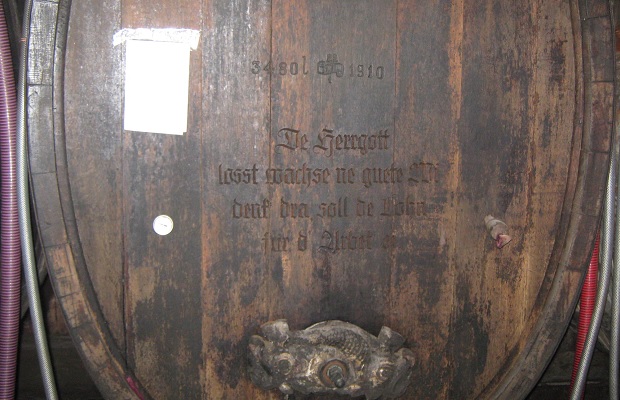
Casks at Jean-Pierre Frick

Casks at Jean-Pierre Frick

Pierre Frick Crémant d’Alsace 2012, tasted at Domaine Pierre Frick with Jean-Pierre Frick

One of JP’s “funny wines.” Once again, no sulphur but this time with natural yeasts. Notated by a slight coppery, salmon tinge and minimally oxidative, though in no way over the top. “My idea was a dry Crémant but he’s not dry. C’est la vie.” To Frick this is a wine for young and really old people. Toasted brioche, buttered toast and almond extract are joined by a late arriving, very interesting, savoury sweetness. The finish smoulders, with that ever-bearing herbiage adding another layer. This Pinot Noir and Pinot Blanc split comes in at 12.5 – 13.5 per cent alcohol. Frick doesn’t really know. “I write 13 per cent because I just have to put something on the bottle.”

Good to go!

In a Grand Cru state of mind

Grand Cru Riesling, Alsace

Grand Cru Riesling, Alsace

I have been in Alsace now just over 48 hours and already feel as though I have been introduced to a lifetime of wine. Yet with every taste of the Alsace pansophy I am reminded just how long the unfathomable road to the region’s enlightenment remains to be. The combination of nuance, complexity and acuity of the Alsatian wine spirit may have no equal. Some highlights of the first two days in Alsace with SOPEXA and CIVA.

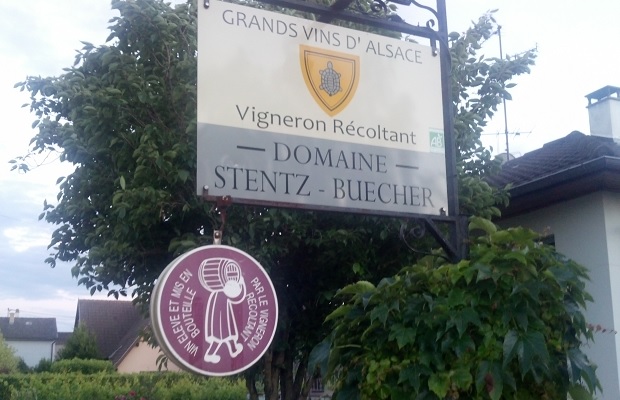
Domaine Steuntz-Buecher

Domaine Stentz-Buecher

What a way to be introduced to Alsace in 2014. Les diVINes d’Alsace, an organization of 70 industry women and Domaine Stentz-Buecher rolled forth a genealogical pedigree of Alsace past and present with food station matching in the winery’s garden and in the barrel rooms. First Crémant, then whites of many incarnations; Pinot Gris, blends, Gewürztraminer and many, many Rieslings. The final prize at the end of a long scroll of grand achievements were Grand Cru Riesling from the vintage 2000. The eight acted out a Grand Cru finale of generous spirit via and the women of

Louis Haller Brut Crémant D'Alsace / @diVINeSDaLSACE

Louis Haller Brut Crémant D’Alsace / @diVINeSDaLSACE

Les vigneronnes Mélanie Pfister and Carolyn Sipp introduced the three year-old organization, the winemakers, winemaker’s wives and sommeliers that form the membership of l’Association des Femmes de la Vigne & du Vin d’Alsace. “We are feminine but not feminism,” quipped Sipp. The idea began in 2009, following in the footsteps of similar women in the Rhône, Bourgogne and the Southwest of France. Women who have banded together to promote their region’s wines.

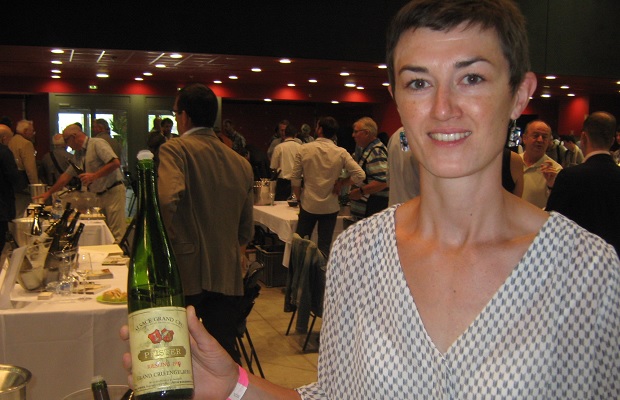
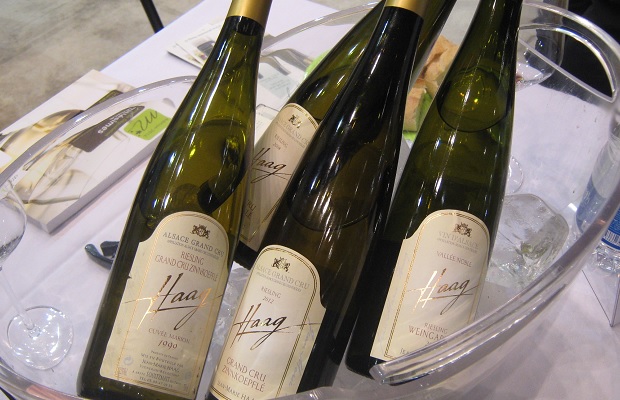
Laurence Hauller showed the 100 per cent Chardonnay Louis Hauller Crémant d’Alsace, a fine, subtle, stylish, finessed and elegant interpretation of Chardonnay that is a different sort of Alsace discrimination. Eliane Ginglinger presented her bone dry, citrus in laser focus Ginglinger Riesling Vieilles Vignes 2012. Myriam Haag offered up Domaine Jean-Marie Haag’s Riesling Grand Cru Zinnkoepfle 2011, an enervating wine with richness bled from rocks and a finishing noble bitterness. Myriam Schmitt brought her Domaine François Schmitt Riesling Grand Cru Pfingstberg 2012 that though in sweet emotive intention remains buoyant in the persevering air of aridity. It defines the transformative trend towards Dry Alsatian Riesling. Josiane Griss of Domaine Maurice Griss’ Riesling Sonnenberg 2010 if asked the question, “how long have you been a Riesling” would surely answer simply, “from creation.”

Grand Cru Riesling 2000

Grand Cru Riesling 2000

The Riesling Grand Cru from 2000 were a varied and electric bunch. The Caves François Schmitt Riesling Grand Cru Pfingstberg 2000 is a baby still and in hallmark readiness of its necessary terroir. The Domaine Sipp-Mack Riesling Grand Cru Rosacker 2000, also young and primary teases and feigns late harvest but don’t be fooled by its sunshine. This chew of salted stones has a long, long finish. the show stealer was the Magnum of Riesling Grand Cru Kaefferkopf 2000 by Vins Jean-Baptiste Adam. Incredibly atomic with a vineyard flinty stink that exhumes and exudes the benevolent bitterness of time. Wildness and purity.

Godello and Pierre Gassman of Rolly Gassman

Godello and Pierre Gassmann of Rolly Gassmann

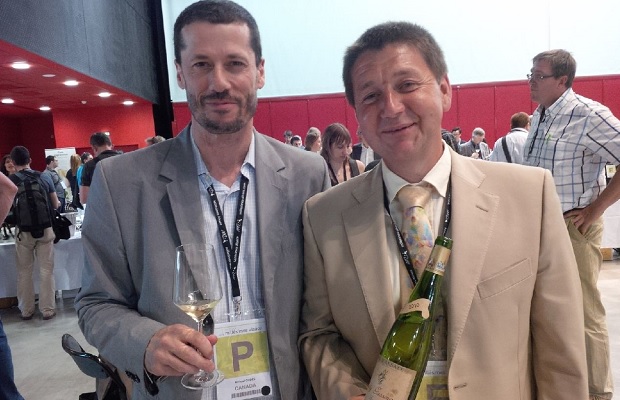
The main event of Monday, June 16th was the Millésimes Alsace, the professional trade fair for Alsace, Wines. Nearly 90 exhibitors showed off their terroir, in Crémant d’Alsace, Riesling, Pinot Gris, Gewürztraminer, Pinot Blanc, Sylvaner, Auxerrois, Muscat and Pinot Noir. A morning Master Class seminar featured eight world-class Sommeliers leading the room through seven “typical” Alsace wines. Maison Rolly Gassmann’s Riesling Kappelweg de Rorschwihr Vendanges Tardives 2000 is late harvest mineral expression in bitterness unchained yet restrained.

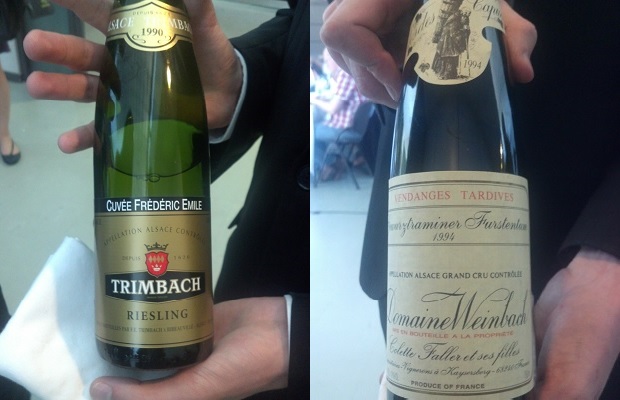
Trimbach Cuvée Frédéric Emile 1990 and Domaine Weinbach Gewurztraminer Furstentum 1994

Trimbach Cuvée Frédéric Emile 1990 and Domaine Weinbach Gewurztraminer Furstentum 1994

The afternoon Master Class covered older vintages. Trimbach Riesling Cuvée Frédéric Emile 1990 lays in an evolution that has come to a balance in weightlessness. Domaine Weinbach Gewürztraminer Furstentum 1994 has a tannic impression and smells like flowers from warmer France. Caroline Furstoss reminded everyone that it is “an expression of a daughter.” Impeccable balance.

Mélanie Pfister

Mélanie Pfister

The third of a most excellent Alsatian vintage trilogy was represented by Domaine Pfister’s Riesling Grand Cru Engelberg 1990. With a clotted cream note the wise Cru remains youthful and nearly primary.

The wines of Jean-Marie Haag

The wines of Jean-Marie Haag

Domaine Jean-Marie Haag’s Riesling Cuvée Marion 1999 showed rich, viscous complexity with the sensation of star anise and menthol.

Kuentz-Bas Riesling 1983 and Domaines Schlumberger Riesling Grand Cru Kitterlé 1945

Kuentz-Bas Riesling 1983 and Domaines Schlumberger Riesling Grand Cru Kitterlé 1945

The high point of the day came with a rare and beautiful chance to taste the Domaines Schlumberger Riesling Grand Cru Kitterlé 1945. The heart and the hearth. Just the thought of producing this wine at that time is unfathomable. There are no superlatives to do it justice. This must end on that note. More on the Kuentz-Bas Riesling 1983 another day.

Good to go!

Red earth, white wine and September sparkling fire

Photo: ASK-Fotografie/Fotolia.co

as seen on canada.com

The weekend brought us autumn. A certain type of exhaustion creeps in when summer turns over, especially after two weeks of early September, hectic activity. So I sipped my weekend wine, let the ghosts come, allowed them to crash my dreams. It was the least I could do. Then, with a sibilant call, I cast out the spirits rattling like a guttering candle, browsed through some tasting notes and found many a wine reason to usher in the fall.

I did so with perfunctory ease. A bottle of red terroir here, a couple of neo-classical Ontario whites and a revelatory British Columbian sparkler there. Don’t let the sun go down on your wine year just because the mercury is falling. A red Mercurey from Burgundy might be all you need to enjoy the fall. That and some Canadian juice.

Canadian wine pilgrims are living in what is arguably the most exciting time in wine’s history. A time when the greatest wines are fetching the highest prices, where revolutionary activities are taking place in almost every realm of vinous endeavour. During this renaissance new world winemakers have had to re-calibrate their wine linguistics, so Bordeaux became “Meritage,” (Red) Bourgogne became “Pinot Noir” and Champagne became “Sparkling Wine.” The world’s data banks for terms and parlance (wine dictionaries) of examples in context is dwarfed by the collection winemakers all carry around subconsciously in their heads. Thus we have “White Palette” (Jean-Pierre Colas), “Sketches” (Paul Pender) and “Methode Classique” (Jason James). Pilgrim extraordinaire Thomas Bachelder gives us Pinot Noir opposite the iconic Domaine Faiveley’s Bourgogne.

Here are five wines of the lexicographical order to look for this coming weekend and to welcome the fall.

Clockwise from left: 13th Street White Palette, Tawse Sketches of Niagara Riesling 2012, Domaine Faiveley Mercurey 2010, Bachelder Pinot Noir Oregon 2011, and Sumac Ridge Steller’s Jay Methode Classique Brut 2008.

13th Street White Palette 2011 (207340, $15.95) is JP’s who’s who bottle of white grapes, a mad scientist’s blend, the flask filled with Riesling, Sauvignon Blanc, Gewurztraminer and Chardonnay Musque. A re-release and much improved with a year’s extra weight, its “got your body right now.” Fortified by a carapace of grape spirits and purposeful in a white meritage sense of community, plus citrus, pith and a far-reaching, right correct absinthian length. You better you bet.  88  @13thStreetWines

Tawse Sketches of Niagara Riesling 2012 (89029, $17.95) s’got quite the tropical warmth for Bench Riesling. When considered in terms of the vintage, this is nearly a Riesling in the service of a Pinot Gris. Very juicy fruit, dry but bursting in fricative verve. Extreme quality, low-cost. Now on tap at Barque Smokehouse.  89  @Tawse_Winery

Domaine Faiveley Mercurey 2010 (341925, $22.95, B.C. 486217, $28.99) is really quite nice TYVM. Dug from the pungent autumnal earth, expressing ripe cherry, cranberry and strawberry. Pure, elegant and charming. When first tasted and without knowing the price I made this note: “If it’s under $25 it’s a very, very good buy – assuming it is.” Sold.  90

Bachelder Pinot Noir Oregon 2011 (333278, $34.95) bleeds Willamette terroir. Punctiliously phenolic from marine sediment and seemingly obvious early-ripening. Provocative in ruby, sugar-sour cranberry meets redolent raspberry. Chalky, tannic and serious. It’s tough on me right now. Come on Thomas, would ya please lighten up? I don’t want to have to wait to drink the first case.  90  @Bachelder_wines

Sumac Ridge Steller’s Jay Methode Classique Brut 2008 (264879, $25.95) makes use of B.C.’s future, the necessary signature white variety Pinot Blanc with assistance from Pinot Noir and Chardonnay. Very fine lees and yeast aromas are followed by a fantastic jumping and grooving party in the mouth. Tart apples, dry and crisp. Sprightly with 3-D sparkling fire texture. Tertiary maturity has nearly arrived.  91  @SumacRidgeWine

Good to go!

A paradox of wine accents

Soil and birthplace predetermines both wine and language.
PHOTO: JUNGE REBE/FOTOLIA.COM

as seen on canada.com

Wine and language, two very complex organisms, first and foremost predetermined by the land from which they’ve come. Soil and birthplace. Climate is so very important too, in ripening fruit and developing speech. Weather and pedigree. Then there are the clones, genetic variants of a cultivar, or in language, slang and urban/rural diction. Variety and dialect. The study of wine (oenology) is very much like the study of language (linguistics). It’s all in the accents, in articulation and tonality, in aroma, taste and texture.

Related – More from the VINTAGES August 17th, 2013 release

Wine is generally divided into Old and New World styles, old school versus new wave. Though many New World wines have bested Old World stalwarts in blind tastings, are those results more than just a matter of taste? Old World varieties of a common region who have been cohabiting side by side exhibit a wide assortment of accents. New World clones from disparate backgrounds that have been living together for just a few generations show similar accents.

Old World stereoisomer stereotypes suggest that if your wine smells like vanilla, it was likely aged in American oak. Got flint and steel? Chablis. Brioche and yeast? Champagne. All this may be true but the grand wines within a particular growing area like Chablis, Champagne, the Rhône Valley, Burgundy, Bordeaux, Mosel-Saar-Ruwer, Tuscany and Piedmont might share and yet bogart an infinite number of subtleties and dominant traits, each specific to the monopole, villages, indicazione geografica tipica, or appellation of origin. Napa Cabernet, whether from Oakville, Rutherford, St. Helena or Howell Mountain, shares a commonality and decreased peculiarity so much more so than counterparts in the communes on the Left Bank in Bordeaux, including Paulliac, St-Estèphe, Pessac-Léognan, Margaux and St. Julien.

New World Chardonnay growing sites produce less delineation as compared to the various lieu-dites in Burgundy. Niagara is beginning to enter into an Old World state of mind, so now winemakers, and by extension wine geeks, are posturing over micro-terroirs; Niagara-on-the-Lake, Beamsville Bench, Niagara Escarpment, St. David’s Bench, Lincoln Lakeshore, etc. While many will disagree, if you consider growing sites as circles within a Venn Diagram, the shared subtleties get buried or muddled within the common areas. The lines may be drawn but the web is tangled.

In Old World locales such as France, Italy, Germany, Spain and Portugal, the sustained adjacency of wine regions ought to carry considerable weight against differences in accents, while in a vast but small growing area like Canada, the relative isolation of wine regions ought to encourage regional intonations. Yet comparatively speaking, there is a great deal of similar speak among Canada’s various cool climate wines. So, the question begs. Has the maturity of Canadian vines and its isolated industries increased or decreased the diversity of dialects?

If you stood with one foot in a Niagara vineyard and the other in Prince Edward County, you might be disappointed to find that the geology, climate and wine accent are nearly indiscernible. A wine patriot might disagree with that statement with reverence or indifference, yet the average wine consumer would be hard pressed to intuit the subtlest of idiosyncrasies. Even in the case of, let’s say, the temperature disparity between a St. David’s Bench vineyard and one from the Queenston Road, as a winemaker, who are you speaking to anyway?

The wine world has attempted the vinous equivalent of heteroglossia, “a blending of world views through language that creates complex unity from a hybrid of utterances.” This heteroglossia is an abstract convenience for the benefit of geographical oenophiles. In the New World (especially), we are dealing with huge generalities. To say that each viticultural area is singularly unique from another is to suggest that one region’s accent starts where another one ends. This is simply not true.

The argument is no longer about good and bad, natural and synthetic, Old and New World. We’re not talking about a Roman Paradox here. In a short period of time it seems we have gone from saying “there’s a remarkably great deal of homogeneity in wine today” to now, “some wines are so over the top they could only be from that place.” A recent California Pinot Noir, heretofore known as “he who shall not be named” laid insult and depression upon a group of tasters. Pushing 16 per cent alcohol by volume and thicker than a McFlurry, this Pinot could not have been from just anywhere. Only the hot California sun and heavy winemaker’s hand could have produced such an utterly undrinkable, faux-chocolate, simulated berry shake.

Special thanks to Bill Bryson, who’s good read “Mother Tongue” was the inspiration for this column. Here are six examples of really fine wine, from the Old and the New World, each expressive of a particular set of accents, out of a specific place.

Clockwise from left: André Blanck Pinot Blanc Rosenberg 2011, Pillitteri Estates Viognier 2011, Daniel Lenko Estate Winery Old Vines Chardonnay 2010, Greenlane Estate Winery Cabernet 2010, Zema Estate Cluny Cabernet Merlot 2008 and Château La Croix De Gay 2009

André Blanck Pinot Blanc Rosenberg 2011 (626606, $14.95) is high on lime citrus and heavy in stones, so much more so than in ’09 and ’10. Green apple in tart tonality, lean and mean.  Much juicier and riper to taste, with the faintest lees note to ground it firmly on Alsatian terrain ferme.  Love this designation. Same vintage release from a year ago.  89  @drinkAlsace

Pillitteri Estates Viognier 2011 (330894, $19.95) from 20+ year old estate vines is really quite pretty. Honeysuckle and white flower aromas with a taste of honey dew, tangy mango fruit, creamy and soft, and  a hint of white pepper.  Will look for it to flesh a bit in a year or so.  88  @Pillitteriwines

Daniel Lenko Estate Winery Old Vines Chardonnay 2010 (352328, $22.95) punches its ticket to Niagara stardom but a toast and punch down period is the requiem to mellow before the fruit can truly and fully be assessed. It’s certainly large, inviting and warm, a cedar cottage with its hearth flaming and crackling. Borrows a page from Quarry Road’s handbook and takes risks, if ambitiously over-seasoning a bissel. The late buttery seafood note is striking and just makes you want to suck back a bucket of claw. Must pay heed to Lenko’s uncompromising winemaking. Were you to ask me what 10 Ontario Chardonnay would I buy, in any vintage, to study, follow the evolution and ultimately learn about cool climate Chardonnay, this Lenko OV 2010 would be a must.  91  @daniel_lenko

Greenlane Estate Winery Cabernet 2010 (winery, $14.95) combines Cabernet Franc and Cabernet Sauvignon (80/20) fruit in demurred Niagara/Vineland modulation for full, soft and silky effect. Black pepper in a key of fire-roasted sweet capsicum, anise and gun flint are met by the plasticity of black and red berries and cherries.  Deal.  88  @GreenLaneWinery

Zema Estate Cluny Cabernet Merlot 2008 (325910, $26.95) hollers modernity, in oxy-toffee, blueberry pie, eucalyptus and smoldering earth. Bordeaux fettle yet GSM-like in mineral meets lush fruit.  Frantic verve in acidity, crazy actually and certainly no fruit bomb. Almost citrus spiked, punchy and grainy on the finish. Requires patience. Intriguing Coonawarra.  90 @ZemaEstate

Château La Croix De Gay 2009 (192955, $51.95) is flat-out delicious. Grilled meat, licorice, big black fruit, raspberry, Merlot to the max and yet a very affordable Pomerol ’09. At $52 you may not find a better deal. Tannic heft deep as a coal mine, where mineral meets herbal bondage. Very long and true.  92

Good to go!
B.C. wine: From Vancouver to your table

Vancouver’s Blood Alley PHOTO: SINIDEX/FOTOLIA.COM

as seen on canada.com

On a recent West Coast swing I sampled wines from British Columbia’s Okanagan Valley without ever leaving the city of Vancouver. A bicycle was all I needed to find Salt Tasting Room in Blood Alley. A couple of telephone calls to L’Abattoir and Fable Kitchen quickly and effortlessly landed me in the wine program hands of Robert Herman and Kathy Schleyer/Ron MacGillivray, all ready and willing to introduce me to a thing or two about B.C. wine. The Okanagan Valley’s indelible stamp is now etched upon my wild yeast, fermented brain.

PHOTO: Michael Godel English Bay Inukshuk

A well-known California wine writer recently lashed out against the city’s wine scene with this soul-searching, pharisaic headline. British Columbia: Okay Wines, Retarded Wine Culture. I feel for the author, who in his own right is possessive of a tremendous palate, for he could not locate a knowledgeable sommelier or a decent glass of B.C. wine anywhere in the city. But I suppose I shouldn’t blame him for never having solicited any advice from Anthony GismondiDJ Kearney, Jessica Bryans, Rhys Pender, Treve Ring, Frank Haddad, Kurtis Kolt, Andrea Vescovi, Lindsay Ferguson, Jay Whiteley, Barbara and Iain Phillip, Mark Taylor and Lynn Coulthard. Just a few names for next time. Nor can I hold him accountable for never having made it out to Penticton, or Kelowna. Two weeks later the Wine Blogger’s Conference in Penticton remained surreptitiously out of reach. I too am guilty of not being able to plan a side trip to the Okanagan during my quick western jaunt and yet I had no trouble unearthing several watering holes with more than a willingness to keep me in the B.C. wine loop. “It ain’t no big thing but it’s growin’.”

PHOTO: Michael Godel Second Beach, English Bay

Unlike Ontario, British Columbia has finally begun to emerge from the dark ages of wine legislation and pre-prohibition rules. Thanks to MP Dan Albas and the #freemygrapes movement, Ontario wineries (and others in Canada) can now ship their bottles to B.C., free from persecution. Private wine shops like Kitsilano Wine Cellar have begun to allot space to Ontario but the choices are few and far between. Blue Note agency’s Patrick Ellis is working towards more free movement of wine from Ontario to B.C.  Despite the prevailing tailwinds, shipping wines west to east remains taboo. Christy Clark will be handing out B.C. wines to fellow premiers at this week’s annual meeting. The ball is in your court Kathleen Wynne. People are talking.

The LCBO is so un-flush with B.C. wines the back-up is downright constipating. The monopoly threatens, the wall’s eastern bloc shows few faults and still B.C. wines (privately) flow east. Why? It’s the right thing to do. My table is set and ready for B.C. wine to be written all over it.

PHOTO: Michael Godel Summer table

Here are notes on eight Okanagan Valley wines tasted at Salt and on a hotel balcony overlooking phantasmagorical English Bay.

Salt Tasting Room, 45 Blood Alley, Gastown, Vancouver, BC V6B 0C4 (604) 633-1912

It’s 11 a.m. on a Tuesday, I’m in unfamiliar territory and Colin greets me with a turntable and Another Side of Bob Dylan. I know I’ve come to the right place. A half hour in I am turned over to Sommelier and General Manager Kyle Gartlan-Close, clearly a pragmatist when it comes to the wines of British Columbia. I sense he’s still waiting for the renaissance to happen and the local wines on his list must adhere to what are clearly his high standards of quality. I tasted 15 wines over a 90-minute stretch at the tasting bar. Not all were hits but Salt was clearly the portal to crawl through and cross over into Vancouver’s wine scene. All prices are B.C. at the winery, unless otherwise noted.

From left: Tantalus Old Vines Riesling Natural Brut 2010, Thornhaven Tortured Grape 2012, Pentâge Winery Sauvignon Blanc Semillon 2011, Poplar Grove Chardonnay 2011, 8th Generation Vineyard Riesling 2012, Synchromesh Pinot Noir Rosé ‘Palo Solara’ 2011, and Joie Farm Pinot Blanc 2012

Tantalus Old Vines Riesling Natural Brut 2010 ($35) at 11:00 am on the nose spins effortlessly out of the vinyl gate along with Dylan’s The Girl From North Country. No shrinking violet, this inaugural Brut, méthode Champenoise sparkler. Straining yeast, naphtha and prickling pear go crazy in acerbic pith. No Peggy Day neither, though “she stole my poor heart away.” Score one for Godello’s cellar.  90  @tantaluswine

Thornhaven Tortured Grape 2012 ($17.90) melds a kitchen sink of Okanagan Chardonnay, Riesling and Muscat. Slides down the pipe with edacious oomph, in a good way. The label’s eerie graphic might shock but this is no hollow or shallow white, but rather a hallow ode to blending with great floral intensity.  But, may I ask, who crop-thins with a scythe?  87  @ThornhavenWines

Pentâge Winery Sauvignon Blanc Semillon 2011 ($20) is classically styled white Bordeaux divided between 65 per cent SB and 35 Sem, though it’s true to its roots and rocks, speaking uniquely of its place. Glides coolly and reggae rhythmically in cohorts with Bob’s Kaya, is perfumed by humid sea salt and oyster shell. SB imparts near tropical fruit and Sem brings terrific texture. Goes to show you “can’t run away from yourself.”  88  @PentageWinery

Poplar Grove Chardonnay 2011 (338434, $27.95, B.C. 732958, $21.90) from Hot weekend wines and cool Chardonnay sees minimal (15 percent new French) oak influence and while there is a ripe coconut tang, a sense of creamy butter and a spike of citrus, there really isn’t too much of anything at all. Tasted this fresh Okanagan a second time in Vancouver, alongside Another Side of Bob Dylan at Salt Tasting Room, I decided I could drink a barge full of the stuff. “All I really want to do, is, baby, be friends with you.”  90  @poplargrovewine

8th Generation Vineyard Riesling 2012 ($20.90) from Okanagan Falls bolts rapido from the gate with the ripest fruit (pear, plum) and though there is citrus, it’s really quite semi-dry. At 12.9 per cent alcohol and 24gr/L of residual sugar this may as well be Mosel Trocken Spätlese. Fantastic presence and awesome winemaking from Bernd and Stefanie Schales. Got me by the vines and will be on my table. 92  @8th_Generation

Synchromesh Pinot Noir Rosé ’Palo Solara’ 2011 ($18.90) from an east-Kelowna vineyard is made using the traditional saignée method. The result is a cottony texture and clinquant cantaloupe hue. An alkali, dry Provence notion is raised dutifully by bright but savoury fruit notes, like rhubarb and watermelon. Only 150 cases produced and true to serious Rosé everywhere.  90 @SynchromeshWine

Okanagan Crush Pad Gamay (on Tap) rolls melodically around the mouth in fresh fruit flavours so it must be Piano Man time. Solid black cherry core, good extraction, simple structure and no hard lines combine for basic but beneficial keg effect. “La la la, di da da. La la, di da da da dum.”  87  @OKCrushPad

Joie Farm Pinot Blanc 2012 ($23) found at Kitsilano Wine Cellar elevates a yeoman’s grape to mountain heights. Okanagan acidity injects life to do away with “useful” and score a notch for necessary. Like Gamay, Pinot Blanc should receive more planting consideration in B.C.  Zesty, invigorating and refreshing. A tumbler of delectation when matched with a view of English Bay.  89  @JoieFarm

Good to go!

Top 10 under-$15 wines for 2012

as seen on canada.com

The past 12 months have been good to wine consumers in Ontario. I would be hard pressed to remember a time in recent memory when so many good value wines were available on such a consistent basis.

The under $15 niche success can be attributed to many things. A sweeping renaissance in wine making has taken hold across the globe, from the vineyard to the stopped bottle. Manifested in the Old World, we are seeing an unprecedented ability to offer wines at this price. New World locales like Argentina, Chile, South Africa, Australia and New Zealand can match the quality, but as a general rule, the $15-20 range is their sweet spot.

What I am most pleased to note is the increased quality in Canadian wine, especially from Niagara, in the under $15 zone. Lead by the likes of Fielding EstateVineland Estates13th Street and Mike Weir Wines, finding quality releases that won’t break the bank gets easier with every passing vintage.

More than anything, the ability to taste 1000’s of wines by the generous efforts of Ontario agents, trade commissions and through local events has allowed us to uncover the gems. A year-end set of props has to go out to David Churchill and team for setting the table every week for to sample 1000’s more wines from the bi-weekly and on-line VINTAGES releases.

Here are my top 10, under-$15 VINTAGES released picks for 2012.

1. The grapes: Touriga Nacional, Alfrocheiro, Tinta Roriz, Tinta Pinheiro and Jaen

Where: Portugal, Dão

Encostas De Penalva 2009 (293423, $14.95) is downright Joycean in unusual intelligence, sensitivity and character for a blend from a Portuguese cooperative. Soft perhaps, but nary a bitter deterrent mars this cup of crushed raspberries. A young artist’s deep portrait of Dão colour, forged of surreal fleshy extraction, verbose and flamboyant.  90

2. The grape: Nero D’avola

Where: Sicily, Italy

Morgante Nero D’avola 2010 (40816, $14.95) burnishes purple to black in sheen, perfume and vim. Like incandescent charcoal.  Welling hematoma of Aussie licorice, baking spices and lingonberry. Maxes out Nero D’avola’s ability to defend itself against all food comers. Even pancakes and pigs in a blanket.  It should be noted that a second sample was corked.  90

3. The grape: Albariño

Where: Rias Baixas, Spain

Pazo Pondal Leira Albariño 2011 (115816, $15.95) may sport the hue of Cava and indicate bubbles spinning around like a frotteur but its “gotta have no illusions” about itself. A hint of seltzer in a sparkling, platinum hue swirls to honey and paraffin. Acts and looks sharp yet remains in balance.  90

4. The grape: Sauvignon Blanc

Where: Loire, France

Domaine De La Colline Sauvignon Touraine 2010 (169656, $12.95) is the workday done sun-downer few Sauvignon Blancs can match for IVR* assurance. Eglantine and apple tisane. Bony and blanched shallot driven by the Loire’s rocky truffeau, with a smokey persimmon fini glacé. 88

5. The grapes: Grenache, Syrah and Cinsault

Where: Rhône, France

Delas Frères Saint Esprit Côtes Du Rhône Rosé 2011 (224964, $12.95) offers up strawberry, rhubarb and cream with a savoury accent. Subtle pale, pink, see-through hue and warming humidity. Great value here. Rosie you’re all right. “Looks like it’s me and you again tonight.”  88

6. The grapes: Sangiovese, Merlot, Syrah and Petit Verdot

Where: Tuscany, Italy

Perta Zingari Toscana IGT 2008 (224228, $13.95) from the VINTAGES August 6, 2011 release deals value in quarto from varietals Sangiovese, Merlot, Syrah and Petit Verdot. An unusual blend from the Maremma coast for sure but throw me down in the snow if it isn’t unmistakably Tuscan. Iron, leather, pure snappy, fennel fruit and tannic tang are all there. Primary yes, but what more can you ask from $14? Held up 24 hours later for a second go round.  88

7. The grape: Sauvignon Blanc

Where: Niagara Peninsula, Ontario

Mike Weir Sauvignon Blanc 2010 (686972, $14.95) swings from the left side like its brethren on that side of the Gironde. A game built on concentrated gooseberry juice, tangy green fruit and a streak of chippy acidity. Sneaky long and straight down the fairway.  88

8. The grape: Pinot Blanc

Where: Alsace, France

André Blanck et Ses Fils Rosenburg Pinot Blanc 2011 (626606, $13.95) is your weekend summer refresher, your sundowner, your all-purpose white. Oily, mineral-driven, long, acidity at its PB best, full finish. For appetizers, salads and mains. Versatility be thy name.  88

9. The grape: Garnacha

Where: Catalayud, Spain

Filón Garnacha 2010 (280602, $14.95) is actually a bit of a misprision because of its black fruit character. Re-enacts Tuscan IGT and the most modern of Châteauneuf-du-Pape. Tar, asphalt, bitter chocolate and sanguine Kirsch and very, very ripe fruit. Grand oak and tons of wine at $15.  88

10. The grape: Melon De Bourgogne

Where: Loire, France

Michel Delhommeau Cuvée Harmonie Muscadet De Sèvre-Et-Maine 2010 (164624, $12.95) scatters nether and beyond the stereotypical need for oysters pairing. Light as the sky, “a free man in Paris…unfettered and alive.” Like I said before, it offers up more complexity, flesh and sea bone than its brethren. Courts shrimp, sparks smoked chicken and even ventures into baby back rib territory. On the card at Barque.  88

Honourable Mention

The grapes: Alvarinho, Arinto and Loureiro

Where: Vinho Verde, Portugal

Casa Do Valle Grande Escolha 2011 (276220, $14.95) while unmistakably Portuguese Vinho Verde, this could be a ringer for Greco di Tufo or Viognier. The long visit to the haberdashery at once wears baking spice, Mezzogiorno mangia cake at Christmas and then white rose, honeysuckle Hermitage. Lofty comparisons for sure but this exceptional IVR* treacle is a chef mastered sweetbread of a double “V.”  89

Good to go!

Top ten Labour Day long weekend wines

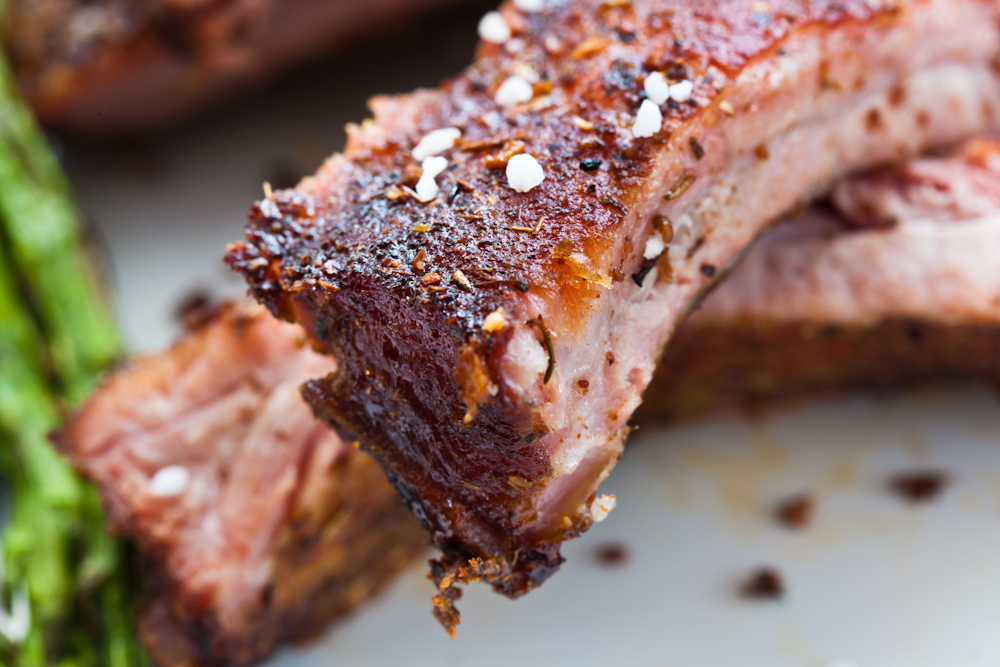
Dry-Rub Ribs. Photo Courtesy of Jill Chen at freestylefarm.ca and Barque Smokehouse

as seen on canada.com

Long weekends have a built-in preference for the obvious. Get into the water, fire up the BBQ, indulge the palate, imbibe of good drink. Relax, chill, take advantage of the last free stretch before the race begins again. When shopping these next few days, here is your list of weekend wines.

The grape: Pinot Blanc

The history: Consummate Alsatian vin de table varietal

The lowdown: Peaceful, easy, loving and charitable white wine, just like the Knights of Malta order, represented on the label

The food match: Grilled Turkey Breast rubbed with sage, thyme and olive oil

André Blanck et Ses Fils Rosenburg Pinot Blanc 2011 (626606, $13.95) is your weekend summer refresher, your sundowner, your all-purpose white. Oily, mineral-driven, long, acidity at its PB best, full finish. For appetizers, salads and mains. Versatility be thy name.  88

The grape: Malbec

The history: Always and forever Argentina’s red darling

The lowdown: A three vineyard mix brings complexity to an entry level wine

The food match: Sirloin Shish Kebabs in red wine marinade

Monte Quieto Quieto 3 Malbec 2009 (275701, $14.95) is black and blue, slightly reductive and yet pretty for Mendoza. From three vineyard sources, Vista Flores, Ugarteche and Agrelo. Spice rub, orange zest and lit, wooden-scented stick. 87

The grape: Chenin Blanc

The history: Loire white horse, here sparkling and quite dry

The lowdown: Made in the traditional Champagne method at a fraction of the cost

The food match:  Steamed Mussels with fennel, sparkling Chenin Blanc and tomato concassée

Domaine De Vaugondy Brut Vouvray (154567, $16.95) is brimming with orchard scents, of fruit, leaves and earth. A baking pear tarte tatine, with a crumble of chèvre over top. The pears replay to taste, verging into crème caramel. Top example at the price.  88

The grapes: Corvina, Rondinella and Molinara

The history: Made with partially dried grape skins that have been left over from fermentation of Amarone or recioto

The lowdown: The best version I’ve tasted in 2012

The food match: Pasta Bolognese

Silvano Piacentini Valpolicella Superiore Ripasso 2009 (289637, $16.95) combines semi-sweet chocolate with, of all things, ripe peaches. Very pretty, floral, sweet, candied Valpo with biting acidity and even some austerity. Best in a while. Needs a two year wait or a two hour decant.  89

The grape: Chardonnay

The history: H of P has been working this Burgundian grape in so many styles, from so many vineyards

The lowdown: From another up and coming Niagara appellation, the Short Hills Bench

The food match: Grilled Halibut with olive oil, garlic, fresh thyme and lemon emulsion drizzle

Henry of Pelham Estate Chardonnay 2010 (268342, $19.95) is the best one yet. Some A16 but in a breezy, over the falls, misty wash. Like Riesling in a way, especially considering the Bench minerality. Sweet, creamy palate. Good stuff.  88

The grape: Pinot Gris

The lowdown: Alsace comes to New Zealand in an off-dry suit

The lowdown: Continues a welcoming trend for PG in Marlborough on the South Island

The food match: Grilled Rainbow Trout with mild chile-lime dusting

Momo Pinot Gris 2011 (163535, $19.95) is a freshly opened can of spiced nuts. Like the unavoidable Loire itself, a river of Kiwi off-dry sensibility meets an Aussie Semillon, lemon and paraffin quality. A unique white for food.  88

The grape: Malbec

The history: Argentina’s red horse in fine form

The lowdown: Mendoza at its finest under $20

The food match: Rotisserie Grill Standing Beef Rib Roast

Vistalba Fabre Montmayou Gran Reserva Malbec 2009 (279802, $19.95) shows no shortage of oak, extraction and modern ego. The most purple of Malbec and at 15% abv is remarkably not heavy or liqourfied. Very black cherry in flavour, with whiffs of spice and smoke. Gorgeous Napa-like texture and voluminous velocity.  90

The Semi-Splurge

The grape: Zinfandel

The history: Where once it played last fiddle to virtually all other California varietals, it’s planting and notoriety are speedily increasing

The lowdown: A Shelton Zin from a newer AVA so priced to sell

The food match: Dry-Rub (with extra herbs) Baby Back Ribs glazed with Ancho Chile BBQ Sauce

Carol Shelton Monga Zin Old Vine Zinfandel 2008 (282525, $26.95) of a single (Lopez)  vineyard, “an only pawn in the game of life.” is intensely herbal of the wise-leaved kind. The Cucamonga Valley brings more blazing brush floor, saddle leather and less bramble to Zinfandel. The extraction is of big body and soft heart. Have a cigar. “They’re gonna love you.” 90

Other wines of note:

Château Cesseras Rouge 2008 (590570, $19.95) is a Minervois from the Midi that I return to in every vintage.  A poster child for southern French pastis and sun-kissed abaisser attitude. Chocolate, fruit and tar are all in balanced clarity. Sweet, sweet, Syrah.  89

Riserva Il Falcone 2007 (177295, $21.95) by one of Umbria’s preeminent producers, Castel del Monte is certainly a crowd pleaser. Lush and rich styling, from the region’s own Uva de Troia varietal. Ripe, black olives in every sip. Taut and plummy, unctuous and finishing with a pepper kick.  89

Good to go!