Good things come in threes and once in a calendar blue moon the LCBO’s VINTAGES wine release cycle rolls out that magic number. There can be no better month than August for the cosmic confluence to occur, particularly when the 31-day stretch hovers and encompasses two Canadian long weekends.
The fundamental postulate of accepting abetment to be ushered down a path of vinous enlightenment and the subsequent pleasure derived from having matched recommended bottles to the meals of summer is a priceless thing indeed. Make the connection enough times and behold the sense of empowerment. The beneficiary then becomes the facilitator. A torch is passed and the gift pays forward. Say what you will but no other wine program offers this type of retail-critic-consumer relationship. This is the beauty of the VINTAGES program. Bordeaux futures don’t count. That’s a racket.
The three August releases of the 2nd, 16th and 30th, though encumbered by a sea of suffusion, are also filled with excellence. Here are nine wines to consider for the final (gasp) summer long weekend of 2014.
Clockwise, from left to right: The Royal Old Vine Steen Chenin Blanc 2013, Creekside Backyard Block Sauvignon Blanc 2013, Redstone Limestone Vineyard South Riesling 2012, Château Des Charmes Estate Bottled Old Vines Pinot Noir 2010, Nyarai Cellars Viognier 2012, Robert Mondavi Fumé Blanc 2012, Greywacke Sauvignon Blanc 2013, Huff Estates South Bay Chardonnay 2010, Le Clos Jordanne Village Reserve Pinot Noir 2011, Norman Hardie Niagara Unfiltered Chardonnay 2012, (c) Jason Dziver, http://www.winealign.com
The Royal Old Vine Steen Chenin Blanc 2013, Wo Swartland, South Africa (376871, $13.95, WineAlign) From the VINTAGES August 2, 2014 Release
While other expat varieties ride in to town, “see the glory, of the royal scam” and dupe new consumers into thinking greatness has immigrated here, Chenin Blanc in South Africa, like Malbec in Argentina, is the real deal. That an example like this Steen old vines can offer ten degrees of advanced proficiency in steely, dan-like refrain is a testament to the necessity of its promotion. Chenin Blanc is the grape for Swartland, for Stellenbosch, for the Western Cape, for South Africa. It comes equipped with energy, “wearing coats that shined, both red and green, colors from their sunny island, from their boats of iron.” It works many sides of the wine pairing practicum, for protein fleshy and flaky, for vegetables prepared in many ways. The Royal is textured and even if the tale is told with quick and efficient pluck, at $14 per play, what more is there to say. Tasted August 2014 @oenophilia1@kysela
Creekside Backyard Block Sauvignon Blanc 2013, VQA Creek Shores, Niagara Peninsula, Ontario (341792, $17.95, WineAlign) From the VINTAGES August 30, 2014 Release
A Creek Shores SB that bridges the gap between spring and summer fruit. From a year in which the choice was made to not blend off into the estate bottling. Recognizable Creekside aromatics stand out in a more than obvious mineral deposit and grapefruit zest way. Here the band plays across The Great Divide so “just grab your hat, and take that ride.” Will be a VINTAGES August 30 release. Tasted February 2014 @CreeksideWine
Château Des Charmes Estate Bottled Old Vines Pinot Noir 2010, VQA Niagara On The Lake, Ontario (256834, $17.95, WineAlign) From the VINTAGES August 30, 2014 Release
The CdC Pinot schematic is never predicated on pectin or reduction but rather the pungent molasses of earth. What better vintage (until the 2012 comes our way) can there be to accentuate the warmth of the St. David’s Bench (within a Pinot Noir plat) and to elevate sylvan fruit for complex results? The raisining is within reason and concentrates botany, not plums or figs. The somewhat elevated (7.0 g/L) residual comes across in tannin and texture so forgiveness is granted. Bigmouth (critic) strikes again, “oh…sweetness, sweetness,” but “I was only joking.” The Old Vines Pinot brings about smithy balance, of brix, treacle, iron, acidity, rusticty and mortar. It should be considered as good a value at $18 as any basic Bourgogne rouge. Tasted August 2014 @MBosc
Redstone Limestone Vineyard South Riesling 2012, VQA Twenty Mile Bench, Ontario (381251, $21.95, WineAlign) From the VINTAGES August 16, 2014 Release
This inaugural Riesling foray from atop the Twenty Mile Bench out of the Limestone Vineyard is a sister to the Tawse exploration from same. The comparisons end right there. Paul Pender’s take is kinetic, frenetic and electric. Redstone winemaker Rene Van Ede tends to and lends from a reconnaissance that heralds Mosel. His first, fixed take is off-dry (in obvious ubiquity) with circular acidity. The co-agitation is early picked at low brix, with realized high residual sugar (36.4 g/L) and low alcohol (10 per cent). Toothsome, with a ying/yang, lemon/lime, push/pull. The case load is formidable for a first go ’round (1000 plus) yet paddled through limestone acreage with effortless strokes. Tasted May 2014 @RedstoneWines
Nyarai Cellars Viognier 2012, VQA Niagara Peninsula, Ontario (378414, $21.95, WineAlign) From the VINTAGES August 2, 2014 Release
Look, I get it. Wine is made from grapes so why command a host of other fruits to offer context for aromas and tastes? Just have a moment with Steve Byfield’s “virtual” Viognier 2012. Virtual tree meets stone fruit. Smells just like a ripe peach. The flavour bears an uncanny resemblance to apricots. Virtual my Equus africanus asinus. The winery is virtual, the Viognier anything but. Speaks a Condrieu varietal truth by way of Niagara’s Redfoot vineyard. Carries a soil-driven, mineral-flecked, microscopically-oxidized metal tang so essential to invigorating Viognier. Blessed stuff from a Shona’s humble hands. Tasted twice, March and June 2014 @NyaraiCellars
Robert Mondavi Fumé Blanc 2012, Napa Valley, California (221887, $23.95, WineAlign) From the VINTAGES August 2, 2014 Release
A nod to the typical White Bordeaux blend with 87 per cent Sauvignon Blanc and 13 Semillon. Another vintage that shows the direction taken by the winery is a righteous one. Drawn in chromatic patina, characterized by an oxidized style and with extreme arid prejudice. Though it’s a storied expression of warm Napa Valley it bears an uncanny resemblance to a wild yeast affected, cool climate Sauvignon Blanc style, with extended lees contact. There is ripe pear and some chalk, excellent tang, faux sugars and stretched out length. Served well chilled is a plus, accentuating the zest and mineral components. Very good showing and vintage for this iconic wine. Tasted April 2014 @CBrandsCareers
Greywacke Sauvignon Blanc 2013, Marlborough, New Zealand (164228, $24.95, WineAlign) From the VINTAGES August 2, 2014 Release
With caution to what is likely a captain obvious comment, the suggestion here is that this (former Cloudy Bay winemaker) Kevin Judd Sauvignon Blanc makes perfect use of the over thruster to travel back in time. A time in the late 90’s/early 2000’s when Marlborough SB was the white bomb. Might it be more than obvious to ask for some briny Pacific oysters to accompany and match the elegance in salinity of this Woodbourne, Renwick and Rapaura fruit amalgamation? Potent, if distilled Marlborough delivering excellence here, with a notion of sweetness, not of a suffering palate, but in aromatics. The late summer garden by the sea, in a stiff mineral breeze and in ripening, southern hemisphere tree fruit. The grasses are somewhere else, there are no speed limits and no undesirable tang. The Greywacke is refined, perhaps to a fault, but prime and worth every bit of its dime. Tasted August 2014 @greywacker
Huff Estates South Bay Chardonnay 2010, VQA Prince Edward County, Ontario (88955, $29.95, WineAlign) From the VINTAGES August 2, 2014 Release
The oak repeal in decreased new barrel impact allows the County to speak in the clearest of voice. As it should, from a South Bay landscape and terroir as rugged and dramatic that can be found anywhere Chardonnay is made in Ontario. There is a honeyed unctuous and viscous feel to the South Bay ’10, no doubt a result of its middle filled in by a meritorious and pure lees. Limestone wraps up the fruit in a clean, crisp and pure package. Tasted April 2014 @HuffEstatesWine
Le Clos Jordanne Village Reserve Pinot Noir 2011, VQA Niagara Peninsula, Ontario (33894, $33.00, WineAlign) From the VINTAGES August 2, 2014 Release
Something’s missing, or rather something is happening here. The LCJ omnipresent warm Pinot coat of harm is conspicuous in its absence, or has it been reigned in? This 2011 is so much more friendly, more soft-spoken, expertly judged and picked ripe fruit richer than before. Plenty of tang and tannin but the pronouncement is in a savoury basil/chervil kind of way. Not just another high made by just another crazy guy. A most excellent, bright, roxy Village Reserve, full of atmosphere and ambient music. Tasted February 2014 @LeClosJordanne
Norman Hardie Niagara Unfiltered Chardonnay 2012, VQA Niagara Peninsula, Ontario (184432, $39.20, WineAlign) From the VINTAGES August 30, 2014 Release
Norm’s Niagara is such a different animal to the County 2012. The warm summer and dry fall means more humidity and even more reduction. Currently cothurnal so less like Burgundy but only because there elevates the high-tones and percipience from Niagara. Texture is key but this Hardie needs time. It’s not angular but it is steroidal, injected, like a wild thing, as if the yeast were still in control, munching away even though there is no more sugar to be had. Undomesticated ’12, at heart, in spirit, out of mind. Hard to imagine there could be this much anxiety from the even-tempered vintage, but when you pick real early and keep the oak to a bare minimum, Hardie happens. Norm picked ripe fruit between September 7 and 10, six weeks ahead as compared to some years. He said the fruit had a “golden tan, ready to go.” The use of smallish 500L barrels works wonders for texture and though 40 per cent was new wood, you would never know it. Malolactic fermentation didn’t happen until late August, nearly a full year on so no sulphuring was required until that time. This is Hardie’s freshest Niagara fruit ever, from Duarte Oliveira’s farm between Victoria and Ontario Street, the same spot as Hillebrand’s Chardonnay Reserve. Terrific Beamsville Bench Chardonnay. Tasted May 2014 @normhardie
The School of Cool at #i4c14, Brock University: Studying Chardonnay with Zoltan Szabo, Mike di Caro and Godello, photo (c) Kaitlyn Little
Tell me, why Chardonnay? Who can explain the exultantly singular science behind the world’s most wontedly planted, easily recognizable and widely endorsed white grape variety? How can something that seems so commonplace consistently blow people’s minds and convince them to have a go, over the course of a weekend in venues scattered about the Niagara Peninsula, at more than 100 samples in 50 hours? Where else is it possible that the fruit of one vine can be the sole proprietor to lead such a fervent tailgate of amaurotic yearning? What is the meaning of this Chardonnay?
The quest begins in Burgundy, centre of the Chardonnay universe, home to the icons, built upon centuries of micro-plotting and the act of influencing patrons, friends and enemies. At this point in history, success out of French vineyards is a given, blatant and obvious. Chardonnay’s foray into the global diaspora and subsequent boon is yet another matter.
The most recent Cool Chardonnay conference is the parochial focus of attention so for the sake of local argumentation, lets connect a line direct from Burgundy to Niagara. Peninsula winemakers (along with those from Prince Edward County and British Columbia’s Okanagan Valley) draw inspiration and knowledge from the mother land. The fourth annual #i4c14 celebration in July is the stuff of Chardonnay dreams because of the cool visions of vignerons like Thomas Bachelder, Harald Thiel, Norman Hardie, Ann Sperling and Peter Gamble, Martin Malivoire, Ed Madronich, Bill Redelmeier, Doug and Karen Whitty and Moray Tawse. Not to mention the foresight of Niagara’s biggest players; Inniskillin Wines, Peller Estates (Trius), Stratus Vineyards, Chateau des Charmes, Vineland Estates and Cave Spring Cellars.
To give Chardonnay its due and to build a stage from which it can parade about, belting out its songs, there must first be assembled a team of passionate folks. In addition to the winemakers and winery proprietors there is an army of volunteers. Their contribution is immeasurable. This group is led by the #i4c14 concierge; Dorian Anderson, Trisha Molokach, Britnie Bazylewski, Elena Galey-Pride and Wine Country Ontario’s Magdalena Kaiser. Thanks must always be given to Barbara Tatarnic of Brock University, along with CCOVI director Debbie Inglis and Marketing and Communications Officer Kaitlyn Little. Event chair Del Rollo brings the A-game, as does Peter Bodnar-Rod, life giver to Everyman and every Chardonnay. The ambassadors of cool are lead by a team of sommeliers; Bruce Wallner M.S., Will Predhomme, Mark Coster, Serge Janjic, Emily Pearce, Sheila Flaherty, Lindsay Groves, Brett Fraser, Heather MacDougall, Bob Latham and Peter Lavoie.
The generosity of the event hosts come to praise Chardonnay. Wine Country Ontario, Brock University, The Grape Growers of Ontario, White Oaks Conference Resort & Spa, 13th Street Wines, Cave Spring Cellars, Tawse Winery, Flat Rock Cellars, Southbrook Vineyards, Henry of Pelham Estate Winery, Peller Estates Winery, Malivoire Wine Company, Reif Estate Winery, Vineland Research & Innovation Centre and Ravine Vineyard. The LCBO and VINTAGES join the party, setting aside time and space at the same time to sell some cool Chardonnay.
The School of Cool, Photo (c) Elena Galey-Pride — at Brock University.
The weekend begins on Friday, July 18th with #TheSchoolofCool at Brock University. Luminaries are flown in to speak on behalf of the great grape. Tim Atkin (MW), Christy Canterbury (MW), W. Blake Gray (wine journalist, cool climate advocate) along with eleven panelists (winemakers, growers and researchers) of cool climate viticulture and winemaking explore, debate, provoke and disseminate.
John Szabo opens the Chardonnay Camp 2014 at Brock Univeristy Photo: Michael Godel
Three interactive sessions feature this global panel of experts. Renowned Master Sommelier John Szabo is the chair and most in control moderator of the panels. Here at Chardonnay Camp he is talk show host, politically motivated comedian and all-knowing Yoda wrapped into one Renaissance man package. Szabo notes that “quality, at the top end has diversified, especially in Burgundy.” He then wants to know “who is an acid lover?” The answer to that question is the first clue towards an understanding of the meaning in (cool) Chardonnay. “Does anyone here regret planting any variety? No? Nobody? Everything works in Ontario.” The sportive tone succeeds in marking a first strike for the grape guest of honour. As does his notation that “the panel is chosen to speak on the zeitgeist topics of Chardonnay.” A walk-around tasting of all 117 bottles being poured at the 2014 event following the sessions helps to build early Friday momentum.
Cool Chardonnay Camp Photo: Michael Godel
Tim Atkin begins. “We are here to have fun.” The British journalist spends his time defending the oft maligned variety, insisting that “the target of Riesling lovers should not be Chardonnay. It should be Pinot Grigio.” Atkin reminds that Chardonnay is still the fastest growing white variety in the world but that “even worse things have befallen this noble grape variety. It’s a victim of its own ubiquity and adaptability.” What makes it so special then? “Chardonnay expresses place, as well as production, terroir as well as technique.”
Grower Matthias Oppenlaender: “I like growing Chardonnay. It adapts to the different soil conditions in the sites I own. But I like drinking it even more.” The panelists debate Techno vs. Tech-No. Atkin’s take? “Recreating balance is a bad practice. All these things (manipulations in the winery) are fine if they are done sensitively. Overripe plus water equals bad.” Jeremy Dineen of Josef Cromy Wines in Tasmania says “wine should taste from a place, but also from a time.” His idea of technology “is to try to make my life simple. It’s a hell of a lot easier to plant in the right spot.” On reverse osmosis: “Technically, yes. Ethically, no.”
The panel seems to think it interesting that consumers consider that wine should be a natural and non-manipulated product, but food can be handled and bastardized in unlimited ways and be called gastronomy. First of all…consumers…really? Wine geeks, more like it. Secondly, wines comes from one ingredient: Grapes. Well, three if you count yeast and sulphur. Food composition is contrived out of a plethora of ingredients. Manipulation and over-handling is the norm, not the exception. Wine should follow the exact opposite course.
Manipulations, according to former Henry of Pelham winemaker, now of Niagara College Ron Giesbrecht include sorting, spraying, osmosis, acidification, de-acidification, overripe diluting, wood chips, adding tannin…the list goes on. He admits that “some degree of finessing and correction is OK. Add sometimes, but not any time.” Shiraz Mottiar of Malivoire is a purist. “When it comes to techno, I like (the ideas) of Calvin Harris (anyone get that…?). Add as little as possible, that’s my position. It would be unjust to the consumer to create something awkward and unusual.”
Chardonnay is highly expressive but the expressions are not all created equal #i4c14
Giesbrecht brings out base wines with the addition of “winemaking tricks.” One is lactic, lean, mean and filled with cheap acidity. Another is terpenic, gum leesy and full of rounder acids. A third is volatile, medicinal, sacchariferous. A fourth is done very lightly, yet thin. Oak chips, micro-barrels, gum Arabic, these are all tricks of the trade and they all lead to faults.
Session two discusses Yield and Context. Mattias Oppenlaender discusses the Ontario opportunity of growing grapes for the high end, quality market. “If I grow Pinot Noir at (only) two tons per acre, it’s pretty difficult to make it economically viable.” Dr. Jim Willwerth, CCOVI Brock University adds, “in Ontario it’s important to have low yields from late ripening varieties. Vine balance is the key.” Willwerth cautions against stereotyping the vine vigor quotient. “Lower yields to highest quality is not a direct linear relationship. We know it’s not the case.”
Yet Dimitri Bazas of Maison Champy in Burgundy concedes that zero yields is not the best. “You can make good Premier Cru wine with yields of 40-45 L/hl. Szabo then asks, “and you can taste the quality difference based on these number?” Bazas replies, “yes, yes I can your honour.” Matthew Lane of Peter Lehmann in Australia adds a trump card. “There’s an old vine factor that has to be considered when talking about yields.” Lane believes you can extract quality from fruit at higher yields. Like Willwerth, he believes in the ‘Sesame Street’ word of the day. “If you’ve got a warm year and vine health, you can get great balance.”
Christy Canterbury reminds that crop yields are relative from variety to variety. Chardonnay in general is low (two to three tons per acre) as compared to Pinot Grigio and Riesling. “Perfect. An MW position there,” chides Szabo. Canterbury leads the room through four Chardonnays of various yields.
Maison Champy Corton Charlemagne Grand Cru 2011, Burgundy, France (377705, $215.00, WineAlign)
Opposites attract and this urges the fruit-wood compendium forward in a direct, unabashed way, followed by a sledgehammer clubbing of formidable acidity. The yield for this 12 barrel salute to upper echelon Burgundy is 30 hl/L. There are waves of richness that jab, poke and stamp their way into your Chardonnay heart. Pierces and injects by way of a hypodermic, splintered syringe filled with creamy, smoky oak. The balance is currently upended though there can be little doubt bottle age will calm the high extract and lead it to a calmer future. Tasted July 2014
Maison Champy Pernand Vergelesses En Caradeux Premier Cru 2011, Burgundy, France (344143, $49.95, WineAlign)
The technical specs (sugar, acidity, PH, natural alcohol) on this PV are very similar to Champy’s Corton Charlemagne. The yield out of marl and limestone soil was 50 per cent (45 hl/L) higher and the fruit was picked seven to 10 days ahead of the CC. There exudes plenty of peeling citrus perfume in sunshine and some essential oil release, in wood, though it is by no means excessive. Very much citrus stoked, also reeking in green apple, forest glade, even more sunshine. Holds a tight, angular texture. Needs time to flesh and convert those phenols into gold. Most attractive is its subtlety and balance, from shoot to bottle. A Chardonnay very cool for school. Tasted July 2014
Peter Lehmann H&V Eden Valley Chardonnay 2012, Eden Valley, Australia (agent, $20.00, WineAlign)
Surprisingly green, herbal and cool spirit driven Chardonnay. There’s a lime spark and texture woven by shavings of slate and chalk. Pure, ripe fruit, picked prudently early, means for a tang and a half, in all the right back of the mouth ways. The nervous energy component gives the wine a divine fit, “sends a permanent shiver down my spine.” Clean expression out of the Eden Valley and so well made. Tasted July 2014
Though the soil for this rare and tiny production Chardonnay is sandy-loam, the mineral component is both pronounced and uncanny. A difficult vintage for the variety, wet, not so warm, noted by winemaker Craig McDonald, “we didn’t really get a summer.” He concedes that the wine was an experiment, “mainly out of curiosity, as a collaboration with the grower.” Like so many Niagara ‘experiments’ this Trius will teach and pave roads to a tart, direct, firm tartaric future. A wine that will act as a beacon for forward thinking ideas on thinning, canopy management and how the viticulturist must “dial into the frequency of what the vineyard is saying.” Tasted July 2014
Chardonnay panel with Ann Sperling, Sébastien Jacquey, Miguel Torres Maczassek and W. Blake Gray Photo: Michael Godel
Session three, The Living Vine: The Viticultural Continuum begins with W. Blake Gray. “If I buy an Ontario Chardonnay that you say has protected the earth but it’s not (organically) certified, I don’t know what that means.” In the world according to Gray, talk is cheap. Harald Thiel believes organics and biodynamics are much more complicated, beyond certification. “What is the buffer between organic/biodynamic vineyards and conventional ones,” he asks. “In Burgundy the rows are one metre apart. One sprays next to another.” Livelihoods are affected, compromised and yet who is policing the offenses?
Miguel Torres Maczassek admits “my family is a bit divided on organic and biodynamic but I am a great defender of organic viticulture.” Torres agrees and expands on Thiel’s concerns. “Being organic today is not enough. Organic needs to make an evolution. The problems are not the same anymore.” Sébastien Jacquey of Le Clos Jordanne: “Organic, biodynamic, sustainable. It’s about making wine that expresses something. We all need to work together.” Then John introduces Ann Sperling of Southbrook and Sperling Vineyards. “Ann, let me guess where you stand.” It is no secret that Sperling is a Canadian leader in this hotly debated field. “Biodynamics is something that allows me to connect with the vineyards.” Enough said.
Christy Canterbury wants to know who pays for the cost of lab analysis for wines looking for an organic affidavit. “The producer,” insists Sperling. “The consumer,” think many in the room. Four more wines are poured.
Le Clos Jordanne Le Grand Clos Chardonnay 2011, VQA Niagara Peninsula, Twenty Mile Bench, Ontario (34561, $65.00, WineAlign)
From sandy loam and limestone soils, here is a Chardonnay that winemaker Sébastien Jacquey is looking to fashion with low PH and elevated tannin. A most commendable effort in the enigmatic ’11 vintage, clean, anything but lean and un-gassed by a jet engine’s aerified stream. Chardonnay running instead on the vineyard’s biofuel, a chalky lees and lime texture that turns green in a savoury way towards the back end. Full, rich, gaining in stature as it breathes, thinks and feels. Atop the green there is an ambrosial aroma and a honeyed sense of flesh. A wine of great respect and biodynamic energy. Tasted July 2014
Sperling Chardonnay 2012, VQA Okanagan Valley, British Columbia (378570, $31, WineAlign)
High altitude expression from a vineyard perched atop a gravel bed, a rocky pool of stone that seems to toss up pebbles at Sperling’s window to see if she would like to sneak away for a midnight drive. A crisp, clean and linear style, full of night-air freshness, white flowers and white fruit. This is undeniably picked early and ahead of any possible oxidative or overripe window, yet there is a rich quality about it that rages against the machine, calm like a bomb, “its narrative fearless.” Very mineral in its direct back and to the side of the mouth attack, full of salinity and lemon-lime acidity. Long, long Okanagan that will flesh with five years time. The slate bass line will soften, allowing the white fruit to further shine. Tasted July 2014
Has integrated nicely though certainly persists as a big, lush Chardonnay. If there were splinters or sinewy bits they have melted away. From my earlier, May 2014 note: “The Poetica underwhelms at the present time, or perhaps hides in her youth. She’s a calm, buttery, mildly toasted, supportive softie and more accessible than her Sperling west coast sistren. Like a cool Chardonnay soffit hiding beneath a warm bench, the Poetica speaks not for the vintage but more for the current vineyard, a warm and hip spot in the Four Mile Creek appellation. The site remains (at least to me) understood but the unctuous aspect in texture and gathering sweetness with time in the glass will realize a richesse yet unseen. Poetica’s refrain is like “wind on the weathervane,” her tragically subdued fruit quiet, but able to travel long. Time will be the reveal, so be patient. Lat tasted July 2014
Miguel Torres Milmanda Chardonnay 2011, Conca de Barbera, Spain
Milmanda was part of a route of medieval castles that gave shelter to Christians during the time of the Reconquest. This is the estate’s top varietal bottling, a warm honeybee of a Chardonnay. The toast is set on high, the malolactic pull in elastic heaven and the lemon/lime in curd form. From deep clay soil, this is the least cool of the lot and though harvested early (late August), the oak quotient steals the show. Tasted July 2014
Barrels and Bonfires at 13th Street Winery, Photo (c) Steven Elphick & Associates
On Friday night the host is 13th Street Winery for Barrels and Bonfires. The credo is this: “Join the twelve winemakers who congregated around that fated bonfire in 2009 as they celebrate their vision as its come to life five years later.” Many more than 12 pour their wines from barrel tops in the heat of a July evening while the band plays. Meanwhile in another part of 13th Street’s town, Peter Bodnar-Rod holds court with an impromptu blind tasting. I fail miserably. Thanks Peter.
Niagara’s own PigOut Roasters, Image (c) Sherry Galey Photography
13th Street’s B & B party is a resounding success, complete with a pig roast by Niagara’s PigOut Roasters and a setting to combine casual, pastoral and The Hamptons, all in one stunning piece of real estate.
Godello with Zoltan Szabo, Tony Aspler, Mike Di Caro, Ben Macphee-Sigurdson and Nicholas Pearce, Photo (c) Steven Elphick & Associates
Chef Therese deGrace of Good Earth Food and Wine, Photo (c) Steven Elphick & Associates
Dinner at 13th Street Wines, Photo: Michael Godel
On Saturday a group of winemakers convene at Camp Cave Spring for some Chardonnay and mobile Pizza oven fun. Kistler, Talley, Maycas Limari and Cave Spring also do the #i4c14 unthinkable. They pour something other than Chardonnay. Shocking! Pinot Noir and Riesling are on hand. What a refreshing, if fleeting change. Thanks is owed the Pennachetti families, winemaker Angelo Pavan, Rob Groh from The Vine and the culinary team at the Stratford Chef School.
Stratford Chefs Mobile Pizza Oven Photo: Michael Godel
Talley Vineyards Pinot Noir 2012, Arroyo Grande Valley, California, USA
The Estate Pinot is composed of fruit from three vineyards, Rincon (50 per cent), Rosemary’s (47) and Las Ventanas (3), then fermented for 13 months in 20 per cent new French oak barrels. Typically, even quintessentially California Pinot Noir with a developed, nearly candied palate made more complex by the earth of the Arroyo Grande Valley. Very ripe black cherry, some tar and plenty of warm spice. The alcohol reads 14 per cent but it manages to reflect a cool image in the mirror. Refined if expected Pinot Noir. Tasted July 2014
Talley Vineyards at Cave Spring Winery
Kistler Pinot Noir 2012, Russian River Valley, California (330274, $77.95, WineAlign)
In yet another outstanding vintage Kistler flaunts its Pinot acumen, leaving other RRV neighbours to mire in a sickly, sweet and dusty trail of cola, syrup and black ash. Kistler’s take is rooted in wisdom, in plenitude and also restraint. “We remove any berries that are overripe,” announces Geoff Labitzke. This ’12 is singing, pinging and binging in red cherry. Picked in the cool of the night with a big crew, the RRV Pinot is tart, tight, intense and pure. The finish leaves with a slightly tannic, chalky residue, yet one that will integrate with five plus years time. Tasted July 2014
According to Cave Spring’s website this newer Riesling from older (18 to 35 Year-old plantings) is from “a single block of vines in the shadows of a limestone outcrop near the crest of the Niagara Escarpment, known as ‘The Adam Steps’. Really apropos, for this Riesling is the cantilever, the one with the outstretched arm. At 10.5 per cent alcohol and with an unmistakably stony, sweet and sour whiff the wine speaks of its off-dryness. The juiciest of all the Cave Spring Rieslings, with rounder acidity and good persistence. This is the all-around good guy, the one with an open invitation, the bridge from Estate to Dolomite to Csv. The well-adjusted one steps up its game to help win one for the team, especially out of the convivial 2013 vintage. Tasted July 2014
Cave Spring Wines
On Saturday night the scene changes to the big show. Vineland Research and Innovation Centre is the host once again for the Cool Chardonnay World Tour Grand Tasting & Dinner. In civilized fashion, it launches with bubbles and oysters by Katrina Steeves and Mike Langley, Tide and Vine Oyster Company.
Katrina Steeves and Mike Langley, Tide and Vine Oyster Company Photo (c) Steven Elphick & Associates
Saturday dinner, Photo (c) Steven Elphick & Associates
Dick Snyder and Magdalena Kaiser at Vineland Research Station
On Sunday, the Cool Chardonnay weekend wrapped up at Ravine Vineyards, with one last chance to taste a Chardonnay or 117, if for some reason there remained an elusive bottle.
keep the cool i4c love!, Photo (c) Sherry Galey Photography — at Ravine Vineyard Estate Winery.
The quantity of Chardonnays made available to taste through the course of the weekend was officially announced at 117. A number of them were wines that I have previously tasted and reviewed. Some I felt compelled to re-taste and update. For the sake of those I did not redo, I am including them here as contributing members of the Cool Chardonnay weekend and the links to their corresponding tasting notes, published at WineAlign.
These are the wines of summer. Dry, saline Rosé made from classic varieties; Grenache, Syrah and Cinsault. Crisp, flinty Riesling, turned to stone. All things Pinot. B.C. Cured Pinot Blanc struck by both juicy fruit and mouth-watering acidity. Pinot Gris from Alsace, impossibly dry. The same grape but from across the Rhine and under another name: Grauburgunder. Pinot Noir from Prince Edward County. Nothing else in the world smells like it. Smells like, teen spirit.
White wine that feigns bubbles and brings the wonder of Nova Scotia to the world. Chardonnay by a young winemaker in Ontario just coming into his own, ready to become a star. Classic varieties for summer grilling; Cabernet Sauvignon for a green day, Sangiovese to make your day, Merlot, Cabernet Franc and that melting pot of red wines, Châteauneuf Du Pape. All VINTAGES Ontario releases for July 19th. These are some of my summer wines. All 13 of them.
From left to right: Gassier Sables D’azur Rosé 2013, Rockway Small Lot Block 12 150 Riesling 2012, San Pedro 1865 Single Vineyard Cabernet Sauvignon 2011, Gray Monk Pinot Blanc 2012, Hedesheimer Hof Weingut Beck Grauer Burgunder Kabinett Trocken 2012, Trimbach Réserve Pinot Gris 2011, Keint He Portage Pinot Noir 2012
Gassier Sables D’azur Rosé 2013, Ac Côtes De Provence, France (33621, $14.95, WineAlign)
Always dry, dusty and salt lick oriented. A mineral bath of verdigris and rusty rainwater. Light but all about minerals, salinity, beach and sun. What more should be requested and ascertained from value given Côtes De Provence Rosé? Tasted June 2014 @MichelGassier
Rockway Small Lot Block 12 150 Riesling 2012, VQA Twenty Mile Bench, Niagara Peninsula, Ontario, Canada (372441, $18.95, WineAlign)
Noticeably dry but also earthy/funky. Struck match and plowed earth. As it settles into its skin and your consciousness it develops body, depth and acidity. Grows and expands, reaches heights you thought it would not. The vintage works wonders for the Twenty Mile Bench and this block has expansive stuffing to take it long, not to mention the earthy complexity to see it change and evolve. It may go through a disturbing, unusual phase but be patient and set one aside for 15 years from now. You will be amazed what honey and deep geology it discovers and uncovers. Tasted June 2014 @RockwayVineyard
San Pedro 1865 Single Vineyard Cabernet Sauvignon 2011, Maipo Valley, Chile (37911, $19.95, WineAlign)
When it comes to Cabernet Sauvignon, “well, I heard it all before.” This Maipo beauty begs to be different. Here is a $20 Cab with a $50 reductive funk. A heady, heavy red that needs more than just a swirl. The average Joe may smell a green day and not get it straight away. My advice would be to hang in there because with 10 minutes aeration the fresh currant, mint and rain-soaked flower aromatics will come around. And come around they do. Mocha and semi-chocolate driven, tannic like crazy and banging out a beat of crazy acidity. A ton of wine for $20. Tasted June 2014 @Dandurandwines
Gray Monk Pinot Blanc 2012, BC VQA Okanagan Valley, British Columbia (321612, $19.95, WineAlign)
Ah, terrific cool climate Pinot Blanc, with juicy acidity from a bite into a nectarine just falling from the tree. On a night like this “it goes deep, it goes deeper still,” in neo-tropical fruit (from seemingly slightly elevated alcohol). A most cured white wine, with a tannic quality that gives it texture and structure. Strike another Lloyd Braun mark on the British Columbia-Pinot Blanc free competition continuum to develop this variety with prejudice. Seamless, with excellent length. Tasted June 2014 @GrayMonkWinery
This rare Pinot Gris VINTAGES sighting is a jet-gassy funky, disparate complex mess of penciled, earthy, grassy and off-dry stone fruit aromas. It’s also viscous, distracting, and propelled by thriving acidity. While the Grauburgunder hails from the other side of the Rhine, it shares a tannic, saline and mineral affinity with the Vosges PG’s of Alsace. Lives up to its Trocken designation through a rocky impart yet seems just slightly sweet in a very Kabinett way. Herbal and long. Contemporary Prädikatswein worth a look and a more than temporary place in the cellar. Tasted June 2014 @TandemSelection
Trimbach Réserve Pinot Gris 2011, Ac Alsace, France (971762, $23.95, WineAlign)
For Trimbach this is a top quality vintage to make an example for one of the domain’s signature value wines. This firm and straight shooting Pinot Gris comes from limestone-dominant parcels not so different from the PG taken out of the winery’s Osterberg Grand Cru, just above Ribeauvillé. That a Pinot Gris can bring a nearly (8 g/L) elevated level of residual sugar to the table and come across bone dry, like a walkabout in the outback, remains one of life’s great mysteries. Picked prudently early, or as Alsatians like to say, “right on time,” this Trimbach is eloquent, reeks of wet, cold stone and lies over an ocean tasting of salty minerals. Pour it with the freshest, uncooked fish and a light vegetable pickle. Tasted June 2014 @trimbach
Keint He Portage Pinot Noir 2012, Prince Edward County, Ontario (373415, $25.00, WineAlign)
The most juicy, fruit forward and gregarious of the estate’s Pinots. Only Keint He Pinot smells like this, in Ontario, or elsewhere for that matter. Smells like teen spirit. It really is that unique but at the same time, undeniably Pinot. Just picked and torn cherry blossom petals and bitter chocolate dust strewn overtop fresh macerated cherries. Further coated with iron fillings. “And I forget just why I taste, oh yeah, I guess it makes me smile.” Prince Edward County Pinot Noir on the road to nirvana. Tasted June 2014 @KeintheWinery
Benjamin Bridge Nova 7 2013, Gaspereau Valley, Nova Scotia (256289, $25.95, WineAlign)
From a bumper crop, there came to market 11,000 cases of this Nova Scotian feel good, faux-sparkling story. Winemaker Jean-Benoit Deslauriers’ Nova 7 dissimulation in bubbles is a true trick of the trade and though this white wine strikes as if it were a child of a warm vintage, there is a classic lightness of Rosé fizz being in its ever so slight effervescence. A singular wine in many hybrid incarnations, in Muscat ways, of pink Perle de Csaba, segmented and pressed for a sweet burst of grapefruit. It’s low (7 per cent) in alcohol, excellent in acidity, sweet and sour, citrus zesty, juicy and dry at the same time. Batch delineated and loyal to continence, though if the quantity creeps much higher that may come in to question. Grown up pink lemonade and so easy to consume. Tasted June and July 2014 @Benjamin_Bridge@jbdeslauriers
From left to right: Benjamin Bridge Nova 7 2013, Dei Vino Nobile Di Montepulciano 2010, Cave Spring Riesling Csv 2011, Le Clos Jordanne Village Reserve Chardonnay 2011, Château Les Gravières 2010, Paul Autard Châteauneuf Du Pape 2010
Dei Vino Nobile Di Montepulciano 2010, Docg, Tuscany, Italy (285510, $27.95, WineAlign)
The entry of Dei’s balanced Vino Nobile was very juicy but at the same time serious and brooding. At first rhythmic, tight and anxious, you couldn’t but help but feel the strong mocker of this Sangiovese. Iron, hard rocks, knocks and a day in medieval life. If it should be opened any time in the next five years it will require a rare fleshy partner and plenty of air time. Though there was nothing faint about it, with time it found a path to a crescendo and then changed chords. It sang like a bird for a verse or two, softened enough to open a window to its future and when it spoke “I went into a dream.” Finished with a piano bass note that droned on for nearly a minute. Tasted June 2014 @LeSommelierWine
The 2011 issue is the driest, slate-driven, flinty Cave Spring Csv as it can ever be. Don’t be looking at its heart for richness and body but there is a wall of texture forged in stone. The Csv speaks “of everything that is alive in my blue world.” One taste and all goes electric, lights up and the orchestra begins to play. Turn the stone of this statuesque Riesling to drink in the long and true loyalty to ever fibre and fissure of its rocky being. Excellent. What more could you expect, or want? Tasted June 2014 @CaveSpring
Le Clos Jordanne Village Reserve Chardonnay 2011, VQA Niagara Peninsula, Ontario (33936, $30.00, WineAlign)
Winemaker Sébastien Jacquey’s “entry-level” Chardonnay currently resides in a bitten and certainly not shy mode. The 2011 is a Villages Reserve that is in a bit of a purgatorial place at the moment, closed down since its grand opening last summer. The rocks are speaking, as is the hubris of wood, but the fruit is up there, wafting in the proverbial wind. Let it blow and gather atmosphere, to return two or three years on, to reintegrate with the earthly elements and reform a convivial bond. Tasted June 2014 @LeClosJordanne
Château Les Gravières 2010, Ac Saint-Émilion, Right Bank, Bordeau, France (257733, $36.85, WineAlign)
Highly concentrated, big berry crushed Saint-Émilion. Floral too and the fruits are exquisitely ripe and red. There is great tension and acidity. Crazy tannins. Exceptional wine but will need 15 years time to settle, integrate and play nice. Qualifies as the finest 14 per cent Bordeaux I’ve tasted in quite some time. A wild sense of mineral and animale climb on top. Highly ferric. Really fine. Tasted June 2014
Paul Autard Châteauneuf Du Pape 2010, Ac, Rhône, France (380667, $49.95, WineAlign)
A refreshingly lithe and graceful 14.5 percent Châteauneuf Du Pape with every bit of richness necessary to fulfill its contract to typicity. Just a hint of both earth and animal musk, demanding tannin and more than its share of rocks and mineral give. A real winner for the vintage and in fresh air contrast to the gaining ridiculousness of extract and over-bearing alcohol-driven Rhônes. This might just be the bottle to reaffirm my waning faith in the region. Tasted June 2014
Andrew Wiggins, #22 of the Kansas Jayhawks, drives upcourt as Marcus Smart, #33 of the Oklahoma State Cowboys, defends during the Big 12 Basketball Tournament quarterfinal game at Sprint Center on March 13, 2014 in Kansas City, Missouri.Photo: Jamie Squire/Getty Images
Choosing wines from a wall of brace and girder filled options presents as much a degree of difficulty as picking winners from an NCAA March Madness bracket. When it comes to teenage basketball, do you stay the favourite course and go with all number one seeds? Should you think underdog, like Coastal Carolina Chanticleers or the Albany Great Danes? Who will be this year’s 2013 Florida Gulf Coast Eagles? Or the other 2013 final-four sleepers from Wichita State? Or Virginia Commonwealth in 2011? Butler, Davidson, George Mason, Kent State, Indiana, Loyola Marymount, Villanova, this list goes on. Who can forget the Jimmy V. coached 1983 North Carolina State Wolfpack?
When you consider what wines to open alongside the march to the Final Four, or what to drink in March, are you thinking Cinderella story or go to, can’t miss favourites? Being partial to the underdog, the lesser known, smaller lot, less marketing backed bottle is not only smart but worth the risk. Winning the pool because you chose the right lower seed and picking out a wine gem from a sea of same-old, same-old is a winning combination. Here are six unsung heroes, dark horse wines to seek out this March. Get a little madness in your life.
Clockwise from top left: Casa Do Valle Grande Escolha 2012, Maison Adrien Vacher Les Adrets Altesse Roussette De Savoie 2012, Rockway Vineyards Small Lot Reserve Red Assemblage 2011, Niagara Peninsula, Tawse Gamay Noir 2012, Prà Soave 2012, and Le Clos Jordanne Le Clos Jordanne Vineyard Pinot Noir 2011
Casa Do Valle Grande Escolha 2012, Vinho Verde, Portugal (276220, $15.95, WineAlign) From the VINTAGES March 1, 2014 Release
Up a buck but for its nerve, ball fake, back-door cut and caution thrown to the wind, deserves to be so. Fast breaking mineral Vinho Verde without the hot spring, travertine effervescence. Rocks upon rocks, torched by the sun and set beneath a ripe apple orchard. A good bitterness, blanched nuts and lime in full-toasted flavour. Not your avô’s VV and that’s a good thing. Progress matters. 89 Tasted February 2014 @winesportugalCA
Maison Adrien Vacher Les Adrets Altesse Roussette De Savoie 2012, Savoie, France (365163, $16.95, WineAlign) From the VINTAGES March 1, 2014 Release
Expectations run high for this montane white to be light, ethereal and delicately floral. To the contrary, the Savoie Altesse/Roussette (sort of like saying Bourgogne Blanc/Chardonnay) is at first an offensive foul, a bit stinky, sweaty and humid, like the efflux of a runny, unwashed rind cheese. Auto emissions too, acquired aromas for sure, with more mineral to taste, along with funky apples on steroids. Thoroughly invigorating. Can you get on board? 89 Tasted February 2014 @ProfileWineGrp
Rockway Vineyards Small Lot Reserve Red Assemblage 2011, Niagara Peninsula (321893, $16.95, WineAlign) From the VINTAGES March 29, 2014 Release
Backs up the 2010 with another vintage that offers talented local ”Meritage balance for under $20.” The blend of Cabernet Franc, Cabernet Sauvignon and Merlot is a Nik Stauskas-like pure shooter, a thing of BEEF: Balance, eyes, elbow, follow through. Solid extract winged by top-notch acidity and nicely packaged with waves of fruit. The extraction may not allow this modestly priced red to age without some deconstructing so enjoy the fresh and vibrant fruit now and for two or three more years. Will really work with game nights. 88 Tasted February 2014 @Rockway Vineyard
Tawse Gamay Noir 2012, VQA Niagara Peninsula, Ontario (322545, $18.95, WineAlign) From the VINTAGES March 29, 2014 Release
The Tawse 2012 Gamay is a roaming shark with a Hammerhead-butt of (the serious side of) varietal aromas; tar, char and cherry pie. Capable of scoring points in the paint, a double-double even, like the twin tower Brampton brothers at New Mexico State. A very humid ’12, as per the vintage, with full-on flavour and in avoidance of the floor’s splinters. Forsakes the shaken and reductive instability of some young Tawse (big reds in barrel) for easy buckets kissed off the glass. For now and with every meal, including breakfast. Tang, inhibition, ball-stripping, #GoGamayGo. 89 Tasted February 2014 @Tawse_Winery
Prà Soave 2012, Veneto, Italy (74534, $19.95, WineAlign) From the VINTAGES March 1, 2014 Release
Enter screw cap, exit the designation Classico. Pra Soave the man repossesses its self-respect and re-brands itself under the name “Otto.” This Garganega ventures into rangy, rambunctious, starburst territory. The tang pitches in many tones, there is texture to chew and it travels to lengths not typical for entry-level Soave. Bold Venetian. Madness even. “And I remember how we’d play simply waste the day away,” something the Otto will gladly encourage. The only Soave you might consider eating on a plate but Otto insists “couldn’t enjoy it any more, Mom. Mm, mm, mmm.” And one! 89 Tasted February 2014 @TheVine_RobGroh
Le Clos Jordanne Le Clos Jordanne Vineyard Pinot Noir 2011, VQA Niagara Peninsula, Twenty Mile Bench (33902, $45.00, WineAlign) From the VINTAGES March 29, 2014 Release
Extremely good showing for this stalwart in what is becoming a classic Twenty Mile Bench vintage. Cran/Raspberry earthy-straw scents layered in a cake of overlapping, alternating flavours in raspberry (again) and quality chocolate. More intensity than the other ’11 LCJ’s at this early stage, simultaneously concentrated and light, like a ball-distributing point guard with 20-20 vision. Increased oak in dribble drive motion really ties the spiced flavours together, without sacrificing freshness. This will improve for five years, if not more. Winemaker Sébastien Jacquey must have called on his muse for this LCJ because “some kind of madness has started to evolve,” and from here on in this Pinot will solicit a “need to love.” 92 Tasted February 2014 @LeClosJordanne
The study was prefaced through the idea that “compounds of plant origin and food components have attracted scientific attention for use as agents for cancer prevention and treatment. Wine contains polyphenols that were shown to have anti-cancer and other health benefits.” Put two and two together and voilà. The group investigated the “effect of wine on proliferation and survival of human non-small cell lung cancer (NSCLC) cells and its effects on signaling events.” The findings are nothing short of astonishing.
The operative observation here is that low doses (read: moderate consumption) of wine may have anti-cancer and chemo-preventive properties.” White wine’s cancer fighting properties exist (at two per cent concentration) though they are not in the same league as Red wine (five per cent). Or, you need to (very rough math) drink 250 per cent more white wine to reap similar benefits. Such a quagmire.
Evangelia Litsa Tsiani, associate professor of community health sciences at Brock University added “our next step is to use doses of wine that correspond to moderate wine consumption in humans – one to two glasses per day – and examine the effect on tumor growth in mice.”
We already know that the Brock University Cool Climate Oenology and Viticulture Institute’s lecture series (now in its seventh season) has had a major impact on the global grape industry. Dr. Belinda Kemp, CCOVI Scientist, Oenology noted that “they’re a great resource for the wine industry and wine researchers anywhere in the world.” I wonder if the department has plans for a wine and health benefits lecture during its eight season. Hint, hint.
The ancients, or late Bronze Age people’s such as the Egyptians, Arameans, Assyrians and Babylonians used the natural world to prevent sickness and disease. Archaeologists recently discovered wine in an Israeli wine cellar, dating back to 1700 BCE. Think the Greeks invented wine? This discovery is 1,262 years older than the Parthenon. That’s nearly as old as the Pyramids. Wine and health relations go back to a time when a woolly mammoth still walked the earth, a time when The Hammurabi code was written. The premise? A commitment to protection of the weak from being brutalized by the strong. Just like wine.
In an attempt to justify what may be construed as profligate connections, the fact of the matter remains. With each passing study conjured up and proven by internationally recognized educational institutions, the health benefits of wine continues to develop as a thing of undeniable valence. Take honest wine with food, take it regularly and live longer. Here are 10 current releases to help keep the wolves of virus and disease at bay.
From left: Dante Robino Bonarda 2011, Domaine Des Amadieu Cuvée Vieilles Vignes Cairanne Côtes Du Rhône Villages 2011, Bodegas Olarra Anares Reserva 2006, Fantinel Sant’helena Pinot Grigio 2012, and Mike Weir Limited Edition Riesling 2012
Dante Robino Bonarda 2011, Mendoza, Argentina (277640, $14.95, WineAlign) From the VINTAGES March 1, 2014 Release
Sourced from the Santa Rosa sub region of Mendoza. From sandy soils and built upon a brooding, musty set of wood-influenced aromatics that put the lurking fruit to test. Painfully dry with pronounced flavours of red licorice, sour black cherry, spice and baked figs. Gains richness as it breathes and then the drying tannins take over. Quite an effort for $15. Worth a look for something different and in spite of the idiomatic value it speaks. 88 Tasted February 2014 @DanteRobino
Provenant de la sous-région de Santa Rosa de Mendoza. De sols sableux et construit sur un ensemble de moisi couvaison des composés aromatiques du bois d’influence qui mettent le fruit qui se cache à l’épreuve. Péniblement sec aux saveurs prononcées de réglisse rouge, griotte, d’épices et de figues cuites. Les gains richesse comme il respire, puis les tanins de séchage prendre le dessus. Tout un effort pour 15 $. Cela vaut le coup pour quelque chose de différent et en dépit de la valeur idiomatique elle parle. 88 Dégusté Février 2014
Domaine Des Amadieu Cuvée Vieilles Vignes Cairanne Côtes Du Rhône Villages 2011, Rhone, France (354233, $18.95, WineAlign) From the VINTAGES March 1, 2014 Release
Paying a bit of extra attention to lower-priced, high alcohol Rhônes can offer rewards. There is much metal and merit in this Cairanne. At the price it imitates the grandeur of more expensive villages, like Châteauneuf-du-Pape and to a more realistic extent, Vacqueyras. Hued in drupe, holly berry pitch, saturated in berries, spiked by berry liqueur and seeping along with spices and extracts. Outwardly generous in flavour, knowing well that “while we’re on the way to there, why not share.” All in all he ain’t heavy, he’s my brother. 89 Tasted February 2014 @Amadieu_G
Payer un peu d’attention supplémentaire à bas prix, Rhônes forte teneur en alcool peut offrir des récompenses. Il ya beaucoup de métal et de mérite dans cette Cairanne. Au prix il imite la grandeur de villages plus chers, comme Châteauneuf-du-Pape et dans une mesure plus réaliste, Vacqueyras. Hued en drupe, houx hauteur de baie, saturé dans les baies, dopés par baie liqueur et infiltration avec des épices et des extraits. Extérieurement généreux en saveurs, sachant bien que “pendant que nous sommes sur le chemin de là, pourquoi ne pas partager.” Dans l’ensemble, il n’est pas lourd, il ya mon frère. 89 Dégusté Février 2014
Bodegas Olarra Anares Reserva 2006, Rioja, Spain (244723, $19.95, WineAlign) From the VINTAGES March 1, 2014 Release
Perhaps it’s just as a comparison to the rest of this Spanish armada fiasco I am in the throes of tasting but this Tempranillo with minor support from two G’s, Garnacha and Graciano, really has got a hold on me. I grant that it’s a bit faded and heading to melted toffee but at $20 and with the idea to enjoy it now, the wild raspberries, gariga and spicy wood notes are a treat. Savoury, licorice, roast tomato and grilling baby veal flavours will help with a slow braise of the animal’s tougher cut. 90 Tasted February 2014
Peut-être c’est juste que la comparaison avec le reste de cette armada fiasco espagnol je suis dans les affres de la dégustation mais ce Tempranillo avec le soutien mineur de deux G, Garnacha et Graciano, vraiment a obtenu une prise sur moi. Je reconnais que c’est un peu défraîchi et la position de caramel fondu mais à 20 $ et avec l’idée de profiter de ce moment, les framboises sauvages, gariga et des notes de bois épicés sont un régal. Salés, réglisse, rôti de tomate et griller saveurs bébé de veau aideront avec un lent braise de coupe plus difficile de l’animal. 90 Dégusté Février 2014
Fantinel Sant’helena Pinot Grigio 2012, Collio, Friuli, Italy (310144, $19.95, WineAlign) From the VINTAGES March 1, 2014 Release
High quality Pinot Grigio from Friuli, with an Alps to Adriatic micro-climate ideally suited to both warm and cool the needs of the variety. You might ask, what difference does that make? Plenty. So much more distinct than reputation would hold and anything but just a Northern Italian white. Lit candle waxy and spiced in Sandalwood, with a lemon peel feel, cool climate salinity and gravelly, silt-inflected Spring run-off. The world’s fleet of Pinot Grigio “have been through hell and high tide,” but thanks to Friuli, the grape keeps its respect. Full flavoured, with smithy verve, punchy, more than practical. 90 Tasted February 2014 @ProfileWineGrp
Mike Weir Limited Edition Riesling 2012, VQA Beamsville Bench, Niagara Peninsula, Ontario (229286, $22.95, WineAlign) From the VINTAGES March 1, 2014 Release
The off-dry nose is an anomaly and I’m very curious to see where this goes. Persists very sweet to taste, without enough acidity, unfortunately, though the tropical flavours are boisterous and plentiful. This is a more than admirable attempt at a Kabinett style done right by a Mosel intimacy and attitude, though it’s lacking in body and structure. Still, it will age longer and develop more secondary characteristics than many a Niagara Peninsula Riesling, especially for the price. Worth tracking a case of 12 for five to 10 years. 89 Tasted February 2014 @WeirWine
Le nez de demi-sec est une anomalie et je suis très curieux de voir où cela va. Persiste très doux au goût, sans suffisamment d’acidité, malheureusement, bien que les saveurs tropicales sont bruyants et copieux. Il s’agit d’une tentative plus admirable à un style Kabinett bien fait par une intimité Moselle et de l’attitude, si elle fait défaut dans le corps et la structure. Pourtant, il va vieillir plus longtemps et développer des caractéristiques plus secondaires que beaucoup de Niagara Peninsula Riesling, surtout pour le prix. Suivi d’un cas de 12 pour cinq à 10 ans la peine. 89 Dégusté Février 2014
From left: Southbrook Triomphe Cabernet Sauvignon 2012, Trimbach Réserve Riesling 2010, Le Clos Jordanne Village Reserve Pinot Noir 2011, Marchand Tawse Meursault 2011, and Kistler Mccrea Vineyard Chardonnay 2011
Southbrook Triomphe Cabernet Sauvignon 2012, VQA Niagara On The Lake, Ontario (193573, $22.95, WineAlign) From the VINTAGES March 1, 2014 Release
Southbrook’s seminal Cabernet has become that kind of go to, reliably delicious and affordable red, not unlike Sterling’s Napa bottling that emerged in the late 1990’s. That this can happen in any vintage out of the Niagara Peninsula is really quite amazing. Even more incredible is that here in 2012, it’s almost too much of a good thing, too hot, too sweet. Still, only Triomphe smells like this and on that note I must give it my thumbs up. The Peninsula’s earth, the purity of that warm, rich ’12 fruit, a touch of disco, that Sperling perfume. The palate is explicitly sweet, on that I’m sure most would agree but the wood is an afterthought. Alcohol is in check, berries are ripe, tannins are refined, ready to resolve slowly, efficiently and with pleasure. Direct, solid and righteous, despite the sugar high. 89 Tasted February 2014 @SouthbrookWine@TrialtoON
Trimbach Réserve Riesling 2010, Alsace, France (995316, $27.95, WineAlign) From the VINTAGES March 1, 2014 Release
Such a dry and powerful Alsatian example. Tight, angular, typically piercing and even more citrus-driven than ever. Jacked up, better than your average Joe Riesling. As a textbook example from a place where the variety rules, it tells “me that this world is no place for the weak.” Still, I find the Reserve bottling a bit overpriced, not having as much personality such as the cost-equivalent Zind-Humbrecht Herrenweg de Turckheim. Another Trimbach that’s just “gotta have no illusions” and look sharp. 90 Tasted February 2014 @trimbach@WoodmanWines
Un tel exemple alsacien sec et puissant. Tight, angulaire, généralement perçant et même plus agrumes axée que jamais. Mis sur cric, mieux que votre moyenne Joe Riesling. Comme un exemple classique d’un endroit où les règles de la variété, il dit “moi que ce monde n’est pas un endroit pour les faibles.” Pourtant, je trouve la Réserve embouteillage un peu trop cher, ne pas avoir autant de personnalité tels que le coût équivalent Zind Humbrecht Herrenweg de Turckheim. Un autre Trimbach qui est juste “Gotta Have pas d’illusions” et regardez pointu. 90 Dégusté Février 2014
Le Clos Jordanne Village Reserve Pinot Noir 2011, VQA Niagara Peninsula, Ontario (33894, $30.00, WineAlign) From the VINTAGES March 1, 2014 Release
Something’s missing, or rather something is happening here. The LCJ omnipresent warm Pinot coat of harm is conspicuous in its absence, or has it been reigned in? This 2011 is so much more friendly, more soft-spoken, expertly judged and picked ripe fruit richer than before. Plenty of tang and tannin but the pronouncement is in a savoury basil/chervil kind of way. Not just another high made by just another crazy guy. A most excellent, bright, Roxy Village Reserve, full of atmosphere and ambient music. 91 Tasted February 2014 @LeClosJordanne
Il manque quelque chose, ou plutôt quelque chose qui se passe ici. Le manteau chaud omniprésent LCJ de Pinot de préjudice brille par son absence, ou at-il été régné en? Ce 2011 est beaucoup plus convivial, plus à la voix douce, experte jugé et ramassé des fruits mûrs plus riche qu’avant. Beaucoup de saveur et de tanin mais la déclaration est dans un savoureux basilic / cerfeuil sorte de façon. Pas seulement un autre haut fait par juste un autre gars fou. Un excellent, clair, roxy Village Reserve, plein d’atmosphère et musique d’ambiance. 91 Dégusté Février 2014
Marchand Tawse Meursault 2011, Burgundy, France (285866, $66.95, WineAlign) From the VINTAGES March 1, 2014 Release
Winemaker Pascal Marchand possesses post-modern abilities to coax the most richesse from out of the basic of basic appellations in the Burgundian universe. This ’11 elevates an umbilical villages to exalted heights and it has really settled into its skin since I last tasted it in May of 2013. The land is speaking and oozing in a primordial drenching. The tang and verve melts in the mouth, like foiegras cotton candy. What sets it apart is the end game mellow melding of pronounced flavours left to free fall effortlessly into a black hole of critical mass. 92 Tasted May 2013 and February 2014
Vigneron Pascal Marchand possède des capacités post-modernes pour amadouer le plus Richesse de l’extérieur de la base des appellations de base de l’univers bourguignon. Cette ’11 élève un villages ombilical à des hauteurs exaltées et il a vraiment installé dans sa peau depuis que j’ai goûté en mai 2013. La terre parle et suintant dans un trempage primordial. La soie et la verve fond dans la bouche, comme le foie gras de barbe à papa. Ce qui le distingue est la fin du jeu fusion douce de saveurs prononcées de gauche à la chute libre sans effort dans un trou noir de masse critique. 92 Dégusté mai 2013 et Février 2014
Kistler Mccrea Vineyard Chardonnay 2011, Sonoma Mountain, Sonoma County, California (353706, $92.95, WineAlign) From the VINTAGES March 1, 2014 Release
The vineyard speaks first, has the microphone, tells of its volcanic, limestone story going back to 1988. Talks in a Chablis whisper which may come across as narcissistic or somehow simple, but surely deserving to receive the benefit of the doubt. The kind of toast that has you reaching for the last jar of homemade berry jam. Lemon/lime reduction, as a gelée, consommé or demi-glace of fine Chardonnay whiffed by subtle smoke and non-discernible fat. The most subtle of all the Kistlers. 93 Tasted February 2014 @TheVine_RobGroh
Le vignoble parle d’abord, a le microphone, raconte sa volcanique, calcaire histoire remontant à 1988. Pourparlers dans un murmure Chablis qui peut apparaître comme narcissique ou en quelque sorte simple, mais sûrement digne de recevoir le bénéfice du doute. Le type de pain que vous a atteint pour la dernière pot de confiture de petits fruits maison. Citron / réduction de la chaux, comme une gelée, consommé ou demi-glace de fin Chardonnay whiffed par la fumée subtile et graisse indiscernable. Le plus subtil de tous les Kistlers. 93 Dégusté Février 2014
Sometimes you can go home again. Too often we forget to do just that. As wine agitators we yearn to be blown by a birr to scour the world’s rarely visited vineyards for pearls of indigenous excellence. We are desperate to be curious, to be the first in and we do it for sport. We want to extol the virtues and the natural wonderment of Etna’s Nerello Mascalese and Santorini’s Assyrtiko. We champion the esoteric and the cool.
In the 1970′s American winemakers bottled white wine, including Chardonnay and called it ‘Chablis‘. The same New World daredevils were of the first to put ‘Cabernet Sauvignon’ on the labels of their wines, as opposed to ‘Graves’ or ‘Médoc’. Those were innocently sweet times. The early days of wine as comfort food, wines that reached a consumer comfort zone. The wines themselves were not the attraction, but rather the idea they represented. Cabernet Sauvignon has never looked back and now stands accused as being a ’colonizer’ at the expense of autochthonous varieties. Is the criticism warranted? Should a champion at the top of its game be castigated for its hard-earned, commercial success?
Today’s world of wine is mind-scrambling complex, in a state of sensory overload and full of patent argumentation. Writers, critics and sommeliers agree to disagree about a wealth of topics. They rant about inaccessible restaurant wine lists, feckless wine columns and shoddy blog posts. What grapes to promote heads the heated discussion. There is a constant ebb and flow of complaint, especially with regards to a too cool for school ravenous appetite for the most obscure grapes.
In the name of balance, a return to what got us here is both necessary and welcome. Bordeaux and Burgundy are original and safe terms of endearment. Cabernet Sauvignon and Chardonnay are the grapes of dreams. If you produce them, people will come. They will pull the bottles off the shelves, “not knowing for sure why they’re doing it.” They’ll arrive at the wine store, “as innocent as children, longing for the past. The one constant through all the years” has been Cabernet Sauvignon and Chardonnay. “It reminds us of all that once was good, and that could be again” in the world of wine.
Here are eight renditions of the world’s most planted and famous of varieties, coming soon to a store near you.
From left: Cicchitti Gran Reserva Cabernet Sauvignon 2004, Dry Creek Vineyard Cabernet Sauvignon 2010, Hedges Family Estate Three Vineyards Red 2011, and Maison Roche De Bellene Vieilles Vignes Bourgogne Chardonnay 2011
Cicchitti Gran Reserva Cabernet Sauvignon 2004, Mendoza, Argentina (301465, $21.95, WineAlign) From the VINTAGES March 1, 2014 Release
Sing-song, spongy sweet Cabernet Sauvignon with not much beyond rich, splintered fruit. Gets behind the wheel, drives over pavement tar, cooks with gas and nine years on it’s conspicuously copacetic. Is what was and will be should it avoid the mouth of the desert as we “watch a yarn of twine unravel.” 87 Tasted February 2014 @winesofarg
Chantante, spongieux doux Cabernet Sauvignon avec pas beaucoup au-delà de riche, fruit éclaté. Obtient le volant, peasily ousse sur le goudron de la chaussée, cuisine avec gaz et neuf ans c’est visiblement copacetic. Est-ce qu’il y avait et il sera devrait éviter l’embouchure du désert comme nous “regardons un fil de ficelle démêler.” 87 Dégusté Février 2014
Dry Creek Vineyard Cabernet Sauvignon 2010, Dry Creek Valley, Sonoma County, California, USA (642207, $25.95, WineAlign) From the VINTAGES March 1, 2014 Release
Dry Creek Valley Cabernet Sauvignon often walks a tightrope between ripe extraction and savoury pepper. When it holds ground and refuses to bite in either direction the result is increased complexity. Compare and contrast this DCV idea to the Ridge Lytton Springs blends of Paul Draper and then see even greater value from Dry Creek Vineyard. Proper, anaesthetizing alcohol gives gingerly away to winter savory, currant, red pepper flakes and Cab Franc-ish coolness. Creeping tannins, gathering and sucking the daylights out of the fruit will allow for future ever-berry resilience and shine. “That’s the magical kind ’cause it’s flowin’ all of the time.” Let this DCV play its slow hand, settle and enjoy it five-10 years further on down the road. 91 Tasted February 2014 @DryCreekVnyd
Dry Creek Valley Cabernet Sauvignon marche souvent sur une corde raide entre l’extraction mûre et de poivre savoureux. Quand il détient sol et refuse de mordre dans les deux sens, le résultat est une complexité accrue, comme le Ridge cabines de Paul Draper et encore plus les valeurs de Dry Creek Vineyard. Bon, anesthésier l’alcool donne précaution loin de sarriette, de cassis, de flocons de piment rouge et de sang-froid Cab Franc-ish. Creeping tanins, la collecte et sucer les Daylights des fruits permettra avenir résilience jamais-berry et brillance. “C’est le genre magique parce que c’est flowin ’tout le temps.” Que ce DCV jouer son lent main, à s’installer et profiter de cinq-dix années plus loin sur la route. 91 Dégusté Février 2014
Hedges Family Estate Three Vineyards Red 2011, Red Mountain, Yakima Valley, Washington, USA (1594, $32.95, WineAlign) From the VINTAGES March 1, 2014 Release
A most interesting Washington blend out of a vintage worth seeking out. Abstruse fruit package in five varieties, conjoined like a semi-sweet chocolate dessert of flourless proportions and marked by a grain and an exceptional, altitudinous presence that can’t be denied. Berries of all colours and levels of sweet/tart, evergreen verdigris, velvety texture, richesse, luxury magic mountain air. “Walk in the sun, up on Magic Mountain, Red mountain wine, everybody laughs.” This Hedges has that effect. A more than sensible price for all that’s going on and anything but a burden. 92 Tasted February 2014 @hedgeswine
Un mélange de Washington le plus intéressant sur un millésime vaut vraiment le détour. Paquet de fruits abscons en cinq variétés, uni comme un dessert de chocolat mi-sucré de proportions sans farine et marquées par un grain et une présence altitudinous exceptionnelle qui ne peut être niée. Baies de toutes les couleurs et des niveaux de sucré / acidulé, à feuilles persistantes vert de gris, texture veloutée, Richesse, luxe magie air de la montagne. “Promenade au soleil, sur Magic Mountain, le vin rouge de la montagne, tout le monde rit.” Cette Hedges a cet effet. Un prix plus que raisonnable pour tout ce qui se passe et tout, mais un fardeau. 92 Dégusté Février 2014
Maison Roche De Bellene Vieilles Vignes Bourgogne Chardonnay 2011, Burgundy, France (299867, $18.95, WineAlign) From the VINTAGES March 1, 2014 Release
Technical information overload on the back label indicates attention to detail and something special this way comes. Flamboyance for $19, unabashed, buttery Chardonnay, soft and very, very generous. The expansive palate parches, draws moisture, making for wanting more. As a harbinger for what will be a classic vintage, this RdB offers a gratuitous entry, greater value and likely as much complexity as compared to many wines at twice the price. A bit herbal and vegetal on the back-end, but not out of control. 88 Tasted February 2014 @Rochedebellene
Informations techniques surcharge sur l’étiquette arrière indique l’attention au détail et quelque chose de spécial cette manière vient. Flamboyance pour 19 $, éhontée, beurre Chardonnay, doux et très, très généreux. La bouche large de la dessèche attire l’humidité, ce qui pour vouloir plus. Comme un signe avant-coureur de ce qui sera un millésime classique, ce RdB offre une entrée gratuite, une plus grande valeur et probablement autant complexité par rapport à de nombreux vins à deux fois le prix. Un peu de fines herbes et végétaux sur l’arrière, mais pas hors de contrôle. 88 Dégusté Février 2014
From left: Rustenberg Chardonnay 2012, Keint He Portage Chardonnay 2012, Keint He Chardonnay FoxCroft Vineyard 2012, and Le Clos Jordanne Village Reserve Chardonnay 2010
Rustenberg Chardonnay 2012, Stellenbosch, South Africa (598631, $19.95, WineAlign) From the VINTAGES March 1, 2014 Release
Subtle and reserved for Stellenbosch Chardonnay, in its own dépêche mode, not in any hurry or trapped by fashion. Speaks in the dialect of the green apple orchard and subtle spice helps to render its baby fat. Amenable and approachable, chanting, building power as it goes, restoring faith in the variety. Your own personal Chardonnay Jesus. Would reach out to touch so many imbibing ways. To sip with small bites, with the fish of the day and with a sweet lemon dessert. 90 Tasted February 2014 @RustenbergWines@WoodmanWines
Subtil et réservé à Stellenbosch Chardonnay, dans son propre mode de dépêche, pas pressé ou piégé par la mode. Parle dans le dialecte du verger de pomme verte et d’épices subtiles contribue à rendre sa graisse de bébé. Prête et accessible, le chant, renforcer le pouvoir comme il va, rétablir la confiance dans la variété. Votre propre Jésus de Chardonnay personnelle. Devrait atteindre pour toucher tellement de façons de imbibition. Pour siroter avec de petites bouchées, avec le poisson du jour et un dessert au citron doux. 90 Dégusté Février 2014
Keint He Portage Chardonnay 2012, Prince Edward County, Ontario (Winery, $20.00, WineAlign)
Made from estate County fruit augmented by some bunches from Lighthall Vineyards. Same 12-month oak treatment (as the Voyageur) though typically more wood-spice pronounced on County fruit. Same goes for the feeling of minerality and a warm note of creamed wheat. The spice is one of peppercorn, the angles in lemon and green apple, the often tragically hipster terpenes not overwhelming and the opulence of the vintage remains king. There is a kinship here to the Niagara Vinemount Ridge’s Quarry Vineyard. Bury this 2012 treasure for three years and “let’s just see what tomorrow brings.” 89 Tasted February 2014 @KeintHeWinery
Fabriqué à partir de comté immobilier fruits augmentée par quelques grappes de Lighthall Vineyards. Même traitement de chêne 12 mois (comme le Voyageur) mais en général plus de bois épices prononcé sur le comté de fruits. En va de même pour le sentiment de minéralité et une note chaude de blé à la crème. L’épice est l’un des grains de poivre, les angles de citron et de pomme verte, les terpènes souvent tragiquement hippie pas écrasante et l’opulence du millésime reste roi. Il ya une parenté ici pour Quarry Vignoble du Niagara Vinemount Ridge. Enterrer ce trésor 2012 pour trois ans et “nous allons voir exactement ce que l’avenir nous réserve.” 89 Dégusté Février 2014
Fruit sourced from a single Niagara block. Despite having made the yeomans voyageur trek out to the County for vinification, integrity of the Foxcroft vibe has been maintained. Freshly cored Kenyan pineapple juice poured atop oat grain in a limestone molcajete. Bottled on Sept. 15th, like all the ‘12’s. Fullish, bullish extraction and at 13.5 percent abv, this Foxcroft has been handled with Wise acumen, with more rich texture than the others. A chew of nutty, non-acidic hard pineapple comes later and this finishes with a mild-mannered, even keel feel to it, like the winemaker and the estate’s keeper. 90 Tasted February 2014
Le Clos Jordanne Village Reserve Chardonnay 2010, VQA Niagara Peninsula, Ontario, Canada (33936, $30.00, WineAlign) From the VINTAGES March 1, 2014 Release
Here’s a Niagara Chardonnay that provides a sense of oneness or connectedness to place and community. Big atomics in ecstasy and a warm set of opulent accessories that steal the visual and aromatic show. The tinges are gold, platinum and patina all layered into one. Smells of a well thought out barrel program and of the land. Tastes earthy, sweet and racy. Huge NP expression “and I can see, hear, smell, touch, taste. And I’ve got one, two, three, four, five senses working overtime.” There may be too much going on but this is a wine that will run on high energy for 10 years. Winemaker Sébastien Jacquey waited patiently, honed and reigned in his golden vintage. Take note from here on out. 91 Tasted February 2014 @LeClosJordanne
Voici un chardonnay du Niagara qui fournit un sens de l’unité ou la connectivité de lieu et de la communauté. Big atomiques en extase et un ensemble chaleureux d’accessoires opulents qui volent le spectacle visuel et aromatique. Les reflets sont l’or, le platine et patine tous posés en une seule. Les odeurs d’un programme de canon bien pensé et de la terre. Goûts terreux, doux et racé. Expression de NP énorme ”et je peux voir, entendre, sentir, toucher, goûter. Et j’ai eu un, deux, trois, quatre, cinq sens des heures supplémentaires.” Il peut y avoir trop de choses, mais c’est un vin qui se déroulera sur une grande énergie pendant 10 ans. Oenologue Sébastien Jacquey attendit patiemment, poli et régna à sa cru d’or. Prenez note à partir de maintenant. 91 Dégusté Février 2014
March ends in madness. Sydney Crosby breaks his jaw. The Toronto Maple Leafs are on their way to the Stanley Cup Playoffs. Wichita State is heading to the final four while a Canadian star guard leads Michigan to the same dance. Mass hysteria. Soon cats and dogs will be living together. Thank goodness for wine.
An atomic march of wine ushers in a change of season, a greening of the grey, a fresh start. Wines from all over this grape growing planet have hit the shelves. There is much to choose from, from sparklers and great whites to fresh, fruit-driven reds. Come back in a couple of days for a second list of 15 big, bold red recommendations.
Allow me another peculiar exegesis. I have touched on the health benefits of wine before. This time my concern centers around the 30th element on the periodic table. Zinc is needed for the proper growth and maintenance of the human body. Zinc deficiency can be a nutritional issue and studies indicate something in red wine enhances zinc absorption but no, it’s not the alcohol. According to two Hawaiian nutritionists, good diet and a moderate, appropriate amount of Zinc can help prevent Prostate Cancer. One way to introduce number 30 to your body is through bioactive polyphenols, naturally occurring chemicals found in foods, including fruits, some types of grains, wine, and tea. BP’s found in wine are reported to add health benefits for a variety of disorders, including cardiovascular diseases, various cancers, diabetes, obesity, and neurological diseases. Sounds like a plan.
This further cements an attitude as to why wine is my eminent companion. Of this I am counseled, not in shadowy reminiscence, but by a regular show of good fortune, through the generosity of others. Good Friday morphed to Great Friday thanks to my good man G, marked at the precise meta tasting moment of this phenomenal Sicilian.
Girolamo Russo Feudo 2010 (218479, $48). The last of the great Etnas in full volcanic, mineral splendor, dipping lentil into chocolate, a jam session of ripe cherries verging to black. Creamy development in butter, vanilla and pearl. “All five horizons revolved around her soul.” 94
On March 27th the good folks at Lifford poured a couple dozen wines from seven New Zealand producers at Soho House in Toronto. A fleeting moment of pathetic fallacy aside (after being reprimanded by a whining club staffer for taking a bottle photo), “there are no photographs allowed in this private club,” the event really was a treat to attend. The compositions of Ata Rangi, Carrick, Craggy Range, Felton Road, Mountford, Neudorf and Staedt Landt collectively impressed with finesse and refinement. Martinborough Chardonnay (Ata Rangi 2010, 91) will have a bright future, along with Syrah out of Hawkes Bay (Craggy Range 2010, $44.95, 91). Pinot Noir has been thrust into the Kiwi spotlight and the world is there for both stage and oyster taking, if only the price of admission matched the product. These two Pinots stole the Lifford show.
Felton Road Cornish Point Noir 2008 (2011 – $84.95) has developed more than a modicum of animale and mineral old world charm. Juicy black cherry, red licorice, fragrant spice, tea and rose petal tessellate in a weightier way than the lithe, elder Block 3 ’04, thanks in part to vines with more age. Quite refined. 92@feltonroadwine@liffordwine
Mountford Pinot Noir Estate 2008 ($80) is an overflowing bowl of ripe cherries so dramatic in aroma the 100% new oak is almost unnoticeable. Welcome to Waipara Pinot, wholly unique to the New Zealand landscape, prettier and graced by an unparalleled elegance. Made by blind winemaker C P Lin. 93 @mountfordestate@liffordnicole
Now get out there and have a look for these just released wines.
From left: Mountford Pinot Noir Estate 2008, 13th Street Premier Cuvée 2008, Joseph Cattin Hatschbourg Pinot Gris 2010, The Foreign Affair Riesling 2009, and Erasmo 2006.
The Sparkling
Argyle Brut Sparkling Wine 2008(258160, $29.95) is a rolling stone with diamonds on the soles of its shoes. So much chalcedony minerality, along with soda pop, russets blooming across pale cream, lime and ginger. Sings a “be bop a lu la.” 90@ArgyleWinery
13th Street Premier Cuvée 2008 (142679, $34.95) continues to impress with its linear, rising and crescendoing attitude. Lavish like the finest pâté spread on buttery brioche. From my earlier note: “perpetuates the apple theme but here it is subdued, sweet and with blossoms too. There is honeycomb, citrus and an herbal, grassy component no other wine has shown. Lean, perhaps but that’s the minerals talking. Very pretty.” 91 @13thStreetWines
René Geoffroy Premier Cru Brut Rosé De Saigneé Champagne (245878, $55.95) is a strawberry cream, ice cream dream, if you know what I mean. Pinot Noir and nothing but Pinot Noir. A cool vintage marked by sweet pink grapefruit welling the vitrine, lit by laser acidity. Rocking rosé. 92@ericbelchamber
The Whites
Mil Vientos Torrontés 2011 (307504, $15.95) is a tight, chunky, San Juan affair. Moscato-like, sugar sweetened, liquid lemon candy nose, followed by a taste of white toffee. Expressive Argentine and full of tang. 87
Joseph Cattin Hatschbourg Pinot Gris 2010 (260240, $19.95) is a flat out ridiculous, Alsatian Grand Cru deal at $20. The apricot jam, bon-bon, white nettle and redolent resemblance to SGN or Sauternes is uncanny. The palate remains dry, the finish on the side of absinthe. I remain transfixed by its intellect. 90@DomaineCATTIN
Konrad Sauvignon Blanc 2011 (616243, $19.95) goes long on all that is typical and necessary for the survival of Kiwi SB. Asparagus, gooseberry and passion fruit in All Blacks formation, chanting, fierce, intimidating. Present alcohol though surprisingly light in body, huge in stature if gentle as a giant. Acts more nervy than many South Island peers and scores by trying. 89
The Foreign Affair Riesling 2009 (127290, $24.95) retrofits 20% NP dried grapes in the Venetian appassimento method. The dehydrated drupe adds dye and sherbet texture, like the yellow and pulp of Ataúlfo mango. The acqua turns rich, as if 1-2-3 jello were to meet candied lime and pear Gewürztraminer, with its mind centered on the holy varietal mystery. The outréoeuvre of winemaker Ilya Senchuk. 90@wineaffair
Le Clos Jordanne Claystone Terrace Chardonnay 2009 (56929, $40.00, SAQ, 10697331, $41.50) sonars with a stealth shark attack of char and a cold, arctic shiver. Great Ontario white with full on spiced oak if nicked by unctuous platitude. Best LCJ Terrace in years from winemaker Sébastien Jacquey. 90@LeClosJordanne
Bachelder Saunders Vineyard Chardonnay 2010 (324103, $44.95) is a wine to learn from yet feel humiliated by its eloquence. Creamy, buttery, lightly toasted soft seeds or nuts, like a melding to halavah or marzipan. White flower aroma, viscous exempt, a study in equilibrium. Thought this the best Bach yet when tasted back in February, that is until the “stuff of dreams” Wismer appeared as a silvered stone in bright dancing patches at Cuvée 13. 91@Bachelder_wines
The Reds
Featherstone Cabernet Franc 2011 (64618, $16.95) hits the Ontario watermark with pinpoint ’11 attribution. Firm, fruity red currant spiked by peppercorn, slow-smoked and lacquered with tar. Spot on and one of the best Niagara Peninsula CF values. 88@Featherstonewne
Paso Creek Cabernet Sauvignon 2010 (161141, $19.95) is a breakfast special of thirst quenching vanilla shake, bowl of berries and smoked bacon. Well-rounded Paso Robles fruit forward Cab, long and lean. A worthy California detour to a county not oft visited. 88 @PasoCreekWine
Erasmo 2006 (311837, $21.95) is a soldier home from war. Wounded, bruised but not beaten. This unfiltered, pure, natural and wild Chilean blend of two Cabs and Merlot is so Bordeaux and not so Bordeaux. Acts more austere and rustic like old Brunello or Nebbiolo with a vibrant, currant, pepper and balmy funk. Not so peculiar considering producer Francesco Marone Cinzano is the man behind Col D’orcia in Montalcino. Time in the glass unfurls gorgeous, opaque fruit. I’d like to see it evolve over the next five years. 91 @FMaroneCinzano
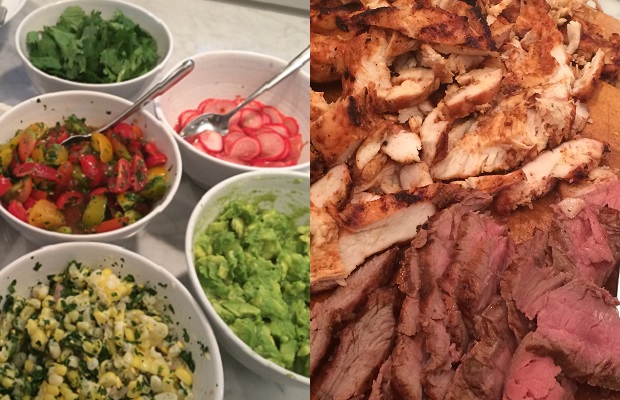
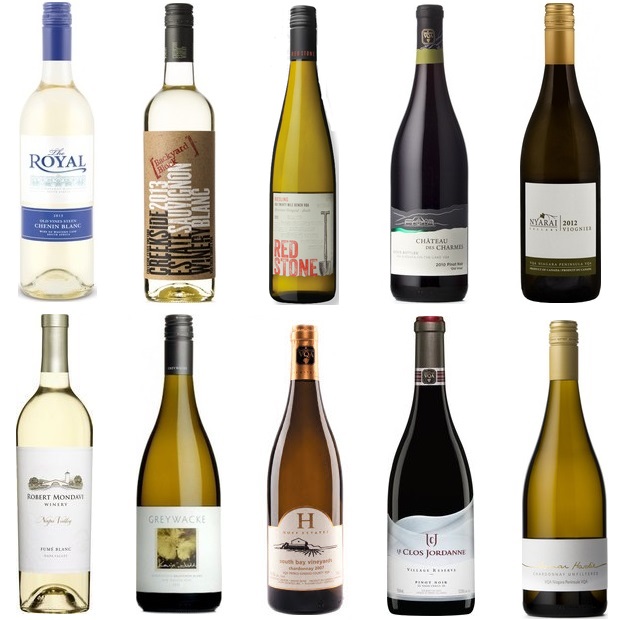
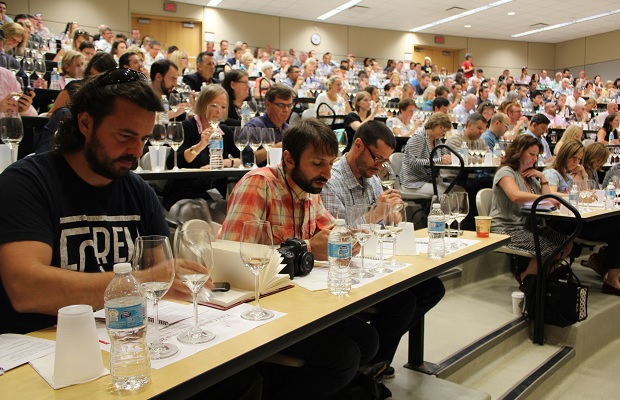
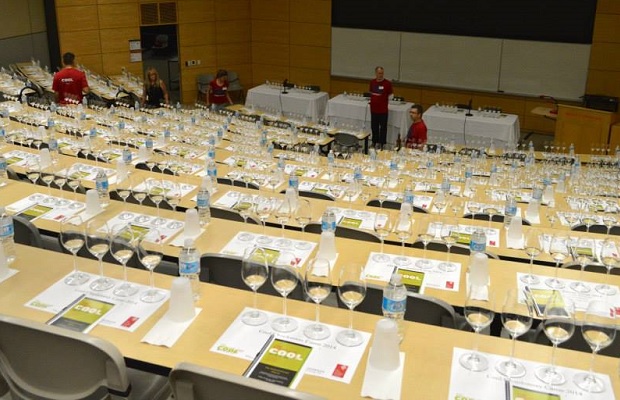

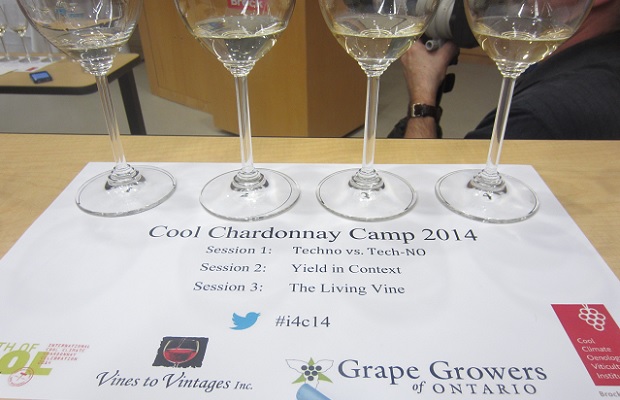
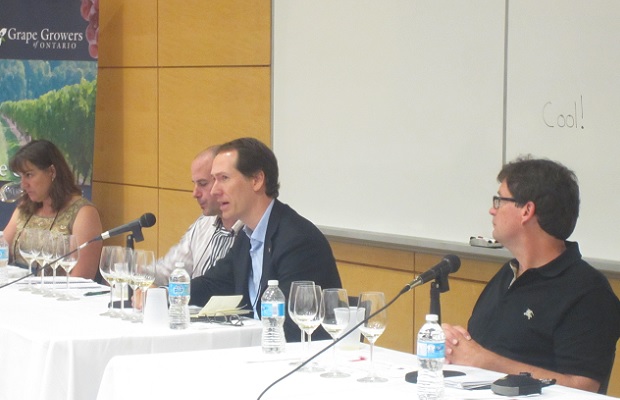
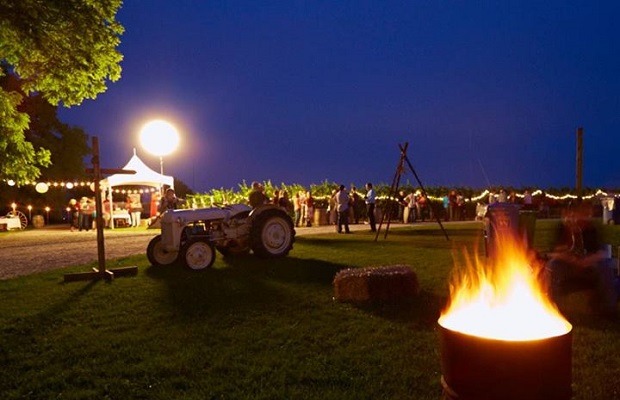
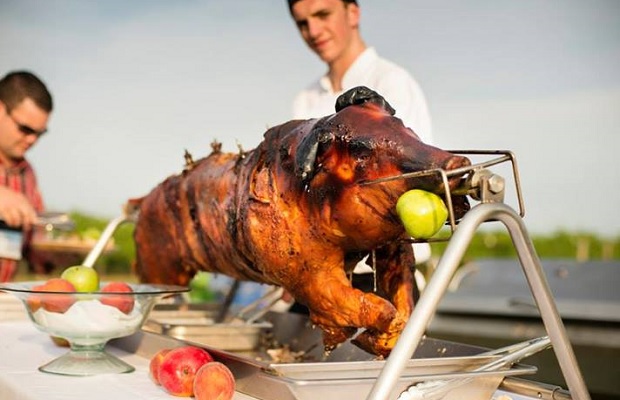
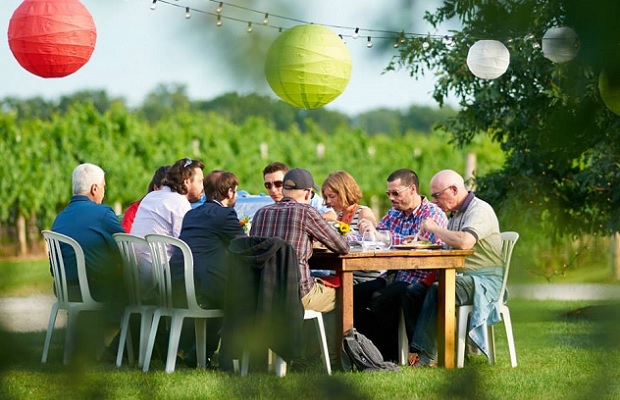
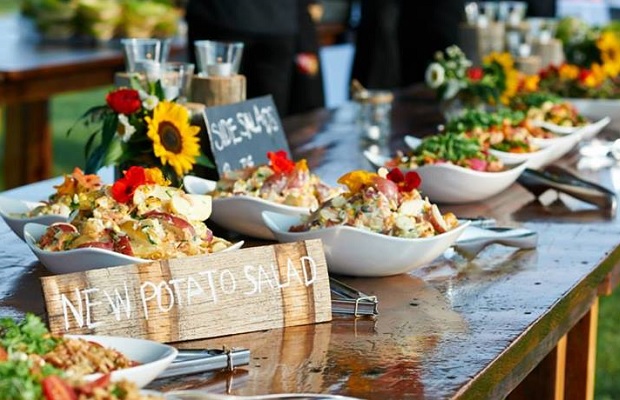
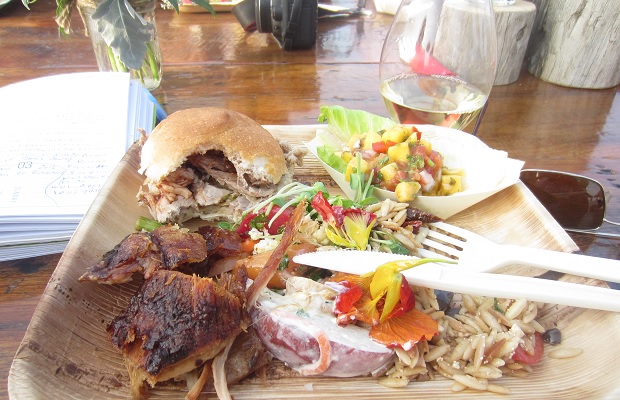
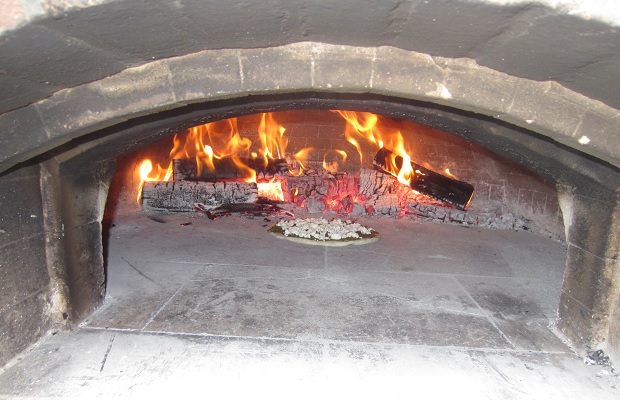
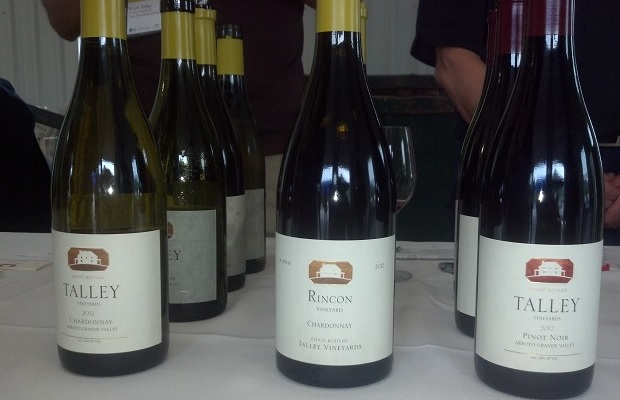
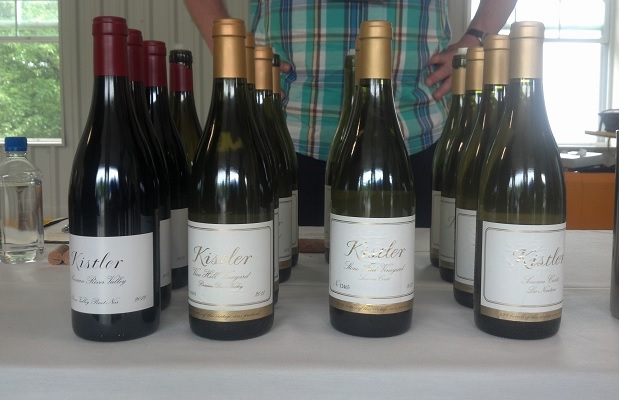
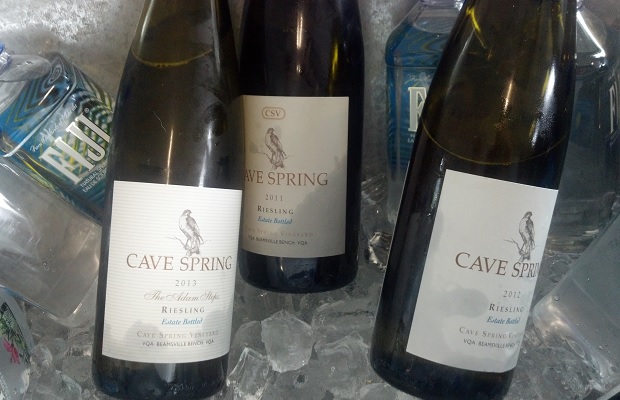
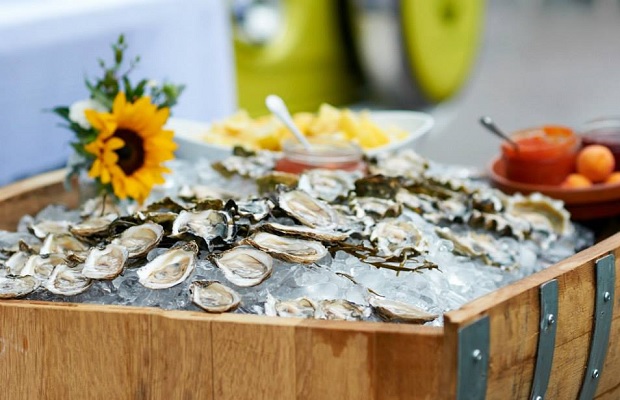
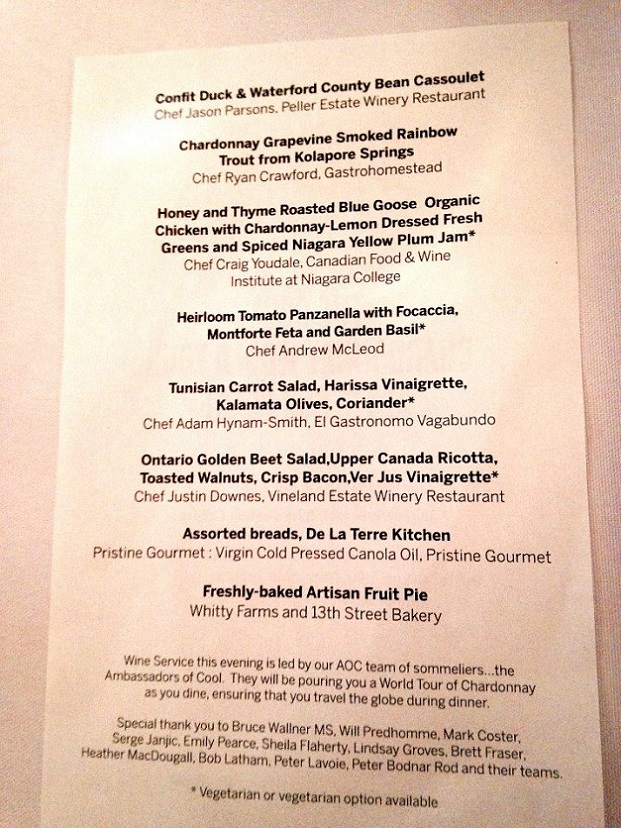
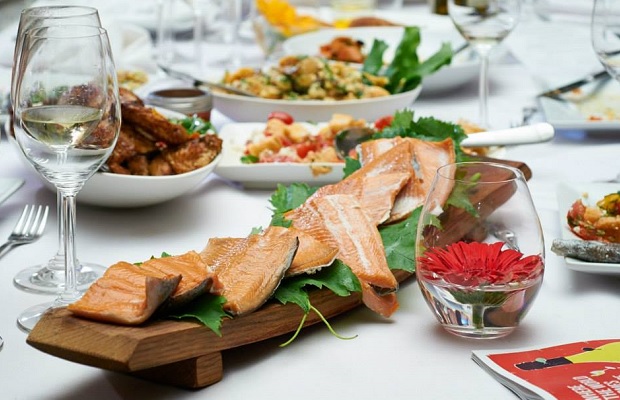

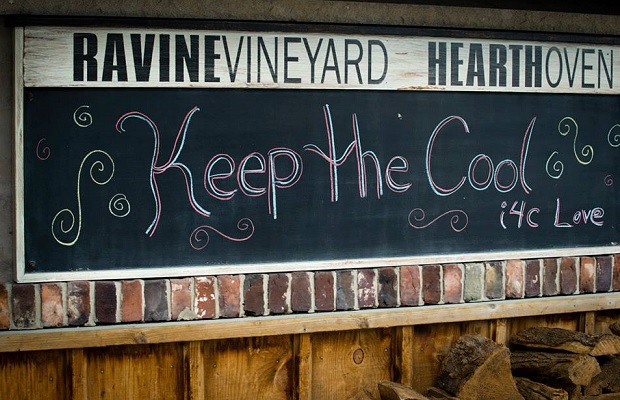
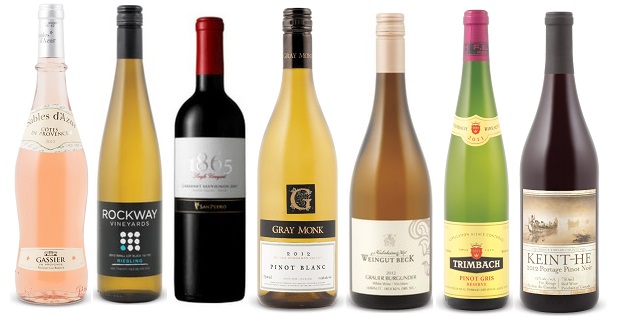
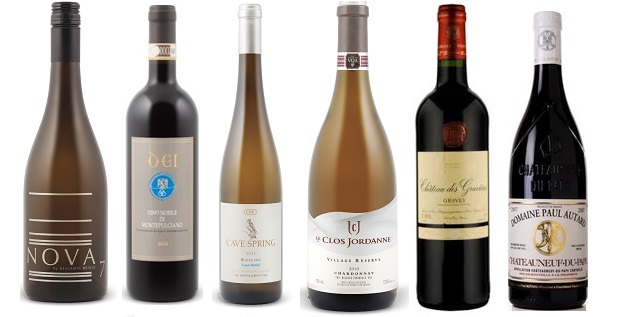


 Godello