Wine dividends, medals and twisted corks

Around this time last year the LCBO boasted about record profits, sales increases and an unprecedented $1.55 billion dividend flipped into the provincial government’s coffers. My May 17, 2012 column noted the 4.7 billion reasons to love the LCBO. The 2012 transfer was up 9.9 per cent over 2011.

Amorim and O-I’s HELIX cork PHOTO: O-I

as seen on canada.com

As of this morning, the new statistics are out and while the spin  plays a familiar proselytizer’s refrain, the numbers might seem to tell a different story. According to the LCBO press release,  ”operational efficiency and growth through store network improvements were key factors in LCBO’s 2012-13 financial results. It was LCBO’s 18th straight year of record sales and 19th consecutive record dividend.”

Here are the numbers, though ”these financials have yet to be audited.”

  • Net sales of $4.892 billion, up $182 million (3.9 per cent) from 2011-12.
  • Transfer of an all-time high $1.7 billion dividend, not including taxes, to the Ontario government. $70 million (4.3 per cent) more than in 2011-12.
  • Net income rose $53 million to $1.711 billion, up 3.2 per cent.

Don’t be misled because the beer, wine and spirits superstore is no shrinking violet. There can be little argument that the numbers remain anything but staggering but it can be suggested that growth may be entering a somewhat stymied period. The Ontario government saw their stipend reduced from just about 10 per cent to slightly more than 4 per cent, according to these latest figures. The total sales percentage increase was also slower than the previous year. Could this be an area of concern when considering the health and viability of the provincial liquor monopoly? An upcoming December 2013 auditor general’s report, if it indeed includes the LCBO, may soon shed new light.

Meanwhile, Wine Align this morning began a search for Canada’s top wines at the inaugural National Wine Awards of Canada being held in Niagara. With the support of host partner Wine Country Ontario#NWAC13 is hosting a wide selection of the country’s leading wine writers and tasters, gathered together to evaluate well over 1,000 wines grown in Canada and to award Platinum, Gold, Silver and Bronze medals in some two dozen categories.  Wines from British Columbia, Alberta, Ontario, Quebec and Nova Scotia will be assessed using the same 100-point system employed at WineAlign. Full results will be published on Wine Align in September. Here is the official medie release:

http://www.marketwire.com/press-release/-1802537.htm

Anthony Gismondi and David Lawrason, Wine Align National Wine Awards of Canada 2013 Photo: http://www.winealign.com

The winning wines will be showcased in a special feature section of the National Post’s Financial Post Magazine.  A staggering number (1100 wines) are to be poured, swirled, sniffed, tasted and evaluated by 17 wine critics representing six Canadian provinces.

Wine Align has taken the reigns from the competition previously known as the Wine Access Canadian Wine Awards.  Further groundbreaking is taking place across the pond. A New Twist On Cork has been unveiled “with the launch of a twistable and re-sealable version that could do away with the corkscrew.” The Helix cork is being unveiled this week at Vinexpo in Bordeaux. The “new cork and bottle has a thread finish, which allows drinkers to twist the stopper open and closed again, creating on airtight barrier.”

Portuguese cork manufacturer Amorim and US bottle maker O-I have teamed up to create the new technology, aimed at the $10-20 niche in the bargain wine market. The cork is made from agglomerated, or granulated material and is surely meant to take the screw cap industry to task.  The Helix will attempt to gain control of a divided industry. On one side, the wineries and buyers who support cork closures with a die-hard insistence that wine needs to breath and age via a real cork closure. On the other, the proponents of the screw cap, winemakers and consumers who point out that cork taint (TCA) ruins approximately 5% of all wines bottled under cork and also who insist that cork does not actually allow wine to breath.

This according to British wine writer Jamie Goode: “It certainly looks pretty striking. A key issue will be whether or not it is adopted by leading wine brands, which could help launch it in the eyes of consumers (who are traditionally quite cautious about wine packaging), and of course whether it is affordable enough for a tight-margin wine market. Also, will it need a capsule to make it tamper-evident? Without a capsule, it looks really good.” The immediate future certainly looks interesting.

Good to go!

Go Gamay Go

Beaujolais at Acadia Restaurant Photos: (DANIEL YAM/WWW.DANIELYAMPHOTOGRAPHY.COM)

Beaujolais at Acadia Restaurant
Photos: (DANIEL YAM/WWW.DANIELYAMPHOTOGRAPHY.COM)

as seen on canada.com

It’s the current war cry by the voices of those who know. A plea and a calling to Canadian growers and winemakers to plant and bottle more Gamay Noir. A proclamation in favour of a great grape and one that forges signature wines out of Canadian soils. I am an ardent supporter of and a willing rider on the Gamay bandwagon, in the name of connaitre and savoirkennen and wissen, recognition and understanding.

They are ostensibly all climatically cool, the wine regions of Canada. The Okanagan and Similkameen valleys of British Columbia, the Niagara Peninsula, Lake Erie North Shore and Prince Edward County of Ontario, the Annapolis Valley of Nova Scotia and Monteregie of Québec. But, it’s not just about the weather anymore. Existentially speaking, Canadian wine is cool.

Gamay is the grape of Beaujolais in east-central France and the principal variety of that immediate geographical neighbour to the south of the world’s most influential and serious of all wine regions, Burgundy. Thin-skinned, low in tannin and often in acidity too, Gamay has for centuries played last fiddle and ugly cousin to Pinot Noir. With the rise of the Beaujolais Cru, that is, red wines made from recognized and identified plots within appellations like Moulin à Vent, Brouilly and Morgon, Gamay has left the orchestra pit and is rapidly gaining solo notoriety. Beaujolais is no longer nouveau. It’s old hat.

While I wait for the #GoGamayGo network to convince our councils, marketing boards and vintners to establish a Canadian Cru system, or at least a comprehensive tasting of Canadian Gamay, I’ll turn my attention to our French forefathers.

Anthony Collet discussing Beaujolais Photos: Daniel Yam/www.danielyamphotography.com)

Anthony Collet discussing Beaujolais

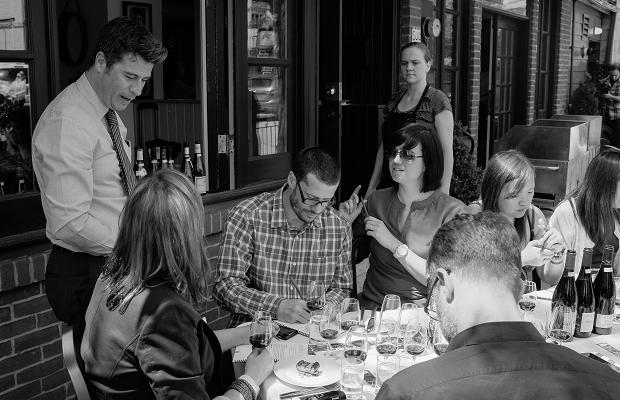
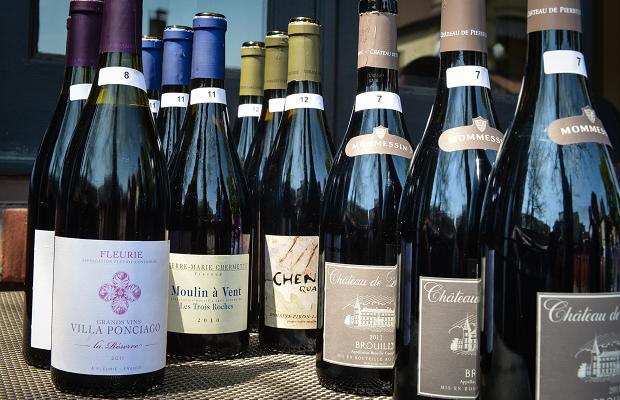
On Wednesday, May 15th, The Beaujolais Wine Council, led by Anthony Collet of Inter Beaujolais and with the assistance of the Siren Group, hosted a wine tasting at Acadia Restaurant. Five ineluctable courses ushered in 12 diverse Beaujolais. The patio luncheon featured Indian, Korean, New Orleans and Portuguese barbecue created by chef Patrick Kriss. Chef’s plates are like holorimes, simple yet complex, parts seemingly unrelated yet bound together by rhyming flavours and techniques. Food crucially matched to Gamay ready to be reckoned with. The least of which made for simple, pleasurable drinking, the best as sang-froid, cellar worthy candidates. Here are the notes.

Beaujolais Wines

Beaujolais Wines

Château Des Jacques Beaujolais Grand Clos de Loyse 2010 (11094399, $19.75) from Louis Jadot holdings in Romanèche is shameless Chardonnay, forwardly fruity and straight on the rocks. From a stainless steel ferment, the Loyse gives off a vinous, tart, pressed gas and Hercynian sedimentary note. Soft white, lithe and airy.  88  @liffordwine

CREOLE SHRIMP, anson mills grits

Georges Duboeuf Beaujolais Fun 2009 (228155, $10.95, SAQ, 11459482, $14.75) talks turkey, offers a pretenseless picnic of pure Gamay fruit and remains remarkably fresh for a 2009. Puts the FU back into fun against many a challenger. I may be alone in defence of this simple quaff but inveigle against my wine soul if this ‘aint a good deal.  87  @dandurandwines

Louis Jadot Beaujolais-Villages Combe Aux Jacques 2011 (365924, $17.95, SAQ, 365924, $16.70) seems a simple distillation hosting a floating purée of raspberry and cranberry. A sniff of smoldering tree bark keeps it interesting. Nothing to hide from, nor to rush to.  86  @ljadot

Related – A terrific write-up of the event from The Wine Sisters

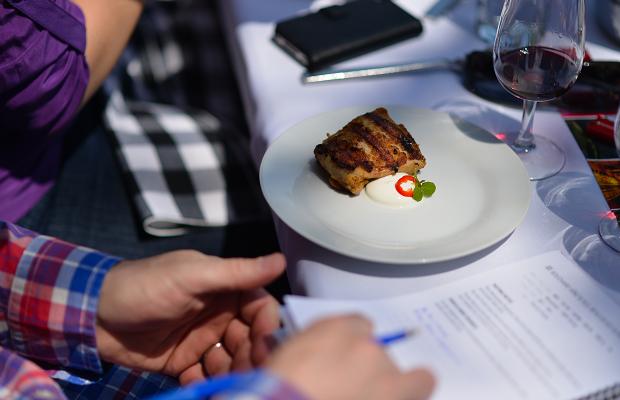
Acadia Restaurant's Piri Piri Chicken

Acadia Restaurant’s Piri Piri Chicken


PIRI PIRI CHICKEN LEG, yogurt

Bouchard Aîné & Fils Beaujolais Superieur 2011 (9431, $11.95) the fresh fruit maker shows some mid-life separation in peppery kick though it’s really quite round. Leads my table mates and I to believe it should be semi-chilled in good ones and over-chilled in less than good vintages.  86

Jacques Dépagneux Morgon Côte Du Puy 2011 (299925, $18.95) is possessed of the appellation’s basic lexical features, that is morphemic, mannish, “spell mmm, aaa child, nnn” linguistics, in smoke, spice and acidity. Goes deeper than non-Cru Beaujolais, if it’s just a bit leaner than when I first tasted it last November. This Gamay speaks in muddy water, beefcake tones now but may not be talking as proud as time goes by. Very good but not quite great example.  89

Domaine Joseph Burrier Saint-Amour Côte de Besset 2009 (11154419, $25.85) confounds by holding out a yes or no answer as to its possible ringer status. Inscrutable Gamay, puckering in dried raisin and cherry, but also sun-dried tomato. Baked, nearly tawny, sullied even. Clearly a child of the searing vintage, hefty and despite the cooked character, it matched quite well with the piquant chicken.  87

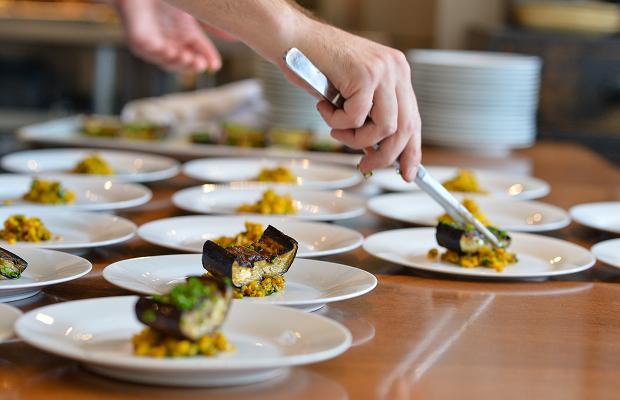
Acadia Restaurant's Grilled Eggplant

Acadia Restaurant’s Grilled Eggplant


GRILLED EGGPLANT, peanut, coconut & curry condiment

Château De Pierreux Brouilly 2011 (5496, $18.95, SAQ, 10754421, $20.15) is wondrous Gamay, clearly defined by aromas of juicy berries and all things forest. I could enjoy a boatload of this floral Brouilly without ever taking a sip. Further to that it starts out soft, vanilla relaxed, glides in confident refinement then spikes in smoke, tar and heat on the back palate. Could use a chill.  88

Villa Ponciago Fleurie La Réserve 2011 (299917, $21.95) from Champagne house Henriot is the most feminine thus far, expressive of a queen’s terroir, delicate, poignant, pretty. Deserving of a Roy Orbison croon, “ma fleur de lis, je t’aime beaujolais.” Reminds me of blueberry pie, or plum pudding, this PYT, full of aplomb and plume.  89  @WoodmanWines

George DuBoeuf Beaujolais-Villages 2010 (122077, $12.95) is a blast from the past, a parson’s project that wants to be juice but really it’s just pink turning red drink. Pink, red, sugar, water…drink. Certainly the most “nouveau” of the lot, this “catch twenty-two” bottle represents everything the region is trying to avoid and diversify away from. I will admit there is a touch of earthy complexity, just enough so to give it a lifeline and value.  85

Acadia Restaurant's Korean Short Rib

Acadia Restaurant’s Korean Short Rib


KOREAN SHORT RIB, crispy rice, sesame & chili

Domaine Manoir Du Carra Juliénas 2010 (290981, $19.95) the pearl finally puts some funk into “an otherwise empty room.” Dandy, candied peony, cracking good, cinnamon scented and jammy in Rhôneish behaviour. More structure than most.  Beaujolais’ daughter.  91

Domaine du Vissoux Moulin-à-Vent Les Trois Roches 2010 (11154427, $24.75) from star winemaker Pierres Dorées is the tasting’s prince, handsome, chivalrous, a lady’s man. Black cherry, duck reductive, sweet and musky. Searches for game, digs for truffles, wants to be seen with slow-cooked meat.  88

Domaine Piron-Lameloise Chénas Quartz 2009 (240481, $22.50) the flamboyant and flirtatious one is like a (clears throat) mini Brunello. Cherry, rose, tea, cedar and sandalwood seem so Sangiovese in a Grosso way. Who knew ’09 Beaujolais could seem so Tuscan.  90

DARK CHOCOLATE GANACHE, chantilly cream, caramel popcorn

Good to go!

‘London Calling’ for Canadian wine

PHOTO: NASKO/FOTOLIA.COM

as seen on canada.com

Just in case you were under the impression that Canadian wine is made solely for and consumed only by Canadians, think again. The world is hungry for our prized grapes and unbeknownst to 99 per cent of the 35 million inhabitants of this vast country, the A-Team is out there in the field.

As I write this, Canada is re-introducing itself to the world by way of an essential and comprehensive tasting hosted today by The Canadian High Commission at Canada House, Trafalgar Square, London. A group of wine luminaries and emissaries are pouring sparkling wines, red wines produced from Pinot Noir, Bordeaux blends or varietals, Syrah or Gamay, white wines produced from Chardonnay or Riesling and Icewine. REDISCOVER Canadian Wine is an unprecedented event, working in conjunction with London’s Westbury Communications to remind and renew a European media and trade contingent of the quality and international viability of the wines from Ontario, British Columbia and Nova Scotia.

Canada House, London (Photos: Janet Dorozynski)

The dream team is led by Dr. Janet Dorozynski, Global Practice Lead, Canadian Wine, Beer and Spirits, Global Business Opportunities Bureau, Foreign Affairs and International Trade Canada. Dr. Dorozynski’s deputies along to help promote the Canadian wines in London are the Wine Council of Ontario’s Magdalena Kaiser-Smit, Director of PR and Linda Watts, Project Manager, Canadian wine expert ambassador Tony Aspler and Barb Tatarnic of Brock University’s Cool Climate Oenology & Viticulture Institute.

Winemakers, owners, vignerons, wine consultants, international sales directors, export directors and marketing consultants have made the trek after wineries from across Canada were invited to submit their wines in a blind tasting judged by a panel of Canadian judges. The panel previewed over 250 Canadian wines and selected 89 wines from 37 wineries to qualify for the London, England tasting.

With help in partnership with Foreign Affair and International Trade Canada, Wine Country Ontario, support from The Cool Climate Oenology & Viticulture Institute (CCOVI) at Brock University and from The Ontario Ministry of Agriculture and Food, the Canada House event is fully and completely positioned to raise the profile of the Canadian wine industry abroad.

London Calling: REDISCOVER Canadian wine

British wine scribe Stephen Brook notes, “Canada has long been out of the ‘promising newcomer’ category. These are wines we all need to discover.” Gerard Basset OBE MW MS adds, “I have discovered some superb wineries and producers with both flair and talent.”

For more information on the event click here.

In celebration of the calling to London, here are tasting notes on eight wines being poured today in London.

Flat Rock Cellars Gravity Pinot Noir 2010 ($30, 1560winery) from A wine pentathlon reels in Twenty Mile Bench fruit in a warm vintage as well if not better than any of its peers. Founder Ed Madronich is clearly slope and soil obsessed and this Pinot Noir is a study in topography and geology. To paraphrase Madronich, it’s  ”more Pommard than Volnay, in a deeper and more masculine way than the Estate bottling.” Pinot barrels most representative of the Gravity style were chosen for the final blend, in this case noted by woodsy black cherry and spiced root vegetable. “Get a little savagery in your life.” 90   @Winemakersboots  @UnfilteredEd

Cave Spring Cellars Riesling ‘CSV’ Estate Bottled 2009 ($29.95, winery only) from Come together, over wine comes from the oldest, lowest-yielding vines at the estate grown on the limestone, Beamsville Bench terrace. A three month rest on its lees imparts honey on the nose though the palate is dryer than off-dry. Mineral, pop-driven even. A hoovering, wizened Riesling, puckering, turning inward, yet to hydrate. Unique for Escarpment ’09 and will realize a quenching later than most. I for one will put this aside and revisit at the end of the decade, when “golden slumbers fill your eyes.” 89  @CaveSpring

Charles Baker Riesling ‘Picone’ 2011 ($35, winery only) from Come together, over wine trembles with nervous energy and will need some bottle time to shed its shocking, A16 soda popping feeling. Right now “he got joo joo eyeballs.” Give it a year, or even two for the Vinemount Ridge clint (citrus and flint) to come together in a fit of focused, piercing acidity. This is Baker’s sharpest, knife-edge Riesling in the block and while I never thought it possible, this one is sure to outshine 2009. For Charles Baker ”one and one and one is three.”  93  @cbriesling

Exultet Chardonnay ‘The Blessed’ 2011 ($35, winery only) from You can lead a county to the city is exemplary even if it may not be proprietor Gerard Spinosa’s favourite vintage. Commands an ineffable presence in gold sheen and parses meaning through balance and poise. The new oak is very noticeable but the ’11 acidity is grand. Their integration is seamless, the wine shines and a few years time will only increase its lustre.  92  @ExultetEstates

Pillitteri Estates Cabernet Franc Reserve ‘Exclamation’ 2010 (Alex Kolundzic, $35, winery only) from Top juice flows at Cuvée 25th anniversary from family vineyards in Niagara-on-the-Lake ventures into voluptuous, black forest, fruitcake territory. A 24-month soak in French oak imparts espresso and leather and it’s as if this CF was raised in Napa or designated IGT. But this is NOTL were talking here. Improbable and believable. Tasted twice.  91  @Pillitteriwines

Hidden Bench Estate Pinot Noir 2010 ($38, winery only) from A wine pentathlon takes my previous impressions to a higher plane. Standing correct by calling it a “a vintage relative release” but it’s so much more than “a quaffable, generous fruit sui generis.” Beets turn into plums. Opaque hue reminds of graceful Nebbiolo with a dancer’s legs in aperture. Wins in judicious use of French wood. Tannins persist in the rear-view mirror. Big ’10 that speaks of another level in Beamsville Pinot Noir. “Think about it, there must be higher love.” 91  @HiddenBench  @BenchVigneron

Château Des Charmes Equuleus 2010 (Paul Bosc, $40, ONT, winery only, SAQ,  11156334, $41.25) from Top juice flows at Cuvée 25th anniversary from the Paul Bosc Estate Vineyard is a classically styled blend of 50% Cabernet Sauvignon, 25% Cabernet Franc and 25% Merlot, only made in exceptional years. Apropos choice from 25-year old vines (in 2010) from the warmer St. David’s Bench for Cuvée’s 25th show.  Poised, balanced and regal yet this mare is temporarily a head-shy, sensitive equine red. Will trot out furlongs of tobacco and meaty aromas from now and through maturity in five plus years. A saddle of round, red fruit will age gracefully.  92  @MBosc

Stratus Syrah 2010 ($48) from Stratus and Momofuku: Modernity incarnate is picked early as compared to other well-known varieties like the Cabernets and this vintage saw a 25% yield decrease/concentration increase. Pretty, focused and indicative of candied flowers in replay with a note of citrus blossom. A Syrah that clearly speaks of Groux’s infatuation with aromatics. “What I do know, my Syrah is improving overall.”  90  @twineswines  @Stratuswines

Good to go!

Somewhereness over the Canadian wine rainbow

Gray Monk Vineyard, Kelowna, BC PHOTO: TOURISM KELOWNA/BRIAN SPROUT

as seen on canada.com

Canada’s wine business is booming. To what do we owe this present day Renaissance of pleasant surprise and coast to coast quality? Passionate industry professionals for sure. We can thank the winemakers, marketing specialists, expatriate wine pros arriving in droves and especially the expert farmers and growers. A sea of grape-driven humanity, forging a template of success but also working together, towards a common goal.

Above all else, the rainbow’s fulcrum is the “somewhereness” of Canada’s wine regions. Terroir is the great catch word for wine. A vine’s home determines its potential, its structure, its sense of place. Micro-climates, soil, geology, altitude, slope and vegetation all contribute to the make-up of a wine forged from that specific parcel, lot or locale. If you are from Germany, France, Italy, Spain, Austria or anywhere else where wine has been made for centuries, well then there is nothing new or revelatory about this train of thought. If you are from Nova Scotia, British Columbia or Ontario, the discussion exudes relevance.

Thanks to Robert Bell’s Wines in Canada, we have a great understanding of our vinous roots across the country. Johann Schiller, a German who served with the 29th Regiment of Foot in Quebec in 1784, is considered to be the father of the Canadian Wine Industry. Some of the first grape vines in Canada were planted in Nova Scotia in the 1600s. Today the maritime climate of the Gaspereau Valley is the catalyst behind a host of terrific Sparkling wines. In B.C. the Okanagan Valley is king. Defining geology and terroir in its sub-appellations is neither easy nor much discussed (as compared to Ontario), yet the wines of the sun-drenched shelf of land on the eastern slopes of Lake Okanagan’s Naramata Bench are surely ready to explode onto the scene.

It was nothing less than fortuitous for me to taste a Naramata Bench gem at the hands of a generous dinner guest. Without the tie of an unobstructed coast to coast railway carrying wine to and fro, Canadians are mostly shut out from their out-of province wine brethren and sistren. The most glaring unifying obstacle is the issue of guarded provincial borders. Sandra Oldfield of Tinhorn Creek in B.C. shouts this out loud:

Ontario’s scene is bursting with kinetic and frenetic energy. If you are a disbeliever just check out Ontario Wine Chat or MyWineShop.ca, or better yet, head on down to Cuvée 2013 this coming weekend. For a comprehensive look at our province, make sure you read A Pocket Guide to Ontario Wines, Wineries, Vineyards, & Vines by Konrad Ejbich. The discourse concerning somewhereness in Ontario is in full swing. In October of 2012 I wrote, “Character and quality has never been better. Riesling continues to impress and let us not ignore the high level of ever-evolving Chardonnay vines. Reds have made great strides, especially Pinot Noir, Gamay and Cabernet Franc. The future looks very bright for Ontario [wines].”

Reds from significantly warmer sub-appellations on the Niagara Peninsula, specifically Niagara River, Four Mile Creek & St David’s Bench, speak of their cozy abodes. Syrah and Cabernet Sauvignon, varietals that benefit from extra hang time, are not only showing promise but excellence, especially in optimum climatic years like 2007, 2010 and waiting in barrel, 2012. Forgive me for waxing neo-nostalgic but welcome to the golden age. Here are four currently available Canadian wines to look for.

From left to right: Henry of Pelham Estate Chardonnay 2010; Fielding Estate Cabernet Franc 2011; Norman Hardie Chardonnay 2009; Nichol Vineyard Syrah 2009

The grape: Chardonnay

The history: H of P has been working this Burgundian grape in so many styles, from so many vineyards

The lowdown: From another up and coming Niagara appellation, the Short Hills Bench

The food match: Grilled Halibut, olive oil, garlic, fresh thyme, lemon emulsion drizzle

Henry of Pelham Estate Chardonnay 2010 (268342, $19.95) is the best one yet. Some A16 but in a breezy, over the falls, misty wash. Like Riesling in a way, especially considering the Bench minerality. Sweet, creamy palate. Good stuff.  88

The grape: Cabernet Franc

The history: From the team of Grape King Curtis Fielding and winemaker Richie Roberts, 100% Niagara Peninsula grown grapes including fruit harvested from the estate vineyards

The lowdown: The Five Rows (Lowery) Vineyard is fast becoming THE go to terroir for the best possible red grapes in all of the Niagara Peninsula

The food match: Grilled Dry-Rub Butterflied Chicken, bbq sauce glaze

Fielding Estate Cabernet Franc 2011 (Approx. $21) has to be the best yet from @RichieWine. From a 35-acre Grand Cru (Five Rows) vineyard in the making in the heart of the warmest Niagara locale (St. David’s Bench). Zanthoxylum, capsicum and pencil shaving. Ropy grain, chewy, sylvan charm. 90  @FieldingWinery

The grape: Chardonnay

The history: Prince Edward County’s iconoclast. Norman Hardie is “possessed of a will to hunt down the object of his life.”

The lowdown: French vines, limestone soils, unmistakable kiss from Mr. Hardie

The food match: Shrimp and Coconut Étouffée, peas, kale

Norman Hardie Chardonnay 2009 (184432, $35, SAQ, 11638501, $38.75) rocket launches spatially atomic as a bound, caryopsis hurtling of mineral schist, tangy stone fruit and smoking kernel. Angles to a vanishing point, laser perspective. Will realize a unique and defined vinous exegesis. Cosmic expression of Chardonnay out of Prince Edward County. 91  @normhardie

The grape: Syrah

The history: Alex Nichol was the first to commercially plant Syrah in the Okanagan in 1989

The lowdown: From a Naramata Bench vineyard owned by Ross Hackwith on a pocket of land tucked against steep, heat-radiating red granite cliffs

The food match: Braised Beef Short Ribs, coffee infused demi-glace

Nichol Vineyard Syrah 2009 ($35) is unquestionably the heftiest 12% you will ever experience. Cool climate Syrah, Northern Rhône meets Victoria (Oz) dare I say, nidorous, smokey, a quenched fire. Dark chocolate covered black olives. Stonking resolve, Naramata nerve, stirring. Oh.  91  @nicholvineyard

Good to go!

Wine chat anyone?

PHOTO: ONDREICKA/FOTOLIA.COM

as seen on canada.com

It’s not as those everyone is doing it, but chatting live online about your favourite pastime is all the rage these days. Discussions can be about food, sex, music and yes, wine. I join experts across Canada every Thursday at 2:00 pm EST to lead a group-think on the ubiquitous subject. Today we’ll be talking about Fortified and Dessert wines.

If you host it they will come. Shawn McCormick of Uncork Ontario is passionate about Ontario wine and was quite certain if he presented a live forum, people would show up to the party. Fifty-five minutes in he tweeted this:

When asked why he chose to host the chat at this time, McCormick replied, “there’s been a #WineChat and a #BCWineChat for a while now. A few of us on Twitter were discussing why there wasn’t an #ONWineChat, so I decided to just start it and see where it goes. Why Wednesday night? I wedged it in between the other two wine chats, mainly because at some point we’ll likely combine chats with #BCWineChat for a two hour special on topics of similar concern.”

Photo: Robert Holmes, California Travel & Tourism Commission

A who’s who of Ontario vinophiles showed up to talk Ontario wine, from signature varietals to micro-climates. In the end McCormick noted, “Summary for #ONWineChat tonight? Do what does well in your micro-climate. Try to focus (not do everything). Make great wine.” Seems like the band of merry prankster wine geeks couldn’t let go either. The chat was slated to begin at 10:00 am EST but a few keeners jumped in early and despite Shawn’s call at 11:00 pm, the last post/tweet signed off well after midnight. Passion indeed.

But wait, there’s more. Wine romantics in British Columbia had their very own round table as well. Thanks to Tinhorn Creek’s Sandra Oldfield,  BC Wine Chats also presents online Wednesdays at 8:00 pm PST and last night’s topic was “Will TED Talks BC Next Year Affect BC’s Food and Wine Future?” The Canadian wine train is steaming full-speed ahead. Time to get on board.

Okanagan wine-making region (Photo: Handout/Postmedia News).

The canada.com chat has thus far been an exhilarating and educational experience. Rod Phillips brings an unparalleled academic and pinpoint perspective. Gurvinder Bhatia shares a wealth of international experience and is a champion of the sui generis varietal. James Nevison loves his Sparkling wines, never wavers from his zeal and adds essential energy to the discussion. We have also been joined by many guest experts, including John Szabo, M.S., Rick VanSickleW. Blake GrayCraig PinheyDebbie TrenholmeMichael Pinkus and this week, Janet Dorozynski joins the panel.

Come join the chat, you might learn something.

Good to go!

A wine list of twenty-somethings

PHOTO: LAURENT FIEVET/AFP/GETTYIMAGES

as seen on canada.com

They are white-collar students of a history and culture bound by their sectarian world. They are modern, hip, expatriate citizens of their diaspora. They toil in brick lofts, go to lunch, work out and dine. Here in Canada they can play hockey without a puck. They are the twenty-somethings, bottles of wine voiced of a specific roundelay. They dwell in an important niche, to serve the upwardly mobile, the progressive, the blue.

In need a good bottle of wine to bring to dinner? From Quebec to Alberta, from Ontario to British Columbia, here is a list of twenty-somethings certain to act as a gambit for your most discriminating host.

The grape: Garnacha

The history: The Cooperative of Borja was founded in 1958 but winemaking here dates back to 1203 with the monks at the Monastery of Veruela

The lowdown: The Spanish (Zaragoza) equivalent to Piedmont’s Produttori del Barbaresco. Grapes come from 620 member growers covering 2,500 hectares

The food match: Chicken, Pork and Pistachio Terrine

Borsao Tres Picos Garnacha 2010 (273748, $19.95, B.C. $27.99 SAQ $22.15) has more wood, char and toast than a forest fire but the wild boar and ciervo roasting on that fire is intoxicating. Black licorice and Herbero cause insentience in the mouth, not so typical for juicy Spanish Garnacha. Mineral-driven and dark, Parkerish even.  89  @AuthenticWine

The grape: Cabernet Sauvignon

The history: From a Chilean Sparkling wine outfit dating back to 1879

The lowdown: A big oak red out of the Maipo Valley

The food match: Spaghetti with Beef and Veal Meatballs, preserved roma tomato sauce

Valdivieso Single Vineyard Cabernet Sauvignon 2009 (312769, $19.95, $27.96 Alta.) engages straight out with a purple allure and a waft of lit cedar. Violaceous perfume, herbal without being balmy, dusted by spicy wood while shying away from mocha and chocolate. Excellent redolent berry persistence, pretty yet strong.  89  @ValdiviesoChile

The grapes: Carinena, Garnacha, Cabernet Sauvignon, Merlot and Syrah

The history: Ultra-modern Priorat, from the team of vine grower Juan José (Jou) Escoda and winemaker Toni Coca

The lowdown: 21st century blending of indigenous and international varietals grown out of stony soils, poor in organic material and helped little by rainfall

The food match: Braised Chicken Thighs, caramelized onion, plum tomato, brisket-sherry gravy

Planets De Prior Pons 2008 (314559, $22.95) carries a dolor quarry of licorella, the black slate and quartz of Priorat so present in avant-garde yet rustic wines like the Pons. Most ruby-red, embattled by Spanish garriga, a kiss of the salty sea and mountain air. Peppery, red licorice balanced on an eave of canted length.   91  @clickvinus

The grapes: Cabernet Sauvignon, Merlot and Cabernet Franc

The history: From Fattoria Vitticio (Greve in Chianti), owned and managed by Alessandro Landini

The lowdown: Joint venture with the Cancellieri-Scaramuzzi family in Bolgheri”s Castagneto Carducci

The food match: Prosciutto and Bresaola, beemster, crostini

I Greppi Greppicante Bolgheri 2009 (170381, $23.95, SAQ $23.60spoons out Bolgheri typicality with dry espresso bean sharpness, Tuscan coast silicon and a bit of funk. All this and a very respectable 13% abv. The minerals never cease their whorl and I wonder how this can possibly linger for months on LCBO shelves. So very Italian this Greppicante. “I have your blood inside my heart.”  90

The grape: Pinot Noir

The history: From British Columbia’s Similkameen Valley, a unique appellation proximate to but not to be confused as being a part of the Okanagan Valley

The lowdown: This terrific ’08 will be followed up by the Lieutenant Governor’s Awards for Excellence in British Columbia Wines 2009 winner

The food match: Homemade Ricotta, toasted bread, extra virgin olive oil

Eau Vivre Pinot Noir 2008 (308353, $24.95, $19.00 B.C.) is blessed with a lightness of being, a Ruby Port, redden voile sheen and a firm anatomy. Cranberry and pomegranate meet a Marlborough, cloisonné, mineral veneer. This is a Pinot lover’s Pinot, specific, cerebral, incomplete in its forgiveness.  88  @EauVivre

Good to go!

A wine prescription for cold and flu

Resveratrol molecule
PHOTO: LISHA/FOTOLIA.COM

as seen on canada.com

A glass or two of wine might just be the thing to help ward off the common cold and the flu. OK, 15 minutes of daily exercise will help too. And Vitamin C, Echinacea, lemon ginger tea, chicken soup and washing your hands… and did I mention wine? Research indicates that it interferes with viral replication. Very personal hermeneutic public service announcement? Maybe. Perverse mantra of belief? Perhaps.

There are researchers and doctors who believe that certain chemical compounds in wine can help immunize the body against 100’s of common viruses. The antioxidant properties, called flavonoids, lower blood pressure and absorb harmful toxins in the body, including the nasty stuff in nasal passages. Though red wine generally contains more positive attributes like resveratrol and polyphenols (compounds that also attack bacteria), it’s effectiveness may be negated because, not unlike dairy, it can increase the production of mucus. The solution? Go white, but don’t mix it with medication.

But it’s cold outside, you say, and you don’t want to drink benumbed white wine on a frigid winter night. The esteemed NY Times wine critic once wrote, “Not so cold…doctor’s order. Good white wine shouldn’t be too cold.” The question is, what kind of white wine serves well, not so chilled. The answer lies in body, balm and colour, in opulent, canorous and warmer-hued wines. But mostly it’s about the aromatics. Look for clement whites with hyperbolic, expressive aromas. Seek out varietals such as Gewürztraminer, Viognier, Roussanne, Marsanne, Altesse, Colombard, Chenin Blanc, Pinot Gris/Grigio, Scheurebe, Riesling and Chardonnay. Whites made from grapes endowed with the most exaggerated scents; of spring flowers, citrus, tropical and stone fruit.

Here are five mellow whites to seek out this week for when the mercury falls on a frosty winter’s night.

Five mellow white wines

The grape: Chardonnay

The history: Formerly Macon-Farges Paul Talmard, now produced by Mr. Talmard’s daughter Mallory and son-in-law Benjamin

The lowdown: The Mâconnais may be lower down on the Burgundy totem pole but quality is at an all-time high

The food match: Roasted Butternut Squash, maple syrup, toasted pistachios

Mallory & Benjamin Talmard Mâcon-Uchizy 2010 (733956, $14.95) forsakes oak for crystalline lucidity, green apple mineral punch and a late-night pistachio snack. Considered a lamb to some by Burgundian standards, but “as the neons dim,” this Chardonnay turns “to the coat of white.” A Genesis of great #ffffff value.  88  @TalmardMallory

The grape: Roussanne

The history: 100% Stainless Steel fermented Rhône ranger out of Mendocino by way of the Parducci family

The lowdown: The rarest of VINTAGES California sightings for this Southern Rhône varietal and only 225 cases produced

The food match: Roast Halibut, tabbouleh, beet hummus,

McNab Ridge Shadow Brook Farms Roussanne 2009 (312892, $18.95) waves the elderflower wand and casts a code white spell. Florally over the top, almost violent or even combative but what’s wrong with that? Balanced by a sweet shadowfall of peach marmalade. For something other, range to this Mendocino Rhône.  89  @McNabWines

The grape: Gewürztraminer

The history: A signature bottling for founder George Weiss

The lowdown: From Okanagan vineyards in both Kelowna and Kaleden at an average of 21 Brix. Their ’11 Pinot Gris and Unwooded Chardonnay were also terrific

The food match: Za’atar Crusted Roast Chicken, saffron rice, peach preserve

Gray Monk Gewürztraminer 2011 (321588, $19.95) articulates stone fruit from white peach to nectarine and citrus from clementine to mandarin. Does lychee, rose and pink grapefruit on a quieter note. White pepper and spice (cardamom, coriander) dust this dry yet profuse specimen. If only we would see their Siegerrebe here in Ontario.  88  @GrayMonkWinery

The grape: Pinot Grigio

The history: Three generations, forty years, from Tauriano di Spilimbergo within Friuli

The lowdown: This PG comes from Collio grapes near the Slovenian border

The food match: Roasted Brussel Sprouts with Toasted Almonds and Pomegranate Seeds

Fantinel Sant’Helena Pinot Grigio 2011 (310144, $19.95) shines copper in humid hue and is both herbal and cerebral for Pinot Grigio. A dashboard confessional suggesting tarragon, sage, capers, Acacia Flower and Adriatic salinity. A portrait for “cold nights and fires and white wine,” the only gift I need, though it may not strike the faint of PG hearts.  90  @ProfileWineGrp

The Splurge

The grape: Riesling

The history: The Berres family has lived and worked in Ürzig’s vineyards since 1510

The lowdown: Late harvest Riesling at its best, in vintage, quality and price. This vineyard is the “spice garden” of Ürzig, an amphitheater formed by a dramatic bend in the river Mosel. Loved the Kabinett too.

The food match: Panko Fried Shrimp, sweet, sour and spicy glaze

C.H. Berres Ürziger Würzgarten Riesling Spätlese 2010 (301952, $24.95) casts a whiter shade of pale, and trips the shining, soda light fantastic. Dances the spicy fandango perversely across the tongue and after just one sip that tongue has “turned cartwheels ‘cross the floor.” Dry, saline, seltzer up the nasal passage, sweet, exotic tropical fruit past the taste buds and a lengthy held note plays on.  91  @imbibersreport

Good to go!

The best wine releases of 2012

PHOTO: STEFANO TIRABOSCHI/FOTOLIA.COM

Wine is best celebrated with family and friends and the holidays present so many opportunities to share a glass. Pulling corks (or twisting caps) substantiates purchasing choices made in previous years. Last year I noted on, “a quick reflect back on a year of plasmic vials once voluminous, now in condign as a commitment to memory. ”

The current season’s pours have the palaver or promise and the eviglio of accumulation to thank for the opportunity. The VINTAGES releases of 2012 perpetuate this promulgated philosophy. The year’s buys have migrated to the cellar, to wait there in abstemious behaviour of maturation. They too will one day climb the steps to a welcoming table, set with family and friends.

Here are my favourite under and over $30 wines of 2012.

Under $30 VINTAGES released wines

Under $30 VINTAGES Releases

1. The grapes: Grenache, Mourvedre and Syrah

Where: Côtes du Rhône, France

Domaine Les Grands Bois Cuveé Maximilien Cairanne 2010 (286336, $21.95) is extraordinary for the appellation. Pitch purple, world-class milk and dark chocolate swirl, creamy silk. The stuff of recent phenomenon, where rocks, dreams and raspberries are crushed and scattered like cake bits over the loam.   91

2. The grapes: Garnacha, Carinena and Syrah

Where: Montsant, Spain

Celler Besllum Besllum 2008 (283515, $15.95) of Cubist Picassan, “cut up, Maria,” heavenly body struts its stuff as an enchantress with an alluring Spanish, violaceous visage. A black cherry, carboniferous quartzite Popsicle for Mr. Jones.  “We all want something beautiful.”  90

3. The grape: Petite Sirah

Where: Alexander Valley, California

Trentadue La Storia Petite Sirah 2010 (291047, $23.95) is massively concentrated out of the Alexander Valley in Sonoma County, as if it were packed with five centuries of the Italian American experience. Manages 14.9% alcohol with George Bailey-esque, heady grace. Tasted blind I commented, “if this is under $30 it’s an outrageous deal.” “Well whaddya know about that!!!. “ 92

4. The grape: Riesling

Where: Clare Valley, Australia

Pewsey Vale Riesling 2011 (686600, $19.95) shimmers an iridescent emerald-green on gold patina. Cracks like a whip straight in your face with lemon, lime and slate than lowers a sledgehammer of petrified wood. Snake-like Sasak fruit tang and acidity “goes dancin’ in,”  “builds that power” and lingers long after its skin has been shed.  91

5. The Grape: Sangiovese

Where: Tuscany, Italy

Dei Vino Nobile Di Montepulciano 2008 (285510, $28.95) is a wow wine. Viscous, sweet nectar, full on concentrated berries and polished rocks au jus. An opus dei call to vinous holiness and sanctity. Rapturous feeling of punch drunk love falls over me after sipping this noble Sangiovese (Prugnolo Gentile).  92

6. The grape: Chenin Blanc

Where: Loire Valley, France

Marc Brédif Vouvray 2010 (685362, $19.95) perches high atop a parched, molecular hilltop. Bread starter nip promises stuffed pastry filled with friable, early harvest apples. Wonderful, classic and dehumidified Vouvray.  91

7. The grapes: Merlot, Cabernet Franc, Cabernet Sauvignon and Petit Verdot

Where: Okanagan Valley, British Columbia

Lulu Island Meritage (277566, $23.95) just sounds like an Aussie moniker when in fact it hails from the Okanagan Valley in British Columbia. Maybe the most lustrous B.C. red I have ever laid eyes on. Hard not to forbear a crush on its purple profile, hued like a $100, Single-Vineyard Argentinean Malbec. A bit reductive due to its infantile youth but this is appurtenant to the samphire, currants and peppery Merlot scents. Less weight buoys the palate. Bites back in the end. Follows varietal rules of proportion vis-a-vis the dry martini. Massive CVR** complexity from this massif assemblage.  91

8. The Grape: Cabernet Franc

Where: Niagara Peninsula, Ontario

Hinterbrook Rosé 2011 (275818, $16.00) is simply brilliant. Top Ontario Rosé to date. Goes well beyond descriptors like “playful” and “quaffable.” A four-day Cabernet Franc cold soak was the ticket to serious pink success, the choice of grape an engineering master stroke. Hinterbrook’s dark side of the moon. Moody, ambient, rich in tone, lyric and extended play. Rosé needs some mystery and here it is.  ”There is no dark side of the moon really. Matter of fact it’s all dark.”  91

9. The Grape: Riesling

Where: Mosel-Saar-Ruwer, Germany

Dr. Pauly-Bergweiler Wehlener Sonnenuhr Riesling Spätlese 2009 (0197186, $21.95) races out of the nuss pit with peerless Bergweiler CVR** Spätlese speed. The late harvest drupe is so focused you would never know how sweet the middle ground really is. Never struggling against circumstance, it slides effortlessly into Spätlese orbit. Searching and finding the German Riesling dream. Sonnenuhr vineyard is here and “the time is right, for racing in the street.”  91

10. The Grape: Chardonnay

Where: Casablanca Valley, Chile

Errazuriz Wild Ferment Chardonnay 2010 (738393, $17.95) will be your best IVR* bet for Chardonnay day on May 26. Wild yeasts make cause for a weird resemblance, reminiscent of February’s Furmint. Delicate, expressive and unusual, the mint flint, brioche and smoked pineapple effect leads to thoughts of Blancs de Blancs. A little malo just might turn this into good bubbly!  89

Over $30 VINTAGES released wines

Over $30 VINTAGES Releases

1. The grapes: Grenache, Syrah, Mourvedre and Cinsault

Where: Southern Rhône, France

Le Vieux Donjon Châteauneuf-du-Pape 2010 (700922, $53.95, SAQ 10817461, $50.50) will dare you to claim any better value from the storied appellation. “Da price boss, da price!” Like I’ve landed on Fantasy Island where Châteauneuf is flowing and it’s always affordable! Kirsch galore, a Rhône cat, sensuous and gorgeous. Goldfinger garrigue, with herbs and acidity so alive and purring. Approachable now, the heavenly structure will see the Donjon through 2025.  94

2. The grape: Cabernet Sauvignon

Where: Napa Valley, California

Dunn Vineyards Howell Mountain Cabernet Sauvignon 2008 (193763, $99.95) is a flat out brilliant composition by the voice of one who once “traded love for glory.” This Cab reverts back to its singer-songwriter, Napa Valley pioneering form. The ’08 is a crooning balladeer intent to hold out its best in a graceful lucubration of layered, dark fruit, restrained restlessness and a vision of long life. Put the Dunn away and look to be rewarded 15+ years on with as good a California Cabernet as you will ever taste.  96

3. The Grape: Syrah

Where: Northern Rhône, France

Delas Frères Francois De Tournon Saint-Joseph 2009 (17525, $33.00) is both militaristic and the stuff of gushing Renaissance literature. Serious Syrah and foxy, Faerie Queene.  Cardinal colour, striking and dreamy. Augustinian diplomat meets allegorical fantasy. Crushed berries, truffles caked by earth, sol de la foret. Built of elegance and power, “such endlesse richesse, and so sumptuous shew.”  92

4. The Grapes: Cabernet Sauvignon, Cabernet Franc and Petit Verdot

Where: Napa Valley, California

Dominus 2008 (212381, $145.95) solicits riposte for parry, to buy or not to buy. The omnipotently voluptuous one resides in a tramontane locale, beyond reach and also the pale. A shocking parade of profound, hyper-purple personality. Even if it suffers “the slings and arrows of outrageous fortune“, a lucky man this Dominus, “all dressed in satin,” “nor woman neither.” Colour field shockingly crimson and amarinthine, textured with rich and layered brush stroke, as if Red on Maroon. A Lama, “the flowing robes, the grace, bald…striking.” To me this ’08 leans more Ornellaia than Pétrus.  97

5. The grapes: Zinfandel, Petite Sirah and Carignan

Ridge Lytton Springs 2009 (982413, $46.95) will live in infamy like the ’92 and ’99. Immediate waft of freshly shucked vanilla bean. Ambrosial, earthy, briary fruit. Precise distillation inclusive of 23% Petite Sirah results in an impossibly lambent cordial. Not to mention you gotta love that Draper perfume. Open the magazine in 10-15 years time for the best read.  93

6. The grape: Nebbiolo

Where: Piedmont, Italy

Gemma Giblin Riserva Barolo 2005 (185025, $36.95) has begun to brick at the edges. Mouth rosewatering acidity binged by sour cherry and shellac. Wisp of Monte Cristo and withered rose only Barolo can smell of.  This Gemma is beautiful like a turning season, like something you know won’t last. For now and no more than two to three more years.  92

7. The grapes: Grenache, Mourvedre, Syrah and Counoise

Where: Southern Rhône, France

Château de Beaucastel Châteauneuf-du-Pape 2010 (711317, $89.95) enters no confected, over-extracted or OTT danger zones. The most floral Beaucastel, a doffing of Stoechas Avignon and the omnipresent Rhône garrigue. Persimmon and lavender share time imparting the wine with fumes from les galets roulés of the argilo-calcaireous vineyard beds. Basic hedonism here from such an extraordinary, complex and balanced blend.  95

8. The grapes: Sauvignon Blanc and Semillon

Where: Bordeaux, France

Château Carbonnieux Blanc 2008 (581033, $59.00) is possessive of febrile gooseberry imagination. Blows sweet peach and apricot in and out of the glass in alberge de tours waves. “Hungry like the wolf” and his lycopersicon esculentum. A white PL for the ages.  92

9. The grapes: Cabernet Sauvignon, Merlot, Cabernet Franc and Petit Verdot

Where: Tuscany, Italy

Ornellaia 2009 (722470, $189.95) is more approachable than the unparalleled 1998. A silky smooth and velvety texture puts super-ripe fruit at the forefront. While that ’98 rocked my world, this vintage offers immediate gratification, less dominating hard lines and edges. The balance is impeccable but the acidity is tempered, like the finest chocolate. The window is open now, though it may soon close, to drink beautifully for the next five years.  94

10. The Grapes: Corvina, Rondinella and Molinara e Altri Vitigni

Where: Veneto, Italy

Remo Farina Le Pezze Amarone Della Valpolicella Classico 2008 (171587, $33.95) underwhelms as a no kicker. Needs no Euro hype nor boozy heft to make itself understood. Modish mocha java speaks fluent huttish, communicating by lingua franca vernacular to the initiated. “Goopta mo bossa!“  92

Good to go!

Holiday Drinks: Sparklers and ‘stickies’

Photograph by lily, Fotolia.com

Photograph by lily, Fotolia.com

as seen on canada.com

December is the month where get-togethers trend bubbly to pudding. Dry table wine will fill the festive middle but if ever there was a time of year where the libations bookend as sparkling and “sticky,” the holidays would be it.

“Stickies” is the term the Aussies use to describe sweet wines, also elsewhere referred to as pudding wines, off-dry wines or dessert wines. Every wine-producing region has a version. There is Ice Wine, Ice Cider, Port, Sherry, Tokaji, Vin Santo, Sauternes, Late Harvest, Auslese, Setubal, Banyuls, Sélection de Grains Nobles, Cote de Layon, Madeira, Quarts de Chaumes, Recioto and…the list goes on. A thimble full is often all that is needed to satisfy a postprandial, holiday craving.

I encourage every meal to start out on a sparkling foot. Nothing opens up the palate like a glass of fizz, or gets guests in the mood for the night ahead. A fluteful will suffice (or two if its Krug) to open the doors of vinous perception.

Here are seven sparklers and “stickies” to look for this holiday season.

Sparklers and "stickies"

The grape: Glera

The history: From Conegliano, in the province of Treviso.

The lowdown: The “Brut” designation means it’s dry, even for Prosecco. A skilled winemaker can elevate a Prosecco such as this beyond the realm of aperitif into courses unknown

The food match: Bertoldi’s Wild Boar Ragu & Gemelli Pasta

Masottina Brut Prosecco (297838, $16.95) jumps out with an effervescenza very few Prosecco display. Venetian hibiscus, creamy lemon marzolino and capped by a Trevisan chicory accent. Lovely stuff.  88

The grapes: Pinot Noir, Chardonnay and Pinot Gris

The history: Okanagan fizz made in the Method Traditionnelle style

The lowdown: Champagne character comes as a result of spending 24 months sur-lie

The food match: B.C. Fanny Bay Oysters on the Half Shell

Blue Mountain Brut (206326, $27.95) walks faintly then explodes like a house on fire. A thick, embroidered hodgepodge of coal-driven, microbic complexity. Big tang for the buck, of citrus and pear tarte tatine.  89

The grape: Chardonnay

The history: An Ontario stalwart goes it alone with its first dated vintage fizz

The lowdown: Early harvested from Short Hills Bench estate vineyards and aged 54 months on the lees

The food match: Roast Salmon with Sweet and Sour Five-Spice Cranberry Sauce

Henry of Pelham Cuvée Catharine Carte Blanche Blanc De Blanc 2007 (315200, $44.95) combines the exceptional ’07 growing season’s rich fruit with early harvested acidity and extreme patience to result in one serious Ontario sparkling wine. A frothing tonic of citrus zest, baking apples, soda bread, cut grass and creamy grume. Long and true.  90

The grapes: Chardonnay and Pinot Noir

The history: A house driven by its terroir, the limestone, sand, chalk and clay of the valley and the river Marne

The lowdown: Pink Champagne made by blending white and red wines

The food match: Colville Bay Oysters, shallot mignonette

Tarlant Rosé Brut Champagne (664680, $49.95) goes yeast in a large way and fresh-picked strawberry faintly. Influenced by hircine and Sparnacien marks, this pretty in pink sparkler will conjoin small bites and appetizers.  90 

The grapes: Touriga Franca, Touriga Nacional, Tinta Barroca, Tinta Roriz, Tinta Amarela, Rufete and Malvasia Preta

The history: Dates back to 1737, under the ownership of Sogrape since 1997

The lowdown: Single-vintage Port, bottled between the 4th and the 6th year thereafter. This one was bottled in 2011. Can be further aged but if you prefer young, accessible and cheaper, try Offley Port Ruby (293654, $13.95)

The food match: Upper Canada Cheese Company Niagara Gold

Offley Late Bottled Vintage Port 2007 (70086, $19.95) proves my theory that LBV is the most underrated, younger sibling sweety in the business. You really do get all the attributes of a Vintage Port from a well-designed LBV. The Offley gets figgy with it, with tons of spice, dried apricot and prune flavour. Full bodied, balanced and with the heat set to simmer.  90

The grapes: Tinta Madeira, Souzão, Touriga Nacional and Tinta Cão

The history: Traditional Portuguese grapes used to make Port or Madeira

The lowdown: Pedroncelli the Zinfandel master pulls a rabbit out of the hat with this single vintage, Dry Creek Valley Port. There will be detractors but the value here is worth a look

The food match: Blue-Veined Cheeses, dried fruit

Pedroncelli Four Grapes Vintage Port 2006 (204487, 500 mL, $19.95) throws a gamut of Port aromas and flavours out of the glass. Christmas cake, dark chocolate, figs and mocha for sure. Further along in its evolution than its Porto counterparts so drink up.  89

The apples: Macintosh, Spartan, Lobo, Empire and Cortland

The history: Founded in 2007 by Daniel Brongo, Patricio Brongo and Francisco Antolino

The lowdown: High quality iced cider made from indigenous apple varietals in St-Joseph-Du-Lac

The food match: Brebichon Cheese from Les Fromages du Verger

Antolino Brongo Cryomalus Ice Cider 2009 (309492, 375 mL, $33.95) wakes me with a start as I have never nosed anything quite like this before. Like grape must and heated wax, like an herbal tea infusion, like apples in stereo. The aromas are closed in, as if in a conundrum and it is not until you swirl the viscous amber liquid in your mouth that it all comes together. Remarkable sticky that shows “the world is made of energy and the world is possibility.”  92

Good to go!
A global Bordeaux six-pack over/under $20

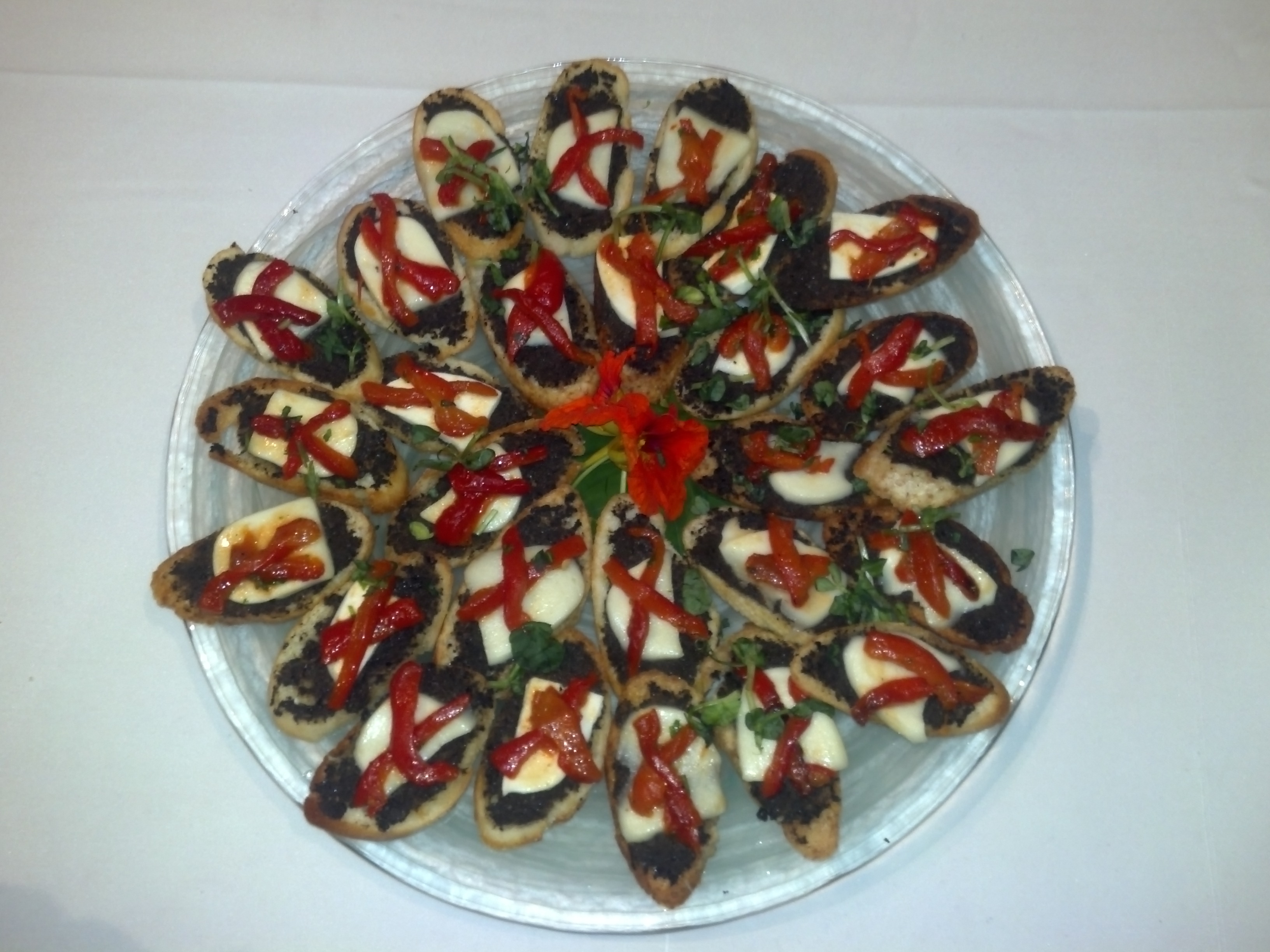
Bordeaux bottles are pictured in a shop in Saint Emilion outside of Bordeaux (photograph by Pascal Le Segretain, Getty Images).

Bordeaux bottles are pictured in a shop in Saint Emilion outside of Bordeaux (photograph by Pascal Le Segretain, Getty Images).

as seen on canada.com

Bordeaux defines wine. To paraphrase the man with the million-dollar palate, “the first duty of wine is to be a Claret, the second is to be a Burgundy.” Bordeaux is the most recognizable ferment on the planet and has become a place of reference for the word château. It’s omnipresence is without parallel in the wine diaspora.

Related – VINTAGES October 27th, 2012 Release

There was a time when a Bordeaux varietal emigration was considered to be a tautological impossibility. The wine world as we know it began to change 40 years ago when inward grapes began to emerge without, having gone mobile, global, in through the out door. In the New World, Bordeaux varietals have been subject to a pop revolution, having been joined by synthesizers, stomping rhythms and heavy, staggered riffs.

Over the past 40 years the grapes of Cabernet Sauvignon, Cabernet Franc, Merlot, Malbec, Petit Verdot, Carmenère, Semillon and Sauvignon Blanc have migrated to all reaches of the earth. Claret, especially, is everywhere.

Here are six Bordeaux-inspired wines to look for this coming weekend.

The grape: Sauvignon Blanc

The history: Though its greatest French success is in the Loire, SB is a workhorse for the dry whites of Bordeaux

The lowdown: Injuries have reduced the Masters champ to a shell of his former golfing self but if his name can pump out under $15 gems like this, success will continue to follow the great lefty

The food match: Crab and Shrimp Cakes, citrus aioli

Mike Weir Sauvignon Blanc 2010 (686972, $14.95) swings from the left side like its brethren on that side of the Gironde. A game built on concentrated gooseberry juice, tangy green fruit and a streak of chippy acidity. Sneaky long and straight down the fairway.  88

The Grapes: Merlot and Cabernet Franc

The history: From the Cotes (Saint Genes) de Castillon on the Right Bank of Bordeaux

The lowdown: Price has remained fixed, despite the hype of the vintage

The food match: Olivada Crostini, fior di latte, roasted peppers

Château De L’Estang 2009 (191551, $18.85) ventures into more expensive Libournais territory with a level of sophistication rarely seen under $20. Crisp, tart berries, licorice without sweetness, pencil and charred meat go to good lengths. Hard to find better value in Bordeaux.  88

The Grapes: Merlot and Cabernet Sauvignon

The history: From the Médoc on the Left Bank of the Gironde River

The lowdown: Merlot less often dominates the Left Bank blends. This wine will open a window into the second wines of the top château where Merlot percentages often increase

The food match: Corn Meal Tartlettes, fig, caramelized onion, benedictin

Château Lestruelle 2009 (295840, $18.95) may show the slightest level of reduction but it’s a beautiful wine. Tar, pencil, tobacco, earth and smoke rally in balance. Ready for the pop and pour anytime.  90

The grape: Merlot

The history: Right Bank Bordeaux principle most famous in Pomerol and St. Emilion

The lowdown: Winemaker Derek Barnett looks to Bordeaux ahead of California for inspiration

The food match: BBQ Beef Brisket Skewers, honey, garlic, bourbon glaze

Lailey Merlot 2010 (591396, $25.00) is focused and linear, with fruit, acid and tannin set up like dominos.  Blackberries come off a touch jammy and the concentration of the vintage shows in colour too. Green and varnish notes are largely diminished in 2010. I’m clapping loudly because Lailey, “you’ve got me on my knees.”  89

The grape: Cabernet Sauvignon

The history: The immortal Claret, cornerstone for all Left Bank Bordeaux reds

The lowdown: One of the top Okanagan Cabs at this price point from a vineyard that gets it

The food match: Delmonico Sirloin Skewers, Cabernet reduction glaze

Township 7 Cabernet Sauvignon 2008 (303735, $26.95) is no Hotel California milkshake, nor Bordeaux neither, but there is big earth and “colitas rising up through the air.” The style is actually more Italianate, “there’s talk on the street, it sounds so familiar.” More akin to IGT Cabernet with sanguine and iron notes. Eagle-eyed with a vision for excellence and Johnny-come-lately tannins. Please welcome this new kid in town90

The grape: Carmenère

The history: Reserved in Bordeaux for blending, it has found a single varietal home in Chile

The lowdown: This Peumo Carm is the best in its class (under $50) and even above that mark in most cases

The food match: Crispy Parmesan Cups, flank steak, basil, cilantro

Concha Y Toro Terrunyo Block 27 Vineyard Selection Carmenère 2009 (562892, $29.95) is fit for a king, regal, rich and refined. The crown jewel of CYT’s line as far as I am concerned, I would choose this bottling over the (Cabernet dominated) Don Melchor any day of the week. Smokey, high on warm graphite with a conscious, languorous progression to excellence.  91

Good to go!