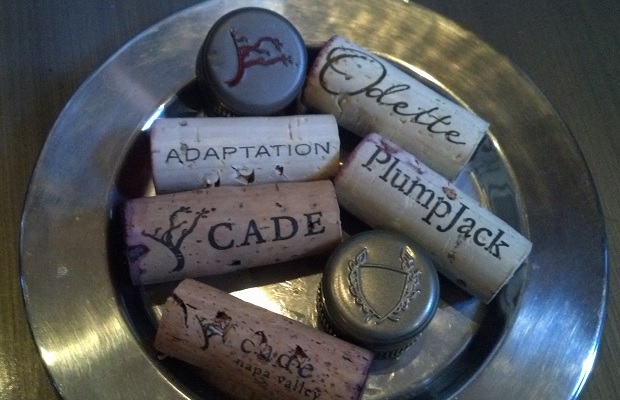
The wineries of Plumpjack, Cade and Odette bring three distinct Napa Valley growing areas together; Oakville, Howell Mountain and the Silverado Trail. When the unified program cascades into town it has a tremendous evangelical effect, proselytizing many. Though well-known and regarded California grape varieties like Chardonnay, Merlot and Syrah are part of the PCO output, that stalwart varietal behemoth called Cabernet Sauvignon stands alone. For this group of Napa wineries, life is a Cabernet.
Plumpjack is the heart and soul of the operation. In 2015 the Oakville outfit will celebrate 20 years of collocating wines from plots of Napa significance. In a universe steeped in the paradox of what was Bordeaux and is now California, Plumpjack makes work in fractive reflection of a vineyard’s take on that paradox. The estate’s 42 acres are nestled between the foothills of the Vaca mountain range and the Napa River flood zone. Cade works with Howell Mountain’s fog on 54 acres above the valley. The extremes of temperature and moisture do for Cade like the Petaluma Gap ushers to Sonoma but with more consistency from vintage to vintage. On Howell Mountain, balance is everything. Odette is the new, wunderkind venture, with Jeff Owens as winemaker, spiraled and sprawled across 54 acres against the Stag’s Leap Palisades knuckled down with all five Bordeaux varietals.
The Napa triumvirate of Plumpjack, Cade and Odette is represented in Ontario by The Vine Agency, a Toronto based wine bureau of authority, rebelliously in focus through the eyes of Rob Groh. Groh is an indefatigable defender of honest juice with a penchant for estate-grown, family procured, characterful wines. He and Derek Kranenborg brought General Manager John Conover to the Distillery District’s Cluny Bistro last month for an intense fixation, mostly and righteously on Cabernet Sauvignon.
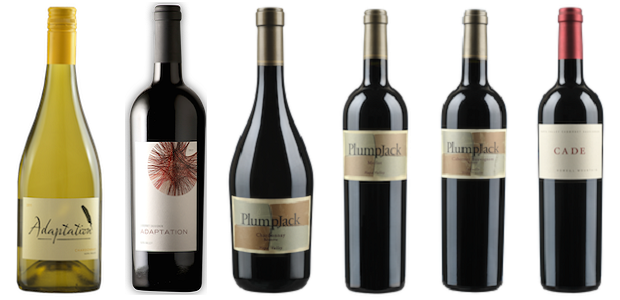
From left to right: Adaptation Chardonnay 2011, Adaptation Cabernet Sauvignon 2012, Plumpjack Chardonnay Reserve 2013, Plumpjack Merlot 2012, Plumpjack Estate Cabernet Sauvignon 2011, Cade Cabernet Sauvignon Howell Mountain 2010
Adaptation Chardonnay 2011, Napa Valley, California (Agent, $32.95) Consignment
A full on crème filling feel is awash in tropical nuance. At once young and tender like hearts of palm and then again like roasted cart nuts and a bonfire on the beach, eventually cooled by palm fronds and prevailing winds. Nothing would suit this better than a suckling pig and a mess of lobsters. Seamless in texture all the way through, finishing with dessert cream and buttery pastry. Tasted October 2014
Plumpjack Chardonnay Reserve 2013, Napa Valley, California (325019, Agent, $67.00) VINTAGES Classics December 2014
Part Carneros and part St. Helena with the former trumping the latter as this is much cooler and linear, with apples in stereo acidity, cogitated in a self-professed “alternative California style.” Definition: zero malolactic fermentation. This is the second such recent animal (along with Gundlach-Bundschu) though the first Napa to do Ontario in such dissident manner. Feathers a tickle up the olfactory passage and bounds in restless bounce within the walls of the jumpy castle. Not quite indelicate but high-toned at the present time. Such a nimbly carved ride in wild yeast serried within an expressive ferment, with a Fernet note and a request for patience. Really long finish. Tasted October 2014
Adaptation Cabernet Sauvignon 2012, Napa Valley, California (353102, $49.95, WineAlign) VINTAGES Release November 8, 2014
As a second wine to Plumpjack, Adaptation offers a similar, if less complex mental state to the dean Cabernet. The stress-free vintage gives very ripe, lush and excelling fruit in the throes of oak and circumstance. Tones are bright, aromas defined, with patent black cherry and Cassis. As noted, oak is not unbeknownst but it infuses the fruit with just a little chalk and from a very fine grain. Somewhat savoury sweet currants bring delicate flavour, along with a mild cure in its marbled flesh. Turns devilish with spice box, a drag on a hand rolled cigar and a slice of rye toast, caramelized on the edges. Will adapt to protein, with banter and good cheer. Tasted October 2014
Cade Cabernet Sauvignon 2011, Napa Valley, California (Agent, 325027, $112.95, WineAlign)
Though prepped by notions of a cooler and later ripening vintage, there is even more savoury, tobacco and cool clime (altitude) aromatics than might have been imagined. This Cade is so very bright in a cherry-plum-pomegranate continuum yet in contrast to a (negatively impacting) sweet-sour-tang drupe. Tends to angles more akin to Tuscan summer savour, like lavender, rosemary, sage, and vanilla. The overall impression to palate is that of a chew of the toffee that might be made by the aromatic combination, or a pull of syrupy tea. In the end there is nothing simple about this thoughtfully crafted Cade. Tasted October 2014
Plumpjack Merlot 2012, Napa Valley, California (Agent, $78.95) Consignment
Fruit from the Oak Knoll Vineyard etched as ripe a Napa Merlot that can or would ever want to be. That it teeters on the scarp, laughing at the greens, partying with the reds and joking with the blacks, this Merlot is quite righteous in quintessential necessity. It screams fruit, picked just at THE moment. At 15.2 per cent the expectation would be intensity, like a moth with a fatal attraction to a book fire but it manages the sun and ripeness with ease. Drink this now, if you can afford it and wait five more to see where it goes. Tasted October 2014
Plumpjack Cabernet Sauvignon Reserve Oakville 2007 (screwcap), Napa Valley, California (Winery)
There’s a dusty aromatic feel here with tar, charcoal and the ardor of wet stones roasting in a hot room. The barrel is still speaking this many years on, the fruit lurking, the wood caressing but with a strong and outstretched hand. Dark berries come out of the waft in full play and when tasted, with tobacco and many candied flowers. Very Paulliac. Full warmth, with a texture of cream, vanilla, layer cake and nuzzled by sweet tannins. In spite of the compass it is approachable (stupidly so) and still worthy of a lazy petering for 10 years forward. Tasted October 2014
Plumpjack Cabernet Sauvignon Reserve Oakville 2007 (cork), Napa Valley, California (Winery)
Less dust but that’s splitting hairs. When making comparisons without the necessity of blind pours the minute distinctions are conjured by plotting and conjecture. Same wood up front, same sweet fruit behind. The texture of cream filled layer cake and some spice with tobacco on the back palate. This is extreme modernity incarnate. It seeks love and love it receives. Tasted October 2014
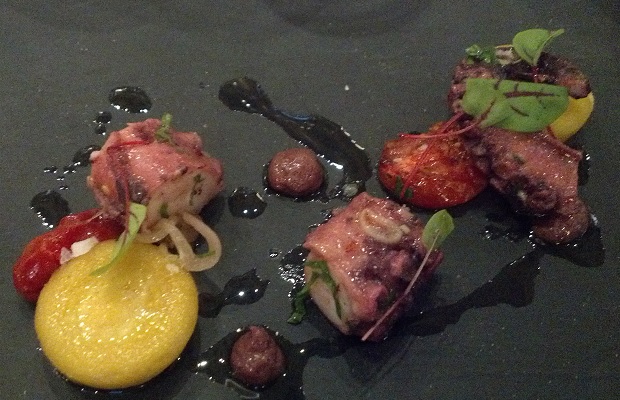
Cluny Bistro Octopus
Plumpjack Estate Cabernet Sauvignon 2011, Oakville, Napa Valley (296483, $140.95, WineAlign) VINTAGES Release November 22, 2014
Just an incredible crack of aromatics mark what seems like 10-plus minutes of thunder Plumpjack; Spring wildflowers, black raspberry, roasted game and crushed steen as if from Gironde-banked, well-drained gravel, sandy stone and clay soils. Ripe, seamless and nonrigid. “I dare you to smell bell pepper in this,” chides General Manager John Conover. Though 2011 caused some Napa concern, Plumpjack will have had none of its woes and whimpers. The Oakville Cabernet “does this thing she calls the jump back Jack, she’s got the heart of a ballerina.” Dried and fresh herbs define its vintage-related nuance and their herbal presence, etched in balance with well-thought out barrels means “my heart’s wood, she’s a carpenter, she’s an angel in the night, what she does is alright.” Really approachable now, though it will go very long and deep. Tasted October 2014 @PlumpJackWinery
Cade Cabernet Sauvignon Howell Mountain 2010 (cork), Napa Valley (325027, $99.95, WineAlign) VINTAGES Release March 15, 2014
As rich and hedonistic as is the animal of Oakville ‘07, this 2010 is the bomb. Pure, clear mountain fruit, unencumbered, free, card-carrying member. Spokesperson and player, cool and collected, conceited, sure, gay, straightforward, then warm and lush again. This has layers and layers of fruit, waves of feigned sweetness, grape tannins interwoven in chains, molecules tumbling over one another. Heartfelt expression creates a massive Howell Mountain impression. Tasted October 2014
From a second bottle tasted from screwcap: Just as the comparison of ’07’s revealed, the similarities are just what the wine expects you to find. Large and full of fruit with sweet, integrated and ingratiating tannins. There is actually another level of open window brightness in the Stelvin, but that same (cork closure) spice and high altitude conceit takes the fruit on honeymoon and sexes the hell out of it. Tasted October 2014
Odette Cabernet Sauvignon Estate Cabernet Stag’s Leap District 2012, Napa Valley (Agent, $145.00) Consignment, February 2015
Here storms in the inaugural vintage, personally carried, delivered and poured by John Conover. The level of purity trumps the rest. The clarity and chaste structure are defined in lines of no blur and no confusion. Full of brisk, red-blooded, indelible ink of a cabaret magician’s brew. Built on axon terminals of mnemonic neurons. Sweetest dewy smells, unreal fruit, remarkable wildflowers – this reminds me of an Ornellaia, an ’01 or and ’11. Essence of just picked berries – strawberry and blackberry, leaves in an instant and an ooze of freshness. Knots of tannin will take 15-20 years to untangle but the fruit is up to every moment of engagement. “It’s only a (Cabernet), old chum. And I love a (Cabernet).”
Sonoma County is so massive a wine region it’s really quite futile to take account of a singular, defining personality. Diversity of wine styles and viticultural approaches are what elucidate Sounty County and its 16 AVA’s (American Viticultural Areas). That much is true but the sheer geographical scope of California’s coastline, inward valleys and mountain vineyards make it all but impossible to distill the entire region into one simplified and understood junction of compounding synchronisms.
Imagine Sonoma in terms of soils and geology the way the Clare Valley and Barossa are making plans to split their vineyards into new sub-regions. “Rather than create a hierarchical system, proponents say the plans are part of a cultural shift in Australia’s wine industry that seeks to make technology in the cellar subservient to geological understanding and vineyard management.” Though erroneously, people talk about Sonoma wines as being the same, as sharing a commonality that allows for overused generalizations.
Sonoman varietals need to be characterized by an interpretation of sundry realities. Pinot Noir loses focus when simply labeled “Sonoma County.” Its actuality is much more specific than that. Dutton Goldfield’s Pinot Noir is a prime example; not exactly Russian River Valley nor Sonoma Coast. If its vineyard and those of countless hundreds of others were pinned down into a more micro-specific locale of soil and geology, justice might be served. Yet through all the talk of fining sub-appellations there is one constant in Sonoma. There is one manifest vital spark that runs through all of its fiords and chords, spuming with an irrepressible puissance. Fog.
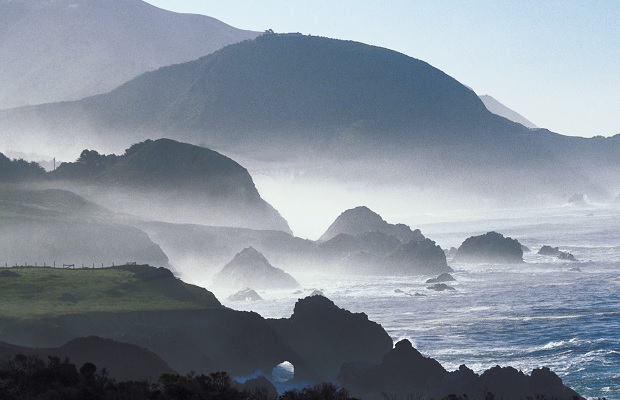
Growing grapes in Sonoma is all about the fog cycle prone zone, warm by day, cool by night. Grapes above the fog line on the mountain ranges and upper reaches have the highest chance of ripening. Wind screams in between the mountains and through the valleys to dry out the vines and protect them from disease. The region lies at the western edge of a hyperbolic, tectonic geology, causing not only earthquakes but also dramatically different soil structures. From out of this super active geology, this volcanic action and this movement of tectonic plates, is a cool climate viticulture along 100 km’s of Pacific Coast frontage.
The cool nights and days that rarely get oppressively hot (above 26-28 degrees celsius) contribute to layers of oceanic fog that creep into Sonoma’s interior valleys through numerous spots like the Petaluma Gap. The Russian River, meandering through a lush valley of vineyards, provides a conduit pulling fog through Healdsburg and into the Alexander Valley, as well as forming its own appellation.
Sonoma native Elizabeth Linhart Veneman, author of Moon Travel Guides, sums up Sonoma’s fog in one fell swoop statement: “Perhaps no aspect of the weather here is more important.” Then there is the most amazing time lapse video shot by Nicole Tostevin of Tostevin Design. Tostevin (not to be and to be confused with Tastevin, which means a taste of a wine and a small, shallow cup or saucer with a reflective surface, traditionally used by winemakers and sommeliers when judging the maturity of wine) was born in San Francisco. She is a 5th Generation Californian living in West Marin; she’s an independent freelance artist, interactive art director and motion graphics animator. The video titled, “Sonoma Morning Fog Dance” was shot using time lapse footage of The Anvil Ranch in the Annapolis Valley in Sonoma County, California.
This time last year, in November 2013, San Francisco Chronicle wine editor Jon Bonné wrote, “today, the state of the art for Pinot Noir – along with Chardonnay and, to some extent, Syrah and even Cabernet – has shifted into the coastal fog lands.” Green Valley is defined by fog. Fog discourse and computerized, animated maps are front and centre on the AVA’s website. “Green Valley is the first place where the fog comes in and the last place where it burns off, making it the coolest, foggiest part of the Russian River Valley.”
Walmart’s Sonoma Fog Area Rug
Sonoma fog can even be defined as a colour, like Siena brick red, or at the very least as a style. At Walmart you can buy a “Sonoma Fog Area Rug.” The mist of California’s coast has even had a couple of cocktails conceived in its name. The Sonoma Fog and Sonoma Fog Vinotini are sweet and sour variations on the Kamikaze or the Cosmopolitan, using Grapefruit and Icewine.
Sonoma’s fog is a stern exertion of soda and salt and when its atomic dipoles get together to dance with ripe grapes and the puffy gaieties of yeast, the syntagmatic rearrangement in the region’s wines are all the merrier and made most remarkably interesting. Fog complicates and makes complex the ferments from Sonoma’s hills and valleys. The second fiddle status to Napa Valley’s hugeness is both ridiculous and absurd. Sonoma Chardonnay and Pinot Noir is already known for its kinetic inquisitiveness but other varieties are also gaining major traction. Cabernet Sauvignon, when ripened upwards of that fog and yet inextricably linked to the miasma, gains a level of synergistically precipitated elaboration that blows Napa out of the water.
WineAlign’s John Szabo MS says Sonoma County “is this big.”
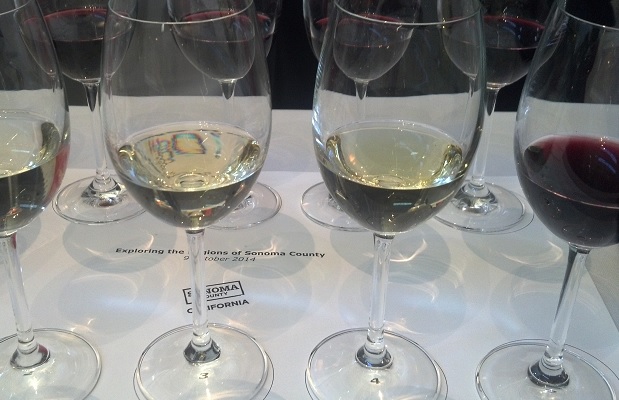
Sonoma Vintners came to Toronto’s ROM for a trade tasting on October 9, 2014. With the ever resourceful moderator John Szabo MS of WineAlign at the microphone and nine winery representatives on hand to speak of their land, Sonoma was defended, savoured and celebrated. Here are notes on the 10 wines presented.
Sonoma County at the ROM
Gloria Ferrer Royal Cuvée 2006, Carneros (Agent, $37.00 – winery)
The brand was developed for the 1987 visit of King Juan Carlos I and Queen Sofia of Spain. Seventeen base wines were blended to create the final (66 per cent Pinot Noir and 34 Chardonnay) cuvée. The Chardonnay is planted on lower sloped with deeper soil and the Pinot nicked from locales higher up where it’s rocky and volcanic. “Oh they’re ready for a tussle.” The immediate query is how can it act so fresh? Aged 7 years, the incongruous to electric power is mind altering, though the reaction in the seminar room is muted and should instead be filled with oohs and ahhs…am I wrong? Intense wine, highly lactic and dancing on tongues. Citrus, ginger, pear and Pinot length from the rockpile. And so it goes. @GloriaFerrer
Quivira Sauvignon Blanc 2013, Dry Creek Valley, Sonoma County (Agent, $15 – winery)
Quivira’s expressive Sauvignon Blanc sells for a song what with its high level of minerality from gravelly soils, typical of Dry Creek Valley. Low acidity, and a quietude of heterocyclic aromatic organic compounds comes aided by a musky, Musqué SB clone. The terroir and the grapes speak for themselves, mostly out of stainless steel, with a bit of neutral oak, plus Acacia barrels, for texture. All in all, there is an elevated pattern of harmony. Biodynamic since 2006, Marketing Director Andrew Figelman notes, “going through biodynamic is like going through an IRS audit.” And worth it in the end. @quivirawinery@KylixWines
La Crema Chardonnay Saralee’s Vineyard 2012, Russian River Valley, Sonoma (Agent, $39 if it were available – winery)
So notable from the get go is this SV Chardonnay’s possessiveness of a muscular rhythm, where oak meets butter. High quality fruit comes from Saralee’s Block 89, a gravelly loam, with less vigorous vines and of course, much fog. Nine months in one third new French oak and a generous, if in check, 13.9 per cent alcohol. A mere 500 cases are produced of this new and titillating brand. Much orchard fruit on the nose, mineral on the palate and a wrapping of lemon curd. Has chalk and grain. La Crema’s (Ontario-born) winemaker Elizabeth Grant-Douglas has teased us. “You can taste it but you can’t buy it,” Just don’t call it creamy. @LaCremaWines@bwwines
Patz & Hall Dutton Ranch Russian River Valley Chardonnay 2012, Sonoma County (Agent, $56, WineAlign)
The Dutton’s have owned the farm for more than a hundred years and have been serious about viticulture for the last 40 or so. The fluffy, porous soils are composed of Goldridge loams, in which moisture runs right through. There is very little if any precipitation making this a sort of “dust bowl” Chardonnay, from five different sites. Distinctive, exotic, old vines give a Muscat-like character, plus mineral and structure. It reminds of a mildly spiced Gingerbread cookie on a dry, cold winter day. The Dutton receives the same elevage treatment as their other 13 Chardonnays; it’s the land that’s different. “We’re allowing these wines to be different by virtue of the terroir,” notes Donald Patz. This is mildly restrained in many ways. A very balanced wine, full of class. @PatzHall@TrialtoON
Dutton Goldfield Pinot Noir 2012, Russian River Valley (Winery, $72)
From the Estate’s 1996 planted Freestone Hill Vineyard, from the middle reach (far southwest corner) of the Russian River Valley, a full-on sunshine of fruit spent 17 recondite months in 55 per cent new oak. The resulting door affronting 13.8 per cent alcohol is a so very, if anoetic welcome mat. The Dutton family were the local pioneers. Says Warren Dutton, “if I can ripen apples, surely I can ripen Chardonnay or Pinot Noir,” Ripe red apples and a savoury candy shell have turned to grapes with aid in influence from the Petaluma Wind Gap, in an accruing of elegance and finesse from high acids and low sugars. If the common feeling is that it’s difficult to ripen fruit in this region, the bar must have been set to beanstalk heights. The Freestone Vineyard (which is almost in the Sonoma Coast appellation) is colder even than Green Valley, with an elevation just above the fog, for even ripening margins. The Duttons thought the vineyard not too cold for Pinot Noir, a thought even more astute than the idea of ripening coconuts in Fiji. This really is unadulterated Pinot, from a process that included (20 per cent) whole berry fermentation. The simple elevage turned into a simple yet complex result, with high toned fruit character, tangy black cherry, really fine grain tannin and acidity. Length is ascending and enveloping, from the hill. @DuttonGoldfield
Buena Vista Pinot Noir 2011, Carneros (304105, $24.95, WineAlign)
Buena Vista was California’s first commercial winery, dating back to 1857. Winemaker and Sonoma native Brian Maloney, formerly of De Loach Vineyards crafted this tight and bracing Pinot Noir from the cooler vintage. The vintage may have been a result of global chaos but the wine is an unmitigated success. From my earlier, August 2014 note: “This is really quite impressive Pinot Noir. Fastidiously judged if bullish fruit having way too much fun, causing varietal envy amongst other price category peers. Clearly fashioned from stocks of quality fruit, providing an environment for the coming together of many red berries and the earth of contiguous vines. All roads lead to a grand palate marked by exotic, spicy and righteous fleet of wood tones. I wonder if I’m in over my head and tell it “your mood is like a circus wheel, you’re changing all the time.” Quite something this MacPinot specimen and though I wonder if it’s a bit too much, it always seems to have an answer and it sure feels fine.” Tasted blind at World Wine Awards of Canada. Last tasted October 2014 @BuenaVistaWines@TandemSelection
Seghesio Zinfandel Rockpile 2011, Sonoma County (Winery, $38)
From three ridgetop vineyards 1,200 feet above Dry Creek Valley; Westphall Ranch, Porcini Hill and Mauritson. Rockpile comes from the late 1880’s, founded by the local Sherrif Tennessee Bishop. Prisoners broke up rocks to make roads and they called it the rock pile. Near extreme elevation matters deeply in this wine, as do three clones, all in the name of layers of flavour. There is a massive waft of florality in Rockpile and a Zinessence that can only be Seghesio. A large yet somehow fog-tempered cool wine, the result of a unique marriage between an altitudinous though indispensable Sonoma climate. Fresh ground spices join the flowers at the hands of winemaker Ted Seghesio. To the palate and texture the wine turns a boisterous phrase, with natural acidity and that structure is defined by tannin and personality. There is heat, a bit of a heavy grain and lifted alcohol though it carries it well. “Veraison thinning is key,” notes Pete Seghesio. Narrowing the harvest window by removing berries from the double sorting table is practiced, along with halting the brix from rising at the hands of hydrating raisins releasing sugars during fermentation. The must is weighed down a touch, even if the practice in fear is just one of splitting hairs, as obviously this has everything Zin needs to be fresh and elastic. “If you miss Zinfandel by five days you have Port,” admits Seghesio. The 2011 got it right. @seghesio
Kunde Family Estate Zinfandel 2012, Sonoma Valley (965921, $24.95, WineAlign)
Rich and utilitarian to a fundamental degree. Nothing but plum delicious, instilled with structure, tannin and early acidity. More spice and less florals by way of red volcanic rock soil, interspersed with a bit of sand and clay. Winemaker Zach Long is very specific about “that harvest moment” so Kunde’s Zinfandel can never be accused of hanging too long or cheating on the wrong side of ripeness. Cold soaks for five days with a low and slow, geek’s native yeast add layers of complexity to the ferment. With a peppering of Petit Sirah in the mix this has more tar, char and less brightness. It actually leans to black cherry, in Pinot-like dulcet tones which, in that particular direction, is a good thing. The only deterrent in the SV ’12 is a waning of finishing acidity at the end. @KundeEstate@imbibersreport
Silver Oak Cabernet Sauvignon 2010, Alexander Valley, Sonoma County (943472, $89.95, WineAlign)
International Sales Manager Vivien Gay introduces the Silver Oak by talking about the Alexander Valley as being the most fully planted AVA in Sonoma. This ’10 is warm and intense, hot to nose, potentially volatile, like a bouquet of hacksaws. Dusty, full-on mulberry fruit is indicative of Merlot but there is none – it’s 100 per cent Cabernet Sauvignon. That teasing and varietal perplexity is an indication of complexity and also American oak, the usage of which began in 1972. Vanilla, coconut, then spiced, round and soft tannins come by way of 50 per cent new and 50 per cent one-year Missouri white barrels. The fruit quivers, like blackberry bushes in sweltering conditions, trying to shake themselves of the heat. Two years in oak plus one in bottle is a loyal and sentient journey, nearly devout and religious. A highly polarizing wine. @SilverOak@HalpernWine
Rodney Strong Vineyard Cabernet Sauvignon Brothers Ridge 2010, Alexander Valley, Sonoma County (Winery, $75)
This is the flagship Cabernet bottling from the winery that bears the ballet dancer’s name. Has layers of sweet Cassis, black cherry and blackberry fruit. Serrated with heat from a warm vineyard, picked at a generous (27.3 brix) and vinified (15.5 per cent alcohol) in a very big style. The Brothers Ridge fruit spent 21 months in 100 per cent French (43 per cent new) oak. The heat transmits through all the layers. So much java is espressed in this big boned Cabernet. Looking, sniffing and tasting the Brothers Ridge gives the impression of “a great big tall fella, about six foot tall. I shivered and I shook, couldn’t do any more.” Despite it’s heavy kinks, the BR is flat out delicious, hedonistic and as decidedly rich as any Cabernet from the Alexander Valley. Perhaps it is a lover, not a fighter. @rsvineyards@ImportWineMAFWM
I arrived at Brock University for the Cool Chardonnay conference on Friday and we began tasting the first of 117 sometime around 11:00 am. On Friday night we convened under the stars st 13th Street Winery for the Barrels and Bonfires event. On Saturday I taxied up the Cave Spring Road runway for an afternoon in the Cave Spring vineyard with the Pennachettis and on Saturday bussed over to Vineland Research and Innovation Centre for the grand Cool Chardonnay dinner.
On Sunday we wrapped up at Ravine Vineyard. In between events, we tasted Chardonnay in the Media Room at White Oaks Resort and Spa. All of this not would not have been possible without the efforts of Wine Country Ontario. I posted 20 or so tasting notes in Monday’s column, scribbles apropos to the events associated with the presented wines.
Here are 50 more tasting notes in 5,000 Godello words, add or subtract a few hundred. If you follow doctor’s orders and take one Chardonnay every hour for 50 hours, this is the result.
I’ve fallen and I can’t get up. @mikedicaro channelling his inner MacGyver to save #i4c14
The long hanging fruit left to develop sugar and richness, the new oak, the eight months rest on the lees. These are all winemaker favourite things, stylistic choices that contribute to a viscous mess of a Chardonnay. A full take has been liberally advantaged from the hot vintage. The alcohol is listed at 13.5 per cent but the wine sweats higher, in a sun-caramelized toast, leaning to oxidative, even bruised and battered orchard fruit territory. As a consequence and in retreat, the acidity dot does follow. The new wood has melded well and good so in terms of texture, the old vines feel right. Tasted July 2014
The Mountainview, despite being a value offering as compared to the Old Vines just seems to be in better temper. There is more mineral on the palate, too. Angles here are less extreme, fruit not as languid or encumbered. The persistence in length seems greater, thanks in most part to freshness, even if the fruit is not quite as fleshy as the OV. Tasted July 2014
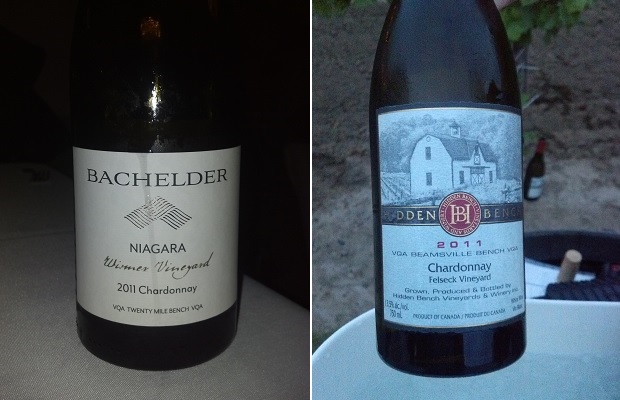
Has Wismer found a cruising altitude? Has this Grand Cru vineyard from a most perplexing 2011 vintage entered the telephone booth in civilian clothes, only to soon emerge as a super hero? Will it sing, “I am, I am Superman and I can do anything?” Wismer has rounded out a bit, at present in a grounded form, but we know it will fly to greater heights and at faster speeds. From my earlier, February 2014 note: “Got game tonight, in auxiliary moxie, magisterial atmosphere and long strides up and down the ice.” Earlier notes: “Increased richesse and oomph and though I continue to hesitate to admit it, Saunders is the (Jackson Browne) elegant bottling in ’11. Wismer the (Warren Zevon) gregarious, mineral character werewolf of Niagara, what with it’s touch of anxiety, fuller texture and “bite down…draw blood!” From my earlier November 2013 note: “From the Wingfield Block within the 20 Mile Bench grand cru vineyard, ’11 Wismer is greener, in apple and sapid behaviour. The tension is palpable, quarryful, querulous, more calciferous. Fruit here is picked at an altitude as high as the lowest part of Flat Rock’s vineyard. Can a spot be pinpointed, anywhere on the peninsula that produces more piercing Chardonnay in 2011 as this Wismer micro-block?” Last Tasted July 2014
Blue Mountain Chardonnay 2012, Okanagan Valley, British Columbia (350108, $23.95, WineAlign)
Juicy and immediately perceived as existing in unwavering balance. The juxtaposition of the stainless steel and (three year-old oak for seven months) barrel aging intertwines fresh and reductive aromas to a common meld. More orchard fruit than I remember, more linear acidity, more expression. Raises the bar and the score. From my earlier, April 2014 note: “Half barrel-aged, this Chardonnay has a silky mouth feel and as much nip as can be assimilated in a single mouthful. Green apple, blanched nuts and a metallic tickle give the sensation of chewing on crumbling stones. There is considerable girth and texture here, spicy folds and tangible tension. The alloy trumps the fruit so consider drinking up now and for another year or two.” Last tasted July 2014
Blue Mountain Chardonnay 2011, Okanagan Valley, British Columbia (350108, $23.95, WineAlign)
A thick, rich and medicated goo this ’11 Blue Mountain Chardonnay. “Mother Nature just brewed it and there’s nothing really to it I know.” A traffic of oak waves in not so much woody but more so simply tannic. The palate is clenched, those tannins angular and ever so slightly bitter, intense and want to be bigger than the fruit would be willing to allow. This is Chardonnay with personality and ability, if just a bit big for its own head. Tasted July 2014
Cave Spring wines
Cave Spring Blanc De Blancs Brut, VQA Niagara Escarpment, Ontario (213983, $29.95, WineAlign)
Today a fine misty Blancs, looking very much the coppery, crisp slice of apple it need be. Slate stone tone directive, grapefruit very much in play. A slice of tart key lime pie. From my earlier May 2014 note: “The freshest style of the #ONfizz B de B flight. Fruit, escarpment bench stone layering, richesse, biscuits and toast are all in. Acidity meets complexity.” From my earlier, December 2012 note: “Sees no malolactic fermentation and sits at the top end of dry (12-14 dosage). Most of the fruit is 2008, despite the NV designation. A soda fountain of argon and nitrogen bunsens forth through clean lines and carries an entire cider house orchard of Spartan apple. This one certainly hints at Champagne-like characteristics, of brioche and toast. The apples never relent.” Last tasted July 2014
The Dolomite is the eponymous CS Chardonnay via 86 per cent Beamsville Bench (Cave Spring Vineyard) and 14 per cent Lincoln Lakeshore . Driven to the licensee market, this is 25 years of winemaking in a nut (or limestone) shell. Made in a fresh, clean, juicy and oh so approachable style, the Dolomite finishes with a slight bitter pith, very obvious citrus zest slant. Remains clean and pure throughout, thanks in large part to the 26 percent more aromatic and very presentable portion of Chardonnay Musqué. Tasted July 2014
Never get out of the bus. On the road to @CaveSpring for Vistas and Vintages and, wait for it…Chardonnay. #i4c14
Cave Spring Estate Bottled Chardonnay Musqué 2011, Cave Spring Vineyard, VQA Beamsville Bench, Niagara Peninsula, Ontario (246579, $15.95, WineAlign)
Musqué is slowly creeping into the Niagara consciousness and into the hearts of winemakers across the peninsula. The aptitude with which it accedes to perfumed heights and respectable complexity without needing excessive coercion makes it both necessary and inviting, especially when a vigneron like Cave Spring is attempting to produce so many levels of quality juice. Chardonnay made easy and without compromise, exemplified here, though the CS take heads straight to the mandarin-clementine stage. Dry, direct, linear, fine and knowing Musqué, not unlike basic yet effective Gruner Veltliner. Tasted July 2014
Cave Spring Estate Chardonnay 2012, Cave Spring Vineyard, VQA Beamsville Bench, Niagara Peninsula, Ontario (256552, $18.95, WineAlign)
The vine age on the Estate runs between 18 and 35 years, a wisdom not to be ignored. Usage of older Hungarian oak lends spice to Chardonnay on-line and always climbing the right and proper varietal tower. From my earlier, May 2014 note: “Terrific balance to the warm and inviting fruit, certainly orchard driven and kissed by the Spring’s obvious mineral slate. Clean, open-knit, ready, willing and able.” Last tasted July 2014
Though currently subtle and reserved, if the Csv were once in a wonky phase, the doors to a new perception are now open. Soaked orchard fruit, the underlay of stone and a surround sound of chalky tenderness leads to length, for time is what this Chardonnay has got. From my earlier, May 2014 note: “Here is a vibrant and wild at heart expression of Bench Grand Cru terroir, the Cave Spring Vineyard. While the first impression may be a warm one it seems (for the vintage) that is because it’s big, boisterous and a bit clumsy in wood right now. The acidity seems buried at times and at others on top. It is also a touch reductive so this will need more years to settle and to play nice. The aromas indicate green apple meets metal pipe, the flavours orchard and salinity by way of limestone minerality. The length is more than admiral and admirable.” Last tasted July 2014
Clois du Bois Calcaire Chardonnay 2011, Russian River Valley, California, USA (421941, $28, WineAlign)
Inserting the calcaire nomenclature into your RRV label is to announce that your Chardonnay is influenced by calcium carbonate and the ancient, long ago decomposed bones of coral and foraminifera. A heady designation for sure and Clos Du Bois backs it up with its sedimentary and chalky textured ’11. There is a fine stone-ground spice and floral lilt, not to mention a demurred wave, like an under water coral and vegetative scene in slow motion. Clean, pure, lively fruit, picked just in time and left to develop low and slow. I can see this Calcaire gaining complexity for 10 plus years and always living up to its name. Tasted July 2014
Creation Chardonnay 2012, WO Walker Bay, South Africa (379297, $29, WineAlign)
A macadam drafts from the Creation drawn from what might provocatively be a pair of gravel pits at the base of the Hemel En Aarde Valley. A soul 2012 brother to the Sumaridge though grounded and layered by the lower slopes. That said it does the heavy lifting, offers up more green apple driven fruit and less tannic mineral activity. A bigger wine but by no means a serf to its wood liege. Another stellar ’12. Tasted July 2014
Creation Chardonnay 2013, WO Walker Bay, South Africa (378554, $32, WineAlign)
Creation brightens in 2013, lifts up to more intense rose flower and potpourri aromas. The intensity follows on the very viscous palate, bringing an increased ocean breeze salinity and scraped rock sensibility. There is a granitic feel that reminds of Rangen Riesling in its own tannic way. In the end the elegance factor takes over and the wine perseveres for a spell. Tasted July 2014
Decelle Villa Savigny Les Beaune Blanc 2012, Ac Burgundy, France (378208, $40.95, WineAlign)
From low-yielding (20 hL/l) vines, like all of Burgundy (wink, wink, nudge, nudge), as opposed to the 40-45 quotient that might be expected from much of ‘lighter’ Savigny Les Beaune, especially for Chardonnay. Aged for 12 months in two year-old, 500l barrels, there is an alluring and rich feel here, though the wine is fresh, inviting and immediately integrated. A more than approachable White Burgundy to relish now and for a quick tour of the village. Tasted July 2014
Decelle Saint Aubin 2012
Decelle Villa Saint Aubin 1er Cru Sur Gamay 2012, Saint Aubin, Burgundy, France (377713, $69, WineAlign)
From the partnership of Olivier Decelle, Pierre-Jean Villa and the confidence of winemaker Jean Lupatelli. The town is Gamay, the variety Chardonnay. Only five barrels (125 cases) were produced by a trio of men with zero interest in speculating over land, fruit or success. Barrel fermentation is key, natural yeast a must and a kinship with Puligny uncanny. Not surprising considering the famed locale is but three kilometres away. This cooler fruit spent 15 months in two year-old barrels and though only bottled five weeks prior to tasting there is nary a shocky note. Such a well-adjusted Gamay. Entrancing and engaging Chardonnay. Tasted July 2014
Domaine Dublère Savigny-Lès-Beaune Aux Vergelesses 1er Cru 2011, AC Burgundy, France (376095, $58.95, WineAlign)
Unusual nose that begins with white candy floss, transforms to gun powder and finishes into the toasty mystic. Unexpectedly warm, buttery and tingling on the tongue, though that is just a faint and fleeting notion. A taste brings out apple-butter terpenes, though once again, that’s just for an instant. While looking for richness their instead ticks intelligence but everything is in foreign tongue shorthand. Balance is key and that it has but ultimately there lacks a certain level of depth. Tasted July 2014
Domaine Dublère Les Terres Blanches Nuits-St.-Georges 1er Cru 2011, AC Burgundy, France (376079, $105, WineAlign)
Big, boisterous and highly terpenic, so steroidal in apples. MdC “Donut wines…a hole in the middle.” A tang as well that just doesn’t sit right, a dog that bites. Bitter, tight, bracing, non repentant for its sins. Don’t really get it. Tasted July 2014
Gérard Bertrand Domaine De L’Aigle Limoux Chardonnay 2012, AC Midi, France (377671, $33.00, WineAlign)
Rich, honeyed and seemingly sweet, not from sugar (3 g/L) but rather the pressing, squeezing and juicing of stones. That limestone tannin is a trick only grape must and its parent vines know, wondrous and inexplicable. Great body and mouthfeel come from this baby Aigle, a Chardonnay with locally incomparable structure, if not quite the elastic length and girth of the Bertrand Royal. Exceptional quality from the Midi. Tasted July 2014
Gérard Bertrand Aigle Royal Chardonnay 2012, AP Limoux, Midi, France (377689, $75.00)
Anxiety in high caste mineral, in ingot and in southern French platinum rock. Full textured beauty of attitude and high-slope altitude, with formidable weight, smouldering, perfumed toast and exceptional texture. Full in every way, taking every liberty in the name of equality, and quality. A who knew such bounds could be leaped by the warmth of the place. Tasted July 2014
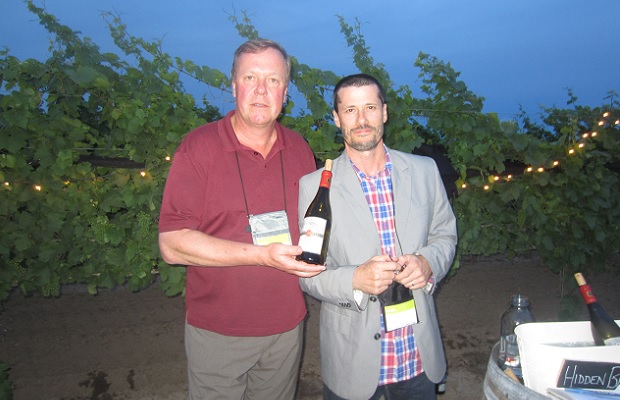
Yet rigid in its youth, the wood is not yet settled. Bottled in September of 2012, the ’12 will need every day of its first year to be ready, willing and able to please upon release. From my earlier, May 2014 note: “Always aromatically embossed and texturally creamy, the Estate Chardonnay finds a way to elevate its game with each passing vintage. The uplifting elegance factor acquiesces the poise needed to battle the effects of ultra-ripe fruit out of a warm vintage. In ’12 the middle ground exchanges more pleasantries though the finale speaks in terse, toasted nut and piquant daikon terms. Not harshly or witchy, mind you, but effectively and within reason of the season. When you look in the window at Harald (proprietor Thiel) and Marlize’s (winemaker Beyers) Chardonnay, “you’ve got to pick up every stitch.” Last tasted July 2014
Bottled in March of 2014, the Felseck draws fruit from vines planted in 1988. Proprietor Harald Thiel notes a three-pronged picking regimen, early, mid and late, vinified separately and brought together to bring layering and tapestry out of this extraordinary vineyard and into the finished wine. The many folds and clay-silt soil provide a tannic structure dichotomously “champlant” in style, pastoral even, subdued and ethereal. The nerve in this Chardonnay comes by way of the active limestone, highest in Felseck as compared to any other HB block. This may be the most direct Chardonnay in all of Niagara, the house of permanent cards, the as of yet not witnessed balance achieved. This is the check that affirms a stand and a step towards a legacy. Tasted twice, July 2014
Godello and Jeremy Dineen of Josef Chromy Wines
Josef Chromy Chardonnay ‘Pepik’ 2012, Tasmania, Australia (378240, $22)
Chardonnay of stainless steel from Chromy’s estate vineyard at Relbia in northern Tasmania, cool, savoury green, spirited and grinding in tight, sharp angles. From what winemaker Jeremy Dineen describes as “a pungent must,” the Pepik is entry-level and anything but. There is a gentle, stable and clarified zesty personality in ‘er, fragrant, snappy and poignant. Versatile for a walkabout with many a pre-dinner flavour. Tasted July 2014
Josef Chromy Chardonnay 2013, Tasmania, Australia (378232, $32, WineAlign)
In a world where 30+ degrees celsius is a veritable anomaly and the maritime winds spray salt to and fro, there can be little argument against the celebration of (winemaker) Jeremy Dineen’s Chardonnay at a cool climate conference. Sulphured early and housed in one-third new French oak, his lees were stirred often and always. Highly textured, he is succinctly clean, cutting and crunchy with an underlying chalky rationale and smokey, tonic toast. The Chromy ’13 is a demanding croon that must creep up to get a hold of you. Though you tell him “you treat me badly, I love you madly,” there is a miracle in his non-malolactic ways. Tasted July 2014
Kistler Les Noisetiers 2012, Sonoma Coast, California (251223, $80, WineAlign)
Long distance runner built for endurance, a cool customer able to withstand the heat from a season’s relentless, though moderate, gentle sun, from start to finish. No shortage of ripe fruit and certainly not wanting for the micro-oxygenated slow release of a prized barrel. This might be the two-bit Kistler bottling but it offers up exemplary Sonoma fruit with the temperament and conceit of high caste Burgundy. The style is culled from two poles and pulls in two directions. At once sharp and piquant, then golden and in mirth. All in all it’s exactly what should be wanted for the buyer who wants what it has to give. Tasted three times, July 2014
Kistler Stone Flat Vineyard 2012, Carneros, California (agent, $80, WineAlign)
The Carneros vineyard of Tuscan clay is filled with giant river stones. It consequently offers up more of a stone groove, but also an everglade humidity, a lemony spray and a rub of savoury, evergreen. The palate brings a crisp, cool, mountain morning, a rushing stream of fresh water and the cool mountain air. There is a piercing bite on the mid-palate, a peppery spice that lingers than releases for a full wash, a cleanse in mineral. Amazing balance in tightrope tension and length to a horizon out of sight. Great wine. Finds its elegance and its cool without any effort, like the power lift of a ballet dancer. Tasted three times, July 2014
Kistler Vine Hill Vineyard 2011, Sonoma Coast, California (agent, $89.95, WineAlign)
This is from the vineyard in surround of Kistler’s home base and from soil anything but flattering to the host vines. Sandy, deficient in nutrients, “like beach sand,” says Geoff Labitzke, MW, that seemingly has no bottom. Irrigational tubing is employed and perhaps some nitrogen in mid-summer but as per the Kistler stratagem, the VH is dry-farmed. This has the most golden sunshine of the three Chardonnays tasted at #i4C14. It’s brighter, with linear acidity and a very toasty, nutty feel. Sitting with it a while is necessary to appreciate its charm and gathering power. Tasted July 2014
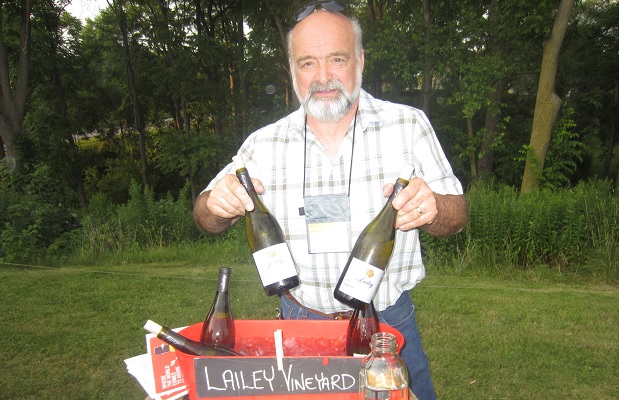
Derek Barnett, Lailey Vineyard at 13th Street Winery
From a vineyard planted in 2004 on the east end of the Lailey property, right next to the river. The red clay soil, the cooler nights and the longer growing season produced just 70 cases of this highly singular and stupidly inexpensive Niagara Chardonnay. This is a vineyard transformed over 10 years from a brickyard and cherry tree farm, now rich yet elegant in simultaneous motion, not to mention seamless in transition, within and without. Brother Derek Barnett is generously giving this rare, small lot Chardonnay away, all the while “talking, about the space between us all…and life flows on,” along the Niagara River. Tasted July 2014
Lailey Vineyard Chardonnay Old Vines 2012, VQA Niagara River, Niagara Peninsula (Winery, $40.20, WineAlign)
The old Vines were planted between 1974 and 1978, ancient by Niagara standards. Only gnarly old, gristle veteran dudes like these could handle the beastly burden of 16 months in 50 per cent new French oak, not to mention all the while sitting on top of the lees heap. It may ask you “am I hard enough, am I rough enough, am I rich enough?” You may tell it “you’re tropical, you’re subtle, you’re sweet yet cool in mouthfeel, you’re elegant and you’re “not too blind to see,” but you carry that oak with ease. Tasted July 2014
Essentially bone-dry, kissed by a minor peck of new oak and consistently established, here from fruit out of Estate, Moira and (10 per cent) Vinemount Ridge vineyards. The latter adds flinty complexity by way of an intangible, aeriform note, magnified by the warmth of the vintage. The humidity is very minor, thanks to prudent early (September 1 to 12) picking of Beamsville Bench grapes in ever-present rooted stability. Here is hospitable Chardonnay gaining traction and interest with each passing vintage, showcasing the work of winemaker Shiraz Mottiar and as a portal to the investigations of Small Lot, Moira, Mottiar and Cat on the Bench. Tasted July 2014
In admiral control this summer, rich in stone-churned butter and in residence of a right honourable place. From my earlier, April 2014 note: “Gamay may be winemaker Shiraz Mottiar’s decisive resource but Chardonnay is his thing. The Moira’s ranks as one of Niagara’s best, vintage in, vintage out and this Mottiar, from the winemaker’s home vineyard is the trump card. This Malivoire special agent is set in 2 – 5 year old 300 L French oak hogsheads and aged on the lees in barrel for 10 months. The result? Texture. With the use, or lack thereof in new oak, Mottiar’s Chardonnay becomes a study in compages, with strong abilities and the accents of green orchard fruit and a faint sensation of blanched nut. Nothing toasty mind you because it’s all about density and girth; a Shiraz thing. I find his Chardonnay is all about texture.” Last tasted July 2014
Manciat-Poncet Crémant de Bourgogne Brut NV, Burgundy, France (378653, $28)
A tragically gingered peach, a candied rhinestone, a ready to bake hip cake for the easy oven. Safe bubbles here, “pale as a light bulb hanging on a wire, sucking up to someone just to stoke the fire,” from a distance, with simplicity and caution. Like getting caught in New Orleans with a sinking feeling. Tasted July 2014
Marie-Pierre Manciat Les Morizottes Mâcon 2012, Burgundy, France (376137, $27, WineAlign)
There are some unhinged and unusual aromas in this Mâcon, of carbon copies, a stainless tank and Musa. Pears too, pinballing and ready for poaching. Faux or perhaps near-mineral texture, slightly saline, with flint and slate. The complexities are boundless and confounding. Highly expressive but the expressions are not all created equal. Tasted July 2014
Marie-Pierre Manciat Les Petites Bruyères Pouilly-Fuissé 2012, Burgundy, France (376129, $39, WineAlign)
There is a deep rust, faded jeans vine wisdom in the Pouilly-Fuissé. It steps out with more richness and tension than the Mâcon. Balanced energy and stretched length. Tasted July 2014
Marimar Estate La Masía Don Miguel Vineyard Chardonnay 2010, Russian River Valley, Sonoma, (331918, $49, WineAlign)
First notes are high in the hills of the tropics, in pineapple, mango and papaya. A veritable smoothie of very ripe, creamy fruit and though it carries a 14 per cent mark in alcohol there rests a jury of acceptable behaviour. Finesse has won the argument, leaving bits of white pepper, reduction and vineyard funk behind. There is a persistence that belies the price on this judiciously-oaked Chardonnay, complete with its avocation of high-powered notations in an expensive suit. Tasted July 2014
The Chardonnay of #i4c14
Maycas Del Limarì Sumaq Chardonnay 2013, Limari Valley, Chile (Agent, $15.00, WineAlign)
This unoaked Chilean is fresh yet herbal, though mildly so and lime-accented, but certainly not spiked in any Tequila or other southern hemisphere distilled spirit from a large seeping plant kind of way. Fine and subtle actually, so not overtly cool or lifted by altitude influenced climatic acidity. Peacefully, Pacifically tempered Chardonnay. Tasted July 2014
Maycas Del Limarí Reserva Especial Chardonnay 2010, Limarí Valley, Chile (162040, $20.00, WineAlign)
This unoaked Chilean is fresh yet herbal, though mildly so and lime-accented, but certainly not spiked in any Tequila or other southern hemisphere distilled spirit from a large seeping plant kind of way. Fine and subtle actually, so not overtly cool or lifted by altitude influenced climatic acidity. Peacefully, Pacifically tempered Chardonnay. Tasted July 2014
Maycas Del Limarì Quebrada Seca Chardonnay 2011, Limari Valley, Chile
Known as the “dry cliff” this is from a southern parcel (Pinot Noir comes from the north), a calcium carbonate plot that leads to this stone-driven Chardonnay. Nearly 200 metres above sea level, the altitude brings more cool to this bottling, more ventilated salinity, an almost wet-air, asthmatic sense of breathing. Really defined by oyster shell, this has more fruit than the value-based offerings, increased density, more citrus, both dried and condensed. A lot going on here, quite unique and worth a good look. Tasted July 2014
Niagara College Teaching Winery Balance Barrel Fermented Chardonnay Donald Ziraldo Vineyard 2011, VQA Niagara Peninsula, Ontario ($19.15, WineAlign)
From the St. David’s Bench, this avant-garde label saw 11 months in French and American barriques, along with regular lees stirring. Certainly hovering and circulating in wide-ranging textural graces. A whole lotta love and learning is in this bottle; it’s round and golden with a high-spirited tang. At once typical and contrived, it’s also reeking and soaking like a sponge. Many an orchard makes an aromatic class audit. A high-toned citrus exam demands attention and focus. The wood is obvious but it too will learn. All in all this is cool Chardonnay, well-made and ready for the world. Tasted July 2014
Winemaker Martin Werner’s 2012 may just be the hardest working Chardonnay in showbiz and in Niagara. Winnowed from Estate (St. David’s Bench) and (Niagara) river fruit, there lurks within, a 20-30 percent perfumed compression of Chardonnay Musqué. The additive is a tonic fanned from the wine’s olfactic communicative nerve centre, adding tree fruit notes no more serious than should be gathered. Werner picked real early, like five weeks ahead (first of September) and the resulting noisome perfume makes for some funk. “It’s these little things, they can pull you under,” but they blow away and settle into a rich, viscous Chardonnay for the palate to collect, contain and command. “Oh, oh, but sweetness follows.” This Ravine works automatically, of the people, for the people. Tasted July 2014
From 100 per cent hillside Estate fruit, a limestone and slate parcel in St. David’s on the Niagara Escarpment. This is fruit from low yields that spent 24 months of unabashed pleasure in French oak. Though highly concentrated and bent in an oxygenated stratosphere, the reduction is in elevated citrus aromas and piercing mineral flavours. Bigger than many, than your head, than a yottabyte. The complex notations are elevated in so many ways. Strung tighter than a leer kite, the heterocyclic aromatic organic compounds are years away from settling so put this Ravine away. Come back next decade to see where it’s at. Tasted July 2014
Rex Hill Dijon Clone Chardonnay 2011, Willamette Valley, Oregon (378455, $46.00, WineAlign)
Palate cleansing Chardonnay, an attribute that can’t be stressed or praised enough when tasting 117 renditions in a span of 50 hours. The Rex Hill is lithe, crisp and pure, a wine with a sense of wisdom. He is a subtle act of wine generosity. He smells like clove-scented, fine-casted ingot and is full of health increasing salinity and minerality. A wine of direct discovery, simple professionalism, restraint and impeccable balance. There is a green apple flavour, gently pressed and juiced. There is a texture from quarry rocks, the creamed kind, slightly piquant, merely dusted. The Rex is a very fine, calm representative with a sure sense of place. Tasted July 2014
Southbrook Vineyards Whimsy! “Richness” Chardonnay 2012, VQA Niagara On The Lake, Ontario (winery, $34.95, WineAlign)
This special, specific and idiosyncratic batch by winemaker Ann Sperling is a whirlwind of terpene, wood and lees, all in a whorl. Though all three demanding notions make a play to bully the fruit, this is no ordinary fruit and touched by no passive hands. Complex and textured like angelic cake, there is a distinct aroma coming from the righteous barrel, a high octane, tropical nuance, in smouldering pineapple, creamy mango and mangosteen. This Chardonnay spits the vintage heat out through the gap in its front teeth, goes all tense and nervous, does not relax. There is chalk and stone, like slate, like Calcaire Riesling, all in at 14.3 per cent abv. An all out intense effort, a wow bit of Niagara, but what exactly is this monster? The amazing thing is that there is just a ton of fruit so you can let this settle down for 10 years or more. As BMS notes, “it’s raw and unleashed.” Tasted July 2014
Has integrated nicely though certainly persists as a big, lush Chardonnay. If there were splinters or sinewy bits they have melted away. From my earlier, May 2014 note: “The Poetica underwhelms at the present time, or perhaps hides in her youth. She’s a calm, buttery, mildly toasted, supportive softie and more accessible than her Sperling west coast sistren. Like a cool Chardonnay soffit hiding beneath a warm bench, the Poetica speaks not for the vintage but more for the current vineyard, a warm and hip spot in the Four Mile Creek appellation. The site remains (at least to me) understood but the unctuous aspect in texture and gathering sweetness with time in the glass will realize a richesse yet unseen. Poetica’s refrain is like “wind on the weathervane,” her tragically subdued fruit quiet, but able to travel long. Time will be the reveal, so be patient.” Last tasted July 2014
Sumaridge Chardonnay 2012, Wo Upper Hemel En Aarde Valley, South Africa (378760, $35, WineAlign)
In direct antithesis to what was a more than commendable 2011, this follow-up takes the Sumaridge illustrious Cru torch and raises the Hemel En Arde bar to the most complex portion of the ridge. Proprietor Holly Bellingham notes the near perfect vintage, with rain falling gracefully and slowly throughout, unlike the heavy shelling just before the 2011 harvest. Here the seamless connections of ocean winds, granite give and beatific vines mean this ’12 is super bad. Sunshine intensity, cool godfather of soul moves and dancing nerve are all as one. This is like a mineral sponge, sopping up fresh fruit and the slightest notion of toasted nuts. “Gimme, gimme, gimme, gimme, gimme, gimme, gimme. Heeeeey, (scream). Uh, come on!” How will Sumaridge top this? Tasted July 2014
Sumaridge Chardonnay 2011, Wo Upper Hemel En Aarde Valley, South Africa (378760, $35, WineAlign)
Though it lacks the elegance of the astonishing 2012, there is a freshness and a vigor that still defines the Valley. The aromatics create an expectation despite the heavy rains at harvest, a deluge that had a thinning effect on the fruit. The kick or punch in the pith caused neither dilution nor disease and this ’11 rebounded to carry the fire. From my earlier, May 2014 note: “Though it would be naïve to think every Chardonnay produced out of the Hemel En Aarde Valley is the stuff of grand cru, recent examples have done nothing but impress. Sumaridge joins Hamilton Russell and Creation on the Walker Bay dream team. Ocean breeze-cooled slopes and deprived soils of decomposed granite loam with quartzite manage rich fruit with cool ease. In this 2011 a most excellent trifecta of dryness (1.7 g/L), acidity (6.9 g/L) and PH (3.45) brings together texture and tannin. Though seemingly sweet it is anything but a cloying example. Buttery but mild in toast, quite piercing yet tempered by an herbal quality, not warm or balmy, but inexorably herbal. Schematically waxy, splashed by lemon and piqued by zest.” Last tasted July 2014
Talley Vineyards Chardonnay 2012, Arroyo Grande Valley, California, USA (agent, $41.95, WineAlign)
Tasted with proprietor Brian Talley at Cave Spring Vineyard in a setting to do justice for a wine with an irrigated gully of heart. Barrel fermented, using wild yeasts and aged for 10 months in French oak, 20 per cent of it new. Pours thick, rich and viscous into the glass with a reality that is pure, light and elegant. This is so much cooler in direction than could be perceived or believed. “I want to make wine that tastes like our grapes and not someone else’s barrels,” insists Talley. That philosophy equates to a pansophy of orange citrus and the misty spray of its scored skin, so aromatic, so in blossom, so floral. Not sure there has been nosed such succulence in restraint from Arroyo, from California or from anywhere Chardonnay grows in warm climes. Tasted July 2014
Talley Vineyards Rincon Vineyard Chardonnay 2012, Arroyo Grande Valley, California, USA (winery, $61.95, WineAlign)
The Rincon Block was planted in 1984, the “home” vineyard next to the winery. Tight, bracing, savoury and bound by a tannic, mineral extraction. Only 17 barrels (just under 500 cases) were produced of this 100 per cent (14 months in 20 per cent new oak) barrel fermented Chardonnay marked by wow intensity. “Jump back, what’s that sound, here she comes, full blast and top down.” Wailin’ Halen Chardonnay trampled underfoot, what can you say, like chanting “Panama ah-oh-oh-oh-oh.” Talley’s Rincon ’12 never relents, stays on the throttle, puts the pedal to the metal and speeds the van towards a persistent, consistent finish. Bring on the Digby, Nova Scotia scallops, from coast to coast. Tasted July 2014
Tantalus Chardonnay 2012, VQA Okanagan Valley, British Columbia (VINTAGES 378821, $42, BC VQA, 114884, $29.90, WineAlign)
The immediacy of this Chardonnay is felt, in perfumed poise, in palate roundness, in a velvet wrap of texture. A finely balanced and over-achieving elegance from out of a single vineyard, specifically “block 6,” which sits above a gravel bed, on an eastern aspect in South East Kelowna. A mild toast, a blanch of nuts and creamy citrus coagulate to create a transcendent B.C. Chardonnay experience, one that seems like it could be eaten with a spoon. “It peels off and ties that bind me,” and after tasting I saw the light. Chardonnay with an unconscious redirection of feelings, a transference unique and welcome. Tasted July 2014
Thelema Mountain Blanc de Blancs 1994, WO Stellenbosch, South Africa (376111, $28)
Méthode Cap Classique fine bubbles still motivated and in blender motion that if fading can be excused with a thousand pardons. With no more than 2 g/L of residual sugar it’s an Extra Brut style that has survived two decades. Far eastern spices and orange melon that remain cool, juicy and unfermented give it youthful aromas. One of those hard to believe 20 year-old success stories that will continue to give to 25. Wild yeast and grated wasabi square off the peg in this Stellenbosch ringer for vintage Champagne. Buy one now at VINTAGES Shop Online, bring it to a party, be the coolest Chardonnay cat around. Tasted July 2014
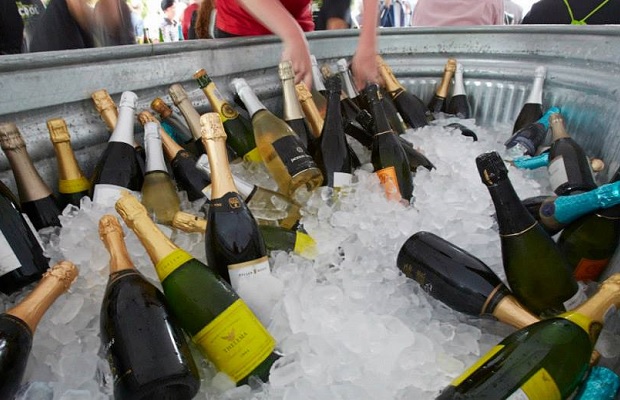
A selection of international and Ontario sparkling wines on ice. Photo (c) Steven Elphick & Associates
Tinhorn Creek Chardonnay 2012, Okanagan Valley, British Columbia (20431, $23, WineAlign)
Fruit divides time and space from the (sandy, Black Sage) Diamondback Vineyard and the (sandy gravel, Golden Mile) Tinhorn Creek Vineyard. So what? So let’s dance to Andrew Moon and Sandra Oldfield’s fresh recognisance mission, to offer up a slight oak and stirred lees textural sui generis, but mostly the intent to keep things crisp and real. The sugar and PH are low, the acids medium to high. Overall there generates a cool orchard fruit blooming breeze and a south-west feeling of ease. Bring it on. Tasted July 2014
Drinking, by definition, includes consuming and that would obviously be counterproductive to the wine evaluation process. So, wine writers and critics spit for their living. Why would anyone buy a wine on the recommendation from someone who spit it into a bucket? Good question.
Consider another question. How many wine critics does it take to change a light bulb? If the answer were 10, that would be because it would take one to hold the bulb and nine to spin the room. Or the answer might be three. One to decant, taste and spit, and two to take him to the hospital before he bleeds to death. Is the joke and are these responses indicative of how the general public feels about wine criticism? If yes, then the wine consumer’s attitude towards the relevance of wine competitions and the doling out of awards may not exactly be positive and indiscriminate.
A bit of insight for you into the modus vivendi of those who judge wine. Chew over this. A wine is submitted to a concours, tasted several times by a minimum of three critics, all of whom are kept blind as to the clues regarding producer, appellation, region and country. These wine professionals are chosen by and with their peers to judge, sniff, sip, spit and repeat. They consider, contemplate and formulate on the spot tasting notes and then discuss the attributes with a panel before passing final judgement. Seems like a perfectly and indisputably sound and reasonable approach, don’t you think? But what about the spitting part?
Whatever you might think about the use of such an exercise to determine the merit of a bottle of wine, competitions, when run and operated with unbiased integrity, do in fact empower justice to the entrants. Poke fun at the wine critic if you must, felicity knows they can take it, but know their modus operandi is just the same as yours. To seek out the most worthy and best value wines available in their market. The wine critic is self-taught, to internalize the intricacies and idiosyncrasies of a wine without swallowing it. It takes focus and years of practice to figure it out.
PHOTO: WineAlign.com WineAlign World Wine Awards of Canada 2013
The WineAlign World Wine Awards of Canada (WWAC) held in September featured a week-long evaluation process for nearly 1,000 wines (996 to be exact) from around the world. Assembled and organized by an army of volunteers, the Herculean task was orchestrated by one of North America’s most respected wine critics and WineAlign Partner Anthony Gismondi, aka The Spitter. The Vancouver Sun columnist was also responsible for the immeasurable and exacting task of overseeing the pouring and the critical timing of delivery to the judges. Not to mention piles upon piles of tasting notes and scores.
WineAlign WWAC13 Wine Room
The WWAC is open to both imported and domestic wines for sale in Canada, provided the wine sells for less than $50 somewhere in the country. This affords an unparalleled opportunity for all wines sold in Canada to show that they can compete in quality and value with wines from anywhere in the world. Wines are tasted in three price categories based on the lowest selling price in Canada. Less than $15, from $15 to $25 and from $25 to $50. As a consequence WWAC is really three competitions in one with wines being tasted alongside their peers by price and with awards given by price category.
WineAlign WWAC13 judges John Szabo, Julian Hitner and Sara d’Amato
Judges sit three or four together at a table, taste solo through flights of like varieties, procure notes and assign individual scores. Each flight of (three to 12) wines is then discussed, argued, debated and an ultimate meeting of the vinous minds either pushes a wine through to the next round or relegates it to the discard heap. This method of awarding by committee ensures that good wines receive their due blessings and flawed specimens are put in their rightful place.Here’s the kicker. Aside from knowing the price range and specific variety or varieties in a blend, the judges taste all the wines blind. Continent, country, region, appellation and vineyard are not part of the equation. This ensures the most equitable results.
So, fresh off today’s presses, here are the results from WWAC13, presented by WineAlign. Special thanks go out to Head Wineaux, Bryan McCaw, along with Steve Thurlow, Carol Ann Jessiman and Sarah Goddard.
Each judge was asked to write reviews on a specific cross-section of wines they were a part of assessing during the competition. Here are my notes on my 28 of them, across a wide range of categories.
From left: Gustave Lorentz Cuvee Amethyste Riesling 2011, Caliterra Sauvignon Blanc Reserva 2013, Yealands Sauvignon Blanc 2012, and De Vine Vineyards Vrm 2011
Peppery, perspiring, basal, nasal fruit. Propellant driven with a bite of crisp golden delicious apple and green goddess acidity. At under $15 this achieves Trocken success. Unshakable, abecedarian if not the most formidable Riesling. 88 @AmethystWineInc@drinkAlsace
Pressed and packed with tropical fruit, as if a roll-up, in liquid form. Thoughts head east and south but the textural, angular and vertical intensity peels back that inclination. The extended play and fruit replay is a study in delineated Riesling depth. There must be some history behind the bottle. 87 @drloosenwines@Select_Wines
Drawn to the off-dry resonance which is both tropical and florid in citrus maxima. That pomello repeats to taste but it falls under a balmy and herbal spell, in a relaxed way. A valley’s elongated attitude, at the foot of a mountain and architecturally sound. Re-mastered, utilitarian Riesling. 85 @Jackson_Triggs
Deft, lissome touch of oak. Subtle, determined orchard fruit, namely pear, barely kissed by a rose and the barrel. Exiguous yet meaningful and pragmatic aromatics. Bright Chardonnay so “a light hits the gloom on the grey.” Seals the deal astir with tang on the snappy finish. 88
PHOTO: Michael Godel White wine flight at the WineAlign WWAC13
Great show savvy, really great show. Outright fast flint, white pepper, citrus and fresh herbs. Luscious texture, convincing up the middle and goes deeper than many. Grapey and succulent. Clean, concise winemaking. 90 @Caliterra@imbibersreport
Equatorial and profuse but not over the top. Quick, painless slice of jalapeno, a sweet heat capsicum moment. Sauvignon Blanc with a drop of Sriracha, spritz of lime and pinch of salt on ripe tree fruit, like papaya and mango. Add in golden pineapple and kumquat for good salad measure. Nearly great value, if only it were graced with a bit more finesse. 88 @yealands@TrialtoON
Stoic initially, with acute notes of gooseberry, grass and blanched legume. Turns tropical and balmy with a sense of orange marmalade. Confounding in that it could be South Island or Sancerre, but being subjected to such toe tipping is this Sauvignon Blanc’s calling card. 88 @MariscoWine
Commodious Sauvignon Blanc, candid, candied and calcified. Tropical from what must be an intense vintage, whiffing dewy teak gold plum and prickly pear. Full-bodied and blessed with a long aftertaste. A slice of southern hemisphere confiture on toast. 88 @kimcrawfordwine
A Rhône-ish boy with a tithe of Marsanne in support of equal 45′s of Roussane and Viognier. Mutters in rhyme, beating the drum slowly, in a subtle white flower, pretty print dress. Nothing muddy about the waters this graceful swimmer treads. Sidled by just enough rigor to replay in refrain, “I’m a natural born lovers” wine. Egalitarian revolutions per minute. 90 @deVineVineyards
A group of seven grapes, riding on a carousel. A who’s who of white varieties going “round and round and round and round with you. Up, down, up, down, up, down, too.” Elegant and in control, like the stationary horses, this endearing and human blend. Nectarine and longan make appearances in the by committee, ensemble performance. 88 @Road13Vineyards
A 50/50 split of Riesling and Pinot Gris, please do not adjust your set, go head to head, mano a mano to duke it out, agree to disagree and ultimately settle to blend and accept the results. Together they procure Époisses and worn socks. On the bright side there is orange zest and fresh squeezed grapefruit. “So they’ve got that going for them, which is nice.” Tangy and pithy finish. Abbreviated and horizontal. 85 @AlsaceWines
From left: Jackson Triggs Merlot Gold Series 2008, Road 13 Syrah Malbec 2011, Creation Syrah Grenache 2011, and Cassiano Amarone Della Valpolicella 2008
Less calamitous fruit compression in relation to the rest of the flight. Blueberry pie and a concord of baking spices predominate, along with unsettling though bracketing elevated levels of tannin and acidity. Wild and whacking lack of overall integration but possessive of many positive moving parts. 87
A convection of raspberry jam and forest floor verdant wildness. Notable in not being nearly as wood-driven in relation to peers in adjacent stemware. An inelasticity and diaphanous texture suggests Syrah. Simpatico Shiraz. 87 @MissionHillWine
Initial thoughts lean towards flattery, in finesse and generosity. Rhône-like rocks and stones trot out the red fruit, spiked by citrus (ripe orange, juiced and reduced). Structured in oxymoronic astringent elegance. Decent to medium length. 87
Stands apart from the under $15 Red Blend flight as an axiomatic, soft conifer in a forest of hardwoods. I was admittedly fooled into thinking Niagara when it really calls the Okanagan Valley home. Semi-hemi-ripe, red stone fruit soused in halogen, spiced by Ween’s seventh album and Korean red pepper. “Even If you don’t” like the alternative character you will be charmed by its friendly production and likable wine/musicianship. 87 @SumacRidgeWine
A copacetic Grenache and Syrah Côtes du Rhône blend that just seems to exist in an Iberian state of mind. It’s the modernity speaking, in deep mauve, lilaceous essence and a palate clotted with poached tomato. Stops adroitly short of cooked or stewed fruit character. Juicy fruit from presumably young vines. Quick yet resplendent. 87 @LouisBernard84@AuthenticWine
Malbec and Venetian Corvina in Ripasso’s Argentinian hands. Raising, hair-triggering, eye-opening aromas in acerbic Daikon intensity. Black bean paste and cedar, earth and char. The flavours echo and further Ripasso’s absorptive ability. Tack on a snippet of sour mix and an elevated, grizzly bear, altitudinous attitude. This one leaves me “frozen in my tracks.” Certainly not gun-shy. 85
Like a wine lover’s dessert, this JT Merlot spoons gobs of sun-dried fruit, anise and dried raisin over a compressed and chalky cake of balmy green tea. Youth purloined by developed character, marked by the sauce, not unlike some manic red advance cassettes from Italy’s Mezzogiorno. Now long in the tooth, “how you wound me so tight,” with your unique style, so “don’t say that I’ve lost you.” Its heft will carry it through. 88 @JacksonTriggsBC
Michael Godel, Zinta Steprans and David Lawrason at the WineAlign WWAC13
Soaked and sappy, with braised tree fruit flavours, concentrated and passed over upon itself. Certainly trying very hard to entice and invite hedonistic pleasure. Like an upside down plum and fig cake, dripping in macerated syrup but with enough mineral tension to prorogue another day. Good rehydrated example. 88 @3050Imports
Simultaneously juicy and brooding. Tension from the get go. A depth of dried, fruit leathery plum, soaking in spiked Kefir grain. Bound tight but aching to race free. In Rhône ranger territory, or a Rhône acting on a Hollywood set. Tannic, oaky, manly yes, but I like it too. Admirable length. 88
Downy soft, delicate, cheerful red blend. Pastel watercolour, flower-patterned print as perfume. Warm climate red licorice, plum permeate and cherry saturate, well-integrated acidity and some iron astriction. Would gain weight alongside rich foods. 86 @TrialtoBC
Leaps from the glass with earth expanding aromas. Strapping Pinotage java component shows accommodating restraint in advance of a Turkish viscidity. Red fruit is bright, adhesive and enervetic. Overall a bouncy, tannic and splintered affair. 85 @Cloofwines_ZA
A count five psychedelic strawberry and savoury rhubarb aromatic behemoth. Crazy cherries too. Then, a mind-altering, animal hide moment, not exactly gamey, but something other, enough to cause a psychotic reaction. “(Shouted) And it feels like this!” 90 @Road13Vineyards
A requiem for an exaggerated swirl, or at least the respect of a decant. Quite a head-smacking whack of mineral-iron-metal, with the tempering lift of a citrus-scented candle. Kirsch, vanillin oak “and my time is a piece of wax fallin’ on a termite, who’s chokin’ on the splinters.” I am the loser, the wine is the winner. Very berry, big and beautiful. 90 @gradwellwines
Quite the animal, this plum juicy and high-octane alcohol, cloying acetone and chocolate-dipped red licorice Venetian red blend. Sounds ridiculously Ripasso and near-Amarone delicious and were it endowed with the balance and structure to walk with the giants I’d sing its praises. Even so, I really believe it’s a “soul who’s intentions are good” so please don’t let it be misunderstood. 87
A stew of red fruit, prune and fig. Cauterized, steroidal, excessive, welling sensory overload. Leaking car fluids. Certainly a problematic, off-bottle from a reliable, age worthy brand. 80
Beaucoup de terre, or more likely, mucho suelo. An extreme example of Pinot Noir, a flamboyant king, ostentatious, peacockish and wired by a constriction of spices. There is perhaps too much earthly, saftig body. Though my first impression was admittedly old world, there is no way that theory will hold. A glass in and the thrill is gone, “And now that it’s over, all I can do is wish you well.” 87 @BadDogWine@WinesofChile
The big red chill offered a brief weekend respite from white wines but I’m still feelin’ hot, hot, hot. The sun’s arrow is pointed directly at my vinous heart so I’ve no choice but to bust-a-move towards a renewed search for thirst quenchers of the less-pigmented kind. These recently released great whites are waiting and willing to assist.
The grape: Sauvignon Blanc
The history: While perhaps not as versatile, potentially exciting and confounding as Chenin Blanc, this varietal outsells all else in the Loire. Sauvignon Blanc from Sancerre, Pouilly-Fumé and Touraine are the keys to the Loire’s success.
The lowdown: I can’t think of a blasphemic reason not to run out and buy this one by the dozen
The food match: Pan-Fried Pike in a Garlic Scape-Leek-Shallot Beurre Blanc
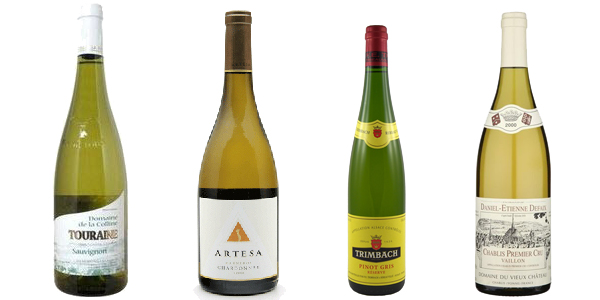
Domaine De La Colline Sauvignon Touraine 2010 (169656, $12.95) is the workday done sun-downer few Sauvignon Blancs can match for IVR* assurance. Eglantine and apple tisane. Bony and blanched shallot driven by the Loire’s rocky truffeau, with a smokey persimmon fini glacé. 88
The grape: Chardonnay
The history: Owned by Raventos of Spain, famous for Cava, the name means “handcrafted” in their native Catalan
The lowdown: The iconic white varietal of Burgundy is many things and while the Artesa is not a California ween of bananas and blow, its none of them either
Artesa Chardonnay 2010 (657585, $23.95) is an understated and capital if not a once in a lifetime example of cool Carneros. “Under the rocks and stones, there is water underground.” It talks to me in a voice I can understand and heads in a faint citrus, CVR** direction. Tropical with apricot and longan, but is neither heavy nor bloated. 89
The grape: Pinot Gris
The history: Pinot Noir variant, third most planted varietal of Alsace, behind Riesling and Gewurztraminer
The lowdown: A producer of pedigree and passion despite some contrarian and snobbish grumblings of a conglomerate nature
The food match: Grilled Tilapia in a Soy, lime and Rice Vinegar marinade
Trimbach Réserve Pinot Gris 2008 (971762, $22.95) is seductively Sauternes-like in its orange marmalade viscosity. An immense Gewurz-like PG. Off-dry tropical fruit, lanolin and a macadamia nut streak foils lemon, peppery orange and gold nasturtium. The edible florals are replayed in its sun-blazing technicolour. 90
The Splurge
The grape: Chardonnay
The history: Chablis has reached a peak in quality that to me began with this 2002 vintage. The mineral, steel and flint of great Chablis is so unique to Chardonnay
The lowdown: As good as Premier Cru gets. As good as most Grand Cru that cost a minimum 50% more
The food match: Bouillabaisse, or any fish stew with high quality fish and seafood
Domaine Daniel-Etienne Defaix Les Lys Chablis 1er Cru 2002 (289256, $44.95) 10 years on is impeccably balanced, with dry-roasted nuts, steel-cut oats and brilliant Marigolds wrapped up in a bursting mineral package. The age is imperceptible, the poise uncanny. You won’t fond this for less than $50 in the US. This is a steal and will drink beautifully for 5-10 years more. 92









 Godello